EP1534408B1 - Method for isotope separation of thallium - Google Patents
Method for isotope separation of thallium Download PDFInfo
- Publication number
- EP1534408B1 EP1534408B1 EP02781885A EP02781885A EP1534408B1 EP 1534408 B1 EP1534408 B1 EP 1534408B1 EP 02781885 A EP02781885 A EP 02781885A EP 02781885 A EP02781885 A EP 02781885A EP 1534408 B1 EP1534408 B1 EP 1534408B1
- Authority
- EP
- European Patent Office
- Prior art keywords
- frequency
- photons
- thallium
- state
- isotope
- Prior art date
- Legal status (The legal status is an assumption and is not a legal conclusion. Google has not performed a legal analysis and makes no representation as to the accuracy of the status listed.)
- Expired - Lifetime
Links
Images



Classifications
-
- B—PERFORMING OPERATIONS; TRANSPORTING
- B01—PHYSICAL OR CHEMICAL PROCESSES OR APPARATUS IN GENERAL
- B01D—SEPARATION
- B01D59/00—Separation of different isotopes of the same chemical element
- B01D59/34—Separation by photochemical methods
Definitions
- the 203 Tl laser isotope separation based on this invention is economically more efficient than the conventional electromagnetic separation. Also, this invention can overcome the limited scope of the Japanese patent publication No. 2000-262866A . In conclusion, the present invention makes the 203 Tl isotope separation possible for the mass production even with a relatively small-scale facility and the commercially available lasers.
- the required laser powers are estimated to be 500 mW, 4 W, and 500 W for a CW optical pumping laser, a pulsed UV laser , and a pulsed IR laser, respectively.
- a CW optical pumping laser For the production of 203 Tl isotope with the capability of 1 kg/year, the required laser powers are estimated to be 500 mW, 4 W, and 500 W for a CW optical pumping laser, a pulsed UV laser , and a pulsed IR laser, respectively.
- pulsed lasers repetition rate of 5 kHz or more and pulse-width of a few tens of ns are also required.
- Such a laser system can be constructed by using commercially available lasers.
Landscapes
- Life Sciences & Earth Sciences (AREA)
- Biophysics (AREA)
- Chemical & Material Sciences (AREA)
- Chemical Kinetics & Catalysis (AREA)
- Lasers (AREA)
- Extraction Or Liquid Replacement (AREA)
- Organic Low-Molecular-Weight Compounds And Preparation Thereof (AREA)
Abstract
Description
- The present invention relates in general to a method for isotope separation of thallium, and more particularly to laser isotope separation of thallium using laser beam.
- In nature, thallium contains two isotopes, including 203Tl (29.5 %) and 205Tl (70.5 %). 213Tl is used as a source material to produce 201Tl radioisotope. 201Tl is produced in a cyclotron by irradiating the enriched 203Tl target with a 19-31 MeV proton beam according to the 203Tl(p, 3n) 201Tl reaction. 201TlCl is a radiopharmaceutical for SPECT (single photon emission computerized tomography) to diagnose heart diseases and tumors.
- Electromagnetic method is the unique commercialized one to separate thallium isotopes. In principle, the technique is simple. When passing between the poles of a magnet, a monoenergetic beam of ions of naturally occurring thallium splits into two streams according to their momentum, one per isotope, each characterized by a particular radius of curvature. Collecting cups at the ends of the semicircular trajectories catch the homogenous streams. It is generally agreed that electromagnetic separation represents the most versatile technology with the greatest experience base of any separation technology, but unfortunately it has low throughput and high operating cost.
- Laser isotope separation (LIS) technique employing isotope-selective photoionization process of atoms has been said to be an alternative to overcome the demerits of electromagnetic method. The technique has been demonstrated on a number of elements, including mercury, gadolinium, and other elements.
US patent Nos. 4,793,307 (1988 ),5,202,005 (1993 ),5,376,246 (1994 ), and5,443,702 (1995 ) are related to laser isotope separation of mercury(Hg), gadolinium(Gd), zirconium (Zr), and erbium(Er) atoms, respectively. Japanese patent publication No.1999-99320A US patent No. 4,793,307 (1988 ). - The determination whether LIS of a certain element is technically feasible or not requires detailed consideration of a variety of issues including the photoionization pathway, the associated lasers, and the atomic vapor. A definitive evaluation of the applicability of LIS requires knowledge of the isotope shifts, hyperfine structures, level energies, angular momentum of each level, level lifetimes, etc. For those cases where LIS is technically feasible, an economic evaluation can be performed in the consideration of the cost competitiveness of this technique against other techniques, which requires knowledge of physical and chemical properties of the element, required laser power, isotope selectivity and ionization efficiency of the photoionization process, etc.
- Thallium has no available autoionization levels and isotope shifts of thallium energy levels are relatively small compared with other elements. Accordingly, photoionization of thallium atoms through an autoionization level is not possible and also isotope selectivity might be very small for the conventional stepwise photoionization process, which was applied in the
US patents 4,793,307 (1988 ) and5,443,702 (1995 ). Furthermore, it may not be possible to separate the thallium isotopes using the angular momentum selection rule applied in theUS patent 5,202,005 (1993 ) since the nuclear magnetic moments of 203Tl and 205Tl are all the same. - Japanese patent publication No.
2000-262866A US patent 5,945,649 for 210Pb removal from lead isotopes. In this patent, thallium atoms in the ground state are isotope-selectively excited to a Rydberg state at the energy of about 49,000 cm-1 by two lasers of 377.6 nm and 443.7 nm wavelengths and they are field-ionized by an external electric field. During the excitation process, detuning of about 1 GHz is given between laser frequencies and the intermediate level at the energy of 26,477 cm-1. This is a 2-color 2-photon excitation process. To obtain high isotope selectivity as well as high excitation efficiency by using 2-photon excitation process, lasers should have nearly Fourier-transform-limited bandwidth and also should counter-propagate. The Stark shift caused by detuning from the intermediate level decreases the 2-photon excitation efficiency. To avoid this, laser powers and frequencies should be controlled finely according to the π-pulse condition and also laser pulses should be overlapped exactly. Since it is practically impossible to overlap the laser pulses during the entire counter-propagation in medium, drop of the excitation efficiency is inevitable. Furthermore, for the case of mass production of thallium isotopes, initially produced plasma may screen the external electric field and consequently decreases the field ionization efficiency For these reasons, although the Japanese patent publication No.2000-262866A - Hence it is an object of the present invention to solve the above mentioned problems and also to provide an improved practical thallium isotope separation method.
- In accordance with the present invention, there is provided a method for separating an isotope of thallium in an atomic vapor containing a plurality of isotopes of thallium including said isotope, said method comprising the steps of:
- (a) producing photons of a first frequency by a laser system, wherein the wavelength of said first frequency is about 378 nm;
- (b) producing photons of a second frequency by said laser system,
wherein the wavelength of said second frequency is about 292 nm; - (c) producing photons of a third frequency by said laser system, wherein the wavelength of said third frequency is in the range of 700 nm to 1400 nm;
- (d) applying said photons of said first, second and third frequencies to said vapor of said thallium, wherein said photons of said first frequency pump isotope-selectively a plurality of ground state thallium atoms through an excited state into a metastable state, and wherein said photons of said second frequency excite a plurality of metastable state thallium atoms to an intermediate, resonant state, and
wherein said photons of said third frequency ionize a plurality of atoms in said intermediate, resonant state through continuum states; and - (e) collecting said isotope ions.
- The present invention together with the above and other objects and advantages may best be understood from the following detailed description of the preferred embodiments of the invention illustrated in the drawings, wherein:
-
Fig.1 illustrates the conceptual diagram for thallium laser isotope separation method according to the present invention wherein (a) is front schematic
view and (b) is side schematic view of an apparatus for carrying out the method; -
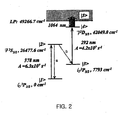
Fig.2 shows a partial energy level diagram of thallium atoms; -
Fig.3 shows isotope shifts and hyperfine structures of thallium isotopes; -
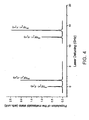
Fig. 4 shows the experimentally measured optical pumping spectrum of thallium isotopes by using a CW laser which has Gaussian intensity distribution (full width at half maximum: 10 mm) and output power of 20 mW; -
Fig.5 shows the calculated optical pumping spectrum of thallium isotopes by using a CW laser which has Gaussian intensity distribution (full width at half maximum: 10 mm) and output power of 200 mW; -
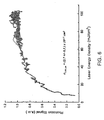
Fig.6 shows the measured photoionization cross-section of 7 2D5/2 level of thallium atoms at the wavelength of 1064 nm of a Nd:YAG laser; and -
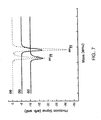
Fig.7 shows the observed mass spectra of isotope-selective photoionization of thallium atoms wherein:- (a) shows the mass spectra of non-selectively photoionized thallium atoms,
- (b) shows the mass spectra when the frequency of optical pumping laser is resonant with 205Tl isotopes, and
- (c) shows the mass spectra when the frequency of optical pumping laser is resonant with 203Tl isotopes.
- Herein is disclosed an isotope-selective photoionization process and apparatus for thallium isotope separation from natural thallium that involves isotope-selective optical pumping followed by photoionization of thallium atoms and then electrostatic extraction of ions. This scheme takes advantages of the large optical pumping cross-section as well as the large photoionization cross-section, and consequently only modest laser fluences are required. According to this scheme, it is possible to photoionize target isotopes selectively and efficiently by employing both isotope selective optical pumping (ISOP) of target isotopes into a metastable state and resonant photoionization (RPI) of metastable state thallium isotopes. In the latter process, metastable thallium atoms are photoionized to continuum states through a resonant excited state. Efficient ISOP of the target isotopes can be achieved with a single frequency continuous wave (CW) laser. A pulsed UV laser and a high power pulsed IR laser are used for RPI process.
- 203Tl laser isotope separation based on this invention is economically more efficient than the conventional electromagnetic separation. Also, this invention can overcome the limited scope of the Japanese patent publication No.
2000-262866A - An example of the present invention will now be described in greater detail for a thallium laser isotope separation method with reference to more specific drawing and data, which are for a better understanding of the invention and not for limiting purposes.
-
Fig. 1 illustrates the conceptual diagram for the thallium laser isotope separation method. Thalliumatomic beam 2 is generated by heating thallium at a temperature between 800-1000°C usingthermal heater 1 and collimated by an atomic beam collimator 3, and then is optically and isotope-selectively pumped into a metastable state by a CW laser 4. The optically pumped thallium isotopes are photoionized by apulsed UV laser 5 and apulsed IR laser 6. The photoionized thallium ions 8 andelectrons 9 generated during the photoionization are separated from the atomic beam by an extractor 7 biased by an external electric field. -
Fig. 2 shows a partial energy level diagram of thallium atoms when thallium ions are separated according to the present invention. The target isotopes in the ground state |1> are optically and isotope-selectively excited to the level |2> by a CW laser. The excited isotopes in the level |2> may be either de-excited to the ground level |1> by a spontaneous decay process (a inFig. 2 ) or pumped into the metastable state |3> (b inFig. 2 ). While the target isotopes stay in the metastable state |3>, the de-excited isotopes to the ground state |1> can be excited to the level |2> again. Because the lifetime of the metastable state is long enough (about 250 µsec), most of the target isotopes can be pumped into the metastable state |3> by the repeated excitation and decay processes. On the other hand, non-target isotopes are not excited and stay in the ground state. As a result, high optical pumping efficiency as well as high target isotope selectivity can be achieved. The target isotopes pumped into the metastable state |3> will be photoionized to the continuum state |5> through the resonant excited state |4> by pulsed lasers. - Thallium atoms have such a simple electronic structure that only three energy states exist below energy of 30,000 cm-1, such as the ground state (6 2P1/2: 0 cm-1), metastable state (6 2P3/2: 7,793 cm-1), and the excited state (7 2S1/2: 26,477.6 cm-1). And thallium atoms have several advantages for efficient optical pumping. These are;
- (a) large electric dipole moment of the transition between 6 2P1/2 and 72S1/2
- (b) very short level lifetime of 72S1/2 (7,5 nsec)
- (c) branching ratio of the transition between 72S1/2 and the metastable state
is bigger than that of the transition between 72S1/2 and the ground state. Hence, very efficient pumping of thallium atoms into the metastable state can be easily achieved if a CW laser frequency (about 378 nm in the wavelength) is resonant to the transition line of 6 2P1/2 and 72S1/2. Because the metastable state population of thallium atoms is lower than 10-3 when thallium is heated at a temperature to generate an atomic beam, their initial population does not effect the isotope selectivity at this temperature range. -
Fig. 3 shows isotope shifts and hyperfine structures of thallium isotopes related to the optical pumping transitions. The isotope shift of the transition between 6 2P1/2 and 7 2S1/2 is about 1.6 GHz and about 1.5 GHz for Fg = 1 -> Fe = 1 and Fg = 0 -> Fe = 1, respectively. Hence, highly selective optical pumping of the target isotope into the metastable state is possible if Doppler width of an atomic beam is less than a few hundred MHz (for example, approximately 100 MHz) and a single frequency CW laser is used as an optical pumping laser. -
Fig.4 shows the experimentally measured optical pumping spectrum of the transition of Fg =1 -> Fe = 1 by using a CW laser which has Gaussian intensity distribution (full width at half maximum: 10 mm) and output power of 20 mW. AndFig.5 shows the calculated optical pumping spectrum of the same transition, assuming that a CW laser has Gaussian intensity distribution (full width at half maximum: 10 mm) and output power of 200 mW. It is clearly shown that the isotope selectivity is very high in this optical pumping process. - While the hyperfine splitting of the ground state is about 21 GHz, that of the metastable level is about 500 MHz. Hence, effective photoionization of the metastable stae atom is expected without interferences of hyperfine structures. Even with a relatively low power laser, metastable thallium atoms can be efficiently excited to the state 7 2D3/2 (42,011.4 cm-1) or to the state 7 2D5/2 (42,049.0 cm-1) because of their large electric dipole moments. The transition wavelength for the excitation is about 292 nm.
Fig.6 shows the measured photoionization cross-section of 7 2D5/2 level of thallium atoms at the wavelength of 1064 nm of a Nd:YAG laser. The photoionization cross-section of 2.7 x 10⁻¹⁷ cm2 is so big enough that more than 80 % of the thallium atoms in the excited state 7 2D5/2 can be ionized by a Nd:YAG laser with the pulse energy density of 40 mJ/pulse/cm2. Since the ionization potential (IP) of thallium atoms is about 49266.7 cm-1, efficient photoionization is expected if an ionizing IR laser with modest power has the wavelength in the range of 700 ~ 1400 nm, which corresponds to energy range of 49266.7 cm-1 ~ 55000 cm-1. -
Fig.7 shows the observed Time-of-Flight (TOF) mass spectra of isotope-selective photoionization of thallium atoms according to this invention. When the CW laser frequency is scanned while pulsed laser frequencies are fixed, photoionization of each thallium isotope is possible. - For the production of 203Tl isotope with the capability of 1 kg/year, the required laser powers are estimated to be 500 mW, 4 W, and 500 W for a CW optical pumping laser, a pulsed UV laser , and a pulsed IR laser, respectively. For pulsed lasers, repetition rate of 5 kHz or more and pulse-width of a few tens of ns are also required. Such a laser system can be constructed by using commercially available lasers.
Claims (10)
- A method for separating an isotope of thallium in an atomic vapor containing a plurality of isotopes of thallium, said method comprising the steps of :(a) producing photons of a first frequency by a laser system, wherein the wavelength of said first frequency is about 378 nm;(b) producing photons of a second frequency by said laser system, wherein the wavelength of said second frequency is about 292 nm;(c) producing photons of a third frequency by said laser system, wherein the wavelength of said third frequency is in the range of 700 nm to 1400 nm;(d) applying said photons of said first, second and third frequencies to said vapor, wherein said photons of said first frequency pump isotope-selectively a plurality of ground state thallium atoms through an excited state into a metastable state, and wherein said photons of said second frequency excite a plurality of metastable state thallium atoms to an intermediate, resonant state, and wherein said photons of said third frequency ionize a plurality of atoms in said intermediate, resonant state through continuum states; and(e) collecting said isotope ions.
- The method of claim 1 wherein said photons of said first frequency are produced by one or more continuous wave lasers.
- The method of claim 1 wherein the photons of said first frequency pump said atoms of thallium from the ground state through the excited state at an energy of 26477,6 cm-1 relative to zero energy of the ground state and into the metastable state at an energy of 7793 cm-1 relative to zero energy of the ground state.
- The method of claim 1 wherein the photons of said second frequency are produced by one or more pulsed lasers.
- The method of claim I or 4, wherein the photons of the second frequency excite the thallium atoms in the metastable state to the intermediate resonant state at an energy of 42049.0 cm-1 relative to zero energy of said ground state.
- The method of claim 1 or 4, wherein the photons of the second frequency excite the thallium atoms in the metastable state to the intermediate resonant state at an energy of 42011,4 cm-1 relative to zero energy of said ground state.
- The method of claim 1 wherein the photons of said third frequency are produced by one or more pulsed lasers.
- The method of claim 1 wherein the photons of the third frequency ionize atoms in the intermediate resonant state at an energy of 42049.0 cm-1 to the continuum states at an energy range of 49266.7 cm-1~55000 cm-1 relative to zero energy of said ground state.
- The method of claim 1 wherein the photons of the third frequency ionize atoms in the intermediate resonant state at an energy of 420114 cm-1 to continuum states at an energy range of 49266.7 cm-1~55000 cm-1 relative to zero energy of said ground state.
- The method of claim 1 wherein the step of collecting said isotope ions comprises applying an electric field to said vapor.
Applications Claiming Priority (3)
| Application Number | Priority Date | Filing Date | Title |
|---|---|---|---|
| KR10-2002-0044828A KR100478533B1 (en) | 2002-07-30 | 2002-07-30 | A METHOD OF SEPARATlNG THALLIUM ISOTOPES USING LASER SYSTEM |
| KR2002044828 | 2002-07-30 | ||
| PCT/KR2002/001749 WO2004011129A1 (en) | 2002-07-30 | 2002-09-18 | Method for isotope separation of thallium |
Publications (2)
| Publication Number | Publication Date |
|---|---|
| EP1534408A1 EP1534408A1 (en) | 2005-06-01 |
| EP1534408B1 true EP1534408B1 (en) | 2009-12-30 |
Family
ID=31185752
Family Applications (1)
| Application Number | Title | Priority Date | Filing Date |
|---|---|---|---|
| EP02781885A Expired - Lifetime EP1534408B1 (en) | 2002-07-30 | 2002-09-18 | Method for isotope separation of thallium |
Country Status (10)
| Country | Link |
|---|---|
| US (1) | US7323651B2 (en) |
| EP (1) | EP1534408B1 (en) |
| JP (1) | JP4150722B2 (en) |
| KR (1) | KR100478533B1 (en) |
| CN (1) | CN1301148C (en) |
| AT (1) | ATE453446T1 (en) |
| AU (1) | AU2002348672A1 (en) |
| DE (1) | DE60234960D1 (en) |
| RU (1) | RU2292940C2 (en) |
| WO (1) | WO2004011129A1 (en) |
Families Citing this family (6)
| Publication number | Priority date | Publication date | Assignee | Title |
|---|---|---|---|---|
| RU2317847C2 (en) * | 2005-11-01 | 2008-02-27 | Институт физики полупроводников Сибирского отделения Российской академии наук | Thallium isotopes separation method |
| KR101072798B1 (en) * | 2008-10-24 | 2011-10-14 | 한국수력원자력 주식회사 | Separating method for calcium isotope |
| US8672138B2 (en) | 2009-11-08 | 2014-03-18 | Board Of Regents The University Of Texas System | Isotope separation by magnetic activation and separation |
| CN103293494B (en) * | 2013-05-24 | 2015-06-10 | 江汉大学 | Atomic transition number factor measuring device and atomic transition number factor measuring method |
| CN106406215B (en) * | 2016-10-18 | 2017-09-12 | 中国原子能科学研究院 | A kind of control system for Electromagnetic isotope separator receiver |
| WO2025207493A1 (en) * | 2024-03-25 | 2025-10-02 | Board Of Regents, The University Of Texas System | Separation of isotopes or atomic species using selective ionization |
Family Cites Families (14)
| Publication number | Priority date | Publication date | Assignee | Title |
|---|---|---|---|---|
| US5221446A (en) * | 1972-06-14 | 1993-06-22 | Cameco Corporation | Isotope separation process |
| US4526664A (en) * | 1974-04-01 | 1985-07-02 | The United Sates Of America As Represented By The United States Department Of Energy | Isotope separation apparatus and method |
| US4793307A (en) | 1987-06-11 | 1988-12-27 | The Jacobs Manufacturing Company | Rocker arm decoupler for two-cycle engine retarder |
| US5083026A (en) * | 1990-02-12 | 1992-01-21 | Danev Elbaum | Method, apparatus and applications of the quantitation of multiple gamma-photon producing isotopes with increased sensitivity |
| CZ285703B6 (en) * | 1991-07-29 | 1999-10-13 | Biosearch Italia S. P. A. | Amide derivatives of a-40926 antibiotic, process of their preparation and pharmaceutical composition containing thereof |
| US5202005A (en) * | 1991-08-14 | 1993-04-13 | The United States Of America As Represented By The United States Department Of Energy | Gadolinium photoionization process |
| US5376246A (en) * | 1992-12-02 | 1994-12-27 | The United States Of America As Represented By The United States Department Of Energy | Efficient mass-selective three-photon ionization of zirconium atoms |
| US5443702A (en) * | 1993-06-22 | 1995-08-22 | Haynam; Christopher A. | Laser isotope separation of erbium and other isotopes |
| JP3487900B2 (en) * | 1994-05-24 | 2004-01-19 | 株式会社東芝 | Gadolinium isotope separation method and apparatus |
| JP3324052B2 (en) * | 1995-04-12 | 2002-09-17 | 株式会社日立製作所 | Isotope separation method and apparatus |
| JPH09117640A (en) * | 1995-10-27 | 1997-05-06 | Mitsubishi Heavy Ind Ltd | Atomic vapor generation and isotope concentration using this method |
| US5945649A (en) * | 1997-05-27 | 1999-08-31 | United States Enrichment Corp. | Atomic vapor laser isotope separation of lead-210 isotope |
| NL1006285C2 (en) | 1997-06-11 | 1998-12-14 | Urenco Nederland Bv | Method and apparatus for isotope-selective photoionization of mercury. |
| FR2790974A1 (en) * | 1999-03-18 | 2000-09-22 | Us Enrichment Corp | Atomic vapor laser isotopic separation of thallium-203 from natural thallium and lead-210 from natural lead involves photon excitation of natural thallium or lead vapor, followed by field ionization and electrostatic extraction |
-
2002
- 2002-07-30 KR KR10-2002-0044828A patent/KR100478533B1/en not_active Expired - Fee Related
- 2002-09-18 CN CNB028293886A patent/CN1301148C/en not_active Expired - Fee Related
- 2002-09-18 DE DE60234960T patent/DE60234960D1/en not_active Expired - Lifetime
- 2002-09-18 WO PCT/KR2002/001749 patent/WO2004011129A1/en not_active Ceased
- 2002-09-18 AU AU2002348672A patent/AU2002348672A1/en not_active Abandoned
- 2002-09-18 AT AT02781885T patent/ATE453446T1/en not_active IP Right Cessation
- 2002-09-18 RU RU2005105299/15A patent/RU2292940C2/en not_active IP Right Cessation
- 2002-09-18 EP EP02781885A patent/EP1534408B1/en not_active Expired - Lifetime
- 2002-09-18 US US10/522,461 patent/US7323651B2/en not_active Expired - Fee Related
- 2002-09-18 JP JP2004524333A patent/JP4150722B2/en not_active Expired - Fee Related
Also Published As
| Publication number | Publication date |
|---|---|
| CN1301148C (en) | 2007-02-21 |
| CN1638849A (en) | 2005-07-13 |
| JP2005534472A (en) | 2005-11-17 |
| WO2004011129A1 (en) | 2004-02-05 |
| JP4150722B2 (en) | 2008-09-17 |
| DE60234960D1 (en) | 2010-02-11 |
| RU2292940C2 (en) | 2007-02-10 |
| AU2002348672A8 (en) | 2004-02-16 |
| KR20040011732A (en) | 2004-02-11 |
| US7323651B2 (en) | 2008-01-29 |
| US20050269198A1 (en) | 2005-12-08 |
| RU2005105299A (en) | 2005-08-10 |
| AU2002348672A1 (en) | 2004-02-16 |
| EP1534408A1 (en) | 2005-06-01 |
| KR100478533B1 (en) | 2005-03-28 |
| ATE453446T1 (en) | 2010-01-15 |
Similar Documents
| Publication | Publication Date | Title |
|---|---|---|
| Fedoseyev et al. | The ISOLDE laser ion source for exotic nuclei | |
| Guo et al. | Charge asymmetric dissociation induced by sequential and nonsequential strong field ionization | |
| Orr et al. | Above threshold dissociation of vibrationally cold HD+ molecules | |
| US4786478A (en) | Method and apparatus for isotope separation | |
| US7323651B2 (en) | Method for isotope separation of thallium | |
| MacGowan et al. | Observation of 3 d 8 4d-3 d 8 4p soft-x-ray laser emission in high-Z ions isoelectronic to Co i | |
| Liu | ORNL developments in laser ion sources for radioactive ion beam production | |
| JPH0716584B2 (en) | Laser isotope separation device | |
| RU2390375C2 (en) | Method for extraction of ytterbium isotope | |
| JPH025131B2 (en) | ||
| KR101072798B1 (en) | Separating method for calcium isotope | |
| JPS6325812B2 (en) | ||
| JP2000262866A (en) | Atomic vaporizer isotope separation for 203 thallium and 210 lead isotopes | |
| Wendt et al. | Laser based techniques for ultra trace isotope production, spectroscopy and detection | |
| Jana et al. | Ionization yield of two-step photoionization process in an optically thick atomic medium of barium | |
| RU2614021C1 (en) | Method of producing nickel-63 radionuclide | |
| Lichtin et al. | Potential analytical aspects of laser multiphoton ionization mass spectrometry | |
| JP3575869B2 (en) | Method for separating gadolinium or zirconium isotopes | |
| JP3085716B2 (en) | Laser isotope separation method | |
| Sheil et al. | Soft x-ray spectroscopy of Dy, Er and Tm ions excited in laser-produced plasmas | |
| Levy et al. | Method of and apparatus for the separation of isotopes | |
| Baldwin | Physics Division | |
| Baldwin | Multistep Pumping Schemes for Short-Wave Lasers | |
| Wendt | Laser-Based Ionization Techniques in Rare Isotope Research: Production, Spectroscopy, and Detection | |
| Letokhov | Laser Photoionization Selective Detection of Atoms, Molecules and Molecular Bonds |
Legal Events
| Date | Code | Title | Description |
|---|---|---|---|
| PUAI | Public reference made under article 153(3) epc to a published international application that has entered the european phase |
Free format text: ORIGINAL CODE: 0009012 |
|
| 17P | Request for examination filed |
Effective date: 20050125 |
|
| AK | Designated contracting states |
Kind code of ref document: A1 Designated state(s): AT BE BG CH CY CZ DE DK EE ES FI FR GB GR IE IT LI LU MC NL PT SE SK TR |
|
| AX | Request for extension of the european patent |
Extension state: AL LT LV MK RO SI |
|
| DAX | Request for extension of the european patent (deleted) | ||
| 17Q | First examination report despatched |
Effective date: 20071016 |
|
| GRAP | Despatch of communication of intention to grant a patent |
Free format text: ORIGINAL CODE: EPIDOSNIGR1 |
|
| GRAS | Grant fee paid |
Free format text: ORIGINAL CODE: EPIDOSNIGR3 |
|
| RAP1 | Party data changed (applicant data changed or rights of an application transferred) |
Owner name: KOREA HYDRO & NUCLEAR POWER CO., LTD. Owner name: KOREA ATOMIC ENERGY RESEARCH INSTITUTE |
|
| GRAA | (expected) grant |
Free format text: ORIGINAL CODE: 0009210 |
|
| AK | Designated contracting states |
Kind code of ref document: B1 Designated state(s): AT BE BG CH CY CZ DE DK EE ES FI FR GB GR IE IT LI LU MC NL PT SE SK TR |
|
| REG | Reference to a national code |
Ref country code: GB Ref legal event code: FG4D |
|
| REG | Reference to a national code |
Ref country code: CH Ref legal event code: EP |
|
| REG | Reference to a national code |
Ref country code: IE Ref legal event code: FG4D |
|
| REF | Corresponds to: |
Ref document number: 60234960 Country of ref document: DE Date of ref document: 20100211 Kind code of ref document: P |
|
| PG25 | Lapsed in a contracting state [announced via postgrant information from national office to epo] |
Ref country code: FI Free format text: LAPSE BECAUSE OF FAILURE TO SUBMIT A TRANSLATION OF THE DESCRIPTION OR TO PAY THE FEE WITHIN THE PRESCRIBED TIME-LIMIT Effective date: 20091230 Ref country code: SE Free format text: LAPSE BECAUSE OF FAILURE TO SUBMIT A TRANSLATION OF THE DESCRIPTION OR TO PAY THE FEE WITHIN THE PRESCRIBED TIME-LIMIT Effective date: 20091230 |
|
| REG | Reference to a national code |
Ref country code: NL Ref legal event code: VDEP Effective date: 20091230 |
|
| PG25 | Lapsed in a contracting state [announced via postgrant information from national office to epo] |
Ref country code: AT Free format text: LAPSE BECAUSE OF FAILURE TO SUBMIT A TRANSLATION OF THE DESCRIPTION OR TO PAY THE FEE WITHIN THE PRESCRIBED TIME-LIMIT Effective date: 20091230 |
|
| PG25 | Lapsed in a contracting state [announced via postgrant information from national office to epo] |
Ref country code: PT Free format text: LAPSE BECAUSE OF FAILURE TO SUBMIT A TRANSLATION OF THE DESCRIPTION OR TO PAY THE FEE WITHIN THE PRESCRIBED TIME-LIMIT Effective date: 20100430 Ref country code: ES Free format text: LAPSE BECAUSE OF FAILURE TO SUBMIT A TRANSLATION OF THE DESCRIPTION OR TO PAY THE FEE WITHIN THE PRESCRIBED TIME-LIMIT Effective date: 20100410 Ref country code: NL Free format text: LAPSE BECAUSE OF FAILURE TO SUBMIT A TRANSLATION OF THE DESCRIPTION OR TO PAY THE FEE WITHIN THE PRESCRIBED TIME-LIMIT Effective date: 20091230 Ref country code: BG Free format text: LAPSE BECAUSE OF FAILURE TO SUBMIT A TRANSLATION OF THE DESCRIPTION OR TO PAY THE FEE WITHIN THE PRESCRIBED TIME-LIMIT Effective date: 20100330 Ref country code: EE Free format text: LAPSE BECAUSE OF FAILURE TO SUBMIT A TRANSLATION OF THE DESCRIPTION OR TO PAY THE FEE WITHIN THE PRESCRIBED TIME-LIMIT Effective date: 20091230 |
|
| PG25 | Lapsed in a contracting state [announced via postgrant information from national office to epo] |
Ref country code: SK Free format text: LAPSE BECAUSE OF FAILURE TO SUBMIT A TRANSLATION OF THE DESCRIPTION OR TO PAY THE FEE WITHIN THE PRESCRIBED TIME-LIMIT Effective date: 20091230 Ref country code: CZ Free format text: LAPSE BECAUSE OF FAILURE TO SUBMIT A TRANSLATION OF THE DESCRIPTION OR TO PAY THE FEE WITHIN THE PRESCRIBED TIME-LIMIT Effective date: 20091230 Ref country code: BE Free format text: LAPSE BECAUSE OF FAILURE TO SUBMIT A TRANSLATION OF THE DESCRIPTION OR TO PAY THE FEE WITHIN THE PRESCRIBED TIME-LIMIT Effective date: 20091230 |
|
| PG25 | Lapsed in a contracting state [announced via postgrant information from national office to epo] |
Ref country code: GR Free format text: LAPSE BECAUSE OF FAILURE TO SUBMIT A TRANSLATION OF THE DESCRIPTION OR TO PAY THE FEE WITHIN THE PRESCRIBED TIME-LIMIT Effective date: 20100331 Ref country code: CY Free format text: LAPSE BECAUSE OF FAILURE TO SUBMIT A TRANSLATION OF THE DESCRIPTION OR TO PAY THE FEE WITHIN THE PRESCRIBED TIME-LIMIT Effective date: 20091230 |
|
| PLBE | No opposition filed within time limit |
Free format text: ORIGINAL CODE: 0009261 |
|
| STAA | Information on the status of an ep patent application or granted ep patent |
Free format text: STATUS: NO OPPOSITION FILED WITHIN TIME LIMIT |
|
| 26N | No opposition filed |
Effective date: 20101001 |
|
| PG25 | Lapsed in a contracting state [announced via postgrant information from national office to epo] |
Ref country code: DK Free format text: LAPSE BECAUSE OF FAILURE TO SUBMIT A TRANSLATION OF THE DESCRIPTION OR TO PAY THE FEE WITHIN THE PRESCRIBED TIME-LIMIT Effective date: 20091230 |
|
| PG25 | Lapsed in a contracting state [announced via postgrant information from national office to epo] |
Ref country code: IT Free format text: LAPSE BECAUSE OF FAILURE TO SUBMIT A TRANSLATION OF THE DESCRIPTION OR TO PAY THE FEE WITHIN THE PRESCRIBED TIME-LIMIT Effective date: 20091230 |
|
| PG25 | Lapsed in a contracting state [announced via postgrant information from national office to epo] |
Ref country code: MC Free format text: LAPSE BECAUSE OF NON-PAYMENT OF DUE FEES Effective date: 20100930 |
|
| REG | Reference to a national code |
Ref country code: CH Ref legal event code: PL |
|
| GBPC | Gb: european patent ceased through non-payment of renewal fee |
Effective date: 20100918 |
|
| REG | Reference to a national code |
Ref country code: DE Ref legal event code: R119 Ref document number: 60234960 Country of ref document: DE Effective date: 20110401 |
|
| PG25 | Lapsed in a contracting state [announced via postgrant information from national office to epo] |
Ref country code: IE Free format text: LAPSE BECAUSE OF NON-PAYMENT OF DUE FEES Effective date: 20100918 Ref country code: LI Free format text: LAPSE BECAUSE OF NON-PAYMENT OF DUE FEES Effective date: 20100930 Ref country code: CH Free format text: LAPSE BECAUSE OF NON-PAYMENT OF DUE FEES Effective date: 20100930 Ref country code: DE Free format text: LAPSE BECAUSE OF NON-PAYMENT OF DUE FEES Effective date: 20110401 |
|
| PG25 | Lapsed in a contracting state [announced via postgrant information from national office to epo] |
Ref country code: GB Free format text: LAPSE BECAUSE OF NON-PAYMENT OF DUE FEES Effective date: 20100918 |
|
| PG25 | Lapsed in a contracting state [announced via postgrant information from national office to epo] |
Ref country code: LU Free format text: LAPSE BECAUSE OF NON-PAYMENT OF DUE FEES Effective date: 20100918 |
|
| PG25 | Lapsed in a contracting state [announced via postgrant information from national office to epo] |
Ref country code: TR Free format text: LAPSE BECAUSE OF FAILURE TO SUBMIT A TRANSLATION OF THE DESCRIPTION OR TO PAY THE FEE WITHIN THE PRESCRIBED TIME-LIMIT Effective date: 20091230 |
|
| PGFP | Annual fee paid to national office [announced via postgrant information from national office to epo] |
Ref country code: FR Payment date: 20130813 Year of fee payment: 12 |
|
| REG | Reference to a national code |
Ref country code: FR Ref legal event code: ST Effective date: 20150529 |
|
| PG25 | Lapsed in a contracting state [announced via postgrant information from national office to epo] |
Ref country code: FR Free format text: LAPSE BECAUSE OF NON-PAYMENT OF DUE FEES Effective date: 20140930 |