EP1533711A1 - Parallel calculation program, parallel calculation system, and parallel calculation control apparatus - Google Patents
Parallel calculation program, parallel calculation system, and parallel calculation control apparatus Download PDFInfo
- Publication number
- EP1533711A1 EP1533711A1 EP02743853A EP02743853A EP1533711A1 EP 1533711 A1 EP1533711 A1 EP 1533711A1 EP 02743853 A EP02743853 A EP 02743853A EP 02743853 A EP02743853 A EP 02743853A EP 1533711 A1 EP1533711 A1 EP 1533711A1
- Authority
- EP
- European Patent Office
- Prior art keywords
- data
- arithmetic
- computers
- allocation
- parallel
- Prior art date
- Legal status (The legal status is an assumption and is not a legal conclusion. Google has not performed a legal analysis and makes no representation as to the accuracy of the status listed.)
- Withdrawn
Links
Images




Classifications
-
- G—PHYSICS
- G06—COMPUTING OR CALCULATING; COUNTING
- G06F—ELECTRIC DIGITAL DATA PROCESSING
- G06F9/00—Arrangements for program control, e.g. control units
- G06F9/06—Arrangements for program control, e.g. control units using stored programs, i.e. using an internal store of processing equipment to receive or retain programs
- G06F9/46—Multiprogramming arrangements
- G06F9/50—Allocation of resources, e.g. of the central processing unit [CPU]
- G06F9/5083—Techniques for rebalancing the load in a distributed system
Definitions
- the present invention relates to a parallel arithmetic program, parallel arithmetic system, and a parallel arithmetic management apparatus, which respectively generate processes in a plurality of programs and distribute data to the processes to perform arithmetic operations of the data in parallel and, more particularly, to a parallel arithmetic program, a parallel arithmetic system, and a parallel arithmetic management apparatus which can schedule calculation amounts of computers at high efficiency.
- the number of processes generated for those computers having large load or low processing ability is reduced, and the number of processes generated for those computers having small load or high processing ability is increased, thereby performing scheduling depending on the abilities and the load status of the computers.
- a function that moves data between processes is given to the processes themselves, to move data from a computer having a large load to a computer having a small load, so that load distribution is realized.
- the present invention has been made to solve the above problems in the conventional technique, and has as its object to provide a parallel arithmetic program, a parallel arithmetic system, and a parallel arithmetic management apparatus that can efficiently schedule throughputs of computers.
- the parallel arithmetic program, the parallel arithmetic system and the parallel arithmetic management apparatus of the present invention which generates arithmetic processes in a plurality of computers and distributes and allocates data to the arithmetic processes generated in the computers to perform arithmetic operations of data in parallel to each other, includes an allocation information storage step of storing allocation information representing allocation statuses of the data to the computers, a load information acquiring step of acquiring load information representing load statuses of the computers, a data allocation calculating step of deciding whether the data allocated to the computers must be changed based on the allocation information and the load information and calculating change contents of data allocation when the data allocation is necessary, and a data distributing step of moving the data between the computers based on the data allocation calculated at the data allocation calculating step.
- loads of the computers are acquired to decide whether the loads on the computers must be distributed.
- amounts of data allocated to the computers are changed to distribute the loads of the computers.
- the arithmetic processes generated in the computers acquire time required for an arithmetic operation of a predetermined amount of data as the load information.
- an arithmetic process uses time required for an arithmetic operation of a predetermined amount of data as load information to add the original processing abilities of the computers to loads acting at this point of time, so that the processing abilities of the computers at the point of time can be obtained.
- the parallel arithmetic system and the parallel arithmetic management apparatus of the present invention further includes a new process forming step of detecting a computer which can form an arithmetic process is detected from the computers and forming the new arithmetic process in the computers.
- a computer which can form a new arithmetic process is detected to form the new arithmetic process to make it possible to arbitrarily increase the number of processes.
- the parallel arithmetic system and the parallel arithmetic management apparatus of the present invention further includes a process deleting process of moving data allocated to a predetermined computer to another computer to end an arithmetic process in the source computer.
- data allocated to a predetermined computer is moved to another computer, and an arithmetic process in the source computer is terminated, to make it possible to arbitrary reduce the number of processes.
- the parallel arithmetic system and the parallel arithmetic management apparatus of the present invention further includes an arithmetic progress storage step of storing progresses of the arithmetic operations of the data in the arithmetic processes and a process moving step of restarting arithmetic operations of the data in different arithmetic processes based on the progress stored in the arithmetic progress storage step and the allocation information.
- a progress of an arithmetic operation of data is stored, and an arithmetic operation is restarted in another process to make it possible to move the process.
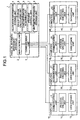
- Fig. 1 is a schematic diagram of a schematic configuration of a parallel arithmetic system according to the present invention
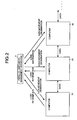
- Fig. 2 is a diagram for explaining an operation of the parallel arithmetic system
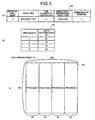
- Fig. 3 is a diagram for explaining allocation information to be stored in relevant information storage unit
- Fig. 4 is a diagram of relevant information obtained when a load state changes
- Fig. 5 is a flowchart for explaining a processing operation of a computer in the parallel arithmetic system
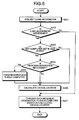
- Fig. 6 is a flowchart for explaining a processing operation of a parallel arithmetic management apparatus
- Fig. 7 is a diagram of an example of a data dividing method
- Fig. 8 is a diagram of an example of data having a plurality of data arrangements.
- Fig. 1 is a schematic diagram of the schematic configuration of a parallel arithmetic system according to the embodiment.
- the parallel arithmetic system includes a parallel arithmetic management apparatus 1, a computer 10, a computer 20, a computer 30, and a computer 40.
- the parallel arithmetic management apparatus 1 is connected to the computers 10, 20, 30, and 40 to manage and schedule processes generated in the computers.
- the computer 10 has a communicating unit 11, a process executing unit 12, and a data storage unit 13 are arranged in the computer 10.
- the process executing unit 12 functions as a node that executes the processes generated by the parallel arithmetic management apparatus 1.
- the data storage unit 13 stores data that is arithmetically processed by the process executing unit 12.
- the communicating unit 11 is connected to the parallel arithmetic management apparatus 1 and the computer 20.
- the computer 20 has a communicating unit 21, a process executing unit 22, and a data storage unit 23are arranged in the computer 20.
- the process executing unit 22 functions as a node that executes the processes formed by the parallel arithmetic management apparatus 1.
- the data storage unit 23 stores data that is arithmetically processed by the process executing unit 22.
- the communicating unit 21 is connected to the parallel arithmetic management apparatus 1, the computer 10, and the computer 30.
- the computers 30 and 40 have communicating units 31 and 41, process executing units 32 and 42, and data storage units 33 and 43 are arranged in the computers 30 and 40, respectively.
- the process executing units 32 and 42 function as nodes that execute the processes formed by the parallel arithmetic management apparatus 1.
- the data storage units 33 and 43 store data that is arithmetically processed by the process executing units 32 and 42.
- the communicating unit 31 is connected to the parallel arithmetic management apparatus 1, the computer 20, and the computer 40, and the communicating unit 41 is connected to the parallel arithmetic management apparatus 1 and the computer 30.
- the parallel arithmetic management apparatus 1 includes a main control unit 3 and a main control unit 2 arranged in the parallel arithmetic management apparatus 1.
- the communicating unit 3 is connected to an allocation information storage unit 4, a data allocation calculating unit 5, a load information acquiring unit 6, a process control unit 7, and an arithmetic progress storage unit 8.
- the communicating unit 3 is connected to the communicating unit 11 in the computer 10, the communicating unit 21 in the computer 20, the communicating unit 31 in the computer 30, and the communicating unit 41 in the computer 40.
- the process control unit 7 in the parallel arithmetic management apparatus 1 forms and deletes processes for the computers 10, 20, 30, and 40.
- the allocation information storage unit 4 stores allocation status of the data for the computers, i.e., allocations of the data processed by the processes generated by the computers, as allocation information.
- the load information acquiring unit 6 acquires load states of the computers, and stores the load states as load information.
- the load states of the computers are determined by processing abilities of the computers themselves and the numbers of processes processed by the computers at a point of time. More specifically, the load states are values representing processing abilities of the computers at a predetermined point of time. It is assumed that the load states mean processing abilities of the computer themselves at the predetermined time, and that the load information means the data representing the load states.
- the data allocation calculating unit 5 schedules the data allocation to the computers, based on the allocation information stored in the allocation information storage unit 4 and the load information acquired by the load information acquiring unit 6.
- the arithmetic progress storage unit 8 stores progress of arithmetic operations performed by the computers.
- arithmetic processing of data is performed by the parallel arithmetic system, as shown in Fig. 2, processes are generated in the computers to start data processing.
- the load states of the computers are acquired by the load information acquiring unit 6 of the parallel arithmetic management apparatus 1.
- the data allocation calculating unit 5 in the parallel arithmetic management apparatus 1 performs the scheduling. More specifically, the data allocation calculating unit 5 decides whether it is necessary to perform load distribution by moving the data. In this case, the decision whether the load distribution is necessary is realized by comparing the load states of the computers with each other to decide whether a computer has an outstandingly large load. At this time, a predetermined threshold may be set to compare the load information with the threshold. Because the load dispersion increases overhead costs, a tolerance of loads is determined by setting a threshold, thereby avoiding an increase in the unnecessary overhead costs.
- the data allocation calculating unit 5 calculates amounts of the data allocated to the computers based on the allocation information and the load information. In addition, the data allocation calculating unit 5 transmits calculation results to the respective computers. The computers 10, 20, and 30 move the data between the computers based on the calculation results received.
- the pieces of load information of the computers are acquired, and the data are moved between the computers based on the load information to change amounts of data allocated to the computers, to achieve load distribution.
- the load distribution is based on the amounts of data, the load distribution can be flexibly performed.
- the loads can be distributed by moving the data between the computers, memory images need not be stored. Therefore, the load distribution does not require binary compatibility, and the load distribution can be performed between different architectures.
- Fig. 3(a) is entire data 61 representing entire data to be arithmetically operated
- Fig. 3B is a data distribution table 62 that represents distribution of the data to the processes
- Fig. 3(c) is a data allocation table 63 that represents allocation of the entire data shown in Fig. 3(a) to the processes.
- the entire data 61 includes information related to data arrangement A.
- the information included in the entire data 61 related to data arrangement A is required to handle data arrangement A, and does not include the actual data included in data arrangement A.
- the entire data 61 includes, with respect to data arrangement A, a data type "integer”, the number of dimensions "two”, a data size "200 ⁇ 200", and a dimension "1" in division.
- the entire data i.e., 25% of data arrangement A is allocated to process 1.
- 25% of data arrangement A is allocated to process 2
- 25% of data arrangement A is allocated to processes 3 and 4 each.
- Processes 1 to 4 mentioned here indicate the processes to be executed in the computers 10, 20, 30, and 40.
- a single computer can also be caused to execute a plurality of processes.
- the computer 10 is caused to execute process 1
- the computer 20 is caused to execute process 2
- the computer 30 is caused to execute process 3
- the computer 40 is caused to execute process 4.
- the data allocation table 63 shown in Fig. 3(c) represents allocation of the data of data arrangement A shown in Fig. 3(a) to the processes. According to the entire data 61, the size of data arrangement A is "200 ⁇ 200", and a dimension in division is "1". According to the data distribution table 62, 25% of data is allocated to processes 1 to 4 each. Therefore, data allocated to each of processes 1 to 4 has a size of "200 ⁇ 50".
- Fig. 4 is a diagram of relative information obtained when a load state changes after the state shown in Fig. 3.
- Fig. 4 represents a state in which the processing abilities of process 1 and process 2 are half of those of process 3 and process 4, and process 5 is generated for another computer.
- Fig. 4(a) is a data distribution table 62a that represents distribution of data to the processes.
- Fig. 4(b) is a data allocation table 63b that represents allocation of data of the entire data shown in Fig. 3(a) to processes. In this case, the entire data is the same as the entire data 61 shown in Fig. 3(a).
- the sizes of the data allocated to the process 1 and the process 2 of the data arrangement A are "200 ⁇ 25" each, and the sizes of the data allocated to the process 3, the process 4, and the process 5 are "200 ⁇ 50" each.
- the data allocation calculating unit 5 allocates all the data to the processes in advance, and changes the amounts of the data to be allocated depending on the load states of the processes. At this time, the data allocation calculating unit 5 transmits the changed allocation of data i.e., the data allocation table 63a, to the computers through the communicating unit 3.
- the communicating units 11, 21, 31, and 41 of the computers each receive the data allocation table 63a, and the data stored in the data storage units 13, 23, 33, and 43 are moved through the communicating units 11, 21, 31, and 41 based on the contents of the data allocation table 63a.
- the movement of the data is directly performed between the computers without using the parallel arithmetic management apparatus 1.
- the processes formed on the computers by the process control unit 7 include a synchronous point in a main loop that performs data processing.
- each process transmits a time at which the processing reaches the synchronous point, to the parallel arithmetic management apparatus 1.
- intervals between the times at which the processing reaches the synchronous point is calculated to make it possible to acquire load states of the computers. For example, when another process is not executed in a computer, the entire processing ability of the computer can be used, and the interval between the times at which the processing reaches the synchronous point becomes short.
- the processing ability of the computer that can be used in the processes decreases, and the interval between the times at which the processing reaches the synchronous point becomes long.
- a process executed in a computer having a high processing ability has a short interval between the times at which processing reaches the synchronous point
- a process executed in a computer having a low processing ability has a long interval between times at which processing reaches the synchronous point.
- the necessary information is information representing how much processing the process can execute. Therefore, it is desirable that a larger amount of data be allocated to a process having a short interval between the times at which the processing reaches a synchronous point, to thereby achieve a high processing ability.
- FIG. 5 is a flowchart for explaining a processing operation of a computer in the parallel arithmetic system
- Fig. 6 is a flowchart for explaining a processing operation of a parallel arithmetic management apparatus.
- the process procedure of the computer will be described below with reference to Fig. 5 by using the computer 10 as an example.
- the computer 10 receives a designation of process generation from the process control unit 7 and generates a process in the process executing unit 12 (step S101).
- the computer 10 receives data allocated based on allocation information stored in the allocation information storage unit 4 (step S102).
- the data is transmitted from another computer and received through the communicating unit 11.
- An arithmetic operation of the data starts in the process executing unit 12 (step S103).
- the process executing unit 12 measures time at which the arithmetic operation of the data reaches a synchronous point, and transmits the time to the parallel arithmetic management apparatus 1 through the communicating unit 11 (step S104).
- the computer 10 receives the data allocation table from the parallel arithmetic management apparatus 1 (step S105). When movement of the data in the data allocation table is instructed (Yes at step S106), the computer 10 transmits a part of the data stored in the data storage unit 13 to the designated computer (step S107).
- step S108 When movement of the data in the data allocation table received is not instructed (No at step S106), and after step S107, the process executing unit 12 decides whether all data processing is complete (step S108). If some data processing is not completed (No at step S108), the process executing unit 12 continues the data processing (step S103). If all the data processing is completed (Yes at step S108), the processing operation ends.
- the parallel arithmetic management apparatus 1 causes the load information acquiring unit 6 to collect load information of the computers (step S201).
- the collection of the load information is performed by receiving from each computer, the time at which the processing reaches a synchronous point.
- the data allocation calculating unit 5 decides whether the loads must be adjusted (step S202).
- the process control unit decides whether any computer is in an idle state (step S203).
- the computer in the idle state is a computer that does not execute a process. In the computer that does not execute any process, the time at which processing reaches the synchronous point cannot be detected. Therefore, the computer in the idle state must be detected independent of acquisition of a load state.
- the data allocation calculating unit 5 decides whether a process must be generated (step S204). The decision is made based on a concrete effect obtained by generating a new process. When the new process is generated, overhead costs increase with an increase in the degree of parallelization. The data allocation calculating unit 5 determines that a new process must be generated based on an effect corresponding to the increase in overhead cost. The data allocation calculating unit 5 forms a new process in an idle computer (step S205)if it is determined that the new process must be generated (Yes at step S204).
- the data allocation calculating unit 5 calculates allocation of data such that loads are distributed to the processes (step S206), and stores the allocation in the allocation information storage unit 4.
- the communicating unit 3 After the calculation of the data allocation (step S206), or if load adjustment is not necessary (step S202), the communicating unit 3 transmits a designation of movement of the data to each computer based on the allocation information stored in the allocation information storage unit 4 (step S207), and the processing operation ends.
- a message representing that movement of the data is not necessary is transmitted instead of the designation of movement of the data.
- the arithmetic progress storage unit 8 in the parallel arithmetic management apparatus 1 will be described below. Each time the process of each computer reaches the synchronous point, the arithmetic progress storage unit 8 acquires a progress of an arithmetic operation at this time, and stores the progress.
- the process control unit 7 can generate a process in an arbitrary computer or end the process. Therefore, the process control unit generates a new process, restarts the arithmetic operation from the progress stored by the arithmetic progress storage unit 8, and ends the original process to make it possible to move the process from a predetermined computer to another computer.
- the process control unit 7 can increase/reduce the number of processes, and can arbitrarily move processes between the computers.
- the processes can be moved without storing a memory image or being limited by the architecture of the computer.
- the arithmetic progress storage unit 8 in the parallel arithmetic management apparatus 1 stores data in the middle of an arithmetic operation in the arithmetic progress storage unit 8.
- the data in the middle of the arithmetic operation is not necessarily stored in the parallel arithmetic management apparatus 1, but an independent storage device may be arranged, or the data may be stored in the computers.
- storing the progress is useful as backup used when a defect occurs in a predetermined computer. Therefore, even though the data is stored in the computer, it is desirable to distribute the data to a plurality of computers, as a measure against risk reduction.
- the load status of the computers are acquired by the load information acquiring unit, and the data allocation calculating unit determines data allocated to the computers based on the acquired load information.
- the data are moved between the computers to make it possible to distribute the data depending on the load states of the computers, and the throughputs of the computers can be efficiently scheduled.
- processing can be restarted in an arbitrary computer without being limited by the architecture.
- the number of types of data to be processed is one, the data are two-dimensional data, and division of the data is determined depending on a size in a predetermined direction.
- use of the present invention is not limited by these conditions, and the arbitrary number of data, an arbitrary data form, and an arbitrary data dividing method can be used.
- FIG. 7 An example of a data dividing method is shown in Fig. 7.
- data arrangement B which is two-dimensional data, is divided into cells 76.
- the distribution is performed by allocating the cells to the processes.
- a data block 71 including 10 cells is allocated to process 1
- a data block 72 including 9 cells is allocated to process 2
- a data block 74 including 9 cells is allocated to process 3
- a data block 74 including 12 cells is allocated to process 4.
- the data arrangement is divided into cells, and the numbers of cells of data blocks allocated to the processes are adjusted to make it possible to distribute the data.
- Fig. 8 An example of data having data arrangements of three types is shown in Fig. 8.
- the data to be processed has three data arrangements, i.e., data arrangement A, data arrangement B, and data arrangement C.
- entire data 81 includes information related to data arrangement A, data arrangement B, and data arrangement C.
- the entire data 81 includes, with respect to data arrangement A, a data type "integer", the number of dimensions "three”, a data size "100 ⁇ 100 ⁇ 100", and a dimension "1" in division.
- the entire data 81 includes, with respect to data arrangement B, a data type "double-precision floating-point", the number of dimensions “one dimension”, a data size "400”, and a dimension "1" in division. Furthermore, the entire data 81 includes, with respect to data arrangement C, a data type" “double-precision floating-point", the number of dimensions "three", a data size "400 ⁇ 400 ⁇ 200", and a dimension "3" in division.
- a parallel arithmetic management apparatus is arranged independently of a computer.
- the parallel arithmetic management apparatus need not be arranged in an independent housing, and the parallel arithmetic apparatus may be incorporated in an arbitrary computer.
- the functions of the parallel arithmetic management apparatus can also be realized by using software.
- a parallel arithmetic management program operating in the process executing unit of one of the computers can be obtained.
- loads of the computers are acquired to decide whether the loads on the computers must be distributed.
- loads of the computers are changed to distribute the loads of the computers. Therefore, a parallel arithmetic program, a parallel arithmetic system, and a parallel arithmetic management apparatus which can perform data distribution depending on the load states of computers and can efficiently schedule the throughputs of the computer can be advantageously achieved.
- an arithmetic process uses time required for an arithmetic operation of a predetermined amount of data as load information to add the original processing abilities of the computers to loads acting at this point of time, so that the processing abilities of the computers at the point of time can be obtained. Therefore, a parallel arithmetic program, a parallel arithmetic system, and a parallel arithmetic management apparatus which can properly recognize the throughputs of the computers and can efficiently schedule the throughputs of the computers can be advantageously achieved with simple configurations.
- a computer which can form a new arithmetic process is detected to form the new arithmetic process to make it possible to arbitrarily increase the number of processes.
- Data allocated to a predetermined computer is moved to another computer, and an arithmetic process in the source computer to make it possible to arbitrary reduce the number of processes.
- a progress of an arithmetic operation of data is stored, and an arithmetic operation is restarted in another process to make it possible to move the process. Therefore, the number of processes can be advantageously increased/reduced and moved without being limited by the architectures of computers.
- a parallel arithmetic program, a parallel arithmetic system, and a parallel arithmetic management apparatus make it possible to efficiently schedule the throughputs of computers and are useful for constructing a highly functional, highly reliable, and highly available parallel arithmetic system.
Landscapes
- Engineering & Computer Science (AREA)
- Software Systems (AREA)
- Theoretical Computer Science (AREA)
- Physics & Mathematics (AREA)
- General Engineering & Computer Science (AREA)
- General Physics & Mathematics (AREA)
- Multi Processors (AREA)
Abstract
Load statuses of computers are acquired by a load information
acquiring unit, and a data allocation calculation unit (5) calculates and
determines data allocated to the computers to equalize the loads of the
computers based on the acquired load information, and moves data
between the computers to equalize the loads of the computers.
Furthermore, a process control unit generates a new process and
deletes an existing process. Data is received from an existing process
when a new process is added, and relative data is moved to another
process when the existing process is deleted, so that process control
which does not depend on the architectures of the computers is
realized.
Description
The present invention relates to a parallel arithmetic program,
parallel arithmetic system, and a parallel arithmetic management
apparatus, which respectively generate processes in a plurality of
programs and distribute data to the processes to perform arithmetic
operations of the data in parallel and, more particularly, to a parallel
arithmetic program, a parallel arithmetic system, and a parallel
arithmetic management apparatus which can schedule calculation
amounts of computers at high efficiency.
As a conventional system that arithmetically processes a large
amount of data efficiently, a parallel arithmetic system that operates a
plurality of computers in parallel has been used. In the conventional
parallel arithmetic system, processes that perform arithmetic operations
of data for the computers are generated, and the data is distributed to
the processes to perform arithmetic operations, thereby making the
arithmetic operations on the data efficient.
In the conventional parallel arithmetic system, when a load on a
predetermined computer increases or when processing abilities of the
computers are different from each other, load distribution is performed
in units of processes.
More specifically, the number of processes generated for those
computers having large load or low processing ability is reduced, and
the number of processes generated for those computers having small
load or high processing ability is increased, thereby performing
scheduling depending on the abilities and the load status of the
computers.
A function that moves data between processes is given to the
processes themselves, to move data from a computer having a large
load to a computer having a small load, so that load distribution is
realized.
However, in load distribution performed in units of processes in
a conventional parallel arithmetic system, the units of the load
distribution becomes rough, thereby making it impossible to perform
sufficient load distribution. Moreover, in the conventional parallel
arithmetic system, the number of processes determined at the start of
an arithmetic operation cannot be changed.
On the other hand, if memory images of in-execution processes
are stored as is, and if a function that continues processing in another
computer is provided, binary compatibility is necessary to completely
operate this function. More specifically, in a conventional parallel
arithmetic system, moving data between the computers is restricted.
The present invention has been made to solve the above
problems in the conventional technique, and has as its object to provide
a parallel arithmetic program, a parallel arithmetic system, and a
parallel arithmetic management apparatus that can efficiently schedule
throughputs of computers.
To solve the above problems, and to achieve the objectives, the
parallel arithmetic program, the parallel arithmetic system and the
parallel arithmetic management apparatus of the present invention,
which generates arithmetic processes in a plurality of computers and
distributes and allocates data to the arithmetic processes generated in
the computers to perform arithmetic operations of data in parallel to
each other, includes an allocation information storage step of storing
allocation information representing allocation statuses of the data to the
computers, a load information acquiring step of acquiring load
information representing load statuses of the computers, a data
allocation calculating step of deciding whether the data allocated to the
computers must be changed based on the allocation information and
the load information and calculating change contents of data allocation
when the data allocation is necessary, and a data distributing step of
moving the data between the computers based on the data allocation
calculated at the data allocation calculating step.
According to the present invention, loads of the computers are
acquired to decide whether the loads on the computers must be
distributed. When the loads must be distributed, amounts of data
allocated to the computers are changed to distribute the loads of the
computers.
According to the parallel arithmetic program, the parallel
arithmetic system and the parallel arithmetic management apparatus of
the present invention, in the load information acquiring step, the
arithmetic processes generated in the computers acquire time required
for an arithmetic operation of a predetermined amount of data as the
load information.
According to the present invention, an arithmetic process uses
time required for an arithmetic operation of a predetermined amount of
data as load information to add the original processing abilities of the
computers to loads acting at this point of time, so that the processing
abilities of the computers at the point of time can be obtained.
According to the parallel arithmetic program, the parallel
arithmetic system and the parallel arithmetic management apparatus of
the present invention, further includes a new process forming step of
detecting a computer which can form an arithmetic process is detected
from the computers and forming the new arithmetic process in the
computers.
According to the present invention, a computer which can form
a new arithmetic process is detected to form the new arithmetic
process to make it possible to arbitrarily increase the number of
processes.
According to the parallel arithmetic program, the parallel
arithmetic system and the parallel arithmetic management apparatus of
the present invention, further includes a process deleting process of
moving data allocated to a predetermined computer to another
computer to end an arithmetic process in the source computer.
According to the present invention, data allocated to a
predetermined computer is moved to another computer, and an
arithmetic process in the source computer is terminated, to make it
possible to arbitrary reduce the number of processes.
According to the parallel arithmetic program, the parallel
arithmetic system and the parallel arithmetic management apparatus of
the present invention, further includes an arithmetic progress storage
step of storing progresses of the arithmetic operations of the data in the
arithmetic processes and a process moving step of restarting arithmetic
operations of the data in different arithmetic processes based on the
progress stored in the arithmetic progress storage step and the
allocation information.
According to the present invention, a progress of an arithmetic
operation of data is stored, and an arithmetic operation is restarted in
another process to make it possible to move the process.
Fig. 1 is a schematic diagram of a schematic configuration of a
parallel arithmetic system according to the present invention; Fig. 2 is a
diagram for explaining an operation of the parallel arithmetic system;
Fig. 3 is a diagram for explaining allocation information to be stored in
relevant information storage unit; Fig. 4 is a diagram of relevant
information obtained when a load state changes; Fig. 5 is a flowchart
for explaining a processing operation of a computer in the parallel
arithmetic system; Fig. 6 is a flowchart for explaining a processing
operation of a parallel arithmetic management apparatus; Fig. 7 is a
diagram of an example of a data dividing method; and Fig. 8 is a
diagram of an example of data having a plurality of data arrangements.
Exemplary embodiments of a parallel arithmetic program, a
parallel arithmetic system, and a parallel arithmetic management
apparatus according to the present invention will be described below in
detail with reference to the accompanying drawings.
Fig. 1 is a schematic diagram of the schematic configuration of
a parallel arithmetic system according to the embodiment. In Fig. 1,
the parallel arithmetic system includes a parallel arithmetic
management apparatus 1, a computer 10, a computer 20, a computer
30, and a computer 40. The parallel arithmetic management apparatus
1 is connected to the computers 10, 20, 30, and 40 to manage and
schedule processes generated in the computers.
The computer 10 has a communicating unit 11, a process
executing unit 12, and a data storage unit 13 are arranged in the
computer 10. The process executing unit 12 functions as a node that
executes the processes generated by the parallel arithmetic
management apparatus 1. The data storage unit 13 stores data that is
arithmetically processed by the process executing unit 12. The
communicating unit 11 is connected to the parallel arithmetic
management apparatus 1 and the computer 20.
Similarly, the computer 20 has a communicating unit 21, a
process executing unit 22, and a data storage unit 23are arranged in
the computer 20. The process executing unit 22 functions as a node
that executes the processes formed by the parallel arithmetic
management apparatus 1. The data storage unit 23 stores data that is
arithmetically processed by the process executing unit 22. In addition,
the communicating unit 21 is connected to the parallel arithmetic
management apparatus 1, the computer 10, and the computer 30.
The computers 30 and 40 have communicating units 31 and 41,
process executing units 32 and 42, and data storage units 33 and 43
are arranged in the computers 30 and 40, respectively. The process
executing units 32 and 42 function as nodes that execute the processes
formed by the parallel arithmetic management apparatus 1. The data
storage units 33 and 43 store data that is arithmetically processed by
the process executing units 32 and 42. In addition, the communicating
unit 31 is connected to the parallel arithmetic management apparatus 1,
the computer 20, and the computer 40, and the communicating unit 41
is connected to the parallel arithmetic management apparatus 1 and
the computer 30.
On the other hand, the parallel arithmetic management
apparatus 1 includes a main control unit 3 and a main control unit 2
arranged in the parallel arithmetic management apparatus 1. The
communicating unit 3 is connected to an allocation information storage
unit 4, a data allocation calculating unit 5, a load information acquiring
unit 6, a process control unit 7, and an arithmetic progress storage unit
8. The communicating unit 3 is connected to the communicating unit
11 in the computer 10, the communicating unit 21 in the computer 20,
the communicating unit 31 in the computer 30, and the communicating
unit 41 in the computer 40.
The process control unit 7 in the parallel arithmetic
management apparatus 1 forms and deletes processes for the
computers 10, 20, 30, and 40. The allocation information storage unit
4 stores allocation status of the data for the computers, i.e., allocations
of the data processed by the processes generated by the computers, as
allocation information. In addition, the load information acquiring unit
6 acquires load states of the computers, and stores the load states as
load information.
The load states of the computers are determined by processing
abilities of the computers themselves and the numbers of processes
processed by the computers at a point of time. More specifically, the
load states are values representing processing abilities of the
computers at a predetermined point of time. It is assumed that the
load states mean processing abilities of the computer themselves at the
predetermined time, and that the load information means the data
representing the load states.
The data allocation calculating unit 5 schedules the data
allocation to the computers, based on the allocation information stored
in the allocation information storage unit 4 and the load information
acquired by the load information acquiring unit 6. The arithmetic
progress storage unit 8 stores progress of arithmetic operations
performed by the computers.
When arithmetic processing of data is performed by the parallel
arithmetic system, as shown in Fig. 2, processes are generated in the
computers to start data processing. The load states of the computers
are acquired by the load information acquiring unit 6 of the parallel
arithmetic management apparatus 1. The data allocation calculating
unit 5 in the parallel arithmetic management apparatus 1 performs the
scheduling. More specifically, the data allocation calculating unit 5
decides whether it is necessary to perform load distribution by moving
the data. In this case, the decision whether the load distribution is
necessary is realized by comparing the load states of the computers
with each other to decide whether a computer has an outstandingly
large load. At this time, a predetermined threshold may be set to
compare the load information with the threshold. Because the load
dispersion increases overhead costs, a tolerance of loads is determined
by setting a threshold, thereby avoiding an increase in the unnecessary
overhead costs.
When the load distribution must be performed, the data
allocation calculating unit 5 calculates amounts of the data allocated to
the computers based on the allocation information and the load
information. In addition, the data allocation calculating unit 5 transmits
calculation results to the respective computers. The computers 10, 20,
and 30 move the data between the computers based on the calculation
results received.
In this manner, the pieces of load information of the computers
are acquired, and the data are moved between the computers based on
the load information to change amounts of data allocated to the
computers, to achieve load distribution. Because the load distribution
is based on the amounts of data, the load distribution can be flexibly
performed. In addition, because the loads can be distributed by
moving the data between the computers, memory images need not be
stored. Therefore, the load distribution does not require binary
compatibility, and the load distribution can be performed between
different architectures.
Allocation information stored in the allocation information
storage unit 4 will be described below with reference to Fig. 3. Fig.
3(a) is entire data 61 representing entire data to be arithmetically
operated, Fig. 3B is a data distribution table 62 that represents
distribution of the data to the processes. Fig. 3(c) is a data allocation
table 63 that represents allocation of the entire data shown in Fig. 3(a)
to the processes.
As shown in Fig. 3(a), the entire data 61 includes information
related to data arrangement A. The information included in the entire
data 61 related to data arrangement A is required to handle data
arrangement A, and does not include the actual data included in data
arrangement A. In this case, the entire data 61 includes, with respect
to data arrangement A, a data type "integer", the number of dimensions
"two", a data size "200 × 200", and a dimension "1" in division.
As shown in Fig. 3(b), the entire data, i.e., 25% of data
arrangement A is allocated to process 1. Similarly, 25% of data
arrangement A is allocated to process 2, and 25% of data arrangement
A is allocated to processes 3 and 4 each.
The data allocation table 63 shown in Fig. 3(c) represents
allocation of the data of data arrangement A shown in Fig. 3(a) to the
processes. According to the entire data 61, the size of data
arrangement A is "200 × 200", and a dimension in division is "1".
According to the data distribution table 62, 25% of data is allocated to
processes 1 to 4 each. Therefore, data allocated to each of processes
1 to 4 has a size of "200 × 50".
In Fig. 3, data is equally distributed on the assumption that the
load states of the computers 10, 20, 30, and 40 are equal. However,
when a status in which some computer simultaneously executes the
other process occurs, the load states of the computers are not equal to
each other. When a new computer that can execute a process is
introduced, a process is also generated for the computer, and the
number of parallel processes is desirably increased.
Fig. 4 is a diagram of relative information obtained when a load
state changes after the state shown in Fig. 3. Fig. 4 represents a state
in which the processing abilities of process 1 and process 2 are half of
those of process 3 and process 4, and process 5 is generated for
another computer.
Fig. 4(a) is a data distribution table 62a that represents
distribution of data to the processes. Fig. 4(b) is a data allocation
table 63b that represents allocation of data of the entire data shown in
Fig. 3(a) to processes. In this case, the entire data is the same as the
entire data 61 shown in Fig. 3(a).
As shown in Fig. 4(a), when a large load acts on the computer
10 thereby decreasing the processing ability of the computer 10, the
data allocated to the process 1 executed in the computer 10 is reduced.
In this case, as indicated in the data distribution table 62a, 12.5% of the
data are allocated to the process 1. Similarly, when a large load acts
on the computer 20 thereby decreasing the processing ability of the
computer 20, the data allocated to the process 2 executed in the
computer 20 is reduced. In this case, as indicated in the data
distribution table 62a, 12.5% of the data are allocated to the process 2.
In addition, a new process 5 is generated, as shown in Fig. 4(b), and
25% of the data are allocated to the process 5.
Therefore, in the data allocation table 63a shown in Fig. 4(b),
the sizes of the data allocated to the process 1 and the process 2 of the
data arrangement A are "200 × 25" each, and the sizes of the data
allocated to the process 3, the process 4, and the process 5 are "200 ×
50" each.
In this manner, the data allocation calculating unit 5 allocates all
the data to the processes in advance, and changes the amounts of the
data to be allocated depending on the load states of the processes. At
this time, the data allocation calculating unit 5 transmits the changed
allocation of data i.e., the data allocation table 63a, to the computers
through the communicating unit 3.
The communicating units 11, 21, 31, and 41 of the computers
each receive the data allocation table 63a, and the data stored in the
data storage units 13, 23, 33, and 43 are moved through the
communicating units 11, 21, 31, and 41 based on the contents of the
data allocation table 63a. The movement of the data is directly
performed between the computers without using the parallel arithmetic
management apparatus 1.
Acquisition of the load states of the computers will be described
below. The processes formed on the computers by the process control
unit 7 include a synchronous point in a main loop that performs data
processing. When the processing reaches the synchronous point,
each process transmits a time at which the processing reaches the
synchronous point, to the parallel arithmetic management apparatus 1.
Because each process generally executes the main loop a plurality of
times, intervals between the times at which the processing reaches the
synchronous point is calculated to make it possible to acquire load
states of the computers. For example, when another process is not
executed in a computer, the entire processing ability of the computer
can be used, and the interval between the times at which the
processing reaches the synchronous point becomes short. On the
other hand, when another process is executed in a computer, the
processing ability of the computer that can be used in the processes
decreases, and the interval between the times at which the processing
reaches the synchronous point becomes long.
Even though another process is not executed, a process
executed in a computer having a high processing ability has a short
interval between the times at which processing reaches the
synchronous point, and a process executed in a computer having a low
processing ability has a long interval between times at which
processing reaches the synchronous point. When the data is to be
allocated to a process, the necessary information is information
representing how much processing the process can execute.
Therefore, it is desirable that a larger amount of data be allocated to a
process having a short interval between the times at which the
processing reaches a synchronous point, to thereby achieve a high
processing ability.
More specifically, when the interval between the times at which
the processing reaches the synchronous point is used as the load
information, a processing ability obtained by adding a load caused by a
process in the processing to the original processing ability of the
computer can be acquired.
A processing operation of the parallel arithmetic system
according to the embodiment will be described below with reference to
Fig. 5 and 6. Fig. 5 is a flowchart for explaining a processing
operation of a computer in the parallel arithmetic system, and Fig. 6 is
a flowchart for explaining a processing operation of a parallel arithmetic
management apparatus. The process procedure of the computer will
be described below with reference to Fig. 5 by using the computer 10
as an example.
In Fig. 5, the computer 10 receives a designation of process
generation from the process control unit 7 and generates a process in
the process executing unit 12 (step S101). The computer 10 receives
data allocated based on allocation information stored in the allocation
information storage unit 4 (step S102). The data is transmitted from
another computer and received through the communicating unit 11.
An arithmetic operation of the data starts in the process
executing unit 12 (step S103). The process executing unit 12
measures time at which the arithmetic operation of the data reaches a
synchronous point, and transmits the time to the parallel arithmetic
management apparatus 1 through the communicating unit 11 (step
S104).
The computer 10 receives the data allocation table from the
parallel arithmetic management apparatus 1 (step S105). When
movement of the data in the data allocation table is instructed (Yes at
step S106), the computer 10 transmits a part of the data stored in the
data storage unit 13 to the designated computer (step S107).
When movement of the data in the data allocation table received
is not instructed (No at step S106), and after step S107, the process
executing unit 12 decides whether all data processing is complete (step
S108). If some data processing is not completed (No at step S108),
the process executing unit 12 continues the data processing (step
S103). If all the data processing is completed (Yes at step S108), the
processing operation ends.
Because the computers 20, 30, and 40 perform the same
operations as that of the computer 10, a description for the computers
20, 30, and 40 will be omitted. A processing operation of the parallel
arithmetic management apparatus 1 will be described below with
reference to Fig. 6.
In Fig. 6, the parallel arithmetic management apparatus 1
causes the load information acquiring unit 6 to collect load information
of the computers (step S201). The collection of the load information is
performed by receiving from each computer, the time at which the
processing reaches a synchronous point. The data allocation
calculating unit 5 decides whether the loads must be adjusted (step
S202).
If the loads must be adjusted (Yes at step S202), the process
control unit decides whether any computer is in an idle state (step
S203). The computer in the idle state is a computer that does not
execute a process. In the computer that does not execute any process,
the time at which processing reaches the synchronous point cannot be
detected. Therefore, the computer in the idle state must be detected
independent of acquisition of a load state.
If some computer is in an idle state (Yes at step S203), the data
allocation calculating unit 5 decides whether a process must be
generated (step S204). The decision is made based on a concrete
effect obtained by generating a new process. When the new process
is generated, overhead costs increase with an increase in the degree of
parallelization. The data allocation calculating unit 5 determines that a
new process must be generated based on an effect corresponding to
the increase in overhead cost. The data allocation calculating unit 5
forms a new process in an idle computer (step S205)if it is determined
that the new process must be generated (Yes at step S204).
When some computer is in an idle state (No in step S203), and
when it is determined that a new process need not be generated (No in
step S204), or after the formation of the new process (step S205) is
completed, the data allocation calculating unit 5 calculates allocation of
data such that loads are distributed to the processes (step S206), and
stores the allocation in the allocation information storage unit 4.
After the calculation of the data allocation (step S206), or if load
adjustment is not necessary (step S202), the communicating unit 3
transmits a designation of movement of the data to each computer
based on the allocation information stored in the allocation information
storage unit 4 (step S207), and the processing operation ends. When
the load adjustment is not necessary, a message representing that
movement of the data is not necessary is transmitted instead of the
designation of movement of the data.
The arithmetic progress storage unit 8 in the parallel arithmetic
management apparatus 1 will be described below. Each time the
process of each computer reaches the synchronous point, the
arithmetic progress storage unit 8 acquires a progress of an arithmetic
operation at this time, and stores the progress.
On the other hand, the process control unit 7 can generate a
process in an arbitrary computer or end the process. Therefore, the
process control unit generates a new process, restarts the arithmetic
operation from the progress stored by the arithmetic progress storage
unit 8, and ends the original process to make it possible to move the
process from a predetermined computer to another computer.
After all data allocated to a predetermined process during
calculation of data allocation are allocated to another process, the
processes are ended to thereby reduce the number of processes
without adversely affecting the arithmetic contents of data.
More specifically, the process control unit 7 can increase/reduce
the number of processes, and can arbitrarily move processes between
the computers. In addition, because the movement of the processes is
realized by the movement of data, the processes can be moved without
storing a memory image or being limited by the architecture of the
computer.
The arithmetic progress storage unit 8 in the parallel arithmetic
management apparatus 1 stores data in the middle of an arithmetic
operation in the arithmetic progress storage unit 8. However, the data
in the middle of the arithmetic operation is not necessarily stored in the
parallel arithmetic management apparatus 1, but an independent
storage device may be arranged, or the data may be stored in the
computers. On the other hand, storing the progress is useful as
backup used when a defect occurs in a predetermined computer.
Therefore, even though the data is stored in the computer, it is
desirable to distribute the data to a plurality of computers, as a
measure against risk reduction.
As described above, in the parallel arithmetic system according
to the embodiment, the load status of the computers are acquired by
the load information acquiring unit, and the data allocation calculating
unit determines data allocated to the computers based on the acquired
load information. The data are moved between the computers to make
it possible to distribute the data depending on the load states of the
computers, and the throughputs of the computers can be efficiently
scheduled.
Because the loads of the processes are managed based on
amounts of data, data allocated to a predetermined process can be
moved to another process, and the number of processes can be safely
and easily changed.
In addition, when a progress of a data arithmetic operation is
stored, processing can be restarted in an arbitrary computer without
being limited by the architecture.
In the embodiment, the number of types of data to be processed
is one, the data are two-dimensional data, and division of the data is
determined depending on a size in a predetermined direction.
However, use of the present invention is not limited by these conditions,
and the arbitrary number of data, an arbitrary data form, and an
arbitrary data dividing method can be used.
An example of a data dividing method is shown in Fig. 7. In Fig.
7, data arrangement B, which is two-dimensional data, is divided into
cells 76. When data arrangement B is to be distributed to each
process, the distribution is performed by allocating the cells to the
processes. In Fig. 7, a data block 71 including 10 cells is allocated to
process 1, a data block 72 including 9 cells is allocated to process 2, a
data block 74 including 9 cells is allocated to process 3, and a data
block 74 including 12 cells is allocated to process 4. In this manner,
the data arrangement is divided into cells, and the numbers of cells of
data blocks allocated to the processes are adjusted to make it possible
to distribute the data.
An example of data having data arrangements of three types is
shown in Fig. 8. In Fig. 8, the data to be processed has three data
arrangements, i.e., data arrangement A, data arrangement B, and data
arrangement C. As shown in Fig. 8(a), entire data 81 includes
information related to data arrangement A, data arrangement B, and
data arrangement C. In this case, the entire data 81 includes, with
respect to data arrangement A, a data type "integer", the number of
dimensions "three", a data size "100 × 100 × 100", and a dimension "1"
in division.
Similarly, the entire data 81 includes, with respect to data
arrangement B, a data type "double-precision floating-point", the
number of dimensions "one dimension", a data size "400", and a
dimension "1" in division. Furthermore, the entire data 81 includes,
with respect to data arrangement C, a data type" "double-precision
floating-point", the number of dimensions "three", a data size "400 ×
400 × 200", and a dimension "3" in division.
As shown in Fig. 8(b), 25% of the entire data, i.e., "100 × 100 ×
25" of data arrangement A, "100" of data arrangement B, and "400 ×
400 × 50" of data arrangement C are allocated to process 1.
Similarly, 25% of the entire data, i.e., "100 × 100 × 25" of data
arrangement A, "100" of data arrangement B, and "400 × 400 × 50" of
data arrangement C are allocated to processes 2, 3, and 4 each.
In this manner, even though the entire data has an arbitrary
number of data arrangements, as in the above description, data can be
allocated.
In the embodiment, a parallel arithmetic management apparatus
is arranged independently of a computer. However, the parallel
arithmetic management apparatus need not be arranged in an
independent housing, and the parallel arithmetic apparatus may be
incorporated in an arbitrary computer.
The functions of the parallel arithmetic management apparatus
can also be realized by using software. In this case, as in other
processes, a parallel arithmetic management program operating in the
process executing unit of one of the computers can be obtained.
As described above, according to the present invention, loads of
the computers are acquired to decide whether the loads on the
computers must be distributed. When the loads must be distributed,
amounts of data allocated to the computers are changed to distribute
the loads of the computers. Therefore, a parallel arithmetic program, a
parallel arithmetic system, and a parallel arithmetic management
apparatus which can perform data distribution depending on the load
states of computers and can efficiently schedule the throughputs of the
computer can be advantageously achieved.
According to the present invention, an arithmetic process uses
time required for an arithmetic operation of a predetermined amount of
data as load information to add the original processing abilities of the
computers to loads acting at this point of time, so that the processing
abilities of the computers at the point of time can be obtained.
Therefore, a parallel arithmetic program, a parallel arithmetic system,
and a parallel arithmetic management apparatus which can properly
recognize the throughputs of the computers and can efficiently
schedule the throughputs of the computers can be advantageously
achieved with simple configurations.
According to the present invention, a computer which can form
a new arithmetic process is detected to form the new arithmetic
process to make it possible to arbitrarily increase the number of
processes. Data allocated to a predetermined computer is moved to
another computer, and an arithmetic process in the source computer to
make it possible to arbitrary reduce the number of processes. A
progress of an arithmetic operation of data is stored, and an arithmetic
operation is restarted in another process to make it possible to move
the process. Therefore, the number of processes can be
advantageously increased/reduced and moved without being limited by
the architectures of computers.
As described above, a parallel arithmetic program, a parallel
arithmetic system, and a parallel arithmetic management apparatus
according to the present invention make it possible to efficiently
schedule the throughputs of computers and are useful for constructing
a highly functional, highly reliable, and highly available parallel
arithmetic system.
Claims (19)
- A parallel arithmetic program which generates arithmetic processes in a plurality of computers and distributes and allocates data to the arithmetic processes generated in the computers to perform arithmetic operations of data in parallel to each other, comprising:an allocation information storage step of storing allocation information representing allocation statuses of the data to the computers;a load information acquiring step of acquiring load information representing load statuses of the computers;a data allocation calculating step of deciding whether the data allocated to the computers must be changed based on the allocation information and the load information and calculating change contents of data allocation when the data allocation is necessary; anda data distributing step of moving the data between the computers based on the data allocation calculated at the data allocation calculating step.
- The parallel arithmetic program according to claim 1, wherein, in the load information acquiring step, the arithmetic processes generated in the computers acquire time required for an arithmetic operation of a predetermined amount of data as the load information.
- The parallel arithmetic program according to claim 2, further comprising a new process forming step of detecting a computer which can form an arithmetic process is detected from the computers and forming the new arithmetic process in the computer.
- The parallel arithmetic program according to claim 3, further comprising a process deleting step of moving data allocated to a predetermined computer to another computer to end an arithmetic process in the source computer.
- The parallel arithmetic program according to claim 4, further comprising an arithmetic progress storage step of storing progresses of the arithmetic operations of the data in the arithmetic processes and a process moving step of restarting arithmetic operations of the data in different arithmetic processes based on the progress stored in the arithmetic progress storage step and the allocation information.
- A parallel arithmetic system which generates arithmetic processes in a plurality of computers and distributes and allocates data to the arithmetic processes generated in the computers to perform arithmetic operations of data in parallel to each other, comprising:an allocation information storage unit that stores allocation information representing allocation statuses of the data to the computers;a load information acquiring unit that acquires load information representing load statuses of the computers;a data allocation calculating unit that decides whether the data allocated to the computers must be changed based on the allocation information and the load information, and calculates change contents of data allocation when the data allocation is necessary; anda data distributing unit that moves the data between the computers based on the data allocation calculated by the data allocation calculating unit.
- The parallel arithmetic system according to claim 6, wherein, in the load information acquiring unit, the arithmetic processes generated in the computers acquire time required for an arithmetic operation of a predetermined amount of data as the load information.
- The parallel arithmetic system according to claim 7, further comprising a new process forming unit that detects a computer which can form an arithmetic process, from the computers, and forms the new arithmetic process in the computer.
- The parallel arithmetic system according to claim 8, further comprising a process deleting unit that moves data allocated to a predetermined computer to another computer to end an arithmetic process in the source computer.
- The parallel arithmetic system according to claim 9, further comprising an arithmetic progress storage unit that stores progresses of the arithmetic operations of the data in the arithmetic processes, and a process moving unit that restarts arithmetic operations of the data in different arithmetic processes based on the progress stored in the arithmetic progress storage unit and the allocation information.
- The parallel arithmetic system according to any one of claims 6 to 10, wherein the allocation information storage unit, the load information acquiring unit, and the data allocation calculating unit are arranged in one of the computers.
- The parallel arithmetic system according to any one of claims 6 to 10, wherein the allocation information storage unit, the load information acquiring unit, and the data allocation calculating unit are arranged in a housing independent of the computers.
- A parallel arithmetic management apparatus which generates arithmetic processes in a plurality of computers and distributes and allocates data to the arithmetic processes generated in the computers to perform arithmetic operations of data in parallel to each other, comprising:an allocation information storage unit which stores allocation information representing allocation statuses of the data to the computers,a load information acquiring unit which acquires load information representing load statuses of the computers;a data allocation calculating unit which decides whether the data allocated to the computers must be changed based on the allocation information and the load information and calculates change contents of data allocation when the data allocation is necessary; anda distribution command transmitting unit which transmits a command to move the data to the computers based on the data allocation calculated by the data allocation calculating unit.
- The parallel arithmetic management apparatus according to claim 13, wherein, in the load information acquiring unit, the arithmetic processes generated in the computers acquire time required for an arithmetic operation of a predetermined amount of data as the load information.
- The parallel arithmetic management apparatus according to claim 14, further comprising a new process forming unit that detects a computer which can form an arithmetic process, from the computers, and forms the new arithmetic process in the computer.
- The parallel arithmetic management apparatus according to claim 15, further comprising a process deleting unit that moves data allocated to a predetermined computer to another computer to end an arithmetic process in the source computer.
- The parallel arithmetic management apparatus according to claim 16, further comprising an arithmetic progress storage unit that stores progresses of the arithmetic operations of the data in the arithmetic processes, and a process moving unit that restarts arithmetic operations of the data in different arithmetic processes based on the progress stored in the arithmetic progress storage unit and the allocation information.
- The parallel arithmetic management apparatus according to any one of claims 13 to 17, wherein the parallel arithmetic management apparatus is arranged in any one of the computers.
- The parallel arithmetic management apparatus according to any one of claims 13 to 17, wherein the parallel arithmetic management apparatus is arranged in a housing independent of the computers.
Applications Claiming Priority (1)
| Application Number | Priority Date | Filing Date | Title |
|---|---|---|---|
| PCT/JP2002/006908 WO2004006116A1 (en) | 2002-07-08 | 2002-07-08 | Parallel calculation program, parallel calculation system, and parallel calculation control apparatus |
Publications (2)
| Publication Number | Publication Date |
|---|---|
| EP1533711A1 true EP1533711A1 (en) | 2005-05-25 |
| EP1533711A4 EP1533711A4 (en) | 2007-10-24 |
Family
ID=30022628
Family Applications (1)
| Application Number | Title | Priority Date | Filing Date |
|---|---|---|---|
| EP02743853A Withdrawn EP1533711A4 (en) | 2002-07-08 | 2002-07-08 | PARALLEL COMPUTING PROGRAM AND SYSTEM AND PARALLEL COMPUTING CONTROL APPARATUS |
Country Status (3)
| Country | Link |
|---|---|
| EP (1) | EP1533711A4 (en) |
| JP (1) | JPWO2004006116A1 (en) |
| WO (1) | WO2004006116A1 (en) |
Families Citing this family (2)
| Publication number | Priority date | Publication date | Assignee | Title |
|---|---|---|---|---|
| JP2007264794A (en) * | 2006-03-27 | 2007-10-11 | Fujitsu Ltd | Parallel distributed processing program and parallel distributed processing system |
| JP2008158996A (en) * | 2006-12-26 | 2008-07-10 | Chugoku Electric Power Co Inc:The | Information processor and information processing method |
Family Cites Families (10)
| Publication number | Priority date | Publication date | Assignee | Title |
|---|---|---|---|---|
| CA2153770A1 (en) * | 1993-01-21 | 1994-08-04 | Charles S. Spirakis | Method and apparatus for data transfer and storage in a highly parallel computer network environment |
| US6216127B1 (en) * | 1994-02-22 | 2001-04-10 | Oracle Corporation | Method and apparatus for processing electronic mail in parallel |
| JPH07302242A (en) * | 1994-04-30 | 1995-11-14 | Mitsubishi Electric Corp | Load balancing method |
| US5892945A (en) * | 1996-03-21 | 1999-04-06 | Oracle Corporation | Method and apparatus for distributing work granules among processes based on the location of data accessed in the work granules |
| JP2973973B2 (en) * | 1997-05-27 | 1999-11-08 | 日本電気株式会社 | Dynamic load distribution method in parallel computing, dynamic load distribution device, and recording medium recording dynamic load distribution program |
| JPH11261702A (en) * | 1998-03-06 | 1999-09-24 | Fujitsu Ltd | System optimization controller by load prediction |
| JP3993342B2 (en) * | 1999-06-24 | 2007-10-17 | 株式会社日立製作所 | How to suspend / resume processing in an electronic computer |
| JP2002007364A (en) * | 2000-06-22 | 2002-01-11 | Fujitsu Ltd | Scheduling device for job scheduling of parallel computer systems |
| JP2002049603A (en) * | 2000-08-03 | 2002-02-15 | Toshiba Corp | Dynamic load distribution method and dynamic load distribution device |
| JP2002183106A (en) * | 2000-12-11 | 2002-06-28 | Hitachi Ltd | Service switching system and method |
-
2002
- 2002-07-08 WO PCT/JP2002/006908 patent/WO2004006116A1/en not_active Ceased
- 2002-07-08 EP EP02743853A patent/EP1533711A4/en not_active Withdrawn
- 2002-07-08 JP JP2004519188A patent/JPWO2004006116A1/en active Pending
Also Published As
| Publication number | Publication date |
|---|---|
| JPWO2004006116A1 (en) | 2005-11-04 |
| WO2004006116A1 (en) | 2004-01-15 |
| EP1533711A4 (en) | 2007-10-24 |
Similar Documents
| Publication | Publication Date | Title |
|---|---|---|
| CN112019581B (en) | Method and device for scheduling task processing entities | |
| CN108632365B (en) | Service resource adjusting method, related device and equipment | |
| US9378056B2 (en) | Management server, and virtual machine move control method | |
| US11526276B2 (en) | Upgrade management method and scheduling node, and storage system | |
| CN111818159A (en) | Data processing node management method, device, equipment and storage medium | |
| CN111221632A (en) | Distributed parallel task scheduling method and device, computer equipment and storage medium | |
| CN109032769B (en) | Container-based continuous integrated CI (CI) task processing method and device | |
| EP3432159A1 (en) | Garbage collection method and device | |
| JP2010079622A (en) | Multi-core processor system and task control method thereof | |
| US10452425B2 (en) | Apparatus and method for processing a plurality of tasks | |
| CN115167992A (en) | Task processing method, system, device, server, medium, and program product | |
| CN114564281A (en) | Container scheduling method, device, equipment and storage medium | |
| CN105573827A (en) | Multi-machine parallel processing method and device | |
| CN109802986A (en) | Device management method, system, device and server | |
| EP1533711A1 (en) | Parallel calculation program, parallel calculation system, and parallel calculation control apparatus | |
| CN113742117B (en) | Distributed task diagnosis method, device and storage medium | |
| KR102022972B1 (en) | Runtime management apparatus for heterogeneous multi-processing system and method thereof | |
| US20050114414A1 (en) | Parallel arithmetic system, parallel arithmetic management apparatus, and computer product | |
| JP2011186606A (en) | Computer system and checkpoint restart method thereof | |
| CN115658269B (en) | A heterogeneous computing terminal for task scheduling | |
| CN111913791A (en) | Task scheduling method, device, equipment and computer readable storage medium | |
| JP5441179B2 (en) | Job execution management system | |
| JP3660376B2 (en) | Distributed processing system and load balancing method in distributed processing system | |
| CN113282383A (en) | Task scheduling method, task processing method and related products | |
| KR101521026B1 (en) | System and method for distributing task |
Legal Events
| Date | Code | Title | Description |
|---|---|---|---|
| PUAI | Public reference made under article 153(3) epc to a published international application that has entered the european phase |
Free format text: ORIGINAL CODE: 0009012 |
|
| 17P | Request for examination filed |
Effective date: 20050202 |
|
| AK | Designated contracting states |
Kind code of ref document: A1 Designated state(s): DE FR GB |
|
| AX | Request for extension of the european patent |
Extension state: AL LT LV MK RO SI |
|
| DAX | Request for extension of the european patent (deleted) | ||
| A4 | Supplementary search report drawn up and despatched |
Effective date: 20070921 |
|
| 17Q | First examination report despatched |
Effective date: 20080213 |
|
| STAA | Information on the status of an ep patent application or granted ep patent |
Free format text: STATUS: THE APPLICATION IS DEEMED TO BE WITHDRAWN |
|
| 18D | Application deemed to be withdrawn |
Effective date: 20100202 |