EP1533497A1 - Air intake device for engine - Google Patents
Air intake device for engine Download PDFInfo
- Publication number
- EP1533497A1 EP1533497A1 EP03730861A EP03730861A EP1533497A1 EP 1533497 A1 EP1533497 A1 EP 1533497A1 EP 03730861 A EP03730861 A EP 03730861A EP 03730861 A EP03730861 A EP 03730861A EP 1533497 A1 EP1533497 A1 EP 1533497A1
- Authority
- EP
- European Patent Office
- Prior art keywords
- driven side
- opening
- side throttle
- electrically driven
- throttle valve
- Prior art date
- Legal status (The legal status is an assumption and is not a legal conclusion. Google has not performed a legal analysis and makes no representation as to the accuracy of the status listed.)
- Granted
Links
Images



Classifications
-
- F—MECHANICAL ENGINEERING; LIGHTING; HEATING; WEAPONS; BLASTING
- F02—COMBUSTION ENGINES; HOT-GAS OR COMBUSTION-PRODUCT ENGINE PLANTS
- F02D—CONTROLLING COMBUSTION ENGINES
- F02D9/00—Controlling engines by throttling air or fuel-and-air induction conduits or exhaust conduits
- F02D9/02—Controlling engines by throttling air or fuel-and-air induction conduits or exhaust conduits concerning induction conduits
-
- F—MECHANICAL ENGINEERING; LIGHTING; HEATING; WEAPONS; BLASTING
- F02—COMBUSTION ENGINES; HOT-GAS OR COMBUSTION-PRODUCT ENGINE PLANTS
- F02D—CONTROLLING COMBUSTION ENGINES
- F02D11/00—Arrangements for, or adaptations to, non-automatic engine control initiation means, e.g. operator initiated
- F02D11/02—Arrangements for, or adaptations to, non-automatic engine control initiation means, e.g. operator initiated characterised by hand, foot, or like operator controlled initiation means
-
- F—MECHANICAL ENGINEERING; LIGHTING; HEATING; WEAPONS; BLASTING
- F02—COMBUSTION ENGINES; HOT-GAS OR COMBUSTION-PRODUCT ENGINE PLANTS
- F02D—CONTROLLING COMBUSTION ENGINES
- F02D11/00—Arrangements for, or adaptations to, non-automatic engine control initiation means, e.g. operator initiated
- F02D11/06—Arrangements for, or adaptations to, non-automatic engine control initiation means, e.g. operator initiated characterised by non-mechanical control linkages, e.g. fluid control linkages or by control linkages with power drive or assistance
- F02D11/10—Arrangements for, or adaptations to, non-automatic engine control initiation means, e.g. operator initiated characterised by non-mechanical control linkages, e.g. fluid control linkages or by control linkages with power drive or assistance of the electric type
-
- F—MECHANICAL ENGINEERING; LIGHTING; HEATING; WEAPONS; BLASTING
- F02—COMBUSTION ENGINES; HOT-GAS OR COMBUSTION-PRODUCT ENGINE PLANTS
- F02D—CONTROLLING COMBUSTION ENGINES
- F02D11/00—Arrangements for, or adaptations to, non-automatic engine control initiation means, e.g. operator initiated
- F02D11/06—Arrangements for, or adaptations to, non-automatic engine control initiation means, e.g. operator initiated characterised by non-mechanical control linkages, e.g. fluid control linkages or by control linkages with power drive or assistance
- F02D11/10—Arrangements for, or adaptations to, non-automatic engine control initiation means, e.g. operator initiated characterised by non-mechanical control linkages, e.g. fluid control linkages or by control linkages with power drive or assistance of the electric type
- F02D11/105—Arrangements for, or adaptations to, non-automatic engine control initiation means, e.g. operator initiated characterised by non-mechanical control linkages, e.g. fluid control linkages or by control linkages with power drive or assistance of the electric type characterised by the function converting demand to actuation, e.g. a map indicating relations between an accelerator pedal position and throttle valve opening or target engine torque
-
- F—MECHANICAL ENGINEERING; LIGHTING; HEATING; WEAPONS; BLASTING
- F02—COMBUSTION ENGINES; HOT-GAS OR COMBUSTION-PRODUCT ENGINE PLANTS
- F02D—CONTROLLING COMBUSTION ENGINES
- F02D41/00—Electrical control of supply of combustible mixture or its constituents
- F02D41/0002—Controlling intake air
- F02D41/0005—Controlling intake air during deceleration
-
- F—MECHANICAL ENGINEERING; LIGHTING; HEATING; WEAPONS; BLASTING
- F02—COMBUSTION ENGINES; HOT-GAS OR COMBUSTION-PRODUCT ENGINE PLANTS
- F02D—CONTROLLING COMBUSTION ENGINES
- F02D41/00—Electrical control of supply of combustible mixture or its constituents
- F02D41/008—Controlling each cylinder individually
-
- F—MECHANICAL ENGINEERING; LIGHTING; HEATING; WEAPONS; BLASTING
- F02—COMBUSTION ENGINES; HOT-GAS OR COMBUSTION-PRODUCT ENGINE PLANTS
- F02D—CONTROLLING COMBUSTION ENGINES
- F02D9/00—Controlling engines by throttling air or fuel-and-air induction conduits or exhaust conduits
- F02D9/08—Throttle valves specially adapted therefor; Arrangements of such valves in conduits
- F02D9/10—Throttle valves specially adapted therefor; Arrangements of such valves in conduits having pivotally-mounted flaps
- F02D9/109—Throttle valves specially adapted therefor; Arrangements of such valves in conduits having pivotally-mounted flaps having two or more flaps
- F02D9/1095—Rotating on a common axis, e.g. having a common shaft
-
- F—MECHANICAL ENGINEERING; LIGHTING; HEATING; WEAPONS; BLASTING
- F02—COMBUSTION ENGINES; HOT-GAS OR COMBUSTION-PRODUCT ENGINE PLANTS
- F02B—INTERNAL-COMBUSTION PISTON ENGINES; COMBUSTION ENGINES IN GENERAL
- F02B61/00—Adaptations of engines for driving vehicles or for driving propellers; Combinations of engines with gearing
- F02B61/02—Adaptations of engines for driving vehicles or for driving propellers; Combinations of engines with gearing for driving cycles
-
- F—MECHANICAL ENGINEERING; LIGHTING; HEATING; WEAPONS; BLASTING
- F02—COMBUSTION ENGINES; HOT-GAS OR COMBUSTION-PRODUCT ENGINE PLANTS
- F02D—CONTROLLING COMBUSTION ENGINES
- F02D9/00—Controlling engines by throttling air or fuel-and-air induction conduits or exhaust conduits
- F02D9/02—Controlling engines by throttling air or fuel-and-air induction conduits or exhaust conduits concerning induction conduits
- F02D2009/0201—Arrangements; Control features; Details thereof
- F02D2009/0242—Increasing exhaust brake effect
-
- F—MECHANICAL ENGINEERING; LIGHTING; HEATING; WEAPONS; BLASTING
- F02—COMBUSTION ENGINES; HOT-GAS OR COMBUSTION-PRODUCT ENGINE PLANTS
- F02D—CONTROLLING COMBUSTION ENGINES
- F02D9/00—Controlling engines by throttling air or fuel-and-air induction conduits or exhaust conduits
- F02D9/02—Controlling engines by throttling air or fuel-and-air induction conduits or exhaust conduits concerning induction conduits
- F02D2009/0201—Arrangements; Control features; Details thereof
- F02D2009/0267—Arrangements; Control features; Details thereof for simultaneous action of a governor and an accelerator lever on the throttle
-
- F—MECHANICAL ENGINEERING; LIGHTING; HEATING; WEAPONS; BLASTING
- F02—COMBUSTION ENGINES; HOT-GAS OR COMBUSTION-PRODUCT ENGINE PLANTS
- F02D—CONTROLLING COMBUSTION ENGINES
- F02D9/00—Controlling engines by throttling air or fuel-and-air induction conduits or exhaust conduits
- F02D9/02—Controlling engines by throttling air or fuel-and-air induction conduits or exhaust conduits concerning induction conduits
- F02D2009/0201—Arrangements; Control features; Details thereof
- F02D2009/0279—Throttle valve control for intake system with two parallel air flow paths, each controlled by a throttle, e.g. a resilient flap disposed on a throttle
-
- F—MECHANICAL ENGINEERING; LIGHTING; HEATING; WEAPONS; BLASTING
- F02—COMBUSTION ENGINES; HOT-GAS OR COMBUSTION-PRODUCT ENGINE PLANTS
- F02D—CONTROLLING COMBUSTION ENGINES
- F02D11/00—Arrangements for, or adaptations to, non-automatic engine control initiation means, e.g. operator initiated
- F02D11/06—Arrangements for, or adaptations to, non-automatic engine control initiation means, e.g. operator initiated characterised by non-mechanical control linkages, e.g. fluid control linkages or by control linkages with power drive or assistance
- F02D11/10—Arrangements for, or adaptations to, non-automatic engine control initiation means, e.g. operator initiated characterised by non-mechanical control linkages, e.g. fluid control linkages or by control linkages with power drive or assistance of the electric type
- F02D2011/101—Arrangements for, or adaptations to, non-automatic engine control initiation means, e.g. operator initiated characterised by non-mechanical control linkages, e.g. fluid control linkages or by control linkages with power drive or assistance of the electric type characterised by the means for actuating the throttles
- F02D2011/102—Arrangements for, or adaptations to, non-automatic engine control initiation means, e.g. operator initiated characterised by non-mechanical control linkages, e.g. fluid control linkages or by control linkages with power drive or assistance of the electric type characterised by the means for actuating the throttles at least one throttle being moved only by an electric actuator
-
- F—MECHANICAL ENGINEERING; LIGHTING; HEATING; WEAPONS; BLASTING
- F02—COMBUSTION ENGINES; HOT-GAS OR COMBUSTION-PRODUCT ENGINE PLANTS
- F02D—CONTROLLING COMBUSTION ENGINES
- F02D11/00—Arrangements for, or adaptations to, non-automatic engine control initiation means, e.g. operator initiated
- F02D11/06—Arrangements for, or adaptations to, non-automatic engine control initiation means, e.g. operator initiated characterised by non-mechanical control linkages, e.g. fluid control linkages or by control linkages with power drive or assistance
- F02D11/10—Arrangements for, or adaptations to, non-automatic engine control initiation means, e.g. operator initiated characterised by non-mechanical control linkages, e.g. fluid control linkages or by control linkages with power drive or assistance of the electric type
- F02D2011/101—Arrangements for, or adaptations to, non-automatic engine control initiation means, e.g. operator initiated characterised by non-mechanical control linkages, e.g. fluid control linkages or by control linkages with power drive or assistance of the electric type characterised by the means for actuating the throttles
- F02D2011/103—Arrangements for, or adaptations to, non-automatic engine control initiation means, e.g. operator initiated characterised by non-mechanical control linkages, e.g. fluid control linkages or by control linkages with power drive or assistance of the electric type characterised by the means for actuating the throttles at least one throttle being alternatively mechanically linked to the pedal or moved by an electric actuator
-
- Y—GENERAL TAGGING OF NEW TECHNOLOGICAL DEVELOPMENTS; GENERAL TAGGING OF CROSS-SECTIONAL TECHNOLOGIES SPANNING OVER SEVERAL SECTIONS OF THE IPC; TECHNICAL SUBJECTS COVERED BY FORMER USPC CROSS-REFERENCE ART COLLECTIONS [XRACs] AND DIGESTS
- Y02—TECHNOLOGIES OR APPLICATIONS FOR MITIGATION OR ADAPTATION AGAINST CLIMATE CHANGE
- Y02T—CLIMATE CHANGE MITIGATION TECHNOLOGIES RELATED TO TRANSPORTATION
- Y02T10/00—Road transport of goods or passengers
- Y02T10/10—Internal combustion engine [ICE] based vehicles
- Y02T10/40—Engine management systems
Definitions
- the present invention relates to an intake system preferably applied to, for example, a multiple cylinder engine for a motorcycle.
- a multiple cylinder engine mounted on a motorcycle includes an intake system of a multi-throttle type having one throttle body for each cylinder.
- a manual intake system in which a throttle grip and throttle valves are coupled mechanically by a throttle cable and all the throttle valves are opened and closed mechanically by a throttle grip rotating operation of a rider, is generally used.
- the conventional intake system is constituted so as to control all the throttle valves to open and close uniformly in response to a throttle grip rotating operation of a rider. Therefore, for example, when the rider closes the throttle grip suddenly, all the throttle valves also close suddenly, whereby strong engine brake acts.
- the present invention has been devised in view of the conventional situation, and it is an object of the present invention to provide a fuel feed system for an engine that can obtain an output characteristic corresponding to a running state without requiring a rider of a very high level driving operation.
- An invention of claim 1 is an intake system for an engine that includes plural throttle bodies having throttle valves for changing an intake passage area, characterized in that the plural throttle bodies include manually driven side throttle bodies having manually driven side throttle valves, which are opened and closed by a throttle operation of a rider, and an electrically driven side throttle body having an electrically driven side throttle valve, which is opened and closed by an electric motor, and the intake system includes valve opening control means that controls anopeningof the electrically driven side throttle valve such that a specific output characteristic corresponding to an operating state of an engine is obtained.
- controlling an opening of the electrically driven side throttle valve such that a specific output characteristic corresponding to an operating state of an engine means controlling an opening of the electrically driven side throttle valve such that, for example, in the case in which a throttle grip is closed suddenly, in the case in which a gear is shifted down in a state of the closed throttle grip, or in the case in which these operations are performed while the brake is further applied, generation of engine brake can be controlled appropriately or such that rising of an engine torque in the case in which the throttle grip is opened suddenly can be controlled.
- the present invention is applicable to both an intake system of a carburetor type, in which a fuel feed amount is controlled by a depression at engine manifold caused by opening and closing of the throttle valves, and an intake system of a fuel injection type, in which a fuel feed amount is controlled by a fuel injection valve.
- An invention of claim 2 is an intake system for an engine according to claim 1, characterized in that the valve opening control means closes the electrically driven side throttle valve in a manner delayed by a first time constant as the manually driven side throttle valves close.
- An invention of claim 3 is an intake system for an engine according to claim 2, characterized in that the valve opening control means closes the electrically driven side throttle valve in a manner delayed by a first time constant within a range up to a predetermined regulated opening as the manually driven side throttle valves close.
- An invention of claim 4 is an intake system for an engine according to claim 2 or 3, characterized in that the valve opening control means changes a delay by the first time constant at the time when the brake is actuated so as to be larger than the delay by the first time constant at the time when the brake is not actuated or changes the regulated opening at the time when the brake is actuated so as to be larger than a regulated opening at the time when the brake is not actuated.
- An invention according to claim 5 is an intake system for an engine according to claim 2 or 4, characterized in that the valve opening control means temporarily opens the electrically driven side throttle valve to a predetermined shift-down time opening at the time of shift-down and subsequently closes the electrically driven side throttle valve in a manner delayed by the first time constant.
- An invention according to claim 6 is an intake system for an engine according to claim 1, characterized in that the valve opening control means opens the electrically driven side throttle valve in a manner delayed by a second time constant as the manually driven side throttle valves open.
- An invention according to claim 7 is an intake system for an engine according to any one of claims 1 to 6, characterized in that the valve opening control means makes an opening of the electrically driven side throttle valve identical with an opening of the manually driven side throttle valves when a vehicle speed is lower than a predetermined control lower limit speed or a gear is in neutral.
- An invention according to claim 8 is an intake system for an engine according to anyone of claims 1 to 7, characterized in that the intake system learns fully-closed positions of the manually driven side throttle valves and the electrically driven side throttle valve tomake the fully-closed positions identical with each other when a vehicle speed is lower than a predetermined learning time vehicle speed and an opening of the manually driven side throttle valves is smaller than a predetermined learning time opening.
- the learning of the fully-closed positions is performed by, for example, in the case in which detected openings of the manually driven side and the electrically driven side throttle valves are larger than a fully-closed opening stored value, keeping the stored value as it is, and in the case in which the openings are smaller than the fully-closed opening stored value, updating the stored value.
- An invention according to claim 9 is an intake system according to any one of claims 1 to 8, characterized in that the intake system learns a fully-closed position and a fully-opened position of the electrically driven side throttle valve and drives the electric motor only between the learned fully-closed position and fully opened position.
- the learning of the fully-closed position is performed by, for example, in the case in which a detected opening of the electrically driven side throttle valve is larger than a fully-closed opening stored value, keeping the stored value as it is, and in the case in which the opening is smaller than the fully-closed opening stored value, updating the storedvalue.
- the learning of the fully-opened position is performed by, for example, in the case in which a detected opening of the electrically driven side throttle valve is smaller than a fully-opened opening stored value, keeping the stored value as it is, and in the case in which the opening is larger than the fully-opened opening stored value, updating the stored value.
- An invention of claim 10 is an intake system for an engine according to any one of claims 1 to 9, characterized in that the intake system further includes a mechanical return mechanism that forcibly closes the electrically driven side throttle valve to a predetermined return opening as the manually driven side throttle valves close.
- An invention of claim 11 is an intake system for an engine according to claim 10, characterized in that the intake system learns a return opening range, in which the electrically driven side throttle valve is forcibly closed by the return mechanism, and drives the electric motor only in an opening range excluding the learned return opening range.
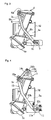
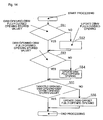
- Figs. 1 to 14 are diagrams for explaining an intake system for a motorcycle engine according to an embodiment of the present invention.
- Figs. 1 and 2 are a plan view and a front view of the intake system
- Figs. 3 and 4 are sectional side views of the intake system
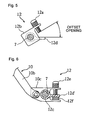
- Figs. 5 and 6 are enlarged view of main parts
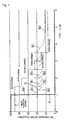
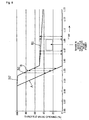
- Figs. 7 to 10 are characteristic charts of a throttle opening for explaining operations
- Fig. 11 is a block diagram
- Figs. 12 to 14 are flowcharts for explaining operations.
- reference numeral 1 denotes a carburetor unit constituting a hardware portion of the intake system of this embodiment.
- This carburetor unit 1 is formed by integrally combining first to fourth carburetors 2 to 5, which are connected to intake manifolds of first to fourth cylinders, with bolting.
- the respective carburetors 2 to 5 are formed by integrally combining first to fourth throttle valves 2b to 5b of a slide type that open and close to control passage areas of Venturi passages (intake passages) 2a to 5a, throttle bodies 2d to 5d incorporating the first to the fourth throttle valves 2b to 5b, and float chambers 2e to 5e.
- Valve shafts 2c to 5c, which slide the respective throttle valves 2b to 5b, form an identical straight line.
- the valve shafts 2c to 4c of the first to the third carburetors 2 to 4 are coupled to one another so as to rotate simultaneously, and the valve shaft 5c of the fourth carburetor 5 is adapted to rotate independently.
- a biasing spring 9a which biases the valve shafts 2c to 4c of the first to the third carburetors 2 to 4 to rotate to a fully-closed position, is disposed between the second carburetor 3 and the third carburetor 4.
- valve shafts 2c to 4c of the first to the third carburetors are coupled to a drive shaft 7 via a link mechanism 6.
- this link mechanism 6 has a structure in which an arm 6a fixed to the valve shaft 3c and an arm 6c fixed to the drive shaft 7 are coupled by a bar-like link 6b so as to be rotatable relatively.
- a throttle pulley 8 is mounted at the left end in Fig. 2 of the drive shaft 7 via an opening adjustment mechanism 9b so as to rotate with the drive shaft 7.
- the throttle pulley 8 is coupled to a throttle grip, which is mounted on a steering handle, by a throttle cable.
- the throttle valves 2b to 4b of the first to the third carburetors 2 to 4 synchronize to open and close the Venturi passages 2a to 4a.
- the throttle bodies 2d to 4d of the first to the third carburetors 2 to 4 serve as manually driven side throttle bodies in which throttle valves are driven to open and close by a manual rotational operation of the throttle grip by the rider. Therefore, according to circumstances, the first to the third throttle valves 2b to 4b are referred to as manually driven side throttle valves in this embodiment.
- valve shaft 5c of the fourth carburetor 5 is coupled to an output shaft 11a of an electric motor 11 via a link mechanism 10.
- this link mechanism 10 has a structure in which an arm 10a fixed to the valve shaft 5c and an arm 10c fixed to the output shaft 11a are coupled by a bar-like link 10b so as to be rotatable relatively.
- the throttle valve 5b of the fourth carburetor 5 opens and closes the Venturi passage 5a according to the rotation of the electric motor 11.
- the throttle body 5d of the fourth carburetor 5 serves as an electrically driven side throttle body in which a throttle valve is driven to open and close by the electric motor 11. Therefore, in this embodiment, according to circumstances, the fourth throttle valve 5b is referred to as an electrically driven side throttle valve.
- the drive shaft 7 and the output shaft 11a of the electric motor 11 are coupled by a mechanical return mechanism 12 that forcibly closes the electrically driven side throttle valve 5b within a predetermined return opening range (e.g., 50 degrees) following a closing operation of the manually driven side throttle valves 2b to 4b.
- a predetermined return opening range e.g. 50 degrees
- the return mechanism 12 has a detailed structure described below.
- a link member 12b implanted with a pressing bolt 12a is fixed at the right end of the drive shaft 7, and a cylindrical transmission member 12c is mounted further on a tip side of the drive shaft 7 than the link member 12 so as to be rotatable relatively.
- a pressing piece 12d is protrudingly provided in the transmission member 12c so as to be able to be pressed by the pressing volt 12a.
- a pressing piece 12d' which is protrudingly provided in the transmission member 12c, is coupled to the arm 10c of the link mechanism 10 via a transmission bolt 12e and a spring 12f.
- Figs. 5 and 6 show a state in the case in which the first to the fourth throttle valves 2b to 5b are in a fully-opened state.
- an offset opening of about 30 degrees is formed between the pressing bolt 12a and the pressing piece 12d.
- the pressing bolt 12a does not come into abutment against the pressing piece 12d while the manually driven side throttle valves 2b to 4b close about 30 degrees from a fully opened position. Therefore, it is not until the manually driven side throttle valves 2b to 4b rotate about 30 degrees or more from the fully opened position that the transmission member 12c also rotates. This rotation starts forcibly close the electrically driven side throttle valve 5b from the pressing piece 12d' via the arm 10c, the link 10b, and the arm 10a.
- the electrically driven side throttle valve 5b is still located at position with a return opening of about 45% at a point when the manually driven side throttle valves 2b to 4b are fully closed.
- a sensor 13 which detects an opening of the throttle valve 2b, is mounted at the left end in Fig. 1 of the valve shaft 2c of the manually driven side throttle valve 2b of the first carburetor 2.
- an electrically driven side opening sensor 14 which detects an opening of the electrically driven side throttle valve 5b, is disposed on an upper end face of the fourth carburetor 5.
- An arm 14b is attached to an input shaft 14a of this electrically driven side opening sensor 14.
- the arm 14b is coupled to the arm 10a of the link mechanism 10 via a link 14c so as to be rotatable relatively.
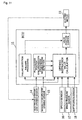
- the system of this embodiment includes an ECU 15 that functions as opening control means for the electrically driven side throttle valve 5b. Detection signals from the manually driven side opening sensor 13, the electrically driven side opening sensor 14, a vehicle speed sensor 16, a brake pressure sensor 17, and a shift position sensor 18 are inputted to this ECU 15.
- the ECU 15 calculates an opening instruction value of the electrically driven side throttle valve 5b according to a vehicle drive state and outputs a control signal for realizing the opening instruction value to the electric motor 11.
- the ECU 15 has a failsafe processing function for performing failure detection for a valve drive mechanism by an electric motor on the basis of the detection signals, a synchronizing processing function for learning fully-closed positions of the manually driven side throttle valves and the electrically driven throttle valve to make both the fully-closed positions identical, and a movable range detection processing function for learning fully opened and fully-closed positions of the electrically driven side throttle valve 5b and a return opening by the return mechanism 12 and performing electrically driven side throttle valve driving by the electric motor 11 only within the learned opening range.
- throttle valve opening control shown in Fig. 7 is performed.
- the manually driven side throttle valves 2b to 4b are fully closed immediately (actually, about 0.05 seconds are necessary as described later) by the throttle grip fully closing operation (see a characteristic curve A).
- the electrically driven side throttle valve 5b is forcibly closed to the vicinity of an opening 45% with a delay of very short time by the function of the return mechanism 12 (see B0 of a characteristic curve B). Thereafter, the electrically driven side throttle valve 5b is closed in a manner delayed by a first time constant by the function of the ECU 15 (see B1 of the characteristic curve B), temporarily opened to a shift-down time opening (e.g., about 45%, B2' of the characteristic curve B) when the motorcycle is decelerated from the sixth speed to the fifth speed, closed again in a manner delayed by the first time constant, and finally regulated to a regulated opening equivalent to about 20% of the full open (see B3 of the characteristic curve B).
- a shift-down time opening e.g., about 45%, B2' of the characteristic curve B
- Fig. 8 shows an instance when the throttle grip is closed in enlargement (with a time axis extended). That is, the manually driven side throttle valves 2b to 4b start closing as the throttle grip is closed, according to elapse of time corresponding to the offset opening (transmission free range) in the return mechanism 12 (see B0' in Fig. 8), the electrically driven side throttle valve 5b also starts closing. When the manually driven side throttle valves are fully closed, the electrically driven side throttle valve has an opening of about 45%.
- the forcible closing operation ends, and after that, the electrically driven side throttle vale closes in a manner delayed by the first time constant (slowly) according to the control of the ECU 15.
- the ECU 15 is adapted to change the first time constant and the regulated opening according to a driving condition.
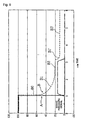
- Fig. 9 shows a state in which the first time constant and the regulated opening are changed from the time when the brake is actuated to the time when the brake is not actuated.
- a delay by the first time constant (B1) at the time when the brake is actuated (when a brake pressure signal of a front wheel braking device is equal to or higher than a predetermined threshold value) is changed so as to be larger than a delay by a time constant (B1') at the time when the brake is not actuated (a brake pressure signal is lower than the threshold value), that is, such that the electrically driven side throttle valve closes more slowly at the time of braking than at the time of non-braking.
- the regulated opening (B3) at the time when the brake is actuated is changed so as to be larger than a regulated opening (B3') at the time of non-actuation.
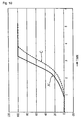
- the ECU 15 is adapted to open the electrically driven side throttle valve 5b in a manner delayed by a second time constant as the manually driven side throttle valves 2b to 4b open, that is, at the time of acceleration (see a characteristic curve C in Fig. 10). Note that it is needless to mention that various modifications canbe adopted as the characteristic curve C by selecting the second time constant appropriately.
- DBW means the electrically driven side throttle valve
- throttle means the manually driven side throttle valves.
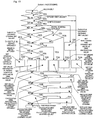
- step S1 an opening at the time of full close of the electrically driven side throttle valve (DBW) has not been learned (step S1)
- step S2 it is judged whether a vehicle speed does not exceed a set value (learning time lower limit speed) and an opening of the manually driven throttle valves exceeds a set value (learning time lower limit opening) (step S2). If both the vehicle speed and the manually driven side throttle valve opening do not exceed the set values, that is, if the speed is sufficiently low and the throttle opening is sufficiently small, the ECU 15 outputs a duty in a direction for closing the electrically driven side throttle valve (step S3).
- step S3 a duty in a direction for closing the electrically driven side throttle valve
- the ECU 15 keeps the stored value as it is, and if the opening of the electrically driven side throttle valve is smaller than the fully-closed opening stored value, the ECU 15 updates the fully-closed opening stored value to the detected value (steps S4 and S5).
- the ECU 15 ends fully-closed opening learning for the electrically driven side throttle valve (steps S6 and S7). Then, the ECU 15 performs alignment of fully-closed positions on the basis of the manually driven side throttle valve fully-closed opening and the learned fully-closed opening of the electrically driven side throttle valve (step S8).
- step S1 If the fully-closed opening of the electrically driven side throttle valve has been learned in step S1, the ECU 15 performs failure detection for the electrically driven side opening sensor and the electric motor (step S9). If failures have occurred, the ECU 15 outputs a duty in a direction for closing the electrically driven side throttle valve, and stores and displays information on these failures (steps S10 to S12).
- the ECU 15 performs instruction value calculation processing for an electrically driven side throttle valve and movable range detection processing for the electrically driven side throttle valve to be described later and outputs a duty corresponding to a difference between the instruction value and the detection value of the electrically driven side throttle valve (steps S13 to S15).
- step S21 a shift position of a transmission is not neutral (step S21), a vehicle speed is not equal to or lower than the set value (control lower limit speed) (step S22), a shift-down operation is not being performed (step S23), a brake is not being actuated (step S24), an electrically driven side throttle valve opening is not smaller than the regulated opening (B3) (step S25), a throttle valve is not being opened (step S26), and the brake is not being applied again (step S27), that is, a motorcycle is running at a normal constant speed, the ECU 15 sets a value obtained by applying a predetermined filter to the detected opening of the manual side throttle valves, that is, the opening, which is obtained by delaying the opening of the manual side throttle valves by the first time constant (B1), as the opening instruction value of the electrically driven side throttle valve (step S28).
- step S30 If the shift position is neutral in step S21, and if the vehicle speed is lower than the control lower limit speed in step S22, the ECU 15 sets the same opening as the manually driven side throttle valve opening as the electrically driven side throttle valve opening instruction value (step S29). If the shift-down operation is performed in step S23, the ECU 15 sets the shift-down time opening set value (B2' in Fig. 7) as the opening instruction value of the electrically driven side throttle valve (step S30).
- step S24 if the brake is being applied in step S24, and when the detected manually driven side throttle valve opening is smaller than the brake time regulated opening (see B3 in Fig. 9), the ECU 15 sets the regulated opening as the opening instruction value of the electrically driven side throttle valve (steps S31 and S32). When the detected manually driven side throttle valve opening is not smaller than the brake time regulated opening, the ECU 15 returns to step S26.
- step S25 if the manually driven side throttle valve opening is smaller than the regulated value (see B3 in Fig. 7) in step S25, the ECU 15 sets this regulated value as the opening instruction value of the electrically driven side throttle valve (step S33).
- the ECU 15 sets an opening, which is obtained by delaying the detected manually driven side throttle valve opening by the second time constant (an opening obtained by filtering the manually driven side throttle valve opening, see the curve C in Fig. 10), as the opening instruction value of the electrically driven side throttle valve (step S34). If the brake is being applied in step S27, the ECU 15 sets an opening, which is obtained by delaying by the brake actuation time constant (B1 in Fig. 9) (an opening obtained by filtering), as the instruction value (step S35).
- the ECU 15 compares the instruction value calculated by each of the steps with a sum of the manually driven side throttle vale opening and the offset opening. If the instruction value is not larger than this sum, the ECU 15 sets the calculated value as the instruction value directly, and if the instruction value is larger than the sum, the ECU 15 replaces the instruction value with this sum (steps S36 and S37).
- the ECU 15 compares the calculated instruction value with the fully-opened opening learned value of the electrically driven side throttle valve. If the instruction value is not larger than this learned value, the ECU 15 sets the calculated value as the instruction value directly, and if the instruction value is larger than this learned value, the ECU 15 replaces the instruction value with the learned value (steps S38 and S39).
- the ECU 15 compares the calculated instruction value with the fully-closed side learned value of the electrically driven side throttle valve. If the instruction value is not smaller than this learned value, the ECU 15 sets the calculated value as the instruction value directly, and if the instruction value is smaller than this learned value, the ECU 15 replaces the instruction value with the learned value (steps S40 and S41).
- Detection processing for a movable range of the electrically driven side throttle valve will explained on the basis of Fig. 14.
- a detected electrically driven side throttle valve opening is compared with a fully-closed opening stored value of the electrically driven side throttle valve. If the detected value is larger than the stored value, the stored value is not changed, and if the detected value is not larger (is smaller) than the stored value, the stored value is replaced with the detected value (steps S51 and S52).
- the detected electrically driven side throttle valve opening is compared with a fully-opened opening stored value of the electrically driven side throttle valve. If the detected value is smaller than the stored value, the stored value is not changed, and if the detected value is not smaller (is larger) than the stored value, the stored value is replaced with the detected value (steps S53 and S54).
- a difference between the detected manually driven side throttle valve opening and the electrically driven side throttle valve opening is compared with an offset opening stored value of the electrically driven side throttle valve. If the difference is smaller than the stored value, the stored value is not changed, and if the difference is not smaller (is larger) than the stored value, the offset opening stored value is replaced with this difference (steps S53 and S54).
- an opening of the electrically driven side throttle valve 5b is controlled such that a specific output characteristic corresponding to an operating state of an engine is obtained.
- a specific output characteristic corresponding to an operating state of an engine is obtained.
- the electrically driven side throttle valve 5b is closed in a manner delayed by the first time constant (see B1 in Fig. 7) as the manually driven side throttle valves 2b to 4b close according to a throttle grip operation of the rider, and not to close the regulated opening (B3 in Fig. 7).
- the electrically driven side throttle valve 5b closes later than the throttle grip operation, and generation of engine brake can be controlled so much more for that. Therefore, the rider is not required an excessively high level driving operation, and a driving operation is facilitated.
- the first time constant at the time when the brake is actuated (B1 in Fig. 9) is changed to a time constant that makes the delay larger than that of the time constant at the time when the brake is not actuated (B1' in Fig. 9), and the regulated opening at the time when the brake is actuated (B3) is changed so as to be larger than the regulated opening at the time when the brake is not actuated (B3').
- the rider actuates the brake device generation of engine brake is controlled stronger than in the case in which the rider does not actuate the brake device, and a driving operation can be facilitated.
- the electrically driven side throttle valve 5b is temporarily opened to a predetermined shift-down time opening (B2' in Fig. 7) and subsequently closed in a manner delayed by the first time constant (B1).
- the electrically driven side throttle valve 5b is opened in a manner delayed by a second time constant (see a characteristic curve C in Fig. 10) as the manually driven side throttle valves 2b to 4b open.
- an opening of the electrically driven side throttle valve 5b is made identical with an opening of the manually driven side throttle valves 2b to 4b when a vehicle speed is lower than a predetermined control lower limit speed or when a gear is in neutral.
- the intake system learns fully-closed positions of the manually driven side throttle valves 2b to 4b and the electrically driven side throttle valve 5b, and the fully-closed positions are made identical with each other according to this learned value.
- both the throttle valves can be synchronized, and control accuracy can be improved.
- the intake system learns a fully-closed position and a fully-opened position of the electrically driven side throttle valve 5b and drives the electric motor 11 only between the learned fully-closed position and fully opened position.
- the problem in that the electrically driven side throttle valve 5b is driven exceeding the fully-closed position and the fully-opened position canbe avoided, and breakage due to further energization in a lock state of the electric motor 11 can be avoided.
- the intake system further includes the mechanical return mechanism 12 that forcibly closes the electrically driven side throttle valve 5b to a predetermined return opening as the manually driven side throttle valves 2b to 4b close.
- control by the electric motor 11 is also unnecessary for the electrically driven side throttle valve 5b up to the return opening, and control for an opening of the electrically driven throttle valve can be simplified.
- the intake system learns a return opening range, in which the electrically driven side throttle valve 5b is forcibly closed by the return mechanism 12, and drives the electric motor 11 only in an opening range excluding this return opening range.
- a return opening range in which the electrically driven side throttle valve 5b is forcibly closed by the return mechanism 12, and drives the electric motor 11 only in an opening range excluding this return opening range.
- the intake system of the carburetor type is explained in the embodiment, the present invention can also be applied to an intake system of a fuel injection type.
- throttle bodies are formed separately and combined by a bolt, it is also possible to form all or a part of the throttle bodies integrally.
- the plural throttle bodies include manually driven side throttle bodies and electrically driven side throttle body, and the intake system controls an opening of the electrically driven side throttle valve such that a specific output characteristic corresponding to an operating state of an engine is obtained.
- generation of engine brake for example, in the case in which a throttle grip is closed suddenly or in the case in which a gear is shifted down can be controlled, or rising of an engine torque in the case in which the throttle grip is opened suddenly can be controlled.
- An output characteristic corresponding to a driving condition can be obtained without requiring a rider of an excessively high level driving operation, and a driving operation can be facilitated.
- the electrically driven side throttle valve is closed in a manner delayed by a first time constant as the manually driven side throttle valves close.
- the electrically driven side throttle valve in the case in which the electrically driven side throttle valve is closed in a manner delayed by a first time constant as the manually driven side throttle valves close, the electrically driven side throttle valve is closed in a range up to a predetermined regulated opening.
- generation of engine brake can be controlled more surely.
- a delay by the first time constant at the time when the brake is actuated is changed so as to be larger than the delay by the first time constant at the time when the brake is not actuated or the regulated opening at the time when the brake is actuated is changed so as to be larger than a regulated opening at the time when the brake is not actuated.
- the electrically driven side throttle valve is temporarily opened to a predetermined shift-down time opening and subsequently closed in a manner delayed by the first time constant.
- a sudden increase in engine brake at the time of shift-down can be controlled, and shock at the time of shift-down can be eased to facilitate deriving.
- the electrically driven side throttle valve is opened in a manner delayed by a second time constant as the manually driven side throttle valves open.
- an opening of the electrically driven side throttle valve is made identical with an opening of the manually driven side throttle valves when a vehicle speed is lower than a predetermined control lower limit speed or when a gear is in neutral.
- the intake system learns fully-closed positions of the manually driven side throttle valves and the electrically driven side throttle valve when a vehicle speed is lower than a predetermined learning time speed and an opening of the manually driven side throttle valves is smaller than a predetermined learning time opening.
- the learning of the fully-closed positions can be performed surely.
- the fully-closed positions are made identical with each other according to the learned value, whereby even if there is an error between a manually driven side throttle opening sensor and an electrically driven side throttle opening sensor, both the throttle valves canbe synchronized, and control accuracy can be improved.
- the intake system learns a fully-closed position and a fully-opened position of the electrically driven side throttle valve and drives the electric motor only between the learned fully-closed position and fully opened position.
- lock breakage of the electric motor which is caused by driving the electrically driven side throttle valve exceeding the fully-closed position and the fully-opened position, can be avoided.
- the intake system further includes a mechanical return mechanism that forcibly closes the electrically driven side throttle valve to a predetermined return opening as the manually driven side throttle valves close.
- a mechanical return mechanism that forcibly closes the electrically driven side throttle valve to a predetermined return opening as the manually driven side throttle valves close.
- the intake system drives the electric motor only in an opening range excluding a return opening range in which the electrically driven side throttle valve is forcibly closed by the return mechanism.
- the intake system drives the electric motor only in an opening range excluding a return opening range in which the electrically driven side throttle valve is forcibly closed by the return mechanism.
Landscapes
- Engineering & Computer Science (AREA)
- Chemical & Material Sciences (AREA)
- Combustion & Propulsion (AREA)
- Mechanical Engineering (AREA)
- General Engineering & Computer Science (AREA)
- Control Of Throttle Valves Provided In The Intake System Or In The Exhaust System (AREA)
- Electrical Control Of Air Or Fuel Supplied To Internal-Combustion Engine (AREA)
- Combined Controls Of Internal Combustion Engines (AREA)
- Characterised By The Charging Evacuation (AREA)
- Control Of Vehicle Engines Or Engines For Specific Uses (AREA)
- Motor Or Generator Cooling System (AREA)
Abstract
Description
Claims (11)
- An intake system for an engine that includes plural throttle bodies having throttle valves for changing an intake passage area, characterized in that the plural throttle bodies are constituted by manually driven side throttle bodies having manually driven side throttlevalves, which are opened and closed by a throttle operation of a rider, and an electrically driven side throttle body having an electrically driven side throttle valve, which is opened and closed by an electric motor, and the intake system includes valve opening control means that controls an opening of the electrically driven side throttle valve such that a specific output characteristic corresponding to an operating state of an engine is obtained.
- An intake system for an engine according to claim 1, characterized in that the valve opening control means closes the electrically driven side throttle valve in a manner delayed by a first time constant as the manually driven side throttle valves close.
- An intake system for an engine according to claim 2, characterized in that the valve opening control means closes the electrically driven side throttle valve in a manner delayed by a first time constant within a range up to a predetermined regulated opening as the manually driven side throttle valves close.
- An intake system for an engine according to claim 2 or 3, characterized in that the valve opening control means changes a delay by the first time constant at the time when the brake is actuated so as to be larger than the delay by the first time constant at the time when the brake is not actuated or changes the regulated opening at the time when the brake is actuated so as to be larger than a regulated opening at the time when the brake is not actuated.
- An intake system for an engine according to claim 2 or 4, characterized in that the valve opening control means temporarily opens the electrically driven side throttle valve to a predetermined shift-down time opening at the time of shift-down and subsequently closes the electrically driven side throttle valve in a manner delayed by a the first time constant.
- An intake system for an engine according to claim 1, characterized in that the valve opening control means opens the electrically driven side throttle valve in a manner delayed by a second time constant as the manually driven side throttle valves open.
- An intake system for an engine according to any one of claims 1 to 6, characterized in that the valve opening control means makes an opening of the electrically driven side throttle valve identical with an opening of the manually driven side throttle valves when a vehicle speed is lower than a predetermined control lower limit speed or a gear is in neutral.
- An intake system for an engine according to any one of claims 1 to 7, characterized in that the intake system learns fully-closed positions of the manually driven side throttle valves and the electrically driven side throttle valve to make the fully-closed positions identical with each other when a vehicle speed is lower than a predetermined learning time speed and an opening of the manually driven side throttle valves is smaller than a predetermined learning time opening.
- An intake system according to any one of claims 1 to 8, characterized in that the intake system learns a fully-closed position and a fully-opened position of the electrically driven side throttle valve and drives the electric motor only between the learned fully-closed position and fully opened position.
- An intake system for an engine according to any one of claims 1 to 9, characterized in that the intake system further includes a mechanical return mechanism that forcibly closes the electrically driven side throttle valve to a predetermined return opening as the manually driven side throttle valves close.
- An intake system for an engine according to claim 10, characterized in that the intake system learns a return opening range, in which the electrically driven side throttle valve is forcibly closed by the return mechanism, and drives the electric motor only in an opening range excluding the learned return opening range.
Applications Claiming Priority (3)
| Application Number | Priority Date | Filing Date | Title |
|---|---|---|---|
| JP2002178279 | 2002-06-19 | ||
| JP2002178279 | 2002-06-19 | ||
| PCT/JP2003/007239 WO2004001209A1 (en) | 2002-06-19 | 2003-06-06 | Air intake device for engine |
Publications (3)
| Publication Number | Publication Date |
|---|---|
| EP1533497A1 true EP1533497A1 (en) | 2005-05-25 |
| EP1533497A4 EP1533497A4 (en) | 2009-08-12 |
| EP1533497B1 EP1533497B1 (en) | 2011-01-19 |
Family
ID=29996513
Family Applications (1)
| Application Number | Title | Priority Date | Filing Date |
|---|---|---|---|
| EP03730861A Expired - Lifetime EP1533497B1 (en) | 2002-06-19 | 2003-06-06 | Air intake device for engine |
Country Status (8)
| Country | Link |
|---|---|
| US (1) | US7112160B2 (en) |
| EP (1) | EP1533497B1 (en) |
| JP (1) | JP3984614B2 (en) |
| CN (1) | CN100400825C (en) |
| AT (1) | ATE496207T1 (en) |
| AU (1) | AU2003242034A1 (en) |
| DE (1) | DE60335804D1 (en) |
| WO (1) | WO2004001209A1 (en) |
Cited By (1)
| Publication number | Priority date | Publication date | Assignee | Title |
|---|---|---|---|---|
| EP2239443A1 (en) * | 2009-03-31 | 2010-10-13 | Honda Motor Co., Ltd. | Throttle control system |
Families Citing this family (12)
| Publication number | Priority date | Publication date | Assignee | Title |
|---|---|---|---|---|
| JP4318522B2 (en) * | 2003-10-06 | 2009-08-26 | 本田技研工業株式会社 | Multi-cylinder internal combustion engine |
| JP2007154737A (en) * | 2005-12-05 | 2007-06-21 | Denso Corp | Control device for vehicle engine |
| JP4634355B2 (en) * | 2006-09-26 | 2011-02-16 | 本田技研工業株式会社 | Throttle control device for internal combustion engine for motorcycle |
| JP4673876B2 (en) * | 2007-09-29 | 2011-04-20 | 本田技研工業株式会社 | Intake air amount control device for V-type multi-cylinder engine |
| FR2928758B1 (en) | 2008-03-13 | 2012-10-12 | Mbda France | DATA ROUTING SYSTEM. |
| BR112014017903B1 (en) * | 2012-01-20 | 2021-05-18 | Cnh Industrial America Llc | method for controlling a displacement control system for a vehicle and displacement control system for a vehicle |
| JP5828517B2 (en) * | 2012-03-28 | 2015-12-09 | 本田技研工業株式会社 | Intake control device for multi-cylinder engine |
| JP5583258B1 (en) * | 2013-09-26 | 2014-09-03 | 三菱電機株式会社 | Throttle learning control device |
| US9714613B2 (en) * | 2015-08-10 | 2017-07-25 | Ford Global Technologies, Llc | Throttle adjustment during deceleration fuel shut off |
| JP6702358B2 (en) * | 2018-06-08 | 2020-06-03 | スズキ株式会社 | Speed controller |
| JP7086132B2 (en) * | 2020-04-30 | 2022-06-17 | 本田技研工業株式会社 | Control device |
| US11448144B1 (en) * | 2021-03-16 | 2022-09-20 | Ford Global Technologies, Llc | Methods and system for controlling an engine with two throttles |
Family Cites Families (16)
| Publication number | Priority date | Publication date | Assignee | Title |
|---|---|---|---|---|
| DE3637561A1 (en) | 1985-11-18 | 1987-05-21 | Lisec Peter | Device for fitting flexible spacers on glass panels |
| JPS632839U (en) * | 1986-06-25 | 1988-01-09 | ||
| GB8723547D0 (en) * | 1987-10-07 | 1987-11-11 | Automotive Prod Plc | Clutch control |
| JPH0799097B2 (en) * | 1987-12-22 | 1995-10-25 | 日産自動車株式会社 | Vehicle drive force control device |
| US5151861A (en) * | 1989-02-22 | 1992-09-29 | Mitsubishi Jidosha Kogyo Kabushiki Kaisha | Vehicle engine output control method and vehicle engine |
| JPH0751903B2 (en) * | 1989-09-05 | 1995-06-05 | 日産自動車株式会社 | Vehicle engine output control device |
| JPH07112789B2 (en) * | 1989-10-24 | 1995-12-06 | 日産自動車株式会社 | Vehicle running control device |
| JP2598333B2 (en) * | 1990-06-26 | 1997-04-09 | 日産自動車株式会社 | Throttle opening detector |
| JPH05149154A (en) * | 1991-11-27 | 1993-06-15 | Hitachi Ltd | Valve device |
| JP3189355B2 (en) * | 1992-02-07 | 2001-07-16 | トヨタ自動車株式会社 | Acceleration slip control device for vehicles with automatic transmission |
| JPH06330780A (en) * | 1993-05-21 | 1994-11-29 | Toyota Motor Corp | Computing device for vehicle and computing method for vehicle |
| US5520146A (en) * | 1995-03-03 | 1996-05-28 | Ford Motor Company | Electronic control system for single and series throttle valves |
| JPH11241636A (en) * | 1998-02-26 | 1999-09-07 | Yamaha Motor Co Ltd | 4-cycle engine intake system |
| JP2001090585A (en) * | 1999-09-22 | 2001-04-03 | Denso Corp | Throttle control device for internal combustion engine |
| JP2002081328A (en) * | 2000-09-06 | 2002-03-22 | Mikuni Corp | Throttle body for internal combustion engine |
| JP3925073B2 (en) * | 2000-10-27 | 2007-06-06 | スズキ株式会社 | Intake control device for fuel injection engine |
-
2003
- 2003-06-06 US US10/510,676 patent/US7112160B2/en not_active Expired - Lifetime
- 2003-06-06 WO PCT/JP2003/007239 patent/WO2004001209A1/en not_active Ceased
- 2003-06-06 JP JP2004515479A patent/JP3984614B2/en not_active Expired - Lifetime
- 2003-06-06 AT AT03730861T patent/ATE496207T1/en not_active IP Right Cessation
- 2003-06-06 DE DE60335804T patent/DE60335804D1/en not_active Expired - Lifetime
- 2003-06-06 AU AU2003242034A patent/AU2003242034A1/en not_active Abandoned
- 2003-06-06 EP EP03730861A patent/EP1533497B1/en not_active Expired - Lifetime
- 2003-06-06 CN CNB038095637A patent/CN100400825C/en not_active Expired - Fee Related
Cited By (2)
| Publication number | Priority date | Publication date | Assignee | Title |
|---|---|---|---|---|
| EP2239443A1 (en) * | 2009-03-31 | 2010-10-13 | Honda Motor Co., Ltd. | Throttle control system |
| US8612116B2 (en) | 2009-03-31 | 2013-12-17 | Honda Motor Co., Ltd. | Throttle control system |
Also Published As
| Publication number | Publication date |
|---|---|
| JPWO2004001209A1 (en) | 2005-10-20 |
| EP1533497A4 (en) | 2009-08-12 |
| EP1533497B1 (en) | 2011-01-19 |
| JP3984614B2 (en) | 2007-10-03 |
| US7112160B2 (en) | 2006-09-26 |
| ATE496207T1 (en) | 2011-02-15 |
| CN100400825C (en) | 2008-07-09 |
| US20050153816A1 (en) | 2005-07-14 |
| CN1650099A (en) | 2005-08-03 |
| AU2003242034A1 (en) | 2004-01-06 |
| WO2004001209A1 (en) | 2003-12-31 |
| DE60335804D1 (en) | 2011-03-03 |
Similar Documents
| Publication | Publication Date | Title |
|---|---|---|
| EP1533497A1 (en) | Air intake device for engine | |
| US4703823A (en) | Vehicle running control system | |
| US8160790B2 (en) | Vehicle speed control system and straddle-type vehicle | |
| US7267102B2 (en) | Engine control device and engine control method for straddle type vehicle | |
| US5060744A (en) | Device for controlling motor-operated throttle valve for automobiles | |
| JP4745258B2 (en) | Electronically controlled throttle device and motorcycle | |
| JP2009174516A (en) | Saddle riding vehicle | |
| US4860708A (en) | Throttle control system for automotive internal combustion engine | |
| US6450918B1 (en) | Synchronous meshing type automatic transmission control system | |
| EP1719891A2 (en) | Electronic throttle device | |
| JPH06299875A (en) | Control valve control device | |
| US7287511B2 (en) | Engine for leisure vehicle | |
| KR20030050446A (en) | Electronic throttle valve control system for vehicles | |
| US20030047167A1 (en) | Tandem valve type throttle body | |
| JPH07324640A (en) | Throttle control device for internal combustion engine | |
| JPH02230940A (en) | Throttle control device | |
| JP2001073840A (en) | Vehicle start control device | |
| JPH09303162A (en) | Compression pressure release type brake device | |
| JP3547619B2 (en) | Internal combustion engine control device | |
| JP3041156B2 (en) | Throttle valve control device for internal combustion engine | |
| JP2711674B2 (en) | Throttle valve opening control device | |
| JPH0612223Y2 (en) | Accelerator lever control device | |
| JP3070536B2 (en) | Control system for vehicle engine and automatic transmission | |
| JPH0612224Y2 (en) | Accelerator lever control device | |
| JPH0370839A (en) | Throttle driving controller |
Legal Events
| Date | Code | Title | Description |
|---|---|---|---|
| PUAI | Public reference made under article 153(3) epc to a published international application that has entered the european phase |
Free format text: ORIGINAL CODE: 0009012 |
|
| 17P | Request for examination filed |
Effective date: 20041216 |
|
| AK | Designated contracting states |
Kind code of ref document: A1 Designated state(s): AT BE BG CH CY CZ DE DK EE ES FI FR GB GR HU IE IT LI LU MC NL PT RO SE SI SK TR |
|
| AX | Request for extension of the european patent |
Extension state: AL LT LV MK |
|
| DAX | Request for extension of the european patent (deleted) | ||
| A4 | Supplementary search report drawn up and despatched |
Effective date: 20090713 |
|
| 17Q | First examination report despatched |
Effective date: 20091015 |
|
| GRAP | Despatch of communication of intention to grant a patent |
Free format text: ORIGINAL CODE: EPIDOSNIGR1 |
|
| RIC1 | Information provided on ipc code assigned before grant |
Ipc: F02D 9/02 20060101AFI20100604BHEP Ipc: F02D 11/02 20060101ALI20100604BHEP Ipc: F02D 11/10 20060101ALI20100604BHEP |
|
| GRAS | Grant fee paid |
Free format text: ORIGINAL CODE: EPIDOSNIGR3 |
|
| GRAA | (expected) grant |
Free format text: ORIGINAL CODE: 0009210 |
|
| AK | Designated contracting states |
Kind code of ref document: B1 Designated state(s): AT BE BG CH CY CZ DE DK EE ES FI FR GB GR HU IE IT LI LU MC NL PT RO SE SI SK TR |
|
| REG | Reference to a national code |
Ref country code: GB Ref legal event code: FG4D |
|
| REG | Reference to a national code |
Ref country code: CH Ref legal event code: EP |
|
| REG | Reference to a national code |
Ref country code: IE Ref legal event code: FG4D |
|
| REF | Corresponds to: |
Ref document number: 60335804 Country of ref document: DE Date of ref document: 20110303 Kind code of ref document: P |
|
| REG | Reference to a national code |
Ref country code: DE Ref legal event code: R096 Ref document number: 60335804 Country of ref document: DE Effective date: 20110303 |
|
| REG | Reference to a national code |
Ref country code: NL Ref legal event code: VDEP Effective date: 20110119 |
|
| PG25 | Lapsed in a contracting state [announced via postgrant information from national office to epo] |
Ref country code: ES Free format text: LAPSE BECAUSE OF FAILURE TO SUBMIT A TRANSLATION OF THE DESCRIPTION OR TO PAY THE FEE WITHIN THE PRESCRIBED TIME-LIMIT Effective date: 20110430 Ref country code: GR Free format text: LAPSE BECAUSE OF FAILURE TO SUBMIT A TRANSLATION OF THE DESCRIPTION OR TO PAY THE FEE WITHIN THE PRESCRIBED TIME-LIMIT Effective date: 20110420 Ref country code: PT Free format text: LAPSE BECAUSE OF FAILURE TO SUBMIT A TRANSLATION OF THE DESCRIPTION OR TO PAY THE FEE WITHIN THE PRESCRIBED TIME-LIMIT Effective date: 20110519 Ref country code: SE Free format text: LAPSE BECAUSE OF FAILURE TO SUBMIT A TRANSLATION OF THE DESCRIPTION OR TO PAY THE FEE WITHIN THE PRESCRIBED TIME-LIMIT Effective date: 20110119 |
|
| PG25 | Lapsed in a contracting state [announced via postgrant information from national office to epo] |
Ref country code: SI Free format text: LAPSE BECAUSE OF FAILURE TO SUBMIT A TRANSLATION OF THE DESCRIPTION OR TO PAY THE FEE WITHIN THE PRESCRIBED TIME-LIMIT Effective date: 20110119 Ref country code: FI Free format text: LAPSE BECAUSE OF FAILURE TO SUBMIT A TRANSLATION OF THE DESCRIPTION OR TO PAY THE FEE WITHIN THE PRESCRIBED TIME-LIMIT Effective date: 20110119 Ref country code: CY Free format text: LAPSE BECAUSE OF FAILURE TO SUBMIT A TRANSLATION OF THE DESCRIPTION OR TO PAY THE FEE WITHIN THE PRESCRIBED TIME-LIMIT Effective date: 20110119 Ref country code: NL Free format text: LAPSE BECAUSE OF FAILURE TO SUBMIT A TRANSLATION OF THE DESCRIPTION OR TO PAY THE FEE WITHIN THE PRESCRIBED TIME-LIMIT Effective date: 20110119 Ref country code: AT Free format text: LAPSE BECAUSE OF FAILURE TO SUBMIT A TRANSLATION OF THE DESCRIPTION OR TO PAY THE FEE WITHIN THE PRESCRIBED TIME-LIMIT Effective date: 20110119 Ref country code: BE Free format text: LAPSE BECAUSE OF FAILURE TO SUBMIT A TRANSLATION OF THE DESCRIPTION OR TO PAY THE FEE WITHIN THE PRESCRIBED TIME-LIMIT Effective date: 20110119 Ref country code: BG Free format text: LAPSE BECAUSE OF FAILURE TO SUBMIT A TRANSLATION OF THE DESCRIPTION OR TO PAY THE FEE WITHIN THE PRESCRIBED TIME-LIMIT Effective date: 20110419 |
|
| PG25 | Lapsed in a contracting state [announced via postgrant information from national office to epo] |
Ref country code: DK Free format text: LAPSE BECAUSE OF FAILURE TO SUBMIT A TRANSLATION OF THE DESCRIPTION OR TO PAY THE FEE WITHIN THE PRESCRIBED TIME-LIMIT Effective date: 20110119 Ref country code: EE Free format text: LAPSE BECAUSE OF FAILURE TO SUBMIT A TRANSLATION OF THE DESCRIPTION OR TO PAY THE FEE WITHIN THE PRESCRIBED TIME-LIMIT Effective date: 20110119 |
|
| PLBE | No opposition filed within time limit |
Free format text: ORIGINAL CODE: 0009261 |
|
| STAA | Information on the status of an ep patent application or granted ep patent |
Free format text: STATUS: NO OPPOSITION FILED WITHIN TIME LIMIT |
|
| PG25 | Lapsed in a contracting state [announced via postgrant information from national office to epo] |
Ref country code: CZ Free format text: LAPSE BECAUSE OF FAILURE TO SUBMIT A TRANSLATION OF THE DESCRIPTION OR TO PAY THE FEE WITHIN THE PRESCRIBED TIME-LIMIT Effective date: 20110119 Ref country code: SK Free format text: LAPSE BECAUSE OF FAILURE TO SUBMIT A TRANSLATION OF THE DESCRIPTION OR TO PAY THE FEE WITHIN THE PRESCRIBED TIME-LIMIT Effective date: 20110119 Ref country code: RO Free format text: LAPSE BECAUSE OF FAILURE TO SUBMIT A TRANSLATION OF THE DESCRIPTION OR TO PAY THE FEE WITHIN THE PRESCRIBED TIME-LIMIT Effective date: 20110119 |
|
| 26N | No opposition filed |
Effective date: 20111020 |
|
| PG25 | Lapsed in a contracting state [announced via postgrant information from national office to epo] |
Ref country code: IT Free format text: LAPSE BECAUSE OF FAILURE TO SUBMIT A TRANSLATION OF THE DESCRIPTION OR TO PAY THE FEE WITHIN THE PRESCRIBED TIME-LIMIT Effective date: 20110119 |
|
| REG | Reference to a national code |
Ref country code: CH Ref legal event code: PL |
|
| REG | Reference to a national code |
Ref country code: DE Ref legal event code: R097 Ref document number: 60335804 Country of ref document: DE Effective date: 20111020 |
|
| REG | Reference to a national code |
Ref country code: IE Ref legal event code: MM4A |
|
| PG25 | Lapsed in a contracting state [announced via postgrant information from national office to epo] |
Ref country code: IE Free format text: LAPSE BECAUSE OF NON-PAYMENT OF DUE FEES Effective date: 20110606 Ref country code: CH Free format text: LAPSE BECAUSE OF NON-PAYMENT OF DUE FEES Effective date: 20110630 Ref country code: LI Free format text: LAPSE BECAUSE OF NON-PAYMENT OF DUE FEES Effective date: 20110630 |
|
| REG | Reference to a national code |
Ref country code: AT Ref legal event code: MK05 Ref document number: 496207 Country of ref document: AT Kind code of ref document: T Effective date: 20110119 |
|
| PG25 | Lapsed in a contracting state [announced via postgrant information from national office to epo] |
Ref country code: MC Free format text: LAPSE BECAUSE OF NON-PAYMENT OF DUE FEES Effective date: 20110630 |
|
| PG25 | Lapsed in a contracting state [announced via postgrant information from national office to epo] |
Ref country code: LU Free format text: LAPSE BECAUSE OF NON-PAYMENT OF DUE FEES Effective date: 20110606 |
|
| PG25 | Lapsed in a contracting state [announced via postgrant information from national office to epo] |
Ref country code: TR Free format text: LAPSE BECAUSE OF FAILURE TO SUBMIT A TRANSLATION OF THE DESCRIPTION OR TO PAY THE FEE WITHIN THE PRESCRIBED TIME-LIMIT Effective date: 20110119 |
|
| PG25 | Lapsed in a contracting state [announced via postgrant information from national office to epo] |
Ref country code: HU Free format text: LAPSE BECAUSE OF FAILURE TO SUBMIT A TRANSLATION OF THE DESCRIPTION OR TO PAY THE FEE WITHIN THE PRESCRIBED TIME-LIMIT Effective date: 20110119 |
|
| REG | Reference to a national code |
Ref country code: FR Ref legal event code: PLFP Year of fee payment: 14 |
|
| REG | Reference to a national code |
Ref country code: FR Ref legal event code: PLFP Year of fee payment: 15 |
|
| REG | Reference to a national code |
Ref country code: FR Ref legal event code: PLFP Year of fee payment: 16 |
|
| PGFP | Annual fee paid to national office [announced via postgrant information from national office to epo] |
Ref country code: GB Payment date: 20220622 Year of fee payment: 20 Ref country code: DE Payment date: 20220620 Year of fee payment: 20 |
|
| PGFP | Annual fee paid to national office [announced via postgrant information from national office to epo] |
Ref country code: FR Payment date: 20220628 Year of fee payment: 20 |
|
| REG | Reference to a national code |
Ref country code: DE Ref legal event code: R071 Ref document number: 60335804 Country of ref document: DE |
|
| REG | Reference to a national code |
Ref country code: GB Ref legal event code: PE20 Expiry date: 20230605 |
|
| P01 | Opt-out of the competence of the unified patent court (upc) registered |
Effective date: 20230527 |
|
| PG25 | Lapsed in a contracting state [announced via postgrant information from national office to epo] |
Ref country code: GB Free format text: LAPSE BECAUSE OF EXPIRATION OF PROTECTION Effective date: 20230605 |