EP1533312A1 - Hetero-bicyclic compounds - Google Patents
Hetero-bicyclic compounds Download PDFInfo
- Publication number
- EP1533312A1 EP1533312A1 EP03760954A EP03760954A EP1533312A1 EP 1533312 A1 EP1533312 A1 EP 1533312A1 EP 03760954 A EP03760954 A EP 03760954A EP 03760954 A EP03760954 A EP 03760954A EP 1533312 A1 EP1533312 A1 EP 1533312A1
- Authority
- EP
- European Patent Office
- Prior art keywords
- substituted
- compound
- pharmaceutically acceptable
- unsubstituted
- acceptable salt
- Prior art date
- Legal status (The legal status is an assumption and is not a legal conclusion. Google has not performed a legal analysis and makes no representation as to the accuracy of the status listed.)
- Withdrawn
Links
- 0 C*N(*)C1=CC=C(C(N(*)*)=O)C2=N[C@@](Cc3ccccc3)CN12 Chemical compound C*N(*)C1=CC=C(C(N(*)*)=O)C2=N[C@@](Cc3ccccc3)CN12 0.000 description 1
Classifications
-
- C—CHEMISTRY; METALLURGY
- C07—ORGANIC CHEMISTRY
- C07D—HETEROCYCLIC COMPOUNDS
- C07D471/00—Heterocyclic compounds containing nitrogen atoms as the only ring hetero atoms in the condensed system, at least one ring being a six-membered ring with one nitrogen atom, not provided for by groups C07D451/00 - C07D463/00
- C07D471/02—Heterocyclic compounds containing nitrogen atoms as the only ring hetero atoms in the condensed system, at least one ring being a six-membered ring with one nitrogen atom, not provided for by groups C07D451/00 - C07D463/00 in which the condensed system contains two hetero rings
- C07D471/04—Ortho-condensed systems
-
- A—HUMAN NECESSITIES
- A61—MEDICAL OR VETERINARY SCIENCE; HYGIENE
- A61K—PREPARATIONS FOR MEDICAL, DENTAL OR TOILETRY PURPOSES
- A61K31/00—Medicinal preparations containing organic active ingredients
- A61K31/33—Heterocyclic compounds
- A61K31/395—Heterocyclic compounds having nitrogen as a ring hetero atom, e.g. guanethidine or rifamycins
- A61K31/435—Heterocyclic compounds having nitrogen as a ring hetero atom, e.g. guanethidine or rifamycins having six-membered rings with one nitrogen as the only ring hetero atom
- A61K31/4353—Heterocyclic compounds having nitrogen as a ring hetero atom, e.g. guanethidine or rifamycins having six-membered rings with one nitrogen as the only ring hetero atom ortho- or peri-condensed with heterocyclic ring systems
- A61K31/437—Heterocyclic compounds having nitrogen as a ring hetero atom, e.g. guanethidine or rifamycins having six-membered rings with one nitrogen as the only ring hetero atom ortho- or peri-condensed with heterocyclic ring systems the heterocyclic ring system containing a five-membered ring having nitrogen as a ring hetero atom, e.g. indolizine, beta-carboline
-
- A—HUMAN NECESSITIES
- A61—MEDICAL OR VETERINARY SCIENCE; HYGIENE
- A61K—PREPARATIONS FOR MEDICAL, DENTAL OR TOILETRY PURPOSES
- A61K31/00—Medicinal preparations containing organic active ingredients
- A61K31/33—Heterocyclic compounds
- A61K31/395—Heterocyclic compounds having nitrogen as a ring hetero atom, e.g. guanethidine or rifamycins
- A61K31/435—Heterocyclic compounds having nitrogen as a ring hetero atom, e.g. guanethidine or rifamycins having six-membered rings with one nitrogen as the only ring hetero atom
- A61K31/44—Non condensed pyridines; Hydrogenated derivatives thereof
- A61K31/445—Non condensed piperidines, e.g. piperocaine
-
- A—HUMAN NECESSITIES
- A61—MEDICAL OR VETERINARY SCIENCE; HYGIENE
- A61K—PREPARATIONS FOR MEDICAL, DENTAL OR TOILETRY PURPOSES
- A61K31/00—Medicinal preparations containing organic active ingredients
- A61K31/33—Heterocyclic compounds
- A61K31/395—Heterocyclic compounds having nitrogen as a ring hetero atom, e.g. guanethidine or rifamycins
- A61K31/435—Heterocyclic compounds having nitrogen as a ring hetero atom, e.g. guanethidine or rifamycins having six-membered rings with one nitrogen as the only ring hetero atom
- A61K31/44—Non condensed pyridines; Hydrogenated derivatives thereof
- A61K31/445—Non condensed piperidines, e.g. piperocaine
- A61K31/4453—Non condensed piperidines, e.g. piperocaine only substituted in position 1, e.g. propipocaine, diperodon
-
- A—HUMAN NECESSITIES
- A61—MEDICAL OR VETERINARY SCIENCE; HYGIENE
- A61K—PREPARATIONS FOR MEDICAL, DENTAL OR TOILETRY PURPOSES
- A61K31/00—Medicinal preparations containing organic active ingredients
- A61K31/33—Heterocyclic compounds
- A61K31/395—Heterocyclic compounds having nitrogen as a ring hetero atom, e.g. guanethidine or rifamycins
- A61K31/435—Heterocyclic compounds having nitrogen as a ring hetero atom, e.g. guanethidine or rifamycins having six-membered rings with one nitrogen as the only ring hetero atom
- A61K31/44—Non condensed pyridines; Hydrogenated derivatives thereof
- A61K31/445—Non condensed piperidines, e.g. piperocaine
- A61K31/4523—Non condensed piperidines, e.g. piperocaine containing further heterocyclic ring systems
- A61K31/4545—Non condensed piperidines, e.g. piperocaine containing further heterocyclic ring systems containing a six-membered ring with nitrogen as a ring hetero atom, e.g. pipamperone, anabasine
-
- A—HUMAN NECESSITIES
- A61—MEDICAL OR VETERINARY SCIENCE; HYGIENE
- A61K—PREPARATIONS FOR MEDICAL, DENTAL OR TOILETRY PURPOSES
- A61K31/00—Medicinal preparations containing organic active ingredients
- A61K31/33—Heterocyclic compounds
- A61K31/395—Heterocyclic compounds having nitrogen as a ring hetero atom, e.g. guanethidine or rifamycins
- A61K31/495—Heterocyclic compounds having nitrogen as a ring hetero atom, e.g. guanethidine or rifamycins having six-membered rings with two or more nitrogen atoms as the only ring heteroatoms, e.g. piperazine or tetrazines
- A61K31/496—Non-condensed piperazines containing further heterocyclic rings, e.g. rifampin, thiothixene or sparfloxacin
-
- A—HUMAN NECESSITIES
- A61—MEDICAL OR VETERINARY SCIENCE; HYGIENE
- A61K—PREPARATIONS FOR MEDICAL, DENTAL OR TOILETRY PURPOSES
- A61K31/00—Medicinal preparations containing organic active ingredients
- A61K31/33—Heterocyclic compounds
- A61K31/395—Heterocyclic compounds having nitrogen as a ring hetero atom, e.g. guanethidine or rifamycins
- A61K31/495—Heterocyclic compounds having nitrogen as a ring hetero atom, e.g. guanethidine or rifamycins having six-membered rings with two or more nitrogen atoms as the only ring heteroatoms, e.g. piperazine or tetrazines
- A61K31/505—Pyrimidines; Hydrogenated pyrimidines, e.g. trimethoprim
- A61K31/519—Pyrimidines; Hydrogenated pyrimidines, e.g. trimethoprim ortho- or peri-condensed with heterocyclic rings
-
- A—HUMAN NECESSITIES
- A61—MEDICAL OR VETERINARY SCIENCE; HYGIENE
- A61K—PREPARATIONS FOR MEDICAL, DENTAL OR TOILETRY PURPOSES
- A61K31/00—Medicinal preparations containing organic active ingredients
- A61K31/33—Heterocyclic compounds
- A61K31/395—Heterocyclic compounds having nitrogen as a ring hetero atom, e.g. guanethidine or rifamycins
- A61K31/535—Heterocyclic compounds having nitrogen as a ring hetero atom, e.g. guanethidine or rifamycins having six-membered rings with at least one nitrogen and one oxygen as the ring hetero atoms, e.g. 1,2-oxazines
- A61K31/5375—1,4-Oxazines, e.g. morpholine
- A61K31/5377—1,4-Oxazines, e.g. morpholine not condensed and containing further heterocyclic rings, e.g. timolol
-
- A—HUMAN NECESSITIES
- A61—MEDICAL OR VETERINARY SCIENCE; HYGIENE
- A61K—PREPARATIONS FOR MEDICAL, DENTAL OR TOILETRY PURPOSES
- A61K31/00—Medicinal preparations containing organic active ingredients
- A61K31/33—Heterocyclic compounds
- A61K31/395—Heterocyclic compounds having nitrogen as a ring hetero atom, e.g. guanethidine or rifamycins
- A61K31/55—Heterocyclic compounds having nitrogen as a ring hetero atom, e.g. guanethidine or rifamycins having seven-membered rings, e.g. azelastine, pentylenetetrazole
-
- A—HUMAN NECESSITIES
- A61—MEDICAL OR VETERINARY SCIENCE; HYGIENE
- A61P—SPECIFIC THERAPEUTIC ACTIVITY OF CHEMICAL COMPOUNDS OR MEDICINAL PREPARATIONS
- A61P13/00—Drugs for disorders of the urinary system
- A61P13/12—Drugs for disorders of the urinary system of the kidneys
-
- A—HUMAN NECESSITIES
- A61—MEDICAL OR VETERINARY SCIENCE; HYGIENE
- A61P—SPECIFIC THERAPEUTIC ACTIVITY OF CHEMICAL COMPOUNDS OR MEDICINAL PREPARATIONS
- A61P25/00—Drugs for disorders of the nervous system
-
- A—HUMAN NECESSITIES
- A61—MEDICAL OR VETERINARY SCIENCE; HYGIENE
- A61P—SPECIFIC THERAPEUTIC ACTIVITY OF CHEMICAL COMPOUNDS OR MEDICINAL PREPARATIONS
- A61P3/00—Drugs for disorders of the metabolism
- A61P3/08—Drugs for disorders of the metabolism for glucose homeostasis
- A61P3/10—Drugs for disorders of the metabolism for glucose homeostasis for hyperglycaemia, e.g. antidiabetics
-
- A—HUMAN NECESSITIES
- A61—MEDICAL OR VETERINARY SCIENCE; HYGIENE
- A61P—SPECIFIC THERAPEUTIC ACTIVITY OF CHEMICAL COMPOUNDS OR MEDICINAL PREPARATIONS
- A61P43/00—Drugs for specific purposes, not provided for in groups A61P1/00-A61P41/00
-
- A—HUMAN NECESSITIES
- A61—MEDICAL OR VETERINARY SCIENCE; HYGIENE
- A61P—SPECIFIC THERAPEUTIC ACTIVITY OF CHEMICAL COMPOUNDS OR MEDICINAL PREPARATIONS
- A61P5/00—Drugs for disorders of the endocrine system
- A61P5/48—Drugs for disorders of the endocrine system of the pancreatic hormones
- A61P5/50—Drugs for disorders of the endocrine system of the pancreatic hormones for increasing or potentiating the activity of insulin
-
- A—HUMAN NECESSITIES
- A61—MEDICAL OR VETERINARY SCIENCE; HYGIENE
- A61P—SPECIFIC THERAPEUTIC ACTIVITY OF CHEMICAL COMPOUNDS OR MEDICINAL PREPARATIONS
- A61P9/00—Drugs for disorders of the cardiovascular system
- A61P9/10—Drugs for disorders of the cardiovascular system for treating ischaemic or atherosclerotic diseases, e.g. antianginal drugs, coronary vasodilators, drugs for myocardial infarction, retinopathy, cerebrovascula insufficiency, renal arteriosclerosis
-
- C—CHEMISTRY; METALLURGY
- C07—ORGANIC CHEMISTRY
- C07D—HETEROCYCLIC COMPOUNDS
- C07D487/00—Heterocyclic compounds containing nitrogen atoms as the only ring hetero atoms in the condensed system, not provided for by groups C07D451/00 - C07D477/00
- C07D487/02—Heterocyclic compounds containing nitrogen atoms as the only ring hetero atoms in the condensed system, not provided for by groups C07D451/00 - C07D477/00 in which the condensed system contains two hetero rings
- C07D487/04—Ortho-condensed systems
Definitions
- the present invention relates to heterobicyclic compounds or pharmaceutically acceptable salts thereof which have glucose concentration-dependent insulin secretion promoting action or suitable hypoglycemic action and is useful as a therapeutic agent for diabetes.
- Diabetes is caused by a metabolic abnormality mainly of glycometabolism, resulting from insufficient insulin secretion, decreased sensitivity of target cells of insulin or the like, and principally characterized by noticeable hyperglycemia. If the hyperglycemia continues for a long period of time, serious complications arise in various organs and nerves, such as retinopathy, nephropathy, or neuropathy, which are caused mainly by vascular lesion. Therefore, for the treatment of diabetes, it is extremely important to control and maintain a blood glucose level at a normal level, and methods for that purpose have been studied since old days.
- non-insulin dependent diabetes mellitus For a type of diabetes where onset is gradual and insulin therapy is not necessarily required for life support (non-insulin dependent diabetes mellitus: NIDDM), a blood glucose level can be controlled by combination of exercise therapy and drug therapy.
- drugs insulin secretion promoters, one of orally available hypoglycemic agents, have widely been used clinically.
- currently available insulin secretion promoters all promote insulin secretion independent of a glucose level, they cause problems of severe hypoglycemia or insufficient control of blood glucose if doses are not appropriate, and are not fully satisfactory drugs.
- a hypoglycemic agent can be provided that is capable of promoting insulin secretion depending on a blood glucose level, the agent is expected to be extremely useful for blood glucose control of patients suffering from diabetes because the risk of hypoglycemia due to an excess dosage can be avoided.
- WO01/47931 discloses that condensed purine derivatives have insulin secretion promoting action and hypoglycemic action.
- An object of the present invention is to provide a compound useful for preventive and/or therapeutic treatment of diabetes or complications of diabetes.
- the present invention thus relates to the following (1) to (24).
- Compound (I) the compounds represented by Formula (I) are referred to as Compound (I). The same shall apply to the compounds of the other formula numbers.
- lower alkyl and the lower alkyl moieties of the lower alkoxy, lower alkoxycarbonyl, mono or di(lower alkyl)amino, lower alkanoyl, lower alkanoyloxy, and lower alkanoylamino include, for example, straight-chain, branched, or cyclic alkyl, as well as a combination thereof, which have 1 to 10 carbon atoms, such as methyl, ethyl, propyl, isopropyl, cyclopropylmethyl, butyl, sec-butyl, tert -butyl, cyclobutyl, pentyl, neopentyl, cyclopentyl, hexyl, cyclohexyl, cyclohexylmethyl, heptyl, cycloheptyl, octyl, cyclooctyl, nonyl, decyl and the like.
- lower alkenyl examples include, for example, straight-chain, branched, or cyclic alkenyl, as well as a combination thereof, which have 3 to 10 carbon atoms, such as allyl, 2-butenyl, 3-butenyl, 4-pentenyl, 2-(1-cyclohexenyl)ethyl, 6-octenyl, 2,6-octadienyl, decenyl and the like.
- lower alkynyl examples include, for example, straight-chain or branched alkynyl which have 3 to 6 carbon atoms, such as propargyl, 3-butynyl, 5-hexynyl and the like.
- aryl and the aryl moiety of the aroyl include, for example, 5- to 14-membered monocyclic, bicyclic, or tricyclic aryl, such as phenyl, naphthyl, indenyl, anthranyl and the like.
- aralkyl and the aralkyl moiety of the aralkyloxy include, for example, aralkyl which have 7 to 13 carbon atoms, such as benzyl, phenethyl, phenylpropyl, benzhydryl, naphthylmethyl and the like.
- heterocyclic group examples include an alicyclic heterocyclic group and an aromatic heterocyclic group.
- alicyclic heterocyclic group include, for example, a 3- to 8-membered monocyclic alicyclic heterocyclic group containing at least one atom selected from a nitrogen atom, an oxygen atom, and a sulfur atom; and a bicyclic or tricyclic condensed alicyclic heterocyclic group in which 3- to 8-membered rings are condensed and containing at least one atom selected from a nitrogen atom, an oxygen atom, and a sulfur atom.
- More specific examples include tetrahydropyranyl, tetrahydrofuranyl, pyranyl, thiopyranyl, pyrrolidinyl, piperidino, piperidyl, perhydroazepinyl, perhydroazocinyl, morpholino, morpholinyl, thiomorpholino, thiomorpholinyl, piperadinyl, homopiperadinyl, dioxolanyl, imidazolidinyl, imidazolinyl, pyrazolidinyl, indolinyl, isoindolinyl, 2-pyrrolinyl, 2-pyrrolidonyl, 3-pyrrolidonyl, 2-piperidonyl, 3-piperidonyl, 4-piperidonyl, perhydro-2-azepinonyl, perhydro-3-azepinonyl, perhydro-4-azepinonyl, 2-thiazolidonyl, 4-thiazolidonyl, 2-
- aromatic heterocyclic group examples include, for example, a 3- to 8-membered monocyclic aromatic heterocyclic group containing at least one atom selected from a nitrogen atom, an oxygen atom, and a sulfur atom; and a bicyclic or tricyclic condensed aromatic heterocyclic group in which 3- to 8-membered rings are condensed and containing at least one atom selected from a nitrogen atom, an oxygen atom, a sulfur atom.
- More specific examples include furyl, thienyl, pyrrolyl, imidazolyl, pyrazolyl, triazolyl, tetrazolyl, oxazolyl, isooxazolyl, thiazolyl, isothiazolyl, 1,2,3-oxadiazolyl, 1,2,4-oxadiazolyl, 1,3,4-oxadiazolyl, 1,2,3-thiadiazolyl, 1,2,4-thiadiazolyl, 1,3,4-thiadiazolyl, furazanyl, pyridyl, pyrimidinyl, triazinyl, pyrazinyl, pyridazinyl, quinolyl, isoquinolyl, quinazolinyl, phthalazinyl, purinyl, benzodioxolyl, benzoxazolyl, benzothiazolyl, benzimidazolyl, indolyl, isoindolyl,
- the heterocyclic moiety of the heteroaroyl has the same meaning as the above-defined aromatic heterocyclic group.
- the halogen atom represents a fluorine atom, a chlorine atom, a bromine atom, and an iodine atom.
- substituents may contain other functional groups, such as, chlorophenyl, methylcarbamoyl, chlorobenzyl, and lower alkoxybenzyl.
- lower alkyl, lower alkoxy, lower alkenyl, lower alkynyl, lower alkoxycarbonyl, lower alkanoyl, lower alkanoyloxy, lower alkanoylamino, mono or di(lower alkyl)amino, aryl, aralkyl, aralkyloxy, aroyl, a heterocyclic group, and a halogen atom have the same meaning as defined above.
- Lower alkyl moieties of the lower alkylaminocarbonyl, lower alkylsulfinyl, lower alkylsulfonyl, lower alkylthio, and lower alkoxybenzyl are the same as the above-defined lower alkyl.
- Aryl moieties of the aryloxy are the same as the above-defined aryl.
- Lower alkyl moiety of the terminal lower alkoxy moiety in the (lower alkoxy)lower alkyl are the same as the above-defined lower alkyl, and alkylene moiety correspond to that obtained by eliminating one hydrogen atom from the above defined lower alkyl.
- substituents of the substituted lower alkyl which may be the same or different, and in number of 1 to 3 include , for example, hydroxy, carboxy, nitro, cyano, amino, carbamoyl, methylenedioxy, lower alkoxy, (lower alkoxy)lower alkyl, (lower alkoxy)lower alkoxy, lower alkenyl, lower alkynyl, lower alkoxycarbonyl, lower alkanoyl, trifluoroacetyl, lower alkanoyloxy, lower alkanoylamino, lower alkylaminocarbonyl, mono or di(lower alkyl)amino, lower alkylsulfinyl, lower alkylsulfonyl, mercapto, lower alkylthio, a halogen atom, aryl, aralkyl, aryloxy, aralkyloxy, aroyl, or a substituted or unsubstituted heterocyclic
- substituents may contain other functional groups, such as chlorophenyl, methylcarbamoyl, chlorobenzyl, lower alkoxybenzyl, and the like.
- lower alkoxy, (lower alkoxy)lower alkyl, lower alkenyl, lower alkynyl, lower alkoxycarbonyl, lower alkanoyl, lower alkanoyloxy, lower alkanoylamino, lower alkylaminocarbonyl, mono or di(lower alkyl)amino, lower alkylsulfinyl, lower alkylsulfonyl, lower alkylthio, aryl, aralkyl, aryloxy, aralkyloxy, aroyl, a heterocyclic group, a halogen atom, and lower alkoxybenzyl have the same meaning as defined above and lower alkyl moiety of the terminal lower alkoxy moiety is the same as the above-defined lower alkyl, and alkylene mo
- Examples of the pharmaceutically acceptable salts of Compound (I) include, for example, metal salts, ammonium salts, organic amine addition salts, amino acid addition salts, acid addition salts and the like.
- Examples of the pharmaceutically acceptable metal salts include, for example, alkaline metal salts such as sodium salts and potassium salts, alkaline earth metal salts such as magnesium salts and calcium salts, as well as aluminum salts, zinc salts and the like.
- Examples of pharmaceutically acceptable ammonium salts include salts of an ammonium salt, tetramethylammonium salt and the like.
- Examples of pharmaceutically acceptable organic amine addition salts include, for example, addition salts such as morpholine and piperidine.
- Examples of pharmaceutically acceptable amino acid addition salts include, for example, addition salts with amino acids such as lysine, glycine, phenylalanine and the like.
- Examples of pharmaceutically acceptable acid addition salts include, for example, inorganic acid salts such as hydrochlorides, sulfates, and phosphates; and organic acid salts such as acetates, maleates, fumarates, tartrates, and citrates.
- Compound (I) of the present invention may have a stereoisomer, a regioisomer, a tautomer, or the like. Any possible isomers and mixtures thereof fall within the scope of the present invention in any mixing ratio.
- Compound (I) can be produced, for example, by the following preparation method.
- preparation may be readily carried out by applying methods commonly used in the field of synthetic organic chemistry such as protection and deprotection of a functional group(see, for example, T. W. Greene, Protective Groups in Organic Synthesis, third edition, John Wiley & Sons, Inc. (1999) and the like).
- protection and deprotection of a functional group see, for example, T. W. Greene, Protective Groups in Organic Synthesis, third edition, John Wiley & Sons, Inc. (1999) and the like.
- the order of the reaction steps such as introduction of the substituents can be changed, if necessary.
- Compound (IV) can be obtained by reacting commercially available Compound (II) with 1 equivalent to large excess, preferably 1 to 3 equivalents of Compound (III) in an inert solvent.
- Compound (III) is commercially available or can be synthesized by known methods. The reaction is usually performed at a temperature between 0°C and 100°C, preferably at a temperature between 0°C and 50°C, for about 10 minutes to 24 hours. Any solvent can be used, so long as it is inert to the reaction.
- inert solvent examples include tetrahydrofuran, dioxane, diethyl ether, diisopropyl ether, benzene, toluene, xylene, ethyl acetate, acetonitrile, dichloromethane, chloroform, dichloroethane, dimethylformamide, dimethylacetamide, N -methylpyrrolidone, dimethyl sulfoxide, pyridine, and any mixture thereof, preferably, tetrahydrofuran, chloroform, and mixtures thereof, although there is no limitation thereto.
- the reaction may be perfomed by adding a base with, 1 equivalent to large excess, preferably, 1 to 10 equivalents.
- the base examples include, for example, various organic or inorganic bases such as triethylamine, diisopropylethylamine, 1,8-diazabicyclo[5.4.0]-7-undecene (DBU), N,N -dimethylaniline, pyridine, quinoline, potassium carbonate, sodium carbonate, lithium carbonate, sodium hydrogen carbonate, potassium hydroxide, sodium hydroxide, lithium hydroxide, potassium tert -butoxide and the like; various basic anion exchange resins such as Amberlyst A-21 (ROHM AND HAAS), AG 1-X8 (Bio-Rad Laboratories), and the like; and various bases immobilized on solid-phases such as polyvinylpyridine morpholinomethyl polystyrene and the like, preferably, triethylamine.
- various organic or inorganic bases such as triethylamine, diisopropylethylamine, 1,8-diazabicyclo[5.4.0]-7-unde
- Compound (V) can be obtained by treating Compound (IV) synthesized in Step 1 with 1 to 5 equivalents of a chlorinating agent such as thionyl chloride and phosphorus oxychloride in an inert solvent.
- a chlorinating agent such as thionyl chloride and phosphorus oxychloride
- the reaction is usually performed at a temperature between room temperature and 200°C, preferably at a temperature between 50°C and 100°C, for about 1 to 50 hours. Any solvent can be used, so long as it is inert to the reaction.
- inert solvent examples include tetrahydrofuran, dioxane, diisopropyl ether, benzene, toluene, xylene, ethyl acetate, dichloromethane, chloroform, dichloroethane, pyridine, triethylamine, and any mixture thereof preferably, chloroform, although there is no limitation thereto.
- the reaction may be performed, by adding 1 equivalent to large excess, preferably, 1 to 10 equivalents of a base.
- the base examples include various organic bases such as triethylamine, diisopropylethylamine, DBU, N,N -dimethylaniline, pyridine, quinoline and the like; and various bases immobilized on solid-phases such as polyvinylpyridine, morpholinomethyl polystyrene and the like, preferably, polyvinylpyridine.
- organic bases such as triethylamine, diisopropylethylamine, DBU, N,N -dimethylaniline, pyridine, quinoline and the like
- various bases immobilized on solid-phases such as polyvinylpyridine, morpholinomethyl polystyrene and the like, preferably, polyvinylpyridine.
- Compound (IV) can be obtained by treating Compound (V) synthesized in Step 2 with 1 equivalent to large excess, preferably 3 to 10 equivalents of a base in a protic solvent.
- the reaction is usually performed at a temperature between room temperature and 200°C, preferably at a temperature between 50°C and 120°C, for 1 to 100 hours.
- the solvent for the reaction examples include, for example, protic solvents such as water, methanol, ethanol, propanol, butanol and the like, used each alone or as a mixture thereof; or a mixture of any of these protic solvents and non-protic solvents such as tetrahydrofuran, dioxane, diethyl ether, diisopropyl ether, benzene, toluene, xylene, ethyl acetate, acetonitrile, dichloromethane, chloroform, dichloroethane, dimethylformamide, dimethylacetamide, N -methylpyrrolidone, dimethyl sulfoxide, pyridine and the like; and preferably, a water-chloroform mixture and a water-ethanol mixture.
- protic solvents such as water, methanol, ethanol, propanol, butanol and the like, used each alone or as a mixture thereof; or a mixture of any of
- Examples of the base include, for example, potassium carbonate, sodium carbonate, sodium hydrogen carbonate, lithium carbonate, potassium hydroxide, sodium hydroxide, lithium hydroxide, potassium tert-butoxide, Amberlyst A-21 (ROHM AND HAAS), AG 1-X8 (Bio-Rad Laboratories) and the like.
- Compound (VIII) can be obtained by reacting Compound (VI) synthesized in Step 3 with 1 to 5 equivalents of Compound (VII) in the presence of 1 to 10 equivalents of a condensing agent in an inert solvent.
- Compound (VII) is commercially available or can be synthesized by known methods. The reaction is usually performed at a temperature between 0°C and 150°C, preferably at a temperature between room temperature and 80°C, for about 1 to 120 hours. Any solvent can be used, so long as it is inert to the reaction.
- inert solvent examples include dichloromethane, chloroform, dichloroethane, dimethylformamide, dimethylacetamide, N -methylpyrrolidone, dimethyl sulfoxide, tetrahydrofuran, dioxane, diethyl ether, diisopropyl ether, benzene, toluene, xylene, ethyl acetate, acetonitrile, and any mixture thereof, preferably, chloroform, tetrahydrofuran and any mixtures thereof, although there is no limitation thereto.
- condensing agent examples include, for example, dicyclohexylcarbodiimide, diisopropylcarbodiimide, N -ethyl- N '-(3-dimethylaminopropyl)carbodiimide or its hydrochloride, N -ethyl- N '-(3-dimethylaminopropyl)carbodiimide supported on polystyrene, N -benzyl- N '-cyclohexylcarbodiimide supported on polystyrene, benzotriazol-1-yl-tris(dimethylamino)phosphonium hexafluorophosphide salt, and diphenylphosphoryl azide, preferably, N -ethyl- N '-(3-dimethylaminopropyl)carbodiimide or its hydrochloride, and N -ethyl- N '-(3-dimethylaminopropyl
- the reaction may be performed in the coexistence of 1 to 5 equivalents of an additive, and examples of which include, for example, N -hydroxysuccinimide, 1-hydroxybenzotriazole, 3-hydroxy-4-oxo-3,4-dihydro-1,2,3-benzotriazine and the like, preferably, 1-hydroxybenzotriazole.
- Compound (I-A) can be obtained by subjecting Compound (VIII) synthesized in Step 4 with 1 to 5 equivalents of Compound (IX) to a Mitsunobu reaction in an inert solvent.
- Compound (IX) is commercially available or can be synthesized by known methods. The reaction is usually performed at a temperature between 0°C and 100°C, preferably at a temperature between room temperature and 60°C, for about 1 to 50 hours. Any solvent can be used, so long as it is inert to the reaction.
- inert solvent examples include dichloromethane, chloroform, dichloroethane, dimethylformamide, dimethylacetamide, N -methylpyrrolidone, dimethyl sulfoxide, tetrahydrofuran, dioxane, diethyl ether, diisopropyl ether, benzene, toluene, xylene, ethyl acetate, acetonitrile, and mixtures thereof, preferably, tetrahydrofuran, although there is no limitation thereto.
- Condensing agents necessary for the Mitsunobu reaction may be any agents generally used in the reaction, such as a combination of 1 to 10 equivalents of dialkyl azodicarboxylate and 1 to 10 equivalents of triphenylphosphine or trialkylphosphine; and 1 to 10 equivalents of (cyanomethylene)triphenylphosphorane and the like, preferably, a combination of 1 to 3 equivalents of diethylazodicarboxylate (DEAD) and 1 to 3 equivalents of triphenyl phosphine.
- DEAD diethylazodicarboxylate
- Compound (X) can be obtained by treating Compound (IV) synthesized in Step 1 of the Preparation Method 1 with 1 equivalent to large excess, preferably 3 to 10 equivalents of a base in a protic solvent.
- the reaction is usually performed at a temperature between 0°C and 100°C, preferably at a temperature between room temperature and 80°C, for 1 to 100 hours.
- the solvent for the reaction examples include, for example, protic solvents such as water, methanol, ethanol, propanol, butanol and the like used each alone or a mixture thereof; or a mixture of any of these protic solvents and non-protic solvents such as tetrahydrofuran, dioxane, diethyl ether, diisopropyl ether, benzene, toluene, xylene, ethyl acetate, acetonitrile, dichloromethane, chloroform, dichloroethane, dimethylformamide, dimethyl acetamide, N -methylpyrrolidone, dimethyl sulfoxide, pyridine and the like, preferably, a water-ethanol mixture.
- protic solvents such as water, methanol, ethanol, propanol, butanol and the like used each alone or a mixture thereof; or a mixture of any of these protic solvents and non-protic solvents such as
- Examples of the base include, for example, potassium carbonate, sodium carbonate, sodium hydrogen carbonate, lithium carbonate, potassium hydroxide, sodium hydroxide, lithium hydroxide, potassium tert -butoxide, Amberlyst A-21 (ROHM AND HAAS), AG1-X8 (Bio-Rad Laboratories), and the like.
- Compound (XI) can be obtained by reacting Compound (X) synthesized in Step 6 with 1 to 5 equivalents of Compound (VII) in the presence of 1 to 10 equivalents of a condensing agent in an inert solvent.
- Compound (VII) is commercially available or can be synthesized by known methods. The reaction is usually performed at a temperature between 0°C and 150°C, preferably at a temperature between room temperature and 60°C, for about 1 to 120 hours. Any solvent can be used, so long as it is inert to the reaction.
- inert solvent examples include dichloromethane, chloroform, dichloroethane, dimethylformamide, dimethylacetamide, N -methylpyrrolidone, dimethyl sulfoxide, tetrahydrofuran, dioxane, diethyl ether, diisopropyl ether, benzene, toluene, xylene, ethyl acetate, acetonitrile, and any mixture thereof preferably, chloroform, tetrahydrofuran, and mixtures thereof, although there is no limitation thereto.
- condensing agent examples include, for example, dicyclohexylcarbodiimide, diisopropylcarbodiimide, N -ethyl- N '-(3-dimethylaminopropyl)carbodiimide or its hydrochloride, N -ethyl- N '-(3-dimethylaminopropyl)carbodiimide supported on polystyrene, N -benzyl- N '-cyclohexylcarbodiimide supported on polystyrene, benzotriazol-1-yl-tris(dimethylamino)phosphonium hexafluorophosphide salt, diphenylphosphoryl azide and the like, preferably, N -ethyl- N '-(3-dimethylaminopropyl)carbodiimide or its hydrochloride, N -ethyl- N '-(3-dimethylaminopropy
- the reaction may be performed in the coexistence of 1 to 5 equivalents of an additive, examples of which include N -hydroxysuccinimide, 1-hydroxybenzotriazole, 3-hydroxy-4-oxo-3,4-dihydro-1,2,3-benzotriazine and the like, preferably, 1-hydroxybenzotriazole.
- an additive examples of which include N -hydroxysuccinimide, 1-hydroxybenzotriazole, 3-hydroxy-4-oxo-3,4-dihydro-1,2,3-benzotriazine and the like, preferably, 1-hydroxybenzotriazole.
- Compound (XII) can be obtained by treating Compound (XI) synthesized in Step 7 with 1 to 5 equivalents of a chlorinating agent such as thionyl chloride, phosphorus oxychloride and the like, in an inert solvent.
- a chlorinating agent such as thionyl chloride, phosphorus oxychloride and the like
- the reaction is usually performed at a temperature between room temperature and 200°C, preferably at a temperature between 50°C and 100°C, for about 1 to 50 hours. Any Solvent can be used, so long as it is inert to the reaction.
- inert solvent examples include tetrahydrofuran, dioxane, diisopropyl ether, benzene, toluene, xylene, ethyl acetate, dichloromethane, chloroform, dichloroethane, pyridine, triethylamine, and any mixture thereof, preferably, chloroform, although there is no limitation thereto.
- 1 equivalent to large excess preferably 1 to 10 equivalents of a base may be added.
- the base examples include, for example, various organic bases such as triethylamine, diisopropylethylamine, DBU, N,N -dimethylaniline, pyridine, quinoline and the like; and various bases immobilized on solid-phases such as polyvinylpyridine morpholinomethyl polystyrene and the like, preferably, polyvinylpyridine.
- various organic bases such as triethylamine, diisopropylethylamine, DBU, N,N -dimethylaniline, pyridine, quinoline and the like
- various bases immobilized on solid-phases such as polyvinylpyridine morpholinomethyl polystyrene and the like, preferably, polyvinylpyridine.
- Compound (I-B) can be obtained by reacting Compound (XII) synthesized in Step 8 with 1 to 10 equivalents, preferably 2 to 5 equivalents of Compound (XIII) in an inert solvent.
- the reaction is usually performed at a temperature between room temperature and 200°C, preferably at a temperature between 50°C and 100°C, for about 1 to 100 hours. Any solvent can be used, so long as it is inert to the reaction.
- inert solvent examples include tetrahydrofuran, dioxane, diethyl ether, diisopropyl ether, benzene, toluene, xylene, ethyl acetate, acetonitrile, dichloromethane, chloroform, dichloroethane, dimethylformamide, dimethylacetamide, N -methylpyrrolidone, dimethyl sulfoxide, pyridine, and any mixture thereof, preferably, tetrahydrofuran, chloroform, and mixtures thereof, although there is no limitation thereto.
- 1 equivalent to large excess preferably 1 to 10 equivalents of a base may be added.
- the base examples include various organic and inorganic bases such as triethylamine, diisopropylethylamine, DBU, N,N -dimethylaniline, pyridine, quinoline, potassium carbonate, sodium carbonate, lithium carbonate, sodium hydrogen carbonate, potassium hydroxide, sodium hydroxide, lithium hydroxide, potassium tert -butoxide and the like; various basic anion exchange resins such as Amberlyst A-21 (ROHM AND HAAS) AG1-X8 (Bio-Rad Laboratories) and the like; and various bases immobilized on solid-phases such as polyvinylpyridine morpholinomethyl polystyrene and the like preferably, polyvinylpyridine.
- organic and inorganic bases such as triethylamine, diisopropylethylamine, DBU, N,N -dimethylaniline, pyridine, quinoline, potassium carbonate, sodium carbonate, lithium carbonate, sodium hydrogen carbonate, potassium hydroxide
- Compound (XV) can be obtained by reacting commercially available Compound (XIV) with 1 equivalent to large excess, preferably 1 to 3 equivalents of Compound (III) in an inert solvent.
- Compound (III) is commercially available or can be synthesized by known methods. The reaction is usually performed at a temperature between 50°C and 200°C, preferably at a temperature between 80°C and 150°C, for about 1 hour to 10 days. Any solvent can be used, so long as it is inert to the reaction.
- inert solvent examples include tetrahydrofuran, dioxane, diethyl ether, diisopropyl ether, benzene, toluene, xylene, ethyl acetate, acetonitrile, dichloromethane, chloroform, dichloroethane, dimethylformamide, dimethylacetamide, N -methylpyrrolidone, dimethyl sulfoxide, pyridine, and any mixture thereof, preferably, dioxane, although there is no limitation thereto.
- 1 equivalent to large excess preferably 1 to 10 equivalents of a base may be added.
- the base examples include various organic or inorganic bases such as triethylamine, diisopropylethylamine, DBU, N,N -dimethylaniline, pyridine, quinoline, potassium carbonate, sodium carbonate, lithium carbonate, sodium hydrogen carbonate, potassium hydroxide, sodium hydroxide, lithium hydroxide, potassium tert-butoxide and the like; various basic anion exchange resins such as Amberlyst A-21 (ROHM AND HAAS), AG1-X8 (Bio-Rad Laboratories) and the like; and various bases immobilized on solid-phases such as polyvinylpyridine, morpholinomethyl polystyrene, and the like preferably, triethylamine.
- organic or inorganic bases such as triethylamine, diisopropylethylamine, DBU, N,N -dimethylaniline, pyridine, quinoline, potassium carbonate, sodium carbonate, lithium carbonate, sodium hydrogen carbonate, potassium hydrox
- Compound (XVI) can be obtained by reacting Compound (XV) synthesized in Step 10, in a similar manner described in Step 7, with 1 to 5 equivalents of Compound (VII) in the presence of 1 to 10 equivalents of a condensing agent in an inert solvent at a temperature between 0°C and 150°C, preferably at a temperature between room temperature and 60°C for 1 to 120 hours.
- Compound (XVII) can be obtained by treating Compound (XVI) synthesized in Step 11, in a similar manner described in Step 8, with 1 to 5 equivalents of a chlorinating agent in the presence or absence of a base in an inert solvent at a temperature between room temperature and 200°C, preferably at a temperature between 50°C and 120°C for 1 to 50 hours.
- Compound (I-C) can be obtained by reacting Compound (XVII) synthesized in Step 12 with 1 to 5 equivalents, preferably 2 to 5 equivalents of Compound (XIIIa) in the presence of 1 to 10 equivalents, preferably 2 to 5 equivalents of a condensing agent in an inert solvent.
- the reaction is usually performed at a temperature between 0°C and 100°C, preferably at a temperature between room temperature and 80°C, for about 1 to 100 hours. Any solvent can be used, so long as it is inert to the reaction.
- inert solvent examples include dichloromethane, chloroform, dichloroethane, dimethylformamide, dimethylacetamide, N -methylpyrrolidone, dimethyl sulfoxides, tetrahydrofuran, dioxane, diethyl ether, diisopropyl ether, benzene, toluene, xylene, ethyl acetate, acetonitrile, and any mixture thereof, preferably, tetrahydrofuran, although there is no limitation thereto.
- condensing agent examples include, for example, a combination of dialkylazodicarboxylate and triphenylphosphine or trialkylphosphine, (cyanomethylene)triphenylphosphorane and the like, preferably, (cyanomethylene)triphenylphosphorane.
- Intermediates and target compounds obtained in the aforementioned preparation methods can be isolated and purified by separation and purification methods ordinarily used in the field of synthetic organic chemistry, such as, filtration, extraction, washing, drying, concentration, recrystallization, various chromatographic techniques, and the like. Furthermore, these compounds may be purified by purification methods that are generally used in typical parallel synthesis processes with, for example, a scavenger resin or an ion exchange resin. Intermediates may also be used for subsequent reactions without particular purification. For the preparation of salts of Compound (I), the final products may be purified without modification when they are obtained as salts in the aforementioned reaction processes.
- the final products When the final products are obtained as compounds in a free form, they may be dissolved or suspended in a suitable solvent with addition of an acid or a base to form a salt which may be isolated and purified. It is also possible to convert a final product obtained in a form of a salt into a compound in a free form and then convert the resulting product into a desired salt.
- Compound (I) of the present invention is not limited to an active ingredient of a medicament but can also be used as an active ingredient of other medicaments or as an intermediate in the manufacture of other compounds. Other applications like these are included in the use of Compound (I) as well.
- Examples of the Compound (I) which encompass the present invention include any salt including pharmaceutically acceptable salts described above, in addition to any hydrate or solvate. Any solvent can be used, so long as it forms solvate. Examples of the solvent that forms solvate include ethanol, tetrahydrofuran, dioxane and the like, although there is no limitation thereto.
- pure isomers such as optical isomers and diastereoisomers, mixtures of isomers, and racemic mixtures are included in the present invention.
- Test Example 1 Insulin secretion promoting activity for cultured ⁇ -cells
- pancreas ⁇ -cell, MIN6 cell reported by Miyazaki et al. (Endocrinology, vol.127, p.126-131, 1990), exhibits insulin content and insulin secretion amount by stimulation with glucose similar to those of pancreas ⁇ -cells in living bodies, and well preserves characteristics of pancreas ⁇ -cells in living bodies from a view point that it shows increase of insulin secretion in a glucose concentration-dependent manner (the above reference, and Diabetologia, vol.36, p.1139-1145, 1993).
- the insulin secretion of the MIN6 cell is prompted in response to sulfonylurea-agents such as glibenclamide, which are used as a medicament for treatment of diabetes (Cellular Signalling, vol.5, p.777-786, 1993).
- sulfonylurea-agents such as glibenclamide
- MIN6 cells cultured on a 24-well plate were washed twice by using 1 mL of Buffer A (119 mmol/L sodium chloride, 4.74 mmol/L potassium chloride, 2.54 mmol/L calcium chloride, 1.19 mmol/L magnesium sulfate, 1.19 mmol/L potassium dihydrogenphosphate, 10 mmol/L 2-[4-(2-hydroxyethyl)-1-piperazinyl]ethanesulfonic acid, and 0.1% bovine serum albumin, pH 7.3) containing 2 mmol/L glucose, and then were incubated in 1 mL of Buffer A containing 2 mmol/L glucose at 37°C for 45 minutes.
- Buffer A 119 mmol/L sodium chloride, 4.74 mmol/L potassium chloride, 2.54 mmol/L calcium chloride, 1.19 mmol/L magnesium sulfate, 1.19 mmol/L potassium dihydrogenphosphate, 10 mmol/L 2-[4-
- the culture supernatant was changed to Buffer A (0.9 mL) containing a test compound at various concentrations and 2 mmol/L glucose, and the cells were further incubated at 37°C for 15 minutes.
- the MIN6 cells were stimulated with glucose by the addition of Buffer A (0.1 mL) containing 127 mmol/L glucose to the culture (final glucose concentration: 14.5 mmol/L). After the stimulation, the cells were further incubated at 37°C for 45 minutes, and then the culture supernatant was collected.
- the effect of a compound on the insulin secretion in the presence of 5 mmol/L glucose was determined by measuring insulin amounts in cell culture supernatants collected as follows. MIN6 cells cultured on a 24-well plate were washed twice by using 1mL of Buffer A containing 5 mmol/L glucose, and then the culture supernatant was changed to Buffer A (0.9 mL) containing a test compound at various concentrations and 5 mmol/L glucose. Then, the cells were incubated at 37°C for 45 minutes (final glucose concentration: 5 mmol/L), and the culture supernatant was collected.
- antibody-reactive insulin secreted in the culture supernatant was qualified by enzyme immunoassay or radio immunoassay.
- the insulin level was indicated as the amount of human insulin (ng/mL).
- the results are indicated as average (avg) of 3 to 4 samples with standard error values (se).
- Insulin secretion amount (ng/mL) ( ⁇ mol/L) avg se 7-1270 1 177.2 4.1 7-1275 1 180 10.6 7-1277 1 179.6 6.7 7-1278 1 192.7 12.2 7-1281 1 182.4 2.7 7-1290 1 205.3 10 7-1454 1 174.7 9.8 7-1374 1 193.8 2 7-1389 1 194 6.1 7-1397 1 219 7.2 7-1398 1 164.5 14 7-1410 1 206.9 3.9 11-60 1 175.9 2.3 11-70 1 176.7 3.2 AY4166 10 195.1 4.3 Glibenclamide 0.1 177.8 3.3 (In the presence of 5 mmol/L of glucose) Compound No.
- Test Example 2 Hyperglycemia suppressing action after glucose loading in normal rats
- Wistar male rats (body weight: about 280 g) were used for the experiment after starvation for 24 hours.
- a test compound was orally administered to the rats 30 minutes before oral administration of glucose (2 g/kg).
- Blood was collected from a tail vein before the administration of the test compound, and at 30, 60, 120, and 180 minutes after the glucose loading. Blood glucose level was measured by using a simplified blood sugar level measuring apparatus.
- the compound of the present invention exhibited hyperglycemia suppressing action at 30 minutes and 60 minutes after the glucose loading.
- the compound exhibited no hypoglycemic action at 120 minutes and 180 minutes after the glucose loading.
- Compound (I) or a pharmaceutically acceptable salt thereof has insulin secretion promoting action in cultured ⁇ -cells and shows hypoglycemic action in rats, and accordingly, Compound (I) or a pharmaceutically acceptable salt thereof is useful as an active ingredient of a medicament for preventing and/or treating diabetes. Further, Compound (I) or a pharmaceutically acceptable salt thereof is also useful as an active ingredient of a medicament for preventing and/or treating various complications of diabetes, for example, retinopathy, nephropathy, neuropathy or the like. As the active ingredient of these medicaments, one or more compounds selected from the group consisting of Compound (I) and pharmaceutically acceptable salts thereof, as well as hydrates thereof and solvates thereof can be used.
- the aforementioned substances, per se, can also be administered, it is generally desirable to provide the medicament in a form of a pharmaceutical composition comprising the aforementioned substance as the active ingredient and one or more additives for pharmaceutical preparations.
- These medicaments can be administered to humans and mammals other than humans.
- the form of the pharmaceutical composition is not particularly limited and an appropriate form most suitable for a purpose of therapeutic or preventive treatment can be selected from forms of pharmaceutical preparations for oral or parenteral administration.
- Examples of pharmaceutical preparations suitable for oral administration include, for example, tablets and the like.
- Examples of pharmaceutical preparations suitable for parenteral administration include, for example, injections and the like. However, the preparations are not limited to these examples.
- excipients such as lactose, mannitol and the like
- disintegrating agents such as starch and the like
- lubricants such as magnesium stearate and the like
- binders such as hydroxypropylcellulose and the like
- surface active agents such as fatty acid esters and the like
- plasticizers such as glycerin and the like
- compositions for injection which are suitable for parenteral administration, contain the aforementioned substance as the active ingredient preferably in a sterilized aqueous medium isotonic with blood of a recipient in a dissolved or suspended state.
- a solution can be prepared by using an aqueous medium consisting of saline, a glucose solution, a mixture of saline and a glucose solution, and the like.
- one or more auxiliary ingredients selected from glycols, oils, flavors, preservatives, excipients, disintegrating agents, lubricants, binders, surface active agents, plasticizers, and the like may also be added.
- Dose and frequency of administration of Compound (I) may preferably be increased or decreased depending on various factors such as type and severity of diseases, dosage form, conditions of a patient such as age and body weight, and presence or absence of complications.
- Compound (I) may preferably be administered in an amount of 1 to 1,000 mg/kg per day for an adult dividedly as 3 or 4 times of administrations.
- the resulting reaction solution was passed through a Bondesil SCX column (Varian Inc.) and then eluted impurities with a chloroform-methanol mixture (50% v/v, 2.2 mL). Further, the target compound was eluted by 2 mol/L ammonia-methanol solution (1.6 mL) and the resulting solution was concentrated to obtain Compound (I-A) with yield of 30 to 40% in total.
- the resin in the reaction mixture was separated by filtration and after resulting resin was washed with chloroform (1.8 mL), organic layers were all collected together, and the solvent was then evaporated. The residue was dissolved in chloroform (0.60 mL), and then polyvinylpyridine (23 mg, 0.22 mmol) and polymer-bound benzoyl chloride (23 mg, 0.05 mmol) were added. The mixture was stirred at room temperature for one day.
- step 1 Total amount of compound (XVI) obtained in step 1 was dissolved in chloroform (0.50 mL), and to the solution was added thionyl chloride (0.005 mL). The solution was stirred at room temperature overnight. After confirming the completion of reaction by thin layer chromatography, the solvent was evaporated to obtain Compound (XVII).
- the resulting ethyl ester (30.0 g, 86.4 mmol) was dissolved in a mixed solvent of ethanol (300 mL) and tetrahydrofuran (150 mL), then aqueous sodium hydroxide solution (2 mol/L, 100 mL) was added and stirred at room temperature for 2 hours.
- aqueous sodium hydroxide solution (2 mol/L, 100 mL) was added and stirred at room temperature for 2 hours.
- the residue obtained by evaporating the solvent under reduced pressure was dissolved in water and was adjusted to pH 5 with 2 mol/L hydrochloric acid.
- the deposited crystals were collected by filtration and dried under reduced pressure to obtain the titled compound (27.9 g, quantitative yield).
- the chloroform layer was separated from the resulting reaction solution and then concentrated under reduced pressure.
- To the resulting residue were added, the aqueous layer separated from the reaction solution, ethanol (200 mL) and potassium carbonate (10.9 g, 79.0 mmol), and the mixture was then heated under reflux for 20 hours. Potassium carbonate (10.9 g, 79.0 mmol) was further added to the reaction solution, and the mixture was then heated under reflux for 5 hours.
- the resulting reaction solution was then concentrated under reduced pressure.
- the resulting residue was dissolved in water and washed with chloroform.
- the aqueous layer was adjusted to pH 5 to collect deposited crystals by filtration and then was dried under reduced pressure to obtain the titled compound (18.8 g, a total yield of 88%).
- the other enantiomer [( R )-form] of this compound was synthesized by using an ethyl ester prepared from the corresponding amine [( R )-form] as in the initial stage of Reference Example 1.
- the analytical data of the ( R )-form was completely identical to those of ( S )-form.
- target compounds were obtained in substantially the same manner as in Reference Example 6 by using corresponding esters instead of ethyl ester of ( S )-4-(1-hydroxymethyl-2-phenylethylamino)-2-methylthiopyrimidine-5-carboxylic acid.
- heterobicyclic compounds or pharmaceutically acceptable salts thereof which have glucose concentration-dependent insulin secretion promoting action or hypoglycemic action and is useful as a therapeutic agent for diabetes or the like, are provided.
Landscapes
- Health & Medical Sciences (AREA)
- Chemical & Material Sciences (AREA)
- Life Sciences & Earth Sciences (AREA)
- Animal Behavior & Ethology (AREA)
- General Health & Medical Sciences (AREA)
- Veterinary Medicine (AREA)
- Public Health (AREA)
- Pharmacology & Pharmacy (AREA)
- Medicinal Chemistry (AREA)
- Organic Chemistry (AREA)
- Epidemiology (AREA)
- Engineering & Computer Science (AREA)
- Bioinformatics & Cheminformatics (AREA)
- Nuclear Medicine, Radiotherapy & Molecular Imaging (AREA)
- General Chemical & Material Sciences (AREA)
- Chemical Kinetics & Catalysis (AREA)
- Diabetes (AREA)
- Urology & Nephrology (AREA)
- Endocrinology (AREA)
- Hematology (AREA)
- Heart & Thoracic Surgery (AREA)
- Biomedical Technology (AREA)
- Neurology (AREA)
- Neurosurgery (AREA)
- Emergency Medicine (AREA)
- Cardiology (AREA)
- Obesity (AREA)
- Vascular Medicine (AREA)
- Pharmaceuticals Containing Other Organic And Inorganic Compounds (AREA)
- Plural Heterocyclic Compounds (AREA)
Abstract
The present invention provides a compound represented
by formula (I):
 [wherein X--Y--Z represents R5N-C=O (wherein R5 represents a
hydrogen atom, substituted or unsubstituted lower alkyl,
substituted or unsubstituted aralkyl, substituted or
unsubstituted lower alkenyl, or substituted or unsubstituted
lower alkynyl), etc;
[wherein X--Y--Z represents R5N-C=O (wherein R5 represents a
hydrogen atom, substituted or unsubstituted lower alkyl,
substituted or unsubstituted aralkyl, substituted or
unsubstituted lower alkenyl, or substituted or unsubstituted
lower alkynyl), etc;
R1 and R2 may be the same or different and each represents a hydrogen atom, substituted or unsubstituted lower alkyl, etc; and
R3 and R4 may be the same or different and each represents a hydrogen atom, substituted or unsubstituted lower alkyl, etc], or a pharmaceutically acceptable salt thereof.
R1 and R2 may be the same or different and each represents a hydrogen atom, substituted or unsubstituted lower alkyl, etc; and
R3 and R4 may be the same or different and each represents a hydrogen atom, substituted or unsubstituted lower alkyl, etc], or a pharmaceutically acceptable salt thereof.
Description
The present invention relates to heterobicyclic
compounds or pharmaceutically acceptable salts thereof which
have glucose concentration-dependent insulin secretion
promoting action or suitable hypoglycemic action and is
useful as a therapeutic agent for diabetes.
Diabetes is caused by a metabolic abnormality mainly of
glycometabolism, resulting from insufficient insulin
secretion, decreased sensitivity of target cells of insulin
or the like, and principally characterized by noticeable
hyperglycemia. If the hyperglycemia continues for a long
period of time, serious complications arise in various
organs and nerves, such as retinopathy, nephropathy, or
neuropathy, which are caused mainly by vascular lesion.
Therefore, for the treatment of diabetes, it is extremely
important to control and maintain a blood glucose level at a
normal level, and methods for that purpose have been studied
since old days.
For a type of diabetes where onset is gradual and
insulin therapy is not necessarily required for life support
(non-insulin dependent diabetes mellitus: NIDDM), a blood
glucose level can be controlled by combination of exercise
therapy and drug therapy. As the drugs, insulin secretion
promoters, one of orally available hypoglycemic agents, have
widely been used clinically. However, since currently
available insulin secretion promoters all promote insulin
secretion independent of a glucose level, they cause
problems of severe hypoglycemia or insufficient control of
blood glucose if doses are not appropriate, and are not
fully satisfactory drugs. If a hypoglycemic agent can be
provided that is capable of promoting insulin secretion
depending on a blood glucose level, the agent is expected to
be extremely useful for blood glucose control of patients
suffering from diabetes because the risk of hypoglycemia due
to an excess dosage can be avoided.
Japanese Published Unexamined Patent Application
(Kokai) No. 91-204880; Journal of Medicinal Chemistry (J.
Med. Chem.), vol.35, p.3578, 1992; Journal of Medicinal
Chemistry (J. Med. Chem.), vol.36, p.2508, 1993; WO98/15555
and WO00/1388 disclose that compounds including a 2,3-dihydroimidazo[1,2-c]pyrimidine
or 2,3-dihydroimidazo[1,2-α]pyridine
structure as a part of their structure have
diuretic action, antiasthmatic action, antidemential action,
bronchodilatation action, antiallergic action, antiulcer
action, or hypoglycemic action.
Also WO01/47931 discloses that condensed purine
derivatives have insulin secretion promoting action and
hypoglycemic action.
An object of the present invention is to provide a
compound useful for preventive and/or therapeutic treatment
of diabetes or complications of diabetes.
The present invention thus relates to the following (1)
to (24).

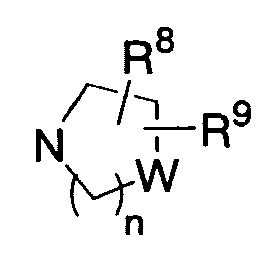
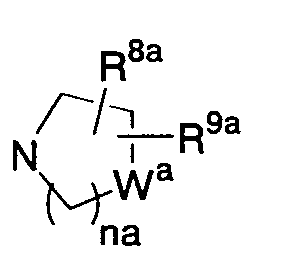
Hereinafter, the compounds represented by Formula (I)
are referred to as Compound (I). The same shall apply to
the compounds of the other formula numbers.
Explanations of terminologies used to define each group
in formula (I) are as follows:
Examples of the lower alkyl and the lower alkyl
moieties of the lower alkoxy, lower alkoxycarbonyl, mono or
di(lower alkyl)amino, lower alkanoyl, lower alkanoyloxy, and
lower alkanoylamino include, for example, straight-chain,
branched, or cyclic alkyl, as well as a combination thereof,
which have 1 to 10 carbon atoms, such as methyl, ethyl,
propyl, isopropyl, cyclopropylmethyl, butyl, sec-butyl,
tert-butyl, cyclobutyl, pentyl, neopentyl, cyclopentyl,
hexyl, cyclohexyl, cyclohexylmethyl, heptyl, cycloheptyl,
octyl, cyclooctyl, nonyl, decyl and the like. Two lower
alkyl moieties of the di(lower alkyl)amino may be the same
or different.
Examples of the lower alkenyl include, for example,
straight-chain, branched, or cyclic alkenyl, as well as a
combination thereof, which have 3 to 10 carbon atoms, such
as allyl, 2-butenyl, 3-butenyl, 4-pentenyl, 2-(1-cyclohexenyl)ethyl,
6-octenyl, 2,6-octadienyl, decenyl and
the like.
Examples of the lower alkynyl include, for example,
straight-chain or branched alkynyl which have 3 to 6 carbon
atoms, such as propargyl, 3-butynyl, 5-hexynyl and the like.
Examples of the aryl and the aryl moiety of the aroyl
include, for example, 5- to 14-membered monocyclic, bicyclic,
or tricyclic aryl, such as phenyl, naphthyl, indenyl,
anthranyl and the like.
Examples of the aralkyl and the aralkyl moiety of the
aralkyloxy include, for example, aralkyl which have 7 to 13
carbon atoms, such as benzyl, phenethyl, phenylpropyl,
benzhydryl, naphthylmethyl and the like. Bicyclic aralkyl
formed by aryl bonded to branched alkyl at two positions,
such as indanyl, 1,2,3,4-tetrahydronaphthyl, 6,7,8,9-tetrahydro-5H-benzocycloheptyl
and the like, are also
included thereto.
Examples of the heterocyclic group include an alicyclic
heterocyclic group and an aromatic heterocyclic group.
Examples of the alicyclic heterocyclic group include, for
example, a 3- to 8-membered monocyclic alicyclic
heterocyclic group containing at least one atom selected
from a nitrogen atom, an oxygen atom, and a sulfur atom; and
a bicyclic or tricyclic condensed alicyclic heterocyclic
group in which 3- to 8-membered rings are condensed and
containing at least one atom selected from a nitrogen atom,
an oxygen atom, and a sulfur atom. More specific examples
include tetrahydropyranyl, tetrahydrofuranyl, pyranyl,
thiopyranyl, pyrrolidinyl, piperidino, piperidyl,
perhydroazepinyl, perhydroazocinyl, morpholino, morpholinyl,
thiomorpholino, thiomorpholinyl, piperadinyl,
homopiperadinyl, dioxolanyl, imidazolidinyl, imidazolinyl,
pyrazolidinyl, indolinyl, isoindolinyl, 2-pyrrolinyl, 2-pyrrolidonyl,
3-pyrrolidonyl, 2-piperidonyl, 3-piperidonyl,
4-piperidonyl, perhydro-2-azepinonyl, perhydro-3-azepinonyl,
perhydro-4-azepinonyl, 2-thiazolidonyl, 4-thiazolidonyl, 2-oxazolidonyl,
4-oxazolidonyl, succinimido, phthalimido,
glutarimido, maleimido, hydantoinyl, thiazolidinedionyl,
oxazolidinedionyl, and the like. Examples of the aromatic
heterocyclic group include, for example, a 3- to 8-membered
monocyclic aromatic heterocyclic group containing at least
one atom selected from a nitrogen atom, an oxygen atom, and
a sulfur atom; and a bicyclic or tricyclic condensed
aromatic heterocyclic group in which 3- to 8-membered rings
are condensed and containing at least one atom selected from
a nitrogen atom, an oxygen atom, a sulfur atom. More
specific examples include furyl, thienyl, pyrrolyl,
imidazolyl, pyrazolyl, triazolyl, tetrazolyl, oxazolyl,
isooxazolyl, thiazolyl, isothiazolyl, 1,2,3-oxadiazolyl,
1,2,4-oxadiazolyl, 1,3,4-oxadiazolyl, 1,2,3-thiadiazolyl,
1,2,4-thiadiazolyl, 1,3,4-thiadiazolyl, furazanyl, pyridyl,
pyrimidinyl, triazinyl, pyrazinyl, pyridazinyl, quinolyl,
isoquinolyl, quinazolinyl, phthalazinyl, purinyl,
benzodioxolyl, benzoxazolyl, benzothiazolyl, benzimidazolyl,
indolyl, isoindolyl, 2-pyridonyl, 4-pyridonyl, uracilyl, and
the like.
The heterocyclic moiety of the heteroaroyl has the same
meaning as the above-defined aromatic heterocyclic
group.
The halogen atom represents a fluorine atom, a chlorine
atom, a bromine atom, and an iodine atom.
Examples of substituents of the substituted lower
alkenyl, substituted lower alkoxycarbonyl, substituted lower
alkanoyl, mono or di(substituted lower alkyl)amino,
substituted lower alkanoylamino, substituted lower alkoxy,
substituted lower alkynyl, substituted lower alkanoyloxy,
substituted aralkyl, substituted aryl, a substituted
heterocyclic group, substituted aralkyloxy, substituted
aroyl, and substituted heteroaroyl, which may be the same or
different and, for example, in number of 1 to 3 include a
hydroxy, carboxy, nitro, cyano, amino, lower alkyl,
trifluoromethyl, lower alkoxy, (lower alkoxy)lower alkyl,
lower alkenyl, lower alkynyl, lower alkoxycarbonyl, lower
alkanoyl, trifluoroacetyl, lower alkanoyloxy, lower
alkanoylamino, lower alkylaminocarbonyl, mono or di(lower
alkyl)amino, carbamoyl, methylenedioxy, lower alkylsulfinyl,
lower alkylsulfonyl, mercapto, lower alkylthio, a halogen
atom, aryl, aralkyl, aryloxy, aralkyloxy, aroyl, and a
heterocyclic group. These substituents may contain other
functional groups, such as, chlorophenyl, methylcarbamoyl,
chlorobenzyl, and lower alkoxybenzyl. Herein, lower alkyl,
lower alkoxy, lower alkenyl, lower alkynyl, lower
alkoxycarbonyl, lower alkanoyl, lower alkanoyloxy, lower
alkanoylamino, mono or di(lower alkyl)amino, aryl, aralkyl,
aralkyloxy, aroyl, a heterocyclic group, and a halogen atom
have the same meaning as defined above. Lower alkyl
moieties of the lower alkylaminocarbonyl, lower
alkylsulfinyl, lower alkylsulfonyl, lower alkylthio, and
lower alkoxybenzyl are the same as the above-defined lower
alkyl. Aryl moieties of the aryloxy are the same as the
above-defined aryl. Lower alkyl moiety of the terminal
lower alkoxy moiety in the (lower alkoxy)lower alkyl are the
same as the above-defined lower alkyl, and alkylene moiety
correspond to that obtained by eliminating one hydrogen atom
from the above defined lower alkyl.
Examples of substituents of the substituted lower alkyl,
which may be the same or different, and in number of 1 to 3
include , for example, hydroxy, carboxy, nitro, cyano, amino,
carbamoyl, methylenedioxy, lower alkoxy, (lower alkoxy)lower
alkyl, (lower alkoxy)lower alkoxy, lower alkenyl, lower
alkynyl, lower alkoxycarbonyl, lower alkanoyl,
trifluoroacetyl, lower alkanoyloxy, lower alkanoylamino,
lower alkylaminocarbonyl, mono or di(lower alkyl)amino,
lower alkylsulfinyl, lower alkylsulfonyl, mercapto, lower
alkylthio, a halogen atom, aryl, aralkyl, aryloxy,
aralkyloxy, aroyl, or a substituted or unsubstituted
heterocyclic group. These substituents may contain other
functional groups, such as chlorophenyl, methylcarbamoyl,
chlorobenzyl, lower alkoxybenzyl, and the like. Herein,
lower alkoxy, (lower alkoxy)lower alkyl, lower alkenyl,
lower alkynyl, lower alkoxycarbonyl, lower alkanoyl, lower
alkanoyloxy, lower alkanoylamino, lower alkylaminocarbonyl,
mono or di(lower alkyl)amino, lower alkylsulfinyl, lower
alkylsulfonyl, lower alkylthio, aryl, aralkyl, aryloxy,
aralkyloxy, aroyl, a heterocyclic group, a halogen atom, and
lower alkoxybenzyl have the same meaning as defined above
and lower alkyl moiety of the terminal lower alkoxy moiety
is the same as the above-defined lower alkyl, and alkylene
moiety correspond to that obtained by eliminating one
hydrogen atom from the above defined lower alkyl in (lower
alkoxy)lower alkoxy. Substituents of the substituted
heterocyclic group are the same as the above-defined
substituents of the substituted heterocyclic group.
Examples of the pharmaceutically acceptable salts of
Compound (I) include, for example, metal salts, ammonium
salts, organic amine addition salts, amino acid addition
salts, acid addition salts and the like. Examples of the
pharmaceutically acceptable metal salts include, for example,
alkaline metal salts such as sodium salts and potassium
salts, alkaline earth metal salts such as magnesium salts
and calcium salts, as well as aluminum salts, zinc salts and
the like. Examples of pharmaceutically acceptable ammonium
salts include salts of an ammonium salt, tetramethylammonium
salt and the like. Examples of pharmaceutically acceptable
organic amine addition salts include, for example, addition
salts such as morpholine and piperidine. Examples of
pharmaceutically acceptable amino acid addition salts
include, for example, addition salts with amino acids such
as lysine, glycine, phenylalanine and the like. Examples of
pharmaceutically acceptable acid addition salts include, for
example, inorganic acid salts such as hydrochlorides,
sulfates, and phosphates; and organic acid salts such as
acetates, maleates, fumarates, tartrates, and citrates.
Compound (I) of the present invention may have a
stereoisomer, a regioisomer, a tautomer, or the like. Any
possible isomers and mixtures thereof fall within the scope
of the present invention in any mixing ratio.
Compound (I) can be produced, for example, by the
following preparation method.
When any defined group changes under a given reaction
condition or is not suitable for carrying out a reaction
process, in the preparation method mentioned below,
preparation may be readily carried out by applying methods
commonly used in the field of synthetic organic chemistry
such as protection and deprotection of a functional
group(see, for example, T. W. Greene, Protective Groups in
Organic Synthesis, third edition, John Wiley & Sons, Inc.
(1999) and the like). The order of the reaction steps such
as introduction of the substituents can be changed, if
necessary.
Production Method 1: Compound (I-A) which corresponds to
Compound (I) wherein X--Y--Z represents R5N-C=O (wherein R5
has the same meaning as defined above) can be synthesized
according to Steps 1 to 5 described below:
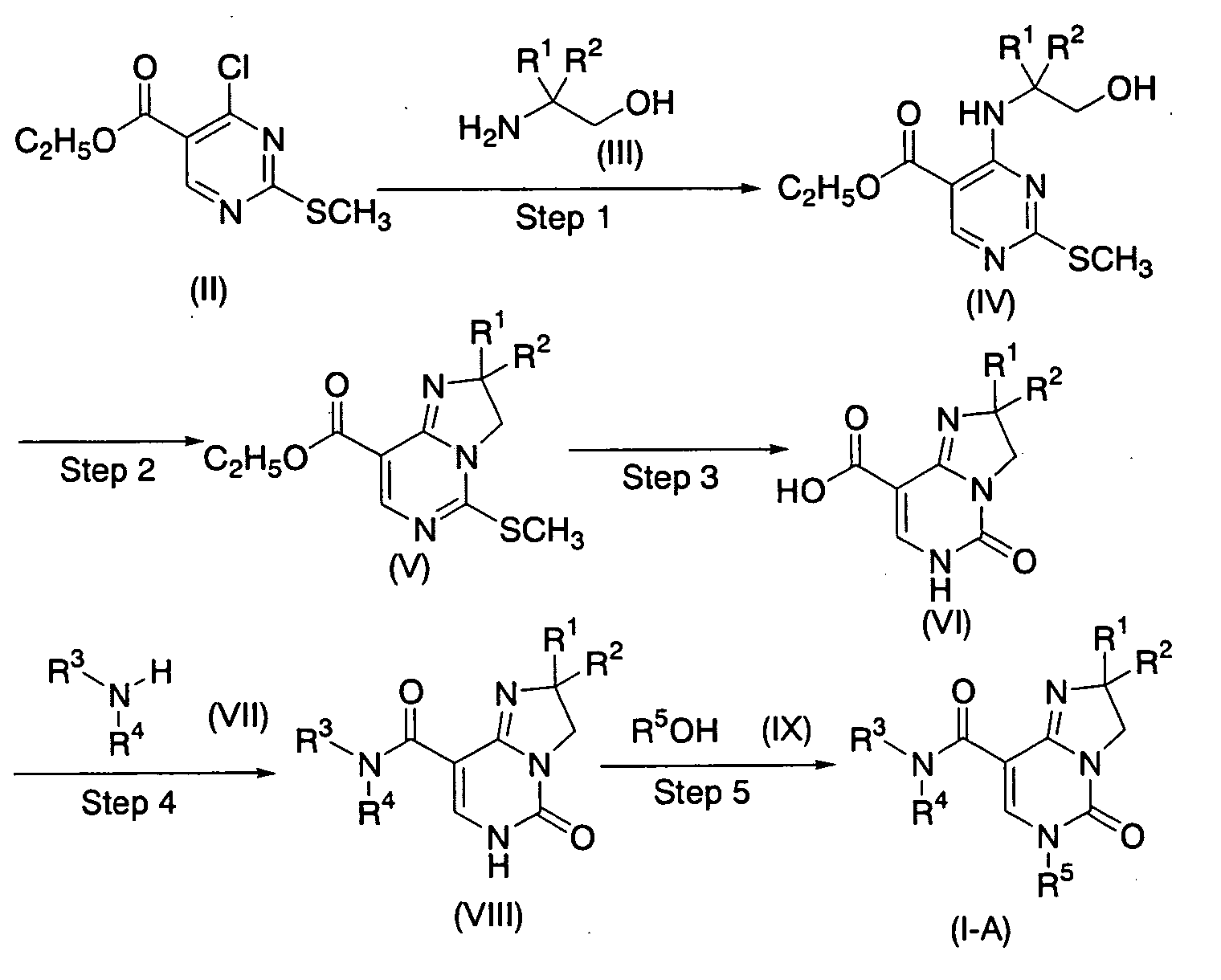 (wherein R1, R2, R3, R4 and R5 have the same meanings as
defined above, respectively)
(wherein R1, R2, R3, R4 and R5 have the same meanings as
defined above, respectively)
Compound (IV) can be obtained by reacting commercially
available Compound (II) with 1 equivalent to large excess,
preferably 1 to 3 equivalents of Compound (III) in an inert
solvent. Compound (III) is commercially available or can be
synthesized by known methods. The reaction is usually
performed at a temperature between 0°C and 100°C, preferably
at a temperature between 0°C and 50°C, for about 10 minutes
to 24 hours. Any solvent can be used, so long as it is
inert to the reaction. Examples of the inert solvent
include tetrahydrofuran, dioxane, diethyl ether, diisopropyl
ether, benzene, toluene, xylene, ethyl acetate, acetonitrile,
dichloromethane, chloroform, dichloroethane,
dimethylformamide, dimethylacetamide, N-methylpyrrolidone,
dimethyl sulfoxide, pyridine, and any mixture thereof,
preferably, tetrahydrofuran, chloroform, and mixtures
thereof, although there is no limitation thereto. The
reaction may be perfomed by adding a base with, 1 equivalent
to large excess, preferably, 1 to 10 equivalents. Examples
of the base include, for example, various organic or
inorganic bases such as triethylamine, diisopropylethylamine,
1,8-diazabicyclo[5.4.0]-7-undecene (DBU), N,N-dimethylaniline,
pyridine, quinoline, potassium carbonate,
sodium carbonate, lithium carbonate, sodium hydrogen
carbonate, potassium hydroxide, sodium hydroxide, lithium
hydroxide, potassium tert-butoxide and the like; various
basic anion exchange resins such as Amberlyst A-21 (ROHM AND
HAAS), AG 1-X8 (Bio-Rad Laboratories), and the like; and
various bases immobilized on solid-phases such as
polyvinylpyridine morpholinomethyl polystyrene and the like,
preferably, triethylamine.
Compound (V) can be obtained by treating Compound (IV)
synthesized in Step 1 with 1 to 5 equivalents of a
chlorinating agent such as thionyl chloride and phosphorus
oxychloride in an inert solvent. The reaction is usually
performed at a temperature between room temperature and
200°C, preferably at a temperature between 50°C and 100°C,
for about 1 to 50 hours. Any solvent can be used, so long
as it is inert to the reaction. Examples of the inert
solvent include tetrahydrofuran, dioxane, diisopropyl ether,
benzene, toluene, xylene, ethyl acetate, dichloromethane,
chloroform, dichloroethane, pyridine, triethylamine, and any
mixture thereof preferably, chloroform, although there is no
limitation thereto. The reaction may be performed, by
adding 1 equivalent to large excess, preferably, 1 to 10
equivalents of a base. Examples of the base include various
organic bases such as triethylamine, diisopropylethylamine,
DBU, N,N-dimethylaniline, pyridine, quinoline and the like;
and various bases immobilized on solid-phases such as
polyvinylpyridine, morpholinomethyl polystyrene and the like,
preferably, polyvinylpyridine.
Compound (IV) can be obtained by treating Compound (V)
synthesized in Step 2 with 1 equivalent to large excess,
preferably 3 to 10 equivalents of a base in a protic solvent.
The reaction is usually performed at a temperature between
room temperature and 200°C, preferably at a temperature
between 50°C and 120°C, for 1 to 100 hours. Examples of the
solvent for the reaction include, for example, protic
solvents such as water, methanol, ethanol, propanol, butanol
and the like, used each alone or as a mixture thereof; or a
mixture of any of these protic solvents and non-protic
solvents such as tetrahydrofuran, dioxane, diethyl ether,
diisopropyl ether, benzene, toluene, xylene, ethyl acetate,
acetonitrile, dichloromethane, chloroform, dichloroethane,
dimethylformamide, dimethylacetamide, N-methylpyrrolidone,
dimethyl sulfoxide, pyridine and the like; and preferably, a
water-chloroform mixture and a water-ethanol mixture.
Examples of the base include, for example, potassium
carbonate, sodium carbonate, sodium hydrogen carbonate,
lithium carbonate, potassium hydroxide, sodium hydroxide,
lithium hydroxide, potassium tert-butoxide, Amberlyst A-21
(ROHM AND HAAS), AG 1-X8 (Bio-Rad Laboratories) and the like.
Compound (VIII) can be obtained by reacting Compound
(VI) synthesized in Step 3 with 1 to 5 equivalents of
Compound (VII) in the presence of 1 to 10 equivalents of a
condensing agent in an inert solvent. Compound (VII) is
commercially available or can be synthesized by known
methods. The reaction is usually performed at a temperature
between 0°C and 150°C, preferably at a temperature between
room temperature and 80°C, for about 1 to 120 hours. Any
solvent can be used, so long as it is inert to the reaction.
Examples of the inert solvent include dichloromethane,
chloroform, dichloroethane, dimethylformamide,
dimethylacetamide, N-methylpyrrolidone, dimethyl sulfoxide,
tetrahydrofuran, dioxane, diethyl ether, diisopropyl ether,
benzene, toluene, xylene, ethyl acetate, acetonitrile, and
any mixture thereof, preferably, chloroform, tetrahydrofuran
and any mixtures thereof, although there is no limitation
thereto. Examples of the condensing agent include, for
example, dicyclohexylcarbodiimide, diisopropylcarbodiimide,
N-ethyl-N'-(3-dimethylaminopropyl)carbodiimide or its
hydrochloride, N-ethyl-N'-(3-dimethylaminopropyl)carbodiimide
supported on polystyrene,
N-benzyl-N'-cyclohexylcarbodiimide supported on polystyrene,
benzotriazol-1-yl-tris(dimethylamino)phosphonium
hexafluorophosphide salt, and diphenylphosphoryl azide,
preferably, N-ethyl-N'-(3-dimethylaminopropyl)carbodiimide
or its hydrochloride, and N-ethyl-N'-(3-dimethylaminopropyl)carbodiimide
supported on polystyrene.
The reaction may be performed in the coexistence of 1 to 5
equivalents of an additive, and examples of which include,
for example, N-hydroxysuccinimide, 1-hydroxybenzotriazole,
3-hydroxy-4-oxo-3,4-dihydro-1,2,3-benzotriazine and the like,
preferably, 1-hydroxybenzotriazole.
Compound (I-A) can be obtained by subjecting Compound
(VIII) synthesized in Step 4 with 1 to 5 equivalents of
Compound (IX) to a Mitsunobu reaction in an inert solvent.
Compound (IX) is commercially available or can be
synthesized by known methods. The reaction is usually
performed at a temperature between 0°C and 100°C, preferably
at a temperature between room temperature and 60°C, for
about 1 to 50 hours. Any solvent can be used, so long as it
is inert to the reaction. Examples of the inert solvent
include dichloromethane, chloroform, dichloroethane,
dimethylformamide, dimethylacetamide, N-methylpyrrolidone,
dimethyl sulfoxide, tetrahydrofuran, dioxane, diethyl ether,
diisopropyl ether, benzene, toluene, xylene, ethyl acetate,
acetonitrile, and mixtures thereof, preferably,
tetrahydrofuran, although there is no limitation thereto.
Condensing agents necessary for the Mitsunobu reaction may
be any agents generally used in the reaction, such as a
combination of 1 to 10 equivalents of dialkyl
azodicarboxylate and 1 to 10 equivalents of
triphenylphosphine or trialkylphosphine; and 1 to 10
equivalents of (cyanomethylene)triphenylphosphorane and the
like, preferably, a combination of 1 to 3 equivalents of
diethylazodicarboxylate (DEAD) and 1 to 3 equivalents of
triphenyl phosphine.
Preparation Method 2: Compound (I-B) which corresponds to
Compound (I) wherein X--Y--Z represents N=C-NR6R7 (wherein R6
and R7 have the same meanings as defined above,
respectively) can be synthesized according to Steps 6 to 9
described below:
 (wherein R1, R2, R3, R4, R6 and R7 have the same meanings as
defined above, respectively)
(wherein R1, R2, R3, R4, R6 and R7 have the same meanings as
defined above, respectively)
Compound (X) can be obtained by treating Compound (IV)
synthesized in Step 1 of the Preparation Method 1 with 1
equivalent to large excess, preferably 3 to 10 equivalents
of a base in a protic solvent. The reaction is usually
performed at a temperature between 0°C and 100°C, preferably
at a temperature between room temperature and 80°C, for 1 to
100 hours. Examples of the solvent for the reaction include,
for example, protic solvents such as water, methanol,
ethanol, propanol, butanol and the like used each alone or a
mixture thereof; or a mixture of any of these protic
solvents and non-protic solvents such as tetrahydrofuran,
dioxane, diethyl ether, diisopropyl ether, benzene, toluene,
xylene, ethyl acetate, acetonitrile, dichloromethane,
chloroform, dichloroethane, dimethylformamide, dimethyl
acetamide, N-methylpyrrolidone, dimethyl sulfoxide, pyridine
and the like, preferably, a water-ethanol mixture. Examples
of the base include, for example, potassium carbonate,
sodium carbonate, sodium hydrogen carbonate, lithium
carbonate, potassium hydroxide, sodium hydroxide, lithium
hydroxide, potassium tert-butoxide, Amberlyst A-21 (ROHM AND
HAAS), AG1-X8 (Bio-Rad Laboratories), and the like.
Compound (XI) can be obtained by reacting Compound (X)
synthesized in Step 6 with 1 to 5 equivalents of Compound
(VII) in the presence of 1 to 10 equivalents of a condensing
agent in an inert solvent. Compound (VII) is commercially
available or can be synthesized by known methods. The
reaction is usually performed at a temperature between 0°C
and 150°C, preferably at a temperature between room
temperature and 60°C, for about 1 to 120 hours. Any solvent
can be used, so long as it is inert to the reaction.
Examples of the inert solvent include dichloromethane,
chloroform, dichloroethane, dimethylformamide,
dimethylacetamide, N-methylpyrrolidone, dimethyl sulfoxide,
tetrahydrofuran, dioxane, diethyl ether, diisopropyl ether,
benzene, toluene, xylene, ethyl acetate, acetonitrile, and
any mixture thereof preferably, chloroform, tetrahydrofuran,
and mixtures thereof, although there is no limitation
thereto. Examples of the condensing agent include, for
example, dicyclohexylcarbodiimide, diisopropylcarbodiimide,
N-ethyl-N'-(3-dimethylaminopropyl)carbodiimide or its
hydrochloride, N-ethyl-N'-(3-dimethylaminopropyl)carbodiimide
supported on polystyrene,
N-benzyl-N'-cyclohexylcarbodiimide supported on polystyrene,
benzotriazol-1-yl-tris(dimethylamino)phosphonium
hexafluorophosphide salt, diphenylphosphoryl azide and the
like, preferably, N-ethyl-N'-(3-dimethylaminopropyl)carbodiimide
or its hydrochloride, N-ethyl-N'-(3-dimethylaminopropyl)carbodiimide
supported on
polystyrene. The reaction may be performed in the
coexistence of 1 to 5 equivalents of an additive, examples
of which include N-hydroxysuccinimide, 1-hydroxybenzotriazole,
3-hydroxy-4-oxo-3,4-dihydro-1,2,3-benzotriazine
and the like, preferably, 1-hydroxybenzotriazole.
Compound (XII) can be obtained by treating Compound
(XI) synthesized in Step 7 with 1 to 5 equivalents of a
chlorinating agent such as thionyl chloride, phosphorus
oxychloride and the like, in an inert solvent. The reaction
is usually performed at a temperature between room
temperature and 200°C, preferably at a temperature between
50°C and 100°C, for about 1 to 50 hours. Any Solvent can be
used, so long as it is inert to the reaction. Examples of
the inert solvent include tetrahydrofuran, dioxane,
diisopropyl ether, benzene, toluene, xylene, ethyl acetate,
dichloromethane, chloroform, dichloroethane, pyridine,
triethylamine, and any mixture thereof, preferably,
chloroform, although there is no limitation thereto. In the
reaction, 1 equivalent to large excess, preferably 1 to 10
equivalents of a base may be added. Examples of the base
include, for example, various organic bases such as
triethylamine, diisopropylethylamine, DBU, N,N-dimethylaniline,
pyridine, quinoline and the like; and
various bases immobilized on solid-phases such as
polyvinylpyridine morpholinomethyl polystyrene and the like,
preferably, polyvinylpyridine.
Compound (I-B) can be obtained by reacting Compound
(XII) synthesized in Step 8 with 1 to 10 equivalents,
preferably 2 to 5 equivalents of Compound (XIII) in an inert
solvent. The reaction is usually performed at a temperature
between room temperature and 200°C, preferably at a
temperature between 50°C and 100°C, for about 1 to 100 hours.
Any solvent can be used, so long as it is inert to the
reaction. Examples of the inert solvent include
tetrahydrofuran, dioxane, diethyl ether, diisopropyl ether,
benzene, toluene, xylene, ethyl acetate, acetonitrile,
dichloromethane, chloroform, dichloroethane,
dimethylformamide, dimethylacetamide, N-methylpyrrolidone,
dimethyl sulfoxide, pyridine, and any mixture thereof,
preferably, tetrahydrofuran, chloroform, and mixtures
thereof, although there is no limitation thereto. In the
reaction, 1 equivalent to large excess, preferably 1 to 10
equivalents of a base may be added. Examples of the base
include various organic and inorganic bases such as
triethylamine, diisopropylethylamine, DBU, N,N-dimethylaniline,
pyridine, quinoline, potassium carbonate,
sodium carbonate, lithium carbonate, sodium hydrogen
carbonate, potassium hydroxide, sodium hydroxide, lithium
hydroxide, potassium tert-butoxide and the like; various
basic anion exchange resins such as Amberlyst A-21 (ROHM AND
HAAS) AG1-X8 (Bio-Rad Laboratories) and the like; and
various bases immobilized on solid-phases such as
polyvinylpyridine morpholinomethyl polystyrene and the like
preferably, polyvinylpyridine.
Preparation Method 3: Compound (I-C), which corresponds to
Compound (I) wherein X--Y--Z represents C=C-NR6aR7a (wherein
R6a and R7a have the same meanings as defined above,
respectively) can be synthesized according to Steps 10 to 13
described below:
 (wherein R1, R2, R3, R4, R6a and R7a have the same meanings as
defined above, respectively)
(wherein R1, R2, R3, R4, R6a and R7a have the same meanings as
defined above, respectively)
Compound (XV) can be obtained by reacting commercially
available Compound (XIV) with 1 equivalent to large excess,
preferably 1 to 3 equivalents of Compound (III) in an inert
solvent. Compound (III) is commercially available or can be
synthesized by known methods. The reaction is usually
performed at a temperature between 50°C and 200°C,
preferably at a temperature between 80°C and 150°C, for
about 1 hour to 10 days. Any solvent can be used, so long
as it is inert to the reaction. Examples of the inert
solvent include tetrahydrofuran, dioxane, diethyl ether,
diisopropyl ether, benzene, toluene, xylene, ethyl acetate,
acetonitrile, dichloromethane, chloroform, dichloroethane,
dimethylformamide, dimethylacetamide, N-methylpyrrolidone,
dimethyl sulfoxide, pyridine, and any mixture thereof,
preferably, dioxane, although there is no limitation thereto.
In the reaction, 1 equivalent to large excess, preferably 1
to 10 equivalents of a base may be added. Examples of the
base include various organic or inorganic bases such as
triethylamine, diisopropylethylamine, DBU, N,N-dimethylaniline,
pyridine, quinoline, potassium carbonate,
sodium carbonate, lithium carbonate, sodium hydrogen
carbonate, potassium hydroxide, sodium hydroxide, lithium
hydroxide, potassium tert-butoxide and the like; various
basic anion exchange resins such as Amberlyst A-21 (ROHM AND
HAAS), AG1-X8 (Bio-Rad Laboratories) and the like; and
various bases immobilized on solid-phases such as
polyvinylpyridine, morpholinomethyl polystyrene, and the
like preferably, triethylamine.
Compound (XVI) can be obtained by reacting Compound
(XV) synthesized in Step 10, in a similar manner described
in Step 7, with 1 to 5 equivalents of Compound (VII) in the
presence of 1 to 10 equivalents of a condensing agent in an
inert solvent at a temperature between 0°C and 150°C,
preferably at a temperature between room temperature and
60°C for 1 to 120 hours.
Compound (XVII) can be obtained by treating Compound
(XVI) synthesized in Step 11, in a similar manner described
in Step 8, with 1 to 5 equivalents of a chlorinating agent
in the presence or absence of a base in an inert solvent at
a temperature between room temperature and 200°C, preferably
at a temperature between 50°C and 120°C for 1 to 50 hours.
Compound (I-C) can be obtained by reacting Compound
(XVII) synthesized in Step 12 with 1 to 5 equivalents,
preferably 2 to 5 equivalents of Compound (XIIIa) in the
presence of 1 to 10 equivalents, preferably 2 to 5
equivalents of a condensing agent in an inert solvent. The
reaction is usually performed at a temperature between 0°C
and 100°C, preferably at a temperature between room
temperature and 80°C, for about 1 to 100 hours. Any solvent
can be used, so long as it is inert to the reaction.
Examples of the inert solvent include dichloromethane,
chloroform, dichloroethane, dimethylformamide,
dimethylacetamide, N-methylpyrrolidone, dimethyl sulfoxides,
tetrahydrofuran, dioxane, diethyl ether, diisopropyl ether,
benzene, toluene, xylene, ethyl acetate, acetonitrile, and
any mixture thereof, preferably, tetrahydrofuran, although
there is no limitation thereto. Examples of the condensing
agent include, for example, a combination of
dialkylazodicarboxylate and triphenylphosphine or
trialkylphosphine, (cyanomethylene)triphenylphosphorane and
the like, preferably, (cyanomethylene)triphenylphosphorane.
Intermediates and target compounds obtained in the
aforementioned preparation methods can be isolated and
purified by separation and purification methods ordinarily
used in the field of synthetic organic chemistry, such as,
filtration, extraction, washing, drying, concentration,
recrystallization, various chromatographic techniques, and
the like. Furthermore, these compounds may be purified by
purification methods that are generally used in typical
parallel synthesis processes with, for example, a scavenger
resin or an ion exchange resin. Intermediates may also be
used for subsequent reactions without particular
purification. For the preparation of salts of Compound (I),
the final products may be purified without modification when
they are obtained as salts in the aforementioned reaction
processes. When the final products are obtained as
compounds in a free form, they may be dissolved or
suspended in a suitable solvent with addition of an acid or
a base to form a salt which may be isolated and purified.
It is also possible to convert a final product obtained in a
form of a salt into a compound in a free form and then
convert the resulting product into a desired salt.
Specific examples of compounds suitable as medicinally
active ingredients of the present invention in Compound (I)
are shown below. These examples, however, are not intended
to limit the scope of the present invention.
Partial structures of the compounds are listed in
Tables 1 through 3, wherein Me and Et represent methyl and
ethyl, respectively.
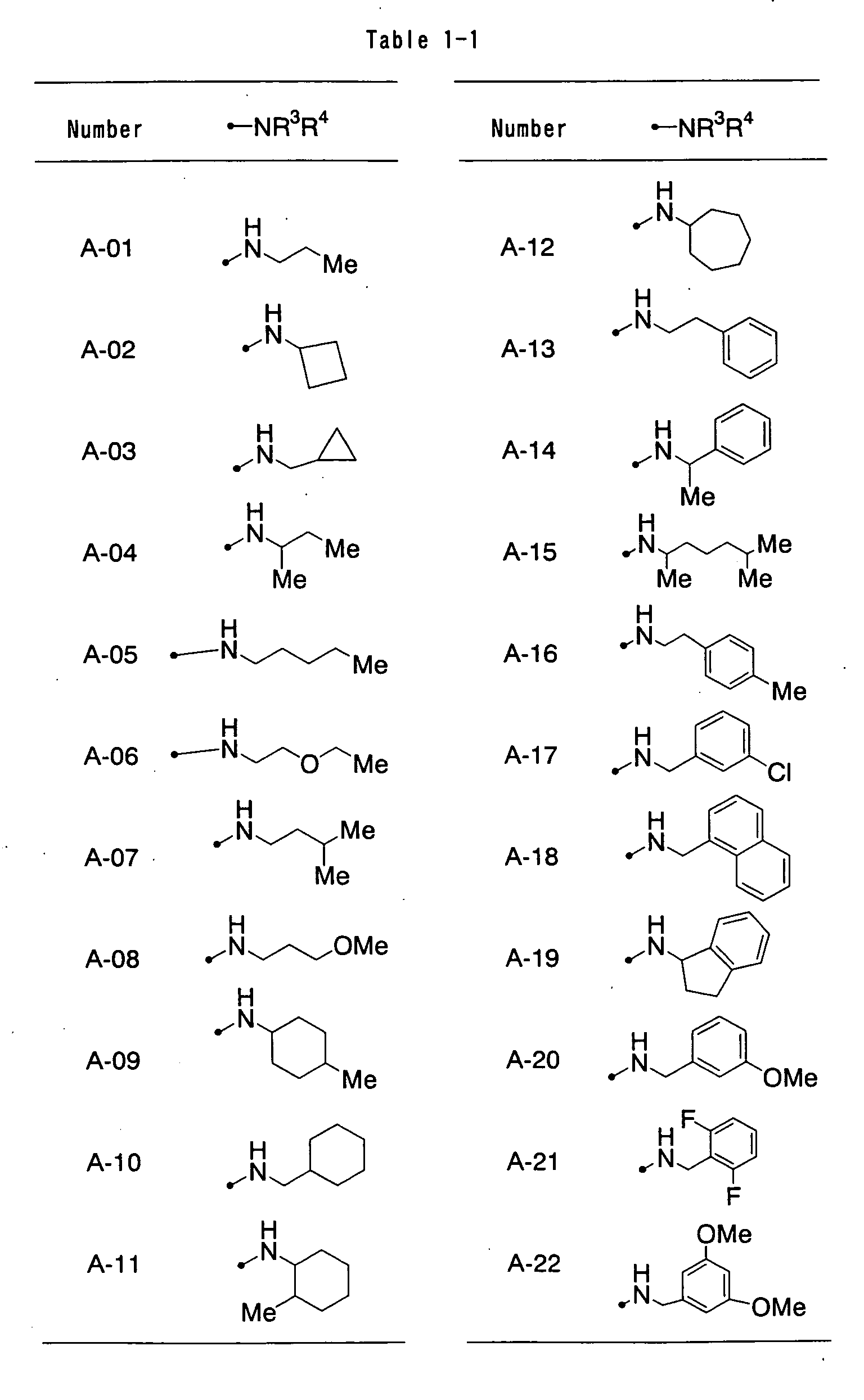
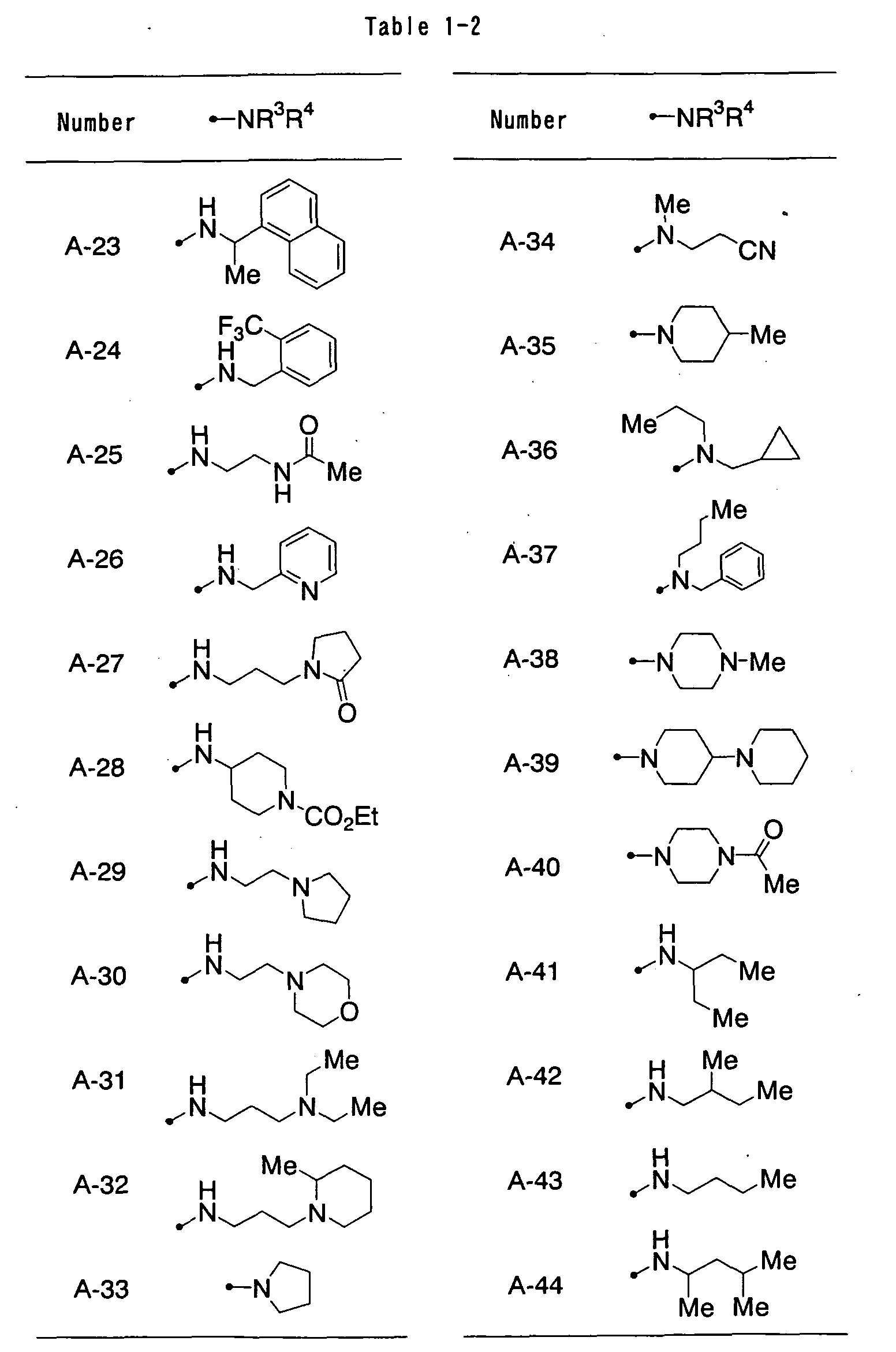

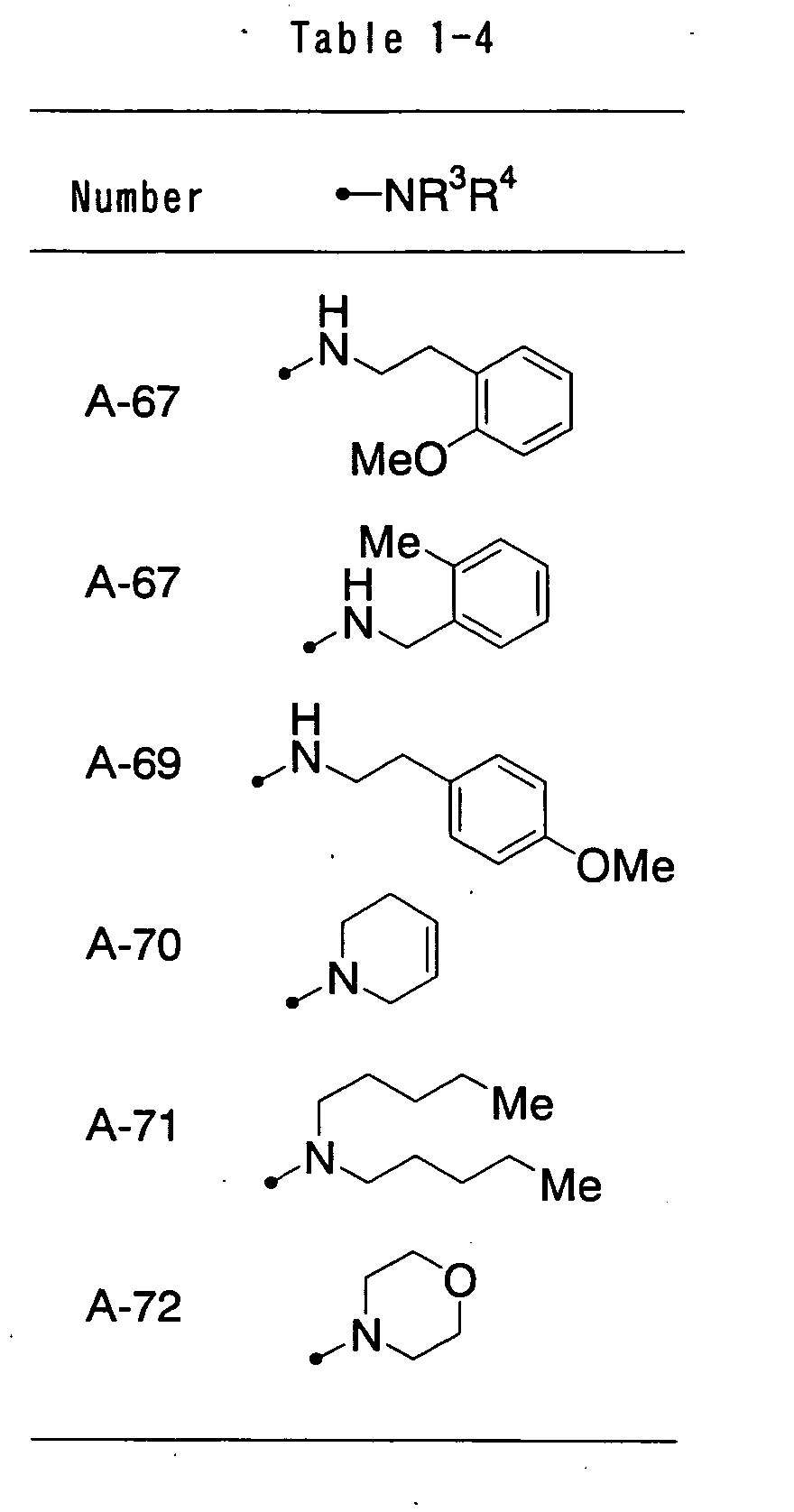


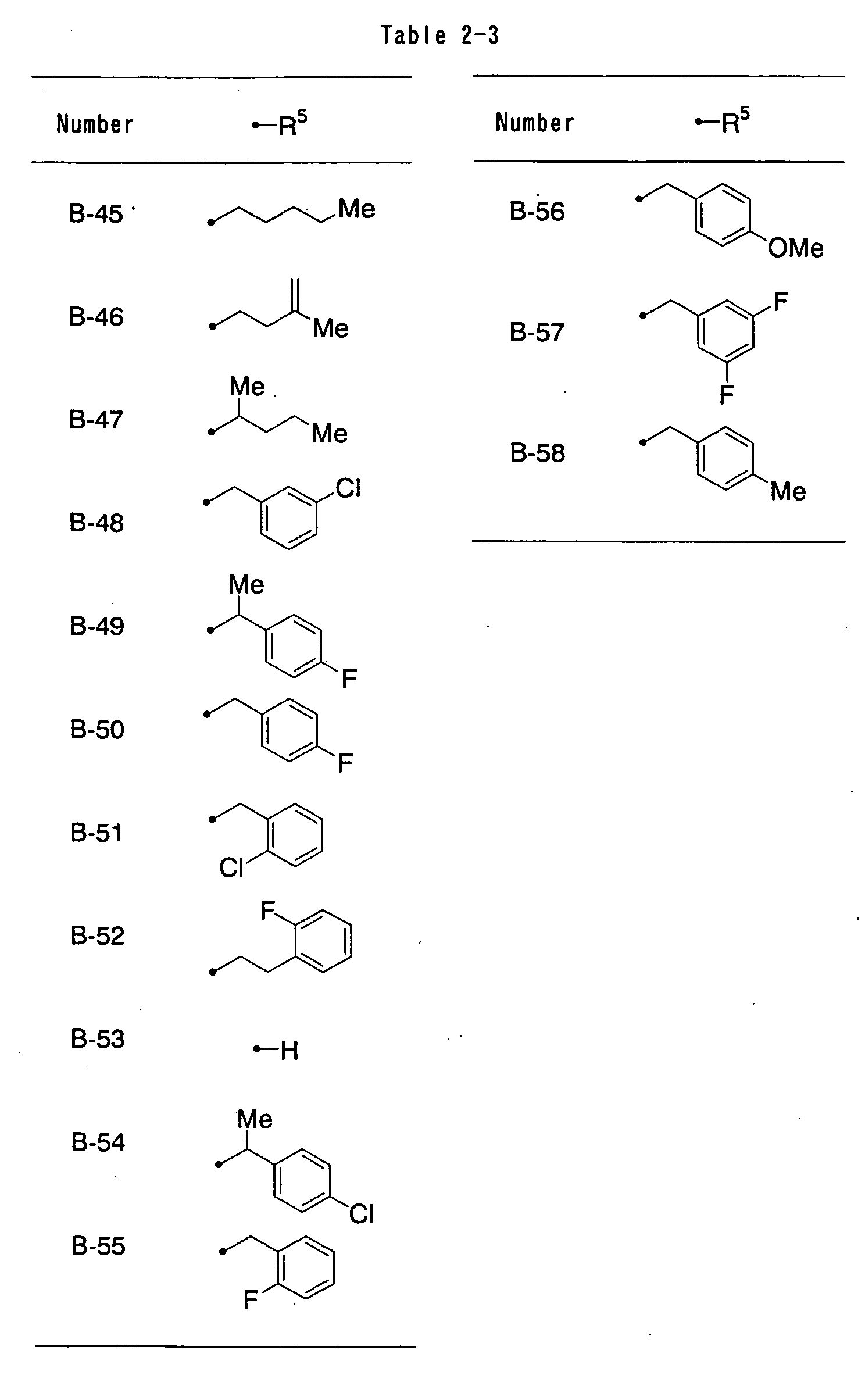

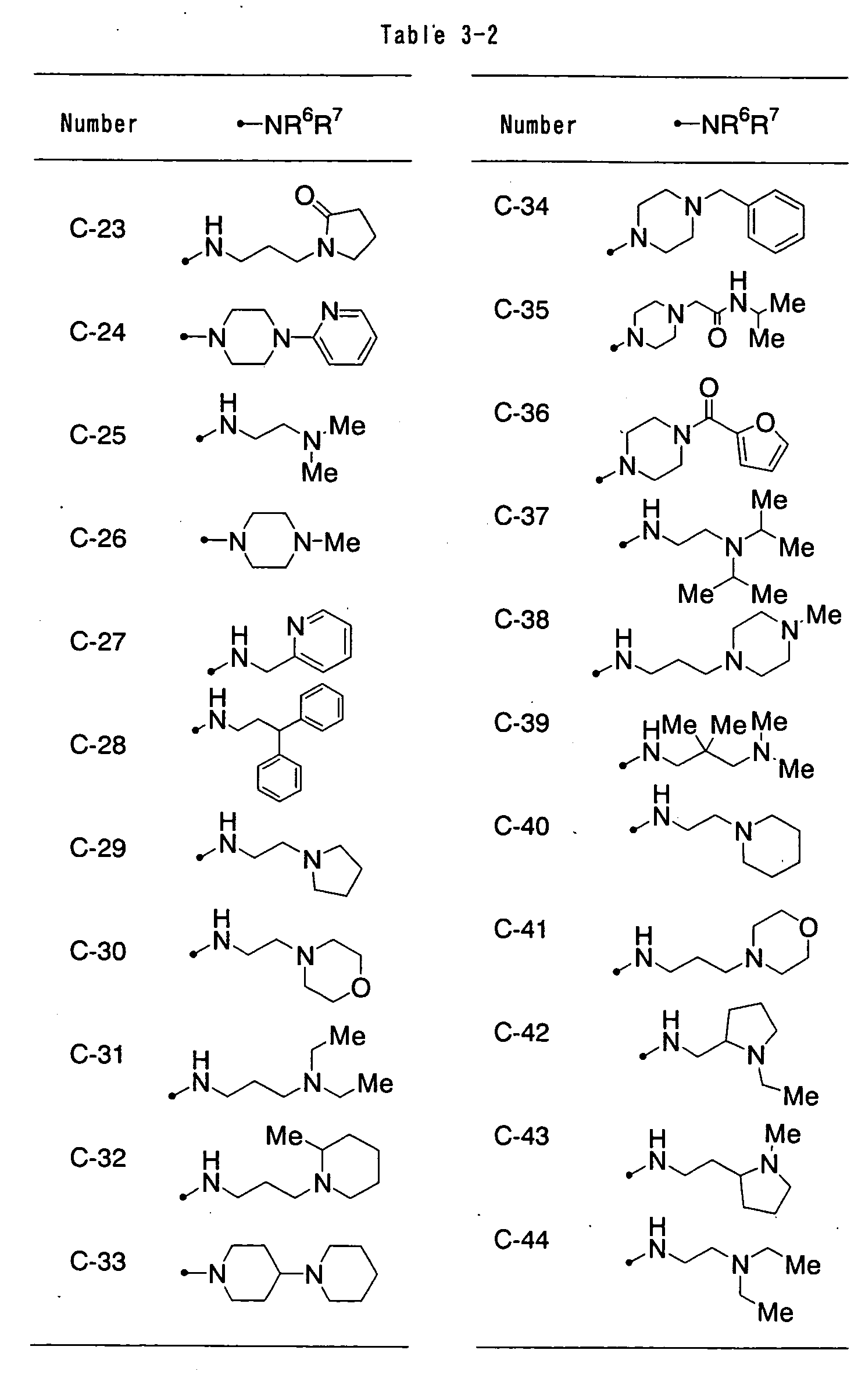
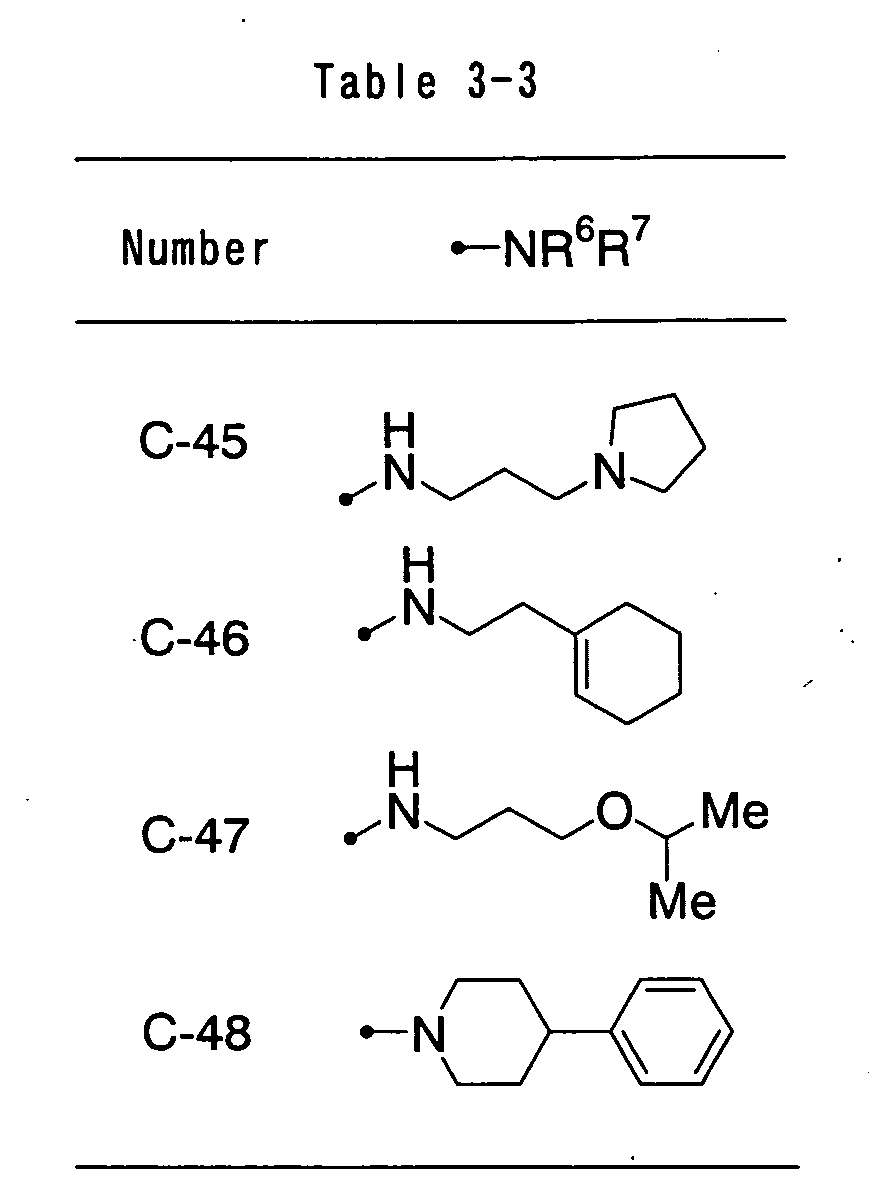
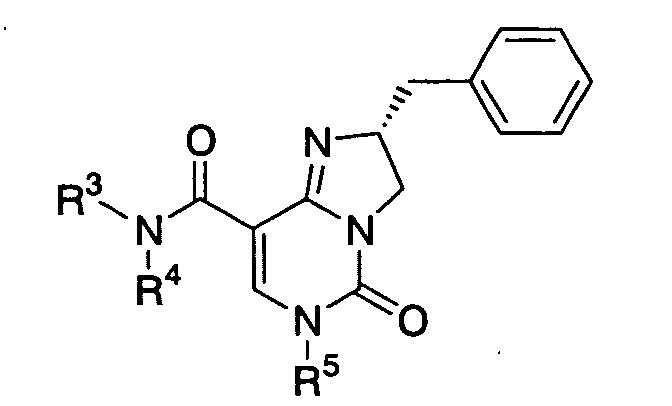


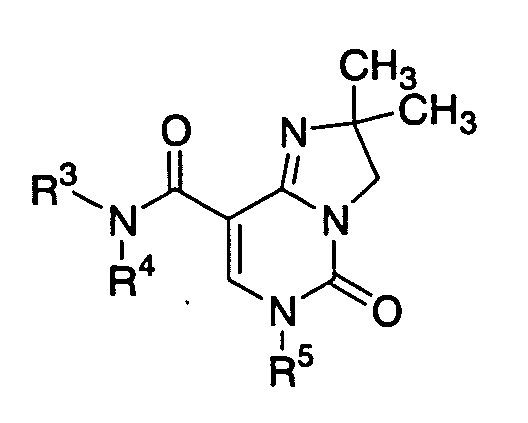


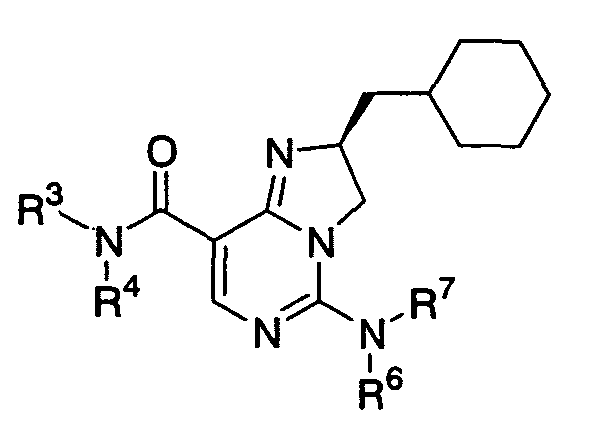
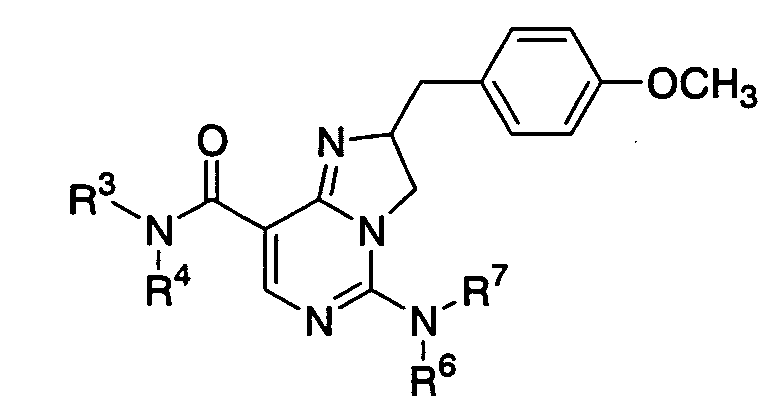

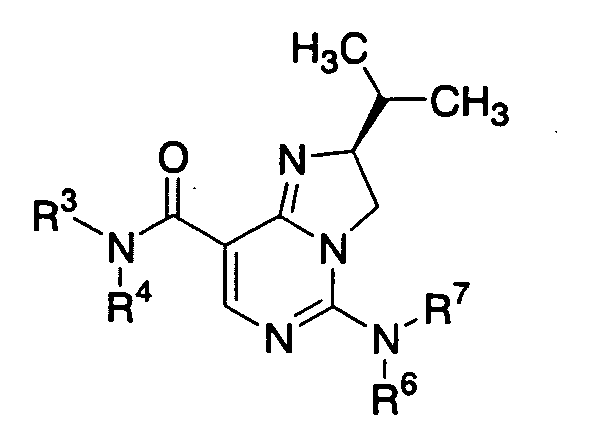

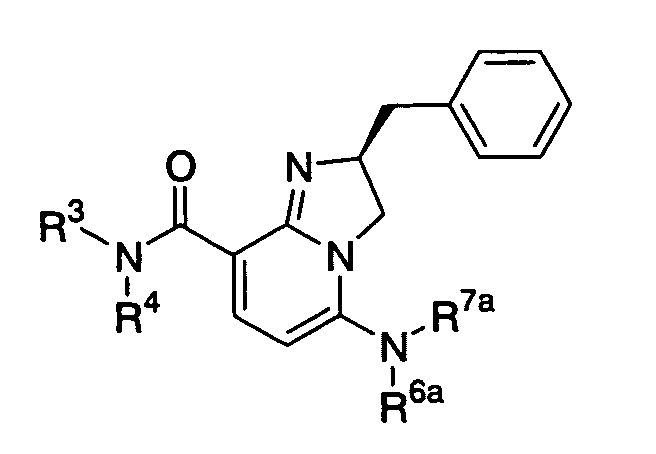
The use of Compound (I) of the present invention is not
limited to an active ingredient of a medicament but can also
be used as an active ingredient of other medicaments or as
an intermediate in the manufacture of other compounds.
Other applications like these are included in the use of
Compound (I) as well. Examples of the Compound (I) which
encompass the present invention include any salt including
pharmaceutically acceptable salts described above, in
addition to any hydrate or solvate. Any solvent can be
used, so long as it forms solvate. Examples of the solvent
that forms solvate include ethanol, tetrahydrofuran, dioxane
and the like, although there is no limitation thereto. When
one or more asymmetric carbon atom exists in the structure
of Compound (I), pure isomers such as optical isomers and
diastereoisomers, mixtures of isomers, and racemic mixtures
are included in the present invention.
The pharmacological activity of Compound (I) will now
be described.
The established pancreas β-cell, MIN6 cell, reported by
Miyazaki et al. (Endocrinology, vol.127, p.126-131, 1990),
exhibits insulin content and insulin secretion amount by
stimulation with glucose similar to those of pancreas β-cells
in living bodies, and well preserves characteristics
of pancreas β-cells in living bodies from a view point that
it shows increase of insulin secretion in a glucose
concentration-dependent manner (the above reference, and
Diabetologia, vol.36, p.1139-1145, 1993). Further, the
insulin secretion of the MIN6 cell is prompted in response
to sulfonylurea-agents such as glibenclamide, which are used
as a medicament for treatment of diabetes (Cellular
Signalling, vol.5, p.777-786, 1993).
Culture of the MIN6 cells above and insulin secretion
test utilizing the MIN6 cells were performed according to
the methods described in Diabetologia, vol.36, p.1139-1145,
1993. The effect of a compound on the insulin secretion in
the presence of 14.5 mmol/L glucose was determined by
measuring insulin amounts in cell culture supernatants
collected as follows. MIN6 cells cultured on a 24-well
plate were washed twice by using 1 mL of Buffer A (119
mmol/L sodium chloride, 4.74 mmol/L potassium chloride, 2.54
mmol/L calcium chloride, 1.19 mmol/L magnesium sulfate, 1.19
mmol/L potassium dihydrogenphosphate, 10 mmol/L 2-[4-(2-hydroxyethyl)-1-piperazinyl]ethanesulfonic
acid, and 0.1%
bovine serum albumin, pH 7.3) containing 2 mmol/L glucose,
and then were incubated in 1 mL of Buffer A containing 2
mmol/L glucose at 37°C for 45 minutes. After the incubation,
the culture supernatant was changed to Buffer A (0.9 mL)
containing a test compound at various concentrations and 2
mmol/L glucose, and the cells were further incubated at 37°C
for 15 minutes. The MIN6 cells were stimulated with glucose
by the addition of Buffer A (0.1 mL) containing 127 mmol/L
glucose to the culture (final glucose concentration: 14.5
mmol/L). After the stimulation, the cells were further
incubated at 37°C for 45 minutes, and then the culture
supernatant was collected.
Separately, the effect of a compound on the insulin
secretion in the presence of 5 mmol/L glucose was determined
by measuring insulin amounts in cell culture supernatants
collected as follows. MIN6 cells cultured on a 24-well
plate were washed twice by using 1mL of Buffer A containing
5 mmol/L glucose, and then the culture supernatant was
changed to Buffer A (0.9 mL) containing a test compound at
various concentrations and 5 mmol/L glucose. Then, the
cells were incubated at 37°C for 45 minutes (final glucose
concentration: 5 mmol/L), and the culture supernatant was
collected.
After the culture supernatant was diluted with a
phosphate buffer containing 1% bovine serum albumin, 0.1%
Tween 20, 0.12% disodium ethylenediaminetetraacetate (EDTA),
and 0.1% sodium azide, antibody-reactive insulin secreted in
the culture supernatant was qualified by enzyme immunoassay
or radio immunoassay. The insulin level was indicated as
the amount of human insulin (ng/mL). The results are
indicated as average (avg) of 3 to 4 samples with standard
error values (se).
The results are shown in Table 4.
| (In the presence of 14.5 mmol/L of glucose) | |||
| Compound No. | Drug Concentration | Insulin secretion amount(ng/mL) | |
| (µ mol/L) | Avg | se | |
| none | - | 148.4 | 4.8 |
| 1-447 | 1 | 174 | 5.4 |
| 1-482 | 1 | 170.7 | 4.2 |
| 1-484 | 1 | 173.5 | 8.8 |
| 1-485 | 1 | 172 | 1.6 |
| 1-486 | 1 | 176.6 | 3.2 |
| 1-487 | 1 | 185.1 | 5.3 |
| 1-1259 | 1 | 171 | 4.1 |
| 1-1279 | 1 | 171.8 | 2.9 |
| 1-1490 | 1 | 184 | 16.2 |
| 1-1494 | 1 | 202 | 3.4 |
| 1-1496 | 1 | 173.5 | 5 |
| 1-1477 | 1 | 191.1 | 5 |
| 1-1506 | 1 | 170.5 | 5 |
| 1-1515 | 1 | 172.6 | 6 |
| 1-1516 | 1 | 176.8 | 8.4 |
| 2-41 | 1 | 188.5 | 6.9 |
| 2-42 | 1 | 179.6 | 1.6 |
| 2-45 | 1 | 177.7 | 6.5 |
| 7-175 | 1 | 182.8 | 8.1 |
| 7-183 | 1 | 171.3 | 4.7 |
| 7-185 | 1 | 172.4 | 8.5 |
| 7-187 | 1 | 175.5 | 1.8 |
| 7-188 | 1 | 182.4 | 5.4 |
| 7-258 | 1 | 171.1 | 6.6 |
| 7-523 | 1 | 173.3 | 15.8 |
| 7-630 | 1 | 193.5 | 17 |
| 7-635 | 1 | 187.1 | 0.7 |
| 7-640 | 1 | 188.3 | 9.1 |
| 7-641 | 1 | 176.6 | 10.8 |
| 7-642 | 1 | 192 | 11.8 |
| 7-713 | 1 | 196 | 8.2 |
| 7-785 | 1 | 198 | 2.7 |
| 7-892 | 1 | 176.9 | 9 |
| 7-893 | 1 | 193.7 | 12.7 |
| 7-1223 | 1 | 172.4 | 3.5 |
| (In the presence of 14.5 mmol/L of glucose) | |||
| Compound No. | Drug Concentration | Insulin secretion amount (ng/mL) | |
| (µ mol/L) | avg | se | |
| 7-1270 | 1 | 177.2 | 4.1 |
| 7-1275 | 1 | 180 | 10.6 |
| 7-1277 | 1 | 179.6 | 6.7 |
| 7-1278 | 1 | 192.7 | 12.2 |
| 7-1281 | 1 | 182.4 | 2.7 |
| 7-1290 | 1 | 205.3 | 10 |
| 7-1454 | 1 | 174.7 | 9.8 |
| 7-1374 | 1 | 193.8 | 2 |
| 7-1389 | 1 | 194 | 6.1 |
| 7-1397 | 1 | 219 | 7.2 |
| 7-1398 | 1 | 164.5 | 14 |
| 7-1410 | 1 | 206.9 | 3.9 |
| 11-60 | 1 | 175.9 | 2.3 |
| 11-70 | 1 | 176.7 | 3.2 |
| AY4166 | 10 | 195.1 | 4.3 |
| Glibenclamide | 0.1 | 177.8 | 3.3 |
| (In the presence of 5 mmol/L of glucose) | |||
| Compound No. | Drug Concentration | Insulin secretion amount(ng/mL) | |
| (µ mol/L) | Avg | se | |
| None | - | 51.2 | 11.3 |
| 7-640 | 10 | 138 | 4.3 |
| 7-1290 | 10 | 88.5 | 2.8 |
| 7-1398 | 10 | 118.2 | 5.9 |
| AY-4166 | 10 | 170.8 | 4.2 |
| Glibenclamide | 0.1 | 156.8 | 8.4 |
As shown in Table 4, it was revealed that the compounds
of the present invention had insulin secretion action.
Whilst as shown in Table 4, in the presence of glucose at a
low concentration (5 mmol/L), these compounds did not show
marked secretion promoting action even at a 10 times higher
concentration. Glibenclamide (Pharmacotherapy, vol.5, p.43,
1985) and AY-4166 (Yakuri to Rinsho, vol.7, p.121, 1997),
used as controls for comparison showed marked secretion
promoting action even at a low glucose concentration.
Test Example 2: Hyperglycemia suppressing action after
glucose loading in normal rats
Wistar male rats (body weight: about 280 g) were used
for the experiment after starvation for 24 hours. A test
compound was orally administered to the rats 30 minutes
before oral administration of glucose (2 g/kg). Blood was
collected from a tail vein before the administration of the
test compound, and at 30, 60, 120, and 180 minutes after the
glucose loading. Blood glucose level was measured by using a
simplified blood sugar level measuring apparatus.
The results are shown in Table 5.

Every compound was used in the form of trihydrochloride in
the experiment.
As clearly shown in Table 5, the compound of the
present invention exhibited hyperglycemia suppressing action
at 30 minutes and 60 minutes after the glucose loading.
However, the compound exhibited no hypoglycemic action at
120 minutes and 180 minutes after the glucose loading.
Compound (I) or a pharmaceutically acceptable salt
thereof has insulin secretion promoting action in cultured
β-cells and shows hypoglycemic action in rats, and
accordingly, Compound (I) or a pharmaceutically acceptable
salt thereof is useful as an active ingredient of a
medicament for preventing and/or treating diabetes. Further,
Compound (I) or a pharmaceutically acceptable salt thereof
is also useful as an active ingredient of a medicament for
preventing and/or treating various complications of diabetes,
for example, retinopathy, nephropathy, neuropathy or the
like. As the active ingredient of these medicaments, one or
more compounds selected from the group consisting of
Compound (I) and pharmaceutically acceptable salts thereof,
as well as hydrates thereof and solvates thereof can be used.
Although the aforementioned substances, per se, can also be
administered, it is generally desirable to provide the
medicament in a form of a pharmaceutical composition
comprising the aforementioned substance as the active
ingredient and one or more additives for pharmaceutical
preparations. These medicaments can be administered to
humans and mammals other than humans.
The form of the pharmaceutical composition is not
particularly limited and an appropriate form most suitable
for a purpose of therapeutic or preventive treatment can be
selected from forms of pharmaceutical preparations for oral
or parenteral administration. Examples of pharmaceutical
preparations suitable for oral administration include, for
example, tablets and the like. Examples of pharmaceutical
preparations suitable for parenteral administration include,
for example, injections and the like. However, the
preparations are not limited to these examples.
For the preparation of solid preparations such as
tablets, excipients such as lactose, mannitol and the like,
disintegrating agents such as starch and the like,
lubricants such as magnesium stearate and the like, binders
such as hydroxypropylcellulose and the like, surface active
agents such as fatty acid esters and the like, and
plasticizers such as glycerin and the like may be used.
Pharmaceutical preparations for injection, which are
suitable for parenteral administration, contain the
aforementioned substance as the active ingredient preferably
in a sterilized aqueous medium isotonic with blood of a
recipient in a dissolved or suspended state. For example,
as for injections, a solution can be prepared by using an
aqueous medium consisting of saline, a glucose solution, a
mixture of saline and a glucose solution, and the like. To
these pharmaceutical preparations for parenteral
administration, one or more auxiliary ingredients selected
from glycols, oils, flavors, preservatives, excipients,
disintegrating agents, lubricants, binders, surface active
agents, plasticizers, and the like may also be added.
Dose and frequency of administration of Compound (I)
may preferably be increased or decreased depending on
various factors such as type and severity of diseases,
dosage form, conditions of a patient such as age and body
weight, and presence or absence of complications. In
general, Compound (I) may preferably be administered in an
amount of 1 to 1,000 mg/kg per day for an adult dividedly
as 3 or 4 times of administrations.
The present invention will be more specifically
explained with reference to the following Examples. However,
the scope of the present invention is not limited to the
following Examples. Compound numbers in the following
Examples correspond to the aforementioned compound numbers
defined in (a) to (m) as preferable compounds.
Physicochemical data of each compound in following
Examples and Reference Examples were measured by following
apparatuses:
1H-NMR: JEOL JNM-EX270 (270 MHz) or JEOL JNM-GX270 (270 MHz)
MS: Micromass LCT or Micromass Quatro (measured by an APCI method or an ESI method)
1H-NMR: JEOL JNM-EX270 (270 MHz) or JEOL JNM-GX270 (270 MHz)
MS: Micromass LCT or Micromass Quatro (measured by an APCI method or an ESI method)
Compounds shown in above (a) to (e) were synthesized as
follows:
To a mixture of Compound (VI) (0.5 mL, 0.1 mol/L
chloroform suspension, 0.05 mmol) obtained in Reference
Examples 6 to 9 and 1-hydroxybenzotriazole (0.2 mL, 0.25
mol/L solution in chloroform : tetrahydrofuran = 3:1 mixture,
0.05 mmol) was added primary or secondary amine [Compound
(VII)] (0.065 mL, 1 mol/L chloroform solution, 0.065 mmol)
corresponding to R3R4N moiety. Polymer-bound N-ethyl-N'-[3-(dimethylamino)propyl]carbodiimide
(70 mg, 0.1 mmol) was
then added and the mixture was stirred at 55°C overnight.
The resulting reaction solution was filtered and then
concentrated. Before filtering the solution, if necessary,
methanol or tetrahydrofuran was added to dissolve the
precipitates. To the resulting residue, ethanol (0.6 mL)
and Bio-Rad AG1-X8 OH-form resin (90 mg, 0.18 mmol) were
added and the mixture was stirred at 70°C for 2 hours.
Resin obtained by removing the solution was washed with
methanol (0.3 ml × 3). The resulting resin was then
suspended in a chloroform-methanol mixture (1:1, 0.5 mL),
followed with addition of 4 mol/L solution of hydrogen
chloride in ethyl acetate (0.1 mL) and stirred at room
temperature for 2 hours. The resulting reaction solution
was filtered and concentrated. The resulting residue was
dissolved in chloroform (0.5 mL), and to the mixture was
added 4-polyvinylpyridine (23 mg, 0.22 mmol) or Bio-Rad AG1-X8
OH- form resin (90 mg, 0.18 mmol) and was stirred at room
temperature overnight. The reaction solution was filtered
and concentrated to obtain Compound (VIII).
Compound (VIII) obtained in Step 1 was dissolved in
tetrahydrofuran (0.2 mL). To the solution were added
triphenylphosphine (0.08 mL, 1 mol/L tetrahydrofuran
solution, 0.08 mmol) and alcohol [Compound (IX)] (0.08 mL, 1
mol/L tetrahydrofuran solution, 0.08 mmol) corresponding to
R5 moiety, then diethyl azodicarboxylate (0.08 mL, 1 mol/L
tetrahydrofuran solution, 0.08 mmol) was added and the
mixture was stirred at room temperature overnight. The
resulting reaction solution was passed through a Bondesil
SCX column (Varian Inc.) and then eluted impurities with a
chloroform-methanol mixture (50% v/v, 2.2 mL). Further, the
target compound was eluted by 2 mol/L ammonia-methanol
solution (1.6 mL) and the resulting solution was
concentrated to obtain Compound (I-A) with yield of 30 to
40% in total.
The resulting compounds were identified by mass
spectrometry. The structures and analytical results of each
compound are the same as aforementioned (a) to (e).
The proton nuclear magnetic resonance spectra of
typical compounds are shown below:
1H-NMR (CDCl3) δ (ppm) (main peaks): 0.94 (t, J = 7.4 Hz, 3H),
1.6-1.8 (m, 2H), 2.5-3.1 (m, 4H), 3.5-3.7 (m, 6H), 4.4-4.6
(m, 1H), 7.1-7.3 (m, 10H).
1H-NMR (CDCl3) δ (ppm): 0.95 (d, J = 6.1 Hz, 3H), 1.5-1.7 (m,
5H), 2.8-2.95 (m, 2H), 3.25-3.35 (m, 2H), 3.7-3.85 (m, 2H),
3.85-4.0 (m, 2H), 5.1-5.25 (m, 1H), 5.25-5.45 (m, 2H), 7.2-7.4
(m, 9H), 7.4-7.5 (br d, 1H).
1H-NMR (CDCl3) δ (ppm): 0.96 (d, J = 6.3 Hz, 3H), 1.5-1.75 (m,
8H), 1.68 (s, 3H), 1.75 (s, 3H), 2.1-2.2 (br s, 4H), 3.1-3.25
(m, 2H), 3.4-3.55 (m, 2H), 4.0-4.2 (m, 3H), 4.4-4.5 (m,
2H), 4.8-4.95 (m, 1H), 4.95-5.1 (m, 1H), 5.1-5.2 (m, 1H),
7.2-7.4 (m, 5H), 7.78 (s, 1H).
1H-NMR (CDCl3) δ (ppm): 0.93 (d, J = 6.6 Hz, 3H), 0.94 (d, J
= 6.6 Hz, 6H), 1.1-1.25 (m, 1H), 1.25-1.4 (m, 1H), 1.4-1.5
(m, 4H), 1.5-1.7 (m, 2H), 1.60 (s, 3H), 1.67 (s, 3H), 1.9-2.05
(m, 2H), 2.82 (dd, J = 7.1., 13.7 Hz, 1H), 3.02 (dd, J =
6.7, 13.7 Hz, 1H), 3.25-3.55 (m, 2H), 3.6-3.8 (m, 3H), 3.90
(t, J = 10.8 Hz, 1H), 4.45-4.6 (m, 1H), 5.0-5.1 (m, 1H),
7.15-7.35 (m, 5H), 8.0 (br d, 1H), 9.20 (br s, 1H);
1H-NMR (CDCl3) δ (ppm): 0.3-0.4 (m, 2H), 0.55-0.65 (m, 2H),
1.05-1.2 (m, 1H), 1.45-1.7 (m, 10H), 1.8-2.0 (m, 2H), 2.85
(dd, J = 6.6, 13.6 Hz, 1H), 2.98 (dd, J = 7.1, 13.6 Hz, 1H),
3.5-3.7 (m, 3H), 3.85-4.0 (m, 1H), 4.0-4.15'(m, 1H), 4.45-4.6
(m, 1H), 7.15-7.35 (m, 5H), 7.98 (s, 1H), 9.2-9.35 (m,
1H).
1H-NMR (CDCl3) δ (ppm): 1.45-1.65 (m, 10H), 1.75 (s, 6H),
1.8-2.0 (m, 2H), 2.84 (dd, J = 6.6, 13.5 Hz, 1H), 2.96 (dd,
J = 6.6, 13.5 Hz, 1H), 3.55-3.7 (m, 1H), 3.85-3.95 (m, 1H),
4.0-4.15 (m, 1H), 4.28 (d, J = 7.3 Hz, 2H), 4.45-4.6 (m, 1H),
5.15-5.25 (m, 1H), 7.2-7.35 (m, 5H), 7.88 (s, 1H), 9.26 (br
d, J = 7.3 Hz, 1H).
1H-NMR (CDCl3) δ (ppm): 1.35-1.7 (m, 10H), 1.75-2.0 (m, 4H),
2.5-2.65 (m, 1H), 2.80 (dd, J = 6.6, 13.5 Hz, 1H), 2.91 (dd,
J = 7.1, 13.5 Hz, 1H), 3.46 (dd, J = 5.3, 8.9 Hz, 1H), 3.55-3.75
(m, 5H), 3.8-3.9 (m, 2H), 3.95-4.05 (m, 1H), 4.4-4.55
(m, 1H), 7.1-7.3 (m, 5H), 7.85 (br d, 1H), 9.19 (d, J = 7.9
Hz, 1H).
1H-NMR (CDCl3) δ (ppm): 0.96 (d, J = 6.8 Hz, 3H), 1.02 (d, J
= 6.8 Hz, 3H), 1.2-1.4 (m, 2H), 2.0-2.15 (m, 10H), 2.15-2.35
(m, 2H), 2.35-2.5 (m, 2H), 2.5-2.6 (m, 4H), 3.5-3.7 (m, 3H),
3.8-4.2 (m, 3H), 4.55-4.65 (m, 2H), 7.86 (s, 1H), 9.41 (s,
1H).
1H-NMR (CDCl3) δ (ppm): 0.8-1.0 (m, 8H), 1.1-1.35 (m, 4H),
1.6-1.8 (m, 8H), 1.8-2.0 (m, 1H), 2.55-2.7 (m, 1H), 2.8-3.1
(m, 2H), 3.45-3.7 (m, 2H), 3.8-4.0 (m, 1H), 5.45-5.6 (m, 1H),
7.2-7.4 (m, 4H), 7.9-8.0 (m, 1H), 9.7-9.8 (m, 1H).
1H-NMR (CDCl3) δ (ppm): 0.8-0.95 (m, 6H), 1.2-1.45 (m, 3H),
1.65-1.8 (m, 4H), 2.0-2.15 (m, 4H), 2.55-2.7 (m, 1H), 2.8-3.1
(m, 2H), 3.5-3.75 (m, 2H), 3.8-4.0 (m, 1H), 5.45-5.6 (m,
1H), 5.6-5.75 (m, 2H), 7.2-7.4 (m, 4H), 7.9-8.0 (m, 1H),
9.7-9.8 (m, 1H).
Compounds shown in above (f) to (k) were synthesized by
the method described below:
To a mixture of Compound (X) (0.5 mL, 0.1 mol/L
solution in chloroform : tetrahydrofuran = 2:1 mixture, 0.05
mmol) obtained in Reference Examples 1 to 5 and 1-hydroxybenzotriazole
(0.2 mL, 0.25 mol/L solution in
chloroform : tetrahydrofuran = 2:1 mixture, 0.05 mmol) was
added primary or secondary amine [Compound (VII)] (0.065 mL,
1 mol/L chloroform solution, 0.065 mmol) corresponding to
R3R4N moiety. Polymer-bound N-ethyl-N'-[3-(dimethylamino)propyl]carbodiimide
(70 mg, 0.1 mmol) was
then added and the mixture was stirred at room temperature
for 24 hours. The resulting reaction solution was filtered
and then concentrated. Before filtering the solution, if
necessary, methanol was added to dissolve the precipitates.
The resulting residue was dissolved in chloroform (0.6 mL),
and then 4-polyvinylpyridine (23 mg, 0.22 mmol) and polymer-bound
benzoyl chloride (23 mg, 0.05 mmol) were added. The
mixture was stirred at room temperature overnight. The
reaction solution was filtered and concentrated to obtain
Compound (XI).
Compound (XI) obtained in Step 1 was dissolved in
chloroform (0.2 mL), and to the solution was added thionyl
chloride (0.1 mL, 1 mol/L chloroform solution, 0.1 mmol).
The solution was hermetically sealed and stirred at 60°C for
6 hours. To the resulting residue obtained by concentrating
the reaction solution were added chloroform (0.6 mL) and 4-polyvinylpyridine
(23 mg, 0.22 mmol) and the mixture was
stirred at 65°C overnight. The resulting reaction solution
was filtered and concentrated to obtain Compound (XII).
Compound (XII) obtained in Step 2 was dissolved in
tetrahydrofuran (0.2 mL) and to the solution was added
primary or secondary amine [Compound (XIII)] (0.06 mL, 1
mol/L chloroform solution, 0.06 mmol) corresponding to R6R7N
moiety and the mixture was stirred at a temperature between
70°C to 75°C for 3 days. Further, to the solution were
added, chloroform (0.4 mL), 4-polyvinylpyridine (23 mg, 0.22
mmol) and polymer-bound benzoyl chloride (23 mg, 0.05 mmol),
and the mixture was stirred at room temperature overnight.
If a precipitate was observed, methanol was added to the
solution to completely dissolve the precipitate and then the
reaction solution was filtered and concentrated to obtain
Compound (I-B) with yield of 50 to 60% in total.
The resulting compounds were identified by mass
spectrometry. The structures and analytical results of each
compound are the same as aforementioned (f) to (k).
The proton nuclear magnetic resonance spectra of
typical compounds are shown below:
1H-NMR (CDCl3) δ (ppm): 0.89 (t, J = 6.6 Hz, 3H), 1.2-1.4 (m,
7H), 1.45-1.7 (m, 4H), 1.75-1.95 (m, 2H), 1.95-2.3 (m, 6H),
2.8-3.4 (m, 5H), 3.45-3.75 (m, 4H), 4.55-4.7 (m, 2H), 4.85-5.0
(m, 1H), 7.15-7.4 (m, 5H), 8.60 (br s, 1H), 8.92 (br s,
1H), 9.29 (br s, 1H).
1H-NMR (CDCl3) δ (ppm): 0.92 (d, J = 6.2 Hz, 6H), 1.2-1.3 (m,
3H), 1.3-1.7 (m, 5H), 1.75-1.95 (m, 2H), 1.95-2.3 (m, 6H),
2.8-3.4 (m, 5H), 3.45-3.75 (m, 4H), 4.55-4.7 (m, 2H), 4.8-5.0
(m, 1H), 7.15-7.4 (m, 5H), 8.58 (br s, 1H), 8.92 (br s,
1H), 9.29 (br s, 1H).
1H-NMR (CDCl3) δ (ppm): 1.2-1.3 (m, 3H), 1.3-1.4 (m, 1H),
1.45-1.55 (m, 2H), 1.7-1.9 (m, 4H), 1.9-2.1 (m, 1H), 2.1-2.3
(m, 2H), 2.9-3.2 (m, 5H), 3.4-3.75 (m, 4H), 4.4-4.5 (m, 2H),
4.5-4.7 (m, 2H), 4.8-5.0 (m, 1H), 7.15-7.35 (m, 8H), 7.41 (s,
1H), 8.87 (br s, 1H), 9.39 (br s, 1H), 9.55 (br s, 1H).
1H-NMR (CDCl3) δ (ppm): 1.2-1.3 (m, 3H), 1.3-1.4 (m, 1H),
1.45-1.55 (m, 2H), 1.65-2.05 (m, 6H), 2.05-2.3 (m, 4H),
2.45-2.6 (m, 1H), 2.8-3.25 (m, 3H), 3.5-3.75 (m, 4H), 4.5-4.7
(m, 2H), 4.8-5.0 (m, 1H), 5.45-5.6 (m, 1H), 7.1-7.4 (m,
9H), 8.0-8.2 (m, 1H), 8.85 (br s, 1H), 9.0-9.2 (m, 1H).
1H-NMR (CDCl3) δ (ppm): 1.2-1.3 (m, 3H), 1.3-1.4 (m, 1H),
1.45-1.55 (m, 2H), 1.7-1.9 (m, 4H), 1.9-2.1 (m, 1H), 2.1-2.3
(m, 2H), 2.9-3.2 (m, 3H), 3.5-3.75 (m, 4H), 4.5-4.7 (m, 4H),
4.85-5.0 (m, 1H), 6.8-6.9 (m, 2H), 7.15-7.35 (m, 6H), 8.45-8.6
(m, 1H), 8.80 (s, 1H), 9.10 (br s, 1H).
1H-NMR (CDCl3) δ (ppm): 1.2-1.45 (m, 6H), 1.65-1.85 (m, 2H),
2.15-2.35 (m, 2H), 2.9-3.2 (m, 4H), 3.25-3.45 (m, 1H), 3.6-3.8
(m, 3H), 4.55-4.75 (m, 4H), 4.85-5.0 (m, 1H), 7.15-7.35
(m, 6H), 7.45-7.6 (m, 2H), 7.63 (d, J = 7.6 Hz, 1H), 8.75-8.9
(m, 2H), 9.22 (br s, 1H).
1H-NMR (CDCl3) δ (ppm): 1.2-1.3 (m, 3H), 1.3-1.4 (m, 1H),
1.5-1.6 (m, 2H), 1.7-1.9 (m, 4H), 1.95-2.1 (m, 1H), 2.15-2.35
(m, 2H), 2.9-3.25 (m, 3H), 3.5-3.8 (m, 4H), 4.55-4.75
(m, 4H), 4.8-5.0 (m, 1H), 7.15-7.35 (m, 6H), 7.4-7.55 (m,
2H), 7.62 (d, J = 7.6 Hz, 1H), 8.82 (br s, 1H), 8.95-9.1 (m,
1H), 9.27 (br s, 1H).
1H-NMR (CDCl3) δ (ppm): 2.8-2.9 (m, 1H), 2.94 (t, J = 6.3 Hz,
2H), 3.15-3.25 (m, 1H), 3.55-3.65 (m, 2H), 3.65-3.9 (m, 2H),
3.89 (s, 3H), 4.55-4.65 (m, 1H), 4.75-4.85 (m, 2H), 6.28 (br
s, 1H), 6.34 (br s, 1H), 6.9-7.0 (m, 3H), 7.15-7.35 (m, 7H),
8.33 (s, 1H), 8.68 (br s, 1H).
1H-NMR (CDCl3) δ (ppm): 0.8-0.95 (m, 6H), 2.3-2.4 (m, 1H),
2.33 (s, 3H), 2.85-2.95 (m, 4H), 3.5-3.75 (m, 6H), 3.95-4.1
(m, 1H), 6.8-7.3 (m, 8H), 8.85 (s, 1H).
1H-NMR (CDCl3) δ (ppm): 0.8-1.0 (m, 6H), 2.3-2.4 (m, 1H),
2.37 (s, 3H), 2.90 (t, J = 6.9 Hz, 2H), 3.5-3.85 (m, 4H),
3.82 (s, 3H), 4.0-4.15 (m, 1H), 4.66 (s, 2H), 6.8-6.9 (m,
2H), 7.15-7.35 (m, 6H), 8.31 (s, 1H).
Compounds shown in above (1) and (m) were synthesized
by the method described below:
To compound (XV) (0.1 mol/L chloroform solution, 0.50
mL, 0.050 mmol) obtained in Reference Example 10 or 11 were
added, Compound (VII) (1 mmol/L chloroform solution, 0.065
mL, 0.065 mmol) represented by R3R4NH, 1-hydroxybenzotriazole
(0.20 mL, 0.25 mol/L solution in chloroform :
tetrahydrofuran = 3:1 mixture, 0.050 mmol) and polymer-bound
N-ethyl-N'-[3-(dimethylamino)propyl]carbodiimide (70 mg, 0.1
mmol), and the mixture was stirred at a temperature between
50°C and 55°C for 20 hours. The resin in the reaction
mixture was separated by filtration and after resulting
resin was washed with chloroform (1.8 mL), organic layers
were all collected together, and the solvent was then
evaporated. The residue was dissolved in chloroform (0.60
mL), and then polyvinylpyridine (23 mg, 0.22 mmol) and
polymer-bound benzoyl chloride (23 mg, 0.05 mmol) were added.
The mixture was stirred at room temperature for one day.
The resin in the reaction mixture was separated by
filtration and the resulting resin was washed with a
chloroform-methanol mixture (3:1, 1.8 mL). Organic layers
were all collected together, and the solvent was then
evaporated to obtain Compound (XVI).
Total amount of compound (XVI) obtained in step 1 was
dissolved in chloroform (0.50 mL), and to the solution was
added thionyl chloride (0.005 mL). The solution was stirred
at room temperature overnight. After confirming the
completion of reaction by thin layer chromatography, the
solvent was evaporated to obtain Compound (XVII).
Total amount of compound (XVII) obtained in Step 2 was
dissolved in chloroform (0.50 mL), and to the solution were
added (cyanomethylene)triphenylphosphorane (1 mmol/L toluene
solution, 0.10 mL, 0.10 mmol) and Compound (XIIIa) (1 mol/L
chloroform solution, 0.10 mL, 0.10 mmol) represented by
R6aR7aNH. The mixture was stirred at 50°C overnight. After
confirming the completion of reaction by thin layer
chromatography, the solvent was evaporated. The residue was
dissolved in chloroform (0.70 mL), and to the solution were
added polyvinylpyridine (23 mg, 0.22 mmol) and polymer-bound
benzoyl chloride (23 mg, 0.05 mmol). The solution was
hermetically sealed and stirred at room temperature for one
day. The resin in the reaction mixture was separated by
filtration and after resulting resin was washed with a
chloroform-methanol mixture (3:1, 1.8 mL), organic layers
were all collected together, and the solvent was then
evaporated to obtain Compound (I-C).
The resulting compounds were identified by mass
spectrometry. The structures and analytical results of each
compound are the same as aforementioned (1) and (m).
To a solution of ethyl 4-chloro-2-methylthiopyrimidine-5-carboxylate
(25.0 g, 107 mmol) in tetrahydrofuran (100 mL)
was added triethylamine (29.9 mL, 215 mmol) under icecooling,
then a solution of (S)-(-)-2-amino-3-phenyl-1-propanol
(16.6g, 110 mmol) in tetrahydrofuran (150 mL) was
added. The reaction solution was stirred at room
temperature overnight. Ethyl ester of the titled compound
(37.8 g, quantitative yield) was obtained by adding the
reaction solution to water (1,000 mL), stirring the solution
to collect deposited salt by filtration and drying under
reduced pressure.
The resulting ethyl ester (30.0 g, 86.4 mmol) was
dissolved in a mixed solvent of ethanol (300 mL) and
tetrahydrofuran (150 mL), then aqueous sodium hydroxide
solution (2 mol/L, 100 mL) was added and stirred at room
temperature for 2 hours. The residue obtained by
evaporating the solvent under reduced pressure was dissolved
in water and was adjusted to pH 5 with 2 mol/L hydrochloric
acid. The deposited crystals were collected by filtration
and dried under reduced pressure to obtain the titled
compound (27.9 g, quantitative yield).
1H-NMR (DMSO-d6) δ (ppm): 2.49 (s, 3H), 2.85-2.95 (m, 2H), 3.45-3.55 (m, 2H), 4.4-4.55 (m, 1H), 4.85-5.05 (m, 1H), 7.1-7.3 (m, 5H), 8.49 (s, 1H), 8.64 (d, J = 8.3 Hz, 1H).
IR (KBr tablet): 1658, 1583, 1495, 1373, 1284, 1271, 1176 cm-1
Melting point (H2O): 162-164°C
APCI-MS m/z 320 ([M+H]+).
1H-NMR (DMSO-d6) δ (ppm): 2.49 (s, 3H), 2.85-2.95 (m, 2H), 3.45-3.55 (m, 2H), 4.4-4.55 (m, 1H), 4.85-5.05 (m, 1H), 7.1-7.3 (m, 5H), 8.49 (s, 1H), 8.64 (d, J = 8.3 Hz, 1H).
IR (KBr tablet): 1658, 1583, 1495, 1373, 1284, 1271, 1176 cm-1
Melting point (H2O): 162-164°C
APCI-MS m/z 320 ([M+H]+).
Elemental analysis Calcd. for C15H17N3O3S 0.5 H2O: C, 54.86; H,
5.52; N, 12.80. Found: C, 54.89; H, 5.44; N, 12.73.
The other enantiomer [(R)-form] of this compound was
synthesized by using the corresponding amine [(R)-form] in
the same manner. The analytical data of (R)-form of title
compound was completely identical to those of (S)-form.
In Reference Examples 2 to 5, target compounds were
obtained in substantially the same manner as Reference
Example 1 by using corresponding amines instead of (S)-(-)-2-amino-3-phenyl-1-propanol.
1H-NMR (DMSO-d6) δ (ppm): 0.8-1.05 (m, 2H), 1.05-1.35 (m, 4H),
1.35-1.55 (m, 2H), 1.55-1.75 (m, 4H), 1.75-1.9 (m, 1H), 2.46
(s, 3H), 3.45-3.65 (m, 2H), 4.3-4.5 (m, 1H), 4.7-4.9 (m, 1H),
8.44 (d, J = 8.2 Hz, 1H), 8.50 (s, 1H).
IR (KBr tablet): 1683, 1581, 1383, 1172 cm-1
Melting point (H2O): 170-173° C
APCI-MS m/z 326 ([M+H]+).
Elemental analysis Calcd. for C15H23N3O3S 0.3 H2O: C, 54.46; H, 7.19; N, 12.70. Found: C, 54.55; H, 6.99; N, 12.64.
IR (KBr tablet): 1683, 1581, 1383, 1172 cm-1
Melting point (H2O): 170-173° C
APCI-MS m/z 326 ([M+H]+).
Elemental analysis Calcd. for C15H23N3O3S 0.3 H2O: C, 54.46; H, 7.19; N, 12.70. Found: C, 54.55; H, 6.99; N, 12.64.
1H-NMR (DMSO-d6) δ (ppm): 2.48 (s, 3H), 2.75-2.85 (m, 2H),
3.4-3.5 (m, 2H), 3.71 (s, 3H), 4.3-4.45 (m, 1H), 5.02 (br s,
1H), 6.83 (d, J = 8.6 Hz, 2H), 7.15 (d, J = 8.6 Hz, 2H),
8.49 (s, 1H), 8.59 (d, J = 8.2 Hz, 1H).
IR (KBr tablet): 1606, 1576, 1512, 1379, 1248, 1198 cm-1
Melting point (H2O-CH3OH): 165-167°C
APCI-MS m/z 350 ([M+H]+).
Elemental analysis Calcd. for C16H19N3O4S 2.4 H2O: C, 48.94; H, 6.11; N, 10.70. Found: C, 48.88; H, 5.61; N, 10.70.
IR (KBr tablet): 1606, 1576, 1512, 1379, 1248, 1198 cm-1
Melting point (H2O-CH3OH): 165-167°C
APCI-MS m/z 350 ([M+H]+).
Elemental analysis Calcd. for C16H19N3O4S 2.4 H2O: C, 48.94; H, 6.11; N, 10.70. Found: C, 48.88; H, 5.61; N, 10.70.
1H-NMR (DMSO-d6) δ (ppm): 1.44 (s, 6H), 2.50 (s, 3H), 3.62 (s,
2H), 4.88 (br s, 1H), 8.51 (s, 1H), 8.70 (s, 1H).
IR (KBr tablet): 1653, 1628, 1596, 1576, 1296, 1173 cm-1
Melting point (H2O): 227-229°C
APCI-MS m/z 258 ([M+H]+).
Elemental analysis Calcd. for C10H15N3O3S 0.5 H2O: C, 45.10; H, 6.06; N, 15.78. Found: C, 45.08; H, 5.85; N, 15.58.
IR (KBr tablet): 1653, 1628, 1596, 1576, 1296, 1173 cm-1
Melting point (H2O): 227-229°C
APCI-MS m/z 258 ([M+H]+).
Elemental analysis Calcd. for C10H15N3O3S 0.5 H2O: C, 45.10; H, 6.06; N, 15.78. Found: C, 45.08; H, 5.85; N, 15.58.
1H-NMR (CDCl3) δ (ppm): 0.85-1.05 (m, 6H), 1.9-2.1 (m, 1H),
2.54 (s, 3H), 3.7-3.8 (m, 1H), 3.9-4.0 (m, 1H), 4.05-4.2 (m,
1H), 8.78 (br s, 1H), 9.28 (br s, 1H).
IR (KBr tablet): 1693, 1604, 1597, 1390, 1281, 1174 cm-1
Melting point (CH3OH): 123-125°C
APCI-MS m/z 272 ([M+H]+).
Elemental analysis Calcd. for C11H17N3O3S 2.3 H2O: C, 42.24; H, 6.96; N, 13.43. Found: C, 42.10; H, 5.74; N, 13.27.
IR (KBr tablet): 1693, 1604, 1597, 1390, 1281, 1174 cm-1
Melting point (CH3OH): 123-125°C
APCI-MS m/z 272 ([M+H]+).
Elemental analysis Calcd. for C11H17N3O3S 2.3 H2O: C, 42.24; H, 6.96; N, 13.43. Found: C, 42.10; H, 5.74; N, 13.27.
To a solution of ethyl ester of (S)-4-(1-hydroxymethyl-2-phenylethylamino)-2-methylthiopyrimidine-5-carboxylic
acid
(27.4 g, 79.0 mmol), obtained in the initial stage of
Reference Example 1, in chloroform (270 mL) was added
thionyl chloride (17.3 mL, 237 mmol), and the mixture was
heated under reflux for 7.5 hours. The resulting reaction
solution was concentrated under reduced pressure. To the
resulting residue were added, chloroform (220 mL), water (60
mL) and potassium carbonate (43.7 g, 316 mmol), and the
mixture was then heated under reflux for 24 hours. The
chloroform layer was separated from the resulting reaction
solution and then concentrated under reduced pressure. To
the resulting residue were added, the aqueous layer
separated from the reaction solution, ethanol (200 mL) and
potassium carbonate (10.9 g, 79.0 mmol), and the mixture was
then heated under reflux for 20 hours. Potassium carbonate
(10.9 g, 79.0 mmol) was further added to the reaction
solution, and the mixture was then heated under reflux for 5
hours. The resulting reaction solution was then
concentrated under reduced pressure. The resulting residue
was dissolved in water and washed with chloroform. The
aqueous layer was adjusted to pH 5 to collect deposited
crystals by filtration and then was dried under reduced
pressure to obtain the titled compound (18.8 g, a total
yield of 88%).
1H-NMR (DMSO-d6) δ (ppm): 2.93 (dd, J = 7.9, 13.5 Hz, 1H), 3.10 (dd, J = 4.3, 13.5 Hz, 1H), 3.77 (dd, J = 6.3, 12.2 Hz, 1H), 3.96 (dd, J = 10.3, 12.2 Hz, 1H), 4.4-4.5 (m, 1H), 7.2-7.4 (m, 5H), 8.40 (s, 1 H).
1H-NMR (DMSO-d6) δ (ppm): 2.93 (dd, J = 7.9, 13.5 Hz, 1H), 3.10 (dd, J = 4.3, 13.5 Hz, 1H), 3.77 (dd, J = 6.3, 12.2 Hz, 1H), 3.96 (dd, J = 10.3, 12.2 Hz, 1H), 4.4-4.5 (m, 1H), 7.2-7.4 (m, 5H), 8.40 (s, 1 H).
The other enantiomer [(R)-form] of this compound was
synthesized by using an ethyl ester prepared from the
corresponding amine [(R)-form] as in the initial stage of
Reference Example 1. The analytical data of the (R)-form
was completely identical to those of (S)-form.
In following Reference Examples 7 to 9, target
compounds were obtained in substantially the same manner as
in Reference Example 6 by using corresponding esters instead
of ethyl ester of (S)-4-(1-hydroxymethyl-2-phenylethylamino)-2-methylthiopyrimidine-5-carboxylic
acid.
1H-NMR (DMSO-d6) δ (ppm): 0.89 (d, J = 6.9 Hz, 3H), 0.94 (d, J = 6.9 Hz, 3H), 1.95-2.1 (m, 1H), 3.81 (dd, J = 11.9, 17.2
Hz, 1H), 4.0-4.15 (m, 2H), 8.47 (s, 1H).
Hz, 1H), 4.0-4.15 (m, 2H), 8.47 (s, 1H).
1H-NMR (DMSO-d6) δ (ppm): 0.85-1.05 (m, 2H), 1.1-1.3 (m, 3H),
1.3-1.55 (m, 2H), 1.55-1.8 (m, 6H), 3.55-3.75 (m, 1H), 4.1-4.3
(m, 2H), 8.45 (s, 1H).
1H-NMR (DMSO-d6) δ (ppm): 1.42 (s, 6H), 3.79 (s, 2H), 8.45 (s,
1H).
Commercially available 2,6-dichloronicotinic acid (30.0
g, 156 mmol) was dissolved in dioxane (500 mL), and then to
the solution were added (S)-(-)-2-amino-3-phenyl-1-propanol
(35.43 g, 234 mmol, 1.5 equivalent) and triethylamine (65.3
mL, 469 mmol). The mixture was heated under reflux for 3
days. To the reaction mixture was added water, and the
mixture was extracted with chloroform, then resulting
organic layer was washed with water and dried over anhydrous
sodium sulfate. The resulting residue, obtained after the
evaporation of the solvent, was purified with silica gel
column chromatography (chloroform : methanol : acetic acid =
10:1:0.1) to obtain yellow crystals of the titled compound
(28.1 g. 91.6 mmol, a yield of 59%).
1H-NMR (DMSO-d6) δ (ppm): 2.82 (m, 2H), 3.2-3.7 (2H, overlapped peak with others), 4.14 (m, 1H), 4.41 (br s, 1H), 6.44 (d, J = 7.8 Hz, 1H), 7.1-7.4 (m, 5H), 8.06 (d, J = 7.9
Hz, 1H), 9.38 (br s, 1H).
1H-NMR (DMSO-d6) δ (ppm): 2.82 (m, 2H), 3.2-3.7 (2H, overlapped peak with others), 4.14 (m, 1H), 4.41 (br s, 1H), 6.44 (d, J = 7.8 Hz, 1H), 7.1-7.4 (m, 5H), 8.06 (d, J = 7.9
Hz, 1H), 9.38 (br s, 1H).
Commercially available 2,6-dichloronicotinic acid (30.0
g, 156 mmol) was dissolved in dioxane (500 mL), and then to
the solution were added (R)-(+)-2-amino-3-phenyl-1-propanol
(35.43 g, 234 mmol, 1.5 equivalents) and triethylamine (65.3
mL, 469 mmol). The mixture was heated under reflux for 6
days. To the reaction mixture was added water, and the
mixture was extracted with chloroform, then resulting
organic layer was washed with water and dried over anhydrous
sodium sulfate. After the solvent was evaporated, n-hexane:ethyl
acetate (3:1) was added and evaporated again to
obtain yellow crystals of the titled compound (35.8 g. 117
mmol, a yield of 75%).
1H-NMR (DMSO-d6) δ (ppm): 2.86 (m, 2H), 3.1-3.6 (2H, overlapped peak with others), 4.24 (m, 1H), 5.0 (br s, 1H), 6.59 (d, J = 8.1 Hz, 1H), 7.1-7.3 (m, 5H), 8.02 (d, J = 8.1 Hz, 1H), 10.45 (d, J = 7.9 Hz, 1H).
1H-NMR (DMSO-d6) δ (ppm): 2.86 (m, 2H), 3.1-3.6 (2H, overlapped peak with others), 4.24 (m, 1H), 5.0 (br s, 1H), 6.59 (d, J = 8.1 Hz, 1H), 7.1-7.3 (m, 5H), 8.02 (d, J = 8.1 Hz, 1H), 10.45 (d, J = 7.9 Hz, 1H).
According to the present invention, heterobicyclic
compounds or pharmaceutically acceptable salts thereof,
which have glucose concentration-dependent insulin secretion
promoting action or hypoglycemic action and is useful as a
therapeutic agent for diabetes or the like, are provided.
Claims (24)
- A compound represented by formula (I):{wherein X--Y--Z represents R5N-C=O (wherein R5 represents a hydrogen atom, substituted or unsubstituted lower alkyl, substituted or unsubstituted aralkyl, substituted or unsubstituted lower alkenyl, or substituted or unsubstituted lower alkynyl), N=C-NR6R7 [wherein R6 and R7 may be the same or different and each represents a hydrogen atom, substituted or unsubstituted lower alkyl, substituted or unsubstituted aralkyl, substituted or unsubstituted lower alkenyl, substituted or unsubstituted lower alkynyl, substituted or unsubstituted aryl, or a substituted or unsubstituted heterocyclic group; or R6 and R7 are combined together with the adjacent nitrogen atom thereto to form:
 (wherein n represents an integer of 1 to 3; W represents -CH2-, -CH=CH-, -NH-, a sulfur atom, or an oxygen atom; and R8 and R9 may be the same or different and each represents a hydrogen atom, substituted or unsubstituted lower alkyl, substituted or unsubstituted aralkyl, substituted or unsubstituted aryl, a substituted or unsubstituted heterocyclic group, substituted or unsubstituted lower alkoxycarbonyl, substituted or unsubstituted lower alkanoyl, substituted or unsubstituted aroyl, substituted or unsubstituted heteroaroyl, a halogen atom, amino, nitro, cyano, hydroxy, oxo, carboxy, carbamoyl, mono or di(substituted or unsubstituted lower alkyl)amino, substituted or unsubstituted lower alkanoylamino, substituted or unsubstituted lower alkoxy, substituted or unsubstituted aralkyloxy, or substituted or unsubstituted lower alkanoyloxy)], or C=C-NR6aR7a (wherein R6a and R7a have the same meanings as R6 and R7 defined above, respectively); R1 and R2 may be the same or different and each represents a hydrogen atom, substituted or unsubstituted lower alkyl, substituted or unsubstituted aralkyl, substituted or unsubstituted lower alkenyl, substituted or unsubstituted lower alkynyl, substituted or unsubstituted aryl, a substituted or unsubstituted heterocyclic group, a halogen atom, carboxy, substituted or unsubstituted lower alkoxycarbonyl, or C(=O)-NR6bR7b (wherein R6b and R7b have the same meanings as R6 and R7 defined above, respectively); and R3 and R4 may be the same or different and each represents a hydrogen atom, substituted or unsubstituted lower alkyl, substituted or unsubstituted lower alkenyl, substituted or unsubstituted aralkyl, or a substituted or unsubstituted heterocyclic group; or R3 and R4 are combined together with the adjacent nitrogen atom thereto to form:
 (wherein na, Wa, R8a and R9a have the same meanings as n, W, R8 and R9 defined above, respectively)}, or a pharmaceutically acceptable salt thereof.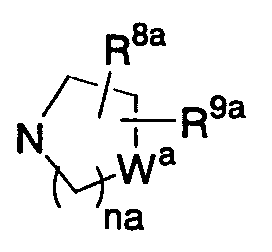
- The compound or the pharmaceutically acceptable salt thereof according to claim 1, wherein X--Y--Z is R5N-C=O (wherein R5 has the same meaning as defined above).
- The compound or the pharmaceutically acceptable salt thereof according to claim 1, wherein X--Y--Z is N=C-NR6R7 (wherein R6 and R7 have the same meanings as defined above, respectively).
- The compound or the pharmaceutically acceptable salt thereof according to claim 3, wherein R6 and R7 are not hydrogen atoms simultaneously.
- The compound or the pharmaceutically acceptable salt thereof according to claim 3, wherein R6 is a hydrogen atom and R7 is substituted or unsubstituted pyrrolidinyl.
- The compound or the pharmaceutically acceptable salt thereof according to claim 1, wherein X--Y--Z is C=C-NR6aR7a (wherein R6a and R7a have the same meanings as defined above, respectively).
- The compound or the pharmaceutically acceptable salt thereof according to claim 6, wherein R6a and R7a are not hydrogen atoms simultaneously.
- The compound or the pharmaceutically acceptable salt thereof according to any one of claims 1 to 7, wherein either R1 or R2 is a hydrogen atom and the other is substituted or unsubstituted lower alkyl, or substituted or unsubstituted aralkyl; or R1 and R2 may be the same or different and each is substituted or unsubstituted lower alkyl.
- The compound or the pharmaceutically acceptable salt thereof according to any one of claims 1 to 7, wherein R1 is a hydrogen atom and R2 is aralkyl.
- The compound or the pharmaceutically acceptable salt thereof according to any one of claims 1 to 9, wherein R3 is a hydrogen atom and R4 is lower alkyl.
- The compound or the pharmaceutically acceptable salt thereof according to any one of claims 1 to 9, wherein R3 is a hydrogen atom and R4 is substituted or unsubstituted aralkyl.
- A pharmaceutical composition which comprises the compound or the pharmaceutically acceptable salt thereof according to any one of claims 1 to 11.
- A preventive and/or therapeutic agent for diabetes, which comprises the compound or the pharmaceutically acceptable salt thereof according to any one of claims 1 to 11.
- A preventive and/or therapeutic agent for complication of diabetes, which comprises the compound or the pharmaceutically acceptable salt thereof according to any one of claims 1 to 11.
- An insulin secretion promoter which comprises the compound or the pharmaceutically acceptable salt thereof according to any one of claims 1 to 11.
- A hypoglycemic agent which comprises the compound or the pharmaceutically acceptable salt thereof according to any one of claims 1 to 11.
- A method for preventing and/or treating diabetes, which comprises administering an effective amount of the compound or the pharmaceutically acceptable salt thereof according to any one of claims 1 to 11.
- A method for preventing and/or treating a complication of diabetes, which comprises administering an effective amount of the compound or the pharmaceutically acceptable salt thereof according to any one of claims 1 to 11.
- A method for promoting insulin secretion, which comprises administering an effective amount of the compound or the pharmaceutically acceptable salt thereof according to any one of claims 1 to 11.
- A method for decreasing blood glucose level, which comprises administering an effective amount of the compound or the pharmaceutically acceptable salt thereof according to any one of claims 1 to 11.
- Use of the compound or the pharmaceutically acceptable salt thereof according to any one of claims 1 to 11 for the manufacture of a preventive and/or therapeutic agent for diabetes.
- Use of the compound or the pharmaceutically acceptable salt thereof according to any one of claims 1 to 11 for the manufacture of a preventive and/or therapeutic agent for a complication of diabetes.
- Use of the compound or the pharmaceutically acceptable salt thereof according to any one of claims 1 to 11 for the manufacture of an insulin secretion promoter.
- Use of the compound or the pharmaceutically acceptable salt thereof according to any one of claims 1 to 11 for the manufacture of a hypoglycemic agent.
Applications Claiming Priority (3)
| Application Number | Priority Date | Filing Date | Title |
|---|---|---|---|
| JP2002185281 | 2002-06-25 | ||
| JP2002185281 | 2002-06-25 | ||
| PCT/JP2003/008045 WO2004000841A1 (en) | 2002-06-25 | 2003-06-25 | Hetero-bicyclic compounds |
Publications (2)
| Publication Number | Publication Date |
|---|---|
| EP1533312A1 true EP1533312A1 (en) | 2005-05-25 |
| EP1533312A4 EP1533312A4 (en) | 2006-05-31 |
Family
ID=29996730
Family Applications (1)
| Application Number | Title | Priority Date | Filing Date |
|---|---|---|---|
| EP03760954A Withdrawn EP1533312A4 (en) | 2002-06-25 | 2003-06-25 | HETERO-BICYCLIC COMPOUNDS |
Country Status (8)
| Country | Link |
|---|---|
| US (1) | US20060046992A1 (en) |
| EP (1) | EP1533312A4 (en) |
| JP (1) | JPWO2004000841A1 (en) |
| KR (1) | KR20050008849A (en) |
| CN (1) | CN1310916C (en) |
| AU (1) | AU2003248246A1 (en) |
| CA (1) | CA2490526A1 (en) |
| WO (1) | WO2004000841A1 (en) |
Families Citing this family (4)
| Publication number | Priority date | Publication date | Assignee | Title |
|---|---|---|---|---|
| KR20060111898A (en) * | 2003-08-29 | 2006-10-30 | 교와 가부시키가이샤 | How to stabilize lipid-rich plaques and prevent rupture |
| GB0521569D0 (en) | 2005-10-22 | 2005-11-30 | Nutec Medical Ltd | Portable resuscitation system |
| TW201200518A (en) * | 2010-03-10 | 2012-01-01 | Kalypsys Inc | Heterocyclic inhibitors of histamine receptors for the treatment of disease |
| TWI548621B (en) | 2011-04-22 | 2016-09-11 | 標誌製藥公司 | Substituted diaminocarboxamide and diaminocarbonitrile pyrimidines, compositions thereof, and methods of treatment therewith |
Family Cites Families (3)
| Publication number | Priority date | Publication date | Assignee | Title |
|---|---|---|---|---|
| GB1458070A (en) * | 1974-04-19 | 1976-12-08 | Wyeth John & Brother Ltd | Derivatives of hexahydroimidazo 1,5-a-pyridines |
| IE43313B1 (en) * | 1975-09-03 | 1981-01-28 | Pfizer | Quaternary salts as hypoglycemic agents |
| DE60018216T2 (en) * | 1999-12-24 | 2006-02-16 | Kyowa Hakko Kogyo Co., Ltd. | CONDENSED PURE DERIVATIVES |
-
2003
- 2003-06-25 CN CNB038148714A patent/CN1310916C/en not_active Expired - Fee Related
- 2003-06-25 WO PCT/JP2003/008045 patent/WO2004000841A1/en not_active Ceased
- 2003-06-25 CA CA002490526A patent/CA2490526A1/en not_active Abandoned
- 2003-06-25 AU AU2003248246A patent/AU2003248246A1/en not_active Abandoned
- 2003-06-25 JP JP2004515184A patent/JPWO2004000841A1/en not_active Abandoned
- 2003-06-25 US US10/519,630 patent/US20060046992A1/en not_active Abandoned
- 2003-06-25 KR KR10-2004-7020955A patent/KR20050008849A/en not_active Withdrawn
- 2003-06-25 EP EP03760954A patent/EP1533312A4/en not_active Withdrawn
Also Published As
| Publication number | Publication date |
|---|---|
| JPWO2004000841A1 (en) | 2005-10-20 |
| KR20050008849A (en) | 2005-01-21 |
| WO2004000841A1 (en) | 2003-12-31 |
| EP1533312A4 (en) | 2006-05-31 |
| CA2490526A1 (en) | 2003-12-31 |
| CN1310916C (en) | 2007-04-18 |
| US20060046992A1 (en) | 2006-03-02 |
| AU2003248246A1 (en) | 2004-01-06 |
| CN1662531A (en) | 2005-08-31 |
Similar Documents
| Publication | Publication Date | Title |
|---|---|---|
| US12264159B2 (en) | Functionalized heterocycles as antiviral agents | |
| AU740704B2 (en) | Substituted fused heterocyclic compounds | |
| AU2004247560B2 (en) | Cyclic tertiary amine compound | |
| EP1361225B1 (en) | Compounds substituted with bicyclic amino groups | |
| JP5240775B2 (en) | ISOXAZOLE DERIVATIVES AND ISOTHIAZOLE DERIVATIVES HAVING TYPE I 11β HYDROXYSTEROID DEHYDROGENASE INHIBITORY ACTIVITY - Patent application | |
| JP2006188504A (en) | Pharmaceutical composition containing cyclic tertiary amine compound | |
| US20060046992A1 (en) | Heterobicyclic compounds | |
| JP3488099B2 (en) | Substituted fused heterocyclic compounds | |
| JP2000351769A (en) | Insulin resistance improver | |
| JP2007217322A (en) | Pharmaceutical composition for treatment or prevention of chronic obstructive pulmonary disease | |
| JP2005023073A (en) | Cyclic tertiary amine compound | |
| CN1210861A (en) | Pyrimidinone derivatives and herbicides containing them | |
| JP2002284782A (en) | Bicyclic amino group-substituted compound | |
| HK1056875A (en) | Compounds substituted with bicyclic amino groups | |
| JP2004131499A (en) | Water-soluble triazole compound | |
| EA046659B1 (en) | FUNCTIONALIZED HETEROCYCLES AS ANTI-VIRAL AGENTS | |
| TW200410948A (en) | Water soluble triazole compounds | |
| JP2005263636A (en) | Water soluble triazole medicinal composition |
Legal Events
| Date | Code | Title | Description |
|---|---|---|---|
| PUAI | Public reference made under article 153(3) epc to a published international application that has entered the european phase |
Free format text: ORIGINAL CODE: 0009012 |
|
| 17P | Request for examination filed |
Effective date: 20041223 |
|
| AK | Designated contracting states |
Kind code of ref document: A1 Designated state(s): AT BE BG CH CY CZ DE DK EE ES FI FR GB GR HU IE IT LI LU MC NL PT RO SE SI SK TR |
|
| AX | Request for extension of the european patent |
Extension state: AL LT LV MK |
|
| DAX | Request for extension of the european patent (deleted) | ||
| A4 | Supplementary search report drawn up and despatched |
Effective date: 20060419 |
|
| 17Q | First examination report despatched |
Effective date: 20070720 |
|
| STAA | Information on the status of an ep patent application or granted ep patent |
Free format text: STATUS: THE APPLICATION IS DEEMED TO BE WITHDRAWN |
|
| 18D | Application deemed to be withdrawn |
Effective date: 20071201 |