EP1532315B1 - Soudage sans apport de matiere d'un element d'appareil de voie et un toncon de rail - Google Patents
Soudage sans apport de matiere d'un element d'appareil de voie et un toncon de rail Download PDFInfo
- Publication number
- EP1532315B1 EP1532315B1 EP03757094.2A EP03757094A EP1532315B1 EP 1532315 B1 EP1532315 B1 EP 1532315B1 EP 03757094 A EP03757094 A EP 03757094A EP 1532315 B1 EP1532315 B1 EP 1532315B1
- Authority
- EP
- European Patent Office
- Prior art keywords
- steel
- rail
- alloy
- carbon
- hardness
- Prior art date
- Legal status (The legal status is an assumption and is not a legal conclusion. Google has not performed a legal analysis and makes no representation as to the accuracy of the status listed.)
- Expired - Lifetime
Links
- 238000003466 welding Methods 0.000 title description 8
- 239000000463 material Substances 0.000 title description 4
- 229910000831 Steel Inorganic materials 0.000 claims description 21
- 239000010959 steel Substances 0.000 claims description 21
- 229910000851 Alloy steel Inorganic materials 0.000 claims description 12
- 229910052799 carbon Inorganic materials 0.000 claims description 12
- PWHULOQIROXLJO-UHFFFAOYSA-N Manganese Chemical compound [Mn] PWHULOQIROXLJO-UHFFFAOYSA-N 0.000 claims description 11
- OKTJSMMVPCPJKN-UHFFFAOYSA-N Carbon Chemical compound [C] OKTJSMMVPCPJKN-UHFFFAOYSA-N 0.000 claims description 10
- VYZAMTAEIAYCRO-UHFFFAOYSA-N Chromium Chemical compound [Cr] VYZAMTAEIAYCRO-UHFFFAOYSA-N 0.000 claims description 10
- ZOKXTWBITQBERF-UHFFFAOYSA-N Molybdenum Chemical compound [Mo] ZOKXTWBITQBERF-UHFFFAOYSA-N 0.000 claims description 8
- 229910045601 alloy Inorganic materials 0.000 claims description 8
- 239000000956 alloy Substances 0.000 claims description 8
- 229910052782 aluminium Inorganic materials 0.000 claims description 8
- XAGFODPZIPBFFR-UHFFFAOYSA-N aluminium Chemical compound [Al] XAGFODPZIPBFFR-UHFFFAOYSA-N 0.000 claims description 8
- 239000000203 mixture Substances 0.000 claims description 8
- 229910052804 chromium Inorganic materials 0.000 claims description 7
- 239000011651 chromium Substances 0.000 claims description 7
- 229910052748 manganese Inorganic materials 0.000 claims description 7
- 239000011572 manganese Substances 0.000 claims description 7
- OAICVXFJPJFONN-UHFFFAOYSA-N Phosphorus Chemical compound [P] OAICVXFJPJFONN-UHFFFAOYSA-N 0.000 claims description 5
- NINIDFKCEFEMDL-UHFFFAOYSA-N Sulfur Chemical compound [S] NINIDFKCEFEMDL-UHFFFAOYSA-N 0.000 claims description 5
- RTAQQCXQSZGOHL-UHFFFAOYSA-N Titanium Chemical compound [Ti] RTAQQCXQSZGOHL-UHFFFAOYSA-N 0.000 claims description 5
- 239000004411 aluminium Substances 0.000 claims description 5
- 229910052750 molybdenum Inorganic materials 0.000 claims description 5
- 239000011733 molybdenum Substances 0.000 claims description 5
- 239000010703 silicon Substances 0.000 claims description 5
- 229910052710 silicon Inorganic materials 0.000 claims description 5
- ZOXJGFHDIHLPTG-UHFFFAOYSA-N Boron Chemical compound [B] ZOXJGFHDIHLPTG-UHFFFAOYSA-N 0.000 claims description 3
- 229910052796 boron Inorganic materials 0.000 claims description 3
- 229910052698 phosphorus Inorganic materials 0.000 claims description 3
- 239000011574 phosphorus Substances 0.000 claims description 3
- 229910052717 sulfur Inorganic materials 0.000 claims description 3
- 239000011593 sulfur Substances 0.000 claims description 3
- 239000010936 titanium Substances 0.000 claims description 3
- 229910052719 titanium Inorganic materials 0.000 claims description 3
- 229910001209 Low-carbon steel Inorganic materials 0.000 claims description 2
- 238000001465 metallisation Methods 0.000 claims 1
- XUIMIQQOPSSXEZ-UHFFFAOYSA-N Silicon Chemical compound [Si] XUIMIQQOPSSXEZ-UHFFFAOYSA-N 0.000 description 6
- 229910052751 metal Inorganic materials 0.000 description 5
- 239000002184 metal Substances 0.000 description 5
- 238000007792 addition Methods 0.000 description 4
- 229910001339 C alloy Inorganic materials 0.000 description 2
- 229910000975 Carbon steel Inorganic materials 0.000 description 2
- 239000010962 carbon steel Substances 0.000 description 2
- 230000015572 biosynthetic process Effects 0.000 description 1
- 238000010586 diagram Methods 0.000 description 1
- 238000010894 electron beam technology Methods 0.000 description 1
- 238000004880 explosion Methods 0.000 description 1
- 238000005242 forging Methods 0.000 description 1
- 238000007542 hardness measurement Methods 0.000 description 1
- 230000006698 induction Effects 0.000 description 1
- WPBNNNQJVZRUHP-UHFFFAOYSA-L manganese(2+);methyl n-[[2-(methoxycarbonylcarbamothioylamino)phenyl]carbamothioyl]carbamate;n-[2-(sulfidocarbothioylamino)ethyl]carbamodithioate Chemical compound [Mn+2].[S-]C(=S)NCCNC([S-])=S.COC(=O)NC(=S)NC1=CC=CC=C1NC(=S)NC(=O)OC WPBNNNQJVZRUHP-UHFFFAOYSA-L 0.000 description 1
- 238000002844 melting Methods 0.000 description 1
- 230000008018 melting Effects 0.000 description 1
- 150000002739 metals Chemical class 0.000 description 1
- 238000000034 method Methods 0.000 description 1
- 238000000465 moulding Methods 0.000 description 1
- 238000010791 quenching Methods 0.000 description 1
- 230000000171 quenching effect Effects 0.000 description 1
- 239000000126 substance Substances 0.000 description 1
Images

Classifications
-
- C—CHEMISTRY; METALLURGY
- C22—METALLURGY; FERROUS OR NON-FERROUS ALLOYS; TREATMENT OF ALLOYS OR NON-FERROUS METALS
- C22C—ALLOYS
- C22C38/00—Ferrous alloys, e.g. steel alloys
- C22C38/18—Ferrous alloys, e.g. steel alloys containing chromium
- C22C38/22—Ferrous alloys, e.g. steel alloys containing chromium with molybdenum or tungsten
-
- B—PERFORMING OPERATIONS; TRANSPORTING
- B23—MACHINE TOOLS; METAL-WORKING NOT OTHERWISE PROVIDED FOR
- B23K—SOLDERING OR UNSOLDERING; WELDING; CLADDING OR PLATING BY SOLDERING OR WELDING; CUTTING BY APPLYING HEAT LOCALLY, e.g. FLAME CUTTING; WORKING BY LASER BEAM
- B23K11/00—Resistance welding; Severing by resistance heating
- B23K11/04—Flash butt welding
-
- C—CHEMISTRY; METALLURGY
- C22—METALLURGY; FERROUS OR NON-FERROUS ALLOYS; TREATMENT OF ALLOYS OR NON-FERROUS METALS
- C22C—ALLOYS
- C22C38/00—Ferrous alloys, e.g. steel alloys
- C22C38/02—Ferrous alloys, e.g. steel alloys containing silicon
-
- C—CHEMISTRY; METALLURGY
- C22—METALLURGY; FERROUS OR NON-FERROUS ALLOYS; TREATMENT OF ALLOYS OR NON-FERROUS METALS
- C22C—ALLOYS
- C22C38/00—Ferrous alloys, e.g. steel alloys
- C22C38/18—Ferrous alloys, e.g. steel alloys containing chromium
- C22C38/38—Ferrous alloys, e.g. steel alloys containing chromium with more than 1.5% by weight of manganese
-
- C—CHEMISTRY; METALLURGY
- C22—METALLURGY; FERROUS OR NON-FERROUS ALLOYS; TREATMENT OF ALLOYS OR NON-FERROUS METALS
- C22C—ALLOYS
- C22C38/00—Ferrous alloys, e.g. steel alloys
- C22C38/60—Ferrous alloys, e.g. steel alloys containing lead, selenium, tellurium, or antimony, or more than 0.04% by weight of sulfur
-
- E—FIXED CONSTRUCTIONS
- E01—CONSTRUCTION OF ROADS, RAILWAYS, OR BRIDGES
- E01B—PERMANENT WAY; PERMANENT-WAY TOOLS; MACHINES FOR MAKING RAILWAYS OF ALL KINDS
- E01B11/00—Rail joints
- E01B11/44—Non-dismountable rail joints; Welded joints
- E01B11/50—Joints made by electric welding
-
- E—FIXED CONSTRUCTIONS
- E01—CONSTRUCTION OF ROADS, RAILWAYS, OR BRIDGES
- E01B—PERMANENT WAY; PERMANENT-WAY TOOLS; MACHINES FOR MAKING RAILWAYS OF ALL KINDS
- E01B7/00—Switches; Crossings
- E01B7/10—Frogs
- E01B7/12—Fixed frogs made of one part or composite
Definitions
- the present invention relates to a rail line, of the type comprising a high-alloy steel railroad track apparatus element, in which at least one alloy element has a content equal to at least 5% by mass, and a rail section in steel, bonded to each other by a weld without the addition of metal.
- the invention relates to the connection between a track apparatus such as a crossing heart and a rail section consisting for example of a common carbon steel track rail.
- the carbon rails commonly used to form rails of common track comprise a quantity of carbon included, by mass, between 0.55% and 0.8%.
- the rails include additions of other metals such as chromium.
- the high amount of chromium makes it impossible to weld between the two high alloyed steels.
- This intermediate piece is formed of a material that can be welded easily on the railroad track unit element on the one hand and on the rail section on the other hand.
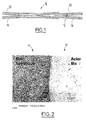
- FIG. 1 On the figure 1 is represented a crossing heart allowing the crossing of two lines of intersecting lanes.
- the crossing heart 12 is thus connected at its four ends to four sections of common tracks 14.
- the sections of the tracks 14 are connected to the crossing center by welds 16 without the addition of metal.
- the crossover core 12 is formed in a high alloyed steel, wherein at least one alloy element has a content equal to at least 5% by weight.
- This steel is in particular an alloy steel containing between 12% and 14% by weight of manganese, the crossover core having been obtained by molding. This is a steel well known as HADFIELD.
- the hardness of this steel is between 170 and 230 HB.
- the rail sections 14 are made of a low carbon alloy steel according to claim 1, and each weld 16 is a weld without a metal supply made directly between the high alloyed steel and the low carbon steel moderately ally.
- the low carbon medium alloy steel is a bainitic steel without carbide.
- This steel has a hardness between 350 and 390 HB.
- the weld 16 is obtained for example by spark and forging according to a conventional welding cycle known per se.
- the weld can be obtained by induction, friction, electron beam, laser or any other high energy beam.
- the high alloyed steel track apparatus element is at ambient temperature before welding by flashing and a hardness resulting from a quenching of 170 to 230 HB.
- the rail section 14 has a hardness of between 290 and 330 HB, and that this hardness increases to reach a value close to 380 HB in the immediate vicinity of the weld.
- the hardness of the rail line remains at a value of between 185 and 235 HB in the high-alloy steel track apparatus element 12. This hardness corresponds to the hardness of the trackside apparatus element before welding.
- the hardness remains satisfactory in the immediate vicinity of the weld, this being not less than the hardness proper to the two elements welded to each other and that in particular, there is no drop in hardness in the thermally affected zone (ZAT).
- the end of the high-alloy steel apparatus element intended to be welded is pre-cured before implementation of the spark welding in order to increase its hardness.
- This pre-hardening is obtained for example by explosion.
- the hardness of the trackside apparatus piece before welding is then increased to a value between 330 and 360 HB.
- the hardness measurements obtained are those illustrated on the figure 4 .
- the hardness of the rail section is substantially identical to that of the figure 3 .
- the hardness of the high alloy steel track apparatus element in the immediate vicinity of the weld is substantially equal to 350 HB, a value substantially equal to that of the rail section, in its current part.
Landscapes
- Engineering & Computer Science (AREA)
- Chemical & Material Sciences (AREA)
- Mechanical Engineering (AREA)
- Materials Engineering (AREA)
- Metallurgy (AREA)
- Organic Chemistry (AREA)
- Architecture (AREA)
- Civil Engineering (AREA)
- Structural Engineering (AREA)
- Heat Treatment Of Articles (AREA)
- Train Traffic Observation, Control, And Security (AREA)
- Heat Treatment Of Steel (AREA)
- Arc Welding In General (AREA)
Description
- La présente invention concerne une file de rail, du type comportant un élément d'appareil de voie ferroviaire en acier fortement allié, dans lequel au moins un élément allié a une teneur égale à au moins 5 % en masse, et un tronçon de rail en acier, liés l'un à l'autre par une soudure sans apport de métal.
- L'invention concerne en particulier la liaison entre un appareil de voie tel qu'un coeur de croisement et un tronçon de rail constitué par exemple d'un rail de voie courant en acier au carbone.
- Il est connu que, lorsqu'on soude une pièce en un acier au carbone avec une pièce en un acier fortement allié, la fusion produite lors de cette opération provoque, à l'interface de liaison entre les deux pièces, la formation d'alliages dont la composition chimique est différente de celle des matériaux de base. Lorsque la soudure est faite sans apport de métal, par exemple par soudage par étincelage, il est difficile de maîtriser la nature des alliages créés. Aussi, la soudure réalisée est généralement de qualité médiocre, celle-ci s'apparentant plutôt à un collage.
- Les rails au carbone couramment utilisés pour constituer des rails de voies courantes comportent une quantité de carbone comprise, en masse, entre 0,55 % et 0,8 %. Pour assurer une dureté suffisante, les rails comportent des ajouts d'autres métaux tels que du chrome. Toutefois, la quantité de chrome élevée rend impossible la soudure entre les deux aciers trop fortement alliés.
- Pour résoudre le problème mentionné ci-dessus, il est connu de prévoir un insert formant une pièce intermédiaire entre l'élément d'appareil de voie ferroviaire en acier fortement allié et le tronçon de rail. Cette pièce intermédiaire est formée dans un matériau susceptible d'être soudé facilement sur l'élément d'appareil de voie ferroviaire d'une part et sur le tronçon de rail d'autre part.
- Le recours à une telle pièce intermédiaire augmente le coût de mise en oeuvre du procédé de liaison, notamment du fait des spécificités particulières du matériau constituant l'insert et de la nécessité de réaliser deux soudures. De plus, il est constaté des chutes de dureté dans le tronçon de rail, dans la zone affectée thermiquement (ZAT) par l'énergie de la soudure.
- Le document
EP 0 602 729 A1 divulgue une file de rail selon le préambule de la revendication 1. - L'invention a pour but de proposer une solution permettant d'assurer un niveau de dureté satisfaisant de l'élément d'appareil de voie et du tronçon de rail, ainsi que de la liaison entre l'élément d'appareil de voie et le tronçon de rail, sans que leur liaison ne soit d'un coût de réalisation élevé.
- A cet effet, l'invention a pour objet une file de rail du type précité, caractérisée en ce que le tronçon de rail est formé d'un acier bainitique bas carbone moyennement allié qui a, en masse, la composition suivante:
- 0,05% à 0,50% de carbone ;
- 0,5% à 2,5% de manganèse ;
- 0,6% à 3% de silicium ou d'aluminium ;
- 0,25% à 3,1% de chrome ; et
- 0% à 0,9% de molybdène.
- Suivant des modes particuliers de réalisation, la file de rail comporte l'une ou plusieurs des caractéristiques suivantes :
- l'acier bas carbone moyennement allié formant le tronçon de rail a une composition définie ci-dessous:
- 0,28 % à 0,36 % de carbone ;
- 1,40 % à 1,70 % de manganèse ;
- au plus 0,03 % de phosphore ;
- 0,01 % à 0,03 % de soufre ;
- au plus 0,005 % d'aluminium ;
- 1 % à 1,40 % de silicium
- 0,40 % à 0,60 % de chrome ;
- 0,08 % à 0,20 % de molybdène ;
- au plus 0,04 % de titane ; et
- au plus 0,004 % de bore ; et
- l'élément d'appareil de voie ferroviaire en acier fortement allié comprend, en masse, 12 % à 14 % de manganèse.
- L'invention sera mieux comprise à la lecture de la description qui va suivre, donnée uniquement à titre d'exemple et faite en se référant aux dessins, sur lesquels :
- la
figure 1 est une vue en élévation schématique d'un coeur de croisement de voies ferroviaires auxquelles sont soudés quatre tronçons de rail de voies courantes ; - la
figure 2 est une photomicrographie d'une soudure d'une file de rail selon l'invention ; et - les
figures 3 et 4 sont des diagrammes montrant la dureté mesurée suivant la longueur de la file de rail dans la région de la soudure pour deux modes différents de mise en oeuvre de l'invention. - Sur la
figure 1 est représenté un coeur de croisement permettant le croisement de deux files de voies sécantes. Le coeur de croisement 12 est ainsi relié à ses quatre extrémités à quatre tronçons de voies courantes 14. - Les tronçons de voies 14 sont reliés au coeur de croisement par des soudures 16 sans apport de métal.
- Comme connu en soi, le coeur de croisement 12 est formé dans un acier fortement allié, dans lequel au moins un élément allié a une teneur égale à au moins 5 % en masse.
- Cet acier est notamment un acier allié contenant entre 12 % et 14 % en masse de manganèse, le coeur de croisement ayant été obtenu par moulage. Il s'agit d'un acier bien connu sous le nom de HADFIELD.
- La dureté de cet acier est comprise entre 170 et 230 HB.
- Selon l'invention, les tronçons de rail 14 sont réalisés dans un acier bas carbone moyennement allié selon la revendication 1, et chaque soudure 16 est une soudure sans apport de métal réalisée directement entre l'acier fortement allié et l'acier bas carbone moyennement allié.
- De préférence, l'acier bas carbone moyennement allié est un acier bainitique sans carbure.
- De manière plus préférée, l'acier bainitique a une composition définie ci-dessous :
- 0,28 % à 0,36 % de carbone ;
- 1,40 % à 1,70 % de manganèse ;
- au plus 0,03 % de phosphore ;
- 0,01 % à 0,03 % de soufre ;
- au plus 0,005 % d'aluminium ;
- 1 % à 1,40 % de silicium
- 0,40 % à 0,60 % de chrome ;
- 0,08 % à 0,20 % de molybdène ;
- au plus 0,04 % de titane ; et
- au plus 0,004 % de bore.
- Cet acier a une dureté comprise entre 350 et 390 HB.
- La soudure 16 est obtenue par exemple par étincelage et forgeage suivant un cycle de soudage classique connu en soi.
- En variante, la soudure peut être obtenue par induction, par friction, par faisceau d'électrons, par laser ou par tout autre faisceau à haute énergie.
- Sur la
figure 2 est illustré l'aspect de la soudure 16 obtenue. Il apparaît sur cette microphotographie agrandie cinq cents fois que l'interface est très nette entre l'acier bainitique bas carbone et l'acier fortement allié, les deux aciers étant interpénétrés de manière satisfaisante. - Suivant un premier mode de réalisation envisagé, l'élément d'appareil de voie en acier fortement allié est à température ambiante avant le soudage par étincelage et d'une dureté résultant d'une hypertrempe de 170 à 230 HB.
- Dans ce cas, l'évolution de la dureté de la file de rail au voisinage de la soudure est représentée sur la
figure 3 . - On constate que, dans sa partie courante, le tronçon de rail 14 a une dureté comprise entre 290 et 330 HB, et que cette dureté croît pour atteindre une valeur proche de 380 HB au voisinage immédiat de la soudure. La dureté de la file de rail reste à une valeur comprise entre 185 et 235 HB dans l'élément d'appareil de voie en acier fortement allié 12. Cette dureté correspond à la dureté de l'élément d'appareil de voie avant soudage.
- On constate donc qu'avec les compositions selon l'invention, la dureté reste satisfaisante au voisinage immédiat de la soudure, celle-ci n'étant pas inférieure à la dureté propre aux deux éléments soudés l'un à l'autre et qu'en particulier, il n'y a aucune chute de la dureté dans la zone affectée thermiquement (ZAT).
- Suivant une variante de réalisation, l'extrémité de l'élément d'appareil de voie en acier fortement allié destinée à être soudée est pré-durcie avant mise en oeuvre de la soudure par étincelage afin d'augmenter sa dureté. Ce pré-durcissage est obtenu par exemple par explosion.
- La dureté de l'élément d'appareil de voie avant soudage est alors portée à une valeur comprise entre 330 et 360 HB.
- Avec cette étape supplémentaire, les mesures de dureté obtenues sont celles illustrées sur la
figure 4 . Dans ce cas, la dureté du tronçon de rail est sensiblement identique à celle de lafigure 3 . En revanche, la dureté de l'élément d'appareil de voie en acier fortement allié au voisinage immédiat de la soudure est sensiblement égale à 350 HB, valeur sensiblement égale à celle du tronçon de rail, dans sa partie courante.
Claims (4)
- File de rail comportant un élément (12) d'appareil de voie ferroviaire en acier fortement allié, dans lequel au moins un élément allié a une teneur égale à au moins 5 % en masse, et un tronçon de rail (14) en acier moyennement allié, liés directement l'un à l'autre par une soudure sans apport de métal, le tronçon de rail (14) étant formé d'un acier bainitique bas carbone moyennement allié, caractérisé en ce que ledit acier bainitique a, en masse, la composition suivante :- 0,05 % à 0,50 % de carbone ;- 0,5 % à 2,5 % de manganèse ;- 0,6 % à 3 % de silicium ou d'aluminium ;- 0,25 % à 3,1 % de chrome ; et- 0 % à 0,9 % de molybdène.
- File de rail selon la revendication 1, caractérisée en ce que l'acier bas carbone moyennement allié est un acier bainitique sans carbure.
- File de rail selon l'une des revendications 1 ou 2, caractérisée en ce que l'acier bainitique bas carbone moyennement allié formant le tronçon de rail a une composition définie ci-dessous:- 0,28 % à 0,36 % de carbone ;- 1,40 % à 1,70 % de manganèse ;- au plus 0,03 % de phosphore ;- 0,01 % à 0,03 % de soufre ;- au plus 0,005 % d'aluminium ;- 1 % à 1,40 % de silicium- 0,40 % à 0,60 % de chrome ;- 0,08 % à 0,20 % de molybdène ;- au plus 0,04 % de titane ; et- au plus 0,004 % de bore.
- File de rail selon l'une quelconque des revendications précédentes, caractérisée en ce que l'élément d'appareil de voie ferroviaire en acier fortement allié comprend, en masse, 12 % à 14 % de manganèse.
Applications Claiming Priority (3)
| Application Number | Priority Date | Filing Date | Title |
|---|---|---|---|
| FR0206922A FR2840628B1 (fr) | 2002-06-05 | 2002-06-05 | File de rail comportant un element d'appareil de voie et un troncon de rail soudes sans apport de matiere |
| FR0206922 | 2002-06-05 | ||
| PCT/FR2003/001575 WO2003104563A1 (fr) | 2002-06-05 | 2003-05-23 | Soudage sans apport de matiere d'un element d'appareil de voie et un toncon de rail |
Publications (2)
| Publication Number | Publication Date |
|---|---|
| EP1532315A1 EP1532315A1 (fr) | 2005-05-25 |
| EP1532315B1 true EP1532315B1 (fr) | 2016-11-30 |
Family
ID=29558985
Family Applications (1)
| Application Number | Title | Priority Date | Filing Date |
|---|---|---|---|
| EP03757094.2A Expired - Lifetime EP1532315B1 (fr) | 2002-06-05 | 2003-05-23 | Soudage sans apport de matiere d'un element d'appareil de voie et un toncon de rail |
Country Status (13)
| Country | Link |
|---|---|
| US (2) | US20060011732A1 (fr) |
| EP (1) | EP1532315B1 (fr) |
| JP (1) | JP4229905B2 (fr) |
| KR (1) | KR100685506B1 (fr) |
| CN (1) | CN1306117C (fr) |
| AU (1) | AU2003255600A1 (fr) |
| CA (1) | CA2488023C (fr) |
| ES (1) | ES2612704T3 (fr) |
| FR (1) | FR2840628B1 (fr) |
| MY (1) | MY141244A (fr) |
| RU (1) | RU2294999C2 (fr) |
| TW (1) | TWI230217B (fr) |
| WO (1) | WO2003104563A1 (fr) |
Families Citing this family (8)
| Publication number | Priority date | Publication date | Assignee | Title |
|---|---|---|---|---|
| AT501239B1 (de) * | 2004-12-10 | 2007-02-15 | Vae Gmbh | Verfahren zum verbinden von aus manganhartstahlguss bestehenden weichenteilen oder von manganstahlschienen mit einer schiene aus kohlenstoffstahl |
| US8658935B2 (en) | 2008-12-24 | 2014-02-25 | Chemetron-Railway Products, Inc. | Welding process with jerk compensation |
| FR2992334B1 (fr) * | 2012-06-21 | 2015-01-02 | Vossloh Cogifer | Jonction d'elements de voie ferroviaire en acier manganese par soudure directe |
| US10138528B2 (en) * | 2012-09-06 | 2018-11-27 | Etxe-Tar, S.A. | Method and system for laser hardening of a surface of a workpiece |
| CN103726418A (zh) * | 2014-01-21 | 2014-04-16 | 唐山金山腾宇科技有限公司 | 镶板合金钢辙叉制造工艺 |
| PL234098B1 (pl) * | 2016-06-27 | 2020-01-31 | Arcelormittal Poland Spolka Akcyjna | Stal wielofazowa zwłaszcza do produkcji szyn normalnotorowych |
| BR112019015220B1 (pt) | 2017-09-29 | 2023-10-03 | CF&I Steel L.P. D/B/A EVRAZ Rocky Mountain Steel | Método para unir trilhos de aço com entrada de calor por solda controlada |
| CN113618210B (zh) * | 2021-08-19 | 2022-12-09 | 铁科(北京)轨道装备技术有限公司 | 辙叉制造工艺和辙叉 |
Citations (8)
| Publication number | Priority date | Publication date | Assignee | Title |
|---|---|---|---|---|
| US3288600A (en) | 1960-11-07 | 1966-11-29 | Armco Steel Corp | Low carbon, high strength alloy steel |
| EP0602729A1 (fr) * | 1992-12-15 | 1994-06-22 | Edgar Allen Engineering Limited | Joint de rails |
| EP0612852A1 (fr) | 1993-02-26 | 1994-08-31 | Nippon Steel Corporation | Procédé pour la fabrication de rails à résistance élevée en acier bainitique ayant une haute résistance à la fatigue par contact de roulement |
| US5879474A (en) * | 1995-01-20 | 1999-03-09 | British Steel Plc | Relating to carbide-free bainitic steels and method of producing such steels |
| JPH1192866A (ja) | 1997-09-16 | 1999-04-06 | Nkk Corp | 溶接部の接合性に優れたベイナイト鋼レール及びその製造方法 |
| US6177205B1 (en) * | 1996-05-24 | 2001-01-23 | Bwg Butzbacher Weichenbau Gmbh | Process for producing a permanent way component and such a component |
| JP2001098342A (ja) | 1999-09-27 | 2001-04-10 | Nkk Corp | フラッシュバット溶接部の接合性に優れた高強度べイナイトレール及びその製造方法 |
| DE20105890U1 (de) | 2000-04-14 | 2001-06-28 | DT výhybkárna a mostárna, spol. s.r.o., Prostějov | Verbindung eines Weichenteilstücks aus Manganstahl mit einer Schiene aus Kohlenstoffstahl |
Family Cites Families (14)
| Publication number | Priority date | Publication date | Assignee | Title |
|---|---|---|---|---|
| US3069021A (en) * | 1959-01-29 | 1962-12-18 | Ruth C Gray | Garment drying apparatus |
| US3089021A (en) * | 1960-06-01 | 1963-05-07 | Caterpillar Tractor Co | Method for forming a composite welded article |
| DE2416055C3 (de) * | 1974-04-03 | 1978-08-17 | Fried. Krupp Huettenwerke Ag, 4630 Bochum | Verwendung eines Stahles als Werkstoff für Schienen |
| FR2346495A1 (fr) * | 1975-11-13 | 1977-10-28 | Creusot Loire | Perfectionnement aux appareils de voies |
| LU88105A1 (fr) * | 1992-04-22 | 1993-12-06 | Les Acieries De La Meuse | Procede pour assembler une bande de roulement en acier en carbone et une bande de roulement en acier au manganese |
| FR2701178A1 (fr) * | 1993-02-03 | 1994-08-05 | Philips Electronique Lab | Système de communication par étalement de spectre à multiutilisateurs. |
| GB9313060D0 (en) * | 1993-06-24 | 1993-08-11 | British Steel Plc | Rails |
| FR2733706B1 (fr) * | 1995-05-05 | 1997-07-18 | Cogifer | Soudure sans apport de metal d'un acier au carbone avec un acier allie, procedes d'obtention et application aux appareils de voies ferroviaires |
| EP2239876A3 (fr) * | 1997-06-19 | 2011-01-26 | Kabushiki Kaisha Toshiba | Système de transmission avec multiplexage de données d'information, multiplexeur et démultiplexeur utilisés a cet effet et codeur et décodeur pour correction d'erreurs |
| CN1086743C (zh) * | 1998-01-14 | 2002-06-26 | 新日本制铁株式会社 | 具有高抗表面疲劳损伤性和高耐磨性的贝氏体钢钢轨 |
| RU2129938C1 (ru) * | 1998-05-20 | 1999-05-10 | Открытое акционерное общество "Муромский стрелочный завод" | Способ соединения изделий из высокоуглеродистой стали с изделием из высокомарганцовистой аустенитной стали |
| CZ9574U1 (en) * | 1999-11-17 | 2000-01-31 | Dt Vyhybkarna A Mostarna | Steel for railway crossing points |
| US20020163975A1 (en) * | 2000-09-21 | 2002-11-07 | Mitsuru Uesugi | Wireless transmission device, and transmission signal mapping method |
| JP3464649B2 (ja) * | 2000-12-27 | 2003-11-10 | 松下電器産業株式会社 | 送信装置、受信装置および通信方法 |
-
2002
- 2002-06-05 FR FR0206922A patent/FR2840628B1/fr not_active Expired - Fee Related
-
2003
- 2003-05-23 KR KR1020047019752A patent/KR100685506B1/ko not_active Expired - Fee Related
- 2003-05-23 AU AU2003255600A patent/AU2003255600A1/en not_active Abandoned
- 2003-05-23 CA CA2488023A patent/CA2488023C/fr not_active Expired - Fee Related
- 2003-05-23 RU RU2004138821/11A patent/RU2294999C2/ru active
- 2003-05-23 WO PCT/FR2003/001575 patent/WO2003104563A1/fr not_active Ceased
- 2003-05-23 US US10/516,913 patent/US20060011732A1/en not_active Abandoned
- 2003-05-23 ES ES03757094.2T patent/ES2612704T3/es not_active Expired - Lifetime
- 2003-05-23 JP JP2004511615A patent/JP4229905B2/ja not_active Expired - Fee Related
- 2003-05-23 CN CNB038148838A patent/CN1306117C/zh not_active Expired - Fee Related
- 2003-05-23 EP EP03757094.2A patent/EP1532315B1/fr not_active Expired - Lifetime
- 2003-05-29 TW TW092114612A patent/TWI230217B/zh not_active IP Right Cessation
- 2003-06-04 MY MYPI20032077A patent/MY141244A/en unknown
-
2009
- 2009-04-06 US US12/419,001 patent/US20090242519A1/en not_active Abandoned
Patent Citations (8)
| Publication number | Priority date | Publication date | Assignee | Title |
|---|---|---|---|---|
| US3288600A (en) | 1960-11-07 | 1966-11-29 | Armco Steel Corp | Low carbon, high strength alloy steel |
| EP0602729A1 (fr) * | 1992-12-15 | 1994-06-22 | Edgar Allen Engineering Limited | Joint de rails |
| EP0612852A1 (fr) | 1993-02-26 | 1994-08-31 | Nippon Steel Corporation | Procédé pour la fabrication de rails à résistance élevée en acier bainitique ayant une haute résistance à la fatigue par contact de roulement |
| US5879474A (en) * | 1995-01-20 | 1999-03-09 | British Steel Plc | Relating to carbide-free bainitic steels and method of producing such steels |
| US6177205B1 (en) * | 1996-05-24 | 2001-01-23 | Bwg Butzbacher Weichenbau Gmbh | Process for producing a permanent way component and such a component |
| JPH1192866A (ja) | 1997-09-16 | 1999-04-06 | Nkk Corp | 溶接部の接合性に優れたベイナイト鋼レール及びその製造方法 |
| JP2001098342A (ja) | 1999-09-27 | 2001-04-10 | Nkk Corp | フラッシュバット溶接部の接合性に優れた高強度べイナイトレール及びその製造方法 |
| DE20105890U1 (de) | 2000-04-14 | 2001-06-28 | DT výhybkárna a mostárna, spol. s.r.o., Prostějov | Verbindung eines Weichenteilstücks aus Manganstahl mit einer Schiene aus Kohlenstoffstahl |
Also Published As
| Publication number | Publication date |
|---|---|
| CN1662709A (zh) | 2005-08-31 |
| MY141244A (en) | 2010-03-31 |
| KR20050024312A (ko) | 2005-03-10 |
| CA2488023A1 (fr) | 2003-12-18 |
| JP2005529258A (ja) | 2005-09-29 |
| JP4229905B2 (ja) | 2009-02-25 |
| KR100685506B1 (ko) | 2007-02-27 |
| US20060011732A1 (en) | 2006-01-19 |
| TW200400307A (en) | 2004-01-01 |
| FR2840628A1 (fr) | 2003-12-12 |
| FR2840628B1 (fr) | 2004-08-13 |
| US20090242519A1 (en) | 2009-10-01 |
| CN1306117C (zh) | 2007-03-21 |
| RU2004138821A (ru) | 2005-07-20 |
| WO2003104563A1 (fr) | 2003-12-18 |
| AU2003255600A1 (en) | 2003-12-22 |
| TWI230217B (en) | 2005-04-01 |
| EP1532315A1 (fr) | 2005-05-25 |
| CA2488023C (fr) | 2012-01-17 |
| RU2294999C2 (ru) | 2007-03-10 |
| ES2612704T3 (es) | 2017-05-18 |
Similar Documents
| Publication | Publication Date | Title |
|---|---|---|
| EP2593268B1 (fr) | Procede de soudage hybride arc/laser de pieces en acier aluminise avec fil a elements gamagenes et gaz contenant moins de 10% d'azote ou d'oxygene | |
| JP4766587B2 (ja) | クラッドパイプ | |
| CA2800246C (fr) | Procede de soudage hybride arc/laser de pieces en acier aluminise avec gaz comprenant de l'azote et/ou de l'oxygene | |
| FR2845098A1 (fr) | Alliage a base de nickel pour la soudure electrique d'alliages de nickel et d'aciers fil de soudage et utilisation | |
| CA2488023C (fr) | Soudage sans apport de matiere d'un element d'appareil de voie et un troncon de rail | |
| CN101415853A (zh) | 可焊接抗裂钴基合金 | |
| EP2489460B1 (fr) | Procédé de fabrication de fil fourré par soudage laser avec un remplissage différentié | |
| EP0511040B1 (fr) | Procédé de raccordement d'une pièce en acier au manganèse à une autre pièce en acier au carbone et assemblage ainsi obtenu | |
| CA2094200C (fr) | Acier inoxydable austenitique a haute usinabilite et a deformation a froid amelioree | |
| FR2838137A1 (fr) | Acier pour la fabrication de moules pour le moulage par injection de matieres plastiques ou pour la fabrication d'outils pour le travail des metaux | |
| CA1298535C (fr) | Methode de brasage des alliages d'aluminium sans metal d'apport | |
| WO2018042171A1 (fr) | Alliage de rechargement dur | |
| WO2014118442A1 (fr) | Fil de soudure pour alliage fe-36ni | |
| EP4444488A1 (fr) | Poudre métallique pour un procédé de fabrication additive sur lit de poudre | |
| FR2992334A1 (fr) | Jonction d'elements de voie ferroviaire en acier manganese par soudure directe | |
| FR2753405A1 (fr) | Procede de soudage par coulee interstitielle aluminothermique de rails avec alliage d'acier moule dans le domaine du champignon de rails | |
| WO2006013242A1 (fr) | Objet comprenant une partie en acier de construction metallique, cette partie comportant une zone soudee a l’aide d’un faisceau a haute densite d’energie et presentant une excellente tenacite dans la zone fondue ; metode de fabrication de cet objet | |
| CA3196465A1 (fr) | Alliage a base de nickel pour la fabrication de tubes de pipeline | |
| CN112792453B (zh) | 利用低碳钢中间元件通过熔焊接合铁合金部件 | |
| EP0610135A1 (fr) | Procédé de traitement thermique après le soudage de deux pièces en acier allié de nuances distinctes | |
| EP0081432B1 (fr) | Alliages à base de fer pour éléments de construction soudés et utilisations de ces alliages | |
| JP2000167659A (ja) | めっき薄鋼板のmigろう付け方法 | |
| JP3849288B2 (ja) | 溶接重ね継手及びその製造方法 | |
| EP2564978A1 (fr) | Chimie de métal d'apport pour soudabilité améliorée des superalliages | |
| EP0567052A1 (fr) | Procédé pour assembler une bande de roulement en acier en carbone et une bande de roulement en acier au manganèse |
Legal Events
| Date | Code | Title | Description |
|---|---|---|---|
| PUAI | Public reference made under article 153(3) epc to a published international application that has entered the european phase |
Free format text: ORIGINAL CODE: 0009012 |
|
| 17P | Request for examination filed |
Effective date: 20041201 |
|
| AK | Designated contracting states |
Kind code of ref document: A1 Designated state(s): AT BE BG CH CY CZ DE DK EE ES FI FR GB GR HU IE IT LI LU MC NL PT RO SE SI SK TR |
|
| AX | Request for extension of the european patent |
Extension state: AL LT LV MK |
|
| REG | Reference to a national code |
Ref country code: HK Ref legal event code: DE Ref document number: 1072283 Country of ref document: HK |
|
| DAX | Request for extension of the european patent (deleted) | ||
| 17Q | First examination report despatched |
Effective date: 20100608 |
|
| GRAP | Despatch of communication of intention to grant a patent |
Free format text: ORIGINAL CODE: EPIDOSNIGR1 |
|
| INTG | Intention to grant announced |
Effective date: 20160629 |
|
| RIN1 | Information on inventor provided before grant (corrected) |
Inventor name: MUGG, PHILIPPE Inventor name: BAUMERT, SERGE |
|
| GRAS | Grant fee paid |
Free format text: ORIGINAL CODE: EPIDOSNIGR3 |
|
| GRAA | (expected) grant |
Free format text: ORIGINAL CODE: 0009210 |
|
| AK | Designated contracting states |
Kind code of ref document: B1 Designated state(s): AT BE BG CH CY CZ DE DK EE ES FI FR GB GR HU IE IT LI LU MC NL PT RO SE SI SK TR |
|
| REG | Reference to a national code |
Ref country code: CH Ref legal event code: EP Ref country code: GB Ref legal event code: FG4D Free format text: NOT ENGLISH |
|
| REG | Reference to a national code |
Ref country code: AT Ref legal event code: REF Ref document number: 849919 Country of ref document: AT Kind code of ref document: T Effective date: 20161215 |
|
| REG | Reference to a national code |
Ref country code: HK Ref legal event code: WD Ref document number: 1072283 Country of ref document: HK |
|
| REG | Reference to a national code |
Ref country code: IE Ref legal event code: FG4D Free format text: LANGUAGE OF EP DOCUMENT: FRENCH |
|
| REG | Reference to a national code |
Ref country code: DE Ref legal event code: R096 Ref document number: 60349665 Country of ref document: DE |
|
| REG | Reference to a national code |
Ref country code: SE Ref legal event code: TRGR |
|
| REG | Reference to a national code |
Ref country code: FR Ref legal event code: PLFP Year of fee payment: 15 |
|
| REG | Reference to a national code |
Ref country code: NL Ref legal event code: MP Effective date: 20161130 |
|
| PG25 | Lapsed in a contracting state [announced via postgrant information from national office to epo] |
Ref country code: GR Free format text: LAPSE BECAUSE OF FAILURE TO SUBMIT A TRANSLATION OF THE DESCRIPTION OR TO PAY THE FEE WITHIN THE PRESCRIBED TIME-LIMIT Effective date: 20170301 |
|
| REG | Reference to a national code |
Ref country code: ES Ref legal event code: FG2A Ref document number: 2612704 Country of ref document: ES Kind code of ref document: T3 Effective date: 20170518 |
|
| PG25 | Lapsed in a contracting state [announced via postgrant information from national office to epo] |
Ref country code: PT Free format text: LAPSE BECAUSE OF FAILURE TO SUBMIT A TRANSLATION OF THE DESCRIPTION OR TO PAY THE FEE WITHIN THE PRESCRIBED TIME-LIMIT Effective date: 20170330 Ref country code: FI Free format text: LAPSE BECAUSE OF FAILURE TO SUBMIT A TRANSLATION OF THE DESCRIPTION OR TO PAY THE FEE WITHIN THE PRESCRIBED TIME-LIMIT Effective date: 20161130 |
|
| PG25 | Lapsed in a contracting state [announced via postgrant information from national office to epo] |
Ref country code: NL Free format text: LAPSE BECAUSE OF FAILURE TO SUBMIT A TRANSLATION OF THE DESCRIPTION OR TO PAY THE FEE WITHIN THE PRESCRIBED TIME-LIMIT Effective date: 20161130 |
|
| PG25 | Lapsed in a contracting state [announced via postgrant information from national office to epo] |
Ref country code: SK Free format text: LAPSE BECAUSE OF FAILURE TO SUBMIT A TRANSLATION OF THE DESCRIPTION OR TO PAY THE FEE WITHIN THE PRESCRIBED TIME-LIMIT Effective date: 20161130 Ref country code: EE Free format text: LAPSE BECAUSE OF FAILURE TO SUBMIT A TRANSLATION OF THE DESCRIPTION OR TO PAY THE FEE WITHIN THE PRESCRIBED TIME-LIMIT Effective date: 20161130 Ref country code: RO Free format text: LAPSE BECAUSE OF FAILURE TO SUBMIT A TRANSLATION OF THE DESCRIPTION OR TO PAY THE FEE WITHIN THE PRESCRIBED TIME-LIMIT Effective date: 20161130 Ref country code: DK Free format text: LAPSE BECAUSE OF FAILURE TO SUBMIT A TRANSLATION OF THE DESCRIPTION OR TO PAY THE FEE WITHIN THE PRESCRIBED TIME-LIMIT Effective date: 20161130 Ref country code: CZ Free format text: LAPSE BECAUSE OF FAILURE TO SUBMIT A TRANSLATION OF THE DESCRIPTION OR TO PAY THE FEE WITHIN THE PRESCRIBED TIME-LIMIT Effective date: 20161130 |
|
| REG | Reference to a national code |
Ref country code: DE Ref legal event code: R026 Ref document number: 60349665 Country of ref document: DE |
|
| PG25 | Lapsed in a contracting state [announced via postgrant information from national office to epo] |
Ref country code: BG Free format text: LAPSE BECAUSE OF FAILURE TO SUBMIT A TRANSLATION OF THE DESCRIPTION OR TO PAY THE FEE WITHIN THE PRESCRIBED TIME-LIMIT Effective date: 20170228 Ref country code: LU Free format text: LAPSE BECAUSE OF NON-PAYMENT OF DUE FEES Effective date: 20170531 Ref country code: IT Free format text: LAPSE BECAUSE OF FAILURE TO SUBMIT A TRANSLATION OF THE DESCRIPTION OR TO PAY THE FEE WITHIN THE PRESCRIBED TIME-LIMIT Effective date: 20161130 |
|
| PLBI | Opposition filed |
Free format text: ORIGINAL CODE: 0009260 |
|
| PLAX | Notice of opposition and request to file observation + time limit sent |
Free format text: ORIGINAL CODE: EPIDOSNOBS2 |
|
| 26 | Opposition filed |
Opponent name: VOESTALPINE VAE GMBH Effective date: 20170830 |
|
| PG25 | Lapsed in a contracting state [announced via postgrant information from national office to epo] |
Ref country code: SI Free format text: LAPSE BECAUSE OF FAILURE TO SUBMIT A TRANSLATION OF THE DESCRIPTION OR TO PAY THE FEE WITHIN THE PRESCRIBED TIME-LIMIT Effective date: 20161130 |
|
| REG | Reference to a national code |
Ref country code: DE Ref legal event code: R119 Ref document number: 60349665 Country of ref document: DE |
|
| REG | Reference to a national code |
Ref country code: CH Ref legal event code: PL |
|
| REG | Reference to a national code |
Ref country code: SE Ref legal event code: EUG |
|
| GBPC | Gb: european patent ceased through non-payment of renewal fee |
Effective date: 20170523 |
|
| PG25 | Lapsed in a contracting state [announced via postgrant information from national office to epo] |
Ref country code: MC Free format text: LAPSE BECAUSE OF FAILURE TO SUBMIT A TRANSLATION OF THE DESCRIPTION OR TO PAY THE FEE WITHIN THE PRESCRIBED TIME-LIMIT Effective date: 20161130 |
|
| PLBB | Reply of patent proprietor to notice(s) of opposition received |
Free format text: ORIGINAL CODE: EPIDOSNOBS3 |
|
| REG | Reference to a national code |
Ref country code: IE Ref legal event code: MM4A |
|
| PG25 | Lapsed in a contracting state [announced via postgrant information from national office to epo] |
Ref country code: CH Free format text: LAPSE BECAUSE OF NON-PAYMENT OF DUE FEES Effective date: 20170531 Ref country code: SE Free format text: LAPSE BECAUSE OF NON-PAYMENT OF DUE FEES Effective date: 20170524 Ref country code: LI Free format text: LAPSE BECAUSE OF NON-PAYMENT OF DUE FEES Effective date: 20170531 |
|
| REG | Reference to a national code |
Ref country code: FR Ref legal event code: PLFP Year of fee payment: 16 |
|
| PG25 | Lapsed in a contracting state [announced via postgrant information from national office to epo] |
Ref country code: LU Free format text: LAPSE BECAUSE OF NON-PAYMENT OF DUE FEES Effective date: 20170523 |
|
| REG | Reference to a national code |
Ref country code: BE Ref legal event code: MM Effective date: 20170531 |
|
| PG25 | Lapsed in a contracting state [announced via postgrant information from national office to epo] |
Ref country code: DE Free format text: LAPSE BECAUSE OF NON-PAYMENT OF DUE FEES Effective date: 20171201 Ref country code: IE Free format text: LAPSE BECAUSE OF NON-PAYMENT OF DUE FEES Effective date: 20170523 Ref country code: GB Free format text: LAPSE BECAUSE OF NON-PAYMENT OF DUE FEES Effective date: 20170523 |
|
| REG | Reference to a national code |
Ref country code: ES Ref legal event code: FD2A Effective date: 20180705 |
|
| REG | Reference to a national code |
Ref country code: AT Ref legal event code: MM01 Ref document number: 849919 Country of ref document: AT Kind code of ref document: T Effective date: 20170523 |
|
| PG25 | Lapsed in a contracting state [announced via postgrant information from national office to epo] |
Ref country code: ES Free format text: LAPSE BECAUSE OF NON-PAYMENT OF DUE FEES Effective date: 20170524 |
|
| PG25 | Lapsed in a contracting state [announced via postgrant information from national office to epo] |
Ref country code: BE Free format text: LAPSE BECAUSE OF NON-PAYMENT OF DUE FEES Effective date: 20170531 Ref country code: AT Free format text: LAPSE BECAUSE OF NON-PAYMENT OF DUE FEES Effective date: 20170523 |
|
| REG | Reference to a national code |
Ref country code: DE Ref legal event code: R100 Ref document number: 60349665 Country of ref document: DE |
|
| REG | Reference to a national code |
Ref country code: AT Ref legal event code: UEP Ref document number: 849919 Country of ref document: AT Kind code of ref document: T Effective date: 20161130 |
|
| PLCK | Communication despatched that opposition was rejected |
Free format text: ORIGINAL CODE: EPIDOSNREJ1 |
|
| PG25 | Lapsed in a contracting state [announced via postgrant information from national office to epo] |
Ref country code: HU Free format text: LAPSE BECAUSE OF FAILURE TO SUBMIT A TRANSLATION OF THE DESCRIPTION OR TO PAY THE FEE WITHIN THE PRESCRIBED TIME-LIMIT; INVALID AB INITIO Effective date: 20030523 |
|
| PLBN | Opposition rejected |
Free format text: ORIGINAL CODE: 0009273 |
|
| STAA | Information on the status of an ep patent application or granted ep patent |
Free format text: STATUS: OPPOSITION REJECTED |
|
| 27O | Opposition rejected |
Effective date: 20190319 |
|
| PG25 | Lapsed in a contracting state [announced via postgrant information from national office to epo] |
Ref country code: CY Free format text: LAPSE BECAUSE OF NON-PAYMENT OF DUE FEES Effective date: 20161130 |
|
| PG25 | Lapsed in a contracting state [announced via postgrant information from national office to epo] |
Ref country code: TR Free format text: LAPSE BECAUSE OF FAILURE TO SUBMIT A TRANSLATION OF THE DESCRIPTION OR TO PAY THE FEE WITHIN THE PRESCRIBED TIME-LIMIT Effective date: 20161130 |
|
| PGFP | Annual fee paid to national office [announced via postgrant information from national office to epo] |
Ref country code: FR Payment date: 20220411 Year of fee payment: 20 |