EP1531159A1 - Peptide useful for diagnosis and therapy of tumors - Google Patents
Peptide useful for diagnosis and therapy of tumors Download PDFInfo
- Publication number
- EP1531159A1 EP1531159A1 EP03025866A EP03025866A EP1531159A1 EP 1531159 A1 EP1531159 A1 EP 1531159A1 EP 03025866 A EP03025866 A EP 03025866A EP 03025866 A EP03025866 A EP 03025866A EP 1531159 A1 EP1531159 A1 EP 1531159A1
- Authority
- EP
- European Patent Office
- Prior art keywords
- peptide
- tumor
- amino acid
- cells
- acid sequence
- Prior art date
- Legal status (The legal status is an assumption and is not a legal conclusion. Google has not performed a legal analysis and makes no representation as to the accuracy of the status listed.)
- Granted
Links
Images


Classifications
-
- C—CHEMISTRY; METALLURGY
- C07—ORGANIC CHEMISTRY
- C07K—PEPTIDES
- C07K7/00—Peptides having 5 to 20 amino acids in a fully defined sequence; Derivatives thereof
- C07K7/04—Linear peptides containing only normal peptide links
- C07K7/08—Linear peptides containing only normal peptide links having 12 to 20 amino acids
-
- A—HUMAN NECESSITIES
- A61—MEDICAL OR VETERINARY SCIENCE; HYGIENE
- A61K—PREPARATIONS FOR MEDICAL, DENTAL OR TOILETRY PURPOSES
- A61K47/00—Medicinal preparations characterised by the non-active ingredients used, e.g. carriers or inert additives; Targeting or modifying agents chemically bound to the active ingredient
- A61K47/50—Medicinal preparations characterised by the non-active ingredients used, e.g. carriers or inert additives; Targeting or modifying agents chemically bound to the active ingredient the non-active ingredient being chemically bound to the active ingredient, e.g. polymer-drug conjugates
- A61K47/51—Medicinal preparations characterised by the non-active ingredients used, e.g. carriers or inert additives; Targeting or modifying agents chemically bound to the active ingredient the non-active ingredient being chemically bound to the active ingredient, e.g. polymer-drug conjugates the non-active ingredient being a modifying agent
- A61K47/62—Medicinal preparations characterised by the non-active ingredients used, e.g. carriers or inert additives; Targeting or modifying agents chemically bound to the active ingredient the non-active ingredient being chemically bound to the active ingredient, e.g. polymer-drug conjugates the non-active ingredient being a modifying agent the modifying agent being a protein, peptide or polyamino acid
- A61K47/64—Drug-peptide, drug-protein or drug-polyamino acid conjugates, i.e. the modifying agent being a peptide, protein or polyamino acid which is covalently bonded or complexed to a therapeutically active agent
-
- A—HUMAN NECESSITIES
- A61—MEDICAL OR VETERINARY SCIENCE; HYGIENE
- A61K—PREPARATIONS FOR MEDICAL, DENTAL OR TOILETRY PURPOSES
- A61K51/00—Preparations containing radioactive substances for use in therapy or testing in vivo
- A61K51/02—Preparations containing radioactive substances for use in therapy or testing in vivo characterised by the carrier, i.e. characterised by the agent or material covalently linked or complexing the radioactive nucleus
- A61K51/04—Organic compounds
- A61K51/08—Peptides, e.g. proteins, carriers being peptides, polyamino acids, proteins
-
- A—HUMAN NECESSITIES
- A61—MEDICAL OR VETERINARY SCIENCE; HYGIENE
- A61P—SPECIFIC THERAPEUTIC ACTIVITY OF CHEMICAL COMPOUNDS OR MEDICINAL PREPARATIONS
- A61P35/00—Antineoplastic agents
-
- A—HUMAN NECESSITIES
- A61—MEDICAL OR VETERINARY SCIENCE; HYGIENE
- A61K—PREPARATIONS FOR MEDICAL, DENTAL OR TOILETRY PURPOSES
- A61K38/00—Medicinal preparations containing peptides
-
- C—CHEMISTRY; METALLURGY
- C07—ORGANIC CHEMISTRY
- C07K—PEPTIDES
- C07K2319/00—Fusion polypeptide
- C07K2319/01—Fusion polypeptide containing a localisation/targetting motif
Definitions
- the present invention relates to the peptide motif FRPNRAQDYNTN and related motifs characterizing peptides which are capable of specifically binding to tumors, e.g., a prostate tumor.
- the present invention also relates to various diagnostic and therapeutic uses of peptides containing said motif.
- the compounds used e.g., tracers, chemotherapeutic agents or radionuclides
- the compounds used are unspecifically distributed in the whole organism merely due to their chemical characteristics.
- the compounds used e.g., tracers, chemotherapeutic agents or radionuclides
- the compounds used are unspecifically distributed in the whole organism merely due to their chemical characteristics.
- for diagnosis of a tumor and potential metastasis specific imaging only of the tumor/metastases is desirable and a prerequisite for selective medical intervention.
- the coupling of a tumor specific marker to a tracer is required, otherwise tumor imaging cannot be achieved.
- the unspecific distribution of the therapeutic agent e.g., chemotherapeutic drug
- the unspecific distribution of the therapeutic agent e.g., chemotherapeutic drug
- the unspecific distribution of the drug in the organism requires the application of high amounts of the drug in order to achieve a sufficiently high concentration within the organ to be treated resulting in severe side effects and damages of healthy tissue.
- tumor specific antibodies e.g., directed against PSA or CEA
- unspecific tracers like MIBI
- use of tracers allowing to record tumor metabolism e.g., fluorodeoxyglucose
- use of peptides specific for the expression of tumor receptors e.g., Octreotid for recording somatostatin receptors.
- PET using fluorodeoxyglucose gives with some kinds of tumors (e.g., prostate carcinoma) only a very low accumulation and, thus its application for such kind of tumors is limited.
- tumors e.g., prostate carcinoma
- the approaches for tumor imaging discussed above exhibit a variety of additional disadvantages, e.g., undesired immune responses of the patients when using humanized antibodies, slow accumulation of the antibodies due to their large size etc.
- Octreotid is only useful for tumors showing expression of SSTR (e.g., neuroendocrine tumors, meningiomas, small cell lung carcinomas).
- the peptide of the invention when coupled to a compound exerting a therapeutic effect, e.g., a cytotoxin, can be used for tumor therapy.
- a compound exerting a therapeutic effect e.g., a cytotoxin
- the peptide of the invention also allows to evaluate the dynamics of tumor progression in a patient and to monitor the effect of therapy.
- the present invention relates to a peptide with selective binding to tumor cells, wherein said peptide comprises a peptide having the amino acid sequence FRPNRAQDYNTN or an amino acid sequence which differs from the amino acid sequence FRPNRAQDYNTN by one or more conservative amino acid substitutions.
- selective binding to tumor cells means that, on the one hand, the peptide binds to tumor cells with a stability that is sufficient for therapeutic or diagnostic purposes and, on the other hand, does not bind to non-tumor cells or binds to the non-tumor cells to a substantially lesser extent compared to tumor cells.
- conservative amino acid substitutions involves replacement of the aliphatic or hydrophobic amino acids Ala, Val, Leu and Ile; replacement of the hydroxyl residues Ser and Thr; replacement of the acidic residues Asp and Glu; replacement of the amide residues Asn and Gln, replacement of the basic residues Lys, Arg, and His; replacement of the aromatic residues Phe, Tyr, and Trp, and replacement of the small-sized amino acids Ala, Ser, Thr, Met, and Gly.
- the peptide of the invention is characterized by not more than 8 conservative aa substitutions, more preferably by not more than 6 conservative aa substitutions and, even more preferably, by not more than 4 conservative aa substitutions.
- the present invention also relates to a peptide with selective binding to tumor cells, wherein said peptide comprises
- peptides showing a particular degree of identity to the peptide DU-Sigi1 e.g.,genetic engineering can be used to introduce amino acid changes at specific positions of a cloned DNA sequence to identify regions critical for peptide function.
- site directed mutagenesis or alanine-scanning mutagenesis introduction of single alanine mutations at every residue in the molecule
- the resulting mutant molecules can then be tested for biological activity using the assay of Example 2.
- the fragment of the peptide of the invention at least 3 contiguous aa, preferably at least 5 contiguous aa, more preferably at least contiguous 7 aa and even more preferably at least 9 contiguous aa of the amino acid sequence FRPNRAQDYNTN are left.
- the fragment is still capable of selective binding to a tumor cell.
- the assay of Example 2 can be used.
- a further embodiment of the invention relates to peptides described above which are operatively attached to a therapeutic agent capable of exerting a therapeutic effect on a tumor.
- therapeutic agents useful for the present invention include an anticellular agent, chemotherapeutic agent, a radioisotope, a chelator for the binding of certain radioisotopes or a cytotoxin.
- Preferred cytotoxins are an A chain toxin, a ribosome inactivating protein, ⁇ -sarcin, aspergillin, restrictotin, diphtheria toxin, Pseudomonas exotoxin, a bacterial endotoxin or the lipid A moiety of a bacterial endotoxin.
- Further suitable proteins for tumor therapy are endostatin (for inhibition of tumor growth) or recombinant chimeric toxin PE37/transforming growth factor alpha (TGF-alpha) (for cytotoxicity to tumor cells).
- the present invention also relates to polynucleotides encoding a peptide of the invention, preferably fused to secretory leader sequences, as well as expression vectors which are capable of expressing the peptide of the invention and which can be used for gene therapy.
- Preferred recombinant vectors useful for gene therapy are viral vectors, e.g. adenovirus, herpes virus, vaccinia, or, more preferably, an RNA virus such as a retrovirus. Even more preferably, the retroviral vector is a derivative of a murine or avian retrovirus.
- retroviral vectors which can be used in the present invention are: Moloney murine leukemia virus (MoMuLV), Harvey murine sarcoma virus (HaMuSV), murine mammary tumor virus (MuMTV) and Rous sarcoma virus (RSV).
- MoMuLV Moloney murine leukemia virus
- HaMuSV Harvey murine sarcoma virus
- MuMTV murine mammary tumor virus
- RSV Rous sarcoma virus
- a non-human primate retroviral vector is employed, such as the gibbon ape leukemia virus (GaLV), providing a broader host range compared to murine vectors. Since recombinant retroviruses are defective, assistance is required in order to produce infectious particles.
- GaLV gibbon ape leukemia virus
- helper cell lines that contain plasmids encoding all of the structural genes of the retrovirus under the control of regulatory sequences within the LTR.
- Suitable helper cell lines are well known to those skilled in the art.
- Said vectors can additionally contain a gene encoding a selectable marker so that the transduced cells can be identified.
- the retroviral vectors can be modified in such a way that they become target specific. This can be achieved, e.g., by inserting a polynucleotide encoding a sugar, a glycolipid, or a protein, preferably an antibody.
- Those skilled in the art know additional methods for generating target specific vectors.
- the present invention relates to a pharmaceutical composition containing a peptide, polynucleotide or expression vector of the invention.
- the compounds of the pharmaceutical composition are preferably combined with suitable pharmaceutical carriers.
- suitable pharmaceutical carriers include phosphate buffered saline solutions, water, emulsions, such as oil/water emulsions, various types of wetting agents, sterile solutions etc..
- Such carriers can be formulated by conventional methods and can be administered to the subject at a suitable dose.
- Administration of the suitable compositions may be effected by different ways, e.g. by intravenous, intraperetoneal, subcutaneous, intramuscular, topical or intradermal administration.
- the route of administration depends on the nature and location of the tumor and the kind of compound contained in the pharmaceutical composition.
- the dosage regimen will be determined by the attending physician and other clinical factors.
- dosages for any one patient depends on many factors, including the patient's size, body surface area, age, sex, the particular compound to be administered, time and route of administration, the kind and stage of the tumor, general health and other drugs being administered concurrently.
- An alternative embodiment of the present invention relates to an above disclosed peptide which is linked to a diagnostic agent such as a chelator that is detectable upon imaging.
- a diagnostic agent such as a chelator that is detectable upon imaging.
- a peptide is useful fur tumor diagnosis by imaging, e.g., magnetic resonance imaging (MRI), PET etc.
- said diagnostic agent is a paramagnetic ion, radioactive ion or a fluorogenic ion.
- the diagnostic agents utilized in embodiments of the invention include: chromium (III), manganese (II), iron (III), iron (II), cobalt (II), nickel (II), copper (II), neodymium (III), samarium (III), ytterbium (III), gadolinium (III), vanadium (II), terbium (III), dysprosium (III), holmium (III), erbium (III), iodine 123 , technetium 99m , indium 111 , rhenium 188 , rhenium 186 , copper 67 , iodine 131 , yttrium 90 , iodine 125 , astatine 211 , 177 Lutetium and gallium 67 .
- the present invention also relates (a) to the use of a peptide, polynucleotide or expression vector of the invention for the preparation of a medicament for the treatment of a tumor and (b) to the use of a peptide of the present invention for the preparation of a diagnostic composition for tumor imaging.
- Preferred tumors that can be treated/diagnosed by the compounds of the present invention are prostate tumors, thyroid carcinomas, breast cancer and neuroblastoma.
- Example 1 Selection of a peptide specifically binding to tumor cells
- biopannings For the selection of tumor specific peptides, 6 selection rounds, so called biopannings, were perfomed on DU-145 prostate carcinoma cells.
- the phage display library used was the Ph.D.12 phage library from New England Biolabs. Each biopanning was conducted as follows:
- the cells were then detached with 4 ml of Versene for 5 min and resuspended in 16 ml RPMI 1640 medium and centrifuged 5 min at 1500 rpm.
- the cell pellet was resuspended in 1 ml HBSS(-) + 1 % BSA into an Eppendorf tube, centrifuged 5 min at 1500 rpm and the supernatend was removed. This wash step was repeated 3 times.
- the cell pellet was lysed with 1% Triton. 10 ⁇ l of the lysate was used for titering. The remaining lysate was added to 50 ml of a log culture of ER2537 bacterial cells and grown 5 h for amplification.
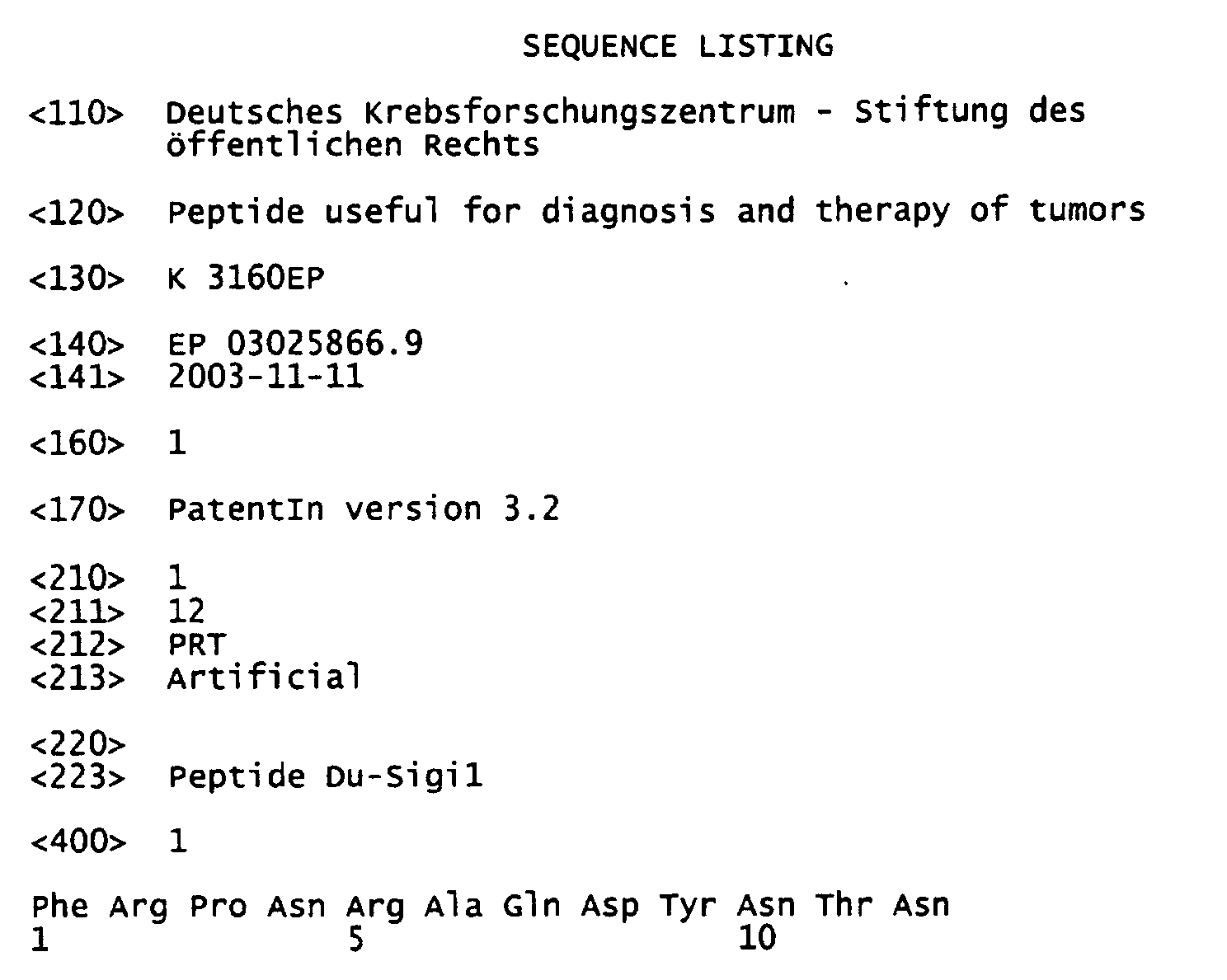
- the amplified phages were precipitated with PEG (see manufacturer's protocol) and the titer of the amplified phage suspension was determined. For the next biopanning 10 11 TU from the previous biopanning were used. 6 biopanning were performed, then single phages clones were amplified and single stranded DNA was isolated for sequencing. From the 24 phages sequenced all phages carried the same peptide: FRPNRAQDYNTN.
- Example 2 Binding of the peptide DU-Sigi1 on various cell types
- the peptide DU-Sigi1 (FRPNRAQDYNTN) was prepared by chemical synthesis and labelled with 125 I.
- 200,000 cells DU-145, human prostate tumor cell line; PC-3, human prostate cell line; HUVEC, human primary endothelial cells, IMR5-75, human neuroblastoma cell line, MDA-MB-435, human breast cancer cell line, SW-1736, human thyroid cancer cell line, NPA-87, human thyroid cancer cell line
- 200,000 cells DU-145, human prostate tumor cell line; PC-3, human prostate cell line; HUVEC, human primary endothelial cells, IMR5-75, human neuroblastoma cell line, MDA-MB-435, human breast cancer cell line, SW-1736, human thyroid cancer cell line, NPA-87, human thyroid cancer cell line
- the medium was replaced by fresh medium (without FCS) and for the plates with competitor, unlabelled peptide was added (10 -4 M) and preincubated for 30 min.
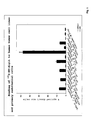
- 125 I-labelled peptide was added to the cell culture (1-2 mio cpm/well) and incubated for 10 min. The cells were collected and washed for three times with 1 ml PBS per washing. Then, the cells were lysed with 0.3 M NaOH. Radioactivity of the lysed cells was determined with a gamma counter and radioactivity as percent applied dose per 1 million cells was calculated. It could be shown that the labelled peptide specifically binds to the various tumor cells, but not the primary endothelial cells. Binding can be competitively inhibited (up to 95%). The results are presented in Figure 1.
- Example 3 Binding kinetics of DU-Sigil to DU-145 prostate tumor cells in vitro
- the peptide DU-Sigi1 (FRPNRAQDYNTN) was prepared by chemical synthesis and labelled with 125 I. 200,000 DU-145 cells (human prostate tumor cell line) were seeded into 6-well plates and cultivated for 24 hours. Then, the medium was replaced by fresh medium (without FCS). 125 I-labelled peptide was added to the cell culture (1-2 mio cpm/well) and incubated for times from 1 min to 4 h. After the incubation time the cells were collected and washed for three times with 1 ml PBS per washing. Then, the cells were lysed with 0.3 M NaOH. Radioactivity of the lysed cells was determined with a gamma counter and radioactivity as percent applied dose per 1 million cells was calculated.
- the peptide DU-Sigi1 (FRPNRAQDYNTN) was prepared by chemical synthesis and labeled with 125 I. 200,000 DU-145 cells (human prostate tumor cell line) were seeded into 6-well plates and cultivated for 24 hours. Then, the medium was replaced by fresh medium (without FCS). Different competitor concentrations (unlabeled DU-Sigi1) were added to the medium 30 min before the 125 I-labeled peptide was added to the wells (1-2 mio cpm/well) and incubated for 10 min at 37°C.-62, After the incubation time the cells were collected and washed for three times with 1 ml PBS per washing. Then, the cells were lysed with 0.3 M NaOH.
- Radioactivity of the lysed cells was determined with a gamma counter and radioactivity as percent applied dose per 1 million cells was calculated. It could be shown that concentrations of 10 -4 and 10 -5 inhibit binding of 125 I-DU-Sigi1 to more than 95%, demonstrating the specificity of the binding of DU-Sigi1.
- the ID 50 is approx. 50 ⁇ M.
- PC-3 cells prostate tumor cell line, data not shown.
- the results are presented in Figure 3. No competition could be seen with unlabeled octreotide as competitor using the same concentration (data not shown).
- the peptide DU-Sigi1 (FRPNRAQDYNTN) was prepared by chemical synthesis and labeled with FITC.
- DU-145 cells human prostate tumor cell line
- _FITC-DU-Sigi1 was added to the media (10 -5 M) and incubated for 10 min at 37°C.
- cover slips were washed with 1 ml medium and the cells were fixed with 2 % formaldehyde for 15 min. After fixation the cells were incubated with TO-PRO-3 (Molecular Probes, Eugene, USA, 1:1000 dilution) for 20 min for cell nucleus staining.
- TO-PRO-3 Molecular Probes, Eugene, USA, 1:1000 dilution
- Fig. 4 shows a series of images obtained from different layers of a DU-145 cell with Fig. 4A focusing on the very top of the cell and Fig. 4f on the bottom of the cell on the slide. It can be seen that FITC-DU-Sigi1 binds specifically to the membrane of the cells.
- Example 6 Distribution of intravenously injected peptide DU-Sigi1 in various organs
- the peptide DU-Sigi1 (FRPNRAQDYNTN) was prepared by chemical synthesis and labeled with 131 I.
- 131 I labeled peptide DU-Sigi1 (FRPNRAQDYNTN) (28 mio cpm/mouse) was intravenously injected into male nu/nu mice, which subcutaneously carried a human prostate tumor (DU-145). 15 min. and 45 min, respectively, postinjection the mice were sacrificed. The organs were removed, weighed and the radioactivity was determined with a gamma counter. The results are presented in Fig. 5.
- DU-Sigi1 accumulates in the tumor to a higher extent than in the other organs, with the exeption of the kidney indicating an excretion of the peptide through the kidney.
- the high blood volumn might be due to the degradation of the peptide by serum peptidases and proteases.
Landscapes
- Health & Medical Sciences (AREA)
- Life Sciences & Earth Sciences (AREA)
- Chemical & Material Sciences (AREA)
- Proteomics, Peptides & Aminoacids (AREA)
- General Health & Medical Sciences (AREA)
- Medicinal Chemistry (AREA)
- Veterinary Medicine (AREA)
- Animal Behavior & Ethology (AREA)
- Pharmacology & Pharmacy (AREA)
- Public Health (AREA)
- Organic Chemistry (AREA)
- Bioinformatics & Cheminformatics (AREA)
- Molecular Biology (AREA)
- Epidemiology (AREA)
- Engineering & Computer Science (AREA)
- General Chemical & Material Sciences (AREA)
- Nuclear Medicine, Radiotherapy & Molecular Imaging (AREA)
- Chemical Kinetics & Catalysis (AREA)
- Physics & Mathematics (AREA)
- Optics & Photonics (AREA)
- Genetics & Genomics (AREA)
- Biophysics (AREA)
- Biochemistry (AREA)
- Medicines Containing Antibodies Or Antigens For Use As Internal Diagnostic Agents (AREA)
- Peptides Or Proteins (AREA)
- Medicines That Contain Protein Lipid Enzymes And Other Medicines (AREA)
Abstract
Description
- The present invention relates to the peptide motif FRPNRAQDYNTN and related motifs characterizing peptides which are capable of specifically binding to tumors, e.g., a prostate tumor. The present invention also relates to various diagnostic and therapeutic uses of peptides containing said motif.
- Unfortunately, when imaging or treating tumors, the compounds used (e.g., tracers, chemotherapeutic agents or radionuclides) are unspecifically distributed in the whole organism merely due to their chemical characteristics. However, e.g., for diagnosis of a tumor and potential metastasis specific imaging only of the tumor/metastases is desirable and a prerequisite for selective medical intervention. Thus, the coupling of a tumor specific marker to a tracer is required, otherwise tumor imaging cannot be achieved. In case of tumor therapy, the unspecific distribution of the therapeutic agent, e.g., chemotherapeutic drug, in the organism requires the application of high amounts of the drug in order to achieve a sufficiently high concentration within the organ to be treated resulting in severe side effects and damages of healthy tissue. Nevertheless, often the concentration of the therapeutic drug within the desired organ is quite low, thus, not all tumor cells are killed and an effective treatment is prevented. In order to overcome this problem, for tumor imaging several alternative approaches were tried, e.g., use of tumor specific antibodies (e.g., directed against PSA or CEA), use of unspecific tracers like MIBI or use of tracers allowing to record tumor metabolism (e.g., fluorodeoxyglucose) or use of peptides specific for the expression of tumor receptors (e.g., Octreotid for recording somatostatin receptors). Unfortunately, PET using fluorodeoxyglucose gives with some kinds of tumors (e.g., prostate carcinoma) only a very low accumulation and, thus its application for such kind of tumors is limited. Unfortunately, the approaches for tumor imaging discussed above exhibit a variety of additional disadvantages, e.g., undesired immune responses of the patients when using humanized antibodies, slow accumulation of the antibodies due to their large size etc. Octreotid is only useful for tumors showing expression of SSTR (e.g., neuroendocrine tumors, meningiomas, small cell lung carcinomas).
- Therefore, it is the object of the present invention to provide a means for the efficient, reliable and specific imaging of tumors and metastasis as well as therapy which overcomes the disadvantages of the diagnostic and therapeutic approaches presently used.
- According to the present invention this is achieved by the subject matters defined in the claims.
- A powerful technique utilizing phage display peptide libraries has been used that allows for the selection of peptide sequences with desired binding specifities. In this phage system, 109 different peptides motifs are expressed on the phage surface as peptides fused to phage surface proteins. The desired peptide is selected on its binding to the target cell. By using this approach, a novel peptide, Du-Sigi1 (aa sequence FRPNRAQDYNTN) could be isolated showing specific binding to tumor cells, i.e., it accumulates in the body at/in tumors. Therefore, it is generally possible to visualize tumors and metastasis through use of the peptide of the present invention when coupled to a compound that is detectable upon imaging. Moreover, the peptide of the invention when coupled to a compound exerting a therapeutic effect, e.g., a cytotoxin, can be used for tumor therapy. The peptide of the invention also allows to evaluate the dynamics of tumor progression in a patient and to monitor the effect of therapy.
- Therapy/imaging of tumors or metastasis by use of the peptide of the invention exhibits several advantages:
- (a) Large amounts of peptides can be easily prepared;
- (b) they do not elicit undesired immune responses;
- (c) they can be used in combination with already approved drugs and compounds;
- (d) the peptide targets the tumor tissue specifically without affecting normal tissue. Thus, in therapy side effects of therapeutic compounds coupled to the peptide are minimized. Accordingly, high concentrations of the therapeutic compound at the site of the tumor can be applied (resulting in efficient killing of the tumor) and at the same time the poisoning of the normal tissue can be reduced; and
- (e) as regards the diagnostic aspect, the location and size of the tumor/metastasis can be exactly determined, thus, allowing a more precise planning and carrying out of therapy.
-
- Accordingly, the present invention relates to a peptide with selective binding to tumor cells, wherein said peptide comprises a peptide having the amino acid sequence FRPNRAQDYNTN or an amino acid sequence which differs from the amino acid sequence FRPNRAQDYNTN by one or more conservative amino acid substitutions.
- The term "selective binding to tumor cells" as used herein means that, on the one hand, the peptide binds to tumor cells with a stability that is sufficient for therapeutic or diagnostic purposes and, on the other hand, does not bind to non-tumor cells or binds to the non-tumor cells to a substantially lesser extent compared to tumor cells.
- The term "conservative amino acid substitutions" involves replacement of the aliphatic or hydrophobic amino acids Ala, Val, Leu and Ile; replacement of the hydroxyl residues Ser and Thr; replacement of the acidic residues Asp and Glu; replacement of the amide residues Asn and Gln, replacement of the basic residues Lys, Arg, and His; replacement of the aromatic residues Phe, Tyr, and Trp, and replacement of the small-sized amino acids Ala, Ser, Thr, Met, and Gly.
- Preferably, the peptide of the invention is characterized by not more than 8 conservative aa substitutions, more preferably by not more than 6 conservative aa substitutions and, even more preferably, by not more than 4 conservative aa substitutions.
- The present invention also relates to a peptide with selective binding to tumor cells, wherein said peptide comprises
- (a) a peptide having an amino acid sequence which shows at least 60%, preferably at least 80%, more preferably 85% and even more preferably 90% identity to the amino acid sequence FRPNRAQDYNTN without losing its capability of selective binding to a tumor; or
- (b) a peptide which is a fragment of the peptides discussed above.
-
- For the generation of peptides showing a particular degree of identity to the peptide DU-Sigi1 ,e.g.,genetic engineering can be used to introduce amino acid changes at specific positions of a cloned DNA sequence to identify regions critical for peptide function. For example, site directed mutagenesis or alanine-scanning mutagenesis (introduction of single alanine mutations at every residue in the molecule) can be used. (Cunningham and Wells, Science 244 (1989), 1081-1085) The resulting mutant molecules can then be tested for biological activity using the assay of Example 2.
- In the fragment of the peptide of the invention at least 3 contiguous aa, preferably at least 5 contiguous aa, more preferably at least contiguous 7 aa and even more preferably at least 9 contiguous aa of the amino acid sequence FRPNRAQDYNTN are left. The fragment is still capable of selective binding to a tumor cell. For evaluating whether a particular fragment (or derivative of the peptide DU-Sigi1 characterized by substitutions of conservative amino acids) is still capable of selective binding of tumor cells the assay of Example 2 can be used.
- A further embodiment of the invention relates to peptides described above which are operatively attached to a therapeutic agent capable of exerting a therapeutic effect on a tumor. Examples of therapeutic agents useful for the present invention include an anticellular agent, chemotherapeutic agent, a radioisotope, a chelator for the binding of certain radioisotopes or a cytotoxin. Preferred cytotoxins are an A chain toxin, a ribosome inactivating protein, α-sarcin, aspergillin, restrictotin, diphtheria toxin, Pseudomonas exotoxin, a bacterial endotoxin or the lipid A moiety of a bacterial endotoxin. Further suitable proteins for tumor therapy are endostatin (for inhibition of tumor growth) or recombinant chimeric toxin PE37/transforming growth factor alpha (TGF-alpha) (for cytotoxicity to tumor cells).
- The present invention also relates to polynucleotides encoding a peptide of the invention, preferably fused to secretory leader sequences, as well as expression vectors which are capable of expressing the peptide of the invention and which can be used for gene therapy. Preferred recombinant vectors useful for gene therapy are viral vectors, e.g. adenovirus, herpes virus, vaccinia, or, more preferably, an RNA virus such as a retrovirus. Even more preferably, the retroviral vector is a derivative of a murine or avian retrovirus. Examples of such retroviral vectors which can be used in the present invention are: Moloney murine leukemia virus (MoMuLV), Harvey murine sarcoma virus (HaMuSV), murine mammary tumor virus (MuMTV) and Rous sarcoma virus (RSV). Most preferably, a non-human primate retroviral vector is employed, such as the gibbon ape leukemia virus (GaLV), providing a broader host range compared to murine vectors. Since recombinant retroviruses are defective, assistance is required in order to produce infectious particles. Such assistance can be provided, e.g., by using helper cell lines that contain plasmids encoding all of the structural genes of the retrovirus under the control of regulatory sequences within the LTR. Suitable helper cell lines are well known to those skilled in the art. Said vectors can additionally contain a gene encoding a selectable marker so that the transduced cells can be identified. Moreover, the retroviral vectors can be modified in such a way that they become target specific. This can be achieved, e.g., by inserting a polynucleotide encoding a sugar, a glycolipid, or a protein, preferably an antibody. Those skilled in the art know additional methods for generating target specific vectors. Further suitable vectors and methods for in vitro- or in vivo-gene theapy are described in the literature and are known to the persons skilled in the art; see, e.g., WO 94/29469 or WO 97/00957.
- In a further embodiment, the present invention relates to a pharmaceutical composition containing a peptide, polynucleotide or expression vector of the invention. For administration the compounds of the pharmaceutical composition are preferably combined with suitable pharmaceutical carriers. Examples of suitable pharmaceutical carriers are well known in the art and include phosphate buffered saline solutions, water, emulsions, such as oil/water emulsions, various types of wetting agents, sterile solutions etc.. Such carriers can be formulated by conventional methods and can be administered to the subject at a suitable dose. Administration of the suitable compositions may be effected by different ways, e.g. by intravenous, intraperetoneal, subcutaneous, intramuscular, topical or intradermal administration. The route of administration, of course, depends on the nature and location of the tumor and the kind of compound contained in the pharmaceutical composition. The dosage regimen will be determined by the attending physician and other clinical factors. As is well known in the medical arts, dosages for any one patient depends on many factors, including the patient's size, body surface area, age, sex, the particular compound to be administered, time and route of administration, the kind and stage of the tumor, general health and other drugs being administered concurrently.
- An alternative embodiment of the present invention relates to an above disclosed peptide which is linked to a diagnostic agent such as a chelator that is detectable upon imaging. Thus, such a peptide is useful fur tumor diagnosis by imaging, e.g., magnetic resonance imaging (MRI), PET etc.
- In a preferred embodiment of the present invention, said diagnostic agent is a paramagnetic ion, radioactive ion or a fluorogenic ion. Specifically, the diagnostic agents utilized in embodiments of the invention include: chromium (III), manganese (II), iron (III), iron (II), cobalt (II), nickel (II), copper (II), neodymium (III), samarium (III), ytterbium (III), gadolinium (III), vanadium (II), terbium (III), dysprosium (III), holmium (III), erbium (III), iodine123, technetium99m, indium111, rhenium188, rhenium186, copper67, iodine131, yttrium90, iodine125, astatine211, 177Lutetium and gallium67.
- The present invention also relates (a) to the use of a peptide, polynucleotide or expression vector of the invention for the preparation of a medicament for the treatment of a tumor and (b) to the use of a peptide of the present invention for the preparation of a diagnostic composition for tumor imaging.
- Preferred tumors that can be treated/diagnosed by the compounds of the present invention are prostate tumors, thyroid carcinomas, breast cancer and neuroblastoma.
- The present invention is further explained by the following figures which show:
- Fig. 1: Binding of 125I-DU-Sigi1 to human tumor cell lines and primary endothelial cells
- Fig. 2: Binding of DU-Sigi1 to DU-145 prostate tumor cells in vitro
- Fig. 3: Competition assay of 125I-DU-Sigi1 with unlabeled DU-Sigi1 on DU-145 prostate tumor cells in vitro
- Fig. 4: Confocal microscopy with FITC-labeled DU-Sig1 on DU-145 prostate tumor cells in vitro
- Fig. 5: Distribution of intravenously injected peptide DU-Sig1 in various organs
-
- The present invention is explained by the following examples.
- For the selection of tumor specific peptides, 6 selection rounds, so called biopannings, were perfomed on DU-145 prostate carcinoma cells. The phage display library used was the Ph.D.12 phage library from New England Biolabs. Each biopanning was conducted as follows:
- For the
first round 5 µl of the original library (approx. 5×10¹⁰TU/ml, ~109 different peptide motifs) were added to a cell culture dish with 293-cells (embryonal kidney cells) for a negative selection. After 1 h the medium was collected from the 293 cells, centrifuged for 5 min at 1500 rpm and the supernatant was transfered into a dish with DU-145 cells grown to 90% confluency. After 1 h the medium was removed from the DU-145 cells and the cells were washed 4 x with 10 ml of HBSS(+) + 1 % BSA and 4x with 10 ml of HBSS(-) + 1 % BSA. The cells were then detached with 4 ml of Versene for 5 min and resuspended in 16 ml RPMI 1640 medium and centrifuged 5 min at 1500 rpm. The cell pellet was resuspended in 1 ml HBSS(-) + 1 % BSA into an Eppendorf tube, centrifuged 5 min at 1500 rpm and the supernatend was removed. This wash step was repeated 3 times. Then the cell pellet was lysed with 1% Triton. 10 µl of the lysate was used for titering. The remaining lysate was added to 50 ml of a log culture of ER2537 bacterial cells and grown 5 h for amplification. The amplified phages were precipitated with PEG (see manufacturer's protocol) and the titer of the amplified phage suspension was determined. For thenext biopanning 1011 TU from the previous biopanning were used. 6 biopanning were performed, then single phages clones were amplified and single stranded DNA was isolated for sequencing. From the 24 phages sequenced all phages carried the same peptide: FRPNRAQDYNTN. - The peptide DU-Sigi1 (FRPNRAQDYNTN) was prepared by chemical synthesis and labelled with 125I. For in vitro studies, 200,000 cells (DU-145, human prostate tumor cell line; PC-3, human prostate cell line; HUVEC, human primary endothelial cells, IMR5-75, human neuroblastoma cell line, MDA-MB-435, human breast cancer cell line, SW-1736, human thyroid cancer cell line, NPA-87, human thyroid cancer cell line) were seeded into 6-well plates and cultivated for 24 hours. Then, the medium was replaced by fresh medium (without FCS) and for the plates with competitor, unlabelled peptide was added (10-4 M) and preincubated for 30 min. Then, 125I-labelled peptide was added to the cell culture (1-2 mio cpm/well) and incubated for 10 min. The cells were collected and washed for three times with 1 ml PBS per washing. Then, the cells were lysed with 0.3 M NaOH. Radioactivity of the lysed cells was determined with a gamma counter and radioactivity as percent applied dose per 1 million cells was calculated. It could be shown that the labelled peptide specifically binds to the various tumor cells, but not the primary endothelial cells. Binding can be competitively inhibited (up to 95%). The results are presented in Figure 1.
- The peptide DU-Sigi1 (FRPNRAQDYNTN) was prepared by chemical synthesis and labelled with 125I. 200,000 DU-145 cells (human prostate tumor cell line) were seeded into 6-well plates and cultivated for 24 hours. Then, the medium was replaced by fresh medium (without FCS). 125I-labelled peptide was added to the cell culture (1-2 mio cpm/well) and incubated for times from 1 min to 4 h. After the incubation time the cells were collected and washed for three times with 1 ml PBS per washing. Then, the cells were lysed with 0.3 M NaOH. Radioactivity of the lysed cells was determined with a gamma counter and radioactivity as percent applied dose per 1 million cells was calculated. It could be shown that the binding of DU-Sigi1 is rapid and the highest binding rate occurs after 5 min. Then the amount of bound peptide decreases and reaches a basal level of about 1.5 % applied dose/1 mio cells. The same results were obtained with PC-3 cells (prostate tumor cell line, data not shown). The results are presented in Figure 2.
- The peptide DU-Sigi1 (FRPNRAQDYNTN) was prepared by chemical synthesis and labeled with 125I. 200,000 DU-145 cells (human prostate tumor cell line) were seeded into 6-well plates and cultivated for 24 hours. Then, the medium was replaced by fresh medium (without FCS). Different competitor concentrations (unlabeled DU-Sigi1) were added to the medium 30 min before the 125I-labeled peptide was added to the wells (1-2 mio cpm/well) and incubated for 10 min at 37°C.-62, After the incubation time the cells were collected and washed for three times with 1 ml PBS per washing. Then, the cells were lysed with 0.3 M NaOH. Radioactivity of the lysed cells was determined with a gamma counter and radioactivity as percent applied dose per 1 million cells was calculated. It could be shown that concentrations of 10-4 and 10-5 inhibit binding of 125I-DU-Sigi1 to more than 95%, demonstrating the specificity of the binding of DU-Sigi1. The ID50 is approx. 50 µM. The same results were obtained with PC-3 cells (prostate tumor cell line, data not shown). The results are presented in Figure 3. No competition could be seen with unlabeled octreotide as competitor using the same concentration (data not shown).
- The peptide DU-Sigi1 (FRPNRAQDYNTN) was prepared by chemical synthesis and labeled with FITC. DU-145 cells (human prostate tumor cell line) were seeded subconfluent onto cover slips and cultivated for 24 hours. Then, the medium was replaced by fresh medium (without FCS) and _FITC-DU-Sigi1 was added to the media (10-5M) and incubated for 10 min at 37°C. After the cover slips were washed with 1 ml medium and the cells were fixed with 2 % formaldehyde for 15 min. After fixation the cells were incubated with TO-PRO-3 (Molecular Probes, Eugene, USA, 1:1000 dilution) for 20 min for cell nucleus staining. Then, the cover slips were placed up side down with a drop of fluorescent mounting medium on a slide and air-dried in the dark for several hours before examining them with a confocal microscope. The results are presented in Fig. 4. It shows a series of images obtained from different layers of a DU-145 cell with Fig. 4A focusing on the very top of the cell and Fig. 4f on the bottom of the cell on the slide. It can be seen that FITC-DU-Sigi1 binds specifically to the membrane of the cells.
- The peptide DU-Sigi1 (FRPNRAQDYNTN) was prepared by chemical synthesis and labeled with 131I. 131I labeled peptide DU-Sigi1 (FRPNRAQDYNTN) (28 mio cpm/mouse) was intravenously injected into male nu/nu mice, which subcutaneously carried a human prostate tumor (DU-145). 15 min. and 45 min, respectively, postinjection the mice were sacrificed. The organs were removed, weighed and the radioactivity was determined with a gamma counter. The results are presented in Fig. 5. They show that DU-Sigi1 accumulates in the tumor to a higher extent than in the other organs, with the exeption of the kidney indicating an excretion of the peptide through the kidney. The high blood volumn might be due to the degradation of the peptide by serum peptidases and proteases.
Claims (13)
- A peptide with selective binding to tumor cells, wherein said peptide comprises(a) a peptide having the amino acid sequence FRPNRAQDYNTN or an amino acid sequence which differs from the amino acid sequence FRPNRAQDYNTN by one or more conservative amino acid substitutions;(b) a peptide having an amino acid sequence which shows at least 60% identity to the amino acid sequence of the peptide of (a); or(c) a peptide which is a fragment of the peptide of (a) or (b).
- The peptide of claim 1 which is operatively attached to a therapeutic agent capable of exerting a therapeutic effect on a tumor.
- The peptide of claim 2, wherein said therapeutic agent is an anticellular agent, chemotherapeutic agent, a radioisotope or a cytotoxin.
- The peptide of claim 3, wherein said cytotoxin is an A chain toxin, a ribosome inactivating protein, α-sarcin, aspergillin, restrictotin, diphtheria toxin, Pseudomonas exotoxin, a bacterial endotoxin or the lipid A moiety of a bacterial endotoxin.
- A polynucleotide encoding the peptide of claim 1.
- An expression vector containing the polynucleotide of claim 5.
- A pharmaceutical composition containing a peptide of any one of claims 1 to 4, a polynucleotide of claim 5 or an expression vector of claim 6.
- The peptide of claim 1 which is linked to a diagnostic agent that is detectable upon imaging.
- The peptide of claim 8, wherein said diagnostic agent is a contrasting agent, a chromophore, a paramagnetic ion, a radioactive ion or a fluorogenic ion.
- A diagnostic composition containing the peptide of claim 1, 8 or 9.
- Use of a peptide according to any one of claims 1 to 4, a polynucleotide of claim 5 or an expression vector of claim 6 for the preparation of a medicament for the treatment of a tumor.
- Use of a peptide of claim 1, 6 or 7 for the preparation of a diagnostic composition for tumor imaging.
- Use according to claim 11 or 12, wherein said tumor is a prostate tumor.
Priority Applications (4)
| Application Number | Priority Date | Filing Date | Title |
|---|---|---|---|
| EP03025866A EP1531159B1 (en) | 2003-11-11 | 2003-11-11 | Peptide useful for diagnosis and therapy of tumors |
| AT03025866T ATE306497T1 (en) | 2003-11-11 | 2003-11-11 | PEPTIDE FOR THE DIAGNOSIS AND THERAPY OF TUMORS |
| DE60301891T DE60301891T2 (en) | 2003-11-11 | 2003-11-11 | Peptide for the diagnosis and therapy of tumors |
| PCT/EP2004/011681 WO2005044842A1 (en) | 2003-11-11 | 2004-10-15 | Peptide useful for diagnosis and therapy of tumors |
Applications Claiming Priority (1)
| Application Number | Priority Date | Filing Date | Title |
|---|---|---|---|
| EP03025866A EP1531159B1 (en) | 2003-11-11 | 2003-11-11 | Peptide useful for diagnosis and therapy of tumors |
Publications (2)
| Publication Number | Publication Date |
|---|---|
| EP1531159A1 true EP1531159A1 (en) | 2005-05-18 |
| EP1531159B1 EP1531159B1 (en) | 2005-10-12 |
Family
ID=34429327
Family Applications (1)
| Application Number | Title | Priority Date | Filing Date |
|---|---|---|---|
| EP03025866A Expired - Lifetime EP1531159B1 (en) | 2003-11-11 | 2003-11-11 | Peptide useful for diagnosis and therapy of tumors |
Country Status (4)
| Country | Link |
|---|---|
| EP (1) | EP1531159B1 (en) |
| AT (1) | ATE306497T1 (en) |
| DE (1) | DE60301891T2 (en) |
| WO (1) | WO2005044842A1 (en) |
Cited By (4)
| Publication number | Priority date | Publication date | Assignee | Title |
|---|---|---|---|---|
| EP1714978A1 (en) * | 2005-04-19 | 2006-10-25 | Deutsches Krebsforschungszentrum Stiftung des öffentlichen Rechts | Peptides useful for diagnosis and therapy of tumors |
| WO2013025418A1 (en) | 2011-08-15 | 2013-02-21 | Morehouse School Of Medicine | Delivery system for specifically targeting cancer cells and method of use thereof |
| CN103204904A (en) * | 2013-02-01 | 2013-07-17 | 浙江海洋学院 | Dasyatis akajei chondroprotein polypeptide capable of resisting prostate cancer, and preparation method and application thereof |
| CN105079817A (en) * | 2014-05-20 | 2015-11-25 | 中国人民解放军第二军医大学 | Drug delivery carrier targeting prostate cancer, drug delivery system and preparation method and application thereof |
Families Citing this family (1)
| Publication number | Priority date | Publication date | Assignee | Title |
|---|---|---|---|---|
| WO2012016713A1 (en) * | 2010-08-05 | 2012-02-09 | Ruprecht-Karls-Universität Heidelberg | Tumour targeting with polypeptides |
-
2003
- 2003-11-11 EP EP03025866A patent/EP1531159B1/en not_active Expired - Lifetime
- 2003-11-11 AT AT03025866T patent/ATE306497T1/en not_active IP Right Cessation
- 2003-11-11 DE DE60301891T patent/DE60301891T2/en not_active Expired - Fee Related
-
2004
- 2004-10-15 WO PCT/EP2004/011681 patent/WO2005044842A1/en not_active Ceased
Non-Patent Citations (5)
| Title |
|---|
| DATABASE EMBL [online] 1 June 2003 (2003-06-01), "Conserved hypothetical protein.", XP002271478, retrieved from EBI Database accession no. Q8A0B3 * |
| DATABASE EMBL [online] 1 November 1997 (1997-11-01), "Hypothetical ATP-binding protein MG140 homolog ((E07_orf1113)", XP002271482, retrieved from EBI Database accession no. P75033 * |
| DATABASE EMBL [online] 1 November 1997 (1997-11-01), "Kinesin central motor 1 (XKCM1)", XP002271481, retrieved from EBI Database accession no. Q91636 * |
| DATABASE EMBL [online] 2 October 2003 (2003-10-02), "Gp48.", XP002271480, retrieved from EBI Database accession no. AAQ54982 * |
| DATABASE EMBL [online] 6 November 2003 (2003-11-06), "Kif2c-prov protein.", XP002271479, retrieved from EBI Database accession no. AAH44976 * |
Cited By (6)
| Publication number | Priority date | Publication date | Assignee | Title |
|---|---|---|---|---|
| EP1714978A1 (en) * | 2005-04-19 | 2006-10-25 | Deutsches Krebsforschungszentrum Stiftung des öffentlichen Rechts | Peptides useful for diagnosis and therapy of tumors |
| WO2013025418A1 (en) | 2011-08-15 | 2013-02-21 | Morehouse School Of Medicine | Delivery system for specifically targeting cancer cells and method of use thereof |
| CN103204904A (en) * | 2013-02-01 | 2013-07-17 | 浙江海洋学院 | Dasyatis akajei chondroprotein polypeptide capable of resisting prostate cancer, and preparation method and application thereof |
| CN103204904B (en) * | 2013-02-01 | 2015-07-22 | 浙江海洋学院 | Dasyatis akajei chondroprotein polypeptide capable of resisting prostate cancer, and preparation method and application thereof |
| CN105079817A (en) * | 2014-05-20 | 2015-11-25 | 中国人民解放军第二军医大学 | Drug delivery carrier targeting prostate cancer, drug delivery system and preparation method and application thereof |
| CN105079817B (en) * | 2014-05-20 | 2018-05-18 | 中国人民解放军第二军医大学 | Target drug delivery vehicle, delivery system and its preparation and application of prostate cancer |
Also Published As
| Publication number | Publication date |
|---|---|
| ATE306497T1 (en) | 2005-10-15 |
| WO2005044842A1 (en) | 2005-05-19 |
| DE60301891D1 (en) | 2006-02-23 |
| DE60301891T2 (en) | 2006-07-27 |
| EP1531159B1 (en) | 2005-10-12 |
Similar Documents
| Publication | Publication Date | Title |
|---|---|---|
| US9340581B2 (en) | Ligands to radiation-induced molecules | |
| Liu et al. | 18F-Trifluoroborate derivatives of [des-Arg10] kallidin for imaging bradykinin B1 receptor expression with positron emission tomography | |
| CN101538313A (en) | Peptide-based compounds | |
| US20210121585A1 (en) | PSMA targeted radiotherapy medicine and preparation method thereof | |
| CN102177174B (en) | Peptides for targeting apoptotic cells and uses thereof | |
| KR20030061811A (en) | Peptide-Based Compounds | |
| US10370410B2 (en) | Cancer cell-targeting peptide and use thereof | |
| CN116023438B (en) | A CXCR4 targeting polypeptide and its application | |
| Rao et al. | 99mTc-peptide-peptide nucleic acid probes for imaging oncogene mRNAs in tumours | |
| CN115651063A (en) | Radionuclide labeled PTP polypeptide and application thereof | |
| Pathuri et al. | Synthesis and evaluation of novel Tc-99m labeled probestin conjugates for imaging APN/CD13 expression in vivo | |
| EP1531159B1 (en) | Peptide useful for diagnosis and therapy of tumors | |
| TWI602577B (en) | Dual targeting drug carrier and application thereof | |
| CN113912607B (en) | SNAP-tag probe and preparation method and application thereof | |
| Wang et al. | Construction and Evaluation of the Tumor‐Targeting, Cell‐Penetrating Multifunctional Molecular Probe iCREKA | |
| JP2011523632A (en) | Peptides that home to brain tumors | |
| US7745410B2 (en) | Bladder tumor-targeting peptide and use thereof | |
| Sharma et al. | Design, synthesis and evaluation of 177Lu-labeled inverso and retro-inverso A9 peptide variants targeting HER2-overexpression | |
| KR101836468B1 (en) | Polypeptides for targeting epithelial-mesenchymal transition cells and uses thereof | |
| CN108699164B (en) | Dual target drug carrier | |
| CN118324852A (en) | A polypeptide targeting PD-L1 and its application | |
| CN116063379A (en) | EphA2 targeting polypeptide and its application | |
| EP1714978A1 (en) | Peptides useful for diagnosis and therapy of tumors | |
| CN107674117B (en) | Preparation method of Cu-64 labeled Dimer-San A cyclic peptide derivative pancreatic cancer molecular probe | |
| CN107586321B (en) | Preparation method of F-18 labeled modified Dimer-San A probe |
Legal Events
| Date | Code | Title | Description |
|---|---|---|---|
| PUAI | Public reference made under article 153(3) epc to a published international application that has entered the european phase |
Free format text: ORIGINAL CODE: 0009012 |
|
| GRAP | Despatch of communication of intention to grant a patent |
Free format text: ORIGINAL CODE: EPIDOSNIGR1 |
|
| 17P | Request for examination filed |
Effective date: 20040728 |
|
| AK | Designated contracting states |
Kind code of ref document: A1 Designated state(s): AT BE BG CH CY CZ DE DK EE ES FI FR GB GR HU IE IT LI LU MC NL PT RO SE SI SK TR |
|
| AX | Request for extension of the european patent |
Extension state: AL LT LV MK |
|
| GRAS | Grant fee paid |
Free format text: ORIGINAL CODE: EPIDOSNIGR3 |
|
| GRAA | (expected) grant |
Free format text: ORIGINAL CODE: 0009210 |
|
| AK | Designated contracting states |
Kind code of ref document: B1 Designated state(s): AT BE BG CH CY CZ DE DK EE ES FI FR GB GR HU IE IT LI LU MC NL PT RO SE SI SK TR |
|
| PG25 | Lapsed in a contracting state [announced via postgrant information from national office to epo] |
Ref country code: IT Free format text: LAPSE BECAUSE OF FAILURE TO SUBMIT A TRANSLATION OF THE DESCRIPTION OR TO PAY THE FEE WITHIN THE PRESCRIBED TIME-LIMIT;WARNING: LAPSES OF ITALIAN PATENTS WITH EFFECTIVE DATE BEFORE 2007 MAY HAVE OCCURRED AT ANY TIME BEFORE 2007. THE CORRECT EFFECTIVE DATE MAY BE DIFFERENT FROM THE ONE RECORDED. Effective date: 20051012 Ref country code: SK Free format text: LAPSE BECAUSE OF FAILURE TO SUBMIT A TRANSLATION OF THE DESCRIPTION OR TO PAY THE FEE WITHIN THE PRESCRIBED TIME-LIMIT Effective date: 20051012 Ref country code: TR Free format text: LAPSE BECAUSE OF FAILURE TO SUBMIT A TRANSLATION OF THE DESCRIPTION OR TO PAY THE FEE WITHIN THE PRESCRIBED TIME-LIMIT Effective date: 20051012 Ref country code: RO Free format text: LAPSE BECAUSE OF FAILURE TO SUBMIT A TRANSLATION OF THE DESCRIPTION OR TO PAY THE FEE WITHIN THE PRESCRIBED TIME-LIMIT Effective date: 20051012 Ref country code: NL Free format text: LAPSE BECAUSE OF FAILURE TO SUBMIT A TRANSLATION OF THE DESCRIPTION OR TO PAY THE FEE WITHIN THE PRESCRIBED TIME-LIMIT Effective date: 20051012 Ref country code: SI Free format text: LAPSE BECAUSE OF FAILURE TO SUBMIT A TRANSLATION OF THE DESCRIPTION OR TO PAY THE FEE WITHIN THE PRESCRIBED TIME-LIMIT Effective date: 20051012 Ref country code: FI Free format text: LAPSE BECAUSE OF FAILURE TO SUBMIT A TRANSLATION OF THE DESCRIPTION OR TO PAY THE FEE WITHIN THE PRESCRIBED TIME-LIMIT Effective date: 20051012 Ref country code: EE Free format text: LAPSE BECAUSE OF FAILURE TO SUBMIT A TRANSLATION OF THE DESCRIPTION OR TO PAY THE FEE WITHIN THE PRESCRIBED TIME-LIMIT Effective date: 20051012 Ref country code: CZ Free format text: LAPSE BECAUSE OF FAILURE TO SUBMIT A TRANSLATION OF THE DESCRIPTION OR TO PAY THE FEE WITHIN THE PRESCRIBED TIME-LIMIT Effective date: 20051012 Ref country code: BE Free format text: LAPSE BECAUSE OF FAILURE TO SUBMIT A TRANSLATION OF THE DESCRIPTION OR TO PAY THE FEE WITHIN THE PRESCRIBED TIME-LIMIT Effective date: 20051012 Ref country code: AT Free format text: LAPSE BECAUSE OF FAILURE TO SUBMIT A TRANSLATION OF THE DESCRIPTION OR TO PAY THE FEE WITHIN THE PRESCRIBED TIME-LIMIT Effective date: 20051012 |
|
| REG | Reference to a national code |
Ref country code: GB Ref legal event code: FG4D |
|
| REG | Reference to a national code |
Ref country code: CH Ref legal event code: EP |
|
| REG | Reference to a national code |
Ref country code: IE Ref legal event code: FG4D |
|
| PG25 | Lapsed in a contracting state [announced via postgrant information from national office to epo] |
Ref country code: IE Free format text: LAPSE BECAUSE OF NON-PAYMENT OF DUE FEES Effective date: 20051111 Ref country code: CY Free format text: LAPSE BECAUSE OF FAILURE TO SUBMIT A TRANSLATION OF THE DESCRIPTION OR TO PAY THE FEE WITHIN THE PRESCRIBED TIME-LIMIT Effective date: 20051111 |
|
| PG25 | Lapsed in a contracting state [announced via postgrant information from national office to epo] |
Ref country code: MC Free format text: LAPSE BECAUSE OF NON-PAYMENT OF DUE FEES Effective date: 20051130 |
|
| PG25 | Lapsed in a contracting state [announced via postgrant information from national office to epo] |
Ref country code: LU Free format text: LAPSE BECAUSE OF NON-PAYMENT OF DUE FEES Effective date: 20051212 |
|
| PG25 | Lapsed in a contracting state [announced via postgrant information from national office to epo] |
Ref country code: GR Free format text: LAPSE BECAUSE OF FAILURE TO SUBMIT A TRANSLATION OF THE DESCRIPTION OR TO PAY THE FEE WITHIN THE PRESCRIBED TIME-LIMIT Effective date: 20060112 Ref country code: DK Free format text: LAPSE BECAUSE OF FAILURE TO SUBMIT A TRANSLATION OF THE DESCRIPTION OR TO PAY THE FEE WITHIN THE PRESCRIBED TIME-LIMIT Effective date: 20060112 Ref country code: SE Free format text: LAPSE BECAUSE OF FAILURE TO SUBMIT A TRANSLATION OF THE DESCRIPTION OR TO PAY THE FEE WITHIN THE PRESCRIBED TIME-LIMIT Effective date: 20060112 Ref country code: BG Free format text: LAPSE BECAUSE OF FAILURE TO SUBMIT A TRANSLATION OF THE DESCRIPTION OR TO PAY THE FEE WITHIN THE PRESCRIBED TIME-LIMIT Effective date: 20060112 |
|
| PG25 | Lapsed in a contracting state [announced via postgrant information from national office to epo] |
Ref country code: ES Free format text: LAPSE BECAUSE OF FAILURE TO SUBMIT A TRANSLATION OF THE DESCRIPTION OR TO PAY THE FEE WITHIN THE PRESCRIBED TIME-LIMIT Effective date: 20060123 |
|
| AKX | Designation fees paid |
Designated state(s): AT BE BG CH CY CZ DE DK EE ES FI FR GB GR HU IE IT LI LU MC NL PT RO SE SI SK TR |
|
| REF | Corresponds to: |
Ref document number: 60301891 Country of ref document: DE Date of ref document: 20060223 Kind code of ref document: P |
|
| PG25 | Lapsed in a contracting state [announced via postgrant information from national office to epo] |
Ref country code: PT Free format text: LAPSE BECAUSE OF FAILURE TO SUBMIT A TRANSLATION OF THE DESCRIPTION OR TO PAY THE FEE WITHIN THE PRESCRIBED TIME-LIMIT Effective date: 20060313 |
|
| REG | Reference to a national code |
Ref country code: CH Ref legal event code: NV Representative=s name: ING. MARCO ZARDI C/O M. ZARDI & CO. S.A. |
|
| NLV1 | Nl: lapsed or annulled due to failure to fulfill the requirements of art. 29p and 29m of the patents act | ||
| PG25 | Lapsed in a contracting state [announced via postgrant information from national office to epo] |
Ref country code: HU Free format text: LAPSE BECAUSE OF FAILURE TO SUBMIT A TRANSLATION OF THE DESCRIPTION OR TO PAY THE FEE WITHIN THE PRESCRIBED TIME-LIMIT Effective date: 20060413 |
|
| PLBE | No opposition filed within time limit |
Free format text: ORIGINAL CODE: 0009261 |
|
| STAA | Information on the status of an ep patent application or granted ep patent |
Free format text: STATUS: NO OPPOSITION FILED WITHIN TIME LIMIT |
|
| REG | Reference to a national code |
Ref country code: IE Ref legal event code: MM4A |
|
| 26N | No opposition filed |
Effective date: 20060713 |
|
| PG25 | Lapsed in a contracting state [announced via postgrant information from national office to epo] |
Ref country code: FR Free format text: LAPSE BECAUSE OF FAILURE TO SUBMIT A TRANSLATION OF THE DESCRIPTION OR TO PAY THE FEE WITHIN THE PRESCRIBED TIME-LIMIT Effective date: 20061020 |
|
| EN | Fr: translation not filed | ||
| PGFP | Annual fee paid to national office [announced via postgrant information from national office to epo] |
Ref country code: DE Payment date: 20070131 Year of fee payment: 4 |
|
| GBPC | Gb: european patent ceased through non-payment of renewal fee |
Effective date: 20071111 |
|
| PG25 | Lapsed in a contracting state [announced via postgrant information from national office to epo] |
Ref country code: CH Free format text: LAPSE BECAUSE OF NON-PAYMENT OF DUE FEES Effective date: 20071130 Ref country code: LI Free format text: LAPSE BECAUSE OF NON-PAYMENT OF DUE FEES Effective date: 20071130 |
|
| REG | Reference to a national code |
Ref country code: CH Ref legal event code: PL |
|
| PG25 | Lapsed in a contracting state [announced via postgrant information from national office to epo] |
Ref country code: FR Free format text: LAPSE BECAUSE OF FAILURE TO SUBMIT A TRANSLATION OF THE DESCRIPTION OR TO PAY THE FEE WITHIN THE PRESCRIBED TIME-LIMIT Effective date: 20051130 |
|
| PG25 | Lapsed in a contracting state [announced via postgrant information from national office to epo] |
Ref country code: DE Free format text: LAPSE BECAUSE OF NON-PAYMENT OF DUE FEES Effective date: 20080603 |
|
| PG25 | Lapsed in a contracting state [announced via postgrant information from national office to epo] |
Ref country code: FR Free format text: LAPSE BECAUSE OF FAILURE TO SUBMIT A TRANSLATION OF THE DESCRIPTION OR TO PAY THE FEE WITHIN THE PRESCRIBED TIME-LIMIT Effective date: 20051012 |
|
| PG25 | Lapsed in a contracting state [announced via postgrant information from national office to epo] |
Ref country code: GB Free format text: LAPSE BECAUSE OF NON-PAYMENT OF DUE FEES Effective date: 20071111 |