EP1530329A2 - Method and apparatus for frame-aware and pipelined hierarchical scheduling - Google Patents
Method and apparatus for frame-aware and pipelined hierarchical scheduling Download PDFInfo
- Publication number
- EP1530329A2 EP1530329A2 EP04300641A EP04300641A EP1530329A2 EP 1530329 A2 EP1530329 A2 EP 1530329A2 EP 04300641 A EP04300641 A EP 04300641A EP 04300641 A EP04300641 A EP 04300641A EP 1530329 A2 EP1530329 A2 EP 1530329A2
- Authority
- EP
- European Patent Office
- Prior art keywords
- scheduler
- traffic
- schedulers
- scheduling
- queue
- Prior art date
- Legal status (The legal status is an assumption and is not a legal conclusion. Google has not performed a legal analysis and makes no representation as to the accuracy of the status listed.)
- Withdrawn
Links
Images


Classifications
-
- H—ELECTRICITY
- H04—ELECTRIC COMMUNICATION TECHNIQUE
- H04L—TRANSMISSION OF DIGITAL INFORMATION, e.g. TELEGRAPHIC COMMUNICATION
- H04L47/00—Traffic control in data switching networks
- H04L47/50—Queue scheduling
- H04L47/60—Queue scheduling implementing hierarchical scheduling
-
- H—ELECTRICITY
- H04—ELECTRIC COMMUNICATION TECHNIQUE
- H04L—TRANSMISSION OF DIGITAL INFORMATION, e.g. TELEGRAPHIC COMMUNICATION
- H04L45/00—Routing or path finding of packets in data switching networks
- H04L45/02—Topology update or discovery
- H04L45/04—Interdomain routing, e.g. hierarchical routing
-
- H—ELECTRICITY
- H04—ELECTRIC COMMUNICATION TECHNIQUE
- H04L—TRANSMISSION OF DIGITAL INFORMATION, e.g. TELEGRAPHIC COMMUNICATION
- H04L47/00—Traffic control in data switching networks
- H04L47/50—Queue scheduling
-
- H—ELECTRICITY
- H04—ELECTRIC COMMUNICATION TECHNIQUE
- H04L—TRANSMISSION OF DIGITAL INFORMATION, e.g. TELEGRAPHIC COMMUNICATION
- H04L47/00—Traffic control in data switching networks
- H04L47/50—Queue scheduling
- H04L47/52—Queue scheduling by attributing bandwidth to queues
- H04L47/527—Quantum based scheduling, e.g. credit or deficit based scheduling or token bank
-
- H—ELECTRICITY
- H04—ELECTRIC COMMUNICATION TECHNIQUE
- H04L—TRANSMISSION OF DIGITAL INFORMATION, e.g. TELEGRAPHIC COMMUNICATION
- H04L47/00—Traffic control in data switching networks
- H04L47/50—Queue scheduling
- H04L47/62—Queue scheduling characterised by scheduling criteria
- H04L47/621—Individual queue per connection or flow, e.g. per VC
-
- H—ELECTRICITY
- H04—ELECTRIC COMMUNICATION TECHNIQUE
- H04L—TRANSMISSION OF DIGITAL INFORMATION, e.g. TELEGRAPHIC COMMUNICATION
- H04L47/00—Traffic control in data switching networks
- H04L47/50—Queue scheduling
- H04L47/62—Queue scheduling characterised by scheduling criteria
- H04L47/6215—Individual queue per QOS, rate or priority
Definitions
- the invention relates to the scheduling of traffic in a switch/router. More particularly, the invention relates to supporting increases in switch/router port speeds, providing improved performance in servicing traffic flows of multiple priorities, and providing frame-aware scheduling.
- Switches typically use devices for directing the flow of data through the m. Such devices are often characterized as switches and routers, which may be referred to collectively as switches/routers.
- a switch/router receiving data at a plurality of inputs often needs to schedule the processing of such data so as to produce one or more output streams that conform to particular criteria.
- switches/routers often exhibit deficiencies that prevent them from maintaining conformance with some of the particular criteria that may be desired.
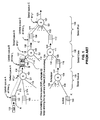
- Figure 1 is a block diagram illustrating a prior art scheduling technique.
- the technique includes input queues 101 and 102 coupled to scheduler 103 via connections 113 and 114, respectively. Additional input queues maybe coupled to scheduler 103 via connection 115.
- Scheduler 103 provides an output 116 to input queue 104.
- Input queue 104 is coupled to scheduler 105 via connection 117. Additional input queues may be coupled to scheduler via connection 118 and/or 119.
- Scheduler 105 provides an output 120 to input queue 106.
- Input queue 106 is coupled to scheduler 107 via connection 121.
- Input queue 108 is coupled to scheduler 109 via connection 124. Additional input queues may be coupled to scheduler 109 via connection 125 and/or 126.
- Scheduler 109 provides output 127 to input queue 110.
- Input queue 110 is coupled to scheduler 111 via connection 128. Additional input queue may be coupled to scheduler 111 via connection 129 and/or 130.
- Scheduler 111 provides output 131 to input queue 112.
- Input queue 112 is coupled to scheduler 107 via connection 132. Additional input queues may be coupled to scheduler 107 via connection 122.
- Scheduler 107 provides output 123.
- cell 133 is provided to input queue 101.
- the structure of this system may be considered hierarchical, with cells, such as cell 133 being provided to input queues, such as 101, 102, and 108.
- select queue 134 a first level of scheduler, such as scheduler 103 and 109, process the output of the first level of input queues, which includes input queues 101, 102, and 108.
- select class 135 the system proceeds to a level for select port 136.
- the level select port 136 includes input queues 106 and 112, as well as scheduler 107.
- the prior art technique illustrated in Figure 1 comprises a plurality (K) of input queues coupled at their outputs to a hierarchical arrangement of schedulers, the schedulers being arranged in levels with inter-level queues between the schedulers and each inter-level queue coupled to a corresponding scheduler output.
- Each level of schedulers corresponds to a particular scheduling function, for example, selecting a port, selecting a traffic class, and selecting an input queue.
- input queue A is serviced by queue-selection level scheduler 103.
- Scheduler 103 outputs cells to inter-level queue 104, which is serviced by class-selection level scheduler 105.
- Scheduler 105 outputs cells to inter-level queue 106.
- Inter-level queue 106 is serviced by port-selection scheduler 107, which outputs cells to an output port, or switching fabric, of the switch/router.
- Frame-aware scheduling is performed to ensure that all cells of a frame are transmitted from a port in a continuous stream, without interruption by other cells. This type of scheduling is used for packet over SONET (POS) transmission, for example.
- POS packet over SONET
- To provide frame -aware scheduling once scheduling on a frame starts the scheduler must continue to select cells from the frame until an end of frame indication is reached.
- a start of frame (SOF) indication and an end of frame (EOF) indication are used to delimit the frame.
- SOF start of frame
- EEF end of frame
- the cells of a frame are eligible for transmission when the entire frame has been received as indicated by the EOF.
- the cells of a frame can be treated for purposes of scheduling to have arrived when the EOF is received.
- FIG. 1 Another aspect of the scheduler arrangement illustrated in Figure 1 involves the timing of the propagation of cells through the scheduler.
- a cell arrives at input queue 101 resulting in input queue 101 being updated at time t0.
- scheduler 103 selects input queue 101 and forwards the cell to inter-level queue 104.
- Inter-level queue 104 is updated at the next cell time slot, time t1.
- scheduler 105 selects inter-level queue 104 and forwards the cell to inter-level queue 106.
- Inter-level queue 106 is updated at the next cell time slot, time t2.
- scheduler 107 selects inter-level queue 106 and forwards the cell to the switching fabric, or output port.
- propagation time N x cell time (or N x cell period).
- scheduler 107 cannot respond to a high priority cell arriving at input queue A until the cell has been propagated to the inter-level queue 106. This condition is undesirable because it adversely affects the intended control of traffic on an assigned priority basis. Thus, a solution is needed that avoids the disadvantages of the prior art technique described above.
- Figure 1 is a block diagram illustrating a prior art scheduling technique.
- Figure 2 is a block diagram illustrating a method and apparatus for frame-aware scheduling in a hierarchical arrangement of schedulers in accordance with at least one embodiment of the present invention.
- Figure 3 is a flow diagram illustrating a method for frame-aware scheduling in a hierarchical arrangement of schedulers in accordance with at least one embodiment of the present invention.
- Figure 4 is a diagram illustrating a pipelined decision flow of scheduling decisions in accordance with at least one embodiment of the present invention.
- Figure 5 is a flow diagram illustrating a method in accordance with at least one embodiment of the present invention.
- schedulers of a communication node are associated with one or more storage devices that maintain values used by corresponding higher level schedulers to make scheduling decisions. Because of the nature of the scheduling decision flow and the potential to update registers in real-time, the scheduling arrangement can respond almost immediately to changes occurring at the input queues, which allows scheduling to be responsive to differing priorities of incoming cells. The nature of the scheduling decision flow also allows pipelined scheduling, in which scheduling of a one or more additional cells can begin before scheduling of a first cell is completed.
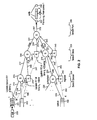
- Figure 2 is a block diagram illustrating a method and apparatus for frame-aware scheduling in a hierarchical arrangement of schedulers in accordance with at least one embodiment of the present invention.
- the arrangement of such a method or apparatus avoids the disadvantages associated with inter-level queues between levels of the scheduler hierarchy as in the prior art.
- Input queue 201 includes a cell SOF designating the start of a frame and a cell EOF designating an end of a frame.
- Input queue 201 is coupled to scheduler 203 via connection 213.
- Input queue 202 is coupled to scheduler 203 via connection 214.
- Input queue 201 is associated with register 240 via connection 244. Additional input queues may be coupled to scheduler 203 via connection 215.
- Input queue 202 is associated with register 240 via connection 245.
- Scheduler 203 is associated with register 240 via connection 246.
- Information as to the number of cells in input queues is passed to an associated register. For frame aware queues, the counting of cells is performed for cells of complete frames that are received.
- information as to the number of cells in input queue 201 is passed to register 240 via connection 244.
- information as to the number of cells in input queue 202 is passed to register 240 via connection 245.
- Scheduler 203 is coupled to scheduler 205 via connection 217.
- Register 240 is coupled to scheduler 205 via connection 255. Additional information from additional schedulers and registers may be provided to scheduler 205 via connection 218.
- Register 240 is associated with register 241 via connection 247.
- Register 240 provides updated information to register 241 via connection 247.
- Scheduler 205 is associated with register 241 via connection 248.
- Scheduler 205 is coupled to scheduler 207 via connection 221.
- Register 241 is associated with scheduler 207 via connection 249.
- Input queue 208 is coupled to scheduler 209 via connection 224. Additional queues may be coupled to scheduler 209 via connection 225. Input queue 208 is coupled to register 242 via connection 250. Scheduler 209 is coupled to register 242 via connection 251. Scheduler 209 is coupled to scheduler 211 via connection 228. Register 242 is associated with scheduler 211 via connection 256. Register 242 is associated with register 243 via connection 252. Additional schedulers and registers may be coupled to scheduler 211 via connection 229. Scheduler 211 is associated with register 243 via connection 253. Scheduler 211 is coupled to scheduler 207 via connection 232. Register 243 is associated with scheduler 207 via connection 254. Additional schedulers and registers may be coupled to scheduler 207 via connection 222. Scheduler 207 provides output 223.
- such information may include cells 237, 238, and 239.
- the plurality of cells 238 comprises a frame of cells, for example, a frame from input queue 201 including cells delimited by the SOF designation and the EOF designation.
- the elements of Figure 2 may be understood as existing in a plurality of hierarchical levels.
- the first level of input queues includes input queues 201, 202, and 208. Following this level is a level described as select queue 234.
- the level select queue 234 includes scheduler 203, register 240, scheduler 209. and register 242. Following this level is a level described as select class 235.
- the level select class 235 includes scheduler 205, register 241. scheduler 211, and register 243. Following this level is a level described as select port 236.
- Level select port 235 includes scheduler 207.
- each scheduler except the last scheduler in the hierarchy, is associated with storage that maintains a value used by its corresponding higher level scheduler to make scheduling decisions.
- scheduler 203 is associated with the register 240, which is used by scheduler 205 for making scheduling decisions.
- register 241 is associated with the scheduler 205 and is used by scheduler 207 for making scheduling decisions.
- the value of register 240 is the sum of cells in all input queues that are serviced by scheduler 203. If scheduler 203 is frame aware, then cell counting is performed for all cells that are part of complete frames.
- solid lines between the input queues and first level of schedulers, and between schedulers in adjacent levels denote associations that define the hierarchical arrangement of schedulers. That is, scheduler 205, which is serviced by scheduler 207, services scheduler 203.
- the dotted arrows show how the register's values are updated. For example, register 240 is updated when changes occur in input queues 201 and 202, e.g., with the arrival of new cells, and also with the scheduling of cells by scheduler 203.
- the solid arrows denote the associations between registers and schedulers for the purpose of making scheduling decisions.
- scheduler 205 consults register 240, as well as the registers of all other schedulers that it services, to determine if traffic scheduled by scheduler 203 should receive a grant, i.e., to be serviced, or scheduled.
- scheduler 207 consults the register 241, and all other registers associated with schedulers that it services, in order to make a scheduling decision.
- a new cell 233 arrives at input queue 201, which is updated with its arrival at time t0.
- a time t0+delta register 240 is updated to reflect the change at input queue 201.
- register 240 is incremented by one.
- the time interval, delta is a small time delay required by a real-time operating system to propagate the change in input queue 201 to register 240.
- register 241 is updated, in this case incremented by one, to reflect the change in register 240.
- a sum of ready-to-send (RTS) values can be stored for the purpose of rate limiting the queues.
- RTS ready-to-send
- Each RTS value would be the minimum of the queue depth and the allowable burst size (ABS) for the queue.
- ABS is the number of cells that can be sent without violating a rate limit set for the queue.
- SLA service level agreement
- the calculation of ABS is based upon service level agreement (SLA) information for the queue. As time passes, the ABS increases up to a maximum value and is decreased as cells are sent.
- SLA service level agreement
- the ABS used may itself be the minimum of two such values in which the rate of increase is different and the maximum value is different. This can be called a "two bucket rate limiter.”
- the present invention uses this arrangement to perform the new method of frame-aware scheduling, but it is not limited to being performed on only this arrangement.
- the invention also makes use of grants, a known mechanism, issued by a higher level scheduler to a lower level scheduler, or queue, to permit the flow of a unit of traffic therefrom.
- the unit of traffic is an ATM cell.
- a scheduling arrangement must satisfy for the purposes of the invention is as follows: a frame enqueued on a leg (e.g., connection at an input of a scheduler) of a lower-level scheduler must not prevent a higher-level scheduler, by reason of the structure of the arrangement, from selecting another lower-level scheduler.
- the inter-level queues prevent the arrangement from meeting this requirement. For example in Figure 1, once scheduler 103 selects a queue 101 to provide a frame for inter-level queue 104, queue 102 cannot provide a frame for the port until the frame from queue 101 has been serviced.
- each queue collects frames; however, scheduler 203 does not select a queue to service until it itself has been selected by scheduler 205, which does not happen until scheduler 205 has been selected by scheduler 207.
- scheduler 203 does not select a queue to service until it itself has been selected by scheduler 205, which does not happen until scheduler 205 has been selected by scheduler 207.
- each scheduler along the legs that the queues are on is updated with the size of the selected frames. Consequently, the elements of the several stages are aware of how much data is available down their respective legs and hence how many grants may be accepted before all frames are sent.
- Figure 3 is a flow diagram illustrating a method for frame-aware scheduling in a hierarchical arrangement of schedulers in accordance with at least one embodiment of the present invention. Due to the latency between the selection of the actual queue to service and the determination of the size of the frame at the head of that queue, significant new functionality is provided to support the frame-aware nature. Such functionality may be implemented by configuring the method to occur such that once a frame has started to be serviced, it will be serviced to completion before another queue (with another frame in it) can be selected. Without such new functionality, the latency mentioned above can result in a service decision being made based on the assumption that a frame is in the process of being sent, when in fact the frame has already been completely sent and a new frame is being sent.
- step 301 the method starts when a frame aware scheduler selects a leg from which to service a new frame at step 301. After a leg is selected, the sending of data units of a frame from the head of a queue may begin. The method continues to step 302, where subsequent grants are counted. Such subsequent grants are automatically accredited to the selected leg.
- step 303 the size of a frame is from a queue on the selected leg is requested. Following step 303 there is an unavoidable delay incurred while obtaining the requested frame size prior to step 304.
- step 304 a frame size is received from the selected queue.
- step 305 a decision is made as to whether the grant count is equal to the frame size. If the grant count is found to be equal to the frame size in step 305, then the frame has been completely sent and the process continues to step 306.
- step 306 the scheduler is free to choose another leg.
- step 307 the scheduler returns to normal scheduling.
- step 305 If, however, in step 305, the grant count is found not to be equal to the frame size, the process continues in step 308.
- step 308 a determination is made as to whether or not the grant size is greater than the frame size. If the grant size is greater than the frame size, the frame has been completely sent and the sending of another frame has started. In such a case, the process continues to step 309 where the grant count is decremented by the sent frame size. From step 309, the process returns to step 302.
- step 308 a determination is made that the grant size is not greater than the frame size, then it is determined that the frame has not been completely sent, and the process continues to step 310.
- step 310 the grant count is set to the frame size minus the grant count.
- step 311 a determination is made as to whether or not a grant has been received. If not grant has been received, the process remains at step 311. However, if a grant has been received, the process continues to step 312, where the grant count is decremented. From step 312, the process continues to step 313. where a determination is made as to whether or not the grant count is equal to zero. If the grant count is not equal to zero, the process returns to step 311. However, if the grant count is equal to zero, the process proceeds to step 306.
- a frame aware scheduler has frame aware schedulers or queues as its legs, but it may itself be scheduled on a non-frame aware scheduler.
- each subsequent grant After selecting a leg from which to service a new frame, each subsequent grant will automatically go to the same leg and a count will be kept of the number of grants sent that way. After some delay, the size of the frame at the head of the queue selected for service will be returned. If the size is greater than the count, then the frame has not been completely sent. The count is updated to the number of grants left to complete the frame and until the frame is complete, each grant will result in count being decremented, when it equals zero, the frame is complete and the scheduler can freely chose the next leg to receive the next grant. If size equals the count then the frame has been completely sent (and no more). The scheduler can freely choose the next leg to receive the next grant.
- the queue selection may remain fixed for a period of time. Provided that such a condition does not continue indefinitely, fairness is not impaired by it.
- Frame-based services e.g. packet over SONET (POS) are particularly useful, especially at high port speeds.
- Embodiments of the present invention provide the capability to schedule such traffic in an efficient manner without sacrificing responsiveness to higher priority traffic. Therefore, embodiments of the invention may be used to increase the usefulness of switching/routing platforms.
- the scheduling arrangement would normally be implemented in hardware, typically as an integrated circuit. However, in accordance with at least one embodiment of the present invention, the scheduling arrangement may be practiced using any suitable combination of hardware and/or software. For example, the scheduling arrangement may be implemented using one or more integrated circuits, such as custom integrated circuits, application-specific integrated circuits (ASIC's), field-programmable gate arrays (FPGA's), other programmable logic devices (PLD's), or other processing devices, such as a processing device provided with memory.
- ASIC's application-specific integrated circuits
- FPGA's field-programmable gate arrays
- PLD's programmable logic devices
- Such a processing device may include a single processing device or a plurality of processing devices, which may, for example, be microprocessors, microcomputers, microcontrollers, digital signal processors, central processing units (CPU's), state machines, and/or any device that manipulates data based on operating and/or programming instructions.
- Memory may be a single memory device or a plurality of memory devices, which may include system memory, local memory, random access memory, read only memory, hard disk memory, magnetic tape memory, and/or any device that stores data, and such memory may be integrated with one or more processing devices or may be implemented separately.
- Figure 4 is a diagram illustrating a pipelined decision flow of scheduling decisions in accordance with at least one embodiment of the present invention.
- time is represented along axis 424, while scheduler levels are represented or orthogonal to axis 424, for example as level select queue 407, se lect class 408, and select port 409.
- levels are represented or orthogonal to axis 424, for example as level select queue 407, se lect class 408, and select port 409.
- Examples of discrete intervals of time include time To 401, time Ti 402, time T 2 403, time T 3 404, time T 4 405, and time T 5 406.
- Sets of scheduling decisions are illustrated to form a two-dimensional matrix. For example, a first set of scheduling decisions C(1) 410 occurs at time To 401 at level select port 409.
- the first set of scheduling decisions C(1) 410 follows decision flow path 422 to level select class 408 at time T 1 402, and appears at scheduling decision set C(1) 411.
- This scheduling decision set follows decision flow path 423 to arrive at scheduling decision set C(1) 412 at level select queue 407 at time T 2 403.
- scheduling decision set C(2) 413 which is found at level select port 409 during time T 1 402, proceeds along a decision flow path to scheduling decision set C(2) 414 at level select class 408 during time T 2 403.
- This scheduling decision set proceeds along a decision flow path to scheduling decision set C(2) 415, which occurs at level select queue 407 during time T 3 404.
- scheduling decision set C(3) 416 which is present at level select port 409 during time T 2 403, proceeds along a decision flow path to select class 408 at time T 3 404, as indicated by scheduling decision set C(3) 417.
- Scheduling decision set C(3) 417 continues along a decision flow path to scheduling decision set C(3) 418 at level select queue 407 and time interval T 4 405.
- scheduling decision set C(4) 419 which occurs at level select port 409 during time T 3 404, progresses along a decision flow path to scheduling decision set C(4) 420 at level select class 408 during time T 4 405.
- Scheduling decision set C(4) 402 progresses along a decision flow path to scheduling decision set C (4) 421, which occurs at level select queue 407 during time T 5 406.
- time is depicted as cell time slots, e.g. to to t 5 , incrementing with downward movement along the vertical axis.
- Scheduler levels are displayed horizontally and in the same order, from right to left, as in Figure 2.
- Sets of scheduling decisions are denoted as C(n), where the value of n identifies a particular decision set.
- the arrows show decision flow. For example, at time T 0 401, the port for decision set C(1) 410 is selected. Then at times t 1 402 and t 2 403, the class and queues for the set C(1) 411 and 412 are selected. respectively.
- another decision set C(2) 413 is initiated by selecting a port for the set.
- the class for the decision set C(2) 414 is selected, and another decision set C(3) 416 is initiated by selecting a port for it. In this way, when the pipeline is full, a decision set is completed and a new decision set may be initiated at each cell time.
- the scheduling arrangement can respond almost immediately to changes occurring at the input queues. In this case almost immediately is within one cell time slot. For example, if a high priority cell were to arrive at input queue 201 at time t 1 402, register 240 would be updated at time t 1 +delta, which allows scheduler 203 to select input queue 201 as part of decision set C(1) 412 at time t 2 403. In this way, low priority cells arriving first are prevented from taking precedence over later arriving high priority cells.
- Such a scheduling arrangement may be configured to be advantageous in any or all of several ways.
- such a scheduling arrangement allows multiple scheduling levels to be supported, and even more added, while providing a constant scheduling decision response time that is in the order of one cell time slot. Therefore, new service priorities/classes can be added to those supported without affecting scheduling performance of the switch/router.
- such a scheduling arrangement can overcome the aforementioned problem of arrival priority taking precedence over assigned priority. Additionally, such a scheduling arrangement allows for easy implementation of rate shaping, i.e. by storing sums of RTS values in the registers instead of sums of cells.
- switches/routers that can effectively provide these capabilities will become increasingly more valuable.
- the methods and apparatuses described herein can provide this important capability in switching/routing platforms. Furthermore, such methods and apparatuses may be used to implement a switch/router that provides response to priorities of cells/packets within one cell time.
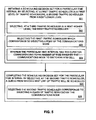
- FIG. 5 is a flow diagram illustrating a method in accordance with at least one embodiment of the present invention.
- a scheduling decision set is initiated for a particular time interval by selecting, at a first traffic scheduler in a first level of traffic schedule list, a second traffic scheduler from a next lower level. 1.
- Step 501 may include steps 502, 503, and/or 504.
- the first traffic scheduler is selected at a third traffic scheduler in a next higher level.
- the first traffic scheduler is selected which corresponds to selecting a port of the communications node.
- the particular time interval had the duration corresponding to an amount of time taken by the communication node to switch an ATM cell.
- step 505 the scheduling decision set is completed for the particular time interval by selecting, and a second traffic schedule, a queue from which the next unit of traffic will be scheduled.
- Step 505 may include step 506.
- step 506 a second traffic scheduler corresponding to selecting a class of traffic service by the communications node is selected.
Landscapes
- Engineering & Computer Science (AREA)
- Computer Networks & Wireless Communication (AREA)
- Signal Processing (AREA)
- Data Exchanges In Wide-Area Networks (AREA)
- Mobile Radio Communication Systems (AREA)
Abstract
Description
Claims (18)
- A method for scheduling frames comprised of data units in a communications node, the communications node having a plurality of queues for storing the data units and a hierarchical arrangement of schedulers for scheduling the frames, the method comprising the steps of:selecting, at a particular scheduler in the hierarchical arrangement. a queue from which a frame of the frames may be sent and accrediting any subsequently received grants at the particular scheduler to the queue;starting the sending of the data units of the frame from a head of the queue;determining the size of the frame at the head of the queue;determining, at the particular scheduler, a value equal to a count of the grants issued for the queue minus a size of the frame; andselecting, at the particular scheduler, another queue from which additional ones of the data units may be sent responsive to the value being zero.
- The method of claim 1 further comprising the steps of:setting the count of the grants equal to the value; andrepeating the steps of claim 1 responsive to the value being greater than zero.
- The method of claim 2, further comprising the steps of, responsive to the value being less than zero:setting the count of the grants equal to the value;decrementing the count of the grants with each new grant of the subsequently received grants accredited to the queue; andselecting, at the particular scheduler, the another queue from which data units may be sent responsive to the value being zero.
- The method of claim 3 wherein the step of selecting the queue is performed recursively for the schedulers at different levels of the hierarchical arrangement.
- The method of claim 3 wherein the step of selecting the queue is performed iteratively for the schedulers across different levels of the hierarchical arrangement.
- The method of claim 3 further comprises the steps of:selecting, at a particular port selection scheduler of the schedulers, a port of the communications node to which the data units will be outputted; andselecting, at a particular class selection scheduler, a class within which the data units will be prioritized.
- An arrangement of schedulers for scheduling traffic in a communications node having a plurality of queue s, each queue of the plurality of queues for storing a portion of the traffic in units of the traffic, the arrangement of schedulers comprising:a plurality of the schedulers of which each scheduler of the plurality of the schedulers is for scheduling the traffic directly from a unique portion of the queues and is associated with a respective register of a plurality of registers for storing information corresponding to an aspect of the respective unique portion of the queues; andan output scheduler being operable to schedule the traffic from the plurality of schedulers in dependence upon the information stored in the plurality of registers.
- The arrangement of claim 7, wherein:the arrangement further comprises a plurality of intermediate schedulers of which each intermediate scheduler of the plurality of intermediate schedulers is for scheduling the traffic from a unique portion of the plurality of schedulers and is associated with a respective intermediate register for storing a number corresponding to an aspect of the respective unique portion of the schedulers; andthe output scheduler is further operable to schedule the traffic from the plurality of intermediate schedulers in dependence upon the number stored in the respective intermediate register.
- The arrangement of claim 8 wherein the information comprises a summation of the units of the traffic in the unique portion of the queues.
- The arrangement of claim 8 wherein the information comprises a summation, over the unique portion of the queues, of a minimum of the units of the traffic in each of the queues of the unique portion of the queues and an allowable burst size denominated in the units of the traffic of each of the queues of the portion of the queues.
- The arrangement of claim 10 wherein the number reflects a summation of the information stored in each of the registers associated with the plurality of the schedulers.
- The arrangement of claim 11 wherein the units of the traffic are asynchronous transfer mode (ATM) cells.
- A method for scheduling traffic in a communications node having a plurality of queues for storing units of traffic to be scheduled and a hierarchical arrangement of levels of traffic schedulers, comprising the steps of:initiating a scheduling decision set for a particular time interval by selecting, at a first traffic scheduler of the traffic schedulers in a first level of the levels, a second traffic scheduler of the traffic schedulers from a next lower level of the levels; andcompleting the scheduling decision set for the particular time interval by selecting, at the second traffic scheduler, a queue from which a next unit of the traffic will be scheduled.
- The method of claim 13, wherein selecting the second traffic scheduler corresponds to selecting a class of the traffic serviced by the communications node.
- The method of claim 14, wherein the step of initiating further comprises first selecting, at a third traffic scheduler of the traffic schedulers in a next higher level of the levels, the first traffic scheduler.
- The method of claim 15, wherein selecting the first traffic scheduler corresponds to selecting a port of the communications node.
- The method of claim 16 wherein the units of the traffic are asynchronous transfer mode (ATM) cells.
- The method of claim 17 wherein the particular time interval has a duration corresponding to an amount of time taken by the communications node to switch an ATM cell of the ATM cells.
Priority Applications (2)
| Application Number | Priority Date | Filing Date | Title |
|---|---|---|---|
| EP10161707A EP2209269A1 (en) | 2003-10-02 | 2004-09-30 | Method and apparatus for frame-aware and pipelined hierarchical scheduling |
| EP10161708A EP2209270A1 (en) | 2003-10-02 | 2004-09-30 | Method and apparatus for frame-aware and pipelined hierarchical scheduling |
Applications Claiming Priority (2)
| Application Number | Priority Date | Filing Date | Title |
|---|---|---|---|
| US10/677,413 US7477650B2 (en) | 2003-10-02 | 2003-10-02 | Method and apparatus for frame-aware and pipelined hierarchical scheduling |
| US677413 | 2003-10-02 |
Publications (2)
| Publication Number | Publication Date |
|---|---|
| EP1530329A2 true EP1530329A2 (en) | 2005-05-11 |
| EP1530329A3 EP1530329A3 (en) | 2009-04-22 |
Family
ID=34393710
Family Applications (3)
| Application Number | Title | Priority Date | Filing Date |
|---|---|---|---|
| EP10161708A Withdrawn EP2209270A1 (en) | 2003-10-02 | 2004-09-30 | Method and apparatus for frame-aware and pipelined hierarchical scheduling |
| EP04300641A Withdrawn EP1530329A3 (en) | 2003-10-02 | 2004-09-30 | Method and apparatus for frame-aware and pipelined hierarchical scheduling |
| EP10161707A Withdrawn EP2209269A1 (en) | 2003-10-02 | 2004-09-30 | Method and apparatus for frame-aware and pipelined hierarchical scheduling |
Family Applications Before (1)
| Application Number | Title | Priority Date | Filing Date |
|---|---|---|---|
| EP10161708A Withdrawn EP2209270A1 (en) | 2003-10-02 | 2004-09-30 | Method and apparatus for frame-aware and pipelined hierarchical scheduling |
Family Applications After (1)
| Application Number | Title | Priority Date | Filing Date |
|---|---|---|---|
| EP10161707A Withdrawn EP2209269A1 (en) | 2003-10-02 | 2004-09-30 | Method and apparatus for frame-aware and pipelined hierarchical scheduling |
Country Status (2)
| Country | Link |
|---|---|
| US (1) | US7477650B2 (en) |
| EP (3) | EP2209270A1 (en) |
Cited By (1)
| Publication number | Priority date | Publication date | Assignee | Title |
|---|---|---|---|---|
| CN102148815A (en) * | 2010-10-26 | 2011-08-10 | 华为技术有限公司 | Video stream dispatching method and network node |
Families Citing this family (8)
| Publication number | Priority date | Publication date | Assignee | Title |
|---|---|---|---|---|
| US20070174529A1 (en) * | 2005-12-29 | 2007-07-26 | Intel Corporation | Queue manager having a multi-level arbitrator |
| US8223642B2 (en) * | 2006-04-28 | 2012-07-17 | Tellabs San Jose, Inc. | Differentiated services using weighted quality of service (QoS) |
| US8385205B2 (en) * | 2007-09-20 | 2013-02-26 | Tellabs Operations, Inc. | Modeling packet traffic using an inverse leaky bucket |
| CN102084628B (en) | 2008-04-24 | 2014-12-03 | 马维尔国际有限公司 | A traffic manager and a method for a traffic manager |
| EP2525534B1 (en) * | 2011-05-18 | 2018-04-18 | Xelerated NewCo AB | Network traffic scheduler and associated method, computer program and computer program product |
| US20130044755A1 (en) * | 2011-08-16 | 2013-02-21 | Futurewei Technologies, Inc. | Scalable Packet Scheduling Policy for Vast Number of Sessions |
| US9401860B2 (en) * | 2013-08-09 | 2016-07-26 | Citrix Systems, Inc. | High performance quality-of-service packet scheduling for multiple packet processing engines |
| WO2023012948A1 (en) * | 2021-08-04 | 2023-02-09 | 日本電信電話株式会社 | Communication device, communication system, and communication method |
Family Cites Families (13)
| Publication number | Priority date | Publication date | Assignee | Title |
|---|---|---|---|---|
| US6198723B1 (en) * | 1998-04-14 | 2001-03-06 | Paxonet Communications, Inc. | Asynchronous transfer mode traffic shapers |
| CA2302129A1 (en) * | 1999-03-26 | 2000-09-26 | Newbridge Networks Corporation | Timestamping arbitration in digital communication devices |
| US6747971B1 (en) * | 1999-04-20 | 2004-06-08 | Cisco Technology, Inc. | Crosspoint switch with independent schedulers |
| US6519225B1 (en) * | 1999-05-14 | 2003-02-11 | Nortel Networks Limited | Backpressure mechanism for a network device |
| US6628615B1 (en) * | 2000-01-18 | 2003-09-30 | International Business Machines Corporation | Two level virtual channels |
| US7007021B1 (en) * | 2000-11-28 | 2006-02-28 | Altera Corporation | Data structure and method for pipeline heap-sorting |
| JP4489308B2 (en) * | 2001-01-05 | 2010-06-23 | 富士通株式会社 | Packet switch |
| US20040062261A1 (en) * | 2001-02-07 | 2004-04-01 | Rami Zecharia | Multi-service segmentation and reassembly device having integrated scheduler and advanced multi-timing wheel shaper |
| US20020126690A1 (en) * | 2001-02-26 | 2002-09-12 | Maple Optical Systems, Inc. | Packet transmission scheduling in a data communication network |
| US7035294B2 (en) * | 2001-06-04 | 2006-04-25 | Calix Networks, Inc. | Backplane bus |
| KR100431191B1 (en) * | 2001-12-03 | 2004-05-12 | 주식회사 케이티 | An apparatus and method for scheduling packets by using a round robin based on credit |
| JP3914771B2 (en) * | 2002-01-09 | 2007-05-16 | 株式会社日立製作所 | Packet communication apparatus and packet data transfer control method |
| US20040081108A1 (en) * | 2002-10-02 | 2004-04-29 | Andiamo Systems | Arbitration system |
-
2003
- 2003-10-02 US US10/677,413 patent/US7477650B2/en not_active Expired - Fee Related
-
2004
- 2004-09-30 EP EP10161708A patent/EP2209270A1/en not_active Withdrawn
- 2004-09-30 EP EP04300641A patent/EP1530329A3/en not_active Withdrawn
- 2004-09-30 EP EP10161707A patent/EP2209269A1/en not_active Withdrawn
Cited By (2)
| Publication number | Priority date | Publication date | Assignee | Title |
|---|---|---|---|---|
| CN102148815A (en) * | 2010-10-26 | 2011-08-10 | 华为技术有限公司 | Video stream dispatching method and network node |
| CN102148815B (en) * | 2010-10-26 | 2014-08-13 | 华为技术有限公司 | Video stream dispatching method and network node |
Also Published As
| Publication number | Publication date |
|---|---|
| US7477650B2 (en) | 2009-01-13 |
| US20050074011A1 (en) | 2005-04-07 |
| EP2209270A1 (en) | 2010-07-21 |
| EP1530329A3 (en) | 2009-04-22 |
| EP2209269A1 (en) | 2010-07-21 |
Similar Documents
| Publication | Publication Date | Title |
|---|---|---|
| US5859835A (en) | Traffic scheduling system and method for packet-switched networks | |
| US6134217A (en) | Traffic scheduling system and method for packet-switched networks with fairness and low latency | |
| US6654343B1 (en) | Method and system for switch fabric flow control | |
| JP3683133B2 (en) | Packet scheduling device | |
| US5831971A (en) | Method for leaky bucket traffic shaping using fair queueing collision arbitration | |
| US6914882B2 (en) | Method and apparatus for improved queuing | |
| US7142513B2 (en) | Method and multi-queue packet scheduling system for managing network packet traffic with minimum performance guarantees and maximum service rate control | |
| US5475682A (en) | Method of regulating backpressure traffic in a packet switched network | |
| JP3178470B2 (en) | Data flow control switch and scheduling method thereof | |
| US5629936A (en) | Control of consecutive packet loss in a packet buffer | |
| Rexford et al. | Scalable architectures for integrated traffic shaping and link scheduling in high-speed ATM switches | |
| US7113510B2 (en) | Hardware self-sorting scheduling queue | |
| JPH10327170A (en) | Method of operating a cell scheduler and scheduling system | |
| JP2003249952A (en) | Weighted credit arbitration using credit history | |
| US20080107120A1 (en) | Switch fabric access scheduler | |
| US7477650B2 (en) | Method and apparatus for frame-aware and pipelined hierarchical scheduling | |
| CA2318163A1 (en) | Method for providing delays independent of switch size in a crossbar switch with speedup | |
| JP2000332793A (en) | Atm cell buffer system and congestion control method therefor | |
| US20020141416A1 (en) | Method and apparatus for improved scheduling technique | |
| US7006513B1 (en) | Method and system for pipelining packet selection | |
| EP1521411B1 (en) | Method and apparatus for request/grant priority scheduling | |
| JPH10135957A (en) | Traffic shaper device | |
| US6654345B1 (en) | Single-bit timestamps for data transfer rate and delay guarantees in a packet network | |
| Liebeherr et al. | A versatile packet multiplexer for quality-of-service networks | |
| KR100381378B1 (en) | ATM Cell Scheduler And Scheduling Method |
Legal Events
| Date | Code | Title | Description |
|---|---|---|---|
| PUAI | Public reference made under article 153(3) epc to a published international application that has entered the european phase |
Free format text: ORIGINAL CODE: 0009012 |
|
| AK | Designated contracting states |
Kind code of ref document: A2 Designated state(s): AT BE BG CH CY CZ DE DK EE ES FI FR GB GR HU IE IT LI LU MC NL PL PT RO SE SI SK TR |
|
| AX | Request for extension of the european patent |
Extension state: AL HR LT LV MK |
|
| RAP1 | Party data changed (applicant data changed or rights of an application transferred) |
Owner name: ALCATEL LUCENT |
|
| PUAL | Search report despatched |
Free format text: ORIGINAL CODE: 0009013 |
|
| AK | Designated contracting states |
Kind code of ref document: A3 Designated state(s): AT BE BG CH CY CZ DE DK EE ES FI FR GB GR HU IE IT LI LU MC NL PL PT RO SE SI SK TR |
|
| AX | Request for extension of the european patent |
Extension state: AL HR LT LV MK |
|
| 17P | Request for examination filed |
Effective date: 20091022 |
|
| 17Q | First examination report despatched |
Effective date: 20091112 |
|
| AKX | Designation fees paid |
Designated state(s): AT BE BG CH CY CZ DE DK EE ES FI FR GB GR HU IE IT LI LU MC NL PL PT RO SE SI SK TR |
|
| STAA | Information on the status of an ep patent application or granted ep patent |
Free format text: STATUS: THE APPLICATION IS DEEMED TO BE WITHDRAWN |
|
| 18D | Application deemed to be withdrawn |
Effective date: 20101228 |