EP1530318A1 - Electronic apparatus for encryption key updating - Google Patents
Electronic apparatus for encryption key updating Download PDFInfo
- Publication number
- EP1530318A1 EP1530318A1 EP04022065A EP04022065A EP1530318A1 EP 1530318 A1 EP1530318 A1 EP 1530318A1 EP 04022065 A EP04022065 A EP 04022065A EP 04022065 A EP04022065 A EP 04022065A EP 1530318 A1 EP1530318 A1 EP 1530318A1
- Authority
- EP
- European Patent Office
- Prior art keywords
- encryption key
- data communication
- time
- creating
- unit
- Prior art date
- Legal status (The legal status is an assumption and is not a legal conclusion. Google has not performed a legal analysis and makes no representation as to the accuracy of the status listed.)
- Withdrawn
Links
- 238000004891 communication Methods 0.000 claims abstract description 123
- 238000012544 monitoring process Methods 0.000 claims description 21
- 238000000034 method Methods 0.000 claims description 13
- 238000012545 processing Methods 0.000 claims description 9
- 238000013500 data storage Methods 0.000 description 5
- 238000010586 diagram Methods 0.000 description 3
- 230000010365 information processing Effects 0.000 description 2
- 230000004043 responsiveness Effects 0.000 description 2
- 108700026140 MAC combination Proteins 0.000 description 1
- 230000005540 biological transmission Effects 0.000 description 1
- 238000004364 calculation method Methods 0.000 description 1
- 230000003111 delayed effect Effects 0.000 description 1
- 230000007246 mechanism Effects 0.000 description 1
- 230000002123 temporal effect Effects 0.000 description 1
- 238000012546 transfer Methods 0.000 description 1
Images


Classifications
-
- H—ELECTRICITY
- H04—ELECTRIC COMMUNICATION TECHNIQUE
- H04L—TRANSMISSION OF DIGITAL INFORMATION, e.g. TELEGRAPHIC COMMUNICATION
- H04L9/00—Cryptographic mechanisms or cryptographic arrangements for secret or secure communications; Network security protocols
- H04L9/08—Key distribution or management, e.g. generation, sharing or updating, of cryptographic keys or passwords
- H04L9/0891—Revocation or update of secret information, e.g. encryption key update or rekeying
-
- H—ELECTRICITY
- H04—ELECTRIC COMMUNICATION TECHNIQUE
- H04L—TRANSMISSION OF DIGITAL INFORMATION, e.g. TELEGRAPHIC COMMUNICATION
- H04L63/00—Network architectures or network communication protocols for network security
- H04L63/06—Network architectures or network communication protocols for network security for supporting key management in a packet data network
- H04L63/068—Network architectures or network communication protocols for network security for supporting key management in a packet data network using time-dependent keys, e.g. periodically changing keys
-
- H—ELECTRICITY
- H04—ELECTRIC COMMUNICATION TECHNIQUE
- H04W—WIRELESS COMMUNICATION NETWORKS
- H04W12/00—Security arrangements; Authentication; Protecting privacy or anonymity
- H04W12/50—Secure pairing of devices
-
- H—ELECTRICITY
- H04—ELECTRIC COMMUNICATION TECHNIQUE
- H04L—TRANSMISSION OF DIGITAL INFORMATION, e.g. TELEGRAPHIC COMMUNICATION
- H04L2209/00—Additional information or applications relating to cryptographic mechanisms or cryptographic arrangements for secret or secure communication H04L9/00
- H04L2209/80—Wireless
-
- H—ELECTRICITY
- H04—ELECTRIC COMMUNICATION TECHNIQUE
- H04W—WIRELESS COMMUNICATION NETWORKS
- H04W12/00—Security arrangements; Authentication; Protecting privacy or anonymity
- H04W12/06—Authentication
-
- H—ELECTRICITY
- H04—ELECTRIC COMMUNICATION TECHNIQUE
- H04W—WIRELESS COMMUNICATION NETWORKS
- H04W24/00—Supervisory, monitoring or testing arrangements
-
- H—ELECTRICITY
- H04—ELECTRIC COMMUNICATION TECHNIQUE
- H04W—WIRELESS COMMUNICATION NETWORKS
- H04W84/00—Network topologies
- H04W84/02—Hierarchically pre-organised networks, e.g. paging networks, cellular networks, WLAN [Wireless Local Area Network] or WLL [Wireless Local Loop]
- H04W84/10—Small scale networks; Flat hierarchical networks
- H04W84/12—WLAN [Wireless Local Area Networks]
Definitions
- the present invention relates to a cryptographic technique used when data communication is performed in an electronic apparatus such as a personal computer or access point.
- wireless LANs Local Area Networks
- WEP Wired Equivalent Privacy
- WEP is an encryption system which encrypts data by using a fixed encryption key.
- encryption systems such as TKIP (Temporal Key Integrity Protocol), WRAP (Wireless Robust Authenticated Protocol), and CCMP (Counter Mode/CBC MAC protocol), which allow updating of encryption keys to realize a safer security function.
- TKIP, WRAP, and CCMP are planned to be used in WPA (Wi Fi Protected Access) and IEEE802.11i which have recently been developed.
- WPA and IEEE802.11i define mechanisms for arbitrarily updating encryption keys used in these encryption systems.
- U.S. Patent No. 5,708,711 is strictly designed to perform statistical estimation, but gives no consideration to whether an encryption key is actually updated at a proper timing.
- a wireless LAN has a high throughput; 11 Mbps in IEEE802.11b and 54 Mbps in IEEE802.11a and IEEE802.11g, and hence is used not only as a means for simple data communication but also as a means for transmitting TV signals, video data, and the like that demand real time responsiveness.
- a wireless LAN has a high throughput; 11 Mbps in IEEE802.11b and 54 Mbps in IEEE802.11a and IEEE802.11g, and hence is used not only as a means for simple data communication but also as a means for transmitting TV signals, video data, and the like that demand real time responsiveness.
- a picture or sound is expected to be interrupted, thus considerably impairing its usability.
- the selection of an encryption key updating timing is very important.
- the present invention has been made in consideration of the above situation, and has as its object to provide an electronic apparatus and an encryption key updating control method for the apparatus which can update encryption keys at proper timings.
- an electronic apparatus characterized by comprising data communication means encryption key creating means for creating an encryption key used for encryption of data to be transmitted by the data communication means; monitoring means for monitoring a data communication state of the data communication means; time calculating means for calculating an elapsed time since an encryption key is created by the encryption key creating unit; and encryption key updating control means for causing the encryption key creating means to create a new encryption key at a timing at which a state in which no data communication is being executed is detected by the monitoring means after the elapsed time calculated by the time calculating unit reaches a predetermined shortest holding time.
- an electronic apparatus characterized by comprising data communication means; encryption key creating means for creating an encryption key used for encryption of data to be transmitted by the data communication means; monitoring means for monitoring a data communication state of the data communication means; first time calculating means for calculating an elapsed time of a state in which after an end of data communication is detected by the monitoring means, a start of next data communication is not detected; and encryption key updating control means for causing the encryption key creating means to create a new encryption key at a timing at which'the start of data communication is detected by the monitoring means after the elapsed time calculated by the first time calculating unit has reached a predetermined reference interval time.
- encryption key updating is inhibited until the shortest holding time elapses since the previous encryption key update time even while, for example, no data communication is executed, i.e., the situation is suitable for encryption key updating.
- the longest holding time elapses since the previous encryption key update time while data communication is executed i.e., the situation is not suitable for encryption key updating.
- the data communication is temporarily interrupted, and encryption key updating is executed.
- encryption key updating is executed at a proper timing in consideration of the balance between efficiency and safety.
- an electronic apparatus and an encryption key updating control method which can execute encryption key updating at a proper timing.
- FIG. 1 shows the connection form of a wireless LAN communication system according to the first embodiment of the present invention.
- a personal computer 1 is an information processing apparatus as of a notebook type equipped with a wireless communication function.
- the personal computer 1 is connected to a network 3 through an access point 2, as needed.
- Various information processing apparatuses such as another personal computer are connected to the network 3, and an external network is further connected to it.
- the personal computer 1 can transmit/receive data to/from them.
- the access point 2 is a relay apparatus which relays between the personal computer 1 and the network 3.
- the access point 2 forms a wireless service area for a wireless LAN 4 aimed at the personal computer 1, and is accommodated in the network 3 through a wired LAN cable 5.
- the personal computer 1 and access point 2 are electronic apparatuses which wirelessly transmit/receive data, and both have functions of encrypting data by using encryption keys when transmitting the data.
- the wireless LAN communication system of the first embodiment is characterized in that the personal computer 1 and access point 2 can update encryption keys at proper timings. This point will be described in detail below. Note that the following description will be focused on the personal computer 1, assuming that the personal computer 1 takes the initiative to control updating of an encryption key.
- FIG. 2 is a block diagram showing the arrangement of the personal computer 1. As shown in FIG. 2, the personal computer 1 includes a control unit 11, input unit 12, output unit 13, data storage unit 14, timer unit 15, and wireless unit 16.
- the control unit 11 performs various control operations of the personal computer 1 and includes an encryption key update timing control unit 111 and encryption key creating unit 112 (to be described later).
- the input unit 12 inputs various kinds of information and operation instructions through, for example, a keyboard and mouse.
- the output unit 13 outputs various kinds of information through, for example, a display and loudspeakers.
- the data storage unit 14 is a memory device such as an EEPROM or HDD in which various kinds of data are stored.
- the timer unit 15 is a timer module which includes, for example, its own power supply and counts the system time used by the personal computer 1.
- the wireless unit 16 executes wireless communication complying with, for example, the IEEE802.11i protocol.
- the personal computer 1 wirelessly transmits/receives data to/from the access point 2, and takes the initiative to update an encryption key for encrypting transmission data.
- the encryption key update timing control unit 111 controls the update timing of the encryption key.
- the encryption key creating unit 112 creates/updates an encryption key in synchronism with the access point 2 as a communication partner. The principle on which the encryption key update timing control unit 111 selects an encryption key update timing will be described with reference to FIG. 3.
- the encryption key update timing control unit 111 acquires the corresponding time from the timer unit 15.
- the encryption key update timing control unit 111 has acquired the shortest holding time data and longest holding time data stored in the data storage unit 14, and subsequently monitors whether or not the elapsed time since the creation/updating of this encryption key has reached the shortest holding time or longest holding time.
- a pair of the shortest holding time and the longest holding time define the allowable range of an encryption key update interval.
- the shortest holding time is set to prevent unnecessary updating of an encryption key.
- the longest holding time is set to ensure safety. These times are set by a user through the GUI provided by the control unit 11 or the like and stored in the data storage unit 14.
- the encryption key update timing control unit 111 therefore inhibits the encryption key creating unit 112 from creating/updating an encryption key until the shortest holding time has elapsed since the previous creation/updating of an encryption key ((2) in FIG. 3).
- the encryption key update timing control unit 111 monitors whether or not wireless communication is executed by the wireless unit 16.
- the encryption key update timing control unit 111 causes the encryption key creating unit 112 to create/update an encryption key at this timing. This prevents the update processing of the encryption key from affecting data communication processing.
- the encryption key update timing control unit 111 instructs the wireless unit 16 to temporarily interrupt the wireless communication at this timing, and causes the encryption key creating.unit 112 to create/update the encryption key. This makes it possible to ensure the safety of wireless data communication.
- the encryption key update timing control unit 111 realizes encryption key updating at a proper timing in consideration of the balance between efficiency and safety.
- control unit 11 executes scanning to check whether or not the access point 2 is present nearby (step A1). If it is determined that the access point 2 is present nearby, the control unit 11 joins the access point 2 and synchronizes with the access point 2 (step A2).
- the control unit 11 Upon establishing the synchronization, the control unit 11 executes authentication (step A3).
- the authentication in this case is called open system authentication; when the personal computer 1 gives an authentication request, the access point 2 directly receives the authentication request without performing any special authentication processing.
- the control unit 11 then performs association with the access point 2 (step A4).
- the encryption key creating unit 112 executes encryption key creation called 4 way handshake (and group key handshake) together with the access point 2 (step A5).
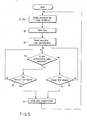
- FIG. 5 is a flowchart showing the flow of encryption key update timing control performed by the personal computer 1.
- the encryption key update timing control unit 111 Upon causing the encryption key creating unit 112 to create an encryption key by the above 4 way handshake (and group key handshake), the encryption key update timing control unit 111 acquires and stores the system time from the timer unit 15 (step B2). The encryption key update timing control unit 111 then gives the wireless unit 16 an instruction to permit encryption data communication (step B3), and starts monitoring whether or not wireless communication is executed by the wireless unit 16 (step B4).
- the encryption key update timing control unit 111 checks whether or not the shortest holding time of an encryption key update interval has elapsed (step . B5). If the shortest holding time has not elapsed (NO in step B5), the flow returns to step B4 to check whether or not data communication is being executed. If the shortest holding time has elapsed while no data communication is being executed (YES in step B5), the encryption key update timing control unit 111 gives the wireless unit 16 an instruction to inhibit encryption data communication at this point of time (step B6) to stop encryption data communication. The flow then returns to step B1 to cause the encryption key creating unit 112 to create an encryption key.
- step B4 the encryption key update timing control unit 111 checks whether or not the longest holding time of an encryption key update interval has elapsed (step B7). If the longest holding time has not elapsed (NO in step B7), the flow returns to step B4 to check whether or not data communication is being executed. 'If the longest holding time has elapsed while this data communication is being executed (YES in step B7), the encryption key update timing control unit 111 gives the wireless unit 16 an instruction to inhibit encryption data communication at this point of time (step 86) to stop encryption data communication. The flow then returns to step B1 to cause the encryption key creating unit 112 to create an encryption key by 4 way handshake (and group key handshake).
- Executing the above control makes it possible to reduce the occurrence of encryption key updating during data communication while maintaining necessary safety.
- setting the longest holding time can inhibit unnecessary encryption key updating while no data communication is performed.
- the personal computer 1 has the initiative of encryption key updating controls encryption key update timings on the basis of the shortest holding time and longest holding time.
- a wireless LAN system according to the second embodiment controls encryption key update timings by using a reference interval time for the determination of whether.or not encryption data communication has ceased for a predetermined period of time or more, in place of the shortest holding time.
- This wireless LAN communication system it is determined that encryption data communication which has occurred after the lapse of the reference interval time or more is new data communication, and the encryption key is updated at the start of the data communication.
- This reference interval time is also data to be set by a user through the GUI provided by a control unit 11 or the like and stored in a data storage unit 14.
- An encryption key update timing control unit 111 acquires this data at the time of startup or the like.
- FIGS. 6A and 6B are charts for explaining the encryption key update timing selection principle of the encryption key update timing control unit 111 according to the second embodiment.
- the encryption key creating unit 112 repeatedly creates/updates an encryption key every time the shortest holding time elapses ((2), (2)', (2)", ... in FIG. 6A). Since these encryption keys have never been used, there is no possibility that the keys have been stolen. That is, encryption keys are unnecessarily updated.
- an encryption key is not updated unnecessarily as in the case indicated by (2), (2)', and (2)" in FIG. 6A.
- updating an encryption key at the start of new encryption data communication makes it possible to reduce the accidental occurrence of encryption key updating as in a case wherein the shortest holding time has elapsed immediately after the start of new encryption data communication, and the longest holding time has then elapsed in this state, i.e., the occurrence of encryption key updating during encryption data communication like that indicated by (1) in FIG. 6A.
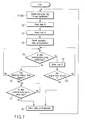
- FIG. 7 is a flowchart showing the flow of encryption key update timing control performed by the personal computer 1 according to the second embodiment.
- the encryption key update timing control unit 111 Upon causing the encryption key creating unit 112 to create an encryption key (step C1), the encryption key update timing control unit 111 acquires and stores the system time (time B) from a timer unit 15 (step C2). Acquiring the time B in this case is equivalent to clearing a start point for the calculation of a period of time during which data communication ceases. At this time, the encryption key update timing control unit 111 stores the acquired system time as the time (time A) at which the encryption key was created (step C3). The'encryption key update timing control unit 111 then gives a wireless unit 16 an instruction to permit encryption data communication (step C4), and starts monitoring whether or not wireless communication is executed by the wireless unit 16 (step C5).
- the encryption key update timing control unit 111 checks whether or not the time B, i.e., the elapsed time since the last data communication, has reached the reference interval time (step C6). If the time B has not reached the reference interval time (NO in step C6), the flow returns to step C5 to check whether or not data communication is being executed. If the elapsed time has reached the reference interval time (YES in step C6), the encryption key update timing control unit 111 starts monitoring the execution/non execution of wireless communication by the wireless unit 16 to detect whether or not wireless communication is started by the wireless unit 16 (step C7).
- step C7 If wireless communication is started by the driving circuit 6 (YES in step C7), the encryption key update timing control unit 111 gives the wireless unit 16 an instruction to inhibit encryption data communication at this point of time (step C8) to stop the encryption data communication.
- step C8 the encryption key creating unit 112 to create an encryption key by 4 way handshake (and'group key handshake). In this case, although the start of data communication is delayed because the data communication is stopped before the start of the data communication, no data interruption occurs.
- the encryption key update timing control unit 111 acquires and stores the system time (time B) from the timer unit 15 again (step C9). The encryption key update timing control unit 111 then checks whether or not the longest holding time of an encryption key update interval has elapsed (step C10). If the longest holding time has not elapsed (NO in step C10), the flow returns to step C5 to check whether or not data communication is being executed. If the longest holding time has elapsed at the time of execution of data communication (YES in step C9), the encryption key update timing control unit 111 gives the wireless unit 16 an instruction to inhibit encryption data communication (step C8) to stop the encryption data communication. The flow then returns to step C1 to cause the encryption key creating unit 112 to create an encryption key by 4 way handshake (and group key handshake).
Landscapes
- Engineering & Computer Science (AREA)
- Computer Security & Cryptography (AREA)
- Computer Networks & Wireless Communication (AREA)
- Signal Processing (AREA)
- Computer Hardware Design (AREA)
- Computing Systems (AREA)
- General Engineering & Computer Science (AREA)
- Mobile Radio Communication Systems (AREA)
- Small-Scale Networks (AREA)
Abstract
After an encryption key creating unit (112)
creates/updates an encryption key, an encryption key
update timing control unit (111) monitors whether or
not the elapsed time since this time has reached the
shortest holding time or longest holding time. If the
shortest holding time has elapsed, the encryption
key update timing control unit (111) monitors whether
or not wireless communication is being executed by
a wireless unit (16). If a state wherein no wireless
communication is being executed is detected, the
encryption key creating unit (112) is caused to
create/update an encryption key at this timing.
When the longest holding time has elapsed while this
state is not detected, the encryption key update timing
control unit (111) gives a wireless unit (16) an
instruction to temporarily interrupt the wireless
communication, and causes the encryption key creating
unit (112) to create/update an encryption key during
interruption of wireless communication.
Description
The present invention relates to a cryptographic
technique used when data communication is performed in
an electronic apparatus such as a personal computer or
access point.
With the recent advances in wireless communication
techniques, wireless LANs (Local Area Networks) have
begun to proliferate in office environments and
the like in place of connection between electronic
apparatuses through cables. In this wireless LAN,
since data is transmitted/received through a wireless
communication channel, encryption is generally
performed by using WEP (Wired Equivalent Privacy) or
the like to provide security against data leakage.
WEP is an encryption system which encrypts data
by using a fixed encryption key. Recently, however,
a great deal of attention has been paid to encryption
systems such as TKIP (Temporal Key Integrity Protocol),
WRAP (Wireless Robust Authenticated Protocol), and CCMP
(Counter Mode/CBC MAC protocol), which allow updating
of encryption keys to realize a safer security
function. TKIP, WRAP, and CCMP are planned to be used
in WPA (Wi Fi Protected Access) and IEEE802.11i which
have recently been developed. WPA and IEEE802.11i
define mechanisms for arbitrarily updating encryption
keys used in these encryption systems.
Under the circumstances, various techniques of
updating encryption keys at proper timings have been
proposed (see, for example, U.S. Patent No. 5,708,711).
According to the technique disclosed in the
specification of U.S. Patent No. 5,708,711, one day
is divided into time intervals, e.g., "morning",
"afternoon", "evening", and "overnight", and a data
communication state is analyzed for each time interval
to determine the update timing of an encryption key.
This makes it possible to decrease the probability that
update processing of an encryption key will affect data
communication processing.
The technique disclosed in U.S. Patent
No. 5,708,711 is strictly designed to perform
statistical estimation, but gives no consideration
to whether an encryption key is actually updated at
a proper timing. For example, a wireless LAN has
a high throughput; 11 Mbps in IEEE802.11b and 54 Mbps
in IEEE802.11a and IEEE802.11g, and hence is used not
only as a means for simple data communication but also
as a means for transmitting TV signals, video data,
and the like that demand real time responsiveness.
In transferring data that demand such real time
responsiveness, when an encryption key is updated
during transfer, a picture or sound is expected to be
interrupted, thus considerably impairing its usability.
As described above, the selection of an encryption key
updating timing is very important.
The present invention has been made in
consideration of the above situation, and has as its
object to provide an electronic apparatus and an
encryption key updating control method for the
apparatus which can update encryption keys at proper
timings.
In order to achieve the above object, an
electronic apparatus according to an embodiment of the
present invention characterized by comprising data
communication means encryption key creating means for
creating an encryption key used for encryption of data
to be transmitted by the data communication means;
monitoring means for monitoring a data communication
state of the data communication means; time calculating
means for calculating an elapsed time since an
encryption key is created by the encryption key
creating unit; and encryption key updating control
means for causing the encryption key creating means to
create a new encryption key at a timing at which a
state in which no data communication is being executed
is detected by the monitoring means after the elapsed
time calculated by the time calculating unit reaches a
predetermined shortest holding time.
an electronic apparatus according to another embodiment of the present invention characterized by comprising data communication means; encryption key creating means for creating an encryption key used for encryption of data to be transmitted by the data communication means; monitoring means for monitoring a data communication state of the data communication means; first time calculating means for calculating an elapsed time of a state in which after an end of data communication is detected by the monitoring means, a start of next data communication is not detected; and encryption key updating control means for causing the encryption key creating means to create a new encryption key at a timing at which'the start of data communication is detected by the monitoring means after the elapsed time calculated by the first time calculating unit has reached a predetermined reference interval time.
an electronic apparatus according to another embodiment of the present invention characterized by comprising data communication means; encryption key creating means for creating an encryption key used for encryption of data to be transmitted by the data communication means; monitoring means for monitoring a data communication state of the data communication means; first time calculating means for calculating an elapsed time of a state in which after an end of data communication is detected by the monitoring means, a start of next data communication is not detected; and encryption key updating control means for causing the encryption key creating means to create a new encryption key at a timing at which'the start of data communication is detected by the monitoring means after the elapsed time calculated by the first time calculating unit has reached a predetermined reference interval time.
In the electronic apparatus according to the
present invention, encryption key updating is inhibited
until the shortest holding time elapses since the
previous encryption key update time even while, for
example, no data communication is executed, i.e., the
situation is suitable for encryption key updating.
This suppresses the unnecessary frequent occurrence of
encryption key updating. Assume that after this
shortest holding time elapses, the longest holding time
elapses since the previous encryption key update time
while data communication is executed, i.e., the
situation is not suitable for encryption key updating.
In this case, in consideration of safety, the data
communication is temporarily interrupted, and
encryption key updating is executed.
As described above, according to this electronic
apparatus, encryption key updating is executed at a
proper timing in consideration of the balance between
efficiency and safety.
That is, according to the present invention, there
can be provided an electronic apparatus and an
encryption key updating control method which can
execute encryption key updating at a proper timing.
This summary of the invention does not necessarily
describe all necessary features so that the invention
may also be a sub-combination of these described
features.
The invention can be more fully understood from
the following detailed description when taken in
conjunction with the accompanying drawings, in which:
The embodiments of the present invention will
be described with reference to the views of the
accompanying drawing.
The first embodiment of the present invention will
be described first.
FIG. 1 shows the connection form of a wireless LAN
communication system according to the first embodiment
of the present invention. A personal computer 1 is
an information processing apparatus as of a notebook
type equipped with a wireless communication function.
The personal computer 1 is connected to a network 3
through an access point 2, as needed. Various
information processing apparatuses such as another
personal computer are connected to the network 3,
and an external network is further connected to it.
The personal computer 1 can transmit/receive data
to/from them.
The access point 2 is a relay apparatus which
relays between the personal computer 1 and the network
3. The access point 2 forms a wireless service area
for a wireless LAN 4 aimed at the personal computer 1,
and is accommodated in the network 3 through a wired
LAN cable 5. That is, the personal computer 1 and
access point 2 are electronic apparatuses which
wirelessly transmit/receive data, and both have
functions of encrypting data by using encryption
keys when transmitting the data. The wireless LAN
communication system of the first embodiment is
characterized in that the personal computer 1 and
access point 2 can update encryption keys at proper
timings. This point will be described in detail below.
Note that the following description will be focused on
the personal computer 1, assuming that the personal
computer 1 takes the initiative to control updating of
an encryption key.
FIG. 2 is a block diagram showing the arrangement
of the personal computer 1. As shown in FIG. 2, the
personal computer 1 includes a control unit 11, input
unit 12, output unit 13, data storage unit 14, timer
unit 15, and wireless unit 16.
The control unit 11 performs various control
operations of the personal computer 1 and includes
an encryption key update timing control unit 111 and
encryption key creating unit 112 (to be described
later). The input unit 12 inputs various kinds of
information and operation instructions through, for
example, a keyboard and mouse. The output unit 13
outputs various kinds of information through, for
example, a display and loudspeakers. The data storage
unit 14 is a memory device such as an EEPROM or HDD in
which various kinds of data are stored. The timer unit
15 is a timer module which includes, for example, its
own power supply and counts the system time used by the
personal computer 1. The wireless unit 16 executes
wireless communication complying with, for example,
the IEEE802.11i protocol.
As described above, the personal computer 1
wirelessly transmits/receives data to/from the access
point 2, and takes the initiative to update an
encryption key for encrypting transmission data.
The encryption key update timing control unit 111
controls the update timing of the encryption key.
The encryption key creating unit 112 creates/updates
an encryption key in synchronism with the access point
2 as a communication partner. The principle on which
the encryption key update timing control unit 111
selects an encryption key update timing will be
described with reference to FIG. 3.
When the encryption key creating unit 112
creates/updates an encryption key ((1) in FIG. 3),
the encryption key update timing control unit 111
acquires the corresponding time from the timer unit 15.
The encryption key update timing control unit 111 has
acquired the shortest holding time data and longest
holding time data stored in the data storage unit 14,
and subsequently monitors whether or not the elapsed
time since the creation/updating of this encryption
key has reached the shortest holding time or longest
holding time.
A pair of the shortest holding time and the
longest holding time define the allowable range of an
encryption key update interval. The shortest holding
time is set to prevent unnecessary updating of an
encryption key. The longest holding time is set to
ensure safety. These times are set by a user through
the GUI provided by the control unit 11 or the like and
stored in the data storage unit 14.
The encryption key update timing control unit 111
therefore inhibits the encryption key creating unit 112
from creating/updating an encryption key until the
shortest holding time has elapsed since the previous
creation/updating of an encryption key ((2) in FIG. 3).
When this shortest holding time has elapsed, the
encryption key update timing control unit 111 monitors
whether or not wireless communication is executed by
the wireless unit 16. Upon detecting a state wherein
no wireless communication is executed, the encryption
key update timing control unit 111 causes the
encryption key creating unit 112 to create/update
an encryption key at this timing. This prevents the
update processing of the encryption key from affecting
data communication processing.
Assume that the elapsed time since the previous
creation/updating of an encryption key has reached the
longest holding time ((3) in FIG. 3) while a state
wherein no wireless communication is executed is not
detected, i.e., the timing for the creation/updating of
an encryption key is not obtained. In this case, the
encryption key update timing control unit 111 instructs
the wireless unit 16 to temporarily interrupt the
wireless communication at this timing, and causes the
encryption key creating.unit 112 to create/update the
encryption key. This makes it possible to ensure the
safety of wireless data communication.
In this manner, the encryption key update timing
control unit 111 realizes encryption key updating at
a proper timing in consideration of the balance between
efficiency and safety.
An operation sequence for encryption key updating
control which is executed by the personal computer 1
will be described next with reference to FIGS. 4 and 5.
The flow of processing up to the creation of the
first encryption key by the personal computer 1 through
association/authentication with the access point 2 will
be described first with reference to FIG. 4.
First of all, the control unit 11 executes
scanning to check whether or not the access point 2 is
present nearby (step A1). If it is determined that the
access point 2 is present nearby, the control unit 11
joins the access point 2 and synchronizes with the
access point 2 (step A2).
Upon establishing the synchronization, the
control unit 11 executes authentication (step A3).
The authentication in this case is called open system
authentication; when the personal computer 1 gives
an authentication request, the access point 2 directly
receives the authentication request without performing
any special authentication processing.
The control unit 11 then performs association with
the access point 2 (step A4). When this association is
complete, the encryption key creating unit 112 executes
encryption key creation called 4 way handshake (and
group key handshake) together with the access point 2
(step A5).
FIG. 5 is a flowchart showing the flow of
encryption key update timing control performed by the
personal computer 1.
Upon causing the encryption key creating unit
112 to create an encryption key by the above 4 way
handshake (and group key handshake), the encryption
key update timing control unit 111 acquires and stores
the system time from the timer unit 15 (step B2).
The encryption key update timing control unit 111 then
gives the wireless unit 16 an instruction to permit
encryption data communication (step B3), and starts
monitoring whether or not wireless communication is
executed by the wireless unit 16 (step B4).
If no data communication is being executed (NO in
step B4), the encryption key update timing control unit
111 checks whether or not the shortest holding time of
an encryption key update interval has elapsed (step
. B5). If the shortest holding time has not elapsed (NO
in step B5), the flow returns to step B4 to check
whether or not data communication is being executed.
If the shortest holding time has elapsed while no data
communication is being executed (YES in step B5), the
encryption key update timing control unit 111 gives the
wireless unit 16 an instruction to inhibit encryption
data communication at this point of time (step B6) to
stop encryption data communication. The flow then
returns to step B1 to cause the encryption key creating
unit 112 to create an encryption key.
If data communication is being executed (YES in
step B4), the encryption key update timing control unit
111 checks whether or not the longest holding time of
an encryption key update interval has elapsed (step
B7). If the longest holding time has not elapsed (NO
in step B7), the flow returns to step B4 to check
whether or not data communication is being executed.
'If the longest holding time has elapsed while this data
communication is being executed (YES in step B7), the
encryption key update timing control unit 111 gives the
wireless unit 16 an instruction to inhibit encryption
data communication at this point of time (step 86) to
stop encryption data communication. The flow then
returns to step B1 to cause the encryption key creating
unit 112 to create an encryption key by 4 way handshake
(and group key handshake).
Executing the above control makes it possible to
reduce the occurrence of encryption key updating during
data communication while maintaining necessary safety.
In addition, setting the longest holding time can
inhibit unnecessary encryption key updating while no
data communication is performed.
The second embodiment of the present invention
will be described next.
In the wireless LAN communication system of the
first embodiment described above, the personal computer
1 has the initiative of encryption key updating
controls encryption key update timings on the basis
of the shortest holding time and longest holding time.
In contrast to this, a wireless LAN system according to
the second embodiment controls encryption key update
timings by using a reference interval time for the
determination of whether.or not encryption data
communication has ceased for a predetermined period of
time or more, in place of the shortest holding time.
In this wireless LAN communication system, it is
determined that encryption data communication which has
occurred after the lapse of the reference interval time
or more is new data communication, and the encryption
key is updated at the start of the data communication.
This reference interval time is also data to be set by
a user through the GUI provided by a control unit 11
or the like and stored in a data storage unit 14.
An encryption key update timing control unit 111
acquires this data at the time of startup or the like.
FIGS. 6A and 6B are charts for explaining the
encryption key update timing selection principle of the
encryption key update timing control unit 111 according
to the second embodiment.
Assume that after given encryption data communication
is complete, encryption data communication ceases
for a long period of time. In this case, according
to the first embodiment, as shown in FIG. 6A, the
encryption key creating unit 112 repeatedly creates/updates
an encryption key every time the shortest
holding time elapses ((2), (2)', (2)", ... in FIG. 6A).
Since these encryption keys have never been used,
there is no possibility that the keys have been stolen.
That is, encryption keys are unnecessarily updated.
In the second embodiment, therefore, if encryption
data communication ceases for the reference interval
time after given encryption data is complete ((2) in
FIG. 6B), the start of next encryption data communication
is monitored. If the start of encryption data
communication is detected ((3) in FIG. 6B), the
encryption key creating unit 112 is caused to
create/update an encryption key at this timing.
That is, in the second embodiment, an encryption
key is not updated unnecessarily as in the case
indicated by (2), (2)', and (2)" in FIG. 6A. In
addition, updating an encryption key at the start of
new encryption data communication makes it possible to
reduce the accidental occurrence of encryption key
updating as in a case wherein the shortest holding
time has elapsed immediately after the start of new
encryption data communication, and the longest holding
time has then elapsed in this state, i.e., the
occurrence of encryption key updating during encryption
data communication like that indicated by (1) in
FIG. 6A.
FIG. 7 is a flowchart showing the flow of
encryption key update timing control performed by the
personal computer 1 according to the second embodiment.
Upon causing the encryption key creating unit 112
to create an encryption key (step C1), the encryption
key update timing control unit 111 acquires and stores
the system time (time B) from a timer unit 15 (step
C2). Acquiring the time B in this case is equivalent
to clearing a start point for the calculation of a
period of time during which data communication ceases.
At this time, the encryption key update timing control
unit 111 stores the acquired system time as the time
(time A) at which the encryption key was created (step
C3). The'encryption key update timing control unit 111
then gives a wireless unit 16 an instruction to permit
encryption data communication (step C4), and starts
monitoring whether or not wireless communication is
executed by the wireless unit 16 (step C5).
If no data communication is being executed (NO in
step C5), the encryption key update timing control unit
111 checks whether or not the time B, i.e., the elapsed
time since the last data communication, has reached the
reference interval time (step C6). If the time B has
not reached the reference interval time (NO in step
C6), the flow returns to step C5 to check whether or
not data communication is being executed. If the
elapsed time has reached the reference interval time
(YES in step C6), the encryption key update timing
control unit 111 starts monitoring the execution/non
execution of wireless communication by the wireless
unit 16 to detect whether or not wireless communication
is started by the wireless unit 16 (step C7). If
wireless communication is started by the driving
circuit 6 (YES in step C7), the encryption key update
timing control unit 111 gives the wireless unit 16 an
instruction to inhibit encryption data communication at
this point of time (step C8) to stop the encryption
data communication. The flow then returns to step C1
to cause the encryption key creating unit 112 to create
an encryption key by 4 way handshake (and'group key
handshake). In this case, although the start of data
communication is delayed because the data communication
is stopped before the start of the data communication,
no data interruption occurs.
If data communication is being executed (YES in
step C5), the encryption key update timing control unit
111 acquires and stores the system time (time B) from
the timer unit 15 again (step C9). The encryption key
update timing control unit 111 then checks whether or
not the longest holding time of an encryption key
update interval has elapsed (step C10). If the longest
holding time has not elapsed (NO in step C10), the flow
returns to step C5 to check whether or not data
communication is being executed. If the longest
holding time has elapsed at the time of execution of
data communication (YES in step C9), the encryption
key update timing control unit 111 gives the wireless
unit 16 an instruction to inhibit encryption data
communication (step C8) to stop the encryption data
communication. The flow then returns to step C1 to
cause the encryption key creating unit 112 to create
an encryption key by 4 way handshake (and group key
handshake).
With the above control, since the continuous
communication time from the start of data communication
directly becomes the maximum update interval for an
encryption key, the probability of executing encryption
key updating during data communication can be further
reduced while safety is maintained.
Claims (14)
- An electronic apparatus characterized by comprising:data communication means (16);encryption key creating means (112) for creating an encryption key used for encryption of data to be transmitted by the data communication means;monitoring means (111) for monitoring a data communication state of the data communication means;time calculating means (111) for calculating an elapsed time since an encryption key is created by the encryption key creating unit; andencryption key updating control means (111) for causing the encryption key creating means to create a new encryption key at a timing at which a state in which no data communication is being executed is detected by the monitoring means after the elapsed time calculated by the time calculating unit reaches a predetermined shortest holding time.
- The electronic apparatus according to claim 1, characterized in that the encryption key updating control means causes the encryption key creating unit to create a new encryption key at a timing at which the time calculated by the time calculating unit has reached a predetermined longest holding time while a state in which no data communication is being executed is not detected by the monitoring unit.
- The electronic apparatus according to claim 2, characterized in that the encryption key updating control means causes the data communication unit to interrupt data communication when the encryption key creating means is caused to create a new encryption key at a timing at which the time has reached longest holding time.
- The electronic apparatus according to claim 1, characterized in that the data communication unit executes wireless communication complying with IEEE802.11i protocol, and the encryption key creating unit creates the encryption key by executing 4 way handshake processing.
- The electronic apparatus according to claim 2, characterized by further comprising:storage means (14) for storing the shortest holding time and the longest holding time; andsetting means (111) for setting the shortest holding time and the longest holding time stored in the storage means.
- An electronic apparatus characterized by comprising:data communication means (16);encryption key creating means (112) for creating an encryption key used for encryption of data to be transmitted by the data communication means;monitoring means (111) for monitoring a data communication state of the data communication means;first time calculating means (111) for calculating an elapsed time of a state in which after an end of data communication is detected by the monitoring means, a start of next data communication is not detected; andencryption key updating control means (111) for causing the encryption key creating means to create a new encryption key at a timing at which the start of data communication is detected by the monitoring means after the elapsed time calculated by the first time calculating unit has reached a predetermined reference interval time.
- The electronic apparatus according to claim 6, characterized by further comprising second time calculating means (111) for calculating an elapsed time since an encryption key is created by the encryption key creating unit, and
the encryption key updating control means causes the encryption key creating means to create a new encryption key at a timing at which an elapsed time calculated by the second time calculating means has reached a predetermined encryption key holding time while a state in which data communication is being executed is detected by the monitoring means. - The electronic apparatus according to claim 7, characterized in that the encryption key updating control means causes the data communication means to interrupt data communication when the encryption key creating means is caused to create a new encryption key at a timing at which the elapsed time has reached the encryption key holding time.
- The electronic apparatus according to claim 6, characterized in that the data communication means executes wireless communication complying with IEEE802.11i protocol, and the encryption key creating means creates the encryption key by executing 4 way handshake processing.
- The electronic apparatus according to claim 7, characterized by further comprising:storage means (14) for storing the reference interval time and the encryption key holding time; andsetting means (111) for setting the reference interval time and the encryption key holding time stored in the storage means.
- An encryption key updating control method for an electronic apparatus having data communication means and encryption key creating means for creating an encryption key used for encryption of data to be 'transmitted by the data communication unit, the method characterized by comprising the steps of:monitoring (B4) a data communication state of the data communication unit;calculating an elapsed time since an encryption key is created by the encryption key creating unit; andcausing (B5) the encryption key creating unit to create a new encryption key at a timing at which a state in which no data communication is being executed is detected after the calculated elapsed time reaches a predetermined shortest holding time.
- The encryption key updating control method according to claim 11, characterized by further comprising the steps of causing (B6) the encryption key creating means to create a new encryption key at a timing at which the calculated elapsed time has reached a predetermined longest holding time while a state in which no data communication is being executed is not detected.
- An encryption key updating control method for an electronic apparatus having data communication means and encryption key creating means for creating an encryption key used for encryption of data to be transmitted by the data communication means, the method characterized by comprising the steps of:monitoring (C5) a data communication state of the data communication means;calculating a first elapsed time of a state in which after an end of data communication is detected, a start of next data communication is not detected; andcausing (C6, C7) the encryption key creating means to create a new encryption key at a timing at which the start of data communication is detected after the calculated first elapsed time has reached a predetermined reference interval time.
- The encryption key updating control method according to claim 13, characterized by further comprising the steps of:calculating a second elapsed time since an encryption key is created by the encryption key creating means; andcausing (C10) the encryption key creating means to create a new encryption key at a timing at which the second elapsed time has reached a predetermined encryption key holding time while a state in which data communication is being executed is detected.
Applications Claiming Priority (2)
| Application Number | Priority Date | Filing Date | Title |
|---|---|---|---|
| JP2003372991 | 2003-10-31 | ||
| JP2003372991A JP2005136870A (en) | 2003-10-31 | 2003-10-31 | Electronic device and encryption key update control method |
Publications (1)
| Publication Number | Publication Date |
|---|---|
| EP1530318A1 true EP1530318A1 (en) | 2005-05-11 |
Family
ID=34431234
Family Applications (1)
| Application Number | Title | Priority Date | Filing Date |
|---|---|---|---|
| EP04022065A Withdrawn EP1530318A1 (en) | 2003-10-31 | 2004-09-16 | Electronic apparatus for encryption key updating |
Country Status (3)
| Country | Link |
|---|---|
| US (1) | US20050094814A1 (en) |
| EP (1) | EP1530318A1 (en) |
| JP (1) | JP2005136870A (en) |
Cited By (2)
| Publication number | Priority date | Publication date | Assignee | Title |
|---|---|---|---|---|
| US8881305B2 (en) | 2009-07-13 | 2014-11-04 | Blackberry Limited | Methods and apparatus for maintaining secure connections in a wireless communication network |
| EP3127309A4 (en) * | 2014-04-04 | 2017-09-13 | Alibaba Group Holding Limited | Transmission of beacon message |
Families Citing this family (14)
| Publication number | Priority date | Publication date | Assignee | Title |
|---|---|---|---|---|
| DE102005027232A1 (en) * | 2005-06-13 | 2006-12-14 | Siemens Ag | Method and arrangement for the secure transmission of data in a multi-hop communication system |
| JP4907944B2 (en) * | 2005-10-05 | 2012-04-04 | パナソニック株式会社 | Encrypted data transmission device |
| US20070110225A1 (en) * | 2005-11-16 | 2007-05-17 | Sub-Crypto Systems, Llc | Method and apparatus for efficient encryption |
| JP5298442B2 (en) * | 2007-03-12 | 2013-09-25 | 株式会社リコー | Wireless communication system and random number distribution terminal |
| JP2009100238A (en) * | 2007-10-17 | 2009-05-07 | Nec Corp | Communication apparatus, communication system, key re-exchange system used for the same, and program therefor |
| US8699713B1 (en) * | 2011-09-30 | 2014-04-15 | Emc Corporation | Key update with compromise detection |
| JP5634427B2 (en) * | 2012-03-23 | 2014-12-03 | 株式会社東芝 | KEY GENERATION DEVICE, KEY GENERATION METHOD, AND PROGRAM |
| US9882713B1 (en) * | 2013-01-30 | 2018-01-30 | vIPtela Inc. | Method and system for key generation, distribution and management |
| US10142254B1 (en) | 2013-09-16 | 2018-11-27 | Cisco Technology, Inc. | Service chaining based on labels in control and forwarding |
| US9467478B1 (en) | 2013-12-18 | 2016-10-11 | vIPtela Inc. | Overlay management protocol for secure routing based on an overlay network |
| US9973926B2 (en) * | 2015-02-03 | 2018-05-15 | Visa International Service Association | Secure multi-channel communication system and method |
| US9980303B2 (en) | 2015-12-18 | 2018-05-22 | Cisco Technology, Inc. | Establishing a private network using multi-uplink capable network devices |
| JP6814976B2 (en) * | 2016-10-04 | 2021-01-20 | パナソニックIpマネジメント株式会社 | Communication equipment and communication system |
| US10897351B1 (en) * | 2020-07-02 | 2021-01-19 | Slack Technologies, Inc. | Encryption key management for an automated workflow |
Citations (5)
| Publication number | Priority date | Publication date | Assignee | Title |
|---|---|---|---|---|
| US5301232A (en) * | 1992-11-05 | 1994-04-05 | Motorola, Inc. | Method and apparatus for over-the-air programming of communication devices |
| US5325432A (en) * | 1993-02-04 | 1994-06-28 | Motorola, Inc. | Method for updating encryption key information in communication units |
| US5412722A (en) * | 1993-08-31 | 1995-05-02 | Motorola, Inc. | Encryption key management |
| US5708711A (en) * | 1995-09-27 | 1998-01-13 | Motorola, Inc. | Method for selecting a preferred time interval in which to update a communication unit parameter |
| US20020141591A1 (en) * | 2001-03-28 | 2002-10-03 | Philip Hawkes | Method and apparatus for security in a data processing system |
Family Cites Families (4)
| Publication number | Priority date | Publication date | Assignee | Title |
|---|---|---|---|---|
| JP3644579B2 (en) * | 1998-10-29 | 2005-04-27 | 富士通株式会社 | Security enhancement method and apparatus |
| US7224801B2 (en) * | 2000-12-27 | 2007-05-29 | Logitech Europe S.A. | Wireless secure device |
| US7111322B2 (en) * | 2002-12-05 | 2006-09-19 | Canon Kabushiki Kaisha | Automatic generation of a new encryption key |
| JP4688426B2 (en) * | 2004-03-09 | 2011-05-25 | 富士通株式会社 | Wireless communication system |
-
2003
- 2003-10-31 JP JP2003372991A patent/JP2005136870A/en active Pending
-
2004
- 2004-09-16 EP EP04022065A patent/EP1530318A1/en not_active Withdrawn
- 2004-10-28 US US10/975,080 patent/US20050094814A1/en not_active Abandoned
Patent Citations (5)
| Publication number | Priority date | Publication date | Assignee | Title |
|---|---|---|---|---|
| US5301232A (en) * | 1992-11-05 | 1994-04-05 | Motorola, Inc. | Method and apparatus for over-the-air programming of communication devices |
| US5325432A (en) * | 1993-02-04 | 1994-06-28 | Motorola, Inc. | Method for updating encryption key information in communication units |
| US5412722A (en) * | 1993-08-31 | 1995-05-02 | Motorola, Inc. | Encryption key management |
| US5708711A (en) * | 1995-09-27 | 1998-01-13 | Motorola, Inc. | Method for selecting a preferred time interval in which to update a communication unit parameter |
| US20020141591A1 (en) * | 2001-03-28 | 2002-10-03 | Philip Hawkes | Method and apparatus for security in a data processing system |
Cited By (2)
| Publication number | Priority date | Publication date | Assignee | Title |
|---|---|---|---|---|
| US8881305B2 (en) | 2009-07-13 | 2014-11-04 | Blackberry Limited | Methods and apparatus for maintaining secure connections in a wireless communication network |
| EP3127309A4 (en) * | 2014-04-04 | 2017-09-13 | Alibaba Group Holding Limited | Transmission of beacon message |
Also Published As
| Publication number | Publication date |
|---|---|
| JP2005136870A (en) | 2005-05-26 |
| US20050094814A1 (en) | 2005-05-05 |
Similar Documents
| Publication | Publication Date | Title |
|---|---|---|
| US20050094814A1 (en) | Electronic apparatus and encryption key updating | |
| US9288677B2 (en) | Communication system, communication apparatus and method for setting communication parameters of the apparatus | |
| JP5053424B2 (en) | RELAY DEVICE, WIRELESS COMMUNICATION DEVICE, NETWORK SYSTEM, PROGRAM, AND METHOD | |
| EP1628445B1 (en) | A wireless communication system and a communication control method for effecting a wireless LAN communication | |
| JP4804454B2 (en) | Key distribution control device, radio base station device, and communication system | |
| US9106409B2 (en) | Method and apparatus for handling keys used for encryption and integrity | |
| US7733861B2 (en) | Radio terminal and ad hoc communication method | |
| US7359363B2 (en) | Reduced power auto-configuration | |
| US20060041750A1 (en) | Architecture for supporting secure communication network setup in a wireless local area network (WLAN) | |
| US20050195781A1 (en) | Wireless communication system allowing group identification information to be publicly available and to be hidden, wireless access point device, and communication method and program for wireless access point device | |
| NO338392B1 (en) | Basic Wi-Fi architecture for 802.11 networks | |
| JP4263069B2 (en) | Wireless LAN service system and program of the system | |
| JP2009071657A (en) | Communication apparatus and communication method | |
| US7363483B2 (en) | System for rebooting relay apparatus based on detection of completely no communication establishment data presence | |
| CN104009925A (en) | Method and device for establishing bridge connection with router and router | |
| JPWO2012011264A1 (en) | Wireless LAN communication terminal in wireless LAN system and communication control method thereof | |
| US20060140410A1 (en) | Wireless communication device and wireless communication method | |
| CN111049648B (en) | Method for ensuring reliable transmission by actively updating key of MACSec encrypted service data plane | |
| US9055428B2 (en) | Communication apparatus, control method for communication apparatus, and program | |
| EP3024285B1 (en) | Wireless communication device and method | |
| JP4759373B2 (en) | COMMUNICATION DEVICE, COMMUNICATION METHOD, AND COMPUTER PROGRAM | |
| JP5481800B2 (en) | Communication apparatus and communication method | |
| US8930564B2 (en) | Communication relay apparatus, data processing system, and communication relay method | |
| JP5146075B2 (en) | Communication apparatus and communication method | |
| JP4745773B2 (en) | COMMUNICATION DEVICE, ITS CONTROL METHOD, AND COMPUTER PROGRAM |
Legal Events
| Date | Code | Title | Description |
|---|---|---|---|
| PUAI | Public reference made under article 153(3) epc to a published international application that has entered the european phase |
Free format text: ORIGINAL CODE: 0009012 |
|
| 17P | Request for examination filed |
Effective date: 20040916 |
|
| AK | Designated contracting states |
Kind code of ref document: A1 Designated state(s): AT BE BG CH CY CZ DE DK EE ES FI FR GB GR HU IE IT LI LU MC NL PL PT RO SE SI SK TR |
|
| AX | Request for extension of the european patent |
Extension state: AL HR LT LV MK |
|
| AKX | Designation fees paid |
Designated state(s): DE FR GB |
|
| STAA | Information on the status of an ep patent application or granted ep patent |
Free format text: STATUS: THE APPLICATION IS DEEMED TO BE WITHDRAWN |
|
| 18D | Application deemed to be withdrawn |
Effective date: 20051202 |