EP1527781A1 - Antipruritic agent - Google Patents
Antipruritic agent Download PDFInfo
- Publication number
- EP1527781A1 EP1527781A1 EP03784565A EP03784565A EP1527781A1 EP 1527781 A1 EP1527781 A1 EP 1527781A1 EP 03784565 A EP03784565 A EP 03784565A EP 03784565 A EP03784565 A EP 03784565A EP 1527781 A1 EP1527781 A1 EP 1527781A1
- Authority
- EP
- European Patent Office
- Prior art keywords
- group
- integer
- formula
- cycloalkyl
- represented
- Prior art date
- Legal status (The legal status is an assumption and is not a legal conclusion. Google has not performed a legal analysis and makes no representation as to the accuracy of the status listed.)
- Granted
Links
Images

Classifications
-
- A—HUMAN NECESSITIES
- A61—MEDICAL OR VETERINARY SCIENCE; HYGIENE
- A61K—PREPARATIONS FOR MEDICAL, DENTAL OR TOILETRY PURPOSES
- A61K31/00—Medicinal preparations containing organic active ingredients
- A61K31/557—Eicosanoids, e.g. leukotrienes or prostaglandins
- A61K31/5575—Eicosanoids, e.g. leukotrienes or prostaglandins having a cyclopentane, e.g. prostaglandin E2, prostaglandin F2-alpha
-
- A—HUMAN NECESSITIES
- A61—MEDICAL OR VETERINARY SCIENCE; HYGIENE
- A61P—SPECIFIC THERAPEUTIC ACTIVITY OF CHEMICAL COMPOUNDS OR MEDICINAL PREPARATIONS
- A61P17/00—Drugs for dermatological disorders
-
- A—HUMAN NECESSITIES
- A61—MEDICAL OR VETERINARY SCIENCE; HYGIENE
- A61P—SPECIFIC THERAPEUTIC ACTIVITY OF CHEMICAL COMPOUNDS OR MEDICINAL PREPARATIONS
- A61P17/00—Drugs for dermatological disorders
- A61P17/02—Drugs for dermatological disorders for treating wounds, ulcers, burns, scars, keloids, or the like
-
- A—HUMAN NECESSITIES
- A61—MEDICAL OR VETERINARY SCIENCE; HYGIENE
- A61P—SPECIFIC THERAPEUTIC ACTIVITY OF CHEMICAL COMPOUNDS OR MEDICINAL PREPARATIONS
- A61P17/00—Drugs for dermatological disorders
- A61P17/04—Antipruritics
-
- A—HUMAN NECESSITIES
- A61—MEDICAL OR VETERINARY SCIENCE; HYGIENE
- A61P—SPECIFIC THERAPEUTIC ACTIVITY OF CHEMICAL COMPOUNDS OR MEDICINAL PREPARATIONS
- A61P27/00—Drugs for disorders of the senses
- A61P27/02—Ophthalmic agents
-
- A—HUMAN NECESSITIES
- A61—MEDICAL OR VETERINARY SCIENCE; HYGIENE
- A61P—SPECIFIC THERAPEUTIC ACTIVITY OF CHEMICAL COMPOUNDS OR MEDICINAL PREPARATIONS
- A61P37/00—Drugs for immunological or allergic disorders
- A61P37/08—Antiallergic agents
Definitions
- This invention relates to pharmaceutical preparations for preventing or treating pruritic symptoms (the pharmaceutical preparations are hereunder sometimes referred to as antipruritics), more particularly to antipruritics effective in eliminating the itch sensation due to atopic symptoms.
- compositions conventionally used to treat chronic dermatitis include steroids for external application, antihistamines and antiallergics.
- steroids for external application, antihistamines and antiallergics.
- the use of steroids is restricted for the side effects they may cause as a result of prolonged continued use, and no antihistamines or antiallergics have been obtained that are completely satisfactory in terms of therapeutic efficacy.
- a prostaglandin has been reported to be a prurigenic component (J. Am. Acad. Dermatol. 47, 28-32, 2002) but its use as an antipruritic is not known.
- An object, therefore, of the present invention is to provide pharmaceutical preparations that depend on a new mechanism of action for preventing or treating pruritic symptoms, in particular, atopic symptoms.
- the present inventors made an investigation adopting the method of assessment to be described later and found that certain kinds of prostaglandins had an outstanding antipruritic effect and were particularly effective in controlling the itch sensation accompanying atopic symptoms.
- the present invention has been accomplished on the basis of this finding.
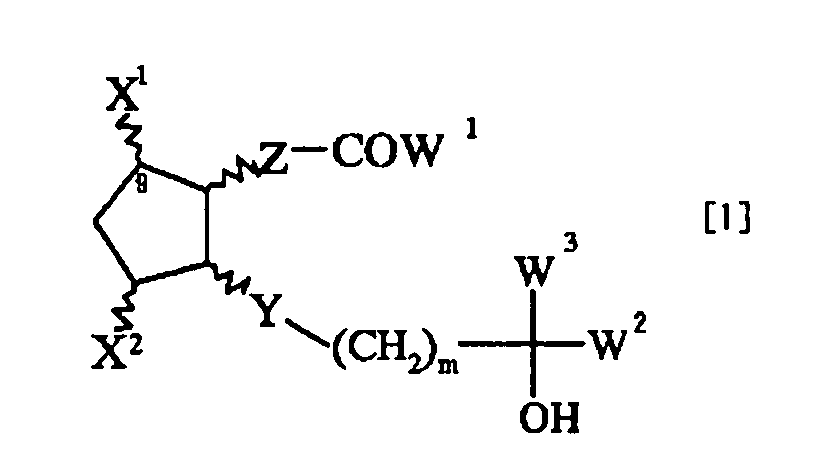
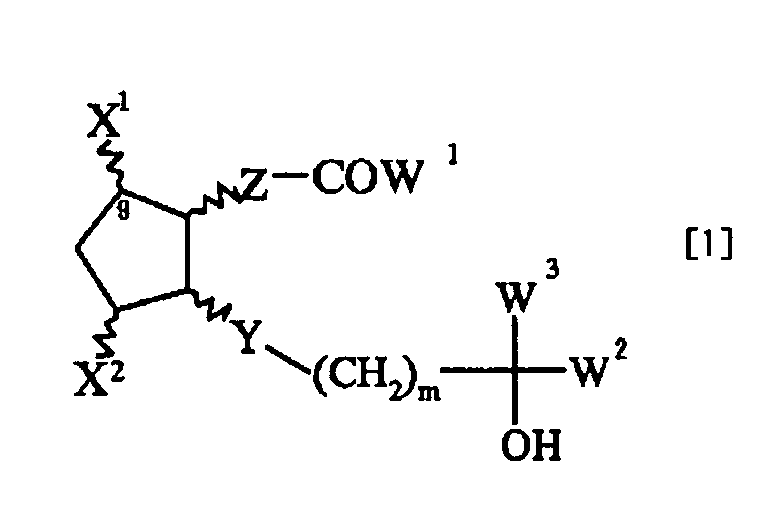
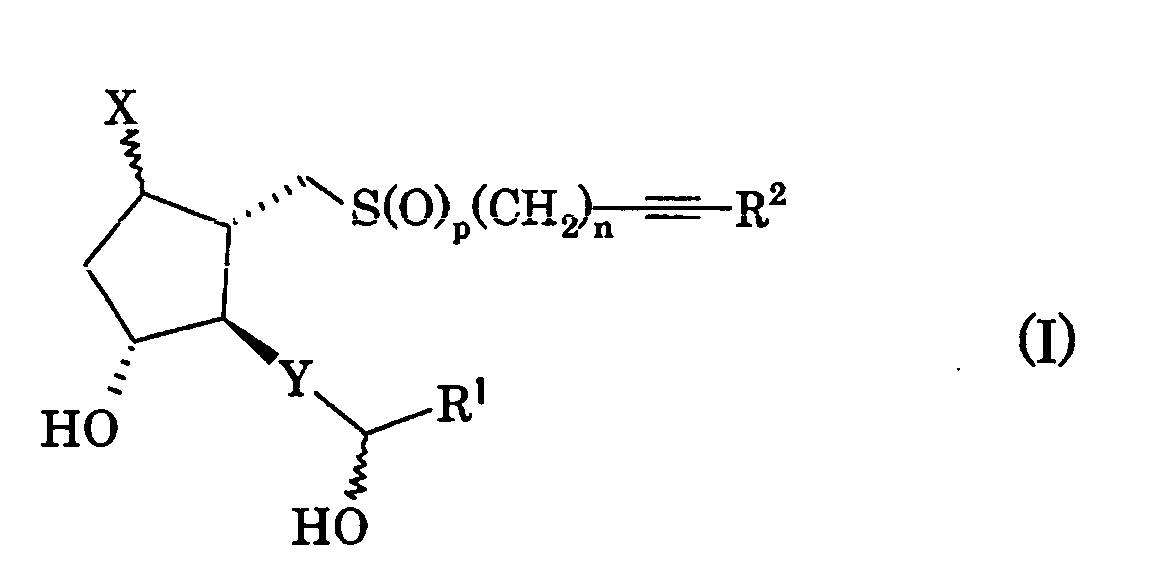
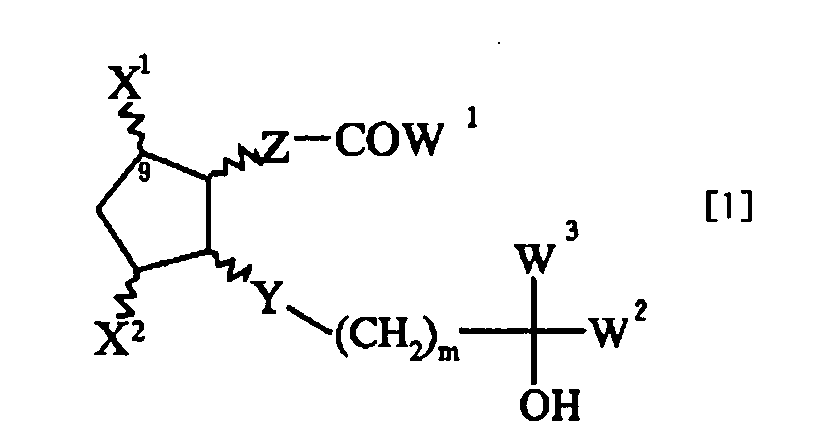
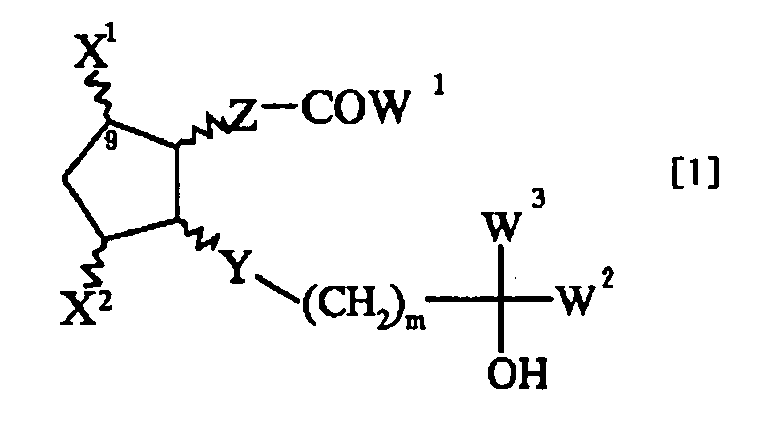
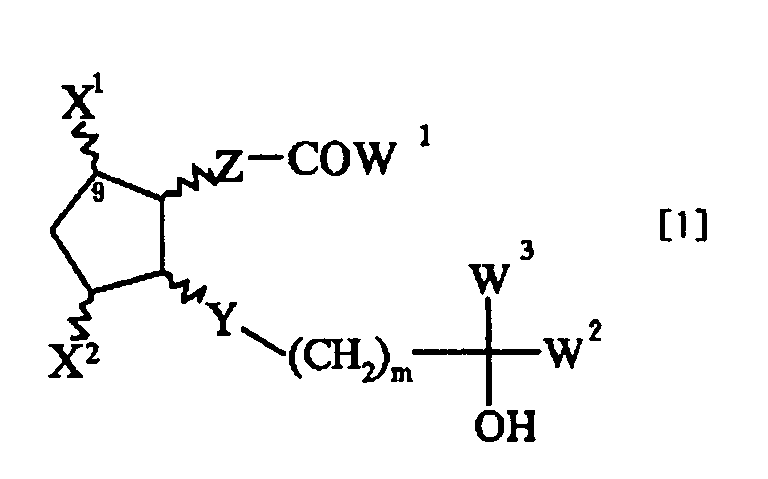
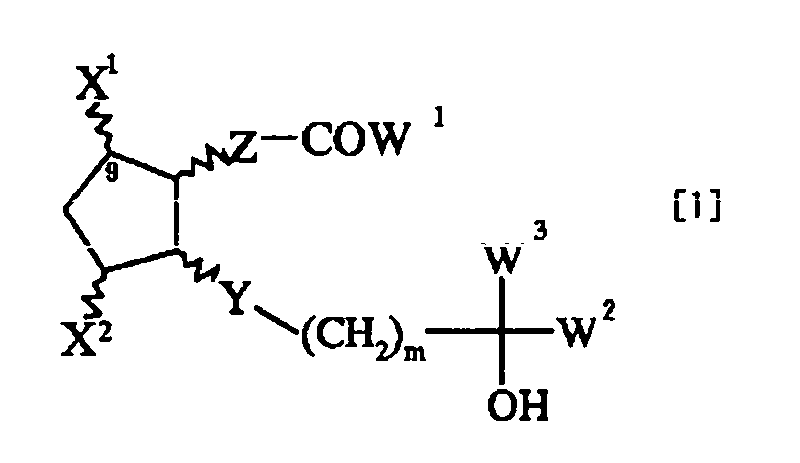
- a pharmaceutical preparation for preventing or treating pruritic symptoms which contains as an effective ingredient a prostaglandin derivative represented by formula [1] wherein X 1 and X 2 which are different from each other represent a hydrogen atom, a halogen atom or a hydroxyl group;
- a pharmaceutical preparation for preventing or treating atopic symptoms which contains as an effective ingredient a prostaglandin derivative represented by formula [1] wherein X 1 and X 2 which are different from each other represent a hydrogen atom, a halogen atom or a hydroxyl group;
- a pharmaceutical preparation for preventing or treating pruritic or atopic symptoms which contains as an effective ingredient a prostaglandin derivative represented by formula [1], provided that 7-[(1R,2R,3R,5R)-5-chloro-2-[(1E,3S)-3-cyclohexyl-3-hydroxy-1-propenyl]-3-hydroxycyclopentyl]-(5Z)-5-heptenic acid is excluded, a pharmaceutically acceptable salt thereof or a hydrate thereof.
- a pharmaceutical preparation for preventing or treating pruritic or atopic symptoms which contains as an effective ingredient a prostaglandin derivative represented by formula [1] wherein X 1 is a halogen atom, X 2 is a hydroxyl group and Y is an ethynylene group, a pharmaceutically acceptable salt thereof or a hydrate thereof.
- a pharmaceutical preparation for preventing or treating pruritic or atopic symptoms which contains as an effective ingredient a prostaglandin derivative represented by formula [1] wherein X 1 is a halogen atom, X 2 is a hydroxyl group and Y is a vinylene group, a pharmaceutically acceptable salt thereof or a hydrate thereof.
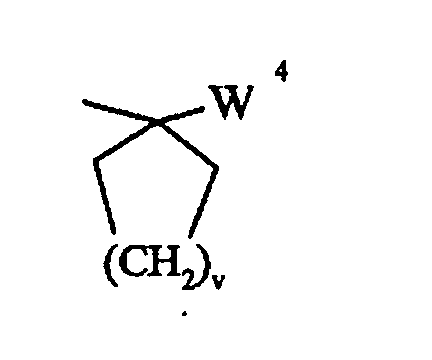
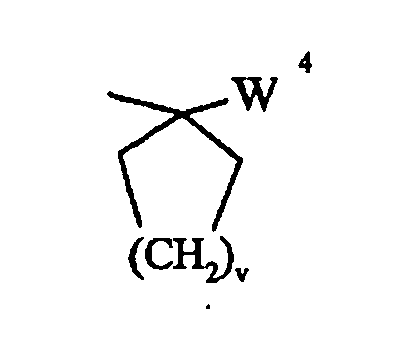
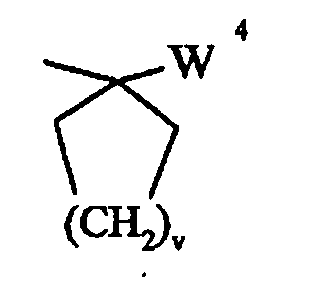
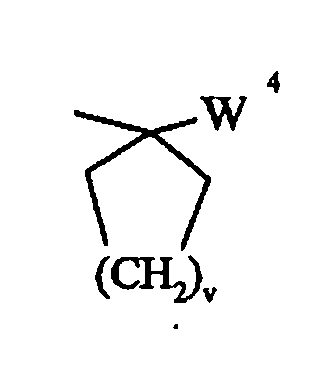
- a pharmaceutical preparation for preventing or treating pruritic or atopic symptoms which contains as an effective ingredient a prostaglandin derivative represented by formula [1] wherein W 2 is a C 1-10 alkyl group, a C 2-10 alkenyl group, a C 2-10 alkynyl group, a C 3-10 cycloalkyl group, a C 1-5 alkyl group substituted by C 3-10 cycloalkyl group(s), or a group represented by the formula wherein W 4 is a C 1-10 alkyl group, a C 2-10 alkenyl group, a C 2-10 alkynyl group or a C 1-5 alkyl group substituted by C 3-10 cycloalkyl group(s); v is an integer of 0 to 4; W 3 is a hydrogen atom or a methyl group, a pharmaceutically acceptable salt thereof or a hydrate thereof.
- a pharmaceutical preparation for preventing or treating atopic symptoms wherein the atopic symptoms are those in atopic dermatitis or atopic conjunctivitis.
- such a pharmaceutical preparation for preventing or treating pruritic or atopic symptoms which is an agent for external application.
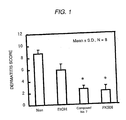
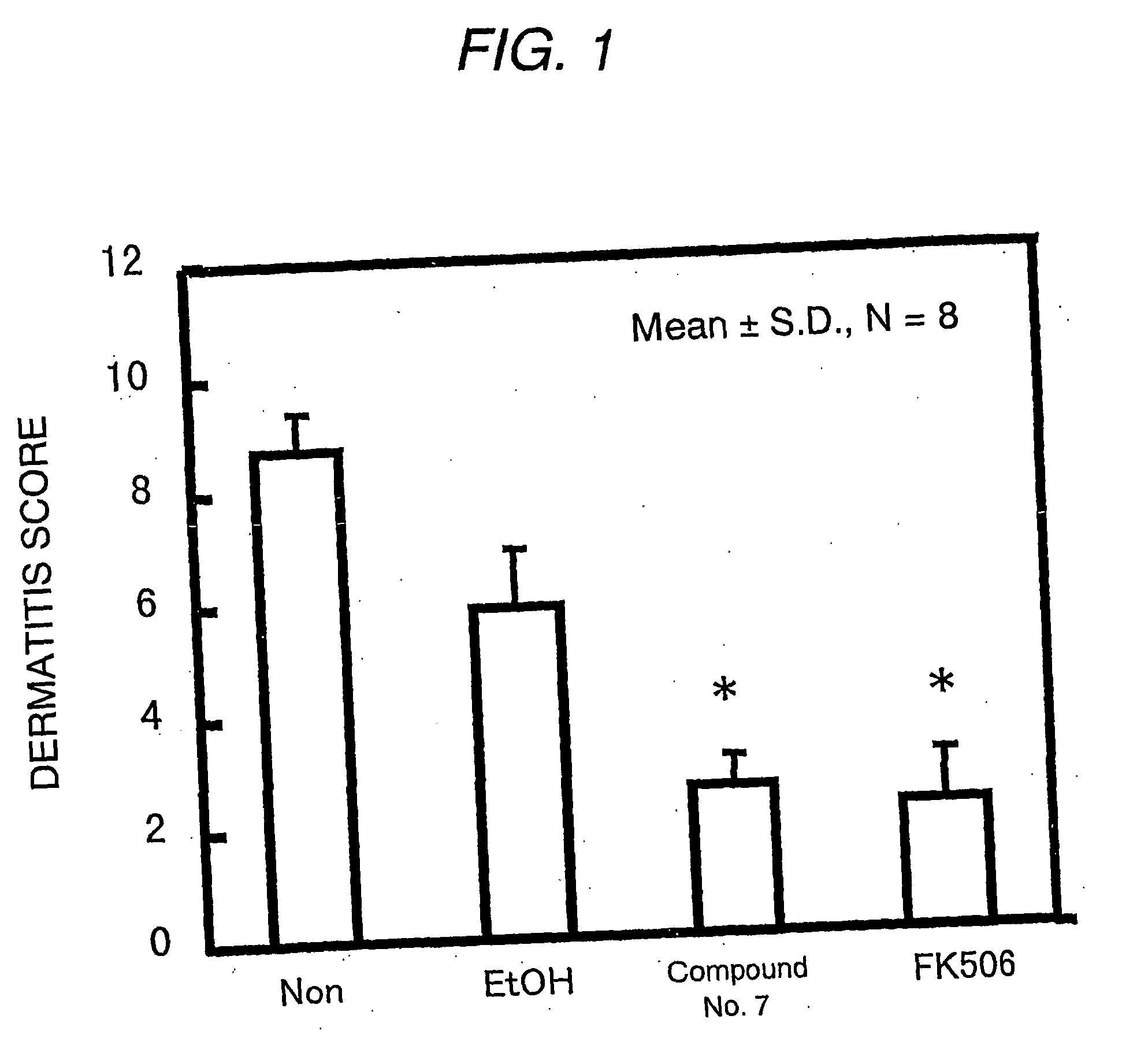
- Fig. 1 shows the results with dermatitic symptoms (dermatitis scores) as observed at 4 weeks after drug administration, in which Non refers to no treatment, EtOH ethanol, FK506 tacrolimus, and * means p ⁇ 0.05;
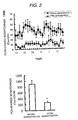
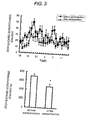
- the inventors assessed the antipruritic effect of various pharmaceutical preparations on itch-evoked but spontaneous scratching behavior by measuring the itch-evoked scratching behavior of NC/Nga mice that would spontaneously develop an atopic dermatitis-like skin disease.
- the invention is characterized as containing prostaglandin derivatives of the formula [1], pharmaceutically acceptable salts thereof or hydrates thereof as an effective ingredient.
- the halogen atom means a fluorine atom, a chlorine atom, a bromine atom or an iodine atom.
- the vinylene group means a cis- or trans-vinylene group.
- the C 1-10 alkyloxy group represents linear or branched alkyloxy groups having 1 to 10 carbon atoms, which include, for example, a methoxy group, an ethoxy group, a propoxy group, an isopropoxy group, a butoxy group, a sec-butoxy group, a tert-butoxy group, a pentyloxy group, a tert-pentyloxy group, a 5-methylhexyloxy group, an octyloxy group, a decyloxy group, etc.
- Examples of the C 3-10 cycloalkyloxy group include a cyclopropyloxy group, a cyclobutyloxy group, a cyclopentyloxy group, a cyclohexyloxy group, a cycloheptyloxy group, a cyclononyloxy group, etc.
- aryloxy group examples include a phenoxy group, a bromophenoxy group, a chlorophenoxy group, a tolyloxy group, a cumenyloxy group, a methoxyphenoxy group, etc.
- arylalkyloxy group examples include a benzyloxy group, a bromobenzyloxy group, a chlorobenzyloxy group, a nitrobenzyloxy group, a dinitrobenzyloxy group, a methoxybenzyloxy group, a phenethyloxy group, a phenylpropyloxy group, a phenylpentyloxy group, etc.
- the C 1-10 alkyl group represents linear or branched alkyl groups having 1 to 10 carbon atoms, which include, for example, a methyl group, an ethyl group, a propyl group, an isopropyl group, a butyl group, a sec-butyl group, a tert-butyl group, a pentyl group, a tert-pentyl group, an isohexyl group, a heptyl group, an octyl group, a decyl group, etc.
- the C 2-10 alkenyl group means those linear or branched alkyl groups with 2 to 10 carbon atoms which have one or more double bonds in desired positions and they may be exemplified by a vinyl group, an allyl group, a 1-propenyl group, an isopropenyl group, a 3-butenyl group, a 1,3-butadienyl group, a 7-octenyl group, etc.
- the C 2-10 alkynyl group means those linear or branched alkyl groups with 2 to 10 carbon atoms which have one or more triple bonds in desired positions and may be exemplified by an ethynyl group, a 2-propynyl group, a 2-pentynyl group, a 4-octynyl group, etc.
- Examples of the C 3-10 cycloalkyl group include unsubstituted cycloalkyl groups such as a cyclopropyl group, a cyclobutyl group, a cyclopentyl group, a cyclohexyl group, a cycloheptyl group and a cyclononyl group, as well as those cycloalkyl groups having one or more substituents selected from among halogen atoms, C 1-10 alkyl groups, C 1-10 alkyloxy groups, etc.
- Examples of the C 1-5 alkyl group substituted by C 3-10 cycloalkyl group(s) include a cyclopropylmethyl group, a cyclobutylethyl group, a cyclopentylmethyl group, a cyclohexylmethyl group, a cycloheptylmethyl group, a cyclononylbutyl group, a 4-fluorocyclohexylmethyl group, etc.
- the pharmaceutically acceptable salt may be exemplified by salts with alkali metals such as sodium and potassium, salts with alkaline earth metals such as calcium and magnesium, and salts with ammonia, methylamine, dimethylamine, cyclopentylamine, benzylamine, piperidine, monoethanolamine, diethanolamine, monomethylmonoethanolamine, tromethamine, lysine, tris(hydroxymethyl)aminomethane, etc.
- alkali metals such as sodium and potassium
- alkaline earth metals such as calcium and magnesium
- salts with ammonia methylamine, dimethylamine, cyclopentylamine, benzylamine, piperidine, monoethanolamine, diethanolamine, monomethylmonoethanolamine, tromethamine, lysine, tris(hydroxymethyl)aminomethane, etc.
- prostaglandin derivatives which serve as the effective ingredient in the present invention are known compounds disclosed in the following official gazettes:
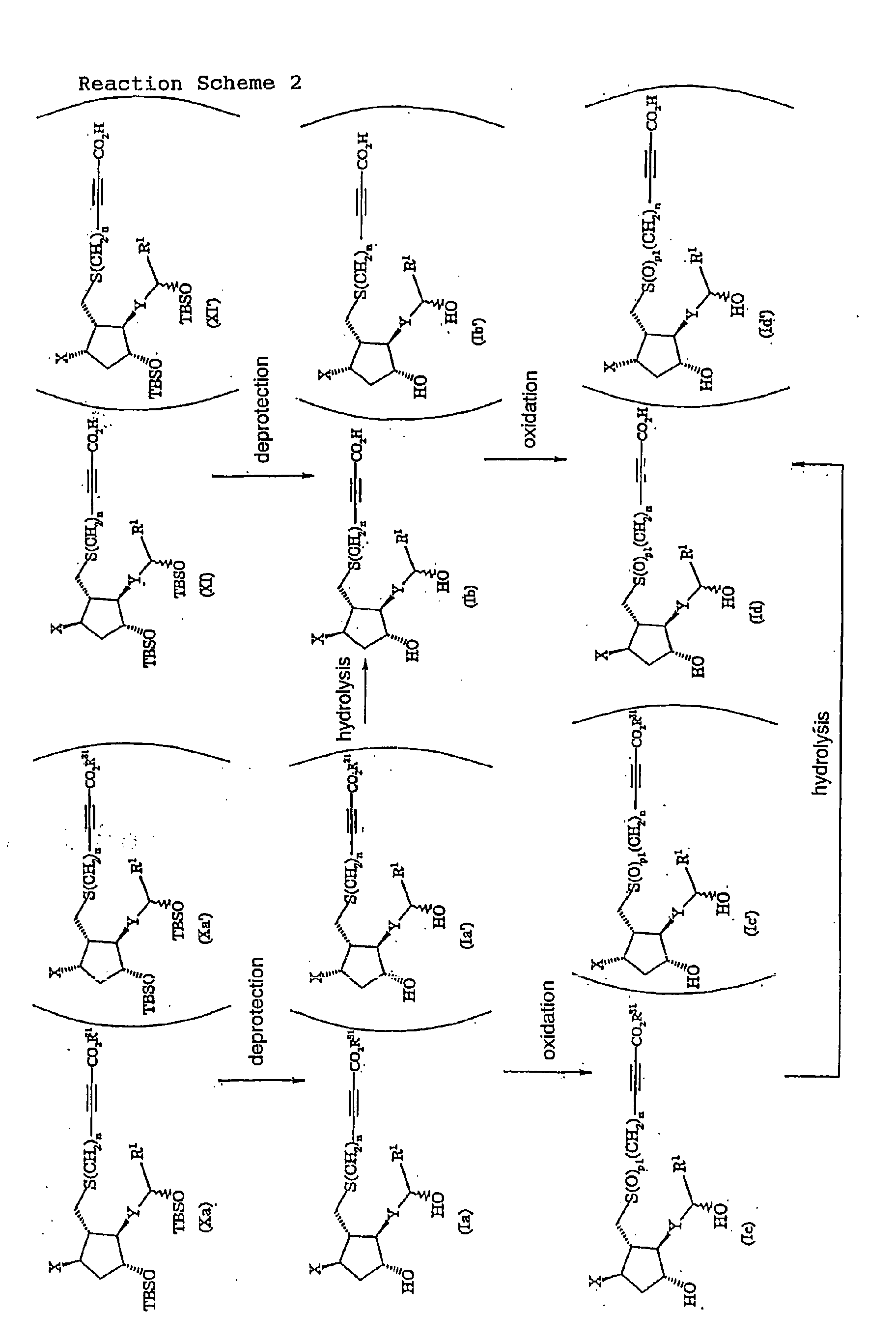
- prostaglandin derivatives represented by the following formula wherein X is an ⁇ - or ⁇ -substituted halogen atom, Y is an ethylene group, a vinylene group or an ethynylene group, R 1 is a C 3-10 cycloalkyl group, a C 3-10 cycloalkyl group substituted by C 1-4 linear or branched alkyl group(s), or a C 4-13 cycloalkylalkyl group, R 2 is a group represented by CO 2 R 3 , wherein R 3 is a hydrogen atom, a C 1-4 linear or branched alkyl group or a C 2-4 linear or branched alkenyl group, n is an integer of 1 to 4, and p is 0, 1 or 2 can be produced by processes according to reaction schemes 1 and 2.
- TBS represents a tert-butyldimethylsilyl group
- Y' represents an ethylene group or a vinylene group
- R 31 represents a C 1-4 alkyl group or a C 2-4 alkenyl group
- p1 represents 1 or 2
- Z' represents a halogen atom
- X, Y, R 1 and n have the same meanings as defined above.
- the antipruritics of the invention are not limited in any way but they are particularly effective against the atopy-evoked itching. From this viewpoint, the antipruritics of the invention encompass pharmaceutical preparations for preventing or treating atopic symptoms.
- pruritic symptoms means those symptoms which involve circumscribed or generalized itching and associated inflammations on the skin and mucous membranes. Examples include scabies, urticaria, eczema, xerosis (senile xeroderma and histotic eczema), psoriasis, dermal pruritus, and prurigo.
- atopic symptoms means those symptoms which involve atopy-evoked, circumscribed or generalized itching and associated inflammations on the skin and mucous membranes; in other words, the term refers to atopy-evoked pruritic symptoms (including nervous pruritus). Examples include atopic dermatitis and atopic conjunctivitis.
- atopic dermatitis refers to a disorder that involves itching eczema as a principal lesion which undergoes repeated exacerbation and remission; this is highly likely to develop in individuals predisposed to atopy.
- the antipruritics of the invention can be administered either orally, parenterally or topically.
- the dose to be administered of the effective ingredient in the antipruritics of the invention can be adjusted as appropriate for the body weight of the patient, his or her age, sex, etc.
- the dosage is 1 ng to 10 mg, preferably 0.1 to 100 ⁇ g, per administration and one to several administrations are tolerated per day.
- the antipruritics of the invention can be prepared as pharmaceutical compositions employing the effective ingredient in combination with carriers, vehicles and other additives that are employed in ordinary pharmaceutical formulation procedures.
- Exemplary carriers and vehicles for pharmaceutical formulation procedures include water, ethanol, lactose, microcrystalline cellulose, liquid paraffin, hydrogenated oils, beeswax, squalane, stearyl alcohol, ethylene glycol and others that are in common use.
- Exemplary additives are commonly employed ingredients including disintegrants (e.g. starch), binders (hydroxypropyl cellulose and low-substituted hydroxypropyl cellulose), lubricants (e.g. talc and glycerol stearate), antioxidants, preservatives (e.g. parabens), coating agents (e.g. gelatin and hydroxypropyl cellulose), coloring agents, flavoring/odorizing agents, skin color lightening agents (e.g. sodium ellagate), surfactants (e.g. sorbitan fatty acid esters), plasticizers, humectants (e.g. glycerin, propylene glycol, polyethylene glycol and hyaluronic acid), etc.
- disintegrants e.g. starch
- binders hydroxypropyl cellulose and low-substituted hydroxypropyl cellulose
- lubricants e.g. talc and glycerol stearate
- the antipruritics of the invention can be administered in various dosage forms such as those for internal application, injections and those for external application (nasal drops and eye drops), as specifically exemplified by tablets, granules, powders, capsules, liquids, gels, plasters, ointments, creams, cataplasms and aerosols.
- Dosage forms for external application are preferred for the various advantages they have, such as direct applicability to the diseased area, ease of application and a reduced possibility for the occurrence of systemic side effects.
- Dosage forms "for external application” include liquids for external application, aerosols, powders for external application, ointments, creams, gels, plasters, cataplasms, etc.
- the drug concentration (%) means w/v% (weight/volume%).
- NC/Nga mice each weighing about 30 g and manifesting atopic dermatitis were purchased from SLC and subjected to the following experiment.
- a magnet was buried in both hind paws of each mouse and by detecting its magnetism, the movement of the paws was measured with an itch measuring system (product of Neuroscience; when the mouse makes an action, the magnets move accordingly and a current flows through the coil; the moving magnets cause a change in the current, which is detected, measured and analyzed).
- itch measuring system product of Neuroscience
- the itch-evoked scratching behavior had a diurnal rhythm
- the diurnal rhythm of each individual animal was measured for 24 hours of the day before test and only after that, each of the test drugs dissolved in 100% ethanol was applied to the dorsal skin in a dose of 0.2 ml/mouse.
- the subsequent 24-hr itch-evoked scratching behavior was measured and the number of itch-evoked scratchings after drug administration was compared with the initial count.
- the experimental data was processed to calculate the percent itch suppression on the basis of the total 24-hr itch-evoked scratching counts before and after drug application.
- Percent itch suppression (%) (itch-evoked scratching count before drug application - itch-evoked scratching count after drug application) x 100/itch-evoked scratching count before drug application
- mice Four-week old SPF NC mice (male) were purchased from Japan SLC; right after their arrival, the SPF NC mice were kept together with dermatitis manifesting male NC mice (older than 20 weeks) for 2 weeks under the following conditions so as to induce itch-evoked scratching behavior.
- mice After 2-wk cohabitation, the purchased mice were taken out of the cage and transferred into another cage, where a group of 8 animals were kept for about 14 weeks. Immediately before the application of a drug, the mice were reshuffled so that the dermatitis scores would be equal among all cages and then kept, four animals per cage.
- Tacrolimus was purchased from Fujisawa Pharmaceutical Co., Ltd. for use in the experiment.
- Drug administration To the dorsal backs of the 20-wk NC mice that were induced to manifest dermatitis as the result of cohabitation with the spontaneous dermatitis manifesting NC mice, 100% ethanol, compound No. 7 (0.01%) dissolved in 100% ethanol or tacrolimus (0.1%) dissolved in 100% ethanol was applied from an Eppendorf pipette in 200- ⁇ l doses seven times a week for a period of 4 weeks. The non-treatment group was not given any treatment. Each test group consisted of 8 animals that were observed for any dermatitic symptoms. Dermatitis score: Dermatitic symptoms were observed and measured once a week.
- the groups administered with tacrolimus and compound No. 7 showed significant dermatitis score suppressing action compared to the vehicle group.
- NC/Nga mice each weighing about 30 g and manifesting atopic dermatitis were purchased from SLC and subjected to the following experiment.
- a magnet was buried in both hind paws of each mouse and by detecting its magnetism, the movement of the paws was measured with an itch measuring system (product of Neuroscience).
- itch measuring system product of Neuroscience
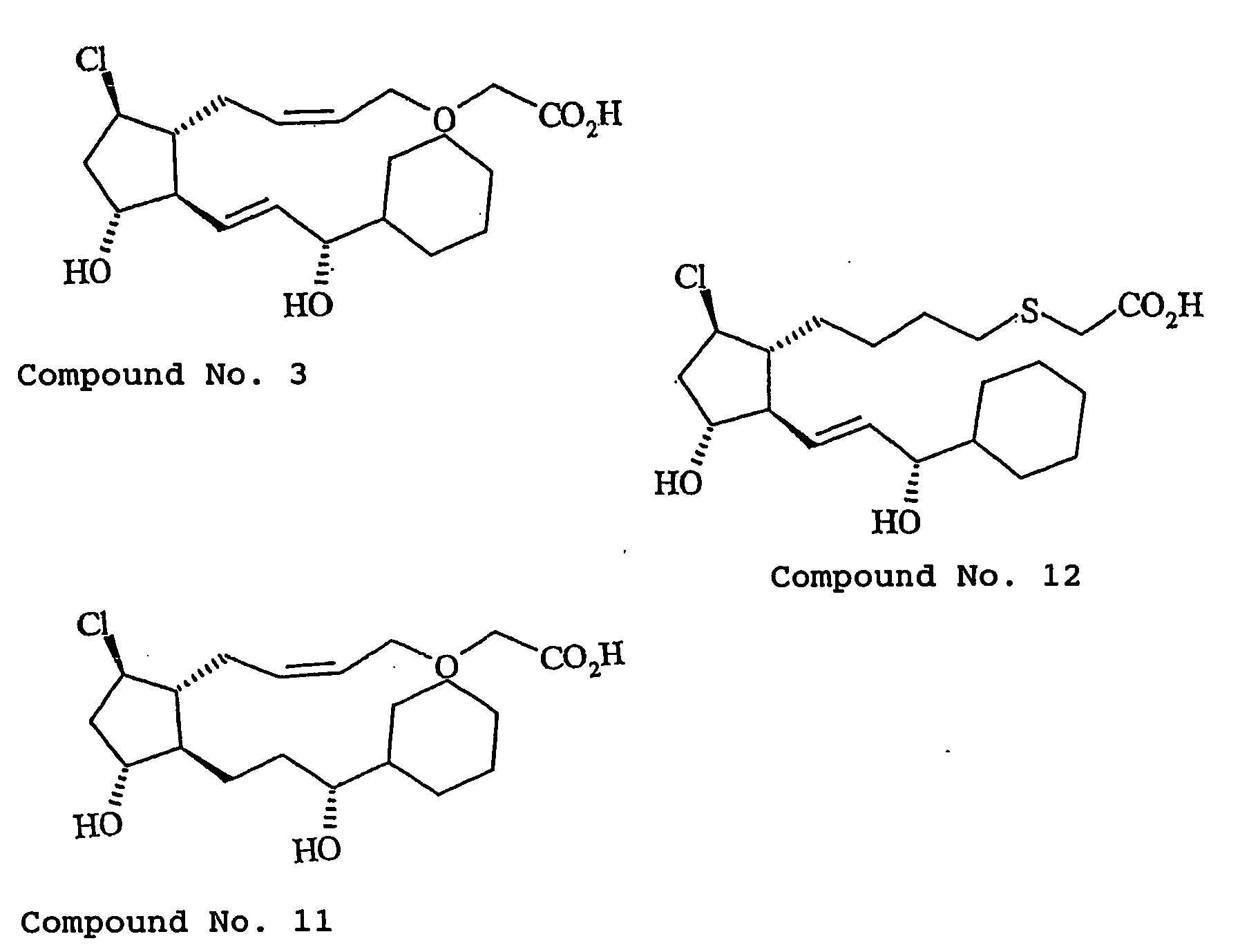
- those lasting 1.5 seconds or longer were considered itch-evoked and their number was counted continuously. Since the itch-evoked scratching behavior had a diurnal rhythm, the diurnal rhythm of each individual animal was measured for 24 hours of the day before test and only after that, compound No. 3 (0.1%), compound No. 11 (0.1%) or compound No.
- this invention successfully provides pharmaceutical preparations that can prevent or ameliorate various cases of dermatitis including atopic dermatitis, atopic conjunctivitis, scabies, urticaria and xerosis.
Landscapes
- Health & Medical Sciences (AREA)
- Public Health (AREA)
- Life Sciences & Earth Sciences (AREA)
- Veterinary Medicine (AREA)
- General Health & Medical Sciences (AREA)
- Chemical & Material Sciences (AREA)
- Pharmacology & Pharmacy (AREA)
- Animal Behavior & Ethology (AREA)
- Medicinal Chemistry (AREA)
- General Chemical & Material Sciences (AREA)
- Organic Chemistry (AREA)
- Engineering & Computer Science (AREA)
- Nuclear Medicine, Radiotherapy & Molecular Imaging (AREA)
- Chemical Kinetics & Catalysis (AREA)
- Bioinformatics & Cheminformatics (AREA)
- Epidemiology (AREA)
- Dermatology (AREA)
- Immunology (AREA)
- Pulmonology (AREA)
- Ophthalmology & Optometry (AREA)
- Pharmaceuticals Containing Other Organic And Inorganic Compounds (AREA)
- Detergent Compositions (AREA)
Abstract

- (CH2)k-1B'(CH2)q-1A'
- A and A' which may be the same or different represent an ethylene group, a vinylene group or an ethynylene group;
- B and B' which may be the same or different represent an oxygen atom or a group represented by the formula S(O)u wherein u is an integer of 0 to 2;
- W1 is a hydroxyl group, a C1-10 alkyloxy group, a C3-10 cycloalkyloxy group, an aryloxy group or an arylalkyloxy group;
- W2 is a C1-10 alkyl group, a C2-10 alkenyl group, a C2-10
alkynyl group, a C3-10 cycloalkyl group, a C1-5 alkyl group
substituted by C3-10 cycloalkyl group(s), or a group
represented by the formula
wherein W4 is a C1-10 alkyl group, a C2-10 alkenyl group, a C2-10 alkynyl group or a C1-5 alkyl group substituted by C3-10 cycloalkyl group(s); v is an integer of 0 to 4;
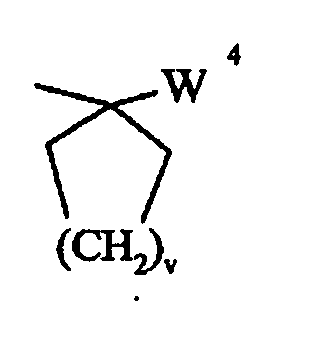
- W3 is a hydrogen atom or a methyl group, or W3 when taken together with W2 and the adjacent carbon atom forms a C3-10 cycloalkyl group; m is 0 or 1, a pharmaceutically acceptable salt thereof or a hydrate thereof.
Description
- (CH2)k-1B'(CH2)q-1A'
- A and A' which may be the same or different represent an ethylene group, a vinylene group or an ethynylene group;
- B and B' which may be the same or different represent an oxygen atom or a group represented by the formula S(O)u wherein u is an integer of 0 to 2;
- W1 is a hydroxyl group, a C1-10 alkyloxy group, a C3-10 cycloalkyloxy group, an aryloxy group or an arylalkyloxy group;
- W2 is a C1-10 alkyl group, a C2-10 alkenyl group, a C2-10
alkynyl group, a C3-10 cycloalkyl group, a C1-5 alkyl group
substituted by a C3-10 cycloalkyl group, or a group
represented by the formula
wherein W4 is a C1-10 alkyl group, a C2-10 alkenyl group, a C2-10 alkynyl group or a C1-5 alkyl group substituted by C3-10 cycloalkyl group(s); v is an integer of 0 to 4;
- W3 is a hydrogen atom or a methyl group, or W3 when taken together with W2 and the adjacent carbon atom forms a C3-10 cycloalkyl group; m is 0 or 1, a pharmaceutically acceptable salt thereof or a hydrate thereof.
- (CH2)k-1B'(CH2)q-1A'
- A and A' which may be the same or different represent an ethylene group, a vinylene group or an ethynylene group;
- B and B' which may be the same or different represent an oxygen atom or a group represented by the formula S(O)u wherein u is an integer of 0 to 2;
- W1 is a hydroxyl group, a C1-10 alkyloxy group, a C3-10 cycloalkyloxy group, an aryloxy group or an arylalkyloxy group;
- W2 is a C1-10 alkyl group, a C2-10 alkenyl group, a C2-10
alkynyl group, a C3-10 cycloalkyl group, a C1-5 alkyl group
substituted by C3-10 cycloalkyl group(s), or a group
represented by the formula
wherein W4 is a C1-10 alkyl group, a C2-10 alkenyl group, a C2-10 alkynyl group or a C1-5 alkyl group substituted by C3-10 cycloalkyl group(s); v is an integer of 0 to 4;
- W3 is a hydrogen atom or a methyl group, or W3 when taken together with W2 and the adjacent carbon atom forms a C3-10 cycloalkyl group; m is 0 or 1, a pharmaceutically acceptable salt thereof or a hydrate thereof.




| Compound No.7 | 0.1 |
| Ethanol | |
| 200 ml | |
| | 800 ml |
| Compound No.3 | 0.5 g |
| Carbinoxamine maleate | 5 g |
| Sodium ellagate | 5 g |
| Sodium hyaluronate | 3 g |
| Methyl paraben | 2 g |
| Purified water | 218.5 g |
| Liquid paraffin(#70) | 50 g |
| Squalane | 100 g |
| Cetostearyl alcohol | 60 g |
| Beeswax | 20 g |
| Glycerol monostearate | 15 g |
| Sorbitan monolaurate | 20 g |
| Propyl paraben | 1 g |
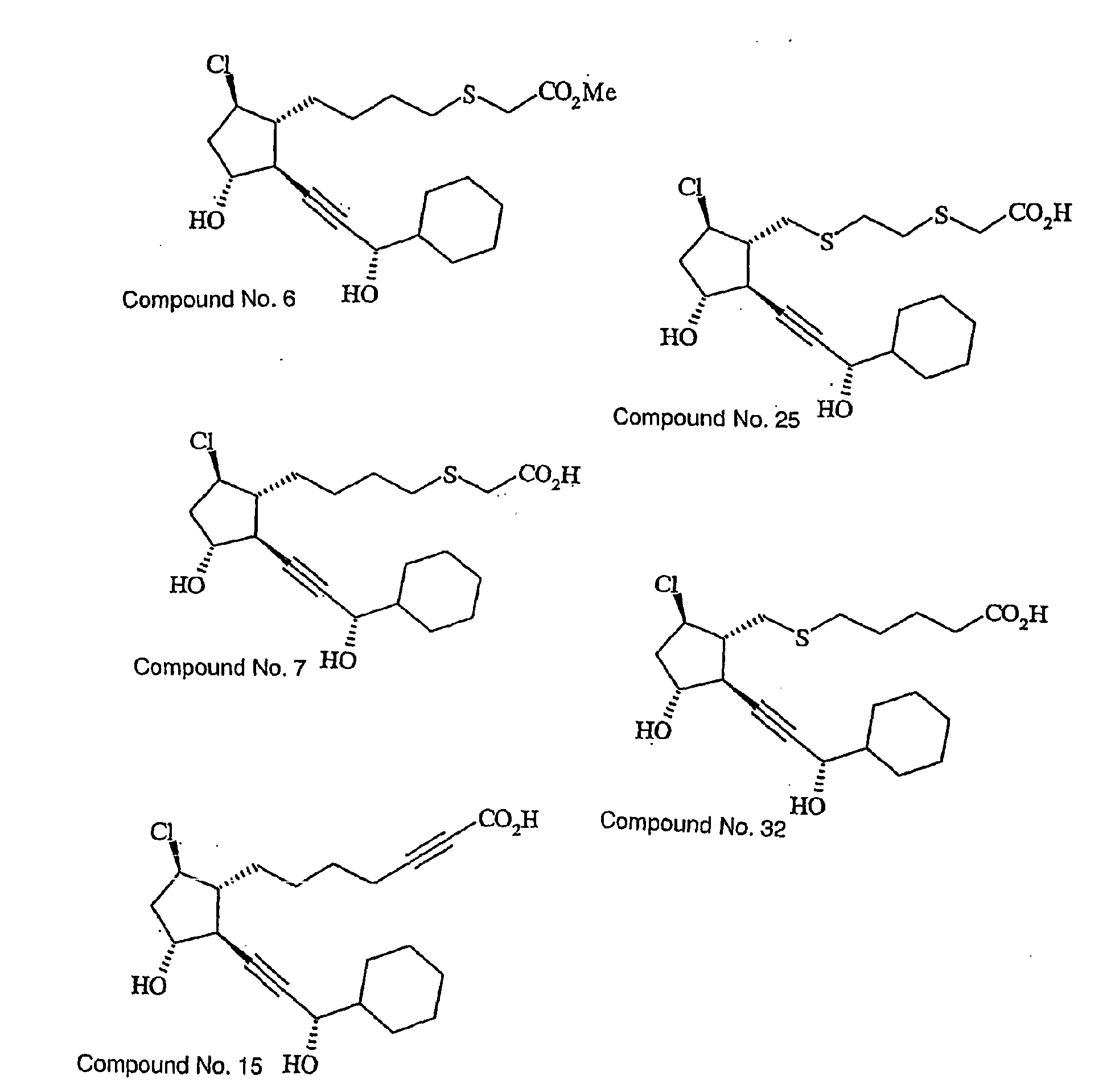
| Compound | Concentration (%) | Inhibition rate (%) | Efficacy |
| EtOH | 100 | 10.2 | |
| 6 | 0.0001 | 32.26 | * |
| 7 | 0.000001 | 43.26 | ** |
| 15 | 0.000001 | 34.61 | * |
| 25 | 0.00001 | 21.51 | * |
| 32 | 0.00001 | 41.76 | ** |
| * : P<0.05, ** : P<0.01 |
Drug administration: To the dorsal backs of the 20-wk NC mice that were induced to manifest dermatitis as the result of cohabitation with the spontaneous dermatitis manifesting NC mice, 100% ethanol, compound No. 7 (0.01%) dissolved in 100% ethanol or tacrolimus (0.1%) dissolved in 100% ethanol was applied from an Eppendorf pipette in 200-µl doses seven times a week for a period of 4 weeks. The non-treatment group was not given any treatment. Each test group consisted of 8 animals that were observed for any dermatitic symptoms.
Dermatitis score: Dermatitic symptoms were observed and measured once a week.
Claims (20)
- A pharmaceutical preparation for preventing or treating pruritic symptoms which contains as an effective ingredient a prostaglandin derivative represented by formula [1]wherein X1 and X2 which are different from each other represent a hydrogen atom, a halogen atom or a hydroxyl group;
 orY is an ethylene group, a vinylene group or an ethynylene group; Z is the formula(CH2)kA(CH2)hB(CH2)q,(CH2)kA(CH2)rA'(CH2)t,(CH2)kB(CH2)hB'(CH2)qwherein k is an integer of 1 to 4, h is an integer of 0 to 4, q is an integer 1 to 4, r is an integer of 0 to 4, and t is an integer of 0 to 2;(CH2)k-1B'(CH2)q-1A'A and A' which may be the same or different represent an ethylene group, a vinylene group or an ethynylene group;B and B' which may be the same or different represent an oxygen atom or a group represented by the formula S(O)u wherein u is an integer of 0 to 2;W1 is a hydroxyl group, a C1-10 alkyloxy group, a C3-10 cycloalkyloxy group, an aryloxy group or an arylalkyloxy group;W2 is a C1-10 alkyl group, a C2-10 alkenyl group, a C2-10 alkynyl group, a C3-10 cycloalkyl group, a C1-5 alkyl group substituted by C3-10 cycloalkyl group(s), or a group represented by the formulawherein W4 is a C1-10 alkyl group, a C2-10 alkenyl group, a C2-10 alkynyl group or a C1-5 alkyl group substituted by C3-10 cycloalkyl group(s); v is an integer of 0 to 4;
 W3 is a hydrogen atom or a methyl group, or W3 when taken together with W2 and the adjacent carbon atom forms a C3-10 cycloalkyl group; m is 0 or 1, a pharmaceutically acceptable salt thereof or a hydrate thereof.
 - A pharmaceutical preparation for preventing or treating atopic symptoms which contains as an effective ingredient a prostaglandin derivative represented by formula [1]wherein X1 and X2 which are different from each other represent a hydrogen atom, a halogen atom or a hydroxyl group;
 orY is an ethylene group, a vinylene group or an ethynylene group; Z is the formula(CH2)kA(CH2)hB(CH2)q,(CH2)kA(CH2)rA'(CH2)t,(CH2)kB(CH2)hB'(CH2)qwherein k is an integer of 1 to 4, h is an integer of 0 to 4, q is an integer 1 to 4, r is an integer of 0 to 4, and t is an integer of 0 to 2;(CH2)k-1B'(CH2)q-1A'A and A' which may be the same or different represent an ethylene group, a vinylene group or an ethynylene group;B and B' which may be the same or different represent an oxygen atom or a group represented by the formula S(O)u wherein u is an integer of 0 to 2;W1 is a hydroxyl group, a C1-10 alkyloxy group, a C3-10 cycloalkyloxy group, an aryloxy group or an arylalkyloxy group;W2 is a C1-10 alkyl group, a C2-10 alkenyl group, a C2-10 alkynyl group, a C3-10 cycloalkyl group, a C1-5 alkyl group substituted by C3-10 cycloalkyl group(s), or a group represented by the formulawherein W4 is a C1-10 alkyl group, a C2-10 alkenyl group, a C2-10 alkynyl group or a C1-5 alkyl group substituted by C3-10 cycloalkyl group(s); v is an integer of 0 to 4;
 W3 is a hydrogen atom or a methyl group, or W3 when taken together with W2 and the adjacent carbon atom forms a C3-10 cycloalkyl group; m is 0 or 1, a pharmaceutically acceptable salt thereof or a hydrate thereof.
 - The pharmaceutical preparation according to claim 1 or 2 which contains as an effective ingredient a prostaglandin derivative represented by formula [1], provided that 7-[(1R,2R,3R,5R)-5-chloro-2-[(1E,3S)-3-cyclohexyl-3-hydroxy-1-propenyl]-3-hydroxycyclopentyl]-(5Z)-5-heptenic acid is excluded, a pharmaceutically acceptable salt thereof or a hydrate thereof.
- The pharmaceutical preparation according to claim 1 or 2 which contains as an effective ingredient a prostaglandin derivative represented by formula [1] in which Z is (CH2)kA(CH2)hB(CH2)q wherein k is an integer of 1 to 4, h is an integer of 0 to 4, q is an integer of 1 to 4, A is an ethylene group, a vinylene group or an ethynylene group, B is an oxygen atom or a group represented by formula S(O)u wherein u is an integer of 0 to 2, a pharmaceutically acceptable salt thereof or a hydrate thereof.
- The pharmaceutical preparation according to claim 4 which contains as an effective ingredient a prostaglandin derivative represented by formula [1] in which Z is (CH2)kA(CH2)hB(CH2)q wherein k, h and q are such that k + h + q = 3, a pharmaceutically acceptable salt thereof or a hydrate thereof.
- The pharmaceutical preparation according to any one of claims 1 to 3 which contains as an effective ingredient a prostaglandin derivative represented by formula [1] in which Z is (CH2)kA(CH2)rA'(CH2)t wherein k is an integer of 1 to 4, r is an integer of 0 to 4, t is an integer of 1 to 4, A and A' which may be the same or different represent an ethylene group, a vinylene group or an ethynylene group, a pharmaceutically acceptable salt thereof or a hydrate thereof.
- The pharmaceutical preparation according to claim 6 which contains as an effective ingredient a prostaglandin derivative represented by formula [1] in which Z is (CH2)kA(CH2)rA'(CH2)t wherein k, r and t are such that k + r + t = 2, a pharmaceutically acceptable salt thereof or a hydrate thereof.
- The pharmaceutical preparation according to claim 1 or 2 which contains as an effective ingredient a prostaglandin derivative represented by formula [1] in which Z is (CH2)kB(CH2)hB'(CH2)q wherein k is an integer of 1 to 4, h is an integer of 0 to 4, q is an integer of 1 to 4, B and B' which may be the same or different represent an oxygen atom or a group represented by formula S(O)u wherein u is an integer of 0 to 2, a pharmaceutically acceptable salt thereof or a hydrate thereof.
- The pharmaceutical preparation according to claim 8 which contains as an effective ingredient a prostaglandin derivative represented by formula [1] in which Z is (CH2)kB(CH2)hB'(CH2)q wherein k, h and q are such that k + h + q = 4, a pharmaceutically acceptable salt thereof or a hydrate thereof.
- The pharmaceutical preparation according to claim 1 or 2 which contains as an effective ingredient a prostaglandin derivative represented by formula [1] in which Z is (CH2)k-1B'(CH2)q-1A' wherein k is an integer of 1 to 4, q is an integer of 1 to 4, A' is an ethylene group, a vinylene group or an ethynylene group, B' is an oxygen atom or a group represented by formula S(O)u wherein u is an integer of 0 to 2, a pharmaceutically acceptable salt thereof or a hydrate thereof.
- The pharmaceutical preparation according to claim 10 which contains as an effective ingredient a prostaglandin derivative represented by formula [1] in which Z is (CH2)k-1B'(CH2)q-1A' wherein k and q are such that k + q = 5, a pharmaceutically acceptable salt thereof or a hydrate thereof.
- The pharmaceutical preparation according to any one of claims 1 to 11 which contains as an effective ingredient a prostaglandin derivative represented by formula [1] wherein X1 is a halogen atom, X2 is a hydroxyl group and Y is an ethynylene group, a pharmaceutically acceptable salt thereof or a hydrate thereof.
- The pharmaceutical preparation according to any one of claims 1 to 11 which contains as an effective ingredient a prostaglandin derivative represented by formula [1] wherein X1 is a halogen atom, X2 is a hydroxyl group and Y is a vinylene group, a pharmaceutically acceptable salt thereof or a hydrate thereof.
- The pharmaceutical preparation according to any one of claims 1 to 13 which contains as an effective ingredient a prostaglandin derivative represented by formula [1] wherein W2 is a C1-10 alkyl group, a C2-10 alkenyl group, a C2-10 alkynyl group, a C3-10 cycloalkyl group, a C1-5 alkyl group substituted by C3-10 cycloalkyl group(s), or a group represented by the formulawherein W4 is a C1-10 alkyl group, a C2-10 alkenyl group, a C2-10 alkynyl group or a C1-5 alkyl group substituted by C3-10 cycloalkyl group(s); v is an integer of 0 to 4; W3 is a hydrogen atom or a methyl group, a pharmaceutically acceptable salt thereof or a hydrate thereof.

- The pharmaceutical preparation according to any one of claims 2 to 14 wherein the atopic symptoms are those in atopic dermatitis or atopic conjunctivitis.
- The pharmaceutical preparation according to any one of claims 1 to 15 which is an agent for external application.
- A method of preventing or treating pruritic symptoms which comprises administering to a mammal a prophylactically or therapeutically effective amount of a prostaglandin derivative represented by formula [1]wherein X1 and X2 which are different from each other represent a hydrogen atom, a halogen atom or a hydroxyl group;
 orY is an ethylene group, a vinylene group or an ethynylene group; Z is the formula(CH2)kA(CH2)hB(CH2)q,(CH2)kA(CH2)rA'(CH2)t,(CH2)kB(CH2)hB'(CH2)qwherein k is an integer of 1 to 4, h is an integer of 0 to 4, q is an integer 1 to 4, r is an integer of 0 to 4, and t is an integer of 0 to 2;(CH2)k-1B'(CH2)q-1A'A and A' which may be the same or different represent an ethylene group, a vinylene group or an ethynylene group;B and B' which may be the same or different represent an oxygen atom or a group represented by the formula S(O)u wherein u is an integer of 0 to 2;W1 is a hydroxyl group, a C1-10 alkyloxy group, a C3-10 cycloalkyloxy group, an aryloxy group or an arylalkyloxy group;W2 is a C1-10 alkyl group, a C2-10 alkenyl group, a C2-10 alkynyl group, a C3-10 cycloalkyl group, a C1-5 alkyl group substituted by C3-10 cycloalkyl group(s), or a group represented by the formulawherein W4 is a C1-10 alkyl group, a C2-10 alkenyl group, a C2-10 alkynyl group or a C1-5 alkyl group substituted by C3-10 cycloalkyl group(s); v is an integer of 0 to 4;
 W3 is a hydrogen atom or a methyl group, or W3 when taken together with W2 and the adjacent carbon atom forms a C3-10 cycloalkyl group; m is 0 or 1, a pharmaceutically acceptable salt thereof or a hydrate thereof.
 - A method of preventing or treating atopic symptoms which comprises administering to a mammal a prophylactically or therapeutically effective amount of a prostaglandin derivative represented by formula [1]wherein X1 and X2 which are different from each other represent a hydrogen atom, a halogen atom or a hydroxyl group;
 orY is an ethylene group, a vinylene group or an ethynylene group; Z is the formula(CH2)kA(CH2)hB(CH2)q,(CH2)kA(CH2)rA'(CH2)t,(CH2)kB(CH2)hB'(CH2)qwherein k is an integer of 1 to 4, h is an integer of 0 to 4, q is an integer 1 to 4, r is an integer of 0 to 4, and t is an integer of 0 to 2;(CH2)k-1B'(CH2)q-1A'A and A' which may be the same or different represent an ethylene group, a vinylene group or an ethynylene group;B and B' which may be the same or different represent an oxygen atom or a group represented by the formula S(O)u wherein u is an integer of 0 to 2;W1 is a hydroxyl group, a C1-10 alkyloxy group, a C3-10 cycloalkyloxy group, an aryloxy group or an arylalkyloxy group;W2 is a C1-10 alkyl group, a C2-10 alkenyl group, a C2-10 alkynyl group, a C3-10 cycloalkyl group, a C1-5 alkyl group substituted by C3-10 cycloalkyl group(s), or a group represented by the formulawherein W4 is a C1-10 alkyl group, a C2-10 alkenyl group, a C2-10 alkynyl group or a C1-5 alkyl group substituted by C3-10 cycloalkyl group(s); v is an integer of 0 to 4;
 W3 is a hydrogen atom or a methyl group, or W3 when taken together with W2 and the adjacent carbon atom forms a C3-10 cycloalkyl group; m is 0 or 1, a pharmaceutically acceptable salt thereof or a hydrate thereof.
 - Use of a prostaglandin derivative represented by formula [1] in the manufacture of pharmaceutical preparations for preventing or treating pruritic symptoms:wherein X1 and X2 which are different from each other represent a hydrogen atom, a halogen atom or a hydroxyl group;
 orY is an ethylene group, a vinylene group or an ethynylene group; Z is the formula(CH2)kA(CH2)hB(CH2)q,(CH2)kA(CH2)rA'(CH2)t,(CH2)kB(CH2)hB'(CH2)qwherein k is an integer of 1 to 4, h is an integer of 0 to 4, q is an integer 1 to 4, r is an integer of 0 to 4, and t is an integer of 0 to 2;(CH2)k-1B'(CH2)q-1A'A and A' which may be the same or different represent an ethylene group, a vinylene group or an ethynylene group;B and B' which may be the same or different represent an oxygen atom or a group represented by the formula S(O)u wherein u is an integer of 0 to 2;W1 is a hydroxyl group, a C1-10 alkyloxy group, a C3-10 cycloalkyloxy group, an aryloxy group or an arylalkyloxy group;W2 is a C1-10 alkyl group, a C2-10 alkenyl group, a C2-10 alkynyl group, a C3-10 cycloalkyl group, a C1-5 alkyl group substituted by C3-10 cycloalkyl group(s), or a group represented by the formulawherein W4 is a C1-10 alkyl group, a C2-10 alkenyl group, a C2-10 alkynyl group or a C1-5 alkyl group substituted by C3-10 cycloalkyl group(s); v is an integer of 0 to 4;
 W3 is a hydrogen atom or a methyl group, or W3 when taken together with W2 and the adjacent carbon atom forms a C3-10 cycloalkyl group; m is 0 or 1, provided that 7-[(1R,2R,3R,5R)-5-chloro-2-[(1E,3S)-3-cyclohexyl-3-hydroxy-1-propenyl]-3-hydroxycyclopentyl]-(5Z)-5-heptenic acid is excluded, a pharmaceutically acceptable salt thereof or a hydrate thereof.
 - Use of a prostaglandin derivative represented by formula [1] in the manufacture of pharmaceutical preparations for preventing or treating atopic symptoms:wherein X1 and X2 which are different from each other represent a hydrogen atom, a halogen atom or a hydroxyl group;
 orY is an ethylene group, a vinylene group or an ethynylene group; Z is the formula(CH2)kA(CH2)hB(CH2)q,(CH2)kA(CH2)rA'(CH2)t,(CH2)kB(CH2)hB'(CH2)qwherein k is an integer of 1 to 4, h is an integer of 0 to 4, q is an integer 1 to 4, r is an integer of 0 to 4, and t is an integer of 0 to 2;(CH2)k-1B'(CH2)q-1A'A and A' which may be the same or different represent an ethylene group, a vinylene group or an ethynylene group;B and B' which may be the same or different represent an oxygen atom or a group represented by the formula S(O)u wherein u is an integer of 0 to 2;W1 is a hydroxyl group, a C1-10 alkyloxy group, a C3-10 cycloalkyloxy group, an aryloxy group or an arylalkyloxy group;W2 is a C1-10 alkyl group, a C2-10 alkenyl group, a C2-10 alkynyl group, a C3-10 cycloalkyl group, a C1-5 alkyl group substituted by C3-10 cycloalkyl group(s), or a group represented by the formulawherein W4 is a C1-10 alkyl group, a C2-10 alkenyl group, a C2-10 alkynyl group or a C1-5 alkyl group substituted by C3-10 cycloalkyl group(s); v is an integer of 0 to 4;
 W3 is a hydrogen atom or a methyl group, or W3 when taken together with W2 and the adjacent carbon atom forms a C3-10 cycloalkyl group; m is 0 or 1], provided that 7-[(1R,2R,3R,5R)-5-chloro-2-[(1E,3S)-3-cyclohexyl-3-hydroxy-1-propenyl]-3-hydroxycyclopentyl]-(5Z)-5-heptenic acid is excluded, a pharmaceutically acceptable salt thereof or a hydrate thereof.
Applications Claiming Priority (3)
| Application Number | Priority Date | Filing Date | Title |
|---|---|---|---|
| JP2002234011 | 2002-08-09 | ||
| JP2002234011 | 2002-08-09 | ||
| PCT/JP2003/010051 WO2004014394A1 (en) | 2002-08-09 | 2003-08-07 | Antipruritic agent |
Publications (3)
| Publication Number | Publication Date |
|---|---|
| EP1527781A1 true EP1527781A1 (en) | 2005-05-04 |
| EP1527781A4 EP1527781A4 (en) | 2006-12-13 |
| EP1527781B1 EP1527781B1 (en) | 2008-07-23 |
Family
ID=31711882
Family Applications (1)
| Application Number | Title | Priority Date | Filing Date |
|---|---|---|---|
| EP03784565A Expired - Lifetime EP1527781B1 (en) | 2002-08-09 | 2003-08-07 | Antipruritic agent |
Country Status (17)
| Country | Link |
|---|---|
| US (1) | US7718701B2 (en) |
| EP (1) | EP1527781B1 (en) |
| JP (1) | JP3678366B2 (en) |
| KR (1) | KR100904583B1 (en) |
| CN (1) | CN100408039C (en) |
| AT (1) | ATE401895T1 (en) |
| AU (1) | AU2003254850B2 (en) |
| CA (1) | CA2465103C (en) |
| DE (1) | DE60322395D1 (en) |
| DK (1) | DK1527781T3 (en) |
| ES (1) | ES2309380T3 (en) |
| MX (1) | MXPA04004371A (en) |
| NO (1) | NO20042053L (en) |
| PL (1) | PL373819A1 (en) |
| PT (1) | PT1527781E (en) |
| TW (1) | TW200404053A (en) |
| WO (1) | WO2004014394A1 (en) |
Cited By (1)
| Publication number | Priority date | Publication date | Assignee | Title |
|---|---|---|---|---|
| EP1553083A4 (en) * | 2002-07-12 | 2006-04-12 | Taisho Pharmaceutical Co Ltd | PROSTAGLANDINE DERIVATIVES |
Families Citing this family (7)
| Publication number | Priority date | Publication date | Assignee | Title |
|---|---|---|---|---|
| US20040266880A1 (en) * | 2002-02-22 | 2004-12-30 | Fumie Sato | Antipruritics |
| CA2465103C (en) | 2002-08-09 | 2011-04-26 | Taisho Pharmaceutical Co., Ltd. | Use of a prostaglandin derivative as an anti-pruritic agent |
| US7737182B2 (en) * | 2002-08-09 | 2010-06-15 | Taisho Pharmaceutical Co., Ltd. | Pharmaceuticals for xerosis |
| US7888392B2 (en) * | 2005-02-14 | 2011-02-15 | Taisho Pharmaceutical Co., Ltd. | Ointment |
| CA2624141C (en) * | 2005-10-03 | 2014-07-08 | Nippon Shinyaku Co., Ltd. | Quinazoline derivative and pharmaceutical |
| EP2055305A1 (en) | 2006-08-11 | 2009-05-06 | Taisho Pharmaceutical Co. Ltd. | External preparation comprising prostaglandin derivative |
| US8044104B2 (en) * | 2007-06-29 | 2011-10-25 | Taisho Pharmaceutical Co., Ltd | Prostaglandin derivative-containing aqueous liquid preparation |
Family Cites Families (50)
| Publication number | Priority date | Publication date | Assignee | Title |
|---|---|---|---|---|
| DE3126924A1 (en) * | 1981-07-03 | 1983-01-20 | Schering Ag, 1000 Berlin Und 4619 Bergkamen | 9-FLUOR PROSTAGLAND DERIVATIVES, METHOD FOR THE PRODUCTION AND USE AS A MEDICINAL PRODUCT |
| US4983629A (en) * | 1983-07-08 | 1991-01-08 | Schering Aktiengesellschaft | 11-haloprostane derivatives, processes for their preparation and their use as medicinal agents |
| DE3325175A1 (en) * | 1983-07-08 | 1985-01-17 | Schering AG, 1000 Berlin und 4709 Bergkamen | 11-HALOGEN PROSTANE DERIVATIVES, METHOD FOR THE PRODUCTION THEREOF AND THEIR USE AS MEDICINAL PRODUCTS |
| DE3347128A1 (en) * | 1983-12-22 | 1985-07-11 | Schering AG, 1000 Berlin und 4709 Bergkamen | 9-HALOGEN- (DELTA) (ARROW HIGH) 2 (ARROW HIGH) -PROSTAGLAND IN DERIVATIVES, METHOD FOR THE PRODUCTION THEREOF AND THEIR USE AS MEDICINAL PRODUCTS |
| WO1989000559A1 (en) | 1987-07-17 | 1989-01-26 | Schering Aktiengesellschaft Berlin Und Bergkamen | 9-halogen-(z)-prostaglandin derivatives, process for manufacturing them, and their use as drugs |
| US5891910A (en) * | 1987-07-17 | 1999-04-06 | Schering Aktiengesellschaft | 9-halogen-(Z) prostaglandin derivatives, process for their production and their use as pharmaceutical agents |
| US5591446A (en) * | 1989-04-04 | 1997-01-07 | Beiersdorf, A.G. | Methods and agents for the prophylaxis of atopy |
| US5252602A (en) | 1991-10-11 | 1993-10-12 | Rafeul Alam | Effects of misoprostol on allergic responses |
| CA2107669C (en) * | 1992-02-07 | 2004-06-01 | Makoto Okumura | Preparation for treating wounds and hemorrhoides |
| KR100266834B1 (en) | 1992-07-24 | 2000-09-15 | 우에하라 아끼라 | Prostaglandin derivative |
| EP0666256A1 (en) | 1992-10-20 | 1995-08-09 | Taisho Pharmaceutical Co. Ltd | Prostaglandine derivative |
| US6124344A (en) * | 1993-12-28 | 2000-09-26 | Allergan Sales, Inc. | Cyclopentane heptan(ene)oic acid, 2-heteroarylalkenyl derivatives as therapeutic agents |
| JP3579448B2 (en) | 1993-12-29 | 2004-10-20 | 大正製薬株式会社 | Prostaglandin derivatives, salts thereof and uses thereof |
| JP3573482B2 (en) | 1994-03-07 | 2004-10-06 | 大正製薬株式会社 | Prostaglandin derivatives and uses thereof |
| JP3506485B2 (en) | 1994-04-19 | 2004-03-15 | 大正製薬株式会社 | Prostaglandin derivatives |
| US5807892A (en) * | 1994-09-30 | 1998-09-15 | Alcon Laboratories, Inc. | Use of certain prostaglandin analogues to treat glaucoma and ocular hypertension |
| AU3936495A (en) | 1994-11-30 | 1996-06-19 | Taisho Pharmaceutical Co., Ltd. | Prostaglandin derivative |
| JPH0971539A (en) | 1995-09-08 | 1997-03-18 | Mochida Pharmaceut Co Ltd | Topical antipruritic |
| JPH09169638A (en) | 1995-10-18 | 1997-06-30 | Sekisui Chem Co Ltd | Topical for the treatment of skin diseases |
| US5599838A (en) * | 1996-02-23 | 1997-02-04 | Taisho Pharmaceutical Co., Ltd. | Prostaglandin derivatives |
| JPH09286775A (en) | 1996-04-24 | 1997-11-04 | Taisho Pharmaceut Co Ltd | Prostaglandin derivative |
| WO1997045114A1 (en) | 1996-05-30 | 1997-12-04 | Lysis Corporation | The treatment of vascular disease with prostaglandins via a sustained-release dermal patch |
| JP4246265B2 (en) * | 1996-12-23 | 2009-04-02 | エス・エル・アー・ファーマ・アクチエンゲゼルシャフト | Pharmaceutical composition for treating fecal incontinence |
| NO317155B1 (en) * | 1997-02-04 | 2004-08-30 | Ono Pharmaceutical Co | <Omega> -cycloalkyl-prostaglandin-E <N> 2 </ N> derivatives |
| JPH10316564A (en) | 1997-05-21 | 1998-12-02 | Sekisui Chem Co Ltd | Topical antipruritic agent |
| JPH1180031A (en) | 1997-07-14 | 1999-03-23 | Sekisui Chem Co Ltd | External preparations and methods for enhancing transdermal or transmucosal absorption |
| JPH11199478A (en) * | 1998-01-05 | 1999-07-27 | Hiroshi Nagoshi | Use of retinoid and prostaglandin d2 derivative as antiinflammatory agent |
| DE69912277T2 (en) * | 1998-05-25 | 2004-07-15 | Taisho Pharmaceutical Co., Ltd. | prostaglandin |
| US6506789B2 (en) * | 1998-06-03 | 2003-01-14 | Shionogi & Co., Ltd. | Methods for the treatment of itching comprising administering PGD2 receptor antagonist |
| KR100422920B1 (en) | 1998-06-03 | 2004-03-12 | 시오노기세이야쿠가부시키가이샤 | Remedies for itching containing pgd2 antagonists |
| TWI249520B (en) * | 1998-07-15 | 2006-02-21 | Ono Pharmaceutical Co | 5-Thia-omega-substituted phenyl prostaglandin E derivatives, method for producing the same and medicines containing the same as the active ingredient |
| ATE331809T1 (en) | 1998-11-23 | 2006-07-15 | Proteome Sciences Inc | METHODS AND COMPOSITIONS FOR PAIN TREATMENT |
| US6191154B1 (en) | 1998-11-27 | 2001-02-20 | Case Western Reserve University | Compositions and methods for the treatment of Alzheimer's disease, central nervous system injury, and inflammatory diseases |
| JP2000273083A (en) | 1999-03-19 | 2000-10-03 | Taisho Pharmaceut Co Ltd | Prostaglandin derivatives |
| JP2001089443A (en) | 1999-07-19 | 2001-04-03 | Taisho Pharmaceut Co Ltd | Prostaglandin derivatives |
| EP1211242B1 (en) * | 1999-09-10 | 2010-01-13 | Taisho Pharmaceutical Co., Ltd | Prostaglandin derivatives |
| ATE259795T1 (en) | 1999-09-14 | 2004-03-15 | Merck Frosst Canada Inc | CARBOXIC ACIDS AND ACYLSULFONAMIDES, PREPARATIONS CONTAINING SUCH COMPOUNDS AND TREATMENT METHODS |
| JP2001122786A (en) | 1999-10-20 | 2001-05-08 | Taisho Pharmaceut Co Ltd | Sleep inducer |
| JP2001151749A (en) | 1999-11-24 | 2001-06-05 | Taisho Pharmaceut Co Ltd | Prostaglandin derivatives |
| AU778321B2 (en) * | 1999-11-24 | 2004-11-25 | Taisho Pharmaceutical Co., Ltd. | Preparation for nasal administration |
| KR20020067594A (en) | 2000-01-05 | 2002-08-22 | 오노 야꾸힝 고교 가부시키가이샤 | 5-THIA-ω-(SUBSTITUTED PHENYL)-PROSTAGLANDINE E ALCOHOLS,PROCESS FOR PREPARING THE ALCOHOLS AND PHARMACEUTICAL PREPARATIONS CONTAINING THE SAME AS THE ACTIVE INGREDIENT |
| JP2001220355A (en) | 2000-02-07 | 2001-08-14 | Teijin Ltd | Mast cell activation inhibitor comprising PPARβ / δ and γ ligands |
| US6878522B2 (en) | 2000-07-07 | 2005-04-12 | Baiyong Li | Methods for the identification of compounds useful for the treatment of disease states mediated by prostaglandin D2 |
| JP4929472B2 (en) * | 2000-08-22 | 2012-05-09 | 小野薬品工業株式会社 | Carboxylic acid derivatives, methods for producing them, and agents containing them as active ingredients |
| EP1314719A4 (en) | 2000-09-01 | 2005-09-21 | Ono Pharmaceutical Co | BENZOIC ACID DERIVATIVES AND MEDICAMENTS HAVING THE SAME AS ACTIVE INGREDIENT |
| AU2002229611A1 (en) | 2000-12-08 | 2002-06-18 | Institut National De La Sante Et De La Recherche Medicale (Inserm) | Use of active compounds capable of modulating the intracellular pathway triggered by the dp receptor in langerhans cells |
| JPWO2003070252A1 (en) | 2002-02-22 | 2005-06-09 | 大正製薬株式会社 | Antidiarrheal |
| US20040266880A1 (en) * | 2002-02-22 | 2004-12-30 | Fumie Sato | Antipruritics |
| US7737182B2 (en) * | 2002-08-09 | 2010-06-15 | Taisho Pharmaceutical Co., Ltd. | Pharmaceuticals for xerosis |
| CA2465103C (en) | 2002-08-09 | 2011-04-26 | Taisho Pharmaceutical Co., Ltd. | Use of a prostaglandin derivative as an anti-pruritic agent |
-
2003
- 2003-08-07 CA CA2465103A patent/CA2465103C/en not_active Expired - Fee Related
- 2003-08-07 CN CNB038017350A patent/CN100408039C/en not_active Expired - Fee Related
- 2003-08-07 ES ES03784565T patent/ES2309380T3/en not_active Expired - Lifetime
- 2003-08-07 WO PCT/JP2003/010051 patent/WO2004014394A1/en not_active Ceased
- 2003-08-07 PL PL03373819A patent/PL373819A1/en not_active Application Discontinuation
- 2003-08-07 DK DK03784565T patent/DK1527781T3/en active
- 2003-08-07 PT PT03784565T patent/PT1527781E/en unknown
- 2003-08-07 MX MXPA04004371A patent/MXPA04004371A/en active IP Right Grant
- 2003-08-07 EP EP03784565A patent/EP1527781B1/en not_active Expired - Lifetime
- 2003-08-07 AU AU2003254850A patent/AU2003254850B2/en not_active Ceased
- 2003-08-07 JP JP2004527356A patent/JP3678366B2/en not_active Expired - Fee Related
- 2003-08-07 US US10/493,693 patent/US7718701B2/en not_active Expired - Fee Related
- 2003-08-07 DE DE60322395T patent/DE60322395D1/en not_active Expired - Lifetime
- 2003-08-07 AT AT03784565T patent/ATE401895T1/en active
- 2003-08-07 KR KR1020047008144A patent/KR100904583B1/en not_active Expired - Fee Related
- 2003-08-08 TW TW092121887A patent/TW200404053A/en not_active IP Right Cessation
-
2004
- 2004-05-18 NO NO20042053A patent/NO20042053L/en not_active Application Discontinuation
Non-Patent Citations (3)
| Title |
|---|
| ANGELI VERONIQUE ET AL: "Role of the parasite-derived prostaglandin D2 in the inhibition of epidermal Langerhans cell migration during schistosomiasis infection" JOURNAL OF EXPERIMENTAL MEDICINE, vol. 193, no. 10, 21 May 2001 (2001-05-21), pages 1135-1147, XP002403916 ISSN: 0022-1007 * |
| DATABASE WPI Week 199942 Derwent Publications Ltd., London, GB; AN 1999-496815 XP002403918 -& JP 11 199478 A (NAGOSHI H) 27 July 1999 (1999-07-27) * |
| See also references of WO2004014394A1 * |
Cited By (2)
| Publication number | Priority date | Publication date | Assignee | Title |
|---|---|---|---|---|
| EP1553083A4 (en) * | 2002-07-12 | 2006-04-12 | Taisho Pharmaceutical Co Ltd | PROSTAGLANDINE DERIVATIVES |
| US7763652B2 (en) | 2002-07-12 | 2010-07-27 | Taisho Pharmaceutical Co., Ltd. | Prostaglandin derivatives |
Also Published As
| Publication number | Publication date |
|---|---|
| AU2003254850A1 (en) | 2004-02-25 |
| ATE401895T1 (en) | 2008-08-15 |
| MXPA04004371A (en) | 2004-08-13 |
| KR100904583B1 (en) | 2009-06-25 |
| PL373819A1 (en) | 2005-09-19 |
| JP3678366B2 (en) | 2005-08-03 |
| PT1527781E (en) | 2008-08-12 |
| DK1527781T3 (en) | 2008-11-17 |
| EP1527781A4 (en) | 2006-12-13 |
| AU2003254850B2 (en) | 2008-05-15 |
| TW200404053A (en) | 2004-03-16 |
| ES2309380T3 (en) | 2008-12-16 |
| KR20050026375A (en) | 2005-03-15 |
| CA2465103C (en) | 2011-04-26 |
| JPWO2004014394A1 (en) | 2005-12-02 |
| CA2465103A1 (en) | 2004-02-19 |
| NO20042053L (en) | 2004-05-18 |
| US20050009917A1 (en) | 2005-01-13 |
| US7718701B2 (en) | 2010-05-18 |
| HK1076391A1 (en) | 2006-01-20 |
| CN100408039C (en) | 2008-08-06 |
| EP1527781B1 (en) | 2008-07-23 |
| CN1620297A (en) | 2005-05-25 |
| TWI328574B (en) | 2010-08-11 |
| WO2004014394A1 (en) | 2004-02-19 |
| DE60322395D1 (en) | 2008-09-04 |
Similar Documents
| Publication | Publication Date | Title |
|---|---|---|
| US20100204320A1 (en) | Pharmaceuticals for xerosis | |
| CN1107499C (en) | Nitric oxide donor compositions and methods for treating anal disorders | |
| USRE37263E1 (en) | Anti-inflammatory formulations for inflammatory diseases | |
| US4507287A (en) | Preparation and method for the treatment of acne | |
| US7718701B2 (en) | Antipruritic agent | |
| JP2003534298A (en) | New treatment for cough | |
| JPH039089B2 (en) | ||
| US4038417A (en) | Method for treatment of psoriasis | |
| JP2023527358A (en) | Methods of treating pulmonary fibrosis | |
| JP2005139194A (en) | Antidiarrheal | |
| EP0532512B1 (en) | Use of platelet activating factor antagonists as anti-pruritic agents | |
| HK1076391B (en) | Antipruritic agent | |
| Ruwart et al. | Timoprazole is a unique cytoprotective agent in the rat | |
| US5721228A (en) | Rectal flunisolide compositions for treating inflammatory intestinal disorders | |
| US20240252500A1 (en) | Treatment of chronic pruritic dermatoses | |
| HK40129381A (en) | Treatment of chronic pruritic dermatoses | |
| WO2004084914A1 (en) | Use of n-acetyl-d-aminoglycosamine in treatment of organ lesions related to toxicosis of drugs or chemicals | |
| FR2469180A1 (en) | A MEDICAMENT BASED ON APOVINCAMINIC ACID DERIVATIVES FOR THE TREATMENT OF SKIN DISEASES ASSOCIATED WITH PATHOLOGICAL PROLIFERATION OF CELLS SUCH AS PSORIASIS | |
| Kan | Investigation into the mechanisms of prostanoid-induced emesis in the ferret and Suncus murinus | |
| WO2004043471A1 (en) | Antipruritic drug | |
| HK1089691A1 (en) | Enhancement of activity and/or duration of action of selected anti-inflammatory steroids | |
| HK1089691B (en) | Enhancement of activity and/or duration of action of selected anti-inflammatory steroids |
Legal Events
| Date | Code | Title | Description |
|---|---|---|---|
| PUAI | Public reference made under article 153(3) epc to a published international application that has entered the european phase |
Free format text: ORIGINAL CODE: 0009012 |
|
| 17P | Request for examination filed |
Effective date: 20040427 |
|
| AK | Designated contracting states |
Kind code of ref document: A1 Designated state(s): AT BE BG CH CY CZ DE DK EE ES FI FR GB GR HU IE IT LI LU MC NL PT RO SE SI SK TR |
|
| AX | Request for extension of the european patent |
Extension state: AL LT LV MK |
|
| RIC1 | Information provided on ipc code assigned before grant |
Ipc: A61K 31/5575 20060101AFI20040303BHEP Ipc: A61P 17/04 20060101ALI20061031BHEP |
|
| A4 | Supplementary search report drawn up and despatched |
Effective date: 20061110 |
|
| 17Q | First examination report despatched |
Effective date: 20070227 |
|
| GRAP | Despatch of communication of intention to grant a patent |
Free format text: ORIGINAL CODE: EPIDOSNIGR1 |
|
| GRAS | Grant fee paid |
Free format text: ORIGINAL CODE: EPIDOSNIGR3 |
|
| GRAA | (expected) grant |
Free format text: ORIGINAL CODE: 0009210 |
|
| AK | Designated contracting states |
Kind code of ref document: B1 Designated state(s): AT BE BG CH CY CZ DE DK EE ES FI FR GB GR HU IE IT LI LU MC NL PT RO SE SI SK TR |
|
| AX | Request for extension of the european patent |
Extension state: AL LT LV MK |
|
| REG | Reference to a national code |
Ref country code: GB Ref legal event code: FG4D |
|
| REG | Reference to a national code |
Ref country code: CH Ref legal event code: EP Ref country code: CH Ref legal event code: NV |
|
| REG | Reference to a national code |
Ref country code: PT Ref legal event code: SC4A Free format text: AVAILABILITY OF NATIONAL TRANSLATION Effective date: 20080730 |
|
| REG | Reference to a national code |
Ref country code: IE Ref legal event code: FG4D |
|
| REF | Corresponds to: |
Ref document number: 60322395 Country of ref document: DE Date of ref document: 20080904 Kind code of ref document: P |
|
| REG | Reference to a national code |
Ref country code: GR Ref legal event code: EP Ref document number: 20080402427 Country of ref document: GR |
|
| REG | Reference to a national code |
Ref country code: SE Ref legal event code: TRGR |
|
| REG | Reference to a national code |
Ref country code: DK Ref legal event code: T3 |
|
| REG | Reference to a national code |
Ref country code: ES Ref legal event code: FG2A Ref document number: 2309380 Country of ref document: ES Kind code of ref document: T3 |
|
| REG | Reference to a national code |
Ref country code: HU Ref legal event code: AG4A Ref document number: E004016 Country of ref document: HU |
|
| PG25 | Lapsed in a contracting state [announced via postgrant information from national office to epo] |
Ref country code: BG Free format text: LAPSE BECAUSE OF FAILURE TO SUBMIT A TRANSLATION OF THE DESCRIPTION OR TO PAY THE FEE WITHIN THE PRESCRIBED TIME-LIMIT Effective date: 20081023 Ref country code: SI Free format text: LAPSE BECAUSE OF FAILURE TO SUBMIT A TRANSLATION OF THE DESCRIPTION OR TO PAY THE FEE WITHIN THE PRESCRIBED TIME-LIMIT Effective date: 20080723 |
|
| PG25 | Lapsed in a contracting state [announced via postgrant information from national office to epo] |
Ref country code: MC Free format text: LAPSE BECAUSE OF NON-PAYMENT OF DUE FEES Effective date: 20080831 |
|
| PG25 | Lapsed in a contracting state [announced via postgrant information from national office to epo] |
Ref country code: EE Free format text: LAPSE BECAUSE OF FAILURE TO SUBMIT A TRANSLATION OF THE DESCRIPTION OR TO PAY THE FEE WITHIN THE PRESCRIBED TIME-LIMIT Effective date: 20080723 |
|
| REG | Reference to a national code |
Ref country code: IE Ref legal event code: MM4A |
|
| PG25 | Lapsed in a contracting state [announced via postgrant information from national office to epo] |
Ref country code: SK Free format text: LAPSE BECAUSE OF FAILURE TO SUBMIT A TRANSLATION OF THE DESCRIPTION OR TO PAY THE FEE WITHIN THE PRESCRIBED TIME-LIMIT Effective date: 20080723 Ref country code: RO Free format text: LAPSE BECAUSE OF FAILURE TO SUBMIT A TRANSLATION OF THE DESCRIPTION OR TO PAY THE FEE WITHIN THE PRESCRIBED TIME-LIMIT Effective date: 20080723 |
|
| PLBE | No opposition filed within time limit |
Free format text: ORIGINAL CODE: 0009261 |
|
| STAA | Information on the status of an ep patent application or granted ep patent |
Free format text: STATUS: NO OPPOSITION FILED WITHIN TIME LIMIT |
|
| 26N | No opposition filed |
Effective date: 20090424 |
|
| PG25 | Lapsed in a contracting state [announced via postgrant information from national office to epo] |
Ref country code: IE Free format text: LAPSE BECAUSE OF NON-PAYMENT OF DUE FEES Effective date: 20080807 |
|
| PG25 | Lapsed in a contracting state [announced via postgrant information from national office to epo] |
Ref country code: CY Free format text: LAPSE BECAUSE OF FAILURE TO SUBMIT A TRANSLATION OF THE DESCRIPTION OR TO PAY THE FEE WITHIN THE PRESCRIBED TIME-LIMIT Effective date: 20080723 Ref country code: LU Free format text: LAPSE BECAUSE OF NON-PAYMENT OF DUE FEES Effective date: 20080807 |
|
| PG25 | Lapsed in a contracting state [announced via postgrant information from national office to epo] |
Ref country code: TR Free format text: LAPSE BECAUSE OF FAILURE TO SUBMIT A TRANSLATION OF THE DESCRIPTION OR TO PAY THE FEE WITHIN THE PRESCRIBED TIME-LIMIT Effective date: 20080723 |
|
| PG25 | Lapsed in a contracting state [announced via postgrant information from national office to epo] |
Ref country code: IT Free format text: LAPSE BECAUSE OF NON-PAYMENT OF DUE FEES Effective date: 20090807 |
|
| PGFP | Annual fee paid to national office [announced via postgrant information from national office to epo] |
Ref country code: CZ Payment date: 20110624 Year of fee payment: 9 Ref country code: PT Payment date: 20110621 Year of fee payment: 9 Ref country code: ES Payment date: 20110628 Year of fee payment: 9 |
|
| PGRI | Patent reinstated in contracting state [announced from national office to epo] |
Ref country code: IT Effective date: 20110616 |
|
| PGFP | Annual fee paid to national office [announced via postgrant information from national office to epo] |
Ref country code: GB Payment date: 20110623 Year of fee payment: 9 |
|
| PGFP | Annual fee paid to national office [announced via postgrant information from national office to epo] |
Ref country code: CH Payment date: 20110706 Year of fee payment: 9 Ref country code: FR Payment date: 20110719 Year of fee payment: 9 Ref country code: DK Payment date: 20110804 Year of fee payment: 9 |
|
| PGFP | Annual fee paid to national office [announced via postgrant information from national office to epo] |
Ref country code: GR Payment date: 20110831 Year of fee payment: 9 Ref country code: HU Payment date: 20110712 Year of fee payment: 9 Ref country code: SE Payment date: 20110824 Year of fee payment: 9 Ref country code: AT Payment date: 20110624 Year of fee payment: 9 Ref country code: FI Payment date: 20110818 Year of fee payment: 9 Ref country code: DE Payment date: 20110829 Year of fee payment: 9 |
|
| PGFP | Annual fee paid to national office [announced via postgrant information from national office to epo] |
Ref country code: IT Payment date: 20110711 Year of fee payment: 9 Ref country code: NL Payment date: 20110825 Year of fee payment: 9 Ref country code: BE Payment date: 20110727 Year of fee payment: 9 |
|
| REG | Reference to a national code |
Ref country code: PT Ref legal event code: MM4A Free format text: LAPSE DUE TO NON-PAYMENT OF FEES Effective date: 20130207 |
|
| BERE | Be: lapsed |
Owner name: SATO, FUMIE Effective date: 20120831 Owner name: TAISHO PHARMACEUTICAL CO., LTD Effective date: 20120831 |
|
| REG | Reference to a national code |
Ref country code: NL Ref legal event code: V1 Effective date: 20130301 |
|
| REG | Reference to a national code |
Ref country code: CH Ref legal event code: PL |
|
| REG | Reference to a national code |
Ref country code: DK Ref legal event code: EBP Ref country code: SE Ref legal event code: EUG |
|
| REG | Reference to a national code |
Ref country code: AT Ref legal event code: MM01 Ref document number: 401895 Country of ref document: AT Kind code of ref document: T Effective date: 20120807 |
|
| GBPC | Gb: european patent ceased through non-payment of renewal fee |
Effective date: 20120807 |
|
| PG25 | Lapsed in a contracting state [announced via postgrant information from national office to epo] |
Ref country code: CH Free format text: LAPSE BECAUSE OF NON-PAYMENT OF DUE FEES Effective date: 20120831 Ref country code: CZ Free format text: LAPSE BECAUSE OF NON-PAYMENT OF DUE FEES Effective date: 20120807 Ref country code: HU Free format text: LAPSE BECAUSE OF NON-PAYMENT OF DUE FEES Effective date: 20120808 Ref country code: FI Free format text: LAPSE BECAUSE OF NON-PAYMENT OF DUE FEES Effective date: 20120807 Ref country code: SE Free format text: LAPSE BECAUSE OF NON-PAYMENT OF DUE FEES Effective date: 20120808 Ref country code: LI Free format text: LAPSE BECAUSE OF NON-PAYMENT OF DUE FEES Effective date: 20120831 Ref country code: NL Free format text: LAPSE BECAUSE OF NON-PAYMENT OF DUE FEES Effective date: 20130301 |
|
| REG | Reference to a national code |
Ref country code: GR Ref legal event code: ML Ref document number: 20080402427 Country of ref document: GR Effective date: 20130304 |
|
| REG | Reference to a national code |
Ref country code: FR Ref legal event code: ST Effective date: 20130430 |
|
| PG25 | Lapsed in a contracting state [announced via postgrant information from national office to epo] |
Ref country code: GR Free format text: LAPSE BECAUSE OF NON-PAYMENT OF DUE FEES Effective date: 20130304 Ref country code: PT Free format text: LAPSE BECAUSE OF NON-PAYMENT OF DUE FEES Effective date: 20130207 Ref country code: IT Free format text: LAPSE BECAUSE OF NON-PAYMENT OF DUE FEES Effective date: 20120807 Ref country code: BE Free format text: LAPSE BECAUSE OF NON-PAYMENT OF DUE FEES Effective date: 20120831 |
|
| PG25 | Lapsed in a contracting state [announced via postgrant information from national office to epo] |
Ref country code: AT Free format text: LAPSE BECAUSE OF NON-PAYMENT OF DUE FEES Effective date: 20120807 |
|
| PG25 | Lapsed in a contracting state [announced via postgrant information from national office to epo] |
Ref country code: GB Free format text: LAPSE BECAUSE OF NON-PAYMENT OF DUE FEES Effective date: 20120807 Ref country code: DK Free format text: LAPSE BECAUSE OF NON-PAYMENT OF DUE FEES Effective date: 20120831 Ref country code: DE Free format text: LAPSE BECAUSE OF NON-PAYMENT OF DUE FEES Effective date: 20130301 |
|
| PG25 | Lapsed in a contracting state [announced via postgrant information from national office to epo] |
Ref country code: FR Free format text: LAPSE BECAUSE OF NON-PAYMENT OF DUE FEES Effective date: 20120831 |
|
| REG | Reference to a national code |
Ref country code: DE Ref legal event code: R119 Ref document number: 60322395 Country of ref document: DE Effective date: 20130301 |
|
| REG | Reference to a national code |
Ref country code: ES Ref legal event code: FD2A Effective date: 20131021 |
|
| PG25 | Lapsed in a contracting state [announced via postgrant information from national office to epo] |
Ref country code: ES Free format text: LAPSE BECAUSE OF NON-PAYMENT OF DUE FEES Effective date: 20120808 |