EP1526143A2 - Method for transitioning between Ziegler-Natta and metallocene catalysts in a bulk loop reactor for the production of polypropylene - Google Patents
Method for transitioning between Ziegler-Natta and metallocene catalysts in a bulk loop reactor for the production of polypropylene Download PDFInfo
- Publication number
- EP1526143A2 EP1526143A2 EP05075141A EP05075141A EP1526143A2 EP 1526143 A2 EP1526143 A2 EP 1526143A2 EP 05075141 A EP05075141 A EP 05075141A EP 05075141 A EP05075141 A EP 05075141A EP 1526143 A2 EP1526143 A2 EP 1526143A2
- Authority
- EP
- European Patent Office
- Prior art keywords
- catalyst
- propylene
- loop reactor
- metallocene
- ziegler
- Prior art date
- Legal status (The legal status is an assumption and is not a legal conclusion. Google has not performed a legal analysis and makes no representation as to the accuracy of the status listed.)
- Granted
Links
Images

Classifications
-
- C—CHEMISTRY; METALLURGY
- C08—ORGANIC MACROMOLECULAR COMPOUNDS; THEIR PREPARATION OR CHEMICAL WORKING-UP; COMPOSITIONS BASED THEREON
- C08F—MACROMOLECULAR COMPOUNDS OBTAINED BY REACTIONS ONLY INVOLVING CARBON-TO-CARBON UNSATURATED BONDS
- C08F10/00—Homopolymers and copolymers of unsaturated aliphatic hydrocarbons having only one carbon-to-carbon double bond
- C08F10/04—Monomers containing three or four carbon atoms
- C08F10/06—Propene
-
- B—PERFORMING OPERATIONS; TRANSPORTING
- B01—PHYSICAL OR CHEMICAL PROCESSES OR APPARATUS IN GENERAL
- B01J—CHEMICAL OR PHYSICAL PROCESSES, e.g. CATALYSIS OR COLLOID CHEMISTRY; THEIR RELEVANT APPARATUS
- B01J19/00—Chemical, physical or physico-chemical processes in general; Their relevant apparatus
- B01J19/18—Stationary reactors having moving elements inside
- B01J19/1812—Tubular reactors
- B01J19/1818—Tubular reactors in series
-
- B—PERFORMING OPERATIONS; TRANSPORTING
- B01—PHYSICAL OR CHEMICAL PROCESSES OR APPARATUS IN GENERAL
- B01J—CHEMICAL OR PHYSICAL PROCESSES, e.g. CATALYSIS OR COLLOID CHEMISTRY; THEIR RELEVANT APPARATUS
- B01J19/00—Chemical, physical or physico-chemical processes in general; Their relevant apparatus
- B01J19/18—Stationary reactors having moving elements inside
- B01J19/1812—Tubular reactors
- B01J19/1837—Loop-type reactors
-
- B—PERFORMING OPERATIONS; TRANSPORTING
- B01—PHYSICAL OR CHEMICAL PROCESSES OR APPARATUS IN GENERAL
- B01J—CHEMICAL OR PHYSICAL PROCESSES, e.g. CATALYSIS OR COLLOID CHEMISTRY; THEIR RELEVANT APPARATUS
- B01J4/00—Feed or outlet devices; Feed or outlet control devices
- B01J4/001—Feed or outlet devices as such, e.g. feeding tubes
- B01J4/002—Nozzle-type elements
-
- B—PERFORMING OPERATIONS; TRANSPORTING
- B01—PHYSICAL OR CHEMICAL PROCESSES OR APPARATUS IN GENERAL
- B01J—CHEMICAL OR PHYSICAL PROCESSES, e.g. CATALYSIS OR COLLOID CHEMISTRY; THEIR RELEVANT APPARATUS
- B01J2219/00—Chemical, physical or physico-chemical processes in general; Their relevant apparatus
- B01J2219/00002—Chemical plants
- B01J2219/00004—Scale aspects
- B01J2219/00006—Large-scale industrial plants
-
- B—PERFORMING OPERATIONS; TRANSPORTING
- B01—PHYSICAL OR CHEMICAL PROCESSES OR APPARATUS IN GENERAL
- B01J—CHEMICAL OR PHYSICAL PROCESSES, e.g. CATALYSIS OR COLLOID CHEMISTRY; THEIR RELEVANT APPARATUS
- B01J2219/00—Chemical, physical or physico-chemical processes in general; Their relevant apparatus
- B01J2219/00049—Controlling or regulating processes
- B01J2219/00051—Controlling the temperature
- B01J2219/00074—Controlling the temperature by indirect heating or cooling employing heat exchange fluids
- B01J2219/00087—Controlling the temperature by indirect heating or cooling employing heat exchange fluids with heat exchange elements outside the reactor
- B01J2219/00094—Jackets
-
- C—CHEMISTRY; METALLURGY
- C08—ORGANIC MACROMOLECULAR COMPOUNDS; THEIR PREPARATION OR CHEMICAL WORKING-UP; COMPOSITIONS BASED THEREON
- C08F—MACROMOLECULAR COMPOUNDS OBTAINED BY REACTIONS ONLY INVOLVING CARBON-TO-CARBON UNSATURATED BONDS
- C08F110/00—Homopolymers of unsaturated aliphatic hydrocarbons having only one carbon-to-carbon double bond
- C08F110/04—Monomers containing three or four carbon atoms
- C08F110/06—Propene
-
- C—CHEMISTRY; METALLURGY
- C08—ORGANIC MACROMOLECULAR COMPOUNDS; THEIR PREPARATION OR CHEMICAL WORKING-UP; COMPOSITIONS BASED THEREON
- C08F—MACROMOLECULAR COMPOUNDS OBTAINED BY REACTIONS ONLY INVOLVING CARBON-TO-CARBON UNSATURATED BONDS
- C08F2410/00—Features related to the catalyst preparation, the catalyst use or to the deactivation of the catalyst
- C08F2410/05—Transitioning, i.e. transition from one catalyst to another with use of a deactivating agent
-
- C—CHEMISTRY; METALLURGY
- C08—ORGANIC MACROMOLECULAR COMPOUNDS; THEIR PREPARATION OR CHEMICAL WORKING-UP; COMPOSITIONS BASED THEREON
- C08F—MACROMOLECULAR COMPOUNDS OBTAINED BY REACTIONS ONLY INVOLVING CARBON-TO-CARBON UNSATURATED BONDS
- C08F4/00—Polymerisation catalysts
- C08F4/42—Metals; Metal hydrides; Metallo-organic compounds; Use thereof as catalyst precursors
- C08F4/44—Metals; Metal hydrides; Metallo-organic compounds; Use thereof as catalyst precursors selected from light metals, zinc, cadmium, mercury, copper, silver, gold, boron, gallium, indium, thallium, rare earths or actinides
- C08F4/60—Metals; Metal hydrides; Metallo-organic compounds; Use thereof as catalyst precursors selected from light metals, zinc, cadmium, mercury, copper, silver, gold, boron, gallium, indium, thallium, rare earths or actinides together with refractory metals, iron group metals, platinum group metals, manganese, rhenium technetium or compounds thereof
- C08F4/62—Refractory metals or compounds thereof
- C08F4/64—Titanium, zirconium, hafnium or compounds thereof
- C08F4/659—Component covered by group C08F4/64 containing a transition metal-carbon bond
- C08F4/6592—Component covered by group C08F4/64 containing a transition metal-carbon bond containing at least one cyclopentadienyl ring, condensed or not, e.g. an indenyl or a fluorenyl ring
-
- Y—GENERAL TAGGING OF NEW TECHNOLOGICAL DEVELOPMENTS; GENERAL TAGGING OF CROSS-SECTIONAL TECHNOLOGIES SPANNING OVER SEVERAL SECTIONS OF THE IPC; TECHNICAL SUBJECTS COVERED BY FORMER USPC CROSS-REFERENCE ART COLLECTIONS [XRACs] AND DIGESTS
- Y10—TECHNICAL SUBJECTS COVERED BY FORMER USPC
- Y10S—TECHNICAL SUBJECTS COVERED BY FORMER USPC CROSS-REFERENCE ART COLLECTIONS [XRACs] AND DIGESTS
- Y10S526/00—Synthetic resins or natural rubbers -- part of the class 520 series
- Y10S526/943—Polymerization with metallocene catalysts
Definitions
- the invention relates generally to the production of polypropylene and polypropylene copolymers and, particularly, to the production of such polymers in bulk loop reactors.
- Polypropylene and polypropylene copolymers may be formed in a polymerization reactor in the presence of an appropriate catalyst.
- Propylene monomer is introduced into the reactor, alone or in combination with one or more other monomers, such as ethylene, to produce the polypropylene homopolymer or copolymer fluff or granules.
- the propylene polymer is withdrawn from the reactor and may be subjected to appropriate processing steps and then extruded as a thermoplastic mass through an extruder and die mechanism to produce the propylene polymer as a raw material in particulate form, usually as pellets.
- the propylene polymer pellets are ultimately heated and processed in the formation of the desired end products.
- end products include fibers, webs (both woven and nonwoven), films, pipe, containers, and foamed articles.
- Other examples of such products made from propylene polymers include component parts of durable goods articles such as automotive interior and exterior components, and household appliance interior and exterior components
- a bulk loop reactor may be formed from one or more interconnected loops having a continuous bore.
- the catalyst is distributed within the continuous bore by circulating liquid propylene monomer. In this way, propylene polymer polymerization occurs within the continuous bore.
- Two or more bulk loop reactors may be connected, such as for example in series. In this way, the polymerization conditions in each reactor may be the same or different to achieve desired polymer properties. Examples of polymerization conditions that may be varied include temperature, pressure, monomer content, co-monomer content, catalyst, co-catalyst and hydrogen concentration.
- Polymer particles exiting the bulk loop reactor may be subjected to processing steps as described above or they may be introduced into one or more polymerization reactors, such as for example one or more gas phase reactors, for further polymerization with other monomers, such as ethylene, to alter the physical and chemical properties of the propylene polymer resins. Additionally, the physical and chemical properties of the propylene polymer resin may be tailored by the selection of one or more catalyst systems.
- bulk loop reactors can produce propylene polymers on a substantially continuous basis, and at high out-puts over an extended period of time, such as for example, from between 1 to at least 50 tons of propylene polymer per hour for between 5 days to up to 2 years and beyond
- bulk loop reactors offer several advantages over other types of polypropylene reactors, such as stirred pot, stirred bed, and other non-substantially continuous reactors.
- catalyst system useful for producing polypropylene, in some instances the presence of small quantities of one catalyst system or small quantities of one or more of the components thereof may interfere with or hinder the performance of another catalyst system.
- the present invention relates to propylene polymerization process in a bulk loop reactor, and particularly to propylene polymerization process for polymerizing commercial quantities of polypropylene in a bulk loop reactor.
- a method of polymerizing propylene in a bulk loop reactor by injecting a metallocene catalyst and a Ziegler-Natta catalyst system into the bulk loop reactor under propylene polymerization conditions is provided.
- the bulk loop reactor has a first temperature range.
- a quantity of metallocene catalyst having a second temperature range is introduced into the bulk loop reactor at a first frequency rate from a first catalyst mixing system in communication with the bulk loop reactor.
- a quantity of Ziegler-Natta catalyst having a third temperature range is introduced into the bulk loop reactor at a second frequency rate from a second catalyst mixing system in communication with the bulk loop reactor.
- the first frequency rate may be higher than the second frequency rate and the first temperature range may be higher than the second temperature range.
- a method of polymerizing propylene in a bulk loop reactor which includes contacting a quantity of supported metallocene catalyst with a first quantity of scavenger prior to injecting the supported metallocene catalyst into the bulk loop reactor and contacting a quantity of Ziegler-Natta catalyst system with a second quantity of scavenger prior to injecting the Ziegler-Natta catalyst system into the bulk loop reactor under propylene polymerization conditions, wherein the second quantity of scavenger is greater that the first quantity of scavenger.
- the scavenger may be TEAL.
- a method of contacting a flow of metallocene with a flow of propylene includes directing the flow of metallocene towards a junction, directing the flow of propylene towards the junction and maintaining a portion of the flow of metallocene separate from a portion of the flow propylene within a portion of the junction downstream of the flow of propylene into the junction.
- the temperature of the flow of metallocene or flow of propylene may be in the range of between -10 °C and +10 °C.
- the flow rate downstream of the junction may be between 0.3 meters/second to 10 meters/second.
- a method of introducing a volume of antifouling agent into a catalyst mixing system is provided.
- a portion of the antifouling agent is introduced at or downstream of a point of contact of a stream of propylene with a stream of catalyst.
- the antifouling agent may be a member, alone or in combination with other members, selected from the group consisting of Stadis 450 Conductivity Improver, Synperonic, and Pluronic.
- catalyst systems used in bulk loop reactors for the commercial production are commonly know as conventional Ziegler-Natta catalyst systems (hereafter may also be referred to as "Ziegler-Natta catalysts" or “Ziegler-Natta catalyst systems”).
- Ziegler-Natta catalysts Suitable conventional Ziegler-Natta catalysts are disclosed in, for example, U.S. Pat. Nos.
- These Ziegler-Natta catalyst systems can include a Ziegler-Natta catalyst, a support, one or more internal donors, and one or more external donors.
- Ziegler-Natta catalysts are stereospecific complexes formed from a transition metal halide and a metal alkyl or hydride and can produce isotactic polypropylenes.
- the Ziegler-Natta catalysts are derived from a halide of a transition metal, such as titanium, chromium or vanadium with a metal hydride and/or metal alkyl, typically an organoaluminum compound as a co-catalyst.
- the catalyst is usually comprised of a titanium halide supported on a magnesium compound.
- Ziegler-Natta catalysts such as titanium tetrachloride (TiCl 4 ) supported on an active magnesium dihalide, such as magnesium dichloride or magnesium dibromide, as disclosed, for example, in U.S. Pat. Nos. 4,298,718 and 4,544,717, both to Mayr et al. and incorporated by reference herein, are supported catalysts.
- Silica may also be used as a support.
- the supported catalyst may be employed in conjunction with a co-catalyst such as an alkylaluminum compound, for example, triethylaluminum (TEAL), trimethyl aluminum (TMA) and triisobutyl aluminum (TIBAL).
- TEAL triethylaluminum
- TMA trimethyl aluminum
- TIBAL triisobutyl aluminum
- Ziegler-Natta catalysts may be used in conjunction with one or more internal electron donors. These internal electron donors are added during the preparation of the catalysts and may be combined with the support or otherwise complexed with the transition metal halide.
- a suitable Ziegler-Natta catalyst containing a diether-based internal donor compound is that available as Mitsui RK-100 and Mitsui RH-220, both manufactured by Mitsui Chemicals, Inc., Japan.
- the RK-100 catalyst additionally includes an internal phthalate donor.
- the Ziegler-Natta catalyst is typically a supported catalyst.
- Suitable support materials include magnesium compounds, such as magnesium halides, dialkoxymagnesiums, alkoxymagnesium halides, magnesium oxyhalides, dialkylmagnesiums, magnesium oxide, magnesium hydroxide, and carboxylates of magnesium.
- Typical magnesium levels are from about 12% to about 20% by weight of catalyst.
- the RK-100 catalyst contains approximately 2.3 % by weight titanium, with approximately 17.3% by weight magnesium.
- the RH-220 catalyst contains approximately 3.4% by weight titanium, with approximately 14.5% by weight magnesium.
- Conventional Ziegler-Natta catalysts may also be used in conjunction with one or more external donors.
- external donors act as stereoselective control agents to control the amount of atactic or non-stereoregular polymer produced during the reaction, thus reducing the amount of xylene solubles.
- external donors include the organosilicon compounds such as cyclohexylmethyl dimethoxysilane (CMDS), dicyclopentyl dimethoxysilane (CPDS) and diisopropyl dimethoxysilane (DIDS).
- CMDS cyclohexylmethyl dimethoxysilane
- CPDS dicyclopentyl dimethoxysilane
- DIDS diisopropyl dimethoxysilane
- Metallocenes can be characterized generally as coordination compounds incorporating one or more cyclopentadienyl (Cp) groups (which may be substituted or unsubstituted and may be the same or different) coordinated with a transition metal through ⁇ bonding.
- Cp cyclopentadienyl
- the Cp groups may also include substitution by linear, branched or cyclic hydrocarbyl radicals and desirably cyclic hydrocarbyl radicals so as to form other contiguous ring structures, including, for example indenyl, azulenyl and fluorenyl groups.
- These additional ring structures may also be substituted or unsubstituted by hydrocarbyl radicals and desirably C1-C20 hydrocarbyl radicals.
- Metallocene compounds may be combined with an activator and/or cocatalyst (as described in greater detail below) or the reaction product of an activator and/or cocatalyst, such as for example methylaluminoxane (MAO) and optionally an alkylation/scavenging agent such as trialkylaluminum compound (TEAL, TMA and/or TIBAL).
- aluminoxane MAO
- TEAL trialkylaluminum compound
- TEAL trialkylaluminum compound
- TEAL trialkylaluminum compound
- inorganic oxides include silica and alumina, used alone or in combination with other inorganic oxides such as magnesia, titania, zirconia and the like.
- Non-metallocene transition metal compounds such as titanium tetrachloride, are also incorporated into the supported catalyst component.
- the inorganic oxides used as support are characterized as having an average particle size ranging from 30-600 microns, desirably from 30-100 microns, a surface area of 50-1,000 square meters per gram, desirably from 100-400 square meters per gram, a pore volume of 0.5-3.5 cc/g, desirably from about 0.5-2 cc/g.
- metallocene includes a single metallocene composition or two or more metallocene compositions.
- Metallocenes are typically bulky ligand transition metal compounds generally represented by the formula: [L] m M[A] n where L is a bulky ligand, A is a leaving group, M is a transition metal and m and n are such that the total ligand valency corresponds to the transition metal valency.
- the ligands L and A may be bridged to each other, and if two ligands L and/or A are present, they may be bridged.
- the metallocene compound may be full-sandwich compounds having two or more ligands L which may be cyclopentadienyl ligands or cyclopentadiene derived ligands or half-sandwich compounds having one ligand L, which is a cyclopentadienyl ligand or cyclopentadienyl derived ligand.
- the transition metal atom may be a Group 4, 5, or 6 transition metal and/or a metal from the lanthanide and actinide series. Zirconium, titanium, and hafnium are desirable.
- ligands may be bonded to the transition metal, such as a leaving group, such as but not limited to hydrocarbyl, hydrogen or any other univalent anionic ligand.
- a bridged metallocene for example may, be described by the general formula: RCpCp'MeQn.
- Me denotes a transition metal element and Cp and Cp ' each denote a cyclopentadienyl group, each being the same or different and which can be either substituted or unsubstituted,
- Q is an alkyl or other hydrocarbyl or a halogen group, n is a number and may be within the range of 1-3 and R is a structural bridge extending between the cyclopentadienyl rings.
- Metallocene catalysts and metallocene catalysts systems that produce isotactic polyolefins are disclosed in U.S. Patent Nos. 4,794,096 and 4,975,403 which are incorporated by reference herein. These patents disclose chiral, stereorigid metallocene catalysts that polymerize olefins to form isotactic polymers and are especially useful in the polymerization of highly isotactic polypropylene.
- Suitable metallocene catalysts are disclosed in, for example, U.S. Pat. Nos. 4,530,914; 4,542,199; 4,769,910; 4,808,561; 4,871,705; 4,933,403; 4,937,299; 5,017,714; 5,026,798; 5,057,475; 5,120,867; 5,132,381; 5,155,180; 5,198,401; 5,278,119; 5,304,614; 5,324,800; 5,350,723; 5,391,790; 5,436,305; 5,510,502; 5,145,819; 5,243,001; 5,239,022; 5,329,033; 5,296,434; 5,276,208; 5,672,668; 5,304,614, 5,374,752; 5,510,502; 4,931,417; 5,532,396; 5,543,373; 6,100,214; 6,228,795; 6,124,230; 6,114,479; 6,117,955;
- Metallocenes may be used in combination with some form of activator in order to create an active catalyst system.
- activator is defined herein to be any compound or component, or combination of compounds or components, capable of enhancing the ability of one or more metallocenes to polymerize olefins to polyolefins.
- Alklyalumoxanes such as methylalumoxane (MAO) are commonly used as metallocene activators. Generally alkylalumoxanes contain about 5 to 40 of the repeating units.
- AIR 2 for linear species and for cyclic species where R is a Cl-C8 alkyl including mixed alkyls. Particularly desirable are the compounds in which R is methyl.
- Alumoxane solutions may be obtained from commercial vendors as solutions having various concentrations.
- There are a variety of methods for preparing alumoxane non-limiting examples of which are described in U.S. Patent Nos. 4,665,208, 4,952,540, 5,091,352, 5,206,199, 5,204,419, 4,874,734, 4,924,018, 4,908,463, 4,968,827, 5,308,815, 5,329,032, 5,248,801, 5,235,081, 5,103,031 and EP-A-0 561 476, EP 0 279 586, EP-A-0 594 218 and WO 94/10180, each fully incorporated herein by reference. (As used herein unless otherwise stated “solution” refers to any mixture including suspensions.)
- Ionizing activators may also be used to activate metallocenes. These activators are neutral or ionic, or are compounds such as tri(n-butyl)ammonium tetrakis(pentaflurophenyl)borate, which ionize the neutral metallocene compound. Such ionizing compounds may contain an active proton, or some other cation associated with, but not coordinated or only loosely coordinated to, the remaining ion of the ionizing compound. Combinations of activators may also be used, for example, alumoxane and ionizing activators in combinations, see for example, WO 94/07928.
- ionic catalysts for coordination polymerization comprised of metallocene cations activated by non-coordinating anions appear in the early work in EP-A-0 277 003, EP-A-0 277 004 and US patents 5,198,401 and WO-A-92/00333 (incorporated herein by reference). These teach a desirable method of preparation wherein metallocenes (bisCp and monoCp) are protanated by an anion precursor such that an alkyl/hydride group is abstracted from a transition metal to make it both cationic and charge-balanced by the non-coordinating anion.
- Suitable ionic salts include tetrakis-substituted borate or aluminum salts having fluorided aryl-constituents such as phenyl, biphenyl and napthyl.
- noncoordinating anion means an anion which either does not coordinate to said cation or which is only weakly coordinated to said cation thereby remaining sufficiently labile to be displaced by a neutral Lewis base.
- “Compatible” noncoordinating anions are those which are not degraded to neutrality when the initially formed complex decomposes. Further, the anion will not transfer an anionic substituent or fragment to the cation so as to cause it to form a neutral four coordinate metallocene compound and a neutral by-product from the anion.
- ionizing ionic compounds not containing an active proton but capable of producing both the active metallocene cation and a noncoordinating anion. See, for example, EP-A-0 426 637 and EP-A-0 573 403 (incorporated herein by reference).
- An additional method of making the ionic catalysts uses ionizing anion precursors which are initially neutral Lewis acids but form the cation and anion upon ionizing reaction with the metallocene compounds, for example the use of tris(pentafluorophenyl) borane, see EP-A-0 520 732 (incorporated herein by reference).
- Ionic catalysts for addition polymerization can also be prepared by oxidation of the metal centers of transition metal compounds by anion precursors containing metallic oxidizing groups along with the anion groups, see EP-A-0 495 375 (incorporated herein by reference).
- metal ligands include halogen moieties (for example, bis-cyclopentadienyl zirconium dichloride) which are not capable of ionizing abstraction under standard conditions, they can be converted via known alkylation reactions with organometallic compounds such as lithium or aluminum hydrides or alkyls, alkylalumoxanes, Grignard reagents, etc. See EP-A-O 500 944 and EP-Al-0 570 982 (incorporated herein by reference) for in situ processes describing the reaction of alkyl aluminum compounds with dihalo-substituted metallocene compounds prior to or with the addition of activating anionic compounds.
- organometallic compounds such as lithium or aluminum hydrides or alkyls, alkylalumoxanes, Grignard reagents, etc.
- NCA support methods generally comprise using neutral anion precursors that are sufficiently strong Lewis acids to react with the hydroxyl reactive functionalities present on the silica surface such that the Lewis acid becomes covalently bound.
- the activator for the metallocene supported catalyst composition is a NCA
- the NCA is first added to the support composition followed by the addition of the metallocene catalyst.
- the activator is MAO
- the MAO and metallocene catalyst are dissolved together in solution.
- the support is then contacted with the MAO/metallocene catalyst solution.
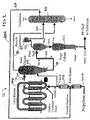
- the bulk loop reactor system 10 includes a catalyst mixing and injection system 200 upstream of and in communication with a pair of loop reactors 300, a polymer recovery system 400 downstream of the loop reactors 300 and a gas phase reactor 500. It will be understood that the bulk loop reactor system may include a single loop reactor or single gas phase reactor or multiple loop reactors and multiple gas phase reactors or any combination thereof, including one or more other olefin polymerization reactors, such as other propylene polymerization reactors.
- the bulk loop reactors 300 may further include a propylene feed conduit 300B and a co-monomer (such as for example, ethylene) feed conduit 300C.
- the catalyst mixing and injection system 200 includes a mixing vessel 202.
- the mixing vessel 202 includes a mixing paddle 204 and a heating jacket 206.
- a high molecular weight mineral oil and the Ziegler-Natta catalyst are introduced into the mixing vessel 202.
- the high molecular oil is heated to a sufficient temperature (in the range of from about 30 °C to at least 90 °C, depending upon the type of mineral oil used) in order to reduce the viscosity of the mineral oil and allow the mixing paddle 204 to sufficiency mix the catalyst and high molecular mineral oil.
- the heated mixture of high molecular weight mineral oil and catalyst is then conveyed via conduit 208 to an injector 210 where it may cool and form a "paste".
- the paste is urged during the compression stroke of the plunger 211 into the conduit 212 and into another mixing vessel 214 wherein a co-catalyst, such as TEAL, and one or more electron donors may be blended with the paste by the mixing paddle 216.
- a co-catalyst such as TEAL
- the resulting mixture of catalyst, co-catalyst and electron donor exits the mixing vessel 214 via conduit 218 and is metered by the pump 220 into a pre-polymerization loop reactor 222 containing liquid propylene monomer.
- Polymerization temperatures in the pre-polymerization loop reactor 222 may be from between -10 and 10 °C and are controlled by cooling jackets 223.
- Propylene polymer granules are formed as propylene polymerization begins upon contact between the catalyst/co-catalyst and the liquid propylene monomer, all of which are circulated within the pre-polymerization loop reactor 222 by a circulation pump 224.
- Pre-polymerization cycle time may last between 7 and at least 30 minutes, desirably between 15 and 20 minutes before the propylene polymer granules are conveyed via conduit 226 into the first loop reactor 302 containing liquid propylene monomer.
- a circulating pump 304 circulates the propylene granules and liquid propylene monomer within the first loop reactor 302. As propylene polymerization continues in the first loop reactor, the propylene polymer granules increase in size.
- the first loop reactor cycle time may last between 20 and at least 95 minutes, desirably between 30 and 50 minutes before the propylene polymer granules are conveyed via conduit 306 into the second loop reactor 308.
- Polymerization temperatures in the first and second loop reactors, 302 and 308 respectively, may range from between 66 to 77 °C and are controlled by cooling jackets 310.
- Circulation pump 312 circulates the propylene granules and liquid propylene monomer in the second loop reactor.
- the second loop reactor cycle time may last between 10 and at least 60 minutes, desirably between 20 and 50 minutes before the propylene polymer granules are conveyed via conduit 313 into the polymer recovery system 400.
- the catalyst is deactivated or "killed" before entering the polymer recovery system 400.
- a heating column 402 receives the propylene polymer granules from the conduit 312. Sufficient heat is applied to the propylene polymer granules such that upon entering the flash tank 406 from the conduit 404, a substantial portion of the liquid propylene monomer accompanying the propylene polymer granules vaporizes, thus separating from the granules.
- the gaseous propylene and a portion of the polymerization by-products are extracted from the flash tank 406 via the conduit 408. This propylene may be recompressed, filtered, so as to remove impurities and other contaminates that may adversely react with the catalyst system, and returned to the loop reactors 300.
- the propylene polymer granules exit the flash tank 406 via conduit 410 and may be directed to extruders for processing into pellets. Or, if further polymerization with one or more monomers, such as for example ethylene, is desired, the propylene polymer granules exiting the flash tank 406 via conduit 412 may be conveyed into the gas phase reactor 500.
- the propylene polymer granules exit the gas phase reactor 500 via conduit 502 and may be directed to extruders for processing into impact polypropylene copolymers pellets.
- one or more other materials such as, for example, stabilizers, UV blockers, antistatic chemicals and/or pigments may be blended with the propylene polymer granules.
- FIG 2 Another bulk loop reactor system 12 suitable for propylene polymerization using one or more conventional Zeigler-Natta catalysts is illustrated in FIG 2.
- the bulk loop reactor system 12 is similar to the bulk loop reactor system 10 with the exception that the system 12 illustrates a more extensive polymer recovery system 300A and does not illustrate a gas phase reactor or a pre-polymerization loop reactor 222.
- the system 12 illustrates a more extensive polymer recovery system 300A and does not illustrate a gas phase reactor or a pre-polymerization loop reactor 222.
- active catalyst present in the propylene polymer granules exiting the loop reactor 300A via conduit 314 may be deactivated prior to entering the wash column 414.
- propylene polymer granules separate from the liquid propylene in the wash column 414.
- additional liquid propylene entering at or near the base of the wash column 414 passes through the bed of settling propylene polymer granules.
- Liquid propylene and a portion of the polymerization by-products exit the wash column 414 via the conduit 415 and are conveyed to a distillation vessel 416.
- the distillation vessel separates the liquid propylene from polymerization by-products, such as atactic polypropylene.
- the remaining propylene polymer granules, propylene monomer and polymerization by-products exit the wash column 414 via conduit 417 and enter the heating column 418.
- the propylene polymer granules may exit the wash column 414 continuously or in batches.
- Sufficient heat is applied to the propylene polymer granules such that upon entering the flash tank 420, a substantial portion of the liquid propylene monomer accompanying the propylene polymer granules vaporizes, thus separating from the granules.
- the gaseous propylene and other polymerization by-products are extracted from the flash tank 420 via the conduit 422.
- the gaseous propylene may be recompressed by the recycle compressor 424 and conveyed via conduit 426 to the distillation vessel 416.
- Liquid propylene monomer exits the distillation vessel via conduit 427 and may be conveyed to one or more propylene feed treaters 428 wherein the propylene may be filtered as described above before being returned to the loop reactor 300A.
- the propylene polymer granules exit the flash tank 420 via conduit 430 and enter the purge column 432. Upon exiting the purge column 432, the propylene polymer granules may be directed to extruders for processing into pellets as previously described.
- metallocene catalyst systems can also be used to produce propylene polymers in bulk loop reactors.
- Ziegler-Natta catalyst systems and/or components thereof may not be compatible with metallocene catalyst systems and/or components thereof.
- certain conditions and equipment design of the bulk loop reactor system which are suitable for propylene polymerization using one or more Ziegler-Natta catalyst systems may not be suitable or less than suitable for propylene polymerization using one or more metallocene catalyst systems.
- Ziegler-Natta catalysts are dry-mixed with the high molecular weight mineral oil in about a 1:2 ratio in the mixing vessel 202.
- drying the metallocene catalyst, and particularly drying the supported metallocene catalyst may damage its productivity (degradation due to heat and also to trace impurities such as oxygen, moisture during the drying process).
- the weight percent (wt%) of the supported metallocene catalyst system in the mineral oil slurry may vary from 1 wt% to at least 50 wt%, and desirably from 5 wt% to 30 wt%.
- the temperature within the mixing vessel 200 should be reduced to a temperature sufficient to avoid deactivating the metallocene catalyst during the mixing thereof with the mineral oil.
- thermal deactivation of the metallocene may be avoided by heating the metallocene to temperatures below 60 °C, and desirably below 30 °C.
- solvent such as hexane
- residual Ziegler-Natta catalyst may produce high molecular weight atactic polypropylene, under the conditions in which metallocene polypropylene is generally produced (low amount of hydrogen, no external donor). This high molecular weight material may become a source of gels in the metallocene polypropylene. In many instances, residual electron donor may act as a strong poison for metallocene catalysts. It was therefor desirable to clean the mixing vessel 202 and all related conduits of such Ziegler-Natta catalysts and residual electron donors.
- Ziegler-Natta catalysts and residual electron donors may be present in other components of the bulk loop reactor system, such as the propylene monomer recycle components, it is desirable to clean and/or purge the other components of the bulk loop reactor system as well before introducing metallocene catalysts.
- the catalyst mixing system 200 may be cleaned, for example, by opening the system and introducing mineral oil under high pressure. Desirably, the catalyst mixing system 200 may be similarly cleaned when transitioning the catalyst mixing system 200 from metallocene catalysts to Ziegler-Natta catalysts.
- a separate catalyst mixing system dedicated to the metallocene catalyst system may be used (as described in greater detail below and illustrated in FIG 3). In this way, cleaning the catalyst mixing system 200 of Ziegler-Natta catalysts systems and/or components prior to the introduction of a metallocene catalyst system may be avoided.
- cleaning the other components of the bulk loop reactor with mineral oil so as to purge these components of Ziegler-Natta catalysts systems and/or components thereof may be expensive and time consuming.
- the other components may be cleaned or purged by one or several ways and/or a combination thereof.
- the Ziegler-Natta catalyst circulating within the loop reactors can be deactivated and the deactivated catalyst substantially removed via normal take-off after between 3 to 5 loop residence times or after between 3 to 10 hours (1 to 2 hr/residence time) have elapsed. If electron donor was present with the Ziegler-Natta catalyst, the Ziegler-Natta catalyst is deactivated as described above, however to purge the loop reactors and components thereof, such as the polymer recovery system of electron donor, the bulk loop reactor system may be operated for an additional period of time, generally between 5 hours to 10 hours, in order to purge the components of electron donor.
- the Ziegler-Natta catalyst system may be transitioned to a non-electron donor Ziegler-Natta catalyst system.
- that catalyst system may be transitioned to a non-electron donor Ziegler-Natta catalyst system.
- propylene polymer production continues as the bulk loop reactor system is purged of electron donor.
- the Ziegler-Natta catalyst system Prior to transitioning to a metallocene catalyst system, the Ziegler-Natta catalyst system is deactivated and the reactors are purged after 3 to 5 loop residence times. As such, while not only producing propylene polymers during the electron donor purge, this method of cleaning the loop reactor is accomplished in substantially less time than the above described method.
- the Ziegler-Natta catalyst can be deactivated and the metallocene catalyst system introduced into the bulk loop reactor system. In this way, the loop reactor and polymer recovery system may be purged by production of metallocene polypropylene. This method may take between 8 hours and 24 hours to sufficiently purge the loop reactor system of Ziegler-Natta catalyst and/or components thereof.
- the above procedures may be employed to purge the loop reactors and associated components of metallocene catalyst systems.
- the time periods for transitioning from a metallocene catalyst system to a Ziegler-Natta catalyst system are similar to the time periods for transitioning from a Ziegler-Natta catalyst system to a metallocene catalyst system.
- the metallocene catalyst system may be deactivated and purged from both the loop reactors and the associated components.
- a non-electron donor Ziegler-Natta catalyst system may be introduced allowing continued propylene polymer production while purging the loop reactors and associated components of metallocene.
- the metallocene catalyst system may be deactivated followed by the introduction of a Ziegler-Natta catalyst system into the loop reactors.
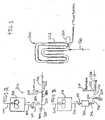
- FIG 3 two metallocene catalyst mixing systems, FIG 3A and FIG 3B are illustrated. While neither system requires the use of the pre-polymerization loop reactor before the introducing the metallocene catalyst into the loop reactor 300, either system may be used with the pre-polymerization loop reactor.
- the metallocene catalyst mixing system 316 illustrated in FIG 3A, includes a mixing vessel 318 having a mixing paddle 320 for sufficiently mixing and maintaining a sufficient distribution of the metallocene catalyst and cocatalyst in the mineral oil slurry.
- the wt% of metallocene catalyst system in mineral oil is generally between 1 and 50 and desirably between 5 and 30.
- the metallocene catalyst slurry is conveyed by conduit 322 to a valve 324. As the valve 324 is opened, a portion of the slurry enters a conduit 326. When the valve 324 is closed, the flow of slurry into conduit 326 is interrupted.
- the frequency of slurry introduction into the conduit 326 may be between 1 to 10 times per minute.
- the amount of slurry in each "slug" may be between 10 and 50 milliliters.
- Conduit 328 may supply a scavenger and/or co-catalyst, such as TEAL or TIBAL, in an amount for example between 1 and 2 weight ratio of TEAL to the supported catalyst, to the junction 327 at which point the metallocene catalyst/cocatalyst and TEAL are combined or are "precontacted".
- a scavenger and/or co-catalyst such as TEAL or TIBAL
- the metallocene catalyst and cocatalyst can be separately introduced into the bulk loop reactor. In this instance, there may be some loss of catalyst activity and loss of propylene polymer granule morphology.
- a scavenger such as TEAL (in either a mixing vessel, such as mixing vessel 202, FIG 1 or in conduit 330, FIG 3A) prior to beginning polymerization (generally at and/or downstream of the junction 332).
- TEAL is readily available as an impurity scavenger, thus protecting the catalyst during the initial contact with propylene.
- neat TEAL may be used, when TEAL is combined with a solvent, the solvent, such as hexane or other C4 to C20 hydrocarbons, acts to reduce the viscosity of the mineral oil surrounding the catalyst and thus improves the diffusion of propylene relative to the catalyst particles which may improve polymerization.
- TEAL in the range of from 5:1 to 15:1 lbs. of TEAL to lbs. of supported catalyst
- a minimum of amount of TEAL and or TIBAL in the range of from 1:4 lbs. of TEAL or TIBAL to lbs. of supported catalyst to 4:1 lbs. TEAL or TIBAL to lbs. of supported catalyst, and desirably 1:1 lbs. of TEAL or TIBAL to lbs. of supported catalyst
- TEAL greater than 4:1 lbs. of TEAL to lbs. of supported catalyst
- the precontact time for Ziegler-Natta catalyst may be several minutes, ranging from 5 to 15 minutes.
- the precontact time is desirably less than one minute, and more desirably less than 30 seconds and still more desirably less than or equal to 15 seconds.
- the diameter of the conduit 330 is 0.5 inches
- the line length of conduit 330 is 15 feet
- the TEAL solution is entering the junction 327 at around 12 lbs./hr (5 wt% dilution in hexane)
- the metallocene catalyst/mineral oil slurry is entering the junction 327 at around 6 gals/hr
- the flow time in conduit 330 would be around 15 seconds.
- conduit 330 supplies the metallocene catalyst/cocatalyst to the junction 332 where propylene monomer, conveyed by conduit 334, combines with the active metallocene catalyst/cocatalyst and travels for a distance in the conduit 336 before entering the loop reactor 300. Because propylene polymer polymerization begins at or generally downstream of the junction 332, it is desirable to convey the polymerizing metallocene catalyst into the reactor before plugging of the conduit 336 occurs by the accumulation of propylene polymer granules.
- the materials from junction 332 to the bulk loop reactor in generally less that about one minute and desirably less than 30 seconds and still more desirably less or equal to 15 seconds and most desirably between 10 and 0.001 seconds.
- the diameter of the conduit 336 is 0.5 inches and is 15 feet in length
- the propylene flow rate is around 10 gal/min in conduit 334 and the flow in the conduit 336 is around 5 m/sec
- the polymerization time in the conduit 336 is around 1 sec.
- the metallocene/cocatalyst mixture and propylene may be combined under conditions such that polymerization rate in conduit 336 is slower than the polymerization rate in the bulk loop reactor 300. This may be done, for example, by cooling one or more of the metallocene, cocatalyst and/or propylene components before or after combining one or more thereof. Generally one or all such components may be cooled to a temperature of between -10 °C and +10 °C. Maintaining a flow rate, for example, of between 0.3 m/sec to 10 m/sec in the conduit 336 will also reduce the risk of plugging.
- the flow rate in the conduit 336 may be a factor of the individual flow rates of the individual components. Desirably, the flow rate of the metallocene catalyst in conduit 326 and cocatalyst in conduit 328 are lower than the flow rate of the propylene in conduit 334. The different flow rates may promote mixing of the metallocene catalyst upon contact with the propylene.
- the metallocene catalyst mixing system 340 is substantially similar to the metallocene catalyst mixing system 316, except that a pump 342, desirably a membrane pump (150 l/hr, 0-80 barg.), having an upstream check valve 344 and a downstream check valve 346 replace the valve 324 of FIG 3A.
- a pump 342 desirably a membrane pump (150 l/hr, 0-80 barg.) having an upstream check valve 344 and a downstream check valve 346 replace the valve 324 of FIG 3A.
- the catalyst, cocatalyst and propylene may be introduced into the bulk loop reactor in a more continuous fashion (the frequency of slurry slugs being, for example, from between 60 and 120 times per minute in an amount ranging from between 4 to 16 milliliters) than that provided by the valve 324 (FIG 3A).
- the smaller volumes of catalyst and cocatalyst introduced into the bulk loop reactor may minimize swings in reactor temperatures caused by the polymerization reaction.
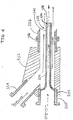
- a quill 338 having portions thereof defining a quill body 339, a quill bore 340, an external surface 342, an upstream end 343 and a downstream end 344.
- the upstream end 343 of the quill 338 may be formed integral with conduit 330 or it may be secured, such as for example by engaging threads, flanges or welding, to conduit 330.
- the quill bore 340 is in fluid communication with the conduit 330.
- the quill body 339 extends into the junction 332 from conduit 330.
- the outside dimensions of the quill body 339 are sized such that the flow of liquid propylene (illustrated by the solid arrows) entering the junction 332 via conduit 334 contacts the external surfaces 342 of the quill 338 as the liquid propylene travels towards conduit 336.
- the length of the quill body 339 is sufficiently long enough such that the downstream end 344 terminates downstream of the junction 332 and desirably terminates within the conduit 336 and more desirably terminates within conduit 336 downstream of the connecting flanges 346.
- the flow of catalyst enters conduit 336 and mixes with the flow of liquid propylene downstream of the junction 332 and the flanges/weld seams associated therewith.
- the internal bore surfaces defined by the conduits and junction described in FIG 3A, 3B and FIG 4 have minimal or no gaps, ridges, protrusions, texturing or other similar structures or features that would allow the metallocene catalyst particles and/or propylene polymer granules to accumulate in and/or on the bore surfaces and not be swept into the reactor by the flow in conduit 336.
- gaps ridges and protrusions may be caused by, for example, gaskets, welds, non-alignment of flanges and the like. Any such particle or granule not swept into the reactor may continue to grow and/or cause other particles to accumulate, the occurrence of either or both may create a plug or obstruction in the bore.
- the surfaces defining these bores are smoothed, such as by electro-polishing, and the gaskets should be chosen to avoid gaps at the flanges.
- the surfaces and/or portions thereof defining the bore have a roughness value of between 0 rms and 120 rms and desirably between 8 rms and 20 rms as measured by techniques known to those skilled in the art.
- the bulk densities of the propylene polymer granules made by the Ziegler-Natta catalyst system may vary as compared to the bulk densities of the propylene polymer granules made by the metallocene catalyst system.
- the bulk density of the metallocene polymer granules may be similar to the polypropylene homopolymer granules formed by conventional Ziegler-Natta catalyst systems.
- the bulk density can drop from e.g. , 25 lbs./cu. ft. (0.45 g/cc) for a homopolymer to e.g.
- Another modification when using a conventional Ziegler-Natta catalyst system compared to using a metallocene catalyst system is the addition of an anti-fouling agent.
- an anti-fouling agent prevents such polymer coatings from forming.
- the anti-fouling agent may be added to the propylene fed to the reactor. Or it may be added such that the anti-fouling agent is also present in the catalyst mixing and injection system, thus reducing the risk of conduit plugging.
- an anti-fouling agent may cause a decrease in the metallocene catalyst activity.
- An example of a suitable anti-fouling agent is a dinonylnaphtyl sulfonic acid based anti-fouling agent, such as Stadis 450 Conductivity Improver, a product of Octel Starreon, LLC (hereafter referred to as "Stadis").
- Stadis may be used at concentrations of between 0.1 ppm and 5 ppm in the propylene feed (conduit 300B (FIG 1)) to the reactor or in such concentrations when added directly to the catalyst mixing and injection system.
- the addition of the anti-fouling agent directly to the catalyst mixing and injection system upstream of the propylene injection may result in higher concentrations of anti-fouling agent contacting the catalyst as compared to adding the anti-fouling agent directly to the reactor via the propylene feed conduit 300B or adding the anti-fouling agent at or down stream of the propylene injection (conduit 334) in the catalyst mixing and injection system.
- Contacting the catalyst with higher concentrations of anti-fouling agent in the catalyst mixing and injection system may increase the level of catalyst deactivation. As such, it may be desirably to reduce the concentration of anti-fouling agent contacting the catalyst in the catalyst mixing and injection system.
- antistatic agents such as ethylene oxide based anti-fouling agents.
- examples of an ethylene oxide/propylene oxide block copolymer anti-fouling agent are sold under the trade-names Synperonic or Pluronic a product of ICI and BASF, respectively.
- Synperonic or Pluronic antifouling agents may prevent fouling as effective as Stadis with the additional advantages of minimal loss in catalyst activity at concentrations in the range of 2 ppm to 100 ppm.
- anti-fouling agents seems to have a lasting effect upon a reactor (that is, the anti-fouling effects will last some times even after the addition of the anti-fouling agent is interrupted).
- the electrical consumption of the reactor circulating pumps may be lower with the metallocene catalyst system as compared to the Ziegler-Natta catalyst system.
- Table 2 compares MCN and Z-N for a dual loop reactor. Lower kWh means that the circulating speed is higher. This is typical for propylene polymer granules having an average particle size of around d50.
- an adjustment of the polymer recovery system parameters may be desirable.
- the metallocene polypropylene homopolymer has melting point of, for example 150°C
- a conventional Ziegler-Natta polypropylene homopolymer has a melting point of, for example 165°C
- the polymer recover system may be adjusted to lower temperatures.
- Example settings in the polymer recover system for a Ziegler-Natta random copolymer and for a metallocene PP homopolymer having a melting point of 150°C would be:
- ATMER antistat a product of ICl Americas, Inc. which reduces and/or kills the activity of either a Ziegler-Natta catalyst system or a metallocene catalyst system in flash line at 5 kg/h (lower thus than for ZN to avoid static problems in the cyclone).
Landscapes
- Chemical & Material Sciences (AREA)
- Organic Chemistry (AREA)
- Chemical Kinetics & Catalysis (AREA)
- Health & Medical Sciences (AREA)
- Medicinal Chemistry (AREA)
- Polymers & Plastics (AREA)
- Addition Polymer Or Copolymer, Post-Treatments, Or Chemical Modifications (AREA)
- Transition And Organic Metals Composition Catalysts For Addition Polymerization (AREA)
- Polymerisation Methods In General (AREA)
Abstract
Description
Because bulk loop reactors can produce propylene polymers on a substantially continuous basis, and at high out-puts over an extended period of time, such as for example, from between 1 to at least 50 tons of propylene polymer per hour for between 5 days to up to 2 years and beyond, bulk loop reactors offer several advantages over other types of polypropylene reactors, such as stirred pot, stirred bed, and other non-substantially continuous reactors. However, while there may be more than one catalyst system useful for producing polypropylene, in some instances the presence of small quantities of one catalyst system or small quantities of one or more of the components thereof may interfere with or hinder the performance of another catalyst system. As such, while there may be several catalysts systems useful for the production of polypropylene, not all such catalysts systems are compatible in combination with each other. Furthermore, while the design and or physical environment within a bulk loop reactor and associated equipment may be suitable for production of polypropylenes using one catalyst system, these conditions and/or design may be less than suitable or less than desirable for production of polypropylenes using another catalyst system. Therefore, in order to take advantage of the benefits offered by bulk loop reactors, there exist a need to avoid such problems when using different catalyst systems in a common bulk loop reactor to produce propylene polymers.


where R is a Cl-C8 alkyl including mixed alkyls. Particularly desirable are the compounds in which R is methyl. Alumoxane solutions, particularly methylalumoxane solutions, may be obtained from commercial vendors as solutions having various concentrations. There are a variety of methods for preparing alumoxane, non-limiting examples of which are described in U.S. Patent Nos. 4,665,208, 4,952,540, 5,091,352, 5,206,199, 5,204,419, 4,874,734, 4,924,018, 4,908,463, 4,968,827, 5,308,815, 5,329,032, 5,248,801, 5,235,081, 5,103,031 and EP-A-0 561 476, EP 0 279 586, EP-A-0 594 218 and WO 94/10180, each fully incorporated herein by reference. (As used herein unless otherwise stated "solution" refers to any mixture including suspensions.)
| 1st Loop Reactor | Units | Z-N | MCM |
| Propylene Feed | t/h | 31 | 34-38 |
| Density | g/l | 555 | 540-560 |
| Solids | % wt | 50 | 45-55 |
| Contribution | %final production | 62 | 65-69 |
| Temperature | °C (°F) | 70 (158) | 68-75 |
| PP Production | t/h | 15.5 | 15-18 |
| Residence time | Min | 43 | 35-45 |
| 2nd Loop Reactor | Units | Z-N | MCN |
| Propylene Feed | t/h | 16 | 10-12 |
| Density | g/l | 540 | 535-550 |
| Solids | %wt | 46 | 45-55 |
| Contribution | % final production | 38 | 31-35 |
| Temperature | °C (°F) | 70 (158) | 68-75 |
| TOTAL | Units | Z-N | MCN |
| PP Production | t/h | 25 | 20-30 |
| Propylene | t/h | 47 | 40-50 |
| Feed | |||
| Residence time | Min | 68 | 55-80 |
| Reactor 1 | Units | Z-N | MCN |
| Density | g/l | 555 | 550 |
| Circulating Pump | KWh | 215 | 198 |
| Reactor 2 | Units | Z-N | MCN |
| Density | g/l | 540 | 540 |
| Circulating Pump | KWh | 248 | 228 |
Claims (8)
- A method of forming polypropylene comprising:introducing a metallocene catalyst system into a junction via a catalyst inlet formed in the junction;introducing propylene into the junction via a propylene inlet formed in the junction to form a mixed stream; andmaintaining at least a portion of the metallocene catalyst system separate from the mixed stream for a distance downstream of the propylene inlet.
- The method of claim 1, wherein the propylene is introduced to the catalyst inlet at a temperature of from -10 °C to 10 °C.
- The method of claim 1, wherein the mixed stream flows at a rate of from 0.3 meters/second to 10 meters/second.
- The method of claim 1, wherein the metallocene catalyst system comprises an antifouling agent.
- The method of claim 4, wherein the mixed stream is introduced to a bulk loop reactor.
- The method of claim 4, wherein the antifouling agent is selected from the group consisting essentially of Stadis 450 Conductivity Improver, Synperonic antifouling agent, Pluronic antifouling agent and combinations thereof.
- The method of claim 1, wherein an antifouling agent is introduced into an agent inlet, the agent inlet being formed downstream of the catalyst inlet and the propylene inlet.
- A method of forming polypropylene comprising:introducing propylene monomer to a bulk loop reactor;contacting the propylene monomer with a metallocene catalyst system to form polypropylene in commercial quantities.
Applications Claiming Priority (3)
| Application Number | Priority Date | Filing Date | Title |
|---|---|---|---|
| US33680101P | 2001-12-03 | 2001-12-03 | |
| US336801P | 2001-12-03 | ||
| EP02080132A EP1316566B1 (en) | 2001-12-03 | 2002-11-26 | Method for transitioning between Ziegler-Natta and metallocene catalysts in a bulk loop reactor for the production of polypropylene |
Related Parent Applications (1)
| Application Number | Title | Priority Date | Filing Date |
|---|---|---|---|
| EP02080132A Division EP1316566B1 (en) | 2001-12-03 | 2002-11-26 | Method for transitioning between Ziegler-Natta and metallocene catalysts in a bulk loop reactor for the production of polypropylene |
Publications (3)
| Publication Number | Publication Date |
|---|---|
| EP1526143A2 true EP1526143A2 (en) | 2005-04-27 |
| EP1526143A3 EP1526143A3 (en) | 2005-09-28 |
| EP1526143B1 EP1526143B1 (en) | 2008-07-30 |
Family
ID=23317726
Family Applications (2)
| Application Number | Title | Priority Date | Filing Date |
|---|---|---|---|
| EP02080132A Expired - Lifetime EP1316566B1 (en) | 2001-12-03 | 2002-11-26 | Method for transitioning between Ziegler-Natta and metallocene catalysts in a bulk loop reactor for the production of polypropylene |
| EP05075141A Expired - Lifetime EP1526143B1 (en) | 2001-12-03 | 2002-11-26 | Method for the production of polypropylene |
Family Applications Before (1)
| Application Number | Title | Priority Date | Filing Date |
|---|---|---|---|
| EP02080132A Expired - Lifetime EP1316566B1 (en) | 2001-12-03 | 2002-11-26 | Method for transitioning between Ziegler-Natta and metallocene catalysts in a bulk loop reactor for the production of polypropylene |
Country Status (11)
| Country | Link |
|---|---|
| US (5) | US6916892B2 (en) |
| EP (2) | EP1316566B1 (en) |
| JP (1) | JP4627965B2 (en) |
| KR (1) | KR100920986B1 (en) |
| CN (2) | CN1422875A (en) |
| AT (2) | ATE292149T1 (en) |
| BR (1) | BR0204898B1 (en) |
| DE (2) | DE60203472T2 (en) |
| ES (1) | ES2238542T3 (en) |
| MX (1) | MXPA02011729A (en) |
| TW (1) | TWI258483B (en) |
Cited By (3)
| Publication number | Priority date | Publication date | Assignee | Title |
|---|---|---|---|---|
| WO2011095532A1 (en) * | 2010-02-05 | 2011-08-11 | Total Petrochemicals Research Feluy | Process for preparing polyolefin |
| WO2012013805A1 (en) * | 2010-07-30 | 2012-02-02 | Total Petrochemicals Research Feluy | Process for preparing polyolefins and use of antifouling agents therein |
| CN105121000A (en) * | 2012-12-13 | 2015-12-02 | 切弗朗菲利浦化学公司 | Polyethylene production with multiple polymerization reactors |
Families Citing this family (69)
| Publication number | Priority date | Publication date | Assignee | Title |
|---|---|---|---|---|
| JP2005523320A (en) * | 2002-04-22 | 2005-08-04 | シェブロン フィリップス ケミカル カンパニー エルピー | Production method of high viscosity polyalphaolefin using ionic liquid catalyst |
| US7550528B2 (en) | 2002-10-15 | 2009-06-23 | Exxonmobil Chemical Patents Inc. | Functionalized olefin polymers |
| BR0315341B1 (en) | 2002-10-15 | 2014-02-18 | Adhesives comprising polyolefin. | |
| US7700707B2 (en) | 2002-10-15 | 2010-04-20 | Exxonmobil Chemical Patents Inc. | Polyolefin adhesive compositions and articles made therefrom |
| US7122606B2 (en) | 2003-07-04 | 2006-10-17 | Basell Polyolefine Gmbh | Olefin polymerization process |
| EP1691920A1 (en) * | 2003-10-31 | 2006-08-23 | Chevron Phillips Chemical Company LP | Method and system to add high shear to improve an ionic liquid catalyzed chemical reaction |
| EP1564224A1 (en) * | 2004-02-13 | 2005-08-17 | Total Petrochemicals Research Feluy | Slurry loop reactors |
| CN1918197B (en) * | 2004-02-13 | 2010-05-26 | 托塔尔石油化学产品研究弗吕公司 | Process for the polymerization of olefins in the presence of antifouling agents |
| EP1564229A1 (en) * | 2004-02-13 | 2005-08-17 | Total Petrochemicals Research Feluy | Olefin polymerization process in the presence of an anti-fouling agent |
| DE602005000009T2 (en) * | 2004-02-13 | 2006-11-23 | Total Petrochemicals Research Feluy, Seneffe | CATALYST GRAIN SIZE |
| EA010549B1 (en) * | 2004-02-13 | 2008-10-30 | Тотал Петрокемикалс Рисерч Фелюй | Method and apparatus for preparing and supplying catalyst slurry to a polymerisation reactor |
| EP1563901A1 (en) * | 2004-02-13 | 2005-08-17 | Total Petrochemicals Research Feluy | Method and device for optimising catalyst supply to a polymerization reactor. |
| ES2342670T3 (en) * | 2004-02-13 | 2010-07-12 | Total Petrochemicals Research Feluy | CATALYSIS WITH LOW CHROME IN GEL. |
| JP4886525B2 (en) * | 2004-02-13 | 2012-02-29 | トータル・ペトロケミカルズ・リサーチ・フエリユイ | A multi-loop reactor for olefin polymerization. |
| WO2005077994A1 (en) * | 2004-02-13 | 2005-08-25 | Total Petrochemicals Research Feluy | Process for improving the co-polymerization of ethylene and an olefin co-monomer in a polymerization loop reactor. |
| US20050272891A1 (en) * | 2004-02-13 | 2005-12-08 | Atofina Research S.A. | Double loop technology |
| EP1564222A1 (en) * | 2004-02-13 | 2005-08-17 | Total Petrochemicals Research Feluy | Polyolefin production using high olefin concentration |
| EP1564223A1 (en) * | 2004-02-13 | 2005-08-17 | Total Petrochemicals Research Feluy | Interconnected loop reactors |
| EP1564221A1 (en) | 2004-02-13 | 2005-08-17 | Total Petrochemicals Research Feluy | Surface finish of a reactor used for polymerisation of polyolefins |
| US8492489B2 (en) * | 2004-02-13 | 2013-07-23 | Total Petrochemicals Research Feluy | Double loop technology |
| US20050182210A1 (en) * | 2004-02-17 | 2005-08-18 | Natarajan Muruganandam | De-foaming spray dried catalyst slurries |
| US7973112B2 (en) * | 2004-02-17 | 2011-07-05 | Univation Technologies, Llc | De-foaming spray dried catalyst slurries |
| KR101318495B1 (en) * | 2004-11-09 | 2013-10-16 | 스미토모 베이클리트 컴퍼니 리미티드 | Decomposition reaction apparatus, system for producing raw material for recycled resin composition, method for producing raw material for recycled resin composition, raw material for recycled resin composition, and formed article |
| US7053163B1 (en) * | 2005-02-22 | 2006-05-30 | Fina Technology, Inc. | Controlled comonomer distribution along a reactor for copolymer production |
| US7678341B2 (en) * | 2005-07-29 | 2010-03-16 | Exxonmobil Chemical Patents Inc. | Loop reactor heat removal |
| US7615596B2 (en) * | 2005-09-30 | 2009-11-10 | Chevron Phillips Chemical Company Lp | Multiple component feed methods and systems |
| JP5013825B2 (en) * | 2005-11-22 | 2012-08-29 | 旭化成ケミカルズ株式会社 | Process for producing olefin polymer |
| EP1840141A1 (en) * | 2006-03-31 | 2007-10-03 | Total Petrochemicals Research Feluy | Process to kill a catalysed olefin polymerization |
| US7446167B2 (en) * | 2006-04-13 | 2008-11-04 | Fina Technology, Inc. | Catalyst deactivation agents and methods for use of same |
| US8003739B2 (en) * | 2007-10-17 | 2011-08-23 | Fina Technology, Inc. | Multi-component catalyst systems and polymerization processes for forming in-situ heterophasic copolymers and/or varying the xylene solubles content of polyolefins |
| US7378537B2 (en) * | 2006-07-25 | 2008-05-27 | Chevron Phillips Chemical Company Lp | Olefin oligomerization catalysts and methods of using same |
| US7494627B2 (en) * | 2006-08-09 | 2009-02-24 | Total Petrochemicals Research Feluy | Device and method for the optimization of the injection of reactants into a reactor |
| WO2008059974A1 (en) * | 2006-11-17 | 2008-05-22 | Mitsui Chemicals, Inc. | Method for producing syndiotactic propylene polymer |
| JP4977579B2 (en) * | 2007-10-31 | 2012-07-18 | 日本ポリプロ株式会社 | Catalyst switching method in catalyst tank of polyolefin production facility |
| US8759446B2 (en) | 2008-06-30 | 2014-06-24 | Fina Technology, Inc. | Compatibilized polypropylene and polylactic acid blends and methods of making and using same |
| US8268913B2 (en) | 2008-06-30 | 2012-09-18 | Fina Technology, Inc. | Polymeric blends and methods of using same |
| US8545971B2 (en) | 2008-06-30 | 2013-10-01 | Fina Technology, Inc. | Polymeric compositions comprising polylactic acid and methods of making and using same |
| US20100087602A1 (en) * | 2008-10-08 | 2010-04-08 | Fina Technology, Inc. | Long chain branched polypropylene for cast film applications |
| US20100125124A1 (en) * | 2008-11-17 | 2010-05-20 | Fina Technology, Inc. | Methods of catalyst activation |
| BR112012005542B1 (en) * | 2009-09-11 | 2019-08-20 | Basell Poliolefine Italia S.R.L | GAS-PHASE POLYMERIZATION PROCESS |
| CN102770463B (en) * | 2009-12-18 | 2014-07-02 | 道达尔石油化学产品研究弗吕公司 | Method for replacing incompatible ethylene polymerization catalysts |
| RS54300B1 (en) * | 2009-12-18 | 2016-02-29 | Total Research & Technology Feluy | PROCEDURE FOR NEUTRALIZATION OF POLYMERIZATION CATALYST |
| EP2386352A1 (en) | 2010-05-12 | 2011-11-16 | Ineos Europe Limited | Reactor |
| CN103052652B (en) * | 2010-07-30 | 2016-01-20 | 道达尔研究技术弗吕公司 | Process for preparing polyolefins |
| WO2012013806A1 (en) * | 2010-07-30 | 2012-02-02 | Total Petrochemicals Research Feluy | Process for preparing polyolefins |
| US10465021B2 (en) | 2012-07-27 | 2019-11-05 | Fina Technology, Inc. | Uncompounded particulate metallocene-produced polyethylene |
| US8821800B2 (en) * | 2012-10-18 | 2014-09-02 | Chevron Phillips Chemical Company Lp | System and method for catalyst preparation |
| US20140140894A1 (en) * | 2012-11-20 | 2014-05-22 | Chevron Phillips Chemical Company, Lp | Polyolefin production with multiple polymerization reactors |
| US9073029B2 (en) | 2013-09-25 | 2015-07-07 | Chevron Phillips Chemical Company Lp | System and method for deterring fouling in a polymerization reactor |
| BR112017013299A2 (en) | 2014-12-22 | 2018-01-02 | Sabic Global Technologies Bv | transition process between incompatible catalysts |
| KR102411877B1 (en) | 2016-10-28 | 2022-06-22 | 피나 테크놀러지, 인코포레이티드 | Use of agents to reduce crystallinity in polypropylene for BOPP applications |
| US10697889B2 (en) | 2017-07-21 | 2020-06-30 | Chevron Phillips Chemical Company Lp | Methods for determining transition metal compound concentrations in multicomponent liquid systems |
| US10030086B1 (en) | 2017-07-21 | 2018-07-24 | Chevron Phillips Chemical Company Lp | Methods for determining transition metal compound concentrations in multicomponent liquid systems |
| US10507445B2 (en) | 2018-03-29 | 2019-12-17 | Chevron Phillips Chemical Company Lp | Methods for determining transition metal compound concentrations in multicomponent liquid systems |
| US10679734B2 (en) | 2018-03-29 | 2020-06-09 | Chevron Phillips Chemical Company Lp | Methods for determining transition metal compound concentrations in multicomponent liquid systems |
| WO2020056119A1 (en) | 2018-09-14 | 2020-03-19 | Fina Technology, Inc. | Polyethylene and controlled rheology polypropylene polymer blends and methods of use |
| US11866522B2 (en) | 2018-12-28 | 2024-01-09 | Braskem S.A. | Process for introducing catalyst in a polymerization process |
| JP7572961B2 (en) | 2019-02-20 | 2024-10-24 | フイナ・テクノロジー・インコーポレーテツド | Polymer composition having low warpage |
| WO2021091725A1 (en) * | 2019-11-07 | 2021-05-14 | Exxonmobil Chemical Patents Inc. | Method for controlling gas phase reactor activity |
| US11180587B2 (en) | 2019-12-13 | 2021-11-23 | Chevron Phillips Chemical Company Lp | Polymerization of propylene |
| CN116615473B (en) * | 2020-11-17 | 2025-12-23 | 英力士美国有限责任公司 | Method and apparatus for supplying polymerization catalyst components to a polymerization reactor |
| ES3064513T3 (en) * | 2020-11-25 | 2026-04-27 | Borealis Gmbh | Propylene polymerization plant and propylene polymerization process |
| CN117615843A (en) * | 2021-07-26 | 2024-02-27 | 尤尼威蒂恩技术有限责任公司 | Manifold assembly for gas phase reactor and method of operation thereof |
| KR20250047745A (en) | 2022-08-04 | 2025-04-04 | 피나 테크놀러지, 인코포레이티드 | Polypropylene composition having improved clarity |
| EP4573155A1 (en) | 2022-08-16 | 2025-06-25 | Fina Technology, Inc. | Metallocene polypropylene compositions |
| KR20250077481A (en) | 2022-09-30 | 2025-05-30 | 피나 테크놀러지, 인코포레이티드 | Polypropylene Peroxide Masterbatch |
| EP4389776A1 (en) * | 2022-12-20 | 2024-06-26 | Borealis AG | Process |
| EP4389783A1 (en) * | 2022-12-20 | 2024-06-26 | Borealis AG | Catalyst transition process |
| FR3156332A1 (en) | 2023-12-06 | 2025-06-13 | IFP Energies Nouvelles | Loop polymerization reactor |
Family Cites Families (131)
| Publication number | Priority date | Publication date | Assignee | Title |
|---|---|---|---|---|
| US553296A (en) * | 1896-01-21 | Jonas walter aylsworth | ||
| US3324093A (en) * | 1963-10-21 | 1967-06-06 | Phillips Petroleum Co | Loop reactor |
| YU35844B (en) | 1968-11-25 | 1981-08-31 | Montedison Spa | Process for obtaining catalysts for the polymerization of olefines |
| NL162664B (en) | 1969-06-20 | 1980-01-15 | Montedison Spa | PROCESS FOR PREPARING A CATALYST FOR THE POLYMERIZATION OF OLEFINS-1. |
| US3687920A (en) | 1971-01-25 | 1972-08-29 | Union Carbide Corp | Polymerization of olefins with silane modified catalyst system |
| US4086408A (en) | 1973-12-20 | 1978-04-25 | Union Carbide Corporation | Ethylene polymerization with silane modified catalyst |
| JPS5830323B2 (en) * | 1974-08-12 | 1983-06-28 | 昭和電工株式会社 | Olefuinno Jiyugohouhou |
| US4101445A (en) | 1976-09-22 | 1978-07-18 | Union Carbide Corporation | Preparation of modified and activated chromocene catalysts for ethylene polymerization |
| GB1593492A (en) * | 1976-12-29 | 1981-07-15 | Int Synthetic Rubber | Olefin polymerisation and titanium chloride component therefor |
| US4482687A (en) | 1979-10-26 | 1984-11-13 | Union Carbide Corporation | Preparation of low-density ethylene copolymers in fluid bed reactor |
| US5019633A (en) | 1980-12-24 | 1991-05-28 | Technology Corporation | Catalyst composition for polymerizing ethylene |
| DE3127133A1 (en) | 1981-07-09 | 1983-01-27 | Hoechst Ag, 6000 Frankfurt | METHOD FOR PRODUCING POLYOLEFINS AND THEIR COPOLYMERISATS |
| US4376191A (en) | 1981-10-01 | 1983-03-08 | Union Carbide Corporation | Use of dialkylzinc compounds to initiate polymerization of ethylene with chromium oxide catalysts |
| US4937299A (en) | 1983-06-06 | 1990-06-26 | Exxon Research & Engineering Company | Process and catalyst for producing reactor blend polyolefins |
| US4530914A (en) | 1983-06-06 | 1985-07-23 | Exxon Research & Engineering Co. | Process and catalyst for producing polyethylene having a broad molecular weight distribution |
| US5324800A (en) | 1983-06-06 | 1994-06-28 | Exxon Chemical Patents Inc. | Process and catalyst for polyolefin density and molecular weight control |
| US4560671A (en) | 1983-07-01 | 1985-12-24 | Union Carbide Corporation | Olefin polymerization catalysts adapted for gas phase processes |
| DE3508887A1 (en) | 1985-03-13 | 1986-09-25 | Hoechst Ag, 6230 Frankfurt | METHOD FOR PRODUCING OPTICALLY ACTIVE POLYOLEFINES |
| US4808561A (en) | 1985-06-21 | 1989-02-28 | Exxon Chemical Patents Inc. | Supported polymerization catalyst |
| US4701432A (en) | 1985-11-15 | 1987-10-20 | Exxon Chemical Patents Inc. | Supported polymerization catalyst |
| US4755495A (en) | 1986-02-27 | 1988-07-05 | Union Carbide Corporation | Process for activation of titanium and vanadium catalysts useful in ethylene polymerization |
| EP0406912B1 (en) | 1986-09-24 | 1994-11-30 | Mitsui Petrochemical Industries, Ltd. | Process for polymerizing olefins |
| US4719193A (en) | 1986-09-30 | 1988-01-12 | Union Carbide Corporation | Processes for preparing polyethylene catalysts by heating catalyst precursors |
| US5225458A (en) * | 1986-10-02 | 1993-07-06 | Bp Chemicals Limited | Powder of (co)polymer of one or more 1-olefins blended with pulverulent inorganic material |
| IL85097A (en) | 1987-01-30 | 1992-02-16 | Exxon Chemical Patents Inc | Catalysts based on derivatives of a bis(cyclopentadienyl)group ivb metal compound,their preparation and their use in polymerization processes |
| US5198401A (en) | 1987-01-30 | 1993-03-30 | Exxon Chemical Patents Inc. | Ionic metallocene catalyst compositions |
| US5384299A (en) | 1987-01-30 | 1995-01-24 | Exxon Chemical Patents Inc. | Ionic metallocene catalyst compositions |
| PL276385A1 (en) | 1987-01-30 | 1989-07-24 | Exxon Chemical Patents Inc | Method for polymerization of olefines,diolefins and acetylene unsaturated compounds |
| JPH0742301B2 (en) | 1987-02-14 | 1995-05-10 | 三井石油化学工業株式会社 | Particulate aluminoxane, its manufacturing method and its use |
| US4769910A (en) | 1987-03-30 | 1988-09-13 | Northern Telecom Limited | Cutting tool for cylindrical articles |
| US4794096A (en) | 1987-04-03 | 1988-12-27 | Fina Technology, Inc. | Hafnium metallocene catalyst for the polymerization of olefins |
| US4987200A (en) | 1987-06-08 | 1991-01-22 | Exxon Chemical Patents Inc. | Preparation of polymer incorporating masked functional group-containing monomers |
| US4975403A (en) | 1987-09-11 | 1990-12-04 | Fina Technology, Inc. | Catalyst systems for producing polyolefins having a broad molecular weight distribution |
| US4931417A (en) | 1987-11-09 | 1990-06-05 | Chisso Corporation | Transition-metal compound having a bis-substituted-cyclopentadienyl ligand of bridged structure |
| US5120867A (en) | 1988-03-21 | 1992-06-09 | Welborn Jr Howard C | Silicon-bridged transition metal compounds |
| US5017714A (en) | 1988-03-21 | 1991-05-21 | Exxon Chemical Patents Inc. | Silicon-bridged transition metal compounds |
| US4871705A (en) | 1988-06-16 | 1989-10-03 | Exxon Chemical Patents Inc. | Process for production of a high molecular weight ethylene a-olefin elastomer with a metallocene alumoxane catalyst |
| US5103031A (en) | 1989-02-21 | 1992-04-07 | Ethyl Corporation | Falling film aluminoxane process |
| DE3907964A1 (en) | 1989-03-11 | 1990-09-13 | Hoechst Ag | METHOD FOR PRODUCING A SYNDIOTACTIC POLYOLEFIN |
| JPH0735503B2 (en) | 1989-07-27 | 1995-04-19 | サンスター技研株式会社 | Moisture curable hot melt adhesive |
| US5057475A (en) | 1989-09-13 | 1991-10-15 | Exxon Chemical Patents Inc. | Mono-Cp heteroatom containing group IVB transition metal complexes with MAO: supported catalyst for olefin polymerization |
| US5026798A (en) | 1989-09-13 | 1991-06-25 | Exxon Chemical Patents Inc. | Process for producing crystalline poly-α-olefins with a monocyclopentadienyl transition metal catalyst system |
| US5763549A (en) | 1989-10-10 | 1998-06-09 | Fina Technology, Inc. | Cationic metallocene catalysts based on organoaluminum anions |
| EP0426637B2 (en) | 1989-10-30 | 2001-09-26 | Fina Technology, Inc. | Preparation of metallocene catalysts for polymerization of olefins |
| EP0551277B2 (en) | 1990-06-22 | 2005-03-09 | ExxonMobil Chemical Patents Inc. | Aluminum-free monocyclopentadienyl metallocene catalysts for olefin polymerization |
| US5070055A (en) | 1990-06-29 | 1991-12-03 | Union Carbide Chemicals And Plastics Technology Corporation | Novel coimpregnated vanadium-zirconium catalyst for making polyethylene with broad or bimodal MW distribution |
| DE69130320T2 (en) | 1990-07-24 | 1999-04-08 | Mitsui Chemicals Inc | CATALYST FOR ALPHA-OLEFIN POLYMERIZATION AND PRODUCTION OF POLY (ALPHA) OLEFINES THEREOF |
| US5243001A (en) | 1990-11-12 | 1993-09-07 | Hoechst Aktiengesellschaft | Process for the preparation of a high molecular weight olefin polymer |
| US5239022A (en) | 1990-11-12 | 1993-08-24 | Hoechst Aktiengesellschaft | Process for the preparation of a syndiotactic polyolefin |
| ES2071888T3 (en) | 1990-11-12 | 1995-07-01 | Hoechst Ag | BISINDENILMETALOCENOS SUBSTITUTED IN POSITION 2, PROCEDURE FOR ITS PREPARATION AND USE AS CATALYSTS IN THE POLYMERIZATION OF OLEFINS. |
| DE59107926D1 (en) | 1990-11-12 | 1996-07-18 | Hoechst Ag | Metallocenes with ligands from 2-substituted indenyl derivatives, processes for their preparation and their use as catalysts |
| US5189192A (en) | 1991-01-16 | 1993-02-23 | The Dow Chemical Company | Process for preparing addition polymerization catalysts via metal center oxidation |
| US5436305A (en) | 1991-05-09 | 1995-07-25 | Phillips Petroleum Company | Organometallic fluorenyl compounds, preparation, and use |
| DE4120009A1 (en) | 1991-06-18 | 1992-12-24 | Basf Ag | SOLUBLE CATALYST SYSTEMS FOR THE PRODUCTION OF POLYALK-1-ENEN WITH HIGH MOLES |
| US5721185A (en) | 1991-06-24 | 1998-02-24 | The Dow Chemical Company | Homogeneous olefin polymerization catalyst by abstraction with lewis acids |
| US5235081A (en) | 1992-03-18 | 1993-08-10 | Ethyl Corporation | Method of removing gel forming materials from methylaluminoxanes |
| TW300901B (en) | 1991-08-26 | 1997-03-21 | Hoechst Ag | |
| EP0537686B1 (en) | 1991-10-15 | 2005-01-12 | Basell Polyolefine GmbH | Process for preparing an olefinpolymer by using metallocenes having specially substituted indenylligands |
| TW318184B (en) | 1991-11-30 | 1997-10-21 | Hoechst Ag | |
| EP0549900B1 (en) | 1991-11-30 | 1996-08-21 | Hoechst Aktiengesellschaft | Metallocenes containing benzocondensed indenyl derivatives as ligands, process for their preparation and their use as catalysts |
| US5329032A (en) | 1992-03-18 | 1994-07-12 | Akzo Chemicals Inc. | Polymethylaluminoxane of enhanced solution stability |
| US5350723A (en) | 1992-05-15 | 1994-09-27 | The Dow Chemical Company | Process for preparation of monocyclopentadienyl metal complex compounds and method of use |
| US5240894A (en) | 1992-05-18 | 1993-08-31 | Exxon Chemical Patents Inc. | Method for making and using a supported metallocene catalyst system |
| US5434115A (en) | 1992-05-22 | 1995-07-18 | Tosoh Corporation | Process for producing olefin polymer |
| US5393851A (en) * | 1992-05-26 | 1995-02-28 | Fina Technology, Inc. | Process for using metallocene catalyst in a continuous reactor system |
| EP0574597B2 (en) | 1992-06-13 | 2002-06-26 | Basell Polyolefine GmbH | Process for the preparation of bridged, chiral metallocene catalysts of the bisindenyl type |
| TW294669B (en) | 1992-06-27 | 1997-01-01 | Hoechst Ag | |
| ES2128371T3 (en) | 1992-08-15 | 1999-05-16 | Targor Gmbh | PROCEDURE FOR OBTAINING POLYOLEFINS. |
| US5248801A (en) | 1992-08-27 | 1993-09-28 | Ethyl Corporation | Preparation of methylaluminoxanes |
| EP0586168B1 (en) * | 1992-09-04 | 2000-07-05 | BP Chemicals Limited | Catalyst compositions and process for preparing polyolefins |
| DE69312306T2 (en) | 1992-10-02 | 1997-11-13 | Dow Chemical Co | APPLICATION OF HOMOGENIC COMPLEX CATALYST FOR OLEFIN POLYMERIZATION |
| US5939346A (en) | 1992-11-02 | 1999-08-17 | Akzo Nobel N.V. | Catalyst system comprising an aryloxyaluminoxane containing an electron withdrawing group |
| JP3307704B2 (en) | 1993-02-19 | 2002-07-24 | 三菱化学株式会社 | Production method of .ALPHA.-olefin polymer |
| JP3293927B2 (en) | 1993-02-19 | 2002-06-17 | 三菱化学株式会社 | Catalyst component for .ALPHA.-olefin polymerization and method for producing .ALPHA.-olefin polymer using the same |
| DE4344688A1 (en) | 1993-12-27 | 1995-06-29 | Hoechst Ag | Metallocene compound |
| DE4344689A1 (en) | 1993-12-27 | 1995-06-29 | Hoechst Ag | Metallocene compound |
| US5442019A (en) | 1994-03-25 | 1995-08-15 | Exxon Chemical Company | Process for transitioning between incompatible polymerization catalysts |
| ATE194993T1 (en) * | 1994-04-07 | 2000-08-15 | Bp Chem Int Ltd | POLYMERIZATION PROCESS |
| CA2193882C (en) | 1994-06-24 | 2005-07-26 | Anthony Nicholas Speca | Polymerization catalyst systems, their production and use |
| IT1270070B (en) * | 1994-07-08 | 1997-04-28 | Spherilene Srl | COMPONENTS AND CATALYSTS FOR THE POLYMERIZATION OF OLEFINE |
| IT1273660B (en) | 1994-07-20 | 1997-07-09 | Spherilene Srl | PROCEDURE FOR THE PREPARATION OF AMORPHOUS PROPYLENE POLYMERS |
| US5643847A (en) | 1994-08-03 | 1997-07-01 | Exxon Chemical Patents Inc. | Supported ionic catalyst composition |
| US5622906A (en) * | 1994-09-16 | 1997-04-22 | Phillips Petroleum Company | Compositions useful for olefin polymerization and processes therefor and therewith |
| US6124230A (en) | 1995-07-13 | 2000-09-26 | Exxon Chemical Patents, Inc. | Polymerization catalyst systems, their production and use |
| US6140432A (en) | 1995-07-13 | 2000-10-31 | Exxon Chemical Patents Inc. | Polymerization catalyst systems, their production and use |
| US5636437A (en) | 1995-05-12 | 1997-06-10 | Regents Of The University Of California | Fabricating solid carbon porous electrodes from powders |
| US5672666A (en) | 1995-06-05 | 1997-09-30 | Exxon Chemical Patents Inc. | Process for transitioning between incompatible polymerization catalysts |
| US5767031A (en) * | 1995-06-07 | 1998-06-16 | Fina Technology, Inc. | Ziegler-Natta catalysts modified with metallocenes |
| FI105820B (en) * | 1995-10-10 | 2000-10-13 | Borealis Tech Oy | Process for the preparation of homopolymers or copolymers of propylene |
| CN1097594C (en) * | 1995-10-10 | 2003-01-01 | 博里利斯股份公司 | Process for making propylene homo or copolymers |
| CA2243519A1 (en) | 1996-03-04 | 1997-09-12 | Exxon Chemical Patents, Inc. | Stable metallocene catalyst systems |
| NO301331B1 (en) * | 1996-03-05 | 1997-10-13 | Borealis As | Process for changing catalyst by suspension polymerization of olefins |
| HU223533B1 (en) | 1996-06-17 | 2004-08-30 | Exxonmobil Chemical Patents Inc. | Mixed transition metal catalyst systems for olefin polymerization |
| KR19980017267A (en) * | 1996-08-30 | 1998-06-05 | 백영배 | Method for producing polypropylene elastomer |
| WO1998014585A1 (en) | 1996-10-04 | 1998-04-09 | Cheil Jedang Corporation | Nucleocapsid gene of seoul virus r22, recombinant plasmid, transformed e. coli and diagnostic agent and vaccine for haemorrhagic fever with renal syndrome |
| AU4913597A (en) * | 1996-11-01 | 1998-05-29 | Union Carbide Chemicals & Plastics Technology Corporation | Reduction of fouling in olefin polymerization systems |
| AU733813B2 (en) | 1996-11-15 | 2001-05-24 | Montell Technology Company B.V. | Heterocyclic metallocenes and polymerization catalysts |
| DE69722902T2 (en) | 1996-12-09 | 2004-05-19 | Mitsubishi Chemical Corp. | Alpha olefin polymerization catalyst |
| KR100242208B1 (en) * | 1996-12-11 | 2000-02-01 | 전원중 | Method for producing polypropylene having various distributions by sequential addition of metallocene catalyst and Ziegler-Natta catalyst |
| US5968864A (en) | 1996-12-20 | 1999-10-19 | Fina Technology, Inc. | Catalyst efficiency for supported metallocene catalyst |
| EP0985674B1 (en) | 1997-01-21 | 2003-04-23 | Mitsubishi Chemical Corporation | Organic compounds containing silicon or germanium, transition metal complexes, catalyst for alpha-olefin polymerization, and processes for producing alpha-olefin polymers |
| FR2761606B1 (en) * | 1997-04-08 | 1999-05-14 | Cird Galderma | USE OF AMINOTHIOLESTER DERIVATIVES IN THE PHARMACEUTICAL FIELD |
| US6100214A (en) | 1997-06-05 | 2000-08-08 | Exxon Chemical Patents Inc. | Polymeric supported catalysts for olefin polymerization |
| US6228795B1 (en) | 1997-06-05 | 2001-05-08 | Exxon Chemical Patents, Inc. | Polymeric supported catalysts |
| FI111848B (en) | 1997-06-24 | 2003-09-30 | Borealis Tech Oy | Process and equipment for the preparation of homopolymers and copolymers of propylene |
| FI111846B (en) * | 1997-06-24 | 2003-09-30 | Borealis Tech Oy | Process and apparatus for preparing mixtures of polypropylene |
| FI974175L (en) * | 1997-11-07 | 1999-05-08 | Borealis As | Method for producing polypropylene |
| JPH11166002A (en) * | 1997-12-04 | 1999-06-22 | Tosoh Corp | Method for producing ethylene-α-olefin copolymer |
| US6087029A (en) | 1998-01-06 | 2000-07-11 | Aer Energy Resources, Inc. | Water recovery using a bi-directional air exchanger for a metal-air battery |
| FR2777001B1 (en) * | 1998-04-01 | 2000-06-09 | Cird Galderma | 6,8-DIMERCAPTOOCTANOIC ACID DERIVATIVES SUBSTITUTED IN 6-S AND / OR 8-S BY RADICAL (3-METHYLTHIOPROPANOYL) AND PHARMACEUTICAL COMPOSITIONS FOR THE TREATMENT OF CANCER TUMORS |
| JP4116148B2 (en) | 1998-06-08 | 2008-07-09 | 三菱化学株式会社 | Novel transition metal compound, catalyst component for olefin polymerization, and method for producing α-olefin polymer |
| EP1109839B1 (en) | 1998-08-26 | 2003-05-21 | ExxonMobil Chemical Patents Inc. | Highly active supported catalyst compositions |
| EP1083183A1 (en) * | 1999-09-10 | 2001-03-14 | Fina Research S.A. | Process for producing polyolefins |
| US6376408B1 (en) | 2000-06-30 | 2002-04-23 | Exxonmobil Chemical Patents Inc. | Metallocene compositions |
| US6376409B1 (en) | 2000-06-30 | 2002-04-23 | Exxonmobil Chemical Patents Inc. | Metallocene compositions |
| US6376411B1 (en) | 2000-06-30 | 2002-04-23 | Exxonmobil Chemical Patents Inc. | Metallocene compositions |
| US6380334B1 (en) | 2000-06-30 | 2002-04-30 | Exxonmobil Chemical Patents Inc. | Metallocene compositions |
| US6376412B1 (en) | 2000-06-30 | 2002-04-23 | Exxonmobil Chemical Patents Inc. | Metallocene compositions |
| US6380124B1 (en) | 2000-06-30 | 2002-04-30 | Exxonmobil Chemical Patents Inc. | Metallocene compositions |
| US6380122B1 (en) | 2000-06-30 | 2002-04-30 | Exxonmobil Chemical Patents Inc. | Metallocene compositions |
| US6376627B1 (en) | 2000-06-30 | 2002-04-23 | Exxonmobil Chemical Patents Inc. | Metallocene compositions |
| US6376410B1 (en) | 2000-06-30 | 2002-04-23 | Exxonmobil Chemical Patents Inc. | Metallocene compositions |
| US6380120B1 (en) | 2000-06-30 | 2002-04-30 | Exxonmobil Chemical Patents Inc. | Metallocene compositions |
| US6380330B1 (en) | 2000-06-30 | 2002-04-30 | Exxonmobil Chemical Patents Inc. | Metallocene compositions |
| US6380121B1 (en) | 2000-06-30 | 2002-04-30 | Exxonmobil Chemical Patents Inc. | Metallocene compositions |
| US6376407B1 (en) | 2000-06-30 | 2002-04-23 | Exxonmobil Chemical Patents Inc. | Metallocene compositions |
| US6380123B1 (en) | 2000-06-30 | 2002-04-30 | Exxonmobil Chemical Patents Inc. | Metallocene compositions |
| US6376413B1 (en) | 2000-06-30 | 2002-04-23 | Exxonmobil Chemical Patents Inc. | Metallocene compositions |
| US6399723B1 (en) | 2000-06-30 | 2002-06-04 | Exxonmobil Chemical Patents Inc. | Metallocene compositions |
| US6380331B1 (en) | 2000-06-30 | 2002-04-30 | Exxonmobil Chemical Patents Inc. | Metallocene compositions |
| US6777367B2 (en) * | 2001-02-13 | 2004-08-17 | Fina Technology, Inc. | Method for the preparation of metallocene catalysts |
-
2002
- 2002-11-15 US US10/295,927 patent/US6916892B2/en not_active Expired - Lifetime
- 2002-11-25 TW TW091134200A patent/TWI258483B/en not_active IP Right Cessation
- 2002-11-26 EP EP02080132A patent/EP1316566B1/en not_active Expired - Lifetime
- 2002-11-26 ES ES02080132T patent/ES2238542T3/en not_active Expired - Lifetime
- 2002-11-26 EP EP05075141A patent/EP1526143B1/en not_active Expired - Lifetime
- 2002-11-26 AT AT02080132T patent/ATE292149T1/en active
- 2002-11-26 DE DE60203472T patent/DE60203472T2/en not_active Expired - Lifetime
- 2002-11-26 AT AT05075141T patent/ATE402963T1/en not_active IP Right Cessation
- 2002-11-26 DE DE60228000T patent/DE60228000D1/en not_active Expired - Lifetime
- 2002-11-27 MX MXPA02011729A patent/MXPA02011729A/en unknown
- 2002-11-29 JP JP2002347474A patent/JP4627965B2/en not_active Expired - Fee Related
- 2002-12-03 BR BRPI0204898-1A patent/BR0204898B1/en not_active IP Right Cessation
- 2002-12-03 KR KR1020020076364A patent/KR100920986B1/en not_active Expired - Fee Related
- 2002-12-03 CN CN02155798A patent/CN1422875A/en active Pending
- 2002-12-03 CN CNA2005100939519A patent/CN1763109A/en active Pending
-
2004
- 2004-12-10 US US11/009,234 patent/US7056991B2/en not_active Expired - Lifetime
- 2004-12-10 US US11/009,803 patent/US7390860B2/en not_active Expired - Fee Related
-
2008
- 2008-01-23 US US12/018,225 patent/US7960484B2/en not_active Expired - Fee Related
-
2011
- 2011-05-03 US US13/099,526 patent/US8710162B2/en not_active Expired - Fee Related
Cited By (8)
| Publication number | Priority date | Publication date | Assignee | Title |
|---|---|---|---|---|
| WO2011095532A1 (en) * | 2010-02-05 | 2011-08-11 | Total Petrochemicals Research Feluy | Process for preparing polyolefin |
| US8642710B2 (en) | 2010-02-05 | 2014-02-04 | Total Petrochemicals Research Feluy | Process for preparing polyolefin |
| EA025606B1 (en) * | 2010-02-05 | 2017-01-30 | Тотал Рисерч Энд Текнолоджи Фелюй | Process for preparing polyolefin |
| WO2012013805A1 (en) * | 2010-07-30 | 2012-02-02 | Total Petrochemicals Research Feluy | Process for preparing polyolefins and use of antifouling agents therein |
| KR20150116910A (en) * | 2010-07-30 | 2015-10-16 | 토탈 리서치 앤드 테크놀로지 펠루이 | Process for preparing polyolefins and use of antifouling agents therein |
| EA023514B1 (en) * | 2010-07-30 | 2016-06-30 | Тотал Рисерч Энд Текнолоджи Фелюй | Process for preparing polyethylene in a loop reactor |
| CN105121000A (en) * | 2012-12-13 | 2015-12-02 | 切弗朗菲利浦化学公司 | Polyethylene production with multiple polymerization reactors |
| CN105121000B (en) * | 2012-12-13 | 2017-08-25 | 切弗朗菲利浦化学公司 | Polyethylene is produced with multiple polymer reactors |
Also Published As
| Publication number | Publication date |
|---|---|
| ATE402963T1 (en) | 2008-08-15 |
| US20110207898A1 (en) | 2011-08-25 |
| KR100920986B1 (en) | 2009-10-09 |
| EP1526143A3 (en) | 2005-09-28 |
| EP1316566A3 (en) | 2003-07-09 |
| US7960484B2 (en) | 2011-06-14 |
| US7390860B2 (en) | 2008-06-24 |
| EP1526143B1 (en) | 2008-07-30 |
| US7056991B2 (en) | 2006-06-06 |
| EP1316566A2 (en) | 2003-06-04 |
| CN1763109A (en) | 2006-04-26 |
| CN1422875A (en) | 2003-06-11 |
| BR0204898B1 (en) | 2011-12-27 |
| JP4627965B2 (en) | 2011-02-09 |
| MXPA02011729A (en) | 2003-09-22 |
| US6916892B2 (en) | 2005-07-12 |
| DE60228000D1 (en) | 2008-09-11 |
| ES2238542T3 (en) | 2005-09-01 |
| TWI258483B (en) | 2006-07-21 |
| US8710162B2 (en) | 2014-04-29 |
| TW200300765A (en) | 2003-06-16 |
| EP1316566B1 (en) | 2005-03-30 |
| KR20030045647A (en) | 2003-06-11 |
| US20030114608A1 (en) | 2003-06-19 |
| DE60203472D1 (en) | 2005-05-04 |
| ATE292149T1 (en) | 2005-04-15 |
| US20080114135A1 (en) | 2008-05-15 |
| DE60203472T2 (en) | 2006-04-27 |
| US20050165181A1 (en) | 2005-07-28 |
| BR0204898A (en) | 2004-06-15 |
| US20050159563A1 (en) | 2005-07-21 |
| JP2003192717A (en) | 2003-07-09 |
Similar Documents
| Publication | Publication Date | Title |
|---|---|---|
| US7390860B2 (en) | Method for transitioning between Ziegler-Natta and metallocene catalysts in a bulk loop reactor for the production of polypropylene | |
| US10995168B2 (en) | Process for the preparation of ethylene polymers using a number of reactors arranged in series | |
| US7053163B1 (en) | Controlled comonomer distribution along a reactor for copolymer production | |
| EP1195385B1 (en) | Method for producing polyolefin and gas phase polymerization apparatus | |
| US7473664B2 (en) | Formation of Ziegler-Natta catalyst | |
| US20090163680A1 (en) | Ziegler-Natta catalyst for particle size control | |
| CN104903365A (en) | Process for preparing propylene copolymers | |
| TWI607027B (en) | Ziegler-natta catalyst systems and polymers formed therefrom | |
| CN103068484A (en) | Sequential formation of ziegler-natta catalyst using non-blended components | |
| CN102039191A (en) | Load type non-metallocene catalyst, preparation method and application thereof | |
| KR101464434B1 (en) | A process for preparation of polyolefin comprising activation of a catalyst and prepolymerization | |
| KR101486135B1 (en) | A manufacturing method of a diluted catalyst for a polymerization of olefin and a process for preparation of polyolefin using the diluted catalyst | |
| WO2020056119A1 (en) | Polyethylene and controlled rheology polypropylene polymer blends and methods of use | |
| KR20160077702A (en) | Method for polyolefin transfer in continuous polymerization reactors | |
| KR20090042811A (en) | Accelerator Systems for Polymerization Processes and Polymers Produced therefrom | |
| CN120677187A (en) | Catalyst conversion method | |
| CN106459244A (en) | Formation of Ziegler-Natta catalyst |
Legal Events
| Date | Code | Title | Description |
|---|---|---|---|
| PUAI | Public reference made under article 153(3) epc to a published international application that has entered the european phase |
Free format text: ORIGINAL CODE: 0009012 |
|
| 17P | Request for examination filed |
Effective date: 20050121 |
|
| AC | Divisional application: reference to earlier application |
Ref document number: 1316566 Country of ref document: EP Kind code of ref document: P |
|
| AK | Designated contracting states |
Kind code of ref document: A2 Designated state(s): AT BE BG CH CY CZ DE DK EE ES FI FR GB GR IE IT LI LU MC NL PT SE SK TR |
|
| RIC1 | Information provided on ipc code assigned before grant |
Ipc: 7C 08F 2/02 B Ipc: 7C 08F 10/06 A Ipc: 7C 08F 2/00 B |
|
| PUAL | Search report despatched |
Free format text: ORIGINAL CODE: 0009013 |
|
| AK | Designated contracting states |
Kind code of ref document: A3 Designated state(s): AT BE BG CH CY CZ DE DK EE ES FI FR GB GR IE IT LI LU MC NL PT SE SK TR |
|
| AKX | Designation fees paid |
Designated state(s): AT BE BG CH CY CZ DE DK EE ES FI FR GB GR IE IT LI LU MC NL PT SE SK TR |
|
| GRAP | Despatch of communication of intention to grant a patent |
Free format text: ORIGINAL CODE: EPIDOSNIGR1 |
|
| RTI1 | Title (correction) |
Free format text: METHOD FOR THE PRODUCTION OF POLYPROPYLENE |
|
| GRAS | Grant fee paid |
Free format text: ORIGINAL CODE: EPIDOSNIGR3 |
|
| GRAA | (expected) grant |
Free format text: ORIGINAL CODE: 0009210 |
|
| RAP1 | Party data changed (applicant data changed or rights of an application transferred) |
Owner name: TOTAL PETROCHEMICALS RESEARCH FELUY |
|
| AC | Divisional application: reference to earlier application |
Ref document number: 1316566 Country of ref document: EP Kind code of ref document: P |
|
| AK | Designated contracting states |
Kind code of ref document: B1 Designated state(s): AT BE BG CH CY CZ DE DK EE ES FI FR GB GR IE IT LI LU MC NL PT SE SK TR |
|
| REG | Reference to a national code |
Ref country code: GB Ref legal event code: FG4D |
|
| REG | Reference to a national code |
Ref country code: CH Ref legal event code: EP |
|
| REF | Corresponds to: |
Ref document number: 60228000 Country of ref document: DE Date of ref document: 20080911 Kind code of ref document: P |
|
| REG | Reference to a national code |
Ref country code: IE Ref legal event code: FG4D |
|
| PG25 | Lapsed in a contracting state [announced via postgrant information from national office to epo] |
Ref country code: FI Free format text: LAPSE BECAUSE OF FAILURE TO SUBMIT A TRANSLATION OF THE DESCRIPTION OR TO PAY THE FEE WITHIN THE PRESCRIBED TIME-LIMIT Effective date: 20080730 Ref country code: ES Free format text: LAPSE BECAUSE OF FAILURE TO SUBMIT A TRANSLATION OF THE DESCRIPTION OR TO PAY THE FEE WITHIN THE PRESCRIBED TIME-LIMIT Effective date: 20081110 Ref country code: PT Free format text: LAPSE BECAUSE OF FAILURE TO SUBMIT A TRANSLATION OF THE DESCRIPTION OR TO PAY THE FEE WITHIN THE PRESCRIBED TIME-LIMIT Effective date: 20081230 Ref country code: AT Free format text: LAPSE BECAUSE OF FAILURE TO SUBMIT A TRANSLATION OF THE DESCRIPTION OR TO PAY THE FEE WITHIN THE PRESCRIBED TIME-LIMIT Effective date: 20080730 Ref country code: BG Free format text: LAPSE BECAUSE OF FAILURE TO SUBMIT A TRANSLATION OF THE DESCRIPTION OR TO PAY THE FEE WITHIN THE PRESCRIBED TIME-LIMIT Effective date: 20081030 |
|
| PG25 | Lapsed in a contracting state [announced via postgrant information from national office to epo] |
Ref country code: EE Free format text: LAPSE BECAUSE OF FAILURE TO SUBMIT A TRANSLATION OF THE DESCRIPTION OR TO PAY THE FEE WITHIN THE PRESCRIBED TIME-LIMIT Effective date: 20080730 Ref country code: DK Free format text: LAPSE BECAUSE OF FAILURE TO SUBMIT A TRANSLATION OF THE DESCRIPTION OR TO PAY THE FEE WITHIN THE PRESCRIBED TIME-LIMIT Effective date: 20080730 |
|
| PG25 | Lapsed in a contracting state [announced via postgrant information from national office to epo] |
Ref country code: CZ Free format text: LAPSE BECAUSE OF FAILURE TO SUBMIT A TRANSLATION OF THE DESCRIPTION OR TO PAY THE FEE WITHIN THE PRESCRIBED TIME-LIMIT Effective date: 20080730 Ref country code: SK Free format text: LAPSE BECAUSE OF FAILURE TO SUBMIT A TRANSLATION OF THE DESCRIPTION OR TO PAY THE FEE WITHIN THE PRESCRIBED TIME-LIMIT Effective date: 20080730 |
|
| PLBE | No opposition filed within time limit |
Free format text: ORIGINAL CODE: 0009261 |
|
| STAA | Information on the status of an ep patent application or granted ep patent |
Free format text: STATUS: NO OPPOSITION FILED WITHIN TIME LIMIT |
|
| PG25 | Lapsed in a contracting state [announced via postgrant information from national office to epo] |
Ref country code: MC Free format text: LAPSE BECAUSE OF NON-PAYMENT OF DUE FEES Effective date: 20081130 |
|
| REG | Reference to a national code |
Ref country code: CH Ref legal event code: PL |
|
| 26N | No opposition filed |
Effective date: 20090506 |
|
| GBPC | Gb: european patent ceased through non-payment of renewal fee |
Effective date: 20081126 |
|
| REG | Reference to a national code |
Ref country code: IE Ref legal event code: MM4A |
|
| PG25 | Lapsed in a contracting state [announced via postgrant information from national office to epo] |
Ref country code: CH Free format text: LAPSE BECAUSE OF NON-PAYMENT OF DUE FEES Effective date: 20081130 Ref country code: IE Free format text: LAPSE BECAUSE OF NON-PAYMENT OF DUE FEES Effective date: 20081126 Ref country code: LI Free format text: LAPSE BECAUSE OF NON-PAYMENT OF DUE FEES Effective date: 20081130 |
|
| PG25 | Lapsed in a contracting state [announced via postgrant information from national office to epo] |
Ref country code: GB Free format text: LAPSE BECAUSE OF NON-PAYMENT OF DUE FEES Effective date: 20081126 |
|
| PG25 | Lapsed in a contracting state [announced via postgrant information from national office to epo] |
Ref country code: SE Free format text: LAPSE BECAUSE OF FAILURE TO SUBMIT A TRANSLATION OF THE DESCRIPTION OR TO PAY THE FEE WITHIN THE PRESCRIBED TIME-LIMIT Effective date: 20081030 |
|
| PG25 | Lapsed in a contracting state [announced via postgrant information from national office to epo] |
Ref country code: CY Free format text: LAPSE BECAUSE OF FAILURE TO SUBMIT A TRANSLATION OF THE DESCRIPTION OR TO PAY THE FEE WITHIN THE PRESCRIBED TIME-LIMIT Effective date: 20080730 Ref country code: LU Free format text: LAPSE BECAUSE OF NON-PAYMENT OF DUE FEES Effective date: 20081126 |
|
| PG25 | Lapsed in a contracting state [announced via postgrant information from national office to epo] |
Ref country code: TR Free format text: LAPSE BECAUSE OF FAILURE TO SUBMIT A TRANSLATION OF THE DESCRIPTION OR TO PAY THE FEE WITHIN THE PRESCRIBED TIME-LIMIT Effective date: 20080730 |
|
| PG25 | Lapsed in a contracting state [announced via postgrant information from national office to epo] |
Ref country code: GR Free format text: LAPSE BECAUSE OF FAILURE TO SUBMIT A TRANSLATION OF THE DESCRIPTION OR TO PAY THE FEE WITHIN THE PRESCRIBED TIME-LIMIT Effective date: 20081031 |
|
| PGFP | Annual fee paid to national office [announced via postgrant information from national office to epo] |
Ref country code: DE Payment date: 20121121 Year of fee payment: 11 Ref country code: FR Payment date: 20121130 Year of fee payment: 11 |
|
| PGFP | Annual fee paid to national office [announced via postgrant information from national office to epo] |
Ref country code: BE Payment date: 20121122 Year of fee payment: 11 Ref country code: IT Payment date: 20121127 Year of fee payment: 11 |
|
| PGFP | Annual fee paid to national office [announced via postgrant information from national office to epo] |
Ref country code: NL Payment date: 20121120 Year of fee payment: 11 |
|
| BERE | Be: lapsed |
Owner name: TOTAL PETROCHEMICALS RESEARCH FELUY Effective date: 20131130 |
|
| REG | Reference to a national code |
Ref country code: NL Ref legal event code: V1 Effective date: 20140601 |
|
| REG | Reference to a national code |
Ref country code: FR Ref legal event code: ST Effective date: 20140731 |
|
| REG | Reference to a national code |
Ref country code: DE Ref legal event code: R119 Ref document number: 60228000 Country of ref document: DE Effective date: 20140603 |
|
| PG25 | Lapsed in a contracting state [announced via postgrant information from national office to epo] |
Ref country code: IT Free format text: LAPSE BECAUSE OF NON-PAYMENT OF DUE FEES Effective date: 20131126 Ref country code: NL Free format text: LAPSE BECAUSE OF NON-PAYMENT OF DUE FEES Effective date: 20140601 Ref country code: DE Free format text: LAPSE BECAUSE OF NON-PAYMENT OF DUE FEES Effective date: 20140603 |
|
| PG25 | Lapsed in a contracting state [announced via postgrant information from national office to epo] |
Ref country code: BE Free format text: LAPSE BECAUSE OF NON-PAYMENT OF DUE FEES Effective date: 20131130 |
|
| PG25 | Lapsed in a contracting state [announced via postgrant information from national office to epo] |
Ref country code: FR Free format text: LAPSE BECAUSE OF NON-PAYMENT OF DUE FEES Effective date: 20131202 |