EP1526140A1 - Novel potassium-dependent sodium-calcium exchanger - Google Patents
Novel potassium-dependent sodium-calcium exchanger Download PDFInfo
- Publication number
- EP1526140A1 EP1526140A1 EP03766674A EP03766674A EP1526140A1 EP 1526140 A1 EP1526140 A1 EP 1526140A1 EP 03766674 A EP03766674 A EP 03766674A EP 03766674 A EP03766674 A EP 03766674A EP 1526140 A1 EP1526140 A1 EP 1526140A1
- Authority
- EP
- European Patent Office
- Prior art keywords
- polypeptide
- calcium
- sodium
- cell
- potassium
- Prior art date
- Legal status (The legal status is an assumption and is not a legal conclusion. Google has not performed a legal analysis and makes no representation as to the accuracy of the status listed.)
- Granted
Links
Classifications
-
- G—PHYSICS
- G01—MEASURING; TESTING
- G01N—INVESTIGATING OR ANALYSING MATERIALS BY DETERMINING THEIR CHEMICAL OR PHYSICAL PROPERTIES
- G01N33/00—Investigating or analysing materials by specific methods not covered by groups G01N1/00 - G01N31/00
- G01N33/48—Biological material, e.g. blood, urine; Haemocytometers
- G01N33/50—Chemical analysis of biological material, e.g. blood, urine; Testing involving biospecific ligand binding methods; Immunological testing
- G01N33/68—Chemical analysis of biological material, e.g. blood, urine; Testing involving biospecific ligand binding methods; Immunological testing involving proteins, peptides or amino acids
- G01N33/6872—Intracellular protein regulatory factors and their receptors, e.g. including ion channels
-
- A—HUMAN NECESSITIES
- A61—MEDICAL OR VETERINARY SCIENCE; HYGIENE
- A61P—SPECIFIC THERAPEUTIC ACTIVITY OF CHEMICAL COMPOUNDS OR MEDICINAL PREPARATIONS
- A61P29/00—Non-central analgesic, antipyretic or antiinflammatory agents, e.g. antirheumatic agents; Non-steroidal antiinflammatory drugs [NSAID]
-
- A—HUMAN NECESSITIES
- A61—MEDICAL OR VETERINARY SCIENCE; HYGIENE
- A61P—SPECIFIC THERAPEUTIC ACTIVITY OF CHEMICAL COMPOUNDS OR MEDICINAL PREPARATIONS
- A61P43/00—Drugs for specific purposes, not provided for in groups A61P1/00-A61P41/00
-
- A—HUMAN NECESSITIES
- A61—MEDICAL OR VETERINARY SCIENCE; HYGIENE
- A61P—SPECIFIC THERAPEUTIC ACTIVITY OF CHEMICAL COMPOUNDS OR MEDICINAL PREPARATIONS
- A61P7/00—Drugs for disorders of the blood or the extracellular fluid
-
- A—HUMAN NECESSITIES
- A61—MEDICAL OR VETERINARY SCIENCE; HYGIENE
- A61P—SPECIFIC THERAPEUTIC ACTIVITY OF CHEMICAL COMPOUNDS OR MEDICINAL PREPARATIONS
- A61P9/00—Drugs for disorders of the cardiovascular system
- A61P9/08—Vasodilators for multiple indications
-
- A—HUMAN NECESSITIES
- A61—MEDICAL OR VETERINARY SCIENCE; HYGIENE
- A61P—SPECIFIC THERAPEUTIC ACTIVITY OF CHEMICAL COMPOUNDS OR MEDICINAL PREPARATIONS
- A61P9/00—Drugs for disorders of the cardiovascular system
- A61P9/10—Drugs for disorders of the cardiovascular system for treating ischaemic or atherosclerotic diseases, e.g. antianginal drugs, coronary vasodilators, drugs for myocardial infarction, retinopathy, cerebrovascula insufficiency, renal arteriosclerosis
-
- C—CHEMISTRY; METALLURGY
- C07—ORGANIC CHEMISTRY
- C07K—PEPTIDES
- C07K14/00—Peptides having more than 20 amino acids; Gastrins; Somatostatins; Melanotropins; Derivatives thereof
- C07K14/435—Peptides having more than 20 amino acids; Gastrins; Somatostatins; Melanotropins; Derivatives thereof from animals; from humans
- C07K14/46—Peptides having more than 20 amino acids; Gastrins; Somatostatins; Melanotropins; Derivatives thereof from animals; from humans from vertebrates
- C07K14/47—Peptides having more than 20 amino acids; Gastrins; Somatostatins; Melanotropins; Derivatives thereof from animals; from humans from vertebrates from mammals
-
- G—PHYSICS
- G01—MEASURING; TESTING
- G01N—INVESTIGATING OR ANALYSING MATERIALS BY DETERMINING THEIR CHEMICAL OR PHYSICAL PROPERTIES
- G01N2500/00—Screening for compounds of potential therapeutic value
Definitions
- This invention relates to a potassium-dependent sodium-calcium exchanger useful in screening an agent for treating a cell injury due to postischemic reperfusion and/or an inflammatory disease.
- polymorphonuclear leucocytes As cells which block microvessels in a focus of middle cerebral artery occlusion, polymorphonuclear leucocytes, monocytes, or platelets are observed in addition to erythrocytes, and particularly, capillary embolus by neutrophils classified into leukocytes is noted as a cause of the phenomenon of no reflow (non-patent reference 5).
- polymorphonuclear leucocytes delay an erythrocyte flow.
- polymorphonuclear leucocytes interact with vascular endothelial cells or platelets, and expressions of receptors for adhesion factors are increased at the surfaces of polynuclear leucocytes.
- ion channels controlling an intracellular ion environment are known.
- a sodium-hydrogen exchanger and a sodium-calcium exchanger are known.
- ischemia a sodium-hydrogen exchanger and a sodium-calcium exchanger.
- reperfusion a sodium-hydrogen exchanger and a sodium-calcium exchanger.
- ischemia blood is not supplied and an anaerobic condition is brought about, and thus an exhaustion of energy, promotion of anaerobic metabolism, accumulation of harmful metabolites, and the like occur, and, as a result, acidosis proceeds.
- the sodium-hydrogen exchanger exists on the cell membrane, is involved in a control of intracellular pH, and has an activity of extruding hydrogen ions outside the cell in accordance with a concentration gradient during acidosis, and simultaneously, incorporating sodium ions into the cell. It is reported that the mechanism in which an expression and activity of the sodium-hydrogen exchanger are suppressed during ischemic preconditioning is involved in a protective action (non-patent reference 10). Further, it is reported that the activation of the sodium-hydrogen exchanger activates neutrophils and promotes neutrophil adhesion via expression of CD11, CD18, or ICAM-1 (non-patent reference 11).
- Non-patent references 12 and 13 There are two types of sodium-calcium exchange reactions, i.e., the classic sodium-calcium exchange reaction and the potassium-dependent sodium-calcium exchange reaction (non-patent references 12 and 13). It is considered that sodium-calcium exchangers exist in all tissues. The physiological function is an extrusion of intracellular calcium outside the cell, accompanied by an influx of extracellular sodium. Further, it is reported that the reverse reaction in which intracellular sodium is extruded and calcium flows into the cell may occur physiologically.
- the sodium-hydrogen exchanger is activated, and then hydrogen ions are extruded outside the cell and sodium ions rapidly flow into the cell.
- the sodium-calcium exchanger is activated, and then sodium ions are extruded outside the cell and calcium ions are transported into the cell. That is, a concentration of intracellular calcium is increased rapidly to become a calcium overload. This rapidly increased pH and calcium influx into the cell is considered to be a trigger for injurious actions occuring during postischemic reperfusion (non-patent reference 9).
- the activation of the sodium-hydrogen exchanger as the first step, and the activation of the sodium-calcium exchanger as the second step play an important role in a relatively early stage of postischemic reperfusion injury.
- a calcium influx into the cell is important in the process of neutrophil activation caused by leukocyte mobilizing factors such as formylmethionyl-leucinyl-phenylalanine (fMLP), arachidonic acid, or leukotoriene B4, and that the neutrophil activation is inhibited by suppressing the influx (non-patent reference 14).
- leukocyte mobilizing factors such as formylmethionyl-leucinyl-phenylalanine (fMLP), arachidonic acid, or leukotoriene B4
- Patent reference 1 discloses a sequence consisting of 603 amino acids as that of a human sodium/calcium exchanger.
- Non-patent reference 16 discloses a sequence of potassium-dependent sodium-calcium exchanger gene NCKX3 which encodes 644 amino acids and is most abundant in the brain, with highest levels in thalamic nuclei, hippocampal CAl neurons, and layer IV of the cerebral cortex.
- Patent reference 2 discloses a sequence of a human diagnostic protein consisting of 480 amino acids.
- Patent reference 3 discloses sequences of human secretory proteins consisting of 235 and 169 amino acids.
- hypoxia As described in BACKGROUND ART, with respect to the leukocyte activation, postischemic reperfusion and inflammation have common aspects, such as an increased intracellular pH in leukocytes and activation of the sodium-hydrogen exchanger thereby, and an increased intracellular calcium concentration thereby. It is considered that the sodium-calcium exchanger in leukocytes is involved in leukocyte activation during postischemic reperfusion injury and inflammation. That is, it is considered that an inhibition of sodium-calcium exchanger activation in leukocytes suppresses the increased intracellular calcium concentration in leukocytes and inhibits the leukocyte activation.
- the object of the present invention is to provide a novel potassium-dependent sodium-calcium exchanger in leukocytes, and a novel polynucleotide encoding the polypeptide, and further to provide a convenient screening system for obtaining a substance useful as a therapeutic agent for cell injury due to postischemic reperfusion or an inflammatory disease, of which the therapeutic effect is achieved by inhibiting an activation of leukocytes.
- the present inventors conducted intensive studies and, as a result, obtained polynucleotides encoding potassium-dependent sodium-calcium exchangers consisting of the amino acid sequences of SEQ ID NOS: 2 and 4, respectively, and abundantly expressed in leukocytes; prepared cells expressing each polypeptide; and provided screening tools for obtaining a substance useful as an inhibitor of the sodium-calcium exchangers, that is, a therapeutic agent for postischemic reperfusion injury or an inflammatory disease. Further, the present inventors constructed systems for detecting the sodium-calcium exchange activity by using the cells expressing each sodium-calcium exchanger; and provided a method for screening a substance useful as a therapeutic agent for postischemic reperfusion injury and an inflammatory disease, on the basis of inhibition of the above activity.
- the present inventors obtained inhibitors of the sodium-calcium exchangers by the above screening method; confirmed that the inhibitors inhibited migration of human peripheral polymorphonuclear leukocytes, that is, activation of leukocytes; and provided novel therapeutic agents for postischemic reperfusion injury and/or an inflammatory disease containing each inhibitor of leukocyte activation; and thus the present invention was completed.
- the present invention relates to:
- the present invention includes use of the cell expressing the polypeptide of [1] to [3] in screening an inhibitor of leukocyte activation or a therapeutic agent for postischemic reperfusion injury and/or an inflammatory disease.
- therapeutic agent for postischemic reperfusion injury or "pharmaceutical composition for treating postischemic reperfusion injury” as used herein includes both an agent or pharmaceutical composition used for treating a patient suffering postischemic reperfusion injury and that preventively used for a subject having the risk of postischemic reperfusion injury.
- therapeutic agent for an inflammatory disease or “pharmaceutical composition for treating an inflammatory disease” as used herein includes both an agent or pharmaceutical composition used for treating a patient suffering an inflammatory disease and that preventively used for a subject having the risk of an inflammatory disease.
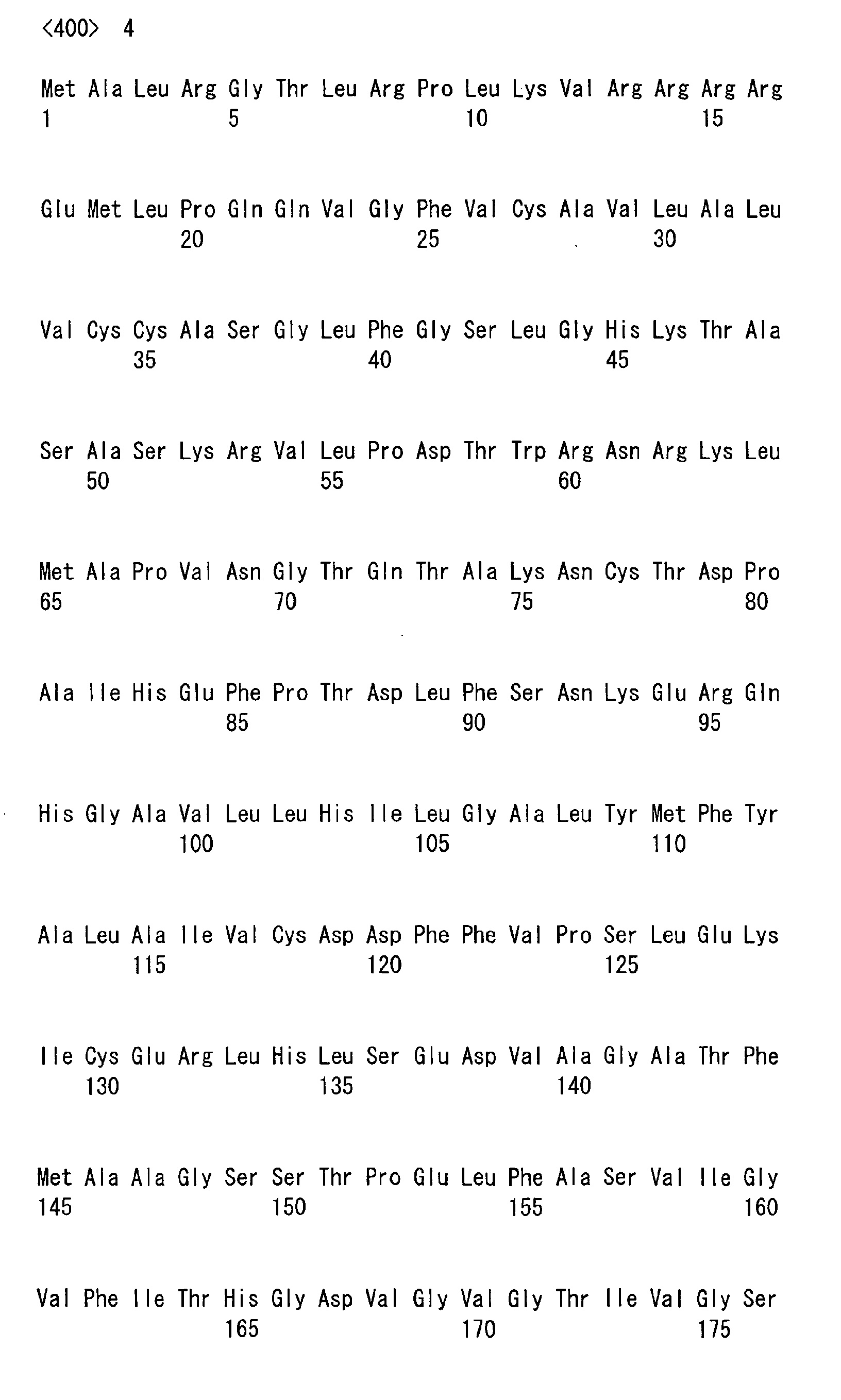
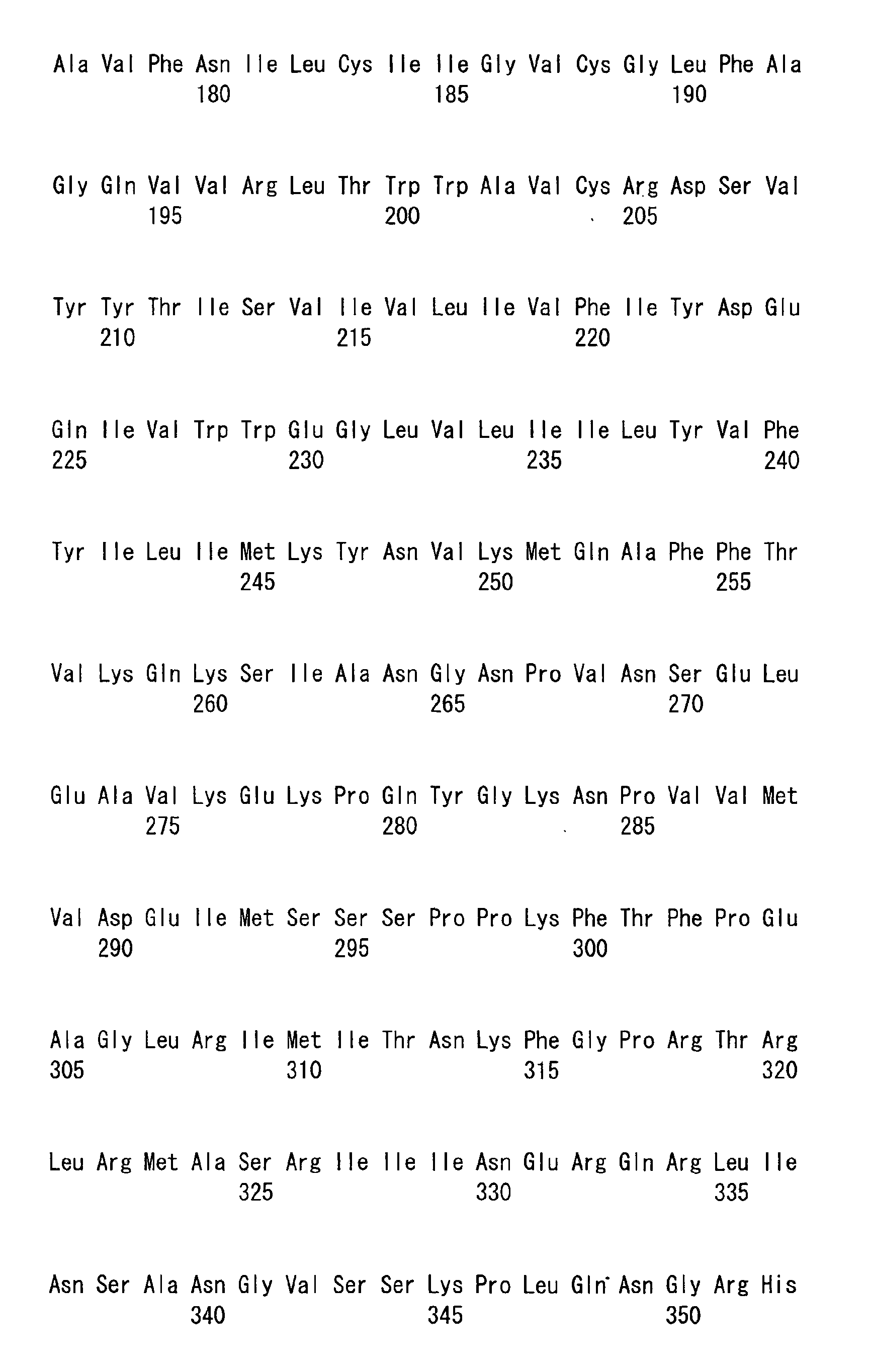
- WO02/26980 discloses the amino acid sequence identical with that, consisting of 603 amino acids, of SEQ ID NO: 4 in the present application, but does not disclose that a polypeptide consisting of the above amino acid sequence or a polypeptide encoding the polypeptide was actually obtained and does not disclose a specific method for obtaining the same. Therefore, the polypeptide consisting of the amino acid sequence of SEQ ID NO: 4 and the polynucleotide encoding the polypeptide were first provided by the present inventors.
- WO01/75067 discloses a human diagnostic protein (480 amino acids) in which the amino acid sequence consisting of the 35th to 480th amino acids therein has a 82% homology with that consisting of the 257th to 622nd amino acids in the amino acid sequence of SEQ ID NO: 2 in the present application and has a 77% homology with that consisting of the 257th to 603rd amino acids in the amino acid sequence of SEQ ID NO: 4 in the present application.
- WO00/43495 discloses a human secretory protein (235 amino acids) and a human secretory protein (169 amino acids) in which the amino acid sequences consisting of the 33rd to 235th amino acids and the 1st to 169th amino acids have 86% and 97% homologies with those consisting of the 400th to 603rd amino acids and the 435th to 603rd amino acids in the amino acid sequence of SEQ ID NO: 4 in the present application, respectively. J. Biol.
- NCKX3 (644 amino acids) in which the amino acid sequence consisting of the 17th to 641st amino acids therein has a 58% homology with that consisting of the 13th to 618th amino acids in the amino acid sequence of SEQ ID NO: 2 in the present application and has a 58% homology with that consisting of the 13th to 599th amino acids in the amino acid sequence of SEQ ID NO: 4 in the present application.
- no references suggest an obtaining of the polypeptide of the present invention.
- polypeptide of the present invention has an advantageous effect which cannot be expected from the above known polypeptides, that is, a usefulness as a screening tool for obtaining an inhibitor of leukocyte activation (particularly a therapeutic agent for cell injury due to postischemic reperfusion and/or an inflammatory disease).
- polypeptide of the present invention includes
- exhibiting a sodium-calcium exchange activity means exhibiting an exchange reaction in which intracellular sodium is extruded outside the cell and extracellular calcium flows into the cell (the reverse direction), or exhibiting an exchange reaction in which intracellular calcium is extruded outside the cell and extracellular sodium flows into the cell (the forward direction).
- exhibiting a reverse sodium-calcium exchange activity means exhibiting an exchange reaction in which intracellular sodium is extruded outside the cell and extracellular calcium flows into the cell (Na + i -Ca 2+ o exchange; the reverse direction).
- exhibiting a forward sodium-calcium exchange activity means exhibiting an exchange reaction in which intracellular calcium is extruded outside the cell and extracellular sodium flows into the cell (Na + o -Ca 2+ i exchange; the forward direction).
- test polypeptide Whether or not a polypeptide (hereinafter referred to as a test polypeptide) "exhibits a sodium-calcium exchange activity" may be confirmed by a method known to those skilled in the art (Iwamoto T. et al., J. Biol. Chem., 271, 22391-22397, 19962). A method for confirming it is not particularly limited and, for example, the following method may be used.
- Cells are transfected with an expression vector comprising a polynucleotide encoding the test polypeptide.
- a method described in Example 4 may be used. More particularly, the resulting cells are treated with an ionophore (such as monensin) to a univalent cation, to incorporate sodium into the cells; the extracellular solution is changed to a solution containing 45 Ca, to exchange intracellular sodium for extracellular calcium; and an intracellular 45 Ca radioactivity is measured.
- an ionophore such as monensin
- the resulting cells are cultured in a medium containing calcium chloride ( 45 Ca chloride) to incorporate calcium ions into the cells; the cells are washed with a washing solution to remove calcium ions not incorporated; the extracellular solution is changed to an extracellular solution for measurement containing sodium ions; and a 45 Ca radioactivity contained in the solution is measured.
- the radioactivity is detected, it may be confirmed that the test polypeptide "exhibits a sodium-calcium exchange activity".
- polypeptide of the present invention a polypeptide in which a radioactivity of two or more times that obtained in the case of the extracellular solution containing 150 mmol/L NaCl is detected when using the method of Example 4 is preferable.
- Whether or not the sodium-calcium exchange activity of the test compound is "potassium-dependent" may be confirmed by a method known to those skilled in the art (Kimura, M., J. Biol. Chem., 268, p.6874-6877, 1993; Kraev A. et al., J. Biol. Chem., 276, 23161-23172, 2001).
- a method for confirming it is not particularly limited but, for example, the following method (preferably a method described in Example 4) may be used. More particularly, cells are transfected with an expression vector comprising a polynucleotide encoding the test polypeptide.
- polypeptide of the present invention a polypeptide in which a radioactivity of five or more times that obtained in the case of the extracellular solution A described in Example 4 is detected when using the extracellular solution C or D described in Example 4 is preferable.
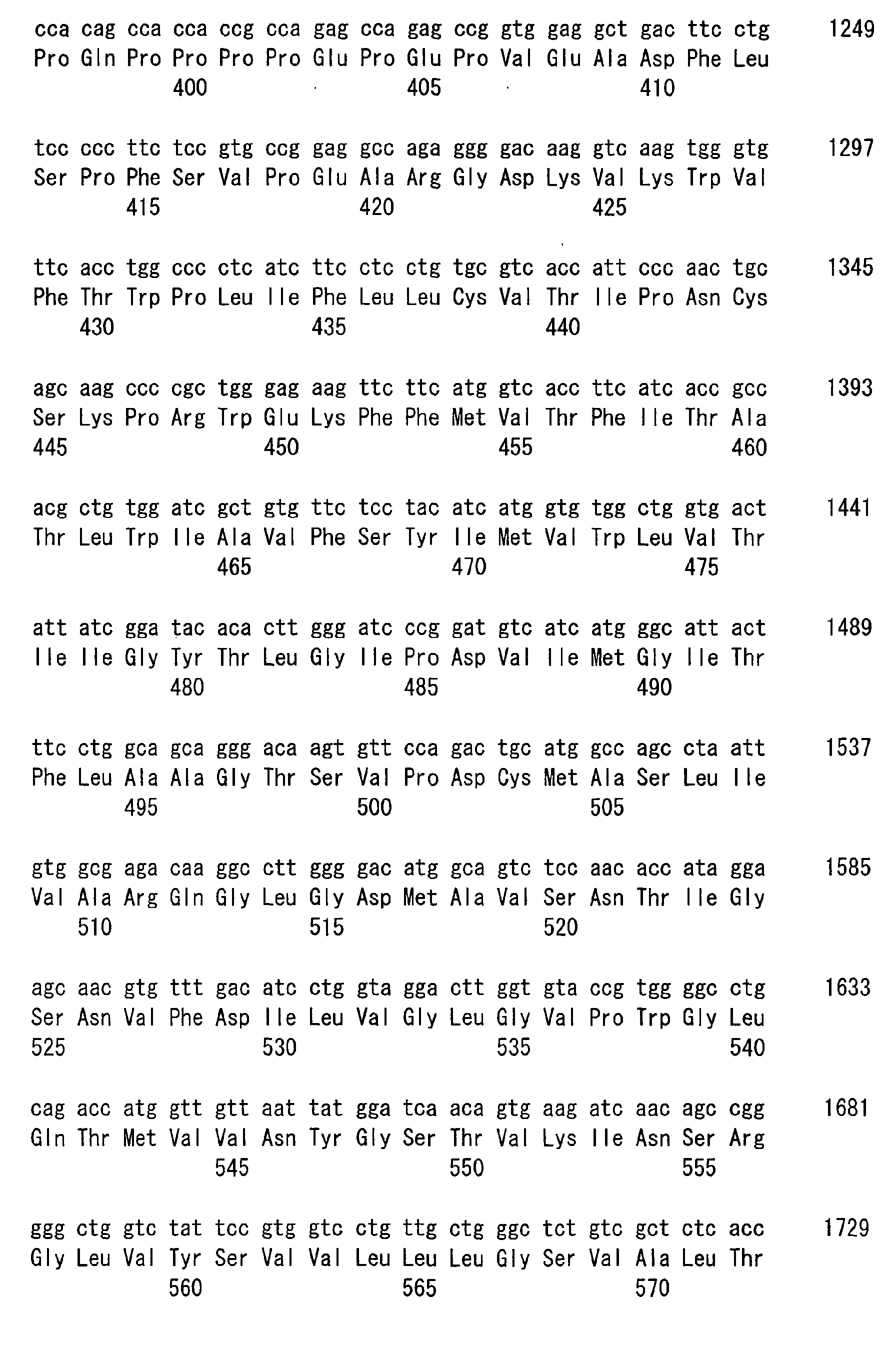
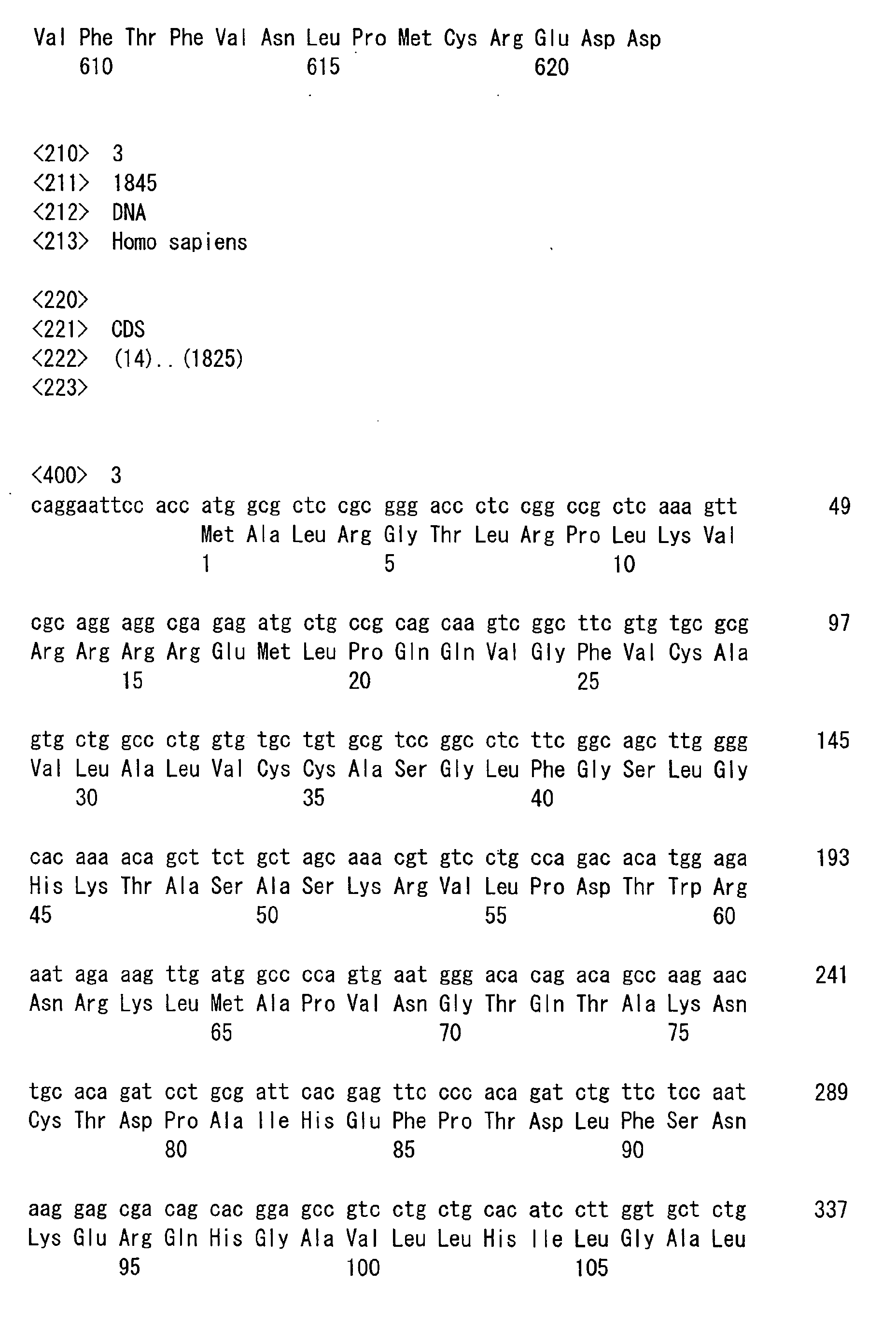
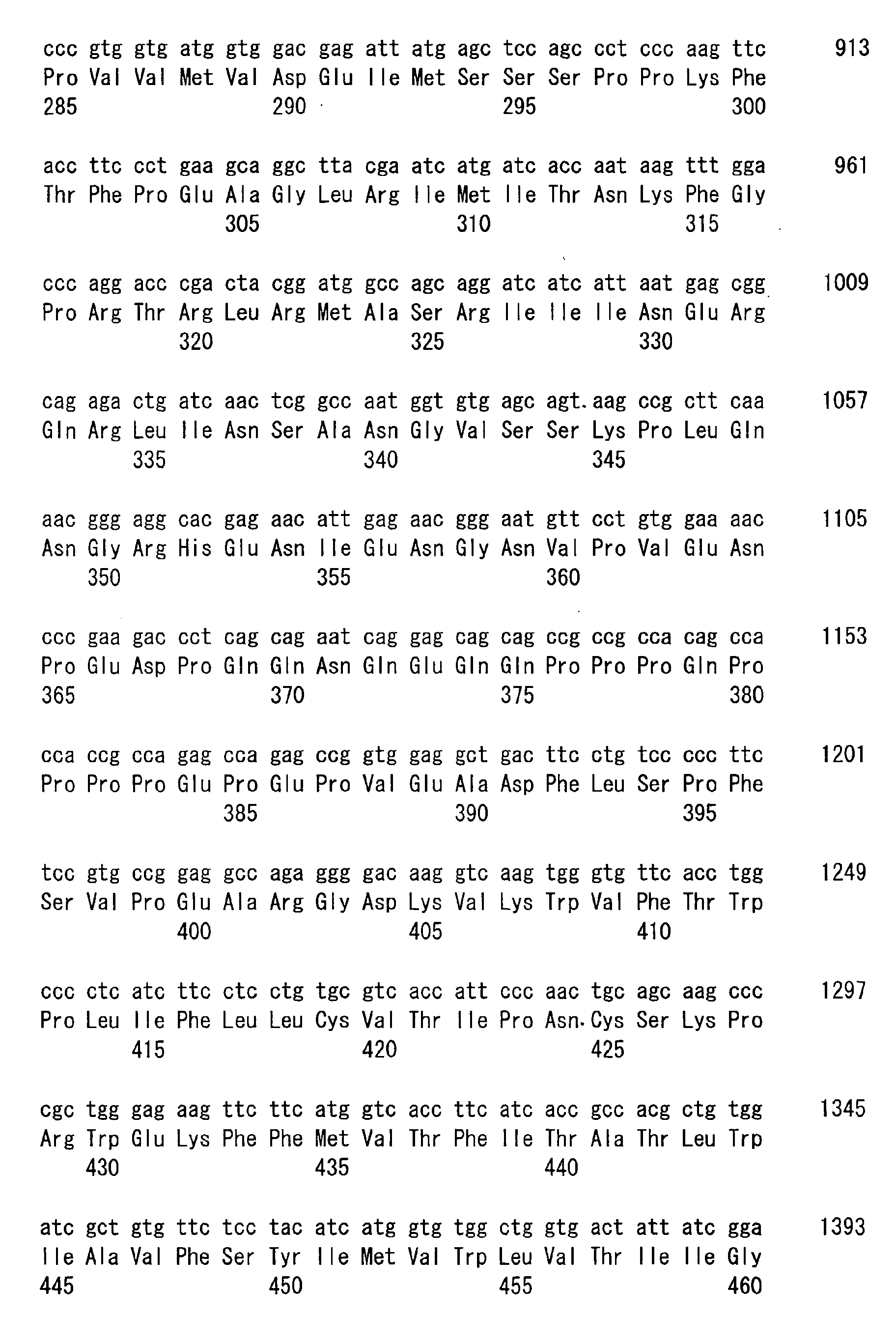
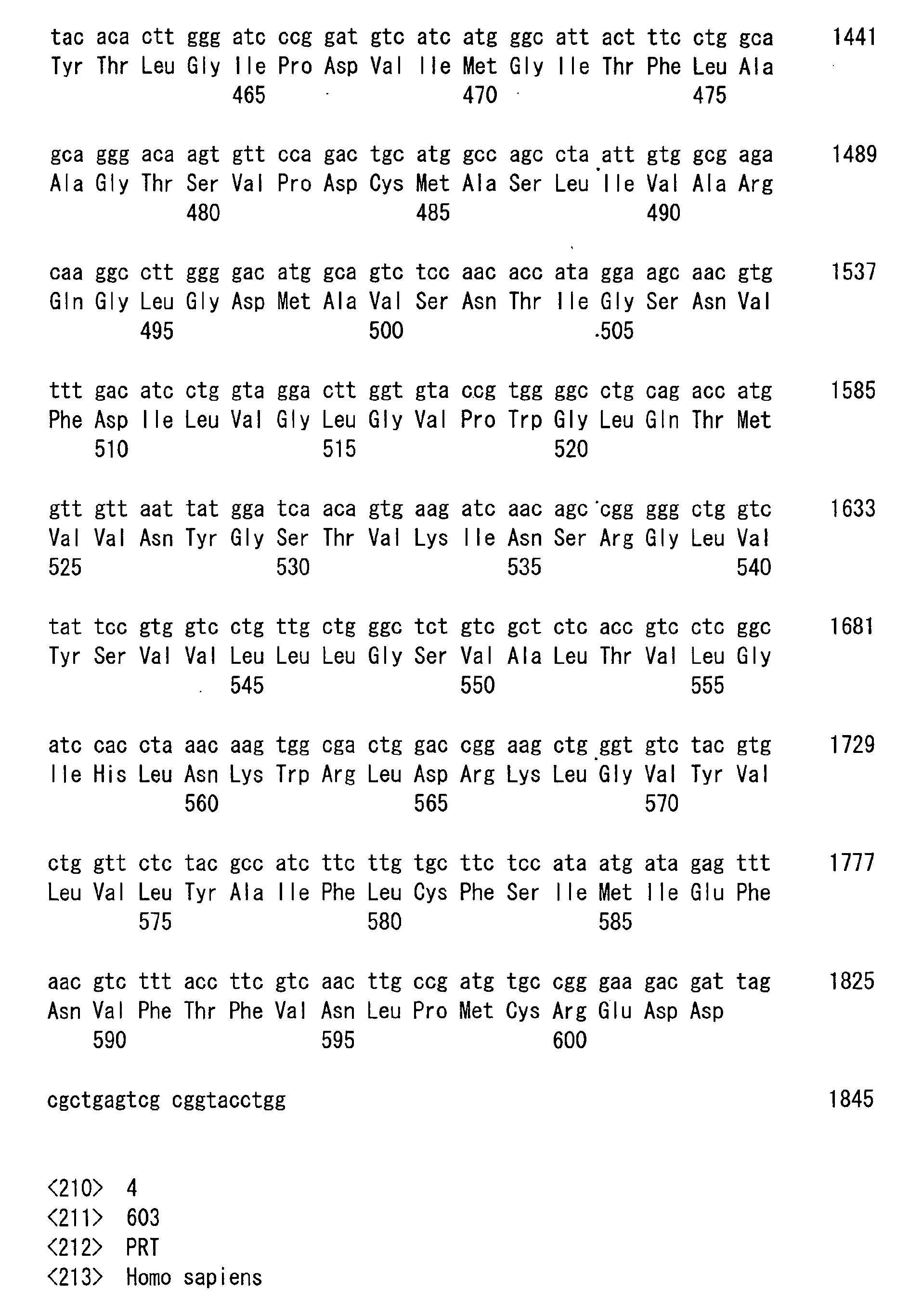
- polypeptides consisting of the amino acid sequences of SEQ ID NOS: 2 and 4 which are included in the polypeptide of the present invention, are novel human potassium-dependent sodium-calcium exchangers consisting of 622 and 603 amino acid residues, respectively.
- Each polypeptide consisting of the amino acid sequence of SEQ ID NO: 2 or 4 is expressed in peripheral leukocytes, as shown in Example 2.
- the variation functionally equivalent of the present invention is not particularly limited, so long as it is a polypeptide consisting of an amino acid sequence in which 1 to 5 amino acids, preferably 1 to 3 amino acids, in total are substituted, deleted, inserted, and/or added at one or plural positions (for example, 1 to 3 positions) in the amino acid sequence of SEQ ID NO: 2 or 4, and exhibiting the potassium-dependent sodium-calcium exchange activity. Further, an origin of the variation functionally equivalent is not limited to a human.
- variation functionally equivalent of the present invention includes, for example, not only human variations of the polypeptide consisting of the amino acid sequence of SEQ ID NO: 2 or 4, but also variations functionally equivalent derived from organisms other than a human (such as a mouse, a hamster, or a dog). Further, it includes polypeptides prepared using polynucleotides obtained by artificially modifying their amino acid sequences encoded thereby by genetic engineering techniques, on the basis of polynucleotides encoding these native polypeptides (i.e., human variations or variations functionally equivalent derived from organisms other than a human), or on the basis of polynucleotides encoding the amino acid sequence of SEQ ID NO: 2 or 4.
- variant as used herein means an individual difference between the same polypeptides in the same species or a difference between homologous polypeptides in several species.
- the variation functionally equivalent derived from a human or organisms other than a human may be obtained by those skilled in the art in accordance with the information of the base sequence of SEQ ID NO: 1 or 3 (for example, the sequence consisting of the 14th to 1882nd bases in the base sequence of SEQ ID NO: 1, or the sequence consisting of the 14th to 1825th bases in the base sequence of SEQ ID NO: 3).
- an appropriate probe or appropriate primers are designed in accordance with the information of the base sequence.
- a polymerase chain reaction (PCR) method Saiki, R. K.
- a hybridization method is carried out using a sample (for example, total RNA or an mRNA fraction, a cDNA library, or a phage library) prepared from an organism (for example, a mammal such as a human, a mouse, a hamster, or a dog) of interest and the primers or the probe to obtain a polynucleotide encoding the polypeptide.
- a sample for example, total RNA or an mRNA fraction, a cDNA library, or a phage library
- an organism for example, a mammal such as a human, a mouse, a hamster, or a dog
- a desired polypeptide may be obtained by expressing the resulting polynucleotide in an appropriate expression system, and then, for example, by confirming that the expressed polypeptide exhibits the sodium-calcium exchange activity by a method described in Example 4, and further confirming that the activity is dependent on a potassium ion by a method described in Example 4.
- genetic engineering techniques may be performed in accordance with known methods (for example, Maniatis, T. et al., "Molecular Cloning-A Laboratory Manual", Cold Spring Harbor Laboratory, NY, 1982), unless otherwise specified.
- the above artificially-modified polypeptide using a polynucleotide modified artificially by genetic engineering techniques may be obtained by, for example, the following procedure.
- a polynucleotide encoding the polypeptide is obtained by a conventional method such as site-specific mutagenesis (Mark, D. F. et al., Proc. Natl. Acad. Sci. USA, 81, 5662-5666, 1984).
- a desired polypeptide may be obtained by expressing the resulting polynucleotide in an appropriate expression system, and then, for example, by confirming that the expressed polypeptide exhibits the sodium-calcium exchange activity by a method described in Example 4, and further confirming that the activity is dependent on a potassium ion by a method described in Example 4.
- the polynucleotide of the present invention is not particularly limited, so long as it encodes the polypeptide of the present invention.
- the polynucleotide of the present invention there may be mentioned, for example, a polynucleotide having the sequence consisting of the 14th to 1882nd bases in the base sequence of SEQ ID NO: 1, or the sequence consisting of the 14th to 1825th bases in the base sequence of SEQ ID NO: 3.
- the term "polynucleotide” as used herein includes both DNA and RNA.
- a method for producing the polynucleotide of the present invention is not particularly limited, but there may be mentioned, for example, (1) a method using PCR, (2) a method using conventional genetic engineering techniques (i.e., a method for selecting a transformant comprising a desired cDNA from strains transformed with a cDNA library), or (3) a chemical synthesis method, as described in WO02/052000. These methods will be explained in this order hereinafter.
- the polynucleotide of the present invention may be produced, for example, by the following procedure.
- mRNA is extracted from human cells or tissue capable of producing the polypeptide of the present invention.
- a pair of primers, between which full-length mRNA corresponding to the polypeptide of the present invention or a partial region of the mRNA is located, is synthesized on the basis of the base sequence of a polynucleotide encoding the polypeptide of the present invention.
- Full-length cDNA encoding the polypeptide of the present invention or a part of the cDNA may be obtained by performing a reverse transcriptase-polymerase chain reaction (RT-PCR) using the extracted mRNA as a template. Further, a desired DNA fragment may be obtained by digesting the obtained DNA with a restriction enzyme or the like and performing ligation, if desired.
- RT-PCR reverse transcriptase-polymerase chain reaction
- the polynucleotide of the present invention may be produced, for example, by the following procedure.
- single-stranded cDNA is synthesized by using reverse transcriptase from mRNA prepared by the above-mentioned PCR method as a template, and then double-stranded cDNA is synthesized from the single-stranded cDNA.
- a recombinant plasmid comprising the double-stranded cDNA is prepared and introduced into an Escherichia coli strain, such as DH 5 ⁇ , thereby transforming the strain.
- a transformant is selected using a drug resistance against, for example, tetracycline or ampicillin as a marker.
- various methods such as a method for screening a transformant using a synthetic oligonucleotide probe or a method for screening a transformant using a probe produced by PCR, may be used.
- a method for collecting the polynucleotide of the present invention from the resulting transformant of interest can be carried out in accordance with a known method (for example, Maniatis, T. et al., "Molecular Cloning-A Laboratory Manual", Cold Spring Harbor Laboratory, NY, 1982). For example, it may be carried out by separating a fraction corresponding to the plasmid DNA from cells and cutting out the cDNA region from the plasmid DNA.
- the polynucleotide of the present invention may be produced, for example, by binding DNA fragments produced by a chemical synthesis method.
- Each DNA fragment can be synthesized using a DNA synthesizer [for example, Oligo 1000M DNA Synthesizer (Beckman) or 394 DNA/RNA Synthesizer (Applied Biosystems)].
- codons for each amino acid are known and can be optionally selected and determined by the conventional method, for example, by taking a codon usage of each host to be used into consideration (Crantham, R. et al., Nucleic Acids Res., 9, r43-r74, 1981). Further, a partial modification of codons of these base sequences can be carried out in accordance with a conventional method, such as site specific mutagenesis using a primer comprised of a synthetic oligonucleotide encoding for a desired modification (Mark, D. F. et al., Proc. Natl. Acad. Sci. USA, 81, 5662-5666, 1984).
- Determination of the DNA sequences obtained by the above-mentioned methods can be carried out by, for example, a dideoxynucleotide chain termination method (Messing, J. and Vieira, J., Gene, 19, 269-276, 1982).
- fluorescence labeled dideoxynucleotides are incorporated to a DNA fragment by a PCR method using a reaction solution containing fluorescence labeled dideoxynucleotides.
- the amplified DNA fragment is electrophoresed in a sequencer (for example,3700DNA sequencer; PE Biosystems) and the base sequence thereof can be determined by detecting the fluorescence.
- the isolated polynucleotide of the present invention is re-integrated into an appropriate vector DNA and a host cell (including a eucaryotic host cell and a procaryotic host cell) may be transformed by the resulting expression vector. Further, it is possible to express the polynucleotide in a desired host cell, by introducing an appropriate promoter and a sequence related to the gene expression into the vector.
- the expression vector of the present invention is not particularly limited, so long as it comprises the polynucleotide of the present invention.
- the expression vector there may be mentioned, for example, an expression vector obtained by introducing the polynucleotide of the present invention into a known expression vector appropriately selected in accordance with a host cell to be used.
- the cell of the present invention is not particularly limited, so long as it is transfected with the expression vector of the present invention and comprises the polynucleotide of the present invention.
- the cell of the present invention may be, for example, a cell in which the polynucleotide is integrated into a chromosome of a host cell, or a cell containing the polynucleotide as an expression vector comprising the polynucleotide.
- the cell of the present invention may be a cell expressing the polypeptide of the present invention, or a cell not expressing the polypeptide of the present invention.
- the cell of the present invention may be obtained by, for example, transfecting a desired host cell with the expression vector of the present invention.
- eucaryotic host cells for example, cells of vertebrates, insects, and yeast are included.
- the vertebral cell there may be mentioned, for example, a simian COS cell (Gluzman, Y., Cell, 23, 175-182, 1981), a dihydrofolate reductase defective strain of a Chinese hamster ovary cell (CHO-dhfr - cell) (Urlaub, G. and Chasin, L. A., Proc. Natl. Acad. Sci.
- a Chinese hamster lung fibroblast (Dede cell, ATCC: CCL-39) used in Example 4
- a human fetal kidney derived HEK293 cell (ATCC: CRL-1573) used in Example 4
- a 293-EBNA cell (Invitrogen) obtained by introducing an EBNA-1 gene of Epstein Barr Virus into HEK293 cell, or L929 cell (ATCC: CRL-2148).
- a vector containing a promoter positioned upstream of the gene to be expressed an RNA splicing site, a polyadenylation site, a transcription termination sequence, and the like may be generally used.
- the vector may further contain a replication origin, if necessary.
- the expression vector there may be mentioned, for example, pSV2dhfr containing an SV40 early promoter (Subramani, S. et al., Mol. Cell. Biol., 1, 854-864, 1981), pEF-BOS containing a human elongation factor promoter (Mizushima, S.
- a vector which has an SV40 replication origin can perform an autonomous replication in the COS cell, and has a transcription promoter, a transcription termination signal, and an RNA splicing site, may be used as the expression vector.
- the vector there may be mentioned, for example, pME18S (Maruyama, K. and Takebe, Y., Med. Immunol., 20, 27-32, 1990), pEF-BOS (Mizushima, S. and Nagata, S., Nucleic Acids Res., 18, 5322, 1990), or pCDM8 (Seed, B., Nature, 329, 840-842, 1987).
- the expression vector may be incorporated into COS cells by, for example, a DEAE-dextran method (Luthman, H. and Magnusson, G., Nucleic Acids Res., 11, 1295-1308, 1983), a calcium phosphate-DNA co-precipitation method (Graham, F. L. and van der Ed, A. J., Virology, 52, 456-457, 1973), a method using a commercially available transfection reagent (for example, FuGENETM6 Transfection Reagent; Roche Diagnostics), or an electroporation method (Neumann, E. et al., EMBO J., 1, 841-845, 1982).
- a DEAE-dextran method Lithman, H. and Magnusson, G., Nucleic Acids Res., 11, 1295-1308, 1983
- a calcium phosphate-DNA co-precipitation method Graham, F. L. and van der Ed, A. J., Virology, 52, 456-457, 1973
- a transformant capable of stably producing the polypeptide of the present invention can be obtained by carrying out a co-transfection of an expression vector comprising the polynucleotide of the present invention, together with a vector capable of expressing a neo gene which functions as a G418 resistance marker, such as pRSVneo (Sambrook, J. et al., "Molecular Cloning-A Laboratory Manual", Cold Spring Harbor Laboratory, NY, 1989) or pSV2-neo (Southern, P. J. and Berg, P., J. Mol. Appl. Genet., 1, 327-341, 1982), and selecting a G418 resistant colony.
- pRSVneo Standardbrook, J. et al., "Molecular Cloning-A Laboratory Manual", Cold Spring Harbor Laboratory, NY, 1989
- pSV2-neo Southern, P. J. and Berg, P., J. Mol. Appl. Genet., 1, 327-341, 1982
- pCEP4 Invitrogen
- pCEP4 containing a replication origin of Epstein Barr Virus and capable of performing an autonomous replication in the 293-EBNA cell
- the cell of the present invention may be cultured in accordance with the conventional method, and the polypeptide of the present invention is produced at the surface of the cell.
- a medium to be used in the culturing a medium commonly used in a desired host cell may be appropriately selected.
- a medium such as an RPMI-1640 medium or a Dulbecco's modified Eagle's minimum essential medium (DMEM) may be used, by supplementing it with a serum component such as fetal bovine serum (FBS) if necessary.
- FBS fetal bovine serum
- a medium such as a Dulbecco's modified Eagle's minimum essential medium (DMEM) with a serum component such as fetal bovine serum (FBS) and G418 may be used.
- the polypeptide of the present invention produced at the cell surface by culturing the cell of the present invention may be separated and purified therefrom by various known separation techniques making use of the physical properties, chemical properties and the like of the polypeptide. More particularly, a cell membrane fraction containing the polypeptide of the present invention may be obtained by culturing cells expressing the polypeptide of the present invention, suspending them in a buffer, homogenizing them, and centrifuging the resulting homogenate.
- the polypeptide of the present invention may be purified by a commonly used treatment, for example, a treatment with a protein precipitant, ultrafiltration, various liquid chromatography techniques such as molecular sieve chromatography (gel filtration), adsorption chromatography, ion exchange chromatography, affinity chromatography, or high performance liquid chromatography (HPLC), or dialysis, or a combination thereof.
- a commonly used treatment for example, a treatment with a protein precipitant, ultrafiltration, various liquid chromatography techniques such as molecular sieve chromatography (gel filtration), adsorption chromatography, ion exchange chromatography, affinity chromatography, or high performance liquid chromatography (HPLC), or dialysis, or a combination thereof.
- a substance which inhibits the polypeptide of the present invention can be screened by using the cell expressing the polypeptide of the present invention so as to exhibit the potassium-dependent sodium-calcium exchange activity.
- the intracellular calcium overload due to reperfusion plays an important role in the generation of a reperfusion injury and that the potassium-dependent sodium-calcium exchanger is involved in the calcium influx into the cell accompanied by the extrusion of intracellular sodium (reverse direction). Further, it is known that the sodium-calcium exchanger extrudes intracellular sodium outside the cell and incorporates calcium into the cell during postischemic reperfusion, to return the intracellular sodium overload caused by reperfusion to the original state. Furthermore, it is known that an expression of adhesive factors in leukocytes was increased by an increased intracellular calcium concentration, and that monoclonal antibodies against the adhesive factors suppressed the leukocyte accumulation and reduced the area of infarction. Therefore, it is considered that an inhibition of an intracellular calcium overload in leukocytes suppresses the leukocyte accumulation and leukocyte activation by adhesive factors due to the overload, and has an activity of avoiding cell injury caused by the phenomenon of no reflow.
- the polypeptide of the present invention consisting of the sequence of SEQ ID NO: 2 or 4 is a potassium-dependent sodium-calcium exchanger expressed abundantly in peripheral leukocytes. Therefore, it is considered that an agent inhibiting or suppressing the potassium-dependent sodium-calcium exchange (reverse direction) in the polypeptide of the present invention suppresses calcium influx into the cell and inhibits the leukocyte activation or adhesion, and thus is useful in the treatment of a cell injury due to postischemic reperfusion.
- leukocyte activation postischemic reperfusion and inflammation have common aspects, such as an increased intracellular pH in leukocytes and activation of the sodium-hydrogen exchanger thereby, and an increased intracellular calcium concentration thereby, and thus it is considered that the sodium-calcium exchanger in leukocytes is involved in a leukocyte activation during postischemic reperfusion injury and inflammation. That is, it is considered that an inhibition of sodium-calcium exchanger activation in leukocytes suppresses the increased intracellular calcium concentration in leukocytes and inhibits the leukocyte activation.
- the cell of the present invention per se may be used as a screening tool for an inhibitor of the polypeptide of the present invention and an inhibitor of leukocyte activation (particularly a therapeutic agent for cell injury due to postischemic reperfusion and/or an inflammatory disease).
- inhibiting or suppressing the polypeptide of the present invention means inhibiting or suppressing the potassium-dependent sodium-calcium exchange activity, including the case of inhibiting or suppressing the potassium-dependent sodium-calcium exchange activity by inhibiting or suppressing the expression of the polypeptide.
- the method for screening an inhibitor of the polypeptide of the present invention and an inhibitor of leukocyte activation comprises the steps of:
- Substances to be tested which may be applied to the screening method of the present invention are not particularly limited, but there may be mentioned, for example, various known compounds (including peptides) registered in chemical files, compounds obtained by combinatorial chemistry techniques (Terrett, N. K. et al., Tetrahedron, 51, 8135-8137, 1995), or random peptides prepared by employing a phage display method (Felici, F. et al., J. Mol. Biol., 222, 301-310, 1991) or the like.
- culture supernatants of microorganisms, natural components derived from plants or marine organisms, or animal tissue extracts may be used as the test substances for screening.
- compounds (including peptides) obtained by chemically or biologically modifying compounds (including peptides) selected by the screening method of the present invention may be used.
- the screening method of the present invention is not particularly limited, so long as it comprises the steps of:
- a substance which inhibits the polypeptide of the present invention and is useful in treating cell injury due to postischemic reperfusion and/or an inflammatory disease may be screened by, for example, the following method.
- Sodium is incorporated into cells expressing the polypeptide of the present invention at the cell surface, using an ionophore (such as monensin) to a univalent cation; the extracellular solution is changed to a radioisotope 45 Ca 2+ ion-containing extracellular solution with or without a test compound; and an intracellular 45 Ca 2+ radioactivity is measured.
- an ionophore such as monensin
- the screening method [1] of the present invention comprises the steps of:
- the cells expressing the polypeptide of the present invention are treated with an extracellular solution containing a test compound and monensin, to incorporate sodium into the cells.
- the extracellular solution is changed to an extracellular solution containing the test compound and 45 Ca 2+ , to incorporate 45 Ca 2+ into the cells by the sodium-calcium exchange activity.
- the cells are washed with a solution containing lanthanum, an inhibitor of the sodium-calcium exchange activity, to remove 45 Ca 2+ not incorporated.
- an amount of 45 Ca 2+ influx into the cells is decreased, and thus whether or not the polypeptide of the present invention is inhibited can be analyzed on the basis of the radioactivity in the cells as an indicator of the reverse sodium-calcium exchange activity. More particularly, it is preferable to detect the reverse sodium-calcium exchange activity by the method described in Example 4.
- An inhibitor of the polypeptide of the present invention can be screened by analyzing a change of radioactivity incorporated into the cells by adding the test substance.
- a calcium sensitive dye is incorporated into the cells expressing the polypeptide of the present invention at the cell surface, and then whether or not the polypeptide of the present invention is inhibited is analyzed, on the basis of a change of a fluorescence intensity thereof in the cells in the presence or absence of the test compound.
- the cells expressing the polypeptide of the present invention at the cell surface are treated with an extracellular solution containing an ionophore (such as monensin) to a univalent cation, to incorporate sodium into the cells.
- the extracellular solution is changed to an extracellular solution containing a test compound and a calcium sensitive dye, to incorporate the calcium sensitive dye into the cells by the sodium-calcium exchange activity.
- the cells are washed with a solution containing an inhibitor of the sodium-calcium exchange activity such as lanthanum, to remove the calcium sensitive dye not incorporated.
- a fluorescence intensity of the calcium sensitive dye in the cells is decreased, and thus whether or not the polypeptide of the present invention is inhibited can be analyzed, on the basis of the fluorescence intensity in the cells as an indicator of the reverse sodium-calcium exchange activity.
- An inhibitor of the polypeptide of the present invention can be screened by detecting the fluorescence intensity of the calcium sensitive dye in the presence of the test compound.
- the screening method comprises the steps of:
- the activity of the polypeptide of the present invention can be detected using, for example, Fura-2 or a derivative thereof as the calcium sensitive dye.
- An inhibitor of the polypeptide of the present invention can be screened by comparing a change of the fluorescence intensity of the dye in the presence or absence of the test substance. When the reverse sodium-calcium exchange activity is inhibited, the fluorescence intensity is decreased.
- a substance (particularly a compound) which inhibits the potassium-dependent sodium-calcium exchange activity of the polypeptide of the present invention i.e., a substance (particularly a compound) having an inhibitory activity
- a compound having an inhibitory activity to be selected in the screening method of the present invention may be defined as a compound which inhibits an activity of the novel potassium-dependent sodium-calcium exchanger consisting of the amino acid sequence of SEQ ID NO: 2 or 4.
- a compound having IC50 of 100 ⁇ mol/L or less is preferable.
- a compound having IC50 of 100 ⁇ mol/L or less can be selected as a substance having an inhibitory activity.
- an inhibitory compound isolated by the screening as a main component a medicament which targets the novel potassium-dependent sodium-calcium exchanger consisting of the amino acid sequence of SEQ ID NO: 2 or 4 can be obtained.
- IC50 of 2-[2-[4-(4-nitrobenzyloxy)phenyl]ethyl] isothiourea methanesulfonate (hereinafter referred to as compound A) selected in Example 6 were 15.8 ⁇ mol/L and 35.0 ⁇ mol/L, with respect to the novel potassium-dependent sodium-calcium exchangers consisting of the amino acid sequences of SEQ ID NOS: 2 and 4, respectively.
- IC50 of 3',4'-dichlorobenzamil (hereinafter referred to as compound B) were 20.2 ⁇ mol/L and 58.9 ⁇ mol/L, with respect to the novel potassium-dependent sodium-calcium exchangers consisting of the amino acid sequences of SEQ ID NOS: 2 and 4, respectively. From the results, it is apparent that an inhibitor of the novel potassium-dependent sodium-calcium exchanger consisting of the amino acid sequence of SEQ ID NO: 2 or 4 can be selected by the screening method of the present invention.
- the medicament of the present invention comprising, as an active ingredient, a compound (preferably the above compound A or B) which modifies an activity of the novel potassium-dependent sodium-calcium exchanger consisting of the amino acid sequence of SEQ ID NO: 2 or 4 may be prepared using carriers, fillers, or other additives generally used in the preparation of medicaments, in accordance with the active ingredient.
- administration examples include oral administration by tablets, pills, capsules, granules, fine granules, powders, oral solutions and the like, and parenteral administration by injections (e.g., intravenous, intramuscular, or the like), suppositories, transdermal preparations, transmucosal absorption preparations and the like.
- parenteral administration such as an intravenous injection or the like is preferable.
- one or more active substances may be mixed with at least one inert diluent such as lactose, mannitol, glucose, microcrystalline cellulose, hydroxypropylcellulose, starch, polyvinyl pyrrolidone, or aluminum magnesium silicate.
- the composition may contain additives other than the inert diluent, such as a lubricant, a disintegrating agent, a stabilizing agent, or a solubilizing or solubilization assisting agent.
- tablets or pills may be coated with a sugar coating or a film of a gastric or enteric substance.
- the liquid composition for oral administration may include, for example, emulsions, solutions, suspensions, syrups, and elixirs, and may contain a generally used inert diluent such as purified water or ethyl alcohol.
- the composition may contain additives other than the inert diluent, such as moistening agents, suspending agents, sweeteners, flavors, or antiseptics.
- the injections for parenteral administration may include aseptic aqueous or non-aqueous solutions, suspensions, and emulsions.
- examples of the diluent for use in the aqueous solutions and suspensions include distilled water for injection use and physiological saline.
- examples of the diluent for use in the non-aqueous solutions and suspensions include alcohols (e.g., ethanol), glycols (e.g., propylene glycol or polyethylene glycol), polysorbate 80 (trade name) and the like.
- Such a composition may further contain a moistening agent, an emulsifying agent, a dispersing agent, a stabilizing agent, a solubilizing or solubilization assisting agent, an antiseptic or the like.
- compositions may be sterilized, for example, by filtration through a bacteria retaining filter, blending of a germicide, or irradiation. Alternatively, they may be used by first making them into sterile solid compositions and dissolving them in sterile water or other sterile solvent for injection use prior to their use.
- the dose is optionally decided by taking into consideration the strength of each active ingredient selected by the aforementioned screening method, or symptoms, age, sex, or the like of each patient to be administered.
- the usual dosage for an adult 60 kg in weight
- the usual dosage for parenteral administration is about 0.01 to 50 mg, preferably 0.01 to 10 mg per day in the form of an injection.
- Example 1 Isolation of genes encoding novel potassium-dependent sodium-calcium exchangers and construction of expression vectors
- a full-length cDNA encoding each novel sodium-calcium exchanger of the present invention having the amino acid sequence of SEQ ID NO: 2 or 4 was obtained by a reverse transcriptase-polymerase chain reaction (RT-PCR) method using human brain cDNA (Marathon-Ready cDNA; Clontech) as a template, by the following procedure.
- RT-PCR reverse transcriptase-polymerase chain reaction
- a PCR was carried out using human brain cDNA (Marathon-Ready cDNA; Clontech) as a template, an oligonucleotide consisting of the base sequence of SEQ ID NO: 5 (having the EcoRI recognition sequence added to the 5'-terminus) as a forward primer, an oligonucleotide consisting of the base sequence of SEQ ID NO: 6 (having the KpnI recognition sequence added to the 5'-terminus) as a reverse primer, and DNA Polymerase (PLATINUM Taq DNA Polymerase High-Fidelity; GIBCO-BRL).
- plasmid pcDNA3.1 contains a cytomegalovirus promoter sequence and may be used for expressing a novel potassium-dependent sodium-calcium exchanger in an animal cell.
- the base sequences of the clones pcDNA-622 and pcDNA-603 were analyzed using a DNA sequencer (ABI377 DNA Sequencer; Applied Biosystems) by a dideoxy terminator method to obtain the base sequences of SEQ ID NOS: 1 and 3, respectively.
- the amino acid sequence deduced from the open reading frame and consisting of 622 amino acid residues was that of SEQ ID NO: 2.
- the amino acid sequence deduced from the open reading frame and consisting of 603 amino acid residues was that of SEQ ID NO: 4.
- RT-PCR reverse transcriptase-polymerase chain reaction
- RNA 5 ng, respectively; Clontech
- a first-strand cDNA was synthesized by carrying out a reverse transcription using an RT-PCR kit (SUPERSCRIPT First-Strand Synthesis System for RT-PCR; GIBCO-BRL).
- a PCR was carried out using the resulting first-strand cDNA as a template, an oligonucleotide consisting of the base sequence of SEQ ID NO: 7 as a forward primer, an oligonucleotide consisting of the base sequence of SEQ ID NO: 8 as a reverse primer, and DNA Polymerase (PLATINUM Taq DNA Polymerase High-Fidelity; GIBCO-BRL).
- DNA Polymerase PKATINUM Taq DNA Polymerase High-Fidelity; GIBCO-BRL.
- a thermal denaturation was first performed at 94°C for 1 minute, and then a cycle consisting of reactions at 98°C for 10 seconds, at 64°C for 20 seconds, and at 68°C for 1 minute and 30 seconds was repeated 35 times.
- the base sequences of the primers are specific sequences commonly contained in both genes encoding the polypeptides consisting of the amino acid sequences of SEQ ID NOS: 2 and 4.
- DNA fragments of approximately 750 bp and approximately 700 bp were amplified.
- the DNA fragments of approximately 750 bp and approximately 700 bp contained "the sequence consisting of the 348th to 1101st bases in the base sequence of SEQ ID NO: 1" and "the sequence consisting of the 348th to 1044th bases in the base sequence of SEQ ID NO: 3", respectively. From the result, it was found that the mRNA of each potassium-dependent sodium-calcium exchanger of the present invention was expressed in human peripheral leukocytes.
- Example 3 Expression of potassium-dependent sodium-calcium exchangers in animal cells HEK293, Dede, and CHO
- Each polypeptide consisting of the amino acid sequence of SEQ ID NO: 2 or 4 was expressed in animal cells to detect a novel potassium-dependent sodium-calcium exchange activity of the polypeptide.
- animal cells an HEK293 cell (ATCC: CRL-1573), a Dede cell (ATCC: CCL-39), and a CHO-dhfr - cell (ATCC: CRL-9096) were used.
- HEK293 cells, Dede cells, or CHO-dhfr - cells were transfected with the expression vector pcDNA-622 or pcDNA-603 prepared in Example 1 and a commercially available transfection reagent (LipofectAMINE2000; GIBCO-BRL) to express each potassium-dependent sodium-calcium exchanger in each cell.
- a commercially available transfection reagent LipofectAMINE2000; GIBCO-BRL
- the concrete procedure was carried out in accordance with a manual attached to the transfection reagent.
- a cell transfected with the plasmid pcDNA3.1 was prepared as a control cell in a similar fashion.
- the resulting transfected cells were used in the following Examples 4 and 5.
- the sodium-calcium exchange activity was measured using each of the cells prepared in Example 3.
- monensin i.e., a solution containing 0.01 mmol/L monensin, 1 mmol/L ouabain, 146 mmol/L NaCl, 4 mmol/L KCl, 0.1 mmol/L CaCl 2 , 2 mmol/L MgCl 2 , 10 mmol/L glucose, 0.1% bovine serum albumin
- calcium chloride 45 CaCl 2 ; 55.5 kBq/mL
- extracellular solution B an extracellular solution in which choline chloride was substituted for NaCl
- extracellular solution D an extracellular solution in which choline chloride was substituted for NaCl
- a higher radioactivity of approximately two times that obtained in the case of the extracellular solution A was measured when using the extracellular solution B (extracellular solution in which sodium was replaced with choline).
- higher radioactivities of approximately five times and approximately ten times that obtained in the case of the extracellular solution A were measured when using the extracellular solutions C and D (extracellular solution containing potassium), respectively.
- Example 5 Construction of cell strain stably expressing novel potassium-dependent sodium-calcium exchanger
- Example 3 To construct a stable-expression cell strain, the Dede cells prepared in Example 3 were repetitively subcultured in a DMEM medium containing G-418 (GIBCO-BRL) at a final concentration of 400 mg/L, and the cells were seeded into wells of 96-well plates (5000 cells/well).
- the potassium-dependent sodium-calcium exchange activity in each well was measured in accordance with the method described in Example 4, to select cells having a potassium-dependent sodium-calcium exchange activity in which a radioactivity in the case of the extracellular solution C or D was 5000 cpm/well or more and an S/N ratio was 10 or more.
- the resulting stable-expression cell strains derived from a Dede cell were used in the following Example 6.
- Example 6 Screening substances inhibiting novel potassium-dependent sodium-calcium exchange activity utilizing radioisotope calcium ( 45 Ca) ion release
- the stable-expression cells derived from a Dede cell, prepared in Example 5, were seeded into each well of 96-well plates (5000 cells/well), and an inhibitory activity was determined by measuring a calcium ion radioactivity in accordance with the method described in Example 4, to screen substances which inhibit an activity of the novel potassium-dependent sodium-calcium exchanger consisting of the amino acid sequence of SEQ ID NO: 2 or 4.
- each solution containing a test compound i.e., a solution of a test compound dissolved in dimethyl sulfoxide (DMSO)] was added to the extracellular C or D containing calcium chloride ( 45 CaCl 2 ; 55.5 kBq/mL), and measured to select substances exhibiting an inhibitory activity of 30% or more.
- DMSO dimethyl sulfoxide
- the compounds obtained in Example 6 were evaluated using human peripheral polymorphonuclear leukocytes (PMNs).
- a blood sample was obtained by collecting blood from a healthy adult.
- a ficoll solution for separation (mono-poly resolving medium; Dainippon Pharmaceutical) was poured into each centrifuge tube, and a fresh blood component was laid on the ficoll solution. Centrifugation was carried out at 400 ⁇ g at room temperature for 30 minutes to separate the upper layer (monocytes), the intermediate layer (PMNs), and the precipitate (erythrocytes).
- PBS phosphate buffered saline
- Each collected layer was suspended in an RPMI1640 medium containing 0.2% bovine serum albumin (BSA), and used in the following experiment after counting the number of cells.
- BSA bovine serum albumin
- a portion of the resulting PMN component was stained by a hematoxylin and eosin stain to confirm that neutrophils (approximately 95%) and eosinophils (approximately 5%) were contained.
- Table 1 Each value shown in Table 1 is a relative value when the value obtained in the case of using DMSO instead of the test compounds is regarded as 100. Further, each value shown in Table 1 is an average and a standard deviation (SD) on the basis of three independent experiments. Data obtained in the case that PMNs were not stimulated by fMLP (BG) are shown in Table 1.
- the polypeptide of the present invention is a potassium-dependent sodium-calcium exchanger expressed in peripheral leukocytes, and thus is involved in leukocyte activation, cell injury due to postischemic reperfusion, and inflammation. Therefore, a substance which inhibits the polypeptide of the present invention is useful in inhibiting leukocyte activation and treating cell injury due to postischemic reperfusion and/or an inflammatory disease.
- polypeptide of the present invention and the cell of the present invention expressing the polypeptide at the surface thereof are useful in screening an inhibitor of leukocyte activation and a therapeutic agent for cell injury due to postischemic reperfusion and/or an inflammatory disease.
- a convenient screening system for obtaining an inhibitor of leukocyte activation and a therapeutic agent for cell injury due to postischemic reperfusion and/or an inflammatory disease can be provided by using the cell of the present invention.
- the polynucleotide and the expression vector of the present invention is useful in manufacturing a screening tool for an inhibitor of leukocyte activation and a therapeutic agent for cell injury and/or an inflammatory disease.
- a substance useful as an inhibitor of leukocyte activation and a therapeutic agent for cell injury due to postischemic reperfusion and an inflammatory disease can be screened.
- the pharmaceutical composition of the present invention for inhibiting leukocyte activation is useful in preventing cell injury due to postischemic reperfusion and in treating and/or preventing an inflammatory disease.
- each of the base sequences of SEQ ID NOS: 5 to 8 is an artificially synthesized primer sequence.
Landscapes
- Health & Medical Sciences (AREA)
- Life Sciences & Earth Sciences (AREA)
- Chemical & Material Sciences (AREA)
- Engineering & Computer Science (AREA)
- Organic Chemistry (AREA)
- Medicinal Chemistry (AREA)
- General Health & Medical Sciences (AREA)
- Molecular Biology (AREA)
- Animal Behavior & Ethology (AREA)
- Public Health (AREA)
- Chemical Kinetics & Catalysis (AREA)
- Pharmacology & Pharmacy (AREA)
- Bioinformatics & Cheminformatics (AREA)
- Hematology (AREA)
- General Chemical & Material Sciences (AREA)
- Nuclear Medicine, Radiotherapy & Molecular Imaging (AREA)
- Veterinary Medicine (AREA)
- Urology & Nephrology (AREA)
- Cell Biology (AREA)
- Proteomics, Peptides & Aminoacids (AREA)
- Biomedical Technology (AREA)
- Immunology (AREA)
- Biochemistry (AREA)
- Gastroenterology & Hepatology (AREA)
- Zoology (AREA)
- Biophysics (AREA)
- Genetics & Genomics (AREA)
- Toxicology (AREA)
- Pathology (AREA)
- General Physics & Mathematics (AREA)
- Physics & Mathematics (AREA)
- Analytical Chemistry (AREA)
- Heart & Thoracic Surgery (AREA)
- Biotechnology (AREA)
- Cardiology (AREA)
- Microbiology (AREA)
- Food Science & Technology (AREA)
- Rheumatology (AREA)
- Vascular Medicine (AREA)
- Pain & Pain Management (AREA)
Abstract
Description
Further, it is considered that, in delayed neuronal cell death during postischemic reperfusion in the brain, a glutamate receptor, NMDA (N-methyl-D-aspartate) receptor, is activated, an NMDA activated calcium channel is opened, and thus calcium flows into cells (non-patent reference 4).
| Number of migrating cells (relative value) | ||
| Control | DMSO | 100 |
| compound A | 10 µmol/L | 78.18±25.93 |
| 30 µmol/L | 29.50±26.16 | |
| 100 µmol/L | 16.84±10.78 | |
| compound B | 10 µmol/L | 100.68± 7.27 |
| 30 µmol/L | 72.90±15.85 | |
| 100 µmol/L | 44.58±32.82 | |
| BG | fMLP(-) | 19.22± 6.20 |







Claims (17)
- (1) A polypeptide consisting of the amino acid sequence of SEQ ID NO: 2 or SEQ ID NO: 4, or (2) a polypeptide exhibiting a potassium-dependent sodium-calcium exchange activity and consisting of an amino acid sequence in which 1 to 5 amino acids in total are substituted, deleted, inserted, and/or added at one or plural portions in the amino acid sequence of SEQ ID NO: 2 or SEQ ID NO: 4.
- The polypeptide according to claim 1, which is (a) a polypeptide consisting of the amino acid sequence of SEQ ID NO: 2, or (2) a polypeptide exhibiting a potassium-dependent sodium-calcium exchange activity and consisting of an amino acid sequence in which 1 to 5 amino acids in total are substituted, deleted, inserted, and/or added at one or plural portions in the amino acid sequence of SEQ ID NO: 2.
- The polypeptide according to claim 1 or 2, the sodium-calcium exchange activity is a reverse sodium-calcium exchange activity.
- A polynucleotide encoding the polypeptide according to any one of claims 1 to 3.
- An expression vector comprising the polynucleotide according to claim 4.
- A cell transfected with the expression vector according to claim 5.
- A method for producing the polypeptide according to any one of claims 1 to 3, characterized by using the cell according to claim 6.
- A method for screening an inhibitor of the polypeptide according to any one of claims 1 to 3, comprising the steps of:(1) bringing a cell expressing the polypeptide into contact with a substance to be tested,(2) analyzing whether or not a potassium-dependent sodium-calcium exchange activity in the polypeptide is inhibited, and(3) selecting a substance which inhibits the potassium-dependent sodium-calcium exchange activity in the polypeptide.
- A method for screening an inhibitor of leukocyte activation, comprising the steps of:(1) bringing a cell expressing the polypeptide according to any one of claims 1 to 3 into contact with a substance to be tested,(2) analyzing whether or not a potassium-dependent sodium-calcium exchange activity in the polypeptide is inhibited, and(3) selecting a substance which inhibits the potassium-dependent sodium-calcium exchange activity in the polypeptide.
- A method for screening a therapeutic agent for postischemic reperfusion injury and/or an inflammatory disease, comprising the steps of:(1) bringing a cell expressing the polypeptide according to any one of claims 1 to 3 into contact with a substance to be tested,(2) analyzing whether or not a potassium-dependent sodium-calcium exchange activity in the polypeptide is inhibited, and(3) selecting a substance which inhibits the potassium-dependent sodium-calcium exchange activity in the polypeptide.
- A process for manufacturing a pharmaceutical composition for treating postischemic reperfusion injury and/or an inflammatory disease, comprising the steps of:(1) bringing a cell expressing the polypeptide according to any one of claims 1 to 3 into contact with a substance to be tested,(2) analyzing whether or not a potassium-dependent sodium-calcium exchange activity in the polypeptide is inhibited, and(3) preparing a medicament containing the substance.
- A pharmaceutical composition for inhibiting leukocyte activation, comprising as an active ingredient a substance obtainable by the method according to claim 8.
- A pharmaceutical composition for treating postischemic reperfusion injury and/or an inflammatory disease, comprising as an active ingredient a substance obtainable by the method according to claim 8.
- A method for inhibiting leukocyte activation, comprising the step of:administering to a subject a substance obtainable by the method according to claim 8.
- A method for treating postischemic reperfusion injury and/or an inflammatory disease, comprising the step of:administering to a subject a substance obtainable by the method according to claim 8.
- Use of a substance obtainable by the method according to claim 8, in the manufacture of a pharmaceutical composition for inhibiting leukocyte activation.
- Use of a substance obtainable by the method according to claim 8, in the manufacture of a pharmaceutical composition for treating postischemic reperfusion injury and/or an inflammatory disease.
Applications Claiming Priority (5)
| Application Number | Priority Date | Filing Date | Title |
|---|---|---|---|
| JP2002225114 | 2002-08-01 | ||
| JP2002225114 | 2002-08-01 | ||
| JP2003182989 | 2003-06-26 | ||
| JP2003182989 | 2003-06-26 | ||
| PCT/JP2003/009732 WO2004013173A1 (en) | 2002-08-01 | 2003-07-31 | Novel potassium-dependent sodium-calcium exchanger |
Publications (3)
| Publication Number | Publication Date |
|---|---|
| EP1526140A1 true EP1526140A1 (en) | 2005-04-27 |
| EP1526140A4 EP1526140A4 (en) | 2006-03-08 |
| EP1526140B1 EP1526140B1 (en) | 2008-11-05 |
Family
ID=31497615
Family Applications (1)
| Application Number | Title | Priority Date | Filing Date |
|---|---|---|---|
| EP03766674A Expired - Lifetime EP1526140B1 (en) | 2002-08-01 | 2003-07-31 | Potassium-dependent sodium-calcium exchanger |
Country Status (9)
| Country | Link |
|---|---|
| US (1) | US7264935B2 (en) |
| EP (1) | EP1526140B1 (en) |
| JP (1) | JP4380536B2 (en) |
| AT (1) | ATE413414T1 (en) |
| AU (1) | AU2003252754A1 (en) |
| CA (1) | CA2480427C (en) |
| DE (1) | DE60324562D1 (en) |
| ES (1) | ES2314252T3 (en) |
| WO (1) | WO2004013173A1 (en) |
Cited By (2)
| Publication number | Priority date | Publication date | Assignee | Title |
|---|---|---|---|---|
| EP2103939A1 (en) * | 2008-03-20 | 2009-09-23 | sanofi-aventis | Fluorescence based assay to detect sodium/calcium exchanger (NCX) "reverse mode" modulating compounds |
| EP2103944A1 (en) * | 2008-03-20 | 2009-09-23 | sanofi-aventis | Fluorescence based assay to detect sodium/calcium exchanger "forward mode" modulating compounds |
Families Citing this family (3)
| Publication number | Priority date | Publication date | Assignee | Title |
|---|---|---|---|---|
| EP2021791A2 (en) * | 2006-05-31 | 2009-02-11 | Unilever N.V. | Method of screening for compounds that alter skin and/or hair pigmentation |
| US20100249373A1 (en) * | 2007-11-27 | 2010-09-30 | Richard Martin Ogborne | Screening methods |
| CN103249423A (en) | 2010-07-09 | 2013-08-14 | 康肽德生物医药技术有限公司 | Methods of preventing or treating no-reflow following ischemia/reperfusion injury |
Family Cites Families (3)
| Publication number | Priority date | Publication date | Assignee | Title |
|---|---|---|---|---|
| JPH0967336A (en) | 1995-09-04 | 1997-03-11 | Kanebo Ltd | New isothiourea derivative |
| SK15692002A3 (en) * | 2000-04-28 | 2003-11-04 | Inflazyme Pharmaceuticals Limited | 3-Nitrogen-6,7-dioxygen steroids and uses related thereto |
| ATE326533T1 (en) * | 2000-09-27 | 2006-06-15 | Lexicon Genetics Inc | HUMAN ION EXCHANGE PROTEINS AND POLYNUcleotides Encoding Therefor |
-
2003
- 2003-07-31 EP EP03766674A patent/EP1526140B1/en not_active Expired - Lifetime
- 2003-07-31 AT AT03766674T patent/ATE413414T1/en not_active IP Right Cessation
- 2003-07-31 AU AU2003252754A patent/AU2003252754A1/en not_active Abandoned
- 2003-07-31 WO PCT/JP2003/009732 patent/WO2004013173A1/en not_active Ceased
- 2003-07-31 CA CA2480427A patent/CA2480427C/en not_active Expired - Fee Related
- 2003-07-31 US US10/506,624 patent/US7264935B2/en not_active Expired - Fee Related
- 2003-07-31 DE DE60324562T patent/DE60324562D1/en not_active Expired - Lifetime
- 2003-07-31 JP JP2004525805A patent/JP4380536B2/en not_active Expired - Fee Related
- 2003-07-31 ES ES03766674T patent/ES2314252T3/en not_active Expired - Lifetime
Cited By (5)
| Publication number | Priority date | Publication date | Assignee | Title |
|---|---|---|---|---|
| EP2103939A1 (en) * | 2008-03-20 | 2009-09-23 | sanofi-aventis | Fluorescence based assay to detect sodium/calcium exchanger (NCX) "reverse mode" modulating compounds |
| EP2103944A1 (en) * | 2008-03-20 | 2009-09-23 | sanofi-aventis | Fluorescence based assay to detect sodium/calcium exchanger "forward mode" modulating compounds |
| WO2009115238A1 (en) * | 2008-03-20 | 2009-09-24 | Sanofi-Aventis | Fluorescence based assay to detect sodium/calcium exchanger (ncx) "reverse mode" modulating compounds |
| WO2009115239A1 (en) * | 2008-03-20 | 2009-09-24 | Sanofi-Aventis | Fluorescence based assay to detect sodium/calcium exchanger "forward mode" modulating compounds |
| JP2011529564A (en) * | 2008-03-20 | 2011-12-08 | サノフイ | Fluorescence-based assay for detecting sodium / calcium exchanger (NCX) “reverse mode” modulating compounds |
Also Published As
| Publication number | Publication date |
|---|---|
| ES2314252T3 (en) | 2009-03-16 |
| EP1526140A4 (en) | 2006-03-08 |
| CA2480427C (en) | 2010-08-31 |
| JP4380536B2 (en) | 2009-12-09 |
| EP1526140B1 (en) | 2008-11-05 |
| ATE413414T1 (en) | 2008-11-15 |
| JPWO2004013173A1 (en) | 2006-09-21 |
| CA2480427A1 (en) | 2004-02-12 |
| DE60324562D1 (en) | 2008-12-18 |
| WO2004013173A1 (en) | 2004-02-12 |
| US7264935B2 (en) | 2007-09-04 |
| AU2003252754A1 (en) | 2004-02-23 |
| US20050119173A1 (en) | 2005-06-02 |
Similar Documents
| Publication | Publication Date | Title |
|---|---|---|
| US7264935B2 (en) | Potassium-dependent sodium-calcium exchanger | |
| US6878525B1 (en) | Peptide leukotriene receptor | |
| WO2002036631A1 (en) | Method of screening antiplatelet | |
| JP2002505872A (en) | 7 transmembrane G protein-coupled receptor ECR673 | |
| US6833440B2 (en) | Human Elk, a voltage-gated potassium channel subunit | |
| US6753412B2 (en) | Human Eag2 | |
| JPH1132784A (en) | CDNA clone HMTMF81 encoding a novel human 7-transmembrane receptor | |
| US20030044889A1 (en) | Human HAC3 | |
| AU751553C (en) | Kv6.2, a voltage-gated potassium channel subunit | |
| CA2512444C (en) | Screening method of agents for improving the memory and learning | |
| US20070178462A1 (en) | Nucleic acid molecules encoding novel murine low-voltage activated calcium channel proteins, designated-alpha1h, encoded proteins and methods of use thereof | |
| US20040126849A1 (en) | Kv6.2, a voltage-gated potassium channel subunit | |
| US7374923B2 (en) | Polypeptide | |
| WO1999045358A2 (en) | Identification and expression of human kir5.1 | |
| JP2005232001A (en) | Novel leukotriene B4 receptor | |
| US20050233304A1 (en) | Method of screening remedy for renal failure | |
| EP1892252A2 (en) | Intermediate conductance, calcium-activated potassium channels and uses thereof | |
| JP2005229803A (en) | Novel leukotriene B4 receptor |
Legal Events
| Date | Code | Title | Description |
|---|---|---|---|
| PUAI | Public reference made under article 153(3) epc to a published international application that has entered the european phase |
Free format text: ORIGINAL CODE: 0009012 |
|
| 17P | Request for examination filed |
Effective date: 20040907 |
|
| AK | Designated contracting states |
Kind code of ref document: A1 Designated state(s): AT BE BG CH CY CZ DE DK EE ES FI FR GB GR HU IE IT LI LU MC NL PT RO SE SI SK TR |
|
| AX | Request for extension of the european patent |
Extension state: AL LT LV MK |
|
| RAP1 | Party data changed (applicant data changed or rights of an application transferred) |
Owner name: ASTELLAS PHARMA INC. |
|
| DAX | Request for extension of the european patent (deleted) | ||
| A4 | Supplementary search report drawn up and despatched |
Effective date: 20060125 |
|
| RAP1 | Party data changed (applicant data changed or rights of an application transferred) |
Owner name: ASTELLAS PHARMA INC. |
|
| 17Q | First examination report despatched |
Effective date: 20061219 |
|
| 17Q | First examination report despatched |
Effective date: 20061219 |
|
| GRAP | Despatch of communication of intention to grant a patent |
Free format text: ORIGINAL CODE: EPIDOSNIGR1 |
|
| RIC1 | Information provided on ipc code assigned before grant |
Ipc: C12N 5/10 20060101ALI20080306BHEP Ipc: C12Q 1/02 20060101ALI20080306BHEP Ipc: C12N 15/12 20060101ALI20080306BHEP Ipc: A61P 9/10 20060101ALI20080306BHEP Ipc: C07K 14/47 20060101AFI20080306BHEP Ipc: C12N 1/21 20060101ALI20080306BHEP Ipc: C12P 21/02 20060101ALI20080306BHEP |
|
| RTI1 | Title (correction) |
Free format text: POTASSIUM-DEPENDENT SODIUM-CALCIUM EXCHANGER |
|
| RIN1 | Information on inventor provided before grant (corrected) |
Inventor name: MOCHIZUKI,SHINOBUC/O ASTELLAS PHARMA INC. Inventor name: NOZAWA, KATSURAC/O ASTELLAS PHARMA INC. |
|
| GRAS | Grant fee paid |
Free format text: ORIGINAL CODE: EPIDOSNIGR3 |
|
| GRAA | (expected) grant |
Free format text: ORIGINAL CODE: 0009210 |
|
| AK | Designated contracting states |
Kind code of ref document: B1 Designated state(s): AT BE BG CH CY CZ DE DK EE ES FI FR GB GR HU IE IT LI LU MC NL PT RO SE SI SK TR |
|
| REG | Reference to a national code |
Ref country code: GB Ref legal event code: FG4D |
|
| REG | Reference to a national code |
Ref country code: CH Ref legal event code: EP |
|
| REG | Reference to a national code |
Ref country code: IE Ref legal event code: FG4D |
|
| REF | Corresponds to: |
Ref document number: 60324562 Country of ref document: DE Date of ref document: 20081218 Kind code of ref document: P |
|
| REG | Reference to a national code |
Ref country code: ES Ref legal event code: FG2A Ref document number: 2314252 Country of ref document: ES Kind code of ref document: T3 |
|
| PG25 | Lapsed in a contracting state [announced via postgrant information from national office to epo] |
Ref country code: AT Free format text: LAPSE BECAUSE OF FAILURE TO SUBMIT A TRANSLATION OF THE DESCRIPTION OR TO PAY THE FEE WITHIN THE PRESCRIBED TIME-LIMIT Effective date: 20081105 |
|
| PG25 | Lapsed in a contracting state [announced via postgrant information from national office to epo] |
Ref country code: FI Free format text: LAPSE BECAUSE OF FAILURE TO SUBMIT A TRANSLATION OF THE DESCRIPTION OR TO PAY THE FEE WITHIN THE PRESCRIBED TIME-LIMIT Effective date: 20081105 Ref country code: SI Free format text: LAPSE BECAUSE OF FAILURE TO SUBMIT A TRANSLATION OF THE DESCRIPTION OR TO PAY THE FEE WITHIN THE PRESCRIBED TIME-LIMIT Effective date: 20081105 |
|
| PG25 | Lapsed in a contracting state [announced via postgrant information from national office to epo] |
Ref country code: BG Free format text: LAPSE BECAUSE OF FAILURE TO SUBMIT A TRANSLATION OF THE DESCRIPTION OR TO PAY THE FEE WITHIN THE PRESCRIBED TIME-LIMIT Effective date: 20090205 Ref country code: BE Free format text: LAPSE BECAUSE OF FAILURE TO SUBMIT A TRANSLATION OF THE DESCRIPTION OR TO PAY THE FEE WITHIN THE PRESCRIBED TIME-LIMIT Effective date: 20081105 Ref country code: EE Free format text: LAPSE BECAUSE OF FAILURE TO SUBMIT A TRANSLATION OF THE DESCRIPTION OR TO PAY THE FEE WITHIN THE PRESCRIBED TIME-LIMIT Effective date: 20081105 Ref country code: DK Free format text: LAPSE BECAUSE OF FAILURE TO SUBMIT A TRANSLATION OF THE DESCRIPTION OR TO PAY THE FEE WITHIN THE PRESCRIBED TIME-LIMIT Effective date: 20081105 Ref country code: RO Free format text: LAPSE BECAUSE OF FAILURE TO SUBMIT A TRANSLATION OF THE DESCRIPTION OR TO PAY THE FEE WITHIN THE PRESCRIBED TIME-LIMIT Effective date: 20081105 |
|
| PG25 | Lapsed in a contracting state [announced via postgrant information from national office to epo] |
Ref country code: PT Free format text: LAPSE BECAUSE OF FAILURE TO SUBMIT A TRANSLATION OF THE DESCRIPTION OR TO PAY THE FEE WITHIN THE PRESCRIBED TIME-LIMIT Effective date: 20090406 Ref country code: SE Free format text: LAPSE BECAUSE OF FAILURE TO SUBMIT A TRANSLATION OF THE DESCRIPTION OR TO PAY THE FEE WITHIN THE PRESCRIBED TIME-LIMIT Effective date: 20090205 Ref country code: CZ Free format text: LAPSE BECAUSE OF FAILURE TO SUBMIT A TRANSLATION OF THE DESCRIPTION OR TO PAY THE FEE WITHIN THE PRESCRIBED TIME-LIMIT Effective date: 20081105 |
|
| PLBE | No opposition filed within time limit |
Free format text: ORIGINAL CODE: 0009261 |
|
| STAA | Information on the status of an ep patent application or granted ep patent |
Free format text: STATUS: NO OPPOSITION FILED WITHIN TIME LIMIT |
|
| PG25 | Lapsed in a contracting state [announced via postgrant information from national office to epo] |
Ref country code: SK Free format text: LAPSE BECAUSE OF FAILURE TO SUBMIT A TRANSLATION OF THE DESCRIPTION OR TO PAY THE FEE WITHIN THE PRESCRIBED TIME-LIMIT Effective date: 20081105 |
|
| 26N | No opposition filed |
Effective date: 20090806 |
|
| PG25 | Lapsed in a contracting state [announced via postgrant information from national office to epo] |
Ref country code: MC Free format text: LAPSE BECAUSE OF NON-PAYMENT OF DUE FEES Effective date: 20090731 |
|
| REG | Reference to a national code |
Ref country code: CH Ref legal event code: PL |
|
| REG | Reference to a national code |
Ref country code: IE Ref legal event code: MM4A |
|
| PG25 | Lapsed in a contracting state [announced via postgrant information from national office to epo] |
Ref country code: LI Free format text: LAPSE BECAUSE OF NON-PAYMENT OF DUE FEES Effective date: 20090731 Ref country code: CH Free format text: LAPSE BECAUSE OF NON-PAYMENT OF DUE FEES Effective date: 20090731 |
|
| PG25 | Lapsed in a contracting state [announced via postgrant information from national office to epo] |
Ref country code: IE Free format text: LAPSE BECAUSE OF NON-PAYMENT OF DUE FEES Effective date: 20090731 |
|
| PG25 | Lapsed in a contracting state [announced via postgrant information from national office to epo] |
Ref country code: GR Free format text: LAPSE BECAUSE OF FAILURE TO SUBMIT A TRANSLATION OF THE DESCRIPTION OR TO PAY THE FEE WITHIN THE PRESCRIBED TIME-LIMIT Effective date: 20090206 |
|
| PG25 | Lapsed in a contracting state [announced via postgrant information from national office to epo] |
Ref country code: LU Free format text: LAPSE BECAUSE OF NON-PAYMENT OF DUE FEES Effective date: 20090731 |
|
| PG25 | Lapsed in a contracting state [announced via postgrant information from national office to epo] |
Ref country code: HU Free format text: LAPSE BECAUSE OF FAILURE TO SUBMIT A TRANSLATION OF THE DESCRIPTION OR TO PAY THE FEE WITHIN THE PRESCRIBED TIME-LIMIT Effective date: 20090506 |
|
| PG25 | Lapsed in a contracting state [announced via postgrant information from national office to epo] |
Ref country code: TR Free format text: LAPSE BECAUSE OF FAILURE TO SUBMIT A TRANSLATION OF THE DESCRIPTION OR TO PAY THE FEE WITHIN THE PRESCRIBED TIME-LIMIT Effective date: 20081105 |
|
| PG25 | Lapsed in a contracting state [announced via postgrant information from national office to epo] |
Ref country code: CY Free format text: LAPSE BECAUSE OF FAILURE TO SUBMIT A TRANSLATION OF THE DESCRIPTION OR TO PAY THE FEE WITHIN THE PRESCRIBED TIME-LIMIT Effective date: 20081105 |
|
| PGFP | Annual fee paid to national office [announced via postgrant information from national office to epo] |
Ref country code: NL Payment date: 20130716 Year of fee payment: 11 Ref country code: DE Payment date: 20130724 Year of fee payment: 11 Ref country code: ES Payment date: 20130628 Year of fee payment: 11 |
|
| PGFP | Annual fee paid to national office [announced via postgrant information from national office to epo] |
Ref country code: GB Payment date: 20130731 Year of fee payment: 11 Ref country code: FR Payment date: 20130724 Year of fee payment: 11 |
|
| PGFP | Annual fee paid to national office [announced via postgrant information from national office to epo] |
Ref country code: IT Payment date: 20130717 Year of fee payment: 11 |
|
| REG | Reference to a national code |
Ref country code: DE Ref legal event code: R119 Ref document number: 60324562 Country of ref document: DE |
|
| REG | Reference to a national code |
Ref country code: NL Ref legal event code: V1 Effective date: 20150201 |
|
| GBPC | Gb: european patent ceased through non-payment of renewal fee |
Effective date: 20140731 |
|
| PG25 | Lapsed in a contracting state [announced via postgrant information from national office to epo] |
Ref country code: NL Free format text: LAPSE BECAUSE OF NON-PAYMENT OF DUE FEES Effective date: 20150201 |
|
| REG | Reference to a national code |
Ref country code: FR Ref legal event code: ST Effective date: 20150331 |
|
| PG25 | Lapsed in a contracting state [announced via postgrant information from national office to epo] |
Ref country code: IT Free format text: LAPSE BECAUSE OF NON-PAYMENT OF DUE FEES Effective date: 20140731 Ref country code: DE Free format text: LAPSE BECAUSE OF NON-PAYMENT OF DUE FEES Effective date: 20150203 |
|
| REG | Reference to a national code |
Ref country code: DE Ref legal event code: R119 Ref document number: 60324562 Country of ref document: DE Effective date: 20150203 |
|
| PG25 | Lapsed in a contracting state [announced via postgrant information from national office to epo] |
Ref country code: GB Free format text: LAPSE BECAUSE OF NON-PAYMENT OF DUE FEES Effective date: 20140731 Ref country code: FR Free format text: LAPSE BECAUSE OF NON-PAYMENT OF DUE FEES Effective date: 20140731 |
|
| PG25 | Lapsed in a contracting state [announced via postgrant information from national office to epo] |
Ref country code: ES Free format text: LAPSE BECAUSE OF NON-PAYMENT OF DUE FEES Effective date: 20140801 |