EP1525771B2 - Location services for mobile communication system - Google Patents
Location services for mobile communication system Download PDFInfo
- Publication number
- EP1525771B2 EP1525771B2 EP03784366.1A EP03784366A EP1525771B2 EP 1525771 B2 EP1525771 B2 EP 1525771B2 EP 03784366 A EP03784366 A EP 03784366A EP 1525771 B2 EP1525771 B2 EP 1525771B2
- Authority
- EP
- European Patent Office
- Prior art keywords
- location
- mobile station
- network element
- current location
- last known
- Prior art date
- Legal status (The legal status is an assumption and is not a legal conclusion. Google has not performed a legal analysis and makes no representation as to the accuracy of the status listed.)
- Expired - Lifetime
Links
Images
Classifications
-
- H—ELECTRICITY
- H04—ELECTRIC COMMUNICATION TECHNIQUE
- H04W—WIRELESS COMMUNICATION NETWORKS
- H04W60/00—Affiliation to network, e.g. registration; Terminating affiliation with the network, e.g. de-registration
-
- H—ELECTRICITY
- H04—ELECTRIC COMMUNICATION TECHNIQUE
- H04W—WIRELESS COMMUNICATION NETWORKS
- H04W64/00—Locating users or terminals or network equipment for network management purposes, e.g. mobility management
-
- H—ELECTRICITY
- H04—ELECTRIC COMMUNICATION TECHNIQUE
- H04W—WIRELESS COMMUNICATION NETWORKS
- H04W8/00—Network data management
- H04W8/02—Processing of mobility data, e.g. registration information at HLR [Home Location Register] or VLR [Visitor Location Register]; Transfer of mobility data, e.g. between HLR, VLR or external networks
- H04W8/08—Mobility data transfer
Definitions
- the present invention relates to the provision of location information in mobile communication networks, and particularly in applications where a request is made for a current location of a mobile device.
- the invention is particularly but not exclusively concerned with location based services in second and third generation mobile communcation systems.
- location services in mobile communication services which is likely to be a key service aspect of future mobile communication systems, adds an additional burden to radio resources, since with current techniques there is a need for additional radio signals to provide information relating to a current location of a mobile station.
- location services there is a requirement for mobile stations which are in idle mode to be paged in order to obtain there location responsive to a paging request.
- CAMEL mobile network enhanced logic
- CGI cell global identity
- SAI service area identity
- CAMEL phase 3 if a mobile station is active then the active session is again used to identify a current location of the mobile station, either the cell global identity (CGI) of GSM radio access network or service area identity (SAI) of UMTS radio access network. If the mobile station is idle, however, then the idle mobile station may be paged in order to obtain updated location information. The mobile station is paged if the current location is requested. This provides more useful location information in idle mode, but increases the radio resource usage.
- CGI cell global identity
- SAI service area identity
- Standard LCS functionality differs from CAMEL phase 3 in that paging is always done for an idle mode mobile station.
- US 6,385,452 describes a method for reducing the signalling load on the network by instructing a Location Measurement Unit to measure the relation between the absolute time and air interface timing only when a positioning request has been received.
- WO 02/35752 relates to a method of retrieving position information about a position of a Mobile station in a cellular network.
- the Mobile Location Protocol is an application-level protocol for getting the position of mobile stations (mobile phones, wireless personal digital assistants, etc.) independent of underlying network technology.
- the MLP serves as the interface between a Location Server and a Location Services (LCS) Client. This specification defines the core set of operations that a Location Server should be able to perform.
- the invention provides a method of claim 1, a network element according to claim 11 and a communication system according to claim 20. Further advantageous ambodiments and improvements of the invention are listed in the dependent claims. Aspects of the invention are listed bellow.
- a method according to the present invention providing location information in a mobile communication system comprises the steps of receiving at a network element a request from an application for a current location of a mobile station, determining, at the network element, a time at which a last known location of the mobile station was determined, and characterized by setting, in the network element, a threshold time limit; and dynamically varying the threshold time limit in accordance with network conditions; comparing, at the network element, the time to the threshold time limit; and in response to the said step of comparing, providing to the application, as the current location, the last known location if the time is within the threshold time limit.
- the method may further comprise the steps of: determining a current location of the mobile station if the time is not within the threshold limit; and providing, as the current location, the obtained current location.
- the step of comparing the time to the threshold time limit may be dependent upon the statusof the mobile station. If the mobile station is active the comparing step may be disabled and a current location is determined for the mobile station. If the status of the mobile station is idle, the comparing step may be enabled.
- the last known location may be provided as the current location.
- the method may further comprise the step of storing the last known location of a mobile station together with a time associated with the last known location.
- the method may further comprise the step of storing the threshold time limit
- the method may further comprise the step of dynamically adjusting the threshold time limit.
- the threshold time limit may be set by network operator.
- the time may be an elapsed time.
- a network element for providing location information in a mobile communication system comprises: means for receiving a request for a current location of a mobile station; means for determining a time at which a last known location of the mobile station was determined; and characterized by: means for setting, in the network element, a threshold time limit; means for dynamically varying the threshold time limit in accordance with network conditions; means for comparing the time to the threshold time limit; and means for providing, as the current location, in response to the said step of comparing, the last known location if the time is within the threshold time limit.
- the network element may further comprise means for determining a current location for the mobile station if the time is not within the threshold limit; wherein the means for providing is adapted to provide, as the current location, the obtained current location.
- the means for comparing the time to the threshold time limit may be responsive to a signal indicating the status of the mobile station. Responsive to said signal indicating that the mobile station is active the comparing means may be disabled and a current location is determined for the mobile station. Responsive to said signal indicating that the mobile station is idle, the comparing means may be enabled.
- the network element may be adapted to provide the last known location is provided as the current location.
- the network element may further comprise means for storing the last known location of a mobile station together with a time associated with the last known location.
- the network element may further comprise means for storing the threshold time limit.
- the network element may further comprise means for dynamically adjusting the threshold time limit.
- the threshold time limit may be set by a network operator.
- a mobile communication system including an application for providing location dependent services and for generating a location request for a user equipment; and the network element.
- the network element preferably includes a visitor location register.
- the system may implement a CAMEL framework or location services.
- the invention thus proposes a configurable threshold for an MSC/VLR (or SGSN) which prevents unnecessary paging attempts if the MSC/VLR (or SGSN) already has sufficiently fresh location information available.
- the VLR stores the last known location information for each subscriber.
- the threshold value is used such that no paging is needed if the last known location information is newer than the threshold value, which value is set by the system operator.
- the inventive technique may also be applied to mobile stations in active mode.
- the present invention is described herein by way of particular reference to exemplary embodiments.
- the invention is not limited in its applicability to any particular example described herein.
- the invention is particularly described in relation to a CAMEL (customised applications for mobile network enhanced logic) framework and a location services framework.
- CAMEL customised applications for mobile network enhanced logic
- location services framework a location services framework.
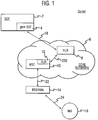
- Figure 1 shows the main elements necessary in order to describe the application of the present invention in a CAMEL phase 3 implementation. Only such elements of the implementation are shown which are necessary for an understanding of the present invention.
- a core network 6 including a home location register (HLR) 8 and a mobile-services switching centre (MSC) 10.
- the mobile-services switching centre 10 is associated with a visitor location register (VLR) 12.
- SCP service control point
- SCP GSM service control function
- gsmSCF GSM service control function
- the gsmSCF in Figure 1 is shown only by way of example, and the functional entity gsmSCF may be implemented as part of any other network element.
- a base station sub system or radio access network (BSS/RAN) 14 comprises the interface between the core network 6 and mobile stations, one of which mobile stations is represented by mobile station (MS) 16.
- MS mobile station
- a mobile station is shown in the Figures, this is for the purposes of describing examples, and the mobile station may be more generally considered to be user equipment.
- the elements illustrated in Figure 1 are familiar to one skilled in the art.
- the service control point 2 is the network element implementing the gsmSCF functionality.
- the gsmSCF 4 is the functional entity that contains the CAMEL service logic to implement operator specific services.
- the present invention is particularly concerned with the provision of location based information. Therefore the elements of Figure 1 represent those elements of the core network 6 required for implementation of such.
- the CAMEL phase 3 arrangement of Figure 1 will now be described by way of reference to Figs. 2 and 3 , utilising the present invention.
- the gsmSCF 4 requests the location of the mobile station 16 by sending a MAP any time interrogation (ATI) message to the HLR 8. This request is sent on a signal line 18 from the gsmSCF 4 to the HLR 8.
- the request received by the HLR 8 identifies the mobile station 16.
- the HLR 8 stores the identity of the VLR in which the mobile station 16 is currently registered.
- the HLR 8 stores also the identity of the mobile-services switching centre 10.
- the HLR 8 sends the location request to the VLR 12 via communication link 20.
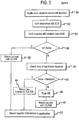
- step 30 the application, i.e. the gsmSCF 4, requests the current MS location.
- step 32 the HLR 8 determines the VLR 12 associated with the mobile station.
- step 34 the HLR request the MS location from the VLR 12.
- the visitor location register 12 and mobile-services switching centre 10 determines whether the user equipment, i.e. the mobile station 16, is currently active. If the mobile station 16 is currently active, then the location of the mobile station is known due to the active call connection. Thus in a step 38 the mobile-services switching centre returns the current cell global identity (CGI) or service area identity (SAI) to the HLR 8 via the communication link 20.
- CGI cell global identity
- SAI service area identity
- step 36 If in step 36 it is determined that the mobile station is not active, i.e. it is in idle mode, then the MSC 10 determines the time of the last known location in a step 40.
- the VLR 12 stores the last known location of each mobile station, together with the time at which that location was determined.
- the time at which the last known location for the mobile station was determined is compared to a threshold value. For example, based on the current time the time elapsed since the last known location was determined may be calculated, and the threshold time may be a value of elapsed time. As is discussed further hereinbelow, the threshold time is preferably set by the operator of the network.
- the threshold time is intended to be a representation of the "freshness" of the last known location. For example, for a given application it may be acceptable if the location information is less than a certain time period old. For example certain location services may only require that the location information is provided within a 30 second window. In such cases, the threshold value will be set at a 30 second time period. Further discussion in relation to the setting of the threshold value is given hereinbelow.
- step 44 the last known CGI or service area identity is returned to the HLR 8 on communication link 20.
- step 46 the mobile station is paged through the BSS/RAN 14.
- the MSC 10 communicates with the BSS/RAN 14 via communication links 22.
- the BSS/RAN 14 sends a paging signal to the mobile station 16 on the air interface communication link 24.
- the mobile station 16 sends a signal to the BSS/RAN 14 via the air interface communication link 24, which in turn is forwarded to the mobile-services switching centre 10 via the communication link 22.
- the CGI or service area identity of the mobile station 16 is known, and in a step 48 the current CGI or service area identity is returned to the HLR 8.
- the location information is returned to the application gsmSCF 4 via communication link 18 from the HLR 8.
- the present invention advantageously uses a threshold value in order to determine when the mobile station should be paged in order to determine its location.
- a threshold value in order to determine when the mobile station should be paged in order to determine its location.
- the value of the threshold is determined preferably by the operator of the network:
- the threshold value may be dynamically variable, in dependence upon network conditions or operator requirements.
- the value of the threshold may also vary in dependence upon an accuracy required. For example, if the application required to know the location of the mobile station within an accuracy of 1km, then a large threshold time may be tolerable. However if accuracy was required to be within 100m, then a small threshold value may only be tolerable. Requested accuracy can be indicated currently only within location services procedure, not in CAMEL ATI. An example implementation of the invention using location services is given hereinbelow.
- the threshold value may also be dynamically adjustable in dependence upon the characteristics of the mobile station. For example if it is know that the mobile station is fast moving, then the threshold value may only be a small value.
- the threshold value is not used in the case where the mobile station is currently active. However, it may be advantageous to use the threshold value in a similar way for actively connected mobile stations. This is discussed further hereinbelow with reference to a different embodiment.
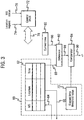
- FIG. 3 there is illustrated elements of an exemplary visitor location register 12 and mobile-services switching centre 10 for implementing a preferred embodiment of the present invention. It should be noted that the elements shown in Figure 3 are for illustrative purposes only and do not necessarily represent elements which are essential to the implementation of the present invention. One skilled in the art will appreciate alternative implementations of the present invention. It should also be noted that in Figure 3 there is some overlap between functional elements of the mobile-services switching centre 10 and the associated visitor location register 12.
- the mobile-services switching centre or visitor location register includes a control block 72, a difference calculator block 82, a comparator block 84, a current time block (or clock) 80, and a storage means 60.
- the storage means 60 includes the visitor location register reference 62 in Figure 3 , and an elapsed time special value storage element 70.
- the control block 72 receives a location request 74 on the communication link 20 from the HLR 8.
- the control block 72 also receives a signal on line 76 indicating the status of the mobile station, i.e. idle or active.
- the control block 72 is provided with a communication interface 78 for communicating with the various other elements of the mobile-services switching centre and visitor location register 12.
- the current time block 80 provides a current time on line 86 to the difference calculator 82.
- the visitor location register 62 receives on a line 64 an identity of a mobile station. Responsive to the identity of the mobile station on line 64, in conjunction with appropriate control signals from the control block 72 on lines 78, the time of the last known location of the mobile station is read out on line 68 and provides a second input to the difference calculator 82.
- the difference calculator subtracts the time at which the last known location was determined from the current time, in order to determine an elapsed time.
- the elapsed time is output from the difference calculator on line 88, and forms a first input to the comparator 84.
- a second input to the comparator 84 is provided by an elapsed time threshold value storage means 70 within the storage means 60.
- the comparator determines whether the elapsed time on line 88 is less than or greater than the threshold value stored in the storage means 70.
- the output on line 90 of the comparator 84 therefore simply gives an indication of whether the comparison is negative or positive.
- the threshold indication on line 90 is provided to the control block as one of the control signals 78.
- control block 72 controls the visited location register 62 to read out the last known location on a line 66 which is returned to the HLR 8. If in fact the threshold value has been exceeded, then as described hereinabove with reference to Figures 1 and 2 of the control block 72 initiates a paging of the mobile station in accordance with known techniques.
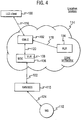
- a core network 114 comprises a gateway mobile location centre (GMLC) 102, a home location register (HLR) 104, a mobile-services switching centre (MSC) 106 including a visitor location register 108.
- the mobile-services switching centre 106 is associated with the radio access network (RAN) or base station sub system (BSS) 110, which interfaces with the mobile station 112.
- RAN radio access network
- BSS base station sub system
- a location services (LCS) client represents an application which may request the location of the mobile station 112.
- the location services client 100 communicates with the GMLC 102 of the core network via communication links 116.
- the GMLC 102 communicates with the HLR 104 via communication links 118.
- the GMLC connects with the MSC 106 via communication links 120.
- the MSC 106 communicates with the RAN/BSS 110 via communication links 122.
- the RAN/BSS 110 communicates with the mobile station 112 via air interface communication links 124.
- a client such as LCS client 100 requests a current MS location by transmitting a request on communication link 116 to the GMLC 102.
- the GMLC 102 requests a current MSC address for the mobile station from the HLR 104 on communication link 118, as represented by step 132.
- the HLR 104 then returns the current MSC address, in step 134, on communication link 118 to the GMLC 102.
- the GMLC then requests the current MS location from the MSC 106, on communication link 120, as represented by step 136.
- the mobile-services switching centre 106 determines whether the mobile station 112 is currently active. If the mobile station 112 is currently active, then in a step 140 the mobile-services switching centre 106 sends a location request to the RAN/BSS 110 using existing communication link 122. Paging is not required, as the radio link is already established. After receiving the location request the RAN/BSS determines the location estimate of the mobile station using conventional techniques, which may involve signalling between the RAN/BSS 110 and the mobile station 112 over the air-interface 124.
- step 138 If it is determined in step 138 that the mobile station is not active, i.e. it is in idle mode, then the mobile-services switching centre 106 retrieves the last known location of the mobile station from the visitor location register 108. In doing so, the mobile-services switching centre also retrieves the time of the last known location determination for the mobile station 112.
- step 142 This is represented by step 142 in Figure 5 .
- the mobile-services switching centre 106 determines whether the time associated with the last known location is less than the stored threshold value. If the time is less than the stored threshold value, then in step 150 the last known location is returned to the GMLC 102 on communication links 120.
- step 144 If in step 144 it is determined that the time of the last known location exceeds the threshold value, then in a step 146 the mobile station is paged. Thereafter, a location request is sent to the RAN/BSS 110. The paging is sent to the mobile station 112 via the RAN/BSS 110. Responsive to the location request, the RAN/BSS determines the location estimate of the mobile station using conventional techniques, which may involve signalling between the RAN/BSS 110 and the mobile station 112 over the air-interface 124.Then the RAN/BSS 110 returns the estimated geographical coordinate position of the mobile station to the mobile-services switching centre 106 on lines 122.
- the MSC 106 returns the location estimate to the GMLC 102.
- the location information is returned to the LCS client 100 by the GMLC.
- the use of the threshold value may also be used in relation to mobile stations which are currently active. In the embodiment of Figure 4 , such use of the threshold value may be advantageous. If an already determined and stored location information can be used, then this may save radio resources in having to save a further location request to the mobile station on the radio access network.
- the technique is implemented responsive to a location request. It is also an important part of the present invention that the threshold level is preferably dynamically changeable, and that the operator sets the threshold level in the mobile-services switching centre 106 or visitor location register 108.
Landscapes
- Engineering & Computer Science (AREA)
- Computer Networks & Wireless Communication (AREA)
- Signal Processing (AREA)
- Mobile Radio Communication Systems (AREA)
Description
- The present invention relates to the provision of location information in mobile communication networks, and particularly in applications where a request is made for a current location of a mobile device. The invention is particularly but not exclusively concerned with location based services in second and third generation mobile communcation systems.
- In mobile communication systems, network operators are always concerned about radio resource usage. There is a general aim to optimise radio resource usage.
- The provision of location services in mobile communication services, which is likely to be a key service aspect of future mobile communication systems, adds an additional burden to radio resources, since with current techniques there is a need for additional radio signals to provide information relating to a current location of a mobile station. In particular, in current proposals for location services there is a requirement for mobile stations which are in idle mode to be paged in order to obtain there location responsive to a paging request.
- In customised applications for mobile network enhanced logic (CAMEL) phase 1 and phase 2, if a mobile station is active then the active session is used to identify a current cell global identity (CGI) or service area identity (SAI) for the mobile station. Additionally in CAMEL phase 2 if the mobile station is idle, then the last known location for the mobile station is returned. However, the last known location for the mobile station in idle mode may no longer provide useful information if the mobile station has moved significantly since its last known location was recorded.
- In CAMEL
phase 3, if a mobile station is active then the active session is again used to identify a current location of the mobile station, either the cell global identity (CGI) of GSM radio access network or service area identity (SAI) of UMTS radio access network. If the mobile station is idle, however, then the idle mobile station may be paged in order to obtain updated location information. The mobile station is paged if the current location is requested. This provides more useful location information in idle mode, but increases the radio resource usage. - In third generation based location services, as with CAMEL
phase 3, if a mobile station is idle it is always paged and a location request issued to it, again increasing the radio resource usage. Standard LCS functionality differs from CAMELphase 3 in that paging is always done for an idle mode mobile station. - It is an aim of embodiments of the present invention to facilitate location services whilst minimising any usage of radio resources, and thereby minimise one or all of the problems mentioned above.
-
US 6,385,452 describes a method for reducing the signalling load on the network by instructing a Location Measurement Unit to measure the relation between the absolute time and air interface timing only when a positioning request has been received.WO 02/35752 - The following document E1 discloses further technological background for the present invention:
- E1: "Location Inter-operability Forum (LIF), Mobile Location Protocol", LIF TS 101 Specification, Version 3.0.0, 6.6.02
- The Mobile Location Protocol (MLP) is an application-level protocol for getting the position of mobile stations (mobile phones, wireless personal digital assistants, etc.) independent of underlying network technology. The MLP serves as the interface between a Location Server and a Location Services (LCS) Client. This specification defines the core set of operations that a Location Server should be able to perform.
- E1 suggests an element "max_loc_age" which states the maximum allowable age in seconds of a location sent as a response to a location request. This location information may have been cached somewhere in the system from a previous location update.
- The invention provides a method of claim 1, a network element according to claim 11 and a communication system according to claim 20. Further advantageous ambodiments and improvements of the invention are listed in the dependent claims. Aspects of the invention are listed bellow.
- A method according to the present invention providing location information in a mobile communication system, comprises the steps of receiving at a network element a request from an application for a current location of a mobile station, determining, at the network element, a time at which a last known location of the mobile station was determined, and characterized by setting, in the network element, a threshold time limit; and dynamically varying the threshold time limit in accordance with network conditions; comparing, at the network element, the time to the threshold time limit; and in response to the said step of comparing, providing to the application, as the current location, the last known location if the time is within the threshold time limit.
- The method may further comprise the steps of: determining a current location of the mobile station if the time is not within the threshold limit; and providing, as the current location, the obtained current location.
- The step of comparing the time to the threshold time limit may be dependent upon the statusof the mobile station. If the mobile station is active the comparing step may be disabled and a current location is determined for the mobile station. If the status of the mobile station is idle, the comparing step may be enabled.
- If a current location is not provided, the last known location may be provided as the current location.
- The method according may further comprise the step of storing the last known location of a mobile station together with a time associated with the last known location. The method may further comprise the step of storing the threshold time limit The method may further comprise the step of dynamically adjusting the threshold time limit.
- The threshold time limit may be set by network operator.
- The time may be an elapsed time.
- A network element for providing location information in a mobile communication system according to the present invention comprises: means for receiving a request for a current location of a mobile station; means for determining a time at which a last known location of the mobile station was determined; and characterized by: means for setting, in the network element, a threshold time limit; means for dynamically varying the threshold time limit in accordance with network conditions; means for comparing the time to the threshold time limit; and means for providing, as the current location, in response to the said step of comparing, the last known location if the time is within the threshold time limit.
- The network element may further comprise means for determining a current location for the mobile station if the time is not within the threshold limit; wherein the means for providing is adapted to provide, as the current location, the obtained current location.
- The means for comparing the time to the threshold time limit may be responsive to a signal indicating the status of the mobile station. Responsive to said signal indicating that the mobile station is active the comparing means may be disabled and a current location is determined for the mobile station. Responsive to said signal indicating that the mobile station is idle, the comparing means may be enabled.
- If a current location is not provided, the network element may be adapted to provide the last known location is provided as the current location. The network element may further comprise means for storing the last known location of a mobile station together with a time associated with the last known location.
- The network element may further comprise means for storing the threshold time limit. The network element may further comprise means for dynamically adjusting the threshold time limit. The threshold time limit may be set by a network operator.
- According to a yet further aspect of the present invention there is provided a mobile communication system including an application for providing location dependent services and for generating a location request for a user equipment; and the network element.
- The network element preferably includes a visitor location register. The system may implement a CAMEL framework or location services.
- In embodiments, the invention thus proposes a configurable threshold for an MSC/VLR (or SGSN) which prevents unnecessary paging attempts if the MSC/VLR (or SGSN) already has sufficiently fresh location information available. For the purposes of both CAMEL any time interrogation (ATI) and location services (LCS), the VLR stores the last known location information for each subscriber. The threshold value is used such that no paging is needed if the last known location information is newer than the threshold value, which value is set by the system operator.
- Whilst the invention is particularly advantageously utilised for mobile stations in idle mode, the inventive technique may also be applied to mobile stations in active mode.
- The invention will now be described by way of example with reference to the accompanying drawings in which:
-
Figure 1 illustrates an example of a CAMEL based mobile communication system in which an embodiment of the invention may be implemented; -
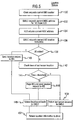
Figure 2 is a flow diagram illustrating the steps for implementing a preferred embodiment of the invention in the communication system ofFigure 1 ; -
Figure 3 illustrates the main features of a network element adapted to implement a preferred embodiment of the present invention; -
Figure 4 illustrates a further example of a mobile communication system implementing location services in which an embodiment of the invention may be implemented; and -
Figure 5 is a flow diagram illustrating the steps for implementing a preferred embodiment of the invention in the communication system ofFigure 4 . - The present invention is described herein by way of particular reference to exemplary embodiments. The invention is not limited in its applicability to any particular example described herein. The invention is particularly described in relation to a CAMEL (customised applications for mobile network enhanced logic) framework and a location services framework. However such frameworks are presented merely for ease of understanding the present invention.
- Referring to
Figure 1 , the invention is first described with reference to aCAMEL phase 3 framework.Figure 1 shows the main elements necessary in order to describe the application of the present invention in aCAMEL phase 3 implementation. Only such elements of the implementation are shown which are necessary for an understanding of the present invention. - Referring to
Figure 1 , there is shown a core network 6 including a home location register (HLR) 8 and a mobile-services switching centre (MSC) 10. The mobile-services switching centre 10 is associated with a visitor location register (VLR) 12. External to the core network 6, there is illustrated a service control point (SCP) 2. The service control point 2 is associated with a GSM service control function (gsmSCF) 4. The gsmSCF inFigure 1 is shown only by way of example, and the functional entity gsmSCF may be implemented as part of any other network element. A base station sub system or radio access network (BSS/RAN) 14 comprises the interface between the core network 6 and mobile stations, one of which mobile stations is represented by mobile station (MS) 16. Although a mobile station is shown in the Figures, this is for the purposes of describing examples, and the mobile station may be more generally considered to be user equipment. - The elements illustrated in
Figure 1 are familiar to one skilled in the art. The service control point 2 is the network element implementing the gsmSCF functionality. The gsmSCF 4 is the functional entity that contains the CAMEL service logic to implement operator specific services. The present invention is particularly concerned with the provision of location based information. Therefore the elements ofFigure 1 represent those elements of the core network 6 required for implementation of such. - The
CAMEL phase 3 arrangement ofFigure 1 will now be described by way of reference toFigs. 2 and3 , utilising the present invention. The gsmSCF 4 requests the location of themobile station 16 by sending a MAP any time interrogation (ATI) message to the HLR 8. This request is sent on asignal line 18 from the gsmSCF 4 to the HLR 8. The request received by the HLR 8 identifies themobile station 16. The HLR 8 stores the identity of the VLR in which themobile station 16 is currently registered. The HLR 8 stores also the identity of the mobile-services switching centre 10. On determining the appropriate identity, the HLR 8 sends the location request to theVLR 12 via communication link 20. - The preceding actions are represented by
steps Figure 2 . Instep 30 the application, i.e. the gsmSCF 4, requests the current MS location. Instep 32 the HLR 8 determines theVLR 12 associated with the mobile station. Instep 34 the HLR request the MS location from theVLR 12. - In a
step 36 thevisitor location register 12 and mobile-services switching centre 10 determines whether the user equipment, i.e. themobile station 16, is currently active. If themobile station 16 is currently active, then the location of the mobile station is known due to the active call connection. Thus in astep 38 the mobile-services switching centre returns the current cell global identity (CGI) or service area identity (SAI) to the HLR 8 via the communication link 20. - If in
step 36 it is determined that the mobile station is not active, i.e. it is in idle mode, then theMSC 10 determines the time of the last known location in astep 40. TheVLR 12 stores the last known location of each mobile station, together with the time at which that location was determined. In accordance with the present invention, in astep 42 the time at which the last known location for the mobile station was determined is compared to a threshold value. For example, based on the current time the time elapsed since the last known location was determined may be calculated, and the threshold time may be a value of elapsed time. As is discussed further hereinbelow, the threshold time is preferably set by the operator of the network. - The threshold time is intended to be a representation of the "freshness" of the last known location. For example, for a given application it may be acceptable if the location information is less than a certain time period old. For example certain location services may only require that the location information is provided within a 30 second window. In such cases, the threshold value will be set at a 30 second time period. Further discussion in relation to the setting of the threshold value is given hereinbelow.
- If in the
step 42 it is determined that the elapsed time is less than the threshold time, then instep 44 the last known CGI or service area identity is returned to the HLR 8 on communication link 20. - If however in
step 42 it is determined that the elapsed time since the last known location was determined is greater than the threshold value, then in astep 46 the mobile station is paged through the BSS/RAN 14. TheMSC 10 communicates with the BSS/RAN 14 via communication links 22. The BSS/RAN 14 sends a paging signal to themobile station 16 on the airinterface communication link 24. Responsive to the paging signal, themobile station 16 sends a signal to the BSS/RAN 14 via the airinterface communication link 24, which in turn is forwarded to the mobile-services switching centre 10 via thecommunication link 22. Following the response from themobile station 16, the CGI or service area identity of themobile station 16 is known, and in astep 48 the current CGI or service area identity is returned to the HLR 8. - After return of the current CGI or service area identity in any one of
steps communication link 18 from the HLR 8. - Thus, as can be seen from the above description, the present invention advantageously uses a threshold value in order to determine when the mobile station should be paged in order to determine its location. Thus, contrary to prior art techniques, an idle mobile station is not paged responsive to every location request. However, the mobile station is paged if it is determined that the last stored location information is too old.
- The value of the threshold is determined preferably by the operator of the network: The threshold value may be dynamically variable, in dependence upon network conditions or operator requirements.
- The value of the threshold may also vary in dependence upon an accuracy required. For example, if the application required to know the location of the mobile station within an accuracy of 1km, then a large threshold time may be tolerable. However if accuracy was required to be within 100m, then a small threshold value may only be tolerable. Requested accuracy can be indicated currently only within location services procedure, not in CAMEL ATI. An example implementation of the invention using location services is given hereinbelow.
- The threshold value may also be dynamically adjustable in dependence upon the characteristics of the mobile station. For example if it is know that the mobile station is fast moving, then the threshold value may only be a small value.
- In the above described example, in the case where the mobile station is currently active then the threshold value is not used. However, it may be advantageous to use the threshold value in a similar way for actively connected mobile stations. This is discussed further hereinbelow with reference to a different embodiment.
- Referring to
Figure 3 , there is illustrated elements of an exemplaryvisitor location register 12 and mobile-services switching centre 10 for implementing a preferred embodiment of the present invention. It should be noted that the elements shown inFigure 3 are for illustrative purposes only and do not necessarily represent elements which are essential to the implementation of the present invention. One skilled in the art will appreciate alternative implementations of the present invention. It should also be noted that inFigure 3 there is some overlap between functional elements of the mobile-services switching centre 10 and the associatedvisitor location register 12. - Referring to
Figure 3 , the mobile-services switching centre or visitor location register includes acontrol block 72, adifference calculator block 82, acomparator block 84, a current time block (or clock) 80, and a storage means 60. The storage means 60 includes the visitorlocation register reference 62 inFigure 3 , and an elapsed time special value storage element 70. - The
control block 72 receives alocation request 74 on the communication link 20 from the HLR 8. Thecontrol block 72 also receives a signal online 76 indicating the status of the mobile station, i.e. idle or active. Thecontrol block 72 is provided with acommunication interface 78 for communicating with the various other elements of the mobile-services switching centre andvisitor location register 12. Thecurrent time block 80 provides a current time online 86 to thedifference calculator 82. Thevisitor location register 62 receives on aline 64 an identity of a mobile station. Responsive to the identity of the mobile station online 64, in conjunction with appropriate control signals from thecontrol block 72 onlines 78, the time of the last known location of the mobile station is read out online 68 and provides a second input to thedifference calculator 82. - In this preferred embodiment, the difference calculator subtracts the time at which the last known location was determined from the current time, in order to determine an elapsed time. The elapsed time is output from the difference calculator on
line 88, and forms a first input to thecomparator 84. A second input to thecomparator 84 is provided by an elapsed time threshold value storage means 70 within the storage means 60. The comparator determines whether the elapsed time online 88 is less than or greater than the threshold value stored in the storage means 70. The output online 90 of thecomparator 84 therefore simply gives an indication of whether the comparison is negative or positive. - The threshold indication on
line 90 is provided to the control block as one of the control signals 78. - If in the
comparator 84 it is determined that the elapsed time threshold value has not been exceeded, then thecontrol block 72 controls the visitedlocation register 62 to read out the last known location on aline 66 which is returned to the HLR 8. If in fact the threshold value has been exceeded, then as described hereinabove with reference toFigures 1 and2 of thecontrol block 72 initiates a paging of the mobile station in accordance with known techniques. - A second embodiment of the present invention is now described with reference to
Figures 4 and5 .Figure 4 represents the network elements in a mobile communication system implementing location services. Referring toFigure 4 , acore network 114 comprises a gateway mobile location centre (GMLC) 102, a home location register (HLR) 104, a mobile-services switching centre (MSC) 106 including avisitor location register 108. The mobile-services switching centre 106 is associated with the radio access network (RAN) or base station sub system (BSS) 110, which interfaces with themobile station 112. A location services (LCS) client represents an application which may request the location of themobile station 112. Thelocation services client 100 communicates with theGMLC 102 of the core network via communication links 116. TheGMLC 102 communicates with theHLR 104 via communication links 118. The GMLC connects with theMSC 106 via communication links 120. TheMSC 106 communicates with the RAN/BSS 110 via communication links 122. The RAN/BSS 110 communicates with themobile station 112 via air interface communication links 124. - The operation of the location services implementation of
Figure 4 for requesting location of themobile station 112 in accordance with the present invention will be further described hereinbelow with reference toFigure 5 . - With reference to
Figure 5 , in a step 130 a client, such asLCS client 100, requests a current MS location by transmitting a request oncommunication link 116 to theGMLC 102. Responsive thereto, theGMLC 102 requests a current MSC address for the mobile station from theHLR 104 oncommunication link 118, as represented by step 132. TheHLR 104 then returns the current MSC address, instep 134, oncommunication link 118 to theGMLC 102. The GMLC then requests the current MS location from theMSC 106, oncommunication link 120, as represented bystep 136. - Thereafter, in a step 138, the mobile-
services switching centre 106 determines whether themobile station 112 is currently active. If themobile station 112 is currently active, then in astep 140 the mobile-services switching centre 106 sends a location request to the RAN/BSS 110 using existingcommunication link 122. Paging is not required, as the radio link is already established. After receiving the location request the RAN/BSS determines the location estimate of the mobile station using conventional techniques, which may involve signalling between the RAN/BSS 110 and themobile station 112 over the air-interface 124. - If it is determined in step 138 that the mobile station is not active, i.e. it is in idle mode, then the mobile-
services switching centre 106 retrieves the last known location of the mobile station from thevisitor location register 108. In doing so, the mobile-services switching centre also retrieves the time of the last known location determination for themobile station 112. - This is represented by
step 142 inFigure 5 . - In a
step 144, the mobile-services switching centre 106 then determines whether the time associated with the last known location is less than the stored threshold value. If the time is less than the stored threshold value, then instep 150 the last known location is returned to theGMLC 102 oncommunication links 120. - If in
step 144 it is determined that the time of the last known location exceeds the threshold value, then in a step 146 the mobile station is paged. Thereafter, a location request is sent to the RAN/BSS 110. The paging is sent to themobile station 112 via the RAN/BSS 110. Responsive to the location request, the RAN/BSS determines the location estimate of the mobile station using conventional techniques, which may involve signalling between the RAN/BSS 110 and themobile station 112 over the air-interface 124.Then the RAN/BSS 110 returns the estimated geographical coordinate position of the mobile station to the mobile-services switching centre 106 onlines 122. - Thereafter, in a
step 148, theMSC 106 returns the location estimate to theGMLC 102. - After each of
steps LCS client 100 by the GMLC. - As discussed hereinabove, the use of the threshold value may also be used in relation to mobile stations which are currently active. In the embodiment of
Figure 4 , such use of the threshold value may be advantageous. If an already determined and stored location information can be used, then this may save radio resources in having to save a further location request to the mobile station on the radio access network. - Thus there has been described a new technique for handling location requests in mobile communication systems. It is an essential part of the present invention that the technique is implemented responsive to a location request. It is also an important part of the present invention that the threshold level is preferably dynamically changeable, and that the operator sets the threshold level in the mobile-
services switching centre 106 orvisitor location register 108. - The invention has been described herein by way of reference to two specific examples. However the invention is not limited to any aspects of either of these examples. One skilled in the art will appreciate how the invention may be modified and applied in different implementations. The scope of the invention is defined by the impended claims.
Claims (23)
- A method of providing location information in a mobile communication system, comprising the steps of:receiving at a network element (106, 10) a request from an application (100) for a current location of a mobile station (16),determining (40; 142), at the network element, a time at which a last known location of the mobile station was determined, and characterized bysetting, in the network element, a threshold time limit; anddynamically varying the threshold time limit in accordance with network conditions;comparing (42; 144), at the network element (100, 102), the time to the threshold time limit; andin response to the said step of comparing (42), providing to the application, as the current location, the last known location if the time is within the threshold time limit.
- A method according to claim 1 further comprising the steps of: determining a current location of the mobile station (16) if the time is not within the threshold limit; and providing, as the current location, the obtained current location.
- A method according to claim 1 or claim 2 wherein the step of comparing the time to the threshold time limit is dependent upon the status of the mobile station (16).
- A method according to claim 3 wherein if the mobile station (16) is active the comparing step is disabled and a current location is determined for the mobile station.
- A method according to claim 3 or claim 4 wherein if the status of the mobile station (16) is idle, the comparing step is enabled.
- A method according to any one of claims 2 to 5, wherein if a current location is not provided, the last known location is provided as the current location.
- A method according to any one of claims 1 to 6 further comprising the step of storing the last known location of a mobile station (16) together with a time associated with the last known location.
- A method according to anyone of claims 1 to 7 further comprising the step of storing the threshold time limit.
- A method according to any one of claims 1 to 8 wherein the threshold time limit is set by a network operator.
- A method according to any one of claims 1 to 9 wherein the time is an elapsed time.
- A network element (106, 10) for providing location information in a mobile communication system, comprising:means (72) for receiving a request (74) for a current location of a mobile station (16, 112);means for determining a time at which a last known location of the mobile station was determined: andcharacterized by:means for setting, in the network element (106, 10), a threshold time limit;means for dynamically varying the threshold time limit in accordance with network conditions;means (84) for comparing the time to the threshold time limit; andmeans for providing, as the current location, in response to the said step of comparing, the last known location if the time is within the threshold time limit (70).
- A network element according to claim 11, further comprising means for determining a current location for the mobile station (16) if the time is not within the threshold limit; wherein the means for providing is adapted to provide, as the current location, the obtained current location.
- A network element according to claim 11 or claim 12, wherein the means for comparing the time to the threshold time limit (70) is responsive to a signal (76) indicating the status of the mobile station.
- A network element according to claim 13, responsive to said signal indicating that the mobile station (16) is active the comparing means is disabled and a current location is determined for the mobile station.
- A network element according to claim 13 or claim 14, wherein responsive to said signal indicating that the mobile station (16) is idle, the comparing means is enabled.
- A network element according to any one of claims 12 to 15, wherein if a current location is not provided, the network element is adapted to provide the last known location as the current location.
- A network element according to any one of claims 11 to 15, further comprising means (62) for storing the last known location of a mobile station together with a time associated with the last known location.
- A network element according to any one of claims 11 to 17, further comprising means for storing the threshold time limit.
- A network element according to any one of claims 11 to 18, wherein the threshold time limit is set by a network operator.
- A mobile communication system including an application for providing location dependent services and for generating a location request (74) for a user equipment; and the network element of any of claims 11 to 19.
- A mobile communication system according to claim 20 wherein the network element includes a visitor location register.
- A mobile communication system according to claim 20 or claim 21 wherein the system implements a CAMEL framework.
- A mobile communication system according to claim 20 or claim 21, wherein the system implements location services.
Applications Claiming Priority (3)
| Application Number | Priority Date | Filing Date | Title |
|---|---|---|---|
| GBGB0218028.9A GB0218028D0 (en) | 2002-08-02 | 2002-08-02 | Location services for mobile communication system |
| GB0218028 | 2002-08-02 | ||
| PCT/IB2003/003346 WO2004016027A1 (en) | 2002-08-02 | 2003-07-22 | Location services for mobile communication system |
Publications (3)
| Publication Number | Publication Date |
|---|---|
| EP1525771A1 EP1525771A1 (en) | 2005-04-27 |
| EP1525771B1 EP1525771B1 (en) | 2013-07-10 |
| EP1525771B2 true EP1525771B2 (en) | 2017-05-31 |
Family
ID=9941677
Family Applications (1)
| Application Number | Title | Priority Date | Filing Date |
|---|---|---|---|
| EP03784366.1A Expired - Lifetime EP1525771B2 (en) | 2002-08-02 | 2003-07-22 | Location services for mobile communication system |
Country Status (7)
| Country | Link |
|---|---|
| US (1) | US7917157B2 (en) |
| EP (1) | EP1525771B2 (en) |
| CN (1) | CN100534226C (en) |
| AU (1) | AU2003247132A1 (en) |
| ES (1) | ES2430270T5 (en) |
| GB (1) | GB0218028D0 (en) |
| WO (1) | WO2004016027A1 (en) |
Families Citing this family (69)
| Publication number | Priority date | Publication date | Assignee | Title |
|---|---|---|---|---|
| US8918073B2 (en) | 2002-03-28 | 2014-12-23 | Telecommunication Systems, Inc. | Wireless telecommunications location based services scheme selection |
| US8027697B2 (en) * | 2007-09-28 | 2011-09-27 | Telecommunication Systems, Inc. | Public safety access point (PSAP) selection for E911 wireless callers in a GSM type system |
| US8290505B2 (en) | 2006-08-29 | 2012-10-16 | Telecommunications Systems, Inc. | Consequential location derived information |
| US7426380B2 (en) * | 2002-03-28 | 2008-09-16 | Telecommunication Systems, Inc. | Location derived presence information |
| US9154906B2 (en) | 2002-03-28 | 2015-10-06 | Telecommunication Systems, Inc. | Area watcher for wireless network |
| US8666397B2 (en) | 2002-12-13 | 2014-03-04 | Telecommunication Systems, Inc. | Area event handling when current network does not cover target area |
| US20070238455A1 (en) * | 2006-04-07 | 2007-10-11 | Yinjun Zhu | Mobile based area event handling when currently visited network doe not cover area |
| US7260186B2 (en) | 2004-03-23 | 2007-08-21 | Telecommunication Systems, Inc. | Solutions for voice over internet protocol (VoIP) 911 location services |
| US20080126535A1 (en) | 2006-11-28 | 2008-05-29 | Yinjun Zhu | User plane location services over session initiation protocol (SIP) |
| US20080090546A1 (en) | 2006-10-17 | 2008-04-17 | Richard Dickinson | Enhanced E911 network access for a call center using session initiation protocol (SIP) messaging |
| EP1549095A1 (en) * | 2003-12-22 | 2005-06-29 | Telefonaktiebolaget LM Ericsson (publ) | Method and telecommunications system for controlling paging flow in a network for cellular communications |
| US8548462B2 (en) * | 2004-10-19 | 2013-10-01 | Qualcomm Incorporated | User equipment cellular identification |
| US8055250B2 (en) * | 2005-02-21 | 2011-11-08 | Samsung Electronics Co., Ltd. | Apparatus and method for function setting event in mobile terminal according to user position information |
| US7353034B2 (en) | 2005-04-04 | 2008-04-01 | X One, Inc. | Location sharing and tracking using mobile phones or other wireless devices |
| US8660573B2 (en) | 2005-07-19 | 2014-02-25 | Telecommunications Systems, Inc. | Location service requests throttling |
| US7346360B1 (en) * | 2005-08-03 | 2008-03-18 | At&T Mobility Ii Llc | Location caching with expiration based on location |
| US7933385B2 (en) | 2005-08-26 | 2011-04-26 | Telecommunication Systems, Inc. | Emergency alert for voice over internet protocol (VoIP) |
| US9282451B2 (en) | 2005-09-26 | 2016-03-08 | Telecommunication Systems, Inc. | Automatic location identification (ALI) service requests steering, connection sharing and protocol translation |
| US8467320B2 (en) | 2005-10-06 | 2013-06-18 | Telecommunication Systems, Inc. | Voice over internet protocol (VoIP) multi-user conferencing |
| US7626951B2 (en) * | 2005-10-06 | 2009-12-01 | Telecommunication Systems, Inc. | Voice Over Internet Protocol (VoIP) location based conferencing |
| US7907551B2 (en) * | 2005-10-06 | 2011-03-15 | Telecommunication Systems, Inc. | Voice over internet protocol (VoIP) location based 911 conferencing |
| US8150363B2 (en) | 2006-02-16 | 2012-04-03 | Telecommunication Systems, Inc. | Enhanced E911 network access for call centers |
| US8059789B2 (en) | 2006-02-24 | 2011-11-15 | Telecommunication Systems, Inc. | Automatic location identification (ALI) emergency services pseudo key (ESPK) |
| US8208605B2 (en) | 2006-05-04 | 2012-06-26 | Telecommunication Systems, Inc. | Extended efficient usage of emergency services keys |
| US8532266B2 (en) | 2006-05-04 | 2013-09-10 | Telecommunication Systems, Inc. | Efficient usage of emergency services keys |
| WO2008039469A2 (en) * | 2006-09-26 | 2008-04-03 | Telecommunication Systems, Inc. | Location object proxy |
| WO2008037638A1 (en) | 2006-09-27 | 2008-04-03 | Nokia Siemens Networks Gmbh & Co. Kg | Intelligent location tracking based on predictive modelling |
| WO2008057477A2 (en) | 2006-11-03 | 2008-05-15 | Telecommunication Systems, Inc. | Roaming gateway enabling location based services (lbs) roaming for user plane in cdma networks without requiring use of a mobile positioning center (mpc) |
| US20080249796A1 (en) * | 2007-02-06 | 2008-10-09 | Croy Jonathan A | Voice over internet protocol (VoIP) location based commercial prospect conferencing |
| US8050386B2 (en) | 2007-02-12 | 2011-11-01 | Telecommunication Systems, Inc. | Mobile automatic location identification (ALI) for first responders |
| KR100912505B1 (en) * | 2007-09-06 | 2009-08-17 | 한국전자통신연구원 | How to Manage Paging Groups |
| EP2196014A4 (en) | 2007-09-17 | 2014-12-24 | Telecomm Systems Inc | Emergency 911 data messaging |
| US9413889B2 (en) | 2007-09-18 | 2016-08-09 | Telecommunication Systems, Inc. | House number normalization for master street address guide (MSAG) address matching |
| US7929530B2 (en) | 2007-11-30 | 2011-04-19 | Telecommunication Systems, Inc. | Ancillary data support in session initiation protocol (SIP) messaging |
| US9130963B2 (en) | 2011-04-06 | 2015-09-08 | Telecommunication Systems, Inc. | Ancillary data support in session initiation protocol (SIP) messaging |
| US8576991B2 (en) | 2008-03-19 | 2013-11-05 | Telecommunication Systems, Inc. | End-to-end logic tracing of complex call flows in a distributed call system |
| US8068587B2 (en) | 2008-08-22 | 2011-11-29 | Telecommunication Systems, Inc. | Nationwide table routing of voice over internet protocol (VOIP) emergency calls |
| US20100173615A1 (en) * | 2009-01-03 | 2010-07-08 | Harris Technology, Llc | Locating Lost Cell Phones |
| US9301191B2 (en) | 2013-09-20 | 2016-03-29 | Telecommunication Systems, Inc. | Quality of service to over the top applications used with VPN |
| US8867485B2 (en) | 2009-05-05 | 2014-10-21 | Telecommunication Systems, Inc. | Multiple location retrieval function (LRF) network having location continuity |
| US20120157795A1 (en) * | 2010-12-15 | 2012-06-21 | Ross Medical Corporation | Patient Emergency Response System |
| US8942743B2 (en) | 2010-12-17 | 2015-01-27 | Telecommunication Systems, Inc. | iALERT enhanced alert manager |
| US8688087B2 (en) | 2010-12-17 | 2014-04-01 | Telecommunication Systems, Inc. | N-dimensional affinity confluencer |
| WO2012141762A1 (en) | 2011-02-25 | 2012-10-18 | Telecommunication Systems, Inc. | Mobile internet protocol (ip) location |
| US9479344B2 (en) | 2011-09-16 | 2016-10-25 | Telecommunication Systems, Inc. | Anonymous voice conversation |
| WO2013048551A1 (en) | 2011-09-30 | 2013-04-04 | Telecommunication Systems, Inc. | Unique global identifier for minimizing prank 911 calls |
| US9313637B2 (en) | 2011-12-05 | 2016-04-12 | Telecommunication Systems, Inc. | Wireless emergency caller profile data delivery over a legacy interface |
| US8984591B2 (en) | 2011-12-16 | 2015-03-17 | Telecommunications Systems, Inc. | Authentication via motion of wireless device movement |
| US9384339B2 (en) | 2012-01-13 | 2016-07-05 | Telecommunication Systems, Inc. | Authenticating cloud computing enabling secure services |
| US9307372B2 (en) | 2012-03-26 | 2016-04-05 | Telecommunication Systems, Inc. | No responders online |
| US9544260B2 (en) | 2012-03-26 | 2017-01-10 | Telecommunication Systems, Inc. | Rapid assignment dynamic ownership queue |
| US9338153B2 (en) | 2012-04-11 | 2016-05-10 | Telecommunication Systems, Inc. | Secure distribution of non-privileged authentication credentials |
| CN104604310A (en) * | 2012-07-09 | 2015-05-06 | 瑞典爱立信有限公司 | A method and nodes for paging in a radio access network |
| WO2014028712A1 (en) | 2012-08-15 | 2014-02-20 | Telecommunication Systems, Inc. | Device independent caller data access for emergency calls |
| US9208346B2 (en) | 2012-09-05 | 2015-12-08 | Telecommunication Systems, Inc. | Persona-notitia intellection codifier |
| US9456301B2 (en) | 2012-12-11 | 2016-09-27 | Telecommunication Systems, Inc. | Efficient prisoner tracking |
| US8983047B2 (en) | 2013-03-20 | 2015-03-17 | Telecommunication Systems, Inc. | Index of suspicion determination for communications request |
| US9408034B2 (en) | 2013-09-09 | 2016-08-02 | Telecommunication Systems, Inc. | Extended area event for network based proximity discovery |
| US9516104B2 (en) | 2013-09-11 | 2016-12-06 | Telecommunication Systems, Inc. | Intelligent load balancer enhanced routing |
| US9479897B2 (en) | 2013-10-03 | 2016-10-25 | Telecommunication Systems, Inc. | SUPL-WiFi access point controller location based services for WiFi enabled mobile devices |
| WO2020052243A1 (en) | 2018-09-13 | 2020-03-19 | Huawei Technologies Co., Ltd. | Multimodal location sensing on a mobile phone |
| US10966058B1 (en) | 2020-03-03 | 2021-03-30 | Motorola Solutions, Inc. | System and method of operating a communication device to provide location information within status notification messages |
| US12387159B2 (en) | 2021-06-30 | 2025-08-12 | Optx Solutions, Llc | Dynamic floor mapping for gaming activity |
| US12260360B2 (en) | 2021-06-30 | 2025-03-25 | Optx Solutions, Llc | Interactive campaign management using player insights |
| US12482043B2 (en) | 2021-06-30 | 2025-11-25 | Optx Solutions, Llc | Systems and methods for developing guests of a service business |
| US12154409B2 (en) | 2021-06-30 | 2024-11-26 | Optx Solutions, Llc | Systems and methods for developing player profile analytics |
| US11995660B2 (en) * | 2021-06-30 | 2024-05-28 | Optx Solutions, Llc | Systems and methods for task management |
| US12175402B2 (en) | 2021-06-30 | 2024-12-24 | Optx Solutions, Llc | Systems and methods for comparatively analyzing performance of a service business |
| US12154138B2 (en) | 2021-06-30 | 2024-11-26 | Optx Solutions, Llc | Interactive marketing platform with player insights |
Family Cites Families (13)
| Publication number | Priority date | Publication date | Assignee | Title |
|---|---|---|---|---|
| US6035203A (en) * | 1996-12-24 | 2000-03-07 | Lucent Technologies Inc. | Time based paging for mobile telephone units |
| US6023624A (en) * | 1996-12-24 | 2000-02-08 | Lucent Technologies Inc. | Location based paging for mobile telephone units |
| US6181945B1 (en) * | 1997-01-27 | 2001-01-30 | Nortel Networks Limited | Optimization of paging cost in mobile switching system using a genetic optimization method |
| US6058308A (en) * | 1997-02-18 | 2000-05-02 | Telefonaktiebolaget L M Ericsson | Apparatus, and associated method, for adaptively selecting a paging area in which to page a mobile terminal |
| US6941120B2 (en) * | 1997-07-29 | 2005-09-06 | Gray Electronics, Inc. | Apparatus and method for automatically programming frequency scanning radio receivers |
| FI111320B (en) * | 1997-10-08 | 2003-06-30 | Nokia Corp | Method and system for identifying a false terminal equipment in a cellular radio system |
| US6169899B1 (en) * | 1998-09-11 | 2001-01-02 | Ericsson Inc. | System and method for providing historical data for location services |
| US6385452B1 (en) * | 1999-07-28 | 2002-05-07 | Ericsson Inc. | System and method for determining absolute time based upon air interface timing in time of arrival based positioning |
| AU7345900A (en) * | 1999-09-03 | 2001-04-10 | Ericsson Inc. | Method and network for providing to a positioning data |
| AU2002211168A1 (en) | 2000-10-26 | 2002-05-06 | Cellpoint Systems Ab | Method and arrangement relating to retrieving position information |
| US7133909B2 (en) * | 2001-01-12 | 2006-11-07 | Microsoft Corporation | Systems and methods for locating mobile computer users in a wireless network |
| JP4552366B2 (en) * | 2001-07-09 | 2010-09-29 | 日本電気株式会社 | Mobile portable terminal, position search system, position search method and program thereof |
| FI124438B (en) | 2002-02-22 | 2014-08-29 | Teliasonera Finland Oyj | Location of a wireless terminal |
-
2002
- 2002-08-02 GB GBGB0218028.9A patent/GB0218028D0/en not_active Ceased
-
2003
- 2003-07-22 ES ES03784366.1T patent/ES2430270T5/en not_active Expired - Lifetime
- 2003-07-22 CN CNB038185806A patent/CN100534226C/en not_active Expired - Fee Related
- 2003-07-22 US US10/522,951 patent/US7917157B2/en not_active Expired - Fee Related
- 2003-07-22 WO PCT/IB2003/003346 patent/WO2004016027A1/en not_active Ceased
- 2003-07-22 EP EP03784366.1A patent/EP1525771B2/en not_active Expired - Lifetime
- 2003-07-22 AU AU2003247132A patent/AU2003247132A1/en not_active Abandoned
Also Published As
| Publication number | Publication date |
|---|---|
| ES2430270T5 (en) | 2017-12-05 |
| WO2004016027A1 (en) | 2004-02-19 |
| US7917157B2 (en) | 2011-03-29 |
| CN1675951A (en) | 2005-09-28 |
| ES2430270T3 (en) | 2013-11-19 |
| EP1525771B1 (en) | 2013-07-10 |
| US20060128395A1 (en) | 2006-06-15 |
| CN100534226C (en) | 2009-08-26 |
| EP1525771A1 (en) | 2005-04-27 |
| AU2003247132A1 (en) | 2004-02-25 |
| GB0218028D0 (en) | 2002-09-11 |
Similar Documents
| Publication | Publication Date | Title |
|---|---|---|
| EP1525771B1 (en) | Location services for mobile communication system | |
| JP4135499B2 (en) | Positioning system and positioning method in mobile communication system | |
| EP1452056B1 (en) | A method for obtaining location related information allowing to locate a terminal attached to a communication network | |
| CA2311889C (en) | System and method for mobile terminal positioning | |
| EP1446972B1 (en) | Provision of location information | |
| CN1141005C (en) | System and method for informing network of terminal-based positioning method capability | |
| JP2009207157A (en) | Provision of information regarding mobile station | |
| US7801533B2 (en) | Location request control | |
| US6272342B1 (en) | System and method for providing historical data for location services | |
| US20050180346A1 (en) | Network and method for monitoring location capabilities of a mobile station | |
| JP2006502681A5 (en) | ||
| JP5271418B2 (en) | Conditional location search method | |
| KR100620055B1 (en) | How to cancel your location information request | |
| EP2242313B1 (en) | Method and system for improving the positioning system performance during continuous positioning procedure | |
| US8538451B2 (en) | Location services | |
| US20080090589A1 (en) | Location caching with expiration based on location | |
| JP2004158947A (en) | Position measuring system and position measuring method in mobile communication system | |
| JP2022523401A (en) | Location service control method and communication unit | |
| US20100177751A1 (en) | System and method of delivering content over a local wireless system | |
| EP1821565A2 (en) | Notification method according to conversion of communication service in mobile communication terminal | |
| KR100932243B1 (en) | Positioning method of mobile communication terminal | |
| KR101140393B1 (en) | Method and System for Location Transmission Condition Setting of Mobile Communication Terminal | |
| WO2010078968A1 (en) | Location-based charging | |
| CN101521846A (en) | Method based on WLL (wireless local loop) system to realize locating services and system thereof | |
| EP1308062A1 (en) | Providing location-dependent services |
Legal Events
| Date | Code | Title | Description |
|---|---|---|---|
| PUAI | Public reference made under article 153(3) epc to a published international application that has entered the european phase |
Free format text: ORIGINAL CODE: 0009012 |
|
| 17P | Request for examination filed |
Effective date: 20050117 |
|
| AK | Designated contracting states |
Kind code of ref document: A1 Designated state(s): AT BE BG CH CY CZ DE DK EE ES FI FR GB GR HU IE IT LI LU MC NL PT RO SE SI SK TR |
|
| AX | Request for extension of the european patent |
Extension state: AL LT LV MK |
|
| DAX | Request for extension of the european patent (deleted) | ||
| 17Q | First examination report despatched |
Effective date: 20070713 |
|
| RAP1 | Party data changed (applicant data changed or rights of an application transferred) |
Owner name: NOKIA SIEMENS NETWORKS OY |
|
| REG | Reference to a national code |
Ref country code: DE Ref legal event code: R079 Ref document number: 60344481 Country of ref document: DE Free format text: PREVIOUS MAIN CLASS: H04Q0007380000 Ipc: H04W0064000000 |
|
| RIC1 | Information provided on ipc code assigned before grant |
Ipc: H04W 64/00 20090101AFI20130109BHEP |
|
| GRAP | Despatch of communication of intention to grant a patent |
Free format text: ORIGINAL CODE: EPIDOSNIGR1 |
|
| GRAS | Grant fee paid |
Free format text: ORIGINAL CODE: EPIDOSNIGR3 |
|
| GRAA | (expected) grant |
Free format text: ORIGINAL CODE: 0009210 |
|
| AK | Designated contracting states |
Kind code of ref document: B1 Designated state(s): AT BE BG CH CY CZ DE DK EE ES FI FR GB GR HU IE IT LI LU MC NL PT RO SE SI SK TR |
|
| REG | Reference to a national code |
Ref country code: GB Ref legal event code: FG4D |
|
| REG | Reference to a national code |
Ref country code: CH Ref legal event code: EP Ref country code: AT Ref legal event code: REF Ref document number: 621560 Country of ref document: AT Kind code of ref document: T Effective date: 20130715 |
|
| REG | Reference to a national code |
Ref country code: IE Ref legal event code: FG4D |
|
| REG | Reference to a national code |
Ref country code: DE Ref legal event code: R096 Ref document number: 60344481 Country of ref document: DE Effective date: 20130905 |
|
| REG | Reference to a national code |
Ref country code: SE Ref legal event code: TRGR |
|
| PG25 | Lapsed in a contracting state [announced via postgrant information from national office to epo] |
Ref country code: SI Free format text: LAPSE BECAUSE OF FAILURE TO SUBMIT A TRANSLATION OF THE DESCRIPTION OR TO PAY THE FEE WITHIN THE PRESCRIBED TIME-LIMIT Effective date: 20130710 |
|
| RAP2 | Party data changed (patent owner data changed or rights of a patent transferred) |
Owner name: NOKIA SOLUTIONS AND NETWORKS OY |
|
| REG | Reference to a national code |
Ref country code: CH Ref legal event code: PUE Owner name: NOKIA SOLUTIONS AND NETWORKS OY, FI Free format text: FORMER OWNER: NOKIA SIEMENS NETWORKS OY, FI |
|
| REG | Reference to a national code |
Ref country code: ES Ref legal event code: FG2A Ref document number: 2430270 Country of ref document: ES Kind code of ref document: T3 Effective date: 20131119 |
|
| REG | Reference to a national code |
Ref country code: AT Ref legal event code: MK05 Ref document number: 621560 Country of ref document: AT Kind code of ref document: T Effective date: 20130710 |
|
| REG | Reference to a national code |
Ref country code: NL Ref legal event code: VDEP Effective date: 20130710 |
|
| PG25 | Lapsed in a contracting state [announced via postgrant information from national office to epo] |
Ref country code: CY Free format text: LAPSE BECAUSE OF FAILURE TO SUBMIT A TRANSLATION OF THE DESCRIPTION OR TO PAY THE FEE WITHIN THE PRESCRIBED TIME-LIMIT Effective date: 20130703 Ref country code: BE Free format text: LAPSE BECAUSE OF FAILURE TO SUBMIT A TRANSLATION OF THE DESCRIPTION OR TO PAY THE FEE WITHIN THE PRESCRIBED TIME-LIMIT Effective date: 20130710 Ref country code: PT Free format text: LAPSE BECAUSE OF FAILURE TO SUBMIT A TRANSLATION OF THE DESCRIPTION OR TO PAY THE FEE WITHIN THE PRESCRIBED TIME-LIMIT Effective date: 20131111 Ref country code: AT Free format text: LAPSE BECAUSE OF FAILURE TO SUBMIT A TRANSLATION OF THE DESCRIPTION OR TO PAY THE FEE WITHIN THE PRESCRIBED TIME-LIMIT Effective date: 20130710 |
|
| REG | Reference to a national code |
Ref country code: DE Ref legal event code: R081 Ref document number: 60344481 Country of ref document: DE Owner name: NOKIA SOLUTIONS AND NETWORKS OY, FI Free format text: FORMER OWNER: NOKIA CORP., ESPOO, FI Effective date: 20140121 Ref country code: DE Ref legal event code: R081 Ref document number: 60344481 Country of ref document: DE Owner name: NOKIA SOLUTIONS AND NETWORKS OY, FI Free format text: FORMER OWNER: NOKIA CORP., 02610 ESPOO, FI Effective date: 20140121 |
|
| PG25 | Lapsed in a contracting state [announced via postgrant information from national office to epo] |
Ref country code: NL Free format text: LAPSE BECAUSE OF FAILURE TO SUBMIT A TRANSLATION OF THE DESCRIPTION OR TO PAY THE FEE WITHIN THE PRESCRIBED TIME-LIMIT Effective date: 20130710 Ref country code: GR Free format text: LAPSE BECAUSE OF FAILURE TO SUBMIT A TRANSLATION OF THE DESCRIPTION OR TO PAY THE FEE WITHIN THE PRESCRIBED TIME-LIMIT Effective date: 20131011 Ref country code: FI Free format text: LAPSE BECAUSE OF FAILURE TO SUBMIT A TRANSLATION OF THE DESCRIPTION OR TO PAY THE FEE WITHIN THE PRESCRIBED TIME-LIMIT Effective date: 20130710 |
|
| REG | Reference to a national code |
Ref country code: CH Ref legal event code: PL |
|
| PG25 | Lapsed in a contracting state [announced via postgrant information from national office to epo] |
Ref country code: CY Free format text: LAPSE BECAUSE OF FAILURE TO SUBMIT A TRANSLATION OF THE DESCRIPTION OR TO PAY THE FEE WITHIN THE PRESCRIBED TIME-LIMIT Effective date: 20130710 |
|
| PLBI | Opposition filed |
Free format text: ORIGINAL CODE: 0009260 |
|
| REG | Reference to a national code |
Ref country code: IE Ref legal event code: MM4A |
|
| PG25 | Lapsed in a contracting state [announced via postgrant information from national office to epo] |
Ref country code: RO Free format text: LAPSE BECAUSE OF FAILURE TO SUBMIT A TRANSLATION OF THE DESCRIPTION OR TO PAY THE FEE WITHIN THE PRESCRIBED TIME-LIMIT Effective date: 20130710 Ref country code: MC Free format text: LAPSE BECAUSE OF FAILURE TO SUBMIT A TRANSLATION OF THE DESCRIPTION OR TO PAY THE FEE WITHIN THE PRESCRIBED TIME-LIMIT Effective date: 20130710 Ref country code: CZ Free format text: LAPSE BECAUSE OF FAILURE TO SUBMIT A TRANSLATION OF THE DESCRIPTION OR TO PAY THE FEE WITHIN THE PRESCRIBED TIME-LIMIT Effective date: 20130710 Ref country code: EE Free format text: LAPSE BECAUSE OF FAILURE TO SUBMIT A TRANSLATION OF THE DESCRIPTION OR TO PAY THE FEE WITHIN THE PRESCRIBED TIME-LIMIT Effective date: 20130710 Ref country code: CH Free format text: LAPSE BECAUSE OF NON-PAYMENT OF DUE FEES Effective date: 20130731 Ref country code: SK Free format text: LAPSE BECAUSE OF FAILURE TO SUBMIT A TRANSLATION OF THE DESCRIPTION OR TO PAY THE FEE WITHIN THE PRESCRIBED TIME-LIMIT Effective date: 20130710 Ref country code: LI Free format text: LAPSE BECAUSE OF NON-PAYMENT OF DUE FEES Effective date: 20130731 Ref country code: DK Free format text: LAPSE BECAUSE OF FAILURE TO SUBMIT A TRANSLATION OF THE DESCRIPTION OR TO PAY THE FEE WITHIN THE PRESCRIBED TIME-LIMIT Effective date: 20130710 |
|
| PLAX | Notice of opposition and request to file observation + time limit sent |
Free format text: ORIGINAL CODE: EPIDOSNOBS2 |
|
| 26 | Opposition filed |
Opponent name: HANNA, MOORE & CURLEY Effective date: 20140410 |
|
| REG | Reference to a national code |
Ref country code: DE Ref legal event code: R026 Ref document number: 60344481 Country of ref document: DE Effective date: 20140410 |
|
| PG25 | Lapsed in a contracting state [announced via postgrant information from national office to epo] |
Ref country code: IE Free format text: LAPSE BECAUSE OF NON-PAYMENT OF DUE FEES Effective date: 20130722 |
|
| PLAF | Information modified related to communication of a notice of opposition and request to file observations + time limit |
Free format text: ORIGINAL CODE: EPIDOSCOBS2 |
|
| PLBB | Reply of patent proprietor to notice(s) of opposition received |
Free format text: ORIGINAL CODE: EPIDOSNOBS3 |
|
| REG | Reference to a national code |
Ref country code: FR Ref legal event code: CD Owner name: NOKIA SOLUTIONS AND NETWORKS OY, FI Effective date: 20141201 |
|
| REG | Reference to a national code |
Ref country code: FR Ref legal event code: PLFP Year of fee payment: 13 |
|
| PG25 | Lapsed in a contracting state [announced via postgrant information from national office to epo] |
Ref country code: TR Free format text: LAPSE BECAUSE OF FAILURE TO SUBMIT A TRANSLATION OF THE DESCRIPTION OR TO PAY THE FEE WITHIN THE PRESCRIBED TIME-LIMIT Effective date: 20130710 |
|
| PG25 | Lapsed in a contracting state [announced via postgrant information from national office to epo] |
Ref country code: BG Free format text: LAPSE BECAUSE OF FAILURE TO SUBMIT A TRANSLATION OF THE DESCRIPTION OR TO PAY THE FEE WITHIN THE PRESCRIBED TIME-LIMIT Effective date: 20130710 Ref country code: HU Free format text: LAPSE BECAUSE OF FAILURE TO SUBMIT A TRANSLATION OF THE DESCRIPTION OR TO PAY THE FEE WITHIN THE PRESCRIBED TIME-LIMIT; INVALID AB INITIO Effective date: 20030722 Ref country code: LU Free format text: LAPSE BECAUSE OF NON-PAYMENT OF DUE FEES Effective date: 20130722 |
|
| PLAB | Opposition data, opponent's data or that of the opponent's representative modified |
Free format text: ORIGINAL CODE: 0009299OPPO |
|
| R26 | Opposition filed (corrected) |
Opponent name: HANNA MOORE + CURLEY Effective date: 20140410 |
|
| RIC2 | Information provided on ipc code assigned after grant |
Ipc: H04W 64/00 20090101AFI20160426BHEP Ipc: H04W 60/00 20090101ALN20160426BHEP Ipc: H04W 8/08 20090101ALN20160426BHEP |
|
| REG | Reference to a national code |
Ref country code: FR Ref legal event code: PLFP Year of fee payment: 14 |
|
| RIC2 | Information provided on ipc code assigned after grant |
Ipc: H04W 8/08 20090101ALN20160513BHEP Ipc: H04W 60/00 20090101ALN20160513BHEP Ipc: H04W 64/00 20090101AFI20160513BHEP |
|
| RIC2 | Information provided on ipc code assigned after grant |
Ipc: H04W 8/08 20090101ALN20160628BHEP Ipc: H04W 64/00 20090101AFI20160628BHEP Ipc: H04W 60/00 20090101ALN20160628BHEP |
|
| RIC2 | Information provided on ipc code assigned after grant |
Ipc: H04W 64/00 20090101AFI20160701BHEP Ipc: H04W 8/08 20090101ALN20160701BHEP Ipc: H04W 60/00 20090101ALN20160701BHEP |
|
| RIC2 | Information provided on ipc code assigned after grant |
Ipc: H04W 64/00 20090101AFI20160926BHEP Ipc: H04W 8/08 20090101ALN20160926BHEP Ipc: H04W 60/00 20090101ALN20160926BHEP |
|
| PUAH | Patent maintained in amended form |
Free format text: ORIGINAL CODE: 0009272 |
|
| STAA | Information on the status of an ep patent application or granted ep patent |
Free format text: STATUS: PATENT MAINTAINED AS AMENDED |
|
| 27A | Patent maintained in amended form |
Effective date: 20170531 |
|
| AK | Designated contracting states |
Kind code of ref document: B2 Designated state(s): AT BE BG CH CY CZ DE DK EE ES FI FR GB GR HU IE IT LI LU MC NL PT RO SE SI SK TR |
|
| REG | Reference to a national code |
Ref country code: DE Ref legal event code: R102 Ref document number: 60344481 Country of ref document: DE |
|
| REG | Reference to a national code |
Ref country code: FR Ref legal event code: PLFP Year of fee payment: 15 |
|
| REG | Reference to a national code |
Ref country code: SE Ref legal event code: RPEO |
|
| REG | Reference to a national code |
Ref country code: ES Ref legal event code: DC2A Ref document number: 2430270 Country of ref document: ES Kind code of ref document: T5 Effective date: 20171205 |
|
| REG | Reference to a national code |
Ref country code: FR Ref legal event code: PLFP Year of fee payment: 16 |
|
| PGFP | Annual fee paid to national office [announced via postgrant information from national office to epo] |
Ref country code: FR Payment date: 20180612 Year of fee payment: 16 |
|
| PGFP | Annual fee paid to national office [announced via postgrant information from national office to epo] |
Ref country code: ES Payment date: 20180801 Year of fee payment: 16 Ref country code: DE Payment date: 20180710 Year of fee payment: 16 Ref country code: IT Payment date: 20180713 Year of fee payment: 16 |
|
| PGFP | Annual fee paid to national office [announced via postgrant information from national office to epo] |
Ref country code: SE Payment date: 20180710 Year of fee payment: 16 Ref country code: GB Payment date: 20180718 Year of fee payment: 16 |
|
| REG | Reference to a national code |
Ref country code: DE Ref legal event code: R119 Ref document number: 60344481 Country of ref document: DE |
|
| REG | Reference to a national code |
Ref country code: SE Ref legal event code: EUG |
|
| GBPC | Gb: european patent ceased through non-payment of renewal fee |
Effective date: 20190722 |
|
| PG25 | Lapsed in a contracting state [announced via postgrant information from national office to epo] |
Ref country code: DE Free format text: LAPSE BECAUSE OF NON-PAYMENT OF DUE FEES Effective date: 20200201 Ref country code: GB Free format text: LAPSE BECAUSE OF NON-PAYMENT OF DUE FEES Effective date: 20190722 Ref country code: SE Free format text: LAPSE BECAUSE OF NON-PAYMENT OF DUE FEES Effective date: 20190723 |
|
| PG25 | Lapsed in a contracting state [announced via postgrant information from national office to epo] |
Ref country code: FR Free format text: LAPSE BECAUSE OF NON-PAYMENT OF DUE FEES Effective date: 20190731 |
|
| PG25 | Lapsed in a contracting state [announced via postgrant information from national office to epo] |
Ref country code: IT Free format text: LAPSE BECAUSE OF NON-PAYMENT OF DUE FEES Effective date: 20190722 |
|
| REG | Reference to a national code |
Ref country code: ES Ref legal event code: FD2A Effective date: 20201202 |
|
| PG25 | Lapsed in a contracting state [announced via postgrant information from national office to epo] |
Ref country code: ES Free format text: LAPSE BECAUSE OF NON-PAYMENT OF DUE FEES Effective date: 20190723 |