EP1524274A1 - Fluorescently labelled Ghrelin peptides. - Google Patents
Fluorescently labelled Ghrelin peptides. Download PDFInfo
- Publication number
- EP1524274A1 EP1524274A1 EP04024029A EP04024029A EP1524274A1 EP 1524274 A1 EP1524274 A1 EP 1524274A1 EP 04024029 A EP04024029 A EP 04024029A EP 04024029 A EP04024029 A EP 04024029A EP 1524274 A1 EP1524274 A1 EP 1524274A1
- Authority
- EP
- European Patent Office
- Prior art keywords
- growth hormone
- hormone secretagogue
- labeled
- ghrelin
- ser
- Prior art date
- Legal status (The legal status is an assumption and is not a legal conclusion. Google has not performed a legal analysis and makes no representation as to the accuracy of the status listed.)
- Granted
Links
Images



Classifications
-
- G—PHYSICS
- G01—MEASURING; TESTING
- G01N—INVESTIGATING OR ANALYSING MATERIALS BY DETERMINING THEIR CHEMICAL OR PHYSICAL PROPERTIES
- G01N33/00—Investigating or analysing materials by specific methods not covered by groups G01N1/00 - G01N31/00
- G01N33/48—Biological material, e.g. blood, urine; Haemocytometers
- G01N33/50—Chemical analysis of biological material, e.g. blood, urine; Testing involving biospecific ligand binding methods; Immunological testing
- G01N33/74—Chemical analysis of biological material, e.g. blood, urine; Testing involving biospecific ligand binding methods; Immunological testing involving hormones or other non-cytokine intercellular protein regulatory factors such as growth factors, including receptors to hormones and growth factors
-
- C—CHEMISTRY; METALLURGY
- C07—ORGANIC CHEMISTRY
- C07K—PEPTIDES
- C07K14/00—Peptides having more than 20 amino acids; Gastrins; Somatostatins; Melanotropins; Derivatives thereof
- C07K14/435—Peptides having more than 20 amino acids; Gastrins; Somatostatins; Melanotropins; Derivatives thereof from animals; from humans
- C07K14/575—Hormones
- C07K14/60—Growth hormone-releasing factor [GH-RF], i.e. somatoliberin
-
- G—PHYSICS
- G01—MEASURING; TESTING
- G01N—INVESTIGATING OR ANALYSING MATERIALS BY DETERMINING THEIR CHEMICAL OR PHYSICAL PROPERTIES
- G01N2333/00—Assays involving biological materials from specific organisms or of a specific nature
- G01N2333/435—Assays involving biological materials from specific organisms or of a specific nature from animals; from humans
- G01N2333/575—Hormones
- G01N2333/60—Growth-hormone releasing factors (GH-RF) (Somatoliberin)
-
- G—PHYSICS
- G01—MEASURING; TESTING
- G01N—INVESTIGATING OR ANALYSING MATERIALS BY DETERMINING THEIR CHEMICAL OR PHYSICAL PROPERTIES
- G01N2500/00—Screening for compounds of potential therapeutic value
- G01N2500/02—Screening involving studying the effect of compounds C on the interaction between interacting molecules A and B (e.g. A = enzyme and B = substrate for A, or A = receptor and B = ligand for the receptor)
Definitions
- Growth hormone which is secreted from the pituitary, stimulates growth of all tissues of the body that are capable of growing.
- growth hormone is known to have the following basic effects on the metabolic processes of the body: (1) Increased rate of protein synthesis in all cells of the body; (2) Decreased rate of carbohydrate utilization in cells of the body; (3) Increased mobilization of free fatty acids and use of fatty acids for energy.
- a deficiency in growth hormone secretion can result in various medical disorders, such as dwarfism.
- the problem to be solved by the present invention was to provide a fluorescent labeled ghrelin analog which can be used in high throuput screening.
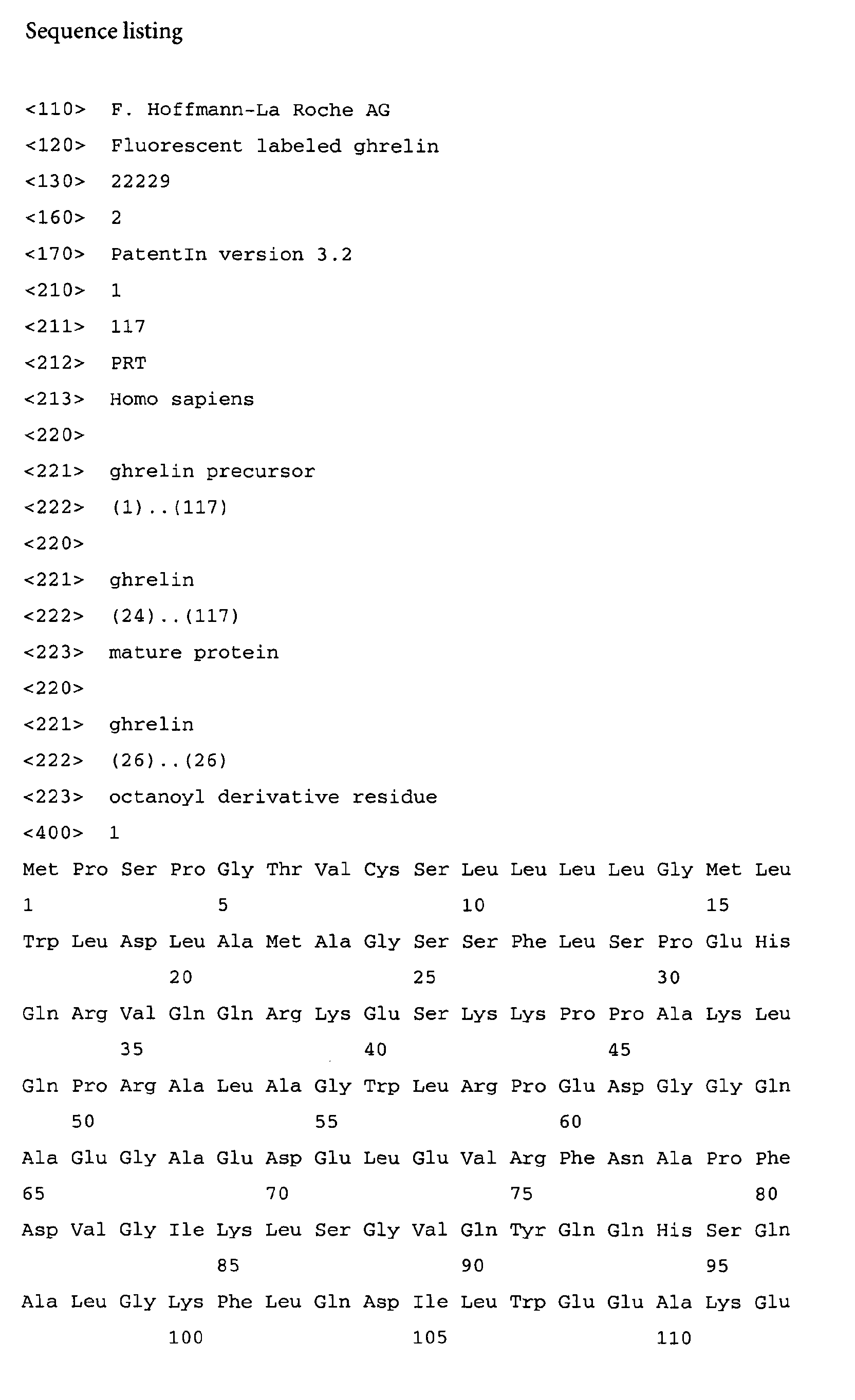
- the present invention pertains to a labeled growth hormone secretagogue of the formula R1-Cys-F wherein R1 is a peptide sequence derived from the ghrelin polypeptide sequence (Seq ID No. 1 ), and F is a fluorescent dye.
- R1 is Seq ID No. 2.
- R1 is octanoylated.
- R1 is N-octanoylated.
- R1 is 1 Gly-Ser-Dapa(N-octanoyl)-Phe- 5 Leu-Ser-Pro-Glu-His- 10 Gln-Arg-Val-Gln-Gln- 15 Arg-Lys-Glu-Ser. N-octanoylation increases stability of ghrelin towards esterase activity.
- F is selected from the group consisting of Texas Red, Tetramethyl rhodamine, MR121. ("New fluorescent dyes in the red region for biodiagnostics" M . Sauer et al 1995 J. Fluoresc. Vol.
- F is MR121.
- a labeled growth hormone secretagogue hereinbefore described can be used for identifying a compound that can bind to a growth hormone secretagogue receptor. Said labeled growth hormone secretagogue can also be used to identify a cellular receptor as a growth hormone secretagogue receptor.
- the present invention also provides a process of synthesizing a labeled ghrelin which comprises the steps of a) coupling a Cys to the C-terminal amino acid; and b) reacting the thiol-containing ghrelin to a fluorescent dye.
- said fluorescent dye is selected from the group consisting of Texas Red, , Tetramethyl rhodamine, MR121 .
- New fluorescent dyes in the red region for biodiagnostics M. Sauer et al 1995 J. Fluoresc. Vol. 5, pp 247-261, or BODIPY-FL (4,4-difluoro-5,7-dimethyl-4-bora-3a,4a-diaza- s -indacene-3-propionic acid).
- the present invention also pertains to a method for identifying a compound that can bind to a growth hormone secretagogue receptor comprising contacting said compound with a host expressing a growth hormone secretagogue receptor in the presence of the labeled growth hormone secretagogue hereinbefore described, or with a membrane preparation from such a host, and monitoring whether the compound influences the binding of the labeled growth hormone secretagogue hereinbefore described to the growth hormone secretagogue receptor by measuring the fluorescence of the label of the bound labeled growth hormone secretagogue hereinbefore described.
- the host may be a tissue sample, primary cells or cultured cells which either naturally expresses a growth hormone secretagogue receptor, or which are either transiently or stably transfected with a growth hormone secretagogue receptor.
- Methods of transfecting cells are well known in the art (Sambrook et al., Molecular Cloning: A Laboratory Manual (1989), Cold Spring Harbor Laboratory Press, New York, USA).
- said method is a high throughput screening method.
- the method hereinbefore described is sensitive with regard to the pH of the assay buffer used. A pH deviation of 0.2 results in a 50 % loss of binding. Therefore, in a preferred embodiment, the assay buffer used in said method has a pH of 7.2.
- the peptides of this invention tend to absorb to surfaces.
- the plastic ware either comprises a nonbinding surface or is blocked with a casein solution.
- the term "plastic ware" as used herein refers to plates used for the assay, as well as any type of tube used to prepare solutions comprising the peptides of this invention.
- said casein solution comprises 1 % casein. More preferably, blocking is performed over night. In a most preferred embodiment, the blocked plates are washed with buffer before use.
- the present invention also provides a method of identifying a cellular receptor as a growth hormone secretagogue receptor comprising contacting a host suspected to express a growth hormone secretagogue receptor with the labeled growth hormone secretagogue hereinbefore described and determining whether binding has occurred.
- the present invention pertains to a method for identifying the activity of a compound as a growth hormone secretagogue comprising contacting the compound suspected of having activity as a growth hormone secretagogue with a host expressing a growth hormone secretagogue receptor in the presence of the labeled growth hormone secretagogue hereinbefore described and monitoring whether the compound suspected of having activity as a growth hormone secretagogue influences the binding of the labeled growth hormone secretagogue hereinbefore described to the growth hormone secretagogue receptor.
- the present invention also provides a compound identified by methods hereinbefore described or pharmaceutically acceptable salts thereof.
- the present invention provides a pharmaceutical composition comprising a compound hereinbefore described and a pharmaceutically acceptable carrier.
- phrases "pharmaceutically acceptable” is employed herein to refer to those compounds, materials, compositions, and/or dosage forms which are, within the scope of sound medical judgment, suitable for use in contact with the tissues of human beings and animals without excessive toxicity, irritation, allergic response, or other problem or complication, commensurate with a reasonable benefit/risk ratio.
- pharmaceutically acceptable salts refer to derivatives of the identified agents wherein the parent agent is modified by making acid or base salts thereof.
- pharmaceutically acceptable salts include, but are not limited to, mineral or organic acid salts of basic residues such as amines; alkali or organic salts of acidic residues such as carboxylic acids; and the like.
- the pharmaceutically acceptable salts include the conventional non-toxic salts or the quaternary ammonium salts of the parent compound formed, for example, from non-toxic inorganic or organic acids.
- such conventional non-toxic salts include those derived from inorganic acids such as hydrochloric, hydrobromic, sulfuric, sulfamic, phosphoric, nitric and the like; and the salts prepared from organic acids such as acetic, propionic, succinic, glycolic, stearic, lactic, malic, tartaric, citric, ascorbic, palmoic, maleic, hydroxymaleic, phenylacetic, glutamic, benzoic, salicylic, sulfanilic, 2-acetoxybenzoic, fumaric, benzenesulfonic, toluenesulfonic, methanesulfonic, ethane disulfonic, oxalic, isethionic, and the like.
- inorganic acids such as hydrochloric, hydrobromic, sulfuric, sulfamic, phosphoric, nitric and the like
- organic acids such as acetic, propionic, succinic, glycolic
- the pharmaceutically acceptable salts of the present invention can be synthesized from the parent agent which contains a basic or acidic moiety by conventional chemical methods.
- such salts can be prepared by reacting the free acid or base forms of these compounds with a stoichiometric amount of the appropriate base or acid in water or in an organic solvent, or in a mixture of the two; generally, nonaqueous media like ether, ethyl acetate, ethanol, isopropanol, or acetonitrile are preferred.
- Lists of suitable salts are found in Remington's Pharmaceutical Sciences, 17th ed., Mack Publishing Company, Easton, PA, 1985, p. 1418, the disclosure of which is hereby incorporated by reference.
- the agents identified by the method of the invention may be modified to achieve (i) modified site of action, spectrum of activity, and/or (ii) improved potency, and/or (iii) decreased toxicity (improved therapeutic index), and/or (iv) decreased side effects, and/or (v) modified onset of action, duration of effect, and/or (vi) modified kinetic parameters (resorption, distribution, metabolism and excretion), and/or (vii) modified physico-chemical parameters (solubility, hygroscopicity, color, taste, odor, stability, state), and/or (viii) improved general specificity, organ/tissue specificity, and/or (ix) optimized application form and route by (i) esterification of carboxyl groups, or (ii) esterification of hydroxyl groups with carbon acids, or (iii) esterification of hydroxyl groups to, e.g.
- the carrier material can be an organic or inorganic one suitable for eteral, percutaneous or parenteral administration.
- Suitable carriers include water, gelatin, gum arabic, lactose, starch, magnesium stearate, talc, vegetable oils, polyalkylene-glycols, petroleum jelly and the like.
- the pharmaceutical preparations may contain other pharmaceutically active agents. Additional additives such as flavoring agents, stabilizers, emulsifying agents, buffers and the like may be added in accordance with accepted practices of pharmaceutical compounding.
- the present invention also pertains to the labeled ligand, compounds, methods, process, uses and composition substantially as hereinbefore described, especially with reference to the following examples.
- Example 1.1 Synthesis of 1 Gly-Ser-Ser(octanoyl)-Phe- 5 Leu-Ser-Pro-Glu-His- 10 Gln-Arg-Val-Gln-Gln- 15 Arg-Lys-Glu-Ser-Cys-NH 2
- Octanoylation of the side chain hydroxyl was achieved using caprylic acid (2.0 ml, 12 mmol), N,N'-Diisopropylcarbodiimide, (1.9 ml, 12 mmol) N,N'-dimethylaminopyridine (18 mg, 0.15 mmol) in N-methylpyrrolidine solvent. After 4 hours the reaction mixture was filtered off and synthesis was continued using the standard peptide synthesis protocol (above).
- Example 1.1b Synthesis of 1 Gly-Ser-Dapa(N-octanoyl)-Phe- 5 Leu-Ser-Pro-Glu-His- 10 Gln-Arg-Val-Gln-Gln- 15 Arg-Lys-Glu-Ser-Cys-NH 2
- Example 1.2 1 Gly-Ser-Ser(octanoyl)-Phe- 5 Leu-Ser-Pro-Glu-His- 10 Gln-Arg-Val-Gln-Gln- 15 Arg-Lys-Glu-Ser-Cys(TxR)-NH 2 ;
- Example 1.3 1 Gly-Ser-Ser(octanoyl)-Phe- 5 Leu-Ser-Pro-Glu-His- 10 Gln-Arg-Val-Gln-Gln- 15 Arg-Lys-Glu-Ser-Cys(TMR)-NH 2 ;
- TMR Tetramethylrhodamine
- Example 1.4 1 Gly-Ser-Ser(octanoyl)-Phe- 5 Leu-Ser-Pro-Glu-His- 10 Gln-Arg-Val-Gln-Gln- 15 Arg-Lys-Glu-Ser-Cys(MR121)-NH 2 ;
- Example 1.5 1 Gly-Ser-Ser(octanoyl)-Phe- 5 Leu-Ser-Pro-Glu-His- 10 Gln-Arg-Val-Gln-Gln- 15 Arg-Lys-Glu-Ser-Cys(BODIPY-FL)-NH 2 ;
- Example 1.6 1 Gly-Ser-Dapa(N-octanoyl)-Phe- 5 Leu-Ser-Pro-Glu-His- 10 Gln-Arg-Val-Gln-Gln- 15 Arg-Lys-Glu-Ser-Cys(MR121)-NH 2 ;
- EBNA Human Embryonic Kidney HEK 293 cells were grown in suspension and transfected according to the method previously described (Schlaeger and Christensen, Cytotechnology, 30, 71-83, 1999). The cells were centrifugated for 10 min at 500 rpm, washed once with PBS-0.7 mM EDTA/(4°C) and resuspended in PBS-EDTA-PI (with Protease inhibitor cocktail), at 2 ml/g of cells. Cells were broken with Ultra Turax level green 3 x 15" with 30" breaks on ice. To remove debris the suspension was centrifugated in a Sorvall SS34 rotor for 20min at 2'000 rpm.
- GHSR-la-containing cell-membranes was diluted in FP-buffer: 25 mM Hepes, 5 mM MgCl 2 , 1 mM CaCl 2 , 4% PEG, 0.1% BSA (fraction V) to a to a final volume of 0.5-1 ml, passed through a 0.4 mm syringe and sonicated 4 times 20 pulses while kept on ice. 10 nM solution of MR121-labeled ghrelin (tracer) and 20 x concentrated solutions of competitor in FP-buffer were prepared.
- FIG. 1 shows a possible layout of a 384 well plate for High Throughput Screening.
- 119 Sample Plates and 1 DMSO Plate (membranes p20F1+p22F1) were used.
- the following is a representative non-limiting example of a HTS protocol with MR121 as fluorochrome.
- Costar 384 well UV plates with non-binding surface were used.
- the following assay buffer was used: 25mM Hepes pH 7.2, 5mM MgCl 2 , 1mM CaCl 2 , 4% polyethylene glycol, and 0.1% BSA ( Fract. V) was added fresh every week.
- the tracer ghrelin(1-19)[K19MR121] was diluted in buffer from 1 ⁇ M DMSO stock. Final assay concentration was 0.5nM. Since the peptide tends to adsorb to surfaces, the plastic ware used for the diluted peptide solution either comprised a nonbinding surface or was blocked overnight with a 1% casein solution, and then washed with buffer before use.
Landscapes
- Health & Medical Sciences (AREA)
- Life Sciences & Earth Sciences (AREA)
- Chemical & Material Sciences (AREA)
- Molecular Biology (AREA)
- Endocrinology (AREA)
- Engineering & Computer Science (AREA)
- Organic Chemistry (AREA)
- Medicinal Chemistry (AREA)
- Hematology (AREA)
- Immunology (AREA)
- General Health & Medical Sciences (AREA)
- Urology & Nephrology (AREA)
- Biomedical Technology (AREA)
- Biochemistry (AREA)
- Cell Biology (AREA)
- Toxicology (AREA)
- Analytical Chemistry (AREA)
- Food Science & Technology (AREA)
- Microbiology (AREA)
- General Physics & Mathematics (AREA)
- Pathology (AREA)
- Physics & Mathematics (AREA)
- Zoology (AREA)
- Gastroenterology & Hepatology (AREA)
- Biophysics (AREA)
- Genetics & Genomics (AREA)
- Proteomics, Peptides & Aminoacids (AREA)
- Biotechnology (AREA)
- Peptides Or Proteins (AREA)
Abstract
Description
- Growth hormone, which is secreted from the pituitary, stimulates growth of all tissues of the body that are capable of growing. In addition, growth hormone is known to have the following basic effects on the metabolic processes of the body: (1) Increased rate of protein synthesis in all cells of the body; (2) Decreased rate of carbohydrate utilization in cells of the body; (3) Increased mobilization of free fatty acids and use of fatty acids for energy. A deficiency in growth hormone secretion can result in various medical disorders, such as dwarfism.
- Methodology is known in the art to determine the activity of a compound as a growth hormone secretagogue. For example, an ex vivo assay is described by Smith, et al., Science, 260,1640-1643 (1993) (see text of FIG. 2 therein), but this assay requires the use of cell cultures and does not give an indication of competitive binding activity. Accordingly, it would be desirable to develop a non- radioactively labeled ligand which can be used to identify and characterize cellular receptors which play a role in the activity of growth hormone secretagogue. It would also be desirable to have a non-radioactively labeled ligand available for use in an assay for testing compounds for growth hormone secretagogue activity.
- Such studies normally require a high specific activity radio-ligand. Previous attempts to develop a binding assay using [T]-labeled or [125I]-labeled peptide ligands derived from GHRP-6 met with limited success. See R. F. Walker, et al. Neuropharmacol. 989,28, 1139 and C. Y. Bowers et al., Biochem. Biophys. Res. Comm. 1991, 178,31. Generally, the binding of such peptide ligands was of low affinity and of excessively high capacity. Moreover, the binding affinities did not correlate with the growth hormone secretory activity of the peptides. The lack of correlation of binding and growth hormone secretory activity most likely was the result of the relatively low specific activity (in the case of [T] GHRP-6) and non-specific binding properties of the radio-ligands.
- The problem to be solved by the present invention was to provide a fluorescent labeled ghrelin analog which can be used in high throuput screening.
- The present invention pertains to a labeled growth hormone secretagogue of the formula
FL 4,4-difluoro-5,7-dimethyl-4-bora-3a,4a- diaza-s-indacene-3-propionic acid). In a most preferred embodiment, F is MR121. - A labeled growth hormone secretagogue hereinbefore described can be used for identifying a compound that can bind to a growth hormone secretagogue receptor. Said labeled growth hormone secretagogue can also be used to identify a cellular receptor as a growth hormone secretagogue receptor.
- The present invention also provides a process of synthesizing a labeled ghrelin which comprises the steps of a) coupling a Cys to the C-terminal amino acid; and b) reacting the thiol-containing ghrelin to a fluorescent dye. Preferably, said fluorescent dye is selected from the group consisting of Texas Red, , Tetramethyl rhodamine, MR121 . ("New fluorescent dyes in the red region for biodiagnostics" M. Sauer et al 1995 J. Fluoresc. Vol. 5, pp 247-261, or BODIPY-FL (4,4-difluoro-5,7-dimethyl-4-bora-3a,4a-diaza-s-indacene-3-propionic acid).
- The present invention also pertains to a method for identifying a compound that can bind to a growth hormone secretagogue receptor comprising contacting said compound with a host expressing a growth hormone secretagogue receptor in the presence of the labeled growth hormone secretagogue hereinbefore described, or with a membrane preparation from such a host, and monitoring whether the compound influences the binding of the labeled growth hormone secretagogue hereinbefore described to the growth hormone secretagogue receptor by measuring the fluorescence of the label of the bound labeled growth hormone secretagogue hereinbefore described.
- The host may be a tissue sample, primary cells or cultured cells which either naturally expresses a growth hormone secretagogue receptor, or which are either transiently or stably transfected with a growth hormone secretagogue receptor. Methods of transfecting cells are well known in the art (Sambrook et al., Molecular Cloning: A Laboratory Manual (1989), Cold Spring Harbor Laboratory Press, New York, USA).
- Preferably, said method is a high throughput screening method. The method hereinbefore described is sensitive with regard to the pH of the assay buffer used. A pH deviation of 0.2 results in a 50 % loss of binding. Therefore, in a preferred embodiment, the assay buffer used in said method has a pH of 7.2. The peptides of this invention tend to absorb to surfaces. Thus, in a preferred embodiment of this invention, the plastic ware either comprises a nonbinding surface or is blocked with a casein solution. The term "plastic ware" as used herein refers to plates used for the assay, as well as any type of tube used to prepare solutions comprising the peptides of this invention. Preferably, said casein solution comprises 1 % casein. More preferably, blocking is performed over night. In a most preferred embodiment, the blocked plates are washed with buffer before use.
- The present invention also provides a method of identifying a cellular receptor as a growth hormone secretagogue receptor comprising contacting a host suspected to express a growth hormone secretagogue receptor with the labeled growth hormone secretagogue hereinbefore described and determining whether binding has occurred.
- Furthermore, the present invention pertains to a method for identifying the activity of a compound as a growth hormone secretagogue comprising contacting the compound suspected of having activity as a growth hormone secretagogue with a host expressing a growth hormone secretagogue receptor in the presence of the labeled growth hormone secretagogue hereinbefore described and monitoring whether the compound suspected of having activity as a growth hormone secretagogue influences the binding of the labeled growth hormone secretagogue hereinbefore described to the growth hormone secretagogue receptor.
- The present invention also provides a compound identified by methods hereinbefore described or pharmaceutically acceptable salts thereof. In addition, the present invention provides a pharmaceutical composition comprising a compound hereinbefore described and a pharmaceutically acceptable carrier.
- The phrase "pharmaceutically acceptable" is employed herein to refer to those compounds, materials, compositions, and/or dosage forms which are, within the scope of sound medical judgment, suitable for use in contact with the tissues of human beings and animals without excessive toxicity, irritation, allergic response, or other problem or complication, commensurate with a reasonable benefit/risk ratio.
- As used herein, "pharmaceutically acceptable salts" refer to derivatives of the identified agents wherein the parent agent is modified by making acid or base salts thereof. Examples of pharmaceutically acceptable salts include, but are not limited to, mineral or organic acid salts of basic residues such as amines; alkali or organic salts of acidic residues such as carboxylic acids; and the like. The pharmaceutically acceptable salts include the conventional non-toxic salts or the quaternary ammonium salts of the parent compound formed, for example, from non-toxic inorganic or organic acids. For example, such conventional non-toxic salts include those derived from inorganic acids such as hydrochloric, hydrobromic, sulfuric, sulfamic, phosphoric, nitric and the like; and the salts prepared from organic acids such as acetic, propionic, succinic, glycolic, stearic, lactic, malic, tartaric, citric, ascorbic, palmoic, maleic, hydroxymaleic, phenylacetic, glutamic, benzoic, salicylic, sulfanilic, 2-acetoxybenzoic, fumaric, benzenesulfonic, toluenesulfonic, methanesulfonic, ethane disulfonic, oxalic, isethionic, and the like.
- The pharmaceutically acceptable salts of the present invention can be synthesized from the parent agent which contains a basic or acidic moiety by conventional chemical methods. Generally, such salts can be prepared by reacting the free acid or base forms of these compounds with a stoichiometric amount of the appropriate base or acid in water or in an organic solvent, or in a mixture of the two; generally, nonaqueous media like ether, ethyl acetate, ethanol, isopropanol, or acetonitrile are preferred. Lists of suitable salts are found in Remington's Pharmaceutical Sciences, 17th ed., Mack Publishing Company, Easton, PA, 1985, p. 1418, the disclosure of which is hereby incorporated by reference.
- The agents identified by the method of the invention may be modified to achieve (i) modified site of action, spectrum of activity, and/or (ii) improved potency, and/or (iii) decreased toxicity (improved therapeutic index), and/or (iv) decreased side effects, and/or (v) modified onset of action, duration of effect, and/or (vi) modified kinetic parameters (resorption, distribution, metabolism and excretion), and/or (vii) modified physico-chemical parameters (solubility, hygroscopicity, color, taste, odor, stability, state), and/or (viii) improved general specificity, organ/tissue specificity, and/or (ix) optimized application form and route by (i) esterification of carboxyl groups, or (ii) esterification of hydroxyl groups with carbon acids, or (iii) esterification of hydroxyl groups to, e.g. phosphates, pyrophosphates or sulfates or hemi succinates, or (iv) formation of pharmaceutically acceptable salts, or (v) formation of pharmaceutically acceptable complexes, or (vi) synthesis of pharmacologically active polymers, or (vii) introduction of hydrophilic moieties, or (viii) introduction/exchange of substituents on aromates or side chains, change of substituent pattern, or (ix) modification by introduction of isosteric or bioisosteric moieties, or (x) synthesis of homologous compounds, or (xi) introduction of branched side chains, or (xii) conversion of alkyl substituents to cyclic analogues, or (xiii) derivatisation of hydroxyl group to ketales, acetales, or (xiv) N-acetylation to amides, phenylcarbamates, or (xv) synthesis of Mannich bases, imines, or (xvi) transformation of ketones or aldehydes to Schiffs bases, oximes, acetales, ketales, enolesters, oxazolidines, thiozolidines or combinations thereof; and (b) formulating the product of said modification with a pharmaceutically acceptable carrier or a carrier/diluent acceptable for fragrance or flavor compositions or products.
- Any conventional carrier material can be utilized. The carrier material can be an organic or inorganic one suitable for eteral, percutaneous or parenteral administration. Suitable carriers include water, gelatin, gum arabic, lactose, starch, magnesium stearate, talc, vegetable oils, polyalkylene-glycols, petroleum jelly and the like. Furthermore, the pharmaceutical preparations may contain other pharmaceutically active agents. Additional additives such as flavoring agents, stabilizers, emulsifying agents, buffers and the like may be added in accordance with accepted practices of pharmaceutical compounding.
- The present invention also pertains to the labeled ligand, compounds, methods, process, uses and composition substantially as hereinbefore described, especially with reference to the following examples.
-
- Fig. 1: Set-up of HTS assay plate
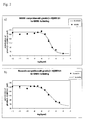
- Fig. 2: Competition curves from Zeiss-System, HTS conditions. A) Competition of ghrelin (1-19) MR121 with H6935; b) Competition of ghrelin (1-19) MR121 with hexarelin.
- Fig. 3: Affinity of fluorescent analogs, determined in 125I-ghrelin competition assays. A) ghrelin (1-19) MR121; b) ghrelin (1-19) TMR; c) ghrelin (1-19) BoFl (BIODIPY-FL); d) ghrelin (1-19) Texas Red.
- Fig 4: Polarization of fluorescent analogs, determined according to protocol in example 2.2.1 and 2.2.2.
-
- Red (Darker, left hand bar): ghrelin(1-19)MR121, Blue (Lighter, right hand bar): ghrelin(1-19-N-oct)MR121.
- 1) Fluorescence polarization of Total bound fluorescent ligands (in presence of GHSR-1a membranes); 2) Fluorescence polarization of Free ligand (in presence of GHSR-1a membranes and excess of competitor); 3) Fluorescence polarization of fluorescent ligands in buffer.
- Continuous-flow solid-phase synthesis was performed on a Pioneer™ Peptide Synthesis System, starting fromTenta Gel S RAM resin (0.25 mmol/g (Rapp Polymere GmbH, Tübingen, Germany) according to the method described in "Fmoc Solid Phase Peptide Synthesis: A practical approach" (Oxford University Press 2000) pp 41-74, Eds. W.C. Chan and P.D. White. The base-labile Fmoc group was used for α-amino protection. Side chains were protected with the following protection groups: -Asn(Trt), Glu(OtBu), Ser(tBu), His(Trt), Gln(Trt), His(Trt), Arg(Pbf), Lys(Boc), Cys(Trt). Fmoc-amino acids (4 equiv.) were activated with an equivalent amount of O-(1,2-dihydro-2-oxopyrid-1-yl)-N,N,N',N'-tetramethyluronium tetrafluoroborate (TPTU) and N,N-diisopropylethylamine (Hünig's base). Fmoc deprotection was achieved with 20% piperidine in DMF. The automated synthesis was interrupted after residue 4Phe was incorporated in the target sequence. Peptide synthesis was continued semi-manually using a Peptide Synthesizer SP650 (Labortec AG). Side chain unprotected Fmoc-3Ser-OH (0.65 g, 2mmol), TPTU (0.59 g, 2 mmol) , Hünig's base (1.03 ml) were added to the peptide resin and coupling was continued for 1 hour in DMF solvent (ninhydrin negative). Octanoylation of the side chain hydroxyl was achieved using caprylic acid (2.0 ml, 12 mmol), N,N'-Diisopropylcarbodiimide, (1.9 ml, 12 mmol) N,N'-dimethylaminopyridine (18 mg, 0.15 mmol) in N-methylpyrrolidine solvent. After 4 hours the reaction mixture was filtered off and synthesis was continued using the standard peptide synthesis protocol (above). 1Gly- Ser(tBu)-Ser(octanoyl)-Phe-5Leu-Ser(tBu)-Pro-Glu(OtBu)- His(Trt)-10Gln(Trt)-Arg(Pbf)-Val-Gln(Trt)-Gln(Trt)-15Arg(Pbf)-Lys(Boc)-Glu(OtBu)-Ser(tBu)-Cys(Trt)-NH2 Tenta Gel S-resin (2.0 g) was treated with a mixture (100 ml) of 95% TFA, 2.5% H2O, 2.5% EDT, 2.5% triisopropylsilane for 5 hours. The reaction mixture was concentrated and poured into diethyl ether and the precipitate was collected by filtration and lyophilized from water. The crude peptide (0.80 g) was purified by preparative RP-HPLC. There was obtained 1Gly-Ser-Ser(octanoyl)-Phe-5Leu-Ser-Pro-Glu-His-10Gln-Arg-Val-Gln-Gln-15Arg-Lys-Glu-Ser-Cys-NH2 (0.18 g, Ion-spray MS analysis (M+2H)2+/2 = 1165.4, (M+3H)3+/3 = 777.2).
- To a pre-activated mixture containing caprylic acid (1.54 ml, 10 mmol), TPTU ( 2.8 g, 9.5 mmol) and Hunig's base (3.4 ml, 20 mmol ) ) in DMF ( 20 ml) was added a solution of Fmoc-L-Dapa-OH Neosysytem FA04002 8 (3.3 g, 10 mmol) in DMF ( 10 ml). The reaction mixture was stirred for 1h, concentrated under reduced pressure dissolved in ethyl acetate and washed with 5%/10% KHSO4/K2SO4, brine, dried over Na2SO4, filtered and concentrated. Crystallizaton from ethyl acetate/ hexane: 3.7 g, 82% ; MS = 451.4 (MH)-.
- The peptide synthesis incorporating Fmoc-L-Dapa(N-octanoyl)-OH was performed on a Pioneer™ Peptide Synthesis System as described above starting with Tentagel S-NH2 resin (0.55 mmol), yielding purified peptide 1Gly-Ser-Dapa(N-octanoyl)-Phe-5Leu-Ser-Pro-Glu-His-10Gln-Arg-Val-Gln-Gln-15Arg-Lys-Glu-Ser-Cys-NH2: 135 mg; Ion-spray MS: (M+2H)2+/2 = 1164.8, (M+3H)3+/3 = 776.8).
- The thiol-containing peptide above (1.3 mg) was dissolved in 9:1 DMSO: 50 mM phosphatebuffer
pH 6 to a final concentration of 2.5 mM. 1.2 equivalent of TxR (Texas Red)-Maleimide (30 mM freshly prepared solution in DMSO) was added and the mixture left to react at room temperature for 10 minutes. The reaction mixture was directly purified by RP-HPLC: 0.17 mg. MS analysis: calculated monoisotopic mass: C136H198N36O39S3= 3055.38; found monoisotopic mass: 3055.35 - The TMR (Tetramethylrhodamine) derivatized peptide was prepared analogously to example 1.2: From1.7 mg starting peptide material was isolated 0.44 mg labeled peptide. MS analysis: calculated monoisotopic mass: C127H185N35O36S = 2808.34; found monoisotopic mass: 2808.40
- The MR121* derivatized peptide was prepared analogously to example 1.2: From 1.5 mg initial peptide material was isolated 0.37 mg labeled peptide. MS analysis: calculated monoisotopic mass: C129H196N37O35S = 2855.44; found monoisotopic mass: 2855.38
- The BODIPY-FL (4,4-difluoro-5,7-dimethyl-4-bora-3a,4a- diaza-s-indacene-3-propionic acid) derivatized peptide was prepared analogously to example 1.2: From 0.7 mg starting material was isolated 0.20 mg labeled peptide. MS analysis calculated monoisotopic mass: C119H183BF2N36O34S = 2742.4; found monoisotopic mass: 2742.4.
- The MR121* derivatized peptide was prepared analogously to example 1.2: From 0.7 mg initial peptide material was isolated 0.17 mg labeled peptide. MS analysis: calculated monoisotopic mass: C129H197N36O35S = 2854.46; found monoisotopic mass: 2854.49.
- Human Embryonic Kidney HEK 293 (EBNA) cells were grown in suspension and transfected according to the method previously described (Schlaeger and Christensen, Cytotechnology, 30, 71-83, 1999). The cells were centrifugated for 10 min at 500 rpm, washed once with PBS-0.7 mM EDTA/(4°C) and resuspended in PBS-EDTA-PI (with Protease inhibitor cocktail), at 2 ml/g of cells. Cells were broken with Ultra Turax level green 3 x 15" with 30" breaks on ice. To remove debris the suspension was centrifugated in a Sorvall SS34 rotor for 20min at 2'000 rpm. The supernatant was collected and centrifugated for 40 min at 20'000 rpm. The pellet was resuspended in PBS-EDTA. Receptor density was verified with saturation binding assay using T- MK 0677 to be 4.9 pmol/mg protein.
- GHSR-la-containing cell-membranes was diluted in FP-buffer: 25 mM Hepes, 5 mM MgCl2, 1 mM CaCl2, 4% PEG, 0.1% BSA (fraction V) to a to a final volume of 0.5-1 ml, passed through a 0.4 mm syringe and sonicated 4
times 20 pulses while kept on ice. 10 nM solution of MR121-labeled ghrelin (tracer) and 20 x concentrated solutions of competitor in FP-buffer were prepared. To determine polarization of receptor bound tracer, three samples of 180 ul were prepared: Total bound: Membranes + tracer, Free ligand: membranes + tracer + competitor, Fluorescence background: membranes + buffer. 3 x 50 µl of each sample was transferred to assay-plates right after mixing. - Figure 1. shows a possible layout of a 384 well plate for High Throughput Screening. For one round of screening, 119 Sample Plates and 1 DMSO Plate (membranes p20F1+p22F1) were used. The following is a representative non-limiting example of a HTS protocol with MR121 as fluorochrome. For the assay, Costar 384 well UV plates with non-binding surface were used. The following assay buffer was used: 25mM Hepes pH 7.2, 5mM MgCl2, 1mM CaCl2, 4% polyethylene glycol, and 0.1% BSA ( Fract. V) was added fresh every week. Receptors were provided as follows: Membranes were isolated as described in example 2.1. Final assay concentration was 1.4 nM of GHSR-1a as determined by 125 I-ghrelin saturation binding. Typical values for the membrane stock are: Bmax = 6 fmol/µg; Protein Concentration= 50µg/µl.
- To avoid sedimentation membranes need to be pushed through a needle (3x / 0.4mm) and sonicated "Branson sonifier 250" set to intensity level 3-4, 4x20 pulses separated by 30 sec pause. Membranes were kept on ice during sonication. Membranes were diluted to an endconcentration of 1.4 nM of receptor.
- The tracer ghrelin(1-19)[K19MR121] was diluted in buffer from 1µM DMSO stock. Final assay concentration was 0.5nM. Since the peptide tends to adsorb to surfaces, the plastic ware used for the diluted peptide solution either comprised a nonbinding surface or was blocked overnight with a 1% casein solution, and then washed with buffer before use.
- The following steps were used for high throughput screening:
- 1) 30µl of 1.33x membrane solution were added to all wells of the assay plate.
- 2) 4.4µl of buffer were transferred to "FPBLK" /"100% control" wells and 4.4µl of reference compound solution were transferred to "STD" and "0% control" wells from a reservoir plate to the assay plate
- 3) 10µl of water with 0% DMSO were added to
columns 3 to 24 of the compound storage plate containing 1µl of 2 mM compounds (Endconc. 20µM). - 4) The contents of the storage plate were mixed.
- 5) 4.4µl of diluted compounds were transferred from the storage plate to an assay plate.
- 6) The contents of the assay plate were mixed five times and then incubated for 30 min at 24°C.
- 7) 5.6µl of 7.143x tracer solution were added to the assay plate except to wells A1 to D2 (wells labeled "FPBLK" in Fig. 1) to which 5.6µl of buffer were added.
- 8) The content of the assay plate was mixed five times.
- 9) 30µl of the solution in each well were transferred from the assay plate to the read-out plate (Corning UV non-binding surface).
- 10)The readout plate was incubated for 10 min. at RT.
- 11)MR121 fluorescence was read from the read-out plate at 650-695 nm (5 s,
Focus To Bottom 1 mm, xy scan 0.5 mm), with settings at parallel (∥) and crossed (⊥) polarization, using a Zeiss plate::vision microtiter plate reader. -

Claims (18)
- A labeled ghrelin of the formula
- The labeled ghrelin of claim 1, wherein R1 is Seq ID No. 2.
- The labeled ghrelin of claim 1, wherein R1 in octanoylated.
- The labeled ghrelin of claim 1, wherein R1 is N-octanoylated.
- The labeled ghrelin of claim 1, wherein R1 is 1Gly-Ser-Ser(octanoyl)-Phe-5Leu-Ser-Pro-Glu-His-10Gln-Arg-Val-Gln-Gln-15Arg-Lys-Glu-Ser.
- The labeled ghrelin of claim 1, wherein R1 is 1Gly-Ser-Dapa(N-octanoyl)-Phe-5Leu-Ser-Pro-Glu-His-10Gln-Arg-Val-Gln-Gln-15Arg-Lys-Glu-Ser.
- The labeled ghrelin of claims 1 to 6, wherein F is selected from the group consisting of TxR, TMR, MR121 or BODIPY-FL.
- Use of a labeled ghrelin of any one of claims 1 to 7 for identifying a compound that can bind to a growth hormone secretagogue receptor.
- Use of a labeled ghrelin of any one of claims 1 to 7 for identifying a cellular receptor as a growth hormone secretagogue receptor.
- A process of synthesizing a labeled ghrelin which comprises the steps ofa) coupling a Cys to the C-terminal amino acid; andb) reacting the thiol-containing ghrelin to a fluorescent dye.
- A method of identifying a cellular receptor as a growth hormone secretagogue receptor comprising contacting a host suspected to express a growth hormone secretagogue receptor with the labeled growth hormone secretagogue of any one of claims 1 to 7 and determining whether binding has occurred.
- A method for identifying a compound that can bind to a growth hormone secretagogue receptor comprising the steps ofa) contacting said compound with a membrane isolated from a host expressing a growth hormone secretagogue receptor in the presence of the labeled growth hormone secretagogue of any one of claims 1 to 7 in an assay buffer;b) washing said membrane to remove unbound labeled growth hormone secretagogue; andc) monitoring whether the compound influences the binding of the labeled growth hormone secretagogue of any one of claims 1 to 7 to the growth hormone secretagogue receptor by measuring the fluorescence of said membranes.
- The method of claim 12, wherein said method is a high throughput screening method.
- The method of claim 12 or 13, wherein said assay buffer has a pH of 7.2.
- A method for identifying the activity of a compound as a growth hormone secretagogue comprising contacting the compound suspected of having activity as a growth hormone secretagogue with a host expressing a growth hormone secretagogue receptor in the presence of the labeled growth hormone secretagogue of any one of claims 1 to 7 and monitoring whether the compound suspected of having activity as a growth hormone secretagogue influences the binding of the labeled growth hormone secretagogue of any one of claims 1 to 7 to the growth hormone secretagogue receptor.
- A compound identified by the methods of any one of claims 12 to 15, or pharmaceutically acceptable salts thereof.
- A pharmaceutical composition comprising a compound of claim 16 and a pharmaceutically acceptable carrier.
- The labeled ligand, compounds, methods, process, uses and composition substantially as hereinbefore described, especially with reference to the foregoing examples.
Priority Applications (1)
| Application Number | Priority Date | Filing Date | Title |
|---|---|---|---|
| EP20040024029 EP1524274B1 (en) | 2003-10-16 | 2004-10-08 | Fluorescently labelled Ghrelin peptides. |
Applications Claiming Priority (3)
| Application Number | Priority Date | Filing Date | Title |
|---|---|---|---|
| EP03023568 | 2003-10-16 | ||
| EP03023568 | 2003-10-16 | ||
| EP20040024029 EP1524274B1 (en) | 2003-10-16 | 2004-10-08 | Fluorescently labelled Ghrelin peptides. |
Publications (2)
| Publication Number | Publication Date |
|---|---|
| EP1524274A1 true EP1524274A1 (en) | 2005-04-20 |
| EP1524274B1 EP1524274B1 (en) | 2008-03-05 |
Family
ID=34379376
Family Applications (1)
| Application Number | Title | Priority Date | Filing Date |
|---|---|---|---|
| EP20040024029 Expired - Lifetime EP1524274B1 (en) | 2003-10-16 | 2004-10-08 | Fluorescently labelled Ghrelin peptides. |
Country Status (1)
| Country | Link |
|---|---|
| EP (1) | EP1524274B1 (en) |
Cited By (4)
| Publication number | Priority date | Publication date | Assignee | Title |
|---|---|---|---|---|
| WO2007108990A3 (en) * | 2006-03-13 | 2008-02-14 | Liat Mintz | Use of ghrelin splice variant for treating cachexia and/or anorexia and/or anorexia-cachexia and/or malnutrition and/or lipodystrophy and/or muscle wasting and/or appetite stimulation |
| US7763707B2 (en) | 2006-03-13 | 2010-07-27 | Liat Mintz | Use of ghrelin splice variant for treating cachexia and/or anorexia and/or anorexia-cachexia and/or malnutrition and/or lipodystrophy and/or muscle wasting and/or appetite-stimulation |
| WO2013113916A3 (en) * | 2012-02-03 | 2013-11-21 | Zealand Pharma A/S | Ghrelin analogues |
| US8623326B2 (en) | 2008-05-23 | 2014-01-07 | University Of Western Ontario | Ghrelin analogues |
Citations (2)
| Publication number | Priority date | Publication date | Assignee | Title |
|---|---|---|---|---|
| WO2001038355A2 (en) * | 1999-11-22 | 2001-05-31 | Zymogenetics, Inc. | Method of forming a peptide-receptor complex with zsig33 and therapeutic use thereof |
| WO2001092292A2 (en) * | 2000-05-30 | 2001-12-06 | Merck & Co., Inc. | Ghrelin analogs |
-
2004
- 2004-10-08 EP EP20040024029 patent/EP1524274B1/en not_active Expired - Lifetime
Patent Citations (2)
| Publication number | Priority date | Publication date | Assignee | Title |
|---|---|---|---|---|
| WO2001038355A2 (en) * | 1999-11-22 | 2001-05-31 | Zymogenetics, Inc. | Method of forming a peptide-receptor complex with zsig33 and therapeutic use thereof |
| WO2001092292A2 (en) * | 2000-05-30 | 2001-12-06 | Merck & Co., Inc. | Ghrelin analogs |
Non-Patent Citations (4)
| Title |
|---|
| BLACKMAN M J ET AL: "Structural and Biochemical Characterization of a Fluorogenic Rhodamine-Labeled Malarial Protease Substrate", BIOCHEMISTRY, AMERICAN CHEMICAL SOCIETY. EASTON, PA, US, vol. 41, 2002, pages 12244 - 12252, XP002239039, ISSN: 0006-2960 * |
| BULLOK KRISTIN E ET AL: "Characterization of novel histidine-tagged Tat-peptide complexes dual-labeled with 99mTc-tricarbonyl and fluorescein for scintigraphy and fluorescence microscopy.", BIOCONJUGATE CHEMISTRY, vol. 13, no. 6, 18 October 2002 (2002-10-18), pages 1226 - 1237, XP002315750, ISSN: 1043-1802 * |
| LICHER T ET AL: "The coupling region of F0F1 ATP synthase: binding of the hydrophilic loop of F0 subunit c to F1", FEBS LETTERS, ELSEVIER SCIENCE PUBLISHERS, AMSTERDAM, NL, vol. 431, no. 3, 24 July 1998 (1998-07-24), pages 419 - 422, XP004258169, ISSN: 0014-5793 * |
| MUCCIOLI G ET AL: "Binding of I25l-labeled ghrelin to membranes from human hypothalamus and pituitary gland", JOURNAL OF CLINICAL INVESTIGATION, NEW YORK, NY, US, vol. 24, 2001, pages RC7 - RC9, XP002277339, ISSN: 0021-9738 * |
Cited By (9)
| Publication number | Priority date | Publication date | Assignee | Title |
|---|---|---|---|---|
| WO2007108990A3 (en) * | 2006-03-13 | 2008-02-14 | Liat Mintz | Use of ghrelin splice variant for treating cachexia and/or anorexia and/or anorexia-cachexia and/or malnutrition and/or lipodystrophy and/or muscle wasting and/or appetite stimulation |
| US7763707B2 (en) | 2006-03-13 | 2010-07-27 | Liat Mintz | Use of ghrelin splice variant for treating cachexia and/or anorexia and/or anorexia-cachexia and/or malnutrition and/or lipodystrophy and/or muscle wasting and/or appetite-stimulation |
| US7981860B2 (en) | 2006-03-13 | 2011-07-19 | Liat Mintz | Use of ghrelin splice variant for treating cachexia and/or anorexia and/or anorexia-cachexia and/or malnutrition and/or lipodystrophy and/or muscle wasting and/or appetite-stimulation |
| AU2007227641B2 (en) * | 2006-03-13 | 2012-11-29 | Liat Mintz | Use of ghrelin splice variant for treating cachexia and/or anorexia and/or anorexia-cachexia and/or malnutrition and/or lipodystrophy and/or muscle wasting and/or appetite stimulation |
| RU2470940C2 (en) * | 2006-03-13 | 2012-12-27 | Лиат МИНТЦ | Use of ghrelin splicing version for treating cachexia and/or anorexia, and/or anorexia-cachexia, and/or eating disorder, and/or lipodystrophy, and/or muscle atrophy, and/or appetite stimulation |
| CN101443358B (en) * | 2006-03-13 | 2016-05-11 | 利亚特·明茨 | Use of ghrelin splice variants in the treatment of cachexia and/or stress-eating and/or anorexia-cachexia and/or malnutrition and/or lipodystrophy and/or muscle wasting and/or appetite stimulation |
| US8623326B2 (en) | 2008-05-23 | 2014-01-07 | University Of Western Ontario | Ghrelin analogues |
| WO2013113916A3 (en) * | 2012-02-03 | 2013-11-21 | Zealand Pharma A/S | Ghrelin analogues |
| US9657062B2 (en) | 2012-02-03 | 2017-05-23 | Zealand Pharma A/S | Ghrelin analogues |
Also Published As
| Publication number | Publication date |
|---|---|
| EP1524274B1 (en) | 2008-03-05 |
Similar Documents
| Publication | Publication Date | Title |
|---|---|---|
| Akhter Hossain et al. | Synthesis, conformation, and activity of human insulin‐like peptide 5 (INSL5) | |
| US4107298A (en) | Antigenically active polypeptide and a process for its preparation | |
| HU219336B (en) | Process for producing peptide derivatives and pharmaceutical compositions comprising such compounds and diagnostic unit containing such compounds | |
| US5854216A (en) | Marker for growth hormone-releasing factor receptors | |
| US6054557A (en) | Fluorescent peptides | |
| JP3801867B2 (en) | Novel LHRH antagonists with improved dissolution properties | |
| KR930004056B1 (en) | Peptide | |
| CA2568168C (en) | Identification of compounds modifying a cellular response | |
| US7173109B2 (en) | Fluorescently labeled growth hormone secretagogue | |
| EP1524274A1 (en) | Fluorescently labelled Ghrelin peptides. | |
| US7041642B1 (en) | Fluorescent bombesin-like peptides | |
| US5824772A (en) | Fluorescent somatostatin | |
| Wolf et al. | The ring size of monocyclic ET‐1 controls selectivity and signaling efficiency at both endothelin receptor subtypes | |
| US6867011B1 (en) | Synthetic bioepitope compounds which can be used as standards in the biological assays of Troponin I | |
| Maingot et al. | New ligands of the ghrelin receptor based on the 1, 2, 4-triazole scaffold by introduction of a second chiral center | |
| US4327075A (en) | Synthetic antigenically-active polypeptide and a process for its preparation | |
| US20050037959A1 (en) | Compounds having affinity for the granulocyte-colony stimulating factor receptor (G-CSFR) and associated uses | |
| Darker et al. | Discovery of potent and selective peptide agonists at the GRP‐preferring bombesin receptor (BB2) | |
| CA2427490A1 (en) | Methods for improving the antagonistic/agonistic properties of peptidic antagonists/agonists of the corticotropin-releasing factor receptor (crfr) | |
| Flinn et al. | Synthesis and biological characterization of a series of analogues of ω‐conotoxin gvia | |
| Tripet et al. | Kinetic analysis of the interactions between Troponin C (TnC) and Troponin I (TnI) binding peptides: evidence for separate binding sites for the ‘structural’N‐terminus and the ‘regulatory’C‐terminus of TnI on TnC | |
| Ladram et al. | Analysis of structural requirements for TRH-potentiating peptide receptor binding by analogue design | |
| US7148193B2 (en) | Compounds that bind to growth hormone receptor | |
| US5693679A (en) | Fluorescent somatostatin | |
| Szatmári et al. | Affinity labeling of δ opioid receptors by an enkephalin-derivative alkylating agent, DSLET-Mal |
Legal Events
| Date | Code | Title | Description |
|---|---|---|---|
| PUAI | Public reference made under article 153(3) epc to a published international application that has entered the european phase |
Free format text: ORIGINAL CODE: 0009012 |
|
| AK | Designated contracting states |
Kind code of ref document: A1 Designated state(s): AT BE BG CH CY CZ DE DK EE ES FI FR GB GR HU IE IT LI LU MC NL PL PT RO SE SI SK TR |
|
| AX | Request for extension of the european patent |
Extension state: AL HR LT LV MK |
|
| 17P | Request for examination filed |
Effective date: 20051020 |
|
| AKX | Designation fees paid |
Designated state(s): CH DE ES FR GB IT LI |
|
| AXX | Extension fees paid |
Extension state: LV Payment date: 20051020 Extension state: LT Payment date: 20051020 |
|
| 17Q | First examination report despatched |
Effective date: 20051229 |
|
| GRAP | Despatch of communication of intention to grant a patent |
Free format text: ORIGINAL CODE: EPIDOSNIGR1 |
|
| GRAS | Grant fee paid |
Free format text: ORIGINAL CODE: EPIDOSNIGR3 |
|
| GRAA | (expected) grant |
Free format text: ORIGINAL CODE: 0009210 |
|
| AK | Designated contracting states |
Kind code of ref document: B1 Designated state(s): CH DE ES FR GB IT LI |
|
| AX | Request for extension of the european patent |
Extension state: LT LV |
|
| REG | Reference to a national code |
Ref country code: GB Ref legal event code: FG4D |
|
| REG | Reference to a national code |
Ref country code: CH Ref legal event code: EP |
|
| REF | Corresponds to: |
Ref document number: 602004012207 Country of ref document: DE Date of ref document: 20080417 Kind code of ref document: P |
|
| REG | Reference to a national code |
Ref country code: ES Ref legal event code: FG2A Ref document number: 2300686 Country of ref document: ES Kind code of ref document: T3 |
|
| LTIE | Lt: invalidation of european patent or patent extension |
Effective date: 20080305 |
|
| ET | Fr: translation filed | ||
| PLBE | No opposition filed within time limit |
Free format text: ORIGINAL CODE: 0009261 |
|
| STAA | Information on the status of an ep patent application or granted ep patent |
Free format text: STATUS: NO OPPOSITION FILED WITHIN TIME LIMIT |
|
| 26N | No opposition filed |
Effective date: 20081208 |
|
| REG | Reference to a national code |
Ref country code: FR Ref legal event code: PLFP Year of fee payment: 12 |
|
| REG | Reference to a national code |
Ref country code: FR Ref legal event code: PLFP Year of fee payment: 13 |
|
| REG | Reference to a national code |
Ref country code: FR Ref legal event code: PLFP Year of fee payment: 14 |
|
| PGFP | Annual fee paid to national office [announced via postgrant information from national office to epo] |
Ref country code: GB Payment date: 20170925 Year of fee payment: 14 Ref country code: FR Payment date: 20170922 Year of fee payment: 14 |
|
| PGFP | Annual fee paid to national office [announced via postgrant information from national office to epo] |
Ref country code: DE Payment date: 20171027 Year of fee payment: 14 |
|
| PGFP | Annual fee paid to national office [announced via postgrant information from national office to epo] |
Ref country code: ES Payment date: 20171107 Year of fee payment: 14 Ref country code: CH Payment date: 20171025 Year of fee payment: 14 Ref country code: IT Payment date: 20171016 Year of fee payment: 14 |
|
| REG | Reference to a national code |
Ref country code: DE Ref legal event code: R119 Ref document number: 602004012207 Country of ref document: DE |
|
| REG | Reference to a national code |
Ref country code: CH Ref legal event code: PL |
|
| GBPC | Gb: european patent ceased through non-payment of renewal fee |
Effective date: 20181008 |
|
| PG25 | Lapsed in a contracting state [announced via postgrant information from national office to epo] |
Ref country code: DE Free format text: LAPSE BECAUSE OF NON-PAYMENT OF DUE FEES Effective date: 20190501 |
|
| PG25 | Lapsed in a contracting state [announced via postgrant information from national office to epo] |
Ref country code: CH Free format text: LAPSE BECAUSE OF NON-PAYMENT OF DUE FEES Effective date: 20181031 Ref country code: LI Free format text: LAPSE BECAUSE OF NON-PAYMENT OF DUE FEES Effective date: 20181031 Ref country code: FR Free format text: LAPSE BECAUSE OF NON-PAYMENT OF DUE FEES Effective date: 20181031 |
|
| PG25 | Lapsed in a contracting state [announced via postgrant information from national office to epo] |
Ref country code: GB Free format text: LAPSE BECAUSE OF NON-PAYMENT OF DUE FEES Effective date: 20181008 Ref country code: IT Free format text: LAPSE BECAUSE OF NON-PAYMENT OF DUE FEES Effective date: 20181008 |
|
| REG | Reference to a national code |
Ref country code: ES Ref legal event code: FD2A Effective date: 20191129 |
|
| PG25 | Lapsed in a contracting state [announced via postgrant information from national office to epo] |
Ref country code: ES Free format text: LAPSE BECAUSE OF NON-PAYMENT OF DUE FEES Effective date: 20181009 |