EP1523203A2 - Device bound flashing/booting for cloning prevention - Google Patents
Device bound flashing/booting for cloning prevention Download PDFInfo
- Publication number
- EP1523203A2 EP1523203A2 EP04104904A EP04104904A EP1523203A2 EP 1523203 A2 EP1523203 A2 EP 1523203A2 EP 04104904 A EP04104904 A EP 04104904A EP 04104904 A EP04104904 A EP 04104904A EP 1523203 A2 EP1523203 A2 EP 1523203A2
- Authority
- EP
- European Patent Office
- Prior art keywords
- dbc
- boot image
- authentication code
- specific information
- code
- Prior art date
- Legal status (The legal status is an assumption and is not a legal conclusion. Google has not performed a legal analysis and makes no representation as to the accuracy of the status listed.)
- Granted
Links
Images

Classifications
-
- H—ELECTRICITY
- H04—ELECTRIC COMMUNICATION TECHNIQUE
- H04L—TRANSMISSION OF DIGITAL INFORMATION, e.g. TELEGRAPHIC COMMUNICATION
- H04L63/00—Network architectures or network communication protocols for network security
- H04L63/08—Network architectures or network communication protocols for network security for authentication of entities
- H04L63/0823—Network architectures or network communication protocols for network security for authentication of entities using certificates
-
- H—ELECTRICITY
- H04—ELECTRIC COMMUNICATION TECHNIQUE
- H04W—WIRELESS COMMUNICATION NETWORKS
- H04W12/00—Security arrangements; Authentication; Protecting privacy or anonymity
- H04W12/02—Protecting privacy or anonymity, e.g. protecting personally identifiable information [PII]
-
- G—PHYSICS
- G06—COMPUTING OR CALCULATING; COUNTING
- G06F—ELECTRIC DIGITAL DATA PROCESSING
- G06F21/00—Security arrangements for protecting computers, components thereof, programs or data against unauthorised activity
- G06F21/50—Monitoring users, programs or devices to maintain the integrity of platforms, e.g. of processors, firmware or operating systems
- G06F21/57—Certifying or maintaining trusted computer platforms, e.g. secure boots or power-downs, version controls, system software checks, secure updates or assessing vulnerabilities
- G06F21/575—Secure boot
-
- H—ELECTRICITY
- H04—ELECTRIC COMMUNICATION TECHNIQUE
- H04L—TRANSMISSION OF DIGITAL INFORMATION, e.g. TELEGRAPHIC COMMUNICATION
- H04L9/00—Cryptographic mechanisms or cryptographic arrangements for secret or secure communications; Network security protocols
- H04L9/32—Cryptographic mechanisms or cryptographic arrangements for secret or secure communications; Network security protocols including means for verifying the identity or authority of a user of the system or for message authentication, e.g. authorization, entity authentication, data integrity or data verification, non-repudiation, key authentication or verification of credentials
-
- H—ELECTRICITY
- H04—ELECTRIC COMMUNICATION TECHNIQUE
- H04W—WIRELESS COMMUNICATION NETWORKS
- H04W12/00—Security arrangements; Authentication; Protecting privacy or anonymity
- H04W12/06—Authentication
-
- H—ELECTRICITY
- H04—ELECTRIC COMMUNICATION TECHNIQUE
- H04W—WIRELESS COMMUNICATION NETWORKS
- H04W12/00—Security arrangements; Authentication; Protecting privacy or anonymity
- H04W12/12—Detection or prevention of fraud
- H04W12/126—Anti-theft arrangements, e.g. protection against subscriber identity module [SIM] cloning
-
- H—ELECTRICITY
- H04—ELECTRIC COMMUNICATION TECHNIQUE
- H04W—WIRELESS COMMUNICATION NETWORKS
- H04W12/00—Security arrangements; Authentication; Protecting privacy or anonymity
- H04W12/30—Security of mobile devices; Security of mobile applications
- H04W12/35—Protecting application or service provisioning, e.g. securing SIM application provisioning
-
- H—ELECTRICITY
- H04—ELECTRIC COMMUNICATION TECHNIQUE
- H04W—WIRELESS COMMUNICATION NETWORKS
- H04W88/00—Devices specially adapted for wireless communication networks, e.g. terminals, base stations or access point devices
- H04W88/02—Terminal devices
Definitions
- Mobile phones generally comprise software applications that may be executed to operate the mobile phone.
- these software applications may enable a phone with various other capabilities, such as text messaging and digital photography.
- a mobile phone boot image may comprise an operating system and any of a variety of such software applications that may be executed on the mobile phone.
- the price of a mobile phone may vary based on the quality of the boot image embedded in the phone's flash memory. High-quality boot images may cause particular phones to be more expensive than phones with boot images of lesser quality.
- Texas Instruments'® proprietary Open Multimedia Applications Platform (“OMAP”) comprises a microprocessing engine that enables communications devices to process data and software applications while extending battery life.
- a mechanism present in current OMAP devices supports the flashing and booting of boot images using a key that is shared among a plurality of devices. This key helps verify the authenticity of a boot image, but does not prevent the unauthorized copying and re-use of the boot image on a separate phone, resulting in a possible penetrable security gap.
- Such a security gap may enable unauthorized entities to copy boot images from expensive phones and reproduce the boot images on inexpensive phones. In this way, an unauthorized entity may clone an expensive phone into an unlimited number of inexpensive phones and sell the inexpensive phones for a profit.
- each mobile phone boot image comprises an International Mobile Equipment Identifier ("IMEI") number that serves as an identification code for the phone in the Global System for Mobile Communication (“GSM”) and Third Generation (“3G”) networks.
- IMEI International Mobile Equipment Identifier
- GSM Global System for Mobile Communication
- 3G Third Generation
- the IMEI number is used to grant or deny access to the cellular networks and the networks' services.
- the owner may contact his or her cellular service provider (e.g., Sprint® , Verizon® , AT&T® ) and have the phone added to a GSM/3G blacklist. Mobile phones found on the blacklist will be denied access to the cellular networks.
- an unauthorized entity that steals the phone would not be able to use the phone to access the networks, because the IMEI number of the phone has been added to the blacklist.
- a knowledgeable, unauthorized entity may easily alter the IMEI number of the stolen phone to a number that is not found on the blacklist, thereby gaining access to the cellular networks by way of the stolen phone.
- One exemplary embodiment may include downloading a boot image onto a mobile communication device and generating a device-bound certificate (“DBC").
- the DBC preferably comprises an authentication code generated using a hashed message authentication code (“HMAC”) algorithm and a key specific to the device.
- the method may further comprise storing the DBC on the boot image, thus binding the boot image to the mobile communication device.
- per-device "binding" of boot images and boot image contents is provided for a mobile communication device.
- a boot image that has been downloaded to a mobile phone may be manipulated so that the boot image cannot be copied, altered, or transferred to any other mobile phone. In this way, the boot image is "bound" to the mobile phone.
- the boot image, once bound to the mobile phone, is valid only for that particular mobile phone.
- the contents of a boot image also may be bound to a mobile phone in a similar fashion.
- Per-device binding of a boot image is accomplished by way of a device-bound certificate ("DBC").
- DBC device-bound certificate
- a DBC is used to bind a boot image to a particular mobile phone so that the boot image cannot be transferred, altered or otherwise copied to another mobile phone.
- private data comprising a hashed message authentication code (“HMAC") is stored in the DBC and the DBC subsequently is encrypted with a secret key.
- HMAC hashed message authentication code
- a mobile phone is not permitted to use the boot image without first obtaining the HMAC contained in the DBC. The HMAC thus functions to bind the boot image to the mobile phone.
- the phone cannot access the HMAC in the DBC without the secret key and only the phone to which the boot image is bound has the secret key. Hence, only the phone with the correct secret key may freely access the contents of the boot image.
- per-device binding of a boot image and all contents of the boot image is accomplished by way of a DBC.
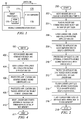
- Figure 1 shows a preferred embodiment of a mobile phone 170 comprising an OMAP processor 172 coupled to a UART/USB port 174, a flash memory 178 and comprising a ROM code (i.e., on-chip firmware) 176.
- OMAP processor 172 coupled to a UART/USB port 174
- flash memory 178 and comprising a ROM code (i.e., on-chip firmware) 176.
- ROM code i.e., on-chip firmware
- FIG. 2 illustrates a flow diagram describing the process of binding a boot image to the mobile phone 170.
- Figure 3a illustrates a boot image 300 comprising a TOC field 302 that describes the contents of the boot image 300, a KEYS header 304 that comprises keys used for cryptographic reasons as described below and a common header 306 that acts as a header for a flash loader 308, which comprises a protected application ("PA”) 318.
- the boot image 300 also may comprise other fields 310, a PA 312 and an empty device-bound certificate (“DBC”) field 314.
- Protected applications are thusly named because the protected applications operate in a secure-mode environment, which may be defined as a hardware-based secure execution environment that is generally tamper-proof.
- a binding process may be performed during manufacture of a phone, after the phone has been sold to a consumer, or at any other time.
- the binding process begins with the creation of a DBC during the flashing process, the filling of the empty DBC field 314 with this DBC, and the subsequent storing of the boot image 300 on the mobile phone 170. More specifically, the binding process may begin with the authentication of the flash loader 308 by the ROM code 176 to ensure the validity of the flash loader 308 (block 202). Once authenticated, the flash loader 308 downloads the boot image 300 by way of a UART/USB port 174 or any appropriate device (block 204).
- the boot image 300 and other information may be downloaded by a manufacturer or any appropriate entity from any appropriate source, such as the manufacturer's computer systems.
- specific items e.g., an IMEI certificate comprising an IMEI number; SIMlock files
- the items may be downloaded in a manner similar to that used to download the boot image 300.
- the IMEI certificate Prior to being downloaded, the IMEI certificate preferably is signed by a manufacturer with an Original Equipment Manufacturer Interface ("OEMI") private key.
- OEMI public key and the IMEI certificate are both downloaded onto the mobile phone 170, so that the mobile phone 170 may verify the IMEI certificate using the OEMI public key at a later time.
- the flash loader 308 subsequently may load and call the PA 318 (block 206).
- the flash loader 308 sends various parameters, comprising pointers to various components of the boot image 300 (e.g., the common header 306) as well as the values of Creator ID and Application ID found in the common header 306.
- the Creator ID describes the owner or creator of a DBC and the Application ID serves as an identifier for the application that creates the DBC.
- the PA 318 may use these pointers and values as necessary.
- At least one purpose of the PA 318 is to compute the DBC (block 208), optionally encrypt the DBC with a random key (block 210), and pass the DBC to the flash loader 308 for further processing (block 212).
- the PA 318 operates in a secure-mode environment.
- the result is concatenated with various data as shown above (e.g., Public Chip ID, Creator ID).
- SHA-1 is used for computing a "condensed representation" of a message or a data file.
- the "condensed representation” is of fixed length and is known as a "message digest” or “fingerprint.” It is computationally infeasible to produce two messages having the same message digest. This uniqueness enables the message digest to act as a "fingerprint" of the message. For instance, SHA-1 may be used to ensure the integrity of a downloaded or received file by comparing the file hash with the original file hash. Any message or similar construct requiring integrity may be verified in this fashion.
- the PA 318 completes the DBC computation by assembling a DBC as illustrated in Figure 3b using information computed by the PA 318 or received from the flash loader 308.
- the completed DBC may comprise a Public Chip ID 322, a Creator ID 324, an Application ID 326, a boot loader/common header hash 328, reserved fields 330 and an HMAC 332 generated as described above.
- the reserved fields 330 may be filled with an IMEI certificate 330 if an IMEI certificate was downloaded in block 204.
- the reserved fields 330 also may be filled with any other device-specific information.
- Encrypting the DBC with a random, secret key K protects all of the contents of the DBC (e.g., the IMEI certificate 330). Once the DBC is encrypted or the encryption step is bypassed, the PA 318 passes the DBC to the flash loader 308 for further processing.
- the flash loader 308 receives the DBC from the PA 318 and inserts the DBC into the empty DBC field 314 (block 214), thereby establishing a DBC 314 inside the boot image 300.
- the flash loader 308 then completes the binding process by flashing (i.e., writing) the boot image 300 to the flash memory 178 of the mobile phone 170 (block 216).
- the boot image 300 comprising the DBC 314 and bound to the phone 170 cannot be used until the DBC 314 is authenticated at boot time (i.e., each time the phone is turned on) as illustrated in Figure 4. That is, the operating system contained in the boot image 300 will not load unless the DBC 314 is first authenticated, thus preventing an end-user from using the phone 170.
- Figure 3b illustrates a booting-time boot image 300 comprising a TOC field 302, a KEYS header field 304, a common header 306, a boot loader 308 comprising a PA 320, other fields 310, a PA 312 and a DBC 314.
- the DBC 314 comprises a Public Chip ID 322, a Creator ID 324, an Application ID 326, a boot loader/common header hash 328, reserved fields 330 that may comprise an IMEI certificate 330, and the HMAC 332.
- Figure 4 illustrates a flow diagram of the process for authenticating a boot image 300 at boot-time.
- the boot-time authentication process may begin with the verification of the KEYS header 304 and the common header 306 by the on-chip ROM code 176 (block 402).
- the boot loader 318 may load and call the PA 320 using various parameters comprising pointers to the DBC 314, the common header 306 and boot loader 318, and values of the Creator ID 324 and Application ID 326 from the common header 306 (block 404) so the PA 320 may use these pointers and values as necessary.
- the PA 320 may verify the integrity of the DBC 314 and, if applicable, the IMEI certificate 330 (block 406) by first unlocking (i.e., decrypting) the DBC 314 (if the DBC 314 was encrypted) using a key K1 and verifying the IMEI certificate 330 using the OEMI public key that was downloaded onto the mobile phone 170 concurrently with the IMEI certificate 330.
- HMAC1 HMAC KEY1 (SHA-1 (Common Header 306 + Boot Loader 318)
- the PA 320 subsequently compares the HMAC1 calculated above to the HMAC stored in the DBC 314 to test for a match and passes the result of the comparison to the boot loader 318 (block 408) .
- a match indicates that the boot image 300 has not been copied or altered and may be used by the mobile phone 170 on which the boot image 300 is located.
- a match also indicates that the contents of boot image 300 (e.g., the IMEI certificate 330) have not been copied or altered and are authentic. In such a case, the booting process would continue as normal.
- a mismatch indicates that the boot image 300 may have been stolen, altered or copied.
- the integrity of the contents of the boot image 300 (e.g., the IMEI certificate 330) may have been compromised.
- the boot loader 318 receives the results of this comparison from the PA 320 and proceeds accordingly (block 410), thereby completing the boot-time authentication process.
- the boot loader 318 receives the results of this comparison from the PA 320 and proceeds accordingly (block 410), thereby completing the boot-time authentication process.
- the boot images described above may contain any of a variety of contents, such as R&D certificates used for debugging purposes, a primary protected application (“PPA") that is present in secure random access memory after booting, a PPA certificate, and any other appropriate item.
- PPA primary protected application
- the above subject matter is primarily discussed in terms of applicability to mobile phones, the subject matter may be used with any mobile communication device. Numerous variations and modifications will become apparent to those skilled in the art once the above disclosure is fully appreciated. It is intended that the following claims be interpreted to embrace all such variations and modifications.
Landscapes
- Engineering & Computer Science (AREA)
- Computer Security & Cryptography (AREA)
- Computer Networks & Wireless Communication (AREA)
- Signal Processing (AREA)
- Computer Hardware Design (AREA)
- General Engineering & Computer Science (AREA)
- Software Systems (AREA)
- Theoretical Computer Science (AREA)
- Physics & Mathematics (AREA)
- General Physics & Mathematics (AREA)
- Computing Systems (AREA)
- Telephone Function (AREA)
- Mobile Radio Communication Systems (AREA)
- Storage Device Security (AREA)
- Stored Programmes (AREA)
Abstract
Description
Texas Instruments'® proprietary Open Multimedia Applications Platform ("OMAP") comprises a microprocessing engine that enables communications devices to process data and software applications while extending battery life. A mechanism present in current OMAP devices (i.e., models 161x, 171x, 73x) supports the flashing and booting of boot images using a key that is shared among a plurality of devices. This key helps verify the authenticity of a boot image, but does not prevent the unauthorized copying and re-use of the boot image on a separate phone, resulting in a possible penetrable security gap. Such a security gap may enable unauthorized entities to copy boot images from expensive phones and reproduce the boot images on inexpensive phones. In this way, an unauthorized entity may clone an expensive phone into an unlimited number of inexpensive phones and sell the inexpensive phones for a profit.
In accordance with the preferred embodiments, per-device "binding" of boot images and boot image contents is provided for a mobile communication device. A boot image that has been downloaded to a mobile phone may be manipulated so that the boot image cannot be copied, altered, or transferred to any other mobile phone. In this way, the boot image is "bound" to the mobile phone. The boot image, once bound to the mobile phone, is valid only for that particular mobile phone. The contents of a boot image also may be bound to a mobile phone in a similar fashion.
A binding process may be performed during manufacture of a phone, after the phone has been sold to a consumer, or at any other time. In general, the binding process begins with the creation of a DBC during the flashing process, the filling of the
The
At least one purpose of the
The
Referring now to Figures 3b and 4, Figure 3b illustrates a booting-
Although the subject matter disclosed herein is described in terms of the OMAP161x platform, the OMAP 73x platform, the OMAP 171x platform or any of a variety of platforms may be used. The above discussion is meant to be illustrative of the principles and various embodiments of the present invention. While the technique for per-device binding of boot image contents is discussed in context of IMEI certificates, the technique may be applied to any device-specific data. Additionally, the scope of disclosure is not limited to the boot image contents as described above. The boot images described above may contain any of a variety of contents, such as R&D certificates used for debugging purposes, a primary protected application ("PPA") that is present in secure random access memory after booting, a PPA certificate, and any other appropriate item. Also, while the above subject matter is primarily discussed in terms of applicability to mobile phones, the subject matter may be used with any mobile communication device. Numerous variations and modifications will become apparent to those skilled in the art once the above disclosure is fully appreciated. It is intended that the following claims be interpreted to embrace all such variations and modifications.
Claims (20)
- A method, comprising:downloading a boot image onto a mobile communication device;generating a device-bound certificate ("DBC"), said DBC comprising an authentication code generated using a hashed message authentication code algorithm and a key specific to said device; andstoring the DBC in the boot image.
- The method of claim 1, wherein generating a DBC comprises using a read-only memory ("ROM") code.
- The method of either claim 1 or claim 2, wherein generating a DBC comprises executing a protected application in a secure execution environment.
- The method of any of claims 1 - 3, wherein generating a DBC comprises storing device-specific information in said DBC.
- The method of claim 4, further comprising verifying authenticity, integrity and unique association of said device-specific information to the mobile communication device during a booting process.
- The method of claim 5, further comprising interrupting the booting process if said verification is unsuccessful.
- The method of any of claims 4 - 6, wherein storing device-specific information comprises storing an International Mobile Equipment Identifier number.
- The device of any of claims 4 - 7, wherein the device-specific information comprises at least one SIMlock file.
- The method of any of claims 1 - 8, further comprising encrypting the DBC.
- The method of any of claims 1 - 9, further comprising verifying authenticity and integrity of the authentication code.
- The method of claim 10, wherein verifying the authenticity and integrity of the authentication code comprises preventing completion of a booting process if said verification is unsuccessful.
- A mobile communication device, comprising:a flash memory;a boot image bound to said flash memory using an authentication code generated by way of a hashed message authentication code algorithm and a key specific to said device; anda processor comprising a ROM code and coupled to the flash memory, said ROM code adapted to verify the authenticity and integrity of said authentication code.
- The device of claim 12, wherein the ROM code prevents completion of the booting process if said verification is unsuccessful.
- The device of either claim 12 or claim 13, wherein the boot image comprises device-specific information.
- The device of claim 14, wherein the ROM code verifies authenticity and integrity of said device-specific information and prevents completion of a booting process if said verification is unsuccessful.
- A mobile communication device, comprising:wherein said DBC comprises an authentication code generated using a hashed message authentication code algorithm and a key specific to said device.a flash memory; anda processor comprising a ROM code and coupled to the flash memory, said ROM code adapted to:generate a device-bound certificate ("DBC");encrypt the DBC; andstore the DBC on a boot image;
- The device of claim 16, wherein the ROM code verifies authenticity and integrity of the authentication code, and wherein the ROM code prevents completion of a booting process if said verification is unsuccessful.
- The device of either claim 16 or claim 17, wherein the DBC comprises device-specific information.
- A computer readable medium containing instructions that are executable by a computer system, and when executed the instructions implement a method comprising:generating a device-bound certificate ("DBC"), said DBC comprising an authentication code generated using a hashed message authentication code algorithm and a key specific to said medium; andstoring the DBC on the boot image.
- The computer readable medium of claim 19, wherein generating a DBC comprises storing device-specific information in said DBC.
Applications Claiming Priority (4)
| Application Number | Priority Date | Filing Date | Title |
|---|---|---|---|
| US51069603P | 2003-10-10 | 2003-10-10 | |
| US510696P | 2003-10-10 | ||
| US10/800,513 US7142891B2 (en) | 2003-10-10 | 2004-03-15 | Device bound flashing/booting for cloning prevention |
| US800513 | 2004-03-15 |
Publications (3)
| Publication Number | Publication Date |
|---|---|
| EP1523203A2 true EP1523203A2 (en) | 2005-04-13 |
| EP1523203A3 EP1523203A3 (en) | 2007-06-06 |
| EP1523203B1 EP1523203B1 (en) | 2009-08-19 |
Family
ID=34316858
Family Applications (1)
| Application Number | Title | Priority Date | Filing Date |
|---|---|---|---|
| EP04104904A Expired - Lifetime EP1523203B1 (en) | 2003-10-10 | 2004-10-06 | Device bound flashing/booting for cloning prevention |
Country Status (7)
| Country | Link |
|---|---|
| US (1) | US7142891B2 (en) |
| EP (1) | EP1523203B1 (en) |
| JP (1) | JP4996817B2 (en) |
| KR (1) | KR20050035104A (en) |
| CN (2) | CN1606374B (en) |
| DE (1) | DE602004022620D1 (en) |
| TW (1) | TWI416932B (en) |
Cited By (3)
| Publication number | Priority date | Publication date | Assignee | Title |
|---|---|---|---|---|
| EP1777637A3 (en) * | 2005-10-11 | 2008-06-04 | Samsung Electronics Co.,Ltd. | Secure booting method for a mobile terminal, computer readable recording medium and mobile terminal |
| EP2547135A3 (en) * | 2011-07-13 | 2016-10-26 | Samsung Electronics Co., Ltd. | Apparatus and method for preventing copying of terminal unique information in portable terminal |
| CN111079124A (en) * | 2019-12-21 | 2020-04-28 | 广州小鹏汽车科技有限公司 | Security chip activation method, device, terminal device and server |
Families Citing this family (36)
| Publication number | Priority date | Publication date | Assignee | Title |
|---|---|---|---|---|
| US7562392B1 (en) | 1999-05-19 | 2009-07-14 | Digimarc Corporation | Methods of interacting with audio and ambient music |
| US8627086B2 (en) * | 2004-10-11 | 2014-01-07 | Telefonaktiebolaget Lm Ericsson (Publ) | Secure loading and storing of data in a data processing device |
| EP1659810B1 (en) * | 2004-11-17 | 2013-04-10 | TELEFONAKTIEBOLAGET LM ERICSSON (publ) | Updating configuration parameters in a mobile terminal |
| EP1877947A4 (en) * | 2005-05-05 | 2009-11-25 | Certicom Corp | Retrofitting authentication onto firmware |
| US20070136609A1 (en) * | 2005-12-13 | 2007-06-14 | Rudelic John C | Methods and apparatus for providing a secure channel associated with a flash device |
| KR20070099200A (en) * | 2006-04-03 | 2007-10-09 | 삼성전자주식회사 | Applied module access control device for portable wireless device and access control method using the same |
| US8032764B2 (en) * | 2006-11-14 | 2011-10-04 | Texas Instruments Incorporated | Electronic devices, information products, processes of manufacture and apparatus for enabling code decryption in a secure mode using decryption wrappers and key programming applications, and other structures |
| US8239688B2 (en) | 2007-01-07 | 2012-08-07 | Apple Inc. | Securely recovering a computing device |
| US8254568B2 (en) | 2007-01-07 | 2012-08-28 | Apple Inc. | Secure booting a computing device |
| US9053323B2 (en) * | 2007-04-13 | 2015-06-09 | Hewlett-Packard Development Company, L.P. | Trusted component update system and method |
| US8620818B2 (en) * | 2007-06-25 | 2013-12-31 | Microsoft Corporation | Activation system architecture |
| GB2454640A (en) * | 2007-07-05 | 2009-05-20 | Vodafone Plc | Received message verification |
| KR101393307B1 (en) * | 2007-07-13 | 2014-05-12 | 삼성전자주식회사 | Secure boot method and semiconductor memory system for using the method |
| US8068614B2 (en) * | 2007-09-28 | 2011-11-29 | Intel Corporation | Methods and apparatus for batch bound authentication |
| US9069990B2 (en) | 2007-11-28 | 2015-06-30 | Nvidia Corporation | Secure information storage system and method |
| US8719585B2 (en) | 2008-02-11 | 2014-05-06 | Nvidia Corporation | Secure update of boot image without knowledge of secure key |
| US9069706B2 (en) | 2008-02-11 | 2015-06-30 | Nvidia Corporation | Confidential information protection system and method |
| US9158896B2 (en) | 2008-02-11 | 2015-10-13 | Nvidia Corporation | Method and system for generating a secure key |
| US9613215B2 (en) | 2008-04-10 | 2017-04-04 | Nvidia Corporation | Method and system for implementing a secure chain of trust |
| US20090259855A1 (en) * | 2008-04-15 | 2009-10-15 | Apple Inc. | Code Image Personalization For A Computing Device |
| US8150039B2 (en) | 2008-04-15 | 2012-04-03 | Apple Inc. | Single security model in booting a computing device |
| US20090285390A1 (en) * | 2008-05-16 | 2009-11-19 | Ati Technologies Ulc | Integrated circuit with secured software image and method therefor |
| US8195897B2 (en) * | 2008-06-09 | 2012-06-05 | International Business Machines Corporation | Migrating memory data between partitions |
| US8225110B2 (en) * | 2009-01-09 | 2012-07-17 | Telefonaktiebolaget Lm Ericsson (Publ) | Cryptographic protection of usage restrictions in electronic devices |
| US8958770B2 (en) * | 2009-10-12 | 2015-02-17 | At&T Mobility Ii Llc | Dynamic usage inequity detection and/or remedy |
| US9489924B2 (en) | 2012-04-19 | 2016-11-08 | Nvidia Corporation | Boot display device detection and selection techniques in multi-GPU devices |
| CN102831079B (en) * | 2012-08-20 | 2016-02-24 | 中兴通讯股份有限公司 | A kind of method that mobile terminal is detected and mobile terminal |
| US20150286823A1 (en) * | 2014-04-07 | 2015-10-08 | Qualcomm Incorporated | System and method for boot sequence modification using chip-restricted instructions residing on an external memory device |
| CN105550586A (en) * | 2014-10-30 | 2016-05-04 | 北京京航计算通讯研究所 | Trusted boot design method applicable to DSP environment |
| WO2016073411A2 (en) * | 2014-11-03 | 2016-05-12 | Rubicon Labs, Inc. | System and method for a renewable secure boot |
| US20160188874A1 (en) * | 2014-12-29 | 2016-06-30 | Rubicon Labs, Inc. | System and method for secure code entry point control |
| US9961074B2 (en) * | 2015-02-10 | 2018-05-01 | Dell Products, Lp | System and method for providing an authentication certificate for a wireless handheld device a data center environment |
| US9766899B2 (en) | 2015-12-28 | 2017-09-19 | Google Inc. | Bootloader control via device identifier |
| US10979232B2 (en) * | 2018-05-31 | 2021-04-13 | Motorola Solutions, Inc. | Method for provisioning device certificates for electronic processors in untrusted environments |
| GB202014682D0 (en) * | 2020-09-17 | 2020-11-04 | Nordic Semiconductor Asa | Bootloaders |
| GB2633094A (en) * | 2023-09-01 | 2025-03-05 | Augnet Ltd | Methods and system for secure short messaging service (SMS) communication |
Citations (1)
| Publication number | Priority date | Publication date | Assignee | Title |
|---|---|---|---|---|
| US20030084275A1 (en) | 2001-10-31 | 2003-05-01 | International Business Machines Corporation; | Authentications integrated into a boot code image |
Family Cites Families (21)
| Publication number | Priority date | Publication date | Assignee | Title |
|---|---|---|---|---|
| US6640306B1 (en) * | 1997-08-15 | 2003-10-28 | Sony Corporation | Data transmitter, data reproduction method, terminal, and method for transferring data transmitter |
| JP3610380B2 (en) * | 1997-12-27 | 2005-01-12 | カシオ計算機株式会社 | Portable e-mail terminal |
| US6401208B2 (en) * | 1998-07-17 | 2002-06-04 | Intel Corporation | Method for BIOS authentication prior to BIOS execution |
| KR100382851B1 (en) * | 1999-03-31 | 2003-05-09 | 인터내셔널 비지네스 머신즈 코포레이션 | A method and apparatus for managing client computers in a distributed data processing system |
| ES2396683T3 (en) * | 2000-03-03 | 2013-02-25 | Qualcomm Incorporated | Communication device and its corresponding procedure to provide security in a group communication network |
| US7062643B2 (en) * | 2000-08-01 | 2006-06-13 | Fujitsu Limited | System method and apparatus for controlling a boot process of a computer |
| JP3851071B2 (en) * | 2000-09-27 | 2006-11-29 | 富士通株式会社 | Mobile terminal remote control method |
| JP4189525B2 (en) * | 2000-12-27 | 2008-12-03 | 富士フイルム株式会社 | Communication terminal and communication system |
| US6912399B2 (en) * | 2001-01-22 | 2005-06-28 | Royal Thoughts, Llc | Cellular telephone with programmable authorized telephone number |
| US7296066B2 (en) * | 2001-03-04 | 2007-11-13 | Adomo, Inc. | Mobile communication system for a network |
| US6920555B1 (en) * | 2001-03-10 | 2005-07-19 | Powerquest Corporation | Method for deploying an image into other partition on a computer system by using an imaging tool and coordinating migration of user profile to the imaged computer system |
| US20020147918A1 (en) * | 2001-04-05 | 2002-10-10 | Osthoff Harro R. | System and method for securing information in memory |
| US8126959B2 (en) * | 2001-06-28 | 2012-02-28 | International Business Machines Corporation | Method and system for dynamic redistribution of remote computer boot service in a network containing multiple boot servers |
| US7237121B2 (en) * | 2001-09-17 | 2007-06-26 | Texas Instruments Incorporated | Secure bootloader for securing digital devices |
| EP1273996B1 (en) * | 2001-07-06 | 2008-08-06 | Texas Instruments Incorporated | Secure bootloader for securing digital devices |
| KR100405048B1 (en) * | 2001-09-10 | 2003-11-07 | 주식회사 케이티프리텔 | System and method for modifying display formation of mobile phone |
| US20030061488A1 (en) * | 2001-09-25 | 2003-03-27 | Michael Huebler | Cloning protection for electronic equipment |
| JP3969094B2 (en) * | 2002-01-09 | 2007-08-29 | 株式会社日立製作所 | Information processing device |
| KR100610354B1 (en) * | 2002-03-19 | 2006-08-09 | 삼성전자주식회사 | Information processing system control device and control method of portable terminal using flash memory |
| JP3669967B2 (en) * | 2002-03-19 | 2005-07-13 | 富士写真フイルム株式会社 | Image management system |
| US7810088B2 (en) * | 2003-06-20 | 2010-10-05 | Samsung Electronics Co., Ltd. | Apparatus and method for performing a fail-safe over-the-air software update in a mobile station |
-
2004
- 2004-03-15 US US10/800,513 patent/US7142891B2/en not_active Expired - Lifetime
- 2004-09-30 TW TW093129592A patent/TWI416932B/en not_active IP Right Cessation
- 2004-10-06 DE DE602004022620T patent/DE602004022620D1/en not_active Expired - Lifetime
- 2004-10-06 EP EP04104904A patent/EP1523203B1/en not_active Expired - Lifetime
- 2004-10-08 KR KR1020040080446A patent/KR20050035104A/en not_active Ceased
- 2004-10-08 JP JP2004295534A patent/JP4996817B2/en not_active Expired - Fee Related
- 2004-10-09 CN CN2004100835252A patent/CN1606374B/en not_active Expired - Lifetime
- 2004-10-09 CN CN2011101859324A patent/CN102196433B/en not_active Expired - Lifetime
Patent Citations (1)
| Publication number | Priority date | Publication date | Assignee | Title |
|---|---|---|---|---|
| US20030084275A1 (en) | 2001-10-31 | 2003-05-01 | International Business Machines Corporation; | Authentications integrated into a boot code image |
Cited By (5)
| Publication number | Priority date | Publication date | Assignee | Title |
|---|---|---|---|---|
| EP1777637A3 (en) * | 2005-10-11 | 2008-06-04 | Samsung Electronics Co.,Ltd. | Secure booting method for a mobile terminal, computer readable recording medium and mobile terminal |
| US7885647B2 (en) | 2005-10-11 | 2011-02-08 | Samsung Electronics Co., Ltd. | Secure booting method and mobile terminal for the same |
| EP2547135A3 (en) * | 2011-07-13 | 2016-10-26 | Samsung Electronics Co., Ltd. | Apparatus and method for preventing copying of terminal unique information in portable terminal |
| CN111079124A (en) * | 2019-12-21 | 2020-04-28 | 广州小鹏汽车科技有限公司 | Security chip activation method, device, terminal device and server |
| CN111079124B (en) * | 2019-12-21 | 2023-02-10 | 广州小鹏汽车科技有限公司 | Safety chip activation method, device, terminal equipment and server |
Also Published As
| Publication number | Publication date |
|---|---|
| CN1606374B (en) | 2011-11-23 |
| TW200529637A (en) | 2005-09-01 |
| JP2005122733A (en) | 2005-05-12 |
| KR20050035104A (en) | 2005-04-15 |
| US7142891B2 (en) | 2006-11-28 |
| DE602004022620D1 (en) | 2009-10-01 |
| CN102196433B (en) | 2013-10-30 |
| EP1523203A3 (en) | 2007-06-06 |
| CN102196433A (en) | 2011-09-21 |
| CN1606374A (en) | 2005-04-13 |
| TWI416932B (en) | 2013-11-21 |
| JP4996817B2 (en) | 2012-08-08 |
| US20050079868A1 (en) | 2005-04-14 |
| EP1523203B1 (en) | 2009-08-19 |
Similar Documents
| Publication | Publication Date | Title |
|---|---|---|
| US7142891B2 (en) | Device bound flashing/booting for cloning prevention | |
| EP1395892B1 (en) | A method for securing an electronic device, a security system and an electronic device | |
| EP2495932B1 (en) | Digital rights management using trusted processing techniques | |
| US6889212B1 (en) | Method for enforcing a time limited software license in a mobile communication device | |
| RU2356169C2 (en) | Affixment of software to hardware with application of cryptography | |
| US20080003980A1 (en) | Subsidy-controlled handset device via a sim card using asymmetric verification and method thereof | |
| EP1659810A1 (en) | Updating configuration parameters in a mobile terminal | |
| US20040088541A1 (en) | Digital-rights management system | |
| US20080005577A1 (en) | Subsidy lock enabled handset device with asymmetric verification unlocking control and method thereof | |
| US20060101288A1 (en) | Secure implementation and utilization of device-specific security data | |
| US20100255813A1 (en) | Security in a telecommunications network | |
| WO2008106848A1 (en) | A wireless terminal security network and card locking method based on the ellipse curve public key cipher | |
| CN102413224A (en) | Method, system and device for binding and running secure digital card | |
| CN101841814B (en) | Terminal authentication method and system | |
| US20080282357A1 (en) | Method and Device for Determining Whether an Application Should Access Protected Digital Content | |
| HK1136412B (en) | Digital rights management using trusted processing techniques | |
| HK1108252A (en) | Method and system for managing authentication and payment for use of broadcast material |
Legal Events
| Date | Code | Title | Description |
|---|---|---|---|
| PUAI | Public reference made under article 153(3) epc to a published international application that has entered the european phase |
Free format text: ORIGINAL CODE: 0009012 |
|
| AK | Designated contracting states |
Kind code of ref document: A2 Designated state(s): AT BE BG CH CY CZ DE DK EE ES FI FR GB GR HU IE IT LI LU MC NL PL PT RO SE SI SK TR |
|
| AX | Request for extension of the european patent |
Extension state: AL HR LT LV MK |
|
| PUAL | Search report despatched |
Free format text: ORIGINAL CODE: 0009013 |
|
| AK | Designated contracting states |
Kind code of ref document: A3 Designated state(s): AT BE BG CH CY CZ DE DK EE ES FI FR GB GR HU IE IT LI LU MC NL PL PT RO SE SI SK TR |
|
| AX | Request for extension of the european patent |
Extension state: AL HR LT LV MK |
|
| 17P | Request for examination filed |
Effective date: 20071206 |
|
| AKX | Designation fees paid |
Designated state(s): DE FR GB |
|
| 17Q | First examination report despatched |
Effective date: 20080129 |
|
| GRAP | Despatch of communication of intention to grant a patent |
Free format text: ORIGINAL CODE: EPIDOSNIGR1 |
|
| RIC1 | Information provided on ipc code assigned before grant |
Ipc: H04W 12/00 20090101AFI20090317BHEP |
|
| GRAS | Grant fee paid |
Free format text: ORIGINAL CODE: EPIDOSNIGR3 |
|
| GRAA | (expected) grant |
Free format text: ORIGINAL CODE: 0009210 |
|
| AK | Designated contracting states |
Kind code of ref document: B1 Designated state(s): DE FR GB |
|
| REG | Reference to a national code |
Ref country code: GB Ref legal event code: FG4D |
|
| REF | Corresponds to: |
Ref document number: 602004022620 Country of ref document: DE Date of ref document: 20091001 Kind code of ref document: P |
|
| PLBE | No opposition filed within time limit |
Free format text: ORIGINAL CODE: 0009261 |
|
| STAA | Information on the status of an ep patent application or granted ep patent |
Free format text: STATUS: NO OPPOSITION FILED WITHIN TIME LIMIT |
|
| 26N | No opposition filed |
Effective date: 20100520 |
|
| REG | Reference to a national code |
Ref country code: FR Ref legal event code: PLFP Year of fee payment: 13 |
|
| REG | Reference to a national code |
Ref country code: FR Ref legal event code: PLFP Year of fee payment: 14 |
|
| REG | Reference to a national code |
Ref country code: FR Ref legal event code: PLFP Year of fee payment: 15 |
|
| REG | Reference to a national code |
Ref country code: DE Ref legal event code: R082 Ref document number: 602004022620 Country of ref document: DE Representative=s name: ZELLER, ANDREAS, DE |
|
| P01 | Opt-out of the competence of the unified patent court (upc) registered |
Effective date: 20230523 |
|
| PGFP | Annual fee paid to national office [announced via postgrant information from national office to epo] |
Ref country code: GB Payment date: 20230920 Year of fee payment: 20 |
|
| PGFP | Annual fee paid to national office [announced via postgrant information from national office to epo] |
Ref country code: FR Payment date: 20230920 Year of fee payment: 20 |
|
| PGFP | Annual fee paid to national office [announced via postgrant information from national office to epo] |
Ref country code: DE Payment date: 20230920 Year of fee payment: 20 |
|
| REG | Reference to a national code |
Ref country code: DE Ref legal event code: R071 Ref document number: 602004022620 Country of ref document: DE |
|
| REG | Reference to a national code |
Ref country code: GB Ref legal event code: PE20 Expiry date: 20241005 |
|
| PG25 | Lapsed in a contracting state [announced via postgrant information from national office to epo] |
Ref country code: GB Free format text: LAPSE BECAUSE OF EXPIRATION OF PROTECTION Effective date: 20241005 |
|
| PG25 | Lapsed in a contracting state [announced via postgrant information from national office to epo] |
Ref country code: GB Free format text: LAPSE BECAUSE OF EXPIRATION OF PROTECTION Effective date: 20241005 |