EP1523139A2 - Line card port protection rate limiter circuitry - Google Patents
Line card port protection rate limiter circuitry Download PDFInfo
- Publication number
- EP1523139A2 EP1523139A2 EP04300648A EP04300648A EP1523139A2 EP 1523139 A2 EP1523139 A2 EP 1523139A2 EP 04300648 A EP04300648 A EP 04300648A EP 04300648 A EP04300648 A EP 04300648A EP 1523139 A2 EP1523139 A2 EP 1523139A2
- Authority
- EP
- European Patent Office
- Prior art keywords
- port
- rate
- limiting control
- content
- down counter
- Prior art date
- Legal status (The legal status is an assumption and is not a legal conclusion. Google has not performed a legal analysis and makes no representation as to the accuracy of the status listed.)
- Granted
Links
Images




Classifications
-
- H—ELECTRICITY
- H04—ELECTRIC COMMUNICATION TECHNIQUE
- H04L—TRANSMISSION OF DIGITAL INFORMATION, e.g. TELEGRAPHIC COMMUNICATION
- H04L47/00—Traffic control in data switching networks
- H04L47/10—Flow control; Congestion control
-
- H—ELECTRICITY
- H04—ELECTRIC COMMUNICATION TECHNIQUE
- H04L—TRANSMISSION OF DIGITAL INFORMATION, e.g. TELEGRAPHIC COMMUNICATION
- H04L12/00—Data switching networks
- H04L12/54—Store-and-forward switching systems
- H04L12/56—Packet switching systems
- H04L12/5601—Transfer mode dependent, e.g. ATM
-
- H—ELECTRICITY
- H04—ELECTRIC COMMUNICATION TECHNIQUE
- H04L—TRANSMISSION OF DIGITAL INFORMATION, e.g. TELEGRAPHIC COMMUNICATION
- H04L47/00—Traffic control in data switching networks
- H04L47/10—Flow control; Congestion control
- H04L47/20—Traffic policing
-
- H—ELECTRICITY
- H04—ELECTRIC COMMUNICATION TECHNIQUE
- H04L—TRANSMISSION OF DIGITAL INFORMATION, e.g. TELEGRAPHIC COMMUNICATION
- H04L47/00—Traffic control in data switching networks
- H04L47/10—Flow control; Congestion control
- H04L47/22—Traffic shaping
-
- H—ELECTRICITY
- H04—ELECTRIC COMMUNICATION TECHNIQUE
- H04L—TRANSMISSION OF DIGITAL INFORMATION, e.g. TELEGRAPHIC COMMUNICATION
- H04L47/00—Traffic control in data switching networks
- H04L47/10—Flow control; Congestion control
- H04L47/26—Flow control; Congestion control using explicit feedback to the source, e.g. choke packets
- H04L47/263—Rate modification at the source after receiving feedback
-
- H—ELECTRICITY
- H04—ELECTRIC COMMUNICATION TECHNIQUE
- H04L—TRANSMISSION OF DIGITAL INFORMATION, e.g. TELEGRAPHIC COMMUNICATION
- H04L47/00—Traffic control in data switching networks
- H04L47/10—Flow control; Congestion control
- H04L47/30—Flow control; Congestion control in combination with information about buffer occupancy at either end or at transit nodes
-
- H—ELECTRICITY
- H04—ELECTRIC COMMUNICATION TECHNIQUE
- H04L—TRANSMISSION OF DIGITAL INFORMATION, e.g. TELEGRAPHIC COMMUNICATION
- H04L47/00—Traffic control in data switching networks
- H04L47/10—Flow control; Congestion control
- H04L47/36—Flow control; Congestion control by determining packet size, e.g. maximum transfer unit [MTU]
-
- H—ELECTRICITY
- H04—ELECTRIC COMMUNICATION TECHNIQUE
- H04L—TRANSMISSION OF DIGITAL INFORMATION, e.g. TELEGRAPHIC COMMUNICATION
- H04L49/00—Packet switching elements
- H04L49/30—Peripheral units, e.g. input or output ports
-
- H—ELECTRICITY
- H04—ELECTRIC COMMUNICATION TECHNIQUE
- H04L—TRANSMISSION OF DIGITAL INFORMATION, e.g. TELEGRAPHIC COMMUNICATION
- H04L49/00—Packet switching elements
- H04L49/30—Peripheral units, e.g. input or output ports
- H04L49/3081—ATM peripheral units, e.g. policing, insertion or extraction
-
- H—ELECTRICITY
- H04—ELECTRIC COMMUNICATION TECHNIQUE
- H04L—TRANSMISSION OF DIGITAL INFORMATION, e.g. TELEGRAPHIC COMMUNICATION
- H04L49/00—Packet switching elements
- H04L49/50—Overload detection or protection within a single switching element
- H04L49/501—Overload detection
- H04L49/503—Policing
-
- H—ELECTRICITY
- H04—ELECTRIC COMMUNICATION TECHNIQUE
- H04L—TRANSMISSION OF DIGITAL INFORMATION, e.g. TELEGRAPHIC COMMUNICATION
- H04L12/00—Data switching networks
- H04L12/54—Store-and-forward switching systems
- H04L12/56—Packet switching systems
- H04L12/5601—Transfer mode dependent, e.g. ATM
- H04L2012/5629—Admission control
- H04L2012/5631—Resource management and allocation
- H04L2012/5636—Monitoring or policing, e.g. compliance with allocated rate, corrective actions
-
- H—ELECTRICITY
- H04—ELECTRIC COMMUNICATION TECHNIQUE
- H04L—TRANSMISSION OF DIGITAL INFORMATION, e.g. TELEGRAPHIC COMMUNICATION
- H04L12/00—Data switching networks
- H04L12/54—Store-and-forward switching systems
- H04L12/56—Packet switching systems
- H04L12/5601—Transfer mode dependent, e.g. ATM
- H04L2012/5678—Traffic aspects, e.g. arbitration, load balancing, smoothing, buffer management
- H04L2012/5681—Buffer or queue management
- H04L2012/5682—Threshold; Watermark
-
- Y—GENERAL TAGGING OF NEW TECHNOLOGICAL DEVELOPMENTS; GENERAL TAGGING OF CROSS-SECTIONAL TECHNOLOGIES SPANNING OVER SEVERAL SECTIONS OF THE IPC; TECHNICAL SUBJECTS COVERED BY FORMER USPC CROSS-REFERENCE ART COLLECTIONS [XRACs] AND DIGESTS
- Y02—TECHNOLOGIES OR APPLICATIONS FOR MITIGATION OR ADAPTATION AGAINST CLIMATE CHANGE
- Y02D—CLIMATE CHANGE MITIGATION TECHNOLOGIES IN INFORMATION AND COMMUNICATION TECHNOLOGIES [ICT], I.E. INFORMATION AND COMMUNICATION TECHNOLOGIES AIMING AT THE REDUCTION OF THEIR OWN ENERGY USE
- Y02D30/00—Reducing energy consumption in communication networks
- Y02D30/50—Reducing energy consumption in communication networks in wire-line communication networks, e.g. low power modes or reduced link rate
Definitions
- the invention relates to packet-switched communications, and in particular to line card input-port-based hardware-implemented link layer acceptance rate limiting control.
- IP Internet Protocol
- FR Frame Relay
- ATM Asynchronous Transfer Mode
- SONET Synchronous Optical NETwork
- SDH Synchronous Digital Hierarchy
- Packet-switched communications concern the conveyance of content segments encapsulated in Protocol Data Units (PDUs) between communications network nodes.
- PDUs Protocol Data Units
- Each PDU has an internal make-up, referred to as a "frame", which includes a start-of-frame marker, and a payload holding at least one content segment.
- PDU frame headers and trailers are populated with network addressing information, and (possibly) control information, to direct each PDU onto a corresponding transport path traversed in the communication network(s) between source and destination communications network nodes.
- the proposed solution is: limited to ATM content transport characterized by an end-to-end preprovisioned connection, the virtual connection incurs bandwidth overhead in conveying reports and feedback signals, involves virtual connection specific report tracking and interpretation at the destination network node, requires feedback signal interpretation at the source network node, and most importantly hinges on the cooperation of the source network node which in practice may not always be relied upon.
- An assessment regarding compliance with a customer SLA directly addresses issues related to a source network node's adherence to SLA agreed upon content transmission rates.
- customer premise equipment is not necessarily under the span of control of a service provider, managing an associated communications network, coupled with a disincentive for a customer b correctly and actively limit upstream output port rates, the presented solutions cannot be relied upon and are therefore insufficient. Therefore despite these prior advances, output port limiting employed on edge equipment aggregating upstream content taffic does not address issues related to input port contention for resources at edge network nodes.
- content generated by a source network node may be conveyed as connection specific traffic and connection less traffic.
- a lot of stack processing is involved in imposing conveyance rate limits at the connection level (typically supported by a higher layer content transport protocol) especially if the underlying content transport protocol employed is not a connection oriented content transport protocol.
- FIG. 1 is exemplary of interconnected communications network equipment providing communications services to customers 100.
- Each customer 100 associated with a customer network 101 and/or a customer node 102, is provided with access to communications services via a customer premise transceiver 104 and an access link 106.
- Each access link 106 is physically connected to a port 108 of a line card (interface card) 110 of an access node 120 designated as an edge of a communications network 130.
- line card interface card
- the content conveyed may be regarded by a particular network node receiving thereof for processing as a content stream (audio, video, ticker tape data, etc.), which is segmented into content segments, at least one content segment being conveyed packetized in payloads of individual PDUs conveyed.
- Content-stream-aware rate limiting control enforced at the particular network node (120): relates to a stream-aware content transport protocol such as, but not limited to: ATM; requires extensive tracking of the PDUs being conveyed in the context of each tracked content stream, thus employing large amounts of memory storage; and therefore is typically implemented at the network layer or above.
- conveyance rate limiting control enforced at a particular network node may address the fact that a particular customer's source network node 102 makes excessive use of shared communications network resources to the detriment of other customers' 102 and 101/102.
- the content conveyed may be redirected around failure affected communications network infrastructure via redundant access links 106 as shown to be employed by the customer network 101. From the particular point of view of a network node 120 effecting rate limiting control, conveyed content originating from such a rogue source network node 102, may be received at the network node 120 via multiple redundant interconnecting links 106.
- Source-network-node-based rate limiting control requires extensive tracking of network node addressing and of PDUs received therefrom thus employing large amounts of memory storage; and therefore is typically implemented at the network layer or above.
- Network or higher layer implementations suffer from an intensive protocol stack processing necessary in inspecting each received PDU.
- central processing resources of the communications network node 120 including, but not limited to: system (typically, but not limited to, access node) central processor 122, bandwidth on the system data bus 124, central memory storage 126, etc are employed.
- system typically, but not limited to, access node
- bandwidth on the system data bus 124 bandwidth on the system data bus 124
- central memory storage 126 etc.
- Attempts at network and higher layer rate limiting control include software-based solutions which, although flexible and customizable, lack defined response time guarantees.
- the lack of defined response time guarantees leads to variable delays in processing received PDUs at communications network nodes 120 in the transport path, which leads to further overuse of processing resources including, but not limited to: memory storage overheads, processing bandwidth reductions, excessive content transport delays, excessively varying PDU inter-arrival time periods (jitter), etc.
- a rogue source network node 102 may create contention for bandwidth on the system data bus 124 by sending a large number of PDUs at high rates, the contention unfairly drowning out content traffic received via other physical ports 108 associated with well behaving network nodes 102, before the system processor 122 has a chance to assess the degree to which the latter are affected.
- a physical port controller is provided.
- a single up-down counter associated with the physical port controller is incremented as content is received via a corresponding input port, and decremented at a rate at which the input port is serviced.
- a maximum burst size register holds a value corresponding to a maximum amount of content the input port is permitted to receive as content is being received by the input port at a rate above the input port service rate.
- a (first) comparator providing, in real time, an acceptance rate limiting control signal in comparing the value of the up-down counter to the value of the maximum burst size register.
- the acceptance rate limiting control signal provides a link-layer input port-based hardware implemented acceptance rate limiting control.
- the physical port controller includes a committed rate register holding a value representative of a port service rate.
- the service rate corresponding to a Service Level Agreement committed rate
- the input port-based hardware implemented acceptance rate limiting control enforces a corresponding SLA agreement.
- the physical port controller includes means for introducing hysteresis in effecting acceptance rate limiting control as the value of the up-down counter transitions between a maximum burst size value held in a maximum burst size register and a low watermark value held in a low watermark register.
- the physical port controller includes means for providing an assessment of a degree of non-compliance to a corresponding SLA.
- a line card having a physical port controller enforcing a corresponding SLA is provided.
- a multi-ported line card having a plurality of physical port controllers having a plurality of physical port controllers.
- a multi-ported network node having a plurality of physical port controllers having a plurality of physical port controllers.
- a method of enforcing acceptance rate limiting control for an input port includes incrementing a single up-down counter associated with the input port as content is received and decrementing the single up-down counter at an input port service rate.
- An acceptance rate limiting control signal is activated upon determining that the value of the single up-down counter is greater than a maximum burst size value, and deactivating the acceptance rate limiting control signal upon determining that the value of the up-down counter is lower than a low watermark value.
- Acceptance rate control solutions may depend, but not exclusively, on: the ultimate type of control desired, the available computing power to effect acceptance rate limiting control, the desired granularity of the conveyance rate limiting control, the communications equipment on which conveyance rate limiting control is to be implemented, etc.
- an input-port-based hardware-implemented link layer acceptance rate limiting control is provided, operating irrespective of whether the traffic is connection-oriented or connectionless, and irrespective of destination thereof:
- nport Ethernet line card 210 In accordance with an nport Ethernet line card 210, but not limited thereto, a fraction of the bandwidth available at one corresponding port 208 of the n ports 208, each operating at corresponding physical rates, is committed, via a customer SLA, for content transport in the up-link direction. If the customer transmits content at a rate above the SLA specified committed rate, by more than an allowed maximum burst size, then some of the transmitted content is to be dropped until the maximum (average) transmit rate drops to or below the SLA specified committed rate.
- the shared resources of the n-port Ethernet card 210 must be allocated such that the total bandwidth committed to all the ports 208, and by extension to all corresponding customers 100, will not exceed the processing bandwidth of the shared resources on the line card 210, between which the bandwidth of the data bus 224. If one of the customers exceeds the bandwidth committed thereto and therefore if the corresponding port 208 on the line card 210 receives content at a rate above the SLA agreed upon committed rate, then at least some of the other customers 100 associated with the other n-1 ports 210 on the line card 210 may not be serviced in accordance with their SLAs.
- Multiported line cards 210 are employed in communications network node systems 120 - the solutions presented herein may also be employed in any multiported network node equipment in which multiple ports contend for limited resources, such as but not limited to, bandwidth on a data bus.
- the description of the provided solution will be presented with respect to a ge neric multiported line card in order to detach the solution to the above presented problem from other content processing tasks typically performed by a communications network node including but not limited to: queuing disciplines, queue service disciplines, buffer congestion, switching, transport protocol dependent issues, etc.
- the particulars of exemplary embodiment of the invention presented herein with respect to a line card can equally be applied to multiported network equipment.
- a degree of flexibility is sought as content traffic conveyance patterns are inherently bursty over various time scales which is representative of a typical on-demand utilization of communications services. It is desirable that acceptance rate limiting control not be too strict as the need for content transport is typically sporadic yet intense (bursty) to provide a snappy response (perceived as a momentarily fast access although unsustainable in accordance with SLA agreements). It is desirable therefore that for short periods of time, as other ports 208 do not convey content momentarily, that a momentarily active port 208 receive more than its SLA agreed upon fair share of bandwidth, of course long term SLA agreed upon rates being observed.
- interrupt (274) and/or polling techniques are typically used, between the ports 208 and a traffic management function 222 of the network node, to inform the traffic management function 222 that content is available in a corresponding port receive buffer 212.
- interrupt (274) and/or polling techniques are typically used, between the ports 208 and a traffic management function 222 of the network node, to inform the traffic management function 222 that content is available in a corresponding port receive buffer 212.
- content conveyed via the other ports 208 should not be unduly suppressed because the highly active port 208, perhaps corresponding to a rogue customer network node 102, uses more network node resources more often.
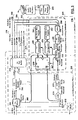
- a leaky-bucket-type physical-port-based acceptance rate limiting hardware-implemented controller 209 is employed for each port 208 on an exemplary line card 210 as shown.
- a single up-down counter 250 is provided per port 208 to implement rate limiting control by tracking port receive buffer (212) occupancies, at reduced implementation costs.
- Also provided per port 208 is a first register settable to, and holding, a threshold value corresponding to a maximum amount of content the receive port buffer 212 is allowed to store, on a limited time basis, as content is being received temporarily faster than the SLA agreed upon committed rate.
- the first register will be referred to herein as the maximum burst size register 254. It is intended, as will be described herein below, that rate limiting control be exercised should the receive port buffer occupancy exceed the value held in the maximum burst size register 254.
- the acceptance rate limiting control is intended to continue (hysteresis) until the receive port buffer occupancy level subsides substantially.
- a second register settable to, and holding, a low watermark value corresponding to a number of bytes the receive port buffer 212 is allowed to store, expecting that the receive port buffer occupancy level will continue to subside as frames received via the corresponding physical port 208, begin to be accepted again.
- the second register will be referred to herein as the low watermark register 252.
- the line card 210 implementation include, but is not limited to, Ethernet line card 210 implementations.
- Such link-layer hardware-implemented acceptance rate limiting control on an Ethernet line card 210 enforces an SLA agreed upon committed rate treating equally all types of content traffic conveyed including: connection-oriented traffic, connectionless traffic, prioritized traffic, differentiated traffic, Virtual Local Area Network (VLAN) traffic, etc. irrespective of the source and/or destination network nodes associated therewith.
- SLA Serial Advanced Local Area Network
- comparators 256 and 258 respectively determine whether the content reception rate conforms to the SLA agreed upon committed rate by monitoring the port's receive buffer occupancy levels.
- a first comparator 258 determines when the port's receive buffer occupancy level is above the maximum burst size threshold specified via the maximum burst size register 254. The output of the first comparator 258 is provided to the "J" input of a "J-K" flip-flop 260.
- J-K flip-flop is representative of a larger class of electronic components known as master-slave flip-flops, the description of the operation of the hardware port-based rate limiting controller 209 presented herein being intended only to make exemplary reference to, and use of, J-K flip-flops.
- a receive block 264 detects and extracts valid receive frame markers and valid received frame bits from a signal received over a physical (access) link (106) connected thereto. More information regarding "valid" frames and “valid” bits will be provided below with reference to setting the low watermark level to zero.
- the extracted valid frame markers are used to derive a "receiving frame” signal 266 which is kept logically active while a valid frame is actively being received.
- the J-K flip-flop 260 is clocked on the raising edge of the receiving frame signal 266 provided thereto. On receiving the next frame, the J-K flip-flop 260 provides an acceptance rate limiting control signal Q-bar which is used, as will be described below, in suppressing (acceptance) storage of subsequently received frames in the port's receive buffer 212.
- the second comparator 256 determines whether the occupancy level of the port's receive buffer 212 is below the low watermark value held in the low watermark register 252.
- the output of the second comparator 256 is provided to the "K" input of the J-K flip- flop 260.
- JK flip-flop 260 hysteresis is achieved via a hardware implementation employing a small number of logic gates/electronic components at minimal implementation costs ensuring: implementation stability, a clean start up, and support for testing.
- Other master-slave flip-flops may be employed instead providing a variety of further features and further optimizations.
- content is being exemplary conveyed at a 10Mb/s nominal line rate over a corresponding link 106.
- a 10MHz receive clock 262 is provided to the port 208 to aid the receive block 264 in extracting valid bits from the received signal.
- the raising edge of the receiving frame signal 266 is further employed to reset an accumulation register 268, after which the accumulation register 268 gathers a valid sequence of frame bits extracted by the receive block 264.
- the accumulation register 268 has a selected accumulation width which relates to the content acceptance control granularity. In accordance with the exemplary implementation presented in FIG. 3, the accumulation width is 8 bits and therefore a byte level granularity conformance with the SLA being detected, the content acceptance rate limiting control is being applied to received frames.
- a line clock signal (262) and the receiving frame signal 266 are provided to a multi-input AND gate 270 which produces a signal train repeating at the line rate throughout the duration of each valid and allowed frame, in real time, as the frame is actively received.
- the determination as to whether a particular frame being received is allowed, is provided by the acceptance rate limiting control signal from the Q-bar output of the J-K flip-flop 260.
- a corresponding bit counter 272 having a counting width corresponding to the accumulation width of the accumulation register 268, counts valid accepted frame bits being received in accordance with the signal train output by the AND gate 270, and rolls over as the accumulation register 268 fills up.
- the rollover event of the bit counter 272 is employed to load, in accordance with the exemplary implementation presented in FIG. 3, frame bytes stored in the accumulation register 268 into the receive port buffer 212.
- the rollover event of the bit counter register 272 is further employed by the up-down counter 250 to increment the number of bytes added to the receive port buffer 212.
- Auxiliary receive port buffer circuitry (not shown) generates the content ready signal 274 derived from the falling edge of the receiving frame signal 266 to signal content availability in the receive port buffer 212 to the traffic management function 222.
- the receive port buffer 212 is emptied via the data bus 224. Transactions on the data bus 224 typically run at a different clock frequency provided by a data bus strobe 280.
- actual content extraction from the receive port buffer 212 may be tracked by counting bus transaction reading content from the receive port buffer 212.
- a particular port 208 is selected to be serviced by the traffic management module 222 to extract frames from the corresponding receive port buffer 212 by employing a port select signal 282.
- Bus transaction instances reading content from the receive port buffer 212 of a particular port 208 are identified fom a logical combination of the bus clock signal (280), the corresponding port select signal 282, and a bus ready signal 284, etc. typically implemented via a multi- input AND gate 286.
- the amount of content extracted from the port receive buffer 212 in each data bus transaction is dependent on the (data) width of the data bus 224.
- the data bus strobe 280 runs at 25MHz and the data bus 224 is 4 bits wide - a nibble being transacted over the data bus 224 during each bus clock cycle (280).
- a 1-bit counter 288 (or a D flip-flop) is employed to convert the number of nibbles extracted from the receive port buffer 212 into a number of extracted bytes.
- the rollover event of the 1-bit counter 288 (or the output of the D flip-flop), marking extracted byte boundaries, is provided to the up-down counter 250 to decrement the value thereof in tracking the occupancy of the receive port buffer 212.
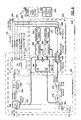
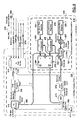
- FIG. 4 and FIG. 5 depict further exemplary implementations of the exemplary embodiment of the invention, for 100Mb/s and 1Gb ports 208 which employ: a 100MHz and a 1GHz receive clock respectively; a 16bit and a 32bit accumulation register 268 respectively; a 4-bit and a 5-bit accumulation counter 272 respectively; the single up-down counter 250 tracking receive port buffer occupancy in words and double words respectively; and an 16-bit and a 32-bit data bus 244 respectively running at 100HMz and 333MHz (280) respectively.
- the traffic management module 222 services the receive port buffer 212 at the SLA agreed upon committed rate specified in the committed rate register 253, the desired link layer hardware implemented input-port-based acceptance rate limiting control is achieved in a steady state operation of exemplary implementation of the exemplary embodiment of the invention:
- the low watermark threshold value of the low watermark register 252 may theoretically be set to zero, however in practice a zero low watermark threshold value would require an intensive utilization of a lot of resources at the network node 120. For certainty, content is being received at line rate as described above respecting the operation of bit counter 272. As the line rate is typically greater than the committed rate, the corresponding transceiver 104 transmits content bearing frames and empty frames. Typically empty frames are marked as such, the valid frames mentioned herein correspond to content bearing frames.
- the selection of values for the maximum burst size register 254 and the low watermark register 252 not only have to take into account the SLA agreement but also the physical content reception characteristics of the corresponding physical port.
- Desired network node system (120) operation may benefit from a number frames being accumulated in the port receive buffer 212 before being extracted therefrom to optimize other aspects (274) related to the operation of the network node system 212 and described elsewhere.
- the description of the presented solution relates to a receive port buffer 212
- the low watermark value held by the low watermark register 252 may be employed separately from circuitry employed in tracking, identifying, and mitigating input port congestion.
- the exemplary implementations of the exemplary embodiment of the invention described herein following employ methods which further distance acceptance rate limiting control from input port congestion mitigation.
- link layer hardware implemented acceptance rate limiting control may be exercised based on a "pseudo" receive port buffer occupancy level and a "pseudo" receive port buffer service rate without tracking actual data bus 224 transactions corresponding to content extraction from the port receive buffer 212.
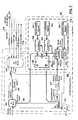
- FIG. 6 depicts an exemplary implementation of the exemplary embodiment of the invention, for a 100Mb/s port 208 which employs: a 100MHz receive clock; an 8bit accumulation register 268; a 3-bit accumulation counter 272; the single up-down counter 250 tracking receive port buffer pseudo occupancy in bytes; and a 32-bit data bus 244 running at 333MHz.
- the (pseudo) receive port buffer occupancy is increased, as described above, based on actual content reception and acceptance, and decreased at a constant rate corresponding to the SLA agreed upon committed rate.
- the signal train is employed by the single up-down counter 250 to decrease the value thereof at the SLA agreed upon committed rate which on average is expected to be the rate at which the port receive buffer 212 is being serviced by the traffic management function 222.
- the committed rate register 253 holds a value used obtain signal trains from the receive clock 262 having fractional rates thereof, the value of the committed rate register 253 being used to program a frequency divider 259.
- the low watermark threshold value of the low watermark register 252 may be set to zero.
- FIG. 8 depicts a traffic pattern resulting from the exemplary acceptance rate limiting control presented being enforced at a port 208 receiving a large content burst. Frames are being dropped in accordance with an acceptance rate limiting control signal Q-bar only as the (pseudo) port receive buffer occupancy level of the port 208 exceeds the maximum burst size, the acceptance rate limiting control signal being reset as the receive port buffer 212 is emptied after the receive rate falls below the low watermark threshold value.
- the value of the single up-down counter 250 may be allowed to take on negative value during time periods during which the port 208 does not transmit in support of credit-based arbitration, to give the port 208 credit for not having required servicing for a while to the benefit of other ports on the line card 210.
- Such low level control (LLCTRL) is shown at 290.
- link layer port-based hardware implemented acceptance rate limiting control may be implemented on multi-ported line cards 208 supporting other content transport protocols including but not limited to: X-25, IP, FR, ATM, SONET/SDH, etc.
- a frame level acceptance rate limiting control may be employed in respect of frames conveyed in accordance with a content transport protocol employing fixed sized frames such as, but not limited to, ATM cell transport.
- a degree of (non-)adherence to a corresponding the committed rate, agreed upon and specified in a corresponding SLA, may be provided to a customer 100(/101) in terms of the number of frame drops and/or discarded content, as shown in FIG. 9, by counting valid frame markers and/or valid frame bits received while the frame acceptance is actively suppressed.
- a Q signal output by the exemplary J-K flip-flop 260 is logically ANDed 292 with the receiving frame signal 266, the resulting signal being provided to a dropped frame counter 294.
- the Q signal output by the exemplary J-K flip- flop 260 is further logically ANDed 296 with the receiving frame signal 266, and the receive clock signal (262), the resulting signal being provided to a dropped content counter 298.
Landscapes
- Engineering & Computer Science (AREA)
- Computer Networks & Wireless Communication (AREA)
- Signal Processing (AREA)
- Data Exchanges In Wide-Area Networks (AREA)
- Communication Control (AREA)
Abstract
Description
Claims (24)
- A physical port controller comprising:the acceptance rate limiting control signal providing link-layer input port-based hardware implemented acceptance rate limiting control.a. an up-down counter being incremented as content is received via a corresponding input port and decremented at an input port service rate;b. a maximum burst size register holding a value corresponding to a maximum amount of content the input port is allowed to receive as content is being received by the input port at a rate above the input port service rate; andc. a first comparator providing in real time an acceptance rate limiting control signal in comparing the value of the up-down counter to the value of the maximum burst size register,
- The physical port controller claimed in claim 1, further comprising a committed rate register holding a value representative of the service rate, the service rate corresponding to a Service Level Agreement (SLA) committed rate, the input port-based hardware implemented acceptance rate limiting control enforcing a corresponding SLA agreement.
- The physical port controller claimed in claim 2, wherein the physical port is one of an Ethernet port, an Asynchronous Transfer Mode port, a Frame Relay port, and a Synchronous Optical Network/Synchronous Data Hierarchy port.
- The physical port controller claimed in claim 1, wherein the up-down counter value is representative of a buffer occupancy level of a receive port buffer.
- The physical port controller claimed in claim 1, further comprising means for incrementing the up-down counter as valid content is received.
- The physical port controller claimed in claim 5, wherein the means for incrementing the up-down counter is responsive to a combination of a receiving frame signal, a line clock signal, and the acceptance rate limiting control signal.
- The physical port controller claimed in claim 1, further comprising means for decrementing the up-down counter.
- The physical port controller claimed in claim 7, wherein the means for decrementing the up-down counter further comprises one of: means for identifying bus transactions servicing the input port, and means for generating a signal train at the service rate.
- The physical port controller claimed in claim 8, wherein the means for generating a signal train at the service rate further comprises a committed rate register holding a value employed in programming one of: an adjustable signal train generator generating a signal train at the service rate, and a frequency divider to derive a signal train at the service rate from a line rate clock associated with the port.
- The physical port controller claimed in claim 7, further comprising a second comparator determining in real time whether the value of the up-down counter is less than the value specified in a low watermark register in determining that the input port is receiving content at a rate below the service rate.
- The physical port controller claimed in claim 10, further comprising means for introducing hysteresis in effecting acceptance rate limiting control as the value of the up-down counter transitions between the maximum burst size value held in the maximum burst size register and the low watermark value held in the low watermark register.
- The physical port controller claimed in claim 11, wherein the means for introducing hysteresis in effecting acceptance rate limiting control further comprises: a master- slave flip- flop.
- The physical port controller claimed in claim 12, wherein the master slave flip-flop further comprises a J-K flip-flop.
- The physical port controller claimed in claim 10, further comprising means for providing an assessment of a degree of non-adherence to a corresponding SLA.
- The physical port controller claimed in claim 14, wherein the means for providing the assessment of the degree of non-compliance to the SLA further comprises a dropped frame counter counting the number of frames dropped derived from a logical combination between the receiving frame signal and the acceptance rate limiting control signal.
- The physical port controller claimed in claim 15, wherein the means for providing the assessment of the degree of non-compliance to the SLA further comprises a discarded content counter counting the amount of content discarded derived from a logical combination between the receiving frame signal, the acceptance rate limiting control signal, and a line clock signal.
- A line card comprising a physical port controller claimed in claim 1, the operation of the physical port controller, in enforcing acceptance rate limiting control, ensuring that the reception rate of a corresponding input port associated with the line card does not exceed a highest service rate at which a data bus to which the line card is connectable to can operate at.
- The line card claimed in claim 17, further comprising one of: an Ethernet line card, a Frame Relay line card, an Asynchronous Transfer Mode line card, and a Synchronous Optical Network/Synchronous Digital Hierarchy line card.
- A multi-ported line card comprising a plurality of physical port controllers claimed in claim 1, the combined operation of the plurality of physical port controllers enforcing acceptance rate limiting control enforces bandwidth reservations for each corresponding input port for corresponding portions of bandwidth on a data bus to which the multi-ported line card is connectable to.
- The multi-ported line card claimed in claim 19, further comprising one of: a multi-ported Ethernet line card, a multi-ported Frame Relay line card, a multi-ported Asynchronous Transfer Mode line card, and a multi-ported Synchronous Optical Network/Synchronous Digital Hierarchy line card.
- A multi-ported network node comprising a plurality of physical port controllers claimed in claim 1, the combined operation of the plurality of physical port controllers, in enforcing acceptance rate limiting control, reserving for each input port corresponding portions of bandwidth on a data bus servicing the corresponding plurality of physical ports.
- A method of enforcing acceptance rate limiting control for an input port comprising the steps of:the activation and the deactivation of the acceptance rate limiting control signal with the service rate set at an agreed upon Service Level Agreement (SLA) committed rate enforcing the SLA at the input port.a. incrementing the value of an up-down counter associated with an input port as content is received;b. decrementing the value of the up-down counter at a service rate;c. activating an acceptance rate limiting control signal upon determining that the value of the up-down counter is greater than a maximum burst size value; andd. deactivating the acceptance rate limiting control signal upon determining that the value of the up-down counter is lower than a low watermark value,
- The method claimed in claim 22, wherein decrementing the up-down counter, the method further comprising a step of: generating a signal train repeating at the service rate by programming an adjustable clock with a value specified by a committed rate register.
- The method claimed in claim 22, wherein decrementing the up-down counter, the method further comprising a step of: generating a signal train repeating at the service rate by programming a frequency divider to derive the signal train from a line clock associated with the input port.
Applications Claiming Priority (2)
| Application Number | Priority Date | Filing Date | Title |
|---|---|---|---|
| US10/679,287 US7355969B2 (en) | 2003-10-07 | 2003-10-07 | Line card port protection rate limiter circuitry |
| US679287 | 2003-10-07 |
Publications (3)
| Publication Number | Publication Date |
|---|---|
| EP1523139A2 true EP1523139A2 (en) | 2005-04-13 |
| EP1523139A3 EP1523139A3 (en) | 2009-05-20 |
| EP1523139B1 EP1523139B1 (en) | 2014-09-17 |
Family
ID=34314085
Family Applications (1)
| Application Number | Title | Priority Date | Filing Date |
|---|---|---|---|
| EP04300648.5A Expired - Lifetime EP1523139B1 (en) | 2003-10-07 | 2004-10-04 | Line card port protection rate limiter circuitry |
Country Status (3)
| Country | Link |
|---|---|
| US (1) | US7355969B2 (en) |
| EP (1) | EP1523139B1 (en) |
| CN (1) | CN100514931C (en) |
Cited By (1)
| Publication number | Priority date | Publication date | Assignee | Title |
|---|---|---|---|---|
| US8660138B2 (en) | 2010-12-07 | 2014-02-25 | At&T Intellectual Property I, L.P. | Methods, apparatus and articles of manufacture to allocate ports to vectored digital subscriber line (DSL) groups |
Families Citing this family (26)
| Publication number | Priority date | Publication date | Assignee | Title |
|---|---|---|---|---|
| US7483377B2 (en) * | 2005-03-01 | 2009-01-27 | Intel Corporation | Method and apparatus to prioritize network traffic |
| CN100463378C (en) * | 2005-05-18 | 2009-02-18 | 大唐移动通信设备有限公司 | Channel Rate Adjustment Method for Packet Data Service in Universal Mobile Communication System |
| CN100433711C (en) * | 2005-06-08 | 2008-11-12 | 杭州华三通信技术有限公司 | Message speed limit method |
| US20060280120A1 (en) * | 2005-06-10 | 2006-12-14 | Viswanath Ramamurti | System and method for managing data packets at an ingress to a Resilient Packet Ring and at an egress to a resilient packet ring |
| US8488458B1 (en) | 2005-06-28 | 2013-07-16 | Marvell International Ltd. | Secure unauthenticated virtual local area network |
| US7817550B2 (en) * | 2006-01-13 | 2010-10-19 | Futurewei Technologies, Inc. | System for rate-control of aggregate-rate communication services |
| US7813279B2 (en) * | 2006-01-13 | 2010-10-12 | Futurewei Technologies, Inc. | System for rate management of aggregate-rate communication services |
| US7881192B2 (en) * | 2006-01-13 | 2011-02-01 | Futurewei Technologies, Inc. | System for providing aggregate-rate communication services |
| US7643504B2 (en) * | 2006-11-29 | 2010-01-05 | Applied Micro Circuits Corporation | Credit based flow control in an asymmetric channel environment |
| US7864803B2 (en) * | 2006-12-19 | 2011-01-04 | Verizon Patent And Licensing Inc. | Congestion avoidance for link capacity adjustment scheme (LCAS) |
| US8156353B2 (en) * | 2007-09-17 | 2012-04-10 | Intel Corporation | Techniques for communications power management based on system states |
| US8661167B2 (en) * | 2007-09-17 | 2014-02-25 | Intel Corporation | DMA (direct memory access) coalescing |
| US8004988B2 (en) * | 2007-11-21 | 2011-08-23 | Microchip Technology Incorporated | Ethernet controller |
| US7836198B2 (en) * | 2008-03-20 | 2010-11-16 | International Business Machines Corporation | Ethernet virtualization using hardware control flow override |
| US8174980B2 (en) * | 2008-03-28 | 2012-05-08 | Extreme Networks, Inc. | Methods, systems, and computer readable media for dynamically rate limiting slowpath processing of exception packets |
| US8593962B2 (en) | 2008-12-17 | 2013-11-26 | Centurylink Intellectual Property Llc | System and method for tracking maximum throughput and SLA compliance |
| US8792382B2 (en) * | 2008-12-17 | 2014-07-29 | Centurylink Intellectual Property Llc | System and method for tracking a line rate utilization |
| US8249088B2 (en) * | 2009-04-29 | 2012-08-21 | Telefonaktiebolaget L M Ericsson (Publ) | Hierarchical rate limiting of control packets |
| JP5476857B2 (en) * | 2009-08-24 | 2014-04-23 | 富士通株式会社 | Communication apparatus and statistical information collection method |
| JP2013015912A (en) * | 2011-06-30 | 2013-01-24 | Toshiba Corp | Data transfer device and data transfer method |
| US20150124612A1 (en) * | 2012-06-07 | 2015-05-07 | Michael Schlansker | Multi-tenant network provisioning |
| US20140105037A1 (en) | 2012-10-15 | 2014-04-17 | Natarajan Manthiramoorthy | Determining Transmission Parameters for Transmitting Beacon Framers |
| US10460476B2 (en) | 2017-04-21 | 2019-10-29 | Intel Corporation | Fabric-based compression/decompression for internal data transfer |
| US10890939B2 (en) | 2017-04-24 | 2021-01-12 | Cirrus Logic, Inc. | Recovery of reference clock on a device |
| CN110879825B (en) * | 2018-09-06 | 2023-04-28 | 阿里巴巴集团控股有限公司 | Data synchronization method and device |
| CN112600757B (en) * | 2020-12-25 | 2023-03-10 | 深圳深度探测科技有限公司 | Safety maintenance method based on asymmetric data transmission speed limiter |
Family Cites Families (18)
| Publication number | Priority date | Publication date | Assignee | Title |
|---|---|---|---|---|
| US5014265A (en) * | 1989-11-30 | 1991-05-07 | At&T Bell Laboratories | Method and apparatus for congestion control in a data network |
| US5313454A (en) | 1992-04-01 | 1994-05-17 | Stratacom, Inc. | Congestion control for cell networks |
| JP2876914B2 (en) * | 1992-09-07 | 1999-03-31 | 日本電気株式会社 | Buffer control method in packet switching equipment |
| US5604867A (en) | 1994-07-22 | 1997-02-18 | Network Peripherals | System for transmitting data between bus and network having device comprising first counter for providing transmitting rate and second counter for limiting frames exceeding rate |
| JP3156752B2 (en) * | 1996-02-09 | 2001-04-16 | 日本電気株式会社 | ATM switch device and control method thereof |
| US7145868B2 (en) * | 1997-11-28 | 2006-12-05 | Alcatel Canada Inc. | Congestion management in a multi-port shared memory switch |
| GB9810376D0 (en) * | 1998-05-15 | 1998-07-15 | 3Com Technologies Ltd | Computation of traffic flow by scaling sample packet data |
| US6438132B1 (en) * | 1998-10-14 | 2002-08-20 | Nortel Networks Limited | Virtual port scheduler |
| US6381649B1 (en) * | 1999-02-05 | 2002-04-30 | Pluris, Inc. | Data flow monitoring at a network node using periodically incremented counters for comparison to predetermined data flow thresholds |
| US6205155B1 (en) | 1999-03-05 | 2001-03-20 | Transwitch Corp. | Apparatus and method for limiting data bursts in ATM switch utilizing shared bus |
| KR100306166B1 (en) * | 1999-10-27 | 2001-11-02 | 윤종용 | Apparatus for providing guaranteed frame rate service in an asynchronous transfer mode switch |
| JP3994614B2 (en) * | 2000-03-13 | 2007-10-24 | 株式会社日立製作所 | Packet switch, network monitoring system, and network monitoring method |
| US6868062B1 (en) * | 2000-03-28 | 2005-03-15 | Intel Corporation | Managing data traffic on multiple ports |
| US6925502B1 (en) * | 2000-06-20 | 2005-08-02 | At&T Corp. | Methods and systems for improving data transmission rates having adaptive protocols |
| JP4356261B2 (en) * | 2001-03-30 | 2009-11-04 | 沖電気工業株式会社 | Priority setting method and apparatus |
| AUPR918101A0 (en) * | 2001-11-30 | 2001-12-20 | Foursticks Pty Ltd | Rate limiting through dynamic auto correction |
| CA2365688A1 (en) * | 2001-12-19 | 2003-06-19 | Alcatel Canada Inc. | System and method for providing gaps at ingress to a network element |
| US7321565B2 (en) * | 2003-08-29 | 2008-01-22 | Ineoquest Technologies | System and method for analyzing the performance of multiple transportation streams of streaming media in packet-based networks |
-
2003
- 2003-10-07 US US10/679,287 patent/US7355969B2/en not_active Expired - Lifetime
-
2004
- 2004-10-04 EP EP04300648.5A patent/EP1523139B1/en not_active Expired - Lifetime
- 2004-10-08 CN CNB2004100921775A patent/CN100514931C/en not_active Expired - Fee Related
Cited By (1)
| Publication number | Priority date | Publication date | Assignee | Title |
|---|---|---|---|---|
| US8660138B2 (en) | 2010-12-07 | 2014-02-25 | At&T Intellectual Property I, L.P. | Methods, apparatus and articles of manufacture to allocate ports to vectored digital subscriber line (DSL) groups |
Also Published As
| Publication number | Publication date |
|---|---|
| EP1523139B1 (en) | 2014-09-17 |
| CN1606293A (en) | 2005-04-13 |
| CN100514931C (en) | 2009-07-15 |
| US20050073952A1 (en) | 2005-04-07 |
| EP1523139A3 (en) | 2009-05-20 |
| US7355969B2 (en) | 2008-04-08 |
Similar Documents
| Publication | Publication Date | Title |
|---|---|---|
| EP1523139B1 (en) | Line card port protection rate limiter circuitry | |
| US7002911B1 (en) | Flow control mechanism | |
| US6088736A (en) | Joint flow control mechanism in a telecommunications network | |
| US7492779B2 (en) | Apparatus for and method of support for committed over excess traffic in a distributed queuing system | |
| Bux et al. | Flow control in local-area networks of interconnected token rings | |
| US7542425B2 (en) | Traffic management using in-band flow control and multiple-rate traffic shaping | |
| US7391728B2 (en) | Apparatus and method for improved Fibre Channel oversubscription over transport | |
| US7161907B2 (en) | System and method for dynamic rate flow control | |
| EP4024778B1 (en) | Method for determining required bandwidth for data stream transmission, and devices and system | |
| EP1705851B1 (en) | Communication traffic policing apparatus and methods | |
| US20050163048A1 (en) | Method and system for providing committed information rate (CIR) based fair access policy | |
| US20170279741A1 (en) | Optimizing buffer allocation for network flow control | |
| US20150103667A1 (en) | Detection of root and victim network congestion | |
| US8576850B2 (en) | Band control apparatus, band control method, and storage medium | |
| EP4262313A1 (en) | Method, apparatus and system for scheduling service flow | |
| EP1684476A1 (en) | Traffic management in communication networks | |
| WO2009134416A2 (en) | Method and apparatus for performing congestion management | |
| CN1344456A (en) | Enhanced acknowledgment pacing device and method for TCP connections | |
| EP2112791B1 (en) | Data traffic shaping | |
| KR101990235B1 (en) | Method and system for traffic management in a network node in a packet switched network | |
| Cho | Managing Traffic with ALTQ. | |
| EP1704491B1 (en) | A method and systems for resource bunlding in a communications network | |
| US20050169298A1 (en) | Link layer device with non-linear polling of multiple physical layer device ports | |
| US20040022187A1 (en) | Preemptive network traffic control for regional and wide area networks | |
| KR101049289B1 (en) | Transmission speed control device and method in asynchronous transmission system |
Legal Events
| Date | Code | Title | Description |
|---|---|---|---|
| PUAI | Public reference made under article 153(3) epc to a published international application that has entered the european phase |
Free format text: ORIGINAL CODE: 0009012 |
|
| AK | Designated contracting states |
Kind code of ref document: A2 Designated state(s): AT BE BG CH CY CZ DE DK EE ES FI FR GB GR HU IE IT LI LU MC NL PL PT RO SE SI SK TR |
|
| AX | Request for extension of the european patent |
Extension state: AL HR LT LV MK |
|
| RAP1 | Party data changed (applicant data changed or rights of an application transferred) |
Owner name: ALCATEL LUCENT |
|
| PUAL | Search report despatched |
Free format text: ORIGINAL CODE: 0009013 |
|
| AK | Designated contracting states |
Kind code of ref document: A3 Designated state(s): AT BE BG CH CY CZ DE DK EE ES FI FR GB GR HU IE IT LI LU MC NL PL PT RO SE SI SK TR |
|
| AX | Request for extension of the european patent |
Extension state: AL HR LT LV MK |
|
| 17P | Request for examination filed |
Effective date: 20091120 |
|
| AKX | Designation fees paid |
Designated state(s): AT BE BG CH CY CZ DE DK EE ES FI FR GB GR HU IE IT LI LU MC NL PL PT RO SE SI SK TR |
|
| 17Q | First examination report despatched |
Effective date: 20100729 |
|
| RAP1 | Party data changed (applicant data changed or rights of an application transferred) |
Owner name: ALCATEL LUCENT |
|
| 111Z | Information provided on other rights and legal means of execution |
Free format text: AT BE BG CH CY CZ DE DK EE ES FI FR GB GR HU IE IT LI LU MC NL PL PT RO SE SI SK TR Effective date: 20130410 |
|
| REG | Reference to a national code |
Ref country code: DE Ref legal event code: R079 Ref document number: 602004045842 Country of ref document: DE Free format text: PREVIOUS MAIN CLASS: H04L0012560000 Ipc: H04L0012815000 |
|
| GRAP | Despatch of communication of intention to grant a patent |
Free format text: ORIGINAL CODE: EPIDOSNIGR1 |
|
| RIC1 | Information provided on ipc code assigned before grant |
Ipc: H04L 12/815 20130101AFI20140401BHEP |
|
| INTG | Intention to grant announced |
Effective date: 20140415 |
|
| GRAS | Grant fee paid |
Free format text: ORIGINAL CODE: EPIDOSNIGR3 |
|
| GRAA | (expected) grant |
Free format text: ORIGINAL CODE: 0009210 |
|
| RAP1 | Party data changed (applicant data changed or rights of an application transferred) |
Owner name: ALCATEL LUCENT |
|
| AK | Designated contracting states |
Kind code of ref document: B1 Designated state(s): AT BE BG CH CY CZ DE DK EE ES FI FR GB GR HU IE IT LI LU MC NL PL PT RO SE SI SK TR |
|
| REG | Reference to a national code |
Ref country code: GB Ref legal event code: FG4D |
|
| REG | Reference to a national code |
Ref country code: CH Ref legal event code: EP |
|
| REG | Reference to a national code |
Ref country code: IE Ref legal event code: FG4D |
|
| REG | Reference to a national code |
Ref country code: AT Ref legal event code: REF Ref document number: 688117 Country of ref document: AT Kind code of ref document: T Effective date: 20141015 |
|
| REG | Reference to a national code |
Ref country code: DE Ref legal event code: R096 Ref document number: 602004045842 Country of ref document: DE Effective date: 20141030 |
|
| D11X | Information provided on other rights and legal means of execution (deleted) | ||
| PG25 | Lapsed in a contracting state [announced via postgrant information from national office to epo] |
Ref country code: GR Free format text: LAPSE BECAUSE OF FAILURE TO SUBMIT A TRANSLATION OF THE DESCRIPTION OR TO PAY THE FEE WITHIN THE PRESCRIBED TIME-LIMIT Effective date: 20141218 Ref country code: FI Free format text: LAPSE BECAUSE OF FAILURE TO SUBMIT A TRANSLATION OF THE DESCRIPTION OR TO PAY THE FEE WITHIN THE PRESCRIBED TIME-LIMIT Effective date: 20140917 Ref country code: SE Free format text: LAPSE BECAUSE OF FAILURE TO SUBMIT A TRANSLATION OF THE DESCRIPTION OR TO PAY THE FEE WITHIN THE PRESCRIBED TIME-LIMIT Effective date: 20140917 |
|
| PGFP | Annual fee paid to national office [announced via postgrant information from national office to epo] |
Ref country code: DE Payment date: 20141022 Year of fee payment: 11 Ref country code: FR Payment date: 20141022 Year of fee payment: 11 Ref country code: GB Payment date: 20141021 Year of fee payment: 11 |
|
| REG | Reference to a national code |
Ref country code: NL Ref legal event code: VDEP Effective date: 20140917 |
|
| PG25 | Lapsed in a contracting state [announced via postgrant information from national office to epo] |
Ref country code: CY Free format text: LAPSE BECAUSE OF FAILURE TO SUBMIT A TRANSLATION OF THE DESCRIPTION OR TO PAY THE FEE WITHIN THE PRESCRIBED TIME-LIMIT Effective date: 20140917 |
|
| REG | Reference to a national code |
Ref country code: AT Ref legal event code: MK05 Ref document number: 688117 Country of ref document: AT Kind code of ref document: T Effective date: 20140917 |
|
| PG25 | Lapsed in a contracting state [announced via postgrant information from national office to epo] |
Ref country code: NL Free format text: LAPSE BECAUSE OF FAILURE TO SUBMIT A TRANSLATION OF THE DESCRIPTION OR TO PAY THE FEE WITHIN THE PRESCRIBED TIME-LIMIT Effective date: 20140917 |
|
| PG25 | Lapsed in a contracting state [announced via postgrant information from national office to epo] |
Ref country code: EE Free format text: LAPSE BECAUSE OF FAILURE TO SUBMIT A TRANSLATION OF THE DESCRIPTION OR TO PAY THE FEE WITHIN THE PRESCRIBED TIME-LIMIT Effective date: 20140917 Ref country code: RO Free format text: LAPSE BECAUSE OF FAILURE TO SUBMIT A TRANSLATION OF THE DESCRIPTION OR TO PAY THE FEE WITHIN THE PRESCRIBED TIME-LIMIT Effective date: 20140917 Ref country code: PT Free format text: LAPSE BECAUSE OF FAILURE TO SUBMIT A TRANSLATION OF THE DESCRIPTION OR TO PAY THE FEE WITHIN THE PRESCRIBED TIME-LIMIT Effective date: 20150119 Ref country code: ES Free format text: LAPSE BECAUSE OF FAILURE TO SUBMIT A TRANSLATION OF THE DESCRIPTION OR TO PAY THE FEE WITHIN THE PRESCRIBED TIME-LIMIT Effective date: 20140917 Ref country code: CZ Free format text: LAPSE BECAUSE OF FAILURE TO SUBMIT A TRANSLATION OF THE DESCRIPTION OR TO PAY THE FEE WITHIN THE PRESCRIBED TIME-LIMIT Effective date: 20140917 Ref country code: SK Free format text: LAPSE BECAUSE OF FAILURE TO SUBMIT A TRANSLATION OF THE DESCRIPTION OR TO PAY THE FEE WITHIN THE PRESCRIBED TIME-LIMIT Effective date: 20140917 |
|
| PG25 | Lapsed in a contracting state [announced via postgrant information from national office to epo] |
Ref country code: AT Free format text: LAPSE BECAUSE OF FAILURE TO SUBMIT A TRANSLATION OF THE DESCRIPTION OR TO PAY THE FEE WITHIN THE PRESCRIBED TIME-LIMIT Effective date: 20140917 Ref country code: PL Free format text: LAPSE BECAUSE OF FAILURE TO SUBMIT A TRANSLATION OF THE DESCRIPTION OR TO PAY THE FEE WITHIN THE PRESCRIBED TIME-LIMIT Effective date: 20140917 |
|
| REG | Reference to a national code |
Ref country code: CH Ref legal event code: PL |
|
| REG | Reference to a national code |
Ref country code: DE Ref legal event code: R097 Ref document number: 602004045842 Country of ref document: DE |
|
| PG25 | Lapsed in a contracting state [announced via postgrant information from national office to epo] |
Ref country code: MC Free format text: LAPSE BECAUSE OF FAILURE TO SUBMIT A TRANSLATION OF THE DESCRIPTION OR TO PAY THE FEE WITHIN THE PRESCRIBED TIME-LIMIT Effective date: 20140917 Ref country code: BE Free format text: LAPSE BECAUSE OF NON-PAYMENT OF DUE FEES Effective date: 20141031 |
|
| PLBE | No opposition filed within time limit |
Free format text: ORIGINAL CODE: 0009261 |
|
| STAA | Information on the status of an ep patent application or granted ep patent |
Free format text: STATUS: NO OPPOSITION FILED WITHIN TIME LIMIT |
|
| REG | Reference to a national code |
Ref country code: IE Ref legal event code: MM4A |
|
| PG25 | Lapsed in a contracting state [announced via postgrant information from national office to epo] |
Ref country code: CH Free format text: LAPSE BECAUSE OF NON-PAYMENT OF DUE FEES Effective date: 20141031 Ref country code: LI Free format text: LAPSE BECAUSE OF NON-PAYMENT OF DUE FEES Effective date: 20141031 Ref country code: DK Free format text: LAPSE BECAUSE OF FAILURE TO SUBMIT A TRANSLATION OF THE DESCRIPTION OR TO PAY THE FEE WITHIN THE PRESCRIBED TIME-LIMIT Effective date: 20140917 |
|
| 26N | No opposition filed |
Effective date: 20150618 |
|
| PG25 | Lapsed in a contracting state [announced via postgrant information from national office to epo] |
Ref country code: IT Free format text: LAPSE BECAUSE OF FAILURE TO SUBMIT A TRANSLATION OF THE DESCRIPTION OR TO PAY THE FEE WITHIN THE PRESCRIBED TIME-LIMIT Effective date: 20140917 |
|
| PG25 | Lapsed in a contracting state [announced via postgrant information from national office to epo] |
Ref country code: IE Free format text: LAPSE BECAUSE OF NON-PAYMENT OF DUE FEES Effective date: 20141004 |
|
| PG25 | Lapsed in a contracting state [announced via postgrant information from national office to epo] |
Ref country code: SI Free format text: LAPSE BECAUSE OF FAILURE TO SUBMIT A TRANSLATION OF THE DESCRIPTION OR TO PAY THE FEE WITHIN THE PRESCRIBED TIME-LIMIT Effective date: 20140917 |
|
| REG | Reference to a national code |
Ref country code: DE Ref legal event code: R119 Ref document number: 602004045842 Country of ref document: DE |
|
| PG25 | Lapsed in a contracting state [announced via postgrant information from national office to epo] |
Ref country code: BG Free format text: LAPSE BECAUSE OF FAILURE TO SUBMIT A TRANSLATION OF THE DESCRIPTION OR TO PAY THE FEE WITHIN THE PRESCRIBED TIME-LIMIT Effective date: 20140917 |
|
| GBPC | Gb: european patent ceased through non-payment of renewal fee |
Effective date: 20151004 |
|
| PG25 | Lapsed in a contracting state [announced via postgrant information from national office to epo] |
Ref country code: DE Free format text: LAPSE BECAUSE OF NON-PAYMENT OF DUE FEES Effective date: 20160503 Ref country code: LU Free format text: LAPSE BECAUSE OF NON-PAYMENT OF DUE FEES Effective date: 20141004 Ref country code: HU Free format text: LAPSE BECAUSE OF FAILURE TO SUBMIT A TRANSLATION OF THE DESCRIPTION OR TO PAY THE FEE WITHIN THE PRESCRIBED TIME-LIMIT; INVALID AB INITIO Effective date: 20041004 Ref country code: GB Free format text: LAPSE BECAUSE OF NON-PAYMENT OF DUE FEES Effective date: 20151004 Ref country code: TR Free format text: LAPSE BECAUSE OF FAILURE TO SUBMIT A TRANSLATION OF THE DESCRIPTION OR TO PAY THE FEE WITHIN THE PRESCRIBED TIME-LIMIT Effective date: 20140917 |
|
| REG | Reference to a national code |
Ref country code: FR Ref legal event code: ST Effective date: 20160630 |
|
| PG25 | Lapsed in a contracting state [announced via postgrant information from national office to epo] |
Ref country code: FR Free format text: LAPSE BECAUSE OF NON-PAYMENT OF DUE FEES Effective date: 20151102 |