EP1521573B1 - Non-polymeric lipophilic pharmaceutical implant compositions for intraocular use - Google Patents
Non-polymeric lipophilic pharmaceutical implant compositions for intraocular use Download PDFInfo
- Publication number
- EP1521573B1 EP1521573B1 EP03764334A EP03764334A EP1521573B1 EP 1521573 B1 EP1521573 B1 EP 1521573B1 EP 03764334 A EP03764334 A EP 03764334A EP 03764334 A EP03764334 A EP 03764334A EP 1521573 B1 EP1521573 B1 EP 1521573B1
- Authority
- EP
- European Patent Office
- Prior art keywords
- glyceryl
- composition
- intraocular implant
- coo
- independently
- Prior art date
- Legal status (The legal status is an assumption and is not a legal conclusion. Google has not performed a legal analysis and makes no representation as to the accuracy of the status listed.)
- Expired - Lifetime
Links
Images


Classifications
-
- A—HUMAN NECESSITIES
- A61—MEDICAL OR VETERINARY SCIENCE; HYGIENE
- A61K—PREPARATIONS FOR MEDICAL, DENTAL OR TOILETRY PURPOSES
- A61K9/00—Medicinal preparations characterised by special physical form
-
- A—HUMAN NECESSITIES
- A61—MEDICAL OR VETERINARY SCIENCE; HYGIENE
- A61K—PREPARATIONS FOR MEDICAL, DENTAL OR TOILETRY PURPOSES
- A61K9/00—Medicinal preparations characterised by special physical form
- A61K9/0012—Galenical forms characterised by the site of application
- A61K9/0048—Eye, e.g. artificial tears
- A61K9/0051—Ocular inserts or implants
-
- A—HUMAN NECESSITIES
- A61—MEDICAL OR VETERINARY SCIENCE; HYGIENE
- A61K—PREPARATIONS FOR MEDICAL, DENTAL OR TOILETRY PURPOSES
- A61K31/00—Medicinal preparations containing organic active ingredients
- A61K31/33—Heterocyclic compounds
- A61K31/335—Heterocyclic compounds having oxygen as the only ring hetero atom, e.g. fungichromin
- A61K31/337—Heterocyclic compounds having oxygen as the only ring hetero atom, e.g. fungichromin having four-membered rings, e.g. taxol
-
- A—HUMAN NECESSITIES
- A61—MEDICAL OR VETERINARY SCIENCE; HYGIENE
- A61K—PREPARATIONS FOR MEDICAL, DENTAL OR TOILETRY PURPOSES
- A61K47/00—Medicinal preparations characterised by the non-active ingredients used, e.g. carriers or inert additives; Targeting or modifying agents chemically bound to the active ingredient
- A61K47/30—Macromolecular organic or inorganic compounds, e.g. inorganic polyphosphates
- A61K47/36—Polysaccharides; Derivatives thereof, e.g. gums, starch, alginate, dextrin, hyaluronic acid, chitosan, inulin, agar or pectin
- A61K47/38—Cellulose; Derivatives thereof
-
- A—HUMAN NECESSITIES
- A61—MEDICAL OR VETERINARY SCIENCE; HYGIENE
- A61P—SPECIFIC THERAPEUTIC ACTIVITY OF CHEMICAL COMPOUNDS OR MEDICINAL PREPARATIONS
- A61P27/00—Drugs for disorders of the senses
-
- A—HUMAN NECESSITIES
- A61—MEDICAL OR VETERINARY SCIENCE; HYGIENE
- A61P—SPECIFIC THERAPEUTIC ACTIVITY OF CHEMICAL COMPOUNDS OR MEDICINAL PREPARATIONS
- A61P27/00—Drugs for disorders of the senses
- A61P27/02—Ophthalmic agents
-
- A—HUMAN NECESSITIES
- A61—MEDICAL OR VETERINARY SCIENCE; HYGIENE
- A61K—PREPARATIONS FOR MEDICAL, DENTAL OR TOILETRY PURPOSES
- A61K47/00—Medicinal preparations characterised by the non-active ingredients used, e.g. carriers or inert additives; Targeting or modifying agents chemically bound to the active ingredient
- A61K47/06—Organic compounds, e.g. natural or synthetic hydrocarbons, polyolefins, mineral oil, petrolatum or ozokerite
- A61K47/08—Organic compounds, e.g. natural or synthetic hydrocarbons, polyolefins, mineral oil, petrolatum or ozokerite containing oxygen, e.g. ethers, acetals, ketones, quinones, aldehydes, peroxides
- A61K47/14—Esters of carboxylic acids, e.g. fatty acid monoglycerides, medium-chain triglycerides, parabens or PEG fatty acid esters
-
- A—HUMAN NECESSITIES
- A61—MEDICAL OR VETERINARY SCIENCE; HYGIENE
- A61K—PREPARATIONS FOR MEDICAL, DENTAL OR TOILETRY PURPOSES
- A61K9/00—Medicinal preparations characterised by special physical form
- A61K9/14—Particulate form, e.g. powders, Processes for size reducing of pure drugs or the resulting products, Pure drug nanoparticles
- A61K9/16—Agglomerates; Granulates; Microbeadlets ; Microspheres; Pellets; Solid products obtained by spray drying, spray freeze drying, spray congealing,(multiple) emulsion solvent evaporation or extraction
- A61K9/1605—Excipients; Inactive ingredients
- A61K9/1617—Organic compounds, e.g. phospholipids, fats
-
- A—HUMAN NECESSITIES
- A61—MEDICAL OR VETERINARY SCIENCE; HYGIENE
- A61K—PREPARATIONS FOR MEDICAL, DENTAL OR TOILETRY PURPOSES
- A61K9/00—Medicinal preparations characterised by special physical form
- A61K9/70—Web, sheet or filament bases ; Films; Fibres of the matrix type containing drug
- A61K9/7007—Drug-containing films, membranes or sheets
Definitions
- This invention relates to pharmaceutical implant compositions.
- this invention relates to the use of low molecular weight, lipophilic compounds in implant compositions for intraocular use.
- Solid and semi-solid drug delivery implants are known, including both non-erodible, non-degradable implants, such as those made using ethylene vinyl acetate, and erodible or biodegradable implants, such as those made using polyanhydrides or polylactides.
- Drug delivery implants, particularly ophthalmic drug delivery implants are generally characterized by at least one polymeric ingredient. In many instances, drug delivery implants contain more than one polymeric ingredient.
- U.S. Patent No. 5,773,019 discloses implantable controlled release devices for delivering drugs to the eye wherein the implantable device has an inner core containing an effective amount of a low solubility drug covered by a non-bioerodible polymer coating layer that is permeable to the low solubility drug.
- U.S. Patent No. 5,378,475 discloses sustained release drug delivery devices that have an inner core or reservoir comprising a drug, a first coating layer which is essentially impermeable to the passage of the drug, and a second coating layer which is permeable to the drug.
- the first coating layer covers at least a portion of the inner core but at least a small portion of the inner core is not coated with the first coating layer.
- the second coating layer essentially completely covers the first coating layer and the uncoated portion of the inner core.
- U.S. Patent No. 4,853,224 discloses biodegradable ocular implants comprising microencapsulated drugs for implantation into the anterior and/or posterior chambers of the eye.
- the polymeric encapsulating agent or lipid encapsulating agent is the primary element of the capsule.
- Many types of polymers are disclosed, but no implants that lack a biodegradable polymer are disclosed.
- U.S. Patent No. 5,164,188 discloses the use of biodegradable implants in the suprachoroid of an eye.
- the implants are generally encapsulated.
- the capsule for the most part, is a polymeric encapsulating agent.
- Material capable of being placed in a given area of the suprachoroid without migration "such as oxycel, gelatin, silicone, etc.” can also be used.
- U.S. Patent No. 6,120,789 discloses the use of a non-polymeric composition for in situ formation of a solid matrix in an animal, and use of the composition as a medical device or as a sustained release delivery system for a biologically-active agent, among other uses.
- the composition is composed of a biocompatible, non-polymeric material and a pharmaceutically acceptable, organic solvent.
- the non-polymeric composition is biodegradable and/or bioerodible, and substantially insoluble in aqueous or body fluids.
- the organic solvent solubilizes the non-polymeric material, and has a solubility in water or other aqueous media ranging from miscible to dispersible.
- the non-polymeric composition When placed into an implant site in an animal, the non-polymeric composition eventually transforms into a solid structure.
- the implant can be used for treating a tissue defect by enhancing cell growth and tissue regeneration, wound and organ repair, nerve regeneration, soft and hard tissue regeneration, and the like.
- the composition can include a biologically-active agent (bioactive agent), as for example, an anti-inflammatory agent, an antiviral agent, antibacterial or antifungal agent useful for treating and preventing infections in the implant site, a growth factor, a hormone, and the like.
- bioactive agent biologically-active agent
- suitable organic solvents are those that are biocompatible, pharmaceutically acceptable, and will at least partially dissolve the non-polymeric material.
- the organic solvent has a solubility in water ranging from miscible to dispersible.
- the solvent is capable of diffusing, dispersing, or leaching from the composition in situ into aqueous tissue fluid of the implant site such as blood serum, lymph, cerebral spinal fluid (CSF), saliva, and the like.
- the solvent preferably has a Hildebrand (HLB) solubility ratio of from about 9-13 (cal/cm 3 ) 1/2 and it is preferred that the degree of polarity of the solvent is effective to provide at least about 5% solubility in water.
- HLB Hildebrand
- Polymeric ingredients in erodible or biodegradable implants must erode or degrade in order to be transported through ocular tissues and eliminated.
- Low molecular weight molecules on the order of 4000 or less, can be transported through ocular tissues and eliminated without the need for biodegradation or erosion.
- the present invention provides intraocular implant compositions comprising one or more low molecular weight, lipophilic compounds and a pharmaceutical drug, but lacking a polymeric ingredient and an organic solvent that is miscible with or dispersible in water.
- the compositions are solid or semi-solid at temperatures ⁇ 37 °C, average human eye temperature.
- the implants can be placed anywhere in the eye, including the conjunctival cul-de-sac, but are especially suitable for implantation inside of the eye.
- implant means a solid or semi-solid mass that contains one or more drugs and includes, but is not limited to, beads, pellets, rods, films and microparticles. Microparticles can be suspended in aqueous or nonaqueous liquid carriers.
- the implant compositions of the present invention which lack both a polymeric ingredient and an organic solvent that is miscible with or dispersible in water, comprise a pharmaceutical drug and one or more lipophilic compounds having a molecular weight of 150 - 4000, wherein the lipophilic compounds are of the formula: wherein R 1 is -H, -OH, -COOH, -C n H 2n+1-2m , -COOC n H 2n+1-2m , -COO(CH 2 CH 2 O) n CH 2 CH 2 OH, -CH 2 R 3 , or R 2 , R 3 and R 4 are independently -H, -OH, -COOH, -C n H 2n+1-2m, -OOCC n H 2n+1-2m , -COOC n H 2n+1-2m , -COO(CH 2 CH 2 O) n CH 2 CH 2 OH, -C n H 2n+1-2m COO(CH 2 CH 2 O) n CH 2
- the molecular weight of the lipophilic compounds used in the present invention is ⁇ 2000, and most preferably ⁇ 1000. If the implant of the present invention contains only one lipophilic compound of formula (I), then the lipophilic compound must have a melting point ⁇ 34 °C, preferably ⁇ 37°C. If the implant contains two or more lipophilic compounds of formula (I), it is only necessary that the mixture has a melting point ⁇ 34 °C, and preferably ⁇ 37 °C.
- the lipophilic compounds are water-insoluble at 37 °C (i.e., have a solubility in water of ⁇ 0.5 mg/ml at 37 °C).
- Especially preferred lipophilic compounds of formula (I) are glyceryl monolaurate; glyceryl dilaurate; glyceryl monomyristate; glyceryl dimyristate; glyceryl monopalmitate; glyceryl dipalmitate; glyceryl monostearate; glyceryl distearate; glyceryl monooleate; glyceryl dioleate; glyceryl monolinoleate; glyceryl dilinoleate; glyceryl monoarachidate; glyceryl diarachidate; glyceryl monobehenate; and glyceryl dibehenate.
- an organic solvent miscible with or dispersible in water means an organic solvent that is biocompatible, pharmaceutically acceptable, and has a solubility in water ranging from miscible to dispersible.
- the lipophilic compounds of the present invention can be made by methods known in the art and many such compounds are commercially available.
- commercial suppliers include NuChek Prep (Elysian, Minnesota),Quest International (Hoffman Estates, Illinois), which produces such compounds under the Myvaplex ® and Myvacet ® brands, and Gattefossa (Saint-Priest, France), which produces such compounds under the Gelucire ® and Geleol ® brands.
- Suitable lipophilic compounds include, but are not limited to, the following commercially available products. diethylene glycol monostearate (Hydrine ® ; m.p.
- the implant compositions of the present invention comprise one or more lipophilic compounds of formula (I) in a total concentration of at least 10%, preferably at least 30%, and most preferably at least 50%.
- the implant compositions of the present invention comprise a pharmaceutically effective amount of an ophthalmic drug. If necessary or desired, more than one drug can be included in the implant of the present invention.
- ophthalmic drugs are known, including but not limited to: anti-glaucoma agents, such as beta-blockers including timolol, betaxolol, levobetaxolol, carteolol, miotics including pilocarpine, carbonic anhydrase inhibitors, prostaglandin analogues, seretonergics, muscarinics, dopaminergic agonists, adrenergic agonists including apraclonidine and brimonidine; anti-infective agents including quinolones such as ciprofloxacin, and aminoglycosides such as tobramycin and gentamicin; non-steroidal and steroidal anti-inflammatory agents, such as suprofen, diclofenac, ketorolac, rimexolone,
- compositions of the present invention may also include combinations of ophthalmic drugs, such as combinations of (i) a beta-blocker selected from the group consisting of betaxolol and timolol, and (ii) a prostaglandin selected from the group consisting of latanoprost; 15-keto latanoprost; fluprostenol isopropyl ester (especially 1 R-[1 ⁇ ( Z ),2 ⁇ ( E, 3 R *),3 ⁇ ,5 ⁇ ]-7-[3,5-dihydroxy-2-[3-hydroxy-4-[3-(trifluoromethyl)-phenoxy]-1-butenyl]cyclo-pentyl-]-5-heptenoic acid, 1-methylethyl ester); isopropyl [2R(1E,3R),3
- the implant compositions of the present invention optionally comprise one or more excipients.
- excipients for solid and semi-solid pharmaceutical compositions are known. Examples of suitable excipients include, but are not limited to: surfactants, preservatives, and stabilizers.
- Suitable surfactants include tyloxapol, polysorbate 20, polysorbate 60, and polysorbate 80 surfactants.
- a preferred surfactant is polysorbate 80.
- Suitable preservatives include quaternary ammonium preservatives such as polyquatemium-1 and benzalkonium halides.
- Preferred benzalkonium halides are benzalkonium chloride ("BAC") and benzalkonium bromide.
- Suitable stabilizers include chelating agents, such as edetate disodium, and antioxidants, such as ascorbic acid and citric acid.
- the implant compositions may be fashioned into a shape suitable for implantation into the eye.
- such shapes include, but are not limited to cylindrical, conical and spherical shapes.
- the implant compositions may be of a shape and size such that they may be suspended in a liquid carrier and injected or deposited into the eye.
- the size and shape of the implant of the present invention will depend on a number of factors, including the selected drug, the target disease and the selected implant location.
- the implants of the present invention may be implanted anywhere in the eye, including the conjunctival cul-de-sac, punctum and lacrimal canaliculus, anterior and posterior segments, and the sub-Tenon's, suprachoroidal and subconjunctival spaces.
- the implant compositions are preferably administered as a solid or semi-solid, in one embodiment the composition is warmed and administered in a semi-solid or liquid state through a cannula. After cooling to body temperature at the site of administration, the composition will form a semi-solid or solid implant.
- Myverol 18-35, Myverol 18-50 and Myverol 18-85 contain, according to their manufacturer, the following ingredients in the proportions shown: a) Myverol 18-35 Monoglyceride Ingredient Abbreviation Wt.% glyceryl monolaurate C12.0 0.3 glyceryl monomyristate C14.0 1.1 glyceryl monopalmitate C16.0 44.1 glyceryl monostearate C18.0 4.5 glyceryl monooleate C18.1 39.3 glyceryl monolinoleate C18.2 10.2 glyceryl monoarachidate C20.0 0.3 b) Myverol 18-50 Monoglyceride Ingredient Abbreviation Wt.% glyceryl monomyristate C14.0 0.1 glyceryl monopalmitate C16.0 10.8 glyceryl monostearate C18.0 12.6 glyceryl monooleate C1
- Example 2 Implant compositions containing dexamethasone
- the release of dexamethasone from each formulation shown in Table 1 was measured by placing one pellet in a 2 ml vial containing 1.5 ml of phosphate buffered saline.
- Phosphate buffered saline (“PBS”) contains 0.8% NaCI, 0.12% Na 2 HPO 4 , and 0.06% NaH 2 PO 4 :H 2 O.
- the vial is then placed in an oven at 37 °C.
- the vial is gently inverted twice, 60 ⁇ l of the PBS is removed from the vial for HPLC analysis of dexamethasone, 60 ⁇ l of fresh PBS is added to the vial, and the vial placed back into the oven until the next time point.
- Each formulation is run in triplicate. The results are shown in Figures 1 - 3.
- Example 3 Implant compositions formulated as particles suspended in a liquid carrier.
- a 75:20:5 mixture of anecortave acetate powder, glyceryl monostearate and polysorbate 80 is heated to melt the glyceryl monostearate and mixed. This mixture is then spray dried to produce particles. The particles are then suspended in an aqueous vehicle comprising sodium chloride, sodium dibasic phosphate, sodium monobasic phosphate, carboxymethyl cellulose and tyloxapol to produce a composition suitable for injection.
- Example 4 Implant compositions warmed before administration and injected through a cannula.
- a 50:45:5 mixture of anecortave acetate powder, Gelucire 39/01 (glycerol esters of saturated C12-C18 saturated fatty acid esters are heated to melt the Gelucire 39/01 and mixed. Before injection, this composition is heated to about 41 °C and is drawn in a syringe. It is then injected through a cannula in the sub-tenon's space. Upon cooling to 37 °C, it forms a solid waxy mass.
- Example 5 Implant composition containing 80 ⁇ g of a prostaglandin.
- Two 1 ⁇ l-sized cylindrical pellets each containing 80 ⁇ g of the prostaglandin analogue (5Z)-(9R,11R,15R)-9-chloro-15-cyclohexyl-11,15-dihydroxy-3-oxa-16,17,18,19,20-pentanor-5-prostenoic acid isopropyl ester were prepared by combining the prostaglandin analogue with the necessary amount of the product Precirol ® ATO 5 (Gattefossa) in a scintillation vial, melting the lipophilic compounds by heating in a water bath, mixing by swirling, and then cooling the mixed, melted formulations in cylindrical molds.
- Precirol ® ATO 5 is composed of mono-, di- and triglycerides of palmitostearic acid, with the diester fraction being predominant. Precirol ® ATO 5 is synthesized by esterification of glycerol by palmitostearic acid.
- the release of the prostaglandin analogue from the pellets was measured as follows: after weighing, the pellets were placed in scintillation vials with 20 ml of PBS. The vials were stored in a 37 °C oven. At each time point, the vial was gently inverted a few times (about 5 times), then 300 ⁇ l of the dissolution sample was removed from the vial and the vial returned to the oven. The amount of prostaglandin analogue contained in the sample was determined by HPLC analysis. The results are shown in Table 2.
- Example 6 Implant composition containing 200 ⁇ g of a prostaglandin.
- Two 3 ⁇ l-sized cylindrical pellets each containing 200 ⁇ g of (5Z)-(9R,11R,15R)-9-chloro-15-cyclohexyl-11,15-dihydroxy-3-oxa-16,17,18,19,20-pentanor-5-prostenoic acid isopropyl ester were prepared by combining the prostaglandin analogue with the necessary amount of the product Compritol ® 888 ATO (Gattefossa) in a scintillation vial, melting the lipophilic compounds by heating in a water bath, mixing by swirling, and then cooling the mixed, melted formulations in cylindrical molds.
- Compritol ® 888 ATO is composed of mono-, di- and triglycerides of behenic acid, with the diester fraction being predominant.
- Compritol ® 888 ATO is synthesized by esterification of glycerol by behenic acid.
- the release of the prostaglandin analogue from the pellets was measured as follows: after weighing, the pellets were placed in scintillation vials with 20 ml of PBS. The vials were stored in a 37 °C oven. At each time point, the vial was gently inverted a few times (about 5 times), then 300 ⁇ l of the dissolution sample was removed from the vial and the vial returned to the oven. The amount of prostaglandin analogue contained in the sample was determined by HPLC analysis. The results are shown in Table 3.
Landscapes
- Health & Medical Sciences (AREA)
- Chemical & Material Sciences (AREA)
- Life Sciences & Earth Sciences (AREA)
- Veterinary Medicine (AREA)
- Public Health (AREA)
- Medicinal Chemistry (AREA)
- General Health & Medical Sciences (AREA)
- Animal Behavior & Ethology (AREA)
- Pharmacology & Pharmacy (AREA)
- Epidemiology (AREA)
- Ophthalmology & Optometry (AREA)
- Organic Chemistry (AREA)
- Nuclear Medicine, Radiotherapy & Molecular Imaging (AREA)
- General Chemical & Material Sciences (AREA)
- Chemical Kinetics & Catalysis (AREA)
- Engineering & Computer Science (AREA)
- Bioinformatics & Cheminformatics (AREA)
- Inorganic Chemistry (AREA)
- Medicinal Preparation (AREA)
- Pharmaceuticals Containing Other Organic And Inorganic Compounds (AREA)
- Medicines That Contain Protein Lipid Enzymes And Other Medicines (AREA)
Abstract
Description
- This invention relates to pharmaceutical implant compositions. In particular, this invention relates to the use of low molecular weight, lipophilic compounds in implant compositions for intraocular use.
- Various solid and semi-solid drug delivery implants are known, including both non-erodible, non-degradable implants, such as those made using ethylene vinyl acetate, and erodible or biodegradable implants, such as those made using polyanhydrides or polylactides. Drug delivery implants, particularly ophthalmic drug delivery implants are generally characterized by at least one polymeric ingredient. In many instances, drug delivery implants contain more than one polymeric ingredient.
- For example,
U.S. Patent No. 5,773,019 discloses implantable controlled release devices for delivering drugs to the eye wherein the implantable device has an inner core containing an effective amount of a low solubility drug covered by a non-bioerodible polymer coating layer that is permeable to the low solubility drug. -
U.S. Patent No. 5,378,475 discloses sustained release drug delivery devices that have an inner core or reservoir comprising a drug, a first coating layer which is essentially impermeable to the passage of the drug, and a second coating layer which is permeable to the drug. The first coating layer covers at least a portion of the inner core but at least a small portion of the inner core is not coated with the first coating layer. The second coating layer essentially completely covers the first coating layer and the uncoated portion of the inner core. -
U.S. Patent No. 4,853,224 discloses biodegradable ocular implants comprising microencapsulated drugs for implantation into the anterior and/or posterior chambers of the eye. The polymeric encapsulating agent or lipid encapsulating agent is the primary element of the capsule. Many types of polymers are disclosed, but no implants that lack a biodegradable polymer are disclosed. -
U.S. Patent No. 5,164,188 discloses the use of biodegradable implants in the suprachoroid of an eye. The implants are generally encapsulated. The capsule, for the most part, is a polymeric encapsulating agent. Material capable of being placed in a given area of the suprachoroid without migration, "such as oxycel, gelatin, silicone, etc." can also be used. -
U.S. Patent No. 6,120,789 discloses the use of a non-polymeric composition for in situ formation of a solid matrix in an animal, and use of the composition as a medical device or as a sustained release delivery system for a biologically-active agent, among other uses. The composition is composed of a biocompatible, non-polymeric material and a pharmaceutically acceptable, organic solvent. The non-polymeric composition is biodegradable and/or bioerodible, and substantially insoluble in aqueous or body fluids. The organic solvent solubilizes the non-polymeric material, and has a solubility in water or other aqueous media ranging from miscible to dispersible. When placed into an implant site in an animal, the non-polymeric composition eventually transforms into a solid structure. The implant can be used for treating a tissue defect by enhancing cell growth and tissue regeneration, wound and organ repair, nerve regeneration, soft and hard tissue regeneration, and the like. The composition can include a biologically-active agent (bioactive agent), as for example, an anti-inflammatory agent, an antiviral agent, antibacterial or antifungal agent useful for treating and preventing infections in the implant site, a growth factor, a hormone, and the like. The resulting implant provides a system for delivering the biologically-active agent to the animal. According to the '789 patent, suitable organic solvents are those that are biocompatible, pharmaceutically acceptable, and will at least partially dissolve the non-polymeric material. The organic solvent has a solubility in water ranging from miscible to dispersible. The solvent is capable of diffusing, dispersing, or leaching from the composition in situ into aqueous tissue fluid of the implant site such as blood serum, lymph, cerebral spinal fluid (CSF), saliva, and the like. According to the '789 patent, the solvent preferably has a Hildebrand (HLB) solubility ratio of from about 9-13 (cal/cm3)1/2 and it is preferred that the degree of polarity of the solvent is effective to provide at least about 5% solubility in water. - Polymeric ingredients in erodible or biodegradable implants must erode or degrade in order to be transported through ocular tissues and eliminated. Low molecular weight molecules, on the order of 4000 or less, can be transported through ocular tissues and eliminated without the need for biodegradation or erosion.
- The present invention provides intraocular implant compositions comprising one or more low molecular weight, lipophilic compounds and a pharmaceutical drug, but lacking a polymeric ingredient and an organic solvent that is miscible with or dispersible in water. The compositions are solid or semi-solid at temperatures ≤37 °C, average human eye temperature. The implants can be placed anywhere in the eye, including the conjunctival cul-de-sac, but are especially suitable for implantation inside of the eye.
-
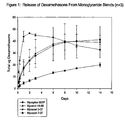
- Fig. 1 shows the release of dexamethasone from implant compositions containing the indicated monoglyceride blends.
- Fig. 2 shows the release of dexamethasone from implant compositions containing the indicated monoglycerides.
- Fig. 3 shows the release of dexamethasone from implant compositions containing glyceryl monostearate and a varying amount of surfactant.
- Unless indicated otherwise, all ingredient amounts expressed in percentage terms are presented as % w/w.
- As used herein, "implant" means a solid or semi-solid mass that contains one or more drugs and includes, but is not limited to, beads, pellets, rods, films and microparticles. Microparticles can be suspended in aqueous or nonaqueous liquid carriers.
- The implant compositions of the present invention, which lack both a polymeric ingredient and an organic solvent that is miscible with or dispersible in water, comprise a pharmaceutical drug and one or more lipophilic compounds having a molecular weight of 150 - 4000, wherein the lipophilic compounds are of

wherein R1 is -H, -OH, -COOH, -CnH2n+1-2m, -COOCnH2n+1-2m,
-COO(CH2CH2O)nCH2CH2OH, -CH2R3, or
-OOCCnH2n+1-2m, -COOCnH2n+1-2m, -COO(CH2CH2O)nCH2CH2OH,
-CnH2n+1-2mCOO(CH2CH2O)nCH2CH2OH,
-OOCCnH2n+1-2mCOOCn'H2'n+1-2m', -COO-Na+, -COO- K+, -SO3H,
-SO3 - Na+, - SO3 - K+, -NH2, -CI,

m and m' are independently 0 - 10. - Preferably, the molecular weight of the lipophilic compounds used in the present invention is ≤2000, and most preferably ≤1000. If the implant of the present invention contains only one lipophilic compound of formula (I), then the lipophilic compound must have a melting point ≥ 34 °C, preferably ≥ 37°C. If the implant contains two or more lipophilic compounds of formula (I), it is only necessary that the mixture has a melting point ≥ 34 °C, and preferably ≥ 37 °C. The lipophilic compounds are water-insoluble at 37 °C (i.e., have a solubility in water of < 0.5 mg/ml at 37 °C).
- Preferred are the lipophilic compounds of formula (I) wherein
- R1
- is, -CnH2n+1-2m, -COOCnH2n+1-2m, -COO(CH2CH2O)nCH2CH2OH, -CH2R3, or

- R2, R3 and R4
- are independently-H, -OH, -COOH, -CnH2n+1-2m, -OOCCnH2n+1-2m, -COOCnH2n+1-2m, -COO(CH2CH2O)nCH2CH2OH, -CnH2n+1-2mCOO(CH2CH2O)nCH2CH2OH, or -OOCCnH2n+1-2mCOOCn'H2n'+1-2m';
- n, n' and n"
- are independently 0 - 40; and
- m and m'
- are independently 0 - 5.
- Most preferred are the lipophilic compounds of formula (I) wherein
- R1
- is

- R2, R3 and R4
- are independently -H, -OH, -COOH, -CnH2n+1-2m. or -OOCCnH2n+1-2m;
- n, n' and n"
- are independently 0 - 30; and
- m and m' are
- independently 0 - 3.
- Especially preferred lipophilic compounds of formula (I) are glyceryl monolaurate; glyceryl dilaurate; glyceryl monomyristate; glyceryl dimyristate; glyceryl monopalmitate; glyceryl dipalmitate; glyceryl monostearate; glyceryl distearate; glyceryl monooleate; glyceryl dioleate; glyceryl monolinoleate; glyceryl dilinoleate; glyceryl monoarachidate; glyceryl diarachidate; glyceryl monobehenate; and glyceryl dibehenate.
- As used herein, "an organic solvent miscible with or dispersible in water" means an organic solvent that is biocompatible, pharmaceutically acceptable, and has a solubility in water ranging from miscible to dispersible. These organic solvents that are excluded from the compositions of the present claims are the same as those that are essential in the compositions described in
U.S. Patent No. 6,120,789 . - The lipophilic compounds of the present invention can be made by methods known in the art and many such compounds are commercially available. For example, commercial suppliers include NuChek Prep (Elysian, Minnesota),Quest International (Hoffman Estates, Illinois), which produces such compounds under the Myvaplex® and Myvacet® brands, and Gattefossa (Saint-Priest, France), which produces such compounds under the Gelucire® and Geleol® brands. Suitable lipophilic compounds include, but are not limited to, the following commercially available products.
diethylene glycol monostearate (Hydrine®; m.p. = 45.5 - 48.5 °C);
propylene glycol mono- and diesters of stearic and palmitic acid (Monosteol®;
m.p. = 34.0 - 37.5 °C; 'propylene glycol monostearate');
glyceryl monostearate (Geleol®; m.p. = 70 °C);
glyceryl monolinoleate (Maisine® 35-1; m.p. = -6.5 °C);
glyceryl monooleate (Peceol®; m.p. = 16 °C):
the mixture of monoglycerides sold as Myverol® 18-85 (m.p. = 46 °C);
the mixture of glyceryl monostearate (85 - 90%) and glyceryl monopalmitate (10 -15%) (Myvaplex ® 600P; m.p. = 69°C);
glyceryl esters of saturated C12 - C18 saturated fatty acid esters (Gelucire® 43/01; m.p. =42-46°C);
glyceryl esters of saturated C8- C18 saturated fatty acid esters (Gelucire® 33/01; m.p. = 33 - 37 °C); and
glyceryl esters of saturated C12-C18 saturated fatty acid esters (Gelucire® 39/01; m.p. =37.5-41°C); and - The implant compositions of the present invention comprise one or more lipophilic compounds of formula (I) in a total concentration of at least 10%, preferably at least 30%, and most preferably at least 50%.
- The implant compositions of the present invention comprise a pharmaceutically effective amount of an ophthalmic drug. If necessary or desired, more than one drug can be included in the implant of the present invention. Many types of ophthalmic drugs are known, including but not limited to: anti-glaucoma agents, such as beta-blockers including timolol, betaxolol, levobetaxolol, carteolol, miotics including pilocarpine, carbonic anhydrase inhibitors, prostaglandin analogues, seretonergics, muscarinics, dopaminergic agonists, adrenergic agonists including apraclonidine and brimonidine; anti-infective agents including quinolones such as ciprofloxacin, and aminoglycosides such as tobramycin and gentamicin; non-steroidal and steroidal anti-inflammatory agents, such as suprofen, diclofenac, ketorolac, rimexolone, dexamethasone and tetrahydrocortisol; growth factors, such as VEGF; immunosuppressant agents; neuroprotectant agents; angiogenesis-inhibiting agents and anti-allergy agents including olopatadine. The ophthalmic drug may be present in the form of a pharmaceutically acceptable salt, such as timolol maleate, brimonidine tartrate or sodium diclofenac. Compositions of the present invention may also include combinations of ophthalmic drugs, such as combinations of (i) a beta-blocker selected from the group consisting of betaxolol and timolol, and (ii) a prostaglandin selected from the group consisting of latanoprost; 15-keto latanoprost; fluprostenol isopropyl ester (especially 1 R-[1α(Z),2β(E,3R*),3α,5α]-7-[3,5-dihydroxy-2-[3-hydroxy-4-[3-(trifluoromethyl)-phenoxy]-1-butenyl]cyclo-pentyl-]-5-heptenoic acid, 1-methylethyl ester); isopropyl [2R(1E,3R),3S(4Z),4R]-7-[tetrahydro-2-[4-(3-chlorophenoxy)-3-hydroxy-1-butenyl]-4-hydroxy-3-furanyl]-4-heptenoate; and (5Z)-(9R,11R,15R)-9-chloro-15-cyclohexyl-11,15-dihydroxy-3-oxa-16,17,18,19,20-pentanor-5-prostenoic acid isopropyl ester. The total amount of drug contained in the implant compositions of the present invention is preferably not greater than 50%.
- In addition to the lipophilic compound of formula (I) and an ophthalmic drug, the implant compositions of the present invention optionally comprise one or more excipients. Many excipients for solid and semi-solid pharmaceutical compositions are known. Examples of suitable excipients include, but are not limited to: surfactants, preservatives, and stabilizers.
- Suitable surfactants include tyloxapol,
polysorbate 20,polysorbate 60, andpolysorbate 80 surfactants. A preferred surfactant ispolysorbate 80. - Suitable preservatives include quaternary ammonium preservatives such as polyquatemium-1 and benzalkonium halides. Preferred benzalkonium halides are benzalkonium chloride ("BAC") and benzalkonium bromide.
- Suitable stabilizers include chelating agents, such as edetate disodium, and antioxidants, such as ascorbic acid and citric acid.
- The implant compositions may be fashioned into a shape suitable for implantation into the eye. For example, such shapes include, but are not limited to cylindrical, conical and spherical shapes. Alternatively, the implant compositions may be of a shape and size such that they may be suspended in a liquid carrier and injected or deposited into the eye. The size and shape of the implant of the present invention will depend on a number of factors, including the selected drug, the target disease and the selected implant location. The implants of the present invention may be implanted anywhere in the eye, including the conjunctival cul-de-sac, punctum and lacrimal canaliculus, anterior and posterior segments, and the sub-Tenon's, suprachoroidal and subconjunctival spaces.
- Although the implant compositions are preferably administered as a solid or semi-solid, in one embodiment the composition is warmed and administered in a semi-solid or liquid state through a cannula. After cooling to body temperature at the site of administration, the composition will form a semi-solid or solid implant.
- The following examples are intended to illustrate, but not limit, the present invention.
- 0.25 g of
polysorbate 80 and 4.75 g of the monoglyceride Myverol 18-35 were added to a scintillation vial. The monoglyceride was melted by heating in a water bath. Thepolysorbate 80 and monoglyceride were then mixed by swirting. Pellets were made by cooling the solution in a cylindrical mold. This procedure was repeated for the monoglycerides Myverol 18-50, Myverol 18-85, andMyaplex 600P. - In order to illustrate the relationship between the exemplified materials and formula (I), Myverol 18-35, Myverol 18-50 and Myverol 18-85 contain, according to their manufacturer, the following ingredients in the proportions shown:
a) Myverol 18-35 Monoglyceride Ingredient Abbreviation Wt.% glyceryl monolaurate C12.0 0.3 glyceryl monomyristate C14.0 1.1 glyceryl monopalmitate C16.0 44.1 glyceryl monostearate C18.0 4.5 glyceryl monooleate C18.1 39.3 glyceryl monolinoleate C18.2 10.2 glyceryl monoarachidate C20.0 0.3 b) Myverol 18-50 Monoglyceride Ingredient Abbreviation Wt.% glyceryl monomyristate C14.0 0.1 glyceryl monopalmitate C16.0 10.8 glyceryl monostearate C18.0 12.6 glyceryl monooleate C18.1 73.9 glyceryl monolinoleate C18.2 1.9 glyceryl monoarachidate C20.0 0.3 glyceryl monobehenate C22.0 0.3 c) Myverol 18-85 Monoglyceride Ingredient Abbreviation Wt.% glyceryl monomyristate C14.0 0.8 glyceryl monopalmitate C16.0 22.3 glyceryl monostearate C18.0 2.5 glyceryl monooleate C18.1 17.6 glyceryl monolinoleate C18.2 54.8 glyceryl monoarachidate C20.0 0.3 glyceryl monobehenate C22.0 0.3 - C18.0 represents the compound:

- C18.1 represents the compound:

- C18.2 represents the compound:

- 1 x 3 mm cylindrical pellets of the formulations shown in Table 1 below were prepared by combining the indicated ingredients in a scintillation vial, melting the lipophilic compound(s) of formula (I) by heating in a water bath, mixing by swirling, and then cooling the mixed, melted formulations in cylindrical molds.
Table 1: Formulations Formulation# Compound(s) of Formula (I) Dexamethasone wt.% Polysorbate 80 wt.% Figure # 1 Myvaplex 600P3.5 None 1 2 Myverol 18-85 3.5 None 1 3 Myvacet 5-07 3.5 1.5 1 4 Myvacet 7-07 3.5 1.5 1 5 Glyceryl Monostearate 3.5 None 2 6 Glyceryl Monomyristate 3.5 None 2 7 Glyceryl Monobehenitate 3.5 None 2 8 Glyceryl Monostearate 3.5 None 3 9 Glyceryl Monostearate 3.5 1.5 3 10 Glyceryl Monostearate 3.5 2.5 3 11 Glyceryl Monostearate 3.5 5 3 - The release of dexamethasone from each formulation shown in Table 1 was measured by placing one pellet in a 2 ml vial containing 1.5 ml of phosphate buffered saline. Phosphate buffered saline ("PBS") contains 0.8% NaCI, 0.12% Na2HPO4, and 0.06% NaH2PO4:H2O. The vial is then placed in an oven at 37 °C. At each time point, the vial is gently inverted twice, 60 µl of the PBS is removed from the vial for HPLC analysis of dexamethasone, 60 µl of fresh PBS is added to the vial, and the vial placed back into the oven until the next time point. Each formulation is run in triplicate. The results are shown in Figures 1 - 3.
- A 75:20:5 mixture of anecortave acetate powder, glyceryl monostearate and
polysorbate 80 is heated to melt the glyceryl monostearate and mixed. This mixture is then spray dried to produce particles. The particles are then suspended in an aqueous vehicle comprising sodium chloride, sodium dibasic phosphate, sodium monobasic phosphate, carboxymethyl cellulose and tyloxapol to produce a composition suitable for injection. - A 50:45:5 mixture of anecortave acetate powder, Gelucire 39/01 (glycerol esters of saturated C12-C18 saturated fatty acid esters are heated to melt the Gelucire 39/01 and mixed. Before injection, this composition is heated to about 41 °C and is drawn in a syringe. It is then injected through a cannula in the sub-tenon's space. Upon cooling to 37 °C, it forms a solid waxy mass.
- Two 1 µl-sized cylindrical pellets each containing 80 µg of the prostaglandin analogue (5Z)-(9R,11R,15R)-9-chloro-15-cyclohexyl-11,15-dihydroxy-3-oxa-16,17,18,19,20-pentanor-5-prostenoic acid isopropyl ester were prepared by combining the prostaglandin analogue with the necessary amount of the product Precirol® ATO 5 (Gattefossa) in a scintillation vial, melting the lipophilic compounds by heating in a water bath, mixing by swirling, and then cooling the mixed, melted formulations in cylindrical molds. According to the manufacturer, Precirol® ATO 5 is composed of mono-, di- and triglycerides of palmitostearic acid, with the diester fraction being predominant. Precirol® ATO 5 is synthesized by esterification of glycerol by palmitostearic acid.
- The release of the prostaglandin analogue from the pellets was measured as follows: after weighing, the pellets were placed in scintillation vials with 20 ml of PBS. The vials were stored in a 37 °C oven. At each time point, the vial was gently inverted a few times (about 5 times), then 300 µl of the dissolution sample was removed from the vial and the vial returned to the oven. The amount of prostaglandin analogue contained in the sample was determined by HPLC analysis. The results are shown in Table 2.
Table 2 Time Cumulative Drug Release Cumulative Drug Release (days) (µg) (% of initial 80 µg) 1 1.70 1.84 2.18 2.17 3 28.6 32 36.67 37.65 8 73 76.6 93.59 90.12 11* 65 69.4 83.33 81.65 * Drug may be degrading in the dissolution medium. - Two 3 µl-sized cylindrical pellets each containing 200 µg of (5Z)-(9R,11R,15R)-9-chloro-15-cyclohexyl-11,15-dihydroxy-3-oxa-16,17,18,19,20-pentanor-5-prostenoic acid isopropyl ester were prepared by combining the prostaglandin analogue with the necessary amount of the product Compritol® 888 ATO (Gattefossa) in a scintillation vial, melting the lipophilic compounds by heating in a water bath, mixing by swirling, and then cooling the mixed, melted formulations in cylindrical molds. According to the manufacturer, Compritol® 888 ATO is composed of mono-, di- and triglycerides of behenic acid, with the diester fraction being predominant. Compritol® 888 ATO is synthesized by esterification of glycerol by behenic acid.
- The release of the prostaglandin analogue from the pellets was measured as follows: after weighing, the pellets were placed in scintillation vials with 20 ml of PBS. The vials were stored in a 37 °C oven. At each time point, the vial was gently inverted a few times (about 5 times), then 300 µl of the dissolution sample was removed from the vial and the vial returned to the oven. The amount of prostaglandin analogue contained in the sample was determined by HPLC analysis. The results are shown in Table 3.
Table 3 Time Cumulative Drug Release Cumulative % Drug Release (days) (µg) (% of initial 80 µg) 1 12.18 11.38 5.37 4.78 3 3.32 3.02 1.46 1.27 8 12.1 14.04 5.33 5.90 11 25.6 31 11.28 13.03 15 52.6 66.4 23.17 27.90 22 54.6 102.4 24.05 43.03 30 88.8 107.4 39.12 45.13
Claims (21)
- An intraocular implant composition suitable for implanting in a site selected from the group consisting of the punctum, lacrimal canaliculus, anterior segment, posterior segment, sub-Tenon's space, suprachoroidal space, and subconjunctival space comprising a lipophilic compound having a molecular weight of 150 - 4000 and a pharmaceutically effective amount of a drug, but lacking a polymeric ingredient and an organic solvent that is miscible with or dispersible in water, wherein the composition is solid or semi-solid at temperatures ≤ 37°C and the lipophilic compound is of the formula


m and m' are independently 0 - 10,
wherein the composition comprises at least 30% (wt.) of the lipophilic compound of formula (I). - The intraocular implant composition of claim 1 wherein the molecular weight of the lipophilic compound of formula (1) is ≤ 2000.
- The intraocular implant composition of claim 2 wherein the molecular weight of the lipophilic compound of formula (I) is ≤ 1000.
- The intraocular implant composition of claim 1 wherein the composition comprises a mixture of two or more lipophilic compounds of formula (I).
- The intraocular implant composition of claim 1 wherein the lipophilic compound of formula (I) has a melting point ≥ 34°C.
- The intraocular implant composition of claim 4 wherein at least one lipophilic compound of formula (I) has a melting point < 34°C but the mixture has a melting point ≥ 34°C.
- The intraocular implant composition of claim 1 wherein R1 is
-CnH2n+1-2m, -COOCnH2n+1-2m, -COO(CH2CH2O)nCH2CH2OH, -CH2R3, or
n, n' and n" are independently 0 - 40; and
m and m' are independently 0 - 5. - The intraocular implant composition of claim 7 wherein
R1 is
n, n' and n" are independently 0 - 30; and
m and m' are independently 0 - 3. - The intraocular implant composition of claim 1 wherein the lipophilic compound of formula (I) is selected from the group consisting of diethylene glycol monostearate, propylene glycol monostearate, glyceryl monostearate, glyceryl monolinoleate, glyceryl monooleate, glyceryl monopalmitate, and mixtures thereof.
- The intraocular implant composition of claim 1 wherein the lipophilic compound of formula (I) is selected from the group consisting of: glyceryl monolaurate, glyceryl dilaurate, glyceryl monomyristate, glyceryl dimyristate, glyceryl monopalmitate, glyceryl dipalmitate, glyceryl monostearate, glyceryl distearate, glyceryl monooleate, glyceryl dioleate, glyceryl monolinoleate, glyceryl dilinoleate, glyceryl monoarachidate, glyceryl diarachidate, glyceryl monobehenate, and glyceryl dibehenate.
- The intraocular implant composition of claim 1 wherein the composition comprises at least 50% (wt.) of the lipophilic compound of formula (1).
- The intraocular implant composition of claim 1 wherein the drug is selected from the group consisting of anti-glaucoma agents, anti-infective agents, non-steroidal and steroidal anti-inflammatory agents, growth factors, immunosuppressant agents, neuroprotectant agents, angiogenesis-inhibiting agents and anti-allergy agents.
- The intraocular implant composition of claim 1 wherein the composition further comprises one or more excipients selected from the group consisting of surfactants, preservatives, and stabilizers.
- The intraocular implant composition of claim 13 wherein the composition comprises a surfactant selected from the group consisting of tyloxapol, polysorbate 20, polysorbate 60, and polysorbate 80.
- The intraocular implant composition of claim 13 wherein the composition comprises a preservative selected from the group consisting of quaternary ammonium preservatives.
- The intraocular implant composition of claim 13 wherein the composition comprises a stabilizer selected from the group consisting of chelating agents, and antioxidants.
- The intraocular implant composition of claim 1 wherein the composition is fashioned into a cylindrical, conical and spherical shape.
- Use of a composition comprising a lipophilic compound having a molecular weight of 150 - 4000 and a pharmaceutically effective amount of a drug, but lacking a polymeric ingredient and an organic solvent that is miscible with or dispersible in water, wherein the composition is solid or semi-solid at temperatures ≤ 37°C and the lipophilic compound is of the formula


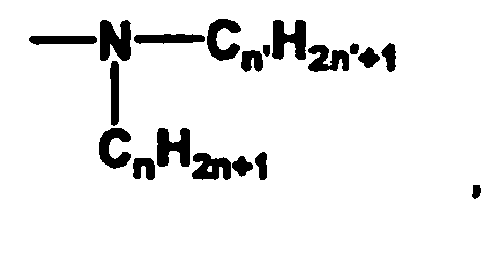
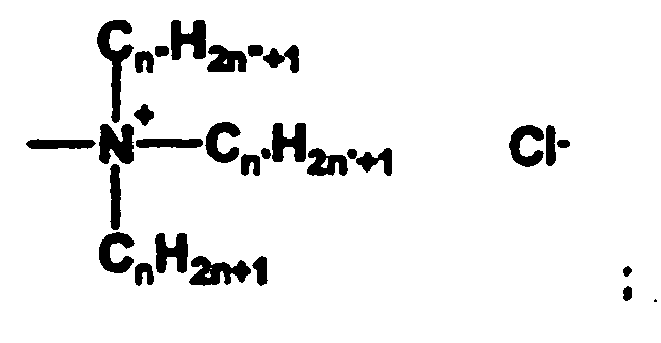
m and m' are independently 0 - 10,
wherein the composition comprises at least 30% (wt.) of the lipophilic compound of formula (I) for the preparation of an intraocular implant composition which is for implantation in the eye in a site selected from the group consisting of the punctum, lacrimal canaliculus, anterior segment, posterior segment, sub-Tenon's space, suprachoroidal space, and subconjunctival space for delivering an ophthalmically acceptable drug to the eye. - The use of claim 18 wherein the composition is warmed to a temperature above room temperature and administered through a cannula.
- The use of claim 18 wherein the composition is administered as a solid or semi-solid.
- The use of claim 18 wherein the intraocular implant composition of step (a) is suspended in a liquid carrier and implanted in the eye in step (b) by administration through a cannula.
Priority Applications (2)
| Application Number | Priority Date | Filing Date | Title |
|---|---|---|---|
| SI200331158T SI1521573T1 (en) | 2002-07-15 | 2003-06-30 | Non-polymeric lipophilic pharmaceutical implant compositions for intraocular use |
| CY20081100111T CY1107166T1 (en) | 2002-07-15 | 2008-01-31 | NON-POLYMER FAT PHARMACEUTICAL INGREDIENT COMPOSITIONS FOR INTRODUCTION |
Applications Claiming Priority (3)
| Application Number | Priority Date | Filing Date | Title |
|---|---|---|---|
| US39584002P | 2002-07-15 | 2002-07-15 | |
| US395840P | 2002-07-15 | ||
| PCT/US2003/020707 WO2004006890A1 (en) | 2002-07-15 | 2003-06-30 | Non-polymeric lipophilic pharmaceutical implant compositions for intraocular use |
Publications (2)
| Publication Number | Publication Date |
|---|---|
| EP1521573A1 EP1521573A1 (en) | 2005-04-13 |
| EP1521573B1 true EP1521573B1 (en) | 2008-01-02 |
Family
ID=30115932
Family Applications (1)
| Application Number | Title | Priority Date | Filing Date |
|---|---|---|---|
| EP03764334A Expired - Lifetime EP1521573B1 (en) | 2002-07-15 | 2003-06-30 | Non-polymeric lipophilic pharmaceutical implant compositions for intraocular use |
Country Status (18)
| Country | Link |
|---|---|
| US (2) | US7678827B2 (en) |
| EP (1) | EP1521573B1 (en) |
| JP (1) | JP4463681B2 (en) |
| KR (1) | KR101003518B1 (en) |
| CN (1) | CN100355455C (en) |
| AT (1) | ATE382330T1 (en) |
| AU (1) | AU2003248777B2 (en) |
| BR (1) | BR0312635A (en) |
| CA (1) | CA2491313C (en) |
| CY (1) | CY1107166T1 (en) |
| DE (1) | DE60318446T2 (en) |
| DK (1) | DK1521573T3 (en) |
| ES (1) | ES2295647T3 (en) |
| MX (1) | MXPA05000632A (en) |
| PL (1) | PL206594B1 (en) |
| PT (1) | PT1521573E (en) |
| WO (1) | WO2004006890A1 (en) |
| ZA (2) | ZA200410096B (en) |
Families Citing this family (43)
| Publication number | Priority date | Publication date | Assignee | Title |
|---|---|---|---|---|
| US6955661B1 (en) * | 1999-01-25 | 2005-10-18 | Atrium Medical Corporation | Expandable fluoropolymer device for delivery of therapeutic agents and method of making |
| US7947015B2 (en) * | 1999-01-25 | 2011-05-24 | Atrium Medical Corporation | Application of a therapeutic substance to a tissue location using an expandable medical device |
| US7431710B2 (en) | 2002-04-08 | 2008-10-07 | Glaukos Corporation | Ocular implants with anchors and methods thereof |
| WO2004006890A1 (en) * | 2002-07-15 | 2004-01-22 | Alcon, Inc. | Non-polymeric lipophilic pharmaceutical implant compositions for intraocular use |
| US20070184089A1 (en) * | 2002-07-15 | 2007-08-09 | Alcon, Inc. | Non-Polymeric Lipophilic Pharmaceutical Implant Compositions for Intraocular Use |
| US20050244463A1 (en) * | 2004-04-30 | 2005-11-03 | Allergan, Inc. | Sustained release intraocular implants and methods for treating ocular vasculopathies |
| JP5097883B2 (en) * | 2004-09-02 | 2012-12-12 | 株式会社 神崎高級工機製作所 | Hydraulic drive vehicle |
| US9012506B2 (en) | 2004-09-28 | 2015-04-21 | Atrium Medical Corporation | Cross-linked fatty acid-based biomaterials |
| WO2007011385A2 (en) | 2004-09-28 | 2007-01-25 | Atrium Medical Corporation | Heat cured gel and method of making |
| US9000040B2 (en) | 2004-09-28 | 2015-04-07 | Atrium Medical Corporation | Cross-linked fatty acid-based biomaterials |
| EP1928407B1 (en) * | 2005-09-21 | 2009-03-18 | Aston University | Chronotherapeutic ocular delivery system comprising a combination of prostaglandin and a beta-blocker for treating primary glaucoma |
| US9427423B2 (en) | 2009-03-10 | 2016-08-30 | Atrium Medical Corporation | Fatty-acid based particles |
| US9278161B2 (en) | 2005-09-28 | 2016-03-08 | Atrium Medical Corporation | Tissue-separating fatty acid adhesion barrier |
| US9474645B2 (en) * | 2006-06-21 | 2016-10-25 | Johnson & Johnson Vision Care, Inc. | Punctal plugs for the delivery of active agents |
| US20080045911A1 (en) * | 2006-06-21 | 2008-02-21 | Borgia Maureen J | Punctal plugs for the delivery of active agents |
| US9173773B2 (en) * | 2006-06-21 | 2015-11-03 | Johnson & Johnson Vision Care, Inc. | Punctal plugs for the delivery of active agents |
| UY30883A1 (en) | 2007-01-31 | 2008-05-31 | Alcon Res | PUNCTURAL PLUGS AND METHODS OF RELEASE OF THERAPEUTIC AGENTS |
| EP2207529B1 (en) * | 2007-09-07 | 2014-12-31 | Mati Therapeutics Inc. | Drug cores for sustained release of therapeutic agents |
| TWI451862B (en) * | 2007-10-09 | 2014-09-11 | Alcon Res Ltd | Thermal coefficient driven drug pellet size for ophthalmic injection |
| TWI498136B (en) * | 2007-10-09 | 2015-09-01 | Alcon Res Ltd | An injection device for delivering a rate and temperature-dependent substance into the eye and method of preparing the same |
| JP2010104632A (en) | 2008-10-31 | 2010-05-13 | Hoya Corp | Ophthalmic composition having gelling ability |
| US9095506B2 (en) | 2008-11-17 | 2015-08-04 | Allergan, Inc. | Biodegradable alpha-2 agonist polymeric implants and therapeutic uses thereof |
| US8372036B2 (en) * | 2009-05-06 | 2013-02-12 | Alcon Research, Ltd. | Multi-layer heat assembly for a drug delivery device |
| US10206813B2 (en) | 2009-05-18 | 2019-02-19 | Dose Medical Corporation | Implants with controlled drug delivery features and methods of using same |
| US12478503B2 (en) | 2009-05-18 | 2025-11-25 | Glaukos Corporation | Implants with controlled drug delivery features and methods of using same |
| JP5937004B2 (en) | 2009-05-18 | 2016-06-22 | ドーズ メディカル コーポレーションDose Medical Corporation | Drug-eluting intraocular implant |
| US20110038910A1 (en) | 2009-08-11 | 2011-02-17 | Atrium Medical Corporation | Anti-infective antimicrobial-containing biomaterials |
| EP3421030A1 (en) | 2009-11-09 | 2019-01-02 | Allergan, Inc. | Compositions and methods for stimulating hair growth |
| HRP20181173T1 (en) * | 2009-12-22 | 2018-09-21 | Ucb Biopharma Sprl | Polyvinylpyrrolidone for the stabilization of a solid dispersion of the non-crystalline form of rotigotine |
| US8177747B2 (en) * | 2009-12-22 | 2012-05-15 | Alcon Research, Ltd. | Method and apparatus for drug delivery |
| EP2593141B1 (en) | 2010-07-16 | 2018-07-04 | Atrium Medical Corporation | Composition and methods for altering the rate of hydrolysis of cured oil-based materials |
| US9668915B2 (en) | 2010-11-24 | 2017-06-06 | Dose Medical Corporation | Drug eluting ocular implant |
| DE102011016277B4 (en) | 2011-04-06 | 2013-02-21 | Heraeus Medical Gmbh | Plastic deformable, biodegradable hemostyptic and method of molding such |
| US9867880B2 (en) | 2012-06-13 | 2018-01-16 | Atrium Medical Corporation | Cured oil-hydrogel biomaterial compositions for controlled drug delivery |
| CA2901280A1 (en) | 2013-02-15 | 2014-08-21 | Allergan, Inc. | Sustained drug delivery implant |
| TW201601717A (en) * | 2013-09-26 | 2016-01-16 | 參天製藥股份有限公司 | Aqueous composition containing stabilized 2-amino-3-(4-bromobenzoyl)phenylacetic acid |
| US20150342875A1 (en) | 2014-05-29 | 2015-12-03 | Dose Medical Corporation | Implants with controlled drug delivery features and methods of using same |
| WO2017040853A1 (en) | 2015-09-02 | 2017-03-09 | Glaukos Corporation | Drug delivery implants with bi-directional delivery capacity |
| WO2017053885A1 (en) | 2015-09-25 | 2017-03-30 | Glaukos Corporation | Punctal implants with controlled drug delivery features and methods of using same |
| US11318043B2 (en) | 2016-04-20 | 2022-05-03 | Dose Medical Corporation | Bioresorbable ocular drug delivery device |
| EP4046609B1 (en) * | 2016-09-30 | 2025-02-26 | Mati Therapeutics Inc. | Ophthalmic drug sustained release formulation and uses thereof |
| CA3064161A1 (en) | 2017-06-13 | 2018-12-20 | Alcon Inc. | Intraocular lens compositions |
| RU2675691C1 (en) * | 2017-09-14 | 2018-12-21 | Федеральное Государственное бюджетное образовательное учреждение высшего образования Дагестанский государственный медицинский университет Министерства здравоохранения Российской Федерации | Method of long-term perfusion of subtenon space with medicines |
Family Cites Families (49)
| Publication number | Priority date | Publication date | Assignee | Title |
|---|---|---|---|---|
| US4014335A (en) | 1975-04-21 | 1977-03-29 | Alza Corporation | Ocular drug delivery device |
| JPS6042766B2 (en) | 1978-12-09 | 1985-09-25 | 日本化薬株式会社 | Base |
| US4797288A (en) | 1984-10-05 | 1989-01-10 | Warner-Lambert Company | Novel drug delivery system |
| GB8524421D0 (en) | 1985-10-03 | 1985-11-06 | Boots Co Plc | Therapeutic agents |
| US4997652A (en) | 1987-12-22 | 1991-03-05 | Visionex | Biodegradable ocular implants |
| US4853224A (en) | 1987-12-22 | 1989-08-01 | Visionex | Biodegradable ocular implants |
| JP2893191B2 (en) | 1988-11-08 | 1999-05-17 | 武田薬品工業株式会社 | Controlled release matrix agent |
| US5015474A (en) * | 1988-11-22 | 1991-05-14 | Parnell Pharmaceuticals, Inc. | Composition for imparting moisture to a substrate |
| WO1990009385A1 (en) * | 1989-02-17 | 1990-08-23 | The Liposome Company, Inc. | Lipid excipient for nasal delivery and topical application |
| US5164188A (en) | 1989-11-22 | 1992-11-17 | Visionex, Inc. | Biodegradable ocular implants |
| US5660851A (en) | 1989-12-26 | 1997-08-26 | Yissum Research Development Company Of The Hebrew Univ. Of Jerusalem | Ocular inserts |
| WO1991016869A1 (en) | 1990-04-27 | 1991-11-14 | Allergan, Inc. | Polymeric drug delivery system |
| IE65045B1 (en) | 1990-04-28 | 1995-10-04 | Takeda Chemical Industries Ltd | Granulated preparations and method of producing the same |
| US5378475A (en) | 1991-02-21 | 1995-01-03 | University Of Kentucky Research Foundation | Sustained release drug delivery devices |
| EP0584108B1 (en) | 1991-05-13 | 2000-08-16 | The Boots Company PLC | Pharmaceutical composition comprising ibuprofen salt |
| US5629019A (en) * | 1992-02-27 | 1997-05-13 | Alza Corporation | Formulations with hydrophobic permeation enhancers |
| US5178635A (en) | 1992-05-04 | 1993-01-12 | Allergan, Inc. | Method for determining amount of medication in an implantable device |
| AU5092493A (en) | 1992-09-08 | 1994-03-29 | Allergan, Inc. | Sustained release of ophthalmic drugs from a soluble polymer drug delivery vehicle |
| WO1995003009A1 (en) | 1993-07-22 | 1995-02-02 | Oculex Pharmaceuticals, Inc. | Method of treatment of macular degeneration |
| US5433951A (en) | 1993-10-13 | 1995-07-18 | Bristol-Myers Squibb Company | Sustained release formulation containing captopril and method |
| US5443505A (en) | 1993-11-15 | 1995-08-22 | Oculex Pharmaceuticals, Inc. | Biocompatible ocular implants |
| US5773021A (en) | 1994-03-14 | 1998-06-30 | Vetoquinol S.A. | Bioadhesive ophthalmic insert |
| CA2119109C (en) | 1994-03-15 | 2002-11-12 | Florian Gurtler | Bioadhesive ophthalmic insert |
| ES2258495T3 (en) | 1994-04-08 | 2006-09-01 | Qlt Usa, Inc. | PHARMACOS LIQUID ADMINISTRATION COMPOSITIONS. |
| US6190691B1 (en) | 1994-04-12 | 2001-02-20 | Adolor Corporation | Methods for treating inflammatory conditions |
| US5466233A (en) | 1994-04-25 | 1995-11-14 | Escalon Ophthalmics, Inc. | Tack for intraocular drug delivery and method for inserting and removing same |
| AUPM897594A0 (en) | 1994-10-25 | 1994-11-17 | Daratech Pty Ltd | Controlled release container |
| ATE232089T1 (en) | 1994-11-10 | 2003-02-15 | Univ Kentucky Res Found | CONTROLLED RELEASE IMPLANTABLE REFILLABLE DEVICE FOR ADMINISTERING DRUGS IMMEDIATELY TO AN INTERNAL PART OF THE BODY |
| US5725493A (en) | 1994-12-12 | 1998-03-10 | Avery; Robert Logan | Intravitreal medicine delivery |
| US5718922A (en) | 1995-05-31 | 1998-02-17 | Schepens Eye Research Institute, Inc. | Intravitreal microsphere drug delivery and method of preparation |
| US5869079A (en) | 1995-06-02 | 1999-02-09 | Oculex Pharmaceuticals, Inc. | Formulation for controlled release of drugs by combining hydrophilic and hydrophobic agents |
| US5773019A (en) | 1995-09-27 | 1998-06-30 | The University Of Kentucky Research Foundation | Implantable controlled release device to deliver drugs directly to an internal portion of the body |
| US5736152A (en) | 1995-10-27 | 1998-04-07 | Atrix Laboratories, Inc. | Non-polymeric sustained release delivery system |
| DE69626539T2 (en) | 1995-11-20 | 2004-04-08 | Kita, Kiyoshi, Shibuyaku | topical use of vitamin D for the treatment of eye diseases |
| US5797898A (en) | 1996-07-02 | 1998-08-25 | Massachusetts Institute Of Technology | Microchip drug delivery devices |
| CA2283780A1 (en) * | 1997-03-12 | 1998-09-17 | Abbott Laboratories | Lipophilic binary systems for the administration of lipophilic compounds |
| US6143276A (en) | 1997-03-21 | 2000-11-07 | Imarx Pharmaceutical Corp. | Methods for delivering bioactive agents to regions of elevated temperatures |
| US6120751A (en) | 1997-03-21 | 2000-09-19 | Imarx Pharmaceutical Corp. | Charged lipids and uses for the same |
| DE69827138T2 (en) | 1997-08-11 | 2006-02-23 | Allergan, Inc., Irvine | Sterile retinoid-containing biodegradable implant with improved biocompatibility and process for its preparation |
| US5902598A (en) | 1997-08-28 | 1999-05-11 | Control Delivery Systems, Inc. | Sustained release drug delivery devices |
| IL121647A (en) * | 1997-08-28 | 2001-07-24 | Pharmateam Dev Ltd | Pharmaceutical compositions for the treatment of ocular inflammation comprising dexamethasone palmitate |
| US6099853A (en) * | 1997-09-04 | 2000-08-08 | Protein Express | Vaginal suppository vaccine for urogenital infections |
| US5891476A (en) * | 1997-12-22 | 1999-04-06 | Reo; Joe P. | Tastemasked pharmaceutical system |
| DE19804310A1 (en) * | 1998-02-04 | 1999-08-05 | Aventis Res & Tech Gmbh & Co | Spiro compounds and their use |
| WO2001097832A1 (en) * | 2000-06-21 | 2001-12-27 | Audit Institute For Medical Services And Quality Assurance Gmbh | Pharmaceutical preparations containing cyclosporines and neutral oils |
| DE10030378A1 (en) * | 2000-06-21 | 2002-03-14 | Audit Inst For Medical Service | New pharmaceutical composition for topical application of water-insoluble and / or poorly water-soluble active ingredients |
| PE20030828A1 (en) | 2002-03-04 | 2003-11-04 | Novartis Ag | OPHTHALMIC COMPOSITION INCLUDING ASCOMYCIN |
| WO2004006890A1 (en) * | 2002-07-15 | 2004-01-22 | Alcon, Inc. | Non-polymeric lipophilic pharmaceutical implant compositions for intraocular use |
| US7297709B2 (en) * | 2003-05-22 | 2007-11-20 | Abbott Laboratories | Indazole, benzisoxazole, and benzisothiazole kinase inhibitors |
-
2003
- 2003-06-30 WO PCT/US2003/020707 patent/WO2004006890A1/en not_active Ceased
- 2003-06-30 PT PT03764334T patent/PT1521573E/en unknown
- 2003-06-30 MX MXPA05000632A patent/MXPA05000632A/en active IP Right Grant
- 2003-06-30 AT AT03764334T patent/ATE382330T1/en active
- 2003-06-30 PL PL374743A patent/PL206594B1/en not_active IP Right Cessation
- 2003-06-30 KR KR1020057000488A patent/KR101003518B1/en not_active Expired - Fee Related
- 2003-06-30 US US10/610,435 patent/US7678827B2/en not_active Expired - Fee Related
- 2003-06-30 EP EP03764334A patent/EP1521573B1/en not_active Expired - Lifetime
- 2003-06-30 CA CA2491313A patent/CA2491313C/en not_active Expired - Fee Related
- 2003-06-30 JP JP2004521511A patent/JP4463681B2/en not_active Expired - Fee Related
- 2003-06-30 DK DK03764334T patent/DK1521573T3/en active
- 2003-06-30 CN CNB038167913A patent/CN100355455C/en not_active Expired - Fee Related
- 2003-06-30 BR BR0312635-8A patent/BR0312635A/en not_active IP Right Cessation
- 2003-06-30 ES ES03764334T patent/ES2295647T3/en not_active Expired - Lifetime
- 2003-06-30 AU AU2003248777A patent/AU2003248777B2/en not_active Ceased
- 2003-06-30 DE DE60318446T patent/DE60318446T2/en not_active Expired - Lifetime
-
2004
- 2004-12-14 ZA ZA200410096A patent/ZA200410096B/en unknown
- 2004-12-14 ZA ZA200410095A patent/ZA200410095B/en unknown
-
2008
- 2008-01-31 CY CY20081100111T patent/CY1107166T1/en unknown
- 2008-06-03 US US12/132,003 patent/US8178576B2/en not_active Expired - Fee Related
Also Published As
| Publication number | Publication date |
|---|---|
| DE60318446T2 (en) | 2008-05-21 |
| US20040013704A1 (en) | 2004-01-22 |
| DE60318446D1 (en) | 2008-02-14 |
| KR20050023409A (en) | 2005-03-09 |
| CN1668277A (en) | 2005-09-14 |
| WO2004006890A1 (en) | 2004-01-22 |
| ZA200410095B (en) | 2006-07-26 |
| KR101003518B1 (en) | 2010-12-30 |
| JP4463681B2 (en) | 2010-05-19 |
| US7678827B2 (en) | 2010-03-16 |
| DK1521573T3 (en) | 2008-03-25 |
| BR0312635A (en) | 2005-04-19 |
| PL374743A1 (en) | 2005-10-31 |
| JP2006500328A (en) | 2006-01-05 |
| US20080241224A1 (en) | 2008-10-02 |
| ZA200410096B (en) | 2006-07-26 |
| US8178576B2 (en) | 2012-05-15 |
| AU2003248777B2 (en) | 2008-02-14 |
| PL206594B1 (en) | 2010-08-31 |
| CN100355455C (en) | 2007-12-19 |
| MXPA05000632A (en) | 2005-03-31 |
| CY1107166T1 (en) | 2012-10-24 |
| ATE382330T1 (en) | 2008-01-15 |
| AU2003248777A1 (en) | 2004-02-02 |
| ES2295647T3 (en) | 2008-04-16 |
| CA2491313A1 (en) | 2004-01-22 |
| EP1521573A1 (en) | 2005-04-13 |
| PT1521573E (en) | 2008-02-08 |
| CA2491313C (en) | 2011-05-24 |
Similar Documents
| Publication | Publication Date | Title |
|---|---|---|
| US7678827B2 (en) | Non-polymeric lipophilic pharmaceutical implant compositions for intraocular use | |
| JP5484911B2 (en) | Method for producing cyclic lipid implants for intraocular use | |
| Lallemand et al. | Cyclosporine A delivery to the eye: a pharmaceutical challenge | |
| KR101387456B1 (en) | Liquid formulations for treatment of diseases or conditions | |
| EP2409687B1 (en) | Water insoluble polymer matrix for drug delivery | |
| KR101430760B1 (en) | Ophthalmic therapy using glucocorticoid derivatives selectively penetrating into the posterior segment of the eye | |
| EP0729324B1 (en) | Biocompatible ocular implants | |
| CN100500221C (en) | Bioerodible film for ophthalmic drug delivery | |
| US20070184089A1 (en) | Non-Polymeric Lipophilic Pharmaceutical Implant Compositions for Intraocular Use | |
| JPH02702A (en) | Biodegradable eye implant | |
| Deshpande et al. | Bioerodible polymers for ocular drug delivery | |
| JP2017524712A (en) | Nanoparticles loaded with glucocorticoids to prevent corneal allograft rejection and neovascularization | |
| RS61348B1 (en) | Ophthalmic compositions containing a nitric oxide releasing prostamide | |
| WO2012054498A1 (en) | Polymeric microparticles | |
| JP6250005B2 (en) | Controlled release formulation | |
| Patel et al. | A comprehensive review on proniosomes: a new concept in ocular drug delivery | |
| CA2176145C (en) | Biocompatible ocular implants | |
| Rupenthal et al. | Ocular drug delivery | |
| Bqqmjdbujpot | Esvh Efmjwfsz Tztufnt jo | |
| HK1132173B (en) | Water insoluble polymer matrix for drug delivery |
Legal Events
| Date | Code | Title | Description |
|---|---|---|---|
| PUAI | Public reference made under article 153(3) epc to a published international application that has entered the european phase |
Free format text: ORIGINAL CODE: 0009012 |
|
| 17P | Request for examination filed |
Effective date: 20041230 |
|
| AK | Designated contracting states |
Kind code of ref document: A1 Designated state(s): AT BE BG CH CY CZ DE DK EE ES FI FR GB GR HU IE IT LI LU MC NL PT RO SE SI SK TR |
|
| RAP1 | Party data changed (applicant data changed or rights of an application transferred) |
Owner name: ALCON, INC. |
|
| RIN1 | Information on inventor provided before grant (corrected) |
Inventor name: HOWIE, JANET, D. Inventor name: KABRA, BHAGWATI, P. |
|
| GRAP | Despatch of communication of intention to grant a patent |
Free format text: ORIGINAL CODE: EPIDOSNIGR1 |
|
| GRAS | Grant fee paid |
Free format text: ORIGINAL CODE: EPIDOSNIGR3 |
|
| GRAA | (expected) grant |
Free format text: ORIGINAL CODE: 0009210 |
|
| AK | Designated contracting states |
Kind code of ref document: B1 Designated state(s): AT BE BG CH CY CZ DE DK EE ES FI FR GB GR HU IE IT LI LU MC NL PT RO SE SI SK TR |
|
| REG | Reference to a national code |
Ref country code: GB Ref legal event code: FG4D |
|
| REG | Reference to a national code |
Ref country code: IE Ref legal event code: FG4D |
|
| REG | Reference to a national code |
Ref country code: CH Ref legal event code: EP |
|
| REG | Reference to a national code |
Ref country code: PT Ref legal event code: SC4A Free format text: AVAILABILITY OF NATIONAL TRANSLATION Effective date: 20080128 |
|
| REF | Corresponds to: |
Ref document number: 60318446 Country of ref document: DE Date of ref document: 20080214 Kind code of ref document: P |
|
| REG | Reference to a national code |
Ref country code: RO Ref legal event code: EPE |
|
| REG | Reference to a national code |
Ref country code: GR Ref legal event code: EP Ref document number: 20080400112 Country of ref document: GR |
|
| REG | Reference to a national code |
Ref country code: DK Ref legal event code: T3 |
|
| REG | Reference to a national code |
Ref country code: CH Ref legal event code: NV Representative=s name: PATENTANWAELTE SCHAAD, BALASS, MENZL & PARTNER AG |
|
| REG | Reference to a national code |
Ref country code: SE Ref legal event code: TRGR |
|
| REG | Reference to a national code |
Ref country code: EE Ref legal event code: FG4A Ref document number: E001742 Country of ref document: EE Effective date: 20080226 |
|
| REG | Reference to a national code |
Ref country code: ES Ref legal event code: FG2A Ref document number: 2295647 Country of ref document: ES Kind code of ref document: T3 |
|
| REG | Reference to a national code |
Ref country code: HU Ref legal event code: AG4A Ref document number: E002948 Country of ref document: HU |
|
| ET | Fr: translation filed | ||
| PLBE | No opposition filed within time limit |
Free format text: ORIGINAL CODE: 0009261 |
|
| STAA | Information on the status of an ep patent application or granted ep patent |
Free format text: STATUS: NO OPPOSITION FILED WITHIN TIME LIMIT |
|
| 26N | No opposition filed |
Effective date: 20081003 |
|
| PGFP | Annual fee paid to national office [announced via postgrant information from national office to epo] |
Ref country code: CY Payment date: 20100618 Year of fee payment: 8 |
|
| PGFP | Annual fee paid to national office [announced via postgrant information from national office to epo] |
Ref country code: CH Payment date: 20110627 Year of fee payment: 9 Ref country code: CZ Payment date: 20110623 Year of fee payment: 9 Ref country code: GR Payment date: 20110629 Year of fee payment: 9 Ref country code: SE Payment date: 20110629 Year of fee payment: 9 Ref country code: MC Payment date: 20110603 Year of fee payment: 9 Ref country code: TR Payment date: 20110610 Year of fee payment: 9 Ref country code: PT Payment date: 20110602 Year of fee payment: 9 Ref country code: IE Payment date: 20110627 Year of fee payment: 9 |
|
| PGFP | Annual fee paid to national office [announced via postgrant information from national office to epo] |
Ref country code: SI Payment date: 20110622 Year of fee payment: 9 Ref country code: SK Payment date: 20110603 Year of fee payment: 9 Ref country code: RO Payment date: 20110606 Year of fee payment: 9 Ref country code: LU Payment date: 20110706 Year of fee payment: 9 Ref country code: HU Payment date: 20110609 Year of fee payment: 9 Ref country code: NL Payment date: 20110630 Year of fee payment: 9 Ref country code: EE Payment date: 20110606 Year of fee payment: 9 Ref country code: FI Payment date: 20110629 Year of fee payment: 9 Ref country code: DK Payment date: 20110627 Year of fee payment: 9 Ref country code: BG Payment date: 20110624 Year of fee payment: 9 Ref country code: AT Payment date: 20110602 Year of fee payment: 9 |
|
| PGFP | Annual fee paid to national office [announced via postgrant information from national office to epo] |
Ref country code: BE Payment date: 20110627 Year of fee payment: 9 |
|
| BERE | Be: lapsed |
Owner name: ALCON, INC. Effective date: 20120630 |
|
| REG | Reference to a national code |
Ref country code: PT Ref legal event code: MM4A Free format text: LAPSE DUE TO NON-PAYMENT OF FEES Effective date: 20130102 |
|
| REG | Reference to a national code |
Ref country code: NL Ref legal event code: V1 Effective date: 20130101 |
|
| REG | Reference to a national code |
Ref country code: DK Ref legal event code: EBP |
|
| PG25 | Lapsed in a contracting state [announced via postgrant information from national office to epo] |
Ref country code: CZ Free format text: LAPSE BECAUSE OF NON-PAYMENT OF DUE FEES Effective date: 20120630 Ref country code: FI Free format text: LAPSE BECAUSE OF NON-PAYMENT OF DUE FEES Effective date: 20120630 Ref country code: MC Free format text: LAPSE BECAUSE OF NON-PAYMENT OF DUE FEES Effective date: 20120630 Ref country code: CY Free format text: LAPSE BECAUSE OF NON-PAYMENT OF DUE FEES Effective date: 20120630 |
|
| REG | Reference to a national code |
Ref country code: CH Ref legal event code: PL |
|
| REG | Reference to a national code |
Ref country code: EE Ref legal event code: MM4A Ref document number: E001742 Country of ref document: EE Effective date: 20120630 Ref country code: CH Ref legal event code: PL Ref country code: AT Ref legal event code: MM01 Ref document number: 382330 Country of ref document: AT Kind code of ref document: T Effective date: 20120630 |
|
| REG | Reference to a national code |
Ref country code: SK Ref legal event code: MM4A Ref document number: E 3243 Country of ref document: SK Effective date: 20120630 Ref country code: GR Ref legal event code: ML Ref document number: 20080400112 Country of ref document: GR Effective date: 20130104 |
|
| REG | Reference to a national code |
Ref country code: SE Ref legal event code: EUG |
|
| REG | Reference to a national code |
Ref country code: IE Ref legal event code: MM4A |
|
| REG | Reference to a national code |
Ref country code: SI Ref legal event code: KO00 Effective date: 20130204 |
|
| PG25 | Lapsed in a contracting state [announced via postgrant information from national office to epo] |
Ref country code: LI Free format text: LAPSE BECAUSE OF NON-PAYMENT OF DUE FEES Effective date: 20120630 Ref country code: NL Free format text: LAPSE BECAUSE OF NON-PAYMENT OF DUE FEES Effective date: 20130101 Ref country code: SE Free format text: LAPSE BECAUSE OF NON-PAYMENT OF DUE FEES Effective date: 20120701 Ref country code: HU Free format text: LAPSE BECAUSE OF NON-PAYMENT OF DUE FEES Effective date: 20120701 Ref country code: CH Free format text: LAPSE BECAUSE OF NON-PAYMENT OF DUE FEES Effective date: 20120630 Ref country code: EE Free format text: LAPSE BECAUSE OF NON-PAYMENT OF DUE FEES Effective date: 20120630 Ref country code: RO Free format text: LAPSE BECAUSE OF NON-PAYMENT OF DUE FEES Effective date: 20120630 Ref country code: IE Free format text: LAPSE BECAUSE OF NON-PAYMENT OF DUE FEES Effective date: 20120630 Ref country code: BE Free format text: LAPSE BECAUSE OF NON-PAYMENT OF DUE FEES Effective date: 20120630 |
|
| PG25 | Lapsed in a contracting state [announced via postgrant information from national office to epo] |
Ref country code: SI Free format text: LAPSE BECAUSE OF NON-PAYMENT OF DUE FEES Effective date: 20120701 Ref country code: SK Free format text: LAPSE BECAUSE OF NON-PAYMENT OF DUE FEES Effective date: 20120630 Ref country code: GR Free format text: LAPSE BECAUSE OF NON-PAYMENT OF DUE FEES Effective date: 20130104 Ref country code: PT Free format text: LAPSE BECAUSE OF NON-PAYMENT OF DUE FEES Effective date: 20130102 |
|
| PG25 | Lapsed in a contracting state [announced via postgrant information from national office to epo] |
Ref country code: AT Free format text: LAPSE BECAUSE OF NON-PAYMENT OF DUE FEES Effective date: 20120630 |
|
| PG25 | Lapsed in a contracting state [announced via postgrant information from national office to epo] |
Ref country code: DK Free format text: LAPSE BECAUSE OF NON-PAYMENT OF DUE FEES Effective date: 20120702 |
|
| PG25 | Lapsed in a contracting state [announced via postgrant information from national office to epo] |
Ref country code: TR Free format text: LAPSE BECAUSE OF NON-PAYMENT OF DUE FEES Effective date: 20120630 Ref country code: LU Free format text: LAPSE BECAUSE OF NON-PAYMENT OF DUE FEES Effective date: 20120630 |
|
| PG25 | Lapsed in a contracting state [announced via postgrant information from national office to epo] |
Ref country code: BG Free format text: LAPSE BECAUSE OF NON-PAYMENT OF DUE FEES Effective date: 20120630 |
|
| REG | Reference to a national code |
Ref country code: FR Ref legal event code: PLFP Year of fee payment: 14 |
|
| PGFP | Annual fee paid to national office [announced via postgrant information from national office to epo] |
Ref country code: DE Payment date: 20160622 Year of fee payment: 14 Ref country code: ES Payment date: 20160511 Year of fee payment: 14 Ref country code: GB Payment date: 20160629 Year of fee payment: 14 |
|
| PGFP | Annual fee paid to national office [announced via postgrant information from national office to epo] |
Ref country code: FR Payment date: 20160516 Year of fee payment: 14 |
|
| PGFP | Annual fee paid to national office [announced via postgrant information from national office to epo] |
Ref country code: IT Payment date: 20160621 Year of fee payment: 14 |
|
| REG | Reference to a national code |
Ref country code: DE Ref legal event code: R119 Ref document number: 60318446 Country of ref document: DE |
|
| GBPC | Gb: european patent ceased through non-payment of renewal fee |
Effective date: 20170630 |
|
| REG | Reference to a national code |
Ref country code: FR Ref legal event code: ST Effective date: 20180228 |
|
| PG25 | Lapsed in a contracting state [announced via postgrant information from national office to epo] |
Ref country code: DE Free format text: LAPSE BECAUSE OF NON-PAYMENT OF DUE FEES Effective date: 20180103 Ref country code: GB Free format text: LAPSE BECAUSE OF NON-PAYMENT OF DUE FEES Effective date: 20170630 |
|
| PG25 | Lapsed in a contracting state [announced via postgrant information from national office to epo] |
Ref country code: FR Free format text: LAPSE BECAUSE OF NON-PAYMENT OF DUE FEES Effective date: 20170630 Ref country code: IT Free format text: LAPSE BECAUSE OF NON-PAYMENT OF DUE FEES Effective date: 20170630 |
|
| REG | Reference to a national code |
Ref country code: ES Ref legal event code: FD2A Effective date: 20181106 |
|
| PG25 | Lapsed in a contracting state [announced via postgrant information from national office to epo] |
Ref country code: ES Free format text: LAPSE BECAUSE OF NON-PAYMENT OF DUE FEES Effective date: 20170701 |