EP1521443B1 - Call processing after first call forwarding - Google Patents
Call processing after first call forwarding Download PDFInfo
- Publication number
- EP1521443B1 EP1521443B1 EP04077633.8A EP04077633A EP1521443B1 EP 1521443 B1 EP1521443 B1 EP 1521443B1 EP 04077633 A EP04077633 A EP 04077633A EP 1521443 B1 EP1521443 B1 EP 1521443B1
- Authority
- EP
- European Patent Office
- Prior art keywords
- telephone number
- device associated
- call
- list
- telephone
- Prior art date
- Legal status (The legal status is an assumption and is not a legal conclusion. Google has not performed a legal analysis and makes no representation as to the accuracy of the status listed.)
- Expired - Lifetime
Links
- 238000000034 method Methods 0.000 claims description 16
- 238000003672 processing method Methods 0.000 claims description 4
- 230000000977 initiatory effect Effects 0.000 claims 4
- 238000012544 monitoring process Methods 0.000 claims 1
- 230000002349 favourable effect Effects 0.000 description 9
- 230000036962 time dependent Effects 0.000 description 2
- 230000010267 cellular communication Effects 0.000 description 1
- 238000010586 diagram Methods 0.000 description 1
- 230000011664 signaling Effects 0.000 description 1
Images
Classifications
-
- H—ELECTRICITY
- H04—ELECTRIC COMMUNICATION TECHNIQUE
- H04M—TELEPHONIC COMMUNICATION
- H04M3/00—Automatic or semi-automatic exchanges
- H04M3/42—Systems providing special services or facilities to subscribers
- H04M3/54—Arrangements for diverting calls for one subscriber to another predetermined subscriber
-
- H—ELECTRICITY
- H04—ELECTRIC COMMUNICATION TECHNIQUE
- H04Q—SELECTING
- H04Q3/00—Selecting arrangements
- H04Q3/0016—Arrangements providing connection between exchanges
-
- H—ELECTRICITY
- H04—ELECTRIC COMMUNICATION TECHNIQUE
- H04M—TELEPHONIC COMMUNICATION
- H04M2203/00—Aspects of automatic or semi-automatic exchanges
- H04M2203/20—Aspects of automatic or semi-automatic exchanges related to features of supplementary services
- H04M2203/2011—Service processing based on information specified by a party before or during a call, e.g. information, tone or routing selection
-
- H—ELECTRICITY
- H04—ELECTRIC COMMUNICATION TECHNIQUE
- H04M—TELEPHONIC COMMUNICATION
- H04M2242/00—Special services or facilities
- H04M2242/22—Automatic class or number identification arrangements
-
- H—ELECTRICITY
- H04—ELECTRIC COMMUNICATION TECHNIQUE
- H04M—TELEPHONIC COMMUNICATION
- H04M3/00—Automatic or semi-automatic exchanges
- H04M3/42—Systems providing special services or facilities to subscribers
- H04M3/42025—Calling or Called party identification service
- H04M3/42085—Called party identification service
- H04M3/42102—Making use of the called party identifier
-
- H—ELECTRICITY
- H04—ELECTRIC COMMUNICATION TECHNIQUE
- H04M—TELEPHONIC COMMUNICATION
- H04M3/00—Automatic or semi-automatic exchanges
- H04M3/42—Systems providing special services or facilities to subscribers
- H04M3/436—Arrangements for screening incoming calls, i.e. evaluating the characteristics of a call before deciding whether to answer it
-
- H—ELECTRICITY
- H04—ELECTRIC COMMUNICATION TECHNIQUE
- H04M—TELEPHONIC COMMUNICATION
- H04M3/00—Automatic or semi-automatic exchanges
- H04M3/42—Systems providing special services or facilities to subscribers
- H04M3/54—Arrangements for diverting calls for one subscriber to another predetermined subscriber
- H04M3/546—Arrangements for diverting calls for one subscriber to another predetermined subscriber in private branch exchanges
-
- H—ELECTRICITY
- H04—ELECTRIC COMMUNICATION TECHNIQUE
- H04Q—SELECTING
- H04Q2213/00—Indexing scheme relating to selecting arrangements in general and for multiplex systems
- H04Q2213/13173—Busy signals
-
- H—ELECTRICITY
- H04—ELECTRIC COMMUNICATION TECHNIQUE
- H04Q—SELECTING
- H04Q2213/00—Indexing scheme relating to selecting arrangements in general and for multiplex systems
- H04Q2213/1322—PBX
-
- H—ELECTRICITY
- H04—ELECTRIC COMMUNICATION TECHNIQUE
- H04Q—SELECTING
- H04Q2213/00—Indexing scheme relating to selecting arrangements in general and for multiplex systems
- H04Q2213/13282—Call forward, follow-me, call diversion
Definitions
- This invention relates to telephone call processing.
- the invention relates to telephone call processing wherein a telephone call is received for transfer to a first telephone number.
- a server might respond to an incoming call by presenting to the caller a list of options selectable by the caller, e.g. by means of the caller's telephone key-pad.
- the list of options includes the option to be transferred to a first telephone number, and that the caller selects this option.
- the first number is not set to divert calls to a second number
- the second number is of assistance to the caller - a favourable outcome
- the second number is not of assistance to the caller - the call must now be forwarded by hand, or alternatively the caller must begin the call again - not a favourable outcome
- the second number does not answer - the period to timeout may be lengthy - the caller may not wait for this period of time - not a favourable outcome
- the second number is a mobile phone - the person who answers may not be able to assist due to his/her location - not a favourable outcome
- the second number may itself be call-diverted, and so on - the maximum number of possible diversions may be exceeded - the call is lost - not a favourable outcome
- the caller is returned to the server, and the caller is presented again with the initial list of
- a method for processing a call in call forwarding on a telecommunication network comprises the steps of checking whether or not a call is to be forwarded when the calling subscriber originates a call, determining whether the call forwarding connection is pre-approved, and selectively establishing the call connection.
- an intelligent-networked telecommunication system and method allows a party calling a subscriber to an Optional Call Forwarding (OCF) service to choose among different call forwarding options. If a call to a subscriber with the OCF service enabled is not answered within a predetermined time period, the calling party receives an announcement with a call forwarding menu.
- OCF Optional Call Forwarding
- WO 94/29994 A1 discloses a telephone call processing method according to the preamble of claim 1 for achieving a call transfer within cellular communications systems.
- a call is transferred to one certain destination, and then it is attempted to complete the call. If the call cannot be completed, the process is repeated with different destinations until the call is completed, the call is terminated, or the call-forwarding priority list is exhausted.
- a telephone call processing method comprising the steps of: (i) receiving a telephone call for transfer to a first telephone number; (ii) determining whether the first telephone number has been set to divert calls to a second telephone number; and (iii) processing the call in dependence upon the determination of step (ii).
- a telephone call processing system arranged to: (i) receive a telephone call for transfer to a first telephone number; (ii) determine whether the first telephone number has been set to divert calls to a second telephone number; and (iii) process the call in dependence upon the determination of step (ii).
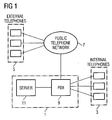
- the telephone network comprises: a telephone call processing system 1; internal telephones 3, calls to which are processed by telephone call processing system 1; external telephones 5 for making calls to internal telephones 3; and a public telephone network 7 by which external telephones 5 are connected to telephone call processing system 1.
- Telephone call processing system 1 comprises a private branch exchange (PBX) 9, and a server 11 connected to PBX 9.
- PBX 9 is also connected to public telephone network 7 and internal phones 3.
- a call made by an external telephone 5 to an internal telephone 3 is processed as follows.
- the call is routed by public telephone network 7 and PBX 9 to server 11.
- Server 11 responds by presenting a list of options to the caller.
- the caller selects the desired option, e.g. by means of the key-pad of external telephone 5.
- the desired option might be for example to be transferred to a customer service department having telephone number 4714.
- server 11 responds to this selection by instructing PBX 9 to determine the status of the internal telephone 3 having number 4714.
- the status comprises: (i) whether the telephone at number 4714 is in use; (ii) whether the telephone at number 4714 has been set to divert received calls to another telephone number; (iii) if number 4714 has been set to divert calls, the other number to which the calls are diverted; and (iv) if number 4714 has been set to divert calls, whether the diversion is immediate (is set to take place without condition) or time-dependent (is set to take place only if number 4714 does not answer after a predetermined number of rings).
- a first possible status of telephone number 4714 comprises: (i) the number is not in use; and (ii) the number has not been set to divert received calls to another number.
- server 11 proceeds to instruct PBX 9 to initiate transfer of the call to number 4714.
- Server 11 does not relinquish control over the call, and continues to monitor the call.
- server 11 instructs PBX 9 to complete transfer of the call to number 4714.
- server 11 cancels transfer of the call to number 4714, and presents the caller with a further list of options, which could include for example being diverted to the mail box for number 4714.
- a second possible status of telephone number 4714 comprises: (i) the number is in use; and (ii) the number has not been set to divert received calls to another number.
- server 11 presents the caller with a further list of options.
- a third possible status of telephone number 4714 comprises: (i) the number is not in use; (ii) the number has been set to divert received calls to another number; (iii) this other number is 4750; and (iv) the diversion is time-dependent and is set to take place after four rings.
- server 11 proceeds to instruct PBX 9 to initiate transfer of the call to number 4714.
- Server 11 does not relinquish control over the call, and continues to monitor the call.
- server 11 completes transfer of the call to number 4714.
- server 11 cancels transfer of the call to number 4714, and determines whether number 4750 to which calls are diverted is included in a list held by server 11 of permitted diversions from number 4714.
- server 11 instructs PBX 9 to determine the status of number 4750. It will be assumed that number 4750 is not in use and is not call-diverted, i.e. is in the first possible status as given above. The processing of the call then proceeds in the same manner as given above in respect of the first possible status.
- server 11 either: (i) selects from the list a diversion that is permitted, and instructs PBX 9 to determine the status of this number; or (ii) presents the caller with a further list of options. As regards (i), it will be assumed that the selected number is not in use and is not call-diverted. The processing of the call then proceeds in the same manner as in respect of the first possible status.
- a fourth possible status of telephone number 4714 comprises: (i) the number is in use; (ii) the number has been set to divert received calls to another number; (iii) this other number is 4750; and (iv) the diversion is immediate (on account of the number being in use).
- server 11 determines whether number 4750 to which calls are diverted is included in the list held by server 11 of permitted diversions from number 4714. The processing of the call then proceeds in the same manner as given above in respect of the third possible status of number 4714, following determination of whether number 4750 is in the list of permitted diversions from number 4714.
- a fifth possible status of telephone number 4714 comprises: (i) the number is not in use; (ii) the number has been set to divert received calls to another number; (iii) this other number is 4750; and (iv) the diversion is immediate.
- server 11 every time server 11 encounters a new number to transfer to, it first determines the status of the new number, and then processes the received call in accordance with the determined status.
- server 11 encounters a new number to transfer to in three different ways: (i) a new number selected by the caller; (ii) a new number to which calls to a telephone are set to be diverted; and (iii) a new number selected by server 11 from a list of permitted diversions for a telephone.
- the server checks whether the second number is a permitted diversion from the first. It is to be appreciated that the server may not make this check, but may simply entirely avoid the set call diversion by selecting its own alternative number to the first number (which alternative number may of course happen to be the same as the set diversion number), or by presenting the caller with a further list of options. In this case, of course, the server does not require to know the actual telephone number to which calls are set to be diverted.
- the server initially responds to the caller by presenting a list of options, and the caller then selects the option to be transferred to a first telephone number. It is to be appreciated that the initial call by the caller may be to the first telephone number, and that this call would be received by the server as an immediate request to be transferred to the first number. In this case of course the server would not respond by presenting a list of options, but would immediately proceed to the step where it requests the PBX to determine the status of the first number.
- the server learns of any call diversion (also termed call forwarding) that may occur before it actually does occur in terms of control of call processing by the server, i.e. before it actually becomes effective in terms of call processing by the server.
- call diversion also termed call forwarding
- the server always retains control over queued calls, and is therefore able to minimise the number of calls directed to inappropriate call destinations or lost.
- B-channels bearer or voice channels
- D-channels signals channels
- the call to the server requesting transfer to the first number uses one B channel.
- the instruction by the server to the PBX to determine whether the first number is call-diverted can be made either by means of a second B channel or by using a D channel.
- the reply of the PBX also occurs on this second B-channel - further, an instruction by the server to the PBX to transfer the call to the first number would also take place on the second B channel.
- the reply of the PBX also occurs on the D channel, and an instruction to transfer the call to the first number would also take place on the D channel.
- the method using a D channel is preferred as it uses one less B channel, and hence this unused B channel remains available for the receipt of a further telephone call to the server.
Landscapes
- Engineering & Computer Science (AREA)
- Computer Networks & Wireless Communication (AREA)
- Signal Processing (AREA)
- Telephonic Communication Services (AREA)
Description
- This invention relates to telephone call processing.
- More particularly, the invention relates to telephone call processing wherein a telephone call is received for transfer to a first telephone number.
- As will now be explained, a problem may arise in the case where the first telephone number is set to divert calls to a second telephone number.
- It is known to automatically and intelligently process telephone calls using a server. A server might respond to an incoming call by presenting to the caller a list of options selectable by the caller, e.g. by means of the caller's telephone key-pad. In the discussion to follow it is assumed that the list of options includes the option to be transferred to a first telephone number, and that the caller selects this option.
- In the case where the first number is not set to divert calls to a second number, there are a number of possible outcomes as follows: (a) the first number answers - a favourable outcome; (b) the first number does not answer - following timeout, control of call transfer reverts to the server - the server is thus able to suggest alternative call destinations - this is a favourable outcome as the call is not lost, and the server remains in control and is able to make intelligent suggestions as to alternative call destinations; and (c) the first number is busy - control of call transfer immediately reverts to the server - the server is thus able to suggest alternative call destinations - again, a favourable outcome.
- In the case where the first number is set to divert calls to a second number, matters become more complicated. Possible outcomes are as follows: (a) the second number is of assistance to the caller - a favourable outcome; (b) the second number is not of assistance to the caller - the call must now be forwarded by hand, or alternatively the caller must begin the call again - not a favourable outcome; (c) the second number does not answer - the period to timeout may be lengthy - the caller may not wait for this period of time - not a favourable outcome; (d) the second number is a mobile phone - the person who answers may not be able to assist due to his/her location - not a favourable outcome; (e) the second number may itself be call-diverted, and so on - the maximum number of possible diversions may be exceeded - the call is lost - not a favourable outcome; and (f) following a series of diversions, the caller is returned to the server, and the caller is presented again with the initial list of options - not a favourable outcome.
- In
EP 1 100 248 A2EP 1 087 599 A2EP 1 100 248 A2EP 1 087 599 A2 -
WO 94/29994 A1 claim 1 for achieving a call transfer within cellular communications systems. In a kind of "trial and error" processing, a call is transferred to one certain destination, and then it is attempted to complete the call. If the call cannot be completed, the process is repeated with different destinations until the call is completed, the call is terminated, or the call-forwarding priority list is exhausted. - It is an object of the present invention to substantially reduce the number of unfavourable outcomes in the case where a telephone call is received for transfer to a first number, and the first number is set to divert calls to a second number.
- According to a first aspect of the present invention there is provided a telephone call processing method comprising the steps of: (i) receiving a telephone call for transfer to a first telephone number; (ii) determining whether the first telephone number has been set to divert calls to a second telephone number; and (iii) processing the call in dependence upon the determination of step (ii).
- According to a second aspect of the present invention there is provided a telephone call processing system arranged to: (i) receive a telephone call for transfer to a first telephone number; (ii) determine whether the first telephone number has been set to divert calls to a second telephone number; and (iii) process the call in dependence upon the determination of step (ii).
- The invention will now be described, by way of example, with reference to the accompanying drawings, in which:
-
Fig. 1 is a block schematic diagram of a telephone network including a telephone call processing system in accordance with the present invention; and -
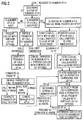
Fig. 2 is a flow chart illustrating operation of the call processing system ofFig. 1 . - Referring to
Fig. 1 , the telephone network comprises: a telephonecall processing system 1;internal telephones 3, calls to which are processed by telephonecall processing system 1;external telephones 5 for making calls tointernal telephones 3; and a public telephone network 7 by whichexternal telephones 5 are connected to telephonecall processing system 1. Telephonecall processing system 1 comprises a private branch exchange (PBX) 9, and aserver 11 connected to PBX 9. PBX 9 is also connected to public telephone network 7 andinternal phones 3. - Referring to
Figs. 1 and2 , a call made by anexternal telephone 5 to aninternal telephone 3 is processed as follows. - The call is routed by public telephone network 7 and PBX 9 to
server 11.Server 11 responds by presenting a list of options to the caller. The caller selects the desired option, e.g. by means of the key-pad ofexternal telephone 5. The desired option might be for example to be transferred to a customer service department havingtelephone number 4714. - Taking the example of
telephone number 4714,server 11 responds to this selection by instructing PBX 9 to determine the status of theinternal telephone 3 havingnumber 4714. The status comprises: (i) whether the telephone atnumber 4714 is in use; (ii) whether the telephone atnumber 4714 has been set to divert received calls to another telephone number; (iii) ifnumber 4714 has been set to divert calls, the other number to which the calls are diverted; and (iv) ifnumber 4714 has been set to divert calls, whether the diversion is immediate (is set to take place without condition) or time-dependent (is set to take place only ifnumber 4714 does not answer after a predetermined number of rings). - A first possible status of
telephone number 4714 comprises: (i) the number is not in use; and (ii) the number has not been set to divert received calls to another number. - In the case of this status,
server 11 proceeds to instruct PBX 9 to initiate transfer of the call tonumber 4714.Server 11 does not relinquish control over the call, and continues to monitor the call. In the event thatnumber 4714 answers the call,server 11 instructs PBX 9 to complete transfer of the call tonumber 4714. In the event thatnumber 4714 does not answer the call,server 11 cancels transfer of the call tonumber 4714, and presents the caller with a further list of options, which could include for example being diverted to the mail box fornumber 4714. - A second possible status of
telephone number 4714 comprises: (i) the number is in use; and (ii) the number has not been set to divert received calls to another number. - In the case of this status,
server 11 presents the caller with a further list of options. - A third possible status of
telephone number 4714 comprises: (i) the number is not in use; (ii) the number has been set to divert received calls to another number; (iii) this other number is 4750; and (iv) the diversion is time-dependent and is set to take place after four rings. - In the case of this status,
server 11 proceeds to instruct PBX 9 to initiate transfer of the call tonumber 4714.Server 11 does not relinquish control over the call, and continues to monitor the call. In the event thatnumber 4714 answers the call within four rings,server 11 completes transfer of the call tonumber 4714. In the event thatnumber 4714 does not answer within four rings,server 11 cancels transfer of the call tonumber 4714, and determines whethernumber 4750 to which calls are diverted is included in a list held byserver 11 of permitted diversions fromnumber 4714. - If
number 4750 is included, then, as before in respect ofnumber 4714,server 11 instructs PBX 9 to determine the status ofnumber 4750. It will be assumed thatnumber 4750 is not in use and is not call-diverted, i.e. is in the first possible status as given above. The processing of the call then proceeds in the same manner as given above in respect of the first possible status. - If
number 4750 is not included in the list of permitted diversions fromnumber 4714,server 11 either: (i) selects from the list a diversion that is permitted, and instructs PBX 9 to determine the status of this number; or (ii) presents the caller with a further list of options. As regards (i), it will be assumed that the selected number is not in use and is not call-diverted. The processing of the call then proceeds in the same manner as in respect of the first possible status. - A fourth possible status of
telephone number 4714 comprises: (i) the number is in use; (ii) the number has been set to divert received calls to another number; (iii) this other number is 4750; and (iv) the diversion is immediate (on account of the number being in use). - In the case of this status,
server 11 determines whethernumber 4750 to which calls are diverted is included in the list held byserver 11 of permitted diversions fromnumber 4714. The processing of the call then proceeds in the same manner as given above in respect of the third possible status ofnumber 4714, following determination of whethernumber 4750 is in the list of permitted diversions fromnumber 4714. - A fifth possible status of
telephone number 4714 comprises: (i) the number is not in use; (ii) the number has been set to divert received calls to another number; (iii) this other number is 4750; and (iv) the diversion is immediate. - In the case of this status, the processing of the call is the same as given above in respect of the fourth possible status of
number 4714. - It will be appreciated from the above description by way of example, that every
time server 11 encounters a new number to transfer to, it first determines the status of the new number, and then processes the received call in accordance with the determined status. In the above description by way of example,server 11 encounters a new number to transfer to in three different ways: (i) a new number selected by the caller; (ii) a new number to which calls to a telephone are set to be diverted; and (iii) a new number selected byserver 11 from a list of permitted diversions for a telephone. - In the telephone call processing described above by way of example, when it becomes apparent to the server that call diversion from a first to a second telephone number is imminently to occur, the server checks whether the second number is a permitted diversion from the first. It is to be appreciated that the server may not make this check, but may simply entirely avoid the set call diversion by selecting its own alternative number to the first number (which alternative number may of course happen to be the same as the set diversion number), or by presenting the caller with a further list of options. In this case, of course, the server does not require to know the actual telephone number to which calls are set to be diverted.
- In the telephone call processing described above by way of example, the server initially responds to the caller by presenting a list of options, and the caller then selects the option to be transferred to a first telephone number. It is to be appreciated that the initial call by the caller may be to the first telephone number, and that this call would be received by the server as an immediate request to be transferred to the first number. In this case of course the server would not respond by presenting a list of options, but would immediately proceed to the step where it requests the PBX to determine the status of the first number.
- It is to be noted that in the above described telephone call processing, the server learns of any call diversion (also termed call forwarding) that may occur before it actually does occur in terms of control of call processing by the server, i.e. before it actually becomes effective in terms of call processing by the server. In consequence, the server always retains control over queued calls, and is therefore able to minimise the number of calls directed to inappropriate call destinations or lost.
- As is known in the art, there are so called B-channels (bearer or voice channels) and D-channels (signalling channels) between the server and the PBX. In the above described call processing, a call is received for transfer to a first number, and prior to transfer the server instructs the PBX to determine whether the first number is call-diverted. In terms of the use of B and D channels, this could be achieved in one of two ways.
- The call to the server requesting transfer to the first number uses one B channel. The instruction by the server to the PBX to determine whether the first number is call-diverted can be made either by means of a second B channel or by using a D channel. In the case of the use of the second B channel, the reply of the PBX also occurs on this second B-channel - further, an instruction by the server to the PBX to transfer the call to the first number would also take place on the second B channel. In the case of the use of the D channel, the reply of the PBX also occurs on the D channel, and an instruction to transfer the call to the first number would also take place on the D channel.
- Of the two methods, the method using a D channel is preferred as it uses one less B channel, and hence this unused B channel remains available for the receipt of a further telephone call to the server.
Claims (7)
- A telephone call processing method comprising the steps of:(i) receiving a telephone call by a server (11) for transfer to a device associated with a first telephone number (4714);(ii) determining by the server (11) the status of the device associated with the first telephone number (4714) comprising whether the device associated with the first telephone number (4714) has been set to divert calls to a device associated with a second telephone number (4750); and (iii) processing the call by the server (11) in dependence upon the determination of step (ii) in accordance with the determined status of the device associated with the first telephone number (4714);wherein step (ii) also determines: whether the device associated with the first telephone number (4714) is in use; and, in the case that the device associated with the first telephone number (4714) has been set to divert calls, the number (4750) of the second telephone, and whether the diversion is immediate or only takes place if the device associated with the first telephone number (4714) does not answer after a predetermined period;
wherein, when step (ii) determines that the device associated with the first telephone number (4714) is not in use, that the device associated with the first telephone number (4714) is diverted, and that the diversion only takes place after said predetermined period, step (iii) comprises the sub-steps of: (a) monitoring the device associated with the first telephone number (4714); (b) in the event that the device associated with the first telephone number (4714) does not answer within the predetermined period, determining whether the device associated with the second telephone number (4750) is included in a list of permitted diversions from the device associated with the first telephone number (4714) held by the server (11); and (c) processing the call in dependence upon the determination of sub-step (b);
wherein: when sub-step (b) determines that the device associated with the second telephone number (4750) is included in the list of permitted diversions from the device associated with the first telephone number (4714), sub-step (c) comprises initiating transfer of the call to the device associated with the second telephone number (4750); and, when sub-step (b) determines that the device associated with the second telephone number (4750) is not included in the list of permitted diversions from the device associated with the first telephone number (4714), sub-step (c) comprises the option of initiating transfer of the call to a device associated with a number that is included in the list, or presenting the caller with a list of options selectable by the caller;
wherein when server (11) encounters the device associated with the second telephone number (4750) to transfer to, it first determines the status of the second telephone number (4750), and then processes the received call in accordance with the determined status of the second telephone number (4750):characterized in thatsub-step (c) comprises the further option of presenting the caller with a list of options selectable by the caller andstep (iii) comprises thatthe server (11) learns of any call diversion to any device associated with a second telephone number (4750) that may occur before it actually does occur in terms of control of call processing by the server (11) such that the server (11) always retains control over queued calls and is therefore able to minimize the number of calls directed to inappropriate call destinations or lost calls. - A method according to claim 1 wherein, when step (ii) determines that the device associated with the first telephone number (4714) is in use, that the device associated with the first telephone number (4714) is diverted, and that the diversion is immediate - on account of the device associated with the first telephone number (4714) being in use -, step (iii) comprises the sub-steps of: (a) determining whether the device associated with the second telephone number (4750) is included in a list of permitted diversions from the device associated with the first telephone number (4714); and (b) processing the call in dependence upon the determination of sub-step (a).
- A method according to claim 1 wherein, when step (ii) determines that the device associated with the first telephone number (4714) is not in use, that the device associated with the first telephone number (4714) is diverted, and that the diversion is immediate, step (iii) comprises the sub-steps of: (a) determining whether the device associated with the second telephone number (4750) is included in a list of permitted diversions from the device associated with the first telephone number (4714); and (b) processing the call in dependence upon the determination of sub-step (a).
- A method according to claim 2 or claim 3 wherein: when sub-step (a) determines that the device associated with the second telephone number (4750) is included in the list of permitted diversions from the device associated with the first telephone number (4714), sub-step (b) comprises initiating transfer of the call to the device associated with the second telephone number (4750); and, when sub-step (a) determines that the device associated with the second telephone number (4750) is not included in the list of permitted diversions from the device associated with the first telephone number (4714), sub-step (b) comprises either initiating transfer of the call to a device associated with a telephone number that is included in the list, or presenting the caller with a list of options selectable by the caller.
- A method according to any one of the preceding claims wherein step (i) comprises:receiving a call and presenting to the caller a list of options selectable by the caller, said list including the option to be transferred to said device associated with the first telephone number (4714); and receiving the selection by the caller of the option to be transferred to the device associated with the first telephone number (4714).
- A method according to claim 1 wherein, when step (ii) determines that the device associated with the first telephone number (4714) has been set to divert calls to a second telephone number (4750), step (iii) comprises, when call diversion is imminent, either: (a) selecting an alternative number to the device associated with the first telephone number (4714), which alternative number may or may not be said device associated with the second telephone number (4750); or (b) presenting the caller with a list of options selectable by the caller.
- A telephone call processing system arranged to execute the telephone call processing method according to one of the claims 1 to 6.
Applications Claiming Priority (2)
| Application Number | Priority Date | Filing Date | Title |
|---|---|---|---|
| GB0322973 | 2003-10-01 | ||
| GBGB0322973.9A GB0322973D0 (en) | 2003-10-01 | 2003-10-01 | Telephone call processing |
Publications (3)
| Publication Number | Publication Date |
|---|---|
| EP1521443A2 EP1521443A2 (en) | 2005-04-06 |
| EP1521443A3 EP1521443A3 (en) | 2005-10-19 |
| EP1521443B1 true EP1521443B1 (en) | 2016-11-09 |
Family
ID=29415294
Family Applications (1)
| Application Number | Title | Priority Date | Filing Date |
|---|---|---|---|
| EP04077633.8A Expired - Lifetime EP1521443B1 (en) | 2003-10-01 | 2004-09-22 | Call processing after first call forwarding |
Country Status (4)
| Country | Link |
|---|---|
| US (1) | US7567663B2 (en) |
| EP (1) | EP1521443B1 (en) |
| CN (1) | CN1604607B (en) |
| GB (1) | GB0322973D0 (en) |
Families Citing this family (4)
| Publication number | Priority date | Publication date | Assignee | Title |
|---|---|---|---|---|
| US20080014922A1 (en) * | 2006-07-17 | 2008-01-17 | Keren Dan Technologies | System and method for delivering mobile services |
| US20080014885A1 (en) * | 2006-07-17 | 2008-01-17 | Keren Dan Technologies | System and method for delivering mobile services |
| CN102655485B (en) * | 2011-03-04 | 2015-08-05 | 鸿富锦精密工业(深圳)有限公司 | The voice gateways of tool call forwarding function and call transfer method |
| CN105872272A (en) * | 2015-12-08 | 2016-08-17 | 乐视移动智能信息技术(北京)有限公司 | Method and system for remotely controlling call forwarding |
Citations (1)
| Publication number | Priority date | Publication date | Assignee | Title |
|---|---|---|---|---|
| WO1994029994A1 (en) * | 1993-06-03 | 1994-12-22 | Telefonaktiebolaget Lm Ericsson | Call transfer within cellular communications systems |
Family Cites Families (12)
| Publication number | Priority date | Publication date | Assignee | Title |
|---|---|---|---|---|
| US5592541A (en) * | 1995-05-31 | 1997-01-07 | Southwestern Bell Technology Resources, Inc. | Apparatus and method for forwarding incoming calls |
| JP2000510304A (en) * | 1996-05-10 | 2000-08-08 | テレフオンアクチーボラゲツト エル エム エリクソン(パブル) | Call forwarding function of portable wireless communication device |
| SE517567C2 (en) | 1997-03-11 | 2002-06-18 | Ericsson Telefon Ab L M | Directing incoming calls |
| GB9809187D0 (en) | 1998-04-29 | 1998-07-01 | Mercury Personal Communication | Call routing in a telephone system |
| SE515820C3 (en) * | 1998-09-01 | 2001-12-11 | Ericsson Telefon Ab L M | Mobile phone device and call forwarding method |
| PL347068A1 (en) * | 1998-09-15 | 2002-03-11 | In Touch Technologies Ltd | Communication services |
| US6463145B1 (en) * | 1999-01-29 | 2002-10-08 | Microsoft Corporation | Computer-implemented call forwarding options and methods therefor in a unified messaging system |
| EP1166541B1 (en) | 1999-03-31 | 2004-11-24 | BRITISH TELECOMMUNICATIONS public limited company | Computer telephony integration |
| GB9908943D0 (en) | 1999-04-19 | 1999-06-16 | New World Technology Limited | Telecommunication method and apparatus |
| EP1087599A3 (en) * | 1999-09-23 | 2003-11-26 | Lucent Technologies Inc. | Intelligent-networked telephone system with service for providing call forwarding options to a party calling a subscriber |
| KR100438454B1 (en) * | 1999-11-11 | 2004-07-03 | 삼성전자주식회사 | Call connecting method by call forwarding in wire/wireless telecommunication network |
| US7664248B2 (en) * | 2003-12-02 | 2010-02-16 | At&T Intellectual Property I, Lp | Call forwarding to voice mail systems based on redirecting number |
-
2003
- 2003-10-01 GB GBGB0322973.9A patent/GB0322973D0/en not_active Ceased
-
2004
- 2004-09-22 EP EP04077633.8A patent/EP1521443B1/en not_active Expired - Lifetime
- 2004-09-30 US US10/953,076 patent/US7567663B2/en active Active
- 2004-09-30 CN CN2004100905109A patent/CN1604607B/en not_active Expired - Fee Related
Patent Citations (1)
| Publication number | Priority date | Publication date | Assignee | Title |
|---|---|---|---|---|
| WO1994029994A1 (en) * | 1993-06-03 | 1994-12-22 | Telefonaktiebolaget Lm Ericsson | Call transfer within cellular communications systems |
Also Published As
| Publication number | Publication date |
|---|---|
| EP1521443A2 (en) | 2005-04-06 |
| US20050123119A1 (en) | 2005-06-09 |
| US7567663B2 (en) | 2009-07-28 |
| GB0322973D0 (en) | 2003-11-05 |
| CN1604607A (en) | 2005-04-06 |
| CN1604607B (en) | 2012-02-08 |
| EP1521443A3 (en) | 2005-10-19 |
Similar Documents
| Publication | Publication Date | Title |
|---|---|---|
| US5712902A (en) | Telecommunications answering feature method and apparatus | |
| CA2227151C (en) | Telephony services suite | |
| US5027384A (en) | Personalized automatic call routing | |
| US6831974B1 (en) | System and method for providing a caller identification to a called party for calls relayed through a call center | |
| US5479482A (en) | Cellular terminal for providing public emergency call location information | |
| US6138008A (en) | Wireless telephone menu system | |
| AU687579B2 (en) | Cellular telephone and associated method for opening a voice channel with a source telephone without establishing voice communications therewith | |
| JPH02117255A (en) | More efficient calling processing to operator and assistant calling | |
| US5668853A (en) | Telecommunications calling feature method and apparatus | |
| US6157640A (en) | Providing feature logic control in parallel with voice over a single subscriber access | |
| JPH06276294A (en) | How Callers Instruct Call Coverage | |
| US5533111A (en) | System for originating and receiving telephone calls over a virtual piped connection, and specialized customer premise equipment for use in the system | |
| WO1999044373A1 (en) | Method of connecting calls | |
| US5315647A (en) | Private branch exchange adapted for telemarketing | |
| CN1085029C (en) | User Services in Telecom Networks | |
| US6188758B1 (en) | Method and device in telecommunications network | |
| US7567663B2 (en) | Telephone call processing | |
| EP1071266A1 (en) | Telephone recording systems | |
| EP0766898B1 (en) | Call setup and service invocation in telecommunications networks | |
| EP1114560B1 (en) | A system of telecommunication | |
| CA2259341C (en) | Improvements in or relating to call handling | |
| JP3150264B2 (en) | Incoming connection control method when changing extension phone number | |
| JPH06152753A (en) | Incoming call control system for busy line utilizing outgoing id | |
| JP3715182B2 (en) | Intelligent network-based telephone system compatible with call waiting service | |
| JP3366300B2 (en) | Communication network control method and communication network system |
Legal Events
| Date | Code | Title | Description |
|---|---|---|---|
| PUAI | Public reference made under article 153(3) epc to a published international application that has entered the european phase |
Free format text: ORIGINAL CODE: 0009012 |
|
| AK | Designated contracting states |
Kind code of ref document: A2 Designated state(s): AT BE BG CH CY CZ DE DK EE ES FI FR GB GR HU IE IT LI LU MC NL PL PT RO SE SI SK TR |
|
| AX | Request for extension of the european patent |
Extension state: AL HR LT LV MK |
|
| PUAL | Search report despatched |
Free format text: ORIGINAL CODE: 0009013 |
|
| 17P | Request for examination filed |
Effective date: 20050816 |
|
| AK | Designated contracting states |
Kind code of ref document: A3 Designated state(s): AT BE BG CH CY CZ DE DK EE ES FI FR GB GR HU IE IT LI LU MC NL PL PT RO SE SI SK TR |
|
| AX | Request for extension of the european patent |
Extension state: AL HR LT LV MK |
|
| AKX | Designation fees paid |
Designated state(s): DE FR GB IT SE |
|
| 17Q | First examination report despatched |
Effective date: 20091211 |
|
| RAP1 | Party data changed (applicant data changed or rights of an application transferred) |
Owner name: SIEMENS ENTERPRISE COMMUNICATIONS GMBH & CO. KG |
|
| RAP1 | Party data changed (applicant data changed or rights of an application transferred) |
Owner name: UNIFY GMBH & CO. KG |
|
| GRAP | Despatch of communication of intention to grant a patent |
Free format text: ORIGINAL CODE: EPIDOSNIGR1 |
|
| RIC1 | Information provided on ipc code assigned before grant |
Ipc: H04M 3/54 20060101AFI20160520BHEP Ipc: H04Q 3/00 20060101ALI20160520BHEP |
|
| INTG | Intention to grant announced |
Effective date: 20160621 |
|
| GRAS | Grant fee paid |
Free format text: ORIGINAL CODE: EPIDOSNIGR3 |
|
| GRAA | (expected) grant |
Free format text: ORIGINAL CODE: 0009210 |
|
| RAP1 | Party data changed (applicant data changed or rights of an application transferred) |
Owner name: UNIFY GMBH & CO. KG |
|
| AK | Designated contracting states |
Kind code of ref document: B1 Designated state(s): DE FR GB IT SE |
|
| REG | Reference to a national code |
Ref country code: GB Ref legal event code: FG4D |
|
| REG | Reference to a national code |
Ref country code: DE Ref legal event code: R096 Ref document number: 602004050245 Country of ref document: DE |
|
| PG25 | Lapsed in a contracting state [announced via postgrant information from national office to epo] |
Ref country code: SE Free format text: LAPSE BECAUSE OF FAILURE TO SUBMIT A TRANSLATION OF THE DESCRIPTION OR TO PAY THE FEE WITHIN THE PRESCRIBED TIME-LIMIT Effective date: 20161109 |
|
| REG | Reference to a national code |
Ref country code: DE Ref legal event code: R097 Ref document number: 602004050245 Country of ref document: DE |
|
| PG25 | Lapsed in a contracting state [announced via postgrant information from national office to epo] |
Ref country code: IT Free format text: LAPSE BECAUSE OF FAILURE TO SUBMIT A TRANSLATION OF THE DESCRIPTION OR TO PAY THE FEE WITHIN THE PRESCRIBED TIME-LIMIT Effective date: 20161109 |
|
| PLBE | No opposition filed within time limit |
Free format text: ORIGINAL CODE: 0009261 |
|
| STAA | Information on the status of an ep patent application or granted ep patent |
Free format text: STATUS: NO OPPOSITION FILED WITHIN TIME LIMIT |
|
| REG | Reference to a national code |
Ref country code: FR Ref legal event code: PLFP Year of fee payment: 14 |
|
| 26N | No opposition filed |
Effective date: 20170810 |
|
| REG | Reference to a national code |
Ref country code: DE Ref legal event code: R082 Ref document number: 602004050245 Country of ref document: DE Representative=s name: SCHAAFHAUSEN PATENTANWAELTE PARTNERSCHAFTSGESE, DE |
|
| PGFP | Annual fee paid to national office [announced via postgrant information from national office to epo] |
Ref country code: GB Payment date: 20230921 Year of fee payment: 20 |
|
| PGFP | Annual fee paid to national office [announced via postgrant information from national office to epo] |
Ref country code: FR Payment date: 20230918 Year of fee payment: 20 Ref country code: DE Payment date: 20230919 Year of fee payment: 20 |
|
| REG | Reference to a national code |
Ref country code: DE Ref legal event code: R071 Ref document number: 602004050245 Country of ref document: DE |
|
| PG25 | Lapsed in a contracting state [announced via postgrant information from national office to epo] |
Ref country code: GB Free format text: LAPSE BECAUSE OF EXPIRATION OF PROTECTION Effective date: 20240921 |
|
| REG | Reference to a national code |
Ref country code: GB Ref legal event code: PE20 Expiry date: 20240921 |
|
| PG25 | Lapsed in a contracting state [announced via postgrant information from national office to epo] |
Ref country code: GB Free format text: LAPSE BECAUSE OF EXPIRATION OF PROTECTION Effective date: 20240921 |