EP1521382A2 - Diversity handover mobile station - Google Patents
Diversity handover mobile station Download PDFInfo
- Publication number
- EP1521382A2 EP1521382A2 EP04023400A EP04023400A EP1521382A2 EP 1521382 A2 EP1521382 A2 EP 1521382A2 EP 04023400 A EP04023400 A EP 04023400A EP 04023400 A EP04023400 A EP 04023400A EP 1521382 A2 EP1521382 A2 EP 1521382A2
- Authority
- EP
- European Patent Office
- Prior art keywords
- data
- mobile station
- reception quality
- unit
- same data
- Prior art date
- Legal status (The legal status is an assumption and is not a legal conclusion. Google has not performed a legal analysis and makes no representation as to the accuracy of the status listed.)
- Withdrawn
Links
Images

Classifications
-
- H—ELECTRICITY
- H04—ELECTRIC COMMUNICATION TECHNIQUE
- H04B—TRANSMISSION
- H04B7/00—Radio transmission systems, i.e. using radiation field
- H04B7/02—Diversity systems; Multi-antenna system, i.e. transmission or reception using multiple antennas
- H04B7/022—Site diversity; Macro-diversity
-
- H—ELECTRICITY
- H04—ELECTRIC COMMUNICATION TECHNIQUE
- H04B—TRANSMISSION
- H04B17/00—Monitoring; Testing
- H04B17/30—Monitoring; Testing of propagation channels
- H04B17/309—Measuring or estimating channel quality parameters
-
- H—ELECTRICITY
- H04—ELECTRIC COMMUNICATION TECHNIQUE
- H04L—TRANSMISSION OF DIGITAL INFORMATION, e.g. TELEGRAPHIC COMMUNICATION
- H04L1/00—Arrangements for detecting or preventing errors in the information received
- H04L1/004—Arrangements for detecting or preventing errors in the information received by using forward error control
-
- H—ELECTRICITY
- H04—ELECTRIC COMMUNICATION TECHNIQUE
- H04W—WIRELESS COMMUNICATION NETWORKS
- H04W28/00—Network traffic management; Network resource management
- H04W28/02—Traffic management, e.g. flow control or congestion control
- H04W28/08—Load balancing or load distribution
-
- H—ELECTRICITY
- H04—ELECTRIC COMMUNICATION TECHNIQUE
- H04W—WIRELESS COMMUNICATION NETWORKS
- H04W36/00—Hand-off or reselection arrangements
- H04W36/24—Reselection being triggered by specific parameters
- H04W36/30—Reselection being triggered by specific parameters by measured or perceived connection quality data
-
- H—ELECTRICITY
- H04—ELECTRIC COMMUNICATION TECHNIQUE
- H04W—WIRELESS COMMUNICATION NETWORKS
- H04W36/00—Hand-off or reselection arrangements
- H04W36/16—Performing reselection for specific purposes
- H04W36/18—Performing reselection for specific purposes for allowing seamless reselection, e.g. soft reselection
Definitions
- the present invention relates to a mobile station which receives a plurality of same data via a plurality of radio links from one or a plurality of base station(s).
- a hard handover method in which a mobile station is configured to set up a connection with a handover-destination cell after releasing a connection with a handover-source cell is ongoing.
- a diversity handover method in which a mobile station is configured to set up a connection with a handover-destination cell before releasing a connection when moving between cells during communications is ongoing.
- CDMA code division multiple access
- the mobile station is configured to be located in the handover-source cell before a handover, and the mobile station is configured to be located in the handover-destination cell after the handover.
- a base station can be configured to control one cell or a plurality of cells.
- the mobile station is configured to set up a plurality of connections with a plurality of cells simultaneously within a predetermined area in the vicinity of a border between cells.
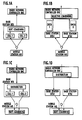
- FIGs. 1A to 1D a method of transmitting data (information) in the diversity handover method will be described. As shown in FIGs. 1A to 1D, a plurality of methods of transmitting data are known.
- FIG. 1A shows one method of transmitting uplink data in the diversity handover method.
- a base station BTS is configured to receive same data from a mobile station MS in a plurality of cells 1 and 2, and to perform a soft combining on received same data so as to transmit the data to a radio network controller RNC.
- FIG. 1B shows another method of transmitting uplink data in the diversity handover method.
- each of a plurality of base stations BTS1 and BTS2 is configured to receive same data from a mobile station in a cell controlled by each base station, and to transmit reliability information corresponding to a reception quality of the received data together with the received data to a radio network controller RNC.
- the radio network controller RNC performs a selective combining for selecting data having the highest reliability among from the plurality of data received from the plurality of base stations BTS1 and BTS2, so as to transmit selected data to an upstream apparatus (not shown).
- the reception quality of the data includes a reception SIR (Signal to Interference Power Ratio) , a reception level, a CRC checking result and so on.
- a reception SIR Signal to Interference Power Ratio
- FIG. 1C shows one method of transmitting downlink data in the diversity handover method.
- a base station BTS is configured to distribute data transmitted from a radio network controller RNC, and to transmit same data to a plurality of cells 1 and 2.
- the mobile station MS receives same data via a plurality of radio links via a plurality of cells 1 and 2, so as to perform a soft combining.
- FIG. 1D shows another method of transmitting downlink data in the diversity handover method.
- a radio network controller RNC is configured to distribute data transmitted from a upstream apparatus, and to transmit same data to a plurality of base station BTS1 and BTS2.
- each of base stations BTS1 and BTS2 transmits received data to a cell controlled by each base station.
- the mobile station MS receives same data via a plurality of radio links from a plurality of base stations BTS1 and BTS2, so as to perform a soft combining.
- the mobile station MS has to allocate more memory areas than a mobile station performing a selective combining, because the mobile station MS performs a soft combining, in the conventional method of transmitting downlink data in the diversity handover.
- a first aspect of the present invention is summarized as a mobile station which receives a plurality of same data via a plurality of radio links from at least one base station.
- the mobile station includes a measurer configured to measure a reception quality of each of the plurality of same data received via the plurality of radio links; a selector configured to select data having the highest reception quality among from the received plurality of same data; and a decoder configured to perform an error correction decoding on a selected data.
- a second aspect of the present invention is summarized as a mobile station which receives a plurality of same data via a plurality of radio links.
- the mobile station includes a measurer configured to measure a reception quality of a part of each of the plurality of same data received via the plurality of radio links; a selector configured to select data which have a part of data having the highest reception quality among from the received plurality of same data; and a decoder configured to perform an error correction decoding on a selected data.
- the measurer can be configured to measure a reception SIR or a reception level as the reception quality.
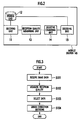
- FIG. 2 is a functional block diagram of the mobile station MS according to the first embodiment.
- the mobile station MS includes a receiving unit 11, a storing unit 12, a reception quality measuring unit 13, a selective combining unit 14 and a decoding unit 15.
- the receiving unit 11 is configured to receive a plurality of same data transmitted via a plurality of radio links from one or a plurality of base station(s) BTS.
- the receiving unit 11 when the receiving unit 11 receives same data from three base stations BTS, the receiving unit 11 stores the same data into the storing unit 12, respectively.
- the receiving unit 11 When the receiving unit 11 receives same data from different cells of a base station BTS, the receiving unit 11 stores the same data into the storing unit 12, respectively.
- the reception quality measuring unit 13 is configured to measure a reception quality of each of the plurality of same data received via the plurality of radio links, before an error correction decoding is performed on the same data.
- the reception quality measuring unit 13 measures an reception SIR, a reception level, a CRC checking result and so on, as the reception quality.
- the selective combining unit 14 is configured to select data having the highest reception quality among from received data before the error correction decoding, in accordance with reception qualities measured by the reception quality measuring unit 13.
- the decoding unit 15 is configured to extract data selected by the selective combining unit 14 from the storing unit 12, so as to perform the error correction decoding on extracted data.
- step S101 the receiving unit 11 receives a plurality of same data transmitted via a plurality of radio links from one or a plurality of base station(s) BTS.
- the receiving unit 11 stores the plurality of received same data together with identification information of each radio link via which the same data are transmitted, into the storing unit 12.
- step S102 the reception quality measuring unit 13 measures a reception quality of each data received by the receiving unit 11, so as to notify measurement results to the selective combining unit 14.
- step S 103 the selective combining unit 14 selects data having the highest reception quality among from the received data, in accordance with the measurement results notified by the reception quality measuring unit 13, so as to notify a selection result to the decoding unit 15.
- step 5104 the decoding unit 15 extracts data which is determined to have the highest reception quality from the storing unit 12, in accordance with the selection result notified by the selective combining unit 14, so as to perform the error correction decoding on extracted data.
- the mobile station MS according to the first embodiment is configured to perform the error correction decoding on only data having the highest reception quality, so as to reduce a processing load of the decoding unit.
- FIG. 4 is a functional block diagram of the mobile station MS according to the second embodiment.
- the mobile station MS includes a receiving unit 11, a storing unit 12, a reception quality measuring unit 13, a selective combining unit 14 and a decoding unit 15.
- the receiving unit 11 is configured to receive a plurality of same data transmitted via a plurality of radio links from one or a plurality of base station(s) BTS, so as to store a part of each of received same data into the storing unit 12.
- the receiving unit 11 is configured to store a part of received data (data corresponding to a unit of reception quality measurement) into the storing unit 12, respectively.
- the receiving unit 11 is configured to store data corresponding to a unit of error correction decoding into the storing unit 12, with regard to only data selected by the selective combining unit 14.
- the storing unit 12 stores only a part of data (data corresponding to the unit of reception quality measurement) with regard to the data received via a radio link 1.
- the storing unit 12 stores data corresponding to the unit of error correction decoding instead of a part of the data (data corresponding to the unit of reception quality measurement) with regard to the data received via a radio link 2.
- the selective combining unit 14 has determined that a part of the data received via the radio link 2 has the highest reception quality.
- the reception quality measuring unit 13 is configured to measure a reception quality of a part of each of a plurality of data (data corresponding to the unit of reception quality measurement), before an error correction decoding is performed on the data.
- the reception quality measuring unit 13 measures a reception SIR, a reception level and so on, as the reception quality.
- the unit of reception quality measurement is defined by using a predetermined number of bits, a predetermined number of symbols, a predetermined number of timeslots and so on.
- the selective combining unit 14 is configured to select data which have a part of data having the highest reception quality among from the received plurality of same data, in accordance with reception qualities measured by the reception quality measuring unit 13, before an error correction decoding is performed on the received plurality of same data.
- the selective combining unit 14 is configured to instruct the receiving unit 11 to store selected data (data corresponding to the unit of error correction decoding) into the storing unit 12.
- the decoding unit 15 is configured to extract data selected by the selective combining unit 14 from the storing unit 12, and to perform the error correction decoding on extracted data.
- step S201 the receiving unit 11 receives a plurality of same data transmitted via a plurality of radio links from one or a plurality of base station(s) BTS.
- the receiving unit 11 stores a part of each of the plurality of received same data (data corresponding to the unit of reception quality measurement) together with identification information of each radio link via which the same data are transmitted, into the storing unit 12.
- step S202 the reception quality measuring unit 13 measures a reception quality of a part of each data (data corresponding to the unit of reception quality measurement) received by the receiving unit 11, so as to notify measurement results to the selective combining unit 14.
- step S 203 the selective combining unit 14 selects data which have a part of data (data corresponding to the unit of reception quality measurement) having the highest reception quality among from the received data, in accordance with the measurement results notified by the reception quality measuring unit 13, so as to notify a selection result to the receiving unit 11 and the decoding unit 15.
- the receiving unit 11 stores data (data corresponding to the unit of error correction decoding) which have a part of data (data corresponding to the unit of reception quality measurement) having been determined to have the highest reception quality into the storing unit 12, in accordance with the selection result by the selective combining unit 14.
- step S204 the decoding unit 15 extracts data (data corresponding to the unit of error correction decoding) which have a part of data (data corresponding to the unit of reception quality measurement) having been determined to have the highest reception quality from the storing unit 12, in accordance with the selection result notified by the selective combining unit 14, so as to perform the error correction decoding on extracted data.
- the mobile station MS is configured to store only a part of data (data corresponding to the unit of reception quality measurement) before an error correction decoding and data (data corresponding to the unit of error correction decoding) selected by the selective combining unit 14, so as to reduce required memories in the mobile station MS.
- the present invention can provide a mobile station which receives a plurality of same data via a plurality of radio links from one or a plurality of base station(s), and can reduce required memory areas and a load of performing an error correction decoding.
Landscapes
- Engineering & Computer Science (AREA)
- Computer Networks & Wireless Communication (AREA)
- Signal Processing (AREA)
- Quality & Reliability (AREA)
- Physics & Mathematics (AREA)
- Electromagnetism (AREA)
- Mobile Radio Communication Systems (AREA)
- Radio Transmission System (AREA)
Abstract
Description
Claims (4)
- A mobile station which receives a plurality of same data via a plurality of radio links from at least one base station, the mobile station comprising:a measurer configured to measure a reception quality of each of the plurality of same data received via the plurality of radio links;a selector configured to select data having the highest reception quality among from the received plurality of same data; anda decoder configured to perform an error correction decoding on a selected data.
- The mobile station according to claim 1, wherein the measurer is configured to measure a reception SIR or a reception level as the reception quality.
- A mobile station which receives a plurality of same data via a plurality of radio links, the mobile station comprising:a measurer configured to measure a reception quality of a part of each of the plurality of same data received via the plurality of radio links;a selector configured to select data which have a part of data having the highest reception quality among from the received plurality of same data; anda decoder configured to perform an error correction decoding on a selected data.
- The mobile station according to claim 3, wherein the measurer is configured to measure a reception SIR or a reception level as the reception quality.
Applications Claiming Priority (2)
| Application Number | Priority Date | Filing Date | Title |
|---|---|---|---|
| JP2003345003 | 2003-10-02 | ||
| JP2003345003A JP2005117110A (en) | 2003-10-02 | 2003-10-02 | Mobile station |
Publications (2)
| Publication Number | Publication Date |
|---|---|
| EP1521382A2 true EP1521382A2 (en) | 2005-04-06 |
| EP1521382A3 EP1521382A3 (en) | 2006-03-01 |
Family
ID=34309148
Family Applications (1)
| Application Number | Title | Priority Date | Filing Date |
|---|---|---|---|
| EP04023400A Withdrawn EP1521382A3 (en) | 2003-10-02 | 2004-10-01 | Diversity handover mobile station |
Country Status (5)
| Country | Link |
|---|---|
| US (1) | US20050076271A1 (en) |
| EP (1) | EP1521382A3 (en) |
| JP (1) | JP2005117110A (en) |
| KR (1) | KR20050033027A (en) |
| CN (1) | CN1604673A (en) |
Cited By (1)
| Publication number | Priority date | Publication date | Assignee | Title |
|---|---|---|---|---|
| US8726318B2 (en) | 2006-10-04 | 2014-05-13 | Mitsubishi Electric Corporation | Multimedia information receiving apparatus |
Families Citing this family (1)
| Publication number | Priority date | Publication date | Assignee | Title |
|---|---|---|---|---|
| EP2251992A1 (en) * | 2008-03-03 | 2010-11-17 | Fujitsu Limited | Method for transmitting broadcast service signal, and transmitter |
Family Cites Families (4)
| Publication number | Priority date | Publication date | Assignee | Title |
|---|---|---|---|---|
| DE69325844T2 (en) * | 1992-04-17 | 2000-08-31 | Ericsson Inc., Research Triangle Park | Mobile-assisted handoff with code division multiple access |
| US5351274A (en) * | 1993-08-20 | 1994-09-27 | General Electric Company | Post detection selection combining diversity receivers for mobile and indoor radio channels |
| CN1235436C (en) * | 1994-05-20 | 2006-01-04 | Ntt移动通信网株式会社 | Moblie communication method and base station side sub-system unit of using reliable information |
| FI102447B1 (en) * | 1996-02-06 | 1998-11-30 | Nokia Telecommunications Oy | Method of establishing connection, subscriber terminal and radio system |
-
2003
- 2003-10-02 JP JP2003345003A patent/JP2005117110A/en not_active Withdrawn
-
2004
- 2004-10-01 US US10/954,232 patent/US20050076271A1/en not_active Abandoned
- 2004-10-01 KR KR1020040078391A patent/KR20050033027A/en not_active Ceased
- 2004-10-01 EP EP04023400A patent/EP1521382A3/en not_active Withdrawn
- 2004-10-08 CN CNA2004100807604A patent/CN1604673A/en active Pending
Cited By (2)
| Publication number | Priority date | Publication date | Assignee | Title |
|---|---|---|---|---|
| US8726318B2 (en) | 2006-10-04 | 2014-05-13 | Mitsubishi Electric Corporation | Multimedia information receiving apparatus |
| EP2071749B1 (en) * | 2006-10-04 | 2014-12-10 | Mitsubishi Electric Corporation | Multimedia information receiving apparatus |
Also Published As
| Publication number | Publication date |
|---|---|
| JP2005117110A (en) | 2005-04-28 |
| KR20050033027A (en) | 2005-04-08 |
| CN1604673A (en) | 2005-04-06 |
| EP1521382A3 (en) | 2006-03-01 |
| US20050076271A1 (en) | 2005-04-07 |
Similar Documents
| Publication | Publication Date | Title |
|---|---|---|
| US10111233B2 (en) | Method and apparatus for measuring cells of terminal including plural heterogeneous communication modules in wireless communication system | |
| TWI321964B (en) | Mobile communications system and method for providing common channel coverage using beamforming antennas | |
| US8045590B2 (en) | Radio communications system, radio network controller and base station | |
| US6788959B2 (en) | Method and apparatus for transmitting and receiving dynamic configuration parameters in a third generation cellular telephone network | |
| US9426712B2 (en) | Advanced handover for adaptive antennas | |
| US20100040161A1 (en) | Wireless telecommunication system, transmitter and receiver | |
| US6609012B1 (en) | Mobile terminal initiated and assisted antenna selection | |
| US8670415B2 (en) | Apparatus and method for performing handoff in a communication system | |
| EP1677442B1 (en) | Mobile communication system, mobile station, and radio control device | |
| EP1437913A1 (en) | Establishment of macro diversity with random access type connections in a cellular radio system | |
| CN101778438A (en) | Method and device for coordinated communication and switching method and base station control device thereof | |
| US20040072567A1 (en) | Method of selecting cells of base stations for soft-handover connection, and a network for mobile telecommunications | |
| WO2006084625A1 (en) | Method and apparatus for controlling the transmission of radio links in a radio-communication system | |
| US7395092B2 (en) | Radio network controller and mobile communication control method | |
| US7047017B2 (en) | Method for initiating a communication within a communication system | |
| KR20070029538A (en) | Wireless communication systems, transmitters and receivers | |
| EP2180743B1 (en) | Virtual base station and method thereof | |
| US20050076271A1 (en) | Mobile station | |
| EP1747697B1 (en) | Communication system, stations for use therein, and method of operating a communication system | |
| US8625528B2 (en) | Terminal for handover using channel characteristics and control method thereof | |
| KR100754679B1 (en) | Service Type Determination Method in Handover in Mobile Communication | |
| WO2010031205A1 (en) | Soft handover in a mobile communication network | |
| JP2005260439A (en) | Base station apparatus and transmission control method | |
| KR20050029829A (en) | Apparatus and method for processing soft hand off in mobile communication system |
Legal Events
| Date | Code | Title | Description |
|---|---|---|---|
| PUAI | Public reference made under article 153(3) epc to a published international application that has entered the european phase |
Free format text: ORIGINAL CODE: 0009012 |
|
| 17P | Request for examination filed |
Effective date: 20041001 |
|
| AK | Designated contracting states |
Kind code of ref document: A2 Designated state(s): AT BE BG CH CY CZ DE DK EE ES FI FR GB GR HU IE IT LI LU MC NL PL PT RO SE SI SK TR |
|
| AX | Request for extension of the european patent |
Extension state: AL HR LT LV MK |
|
| PUAL | Search report despatched |
Free format text: ORIGINAL CODE: 0009013 |
|
| AK | Designated contracting states |
Kind code of ref document: A3 Designated state(s): AT BE BG CH CY CZ DE DK EE ES FI FR GB GR HU IE IT LI LU MC NL PL PT RO SE SI SK TR |
|
| AX | Request for extension of the european patent |
Extension state: AL HR LT LV MK |
|
| STAA | Information on the status of an ep patent application or granted ep patent |
Free format text: STATUS: THE APPLICATION HAS BEEN WITHDRAWN |
|
| 18W | Application withdrawn |
Effective date: 20060809 |