EP1516873A1 - 2-pyridinone derivatives, having HIV inhibiting properties - Google Patents
2-pyridinone derivatives, having HIV inhibiting properties Download PDFInfo
- Publication number
- EP1516873A1 EP1516873A1 EP03447231A EP03447231A EP1516873A1 EP 1516873 A1 EP1516873 A1 EP 1516873A1 EP 03447231 A EP03447231 A EP 03447231A EP 03447231 A EP03447231 A EP 03447231A EP 1516873 A1 EP1516873 A1 EP 1516873A1
- Authority
- EP
- European Patent Office
- Prior art keywords
- hiv
- compounds
- substituants
- optionally substituted
- compound
- Prior art date
- Legal status (The legal status is an assumption and is not a legal conclusion. Google has not performed a legal analysis and makes no representation as to the accuracy of the status listed.)
- Withdrawn
Links
- UBQKCCHYAOITMY-UHFFFAOYSA-N pyridin-2-ol Chemical class OC1=CC=CC=N1 UBQKCCHYAOITMY-UHFFFAOYSA-N 0.000 title abstract description 6
- 230000002401 inhibitory effect Effects 0.000 title description 5
- 150000001875 compounds Chemical class 0.000 claims abstract description 115
- 208000031886 HIV Infections Diseases 0.000 claims abstract description 36
- NQDJXKOVJZTUJA-UHFFFAOYSA-N nevirapine Chemical group C12=NC=CC=C2C(=O)NC=2C(C)=CC=NC=2N1C1CC1 NQDJXKOVJZTUJA-UHFFFAOYSA-N 0.000 claims description 34
- 239000000203 mixture Substances 0.000 claims description 21
- 239000003814 drug Substances 0.000 claims description 19
- 229960000689 nevirapine Drugs 0.000 claims description 17
- 150000005299 pyridinones Chemical group 0.000 claims description 10
- 125000003282 alkyl amino group Chemical group 0.000 claims description 9
- 125000000753 cycloalkyl group Chemical group 0.000 claims description 9
- 239000003443 antiviral agent Substances 0.000 claims description 8
- 125000004663 dialkyl amino group Chemical group 0.000 claims description 8
- 125000001475 halogen functional group Chemical group 0.000 claims description 8
- 125000004356 hydroxy functional group Chemical group O* 0.000 claims description 8
- 125000004103 aminoalkyl group Chemical group 0.000 claims description 7
- 238000002360 preparation method Methods 0.000 claims description 7
- 125000002924 primary amino group Chemical group [H]N([H])* 0.000 claims description 7
- 125000004178 (C1-C4) alkyl group Chemical group 0.000 claims description 6
- 125000000229 (C1-C4)alkoxy group Chemical group 0.000 claims description 6
- 125000002853 C1-C4 hydroxyalkyl group Chemical group 0.000 claims description 6
- 125000004448 alkyl carbonyl group Chemical group 0.000 claims description 6
- 125000000852 azido group Chemical group *N=[N+]=[N-] 0.000 claims description 6
- 238000004519 manufacturing process Methods 0.000 claims description 6
- 239000008194 pharmaceutical composition Substances 0.000 claims description 6
- -1 5-ethyl-6-methyl-2-pyridinone derivative compound Chemical class 0.000 claims description 4
- 150000002825 nitriles Chemical class 0.000 claims description 4
- 230000002265 prevention Effects 0.000 claims description 4
- 125000005346 substituted cycloalkyl group Chemical group 0.000 claims description 4
- 125000003118 aryl group Chemical group 0.000 claims description 3
- 125000006705 (C5-C7) cycloalkyl group Chemical group 0.000 claims description 2
- 125000000081 (C5-C8) cycloalkenyl group Chemical group 0.000 claims description 2
- 125000000499 benzofuranyl group Chemical group O1C(=CC2=C1C=CC=C2)* 0.000 claims description 2
- 125000001164 benzothiazolyl group Chemical group S1C(=NC2=C1C=CC=C2)* 0.000 claims description 2
- 125000004196 benzothienyl group Chemical group S1C(=CC2=C1C=CC=C2)* 0.000 claims description 2
- 125000000392 cycloalkenyl group Chemical group 0.000 claims description 2
- 239000003085 diluting agent Substances 0.000 claims description 2
- 125000002541 furyl group Chemical group 0.000 claims description 2
- 125000000623 heterocyclic group Chemical group 0.000 claims description 2
- 125000002883 imidazolyl group Chemical group 0.000 claims description 2
- 125000001041 indolyl group Chemical group 0.000 claims description 2
- 125000001997 phenyl group Chemical group [H]C1=C([H])C([H])=C(*)C([H])=C1[H] 0.000 claims description 2
- 125000004076 pyridyl group Chemical group 0.000 claims description 2
- 125000000335 thiazolyl group Chemical group 0.000 claims description 2
- 125000001544 thienyl group Chemical group 0.000 claims description 2
- 241000713772 Human immunodeficiency virus 1 Species 0.000 abstract description 35
- 230000015572 biosynthetic process Effects 0.000 abstract description 14
- 238000003786 synthesis reaction Methods 0.000 abstract description 13
- 208000030507 AIDS Diseases 0.000 abstract description 8
- 208000036142 Viral infection Diseases 0.000 abstract description 6
- 230000009385 viral infection Effects 0.000 abstract description 6
- 230000010076 replication Effects 0.000 abstract description 4
- 239000008177 pharmaceutical agent Substances 0.000 abstract description 3
- GCBZSIROAQSPLV-UHFFFAOYSA-N 5-ethyl-6-methyl-1h-pyridin-2-one Chemical class CCC=1C=CC(=O)NC=1C GCBZSIROAQSPLV-UHFFFAOYSA-N 0.000 abstract description 2
- 208000011580 syndromic disease Diseases 0.000 abstract description 2
- YMWUJEATGCHHMB-UHFFFAOYSA-N Dichloromethane Chemical compound ClCCl YMWUJEATGCHHMB-UHFFFAOYSA-N 0.000 description 41
- 230000000694 effects Effects 0.000 description 31
- 210000004027 cell Anatomy 0.000 description 29
- 102100034343 Integrase Human genes 0.000 description 20
- 238000005481 NMR spectroscopy Methods 0.000 description 20
- 108010092799 RNA-directed DNA polymerase Proteins 0.000 description 20
- 241000725303 Human immunodeficiency virus Species 0.000 description 16
- 229940079593 drug Drugs 0.000 description 12
- VLKZOEOYAKHREP-UHFFFAOYSA-N n-Hexane Chemical compound CCCCCC VLKZOEOYAKHREP-UHFFFAOYSA-N 0.000 description 12
- 239000000243 solution Substances 0.000 description 12
- 230000000840 anti-viral effect Effects 0.000 description 11
- 239000003419 rna directed dna polymerase inhibitor Substances 0.000 description 11
- NJVZXKPMKYPFLU-UHFFFAOYSA-N 4-cycloheptyloxy-5-ethyl-3-(hydroxymethyl)-6-methyl-1h-pyridin-2-one Chemical compound CCC1=C(C)NC(=O)C(CO)=C1OC1CCCCCC1 NJVZXKPMKYPFLU-UHFFFAOYSA-N 0.000 description 9
- 229940122313 Nucleoside reverse transcriptase inhibitor Drugs 0.000 description 9
- 230000036436 anti-hiv Effects 0.000 description 9
- 239000003480 eluent Substances 0.000 description 9
- TZHMXVSTYHJWRG-UHFFFAOYSA-N 2-(dimethylamino)ethyl 4-(3,5-dimethylcyclohexyl)oxy-5-ethyl-6-methyl-2-oxo-1h-pyridine-3-carboxylate Chemical compound CCC1=C(C)NC(=O)C(C(=O)OCCN(C)C)=C1OC1CC(C)CC(C)C1 TZHMXVSTYHJWRG-UHFFFAOYSA-N 0.000 description 8
- OFBQJSOFQDEBGM-UHFFFAOYSA-N Pentane Chemical compound CCCCC OFBQJSOFQDEBGM-UHFFFAOYSA-N 0.000 description 8
- VYPSYNLAJGMNEJ-UHFFFAOYSA-N Silicium dioxide Chemical compound O=[Si]=O VYPSYNLAJGMNEJ-UHFFFAOYSA-N 0.000 description 8
- 241000700605 Viruses Species 0.000 description 8
- 238000003556 assay Methods 0.000 description 8
- 238000000338 in vitro Methods 0.000 description 8
- 239000003112 inhibitor Substances 0.000 description 8
- 238000006467 substitution reaction Methods 0.000 description 8
- IAZDPXIOMUYVGZ-UHFFFAOYSA-N Dimethylsulphoxide Chemical compound CS(C)=O IAZDPXIOMUYVGZ-UHFFFAOYSA-N 0.000 description 7
- LFQSCWFLJHTTHZ-UHFFFAOYSA-N Ethanol Chemical compound CCO LFQSCWFLJHTTHZ-UHFFFAOYSA-N 0.000 description 7
- 201000010099 disease Diseases 0.000 description 7
- 208000037265 diseases, disorders, signs and symptoms Diseases 0.000 description 7
- WAEFPUHRSLQYRO-UHFFFAOYSA-N ethyl 5-ethyl-6-methyl-4-(3-methylbut-2-enoyloxy)-2-oxo-1h-pyridine-3-carboxylate Chemical compound CCOC(=O)C1=C(OC(=O)C=C(C)C)C(CC)=C(C)NC1=O WAEFPUHRSLQYRO-UHFFFAOYSA-N 0.000 description 7
- 239000000741 silica gel Substances 0.000 description 7
- 229910002027 silica gel Inorganic materials 0.000 description 7
- RTZKZFJDLAIYFH-UHFFFAOYSA-N Diethyl ether Chemical compound CCOCC RTZKZFJDLAIYFH-UHFFFAOYSA-N 0.000 description 6
- 239000013078 crystal Substances 0.000 description 6
- 230000003013 cytotoxicity Effects 0.000 description 6
- 231100000135 cytotoxicity Toxicity 0.000 description 6
- 238000000034 method Methods 0.000 description 6
- 239000000047 product Substances 0.000 description 6
- 230000005764 inhibitory process Effects 0.000 description 5
- 239000002726 nonnucleoside reverse transcriptase inhibitor Substances 0.000 description 5
- 229940002612 prodrug Drugs 0.000 description 5
- 239000000651 prodrug Substances 0.000 description 5
- 150000003839 salts Chemical class 0.000 description 5
- 239000002904 solvent Substances 0.000 description 5
- 125000006850 spacer group Chemical group 0.000 description 5
- 101900297506 Human immunodeficiency virus type 1 group M subtype B Reverse transcriptase/ribonuclease H Proteins 0.000 description 4
- JUJWROOIHBZHMG-UHFFFAOYSA-N Pyridine Chemical compound C1=CC=NC=C1 JUJWROOIHBZHMG-UHFFFAOYSA-N 0.000 description 4
- 239000012043 crude product Substances 0.000 description 4
- 230000002427 irreversible effect Effects 0.000 description 4
- 239000002609 medium Substances 0.000 description 4
- VVWRJUBEIPHGQF-UHFFFAOYSA-N propan-2-yl n-propan-2-yloxycarbonyliminocarbamate Chemical compound CC(C)OC(=O)N=NC(=O)OC(C)C VVWRJUBEIPHGQF-UHFFFAOYSA-N 0.000 description 4
- 238000003756 stirring Methods 0.000 description 4
- RIOQSEWOXXDEQQ-UHFFFAOYSA-N triphenylphosphine Chemical compound C1=CC=CC=C1P(C=1C=CC=CC=1)C1=CC=CC=C1 RIOQSEWOXXDEQQ-UHFFFAOYSA-N 0.000 description 4
- WEVYAHXRMPXWCK-UHFFFAOYSA-N Acetonitrile Chemical compound CC#N WEVYAHXRMPXWCK-UHFFFAOYSA-N 0.000 description 3
- UHOVQNZJYSORNB-UHFFFAOYSA-N Benzene Chemical compound C1=CC=CC=C1 UHOVQNZJYSORNB-UHFFFAOYSA-N 0.000 description 3
- QMMFVYPAHWMCMS-UHFFFAOYSA-N Dimethyl sulfide Chemical compound CSC QMMFVYPAHWMCMS-UHFFFAOYSA-N 0.000 description 3
- 239000006144 Dulbecco’s modified Eagle's medium Substances 0.000 description 3
- XEKOWRVHYACXOJ-UHFFFAOYSA-N Ethyl acetate Chemical compound CCOC(C)=O XEKOWRVHYACXOJ-UHFFFAOYSA-N 0.000 description 3
- OKKJLVBELUTLKV-UHFFFAOYSA-N Methanol Chemical compound OC OKKJLVBELUTLKV-UHFFFAOYSA-N 0.000 description 3
- 108010005774 beta-Galactosidase Proteins 0.000 description 3
- 125000000113 cyclohexyl group Chemical group [H]C1([H])C([H])([H])C([H])([H])C([H])(*)C([H])([H])C1([H])[H] 0.000 description 3
- 238000013480 data collection Methods 0.000 description 3
- 239000002955 immunomodulating agent Substances 0.000 description 3
- 229940121354 immunomodulator Drugs 0.000 description 3
- 229940042402 non-nucleoside reverse transcriptase inhibitor Drugs 0.000 description 3
- 239000012044 organic layer Substances 0.000 description 3
- 239000002244 precipitate Substances 0.000 description 3
- WHMDPDGBKYUEMW-UHFFFAOYSA-N pyridine-2-thiol Chemical class SC1=CC=CC=N1 WHMDPDGBKYUEMW-UHFFFAOYSA-N 0.000 description 3
- WTTIBCHOELPGFK-LBPRGKRZSA-N r82150 Chemical compound C1N(CC=C(C)C)[C@@H](C)CN2C(=S)NC3=CC=CC1=C32 WTTIBCHOELPGFK-LBPRGKRZSA-N 0.000 description 3
- 230000002441 reversible effect Effects 0.000 description 3
- 238000012360 testing method Methods 0.000 description 3
- 230000001225 therapeutic effect Effects 0.000 description 3
- 230000029812 viral genome replication Effects 0.000 description 3
- GFRSCKMZXVZJCL-UHFFFAOYSA-N (4-cycloheptyloxy-5-ethyl-6-methyl-2-oxo-1h-pyridin-3-yl)methyl 2-chloroacetate Chemical compound CCC1=C(C)NC(=O)C(COC(=O)CCl)=C1OC1CCCCCC1 GFRSCKMZXVZJCL-UHFFFAOYSA-N 0.000 description 2
- 108091032973 (ribonucleotides)n+m Proteins 0.000 description 2
- HTSABYAWKQAHBT-UHFFFAOYSA-N 3-methylcyclohexanol Chemical compound CC1CCCC(O)C1 HTSABYAWKQAHBT-UHFFFAOYSA-N 0.000 description 2
- 102100026189 Beta-galactosidase Human genes 0.000 description 2
- 108091003079 Bovine Serum Albumin Proteins 0.000 description 2
- 102000004190 Enzymes Human genes 0.000 description 2
- 108090000790 Enzymes Proteins 0.000 description 2
- 241000713340 Human immunodeficiency virus 2 Species 0.000 description 2
- KFZMGEQAYNKOFK-UHFFFAOYSA-N Isopropanol Chemical compound CC(C)O KFZMGEQAYNKOFK-UHFFFAOYSA-N 0.000 description 2
- TWRXJAOTZQYOKJ-UHFFFAOYSA-L Magnesium chloride Chemical compound [Mg+2].[Cl-].[Cl-] TWRXJAOTZQYOKJ-UHFFFAOYSA-L 0.000 description 2
- CSNNHWWHGAXBCP-UHFFFAOYSA-L Magnesium sulfate Chemical compound [Mg+2].[O-][S+2]([O-])([O-])[O-] CSNNHWWHGAXBCP-UHFFFAOYSA-L 0.000 description 2
- 238000006751 Mitsunobu reaction Methods 0.000 description 2
- KDLHZDBZIXYQEI-UHFFFAOYSA-N Palladium Chemical compound [Pd] KDLHZDBZIXYQEI-UHFFFAOYSA-N 0.000 description 2
- DTQVDTLACAAQTR-UHFFFAOYSA-N Trifluoroacetic acid Chemical compound OC(=O)C(F)(F)F DTQVDTLACAAQTR-UHFFFAOYSA-N 0.000 description 2
- 102100022563 Tubulin polymerization-promoting protein Human genes 0.000 description 2
- 238000002441 X-ray diffraction Methods 0.000 description 2
- 238000002835 absorbance Methods 0.000 description 2
- 230000003281 allosteric effect Effects 0.000 description 2
- 125000005110 aryl thio group Chemical group 0.000 description 2
- 230000003197 catalytic effect Effects 0.000 description 2
- QCRFMSUKWRQZEM-UHFFFAOYSA-N cycloheptanol Chemical compound OC1CCCCCC1 QCRFMSUKWRQZEM-UHFFFAOYSA-N 0.000 description 2
- XUJNEKJLAYXESH-UHFFFAOYSA-N cysteine Natural products SCC(N)C(O)=O XUJNEKJLAYXESH-UHFFFAOYSA-N 0.000 description 2
- WHBIGIKBNXZKFE-UHFFFAOYSA-N delavirdine Chemical compound CC(C)NC1=CC=CN=C1N1CCN(C(=O)C=2NC3=CC=C(NS(C)(=O)=O)C=C3C=2)CC1 WHBIGIKBNXZKFE-UHFFFAOYSA-N 0.000 description 2
- 231100000676 disease causative agent Toxicity 0.000 description 2
- 125000001495 ethyl group Chemical group [H]C([H])([H])C([H])([H])* 0.000 description 2
- 238000002474 experimental method Methods 0.000 description 2
- 239000012091 fetal bovine serum Substances 0.000 description 2
- 208000015181 infectious disease Diseases 0.000 description 2
- 230000002458 infectious effect Effects 0.000 description 2
- 230000008018 melting Effects 0.000 description 2
- 238000002844 melting Methods 0.000 description 2
- 230000002503 metabolic effect Effects 0.000 description 2
- 230000035772 mutation Effects 0.000 description 2
- 108090000623 proteins and genes Proteins 0.000 description 2
- UMJSCPRVCHMLSP-UHFFFAOYSA-N pyridine Natural products COC1=CC=CN=C1 UMJSCPRVCHMLSP-UHFFFAOYSA-N 0.000 description 2
- 230000002829 reductive effect Effects 0.000 description 2
- 238000013207 serial dilution Methods 0.000 description 2
- 239000011550 stock solution Substances 0.000 description 2
- UCSJYZPVAKXKNQ-HZYVHMACSA-N streptomycin Chemical compound CN[C@H]1[C@H](O)[C@@H](O)[C@H](CO)O[C@H]1O[C@@H]1[C@](C=O)(O)[C@H](C)O[C@H]1O[C@@H]1[C@@H](NC(N)=N)[C@H](O)[C@@H](NC(N)=N)[C@H](O)[C@H]1O UCSJYZPVAKXKNQ-HZYVHMACSA-N 0.000 description 2
- 239000000126 substance Substances 0.000 description 2
- 230000001629 suppression Effects 0.000 description 2
- VXUYXOFXAQZZMF-UHFFFAOYSA-N titanium(IV) isopropoxide Chemical compound CC(C)O[Ti](OC(C)C)(OC(C)C)OC(C)C VXUYXOFXAQZZMF-UHFFFAOYSA-N 0.000 description 2
- OUYCCCASQSFEME-UHFFFAOYSA-N tyrosine Natural products OC(=O)C(N)CC1=CC=C(O)C=C1 OUYCCCASQSFEME-UHFFFAOYSA-N 0.000 description 2
- 125000001493 tyrosinyl group Chemical group [H]OC1=C([H])C([H])=C(C([H])=C1[H])C([H])([H])C([H])(N([H])[H])C(*)=O 0.000 description 2
- 230000003612 virological effect Effects 0.000 description 2
- ZXSQEZNORDWBGZ-UHFFFAOYSA-N 1,3-dihydropyrrolo[2,3-b]pyridin-2-one Chemical compound C1=CN=C2NC(=O)CC2=C1 ZXSQEZNORDWBGZ-UHFFFAOYSA-N 0.000 description 1
- NYEWDMNOXFGGDX-UHFFFAOYSA-N 2-chlorocyclohexan-1-ol Chemical compound OC1CCCCC1Cl NYEWDMNOXFGGDX-UHFFFAOYSA-N 0.000 description 1
- ISPYQTSUDJAMAB-UHFFFAOYSA-N 2-chlorophenol Chemical compound OC1=CC=CC=C1Cl ISPYQTSUDJAMAB-UHFFFAOYSA-N 0.000 description 1
- BFSVOASYOCHEOV-UHFFFAOYSA-N 2-diethylaminoethanol Chemical compound CCN(CC)CCO BFSVOASYOCHEOV-UHFFFAOYSA-N 0.000 description 1
- WIYNOPYNRFPWNB-UHFFFAOYSA-N 3,5-Dimethylcyclohexanol Chemical compound CC1CC(C)CC(O)C1 WIYNOPYNRFPWNB-UHFFFAOYSA-N 0.000 description 1
- BDUBTLFQHNYXPC-UHFFFAOYSA-N 3-methylbut-2-enoyl chloride Chemical compound CC(C)=CC(Cl)=O BDUBTLFQHNYXPC-UHFFFAOYSA-N 0.000 description 1
- RVTKUJWGFBADIN-UHFFFAOYSA-N 4-ethylcyclohexan-1-ol Chemical compound CCC1CCC(O)CC1 RVTKUJWGFBADIN-UHFFFAOYSA-N 0.000 description 1
- KXDIFVUISUMAMB-UHFFFAOYSA-N CC(CC(CN(CC=C1)C1=O)=C1)C1=O Chemical compound CC(CC(CN(CC=C1)C1=O)=C1)C1=O KXDIFVUISUMAMB-UHFFFAOYSA-N 0.000 description 1
- RKSNPTXBQXBXDJ-UHFFFAOYSA-N CC(CC1)C=CC1=O Chemical compound CC(CC1)C=CC1=O RKSNPTXBQXBXDJ-UHFFFAOYSA-N 0.000 description 1
- NQICQYZVEPBJON-UHFFFAOYSA-N CC(CC=C1)CC1=O Chemical compound CC(CC=C1)CC1=O NQICQYZVEPBJON-UHFFFAOYSA-N 0.000 description 1
- SEEYREPSKCQBBF-UHFFFAOYSA-N CN(C(C=C1)=O)C1=O Chemical compound CN(C(C=C1)=O)C1=O SEEYREPSKCQBBF-UHFFFAOYSA-N 0.000 description 1
- HZNHVKIJLRXCOQ-UHFFFAOYSA-N CN(CCC=C1)C1=O Chemical compound CN(CCC=C1)C1=O HZNHVKIJLRXCOQ-UHFFFAOYSA-N 0.000 description 1
- JPCJFTLKASDBBA-UHFFFAOYSA-N CON(C(C=C1)=O)C1=O Chemical compound CON(C(C=C1)=O)C1=O JPCJFTLKASDBBA-UHFFFAOYSA-N 0.000 description 1
- VGCXGMAHQTYDJK-UHFFFAOYSA-N Chloroacetyl chloride Chemical compound ClCC(Cl)=O VGCXGMAHQTYDJK-UHFFFAOYSA-N 0.000 description 1
- 108020004705 Codon Proteins 0.000 description 1
- 208000035473 Communicable disease Diseases 0.000 description 1
- XDTMQSROBMDMFD-UHFFFAOYSA-N Cyclohexane Chemical compound C1CCCCC1 XDTMQSROBMDMFD-UHFFFAOYSA-N 0.000 description 1
- 108020004414 DNA Proteins 0.000 description 1
- 102000053602 DNA Human genes 0.000 description 1
- ZAFNJMIOTHYJRJ-UHFFFAOYSA-N Diisopropyl ether Chemical compound CC(C)OC(C)C ZAFNJMIOTHYJRJ-UHFFFAOYSA-N 0.000 description 1
- 238000002965 ELISA Methods 0.000 description 1
- XPOQHMRABVBWPR-UHFFFAOYSA-N Efavirenz Natural products O1C(=O)NC2=CC=C(Cl)C=C2C1(C(F)(F)F)C#CC1CC1 XPOQHMRABVBWPR-UHFFFAOYSA-N 0.000 description 1
- 101100316841 Escherichia phage lambda bet gene Proteins 0.000 description 1
- 108010027044 HIV Core Protein p24 Proteins 0.000 description 1
- 108010078851 HIV Reverse Transcriptase Proteins 0.000 description 1
- 229940033330 HIV vaccine Drugs 0.000 description 1
- 241000282412 Homo Species 0.000 description 1
- 108010071893 Human Immunodeficiency Virus rev Gene Products Proteins 0.000 description 1
- 241000713666 Lentivirus Species 0.000 description 1
- 231100000002 MTT assay Toxicity 0.000 description 1
- 238000000134 MTT assay Methods 0.000 description 1
- 229930182555 Penicillin Natural products 0.000 description 1
- JGSARLDLIJGVTE-MBNYWOFBSA-N Penicillin G Chemical compound N([C@H]1[C@H]2SC([C@@H](N2C1=O)C(O)=O)(C)C)C(=O)CC1=CC=CC=C1 JGSARLDLIJGVTE-MBNYWOFBSA-N 0.000 description 1
- UIIMBOGNXHQVGW-UHFFFAOYSA-M Sodium bicarbonate Chemical class [Na+].OC([O-])=O UIIMBOGNXHQVGW-UHFFFAOYSA-M 0.000 description 1
- FAPWRFPIFSIZLT-UHFFFAOYSA-M Sodium chloride Chemical class [Na+].[Cl-] FAPWRFPIFSIZLT-UHFFFAOYSA-M 0.000 description 1
- QAOWNCQODCNURD-UHFFFAOYSA-N Sulfuric acid Chemical compound OS(O)(=O)=O QAOWNCQODCNURD-UHFFFAOYSA-N 0.000 description 1
- 206010042971 T-cell lymphoma Diseases 0.000 description 1
- 208000027585 T-cell non-Hodgkin lymphoma Diseases 0.000 description 1
- 210000001744 T-lymphocyte Anatomy 0.000 description 1
- 239000007983 Tris buffer Substances 0.000 description 1
- 229920004890 Triton X-100 Polymers 0.000 description 1
- 238000010521 absorption reaction Methods 0.000 description 1
- 238000003916 acid precipitation Methods 0.000 description 1
- 230000009471 action Effects 0.000 description 1
- 230000004913 activation Effects 0.000 description 1
- 239000013543 active substance Substances 0.000 description 1
- 239000000654 additive Substances 0.000 description 1
- 230000000996 additive effect Effects 0.000 description 1
- 235000001014 amino acid Nutrition 0.000 description 1
- 150000001413 amino acids Chemical class 0.000 description 1
- 239000003242 anti bacterial agent Substances 0.000 description 1
- 230000002924 anti-infective effect Effects 0.000 description 1
- 229940088710 antibiotic agent Drugs 0.000 description 1
- 239000000427 antigen Substances 0.000 description 1
- 108091007433 antigens Proteins 0.000 description 1
- 102000036639 antigens Human genes 0.000 description 1
- 229960005475 antiinfective agent Drugs 0.000 description 1
- 239000004599 antimicrobial Substances 0.000 description 1
- 229940124522 antiretrovirals Drugs 0.000 description 1
- 239000003903 antiretrovirus agent Substances 0.000 description 1
- 230000001580 bacterial effect Effects 0.000 description 1
- AGEZXYOZHKGVCM-UHFFFAOYSA-N benzyl bromide Chemical compound BrCC1=CC=CC=C1 AGEZXYOZHKGVCM-UHFFFAOYSA-N 0.000 description 1
- 230000003115 biocidal effect Effects 0.000 description 1
- 230000037396 body weight Effects 0.000 description 1
- 239000012267 brine Substances 0.000 description 1
- 229950008230 capravirine Drugs 0.000 description 1
- YQXCVAGCMNFUMQ-UHFFFAOYSA-N capravirine Chemical compound C=1C(Cl)=CC(Cl)=CC=1SC1=C(C(C)C)N=C(COC(N)=O)N1CC1=CC=NC=C1 YQXCVAGCMNFUMQ-UHFFFAOYSA-N 0.000 description 1
- 238000002737 cell proliferation kit Methods 0.000 description 1
- 230000003833 cell viability Effects 0.000 description 1
- 238000004296 chiral HPLC Methods 0.000 description 1
- 238000012937 correction Methods 0.000 description 1
- 125000000582 cycloheptyl group Chemical group [H]C1([H])C([H])([H])C([H])([H])C([H])([H])C([H])(*)C([H])([H])C1([H])[H] 0.000 description 1
- FHADSMKORVFYOS-UHFFFAOYSA-N cyclooctanol Chemical compound OC1CCCCCCC1 FHADSMKORVFYOS-UHFFFAOYSA-N 0.000 description 1
- 125000001511 cyclopentyl group Chemical group [H]C1([H])C([H])([H])C([H])([H])C([H])(*)C1([H])[H] 0.000 description 1
- 230000001461 cytolytic effect Effects 0.000 description 1
- 230000006743 cytoplasmic accumulation Effects 0.000 description 1
- 239000000824 cytostatic agent Substances 0.000 description 1
- 230000001085 cytostatic effect Effects 0.000 description 1
- 231100000433 cytotoxic Toxicity 0.000 description 1
- 230000001472 cytotoxic effect Effects 0.000 description 1
- 238000002784 cytotoxicity assay Methods 0.000 description 1
- 231100000263 cytotoxicity test Toxicity 0.000 description 1
- HAAZLUGHYHWQIW-KVQBGUIXSA-N dGTP Chemical compound C1=NC=2C(=O)NC(N)=NC=2N1[C@H]1C[C@H](O)[C@@H](COP(O)(=O)OP(O)(=O)OP(O)(O)=O)O1 HAAZLUGHYHWQIW-KVQBGUIXSA-N 0.000 description 1
- 229960005319 delavirdine Drugs 0.000 description 1
- 230000001419 dependent effect Effects 0.000 description 1
- 238000010790 dilution Methods 0.000 description 1
- 239000012895 dilution Substances 0.000 description 1
- XPPKVPWEQAFLFU-UHFFFAOYSA-J diphosphate(4-) Chemical class [O-]P([O-])(=O)OP([O-])([O-])=O XPPKVPWEQAFLFU-UHFFFAOYSA-J 0.000 description 1
- 229940042399 direct acting antivirals protease inhibitors Drugs 0.000 description 1
- 231100000673 dose–response relationship Toxicity 0.000 description 1
- 239000003937 drug carrier Substances 0.000 description 1
- 238000001035 drying Methods 0.000 description 1
- 229960003804 efavirenz Drugs 0.000 description 1
- XPOQHMRABVBWPR-ZDUSSCGKSA-N efavirenz Chemical compound C([C@]1(C2=CC(Cl)=CC=C2NC(=O)O1)C(F)(F)F)#CC1CC1 XPOQHMRABVBWPR-ZDUSSCGKSA-N 0.000 description 1
- VUCDLZIIDNYGHR-UHFFFAOYSA-N ethyl 4-(3,5-dimethylcyclohexyl)oxy-5-ethyl-6-methyl-2-oxo-1h-pyridine-3-carboxylate Chemical compound CCC1=C(C)NC(=O)C(C(=O)OCC)=C1OC1CC(C)CC(C)C1 VUCDLZIIDNYGHR-UHFFFAOYSA-N 0.000 description 1
- 238000001704 evaporation Methods 0.000 description 1
- 230000008020 evaporation Effects 0.000 description 1
- 230000029142 excretion Effects 0.000 description 1
- 239000000284 extract Substances 0.000 description 1
- 238000009472 formulation Methods 0.000 description 1
- 230000006870 function Effects 0.000 description 1
- 230000004927 fusion Effects 0.000 description 1
- 239000001963 growth medium Substances 0.000 description 1
- 230000036541 health Effects 0.000 description 1
- 230000002584 immunomodulator Effects 0.000 description 1
- 238000010348 incorporation Methods 0.000 description 1
- 238000011534 incubation Methods 0.000 description 1
- 239000004615 ingredient Substances 0.000 description 1
- 229940124524 integrase inhibitor Drugs 0.000 description 1
- 239000002850 integrase inhibitor Substances 0.000 description 1
- 230000003834 intracellular effect Effects 0.000 description 1
- 101150066555 lacZ gene Proteins 0.000 description 1
- 239000010410 layer Substances 0.000 description 1
- 230000000670 limiting effect Effects 0.000 description 1
- 239000007788 liquid Substances 0.000 description 1
- 238000005567 liquid scintillation counting Methods 0.000 description 1
- 229910001629 magnesium chloride Inorganic materials 0.000 description 1
- 229910052943 magnesium sulfate Inorganic materials 0.000 description 1
- 230000007246 mechanism Effects 0.000 description 1
- QABLOFMHHSOFRJ-UHFFFAOYSA-N methyl 2-chloroacetate Chemical compound COC(=O)CCl QABLOFMHHSOFRJ-UHFFFAOYSA-N 0.000 description 1
- 229940127073 nucleoside analogue Drugs 0.000 description 1
- 238000006053 organic reaction Methods 0.000 description 1
- 239000003960 organic solvent Substances 0.000 description 1
- 239000006072 paste Substances 0.000 description 1
- 229940049954 penicillin Drugs 0.000 description 1
- 239000000137 peptide hydrolase inhibitor Substances 0.000 description 1
- 239000008024 pharmaceutical diluent Substances 0.000 description 1
- 230000026731 phosphorylation Effects 0.000 description 1
- 238000006366 phosphorylation reaction Methods 0.000 description 1
- 239000006187 pill Substances 0.000 description 1
- 239000013612 plasmid Substances 0.000 description 1
- 239000000843 powder Substances 0.000 description 1
- 230000008569 process Effects 0.000 description 1
- 229940021993 prophylactic vaccine Drugs 0.000 description 1
- 238000000746 purification Methods 0.000 description 1
- 230000005855 radiation Effects 0.000 description 1
- 239000011541 reaction mixture Substances 0.000 description 1
- 238000001953 recrystallisation Methods 0.000 description 1
- 230000009467 reduction Effects 0.000 description 1
- 230000022532 regulation of transcription, DNA-dependent Effects 0.000 description 1
- 238000002976 reverse transcriptase assay Methods 0.000 description 1
- 238000010839 reverse transcription Methods 0.000 description 1
- 238000010898 silica gel chromatography Methods 0.000 description 1
- 229910001958 silver carbonate Inorganic materials 0.000 description 1
- LKZMBDSASOBTPN-UHFFFAOYSA-L silver carbonate Substances [Ag].[O-]C([O-])=O LKZMBDSASOBTPN-UHFFFAOYSA-L 0.000 description 1
- 238000002741 site-directed mutagenesis Methods 0.000 description 1
- HPALAKNZSZLMCH-UHFFFAOYSA-M sodium;chloride;hydrate Chemical compound O.[Na+].[Cl-] HPALAKNZSZLMCH-UHFFFAOYSA-M 0.000 description 1
- 230000000707 stereoselective effect Effects 0.000 description 1
- 229960005322 streptomycin Drugs 0.000 description 1
- 239000001117 sulphuric acid Substances 0.000 description 1
- 235000011149 sulphuric acid Nutrition 0.000 description 1
- 239000000725 suspension Substances 0.000 description 1
- 230000002195 synergetic effect Effects 0.000 description 1
- 229940124597 therapeutic agent Drugs 0.000 description 1
- 238000002560 therapeutic procedure Methods 0.000 description 1
- 229940021747 therapeutic vaccine Drugs 0.000 description 1
- 238000013518 transcription Methods 0.000 description 1
- 230000035897 transcription Effects 0.000 description 1
- YNJBWRMUSHSURL-UHFFFAOYSA-N trichloroacetic acid Chemical compound OC(=O)C(Cl)(Cl)Cl YNJBWRMUSHSURL-UHFFFAOYSA-N 0.000 description 1
- LENZDBCJOHFCAS-UHFFFAOYSA-N tris Chemical compound OCC(N)(CO)CO LENZDBCJOHFCAS-UHFFFAOYSA-N 0.000 description 1
- 241001430294 unidentified retrovirus Species 0.000 description 1
- 229960005486 vaccine Drugs 0.000 description 1
- 210000002845 virion Anatomy 0.000 description 1
- 230000003442 weekly effect Effects 0.000 description 1
Images


Classifications
-
- C—CHEMISTRY; METALLURGY
- C07—ORGANIC CHEMISTRY
- C07D—HETEROCYCLIC COMPOUNDS
- C07D213/00—Heterocyclic compounds containing six-membered rings, not condensed with other rings, with one nitrogen atom as the only ring hetero atom and three or more double bonds between ring members or between ring members and non-ring members
- C07D213/02—Heterocyclic compounds containing six-membered rings, not condensed with other rings, with one nitrogen atom as the only ring hetero atom and three or more double bonds between ring members or between ring members and non-ring members having three double bonds between ring members or between ring members and non-ring members
- C07D213/04—Heterocyclic compounds containing six-membered rings, not condensed with other rings, with one nitrogen atom as the only ring hetero atom and three or more double bonds between ring members or between ring members and non-ring members having three double bonds between ring members or between ring members and non-ring members having no bond between the ring nitrogen atom and a non-ring member or having only hydrogen or carbon atoms directly attached to the ring nitrogen atom
- C07D213/60—Heterocyclic compounds containing six-membered rings, not condensed with other rings, with one nitrogen atom as the only ring hetero atom and three or more double bonds between ring members or between ring members and non-ring members having three double bonds between ring members or between ring members and non-ring members having no bond between the ring nitrogen atom and a non-ring member or having only hydrogen or carbon atoms directly attached to the ring nitrogen atom with hetero atoms or with carbon atoms having three bonds to hetero atoms with at the most one bond to halogen, e.g. ester or nitrile radicals, directly attached to ring carbon atoms
- C07D213/62—Oxygen or sulfur atoms
- C07D213/69—Two or more oxygen atoms
-
- A—HUMAN NECESSITIES
- A61—MEDICAL OR VETERINARY SCIENCE; HYGIENE
- A61P—SPECIFIC THERAPEUTIC ACTIVITY OF CHEMICAL COMPOUNDS OR MEDICINAL PREPARATIONS
- A61P31/00—Antiinfectives, i.e. antibiotics, antiseptics, chemotherapeutics
- A61P31/12—Antivirals
- A61P31/14—Antivirals for RNA viruses
- A61P31/18—Antivirals for RNA viruses for HIV
-
- C—CHEMISTRY; METALLURGY
- C07—ORGANIC CHEMISTRY
- C07D—HETEROCYCLIC COMPOUNDS
- C07D213/00—Heterocyclic compounds containing six-membered rings, not condensed with other rings, with one nitrogen atom as the only ring hetero atom and three or more double bonds between ring members or between ring members and non-ring members
- C07D213/02—Heterocyclic compounds containing six-membered rings, not condensed with other rings, with one nitrogen atom as the only ring hetero atom and three or more double bonds between ring members or between ring members and non-ring members having three double bonds between ring members or between ring members and non-ring members
- C07D213/04—Heterocyclic compounds containing six-membered rings, not condensed with other rings, with one nitrogen atom as the only ring hetero atom and three or more double bonds between ring members or between ring members and non-ring members having three double bonds between ring members or between ring members and non-ring members having no bond between the ring nitrogen atom and a non-ring member or having only hydrogen or carbon atoms directly attached to the ring nitrogen atom
- C07D213/60—Heterocyclic compounds containing six-membered rings, not condensed with other rings, with one nitrogen atom as the only ring hetero atom and three or more double bonds between ring members or between ring members and non-ring members having three double bonds between ring members or between ring members and non-ring members having no bond between the ring nitrogen atom and a non-ring member or having only hydrogen or carbon atoms directly attached to the ring nitrogen atom with hetero atoms or with carbon atoms having three bonds to hetero atoms with at the most one bond to halogen, e.g. ester or nitrile radicals, directly attached to ring carbon atoms
- C07D213/78—Carbon atoms having three bonds to hetero atoms, with at the most one bond to halogen, e.g. ester or nitrile radicals
- C07D213/79—Acids; Esters
- C07D213/80—Acids; Esters in position 3
Definitions
- the present invention relates to 2-pyridinone derivatives, in particular 5-ethyl-6-methyl-2-pyridinone derivatives, that inhibit HIV, especially human immunodeficiency virus type 1 (HIV-1) replication and are therefore of interest in the treatment of Acquired Immune Deficiency Syndrome (AIDS).
- HIV-1 human immunodeficiency virus type 1
- the present invention further relates to the synthesis of said compounds and their use, whether or not in combination with other pharmaceutical and/or therapeutic agents, in the treatment of viral infectious diseases like AIDS, especially viral infections by HIV-1.
- HIV Human Immunodeficiency Virus
- HIV-1 and HIV-2 Two main forms of this virus (HIV-1 and HIV-2) have been identified.
- HIV-O is a subtype of HIV-1. HIV-1, HIV-2 and HIV-O are all causative agents of AIDS, of which HIV-1 is the most common one.
- HIV-1 is the most common one.
- retrovirus from the lentivirus family HIV has its genome in the form of single-stranded RNA.
- NNRTIs nucleoside reverse transcriptase inhibitors
- TIBO site allosteric site
- European patent application EP0462800 describes a first series of pyridinone derivatives and their use in the treatment of HIV-related diseases.
- EP0462808 discloses a series of pyridinone derivatives that are structurally related to those of EP0462800 and also find their use in the treatment of HIV-related diseases.
- EP0481802 describes the preparation of 2-pyridinones and 2-pyridinethiones and their use in the treatment of HIV-related diseases.
- the present invention provides still further antiviral agents with excellent activity against HIV-1 infections.
- the present invention aims to provide new antiviral agents that are able to prevent, inhibit and/or suppress viral infections and that show especially improved inhibitory action towards Human Immunodeficiency Virus type 1 (HIV-1) replication (reversible or irreversible inhibitors active against wild-type and mutant strains).
- HIV-1 Human Immunodeficiency Virus type 1
- the present invention aims to provide such compounds which are non-nucleoside reverse transcriptase inhibitors (NNRTIs), able to block HIV-1 replication, and which do not require metabolic activation (e.g. phosphorylation) to be active.
- NRTIs non-nucleoside reverse transcriptase inhibitors
- a further aim of the present invention is to provide such compounds, which can be used in the prevention, suppression and/or the treatment of viral infections, either as pure compounds, as pharmaceutically acceptable salts or as prodrug thereof and/or as ingredient of a pharmaceutical composition, possibly in combination with other antiviral active agents and/or immunomodulators.
- a last aim of the present invention is to provide methods of synthesis for such compounds and to provide compounds obtainable by said methods.
- the present invention is also related to pharmaceutically acceptable salts or prodrugs of said compounds as well as to a pharmaceutical composition comprising at least one of the different compounds according to the invention (in pure form and/or as acceptable salt and/or as prodrug) and further an adequate pharmaceutical carrier and/or diluent.
- the compounds according to the invention may be used in combination with any other suitable (known or yet unknown) antiviral compounds, anti-infective agents, immunomodulators, antibiotics and/or vaccines.
- Said pharmaceutical composition can find advantageous and efficient use in the prevention, treatment and/or the suppression of viral infections by Human Immunodeficiency Virus type 1 (HIV-1).
- HIV-1 Human Immunodeficiency Virus type 1
- Another aspect of the present invention is related to the use of any of the compounds according to the invention (in pure form and/or as salt and/or as prodrug) or the pharmaceutical composition according to the invention as a medicament and/or for the manufacture of a medicament to treat, suppress and/or prevent viral infections induced by Human Immunodeficiency Virus type 1 (HIV-1).
- HIV-1 Human Immunodeficiency Virus type 1
- a final aspect of the present invention is related to the preparation method of said compounds as described in detail hereafter.
- the Figure 1 represents the synthesis of ethyl 4-[(3,5-dimethylcyclohexyl)oxy]-5-ethyl-6-methyl-pyridine-2(1H)-one-3-carboxylate (compound Z37 ).
- the Figure 2A and 2B represent respectively the X-ray structure of compound Z37A and Z37inv.
- the Figure 3 represents the synthesis of 4-(cycloheptyloxy)-3-(hydroxymethyl)-5-ethyl-6-methylpyridin-2(1H)-one (compound Z32 ) .
- the Figure 4 represents the synthesis of [4-(cycloheptyloxy)-5-ethyl-6-methyl-2-oxo-1,2-dihydropyridin-3-yl]methyl chloroacetate (compound Z33 ).
- the Figure 5 represents the synthesis of 2-(dimethylamino)ethyl 4-[(3,5-dimethylcyclohexyl)oxy]-5-ethyl-6-methyl-pyridine-2(1H)-one-3-carboxylate (compound Z53 ) .
- the Figure 6 represents the synthesis of ethyl 5-ethyl-6-methyl-4-[(3-methylbut-2-enoyl)oxy]-2-oxo-1,2-dihydropyridine-3-carboxylate (compound M18 ).
- the Figure 7 represents general formula I.
- Some of the compounds according to the present invention were found to exhibit an excellent antiviral activity against HIV-1 mutant strains that are resistant to one or more antiviral agents active against HIV-1 such as commonly applied NNRTIs like Nevirapine.
- ethyl 4-hydroxy 5-ethyl-6-methyl-pyridine-2(1H)-one-3-carboxylate (B0) was synthesized as described by E. Bisagni and al. (J.Med.Chem. 1995, 38, 4679-4686). Then, benzyl bromide (1.8g, 10.5 mmol) was added to a stirred suspension of silver carbonate (1.41g, 5.1mmol) and B0 (2.25g, 10mmol). The mixture was heated (50°C) overnight then cooled and filtered over celite 521 (Aldrich). The solvent was evaporated and the crude product purified using a silica gel column (e.g. a 60 ⁇ /0.040-0.063mm ROCC column; eluent: pentane/dichloromethane, 70/30 v/v%), to give intermediate A (2.6g, 83% yield).
- a silica gel column e.g. a 60 ⁇ /0.040-0.063mm
- Diisopropyl azodicarboxylate (DIAD) (0.804g, 4 mmol) was added drop wise at room temperature to a solution of intermediate A (0.63 g, 2 mmol), triphenylphosphine (P ⁇ 3 ) (1.048g, 4 mmol) and 3,5-dimethylcyclohexanol (0.512g, 4 mmol) in THF (20ml). After stirring overnight, the THF was evaporated and the residue was suspended in a mixture of hexane and diethyl ether (50:50 v/v%). The precipitate was filtered off and the organic layer was evaporated. The residue obtained was purified using a silica gel column (e.g. a 60 ⁇ /0.040-0.063mm ROCC column; eluent: pentane/dichloromethane, 50/50 v/v%), to give intermediate B (0.595 g, 70% yield).
- DIAD Diisopropyl azodicarboxylate
- NMR 1H profile was obtained using an Ex 90 FT NMR spectrometer (Jeol) and gave the following information for compound Z37A : NMR 1H for Z37A : ⁇ 13 (s, 1H), 4.7 (m, 1H), 4.4 (q, 2H), 2.4 (q, 2H), 2.25 (s, 3H), 2.15-1.6 (m, 8H), 1.35 (t, 3H), 1.0 (t,3H), 0.85 (d, 6H)
- Diisopropyl azodicarboxylate (DIAD) (0.804g, 4 mmol) was added drop wise at room temperature to a solution of above-described intermediate A (0.63 g, 2 mmol), triphenylphosphine (P ⁇ 3 ) (1.052g, 4 mmol) and cycloheptanol (0.456g, 4 mmol) in THF (20ml). After stirring overnight, the THF was evaporated and the residue was suspended in a mixture of hexane and diethyl ether (50:50 v/v%). The precipitate was filtered off and the organic layer was evaporated. The residue obtained was purified using a silica gel column (e.g. a 60 ⁇ /0.040-0.063mm ROCC column; eluent:pentane/dichloromethane, 50/50 v/v%), to give intermediate C (0.575 g, 70% yield).
- DIAD Diisopropyl azodicarboxylate
- Red-A1 (2.3 ml, 7.6 mmol) was suspended in benzene (10 ml).
- Intermediate C (1.77g, 4.3 mmol) was added to this solution, at 0°C.
- the mixture was heated at 75°C for 2 hours and then cooled again at 0°C.
- the aqueous layer was extracted with dichloromethane. The organic extracts were collected and washed with brine.
- NMR 1H profile was obtained using an Ex 90 FT NMR spectrometer (Jeol) and gave the following information for compound Z32 : NMR 1H for Z32: ⁇ 13 (s, 1H), 4.6 (s, 2H), 4.1 (m, 1H), 2.44 (q, 2H), 2.31 (s, 3H), 1.7 (m, 12H), 1.1 (t, 3H)
- NMR 1H profile was obtained using an Ex 90 FT NMR spectrometer (Jeol) and gave the following information for compound Z33 : NMR 1H for Z33 : ⁇ .13 (s, 1H), 5.2 (s, 2H), 4.2 (m, 1H), 4.0 (s, 2H), 2.5 (m, 2H), 2.3 (s, 3H), 1.7 (m, 12H), 1.1 (m, 3H)
- NMR 1H profile was obtained using an Ex 90 FT NMR spectrometer (Jeol) and gave the following information for compound Z53 : NMR 1H for Z53 : ⁇ .12.8 (s, 1H), 4.7 (m, 1H), 4.3 (t, 2H), 2.9-2.4 (m, 6H), 2.3 (s, 3H), 2.1-1.4 (m, 8H), 1.25-0.7 (m, 17H).
- NMR 1H profile was obtained using an Ex 90 FT NMR spectrometer (Jeol) and gave the following information for compound M18 : NMR 1H for M18: ⁇ 13 (s, 1H), 5.9 (s, 1H), 4.2 (q, 2H), 2.5 (m, 2H), 2.3 (s,3H), 2.2 (s, 3H), 2.0 (s, 3H), 1.3 (t, 3H), 1.1 (t, 3H)
- Table 2 provides information on the structure and physico-chemical properties of specific compounds according to the invention, such as the nature of the side groups R1 and R2 and of the spacer X, the melting point of the compound and its molecular weight.
- Examples 6 to 7 demonstrate that the compounds of the present invention are very efficient NNRTIs with HIV-1 inhibiting activity. This is illustrated via in vitro reverse transcriptase assays and via anti-HIV assays using P4 cell lines.
- the P4 cell line contains a LacZ gene under the transcriptional control of HIV-1 LTR elements.
- the drugs were diluted in complete DMEM medium. In these experiments, drugs were diluted in triplicate wells in a 96-well plate in six, 5 fold serial dilutions.
- HIV-1 reverse transcriptase activity
- RT was purchased from VWR (ref CAL382129-500).
- One unit of RT corresponds to the amount of enzyme which incorporates one nanomole of [ 3 H] TTP in 10 minutes at 37°C.
- Assays were performed in a final volume of 50 ⁇ l.
- the mixture contained 0.125 units of RT, 10 mM MgCl 2 , 2mM DTT, 50mM Tris pH 8.3, 50mM KCl, 1 ⁇ g/ ⁇ l BSA, 0.01% triton X100, 20 ⁇ g/ml (0.4 A260/ml) poly(rC)-oligo(dG) 12-18, 1 ⁇ Ci [ 3 H]dGTP and 1 ⁇ l of the inhibitor (dissolved in dimethyl sulfoxide, DMSO). Reaction mixtures were incubated at 37°C for 10 min. The incorporation rate was determined by a standard trichloroacetic acid precipitation procedure ( adapted from Current protocols in molecular biology. Eds Wiley, MGH Harvard medical school ) and liquid scintillation counting using a Wallac scintillation counter.
- results for some of the compounds according to the invention are summarized in Table 3.
- the in vitro activity of the compounds, at a final concentration of 10 ⁇ M, on the reverse transcriptase (RT) activity of HIV-1 is derivable from the relative (%) reduction in RT activity.
- the RT activity in the absence of any of the compounds is set at 100%. From table 3 it is evident that all of the compounds tested were able to reduce the in vitro RT activity by at least about 30 %. Most of the compounds tested reduced the activity by at least 50% to 60%. The most active compound, Z37inv , reduced the activity to about 6% only of the control. This activity is slightly better than the one of Nevirapine, a common NNRTI.
- Example 7 Anti-HIV activity (EC 50 value expressed in ⁇ M) on P4 cells and cytotoxici ty ( CC 50 value expressed in ⁇ M) of some of the compounds according to the invention
- P4 Cell line
- P4 cell line Anti-HIV activity and cytotoxicity of the compounds were tested on a P4 cell line.
- the P4 cell line (Clavel & Charneau, 1994. J. Virol., Vol. 68 p1179-1185) was provided by Dr. Institut Clavel (Unotti detician antivirale de l' processes Xavier Bichat Paris: Inserm). These p4 cells were cultured in complete DMEM medium supplemented with 10% fetal bovine serum (FBS), 0.5 % of Penicillin/Streptomycin and G418 at 0.5 mg/ml. Exponentially growing cells were trypsinized, centrifuged and split twice weekly at 5.10 4 cells/ml.
- FBS fetal bovine serum
- the 50 % cytotoxic concentration was determined using a protocol adapted from Pauwels et al. (1988. J. Virol. Methods 20(4):309-21). Briefly, flat bottom 96-well plates were filled with 50 ⁇ l of complete medium containing 5.10 3 P4 cells. 2 hours later 50 ⁇ l of drug solution were added to the cells. Drugs (dissolved in DMEM, see above) were diluted in six, 5-fold serial dilutions from stock solutions in triplicate wells of a 96-well plate. Cells and compounds were incubated at 37°C in growth medium for 3 days. Cell viability was determined by MTT assays using the Roche Cell Proliferation KIT.
- the P4 cell line is a cell line of HIV-infectible Hela-CD4 cells that carry the bacterial lacZ gene under the control of the HIV-1 long terminal repeat (LTR).
- LTR long terminal repeat
- the cytoplasmic accumulation of ⁇ -galactosidase is strictly dependent on the presence of the HIV transactivator Tat produced during the intracellular viral replication (Clavel & Charneau, 1994. J. Virol., Vol.68, p. 1179-1185).
- the expression level of the ⁇ -galactosidase gene is proportional to the viral replication.
- the p4 cell line was infected with a HIV strain having a mutant RT characterized by a Cystein for Tyrosine substitution (Y188C mutation).
- This mutant HIV cell line was produced as follows. In a first step, the Y188C mutation was introduced by site directed mutagenesis on the circularly permuted infectious molecular clone HIV PNL4-3 . In a second step, the resulting plasmid was transfected in Jurkat cells and the mutant viruses produced were purified as indicated above.
- the 50 % effective concentration (EC 50 ) was calculated from each dose response curve using the CurveExpert 1.3 software. As Nevirapine activity corresponds to its published values (10-100 nM), the data are consistent with other measures of viral replication.
- the compounds according to the invention have very good anti-HIV activity.
- the demonstrated low cytotoxicity is a first indication that the compounds could be very useful in the treatment of HIV and especially HIV-1 infected individuals.
- Ex vivo anti-HIV activity (EC 50 ), cytotoxicity (CC 50 ) and SI (selectivity index CC 50 /EC 50 ) for some compounds according to the invention, the test being performed on a P4 cell line with a WT (wild-type) RT.
- Nevirapine a common RT inhibitor N° EC 50 Cys188RT ( ⁇ M) CC 50 ( ⁇ M) SI M18 5.38 >100 >18 Z37 0.006 58 9667 Z37A 0.039 63 1615 Z37B 0.025 72 2880 Z37inv 0.010 64 6400 Z53 >4 33 ⁇ 8 Z54 0.120 58 483 Z55 0.406 57 140 Nevirapine 2.77 >100 36.1
- the compounds according to the present invention could be administrated orally to humans in a dosage range of 1 to 100 mg/kg body weight in divided doses. It will be understood, however, that the specific dose level and frequency of dosage for any particular patient may vary and will depend upon a variety of factors including the activity of the compound employed, its metabolic stability and length of action, as well as the age, the weight and the general health of the patient at the time of the administration, the rate of excretion, the other drugs used, and the host undergoing therapy. It falls within the skills of an artisan to determine the concentration of drugs that should be used in HIV-1 treatment.
- the compounds of the present invention can be used for the preparation of medicaments such as therapeutic compositions for the treatment of HIV-1 related diseases.
- the compounds can be used alone (in pure form, as salt or as prodrug), or as mixtures of several compounds, whether or not in combination with other compounds active against HIV-1 infections.
- Such anti-viral agents include other NNRTIs such as Nevirapine, Efavirenz, Delavirdine, Capravirine and the like as well as NRTIs, protease inhibitors, fusion/binding inhibitors, integrase inhibitors, pyrophosphate analogue RT inhibitors and/or HIV vaccines.
- NNRTIs such as Nevirapine, Efavirenz, Delavirdine, Capravirine and the like as well as NRTIs, protease inhibitors, fusion/binding inhibitors, integrase inhibitors, pyrophosphate analogue RT inhibitors and/or HIV vaccines.
- the above list is not exhaustive and may include any other anti-viral, anti-infective, antibiotic as well as any immunomodulator. The effect can be additive and/or synergistic.
- compositions comprising an acceptable diluent and/or carrier. These are known to a skilled person.
- compounds Z25 and Z37 are more active on Cys188 mutant strains than the cyclohexyl derivative.
- compounds according to the invention can be active against HIV-1 strains that are resistant to NNRTIs currently used such as Nevirapine.
Landscapes
- Organic Chemistry (AREA)
- Chemical & Material Sciences (AREA)
- Health & Medical Sciences (AREA)
- Life Sciences & Earth Sciences (AREA)
- Virology (AREA)
- Chemical Kinetics & Catalysis (AREA)
- Medicinal Chemistry (AREA)
- Tropical Medicine & Parasitology (AREA)
- Communicable Diseases (AREA)
- Oncology (AREA)
- AIDS & HIV (AREA)
- General Chemical & Material Sciences (AREA)
- Molecular Biology (AREA)
- Nuclear Medicine, Radiotherapy & Molecular Imaging (AREA)
- Pharmacology & Pharmacy (AREA)
- Animal Behavior & Ethology (AREA)
- General Health & Medical Sciences (AREA)
- Public Health (AREA)
- Veterinary Medicine (AREA)
- Pharmaceuticals Containing Other Organic And Inorganic Compounds (AREA)
- Pyridine Compounds (AREA)
Abstract
The present invention relates to 2-Pyridinone derivatives, more specifically 5-ethyl-6-methyl-2-pyridinone derivatives, according to general formula I that inhibit human immunodeficiency virus type 1 (HIV-1) replication and are therefore of interest in the treatment of Acquired Immune Deficiency Syndrome (AIDS). The present invention further relates to the synthesis of said compounds and their use, with or without other pharmaceutical agents, in the treatment of AIDS and viral infections by HIV-1. <CHEM> <IMAGE>
Description
The present invention relates to 2-pyridinone
derivatives, in particular 5-ethyl-6-methyl-2-pyridinone
derivatives, that inhibit HIV, especially human
immunodeficiency virus type 1 (HIV-1) replication and are
therefore of interest in the treatment of Acquired Immune
Deficiency Syndrome (AIDS). The present invention further
relates to the synthesis of said compounds and their use,
whether or not in combination with other pharmaceutical
and/or therapeutic agents, in the treatment of viral
infectious diseases like AIDS, especially viral infections
by HIV-1.
Human Immunodeficiency Virus (HIV) is the
causative agent of AIDS. Two main forms of this virus (HIV-1
and HIV-2) have been identified. HIV-O is a subtype of
HIV-1. HIV-1, HIV-2 and HIV-O are all causative agents of
AIDS, of which HIV-1 is the most common one. As a
retrovirus from the lentivirus family, HIV has its genome
in the form of single-stranded RNA.
An essential step of HIV lifecycle is therefore
the reverse transcription of this single stranded RNA into
double-stranded DNA. This process is catalyzed by a virally
encoded enzyme known as reverse transcriptase. Numerous
reverse transcriptase inhibitors have been used as
antiretroviral agents. Most of them can be classified
either as nucleoside reverse transcriptase inhibitors
(NRTIs), also known as nucleoside analogues, or as non-nucleoside
reverse transcriptase inhibitors (NNRTIs) that
bind at an allosteric site (referred to as "TIBO site")
some 10 Å from the catalytic site. Most NNRTIs display
marked selectivity for HIV-1 inhibition.
European patent application EP0462800 describes
a first series of pyridinone derivatives and their use in
the treatment of HIV-related diseases.
European patent application EP0462808 discloses
a series of pyridinone derivatives that are structurally
related to those of EP0462800 and also find their use in
the treatment of HIV-related diseases.
European patent application EP0481802 describes
the preparation of 2-pyridinones and 2-pyridinethiones and
their use in the treatment of HIV-related diseases.
International patent application WO97/05113
discloses the preparation of 4-aryl-thio-pyridinones and
their use in the treatment of HIV-related diseases.
International patent application WO02/08226
discloses tricyclic 2-pyridinone compounds which are useful
as inhibitors of HIV reverse transcriptase.
Published US patent application US2003125340
discloses 3-(Amino-or aminoalkyl) pyridinone derivatives
and their use for the treatment of HIV related diseases.
International patent application WO99/55676
discloses the preparation of 3-amino- and 3-aminoalkyl-pyridinone
and pyridinethione derivatives and their use in
the treatment of HIV-related diseases.
International patent application WO02/24650 and
European patent application EP 1 318 995 disclose another
series of pyridinone and pyridinethione derivatives
displaying HIV inhibiting properties.
The present invention provides still further
antiviral agents with excellent activity against HIV-1
infections.
The present invention aims to provide new
antiviral agents that are able to prevent, inhibit and/or
suppress viral infections and that show especially improved
inhibitory action towards Human Immunodeficiency Virus type
1 (HIV-1) replication (reversible or irreversible
inhibitors active against wild-type and mutant strains).
In particular, the present invention aims to
provide such compounds which are non-nucleoside reverse
transcriptase inhibitors (NNRTIs), able to block HIV-1
replication, and which do not require metabolic activation
(e.g. phosphorylation) to be active.
A further aim of the present invention is to
provide such compounds, which can be used in the
prevention, suppression and/or the treatment of viral
infections, either as pure compounds, as pharmaceutically
acceptable salts or as prodrug thereof and/or as ingredient
of a pharmaceutical composition, possibly in combination
with other antiviral active agents and/or immunomodulators.
A last aim of the present invention is to
provide methods of synthesis for such compounds and to
provide compounds obtainable by said methods.
One aspect of the invention concerns the
antiviral compounds of claim 1. In particular, the present
invention is related to new non-nucleoside reverse
transcriptase inhibitor compounds, which display HIV-1
inhibitory properties, having the general formula I:
 wherein
X = O, S, NH, C=O, (CnH2n), (CnH2n)O, O(CnH2n), (CnH2n)S, S(CnH2n)with n = 1-4 with n, m = 0 - 8
X = O, S, NH, C=O, (CnH2n), (CnH2n)O, O(CnH2n), (CnH2n)S, S(CnH2n)with n = 1-4
- Ar =
- Aromatic ring selected from : phenyl, pyridyl, thiazolyl, furanyl, thiophenyl, benzofuranyl,
benzothiophenyl, benzothiazolyl, imidazolyl, indolyl,
each optionally substituted with up to 4 substituants selected from : halo, hydroxy, C1-4 alkyl, C1-4 alkoxy, C1-4 hydroxyalkyl, C1-4 alkylamino, amino, C1-4 aminoalkyl, C1-4 alkylcarbonyl, C1-4 dialkylamino, azido - Y =
- H, halo, alkylamino, dialkylamino, nitrile, hydroxy, C1-6alkyloxycarbonyl, C1-6alkylcarbonyloxy, C5-7 cycloalkyl optionally substituted with up to 4 substituants selected from : halo, hydroxy, C1-4 alkyl, C1-4 alkoxy, C1-4 hydroxyalkyl, C1-4 alkylamino, amino, C1-4 aminoalkyl, C1-4 alkylcarbonyl, C1-4 dialkylamino, azido, nitrile; or Y can be :


- R2 =
- C7-9 cycloalkyl;
C5-8 cycloalkyl substituted with up to 4 substituants;
C5-8cycloalkenyl optionally substituted with up to 4 substituants;
C5-8aliphatic heterocycle optionally substituted with up to 4 substituants;
C6-9bridged cycloalkyl optionally substituted with up to 4 substituants;
C6-9bridged cycloalkenyl optionally substituted with up to 4 substituants;
halo, hydroxy, C1-4 alkyl, C1-4 alkoxy, C1-4 hydroxyalkyl, C1-4 alkylamino, amino, C1-4 aminoalkyl, C1-4 alkylcarbonyl, C1-4 dialkylamino, azido, CN;





The present invention is also related to
pharmaceutically acceptable salts or prodrugs of said
compounds as well as to a pharmaceutical composition
comprising at least one of the different compounds
according to the invention (in pure form and/or as
acceptable salt and/or as prodrug) and further an adequate
pharmaceutical carrier and/or diluent. The compounds
according to the invention may be used in combination with
any other suitable (known or yet unknown) antiviral
compounds, anti-infective agents, immunomodulators,
antibiotics and/or vaccines.
Said pharmaceutical composition can find
advantageous and efficient use in the prevention, treatment
and/or the suppression of viral infections by Human
Immunodeficiency Virus type 1 (HIV-1).
Another aspect of the present invention is
related to the use of any of the compounds according to the
invention (in pure form and/or as salt and/or as prodrug)
or the pharmaceutical composition according to the
invention as a medicament and/or for the manufacture of a
medicament to treat, suppress and/or prevent viral
infections induced by Human Immunodeficiency Virus type 1
(HIV-1).
A final aspect of the present invention is
related to the preparation method of said compounds as
described in detail hereafter.
The following examples and specific embodiments
are intended for illustration purposes only, and should not
be construed as limiting the scope of the invention in any
way.
The Figure 1 represents the synthesis of ethyl
4-[(3,5-dimethylcyclohexyl)oxy]-5-ethyl-6-methyl-pyridine-2(1H)-one-3-carboxylate
(compound Z37).
The Figure 2A and 2B represent respectively the
X-ray structure of compound Z37A and Z37inv.
The Figure 3 represents the synthesis of 4-(cycloheptyloxy)-3-(hydroxymethyl)-5-ethyl-6-methylpyridin-2(1H)-one
(compound Z32).
The Figure 4 represents the synthesis of [4-(cycloheptyloxy)-5-ethyl-6-methyl-2-oxo-1,2-dihydropyridin-3-yl]methyl
chloroacetate (compound Z33).
The Figure 5 represents the synthesis of 2-(dimethylamino)ethyl
4-[(3,5-dimethylcyclohexyl)oxy]-5-ethyl-6-methyl-pyridine-2(1H)-one-3-carboxylate
(compound
Z53).
The Figure 6 represents the synthesis of ethyl
5-ethyl-6-methyl-4-[(3-methylbut-2-enoyl)oxy]-2-oxo-1,2-dihydropyridine-3-carboxylate
(compound M18).
The Figure 7 represents general formula I.
Compounds of general formula I (see above) that
are described in the present invention behave either as
reversible reverse transcriptase inhibitors or as
irreversible reverse transcriptase inhibitors. The
following two-step mechanism is thought to be involved in
irreversible inhibition:
Of particular interest are compounds of formula
I with a specific substitution in position 4 of the
pyridinone ring. Such compounds show an excellent antiviral
activity against HIV-1. A particular example hereof is for
instance compound Z37, which bears a 3,5-dimethylcyclohexyl
moiety as R2 (see general formula above).
Some of the compounds according to the present
invention were found to exhibit an excellent antiviral
activity against HIV-1 mutant strains that are resistant to
one or more antiviral agents active against HIV-1 such as
commonly applied NNRTIs like Nevirapine.
Compound Z37 which corresponds to formula II
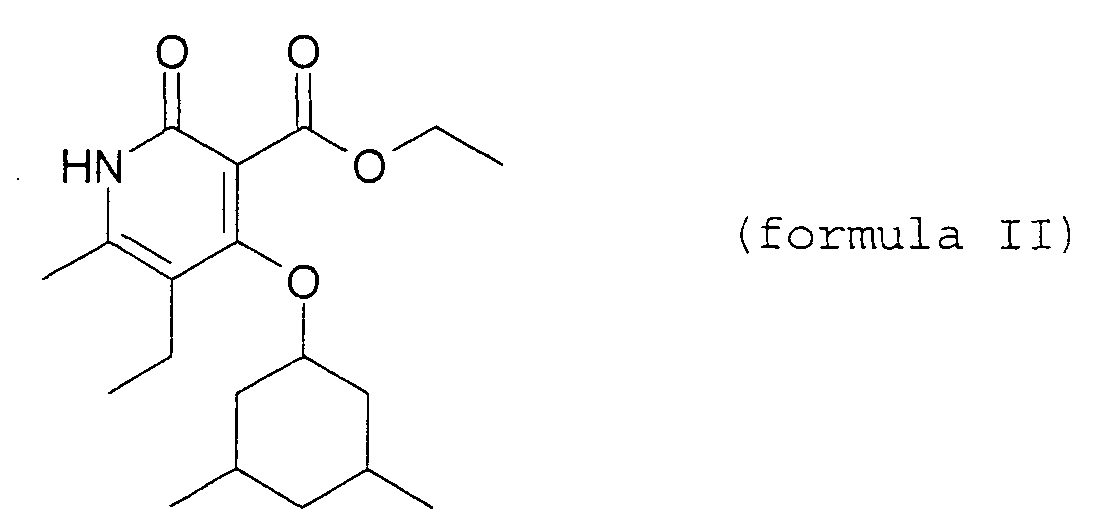 was synthesized, following a three-step protocol, as
described below and as illustrated in Figure 1.
was synthesized, following a three-step protocol, as
described below and as illustrated in Figure 1.
ethyl 4-hydroxy 5-ethyl-6-methyl-pyridine-2(1H)-one-3-carboxylate
(B0) was synthesized as described by E.
Bisagni and al. (J.Med.Chem. 1995, 38, 4679-4686). Then,
benzyl bromide (1.8g, 10.5 mmol) was added to a stirred
suspension of silver carbonate (1.41g, 5.1mmol) and B0
(2.25g, 10mmol). The mixture was heated (50°C) overnight
then cooled and filtered over celite 521 (Aldrich). The
solvent was evaporated and the crude product purified using
a silica gel column (e.g. a 60Å/0.040-0.063mm ROCC column;
eluent: pentane/dichloromethane, 70/30 v/v%), to give
intermediate A (2.6g, 83% yield).
In a second step, Diisopropyl azodicarboxylate
(DIAD) (0.804g, 4 mmol) was added drop wise at room
temperature to a solution of intermediate A (0.63 g, 2
mmol), triphenylphosphine (PΦ3) (1.048g, 4 mmol) and 3,5-dimethylcyclohexanol
(0.512g, 4 mmol) in THF (20ml). After
stirring overnight, the THF was evaporated and the residue
was suspended in a mixture of hexane and diethyl ether
(50:50 v/v%). The precipitate was filtered off and the
organic layer was evaporated. The residue obtained was
purified using a silica gel column (e.g. a 60Å/0.040-0.063mm
ROCC column; eluent: pentane/dichloromethane, 50/50
v/v%), to give intermediate B (0.595 g, 70% yield).
In a third step, Pd/C 10% (w/w%) (0.160g) was
added to a solution of intermediate B (0.360g, 0.89 mmol)
in cyclohexane (4ml) and diisopropyl ether (12 ml). The
mixture was heated overnight at 70°C. The precipitate was
then filtered off and the organic solvents were evaporated.
The product was purified with a silica gel column
(e.g. a 60Å/0.040-0.063mm ROCC column; eluent:
dichloromethane/ethanol, 95/05 v/v%) to give product Z37 as
a mixture of stereoisomers (0.238 g, 80% yield, mp (melting
point) for the mixture of stereoisomers = 108°C).
The major isomer of the mixture, Z37A (70%)
was purified by chiral HPLC (e.g. using a DAICEL chiralpak
AD 4,6/250mm column; eluent: hexane/isopropanol 95/05
v/v%). (mp= 122°C).
A nuclear magnetic resonance (NMR) 1H profile
was obtained using an Ex 90 FT NMR spectrometer (Jeol) and
gave the following information for compound Z37A:
NMR 1H for Z37A: δ 13 (s, 1H), 4.7 (m, 1H), 4.4 (q, 2H), 2.4 (q, 2H), 2.25 (s, 3H), 2.15-1.6 (m, 8H), 1.35 (t, 3H), 1.0 (t,3H), 0.85 (d, 6H)
NMR 1H for Z37A: δ 13 (s, 1H), 4.7 (m, 1H), 4.4 (q, 2H), 2.4 (q, 2H), 2.25 (s, 3H), 2.15-1.6 (m, 8H), 1.35 (t, 3H), 1.0 (t,3H), 0.85 (d, 6H)
A diastereoisomeric form of Z37A (Z37inv) was
obtained by a stereoselective double Mitsunobu reaction
(mp= 158°C) (David L. Hugues 1992, "The mitsunobu
reaction", Organic Reaction, 42, 335). Its antiviral
activity was found to be higher than the activity observed
for either Z37A or the mixture of stereoisomers (see
infra).
The stereochemistry of compounds Z37A and
Z37inv was checked by X-Ray diffraction using a Enraf-Nonius
CAD-4 apparatus (Brucker). The X-Ray diffraction
structures of both compounds are given in Figures 2 A and B
respectively. The crystal data of both compounds, as well
as the specific data collection information and applied
refinement conditions, are summarized in Table 1.
| Crystal data, data collection and refinement information for compounds Z37A and Z37inv (symbols used are standard IUPAC symbols well known in the art) | ||
| Z37A | Z37inv | |
| Crystal Data | ||
| Formula | C19H29NO4 | C19H29NO4 |
| MW | 335.43 | 335.43 |
| System, space group | Triclinic, P-1 | Monoclinic, P21/c |
| a (Å) | 8.518(1) | 13.488(3) |
| b (Å) | 9.220(2) | 9.064(2) |
| c (Å) | 13.436(1) | 16.584 (1) |
| α (°) | 88.906(6) | 90.0 |
| β (°) | 82.053(4) | 110.617(16) |
| γ (°) | 66.369(7) | 90.0 |
| V (Å3) | 956.7 (2) | 1897.6(6) |
| Z | 2 | 4 |
| Dx (Mg m-3) | 1.164 | 1.174 |
| Radiation | Cu Kα | Cu Kα |
| µ (mm-1) | 0.651 | 0.066 |
| T (K) | 293(2) | 293(2) |
| Crystal | Platelet, colourless | Platelet, colourless |
| Crystal size | 0.34 x 0.30 x 0.13 | 0.45 x 0.34 x 0.25 |
| Data collection | ||
| Diffractometer | Enraf-Nonius CAD-4 | Enraf-Nonius CAD-4 |
| Scan | /2 | /2 |
| Absorption correction | Analytical Tmin=0.809, Tmax=0.920 | None |
| Measured reflections | 4012 | 4075 |
| Independent reflections | 3764 | 3907 |
| Reflections with I > 2 σ (I) | 3067 | 3223 |
| Rint | 0.0137 | 0.0967 |
| max | 71.97 | 74.98 |
| h | -9 -> 10 | 0 -> 16 |
| k | 0 -> 11 | 0 -> 11 |
| l | -16 -> 16 | -20 -> 19 |
| Refinement | ||
| Refinement on | F2 | F2 |
| R [F2 > 2 σ (F2)] | 0.0526 | 0.0825 |
| wR (F2) | 0.1759 | 0.2150 |
| S | 1.462 | 1.689 |
| Number of reflections | 3764 | 3907 |
| Number of parameters | 223 | 221 |
| (Δ/σ)max | 0.013 | 0.001 |
| Δρmax | 0.289 | 0.421 |
| Δρmin | -0.299 | -0.335 |
Compound Z32 which corresponds to formula III
 was synthesized, following a three-step protocol, as
described below and as illustrated in Figure 3.
was synthesized, following a three-step protocol, as
described below and as illustrated in Figure 3.
In a first step, Diisopropyl azodicarboxylate
(DIAD) (0.804g, 4 mmol) was added drop wise at room
temperature to a solution of above-described intermediate A
(0.63 g, 2 mmol), triphenylphosphine (PΦ3) (1.052g, 4 mmol)
and cycloheptanol (0.456g, 4 mmol) in THF (20ml). After
stirring overnight, the THF was evaporated and the residue
was suspended in a mixture of hexane and diethyl ether
(50:50 v/v%). The precipitate was filtered off and the
organic layer was evaporated. The residue obtained was
purified using a silica gel column (e.g. a 60Å/0.040-0.063mm
ROCC column; eluent:pentane/dichloromethane, 50/50
v/v%), to give intermediate C (0.575 g, 70% yield).
In a second step, Red-A1 (2.3 ml, 7.6 mmol) was
suspended in benzene (10 ml). Intermediate C (1.77g, 4.3
mmol) was added to this solution, at 0°C. The mixture was
heated at 75°C for 2 hours and then cooled again at 0°C.
After addition of a solution of 20% sulphuric acid, the
aqueous layer was extracted with dichloromethane. The
organic extracts were collected and washed with brine.
The crude product was chromatographed on
silica gel column (e.g. a 60Å/0.040-0.063mm ROCC column;
eluent: dichloromethane/pentane, 50/50 v/v%) to afford
intermediate D (1.507 g, 95% yield).
In a third step, Intermediate D (1.5g, 4 mmol)
was then dissolved in a mixture of acetonitrile (10 ml) and
dimethyl sulfide (2 ml). Trifluoroacetic acid (lml) was
then added to this mixture, at 0°C. After stirring at room
temperature for 3 hours, the solvents were evaporated. The
residue was dissolved in dichloromethane and washed with a
solution of saturated NaHCO3.
After drying with MgSO4 and evaporation of the
solvent, recrystallisation from ethyl acetate/hexane gave
pure product Z32 as white crystals (mp = 146°C)
A nuclear magnetic resonance (NMR) 1H profile
was obtained using an Ex 90 FT NMR spectrometer (Jeol) and
gave the following information for compound Z32:
NMR 1H for Z32: δ 13 (s, 1H), 4.6 (s, 2H), 4.1 (m, 1H), 2.44 (q, 2H), 2.31 (s, 3H), 1.7 (m, 12H), 1.1 (t, 3H)
NMR 1H for Z32: δ 13 (s, 1H), 4.6 (s, 2H), 4.1 (m, 1H), 2.44 (q, 2H), 2.31 (s, 3H), 1.7 (m, 12H), 1.1 (t, 3H)
Compound Z33 which corresponds to formula IV
 was synthesized from compound Z32 as described below and as
illustrated in Figure 4. Compound Z32 (165 mg, 0.6 mmol)
was dissolved in dichloromethane (2ml) and pyridine (50µl).
Chloroacetyl chloride (50µl) was added to this mixture
cooled at 0°C. After stirring for 3 hours at 0°C, HCl (1ml,
1N) and dichloromethane (10ml) were added to this solution.
was synthesized from compound Z32 as described below and as
illustrated in Figure 4. Compound Z32 (165 mg, 0.6 mmol)
was dissolved in dichloromethane (2ml) and pyridine (50µl).
Chloroacetyl chloride (50µl) was added to this mixture
cooled at 0°C. After stirring for 3 hours at 0°C, HCl (1ml,
1N) and dichloromethane (10ml) were added to this solution.
The organic layer was washed with a saturated
NaCl solution and the crude product purified using a silica
gel column (eluent: MeOH/CH2Cl2, 1/9) to give the
crystalline product Z33 (0.160 g, Yield: 75%, mp = 123°C).
A nuclear magnetic resonance (NMR) 1H profile
was obtained using an Ex 90 FT NMR spectrometer (Jeol) and
gave the following information for compound Z33:
NMR 1H for Z33: δ.13 (s, 1H), 5.2 (s, 2H), 4.2 (m, 1H), 4.0 (s, 2H), 2.5 (m, 2H), 2.3 (s, 3H), 1.7 (m, 12H), 1.1 (m, 3H)
NMR 1H for Z33: δ.13 (s, 1H), 5.2 (s, 2H), 4.2 (m, 1H), 4.0 (s, 2H), 2.5 (m, 2H), 2.3 (s, 3H), 1.7 (m, 12H), 1.1 (m, 3H)
Compound Z53 which corresponds to formula V
 was synthesized from compound Z37 as described below and as
illustrated in Figure 5. To a solution of Z37 (0.167g, 0.5
mmol) in N,N-diethylethanolamine (3ml) was added a
catalytic amount of tetraisopropyl titanate (c.a. 30 mg).
The mixture was stirred overnight at 110°C.
was synthesized from compound Z37 as described below and as
illustrated in Figure 5. To a solution of Z37 (0.167g, 0.5
mmol) in N,N-diethylethanolamine (3ml) was added a
catalytic amount of tetraisopropyl titanate (c.a. 30 mg).
The mixture was stirred overnight at 110°C.
The solvent was then evaporated under vacuum
and the residue was extracted with dichloromethane. The
crude product was purified with a silica gel column
(eluent: dichloromethane/ethanol, 90/10) to give product
Z53 (0.121 g, 60% yield, oil).
A nuclear magnetic resonance (NMR) 1H profile
was obtained using an Ex 90 FT NMR spectrometer (Jeol) and
gave the following information for compound Z53:
NMR 1H for Z53: δ.12.8 (s, 1H), 4.7 (m, 1H), 4.3 (t, 2H), 2.9-2.4 (m, 6H), 2.3 (s, 3H), 2.1-1.4 (m, 8H), 1.25-0.7 (m, 17H).
NMR 1H for Z53: δ.12.8 (s, 1H), 4.7 (m, 1H), 4.3 (t, 2H), 2.9-2.4 (m, 6H), 2.3 (s, 3H), 2.1-1.4 (m, 8H), 1.25-0.7 (m, 17H).
Compound M18 which corresponds to formula VI
 was synthesized as described below and as illustrated in
Figure 6. Intermediate B0 (0.338g, 1.5 mmol) was dissolved
in dichloromethane (10 ml) and pyridine (1 ml). 3,3-dimethyl
acryloyl chloride (0.360g, 3.0 mmol) was added to
this solution at 0°C and the solution was stirred
overnight. The solvents were then removed in vacuo.
Purification by silica gel chromatography
(e.g. a 60Å/0.040-0.063mm ROCC column; eluent:
ethanol/dichloromethane, 98/02 v/v%) gave product M18
(0.270g, 60% yield, mp = 166°C).
was synthesized as described below and as illustrated in
Figure 6. Intermediate B0 (0.338g, 1.5 mmol) was dissolved
in dichloromethane (10 ml) and pyridine (1 ml). 3,3-dimethyl
acryloyl chloride (0.360g, 3.0 mmol) was added to
this solution at 0°C and the solution was stirred
overnight. The solvents were then removed in vacuo.
Purification by silica gel chromatography
(e.g. a 60Å/0.040-0.063mm ROCC column; eluent:
ethanol/dichloromethane, 98/02 v/v%) gave product M18
(0.270g, 60% yield, mp = 166°C).
A nuclear magnetic resonance (NMR) 1H profile
was obtained using an Ex 90 FT NMR spectrometer (Jeol) and
gave the following information for compound M18:
NMR 1H for M18: δ 13 (s, 1H), 5.9 (s, 1H), 4.2 (q, 2H), 2.5 (m, 2H), 2.3 (s,3H), 2.2 (s, 3H), 2.0 (s, 3H), 1.3 (t, 3H), 1.1 (t, 3H)
NMR 1H for M18: δ 13 (s, 1H), 5.9 (s, 1H), 4.2 (q, 2H), 2.5 (m, 2H), 2.3 (s,3H), 2.2 (s, 3H), 2.0 (s, 3H), 1.3 (t, 3H), 1.1 (t, 3H)
Compounds Z12, Z25, Z30, Z54 and Z55 were
synthesized in a similar way as compound Z37. The protocol
is similar except for the alcohol used in the second step,
which is 2-chlorocyclohexanol for Z12, cycloheptanol for
Z25, 3-methylcyclohexanol for Z30, cyclooctanol for Z54 and
4-ethylcyclohexanol for Z55.
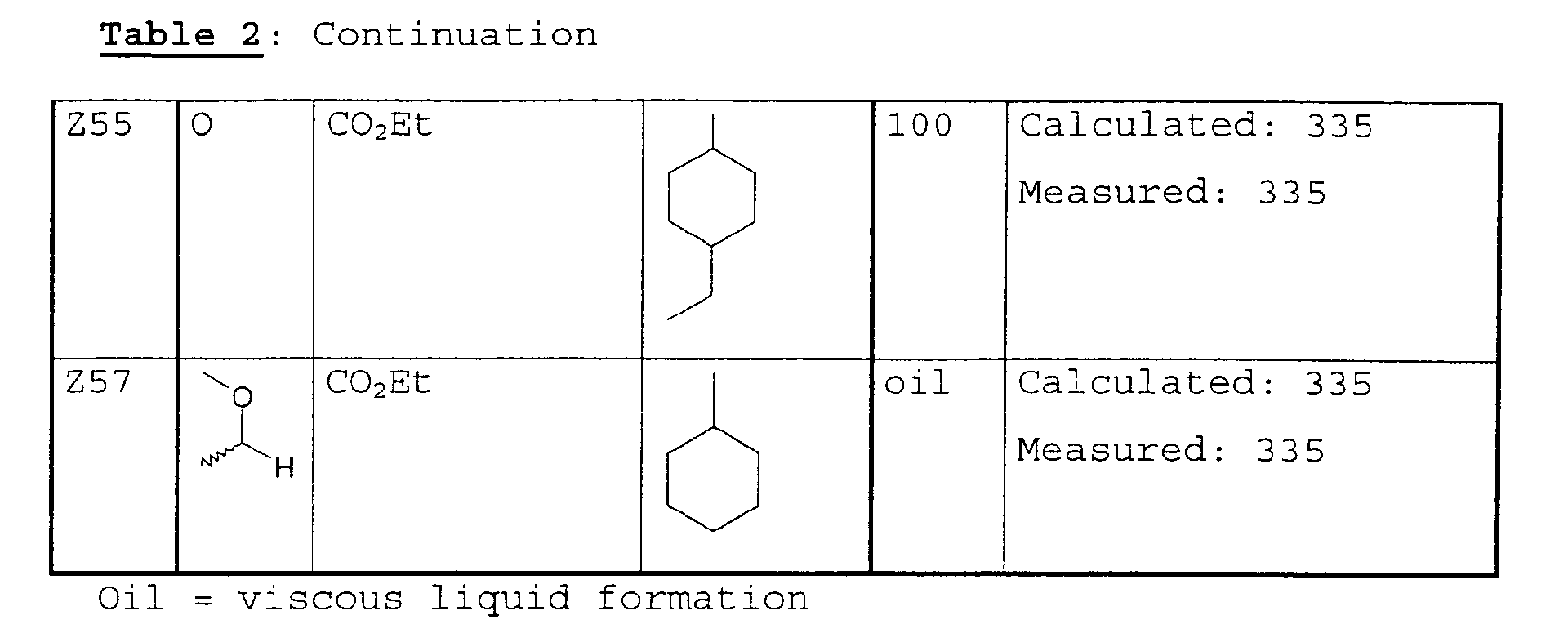
Table 2 provides information on the structure
and physico-chemical properties of specific compounds
according to the invention, such as the nature of the side
groups R1 and R2 and of the spacer X, the melting point of
the compound and its molecular weight.

Examples 6 to 7 demonstrate that the compounds
of the present invention are very efficient NNRTIs with
HIV-1 inhibiting activity. This is illustrated via in vitro
reverse transcriptase assays and via anti-HIV assays using
P4 cell lines. The P4 cell line contains a LacZ gene under
the transcriptional control of HIV-1 LTR elements.
For the in vitro inhibition studies of the HIV-1
reverse transcriptase activity, stock solutions of the
compounds of the present invention were prepared in
dimethyl sulfoxide at a final concentration of 10mM and
kept at room temperature. Nevirapine was purchased from
Boehringer Ingelheim.
For the antiviral and the cytotoxicity assays,
the drugs were diluted in complete DMEM medium. In these
experiments, drugs were diluted in triplicate wells in a
96-well plate in six, 5 fold serial dilutions.
In vitro inhibition studies used a fixed-time
assay for HIV-1 reverse transcriptase RNA dependent DNA
polymerase activity. RT was purchased from VWR (ref
CAL382129-500). One unit of RT corresponds to the amount of
enzyme which incorporates one nanomole of [3H] TTP in 10
minutes at 37°C.
Assays were performed in a final volume of
50µl. The mixture contained 0.125 units of RT, 10 mM MgCl2,
2mM DTT, 50mM Tris pH 8.3, 50mM KCl, 1µg/µl BSA, 0.01%
triton X100, 20 µg/ml (0.4 A260/ml) poly(rC)-oligo(dG)12-18,
1µCi [3H]dGTP and 1µl of the inhibitor (dissolved in
dimethyl sulfoxide, DMSO). Reaction mixtures were incubated
at 37°C for 10 min. The incorporation rate was determined
by a standard trichloroacetic acid precipitation procedure
(adapted from Current protocols in molecular biology. Eds
Wiley, MGH Harvard medical school) and liquid scintillation
counting using a Wallac scintillation counter.
Wurzburg Jurkat T cells (subclone JR) were
transfected with 10 µg of the circularly permuted
infectious molecular clone HIVPNL4-3 (Adachi et al., 1986. J.
Virol, 59 (2), p284-291). Two days later, co-cultivation
with SupT1 cells (a human T-cell lymphoma cell line) was
initiated to facilitate rapid production of progeny
virions. Production of virus was measured by using the
Innotest HIV Antigen mAb p24 kit (Innogenetics). At the
peak of production cultures were harvested and filtered.
The amount of virus produced was measured by p24 ELISA
experiments and the virus stocks were stored at -80°C until
used.
Results for some of the compounds according to
the invention are summarized in Table 3. The in vitro
activity of the compounds, at a final concentration of 10
µM, on the reverse transcriptase (RT) activity of HIV-1 is
derivable from the relative (%) reduction in RT activity.
Hereby, the RT activity in the absence of any of the
compounds is set at 100%. From table 3 it is evident that
all of the compounds tested were able to reduce the in
vitro RT activity by at least about 30 %. Most of the
compounds tested reduced the activity by at least 50% to
60%. The most active compound, Z37inv, reduced the activity
to about 6% only of the control. This activity is slightly
better than the one of Nevirapine, a common NNRTI.
| In vitro residual RT activity after addition of some compounds (N°) belonging to the invention. Comparison with Nevirapine, a common RT inhibitor | |
| N° | Relative (%) RT activity in vitro (compound added at 10µM) |
| M18 | 70.8 |
| Z12 | 63.7 |
| Z25 | 34.6 |
| Z30 | 22.0 |
| Z32 | 44.0 |
| Z33 | 42.0 |
| Z37 | 8.3 |
| Z37A | 11.7 |
| Z37B | 8.0 |
| Z37inv | 6.7 |
| Z53 | 26.5 |
| Z54 | 19.4 |
| Z55 | 28.8 |
| Z57 | ND |
| Nevirapine | 8.6 |
| ND, not determined |
Anti-HIV activity and cytotoxicity of the
compounds were tested on a P4 cell line. The P4 cell line
(Clavel & Charneau, 1994. J. Virol., Vol. 68 p1179-1185) was
provided by Dr. François Clavel (Unité de recherche
antivirale de l'hôpital Xavier Bichat Paris: Inserm). These
p4 cells were cultured in complete DMEM medium supplemented
with 10% fetal bovine serum (FBS), 0.5 % of
Penicillin/Streptomycin and G418 at 0.5 mg/ml.
Exponentially growing cells were trypsinized, centrifuged
and split twice weekly at 5.104 cells/ml.
The 50 % cytotoxic concentration (CC50) was
determined using a protocol adapted from Pauwels et al.
(1988. J. Virol. Methods 20(4):309-21). Briefly, flat
bottom 96-well plates were filled with 50 µl of complete
medium containing 5.103 P4 cells. 2 hours later 50 µl of
drug solution were added to the cells. Drugs (dissolved in
DMEM, see above) were diluted in six, 5-fold serial
dilutions from stock solutions in triplicate wells of a 96-well
plate. Cells and compounds were incubated at 37°C in
growth medium for 3 days. Cell viability was determined by
MTT assays using the Roche Cell Proliferation KIT. The
absorbance (λ=570nm) was measured on a Benchmark™
Microplate Reader (Biorad) and compared with 12 cell
control replicates (no drug added). Each assay was
performed at least three times for a total of at least nine
replicate wells. This method detects both cytostatic and
cytolytic effects of drugs.
The P4 cell line is a cell line of HIV-infectible
Hela-CD4 cells that carry the bacterial lacZ
gene under the control of the HIV-1 long terminal repeat
(LTR). In this cell line, transcription of the LacZ gene is
driven by the HIV-1 LTR. As such, the cytoplasmic
accumulation of β-galactosidase is strictly dependent on
the presence of the HIV transactivator Tat produced during
the intracellular viral replication (Clavel & Charneau,
1994. J. Virol., Vol.68, p. 1179-1185). In other words, in
this system, the expression level of the β-galactosidase
gene is proportional to the viral replication.
In a particular embodiment, the p4 cell line
was infected with a HIV strain having a mutant RT
characterized by a Cystein for Tyrosine substitution (Y188C
mutation). This mutant HIV cell line was produced as
follows. In a first step, the Y188C mutation was introduced
by site directed mutagenesis on the circularly permuted
infectious molecular clone HIVPNL4-3. In a second step, the
resulting plasmid was transfected in Jurkat cells and the
mutant viruses produced were purified as indicated above.
Briefly, in the anti-HiV assays used here 100
µl of P4 cells were plated in 96-well plate at a
concentration of 0.4 105 cells/ml and incubated at 37°C, 5
% CO2. After 48h, the medium was removed and 100 µl of the
different drugs dilutions were added to the cells. Four
hours after the addition of the drugs all cells were
infected with equal amount of cell-free virus,
corresponding to 100 ng of HIV p24 antigen. After 48h of
incubation at 37°C, 5% CO2, β-galactosidase activity was
measured using chlorophenol red- β -D-galactopyranoside
assays.
The absorbance was measured on a Benchmark™
Microplate Reader (Biorad) (λ=570nm) and compared with 12
cell control replicates (no virus or drug added) and 12
virus control wells (no drug added). Each assay was
performed a minimum of three times. The 50 % effective
concentration (EC50) was calculated from each dose response
curve using the CurveExpert 1.3 software. As Nevirapine
activity corresponds to its published values (10-100 nM),
the data are consistent with other measures of viral
replication.
The results of both tests are summarized in
columns 2, 3 and 4 of Tables 4 and 5. From these tables it
can be derived that the compounds according to the
invention have good to excellent EC50 values and are able
to inhibit HIV-1 activity. Compound Z37inv gave the best
result and is more active than Nevirapine. It displays a
good selectivity index (SI) due to this high antiviral
activity combined with a low cytotoxicity.
That some of the compounds, for instance
compound Z37, are active on HIV-1 mutant strains resistant
to Nevirapine is evident from Table 5.
From the above it is evident that the compounds
according to the invention have very good anti-HIV
activity. The demonstrated low cytotoxicity is a first
indication that the compounds could be very useful in the
treatment of HIV and especially HIV-1 infected individuals.
| Ex vivo anti-HIV activity (EC50), cytotoxicity (CC50) and SI (selectivity index = CC50/EC50) for some compounds according to the invention, the test being performed on a P4 cell line with a WT (wild-type) RT. Comparison with Nevirapine, a common RT inhibitor | |||
| N° | EC50 WT (µM) | CC50 (µM) | SI |
| M18 | 5.82 | >100 | >17 |
| Z12 | 2.53 | >100 | >40 |
| Z25 | 0.48 | 81 | 168 |
| Z30 | 0.52 | >100 | >192 |
| Z32 | 1.16 | 55 | 47 |
| Z33 | 1.03 | 54 | 52 |
| Z37 | 0.043 | 58 | 1349 |
| Z37A | 0.240 | 63 | 263 |
| Z37B | 0.091 | 72 | 791 |
| Z37inv | 0.021 | 64 | >3047 |
| Z53 | >>4 | 33 | <8 |
| Z54 | 1.34 | 58 | 43 |
| Z55 | >>4 | 57 | <14 |
| Z57 | 1.82 | ND | ND |
| Nevirapine | 0.030 | >100 | >3333 |
| ND, not yet determined |
| Ex vivo anti-HIV activity (EC50), cytotoxicity (CC50) and SI (selectivity index = CC50/EC50) for some compounds according to the invention, the test being performed on a P4 cell line with a mutant RT characterized by a Cystein for Tyrosine substitution at codon 188 (Cys188) in the RT. Comparison with Nevirapine, a common RT inhibitor | |||
| N° | EC50 Cys188RT (µM) | CC50 (µM) | SI |
| M18 | 5.38 | >100 | >18 |
| Z37 | 0.006 | 58 | 9667 |
| Z37A | 0.039 | 63 | 1615 |
| Z37B | 0.025 | 72 | 2880 |
| Z37inv | 0.010 | 64 | 6400 |
| Z53 | >4 | 33 | <8 |
| Z54 | 0.120 | 58 | 483 |
| Z55 | 0.406 | 57 | 140 |
| Nevirapine | 2.77 | >100 | 36.1 |
From the above, it is evident that in contrast
to Nevirapine, some compounds of the invention are active
against Cys188 mutant strains.
The compounds according to the present
invention could be administrated orally to humans in a
dosage range of 1 to 100 mg/kg body weight in divided
doses. It will be understood, however, that the specific
dose level and frequency of dosage for any particular
patient may vary and will depend upon a variety of factors
including the activity of the compound employed, its
metabolic stability and length of action, as well as the
age, the weight and the general health of the patient at
the time of the administration, the rate of excretion, the
other drugs used, and the host undergoing therapy. It falls
within the skills of an artisan to determine the
concentration of drugs that should be used in HIV-1
treatment.
The compounds of the present invention can be
used for the preparation of medicaments such as therapeutic
compositions for the treatment of HIV-1 related diseases.
The compounds can be used alone (in pure form, as salt or
as prodrug), or as mixtures of several compounds, whether
or not in combination with other compounds active against
HIV-1 infections.
Such anti-viral agents include other NNRTIs
such as Nevirapine, Efavirenz, Delavirdine, Capravirine and
the like as well as NRTIs, protease inhibitors,
fusion/binding inhibitors, integrase inhibitors,
pyrophosphate analogue RT inhibitors and/or HIV vaccines.
The above list is not exhaustive and may include any other
anti-viral, anti-infective, antibiotic as well as any
immunomodulator. The effect can be additive and/or
synergistic.
The compounds according to the invention and
mixtures thereof with any other therapeutic and/or
pharmaceutical agent can be used in pharmaceutical
compositions comprising an acceptable diluent and/or
carrier. These are known to a skilled person.
Administration in the case of combinations can
be together or consecutively whereby the interval can range
from minutes to hours. It is evident that other
applications than oral applications are possible, for
instance in the case of combination with a therapeutic
and/or prophylactic vaccine. It is further evident that the
compounds according to the inventions can be applied under
any form that does not preclude their activity, such forms
including pills, liquids, powders, pastes and any other
form or formulation known in the art.
Compounds according to the present invention
were compared with compounds known in the art. Provided
that any group that is linked to position 4 of the
pyridinone ring is hereby referenced as "R2", and X is
defined as the "spacer" between the two groups, the
following can be concluded
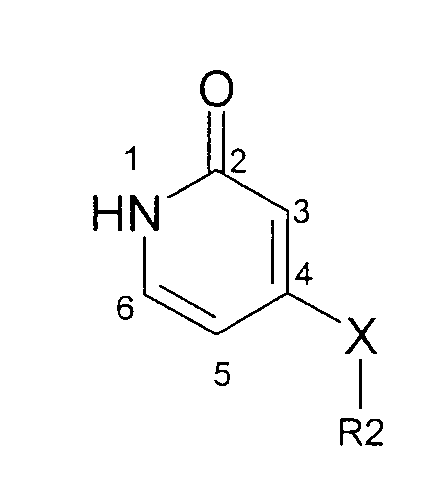
Compounds disclosed in patents EP 0 462 800 and
EP 0 481 802 differ by their substitution in position 3 and
differ by their substitution in position 4 (no spacer
between the pyridinone and R2 in the compounds disclosed in
EP 0462 800 and EP 0 481 802 whereas all compounds of the
present invention have such a spacer).
The compounds disclosed in patent EP 0 462 808
differ by their substitution in position 3 (all possess a
phtaloyl group on this position). They are further not
substituted in position 4.
The compounds disclosed in WO97/05113 differ by
their substitution in position 4. Only arylthio groups are
considered, whereas compounds of the invention do not
feature any arylthio group in position 4.
The compounds disclosed in WO99/55676 differ by
their substitution in position 3. Only amino or alkylamino
groups have been considered. None of these chemical
functions is present in the invention.
Compounds disclosed in International patent
application WO02/24650 are of the above the compounds most
closely related with those of the present invention, the
compounds having a spacer between the pyridinone ring and
R2, the R2 groups at first sight maybe comparable. However,
the specific compounds disclosed in WO02/24650 to have
anti-HIV activity all feature an aryl substituent at
position 4 of the pyridinone ring, unlike compounds of the
present invention. No compound bearing a C7+ cycloalkyl or
a substituted cycloalkyl in position 4 is disclosed and/or
claimed in International patent application WO02/24650.
The following table 6 demonstrates the interest
of for instance C7+ cycloalkyls or substituted cycloalkyls
as evident from the EC50 value:

As shown in Table 6, replacement of a
cyclopentyl or cyclohexyl by a cycloheptyl leads to an
increase in antiviral potency of the compounds.
Replacement of a cyclohexyl by a m,m-dimethyl-cyclohexyl
leads to a 16-fold increase in antiviral
potency.
Furthermore, compounds Z25 and Z37 are more
active on Cys188 mutant strains than the cyclohexyl
derivative.
It goes beyond any doubt that the above
examples are sufficient to demonstrate that the problem of
providing alternative compounds active against HIV-1, with
pronounced NNRTI activity, is solved by the compounds
according to the invention which are novel and inventive.
Advantageously, compounds according to the
invention can be active against HIV-1 strains that are
resistant to NNRTIs currently used such as Nevirapine.
Claims (12)
- A 5-ethyl-6-methyl-2-pyridinone derivative compound according to general formula I,wherein
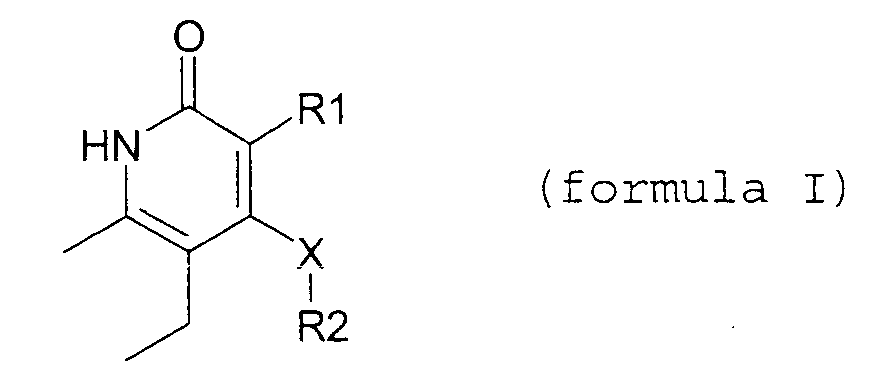
- X =
- O, S, NH, C=O, (CnH2n), (CnH2n)O, O(CnH2n), (CnH2n)S, S(CnH2n)with n = f-4
with n, m = 0 - 8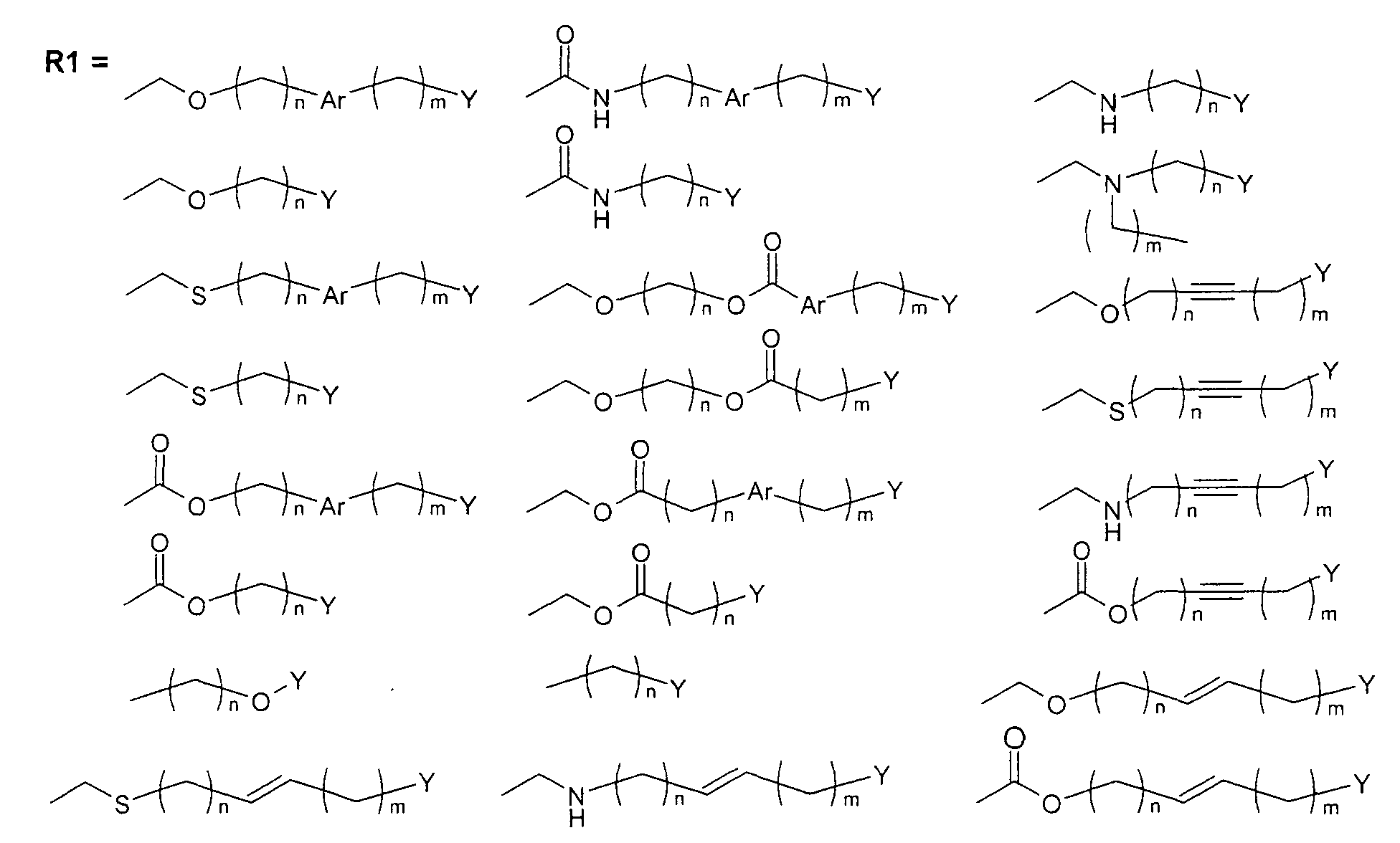
- Ar =
- Aromatic ring selected from : phenyl, pyridyl, thiazolyl, furanyl, thiophenyl, benzofuranyl,
benzothiophenyl, benzothiazolyl, imidazolyl, indolyl,
each optionally substituted with up to 4 substituants selected from :
halo, hydroxy, C1-4 alkyl, C1-4 alkoxy, C1-4 hydroxyalkyl, C1-4 alkylamino, amino, C1-4 aminoalkyl, C1-4 alkylcarbonyl, C1-4 dialkylamino, azido - Y =
- H, halo, alkylamino, dialkylamino, nitrile, hydroxy, C1-6alkylcxycarbonyl, C1-6alkylcarbonyloxy,
C5-7 cycloalkyl optionally substituted with up to 4 substituants selected from :
halo, hydroxy, C1-4 alkyl, C1-4 alkoxy, C1-4 hydroxyalkyl, C1-4 alkylamino, amino, C1-4 aminoalkyl, C1-4 alkylcarbonyl, C1-4 dialkylamino, azido, nitrile;
or Y can be :

- R2 =
- C7-9 cycloalkyl;
C5-8 cycloalkyl substituted with up to 4 substituants;
C5-8cycloalkenyl optionally substituted with up to 4 substituants;
C5-8aliphatic heterocycle optionally substituted with up to 4 substituants;
C6-9bridged cycloalkyl optionally substituted with up to 4 substituants;
C6-9bridged cycloalkenyl optionally substituted with up to 4 substituants;
halo, hydroxy, C1-4 alkyl, C1-4 alkoxy, C1-4 hydroxyalkyl, C1-4 alkylamino, amino, C1-4 aminoalkyl, C1-4 alkylcarbonyl, C1-4 dialkylamino, azido, CN;
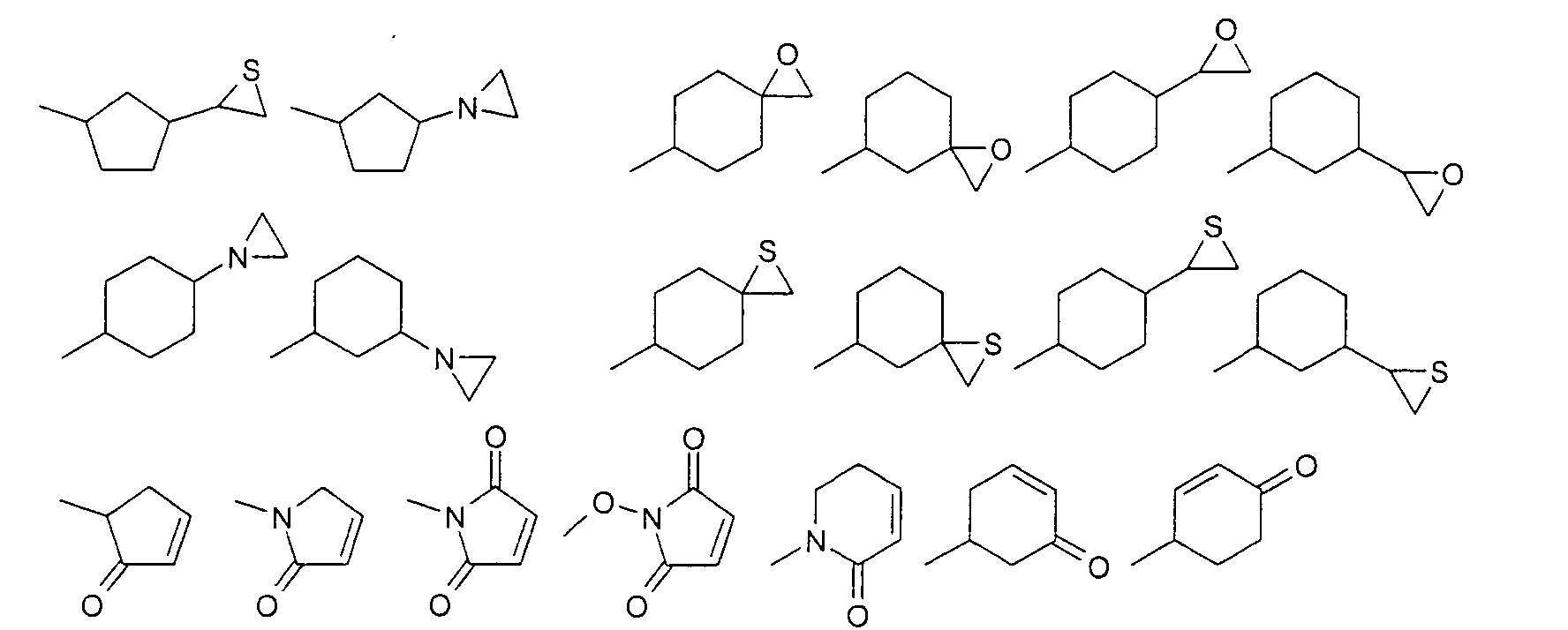 Or R2 can be :
 n, m = 0 - 8
- The compound according to claim 1 further characterized in that it has a substituted cycloalkyl group as R2 in position 4 of the pyridinone ring.
- The compound according to claim 2 further characterized in that said substituted cycloalkyl group is a 3,5-dimethylcyclohexyl moiety.
- The compound according to claim 1 further characterized in that it has a C7-9 cycloalkyl group as R2 in position 4 of the pyridinone ring.
- The compound according to claim 1 selected from the group consisting of compounds which correspond to
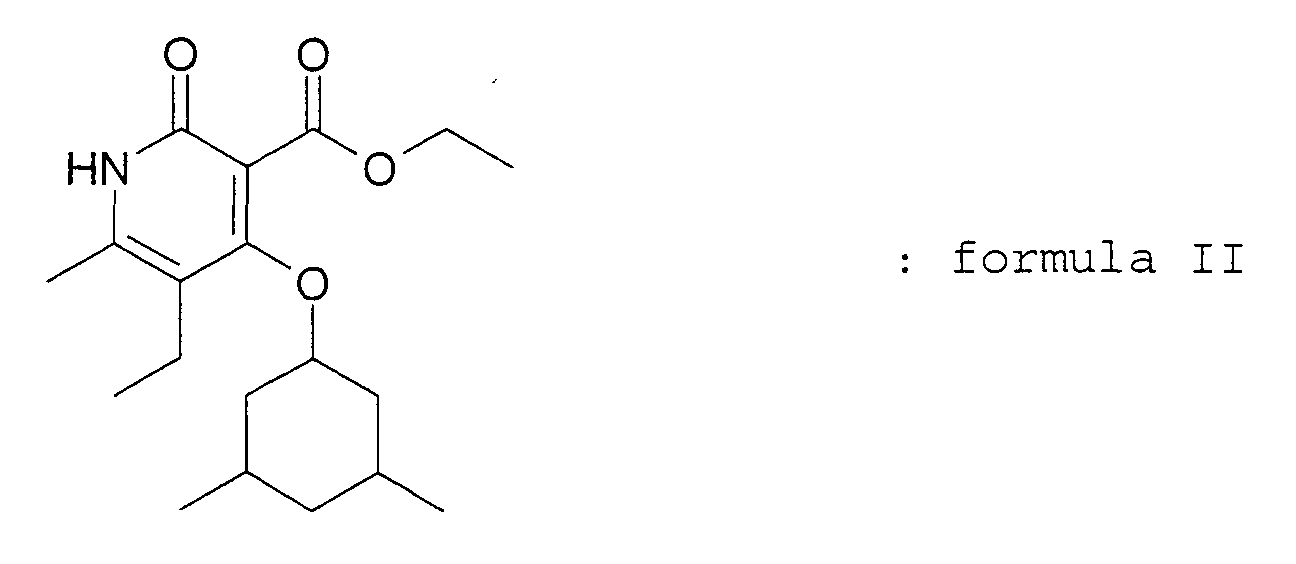


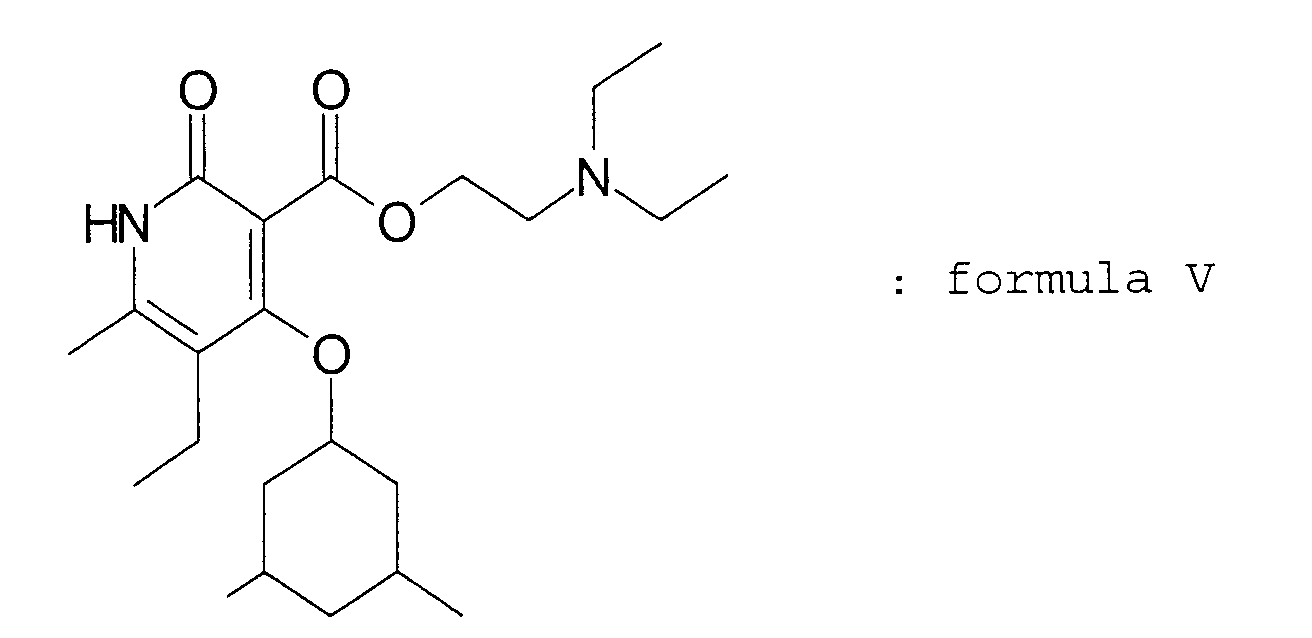

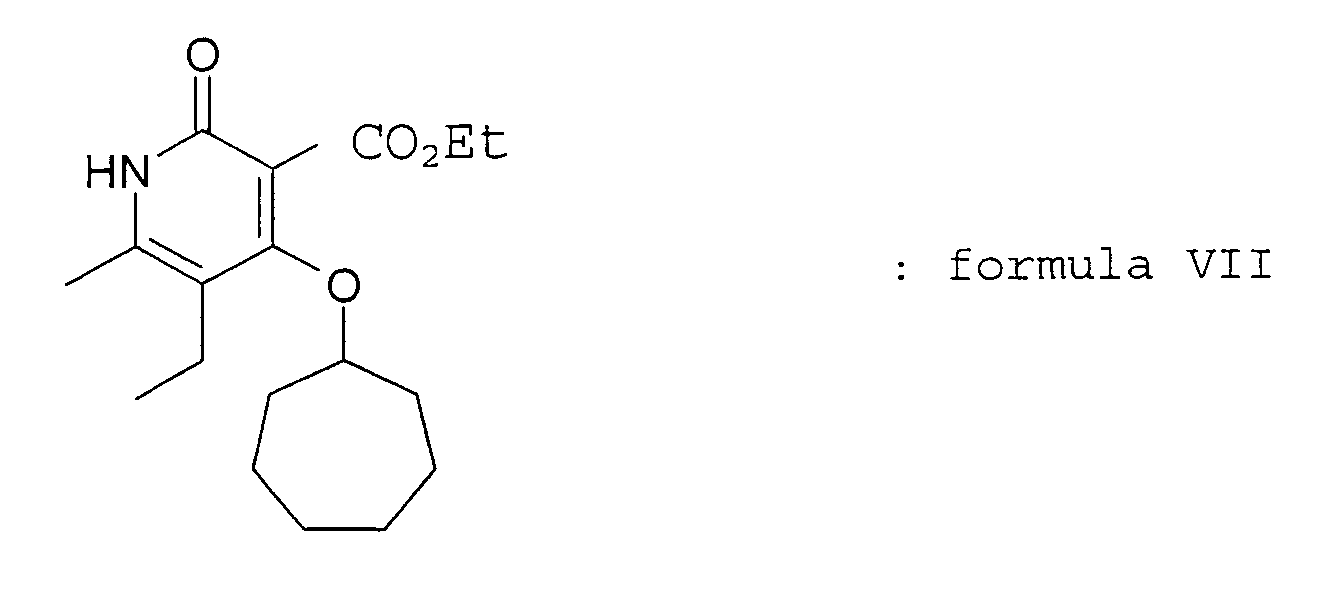
- A pharmaceutical composition comprising at least one the compounds according to any of claims 1 to 5 and an acceptable carrier and/or diluent.
- The composition according to claim 6 further comprising another anti-viral agent.
- The composition according to claim 7, characterized in that said anti-viral agent is Nevirapine.
- Use of the compound or the composition according to any of the preceding claims 1 to 8 for the preparation of a medicament in the treatment and/or the prevention of HIV-1 infections.
- The use according to the claim 9 for the preparation of a medicament for the treatment and/or prevention of HIV-1 infections by a strain resistant to at least one anti-viral agent.
- The use of claim 10 wherein said anti-viral agent is Nevirapine.
- A production process for a compound according to claim 5.
Priority Applications (5)
| Application Number | Priority Date | Filing Date | Title |
|---|---|---|---|
| EP03447231A EP1516873A1 (en) | 2003-09-22 | 2003-09-22 | 2-pyridinone derivatives, having HIV inhibiting properties |
| EP04761495A EP1663977A2 (en) | 2003-09-22 | 2004-09-22 | 2-pyridinone derivatives, having hiv inhibiting properties |
| CA002540329A CA2540329A1 (en) | 2003-09-22 | 2004-09-22 | 2-pyridinone derivatives, having hiv inhibiting properties |
| PCT/BE2004/000134 WO2005028442A2 (en) | 2003-09-22 | 2004-09-22 | 2-pyridinone derivatives, having hiv inhibiting properties |
| US10/573,143 US20070275953A1 (en) | 2003-09-22 | 2004-09-22 | 2-Pyridinone Derivatives, Having Hiv Inhibiting Properties |
Applications Claiming Priority (1)
| Application Number | Priority Date | Filing Date | Title |
|---|---|---|---|
| EP03447231A EP1516873A1 (en) | 2003-09-22 | 2003-09-22 | 2-pyridinone derivatives, having HIV inhibiting properties |
Publications (1)
| Publication Number | Publication Date |
|---|---|
| EP1516873A1 true EP1516873A1 (en) | 2005-03-23 |
Family
ID=34178721
Family Applications (2)
| Application Number | Title | Priority Date | Filing Date |
|---|---|---|---|
| EP03447231A Withdrawn EP1516873A1 (en) | 2003-09-22 | 2003-09-22 | 2-pyridinone derivatives, having HIV inhibiting properties |
| EP04761495A Withdrawn EP1663977A2 (en) | 2003-09-22 | 2004-09-22 | 2-pyridinone derivatives, having hiv inhibiting properties |
Family Applications After (1)
| Application Number | Title | Priority Date | Filing Date |
|---|---|---|---|
| EP04761495A Withdrawn EP1663977A2 (en) | 2003-09-22 | 2004-09-22 | 2-pyridinone derivatives, having hiv inhibiting properties |
Country Status (4)
| Country | Link |
|---|---|
| US (1) | US20070275953A1 (en) |
| EP (2) | EP1516873A1 (en) |
| CA (1) | CA2540329A1 (en) |
| WO (1) | WO2005028442A2 (en) |
Citations (2)
| Publication number | Priority date | Publication date | Assignee | Title |
|---|---|---|---|---|
| WO1999055676A1 (en) * | 1998-04-27 | 1999-11-04 | Centre National De La Recherche Scientifique | 3-(amino- or aminoalkyl)pyridinone derivatives and their use for the treatment of hiv related diseases |
| WO2002024650A2 (en) * | 2000-09-19 | 2002-03-28 | Centre National De La Recherche Scientifique (Cnrs) | Pyridinone and pyridinethione derivatives having hiv inhibiting properties |
Family Cites Families (1)
| Publication number | Priority date | Publication date | Assignee | Title |
|---|---|---|---|---|
| ATE238998T1 (en) * | 1997-02-25 | 2003-05-15 | Us Gov Health & Human Serv | SUBSTITUTED BENZIMIDAZOLES AS NON-NUCLEOSIDE REVERSE TRANSCRIPTASE INHIBITORES |
-
2003
- 2003-09-22 EP EP03447231A patent/EP1516873A1/en not_active Withdrawn
-
2004
- 2004-09-22 WO PCT/BE2004/000134 patent/WO2005028442A2/en not_active Ceased
- 2004-09-22 US US10/573,143 patent/US20070275953A1/en not_active Abandoned
- 2004-09-22 EP EP04761495A patent/EP1663977A2/en not_active Withdrawn
- 2004-09-22 CA CA002540329A patent/CA2540329A1/en not_active Abandoned
Patent Citations (2)
| Publication number | Priority date | Publication date | Assignee | Title |
|---|---|---|---|---|
| WO1999055676A1 (en) * | 1998-04-27 | 1999-11-04 | Centre National De La Recherche Scientifique | 3-(amino- or aminoalkyl)pyridinone derivatives and their use for the treatment of hiv related diseases |
| WO2002024650A2 (en) * | 2000-09-19 | 2002-03-28 | Centre National De La Recherche Scientifique (Cnrs) | Pyridinone and pyridinethione derivatives having hiv inhibiting properties |
Non-Patent Citations (1)
| Title |
|---|
| DOLLE V ET AL: "A NEW SERIES OF PYRIDINONE DERIVATIVES AS POTENT NON-NUCLEOSIDE HUMAN IMMUNODEFICIENCY VIRUS TYPE U SPECIFIC REVERSE TRANSCRIPTASE INHIBITORS", JOURNAL OF MEDICINAL CHEMISTRY, AMERICAN CHEMICAL SOCIETY. WASHINGTON, US, vol. 38, no. 23, 15 October 1995 (1995-10-15), pages 4679 - 4686, XP002002675, ISSN: 0022-2623 * |
Also Published As
| Publication number | Publication date |
|---|---|
| WO2005028442A2 (en) | 2005-03-31 |
| CA2540329A1 (en) | 2005-03-31 |
| WO2005028442A3 (en) | 2005-09-09 |
| EP1663977A2 (en) | 2006-06-07 |
| US20070275953A1 (en) | 2007-11-29 |
Similar Documents
| Publication | Publication Date | Title |
|---|---|---|
| EP1569919B1 (en) | Non-nucleoside reverse transcriptase inhibitors | |
| AU2019252208B2 (en) | Polycyclic carbamoylpyridone derivatives, pharmaceutical compositions and use thereof | |
| US8580967B2 (en) | Methyl 3-(benzyloxy)-1-(2,2-dihydroxyethyl)-4-oxo-1,4-dihydropyridine-2-carboxylate and processes for the preparation thereof | |
| US8217034B2 (en) | Chemical compounds | |
| US8759536B2 (en) | Rhodanine derivatives, method for preparing same, and pharmaceutical composition for the prevention or treatment of aids containing the rhodanine derivatives as active ingredients | |
| AU2007275689A1 (en) | AZA-peptide protease inhibitors | |
| WO2010011818A1 (en) | Chemical compounds | |
| CN112521386B (en) | Polycyclic pyridone compounds having antiviral action, pharmaceutical combinations and uses thereof | |
| KR20100041798A (en) | Novel hiv reverse transcriptase inhibitors | |
| JP2013151559A (en) | Antiviral protease inhibitor | |
| EP2583962A2 (en) | Novel thiourea or urea derivative, preparation method thereof, and pharmaceutical composition for preventing or treating aids, containing same as active ingredient | |
| EP0393529B1 (en) | 5,11-dihydro-6H-dipyrido [3,2-b:2',3'-e][1,4]diazepin-6-ones and their use in the prevention or treatment of AIDS | |
| CN103827094A (en) | Hiv replication inhibitors | |
| JP2013517302A (en) | Pyridoxine derivatives for inhibiting HIV integrase | |
| US20070275953A1 (en) | 2-Pyridinone Derivatives, Having Hiv Inhibiting Properties | |
| KR20120115481A (en) | Novel thiourea or urea derivative, process for preparing the same and pharmaceutical composition for preventing or treating aids comprising the same | |
| JP2912007B2 (en) | 5,11-Dihydro-6H-dipyrido [3,2-b: 2 ', 3'-e] [1,4] diazepine and a composition for preventing or treating HIV infection containing the compound | |
| HU214595B (en) | Process for producing 5,11-dihydro-6h-dipirido[3,2-b : 2',3'-e] [1,4] diazepines and pharmaceutical compositions containing the same | |
| CA3011616A1 (en) | Amine derivatives of lupanes with hiv maturation inhibitory activity | |
| KR20130107554A (en) | Novel n-phenylpyrimidin-4-amine derivatives or pharmaceutically acceptable salts thereof and pharmaceutical composition for prevention or treatment of diseases induced by influenza virus containing the same as an active ingredient |
Legal Events
| Date | Code | Title | Description |
|---|---|---|---|
| PUAI | Public reference made under article 153(3) epc to a published international application that has entered the european phase |
Free format text: ORIGINAL CODE: 0009012 |
|
| AK | Designated contracting states |
Kind code of ref document: A1 Designated state(s): AT BE BG CH CY CZ DE DK EE ES FI FR GB GR HU IE IT LI LU MC NL PT RO SE SI SK TR |
|
| AX | Request for extension of the european patent |
Extension state: AL LT LV MK |
|
| AKX | Designation fees paid | ||
| REG | Reference to a national code |
Ref country code: DE Ref legal event code: 8566 |
|
| STAA | Information on the status of an ep patent application or granted ep patent |
Free format text: STATUS: THE APPLICATION IS DEEMED TO BE WITHDRAWN |
|
| 18D | Application deemed to be withdrawn |
Effective date: 20050924 |