EP1516866A1 - Natural compounds and derivatives thereof for the prevention and treatment of cardiovascular, hepatic and renal diseases and for cosmetic applications - Google Patents
Natural compounds and derivatives thereof for the prevention and treatment of cardiovascular, hepatic and renal diseases and for cosmetic applications Download PDFInfo
- Publication number
- EP1516866A1 EP1516866A1 EP03712147A EP03712147A EP1516866A1 EP 1516866 A1 EP1516866 A1 EP 1516866A1 EP 03712147 A EP03712147 A EP 03712147A EP 03712147 A EP03712147 A EP 03712147A EP 1516866 A1 EP1516866 A1 EP 1516866A1
- Authority
- EP
- European Patent Office
- Prior art keywords
- ethyl
- hydroxyphenyl
- derivatives
- dihydroxyphenyl
- composition
- Prior art date
- Legal status (The legal status is an assumption and is not a legal conclusion. Google has not performed a legal analysis and makes no representation as to the accuracy of the status listed.)
- Granted
Links
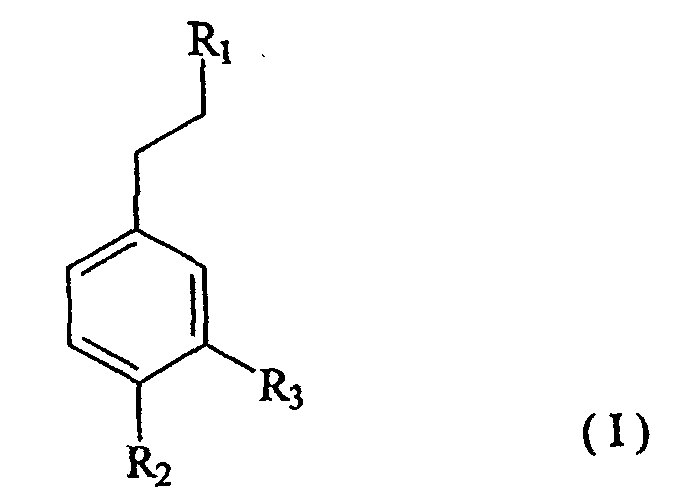
- 0 *CCc1ccc(*)c(*)c1 Chemical compound *CCc1ccc(*)c(*)c1 0.000 description 1
Classifications
-
- A—HUMAN NECESSITIES
- A23—FOODS OR FOODSTUFFS; TREATMENT THEREOF, NOT COVERED BY OTHER CLASSES
- A23C—DAIRY PRODUCTS, e.g. MILK, BUTTER OR CHEESE; MILK OR CHEESE SUBSTITUTES; PREPARATION THEREOF
- A23C9/00—Milk preparations; Milk powder or milk powder preparations
- A23C9/12—Fermented milk preparations; Treatment using microorganisms or enzymes
- A23C9/13—Fermented milk preparations; Treatment using microorganisms or enzymes using additives
-
- A—HUMAN NECESSITIES
- A23—FOODS OR FOODSTUFFS; TREATMENT THEREOF, NOT COVERED BY OTHER CLASSES
- A23C—DAIRY PRODUCTS, e.g. MILK, BUTTER OR CHEESE; MILK OR CHEESE SUBSTITUTES; PREPARATION THEREOF
- A23C15/00—Butter; Butter preparations; Making thereof
- A23C15/12—Butter preparations
-
- A—HUMAN NECESSITIES
- A23—FOODS OR FOODSTUFFS; TREATMENT THEREOF, NOT COVERED BY OTHER CLASSES
- A23C—DAIRY PRODUCTS, e.g. MILK, BUTTER OR CHEESE; MILK OR CHEESE SUBSTITUTES; PREPARATION THEREOF
- A23C9/00—Milk preparations; Milk powder or milk powder preparations
- A23C9/152—Milk preparations; Milk powder or milk powder preparations containing additives
-
- A—HUMAN NECESSITIES
- A23—FOODS OR FOODSTUFFS; TREATMENT THEREOF, NOT COVERED BY OTHER CLASSES
- A23L—FOODS, FOODSTUFFS OR NON-ALCOHOLIC BEVERAGES, NOT OTHERWISE PROVIDED FOR; PREPARATION OR TREATMENT THEREOF
- A23L33/00—Modifying nutritive qualities of foods; Dietetic products; Preparation or treatment thereof
- A23L33/10—Modifying nutritive qualities of foods; Dietetic products; Preparation or treatment thereof using additives
- A23L33/105—Plant extracts, their artificial duplicates or their derivatives
-
- A—HUMAN NECESSITIES
- A61—MEDICAL OR VETERINARY SCIENCE; HYGIENE
- A61K—PREPARATIONS FOR MEDICAL, DENTAL OR TOILETRY PURPOSES
- A61K8/00—Cosmetics or similar toiletry preparations
- A61K8/18—Cosmetics or similar toiletry preparations characterised by the composition
- A61K8/30—Cosmetics or similar toiletry preparations characterised by the composition containing organic compounds
- A61K8/33—Cosmetics or similar toiletry preparations characterised by the composition containing organic compounds containing oxygen
- A61K8/37—Esters of carboxylic acids
-
- A—HUMAN NECESSITIES
- A61—MEDICAL OR VETERINARY SCIENCE; HYGIENE
- A61P—SPECIFIC THERAPEUTIC ACTIVITY OF CHEMICAL COMPOUNDS OR MEDICINAL PREPARATIONS
- A61P1/00—Drugs for disorders of the alimentary tract or the digestive system
- A61P1/16—Drugs for disorders of the alimentary tract or the digestive system for liver or gallbladder disorders, e.g. hepatoprotective agents, cholagogues, litholytics
-
- A—HUMAN NECESSITIES
- A61—MEDICAL OR VETERINARY SCIENCE; HYGIENE
- A61P—SPECIFIC THERAPEUTIC ACTIVITY OF CHEMICAL COMPOUNDS OR MEDICINAL PREPARATIONS
- A61P13/00—Drugs for disorders of the urinary system
-
- A—HUMAN NECESSITIES
- A61—MEDICAL OR VETERINARY SCIENCE; HYGIENE
- A61P—SPECIFIC THERAPEUTIC ACTIVITY OF CHEMICAL COMPOUNDS OR MEDICINAL PREPARATIONS
- A61P13/00—Drugs for disorders of the urinary system
- A61P13/12—Drugs for disorders of the urinary system of the kidneys
-
- A—HUMAN NECESSITIES
- A61—MEDICAL OR VETERINARY SCIENCE; HYGIENE
- A61P—SPECIFIC THERAPEUTIC ACTIVITY OF CHEMICAL COMPOUNDS OR MEDICINAL PREPARATIONS
- A61P29/00—Non-central analgesic, antipyretic or antiinflammatory agents, e.g. antirheumatic agents; Non-steroidal antiinflammatory drugs [NSAID]
-
- A—HUMAN NECESSITIES
- A61—MEDICAL OR VETERINARY SCIENCE; HYGIENE
- A61P—SPECIFIC THERAPEUTIC ACTIVITY OF CHEMICAL COMPOUNDS OR MEDICINAL PREPARATIONS
- A61P3/00—Drugs for disorders of the metabolism
- A61P3/02—Nutrients, e.g. vitamins, minerals
-
- A—HUMAN NECESSITIES
- A61—MEDICAL OR VETERINARY SCIENCE; HYGIENE
- A61P—SPECIFIC THERAPEUTIC ACTIVITY OF CHEMICAL COMPOUNDS OR MEDICINAL PREPARATIONS
- A61P3/00—Drugs for disorders of the metabolism
- A61P3/08—Drugs for disorders of the metabolism for glucose homeostasis
- A61P3/10—Drugs for disorders of the metabolism for glucose homeostasis for hyperglycaemia, e.g. antidiabetics
-
- A—HUMAN NECESSITIES
- A61—MEDICAL OR VETERINARY SCIENCE; HYGIENE
- A61P—SPECIFIC THERAPEUTIC ACTIVITY OF CHEMICAL COMPOUNDS OR MEDICINAL PREPARATIONS
- A61P9/00—Drugs for disorders of the cardiovascular system
-
- A—HUMAN NECESSITIES
- A61—MEDICAL OR VETERINARY SCIENCE; HYGIENE
- A61Q—SPECIFIC USE OF COSMETICS OR SIMILAR TOILETRY PREPARATIONS
- A61Q17/00—Barrier preparations; Preparations brought into direct contact with the skin for affording protection against external influences, e.g. sunlight, X-rays or other harmful rays, corrosive materials, bacteria or insect stings
- A61Q17/04—Topical preparations for affording protection against sunlight or other radiation; Topical sun tanning preparations
-
- C—CHEMISTRY; METALLURGY
- C07—ORGANIC CHEMISTRY
- C07C—ACYCLIC OR CARBOCYCLIC COMPOUNDS
- C07C69/00—Esters of carboxylic acids; Esters of carbonic or haloformic acids
- C07C69/007—Esters of unsaturated alcohols having the esterified hydroxy group bound to an acyclic carbon atom
-
- C—CHEMISTRY; METALLURGY
- C07—ORGANIC CHEMISTRY
- C07C—ACYCLIC OR CARBOCYCLIC COMPOUNDS
- C07C69/00—Esters of carboxylic acids; Esters of carbonic or haloformic acids
- C07C69/017—Esters of hydroxy compounds having the esterified hydroxy group bound to a carbon atom of a six-membered aromatic ring
-
- C—CHEMISTRY; METALLURGY
- C07—ORGANIC CHEMISTRY
- C07C—ACYCLIC OR CARBOCYCLIC COMPOUNDS
- C07C69/00—Esters of carboxylic acids; Esters of carbonic or haloformic acids
- C07C69/02—Esters of acyclic saturated monocarboxylic acids having the carboxyl group bound to an acyclic carbon atom or to hydrogen
- C07C69/22—Esters of acyclic saturated monocarboxylic acids having the carboxyl group bound to an acyclic carbon atom or to hydrogen having three or more carbon atoms in the acid moiety
- C07C69/28—Esters of acyclic saturated monocarboxylic acids having the carboxyl group bound to an acyclic carbon atom or to hydrogen having three or more carbon atoms in the acid moiety esterified with dihydroxylic compounds
-
- C—CHEMISTRY; METALLURGY
- C07—ORGANIC CHEMISTRY
- C07C—ACYCLIC OR CARBOCYCLIC COMPOUNDS
- C07C69/00—Esters of carboxylic acids; Esters of carbonic or haloformic acids
- C07C69/02—Esters of acyclic saturated monocarboxylic acids having the carboxyl group bound to an acyclic carbon atom or to hydrogen
- C07C69/22—Esters of acyclic saturated monocarboxylic acids having the carboxyl group bound to an acyclic carbon atom or to hydrogen having three or more carbon atoms in the acid moiety
- C07C69/30—Esters of acyclic saturated monocarboxylic acids having the carboxyl group bound to an acyclic carbon atom or to hydrogen having three or more carbon atoms in the acid moiety esterified with trihydroxylic compounds
-
- C—CHEMISTRY; METALLURGY
- C07—ORGANIC CHEMISTRY
- C07C—ACYCLIC OR CARBOCYCLIC COMPOUNDS
- C07C69/00—Esters of carboxylic acids; Esters of carbonic or haloformic acids
- C07C69/52—Esters of acyclic unsaturated carboxylic acids having the esterified carboxyl group bound to an acyclic carbon atom
- C07C69/533—Monocarboxylic acid esters having only one carbon-to-carbon double bond
-
- C—CHEMISTRY; METALLURGY
- C07—ORGANIC CHEMISTRY
- C07C—ACYCLIC OR CARBOCYCLIC COMPOUNDS
- C07C69/00—Esters of carboxylic acids; Esters of carbonic or haloformic acids
- C07C69/52—Esters of acyclic unsaturated carboxylic acids having the esterified carboxyl group bound to an acyclic carbon atom
- C07C69/533—Monocarboxylic acid esters having only one carbon-to-carbon double bond
- C07C69/58—Esters of straight chain acids with eighteen carbon atoms in the acid moiety
-
- C—CHEMISTRY; METALLURGY
- C07—ORGANIC CHEMISTRY
- C07C—ACYCLIC OR CARBOCYCLIC COMPOUNDS
- C07C69/00—Esters of carboxylic acids; Esters of carbonic or haloformic acids
- C07C69/52—Esters of acyclic unsaturated carboxylic acids having the esterified carboxyl group bound to an acyclic carbon atom
- C07C69/587—Monocarboxylic acid esters having at least two carbon-to-carbon double bonds
-
- A—HUMAN NECESSITIES
- A23—FOODS OR FOODSTUFFS; TREATMENT THEREOF, NOT COVERED BY OTHER CLASSES
- A23V—INDEXING SCHEME RELATING TO FOODS, FOODSTUFFS OR NON-ALCOHOLIC BEVERAGES AND LACTIC OR PROPIONIC ACID BACTERIA USED IN FOODSTUFFS OR FOOD PREPARATION
- A23V2002/00—Food compositions, function of food ingredients or processes for food or foodstuffs
-
- A—HUMAN NECESSITIES
- A23—FOODS OR FOODSTUFFS; TREATMENT THEREOF, NOT COVERED BY OTHER CLASSES
- A23V—INDEXING SCHEME RELATING TO FOODS, FOODSTUFFS OR NON-ALCOHOLIC BEVERAGES AND LACTIC OR PROPIONIC ACID BACTERIA USED IN FOODSTUFFS OR FOOD PREPARATION
- A23V2250/00—Food ingredients
- A23V2250/20—Natural extracts
- A23V2250/21—Plant extracts
- A23V2250/2131—Olive
Definitions
- the present invention refers to the use of phenolic compounds and their derivatives for the prevention and treatment of cardiovascular, hepatic and renal diseases, as well as to their cosmetic applications, to compositions that include these compounds and to some novel phenolic compounds and derivatives.
- Cardiovascular diseases are the first cause of death in developing countries.
- One of the non-genetic risk factors associated with the development of cardiovascular disease is diet. It has been shown that the incidence of these diseases is directly related to the presence of high blood cholesterol levels that can be caused by a diet with a high cholesterol and saturated fat contents.
- LDL low density lipoproteins
- Oxidative stress and the generation of free radicals also play an important part in hepatic and renal diseases, due to the high presence of oxygen in these organs, as well as in the trigger of the inflammatory processes in numerous situations. For this reason, antioxidants in the diet can be crucial to prevent this type of diseases.
- UV radiation is the main risk factor in skin cancer.
- the skin has a defence system to protect against reactive oxygen species produced after exposure to UV radiation, mainly via the enzymatic activities of superoxide dismutase and glutathion peroxidase.
- a reduction in this defence system more specifically, in intracellular glutathion levels, produces an increase in the pigmentation, ageing of the skin, induction of apoptosis and can, finally, lead to skin cancer.
- supplementation with antioxidants e.g. vitamin E
- vitamin E has been shown to reverse the situation of oxidative stress induced by UV radiation in human fibroblasts.
- Olive oil is a healthy food product rich in oleic acid and antioxidants.
- Tyrosol and hydroxytyrosol are phenolic compounds obtained from the olive, with a strong antioxidant capacity that has been disclosed both in vivo and in vitro.
- the possible favourable role of tyrosol and hydroxytyrosol in cardiovascular diseases has been disclosed by some authors who have shown that these compounds reduce the susceptibility of LDL lipoproteins to the in vitro and in vivo oxidation (Masella et al . 2001, Lipids, 36 , 1195-1202).
- hydroxytyrosol could reduce lipidic peroxidation in hepatic microsomes in animal studies and even the phenolic antioxidant compounds present in olive oil (tyrosol and hydroxytyrosol) could have a potent antiinflammatory effect.
- Tyrosol and hydroxytyrosol are easily oxidisable and, therefore, the use thereof in the form of olive extracts can result in an important proportion of the tyrosol and the hydroxytyrosol being oxidised in the food matrix, that would prevent oxidation of the food but both of these compounds would be degraded before entering the organism. It is, therefore, highly beneficial for tyrosol and hydroxytyrosol to reach the organism intact and to exert their strong antioxidant activity therein.
- n-3 PUFA polyunsaturated fatty acids of the series n-3 (n-3 PUFA), mainly eicosapentanoic acid (EPA) and docosahexanoic acid (DHA), have beneficial effects on the cardiovascular system and on inflammatory processes.
- the activities disclosed for the n-3 PUFA include antiarrhythmic activity, inhibition of platelet aggregation and reduced plasma lipids and cholesterol levels (Connor et al . 2000, Am. J. Clin. Nutr., 71, 171S-5S).
- the object of the invention is, therefore, to provide a series of compounds which, as mentioned previously, serve to prevent and to treat cardiovascular, hepatic, renal and inflammatory diseases and which, as well as being protected against degradation, can be easily incorporated into nutritional products.
- the present invention provides tyrosol and hydroxytyrosol molecules modified with at least one fatty acid via an ester type bond. These molecules serve to prevent and to treat cardiovascular, hepatic and renal diseases, diabetes and inflammatory diseases and for cosmetic treatments using the antioxidant action of tyrosol and hydroxytyrosol since all these diseases present acute oxidative stress.
- Fatty acid esters of tyrosol and hydroxytyrosol are hydrolysed in vivo producing tyrosol and hydroxytyrosol, respectively, as well as the corresponding fatty acid.
- the resulting components can have antioxidant, antiinflammatory and nutritional effects on the organism.
- the esters of the present invention present a degree of self-protection against their oxidative degradation, such that both tyrosol and hydroxytyrosol can reach the organism intact and, on the other hand, present different degrees of solubility in the aqueous phase and the fatty phase, that can be modulated in relation to the degree of esterification of the tyrosol or hydroxytyrosol and of the chosen esterifying fatty acid facilitating its incorporation into any kind of nutritional products.
- esterification of tyrosol or hydroxytyrosol provides an additional supplement of mono and polyunsaturated fatty acids, with a known beneficial effect for health.
- the tyrosol and hydroxytyrosol derivatives disclosed in this invention have a common structure represented by formula (I), wherein at least one hydroxyl group must be modified with a fatty acid chain.
- the R groups vary within the formula generating different series of tyrosol and hydroxytyrosol derivatives.
- R1 and R2 groups can be a hydroxyl group or a hydroxyl group protected with a fatty acid chain via an ester type bond.
- the R3 group can be hydrogen (in the case of tyrosol or tyrosol esters), a hydroxyl group (in the case of hydroxytyrosol or hydroxytyrosol esters), or a hydroxyl group protected with a fatty acid chain via an ester type bond (in the case of hydroxytyrosol esters).
- the compounds can contain one, two or three fatty acid chains with a length ranging from 2 to 22 carbon atoms.
- Hydroxytyrosol or 2-(3,4-dihydroxyphenyl) ethanol has formula (II): R1, R2 and R3 are hydroxyl groups.
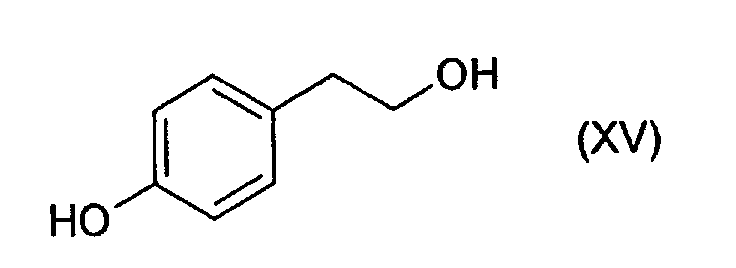
- Tyrosol or 2-(4-hydroxyphenyl) ethanol has the formula (XV): R1 and R2 are hydroxyl groups and R3 is hydrogen.
- Tyrosol and hydroxytyrosol are good candidates for use in the prevention and treatment of acute and chronic cardiovascular, hepatic, renal and inflammatory diseases either as drugs or as food ingredients, since they effectively combat oxidative stress and, hence, the production of proinflammatory substances and the recruitment of cells involved in these processes. But two problems arise concerning their use as antioxidants to prevent these diseases:
- This invention presents tyrosol and hydroxytyrosol derivatives that find a way around both these problems.
- the tyrosol and hydroxytyrosol groups in the new derivatives are partially or completely protected against oxidation.
- tyrosol or hydroxytyrosol esters are compared with tyrosol or hydroxytyrosol, the esters are much more stable against oxidation.
- solubility of these esterified derivatives can be modulated depending on the fatty acid chain length and the number of chains that the tyrosol or hydroxytyrosol molecules esterify.
- a range of solubilities can be obtained, from compounds completely soluble in the aqueous phase, for example using acetic acid to form a hydroxytyrosol ester protecting only one of the hydroxyl groups, to compounds that are completely soluble in the fatty phase, for example, using oleic acid to form a hydroxytyrosol ester.
- liposomes Moreover, the possible inclusion of the new tyrosol and hydroxytyrosol derivatives in liposomes is proposed. This would protect these compounds from oxidation, and from the presence of metals that can cause their degradation and make them useless as antioxidants. These liposomes could be incorporated both into food products with a majority aqueous or oily phase.
- the new tyrosol and hydroxytyrosol derivatives are hydrolysed in the intestinal tract of mice in the two components, tyrosol or hydroxytyrosol, and the corresponding fatty acid. After that, the two molecules are rapidly absorbed by the organism and detected in the plasma. After their absorption, both compounds can act as antioxidants to prevent diseases related with oxidative stress and inflammatory diseases.
- solutions of all the compounds were prepared in refined oil. A total of 5 mg of II were dissolved in 5 g of refined oil, and finally 0.5 g of this solution were dissolved in 5 g of refined oil. Similarly, solutions III and VIII were prepared in refined oil. Aliquots of 0.3 ml were collected at different times for each solution and were stored at -20°C. Isolation of compounds II and III from refined oil was done using solid phase extraction (cartridge of diol phase) with a preconditioned process of 6 ml of methanol and 6 ml of hexane.
- Pure hydroxytyrosol was obtained from olive leaves using standard extraction procedures compatible with the consumption of food products.
- hydroxytyrosol A 2.5 mg dose of hydroxytyrosol was administered per kg weight to 5 fasting healthy volunteers aged from 22-30 years who had not taken olive oil in their diet for at least two days before the study. Hydroxytyrosol dissolved in water was administered orally and afterwards blood samples were obtained at 0, 10, 20, 30, 60, 120 minutes. The plasma level of hydroxytyrosol and derived metabolites were determined by gas chromatography-mass spectometry using anthracene and napthol as internal standards.
- hydroxytyrosol 1 is absorbed rapidly in the intestine, 2) is bioavailable at least 30 minutes after its administration and 3) is metabolised rapidly to homovanillic acid.
- a juice was prepared enriched in the following ingredients: Ingredient Amount per kg Concentrated juice 200 g 2-(3,4-dihydroxyphenyl) ethyl acetate 1 g Insoluble fibre 10 g Lecithin 0.5 g Flavors 2 g Vitamin C 90 mg Vitamin B1 2.1 mg Vitamin B2 2.4 mg Vitamin B6 3 mg Vitamin B12 1.5 ⁇ g Vitamin A 1.2 mg Vitamin D 7.5 ⁇ g Folic acid 300 ⁇ g
- the final product was prepared by adding water and the water-soluble ingredients to the juice concentrate. Next, 2-(3,4-dihydroxyphenyl) ethyl acetate was added, the mixture was suitably blended and the resulting product pasteurised and homogenised. Finally, the product was left to cool and then packaged.
- a product was prepared based on UHT milk Amount per litre Skimmed milk 960 g Powdered skimmed milk 17 g 2-(3,4-dihydroxyphenyl) ethyl acetate 1 g Bisodium phosphate 0.5 g Tripotassium phosphate 0.2 g Water 2 g Vitamin B6 3 mg Vitamin B12 3.8 ⁇ g Vitamin A 1200 ⁇ g Vitamin D 7.5 ⁇ g Vitamin E 15 mg Folic acid 300 ⁇ g
- the solid ingredients were combined with the liquid milk and water. Next, hydroxytyrosol acetate was added and the mixture was homogenised in the absence of oxygen. The resulting milk product was submitted to a UHT treatment (150°C for 4-6 seconds) and finally packaged in the absence of oxygen.
- a drink was prepared with a nutritionally balanced formula with the following ingredients: Ingredients Amount per litre Skimmed milk 814.3 g Serum protein concentrate 11.8 g Mixture of oils 32.5 g Sucrose 27 g Maltodextrin 71 g Soluble fibre 10 g Vitamin A 1200 mg Vitamin D 7.5 ⁇ g Vitamin E 15 mg Vitamin K 120 ⁇ g Vitamin C 90 mg Thiamin 2.25 mg Riboflavin 2.55 mg Pyridoxine 3 mg Vitamin B12 3 ⁇ g Niacin 28.5 mg Folic acid 30 ⁇ g Pantothenic acid 4 mg Biotin 40 ⁇ g Calcium 1200 mg Phosphorus 970 mg Magnesium 47 mg Sodium 480 mg Potassium 1000 mg Chloride 700 mg Iron 43 mg Zinc 24.5 mg Iodine 150 ⁇ g Manganese 100 ⁇ g Selenium 10 ⁇ g Mono- and diglycerides 1.5 g Bisodium phosphate (Na 2 HPO 4 5H 2 O) 0.6 g Carragenates 4 g Dem
- a butter was prepared with a nutritionally balanced formula with the following ingredients: Ingredients Amount per kg Butter 200 g Mixture of oils 208 g Starch 8 g Casseinate 6 g Emulsifier 2 g Maltodextrin 6 g Water 570 g 2-(3,4-dihydroxyphenyl) ethyl oleate 1.5 g
- the aqueous phase was prepared with the water-soluble ingredients. Emulsifiers and 2-(3,4-dihydroxyphenyl) ethyl oleate was dissolved in the mixture of oils.
- the aqueous phase was incorporated in the fatty phase by continuous addition at high temperature and stirring. This mixture was pasteurised using surface heat exchangers. The final solid product was obtained by using a high-speed rotor provided with an external cooling system.
Landscapes
- Chemical & Material Sciences (AREA)
- Organic Chemistry (AREA)
- Health & Medical Sciences (AREA)
- Life Sciences & Earth Sciences (AREA)
- Engineering & Computer Science (AREA)
- Veterinary Medicine (AREA)
- Public Health (AREA)
- General Health & Medical Sciences (AREA)
- Animal Behavior & Ethology (AREA)
- Food Science & Technology (AREA)
- Polymers & Plastics (AREA)
- Chemical Kinetics & Catalysis (AREA)
- Pharmacology & Pharmacy (AREA)
- Medicinal Chemistry (AREA)
- General Chemical & Material Sciences (AREA)
- Nuclear Medicine, Radiotherapy & Molecular Imaging (AREA)
- Bioinformatics & Cheminformatics (AREA)
- Diabetes (AREA)
- Emergency Medicine (AREA)
- Nutrition Science (AREA)
- Hematology (AREA)
- Epidemiology (AREA)
- Dermatology (AREA)
- Mycology (AREA)
- Botany (AREA)
- Microbiology (AREA)
- Obesity (AREA)
- Urology & Nephrology (AREA)
- Birds (AREA)
- Heart & Thoracic Surgery (AREA)
- Endocrinology (AREA)
- Rheumatology (AREA)
- Pain & Pain Management (AREA)
- Gastroenterology & Hepatology (AREA)
- Cardiology (AREA)
- Acyclic And Carbocyclic Compounds In Medicinal Compositions (AREA)
- Organic Low-Molecular-Weight Compounds And Preparation Thereof (AREA)
- Cosmetics (AREA)
- Medicinal Preparation (AREA)
- Low-Molecular Organic Synthesis Reactions Using Catalysts (AREA)
Abstract
Description
- The present invention refers to the use of phenolic compounds and their derivatives for the prevention and treatment of cardiovascular, hepatic and renal diseases, as well as to their cosmetic applications, to compositions that include these compounds and to some novel phenolic compounds and derivatives.
- Cardiovascular diseases are the first cause of death in developing countries. One of the non-genetic risk factors associated with the development of cardiovascular disease is diet. It has been shown that the incidence of these diseases is directly related to the presence of high blood cholesterol levels that can be caused by a diet with a high cholesterol and saturated fat contents.
- On the other hand, many studies have shown that oxidation or modification of low density lipoproteins (LDL) triggers the whole atherosclerotic process, in which endothelial activation and activated oxygen species play an important role. Epidemiological studies indicate that the Mediterranean diet is associated with a low incidence of cardiovascular diseases. The most common components of this diet include fruit and vegetables and also olive oil as the main source of fats, all products rich in antioxidants. Results from in vivo and in vitro studies show that antioxidants present in food can counteract the harmful effects of free radicals, preventing LDL oxidation and, therefore, also the atherosclerotic process.
- Oxidative stress and the generation of free radicals also play an important part in hepatic and renal diseases, due to the high presence of oxygen in these organs, as well as in the trigger of the inflammatory processes in numerous situations. For this reason, antioxidants in the diet can be crucial to prevent this type of diseases.
- Epidemiological studies have demonstrated that UV radiation is the main risk factor in skin cancer. The skin has a defence system to protect against reactive oxygen species produced after exposure to UV radiation, mainly via the enzymatic activities of superoxide dismutase and glutathion peroxidase. A reduction in this defence system, more specifically, in intracellular glutathion levels, produces an increase in the pigmentation, ageing of the skin, induction of apoptosis and can, finally, lead to skin cancer. Hence, supplementation with antioxidants (e.g. vitamin E) has been shown to reverse the situation of oxidative stress induced by UV radiation in human fibroblasts.
- Olive oil is a healthy food product rich in oleic acid and antioxidants. Tyrosol and hydroxytyrosol are phenolic compounds obtained from the olive, with a strong antioxidant capacity that has been disclosed both in vivo and in vitro. The possible favourable role of tyrosol and hydroxytyrosol in cardiovascular diseases has been disclosed by some authors who have shown that these compounds reduce the susceptibility of LDL lipoproteins to the in vitro and in vivo oxidation (Masella et al. 2001, Lipids, 36, 1195-1202). It has also been suggested that hydroxytyrosol could reduce lipidic peroxidation in hepatic microsomes in animal studies and even the phenolic antioxidant compounds present in olive oil (tyrosol and hydroxytyrosol) could have a potent antiinflammatory effect.
- Tyrosol and hydroxytyrosol are easily oxidisable and, therefore, the use thereof in the form of olive extracts can result in an important proportion of the tyrosol and the hydroxytyrosol being oxidised in the food matrix, that would prevent oxidation of the food but both of these compounds would be degraded before entering the organism. It is, therefore, highly beneficial for tyrosol and hydroxytyrosol to reach the organism intact and to exert their strong antioxidant activity therein.
- At the same time, olive extracts that contain tyrosol or hydroxytyrosol are polar fractions highly soluble in the aqueous phase. A process that would increase the solubility of the antioxidant in an oily phase would be of considerable interest for the food industry. The solubility of tyrosol and hydroxytyrosol can increase, as with any polar molecule, by adding fatty acid chains. In this case, fatty acids can be used that also have beneficial effects on the type of diseases treated in this invention.
- Diets have been disclosed such as the Mediterranean diet, which are rich in monounsaturated fats (MUFA) and poor in saturated fats, that have favourable effects on the cardiovascular risk profile (Feldman et al. 1999, Am. J. Clin. Nutr., 70, 953-4). It has been shown that MUFA intake reduces the triglyceride concentration in plasma in healthy volunteers with normal lipid levels (Kris-Etherton et al. 1999; Am. J. Clin. Nutr., 70, 1009-15).
- It has also been reported that polyunsaturated fatty acids of the series n-3 (n-3 PUFA), mainly eicosapentanoic acid (EPA) and docosahexanoic acid (DHA), have beneficial effects on the cardiovascular system and on inflammatory processes. The activities disclosed for the n-3 PUFA include antiarrhythmic activity, inhibition of platelet aggregation and reduced plasma lipids and cholesterol levels (Connor et al. 2000, Am. J. Clin. Nutr., 71, 171S-5S).
- The object of the invention is, therefore, to provide a series of compounds which, as mentioned previously, serve to prevent and to treat cardiovascular, hepatic, renal and inflammatory diseases and which, as well as being protected against degradation, can be easily incorporated into nutritional products.
- The present invention provides tyrosol and hydroxytyrosol molecules modified with at least one fatty acid via an ester type bond. These molecules serve to prevent and to treat cardiovascular, hepatic and renal diseases, diabetes and inflammatory diseases and for cosmetic treatments using the antioxidant action of tyrosol and hydroxytyrosol since all these diseases present acute oxidative stress. Fatty acid esters of tyrosol and hydroxytyrosol are hydrolysed in vivo producing tyrosol and hydroxytyrosol, respectively, as well as the corresponding fatty acid. Hence, the resulting components can have antioxidant, antiinflammatory and nutritional effects on the organism.
- Moreover, and explained by the presence of the radical or radicals of the fatty acid(s) in the molecule, the esters of the present invention, on the one hand, present a degree of self-protection against their oxidative degradation, such that both tyrosol and hydroxytyrosol can reach the organism intact and, on the other hand, present different degrees of solubility in the aqueous phase and the fatty phase, that can be modulated in relation to the degree of esterification of the tyrosol or hydroxytyrosol and of the chosen esterifying fatty acid facilitating its incorporation into any kind of nutritional products. Finally, esterification of tyrosol or hydroxytyrosol provides an additional supplement of mono and polyunsaturated fatty acids, with a known beneficial effect for health.
- The tyrosol and hydroxytyrosol derivatives disclosed in this invention have a common structure represented by formula (I), wherein at least one hydroxyl group must be modified with a fatty acid chain. The R groups vary within the formula generating different series of tyrosol and hydroxytyrosol derivatives. R1 and R2 groups can be a hydroxyl group or a hydroxyl group protected with a fatty acid chain via an ester type bond. The R3 group can be hydrogen (in the case of tyrosol or tyrosol esters), a hydroxyl group (in the case of hydroxytyrosol or hydroxytyrosol esters), or a hydroxyl group protected with a fatty acid chain via an ester type bond (in the case of hydroxytyrosol esters). The compounds can contain one, two or three fatty acid chains with a length ranging from 2 to 22 carbon atoms.

- Note: Hydroxytyrosol or 2-(3,4-dihydroxyphenyl) ethanol has formula (II): R1, R2 and R3 are hydroxyl groups.
- Tyrosol or 2-(4-hydroxyphenyl) ethanol has the formula (XV): R1 and R2 are hydroxyl groups and R3 is hydrogen.
- A more practical illustration of some of the hydroxytyrosol derivatives included in the invention are:
- (1) 2-(3,4-dihydroxyphenyl) ethyl acetate (III): R2 and R3 are hydroxyl groups and R1 is a hydroxyl group protected with acetic acid via an ester type bond.
- (2) 2-(3,4-dihydroxyphenyl) ethyl stearate (IV): R2 and R3 are hydroxyl groups and R1 is a hydroxyl group protected with stearic acid via an ester type bond.
- (3) 2-(3,4-dihydroxyphenyl) ethyl oleate (V): R2 and R3 are hydroxyl groups and R1 is a hydroxyl group protected with oleic acid via an ester type bond.
- (4) 2-(3-stearyloxy-4-hydroxyphenyl) ethanol (VI): R1 and R3 are hydroxyl groups and R2 is a hydroxyl group protected with stearic acid via an ester type bond.
- (5) 2-(4-stearyloxy-3-hydroxyphenyl) ethanol (VII): R1 and R2 are hydroxyl groups and R3 is a hydroxyl group protected with stearic acid via an ester type bond.
- (6) 2-(3,4-diacetoxyphenyl) ethyl acetate (VIII): R1, R2 and R3 are hydroxyl groups protected with acetic acid via an ester type bond.
- (7) 2-(3,4-distearyloxyphenyl) ethyl stearate (IX): R1, R2 and R3 are hydroxyl groups protected with stearic acid via an ester type bond.
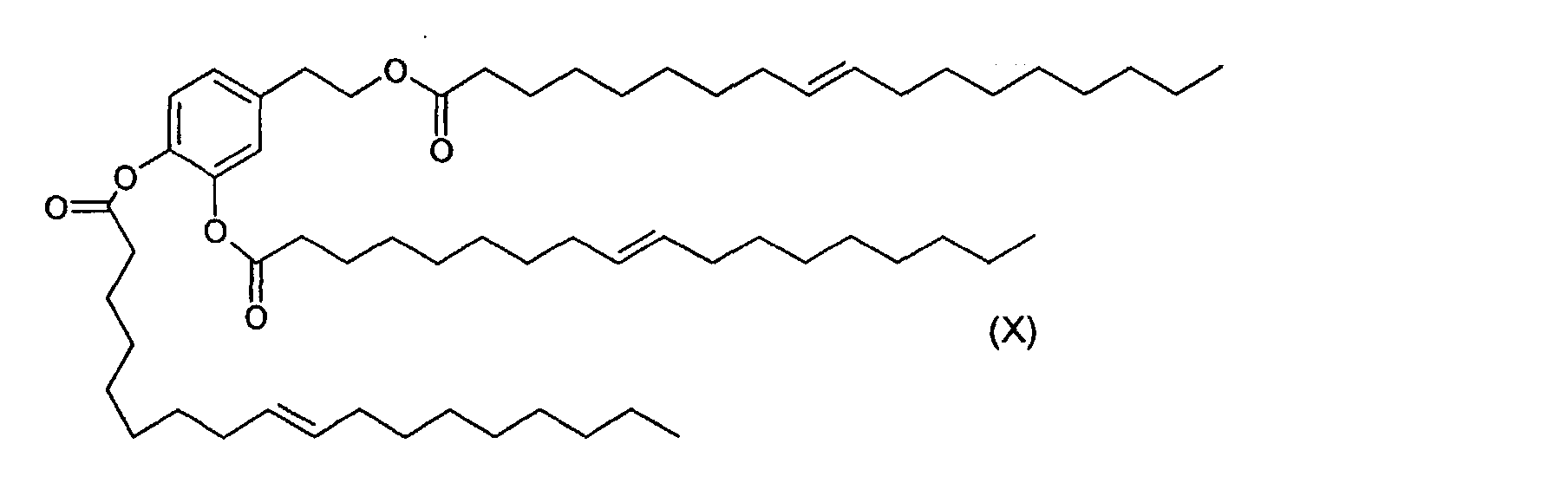
- (8) 2-(3,4-dioleyloxyphenyl) ethyl oleate (X): R1, R2 and R3 are hydroxyl groups protected with oleic acid via an ester type bond.
- (9) 2-(3,4-dihydroxyphenyl) ethyl eicosapentanoate (XI): R2 and R3 are hydroxyl groups and R1 is a hydroxyl group protected with eicosapentanoic acid via an ester type bond.
- (10) 2-(3,4-dihydroxyphenyl) ethyl docosahexanoate (XII): R2 and R3 are hydroxyl groups and R1 is a hydroxyl group protected with docosahexanoic acid via an ester type bond.
- (11) 2-(3,4-dieicosapentanoyloxyphenyl) ethyl eicosapentanoate (XIII): R1, R2 and R3 are hydroxyl groups protected with eicosapentanoic acid via an ester type bond.
- (12) 2-(3,4-didocosahexanoyloxyphenyl) ethyl docosahexanoate (XIV): R1, R2 and R3 are hydroxyl groups protected with docosahexanoic acid via an ester type bond.
- (13) 2-(4-hydroxyphenyl) ethyl acetate (XVI): R2 is a hydroxyl group, R3 is hydrogen and R1 is a hydroxyl group protected with acetic acid via an ester type bond.
- (14) 2-(4-hydroxyphenyl) ethyl stearate (XVII): R2 is a hydroxyl group, R3 is hydrogen and R1 is a hydroxyl group protected with stearic acid via an ester type bond.
- (15) 2-(4-hydroxyphenyl) ethyl oleate (XVIII): R2 is a hydroxyl group, R3 is hydrogen and R1 is a hydroxyl group protected with oleic acid via an ester type bond.
- (16) 2-(4-hydroxyphenyl) ethyl eicosapentanoate (XIX): R2 is a hydroxyl group, R3 is hydrogen and R1 is a hydroxyl group protected with eicosapentanoic acid via an ester type bond.
- (17) 2-(4-hydroxyphenyl) ethyl docosahexanoate (XX): R2 is a hydroxyl group, R3 is hydrogen and R1 is a hydroxyl group protected with docosahexanoic acid via an ester type bond.
- (18) 2-(4-acetoxyphenyl) ethyl acetate (XXI): R1 and R2 are hydroxyl groups protected with acetic acid via an ester type bond and R3 is a hydrogen.
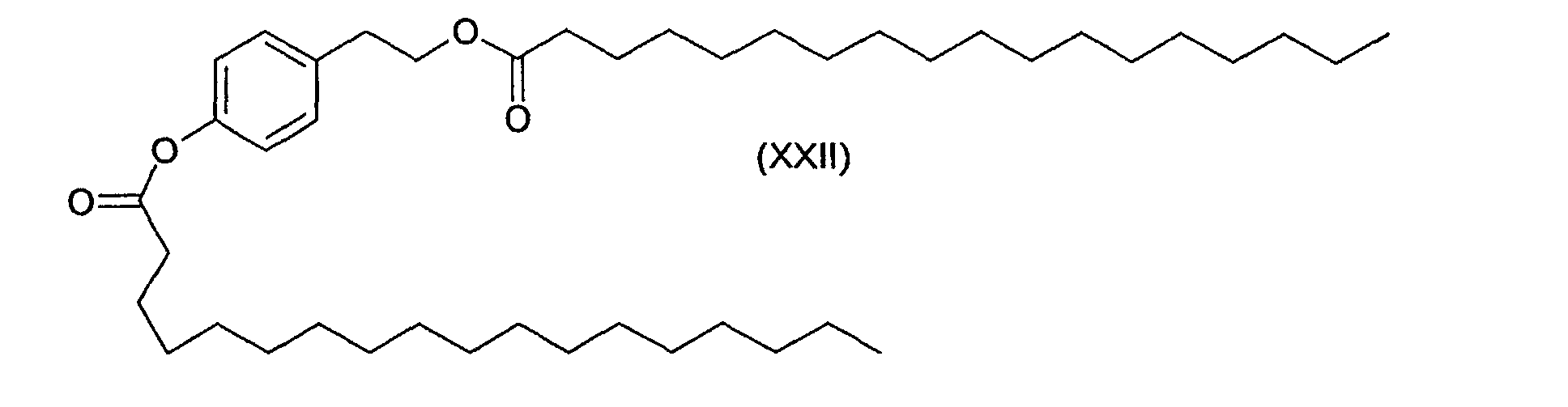
- (19) 2-(4-stearyloxyphenyl) ethyl stearate (XXII): R1 and R2 are hydroxyl groups protected with stearic acid via an ester type bond and R3 is a hydrogen.
- (20) 2-(4-oleyloxyphenyl) ethyl oleate (XXIII): R1 and R2 are hydroxyl groups protected with oleic acid via an ester type bond and R3 is a hydrogen.
- (21) 2-(4-eicosapentanoyloxyphenyl) ethyl eicosapentanoate (XXIV): R1 and R2 are hydroxyl groups protected with eicosapentanoic acid via an ester type bond and R3 is a hydrogen.
- (22) 2-(4-docosahexanoyloxyphenyl) ethyl docosahexanoate (XXV): R1
and R2 are hydroxyl groups protected with docosahexanoic acid via an ester
type bond and R3 is a hydrogen.











-
- Tyrosol and hydroxytyrosol are good candidates for use in the prevention and treatment of acute and chronic cardiovascular, hepatic, renal and inflammatory diseases either as drugs or as food ingredients, since they effectively combat oxidative stress and, hence, the production of proinflammatory substances and the recruitment of cells involved in these processes. But two problems arise concerning their use as antioxidants to prevent these diseases:
- 1) They can be oxidised in the food matrix or in the pharmaceutical formulation.
- 2) The solubility of tyrosol and hydroxytyrosol in food products with a high fat composition.
-
- This invention presents tyrosol and hydroxytyrosol derivatives that find a way around both these problems. The tyrosol and hydroxytyrosol groups in the new derivatives are partially or completely protected against oxidation. When tyrosol or hydroxytyrosol esters are compared with tyrosol or hydroxytyrosol, the esters are much more stable against oxidation.
- Also, the solubility of these esterified derivatives can be modulated depending on the fatty acid chain length and the number of chains that the tyrosol or hydroxytyrosol molecules esterify. A range of solubilities can be obtained, from compounds completely soluble in the aqueous phase, for example using acetic acid to form a hydroxytyrosol ester protecting only one of the hydroxyl groups, to compounds that are completely soluble in the fatty phase, for example, using oleic acid to form a hydroxytyrosol ester.
- Moreover, the possible inclusion of the new tyrosol and hydroxytyrosol derivatives in liposomes is proposed. This would protect these compounds from oxidation, and from the presence of metals that can cause their degradation and make them useless as antioxidants. These liposomes could be incorporated both into food products with a majority aqueous or oily phase.
- The new tyrosol and hydroxytyrosol derivatives are hydrolysed in the intestinal tract of mice in the two components, tyrosol or hydroxytyrosol, and the corresponding fatty acid. After that, the two molecules are rapidly absorbed by the organism and detected in the plasma. After their absorption, both compounds can act as antioxidants to prevent diseases related with oxidative stress and inflammatory diseases.
-
- Figure 1 is a graph that shows the different stability to oxidation of compounds 2-(3,4-dihydroxyphenyl) ethyl acetate (III), 2-(3,4-diacetoxyphenyl) ethyl acetate (VIII) and hydroxytyrosol (II) when they are incorporated in an oily food matrix.
- Figure 2 corresponds to a graph that shows a comparative study of the absorption after oral ingestion of hydroxytyrosol and vanillic acid, specifically, the mean plasma concentrations of hydroxytyrosol and vanillic acid detected after administration of an aqueous solution of hydroxytyrosol (2.5 mg/kg weight).
-
- The following examples illustrate the invention:
- To a solution of 2-(3,4-dihydroxyphenyl) ethanol (100 mg, 0.65 mmol) in dry THF (5 ml), anhydrous K2CO3 (90 mg, 0.65 mmol), acetyl chloride (0.46 ml, 0.66 mmol) and tetrabutylammonium hydrogen sulphate (TBAH) (22 mg, 0.06 mmol) were added. The mixture was shaken under argon at room temperature for 15 h, then filtered and evaporated to dryness. The residue was dissolved in dichloromethane (50 ml), washed with water (2x50 ml) and the organic phase was dried with anhydrous sodium sulphate, filtered and evaporated to dryness. The residue was purified by column chromatography using an hexane-ethyl ether mixture (1:1) as an eluent to obtain 72 mg (57%) of compound III as a transparent syrup.
RMN-1H (300 mHz, CDCl3): 6.78 (d, J=8.1 Hz, 1H, aromatic), 6.73 (d, J=1.5 Hz, 1H, aromatic), 6.63 (dd, J=8.0, 1.5 Hz, 1H, aromatic), 4.23 (t, J=7.1 Hz, 2H, -CH2OOC-), 2.81 (t, J=7.1 Hz, 2H, ar-CH2), 2.03 (s, 3H, -CH3) - To a solution of 2-(3,4-dihydroxyphenyl)ethanol (100 mg, 0.65 mmol) in dry THF (5 ml) anhydrous K2CO3 (90 mg, 0.65 mmol), stearyl chloride (197 mg, 0.66 mmol) and 22 mg of tetrabutylammonium hydrogen sulphate (TBAH) were added. The mixture was shaken under argon at room temperature for 24 h then filtered and evaporated to dryness. The residue was dissolved in dichloromethane (50 ml), washed with water (2x50 ml) and the organic phase dried with anhydrous sodium sulphate, filtered and evaporated to dryness. The residue was purified by column chromatography using an hexane-ethyl ether mixture (2:1) to obtain 132 mg (48%) of compound IV as a white solid.
RMN-1H (300 mHz, CDCl3): 6.79 (d, J=8.1 Hz, 1H, aromatic), 6.72 (d, J=2, 1H, aromatic), 6.63 (dd, J=8.0, 2.0 Hz, 1H, aromatic), 4.23 (t, J=7.1 Hz, 2H, -CH2OOC-), 2.80 (t, J=7.1 Hz, 2H, ar-CH2-), 2.28 (t, J=7.4 Hz, 2H, -OOC-CH2-), 1.58 (m, 2H, -OOC-CH2- CH 2-), 1.24 (m, 28H, -CH2-), 0.87 (t, J=6.9, 3H, -CH3). - To a solution of 2-(3,4-dihydroxyphenyl)ethanol (100 mg, 0.65 mmol) in dry THF (5 ml), anhydrous K2CO3 (90 mg, 0.65 mmol), oleyl chloride (0.27 ml, 0.75 mmol) and tetrabutylammonium hydrogen sulphate (TBAH) were added. The mixture was shaken under argon at room temperature for 24 h, then filtered and evaporated to dryness. The residue was dissolved in dichloromethane (50 ml), washed with water (2x50 ml) and the organic phase was dried with anhydrous sodium sulphate, filtered and evaporated to dryness. The residue was purified by column chromatography using an hexane-ethyl ether mixture (4:1) as an eluent to obtain 128 mg (47%) of compound V as a slightly yellowish syrup.
RMN-1H (300 mHz, CDCl3): 6.78 (d, J=8.1 Hz, 1H, aromatic), 6.72 (d, J=2, 1H, aromatic), 6.63 (dd, J=8.0, 2.0 Hz, 1H, aromatic), 5.34 (m, 2H, HC=CH), 4.23 (t, J=7.1 Hz, 2H, -CH2OOC-), 2.80 (t, J=7.1 Hz, 2H, ar-CH2-), 2.28 (t, J=7.6 Hz, 2H, -OOC-CH2-), 1.99 (m, 4H, -CH 2-HC=CH-CH 2-), 1.58 (m, 2H, -OOC-CH2-CH 2-), 1.26 (m, 26H, -CH2-), 0.87 (t, J=6.9, 3H, -CH3). - To a solution of 2-(3,4-dihydroxyphenyl)ethanol (80 mg, 0.52 mmol) in dry THF (5 ml), pyridine (0.06 ml) and stearic anhydride (290 mg, 0.53 mmol) were added. The mixture was shaken for 24 h in an inert atmosphere at room temperature. Next, the pyridine residues were removed by coevaporating with toluene (3x25 ml) and the residue was evaporated to dryness. The residue was dissolved in dichloromethane (50 ml), washed with water (2x50 ml), dried over anhydrous sodium sulphate and the organic phase was concentrated to dryness. The residue was purified by column chromatography using a chloroform-methanol mixture 20:1 as the mobile phase to obtain 44 mg (20 %) of a white solid that was found to be a (1:1 ) mixture of compounds VI and VII.
RMN-1H of the 1:1 mixture of compounds VI and VII (300 mHz, CDCl3): 7.00 (d, J=8.1 Hz, 1 H, aromatic), 6.96 (dd, J=5.3, 2.1 Hz, 2H, aromatic), 6.95 (s, 1H, aromatic), 6.87 (d, J=2.1 Hz, 1H, aromatic), 6.77 (dd, J=8.2, J=2.1 Hz, 1H, aromatic), 3.83 (t, J=6.4 Hz, 2H,-CH2OH), 3.82 (t, J=6.4 Hz, 2H, -CH2OH), 2.80 (t, J=6.4 Hz, 2H, -ar-CH2-), 2.78 (t, J=6.4 Hz, 2H, -ar-CH2-), 2.59 (t, J=7.4 Hz, 4H, , -ar-OOC-CH2-), 1.75 (m, 4H, -ar-OOC-CH2- CH 2-), 1.25 (m, 56H, -CH2-), 0.87 (t, J=6.9 Hz, 6H, -CH3). - To a solution of 2-(3,4-dihydroxyphenyl) ethanol (200 mg, 1.3 mmol) in dry THF (10 ml), pyridine (0.5 ml), acetic anhydride (0.6 ml) and 4-dimethylaminopyrridine (30 mg) were added. The reaction mixture was shaken under argon for 7 h at room temperature. Next, methanol (25 ml) was added and the mixture was coevaporated with toluene (3x10 ml) to dryness. The product obtained was purified by column chromatography using an hexane-ethyl ether mixture (1:1) as an eluent to obtain 136 mg (75%) of compound VIII as a syrup.
RMN-1H- (300 mHz, CDCl3): 7.10 (dd, J=10.2, 1.9 Hz, 2H, aromatic), 7.04 (s, 1H, aromatic), 4.26 (t, J=6.9 Hz, 2H,- CH2OOC-), 2.89 (t, J=6.9 Hz, 2H ar-CH2-), 2.27 (s, 3H, -ar-OCOCH3), 2.26 (s, 3H, -ar-OCOCH3), 2.02 (s, 3H, -CH2-OCOCH 3). - To a solution of 2-(3,4-dihidroxyphenyl) ethanol (100 mg, 0.65 mmol) in dry THF (10 ml) shaking at 0°C, stearic acid (563 mg, 1.98 mmol), dicyclohexylcarbodiimide (410 mg, 1.98 mmol) and 4-dimethylaminopyrridine (25 mg, 0.19 mmol) were added. The reaction mixture was shaken under argon for 24 h at room temperature. Next, the precipitated urea was filtered and the filtrate was evaporated to dryness. The residue was dissolved in dichloromethane (25 ml), washed twice with 0.5 N HCl (2x50 ml), with a saturated solution of NaHCO3 and with a saturated solution of sodium chloride (1x50 ml). The combined organic phases were dried with anhydrous sodium sulphate, filtered and evaporated to dryness. The product obtained was purified by column chromatography using an hexane-ethyl ether mixture (6:1) as an eluent to obtain 200 mg (32%) of compound IX as a white solid.
RMN-1H (300 mHz, CDCl3): 7.08 (m, system AB, 2H aromatic), 7.02 (s, 1H, aromatic), 4.26 (t, J=7.0 Hz, -CH2OOC-), 2.91 (t, J=7.0 Hz, 2H, ar-CH2-), 2.50 (t, J=7.5 Hz, 4H, ar-OOC-CH2-), 2.26 (t, J=7.5 Hz, 2H, -OOC-CH2-), 1.71 (m, 4H, -ar-OOC-CH2- CH 2-),1.62 (m, 2H, -OOC-CH2- CH 2-), 1.24 (m, 84H -CH2-), 0.87 (t, J=6.9 Hz, 9H, -CH3). - The stability against oxidation of II, III and VIII dissolved in refined oil was studied. This was done by measuring the remaining amount of each of the compounds when these were subjected to forced oxidation at 120°C. Oxidation was done by passing a dry air current (∼20l/h) through an aliquot of the sample (4 ml) placed in a reactor heated to 120°C using a Metrohm-Herisau A. G Rancimat apparatus.
- The solutions of all the compounds were prepared in refined oil. A total of 5 mg of II were dissolved in 5 g of refined oil, and finally 0.5 g of this solution were dissolved in 5 g of refined oil. Similarly, solutions III and VIII were prepared in refined oil. Aliquots of 0.3 ml were collected at different times for each solution and were stored at -20°C. Isolation of compounds II and III from refined oil was done using solid phase extraction (cartridge of diol phase) with a preconditioned process of 6 ml of methanol and 6 ml of hexane. After introducing the sample, 6 ml of hexane, 6 ml of hexane/ethyl acetate (9:1) and 10 ml of methanol were passed through it, and then the methanolic fraction was concentrated to 1 ml volume. Compound VIII was also isolated using solid phase extraction with LC-Diol cartridge, with the same preconditioned process, and 12 ml of hexane and 10 ml of methanol were passed through the mixture. Once again, the methanolic phase was concentrated to 1 ml volume for analysis. Analysis and quantification of II, III and VIII was carried out by reverse-phase high performance liquid chromatography (RP-HPLC) with UV detection at 254 and 280 nM. Figure 1 shows the remaining amount of compounds II, III and VIII at different temperatures during forced oxidation at 120°C.
- It can be clearly observed in Figure 1 that the mono-acetylated compound (III) takes longer to degrade than hydroxytyrosol (II), and therefore hydroxytyrosol in this acetylated form is better conserved in the food matrix than when its ester group is not modified. This effect is much clearer in the case of the tri-acetylated compound (VIII), where 50% of the compound remains even after 10 hours whereas compounds II and III have completely degraded.
- Pure hydroxytyrosol was obtained from olive leaves using standard extraction procedures compatible with the consumption of food products.
- A 2.5 mg dose of hydroxytyrosol was administered per kg weight to 5 fasting healthy volunteers aged from 22-30 years who had not taken olive oil in their diet for at least two days before the study. Hydroxytyrosol dissolved in water was administered orally and afterwards blood samples were obtained at 0, 10, 20, 30, 60, 120 minutes. The plasma level of hydroxytyrosol and derived metabolites were determined by gas chromatography-mass spectometry using anthracene and napthol as internal standards.
- The results of the study are shown in figure 2. In plasma the following compounds were identified: hydroxytyrosol (3,4 dihydroxyphenylethanol) and its metabolite derivative, vanillic acid (4-hydroxy-3-methoxy-phenylacetic acid), probably resulting from the activity of the enzyme catechol orthomethyl transferase on hydroxytyrosol. Neither homovanillic alcohol or aldehyde were found in the plasma samples. Hydroxytyrosol absorption was done rapidly since the maximum plasma level was detected 10 minutes after administration, returning to values similar to initial ones after 30 minutes. On the other hand, homovanillic acid starts being detectable in the plasma at significant levels 10 minutes after administering hydroxytyrosol and showed an absorption peak 30 minutes after administration of the solution. It is also interesting to note that homovanillic acid disappears from the plasma more slowly than hydroxytyrosol.
- In conclusion, according to the absorption study, hydroxytyrosol 1) is absorbed rapidly in the intestine, 2) is bioavailable at least 30 minutes after its administration and 3) is metabolised rapidly to homovanillic acid.
- The absorption in rats of hydroxytyrosol (II), (II), 2-(3,4-dihydroxyphenyl) ethyl acetate (III), also called hydroxytyrosol acetate and 2-(3,4-distearyloxyphenyl) ethyl stearate (IX), also called hydroxytyrosol tristearate was studied. For this purpose, oily solutions of equivalent amounts of each compound were prepared (10 mg of II, 13 mg of III and 70 mg of IX) to be administered orally to mice from which blood samples were collected after 15 and 60 minutes. Plasma was isolated from each blood sample by extraction with ethyl acetate and analysed by gas chromatography-mass spectometry. The amounts of hydroxytyrosol detected in plasma after oral administration of compounds II and III were very similar (see Table below)
Compound administered Hydroxytyrosol in plasma, 15 min. Hydroxytyrosol in plasma, 60 min. Hydroxytyrosol (II) 0.79 mg/l 0.05 mg/l 2-(3,4-dihidroxyphenyl) ethyl acetate (III) 0.68 mg/l 0.06 mg/l 2-(3,4-distearyloxyphenyl) ethyl stearate (IX) not detected 0.44 mg/l - When 2-(3,4-distearyloxyphenyl) ethyl stearate (IX) was administered to mice, only hydroxytyrosol (II) was detected in plasma 1 hour after administration, since after 15 minutes hydroxytyrosol was not detected in plasma (see table above). These results indicate that, although at different rates, both 2-(3,4-dihydroxyphenyl) ethyl acetate (III), and 2-(3,4-distearyloxyphenyl) ethyl stearate (IX), release hydroxytyrosol in the stomach or intestine of mice after which this can be absorbed and pass to the blood stream.
- A juice was prepared enriched in the following ingredients:
Ingredient Amount per kg Concentrated juice 200 g 2-(3,4-dihydroxyphenyl) ethyl acetate 1 g Insoluble fibre 10 g Lecithin 0.5 g Flavors 2 g Vitamin C 90 mg Vitamin B1 2.1 mg Vitamin B2 2.4 mg Vitamin B6 3 mg Vitamin B12 1.5 µg Vitamin A 1.2 mg Vitamin D 7.5 µg Folic acid 300 µg - The final product was prepared by adding water and the water-soluble ingredients to the juice concentrate. Next, 2-(3,4-dihydroxyphenyl) ethyl acetate was added, the mixture was suitably blended and the resulting product pasteurised and homogenised. Finally, the product was left to cool and then packaged.
-
A product was prepared based on UHT milk Amount per litre Skimmed milk 960 g Powdered skimmed milk 17 g 2-(3,4-dihydroxyphenyl) ethyl acetate 1 g Bisodium phosphate 0.5 g Tripotassium phosphate 0.2 g Water 2 g Vitamin B6 3 mg Vitamin B12 3.8 µg Vitamin A 1200 µg Vitamin D 7.5 µg Vitamin E 15 mg Folic acid 300 µg - The solid ingredients were combined with the liquid milk and water. Next, hydroxytyrosol acetate was added and the mixture was homogenised in the absence of oxygen. The resulting milk product was submitted to a UHT treatment (150°C for 4-6 seconds) and finally packaged in the absence of oxygen.
- A drink was prepared with a nutritionally balanced formula with the following ingredients:
Ingredients Amount per litre Skimmed milk 814.3 g Serum protein concentrate 11.8 g Mixture of oils 32.5 g Sucrose 27 g Maltodextrin 71 g Soluble fibre 10 g Vitamin A 1200 mg Vitamin D 7.5 µg Vitamin E 15 mg Vitamin K 120 µg Vitamin C 90 mg Thiamin 2.25 mg Riboflavin 2.55 mg Pyridoxine 3 mg Vitamin B12 3 µg Niacin 28.5 mg Folic acid 30 µg Pantothenic acid 4 mg Biotin 40 µg Calcium 1200 mg Phosphorus 970 mg Magnesium 47 mg Sodium 480 mg Potassium 1000 mg Chloride 700 mg Iron 43 mg Zinc 24.5 mg Iodine 150 µg Manganese 100 µg Selenium 10 µg Mono- and diglycerides 1.5 g Bisodium phosphate (Na2HPO4 5H2O) 0.6 g Carragenates 4 g Demineralised water 70 g Flavors 2.75 g 2-(3,4-dihydroxyphenyl)ethyl acetate 1.5 g - All the solid ingredients were combined with the liquid milk and the water in a tank provided with suitable heating and stirring devices. Next, 2-(3,4-diacetoxyphenyl) ethyl acetate was added. Th mixture was heated to 60-70°C and emulsified with a single stage homogeniser at 6-7 MPa in the absence of oxygen. After preparing the emulsion, the mixture was heated to 140-150° C, 4-6 s, and immediately afterwards passed through a two stage homogeniser (27-29 MPa and 3-4 MPa). Finally, the mixture was packaged in the absence of oxygen.
- A butter was prepared with a nutritionally balanced formula with the following ingredients:
Ingredients Amount per kg Butter 200 g Mixture of oils 208 g Starch 8 g Casseinate 6 g Emulsifier 2 g Maltodextrin 6 g Water 570 g 2-(3,4-dihydroxyphenyl) ethyl oleate 1.5 g - First, the aqueous phase was prepared with the water-soluble ingredients. Emulsifiers and 2-(3,4-dihydroxyphenyl) ethyl oleate was dissolved in the mixture of oils. Next, the aqueous phase was incorporated in the fatty phase by continuous addition at high temperature and stirring. This mixture was pasteurised using surface heat exchangers. The final solid product was obtained by using a high-speed rotor provided with an external cooling system.
Claims (23)
- Phenolic compounds and their derivatives, characterized in that these compounds are represented by formula I, wherein R1 and R2 are selected from among: OH, OCOalkyl, or OCOalkenyl, and R3 is either H, OH, OCOalkyl or OCOalkenyl, wherein the alkyl or alkenyl chains present from 2 to 22 carbon atoms and wherein at least one OCOalkyl or OCOalkenyl group is present in the structure, for the treatment of cardiovascular, hepatic and renal diseases, diabetes and/or acute or chronic inflammatory processes.

- Phenolic compounds and their derivatives according to claim 1, wherein at least one of the R1, R2 and R3 chains are radicals of saturated, monounsaturated or polyunsaturated fatty acids.
- Phenolic compounds and their derivatives according to claims 1 and 2 characterized in that they correspond to: 2-(3,4-dihydroxyphenyl) ethyl stearate (IV), 2-(3,4-dihydroxyphenyl) ethyl oleate (V), 2-(3-stearyloxy-4-hydroxyphenyl) ethanol (VI), 2-(4-stearyloxy-3-hydroxyphenyl) ethanol (VII), 2-(3,4-diacetoxyphenyl) ethyl acetate (VIII), 2-(3,4-distearyloxyphenyl) ethyl stearate (IX), 2-(3,4-dioleyloxyphenyl) ethyl oleate (X), 2-(3,4-dihydroxyphenyl) ethyl eicosapentanoate (XI), 2-(3,4-dihydroxyphenyl) ethyl docohexanoate (XII), 2-(3,4-dieicosapentanoyloxyphenyl) ethyl eicosapentanoate (XIII), 2-(3,4-didocosahexanoyloxyphenyl) ethyl docosahexanoate (XIV), 2-(4-hydroxyphenyl) ethanol (XV), 2-(4-hydroxyphenyl) ethyl acetate (XVI), 2-(4-hydroxyphenyl) ethyl stearate (XVII), 2-(4-hydroxyphenyl) ethyl oleate (XVIII), 2-(4-hydroxyphenyl) ethyl eicosapentanoate (XIX), 2-(4-hydroxyphenyl) ethyl docosahexanoate (XX), 2-(4-acetoxyphenyl) ethyl acetate (XXI), 2-(4-stearyloxyphenyl) ethyl stearate (XXII), 2-(4-oleyloxyphenyl) ethyl oleate (XXIII), 2-(4-eicosapentanoyloxyphenyl) ethyl eicosapentanoate (XXIV), and 2-(4-docosahexanoyloxyphenyl) ethyl docosahexanoate (XXV).
- Compounds of formula: 2-(3,4-dihydroxyphenyl) ethyl stearate (IV), 2-(3,4-dihydroxyphenyl) ethyl oleate (V), 2-(3-stearyloxy-4-hydroxyphenyl) ethanol (VI), 2-(4-stearyloxy-3-hydroxyphenyl) ethanol (VII), 2-(3,4-distearyloxyphenyl) ethyl stearate (IX), 2-(3,4-dioleyloxyphenyl) ethyl oleate (X), 2-(3,4-dihydroxyphenyl) ethyl eicosapentanoate (XI), 2-(3,4-dihydroxyphenyl) ethyl docosahexanoate (XII), 2-(3,4-dieicosapentanoyloxyphenyl) ethyl eicosapentanoate (XIII), 2-(3,4-didocosahexanoyloxyphenyl) ethyl docosahexanoate (XIV), 2-(4-hydroxyphenyl) ethyl eicosapentanoate (XIX), 2-(4-hydroxyphenyl) ethyl docosahexanoate (XX), 2-(4-stearyloxyphenyl) ethyl stearate (XXII), 2-(4-oleyloxyphenyl) ethyl oleate (XXIII), 2-(4-eicosapentanoyloxyphenyl) ethyl eicosapentanoate (XXIV), and 2-(4-docosahexanoyloxyphenyl) ethyl docosahexanoate (XXV).
- Composition that includes one or more of the phenolic compounds or their derivatives according to claims 1-4 for the treatment of cardiovascular, hepatic or renal diseases, diabetes and/or acute or chronic inflammatory processes.
- Composition according to claim 5 characterized in that the composition is a pharmaceutical composition.
- Composition according to claim 5 characterized in that the composition is a food composition to which one or more of the phenolic compounds and their derivatives defined in claims 1-5 have been added.
- Composition according to claim 7, characterized in that the food composition is milk, aromatised milk, yoghurts, fermented milk products, dried milk, butter, margarine, mayonnaise, oils, sauces, bread, cakes, pastry products, biscuits, sweets, chewing gums, children's food products, dehydrated food, juices or clinical nutrition products.
- Use of the phenolic compounds and their derivatives,
characterized in that these compounds are represented by formula I, wherein R1 and R2 are selected from among: OH, OCOalkyl, or OCOalkenyl, and R3 is either H, OH, OCOalkyl or OCOalkenyl, wherein the alkyl or alkenyl chains present from 2 to 22 carbon atoms and wherein at least one OCOalkyl or OCOalkenyl group is present in the structure, in the preparation of a composition for the treatment and prevention of cardiovascular, hepatic and renal diseases, diabetes and/or both acute and chronic inflammatory processes.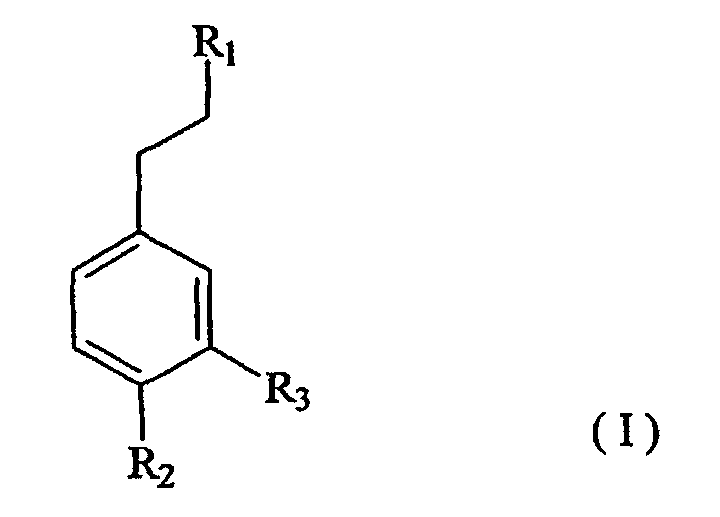
- Use according to claim 9 characterized in that at least one of the groups R1, R2 and R3 is a saturated, monounsaturated or polyunsaturated fatty acid.
- Use according to claim 9 characterized in that the phenolic compounds and their derivatives are selected from among: 2-(3,4-dihydroxyphenyl) ethyl stearate (IV), 2-(3,4-dihydroxyphenyl) ethyl oleate (V), 2-(3-stearyloxy-4-hydroxyphenyl) ethanol (VI), 2-(4-stearyloxy-3-hydroxyphenyl) ethanol (VII), 2-(3,4-diacetoxyphenyl) ethyl acetate (VIII), 2-(3,4-distearyloxyphenyl) ethyl stearate (IX), 2-(3,4-dioleyloxyphenyl) ethyl oleate (X), 2-(3,4-dihydroxyphenyl) eicosapentanoate (XI), 2-(3,4-dihydroxyphenyl) ethyl docosahexanoate (XII), 2-(3,4-dieicosapentanoyloxyphenyl) ethyl eicosapentanoate (XIII), 2-(3,4-didocosahexanoyloxyphenyl) ethyl docosahexanoate (XIV), 2-(4-hydroxyphenyl) ethanol (XV), 2-(4-hydroxyphenyl) ethyl acetate (XVI), 2-(4-hydroxyphenyl) ethyl stearate (XVII), 2-(4-hydroxyphenyl) ethyl oleate (XVIII), 2-(4-hydroxyphenyl) ethyl eicosapentanoate (XIX), 2-(4-hydroxyphenyl) ethyl docosahexanoate (XX), 2-(4-acetoxyphenyl) ethyl acetate (XXI), 2-(4-stearyloxyphenyl) ethyl stearate (XXII), 2-(4-oleyloxyphenyl) ethyl oleate (XXIII), 2-(4-eicosapentanoyloxyphenyl) ethyl eicosapentanoate (XXIV), and 2-(4-docosahexanoyloxyphenyl) ethyl docosahexanoate (XXV).
- Use according to claims 9-11 characterized in that the composition is a pharmaceutical composition.
- Use according to claims 9-11 characterized in that the composition is a food composition to which one or more phenolic compounds or their derivatives according to claims 10-13 have been added.
- Use according to claim 13 characterized in that the food composition is milk, aromatised milk, yoghurts, fermented milk products, powdered milk, butter, margarine, mayonnaise, oils, sauces, bread, cakes, pastry products, biscuits, sweets, chewing gums, children's food products, dehydrated foods, juices or clinical nutrition products.
- Use according to claims 9-14 characterized in that the phenolic compound or its derivatives are incorporated in the form of liposomes.
- Use of the phenolic compounds and their derivatives, characterized in that these compounds are represented by formula wherein R1 and R2 are selected from among: OH, OCOalkyl, or OCOalkenyl, and R3 is either H, OH, OCOalkyl or OCOalkenyl, wherein the alkyl or alkenyl chains present from 2 to 22 carbon atoms and wherein at least one OCOalkyl group or OCOalkenyl group is present in the structure, for cosmetic treatment.
- Use according to claim 16 for solar protection.
- Use according to claims 16 and 17 characterized in that the phenolic compound or compounds and their derivatives are in the form of liposomes.
- Cosmetic composition that includes one or more of the phenolic compounds or their derivatives according to claims 1-4.
- Cosmetic composition according to claim 19 characterized in that this is a composition for solar protection.
- Cosmetic composition according to claims 19 and 20 characterized in that the phenolic compounds or their derivatives are incorporated in the form of liposomes.
- A procedure for the preparation of a compound according to claim 4, that includes esterifiying the hydroxytyrosol in one, two or three of its hydroxyl groups with a fatty acid in the presence of either an enzymatic or an inorganic catalyst.
- A procedure for the preparation of a compound according to claim 4, that includes esterifying the hydroxytyrosol in the three hydroxyl groups with the corresponding fatty acid anhydride in the presence of a base.
Applications Claiming Priority (3)
| Application Number | Priority Date | Filing Date | Title |
|---|---|---|---|
| ES200200772A ES2193874B1 (en) | 2002-04-03 | 2002-04-03 | NATURAL AND DERIVATIVE COMPOUNDS OF THESE FOR THE PREVENTION AND TREATMENT OF CARDIOVASCULAR, HEPATIC, RENAL AND COSMETIC DISEASES. |
| ES200200772 | 2002-04-03 | ||
| PCT/ES2003/000152 WO2003082798A1 (en) | 2002-04-03 | 2003-04-03 | Natural compounds and derivatives thereof for the prevention and treatment of cardiovascular, hepatic and renal diseases and for cosmetic applications |
Publications (3)
| Publication Number | Publication Date |
|---|---|
| EP1516866A1 true EP1516866A1 (en) | 2005-03-23 |
| EP1516866A9 EP1516866A9 (en) | 2005-10-05 |
| EP1516866B1 EP1516866B1 (en) | 2006-07-12 |
Family
ID=27838361
Family Applications (1)
| Application Number | Title | Priority Date | Filing Date |
|---|---|---|---|
| EP03712147A Expired - Lifetime EP1516866B1 (en) | 2002-04-03 | 2003-04-03 | Natural compounds and derivatives thereof for the prevention and treatment of cardiovascular, hepatic and renal diseases and for cosmetic applications |
Country Status (9)
| Country | Link |
|---|---|
| US (1) | US7098246B2 (en) |
| EP (1) | EP1516866B1 (en) |
| JP (1) | JP4455065B2 (en) |
| AT (1) | ATE332887T1 (en) |
| AU (1) | AU2003216929B2 (en) |
| CA (1) | CA2525867C (en) |
| DE (1) | DE60306781T2 (en) |
| ES (2) | ES2193874B1 (en) |
| WO (1) | WO2003082798A1 (en) |
Cited By (1)
| Publication number | Priority date | Publication date | Assignee | Title |
|---|---|---|---|---|
| WO2007074490A1 (en) * | 2005-12-29 | 2007-07-05 | Universita' Degli Studi Di Napoli Federico Ii | Process for producing triacξtylhydroxytyrosol from olive oil mill waste waters for use as stabilized antioxidant |
Families Citing this family (31)
| Publication number | Priority date | Publication date | Assignee | Title |
|---|---|---|---|---|
| WO2003082259A1 (en) * | 2002-04-03 | 2003-10-09 | Puleva Biotech, S.A. | Natural phenolic products and derivatives thereof for protection against neurodegenerative diseases |
| ES2246603B1 (en) * | 2002-07-03 | 2007-06-16 | Consejo Sup. De Investig. Cientificas | PROCEDURE FOR THE PREPARATION OF HYDROXYTIROSOL ESTERS, ESTERS OBTAINED AND USE. |
| US20060233863A1 (en) * | 2003-02-10 | 2006-10-19 | Enzymotec Ltd. | Oils enriched with diacylglycerols and phytosterol esters and unit dosage forms thereof for use in therapy |
| ES2233208B1 (en) * | 2003-11-27 | 2006-10-01 | Puleva Biotech, S.A. | METHOD FOR ENZYMATIC PREPARATION OF ANTIOXIDANT COMPOUNDS. |
| JP2008509224A (en) * | 2004-08-09 | 2008-03-27 | クレアグリ, インコーポレイテッド | Olive compositions and methods for treating inflammatory conditions |
| US20090232916A1 (en) * | 2004-08-09 | 2009-09-17 | Avidor Shulman | Food products for diabetics |
| EP1796726A2 (en) | 2004-08-10 | 2007-06-20 | Enzymotec Ltd. | Mixture of phytosterol ester(s) and 1,3-diglyceride(s) for use in the treatment of medical conditions |
| FR2879444B1 (en) * | 2004-12-22 | 2007-05-18 | Oreal | USE OF A COMPOUND CAPABLE OF INCREASING THE GLUTATHION RATE IN MELANOCYTES FOR THE TREATMENT OF CANITIS |
| JP4488933B2 (en) * | 2005-03-10 | 2010-06-23 | 花王株式会社 | Wrinkle improving agent and external composition for skin |
| GB0505509D0 (en) * | 2005-03-17 | 2005-04-27 | Ic Innovations Ltd | Compounds |
| ES2262431B1 (en) * | 2005-05-10 | 2007-08-16 | Universidad De Cadiz O.T.R.I. | "NEW ANTIOXIDANTS OBTAINED FROM NATURAL AND SYNTHETIC SOURCE AND OBTAINING PROCEDURE". |
| JP2007039340A (en) * | 2005-07-05 | 2007-02-15 | Kanebo Cosmetics Inc | Antiseptic disinfectant and external composition for skin |
| ES2286953B1 (en) * | 2006-05-18 | 2008-12-16 | Universidad De Granada | FORMULATION OF NATURAL TRITERPENES AND BIOPHENOLS OBTAINED FROM THE OLEA GENDER IN LIPOSOMAS. |
| ITMI20071454A1 (en) * | 2007-07-19 | 2009-01-20 | Lachifarma Srl Lab Chimico Far | "YOGURT CONTAINING HYDROXYSIROSOL AND OTHER BIOPHENOLS FOR NUTRITIONAL ACTIVITY PREVENTIVE BENEFIT ON HUMAN BEINGS" |
| MX2010000832A (en) * | 2007-07-23 | 2010-07-06 | Probelte Pharma S A | Fortification of nutritional products with olive extracts containing hydroxytyrosol and hydroxytyrosol fortified nutritional products. |
| FR2919800B1 (en) * | 2007-08-06 | 2010-08-27 | Biochimie Appliquee Solabia So | COSMETIC AND / OR DERMATOLOGICAL COMPOSITIONS CONTAINING A TYROSOL OR HYDROXYTYROSOL ESTER AND UNSATURATED FATTY ACID, AND USES THEREOF |
| JP5523760B2 (en) * | 2009-07-31 | 2014-06-18 | 株式会社ダイセル | Method for producing alcoholic hydroxyl group-containing aryl ester |
| US8030432B2 (en) * | 2009-12-10 | 2011-10-04 | The United States Of America As Represented By The Secretary Of The Army | Copolymerization of hydroxytyrosol with flavonoids mediated by horseradish peroxidases |
| US8134020B2 (en) * | 2009-12-10 | 2012-03-13 | The United States Of America As Represented By The Secretary Of The Army | Polymerization of hydroxytyrosol mediated by horseradish peroxidases |
| WO2011109525A1 (en) * | 2010-03-02 | 2011-09-09 | Nox Technologies, Inc. | Aging-Related Circulating Particle-Associated Lipoprotein B Oxidase (apoBNOX) and Inhibitors Thereof |
| US8846723B2 (en) | 2010-07-29 | 2014-09-30 | Eastman Chemical Company | Esters of O-substituted hydroxy carboxylic acids and preparations thereof |
| US8613940B2 (en) | 2010-09-03 | 2013-12-24 | Eastman Chemical Company | Carbonate derivatives as skin care |
| ES2387590B1 (en) * | 2010-09-27 | 2013-10-31 | Consejo Superior De Investigaciones Científicas (Csic) | PROCEDURE FOR OBTAINING OILS OR FATS WITH HIGH ANTIOXIDANT CONTENT. |
| ES2384852B1 (en) * | 2010-12-17 | 2013-06-04 | Fundació Imim | HYDROXYTIROSOL ETHERS |
| US8329938B2 (en) | 2011-02-21 | 2012-12-11 | Eastman Chemical Company | Hydroxyalkanoic acid and hydroxyalkanoice acid oligomer esters of retinol |
| ES2363357B1 (en) * | 2011-06-08 | 2012-06-21 | Corporación Alimentaria Peñasanta, S.A. (Capsa) | PROCEDURE FOR OBTAINING A HYPOCOLESTEROLEMIANTE DAIRY PREPARED AND PREPARED HYPOCOLESTEROLEMIAN DAIRY PREPARED ACCORDING TO THAT. |
| FR3006313B1 (en) * | 2013-05-29 | 2019-12-06 | Centre National De La Recherche Scientifique (Cnrs) | NATURAL COMPOUNDS AND DERIVATIVES THEREOF, THEIR PREPARATION AND THEIR USE IN THE TREATMENT OF NEURODEGENERATIVE AND CARDIOVASCULAR DISEASES, CANCER, AND FOR FOOD OR COSMETIC APPLICATIONS. |
| JP2015003877A (en) * | 2013-06-20 | 2015-01-08 | 国立大学法人 筑波大学 | Composition comprising hydroxytyrosol or salt thereof |
| US9334229B2 (en) * | 2013-11-04 | 2016-05-10 | Eastman Chemical Company | Hydroxytyrosol derivatives, their method of preparation and use in personal care |
| CN110420205B (en) * | 2019-08-14 | 2022-12-02 | 西安交通大学 | Application of 3-hydroxy-3 ',4' -dihydroxy-butyric acid phenethyl ester in preparation of medicine for improving aortic endothelial cell function |
| CN117326917B (en) * | 2023-09-27 | 2025-04-25 | 锦州奥鸿药业有限责任公司 | Hydroxytyrosol and high-purity large-scale synthesis method thereof |
Family Cites Families (5)
| Publication number | Priority date | Publication date | Assignee | Title |
|---|---|---|---|---|
| US5393776A (en) * | 1990-09-14 | 1995-02-28 | Bristol-Myers Squibb Company | Tocotrienol analogs in the treatment of hypercholesterolemia and hyperlipidemia |
| US6432454B1 (en) * | 1997-12-12 | 2002-08-13 | C. V. Technologies, Inc. | Processes of making north american ginseng fractions, products containing them, and use as immunomodulators |
| HUP0104840A2 (en) * | 1998-12-22 | 2002-04-29 | Unilever N.V. | Food compositions fortified with anti-oxidants |
| US6437004B1 (en) * | 2000-04-06 | 2002-08-20 | Nicholas V. Perricone | Treatment of skin damage using olive oil polyphenols |
| JP2003026636A (en) * | 2001-07-10 | 2003-01-29 | Gekkeikan Sake Co Ltd | Tyrosol derivative inhibiting lipid metabolic enzyme |
-
2002
- 2002-04-03 ES ES200200772A patent/ES2193874B1/en not_active Expired - Fee Related
-
2003
- 2003-04-03 DE DE60306781T patent/DE60306781T2/en not_active Expired - Lifetime
- 2003-04-03 CA CA2525867A patent/CA2525867C/en not_active Expired - Fee Related
- 2003-04-03 EP EP03712147A patent/EP1516866B1/en not_active Expired - Lifetime
- 2003-04-03 AT AT03712147T patent/ATE332887T1/en not_active IP Right Cessation
- 2003-04-03 WO PCT/ES2003/000152 patent/WO2003082798A1/en not_active Ceased
- 2003-04-03 JP JP2003580267A patent/JP4455065B2/en not_active Expired - Fee Related
- 2003-04-03 ES ES03712147T patent/ES2266791T3/en not_active Expired - Lifetime
- 2003-04-03 AU AU2003216929A patent/AU2003216929B2/en not_active Ceased
- 2003-04-03 US US10/406,792 patent/US7098246B2/en not_active Expired - Fee Related
Non-Patent Citations (1)
| Title |
|---|
| See references of WO03082798A1 * |
Cited By (1)
| Publication number | Priority date | Publication date | Assignee | Title |
|---|---|---|---|---|
| WO2007074490A1 (en) * | 2005-12-29 | 2007-07-05 | Universita' Degli Studi Di Napoli Federico Ii | Process for producing triacξtylhydroxytyrosol from olive oil mill waste waters for use as stabilized antioxidant |
Also Published As
| Publication number | Publication date |
|---|---|
| AU2003216929B2 (en) | 2006-10-26 |
| ES2266791T3 (en) | 2007-03-01 |
| WO2003082798A1 (en) | 2003-10-09 |
| EP1516866A9 (en) | 2005-10-05 |
| US20030225160A1 (en) | 2003-12-04 |
| DE60306781T2 (en) | 2007-08-09 |
| JP2005521720A (en) | 2005-07-21 |
| JP4455065B2 (en) | 2010-04-21 |
| CA2525867C (en) | 2010-06-01 |
| ES2193874B1 (en) | 2005-03-01 |
| DE60306781D1 (en) | 2006-08-24 |
| EP1516866B1 (en) | 2006-07-12 |
| CA2525867A1 (en) | 2003-10-09 |
| ATE332887T1 (en) | 2006-08-15 |
| US7098246B2 (en) | 2006-08-29 |
| AU2003216929A1 (en) | 2003-10-13 |
| ES2193874A1 (en) | 2003-11-01 |
| WO2003082798A8 (en) | 2004-04-29 |
Similar Documents
| Publication | Publication Date | Title |
|---|---|---|
| EP1516866B1 (en) | Natural compounds and derivatives thereof for the prevention and treatment of cardiovascular, hepatic and renal diseases and for cosmetic applications | |
| JP4342952B2 (en) | Natural phenolic products and their derivatives for protection against neurodegenerative diseases | |
| CA2382262C (en) | A nutritional supplement for lowering serum triglyceride and cholesterol levels | |
| JP4391673B2 (en) | Oil composition | |
| CA2290331C (en) | Phytosterol and/or phytostanol derivatives | |
| US8034389B2 (en) | Cranberry seed oil extract and compositions containing components thereof | |
| US6998501B1 (en) | Nutritional supplement for lowering serum triglyceride and cholesterol levels | |
| MXPA99010678A (en) | Phytosterol and / or phytostate derivatives | |
| AU2009200897A1 (en) | Oils enriched with diacylglycerols and phytosterol ester for use in the reduction of cholesterol and triglycerides | |
| NZ536096A (en) | Natural compounds and derivatives thereof for the prevention and treatment of cardiovascular, hepatic and renal diseases and for cosmetic applications | |
| US9408803B2 (en) | Compositions containing lignan-class compounds | |
| NZ536157A (en) | Phenolic ester compounds that liberate hydroxytyrosol or tyrosol after their hydrolysis, their use in the treatment of neurodegenerative disease | |
| Sugano et al. | Sesamin, a Multifunctional Factor for Prevention of Various Disorders Including Carcinogenesis | |
| Komal Chauhan et al. | Rice bran oil: its therapeutic potential. |
Legal Events
| Date | Code | Title | Description |
|---|---|---|---|
| PUAI | Public reference made under article 153(3) epc to a published international application that has entered the european phase |
Free format text: ORIGINAL CODE: 0009012 |
|
| 17P | Request for examination filed |
Effective date: 20041103 |
|
| AK | Designated contracting states |
Kind code of ref document: A1 Designated state(s): AT BE BG CH CY CZ DE DK EE ES FI FR GB GR HU IE IT LI LU MC NL PT RO SE SI SK TR |
|
| AX | Request for extension of the european patent |
Extension state: AL LT LV MK |
|
| GRAP | Despatch of communication of intention to grant a patent |
Free format text: ORIGINAL CODE: EPIDOSNIGR1 |
|
| GRAP | Despatch of communication of intention to grant a patent |
Free format text: ORIGINAL CODE: EPIDOSNIGR1 |
|
| GRAS | Grant fee paid |
Free format text: ORIGINAL CODE: EPIDOSNIGR3 |
|
| GRAA | (expected) grant |
Free format text: ORIGINAL CODE: 0009210 |
|
| AK | Designated contracting states |
Kind code of ref document: B1 Designated state(s): AT BE BG CH CY CZ DE DK EE ES FI FR GB GR HU IE IT LI LU MC NL PT RO SE SI SK TR |
|
| PG25 | Lapsed in a contracting state [announced via postgrant information from national office to epo] |
Ref country code: LI Free format text: LAPSE BECAUSE OF FAILURE TO SUBMIT A TRANSLATION OF THE DESCRIPTION OR TO PAY THE FEE WITHIN THE PRESCRIBED TIME-LIMIT Effective date: 20060712 Ref country code: SK Free format text: LAPSE BECAUSE OF FAILURE TO SUBMIT A TRANSLATION OF THE DESCRIPTION OR TO PAY THE FEE WITHIN THE PRESCRIBED TIME-LIMIT Effective date: 20060712 Ref country code: CH Free format text: LAPSE BECAUSE OF FAILURE TO SUBMIT A TRANSLATION OF THE DESCRIPTION OR TO PAY THE FEE WITHIN THE PRESCRIBED TIME-LIMIT Effective date: 20060712 Ref country code: BE Free format text: LAPSE BECAUSE OF FAILURE TO SUBMIT A TRANSLATION OF THE DESCRIPTION OR TO PAY THE FEE WITHIN THE PRESCRIBED TIME-LIMIT Effective date: 20060712 Ref country code: AT Free format text: LAPSE BECAUSE OF FAILURE TO SUBMIT A TRANSLATION OF THE DESCRIPTION OR TO PAY THE FEE WITHIN THE PRESCRIBED TIME-LIMIT Effective date: 20060712 Ref country code: RO Free format text: LAPSE BECAUSE OF FAILURE TO SUBMIT A TRANSLATION OF THE DESCRIPTION OR TO PAY THE FEE WITHIN THE PRESCRIBED TIME-LIMIT Effective date: 20060712 Ref country code: SI Free format text: LAPSE BECAUSE OF FAILURE TO SUBMIT A TRANSLATION OF THE DESCRIPTION OR TO PAY THE FEE WITHIN THE PRESCRIBED TIME-LIMIT Effective date: 20060712 Ref country code: CZ Free format text: LAPSE BECAUSE OF FAILURE TO SUBMIT A TRANSLATION OF THE DESCRIPTION OR TO PAY THE FEE WITHIN THE PRESCRIBED TIME-LIMIT Effective date: 20060712 Ref country code: FI Free format text: LAPSE BECAUSE OF FAILURE TO SUBMIT A TRANSLATION OF THE DESCRIPTION OR TO PAY THE FEE WITHIN THE PRESCRIBED TIME-LIMIT Effective date: 20060712 Ref country code: IT Free format text: LAPSE BECAUSE OF FAILURE TO SUBMIT A TRANSLATION OF THE DESCRIPTION OR TO PAY THE FEE WITHIN THE PRESCRIBED TIME-LIMIT;WARNING: LAPSES OF ITALIAN PATENTS WITH EFFECTIVE DATE BEFORE 2007 MAY HAVE OCCURRED AT ANY TIME BEFORE 2007. THE CORRECT EFFECTIVE DATE MAY BE DIFFERENT FROM THE ONE RECORDED. Effective date: 20060712 |
|
| REG | Reference to a national code |
Ref country code: GB Ref legal event code: FG4D |
|
| RIC1 | Information provided on ipc code assigned before grant |
Ipc: A61P 9/00 20060101ALI20060602BHEP Ipc: C07C 69/16 20060101ALI20060602BHEP Ipc: C07C 69/025 20060101AFI20060602BHEP Ipc: A61Q 17/04 20060101ALI20060602BHEP Ipc: A61P 29/00 20060101ALI20060602BHEP Ipc: A61P 1/16 20060101ALI20060602BHEP Ipc: A61P 3/10 20060101ALI20060602BHEP Ipc: A61P 13/00 20060101ALI20060602BHEP Ipc: A61K 31/222 20060101ALI20060602BHEP |
|
| REG | Reference to a national code |
Ref country code: CH Ref legal event code: EP |
|
| REG | Reference to a national code |
Ref country code: IE Ref legal event code: FG4D |
|
| REF | Corresponds to: |
Ref document number: 60306781 Country of ref document: DE Date of ref document: 20060824 Kind code of ref document: P |
|
| PG25 | Lapsed in a contracting state [announced via postgrant information from national office to epo] |
Ref country code: DK Free format text: LAPSE BECAUSE OF FAILURE TO SUBMIT A TRANSLATION OF THE DESCRIPTION OR TO PAY THE FEE WITHIN THE PRESCRIBED TIME-LIMIT Effective date: 20061012 Ref country code: SE Free format text: LAPSE BECAUSE OF FAILURE TO SUBMIT A TRANSLATION OF THE DESCRIPTION OR TO PAY THE FEE WITHIN THE PRESCRIBED TIME-LIMIT Effective date: 20061012 Ref country code: BG Free format text: LAPSE BECAUSE OF FAILURE TO SUBMIT A TRANSLATION OF THE DESCRIPTION OR TO PAY THE FEE WITHIN THE PRESCRIBED TIME-LIMIT Effective date: 20061012 |
|
| PG25 | Lapsed in a contracting state [announced via postgrant information from national office to epo] |
Ref country code: PT Free format text: LAPSE BECAUSE OF FAILURE TO SUBMIT A TRANSLATION OF THE DESCRIPTION OR TO PAY THE FEE WITHIN THE PRESCRIBED TIME-LIMIT Effective date: 20061212 |
|
| ET | Fr: translation filed | ||
| REG | Reference to a national code |
Ref country code: ES Ref legal event code: FG2A Ref document number: 2266791 Country of ref document: ES Kind code of ref document: T3 |
|
| PLBE | No opposition filed within time limit |
Free format text: ORIGINAL CODE: 0009261 |
|
| STAA | Information on the status of an ep patent application or granted ep patent |
Free format text: STATUS: NO OPPOSITION FILED WITHIN TIME LIMIT |
|
| 26N | No opposition filed |
Effective date: 20070413 |
|
| PG25 | Lapsed in a contracting state [announced via postgrant information from national office to epo] |
Ref country code: GR Free format text: LAPSE BECAUSE OF FAILURE TO SUBMIT A TRANSLATION OF THE DESCRIPTION OR TO PAY THE FEE WITHIN THE PRESCRIBED TIME-LIMIT Effective date: 20061013 |
|
| PG25 | Lapsed in a contracting state [announced via postgrant information from national office to epo] |
Ref country code: IE Free format text: LAPSE BECAUSE OF NON-PAYMENT OF DUE FEES Effective date: 20070403 |
|
| PG25 | Lapsed in a contracting state [announced via postgrant information from national office to epo] |
Ref country code: EE Free format text: LAPSE BECAUSE OF FAILURE TO SUBMIT A TRANSLATION OF THE DESCRIPTION OR TO PAY THE FEE WITHIN THE PRESCRIBED TIME-LIMIT Effective date: 20060712 |
|
| PG25 | Lapsed in a contracting state [announced via postgrant information from national office to epo] |
Ref country code: MC Free format text: LAPSE BECAUSE OF NON-PAYMENT OF DUE FEES Effective date: 20070430 |
|
| PG25 | Lapsed in a contracting state [announced via postgrant information from national office to epo] |
Ref country code: CY Free format text: LAPSE BECAUSE OF FAILURE TO SUBMIT A TRANSLATION OF THE DESCRIPTION OR TO PAY THE FEE WITHIN THE PRESCRIBED TIME-LIMIT Effective date: 20060712 Ref country code: LU Free format text: LAPSE BECAUSE OF NON-PAYMENT OF DUE FEES Effective date: 20070403 |
|
| PG25 | Lapsed in a contracting state [announced via postgrant information from national office to epo] |
Ref country code: HU Free format text: LAPSE BECAUSE OF FAILURE TO SUBMIT A TRANSLATION OF THE DESCRIPTION OR TO PAY THE FEE WITHIN THE PRESCRIBED TIME-LIMIT Effective date: 20070113 Ref country code: TR Free format text: LAPSE BECAUSE OF FAILURE TO SUBMIT A TRANSLATION OF THE DESCRIPTION OR TO PAY THE FEE WITHIN THE PRESCRIBED TIME-LIMIT Effective date: 20060712 |
|
| PGFP | Annual fee paid to national office [announced via postgrant information from national office to epo] |
Ref country code: GB Payment date: 20130429 Year of fee payment: 11 |
|
| PGFP | Annual fee paid to national office [announced via postgrant information from national office to epo] |
Ref country code: IT Payment date: 20130422 Year of fee payment: 11 Ref country code: NL Payment date: 20130426 Year of fee payment: 11 |
|
| REG | Reference to a national code |
Ref country code: NL Ref legal event code: V1 Effective date: 20141101 |
|
| GBPC | Gb: european patent ceased through non-payment of renewal fee |
Effective date: 20140403 |
|
| PG25 | Lapsed in a contracting state [announced via postgrant information from national office to epo] |
Ref country code: GB Free format text: LAPSE BECAUSE OF NON-PAYMENT OF DUE FEES Effective date: 20140403 |
|
| PG25 | Lapsed in a contracting state [announced via postgrant information from national office to epo] |
Ref country code: NL Free format text: LAPSE BECAUSE OF NON-PAYMENT OF DUE FEES Effective date: 20141101 |
|
| PG25 | Lapsed in a contracting state [announced via postgrant information from national office to epo] |
Ref country code: IT Free format text: LAPSE BECAUSE OF NON-PAYMENT OF DUE FEES Effective date: 20140403 |
|
| REG | Reference to a national code |
Ref country code: FR Ref legal event code: PLFP Year of fee payment: 14 |
|
| PGFP | Annual fee paid to national office [announced via postgrant information from national office to epo] |
Ref country code: DE Payment date: 20160427 Year of fee payment: 14 |
|
| PGFP | Annual fee paid to national office [announced via postgrant information from national office to epo] |
Ref country code: FR Payment date: 20160425 Year of fee payment: 14 |
|
| REG | Reference to a national code |
Ref country code: DE Ref legal event code: R119 Ref document number: 60306781 Country of ref document: DE |
|
| REG | Reference to a national code |
Ref country code: FR Ref legal event code: ST Effective date: 20171229 |
|
| PG25 | Lapsed in a contracting state [announced via postgrant information from national office to epo] |
Ref country code: FR Free format text: LAPSE BECAUSE OF NON-PAYMENT OF DUE FEES Effective date: 20170502 Ref country code: DE Free format text: LAPSE BECAUSE OF NON-PAYMENT OF DUE FEES Effective date: 20171103 |
|
| PGFP | Annual fee paid to national office [announced via postgrant information from national office to epo] |
Ref country code: ES Payment date: 20220629 Year of fee payment: 20 |
|
| REG | Reference to a national code |
Ref country code: ES Ref legal event code: FD2A Effective date: 20230428 |
|
| P01 | Opt-out of the competence of the unified patent court (upc) registered |
Effective date: 20230530 |
|
| PG25 | Lapsed in a contracting state [announced via postgrant information from national office to epo] |
Ref country code: ES Free format text: LAPSE BECAUSE OF EXPIRATION OF PROTECTION Effective date: 20230404 |