EP1514921A2 - Method for producing L-threonine - Google Patents
Method for producing L-threonine Download PDFInfo
- Publication number
- EP1514921A2 EP1514921A2 EP04356152A EP04356152A EP1514921A2 EP 1514921 A2 EP1514921 A2 EP 1514921A2 EP 04356152 A EP04356152 A EP 04356152A EP 04356152 A EP04356152 A EP 04356152A EP 1514921 A2 EP1514921 A2 EP 1514921A2
- Authority
- EP
- European Patent Office
- Prior art keywords
- threonine
- gene
- metj
- coli
- producing
- Prior art date
- Legal status (The legal status is an assumption and is not a legal conclusion. Google has not performed a legal analysis and makes no representation as to the accuracy of the status listed.)
- Withdrawn
Links
Images


Classifications
-
- C—CHEMISTRY; METALLURGY
- C12—BIOCHEMISTRY; BEER; SPIRITS; WINE; VINEGAR; MICROBIOLOGY; ENZYMOLOGY; MUTATION OR GENETIC ENGINEERING
- C12N—MICROORGANISMS OR ENZYMES; COMPOSITIONS THEREOF; PROPAGATING, PRESERVING, OR MAINTAINING MICROORGANISMS; MUTATION OR GENETIC ENGINEERING; CULTURE MEDIA
- C12N1/00—Microorganisms; Compositions thereof; Processes of propagating, maintaining or preserving microorganisms or compositions thereof; Processes of preparing or isolating a composition containing a microorganism; Culture media therefor
- C12N1/20—Bacteria; Culture media therefor
-
- C—CHEMISTRY; METALLURGY
- C12—BIOCHEMISTRY; BEER; SPIRITS; WINE; VINEGAR; MICROBIOLOGY; ENZYMOLOGY; MUTATION OR GENETIC ENGINEERING
- C12P—FERMENTATION OR ENZYME-USING PROCESSES TO SYNTHESISE A DESIRED CHEMICAL COMPOUND OR COMPOSITION OR TO SEPARATE OPTICAL ISOMERS FROM A RACEMIC MIXTURE
- C12P13/00—Preparation of nitrogen-containing organic compounds
- C12P13/04—Alpha- or beta- amino acids
- C12P13/08—Lysine; Diaminopimelic acid; Threonine; Valine
Definitions
- the present invention relates to an L-threonine-producing Escherichia coli strain, and a method for producing L-threonine using the Escherichia coli strain.
- L-threonine is an essential amino acid and is widely used as a feed or food additive.
- L-threonine is used as a medical solution or a raw material for a drug synthesis.
- L-threonine is produced by a fermentation process using a mutant strain derived from a wild-type strain of Escherichia coli (E . coli) , Corynebacteria sp ., Serratia sp ., or Providencia sp .
- the mutant strain include an amino acid analogue- or drug-resistant mutant strain, and a diaminopimeric acid, a methionine, a lysine, or an isoleucine auxotrophic mutant strain that has an amino acid analogue- or drug-resistance.
- These mutant strains are disclosed in Japanese Patent Laid-Open Publication No. Hei. 2-219582; Appl . Microbiol .
- Korean Patent Laid-Open Publication No. 1992-12423 discloses an L-threonine-producing E . coli TF4076 (KFCC 10718). The E .
- coli TF4076 is a methionine auxotrophic strain, and has a resistance to a threonine analogue (AHV: ⁇ -amino- ⁇ -hydroxy valeric acid), a lysine analogue (AEC: S-(2-aminoethyl)-L-cysteine), an isoleucine analogue ( ⁇ -aminobutyric acid), and a methionine analogue (ethionine).
- HAV threonine analogue
- AEC S-(2-aminoethyl)-L-cysteine
- ⁇ -aminobutyric acid ⁇ -aminobutyric acid
- methionine analogue ethionine
- a fermentation process using a recombinant strain can also be used in production of L-threonine.
- Japanese Patent Laid-Open Publication No. Hei. 5-10076 discloses a method for producing threonine in large scale using a recombinant strain of Serratia sp. containing a DNA fragment with genetic information of aspartokinase, homoserine kinase, homoserine dehydrogenase, and threonine synthase.
- a method of increasing the production of L-threonine using a gene derived from a strain of Providencia sp. resistant to antagonist of methionine metabolism is disclosed in Japanese Patent Laid-Open Publication No. Hei. 1-289493.
- the expression of a gene in a microorganism can be enhanced by increasing the copy number of the gene contained in the microorganism.
- a plasmid that gives a greater copy number to a microorganism is used [Sambrook et al., Molecular Cloning , 2th, 1989, 1.3-1.5]. That is, the copy number of a plasmid in a microorganism is increased by inserting a target gene into the plasmid and then transforming the microorganism with the obtained recombinant plasmid. Attempts have been made to enhance the productivity of threonine using this method and a partial success was reported (U.S. Patent No. 5, 538, 873).
- this technology using plasmid induces excessive expression of a specific gene in most cases, thereby imposing a heavy burden on a host microorganism.
- a plasmid loss during culture may be caused, thereby decreasing plasmid stability.
- a gene product is a primary metabolite that is closely associated with the growth of microorganisms
- expression of a target gene must be induced during the growth phase. Otherwise, it is difficult to anticipate the accumulation of the primary metabolite. Since threonine belongs to a primary metabolite, the above case is also applied to threonine.
- metJ gene represses the expression of metL gene, one of genes regulating the biosynthesis pathway of threonine and methionine
- the present inventors found that an E . coli strain containing chromosomal DNA with inactivated metJ gene can produce a high yield of L-threonine, and then completed the present invention.
- the present invention provides an Escherichia coli ( E . coli ) strain capable of producing L-threonine in high yield.
- the present invention also provides a method for producing L-threonine using the E . coli .
- the present invention provides a L-threonine-producing Escherichia coli ( E. coli ) strain that contains chromosomal DNA with inactivated metJ gene.
- the term "inactivated metJ gene" or similar expressions indicate that no or little expression of the metJ gene is induced, or even if the expression is possible, the metJ gene has no or little activity.
- the inactivation of the metJ gene may be induced by mutation. Examples of the mutation include insertion, deletion, and inversion.
- the metJ gene is inactivated by insertion of a sequence.
- an antibiotic resistance gene referred to as "antibiotic marker”, hereinafter
- the antibiotic marker may be inserted into the deletion site.
- the antibiotic marker may be kan r , tet r , or amp r , but is not limited thereto.
- the metJ gene may be inactivated by mutation induced by exposure to chemicals or radiation. Alternatively, only the metJ gene may be specifically inactivated using genetic recombination. According to an example of the latter, a DNA fragment containing a part of a nucleotide sequence homologous to the metJ gene and containing the inactivated metJ gene is inserted into E . coli host strains to induce homologous recombination, and E . coli strains containing the inactivated metJ gene are then selected.
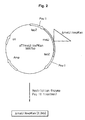
- the DNA fragment may be the ⁇ metJ::loxpKan shown in FIG. 2.
- the metJ gene encodes metJ protein repressing the expression of metL gene associated with the biosynthesis of threonine and methionine.
- the metJ protein is a protein that regulates the biosynthesis pathway of methionine in E . coli.
- the metJ protein represses the expression of the metL gene associated with threonine biosynthesis, together with its corepressor, S-adenosylmethionine (SAM).
- SAM S-adenosylmethionine
- the thrA gene, the metL gene, and the lysC gene encode aspartate kinase I, II, and III, respectively.
- the thrA gene and the metL gene encode homoserine dehydrogenase I and II, respectively.
- the expression of the metL gene is deregulated. That is, the expression of the metL gene is induced, thereby facilitating threonine biosynthesis.
- the E . coli strain according to the present invention has threonine production capability.
- the E . coli strain has resistance to a threonine analogue, a lysine analogue, an isoleucine analogue, and a methionine analogue.
- the E . coli strain may further contain a threonine biosynthesis gene such as phosphoenolpyruvate carboxylase gene (referred to as "ppc gene", hereinafter).
- E . coli FTR1221 (deposited in the Korean Culture Center of Microorganisms on June 25, 2002 ; accession number: KCCM-10392) is preferred.
- the E . coli FTR1221 (accession number: KCCM-10392) is a resultant of inactivation of metJ gene in E . coli pGmTN-PPC12 (accession number: KCCM-10236) containing chromosomal DNA with duplicate copies of ppc genes and threonine operons.
- the E . coli pGmTN-PPC12 (accession number: KCCM-10236) is a resultant of inserting, into E . coli TF4076 (accession number: KFCC-10718) (Korean Patent Laid-Open Publication No.
- the ppc gene and the threonine operon obtained by PCR from the chromosomal DNA of the E . coli TF4076. Therefore, in the E . coli pGmTN-PPC12, the gene for the ppc that is an enzyme converting phophoenolpyruvate (PEP) to oxaloacetate which is a precursor for threonine biosynthesis, and genes ( thrA , thrB , and thrC ) participating in the threonine biosynthesis pathway for producing threonine from the oxaloacetate are expressed at a high level. As a result, the E .
- PEP phophoenolpyruvate
- E . coli pGmTN-PPC12 is characterized by its capability of producing enhanced L-threonine.
- the E . coli pGmTN-PPC12 was deposited in the Korean Culture Center of Microorganisms on December 29, 2000 (accession number: KCCM-10236).
- the present invention provides a method for producing L-threonine, the method including:
- step (a) the culturing may be carried out in a common E . coli culture medium and condition well known to ordinary persons skilled in the art.
- the culturing may be carried out in various manners depending on a used strain and a culture scale.
- step (b) any recovering method known to ordinary persons skilled in the art may be used.
- E . coli strains are removed from the culture, followed by ion exchange chromatography and crystallization, but is not limited thereto.
- Chromosomal DNA is extracted from a threonine-producing strain to be used in construction of a recombinant plasmid pT7Blue/metJ containing a metJ gene fragment.
- a cloning vector that can be used, it is preferable to use a pT7Blue cloning vector.
- a IoxP site-containing kanamycin resistance gene fragment is inserted into the recombinant plasmid pT7Blue/metJ to obtain a recombinant plasmid pT7 ⁇ metJ::loxpKan.
- the recombinant plasmid pT7 ⁇ metJ::loxpKan contains inactivated metJ gene.
- An E . coli strain is transformed with the recombinant plasmid pT7 ⁇ metJ::loxpKan and a plasmid DNA is extracted from the transformed E . coli strain.
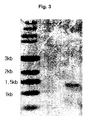
- the plasmid DNA is digested with a restriction enzyme, followed by electrophoresis, to obtain a DNA fragment, ⁇ metJ::loxpKan (FIG. 3).
- the ⁇ metJ::loxpKan DNA fragment is transformed into a threonine-producing strain.
- native metJ gene is replaced with the ⁇ metJ::loxpKan DNA fragment by homologous recombination.
- the transformant thus obtained is smeared onto a kanamycin-containing solid medium to select colonies. Consequently, recombinant strains containing inactivated metJ gene can be selected from the colonies.
- the recombinant strains thus selected stably maintain the inactivated state of the metJ gene even when their growth continues, as well as having excellent threonine production capability, relative to the parent strain.
- Example 1 Construction of recombinant plasmid and inactivation of metJ gene using the recombinant plasmid
- Chromosomal DNAs were extracted from threonine-producing strains, pGmTN-PPC12 (accession number: KCCM-10236) using a QIAGEN Genomic-tip system. About 700 bp fragments containing the open reading frames (ORFs) of metJ genes were amplified by PCR using the chromosomal DNAs as templates. Primers for the amplification were those as set forth in SEQ ID NO: 1 and SEQ ID NO: 2, and PCR premix (Bioneer Co.) was used as a reaction mixture for the PCR. The PCR reaction was performed at 94°C for 30 seconds for denaturation, 55°C for 30 seconds for annealing, and 72°C for 1 minute and 30 seconds for extension for 30 cycles.
- Colonies grown on the solid media were inoculated by a toothpick onto 3 mL of liquid media containing carbenicillin and cultured overnight. Then, plasmid DNAs were isolated using a QIAGEN mini prep kit and their sizes were determined. Also, the plasmid DNAs were digested with restriction enzyme Mlu I to determine the presence of cloned metJ gene fragments. The plasmid DNAs were identified as pT7Blue/metJ DNAs. The pT7Blue/metJ DNAs were digested with restriction enzyme Mlu I and bands of 3.6 kb were resolved on 0.8% agarose gel. DNA fragments contained in the bands were digested with Klenow enzyme to obtain blunt-ended DNA fragments.
- plasmids pUG6 [Ulrich et al., Nucleic Acids Research , 1996, 24, pp. 2519-2524] were digested with restriction enzymes Hinc II and EcoR V to obtain loxP site-containing kanamycin resistance gene fragments (about 1.7 kb). The blunt-ended DNA fragments were ligated with the IoxP site-containing kanamycin resistance gene fragments to obtain recombinant plasmids, pT7 ⁇ metJ::loxpKan (about 5.3 kb) (FIG. 2).
- Example 2 Selection of strains containing chromosomal DNAs with inactivated metJ gene fragments
- the plasmid DNAs were digested with restriction enzyme Pvu II and DNA fragments of about 2.4 kb ( ⁇ metJ::loxpKan) were resolved on 0.7% agarose gel (FIG. 2).
- the DNA fragments ( ⁇ metJ::loxpKan) were transformed into the threonine-producing strains of the pGmTN-PPC12, and the obtained transformants were smeared onto solid media containing kanamycin to select colonies. Finally, recombinant strains containing inactivated metJ genes were selected from the colonies.
- Example 3 Comparison of threonine productivity in flask cultivation between selected recombinant strains and parent strains
- the 30 single colonies were cultured overnight in a 32°C incubator containing LB solid media. Then, one loopful of each of the single colonies was inoculated on 25 ml of the threonine production media and cultured for 48 hours at 32°C with shaking at 250 rpm.
- the evaluation results are presented in Table 2 below. As shown in Table 2, among the 30 colonies, 25 colonies produced 24 g/L or more of threonine.
- the parent strains pGmTN-PPC12 produced 23 g/L of threonine in cultures. As seen from the above results, the recombinant strains according to the present invention exhibited excellent threonine production capability, relative to the parent strains.
- the recombinant strains according to the present invention exhibited enhancement in yield of about 8% maximum, relative to the parent strains. Based on the above results, among the recombinant strains, one strain with the highest threonine productivity was selected. The selected strain was designated as E . coli FTR1221 and deposited in the Korean Culture Center of Microorganisms on June 25, 2002 (accession number: KCCM-10392). Results of flask titer test for recombinant strains Concentration of threonine (g/L) 20-23 23-23.5 24 More than 24 Numbers of colonies 2 3 10 15
- Example 4 Identification of inactivated metJ gene using southern blotting analysis
- Example 2 In order to determine whether metJ genes had been specifically inserted into the selected strains in Example 2, a southern blotting analysis was carried out.
- the parent strain pGmTN-PPC12 and the E . coli FTR1221 (accession number: KCCM-10392) were cultured in 3 ml of liquid media containing kanamycin overnight with shaking at 200 rpm and then respective chromosomal DNAs were isolated using a QIAGEN chromosome kit 20.
- the chromosomal DNAs were digested with restriction enzyme Mlu I overnight and then size-fractionated by 0.7% agarose gel electrophoresis. After the electrophoresis, the DNA fractions were transferred from the agarose gel to a nylon membrane (YOUNG Sci.
- the probes as used herein were prepared as follows. Plasmid pUG6 isolated by QIAGEN kit was digested with restriction enzymes Hinc II and EcoR V to obtain a kanamycin resistance gene fragment (about 1.7 kb) containing a IoxP site. The gene fragment was heated in 100°C water for 5 minutes and then immediately cooled on an ice for 5 minutes to obtain single-stranded DNAs. The single-stranded DNAs were incubated using a DIG Labelling and Detection kit (Roche #1093657) at 37°C overnight. As a result, the DNA probes labeled with digoxigenin (DIG)-UDPs were obtained.
- DIG digoxigenin
- DNAs nonspecifically bound to the membrane were removed using washing solutions I and II (Roche #1093657).
- the membrane was masked at room temperature for 30 minutes using a prehybridization solution 2 (Roche #1093657).
- anti-DIG antibodies capable of specifically bindding to the DIG-UTPs were added and incubated at room temperature for 30 minutes.
- the anti-DIG antibodies nonspecifically bound to the membrane were removed using a washing solution III (Roche #1093657), and color reaction was carried out at room temperature using a Labeling and Detection kit (Roche #1093657) until bands were visualized. The results are shown in FIG. 3.
- Threonine productivity in a 5 L fermenter was evaluated using the E . coli FTR1221 (accession number: KCCM-10392) and the parent strain pGmTN-PPC12.
- the media composition for initial culture is presented in Table 3 below.
- LB media containing 10 g/L of glucose and 0.1 g/L of L-methionine were used as seed culture media.
- An initial inoculation volume was adjusted to 3 to 5% of an initial culture volume in the fermenter.
- Glucose was six times added to fermentation media to maintain residual glucose in the media to a level of 5%. The addition of glucose was carried out when glucose was depleted.
- KH 2 PO 4 potassium monophosphate
- An initial culture volume was 1.5 L and a final culture volume was 3.0 L.
- the total content of glucose added was 250 g/L.
- a shaking speed was set at 700 to 1,000 rpm.
- pH and temperature were respectively set at 7.0 and 32°C.
- pH was controlled using 25 to 28% aqueous ammonia.
- An aeration rate was set at 0.5 vvm.
- the results are presented in Table 4 below.
- the parent strain produced 93.5 g/L of threonine and exhibited 37.4% of yield, i.e., the amount of threonine produced per glucose consumed.
- the E . coli FTR1221 produced 105 g/L of threonine and exhibited 42% of yield. Consequently, in the E . coli FTR1221, threonine was yielded at an increased level of 4.6%, compared to the parent strain.
- the E . coli strain according to the present invention contains chromosomal DNA with inactivated metJ gene. Therefore, expression repression of threonine biosynthesis genes by a metJ gene product is prevented, thereby producing a high concentration of threonine. Furthermore, according to the L-threonine production method of the present invention, a high concentration of L-threonine can be produced in high yield.
Landscapes
- Chemical & Material Sciences (AREA)
- Organic Chemistry (AREA)
- Engineering & Computer Science (AREA)
- Life Sciences & Earth Sciences (AREA)
- Zoology (AREA)
- Wood Science & Technology (AREA)
- Health & Medical Sciences (AREA)
- Genetics & Genomics (AREA)
- Bioinformatics & Cheminformatics (AREA)
- Biotechnology (AREA)
- General Health & Medical Sciences (AREA)
- Biochemistry (AREA)
- General Engineering & Computer Science (AREA)
- Microbiology (AREA)
- Chemical Kinetics & Catalysis (AREA)
- General Chemical & Material Sciences (AREA)
- Medicinal Chemistry (AREA)
- Tropical Medicine & Parasitology (AREA)
- Virology (AREA)
- Biomedical Technology (AREA)
- Preparation Of Compounds By Using Micro-Organisms (AREA)
- Micro-Organisms Or Cultivation Processes Thereof (AREA)
Abstract
Description
| Media composition for threonine production | |
| Composition | Concentration (g/L) |
| Glucose | 70 |
| Ammonium sulfate | 28 |
| KH2PO4 | 1.0 |
| MgSO4·7H2O | 0.5 |
| FeSO4·7H2O | 5 |
| MnSO4·8H2O | 5 |
| Calcium carbonate | 30 |
| L-methionine | 0.15 |
| | 2 |
| pH (7.0) |
| Results of flask titer test for recombinant strains | ||||
| Concentration of threonine (g/L) | 20-23 | 23-23.5 | 24 | More than 24 |
| Numbers of | 2 | 3 | 10 | 15 |
| Initial media composition in 5-liter fermenter | |
| Composition | Concentration (per liter) |
| Glucose | 50 g |
| KH2PO4 | 4 g |
| (NH4)2SO4 | 6 g |
| Yeast extract | 3 g |
| MgSO4·7H2O | 2 g |
| L-methionine | 1 g |
| FeSO4·7H2O | 40 mg |
| MnSO4·8H2O | 10 mg |
| CaCl2·2H2O | 40 mg |
| CoCl2·6H2O | 4 mg |
| H3BO3 | 5 mg |
| Na2MoO4·2H2O | 2 mg |
| ZnSO4·7H2O | 2 mg |
| pH (7.0) |
| Results of threonine production in 5-liter fermenter by recombinant strains | |||
| Strain | Concentration of threonine (g/L) | Fermentation duration (hr) | Yield (%) |
| pGmTN-PPC12 | 93.5 | 78 | 37.4 |
| FTR1221 | 105 | 96 | 42 |

Claims (5)
- An L-threonine-producing Escherichia coli strain that comprises chromosomal DNA with inactivated metJ gene.
- The Escherichia coli strain according to claim 1, wherein the metJ gene is inactivated by the insertion of a sequence.
- The Escherichia coli strain according to claim 1, which is resistant to a threonine analogue, a lysine analogue, an isoleucine analogue, and a methionine analogue.
- The Escherichia coli strain according to claim 3, which is Escherichia coli FTR1221 of Accession No. KCCM-10392.
- A method for producing L-threonine comprising:(a) culturing the Escherichia coli strain according to any one of claims 1 through 4; and(b) recovering L-threonine from the culture.
Applications Claiming Priority (2)
| Application Number | Priority Date | Filing Date | Title |
|---|---|---|---|
| KR2003062423 | 2003-09-06 | ||
| KR20030062423A KR100478468B1 (en) | 2003-09-06 | 2003-09-06 | A method for producing L-threonine |
Publications (2)
| Publication Number | Publication Date |
|---|---|
| EP1514921A2 true EP1514921A2 (en) | 2005-03-16 |
| EP1514921A3 EP1514921A3 (en) | 2005-07-13 |
Family
ID=34132239
Family Applications (1)
| Application Number | Title | Priority Date | Filing Date |
|---|---|---|---|
| EP04356152A Withdrawn EP1514921A3 (en) | 2003-09-06 | 2004-09-03 | Method for producing L-threonine |
Country Status (5)
| Country | Link |
|---|---|
| US (1) | US7074602B2 (en) |
| EP (1) | EP1514921A3 (en) |
| JP (1) | JP4383984B2 (en) |
| KR (1) | KR100478468B1 (en) |
| CN (1) | CN100342006C (en) |
Cited By (1)
| Publication number | Priority date | Publication date | Assignee | Title |
|---|---|---|---|---|
| WO2006062327A1 (en) * | 2004-12-06 | 2006-06-15 | Cj Corporation | A microorganism producing l-threonine having an inactivated lysr gene, method for producing the same and method for producing l-threonine using the microorganism |
Families Citing this family (5)
| Publication number | Priority date | Publication date | Assignee | Title |
|---|---|---|---|---|
| AU2006304387A1 (en) | 2005-10-14 | 2007-04-26 | Medimmune, Llc | Cell display of antibody libraries |
| KR100837842B1 (en) * | 2006-08-10 | 2008-06-13 | 씨제이제일제당 (주) | L-Threonine Producing Microorganisms with Increased Aspartate Semialdehyde Dehydrogenase Activity and Method for Producing L-Threonine Using the Same |
| KR100864673B1 (en) * | 2006-11-27 | 2008-10-23 | 씨제이제일제당 (주) | Recovery of threonine from fermentation broth of threonine producing microorganisms using nonsolvent |
| KR20090075549A (en) * | 2008-01-04 | 2009-07-08 | 씨제이제일제당 (주) | Escherichia coli having improved L-threonine production and a method for producing L-threonine using the same |
| KR100966324B1 (en) | 2008-01-08 | 2010-06-28 | 씨제이제일제당 (주) | Escherichia coli having improved L-threonine production and a method for producing L-threonine using the same |
Family Cites Families (8)
| Publication number | Priority date | Publication date | Assignee | Title |
|---|---|---|---|---|
| JPH01289493A (en) | 1988-05-13 | 1989-11-21 | Toray Ind Inc | Production of l-threonine |
| DE3891417C5 (en) * | 1988-10-25 | 2006-01-05 | Ajinomoto Co., Inc. | A method of altering a L-threonine producing microorganism and using a microorganism thus obtained to produce L-threonine |
| JPH0632626B2 (en) | 1989-02-20 | 1994-05-02 | 東レ株式会社 | Fermentation method for producing L-threonine |
| KR920009598B1 (en) | 1990-10-11 | 1992-10-21 | 주식회사삼성전자 | Fastening Mechanism |
| DE69219775T3 (en) | 1992-10-14 | 2004-08-05 | Ajinomoto Co., Inc. | Novel L-threonine-producing microbacterium and a manufacturing method for L-threonine |
| US5939307A (en) * | 1996-07-30 | 1999-08-17 | The Archer-Daniels-Midland Company | Strains of Escherichia coli, methods of preparing the same and use thereof in fermentation processes for l-threonine production |
| US7220571B2 (en) * | 2000-09-28 | 2007-05-22 | Archer-Daniels-Midland Company | Escherichia coli strains which over-produce L-threonine and processes for the production of L-threonine by fermentation |
| KR100397423B1 (en) | 2001-02-13 | 2003-09-13 | 씨제이 주식회사 | Process for producing L-threonine |
-
2003
- 2003-09-06 KR KR20030062423A patent/KR100478468B1/en not_active Expired - Fee Related
-
2004
- 2004-08-12 US US10/916,804 patent/US7074602B2/en not_active Expired - Lifetime
- 2004-08-13 JP JP2004235682A patent/JP4383984B2/en not_active Expired - Fee Related
- 2004-09-03 EP EP04356152A patent/EP1514921A3/en not_active Withdrawn
- 2004-09-06 CN CNB200410068727XA patent/CN100342006C/en not_active Expired - Lifetime
Cited By (1)
| Publication number | Priority date | Publication date | Assignee | Title |
|---|---|---|---|---|
| WO2006062327A1 (en) * | 2004-12-06 | 2006-06-15 | Cj Corporation | A microorganism producing l-threonine having an inactivated lysr gene, method for producing the same and method for producing l-threonine using the microorganism |
Also Published As
| Publication number | Publication date |
|---|---|
| US20050054076A1 (en) | 2005-03-10 |
| CN1607246A (en) | 2005-04-20 |
| JP2005080659A (en) | 2005-03-31 |
| CN100342006C (en) | 2007-10-10 |
| KR100478468B1 (en) | 2005-03-23 |
| EP1514921A3 (en) | 2005-07-13 |
| KR20050025391A (en) | 2005-03-14 |
| US7074602B2 (en) | 2006-07-11 |
| JP4383984B2 (en) | 2009-12-16 |
Similar Documents
| Publication | Publication Date | Title |
|---|---|---|
| EP1360312B1 (en) | Method for l-threonine production | |
| EP2233570B1 (en) | L-threonine producing escherichia coli and process for producing l-threonine using same | |
| PL185681B1 (en) | Substance obtaining method | |
| SK15112000A3 (en) | Bacterium belonging to the genus escherichia being transformed by the gene encoding pyruvate carboxylase and which produces l-aminoacid, and fermentative method for producing l-aminoacid | |
| SK10142000A3 (en) | L-lysine producing coryneform bacteria and methods for the production of l-lysine | |
| JP4309223B2 (en) | L-threonine producing mutant microorganism in which fadR gene on chromosome is knocked out, and method for producing L-threonine using the same | |
| KR100576342B1 (en) | L-Threonine-producing microorganisms in which the gαR gene is inactivated, a method for preparing the same, and a method for producing L-Threonine using the microorganisms | |
| KR100451299B1 (en) | Process for producing L-threonine | |
| US7074602B2 (en) | Method for producing L-threonine | |
| KR100596372B1 (en) | L-Threonine-producing microorganisms in which the chromosome gene is inactivated on a chromosome, a method for preparing the same, and a method for producing L-Threonine using the microorganism | |
| KR100608084B1 (en) | Microorganisms for producing L-threonine, in which the iCcR gene is inactivated, a method for producing the same, and a method for producing L-threonine using the same | |
| US7378267B1 (en) | Method for L-threonine production | |
| WO2005023999A1 (en) | A method for producing l-threonine | |
| JP2763054B2 (en) | Genetic recombination method for coryneform bacteria | |
| US7368266B2 (en) | Method for L-threonine production |
Legal Events
| Date | Code | Title | Description |
|---|---|---|---|
| PUAI | Public reference made under article 153(3) epc to a published international application that has entered the european phase |
Free format text: ORIGINAL CODE: 0009012 |
|
| AK | Designated contracting states |
Kind code of ref document: A2 Designated state(s): AT BE BG CH CY CZ DE DK EE ES FI FR GB GR HU IE IT LI LU MC NL PL PT RO SE SI SK TR |
|
| AX | Request for extension of the european patent |
Extension state: AL HR LT LV MK |
|
| RIN1 | Information on inventor provided before grant (corrected) |
Inventor name: PARK, YOUNG HOON,C/O 111-102 MOOJIGAE DAERIM APT. Inventor name: LEE, JIN HO Inventor name: KIM, DAE CHEOL,212-1906 HWANGGOLMAEUL HANKOOK Inventor name: LEE, BYOUNG CHOON,C/O RM.203, 160-28 ANAM-DONG5GA Inventor name: CHO, JAE YONG |
|
| PUAL | Search report despatched |
Free format text: ORIGINAL CODE: 0009013 |
|
| AK | Designated contracting states |
Kind code of ref document: A3 Designated state(s): AT BE BG CH CY CZ DE DK EE ES FI FR GB GR HU IE IT LI LU MC NL PL PT RO SE SI SK TR |
|
| AX | Request for extension of the european patent |
Extension state: AL HR LT LV MK |
|
| 17P | Request for examination filed |
Effective date: 20051124 |
|
| AKX | Designation fees paid |
Designated state(s): AT BE BG CH CY CZ DE DK EE ES FI FR GB GR HU IE IT LI LU MC NL PL PT RO SE SI SK TR |
|
| RAP1 | Party data changed (applicant data changed or rights of an application transferred) |
Owner name: CJ CHEILJEDANG CORPORATION |
|
| 17Q | First examination report despatched |
Effective date: 20090305 |
|
| STAA | Information on the status of an ep patent application or granted ep patent |
Free format text: STATUS: THE APPLICATION IS DEEMED TO BE WITHDRAWN |
|
| 18D | Application deemed to be withdrawn |
Effective date: 20090916 |