Technical Field
The present invention relates to a controlled release
pharmaceutical composition containing pitavastatin, which is
an HMG-CoA reductase inhibitor, a salt thereof, or an ester
thereof.
Background Art
Pitavastatin and salts and esters thereof are known to
be useful as drugs for treating hypercholesterolemia, by
virtue of their excellent HMG-CoA reductase inhibitory
activity (USP 5,856,336 and EP 0,304,063).
Hypercholesterolemia treatment drugs such as the
pitavastatin-containing drugs are used in the form of peroral
preparations such as tablets, granules and capsules (USP
6,465,477 and WO 97/23200). In general, peroral drug
preparations are designed such that the blood level of the
active ingredient reaches its peak 0.5 to 3 hours after
ingestion, and the level rapidly decreases afterward.
However, since cholesterol is synthesized in the body during
the period from midnight to morning, it is highly likely that
blood level of the active ingredient does not match the time
at which biosynthesis of cholesterol occurs.
Although pitavastatin and salts and esters thereof are
also known to exert high activity and have high safety, an
excessively high blood level thereof is not preferred, from
the viewpoint of prevention against the side effects.
In addition, it is also desired for pitavastatin and
salts and esters thereof to maintain an excellent
hypercholesterol-reducing action for a long period of time.
In view of the foregoing, an object of the present
invention is to provide a controlled release pharmaceutical
composition which can reliably maintain an appropriate blood
level of pitavastatin, a salt thereof, or an ester thereof
over a long period of time.
Disclosure of the Invention
The present inventors have carried out extensive
studies in order to develop a controlled release
pharmaceutical composition containing pitavastatin, a salt
thereof, or an ester thereof. A first approach to resolution
of the aforementioned problems is a sustained release drug
preparation exhibiting zero-order drug release. However,
when such a sustained release drug preparation exhibiting
zero-order drug release is administered singly, increasing
the blood level thereof immediately after administration is
difficult, resulting in a considerably low level of the
maximum blood concentration (Cmax) as compared, with ordinary
drug preparations of the same dose. In addition, the area
under the blood concentration curve (AUC)―an index of
hypercholesterol-reducing action―decreases considerably.
Thus, the first approach fails to resolve the aforementioned
problems.
Consequently, the present inventors have studied the
absorption kinetics of pitavastatin and salts and esters
thereof, and have found that pitavastatin and salts and
esters thereof are absorbed most effectively in the duodenum
and also effectively in the large intestine as well as the
small intestine, which contrasts greatly with the general
tendency for ordinary drugs to be absorbed in the small
intestine. On the basis of this finding, the present
inventors have conducted further studies, and have found that
when a drug preparation is formed from a composition which
contains pitavastatin, a salt thereof, or an ester thereof
and which initiates release thereof at least in the stomach
and, in combination, an enteric composition which contains
pitavastatin, a salt thereof, or an ester thereof, the drug
preparation can attain an appropriate effective blood level
thereof immediately after administration and can maintain
such an appropriate blood level for a long period of time.
The present invention has been accomplished on the basis of
these findings.
Accordingly, the present invention provides a
pharmaceutical composition characterized by comprising a
composition (A) which contains pitavastatin, a salt thereof,
or an ester thereof and which initiates release thereof at
least in the stomach, and an enteric composition (B) which
contains pitavastatin, a salt thereof, or an ester thereof.
Brief Description of the Drawings
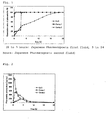
Fig. 1 shows the dissolution test results of the
compositions of Example 5 and Comparative Examples 1 and 2.
Fig. 2 shows the change in blood plasma level of
pitavastatin in the case where pitavastatin was perorally
administered in dogs, in the form of the compositions of
Example 5 and Comparative Examples 1 and 2.
Best Mode for Carrying Out the Invention
The characteristic feature of the pharmaceutical
composition of the present invention is that the composition
comprises a composition (A) which contains pitavastatin, a
salt thereof, or an ester thereof (hereinafter these
compounds are collectively referred to as pitavastatin) and
which initiates release of pitavastatin at least in the
stomach, and an enteric composition (B) which contains
pitavastatin. Herein, the composition (A) initiates release
of pitavastatin at least in the stomach. The composition (A)
may release, in the stomach, the practical portion of
pitavastatin or a portion of pitavastatin. However, a
composition (A) which releases at least 30 mass% pitavastatin
in the stomach is preferred, from the viewpoint of reliable
attainment of an effective blood level of pitavastatin
immediately after administration.
Preferably, the enteric composition of (B) is a
composition prepared by coating pitavastatin or a
pitavastatin-containing composition with a component which
dissolves at a pH of 3.0 or higher. Alternatively, a
composition prepared by mixing pitavastatin with a component
which dissolves at a pH of 3.0 or higher is preferred for the
enteric composition of (B). Accordingly, the portion of
pitavastatin contained in the enteric composition (B) is
hardly released in the stomach but is released after passing
through the near area of the duodenum.
One characteristic of pitavastatin, which serves an
active ingredient of the controlled release pharmaceutical
composition in the present invention, is high absorption
thereof in the duodenum (see Table 1). Thus, the practical
portion of pitavastatin released from the composition (A) in
the stomach is considered to be absorbed in the duodenum. In
contrast, the enteric composition (B) releases pitavastatin
after passing through the near area of the duodenum. Thus,
pitavastatin released from the composition (B) is firstly
absorbed in the small intestine. The percentage of
pitavastatin absorption in the small intestine is about one-third
that in the duodenum (see Table 1). Therefore, even if
pitavastatin is rapidly released in the small intestine, the
abrupt absorption of pitavastatin does not occur.
Furthermore, pitavastatin requires a relatively long period
of time for the passage thereof through these organs. Thus,
pitavastatin is slowly absorbed in sites; i.e., from the
small intestine to the large intestine, over a relatively
long time. Therefore, the controlled release pharmaceutical
composition of the present invention can maintain a desirable
blood level of pitavastatin.
Since the absorption site in digestive tract of
ordinary drugs is the small intestine, a drug which has
passed through the small intestine and has reached the large
intestine is hardly absorbed. In this connection, sustained
release drug preparations involve a problem, for example, in
that bioavailability of the drug is reduced as compared with
ordinary drug preparations of the same dose. In contrast,
pitavastatin exhibits high absorption in the large intestine
as well as in the duodenum (see Table 1). Therefore, the
controlled release pharmaceutical composition of the present
invention can attain a virtually identical level of
bioavailability as compared with ordinary drug preparations
of the same dose.
| Absorption sites of pitavastatin in rat (in situ loop test) |
| Sites | Absorption percentage (%) |
| | 0.5 h | 1 h |
| Stomach | 8.6 ± 1.1 | 14.4 ± 1.6 |
| Duodenum | 65.9 ± 2.1 | 60.3 ± 10.2 |
| Small intestine | 23.1 ± 3.8 | 21.3 ± 3.0 |
| Large intestine | 34.4 ± 3.7 | 51.6 ± 6.7 |
Pitavastatin which is used in the controlled release
pharmaceutical composition of the present invention is a
compound denominated (+)-(3R, 5S, 6E)-7-[2-cyclopropyl-4-(4-fluorophenyl)-3-quinolyl]-3,5-dihydroxy-6-heptenoic
acid. As
mentioned above, the compound is known to be an excellent
HMG-CoA reductase inhibitor and to be useful as a drug for
treating hypercholesterolemia. Examples of preferred
pitavastatin salts includes salts of alkali metal (e.g.,
sodium or potassium) and salts of alkaline earth metal (e.g.,
calcium or magnesium). Of these, calcium salt is
particularly preferred. Examples of preferred pitavastatin
esters include alkyl esters such as a methyl ester, an ethyl
ester, an i-propyl ester, and an n-propyl ester.
As mentioned above, the composition (A) preferably
releases in the stomach at least 30 mass% pitavastatin
contained in the composition (A). More preferably, the
amount of pitavastatin released in the stomach is controlled
such that the composition (A) releases, in the stomach, for
example, at least 30 mass% and less than 60 mass%
pitavastatin, at least 60 mass% and less than 85 mass%
pitavastatin, at least 85 mass% pitavastatin contained in the
composition (A). Herein, the percentage of pitavastatin
release from the composition (A) in the stomach is determined
in accordance with General Test Methods in Japanese
Pharmacopoeia, Dissolution Test Method No.2 (Paddle method).
Specifically, the composition (A) to be tested is added to
artificial gastric juice medium (pH: 1.2; 900 mL), and the
medium is stirred for 30 minutes at 37 ± 1°C with a paddle
rotation of 100 rpm. After termination of stirring, the
amount of pitavastatin dissolved in artificial gastric juice
medium is determined. Alternatively, in accordance with
General Test Methods in Japanese Pharmacopoeia, Dissolution
Test Method No. 2 (Paddle method), a pharmaceutical
composition to be tested is added to artificial gastric juice
medium (pH: 1.2; 900 mL), and the medium is stirred for 30
minutes at 37 ± 1°C with a paddle rotation of 100 rpm. After
termination of stirring, the amount of pitavastatin dissolved
in artificial gastric juice medium is determined. The
percentage of pitavastatin release from the composition (A)
is determined through calculation by use of the amount of
pitavastatin contained the composition (A) included in the
pharmaceutical composition to be tested.
The percentage of pitavastatin release from the
composition (A) in the stomach can be regulated by adding a
sustained release component to an ordinary employed base.
Examples of the bases which can be incorporated into the
composition (A) include diluents such as lactose, corn starch,
modified corn starch, mannitol, sorbitol, wood cellulose,
microcrystalline cellulose, and calcium carbonate; binders
such as hydroxypropyl cellulose, hydroxypropylmethyl
cellulose, polyvinylpyrrolidone, and partially hydrolyzed
polyvinyl alcohol; disintegrants such as low-substituted
hydroxypropyl cellulose, carmellose, sodium carboxystarch,
carmellose calcium, corn starch, partial pregelatinized
starch, croscarmellose sodium, and crospovidone; lubricants
such as magnesium stearate, stearic acid, palmitic acid,
calcium stearate, talc; coating agents such as saccharides,
cellulose derivatives, polyvinyl derivatives, alkylene oxide
polymers, greases, methyl methacrylate·butyl
methacrylate·dimethylaminoethyl methacrylate copolymers,
acacia, locust bean gum, carrageenan, xanthan gum,
pregelatinized starch, pectin, glucomannan, gluten, casein,
gelatin, and zein.
Examples of the saccharides include lactose, fructose,
glucose, sucrose, maltose, sorbitol, xylitol, maltitol,
mannitol, trehalose, cyclodextrin, erythritol, hydrogenated
palatinose, and lactitol.
Examples of the cellulose derivatives include
methylcellulose, ethylcellulose, hydroxypropylcellulose,
hydroxypropylmethylcellulose, and low-substituted
hydroxypropylcellulose.
Examples of the polyvinyl derivatives include
polyvinylpyrrolidone, polyvinylacetal diethylaminoacetate,
and partially hydrolyzed polyvinyl alcohol.
Examples of the alkylene oxide polymers include
polyethylene glycol and polypropylene glycol.
Examples of the greases include sucrose esters of fatty
acids and polyoxyl 40 stearate.
In order to enhance the time-lapsing stability of
pitavastatin, a basic substance which can elevate pH of an
aqueous solution or dispersion of the composition (A) to 6.8
or higher, particularly 6.8 to 7.8 is preferably added to the
composition (A). Examples of such basic substances include
antacids such as magnesium aluminometasilicate, magnesium
aluminosilicate, magnesium aluminate, dried aluminum
hydroxide, synthetic hydrotalcite, synthetic aluminum
silicate, magnesium carbonate, precipitated calcium carbonate,
magnesium oxide, aluminum hydroxide, and sodium
hydrogencarbonate; and pH-adjuster agent such as L-arginine,
sodium phosphate, disodium hydrogenphosphate, sodium
dihydrogenphosphate, potassium phosphate, dipotassium
hydrogenphosphate, potassium dihydrogenphosphate, disodium
citrate, sodium succinate, ammonium chloride, and sodium
benzoate. Among them, magnesium aluminometasilicate, L-arginine,
and dipotassium hydrogenphosphate are particularly
preferably used.
As used herein, the "pH" means a pH value of a 5 w/v%
suspension containing a unit amount of the pharmaceutical
composition of the present invention or each of compositions
(composition (A) or enteric composition (B)) which is
administered.
Preferably, the sustained release component is
incorporated into the composition (A) in such a manner that
pitavastatin or a pitavastatin-containing composition is
coated with the sustained release component, or that
pitavastatin and the sustained release component are mixed.
Examples of the sustained release components for coating
include biodegradable polymers, cellulose derivatives,
(meth)acrylic acid (co)polymers, alkylene oxide polymers,
greases, silicones, chitin, chitosan, casein, tragacanth gum,
guar gum, gellan gum, and gum acacia.
Examples of the biodegradable polymers include
poly(lactic acid), poly(glycolic acid), poly(hydroxybutyric
acid), poly-α-cyanoacrylate ester, poly(ortho ester),
poly(amino acid), and gelatin.
Examples of the cellulose derivatives include
methylcellulose, ethylcellulose, propylcellulose,
hydroxymethylcellulose, hydroxyethylcellulose,
hydroxypropylcellulose, hydroxypropylmethylcellulose,
carboxymethylcellulose, carboxyethylcellulose,
carboxypropylcellulose, methylhydroxypropylcellulose,
cellulose acetyl phthalate, cellulose diacetyl phthalate,
cellulose triacetyl phthalate, polyoxyethylcellulose
phthalate, hydroxyethylcellulose phthalate,
hydroxypropylcellulose phthalate, cellulose acetate, and
salts thereof.
Examples of the (meth)acrylic acid (co)polymers include
ethyl acrylate·methyl
methacrylate·(chlorotrimethylammonio)ethyl
methacrylate·copolymers, butyl
methacrylate·dimethylaminoethyl methacrylate·copolymers,
acrylic acid, methyl acrylate polymers, and methacrylate·(dimethylaminoethyl)
ether polymers.
Examples of the alkylene oxide polymers include
polyethylene glycol and polypropylene glycol.
Examples of the greases include hydrogenated oil,
monoglycerides, triglycerides, waxes, higher fatty acids,
sucrose esters of fatty acids, and higher fatty acid glycerin
esters.
Examples of the silicones include dimethylpolysiloxane,
methylpolysiloxane, and silicone oil; and
dimethylpolysiloxane mixtures such as dimethylpolysiloxane-silicon
dioxide mixtures, silicone antiform agents, and
silicone resin emulsions.
Examples of the sustained release components to be
mixed include biodegradable polymers, starches, dextrans,
cellulose derivatives, (meth)acrylic acid (co)polymers,
alkylene oxide polymers, greases, carrageenan, chitin,
chitosan, casein, tragacanth gum, guar gum, gellan gum;
paraffin, silicones, acacia, poly(glutamic acid),
poly(aspartic acid), polylysine, polyarginine, alginic acid,
pectic acid, and xanthan gum.
Examples of the biodegradable polymers include
poly(lactic acid), poly(glycolic acid), poly(hydroxybutyric
acid), poly-α-cyanoacrylate ester, poly(ortho ester),
poly(amino acid), gelatin, collagen, chondroitin sulfate,
hyaluronic acid, albumin, casein, globulin, and gluten.
Examples of the starches include α-amylo-starch,
gelatinized starch, carboxymethyl starch, carboxyethyl starch,
starch phosphate, acid treated starch, oxidized starch,
dialdehyde starch, thin-boiling starch, and dextrin.
Examples of the dextrans include dextran, dextran
sulfate, and carboxymethyl dextran.
Examples of the cellulose derivatives include
methylcellulose, ethylcellulose, hydroxymethylcellulose,
hydroxyethylcellulose, hydroxypropylcellulose,
carboxyethylcellulose, carboxypropylcellulose,
methylhydroxypropylcellulose, cellulose acetyl phthalate,
cellulose diacetyl phthalate, cellulose triacetyl phthalate,
polyoxyethylcellulose phthalate, hydroxyethylcellulose
phthalate, hydroxypropylcellulose phthalate, cellulose
acetate, and salts thereof.
Examples of the (meth)acrylic acid (co)polymers include
ethyl acrylate·methyl
methacrylate·(chlorotrimethylammonio)ethyl methacrylate
copolymers, butyl methacrylate·dimethylaminoethyl
methacrylate copolymers, acrylic acid, methyl acrylate
polymers, and methacrylate·(dimethylaminoethyl) ether
polymers.
Examples of the alkylene oxide polymers include
polyethylene glycol and polypropylene glycol.
Examples of the greases include hydrogenated oil,
hydrogenated castor oil, olive oil, monoglycerides,
triglycerides, waxes, higher fatty acids, sucrose esters of
fatty acids, higher alcohols, and higher fatty acid glycerin
esters.
Examples of the silicones include dimethylpolysiloxane,
methylpolysiloxane, and silicone oil; and
dimethylpolysiloxane mixtures such as dimethylpolysiloxane-silicon
dioxide mixtures, silicone antiform agents, and
silicone resin emulsions.
The enteric composition (B) is preferably obtained by
coating pitavastatin or a pitavastatin-containing composition
with a component which dissolves at a pH of 3.0 or higher,
preferably 4.0 or higher, more preferably 5.0 or higher, or
by mixing pitavastatin with a component which dissolves at a
pH of 3.0 or higher, preferably 4.0 or higher, more
preferably 5.0 or higher. Examples of the components which
dissolve at a pH of 3.0 or higher include enteric cellulose
derivatives, enteric (meth)acrylic acid (co)polymers, enteric
maleic acid copolymers, and enteric polyvinyl derivatives.
Notably, these components which dissolve at a pH of 3.0 or
higher must have no solubility in artificial gastric juice
medium having a pH of 1.2.
Examples of the enteric cellulose derivatives include
cellulose acetate phthalate, cellulose acetate succinate,
cellulose acetate maleate, cellulose benzoate phthalate,
cellulose propionate phthalate, cellulose acetate
trimellitate, cellulose acetate tetrahydrophthalate, methyl
cellulose phthalate, ethylhydroxyethyl cellulose phthalate,
hydroxypropylmethyl cellulose acetate phthalate,
hydroxypropylmethyl cellulose phthalate, hydroxymethylethyl
cellulose phthalate, and carboxymethylethyl cellulose.
Examples of the enteric (meth)acrylic acid (co)polymers
include styrene·acrylate copolymers, methyl acrylate·acrylate
copolymers, methyl acrylate·copolymers, butyl
acrylate·styrene·acrylate copolymers, methacrylic acid·methyl
methacrylate copolymers, methacrylic acid·ethyl acrylate
copolymers, methyl acrylate·methacrylic acid·octyl acrylate
copolymers.
Examples of the enteric maleic acid copolymers include
vinyl acetate·maleic anhydride copolymers, styrene·maleic
anhydride copolymers, styrene·maleic acid monoester
copolymers, vinyl methyl ether·maleic anhydride copolymers,
ethylene·maleic anhydride copolymers, vinyl butyl
ether·maleic anhydride copolymers, acrylonitrile·methyl
acrylate·maleic anhydride copolymers, and butyl
acrylate·styrene·maleic anhydride copolymers.
Examples of the enteric polyvinyl derivatives include
polyvinyl alcohol phthalate, polyvinyl acetate phthalate,
polyvinyl butyrate phthalate, and polyvinyl acetacetate
phthalate.
To the enteric composition (B), there may be further
added any of the sustained release components, diluents,
binders, disintegrants, lubricants, and basic substances,
which are described in relation to the components which can
be incorporated into the aforementioned composition (A).
The controlled release pharmaceutical composition of
the present invention comprises the composition (A) and the
enteric composition (B). The ratio by mass of pitavastatin
contained in the composition (A) to pitavastatin contained in
the enteric composition (B) is adjusted such that the Cmax of
pitavastatin upon peroral administration of the controlled
release pharmaceutical composition of the present invention,
and can be appropriately controlled; such that reduction in
AUC can be prevented; and such that a constant blood level of
pitavastatin can be attained over a long period of time. As
used herein, the term "appropriately controlled Cmax" refers
to a maximum blood level of pitavastatin which is obtained
when a composition (A) containing 1 to 8 mg of pitavastatin
without sustained release component is perorally administered
to a human subject.
The mass ratio of pitavastatin contained in the
composition (A) to pitavastatin contained in the enteric
composition (B) varies in accordance with the percentage of
release of pitavastatin from the composition (A) in the
stomach. When the percentage of release is 85 mass% or more,
the preferable ratio is within a range of 1 : 1 to 1 : 40,
more preferably 1 : 1 to 1 : 20, particularly preferably 1 :
1 to 1 : 7. When the percentage of release is at least 60
mass% and less than 85 mass%, the preferable ratio is within
a range of 15 : 1 to 1 : 30, more preferably 10 : 1 to 1 : 20,
particularly preferably 5 : 1 to 1 : 15. When the percentage
of release is at least 30 mass% and less than 60 mass%, the
preferable ratio is within a range of 30 : 1 to 1 : 20, more
preferably 20 : 1 to 1 : 15, particularly preferably 15 : 1
to 1 : 10.
The controlled release pharmaceutical composition of
the present invention comprises the composition (A) and the
enteric composition (B). Examples of more specific forms of
the composition include drug preparations obtained by mixing
the composition (A) and the enteric composition (B); drug
preparations obtained from the composition (A) and the
enteric composition (B) which are individually prepared; and
drug preparations obtained by covering/coating the enteric
composition (B) with the composition (A).
The controlled release pharmaceutical composition of
the present invention is preferably in the drug form of
peroral preparation such as tablets, granules, or capsules.
Examples of tablets include uncoated tablets, chewable
tablets, film-coated tablets, sugar-coated tablets, nucleated
core-shell tablets, and multiple-layer tablets. Examples of
granules include powders and fine granules. Examples of
capsules include hard capsules and soft capsules.
No particular limitation is imposed on the amount of
pitavastatin incorporated into the controlled release
pharmaceutical composition of the present invention, and the
preferable amount is within a range of 0.01 to 60 mass%.
The amounts of ordinary bases, sustained release
components, and enteric components incorporated into the
controlled release pharmaceutical composition of the present
invention vary depending on the types of these additives,
design of release control of drugs, etc. However, the amount
of each additive preferably is within a range of 0.01 to 80
mass%, more preferably 0.1 to 50 mass%, particularly
preferably 1.0 to 30 mass%.
The basis substance is preferably added in an amount
for attaining the aforementioned pH value; e.g., 0.01 to 20
mass%. The diluents, binders, disintegrants, lubricants,
sweetening agents, flavoring agents, and coloring agents are
preferably added in amounts of 0 to 90 mass%, 0 to 20 mass%,
0 to 30 mass%, 0 to 20 mass%, 0 to 30 mass%, 0 to 30 mass%,
and 0 to 5 mass%, respectively.
Examples of preferred drug forms of the controlled
release pharmaceutical composition of the present invention
for attaining a satisfactory blood level of pitavastatin
include the following forms:
The daily dose of pitavastatin contained in the thus-obtained
controlled release pharmaceutical composition of the
present invention is adjusted to 0.5 to 64 mg, preferably 1
to 32 mg, particularly preferably 4 to 16 mg.
Examples
The present invention will next be described in more
detail by way of examples, which should not be construed as
limiting the invention thereto.
(1) Example 1
| Components |
Formulation (mg) |
| Enteric granular product A |
Granular product A |
Purified sucrose spheres |
114.00 |
| Pitavastatin calcium salt |
12.00 |
| Sucrose |
30.75 |
| Hydroxypropylmethylcellulose (Registered trade mark: TC-5R) |
18.00 |
| Magnesium alumino metasilicate |
2.40 |
| Talc |
0.60 |
| Triethyl citrate |
2.25 |
| Subtotal |
180.00 |
| Methacrylate·methyl methacrylate copolymer (Registered trade mark: Eudragit L) |
41.58 |
| Talc |
8.28 |
| Triethyl citrate |
4.14 |
| Subtotal |
234.00 |
| Pitavastatin calcium salt |
4.00 |
| Sucrose |
10.25 |
| Hydroxypropylmethylcellulose (Registered trade mark: TC-5R) |
6.00 |
| Magnesium alumino metasilicate |
0.80 |
| Talc |
0.20 |
| Triethyl citrate |
0.75 |
| Total |
256.00 |
To purified water (3000.0 g), pitavastatin calcium salt
(240.0 g), sucrose (615.0 g), hydroxypropylmethylcellulose
(registered trade mark: TC-5R) (360.0 g), magnesium alumino
metasilicate (48.0 g), talc (12.0 g) and triethyl citrate
(45.0 g) were added, and these components were
dissolved/dispersed by use of a disperser, to thereby prepare
a drug-containing coating solution.
Purified sucrose spheres (2280.0 g) were fed to a fluid
bed granulator with bottom rotor, and heated to about 36°C.
The purified sucrose spheres were coated with the drug-containing
coating solution so as to form a drug layer on
each granule, to thereby produce a granular product A (3600.0
g).
To ethanol (6912.0 g), methacrylate·methyl methacrylate
copolymer (registered trade mark: Eudragit L) (831.6 g),
triethyl citrate (82.8 g) and talc (165.6 g) were added, and
these components were dissolved/dispersed by use of a
disperser, to thereby prepare an enteric coating solution.
The granular product A (3600.0 g) was fed to fluid bed
granulator with bottom rotor, and heated to about 36°C. The
granular product A was coated with the enteric coating
solution so as to form enteric coating film on the granules,
to thereby produce an enteric granular product A (4680.0 g).
To purified water (1000.0 g), pitavastatin calcium salt
(80.0 g), sucrose (205.0 g), hydroxypropylmethylcellulose
(registered trade mark: TC-5R) (120.0 g), magnesium alumino
metasilicate (16.0 g), talc (4.0 g) and triethyl citrate
(15.0 g) were added, and these components were
dissolved/dispersed by use of a disperser, to thereby prepare
a drug-containing coating solution.
The enteric granular product A (4680.0 g) was fed to a
fluid bed granulator with bottom rotor, and heated to about
36°C. The enteric granular product A was coated with the
drug-containing coating solution so as to form a drug layer
on the granules, to thereby produce a granular product
(5120.0 g). The product was divided into 20,000 sachets,
each containing 256.0 mg.
(2) Example 2
| Components |
Formulation (mg) |
| Enteric granular product |
Granular product |
Granular product A |
30.00 |
| Ethyl acrylate·methyl methacrylate·(chlorotrimethylammonio) copolymer ethyl methacrylate copolymer (Registered trade mark: Eudragit RS) |
12.40 |
| Hydroxypropylcellulose |
3.10 |
| Talc |
0.95 |
| Triethyl citrate |
1.55 |
| Subtotal Subtotal |
48.00 |
| Pitavastatin calcium salt |
4.00 |
| Sucrose |
10.25 |
| Hydroxypropylmethylcellulose (Registered trade mark: TC-5R) |
6.00 |
| Magnesium alumino metasilicate |
0.80 |
| Talc |
0.20 |
| Triethyl citrate |
0.75 |
| Hydroxypropylmethylcellulose phthalate |
16.17 |
| Talc |
3.22 |
| Triethyl citrate |
1.61 |
| Subtotal |
91.00 |
| Pitavastatin calcium salt |
4.00 |
| Sucrose |
10.25 |
| Hydroxypropylmethylcellulose (Registered trade mark: TC-5R) |
6.00 |
| Magnesium alumino metasilicate |
0.80 |
| Talc |
0.20 |
| Triethyl citrate |
0.75 |
| Total |
113.00 |
A granular product A (300.0 g) was produced in a manner
similar to that described in relation to Example 1.
To ethanol (1200.0 g), ethyl acrylate·methyl
methacrylate·(chlorotrimethylammmonio)ethyl methacrylate
copolymer (registered trade mark: Eudragit RS) (124.0 g),
hydroxypropylcellulose (31.0 g), triethyl citrate (15.5 g)
and talc (9.5 g) were added, and these components were
dissolved/dispersed by use of a disperser, to thereby prepare
a coating solution.
The granular product A (300.0 g) was fed to a fluid bed
granulator with bottom rotor, and heated to about 36°C. The
granular product A was coated with the above coating
solution, to thereby produce a granular product (480.0 g).
To purified water (500.0 g), pitavastatin calcium salt
(40.0 g), sucrose (102.5 g), hydroxypropylmethylcellulose
(registered trade mark: TC-5R) (60.0 g), magnesium alumino
metasilicate (8.0 g), talc (2.0 g) and triethyl citrate (7.5
g) were added, and these components were dissolved/dispersed
by use of a disperser, to thereby prepare a drug-containing
coating solution.
To ethanol (1312.5 g), hydroxypropylmethylcellulose
phthalate (161.7 g), triethyl citrate (16.1 g) and talc (32.2
g) were added, and these components were dissolved/dispersed
by use of a disperser, to thereby prepare an enteric coating
solution.
The granular product (480.0 g) were fed a fluid bed
granulator with bottom rotor, and heated to about 36°C. The
granular product was sequentially coated with the drug-containing
coating solution and the enteric coating solution
so as to form enteric coating films on the granules, to
thereby produce an enteric granular product (910.0 g).
To purified water (500.0 g), pitavastatin calcium salt
(40.0 g), sucrose (102.5 g), hydroxypropylmethylcellulose
(registered trade mark: TC-5R) (60.0 g), magnesium alumino
metasilicate (8.0 g), talc (2.0 g) and triethyl citrate (7.5
g) were added, and these components were dissolved/dispersed
by use of a disperser, to thereby prepare a drug-containing
coating solution.
The enteric granular product (910.0 g) was fed to a
fluid bed granulator with bottom rotor, and heated to about
36°C. The enteric granular product was coated with the drug-containing
coating solution so as to form a drug layer on the
granules, to thereby produce a granular product (1130.0 g).
The product was divided into 10,000 sachets, each containing
113.0 mg.
(3) Example 3
| Components |
Formulation (mg) |
| Granular product |
Granular product A |
180.00 |
| Ethylcellulose |
10.00 |
| Hydroxypropylmethylcellulose (Registered trade mark: TC-5R) |
32.50 |
| Talc |
8.25 |
| Triethyl citrate |
3.25 |
| Subtotal |
234.00 |
| Enteric granular product |
Granular product A |
60.00 |
| Methacrylate·methyl methacrylate copolymer (Registered trade mark: Eudragit S) |
13.86 |
| Talc |
2.76 |
| Triethyl citrate |
1.38 |
| Subtotal |
78.00 |
| Total |
312.00 |
A granular product A (2400.0 g) was produced in a
manner similar to that described in relation to Example 1.
Hydroxypropylmethylcellulose (registered trade mark:
TC-5R) (325.0 g) was dissolved in purified water (1500 g) by
use of a disperser. Ethylcellulose (100.0 g), triethyl
citrate (32.5 g) and talc (82.5 g) were dissolved/dispersed
in ethanol (4000.0 g) by use of a disperser. The two
solutions were mixed, to thereby prepare a coating solution.
A portion (1800.0 g) of the granular product A was fed
to a fluid bed granulator with bottom rotor, and heated to
about 36°C. The granular product A was coated with the
coating solution, to thereby produce a granular product
(2340.0 g).
To ethanol (1152.0 g), methacrylate·methyl methacrylate
copolymer (registered trade mark: Eudragit S) (138.6 g),
triethyl citrate (13.8 g) and talc (27.6 g) were added, and
these components were dissolved/dispersed by use of a
disperser, to thereby prepare an enteric coating solution.
A portion (600.0 g) of the granular product A was fed
to a fluid bed granulator with bottom rotor, and heated to
about 36°C. The granular product A was coated with the
enteric coating solution so as to form enteric coating film
on the granules, to thereby produce an enteric granular
product (780.0 g).
The granular product (2340.0 g) and the enteric
granular product (780.0 g) were mixed, and the mixture was
divided into 10,000 sachets, each containing 312.0 mg.
(4) Example 4
| Components |
Formulation (mg) |
| Granular product A |
60.00 |
| Granular product |
Pitavastatin calcium salt |
4.00 |
| Ethyl acrylate·methyl methacrylate·(chlorotrimethylammonio)ethyl methacrylate copolymer (Registered trade mark: Eudragit RS) |
65.52 |
| Lactose |
43.68 |
| Low-substituted hydroxypropylcellulose |
6.00 |
| Magnesium alumino metasilicate |
0.80 |
| Subtotal |
120.00 |
| Enteric granular product |
Granular product A |
90.00 |
| Hydroxypropylmethylcellulose acetate succinate |
20.79 |
| Talc |
4.14 |
| Triethyl citrate |
2.07 |
| Subtotal |
117.00 |
| Total |
297.00 |
A granular product A (2250.0 g) was produced in a
manner similar to that described in relation to Example 1.
A pitavastatin calcium salt (60.0 g), ethyl
acrylate·methyl methacrylate·(chlorotrimethylammonio) ethyl
methacrylate copolymer (registered trade mark: Eudragit RS)
(982.8 g), lactose (655.2 g), low-substituted
hydroxypropylcellulose (90.0 g) and magnesium alumino
metasilicate (12.0 g) were mixed, to thereby prepare a
uniform powder mixture. A suitable amount of ethanol was
added thereto, and the resultant mixture was granulated by a
high-shear granulator, to thereby produce a granular product
(1800.0 g).
To ethanol (5225.5 g), hydroxypropylmethylcellulose
acetate succinate (311.85 g), triethyl citrate (31.05 g) and
talc (62.1 g) were added, and these components were
dissolved/dispersed by use of a disperser, to thereby prepare
an enteric coating solution.
A portion (1350.0 g) of the granular product A was fed
a fluid bed granulator with bottom rotor, and heated to about
36°C. The granular product A was coated with the enteric
coating solution so as to form enteric coating film on the
granules, to thereby produce an enteric granular product
(1755.0 g).
The granular product A (900.0 g), the granular product
(1800.0 g) and the enteric granular product (1755.0 g) were
mixed, and the mixture was divided into 15,000 sachets, each
containing 297.0 mg.
(5) Example 5
| Components |
Formulation (mg) |
| Granular product A |
60.00 |
| Enteric granular product A |
234.00 |
| Gelatin capsule #1 |
- |
| Total |
294.00 |
A granular product A (1200.0 g) was produced in a
manner similar to that described in relation to Example 1.
An enteric granular product A (4680.0 g) was produced
in a manner similar to that described in relation to Example
1.
The granular product A (1200.0 g) and the enteric
granular product A (4680.0 g) were mixed, and the mixture was
divided into 20,000 capsules (gelatin capsule #1), each
containing 294.0 mg.
(6) Example 6
| Components |
Formulation (mg) |
| Granular product A |
90.00 |
| Enteric granular product |
Granular product A |
90.00 |
| Methacrylate-ethyl acrylate copolymer (Registered trade mark: Eudragit L30D-55) |
20.79 |
| Talc |
4.14 |
| Triehtyl citrate |
2.07 |
| Subtotal |
117.00 |
| Crystalline cellulose |
214.62 |
| Hydroxypropylmethylcellulose (Registered trade mark: TC-5R) |
14.70 |
| Low-substituted hydroxypropylcellulose |
58.80 |
| Magnesium stearate |
5.88 |
| Total |
501.00 |
A granular product A (1800.0 g) was produced in a
manner similar to that described in relation to Example 1.
To purified water (2304.0 g), methacrylate·ethyl
acrylate copolymer (registered trade mark: Eudragit L30D-55)
(207.9 g), triethyl citrate (20.7 g) and talc (41.4 g) were
added, and these components were dissolved/dispersed by use
of a disperser, to thereby prepare an enteric coating
solution.
A portion (900.0 g) of the granular product A was fed
to a fluid bed granulator with bottom rotor, and heated to
about 36°C. The granular product A was coated with the
enteric coating solution so as to form enteric coating film
on the granules, to thereby produce an enteric granular
product (1170.0 g).
The granular product A (900.0 g), the enteric granular
product (1170.0 g), crystalline cellulose (2146.2 g),
hydroxypropylmethylcellulose (registered trade mark: TC-5R)
(147.0 g), low-substituted hydroxypropylcellulose (588.0 g)
and magnesium stearate (58.8 g) were mixed and compressed, to
thereby produce 10,000 tablets, each tablet having a weight
of 501.0 mg.
(7) Example 7
| Components |
Formulation (mg) |
| Enteric granular product A |
195.00 |
| Mixed granular product |
Pitavastatin calcium salt |
4.00 |
| Lactose |
345.00 |
| Low-substituted hydroxypropylcellulose |
77.00 |
| Hydroxypropylmethylcellulose (Registered trade mark: TC-5R) |
8.80 |
| Magnesium alumino metasilicate |
0.80 |
| Magnesium stearate |
4.40 |
| Subtotal |
440.00 |
| Total |
635.00 |
An enteric granular product A (1950.0 g) was produced
in a manner similar to that described in relation to Example
1.
Pitavastatin calcium salt (40.0 g), lactose (3450.0 g),
low-substituted hydroxypropylcellulose (770.0 g),
hydroxypropylmethylcellulose(registered trade mark: TC-5R)
(88.0 g) and magnesium alumino metasilicate (8.0 g) were
mixed, to thereby prepare a uniform powder mixture. A
suitable amount of purified water was added thereto, and the
resultant mixture was granulated by a high-shear granulator.
The thus-obtained granular product was mixed with magnesium
stearate (44.0 g), to thereby produce a mixed granular
product (4400.0 g).
The enteric granular product A (1950.0 g) and the mixed
granular product (4400.0 g) were mixed and compressed, to
thereby produce 10,000 tablets, each tablet having a weight
of 635.0 mg.
(8) Example 8
| Components |
Formulation (mg) |
| A layer |
Granular product A |
60.00 |
| Crystalline cellulose |
43.80 |
| Hydroxypropylmethylcellulose (Registered trade mark: TC-5R) |
3.00 |
| Low-substituted hydroxypropylcellulose |
12.00 |
| Magnesium stearate |
1.20 |
| Subtotal |
120.00 |
| B layer |
Enteric granular product A |
78.00 |
| Crystalline cellulose |
56.94 |
| Hydroxypropylmethylcellulose (Registered trade mark: TC-5R) |
3.90 |
| Low-substituted hydroxypropylcellulose |
15.60 |
| Magnesium stearate |
1.56 |
| Subtotal |
156.00 |
| Total |
276.00 |
A granular product A (600.0 g) was produced in a manner
similar to that described in relation to Example 1.
An enteric granular product A (780.0 g) was produced in
a manner similar to that described in relation to Example 1.
A mixture containing the granular product A (600.0 g),
crystalline cellulose (438.0 g), hydroxypropylmethylcellulose
(registered trade mark: TC-5R) (30.0 g), low-substituted
hydroxypropylcellulose (120.0 g) and magnesium stearate(12.0
g), and another mixture containing the enteric granular
product A (780.0 g), crystalline cellulose (569.4 g),
hydroxypropylmethylcellulose (registered trade mark: TC-5R)
(39.0 g), low-substituted hydroxypropylcellulose (156.0 g)
and magnesium stearate (15.6 g) were compressed, to thereby
produce 10,000 two-layer tablets, each tablet having a weight
of 276.0 mg (A layer: 120.0 mg, B layer: 156.0 mg).
(9) Example 9
| Components |
Formulation (mg) |
| A layer |
Mixed granular product |
440.00 |
| B layer |
Pitavastatin calcium salt |
8.00 |
| Carboxymethylethylcellulose |
101.01 |
| Lactose |
67.36 |
| Low-substituted hydroxypropylcellulose |
20.00 |
| Magnesium alumino metasilicate |
1.60 |
| Magnesium stearate |
2.00 |
| Subtotal |
200.00 |
| Total |
640.00 |
A mixed granular product (4400.0 g) was produced in a
manner similar to that described in relation to Example 7.
Pitavastatin calcium salt (80.0 g),
carboxymethylethylcellulose (1010.4 g), lactose (673.6 g),
low-substituted hydroxypropylcellulose (200.0 g) and
magnesium alumino metasilicate (16.0 g) were mixed, to
thereby prepare a uniform powder mixture. A suitable amount
of ethanol was added thereto, and the resultant mixture was
granulated by a high-shear granulator. The thus-obtained
granular product was mixed with magnesium stearate (20.0 g),
to thereby produce an enteric mixed granular product (2000.0
g).
The mixed granular product (4400.0 g) and the enteric
mixed granular product (2000.0 g) were compressed, to thereby
produce 10,000 two-layer tablets, each tablet having a weight
of 640.0 mg (A layer: 440.0 mg, B layer: 200.0 mg).
(10) Example 10
| Components |
Formulation (mg) |
| A layer |
Pitavastatin calcium salt |
8.00 |
| Ethyl acrylate·methyl methacrylate (chlorotrimethylammonio)ethyl methacrylate copolymer (Registered trade mark: Eudragit RS) |
56.88 |
| Lactose |
160.32 |
| Low-substituted hydroxypropylcellulose |
12.00 |
| Magnesium alumino metasilicate |
1.60 |
| Magnesium stearate |
1.20 |
| Subtotal |
240.00 |
| B layer |
Pitavastatin calcium salt |
4.00 |
| Carboxymethylethylcellulose |
50.52 |
| Lactose |
33.68 |
| Low-substituted hydroxypropylcellulose |
10.00 |
| Magnesium alumina metasilicate |
0.80 |
| Magnesium stearate |
1.00 |
| Subtotal |
100.00 |
| Total |
340.00 |
Pitavastatin calcium salt (80.0 g), ethyl
acrylate·methyl methacrylate·(chlorotrimethylammonio)ethyl
methacrylate copolymer (registered trade mark: Eudragit RS)
(568.8 g), lactose (1603.2 g), low-substituted
hydroxypropylcellulose (120.0 g) and magnesium alumino
metasilicate (16.0 g) were mixed, to thereby prepare a
uniform powder mixture. A suitable amount of ethanol was
added thereto, and the resultant mixture was granulated by a
high-shear granulator. The thus-obtained granular product
was mixed with magnesium stearate (12.0 g), to thereby
produce a mixed granular product (2400.0 g).
Pitavastatin calcium salt (40.0 g),
carboxymethylethylcellulose (505.2 g), lactose (336.8 g),
low-substituted hydroxypropylcellulose (100.0 g) and
magnesium alumino metasilicate (8.0 g) were mixed, to thereby
prepare a uniform powder mixture. A suitable amount of
ethanol was added thereto, and the resultant mixture was
granulated by a high-shear granulator. The thus-obtained
granular product was mixed with magnesium stearate (10.0 g),
to thereby produce an enteric mixed granular product (1000.0
g).
The mixed granular product (2400.0 g) and the enteric
mixed granular product (1000.0 g) were compressed, to thereby
produce 10,000 two-layer tablets, each tablet having a weight
of 340.0 mg (A layer: 240.0 mg, B layer: 100.0 mg).
(11) Example 11
| Components |
Formulation (mg) |
| Core tablet |
Pitavastatin calcium salt |
6.00 |
| Lactose |
32.40 |
| Low-substituted hydroxypropylcellulose |
4.50 |
| Hydroxypropylmethylcellulose (Registered trade mark: TC-5R) |
0.75 |
| Magnesium alumino metasilicate |
0.90 |
| Magnesium stearate |
0.45 |
| Methacrylate·methyl methacrylate copolymer (Registered trade mark: Eudragit S) |
15.40 |
| Talc |
1.54 |
| Triethyl citrate |
3.06 |
| Subtotal |
65.00 |
| Outer layer |
Mixed granular product |
220.00 |
| Total |
285.00 |
Pitavastatin calcium salt (60.0 g), lactose (324.0 g),
low-substituted hydroxypropylcellulose (45.0 g),
hydroxypropylmethylcellulose (registered trade mark: TC-5R)
(7.5 g) and magnesium alumino metasilicate (9.0 g) were
mixed, to thereby prepare a uniform powder mixture. A
suitable amount of purified water was added thereto, and the
resultant mixture was granulated by a high-shear granulator.
The thus-obtained granular product and magnesium stearate
(4.5 g) were mixed and compressed, to thereby produce 10,000
uncoated tablets (total 450.0 g), each tablet having a weight
of 45.0 mg.
To ethanol (2560.0 g), methacrylate·methyl methacrylate
copolymer (registered trade mark: Eudragit S) (154.0 g),
triethyl citrate (30.6 g) and talc (15.4 g) were added, and
these components were dissolved/dispersed by use of a
disperser, to thereby prepare an enteric coating solution.
The uncoated tablets (450.0 g) were fed to a coating
pan, and heated to 40 to 45°C. The uncoated tablets were
coated with the enteric coating solution so as to form
enteric coating film on the tablets, to thereby produce
enteric tablets (650.0 g, 10,000 tablets).
A mixed granular product (2200.0 g) was produced in a
manner similar to that described in relation to Example 7.
The enteric tablets (650.0 g) for forming core tablets
and the mixed granular product (2200.0 g) for forming an
outer layer were compressed, to thereby produce 10,000 core-shell
tablets, each tablet having a weight of 285.0 mg.
(12) Example 12
| Components |
Formulation (mg) |
| Core tablet |
Pitavastatin calcium salt |
9.00 |
| Methacrylate·methyl methacrylate copolymer (Registered trade mark: Eudragit S) |
38.07 |
| Lactose |
25.38 |
| Low-substituted hydroxypropylcellulose |
4.85 |
| Magnesium alumino metasilicate |
1.80 |
| Magnesium stearate |
0.90 |
| Subtotal |
80.00 |
| Outer layer |
Mixed granular product |
330.00 |
| Total |
410.00 |
A mixed granular product (3300.0 g) was produced in a
manner similar to that described in relation to Example 7.
Pitavastatin calcium salt (90.0 g), methacrylate·methyl
methacrylate copolymer (registered trade mark: Eudragit S)
(380.7 g), lactose (253.8 g), low-substituted
hydroxypropylcellulose (48.5 g) and magnesium alumino
metasilicate (18.0 g) were mixed, to thereby prepare a
uniform powder mixture. A suitable amount of ethanol was
added thereto, and the resultant mixture was granulated by a
high-shear granulator. The thus-obtained granular product
and magnesium stearate (9.0 g) were mixed and compressed, to
thereby produce 10,000 enteric tablets (800.0 g), each tablet
having a weight of 80.0 mg.
The enteric tablets (800.0 g) for forming core tablets
and the mixed granular product (3300.0 g) for forming an
outer layer were compressed, to thereby produce 10,000 core-shell
tablets, each tablet having a weight of 410.0 mg.
(13) Example 13
| Components |
Formulation (mg) |
| Core tablet |
Enteric granular product |
Purified sucrose spheres |
40.00 |
| Pitavastatin calcium salt |
12.00 |
| Sucrose |
14.35 |
| Hydroxypropylmethylcellulose (Registered trade mark: TC-5R) |
8.40 |
| Magnesium alumino metasilicate |
2.40 |
| Talc |
0.60 |
| Triethyl citrate |
2.25 |
| Cellulose acetate phthalate |
18.48 |
| Talc |
3.68 |
| Triethyl citrate |
1.84 |
| Subtotal |
104.00 |
| Crystalline cellulose |
75.92 |
| Hydroxypropylmethylcellulose (Registered trade mark: TC-5R) |
5.20 |
| Low-substituted hydroxypropylcellulose |
20.80 |
| Magnesium stearate |
2.08 |
| Subtotal |
208.00 |
| Outer layer |
Mixed granular product |
440.00 |
| Total |
648.00 |
To purified water (4000.0 g), pitavastatin calcium salt
(120.0 g), sucrose (143.5 g), hydroxypropylmethylcellulose
(registered trade mark: TC-5R) (84.0 g), magnesium alumino
metasilicate (24.0 g), talc (6.0 g) and triethyl citrate
(22.5 g) were added, and these components were
dissolved/dispersed by use of a disperser, to thereby prepare
a drug-containing coating solution.
Purified sucrose spheres (400.0 g) were fed to a fluid
bed granulator with bottom rotor, and heated to about 36°C.
The purified sucrose spheres were coated with the drug-containing
coating solution so as to form a drug layer on
each granule, to thereby produce a granular product (800.0
g).
To acetone (2304.0 g), cellulose acetate phthalate
(184.8 g), triethyl citrate (18.4 g), and talc (36.8 g) were
added, and these components were dissolved/dispersed by use
of a disperser, to thereby prepare an enteric coating
solution.
The granular product (800.0 g) was fed to a fluid bed
granulator with bottom rotor, and heated to about 36°C. The
granular product was coated with the enteric coating solution
so as to form enteric coating film on the granules, to
thereby produce an enteric granular product (1040.0 g).
The enteric granular product (1040.0 g), crystalline
cellulose (759.2 g), hydroxypropylmethylcellulose (registered
trade mark: TC-5R) (52.0 g), low-substituted
hydroxypropylcellulose (208.0 g), and magnesium stearate
(20.8 g) were mixed and compressed, to thereby produce 10,000
core tablets (2080.0 g), each tablet having a weight of 208.0
mg.
A mixed granular product (4400.0 g) was produced in a
manner similar to that described in relation to Example 7.
The core tablet (2080.0 g) and the mixed.granular
product (4400.0 g) for forming an outer layer were
compressed, to thereby produce 10,000 core-shell tablets,
each tablet having a weight of 648.0 mg.
Production Examples 1 and 2
Pitavastatin-controlled-release tablets can be produced
in accordance with the formulations shown in Table 15.
Specifically, after preparation of core tablets, a drug-controlled-release
coating layer is formed on the core
tablets. Methacrylate·methyl methacrylate copolymer (trade
name: Eudragit L, available from: Higuchi Inc.) is an enteric
polymer which dissolves at a pH of 6 to 14, and
ethylcellulose (trade name: Ethocel, product of Dow Chemical)
is a sustained-release polymer which is insoluble regardless
of pH. The tablets obtained in Production Examples are
pitavastatin-controlled-release tablets.
The tablets obtained in Production Example 1 are
further coated with a pitavastatin-containing composition of
Table 16. The tablet product of Example 14, which is formed
of an outermost layer (immediately release portion) and an
inner layer (controlled release portion) in combination,
maintains reliable release of pitavastatin immediately after
administration over a long period of time.
| | Components | Example 14 (mg/T) |
| Inner layer | Tablets (Production Example 1) | 133.0 |
| Outermost layer | Pitavastatin calcium salt | 8.0 |
| Lactose | 304.0 |
| Low-substituted hydroxypropylcellulose | 36.0 |
| Hydroxypropylmethylcellulose | 6.0 |
| Magnesium alumino metasilicate | 2.4 |
| Magnesium stearate | 3.6 |
| Subtotal | 360.0 |
| Total | 493.0 |
A pitavastatin-controlled-release granular product can
be produced in accordance with the formulation shown in Table
17. Specifically, after preparation of core granules, a
drug-controlled-release coating layer is formed on the core
granules. The core granules and the drug-controlled-release-layer-coated
core granules are mixed, to thereby yield a
controlled release granular product.
| | Components | Example 15 (mg/day) |
| Core granular product | Pitavastatin calcium salt | 8.0 |
| D-mannitol | 334.0 |
| Calcium Carboxymethylcellulose | 21.0 |
| Hydroxypropylcellulose | 21.0 |
| Magnesium alumino metasilicate | 16.0 |
| Subtotal | 400.0 |
| Drug-controlled-release coating layer | Methacrylate·methyl methacrylate copolymer | 54.0 |
| Triethyl citrate | 12.0 |
| Talc | 50.0 |
| Titanium oxide | 4.0 |
| Subtotal | 120.0 |
The procedure of Example 15 is repeated, except that
the formulation of Table 18 is employed, to thereby yield a
granular product whose release is slower than that of the
product of Example 15.
| | Components | Example 16 (mg/day) |
| Core granular product | Pitavastatin calcium salt | 8.0 |
| D-mannitol | 334.0 |
| Calcium Carboxymethylcellulose | 21.0 |
| Hydroxypropylcellulose | 21.0 |
| Magnesium alumino metasilicate | 16.0 |
| Subtotal | 400.0 |
| Drug-controlled-release coating layer | Methacrylate·methyl methacrylate | 54.0 |
| copolymer |
| Ethylcellulose | 27.0 |
| Triethyl citrate | 18.0 |
| Talc | 75.0 |
| Titanium oxide | 6.0 |
| Subtotal | 180.0 |
A pitavastatin-controlled-release capsule product can
be obtained by mixing core granules of Table 17; drug-controlled-release
layer-coated granules of Table 17; and
drug-controlled-release layer-coated granules of Table 18 and
by charging the mixture in capsules.
A pitavastatin-controlled-release tablet product can be
obtained by mixing core granules of Table 17; drug-controlled-release
layer-coated granules of Table 17; and
drug-controlled-release layer-coated granules of Table 18 and
by compressed the mixture.
A pitavastatin-controlled-release multiple-layer tablet
product can be obtained by individually compressing a layer
of core granules of Table 17 and a layer of drug-controlled-release
layer-coated granules of Table 17.
Production Example 3
A pitavastatin-controlled-release tablet product can be
produced in accordance with the formulation shown in Table 19.
Specifically, after preparation of core tablets of Table 19,
an outer layer component shown in Table 19 is formed on the
core tablets by compressing, to thereby yield core-shell
tablets.
| Components | Production Example 3 (mg/T) |
| Core tablet | Pitavastatin calcium salt | 8.0 |
| Lactose | 46.4 |
| Crospovidone | 20.0 |
| Hydroxypropylmethylcellulose | 2.0 |
| Magnesium alumino metasilicate | 2.4 |
| Ethyl acrylate·methyl methacrylate | 20.0 |
| (chlorotrimethylammonio) ethyl methacrylate copolymer Monoglyceride | 20.0 |
| Magnesium stearate | 1.2 |
| Total | 120.0 |
| Outer layer | Pitavastatin calcium salt | 8.0 |
| Lactose | 304.0 |
| Low-substituted hydroxypropylcellulose | 36.0 |
| Hydroxypropylmethylcellulose | 6.0 |
| Magnesium alumino metasilicate | 2.4 |
| Magnesium stearate | 3.6 |
| Subtotal | 360.0 |
| Components |
Formulation (mg) |
| Pitavastatin calcium salt |
16.00 |
| Lactose |
86.40 |
| Low-substituted hydroxypropylcellulose |
12.00 |
| Hydroxypropylmethylcellulose (Registered trade mark: TC-5R) |
2.00 |
| Magnesium alumino metasilicate |
2.40 |
| Magnesium stearate |
1.20 |
| Total |
120.00 |
The method described in Example 5 of WO 97/23200 was
employed.
Pitavastatin calcium salt (400.0 g), lactose (2160.0
g), low-substituted hydroxypropylcellulose (300.0 g),
hydroxypropylmethylcellulose (registered trade mark: TC-5R)
(50.0 g) and magnesium alumino metasilicate (60.0 g) were
mixed, to thereby prepare a uniform powder mixture. Purified
water (594.0 g) was added thereto, and the mixture was
granulated by a high-shear granulator. The thus-obtained
granular product and magnesium stearate (30.0 g) were mixed
and compressed, to thereby produce 25,000 tablets, each
tablet having a weight of 120.0 mg.
Comparative Example 2
| Components |
Formulation (mg) |
| Pitavastatin calcium salt |
16.00 |
| Lactose |
48.00 |
| Hydroxypropylmethylcellulose (Registered trade mark: Methocel K100LV) |
80.00 |
| Magnesium alumino metasilicate |
6.40 |
| Low-substituted hydroxypropylcellulose |
8.00 |
| Magnesium stearate |
1.60 |
| Total |
160.00 |
Pitavastatin calcium salt (320.0 g), lactose (960.0 g),
hydroxypropylmethylcellulose (registered trade mark: Methocel
K100LV) (1600.0 g), magnesium alumino metasilicate (128.0 g)
and low-substituted hydroxypropylcellulose (160.0 g) were
mixed, to thereby prepare a uniform powder mixture. Purified
water (1108.8 g) was added thereto, and the resultant mixture
was granulated by a high-shear granulator.
The thus-obtained granular product and magnesium stearate
(32.0 g) were mixed and compressed, to thereby produce 20,000
tablets, each tablet having a weight of 160.0 mg.
Test Example 1 Dissolution test
The dissolution property of pitavastatin from drug
preparations; i.e., a drug preparation of Example 5
(composition (A) and enteric composition (B)); that of
Comparative Example 1 (ordinary preparation); and that of
Comparative Example 2 (sustained release preparation) was
investigated in accordance with the following method.
Dissolution test (Japanese Pharmacopoeia General Test
Methods, Dissolution Test Method No. 2 (Paddle method)).
2.0 g of sodium chloride were dissolved in 7.0 mL of
hydrochloric acid (36% HCl content) and some water, and water
was added, to thereby prepare 1,000 mL of artificial gastric
juice medium (pH: 1.2).
Water and 118 mL of 0.2 mol/L sodium hydroxide test
solution were added to 250 mL of 0.2 mol/L potassium
dihydrogen phosphate test solution, to thereby prepare 1,000
mL of artificial intestinal juice medium (pH: 6.8).
Each of drug preparations of Example 5 and Comparative
Examples 1 and 2 was added to the artificial gastric juice
medium (900 mL) (pH: 1.2), and the medium was stirred at 37 ±
1°C with a paddle rotation of 100 rpm for three hours after
starting of the test. Immediately thereafter, the
dissolution test medium was changed to the artificial
intestinal juice medium (900 mL) (pH: 6.8), and the
dissolution test was continued for 21 hours at 37 ± 1°C with
a paddle rotation of 100 rpm. The amount of dissolved drug
was determined. A sample solution sampled at each timing was
filtered by means of a membrane filter made of cellulose
acetate (pore size: 0.45 µm, DISMIC-25cs, product of Toyo
Roshi), and the percent of dissolution of pitavastatin was
determined with high performance liquid chromatography by use
of a reverse-phase column (Develosil ODS-HG-5, product of
Nomura Chemical). The results are shown in Fig. 1.
Test Example 2 Absorption test
Each of the drug preparations prepared in Example 5,
Comparative Example 1, and Comparative Example 2 was orally
administered to an HRA beagle dog (body weight: about 10 kg)
under fasting. After administration, blood was collected at
different points in time for 24 hours, and the collected
blood was subjected to centrifugation, whereby blood
pitavastatin level was determined with high performance
liquid chromatography. The results are shown in Table 22
and Fig. 2. The pharmacokinetic values are shown in Table 23.
The results show that the controlled release drug preparation
of the present invention reduces C
max by 50% as compared with
the ordinary drug preparation, while providing equivalent AUC
comparable to that of the ordinary drug preparation. By
contrast, in the case of the sustained release drug with
zero-order release, C
max and AUC are both significantly
reduced as compared with the ordinary drug preparation.
Therefore, the controlled release drug preparation of the
present invention was found to be safe and highly effective.
| Poitavastatin pharmacokinetic value of the compositions prepared in Example 5 and Comparative Examples 1 and 2 in beagle dog oral administration |
| | Tmax (h) | Cmax (ng/mL) | AUC (ng·hr/mL) |
| Example 5 | 1.8 | 748.0 | 3202 |
| Comp. Ex. 1 | 0.7 | 1434.8 | 3279 |
| Comp. Ex. 2 | 4.7 | 210.5 | 1166 |
By use of the controlled release pharmaceutical
composition of the present invention, the blood level of
pitavastatin can be maintained at an appropriate level
immediately after administration over a long period of time.
Thus, highly safety and effective treatment of
hypercholesterolemia can be performed.