EP1513320B1 - Interaction server, computer program and method for adapting dialog modalities between a client and a server - Google Patents
Interaction server, computer program and method for adapting dialog modalities between a client and a server Download PDFInfo
- Publication number
- EP1513320B1 EP1513320B1 EP03292201A EP03292201A EP1513320B1 EP 1513320 B1 EP1513320 B1 EP 1513320B1 EP 03292201 A EP03292201 A EP 03292201A EP 03292201 A EP03292201 A EP 03292201A EP 1513320 B1 EP1513320 B1 EP 1513320B1
- Authority
- EP
- European Patent Office
- Prior art keywords
- dialog
- modality
- client
- server
- user
- Prior art date
- Legal status (The legal status is an assumption and is not a legal conclusion. Google has not performed a legal analysis and makes no representation as to the accuracy of the status listed.)
- Expired - Lifetime
Links
- 230000003993 interaction Effects 0.000 title claims abstract description 68
- 238000000034 method Methods 0.000 title claims abstract description 13
- 238000004590 computer program Methods 0.000 title abstract 2
- 238000006243 chemical reaction Methods 0.000 claims description 9
- 238000012545 processing Methods 0.000 claims description 9
- 230000007613 environmental effect Effects 0.000 claims description 5
- 238000004891 communication Methods 0.000 description 12
- 230000006870 function Effects 0.000 description 9
- 230000006978 adaptation Effects 0.000 description 8
- 238000010586 diagram Methods 0.000 description 4
- 150000003839 salts Chemical class 0.000 description 3
- 238000013461 design Methods 0.000 description 1
- 239000004973 liquid crystal related substance Substances 0.000 description 1
- 238000010295 mobile communication Methods 0.000 description 1
- 238000012546 transfer Methods 0.000 description 1
- 238000013519 translation Methods 0.000 description 1
- 230000000007 visual effect Effects 0.000 description 1
Images



Classifications
-
- H—ELECTRICITY
- H04—ELECTRIC COMMUNICATION TECHNIQUE
- H04L—TRANSMISSION OF DIGITAL INFORMATION, e.g. TELEGRAPHIC COMMUNICATION
- H04L67/00—Network arrangements or protocols for supporting network services or applications
- H04L67/2866—Architectures; Arrangements
- H04L67/30—Profiles
- H04L67/303—Terminal profiles
-
- H—ELECTRICITY
- H04—ELECTRIC COMMUNICATION TECHNIQUE
- H04L—TRANSMISSION OF DIGITAL INFORMATION, e.g. TELEGRAPHIC COMMUNICATION
- H04L67/00—Network arrangements or protocols for supporting network services or applications
- H04L67/2866—Architectures; Arrangements
- H04L67/30—Profiles
- H04L67/306—User profiles
-
- H—ELECTRICITY
- H04—ELECTRIC COMMUNICATION TECHNIQUE
- H04L—TRANSMISSION OF DIGITAL INFORMATION, e.g. TELEGRAPHIC COMMUNICATION
- H04L67/00—Network arrangements or protocols for supporting network services or applications
- H04L67/50—Network services
- H04L67/52—Network services specially adapted for the location of the user terminal
-
- H—ELECTRICITY
- H04—ELECTRIC COMMUNICATION TECHNIQUE
- H04L—TRANSMISSION OF DIGITAL INFORMATION, e.g. TELEGRAPHIC COMMUNICATION
- H04L67/00—Network arrangements or protocols for supporting network services or applications
- H04L67/50—Network services
- H04L67/56—Provisioning of proxy services
-
- H—ELECTRICITY
- H04—ELECTRIC COMMUNICATION TECHNIQUE
- H04L—TRANSMISSION OF DIGITAL INFORMATION, e.g. TELEGRAPHIC COMMUNICATION
- H04L67/00—Network arrangements or protocols for supporting network services or applications
- H04L67/50—Network services
- H04L67/56—Provisioning of proxy services
- H04L67/565—Conversion or adaptation of application format or content
-
- H—ELECTRICITY
- H04—ELECTRIC COMMUNICATION TECHNIQUE
- H04L—TRANSMISSION OF DIGITAL INFORMATION, e.g. TELEGRAPHIC COMMUNICATION
- H04L69/00—Network arrangements, protocols or services independent of the application payload and not provided for in the other groups of this subclass
- H04L69/08—Protocols for interworking; Protocol conversion
-
- H—ELECTRICITY
- H04—ELECTRIC COMMUNICATION TECHNIQUE
- H04L—TRANSMISSION OF DIGITAL INFORMATION, e.g. TELEGRAPHIC COMMUNICATION
- H04L69/00—Network arrangements, protocols or services independent of the application payload and not provided for in the other groups of this subclass
- H04L69/24—Negotiation of communication capabilities
-
- H—ELECTRICITY
- H04—ELECTRIC COMMUNICATION TECHNIQUE
- H04W—WIRELESS COMMUNICATION NETWORKS
- H04W4/00—Services specially adapted for wireless communication networks; Facilities therefor
- H04W4/50—Service provisioning or reconfiguring
-
- H—ELECTRICITY
- H04—ELECTRIC COMMUNICATION TECHNIQUE
- H04L—TRANSMISSION OF DIGITAL INFORMATION, e.g. TELEGRAPHIC COMMUNICATION
- H04L69/00—Network arrangements, protocols or services independent of the application payload and not provided for in the other groups of this subclass
- H04L69/30—Definitions, standards or architectural aspects of layered protocol stacks
- H04L69/32—Architecture of open systems interconnection [OSI] 7-layer type protocol stacks, e.g. the interfaces between the data link level and the physical level
- H04L69/322—Intralayer communication protocols among peer entities or protocol data unit [PDU] definitions
- H04L69/329—Intralayer communication protocols among peer entities or protocol data unit [PDU] definitions in the application layer [OSI layer 7]
Definitions
- the present invention relates to an interaction server for adapting modalities of a dialog between one or several clients and one or several server applications as well as a method and a computer software product for adapting modalities of such dialog.
- computers have been provided with a plurality of different types of input devices, such as a key board, a mouse, a touch panel, an image scanner, a video camera, a pen and a microphone to enable various information items to be input in various forms.
- input devices such as a key board, a mouse, a touch panel, an image scanner, a video camera, a pen and a microphone
- output devices such as different forms of display units and a loudspeaker
- communication terminals provided with different types of input and output devices are enabling the input and the output of information items in various forms.
- JP10107877 A describes a multi-modal telephone set which uses both a visual display and a synthesized voice to communicate with the user.
- US 2003/0028643 A1 describes a system and a method for transferring multimedia information from a source location to a destination location.
- the source output has a format different from the format required for the destination input.
- a proxy transcoder server (PTS) is coupled between the source output and the destination input.
- PTS proxy transcoder server
- the PTS identifies the capabilities of the source and the destination, and accordingly transcodes the information from the source output format to the destination Input format. While the information is transcoded between different protocols, the method described in US 2003/0028843 A1 does not address the issues which arise when different types of terminals are to communicate with a server application.
- WO 02/23857 A2 disposes a system for integrating an application which comprises a mobile application server, a mobile presentation server and an application repository.
- the mobile application server interfaces with the application by invoking methods corresponding to functions in the application.
- the application repository stores these methods used by the mobile application server.
- the mobile presentation server receives the application information from the mobile application server and transforms the information for presentation on a mobile devices. It comprises a data base that stores information about mobile devices and the corresponding browsers.
- the mobile presentation server selects voice and/or data device adapters by means of this data base. In case of voice communication, the mobile presentation server selects one of the voice device adapters for transmitting voice information to users for interaction. For data communication, the mobile presentation server selects one of the data device adapters to transmit data information to a display associated with the mobile device. Thereby, mobile presentation server can modify the resolution of an image to fit the display of the particular mobile device.
- the object of the present invention is achieved by an interaction server for adapting modalities of a dialog between one or several clients and one or several server applications according to claim 1.
- the object of the present invention is further achieved by a method for adapting modalities of a dialog between a client and a server according to claim 7.
- the object of the present invention is further achieved by a computer software product for adapting modalities of a dialog between a client and a server according to claim 9.
- the present invention implements the basic idea to manage modalities with a proxy separately, i.e. not at the client (e.g. terminal) and not at the server or server application.
- An universal modality interface is provided between clients and server applications. Both, the client and the server have not to take care to meet the modality capabilities and requirements of the other party. Client and server implementation is simplified. Network services are not longer restricted to one specific type of terminal, but a plurality of different kinds of network services may be accessed by a plurality of different types of terminals via the interaction server. A heterogeneous client environment is hidden from the network. Consequently, the efficiency of service creation and service provisioning is increased and the number of available network services is drastically increased.
- a modality mediating interaction server is located between the clients and the servers.
- a server could offer several modalities to the interaction server and a client could subscribe several modalities.
- the interaction server performs a matching and/or arrange a modality agreement, a modality adaptation, or a modality conversion. Further, transfer protocols could be adapted leading to a more efficient communication.
- the modality handler consider mediation modality capability data describing terminal and service representation capabilities and modality requirement data describing service and/or user presentation requirements to perform the mediation between the client and the several application.
- Modality capabilities are, for example, available input and output devices of a terminal, the type of classification of these input/output devices, e.g. the size and the color capabilities of a liquid crystal display, and the terminal hardware/software support of these input/output devices.
- the modality handler is in a position to select the dialog modalities of a particular dialog in an optimized way.
- the modality handler considers in addition terminal and/or user preferences. For example, the user could personally select modalities he intends to use for interacting with a network service. Also, a server application providing a network service may set modality preferences indicating the modalities which are best to provide the service. Further, environmental data, for example the actual location of the client, may be taken into consideration for the selection the dialog modalities. These additional features help the modality handler to adapt dialog modalities to current user needs.
- the service application provides information like the identification of the service provided by the service application, its service class, its service type and its service preferences to the modality handler.
- the modality handler receives information like client type, client identifier, user, user type, location of the client. user preferences, client preferences and/or client environmental data for performing the mediation step.
- the modality handler accesses a terminal, user and/or service profile for mediating between the dialog modality capabilities and/or dialog modality requirements of the client and the server application. This helps to minimize the data flow over the network and supports a proper mediation between the different interests.
- the modality handler provides, in addition to the above described modality selection function, modality adaptation and/or modality conversion functions.
- the modality handler creates a dialog modality specification of said dialog specifying the selected dialog modalities, which is used by a dialog engine for performing the adaptation and conversion functions.
- dialog engine accessing a multi-modal service script provided by the server application, the created dialog specification and a dialog building data base.
- the efficiency of the modality conversion and/or adaptation functions of the server is increased by providing a multi-modal backend within the interaction server executing a dialog script created by the dialog engine.
- the multi-modal backend may comprise a set of browser applications selected case by case to communicate with the client. Further, the multi-modal backend may comprise a set of media-processing units, for example speech recognition, text to speech or handwriting recognition, for communicating with the client.
- This specific architecture increases the efficiency of the data processing and makes it possible to support a big number of different types of clients in an efficient way.
- Fig. 1 shows a communication network 1, several clients 41, 42, 43 and 44, an interaction server 2 and several servers 31, 32 and 33.
- ISDN Integrated Service Digital Network
- PSDN Public Switched Telecommunication Network
- DECT Digital Enhanced Cordless Telephone
- GSM Global System for Mobile Communication
- GPRS General Packet Radio Service
- the client 43 is a portable computer connected with the communication network 1.
- TCP Transaction Capability Protocol
- IP Internet Protocol
- DSL Digital Subscriber Line
- Each of the different clients 41 to 44 uses different communication protocols to communicate with the interaction server 2. Further, each of the different clients 41 to 44 provides a different set of modalities for the interaction with the respective user.
- a modality describes the way how information is presented from the client to the user or from the user to the client.
- a information may be submitted as voice message, written information on a screen, by an icon or a graphic displayed on a screen, by pressing a specific key of a key-pad, by entering a handwritten command, by a pen, by a mouse-pad, by a voice command, by a typed command word or by touching an icon on a touch pad.
- the smart phone 44 might use voice only, graphical only or operate in a multi-modal way, for example via HTML plus or flash with speech recognition, text to speech and handwriting recognition located in the interaction server 2 or in the client 44.
- the interaction server 2 handles voice, graphic and multi-modal interaction for all the different clients 41 to 44.
- the transaction server 2 interacts, for example via a multi-modal markup language, e. g. via HTML plus, SALT, or X+V, or via Flash, with the servers 31 to 33.
- Each of the servers 31 to 33 executes at least one server application which can be contacted by one of the clients 41 to 44 for performing a respective network service.
- the interaction server 2 provides a common interface for service applications, for example IM, E-mail, Presence. Further, it performs network translator and call control functions, for server applications, for example for voice, video, gaming and conferencing.
- service applications for example IM, E-mail, Presence.
- server applications for example for voice, video, gaming and conferencing.
- the interaction server 2 controls the dialog between the various clients 41 to 43 and the various server applications.
- a set of dialog modality capabilities or dialog modality requirements of clients and/or server applications are provided to the interaction server. Based on this set of information, the interaction server mediates between the dialog modality capabilities and/or dialog modality requirements of a client and the respectively assigned server, and selecting the dialog modalities for this specific dialog between one specific client and one specific server application based on said mediation.
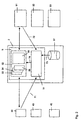
- Fig. 2 shows an embodiment of a detailed implementation of the interaction server 2.
- Fig. 2 shows the clients 42 to 44, several server applications 91 to 93 and the interaction server 2.
- the interaction server 2 consists of a hardware platform, a software platform basing on the hardware platform and several application programs executed by the system platform formed by the software and hardware platform. These application programs or a selected part of these application programs constitute a computer software product providing the function of a modality handler as described in the following, when executed on the system platform. Further, such computer software product is constituted by a storage medium storing these application programs or said selected part of application programs.
- the interaction server 2 comprises a modality handler 5 and a profile data base 57.
- the modality handler 5 contains a dialog controller 51 and a dialog engine 52.
- the client 44 submits several information 71 to the dialog controller 51, which are used by the dialog controller 51 to determine the dialog modality capabilities and/or dialog modality requirements of the client 44.
- the server application 91 submits information 72 to the dialog controller 51, which enables the dialog controller 51 to determine dialog modality capabilities and/or dialog modality requirements of the selected server application 91.
- the information 71 contains an identifier of the client 44, an identifier of the user currently associated with the client 44, the client type, the user type, client class or user class assigned to client 44, user preferences, client preferences and/or client environmental data like location of the client, local temperature, lightning conditions and so on.
- the information 72 contains, for example, a server application identifier, a service type, a service class associated with the server application, and/or service preferences.
- the information 71 and 72 does already contain dialog modality capability data and/or dialogue modality requirement data assigned by the client 44 and the server application 91 to the intended dialog, respectively. But, these data or at least a part of these data are preferably determined by the dialog controller 51 itself, for example, by means of accessing the profile data base 57 or another data source depending on the submitted information 71 and 72.
- the profile data base 57 contains terminal, user, and/or services profiles of different clients, different users and different server applications.
- the profile data base 57 contains a terminal profile for each different type or each different class of clients, for example one terminal profile for each of the different clients 41 to 44.
- Each of these terminal profiles comprises a set of specific data describing the terminal presentation capabilities and terminal preferences of the respective type or class of terminals. For example, it specifies the respective input and output devices of these clients and the respective associated hardware and software support as well as details of these input and output devices influencing the presentation or the inputting of data (for example size, solution and color capabilities of a screen).
- the profile data base 57 contains, for example, a set of user preferences which might be personalized by each user by online access to the interaction server 2.
- the profile data base 57 contains modality requirement data and modality capability data describing the service presentation/interaction capabilities and requirements of different server applications.
- all these modality capability and modality requirement data may be provided by the profile data base 57, the client and/or the server application linked in a dialog, and/or by a further data base accessed by the dialog control 51.
- the dialog control 51 considers the available information, i.e. the determined dialog modality capability and/or dialog modality requirement data of the server application 91 and the client 44, as well as the client, user and/or server application preferences and obtained environmental data, to mediate between the client 44 and the server application 91 and come to a selection of dialog modalities for this dialog that meets the interests of the client 44 and the requirements and limitations set by the server application 91.
- the selected dialog modalities form the frame work of the further interaction between the client 44 and the server application 91 as well as the frame work for the interaction between the user and the service provided by help of the server application 91 and the client 44.
- the modality handler 5 comprises a dialog engine 52 performing a modality and communication conversion or adapting function between the client 44 and the server application 91.
- the dialog engine 52 receives information 74 from the dialog controller 91 containing a dialog modality specification describing the selected dialog modalities for the intended dialog.
- the dialog engine comprises dialog conversion and adaptation means 56 and communication protocol conversion and adaptation means 53 to 55 performing these functionalities.
- Fig. 3 and fig. 4 show further details of the interaction server 2 and clarify further details of the interactions performed after selection of the dialog modalities.
- Fig. 3 shows the interaction server 2, the client 44 and the server application 91.
- the interaction server 2 comprises the modality handler 5, a dialog building data base 7 and a multi modal backend 6.
- the dialogue manager 5 provides dialog management including terminal adaptation and user profile handling. It accesses a multi-modal services script provided by the server application 91.
- the dialog building data base 7 comprises libraries providing functional sets of different service interactions as well as design or restriction parameters.
- the dialogue engine of the modality handler 5 accesses the multi-modal services script of the server application 91, the dialog specification prepared by the dialog controller and the dialog building data base to a dialog specification executed by the multi-modal backend 6.
- the modality handler submits a dialog specification encoded in a multimodal markup language, e. g.
- the multi-modal backend comprises a terminal 61 and several multi-media processing units 62 supporting the work of the terminal 61.
- the media processing units provide text to speech translation, handwriting recognition and speech recognition functionalities.
- Fig. 4 shows the interaction server 2, the server application 91 and the client 47 to 49.
- the interaction server 2 comprises the modality handler 5, a set of browser applications 65 and 66 and a set of media processing units 63 and 64.
- a media processing unit 63 is a text to speech processing unit and the media processing unit 64 is a speech recognition unit.
- the modality handler 5 does also provide a HTML interface or a multi-modal markup language interface, e. g. a, HTML plus, SALT or X+V interface.
- the client 47 is a voice only terminal.
- the interaction between this voice only terminal and the server application 91 is supported by the modality handler 5 and the voice browser 56 controlled by the modality handler.
- the client 48 is a multi-modal terminal.
- the interaction between this terminal and the server application 91 is supported by the modality handler, the voice browser 65 and the multi-modal browser 66.
- the modality handler controls the voice browser 65 which forms the server side backend.
- the interaction is performed through the multi-modal browser 66.
- HTML-use the modality handler directly interacts with the client 48.
- the client 49 is a computer communicating with the interaction server 2 via HTML.
- the modality handler 5 directly interacts with the client 49.
- the modality handler controls a direct interaction between the server application 91 and one of the browser applications 65 and 66 as well as one of the clients 48 and 49, if the server application supports the specific modality and protocol. If, for example, the server application 91 supports Voice XML, a direct interaction between the server application 91 and the browser application 95 is possible. Further, a direct interaction between the server application 91 and the HTML terminal provided by the client 49 is possible, if the server application 91 supports HTML.
Landscapes
- Engineering & Computer Science (AREA)
- Computer Networks & Wireless Communication (AREA)
- Signal Processing (AREA)
- Computer Security & Cryptography (AREA)
- Information Transfer Between Computers (AREA)
- Measuring And Recording Apparatus For Diagnosis (AREA)
Abstract
Description
- The present invention relates to an interaction server for adapting modalities of a dialog between one or several clients and one or several server applications as well as a method and a computer software product for adapting modalities of such dialog.
- In recent years, computers have been provided with a plurality of different types of input devices, such as a key board, a mouse, a touch panel, an image scanner, a video camera, a pen and a microphone to enable various information items to be input in various forms. Also a plurality of different types of output devices, such as different forms of display units and a loudspeaker have been provided for outputting various information items in a variety of forms, such as different graphical forms or spoken language. Further, communication terminals provided with different types of input and output devices are enabling the input and the output of information items in various forms. For example, JP10107877 A describes a multi-modal telephone set which uses both a visual display and a synthesized voice to communicate with the user.
- Further, application programming languages with alternative information types and the variant records like alt texts in HTML/http are available for performing access to arbitrary type of information.
- US 2003/0028643 A1 describes a system and a method for transferring multimedia information from a source location to a destination location. The source output has a format different from the format required for the destination input. A proxy transcoder server (PTS) is coupled between the source output and the destination input. The PTS identifies the capabilities of the source and the destination, and accordingly transcodes the information from the source output format to the destination Input format. While the information is transcoded between different protocols, the method described in US 2003/0028843 A1 does not address the issues which arise when different types of terminals are to communicate with a server application.
- WO 02/23857 A2 disposes a system for integrating an application which comprises a mobile application server, a mobile presentation server and an application repository. The mobile application server interfaces with the application by invoking methods corresponding to functions in the application. The application repository stores these methods used by the mobile application server. The mobile presentation server receives the application information from the mobile application server and transforms the information for presentation on a mobile devices. It comprises a data base that stores information about mobile devices and the corresponding browsers. The mobile presentation server selects voice and/or data device adapters by means of this data base. In case of voice communication, the mobile presentation server selects one of the voice device adapters for transmitting voice information to users for interaction. For data communication, the mobile presentation server selects one of the data device adapters to transmit data information to a display associated with the mobile device. Thereby, mobile presentation server can modify the resolution of an image to fit the display of the particular mobile device.
- It is the object of the present invention to improve the interaction between a user and à server application executed by a network server.
- The object of the present invention is achieved by an interaction server for adapting modalities of a dialog between one or several clients and one or several server applications according to claim 1. The object of the present invention is further achieved by a method for adapting modalities of a dialog between a client and a server according to
claim 7. The object of the present invention is further achieved by a computer software product for adapting modalities of a dialog between a client and a server according to claim 9. - The present invention implements the basic idea to manage modalities with a proxy separately, i.e. not at the client (e.g. terminal) and not at the server or server application.
- Several advantages are achieved by the present invention:
- An universal modality interface is provided between clients and server applications. Both, the client and the server have not to take care to meet the modality capabilities and requirements of the other party. Client and server implementation is simplified. Network services are not longer restricted to one specific type of terminal, but a plurality of different kinds of network services may be accessed by a plurality of different types of terminals via the interaction server. A heterogeneous client environment is hidden from the network. Consequently, the efficiency of service creation and service provisioning is increased and the number of available network services is drastically increased.
- Further advantages are achieved by the embodiments indicated by the dependant claims.
- A modality mediating interaction server is located between the clients and the servers. A server could offer several modalities to the interaction server and a client could subscribe several modalities. The interaction server performs a matching and/or arrange a modality agreement, a modality adaptation, or a modality conversion. Further, transfer protocols could be adapted leading to a more efficient communication.
- According to a preferred embodiment of the invention, the modality handler consider mediation modality capability data describing terminal and service representation capabilities and modality requirement data describing service and/or user presentation requirements to perform the mediation between the client and the several application.
- Modality capabilities are, for example, available input and output devices of a terminal, the type of classification of these input/output devices, e.g. the size and the color capabilities of a liquid crystal display, and the terminal hardware/software support of these input/output devices.
- If all these aforementioned data are considered by the modality handler during the mediation step, the modality handler is in a position to select the dialog modalities of a particular dialog in an optimized way.
- Further advantages are achieved if the modality handler considers in addition terminal and/or user preferences. For example, the user could personally select modalities he intends to use for interacting with a network service. Also, a server application providing a network service may set modality preferences indicating the modalities which are best to provide the service. Further, environmental data, for example the actual location of the client, may be taken into consideration for the selection the dialog modalities. These additional features help the modality handler to adapt dialog modalities to current user needs.
- To support the above described process, the service application provides information like the identification of the service provided by the service application, its service class, its service type and its service preferences to the modality handler. The other way around, the modality handler receives information like client type, client identifier, user, user type, location of the client. user preferences, client preferences and/or client environmental data for performing the mediation step.
- Further advantages are achieved if the modality handler accesses a terminal, user and/or service profile for mediating between the dialog modality capabilities and/or dialog modality requirements of the client and the server application. This helps to minimize the data flow over the network and supports a proper mediation between the different interests.
- According to a further preferred embodiment of the invention, the modality handler provides, in addition to the above described modality selection function, modality adaptation and/or modality conversion functions. For example, the modality handler creates a dialog modality specification of said dialog specifying the selected dialog modalities, which is used by a dialog engine for performing the adaptation and conversion functions.
- An efficient and proper adaptation is achieved by a dialog engine accessing a multi-modal service script provided by the server application, the created dialog specification and a dialog building data base.
- The efficiency of the modality conversion and/or adaptation functions of the server is increased by providing a multi-modal backend within the interaction server executing a dialog script created by the dialog engine. The multi-modal backend may comprise a set of browser applications selected case by case to communicate with the client. Further, the multi-modal backend may comprise a set of media-processing units, for example speech recognition, text to speech or handwriting recognition, for communicating with the client. This specific architecture increases the efficiency of the data processing and makes it possible to support a big number of different types of clients in an efficient way.
- Further advantages are achieved by the provisioning of a protocol conversion function within the interaction server converting between the protocols used for the communication between the interaction server and the servers executing the server applications and the protocols used for the communication between a specific client and the interaction server.
- These as well as other features and advantages of the invention may be better appreciated by reading the following detailed description of preferred exemplary embodiments taken in conjunction with accompanying drawings of which:
- Fig. 1
- is a block diagram showing an overview of a system with an interaction server according to the present invention;
- Fig. 2
- is a block diagram demonstrating the interaction between the interaction servers of fig. 1 and clients and server applications;
- Fig. 3
- is a block diagram showing the client, the interaction server and the server application of Fig. 2;
- Fig. 4
- is a detailed block diagram of an interaction server.
- Fig. 1 shows a communication network 1,
several clients interaction server 2 andseveral servers - The
client 41 is a voice phone, for example an ISDN-phone or PSTN-phone (ISDN = Integrated Service Digital Network; PSDN = Public Switched Telecommunication Network). As indicated in Fig. 1, this voice phone can be a cordless one which communicates with a base station, for example, via a DECT radio interface (DECT = Digital Enhanced Cordless Telephone). - The
client 42 is a data enabled phone; for example a GSM cell phone with GPRS capability (GSM = Global System for Mobile Communication; GPRS = General Packet Radio Service). - The
client 43 is a portable computer connected with the communication network 1. Theclient 43 communicates, for example, via a TCP/IP protocol with theinteraction server 2 wherein the TCP/IP communication bases, for example, on a wireless LAN, DSL or intemet protocol (TCP = Transaction Capability Protocol; IP = Internet Protocol; DSL = Digital Subscriber Line). - The
client 44 is a smart phone, for example an UMTS phone with multi-modal inputting and outputting capabilities (UMTS = Universal Mobile Teleoommunications). - Each of the
different clients 41 to 44 uses different communication protocols to communicate with theinteraction server 2. Further, each of thedifferent clients 41 to 44 provides a different set of modalities for the interaction with the respective user. - A modality describes the way how information is presented from the client to the user or from the user to the client. For example, a information may be submitted as voice message, written information on a screen, by an icon or a graphic displayed on a screen, by pressing a specific key of a key-pad, by entering a handwritten command, by a pen, by a mouse-pad, by a voice command, by a typed command word or by touching an icon on a touch pad.
- Depending on the kind of client, a specific set of the modalities is supported by the respective client. For example, the
smart phone 44 might use voice only, graphical only or operate in a multi-modal way, for example via HTML plus or flash with speech recognition, text to speech and handwriting recognition located in theinteraction server 2 or in theclient 44. - The
interaction server 2 handles voice, graphic and multi-modal interaction for all thedifferent clients 41 to 44. On the other side, thetransaction server 2 interacts, for example via a multi-modal markup language, e. g. via HTML plus, SALT, or X+V, or via Flash, with theservers 31 to 33. Each of theservers 31 to 33 executes at least one server application which can be contacted by one of theclients 41 to 44 for performing a respective network service. When contacted by one of theclients 41 to 44, the server application interacts with therespective clients 41 to 44 via theinteraction server 2 which handles the different modalities of theclients 41 to 44 for the server application, ensures to have the same dialog structure and gives independence of IP and TDM word (TDM = Time Division Multiplexing). - The
interaction server 2 provides a common interface for service applications, for example IM, E-mail, Presence. Further, it performs network translator and call control functions, for server applications, for example for voice, video, gaming and conferencing. - The
interaction server 2 controls the dialog between thevarious clients 41 to 43 and the various server applications. A set of dialog modality capabilities or dialog modality requirements of clients and/or server applications are provided to the interaction server. Based on this set of information, the interaction server mediates between the dialog modality capabilities and/or dialog modality requirements of a client and the respectively assigned server, and selecting the dialog modalities for this specific dialog between one specific client and one specific server application based on said mediation. - Fig. 2 shows an embodiment of a detailed implementation of the
interaction server 2. - Fig. 2 shows the
clients 42 to 44,several server applications 91 to 93 and theinteraction server 2. - The
interaction server 2 consists of a hardware platform, a software platform basing on the hardware platform and several application programs executed by the system platform formed by the software and hardware platform. These application programs or a selected part of these application programs constitute a computer software product providing the function of a modality handler as described in the following, when executed on the system platform. Further, such computer software product is constituted by a storage medium storing these application programs or said selected part of application programs. - From functional point of view, the
interaction server 2 comprises amodality handler 5 and aprofile data base 57. Themodality handler 5 contains adialog controller 51 and adialog engine 52. During the establishment of a session with aserver application 91, theclient 44 submitsseveral information 71 to thedialog controller 51, which are used by thedialog controller 51 to determine the dialog modality capabilities and/or dialog modality requirements of theclient 44. Further, theserver application 91 submitsinformation 72 to thedialog controller 51, which enables thedialog controller 51 to determine dialog modality capabilities and/or dialog modality requirements of the selectedserver application 91. - For example, the
information 71 contains an identifier of theclient 44, an identifier of the user currently associated with theclient 44, the client type, the user type, client class or user class assigned toclient 44, user preferences, client preferences and/or client environmental data like location of the client, local temperature, lightning conditions and so on. - The
information 72 contains, for example, a server application identifier, a service type, a service class associated with the server application, and/or service preferences. - Further, it is also possible that the
information client 44 and theserver application 91 to the intended dialog, respectively. But, these data or at least a part of these data are preferably determined by thedialog controller 51 itself, for example, by means of accessing theprofile data base 57 or another data source depending on the submittedinformation - The
profile data base 57 contains terminal, user, and/or services profiles of different clients, different users and different server applications. For example, theprofile data base 57 contains a terminal profile for each different type or each different class of clients, for example one terminal profile for each of thedifferent clients 41 to 44. Each of these terminal profiles comprises a set of specific data describing the terminal presentation capabilities and terminal preferences of the respective type or class of terminals. For example, it specifies the respective input and output devices of these clients and the respective associated hardware and software support as well as details of these input and output devices influencing the presentation or the inputting of data (for example size, solution and color capabilities of a screen). Further, theprofile data base 57 contains, for example, a set of user preferences which might be personalized by each user by online access to theinteraction server 2. Further, theprofile data base 57 contains modality requirement data and modality capability data describing the service presentation/interaction capabilities and requirements of different server applications. - As already indicated above, all these modality capability and modality requirement data may be provided by the
profile data base 57, the client and/or the server application linked in a dialog, and/or by a further data base accessed by thedialog control 51. - The
dialog control 51 considers the available information, i.e. the determined dialog modality capability and/or dialog modality requirement data of theserver application 91 and theclient 44, as well as the client, user and/or server application preferences and obtained environmental data, to mediate between theclient 44 and theserver application 91 and come to a selection of dialog modalities for this dialog that meets the interests of theclient 44 and the requirements and limitations set by theserver application 91. - In the following, the selected dialog modalities form the frame work of the further interaction between the
client 44 and theserver application 91 as well as the frame work for the interaction between the user and the service provided by help of theserver application 91 and theclient 44. - It is possible that the selected dialog modalities are submitted to the
client 44 and/or theserver application 91 to establish the further interaction based on these constraints. But, these data are preferably used by themodality handler 5 to adapt the modalities between theclient application 44 and theserver application 91. Preferably, themodality handler 5 comprises adialog engine 52 performing a modality and communication conversion or adapting function between theclient 44 and theserver application 91. Thedialog engine 52 receivesinformation 74 from thedialog controller 91 containing a dialog modality specification describing the selected dialog modalities for the intended dialog. The dialog engine comprises dialog conversion and adaptation means 56 and communication protocol conversion and adaptation means 53 to 55 performing these functionalities. - Fig. 3 and fig. 4 show further details of the
interaction server 2 and clarify further details of the interactions performed after selection of the dialog modalities. - Fig. 3 shows the
interaction server 2, theclient 44 and theserver application 91. Theinteraction server 2 comprises themodality handler 5, a dialogbuilding data base 7 and a multimodal backend 6. - The
dialogue manager 5 provides dialog management including terminal adaptation and user profile handling. It accesses a multi-modal services script provided by theserver application 91. For example, this multi-modal service script is encoded in the XML-language (XML = Extended Mark-up Language). The dialogbuilding data base 7 comprises libraries providing functional sets of different service interactions as well as design or restriction parameters. The dialogue engine of themodality handler 5 accesses the multi-modal services script of theserver application 91, the dialog specification prepared by the dialog controller and the dialog building data base to a dialog specification executed by themulti-modal backend 6. For example, the modality handler submits a dialog specification encoded in a multimodal markup language, e. g. HTML plus, SALT or X+V (HTML = Hyper Text Mark-up Language) to the multi-modal backend. In contrast to the multi-modal service script provided by theserver application 91 to themodality handler 5, the dialog specification provided from the modality handler to themulti-modal backend 6 does already respect the selected dialog modalities. The multi-modal backend comprises a terminal 61 and severalmulti-media processing units 62 supporting the work of the terminal 61. For example, the media processing units provide text to speech translation, handwriting recognition and speech recognition functionalities. - In an analog way as described above it is also possible to provide a specific mono-mode service script to the
modality handler 5 which provides in the following by help of the dialogbuilding data base 7 an dialog specification respecting the selected dialog modalities. - Fig. 4 shows the
interaction server 2, theserver application 91 and theclient 47 to 49. Theinteraction server 2 comprises themodality handler 5, a set ofbrowser applications media processing units media processing unit 63 is a text to speech processing unit and themedia processing unit 64 is a speech recognition unit. For example, thebrowser application 56 is voice browser providing a Voice XML interface (XML = Extended Mark-up Language) and the browser application is the server part of multi-modal browser. As already described by hand of fig. 3 themodality handler 5 does also provide a HTML interface or a multi-modal markup language interface, e. g. a, HTML plus, SALT or X+V interface. - The
client 47 is a voice only terminal. The interaction between this voice only terminal and theserver application 91 is supported by themodality handler 5 and thevoice browser 56 controlled by the modality handler. - The
client 48 is a multi-modal terminal. The interaction between this terminal and theserver application 91 is supported by the modality handler, thevoice browser 65 and themulti-modal browser 66. For voice use, the modality handler controls thevoice browser 65 which forms the server side backend. For multi-modal use, the interaction is performed through themulti-modal browser 66. For HTML-use, the modality handler directly interacts with theclient 48. - The
client 49 is a computer communicating with theinteraction server 2 via HTML. In case of an interaction between theclient 49 and theserver application 91, themodality handler 5 directly interacts with theclient 49. - In addition to the above demonstrated possibilities of client-server-interaction, it is further possible that the modality handler controls a direct interaction between the
server application 91 and one of thebrowser applications clients server application 91 supports Voice XML, a direct interaction between theserver application 91 and the browser application 95 is possible. Further, a direct interaction between theserver application 91 and the HTML terminal provided by theclient 49 is possible, if theserver application 91 supports HTML.
Claims (9)
- An interaction server (2) for adapting modalities of a dialog between one or several clients (41 to 44 and 47 to 49) and one or several server applications (91 to 93),
the interaction server (2) comprising a modality handler (5) adapted to receive a set of dialog modality capability data and dialog modality requirement data (71, 72, 73) assigned to an intended dialog between a particular client (44) and a particular server application (91), wherein a modality describes the way how information is presented from the client to the user or from the user to the client and specifies whether information is submitted as voice message, written information on a screen, by an icon or a graphic displayed on a screen, by pressing a specific key of a key-pad, by entering a handwritten command, by a typed command word or by touching an icon on a touch pad; characterized in that the modality handler (5) is adapted to mediate between the dialog modality capabilities and dialog modality requirements of the client (44) and the server application (91) and consider for said mediation modality capability data describing terminal and service representation capabilities and modality requirement data describing service and/or user representation requirements, and to select the dialog modalities of said dialog based on said mediation. - The interaction server (2) of claim 1,
characterized in that
the modality handler (5) is adapted to consider for said mediation terminal, user and/or service preferences and/or to consider for said mediation terminal and/or user environmental data, in particular location data describing the actual location of said client. - The interaction server (2) of claim 1,
characterized in that
the modality handler (5) is adapted to access terminal, user and/or service profiler data (57) for mediating between said dialog modality capabilities and/or dialog modality requirements of the client and the server application. - The interaction server (2) of claim 1,
characterized in that
the modality handler (5) is adapted to create a dialog modality specification of said dialog specifying the selected dialog modalities and the modality handler (5) comprises a dialog engine (52) accessing a multi-modal service script provided by the server application, said dialog specification and a dialog building data base (7). - The interaction server (2) of claim 4,
characterized in that
the interaction server comprises a multi-modal backend (6) executing a dialog description provided by the dialog engine, the multi-modal backend (6) comprises a set of browser applications (56, 66) and the multi-modal backend (6) is adapted to use selected ones of these browser applications (56, 66) for communicating with the client (47 to 49). - The interaction server (2) of claim 5,
characterized in that
the interaction server (2) comprises a set of multi-media processing units (63, 64) accessed by the multi-modal backend for communicating with the client (47 to 49). - A method for adapting modalities of a dialog between a client (41 to 44 and 47 to 49) and a server (31 to 33),
the method comprising the step of: providing a set of dialog modality capabilities and dialog modality requirements to an interaction server (2) comprising a modality handler (5), wherein a modality describes the way how information is presented from the client to the user or from the user to the client and specifies whether information is submitted as voice message, written information on a screen, by an icon or a graphic displayed on a screen, by pressing a specific key of a key-pad, by entering a handwritten command, by a typed command word or by touching an icon on a touch pad characterized in that the method also comprises the steps of mediating, by the modality handler (5), 25 between the dialog modality capabilities and dialog modality requirements of the client (44) and the server (31) and considering for said mediation modality capability data describing terminal and service representation capabilities and modality requirement data describing service and/or user representation requirements; and the modality handler (5) selecting the dialog modalities of said dialog based on said mediation. - The method of claim 7,
characterized in
by the further step of providing, by the interaction server, a modality and/or protocol conversion. - A computer software product for adapting modalities of a dialog between a client (41 to 49) and a server (31 to 33),
the computer software product being adapted to perform, when executed by a computer, the step of: receiving a set of dialog modality capability data and dialog modality requirement data of the client and the server, wherein a modality describes the way how information is presented from the client to the user or from the user to the client and specifies whether information is submitted as voice message, written information on a screen, by an icon or a graphic displayed on a screen, by pressing a specific key of a key-pad, by entering a handwritten command, by a typed command word or by touching an icon on a touch pad; characterized in that the computer software product is also adapted to perform the steps of mediating between the dialog modality capabilities and dialog modality requirements of the client (41 to 49) and the server (31 to 33) and considering for said mediation modality capability data describing terminal and service representation capabilities and modality requirement data describing service and/or user representation requirements; and selecting the dialog modalities of said dialog based on said mediation.
Priority Applications (4)
| Application Number | Priority Date | Filing Date | Title |
|---|---|---|---|
| AT03292201T ATE318046T1 (en) | 2003-09-05 | 2003-09-05 | INTERACTION SERVER, COMPUTER PROGRAM AND METHOD FOR ADJUSTING DIALOGUE MODALITIES BETWEEN A CLIENT AND A SERVER |
| EP03292201A EP1513320B1 (en) | 2003-09-05 | 2003-09-05 | Interaction server, computer program and method for adapting dialog modalities between a client and a server |
| DE60303578T DE60303578T2 (en) | 2003-09-05 | 2003-09-05 | An interaction server, computer program and method for adapting dialogue modalities between a client and a server |
| US10/920,394 US20050055702A1 (en) | 2003-09-05 | 2004-08-18 | Interaction server |
Applications Claiming Priority (1)
| Application Number | Priority Date | Filing Date | Title |
|---|---|---|---|
| EP03292201A EP1513320B1 (en) | 2003-09-05 | 2003-09-05 | Interaction server, computer program and method for adapting dialog modalities between a client and a server |
Publications (2)
| Publication Number | Publication Date |
|---|---|
| EP1513320A1 EP1513320A1 (en) | 2005-03-09 |
| EP1513320B1 true EP1513320B1 (en) | 2006-02-15 |
Family
ID=34130369
Family Applications (1)
| Application Number | Title | Priority Date | Filing Date |
|---|---|---|---|
| EP03292201A Expired - Lifetime EP1513320B1 (en) | 2003-09-05 | 2003-09-05 | Interaction server, computer program and method for adapting dialog modalities between a client and a server |
Country Status (4)
| Country | Link |
|---|---|
| US (1) | US20050055702A1 (en) |
| EP (1) | EP1513320B1 (en) |
| AT (1) | ATE318046T1 (en) |
| DE (1) | DE60303578T2 (en) |
Families Citing this family (7)
| Publication number | Priority date | Publication date | Assignee | Title |
|---|---|---|---|---|
| US20060235694A1 (en) * | 2005-04-14 | 2006-10-19 | International Business Machines Corporation | Integrating conversational speech into Web browsers |
| FR2895109A1 (en) * | 2006-05-11 | 2007-06-22 | France Telecom | Peripheral e.g. digital pen, and interconnection equipment e.g. home gateway, connection method, involves modifying information when detection of equipment is inhibited so that information is compatible with another information |
| US8443068B2 (en) | 2007-08-08 | 2013-05-14 | Samsung Electronics Co., Ltd | Method and system for managing user preference profiles in a network |
| US20100241684A1 (en) * | 2009-03-17 | 2010-09-23 | Microsoft Corporation | Oarchitectures for supporting diverse client types in transactional systems |
| FR2943883A1 (en) * | 2009-03-30 | 2010-10-01 | France Telecom | NEGOTIATION METHOD FOR DELIVERING A SERVICE TO A TERMINAL. |
| US8856349B2 (en) | 2010-02-05 | 2014-10-07 | Sling Media Inc. | Connection priority services for data communication between two devices |
| US9652552B2 (en) * | 2010-12-14 | 2017-05-16 | Facebook, Inc. | Dialog server |
Family Cites Families (9)
| Publication number | Priority date | Publication date | Assignee | Title |
|---|---|---|---|---|
| JP3733218B2 (en) * | 1997-09-30 | 2006-01-11 | キヤノン株式会社 | RELAY DEVICE, ITS CONTROL METHOD, AND STORAGE MEDIUM |
| US6356533B1 (en) * | 1998-08-07 | 2002-03-12 | At&T Corp | Apparatus and method for selecting communication modes |
| JP2001318823A (en) * | 2000-02-28 | 2001-11-16 | Kizna Corp | Client server system and communicating method using the same system |
| US20020103881A1 (en) * | 2000-09-11 | 2002-08-01 | Francois Granade | Method and system for integrating applications and mobile networks |
| US20030028643A1 (en) * | 2001-03-13 | 2003-02-06 | Dilithium Networks, Inc. | Method and apparatus for transcoding video and speech signals |
| US7113520B1 (en) * | 2001-04-11 | 2006-09-26 | Adl Llc | Local protocol server |
| US7031443B2 (en) * | 2001-11-19 | 2006-04-18 | Inter-Tel, Inc. | System and method for remote access to a telephone |
| US20030145062A1 (en) * | 2002-01-14 | 2003-07-31 | Dipanshu Sharma | Data conversion server for voice browsing system |
| US7337219B1 (en) * | 2003-05-30 | 2008-02-26 | Aol Llc, A Delaware Limited Liability Company | Classifying devices using a local proxy server |
-
2003
- 2003-09-05 EP EP03292201A patent/EP1513320B1/en not_active Expired - Lifetime
- 2003-09-05 DE DE60303578T patent/DE60303578T2/en not_active Expired - Lifetime
- 2003-09-05 AT AT03292201T patent/ATE318046T1/en not_active IP Right Cessation
-
2004
- 2004-08-18 US US10/920,394 patent/US20050055702A1/en not_active Abandoned
Also Published As
| Publication number | Publication date |
|---|---|
| DE60303578D1 (en) | 2006-04-20 |
| US20050055702A1 (en) | 2005-03-10 |
| ATE318046T1 (en) | 2006-03-15 |
| EP1513320A1 (en) | 2005-03-09 |
| DE60303578T2 (en) | 2006-07-27 |
Similar Documents
| Publication | Publication Date | Title |
|---|---|---|
| EP1851935B1 (en) | Dynamic extensible lightweight access to web services for pervasive devices | |
| CN103198830B (en) | For realizing the method and apparatus of distributed multi-modal application | |
| EP1417561B1 (en) | Skins for mobile communication devices | |
| US20050015406A1 (en) | Method and system for customizable client aware content selection and rendering in a portal server | |
| US20050015772A1 (en) | Method and system for device specific application optimization via a portal server | |
| US20020065944A1 (en) | Enhancement of communication capabilities | |
| US20160373553A1 (en) | Mobile dialogue system and mobile content delivery solutions | |
| US20060100881A1 (en) | Multi-modal web interaction over wireless network | |
| EP2273754A2 (en) | A conversational portal for providing conversational browsing and multimedia broadcast on demand | |
| JPH1011383A (en) | Bidirectional data communication system for communication between bidirectional data communication device such as portable telephone set or the like and computer, bidirectional communication device used therefor and its usage method | |
| CN101202694A (en) | Method and system for supplying web service on pervasive device | |
| JP2003223389A (en) | Information providing method, server device, program, and recording medium | |
| US7076523B2 (en) | Interaction interface for a composite device computing environment | |
| CN1520127A (en) | Cellular Phones and Terminals | |
| US20050015718A1 (en) | Method and system for client aware content aggregation and rendering in a portal server | |
| KR20020056213A (en) | Apparatus and method for internet contents transformation for wireless internet in IMT2000 | |
| EP1513320A1 (en) | Interaction server, computer program and method for adapting dialog modalities between a client and a server | |
| CN1448037A (en) | System supporting mobile visual communication | |
| US7062297B2 (en) | Method and system for accessing a network using voice recognition | |
| JP3805928B2 (en) | Map display method and route guidance method | |
| TW466450B (en) | Method and system for establishing an internet interface | |
| KR20030003314A (en) | Wireless pda service system using thin client architecture | |
| Jankowska | Architectural frameworks for automated content adaptation to mobile devices based on open-source technologies | |
| EP1117048A1 (en) | Method and device for representing data | |
| Huang et al. | IWR: Interactive www response in the wireless and mobile environment using the concept of universal www access |
Legal Events
| Date | Code | Title | Description |
|---|---|---|---|
| PUAI | Public reference made under article 153(3) epc to a published international application that has entered the european phase |
Free format text: ORIGINAL CODE: 0009012 |
|
| 17P | Request for examination filed |
Effective date: 20040709 |
|
| AK | Designated contracting states |
Kind code of ref document: A1 Designated state(s): AT BE BG CH CY CZ DE DK EE ES FI FR GB GR HU IE IT LI LU MC NL PT RO SE SI SK TR |
|
| AX | Request for extension of the european patent |
Extension state: AL LT LV MK |
|
| GRAP | Despatch of communication of intention to grant a patent |
Free format text: ORIGINAL CODE: EPIDOSNIGR1 |
|
| AKX | Designation fees paid |
Designated state(s): AT BE BG CH CY CZ DE DK EE ES FI FR GB GR HU IE IT LI LU MC NL PT RO SE SI SK TR |
|
| GRAS | Grant fee paid |
Free format text: ORIGINAL CODE: EPIDOSNIGR3 |
|
| GRAA | (expected) grant |
Free format text: ORIGINAL CODE: 0009210 |
|
| AK | Designated contracting states |
Kind code of ref document: B1 Designated state(s): AT BE BG CH CY CZ DE DK EE ES FI FR GB GR HU IE IT LI LU MC NL PT RO SE SI SK TR |
|
| PG25 | Lapsed in a contracting state [announced via postgrant information from national office to epo] |
Ref country code: CH Free format text: LAPSE BECAUSE OF FAILURE TO SUBMIT A TRANSLATION OF THE DESCRIPTION OR TO PAY THE FEE WITHIN THE PRESCRIBED TIME-LIMIT Effective date: 20060215 Ref country code: BE Free format text: LAPSE BECAUSE OF FAILURE TO SUBMIT A TRANSLATION OF THE DESCRIPTION OR TO PAY THE FEE WITHIN THE PRESCRIBED TIME-LIMIT Effective date: 20060215 Ref country code: FI Free format text: LAPSE BECAUSE OF FAILURE TO SUBMIT A TRANSLATION OF THE DESCRIPTION OR TO PAY THE FEE WITHIN THE PRESCRIBED TIME-LIMIT Effective date: 20060215 Ref country code: AT Free format text: LAPSE BECAUSE OF FAILURE TO SUBMIT A TRANSLATION OF THE DESCRIPTION OR TO PAY THE FEE WITHIN THE PRESCRIBED TIME-LIMIT Effective date: 20060215 Ref country code: LI Free format text: LAPSE BECAUSE OF FAILURE TO SUBMIT A TRANSLATION OF THE DESCRIPTION OR TO PAY THE FEE WITHIN THE PRESCRIBED TIME-LIMIT Effective date: 20060215 Ref country code: NL Free format text: LAPSE BECAUSE OF FAILURE TO SUBMIT A TRANSLATION OF THE DESCRIPTION OR TO PAY THE FEE WITHIN THE PRESCRIBED TIME-LIMIT Effective date: 20060215 Ref country code: RO Free format text: LAPSE BECAUSE OF FAILURE TO SUBMIT A TRANSLATION OF THE DESCRIPTION OR TO PAY THE FEE WITHIN THE PRESCRIBED TIME-LIMIT Effective date: 20060215 Ref country code: SI Free format text: LAPSE BECAUSE OF FAILURE TO SUBMIT A TRANSLATION OF THE DESCRIPTION OR TO PAY THE FEE WITHIN THE PRESCRIBED TIME-LIMIT Effective date: 20060215 Ref country code: SK Free format text: LAPSE BECAUSE OF FAILURE TO SUBMIT A TRANSLATION OF THE DESCRIPTION OR TO PAY THE FEE WITHIN THE PRESCRIBED TIME-LIMIT Effective date: 20060215 |
|
| REG | Reference to a national code |
Ref country code: GB Ref legal event code: FG4D Ref country code: CH Ref legal event code: EP |
|
| REG | Reference to a national code |
Ref country code: IE Ref legal event code: FG4D |
|
| REF | Corresponds to: |
Ref document number: 60303578 Country of ref document: DE Date of ref document: 20060420 Kind code of ref document: P |
|
| PG25 | Lapsed in a contracting state [announced via postgrant information from national office to epo] |
Ref country code: SE Free format text: LAPSE BECAUSE OF FAILURE TO SUBMIT A TRANSLATION OF THE DESCRIPTION OR TO PAY THE FEE WITHIN THE PRESCRIBED TIME-LIMIT Effective date: 20060515 Ref country code: DK Free format text: LAPSE BECAUSE OF FAILURE TO SUBMIT A TRANSLATION OF THE DESCRIPTION OR TO PAY THE FEE WITHIN THE PRESCRIBED TIME-LIMIT Effective date: 20060515 Ref country code: BG Free format text: LAPSE BECAUSE OF FAILURE TO SUBMIT A TRANSLATION OF THE DESCRIPTION OR TO PAY THE FEE WITHIN THE PRESCRIBED TIME-LIMIT Effective date: 20060515 |
|
| PG25 | Lapsed in a contracting state [announced via postgrant information from national office to epo] |
Ref country code: ES Free format text: LAPSE BECAUSE OF FAILURE TO SUBMIT A TRANSLATION OF THE DESCRIPTION OR TO PAY THE FEE WITHIN THE PRESCRIBED TIME-LIMIT Effective date: 20060526 |
|
| PG25 | Lapsed in a contracting state [announced via postgrant information from national office to epo] |
Ref country code: PT Free format text: LAPSE BECAUSE OF FAILURE TO SUBMIT A TRANSLATION OF THE DESCRIPTION OR TO PAY THE FEE WITHIN THE PRESCRIBED TIME-LIMIT Effective date: 20060717 |
|
| NLV1 | Nl: lapsed or annulled due to failure to fulfill the requirements of art. 29p and 29m of the patents act | ||
| REG | Reference to a national code |
Ref country code: CH Ref legal event code: PL |
|
| ET | Fr: translation filed | ||
| PG25 | Lapsed in a contracting state [announced via postgrant information from national office to epo] |
Ref country code: IE Free format text: LAPSE BECAUSE OF NON-PAYMENT OF DUE FEES Effective date: 20060905 |
|
| PG25 | Lapsed in a contracting state [announced via postgrant information from national office to epo] |
Ref country code: MC Free format text: LAPSE BECAUSE OF NON-PAYMENT OF DUE FEES Effective date: 20060930 |
|
| PLBE | No opposition filed within time limit |
Free format text: ORIGINAL CODE: 0009261 |
|
| STAA | Information on the status of an ep patent application or granted ep patent |
Free format text: STATUS: NO OPPOSITION FILED WITHIN TIME LIMIT |
|
| 26N | No opposition filed |
Effective date: 20061116 |
|
| PG25 | Lapsed in a contracting state [announced via postgrant information from national office to epo] |
Ref country code: GR Free format text: LAPSE BECAUSE OF FAILURE TO SUBMIT A TRANSLATION OF THE DESCRIPTION OR TO PAY THE FEE WITHIN THE PRESCRIBED TIME-LIMIT Effective date: 20060516 Ref country code: CZ Free format text: LAPSE BECAUSE OF FAILURE TO SUBMIT A TRANSLATION OF THE DESCRIPTION OR TO PAY THE FEE WITHIN THE PRESCRIBED TIME-LIMIT Effective date: 20060215 |
|
| PG25 | Lapsed in a contracting state [announced via postgrant information from national office to epo] |
Ref country code: EE Free format text: LAPSE BECAUSE OF FAILURE TO SUBMIT A TRANSLATION OF THE DESCRIPTION OR TO PAY THE FEE WITHIN THE PRESCRIBED TIME-LIMIT Effective date: 20060215 |
|
| PG25 | Lapsed in a contracting state [announced via postgrant information from national office to epo] |
Ref country code: HU Free format text: LAPSE BECAUSE OF FAILURE TO SUBMIT A TRANSLATION OF THE DESCRIPTION OR TO PAY THE FEE WITHIN THE PRESCRIBED TIME-LIMIT Effective date: 20060816 Ref country code: TR Free format text: LAPSE BECAUSE OF FAILURE TO SUBMIT A TRANSLATION OF THE DESCRIPTION OR TO PAY THE FEE WITHIN THE PRESCRIBED TIME-LIMIT Effective date: 20060215 Ref country code: LU Free format text: LAPSE BECAUSE OF NON-PAYMENT OF DUE FEES Effective date: 20060905 |
|
| PG25 | Lapsed in a contracting state [announced via postgrant information from national office to epo] |
Ref country code: CY Free format text: LAPSE BECAUSE OF FAILURE TO SUBMIT A TRANSLATION OF THE DESCRIPTION OR TO PAY THE FEE WITHIN THE PRESCRIBED TIME-LIMIT Effective date: 20060215 |
|
| PGFP | Annual fee paid to national office [announced via postgrant information from national office to epo] |
Ref country code: IT Payment date: 20100923 Year of fee payment: 8 |
|
| PG25 | Lapsed in a contracting state [announced via postgrant information from national office to epo] |
Ref country code: IT Free format text: LAPSE BECAUSE OF NON-PAYMENT OF DUE FEES Effective date: 20110905 |
|
| REG | Reference to a national code |
Ref country code: FR Ref legal event code: GC Effective date: 20140717 |
|
| REG | Reference to a national code |
Ref country code: FR Ref legal event code: RG Effective date: 20141016 |
|
| REG | Reference to a national code |
Ref country code: FR Ref legal event code: PLFP Year of fee payment: 13 |
|
| REG | Reference to a national code |
Ref country code: FR Ref legal event code: PLFP Year of fee payment: 14 |
|
| REG | Reference to a national code |
Ref country code: FR Ref legal event code: PLFP Year of fee payment: 15 |
|
| PGFP | Annual fee paid to national office [announced via postgrant information from national office to epo] |
Ref country code: DE Payment date: 20170928 Year of fee payment: 15 Ref country code: GB Payment date: 20170921 Year of fee payment: 15 Ref country code: FR Payment date: 20170928 Year of fee payment: 15 |
|
| REG | Reference to a national code |
Ref country code: DE Ref legal event code: R119 Ref document number: 60303578 Country of ref document: DE |
|
| GBPC | Gb: european patent ceased through non-payment of renewal fee |
Effective date: 20180905 |
|
| REG | Reference to a national code |
Ref country code: DE Ref legal event code: R082 Ref document number: 60303578 Country of ref document: DE Representative=s name: MENZIETTI WETZEL, DE Ref country code: DE Ref legal event code: R081 Ref document number: 60303578 Country of ref document: DE Owner name: PROVENANCE ASSET GROUP LLC, PITTSFORD, US Free format text: FORMER OWNER: ALCATEL LUCENT, PARIS, FR |
|
| PG25 | Lapsed in a contracting state [announced via postgrant information from national office to epo] |
Ref country code: DE Free format text: LAPSE BECAUSE OF NON-PAYMENT OF DUE FEES Effective date: 20190402 |
|
| PG25 | Lapsed in a contracting state [announced via postgrant information from national office to epo] |
Ref country code: FR Free format text: LAPSE BECAUSE OF NON-PAYMENT OF DUE FEES Effective date: 20180930 |
|
| REG | Reference to a national code |
Ref country code: GB Ref legal event code: 732E Free format text: REGISTERED BETWEEN 20190829 AND 20190904 |
|
| PG25 | Lapsed in a contracting state [announced via postgrant information from national office to epo] |
Ref country code: GB Free format text: LAPSE BECAUSE OF NON-PAYMENT OF DUE FEES Effective date: 20180905 |