EP1513294A2 - A method of obtaining user data to be transmitted to a network side, and a radio control base station - Google Patents
A method of obtaining user data to be transmitted to a network side, and a radio control base station Download PDFInfo
- Publication number
- EP1513294A2 EP1513294A2 EP04015932A EP04015932A EP1513294A2 EP 1513294 A2 EP1513294 A2 EP 1513294A2 EP 04015932 A EP04015932 A EP 04015932A EP 04015932 A EP04015932 A EP 04015932A EP 1513294 A2 EP1513294 A2 EP 1513294A2
- Authority
- EP
- European Patent Office
- Prior art keywords
- user data
- transmitted
- transport block
- value
- network side
- Prior art date
- Legal status (The legal status is an assumption and is not a legal conclusion. Google has not performed a legal analysis and makes no representation as to the accuracy of the status listed.)
- Granted
Links
Images

Classifications
-
- H—ELECTRICITY
- H04—ELECTRIC COMMUNICATION TECHNIQUE
- H04W—WIRELESS COMMUNICATION NETWORKS
- H04W92/00—Interfaces specially adapted for wireless communication networks
- H04W92/04—Interfaces between hierarchically different network devices
- H04W92/14—Interfaces between hierarchically different network devices between access point controllers and backbone network device
-
- H—ELECTRICITY
- H04—ELECTRIC COMMUNICATION TECHNIQUE
- H04W—WIRELESS COMMUNICATION NETWORKS
- H04W28/00—Network traffic management; Network resource management
- H04W28/02—Traffic management, e.g. flow control or congestion control
- H04W28/06—Optimizing the usage of the radio link, e.g. header compression, information sizing, discarding information
Definitions
- the present invention relates to a method of obtaining user data to be transmitted to a network side, and a radio control base station. More specifically, the present invention relates to a method of obtaining user data to be transmitted to a network side having a switching system, in which a radio control base station receives user data including a transport block transmitted corresponding to an Iub frame protocol of the UMTS (Universal Mobile Telecommunication System) Standard from the same mobile terminal, via a plurality of radio base stations, selects and combines the transport blocks in the received user data, to obtain user data to be transmitted to the network side, and a radio control base station that executes the method of obtaining user data to be transmitted to the network side.
- UMTS Universal Mobile Telecommunication System
- CDMA Code Division Multiple Access
- Characteristic functions of the mobile communication system using the CDMA method are a power control function and a handover function. By allowing these two functions to interact with each other, comfortable mobile communication environment (service) can be provided to the system subscribers, and carriers can accommodate more subscribers.
- the mobile communication system using the CDMA method has a more complicated protocol, as compared with the mobile communication systems (TDMA (time-division multiplex access), FDMA (frequency division multiplex access), analog) of the second generation or before. Therefore, both the mobile terminal side and the base station side require the processing capability for a huge protocol. In order to solve this problem, progress in the semiconductor technique and the radio technique are essential. Accordingly, an increase in the circuit size and speed-up of the processing clock for improving the processing speed are required, and hence it is also necessary to improve the processing performance of the software for the protocol processing.
- the radio control base station compares user data including a transport block from the same mobile terminal received by a plurality of radio base stations (nodes B) by using a plurality of parameters indicating the radio state of the received user data, to select and combine optimum transport blocks from the received user data.
- the radio control base station takes into consideration the possibility that there is a reception time difference between user data received from the same mobile terminal by the respective radio base stations, and stores the received respective user data and the parameters for the user data in a memory, to read it and perform processing afterwards.
- the processing that is, comparison and branching processing in a plurality of stages are performed by using a software unit or a comparator, being a hardware unit.
- a transmission delay may occur against the requirement for minimizing the transmission delay of the user data on the network.
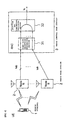
- Fig. 4 illustrates the overall configuration of a mobile communication system in which the method of obtaining user data to be transmitted to a network side is executed by selecting and combining user data including a transport block transmitted from the same mobile terminal.
- the mobile communication system comprises mobile terminals 1 carried by users, a plurality of radio base stations (nodes B) 2 which communicate with the mobile terminals 1, and a radio control base station (RNC) 3 which controls the plurality of radio base stations 2.
- nodes B radio base stations
- RNC radio control base station
- the radio control base station 3 comprises a user data reception processing section 31 for receiving user data including a transport block from the radio base station 2, and a selection and combination processing section 32 for selecting and combining user data transmitted from the same mobile terminal, which has been received via the radio base station 2, to obtain the user data to be transmitted to the network side.
- the user data transmitted from the same mobile terminal 1 is received by a plurality of radio base stations 2.
- the user data transmitted from the same mobile terminal 1 and received by the respective radio base stations 2 is transmitted to the radio control base station 3, by using the Iub for communication protocol (Iub frame protocol).
- the radio control base station 3 selects and combines optimum transport blocks from these user data transmitted from the same mobile terminal 1, and transmits the combined user data to a core network (CN) side by using the Iu.
- CN core network
- the radio control base station 3 uses a plurality of parameters in the Iub frame protocol to select a transport block included in the user data from the same mobile terminal 1, to obtain the user data to be transmitted.
- the plurality of parameters in the Iub frame protocol includes parameters of the types described below. These parameters are based on TS25.427 in the 3GPP Standard.
- Fig. 5 is a flowchart for explaining the conventional processing operation by the radio control base station, which selects and combines user data including a transport block transmitted from the same mobile terminal, by using the plurality of parameters.
- step X1 it is verified whether the header CRC of the Iub frame protocol is normal, with respect to the user data received by a plurality of branches (a plurality of radio base stations 2 having received the user data from the same mobile terminal 1). If the header CRC is not normal, control proceeds to step X14, to annul the frame. On the other hand, if the header CRC is normal, control proceeds to step X2.
- step X2 it is verified whether the frame type is a user data frame or a control frame.
- control proceeds to step X15, to perform terminal processing of the control frame, and remove the branch from the objects to be selected and combined.
- control proceeds to step X3, to temporarily store the respective transport blocks (TB) and the respective parameters in the Iub frame protocol in a buffer.
- step X4 CFN frames (frames in respective branches to be combined) of the same timing received from the same mobile terminal 1 is read from the buffer, and at step X5, a branch having the normal payload CRC is selected.
- step X6 it is verified whether there is a plurality of selected branches having the normal payload CRC. If there is only one branch having the normal payload CRC, control proceeds to step X21, to select the branch and obtain the user data to be transmitted, and the obtained user data is transmitted. On the other hand, if there is a plurality of branches having the normal payload CRC, control proceeds to step X7.
- step X7 it is determined whether the number and the size of the transport block in each branch are the same, by the TFI in the Iub frame protocol. If not, control proceeds to step X16, and if yes, control proceeds to step X8.
- step X8 it is verified whether the number of branches in which the CRCI is OK is plural or single for each transport block. If there is only one branch in which the CRCI is OK, control proceeds to step X13, to select the branch to obtain the user data to be transmitted, and the obtained user data is transmitted. On the other hand, if there is a plurality of branches in which the CRCI is OK, control proceeds to step X10.
- step X10 it is verified in each branch whether the bit error rate (QE) is the same. If not, control proceeds to step X12, to select a branch having a lower bit error rate, and control proceeds to step X13. On the other hand, if the bit error rate is the same, control proceeds to step X11, to select a branch optionally, and control proceeds to step X13.
- QE bit error rate
- the transport blocks of the selected branches are combined, to obtain user data to be transmitted to the network side having a switching system, and the obtained user data is transmitted to finish the processing.
- step X16 to which control proceeds when the number and the size of the user data in each branch is not the same, all transport blocks in the branches where the first CRCI in each branch is OK are selected.
- step X17 it is verified whether the number of branches in which the first CRCI is OK is plural. If there is only one branch in which the first CRCI is OK, control proceeds to step X21, to select the branch to obtain the user data to be transmitted, and the obtained user data is transmitted. On the other hand, if there is a plurality of branches in which the first CRCI is OK, control proceeds to step X18.
- step X18 it is verified whether the bit error rate (QE) in each branch in which the first CRCI is OK is the same. If not, control proceeds to step X20, to select a branch having a lower bit error rate, and control proceeds to step X21, to select the branch to obtain the user data to be transmitted, and the obtained user data is transmitted. On the other hand, if the bit error rate is the same in each branch, control proceeds to step X19, to select a branch optionally to obtain the user data to be transmitted, and the obtained user data is transmitted.
- QE bit error rate
- the conventional processing performed by the radio control base station in order to obtain the user data to be transmitted to the network side, in which optimum transport blocks are selected and combined from user data including transport blocks transmitted from the same mobile terminal, is complicated processing, wherein there are lots of comparison processing steps, thereby causing a transmission delay.
- the method of obtaining user data to be transmitted to the network side is a method of obtaining user data to be transmitted to a network side having a switching system, in which a radio control base station receives user data including a transport block transmitted from the same mobile terminal corresponding to an Iub frame protocol of the UMTS Standard, via a plurality of radio base stations, selects and combines the transport blocks in the received user data, to obtain user data to be transmitted to the network side, comprising:
- an optimum transport block can be selected based on the values of the obtained evaluation parameters, being the only one parameter.
- comparison in a plurality of stages, which has been heretofore required, is not necessary, and hence a delay occurring at the time of selecting and combining the transport block can be minimized.
- the plurality of parameters are an operation result of a payload CRC in the respective user data, an operation result of a CRCI for each transport block, and a bit error rate in the respective user data.
- the value of the evaluation parameter obtained by adding numerically expressed the plurality of parameters can appropriately indicate the communication quality of the user data.
- a transport block having the optimum communication quality can be selected as the user data to be transmitted to the network side.
- the value of the evaluation parameter is obtained by adding the bit error rate in the user data, a value obtained by multiplying a value, which expresses numerically the operation result of the payload CRC in the user data, by a weighting coefficient, and a value obtained by multiplying a value, which expresses numerically the operation result of the CRCI for each transport block, by a different weighting coefficient.
- the maximum number of the transport blocks is designated as the number of the transport blocks
- the value same as the evaluation parameter of the first transport block in the user data having an unincluded transport block is designated as the value of the evaluation parameter of said unincluded transport block.
- the radio control base station is a radio control base station that receives user data including a transport block transmitted from the same mobile terminal corresponding to an Iub frame protocol of the UMTS Standard, via a plurality of radio base stations, selects and combines the transport blocks in the received user data, for obtaining user data to be transmitted to a network side having a switching system, comprising:
- the radio control base station having such a configuration, the processing for selecting and combining the user data including the transport block transmitted from the same mobile terminal can be simplified, and as a result, a radio control base station that can minimize a delay of the user data can be provided.
- the mobile communication system to which the present invention is applied is the same as the mobile communication system described with reference to Fig. 4, wherein the mobile communication system comprises mobile terminals 1, radio base stations 2, and a radio control base station 3.
- the user data transmitted from the same mobile terminal 1 is received by a plurality of radio base stations 2.
- the user data received by the respective radio base stations 2 is transmitted to the radio control base station 3, by using the Iub for communication protocol (Iub frame protocol).
- the radio control base station 3 receives the user data from the radio base station 2 via the user data reception processing section 31, selects and combines optimum transport blocks from the received user data by the selection and combination processing section 32, and transmits the combined user data to a core network (CN) side by using the Iu.
- CN core network
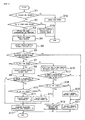
- step S1 it is verified whether the header CRC of the Iub frame protocol is normal, with respect to the user data received by a plurality of branches (a plurality of radio base stations 2 having received the user data from the same mobile terminal 1). If not, control proceeds to step S11, to annul the frame. If the header CRC is normal, control proceeds to step S2.
- step S2 it is verified whether the frame type is a user data frame or a control frame.
- the frame type is the control frame
- control proceeds to step S12, to perform terminal processing of the control frame, and remove the branch from the objects to be selected and combined.
- the frame type is the user data frame
- control proceeds to step S3.
- a value of the evaluation parameter P is calculated.
- the calculation method is such that OK/NG, being the operation result of the payload CRC, is numerically expressed for each transport block in the branch, and OK/NG, being the operation result of the CRCI, is numerically expressed, which are added to the bit error rate (QE). Adding may be performed after multiplying these by a weighting coefficient, taking into consideration the influence of respective parameters with respect to the evaluation parameter P.
- step S4 the respective transport blocks and the evaluation parameters P relating to the transport blocks are stored in the buffer temporarily.
- step S5 CFN frames of the same timing transmitted from the same user (frames in respective branches to be combined) are read from the buffer.
- step S6 it is verified whether the number and the size of the transport blocks are the same, by the TFI in the Iub frame protocol. If not, control proceeds to step S13, and a value same as the evaluation parameter value of the first transport block is designated as the value of the evaluation parameter P in an unincluded transport block, and control proceeds to step S7. On the other hand, if the number and the size of the transport blocks are the same, control proceeds to step S7 directly.
- a transport block having a good value of the evaluation parameter P (that is, the value of the evaluation parameter P is the smallest) is selected, in a unit of transport block for each branch.
- step S8 it is verified whether there is a plurality of transport blocks having the good value of the evaluation parameter P, selected at step S7. If there is only one transport block, control proceeds to step S10, where the transport blocks are combined to obtain user data to be transmitted, and the obtained user data is transmitted. On the other hand, if there is a plurality of transport blocks, control proceeds to step S9, to select an optional transport block. At step S10, the selected transport blocks are combined to obtain user data to be transmitted, and the obtained user data is transmitted.
- the selection and combination processing section 32 performing such processing comprises a numerically expressing unit, an evaluation parameter determining unit, a transport block selecting unit, and a transport block combining unit, which are not shown.
- step S3 the numerically expressing unit and the evaluation parameter determining unit correspond to step S3
- the transport block selecting unit corresponds to steps S6 to S9
- the transport block combining unit corresponds to step S10.
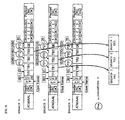
- Fig. 2 illustrates an example in which values of the evaluation parameters P for the user data including transport blocks TB1 to TB3 transmitted from the same mobile terminal and received via three branches are obtained, and an optimum transport block is selected based on the values of the obtained evaluation parameters P.
- Fig. 2 indicates an example in which there are user data received via three branches (three radio base stations 2), the header CRCs in the user data transmitted from these branches are normal, and the values of TFI in the respective branches agree with each other.
- the user data to be transmitted to the network side having a switching system can be obtained.
- branch 2 is selected for TB1 and TB2, and branch 1 for TB3.
- the user data to be transmitted to the network side can be obtained by combining these selected transport blocks TB1 to TB3.
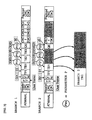
- Fig. 3 is a diagram illustrating another example for selecting optimum transport block by obtaining values of the evaluation parameters P.
- branch 1 includes three transport blocks
- branch 2 includes only one transport block.
- values of evaluation parameters P are respectively obtained with respect to the three transport blocks, being the maximum number.
- the value of the evaluation parameter P is calculated with respect to the respective transport blocks, in the same manner as in the example shown in Fig. 2.
- branch 2 is selected for TB1 to TB3.
- these transport blocks TB2 and TB3 are annulled, and only the transport block TB1 of branch 2 is transmitted to the network side having the switching system.
- the method of obtaining the value of the evaluation parameter P is not limited to the above example, and various methods can be considered.
- the types of parameters in the Iub frame protocol and values of the weighting coefficients W 1 and W 2 , used for obtaining the evaluation parameters, and the processing when there is no transport block are not limited to the above examples.
- the optimum transport block can be selected based on the values of the evaluation parameters, which is only one parameter, according to the method of obtaining the user data to be transmitted to the network side according to the present invention.
- comparison in a plurality of stages heretofore required is not necessary, and hence a delay occurring at the time of selecting and combining transport blocks can be minimized.
Landscapes
- Engineering & Computer Science (AREA)
- Computer Networks & Wireless Communication (AREA)
- Signal Processing (AREA)
- Mobile Radio Communication Systems (AREA)
- Data Exchanges In Wide-Area Networks (AREA)
Abstract
Description
- 1
- Mobile terminal
- 2
- Radio base station
- 3
- Radio control base station
- 31
- User data reception processing section
- 32
- Selection and combination processing section
Claims (5)
- A method of obtaining user data to be transmitted to a network side having a switching system, in which a radio control base station receives user data including a transport block transmitted from the same mobile terminal corresponding to an Iub frame protocol of the UMTS Standard, via a plurality of radio base stations, selects and combines the transport blocks in the received user data, to obtain user data to be transmitted to the network side, comprising:a step of numerically expressing for each transport block a plurality of parameters in the protocol respectively used when said radio base station transmits said user data;a step of obtaining a value of an evaluation parameter indicating the communication quality for each transport block, by adding the plurality of numerically expressed parameters;a step of selecting an optimum transport block based on the obtained values of the evaluation parameters; anda step of obtaining user data to be transmitted to the network side, by combining the selected optimum transport blocks.
- A method of obtaining user data to be transmitted to the network side according to claim 1, wherein said plurality of parameters are an operation result of a payload CRC in the respective user data, an operation result of a CRCI for each transport block, and a bit error rate in the respective user data.
- A method of obtaining user data to be transmitted to the network side according to claim 2, wherein at the step of obtaining the value of said evaluation parameter, the value of the evaluation parameter is obtained by adding the bit error rate in the user data, a value obtained by multiplying a value, which expresses numerically the operation result of the payload CRC in the user data, by a weighting coefficient, and a value obtained by multiplying a value, which expresses numerically the operation result of the CRCI for each transport block, by a different weighting coefficient.
- A method of obtaining user data to be transmitted to the network side according to claim 1, wherein when the number of the transport blocks included in the user data transmitted from the same mobile terminal is different corresponding to the receiving radio base stations, at the step of obtaining the value of the evaluation parameter, the maximum number of the transport blocks is designated as the number of the transport blocks, and the value same as the evaluation parameter of the first transport block in the user data having an unincluded transport block is designated as the value of the evaluation parameter of said unincluded transport block.
- A radio control base station that receives user data including a transport block transmitted from the same mobile terminal corresponding to an Iub frame protocol of the UMTS Standard, via a plurality of radio base stations, selects and combines the transport blocks in the received user data, for obtaining user data to be transmitted to a network side having a switching system, comprising:a numerically expressing unit which expresses numerically for each transport block a plurality of parameters in the protocol respectively used when said radio base station transmits said user data;an evaluation parameter determination unit which obtains a value of the evaluation parameter indicating the communication quality for each transport block, by adding the plurality of numerically expressed parameters by said numerically expressing unit;a transport block selection unit which selects an optimum transport block based on the values of the evaluation parameters obtained by said evaluation parameter determination unit; anda transport block combining unit which obtains user data to be transmitted to the network side, by combining the optimum transport blocks selected by said selection unit.
Applications Claiming Priority (2)
| Application Number | Priority Date | Filing Date | Title |
|---|---|---|---|
| JP2003312153 | 2003-09-04 | ||
| JP2003312153A JP4203382B2 (en) | 2003-09-04 | 2003-09-04 | Method for obtaining user data to be transmitted to network side, and radio control base station |
Publications (3)
| Publication Number | Publication Date |
|---|---|
| EP1513294A2 true EP1513294A2 (en) | 2005-03-09 |
| EP1513294A3 EP1513294A3 (en) | 2005-10-12 |
| EP1513294B1 EP1513294B1 (en) | 2007-10-10 |
Family
ID=34131853
Family Applications (1)
| Application Number | Title | Priority Date | Filing Date |
|---|---|---|---|
| EP20040015932 Expired - Lifetime EP1513294B1 (en) | 2003-09-04 | 2004-07-07 | A method of obtaining user data to be transmitted to a network side, and a radio control base station |
Country Status (6)
| Country | Link |
|---|---|
| US (1) | US7428409B2 (en) |
| EP (1) | EP1513294B1 (en) |
| JP (1) | JP4203382B2 (en) |
| CN (1) | CN100362787C (en) |
| AT (1) | ATE375655T1 (en) |
| DE (1) | DE602004009378T2 (en) |
Families Citing this family (1)
| Publication number | Priority date | Publication date | Assignee | Title |
|---|---|---|---|---|
| EP2654233A3 (en) * | 2007-10-01 | 2017-09-06 | Interdigital Patent Holdings, Inc. | Method and apparatus for configuration of EGPRS time-based acknowledgement |
Family Cites Families (5)
| Publication number | Priority date | Publication date | Assignee | Title |
|---|---|---|---|---|
| FI102132B (en) * | 1995-12-01 | 1998-10-15 | Nokia Mobile Phones Ltd | Use of the ATM cell's title field in radio-mediated ATM communication |
| CA2331110A1 (en) * | 2000-02-22 | 2001-08-22 | Lucent Technologies Inc. | System and method for enhancing inter-site reverse traffic capacity for a soft hand-off |
| US6973061B2 (en) * | 2001-03-16 | 2005-12-06 | Motorola, Inc | Method and apparatus for sorting packets in a communication system |
| ATE381820T1 (en) * | 2001-11-21 | 2008-01-15 | Spyder Navigations Llc | METHOD FOR MULTIPLEXING DATA STREAMS ON A TRANSPORT CARRIER BETWEEN A SOURCE NETWORK NODE AND A RECEIVE NETWORK NODE |
| EP1347662A1 (en) * | 2002-02-22 | 2003-09-24 | Lucent Technologies Inc. | Assignment of QoS within a radio access network |
-
2003
- 2003-09-04 JP JP2003312153A patent/JP4203382B2/en not_active Expired - Fee Related
-
2004
- 2004-07-07 AT AT04015932T patent/ATE375655T1/en not_active IP Right Cessation
- 2004-07-07 DE DE200460009378 patent/DE602004009378T2/en not_active Expired - Lifetime
- 2004-07-07 EP EP20040015932 patent/EP1513294B1/en not_active Expired - Lifetime
- 2004-08-10 CN CNB2004100583247A patent/CN100362787C/en not_active Expired - Fee Related
- 2004-09-02 US US10/931,972 patent/US7428409B2/en active Active
Also Published As
| Publication number | Publication date |
|---|---|
| JP2005080252A (en) | 2005-03-24 |
| CN100362787C (en) | 2008-01-16 |
| EP1513294A3 (en) | 2005-10-12 |
| US7428409B2 (en) | 2008-09-23 |
| ATE375655T1 (en) | 2007-10-15 |
| US20050085213A1 (en) | 2005-04-21 |
| DE602004009378D1 (en) | 2007-11-22 |
| EP1513294B1 (en) | 2007-10-10 |
| DE602004009378T2 (en) | 2008-07-10 |
| CN1592202A (en) | 2005-03-09 |
| JP4203382B2 (en) | 2008-12-24 |
Similar Documents
| Publication | Publication Date | Title |
|---|---|---|
| EP1442620B1 (en) | Communication equipment, transcoder device and method for processing frames associated with a plurality of wireless protocols | |
| US6473442B1 (en) | Communications system and method for matching and balancing the bit rates of transport channels to the bit rate of a physical channel | |
| EP1227695B1 (en) | Call admission control method communication system and base station device | |
| JPH10510404A (en) | Method and apparatus for uplink macro diversity in digital mobile radio communication system | |
| US20040213279A1 (en) | Switching center for mobile handover | |
| US5329550A (en) | Signal processing circuit for the European digital cellular radio system | |
| EP1665600B1 (en) | Transport format combination lookup and reselection | |
| US20020021673A1 (en) | Method of taking account of traffic processing capacity, for traffic load control in a mobile radio network | |
| EP1513294B1 (en) | A method of obtaining user data to be transmitted to a network side, and a radio control base station | |
| US7406056B2 (en) | UMTS base station supporting multiple transmission methods | |
| JP2003163970A (en) | Channel switching method and mobile communication terminal using the same | |
| US7489933B2 (en) | Method of managing processing in a mobile radio system | |
| US7532591B2 (en) | Radio communication system, radio controller and mobile station | |
| US20050113105A1 (en) | Method and a controller for controlling a connection | |
| US9161383B2 (en) | Discontinuous transmission CDMA system | |
| EP1169794B1 (en) | Discontinuous transmission cdma system | |
| US20060019697A1 (en) | Method for transmitting signals from a plurality of base stations to a mobile station | |
| US20060285610A1 (en) | Data sequence detection in communication system | |
| WO2024027335A1 (en) | Information transmission method, apparatus, and communication device | |
| WO2005064972A1 (en) | Method, terminal unit and base station unit for providing data communication in a code division multiple access (cdma) telecommunications system | |
| JP2000341334A (en) | Base station controller and transmission timing control method | |
| HK1069488A1 (en) | Mobile communication system, wireless base station apparatus and power control method for use therein | |
| HK1102654A (en) | Components and methods for processing wireless communication data in presence of format uncertainty |
Legal Events
| Date | Code | Title | Description |
|---|---|---|---|
| PUAI | Public reference made under article 153(3) epc to a published international application that has entered the european phase |
Free format text: ORIGINAL CODE: 0009012 |
|
| AK | Designated contracting states |
Kind code of ref document: A2 Designated state(s): AT BE BG CH CY CZ DE DK EE ES FI FR GB GR HU IE IT LI LU MC NL PL PT RO SE SI SK TR |
|
| AX | Request for extension of the european patent |
Extension state: AL HR LT LV MK |
|
| PUAL | Search report despatched |
Free format text: ORIGINAL CODE: 0009013 |
|
| AK | Designated contracting states |
Kind code of ref document: A3 Designated state(s): AT BE BG CH CY CZ DE DK EE ES FI FR GB GR HU IE IT LI LU MC NL PL PT RO SE SI SK TR |
|
| AX | Request for extension of the european patent |
Extension state: AL HR LT LV MK |
|
| 17P | Request for examination filed |
Effective date: 20050929 |
|
| AKX | Designation fees paid |
Designated state(s): AT BE BG CH CY CZ DE DK EE ES FI FR GB GR HU IE IT LI LU MC NL PL PT RO SE SI SK TR |
|
| GRAP | Despatch of communication of intention to grant a patent |
Free format text: ORIGINAL CODE: EPIDOSNIGR1 |
|
| RAP1 | Party data changed (applicant data changed or rights of an application transferred) |
Owner name: ALCATEL LUCENT |
|
| GRAS | Grant fee paid |
Free format text: ORIGINAL CODE: EPIDOSNIGR3 |
|
| GRAA | (expected) grant |
Free format text: ORIGINAL CODE: 0009210 |
|
| AK | Designated contracting states |
Kind code of ref document: B1 Designated state(s): AT BE BG CH CY CZ DE DK EE ES FI FR GB GR HU IE IT LI LU MC NL PL PT RO SE SI SK TR |
|
| REG | Reference to a national code |
Ref country code: GB Ref legal event code: FG4D |
|
| REG | Reference to a national code |
Ref country code: CH Ref legal event code: EP |
|
| REG | Reference to a national code |
Ref country code: IE Ref legal event code: FG4D |
|
| REF | Corresponds to: |
Ref document number: 602004009378 Country of ref document: DE Date of ref document: 20071122 Kind code of ref document: P |
|
| NLV1 | Nl: lapsed or annulled due to failure to fulfill the requirements of art. 29p and 29m of the patents act | ||
| PG25 | Lapsed in a contracting state [announced via postgrant information from national office to epo] |
Ref country code: NL Free format text: LAPSE BECAUSE OF FAILURE TO SUBMIT A TRANSLATION OF THE DESCRIPTION OR TO PAY THE FEE WITHIN THE PRESCRIBED TIME-LIMIT Effective date: 20071010 Ref country code: ES Free format text: LAPSE BECAUSE OF FAILURE TO SUBMIT A TRANSLATION OF THE DESCRIPTION OR TO PAY THE FEE WITHIN THE PRESCRIBED TIME-LIMIT Effective date: 20080121 Ref country code: CH Free format text: LAPSE BECAUSE OF FAILURE TO SUBMIT A TRANSLATION OF THE DESCRIPTION OR TO PAY THE FEE WITHIN THE PRESCRIBED TIME-LIMIT Effective date: 20071010 Ref country code: LI Free format text: LAPSE BECAUSE OF FAILURE TO SUBMIT A TRANSLATION OF THE DESCRIPTION OR TO PAY THE FEE WITHIN THE PRESCRIBED TIME-LIMIT Effective date: 20071010 Ref country code: SE Free format text: LAPSE BECAUSE OF FAILURE TO SUBMIT A TRANSLATION OF THE DESCRIPTION OR TO PAY THE FEE WITHIN THE PRESCRIBED TIME-LIMIT Effective date: 20080110 |
|
| REG | Reference to a national code |
Ref country code: CH Ref legal event code: PL |
|
| ET | Fr: translation filed | ||
| PG25 | Lapsed in a contracting state [announced via postgrant information from national office to epo] |
Ref country code: PL Free format text: LAPSE BECAUSE OF FAILURE TO SUBMIT A TRANSLATION OF THE DESCRIPTION OR TO PAY THE FEE WITHIN THE PRESCRIBED TIME-LIMIT Effective date: 20071010 Ref country code: BG Free format text: LAPSE BECAUSE OF FAILURE TO SUBMIT A TRANSLATION OF THE DESCRIPTION OR TO PAY THE FEE WITHIN THE PRESCRIBED TIME-LIMIT Effective date: 20080110 Ref country code: PT Free format text: LAPSE BECAUSE OF FAILURE TO SUBMIT A TRANSLATION OF THE DESCRIPTION OR TO PAY THE FEE WITHIN THE PRESCRIBED TIME-LIMIT Effective date: 20080310 |
|
| PG25 | Lapsed in a contracting state [announced via postgrant information from national office to epo] |
Ref country code: AT Free format text: LAPSE BECAUSE OF FAILURE TO SUBMIT A TRANSLATION OF THE DESCRIPTION OR TO PAY THE FEE WITHIN THE PRESCRIBED TIME-LIMIT Effective date: 20071010 |
|
| PG25 | Lapsed in a contracting state [announced via postgrant information from national office to epo] |
Ref country code: DK Free format text: LAPSE BECAUSE OF FAILURE TO SUBMIT A TRANSLATION OF THE DESCRIPTION OR TO PAY THE FEE WITHIN THE PRESCRIBED TIME-LIMIT Effective date: 20071010 Ref country code: CZ Free format text: LAPSE BECAUSE OF FAILURE TO SUBMIT A TRANSLATION OF THE DESCRIPTION OR TO PAY THE FEE WITHIN THE PRESCRIBED TIME-LIMIT Effective date: 20071010 |
|
| PLBE | No opposition filed within time limit |
Free format text: ORIGINAL CODE: 0009261 |
|
| STAA | Information on the status of an ep patent application or granted ep patent |
Free format text: STATUS: NO OPPOSITION FILED WITHIN TIME LIMIT |
|
| PG25 | Lapsed in a contracting state [announced via postgrant information from national office to epo] |
Ref country code: RO Free format text: LAPSE BECAUSE OF FAILURE TO SUBMIT A TRANSLATION OF THE DESCRIPTION OR TO PAY THE FEE WITHIN THE PRESCRIBED TIME-LIMIT Effective date: 20071010 Ref country code: BE Free format text: LAPSE BECAUSE OF FAILURE TO SUBMIT A TRANSLATION OF THE DESCRIPTION OR TO PAY THE FEE WITHIN THE PRESCRIBED TIME-LIMIT Effective date: 20071010 Ref country code: SK Free format text: LAPSE BECAUSE OF FAILURE TO SUBMIT A TRANSLATION OF THE DESCRIPTION OR TO PAY THE FEE WITHIN THE PRESCRIBED TIME-LIMIT Effective date: 20071010 |
|
| 26N | No opposition filed |
Effective date: 20080711 |
|
| PG25 | Lapsed in a contracting state [announced via postgrant information from national office to epo] |
Ref country code: GR Free format text: LAPSE BECAUSE OF FAILURE TO SUBMIT A TRANSLATION OF THE DESCRIPTION OR TO PAY THE FEE WITHIN THE PRESCRIBED TIME-LIMIT Effective date: 20080111 |
|
| PG25 | Lapsed in a contracting state [announced via postgrant information from national office to epo] |
Ref country code: FI Free format text: LAPSE BECAUSE OF FAILURE TO SUBMIT A TRANSLATION OF THE DESCRIPTION OR TO PAY THE FEE WITHIN THE PRESCRIBED TIME-LIMIT Effective date: 20071010 |
|
| PG25 | Lapsed in a contracting state [announced via postgrant information from national office to epo] |
Ref country code: MC Free format text: LAPSE BECAUSE OF NON-PAYMENT OF DUE FEES Effective date: 20080731 |
|
| PG25 | Lapsed in a contracting state [announced via postgrant information from national office to epo] |
Ref country code: EE Free format text: LAPSE BECAUSE OF FAILURE TO SUBMIT A TRANSLATION OF THE DESCRIPTION OR TO PAY THE FEE WITHIN THE PRESCRIBED TIME-LIMIT Effective date: 20071010 |
|
| PG25 | Lapsed in a contracting state [announced via postgrant information from national office to epo] |
Ref country code: SI Free format text: LAPSE BECAUSE OF FAILURE TO SUBMIT A TRANSLATION OF THE DESCRIPTION OR TO PAY THE FEE WITHIN THE PRESCRIBED TIME-LIMIT Effective date: 20071010 |
|
| PG25 | Lapsed in a contracting state [announced via postgrant information from national office to epo] |
Ref country code: IE Free format text: LAPSE BECAUSE OF NON-PAYMENT OF DUE FEES Effective date: 20080707 Ref country code: CY Free format text: LAPSE BECAUSE OF FAILURE TO SUBMIT A TRANSLATION OF THE DESCRIPTION OR TO PAY THE FEE WITHIN THE PRESCRIBED TIME-LIMIT Effective date: 20071010 |
|
| PG25 | Lapsed in a contracting state [announced via postgrant information from national office to epo] |
Ref country code: HU Free format text: LAPSE BECAUSE OF FAILURE TO SUBMIT A TRANSLATION OF THE DESCRIPTION OR TO PAY THE FEE WITHIN THE PRESCRIBED TIME-LIMIT Effective date: 20080411 Ref country code: LU Free format text: LAPSE BECAUSE OF NON-PAYMENT OF DUE FEES Effective date: 20080707 |
|
| PG25 | Lapsed in a contracting state [announced via postgrant information from national office to epo] |
Ref country code: TR Free format text: LAPSE BECAUSE OF FAILURE TO SUBMIT A TRANSLATION OF THE DESCRIPTION OR TO PAY THE FEE WITHIN THE PRESCRIBED TIME-LIMIT Effective date: 20071010 |
|
| PG25 | Lapsed in a contracting state [announced via postgrant information from national office to epo] |
Ref country code: IT Free format text: LAPSE BECAUSE OF NON-PAYMENT OF DUE FEES Effective date: 20080731 |
|
| REG | Reference to a national code |
Ref country code: FR Ref legal event code: GC Effective date: 20131018 |
|
| REG | Reference to a national code |
Ref country code: FR Ref legal event code: RG Effective date: 20141016 |
|
| REG | Reference to a national code |
Ref country code: FR Ref legal event code: PLFP Year of fee payment: 12 |
|
| REG | Reference to a national code |
Ref country code: FR Ref legal event code: CA Effective date: 20150521 |
|
| REG | Reference to a national code |
Ref country code: FR Ref legal event code: CA Effective date: 20150521 |
|
| REG | Reference to a national code |
Ref country code: FR Ref legal event code: PLFP Year of fee payment: 13 |
|
| REG | Reference to a national code |
Ref country code: FR Ref legal event code: PLFP Year of fee payment: 14 |
|
| PGFP | Annual fee paid to national office [announced via postgrant information from national office to epo] |
Ref country code: FR Payment date: 20170724 Year of fee payment: 14 |
|
| PG25 | Lapsed in a contracting state [announced via postgrant information from national office to epo] |
Ref country code: FR Free format text: LAPSE BECAUSE OF NON-PAYMENT OF DUE FEES Effective date: 20180731 |
|
| REG | Reference to a national code |
Ref country code: GB Ref legal event code: 732E Free format text: REGISTERED BETWEEN 20190429 AND 20190502 |
|
| REG | Reference to a national code |
Ref country code: DE Ref legal event code: R082 Ref document number: 602004009378 Country of ref document: DE Representative=s name: MENZIETTI WETZEL, DE Ref country code: DE Ref legal event code: R081 Ref document number: 602004009378 Country of ref document: DE Owner name: PROVENANCE ASSET GROUP LLC, PITTSFORD, US Free format text: FORMER OWNER: ALCATEL LUCENT, PARIS, FR |
|
| PGFP | Annual fee paid to national office [announced via postgrant information from national office to epo] |
Ref country code: DE Payment date: 20200601 Year of fee payment: 17 |
|
| PGFP | Annual fee paid to national office [announced via postgrant information from national office to epo] |
Ref country code: GB Payment date: 20210730 Year of fee payment: 18 |
|
| REG | Reference to a national code |
Ref country code: DE Ref legal event code: R119 Ref document number: 602004009378 Country of ref document: DE |
|
| PG25 | Lapsed in a contracting state [announced via postgrant information from national office to epo] |
Ref country code: DE Free format text: LAPSE BECAUSE OF NON-PAYMENT OF DUE FEES Effective date: 20220201 |
|
| GBPC | Gb: european patent ceased through non-payment of renewal fee |
Effective date: 20220707 |
|
| PG25 | Lapsed in a contracting state [announced via postgrant information from national office to epo] |
Ref country code: GB Free format text: LAPSE BECAUSE OF NON-PAYMENT OF DUE FEES Effective date: 20220707 |