EP1512744A1 - Pigment protein - Google Patents
Pigment protein Download PDFInfo
- Publication number
- EP1512744A1 EP1512744A1 EP03733346A EP03733346A EP1512744A1 EP 1512744 A1 EP1512744 A1 EP 1512744A1 EP 03733346 A EP03733346 A EP 03733346A EP 03733346 A EP03733346 A EP 03733346A EP 1512744 A1 EP1512744 A1 EP 1512744A1
- Authority
- EP
- European Patent Office
- Prior art keywords
- amino acid
- acid sequence
- chromoprotein
- seq
- substituted
- Prior art date
- Legal status (The legal status is an assumption and is not a legal conclusion. Google has not performed a legal analysis and makes no representation as to the accuracy of the status listed.)
- Granted
Links
Images


Classifications
-
- G—PHYSICS
- G01—MEASURING; TESTING
- G01N—INVESTIGATING OR ANALYSING MATERIALS BY DETERMINING THEIR CHEMICAL OR PHYSICAL PROPERTIES
- G01N33/00—Investigating or analysing materials by specific methods not covered by groups G01N1/00 - G01N31/00
- G01N33/48—Biological material, e.g. blood, urine; Haemocytometers
- G01N33/50—Chemical analysis of biological material, e.g. blood, urine; Testing involving biospecific ligand binding methods; Immunological testing
- G01N33/53—Immunoassay; Biospecific binding assay; Materials therefor
- G01N33/536—Immunoassay; Biospecific binding assay; Materials therefor with immune complex formed in liquid phase
- G01N33/542—Immunoassay; Biospecific binding assay; Materials therefor with immune complex formed in liquid phase with steric inhibition or signal modification, e.g. fluorescent quenching
-
- C—CHEMISTRY; METALLURGY
- C08—ORGANIC MACROMOLECULAR COMPOUNDS; THEIR PREPARATION OR CHEMICAL WORKING-UP; COMPOSITIONS BASED THEREON
- C08L—COMPOSITIONS OF MACROMOLECULAR COMPOUNDS
- C08L23/00—Compositions of homopolymers or copolymers of unsaturated aliphatic hydrocarbons having only one carbon-to-carbon double bond; Compositions of derivatives of such polymers
- C08L23/02—Compositions of homopolymers or copolymers of unsaturated aliphatic hydrocarbons having only one carbon-to-carbon double bond; Compositions of derivatives of such polymers not modified by chemical after-treatment
Definitions
- the present invention relates to a novel chromoprotein. More specifically, the present invention relates to a novel chromoprotein derived from Cnidopus japonicus, and the use thereof.
- Green fluorescent protein derived from Aequorea victoria, a jellyfish, has many purposes in biological systems. Recently, various GFP mutants have been produced based on the random mutagenesis and semi-rational mutagenesis, wherein a color is changed, a folding property is improved, luminance is enhanced, or pH sensitivity is modified. Fluorescent proteins such as GFP are fused with other proteins by gene recombinant technique, and monitoring of the expression and transportation of the fusion proteins is carried out.
- YFP Yellow fluorescent protein
- Aequorea-derived GFP mutants exhibits the fluorescence with the longest wavelength.
- the values ⁇ and ⁇ of the majority of YEPs are 60,000 to 100,000 M -1 cm -1 and 0.6 to 0.8, respectively (Tsien, R. Y. (1998). Ann. Rev. Biochem. 67, 509-544). These values are comparable to those of the general fluorescent group (fluorescein, rhodamine, etc.). Accordingly, improvement of the absolute luminance of YFP is nearly approaching its limit.
- cyan fluorescent protein is another example of the GFP mutant.
- ECFP enhanced cyan fluorescent protein
- RFP red fluorescent protein
- DasRed 4 types of fluorescent proteins, that are, green fluorescent protein, yellow fluorescent protein, cyan fluorescent protein, and red fluorescent protein, have successively been developed. The range of the spectrum has significantly been expanded.
- An object of the present invention is to provide a novel chromoprotein derived from Cnidopus japonicus.
- the present inventors have conducted intensive studies directed towards achieving the aforementioned object. They have designed suitable primers based on information regarding the amino acid sequences of known fluorescent proteins. Using these primers, they have succeeded in the amplification and cloning of a gene encoding a novel chromoprotein from the cDNA library of Cnidopus japonicus exhibiting a green color. The present inventors have further analyzed the light-absorbing properties and pH sensitivity of the obtained chromoprotein derived from Cnidopus japonicus. The present invention has been completed based on these findings.
- the present invention provides a chromoprotein capable of emitting fluorescence, which has an amino acid sequence, wherein, with respect to the amino acid sequence shown in SEQ ID NO: 1, alanine as an amino acid residue at position 28 is substituted by glycine, glutamic acid as an amino acid residue at position 41 is substituted by methionine, cysteine as an amino acid residue at position 145 is substituted by serine, and threonine as an amino acid residue at position 158 is substituted by isoleucine.
- the present invention provides:
- the present invention provides DNA encoding the protein of the present invention.
- the present invention provides either one of the following DNAs:
- the present invention provides DNA having either one of the following nucleotide sequences:
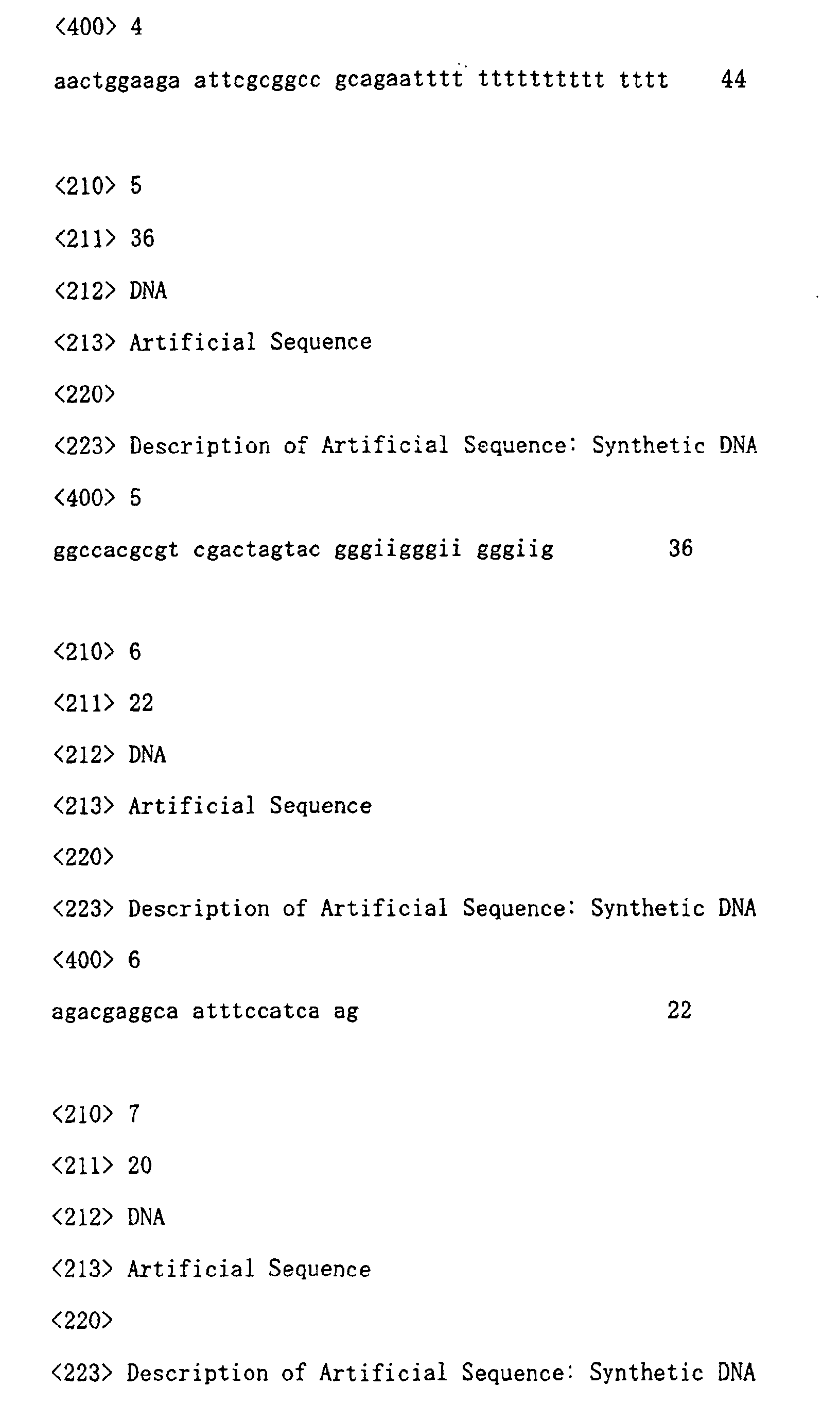
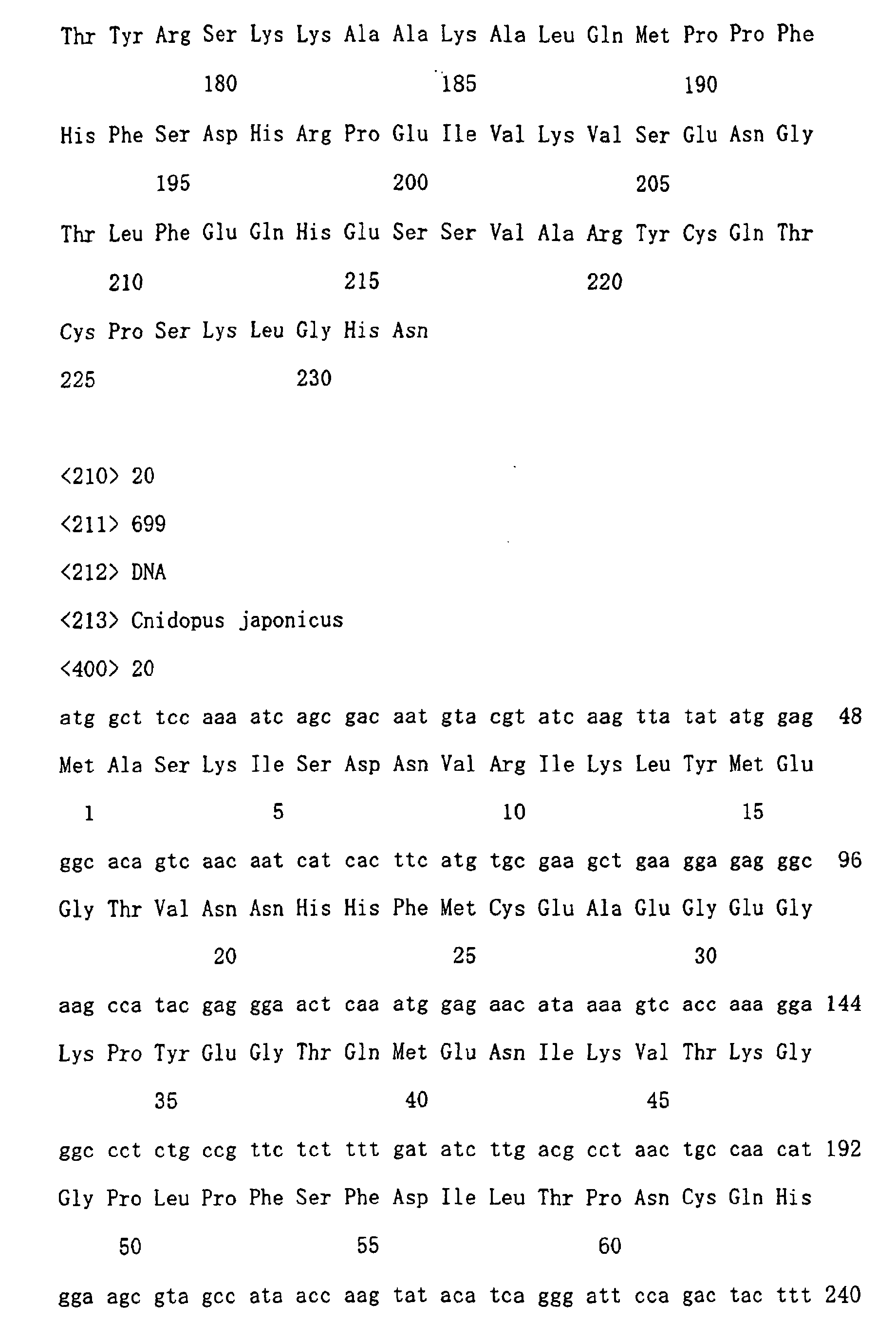
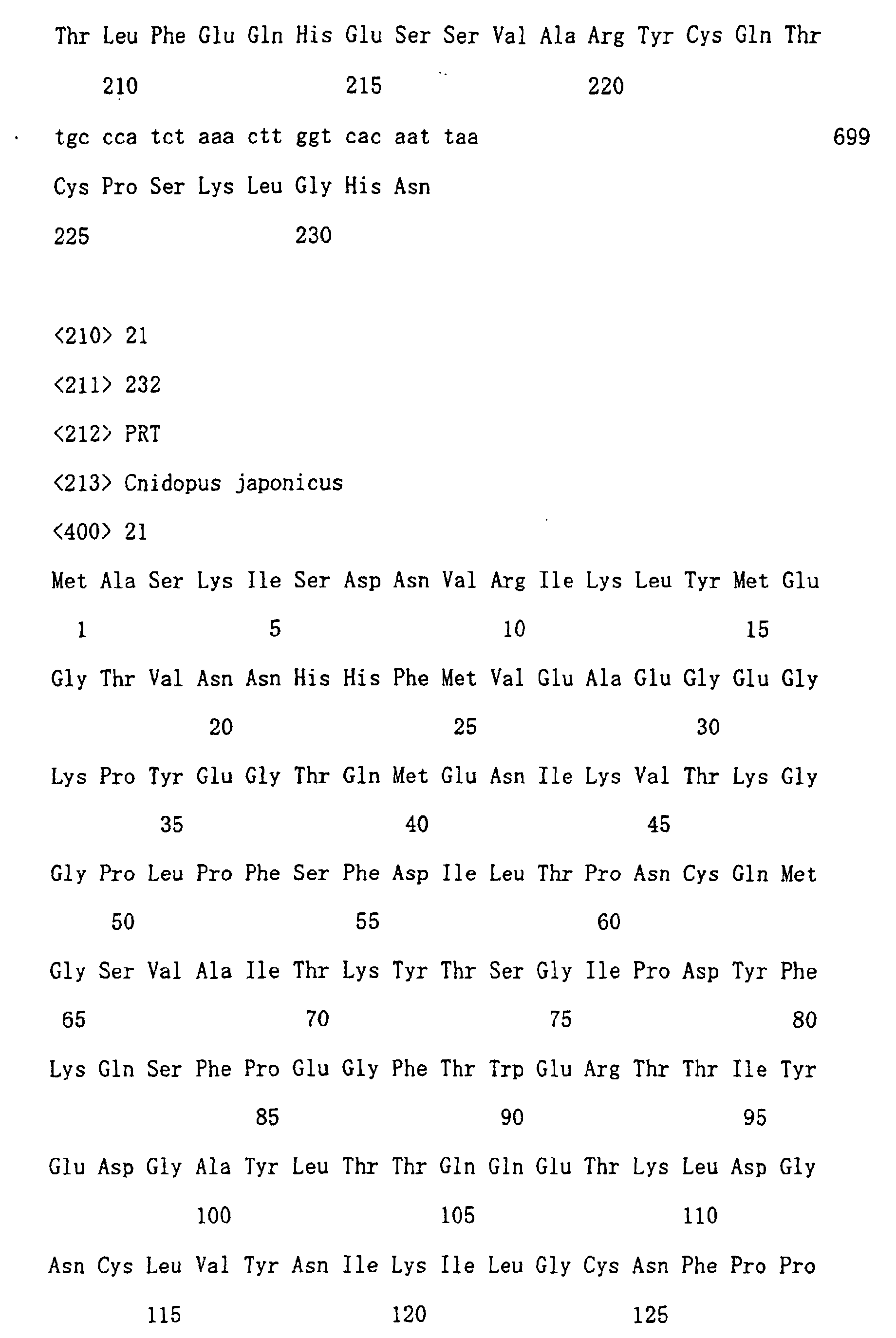
- the present invention provides DNA having the nucleotide sequence shown in any one of SEQ ID NOS: 12, 14, 16, 18, 20, or 22.
- the present invention provides a recombinant vector having the DNA of the present invention.
- the present invention provides a transformant having the DNA or recombinant vector of the present invention.
- the present invention provides a fusion protein composed of the chromoprotein of the present invention and another protein.
- the present invention provides a method for analyzing a physiologically active substance, which is characterized in that the FRET (fluorescence resonance energy transfer) method is applied using the chromoprotein of the present invention as an acceptor protein.
- FRET fluorescence resonance energy transfer
- the present invention provides a light-absorbing reagent kit comprising the chromoprotein, DNA, recombinant vector, transformant, or fusion protein of the present invention.
- Chromoprotein of the present invention Chromoprotein of the present invention
- the chromoprotein of the present invention is characterized in that it is derived from Cnidopus japonicus, and has the following properties:
- Cnidopus japonicus is one type of sea anemone belonging to Anthozoa of Cnidaria.
- Cnidopus japonicus has the highest degree of color mutation. Its withers height is always low, and it has a large number of warts on the body wall thereof. It has approximately 200 short tentacles.
- a parent sea anemone discharges developed embryos from its oral part. The discharged embryos become attached to the body wall of the parent sea anemone. Thereafter, the embryos are further developed, and as a result, they become baby sea anemone.
- this sea anemone was named Komochi Isoginchaku (a Japanese name meaning "seed sea anemone”). This type of sea anemone is distributed in the intertidal zones on the rock coasts between Hokkaido and Boso Peninsula and also in the zones immediately below the intertidal zones.
- a chromoprotein having the aforementioned properties was isolated using Cnidopus japonicus as a starting material in the examples described later, but that the chromoprotein of the present invention may also be obtained from forms of sea anemone other than Cnidopus japonicus in some cases. Such a chromoprotein is also included in the scope of the present invention.
- the chromoprotein of the present invention is characterized in that the pH sensitivity of light-absorbing properties is stable at between pH 4 and pH 10. That is to say, in the case of the chromoprotein of the present invention, the peak value of the absorption spectrum does not significantly fluctuate in the range between pH 4 and pH 10. Accordingly, even under the same conditions, the chromoprotein of the present invention can be used in a broad range of pH environments, and thus, the use of the chromoprotein in vivo has few restrictions.
- chromoprotein of the present invention include a chromoprotein having either one of the following amino acid sequences:
- light-absorbing properties is used in the present specification to mean properties capable of absorbing light having a certain wavelength.
- an absorption maximum wavelength may be 610 nm as in the case of the chromoprotein described in the present specification, or the value of the absorption maximum wavelength may also be shifted. It is preferable that the pH sensitivity of light-absorbing properties is stable at between pH 4 and pH 10.
- the chromoprotein of the present invention having the amino acid sequence shown in SEQ ID NO: 1 in the sequence listing does not emit fluorescence.
- one or several amino acids are deleted, substituted, and/or added with respect to the amino acid sequence shown in SEQ ID NO: 1, so as to produce a protein having modified light-absorbing properties, or so as to produce a protein emitting fluorescence in some cases.
- the thus produced proteins are also included in the scope of the present invention.
- a specific example of a fluorescent protein produced by such mutation of amino acids may be a fluorescent protein having an amino acid sequence, wherein, with respect to the amino acid sequence shown in SEQ ID NO: 1, alanine as an amino acid residue at position 28 is substituted by glycine, glutamic acid as an amino acid residue at position 41 is substituted by methionine, cysteine as an amino acid residue at position 145 is substituted by serine, and threonine as an amino acid residue at position 158 is substituted by isoleucine.
- a fluorescent protein produced by such mutation of amino acids may include: a chromoprotein having an amino acid sequence wherein tyrosine as an amino acid residue at position 64 is substituted by leucine with respect to the amino acid sequence shown in SEQ ID NO: 1; a chromoprotein having an amino acid sequence wherein tyrosine as an amino acid residue at position 64 is substituted by methionine with respect to the amino acid sequence shown in SEQ ID NO: 1; a chromoprotein having an amino acid sequence, wherein glutamic acid as an amino acid residue at position 41 is substituted by leucine, and phenylalanine as an amino acid residue at position 80 is substituted by glycine, with respect to the amino acid sequence shown in SEQ ID NO: 1; a chromoprotein capable of emitting fluorescence, which has an amino acid sequence wherein tyrosine as an amino acid residue at position 64 is substituted by phenylalanine with respect to the amino acid sequence shown in SEQ ID NO: 1
- the method of obtaining the chromoprotein of the present invention is not particularly limited.
- the protein may be either a protein synthesized by chemosynthesis, or recombinant protein produced by a gene recombination technique.
- a gene encoding the chromoprotein of the present invention is provided.
- DNA encoding the chromoprotein of the present invention may include either one of the following DNAs:
- DNA encoding the chromoprotein of the present invention may include either one of the following DNAs:
- the DNA of the present invention can be synthesized by, for example, the phosphoamidite method, or it can also be produced by polymerase chain reaction (PCR) using specific primers.
- the DNA of the present invention is produced by the method described above in the specification.
- a method of introducing a desired mutation into a certain nucleic acid sequence is known to a person skilled in the art.
- known techniques such as a site-directed mutagenesis, PCR using degenerated oligonucleotides, or the exposure of cells containing nucleic acid to mutagens or radioactive rays, are appropriately used, so as to construct DNA having a mutation.
- Such known techniques are described in, for example, Molecular Cloning: A Laboratory Manual, 2 nd Ed., Cold Spring Harbor Laboratory, Cold Spring Harbor, NY., 1989; and Current Protocols in Molecular Biology, Supplements 1 to 38, John Wiley & Sons (1987-1997).
- the DNA of the present invention can be inserted into a suitable vector and used.
- the type of a vector used in the present invention is not particularly limited. For example, it may be either a vector that can autonomously replicate (e.g., a plasmid, etc.), or vector that is incorporated into the genomes of host cells when it is introduced into the host cells and is then replicated together with the chromosome into which it is incorporated.
- the vector used in the present invention is preferably an expression vector.
- elements necessary for transcription e.g., a promoter, etc.
- the promoter is a DNA sequence which shows a transcriptional activity in host cells, and it is appropriately selected depending on the type of host cells.
- Examples of a promoter which can operate in bacterial cells may include a Bacillus stearothermophilus maltogenic amylase gene promoter, a Bacillus licheniformis alpha-amylase gene promoter, a Bacillus amyloliquefaciens BAN amylase gene promoter, a Bacillus subtilis alkaline protease gene promoter, a Bacillus pumilus xylosidase gene promoter, P R and P L promoters of phage rhamda, and lac, trp and tac promoters of
- an appropriate terminator such as a human growth hormone terminator, or a TPI1 terminator or ADH3 terminator for fungal cells, may be functionally bound to the DNA of the present invention, as necessary.
- the recombinant vector of the present invention may further have elements such as a polyadenylation signal (e.g., one derived from SV40 or the adenovirus 5E1b region), a transcription enhancer sequence (e.g., an SV40 enhancer), or a translation enhancer sequence (e.g., one encoding the adenovirus VA RNA).
- the recombinant vector of the present invention may further comprise a selective marker.
- a selective marker may include genes, complements of which are absent from host cells, such as a dihydrofolate reductase (DHFR) gene or a Shizosaccharomyces pombe TPI gene, and drug resistant genes such as ampicillin, kanamycin, tetracycline, chloramphenicol, neomycin or hygromycin-resistant genes.
- DHFR dihydrofolate reductase
- Shizosaccharomyces pombe TPI Shizosaccharomyces pombe TPI gene
- a method for ligating the DNA of the present invention, a promoter and, as desired, a terminator and/or a secretory signal sequence to one another and inserting these items into a suitable vector is known to a person skilled in the art.
- a transformant can be produced by introducing the DNA or recombinant vector of the present invention into a suitable host.
- Any cell can be used as a host cell into which the DNA or recombinant vector of the present invention is introduced, as long as the DNA construct of the present invention can be expressed therein.
- Examples of such a cell may include bacteria, yeasts, fungal cells, and higher eukaryotic cells.
- bacteria may include Gram-positive bacteria such as Bacillus or Streptomyces, and Gram-negative bacteria such as Escherichia coli. These bacteria may be transformed by the protoplast method or other known methods, using competent cells.
- mammalian cells may include HEK 293 cells, HeLa cells, COS cells, BHK cells, CHL cells, and CHO cells.
- a method of transforming mammalian cells and expressing the introduced DNA sequence in the cells is also known. Examples of such a method may include the electroporation, the calcium phosphate method, and the lipofection method.
- yeast cells may include those belonging to Saccharomyces or Shizosaccharomyces. Examples of such cells may include Saccharomyces cerevisiae and Saccharomyces kluyveri . Examples of a method of introducing a recombinant vector into yeast host cells may include the electroporation, the spheroplast method, and the lithium acetate method.
- Examples of other fungal cells may include those belonging to Filamentous fungi such as Aspergillus, Neurospora, Fusarium or Trichoderma. Where Filamentous fungi are used as host cells, transformation can be carried out by incorporating DNA constructs into host chromosomes, so as to obtain recombinant host cells. Incorporation of DNA constructs into the host chromosomes is carried out by known methods, and such known methods may include homologous recombination and heterologous recombination.
- both a vector into which a recombinant gene is introduced and a baculovirus are co-introduced into insect cells, and a recombinant virus is obtained in the culture supernatant of the insect cells. Thereafter, insect cells are infected with the recombinant virus, so as to allow the cells to express proteins (described in, for example, Baculovirus Expression Vectors, A Laboratory Manual; and Current Protocols in Molecular Biology, Bio/Technology, 6, 47 (1988)).
- the Autographa californica nuclear polyhedrosis virus which is a virus infecting to insects belonging to Barathra brassicae, can be used as baculovirus.
- insect cells used herein may include Sf9 and Sf21, which are Spodoptera frugiperda ovarian cells [Baculovirus Expression Vectors, A Laboratory Manual, W. H. Freeman & Company, New York, (1992)], and HiFive (manufactured by Invitrogen), which are Trichoplusia ni ovarian cells.
- Examples of the method of co-introducing both a vector into which a recombinant gene has been introduced and the above baculovirus into insect cells to prepare a recombinant virus may include the calcium phosphate method and the lipofection method.
- the above transformant is cultured in an appropriate nutritive medium under conditions enabling the introduced DNA construct to be expressed.
- common methods of isolating and purifying proteins may be used.
- the protein of the present invention is expressed in a state dissolved in cells
- cells are recovered by centrifugal separation, and the recovered cells are suspended in a water type buffer. Thereafter, the cells are disintegrated using an ultrasonic disintegrator or the like, so as to obtain a cell-free extract.
- a supernatant is obtained by centrifuging the cell-free extract, and then, a purified sample can be obtained from the supernatant by applying, singly or in combination, the following ordinary protein isolation and purification methods: the solvent extraction, the salting-out method using ammonium sulfate or the like, the desalting method, the precipitation method using an organic solvent, the anion exchange chromatography using resins such as diethylaminoethyl (DEAE) sepharose, the cation exchange chromatography using resins such as S-Sepharose FF (manufactured by Pharmacia), the hydrophobic chromatography using resins such as butyl sepharose or phenyl sepharose, the gel filtration method using a molecular sieve, the affinity chromatography, the chromatofocusing method, and the electrophoresis such as isoelectric focusing.
- the solvent extraction such as diethylaminoethyl (DEAE) sepharose
- the chromoprotein of the present invention can be fused with another protein, so as to construct a fusion protein.
- the type of said another protein to be fused to the chromoprotein of the present invention is not particularly limited, and preferred examples may include a protein which interacts with another molecule.
- the examples may include a receptor protein or ligand thereof, antigen, antibody and the like.
- a method of obtaining the fusion protein of the present invention is not particularly limited. It may be either a protein synthesized by chemosynthesis, or recombinant protein produced by a gene recombination technique.
- DNA encoding the chromoprotein of the present invention and the DNA encoding the another protein to be fused to the chromoprotein can be obtained by the method as mentioned above in this specification or by the method similar to it. Then, these DNA fragments are ligated to one another by a gene recombination technique, so that DNA encoding the desired fusion protein can be obtained. This DNA is then introduced into an appropriate expression system, so that the fusion protein of the present invention can be produced.
- FRET fluorescence resonance energy transfer
- FRET fluorescence resonance energy transfer
- a first molecule labeled with a cyan fluorescent protein (CFP) acting as a first fluorescent protein is allowed to coexist with a second molecule labeled with a yellow fluorescent protein (YFP) acting as a second fluorescent protein, so as to allow the yellow fluorescent protein (YFP) to act as an acceptor molecule and to allow the cyan fluorescent protein (CFP) to act as a donor molecule.
- FRET fluorescence resonance energy transfer
- FRET fluorescence resonance energy transfer
- the chromoprotein of the present invention is particularly advantageous when it is used as an acceptor molecule in FRET (fluorescence resonance energy transfer). That is to say, a fused form (a first fused form) of the chromoprotein of the present invention and a test substance is first produced. Then, a fused form (a second fused form) of another test substance interacting with the above test substance and another fluorescent protein is produced. Thereafter, the first fused form is allowed to interact with the second fused form, and the generated fluorescence is analyzed, so that the interaction between the aforementioned two types of test substances can be analyzed.
- FRET fluorescence resonance energy transfer
- using the chromoprotein of the present invention may be carried out either in a test tube or in a cell.
- the present invention provides a light-absorbing reagent kit comprising at least one which is selected from the chromoprotein, fusion protein, DNA, recombinant vector or transformant, which are described in the present specification.
- the kit of the present invention can be produced from commonly used materials that are known per se, by using common methods.
- Reagents such as the chromoprotein or the DNA are dissolved in an appropriate solvent, so that the reagents can be prepared in a form suitable for conservation.
- Water, ethanol, various types of buffer solution, etc. can be used as such a solvent.
- Example 1 Isolation of gene encoding novel chromoprotein from sea anemone
- a chromoprotein gene was isolated from sea anemone emitting a green color. Cnidopus japonicus emitting a green color was used as a material. Frozen Cnidopus japonicus was crushed in a mortar. 7.5 ml of "TRIzol” (GIBCO BRL) was added to 1 g (wet weight) of Cnidopus japonicus, and the mixture was homogenized, followed by centrifugation at 1,500 ⁇ g for 10 minutes. 1.5 ml of chloroform was added to the supernatant. The mixture was stirred for 15 seconds and then left at rest for 3 minutes. The resultant product was centrifuged at 7,500 x g for 15 minutes.
- RNA dissolved in the DEPC water was 100 times diluted, and the values of O.D.260 and O.D.280 were measured, so as to determine the concentration of RNA. 1.2 mg of the total RNA was obtained from a green individual.
- cDNA (33 ⁇ l) was synthesized from 4 ⁇ g of the total RNA using a kit for synthesizing first strand cDNA, "Ready To Go” (Amersham Pharmacia).
- PCR was carried out.
- Primers were designed and produced by comparing the amino acid sequences of known fluorescent proteins, extracting similar portions, and converting them into nucleotide sequences. The sequences of the used primers are shown below: and wherein I represents inosine, S represents C or G, and H represents A, T, or C.
- the annealing temperature was decreased 0.3°C per cycle. That is to say, the annealing temperature in the 30 th cycle was 43°C. 72°C, 7 minutes (final elongation) Retention at 4°C
- PCR was carried out once again under the same conditions.
- a 800-bp fragment (derived from the green individual) was cut out by agarose gel electrophoresis and then purified. This 800-bp fragment contained a 3'-UTR portion as a whole.
- the purified DNA fragment was ligated to a pT7-blue vector (Novagen). Escherichia coli (TG1) was transformed with the vector, and the obtained transformants were subjected to blue white selection. Thereafter, plasmid DNA was purified from white colonies of Escherichia coli.
- the nucleotide sequence of the inserted DNA fragment was determined by a DNA sequencer.
- the obtained nucleotide sequence was compared with the nucleotide sequences of other fluorescent protein genes to confirm that the nucleotide sequence of the DNA was derived from a fluorescent protein. 5'-RACE and 3'-RACE methods were applied to a gene that had been confirmed to be a part of a fluorescent protein gene, so as to carry out the cloning of a full-length gene.
- the 5'-RACE method was applied using 5'-RACE System for Rapid Amplification of cDNA Ends, Version 2.0 (GIBCO BRL). 3 ⁇ g of the total RNA prepared in (1) above was used as a template.
- the following primers were used: and PCR reaction conditions and the like were determined in accordance with the protocols attached with the kit.
- the 350-bp amplified band was cut out by agarose gel electrophoresis and then purified.
- the purified DNA fragment was ligated to a pT7-blue vector (Novagen).
- Escherichia coli (TG1) was transformed with the vector, and the obtained transformants were subjected to blue white selection. Thereafter, plasmid DNA was purified from white colonies of Escherichia coli.
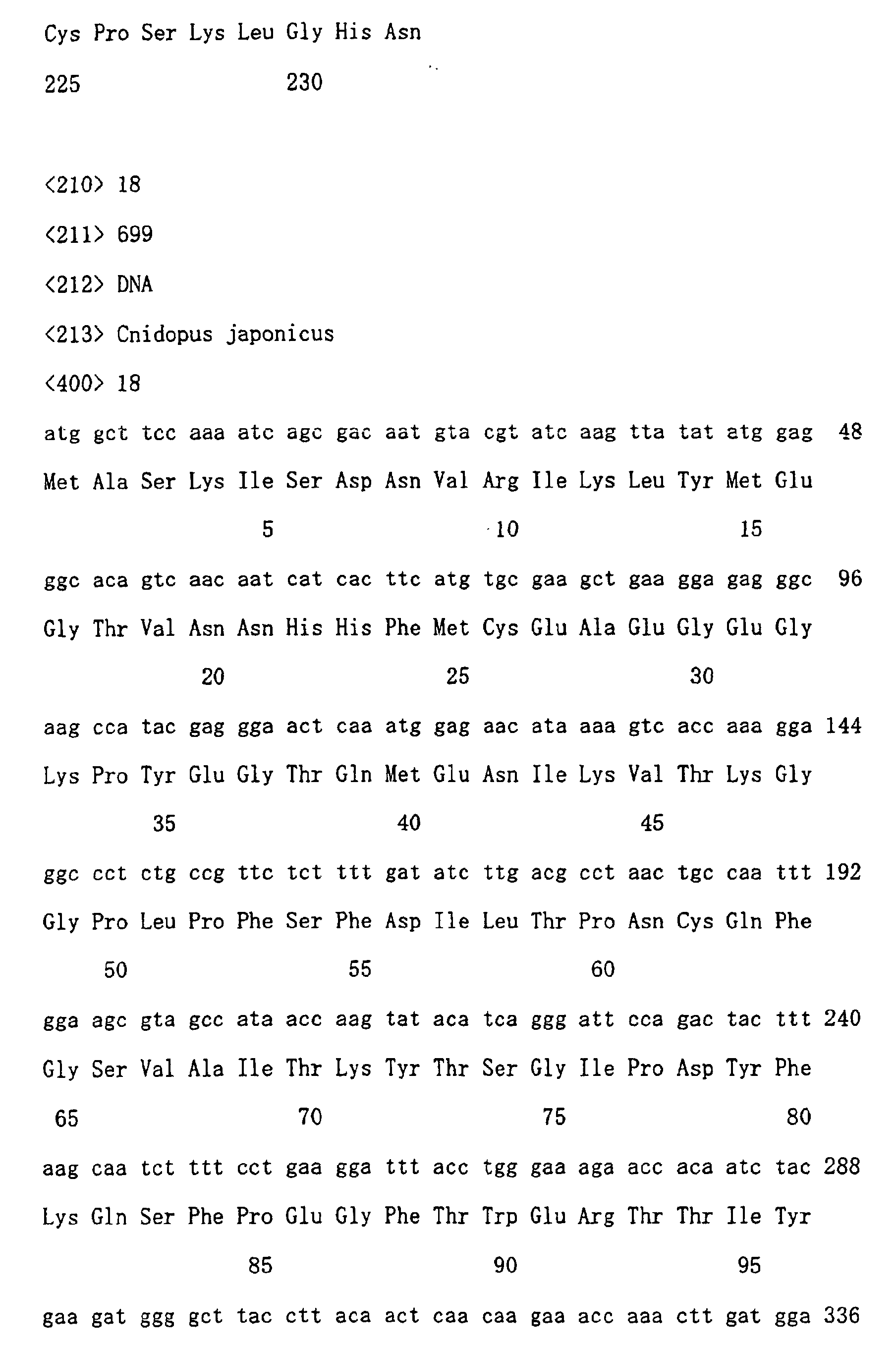
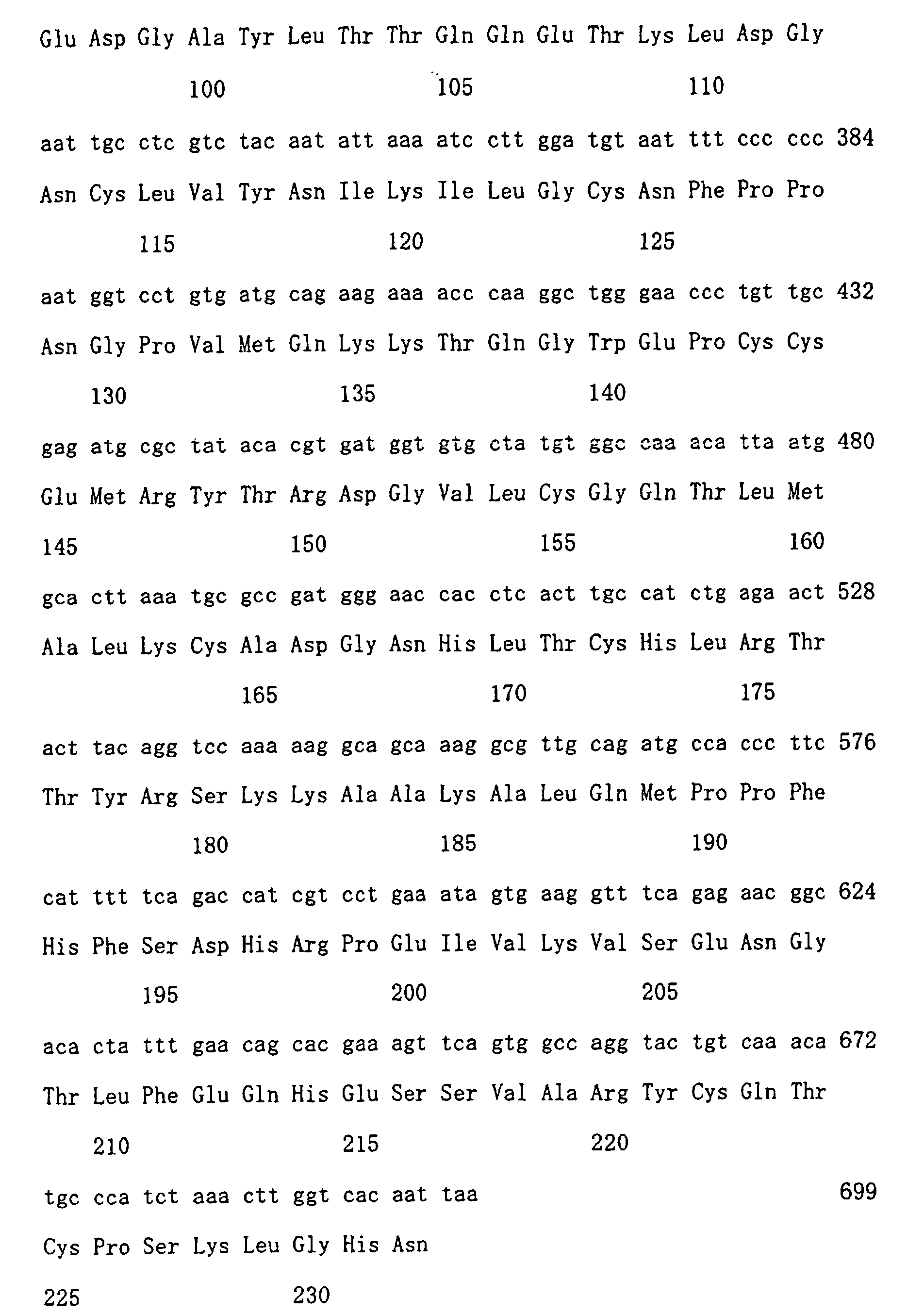
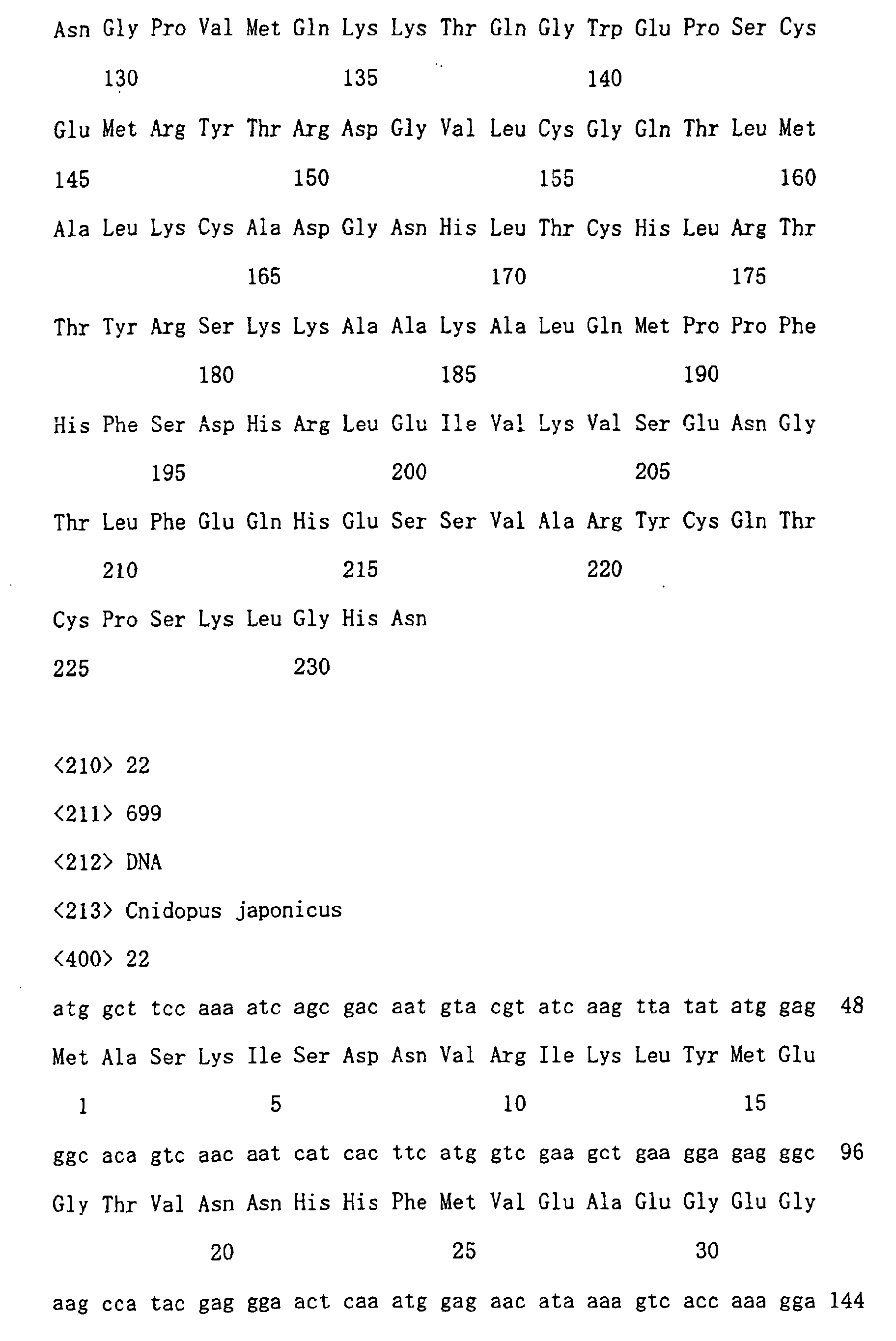
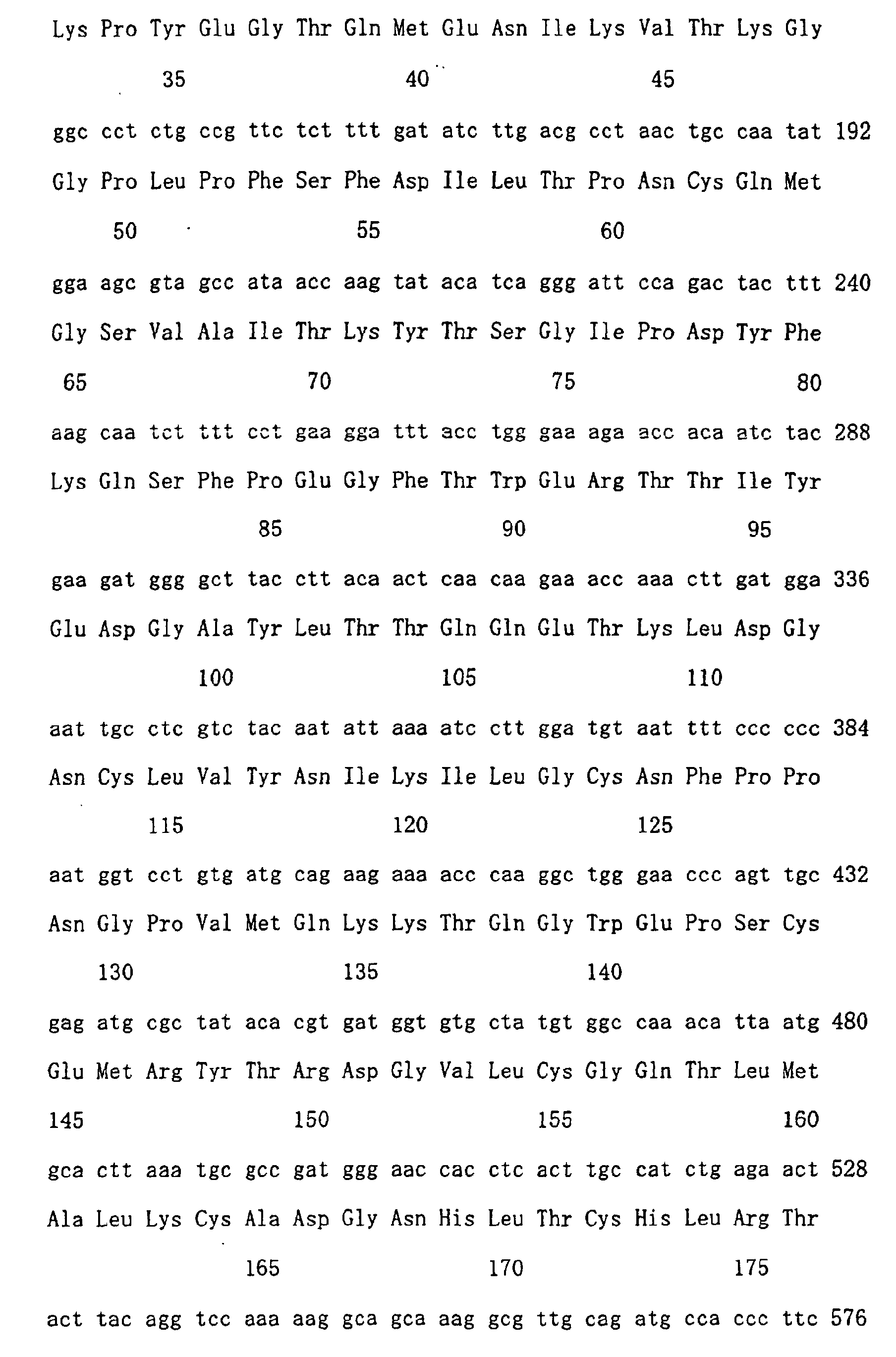
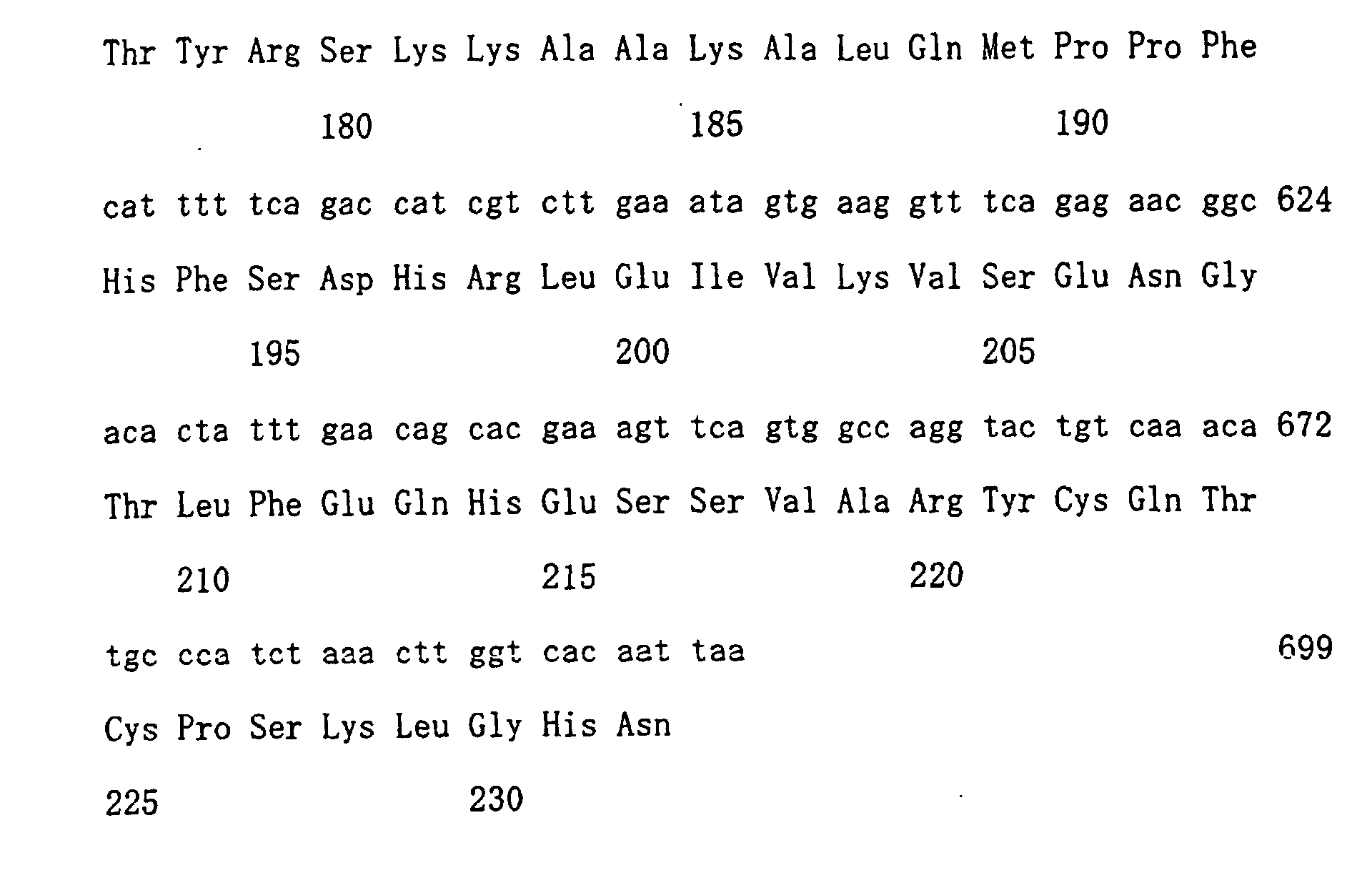
- the nucleotide sequence of the inserted DNA fragment was determined by a DNA sequencer. The entire nucleotide sequence is shown in SEQ ID NO: 2, and the entire amino acid sequence is shown in SEQ ID NO: 1.
- Example 2 Expression of protein in Escherichia coli
- Primers corresponding to the N- and C-termini of the protein were produced from the obtained full-length nucleotide sequence. PCR was carried out using the primers and the first strand cDNA prepared in (2) above as a template. The used primers are as follows: and Composition of PCR reaction solution Template (first strand cDNA) 3 ⁇ l X 10 pyrobest buffer 5 ⁇ l 2.5 mM dNTPs 4 ⁇ l 100 ⁇ M primer 7 1 ⁇ l 100 ⁇ M primer 8 1 ⁇ l Milli Q 35 ⁇ l Pyrobest polymerase (5 U/ ⁇ l) 1 ⁇ l
- An amplified band of approximately 700 bp was cut out by agarose gel electrophoresis and then purified.
- the purified DNA fragment was subcloned into the Bam HI -Eco RI site of a pRSET vector (Invitrogen), and it was then allowed to express in Escherichia coli (JM109-DE3). Since the expressed protein was constructed such that His-tag was attached to the N-terminus thereof, it was purified with Ni-Agarose gel (QIAGEN). Purification was carried out in accordance with the attached protocols.
- Example 2 The light-absorbing properties of the protein expressed in Example 2 were analyzed.
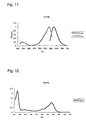
- Y at position 64 that is a chromophore-forming amino acid (QYG) of KGr was substituted by L or M, so that the absorption peak became 418 nm and so that the absorption peak was shifted from the original absorption peak at 610 nm to the shorter wavelength side ( Figures 1 and 2).
- the amino acid sequence of the protein wherein Y at position 64 was substituted by L is shown in SEQ ID NO: 11, and the nucleotide sequence thereof is shown in SEQ ID NO: 12.
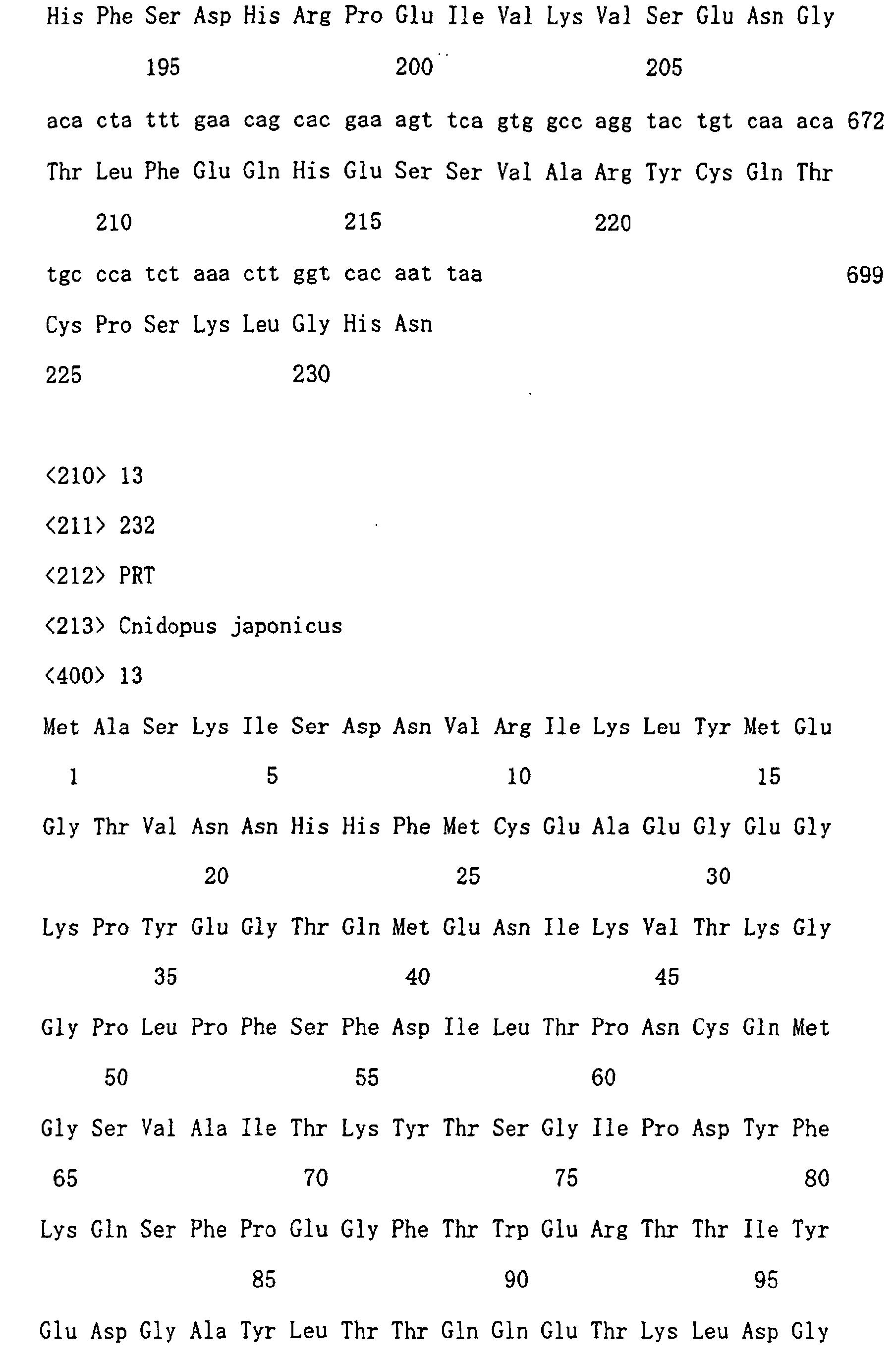
- the amino acid sequence of the protein wherein Y at position 64 was substituted by M is shown in SEQ ID NO: 13, and the nucleotide sequence thereof is shown in SEQ ID NO: 14.
- the present invention provides a novel chromoprotein derived from Cnidopus japonicus .
- the chromoprotein of the present invention has desired fluorescence properties and low pH sensitivity. Thus, it is useful for molecular biology analysis.
Landscapes
- Health & Medical Sciences (AREA)
- Immunology (AREA)
- Life Sciences & Earth Sciences (AREA)
- Chemical & Material Sciences (AREA)
- Engineering & Computer Science (AREA)
- Urology & Nephrology (AREA)
- Biomedical Technology (AREA)
- Medicinal Chemistry (AREA)
- Hematology (AREA)
- Molecular Biology (AREA)
- Physics & Mathematics (AREA)
- Pathology (AREA)
- Food Science & Technology (AREA)
- Cell Biology (AREA)
- Biotechnology (AREA)
- Analytical Chemistry (AREA)
- Biochemistry (AREA)
- General Health & Medical Sciences (AREA)
- General Physics & Mathematics (AREA)
- Microbiology (AREA)
- Chemical Kinetics & Catalysis (AREA)
- Polymers & Plastics (AREA)
- Organic Chemistry (AREA)
- Peptides Or Proteins (AREA)
- Micro-Organisms Or Cultivation Processes Thereof (AREA)
- Pigments, Carbon Blacks, Or Wood Stains (AREA)
- Investigating Or Analyzing Non-Biological Materials By The Use Of Chemical Means (AREA)
- Investigating Or Analysing Materials By The Use Of Chemical Reactions (AREA)
Abstract
Description


| Composition of PCR reaction solution | |
| Template (first strand cDNA) | 3 |
| X | |
| 10 | 5 µl |
| 2.5 mM | 4 µl |
| 100 | 1 µl |
| 100 | 1 µl |
| Milli Q | 35 µl |
| Taq polymerase (5 U/µl) | 1 µl |
72°C, 7 minutes (final elongation)
Retention at 4°C




| Composition of PCR reaction solution | |
| Template (first strand cDNA) | 3 |
| X | |
| 10 | 5 µl |
| 2.5 mM | 4 µl |
| 100 | 1 µl |
| 100 | 1 µl |
| Milli Q | 35 µl |
| Pyrobest polymerase (5 U/µl) | 1 µl |
72°C, 7 minutes (final elongation)
Retention at 4°C
| Properties of chromoprotein (KGr) | |||||
| Absorption maximum | Fluorescence maximum | Molar absorption coefficient | quantum yield | pH sensitivity | Number of amino acids |
| 610 nm | - | 66,700 (610 nm) | - | Non | 232 |
The following buffer solutions were used for each pH:










Claims (18)
- A chromoprotein derived from Cnidopus japonicus having the following properties:(1) the absorption maximum wavelength is 610 nm, and fluorescence is not emitted;(2) the molar absorption coefficient is 66,700 at 610 nm; and(3) the pH sensitivity of light-absorbing property is stable at between pH 4 and pH 10.
- A chromoprotein having either one of the following amino acid sequences:(a) the amino acid sequence shown in SEQ ID NO: 1; and(b) an amino acid sequence comprising a deletion, substitution and/or addition of one or several amino acids with respect to the amino acid sequence shown in SEQ ID NO: 1, and having light-absorbing properties.
- A chromoprotein capable of emitting fluorescence, which has an amino acid sequence, wherein, with respect to the amino acid sequence shown in SEQ ID NO: 1, alanine as an amino acid residue at position 28 is substituted by glycine, glutamic acid as an amino acid residue at position 41 is substituted by methionine, cysteine as an amino acid residue at position 145 is substituted by serine, and threonine as an amino acid residue at position 158 is substituted by isoleucine.
- A chromoprotein having an amino acid sequence wherein tyrosine as an amino acid residue at position 64 is substituted by leucine with respect to the amino acid sequence shown in SEQ ID NO: 1.
- A chromoprotein having an amino acid sequence wherein tyrosine as an amino acid residue at position 64 is substituted by methionine with respect to the amino acid sequence shown in SEQ ID NO: 1.
- A chromoprotein having an amino acid sequence, wherein glutamic acid as an amino acid residue at position 41 is substituted by leucine, and phenylalanine as an amino acid residue at position 80 is substituted by glycine, with respect to the amino acid sequence shown in SEQ ID NO: 1.
- A chromoprotein capable of emitting fluorescence, which has an amino acid sequence wherein tyrosine as an amino acid residue at position 64 is substituted by phenylalanine with respect to the amino acid sequence shown in SEQ ID NO: 1.
- A chromoprotein capable of emitting fluorescence, which has an amino acid sequence wherein tyrosine as an amino acid residue at position 64 is substituted by histidine with respect to the amino acid sequence shown in SEQ ID NO: 1.
- A chromoprotein capable of emitting fluorescence, which has an amino acid sequence, wherein cysteine as an amino acid residue at position 26 is substituted by valine, cysteine as an amino acid residue at position 143 is substituted by serine, and proline as an amino acid residue at position 199 is substituted by leucine, with respect to the amino acid sequence shown in SEQ ID NO: 1.
- A DNA encoding the protein of any of claims 1 to 9.
- A DNA of either one of followings:(a) DNA encoding the amino acid sequence shown in SEQ ID NO: 1; and(b) DNA encoding an amino acid sequence, which comprises a deletion, substitution and/or addition of one or several amino acids with respect to the amino acid sequence shown in SEQ ID NO: 1, and has light-absorbing properties.
- A DNA having either one of the following nucleotide sequences:(a) the nucleotide sequence shown in SEQ ID NO: 2; and(b) a nucleotide sequence comprising a deletion, substitution and/or addition of one or several nucleotides with respect to the nucleotide sequence shown in SEQ ID NO: 2, and encoding a protein having light-absorbing properties.
- A DNA having the nucleotide sequence shown in any one of SEQ ID NOS: 12, 14, 16, 18, 20, or 22.
- A recombinant vector having the DNA of any of claims 10 to 13.
- A transformant having the DNA of any of claims 10 to 13 or the recombinant vector of claim 14.
- A fusion protein composed of the chromoprotein of any of claims 1 to 9 and another protein.
- A method for analyzing a physiologically active substance, which is characterized in that the FRET (fluorescence resonance energy transfer) method is applied using the chromoprotein of any of claims 1 to 9 as an acceptor protein.
- A light-absorbing reagent kit comprising the chromoprotein of any of claims 1 to 9, the DNA of any of claims 10 to 13, the recombinant vector of claim 14, the transformant of claim 15, or the fusion protein of claim 16.
Applications Claiming Priority (3)
| Application Number | Priority Date | Filing Date | Title |
|---|---|---|---|
| JP2002168583 | 2002-06-10 | ||
| JP2002168583 | 2002-06-10 | ||
| PCT/JP2003/007336 WO2003104460A1 (en) | 2002-06-10 | 2003-06-10 | Pigment protein |
Publications (3)
| Publication Number | Publication Date |
|---|---|
| EP1512744A1 true EP1512744A1 (en) | 2005-03-09 |
| EP1512744A4 EP1512744A4 (en) | 2006-05-17 |
| EP1512744B1 EP1512744B1 (en) | 2008-12-31 |
Family
ID=29727691
Family Applications (1)
| Application Number | Title | Priority Date | Filing Date |
|---|---|---|---|
| EP03733346A Expired - Lifetime EP1512744B1 (en) | 2002-06-10 | 2003-06-10 | Pigment protein |
Country Status (8)
| Country | Link |
|---|---|
| US (1) | US7504491B2 (en) |
| EP (1) | EP1512744B1 (en) |
| JP (1) | JP4270508B2 (en) |
| AT (1) | ATE419352T1 (en) |
| AU (1) | AU2003242180B2 (en) |
| CA (1) | CA2489053A1 (en) |
| DE (1) | DE60325589D1 (en) |
| WO (1) | WO2003104460A1 (en) |
Cited By (2)
| Publication number | Priority date | Publication date | Assignee | Title |
|---|---|---|---|---|
| EP1512745A4 (en) * | 2002-06-10 | 2006-05-17 | Riken | PIGMENTARY PROTEIN |
| US7504491B2 (en) | 2002-06-10 | 2009-03-17 | Riken | Pigment protein from Cnidopus japonicus |
Families Citing this family (6)
| Publication number | Priority date | Publication date | Assignee | Title |
|---|---|---|---|---|
| EP1452591B1 (en) * | 2001-10-11 | 2009-12-02 | Riken | Fluorescent protein |
| US7345157B2 (en) * | 2002-08-23 | 2008-03-18 | Riken | Fluorescent protein and chromoprotein |
| ATE527280T1 (en) | 2003-06-16 | 2011-10-15 | Riken | FLUORESCENT PROTEIN AND CHROMEPROTEIN |
| ATE506434T1 (en) | 2003-06-16 | 2011-05-15 | Riken | FLUORESCENT PROTEIN |
| WO2005113772A1 (en) * | 2004-05-20 | 2005-12-01 | Riken | Fluorescent protein |
| SG172321A1 (en) | 2009-01-29 | 2011-07-28 | Commw Scient Ind Res Org | Measuring g protein coupled receptor activation |
Family Cites Families (6)
| Publication number | Priority date | Publication date | Assignee | Title |
|---|---|---|---|---|
| ATE502116T1 (en) | 1998-12-11 | 2011-04-15 | Clontech Lab Inc | FLUORESCENT PROTEINS FROM NON-BIOLUMINESCENT SPECIES OF THE CLASS ANTHOZOA, GENES ENCODING THESE PROTEINS AND THEIR USES |
| CA2383642C (en) | 1999-10-14 | 2014-03-25 | Clontech Laboratories, Inc. | Anthozoa derived chromophores/fluorophores and methods for using the same |
| US6969597B2 (en) * | 2001-02-21 | 2005-11-29 | Clontech Laboratories, Inc. | Nucleic acids encoding non aggregating fluorescent proteins and methods for using the same |
| AU2003242182A1 (en) | 2002-06-10 | 2003-12-22 | Medical & Biological Laboratories Co., Ltd | Chromoprotein |
| AU2003242180B2 (en) | 2002-06-10 | 2008-04-03 | Medical & Biological Laboratories Co., Ltd. | Chromoprotein |
| US7345157B2 (en) | 2002-08-23 | 2008-03-18 | Riken | Fluorescent protein and chromoprotein |
-
2003
- 2003-06-10 AU AU2003242180A patent/AU2003242180B2/en not_active Ceased
- 2003-06-10 EP EP03733346A patent/EP1512744B1/en not_active Expired - Lifetime
- 2003-06-10 US US10/516,317 patent/US7504491B2/en not_active Expired - Fee Related
- 2003-06-10 WO PCT/JP2003/007336 patent/WO2003104460A1/en not_active Ceased
- 2003-06-10 DE DE60325589T patent/DE60325589D1/en not_active Expired - Lifetime
- 2003-06-10 JP JP2004511520A patent/JP4270508B2/en not_active Expired - Fee Related
- 2003-06-10 CA CA002489053A patent/CA2489053A1/en not_active Abandoned
- 2003-06-10 AT AT03733346T patent/ATE419352T1/en not_active IP Right Cessation
Cited By (2)
| Publication number | Priority date | Publication date | Assignee | Title |
|---|---|---|---|---|
| EP1512745A4 (en) * | 2002-06-10 | 2006-05-17 | Riken | PIGMENTARY PROTEIN |
| US7504491B2 (en) | 2002-06-10 | 2009-03-17 | Riken | Pigment protein from Cnidopus japonicus |
Also Published As
| Publication number | Publication date |
|---|---|
| EP1512744A4 (en) | 2006-05-17 |
| JP4270508B2 (en) | 2009-06-03 |
| CA2489053A1 (en) | 2003-12-18 |
| WO2003104460A1 (en) | 2003-12-18 |
| AU2003242180A1 (en) | 2003-12-22 |
| JPWO2003104460A1 (en) | 2005-10-06 |
| DE60325589D1 (en) | 2009-02-12 |
| US7504491B2 (en) | 2009-03-17 |
| ATE419352T1 (en) | 2009-01-15 |
| AU2003242180B2 (en) | 2008-04-03 |
| EP1512744B1 (en) | 2008-12-31 |
| US20060240472A1 (en) | 2006-10-26 |
Similar Documents
| Publication | Publication Date | Title |
|---|---|---|
| US7547528B2 (en) | Fluorescent protein and chromoprotein | |
| US8420781B2 (en) | Fluorescent protein | |
| US8207322B2 (en) | Fluorescent protein and chromoprotein | |
| US7504491B2 (en) | Pigment protein from Cnidopus japonicus | |
| EP1512745A1 (en) | Pigment protein | |
| US7226993B2 (en) | Fluorescent protein | |
| US7375201B2 (en) | Fluorescent protein | |
| AU2008200732A1 (en) | Fluorescent protein and chromoprotein |
Legal Events
| Date | Code | Title | Description |
|---|---|---|---|
| PUAI | Public reference made under article 153(3) epc to a published international application that has entered the european phase |
Free format text: ORIGINAL CODE: 0009012 |
|
| 17P | Request for examination filed |
Effective date: 20041220 |
|
| AK | Designated contracting states |
Kind code of ref document: A1 Designated state(s): AT BE BG CH CY CZ DE DK EE ES FI FR GB GR HU IE IT LI LU MC NL PT RO SE SI SK TR |
|
| AX | Request for extension of the european patent |
Extension state: AL LT LV MK |
|
| DAX | Request for extension of the european patent (deleted) | ||
| A4 | Supplementary search report drawn up and despatched |
Effective date: 20060404 |
|
| 17Q | First examination report despatched |
Effective date: 20061213 |
|
| GRAP | Despatch of communication of intention to grant a patent |
Free format text: ORIGINAL CODE: EPIDOSNIGR1 |
|
| GRAS | Grant fee paid |
Free format text: ORIGINAL CODE: EPIDOSNIGR3 |
|
| GRAA | (expected) grant |
Free format text: ORIGINAL CODE: 0009210 |
|
| AK | Designated contracting states |
Kind code of ref document: B1 Designated state(s): AT BE BG CH CY CZ DE DK EE ES FI FR GB GR HU IE IT LI LU MC NL PT RO SE SI SK TR |
|
| REG | Reference to a national code |
Ref country code: CH Ref legal event code: EP Ref country code: GB Ref legal event code: FG4D |
|
| REF | Corresponds to: |
Ref document number: 60325589 Country of ref document: DE Date of ref document: 20090212 Kind code of ref document: P |
|
| REG | Reference to a national code |
Ref country code: IE Ref legal event code: FG4D |
|
| PG25 | Lapsed in a contracting state [announced via postgrant information from national office to epo] |
Ref country code: SI Free format text: LAPSE BECAUSE OF FAILURE TO SUBMIT A TRANSLATION OF THE DESCRIPTION OR TO PAY THE FEE WITHIN THE PRESCRIBED TIME-LIMIT Effective date: 20081231 Ref country code: NL Free format text: LAPSE BECAUSE OF FAILURE TO SUBMIT A TRANSLATION OF THE DESCRIPTION OR TO PAY THE FEE WITHIN THE PRESCRIBED TIME-LIMIT Effective date: 20081231 Ref country code: FI Free format text: LAPSE BECAUSE OF FAILURE TO SUBMIT A TRANSLATION OF THE DESCRIPTION OR TO PAY THE FEE WITHIN THE PRESCRIBED TIME-LIMIT Effective date: 20081231 |
|
| NLV1 | Nl: lapsed or annulled due to failure to fulfill the requirements of art. 29p and 29m of the patents act | ||
| PG25 | Lapsed in a contracting state [announced via postgrant information from national office to epo] |
Ref country code: EE Free format text: LAPSE BECAUSE OF FAILURE TO SUBMIT A TRANSLATION OF THE DESCRIPTION OR TO PAY THE FEE WITHIN THE PRESCRIBED TIME-LIMIT Effective date: 20081231 Ref country code: RO Free format text: LAPSE BECAUSE OF FAILURE TO SUBMIT A TRANSLATION OF THE DESCRIPTION OR TO PAY THE FEE WITHIN THE PRESCRIBED TIME-LIMIT Effective date: 20081231 Ref country code: ES Free format text: LAPSE BECAUSE OF FAILURE TO SUBMIT A TRANSLATION OF THE DESCRIPTION OR TO PAY THE FEE WITHIN THE PRESCRIBED TIME-LIMIT Effective date: 20090411 Ref country code: BE Free format text: LAPSE BECAUSE OF FAILURE TO SUBMIT A TRANSLATION OF THE DESCRIPTION OR TO PAY THE FEE WITHIN THE PRESCRIBED TIME-LIMIT Effective date: 20081231 |
|
| PG25 | Lapsed in a contracting state [announced via postgrant information from national office to epo] |
Ref country code: CZ Free format text: LAPSE BECAUSE OF FAILURE TO SUBMIT A TRANSLATION OF THE DESCRIPTION OR TO PAY THE FEE WITHIN THE PRESCRIBED TIME-LIMIT Effective date: 20081231 Ref country code: AT Free format text: LAPSE BECAUSE OF FAILURE TO SUBMIT A TRANSLATION OF THE DESCRIPTION OR TO PAY THE FEE WITHIN THE PRESCRIBED TIME-LIMIT Effective date: 20081231 Ref country code: PT Free format text: LAPSE BECAUSE OF FAILURE TO SUBMIT A TRANSLATION OF THE DESCRIPTION OR TO PAY THE FEE WITHIN THE PRESCRIBED TIME-LIMIT Effective date: 20090601 Ref country code: SE Free format text: LAPSE BECAUSE OF FAILURE TO SUBMIT A TRANSLATION OF THE DESCRIPTION OR TO PAY THE FEE WITHIN THE PRESCRIBED TIME-LIMIT Effective date: 20090331 |
|
| PG25 | Lapsed in a contracting state [announced via postgrant information from national office to epo] |
Ref country code: SK Free format text: LAPSE BECAUSE OF FAILURE TO SUBMIT A TRANSLATION OF THE DESCRIPTION OR TO PAY THE FEE WITHIN THE PRESCRIBED TIME-LIMIT Effective date: 20081231 |
|
| PG25 | Lapsed in a contracting state [announced via postgrant information from national office to epo] |
Ref country code: DK Free format text: LAPSE BECAUSE OF FAILURE TO SUBMIT A TRANSLATION OF THE DESCRIPTION OR TO PAY THE FEE WITHIN THE PRESCRIBED TIME-LIMIT Effective date: 20081231 |
|
| PLBE | No opposition filed within time limit |
Free format text: ORIGINAL CODE: 0009261 |
|
| STAA | Information on the status of an ep patent application or granted ep patent |
Free format text: STATUS: NO OPPOSITION FILED WITHIN TIME LIMIT |
|
| 26N | No opposition filed |
Effective date: 20091001 |
|
| PG25 | Lapsed in a contracting state [announced via postgrant information from national office to epo] |
Ref country code: MC Free format text: LAPSE BECAUSE OF NON-PAYMENT OF DUE FEES Effective date: 20090630 Ref country code: BG Free format text: LAPSE BECAUSE OF FAILURE TO SUBMIT A TRANSLATION OF THE DESCRIPTION OR TO PAY THE FEE WITHIN THE PRESCRIBED TIME-LIMIT Effective date: 20090331 |
|
| REG | Reference to a national code |
Ref country code: CH Ref legal event code: PL |
|
| REG | Reference to a national code |
Ref country code: IE Ref legal event code: MM4A Ref country code: CH Ref legal event code: AEN Free format text: DAS PATENT IST AUFGRUND DES WEITERBEHANDLUNGSANTRAGS VOM 22.03.2010 REAKTIVIERT WORDEN. Ref country code: CH Ref legal event code: NV Representative=s name: ISLER & PEDRAZZINI AG |
|
| PG25 | Lapsed in a contracting state [announced via postgrant information from national office to epo] |
Ref country code: IE Free format text: LAPSE BECAUSE OF NON-PAYMENT OF DUE FEES Effective date: 20090610 |
|
| PG25 | Lapsed in a contracting state [announced via postgrant information from national office to epo] |
Ref country code: GR Free format text: LAPSE BECAUSE OF FAILURE TO SUBMIT A TRANSLATION OF THE DESCRIPTION OR TO PAY THE FEE WITHIN THE PRESCRIBED TIME-LIMIT Effective date: 20090401 |
|
| PG25 | Lapsed in a contracting state [announced via postgrant information from national office to epo] |
Ref country code: IT Free format text: LAPSE BECAUSE OF FAILURE TO SUBMIT A TRANSLATION OF THE DESCRIPTION OR TO PAY THE FEE WITHIN THE PRESCRIBED TIME-LIMIT Effective date: 20081231 |
|
| PG25 | Lapsed in a contracting state [announced via postgrant information from national office to epo] |
Ref country code: LU Free format text: LAPSE BECAUSE OF NON-PAYMENT OF DUE FEES Effective date: 20090610 |
|
| PG25 | Lapsed in a contracting state [announced via postgrant information from national office to epo] |
Ref country code: HU Free format text: LAPSE BECAUSE OF FAILURE TO SUBMIT A TRANSLATION OF THE DESCRIPTION OR TO PAY THE FEE WITHIN THE PRESCRIBED TIME-LIMIT Effective date: 20090701 |
|
| PGFP | Annual fee paid to national office [announced via postgrant information from national office to epo] |
Ref country code: FR Payment date: 20110621 Year of fee payment: 9 Ref country code: CH Payment date: 20110614 Year of fee payment: 9 |
|
| PG25 | Lapsed in a contracting state [announced via postgrant information from national office to epo] |
Ref country code: TR Free format text: LAPSE BECAUSE OF FAILURE TO SUBMIT A TRANSLATION OF THE DESCRIPTION OR TO PAY THE FEE WITHIN THE PRESCRIBED TIME-LIMIT Effective date: 20081231 |
|
| PGFP | Annual fee paid to national office [announced via postgrant information from national office to epo] |
Ref country code: GB Payment date: 20110608 Year of fee payment: 9 |
|
| PG25 | Lapsed in a contracting state [announced via postgrant information from national office to epo] |
Ref country code: CY Free format text: LAPSE BECAUSE OF FAILURE TO SUBMIT A TRANSLATION OF THE DESCRIPTION OR TO PAY THE FEE WITHIN THE PRESCRIBED TIME-LIMIT Effective date: 20081231 |
|
| PGFP | Annual fee paid to national office [announced via postgrant information from national office to epo] |
Ref country code: DE Payment date: 20110608 Year of fee payment: 9 |
|
| REG | Reference to a national code |
Ref country code: CH Ref legal event code: PL |
|
| REG | Reference to a national code |
Ref country code: CH Ref legal event code: PL |
|
| GBPC | Gb: european patent ceased through non-payment of renewal fee |
Effective date: 20120610 |
|
| REG | Reference to a national code |
Ref country code: FR Ref legal event code: ST Effective date: 20130228 |
|
| REG | Reference to a national code |
Ref country code: DE Ref legal event code: R119 Ref document number: 60325589 Country of ref document: DE Effective date: 20130101 |
|
| PG25 | Lapsed in a contracting state [announced via postgrant information from national office to epo] |
Ref country code: FR Free format text: LAPSE BECAUSE OF NON-PAYMENT OF DUE FEES Effective date: 20120702 Ref country code: LI Free format text: LAPSE BECAUSE OF NON-PAYMENT OF DUE FEES Effective date: 20120630 Ref country code: GB Free format text: LAPSE BECAUSE OF NON-PAYMENT OF DUE FEES Effective date: 20120610 Ref country code: CH Free format text: LAPSE BECAUSE OF NON-PAYMENT OF DUE FEES Effective date: 20120630 Ref country code: DE Free format text: LAPSE BECAUSE OF NON-PAYMENT OF DUE FEES Effective date: 20130101 |