EP1512402B1 - Inhibitors against complex ii of electron transport system - Google Patents
Inhibitors against complex ii of electron transport system Download PDFInfo
- Publication number
- EP1512402B1 EP1512402B1 EP02733432A EP02733432A EP1512402B1 EP 1512402 B1 EP1512402 B1 EP 1512402B1 EP 02733432 A EP02733432 A EP 02733432A EP 02733432 A EP02733432 A EP 02733432A EP 1512402 B1 EP1512402 B1 EP 1512402B1
- Authority
- EP
- European Patent Office
- Prior art keywords
- complex
- dcip
- added
- succinate
- atpenin
- Prior art date
- Legal status (The legal status is an assumption and is not a legal conclusion. Google has not performed a legal analysis and makes no representation as to the accuracy of the status listed.)
- Expired - Lifetime
Links
- OVULNOOPECCZRG-UHFFFAOYSA-N CC(CC(C)C(c(c(O)c(c(OC)n1)OC)c1O)=O)C(CCl)Cl Chemical compound CC(CC(C)C(c(c(O)c(c(OC)n1)OC)c1O)=O)C(CCl)Cl OVULNOOPECCZRG-UHFFFAOYSA-N 0.000 description 1
- 0 CC(CC=**)C(*1)C1C(C(C(OC)=C(N1)OC)O)C1=O Chemical compound CC(CC=**)C(*1)C1C(C(C(OC)=C(N1)OC)O)C1=O 0.000 description 1
Classifications
-
- A—HUMAN NECESSITIES
- A61—MEDICAL OR VETERINARY SCIENCE; HYGIENE
- A61K—PREPARATIONS FOR MEDICAL, DENTAL OR TOILETRY PURPOSES
- A61K31/00—Medicinal preparations containing organic active ingredients
- A61K31/33—Heterocyclic compounds
- A61K31/395—Heterocyclic compounds having nitrogen as a ring hetero atom, e.g. guanethidine or rifamycins
- A61K31/435—Heterocyclic compounds having nitrogen as a ring hetero atom, e.g. guanethidine or rifamycins having six-membered rings with one nitrogen as the only ring hetero atom
- A61K31/44—Non condensed pyridines; Hydrogenated derivatives thereof
-
- A—HUMAN NECESSITIES
- A61—MEDICAL OR VETERINARY SCIENCE; HYGIENE
- A61P—SPECIFIC THERAPEUTIC ACTIVITY OF CHEMICAL COMPOUNDS OR MEDICINAL PREPARATIONS
- A61P43/00—Drugs for specific purposes, not provided for in groups A61P1/00-A61P41/00
-
- C—CHEMISTRY; METALLURGY
- C07—ORGANIC CHEMISTRY
- C07D—HETEROCYCLIC COMPOUNDS
- C07D213/00—Heterocyclic compounds containing six-membered rings, not condensed with other rings, with one nitrogen atom as the only ring hetero atom and three or more double bonds between ring members or between ring members and non-ring members
- C07D213/02—Heterocyclic compounds containing six-membered rings, not condensed with other rings, with one nitrogen atom as the only ring hetero atom and three or more double bonds between ring members or between ring members and non-ring members having three double bonds between ring members or between ring members and non-ring members
- C07D213/04—Heterocyclic compounds containing six-membered rings, not condensed with other rings, with one nitrogen atom as the only ring hetero atom and three or more double bonds between ring members or between ring members and non-ring members having three double bonds between ring members or between ring members and non-ring members having no bond between the ring nitrogen atom and a non-ring member or having only hydrogen or carbon atoms directly attached to the ring nitrogen atom
- C07D213/60—Heterocyclic compounds containing six-membered rings, not condensed with other rings, with one nitrogen atom as the only ring hetero atom and three or more double bonds between ring members or between ring members and non-ring members having three double bonds between ring members or between ring members and non-ring members having no bond between the ring nitrogen atom and a non-ring member or having only hydrogen or carbon atoms directly attached to the ring nitrogen atom with hetero atoms or with carbon atoms having three bonds to hetero atoms with at the most one bond to halogen, e.g. ester or nitrile radicals, directly attached to ring carbon atoms
- C07D213/62—Oxygen or sulfur atoms
- C07D213/69—Two or more oxygen atoms
-
- C—CHEMISTRY; METALLURGY
- C12—BIOCHEMISTRY; BEER; SPIRITS; WINE; VINEGAR; MICROBIOLOGY; ENZYMOLOGY; MUTATION OR GENETIC ENGINEERING
- C12N—MICROORGANISMS OR ENZYMES; COMPOSITIONS THEREOF; PROPAGATING, PRESERVING, OR MAINTAINING MICROORGANISMS; MUTATION OR GENETIC ENGINEERING; CULTURE MEDIA
- C12N1/00—Microorganisms; Compositions thereof; Processes of propagating, maintaining or preserving microorganisms or compositions thereof; Processes of preparing or isolating a composition containing a microorganism; Culture media therefor
- C12N1/14—Fungi; Culture media therefor
- C12N1/145—Fungi isolates
-
- C—CHEMISTRY; METALLURGY
- C12—BIOCHEMISTRY; BEER; SPIRITS; WINE; VINEGAR; MICROBIOLOGY; ENZYMOLOGY; MUTATION OR GENETIC ENGINEERING
- C12P—FERMENTATION OR ENZYME-USING PROCESSES TO SYNTHESISE A DESIRED CHEMICAL COMPOUND OR COMPOSITION OR TO SEPARATE OPTICAL ISOMERS FROM A RACEMIC MIXTURE
- C12P17/00—Preparation of heterocyclic carbon compounds with only O, N, S, Se or Te as ring hetero atoms
- C12P17/10—Nitrogen as only ring hetero atom
- C12P17/12—Nitrogen as only ring hetero atom containing a six-membered hetero ring
-
- C—CHEMISTRY; METALLURGY
- C12—BIOCHEMISTRY; BEER; SPIRITS; WINE; VINEGAR; MICROBIOLOGY; ENZYMOLOGY; MUTATION OR GENETIC ENGINEERING
- C12R—INDEXING SCHEME ASSOCIATED WITH SUBCLASSES C12C - C12Q, RELATING TO MICROORGANISMS
- C12R2001/00—Microorganisms ; Processes using microorganisms
- C12R2001/645—Fungi ; Processes using fungi
- C12R2001/80—Penicillium
Definitions
- the present invention relates to, for example, a protein complex involved in the electron transport system responsible for oxidative phosphorylation for synthesis of adenosine triphosphate (ATP) in mitochondria. More particular, the present invention relates to the use of inhibitors of electron transport system complex II (succinate-ubiquinone oxidoreductase) in vitro.
- electron transport system complex II succinate-ubiquinone oxidoreductase
- complexes I, II,III and IV In the electron transport system responsible for the oxidative phosphorylation for synthesis of ATP in mitochondria, mainly four types of protein complexes are involved, called complexes I, II,III and IV (Kozo Utsumi and Masayasu Inoue, Ed.”New Mitochondriology", pages 8-13; Takashi Kanamori and Shigeo Ohta, "Electron Transport System and Energy Converting System", Kyoritsu Shuppan, 2001).
- an object of the present invention is to provide the use of electron transport system complex II inhibitors which have much higher inhibitory activity than known complex II inhibitors such as thenoyltrifluoroacetone and carboxins and may therefore be advantageously used for studies on biochemistry.
- the present invention relates to the use of of a 2-pyridinol derivative represented by the general formula [I] wherein R is alkyl or alkenyl optionally substituted by halogen, or a tautomer thereof of the formula [II] wherein R is alkyl or alkenyl optionally substituted by halogen, or salt thereof, as an inhibitor of electron transport system complex II in vitro.
- alkyl group examples are, for example, methyl, ethyl, propyl, isopropyl, butyl, isobutyl, pentyl, isopentyl, 2-methylbutyl, hexyl, 2-methylpentyl, 3-methylpentyl, 4-methylpentyl, 2-ethylbutyl, heptyl, octyl, etc.
- alkenyl are, for example, 1-propenyl, allyl, 1-butenyl, 2-butenyl, 1-pentenyl, 2-pentenyl, 3-pentenyl, 3-methyl-2-butenyl, geranyl.
- the present invention further, relates to the use of atpenin A4 of the formula [III] as an inhibitor of electron transport system complex II in vitro.
- Such a use is as an inhibitor of bovine heart complex II, rat liver complex II or Ascaris suum complex II.
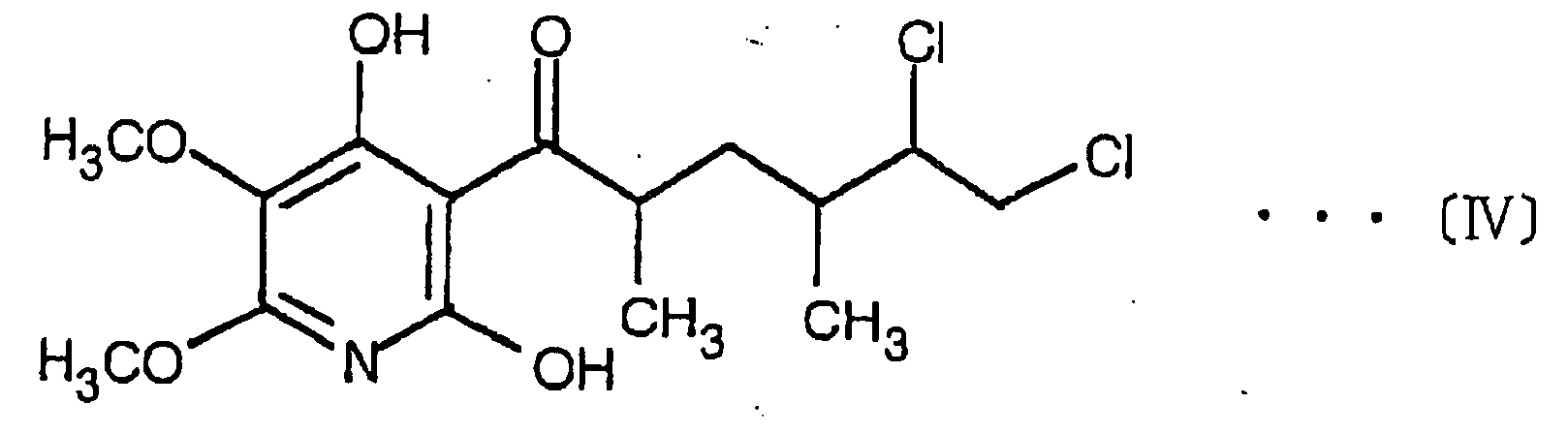
- the present invention further, relates to the use of atpenin A5 of the formula [IV] as an inhibitor of electron transport system complex II in vitro.
- Such a use is as an inhibitor of bovine heart complex II, rat liver complex II or Ascaris suum complex II.
- the present invention further, relates to the use of atpenin B of the formula [V] as an inhibitor of electron transport system complex II in vitro.
- atpenin B of the formula [V] is as an inhibitor of bovine heart complex II, rat liver complex II or Ascaris suum complex II.
- the present invention further, relates to the use of harzianopyridone of the formula [VI] as an inhibitor of electron transport system complex II in vitro.
- harzianopyridone of the formula [VI] is as an inhibitor of bovine heart complex II, rat liver complex II or Ascaris suum complex II.
- the known antibiotics atpenin A4, atpenin A5 and atpenin B used in the present invention are antifungal antibiotics, which were found by two of inventors of the present invention, Satoshi Omura and Hiroshi Tomoda, in the culture medium of a strain, Penicillium sp. FO-125, as having antifungal activity, and were designated as FO-125A4, A5 and B, and filed the patent application ( JP,H01-199582,A ). Consequently, the present substances, atpenins A4, A5 and B can be obtained by the method described in JP,H01-199582,A or its modification, i.e. culturing Penicillium sp FO-125 strain and purifying the cultured liquid thereof.
- Seed culture of the present strain is cultured in the jar fermenter, and the cultured liquid is centrifuged to obtain supernatant.
- the supernatant is extracted with ethyl acetate, concentrated and subjected to silica gel column chromatography, then eluted with hexane-ethyl acetate.
- the thus obtained crude substance of atpenins is treated by Sephadex LH-20 column chromatography, eluted with chloroform-methanol to obtain purified atpenin A4, A5 and B.
- the purified atpenins A4, A5 and B can also be obtained by once or repeated reverse phase high performance liquid chromatography using acetonitrile containing 10 mM phosphate buffer (pH 3.0).
- Taxonomical properties of the strain Penicillium sp. FO-125 are described in JP,H01-199582, A , however the present strain is the re-deposited strain and the taxonomical properties thereof are explained hereinbelow.
- Size of metula is 15-20 x 3-4 im with bearing 3 - 5 metulae.
- Form of metula is a nib grown with 3-6, size 10-15 x 2-4 im.
- a phialoconidium is born on the top of the sterigma, and is linked depending on time, and finally the linkage is about 150 im in length.
- Electron microscopic observation shows ellipsoidal conidium with size of 2.2 - 3.1 x 1.6 - 2.0 im and surface is smooth.
- (b) Properties on various media Macroscopic observation of the strain cultured on various media at 27°C for 14 days are shown in Table 1.
- Table 1 Medium Growth on medium Color tone of reverse of colony Conidium Soluble pigment Diameter of colony Formation Color Malt extract agar Good, no diffusion of hyphae, velvety, white Penumbra: yellowish green Center: dark red brown Good Yellowish green-green None 58 mm Potato-glucose agar Good, no diffusion of hyphae, velvety, white yellowish green Good Green None 60 mm Czapek agar Good, no diffusion of hyphae, felty, white Ivory Medium Ivory None 62 mm Sabouraud agar Good, no diffusion of hyphae, felty, white Beige Good Pale blue None 61 mm Oatmeal agar Good, Growth with diffusion of hyphae, velvety, white Yellow- yellowish green Good Deep green None 65 mm Synthetic mucor agar Good, Growth with long diffusion of hyphae, wooly, transparent Colorless Slightly bearing White None 66 mm YpSs agar Good, no diffusion of hyphae,
- Atpenin A4 was analyzed to have the chemical structure as shown in the formula [III] hereinbelow.
- Atpenin A5 was analyzed to have the chemical structure as shown in the formula [IV] hereinbelow.
- Atpenin B was analyzed to have the chemical structure as shown in the formula [V] hereinbelow.
- Harzianopyridone can be synthesized according to the description of F. Trecourt, et al., J. Heterocyclic Chem., 32, 1117-1124, 1995 as follows. 6-Bromo-2,3-dimethoxy- N , N -disiopropylcarbamate was obtained by four steps of synthesis from 2,3-dimethoxypyridine, and was converted to pyridone, which was protected with (2-(trimethylsilyl)ethoxy)methyl group.
- ubiquinone-2 (Sigma Inc.) and DCIP were added to the level of 100 iM and 70 iM, respectively, into 50 mM phosphate buffer (pH 7.5); thenoyltrifluoroacetone was added therein; further the complex II was added thereto; then potassium succinate with final concentration of 10 mM was added; and the reaction was started at 25° C. Reaction rate was measured by that the formation rate of reduced form of DCIP ( ⁇ mM -1 1 cm -1 : 21) which accepted electron from succinate was measured at absorption changes of 600 nm. Activity was indicated by molar numbers of DCIP reduced per minute. Potassium cyanide, final concentration of 10 mM, was added due to necessity for prevention of leakage of reduction activity by inhibiting terminal oxidase. Result is as shown in Table 2.
- mitochondria prepared according to the same method described in the referential example 1 was used.
- Succinate dehydrogenase activity of the complex II was measured by changes of maximum absorption, which was specific to the electron acceptor (DCIP), from oxidized form of DCIP to reduced form with the addition of succinate.
- DCIP electron acceptor
- ubiquinone-2 and DCIP were added to the level of 100 iM and 70 iM, respectively, into 50 mM phosphate buffer (pH 7.5); carboxin was added therein; further the complex II was added thereto; then potassium succinate with final concentration of 10 mM was added; and the reaction was started at 25° C.
- Reaction rate was measured by that the formation rate of reduced form of DCIP ( ⁇ mM -1 1 cm -1 : 21) which accepted electron from succinate was measured at absorption changes of 600 nm. Activity was indicated by molar numbers of DCIP reduced per minute. Potassium cyanide, final concentration of 10 mM, was added due to necessity for prevention of leakage of reduction activity by inhibiting terminal oxidase. Result is as shown in Table 2.
- mitochondria prepared according to the same method described in the referential example 1 was used.
- Succinate dehydrogenase activity of the complex II was measured by changes of maximum absorption, which was specific to the electron acceptor (DCIP), from oxidized form of DCIP to reduced form with the addition of succinate.
- DCIP electron acceptor
- ubiquinone-2 and DCIP were added to the level of 100 iM and 70 iM, respectively, into 50 mM phosphate buffer (pH 7.5); atpenin A4 was added therein; further the complex II was added thereto; then potassium succinate with final concentration of 10 mM was added; and the reaction was started at 25° C.
- Reaction rate was measured by that the formation rate of reduced form of DCIP ( ⁇ mM -1 1 cm -1 : 21) which accepted electron from succinate was measured at absorption changes of 600 nm. Activity was indicated by molar numbers of DCIP reduced per minute. Potassium cyanide, final concentration of 10 mM, was added due to necessity for prevention of leakage of reduction activity by inhibiting terminal oxidase. Result is as shown in Table 2.
- mitochondria prepared according to the same method described in the referential example 1 was used.
- Succinate dehydrogenase activity of the complex II was measured by changes of maximum absorption, which was specific to the electron acceptor (DCIP), from oxidized form of DCIP to reduced form with the addition of succinate.
- DCIP electron acceptor
- ubiquinone-2 and DCIP were added to the level of 100 iM and 70 iM, respectively, into 50 mM phosphate buffer (pH 7.5); atpenin A4 was added therein; further the complex II was added thereto; then potassium succinate with final concentration of 10 mM was added; and the reaction was started at 25°C.
- Reaction rate was measured by that the formation rate of reduced form of DCIP ( ⁇ mM -1 1 cm -1 : 21) which accepted electron from succinate was measured at absorption changes of 600 nm. Activity was indicated by molar numbers of DCIP reduced per minute. Potassium cyanide, final concentration of 10 mM, was added due to necessity for prevention of leakage of reduction activity by inhibiting terminal oxidase. Result is as shown in Table 2.
- the purified complex II of the Ascaris suum prepared according to the method of F. Saruta et al. [Stage-specific Isoforms of Complex II (Succinate-Ubiquinone Oxidoreductase) in Mitochondria from the Parasitic Nematode, Ascaris suum: J. Biol. Chem. 270, 928-932, 1995 ] was used. Succinate dehydrogenase activity of the complex II was measured by changes of maximum absorption, which was specific to the electron acceptor (DCIP), from oxidized form of DCIP to reduced form with the addition of succinate.
- DCIP electron acceptor
- ubiquinone-2 and DCIP were added to the level of 100 iM and 70 iM, respectively, into 50 mM phosphate buffer (pH 7.5); atpenin A4 was added therein; further the complex II was added thereto; then potassium succinate with final concentration of 10 mM was added; and the reaction was started at 25° C. Reaction rate was measured by that the formation rate of reduced form of DCIP ( ⁇ mM -1 1 cm -1 : 21) which accepted electron from succinate was measured at absorption changes of 600 nm. Activity was indicated by molar numbers of DCIP reduced per minute. Potassium cyanide, final concentration of 10 mM, was added due to necessity for prevention of leakage of reduction activity by inhibiting terminal oxidase. Result is as shown in Table 2.
- mitochondria prepared according to the same method described in the referential example 1 was used.
- Succinate dehydrogenase activity of the complex II was measured by changes of maximum absorption, which was specific to the electron acceptor (DCIP), from oxidized form of DCIP to reduced form with the addition of succinate.
- DCIP electron acceptor
- ubiquinone-2 and DCIP were added to the level of 100 iM and 70 iM, respectively, into 50 mM phosphate buffer (pH 7.5); atpenin A5 was added therein; further the complex II was added thereto; then potassium succinate with final concentration of 10 mM was added; and the reaction was started at 25° C.
- Reaction rate was measured by that the formation rate of reduced form of DCIP ( ⁇ mM -1 1 cm -1 : 21) which accepted electron from succinate was measured at absorption changes of 600 nm. Activity was indicated by molar numbers of DCIP reduced per minute. Potassium cyanide, final concentration of 10 mM, was added due to necessity for prevention of leakage of reduction activity by inhibiting terminal oxidase. Result is as shown in Table 2.
- mitochondria prepared according to the same method described in the referential example 1 was used.
- Succinate dehydrogenase activity of the complex II was measured by changes of maximum absorption, which was specific to the electron acceptor (DCIP), from oxidized form of DCIP to reduced form with the addition of succinate.
- DCIP electron acceptor
- ubiquinone-2 and DCIP were added to the level of 100 iM and 70 iM, respectively, into 50 mM phosphate buffer (pH 7.5); atpenin A5 was added therein; further the complex II was added thereto; then potassium succinate with final concentration of 10 mM was added; and the reaction was started at 25°C.
- Reaction rate was measured by that the formation rate of reduced form of DCIP ( ⁇ mM -1 1 cm -1 : 21) which accepted electron from succinate was measured at absorption changes of 600 nm. Activity was indicated by molar numbers of DCIP reduced per minute. Potassium cyanide, final concentration of 10 mM, was added due to necessity for prevention of leakage of reduction activity by inhibiting terminal oxidase. Result is as shown in Table 2.
- the purified complex II of the Ascaris suum the purified complex II prepared according to the same method of example 3 was used.
- Succinate dehydrogenase activity of the complex II was measured by changes of maximum absorption, which was specific to the electron acceptor (DCIP), from oxidized form of DCIP to reduced form with the addition of succinate.
- DCIP electron acceptor
- ubiquinone-2 and DCIP were added to the level of 100 iM and 70 iM, respectively, into 50 mM phosphate buffer (pH 7.5) ; atpenin A5 was added therein; further the complex II was added thereto; then potassium succinate with final concentration of 10 mM was added; and the reaction was started at 25° C.
- Reaction rate was measured by that the formation rate of reduced form of DCIP (amM -1 1 cm -1 : 21) which accepted electron from succinate was measured at absorption changes of 600 nm. Activity was indicated by molar numbers of DCIP reduced per minute. Potassium cyanide, final concentration of 10 mM, was added due to necessity for prevention of leakage of reduction activity by inhibiting terminal oxidase. Result is as shown in Table 2.
- mitochondria prepared according to the same method described in the referential example 1 was used.
- Succinate dehydrogenase activity of the complex II was measured by changes of maximum absorption, which was specif ic to the electron acceptor (DCIP), from oxidized form of DCIP to reduced form with the addition of succinate.
- DCIP electron acceptor
- ubiquinone-2 and DCIP were added to the level of 100 iM and 70 iM, respectively, into 50 mM phosphate buffer (pH 7.5); atpenin B was added therein; further the complex II was added thereto; then potassium succinate with final concentration of 10 mM was added; and the reaction was started at 25°C.
- Reaction rate was measured by that the formation rate of reduced form of DCIP ( ⁇ mM -1 1 cm -1 : 21) which accepted electron from succinate was measured at absorption changes of 600 nm. Activity was indicated by molar numbers of DCIP reduced per minute. Potassium cyanide, final concentration of 10 mM, was added due to necessity for prevention of leakage of reduction activity by inhibiting terminal oxidase. Result is as shown in Table 2.
- mitochondria prepared according to the same method described in the referential example 1 was used.
- Succinate dehydrogenase activity of the complex II was measured by changes of maximum absorption, which was specific to the electron acceptor (DCIP), from oxidized form of DCIP to reduced form with the addition of succinate.
- DCIP electron acceptor
- ubiquinone-2 and DCIP were added to the level of 100 iM and 70 iM, respectively, into 50 mM phosphate buffer (pH 7.5); atpenin B was added therein; further the complex II was added thereto; then potassium succinate with final concentration of 10 mM was added; and the reaction was started at 25°C.
- Reaction rate was measured by that the formation rate of reduced form of DCIP ( ⁇ mM -1 1 cm -1 : 21) which accepted electron from succinate was measured at absorption changes of 600 nm. Activity was indicated by molar numbers of DCIP reduced per minute. Potassium cyanide, final concentration of 10 mM, was added due to necessity for prevention of leakage of reduction activity by inhibiting terminal oxidase. Result is as shown in Table 2.
- the purified complex II of the Ascaris suum the purified complex II prepared according to the same method of example 3 was used.
- Succinate dehydrogenase activity of the complex II was measured by changes of maximum absorption, which was specific to the electron acceptor (DCIP), from oxidized form of DCIP to reduced form with the addition of succinate.
- DCIP electron acceptor
- ubiquinone-2 and DCIP were added to the level of 100 iM and 70 iM, respectively, into 50 mM phosphate buffer (pH 7.5); atpenin B was added therein; further the complex II was added thereto; then potassium succinate with final concentration of 10 mM was added; and the reaction was started at 25° C.
- Reaction rate was measured by that the formation rate of reduced form of DCIP ( ⁇ mM -1 1 cm -1 : 21) which accepted electron from succinate was measured at absorption changes of 600 nm. Activity was indicated by molar numbers of DCIP reduced per minute. Potassium cyanide, final concentration of 10 mM, was added due to necessity for prevention of leakage of reduction activity by inhibiting terminal oxidase. Result is as shown in Table 2.
- mitochondria prepared according to the same method described in the referential example 1 was used.
- Succinate dehydrogenase activity of the complex II was measured by changes of maximum absorption, which was specific to the electron acceptor (DCIP), from oxidized form of DCIP to reduced form with the addition of succinate.
- DCIP electron acceptor
- ubiquinone-2 and DCIP were added to the level of 100 iM and 70 iM, respectively, into 50 mM phosphate buffer (pH 7.5); harzianopyridone was added therein; further the complex II was added thereto; then potassium succinate with final concentration of 10 mM was added; and the reaction was started at 25°C.
- Reaction rate was measured by that the formation rate of reduced form of DCIP ( ⁇ mM -1 1 cm -1 : 21) which accepted electron from succinate was measured at absorption changes of 600 nm. Activity was indicated by molar numbers of DCIP reduced per minute. Potassium cyanide, final concentration of 10 mM, was added due to necessity for prevention of leakage of reduction activity by inhibiting terminal oxidase. Result is as shown in Table 2.
- mitochondria prepared according to the same method described in the referential example 1 was used.
- Succinate dehydrogenase activity of the complex II was measured by changes of maximum absorption, which was specific to the electron acceptor (DCIP), from oxidized form of DCIP to reduced form with the addition of succinate.
- DCIP electron acceptor
- ubiquinone-2 and DCIP were added to the level of 100 iM and 70 iM, respectively, into 50 mM phosphate buffer (pH 7.5); harzianopyridone was added therein; further the complex II was added thereto; then potassium succinate with final concentration of 10 mM was added; and the reaction was started at 25°C.
- Reaction rate was measured by that the formation rate of reduced form of DCIP ( ⁇ mM -1 1 cm -1 : 21) which accepted electron from succinate was measured at absorption changes of 600 nm. Activity was indicated by molar numbers of DCIP reduced per minute. Potassium cyanide, final concentration of 10 mM, was added due to necessity for prevention of leakage of reduction activity by inhibiting terminal oxidase. Result is as shown in Table 2.
- the purified complex II of the Ascaris suum the purified complex II prepared according to the same method of example 3 was used.
- Succinate dehydrogenase activity of the complex II was measured by changes of maximum absorption, which was specific to the electron acceptor (DCIP), from oxidized form of DCIP to reduced form with the addition of succinate.
- DCIP electron acceptor
- ubiquinone-2 and DCIP were added to the level of 100 iM and 70 iM, respectively, into 50 mM phosphate buffer (pH 7.5); harzianopyridone was added therein; further the complex II was added thereto; then potassium succinate with final concentration of 10 mM was added; and the reaction was started at 25° C.
- Reaction rate was measured by that the formation rate of reduced form of DCIP ( ⁇ mM -1 1 cm -1 : 21) which accepted electron from succinate was measured at absorption changes of 600 nm. Activity was indicated by molar numbers of DCIP reduced per minute. Potassium cyanide, final concentration of 10 mM, was added due to necessity for prevention of leakage of reduction activity by inhibiting terminal oxidase. Result is as shown in Table 2.
- Inhibitory activities obtained in referential examples and examples hereinabove are as shown in Table 2, and 50% inhibitory concentration of the complex II (IC 50 , nM) is shown.
- Table 2 Inhibitor complex II Bovine heart Rat liver Ascaris suum Atpenin A4 11 24 220 Atpenin A5 3.6 3.7 32 Atpenin B 10 20 50 Harzianopyridone 17 200 2,000 Thenoyltrifluoro Aceton 5,800 NT NT Carboxin 1,100 NT NT NT: not tested
- Atpenins A4, A5, B and harzianopyridone which are 2-pyridinole derivatives or the tautomers thereof, i.e. 2-pyridone derivatives, showed strong inhibitory activities with nM order against bovine heart complex II, rat liver complex II and Ascaris suum complex II. Comparing inhibitory activities against the bovine heart complex II with the prior known complex II inhibitors such as thenoyltrifluoroacetone and carboxin, atpenin A4, A5, B and harzianopyridone of the present invention showed 60 - 1600 times stronger inhibitory activities.
- Atpenins A4, A5, B and harzianopyridone which are 2-pyridinole derivatives or their tautomers, 2-pyridone derivatives, or salt thereof, inhibited the bovine heart complex II, rat liver complex II and Ascaris suum complex II with strong activities of nM order levels. Consequently, 2-pyridinol derivatives according to present invention or the tautomers thereof, i.e. 2-pyridone derivatives according to present invention are expected to be useful as inhibitors against the electron transport system complex II.
Landscapes
- Chemical & Material Sciences (AREA)
- Organic Chemistry (AREA)
- Health & Medical Sciences (AREA)
- Life Sciences & Earth Sciences (AREA)
- Engineering & Computer Science (AREA)
- Wood Science & Technology (AREA)
- Zoology (AREA)
- Bioinformatics & Cheminformatics (AREA)
- General Health & Medical Sciences (AREA)
- Biotechnology (AREA)
- Genetics & Genomics (AREA)
- Medicinal Chemistry (AREA)
- General Engineering & Computer Science (AREA)
- Microbiology (AREA)
- Biochemistry (AREA)
- Veterinary Medicine (AREA)
- General Chemical & Material Sciences (AREA)
- Chemical Kinetics & Catalysis (AREA)
- Pharmacology & Pharmacy (AREA)
- Animal Behavior & Ethology (AREA)
- Public Health (AREA)
- Biomedical Technology (AREA)
- Botany (AREA)
- Mycology (AREA)
- Tropical Medicine & Parasitology (AREA)
- Virology (AREA)
- Epidemiology (AREA)
- Nuclear Medicine, Radiotherapy & Molecular Imaging (AREA)
- Pharmaceuticals Containing Other Organic And Inorganic Compounds (AREA)
- Micro-Organisms Or Cultivation Processes Thereof (AREA)
- Pyridine Compounds (AREA)
- Preparation Of Compounds By Using Micro-Organisms (AREA)
Description
- The present invention relates to, for example, a protein complex involved in the electron transport system responsible for oxidative phosphorylation for synthesis of adenosine triphosphate (ATP) in mitochondria. More particular, the present invention relates to the use of inhibitors of electron transport system complex II (succinate-ubiquinone oxidoreductase) in vitro.
- In the electron transport system responsible for the oxidative phosphorylation for synthesis of ATP in mitochondria, mainly four types of protein complexes are involved, called complexes I, II,III and IV (Kozo Utsumi and Masayasu Inoue, Ed."New Mitochondriology", pages 8-13; Takashi Kanamori and Shigeo Ohta, "Electron Transport System and Energy Converting System", Kyoritsu Shuppan, 2001). For the complex I (NADH-ubiquinone oxidoreductase), the complex III (ubiquinol-cytochrome c oxidoreductase), and the complex IV (cytochrome c oxidoreductase), superior inhibitors are known and are used in biochemical studies (Kozo Utsumi and Masayasu Inoue, Ed. "New Mitochondriology", pages 424-426; Kozo Utsumi, "List of inhibitors used for studies on energy transduction of mitochondria", Kyoritsu Shuppan, 2001).
- With regard to the complex II (succinate-ubiquinone oxidoreductase) inhibitor, thenoyltrifluoroacetone has been frequently used; however, its inhibitory concentration is very weak of (The Japanese Biochemical Society, Ed., Experimental Biochemistry, No. 12, "Energy Metabolism and Biological Oxidation" (Upper volume) pages, 215-255; Yasuo Kagawa and Akira Asano, "Preparative Methods for Mitochondria and Compositional Components, Tokyo Kagaku Dozin, 1976). Further, carboxins have been said to have the strongest inhibitory activity among the prior known complex II inhibitors (P. C. Mowery, B. A. C. Ackrell and T. P. Singer, Biochem. Biophys. Res. Commun., 71, 354-361, 1976); however, they have considerably weaker activity as compared with rotenone, a complex I inhibitor, and antimycin, a complex III inhibitor (The Japanese Biochemical Society, Ed. Experimental Biochemistry, No. 12, "Energy Metabolism and Biological Oxidation" (Upper volume) pages, 215-255; Yasuo Kagawa and Akira Asano, "Preparative Methods for Mitochondria and Compositional Components, Tokyo Kagaku Dozin, 1976).
- We have explored superior inhibitors against electron transport system, complex II. As a result, we have found unexpectedly the superior inhibitory activities against the complex II of the known antibiotics atpenin A4, atpenin A5, atpenin B and harzianopyridone, which are 2-pyridinol derivatives or tautomers 2-pyridone derivatives, and have thus completed the present invention.
- The present invention has been completed by the knowledge hereinabove. Accordingly, an object of the present invention is to provide the use of electron transport system complex II inhibitors which have much higher inhibitory activity than known complex II inhibitors such as thenoyltrifluoroacetone and carboxins and may therefore be advantageously used for studies on biochemistry.
- The present invention relates to the use of of a 2-pyridinol derivative represented by the general formula [I]


- Examples of alkyl group are, for example, methyl, ethyl, propyl, isopropyl, butyl, isobutyl, pentyl, isopentyl, 2-methylbutyl, hexyl, 2-methylpentyl, 3-methylpentyl, 4-methylpentyl, 2-ethylbutyl, heptyl, octyl, etc. Examples of alkenyl are, for example, 1-propenyl, allyl, 1-butenyl, 2-butenyl, 1-pentenyl, 2-pentenyl, 3-pentenyl, 3-methyl-2-butenyl, geranyl.
- The present invention, further, relates to the use of atpenin A4 of the formula [III]

- The present invention, further, relates to the use of atpenin A5 of the formula [IV]

- The present invention, further, relates to the use of atpenin B of the formula [V]

- The present invention, further, relates to the use of harzianopyridone of the formula [VI]

- The known antibiotics atpenin A4, atpenin A5 and atpenin B used in the present invention are antifungal antibiotics, which were found by two of inventors of the present invention, Satoshi Omura and Hiroshi Tomoda, in the culture medium of a strain, Penicillium sp. FO-125, as having antifungal activity, and were designated as FO-125A4, A5 and B, and filed the patent application (
JP,H01-199582,A JP,H01-199582,A - Seed culture of the present strain is cultured in the jar fermenter, and the cultured liquid is centrifuged to obtain supernatant. The supernatant is extracted with ethyl acetate, concentrated and subjected to silica gel column chromatography, then eluted with hexane-ethyl acetate. The thus obtained crude substance of atpenins is treated by Sephadex LH-20 column chromatography, eluted with chloroform-methanol to obtain purified atpenin A4, A5 and B. The purified atpenins A4, A5 and B can also be obtained by once or repeated reverse phase high performance liquid chromatography using acetonitrile containing 10 mM phosphate buffer (pH 3.0).
- The above atpenins A4, A5 and B producing strain Penicillium sp. FO-125 strain were deposited according to the Budapest Treaty on the International Recognition of the Deposit of Microorganisms for the Purpose of Patent Procedure in International Patent Organism Depositary, National Institute of Advanced Industrial Science and Technology, of AIST Tsukuba Central 6, 1-1, Higashi 1-Chome Tsukuba-shi, Ibaraki-ken 305-8566 Japan, on May 22, 2002, and given a permanent deposition No. FERM BP-8048.
- Taxonomical properties of the strain Penicillium sp. FO-125 are described in
JP,H01-199582, A
(a) Morphological properties
The strain showed good growth on malt-extract agar, potato glucose agar, YpSs agar, etc. with good bearing of conidia. Microscopic observation of colonies grown on YpSs medium showed transparent hyphae with septa and direct growth of conidiophore from basal mycelia.
Penicillus is biverticillate-symmetric. Sizes are full of varieties with rarely monoverticillate. Size of metula is 15-20 x 3-4 im with bearing 3 - 5 metulae. Form of metula is a nib grown with 3-6, size 10-15 x 2-4 im.
At first, a phialoconidium is born on the top of the sterigma, and is linked depending on time, and finally the linkage is about 150 im in length. Electron microscopic observation shows ellipsoidal conidium with size of 2.2 - 3.1 x 1.6 - 2.0 im and surface is smooth.
(b) Properties on various media
Macroscopic observation of the strain cultured on various media at 27°C for 14 days are shown in Table 1.Table 1 Medium
Growth on mediumColor tone of reverse of colony Conidium Soluble pigment Diameter of colony Formation Color Malt extract agar
Good, no diffusion of hyphae, velvety, whitePenumbra: yellowish green Center: dark red brown Good Yellowish green-green None 58 mm Potato-glucose agar
Good, no diffusion of hyphae, velvety, whiteyellowish green Good Green None 60 mm Czapek agar Good, no diffusion of hyphae, felty, white Ivory Medium Ivory None 62 mm Sabouraud agar Good, no diffusion of hyphae, felty, white Beige Good Pale blue None 61 mm Oatmeal agar Good, Growth with diffusion of hyphae, velvety, white Yellow- yellowish green Good Deep green None 65 mm Synthetic mucor agar Good, Growth with long diffusion of hyphae, wooly, transparent Colorless Slightly bearing White None 66 mm YpSs agar Good, no diffusion of hyphae, velvety, white White-green Good Green None 64 mm
(c) Physiological and ecological properties
Optimum growth condition of the present strain is pH 4-8 at 22-33°C in YpSs medium. Growth range of this strain is pH 2-9 at 15-39° C in YpSs medium. The strain is aerobic microorganism.
Physico-chemical properties of atpenin A4, atpenin A5 and atpenin B obtained from the strain of Penicillium sp. FO-125 having properties hereinabove described were identical with those described in the references (S. Omura, et al. J. Antibiot. , 41, 1769-1773, 1988 and H. Kumagai, et al. ibid. 43, 1553-1558, 1990).
Physico-chemical properties of the present substance, atpenins A4, A5 and B are summarized as follows. -
- (1) Nature: white powder
- (2) Molecular weight: 331
- (3) Molecular formula: C15H22NO5Cl
- (4) UV absorption (in ethanol): maximum absorption at 235 nm, 267 nm and 320 nm.
- (5) IR absorption (KBr tablet): maximum absorption at 1645, 1600, 1440, 1320, 1200, 1160 and 995 cm-1.
- (6) 1H NMR spectrum, chemical shift (ppm) in deuterated chloroform and J: coupling constant(Hz): ä4.19 (3H, s), 4.18 (1H, m), 4.14 (1H, dq, J=3.1, 6.7), 3.80 (3H, s), 1.82 (1H, m), 1.76 (1H, m), 1.53 (1H, ddd, J=6.2, 6.2, 12.4), 1.45 (3H, d, J= 6.7), 1.15 (3H, d, J=6.8), 0.96 (3H, d, J=6.7).
- (7) 13C NMR spectrum, chemical shift (ppm) in deuterated chloroform: ä 210.1, 171.1, 161.8, 155.5, 121.2, 100.5, 63.1, 61.5, 57.9, 39.9, 37.7, 37.1, 22.7, 17.7, 14.1.
- From the above described physico-chemical properties and spectral data, atpenin A4 was analyzed to have the chemical structure as shown in the formula [III] hereinbelow.

-
- (1) Nature: white powder
- (2) Molecular weight: 365
- (3) Molecular formula: C15H21NO5Cl2
- (4) UV absorption (in ethanol): maximum absorption at 237 nm, 272 nm and 320 nm.
- (5) IR absorption (KBr tablet): maximum absorption at 1645, 1600, 1440, 1320, 1200, 1160 and 995 cm-1.
- (6) 1H NMR spectrum, chemical shift (ppm) in deuterated chloroform and J: coupling constant(Hz): ä4.21 (3H, s), 4.21 (1H, m), 4.11 (1H, ddd, J=2.6, 5.9, 8.5), 3.77 (3H, s), 3.71 (1H, dd, J=5.9, 11.2), 3.62 (1H, dd, J=8.5, 11.2), 2.16 (1H, m), 1.90 (1H, ddd, J= 7.1, 8.1, 13.6), 1.50 (1H, ddd, J=6.5, 7.3, 13.6), 1.15 (3H, d, J=6.8), 0.92 (3H, d, J=6.5).
- (7) 13C NMR spectrum, chemical shift (ppm) in deuterated chloroform: ä209.8, 172.5, 161.9, 155.2, 120.9, 100.8, 65.4, 61.6, 58.3, 45.9, 39.3, 37.5, 32.5, 18.0, 12.9.
- From the above described physico-chemical properties and spectral data, atpenin A5 was analyzed to have the chemical structure as shown in the formula [IV] hereinbelow.
-
- (1) Nature: white powder
- (2) Molecular weight: 297
- (3) Molecular formula: C15H23NO5
- (4) UV absorption (in ethanol): maximum absorption at 237 nm, 270 nm and 318 nm.
- (5) IR absorption (KBr tablet): maximum absorption at 1645, 1600, 1440, 1320, 1200, 1160 and 995 cm-1.
- (6) 1H NMR spectrum, chemical shift (ppm) in deuterated chloroform and J: coupling constant(Hz): ä4.30 (1H, m), 3.78 (3H, s), 3.71 (3H, s), 1.71 (1H, ddd, J=5.3, 5.9, 12.5), 1.38 (1H, m), 1.33 (1H, m), 1.21 (1H, m), 1.19 (3H, d, J=6.6), 1.06 (1H, m), 0.71 (3H, dd, J=7.3, 7.3), 0.86 (3H, d, J=6.4).
- (7) 13C NMR spectrum, chemical shift (ppm) in deuterated chloroform: ä211.7, 165.8, 162.6, 159.9, 124.9, 100.6, 60.6, 54.3, 41.9, 41.1, 30.6, 21.0, 19.1, 17.1, 11.7.
- From the above described physico-chemical properties and spectral data, atpenin B was analyzed to have the chemical structure as shown in the formula [V] hereinbelow.

- Harzianopyridone can be synthesized according to the description of F. Trecourt, et al., J. Heterocyclic Chem., 32, 1117-1124, 1995 as follows. 6-Bromo-2,3-dimethoxy-N,N-disiopropylcarbamate was obtained by four steps of synthesis from 2,3-dimethoxypyridine, and was converted to pyridone, which was protected with (2-(trimethylsilyl)ethoxy)methyl group. Butyl lithium was added thereto and the reaction mixture was reacted with (4E)-2-methyl-4-hexenal to obtain alcohol, which was oxidized by pyridinium chlorochromate to ketone, subsequently deprotected the carbamate and SEM to synthesize harzianopyridone. Physico-chemical properties of the thus obtained harzianopyridone were identical with those described in the reference (Julia, M. et al. J. Chem. Soc. Perkin Trans. 1, 1885-1887, 1989).
- Physico-chemical properties of harzianopyridone are summarized as follows.
- (1) Nature: white powder
- (2) Molecular weight: 281
- (3) Molecular formula: C14H19NO5
- (4) UV absorption (in ethanol): maximum absorption at 243 nm, 267 nm and 331 nm.
- (5) IR absorption (KBr tablet): maximum absorption at 1725, 1650, 1600 and 720 cm-1.
- (6) 1H NMR spectrum, chemical shift (ppm) in deuterated chloroform and J: coupling constant(Hz): ä16.4 (1H, s), 12.3 (1H, br. s), 5.42 (1H, m), 5.38 (1H, m), 4.17 (3H, s), 3.95 (1H, m), 3.79 (3H, s), 2 . 45 (1H, ddd, J=6.0, 6.0, 14.5), 2.05 (1H, ddd, J=6.5, 6.5, 14.5), 1.65 (3H, d, J=6.5), 1.30 (3H, d, J=6.5).
- (7) 13C NMR spectrum, chemical shift (ppm) in deuterated chloroform: ä209.8, 172.9, 161.8, 155.7, 128.7, 127.1, 121.6, 100.6, 61.5, 57.6, 43.1, 36.1, 17.9, 16.3.
- From the above described physico-chemical properties and spectral data, harzianopyridone was analyzed to have the chemical structure as shown in the formula [VI] hereinbelow.

- The present invention is explained by mentioning referential examples and examples.
- With regard to the complex II (succinate-ubiquinone oxidoreductase) of the bovine heart, mitochondria prepared according to the method of S. Takamiya et al. (Developmental changes in the respiratory chain of Ascaris mitochondria, Biochim. Biophys. Acta, 1141, 65-71, 1993) were used. Succinate dehydrogenase activity of the complex II was measured by changes of maximum absorption, which was specific to the electron acceptor (DCIP), from oxidized form of 2,6-dichlorophenolindophenol (DCIP, Sigma Inc.) to reduced form with the addition of succinate.
- Namely, ubiquinone-2 (Sigma Inc.) and DCIP were added to the level of 100 iM and 70 iM, respectively, into 50 mM phosphate buffer (pH 7.5); thenoyltrifluoroacetone was added therein; further the complex II was added thereto; then potassium succinate with final concentration of 10 mM was added; and the reaction was started at 25° C. Reaction rate was measured by that the formation rate of reduced form of DCIP (åmM-1 1 cm-1: 21) which accepted electron from succinate was measured at absorption changes of 600 nm. Activity was indicated by molar numbers of DCIP reduced per minute. Potassium cyanide, final concentration of 10 mM, was added due to necessity for prevention of leakage of reduction activity by inhibiting terminal oxidase. Result is as shown in Table 2.
- With regard to the complex II of the bovine heart, mitochondria prepared according to the same method described in the referential example 1 was used. Succinate dehydrogenase activity of the complex II was measured by changes of maximum absorption, which was specific to the electron acceptor (DCIP), from oxidized form of DCIP to reduced form with the addition of succinate. Namely, ubiquinone-2 and DCIP were added to the level of 100 iM and 70 iM, respectively, into 50 mM phosphate buffer (pH 7.5); carboxin was added therein; further the complex II was added thereto; then potassium succinate with final concentration of 10 mM was added; and the reaction was started at 25° C. Reaction rate was measured by that the formation rate of reduced form of DCIP (åmM-1 1 cm-1: 21) which accepted electron from succinate was measured at absorption changes of 600 nm. Activity was indicated by molar numbers of DCIP reduced per minute. Potassium cyanide, final concentration of 10 mM, was added due to necessity for prevention of leakage of reduction activity by inhibiting terminal oxidase. Result is as shown in Table 2.
- With regard to the complex II (succinate-ubiquinone oxidoreductase) of the bovine heart, mitochondria prepared according to the same method described in the referential example 1 was used. Succinate dehydrogenase activity of the complex II was measured by changes of maximum absorption, which was specific to the electron acceptor (DCIP), from oxidized form of DCIP to reduced form with the addition of succinate. Namely, ubiquinone-2 and DCIP were added to the level of 100 iM and 70 iM, respectively, into 50 mM phosphate buffer (pH 7.5); atpenin A4 was added therein; further the complex II was added thereto; then potassium succinate with final concentration of 10 mM was added; and the reaction was started at 25° C. Reaction rate was measured by that the formation rate of reduced form of DCIP (åmM-1 1 cm-1: 21) which accepted electron from succinate was measured at absorption changes of 600 nm. Activity was indicated by molar numbers of DCIP reduced per minute. Potassium cyanide, final concentration of 10 mM, was added due to necessity for prevention of leakage of reduction activity by inhibiting terminal oxidase. Result is as shown in Table 2.
- With regard to the complex II of the rat liver, mitochondria prepared according to the same method described in the referential example 1 was used. Succinate dehydrogenase activity of the complex II was measured by changes of maximum absorption, which was specific to the electron acceptor (DCIP), from oxidized form of DCIP to reduced form with the addition of succinate. Namely, ubiquinone-2 and DCIP were added to the level of 100 iM and 70 iM, respectively, into 50 mM phosphate buffer (pH 7.5); atpenin A4 was added therein; further the complex II was added thereto; then potassium succinate with final concentration of 10 mM was added; and the reaction was started at 25°C. Reaction rate was measured by that the formation rate of reduced form of DCIP (åmM-1 1 cm-1: 21) which accepted electron from succinate was measured at absorption changes of 600 nm. Activity was indicated by molar numbers of DCIP reduced per minute. Potassium cyanide, final concentration of 10 mM, was added due to necessity for prevention of leakage of reduction activity by inhibiting terminal oxidase. Result is as shown in Table 2.
- With regard to the complex II of the Ascaris suum, the purified complex II prepared according to the method of F. Saruta et al. [Stage-specific Isoforms of Complex II (Succinate-Ubiquinone Oxidoreductase) in Mitochondria from the Parasitic Nematode, Ascaris suum: J. Biol. Chem. 270, 928-932, 1995] was used. Succinate dehydrogenase activity of the complex II was measured by changes of maximum absorption, which was specific to the electron acceptor (DCIP), from oxidized form of DCIP to reduced form with the addition of succinate.
- Namely, ubiquinone-2 and DCIP were added to the level of 100 iM and 70 iM, respectively, into 50 mM phosphate buffer (pH 7.5); atpenin A4 was added therein; further the complex II was added thereto; then potassium succinate with final concentration of 10 mM was added; and the reaction was started at 25° C. Reaction rate was measured by that the formation rate of reduced form of DCIP (åmM-1 1 cm-1: 21) which accepted electron from succinate was measured at absorption changes of 600 nm. Activity was indicated by molar numbers of DCIP reduced per minute. Potassium cyanide, final concentration of 10 mM, was added due to necessity for prevention of leakage of reduction activity by inhibiting terminal oxidase. Result is as shown in Table 2.
- With regard to the complex II of the bovine heart, mitochondria prepared according to the same method described in the referential example 1 was used. Succinate dehydrogenase activity of the complex II was measured by changes of maximum absorption, which was specific to the electron acceptor (DCIP), from oxidized form of DCIP to reduced form with the addition of succinate. Namely, ubiquinone-2 and DCIP were added to the level of 100 iM and 70 iM, respectively, into 50 mM phosphate buffer (pH 7.5); atpenin A5 was added therein; further the complex II was added thereto; then potassium succinate with final concentration of 10 mM was added; and the reaction was started at 25° C. Reaction rate was measured by that the formation rate of reduced form of DCIP (åmM-1 1 cm-1: 21) which accepted electron from succinate was measured at absorption changes of 600 nm. Activity was indicated by molar numbers of DCIP reduced per minute. Potassium cyanide, final concentration of 10 mM, was added due to necessity for prevention of leakage of reduction activity by inhibiting terminal oxidase. Result is as shown in Table 2.
- With regard to the complex II of the rat liver, mitochondria prepared according to the same method described in the referential example 1 was used. Succinate dehydrogenase activity of the complex II was measured by changes of maximum absorption, which was specific to the electron acceptor (DCIP), from oxidized form of DCIP to reduced form with the addition of succinate. Namely, ubiquinone-2 and DCIP were added to the level of 100 iM and 70 iM, respectively, into 50 mM phosphate buffer (pH 7.5); atpenin A5 was added therein; further the complex II was added thereto; then potassium succinate with final concentration of 10 mM was added; and the reaction was started at 25°C. Reaction rate was measured by that the formation rate of reduced form of DCIP (åmM-1 1 cm-1: 21) which accepted electron from succinate was measured at absorption changes of 600 nm. Activity was indicated by molar numbers of DCIP reduced per minute. Potassium cyanide, final concentration of 10 mM, was added due to necessity for prevention of leakage of reduction activity by inhibiting terminal oxidase. Result is as shown in Table 2.
- With regard to the complex II of the Ascaris suum, the purified complex II prepared according to the same method of example 3 was used. Succinate dehydrogenase activity of the complex II was measured by changes of maximum absorption, which was specific to the electron acceptor (DCIP), from oxidized form of DCIP to reduced form with the addition of succinate. Namely, ubiquinone-2 and DCIP were added to the level of 100 iM and 70 iM, respectively, into 50 mM phosphate buffer (pH 7.5) ; atpenin A5 was added therein; further the complex II was added thereto; then potassium succinate with final concentration of 10 mM was added; and the reaction was started at 25° C. Reaction rate was measured by that the formation rate of reduced form of DCIP (amM-1 1 cm-1: 21) which accepted electron from succinate was measured at absorption changes of 600 nm. Activity was indicated by molar numbers of DCIP reduced per minute. Potassium cyanide, final concentration of 10 mM, was added due to necessity for prevention of leakage of reduction activity by inhibiting terminal oxidase. Result is as shown in Table 2.
- With regard to the complex II of the bovine heart, mitochondria prepared according to the same method described in the referential example 1 was used. Succinate dehydrogenase activity of the complex II was measured by changes of maximum absorption, which was specif ic to the electron acceptor (DCIP), from oxidized form of DCIP to reduced form with the addition of succinate. Namely, ubiquinone-2 and DCIP were added to the level of 100 iM and 70 iM, respectively, into 50 mM phosphate buffer (pH 7.5); atpenin B was added therein; further the complex II was added thereto; then potassium succinate with final concentration of 10 mM was added; and the reaction was started at 25°C. Reaction rate was measured by that the formation rate of reduced form of DCIP (åmM-1 1 cm-1: 21) which accepted electron from succinate was measured at absorption changes of 600 nm. Activity was indicated by molar numbers of DCIP reduced per minute. Potassium cyanide, final concentration of 10 mM, was added due to necessity for prevention of leakage of reduction activity by inhibiting terminal oxidase. Result is as shown in Table 2.
- With regard to the complex II of the rat liver, mitochondria prepared according to the same method described in the referential example 1 was used. Succinate dehydrogenase activity of the complex II was measured by changes of maximum absorption, which was specific to the electron acceptor (DCIP), from oxidized form of DCIP to reduced form with the addition of succinate. Namely, ubiquinone-2 and DCIP were added to the level of 100 iM and 70 iM, respectively, into 50 mM phosphate buffer (pH 7.5); atpenin B was added therein; further the complex II was added thereto; then potassium succinate with final concentration of 10 mM was added; and the reaction was started at 25°C. Reaction rate was measured by that the formation rate of reduced form of DCIP (åmM-1 1 cm-1: 21) which accepted electron from succinate was measured at absorption changes of 600 nm. Activity was indicated by molar numbers of DCIP reduced per minute. Potassium cyanide, final concentration of 10 mM, was added due to necessity for prevention of leakage of reduction activity by inhibiting terminal oxidase. Result is as shown in Table 2.
- With regard to the complex II of the Ascaris suum, the purified complex II prepared according to the same method of example 3 was used. Succinate dehydrogenase activity of the complex II was measured by changes of maximum absorption, which was specific to the electron acceptor (DCIP), from oxidized form of DCIP to reduced form with the addition of succinate. Namely, ubiquinone-2 and DCIP were added to the level of 100 iM and 70 iM, respectively, into 50 mM phosphate buffer (pH 7.5); atpenin B was added therein; further the complex II was added thereto; then potassium succinate with final concentration of 10 mM was added; and the reaction was started at 25° C. Reaction rate was measured by that the formation rate of reduced form of DCIP (åmM-1 1 cm-1: 21) which accepted electron from succinate was measured at absorption changes of 600 nm. Activity was indicated by molar numbers of DCIP reduced per minute. Potassium cyanide, final concentration of 10 mM, was added due to necessity for prevention of leakage of reduction activity by inhibiting terminal oxidase. Result is as shown in Table 2.
- With regard to the complex II of the bovine heart, mitochondria prepared according to the same method described in the referential example 1 was used. Succinate dehydrogenase activity of the complex II was measured by changes of maximum absorption, which was specific to the electron acceptor (DCIP), from oxidized form of DCIP to reduced form with the addition of succinate. Namely, ubiquinone-2 and DCIP were added to the level of 100 iM and 70 iM, respectively, into 50 mM phosphate buffer (pH 7.5); harzianopyridone was added therein; further the complex II was added thereto; then potassium succinate with final concentration of 10 mM was added; and the reaction was started at 25°C. Reaction rate was measured by that the formation rate of reduced form of DCIP (åmM-1 1 cm-1: 21) which accepted electron from succinate was measured at absorption changes of 600 nm. Activity was indicated by molar numbers of DCIP reduced per minute. Potassium cyanide, final concentration of 10 mM, was added due to necessity for prevention of leakage of reduction activity by inhibiting terminal oxidase. Result is as shown in Table 2.
- With regard to the complex II of the rat liver, mitochondria prepared according to the same method described in the referential example 1 was used. Succinate dehydrogenase activity of the complex II was measured by changes of maximum absorption, which was specific to the electron acceptor (DCIP), from oxidized form of DCIP to reduced form with the addition of succinate. Namely, ubiquinone-2 and DCIP were added to the level of 100 iM and 70 iM, respectively, into 50 mM phosphate buffer (pH 7.5); harzianopyridone was added therein; further the complex II was added thereto; then potassium succinate with final concentration of 10 mM was added; and the reaction was started at 25°C. Reaction rate was measured by that the formation rate of reduced form of DCIP (åmM-1 1 cm-1: 21) which accepted electron from succinate was measured at absorption changes of 600 nm. Activity was indicated by molar numbers of DCIP reduced per minute. Potassium cyanide, final concentration of 10 mM, was added due to necessity for prevention of leakage of reduction activity by inhibiting terminal oxidase. Result is as shown in Table 2.
- With regard to the complex II of the Ascaris suum, the purified complex II prepared according to the same method of example 3 was used. Succinate dehydrogenase activity of the complex II was measured by changes of maximum absorption, which was specific to the electron acceptor (DCIP), from oxidized form of DCIP to reduced form with the addition of succinate. Namely, ubiquinone-2 and DCIP were added to the level of 100 iM and 70 iM, respectively, into 50 mM phosphate buffer (pH 7.5); harzianopyridone was added therein; further the complex II was added thereto; then potassium succinate with final concentration of 10 mM was added; and the reaction was started at 25° C. Reaction rate was measured by that the formation rate of reduced form of DCIP (åmM-1 1 cm-1: 21) which accepted electron from succinate was measured at absorption changes of 600 nm. Activity was indicated by molar numbers of DCIP reduced per minute. Potassium cyanide, final concentration of 10 mM, was added due to necessity for prevention of leakage of reduction activity by inhibiting terminal oxidase. Result is as shown in Table 2.
- Inhibitory activities obtained in referential examples and examples hereinabove are as shown in Table 2, and 50% inhibitory concentration of the complex II (IC50, nM) is shown.
Table 2 Inhibitor complex II Bovine heart Rat liver Ascaris suum Atpenin A4 11 24 220 Atpenin A5 3.6 3.7 32 Atpenin B 10 20 50 Harzianopyridone 17 200 2,000 Thenoyltrifluoro Aceton 5,800 NT NT Carboxin 1,100 NT NT NT: not tested - From the above result of measurement, atpenins A4, A5, B and harzianopyridone, which are 2-pyridinole derivatives or the tautomers thereof, i.e. 2-pyridone derivatives, showed strong inhibitory activities with nM order against bovine heart complex II, rat liver complex II and Ascaris suum complex II. Comparing inhibitory activities against the bovine heart complex II with the prior known complex II inhibitors such as thenoyltrifluoroacetone and carboxin, atpenin A4, A5, B and harzianopyridone of the present invention showed 60 - 1600 times stronger inhibitory activities.
- As explained hereinabove, atpenins A4, A5, B and harzianopyridone, which are 2-pyridinole derivatives or their tautomers, 2-pyridone derivatives, or salt thereof, inhibited the bovine heart complex II, rat liver complex II and Ascaris suum complex II with strong activities of nM order levels. Consequently, 2-pyridinol derivatives according to present invention or the tautomers thereof, i.e. 2-pyridone derivatives according to present invention are expected to be useful as inhibitors against the electron transport system complex II.
Claims (8)
- Use of a 2-pyridinol derivative of the formula [I]


- Use according to claim 1 wherein the inhibitor of electron transport system complex II is atpenin A4 of the formula [III]

- Use according to claim 1 wherein the inhibitor of electron transport system complex II is atpenin A5 of the formula [IV]

- Use according to claim 1 wherein the inhibitor of electron transport system complex II is atpenin B represented by the formula [V]

- Use according to claim 1 wherein the inhibitor of electron transport system complex II is harzianopyridone of the formula [VI]

- Use according to any one of the preceding claims as an inhibitor of bovine heart complex II.
- Use according to any one of claims 1 to 5 as an inhibitor of rat liver complex II.
- Use according to any one of claims I to 5 as an inhibitor of Ascarsis suum complex II.
Applications Claiming Priority (1)
| Application Number | Priority Date | Filing Date | Title |
|---|---|---|---|
| PCT/JP2002/005727 WO2003103667A1 (en) | 2002-06-10 | 2002-06-10 | Inhibitors against complex ii of electron transport system |
Publications (3)
| Publication Number | Publication Date |
|---|---|
| EP1512402A1 EP1512402A1 (en) | 2005-03-09 |
| EP1512402A4 EP1512402A4 (en) | 2005-07-13 |
| EP1512402B1 true EP1512402B1 (en) | 2007-10-31 |
Family
ID=29727331
Family Applications (1)
| Application Number | Title | Priority Date | Filing Date |
|---|---|---|---|
| EP02733432A Expired - Lifetime EP1512402B1 (en) | 2002-06-10 | 2002-06-10 | Inhibitors against complex ii of electron transport system |
Country Status (6)
| Country | Link |
|---|---|
| US (1) | US7514455B2 (en) |
| EP (1) | EP1512402B1 (en) |
| JP (1) | JP4334472B2 (en) |
| AU (1) | AU2002306342A1 (en) |
| DE (1) | DE60223290D1 (en) |
| WO (1) | WO2003103667A1 (en) |
Families Citing this family (4)
| Publication number | Priority date | Publication date | Assignee | Title |
|---|---|---|---|---|
| JP5396274B2 (en) * | 2006-09-15 | 2014-01-22 | スティーブン・ジョン・ラルフ | Prooxidant anticancer compound |
| WO2010069495A1 (en) * | 2008-12-18 | 2010-06-24 | Bayer Cropscience Aktiengesellschaft | Atpenins |
| JP5963278B2 (en) * | 2014-12-24 | 2016-08-03 | 学校法人北里研究所 | Novel atopenin analogs with a complex-selective electron transport system complex II inhibitory activity |
| JP6837052B2 (en) | 2016-03-09 | 2021-03-03 | 日本曹達株式会社 | Pyridine compounds and their uses |
Family Cites Families (4)
| Publication number | Priority date | Publication date | Assignee | Title |
|---|---|---|---|---|
| JPS50132183A (en) | 1974-03-19 | 1975-10-20 | ||
| JPH01199582A (en) * | 1988-02-05 | 1989-08-10 | Kitasato Inst:The | Novel antibiotic fo-125a4, a5 or b and production thereof |
| US5313332A (en) * | 1990-11-16 | 1994-05-17 | Applied Magnetics Corporation | Flexure suspension for two axis actuator |
| JP2503836B2 (en) | 1992-06-08 | 1996-06-05 | 株式会社神戸製鋼所 | Selective cytotoxic agent against human tumor cells |
-
2002
- 2002-06-10 JP JP2004510786A patent/JP4334472B2/en not_active Expired - Fee Related
- 2002-06-10 DE DE60223290T patent/DE60223290D1/en not_active Expired - Lifetime
- 2002-06-10 WO PCT/JP2002/005727 patent/WO2003103667A1/en not_active Ceased
- 2002-06-10 US US10/489,964 patent/US7514455B2/en not_active Expired - Fee Related
- 2002-06-10 AU AU2002306342A patent/AU2002306342A1/en not_active Abandoned
- 2002-06-10 EP EP02733432A patent/EP1512402B1/en not_active Expired - Lifetime
Also Published As
| Publication number | Publication date |
|---|---|
| WO2003103667A1 (en) | 2003-12-18 |
| US7514455B2 (en) | 2009-04-07 |
| JPWO2003103667A1 (en) | 2005-10-06 |
| EP1512402A1 (en) | 2005-03-09 |
| AU2002306342A1 (en) | 2003-12-22 |
| JP4334472B2 (en) | 2009-09-30 |
| US20040266835A1 (en) | 2004-12-30 |
| DE60223290D1 (en) | 2007-12-13 |
| EP1512402A4 (en) | 2005-07-13 |
Similar Documents
| Publication | Publication Date | Title |
|---|---|---|
| Werner et al. | Metabolic products of microorganisms. 224 bafilomycins, a new group of macrolide antibiotics production, isolation, chemical structure and biological activity | |
| EP0368349A2 (en) | Serine analogs of BU-3608 antibiotics | |
| CN1028542C (en) | New production method of antitumor antibiotic substance | |
| US20020193315A1 (en) | Roselipin Derivative | |
| US7514455B2 (en) | Inhibitors against complex II of electron transport system | |
| Zhou et al. | Alkaloids from an endophytic Streptomyces sp. YIM66017 | |
| CN110650954A (en) | anticancer compound | |
| CN109776477A (en) | Iso-Penicillixanthone A and anti-vincristine drug resistance application derived from penicillium oxalicum | |
| US4981954A (en) | Novel azoxy compounds and process for production thereof | |
| US6518316B1 (en) | Cytokine production and tyrosine kinase inhibitors | |
| EP0380373B1 (en) | Polycyclic compounds and their production | |
| US7439225B2 (en) | Substances K01-B0171 and process for producing the same | |
| CA1285514C (en) | Physiologically active substance fa-4283, its derivatives and production thereof | |
| MXPA02000173A (en) | New indolocarbazole alkaloids from a marine actinomycete. | |
| EP0504711B1 (en) | Compound UCA1064-B | |
| JP2012240974A (en) | Method for producing didemnin b | |
| EP0657412B1 (en) | Saintopin derivative | |
| EP0568946A1 (en) | Compound TAN-1607A, its derivatives, their production, and use thereof | |
| JP3959244B2 (en) | Bioactive compounds tyropeptins A and B and method for producing the same | |
| Gehrt et al. | Thiacremonone, a new inducer of differentiation of mammalian cells from an Acremonium sp | |
| EP0491281B1 (en) | A 4-hydroxypyridine derivative, method for preparing the same, and a pharmaceutical composition comprising the same | |
| US7060821B2 (en) | Osteoclast differentiation inhibitors | |
| US5928910A (en) | Antifungal substances BE-49385 and process for their production | |
| AU682543B2 (en) | Antitumor antibiotics | |
| KR100197865B1 (en) | Inhibitors against tyrosinase activity and melanin formation |
Legal Events
| Date | Code | Title | Description |
|---|---|---|---|
| PUAI | Public reference made under article 153(3) epc to a published international application that has entered the european phase |
Free format text: ORIGINAL CODE: 0009012 |
|
| 17P | Request for examination filed |
Effective date: 20040408 |
|
| AK | Designated contracting states |
Kind code of ref document: A1 Designated state(s): AT BE CH CY DE DK ES FI FR GB GR IE IT LI LU MC NL PT SE TR |
|
| AX | Request for extension of the european patent |
Extension state: AL LT LV MK RO SI |
|
| A4 | Supplementary search report drawn up and despatched |
Effective date: 20050601 |
|
| DAX | Request for extension of the european patent (deleted) | ||
| RBV | Designated contracting states (corrected) |
Designated state(s): DE FR GB |
|
| 17Q | First examination report despatched |
Effective date: 20061109 |
|
| GRAP | Despatch of communication of intention to grant a patent |
Free format text: ORIGINAL CODE: EPIDOSNIGR1 |
|
| RIC1 | Information provided on ipc code assigned before grant |
Ipc: C12Q 1/26 20060101AFI20070424BHEP |
|
| GRAS | Grant fee paid |
Free format text: ORIGINAL CODE: EPIDOSNIGR3 |
|
| GRAA | (expected) grant |
Free format text: ORIGINAL CODE: 0009210 |
|
| AK | Designated contracting states |
Kind code of ref document: B1 Designated state(s): DE FR GB |
|
| REG | Reference to a national code |
Ref country code: GB Ref legal event code: FG4D |
|
| REF | Corresponds to: |
Ref document number: 60223290 Country of ref document: DE Date of ref document: 20071213 Kind code of ref document: P |
|
| EN | Fr: translation not filed | ||
| PLBE | No opposition filed within time limit |
Free format text: ORIGINAL CODE: 0009261 |
|
| STAA | Information on the status of an ep patent application or granted ep patent |
Free format text: STATUS: NO OPPOSITION FILED WITHIN TIME LIMIT |
|
| 26N | No opposition filed |
Effective date: 20080801 |
|
| PG25 | Lapsed in a contracting state [announced via postgrant information from national office to epo] |
Ref country code: FR Free format text: LAPSE BECAUSE OF FAILURE TO SUBMIT A TRANSLATION OF THE DESCRIPTION OR TO PAY THE FEE WITHIN THE PRESCRIBED TIME-LIMIT Effective date: 20080704 Ref country code: DE Free format text: LAPSE BECAUSE OF FAILURE TO SUBMIT A TRANSLATION OF THE DESCRIPTION OR TO PAY THE FEE WITHIN THE PRESCRIBED TIME-LIMIT Effective date: 20080201 |
|
| PGFP | Annual fee paid to national office [announced via postgrant information from national office to epo] |
Ref country code: GB Payment date: 20190619 Year of fee payment: 18 |
|
| GBPC | Gb: european patent ceased through non-payment of renewal fee |
Effective date: 20200610 |
|
| PG25 | Lapsed in a contracting state [announced via postgrant information from national office to epo] |
Ref country code: GB Free format text: LAPSE BECAUSE OF NON-PAYMENT OF DUE FEES Effective date: 20200610 |