EP1511034A1 - Method and device for updating a local copy of metadata - Google Patents
Method and device for updating a local copy of metadata Download PDFInfo
- Publication number
- EP1511034A1 EP1511034A1 EP03090270A EP03090270A EP1511034A1 EP 1511034 A1 EP1511034 A1 EP 1511034A1 EP 03090270 A EP03090270 A EP 03090270A EP 03090270 A EP03090270 A EP 03090270A EP 1511034 A1 EP1511034 A1 EP 1511034A1
- Authority
- EP
- European Patent Office
- Prior art keywords
- metadata
- storage medium
- optical storage
- history data
- change
- Prior art date
- Legal status (The legal status is an assumption and is not a legal conclusion. Google has not performed a legal analysis and makes no representation as to the accuracy of the status listed.)
- Withdrawn
Links
Images



Classifications
-
- G—PHYSICS
- G11—INFORMATION STORAGE
- G11B—INFORMATION STORAGE BASED ON RELATIVE MOVEMENT BETWEEN RECORD CARRIER AND TRANSDUCER
- G11B27/00—Editing; Indexing; Addressing; Timing or synchronising; Monitoring; Measuring tape travel
- G11B27/002—Programmed access in sequence to a plurality of record carriers or indexed parts, e.g. tracks, thereof, e.g. for editing
-
- G—PHYSICS
- G11—INFORMATION STORAGE
- G11B—INFORMATION STORAGE BASED ON RELATIVE MOVEMENT BETWEEN RECORD CARRIER AND TRANSDUCER
- G11B27/00—Editing; Indexing; Addressing; Timing or synchronising; Monitoring; Measuring tape travel
- G11B27/02—Editing, e.g. varying the order of information signals recorded on, or reproduced from, record carriers
- G11B27/031—Electronic editing of digitised analogue information signals, e.g. audio or video signals
- G11B27/034—Electronic editing of digitised analogue information signals, e.g. audio or video signals on discs
-
- G—PHYSICS
- G11—INFORMATION STORAGE
- G11B—INFORMATION STORAGE BASED ON RELATIVE MOVEMENT BETWEEN RECORD CARRIER AND TRANSDUCER
- G11B27/00—Editing; Indexing; Addressing; Timing or synchronising; Monitoring; Measuring tape travel
- G11B27/10—Indexing; Addressing; Timing or synchronising; Measuring tape travel
- G11B27/102—Programmed access in sequence to addressed parts of tracks of operating record carriers
- G11B27/105—Programmed access in sequence to addressed parts of tracks of operating record carriers of operating discs
-
- G—PHYSICS
- G11—INFORMATION STORAGE
- G11B—INFORMATION STORAGE BASED ON RELATIVE MOVEMENT BETWEEN RECORD CARRIER AND TRANSDUCER
- G11B27/00—Editing; Indexing; Addressing; Timing or synchronising; Monitoring; Measuring tape travel
- G11B27/10—Indexing; Addressing; Timing or synchronising; Measuring tape travel
- G11B27/11—Indexing; Addressing; Timing or synchronising; Measuring tape travel by using information not detectable on the record carrier
-
- G—PHYSICS
- G11—INFORMATION STORAGE
- G11B—INFORMATION STORAGE BASED ON RELATIVE MOVEMENT BETWEEN RECORD CARRIER AND TRANSDUCER
- G11B2220/00—Record carriers by type
- G11B2220/20—Disc-shaped record carriers
- G11B2220/25—Disc-shaped record carriers characterised in that the disc is based on a specific recording technology
- G11B2220/2537—Optical discs
- G11B2220/2541—Blu-ray discs; Blue laser DVR discs
-
- G—PHYSICS
- G11—INFORMATION STORAGE
- G11B—INFORMATION STORAGE BASED ON RELATIVE MOVEMENT BETWEEN RECORD CARRIER AND TRANSDUCER
- G11B2220/00—Record carriers by type
- G11B2220/20—Disc-shaped record carriers
- G11B2220/25—Disc-shaped record carriers characterised in that the disc is based on a specific recording technology
- G11B2220/2537—Optical discs
- G11B2220/2545—CDs
-
- G—PHYSICS
- G11—INFORMATION STORAGE
- G11B—INFORMATION STORAGE BASED ON RELATIVE MOVEMENT BETWEEN RECORD CARRIER AND TRANSDUCER
- G11B2220/00—Record carriers by type
- G11B2220/20—Disc-shaped record carriers
- G11B2220/25—Disc-shaped record carriers characterised in that the disc is based on a specific recording technology
- G11B2220/2537—Optical discs
- G11B2220/2562—DVDs [digital versatile discs]; Digital video discs; MMCDs; HDCDs
-
- G—PHYSICS
- G11—INFORMATION STORAGE
- G11B—INFORMATION STORAGE BASED ON RELATIVE MOVEMENT BETWEEN RECORD CARRIER AND TRANSDUCER
- G11B2220/00—Record carriers by type
- G11B2220/20—Disc-shaped record carriers
- G11B2220/25—Disc-shaped record carriers characterised in that the disc is based on a specific recording technology
- G11B2220/2537—Optical discs
- G11B2220/2579—HD-DVDs [high definition DVDs]; AODs [advanced optical discs]
Definitions
- the invention relates to the field of optical storage, and more particularly to metadata being stored on optical storage media.
- Streaming is a technology which is used for storing, transmitting and broadcasting packetised digital data, e.g. for audio and video broadcasting services. Often additional information is provided as an added value accompanying the audio and video data stream. For example, video summaries, story boards, cast background information, advertisements etc. are transmitted together with the streaming media as metadata. Metadata is defined as 'data about data'. In multimedia applications, metadata typically are data about audiovisual (AV) data, these AV data often being called 'essence'.
- AV audiovisual
- Metadata are data about data giving additional information about the recorded material whereas providing a link to the AV stream and/or other related metadata described.
- a typical example is a movie summary giving background information about an AV stream recorded having a link that allows starting the AV stream on request. Furthermore it could also have further links to metadata describing the live of the movie actors.
- Metadata are produced by professional content providers like DVB broadcasters, internet services of television news papers.
- a problem to be solved by the invention is updating a local copy of metadata. This problem is solved by the method disclosed in claim 1 and by the computer program product disclosed in claim 8. An apparatus that utilises this method is disclosed in claim 6.
- the invention facilitates updating a local copy of metadata.
- an optical storage medium to which metadata is related, is used for the first time on a playback and/or recording device a local copy of the metadata is stored in local storage of the playback and/or recording device. Subsequently the user may use another playback and/or recording device for rendering of data stored on the optical storage medium and for modifying the metadata which is stored on the optical storage medium. If such a change of the metadata occurs a corresponding entry is made in change history data stored on the optical storage medium. Further a change attribute is written on the optical storage medium in order to indicate the kind of modification which has been performed.
- the change history data which is stored on the optical storage medium and the change history data stored in the local storage are compared. If the change history data is different this indicates that in the meanwhile the metadata which is stored on the optical storage medium has been changed. In response, the corresponding change attribute is read from the optical storage medium and an update operation is determined in order to update the local copy of the metadata which is stored in the local storage of the playback and/or recording device.
- Storing up-to-date copies of metadata in local storage of a playback and/or recording device has the advantage that a user of the device can quickly obtain an overview of his or her collection of optical storage media and its associated metadata. Further the invention simplifies the exchange of optical storage media between different users having different playback and/or recording devices.
- the invention is not restricted to a particular kind of optical storage medium but that any suitable optical storage medium can be used, such as CD, DVD or BD.
- the inventive method is suited for updating a local copy of metadata, the method including the steps:
- inventive playback and/or recording device for an optical storage medium includes:
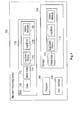
- Fig. 1 shows playback and/or recording device 100 for playback and/or recording of optical disk 102.
- optical disk 102 is a CD, DVD or BD.
- Device 100 has local storage 104 for permanent storage of metadata.
- local storage 104 is a memory card, hard disk or other kind of permanent storage device.
- Further playback and/or recording device 100 includes program 106 for controlling its operation as well as the operation of user interface 108.
- Data 110 such as an AV stream, is stored on optical disk 102.
- metadata 112 about data 110 is stored on optical disk 102.
- Metadata 112 is stored associated with metadata descriptors 114, i.e. log entry history data 116, log entry data 118 and action attribute data 120.
- Log entry history data serves for storing a change history of the metadata
- action attribute data 120 contains change attributes for the metadata modifications that have been performed.
- user interface 108 a user can modify, delete and/or add metadata, i.e. metadata content and/or metadata links.
- program 106 assigns a corresponding action attribute to the modification and writes a corresponding entry into log entry history data 116 and action attribute data 120.
- a local copy of metadata 112 and metadata descriptors 114 is stored in local storage 104 such that the user may still access the metadata of optical disk 102 after optical disk 102 has been removed from device 100.
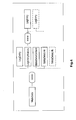
- Playback and/or recording devices I and II are of similar design as playback and/or recording device 100 of Fig. 1.
- a copy data of metadata 112 and of metadata descriptors 114 is stored on local storage 122.
- a copy is made on local storage 124 of device II.
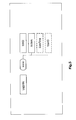
- Fig. 3 is a flow chart illustrating an embodiment for updating the local copy of the metadata in the local store of a playback and/or recording device.
- step 300 the optical disk is inserted in playback and/or recording device I.
- step 302 the metadata which is stored on the optical disk is modified.
- step 304 an action attribute being descriptive of the kind of modification of the metadata is determined from a pre-defined set of action attributes.
- step 306 the modification of the metadata and of the action attribute is stored on the optical disk and in the local storage of device I.
- step 308 the optical disk is removed from device I and inserted in playback and/or recording device II.
- step 310 it is therefore checked whether the log entry history data stored on the optical disk and the log entry history data stored in the local storage of device II is identical. If this is the case no further action needs to be carried out on the metadata and the procedure stops in step 312. Otherwise the action attribute is read from the optical disk in step 310. Based on the action attribute an update procedure for updating the local copy of the metadata stored in local storage of device II is determined and executed in step 316. It is to be noted that the invention also enables the inverse operation, i.e. an update operation in the optical storage for synchronisation with the local storage. This is useful for merging various local metadata into a single optical storage.
- Metadata are stored as metadata descriptors and can be described by means of XML as shown by the schema within Fig. 4.
- the metadata descriptor is structured hierarchically and consists of four elements: 'Log Entry', 'Log Entry History', 'Metadata Link' and 'Metadata Content'.
- the 'Metadata:Metadata Content' holds the information presented to the user, for example the summary about the movie describing actors and the story line.
- the 'Metadata:Metadata Link' holds a link for the essence data referencing at, for example, the pointer feasible to start a playback of the movie described.
- the structure of the metadata descriptor supports the existence of more than one 'Metadata:Metadata Link' elements.
- the 'Metadata:Log Entry History' consists of a list of 'Log Entry' elements. All 'Metadata:Log Entry History:Log Entry' elements within the list have previously been a 'Meta-data:Log Entry' and were generated by being copied from the Metadata level to the 'Metadata:Log Entry History' level.
- the 'Log Entry' element in turn, i.e. 'Metadata:Log Entry History:Log Entry' as well as 'Metadata:Log Entry', contains further elements as depicted within Fig. 5. Such elements are 'UUID' and 'Action', and optionally the elements 'Date Time' and 'User ID'.
- the 'Log Entry:UUID' element is the Universal Unique Identifier (cf. ISO-11578, ISO/IEC 11578:1996.
- the 'Log Entry:Action' element contains a description of the process which causes its generation, e.g. when generating a metadata the action is 'create new'. This is the location where the AdvancedActionAttribute is located.
- the optional elements 'Log Entry:Date Time' and 'Log Entry: User ID' contain the date and time for creating the new Log Entry as well as a (possibly local) ID of the user causing the new entry.
- a metadata is 'modified' in the following cases:
- the Advanced Action Attributes within the Action element By using the Advanced Action Attributes within the Action element the detection of similarities and redundancies between different metadata becomes possible. This prepares the basis to provide sophisticated user support to help foster metadata.
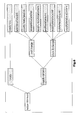
- the Advanced Action Attributes (AAA) inscribed for the 'Log Entry:Action' element is one out of the list as depicted within Fig. 6.
- the AAA is defined in nine flavours and has the depicted hierarchical structure.
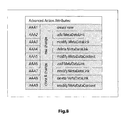
- Fig. 8 lists all different Advanced Action Attributes possible when the leaves of all attribute sub-classes and flavours in Fig. 6 are considered.
- the resulting nine attributes AAA1 till AAA9 could be coded by using 4 bits.
- the achievable benefits when using the Advanced Action Attributes are described:
- the system can:
- the system may assist by telling the user k additional 'Metadata Links' in the newer metadata.
- the system may assist by telling the user k-x 'Metadata Links' where modified in the newer metadata but x of them on the same link. This could be reached by comparing all 'Metadata Links'.
- the system may assist by telling the user 'Metadata Content' has been modified by the newer metadata k times.
- AAA7 AAA8, AAA9 the user can be informed about the fact that the newer metadata has been generated by cloning the other metadata.
Landscapes
- Engineering & Computer Science (AREA)
- Multimedia (AREA)
- Management Or Editing Of Information On Record Carriers (AREA)
- Information Retrieval, Db Structures And Fs Structures Therefor (AREA)
Abstract
Description
- The invention relates to the field of optical storage, and more particularly to metadata being stored on optical storage media.
- Streaming is a technology which is used for storing, transmitting and broadcasting packetised digital data, e.g. for audio and video broadcasting services. Often additional information is provided as an added value accompanying the audio and video data stream. For example, video summaries, story boards, cast background information, advertisements etc. are transmitted together with the streaming media as metadata. Metadata is defined as 'data about data'. In multimedia applications, metadata typically are data about audiovisual (AV) data, these AV data often being called 'essence'.
- When recording such a broadcast audio and video (AV) data stream together with metadata on storage media like Blue-ray Disc (BD) it becomes necessary to link the metadata to the AV stream. This is also true for manually added metadata. As an example, a user may want to link a short biography about J. Dean pulled from the internet to the AV of the movie "East of Eden". The link may be desirable to point to a special scene within the movie when J. Dean is starting the car race ending at the cliffs.
- Metadata are data about data giving additional information about the recorded material whereas providing a link to the AV stream and/or other related metadata described. A typical example is a movie summary giving background information about an AV stream recorded having a link that allows starting the AV stream on request. Furthermore it could also have further links to metadata describing the live of the movie actors.
- Typically metadata are produced by professional content providers like DVB broadcasters, internet services of television news papers.
- A problem to be solved by the invention is updating a local copy of metadata. This problem is solved by the method disclosed in claim 1 and by the computer program product disclosed in claim 8. An apparatus that utilises this method is disclosed in claim 6.
- The invention facilitates updating a local copy of metadata. When an optical storage medium, to which metadata is related, is used for the first time on a playback and/or recording device a local copy of the metadata is stored in local storage of the playback and/or recording device. Subsequently the user may use another playback and/or recording device for rendering of data stored on the optical storage medium and for modifying the metadata which is stored on the optical storage medium. If such a change of the metadata occurs a corresponding entry is made in change history data stored on the optical storage medium. Further a change attribute is written on the optical storage medium in order to indicate the kind of modification which has been performed. When the first playback and/or recording device is used again for the optical storage medium the change history data which is stored on the optical storage medium and the change history data stored in the local storage are compared. If the change history data is different this indicates that in the meanwhile the metadata which is stored on the optical storage medium has been changed. In response, the corresponding change attribute is read from the optical storage medium and an update operation is determined in order to update the local copy of the metadata which is stored in the local storage of the playback and/or recording device. Storing up-to-date copies of metadata in local storage of a playback and/or recording device has the advantage that a user of the device can quickly obtain an overview of his or her collection of optical storage media and its associated metadata. Further the invention simplifies the exchange of optical storage media between different users having different playback and/or recording devices.
- It is to be noted that the invention is not restricted to a particular kind of optical storage medium but that any suitable optical storage medium can be used, such as CD, DVD or BD.
- In principle, the inventive method is suited for updating a local copy of metadata, the method including the steps:
- reading first change history data of metadata from an optical storage medium;
- reading second change history data of metadata from local storage of a playback and/or recording device for said optical storage medium;
- if the first and second change history data are different, reading a change attribute from said optical storage medium and determining an update operation of the metadata stored in said local storage or an update operation in said optical storage medium depending on said change attribute.
- In principle the inventive playback and/or recording device for an optical storage medium includes:
- a local storage for storing metadata and change history data of said metadata;
- means for comparing the change history data stored in said local storage and change history data of metadata stored on said optical storage medium;
- means for determining an update operation for the metadata stored in said local storage if the change history data of said local storage and of said optical storage medium are different, whereby the update operation is determined depending on a change attribute being stored on said optical storage medium;
- means for determining an update operation for the metadata stored in said optical storage medium if the change history data of said optical storage medium and of said local storage are different, whereby the update operation is determined depending on a change attribute being stored on said local storage.
- Advantageous additional embodiments of the invention are disclosed in the respective dependent claims.
- Exemplary embodiments of the invention are described with reference to the accompanying drawings, in which:
- Fig. 1
- is a block diagram of a playback and/or recording device in accordance with a preferred embodiment of the invention;
- Fig. 2
- illustrates usage of an optical disk on two different playback and/or recording devices;
- Fig. 3
- is illustrative of a preferred embodiment of a method of the invention;
- Fig. 4
- is a metadata descriptor scheme;
- Fig. 5
- is a log entry descriptor scheme;
- Fig. 6
- is illustrative of various action attributes;
- Fig. 7
- is illustrative of a clone and/or change process;
- Fig. 8
- shows various advanced action attributes for metadata.
- Fig. 1 shows playback and/or
recording device 100 for playback and/or recording ofoptical disk 102. For exampleoptical disk 102 is a CD, DVD or BD.Device 100 haslocal storage 104 for permanent storage of metadata. For examplelocal storage 104 is a memory card, hard disk or other kind of permanent storage device. Further playback and/orrecording device 100 includesprogram 106 for controlling its operation as well as the operation ofuser interface 108.
Data 110, such as an AV stream, is stored onoptical disk 102.Further metadata 112 aboutdata 110 is stored onoptical disk 102.Metadata 112 is stored associated withmetadata descriptors 114, i.e. logentry history data 116, logentry data 118 andaction attribute data 120. Log entry history data serves for storing a change history of the metadata, andaction attribute data 120 contains change attributes for the metadata modifications that have been performed.
By user interface 108 a user can modify, delete and/or add metadata, i.e. metadata content and/or metadata links. When such a modification of metadata is entered,program 106 assigns a corresponding action attribute to the modification and writes a corresponding entry into logentry history data 116 andaction attribute data 120.
A local copy ofmetadata 112 andmetadata descriptors 114 is stored inlocal storage 104 such that the user may still access the metadata ofoptical disk 102 afteroptical disk 102 has been removed fromdevice 100. - If
optical disk 102 is used on different playback and/or recording devices a local copy ofmetadata 112 and ofmetadata descriptors 114 is maintained in each one of the local storages of the corresponding playback and/or recording devices. This is illustrated in the schematic diagram of Fig. 2. Playback and/or recording devices I and II are of similar design as playback and/orrecording device 100 of Fig. 1. When device I is used withoptical disc 102, a copy data ofmetadata 112 and ofmetadata descriptors 114 is stored onlocal storage 122. Whenoptical disk 102 is used with device II, again a copy is made onlocal storage 124 of device II. - Fig. 3 is a flow chart illustrating an embodiment for updating the local copy of the metadata in the local store of a playback and/or recording device. In
step 300 the optical disk is inserted in playback and/or recording device I. In response a local copy of the metadata and of the metadata descriptors is made. Instep 302 the metadata which is stored on the optical disk is modified. Instep 304 an action attribute being descriptive of the kind of modification of the metadata is determined from a pre-defined set of action attributes.
Instep 306 the modification of the metadata and of the action attribute is stored on the optical disk and in the local storage of device I.
Instep 308 the optical disk is removed from device I and inserted in playback and/or recording device II. The optical disk had been used with device II before such that a local copy of metadata and metadata descriptors of the optical disk is already stored in local storage of device II (cf.local storage 124 of Fig. 2).
Instep 310 it is therefore checked whether the log entry history data stored on the optical disk and the log entry history data stored in the local storage of device II is identical. If this is the case no further action needs to be carried out on the metadata and the procedure stops instep 312. Otherwise the action attribute is read from the optical disk instep 310. Based on the action attribute an update procedure for updating the local copy of the metadata stored in local storage of device II is determined and executed instep 316.
It is to be noted that the invention also enables the inverse operation, i.e. an update operation in the optical storage for synchronisation with the local storage. This is useful for merging various local metadata into a single optical storage. - Preferably metadata are stored as metadata descriptors and can be described by means of XML as shown by the schema within Fig. 4. The metadata descriptor is structured hierarchically and consists of four elements: 'Log Entry', 'Log Entry History', 'Metadata Link' and 'Metadata Content'.
The 'Metadata:Metadata Content' holds the information presented to the user, for example the summary about the movie describing actors and the story line. The 'Metadata:Metadata Link' holds a link for the essence data referencing at, for example, the pointer feasible to start a playback of the movie described. The structure of the metadata descriptor supports the existence of more than one 'Metadata:Metadata Link' elements. This is useful for example in case different movies are available for an actor characterised by the 'Metadata Content'. 'Metadata Content' and 'Metadata Link' are not of special interest for this invention.
The 'Metadata:Log Entry History' consists of a list of 'Log Entry' elements. All 'Metadata:Log Entry History:Log Entry' elements within the list have previously been a 'Meta-data:Log Entry' and were generated by being copied from the Metadata level to the 'Metadata:Log Entry History' level. - The 'Log Entry' element in turn, i.e. 'Metadata:Log Entry History:Log Entry' as well as 'Metadata:Log Entry', contains further elements as depicted within Fig. 5. Such elements are 'UUID' and 'Action', and optionally the elements 'Date Time' and 'User ID'.
The 'Log Entry:UUID' element is the Universal Unique Identifier (cf. ISO-11578, ISO/IEC 11578:1996. "Information technology - Open Systems Interconnection - Remote Procedure Call (RPC)" and "UUIDs and GUIDs"; Leach, Paul J.; Salz, Paul Network Working Group - Internet Draft - February 4, 1998) which can be independently and unambiguously generated by any unit (e.g. a recorder) for every 100nsec. The 'Log Entry:UUID' has the purpose of identifying every single object generated (recorded) by a unit independently from its current storage location. - The 'Log Entry:Action' element contains a description of the process which causes its generation, e.g. when generating a metadata the action is 'create new'. This is the location where the AdvancedActionAttribute is located.
The optional elements 'Log Entry:Date Time' and 'Log Entry:
User ID' contain the date and time for creating the new Log Entry as well as a (possibly local) ID of the user causing the new entry. - A metadata is 'modified' in the following cases:
- A metadata is modified either if 'Metadata:Metadata Content' is changed, this could be the case when editing the video summary for example, or if the 'Metadata:Metadata Link' is changed, this could be the case when adjusting the reference for example;
- On generative processes, this could be the case if the complete metadata descriptor Metadata is generated or if further 'Metadata:Metadata Link' elements are appended for example.
- Any modification will cause the following steps to be executed within 'Metadata:Log Entry' and 'Metadata:Log Entry History':
- 1) If existing, copy the 'Metadata:Log Entry' and append it to the list within 'Log Entry History'. Thereby the 'Meta-data:Log Entry' is becoming a 'Metadata:Log Entry History: Log Entry'
- 2) Create a new 'Metadata:Log Entry' containing a new 'UUID' and the actual 'Action' executed. An already existing 'Meta-data:Log Entry' is substitute by the new one.
-
- By this procedure the 'Log Entry History' is growing like bark rings of a tree and will carry all 'Log Entry' elements that ever having been assigned to the metadata during lifetime.
- It is important to pay attention to the fact that two metadata having the same Log Entry:UUID are considered to be identical and therefore any copying or moving of metadata will not cause a new 'Log Entry'. As a consequence of this, it is assumed that two metadata with the same 'Log Entry: UUID' will not exist on the same storage media, or if so are automatically reduced to a single one by deleting one of it.
- By using the Advanced Action Attributes within the Action element the detection of similarities and redundancies between different metadata becomes possible. This prepares the basis to provide sophisticated user support to help foster metadata.
The Advanced Action Attributes (AAA) inscribed for the 'Log Entry:Action' element is one out of the list as depicted within Fig. 6. The AAA is defined in nine flavours and has the depicted hierarchical structure. The creation of metadata has always the same action called "create new". This is the initial very first 'Log Entry' generated and can be found within every 'Log Entry History'. If two metadata histories have an identical 'Log Entry:UUID' with 'Log Entry:Action'="create new", it is proved that both were generated from the same ancestor.
The action "modify content" is divided into the two attribute sub-classes "real change" and "clone & change". The difference between the sub-classes "real change" and "clone & change" is, that in the latter any change was not executed on the original metadata but on a cloned one only. In other words the original metadata inclusive its 'Log Entry' remains unchanged but the modifications are executed on a new metadata with a new 'Log Entry:UUID' inheriting all the 'Log Entry History' from the original. This can be described by generating a descendant (see Fig. 7).
A change on metadata qualified by the sub-class attribute "real change" will be executed on the original metadata itself and therefore is irreversible. In Fig. 7 the left part of the image would vanish and merely the shaded part would remain.
The sub-classes "real change" and "clone & change" in turn have four sub-flavours: "add Metadata Link", "modify Metadata Link", "delete Metadata Link" and "modify Metadata Content". These sub-flavours qualify the modifications executed on metadata: - "add Metadata Link" indicates that a further 'Metadata Link' element has been added to the Metadata;
- "modify Metadata Link" describes that an already existing 'Metadata Link' has been changed in place;
- "delete Metadata Link" protocols the removing of a 'Metadata Link' element from Metadata;
- the attribute "modify Metadata Content" is indicating that the 'Metadata Content' of the metadata, e.g. the video summary, has been modified.
-
- Fig. 8 lists all different Advanced Action Attributes possible when the leaves of all attribute sub-classes and flavours in Fig. 6 are considered. The resulting nine attributes AAA1 till AAA9 could be coded by using 4 bits.
In the following the achievable benefits when using the Advanced Action Attributes are described: - A) Allows the detection of redundant metadata residing on the same volume or instrument. If two metadata differ by k additional 'Log Entries' carrying the AAA2 (AAA6), it is clear that the older one (predecessor) is redundant. Also when two metadata differ by the additional 'Log Entries' carrying AAA7, AAA8 or AAA9 the older original one may be redundant.
- B) Allows the detection of conflicting metadata residing on different volumes. If two metadata differ by k additional 'Log Entries' carrying the AAA3 or AAA4 (AAA7 or AAA8), it is possible that the predecessor metadata has an obsolete 'Metadata Link' due to the fact that essence data pointing to it has been modified. In this case the check of the predecessors 'Metadata Link' is urgently indicated.
- C) Supports solving strategies for removing redundant metadata and for repairing conflicting metadata. For example, if two metadata differ by k additional 'Log Entries' carrying the AAA5 (AAA9), the predecessor is potentially redundant. For example, if two metadata differ by deviating "evolution" in the 'Log Entry History' by having the same predecessor the merging of siblings may be proposed. This would be the case if AAA2 (AAA6) were the only difference between separate instances caused by independently adding different 'Metadata Links'.
- D) Supports automatic system assistance for the user upon detection of redundancy or conflict on metadata.
-
- The system can:
- D1) Act by warning the user and he has to care for a solution manually;
- D2) Act by proposing a single repair solution and the user can rise a veto;
- D3) Act by proposing a list of alternative repair solutions and the user can select one of it;
- D4) Repair unconditionally.
- D2) and D3) can be specified by some applications:
-
- For example, if two metadata differ by k additional 'Log Entries' carrying the AAA3 (AAA7), the system may assist by telling the user k additional 'Metadata Links' in the newer metadata.
For example, if two metadata differ by k additional 'Log Entries' carrying the AAA4 (AAA8), the system may assist by telling the user k-x 'Metadata Links' where modified in the newer metadata but x of them on the same link. This could be reached by comparing all 'Metadata Links'.
For example, if two metadata differ by k additional 'Log Entries' carrying the AAA5 (AAA9), the system may assist by telling the user 'Metadata Content' has been modified by the newer metadata k times. - For AAA7, AAA8, AAA9 the user can be informed about the fact that the newer metadata has been generated by cloning the other metadata.
Claims (9)
- Method of updating a local copy of metadata, the method including the steps:reading first change history data (116) of metadata from an optical storage medium (102);reading second change history data of metadata from local storage (104, 122, 124) of a playback and/or recording device for said optical storage medium (102);if the first and second change history data are different, reading a change attribute from said optical storage medium (102) and determining an update operation of the metadata stored in said local storage (104, 122, 124) or an update operation in said optical storage medium (102) depending on said change attribute.
- The method of claim 1, further including detecting redundant metadata.
- The method of claim 1 or 2, further including removing redundant metadata.
- The method of claim 1, 2 or 3, further including detecting conflicting metadata.
- The method of one of claims 1 to 4, further including generating one or more proposals for said update operation and outputting said one or more proposals on a user interface (108).
- Playback and/or recording device (100) for an optical storage medium (102), said device including:a local storage (104, 122, 124) for storing metadata and change history data of said metadata;means (106) for comparing the change history data stored in said local storage and change history data (116) of metadata stored on said optical storage medium (102);means (106) for determining an update operation for the metadata stored in said local storage (104, 122, 124) if the change history data of said local storage and of said optical storage medium are different, whereby the update operation is determined depending on a change attribute being stored on said optical storage medium;means (106) for determining an update operation for the metadata stored in said optical storage medium if the change history data of said optical storage medium (102) and of said local storage (104, 122, 124) are different, whereby the update operation is determined depending on a change attribute being stored on said local storage.
- The playback and/or recording device of claim 6, further including a user interface (108) for outputting one or more proposals for the update operation.
- Computer program product for an optical storage medium playback and/or recording device (100), the computer program product including program means for performing the steps of:reading first change history data (116) of metadata from an optical storage medium (102);reading second change history data of metadata from local storage (104, 122, 124) of a playback and/or recording device for said optical storage medium (102);if the first and second history data are different, reading a change attribute from said optical storage medium (102) and determining an update operation of the metadata stored in said local storage (104, 122, 124) or an update operation in said optical storage medium (102) depending on said change attribute.
- Computer program product of claim 8, the program means being adapted to provide a user interface (108) for outputting one or more proposals for said update operation.
Priority Applications (2)
| Application Number | Priority Date | Filing Date | Title |
|---|---|---|---|
| EP03090270A EP1511034A1 (en) | 2003-08-27 | 2003-08-27 | Method and device for updating a local copy of metadata |
| US10/925,247 US7565064B2 (en) | 2003-08-27 | 2004-08-24 | Method and device for updating a local copy of metadata |
Applications Claiming Priority (1)
| Application Number | Priority Date | Filing Date | Title |
|---|---|---|---|
| EP03090270A EP1511034A1 (en) | 2003-08-27 | 2003-08-27 | Method and device for updating a local copy of metadata |
Publications (1)
| Publication Number | Publication Date |
|---|---|
| EP1511034A1 true EP1511034A1 (en) | 2005-03-02 |
Family
ID=34089683
Family Applications (1)
| Application Number | Title | Priority Date | Filing Date |
|---|---|---|---|
| EP03090270A Withdrawn EP1511034A1 (en) | 2003-08-27 | 2003-08-27 | Method and device for updating a local copy of metadata |
Country Status (2)
| Country | Link |
|---|---|
| US (1) | US7565064B2 (en) |
| EP (1) | EP1511034A1 (en) |
Cited By (1)
| Publication number | Priority date | Publication date | Assignee | Title |
|---|---|---|---|---|
| EP1587325A3 (en) * | 2004-04-15 | 2011-05-25 | Thomson Licensing | Method and device for handling metadata |
Families Citing this family (7)
| Publication number | Priority date | Publication date | Assignee | Title |
|---|---|---|---|---|
| US8560950B2 (en) * | 2007-09-04 | 2013-10-15 | Apple Inc. | Advanced playlist creation |
| WO2009079478A1 (en) * | 2007-12-14 | 2009-06-25 | Virident Systems, Inc. | Distributing metadata across multiple different disruption regions within an asymmetric memory system |
| JP2012080361A (en) * | 2010-10-01 | 2012-04-19 | Sony Corp | Recording device, imaging recording device, recording method, and program |
| CN104812028B (en) * | 2014-01-24 | 2019-01-11 | 瑞昱半导体股份有限公司 | Method for connecting network |
| US20170024140A1 (en) * | 2015-07-20 | 2017-01-26 | Samsung Electronics Co., Ltd. | Storage system and method for metadata management in non-volatile memory |
| US10120578B2 (en) * | 2017-01-19 | 2018-11-06 | International Business Machines Corporation | Storage optimization for write-in-free-space workloads |
| US12346207B2 (en) * | 2020-12-10 | 2025-07-01 | Coupang Corp. | Cloud-based database backup and recovery |
Citations (4)
| Publication number | Priority date | Publication date | Assignee | Title |
|---|---|---|---|---|
| WO1998049686A2 (en) * | 1997-04-25 | 1998-11-05 | Koninklijke Philips Electronics N.V. | Apparatus for recording an information signal |
| WO2001079964A2 (en) * | 2000-04-14 | 2001-10-25 | Realnetworks, Inc. | System and method of managing metadata |
| EP1274022A2 (en) * | 2001-07-07 | 2003-01-08 | Samsung Electronics Co., Ltd. | Reproducing apparatus and method of providing bookmark information thereof |
| US20030182255A1 (en) * | 2002-03-21 | 2003-09-25 | Daniel Plastina | Methods and systems for repairing playlists |
Family Cites Families (2)
| Publication number | Priority date | Publication date | Assignee | Title |
|---|---|---|---|---|
| US20020048448A1 (en) * | 1993-03-29 | 2002-04-25 | Microsoft Corporation | Pausing the display of a television program as a signal including the television program is received |
| JP2006526337A (en) * | 2003-05-09 | 2006-11-16 | 松下電器産業株式会社 | Reproduction apparatus and digest reproduction method |
-
2003
- 2003-08-27 EP EP03090270A patent/EP1511034A1/en not_active Withdrawn
-
2004
- 2004-08-24 US US10/925,247 patent/US7565064B2/en not_active Expired - Fee Related
Patent Citations (4)
| Publication number | Priority date | Publication date | Assignee | Title |
|---|---|---|---|---|
| WO1998049686A2 (en) * | 1997-04-25 | 1998-11-05 | Koninklijke Philips Electronics N.V. | Apparatus for recording an information signal |
| WO2001079964A2 (en) * | 2000-04-14 | 2001-10-25 | Realnetworks, Inc. | System and method of managing metadata |
| EP1274022A2 (en) * | 2001-07-07 | 2003-01-08 | Samsung Electronics Co., Ltd. | Reproducing apparatus and method of providing bookmark information thereof |
| US20030182255A1 (en) * | 2002-03-21 | 2003-09-25 | Daniel Plastina | Methods and systems for repairing playlists |
Cited By (1)
| Publication number | Priority date | Publication date | Assignee | Title |
|---|---|---|---|---|
| EP1587325A3 (en) * | 2004-04-15 | 2011-05-25 | Thomson Licensing | Method and device for handling metadata |
Also Published As
| Publication number | Publication date |
|---|---|
| US20050050518A1 (en) | 2005-03-03 |
| US7565064B2 (en) | 2009-07-21 |
Similar Documents
| Publication | Publication Date | Title |
|---|---|---|
| US7743037B2 (en) | Information processing apparatus and method and program | |
| US8135695B2 (en) | Information storage medium for storing metadata supporting multiple languages, and systems and methods of processing metadata | |
| KR100653872B1 (en) | Moving picture management method and device | |
| CN100501725C (en) | Simplifying nethod and apparatus for access of metadata | |
| JP4618687B2 (en) | Method for retrieving data from first and second storage media | |
| JP4885841B2 (en) | Cyclic referencing management method and apparatus, and purging method and apparatus | |
| JP2002351878A (en) | Digital contents reproduction device, data acquisition system, digital contents reproduction method, metadata management method, electronic watermark embedding method, program, and recording medium | |
| JP2002354423A (en) | Method for accommodating contents | |
| US20050234858A1 (en) | Recording and reproducing apparatus, reproducing apparatus, recording and reproducing method, reproducing method, program and recording medium | |
| US20070009231A1 (en) | Reproducing apparatus, method, method and program | |
| US7565064B2 (en) | Method and device for updating a local copy of metadata | |
| JP4366120B2 (en) | Recording device | |
| CN101057294B (en) | Reproducing apparatus for reproducing audio-visual data stored in storage medium | |
| KR100453060B1 (en) | Methods for fixing-up lastURL representing path name and file name of asset in MPV environment | |
| EP1170747B1 (en) | File managing system | |
| CN100543721C (en) | Interactive media and methods for managing data attached thereto | |
| CN101441884B (en) | Methods of reproducing data | |
| US7835614B2 (en) | Data recording method, data recording apparatus, and data recording medium | |
| US20050240626A1 (en) | Method and apparatus for fixing up LastURL, and computer readable recording medium storing program for performing the method | |
| RU2331936C2 (en) | Device and method for playback of audio and video data | |
| JP2004342302A (en) | Method for storing additional data relative to menu item data stored in exclusive position of optical storage medium, menu item data, and device for storing data relative to menu having additinal data relative to the menu item data or retrieving the data from optical storage medium | |
| US20030233359A1 (en) | Link resolving mechanism | |
| EP1372343A2 (en) | Improved link resolving mechanism | |
| MXPA02009526A (en) | Information recording media with recorded preload information, and device and method thereof. | |
| HK1104860A (en) | Information storage medium for storing metadata supporting multiple languages, and systems and methods of processing metadata |
Legal Events
| Date | Code | Title | Description |
|---|---|---|---|
| PUAI | Public reference made under article 153(3) epc to a published international application that has entered the european phase |
Free format text: ORIGINAL CODE: 0009012 |
|
| AK | Designated contracting states |
Kind code of ref document: A1 Designated state(s): AT BE BG CH CY CZ DE DK EE ES FI FR GB GR HU IE IT LI LU MC NL PT RO SE SI SK TR |
|
| AX | Request for extension of the european patent |
Extension state: AL LT LV MK |
|
| 17P | Request for examination filed |
Effective date: 20050315 |
|
| AKX | Designation fees paid |
Designated state(s): DE FR GB IT |
|
| 17Q | First examination report despatched |
Effective date: 20080922 |
|
| STAA | Information on the status of an ep patent application or granted ep patent |
Free format text: STATUS: THE APPLICATION IS DEEMED TO BE WITHDRAWN |
|
| 18D | Application deemed to be withdrawn |
Effective date: 20180301 |
|
| RIC1 | Information provided on ipc code assigned before grant |
Ipc: G11B 27/10 20060101ALI20040204BHEP Ipc: G11B 27/00 20060101AFI20040204BHEP |