EP1508860B1 - Method and apparatus for managing device reservation - Google Patents
Method and apparatus for managing device reservation Download PDFInfo
- Publication number
- EP1508860B1 EP1508860B1 EP04004995A EP04004995A EP1508860B1 EP 1508860 B1 EP1508860 B1 EP 1508860B1 EP 04004995 A EP04004995 A EP 04004995A EP 04004995 A EP04004995 A EP 04004995A EP 1508860 B1 EP1508860 B1 EP 1508860B1
- Authority
- EP
- European Patent Office
- Prior art keywords
- reservation
- command
- host
- reserved
- commands
- Prior art date
- Legal status (The legal status is an assumption and is not a legal conclusion. Google has not performed a legal analysis and makes no representation as to the accuracy of the status listed.)
- Expired - Lifetime
Links
Images


Classifications
-
- G—PHYSICS
- G06—COMPUTING OR CALCULATING; COUNTING
- G06F—ELECTRIC DIGITAL DATA PROCESSING
- G06F13/00—Interconnection of, or transfer of information or other signals between, memories, input/output devices or central processing units
- G06F13/14—Handling requests for interconnection or transfer
- G06F13/36—Handling requests for interconnection or transfer for access to common bus or bus system
- G06F13/368—Handling requests for interconnection or transfer for access to common bus or bus system with decentralised access control
- G06F13/372—Handling requests for interconnection or transfer for access to common bus or bus system with decentralised access control using a time-dependent priority, e.g. individually loaded time counters or time slot
-
- G—PHYSICS
- G06—COMPUTING OR CALCULATING; COUNTING
- G06F—ELECTRIC DIGITAL DATA PROCESSING
- G06F3/00—Input arrangements for transferring data to be processed into a form capable of being handled by the computer; Output arrangements for transferring data from processing unit to output unit, e.g. interface arrangements
- G06F3/06—Digital input from, or digital output to, record carriers, e.g. RAID, emulated record carriers or networked record carriers
- G06F3/0601—Interfaces specially adapted for storage systems
-
- G—PHYSICS
- G06—COMPUTING OR CALCULATING; COUNTING
- G06F—ELECTRIC DIGITAL DATA PROCESSING
- G06F3/00—Input arrangements for transferring data to be processed into a form capable of being handled by the computer; Output arrangements for transferring data from processing unit to output unit, e.g. interface arrangements
- G06F3/06—Digital input from, or digital output to, record carriers, e.g. RAID, emulated record carriers or networked record carriers
- G06F3/0601—Interfaces specially adapted for storage systems
- G06F3/0668—Interfaces specially adapted for storage systems adopting a particular infrastructure
- G06F3/0671—In-line storage system
- G06F3/0673—Single storage device
-
- G—PHYSICS
- G06—COMPUTING OR CALCULATING; COUNTING
- G06F—ELECTRIC DIGITAL DATA PROCESSING
- G06F3/00—Input arrangements for transferring data to be processed into a form capable of being handled by the computer; Output arrangements for transferring data from processing unit to output unit, e.g. interface arrangements
- G06F3/06—Digital input from, or digital output to, record carriers, e.g. RAID, emulated record carriers or networked record carriers
- G06F3/0601—Interfaces specially adapted for storage systems
- G06F3/0668—Interfaces specially adapted for storage systems adopting a particular infrastructure
- G06F3/0671—In-line storage system
- G06F3/0673—Single storage device
- G06F3/0682—Tape device
Definitions
- Storage devices such as tape devices, may be configured to allow multiple hosts to access the device. In such configurations, it is important to ensure that hosts are prevented from Interfering with the data transfer operations of the other hosts. Data integrity can be compromised if one host accesses the device while another host is performing a data transfer.
- SCSI Small Computer System Interface
- SCSI Persistent Reserveln and Persistent ReserveOut commands function similarly to the reserve and release commands. However, these commands also allow any host to issue a Persistent Reserve Out command with the Clear service action to remove any reservations.
- a second host trying to access a device reserved with the Persistent Reserve In command cannot tell if a reserved device is truly being used or if the device is In a bad state because the host holding the reservation on the device has failed. If a data transfer is particularly lengthy, the second host may decide the host holding the reservation has failed and clear the reservation. This would disrupt any data transfers that may be taking place. If the device is a tape drive, the clear could effectively terminate the entire backup process.
- US-B-6,327,613 discloses a system for sharing peripheral devices over a network.
- the system includes a first computer having at least one peripheral device and a second computer that is networked to the first computer.
- the second computer is configured to send a request to use the at least one peripheral device over the network and the request is processed to determine whether the second computer has sharing privileges to use the at least one peripheral device.
- the first computer is configured to grant access to the request of the second computer if the second computer has the sharing privileges that enable access to the at least one peripheral device.
- the first computer acts as a Server that can share its peripheral devices and the second computer acts as a Client that access the Server's peripheral devices.
- a reservation time-out value can be associated with the second computer and indicates an amount of time that the second computer may remain connected to a particular device without using it before its reservation is removed.
- each device has a setting representing the amount of time that this device may sit idle while currently reserved by a Client.
- US 2003/0005130 A1 relates to an audio-video management in a Universal Plug and Play architecture in which the resource management commands include reserve and release commands with a message body that identifies a path whose resources are to be reserved and a starting time and an ending time for the reservation.
- a device command is received from a first host.
- a device associated with the device command is reserved for the first host.
- a reservation time period for expiration of the reservation status is also set.
- FIG. 1 illustrates an exemplary configuration of a reservation agent
- FIG. 2 is a flow diagram illustrating an exemplary method for reserving a device
- FIG. 3 is a flow diagram illustrating an exemplary method for checking reservation conviction
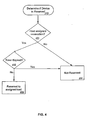
- FIG. 4 illustrates an exemplary method for determining if a device is reserved.
- Reservation agent 110 is communicatively coupled between hosts 120, 125 and device 100.
- Hosts 120, 125 may be servers, personal computers, or any other type of machine that provides commands to device 100.
- Device 100 may be any type of device that accepts commands from multiple sources.
- device 100 is a storage device, such as a tape device (e.g., a tape drive or robotic tape library), or disk device (e.g., a hard drive, a RAID device, or optical tape library).
- reservation agent 110 may be part of the firmware of device 100, may be software residing on host 120, 125, or other host, or may be another type of appliance that is communicatively coupled to hosts 120, 125 and device 100.
- a control host may be communicatively coupled to reservation agent to configure the reservation agent.
- Reservation agent 110 may also manage reservations for multiple devices. Additionally, some commands from hosts 120, 125 may be routed directly to the device without going through reservation agent 110 and some or all of the output from device 100 may be routed directly to hosts 120, 125.
- FIG. 2 illustrates an exemplary device reservation method 200 that may be performed by reservation agent 110.
- the method begins when a command is received 205.
- the command may be a Small Computer System interface (SCSI) command received from host 120 to be performed by device 100.
- SCSI Small Computer System interface
- other communication protocols such as Internet SCSI (iSCSI) and Fibre Channel, may also be used.
- the type of commands that require reservation may vary depending upon the type of device 100 and the type of application issuing the command.
- commands that result in motion of the tape may require device reservation, while commands that do not affect the tape media may not require device reservation.
- commands that do not affect the tape media may not require device reservation.
- write, read, seek, rewind, load, and unload commands may be commands that require reservation.
- Providing a reservation method for these types of commands can prevent other hosts from interfering with a data transfer operation of the requesting host. Commands such as the SCSI "inquiry" command which requests the configuration of the device or the SCSI "log_sense" command which retrieves statistical information maintained by the device probably will not require device reservation.
- the process ends 230. If the command does require device reservation, the device targeted by the device command is reserved for the host initiating the command 220. In one embodiment, this may be accomplished by setting a reservation status by assigning a value to an active host field, implicitly signifying the device is reserved. A reservation time period for expiration of the reservation is also set 225.
- the reservation time period may be set before, after, or in conjunction with the setting of the reservation status 220.
- the reservation time period may not begin to run until after the command has executed.
- the reservation time period will expire if the active host does not have an outstanding command to the device and the timer has expired.
- the reservation time period may vary depending upon the type of command and may start as soon as the command executes. For example, a rewind command may be given a reservation time period longer than a write command. This may allow the reservation to be released if a command at the device hangs up. It is contemplated that some embodiments may include both types of reservation time periods: a reservation time period that begins to run after the command has executed and a reservation time period for the execution of the command.
- a host already holding a reservation may be renewing the reservation by issuing a command that requires reservation before the time period of the existing reservation has expired. After a determination is made that the command requires reservation 215, the device may not to be reserved for the initiating host since this has already been performed in a previous reservation process. In this embodiment, all that may be required is a reset of the reservation time period 225 to the predetermined time period.
- the command type may not be determined because all commands may reserve the device.
- the host may flag a command as requiring device reservation. The reservation time period may then be set as described above or the host may request or specify a time period needed for the reservation.
- a exemplary method for checking reservation confliction 300 is illustrated in FIG. 3.
- These commands may be similar to the commands described above in the device reservation process 200. Commands that require device movement, such as read, write, rewind, load, unload, or seek, will probably conflict with a device reservation. However commands that may not require device reservation may also conflict with an existing reservation. These commands may include commands such as the SCSI "Persistent Reserve Out" command with the Clear service action. Commands of this type do not require device movement, but can dramatically interfere with a data operation of a host holding an existing reservation.
- the types of commands that conflict with the device reservation may vary depending upon the type of command that was issued to reserve the device, as well as the type of device. In alternate embodiments, the determination may not be performed as all commands may conflict with device reservation
- Commands that are not of a type that conflicts with device reservation are executed 325. If the command is of a predetermined type of command that conflicts with reservation, a check is performed to determine if the device is reserved 315. This process will be described more fully below with reference to FIG. 4.
- the device is not reserved. If the time period has expired, the device is not reserved. If the timer has not expired, the device is reserved 415.
- the reservation may also indicate the host assigned to the reservation. In alternate embodiments, the timer may be checked before checking to determine whether a host is assigned to a reservation. Additional methods to determine if a device is reserved are also contemplated. For example, a Boolean flag may be used to indicate a reserved or unreserved status. This flag may be automatically updated, upon the expiration of the reservation time period, to unreserved.
- the command is executed 325. If the device is reserved, a determination is made as to whether the device is reserved to the first host initiating the current command. The command is executed 325 if the reservation is to the first host. Otherwise, the command is denied 330. The command may be denied by aborting the command, returning an error message, or returning another type of indication that the command was not executed.
- a device reservation process such as that illustrated in FIG. 2 may be performed.
- the determination whether the command is a predetermined type of command 310 may also include a determination that the command requires device reservation.
- the device reservation process may only consist of reserving the device 220 and setting or resetting the reservation time period 225.
- the determination whether the device is reserved 315 may be made before determining whether the command is a predetermined type of command 310. Additionally, the determination that the device is reserved by the host initiating the current command 320 may be performed as part of the device reservation determination 315.
Landscapes
- Engineering & Computer Science (AREA)
- Theoretical Computer Science (AREA)
- Physics & Mathematics (AREA)
- General Engineering & Computer Science (AREA)
- General Physics & Mathematics (AREA)
- Signal Processing For Digital Recording And Reproducing (AREA)
Description
- Storage devices, such as tape devices, may be configured to allow multiple hosts to access the device. In such configurations, it is important to ensure that hosts are prevented from Interfering with the data transfer operations of the other hosts. Data integrity can be compromised if one host accesses the device while another host is performing a data transfer.
- One method used In the past to protect data transfers is the Reserve & Release method implemented in Small Computer System Interface (SCSI) devices. This methodology requires that the application or driver on the host implement reserve and release commands. A host can be given exclusive access to a device by issuing a reserve command. When the host is finished with the device, it must then issue a release command to relinquish its reservation of the device. However, if the host holding the reservation on the device experiences a failure, it cannot issue the release. Thus, the device remains unnecessarily reserved for that host. The device may need to be reset manually to recover from this state.
- The SCSI Persistent Reserveln and Persistent ReserveOut commands function similarly to the reserve and release commands. However, these commands also allow any host to issue a Persistent Reserve Out command with the Clear service action to remove any reservations. A second host trying to access a device reserved with the Persistent Reserve In command cannot tell if a reserved device is truly being used or if the device is In a bad state because the host holding the reservation on the device has failed. If a data transfer is particularly lengthy, the second host may decide the host holding the reservation has failed and clear the reservation. This would disrupt any data transfers that may be taking place. If the device is a tape drive, the clear could effectively terminate the entire backup process.
US-B-6,327,613 discloses a system for sharing peripheral devices over a network. The system includes a first computer having at least one peripheral device and a second computer that is networked to the first computer. The second computer is configured to send a request to use the at least one peripheral device over the network and the request is processed to determine whether the second computer has sharing privileges to use the at least one peripheral device. Furthermore, the first computer is configured to grant access to the request of the second computer if the second computer has the sharing privileges that enable access to the at least one peripheral device. The first computer acts as a Server that can share its peripheral devices and the second computer acts as a Client that access the Server's peripheral devices. A reservation time-out value can be associated with the second computer and indicates an amount of time that the second computer may remain connected to a particular device without using it before its reservation is removed. Moreover, each device has a setting representing the amount of time that this device may sit idle while currently reserved by a Client.
US 2003/0005130 A1 relates to an audio-video management in a Universal Plug and Play architecture in which the resource management commands include reserve and release commands with a message body that identifies a path whose resources are to be reserved and a starting time and an ending time for the reservation. - Methods and Apparatus are disclosed for managing device reservation. In one embodiment, a device command is received from a first host. Upon receiving the command, a device associated with the device command is reserved for the first host. A reservation time period for expiration of the reservation status is also set.
- Illustrative embodiments of the invention are illustrated in the drawings in which:
- FIG. 1 illustrates an exemplary configuration of a reservation agent;
- FIG. 2 is a flow diagram illustrating an exemplary method for reserving a device;
- FIG. 3 is a flow diagram illustrating an exemplary method for checking reservation conviction; and
- FIG. 4 illustrates an exemplary method for determining if a device is reserved.
- An exemplary configuration containing a
reservation agent 110 for managing device reservation is shown in FIG. 1.Reservation agent 110 is communicatively coupled betweenhosts device 100.Hosts device 100.Device 100 may be any type of device that accepts commands from multiple sources. In one embodiment,device 100 is a storage device, such as a tape device (e.g., a tape drive or robotic tape library), or disk device (e.g., a hard drive, a RAID device, or optical tape library). - It should be appreciated that configurations different than the one shown in FIG. 1 may be used in alternate embodiments. For example,
reservation agent 110 may be part of the firmware ofdevice 100, may be software residing onhost device 100. In some embodiments, a control host may be communicatively coupled to reservation agent to configure the reservation agent.Reservation agent 110 may also manage reservations for multiple devices. Additionally, some commands fromhosts reservation agent 110 and some or all of the output fromdevice 100 may be routed directly tohosts - FIG. 2 illustrates an exemplary
device reservation method 200 that may be performed byreservation agent 110. The method begins when a command is received 205. By way of example, the command may be a Small Computer System interface (SCSI) command received fromhost 120 to be performed bydevice 100. It is contemplated that other communication protocols, such as Internet SCSI (iSCSI) and Fibre Channel, may also be used. - After the command is received, a determination is made as to whether the command is of a predetermined type that requires device reservation 215. Not all commands will require device reservation. The type of commands that require reservation may vary depending upon the type of
device 100 and the type of application issuing the command. - By way of example, if the
device 100 is a tape device, commands that result in motion of the tape may require device reservation, while commands that do not affect the tape media may not require device reservation. For example, write, read, seek, rewind, load, and unload commands may be commands that require reservation. Providing a reservation method for these types of commands can prevent other hosts from interfering with a data transfer operation of the requesting host. Commands such as the SCSI "inquiry" command which requests the configuration of the device or the SCSI "log_sense" command which retrieves statistical information maintained by the device probably will not require device reservation. - If the command does not require a reservation, the process ends 230. If the command does require device reservation, the device targeted by the device command is reserved for the host initiating the
command 220. In one embodiment, this may be accomplished by setting a reservation status by assigning a value to an active host field, implicitly signifying the device is reserved. A reservation time period for expiration of the reservation is also set 225. - The reservation time period may be set before, after, or in conjunction with the setting of the
reservation status 220. In one embodiment, the reservation time period may not begin to run until after the command has executed. Thus, the reservation time period will expire if the active host does not have an outstanding command to the device and the timer has expired. In other embodiments, the reservation time period may vary depending upon the type of command and may start as soon as the command executes. For example, a rewind command may be given a reservation time period longer than a write command. This may allow the reservation to be released if a command at the device hangs up. It is contemplated that some embodiments may include both types of reservation time periods: a reservation time period that begins to run after the command has executed and a reservation time period for the execution of the command. - In one embodiment, a host already holding a reservation may be renewing the reservation by issuing a command that requires reservation before the time period of the existing reservation has expired. After a determination is made that the command requires reservation 215, the device may not to be reserved for the initiating host since this has already been performed in a previous reservation process. In this embodiment, all that may be required is a reset of the
reservation time period 225 to the predetermined time period. - Although the above method describes a process wherein the reservation is set based on the command type, alternate methods may be used in other embodiments. In one embodiment, the command type may not be determined because all commands may reserve the device. Alternately, the host may flag a command as requiring device reservation. The reservation time period may then be set as described above or the host may request or specify a time period needed for the reservation.
- Before a command can be executed by the
device 100, a determination must be made as to whether the command conflicts with a device reservation. A exemplary method for checkingreservation confliction 300 is illustrated in FIG. 3. - After a command is received from a
first host 305, a determination is made as to whether the command is of a predetermined type that would conflict withdevice reservation 310. These commands may be similar to the commands described above in thedevice reservation process 200. Commands that require device movement, such as read, write, rewind, load, unload, or seek, will probably conflict with a device reservation. However commands that may not require device reservation may also conflict with an existing reservation. These commands may include commands such as the SCSI "Persistent Reserve Out" command with the Clear service action. Commands of this type do not require device movement, but can dramatically interfere with a data operation of a host holding an existing reservation. The types of commands that conflict with the device reservation may vary depending upon the type of command that was issued to reserve the device, as well as the type of device. In alternate embodiments, the determination may not be performed as all commands may conflict with device reservation - Commands that are not of a type that conflicts with device reservation are executed 325. If the command is of a predetermined type of command that conflicts with reservation, a check is performed to determine if the device is reserved 315. This process will be described more fully below with reference to FIG. 4.
- At 405, a determination is made if the device is reserved for a host. If there is no host assigned to a reservation, the device is not reserved 420. Otherwise, a timer is checked to determine if the reservation period has expired 410.
- If the time period has expired, the device is not reserved. If the timer has not expired, the device is reserved 415. The reservation may also indicate the host assigned to the reservation. In alternate embodiments, the timer may be checked before checking to determine whether a host is assigned to a reservation. Additional methods to determine if a device is reserved are also contemplated. For example, a Boolean flag may be used to indicate a reserved or unreserved status. This flag may be automatically updated, upon the expiration of the reservation time period, to unreserved.
- Returning to FIG. 3, if the device is not reserved, the command is executed 325. If the device is reserved, a determination is made as to whether the device is reserved to the first host initiating the current command. The command is executed 325 if the reservation is to the first host. Otherwise, the command is denied 330. The command may be denied by aborting the command, returning an error message, or returning another type of indication that the command was not executed.
- Before or after the command is executed 325, a device reservation process, such as that illustrated in FIG. 2 may be performed. In one embodiment, the determination whether the command is a predetermined type of
command 310 may also include a determination that the command requires device reservation. In this embodiment, the device reservation process may only consist of reserving thedevice 220 and setting or resetting thereservation time period 225. - It should be appreciated that the order of the process depicted in FIG. 3 may be changed. For example, the determination whether the device is reserved 315 may be made before determining whether the command is a predetermined type of
command 310. Additionally, the determination that the device is reserved by the host initiating thecurrent command 320 may be performed as part of thedevice reservation determination 315.
Claims (8)
- A method comprising:upon receiving (205) a device command from a first host (120),i) reserving (220) for the first host a device (100) targeted by the device command; andii) setting (225) a reservation time period for expiration of the reservationthe reservation period being determined based on a command type of the device command.
- The method of claim 1, further comprising upon receiving a second device command from the first host, resetting the reservation time period.
- The method of any of claims 1 or 2, further comprising:upon receiving a device command targeted to the device from a second host (125),determining (315) if the device is reserved; andif the device is reserved to a host other than the second host, denying the device command from the second host.
- The method of claim 3, wherein determining if the device is reserved comprises determining (410) if the reservation time period has expired.
- The method of claim 4, further comprising if the device is not reserved, executing (325) the device command from the second host.
- The method of any of claims 1-5, wherein the device command from the first host comprises one of a tape device command or a disk device command.
- An apparatus comprising:an interface to receive commands from a plurality of hosts;a reservation agent (110), communicatively coupled to the interface, the reservation agent to determine if a device (100) targeted by a first command is reserved, and if the device is not reserved, to reserve the device for a first host (120) initiating the first command and to set a reservation time period for expiration of the reservation,the reservation period being based on a command type of the device command.
- The apparatus of claim 7, wherein the reservation agent is further to deny a second command targeted to the device received from a second host (125) while the device reserved to the first host.
Applications Claiming Priority (2)
| Application Number | Priority Date | Filing Date | Title |
|---|---|---|---|
| US10/645,721 US7587530B2 (en) | 2003-08-20 | 2003-08-20 | Method and apparatus for managing device reservation |
| US645721 | 2003-08-20 |
Publications (2)
| Publication Number | Publication Date |
|---|---|
| EP1508860A1 EP1508860A1 (en) | 2005-02-23 |
| EP1508860B1 true EP1508860B1 (en) | 2007-05-23 |
Family
ID=34063501
Family Applications (1)
| Application Number | Title | Priority Date | Filing Date |
|---|---|---|---|
| EP04004995A Expired - Lifetime EP1508860B1 (en) | 2003-08-20 | 2004-03-03 | Method and apparatus for managing device reservation |
Country Status (3)
| Country | Link |
|---|---|
| US (1) | US7587530B2 (en) |
| EP (1) | EP1508860B1 (en) |
| DE (1) | DE602004006569T2 (en) |
Families Citing this family (9)
| Publication number | Priority date | Publication date | Assignee | Title |
|---|---|---|---|---|
| US9009079B2 (en) * | 2005-07-01 | 2015-04-14 | International Business Machines Corporation | Planning assignment of software licenses |
| US9400616B2 (en) * | 2006-03-30 | 2016-07-26 | Avago Technologies General Ip (Singapore) Pte. Ltd. | Methodology for manipulation of SATA device access cycles |
| US8060642B2 (en) * | 2007-03-30 | 2011-11-15 | Symantec Corporation | Techniques for host to host transfer of sequential media and use of persistent reservation to protect media during host to host transfer |
| US8260927B2 (en) * | 2009-01-22 | 2012-09-04 | International Business Machines Corporation | Management of a reserve forever device |
| US20100275219A1 (en) * | 2009-04-23 | 2010-10-28 | International Business Machines Corporation | Scsi persistent reserve management |
| US8380938B2 (en) * | 2010-02-24 | 2013-02-19 | International Business Machines Corporation | Providing shared access to data storage resources across cluster computing environment boundaries |
| US8639856B2 (en) | 2011-08-04 | 2014-01-28 | International Business Machines Corporation | SCSI reservation status information on a SAN disk |
| US9413596B2 (en) * | 2013-01-10 | 2016-08-09 | Webroot Inc. | Managed execution and expiration of agent commands |
| US11221768B2 (en) * | 2018-10-29 | 2022-01-11 | International Business Machines Corporation | Safe shared volume access |
Family Cites Families (10)
| Publication number | Priority date | Publication date | Assignee | Title |
|---|---|---|---|---|
| US5623672A (en) * | 1994-12-23 | 1997-04-22 | Cirrus Logic, Inc. | Arrangement and method of arbitration for a resource with shared user request signals and dynamic priority assignment |
| US5892955A (en) | 1996-09-20 | 1999-04-06 | Emc Corporation | Control of a multi-user disk storage system |
| FR2769727B1 (en) * | 1997-10-09 | 2000-01-28 | St Microelectronics Sa | METHOD AND SYSTEM FOR CONTROLLING SHARED ACCESS TO A RAM |
| US6327613B1 (en) | 1998-01-12 | 2001-12-04 | Adaptec, Inc. | Method and apparatus for sharing peripheral devices over a network |
| US6182167B1 (en) | 1998-10-22 | 2001-01-30 | International Business Machines Corporation | Automatic sharing of SCSI multiport device with standard command protocol in conjunction with offline signaling |
| GB2379769B (en) | 2000-03-09 | 2003-09-10 | Dell Products Lp | System and method for managing storage resources in a clustered computing environment |
| FR2825544B1 (en) * | 2001-05-31 | 2003-12-05 | Schlumberger Systems & Service | METHOD AND DEVICE FOR RESERVING A PARKING SPACE |
| US20030005130A1 (en) * | 2001-06-29 | 2003-01-02 | Cheng Doreen Yining | Audio-video management in UPnP |
| US7158938B2 (en) * | 2001-11-26 | 2007-01-02 | Xerox Corporation | User operated group machine time slot reservation and management system |
| US20030187908A1 (en) * | 2002-03-26 | 2003-10-02 | Sun Microsystems, Inc. | Methods and systems for customer based resource priority control |
-
2003
- 2003-08-20 US US10/645,721 patent/US7587530B2/en active Active
-
2004
- 2004-03-03 DE DE602004006569T patent/DE602004006569T2/en not_active Expired - Lifetime
- 2004-03-03 EP EP04004995A patent/EP1508860B1/en not_active Expired - Lifetime
Non-Patent Citations (1)
| Title |
|---|
| None * |
Also Published As
| Publication number | Publication date |
|---|---|
| DE602004006569D1 (en) | 2007-07-05 |
| US7587530B2 (en) | 2009-09-08 |
| DE602004006569T2 (en) | 2008-01-24 |
| EP1508860A1 (en) | 2005-02-23 |
| US20050044281A1 (en) | 2005-02-24 |
Similar Documents
| Publication | Publication Date | Title |
|---|---|---|
| US6286056B1 (en) | Data storage device with small computer system interface providing persistent reservations | |
| US6816917B2 (en) | Storage system with LUN virtualization | |
| EP2340491B1 (en) | Direct-attached/network-attached storage device | |
| US6145006A (en) | Method and apparatus for coordinating locking operations of heterogeneous host computers accessing a storage subsystem | |
| US8381029B2 (en) | Processing method, storage system, information processing apparatus, and computer-readable storage medium storing program | |
| WO2011010352A1 (en) | Storage apparatus and its data transfer method | |
| US8161128B2 (en) | Sharing of data across disjoint clusters | |
| US20050216664A1 (en) | Storage system and control method thereof | |
| JP2012503249A (en) | Resource arbitration for shared write access through persistent reservations | |
| JP4201447B2 (en) | Distributed processing system | |
| US20110173319A1 (en) | Apparatus and method for operating server using virtualization technique | |
| US8352784B2 (en) | Device settings restore point | |
| CN106648909A (en) | Management method and device for dish lock and system | |
| US7783833B2 (en) | Storage system, method for managing the same, and storage controller | |
| US7587530B2 (en) | Method and apparatus for managing device reservation | |
| US8433862B2 (en) | Storage system for adjusting asynchronous copy load based on cache activity rate | |
| JP4345979B2 (en) | RAID device, communication connection monitoring method, and program | |
| US8612701B1 (en) | Method and apparatus for accessing a tape drive from a plurality of nodes | |
| US20060085598A1 (en) | Storage-device resource allocation method and storage device | |
| CN100390742C (en) | Apparatus and method for low-overhead storage cluster configuration locking | |
| US20070226547A1 (en) | Disk controller and controlling method of the same | |
| US6957361B2 (en) | Method, system, and program for error handling in a dual adaptor system | |
| CN117271666B (en) | Data synchronization methods, distributed systems, storage media and electronic devices | |
| JP2006146308A (en) | Storage system and backup management method | |
| US11132306B2 (en) | Stale message removal in a multi-path lock facility |
Legal Events
| Date | Code | Title | Description |
|---|---|---|---|
| PUAI | Public reference made under article 153(3) epc to a published international application that has entered the european phase |
Free format text: ORIGINAL CODE: 0009012 |
|
| AK | Designated contracting states |
Kind code of ref document: A1 Designated state(s): AT BE BG CH CY CZ DE DK EE ES FI FR GB GR HU IE IT LI LU MC NL PL PT RO SE SI SK TR |
|
| AX | Request for extension of the european patent |
Extension state: AL LT LV MK |
|
| 17P | Request for examination filed |
Effective date: 20050817 |
|
| AKX | Designation fees paid |
Designated state(s): DE FR GB |
|
| GRAP | Despatch of communication of intention to grant a patent |
Free format text: ORIGINAL CODE: EPIDOSNIGR1 |
|
| GRAS | Grant fee paid |
Free format text: ORIGINAL CODE: EPIDOSNIGR3 |
|
| GRAA | (expected) grant |
Free format text: ORIGINAL CODE: 0009210 |
|
| AK | Designated contracting states |
Kind code of ref document: B1 Designated state(s): DE FR GB |
|
| REG | Reference to a national code |
Ref country code: GB Ref legal event code: FG4D |
|
| REF | Corresponds to: |
Ref document number: 602004006569 Country of ref document: DE Date of ref document: 20070705 Kind code of ref document: P |
|
| EN | Fr: translation not filed | ||
| PLBE | No opposition filed within time limit |
Free format text: ORIGINAL CODE: 0009261 |
|
| STAA | Information on the status of an ep patent application or granted ep patent |
Free format text: STATUS: NO OPPOSITION FILED WITHIN TIME LIMIT |
|
| 26N | No opposition filed |
Effective date: 20080226 |
|
| PG25 | Lapsed in a contracting state [announced via postgrant information from national office to epo] |
Ref country code: FR Free format text: LAPSE BECAUSE OF FAILURE TO SUBMIT A TRANSLATION OF THE DESCRIPTION OR TO PAY THE FEE WITHIN THE PRESCRIBED TIME-LIMIT Effective date: 20080118 |
|
| REG | Reference to a national code |
Ref country code: DE Ref legal event code: R082 Ref document number: 602004006569 Country of ref document: DE Representative=s name: SCHOPPE, ZIMMERMANN, STOECKELER, ZINKLER, SCHE, DE Ref country code: DE Ref legal event code: R081 Ref document number: 602004006569 Country of ref document: DE Owner name: HEWLETT PACKARD ENTERPRISE DEVELOPMENT LP, HOU, US Free format text: FORMER OWNER: HEWLETT-PACKARD DEVELOPMENT COMPANY, L.P., HOUSTON, TEX., US |
|
| REG | Reference to a national code |
Ref country code: GB Ref legal event code: 732E Free format text: REGISTERED BETWEEN 20160616 AND 20160622 |
|
| PGFP | Annual fee paid to national office [announced via postgrant information from national office to epo] |
Ref country code: GB Payment date: 20210219 Year of fee payment: 18 Ref country code: DE Payment date: 20210217 Year of fee payment: 18 |
|
| REG | Reference to a national code |
Ref country code: DE Ref legal event code: R119 Ref document number: 602004006569 Country of ref document: DE |
|
| GBPC | Gb: european patent ceased through non-payment of renewal fee |
Effective date: 20220303 |
|
| REG | Reference to a national code |
Ref country code: DE Ref legal event code: R081 Ref document number: 602004006569 Country of ref document: DE Owner name: HEWLETT PACKARD ENTERPRISE DEVELOPMENT LP, SPR, US Free format text: FORMER OWNER: HEWLETT PACKARD ENTERPRISE DEVELOPMENT LP, HOUSTON, TEX., US Ref country code: DE Ref legal event code: R082 Ref document number: 602004006569 Country of ref document: DE Representative=s name: MARKS & CLERK (LUXEMBOURG) LLP, LU |
|
| PG25 | Lapsed in a contracting state [announced via postgrant information from national office to epo] |
Ref country code: GB Free format text: LAPSE BECAUSE OF NON-PAYMENT OF DUE FEES Effective date: 20220303 Ref country code: DE Free format text: LAPSE BECAUSE OF NON-PAYMENT OF DUE FEES Effective date: 20221001 |