EP1508343A1 - Bisphosponate coated implant device and method therefor - Google Patents
Bisphosponate coated implant device and method therefor Download PDFInfo
- Publication number
- EP1508343A1 EP1508343A1 EP04001331A EP04001331A EP1508343A1 EP 1508343 A1 EP1508343 A1 EP 1508343A1 EP 04001331 A EP04001331 A EP 04001331A EP 04001331 A EP04001331 A EP 04001331A EP 1508343 A1 EP1508343 A1 EP 1508343A1
- Authority
- EP
- European Patent Office
- Prior art keywords
- bisphosphonate
- protein
- implant device
- layer
- substance
- Prior art date
- Legal status (The legal status is an assumption and is not a legal conclusion. Google has not performed a legal analysis and makes no representation as to the accuracy of the status listed.)
- Granted
Links
- 239000007943 implant Substances 0.000 title claims abstract description 53
- 238000000034 method Methods 0.000 title claims abstract description 23
- 229940122361 Bisphosphonate Drugs 0.000 claims abstract description 53
- 150000004663 bisphosphonates Chemical class 0.000 claims abstract description 52
- 102000004169 proteins and genes Human genes 0.000 claims abstract description 37
- 108090000623 proteins and genes Proteins 0.000 claims abstract description 37
- 239000000126 substance Substances 0.000 claims abstract description 17
- 238000000576 coating method Methods 0.000 claims abstract description 13
- 239000011248 coating agent Substances 0.000 claims abstract description 10
- LMDZBCPBFSXMTL-UHFFFAOYSA-N 1-ethyl-3-(3-dimethylaminopropyl)carbodiimide Chemical compound CCN=C=NCCCN(C)C LMDZBCPBFSXMTL-UHFFFAOYSA-N 0.000 claims description 13
- WYTZZXDRDKSJID-UHFFFAOYSA-N (3-aminopropyl)triethoxysilane Chemical compound CCO[Si](OCC)(OCC)CCCN WYTZZXDRDKSJID-UHFFFAOYSA-N 0.000 claims description 9
- 125000003277 amino group Chemical group 0.000 claims description 8
- SXRSQZLOMIGNAQ-UHFFFAOYSA-N Glutaraldehyde Chemical compound O=CCCCC=O SXRSQZLOMIGNAQ-UHFFFAOYSA-N 0.000 claims description 6
- 230000003993 interaction Effects 0.000 claims description 3
- NQTADLQHYWFPDB-UHFFFAOYSA-N N-Hydroxysuccinimide Chemical compound ON1C(=O)CCC1=O NQTADLQHYWFPDB-UHFFFAOYSA-N 0.000 claims description 2
- 238000004132 cross linking Methods 0.000 claims description 2
- 238000005530 etching Methods 0.000 claims description 2
- 230000003100 immobilizing effect Effects 0.000 claims 3
- 102000008946 Fibrinogen Human genes 0.000 abstract description 12
- 108010049003 Fibrinogen Proteins 0.000 abstract description 12
- 229940012952 fibrinogen Drugs 0.000 abstract description 12
- WRUUGTRCQOWXEG-UHFFFAOYSA-N pamidronate Chemical compound NCCC(O)(P(O)(O)=O)P(O)(O)=O WRUUGTRCQOWXEG-UHFFFAOYSA-N 0.000 abstract description 12
- 229940046231 pamidronate Drugs 0.000 abstract description 10
- MPBVHIBUJCELCL-UHFFFAOYSA-N Ibandronate Chemical compound CCCCCN(C)CCC(O)(P(O)(O)=O)P(O)(O)=O MPBVHIBUJCELCL-UHFFFAOYSA-N 0.000 abstract description 9
- 229940015872 ibandronate Drugs 0.000 abstract description 9
- 239000010410 layer Substances 0.000 description 56
- 210000000988 bone and bone Anatomy 0.000 description 14
- 208000006386 Bone Resorption Diseases 0.000 description 8
- KRHYYFGTRYWZRS-UHFFFAOYSA-N Fluorane Chemical compound F KRHYYFGTRYWZRS-UHFFFAOYSA-N 0.000 description 8
- 230000024279 bone resorption Effects 0.000 description 8
- 210000004872 soft tissue Anatomy 0.000 description 7
- 239000000243 solution Substances 0.000 description 7
- LOKCTEFSRHRXRJ-UHFFFAOYSA-I dipotassium trisodium dihydrogen phosphate hydrogen phosphate dichloride Chemical compound P(=O)(O)(O)[O-].[K+].P(=O)(O)([O-])[O-].[Na+].[Na+].[Cl-].[K+].[Cl-].[Na+] LOKCTEFSRHRXRJ-UHFFFAOYSA-I 0.000 description 6
- 239000002953 phosphate buffered saline Substances 0.000 description 6
- 229910001220 stainless steel Inorganic materials 0.000 description 6
- 239000010935 stainless steel Substances 0.000 description 6
- 210000001519 tissue Anatomy 0.000 description 6
- 230000004054 inflammatory process Effects 0.000 description 5
- MHAJPDPJQMAIIY-UHFFFAOYSA-N Hydrogen peroxide Chemical compound OO MHAJPDPJQMAIIY-UHFFFAOYSA-N 0.000 description 4
- 230000004913 activation Effects 0.000 description 4
- 125000003172 aldehyde group Chemical group 0.000 description 4
- 239000012153 distilled water Substances 0.000 description 4
- 229910052588 hydroxylapatite Inorganic materials 0.000 description 4
- XYJRXVWERLGGKC-UHFFFAOYSA-D pentacalcium;hydroxide;triphosphate Chemical compound [OH-].[Ca+2].[Ca+2].[Ca+2].[Ca+2].[Ca+2].[O-]P([O-])([O-])=O.[O-]P([O-])([O-])=O.[O-]P([O-])([O-])=O XYJRXVWERLGGKC-UHFFFAOYSA-D 0.000 description 4
- XLYOFNOQVPJJNP-UHFFFAOYSA-N water Chemical compound O XLYOFNOQVPJJNP-UHFFFAOYSA-N 0.000 description 4
- 206010061218 Inflammation Diseases 0.000 description 3
- CTQNGGLPUBDAKN-UHFFFAOYSA-N O-Xylene Chemical compound CC1=CC=CC=C1C CTQNGGLPUBDAKN-UHFFFAOYSA-N 0.000 description 3
- 239000001506 calcium phosphate Substances 0.000 description 3
- 238000011534 incubation Methods 0.000 description 3
- 230000002757 inflammatory effect Effects 0.000 description 3
- 230000007774 longterm Effects 0.000 description 3
- 210000002540 macrophage Anatomy 0.000 description 3
- 210000001616 monocyte Anatomy 0.000 description 3
- 210000002997 osteoclast Anatomy 0.000 description 3
- 230000008569 process Effects 0.000 description 3
- 230000002035 prolonged effect Effects 0.000 description 3
- QORWJWZARLRLPR-UHFFFAOYSA-H tricalcium bis(phosphate) Chemical compound [Ca+2].[Ca+2].[Ca+2].[O-]P([O-])([O-])=O.[O-]P([O-])([O-])=O QORWJWZARLRLPR-UHFFFAOYSA-H 0.000 description 3
- 229940078499 tricalcium phosphate Drugs 0.000 description 3
- 229910000391 tricalcium phosphate Inorganic materials 0.000 description 3
- 235000019731 tricalcium phosphate Nutrition 0.000 description 3
- 239000008096 xylene Substances 0.000 description 3
- CSCPPACGZOOCGX-UHFFFAOYSA-N Acetone Chemical compound CC(C)=O CSCPPACGZOOCGX-UHFFFAOYSA-N 0.000 description 2
- IJGRMHOSHXDMSA-UHFFFAOYSA-N Atomic nitrogen Chemical compound N#N IJGRMHOSHXDMSA-UHFFFAOYSA-N 0.000 description 2
- 208000010392 Bone Fractures Diseases 0.000 description 2
- BHPQYMZQTOCNFJ-UHFFFAOYSA-N Calcium cation Chemical compound [Ca+2] BHPQYMZQTOCNFJ-UHFFFAOYSA-N 0.000 description 2
- RTZKZFJDLAIYFH-UHFFFAOYSA-N Diethyl ether Chemical compound CCOCC RTZKZFJDLAIYFH-UHFFFAOYSA-N 0.000 description 2
- BLRPTPMANUNPDV-UHFFFAOYSA-N Silane Chemical compound [SiH4] BLRPTPMANUNPDV-UHFFFAOYSA-N 0.000 description 2
- 239000007983 Tris buffer Substances 0.000 description 2
- 230000001154 acute effect Effects 0.000 description 2
- 125000003178 carboxy group Chemical group [H]OC(*)=O 0.000 description 2
- 238000006243 chemical reaction Methods 0.000 description 2
- 230000006378 damage Effects 0.000 description 2
- 230000007423 decrease Effects 0.000 description 2
- 230000000694 effects Effects 0.000 description 2
- 238000005538 encapsulation Methods 0.000 description 2
- 230000035876 healing Effects 0.000 description 2
- 238000002513 implantation Methods 0.000 description 2
- 238000003780 insertion Methods 0.000 description 2
- 230000037431 insertion Effects 0.000 description 2
- 230000010354 integration Effects 0.000 description 2
- 239000011159 matrix material Substances 0.000 description 2
- 229910052751 metal Inorganic materials 0.000 description 2
- 239000002184 metal Substances 0.000 description 2
- QPJSUIGXIBEQAC-UHFFFAOYSA-N n-(2,4-dichloro-5-propan-2-yloxyphenyl)acetamide Chemical compound CC(C)OC1=CC(NC(C)=O)=C(Cl)C=C1Cl QPJSUIGXIBEQAC-UHFFFAOYSA-N 0.000 description 2
- 230000011164 ossification Effects 0.000 description 2
- 229910000077 silane Inorganic materials 0.000 description 2
- 239000002356 single layer Substances 0.000 description 2
- 210000002303 tibia Anatomy 0.000 description 2
- LENZDBCJOHFCAS-UHFFFAOYSA-N tris Chemical compound OCC(N)(CO)CO LENZDBCJOHFCAS-UHFFFAOYSA-N 0.000 description 2
- 230000029663 wound healing Effects 0.000 description 2
- 241000894006 Bacteria Species 0.000 description 1
- 206010065687 Bone loss Diseases 0.000 description 1
- 206010016654 Fibrosis Diseases 0.000 description 1
- 206010017076 Fracture Diseases 0.000 description 1
- 101000801643 Homo sapiens Retinal-specific phospholipid-transporting ATPase ABCA4 Proteins 0.000 description 1
- 206010028980 Neoplasm Diseases 0.000 description 1
- 206010029113 Neovascularisation Diseases 0.000 description 1
- GRYLNZFGIOXLOG-UHFFFAOYSA-N Nitric acid Chemical compound O[N+]([O-])=O GRYLNZFGIOXLOG-UHFFFAOYSA-N 0.000 description 1
- 208000001132 Osteoporosis Diseases 0.000 description 1
- 102100033617 Retinal-specific phospholipid-transporting ATPase ABCA4 Human genes 0.000 description 1
- RTAQQCXQSZGOHL-UHFFFAOYSA-N Titanium Chemical compound [Ti] RTAQQCXQSZGOHL-UHFFFAOYSA-N 0.000 description 1
- 239000002253 acid Substances 0.000 description 1
- 230000006978 adaptation Effects 0.000 description 1
- 150000001299 aldehydes Chemical class 0.000 description 1
- 230000004075 alteration Effects 0.000 description 1
- 150000001412 amines Chemical class 0.000 description 1
- -1 amino, carboxyl Chemical group 0.000 description 1
- 230000006907 apoptotic process Effects 0.000 description 1
- 230000008901 benefit Effects 0.000 description 1
- 230000008275 binding mechanism Effects 0.000 description 1
- 230000004791 biological behavior Effects 0.000 description 1
- 239000012620 biological material Substances 0.000 description 1
- 210000001124 body fluid Anatomy 0.000 description 1
- 239000010839 body fluid Substances 0.000 description 1
- 238000006664 bond formation reaction Methods 0.000 description 1
- 230000010256 bone deposition Effects 0.000 description 1
- 239000000872 buffer Substances 0.000 description 1
- 229910001424 calcium ion Inorganic materials 0.000 description 1
- 229910001576 calcium mineral Inorganic materials 0.000 description 1
- 201000011510 cancer Diseases 0.000 description 1
- 150000001718 carbodiimides Chemical class 0.000 description 1
- 210000004027 cell Anatomy 0.000 description 1
- 230000008859 change Effects 0.000 description 1
- 125000003636 chemical group Chemical group 0.000 description 1
- 238000003776 cleavage reaction Methods 0.000 description 1
- 239000011247 coating layer Substances 0.000 description 1
- 230000001010 compromised effect Effects 0.000 description 1
- 238000010168 coupling process Methods 0.000 description 1
- 238000005336 cracking Methods 0.000 description 1
- 230000003247 decreasing effect Effects 0.000 description 1
- 230000006735 deficit Effects 0.000 description 1
- 230000003111 delayed effect Effects 0.000 description 1
- 238000003795 desorption Methods 0.000 description 1
- 238000011161 development Methods 0.000 description 1
- 230000018109 developmental process Effects 0.000 description 1
- 239000003814 drug Substances 0.000 description 1
- 229940079593 drug Drugs 0.000 description 1
- 230000008846 dynamic interplay Effects 0.000 description 1
- 230000002255 enzymatic effect Effects 0.000 description 1
- 230000004761 fibrosis Effects 0.000 description 1
- 230000006870 function Effects 0.000 description 1
- 230000003301 hydrolyzing effect Effects 0.000 description 1
- 230000002209 hydrophobic effect Effects 0.000 description 1
- 125000002887 hydroxy group Chemical group [H]O* 0.000 description 1
- 238000012151 immunohistochemical method Methods 0.000 description 1
- 230000001771 impaired effect Effects 0.000 description 1
- 210000004969 inflammatory cell Anatomy 0.000 description 1
- 208000014674 injury Diseases 0.000 description 1
- 238000011068 loading method Methods 0.000 description 1
- 230000036210 malignancy Effects 0.000 description 1
- 239000000463 material Substances 0.000 description 1
- 238000005259 measurement Methods 0.000 description 1
- 230000007246 mechanism Effects 0.000 description 1
- 239000007769 metal material Substances 0.000 description 1
- 229910044991 metal oxide Inorganic materials 0.000 description 1
- 150000004706 metal oxides Chemical class 0.000 description 1
- 230000004089 microcirculation Effects 0.000 description 1
- 239000000203 mixture Substances 0.000 description 1
- 210000004400 mucous membrane Anatomy 0.000 description 1
- 210000004165 myocardium Anatomy 0.000 description 1
- 229910017604 nitric acid Inorganic materials 0.000 description 1
- 229910052757 nitrogen Inorganic materials 0.000 description 1
- 229910052755 nonmetal Inorganic materials 0.000 description 1
- 210000004409 osteocyte Anatomy 0.000 description 1
- 229960003978 pamidronic acid Drugs 0.000 description 1
- 230000001575 pathological effect Effects 0.000 description 1
- 239000011148 porous material Substances 0.000 description 1
- 239000002243 precursor Substances 0.000 description 1
- 239000012460 protein solution Substances 0.000 description 1
- 230000008929 regeneration Effects 0.000 description 1
- 238000011069 regeneration method Methods 0.000 description 1
- 230000008439 repair process Effects 0.000 description 1
- 230000007017 scission Effects 0.000 description 1
- 230000002269 spontaneous effect Effects 0.000 description 1
- 230000004936 stimulating effect Effects 0.000 description 1
- 238000006467 substitution reaction Methods 0.000 description 1
- 238000004381 surface treatment Methods 0.000 description 1
- 230000002459 sustained effect Effects 0.000 description 1
- 230000009885 systemic effect Effects 0.000 description 1
- 238000004154 testing of material Methods 0.000 description 1
- 239000010936 titanium Substances 0.000 description 1
- 229910052719 titanium Inorganic materials 0.000 description 1
- 230000008733 trauma Effects 0.000 description 1
Images

Classifications
-
- A—HUMAN NECESSITIES
- A61—MEDICAL OR VETERINARY SCIENCE; HYGIENE
- A61L—METHODS OR APPARATUS FOR STERILISING MATERIALS OR OBJECTS IN GENERAL; DISINFECTION, STERILISATION OR DEODORISATION OF AIR; CHEMICAL ASPECTS OF BANDAGES, DRESSINGS, ABSORBENT PADS OR SURGICAL ARTICLES; MATERIALS FOR BANDAGES, DRESSINGS, ABSORBENT PADS OR SURGICAL ARTICLES
- A61L27/00—Materials for grafts or prostheses or for coating grafts or prostheses
- A61L27/28—Materials for coating prostheses
- A61L27/30—Inorganic materials
- A61L27/32—Phosphorus-containing materials, e.g. apatite
-
- A—HUMAN NECESSITIES
- A61—MEDICAL OR VETERINARY SCIENCE; HYGIENE
- A61L—METHODS OR APPARATUS FOR STERILISING MATERIALS OR OBJECTS IN GENERAL; DISINFECTION, STERILISATION OR DEODORISATION OF AIR; CHEMICAL ASPECTS OF BANDAGES, DRESSINGS, ABSORBENT PADS OR SURGICAL ARTICLES; MATERIALS FOR BANDAGES, DRESSINGS, ABSORBENT PADS OR SURGICAL ARTICLES
- A61L27/00—Materials for grafts or prostheses or for coating grafts or prostheses
- A61L27/40—Composite materials, i.e. containing one material dispersed in a matrix of the same or different material
- A61L27/42—Composite materials, i.e. containing one material dispersed in a matrix of the same or different material having an inorganic matrix
- A61L27/425—Composite materials, i.e. containing one material dispersed in a matrix of the same or different material having an inorganic matrix of phosphorus containing material, e.g. apatite
-
- A—HUMAN NECESSITIES
- A61—MEDICAL OR VETERINARY SCIENCE; HYGIENE
- A61L—METHODS OR APPARATUS FOR STERILISING MATERIALS OR OBJECTS IN GENERAL; DISINFECTION, STERILISATION OR DEODORISATION OF AIR; CHEMICAL ASPECTS OF BANDAGES, DRESSINGS, ABSORBENT PADS OR SURGICAL ARTICLES; MATERIALS FOR BANDAGES, DRESSINGS, ABSORBENT PADS OR SURGICAL ARTICLES
- A61L27/00—Materials for grafts or prostheses or for coating grafts or prostheses
- A61L27/50—Materials characterised by their function or physical properties, e.g. injectable or lubricating compositions, shape-memory materials, surface modified materials
- A61L27/54—Biologically active materials, e.g. therapeutic substances
-
- A—HUMAN NECESSITIES
- A61—MEDICAL OR VETERINARY SCIENCE; HYGIENE
- A61L—METHODS OR APPARATUS FOR STERILISING MATERIALS OR OBJECTS IN GENERAL; DISINFECTION, STERILISATION OR DEODORISATION OF AIR; CHEMICAL ASPECTS OF BANDAGES, DRESSINGS, ABSORBENT PADS OR SURGICAL ARTICLES; MATERIALS FOR BANDAGES, DRESSINGS, ABSORBENT PADS OR SURGICAL ARTICLES
- A61L2300/00—Biologically active materials used in bandages, wound dressings, absorbent pads or medical devices
- A61L2300/10—Biologically active materials used in bandages, wound dressings, absorbent pads or medical devices containing or releasing inorganic materials
- A61L2300/112—Phosphorus-containing compounds, e.g. phosphates, phosphonates
-
- A—HUMAN NECESSITIES
- A61—MEDICAL OR VETERINARY SCIENCE; HYGIENE
- A61L—METHODS OR APPARATUS FOR STERILISING MATERIALS OR OBJECTS IN GENERAL; DISINFECTION, STERILISATION OR DEODORISATION OF AIR; CHEMICAL ASPECTS OF BANDAGES, DRESSINGS, ABSORBENT PADS OR SURGICAL ARTICLES; MATERIALS FOR BANDAGES, DRESSINGS, ABSORBENT PADS OR SURGICAL ARTICLES
- A61L2300/00—Biologically active materials used in bandages, wound dressings, absorbent pads or medical devices
- A61L2300/60—Biologically active materials used in bandages, wound dressings, absorbent pads or medical devices characterised by a special physical form
- A61L2300/606—Coatings
Definitions
- the present invention relates to a bisphosphonate coated implant device intended for use in humans and a method therefor.
- the above process results in adaptation of bone structure to functional demands and loading profile on the bone.
- the dynamic interactions between bone resorption and formation ensure a healthy regeneration of the bone.
- certain pathological conditions such as loosening of orthopaedic joint prostheses, malignancy, and osteoporosis, bone resorption exceeds bone deposition.
- resorption may occur at an accelerated rate when orthopaedic implants are in contact with bone. This leads to both impaired early fixation and integration of the implant and early or late net bone loss at the site of implantation.
- a prolonged inflammation is more often observed around implants than around sham sites. This may be manifested as a delayed presence of inflammatory cells, such as macrophages and monocytes, as observed by e.g. immunohistochemical methods.
- the sustained inflammatory process is believed to result in a fibrous encapsulation of soft tissue implants.
- HA and TCP coatings are widely used to improve the fixation of implants to bone for periods of a few weeks up to several months.
- HA and TCP coatings are expensive to prepare and diverging biological behavior has been reported.
- HA and TCM coatings are often inadequate for long-term use.
- the currently available coated implants are not adequate and sometimes fail e.g. due to cracking after years of use.
- the bone repair time around metallic implants may be in the range of months and is often described in terms of bone in-growth into threads, pores, holes and asperities.
- the implant can or should not be allowed to carry load until this process has lead to a sufficient surface/tissue binding strength. Such unloading is not always possible, and it is desirable to shorten the unloading time period.
- the method and the bisphosphonate coated implant of the present invention provide a solution to the above-outlined problems. More particularly, the method of the present invention is for coating an implant device.
- the implant device is coated with a multi-layer of proteins, such as fibrinogen.
- a bisphosphonate substance, such as pamidronate that has a chemically reactive group, such as an amino group, is covalently immobilized onto the protein film.
- a chemically non-reactive bisphosphonate substance, such as ibandronate is adsorbed onto the first bisphosphonate substance wherein the two substances are different.
- a bisphosphonate coated implant device 10 preferably, has an etched surface 11 and several types of coating layers including a suitable protein layer 12, a first bisphosphonate layer 14 chemically bound to the layer 12 and a second bisphosphonate layer 16 disposed on top of and integrated with the first bisphosphonate layer 14.
- a suitable protein layer 12 a first bisphosphonate layer 14 chemically bound to the layer 12
- a second bisphosphonate layer 16 disposed on top of and integrated with the first bisphosphonate layer 14.
- the first bisphosphonate layer 14 is strongly bound while the second layer 16 is loosely bound and can quickly be released. This is important for the device-tissue interaction during the first couple of days after the implant device 10 has been inserted.
- the strongly bound first bisphosphonate layer 14 is slowly released over time to improve the long-term use of the implant device 10.
- the implant device 10 may be any suitable material such as stainless steel, titanium, or any other non-metal material that provides sufficient support. The mechanical properties of stainless steel are often preferred due to a very high strength.
- the implant may be any device, for example a coated or uncoated metallic screw or a polymeric pad.
- the implant device 10 is made of stainless steel.
- the surface 11 of the implant device 10 is etched or surface roughened.
- the surface topology of the implant device 10, particularly in terms of its roughness and porosity, may in itself affect tissue healing and implant success. Other surface treatment methods such as calcium mineral coating could also be used.
- the device 10 is first etched in an acid such as hydrofluoric acid (HF) or nitric acid, and then washed in hydrogen peroxide solution.
- HF hydrofluoric acid
- the hydrogen peroxide provides a milder etching compared to hydrofluoric acid.
- the protein layer 12 may be any suitable protein, such as immobilized and cross-linked fibrinogen, that is used to coat the surface 11.
- a silane substance may be used to bind proteins onto the metal oxide (MOH - ) of the metallic device 10.
- MOH - metal oxide
- a strong covalent ether binding may, by use of silane, be formed between the metal device and the first protein layer.
- APTES amino propyl triethoxy silane
- APTES amino propyl triethoxy silane
- Amino groups of the APTES also react with aldehyde groups at one end of an aldehyde-based substance, such as glutardialdehyde.
- Glutaraldidehyde has a second aldehyde group that may be chemically bound to the amine terminal of the first protein layer 12a.
- the thickness of the single layer 14 may then be limited to about 5-6 ⁇ ngstroms. It is often desirable to bind more bisphosphonate than just one layer.
- a free carboxyl terminal of the first protein layer 12a is activated by a carbodiimide, such as ethyl-dimethyl-aminopropylcarbodiimide (EDC), and hydroxy-succinimide (NHS) to attract and by peptide bond formation capture more protein so as to form a second protein layer 12b.
- EDC ethyl-dimethyl-aminopropylcarbodiimide
- NHS hydroxy-succinimide
- ten layers of fibrinogen may be about 280 ⁇ ngstroms thick, as shown in Fig. 2.
- the total bisphosphonate layer may thus be about 18 ⁇ ngstroms.
- the bisphosphonate layers are not only disposed on top of the protein layer 12f but are also mixed into the network of the layers 12a-e.
- the second bisphosphonate of the layer 16, such as ibandronate may also be mixed into the layers 14.
- the first bisphosphonate layers 14a, 14b may be immobilized onto the protein layers 12a-f.
- the first layers 14a, 14b are bisphosphonates containing a chemically reactive group, such as pamidronate substance that may be covalently bound to cross-linked protein layers 12a-f.
- pamidronate substance such as pamidronate substance that may be covalently bound to cross-linked protein layers 12a-f.
- the amine group of a pamidronate molecule may be attached to an uppermost layer 12f after activation of protein with EDC/NHS.
- Implantation trauma often results in bone resorption that negatively affects the mechanical fixation of the implant device.
- One feature of bisphosphonates is that they inhibit bone resorption and likely decrease inflammatory activity of monocytes and macrophages, thereby improving over time the fixation and integration of the implant device both when the drug is applied by local sudden treatment methods or by long-term systemic treatment.
- a localized surface dosage of about 120 ng/cm 2 is sufficient to increase fixation.
- a rapid mechanical fixation of the implant device 10 is important for the metallic prosthesis development, not only for patients with compromised bone healing capacity but also for normal and healthy patients.
- a faster mechanical fixation likely improves the functionality of a prosthesis due to an earlier and higher mechanical load uptake capacity. In parallel to this, it also decreases the thickness of the fibrous encapsulation and improves interfacial neo-vascularization. Early micromotion of the implant device is thus minimized, and the risk of late loosening reduced.
- the second bisphosphonate layer 16 is a chemically low- or non-reactive substance, such as ibandronate, that is applied to the protein layers 12 and the layers 14a, 14b by other binding mechanisms such as hydrophobic and van der Waals interactions.
- the bonding may also involve calcium ion (Ca ++ )-bridging.
- the low- or non-reactive reactive bisphosphonate may be adsorbed or attached to immobilized pamidronate on or in a protein film so that a layer of about 6 ⁇ ngstroms is formed during an overnight incubation so that a total of at least three layers of bisphosphonate are present.
- the fact that the loosely bound bisphosphonate layer 16 is easily released from the implant device 10 may have important advantages short time (up to 24 hours) after the implant device has been inserted.
- the insertion of implants into tissue often results in damage of the tissue matrix and disruption of the microcirculation in the immediate proximity of the implant.
- Matrix damage may, in case of bone, cause osteocyte apoptosis that may be implicated in osteoclast activation and remodelling, resulting in net bone resorption around the implant device. This likely leads to impairment of the implant fixation.
- the acute and rapid release of the second layer 16 of bisphosphonate may specifically and effectively inhibit osteoclast activity and reduce bone resorption. This is of particular importance during the first couple of days or longer after insertion of the implant device.
- bisphosphonates have direct stimulatory effects on bone forming cells.
- bisphosphonates reduce the osteoclast precursor (monocytes/macrophages) activity in soft tissue, thereby lowering the non-acute, implant-prolonged, phase of the inflammatory process.
- Prolonged inflammatory activity is suspected to be one of the main reasons of fibrosis in soft tissue.
- Surface delivery of bisphosphonates shortens the inflammatory activity giving a faster wound healing process around implants.
- Non-amino bisphosphonate substances may be particularly useful to reduce the inflammatory reaction. This will improve implant functions, such as lowering of the voltage threshold in pacemaker-leads that contact heart muscles, and improve measurement of various soft tissue and body fluid properties, i.e. in biosensors.
- the total thickness of bisphosphonate layers 14a, 14b and 16 may be about 18 ⁇ ngstroms or more.
- a total thickness of the bisphosphonate layers of about 35-36 ⁇ ngstroms or more may be obtained where the surface 11 is roughened and the surface area increased.
- the bisphosphonate release mechanism may rely on a spontaneous desorption of non-covalently bound bisphosphonate and release of covalently bound ditto via hydrolytic and enzymatic cleavage of proteins.
- Approximately 30-50% of the bisphosphonate layer 16 may be desorbed during an overnight incubation in distilled water.
- Stainless steel screws with threads measuring 1.7 mm in diameter and 3 mm in length were used. Each screw had a hole defined in the head thereof so that it could be fastened with a hook suspended in a material testing machine.
- the screw specimens were cleaned for five minutes in acetone in an ultrasonic bath. The specimens were then etched during twenty minutes in 100% hydrofluoric acid (HF) and washed in a basic hydrogen peroxide solution at 80°C for five minutes and finally rinsed in distilled water. Holes and asperities in the size range 0.1-100 micrometers were observed on the etched surface.
- HF hydrofluoric acid
Landscapes
- Health & Medical Sciences (AREA)
- Chemical & Material Sciences (AREA)
- Life Sciences & Earth Sciences (AREA)
- Medicinal Chemistry (AREA)
- Animal Behavior & Ethology (AREA)
- Public Health (AREA)
- Dermatology (AREA)
- Veterinary Medicine (AREA)
- Oral & Maxillofacial Surgery (AREA)
- Transplantation (AREA)
- Epidemiology (AREA)
- General Health & Medical Sciences (AREA)
- Inorganic Chemistry (AREA)
- Engineering & Computer Science (AREA)
- Materials Engineering (AREA)
- Composite Materials (AREA)
- Biomedical Technology (AREA)
- Molecular Biology (AREA)
- Materials For Medical Uses (AREA)
Abstract
Description
- The present invention relates to a bisphosphonate coated implant device intended for use in humans and a method therefor.
- Live human bone adjacent to implants undergo simultaneous bone resorption and new bone formation. In an analogous manner, soft tissue around implants becomes remodelled after the initial wound healing period.
- In bone, the above process results in adaptation of bone structure to functional demands and loading profile on the bone. At a normal bone fracture site, the dynamic interactions between bone resorption and formation ensure a healthy regeneration of the bone. In certain pathological conditions, such as loosening of orthopaedic joint prostheses, malignancy, and osteoporosis, bone resorption exceeds bone deposition. However, resorption may occur at an accelerated rate when orthopaedic implants are in contact with bone. This leads to both impaired early fixation and integration of the implant and early or late net bone loss at the site of implantation.
- In soft tissue, a prolonged inflammation is more often observed around implants than around sham sites. This may be manifested as a delayed presence of inflammatory cells, such as macrophages and monocytes, as observed by e.g. immunohistochemical methods. The sustained inflammatory process is believed to result in a fibrous encapsulation of soft tissue implants.
- Hydroxyapatite (HA) and tricalcium phosphate (TCP) coatings are widely used to improve the fixation of implants to bone for periods of a few weeks up to several months. However, HA and TCP coatings are expensive to prepare and diverging biological behavior has been reported. Also, HA and TCM coatings are often inadequate for long-term use. For certain applications, the currently available coated implants are not adequate and sometimes fail e.g. due to cracking after years of use.
- The bone repair time around metallic implants may be in the range of months and is often described in terms of bone in-growth into threads, pores, holes and asperities. For certain applications, the implant can or should not be allowed to carry load until this process has lead to a sufficient surface/tissue binding strength. Such unloading is not always possible, and it is desirable to shorten the unloading time period.
- Furthermore, some implants create a possibility for bacteria from the adjacent skin or mucous membrane to enter the interface between the implant and the surrounding tissue. In the case of so called external fixation devices, used in fracture treatment, this often leads to bone resorption and the device loosens within months. As already mentioned, conventional implants also have a tendency to cause prolonged inflammation and other undesirable tissue reactions especially in soft tissues.
- The method and the bisphosphonate coated implant of the present invention provide a solution to the above-outlined problems. More particularly, the method of the present invention is for coating an implant device. The implant device is coated with a multi-layer of proteins, such as fibrinogen. A bisphosphonate substance, such as pamidronate, that has a chemically reactive group, such as an amino group, is covalently immobilized onto the protein film. A chemically non-reactive bisphosphonate substance, such as ibandronate, is adsorbed onto the first bisphosphonate substance wherein the two substances are different.
-
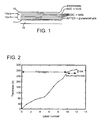
- Fig. 1 is a schematic cross-sectional view of the coated implant device of the present invention;
- Fig. 2 is a schematic illustration of the thickness of the coating relative to the number of protein layers; and
- Fig. 3 is a table showing the improved mechanical properties of the implant device that has been coated according to the method of the present invention.
-
- With reference to Fig. 1, a bisphosphonate coated
implant device 10, preferably, has anetched surface 11 and several types of coating layers including asuitable protein layer 12, afirst bisphosphonate layer 14 chemically bound to thelayer 12 and asecond bisphosphonate layer 16 disposed on top of and integrated with thefirst bisphosphonate layer 14. One important feature of the present invention is that thefirst bisphosphonate layer 14 is strongly bound while thesecond layer 16 is loosely bound and can quickly be released. This is important for the device-tissue interaction during the first couple of days after theimplant device 10 has been inserted. The strongly boundfirst bisphosphonate layer 14 is slowly released over time to improve the long-term use of theimplant device 10. - The
implant device 10 may be any suitable material such as stainless steel, titanium, or any other non-metal material that provides sufficient support. The mechanical properties of stainless steel are often preferred due to a very high strength. The implant may be any device, for example a coated or uncoated metallic screw or a polymeric pad. As an illustrative example, theimplant device 10 is made of stainless steel. Preferably, thesurface 11 of theimplant device 10 is etched or surface roughened. The surface topology of theimplant device 10, particularly in terms of its roughness and porosity, may in itself affect tissue healing and implant success. Other surface treatment methods such as calcium mineral coating could also be used. - Preferably, the
device 10 is first etched in an acid such as hydrofluoric acid (HF) or nitric acid, and then washed in hydrogen peroxide solution. The hydrogen peroxide provides a milder etching compared to hydrofluoric acid. - The
protein layer 12 may be any suitable protein, such as immobilized and cross-linked fibrinogen, that is used to coat thesurface 11. Preferably, a plurality of layers is used. For instance, a silane substance may be used to bind proteins onto the metal oxide (MOH-) of themetallic device 10. A strong covalent ether binding may, by use of silane, be formed between the metal device and the first protein layer. More particularly, via covalent attachment of amino propyl triethoxy silane (APTES) to hydroxyl groups of the metal surface 11 a first fibrinogen layer 12a may be immobilized onto thestainless steel surface 11. It is also possible to replace APTES with some other substance that has an amino, carboxyl, SH or any other suitable chemical group. Amino groups of the APTES also react with aldehyde groups at one end of an aldehyde-based substance, such as glutardialdehyde. Glutaraldidehyde has a second aldehyde group that may be chemically bound to the amine terminal of the first protein layer 12a. - It would be possible to chemically bind the
first bisphosphonate layer 14 directly to the aldehyde groups of the glutaraldehyde. However, the thickness of thesingle layer 14 may then be limited to about 5-6 Ångstroms. It is often desirable to bind more bisphosphonate than just one layer. - Further, a free carboxyl terminal of the first protein layer 12a is activated by a carbodiimide, such as ethyl-dimethyl-aminopropylcarbodiimide (EDC), and hydroxy-succinimide (NHS) to attract and by peptide bond formation capture more protein so as to form a second protein layer 12b. The EDC activates the carboxyl groups, of the first protein layer, so that amino groups of the protein in solution may be chemically bound thereto. By repetition of the EDC/NHS activation procedure, a plurality of protein layers may be immobilized and cross-linked. The total thickness of the
protein layer 12 may be increased by increasing the number of layers. For example, ten layers of fibrinogen may be about 280 Ångstroms thick, as shown in Fig. 2. By cross-linking many layers of fibrinogen, and thus the number of reactive groups, to thedevice 10, it is possible to add an amount of the first bisphosphonate corresponding to twolayers 14a-b (10-12 Ångstroms) and one layer of the second bisphosphonate 16 (6-7 Ångstroms). The total bisphosphonate layer may thus be about 18 Ångstroms. It is to be understood that the bisphosphonate layers are not only disposed on top of the protein layer 12f but are also mixed into the network of the layers 12a-e. The second bisphosphonate of thelayer 16, such as ibandronate, may also be mixed into thelayers 14. - As indicated above, the
first bisphosphonate layers 14a, 14b may be immobilized onto the protein layers 12a-f. Preferably, thefirst layers 14a, 14b are bisphosphonates containing a chemically reactive group, such as pamidronate substance that may be covalently bound to cross-linked protein layers 12a-f. For instance, the amine group of a pamidronate molecule may be attached to an uppermost layer 12f after activation of protein with EDC/NHS. - Implantation trauma often results in bone resorption that negatively affects the mechanical fixation of the implant device. One feature of bisphosphonates is that they inhibit bone resorption and likely decrease inflammatory activity of monocytes and macrophages, thereby improving over time the fixation and integration of the implant device both when the drug is applied by local sudden treatment methods or by long-term systemic treatment. A localized surface dosage of about 120 ng/cm2 is sufficient to increase fixation. A rapid mechanical fixation of the
implant device 10 is important for the metallic prosthesis development, not only for patients with compromised bone healing capacity but also for normal and healthy patients. A faster mechanical fixation likely improves the functionality of a prosthesis due to an earlier and higher mechanical load uptake capacity. In parallel to this, it also decreases the thickness of the fibrous encapsulation and improves interfacial neo-vascularization. Early micromotion of the implant device is thus minimized, and the risk of late loosening reduced. - Preferably, the
second bisphosphonate layer 16 is a chemically low- or non-reactive substance, such as ibandronate, that is applied to the protein layers 12 and thelayers 14a, 14b by other binding mechanisms such as hydrophobic and van der Waals interactions. The bonding may also involve calcium ion (Ca++)-bridging. In this way, it is not necessary that thesecond bisphosphonate layer 16 possess chemically reactive groups. The low- or non-reactive reactive bisphosphonate may be adsorbed or attached to immobilized pamidronate on or in a protein film so that a layer of about 6 Ångstroms is formed during an overnight incubation so that a total of at least three layers of bisphosphonate are present. - The fact that the loosely bound
bisphosphonate layer 16 is easily released from theimplant device 10 may have important advantages short time (up to 24 hours) after the implant device has been inserted. The insertion of implants into tissue often results in damage of the tissue matrix and disruption of the microcirculation in the immediate proximity of the implant. Matrix damage may, in case of bone, cause osteocyte apoptosis that may be implicated in osteoclast activation and remodelling, resulting in net bone resorption around the implant device. This likely leads to impairment of the implant fixation. The acute and rapid release of thesecond layer 16 of bisphosphonate may specifically and effectively inhibit osteoclast activity and reduce bone resorption. This is of particular importance during the first couple of days or longer after insertion of the implant device. Further, there is a possibility that bisphosphonates have direct stimulatory effects on bone forming cells. As indicated above, bisphosphonates reduce the osteoclast precursor (monocytes/macrophages) activity in soft tissue, thereby lowering the non-acute, implant-prolonged, phase of the inflammatory process. Prolonged inflammatory activity is suspected to be one of the main reasons of fibrosis in soft tissue. Surface delivery of bisphosphonates shortens the inflammatory activity giving a faster wound healing process around implants. Non-amino bisphosphonate substances may be particularly useful to reduce the inflammatory reaction. This will improve implant functions, such as lowering of the voltage threshold in pacemaker-leads that contact heart muscles, and improve measurement of various soft tissue and body fluid properties, i.e. in biosensors. - As indicated in Fig. 2, the total thickness of
bisphosphonate layers surface 11 is roughened and the surface area increased. The bisphosphonate release mechanism may rely on a spontaneous desorption of non-covalently bound bisphosphonate and release of covalently bound ditto via hydrolytic and enzymatic cleavage of proteins. Approximately 30-50% of thebisphosphonate layer 16 may be desorbed during an overnight incubation in distilled water. - Stainless steel screws, with threads measuring 1.7 mm in diameter and 3 mm in length were used. Each screw had a hole defined in the head thereof so that it could be fastened with a hook suspended in a material testing machine. The screw specimens were cleaned for five minutes in acetone in an ultrasonic bath. The specimens were then etched during twenty minutes in 100% hydrofluoric acid (HF) and washed in a basic hydrogen peroxide solution at 80°C for five minutes and finally rinsed in distilled water. Holes and asperities in the size range 0.1-100 micrometers were observed on the etched surface.
- The screw specimens were put in a chamber with 0.2M 3-aminopropyltriethoxysilane H2N(CH2)3Si(OC2H5)3 (APTES from ABCR, Germany) and baked at 60°C at 6 mbar for ten minutes. The temperature was then increased to 150°C for one hour. The surfaces of the specimens were rinsed for two minutes in xylene (99% concentration, Merck, USA) in an ultrasonic bath. The surfaces were thereafter rinsed in xylene and stored in xylene no longer than one hour until the specimens were treated again. The so coated specimens were blown dry with flowing nitrogen and incubated for 30 minutes in freshly prepared 6% glutardialdehyde, OHC(CH2)3CHO, at room temperature in 0.2M Tris buffer,
pH 9, to create a good environment for the reaction with aldehyde groups. The surfaces were then extensively rinsed and stored in the Tris buffer,pH 9. - Screws with ten layers of fibrinogen were prepared in the following way. The APTES and glutardialdehyde-coated specimens were incubated for thirty minutes in 1 mg/ml protein dissolved in phosphate buffered saline (PBS), pH 7.4. The specimen surfaces were thereafter extensively rinsed in PBS and incubated for thirty minutes in PBS at pH 5.5, containing 0.2M ethyl-dimethyl-aminopropylcarbodiimide (EDC, Sigma, USA). The specimen surfaces were again incubated for thirty minutes in a newly made 1-mg/ml protein solution in PBS, pH 5.5., thereafter rinsed in the PBS buffer and again incubated in the EDC/NHS solution. This procedure was repeated ten times to produce the ten-layer fibrinogen coating. Since the EDC/NHS solution is unstable at room conditions, new solutions were prepared every second hour.
- Pamidronate disodium (AREDIA, 1 mg/ml in distilled water, Novartis, Sweden) was immobilized to the fibrinogen multiplayer using the above-described EDC/NHS coupling technique. An ibandronate solution (BONDRONATE, 50 mg/ml in distilled water, Roche, Switzerland) was adsorbed overnight on top of the pamidronate. The screw specimens were stored in the ibandronate solution for up to 24 hours until the specimens were inserted into rat tibia.
- The thickness of the cross-linked fibrinogen layer was approximately 280 Ångstroms and the pamidronate layers about 12 Ångstroms. The more loosely attached ibandronate layer was about 6 Ångstroms thick. The total amount of immobilized bisphosphonate was approximately 120 ng/cm2. The amine groups of the pamidronate molecules were attached to the uppermost fibrinogen layer after activation of the fibrinogen film with EDC/NHS. Ibandronate adsorbed or attached to the immobilized pamidronate and about a monolayer (6 Ångstroms) was formed during the overnight incubation.
- The pamidronate/ibandronate-coated surfaces of the stainless steel implant devices showed a mean of 28% (p=0.0009) increased pullout force at failure compared to non-bisphosphonate coated control specimens, as shown in Fig. 3. The bone stiffness decreased by 8% compared to the control specimens although the change was not statistically significant. The pullout energy until failure increased by 90%, indicating drastically changed mechanical characteristics at the interface between the rat tibia and the bisphosphonate-coated specimen. This strongly indicates that the immobilized
bisphosphonate layers implant device 10 improved the metallic biomaterial fixation in bone. - While the present invention has been described in accordance with preferred compositions and embodiments, it is to be understood that certain substitutions and alterations may be made thereto without departing from the spirit and scope of the following claims.
Claims (10)
- A method for coating an implant device, comprising:coating the implant device with a protein;covalently immobilizing a first substance having an amino group to the protein; andadsorbing a bisphosphonate substance to the first substance, the first substance being different from the bisphosphonate substance.
- The method according to claim 1 wherein the immobilizing step comprises covalently linking a reactive group such as an amino group of bisphosphonate to the protein.
- The method according to claim 1 wherein the adsorbing step comprises using a chemically non-reactive bisphosphonate.
- The method according to claim 1 wherein the coating steps further comprises using a cross-linked protein.
- The method according to claim 1 wherein the method further comprises etching a surface of the implant device.
- The method according to claim 1 wherein the method further comprises creating a plurality of protein layers by cross-linking the protein layers with by ethyl-dimethyl-aminopropylcarbodiimide (EDC) and hydroxy-succinimide (NHS).
- The method according to claim 1 wherein the coating step further comprises immobilizing a first protein layer onto a surface of the implant device via an attachment of amino propyl triethoxy silane (APTES).
- The method according to claim 7 wherein the coating steps further comprises using glutaraldehyde to chemically bind the APTES and glutaraldehyde to amino groups of the first protein layer.
- An implant device, comprising:a multilayer of protein chemically bound to a surface of the implant device;a chemically immobilizable bisphosphonate layer covalently bound to the protein film; anda chemically non-reactive bisphosphonate layer non-covalently bound to the first bisphosphonate layer.
- The implant device according to claim 9 wherein the second bisphosphonate layer is bound to the protein film only by non-covalent interactions.
Applications Claiming Priority (2)
| Application Number | Priority Date | Filing Date | Title |
|---|---|---|---|
| US48127403P | 2003-08-21 | 2003-08-21 | |
| US481274P | 2003-08-21 |
Publications (2)
| Publication Number | Publication Date |
|---|---|
| EP1508343A1 true EP1508343A1 (en) | 2005-02-23 |
| EP1508343B1 EP1508343B1 (en) | 2015-11-04 |
Family
ID=34061935
Family Applications (1)
| Application Number | Title | Priority Date | Filing Date |
|---|---|---|---|
| EP04001331.0A Expired - Lifetime EP1508343B1 (en) | 2003-08-21 | 2004-01-22 | Bisphosponate coated implant device and method therefor |
Country Status (5)
| Country | Link |
|---|---|
| EP (1) | EP1508343B1 (en) |
| JP (1) | JP5019876B2 (en) |
| CN (1) | CN1871038B (en) |
| ES (1) | ES2561463T3 (en) |
| WO (1) | WO2005018699A1 (en) |
Cited By (3)
| Publication number | Priority date | Publication date | Assignee | Title |
|---|---|---|---|---|
| DE202006008702U1 (en) * | 2006-05-24 | 2007-09-27 | Biomed Est. | coating |
| EP2435102A4 (en) * | 2009-05-28 | 2014-06-25 | Addbio Ab | MULTILAYER PROTEIN THIN LAYERS, METHODS OF PRODUCTION, MEDICAMENT DELIVERY DEVICES, AND BIOMEDICAL IMPLANTS USING THESE THIN LAYERS |
| EP2769741A1 (en) | 2013-02-22 | 2014-08-27 | Cardiatis S.A. | Medical device with a biocompatible coating |
Families Citing this family (4)
| Publication number | Priority date | Publication date | Assignee | Title |
|---|---|---|---|---|
| CA2626637A1 (en) * | 2005-10-19 | 2007-04-26 | Kenton W. Gregory | Method of using and producing tropoelastin and tropoelastin biomaterials |
| ES2379485T3 (en) | 2005-10-27 | 2012-04-26 | Thommen Medical Ag | Dental implant and manufacturing procedure |
| US9050391B2 (en) | 2005-10-27 | 2015-06-09 | Nexilis Ag | Implant and production method for said implant |
| EP3801657B1 (en) * | 2018-05-28 | 2024-09-04 | Universität Bremen | Methods of production of fibrous fibrinogen scaffolds and products thereof |
Citations (10)
| Publication number | Priority date | Publication date | Assignee | Title |
|---|---|---|---|---|
| WO1994014455A1 (en) * | 1992-12-23 | 1994-07-07 | Merck & Co., Inc. | Bisphosphonate/estrogen therapy for treating and preventing bone loss |
| US5356433A (en) * | 1991-08-13 | 1994-10-18 | Cordis Corporation | Biocompatible metal surfaces |
| WO2001013922A1 (en) * | 1999-08-19 | 2001-03-01 | The Royal Alexandra Hospital For Children | Drug for treating fractures |
| US20020151876A1 (en) * | 2001-02-07 | 2002-10-17 | Tai-Wah Chan | Devices and methods for management of bone density |
| WO2002098307A1 (en) * | 2001-06-07 | 2002-12-12 | The Royal Alexandra Hospital For Children | A device for the delivery of a drug to a fractured bone |
| WO2003008006A1 (en) * | 2001-07-19 | 2003-01-30 | Dempsey, Donald, J. | Bioactive surface for titanium implants |
| WO2003017971A1 (en) * | 2001-08-31 | 2003-03-06 | Schering Oy | Drug delivery system |
| US20030064965A1 (en) * | 2001-10-02 | 2003-04-03 | Jacob Richter | Method of delivering drugs to a tissue using drug-coated medical devices |
| US20030065254A1 (en) * | 1997-10-20 | 2003-04-03 | Alfred E. Mann Foundation For Scientific Research | Implantable enzyme-based monitoring system having improved longevity due to improved exterior surfaces |
| WO2004032988A2 (en) * | 2002-10-08 | 2004-04-22 | Osteotech, Inc. | Coupling agents for orthopedic biomaterials |
Family Cites Families (8)
| Publication number | Priority date | Publication date | Assignee | Title |
|---|---|---|---|---|
| US4553974A (en) * | 1984-08-14 | 1985-11-19 | Mayo Foundation | Treatment of collagenous tissue with glutaraldehyde and aminodiphosphonate calcification inhibitor |
| US5646134A (en) * | 1994-04-21 | 1997-07-08 | Merck & Co., Inc. | Alendronate therapy to prevent loosening of, or pain associated with, orthopedic implant devices |
| US6214049B1 (en) * | 1999-01-14 | 2001-04-10 | Comfort Biomedical, Inc. | Method and apparatus for augmentating osteointegration of prosthetic implant devices |
| AU756540B2 (en) * | 1998-12-04 | 2003-01-16 | Roche Diagnostics Gmbh | Use of ibandronate for promoting osseointegration of endoprostheses |
| WO2000064516A1 (en) * | 1999-04-22 | 2000-11-02 | Hydromed Sciences A Division Of Gp Strategies Corporation | Controlled delivery of bisphosphonates |
| WO2002004038A1 (en) * | 2000-07-12 | 2002-01-17 | Hopital Orthopedique De La Suisse Romande | Active biocoating for bone implant |
| AU2001221607A1 (en) * | 2000-11-20 | 2002-05-27 | Ecole Polytechnique Federale De Lausanne (Epfl) | Endosseous implant |
| BRPI0410377A (en) * | 2003-05-16 | 2006-06-13 | Blue Membranes Gmbh | bio-compatible coated medical implants |
-
2004
- 2004-01-22 ES ES04001331.0T patent/ES2561463T3/en not_active Expired - Lifetime
- 2004-01-22 EP EP04001331.0A patent/EP1508343B1/en not_active Expired - Lifetime
- 2004-07-01 JP JP2006523806A patent/JP5019876B2/en not_active Expired - Fee Related
- 2004-07-01 CN CN2004800239360A patent/CN1871038B/en not_active Expired - Fee Related
- 2004-07-01 WO PCT/SE2004/001082 patent/WO2005018699A1/en not_active Ceased
Patent Citations (10)
| Publication number | Priority date | Publication date | Assignee | Title |
|---|---|---|---|---|
| US5356433A (en) * | 1991-08-13 | 1994-10-18 | Cordis Corporation | Biocompatible metal surfaces |
| WO1994014455A1 (en) * | 1992-12-23 | 1994-07-07 | Merck & Co., Inc. | Bisphosphonate/estrogen therapy for treating and preventing bone loss |
| US20030065254A1 (en) * | 1997-10-20 | 2003-04-03 | Alfred E. Mann Foundation For Scientific Research | Implantable enzyme-based monitoring system having improved longevity due to improved exterior surfaces |
| WO2001013922A1 (en) * | 1999-08-19 | 2001-03-01 | The Royal Alexandra Hospital For Children | Drug for treating fractures |
| US20020151876A1 (en) * | 2001-02-07 | 2002-10-17 | Tai-Wah Chan | Devices and methods for management of bone density |
| WO2002098307A1 (en) * | 2001-06-07 | 2002-12-12 | The Royal Alexandra Hospital For Children | A device for the delivery of a drug to a fractured bone |
| WO2003008006A1 (en) * | 2001-07-19 | 2003-01-30 | Dempsey, Donald, J. | Bioactive surface for titanium implants |
| WO2003017971A1 (en) * | 2001-08-31 | 2003-03-06 | Schering Oy | Drug delivery system |
| US20030064965A1 (en) * | 2001-10-02 | 2003-04-03 | Jacob Richter | Method of delivering drugs to a tissue using drug-coated medical devices |
| WO2004032988A2 (en) * | 2002-10-08 | 2004-04-22 | Osteotech, Inc. | Coupling agents for orthopedic biomaterials |
Cited By (4)
| Publication number | Priority date | Publication date | Assignee | Title |
|---|---|---|---|---|
| DE202006008702U1 (en) * | 2006-05-24 | 2007-09-27 | Biomed Est. | coating |
| EP2435102A4 (en) * | 2009-05-28 | 2014-06-25 | Addbio Ab | MULTILAYER PROTEIN THIN LAYERS, METHODS OF PRODUCTION, MEDICAMENT DELIVERY DEVICES, AND BIOMEDICAL IMPLANTS USING THESE THIN LAYERS |
| EP2769741A1 (en) | 2013-02-22 | 2014-08-27 | Cardiatis S.A. | Medical device with a biocompatible coating |
| WO2014128280A1 (en) | 2013-02-22 | 2014-08-28 | Cardiatis S.A. | Medical device with a biocompatible coating |
Also Published As
| Publication number | Publication date |
|---|---|
| JP2007533345A (en) | 2007-11-22 |
| ES2561463T3 (en) | 2016-02-26 |
| CN1871038A (en) | 2006-11-29 |
| EP1508343B1 (en) | 2015-11-04 |
| CN1871038B (en) | 2010-10-06 |
| JP5019876B2 (en) | 2012-09-05 |
| WO2005018699A1 (en) | 2005-03-03 |
Similar Documents
| Publication | Publication Date | Title |
|---|---|---|
| Tengvall et al. | Surface immobilized bisphosphonate improves stainless-steel screw fixation in rats | |
| US8309536B2 (en) | Implant improving local bone formation | |
| Itoh et al. | Hydroxyapatite-coated tendon chitosan tubes with adsorbed laminin peptides facilitate nerve regeneration in vivo | |
| Hu et al. | Regulation of the differentiation of mesenchymal stem cells in vitro and osteogenesis in vivo by microenvironmental modification of titanium alloy surfaces | |
| KR101213355B1 (en) | Dental implant improving initial stability and the method for manufacturing the same | |
| US20020187250A1 (en) | Anti-thrombogenic material and manufacturing method therefor | |
| JP2006501887A (en) | Implantable medical device coated with calcium phosphate and method of manufacturing the same | |
| CN113769167B (en) | A preparation method of an orthopedic implant material capable of sequentially releasing bioactive factors and its product and application | |
| WO1996007444A1 (en) | Method of making fibrin coated substrates | |
| US20110027757A1 (en) | Medical device and method for producing the same | |
| EP1508343B1 (en) | Bisphosponate coated implant device and method therefor | |
| US7163690B2 (en) | Bisphosphonate coated implant device and method therefor | |
| Hägi et al. | Mechanical insertion properties of calcium‐phosphate implant coatings | |
| ES2784924T3 (en) | Medical devices with reduced thrombogenicity | |
| EP2435102B1 (en) | Multilayer protein films, methods of making, and drug delivery devices and biomedical implants employing the films | |
| Yu et al. | The biofunctionalization of titanium nanotube with chitosan/genipin heparin hydrogel and the controlled release of IL-4 for anti-coagulation and anti-thrombus through accelerating endothelialization | |
| Liu et al. | In vitro and in vivo biocompatibility and bio-tribological properties of the calcium/amorphous-C composite films for bone tissue engineering application | |
| CN114533955B (en) | Medical magnesium alloy surface coating with strong binding force and preparation method thereof | |
| EP2121059A1 (en) | Biocompatible fibrinogen matrix on a solid support. | |
| KR101240075B1 (en) | Medical Implant and Method for Manufacturing the Same | |
| Von Walter et al. | Biomimetic modification of the TiO2/glass composite Ecopore with heparinized collagen and the osteoinductive factor BMP-2 | |
| JPWO2009038180A1 (en) | Medical tissue binding material | |
| CN115137875A (en) | High-efficiency two-phase calcium phosphate coating method | |
| KR20020018696A (en) | Implant coated by calcium phosphate thin film | |
| US20120101589A1 (en) | Prosthetic devices coated with heated cross-linked fibrin |
Legal Events
| Date | Code | Title | Description |
|---|---|---|---|
| PUAI | Public reference made under article 153(3) epc to a published international application that has entered the european phase |
Free format text: ORIGINAL CODE: 0009012 |
|
| AK | Designated contracting states |
Kind code of ref document: A1 Designated state(s): AT BE BG CH CY CZ DE DK EE ES FI FR GB GR HU IE IT LI LU MC NL PT RO SE SI SK TR |
|
| AX | Request for extension of the european patent |
Extension state: AL LT LV MK |
|
| 17P | Request for examination filed |
Effective date: 20050527 |
|
| AKX | Designation fees paid |
Designated state(s): AT BE BG CH CY CZ DE DK EE ES FI FR GB GR HU IE IT LI LU MC NL PT RO SE SI SK TR |
|
| RAP1 | Party data changed (applicant data changed or rights of an application transferred) |
Owner name: OPTOVENT AB |
|
| RIN1 | Information on inventor provided before grant (corrected) |
Inventor name: TENGVALL, PENTTI OLAVI Inventor name: ASPENBERG, PER VILHELM |
|
| RAP1 | Party data changed (applicant data changed or rights of an application transferred) |
Owner name: ADDBIO AB |
|
| RAP1 | Party data changed (applicant data changed or rights of an application transferred) |
Owner name: ADDBIO AB |
|
| GRAP | Despatch of communication of intention to grant a patent |
Free format text: ORIGINAL CODE: EPIDOSNIGR1 |
|
| INTG | Intention to grant announced |
Effective date: 20150610 |
|
| GRAS | Grant fee paid |
Free format text: ORIGINAL CODE: EPIDOSNIGR3 |
|
| GRAA | (expected) grant |
Free format text: ORIGINAL CODE: 0009210 |
|
| AK | Designated contracting states |
Kind code of ref document: B1 Designated state(s): AT BE BG CH CY CZ DE DK EE ES FI FR GB GR HU IE IT LI LU MC NL PT RO SE SI SK TR |
|
| REG | Reference to a national code |
Ref country code: GB Ref legal event code: FG4D |
|
| REG | Reference to a national code |
Ref country code: CH Ref legal event code: EP |
|
| REG | Reference to a national code |
Ref country code: AT Ref legal event code: REF Ref document number: 758736 Country of ref document: AT Kind code of ref document: T Effective date: 20151115 |
|
| REG | Reference to a national code |
Ref country code: IE Ref legal event code: FG4D |
|
| REG | Reference to a national code |
Ref country code: DE Ref legal event code: R096 Ref document number: 602004048155 Country of ref document: DE |
|
| REG | Reference to a national code |
Ref country code: FR Ref legal event code: PLFP Year of fee payment: 13 |
|
| REG | Reference to a national code |
Ref country code: CH Ref legal event code: NV Representative=s name: HEPP WENGER RYFFEL AG, CH |
|
| REG | Reference to a national code |
Ref country code: SE Ref legal event code: TRGR |
|
| REG | Reference to a national code |
Ref country code: ES Ref legal event code: FG2A Ref document number: 2561463 Country of ref document: ES Kind code of ref document: T3 Effective date: 20160226 |
|
| REG | Reference to a national code |
Ref country code: NL Ref legal event code: FP |
|
| PG25 | Lapsed in a contracting state [announced via postgrant information from national office to epo] |
Ref country code: PT Free format text: LAPSE BECAUSE OF FAILURE TO SUBMIT A TRANSLATION OF THE DESCRIPTION OR TO PAY THE FEE WITHIN THE PRESCRIBED TIME-LIMIT Effective date: 20160304 Ref country code: FI Free format text: LAPSE BECAUSE OF FAILURE TO SUBMIT A TRANSLATION OF THE DESCRIPTION OR TO PAY THE FEE WITHIN THE PRESCRIBED TIME-LIMIT Effective date: 20151104 Ref country code: GR Free format text: LAPSE BECAUSE OF FAILURE TO SUBMIT A TRANSLATION OF THE DESCRIPTION OR TO PAY THE FEE WITHIN THE PRESCRIBED TIME-LIMIT Effective date: 20160205 |
|
| PG25 | Lapsed in a contracting state [announced via postgrant information from national office to epo] |
Ref country code: CZ Free format text: LAPSE BECAUSE OF FAILURE TO SUBMIT A TRANSLATION OF THE DESCRIPTION OR TO PAY THE FEE WITHIN THE PRESCRIBED TIME-LIMIT Effective date: 20151104 |
|
| REG | Reference to a national code |
Ref country code: DE Ref legal event code: R097 Ref document number: 602004048155 Country of ref document: DE |
|
| PG25 | Lapsed in a contracting state [announced via postgrant information from national office to epo] |
Ref country code: EE Free format text: LAPSE BECAUSE OF FAILURE TO SUBMIT A TRANSLATION OF THE DESCRIPTION OR TO PAY THE FEE WITHIN THE PRESCRIBED TIME-LIMIT Effective date: 20151104 Ref country code: SK Free format text: LAPSE BECAUSE OF FAILURE TO SUBMIT A TRANSLATION OF THE DESCRIPTION OR TO PAY THE FEE WITHIN THE PRESCRIBED TIME-LIMIT Effective date: 20151104 Ref country code: DK Free format text: LAPSE BECAUSE OF FAILURE TO SUBMIT A TRANSLATION OF THE DESCRIPTION OR TO PAY THE FEE WITHIN THE PRESCRIBED TIME-LIMIT Effective date: 20151104 Ref country code: RO Free format text: LAPSE BECAUSE OF FAILURE TO SUBMIT A TRANSLATION OF THE DESCRIPTION OR TO PAY THE FEE WITHIN THE PRESCRIBED TIME-LIMIT Effective date: 20151104 Ref country code: LU Free format text: LAPSE BECAUSE OF FAILURE TO SUBMIT A TRANSLATION OF THE DESCRIPTION OR TO PAY THE FEE WITHIN THE PRESCRIBED TIME-LIMIT Effective date: 20160122 |
|
| PLBE | No opposition filed within time limit |
Free format text: ORIGINAL CODE: 0009261 |
|
| STAA | Information on the status of an ep patent application or granted ep patent |
Free format text: STATUS: NO OPPOSITION FILED WITHIN TIME LIMIT |
|
| PG25 | Lapsed in a contracting state [announced via postgrant information from national office to epo] |
Ref country code: MC Free format text: LAPSE BECAUSE OF FAILURE TO SUBMIT A TRANSLATION OF THE DESCRIPTION OR TO PAY THE FEE WITHIN THE PRESCRIBED TIME-LIMIT Effective date: 20151104 |
|
| 26N | No opposition filed |
Effective date: 20160805 |
|
| REG | Reference to a national code |
Ref country code: IE Ref legal event code: MM4A |
|
| PG25 | Lapsed in a contracting state [announced via postgrant information from national office to epo] |
Ref country code: SI Free format text: LAPSE BECAUSE OF FAILURE TO SUBMIT A TRANSLATION OF THE DESCRIPTION OR TO PAY THE FEE WITHIN THE PRESCRIBED TIME-LIMIT Effective date: 20151104 |
|
| REG | Reference to a national code |
Ref country code: FR Ref legal event code: PLFP Year of fee payment: 14 |
|
| PG25 | Lapsed in a contracting state [announced via postgrant information from national office to epo] |
Ref country code: IE Free format text: LAPSE BECAUSE OF NON-PAYMENT OF DUE FEES Effective date: 20160122 |
|
| REG | Reference to a national code |
Ref country code: FR Ref legal event code: PLFP Year of fee payment: 15 |
|
| REG | Reference to a national code |
Ref country code: AT Ref legal event code: UEP Ref document number: 758736 Country of ref document: AT Kind code of ref document: T Effective date: 20151104 |
|
| PG25 | Lapsed in a contracting state [announced via postgrant information from national office to epo] |
Ref country code: HU Free format text: LAPSE BECAUSE OF FAILURE TO SUBMIT A TRANSLATION OF THE DESCRIPTION OR TO PAY THE FEE WITHIN THE PRESCRIBED TIME-LIMIT; INVALID AB INITIO Effective date: 20040122 Ref country code: CY Free format text: LAPSE BECAUSE OF FAILURE TO SUBMIT A TRANSLATION OF THE DESCRIPTION OR TO PAY THE FEE WITHIN THE PRESCRIBED TIME-LIMIT Effective date: 20151104 |
|
| PG25 | Lapsed in a contracting state [announced via postgrant information from national office to epo] |
Ref country code: TR Free format text: LAPSE BECAUSE OF FAILURE TO SUBMIT A TRANSLATION OF THE DESCRIPTION OR TO PAY THE FEE WITHIN THE PRESCRIBED TIME-LIMIT Effective date: 20151104 |
|
| PG25 | Lapsed in a contracting state [announced via postgrant information from national office to epo] |
Ref country code: BG Free format text: LAPSE BECAUSE OF FAILURE TO SUBMIT A TRANSLATION OF THE DESCRIPTION OR TO PAY THE FEE WITHIN THE PRESCRIBED TIME-LIMIT Effective date: 20151104 |
|
| PGFP | Annual fee paid to national office [announced via postgrant information from national office to epo] |
Ref country code: SE Payment date: 20200122 Year of fee payment: 17 Ref country code: GB Payment date: 20200120 Year of fee payment: 17 Ref country code: NL Payment date: 20200120 Year of fee payment: 17 Ref country code: IT Payment date: 20200117 Year of fee payment: 17 Ref country code: DE Payment date: 20200121 Year of fee payment: 17 Ref country code: ES Payment date: 20200203 Year of fee payment: 17 Ref country code: AT Payment date: 20200121 Year of fee payment: 17 |
|
| PGFP | Annual fee paid to national office [announced via postgrant information from national office to epo] |
Ref country code: BE Payment date: 20200120 Year of fee payment: 17 Ref country code: CH Payment date: 20200120 Year of fee payment: 17 |
|
| PGFP | Annual fee paid to national office [announced via postgrant information from national office to epo] |
Ref country code: FR Payment date: 20200116 Year of fee payment: 17 |
|
| REG | Reference to a national code |
Ref country code: DE Ref legal event code: R119 Ref document number: 602004048155 Country of ref document: DE |
|
| REG | Reference to a national code |
Ref country code: CH Ref legal event code: PL Ref country code: SE Ref legal event code: EUG |
|
| REG | Reference to a national code |
Ref country code: NL Ref legal event code: MM Effective date: 20210201 |
|
| REG | Reference to a national code |
Ref country code: AT Ref legal event code: MM01 Ref document number: 758736 Country of ref document: AT Kind code of ref document: T Effective date: 20210122 |
|
| GBPC | Gb: european patent ceased through non-payment of renewal fee |
Effective date: 20210122 |
|
| REG | Reference to a national code |
Ref country code: BE Ref legal event code: MM Effective date: 20210131 |
|
| PG25 | Lapsed in a contracting state [announced via postgrant information from national office to epo] |
Ref country code: AT Free format text: LAPSE BECAUSE OF NON-PAYMENT OF DUE FEES Effective date: 20210122 Ref country code: NL Free format text: LAPSE BECAUSE OF NON-PAYMENT OF DUE FEES Effective date: 20210201 Ref country code: FR Free format text: LAPSE BECAUSE OF NON-PAYMENT OF DUE FEES Effective date: 20210131 |
|
| PG25 | Lapsed in a contracting state [announced via postgrant information from national office to epo] |
Ref country code: LI Free format text: LAPSE BECAUSE OF NON-PAYMENT OF DUE FEES Effective date: 20210131 Ref country code: SE Free format text: LAPSE BECAUSE OF NON-PAYMENT OF DUE FEES Effective date: 20210123 Ref country code: GB Free format text: LAPSE BECAUSE OF NON-PAYMENT OF DUE FEES Effective date: 20210122 Ref country code: CH Free format text: LAPSE BECAUSE OF NON-PAYMENT OF DUE FEES Effective date: 20210131 Ref country code: DE Free format text: LAPSE BECAUSE OF NON-PAYMENT OF DUE FEES Effective date: 20210803 |
|
| REG | Reference to a national code |
Ref country code: ES Ref legal event code: FD2A Effective date: 20220426 |
|
| PG25 | Lapsed in a contracting state [announced via postgrant information from national office to epo] |
Ref country code: IT Free format text: LAPSE BECAUSE OF NON-PAYMENT OF DUE FEES Effective date: 20210122 |
|
| PG25 | Lapsed in a contracting state [announced via postgrant information from national office to epo] |
Ref country code: ES Free format text: LAPSE BECAUSE OF NON-PAYMENT OF DUE FEES Effective date: 20210123 Ref country code: BE Free format text: LAPSE BECAUSE OF NON-PAYMENT OF DUE FEES Effective date: 20210131 |