EP1508273A1 - Adiponectin-knoucout nonhuman animal - Google Patents
Adiponectin-knoucout nonhuman animal Download PDFInfo
- Publication number
- EP1508273A1 EP1508273A1 EP03728136A EP03728136A EP1508273A1 EP 1508273 A1 EP1508273 A1 EP 1508273A1 EP 03728136 A EP03728136 A EP 03728136A EP 03728136 A EP03728136 A EP 03728136A EP 1508273 A1 EP1508273 A1 EP 1508273A1
- Authority
- EP
- European Patent Office
- Prior art keywords
- adiponectin
- mice
- gene
- adipo
- deficient
- Prior art date
- Legal status (The legal status is an assumption and is not a legal conclusion. Google has not performed a legal analysis and makes no representation as to the accuracy of the status listed.)
- Withdrawn
Links
Images





Classifications
-
- C—CHEMISTRY; METALLURGY
- C12—BIOCHEMISTRY; BEER; SPIRITS; WINE; VINEGAR; MICROBIOLOGY; ENZYMOLOGY; MUTATION OR GENETIC ENGINEERING
- C12N—MICROORGANISMS OR ENZYMES; COMPOSITIONS THEREOF; PROPAGATING, PRESERVING, OR MAINTAINING MICROORGANISMS; MUTATION OR GENETIC ENGINEERING; CULTURE MEDIA
- C12N15/00—Mutation or genetic engineering; DNA or RNA concerning genetic engineering, vectors, e.g. plasmids, or their isolation, preparation or purification; Use of hosts therefor
- C12N15/09—Recombinant DNA-technology
- C12N15/63—Introduction of foreign genetic material using vectors; Vectors; Use of hosts therefor; Regulation of expression
- C12N15/79—Vectors or expression systems specially adapted for eukaryotic hosts
- C12N15/85—Vectors or expression systems specially adapted for eukaryotic hosts for animal cells
- C12N15/8509—Vectors or expression systems specially adapted for eukaryotic hosts for animal cells for producing genetically modified animals, e.g. transgenic
-
- A—HUMAN NECESSITIES
- A01—AGRICULTURE; FORESTRY; ANIMAL HUSBANDRY; HUNTING; TRAPPING; FISHING
- A01K—ANIMAL HUSBANDRY; AVICULTURE; APICULTURE; PISCICULTURE; FISHING; REARING OR BREEDING ANIMALS, NOT OTHERWISE PROVIDED FOR; NEW BREEDS OF ANIMALS
- A01K67/00—Rearing or breeding animals, not otherwise provided for; New or modified breeds of animals
- A01K67/027—New or modified breeds of vertebrates
- A01K67/0275—Genetically modified vertebrates, e.g. transgenic
- A01K67/0276—Knock-out vertebrates
-
- C—CHEMISTRY; METALLURGY
- C07—ORGANIC CHEMISTRY
- C07K—PEPTIDES
- C07K14/00—Peptides having more than 20 amino acids; Gastrins; Somatostatins; Melanotropins; Derivatives thereof
- C07K14/435—Peptides having more than 20 amino acids; Gastrins; Somatostatins; Melanotropins; Derivatives thereof from animals; from humans
- C07K14/575—Hormones
-
- A—HUMAN NECESSITIES
- A01—AGRICULTURE; FORESTRY; ANIMAL HUSBANDRY; HUNTING; TRAPPING; FISHING
- A01K—ANIMAL HUSBANDRY; AVICULTURE; APICULTURE; PISCICULTURE; FISHING; REARING OR BREEDING ANIMALS, NOT OTHERWISE PROVIDED FOR; NEW BREEDS OF ANIMALS
- A01K2217/00—Genetically modified animals
- A01K2217/07—Animals genetically altered by homologous recombination
- A01K2217/075—Animals genetically altered by homologous recombination inducing loss of function, i.e. knock out
-
- A—HUMAN NECESSITIES
- A01—AGRICULTURE; FORESTRY; ANIMAL HUSBANDRY; HUNTING; TRAPPING; FISHING
- A01K—ANIMAL HUSBANDRY; AVICULTURE; APICULTURE; PISCICULTURE; FISHING; REARING OR BREEDING ANIMALS, NOT OTHERWISE PROVIDED FOR; NEW BREEDS OF ANIMALS
- A01K2227/00—Animals characterised by species
- A01K2227/10—Mammal
- A01K2227/105—Murine
-
- A—HUMAN NECESSITIES
- A01—AGRICULTURE; FORESTRY; ANIMAL HUSBANDRY; HUNTING; TRAPPING; FISHING
- A01K—ANIMAL HUSBANDRY; AVICULTURE; APICULTURE; PISCICULTURE; FISHING; REARING OR BREEDING ANIMALS, NOT OTHERWISE PROVIDED FOR; NEW BREEDS OF ANIMALS
- A01K2267/00—Animals characterised by purpose
- A01K2267/03—Animal model, e.g. for test or diseases
-
- A—HUMAN NECESSITIES
- A01—AGRICULTURE; FORESTRY; ANIMAL HUSBANDRY; HUNTING; TRAPPING; FISHING
- A01K—ANIMAL HUSBANDRY; AVICULTURE; APICULTURE; PISCICULTURE; FISHING; REARING OR BREEDING ANIMALS, NOT OTHERWISE PROVIDED FOR; NEW BREEDS OF ANIMALS
- A01K2267/00—Animals characterised by purpose
- A01K2267/03—Animal model, e.g. for test or diseases
- A01K2267/0306—Animal model for genetic diseases
-
- A—HUMAN NECESSITIES
- A01—AGRICULTURE; FORESTRY; ANIMAL HUSBANDRY; HUNTING; TRAPPING; FISHING
- A01K—ANIMAL HUSBANDRY; AVICULTURE; APICULTURE; PISCICULTURE; FISHING; REARING OR BREEDING ANIMALS, NOT OTHERWISE PROVIDED FOR; NEW BREEDS OF ANIMALS
- A01K2267/00—Animals characterised by purpose
- A01K2267/03—Animal model, e.g. for test or diseases
- A01K2267/035—Animal model for multifactorial diseases
- A01K2267/0362—Animal model for lipid/glucose metabolism, e.g. obesity, type-2 diabetes
-
- A—HUMAN NECESSITIES
- A01—AGRICULTURE; FORESTRY; ANIMAL HUSBANDRY; HUNTING; TRAPPING; FISHING
- A01K—ANIMAL HUSBANDRY; AVICULTURE; APICULTURE; PISCICULTURE; FISHING; REARING OR BREEDING ANIMALS, NOT OTHERWISE PROVIDED FOR; NEW BREEDS OF ANIMALS
- A01K2267/00—Animals characterised by purpose
- A01K2267/03—Animal model, e.g. for test or diseases
- A01K2267/035—Animal model for multifactorial diseases
- A01K2267/0375—Animal model for cardiovascular diseases
Definitions
- the present invention relates to an animal model of obesity and/or diabetes, and to a non-human animal which is useful as an animal model of arteriosclerosis.
- diabetes Of Japanese patients suffering from diabetes or obesity, estimated seven million patients suffer from diabetes, and the number thereof increases as ever.
- Common type-2 diabetes which accounts for major part of diabetes, and obesity as well, are pathological conditions which are developed when a plurality of causal genes and environmental factors, such as those related to one's lifestyle, work together.
- the primary cause for the increase in diabetes/obesity cases is considered to be tendency of elevated insulin resistance, which is caused by changes in the lifestyle, including westernization in diet, in particular high fat diet, and less physical exercise.
- arteriosclerosis is also considered as one type of lifestyle-related disease, and may become a crucial cause for cerebral hemorrhage, cerebral infarction, myocardial infarction, nephrosclerosis, etc.
- the major condition of arteriosclerosis is thickening of the arterial intima, and therefore, development of a drug capable of directly preventing the same has been desired.
- an object of the present invention is to provide an animal model for lifestyle-related diseases.
- adiponectin gene knockout adiponectin-gene-deficient non-human animals exhibit not only significant insulin resistance but also considerable thickening of arterial intima, and thus are useful as animal models of obesity, diabetes, and arteriosclerosis.
- the present invention has been accomplished on the basis of these findings.
- the present invention provides a non-human animal lacking the functions of adiponectin.
- the present invention provides an animal model of obesity, diabetes, and/or arteriosclerosis, which is established with a non-human animal lacking the functions of adiponectin.
- the present invention provides a method for screening preventive and therapeutic agents for obesity, diabetes, and/or arteriosclerosis, which method is characterized by administering a test drug to a non-human animal lacking the functions of adiponectin.
- non-human animals of the present invention lacking the functions of adiponectin are specifically defined as adiponectin gene knockout non-human animals.
- Adiponectin has already been cloned (Maeda, K. et al., Biochem. Biophys. Res. Commun. 221, 286-296 (1996), Nakano, Y. et al., J. Biochem. (Tokyo) 120, 802-812 (1996)), and is available through known means.
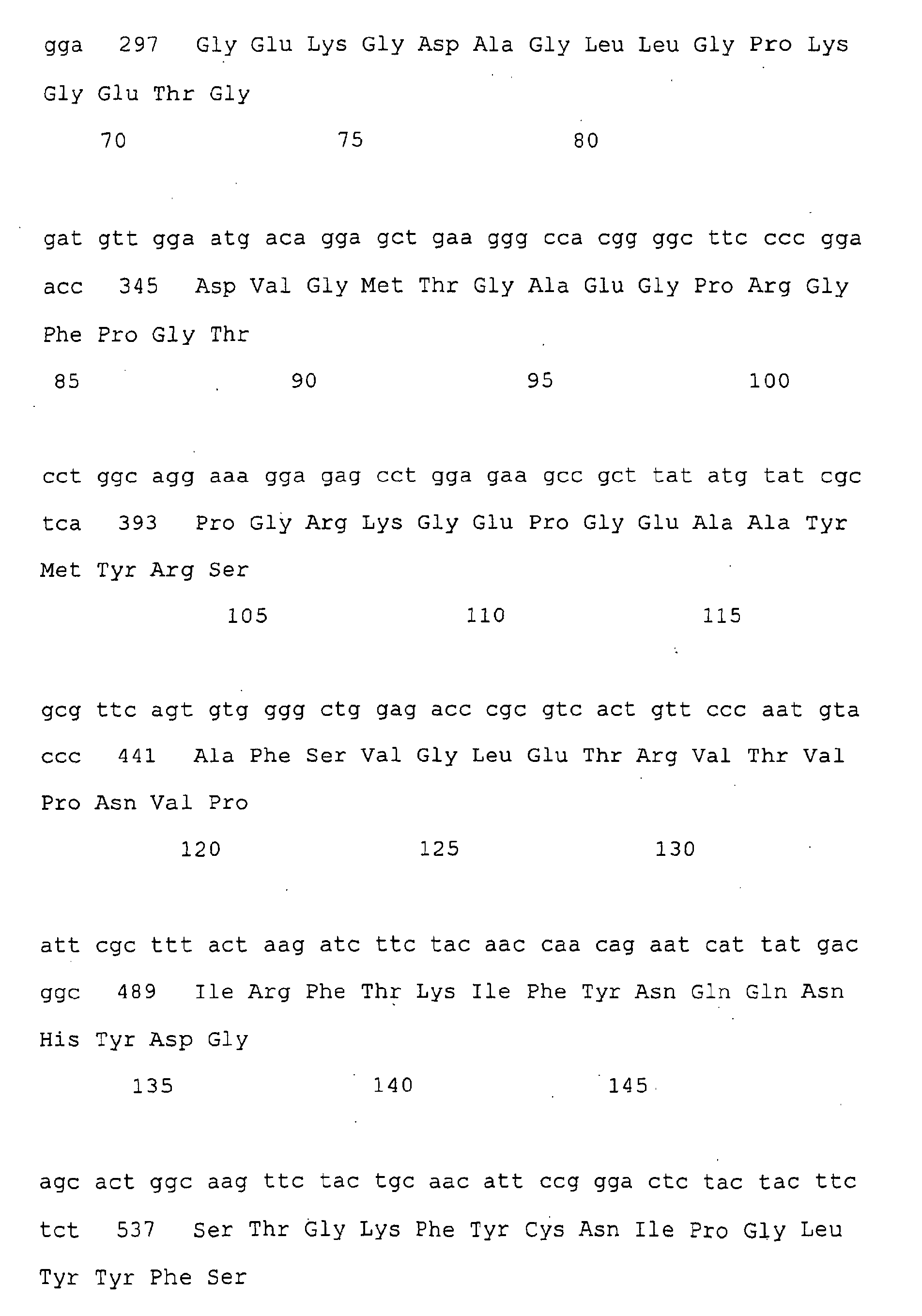
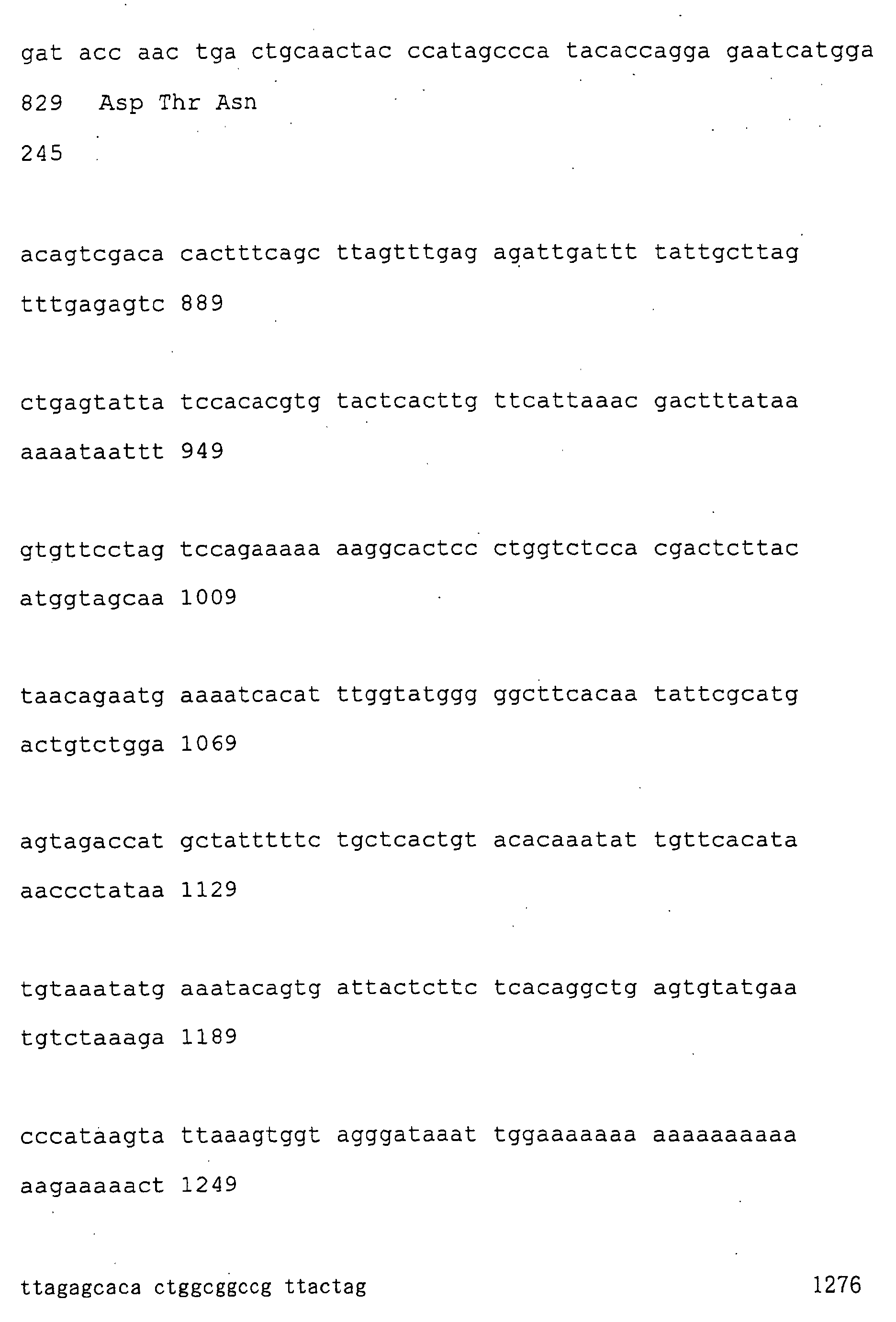
- SEQ ID NOs: 1 and 2 show the nucleotide sequence and the amino acid sequence of mouse adiponectin.
- the expression "lacking the functions of adiponectin gene” means that adiponectin, which is the product of the gene, is not produced properly, and includes the case where adiponectin itself is not produced at all and also the case where adiponectin-like protein is produced, the adiponectin-like protein being partially deficient and thus unable to express the functions of intact adiponectin.
- a relevant gene is cloned, then the function of the gene is ablated in vitro, and the resultant gene is returned into an animal to thereby induce homologous recombination with chromosomal adiponectin gene, followed by disruption of the chromosomal adiponectin gene, whereby loss of function of the relevant gene of that individual animal or the relevant genes of its offspring is introduced.
- mutation may be artificially introduced to the gene so as to disrupt the gene.
- the promoter region and/or the coding region may be deleted or another gene may be inserted or substituted.
- the non-human animal may be any animal so long as it is deficient in adiponectin gene function, and includes both heterozygous and homozygous animals in terms of adiponectin gene knockout mutation.
- the animal to be employed no particular limitation is imposed on the animal to be employed, and any animal which falls within the category of mammals, excepting the human, may be employed.
- Preferred examples of the mammals include guinea pigs, hamsters, mice, rats, rabbits, and pigs. Of these, rodents, particularly mice, are more preferred because they can be easily handled as models representing pathological conditions and have a relatively short life cycle.
- a host embryo is obtained through a method of transferring gene DNA into a pronuclear phase embryo of a fertilized egg, a method of infecting an early embryo with recombinant retrovirus, or a method of injecting embryonic stem cells (ES cells) which have undergone homologous recombination into blastocysts or 8-cell stage embryos; then is transplanted into an animal to produce offspring; and then crossbred with another individual, to thereby yield F1 heterozygously mutated animals, and further F2 homozygously or hemizygously mutated animals.
- ES cells embryonic stem cells
- the gene transfer method by use of ES cells is suitable for effecting disruption (knockout) of a gene by homologous recombination.
- This method is preferred because of the advantage that the step of introducing a gene into ES cells and the step of producing a chimeric animal can be performed separately one from the other.
- the gene transfer method through the employment of ES cells may be performed in accordance with known methods.
- At least a portion of the promoter region and/or the coding region may be deleted, or another gene may be inserted to any suitable site thereof. Also, so long as such a "loss of gene function" can be attained, the site at which deletion is effected or insertion of another gene is effected may be present in an intron.
- a DNA fragment (targeting vector) having a DNA sequence so as to knockout the gene is constructed.
- the gene to be inserted can function as a marker gene for detecting deficiency in adiponectin gene.
- adiponectin gene examples include, but are not limited to, neomycin (neo) resistance gene, which serves as a marker gene for effecting positive selection; and thymidine kinase (tk) gene and diphtheria toxin A fragment (DT-A) gene, which serve as marker genes for effecting negative selection.
- neomycin resistance gene enables selection of a gene of interest, through use of a neomycin analogue G418.
- a preferred gene targeting strategy there may be performed either of the following two methods.
- One method employs, as a targeting vector, a "substituted" vector prepared by introducing, as a substituent, a positive selection marker onto the target gene.
- Another method employs an "inserted" vector, which is obtained by inserting, to the upstream of the target gene, a non-homologous region serving as a backbone of a vector containing a selection marker, to thereby inhibit expression of the gene.
- the insertion may be performed in vitro through a conventional DNA recombination technique.
- homologous recombination is carried out between the thus-obtained targeting vector and the adiponectin gene contained in ES cells.
- conventional electroporation may be used.
- recombination occurs between the DNA of adiponectin gene from ES cells and a corresponding region of the DNA for homologous recombination; whereby the marker gene that has been inserted into the DNA for homologous recombination is inserted into the genomic adiponectin gene of ES cells.
- ES cells will come to lose the functions of adiponectin gene, and at the same time, come to have a marker gene.
- This marker gene selection mechanism enables selection of ES cells lacking the functions of CBP gene.
- the thus-obtained ES cells are injected into embryos of a host, such as mouse blastocysts, and the resultant embryos are transplanted to the uterine horns of pseudopregnant mice, whereby chimeric mice are produced.
- Crossbreeding of the chimeric mice with mice of a suitable line F1 heterozygous offspring can be obtained.
- the germ cells of the chimeric mice are derived from the homologous recombinants, or in other words, derived from adiponectin gene knockout ES cells, mice deficient in adiponectin gene function can be obtained.
- homozygously (-/-) mutated animals may be identified among the offspring animals.
- the question as to whether or not the animal is deficient in adiponectin gene, or whether the gene is heterozygously (+/-) deficient or homozygously (-/-) deficient can be verified through Southern blotting or PCR, which is performed on DNA extracted from the tail after ablactation of the animal.
- Breeding the animals of the present invention does not require any special methodology, and the animals can be raised in a manner similar to that employed for normal animals.
- the adiponectin knockout animals of the present invention are useful as animal models of obesity and/or diabetes, in particular obesity and/or type 2 diabetes. Moreover, they are useful as animal models of arteriosclerosis.
- Screening of obesity and/or diabetes preventive and therapeutic agents or arteriosclerosis preventive and therapeutic agents by the employment of animals of the present invention which are deficient in adiponectin functions may be performed as follows: A test drug is administered to animals lacking adiponectin functions, and the above-described traits inherent to the animals deficient in adiponectin functions are investigated, or alternatively, changes in expression level of a gene unique to animals deficient in adiponectin functions may be monitored. In the latter case, changes in the gene expression level can be conveniently performed through analysis by use of DNA chip technologies or similar techniques.
- adiponectin cDNA Screening of a 129/Sv mouse genomic library was performed by use of adiponectin cDNA as a probe, whereby a plurality of clones each harboring the adiponectin gene were cloned.
- a targeting vector was constructed by substituting a neomycin resistance gene for a stretch spanning from the site directly adjacent to the translation initiation point to the translation termination point, and ES cells were transfected with the thus-prepared targeting vector. Screening by Southern blotting confirmed 5 clones of homologous recombinants. Through microinjection, chimeric mice were generated, and the mice were crossbred with BI/6, to produce F1, and further F2 mice.
- adiponectin gene knockout mice were generated through homologous recombination as shown in Fig. 1.
- a targeting vector was constructed by substituting a neo resistance gene for exons 2 and 3 encoding adiponectin.
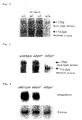
- Southern blotting confirmed 5 clones of mutually independent homologous recombination (Fig. 2).
- Chimeric mice were generated from ES cells having a 129/Sv background and crossbred with BI/6, to thereby produce heterozygous knockout mice. The genotype of the mice was checked by Southern blotting (Fig. 3).
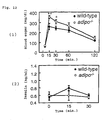
- Test mice were fasted but only during the insulin tolerance test. Human insulin was intraperitoneally administered to each mouse at a dose of 0.7 mU per gram body weight. Blood samples were drawn from the tail vein, and blood sugar levels were measured by means of a Glutest-Ace (registered trademark, product of Sanwa Kagaku Kenkyusho Co., Ltd.).
- test mice were fasted at least 16 hours, and afterwards, glucose was perorally administered at a dose of 1.5 mg per gram body weight.
- Blood samples were drawn from ocular fundus veins, and blood sugar levels and insulin levels were determined by means of a Glutest-Ace (registered trademark, product of Sanwa Kagaku Kenkyusho Co., Ltd.) and a rat insulin RIA kit (Product of Amersham Pharmacia Biotech, Inc.), respectively.
- Glutest-Ace registered trademark, product of Sanwa Kagaku Kenkyusho Co., Ltd.
- rat insulin RIA kit Product of Amersham Pharmacia Biotech, Inc.
- a 2.0-mm polyethylene tube (PE-50) was placed in the femoral artery. Two weeks thereafter, the artery was formalin-fixed with pressure, and removed together with the opposite-side, uncuffed artery, which served as a control artery. Each of the thus-removed blood vessels was sliced to obtain continuous ring-shaped specimens, each having a length of 10 mm. Ten slices were taken and subjected to HE staining. The inner diameter of the blood vessel, the thickness of the intima, and the thickness of the media were measured, and intima/media ratio was calculated.
- PE-50 polyethylene tube
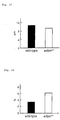
- adiponectin In order to check the effect of adiponectin on lipid metabolism, levels, in blood, of free fatty acid (FFA), neutral fat (TG), and total cholesterol (TC) were determined in wild-type, heterozygous (adipo +/-) knockout, and homozygous (adipo -/-) knockout mice (Figs. 13 and 14).
- the heterozygous (adipo +/-) knockout mice did not show any difference in level of any of the three test items as compared with the wild-type mice (Fig. 13).
- the homozygous (adipo -/-) knockout mice showed significantly higher blood neutral fat levels than the wild-type mice (Fig. 14) .
- the animals of the present invention enable elucidation of the onset mechanisms of obesity, diabetes, and arteriosclerosis. Moreover, they are useful for screening preventive and therapeutic drugs for treating any of these pathological conditions.
Landscapes
- Health & Medical Sciences (AREA)
- Life Sciences & Earth Sciences (AREA)
- Genetics & Genomics (AREA)
- Chemical & Material Sciences (AREA)
- Organic Chemistry (AREA)
- Engineering & Computer Science (AREA)
- Zoology (AREA)
- General Health & Medical Sciences (AREA)
- Biotechnology (AREA)
- Wood Science & Technology (AREA)
- Veterinary Medicine (AREA)
- Environmental Sciences (AREA)
- Bioinformatics & Cheminformatics (AREA)
- Molecular Biology (AREA)
- General Engineering & Computer Science (AREA)
- Biophysics (AREA)
- Biomedical Technology (AREA)
- Biochemistry (AREA)
- Endocrinology (AREA)
- Physics & Mathematics (AREA)
- Microbiology (AREA)
- Toxicology (AREA)
- Gastroenterology & Hepatology (AREA)
- Medicinal Chemistry (AREA)
- Proteomics, Peptides & Aminoacids (AREA)
- Animal Behavior & Ethology (AREA)
- Animal Husbandry (AREA)
- Biodiversity & Conservation Biology (AREA)
- Plant Pathology (AREA)
- Investigating Or Analysing Biological Materials (AREA)
- Micro-Organisms Or Cultivation Processes Thereof (AREA)
Abstract
Description


Claims (6)
- A non-human animal which is deficient in functions of adiponectin.
- The non-human animal as recited in claim 1, wherein the animal is a mouse.
- An animal model of obesity and/or diabetes, which comprises a non-human animal as recited in claim 1 or 2.
- An arteriosclerosis animal model, which comprises a non-human animal as recited in claim 1 or 2.
- A method of screening obesity and/or diabetes preventive and/or therapeutic agents, characterized by comprising administering a test drug to a non-human animal deficient in functions of adiponectin.
- A method of screening arteriosclerosis preventive and/or therapeutic agent, characterized by comprising administering a test drug to a non-human animal deficient in functions of adiponectin.
Applications Claiming Priority (3)
| Application Number | Priority Date | Filing Date | Title |
|---|---|---|---|
| JP2002151045A JP2003339272A (en) | 2002-05-24 | 2002-05-24 | Adiponectin gene-deficient non-human animals |
| JP2002151045 | 2002-05-24 | ||
| PCT/JP2003/006519 WO2003099003A1 (en) | 2002-05-24 | 2003-05-26 | Adiponectin-knoucout nonhuman animal |
Publications (2)
| Publication Number | Publication Date |
|---|---|
| EP1508273A1 true EP1508273A1 (en) | 2005-02-23 |
| EP1508273A4 EP1508273A4 (en) | 2005-09-28 |
Family
ID=29561243
Family Applications (1)
| Application Number | Title | Priority Date | Filing Date |
|---|---|---|---|
| EP03728136A Withdrawn EP1508273A4 (en) | 2002-05-24 | 2003-05-26 | ANIMAL INVALIDATION OF ADIPONECTIN |
Country Status (6)
| Country | Link |
|---|---|
| US (1) | US20060059578A1 (en) |
| EP (1) | EP1508273A4 (en) |
| JP (1) | JP2003339272A (en) |
| AU (1) | AU2003234846A1 (en) |
| CA (1) | CA2497091A1 (en) |
| WO (1) | WO2003099003A1 (en) |
Families Citing this family (4)
| Publication number | Priority date | Publication date | Assignee | Title |
|---|---|---|---|---|
| JP3996150B2 (en) * | 2004-07-23 | 2007-10-24 | 埼玉県 | Type 2 diabetes model mouse |
| WO2006011491A1 (en) * | 2004-07-27 | 2006-02-02 | Kurume University | Plasmid vector, transgenic animal, method of screening drug and drug |
| JP2007031302A (en) * | 2005-07-25 | 2007-02-08 | Noevir Co Ltd | Adiponectin production accelerator and metabolic syndrome preventive |
| JP4750213B1 (en) * | 2010-05-21 | 2011-08-17 | 株式会社 ファイナルフューチャーインターナショナル | Adiponectin production promoting composition |
Family Cites Families (1)
| Publication number | Priority date | Publication date | Assignee | Title |
|---|---|---|---|---|
| JP4147220B2 (en) * | 2002-05-24 | 2008-09-10 | 独立行政法人科学技術振興機構 | Arteriosclerosis preventive and therapeutic drug |
-
2002
- 2002-05-24 JP JP2002151045A patent/JP2003339272A/en active Pending
-
2003
- 2003-05-26 AU AU2003234846A patent/AU2003234846A1/en not_active Abandoned
- 2003-05-26 US US10/514,716 patent/US20060059578A1/en not_active Abandoned
- 2003-05-26 WO PCT/JP2003/006519 patent/WO2003099003A1/en not_active Ceased
- 2003-05-26 EP EP03728136A patent/EP1508273A4/en not_active Withdrawn
- 2003-05-26 CA CA002497091A patent/CA2497091A1/en not_active Abandoned
Also Published As
| Publication number | Publication date |
|---|---|
| EP1508273A4 (en) | 2005-09-28 |
| US20060059578A1 (en) | 2006-03-16 |
| AU2003234846A1 (en) | 2003-12-12 |
| JP2003339272A (en) | 2003-12-02 |
| CA2497091A1 (en) | 2003-12-04 |
| WO2003099003A1 (en) | 2003-12-04 |
Similar Documents
| Publication | Publication Date | Title |
|---|---|---|
| Cohen et al. | Selective deletion of leptin receptor in neurons leads to obesity | |
| Dhar et al. | Mice heterozygous for Atp10c, a putative amphipath, represent a novel model of obesity and type 2 diabetes | |
| Shimano et al. | Elevated levels of SREBP-2 and cholesterol synthesis in livers of mice homozygous for a targeted disruption of the SREBP-1 gene. | |
| De Luca et al. | Complete rescue of obesity, diabetes, and infertility in db/db mice by neuron-specific LEPR-B transgenes | |
| Brown et al. | A defect in nurturing in mice lacking the immediate early gene fosB | |
| US7960606B2 (en) | Mouse model of chronic heart failure and coronary atherosclerosis regression | |
| Wansink et al. | Mild impairment of motor nerve repair in mice lacking PTP-BL tyrosine phosphatase activity | |
| Patti et al. | Lessons from transgenic and knockout animals about noninsulin-dependent diabetes mellitus | |
| US20060059578A1 (en) | Adiponectin-knoucout nonhuman animal | |
| EP1692935A1 (en) | Transgenic animal as a model for human pulmonary disease | |
| WO2005098008A1 (en) | Lipid-diet inducible heart attack murine model | |
| US6365796B1 (en) | Transgenic UCP2 knockout mouse and use thereof | |
| US20030028910A1 (en) | Non-human transgenic animal whose germ cells and somatic cells contain a knockout mutation in DNA encoding orphan nuclear receptor ERRalpha | |
| EP1224862A1 (en) | Model animal of mesangial cell proliferative nephritis | |
| JP2003512852A (en) | Congenic animal model of non-insulin dependent diabetes | |
| US20200288683A1 (en) | Loss of function rodent model of solute carrier 39 member 5 | |
| EP1319952A2 (en) | Transgenic fatty acid transport (FATP) non-human knockout mammals and uses thereof | |
| US6548736B1 (en) | 7B2 knockout transgenic animals as models of endocrine disease | |
| JP2000510001A (en) | Transgenic animal having a disrupted NPY Y1 receptor gene | |
| WO2020079246A1 (en) | Non human mammal models for non-alcoholic fatty liver disease | |
| JP5804377B2 (en) | Type 2 diabetes model non-human animal | |
| JPWO2004108920A1 (en) | Antiobesity drug screening method and obesity model animal | |
| Mortensen | Transgenic laboratory animal models in atherosclerosis research | |
| WO2005092090A1 (en) | Obesity model animal and drug evaluation method using the same | |
| CN118140873A (en) | Diabetes animal model and its construction method and application |
Legal Events
| Date | Code | Title | Description |
|---|---|---|---|
| PUAI | Public reference made under article 153(3) epc to a published international application that has entered the european phase |
Free format text: ORIGINAL CODE: 0009012 |
|
| 17P | Request for examination filed |
Effective date: 20041124 |
|
| AK | Designated contracting states |
Kind code of ref document: A1 Designated state(s): AT BE BG CH CY CZ DE DK EE ES FI FR GB GR HU IE IT LI LU MC NL PT RO SE SI SK TR |
|
| AX | Request for extension of the european patent |
Extension state: AL LT LV MK |
|
| DAX | Request for extension of the european patent (deleted) | ||
| RBV | Designated contracting states (corrected) |
Designated state(s): CH DE FR GB IT LI |
|
| A4 | Supplementary search report drawn up and despatched |
Effective date: 20050818 |
|
| RIC1 | Information provided on ipc code assigned before grant |
Ipc: 7C 12N 15/85 B Ipc: 7C 07K 14/475 B Ipc: 7G 01N 33/53 B Ipc: 7C 12N 15/09 B Ipc: 7A 01K 67/027 A |
|
| RIN1 | Information on inventor provided before grant (corrected) |
Inventor name: NODA, TETSUO Inventor name: YAMAUCHI, TOSHIMASA Inventor name: TERAUCHI, YASUO Inventor name: KUBOTA, NAOTO Inventor name: KADOWAKI, TAKASHI |
|
| RIN1 | Information on inventor provided before grant (corrected) |
Inventor name: NODA, TETSUO Inventor name: YAMAUCHI, TOSHIMASA Inventor name: TERAUCHI, YASUO Inventor name: KUBOTA, NAOTO Inventor name: KADOWAKI, TAKASHI |
|
| 17Q | First examination report despatched |
Effective date: 20080417 |
|
| STAA | Information on the status of an ep patent application or granted ep patent |
Free format text: STATUS: THE APPLICATION IS DEEMED TO BE WITHDRAWN |
|
| 18D | Application deemed to be withdrawn |
Effective date: 20080828 |