EP1507070A1 - Fuel lubricated sliding mechanism - Google Patents
Fuel lubricated sliding mechanism Download PDFInfo
- Publication number
- EP1507070A1 EP1507070A1 EP04018718A EP04018718A EP1507070A1 EP 1507070 A1 EP1507070 A1 EP 1507070A1 EP 04018718 A EP04018718 A EP 04018718A EP 04018718 A EP04018718 A EP 04018718A EP 1507070 A1 EP1507070 A1 EP 1507070A1
- Authority
- EP
- European Patent Office
- Prior art keywords
- fuel
- test piece
- ether
- piece
- test
- Prior art date
- Legal status (The legal status is an assumption and is not a legal conclusion. Google has not performed a legal analysis and makes no representation as to the accuracy of the status listed.)
- Granted
Links
- 239000000446 fuel Substances 0.000 title claims abstract description 124
- 230000007246 mechanism Effects 0.000 title claims abstract description 25
- LFQSCWFLJHTTHZ-UHFFFAOYSA-N Ethanol Chemical compound CCO LFQSCWFLJHTTHZ-UHFFFAOYSA-N 0.000 claims abstract description 87
- 238000000576 coating method Methods 0.000 claims abstract description 60
- 239000011248 coating agent Substances 0.000 claims abstract description 57
- 239000003502 gasoline Substances 0.000 claims abstract description 50
- UFHFLCQGNIYNRP-UHFFFAOYSA-N Hydrogen Chemical compound [H][H] UFHFLCQGNIYNRP-UHFFFAOYSA-N 0.000 claims abstract description 41
- 239000001257 hydrogen Substances 0.000 claims abstract description 41
- 229910052739 hydrogen Inorganic materials 0.000 claims abstract description 41
- 229910021385 hard carbon Inorganic materials 0.000 claims abstract description 27
- 239000003225 biodiesel Substances 0.000 claims abstract description 24
- RTZKZFJDLAIYFH-UHFFFAOYSA-N Diethyl ether Chemical compound CCOCC RTZKZFJDLAIYFH-UHFFFAOYSA-N 0.000 claims description 39
- ZBCBWPMODOFKDW-UHFFFAOYSA-N diethanolamine Chemical compound OCCNCCO ZBCBWPMODOFKDW-UHFFFAOYSA-N 0.000 claims description 29
- 239000000203 mixture Substances 0.000 claims description 26
- 150000002194 fatty esters Chemical class 0.000 claims description 19
- NUMQCACRALPSHD-UHFFFAOYSA-N tert-butyl ethyl ether Chemical compound CCOC(C)(C)C NUMQCACRALPSHD-UHFFFAOYSA-N 0.000 claims description 16
- 235000019387 fatty acid methyl ester Nutrition 0.000 claims description 13
- OKKJLVBELUTLKV-UHFFFAOYSA-N Methanol Chemical compound OC OKKJLVBELUTLKV-UHFFFAOYSA-N 0.000 claims description 12
- BZLVMXJERCGZMT-UHFFFAOYSA-N Methyl tert-butyl ether Chemical compound COC(C)(C)C BZLVMXJERCGZMT-UHFFFAOYSA-N 0.000 claims description 11
- LRHPLDYGYMQRHN-UHFFFAOYSA-N N-Butanol Chemical compound CCCCO LRHPLDYGYMQRHN-UHFFFAOYSA-N 0.000 claims description 8
- BDERNNFJNOPAEC-UHFFFAOYSA-N propan-1-ol Chemical compound CCCO BDERNNFJNOPAEC-UHFFFAOYSA-N 0.000 claims description 8
- KFZMGEQAYNKOFK-UHFFFAOYSA-N Isopropanol Chemical compound CC(C)O KFZMGEQAYNKOFK-UHFFFAOYSA-N 0.000 claims description 7
- 238000007733 ion plating Methods 0.000 claims description 7
- ZXEKIIBDNHEJCQ-UHFFFAOYSA-N isobutanol Chemical compound CC(C)CO ZXEKIIBDNHEJCQ-UHFFFAOYSA-N 0.000 claims description 6
- 238000012360 testing method Methods 0.000 description 206
- -1 heptenyl Chemical group 0.000 description 100
- 230000000052 comparative effect Effects 0.000 description 76
- 239000003921 oil Substances 0.000 description 51
- 235000019198 oils Nutrition 0.000 description 51
- 150000001298 alcohols Chemical class 0.000 description 23
- 238000000034 method Methods 0.000 description 22
- 230000008569 process Effects 0.000 description 21
- VNWKTOKETHGBQD-UHFFFAOYSA-N methane Chemical compound C VNWKTOKETHGBQD-UHFFFAOYSA-N 0.000 description 20
- 150000002430 hydrocarbons Chemical class 0.000 description 18
- 125000000217 alkyl group Chemical group 0.000 description 16
- 238000007747 plating Methods 0.000 description 16
- 239000000654 additive Substances 0.000 description 15
- 239000000047 product Substances 0.000 description 15
- PEDCQBHIVMGVHV-UHFFFAOYSA-N Glycerine Chemical compound OCC(O)CO PEDCQBHIVMGVHV-UHFFFAOYSA-N 0.000 description 14
- 125000002947 alkylene group Chemical group 0.000 description 13
- 235000014113 dietary fatty acids Nutrition 0.000 description 13
- 229930195729 fatty acid Natural products 0.000 description 13
- 239000000194 fatty acid Substances 0.000 description 13
- 229910052799 carbon Inorganic materials 0.000 description 11
- 239000011651 chromium Substances 0.000 description 11
- 238000005260 corrosion Methods 0.000 description 11
- 230000007797 corrosion Effects 0.000 description 11
- 238000002347 injection Methods 0.000 description 11
- 239000007924 injection Substances 0.000 description 11
- RZRNAYUHWVFMIP-KTKRTIGZSA-N 1-oleoylglycerol Chemical compound CCCCCCCC\C=C/CCCCCCCC(=O)OCC(O)CO RZRNAYUHWVFMIP-KTKRTIGZSA-N 0.000 description 10
- 208000016444 Benign adult familial myoclonic epilepsy Diseases 0.000 description 10
- 240000002791 Brassica napus Species 0.000 description 10
- 125000003342 alkenyl group Chemical group 0.000 description 10
- 208000016427 familial adult myoclonic epilepsy Diseases 0.000 description 10
- ZGNITFSDLCMLGI-UHFFFAOYSA-N flubendiamide Chemical compound CC1=CC(C(F)(C(F)(F)F)C(F)(F)F)=CC=C1NC(=O)C1=CC=CC(I)=C1C(=O)NC(C)(C)CS(C)(=O)=O ZGNITFSDLCMLGI-UHFFFAOYSA-N 0.000 description 10
- RZRNAYUHWVFMIP-HXUWFJFHSA-N glycerol monolinoleate Natural products CCCCCCCCC=CCCCCCCCC(=O)OC[C@H](O)CO RZRNAYUHWVFMIP-HXUWFJFHSA-N 0.000 description 10
- 239000003345 natural gas Substances 0.000 description 10
- 230000003746 surface roughness Effects 0.000 description 10
- 235000004977 Brassica sinapistrum Nutrition 0.000 description 9
- 235000019484 Rapeseed oil Nutrition 0.000 description 9
- CXOWYMLTGOFURZ-UHFFFAOYSA-N azanylidynechromium Chemical compound [Cr]#N CXOWYMLTGOFURZ-UHFFFAOYSA-N 0.000 description 9
- 150000004702 methyl esters Chemical class 0.000 description 9
- LCGLNKUTAGEVQW-UHFFFAOYSA-N Dimethyl ether Chemical compound COC LCGLNKUTAGEVQW-UHFFFAOYSA-N 0.000 description 8
- 125000001931 aliphatic group Chemical group 0.000 description 8
- 150000004665 fatty acids Chemical class 0.000 description 8
- 238000005240 physical vapour deposition Methods 0.000 description 8
- 230000001603 reducing effect Effects 0.000 description 8
- 238000005229 chemical vapour deposition Methods 0.000 description 7
- HEBKCHPVOIAQTA-UHFFFAOYSA-N meso ribitol Natural products OCC(O)C(O)C(O)CO HEBKCHPVOIAQTA-UHFFFAOYSA-N 0.000 description 7
- OKTJSMMVPCPJKN-UHFFFAOYSA-N Carbon Chemical compound [C] OKTJSMMVPCPJKN-UHFFFAOYSA-N 0.000 description 6
- LYCAIKOWRPUZTN-UHFFFAOYSA-N Ethylene glycol Chemical compound OCCO LYCAIKOWRPUZTN-UHFFFAOYSA-N 0.000 description 6
- MUBZPKHOEPUJKR-UHFFFAOYSA-N Oxalic acid Chemical compound OC(=O)C(O)=O MUBZPKHOEPUJKR-UHFFFAOYSA-N 0.000 description 6
- DNIAPMSPPWPWGF-UHFFFAOYSA-N Propylene glycol Chemical compound CC(O)CO DNIAPMSPPWPWGF-UHFFFAOYSA-N 0.000 description 6
- NINIDFKCEFEMDL-UHFFFAOYSA-N Sulfur Chemical compound [S] NINIDFKCEFEMDL-UHFFFAOYSA-N 0.000 description 6
- 125000003118 aryl group Chemical group 0.000 description 6
- 235000011187 glycerol Nutrition 0.000 description 6
- 125000002887 hydroxy group Chemical group [H]O* 0.000 description 6
- 229920006395 saturated elastomer Polymers 0.000 description 6
- 239000011593 sulfur Substances 0.000 description 6
- 229910052717 sulfur Inorganic materials 0.000 description 6
- 229910000975 Carbon steel Inorganic materials 0.000 description 5
- VYZAMTAEIAYCRO-UHFFFAOYSA-N Chromium Chemical compound [Cr] VYZAMTAEIAYCRO-UHFFFAOYSA-N 0.000 description 5
- 125000002877 alkyl aryl group Chemical group 0.000 description 5
- 125000003710 aryl alkyl group Chemical group 0.000 description 5
- 239000010962 carbon steel Substances 0.000 description 5
- 125000000753 cycloalkyl group Chemical group 0.000 description 5
- 239000000463 material Substances 0.000 description 5
- 102200082816 rs34868397 Human genes 0.000 description 5
- 229910001220 stainless steel Inorganic materials 0.000 description 5
- 150000005846 sugar alcohols Polymers 0.000 description 5
- ARXKVVRQIIOZGF-UHFFFAOYSA-N 1,2,4-butanetriol Chemical compound OCCC(O)CO ARXKVVRQIIOZGF-UHFFFAOYSA-N 0.000 description 4
- SVTBMSDMJJWYQN-UHFFFAOYSA-N 2-methylpentane-2,4-diol Chemical compound CC(O)CC(C)(C)O SVTBMSDMJJWYQN-UHFFFAOYSA-N 0.000 description 4
- FBPFZTCFMRRESA-FSIIMWSLSA-N D-Glucitol Natural products OC[C@H](O)[C@H](O)[C@@H](O)[C@H](O)CO FBPFZTCFMRRESA-FSIIMWSLSA-N 0.000 description 4
- FBPFZTCFMRRESA-JGWLITMVSA-N D-glucitol Chemical compound OC[C@H](O)[C@@H](O)[C@H](O)[C@H](O)CO FBPFZTCFMRRESA-JGWLITMVSA-N 0.000 description 4
- IAYPIBMASNFSPL-UHFFFAOYSA-N Ethylene oxide Chemical compound C1CO1 IAYPIBMASNFSPL-UHFFFAOYSA-N 0.000 description 4
- GOOHAUXETOMSMM-UHFFFAOYSA-N Propylene oxide Chemical compound CC1CO1 GOOHAUXETOMSMM-UHFFFAOYSA-N 0.000 description 4
- ZJCCRDAZUWHFQH-UHFFFAOYSA-N Trimethylolpropane Chemical compound CCC(CO)(CO)CO ZJCCRDAZUWHFQH-UHFFFAOYSA-N 0.000 description 4
- 230000002159 abnormal effect Effects 0.000 description 4
- 125000005119 alkyl cycloalkyl group Chemical group 0.000 description 4
- WERYXYBDKMZEQL-UHFFFAOYSA-N butane-1,4-diol Chemical compound OCCCCO WERYXYBDKMZEQL-UHFFFAOYSA-N 0.000 description 4
- GHLKSLMMWAKNBM-UHFFFAOYSA-N dodecane-1,12-diol Chemical compound OCCCCCCCCCCCCO GHLKSLMMWAKNBM-UHFFFAOYSA-N 0.000 description 4
- 239000008157 edible vegetable oil Substances 0.000 description 4
- 229940117927 ethylene oxide Drugs 0.000 description 4
- 229910052751 metal Inorganic materials 0.000 description 4
- 239000002184 metal Substances 0.000 description 4
- 238000002156 mixing Methods 0.000 description 4
- GLDOVTGHNKAZLK-UHFFFAOYSA-N octadecan-1-ol Chemical compound CCCCCCCCCCCCCCCCCCO GLDOVTGHNKAZLK-UHFFFAOYSA-N 0.000 description 4
- WXZMFSXDPGVJKK-UHFFFAOYSA-N pentaerythritol Chemical compound OCC(CO)(CO)CO WXZMFSXDPGVJKK-UHFFFAOYSA-N 0.000 description 4
- XNGIFLGASWRNHJ-UHFFFAOYSA-N phthalic acid Chemical compound OC(=O)C1=CC=CC=C1C(O)=O XNGIFLGASWRNHJ-UHFFFAOYSA-N 0.000 description 4
- CYIDZMCFTVVTJO-UHFFFAOYSA-N pyromellitic acid Chemical compound OC(=O)C1=CC(C(O)=O)=C(C(O)=O)C=C1C(O)=O CYIDZMCFTVVTJO-UHFFFAOYSA-N 0.000 description 4
- 239000000600 sorbitol Substances 0.000 description 4
- ARCGXLSVLAOJQL-UHFFFAOYSA-N trimellitic acid Chemical compound OC(=O)C1=CC=C(C(O)=O)C(C(O)=O)=C1 ARCGXLSVLAOJQL-UHFFFAOYSA-N 0.000 description 4
- XSMIOONHPKRREI-UHFFFAOYSA-N undecane-1,11-diol Chemical compound OCCCCCCCCCCCO XSMIOONHPKRREI-UHFFFAOYSA-N 0.000 description 4
- 239000002699 waste material Substances 0.000 description 4
- BBMCTIGTTCKYKF-UHFFFAOYSA-N 1-heptanol Chemical class CCCCCCCO BBMCTIGTTCKYKF-UHFFFAOYSA-N 0.000 description 3
- PQXKWPLDPFFDJP-UHFFFAOYSA-N 2,3-dimethyloxirane Chemical compound CC1OC1C PQXKWPLDPFFDJP-UHFFFAOYSA-N 0.000 description 3
- SZNYYWIUQFZLLT-UHFFFAOYSA-N 2-methyl-1-(2-methylpropoxy)propane Chemical compound CC(C)COCC(C)C SZNYYWIUQFZLLT-UHFFFAOYSA-N 0.000 description 3
- QPRQEDXDYOZYLA-UHFFFAOYSA-N 2-methylbutan-1-ol Chemical compound CCC(C)CO QPRQEDXDYOZYLA-UHFFFAOYSA-N 0.000 description 3
- MSXVEPNJUHWQHW-UHFFFAOYSA-N 2-methylbutan-2-ol Chemical compound CCC(C)(C)O MSXVEPNJUHWQHW-UHFFFAOYSA-N 0.000 description 3
- HEBKCHPVOIAQTA-QWWZWVQMSA-N D-arabinitol Chemical compound OC[C@@H](O)C(O)[C@H](O)CO HEBKCHPVOIAQTA-QWWZWVQMSA-N 0.000 description 3
- SNRUBQQJIBEYMU-UHFFFAOYSA-N Dodecane Natural products CCCCCCCCCCCC SNRUBQQJIBEYMU-UHFFFAOYSA-N 0.000 description 3
- UNXHWFMMPAWVPI-UHFFFAOYSA-N Erythritol Natural products OCC(O)C(O)CO UNXHWFMMPAWVPI-UHFFFAOYSA-N 0.000 description 3
- WSFSSNUMVMOOMR-UHFFFAOYSA-N Formaldehyde Chemical compound O=C WSFSSNUMVMOOMR-UHFFFAOYSA-N 0.000 description 3
- AMQJEAYHLZJPGS-UHFFFAOYSA-N N-Pentanol Chemical class CCCCCO AMQJEAYHLZJPGS-UHFFFAOYSA-N 0.000 description 3
- WYURNTSHIVDZCO-UHFFFAOYSA-N Tetrahydrofuran Chemical compound C1CCOC1 WYURNTSHIVDZCO-UHFFFAOYSA-N 0.000 description 3
- NRTOMJZYCJJWKI-UHFFFAOYSA-N Titanium nitride Chemical compound [Ti]#N NRTOMJZYCJJWKI-UHFFFAOYSA-N 0.000 description 3
- 125000001204 arachidyl group Chemical group [H]C([*])([H])C([H])([H])C([H])([H])C([H])([H])C([H])([H])C([H])([H])C([H])([H])C([H])([H])C([H])([H])C([H])([H])C([H])([H])C([H])([H])C([H])([H])C([H])([H])C([H])([H])C([H])([H])C([H])([H])C([H])([H])C([H])([H])C([H])([H])[H] 0.000 description 3
- QVGXLLKOCUKJST-UHFFFAOYSA-N atomic oxygen Chemical compound [O] QVGXLLKOCUKJST-UHFFFAOYSA-N 0.000 description 3
- 125000002511 behenyl group Chemical group [H]C([*])([H])C([H])([H])C([H])([H])C([H])([H])C([H])([H])C([H])([H])C([H])([H])C([H])([H])C([H])([H])C([H])([H])C([H])([H])C([H])([H])C([H])([H])C([H])([H])C([H])([H])C([H])([H])C([H])([H])C([H])([H])C([H])([H])C([H])([H])C([H])([H])C([H])([H])[H] 0.000 description 3
- BTANRVKWQNVYAZ-UHFFFAOYSA-N butan-2-ol Chemical compound CCC(C)O BTANRVKWQNVYAZ-UHFFFAOYSA-N 0.000 description 3
- 238000006243 chemical reaction Methods 0.000 description 3
- 150000001875 compounds Chemical class 0.000 description 3
- 239000007859 condensation product Substances 0.000 description 3
- 125000003493 decenyl group Chemical group [H]C([*])=C([H])C([H])([H])C([H])([H])C([H])([H])C([H])([H])C([H])([H])C([H])([H])C([H])([H])C([H])([H])[H] 0.000 description 3
- 125000002704 decyl group Chemical group [H]C([H])([H])C([H])([H])C([H])([H])C([H])([H])C([H])([H])C([H])([H])C([H])([H])C([H])([H])C([H])([H])C([H])([H])* 0.000 description 3
- MTHSVFCYNBDYFN-UHFFFAOYSA-N diethylene glycol Chemical compound OCCOCCO MTHSVFCYNBDYFN-UHFFFAOYSA-N 0.000 description 3
- 239000000539 dimer Substances 0.000 description 3
- 125000005066 dodecenyl group Chemical group C(=CCCCCCCCCCC)* 0.000 description 3
- 125000003438 dodecyl group Chemical group [H]C([H])([H])C([H])([H])C([H])([H])C([H])([H])C([H])([H])C([H])([H])C([H])([H])C([H])([H])C([H])([H])C([H])([H])C([H])([H])C([H])([H])* 0.000 description 3
- 230000007613 environmental effect Effects 0.000 description 3
- UNXHWFMMPAWVPI-ZXZARUISSA-N erythritol Chemical compound OC[C@H](O)[C@H](O)CO UNXHWFMMPAWVPI-ZXZARUISSA-N 0.000 description 3
- 150000002148 esters Chemical class 0.000 description 3
- 239000007789 gas Substances 0.000 description 3
- 125000000755 henicosyl group Chemical group [H]C([*])([H])C([H])([H])C([H])([H])C([H])([H])C([H])([H])C([H])([H])C([H])([H])C([H])([H])C([H])([H])C([H])([H])C([H])([H])C([H])([H])C([H])([H])C([H])([H])C([H])([H])C([H])([H])C([H])([H])C([H])([H])C([H])([H])C([H])([H])C([H])([H])[H] 0.000 description 3
- GOQYKNQRPGWPLP-UHFFFAOYSA-N heptadecan-1-ol Chemical class CCCCCCCCCCCCCCCCCO GOQYKNQRPGWPLP-UHFFFAOYSA-N 0.000 description 3
- 125000003187 heptyl group Chemical group [H]C([*])([H])C([H])([H])C([H])([H])C([H])([H])C([H])([H])C([H])([H])C([H])([H])[H] 0.000 description 3
- ZSIAUFGUXNUGDI-UHFFFAOYSA-N hexan-1-ol Chemical class CCCCCCO ZSIAUFGUXNUGDI-UHFFFAOYSA-N 0.000 description 3
- 125000006038 hexenyl group Chemical group 0.000 description 3
- 125000004051 hexyl group Chemical group [H]C([H])([H])C([H])([H])C([H])([H])C([H])([H])C([H])([H])C([H])([H])* 0.000 description 3
- 125000002463 lignoceryl group Chemical group [H]C([*])([H])C([H])([H])C([H])([H])C([H])([H])C([H])([H])C([H])([H])C([H])([H])C([H])([H])C([H])([H])C([H])([H])C([H])([H])C([H])([H])C([H])([H])C([H])([H])C([H])([H])C([H])([H])C([H])([H])C([H])([H])C([H])([H])C([H])([H])C([H])([H])C([H])([H])C([H])([H])C([H])([H])[H] 0.000 description 3
- 239000007788 liquid Substances 0.000 description 3
- 125000002960 margaryl group Chemical group [H]C([*])([H])C([H])([H])C([H])([H])C([H])([H])C([H])([H])C([H])([H])C([H])([H])C([H])([H])C([H])([H])C([H])([H])C([H])([H])C([H])([H])C([H])([H])C([H])([H])C([H])([H])C([H])([H])C([H])([H])[H] 0.000 description 3
- 125000001421 myristyl group Chemical group [H]C([*])([H])C([H])([H])C([H])([H])C([H])([H])C([H])([H])C([H])([H])C([H])([H])C([H])([H])C([H])([H])C([H])([H])C([H])([H])C([H])([H])C([H])([H])C([H])([H])[H] 0.000 description 3
- 125000001196 nonadecyl group Chemical group [H]C([*])([H])C([H])([H])C([H])([H])C([H])([H])C([H])([H])C([H])([H])C([H])([H])C([H])([H])C([H])([H])C([H])([H])C([H])([H])C([H])([H])C([H])([H])C([H])([H])C([H])([H])C([H])([H])C([H])([H])C([H])([H])C([H])([H])[H] 0.000 description 3
- ZWRUINPWMLAQRD-UHFFFAOYSA-N nonan-1-ol Chemical class CCCCCCCCCO ZWRUINPWMLAQRD-UHFFFAOYSA-N 0.000 description 3
- 125000005187 nonenyl group Chemical group C(=CCCCCCCC)* 0.000 description 3
- 125000001400 nonyl group Chemical group [H]C([*])([H])C([H])([H])C([H])([H])C([H])([H])C([H])([H])C([H])([H])C([H])([H])C([H])([H])C([H])([H])[H] 0.000 description 3
- 125000005064 octadecenyl group Chemical group C(=CCCCCCCCCCCCCCCCC)* 0.000 description 3
- NMRPBPVERJPACX-UHFFFAOYSA-N octan-3-ol Chemical compound CCCCCC(O)CC NMRPBPVERJPACX-UHFFFAOYSA-N 0.000 description 3
- 125000004365 octenyl group Chemical group C(=CCCCCCC)* 0.000 description 3
- 125000002347 octyl group Chemical group [H]C([*])([H])C([H])([H])C([H])([H])C([H])([H])C([H])([H])C([H])([H])C([H])([H])C([H])([H])[H] 0.000 description 3
- 229910052760 oxygen Inorganic materials 0.000 description 3
- 239000001301 oxygen Substances 0.000 description 3
- 125000000913 palmityl group Chemical group [H]C([*])([H])C([H])([H])C([H])([H])C([H])([H])C([H])([H])C([H])([H])C([H])([H])C([H])([H])C([H])([H])C([H])([H])C([H])([H])C([H])([H])C([H])([H])C([H])([H])C([H])([H])C([H])([H])[H] 0.000 description 3
- 125000002958 pentadecyl group Chemical group [H]C([*])([H])C([H])([H])C([H])([H])C([H])([H])C([H])([H])C([H])([H])C([H])([H])C([H])([H])C([H])([H])C([H])([H])C([H])([H])C([H])([H])C([H])([H])C([H])([H])C([H])([H])[H] 0.000 description 3
- 125000004079 stearyl group Chemical group [H]C([*])([H])C([H])([H])C([H])([H])C([H])([H])C([H])([H])C([H])([H])C([H])([H])C([H])([H])C([H])([H])C([H])([H])C([H])([H])C([H])([H])C([H])([H])C([H])([H])C([H])([H])C([H])([H])C([H])([H])C([H])([H])[H] 0.000 description 3
- 125000001424 substituent group Chemical group 0.000 description 3
- 125000005063 tetradecenyl group Chemical group C(=CCCCCCCCCCCCC)* 0.000 description 3
- 125000002469 tricosyl group Chemical group [H]C([*])([H])C([H])([H])C([H])([H])C([H])([H])C([H])([H])C([H])([H])C([H])([H])C([H])([H])C([H])([H])C([H])([H])C([H])([H])C([H])([H])C([H])([H])C([H])([H])C([H])([H])C([H])([H])C([H])([H])C([H])([H])C([H])([H])C([H])([H])C([H])([H])C([H])([H])C([H])([H])[H] 0.000 description 3
- 125000005040 tridecenyl group Chemical group C(=CCCCCCCCCCCC)* 0.000 description 3
- 125000002889 tridecyl group Chemical group [H]C([*])([H])C([H])([H])C([H])([H])C([H])([H])C([H])([H])C([H])([H])C([H])([H])C([H])([H])C([H])([H])C([H])([H])C([H])([H])C([H])([H])C([H])([H])[H] 0.000 description 3
- 239000013638 trimer Substances 0.000 description 3
- QXJQHYBHAIHNGG-UHFFFAOYSA-N trimethylolethane Chemical compound OCC(C)(CO)CO QXJQHYBHAIHNGG-UHFFFAOYSA-N 0.000 description 3
- 125000005065 undecenyl group Chemical group C(=CCCCCCCCCC)* 0.000 description 3
- 125000002948 undecyl group Chemical group [H]C([*])([H])C([H])([H])C([H])([H])C([H])([H])C([H])([H])C([H])([H])C([H])([H])C([H])([H])C([H])([H])C([H])([H])C([H])([H])[H] 0.000 description 3
- ALSTYHKOOCGGFT-KTKRTIGZSA-N (9Z)-octadecen-1-ol Chemical compound CCCCCCCC\C=C/CCCCCCCCO ALSTYHKOOCGGFT-KTKRTIGZSA-N 0.000 description 2
- QGLWBTPVKHMVHM-KTKRTIGZSA-N (z)-octadec-9-en-1-amine Chemical compound CCCCCCCC\C=C/CCCCCCCCN QGLWBTPVKHMVHM-KTKRTIGZSA-N 0.000 description 2
- ZORQXIQZAOLNGE-UHFFFAOYSA-N 1,1-difluorocyclohexane Chemical compound FC1(F)CCCCC1 ZORQXIQZAOLNGE-UHFFFAOYSA-N 0.000 description 2
- WNZVVHVYAKZZBU-UHFFFAOYSA-N 1,17-Heptadecanediol Chemical compound OCCCCCCCCCCCCCCCCCO WNZVVHVYAKZZBU-UHFFFAOYSA-N 0.000 description 2
- ZWVMLYRJXORSEP-UHFFFAOYSA-N 1,2,6-Hexanetriol Chemical compound OCCCCC(O)CO ZWVMLYRJXORSEP-UHFFFAOYSA-N 0.000 description 2
- RBACIKXCRWGCBB-UHFFFAOYSA-N 1,2-Epoxybutane Chemical compound CCC1CO1 RBACIKXCRWGCBB-UHFFFAOYSA-N 0.000 description 2
- AFSHUZFNMVJNKX-UHFFFAOYSA-N 1,2-di-(9Z-octadecenoyl)glycerol Natural products CCCCCCCCC=CCCCCCCCC(=O)OCC(CO)OC(=O)CCCCCCCC=CCCCCCCCC AFSHUZFNMVJNKX-UHFFFAOYSA-N 0.000 description 2
- AFSHUZFNMVJNKX-LLWMBOQKSA-N 1,2-dioleoyl-sn-glycerol Chemical compound CCCCCCCC\C=C/CCCCCCCC(=O)OC[C@H](CO)OC(=O)CCCCCCC\C=C/CCCCCCCC AFSHUZFNMVJNKX-LLWMBOQKSA-N 0.000 description 2
- LMMTVYUCEFJZLC-UHFFFAOYSA-N 1,3,5-pentanetriol Chemical compound OCCC(O)CCO LMMTVYUCEFJZLC-UHFFFAOYSA-N 0.000 description 2
- ALVZNPYWJMLXKV-UHFFFAOYSA-N 1,9-Nonanediol Chemical compound OCCCCCCCCCO ALVZNPYWJMLXKV-UHFFFAOYSA-N 0.000 description 2
- FJLUATLTXUNBOT-UHFFFAOYSA-N 1-Hexadecylamine Chemical compound CCCCCCCCCCCCCCCCN FJLUATLTXUNBOT-UHFFFAOYSA-N 0.000 description 2
- KBPLFHHGFOOTCA-UHFFFAOYSA-N 1-Octanol Chemical compound CCCCCCCCO KBPLFHHGFOOTCA-UHFFFAOYSA-N 0.000 description 2
- RCHLXMOXBJRGNX-UHFFFAOYSA-N 1-butylcyclohexan-1-ol Chemical class CCCCC1(O)CCCCC1 RCHLXMOXBJRGNX-UHFFFAOYSA-N 0.000 description 2
- KJCVRFUGPWSIIH-UHFFFAOYSA-N 1-naphthol Chemical compound C1=CC=C2C(O)=CC=CC2=C1 KJCVRFUGPWSIIH-UHFFFAOYSA-N 0.000 description 2
- SZSSMFVYZRQGIM-UHFFFAOYSA-N 2-(hydroxymethyl)-2-propylpropane-1,3-diol Chemical compound CCCC(CO)(CO)CO SZSSMFVYZRQGIM-UHFFFAOYSA-N 0.000 description 2
- BITAPBDLHJQAID-KTKRTIGZSA-N 2-[2-hydroxyethyl-[(z)-octadec-9-enyl]amino]ethanol Chemical compound CCCCCCCC\C=C/CCCCCCCCN(CCO)CCO BITAPBDLHJQAID-KTKRTIGZSA-N 0.000 description 2
- NKFNBVMJTSYZDV-UHFFFAOYSA-N 2-[dodecyl(2-hydroxyethyl)amino]ethanol Chemical compound CCCCCCCCCCCCN(CCO)CCO NKFNBVMJTSYZDV-UHFFFAOYSA-N 0.000 description 2
- QJQZRLXDLORINA-UHFFFAOYSA-N 2-cyclohexylethanol Chemical compound OCCC1CCCCC1 QJQZRLXDLORINA-UHFFFAOYSA-N 0.000 description 2
- VNAWKNVDKFZFSU-UHFFFAOYSA-N 2-ethyl-2-methylpropane-1,3-diol Chemical compound CCC(C)(CO)CO VNAWKNVDKFZFSU-UHFFFAOYSA-N 0.000 description 2
- CETWDUZRCINIHU-UHFFFAOYSA-N 2-heptanol Chemical compound CCCCCC(C)O CETWDUZRCINIHU-UHFFFAOYSA-N 0.000 description 2
- PFNHSEQQEPMLNI-UHFFFAOYSA-N 2-methyl-1-pentanol Chemical compound CCCC(C)CO PFNHSEQQEPMLNI-UHFFFAOYSA-N 0.000 description 2
- WFRBDWRZVBPBDO-UHFFFAOYSA-N 2-methyl-2-pentanol Chemical compound CCCC(C)(C)O WFRBDWRZVBPBDO-UHFFFAOYSA-N 0.000 description 2
- JWAZRIHNYRIHIV-UHFFFAOYSA-N 2-naphthol Chemical compound C1=CC=CC2=CC(O)=CC=C21 JWAZRIHNYRIHIV-UHFFFAOYSA-N 0.000 description 2
- NGDNVOAEIVQRFH-UHFFFAOYSA-N 2-nonanol Chemical compound CCCCCCCC(C)O NGDNVOAEIVQRFH-UHFFFAOYSA-N 0.000 description 2
- PRNCMAKCNVRZFX-UHFFFAOYSA-N 3,7-dimethyloctan-1-ol Chemical compound CC(C)CCCC(C)CCO PRNCMAKCNVRZFX-UHFFFAOYSA-N 0.000 description 2
- MXLMTQWGSQIYOW-UHFFFAOYSA-N 3-methyl-2-butanol Chemical compound CC(C)C(C)O MXLMTQWGSQIYOW-UHFFFAOYSA-N 0.000 description 2
- FRDAATYAJDYRNW-UHFFFAOYSA-N 3-methyl-3-pentanol Chemical compound CCC(C)(O)CC FRDAATYAJDYRNW-UHFFFAOYSA-N 0.000 description 2
- IWTBVKIGCDZRPL-UHFFFAOYSA-N 3-methylpentanol Chemical compound CCC(C)CCO IWTBVKIGCDZRPL-UHFFFAOYSA-N 0.000 description 2
- BKQICAFAUMRYLZ-UHFFFAOYSA-N 4-methylheptan-3-ol Chemical compound CCCC(C)C(O)CC BKQICAFAUMRYLZ-UHFFFAOYSA-N 0.000 description 2
- QHPQWRBYOIRBIT-UHFFFAOYSA-N 4-tert-butylphenol Chemical compound CC(C)(C)C1=CC=C(O)C=C1 QHPQWRBYOIRBIT-UHFFFAOYSA-N 0.000 description 2
- FCOUHTHQYOMLJT-UHFFFAOYSA-N 6-methylheptan-2-ol Chemical compound CC(C)CCCC(C)O FCOUHTHQYOMLJT-UHFFFAOYSA-N 0.000 description 2
- IKHGUXGNUITLKF-UHFFFAOYSA-N Acetaldehyde Chemical compound CC=O IKHGUXGNUITLKF-UHFFFAOYSA-N 0.000 description 2
- IJGRMHOSHXDMSA-UHFFFAOYSA-N Atomic nitrogen Chemical compound N#N IJGRMHOSHXDMSA-UHFFFAOYSA-N 0.000 description 2
- 239000002028 Biomass Substances 0.000 description 2
- FBPFZTCFMRRESA-KVTDHHQDSA-N D-Mannitol Chemical compound OC[C@@H](O)[C@@H](O)[C@H](O)[C@H](O)CO FBPFZTCFMRRESA-KVTDHHQDSA-N 0.000 description 2
- SRBFZHDQGSBBOR-IOVATXLUSA-N D-xylopyranose Chemical compound O[C@@H]1COC(O)[C@H](O)[C@H]1O SRBFZHDQGSBBOR-IOVATXLUSA-N 0.000 description 2
- RZKSECIXORKHQS-UHFFFAOYSA-N Heptan-3-ol Chemical compound CCCCC(O)CC RZKSECIXORKHQS-UHFFFAOYSA-N 0.000 description 2
- 229930195725 Mannitol Natural products 0.000 description 2
- REYJJPSVUYRZGE-UHFFFAOYSA-N Octadecylamine Chemical compound CCCCCCCCCCCCCCCCCCN REYJJPSVUYRZGE-UHFFFAOYSA-N 0.000 description 2
- ALQSHHUCVQOPAS-UHFFFAOYSA-N Pentane-1,5-diol Chemical compound OCCCCCO ALQSHHUCVQOPAS-UHFFFAOYSA-N 0.000 description 2
- ATUOYWHBWRKTHZ-UHFFFAOYSA-N Propane Chemical compound CCC ATUOYWHBWRKTHZ-UHFFFAOYSA-N 0.000 description 2
- TVXBFESIOXBWNM-UHFFFAOYSA-N Xylitol Natural products OCCC(O)C(O)C(O)CCO TVXBFESIOXBWNM-UHFFFAOYSA-N 0.000 description 2
- TTZKGYULRVDFJJ-GIVMLJSASA-N [(2r)-2-[(2s,3r,4s)-3,4-dihydroxyoxolan-2-yl]-2-[(z)-octadec-9-enoyl]oxyethyl] (z)-octadec-9-enoate Chemical compound CCCCCCCC\C=C/CCCCCCCC(=O)OC[C@@H](OC(=O)CCCCCCC\C=C/CCCCCCCC)[C@H]1OC[C@H](O)[C@H]1O TTZKGYULRVDFJJ-GIVMLJSASA-N 0.000 description 2
- 239000002253 acid Substances 0.000 description 2
- 150000007513 acids Chemical class 0.000 description 2
- 229940059260 amidate Drugs 0.000 description 2
- 150000001412 amines Chemical class 0.000 description 2
- 229910003481 amorphous carbon Inorganic materials 0.000 description 2
- RDOXTESZEPMUJZ-UHFFFAOYSA-N anisole Chemical compound COC1=CC=CC=C1 RDOXTESZEPMUJZ-UHFFFAOYSA-N 0.000 description 2
- 150000001491 aromatic compounds Chemical class 0.000 description 2
- 150000008378 aryl ethers Chemical class 0.000 description 2
- 239000002551 biofuel Substances 0.000 description 2
- 125000002837 carbocyclic group Chemical group 0.000 description 2
- YCIMNLLNPGFGHC-UHFFFAOYSA-N catechol Chemical compound OC1=CC=CC=C1O YCIMNLLNPGFGHC-UHFFFAOYSA-N 0.000 description 2
- 125000003901 ceryl group Chemical group [H]C([*])([H])C([H])([H])C([H])([H])C([H])([H])C([H])([H])C([H])([H])C([H])([H])C([H])([H])C([H])([H])C([H])([H])C([H])([H])C([H])([H])C([H])([H])C([H])([H])C([H])([H])C([H])([H])C([H])([H])C([H])([H])C([H])([H])C([H])([H])C([H])([H])C([H])([H])C([H])([H])C([H])([H])C([H])([H])C([H])([H])[H] 0.000 description 2
- 101150084411 crn1 gene Proteins 0.000 description 2
- 150000004292 cyclic ethers Chemical class 0.000 description 2
- MWKFXSUHUHTGQN-UHFFFAOYSA-N decan-1-ol Chemical compound CCCCCCCCCCO MWKFXSUHUHTGQN-UHFFFAOYSA-N 0.000 description 2
- FOTKYAAJKYLFFN-UHFFFAOYSA-N decane-1,10-diol Chemical compound OCCCCCCCCCCO FOTKYAAJKYLFFN-UHFFFAOYSA-N 0.000 description 2
- JRBPAEWTRLWTQC-UHFFFAOYSA-N dodecylamine Chemical compound CCCCCCCCCCCCN JRBPAEWTRLWTQC-UHFFFAOYSA-N 0.000 description 2
- FJKIXWOMBXYWOQ-UHFFFAOYSA-N ethenoxyethane Chemical compound CCOC=C FJKIXWOMBXYWOQ-UHFFFAOYSA-N 0.000 description 2
- 229940052303 ethers for general anesthesia Drugs 0.000 description 2
- NPUKDXXFDDZOKR-LLVKDONJSA-N etomidate Chemical compound CCOC(=O)C1=CN=CN1[C@H](C)C1=CC=CC=C1 NPUKDXXFDDZOKR-LLVKDONJSA-N 0.000 description 2
- 238000011156 evaluation Methods 0.000 description 2
- 239000002803 fossil fuel Substances 0.000 description 2
- 125000002818 heptacosyl group Chemical group [H]C([*])([H])C([H])([H])C([H])([H])C([H])([H])C([H])([H])C([H])([H])C([H])([H])C([H])([H])C([H])([H])C([H])([H])C([H])([H])C([H])([H])C([H])([H])C([H])([H])C([H])([H])C([H])([H])C([H])([H])C([H])([H])C([H])([H])C([H])([H])C([H])([H])C([H])([H])C([H])([H])C([H])([H])C([H])([H])C([H])([H])C([H])([H])[H] 0.000 description 2
- SXCBDZAEHILGLM-UHFFFAOYSA-N heptane-1,7-diol Chemical compound OCCCCCCCO SXCBDZAEHILGLM-UHFFFAOYSA-N 0.000 description 2
- GJBXIPOYHVMPQJ-UHFFFAOYSA-N hexadecane-1,16-diol Chemical compound OCCCCCCCCCCCCCCCCO GJBXIPOYHVMPQJ-UHFFFAOYSA-N 0.000 description 2
- QNVRIHYSUZMSGM-UHFFFAOYSA-N hexan-2-ol Chemical compound CCCCC(C)O QNVRIHYSUZMSGM-UHFFFAOYSA-N 0.000 description 2
- ZOCHHNOQQHDWHG-UHFFFAOYSA-N hexan-3-ol Chemical compound CCCC(O)CC ZOCHHNOQQHDWHG-UHFFFAOYSA-N 0.000 description 2
- XXMIOPMDWAUFGU-UHFFFAOYSA-N hexane-1,6-diol Chemical compound OCCCCCCO XXMIOPMDWAUFGU-UHFFFAOYSA-N 0.000 description 2
- 229930195733 hydrocarbon Natural products 0.000 description 2
- 150000002462 imidazolines Chemical class 0.000 description 2
- 125000001841 imino group Chemical group [H]N=* 0.000 description 2
- PHTQWCKDNZKARW-UHFFFAOYSA-N isoamylol Chemical compound CC(C)CCO PHTQWCKDNZKARW-UHFFFAOYSA-N 0.000 description 2
- 239000003949 liquefied natural gas Substances 0.000 description 2
- RLSSMJSEOOYNOY-UHFFFAOYSA-N m-cresol Chemical compound CC1=CC=CC(O)=C1 RLSSMJSEOOYNOY-UHFFFAOYSA-N 0.000 description 2
- 239000000594 mannitol Substances 0.000 description 2
- 235000010355 mannitol Nutrition 0.000 description 2
- 150000002763 monocarboxylic acids Chemical class 0.000 description 2
- 125000002819 montanyl group Chemical group [H]C([*])([H])C([H])([H])C([H])([H])C([H])([H])C([H])([H])C([H])([H])C([H])([H])C([H])([H])C([H])([H])C([H])([H])C([H])([H])C([H])([H])C([H])([H])C([H])([H])C([H])([H])C([H])([H])C([H])([H])C([H])([H])C([H])([H])C([H])([H])C([H])([H])C([H])([H])C([H])([H])C([H])([H])C([H])([H])C([H])([H])C([H])([H])C([H])([H])[H] 0.000 description 2
- 125000001802 myricyl group Chemical group [H]C([*])([H])C([H])([H])C([H])([H])C([H])([H])C([H])([H])C([H])([H])C([H])([H])C([H])([H])C([H])([H])C([H])([H])C([H])([H])C([H])([H])C([H])([H])C([H])([H])C([H])([H])C([H])([H])C([H])([H])C([H])([H])C([H])([H])C([H])([H])C([H])([H])C([H])([H])C([H])([H])C([H])([H])C([H])([H])C([H])([H])C([H])([H])C([H])([H])C([H])([H])C([H])([H])[H] 0.000 description 2
- XBULAVLNIHHOPU-UHFFFAOYSA-N n'-[2-[2-[2-(octadecylamino)ethylamino]ethylamino]ethyl]ethane-1,2-diamine Chemical compound CCCCCCCCCCCCCCCCCCNCCNCCNCCNCCN XBULAVLNIHHOPU-UHFFFAOYSA-N 0.000 description 2
- IOKYPACLTOWHCM-UHFFFAOYSA-N n,n-diethyldodecan-1-amine Chemical compound CCCCCCCCCCCCN(CC)CC IOKYPACLTOWHCM-UHFFFAOYSA-N 0.000 description 2
- 125000002465 nonacosyl group Chemical group [H]C([*])([H])C([H])([H])C([H])([H])C([H])([H])C([H])([H])C([H])([H])C([H])([H])C([H])([H])C([H])([H])C([H])([H])C([H])([H])C([H])([H])C([H])([H])C([H])([H])C([H])([H])C([H])([H])C([H])([H])C([H])([H])C([H])([H])C([H])([H])C([H])([H])C([H])([H])C([H])([H])C([H])([H])C([H])([H])C([H])([H])C([H])([H])C([H])([H])C([H])([H])[H] 0.000 description 2
- QWVGKYWNOKOFNN-UHFFFAOYSA-N o-cresol Chemical compound CC1=CC=CC=C1O QWVGKYWNOKOFNN-UHFFFAOYSA-N 0.000 description 2
- LUUFSCNUZAYHAT-UHFFFAOYSA-N octadecane-1,18-diol Chemical compound OCCCCCCCCCCCCCCCCCCO LUUFSCNUZAYHAT-UHFFFAOYSA-N 0.000 description 2
- SJWFXCIHNDVPSH-UHFFFAOYSA-N octan-2-ol Chemical compound CCCCCCC(C)O SJWFXCIHNDVPSH-UHFFFAOYSA-N 0.000 description 2
- OEIJHBUUFURJLI-UHFFFAOYSA-N octane-1,8-diol Chemical compound OCCCCCCCCO OEIJHBUUFURJLI-UHFFFAOYSA-N 0.000 description 2
- 229940055577 oleyl alcohol Drugs 0.000 description 2
- XMLQWXUVTXCDDL-UHFFFAOYSA-N oleyl alcohol Natural products CCCCCCC=CCCCCCCCCCCO XMLQWXUVTXCDDL-UHFFFAOYSA-N 0.000 description 2
- 235000006408 oxalic acid Nutrition 0.000 description 2
- 125000005702 oxyalkylene group Chemical group 0.000 description 2
- IWDCLRJOBJJRNH-UHFFFAOYSA-N p-cresol Chemical compound CC1=CC=C(O)C=C1 IWDCLRJOBJJRNH-UHFFFAOYSA-N 0.000 description 2
- 239000013618 particulate matter Substances 0.000 description 2
- 125000002460 pentacosyl group Chemical group [H]C([*])([H])C([H])([H])C([H])([H])C([H])([H])C([H])([H])C([H])([H])C([H])([H])C([H])([H])C([H])([H])C([H])([H])C([H])([H])C([H])([H])C([H])([H])C([H])([H])C([H])([H])C([H])([H])C([H])([H])C([H])([H])C([H])([H])C([H])([H])C([H])([H])C([H])([H])C([H])([H])C([H])([H])C([H])([H])[H] 0.000 description 2
- JYVLIDXNZAXMDK-UHFFFAOYSA-N pentan-2-ol Chemical compound CCCC(C)O JYVLIDXNZAXMDK-UHFFFAOYSA-N 0.000 description 2
- AQIXEPGDORPWBJ-UHFFFAOYSA-N pentan-3-ol Chemical compound CCC(O)CC AQIXEPGDORPWBJ-UHFFFAOYSA-N 0.000 description 2
- 125000001997 phenyl group Chemical group [H]C1=C([H])C([H])=C(*)C([H])=C1[H] 0.000 description 2
- 229920000768 polyamine Polymers 0.000 description 2
- 238000006116 polymerization reaction Methods 0.000 description 2
- 238000001556 precipitation Methods 0.000 description 2
- 125000002924 primary amino group Chemical group [H]N([H])* 0.000 description 2
- 230000009467 reduction Effects 0.000 description 2
- HEBKCHPVOIAQTA-ZXFHETKHSA-N ribitol Chemical compound OC[C@H](O)[C@H](O)[C@H](O)CO HEBKCHPVOIAQTA-ZXFHETKHSA-N 0.000 description 2
- 239000001593 sorbitan monooleate Substances 0.000 description 2
- 235000011069 sorbitan monooleate Nutrition 0.000 description 2
- 229940035049 sorbitan monooleate Drugs 0.000 description 2
- 239000010936 titanium Substances 0.000 description 2
- HCEPYODGJFPWOI-UHFFFAOYSA-N tridecane-1,13-diol Chemical compound OCCCCCCCCCCCCCO HCEPYODGJFPWOI-UHFFFAOYSA-N 0.000 description 2
- 235000015112 vegetable and seed oil Nutrition 0.000 description 2
- 239000008158 vegetable oil Substances 0.000 description 2
- 235000013311 vegetables Nutrition 0.000 description 2
- 239000000811 xylitol Substances 0.000 description 2
- 235000010447 xylitol Nutrition 0.000 description 2
- HEBKCHPVOIAQTA-SCDXWVJYSA-N xylitol Chemical compound OC[C@H](O)[C@@H](O)[C@H](O)CO HEBKCHPVOIAQTA-SCDXWVJYSA-N 0.000 description 2
- 229960002675 xylitol Drugs 0.000 description 2
- HDTRYLNUVZCQOY-UHFFFAOYSA-N α-D-glucopyranosyl-α-D-glucopyranoside Natural products OC1C(O)C(O)C(CO)OC1OC1C(O)C(O)C(O)C(CO)O1 HDTRYLNUVZCQOY-UHFFFAOYSA-N 0.000 description 1
- DNIAPMSPPWPWGF-VKHMYHEASA-N (+)-propylene glycol Chemical compound C[C@H](O)CO DNIAPMSPPWPWGF-VKHMYHEASA-N 0.000 description 1
- JNYAEWCLZODPBN-JGWLITMVSA-N (2r,3r,4s)-2-[(1r)-1,2-dihydroxyethyl]oxolane-3,4-diol Chemical compound OC[C@@H](O)[C@H]1OC[C@H](O)[C@H]1O JNYAEWCLZODPBN-JGWLITMVSA-N 0.000 description 1
- 239000001618 (3R)-3-methylpentan-1-ol Substances 0.000 description 1
- 125000006736 (C6-C20) aryl group Chemical group 0.000 description 1
- NKJOXAZJBOMXID-UHFFFAOYSA-N 1,1'-Oxybisoctane Chemical compound CCCCCCCCOCCCCCCCC NKJOXAZJBOMXID-UHFFFAOYSA-N 0.000 description 1
- YPFDHNVEDLHUCE-UHFFFAOYSA-N 1,3-propanediol Substances OCCCO YPFDHNVEDLHUCE-UHFFFAOYSA-N 0.000 description 1
- RYHBNJHYFVUHQT-UHFFFAOYSA-N 1,4-Dioxane Chemical compound C1COCCO1 RYHBNJHYFVUHQT-UHFFFAOYSA-N 0.000 description 1
- 239000005968 1-Decanol Substances 0.000 description 1
- VTBOTOBFGSVRMA-UHFFFAOYSA-N 1-Methylcyclohexanol Chemical class CC1(O)CCCCC1 VTBOTOBFGSVRMA-UHFFFAOYSA-N 0.000 description 1
- DURPTKYDGMDSBL-UHFFFAOYSA-N 1-butoxybutane Chemical compound CCCCOCCCC DURPTKYDGMDSBL-UHFFFAOYSA-N 0.000 description 1
- RMSGQZDGSZOJMU-UHFFFAOYSA-N 1-butyl-2-phenylbenzene Chemical group CCCCC1=CC=CC=C1C1=CC=CC=C1 RMSGQZDGSZOJMU-UHFFFAOYSA-N 0.000 description 1
- MTUCYAOJXPTLHZ-UHFFFAOYSA-N 1-cyclohexylbutan-1-ol Chemical class CCCC(O)C1CCCCC1 MTUCYAOJXPTLHZ-UHFFFAOYSA-N 0.000 description 1
- JMSUNAQVHOHLMX-UHFFFAOYSA-N 1-cyclohexylethanol Chemical compound CC(O)C1CCCCC1 JMSUNAQVHOHLMX-UHFFFAOYSA-N 0.000 description 1
- JVTXOMXEPFDMHB-UHFFFAOYSA-N 1-cyclohexylpropan-1-ol Chemical class CCC(O)C1CCCCC1 JVTXOMXEPFDMHB-UHFFFAOYSA-N 0.000 description 1
- LTSWUFKUZPPYEG-UHFFFAOYSA-N 1-decoxydecane Chemical compound CCCCCCCCCCOCCCCCCCCCC LTSWUFKUZPPYEG-UHFFFAOYSA-N 0.000 description 1
- CMCBDXRRFKYBDG-UHFFFAOYSA-N 1-dodecoxydodecane Chemical compound CCCCCCCCCCCCOCCCCCCCCCCCC CMCBDXRRFKYBDG-UHFFFAOYSA-N 0.000 description 1
- RQUBQBFVDOLUKC-UHFFFAOYSA-N 1-ethoxy-2-methylpropane Chemical compound CCOCC(C)C RQUBQBFVDOLUKC-UHFFFAOYSA-N 0.000 description 1
- HQUVLOKKTRUQNI-UHFFFAOYSA-N 1-ethoxy-3-methylbutane Chemical compound CCOCCC(C)C HQUVLOKKTRUQNI-UHFFFAOYSA-N 0.000 description 1
- PZHIWRCQKBBTOW-UHFFFAOYSA-N 1-ethoxybutane Chemical compound CCCCOCC PZHIWRCQKBBTOW-UHFFFAOYSA-N 0.000 description 1
- NVJUHMXYKCUMQA-UHFFFAOYSA-N 1-ethoxypropane Chemical compound CCCOCC NVJUHMXYKCUMQA-UHFFFAOYSA-N 0.000 description 1
- BUCJHJXFXUZJHL-UHFFFAOYSA-N 1-ethylcyclohexan-1-ol Chemical class CCC1(O)CCCCC1 BUCJHJXFXUZJHL-UHFFFAOYSA-N 0.000 description 1
- GFWCJLHQSOWNRU-UHFFFAOYSA-N 1-heptadecoxyheptadecane Chemical compound CCCCCCCCCCCCCCCCCOCCCCCCCCCCCCCCCCC GFWCJLHQSOWNRU-UHFFFAOYSA-N 0.000 description 1
- UJEGHEMJVNQWOJ-UHFFFAOYSA-N 1-heptoxyheptane Chemical compound CCCCCCCOCCCCCCC UJEGHEMJVNQWOJ-UHFFFAOYSA-N 0.000 description 1
- FDCJDKXCCYFOCV-UHFFFAOYSA-N 1-hexadecoxyhexadecane Chemical compound CCCCCCCCCCCCCCCCOCCCCCCCCCCCCCCCC FDCJDKXCCYFOCV-UHFFFAOYSA-N 0.000 description 1
- BPIUIOXAFBGMNB-UHFFFAOYSA-N 1-hexoxyhexane Chemical compound CCCCCCOCCCCCC BPIUIOXAFBGMNB-UHFFFAOYSA-N 0.000 description 1
- ZQAYBCWERYRAMF-UHFFFAOYSA-N 1-methoxy-3-methylbutane Chemical compound COCCC(C)C ZQAYBCWERYRAMF-UHFFFAOYSA-N 0.000 description 1
- CAKWRXVKWGUISE-UHFFFAOYSA-N 1-methylcyclopentan-1-ol Chemical class CC1(O)CCCC1 CAKWRXVKWGUISE-UHFFFAOYSA-N 0.000 description 1
- WDYQIWBHVFYONC-UHFFFAOYSA-N 1-nonadecoxynonadecane Chemical compound CCCCCCCCCCCCCCCCCCCOCCCCCCCCCCCCCCCCCCC WDYQIWBHVFYONC-UHFFFAOYSA-N 0.000 description 1
- DKZRLCHWDNEKRH-UHFFFAOYSA-N 1-nonoxynonane Chemical compound CCCCCCCCCOCCCCCCCCC DKZRLCHWDNEKRH-UHFFFAOYSA-N 0.000 description 1
- HBXWUCXDUUJDRB-UHFFFAOYSA-N 1-octadecoxyoctadecane Chemical compound CCCCCCCCCCCCCCCCCCOCCCCCCCCCCCCCCCCCC HBXWUCXDUUJDRB-UHFFFAOYSA-N 0.000 description 1
- YGUGZXZLWIADHU-UHFFFAOYSA-N 1-pentadecoxypentadecane Chemical compound CCCCCCCCCCCCCCCOCCCCCCCCCCCCCCC YGUGZXZLWIADHU-UHFFFAOYSA-N 0.000 description 1
- AOPDRZXCEAKHHW-UHFFFAOYSA-N 1-pentoxypentane Chemical compound CCCCCOCCCCC AOPDRZXCEAKHHW-UHFFFAOYSA-N 0.000 description 1
- PYLPYOPJKOJRNP-UHFFFAOYSA-N 1-propylcyclohexan-1-ol Chemical class CCCC1(O)CCCCC1 PYLPYOPJKOJRNP-UHFFFAOYSA-N 0.000 description 1
- HANWHVWXFQSQGJ-UHFFFAOYSA-N 1-tetradecoxytetradecane Chemical compound CCCCCCCCCCCCCCOCCCCCCCCCCCCCC HANWHVWXFQSQGJ-UHFFFAOYSA-N 0.000 description 1
- CSHOPPGMNYULAD-UHFFFAOYSA-N 1-tridecoxytridecane Chemical compound CCCCCCCCCCCCCOCCCCCCCCCCCCC CSHOPPGMNYULAD-UHFFFAOYSA-N 0.000 description 1
- TXYKVMGAIGVXFY-UHFFFAOYSA-N 1-undecoxyundecane Chemical compound CCCCCCCCCCCOCCCCCCCCCCC TXYKVMGAIGVXFY-UHFFFAOYSA-N 0.000 description 1
- KGRVJHAUYBGFFP-UHFFFAOYSA-N 2,2'-Methylenebis(4-methyl-6-tert-butylphenol) Chemical compound CC(C)(C)C1=CC(C)=CC(CC=2C(=C(C=C(C)C=2)C(C)(C)C)O)=C1O KGRVJHAUYBGFFP-UHFFFAOYSA-N 0.000 description 1
- XRMVWAKMXZNZIL-UHFFFAOYSA-N 2,2-dimethyl-1-butanol Chemical compound CCC(C)(C)CO XRMVWAKMXZNZIL-UHFFFAOYSA-N 0.000 description 1
- HMSVXZJWPVIVIV-UHFFFAOYSA-N 2,2-dimethylpentan-3-ol Chemical compound CCC(O)C(C)(C)C HMSVXZJWPVIVIV-UHFFFAOYSA-N 0.000 description 1
- JKIYKUWLXRWMJC-UHFFFAOYSA-N 2,3-dibutylnaphthalen-1-ol Chemical class C1=CC=C2C(O)=C(CCCC)C(CCCC)=CC2=C1 JKIYKUWLXRWMJC-UHFFFAOYSA-N 0.000 description 1
- SXSWMAUXEHKFGX-UHFFFAOYSA-N 2,3-dimethylbutan-1-ol Chemical compound CC(C)C(C)CO SXSWMAUXEHKFGX-UHFFFAOYSA-N 0.000 description 1
- IKECULIHBUCAKR-UHFFFAOYSA-N 2,3-dimethylbutan-2-ol Chemical compound CC(C)C(C)(C)O IKECULIHBUCAKR-UHFFFAOYSA-N 0.000 description 1
- RFZHJHSNHYIRNE-UHFFFAOYSA-N 2,3-dimethylpentan-3-ol Chemical compound CCC(C)(O)C(C)C RFZHJHSNHYIRNE-UHFFFAOYSA-N 0.000 description 1
- ZNRVRWHPZZOTIE-UHFFFAOYSA-N 2,4,4-trimethylpentan-1-ol Chemical compound OCC(C)CC(C)(C)C ZNRVRWHPZZOTIE-UHFFFAOYSA-N 0.000 description 1
- SPZKOUBIZRBFQY-UHFFFAOYSA-N 2,4,6-trimethylheptan-1-ol Chemical compound CC(C)CC(C)CC(C)CO SPZKOUBIZRBFQY-UHFFFAOYSA-N 0.000 description 1
- BAYAKMPRFGNNFW-UHFFFAOYSA-N 2,4-dimethylpentan-3-ol Chemical compound CC(C)C(O)C(C)C BAYAKMPRFGNNFW-UHFFFAOYSA-N 0.000 description 1
- COCYNECLJRZCDK-UHFFFAOYSA-N 2,4-ditert-butylnaphthalen-1-ol Chemical compound C1=CC=CC2=C(O)C(C(C)(C)C)=CC(C(C)(C)C)=C21 COCYNECLJRZCDK-UHFFFAOYSA-N 0.000 description 1
- ROMMRTLCTSUNMY-UHFFFAOYSA-N 2,6-ditert-butyl-4-[1-(3,5-ditert-butyl-4-hydroxyphenyl)cyclohexyl]phenol Chemical compound CC(C)(C)C1=C(O)C(C(C)(C)C)=CC(C2(CCCCC2)C=2C=C(C(O)=C(C=2)C(C)(C)C)C(C)(C)C)=C1 ROMMRTLCTSUNMY-UHFFFAOYSA-N 0.000 description 1
- ACUZDYFTRHEKOS-SNVBAGLBSA-N 2-Decanol Natural products CCCCCCCC[C@@H](C)O ACUZDYFTRHEKOS-SNVBAGLBSA-N 0.000 description 1
- WOFPPJOZXUTRAU-UHFFFAOYSA-N 2-Ethyl-1-hexanol Natural products CCCCC(O)CCC WOFPPJOZXUTRAU-UHFFFAOYSA-N 0.000 description 1
- QNVRIHYSUZMSGM-LURJTMIESA-N 2-Hexanol Natural products CCCC[C@H](C)O QNVRIHYSUZMSGM-LURJTMIESA-N 0.000 description 1
- TXBCBTDQIULDIA-UHFFFAOYSA-N 2-[[3-hydroxy-2,2-bis(hydroxymethyl)propoxy]methyl]-2-(hydroxymethyl)propane-1,3-diol Chemical compound OCC(CO)(CO)COCC(CO)(CO)CO TXBCBTDQIULDIA-UHFFFAOYSA-N 0.000 description 1
- DSKYSDCYIODJPC-UHFFFAOYSA-N 2-butyl-2-ethylpropane-1,3-diol Chemical compound CCCCC(CC)(CO)CO DSKYSDCYIODJPC-UHFFFAOYSA-N 0.000 description 1
- WHNBDXQTMPYBAT-UHFFFAOYSA-N 2-butyloxirane Chemical compound CCCCC1CO1 WHNBDXQTMPYBAT-UHFFFAOYSA-N 0.000 description 1
- TZYRSLHNPKPEFV-UHFFFAOYSA-N 2-ethyl-1-butanol Chemical compound CCC(CC)CO TZYRSLHNPKPEFV-UHFFFAOYSA-N 0.000 description 1
- YIWUKEYIRIRTPP-UHFFFAOYSA-N 2-ethylhexan-1-ol Chemical compound CCCCC(CC)CO YIWUKEYIRIRTPP-UHFFFAOYSA-N 0.000 description 1
- UKFQWAVMIMCNEH-UHFFFAOYSA-N 2-ethylpentan-1-ol Chemical compound CCCC(CC)CO UKFQWAVMIMCNEH-UHFFFAOYSA-N 0.000 description 1
- JVZZUPJFERSVRN-UHFFFAOYSA-N 2-methyl-2-propylpropane-1,3-diol Chemical compound CCCC(C)(CO)CO JVZZUPJFERSVRN-UHFFFAOYSA-N 0.000 description 1
- ISTJMQSHILQAEC-UHFFFAOYSA-N 2-methyl-3-pentanol Chemical compound CCC(O)C(C)C ISTJMQSHILQAEC-UHFFFAOYSA-N 0.000 description 1
- GYHSISZNKKTKGW-UHFFFAOYSA-N 2-methylcyclohexane-1,1-diol Chemical class CC1CCCCC1(O)O GYHSISZNKKTKGW-UHFFFAOYSA-N 0.000 description 1
- QZESEQBMSFFHRY-UHFFFAOYSA-N 2-methylheptan-1-ol Chemical compound CCCCCC(C)CO QZESEQBMSFFHRY-UHFFFAOYSA-N 0.000 description 1
- LCFKURIJYIJNRU-UHFFFAOYSA-N 2-methylhexan-1-ol Chemical compound CCCCC(C)CO LCFKURIJYIJNRU-UHFFFAOYSA-N 0.000 description 1
- KRIMXCDMVRMCTC-UHFFFAOYSA-N 2-methylhexan-2-ol Chemical compound CCCCC(C)(C)O KRIMXCDMVRMCTC-UHFFFAOYSA-N 0.000 description 1
- RGRUUTLDBCWYBL-UHFFFAOYSA-N 2-methylhexan-3-ol Chemical compound CCCC(O)C(C)C RGRUUTLDBCWYBL-UHFFFAOYSA-N 0.000 description 1
- QWGRWMMWNDWRQN-UHFFFAOYSA-N 2-methylpropane-1,3-diol Chemical compound OCC(C)CO QWGRWMMWNDWRQN-UHFFFAOYSA-N 0.000 description 1
- NMOFYYYCFRVWBK-UHFFFAOYSA-N 2-pentyloxirane Chemical compound CCCCCC1CO1 NMOFYYYCFRVWBK-UHFFFAOYSA-N 0.000 description 1
- LASHFHLFDRTERB-UHFFFAOYSA-N 2-propylpentan-1-ol Chemical compound CCCC(CO)CCC LASHFHLFDRTERB-UHFFFAOYSA-N 0.000 description 1
- HXIQYSLFEXIOAV-UHFFFAOYSA-N 2-tert-butyl-4-(5-tert-butyl-4-hydroxy-2-methylphenyl)sulfanyl-5-methylphenol Chemical compound CC1=CC(O)=C(C(C)(C)C)C=C1SC1=CC(C(C)(C)C)=C(O)C=C1C HXIQYSLFEXIOAV-UHFFFAOYSA-N 0.000 description 1
- PFANXOISJYKQRP-UHFFFAOYSA-N 2-tert-butyl-4-[1-(5-tert-butyl-4-hydroxy-2-methylphenyl)butyl]-5-methylphenol Chemical compound C=1C(C(C)(C)C)=C(O)C=C(C)C=1C(CCC)C1=CC(C(C)(C)C)=C(O)C=C1C PFANXOISJYKQRP-UHFFFAOYSA-N 0.000 description 1
- GPNYZBKIGXGYNU-UHFFFAOYSA-N 2-tert-butyl-6-[(3-tert-butyl-5-ethyl-2-hydroxyphenyl)methyl]-4-ethylphenol Chemical compound CC(C)(C)C1=CC(CC)=CC(CC=2C(=C(C=C(CC)C=2)C(C)(C)C)O)=C1O GPNYZBKIGXGYNU-UHFFFAOYSA-N 0.000 description 1
- PIQXIIHPQBQVTP-UHFFFAOYSA-N 3,3,5,5-tetramethylcyclohexan-1-ol Chemical compound CC1(C)CC(O)CC(C)(C)C1 PIQXIIHPQBQVTP-UHFFFAOYSA-N 0.000 description 1
- DUXCSEISVMREAX-UHFFFAOYSA-N 3,3-dimethylbutan-1-ol Chemical compound CC(C)(C)CCO DUXCSEISVMREAX-UHFFFAOYSA-N 0.000 description 1
- BODRLKRKPXBDBN-UHFFFAOYSA-N 3,5,5-Trimethyl-1-hexanol Chemical compound OCCC(C)CC(C)(C)C BODRLKRKPXBDBN-UHFFFAOYSA-N 0.000 description 1
- WETBJXIDTZXCBL-UHFFFAOYSA-N 3,5-dimethylhexan-1-ol Chemical compound CC(C)CC(C)CCO WETBJXIDTZXCBL-UHFFFAOYSA-N 0.000 description 1
- NMRPBPVERJPACX-QMMMGPOBSA-N 3-Octanol Natural products CCCCC[C@@H](O)CC NMRPBPVERJPACX-QMMMGPOBSA-N 0.000 description 1
- AGNTUZCMJBTHOG-UHFFFAOYSA-N 3-[3-(2,3-dihydroxypropoxy)-2-hydroxypropoxy]propane-1,2-diol Chemical compound OCC(O)COCC(O)COCC(O)CO AGNTUZCMJBTHOG-UHFFFAOYSA-N 0.000 description 1
- BJEMXPVDXFSROA-UHFFFAOYSA-N 3-butylbenzene-1,2-diol Chemical class CCCCC1=CC=CC(O)=C1O BJEMXPVDXFSROA-UHFFFAOYSA-N 0.000 description 1
- CLYAQFSQLQTVNO-UHFFFAOYSA-N 3-cyclohexylpropan-1-ol Chemical compound OCCCC1CCCCC1 CLYAQFSQLQTVNO-UHFFFAOYSA-N 0.000 description 1
- OJPSFJLSZZTSDF-UHFFFAOYSA-N 3-ethoxyprop-1-ene Chemical compound CCOCC=C OJPSFJLSZZTSDF-UHFFFAOYSA-N 0.000 description 1
- CFWIFHZJKFFDFU-UHFFFAOYSA-N 3-ethyl-2,2-dimethylpentan-3-ol Chemical compound CCC(O)(CC)C(C)(C)C CFWIFHZJKFFDFU-UHFFFAOYSA-N 0.000 description 1
- UUCQGNWZASKXNN-UHFFFAOYSA-N 3-ethylcatechol Chemical class CCC1=CC=CC(O)=C1O UUCQGNWZASKXNN-UHFFFAOYSA-N 0.000 description 1
- XKIRHOWVQWCYBT-UHFFFAOYSA-N 3-ethylpentan-3-ol Chemical compound CCC(O)(CC)CC XKIRHOWVQWCYBT-UHFFFAOYSA-N 0.000 description 1
- FASUFOTUSHAIHG-UHFFFAOYSA-N 3-methoxyprop-1-ene Chemical compound COCC=C FASUFOTUSHAIHG-UHFFFAOYSA-N 0.000 description 1
- ZXNBBWHRUSXUFZ-UHFFFAOYSA-N 3-methyl-2-pentanol Chemical compound CCC(C)C(C)O ZXNBBWHRUSXUFZ-UHFFFAOYSA-N 0.000 description 1
- PGSWEKYNAOWQDF-UHFFFAOYSA-N 3-methylcatechol Chemical class CC1=CC=CC(O)=C1O PGSWEKYNAOWQDF-UHFFFAOYSA-N 0.000 description 1
- YGZVAQICDGBHMD-UHFFFAOYSA-N 3-methylhexan-1-ol Chemical compound CCCC(C)CCO YGZVAQICDGBHMD-UHFFFAOYSA-N 0.000 description 1
- ATVJXMYDOSMEPO-UHFFFAOYSA-N 3-prop-2-enoxyprop-1-ene Chemical compound C=CCOCC=C ATVJXMYDOSMEPO-UHFFFAOYSA-N 0.000 description 1
- MDWVSAYEQPLWMX-UHFFFAOYSA-N 4,4'-Methylenebis(2,6-di-tert-butylphenol) Chemical compound CC(C)(C)C1=C(O)C(C(C)(C)C)=CC(CC=2C=C(C(O)=C(C=2)C(C)(C)C)C(C)(C)C)=C1 MDWVSAYEQPLWMX-UHFFFAOYSA-N 0.000 description 1
- VUQOIZPFYIVUKD-UHFFFAOYSA-N 4,4-dimethylcyclohexan-1-ol Chemical class CC1(C)CCC(O)CC1 VUQOIZPFYIVUKD-UHFFFAOYSA-N 0.000 description 1
- OIBKGNPMOMMSSI-UHFFFAOYSA-N 4,4-dimethylpentan-2-ol Chemical compound CC(O)CC(C)(C)C OIBKGNPMOMMSSI-UHFFFAOYSA-N 0.000 description 1
- KJFMXIXXYWHFAN-UHFFFAOYSA-N 4,6-ditert-butylbenzene-1,3-diol Chemical compound CC(C)(C)C1=CC(C(C)(C)C)=C(O)C=C1O KJFMXIXXYWHFAN-UHFFFAOYSA-N 0.000 description 1
- DTDMYWXTWWFLGJ-JTQLQIEISA-N 4-Decanol Natural products CCCCCC[C@@H](O)CCC DTDMYWXTWWFLGJ-JTQLQIEISA-N 0.000 description 1
- WVYWICLMDOOCFB-UHFFFAOYSA-N 4-methyl-2-pentanol Chemical compound CC(C)CC(C)O WVYWICLMDOOCFB-UHFFFAOYSA-N 0.000 description 1
- YNPVNLWKVZZBTM-UHFFFAOYSA-N 4-methylhexan-1-ol Chemical compound CCC(C)CCCO YNPVNLWKVZZBTM-UHFFFAOYSA-N 0.000 description 1
- PCWGTDULNUVNBN-UHFFFAOYSA-N 4-methylpentan-1-ol Chemical compound CC(C)CCCO PCWGTDULNUVNBN-UHFFFAOYSA-N 0.000 description 1
- XESZUVZBAMCAEJ-UHFFFAOYSA-N 4-tert-butylcatechol Chemical compound CC(C)(C)C1=CC=C(O)C(O)=C1 XESZUVZBAMCAEJ-UHFFFAOYSA-N 0.000 description 1
- QJMYXHKGEGNLED-UHFFFAOYSA-N 5-(2-hydroxyethylamino)-1h-pyrimidine-2,4-dione Chemical compound OCCNC1=CNC(=O)NC1=O QJMYXHKGEGNLED-UHFFFAOYSA-N 0.000 description 1
- ZVHAANQOQZVVFD-UHFFFAOYSA-N 5-methylhexan-1-ol Chemical compound CC(C)CCCCO ZVHAANQOQZVVFD-UHFFFAOYSA-N 0.000 description 1
- ZDVJGWXFXGJSIU-UHFFFAOYSA-N 5-methylhexan-2-ol Chemical compound CC(C)CCC(C)O ZDVJGWXFXGJSIU-UHFFFAOYSA-N 0.000 description 1
- CGCDFYUPZXVGIX-UHFFFAOYSA-N 5-methyloctan-1-ol Chemical compound CCCC(C)CCCCO CGCDFYUPZXVGIX-UHFFFAOYSA-N 0.000 description 1
- HOSGXJWQVBHGLT-UHFFFAOYSA-N 6-hydroxy-3,4-dihydro-1h-quinolin-2-one Chemical group N1C(=O)CCC2=CC(O)=CC=C21 HOSGXJWQVBHGLT-UHFFFAOYSA-N 0.000 description 1
- 229910000838 Al alloy Inorganic materials 0.000 description 1
- ZOXJGFHDIHLPTG-UHFFFAOYSA-N Boron Chemical compound [B] ZOXJGFHDIHLPTG-UHFFFAOYSA-N 0.000 description 1
- 235000011293 Brassica napus Nutrition 0.000 description 1
- 125000000739 C2-C30 alkenyl group Chemical group 0.000 description 1
- 101100061447 Caenorhabditis elegans crn-6 gene Proteins 0.000 description 1
- 239000004215 Carbon black (E152) Substances 0.000 description 1
- ZAMOUSCENKQFHK-UHFFFAOYSA-N Chlorine atom Chemical compound [Cl] ZAMOUSCENKQFHK-UHFFFAOYSA-N 0.000 description 1
- GUBGYTABKSRVRQ-CUHNMECISA-N D-Cellobiose Chemical compound O[C@@H]1[C@@H](O)[C@H](O)[C@@H](CO)O[C@H]1O[C@@H]1[C@@H](CO)OC(O)[C@H](O)[C@H]1O GUBGYTABKSRVRQ-CUHNMECISA-N 0.000 description 1
- SHZGCJCMOBCMKK-UHFFFAOYSA-N D-mannomethylose Natural products CC1OC(O)C(O)C(O)C1O SHZGCJCMOBCMKK-UHFFFAOYSA-N 0.000 description 1
- WQZGKKKJIJFFOK-QTVWNMPRSA-N D-mannopyranose Chemical compound OC[C@H]1OC(O)[C@@H](O)[C@@H](O)[C@@H]1O WQZGKKKJIJFFOK-QTVWNMPRSA-N 0.000 description 1
- HMFHBZSHGGEWLO-SOOFDHNKSA-N D-ribofuranose Chemical compound OC[C@H]1OC(O)[C@H](O)[C@@H]1O HMFHBZSHGGEWLO-SOOFDHNKSA-N 0.000 description 1
- AQZGPSLYZOOYQP-UHFFFAOYSA-N Diisoamyl ether Chemical compound CC(C)CCOCCC(C)C AQZGPSLYZOOYQP-UHFFFAOYSA-N 0.000 description 1
- HXQPUEQDBSPXTE-UHFFFAOYSA-N Diisobutylcarbinol Chemical compound CC(C)CC(O)CC(C)C HXQPUEQDBSPXTE-UHFFFAOYSA-N 0.000 description 1
- ZAFNJMIOTHYJRJ-UHFFFAOYSA-N Diisopropyl ether Chemical compound CC(C)OC(C)C ZAFNJMIOTHYJRJ-UHFFFAOYSA-N 0.000 description 1
- 239000004386 Erythritol Substances 0.000 description 1
- IMROMDMJAWUWLK-UHFFFAOYSA-N Ethenol Chemical compound OC=C IMROMDMJAWUWLK-UHFFFAOYSA-N 0.000 description 1
- 229920000219 Ethylene vinyl alcohol Polymers 0.000 description 1
- PXGOKWXKJXAPGV-UHFFFAOYSA-N Fluorine Chemical compound FF PXGOKWXKJXAPGV-UHFFFAOYSA-N 0.000 description 1
- 229930091371 Fructose Natural products 0.000 description 1
- RFSUNEUAIZKAJO-ARQDHWQXSA-N Fructose Chemical compound OC[C@H]1O[C@](O)(CO)[C@@H](O)[C@@H]1O RFSUNEUAIZKAJO-ARQDHWQXSA-N 0.000 description 1
- 239000005715 Fructose Substances 0.000 description 1
- WQZGKKKJIJFFOK-GASJEMHNSA-N Glucose Natural products OC[C@H]1OC(O)[C@H](O)[C@@H](O)[C@@H]1O WQZGKKKJIJFFOK-GASJEMHNSA-N 0.000 description 1
- 244000068988 Glycine max Species 0.000 description 1
- 235000010469 Glycine max Nutrition 0.000 description 1
- AYRXSINWFIIFAE-SCLMCMATSA-N Isomaltose Natural products OC[C@H]1O[C@H](OC[C@@H](O)[C@@H](O)[C@H](O)[C@@H](O)C=O)[C@@H](O)[C@@H](O)[C@@H]1O AYRXSINWFIIFAE-SCLMCMATSA-N 0.000 description 1
- LKDRXBCSQODPBY-AMVSKUEXSA-N L-(-)-Sorbose Chemical compound OCC1(O)OC[C@H](O)[C@@H](O)[C@@H]1O LKDRXBCSQODPBY-AMVSKUEXSA-N 0.000 description 1
- SHZGCJCMOBCMKK-JFNONXLTSA-N L-rhamnopyranose Chemical compound C[C@@H]1OC(O)[C@H](O)[C@H](O)[C@H]1O SHZGCJCMOBCMKK-JFNONXLTSA-N 0.000 description 1
- PNNNRSAQSRJVSB-UHFFFAOYSA-N L-rhamnose Natural products CC(O)C(O)C(O)C(O)C=O PNNNRSAQSRJVSB-UHFFFAOYSA-N 0.000 description 1
- 240000003183 Manihot esculenta Species 0.000 description 1
- 235000016735 Manihot esculenta subsp esculenta Nutrition 0.000 description 1
- ZOKXTWBITQBERF-UHFFFAOYSA-N Molybdenum Chemical compound [Mo] ZOKXTWBITQBERF-UHFFFAOYSA-N 0.000 description 1
- 229920001774 Perfluoroether Polymers 0.000 description 1
- ISWSIDIOOBJBQZ-UHFFFAOYSA-N Phenol Chemical compound OC1=CC=CC=C1 ISWSIDIOOBJBQZ-UHFFFAOYSA-N 0.000 description 1
- PYMYPHUHKUWMLA-LMVFSUKVSA-N Ribose Natural products OC[C@@H](O)[C@@H](O)[C@@H](O)C=O PYMYPHUHKUWMLA-LMVFSUKVSA-N 0.000 description 1
- 240000000111 Saccharum officinarum Species 0.000 description 1
- 235000007201 Saccharum officinarum Nutrition 0.000 description 1
- 229910000831 Steel Inorganic materials 0.000 description 1
- 229930006000 Sucrose Natural products 0.000 description 1
- CZMRCDWAGMRECN-UGDNZRGBSA-N Sucrose Chemical compound O[C@H]1[C@H](O)[C@@H](CO)O[C@@]1(CO)O[C@@H]1[C@H](O)[C@@H](O)[C@H](O)[C@@H](CO)O1 CZMRCDWAGMRECN-UGDNZRGBSA-N 0.000 description 1
- DKGAVHZHDRPRBM-UHFFFAOYSA-N Tert-Butanol Chemical compound CC(C)(C)O DKGAVHZHDRPRBM-UHFFFAOYSA-N 0.000 description 1
- DHXVGJBLRPWPCS-UHFFFAOYSA-N Tetrahydropyran Chemical compound C1CCOCC1 DHXVGJBLRPWPCS-UHFFFAOYSA-N 0.000 description 1
- RTAQQCXQSZGOHL-UHFFFAOYSA-N Titanium Chemical compound [Ti] RTAQQCXQSZGOHL-UHFFFAOYSA-N 0.000 description 1
- HDTRYLNUVZCQOY-WSWWMNSNSA-N Trehalose Natural products O[C@@H]1[C@@H](O)[C@@H](O)[C@@H](CO)O[C@@H]1O[C@@H]1[C@H](O)[C@@H](O)[C@@H](O)[C@@H](CO)O1 HDTRYLNUVZCQOY-WSWWMNSNSA-N 0.000 description 1
- QYKIQEUNHZKYBP-UHFFFAOYSA-N Vinyl ether Chemical compound C=COC=C QYKIQEUNHZKYBP-UHFFFAOYSA-N 0.000 description 1
- 239000002154 agricultural waste Substances 0.000 description 1
- 125000005233 alkylalcohol group Chemical group 0.000 description 1
- 239000000956 alloy Substances 0.000 description 1
- HDTRYLNUVZCQOY-LIZSDCNHSA-N alpha,alpha-trehalose Chemical compound O[C@@H]1[C@@H](O)[C@H](O)[C@@H](CO)O[C@@H]1O[C@@H]1[C@H](O)[C@@H](O)[C@H](O)[C@@H](CO)O1 HDTRYLNUVZCQOY-LIZSDCNHSA-N 0.000 description 1
- HMFHBZSHGGEWLO-UHFFFAOYSA-N alpha-D-Furanose-Ribose Natural products OCC1OC(O)C(O)C1O HMFHBZSHGGEWLO-UHFFFAOYSA-N 0.000 description 1
- WQZGKKKJIJFFOK-PHYPRBDBSA-N alpha-D-galactose Chemical compound OC[C@H]1O[C@H](O)[C@H](O)[C@@H](O)[C@H]1O WQZGKKKJIJFFOK-PHYPRBDBSA-N 0.000 description 1
- 239000002194 amorphous carbon material Substances 0.000 description 1
- PYMYPHUHKUWMLA-UHFFFAOYSA-N arabinose Natural products OCC(O)C(O)C(O)C=O PYMYPHUHKUWMLA-UHFFFAOYSA-N 0.000 description 1
- 125000001797 benzyl group Chemical group [H]C1=C([H])C([H])=C(C([H])=C1[H])C([H])([H])* 0.000 description 1
- SRBFZHDQGSBBOR-UHFFFAOYSA-N beta-D-Pyranose-Lyxose Natural products OC1COC(O)C(O)C1O SRBFZHDQGSBBOR-UHFFFAOYSA-N 0.000 description 1
- WQZGKKKJIJFFOK-VFUOTHLCSA-N beta-D-glucose Chemical compound OC[C@H]1O[C@@H](O)[C@H](O)[C@@H](O)[C@@H]1O WQZGKKKJIJFFOK-VFUOTHLCSA-N 0.000 description 1
- 230000015572 biosynthetic process Effects 0.000 description 1
- 229910052796 boron Inorganic materials 0.000 description 1
- BMRWNKZVCUKKSR-UHFFFAOYSA-N butane-1,2-diol Chemical compound CCC(O)CO BMRWNKZVCUKKSR-UHFFFAOYSA-N 0.000 description 1
- 125000004369 butenyl group Chemical group C(=CCC)* 0.000 description 1
- 125000000484 butyl group Chemical group [H]C([*])([H])C([H])([H])C([H])([H])C([H])([H])[H] 0.000 description 1
- 125000002915 carbonyl group Chemical group [*:2]C([*:1])=O 0.000 description 1
- 125000003178 carboxy group Chemical group [H]OC(*)=O 0.000 description 1
- 230000015556 catabolic process Effects 0.000 description 1
- 239000000460 chlorine Substances 0.000 description 1
- 229910052801 chlorine Inorganic materials 0.000 description 1
- 238000002485 combustion reaction Methods 0.000 description 1
- 229920001577 copolymer Polymers 0.000 description 1
- 235000005687 corn oil Nutrition 0.000 description 1
- 239000002285 corn oil Substances 0.000 description 1
- QCRFMSUKWRQZEM-UHFFFAOYSA-N cycloheptanol Chemical compound OC1CCCCCC1 QCRFMSUKWRQZEM-UHFFFAOYSA-N 0.000 description 1
- 125000000582 cycloheptyl group Chemical group [H]C1([H])C([H])([H])C([H])([H])C([H])([H])C([H])(*)C([H])([H])C1([H])[H] 0.000 description 1
- PDXRQENMIVHKPI-UHFFFAOYSA-N cyclohexane-1,1-diol Chemical class OC1(O)CCCCC1 PDXRQENMIVHKPI-UHFFFAOYSA-N 0.000 description 1
- HPXRVTGHNJAIIH-UHFFFAOYSA-N cyclohexanol Chemical compound OC1CCCCC1 HPXRVTGHNJAIIH-UHFFFAOYSA-N 0.000 description 1
- 125000000113 cyclohexyl group Chemical group [H]C1([H])C([H])([H])C([H])([H])C([H])(*)C([H])([H])C1([H])[H] 0.000 description 1
- VSSAZBXXNIABDN-UHFFFAOYSA-N cyclohexylmethanol Chemical class OCC1CCCCC1 VSSAZBXXNIABDN-UHFFFAOYSA-N 0.000 description 1
- FHADSMKORVFYOS-UHFFFAOYSA-N cyclooctanol Chemical compound OC1CCCCCCC1 FHADSMKORVFYOS-UHFFFAOYSA-N 0.000 description 1
- 125000000640 cyclooctyl group Chemical group [H]C1([H])C([H])([H])C([H])([H])C([H])([H])C([H])(*)C([H])([H])C([H])([H])C1([H])[H] 0.000 description 1
- XCIXKGXIYUWCLL-UHFFFAOYSA-N cyclopentanol Chemical compound OC1CCCC1 XCIXKGXIYUWCLL-UHFFFAOYSA-N 0.000 description 1
- 125000001511 cyclopentyl group Chemical group [H]C1([H])C([H])([H])C([H])([H])C([H])(*)C1([H])[H] 0.000 description 1
- ISQVBYGGNVVVHB-UHFFFAOYSA-N cyclopentylmethanol Chemical class OCC1CCCC1 ISQVBYGGNVVVHB-UHFFFAOYSA-N 0.000 description 1
- ACUZDYFTRHEKOS-UHFFFAOYSA-N decan-2-ol Chemical compound CCCCCCCCC(C)O ACUZDYFTRHEKOS-UHFFFAOYSA-N 0.000 description 1
- DTDMYWXTWWFLGJ-UHFFFAOYSA-N decan-4-ol Chemical compound CCCCCCC(O)CCC DTDMYWXTWWFLGJ-UHFFFAOYSA-N 0.000 description 1
- 238000006731 degradation reaction Methods 0.000 description 1
- MHDVGSVTJDSBDK-UHFFFAOYSA-N dibenzyl ether Chemical compound C=1C=CC=CC=1COCC1=CC=CC=C1 MHDVGSVTJDSBDK-UHFFFAOYSA-N 0.000 description 1
- 229940028820 didecyl ether Drugs 0.000 description 1
- 235000013681 dietary sucrose Nutrition 0.000 description 1
- GPLRAVKSCUXZTP-UHFFFAOYSA-N diglycerol Chemical compound OCC(O)COCC(O)CO GPLRAVKSCUXZTP-UHFFFAOYSA-N 0.000 description 1
- GYZLOYUZLJXAJU-UHFFFAOYSA-N diglycidyl ether Chemical compound C1OC1COCC1CO1 GYZLOYUZLJXAJU-UHFFFAOYSA-N 0.000 description 1
- 150000005205 dihydroxybenzenes Chemical class 0.000 description 1
- USIUVYZYUHIAEV-UHFFFAOYSA-N diphenyl ether Chemical compound C=1C=CC=CC=1OC1=CC=CC=C1 USIUVYZYUHIAEV-UHFFFAOYSA-N 0.000 description 1
- POLCUAVZOMRGSN-UHFFFAOYSA-N dipropyl ether Chemical compound CCCOCCC POLCUAVZOMRGSN-UHFFFAOYSA-N 0.000 description 1
- SZXQTJUDPRGNJN-UHFFFAOYSA-N dipropylene glycol Chemical compound OCCCOCCCO SZXQTJUDPRGNJN-UHFFFAOYSA-N 0.000 description 1
- 150000002028 dodecanols Chemical class 0.000 description 1
- 235000019414 erythritol Nutrition 0.000 description 1
- 229940009714 erythritol Drugs 0.000 description 1
- 150000002170 ethers Chemical class 0.000 description 1
- IIEWJVIFRVWJOD-UHFFFAOYSA-N ethyl cyclohexane Natural products CCC1CCCCC1 IIEWJVIFRVWJOD-UHFFFAOYSA-N 0.000 description 1
- 125000001495 ethyl group Chemical group [H]C([H])([H])C([H])([H])* 0.000 description 1
- 238000002474 experimental method Methods 0.000 description 1
- 229910052731 fluorine Inorganic materials 0.000 description 1
- 239000011737 fluorine Substances 0.000 description 1
- 229930182830 galactose Natural products 0.000 description 1
- 239000008103 glucose Substances 0.000 description 1
- 229910052736 halogen Inorganic materials 0.000 description 1
- 150000002367 halogens Chemical class 0.000 description 1
- 230000036541 health Effects 0.000 description 1
- JHEPBQHNVNUAFL-UHFFFAOYSA-N hex-1-en-1-ol Chemical class CCCCC=CO JHEPBQHNVNUAFL-UHFFFAOYSA-N 0.000 description 1
- BXWNKGSJHAJOGX-UHFFFAOYSA-N hexadecan-1-ol Chemical class CCCCCCCCCCCCCCCCO BXWNKGSJHAJOGX-UHFFFAOYSA-N 0.000 description 1
- BHEPBYXIRTUNPN-UHFFFAOYSA-N hydridophosphorus(.) (triplet) Chemical compound [PH] BHEPBYXIRTUNPN-UHFFFAOYSA-N 0.000 description 1
- 230000003301 hydrolyzing effect Effects 0.000 description 1
- 230000006872 improvement Effects 0.000 description 1
- DLRVVLDZNNYCBX-RTPHMHGBSA-N isomaltose Chemical compound O[C@@H]1[C@@H](O)[C@H](O)[C@@H](CO)O[C@@H]1OC[C@@H]1[C@@H](O)[C@H](O)[C@@H](O)C(O)O1 DLRVVLDZNNYCBX-RTPHMHGBSA-N 0.000 description 1
- 229910001105 martensitic stainless steel Inorganic materials 0.000 description 1
- 239000007769 metal material Substances 0.000 description 1
- 150000002739 metals Chemical class 0.000 description 1
- UZKWTJUDCOPSNM-UHFFFAOYSA-N methoxybenzene Substances CCCCOC=C UZKWTJUDCOPSNM-UHFFFAOYSA-N 0.000 description 1
- 125000002496 methyl group Chemical group [H]C([H])([H])* 0.000 description 1
- XJRBAMWJDBPFIM-UHFFFAOYSA-N methyl vinyl ether Chemical compound COC=C XJRBAMWJDBPFIM-UHFFFAOYSA-N 0.000 description 1
- 230000004048 modification Effects 0.000 description 1
- 238000012986 modification Methods 0.000 description 1
- 229910052750 molybdenum Inorganic materials 0.000 description 1
- 239000011733 molybdenum Substances 0.000 description 1
- QQZOPKMRPOGIEB-UHFFFAOYSA-N n-butyl methyl ketone Natural products CCCCC(C)=O QQZOPKMRPOGIEB-UHFFFAOYSA-N 0.000 description 1
- 150000004780 naphthols Chemical class 0.000 description 1
- 125000001624 naphthyl group Chemical group 0.000 description 1
- KPSSIOMAKSHJJG-UHFFFAOYSA-N neopentyl alcohol Chemical compound CC(C)(C)CO KPSSIOMAKSHJJG-UHFFFAOYSA-N 0.000 description 1
- SLCVBVWXLSEKPL-UHFFFAOYSA-N neopentyl glycol Chemical compound OCC(C)(C)CO SLCVBVWXLSEKPL-UHFFFAOYSA-N 0.000 description 1
- 125000001971 neopentyl group Chemical group [H]C([*])([H])C(C([H])([H])[H])(C([H])([H])[H])C([H])([H])[H] 0.000 description 1
- 229910052757 nitrogen Inorganic materials 0.000 description 1
- XKPKZJWXMSYCHL-UHFFFAOYSA-N nonadecane-1,19-diol Chemical compound OCCCCCCCCCCCCCCCCCCCO XKPKZJWXMSYCHL-UHFFFAOYSA-N 0.000 description 1
- TVMXDCGIABBOFY-UHFFFAOYSA-N octane Chemical compound CCCCCCCC TVMXDCGIABBOFY-UHFFFAOYSA-N 0.000 description 1
- 150000002894 organic compounds Chemical class 0.000 description 1
- AHHWIHXENZJRFG-UHFFFAOYSA-N oxetane Chemical compound C1COC1 AHHWIHXENZJRFG-UHFFFAOYSA-N 0.000 description 1
- 230000003647 oxidation Effects 0.000 description 1
- 238000007254 oxidation reaction Methods 0.000 description 1
- UJMWVICAENGCRF-UHFFFAOYSA-N oxygen difluoride Chemical compound FOF UJMWVICAENGCRF-UHFFFAOYSA-N 0.000 description 1
- REIUXOLGHVXAEO-UHFFFAOYSA-N pentadecan-1-ol Chemical class CCCCCCCCCCCCCCCO REIUXOLGHVXAEO-UHFFFAOYSA-N 0.000 description 1
- 125000002255 pentenyl group Chemical group C(=CCCC)* 0.000 description 1
- 125000001147 pentyl group Chemical group C(CCCC)* 0.000 description 1
- DLRJIFUOBPOJNS-UHFFFAOYSA-N phenetole Chemical compound CCOC1=CC=CC=C1 DLRJIFUOBPOJNS-UHFFFAOYSA-N 0.000 description 1
- BOTNYLSAWDQNEX-UHFFFAOYSA-N phenoxymethylbenzene Chemical compound C=1C=CC=CC=1COC1=CC=CC=C1 BOTNYLSAWDQNEX-UHFFFAOYSA-N 0.000 description 1
- 125000000286 phenylethyl group Chemical group [H]C1=C([H])C([H])=C(C([H])=C1[H])C([H])([H])C([H])([H])* 0.000 description 1
- 125000004346 phenylpentyl group Chemical group C1(=CC=CC=C1)CCCCC* 0.000 description 1
- 125000004344 phenylpropyl group Chemical group 0.000 description 1
- DFOXKPDFWGNLJU-UHFFFAOYSA-N pinacolyl alcohol Chemical compound CC(O)C(C)(C)C DFOXKPDFWGNLJU-UHFFFAOYSA-N 0.000 description 1
- 229920001223 polyethylene glycol Polymers 0.000 description 1
- 229920000642 polymer Polymers 0.000 description 1
- 229920013636 polyphenyl ether polymer Polymers 0.000 description 1
- 229920001451 polypropylene glycol Polymers 0.000 description 1
- 229920000166 polytrimethylene carbonate Polymers 0.000 description 1
- XRVCFZPJAHWYTB-UHFFFAOYSA-N prenderol Chemical compound CCC(CC)(CO)CO XRVCFZPJAHWYTB-UHFFFAOYSA-N 0.000 description 1
- 229950006800 prenderol Drugs 0.000 description 1
- DOKHEARVIDLSFF-UHFFFAOYSA-N prop-1-en-1-ol Chemical compound CC=CO DOKHEARVIDLSFF-UHFFFAOYSA-N 0.000 description 1
- 239000001294 propane Substances 0.000 description 1
- 125000004368 propenyl group Chemical group C(=CC)* 0.000 description 1
- 125000001436 propyl group Chemical group [H]C([*])([H])C([H])([H])C([H])([H])[H] 0.000 description 1
- 238000011160 research Methods 0.000 description 1
- 239000012260 resinous material Substances 0.000 description 1
- 235000012424 soybean oil Nutrition 0.000 description 1
- 239000003549 soybean oil Substances 0.000 description 1
- 238000004544 sputter deposition Methods 0.000 description 1
- 239000010959 steel Substances 0.000 description 1
- 239000010902 straw Substances 0.000 description 1
- 229960004793 sucrose Drugs 0.000 description 1
- XLKZJJVNBQCVIX-UHFFFAOYSA-N tetradecane-1,14-diol Chemical compound OCCCCCCCCCCCCCCO XLKZJJVNBQCVIX-UHFFFAOYSA-N 0.000 description 1
- JYKSTGLAIMQDRA-UHFFFAOYSA-N tetraglycerol Chemical compound OCC(O)CO.OCC(O)CO.OCC(O)CO.OCC(O)CO JYKSTGLAIMQDRA-UHFFFAOYSA-N 0.000 description 1
- YLQBMQCUIZJEEH-UHFFFAOYSA-N tetrahydrofuran Natural products C=1C=COC=1 YLQBMQCUIZJEEH-UHFFFAOYSA-N 0.000 description 1
- 229910052719 titanium Inorganic materials 0.000 description 1
- 125000003944 tolyl group Chemical group 0.000 description 1
- 150000003918 triazines Chemical class 0.000 description 1
- 229960000834 vinyl ether Drugs 0.000 description 1
- 125000000391 vinyl group Chemical group [H]C([*])=C([H])[H] 0.000 description 1
- 229920002554 vinyl polymer Polymers 0.000 description 1
- 125000005023 xylyl group Chemical group 0.000 description 1
Images

Classifications
-
- C—CHEMISTRY; METALLURGY
- C10—PETROLEUM, GAS OR COKE INDUSTRIES; TECHNICAL GASES CONTAINING CARBON MONOXIDE; FUELS; LUBRICANTS; PEAT
- C10M—LUBRICATING COMPOSITIONS; USE OF CHEMICAL SUBSTANCES EITHER ALONE OR AS LUBRICATING INGREDIENTS IN A LUBRICATING COMPOSITION
- C10M169/00—Lubricating compositions characterised by containing as components a mixture of at least two types of ingredient selected from base-materials, thickeners or additives, covered by the preceding groups, each of these compounds being essential
- C10M169/04—Mixtures of base-materials and additives
-
- F—MECHANICAL ENGINEERING; LIGHTING; HEATING; WEAPONS; BLASTING
- F01—MACHINES OR ENGINES IN GENERAL; ENGINE PLANTS IN GENERAL; STEAM ENGINES
- F01M—LUBRICATING OF MACHINES OR ENGINES IN GENERAL; LUBRICATING INTERNAL COMBUSTION ENGINES; CRANKCASE VENTILATING
- F01M9/00—Lubrication means having pertinent characteristics not provided for in, or of interest apart from, groups F01M1/00 - F01M7/00
- F01M9/04—Use of fuel as lubricant
-
- F—MECHANICAL ENGINEERING; LIGHTING; HEATING; WEAPONS; BLASTING
- F16—ENGINEERING ELEMENTS AND UNITS; GENERAL MEASURES FOR PRODUCING AND MAINTAINING EFFECTIVE FUNCTIONING OF MACHINES OR INSTALLATIONS; THERMAL INSULATION IN GENERAL
- F16N—LUBRICATING
- F16N15/00—Lubrication with substances other than oil or grease; Lubrication characterised by the use of particular lubricants in particular apparatus or conditions
-
- C—CHEMISTRY; METALLURGY
- C10—PETROLEUM, GAS OR COKE INDUSTRIES; TECHNICAL GASES CONTAINING CARBON MONOXIDE; FUELS; LUBRICANTS; PEAT
- C10M—LUBRICATING COMPOSITIONS; USE OF CHEMICAL SUBSTANCES EITHER ALONE OR AS LUBRICATING INGREDIENTS IN A LUBRICATING COMPOSITION
- C10M2203/00—Organic non-macromolecular hydrocarbon compounds and hydrocarbon fractions as ingredients in lubricant compositions
- C10M2203/10—Petroleum or coal fractions, e.g. tars, solvents, bitumen
- C10M2203/108—Residual fractions, e.g. bright stocks
- C10M2203/1085—Residual fractions, e.g. bright stocks used as base material
-
- C—CHEMISTRY; METALLURGY
- C10—PETROLEUM, GAS OR COKE INDUSTRIES; TECHNICAL GASES CONTAINING CARBON MONOXIDE; FUELS; LUBRICANTS; PEAT
- C10M—LUBRICATING COMPOSITIONS; USE OF CHEMICAL SUBSTANCES EITHER ALONE OR AS LUBRICATING INGREDIENTS IN A LUBRICATING COMPOSITION
- C10M2207/00—Organic non-macromolecular hydrocarbon compounds containing hydrogen, carbon and oxygen as ingredients in lubricant compositions
- C10M2207/04—Ethers; Acetals; Ortho-esters; Ortho-carbonates
-
- C—CHEMISTRY; METALLURGY
- C10—PETROLEUM, GAS OR COKE INDUSTRIES; TECHNICAL GASES CONTAINING CARBON MONOXIDE; FUELS; LUBRICANTS; PEAT
- C10M—LUBRICATING COMPOSITIONS; USE OF CHEMICAL SUBSTANCES EITHER ALONE OR AS LUBRICATING INGREDIENTS IN A LUBRICATING COMPOSITION
- C10M2207/00—Organic non-macromolecular hydrocarbon compounds containing hydrogen, carbon and oxygen as ingredients in lubricant compositions
- C10M2207/28—Esters
- C10M2207/281—Esters of (cyclo)aliphatic monocarboxylic acids
-
- C—CHEMISTRY; METALLURGY
- C10—PETROLEUM, GAS OR COKE INDUSTRIES; TECHNICAL GASES CONTAINING CARBON MONOXIDE; FUELS; LUBRICANTS; PEAT
- C10M—LUBRICATING COMPOSITIONS; USE OF CHEMICAL SUBSTANCES EITHER ALONE OR AS LUBRICATING INGREDIENTS IN A LUBRICATING COMPOSITION
- C10M2215/00—Organic non-macromolecular compounds containing nitrogen as ingredients in lubricant Compositions
- C10M2215/02—Amines, e.g. polyalkylene polyamines; Quaternary amines
- C10M2215/04—Amines, e.g. polyalkylene polyamines; Quaternary amines having amino groups bound to acyclic or cycloaliphatic carbon atoms
-
- F—MECHANICAL ENGINEERING; LIGHTING; HEATING; WEAPONS; BLASTING
- F16—ENGINEERING ELEMENTS AND UNITS; GENERAL MEASURES FOR PRODUCING AND MAINTAINING EFFECTIVE FUNCTIONING OF MACHINES OR INSTALLATIONS; THERMAL INSULATION IN GENERAL
- F16N—LUBRICATING
- F16N15/00—Lubrication with substances other than oil or grease; Lubrication characterised by the use of particular lubricants in particular apparatus or conditions
- F16N15/02—Lubrication with substances other than oil or grease; Lubrication characterised by the use of particular lubricants in particular apparatus or conditions with graphite or graphite-containing compositions
-
- Y—GENERAL TAGGING OF NEW TECHNOLOGICAL DEVELOPMENTS; GENERAL TAGGING OF CROSS-SECTIONAL TECHNOLOGIES SPANNING OVER SEVERAL SECTIONS OF THE IPC; TECHNICAL SUBJECTS COVERED BY FORMER USPC CROSS-REFERENCE ART COLLECTIONS [XRACs] AND DIGESTS
- Y10—TECHNICAL SUBJECTS COVERED BY FORMER USPC
- Y10T—TECHNICAL SUBJECTS COVERED BY FORMER US CLASSIFICATION
- Y10T428/00—Stock material or miscellaneous articles
- Y10T428/30—Self-sustaining carbon mass or layer with impregnant or other layer
Definitions
- U.S. Patent Application No. 09/545,181 (based on Japanese Patent Application No. 11-102205, filed on April 9, 1999); U.S. Patent Application No. 10/468,713, which is the national phase of PCT Application No. JP02/10057 (based on Japanese Patent Application No. 2001-117680, filed on April 17, 2001); U.S. Patent Application No. 10/355,099 (based on Japanese Patent Application No. 2002-45576, filed on February 22, 2002); U.S. Patent Application No. 10/682,559 (based on Japanese Patent Application No. 2002-302205, filed on October 16, 2002); and U.S. Patent Application No. 10/692,853 (based on Japanese Patent Application No. 2002-322322, filed on October 16, 2002).
- the invention relates to a fuel lubricated sliding mechanism, and more particularly to a sliding mechanism for e.g. an automotive fuel system component, such as a fuel injection valve or a high-pressure fuel pump, having sliding parts slidable relative to each other in the presence of fuel.
- an automotive fuel system component such as a fuel injection valve or a high-pressure fuel pump
- a fuel system includes a plurality of components, such as a fuel injection valve and a high-pressure fuel pump, having component parts slidable relative to each other in the presence of fuel.
- These sliding component parts are generally made of martensitic stainless steel, and susceptible to abnormal wear owing to fuel corrosion.
- Japanese Laid-Open Patent Publication No. 7-063135 proposes forming hard thin coating films of chromium nitride (CrN) or titanium nitride (TiN) on the respective sliding parts of a fuel injection valve.
- biofuels are derived from field clops (such as rape seeds, soybeans and sugarcane), agricultural waste (such as straw and chaff) and other biomass sources and known for its less health and environmental impact.
- FAME fatty acid methyl esters
- the FAME mixture has a sulfur content lower than that of light oil, and is expected to be useful as environment-conscious fuel material. In addition, it has been proved that the FAME mixture allows as high mileage per unit quantity as the light oil.
- the conversion of natural gas to liquid hydrocarbons is also proposed to obtain so-called “GTL (Gas-to-Liquid) products", as an alternative to fossil fuel, for diesel engines.
- GTL Gas-to-Liquid
- the GTL product does not contain sulfur and aromatic compounds, and is expected to be as clean fuel material as LNG (liquid natural gas).
- the above-proposed coating technique is originally intended for the protection of the sliding parts of the fuel injection valve from abnormal wear in alcohol or gas fuel.
- the CrN- or TiN-coated sliding parts may be protected from abnormal wear but do not show sufficient low-friction characteristics.
- the CrN- or TiN-coated sliding parts cannot always show low-friction characteristics and corrosion/wear resistance. It is thus desired that the sliding parts of the fuel system component be provided with not only high corrosion/wear resistance but also sufficient low-friction characteristics in the presence of gasoline, light oil, alcohol fuel, biodiesel fuel or GTL fuel.
- a fuel lubricated sliding mechanism comprising a pair of sliding parts having respective sliding portions slidable relative to each other in the presence of fuel, at least one of the sliding portions of the sliding parts having a hard carbon coating formed with a hydrogen content of 30 atomic% or less, and the fuel being selected from the group consisting of gasoline, light oil, alcohol fuel, biodiesel fuel and GTL fuel.
- a fuel lubricated sliding mechanism comprising: a pair of sliding parts having respective sliding portions slidable relative to each other; and a fuel selected from the group consisting of gasoline, light oil, alcohol fuel, biodiesel fuel and GTL fuel and supplied to lubricate the sliding portions of the sliding parts, wherein at least one of the sliding portions of the sliding parts has a hard carbon coating formed with a hydrogen content of 30 atomic% or less.
- FIG. 1A is a sectional view of a fuel injection valve according to an exemplary embodiment of the present invention.
- FIG. 1B is an enlarged view of the encircled portion of FIG. 1A.
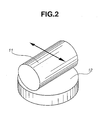
- FIG. 2 is a perspective view of a SRV test unit.
- a sliding mechanism (hereinafter just referred to as a “sliding mechanism”) comprises a pair of sliding parts having sliding portions slidable relative to each other in the presence of fuel.
- the sliding mechanism can be applied to various fuel system components, such as a fuel injection valve (also called “needle valve”) having as sliding parts a needle, a needle guide, a nozzle and a housing and a high-pressure fuel pump having as sliding parts a cam ring, a plunger, a suction valve and a housing, the following exemplary embodiment specifically refers to needle valve 1.
- needle valve 1 has valve housing 2, needle 3 inserted in the center of valve housing 2 so as to make a reciprocating motion, needle guide 4 disposed at the tip end side of valve housing 2 to guide the reciprocating motion of needle 3, and nozzle 5 disposed at the tip end of the valve housing 2 to receive therein needle 3.
- Needle 3 makes sliding contact with needle guide 4 during the fuel injection control, and is pressed against the orifice of nozzle 5 during the stop of fuel injection.
- the outer cylindrical portion (as a sliding portion) of needle 3 is covered with a hard carbon coating. It is alternatively possible to apply hard carbon coatings to the inner cylindrical portion (as a sliding portion) of needle guide 4 and the orifice portion (as a sliding portion) of nozzle 5 instead of applying a hard carbon coating to the outer cylindrical portion of needle 3, or possible to apply hard carbon coatings to the outer cylindrical portion of needle 3, the inner circumferential portion of needle guide 4 and the orifice portion of nozzle 5. To sum up, a thin coating of hard carbon is formed to cover at least one of any two opposed sliding portions of needle 3, needle guide 4 and nozzle 5.
- the hard carbon coating is made of an amorphous carbon material, such as a diamond-like carbon (DLC) material.
- DLC diamond-like carbon
- Specific examples of the DLC material includes hydrogen-free amorphous carbon (a-C), hydrogen-containing amorphous carbon (a-C:H) and/or metal carbide or metal carbon (MeC) that contains as a part a metal element of titanium (Ti) or molybdenum (Mo).
- the coefficient of friction between two opposed sliding portions increases with the hydrogen content of the hard carbon coating.
- the hydrogen content of the hard carbon coating is thus preferably controlled to 30 atomic% or less, more preferably 20 atomic% or less, still more preferably 10 atomic% or less, yet more preferably 5 atomic% or less, and most preferably 0.5 atomic% or less, in order for the hard carbon coating to attain a lower friction coefficient and stable sliding characteristics in the presence of fuel.
- Such a hard carbon coating low in hydrogen content can be formed by a physical vapor deposition (PVD) process, or a plasma chemical vapor deposition (CVD) process.
- PVD physical vapor deposition
- CVD plasma chemical vapor deposition
- the hard carbon coating is desirably formed by the physical vapor deposition process, such as sputtering or arc ion plating, in which the coating atmosphere contains substantially no hydrogen and hydrogen-containing compounds.
- the coating atmosphere contains substantially no hydrogen and hydrogen-containing compounds.
- the sliding portions (base portions) of needle 3, needle guide 4 and nozzle 5 are formed of any metallic material, such as a steel material or an aluminum alloy material. Depending on the usage of the sliding mechanism, the sliding portions may be formed of a resinous material.
- the fuel is selected from the group consisting of gasoline, light oil, alcohol fuel, biodiesel fuel and GTL fuel.
- the gasoline preferably contains therein an ether lubricity improver.
- oxygen-containing organic compounds having one or more ether bonds in the molecule as indicated by the following expression: R 1 -(O-R 2 ) n , where R 1 and R 2 represent hydrocarbon groups, such as alkyl groups, alkenyl groups, cycloalkyl groups, alkylcycloalkyl groups, aryl groups, alkylaryl groups or arylalkyl groups, that may have one or more bonds (groups) selected from hydroxyl, carboxyl, carbonyl, ester and ether, and that may contain an element or elements other than carbon, hydrogen and oxygen, such as halogens (e.g. fluorine and chlorine), nitrogen, sulfur, phosphorous, boron and metals; and n is an integer of 1 to 40, preferably 1 to 6, more preferably 1 to 4.
- R 1 and R 2 represent hydrocarbon groups, such as alkyl groups, alkenyl groups, cycloalkyl groups, alkylcycloalkyl groups, aryl groups, alkylaryl groups or
- the carbon number of each hydrocarbon group R 1 , R 2 is not particularly restricted, and is preferably 1 to 40, more preferably 2 to 30, still more preferably 3 to 20.
- alkyl groups suitable for the ether lubricity improver of the gasoline are C 1 -C 40 straight- or branched-chain alkyl groups (including all possible isomeric groups), such as methyl, ethyl, propyl, butyl, pentyl, hexyl, heptyl, octyl, nonyl, decyl, undecyl, dodecyl, tridecyl, tetradecyl, pentadecyl, hexadecyl, heptadecyl, octadecyl, nonadecyl, icosyl, heneicosyl, docosyl, tricosyl and tetracosyl.
- alkyl groups preferred are C 2 -C 30 alkyl groups, and more preferred are C 3 -C 20 alkyl groups.
- alkenyl groups suitable for the ether lubricity improver of the gasoline are C 2 -C 40 straight- or branched-chain alkenyl groups (including all possible isomeric groups), such as vinyl, propenyl, butenyl, pentenyl, hexenyl, heptenyl, octenyl, nonenyl, decenyl, undecenyl, dodecenyl, tridecenyl, tetradecenyl, pentadecenyl, hexadecenyl, heptadecenyl, octadecenyl, nonadecenyl, icosenyl, heneicosenyl, docosenyl, tricosenyl and tetracosenyl.
- alkenyl groups preferred are C 2 -C 30 alkenyl groups, and more preferred are C 3 -C 20 alkenyl groups,
- cycloalkyl groups suitable for the ether lubricity improver of the gasoline are C 3 -C 40 cycloalkyl groups, such as cyclopentyl, cyclohexyl, cycloheptyl and cyclooctyl. Of these cycloalkyl groups, preferred are C 3 -C 20 cycloalkyl groups, and more preferred are C 5 -C 8 cycloalkyl groups.
- alkylcycloalkyl groups suitable for the ether lubricity improver of the gasoline are C 4 -C 40 alkylcycloalkyl groups (including all possible isomeric groups), such as methylcyclopentyl, dimethylcyclopentyl, ethylmethylcyclopentyl, diethylcyclopentyl, methylcyclohexyl, dimethylcyclohexyl, ethylmethylcyclohexyl, diethylcyclohexyl, methylcycloheptyl, dimethylcycloheptyl, ethylmethylcycloheptyl and diethylcycloheptyl.
- alkylcycloalkyl groups preferred are C 5 -C 20 alkylcycloalkyl groups, and more preferred are C 6 -C 12 alkylcycloalkyl groups.
- aryl groups suitable for the ether lubricity improver of the gasoline are C 6 -C 20 aryl groups, preferably C 6 -C 10 , such as phenyl and naphthyl.
- alkylaryl groups suitable for the ether lubricity improver of the gasoline are C 7 -C 40 alkylaryl groups (including all possible isomeric groups), such as monosubstituted aryl groups, e.g., tolyl, ethylphenyl, propylphenyl, butylphenyl, pentylphenyl, hexylphenyl, heptylphenyl, octylphenyl, nonylphenyl, decylphenyl, undecylphenyl and dodecylphenyl, and polysubstituted aryl groups (i.e.
- aryl groups having two or more same or different substituents selected from alkyl, aryl, alkylaryl and arylalkyl groups), e.g., xylyl, diethylphenyl, dipropylphenyl, 2-methyl-6-tert-butylphenyl, 2,6-di-tert-butyl-4-methylphenyl and 2,6-di-tert-butyl-4-(3,5-di-tert-butyl-4-benzyl)phenyl.
- alkylaryl groups preferred are C 7 -C 20 alkylaryl groups, and more preferred are C 7 -C 12 alkylaryl groups.
- arylalkyl groups suitable for the ether lubricity improver of the gasoline are C 7 -C 40 arylalkyl groups (including all possible isomeric groups), such as benzyl, phenylethyl, phenylpropyl, phenylbutyl, phenylpentyl and phenylhexyl. Of these arylalkyl groups, preferred are C 7 -C 20 arylalkyl groups, and more preferred are C 7 -C 12 arylalkyl groups.
- the ether lubricity improver of the gasoline can be selected from saturated or unsaturated aliphatic ethers, aromatic ethers, cyclic ethers and mixtures thereof.
- saturated or unsaturated aliphatic ethers usable as the ether lubricity improver of the gasoline are C 1 -C 40 saturated or unsaturated aliphatic monoethers (including all possible isomers), such as dimethyl ether, diethyl ether, di-n-propyl ether, diisopropyl ether, di-n-butyl ether, diisobutyl ether, di-n-amyl ether, diisoamyl ether, dihexyl ether, diheptyl ether, dioctyl ether, dinonyl ether, didecyl ether, diundecyl ether, didodecyl ether, ditridecyl ether, ditetradecyl ether, dipentadecyl ether, dihexadecyl ether, diheptadecyl ether, dioctadecyl ether, dinonadecy
- aromatic ether compounds may each have one or more saturated or unsaturated straight or branched aliphatic substituent groups at any positions, and are preferably in liquid form under normal usage conditions, in particular, at ambient temperatures.
- cyclic ether compounds usable as the ether lubricity improver of the gasoline are C 2 -C 40 cyclic ethers, such as ethyleneoxide, propyleneoxide, trimethyleneoxide, tetrahydrofuran, tetrahydropyran, dioxane and glycidyl ether. These cyclic ether compounds may each have one or more substituents selected from saturated or unsaturated aliphatic groups, carbocyclic groups and saturated or unsaturated aliphatic carbocyclic groups at any positions.
- methyl tert-butyl ether MTBE
- ethyl tert-butyl ether ethyl tert-butyl ether
- the amount of methyl tert-butyl ether (MTBE) and/or ethyl tert-butyl ether added is generally 7% or less based on the total mass of the gasoline.
- the light oil preferably has a sulfur content of 500 ppm or less, more preferably 50 ppm or less, in order to reduce the amount of particulate matter (PM) in exhaust gas.
- the light oil preferably contains at least one of a fatty-ester lubricity improver and an aliphatic-amine lubricity improver.
- fatty-ester and aliphatic-amine lubricity improvers there may be used fatty acid esters and aliphatic amines having C 6 -C 30 straight or branched hydrocarbon chains, preferably C 8 -C 24 straight or branched hydrocarbon chains, more preferably C 10 -C 20 straight or branched hydrocarbon chains.
- fatty acid esters and aliphatic amines having C 6 -C 30 straight or branched hydrocarbon chains, preferably C 8 -C 24 straight or branched hydrocarbon chains, more preferably C 10 -C 20 straight or branched hydrocarbon chains.
- Examples of the C 6 -C 30 straight or branched hydrocarbon chain suitable for the fatty-ester or aliphatic-amine lubricity improver of the light oil are: alkyl groups, such as hexyl, heptyl, octyl, nonyl, decyl, undecyl, dodecyl, tridecyl, tetradecyl, pentadecyl, hexadecyl, heptadecyl, octadecyl, nonadecyl, icosyl, heneicosyl, docosyl, tricosyl, tetracosyl, pentacosyl, hexacosyl, heptacosyl, octacosyl, nonacosyl and triacontyl; and alkenyl groups, such as hexenyl, heptenyl, octenyl, nonenyl, decenyl
- the fatty-ester lubricity improver of the light oil can be selected from esters of fatty acids having the above C 6 -C 30 hydrocarbon groups and monohydric or polyhydric aliphatic alcohols.
- Specific examples of the fatty acid ester compounds usable as the lubricity improver of the light oil include glycerol monooleate, glycerol dioleate, sorbitan monooleate and sorbitan dioleate.
- the aliphatic-amine lubricity improver of the light oil can be selected from aliphatic monoamines and alkylene oxide adducts thereof, aliphatic polyamines, imidazolines and derivatives thereof, each having the above C 6 -C 30 hydrocarbon groups.
- aliphatic amine compounds usable as the lubricity improver of the light oil include: aliphatic amine compounds, such as laurylamine, lauryldiethylamine, lauryldiethanolamine, dodecyldipropanolamine, palmitylamine, stearylamine, stearyltetraethylenepentamine, oleylamine, oleylpropylenediamine, oleyldiethanolamine and N-hydroxyethyloleylimidazolyne; alkylene oxide adducts of the above aliphatic amine compounds, such as N,N-dipolyoxyalkylene-N-alkyl or alkenyl (C 6 -C 28 ) amines; and acid-modified compounds prepared by reacting the above aliphatic amine compounds with C 2 -C 30 monocarboxylic acids (such as fatty acids) or C 2 -C 30 polycarboxylic acids (such as oxalic),
- the amount of the fatty-ester lubricity improver and/or the aliphatic-amine lubricity improver added is not particularly restricted, and is preferably 0.05 to 3.0%, more preferably 0.1 to 2.0%, still more preferably 0.5 to 1.4%, based on the total mass of the light oil.
- the amount of the fatty-ester lubricity improver and/or the aliphatic-amine lubricity improver in the light oil is less than 0.05%, there is a possibility of failing to obtain a sufficient friction reducing effect.
- the amount of the fatty-ester lubricity improver and/or the aliphatic-amine lubricity improver in the light oil exceeds 3.0%, there is a possibility that the solubility of the lubricity improver or improvers in the light oil becomes so low that the light oil deteriorates in storage stability to cause precipitations.
- the alcohol fuel is a blend of gasoline and alcohol (also called “gasohol").
- the alcohol blended with gasoline there may be used monohydric alcohols, polyhydric alcohols (dihydric alcohols, tri- or higher hydric alcohols), alkylene oxide adducts thereof, and mixtures thereof.
- the monohydric alcohols are those having one hydroxyl group in each molecule.
- Specific examples of the monohydric alcohols suitable for the alcohol fuel are: C 1 -C 40 monohydric alkyl alcohols (including all possible isomers), such as methanol, ethanol, propanols (1-propanol, 2-propanol), butanols (1-butanol, 2-butanol, 2-methyl-1-propanol, 2-methyl-2-propanol), pentanols (1-pentanol, 2-pentanol, 3-pentanol, 2-methyl-1-butanol, 3-methyl-1-butanol, 3-methyl-2-butanol, 2-methyl-2-butanol, 2,2-dimethyl-1-propanol), hexanols (1-hexanol, 2-hexanol, 3-hexanol, 2-methyl-1-pentanol, 2-methyl-2-pentanol, 2-methyl-3-pentan
- low-volatile C 12 -C 18 straight- or branched-chain alkyl or alkenyl alcohols such as oleyl alcohol and stearyl alcohol, so as to obtain a greater friction reducing effect on the sliding friction between the hard-carbon coated sliding part and the opposite sliding part under high-temperature conditions.
- the dihydric alcohols are those having two hydroxyl groups in each molecule.
- Specific examples of the dihydric alcohols suitable for the alcohol fuel are: C 2 -C 40 alkyl or alkenyl diols (including all possible isomers), such as ethylene glycol, diethylene glycol, polyethylene glycols, propylene glycol, dipropylene glycol, polypropylene glycols, neopentyl grycol, 1,3-propanediol, 1,4-butanediol, 1,2-butanediol, 2-methyl-1,3-propanediol, 1,5-pentanediol, 1,6-hexanediol, 2-ethyl-2-methyl-1,3-propanediol, 2-methyl-2,4-pentanediol, 1,7-heptanediol, 2-methyl-2-propyl-1,3-propanediol, 2,2-diethyl
- ethylene glycol propylene glycol, neopentyl glycol, 1,4-butanediol, 1,5-pentanediol, 1,6-hexanediol, 2-methyl-2,4-pentanediol, 2-ethyl-2-methyl-1,3-propanediol, 1,7-heptanediol, 1,8-octanediol, 1,9-nonanediol, 1,10-decanediol, 1,11-undecanediol and 1,12-dodecanediol to obtain a greater friction reducing effect on the sliding friction between the hard-carbon coated sliding part and the opposite sliding part.
- Hindered alcohols having a high molecular weight of 300 or larger, preferably 400 or larger, such as 2,6-di-tert-butyl-4-(3,5-di-tert-butyl-4-hydroxylbenzyl)phenyl alcohol, are especially preferred to secure high oxidation resistance while obtaining a good friction reducing effect, because the high-molecular-weight hindered alcohols have high heat resistance and low volatility under high-temperature conditions (e.g. under sliding conditions of an internal combustion engine).
- the tri- or higher hydric alcohols are those having three or more hydroxyl groups in each molecule.
- trihydric to decahydric alcohols preferably trihydric to hexahydric alcohols
- trihydric to hexahydric alcohols are used.
- Specific examples of the tri- or higher hydric alcohols suitable for the alcohol fuel are glycerol; trimethylolalkanes such as trimethylolethane, trimethylolpropane and trimethylolbutane; erythritol; pentaerythritol; 1,2,4-butanetriol; 1,3,5-pentanetriol; 1,2,6-hexanetriol; 1,2,3,4-butanetetrol; sorbitol; adonitol; arabitol; xylitol; mannitol; and polymerization and condensation products thereof, such as a dimer, a trimer a tetramer, a pentamer, a
- sugar alcohols such as xylose, arabitol, ribose, rhamnose, glucose, fructose, galactose, mannose, sorbose, cellobiose, mantose, isomaltose, trehalose and saccharose.
- trihydric to hexahydric alcohols such as glycerin, trimethylolalkanes (trimethylolethane, trimethylolpropane, trimethylolbutane etc.), pentaerythritol, 1,2,4-butanetriol, 1,3,5-pentanetriol, 1,2,6-hexanetriol, 1,2,3,4-butanetetrol, sorbitol, sorbitan, sorbitol/glycerin condensates, adonitol, arabitol, xylitol, mannitol and mixtures thereof.
- trihydric to hexahydric alcohols such as glycerin, trimethylolalkanes (trimethylolethane, trimethylolpropane, trimethylolbutane etc.), pentaerythritol, 1,2,4-butanetriol, 1,3,5-pentanetriol, 1,2,6-hexanetriol,
- glycerin trimethylolethane, trimethylolpropane, pentaerythritol, solbitan and mixtures thereof, especially trihydric to hexahydric hydric alcohols having an oxygen content of 20% or higher, desirably 30% or higher, more desirably 40% or higher, are more preferred. It should be noted that hepta- or higher hydric alcohols tend to become too high in viscosity.
- alkylene oxide adducts of the above mono- or polyhydric alcohols suitable for the alcohol fuel are those prepared by adding C 2 -C 6 alkylene oxides, preferably C 2 -C 4 alkylene oxides, or polymers (or copolymers) thereof to the alcohols to thereby hydrocarbyletherify or hydrocarbylesterify the hydroxyl groups of the alcohols.
- C 2 -C 6 alkylene oxides there may be used ethylene oxide, propylene oxide, 1,2-epoxybutane ( ⁇ -butylene oxide), 2,3-epoxybutane ( ⁇ -butylene oxide), 1,2-epoxy-1-methylpropane, 1,2-epoxyheptane, 1,2-epoxyhexane.
- ethylene oxide, propylene oxide and/or butylene oxide especially ethylene oxide and/or propylene oxide, so as to obtain a greater friction reducing effect.
- the polymerization process of oxyalkylene groups is not specifically restricted, and the oxyalkylene groups may be random-copolymerized or block-copolymerized.
- the alkylene oxide may be added to any polyalcohol having 2 to 6 hydroxyl groups, the alkylene oxide may be added to a part or all of the hydroxyl groups of the polyalcohol.
- ethanol derived from biomass sources is preferred for reduction of CO 2 emission.
- the biodiesel fuel contains therein a few % to 100% of a FAME mixure.
- the biodiesel fuel is a pure FAME mixture or a blend of light oil and FAME mixture.
- FAME mixture refers to a mixture of fatty acid methyl esters derived from vegetable oil, such as rape-seed oil, soybean oil and corn oil, and/or waste edible oils, such as frying oil, and can be synthetically prepared by subjecting the vegetable and waste edible oils to hydrolytic degradation to yield fatty acids and glycerol, and then, condensing the thus-obtained fatty acids with methanol.
- the FAME mixture contains various fatty acid fractions derived from the respective fatty acids of these raw oils.
- the GTL fuel contains a few % to 100% of a GTL (Gas-to-Liquid) product.
- the GTL fuel is a pure GTL product, or a blend of light oil and GTL product.
- the term "GTL product” refers to a liquid (hydrocarbon) product obtained by the conversion of natural gas and be free of sulfur and aromatic compounds.
- the GTL fuel may preferably contain at least one of a fatty-ester lubricity improver and an aliphatic-amine lubricity improver.
- fatty-ester and aliphatic-amine lubricity improvers there may be used fatty acid esters and aliphatic amines having C 6 -C 30 straight or branched hydrocarbon chains, preferably C 8 -C 24 straight or branched hydrocarbon chains, more preferably C 10 -C 20 straight or branched hydrocarbon chains.
- fatty acid esters and aliphatic amines having C 6 -C 30 straight or branched hydrocarbon chains, preferably C 8 -C 24 straight or branched hydrocarbon chains, more preferably C 10 -C 20 straight or branched hydrocarbon chains.
- Examples of the C 6 -C 30 straight or branched hydrocarbon chain suitable for the fatty-ester or aliphatic-amine lubricity improver of the GTL fuel are: alkyl groups, such as hexyl, heptyl, octyl, nonyl, decyl, undecyl, dodecyl, tridecyl, tetradecyl, pentadecyl, hexadecyl, heptadecyl, octadecyl, nonadecyl, icosyl, heneicosyl, docosyl, tricosyl, tetracosyl, pentacosyl, hexacosyl, heptacosyl, octacosyl, nonacosyl and triacontyl; and alkenyl groups, such as hexenyl, heptenyl, octenyl, nonenyl, deceny
- the fatty-ester lubricity improver of the GTL fuel can be selected from esters of fatty acids having the above C 6 -C 30 hydrocarbon groups and monohydric or polyhydric aliphatic alcohols.
- Specific examples of the fatty acid ester compounds usable as the lubricity improver of the GTL fuel include glycerol monooleate, glycerol dioleate, sorbitan monooleate and sorbitan dioleate.
- the aliphatic-amine lubricity improver of the GTL fuel can be selected from aliphatic monoamines and alkylene oxide adducts thereof, aliphatic polyamines, imidazolines and derivatives thereof each having the above C 6 -C 30 hydrocarbon groups.
- aliphatic amine compounds usable as the lubricity improver of the GTL fuel include: aliphatic amine compounds, such as laurylamine, lauryldiethylamine, lauryldiethanolamine, dodecyldipropanolamine, palmitylamine, stearylamine, stearyltetraethylenepentamine, oleylamine, oleylpropylenediamine, oleyldiethanolamine and N-hydroxyethyloleylimidazolyne; alkylene oxide adducts of the above aliphatic amine compounds, such as N,N-dipolyoxyalkylene-N-alkyl or alkenyl (C 6 -C 28 ) amines; and acid-modified compounds prepared by reacting the above aliphatic amine compounds with C 2 -C 30 monocarboxylic acids (such as fatty acids) or C 2 -C 30 polycarboxylic acids (such as oxa), ali
- the amount of the fatty-ester lubricity improver and/or the aliphatic-amine lubricity improver added is not particularly restricted, and is preferably 0.05 to 3.0%, more preferably 0.1 to 2.0%, still more preferably 0.5 to 1.4%, based on the total mass of the GTL fuel.
- the amount of the fatty-ester lubricity improver and/or the aliphatic-amine lubricity improver in the GTL fuel is less than 0.05%, there is a possibility of failing to obtain a sufficient friction reducing effect.
- the amount of the fatty-ester lubricity improver and/or the aliphatic-amine lubricity improver in the GTL fuel exceeds 3.0%, there is a possibility that the solubility of the lubricity improver or improvers in the GTL fuel becomes so low that the GTL fuel deteriorates in storage stability to cause precipitations.
- test pieces and opposite pieces were prepared as follows and subjected to SRV test under the following conditions in Examples 1-15 and Comparative Examples 1-20.
- the SRV test was conducted using a SRV tester, in which the test piece (11) was allowed to slide on the opposite piece (12) in a reciprocating manner (along a double-headed arrow) as shown in FIG. 2.
- the coefficient of sliding friction between the test piece (11) and the opposite piece (12) was measured during the test. After the test, the amount of wear on the test piece (11) was observed.
- the test results are shown in TABLES 1 to 5.
- Test piece (11) A cylindrical-shaped piece having a dimension of 18 mm (diameter) ⁇ 22 mm (length) Opposite piece (12) A disc-shaped piece having a dimension of 24 mm (diameter) ⁇ 7 mm (thickness).
- a cylindrical block having a dimension of 18 mm (diameter) x 22 mm (length) was cut from high-carbon chromium steel SUJ2 according to JIS G4805.
- a DLC coating film having a hydrogen content of 20 atomic% and a thickness of 0.5 ⁇ m was then formed by a PVD arc ion plating process on a cylindrical portion of the cut block, thereby giving a test piece (11).
- a disc-shaped piece having a dimension of 24 mm (diameter) ⁇ 7 mm (thickness) was cut from carbon steel S45C according to JIS G4051 and finished to a surface roughness Ra of 0.2 ⁇ m, thereby giving an opposite piece (12).
- the surface roughness Ra is explained as Ra 75 according to JIS B0601.
- the SRV test was then performed on the test piece (11) and opposite piece (12) under a condition that gasoline with no additives was applied to the test piece (11).
- a test piece (11) was prepared in the same way as in Example 1, except that a DLC coating film having a hydrogen content of 0.5 atomic% and a thickness of 0.5 ⁇ m was formed on the cut block. Further, the same opposite piece (12) as used in Example 1 was prepared. The SRV test was then performed on the test piece (11) and opposite piece (12) under a condition that gasoline with no additives was applied to the test piece (11).
- test piece (11) and the same opposite piece (12) as used in Example 2 were prepared.
- the SRV test was performed on the test piece (11) and opposite piece (12) under a condition that gasoline containing 6% by mass ethyl tert-butyl ether was applied to the test piece (11).
- test piece (11) was prepared in the same manner as in Example 1, except that a chrome plating film having a thickness of 50 ⁇ m was formed in place of the DLC coating film. Further, the same opposite piece (12) as used in Example 1 was prepared. The SRV test was then performed on the test piece (11) and opposite piece (12) under a condition that gasoline with no additives was applied to the test piece (11).
- test piece (11) was prepared in the same manner as in Example 1, except that a chrome nitride film having a thickness of 20 ⁇ m was formed in place of the DLC coating film. Further, the same opposite piece (12) as used in Example 1 was prepared. The SRV test was then performed on the test piece (11) and opposite piece (12) under a condition that gasoline with no additives was applied to the test piece (11).
- test piece (11) and the same opposite piece (12) as used in Comparative Example 1 were prepared. Then, the SRV test was performed on the test piece (11) and opposite piece (12) under a condition that gasoline containing 6% by mass ethyl tert-butyl ether was applied to the test piece (11).
- test piece (11) and the same opposite piece (12) as used in Comparative Example 2 were prepared.
- the SRV test was performed on the test piece (11) and opposite piece (12) under a condition that gasoline containing 6% by mass ethyl tert-butyl ether was applied to the test piece (11).
- a test piece (11) was prepared in the same manner as in Example 1, except that a DLC coating film was formed on the cylindrical portion of the cut block by a CVD process with a hydrogen content of 35 atomic% and a thickness of 12 ⁇ m. Further, the same opposite piece (12) as used in Example 1 was prepared. The SRV test was then performed on the test piece (11) and opposite piece (12) under a condition that gasoline with no additives was applied to the test piece (11).
- Test piece Lubricity improver content (%) Test results Coating film Hydrogen content (atomic%) Friction coefficient Wear amount Example 1 DLC 20 0 0.054 1.5 Example 2 DLC 0.5 0 0.044 1.3 Example 3 DLC 0.5 6 0.040 1.0 Comparative Example 1 Cr plating - 0 0.185 5.5 Comparative Example 2 CrN - 0 0.120 2.2 Comparative Example 3 Cr plating - 6 0.183 5.4 Comparative Example 4 CrN - 6 0.121 2.3 Comparative Example 5 DLC 35 0 0.064 1.7 Lubricity improver: ethyl tert-butyl ether Note: The wear amounts of the test pieces of Examples 1-2 and Comparative Examples 1-5 are indicated with reference to the wear amount of the test piece of Example 3.
- a cylindrical block having a dimension of 18 mm (diameter) x 22 mm (length) was cut from high-carbon chromium steel SUJ2 according to JIS G4805.
- a DLC coating film having a hydrogen content of 20 atomic% and a thickness of 0.5 ⁇ m was then formed by a PVD arc ion plating process on a cylindrical portion of the cut block, thereby giving a test piece (11).
- a disc-shaped piece having a dimension of 24 mm (diameter) ⁇ 7 mm (thickness) was cut from carbon steel S45C according to JIS G4051 and finished to a surface roughness Ra of 0.2 ⁇ m, thereby giving an opposite piece (12).
- the surface roughness Ra is herein explained as Ra 75 according to JIS B0601.
- test piece (11) was prepared in the same way as in Example 4, except that a DLC coating film having a hydrogen content of 0.5 atomic% and a thickness of 0.5 ⁇ m was formed on the cut block. Further, the same opposite piece (12) as used in Example 4 was prepared. The SRV test was then performed on the test piece (11) and opposite piece (12) under a condition that light oil with no additives was applied to the test piece (11).
- test piece (11) and the same opposite piece (12) as used in Example 5 were prepared.
- the SRV test was performed on the test piece (11) and opposite piece (12) under a condition that light oil containing 1% by mass glycerol monooleate was applied to the test piece (11).
- test piece (11) was prepared in the same manner as in Example 4, except that a chrome plating film having a thickness of 50 ⁇ m was formed in place of the DLC coating film. Further, the same opposite piece (12) as used in Example 4 was prepared. The SRV test was then performed on the test piece (11) and opposite piece (12) under a condition that light oil with no additives was applied to the test piece (11).
- test piece (11) was prepared in the same manner as in Example 4, except that a chrome nitride film having a thickness of 20 ⁇ m was formed in place of the DLC coating film. Further, the same opposite piece (12) as used in Example 4 was prepared. The SRV test was then performed on the test piece (11) and opposite piece (12) under a condition that light oil with no additives was applied to the test piece (11).
- test piece (11) and the same opposite piece (12) as used in Comparative Example 6 were prepared.
- the SRV test was performed on the test piece (11) and opposite piece (12) under a condition that light oil containing 1% by mass glycerol monooleate was applied to the test piece (11).
- test piece (11) and the same opposite piece (12) as used in Comparative Example 7 were prepared.
- the SRV test was performed on the test piece (11) and opposite piece (12) under a condition that light oil containing 1% by mass glycerol monooleate was applied to the test piece (11).
- a test piece (11) was prepared in the same manner as in Example 4, except that a DLC coating was formed on the cylindrical portion of the cut block by a CVD process with a hydrogen content of 35 atomic% and a thickness of 12 ⁇ m. Further, the same opposite piece (12) as used in Example 4 was prepared. The SRV test was then performed on the test piece (11) and opposite piece (12) under a condition that light oil with no additives was applied to the test piece (11).
- Test piece Lubricity improver content (%) Test results Coating film Hydrogen content (atomic%) Friction coefficient Wear amount Example 4 DLC 20 0 0.055 1.4 Example 5 DLC 0.5 0 0.042 1.1 Example 6 DLC 0.5 1 0.040 1.0 Comparative Example 6 Cr plating - 0 0.170 4.5 Comparative Example 7 CrN - 0 0.140 2.4 Comparative Example 8 Cr plating - 1 0.170 4.7 Comparative Example 9 CrN - 1 0.142 2.5 Comparative Example 10 DLC 35 0 0.065 1.8 Lubricity improver: glycerol monooleate Note: The wear amounts of the test pieces of Examples 4-5 and Comparative Examples 6-10 are indicated with reference to the wear amount of the test piece of Example 6.
- a cylindrical block having a dimension of 18 mm (diameter) x 22 mm (length) was cut from high-carbon chromium steel SUJ2 according to JIS G4805.
- a DLC coating film having a hydrogen content of 20 atomic% and a thickness of 0.5 ⁇ m was then formed by a PVD arc ion plating process on a cylindrical portion of the cut block, thereby giving a test piece (11).
- a disc-shaped piece having a dimension of 24 mm (diameter) ⁇ 7 mm (thickness) was cut from carbon steel S45C according to JIS G4051 and finished to a surface roughness Ra of 0.2 ⁇ m, thereby giving an opposite piece (12).
- the surface roughness Ra is explained as Ra 75 according to JIS B0601.
- a test piece (11) was prepared in the same way as in Example 7, except that a DLC coating film having a hydrogen content of 0.5 atomic% and a thickness of 0.5 ⁇ m was formed on the cut block. Further, the same opposite piece (12) as used in Example 7 was prepared. The SRV test was then performed on the test piece (11) and opposite piece (12) under a condition that alcohol fuel containing 90% by mass gasoline and 10% by mass ethanol was applied to the test piece (11).
- test piece (11) and the same opposite piece (12) as used in Example 8 were prepared.
- the SRV test was performed on the test piece (11) and opposite piece (12) under a condition that alcohol fuel containing 15% by mass gasoline and 85% by mass ethanol was applied to the test piece (11).
- test piece (11) was prepared in the same manner as in Example 7, except that a chrome plating film having a thickness of 50 ⁇ m was formed in place of the DLC coating film. Further, the same opposite piece (12) as used in Example 7 was prepared. The SRV test was then performed on the test piece (11) and opposite piece (12) under a condition that alcohol fuel containing 90% by mass gasoline and 10% by mass ethanol was applied to the test piece (11).
- test piece (11) was prepared in the same manner as in Example 7, except that a chrome nitride film having a thickness of 20 ⁇ m was formed in place of the DLC coating film. Further, the same opposite piece (12) as used in Example 7 was prepared. The SRV test was then performed on the test piece (11) and opposite piece (12) under a condition that alcohol fuel containing 90% by mass gasoline and 10% by mass ethanol was applied to the test piece (11).
- test piece (11) and the same opposite piece (12) as used in Comparative Example 11 were prepared.
- the SRV test was performed on the test piece (11) and opposite piece (12) under a condition that alcohol fuel containing 15% by mass gasoline and 85% by mass ethanol was applied to the test piece (11).
- test piece (11) and the same opposite piece (12) as used in Comparative Example 12 were prepared.
- the SRV test was performed on the test piece (11) and opposite piece (12) under a condition that alcohol fuel containing 15% by mass gasoline and 85% by mass ethanol was applied to the test piece (11).
- a test piece (11) was prepared in the same manner as in Example 7, except that a DLC coating film was formed on the cylindrical portion of the cut block by a CVD process with a hydrogen content of 35 atomic% and a thickness of 12 ⁇ m. Further, the same opposite piece (12) as used in Example 7 was prepared. The SRV test was then performed on the test piece (11) and opposite piece (12) under a condition that alcohol fuel containing 90% by mass gasoline and 10% by mass ethanol was applied to the test piece (11).
- Test piece Ethanol content in fuel (%) Test results Coating film Hydrogen content (atomic%) Friction coefficient Wear amount
- Example 7 DLC 20 10 0.070 1.7
- Example 8 DLC 0.5 10 0.050 1.5
- Example 9 DLC 0.5 85 0.042 1.0 Comparative Example 11 Cr plating - 10 0.185 8.4 Comparative Example 12 CrN - 10 0.110 3.2 Comparative Example 13 Cr plating - 85 0.224 10.2 Comparative Example 14 CrN - 85 0.145 3.7 Comparative Example 15 DLC 35 10 0.082 2.2 Note: The wear amounts of the test pieces of Examples 7-8 and Comparative Examples 11-15 are indicated with reference to the wear amount of the test piece of Example 9.
- a cylindrical block having a dimension of 18 mm (diameter) ⁇ 22 mm (length) was cut from high-carbon chromium steel SUJ2 according to JIS G4805.
- a DLC coating film having a hydrogen content of 20 atomic% and a thickness of 0.5 ⁇ m was then formed by a PVD arc ion plating process on a cylindrical portion of the cut block, thereby giving a test piece (11).
- a disc-shaped piece having a dimension of 24 mm (diameter) ⁇ 7 mm (thickness) was cut from carbon steel S45C according to JIS G4051 and finished to a surface roughness Ra of 0.2 ⁇ m, thereby giving an opposite piece (12).
- the surface roughness Ra is explained as Ra 75 according to JIS B0601.
- the SRV test was performed on the test piece (11) and opposite piece (12) under a condition that biodiesel fuel containing 95% by mass light oil and 5% by mass a mixture of rape-seed methyl esters (prepared by methyl-esterifying rape-seed oil) was applied to the test piece (11).
- a test piece (11) was prepared in the same way as in Example 10, except that a DLC coating film having a hydrogen content of 0.5 atomic% and a thickness of 0.5 ⁇ m was formed on the cut block.
- the same opposite piece (12) as used in Example 10 was prepared.
- the SRV test was performed on the test piece (11) and opposite piece (12) under a condition that biodiesel fuel containing 95% by mass light oil and 5% by mass a mixture of rape-seed methyl esters (prepared by methyl-esterifying rape-seed oil) was applied to the test piece (11).
- test piece (11) and the same opposite piece (12) as used in Example 11 were prepared.
- the SRV test was performed on the test piece (11) and opposite piece (12) under a condition that biodiesel fuel containing 70% by mass light oil and 30% by mass a mixture of rape-seed methyl esters (prepared by methyl-esterifying rape-seed oil) was applied to the test piece (11).
- a test piece (11) was prepared in the same manner as in Example 10, except that a chrome plating film having a thickness of 50 ⁇ m was formed in place of the DLC coating film.
- the same opposite piece (12) as used in Example 10 was prepared.
- the SRV test was performed on the test piece (11) and opposite piece (12) under a condition that biodiesel fuel containing 95% by mass light oil and 5% by mass a mixture of rape-seed methyl esters (prepared by methyl-esterifying rape-seed oil) was applied to the test piece (11).
- test piece (11) was prepared in the same manner as in Example 10, except that a chrome nitride film having a thickness of 20 ⁇ m was formed in place of the DLC coating film. Further, the same opposite piece (12) as used in Example 10 was prepared. The SRV test was then performed on the test piece (11) and opposite piece (12) under a condition that biodiesel fuel containing 95% by mass light oil and 5% by mass a mixture of rape-seed methyl esters (prepared by methyl-esterifying rape-seed oil) was applied to the test piece (11).
- test piece (11) and the same opposite piece (12) as used in Comparative Example 16 were prepared.
- the SRV test was performed on the test piece (11) and opposite piece (12) under a condition that biodiesel fuel containing 70% by mass light oil and 30% by mass a mixture of rape-seed methyl esters (prepared by methyl-esterifying rape-seed oil) was applied to the test piece (11).
- test piece (11) and the same opposite piece (12) as used in Comparative Example 17 were prepared.
- the SRV test was performed on the test piece (11) and opposite piece (12) under a condition that biodiesel fuel containing 70% by mass light oil and 30% by mass a mixture of rape-seed methyl esters (prepared by methyl-esterifying rape-seed oil) was applied to the test piece (11).
- a test piece (11) was prepared in the same manner as in Example 10, except that a DLC coating film was formed on the cylindrical portion of the cut block by a CVD process with a hydrogen content of 35 atomic% and a thickness of 12 ⁇ m.
- the same opposite piece (12) as used in Example 10 was prepared.
- the SRV test was performed on the test piece (11) and opposite piece (12) under a condition that biodiesel fuel containing 95% by mass light oil and 5% by mass a mixture of rape-seed methyl esters (prepared by methyl-esterifying rape-seed oil) was applied to the test piece (11).
- a cylindrical block having a dimension of 18 mm (diameter) ⁇ 22 mm (length) was cut from high-carbon chromium steel SUJ2 according to JIS G4805.
- a DLC coating film having a hydrogen content of 20 atomic% and a thickness of 0.5 ⁇ m was then formed by a PVD arc ion plating process on a cylindrical portion of the cut block, thereby giving a test piece (11).
- a disc-shaped piece having a dimension of 24 mm (diameter) ⁇ 7 mm (thickness) was cut from carbon steel S45C according to JIS G4051 and finished to a surface roughness Ra of 0.2 ⁇ m, thereby giving an opposite piece (12).
- the surface roughness Ra is herein explained as Ra 75 according to JIS B0601.
- the SRV test was performed on the test piece (11) and opposite piece (12) under a condition that GTL fuel with no light oil and no additives (i.e. a GTL product obtained from natural gas by Fischer-Tropsch process) was applied to the test piece (11).
- GTL fuel with no light oil and no additives i.e. a GTL product obtained from natural gas by Fischer-Tropsch process
- a test piece (11) was prepared in the same way as in Example 13, except that a DLC coating film having a hydrogen content of 0.5 atomic% and a thickness of 0.5 ⁇ m was formed on the cut block. Further, the same opposite piece (12) as used in Example 13 was prepared. The SRV test was then performed on the test piece (11) and opposite piece (12) under a condition that GTL fuel with no light oil and no additives (i.e. a GTL product obtained from natural gas by Fischer-Tropsch process) was applied to the test piece (11).
- GTL fuel with no light oil and no additives i.e. a GTL product obtained from natural gas by Fischer-Tropsch process
- test piece (11) and the same opposite piece (12) as used in Example 14 were prepared.
- the SRV test was performed on the test piece (11) and opposite piece (12) under a condition that GTL fuel prepared by blending 1% by mass glycerol monooleate with a GTL product (obtained from natural gas by Fischer-Tropsch process) was applied to the test piece (11).
- a test piece (11) was prepared in the same manner as in Example 13, except that a chrome plating film having a thickness of 50 ⁇ m was formed in place of the DLC coating film. Further, the same opposite piece (12) as used in Example 13 was prepared. The SRV test was then performed on the test piece (11) and opposite piece (12) under a condition that GTL fuel with no light oil and no additives (i.e. a GTL product obtained from natural gas by Fischer-Tropsch process) was applied to the test piece (11).
- GTL fuel with no light oil and no additives i.e. a GTL product obtained from natural gas by Fischer-Tropsch process
- a test piece (11) was prepared in the same manner as in Example 13, except that a chrome nitride film having a thickness of 20 ⁇ m was formed in place of the DLC coating film. Further, the same opposite piece (12) as used in Example 13 was prepared. The SRV test was then performed on the test piece (11) and opposite piece (12) under a condition that GTL fuel with no light oil and no additives (i.e. a GTL product obtained from natural gas by Fischer-Tropsch process) was applied to the test piece (11).
- GTL fuel with no light oil and no additives i.e. a GTL product obtained from natural gas by Fischer-Tropsch process
- test piece (11) and the same opposite piece (12) as used in Comparative Example 21 were prepared.
- the SRV test was performed on the test piece (11) and opposite piece (12) under a condition that GLT fuel prepared by blending 1% by mass glycerol monooleate with a GTL product (obtained from natural gas by Fischer-Tropsch process) was applied to the test piece (11).
- test piece (11) and the same opposite piece (12) as used in Comparative Example 22 were prepared.
- the SRV test was performed on the test piece (11) and opposite piece (12) under a condition that GLT fuel prepared by blending 1% by mass glycerol monooleate with a GTL product (obtained from natural gas by Fischer-Tropsch process) was applied to the test piece (11).
- a test piece (11) was prepared in the same manner as in Example 13, except that a DLC coating film was formed on the cylindrical portion of the cut block by a CVD process with a hydrogen content of 35 atomic% and a thickness of 12 ⁇ m. Further, the same opposite piece (12) as used in Example 13 was prepared. The SRV test was then performed on the test piece (11) and opposite piece (12) under a condition that GTL fuel with no light oil and no additives (i.e. a GTL product obtained from natural gas by Fischer-Tropsch process) was applied to the test piece (11).
- GTL fuel with no light oil and no additives i.e. a GTL product obtained from natural gas by Fischer-Tropsch process
- Test piece Lubricity improver content (%) Test results Coating film Hydrogen content (atomic%) Friction coefficient Wear amount Example 13 DLC 20 0 0.062 1.7
- Example 14 DLC 0.5 0 0.050 1.3
- Example 15 DLC 0.5 1 0.045 1.0 Comparative Example 21 Cr plating - 0 0.175 4.8 Comparative Example 22 CrN - 0 0.142 2.4 Comparative Example 23 Cr plating - 1 0.168 4.7 Comparative Example 24 CrN - 1 0.140 2.5 Comparative Example 25 DLC 35 0 0.071 2.2 Lubricity improver: glycerol monooleate Note: The wear amounts of the test pieces of Examples 13-14 and Comparative Examples 21-25 are indicated with reference to the wear amount of the test piece of Example 15.
- test pieces (11) and opposite pieces (12) as in Examples 7 and 9 and Comparative Examples 13, 14 and 15 were prepared in Examples 16 and 17 and Comparative Examples 26, 27 and 28 respectively, and then, subjected to the SRV test in an ethanol bath.
- the test conditions were the same as above, except that the test time was 1 hour. After the test, the wear amount of the test piece (11) and the occurrence of corrosion on the test piece (11) were observed. The test results are shown in FIG. 6.
- Test piece Test results Coating film Hydrogen content (atomic%) Wear amount Occurrence of corrosion Example 16 DLC 20 1.8 Not occurred Example 17 DLC 0.5 1.0 Not occurred Comparative Example 26 Cr plating - 18.8 Occurred Comparative Example 27 CrN - 7.7 Slightly occurred Comparative Example 28 DLC 35 2.5 Not occurred Note: The wear amounts of the test pieces of Example 16 and Comparative Examples 26-28 are indicated with reference to the wear amount of the test piece of Example 17.
- the sliding parts have a hard carbon coating low in hydrogen content according to the present invention.
- the sliding parts are thus able to attain a low coefficient of sliding friction and high wear resistance in the presence of gasoline, light oil, alcohol fuel, biodiesel fuel or GTL fuel.
- the sliding parts are also able to attain high corrosion resistance in gasoline, light oil, alcohol fuel, biodiesel fuel or GTL fuel. It is therefore possible to increase, when the sliding mechanism is applied to a fuel system component, such as a fuel injection valve, the durability/reliability of the fuel system component.
Landscapes
- Engineering & Computer Science (AREA)
- General Engineering & Computer Science (AREA)
- Chemical & Material Sciences (AREA)
- Mechanical Engineering (AREA)
- Chemical Kinetics & Catalysis (AREA)
- General Chemical & Material Sciences (AREA)
- Oil, Petroleum & Natural Gas (AREA)
- Organic Chemistry (AREA)
- Lubricants (AREA)
- Liquid Carbonaceous Fuels (AREA)
Abstract
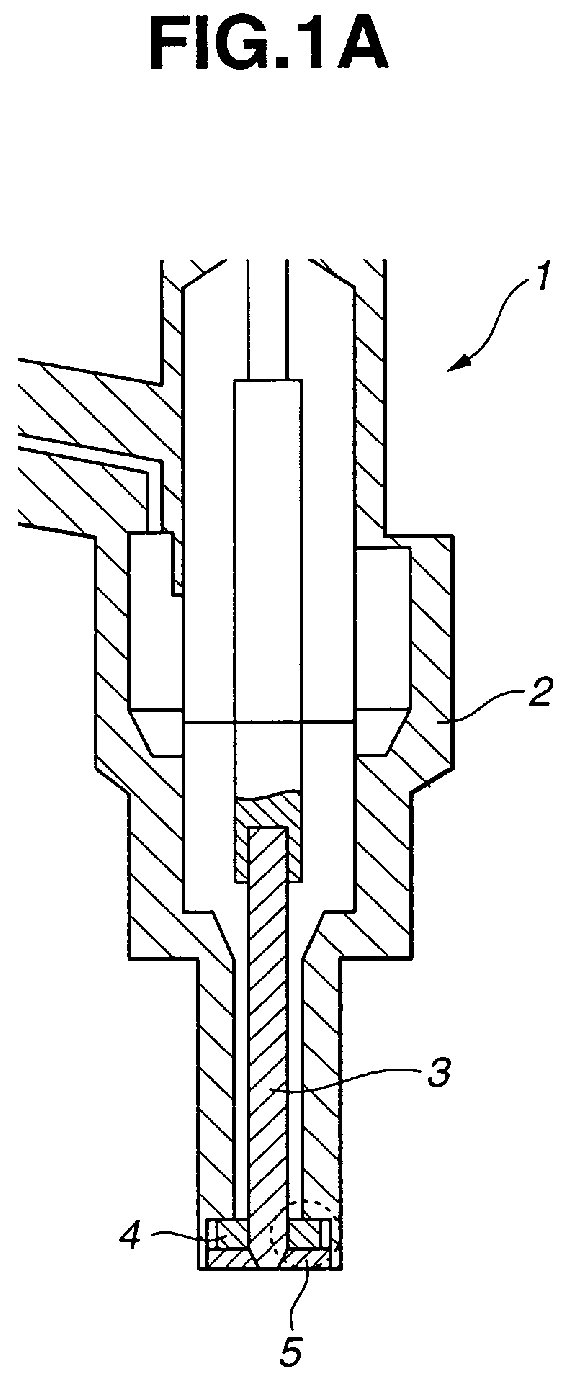
Description
- The present application is related to the following applications: U.S. Patent Application No. 09/545,181 (based on Japanese Patent Application No. 11-102205, filed on April 9, 1999); U.S. Patent Application No. 10/468,713, which is the national phase of PCT Application No. JP02/10057 (based on Japanese Patent Application No. 2001-117680, filed on April 17, 2001); U.S. Patent Application No. 10/355,099 (based on Japanese Patent Application No. 2002-45576, filed on February 22, 2002); U.S. Patent Application No. 10/682,559 (based on Japanese Patent Application No. 2002-302205, filed on October 16, 2002); and U.S. Patent Application No. 10/692,853 (based on Japanese Patent Application No. 2002-322322, filed on October 16, 2002).
- The invention relates to a fuel lubricated sliding mechanism, and more particularly to a sliding mechanism for e.g. an automotive fuel system component, such as a fuel injection valve or a high-pressure fuel pump, having sliding parts slidable relative to each other in the presence of fuel.
- A fuel system includes a plurality of components, such as a fuel injection valve and a high-pressure fuel pump, having component parts slidable relative to each other in the presence of fuel. These sliding component parts are generally made of martensitic stainless steel, and susceptible to abnormal wear owing to fuel corrosion. In order to prevent such abnormal wear, Japanese Laid-Open Patent Publication No. 7-063135 proposes forming hard thin coating films of chromium nitride (CrN) or titanium nitride (TiN) on the respective sliding parts of a fuel injection valve.
- Further, there has been an increasing expectation for biofuels due to the recent awareness of fossil-fuel exhaustion and environmental problems resulting from auto emission and CO2 emission. The biofuels are derived from field clops (such as rape seeds, soybeans and sugarcane), agricultural waste (such as straw and chaff) and other biomass sources and known for its less health and environmental impact.
- For gasoline engines, alcohol fuels prepared by blending gasoline with e.g. sugarcone- or cassava-derived ethanol are already in practical use. So-called "E3" (gasohol of 3% ethanol and 97% gasoline) and "E10" (gasohol of 10% ethanol and 90% gasoline) are proceeding toward the practical use in North America etc., and the practical use of "E85" and "E95" (gasohol with higher ethanol contents) is being examined.
- For diesel engines, mixtures of fatty acid methyl esters (abbreviated as "FAME") derived from vegetable oils or waste edible oils are usable. The FAME mixture has a sulfur content lower than that of light oil, and is expected to be useful as environment-conscious fuel material. In addition, it has been proved that the FAME mixture allows as high mileage per unit quantity as the light oil.
- The conversion of natural gas to liquid hydrocarbons is also proposed to obtain so-called "GTL (Gas-to-Liquid) products", as an alternative to fossil fuel, for diesel engines. The GTL product does not contain sulfur and aromatic compounds, and is expected to be as clean fuel material as LNG (liquid natural gas).
- The above-proposed coating technique is originally intended for the protection of the sliding parts of the fuel injection valve from abnormal wear in alcohol or gas fuel. When the proposed fuel injection valve is used to inject alcohol fuel or gas fuel, the CrN- or TiN-coated sliding parts may be protected from abnormal wear but do not show sufficient low-friction characteristics. When the proposed fuel injection valve is used to inject gasoline, light oil, biodiesel fuel or GTL fuel, the CrN- or TiN-coated sliding parts cannot always show low-friction characteristics and corrosion/wear resistance. It is thus desired that the sliding parts of the fuel system component be provided with not only high corrosion/wear resistance but also sufficient low-friction characteristics in the presence of gasoline, light oil, alcohol fuel, biodiesel fuel or GTL fuel.
- In view of the foregoing, it is an object of the present invention to provide a sliding mechanism having sliding parts slidable relative to each other so as to show excellent low-friction characteristics and corrosion/wear resistance when exposed to gasoline, light oil, alcohol fuel, biodiesel fuel or GTL fuel and, when used in an fuel system component, allow the fuel system component to increase in durability, reliability and capabilities.
- As a result of extensive research, it is found by the present inventors that a pair of sliding parts successfully show excellent low-friction characteristics and corrosion/wear resistance in the presence of any of gasoline, light oil, alcohol fuel, biodiesel fuel and GTL fuel when either or both of the sliding parts are covered with thin coating films of hard carbon low in hydrogen content. The present invention is based on the above finding.
- According to a first aspect of the invention, there is provided a fuel lubricated sliding mechanism, comprising a pair of sliding parts having respective sliding portions slidable relative to each other in the presence of fuel, at least one of the sliding portions of the sliding parts having a hard carbon coating formed with a hydrogen content of 30 atomic% or less, and the fuel being selected from the group consisting of gasoline, light oil, alcohol fuel, biodiesel fuel and GTL fuel.
- According to a second aspect of the invention, there is provided a fuel lubricated sliding mechanism, comprising: a pair of sliding parts having respective sliding portions slidable relative to each other; and a fuel selected from the group consisting of gasoline, light oil, alcohol fuel, biodiesel fuel and GTL fuel and supplied to lubricate the sliding portions of the sliding parts, wherein at least one of the sliding portions of the sliding parts has a hard carbon coating formed with a hydrogen content of 30 atomic% or less.
- The other objects and features of the invention will also become understood from the following description.
- FIG. 1A is a sectional view of a fuel injection valve according to an exemplary embodiment of the present invention.
- FIG. 1B is an enlarged view of the encircled portion of FIG. 1A.
- FIG. 2 is a perspective view of a SRV test unit.
- The present invention will be described below in detail. In the following description, all percentages (%) are by mass unless otherwise specified.
- A sliding mechanism according to one embodiment of the present invention (hereinafter just referred to as a "sliding mechanism") comprises a pair of sliding parts having sliding portions slidable relative to each other in the presence of fuel. Although the sliding mechanism can be applied to various fuel system components, such as a fuel injection valve (also called "needle valve") having as sliding parts a needle, a needle guide, a nozzle and a housing and a high-pressure fuel pump having as sliding parts a cam ring, a plunger, a suction valve and a housing, the following exemplary embodiment specifically refers to
needle valve 1. - As shown in FIG. 1A and 1B,
needle valve 1 hasvalve housing 2,needle 3 inserted in the center ofvalve housing 2 so as to make a reciprocating motion,needle guide 4 disposed at the tip end side ofvalve housing 2 to guide the reciprocating motion ofneedle 3, andnozzle 5 disposed at the tip end of thevalve housing 2 to receive thereinneedle 3. Needle 3 makes sliding contact withneedle guide 4 during the fuel injection control, and is pressed against the orifice ofnozzle 5 during the stop of fuel injection. - In the present embodiment, the outer cylindrical portion (as a sliding portion) of
needle 3 is covered with a hard carbon coating. It is alternatively possible to apply hard carbon coatings to the inner cylindrical portion (as a sliding portion) ofneedle guide 4 and the orifice portion (as a sliding portion) ofnozzle 5 instead of applying a hard carbon coating to the outer cylindrical portion ofneedle 3, or possible to apply hard carbon coatings to the outer cylindrical portion ofneedle 3, the inner circumferential portion ofneedle guide 4 and the orifice portion ofnozzle 5. To sum up, a thin coating of hard carbon is formed to cover at least one of any two opposed sliding portions ofneedle 3,needle guide 4 andnozzle 5. - The hard carbon coating is made of an amorphous carbon material, such as a diamond-like carbon (DLC) material. Specific examples of the DLC material includes hydrogen-free amorphous carbon (a-C), hydrogen-containing amorphous carbon (a-C:H) and/or metal carbide or metal carbon (MeC) that contains as a part a metal element of titanium (Ti) or molybdenum (Mo).
- The coefficient of friction between two opposed sliding portions increases with the hydrogen content of the hard carbon coating. The hydrogen content of the hard carbon coating is thus preferably controlled to 30 atomic% or less, more preferably 20 atomic% or less, still more preferably 10 atomic% or less, yet more preferably 5 atomic% or less, and most preferably 0.5 atomic% or less, in order for the hard carbon coating to attain a lower friction coefficient and stable sliding characteristics in the presence of fuel.
- Such a hard carbon coating low in hydrogen content can be formed by a physical vapor deposition (PVD) process, or a plasma chemical vapor deposition (CVD) process. To lower the hydrogen content of the hard carbon coating effectively, the hard carbon coating is desirably formed by the physical vapor deposition process, such as sputtering or arc ion plating, in which the coating atmosphere contains substantially no hydrogen and hydrogen-containing compounds. Before the formation of the hard carbon coatings, it may be desirable to bake a reaction vessel and base supporting fixtures and to clean the uncoated sliding portions (base portions) of
needle 3,needle guide 4 andnozzle 5. - The sliding portions (base portions) of
needle 3,needle guide 4 and nozzle 5are formed of any metallic material, such as a steel material or an aluminum alloy material. Depending on the usage of the sliding mechanism, the sliding portions may be formed of a resinous material. - The fuel is selected from the group consisting of gasoline, light oil, alcohol fuel, biodiesel fuel and GTL fuel.
- The gasoline preferably contains therein an ether lubricity improver.
- As the ether lubricity improver, there can be used oxygen-containing organic compounds having one or more ether bonds in the molecule as indicated by the following expression: R1-(O-R2) n, where R1 and R2 represent hydrocarbon groups, such as alkyl groups, alkenyl groups, cycloalkyl groups, alkylcycloalkyl groups, aryl groups, alkylaryl groups or arylalkyl groups, that may have one or more bonds (groups) selected from hydroxyl, carboxyl, carbonyl, ester and ether, and that may contain an element or elements other than carbon, hydrogen and oxygen, such as halogens (e.g. fluorine and chlorine), nitrogen, sulfur, phosphorous, boron and metals; and n is an integer of 1 to 40, preferably 1 to 6, more preferably 1 to 4.
- The carbon number of each hydrocarbon group R1, R2 is not particularly restricted, and is preferably 1 to 40, more preferably 2 to 30, still more preferably 3 to 20.
- Examples of the alkyl groups suitable for the ether lubricity improver of the gasoline are C1-C40 straight- or branched-chain alkyl groups (including all possible isomeric groups), such as methyl, ethyl, propyl, butyl, pentyl, hexyl, heptyl, octyl, nonyl, decyl, undecyl, dodecyl, tridecyl, tetradecyl, pentadecyl, hexadecyl, heptadecyl, octadecyl, nonadecyl, icosyl, heneicosyl, docosyl, tricosyl and tetracosyl. Of these alkyl groups, preferred are C2-C30 alkyl groups, and more preferred are C3-C20 alkyl groups.
- Examples of the alkenyl groups suitable for the ether lubricity improver of the gasoline are C2-C40 straight- or branched-chain alkenyl groups (including all possible isomeric groups), such as vinyl, propenyl, butenyl, pentenyl, hexenyl, heptenyl, octenyl, nonenyl, decenyl, undecenyl, dodecenyl, tridecenyl, tetradecenyl, pentadecenyl, hexadecenyl, heptadecenyl, octadecenyl, nonadecenyl, icosenyl, heneicosenyl, docosenyl, tricosenyl and tetracosenyl. Of these alkenyl groups, preferred are C2-C30 alkenyl groups, and more preferred are C3-C20 alkenyl groups.
- Examples of the cycloalkyl groups suitable for the ether lubricity improver of the gasoline are C3-C40 cycloalkyl groups, such as cyclopentyl, cyclohexyl, cycloheptyl and cyclooctyl. Of these cycloalkyl groups, preferred are C3-C20 cycloalkyl groups, and more preferred are C5-C8 cycloalkyl groups.
- Examples of the alkylcycloalkyl groups suitable for the ether lubricity improver of the gasoline are C4-C40 alkylcycloalkyl groups (including all possible isomeric groups), such as methylcyclopentyl, dimethylcyclopentyl, ethylmethylcyclopentyl, diethylcyclopentyl, methylcyclohexyl, dimethylcyclohexyl, ethylmethylcyclohexyl, diethylcyclohexyl, methylcycloheptyl, dimethylcycloheptyl, ethylmethylcycloheptyl and diethylcycloheptyl. Of these alkylcycloalkyl groups, preferred are C5-C20 alkylcycloalkyl groups, and more preferred are C6-C12 alkylcycloalkyl groups.
- Examples of the aryl groups suitable for the ether lubricity improver of the gasoline are C6-C20 aryl groups, preferably C6-C10, such as phenyl and naphthyl.
- Examples of the alkylaryl groups suitable for the ether lubricity improver of the gasoline are C7-C40 alkylaryl groups (including all possible isomeric groups), such as monosubstituted aryl groups, e.g., tolyl, ethylphenyl, propylphenyl, butylphenyl, pentylphenyl, hexylphenyl, heptylphenyl, octylphenyl, nonylphenyl, decylphenyl, undecylphenyl and dodecylphenyl, and polysubstituted aryl groups (i.e. aryl groups having two or more same or different substituents selected from alkyl, aryl, alkylaryl and arylalkyl groups), e.g., xylyl, diethylphenyl, dipropylphenyl, 2-methyl-6-tert-butylphenyl, 2,6-di-tert-butyl-4-methylphenyl and
2,6-di-tert-butyl-4-(3,5-di-tert-butyl-4-benzyl)phenyl. Of these alkylaryl groups, preferred are C7-C20 alkylaryl groups, and more preferred are C7-C12 alkylaryl groups. - Examples of the arylalkyl groups suitable for the ether lubricity improver of the gasoline are C7-C40 arylalkyl groups (including all possible isomeric groups), such as benzyl, phenylethyl, phenylpropyl, phenylbutyl, phenylpentyl and phenylhexyl. Of these arylalkyl groups, preferred are C7-C20 arylalkyl groups, and more preferred are C7-C12 arylalkyl groups.
- More specifically, the ether lubricity improver of the gasoline can be selected from saturated or unsaturated aliphatic ethers, aromatic ethers, cyclic ethers and mixtures thereof.
- Specific examples of the saturated or unsaturated aliphatic ethers usable as the ether lubricity improver of the gasoline are C1-C40 saturated or unsaturated aliphatic monoethers (including all possible isomers), such as dimethyl ether, diethyl ether, di-n-propyl ether, diisopropyl ether, di-n-butyl ether, diisobutyl ether, di-n-amyl ether, diisoamyl ether, dihexyl ether, diheptyl ether, dioctyl ether, dinonyl ether, didecyl ether, diundecyl ether, didodecyl ether, ditridecyl ether, ditetradecyl ether, dipentadecyl ether, dihexadecyl ether, diheptadecyl ether, dioctadecyl ether, dinonadecyl ether, dieicosyl ether, methyl ethyl ether, methyl n-propyl ether, methyl isopropyl ether, methyl n-butyl ether, methyl isobutyl ether, methyl tert-butyl ether, methyl n-amyl ether, methyl isoamyl ether, ethyl n-propyl ether, ethyl isopropyl ether, ethyl n-butyl ether, ethyl isobutyl ether, ethyl tert-butyl ether, ethyl n-amyl ether, ethyl isoamyl ether, divinyl ether, diallyl ether, methyl vinyl ether, methyl allyl ether, ethyl vinyl ether and ethyl allyl ether.
- Specific examples of the aromatic ethers usable as the ether lubricity improver of the gasoline are anisole, phenetole, phenyl ether, benzyl ether, benzylphenyl ether, α-naphtyl ether, β-naphtyl ether, polyphenyl ether and perfluoroether. These aromatic ether compounds may each have one or more saturated or unsaturated straight or branched aliphatic substituent groups at any positions, and are preferably in liquid form under normal usage conditions, in particular, at ambient temperatures.
- Specific examples of the cyclic ether compounds usable as the ether lubricity improver of the gasoline are C2-C40 cyclic ethers, such as ethyleneoxide, propyleneoxide, trimethyleneoxide, tetrahydrofuran, tetrahydropyran, dioxane and glycidyl ether. These cyclic ether compounds may each have one or more substituents selected from saturated or unsaturated aliphatic groups, carbocyclic groups and saturated or unsaturated aliphatic carbocyclic groups at any positions.
- Among the above ether compounds, it is desirable to use either or both of methyl tert-butyl ether (MTBE) and ethyl tert-butyl ether as the lubricity improver so as to attain good startability and higher octane number. In order to address environmental problems, such as the buildup of NOx, the amount of methyl tert-butyl ether (MTBE) and/or ethyl tert-butyl ether added is generally 7% or less based on the total mass of the gasoline.
- The light oil preferably has a sulfur content of 500 ppm or less, more preferably 50 ppm or less, in order to reduce the amount of particulate matter (PM) in exhaust gas.
- Further, the light oil preferably contains at least one of a fatty-ester lubricity improver and an aliphatic-amine lubricity improver.
- As the fatty-ester and aliphatic-amine lubricity improvers, there may be used fatty acid esters and aliphatic amines having C6-C30 straight or branched hydrocarbon chains, preferably C8-C24 straight or branched hydrocarbon chains, more preferably C10-C20 straight or branched hydrocarbon chains. When the carbon number of the hydrocarbon chain of the fatty-ester or aliphatic-amine lubricity improver is not within the range of 6 to 30, there arises a possibility of failing to obtain a desired friction reducing effect.
- Examples of the C6-C30 straight or branched hydrocarbon chain suitable for the fatty-ester or aliphatic-amine lubricity improver of the light oil are: alkyl groups, such as hexyl, heptyl, octyl, nonyl, decyl, undecyl, dodecyl, tridecyl, tetradecyl, pentadecyl, hexadecyl, heptadecyl, octadecyl, nonadecyl, icosyl, heneicosyl, docosyl, tricosyl, tetracosyl, pentacosyl, hexacosyl, heptacosyl, octacosyl, nonacosyl and triacontyl; and alkenyl groups, such as hexenyl, heptenyl, octenyl, nonenyl, decenyl, undecenyl, dodecenyl, tridecenyl, tetradecenyl, pentadecenyl, hexadecenyl, heptadecenyl, octadecenyl, nonadecenyl, icosenyl, heneicosenyl, docosenyl, tricosenyl, tetracosenyl, pentacosenyl, hexacosenyl, heptacosenyl, octacosenyl, nonacosenyl and triacontenyl. These alkyl and alkenyl groups include all possible isomeric groups.
- The fatty-ester lubricity improver of the light oil can be selected from esters of fatty acids having the above C6-C30 hydrocarbon groups and monohydric or polyhydric aliphatic alcohols. Specific examples of the fatty acid ester compounds usable as the lubricity improver of the light oil include glycerol monooleate, glycerol dioleate, sorbitan monooleate and sorbitan dioleate.
- The aliphatic-amine lubricity improver of the light oil can be selected from aliphatic monoamines and alkylene oxide adducts thereof, aliphatic polyamines, imidazolines and derivatives thereof, each having the above C6-C30 hydrocarbon groups. Specific examples of the aliphatic amine compounds usable as the lubricity improver of the light oil include: aliphatic amine compounds, such as laurylamine, lauryldiethylamine, lauryldiethanolamine, dodecyldipropanolamine, palmitylamine, stearylamine, stearyltetraethylenepentamine, oleylamine, oleylpropylenediamine, oleyldiethanolamine and N-hydroxyethyloleylimidazolyne; alkylene oxide adducts of the above aliphatic amine compounds, such as N,N-dipolyoxyalkylene-N-alkyl or alkenyl (C6-C28) amines; and acid-modified compounds prepared by reacting the above aliphatic amine compounds with C2-C30 monocarboxylic acids (such as fatty acids) or C2-C30 polycarboxylic acids (such as oxalic acid, phthalic acid, trimellitic acid and pyromellitic acid) so as to neutralize or amidate the whole or part of the remaining amino and/or imino groups. Of these aliphatic amine compounds, preferred is N,N-dipolyoxyethylene-N-oleylamine.
- The amount of the fatty-ester lubricity improver and/or the aliphatic-amine lubricity improver added is not particularly restricted, and is preferably 0.05 to 3.0%, more preferably 0.1 to 2.0%, still more preferably 0.5 to 1.4%, based on the total mass of the light oil. When the amount of the fatty-ester lubricity improver and/or the aliphatic-amine lubricity improver in the light oil is less than 0.05%, there is a possibility of failing to obtain a sufficient friction reducing effect. When the amount of the fatty-ester lubricity improver and/or the aliphatic-amine lubricity improver in the light oil exceeds 3.0%, there is a possibility that the solubility of the lubricity improver or improvers in the light oil becomes so low that the light oil deteriorates in storage stability to cause precipitations.
- The addition of such a fatty-ester lubricity improver and/or aliphatic-amine lubricity improver into the light oil would address a future requirement to decrease the sulfur content of light oil.
- The alcohol fuel is a blend of gasoline and alcohol (also called "gasohol").
- As the alcohol blended with gasoline, there may be used monohydric alcohols, polyhydric alcohols (dihydric alcohols, tri- or higher hydric alcohols), alkylene oxide adducts thereof, and mixtures thereof.
- The monohydric alcohols are those having one hydroxyl group in each molecule. Specific examples of the monohydric alcohols suitable for the alcohol fuel are: C1-C40 monohydric alkyl alcohols (including all possible isomers), such as methanol, ethanol, propanols (1-propanol, 2-propanol), butanols (1-butanol, 2-butanol, 2-methyl-1-propanol, 2-methyl-2-propanol), pentanols (1-pentanol, 2-pentanol, 3-pentanol, 2-methyl-1-butanol, 3-methyl-1-butanol, 3-methyl-2-butanol, 2-methyl-2-butanol, 2,2-dimethyl-1-propanol), hexanols (1-hexanol, 2-hexanol, 3-hexanol, 2-methyl-1-pentanol, 2-methyl-2-pentanol, 2-methyl-3-pentanol, 3-methyl-1-pentanol, 3-methyl-2-pentanol, 3-methyl-3-pentanol, 4-methyl-1-pentanol, 4-methyl-2-pentanol, 2,3-dimethyl-1-butanol, 2,3-dimethyl-2-butanol, 3,3-dimethyl-1-butanol, 3,3-dimethyl-2-butanol, 2-ethyl-1-butanol, 2,2-dimethylbutanol), heptanols (1-heptanol, 2-heptanol, 3-heptanol, 2-methyl-1-hexanol, 2-methyl-2-hexanol, 2-methyl-3-hexanol, 5-methyl-2-hexanol, 3-ethyl-3-pentanol, 2,2-dimethyl-3-pentanol, 2,3-dimethyl-3-pentanol, 2,4-dimethyl-3-pentanol, 4,4-dimethyl-2-pentanol, 3-methyl-1-hexanol, 4-methyl-1-hexanol, 5-methyl-1-hexanol, 2-ethylpentanol), octanols (1-octanol, 2-octanol, 3-octanol, 4-methyl-3-heptanol, 6-methyl-2-heptanol, 2-ethyl-1-hexanol, 2-propyl-1-pentanol, 2,4,4-trimethyl-1-pentanol, 3,5-dimethyl-1-hexanol, 2-methyl-1-heptanol, 2,2-dimethyl-1'-hexanol), nonanols (1-nonanol, 2-nonanol, 3,5,5-trimethyl-1-hexanol, 2,6-dimethyl-4-heptanol, 3-ethyl-2,2-dimethyl-3-pentanol, 5-methyloctanol etc.), decanols (1-decanol, 2-decanol, 4-decanol, 3,7-dimethyl-1-octanol, 2,4,6-trimethylheptanol, etc.), undecanols, dodecanols, tridecanols, tetradecanols, pentadecanols, hexadecanols, heptadecanols, octadecanols (stearyl alcohol, etc.), nonadecanols, eicosanols, and tetracosanols; C2-C40 monohydric alkenyl alcohols (including all possible isomers), such as ethenol, propenol, butenols, hexenols, octenols, decenols, dodecenols and octadecenols (oleyl alcohol, etc.); C3-C40 monohydric (alkyl)cycloalkyl alcohols (including all possible isomers), such as cyclopentanol, cyclohexanol, cycloheptanol, cyclooctanol, methylcyclopentanols, methylcyclohexanols, dimethylcyclohexanols, ethylcyclohexanols, propylcyclohexanols, butylcyclohexanols, cyclopentylmethanols, cyclohexylmethanols, cyclohexylethanol (1-cyclohexylethanol, 2-cyclohexylethanol, etc.), cyclohexylpropanols (3-cyclohexylpropanol, etc.), cyclohexylbutanols (4-cyclohexylbuthanol, etc.) and butylcyclohexanol, 3,3,5,5-tetramethylcyclohexanol; (alkyl)aryl alcohols (including all possible isomers), such as phenyl alcohol, methyl phenyl alcohols (o-cresol, m-cresol, p-cresol), creosols, ethyl phenyl alcohols, propyl phenyl alcohols, butyl phenyl alcohols, butyl methyl phenyl alcohols (3-methyl-6-tert-butylphenyl alcohol, etc.), dimethyl phenyl alcohols, diethyl phenyl alcohols, dibutyl phenyl alcohols (2,6-di-tert-butylphenyl alcohol, 2,4-di-tert-butylphenyl alcohol, etc.), dibutyl methyl phenyl alcohols (2,6-di-tert-butyl-4-metylphenyl alcohol, etc.), dibutyl ethyl phenyl alcohols (2,6-di-tert-butyl-4-ethylphenyl alcohol etc.), tributylphenyl alcohols (2,4,6-tri-tert-butylphenyl alcohol, etc.), naphthols (α-naphthol, β-naphthol), dibutyl naphthols (2,4-di-tert-butyl-α-naphthol, etc.); and triazines, such as 6-(4-oxy-3,5-di-tert-butyl-anilino)-2,4-bis-(n-octyl-thio)-1,3,5-triazine.
- Of these monohydric alcohol compounds, preferred are low-volatile C12-C18 straight- or branched-chain alkyl or alkenyl alcohols, such as oleyl alcohol and stearyl alcohol, so as to obtain a greater friction reducing effect on the sliding friction between the hard-carbon coated sliding part and the opposite sliding part under high-temperature conditions.
- The dihydric alcohols are those having two hydroxyl groups in each molecule. Specific examples of the dihydric alcohols suitable for the alcohol fuel are: C2-C40 alkyl or alkenyl diols (including all possible isomers), such as ethylene glycol, diethylene glycol, polyethylene glycols, propylene glycol, dipropylene glycol, polypropylene glycols, neopentyl grycol, 1,3-propanediol, 1,4-butanediol, 1,2-butanediol, 2-methyl-1,3-propanediol, 1,5-pentanediol, 1,6-hexanediol, 2-ethyl-2-methyl-1,3-propanediol, 2-methyl-2,4-pentanediol, 1,7-heptanediol, 2-methyl-2-propyl-1,3-propanediol, 2,2-diethyl-1,3-propanediol, 1,8-octanediol, 1,9-nonanediol, 2-butyl-2-ethyl-1,3-propanediol, 1,10-decanediol, 1,11-undecanediol, 1,12-dodecanediol, 1,13-tridecanediol, 1,14-tetradecanediol, 1,15-heptadecanediol, 1,16-hexadecanediol, 1,17-heptadecanediol, 1,18-octadecanediol, 1,19-nonadecanediol and 1,20-icosadecanediol; C2-C40 (alkyl)cycloalkanediols (including all possible isomers), such as cyclohexanediols and methylcyclohexanediols; C2-C40 dihydric (alkyl)arylalcohols (including all possible isomers), such as benzenediols (catechol, etc.), methylbenzenediols, ethylbenzenediols, butylbenzendiols (p-tert-butylcatechol, etc.), dibutylbenzenediols (4,6-di-tert-butylresorcin, etc.), 4,4'-thiobis(3-methyl-6-tert-butylphenol), 4,4'-butylidenebis(3-methyl-6-tert-butylphenol), 2,2'-methylenebis(4-methyl-6-tert-butylphenol), 2,2'-thiobis(4,6-di-tert-butylresorcine), 2,2'-methylenebis(4-ethyl-6-tert-butylphenol), 4,4'-methylenebis(2,6-di-tert-butylphenol), 2,2'-(3,5-di-tert-butyl-4-hydroxy)propane and 4,4'-cyclohexylidenebis(2,6-di-tert-butylphenol); condensation products of p-tert-butylphenol and formaldehyde and condensation products of p-tert-butylphenol and acetoaldehyde.
- Of these dyhydric alcohol compounds, preferred are ethylene glycol, propylene glycol, neopentyl glycol, 1,4-butanediol, 1,5-pentanediol, 1,6-hexanediol, 2-methyl-2,4-pentanediol, 2-ethyl-2-methyl-1,3-propanediol, 1,7-heptanediol, 1,8-octanediol, 1,9-nonanediol, 1,10-decanediol, 1,11-undecanediol and 1,12-dodecanediol to obtain a greater friction reducing effect on the sliding friction between the hard-carbon coated sliding part and the opposite sliding part. Hindered alcohols having a high molecular weight of 300 or larger, preferably 400 or larger, such as 2,6-di-tert-butyl-4-(3,5-di-tert-butyl-4-hydroxylbenzyl)phenyl alcohol, are especially preferred to secure high oxidation resistance while obtaining a good friction reducing effect, because the high-molecular-weight hindered alcohols have high heat resistance and low volatility under high-temperature conditions (e.g. under sliding conditions of an internal combustion engine).
- The tri- or higher hydric alcohols are those having three or more hydroxyl groups in each molecule. In general, trihydric to decahydric alcohols, preferably trihydric to hexahydric alcohols, are used. Specific examples of the tri- or higher hydric alcohols suitable for the alcohol fuel are glycerol; trimethylolalkanes such as trimethylolethane, trimethylolpropane and trimethylolbutane; erythritol; pentaerythritol; 1,2,4-butanetriol; 1,3,5-pentanetriol; 1,2,6-hexanetriol; 1,2,3,4-butanetetrol; sorbitol; adonitol; arabitol; xylitol; mannitol; and polymerization and condensation products thereof, such as a dimer, a trimer a tetramer, a pentamer, a hexamer, a heptamer and an octamer of grycerin (diglycerol, triglycerol, tetraglycerol, etc.), a dimer, a trimer a tetramer, a pentamer, a hexamer, a heptamer and an octamer of trimethylolpropane (ditrymethylolpropane, etc.), a dimer, a trimer a tetramer, a pentamer, a hexamer, a heptamer and an octamer of pentaerythritol (dipentaerythritol, etc.), solbitan and sorbitol/glycerin condensates (including intramolecular condensates, intermolecular condensates or self-condensates).
- Alternatively, there may be used sugar alcohols, such as xylose, arabitol, ribose, rhamnose, glucose, fructose, galactose, mannose, sorbose, cellobiose, mantose, isomaltose, trehalose and saccharose.
- Of these tri- or higher hydric alcohol compounds, preferred are trihydric to hexahydric alcohols, such as glycerin, trimethylolalkanes (trimethylolethane, trimethylolpropane, trimethylolbutane etc.), pentaerythritol, 1,2,4-butanetriol, 1,3,5-pentanetriol, 1,2,6-hexanetriol, 1,2,3,4-butanetetrol, sorbitol, sorbitan, sorbitol/glycerin condensates, adonitol, arabitol, xylitol, mannitol and mixtures thereof. Any of glycerin, trimethylolethane, trimethylolpropane, pentaerythritol, solbitan and mixtures thereof, especially trihydric to hexahydric hydric alcohols having an oxygen content of 20% or higher, desirably 30% or higher, more desirably 40% or higher, are more preferred. It should be noted that hepta- or higher hydric alcohols tend to become too high in viscosity.
- Specific examples of the alkylene oxide adducts of the above mono- or polyhydric alcohols suitable for the alcohol fuel are those prepared by adding C2-C6 alkylene oxides, preferably C2-C4 alkylene oxides, or polymers (or copolymers) thereof to the alcohols to thereby hydrocarbyletherify or hydrocarbylesterify the hydroxyl groups of the alcohols. As the C2-C6 alkylene oxides, there may be used ethylene oxide, propylene oxide, 1,2-epoxybutane (α-butylene oxide), 2,3-epoxybutane (β-butylene oxide), 1,2-epoxy-1-methylpropane, 1,2-epoxyheptane, 1,2-epoxyhexane. Of these alkylene oxides, preferred are ethylene oxide, propylene oxide and/or butylene oxide, especially ethylene oxide and/or propylene oxide, so as to obtain a greater friction reducing effect.
- In the case of adding two or more different types of alkylene oxides, the polymerization process of oxyalkylene groups is not specifically restricted, and the oxyalkylene groups may be random-copolymerized or block-copolymerized. When the alkylene oxide is added to any polyalcohol having 2 to 6 hydroxyl groups, the alkylene oxide may be added to a part or all of the hydroxyl groups of the polyalcohol.
- Among the above alcohol compounds, it is desirable to use methanol, ethanol, n-propanol, isopropanol, n-butanol, isobutanol of a mixture thereof in view of the cost performance and availability. Especially, ethanol derived from biomass sources is preferred for reduction of CO2 emission.
- The biodiesel fuel contains therein a few % to 100% of a FAME mixure. In other word, the biodiesel fuel is a pure FAME mixture or a blend of light oil and FAME mixture. Herein, the term "FAME mixture" refers to a mixture of fatty acid methyl esters derived from vegetable oil, such as rape-seed oil, soybean oil and corn oil, and/or waste edible oils, such as frying oil, and can be synthetically prepared by subjecting the vegetable and waste edible oils to hydrolytic degradation to yield fatty acids and glycerol, and then, condensing the thus-obtained fatty acids with methanol. As the vegetable and waste edible oils are predominantly composed of fatty acid glycerin esters, the FAME mixture contains various fatty acid fractions derived from the respective fatty acids of these raw oils.
- The GTL fuel contains a few % to 100% of a GTL (Gas-to-Liquid) product. In other word, the GTL fuel is a pure GTL product, or a blend of light oil and GTL product. Herein, the term "GTL product" refers to a liquid (hydrocarbon) product obtained by the conversion of natural gas and be free of sulfur and aromatic compounds.
- The GTL fuel may preferably contain at least one of a fatty-ester lubricity improver and an aliphatic-amine lubricity improver.
- As the fatty-ester and aliphatic-amine lubricity improvers, there may be used fatty acid esters and aliphatic amines having C6-C30 straight or branched hydrocarbon chains, preferably C8-C24 straight or branched hydrocarbon chains, more preferably C10-C20 straight or branched hydrocarbon chains. When the carbon number of the hydrocarbon chain of the fatty-ester or aliphatic-amine lubricity improver is not within the range of 6 to 30, there arises a possibility of failing to obtain a desired friction reducing effect.
- Examples of the C6-C30 straight or branched hydrocarbon chain suitable for the fatty-ester or aliphatic-amine lubricity improver of the GTL fuel are: alkyl groups, such as hexyl, heptyl, octyl, nonyl, decyl, undecyl, dodecyl, tridecyl, tetradecyl, pentadecyl, hexadecyl, heptadecyl, octadecyl, nonadecyl, icosyl, heneicosyl, docosyl, tricosyl, tetracosyl, pentacosyl, hexacosyl, heptacosyl, octacosyl, nonacosyl and triacontyl; and alkenyl groups, such as hexenyl, heptenyl, octenyl, nonenyl, decenyl, undecenyl, dodecenyl, tridecenyl, tetradecenyl, pentadecenyl, hexadecenyl, heptadecenyl, octadecenyl, nonadecenyl, icosenyl, heneicosenyl, docosenyl, tricosenyl, tetracosenyl, pentacosenyl, hexacosenyl, heptacosenyl, octacosenyl, nonacosenyl and triacontenyl. These alkyl and alkenyl groups include all possible isomeric groups.
- The fatty-ester lubricity improver of the GTL fuel can be selected from esters of fatty acids having the above C6-C30 hydrocarbon groups and monohydric or polyhydric aliphatic alcohols. Specific examples of the fatty acid ester compounds usable as the lubricity improver of the GTL fuel include glycerol monooleate, glycerol dioleate, sorbitan monooleate and sorbitan dioleate.
- The aliphatic-amine lubricity improver of the GTL fuel can be selected from aliphatic monoamines and alkylene oxide adducts thereof, aliphatic polyamines, imidazolines and derivatives thereof each having the above C6-C30 hydrocarbon groups. Specific examples of the aliphatic amine compounds usable as the lubricity improver of the GTL fuel include: aliphatic amine compounds, such as laurylamine, lauryldiethylamine, lauryldiethanolamine, dodecyldipropanolamine, palmitylamine, stearylamine, stearyltetraethylenepentamine, oleylamine, oleylpropylenediamine, oleyldiethanolamine and N-hydroxyethyloleylimidazolyne; alkylene oxide adducts of the above aliphatic amine compounds, such as N,N-dipolyoxyalkylene-N-alkyl or alkenyl (C6-C28) amines; and acid-modified compounds prepared by reacting the above aliphatic amine compounds with C2-C30 monocarboxylic acids (such as fatty acids) or C2-C30 polycarboxylic acids (such as oxalic acid, phthalic acid, trimellitic acid and pyromellitic acid) so as to neutralize or amidate the whole or part of the remaining amino and/or imino groups. Of these aliphatic amine compounds, preferred is N,N-dipolyoxyethylene-N-oleylamine.
- The amount of the fatty-ester lubricity improver and/or the aliphatic-amine lubricity improver added is not particularly restricted, and is preferably 0.05 to 3.0%, more preferably 0.1 to 2.0%, still more preferably 0.5 to 1.4%, based on the total mass of the GTL fuel. When the amount of the fatty-ester lubricity improver and/or the aliphatic-amine lubricity improver in the GTL fuel is less than 0.05%, there is a possibility of failing to obtain a sufficient friction reducing effect. When the amount of the fatty-ester lubricity improver and/or the aliphatic-amine lubricity improver in the GTL fuel exceeds 3.0%, there is a possibility that the solubility of the lubricity improver or improvers in the GTL fuel becomes so low that the GTL fuel deteriorates in storage stability to cause precipitations.
- The present invention will be described in more detail by reference to the following examples. However, it should be noted that the following examples are only illustrative and not intended to limit the invention thereto.
- A variety of test pieces and opposite pieces were prepared as follows and subjected to SRV test under the following conditions in Examples 1-15 and Comparative Examples 1-20. The SRV test was conducted using a SRV tester, in which the test piece (11) was allowed to slide on the opposite piece (12) in a reciprocating manner (along a double-headed arrow) as shown in FIG. 2. The coefficient of sliding friction between the test piece (11) and the opposite piece (12) was measured during the test. After the test, the amount of wear on the test piece (11) was observed. The test results are shown in TABLES 1 to 5.
(Test conditions) Test piece (11) A cylindrical-shaped piece having a dimension of 18 mm (diameter) × 22 mm (length) Opposite piece (12) A disc-shaped piece having a dimension of 24 mm (diameter) × 7 mm (thickness). Test unit: SRV tester Frequency: 50 Hz Temperature: 80°C Load applied: 400 N Reciprocating pitch: 3 mm Test time: 15 minutes - A cylindrical block having a dimension of 18 mm (diameter) x 22 mm (length) was cut from high-carbon chromium steel SUJ2 according to JIS G4805. A DLC coating film having a hydrogen content of 20 atomic% and a thickness of 0.5 µm was then formed by a PVD arc ion plating process on a cylindrical portion of the cut block, thereby giving a test piece (11).
- Next, a disc-shaped piece having a dimension of 24 mm (diameter) × 7 mm (thickness) was cut from carbon steel S45C according to JIS G4051 and finished to a surface roughness Ra of 0.2 µm, thereby giving an opposite piece (12). Herein, the surface roughness Ra is explained as Ra75 according to JIS B0601.
- The SRV test was then performed on the test piece (11) and opposite piece (12) under a condition that gasoline with no additives was applied to the test piece (11).
- A test piece (11) was prepared in the same way as in Example 1, except that a DLC coating film having a hydrogen content of 0.5 atomic% and a thickness of 0.5 µm was formed on the cut block. Further, the same opposite piece (12) as used in Example 1 was prepared. The SRV test was then performed on the test piece (11) and opposite piece (12) under a condition that gasoline with no additives was applied to the test piece (11).
- The same test piece (11) and the same opposite piece (12) as used in Example 2 were prepared. The SRV test was performed on the test piece (11) and opposite piece (12) under a condition that gasoline containing 6% by mass ethyl tert-butyl ether was applied to the test piece (11).
- A test piece (11) was prepared in the same manner as in Example 1, except that a chrome plating film having a thickness of 50 µm was formed in place of the DLC coating film. Further, the same opposite piece (12) as used in Example 1 was prepared. The SRV test was then performed on the test piece (11) and opposite piece (12) under a condition that gasoline with no additives was applied to the test piece (11).
- A test piece (11) was prepared in the same manner as in Example 1, except that a chrome nitride film having a thickness of 20 µm was formed in place of the DLC coating film. Further, the same opposite piece (12) as used in Example 1 was prepared. The SRV test was then performed on the test piece (11) and opposite piece (12) under a condition that gasoline with no additives was applied to the test piece (11).
- The same test piece (11) and the same opposite piece (12) as used in Comparative Example 1 were prepared. Then, the SRV test was performed on the test piece (11) and opposite piece (12) under a condition that gasoline containing 6% by mass ethyl tert-butyl ether was applied to the test piece (11).
- The same test piece (11) and the same opposite piece (12) as used in Comparative Example 2 were prepared. The SRV test was performed on the test piece (11) and opposite piece (12) under a condition that gasoline containing 6% by mass ethyl tert-butyl ether was applied to the test piece (11).
- A test piece (11) was prepared in the same manner as in Example 1, except that a DLC coating film was formed on the cylindrical portion of the cut block by a CVD process with a hydrogen content of 35 atomic% and a thickness of 12 µm. Further, the same opposite piece (12) as used in Example 1 was prepared. The SRV test was then performed on the test piece (11) and opposite piece (12) under a condition that gasoline with no additives was applied to the test piece (11).
Test piece Lubricity improver content (%) Test results Coating film Hydrogen content (atomic%) Friction coefficient Wear amount Example 1 DLC 20 0 0.054 1.5 Example 2 DLC 0.5 0 0.044 1.3 Example 3 DLC 0.5 6 0.040 1.0 Comparative Example 1 Cr plating - 0 0.185 5.5 Comparative Example 2 CrN - 0 0.120 2.2 Comparative Example 3 Cr plating - 6 0.183 5.4 Comparative Example 4 CrN - 6 0.121 2.3 Comparative Example 5 DLC 35 0 0.064 1.7 Lubricity improver: ethyl tert-butyl ether Note: The wear amounts of the test pieces of Examples 1-2 and Comparative Examples 1-5 are indicated with reference to the wear amount of the test piece of Example 3. - A cylindrical block having a dimension of 18 mm (diameter) x 22 mm (length) was cut from high-carbon chromium steel SUJ2 according to JIS G4805. A DLC coating film having a hydrogen content of 20 atomic% and a thickness of 0.5 µm was then formed by a PVD arc ion plating process on a cylindrical portion of the cut block, thereby giving a test piece (11).
- A disc-shaped piece having a dimension of 24 mm (diameter) × 7 mm (thickness) was cut from carbon steel S45C according to JIS G4051 and finished to a surface roughness Ra of 0.2 µm, thereby giving an opposite piece (12). The surface roughness Ra is herein explained as Ra75 according to JIS B0601.
- Then, the SRV test was performed on the test piece (11) and opposite piece (12) under a condition that light oil with no additives was applied to the test piece (11).
- A test piece (11) was prepared in the same way as in Example 4, except that a DLC coating film having a hydrogen content of 0.5 atomic% and a thickness of 0.5 µm was formed on the cut block. Further, the same opposite piece (12) as used in Example 4 was prepared. The SRV test was then performed on the test piece (11) and opposite piece (12) under a condition that light oil with no additives was applied to the test piece (11).
- The same test piece (11) and the same opposite piece (12) as used in Example 5 were prepared. The SRV test was performed on the test piece (11) and opposite piece (12) under a condition that light oil containing 1% by mass glycerol monooleate was applied to the test piece (11).
- A test piece (11) was prepared in the same manner as in Example 4, except that a chrome plating film having a thickness of 50 µm was formed in place of the DLC coating film. Further, the same opposite piece (12) as used in Example 4 was prepared. The SRV test was then performed on the test piece (11) and opposite piece (12) under a condition that light oil with no additives was applied to the test piece (11).
- A test piece (11) was prepared in the same manner as in Example 4, except that a chrome nitride film having a thickness of 20 µm was formed in place of the DLC coating film. Further, the same opposite piece (12) as used in Example 4 was prepared. The SRV test was then performed on the test piece (11) and opposite piece (12) under a condition that light oil with no additives was applied to the test piece (11).
- The same test piece (11) and the same opposite piece (12) as used in Comparative Example 6 were prepared. The SRV test was performed on the test piece (11) and opposite piece (12) under a condition that light oil containing 1% by mass glycerol monooleate was applied to the test piece (11).
- The same test piece (11) and the same opposite piece (12) as used in Comparative Example 7 were prepared. The SRV test was performed on the test piece (11) and opposite piece (12) under a condition that light oil containing 1% by mass glycerol monooleate was applied to the test piece (11).
- A test piece (11) was prepared in the same manner as in Example 4, except that a DLC coating was formed on the cylindrical portion of the cut block by a CVD process with a hydrogen content of 35 atomic% and a thickness of 12 µm. Further, the same opposite piece (12) as used in Example 4 was prepared. The SRV test was then performed on the test piece (11) and opposite piece (12) under a condition that light oil with no additives was applied to the test piece (11).
Test piece Lubricity improver content (%) Test results Coating film Hydrogen content (atomic%) Friction coefficient Wear amount Example 4 DLC 20 0 0.055 1.4 Example 5 DLC 0.5 0 0.042 1.1 Example 6 DLC 0.5 1 0.040 1.0 Comparative Example 6 Cr plating - 0 0.170 4.5 Comparative Example 7 CrN - 0 0.140 2.4 Comparative Example 8 Cr plating - 1 0.170 4.7 Comparative Example 9 CrN - 1 0.142 2.5 Comparative Example 10 DLC 35 0 0.065 1.8 Lubricity improver: glycerol monooleate Note: The wear amounts of the test pieces of Examples 4-5 and Comparative Examples 6-10 are indicated with reference to the wear amount of the test piece of Example 6. - A cylindrical block having a dimension of 18 mm (diameter) x 22 mm (length) was cut from high-carbon chromium steel SUJ2 according to JIS G4805. A DLC coating film having a hydrogen content of 20 atomic% and a thickness of 0.5 µm was then formed by a PVD arc ion plating process on a cylindrical portion of the cut block, thereby giving a test piece (11).
- A disc-shaped piece having a dimension of 24 mm (diameter) × 7 mm (thickness) was cut from carbon steel S45C according to JIS G4051 and finished to a surface roughness Ra of 0.2 µm, thereby giving an opposite piece (12). Herein, the surface roughness Ra is explained as Ra75 according to JIS B0601.
- Then, the SRV test was performed on the test piece (11) and opposite piece (12) under a condition that alcohol fuel containing 90% by mass gasoline and 10% by mass ethanol was applied to the test piece (11).
- A test piece (11) was prepared in the same way as in Example 7, except that a DLC coating film having a hydrogen content of 0.5 atomic% and a thickness of 0.5 µm was formed on the cut block. Further, the same opposite piece (12) as used in Example 7 was prepared. The SRV test was then performed on the test piece (11) and opposite piece (12) under a condition that alcohol fuel containing 90% by mass gasoline and 10% by mass ethanol was applied to the test piece (11).
- The same test piece (11) and the same opposite piece (12) as used in Example 8 were prepared. The SRV test was performed on the test piece (11) and opposite piece (12) under a condition that alcohol fuel containing 15% by mass gasoline and 85% by mass ethanol was applied to the test piece (11).
- A test piece (11) was prepared in the same manner as in Example 7, except that a chrome plating film having a thickness of 50 µm was formed in place of the DLC coating film. Further, the same opposite piece (12) as used in Example 7 was prepared. The SRV test was then performed on the test piece (11) and opposite piece (12) under a condition that alcohol fuel containing 90% by mass gasoline and 10% by mass ethanol was applied to the test piece (11).
- A test piece (11) was prepared in the same manner as in Example 7, except that a chrome nitride film having a thickness of 20 µm was formed in place of the DLC coating film. Further, the same opposite piece (12) as used in Example 7 was prepared. The SRV test was then performed on the test piece (11) and opposite piece (12) under a condition that alcohol fuel containing 90% by mass gasoline and 10% by mass ethanol was applied to the test piece (11).
- The same test piece (11) and the same opposite piece (12) as used in Comparative Example 11 were prepared. The SRV test was performed on the test piece (11) and opposite piece (12) under a condition that alcohol fuel containing 15% by mass gasoline and 85% by mass ethanol was applied to the test piece (11).
- The same test piece (11) and the same opposite piece (12) as used in Comparative Example 12 were prepared. The SRV test was performed on the test piece (11) and opposite piece (12) under a condition that alcohol fuel containing 15% by mass gasoline and 85% by mass ethanol was applied to the test piece (11).
- A test piece (11) was prepared in the same manner as in Example 7, except that a DLC coating film was formed on the cylindrical portion of the cut block by a CVD process with a hydrogen content of 35 atomic% and a thickness of 12 µm. Further, the same opposite piece (12) as used in Example 7 was prepared. The SRV test was then performed on the test piece (11) and opposite piece (12) under a condition that alcohol fuel containing 90% by mass gasoline and 10% by mass ethanol was applied to the test piece (11).
Test piece Ethanol content in fuel (%) Test results Coating film Hydrogen content (atomic%) Friction coefficient Wear amount Example 7 DLC 20 10 0.070 1.7 Example 8 DLC 0.5 10 0.050 1.5 Example 9 DLC 0.5 85 0.042 1.0 Comparative Example 11 Cr plating - 10 0.185 8.4 Comparative Example 12 CrN - 10 0.110 3.2 Comparative Example 13 Cr plating - 85 0.224 10.2 Comparative Example 14 CrN - 85 0.145 3.7 Comparative Example 15 DLC 35 10 0.082 2.2 Note: The wear amounts of the test pieces of Examples 7-8 and Comparative Examples 11-15 are indicated with reference to the wear amount of the test piece of Example 9. - A cylindrical block having a dimension of 18 mm (diameter) × 22 mm (length) was cut from high-carbon chromium steel SUJ2 according to JIS G4805. A DLC coating film having a hydrogen content of 20 atomic% and a thickness of 0.5 µm was then formed by a PVD arc ion plating process on a cylindrical portion of the cut block, thereby giving a test piece (11).
- A disc-shaped piece having a dimension of 24 mm (diameter) × 7 mm (thickness) was cut from carbon steel S45C according to JIS G4051 and finished to a surface roughness Ra of 0.2 µm, thereby giving an opposite piece (12). The surface roughness Ra is explained as Ra75 according to JIS B0601.
- Then, the SRV test was performed on the test piece (11) and opposite piece (12) under a condition that biodiesel fuel containing 95% by mass light oil and 5% by mass a mixture of rape-seed methyl esters (prepared by methyl-esterifying rape-seed oil) was applied to the test piece (11).
- A test piece (11) was prepared in the same way as in Example 10, except that a DLC coating film having a hydrogen content of 0.5 atomic% and a thickness of 0.5 µm was formed on the cut block. The same opposite piece (12) as used in Example 10 was prepared. The SRV test was performed on the test piece (11) and opposite piece (12) under a condition that biodiesel fuel containing 95% by mass light oil and 5% by mass a mixture of rape-seed methyl esters (prepared by methyl-esterifying rape-seed oil) was applied to the test piece (11).
- The same test piece (11) and the same opposite piece (12) as used in Example 11 were prepared. The SRV test was performed on the test piece (11) and opposite piece (12) under a condition that biodiesel fuel containing 70% by mass light oil and 30% by mass a mixture of rape-seed methyl esters (prepared by methyl-esterifying rape-seed oil) was applied to the test piece (11).
- A test piece (11) was prepared in the same manner as in Example 10, except that a chrome plating film having a thickness of 50 µm was formed in place of the DLC coating film. The same opposite piece (12) as used in Example 10 was prepared. The SRV test was performed on the test piece (11) and opposite piece (12) under a condition that biodiesel fuel containing 95% by mass light oil and 5% by mass a mixture of rape-seed methyl esters (prepared by methyl-esterifying rape-seed oil) was applied to the test piece (11).
- A test piece (11) was prepared in the same manner as in Example 10, except that a chrome nitride film having a thickness of 20 µm was formed in place of the DLC coating film. Further, the same opposite piece (12) as used in Example 10 was prepared. The SRV test was then performed on the test piece (11) and opposite piece (12) under a condition that biodiesel fuel containing 95% by mass light oil and 5% by mass a mixture of rape-seed methyl esters (prepared by methyl-esterifying rape-seed oil) was applied to the test piece (11).
- The same test piece (11) and the same opposite piece (12) as used in Comparative Example 16 were prepared. The SRV test was performed on the test piece (11) and opposite piece (12) under a condition that biodiesel fuel containing 70% by mass light oil and 30% by mass a mixture of rape-seed methyl esters (prepared by methyl-esterifying rape-seed oil) was applied to the test piece (11).
- The same test piece (11) and the same opposite piece (12) as used in Comparative Example 17 were prepared. The SRV test was performed on the test piece (11) and opposite piece (12) under a condition that biodiesel fuel containing 70% by mass light oil and 30% by mass a mixture of rape-seed methyl esters (prepared by methyl-esterifying rape-seed oil) was applied to the test piece (11).
- A test piece (11) was prepared in the same manner as in Example 10, except that a DLC coating film was formed on the cylindrical portion of the cut block by a CVD process with a hydrogen content of 35 atomic% and a thickness of 12 µm. The same opposite piece (12) as used in Example 10 was prepared. The SRV test was performed on the test piece (11) and opposite piece (12) under a condition that biodiesel fuel containing 95% by mass light oil and 5% by mass a mixture of rape-seed methyl esters (prepared by methyl-esterifying rape-seed oil) was applied to the test piece (11).
Test piece FAME content in fuel(%) Test results Coating film Hydrogen content (atomic%) Friction coefficient Wear amount Example 10 DLC 20 5 0.055 1.4 Example 11 DLC 0.5 5 0.045 1.2 Example 12 DLC 0.5 30 0.040 1.0 Comparative Example 16 Cr plating - 5 0.155 4.4 Comparative Example 17 CrN - 5 0.105 2.8 Comparative Example 18 Cr plating - 30 0.156 4.5 Comparative Example 19 CrN - 30 0.102 2.7 Comparative Example 20 DLC FAME: rape-seed methyl esters Note: The wear amounts of the test pieces of Examples 10-11 and Comparative Examples 16-20 are indicated with reference to the wear amount of the test piece of Example 12. - A cylindrical block having a dimension of 18 mm (diameter) × 22 mm (length) was cut from high-carbon chromium steel SUJ2 according to JIS G4805. A DLC coating film having a hydrogen content of 20 atomic% and a thickness of 0.5 µm was then formed by a PVD arc ion plating process on a cylindrical portion of the cut block, thereby giving a test piece (11).
- A disc-shaped piece having a dimension of 24 mm (diameter) × 7 mm (thickness) was cut from carbon steel S45C according to JIS G4051 and finished to a surface roughness Ra of 0.2 µm, thereby giving an opposite piece (12). The surface roughness Ra is herein explained as Ra75 according to JIS B0601.
- Then, the SRV test was performed on the test piece (11) and opposite piece (12) under a condition that GTL fuel with no light oil and no additives (i.e. a GTL product obtained from natural gas by Fischer-Tropsch process) was applied to the test piece (11).
- A test piece (11) was prepared in the same way as in Example 13, except that a DLC coating film having a hydrogen content of 0.5 atomic% and a thickness of 0.5 µm was formed on the cut block. Further, the same opposite piece (12) as used in Example 13 was prepared. The SRV test was then performed on the test piece (11) and opposite piece (12) under a condition that GTL fuel with no light oil and no additives (i.e. a GTL product obtained from natural gas by Fischer-Tropsch process) was applied to the test piece (11).
- The same test piece (11) and the same opposite piece (12) as used in Example 14 were prepared. The SRV test was performed on the test piece (11) and opposite piece (12) under a condition that GTL fuel prepared by blending 1% by mass glycerol monooleate with a GTL product (obtained from natural gas by Fischer-Tropsch process) was applied to the test piece (11).
- A test piece (11) was prepared in the same manner as in Example 13, except that a chrome plating film having a thickness of 50 µm was formed in place of the DLC coating film. Further, the same opposite piece (12) as used in Example 13 was prepared. The SRV test was then performed on the test piece (11) and opposite piece (12) under a condition that GTL fuel with no light oil and no additives (i.e. a GTL product obtained from natural gas by Fischer-Tropsch process) was applied to the test piece (11).
- A test piece (11) was prepared in the same manner as in Example 13, except that a chrome nitride film having a thickness of 20 µm was formed in place of the DLC coating film. Further, the same opposite piece (12) as used in Example 13 was prepared. The SRV test was then performed on the test piece (11) and opposite piece (12) under a condition that GTL fuel with no light oil and no additives (i.e. a GTL product obtained from natural gas by Fischer-Tropsch process) was applied to the test piece (11).
- The same test piece (11) and the same opposite piece (12) as used in Comparative Example 21 were prepared. The SRV test was performed on the test piece (11) and opposite piece (12) under a condition that GLT fuel prepared by blending 1% by mass glycerol monooleate with a GTL product (obtained from natural gas by Fischer-Tropsch process) was applied to the test piece (11).
- The same test piece (11) and the same opposite piece (12) as used in Comparative Example 22 were prepared. The SRV test was performed on the test piece (11) and opposite piece (12) under a condition that GLT fuel prepared by blending 1% by mass glycerol monooleate with a GTL product (obtained from natural gas by Fischer-Tropsch process) was applied to the test piece (11).
- A test piece (11) was prepared in the same manner as in Example 13, except that a DLC coating film was formed on the cylindrical portion of the cut block by a CVD process with a hydrogen content of 35 atomic% and a thickness of 12 µm. Further, the same opposite piece (12) as used in Example 13 was prepared. The SRV test was then performed on the test piece (11) and opposite piece (12) under a condition that GTL fuel with no light oil and no additives (i.e. a GTL product obtained from natural gas by Fischer-Tropsch process) was applied to the test piece (11).
Test piece Lubricity improver content (%) Test results Coating film Hydrogen content (atomic%) Friction coefficient Wear amount Example 13 DLC 20 0 0.062 1.7 Example 14 DLC 0.5 0 0.050 1.3 Example 15 DLC 0.5 1 0.045 1.0 Comparative Example 21 Cr plating - 0 0.175 4.8 Comparative Example 22 CrN - 0 0.142 2.4 Comparative Example 23 Cr plating - 1 0.168 4.7 Comparative Example 24 CrN - 1 0.140 2.5 Comparative Example 25 DLC 35 0 0.071 2.2 Lubricity improver: glycerol monooleate Note: The wear amounts of the test pieces of Examples 13-14 and Comparative Examples 21-25 are indicated with reference to the wear amount of the test piece of Example 15. - The same combinations of test pieces (11) and opposite pieces (12) as in Examples 7 and 9 and Comparative Examples 13, 14 and 15 were prepared in Examples 16 and 17 and Comparative Examples 26, 27 and 28 respectively, and then, subjected to the SRV test in an ethanol bath. The test conditions were the same as above, except that the test time was 1 hour. After the test, the wear amount of the test piece (11) and the occurrence of corrosion on the test piece (11) were observed. The test results are shown in FIG. 6.
Test piece Test results Coating film Hydrogen content (atomic%) Wear amount Occurrence of corrosion Example 16 DLC 20 1.8 Not occurred Example 17 DLC 0.5 1.0 Not occurred Comparative Example 26 Cr plating - 18.8 Occurred Comparative Example 27 CrN - 7.7 Slightly occurred Comparative Example 28 DLC 35 2.5 Not occurred Note: The wear amounts of the test pieces of Example 16 and Comparative Examples 26-28 are indicated with reference to the wear amount of the test piece of Example 17. - It is apparent from TABLES 1 to 5 that the sliding parts of Examples 1-15 had much lower friction coefficients and smaller wear amounts than those of the sliding parts of Comparative Examples 1-4, 6-9, 11-14, 16-19 and 21-24. Also, it is apparent from TABLE 6 that the sliding parts of Examples 16-17 were more resistant to corrosion by alcohol than the sliding parts of Comparative Examples 26-27. The sliding parts of Comparative Examples 5, 10, 15, 20, 25 and 28 had lower friction coefficients and smaller wear amounts than those of the other Comparative Examples, but did not always meet the expectations of friction reduction and wear/corrosion resistance improvement to a satisfactory extent because of the hydrogen content of the DLC coating films exceeding 30 atomic%.
- As described above, at lease one of the opposed sliding portions of the sliding parts has a hard carbon coating low in hydrogen content according to the present invention. The sliding parts are thus able to attain a low coefficient of sliding friction and high wear resistance in the presence of gasoline, light oil, alcohol fuel, biodiesel fuel or GTL fuel. The sliding parts are also able to attain high corrosion resistance in gasoline, light oil, alcohol fuel, biodiesel fuel or GTL fuel. It is therefore possible to increase, when the sliding mechanism is applied to a fuel system component, such as a fuel injection valve, the durability/reliability of the fuel system component.
- The entire contents of Japanese Patent Application No. 2003-207060 (filed on August 11, 2003), No. 2003-207061 (filed on August 11, 2003), No. 2003-207058 (filed on August 11, 2003), No. 2003-207063 (filed on August 11, 2003) and No. 2003-207057 (filed on August 11, 2003) are herein incorporated by reference.
- Although the present invention has been described with reference to specific embodiments of the invention, the invention is not limited to the above-described embodiments. Various modification and variation of the embodiments described above will occur to those skilled in the art in light of the above teaching. The scope of the invention is defined with reference to the following claims.
Claims (13)
- A fuel lubricated sliding mechanism (1), comprising a pair of sliding parts (3; 4, 5) having respective sliding portions slidable relative to each other in the presence of fuel, at least one of the sliding portions of the sliding parts (3; 4, 5) having a hard carbon coating formed with a hydrogen content of 30 atomic% or less, and the fuel being selected from the group consisting of gasoline, light oil, alcohol fuel, biodiesel fuel and GTL fuel.
- A fuel lubricated sliding mechanism (1), comprising:wherein at least one of the sliding portions of the sliding parts (3; 4, 5) has a hard carbon coating formed with a hydrogen content of 30 atomic% or less.a pair of sliding parts (3; 4, 5) having respective sliding portions slidable relative to each other; anda fuel selected from the group consisting of gasoline, light oil, alcohol fuel, biodiesel fuel and GTL fuel, and supplied to lubricate the sliding portions of the sliding parts (3; 4, 5),
- A fuel lubricated sliding mechanism (1) according to Claim 1 or 2, wherein the hard carbon coating has a hydrogen content of 20 atomic% or less.
- A fuel lubricated sliding mechanism (1) according to Claim 3, wherein the hard carbon coating has a hydrogen content of 10 atomic% or less.
- A fuel lubricated sliding mechanism (1) according to Claim 4, wherein the hard carbon coating has a hydrogen content of 5 atomic% or less.
- A fuel lubricated sliding mechanism (1) according to Claim 5, wherein the hard carbon coating has a hydrogen content of 0.5 atomic% or less.
- A fuel lubricated sliding mechanism (1) according to any one of Claims 1 to 6, wherein the hard carbon coating is formed by arc ion plating.
- A fuel lubricated sliding mechanism (1) according to any one of Claims 1 to 7, wherein the gasoline contains therein an ether lubricity improver.
- A fuel lubricated sliding mechanism (1) according to Claim 8, wherein the ether lubricity improver is at least one of methyl tert-butyl ether and ethyl tert-butyl ether.
- A fuel lubricated sliding mechanism (1) according to any one of Claims 1 to 7, wherein the light oil contains therein at least one of a fatty-ester lubricity improver and an aliphatic-amine lubricity improver.
- A fuel lubricated sliding mechanism (1) according to any one of Claims 1 to 7, wherein the alcohol fuel is a blend of gasoline and at least one alcohol selected from the group consisting of methanol, ethanol, n-propanol, isopropanol, n-butanol and isobutanol.
- A fuel lubricated sliding mechanism (1) according to any one of Claims 1 to 7, wherein the biodiesel fuel is a blend of light oil and fatty acid methyl esters.
- A fuel lubricated sliding mechanism (1) according to any one of Claims 1 to 7, wherein the GTL fuel contains at least one of a fatty-ester lubricity improver and an aliphatic-amine lubricity improver.
Applications Claiming Priority (10)
| Application Number | Priority Date | Filing Date | Title |
|---|---|---|---|
| JP2003207063 | 2003-08-11 | ||
| JP2003207060A JP2005061227A (en) | 2003-08-11 | 2003-08-11 | Gasoline fuel lubricated sliding member |
| JP2003207061A JP2005061228A (en) | 2003-08-11 | 2003-08-11 | Light oil fuel lubricated sliding member |
| JP2003207057A JP2005061225A (en) | 2003-08-11 | 2003-08-11 | Alcohol fuel lubricated sliding member |
| JP2003207063A JP2005061229A (en) | 2003-08-11 | 2003-08-11 | Biodiesel fuel lubricated sliding member |
| JP2003207057 | 2003-08-11 | ||
| JP2003207058 | 2003-08-11 | ||
| JP2003207060 | 2003-08-11 | ||
| JP2003207061 | 2003-08-11 | ||
| JP2003207058A JP2005061226A (en) | 2003-08-11 | 2003-08-11 | GTL fuel lubricated sliding member |
Publications (2)
| Publication Number | Publication Date |
|---|---|
| EP1507070A1 true EP1507070A1 (en) | 2005-02-16 |
| EP1507070B1 EP1507070B1 (en) | 2007-11-21 |
Family
ID=33568900
Family Applications (1)
| Application Number | Title | Priority Date | Filing Date |
|---|---|---|---|
| EP04018718A Expired - Lifetime EP1507070B1 (en) | 2003-08-11 | 2004-08-06 | Fuel lubricated sliding mechanism |
Country Status (4)
| Country | Link |
|---|---|
| US (1) | US20050089685A1 (en) |
| EP (1) | EP1507070B1 (en) |
| CN (1) | CN1580539A (en) |
| DE (1) | DE602004010207T2 (en) |
Families Citing this family (27)
| Publication number | Priority date | Publication date | Assignee | Title |
|---|---|---|---|---|
| JP3555844B2 (en) | 1999-04-09 | 2004-08-18 | 三宅 正二郎 | Sliding member and manufacturing method thereof |
| JP2004138128A (en) | 2002-10-16 | 2004-05-13 | Nissan Motor Co Ltd | Sliding members for automobile engines |
| US6969198B2 (en) | 2002-11-06 | 2005-11-29 | Nissan Motor Co., Ltd. | Low-friction sliding mechanism |
| JP3891433B2 (en) | 2003-04-15 | 2007-03-14 | 日産自動車株式会社 | Fuel injection valve |
| EP1479946B1 (en) | 2003-05-23 | 2012-12-19 | Nissan Motor Co., Ltd. | Piston for internal combustion engine |
| EP1482190B1 (en) | 2003-05-27 | 2012-12-05 | Nissan Motor Company Limited | Rolling element |
| JP2004360649A (en) | 2003-06-06 | 2004-12-24 | Nissan Motor Co Ltd | Engine piston pin |
| JP4863152B2 (en) | 2003-07-31 | 2012-01-25 | 日産自動車株式会社 | gear |
| CN101760286B (en) | 2003-08-06 | 2013-03-20 | 日产自动车株式会社 | Low friction sliding mechanism, low friction agent composition, and method of reducing friction |
| JP4973971B2 (en) | 2003-08-08 | 2012-07-11 | 日産自動車株式会社 | Sliding member |
| JP2005054617A (en) | 2003-08-08 | 2005-03-03 | Nissan Motor Co Ltd | Valve mechanism |
| JP4117553B2 (en) | 2003-08-13 | 2008-07-16 | 日産自動車株式会社 | Chain drive |
| DE602004008547T2 (en) | 2003-08-13 | 2008-05-21 | Nissan Motor Co., Ltd., Yokohama | Structure for connecting a piston to a crankshaft |
| US7771821B2 (en) | 2003-08-21 | 2010-08-10 | Nissan Motor Co., Ltd. | Low-friction sliding member and low-friction sliding mechanism using same |
| JP4539205B2 (en) | 2003-08-21 | 2010-09-08 | 日産自動車株式会社 | Refrigerant compressor |
| EP1508611B1 (en) * | 2003-08-22 | 2019-04-17 | Nissan Motor Co., Ltd. | Transmission comprising low-friction sliding members and transmission oil therefor |
| US20080086934A1 (en) * | 2006-10-16 | 2008-04-17 | Cunningham Lawrence J | Protecting fuel delivery systems in engines combusting ethanol-containing fuels |
| US20080086936A1 (en) * | 2006-10-16 | 2008-04-17 | Cunningham Lawrence J | Method and compositions for reducing wear in engines combusting ethanol-containing fuels |
| US20080086933A1 (en) * | 2006-10-16 | 2008-04-17 | Cunningham Lawrence J | Volatility agents as fuel additives for ethanol-containing fuels |
| US20080168708A1 (en) * | 2007-01-11 | 2008-07-17 | Cunningham Lawrence J | Method and compositions for reducing deposits in engines combusting ethanol-containing fuels and a corrosion inhibitor |
| JP5227084B2 (en) * | 2008-05-27 | 2013-07-03 | 愛三工業株式会社 | Granulated heat storage material and manufacturing method thereof |
| DE102008055136A1 (en) * | 2008-12-23 | 2010-07-01 | Robert Bosch Gmbh | Method and system for injecting fuel into internal combustion engines |
| DE102009015347A1 (en) * | 2009-03-27 | 2010-09-30 | Man Nutzfahrzeuge Aktiengesellschaft | Ethanol based on ethanol |
| CN104564469A (en) * | 2014-12-25 | 2015-04-29 | 余姚市舒春机械有限公司 | Needle valve mating part of diesel |
| CN105508112A (en) * | 2016-01-27 | 2016-04-20 | 柳州源创电喷技术有限公司 | High-speed electromagnetic valve type ejector with pulsation fluid metering function and long service life and H-shaped valve spool of high-speed electromagnetic valve type ejector |
| US10247157B2 (en) * | 2017-02-01 | 2019-04-02 | GM Global Technology Operations LLC | Diamond like carbon (DLC) coating for ethanol-blended fuel injector applications |
| CN122029259A (en) * | 2023-08-07 | 2026-05-12 | 优耐特防护科技有限责任公司 | Composition for producing highly lubricating substance for lubricating mechanical equipment and method for using and manufacturing same |
Citations (4)
| Publication number | Priority date | Publication date | Assignee | Title |
|---|---|---|---|---|
| DE643034C (en) * | 1934-09-24 | 1937-03-22 | Tito Brunetti | Safety device for internal combustion engines |
| US2716972A (en) * | 1952-02-04 | 1955-09-06 | Farny Paul | Lubrication of engine valves by fuel leakage |
| EP0299785A2 (en) * | 1987-07-17 | 1989-01-18 | Ethyl Corporation | Wear resistant solid film lubricants, their preparation and use |
| US6543394B2 (en) * | 1997-03-03 | 2003-04-08 | Science Applications International Corp. | Four-cycle fuel-lubricated internal combustion engine |
Family Cites Families (19)
| Publication number | Priority date | Publication date | Assignee | Title |
|---|---|---|---|---|
| US4554208A (en) * | 1983-12-27 | 1985-11-19 | General Motors Corporation | Metal bearing surface having an adherent score-resistant coating |
| US4549882A (en) * | 1984-10-19 | 1985-10-29 | Ethyl Corporation | Corrosion inhibitors for alcohol containing fuels |
| EP0221531A3 (en) * | 1985-11-06 | 1992-02-19 | Kanegafuchi Kagaku Kogyo Kabushiki Kaisha | High heat conductive insulated substrate and method of manufacturing the same |
| US4755426A (en) * | 1986-01-18 | 1988-07-05 | Hitachi Maxell, Ltd. | Magnetic recording medium and production of the same |
| US4960643A (en) * | 1987-03-31 | 1990-10-02 | Lemelson Jerome H | Composite synthetic materials |
| US5190824A (en) * | 1988-03-07 | 1993-03-02 | Semiconductor Energy Laboratory Co., Ltd. | Electrostatic-erasing abrasion-proof coating |
| DE3815457A1 (en) * | 1988-05-06 | 1989-11-16 | Sipra Patent Beteiligung | KNITTING MACHINE |
| EP0484699B1 (en) * | 1990-11-05 | 1993-08-18 | Detlev Dr. Repenning | Friction pairing and its method of manufacture |
| US5352493A (en) * | 1991-05-03 | 1994-10-04 | Veniamin Dorfman | Method for forming diamond-like nanocomposite or doped-diamond-like nanocomposite films |
| US5249554A (en) * | 1993-01-08 | 1993-10-05 | Ford Motor Company | Powertrain component with adherent film having a graded composition |
| US5237967A (en) * | 1993-01-08 | 1993-08-24 | Ford Motor Company | Powertrain component with amorphous hydrogenated carbon film |
| KR0134942B1 (en) * | 1993-06-11 | 1998-06-15 | 이다가끼 유끼오 | Amorphous hard carbon film and its manufacturing method |
| WO1999047810A1 (en) * | 1998-03-19 | 1999-09-23 | Sumitomo Electric Industries, Ltd. | Combination of shim and cam |
| US6203584B1 (en) * | 1998-03-31 | 2001-03-20 | Chevron Chemical Company Llc | Fuel composition containing an amine compound and an ester |
| US6508416B1 (en) * | 2000-04-28 | 2003-01-21 | Delphi Technologies, Inc. | Coated fuel injector valve |
| US6534453B2 (en) * | 2001-05-11 | 2003-03-18 | Exxonmobil Research And Engineering Company | Light oil composition |
| JP3555891B2 (en) * | 2002-02-22 | 2004-08-18 | 新日本石油株式会社 | Low friction sliding material and lubricating oil composition used therefor |
| JP2004138128A (en) * | 2002-10-16 | 2004-05-13 | Nissan Motor Co Ltd | Sliding members for automobile engines |
| US6969198B2 (en) * | 2002-11-06 | 2005-11-29 | Nissan Motor Co., Ltd. | Low-friction sliding mechanism |
-
2004
- 2004-08-06 DE DE602004010207T patent/DE602004010207T2/en not_active Expired - Fee Related
- 2004-08-06 EP EP04018718A patent/EP1507070B1/en not_active Expired - Lifetime
- 2004-08-10 US US10/914,503 patent/US20050089685A1/en not_active Abandoned
- 2004-08-11 CN CNA2004100565910A patent/CN1580539A/en active Pending
Patent Citations (4)
| Publication number | Priority date | Publication date | Assignee | Title |
|---|---|---|---|---|
| DE643034C (en) * | 1934-09-24 | 1937-03-22 | Tito Brunetti | Safety device for internal combustion engines |
| US2716972A (en) * | 1952-02-04 | 1955-09-06 | Farny Paul | Lubrication of engine valves by fuel leakage |
| EP0299785A2 (en) * | 1987-07-17 | 1989-01-18 | Ethyl Corporation | Wear resistant solid film lubricants, their preparation and use |
| US6543394B2 (en) * | 1997-03-03 | 2003-04-08 | Science Applications International Corp. | Four-cycle fuel-lubricated internal combustion engine |
Also Published As
| Publication number | Publication date |
|---|---|
| DE602004010207T2 (en) | 2008-09-25 |
| CN1580539A (en) | 2005-02-16 |
| US20050089685A1 (en) | 2005-04-28 |
| DE602004010207D1 (en) | 2008-01-03 |
| EP1507070B1 (en) | 2007-11-21 |
Similar Documents
| Publication | Publication Date | Title |
|---|---|---|
| EP1507070B1 (en) | Fuel lubricated sliding mechanism | |
| US7134381B2 (en) | Refrigerant compressor and friction control process therefor | |
| CN104955984B (en) | Sliding member and its manufacturing method | |
| EP1666573B1 (en) | Low-friction sliding mechanism and method of friction reduction | |
| US7771821B2 (en) | Low-friction sliding member and low-friction sliding mechanism using same | |
| US20080236984A1 (en) | Low-friction sliding member in transmission, and transmission oil therefor | |
| JP4824407B2 (en) | System having DLC contact surface, method of lubricating the system, and lubricating oil for the system | |
| US7458585B2 (en) | Sliding member and production process thereof | |
| EP2003350A9 (en) | Low-friction sliding mechanism | |
| EP1507088B1 (en) | Structure for connecting piston to crankshaft | |
| JP4614427B2 (en) | Low friction sliding mechanism, manual transmission and final reduction gear | |
| US20050005892A1 (en) | Piston for internal combustion engine | |
| CN100587045C (en) | Low-friction sliding mechanism, low-friction agent composition, and method for reducing friction | |
| CN101410640A (en) | Low-friction sliding mechanism | |
| JP2005061225A (en) | Alcohol fuel lubricated sliding member | |
| JP2023012057A (en) | Method of producing tribo-film, and engine | |
| JP2005061227A (en) | Gasoline fuel lubricated sliding member |
Legal Events
| Date | Code | Title | Description |
|---|---|---|---|
| PUAI | Public reference made under article 153(3) epc to a published international application that has entered the european phase |
Free format text: ORIGINAL CODE: 0009012 |
|
| 17P | Request for examination filed |
Effective date: 20040806 |
|
| AK | Designated contracting states |
Kind code of ref document: A1 Designated state(s): AT BE BG CH CY CZ DE DK EE ES FI FR GB GR HU IE IT LI LU MC NL PL PT RO SE SI SK TR |
|
| AX | Request for extension of the european patent |
Extension state: AL HR LT LV MK |
|
| AKX | Designation fees paid |
Designated state(s): DE FR GB |
|
| 17Q | First examination report despatched |
Effective date: 20060124 |
|
| GRAP | Despatch of communication of intention to grant a patent |
Free format text: ORIGINAL CODE: EPIDOSNIGR1 |
|
| GRAJ | Information related to disapproval of communication of intention to grant by the applicant or resumption of examination proceedings by the epo deleted |
Free format text: ORIGINAL CODE: EPIDOSDIGR1 |
|
| GRAP | Despatch of communication of intention to grant a patent |
Free format text: ORIGINAL CODE: EPIDOSNIGR1 |
|
| GRAS | Grant fee paid |
Free format text: ORIGINAL CODE: EPIDOSNIGR3 |
|
| GRAA | (expected) grant |
Free format text: ORIGINAL CODE: 0009210 |
|
| AK | Designated contracting states |
Kind code of ref document: B1 Designated state(s): DE FR GB |
|
| REG | Reference to a national code |
Ref country code: GB Ref legal event code: FG4D |
|
| REF | Corresponds to: |
Ref document number: 602004010207 Country of ref document: DE Date of ref document: 20080103 Kind code of ref document: P |
|
| ET | Fr: translation filed | ||
| PLBE | No opposition filed within time limit |
Free format text: ORIGINAL CODE: 0009261 |
|
| STAA | Information on the status of an ep patent application or granted ep patent |
Free format text: STATUS: NO OPPOSITION FILED WITHIN TIME LIMIT |
|
| 26N | No opposition filed |
Effective date: 20080822 |
|
| PGFP | Annual fee paid to national office [announced via postgrant information from national office to epo] |
Ref country code: DE Payment date: 20080821 Year of fee payment: 5 |
|
| PGFP | Annual fee paid to national office [announced via postgrant information from national office to epo] |
Ref country code: FR Payment date: 20080818 Year of fee payment: 5 |
|
| PGFP | Annual fee paid to national office [announced via postgrant information from national office to epo] |
Ref country code: GB Payment date: 20080813 Year of fee payment: 5 |
|
| GBPC | Gb: european patent ceased through non-payment of renewal fee |
Effective date: 20090806 |
|
| REG | Reference to a national code |
Ref country code: FR Ref legal event code: ST Effective date: 20100430 |
|
| PG25 | Lapsed in a contracting state [announced via postgrant information from national office to epo] |
Ref country code: FR Free format text: LAPSE BECAUSE OF NON-PAYMENT OF DUE FEES Effective date: 20090831 Ref country code: DE Free format text: LAPSE BECAUSE OF NON-PAYMENT OF DUE FEES Effective date: 20100302 |
|
| PG25 | Lapsed in a contracting state [announced via postgrant information from national office to epo] |
Ref country code: GB Free format text: LAPSE BECAUSE OF NON-PAYMENT OF DUE FEES Effective date: 20090806 |