EP1505799A1 - IPv4/v6 address acquisition techniques for mobile terminals operating within wireless LANs - Google Patents
IPv4/v6 address acquisition techniques for mobile terminals operating within wireless LANs Download PDFInfo
- Publication number
- EP1505799A1 EP1505799A1 EP04017186A EP04017186A EP1505799A1 EP 1505799 A1 EP1505799 A1 EP 1505799A1 EP 04017186 A EP04017186 A EP 04017186A EP 04017186 A EP04017186 A EP 04017186A EP 1505799 A1 EP1505799 A1 EP 1505799A1
- Authority
- EP
- European Patent Office
- Prior art keywords
- address
- mobile terminal
- reassociation
- field
- association
- Prior art date
- Legal status (The legal status is an assumption and is not a legal conclusion. Google has not performed a legal analysis and makes no representation as to the accuracy of the status listed.)
- Granted
Links
- 238000000034 method Methods 0.000 title claims abstract description 85
- VYLDEYYOISNGST-UHFFFAOYSA-N bissulfosuccinimidyl suberate Chemical compound O=C1C(S(=O)(=O)O)CC(=O)N1OC(=O)CCCCCCC(=O)ON1C(=O)C(S(O)(=O)=O)CC1=O VYLDEYYOISNGST-UHFFFAOYSA-N 0.000 description 4
- 230000011664 signaling Effects 0.000 description 4
- 238000000060 site-specific infrared dichroism spectroscopy Methods 0.000 description 4
- 238000010276 construction Methods 0.000 description 3
- 230000000977 initiatory effect Effects 0.000 description 3
- 230000001413 cellular effect Effects 0.000 description 1
- 125000004122 cyclic group Chemical group 0.000 description 1
- 238000001514 detection method Methods 0.000 description 1
- 238000010586 diagram Methods 0.000 description 1
- 238000007726 management method Methods 0.000 description 1
- 238000012986 modification Methods 0.000 description 1
- 230000004048 modification Effects 0.000 description 1
- 229920001690 polydopamine Polymers 0.000 description 1
Images


Classifications
-
- H—ELECTRICITY
- H04—ELECTRIC COMMUNICATION TECHNIQUE
- H04W—WIRELESS COMMUNICATION NETWORKS
- H04W8/00—Network data management
- H04W8/26—Network addressing or numbering for mobility support
-
- H—ELECTRICITY
- H04—ELECTRIC COMMUNICATION TECHNIQUE
- H04L—TRANSMISSION OF DIGITAL INFORMATION, e.g. TELEGRAPHIC COMMUNICATION
- H04L61/00—Network arrangements, protocols or services for addressing or naming
- H04L61/50—Address allocation
- H04L61/5084—Providing for device mobility
-
- H—ELECTRICITY
- H04—ELECTRIC COMMUNICATION TECHNIQUE
- H04W—WIRELESS COMMUNICATION NETWORKS
- H04W36/00—Hand-off or reselection arrangements
- H04W36/0005—Control or signalling for completing the hand-off
- H04W36/0011—Control or signalling for completing the hand-off for data sessions of end-to-end connection
- H04W36/0019—Control or signalling for completing the hand-off for data sessions of end-to-end connection adapted for mobile IP [MIP]
-
- H—ELECTRICITY
- H04—ELECTRIC COMMUNICATION TECHNIQUE
- H04W—WIRELESS COMMUNICATION NETWORKS
- H04W74/00—Wireless channel access
-
- H—ELECTRICITY
- H04—ELECTRIC COMMUNICATION TECHNIQUE
- H04W—WIRELESS COMMUNICATION NETWORKS
- H04W8/00—Network data management
- H04W8/02—Processing of mobility data, e.g. registration information at HLR [Home Location Register] or VLR [Visitor Location Register]; Transfer of mobility data, e.g. between HLR, VLR or external networks
- H04W8/08—Mobility data transfer
- H04W8/087—Mobility data transfer for preserving data network PoA address despite hand-offs
-
- H—ELECTRICITY
- H04—ELECTRIC COMMUNICATION TECHNIQUE
- H04W—WIRELESS COMMUNICATION NETWORKS
- H04W80/00—Wireless network protocols or protocol adaptations to wireless operation
- H04W80/04—Network layer protocols, e.g. mobile IP [Internet Protocol]
- H04W80/045—Network layer protocols, e.g. mobile IP [Internet Protocol] involving different protocol versions, e.g. MIPv4 and MIPv6
-
- H—ELECTRICITY
- H04—ELECTRIC COMMUNICATION TECHNIQUE
- H04W—WIRELESS COMMUNICATION NETWORKS
- H04W84/00—Network topologies
- H04W84/02—Hierarchically pre-organised networks, e.g. paging networks, cellular networks, WLAN [Wireless Local Area Network] or WLL [Wireless Local Loop]
- H04W84/10—Small scale networks; Flat hierarchical networks
- H04W84/12—WLAN [Wireless Local Area Networks]
-
- H—ELECTRICITY
- H04—ELECTRIC COMMUNICATION TECHNIQUE
- H04W—WIRELESS COMMUNICATION NETWORKS
- H04W88/00—Devices specially adapted for wireless communication networks, e.g. terminals, base stations or access point devices
- H04W88/08—Access point devices
-
- H—ELECTRICITY
- H04—ELECTRIC COMMUNICATION TECHNIQUE
- H04W—WIRELESS COMMUNICATION NETWORKS
- H04W88/00—Devices specially adapted for wireless communication networks, e.g. terminals, base stations or access point devices
- H04W88/14—Backbone network devices
Definitions
- the invention is directed to wireless local area networks ("WLANs”) and, more particularly, to an address acquisition technique for use by mobile Layer-2 entities operating in WLANs.
- WLANs wireless local area networks
- IP internet protocol
- the present invention is directed to a method for assigning an IP address to a mobile terminal upon entering a basic service area ("BSA") served by a Layer-2 entity.
- BSA basic service area
- the Layer-2 entity determines, on behalf of the mobile terminal, whether the mobile terminal should continue using a current IP address or begin using a new IP address. If the Layer-2 entity determines that the mobile terminal should continue using the current IP address, the Layer-2 entity shall issue an instruction, to the mobile terminal, to continue using the current IP address. Conversely, if the Layer-2 entity determines that the mobile terminal should begin using a new IP address, the Layer-2 entity shall acquire the needed IP address from a Layer-3 entity.
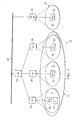
- FIG. 1 is a block diagram of a WLAN within which a mobile terminal may operate.
- FIG. 2A illustrates a frame body for an association request message suitable for use with a method of acquiring an IP address in accordance with the teachings of the present invention.
- FIG. 2B illustrates a frame body for an association response message suitable for use with the method of acquiring an IP address in accordance with the teachings of the present invention.
- FIG. 2C illustrates a frame body for a reassociation request message suitable for use with the method of acquiring an IP address in accordance with the teachings of the present invention.
- FIG. 2D illustrates a frame body for a reassociation response message suitable for use with the method of acquiring an IP address in accordance with the teachings of the present invention.
- FIG. 3 is a flowchart of a method for acquisition of an IP address by a mobile terminal.
- the WLAN 10 within which a mobile terminal 12 may operate will now be described in greater detail.
- the WLAN 10 is configured to comply with IEEE Standard 802.11.
- 802.11 non-compliant WLANs may also be suitable for the uses contemplated herein.
- the WLAN 10 is comprised of first and second IP domains 14 and 16.
- the WLAN 10 may instead be comprised of any number of IP domains and that the current disclosure of the WLAN 10 as being comprised of the first and second IP domains 14 and 16 is purely by way of example.
- An IP domain is a Layer-3 domain and may include any number of APs and basic service sets ("BSSs").
- the first IP domain 14 includes first, second and third APs 24, 26 and 28 and first, second and third BSSs 30, 32 and 34 coupled to the first, second and third APs 24, 26 and 28, respectively.
- a BSS is a Layer-2 domain, the members of which may communicate within a geographical area known as a basic service area ("BSA").
- BSA basic service area
- the members of the first, second and third BSSs 30, 32 and 34 may communicate within first, second and third BSAs 31, 33 and 35, respectively.
- Each IP domain is served by a single access router ("AR").
- AR access router
- the first IP domain 14 is served by an AR 18 coupled to each of the first, second and third APs 24, 26 and 28.
- the second IP domain 16 includes a single BSS 36, the members of which may communicate within a BSA 37. Accordingly, the second IP domain 16 is served by a single AP, which, since the second IP domain 16 includes only a single BSS 36 and a single AP, also serves as an AR, and is, therefore, known as a collocated AR/AP 20. Finally, the AR 18 is coupled to the collocated AR/AP 20 by a distribution system 22. Variously, the distribution system 22 may be a wireline distribution system, a wireless distribution system or a combination thereof. Of course, the AR 18 and the collocated AR/AP 20 need not be coupled to one another by the distribution system 22, in which case the first IP domain 14 would define a first WLAN and the second IP domain would define a second WLAN.
- a mobile terminal for example, mobile terminal 12
- the mobile terminal When a mobile terminal, for example, mobile terminal 12, enters the coverage area for an IEEE Standard 802.11 compliant WLAN, for example, the WLAN 10, the mobile terminal is required to register with the AP serving the BSS for which the mobile terminal had entered the coverage area. For example, as illustrated in FIG. 1, the mobile terminal 12 has entered the BSA 31 and must, therefore, register with the AP 24 serving the BSS 30.
- the mobile terminal 12 enters the coverage area for another BSS within the WLAN 10, for example, when the mobile terminal 12 enters the BSA 33, the mobile terminal 12 is required to register with the AP 26 serving the BSS 32.
- Association and reassociation are Layer-2 services, defined by IEEE Standard 802.11, used to register a mobile terminal with an AP.
- the association and reassociation services are managed by the AP using Layer-2 medium access control ("MAC") addresses.
- MAC medium access control
- the present invention is directed to a method for assigning an IP address to a mobile terminal in which a Layer-2 entity determines, on behalf of the mobile terminal, whether the mobile terminal may continue using a current IP address or must begin using a new IP address.
- a Layer-2 entity determines, on behalf of the mobile terminal, whether the mobile terminal may continue using a current IP address or must begin using a new IP address.
- a message frame 50 is comprised of a MAC header 52, a frame body 54 and a frame check sequence ("FCS") 56.
- the MAC header 52 includes frame control, duration, address and sequence control information for the message frame 50.
- the contents of the frame body 52 varies depending on the particular type of message being carried in the message frame 52.
- the FCS 56 contains an IEEE 32-bit cyclic redundancy code ("CRC").
- FIG. 2B illustrates a frame body 60 for an association request message.
- An association request message is issued by a mobile terminal upon entering a BSA serviced by a new AP.
- the frame body 60 for an association request message includes a capability information field 64, a listen interval field 66, a SSID field 68, a supported rates field 70, a mobile IP bit field 72 and a current IP address field 74.
- the capability information field 64 contains a number of subfields that are used to indicate requested or advertised capabilities.
- the subfields included in the capability information field 64 are an extended service set (“ESS") subfield, an independent basic service set (“IBSS”) subfield, a contention free (“CF”)-pollable subfield, a CF-poll request subfield and a privacy subfield.
- the listen interval field 66 is used to indicate, to the AP, how often a mobile terminal awakes to listen to Beacon management frames.
- the service set identity (“SSID”) field 68 indicates the identity of an ESS or an IBSS.
- the supported rates field 70 specifies the rates in the operational rate set as described in the MLME_Join.request and MLME_Start.request primitives.
- the mobile IP bit field 72 is a 1-bit field which is enabled if the mobile terminal is a mobile IPv4 client or a mobile IPv6 client. Conversely, the mobile IP bit field 72 is not enabled if the mobile terminal is an IPv4 client or an IPv6 client.
- the current IP address field 74 contains a current IP address for the mobile terminal requesting association. To support IPv6, it is contemplated that the current IP address field 74 must be 128-bits.
- FIG. 2C illustrates a frame body 76 for an association reply message.
- An association reply message is issued by an AP in response to receipt of an association request message issued by a mobile terminal.
- the frame body 76 for an association message includes a capability information field 78, a status code field 80, an association ID field 82, a supported rates field 84 and an IP address field 86.
- the capability information and supported rates fields 78 and 84 were previously described.
- the status code field 80 indicates the success or failure of a requested operation.
- the association ID field 82 is a value assigned by an AP during association that represents the 16-bit ID of the mobile terminal requesting association.
- the IP address field 86 will either provide a new IP address for the mobile terminal requesting association or advise the mobile terminal requesting association to continue to use the current IP address.
- FIG. 2D illustrates a frame body 88 for a reassociation message.
- a reassociation message is issued by a mobile terminal during the transfer of an established association from one AP to either another AP or the same AP.
- the frame body 88 for a reassociation message includes a capability information field 90, a listen interval field 92, a current AP address field 94, a SSID field 98, a supported rates field 98, a mobile IP bit field 100 and a current IP address field 102.
- the capability information, listen interval, SSID and supported rates fields 90, 92, 96 and 98 were previously described.
- the current AP address field 94 contains the MAC address of the AP with which the mobile terminal issuing the reassociation request is currently associated.
- the mobile IP bit field 100 is a 1-bit field which is enabled if the mobile terminal is a mobile IPv4 client or a mobile IPv6 client. Conversely, the mobile IP bit field 100 is not enabled if the mobile terminal is an IPv4 client or an IPv6 client.
- the current IP address field 102 contains a current IP address for the mobile terminal issuing the reassociation request. To support IPv6, the current IP address field 102 must be 128-bits.
- FIG. 2E illustrates a frame body 104 for a reassociation reply message.
- a reassociation reply message is issued by an AP in response to receipt of a reassociation request message issued by a mobile terminal.
- the frame body 104 for a reassociation reply message includes a capability information field 106, a status code field 108, an association ID field 110, a supported rates field 112 and an IP address field 114.
- the capability information, status code, association ID and supported rates fields 106, 108 110 and 112 were previously described.
- the IP address field 114 will either provide a new IP address for the mobile terminal requesting reassociation or advise the mobile terminal requesting reassociation to continue to use the current IP address.
- a mobile terminal for example, the mobile terminal 12, will either: (1) acquire a new IP address; or (2) receive instructions to continue using a current IP address; from a level-2 entity, for example, the AP 24, in accordance with the teachings of the present invention shall now be described in greater detail.
- a level-2 entity for example, the AP 24, in accordance with the teachings of the present invention shall now be described in greater detail.
- the mobile terminal 12 is operating in an IPv4 environment. Subsequent passages, however, will address the operation of the mobile terminal 12 in other IP environments, for example, MIPv4, IPv6 or MIPv6.
- the method commences at step 120 with the AP 24 having knowledge of its IP address, the mobile terminal 12 having knowledge of its IP address and the mobile terminal 12 initiating construction of either an association request message similar to that illustrated in FIGs. 2A and 2B or a reassociation request message similar to that illustrated in FIGs. 2A and 2D.
- the association request message or reassociation request message shall contain the IP address of the mobile terminal 12 in the current IP address field thereof while the mobile IP bit field will not be enabled.
- step 122 the mobile terminal 12 forwards the constructed association request message or reassociation request message to the AP 24.
- the AP 24 determines the current IP address of the mobile terminal 12 by checking the current IP address field 74 of the received association request message or the current IP address field 102 of the received reassociation request message.
- the AP 24 determines whether the mobile terminal 12 has roamed into a new IP domain. To do so, the AP 24 compares the current IP address of the mobile terminal 12 received as part of the association request message or reassociation request message to the IP address for the AP 24. If the addresses match, the AP 24 determines that the mobile terminal 12 has stayed in its prior IP domain and that a new IP address is not necessary.
- the method will proceed to step 128 where the AP 24 generates an association response message similar to that illustrated in FIGs. 2A and 2C or a reassociation response message similar to that illustrated in FIGs. 2A and 2E.
- the AP 24 will insert a NULL into either the IP address field 86 of the association response message or the IP address field 114 of the reassociation response message.
- the mobile terminal 12 Upon receiving the association response message or the reassociation response message, the mobile terminal 12 will examine the contents of the IP address field 86 or the IP address field 114 and, if the mobile terminal 12 detects a NULL inserted into the IP address field 86 of the association response message or the IP address field 114 of the reassociation response message, the mobile terminal 12 will conclude that it has remained in its prior IP domain and that it may, therefore, continue using its current IP address. The mobile terminal 12 having determined, at step 128, that it may continue to use its current IP address, the method would then end at step 130.
- step 126 if, however, it is determined by the AP 24 that the current IP address of the mobile terminal 12 received as part of the association request message or reassociation request message does not match the IP address for the AP 24, the AP 24 concludes that the mobile terminal 12 has changed IP domains and needs a new IP address. The method will then proceed to step 132 where the AP 24 acquires a new IP address for the mobile terminal 12. To do so, the AP 24 will first check the mobile IP bit field 72 or 100 to determine if the mobile terminal is a mobile IPv4 client. As the mobile IP bit field 72 or 100 is not enabled, the mobile terminal 12 is operating in an IPv4 environment.
- the AP 24 issues a request for a new IP address to the dynamic host configuration protocol ("DHCP") server (not shown) which resides within the AR 18, the level-3 entity responsible for assigning IP addresses in IPv4.
- the DHCP server will issue a reply message to the AP 24 which contains a new IP address for the mobile terminal 12.
- the method proceeds to step 134 where AP 24 generates an association response message similar to that illustrated in FIGs. 2A and 2C or a reassociation response message similar to that illustrated in FIGs. 2A and 2E.
- the AP 24 will insert the IP address received from the DHCP server into either the IP address field 86 of the association response message or the IP address field 114 of the reassociation response message. The AP 24 will then forward the association response message or the reassociation response message to the mobile terminal 12.
- the mobile terminal 12 Upon examining the received association response message or reassociation response message and determining that an IP address was inserted into the IP address field 86 of the association response message or the IP address field 114 of the reassociation response message, the mobile terminal 12 will determine that it has changed IP domains and must discontinue usage of its current IP address in favor of the IP address received in the association response message or reassociation response message. The mobile terminal 12 having commenced usage of the newly received IP address, the method would then end at step 130.
- the method commences at step 120 with the AP 24 having knowledge of its IP address, the mobile terminal 12 having knowledge of its IP address and the mobile terminal 12 initiating construction of either an association request message similar to that illustrated in FIGs. 2A and 2B or a reassociation request message similar to that illustrated in FIGs. 2A and 2D.
- FA foreign agent
- the association request message or reassociation request message shall contain the IP address of the mobile terminal 12 in the current IP address field 74 or 102 thereof while the mobile IP bit field 72 or 100 will be enabled.
- step 122 the mobile terminal 12 forwards the constructed association request message or reassociation request message to the AP 24.
- the AP 24 determines the current IP address of the mobile terminal 12 by checking the current IP address field 74 of the received association request message or the current IP address field 102 of the received reassociation request message.
- the AP 24 determines whether the mobile terminal 12 has roamed into a new IP domain. To do so, the AP 24 compares the current IP address of the mobile terminal 12 received as part of the association request message or reassociation request message to the IP address for the AP 24. If the addresses match, the AP 24 determines that the mobile terminal 12 has stayed in its prior IP domain and that a new IP address is not necessary.
- the method will proceed to step 128 where the AP 24 generates an association response message similar to that illustrated in FIGs. 2A and 2C or a reassociation response message similar to that illustrated in FIGs. 2A and 2E.
- the AP 24 will again insert a NULL into either the IP address field 86 of the association response message or the IP address field 114 of the reassociation response message.
- the mobile terminal 12 Upon detecting the NULL inserted into the IP address field 86 of the association response message or the IP address field 114 of the reassociation response message, the mobile terminal 12 will determine that it has remained in its prior IP domain and may continue to use its current IP address. The mobile terminal 12 having determined, at step 128, that it may continue to use its current IP address, the method would then end at step 130.
- step 126 if, however, it is determined by the AP that the current IP address of the mobile terminal 12 received as part of the association request message or reassociation request message does not match the IP address for the AP 24, the AP 24 determines that the mobile terminal 12 has changed IP domains and needs a new IP address. The method will then proceed to step 132 where the AP 24 acquires a new IP address for the mobile terminal 12. To do so, the AP 24 will first check the mobile IP bit field 72 or 100 to determine if the mobile terminal is a mobile IPv4 client. As the mobile IP bit field 72 or 100 is enabled, the mobile terminal 12 is operating in an IPv4 environment.
- the AP 24 issues a request for a new IP address to the FA ⁇ the Layer-3 entity responsible for assignment IP addresses in MIPv4--collocated with the AR 18.
- the FA will issue a reply message to the AP 24 which contains the new IP address for the mobile terminal 12.
- the method proceeds to step 134 where AP 24 designates the received IP address as a care-of-address ("CoA") for the mobile terminal 12 and subsequently generates an association response message similar to that illustrated in FIGs. 2A and 2C or a reassociation response message similar to that illustrated in FIGs. 2A and 2E.
- CoA care-of-address
- the AP 24 will insert the CoA address received from the FA into either the IP address field 86 of the association response message or the IP address field 114 of the reassociation response message. The AP 24 will then forward the association response message or the reassociation response message to the mobile terminal 12.
- the mobile terminal 12 Upon examining the received association response message or reassociation response message and determining that an IP address was inserted into the IP address field 86 of the association response message or the IP address field 114 of the reassociation response message, the mobile terminal 12 will determine that it has changed IP domains and must discontinue usage of its current IP address in favor of the IP address received in the association response message or reassociation response message. The mobile terminal 12 having commenced usage of the newly received IP address, the method would then end at step 130.
- the method commences at step 120 with the AP 24 having knowledge of its IP address, the mobile terminal 12 having knowledge of its IP address and the mobile terminal 12 initiating construction of either an association request message similar to that illustrated in FIGs. 2A and 2B or a reassociation request message similar to that illustrated in FIGs. 2A and 2D.
- the association request message or reassociation request message shall contain the IP address of the mobile terminal 12 in the current IP address field 74 or 102 thereof while the mobile IP bit field 72 or 100 will not be enabled.
- step 122 the mobile terminal 12 forwards the constructed association request message or reassociation request message to the AP 24.
- the AP 24 determines the current IP address of the mobile terminal 12 by checking the current IP address field 74 of the received association request message or the current IP address field 102 of the received reassociation request message.
- the AP 24 determines whether the mobile terminal 12 has roamed into a new IP domain. To do so, the AP 24 compares the current IP address of the mobile terminal 12 received as part of the association request message or reassociation request message to the IP address for the AP 24. If the addresses match, the AP 24 determines that the mobile terminal 12 has stayed in its prior IP domain and that a new IP address is not necessary.
- the method will proceed to step 128 where the AP 24 generates an association response message similar to that illustrated in FIGs. 2A and 2C or a reassociation response message similar to that illustrated in FIGs. 2A and 2E.
- the AP 24 will insert a NULL into either the IP address field 86 of the association response message or the IP address field 114 of the reassociation response message.
- the mobile terminal 12 Upon detecting the NULL inserted into the IP address field 86 of the association response message or the IP address field 114 of the reassociation response message, the mobile terminal 12 will determine that it has remained in its prior IP domain and may continue to use its current IP address. The mobile terminal 12 having determined, at step 128, that it may continue to use its current IP address, the method would then end at step 130.
- step 126 if, however, it is determined by the AP that the current IP address of the mobile terminal 12 received as part of the association request message or reassociation request message does not match the IP address for the AP 24, the AP 24 determines that the mobile terminal 12 has changed IP domains and needs a new IP address. The method will then proceed to step 132 where the AP 24 sends the MAC address and the IP address for the mobile terminal to the AR 18.
- the AR 18, which maintains MAC address caches for neighboring APs here, the APs 26 and 28
- the APs 26 and 28 which, together with the AP 24, collectively define the IP domain 14 checks the MAC address caches for a duplicate of the received MAC address.
- the AR 18 If the AR 18 sees a duplicate of the MAC address of the mobile terminal 12 in the MAC address caches, the AR 18 refuses the association or reassociation request message of the mobile terminal 12. If, however, there is no duplicate of the MAC address, then the association or reassociation request message will be accepted and the AR 18/AP 24 shall assign a new IP address for the mobile terminal 12 in the manner set forth below.
- the mobile already has an IPv6 address only the subnet prefix will be modified since it has changed its domain. If the mobile terminal 12 is receiving an address for the first time, then the IP address will be constructed using the subnet prefix and the mobile's 48-bit MAC address extended to a 64-bit EUI interface identifier as described in IETF's standard RFC 2373 and inserted into either the IP address field 86 of the association response message or the IP address field 114 of the reassociation response message. The AP 24 will then forward the association response message or the reassociation response message to the mobile terminal 12.
- the mobile terminal 12 Upon examining the received association response message or reassociation response message and determining that an IP address was inserted into the IP address field 86 of the association response message or the IP address field 114 of the reassociation response message, the mobile terminal 12 will determine that it has changed IP domains and must discontinue usage of its current IP address in favor of the IP address received in the association response message or reassociation response message. The mobile terminal 12 having commenced usage of the newly received IP address, the method would then end at step 130.
- the method commences at step 120 with the AP 24 having knowledge of its IP address, the mobile terminal 12 having knowledge of its IP address and the mobile terminal 12 constructing either an association request of a reassociation request message containing the IP address of the mobile terminal 12 in the current IP address field thereof and an enabled mobile IP bit.
- the method then proceeds to step 122 where the mobile terminal 12 forwards the constructed association request message or reassociation request message to the AP 24.
- the AP 24 determines the current IP address of the mobile terminal 12 by checking the current IP address field 74 of the received association request message or the current IP address field 102 of the received reassociation request message.
- the AP 24 determines whether the mobile terminal 12 has roamed into a new IP domain. To do so, the AP 24 compares the current IP address of the mobile terminal 12 received as part of the association request message or reassociation request message to the IP address for the AP 24. If the addresses match, the AP 24 determines that the mobile terminal 12 has stayed in its prior IP domain and that a new IP address is not necessary. Accordingly, the method will proceed to step 128 where the AP 24 generates an association response message or a reassociation response message. In generating the association response message or the reassociation response message at step 128, the AP 24 will insert a NULL into either the IP address field 86 of the association response message or the IP address field 114 of the reassociation response message.
- the mobile terminal 12 Upon detecting the NULL inserted into the IP address field 86 of the association response message or the IP address field 114 of the reassociation response message, the mobile terminal 12 will determine that it has remained in its prior IP domain and may continue to use its current IP address. The mobile terminal 12 having determined, at step 128, that it may continue to use its current IP address, the method would then end at step 130.
- step 126 if, however, it is determined by the AP that the current IP address of the mobile terminal 12 received as part of the association request message or reassociation request message does not match the IP address for the AP 24, the AP 24 determines that the mobile terminal 12 has changed IP domains and needs a new IP address. The method will then proceed to step 132 where the AP 24 sends the MAC address and the IP address for the mobile terminal to the AR 18.
- the AR 18, which maintains MAC address caches for neighboring APs here, the APs 26 and 28
- the APs 26 and 28 which, together with the AP 24, collectively define the IP domain 14 checks the MAC address caches for a duplicate of the received MAC address.
- the AR 18 If the AR 18 sees a duplicate of the MAC address of the mobile terminal 12 in the MAC address caches, the AR 18 refuses the association or reassociation request message of the mobile terminal 12. If, however, there is no duplicate of the MAC address, then the association or reassociation request message will be accepted and the AR 18/AP 24 shall assign a new IP address for the mobile terminal 12 in the manner set forth below.
- the mobile already has an IPv6 address only the subnet prefix will be modified since it has changed its domain. If the mobile terminal 12 is receiving an address for the first time, then the IP address will be constructed using the subnet prefix and the mobile's 48-bit MAC address extended to a 64-bit EUI interface identifier as described in IETF's standard RFC 2373 and inserted into either the IP address field 86 of the association response message or the IP address field 114 of the reassociation response message. The AP 24 will then forward the association response message or the reassociation response message to the mobile terminal 12.
- the mobile terminal 12 Upon examining the received association response message or reassociation response message and determining that an IP address was inserted into the IP address field 86 of the association response message or the IP address field 114 of the reassociation response message, the mobile terminal 12 will determine that it has changed IP domains and must discontinue usage of its current IP address in favor of the IP address received in the association response message or reassociation response message. The mobile terminal 12 having commenced usage of the newly received IP address, the method would then end at step 130.
- IP internet protocol
- WLAN wireless local area network
- BSA basic service area
- the method further comprising: said mobile terminal issuing a Layer-2 service request to said Layer-2 entity upon entering said BSA; said Layer-2 entity determining whether said mobile terminal should continue using said current IP address or begin using a new IP address from said Layer-2 service request.
- the method further comprising: said Layer-2 service request is formatted to include a current IP address field.
- the method further comprising: said Layer-2 service request is formatted to include a mobile IP bit.
- the method further comprising: said Layer-2 entity issuing, to said mobile terminal, a response to said Layer-2 service request; and wherein: if said Layer-2 entity determined that said mobile terminal must continue using said current IP address, said response to said Layer-2 service request shall contain an indication that said mobile terminal must continue using said current IP address; and if said Layer-2 entity determined that said mobile terminal must begin using said new IP address, said response to said Layer-2 service request shall contain said new IP address.
- the method further comprising: said response to said Layer-2 service request is formatted to include a current IP address field.
- the method further comprising: if said Layer-2 entity determines that said mobile terminal must continue using said current IP address, said Layer-2 entity placing a NULL in said current IP address field of said response to said Layer-2 service request.
- said WLAN further includes a Layer-3 entity and, if said Layer-2 entity determined that said mobile terminal must begin using said new IP address, said Layer-2 entity issuing a request, to said Layer-3 entity, for said new IP address; and upon receiving said new IP address, said Layer-2 entity placing said new IP address in said current IP address field of said response to said Layer-2 service request.
- the method further comprising: said Layer-2 entity receives said new IP address from said Layer-3 entity.
- said Layer-2 service request is an association request message and said response to said Layer-2 service request is an association response message.
- the method further comprising: said Layer-2 service request is a reassociation request message and said response to said Layer-2 service request is a reassociation response message.
- WLAN wireless local area network
- AR access router
- AP access point
- IP internet protocol
- BSA basic service area
- the method further comprising: said AP instructing said mobile terminal to use said second IP address and said AP forwarding said second IP address to said mobile terminal.
- the method further comprising: said mobile terminal forwarding either an association request or a reassociation request to said first AP upon entering said first BSA, said association request and said reassociation request both including a first field which holds said first IP address for said mobile terminal and a second field which holds a mobile IP bit for indicating if said mobile terminal is a mobile IPv4 or a mobile IPv6 client; and said AP returning either an association response or a re-association response to said mobile terminal, said association response and said re-association response both including a first field which holds said second IP address for said mobile terminal.
- a dynamic host configuration protocol (“DHCP”) server is coupled to said AR, and, upon determining that said mobile terminal has roamed into a new IP domain, said AP issuing an IP assignment request to said DHCP server via said AR; upon assigning said second IP address to said mobile terminal, said DHCP server forwarding said second IP address to said AP via said AR; and said AR inserting said second IP address received from said DHCP server into said first field of either said association response or said reassociation response.
- DHCP dynamic host configuration protocol
- the method further comprising: said mobile terminal is a IPv4 client.
- the methodfurther comprising: a foreign agent ("FA") is coupled to said AR and further comprising: upon determining that said mobile terminal is a mobile IP client that has roamed into a new IP domain, said AP issuing an IP assignment request to said FA via said AR; said FA forwarding a third IP address, assigned to said FA, to said AP via said AR, said AP designating said third IP address as a care-of address ("CoA") for said MS; and said AR inserting said CoA address into said first field of either said association response or said re-association response.
- FA foreign agent
- the method further comprising: said mobile terminal is a mobile IPv4 client.
- the method further comprising: upon determining that said mobile terminal has roamed into a new IP domain, said AP forwarding a medium access control ("MAC") address and said first IP address to said AR; said AR comparing said received MAC address to MAC address caches for neighboring APs; said AR refusing registration of said mobile terminal if said received MAC address matches a MAC address maintained in said MAC address cache for one of said neighboring Aps.
- MAC medium access control
- the method further comprising: if said received MAC address does not match a MAC address maintained in said MAC address cache for one of said neighboring APs, said AR generating an IP address for said mobile terminal.
- said mobile terminal is an IPv6 client.
- the method further comprising: said mobile terminal is a mobile IPv6 client.
Landscapes
- Engineering & Computer Science (AREA)
- Computer Networks & Wireless Communication (AREA)
- Signal Processing (AREA)
- Databases & Information Systems (AREA)
- Mobile Radio Communication Systems (AREA)
- Data Exchanges In Wide-Area Networks (AREA)
- Small-Scale Networks (AREA)
Abstract
Description
Claims (10)
- In a wireless local area network ("WLAN") which includes an access router ("AR"), at least one access point ("AP") served by said AR, an internet protocol ("IP") domain served by said AR and at least one basic service area ("BSA"), each one of said at least one BSS served by a corresponding one of said at least one AP, a method for assigning an IP address to a mobile terminal entering a first BSA of said WLAN, comprising:upon a mobile terminal entering a first BSA served by an AP, said AP determining whether said mobile terminal has roamed into a new IP domain; andif said AP determines that said mobile terminal has not roamed into a new IP domain, said AP instructing said mobile terminal to use a first IP address, said first IP address used by said mobile terminal prior to entry, of said mobile terminal, into said first BSA.
- The method of claim 12, and further comprising said mobile terminal forwarding an association request to said first AP upon entering said first BSS.
- The method of claim 13, wherein said association request includes a first field which holds said first IP address for said mobile terminal.
- The method of claim 14, and further comprising said AP inserting a NULL into said first field upon determining that said mobile terminal has not roamed into said new IP domain.
- The method of claim 14, wherein said association request further includes a second field which holds a mobile IP bit for indicating if said mobile terminal is a mobile IPv4 or a mobile IPv6 client.
- The method of claim 12, and further comprising said mobile terminal forwarding a reassociation request to said first AP upon entering said first BSA.
- The method of claim 17, wherein said reassociation request includes a first field which holds said first IP address for said mobile terminal.
- The method of claim 18, and further comprising said AP inserting a NULL into said first field upon determining that said mobile terminal has not roamed into said new IP domain.
- The method of claim 18, wherein said reassociation request further includes a second field which holds a mobile IP bit for indicating if said mobile terminal is a mobile IPv4 or a mobile IPv6 client.
- The method of claim 12, and further comprising:if said AP determines that said mobile terminal has roamed into a new IP domain, said AP issuing a request, to an AR serving said AP, for a second, new, IP address for said mobile terminal; andupon receiving said second IP address for said mobile terminal, said AP instructing said mobile terminal to use said second IP address.
Applications Claiming Priority (2)
| Application Number | Priority Date | Filing Date | Title |
|---|---|---|---|
| US10/634,591 US7315519B2 (en) | 2003-08-05 | 2003-08-05 | IPv4/v6 address acquisition techniques for mobile terminals operating within wireless LANs |
| US634591 | 2003-08-05 |
Publications (2)
| Publication Number | Publication Date |
|---|---|
| EP1505799A1 true EP1505799A1 (en) | 2005-02-09 |
| EP1505799B1 EP1505799B1 (en) | 2006-06-14 |
Family
ID=33552917
Family Applications (1)
| Application Number | Title | Priority Date | Filing Date |
|---|---|---|---|
| EP04017186A Expired - Lifetime EP1505799B1 (en) | 2003-08-05 | 2004-07-21 | IPv4/v6 address acquisition techniques for mobile terminals operating within wireless LANs |
Country Status (4)
| Country | Link |
|---|---|
| US (1) | US7315519B2 (en) |
| EP (1) | EP1505799B1 (en) |
| AT (1) | ATE330412T1 (en) |
| DE (1) | DE602004001180T2 (en) |
Cited By (3)
| Publication number | Priority date | Publication date | Assignee | Title |
|---|---|---|---|---|
| WO2012035198A1 (en) | 2010-09-13 | 2012-03-22 | Nokia Corporation | Method and apparatus for joint association and address provisioning |
| WO2015009729A1 (en) * | 2013-07-15 | 2015-01-22 | Qualcomm Incorporated | Systems and methods for reduced latency during initial link setup |
| WO2017024663A1 (en) * | 2015-08-11 | 2017-02-16 | 深圳市华讯方舟科技有限公司 | Method and device for increasing access efficiency of station |
Families Citing this family (32)
| Publication number | Priority date | Publication date | Assignee | Title |
|---|---|---|---|---|
| US7313113B1 (en) * | 2003-04-04 | 2007-12-25 | Airespace, Inc. | Dynamic transmit power configuration system for wireless network environments |
| US7539169B1 (en) | 2003-06-30 | 2009-05-26 | Cisco Systems, Inc. | Directed association mechanism in wireless network environments |
| KR100547153B1 (en) * | 2003-10-30 | 2006-01-26 | 삼성전자주식회사 | Apparatus and method for accessing link layer and network layer at high speed |
| KR100636168B1 (en) * | 2004-09-03 | 2006-10-19 | 삼성전자주식회사 | Method and apparatus for obtaining IP address in DHCCP environment |
| KR100636318B1 (en) * | 2004-09-07 | 2006-10-18 | 삼성전자주식회사 | Address Ownership Authentication Method and System Using the COA Binding Protocol |
| US7808925B2 (en) * | 2004-09-10 | 2010-10-05 | Digital Envoy, Inc. | Methods and systems for determining reverse DNS entries |
| JP4166741B2 (en) * | 2004-09-17 | 2008-10-15 | 富士通株式会社 | Communication method |
| US20060095546A1 (en) * | 2004-10-07 | 2006-05-04 | Nokia Corporation | Method and system for locating services in proximity networks for legacy application |
| US7805140B2 (en) * | 2005-02-18 | 2010-09-28 | Cisco Technology, Inc. | Pre-emptive roaming mechanism allowing for enhanced QoS in wireless network environments |
| US7596376B2 (en) * | 2005-02-18 | 2009-09-29 | Cisco Technology, Inc. | Methods, apparatuses and systems facilitating client handoffs in wireless network systems |
| KR100644695B1 (en) * | 2005-05-07 | 2006-11-10 | 삼성전자주식회사 | Method and apparatus for grouping mobile nodes in an extended WLAN |
| KR100664946B1 (en) * | 2005-06-28 | 2007-01-04 | 삼성전자주식회사 | Apparatus and method for performing fast handover |
| KR100664945B1 (en) * | 2005-06-28 | 2007-01-04 | 삼성전자주식회사 | Apparatus and method for performing fast handover |
| KR100818916B1 (en) * | 2005-09-12 | 2008-04-03 | 삼성전자주식회사 | Mobile node and data server for providing information on an IP address allocation, and method for providing information on an IP address allocation |
| TW200744396A (en) * | 2006-05-26 | 2007-12-01 | Hon Hai Prec Ind Co Ltd | Mobile node and roaming method therefor, home agent and packet processing method therefor, and network communication system |
| US7821986B2 (en) * | 2006-05-31 | 2010-10-26 | Cisco Technology, Inc. | WLAN infrastructure provided directions and roaming |
| US7899396B2 (en) * | 2006-06-02 | 2011-03-01 | Qulacomm Incorporated | Efficient operation for co-located WLAN and Bluetooth |
| KR100825735B1 (en) | 2006-09-29 | 2008-04-29 | 한국전자통신연구원 | Address Space Management Method for Uncommunicable Nodes on Zigbee Network |
| US20080205339A1 (en) * | 2007-02-28 | 2008-08-28 | Symbol Technologies, Inc. | Auto-Provisioning of a Mobile Computing Device for Operation With A Wireless Network |
| JP5094260B2 (en) * | 2007-08-01 | 2012-12-12 | キヤノン株式会社 | COMMUNICATION DEVICE, COMMUNICATION DEVICE CONTROL METHOD, AND COMPUTER PROGRAM FOR CAUSING COMPUTER TO EXECUTE THE CONTROL METHOD |
| JP5088100B2 (en) * | 2007-11-08 | 2012-12-05 | 日本電気株式会社 | IP network system, access control method thereof, IP address distribution apparatus, and IP address distribution method |
| CA2619092C (en) * | 2008-01-29 | 2015-05-19 | Solutioninc Limited | Method of and system for support of user devices roaming between routing realms by a single network server |
| CN102209396B (en) * | 2010-03-31 | 2014-01-22 | 华为技术有限公司 | Adhesion method for terminal equipment in network, network element equipment and network system |
| US8832238B2 (en) * | 2011-09-12 | 2014-09-09 | Microsoft Corporation | Recording stateless IP addresses |
| US9521145B2 (en) | 2011-10-17 | 2016-12-13 | Mitel Mobility Inc. | Methods and apparatuses to provide secure communication between an untrusted wireless access network and a trusted controlled network |
| US9549317B2 (en) * | 2011-10-17 | 2017-01-17 | Mitel Mobility Inc. | Methods and apparatuses to provide secure communication between an untrusted wireless access network and a trusted controlled network |
| US9379868B2 (en) * | 2011-12-05 | 2016-06-28 | Broadcom Corporation | Subsequent association identifier (AID) update within single user, multiple user, multiple access, and/or MIMO wireless communications |
| WO2013145045A1 (en) * | 2012-03-30 | 2013-10-03 | Necカシオモバイルコミュニケーションズ株式会社 | Wireless device, address determination method, communication system, and wireless terminal |
| US9277399B2 (en) * | 2013-02-22 | 2016-03-01 | Qualcomm Incorporated | Systems and methods for reduced latency when establishing communication with a wireless communication system |
| US8982860B2 (en) * | 2013-03-11 | 2015-03-17 | Intel Corporation | Techniques for an access point to obtain an internet protocol address for a wireless device |
| US10574627B2 (en) * | 2018-03-07 | 2020-02-25 | Cisco Technology, Inc. | Dynamic orthogonal local DHCP IP pools for wireless access points |
| WO2025019402A1 (en) * | 2023-07-18 | 2025-01-23 | Interdigital Patent Holdings, Inc. | Wireless transmit/receive unit (wtru) to wtru relay media access control (mac) access conflict support |
Citations (1)
| Publication number | Priority date | Publication date | Assignee | Title |
|---|---|---|---|---|
| US20020035699A1 (en) * | 2000-07-24 | 2002-03-21 | Bluesocket, Inc. | Method and system for enabling seamless roaming in a wireless network |
Family Cites Families (5)
| Publication number | Priority date | Publication date | Assignee | Title |
|---|---|---|---|---|
| US6501746B1 (en) * | 1999-01-08 | 2002-12-31 | Cisco Technology, Inc. | Mobile IP dynamic home address resolution |
| US20020154613A1 (en) * | 2001-02-21 | 2002-10-24 | Interdigital Technology Corporation | Method and system for a low-overhead mobility management protocol in the internet protocol layer |
| US8923191B2 (en) * | 2002-04-17 | 2014-12-30 | Northrop Grumman Systems Corporation | Internet protocol collaborative mobility |
| US6850503B2 (en) * | 2002-08-06 | 2005-02-01 | Motorola, Inc. | Method and apparatus for effecting a handoff between two IP connections for time critical communications |
| US7505432B2 (en) * | 2003-04-28 | 2009-03-17 | Cisco Technology, Inc. | Methods and apparatus for securing proxy Mobile IP |
-
2003
- 2003-08-05 US US10/634,591 patent/US7315519B2/en not_active Expired - Lifetime
-
2004
- 2004-07-21 AT AT04017186T patent/ATE330412T1/en not_active IP Right Cessation
- 2004-07-21 DE DE602004001180T patent/DE602004001180T2/en not_active Expired - Lifetime
- 2004-07-21 EP EP04017186A patent/EP1505799B1/en not_active Expired - Lifetime
Patent Citations (1)
| Publication number | Priority date | Publication date | Assignee | Title |
|---|---|---|---|---|
| US20020035699A1 (en) * | 2000-07-24 | 2002-03-21 | Bluesocket, Inc. | Method and system for enabling seamless roaming in a wireless network |
Non-Patent Citations (2)
| Title |
|---|
| MCAULEY A ET AL: "Dynamic Registration and Configuration Protocol (DRCP)", INTERNET DRAFT, 14 July 2000 (2000-07-14), XP002159632 * |
| RAMJEE ET AL: "IP micro-mobility support using HAWAII", ONLINE, 19 February 1999 (1999-02-19), pages 1 - 26, XP002306324, Retrieved from the Internet <URL:http://www.watersprings.org/pub/id/draft-ramjee-micro-mobility-hawaii-00.txt> [retrieved on 20041118] * |
Cited By (10)
| Publication number | Priority date | Publication date | Assignee | Title |
|---|---|---|---|---|
| WO2012035198A1 (en) | 2010-09-13 | 2012-03-22 | Nokia Corporation | Method and apparatus for joint association and address provisioning |
| EP2617216A4 (en) * | 2010-09-13 | 2016-12-28 | Nokia Technologies Oy | METHOD AND APPARATUS FOR JOINT ADDRESS ASSOCIATION AND SUPPLY |
| US10470106B2 (en) | 2010-09-13 | 2019-11-05 | Nokia Technologies Oy | Method and apparatus for joint association and address provisioning |
| WO2015009729A1 (en) * | 2013-07-15 | 2015-01-22 | Qualcomm Incorporated | Systems and methods for reduced latency during initial link setup |
| WO2015009735A1 (en) * | 2013-07-15 | 2015-01-22 | Qualcomm Incorporated | System and method to assign an internet protocol address to a mobile device during a handoff |
| US9392494B2 (en) | 2013-07-15 | 2016-07-12 | Qualcomm Incorporated | Systems and methods for reduced latency during initial link setup |
| JP2016532357A (en) * | 2013-07-15 | 2016-10-13 | クゥアルコム・インコーポレイテッドQualcomm Incorporated | System and method for assigning internet protocol addresses to mobile devices during handoff |
| JP2016533671A (en) * | 2013-07-15 | 2016-10-27 | クゥアルコム・インコーポレイテッドQualcomm Incorporated | System and method for reduced latency during initial link setup |
| US9693266B2 (en) | 2013-07-15 | 2017-06-27 | Qualcomm Incorporated | System and method to assign an internet protocol address to a mobile device during a handoff |
| WO2017024663A1 (en) * | 2015-08-11 | 2017-02-16 | 深圳市华讯方舟科技有限公司 | Method and device for increasing access efficiency of station |
Also Published As
| Publication number | Publication date |
|---|---|
| ATE330412T1 (en) | 2006-07-15 |
| US7315519B2 (en) | 2008-01-01 |
| DE602004001180D1 (en) | 2006-07-27 |
| US20050030945A1 (en) | 2005-02-10 |
| EP1505799B1 (en) | 2006-06-14 |
| DE602004001180T2 (en) | 2007-04-19 |
Similar Documents
| Publication | Publication Date | Title |
|---|---|---|
| EP1505799B1 (en) | IPv4/v6 address acquisition techniques for mobile terminals operating within wireless LANs | |
| US8134969B2 (en) | IP layer-handoff using mobility domains and IP caching | |
| US8971255B2 (en) | Method and apparatus for wireless device with multiple wireless interfaces using proxy mobility | |
| CN101578839B (en) | Methods and apparatus for implementing proxy mobile ip in foreign agent care-of address mode | |
| US8345625B2 (en) | Apparatus and method of handover for mobile node | |
| US20090313379A1 (en) | Topology Hiding Of Mobile Agents | |
| CA2350357A1 (en) | A method of supporting seamless hand-off in a mobile telecommunications network | |
| KR20060066373A (en) | MIP-4 based fast handoff method and apparatus in heterogeneous wireless network | |
| US8767622B2 (en) | Method and system for managing address prefix information associated with handover in networks | |
| KR100710530B1 (en) | Method for configuration and registration of internet protocol address in a wireless mobile communication system with a connection oriented radio link | |
| US20060291426A1 (en) | Method and apparatus for performing fast handover in wireless network | |
| US8559409B2 (en) | Method and system for managing mobile router in proxy mobile internet protocol version 6 domain | |
| US20110103304A1 (en) | PACKET BUFFERING METHOD AND APPARATUS FOR REDUCING PACKET LOSS IN PROXY MOBILE IPv6 | |
| US20090129287A1 (en) | Method, system, and mobile node for updating a classifier | |
| US8184588B2 (en) | Apparatus and method for performing fast handover | |
| US20090119412A1 (en) | Support for avoidance of unnecessary tunneling | |
| JP3885942B2 (en) | Data communication method of mobile terminal | |
| KR100568474B1 (en) | Method and apparatus for providing improved mobile IP for efficient network configuration | |
| KR100765795B1 (en) | Method and apparatus for providing handover information to a mobile node | |
| CN101175294A (en) | Method and system for mobile station to obtain home agent address | |
| KR20040075184A (en) | System for supporting co-located care of address scheme in communication system using internet protocol version 4 address and method thereof | |
| HK1137272A (en) | Methods and apparatus for implementing proxy mobile ip in foreign agent care-of address mode |
Legal Events
| Date | Code | Title | Description |
|---|---|---|---|
| PUAI | Public reference made under article 153(3) epc to a published international application that has entered the european phase |
Free format text: ORIGINAL CODE: 0009012 |
|
| AK | Designated contracting states |
Kind code of ref document: A1 Designated state(s): AT BE BG CH CY CZ DE DK EE ES FI FR GB GR HU IE IT LI LU MC NL PL PT RO SE SI SK TR |
|
| AX | Request for extension of the european patent |
Extension state: AL HR LT LV MK |
|
| 17P | Request for examination filed |
Effective date: 20050718 |
|
| AKX | Designation fees paid |
Designated state(s): AT BE BG CH CY CZ DE DK EE ES FI FR GB GR HU IE IT LI LU MC NL PL PT RO SE SI SK TR |
|
| GRAP | Despatch of communication of intention to grant a patent |
Free format text: ORIGINAL CODE: EPIDOSNIGR1 |
|
| GRAS | Grant fee paid |
Free format text: ORIGINAL CODE: EPIDOSNIGR3 |
|
| GRAA | (expected) grant |
Free format text: ORIGINAL CODE: 0009210 |
|
| AK | Designated contracting states |
Kind code of ref document: B1 Designated state(s): AT BE BG CH CY CZ DE DK EE ES FI FR GB GR HU IE IT LI LU MC NL PL PT RO SE SI SK TR |
|
| PG25 | Lapsed in a contracting state [announced via postgrant information from national office to epo] |
Ref country code: SI Free format text: LAPSE BECAUSE OF FAILURE TO SUBMIT A TRANSLATION OF THE DESCRIPTION OR TO PAY THE FEE WITHIN THE PRESCRIBED TIME-LIMIT Effective date: 20060614 Ref country code: PL Free format text: LAPSE BECAUSE OF FAILURE TO SUBMIT A TRANSLATION OF THE DESCRIPTION OR TO PAY THE FEE WITHIN THE PRESCRIBED TIME-LIMIT Effective date: 20060614 Ref country code: FI Free format text: LAPSE BECAUSE OF FAILURE TO SUBMIT A TRANSLATION OF THE DESCRIPTION OR TO PAY THE FEE WITHIN THE PRESCRIBED TIME-LIMIT Effective date: 20060614 Ref country code: LI Free format text: LAPSE BECAUSE OF FAILURE TO SUBMIT A TRANSLATION OF THE DESCRIPTION OR TO PAY THE FEE WITHIN THE PRESCRIBED TIME-LIMIT Effective date: 20060614 Ref country code: CZ Free format text: LAPSE BECAUSE OF FAILURE TO SUBMIT A TRANSLATION OF THE DESCRIPTION OR TO PAY THE FEE WITHIN THE PRESCRIBED TIME-LIMIT Effective date: 20060614 Ref country code: NL Free format text: LAPSE BECAUSE OF FAILURE TO SUBMIT A TRANSLATION OF THE DESCRIPTION OR TO PAY THE FEE WITHIN THE PRESCRIBED TIME-LIMIT Effective date: 20060614 Ref country code: SK Free format text: LAPSE BECAUSE OF FAILURE TO SUBMIT A TRANSLATION OF THE DESCRIPTION OR TO PAY THE FEE WITHIN THE PRESCRIBED TIME-LIMIT Effective date: 20060614 Ref country code: BE Free format text: LAPSE BECAUSE OF FAILURE TO SUBMIT A TRANSLATION OF THE DESCRIPTION OR TO PAY THE FEE WITHIN THE PRESCRIBED TIME-LIMIT Effective date: 20060614 Ref country code: AT Free format text: LAPSE BECAUSE OF FAILURE TO SUBMIT A TRANSLATION OF THE DESCRIPTION OR TO PAY THE FEE WITHIN THE PRESCRIBED TIME-LIMIT Effective date: 20060614 Ref country code: CH Free format text: LAPSE BECAUSE OF FAILURE TO SUBMIT A TRANSLATION OF THE DESCRIPTION OR TO PAY THE FEE WITHIN THE PRESCRIBED TIME-LIMIT Effective date: 20060614 Ref country code: RO Free format text: LAPSE BECAUSE OF FAILURE TO SUBMIT A TRANSLATION OF THE DESCRIPTION OR TO PAY THE FEE WITHIN THE PRESCRIBED TIME-LIMIT Effective date: 20060614 |
|
| REG | Reference to a national code |
Ref country code: GB Ref legal event code: FG4D |
|
| REG | Reference to a national code |
Ref country code: CH Ref legal event code: EP |
|
| REG | Reference to a national code |
Ref country code: IE Ref legal event code: FG4D |
|
| PG25 | Lapsed in a contracting state [announced via postgrant information from national office to epo] |
Ref country code: IE Free format text: LAPSE BECAUSE OF NON-PAYMENT OF DUE FEES Effective date: 20060721 |
|
| REF | Corresponds to: |
Ref document number: 602004001180 Country of ref document: DE Date of ref document: 20060727 Kind code of ref document: P |
|
| PG25 | Lapsed in a contracting state [announced via postgrant information from national office to epo] |
Ref country code: MC Free format text: LAPSE BECAUSE OF NON-PAYMENT OF DUE FEES Effective date: 20060731 |
|
| PG25 | Lapsed in a contracting state [announced via postgrant information from national office to epo] |
Ref country code: DK Free format text: LAPSE BECAUSE OF FAILURE TO SUBMIT A TRANSLATION OF THE DESCRIPTION OR TO PAY THE FEE WITHIN THE PRESCRIBED TIME-LIMIT Effective date: 20060914 Ref country code: SE Free format text: LAPSE BECAUSE OF FAILURE TO SUBMIT A TRANSLATION OF THE DESCRIPTION OR TO PAY THE FEE WITHIN THE PRESCRIBED TIME-LIMIT Effective date: 20060914 |
|
| PG25 | Lapsed in a contracting state [announced via postgrant information from national office to epo] |
Ref country code: ES Free format text: LAPSE BECAUSE OF FAILURE TO SUBMIT A TRANSLATION OF THE DESCRIPTION OR TO PAY THE FEE WITHIN THE PRESCRIBED TIME-LIMIT Effective date: 20060925 |
|
| PG25 | Lapsed in a contracting state [announced via postgrant information from national office to epo] |
Ref country code: PT Free format text: LAPSE BECAUSE OF FAILURE TO SUBMIT A TRANSLATION OF THE DESCRIPTION OR TO PAY THE FEE WITHIN THE PRESCRIBED TIME-LIMIT Effective date: 20061114 |
|
| NLV1 | Nl: lapsed or annulled due to failure to fulfill the requirements of art. 29p and 29m of the patents act | ||
| REG | Reference to a national code |
Ref country code: CH Ref legal event code: PL |
|
| ET | Fr: translation filed | ||
| RAP2 | Party data changed (patent owner data changed or rights of a patent transferred) |
Owner name: ALCATEL LUCENT |
|
| PLBE | No opposition filed within time limit |
Free format text: ORIGINAL CODE: 0009261 |
|
| STAA | Information on the status of an ep patent application or granted ep patent |
Free format text: STATUS: NO OPPOSITION FILED WITHIN TIME LIMIT |
|
| 26N | No opposition filed |
Effective date: 20070315 |
|
| PG25 | Lapsed in a contracting state [announced via postgrant information from national office to epo] |
Ref country code: GR Free format text: LAPSE BECAUSE OF FAILURE TO SUBMIT A TRANSLATION OF THE DESCRIPTION OR TO PAY THE FEE WITHIN THE PRESCRIBED TIME-LIMIT Effective date: 20060915 |
|
| PG25 | Lapsed in a contracting state [announced via postgrant information from national office to epo] |
Ref country code: EE Free format text: LAPSE BECAUSE OF FAILURE TO SUBMIT A TRANSLATION OF THE DESCRIPTION OR TO PAY THE FEE WITHIN THE PRESCRIBED TIME-LIMIT Effective date: 20060614 Ref country code: BG Free format text: LAPSE BECAUSE OF FAILURE TO SUBMIT A TRANSLATION OF THE DESCRIPTION OR TO PAY THE FEE WITHIN THE PRESCRIBED TIME-LIMIT Effective date: 20060914 |
|
| PG25 | Lapsed in a contracting state [announced via postgrant information from national office to epo] |
Ref country code: LU Free format text: LAPSE BECAUSE OF NON-PAYMENT OF DUE FEES Effective date: 20060721 Ref country code: HU Free format text: LAPSE BECAUSE OF FAILURE TO SUBMIT A TRANSLATION OF THE DESCRIPTION OR TO PAY THE FEE WITHIN THE PRESCRIBED TIME-LIMIT Effective date: 20061215 Ref country code: TR Free format text: LAPSE BECAUSE OF FAILURE TO SUBMIT A TRANSLATION OF THE DESCRIPTION OR TO PAY THE FEE WITHIN THE PRESCRIBED TIME-LIMIT Effective date: 20060614 |
|
| PG25 | Lapsed in a contracting state [announced via postgrant information from national office to epo] |
Ref country code: CY Free format text: LAPSE BECAUSE OF FAILURE TO SUBMIT A TRANSLATION OF THE DESCRIPTION OR TO PAY THE FEE WITHIN THE PRESCRIBED TIME-LIMIT Effective date: 20060614 |
|
| PGFP | Annual fee paid to national office [announced via postgrant information from national office to epo] |
Ref country code: IT Payment date: 20100722 Year of fee payment: 7 |
|
| PG25 | Lapsed in a contracting state [announced via postgrant information from national office to epo] |
Ref country code: IT Free format text: LAPSE BECAUSE OF NON-PAYMENT OF DUE FEES Effective date: 20110721 |
|
| REG | Reference to a national code |
Ref country code: FR Ref legal event code: GC Effective date: 20140717 |
|
| REG | Reference to a national code |
Ref country code: FR Ref legal event code: RG Effective date: 20141016 |
|
| REG | Reference to a national code |
Ref country code: FR Ref legal event code: PLFP Year of fee payment: 12 |
|
| REG | Reference to a national code |
Ref country code: FR Ref legal event code: CA Effective date: 20150521 |
|
| REG | Reference to a national code |
Ref country code: FR Ref legal event code: CA Effective date: 20150521 |
|
| REG | Reference to a national code |
Ref country code: FR Ref legal event code: PLFP Year of fee payment: 13 |
|
| REG | Reference to a national code |
Ref country code: FR Ref legal event code: PLFP Year of fee payment: 14 |
|
| REG | Reference to a national code |
Ref country code: FR Ref legal event code: PLFP Year of fee payment: 15 |
|
| REG | Reference to a national code |
Ref country code: DE Ref legal event code: R079 Ref document number: 602004001180 Country of ref document: DE Free format text: PREVIOUS MAIN CLASS: H04L0029120000 Ipc: H04L0067286900 |
|
| PGFP | Annual fee paid to national office [announced via postgrant information from national office to epo] |
Ref country code: FR Payment date: 20230620 Year of fee payment: 20 |
|
| PGFP | Annual fee paid to national office [announced via postgrant information from national office to epo] |
Ref country code: GB Payment date: 20230601 Year of fee payment: 20 |
|
| PGFP | Annual fee paid to national office [announced via postgrant information from national office to epo] |
Ref country code: DE Payment date: 20230531 Year of fee payment: 20 |
|
| REG | Reference to a national code |
Ref country code: DE Ref legal event code: R071 Ref document number: 602004001180 Country of ref document: DE |
|
| REG | Reference to a national code |
Ref country code: GB Ref legal event code: PE20 Expiry date: 20240720 |
|
| PG25 | Lapsed in a contracting state [announced via postgrant information from national office to epo] |
Ref country code: GB Free format text: LAPSE BECAUSE OF EXPIRATION OF PROTECTION Effective date: 20240720 |
|
| PG25 | Lapsed in a contracting state [announced via postgrant information from national office to epo] |
Ref country code: GB Free format text: LAPSE BECAUSE OF EXPIRATION OF PROTECTION Effective date: 20240720 |