TECHNICAL FIELD
The present invention relates to a car navigation system
using a voice recognition device.
BACKGROUND ART
In order to make operating a car navigation system less
burdensome while driving a car and to create an easy-to-use
operational interface even for a user who is not specially
trained, a voice recognition device has often been installed.
In such a car-navigation voice recognition device, generally,
in order to identify inputted voices, frequency distributions
and the like, of voices to be recognized, are analyzed in advance,
and spectrums, time-sequence fundamental-frequency
information, and the like are extracted as the features;
dictionaries for voice recognition that store corresponding
patterns thereof are provided. The voice-recognition
dictionaries for such purposes generally include
speaker-independent dictionaries in which patterns
(hereinafter referred to as standard patterns) generated by
patterning statistically processed voice-frequency
distributions for many unspecified speakers are registered
along with the corresponding words, and speaker-dependent
dictionaries in which inputted voice patterns for a specified
speaker are registered along with the corresponding words.
Because such dictionaries include very large numbers of words
and their standard patterns, they are often stored in external
storage devices.
In such voice recognition devices, when a voice to be
recognized is inputted, standard patterns for each word stored
in both the dictionaries are sequentially read from the external
storage devices, and a spectrum pattern for the inputted voice
is compared with and checked against the standard patterns by
pattern matching, and the degree of similarity is calculated
for each of the words. Next, the word having the.highest
calculated degree of similarity (the word having the closest
pattern) is recognized as an inputted voice, and is outputted.
Namely, the inputted voice is identified by examining which
word pattern most resembles the frequency-distribution pattern
of the inputted word.
Because conventional voice recognition devices and car
navigation systems using the voice recognition devices are
configured as described above, there has been a problem in that,
in order to generate standard patterns, the pronunciations of
words (e.g., information such as the fact that "
" is
pronounced as "mokutekichisettei") that are likely to be
voice-recognized must be stored in advance.
Moreover, in another conventional voice recognition
device, in order to reduce memory used for storing standard
patterns for the words, a method is sometimes adopted in which,
although standard patterns for all the words are temporarily
generated for recognition when being registered, the word
patterns only for the words that have been successfully
recognized among them are preserved, and only the preserved
word patterns are used for matching in actual use.
Because conventional voice recognition devices and car
navigation systems using the voice recognition devices are
configured as described above, if a word has not been
successfully recognized, the word pattern for that word cannot
be registered to a specific dictionary as a standard pattern.
Therefore, there has been another problem in that the
pronunciation of a word which has never been successfully
recognized, or more specifically, any pronunciation of the word
other than the previously prepared way of pronouncing, cannot
be registered.
In addition, because conventional voice recognition
devices and car navigation systems using the voice recognition
devices are configured as described above, there has been another
problem in that a word must have been used at least once in
order to be recognized, and therefore, a word that has never
been used cannot be recognized.
Further, because conventional voice recognition devices
and car navigation systems using the voice recognition devices
are configured as described above, there has been anotherproblem
in that a long processing time is needed for sequentially reading
out a large number of words and their standard patterns stored
in an external storage device and for performing the process
of matching, and therefore, achieving a good response is
difficult.
The present invention is made to resolve the
above-described problems. An object of the invention is to
eliminate the need for advance storing of the pronunciations
of words that have to be voice-recognized by registering, as
standard patterns, vocal utterances of a user, and to enable
recognition of not only standard pronunciations but also
non-standard pronunciations.
Another object of the invention is to enhance precision
in recognition-matching of utterances, made by a user in
navigating, with users' registered utterances by developing,
using a confused-sound-unit matrix, the users' registered
utterances and words acoustically similar to them, and
registering those similar words together.
Moreover, when matching is performed using not only the
words stored in the external storage device but also the
pronunciations of the words, the invention aims to eliminate
unnecessary matching processing by grouping words resembling
in pronunciation, recognition-matching a user's utterance with
a representative word in each group, and performing matching
of the user's utterance with the rest of the words affiliated
by the group only when the acoustic likelihood of matching is
not less than a predetermined threshold, and to improve
memory-use efficiency by loading into memory the words and the
pronunciations in the external storage device in groups.
DISCLOSURE OF THE INVENTION
A voice recognition device relevant to a first aspect
of the invention includes: a sound analysis means for
acoustically analyzing a user's vocal utterance inputted by
a voice input means, and for outputting a feature vector for
the input sound; an acoustic-model storage means for storing
in advance respective acoustic models for predetermined sound
units, either a syllable or a phoneme being deemed a sound unit;
a sound-unit recognition means for checking the input-sound
feature vector against the acoustic models to output a sound-unit
recognition candidate string; aword-and-position-information
registration means for correlating and registering in a
word-and-position-information correlation dictionary the
sound-unit recognition candidate string and position
information acquired from a main unit of the car navigation
system; and a position-information searching/outputting means
for calculating acoustic likelihoods by collating the
input-sound feature vector outputted by the sound analysis means,
against sound feature vectors for the sound-unit recognition
candidate strings in the word-and-position-information
correlation dictionary, and outputting, to the car navigation
main unit, position information that the
word-and-position-information correlation dictionary stores
related to that sound-unit recognition candidate string whose
calculated acoustic likelihood is not less than a predetermined
threshold.
A voice recognition device relevant to a second aspect
of the invention includes: a confused-sound-unit matrix storing
means for storing in advance respective probabilities that a
vocal sound unit uttered by a human being will be recognized
as a different recognition result as a consequence of the
recognition precision of the sound analysis means, for each
of recognition-result sound units; a confused-sound-unit
matrix searching means for extracting a recognition result sound
unit list composed of recognition result sound units in which
the recognition probability is not less than a predetermined
threshold for each sound unit in the sound-unit recognition
candidate string outputted by the sound-unit recognition means;
and a word developing means for outputting candidates resembling
the sound-unit recognition candidate string acquired by
replacing each sound unit in the sound-unit recognition
candidate string with a recognition result sound unit from the
recognition result sound unit list; wherein the
word-and-position-information registration means correlates
and registers, in the word-and-position-information
correlation dictionary, the resembling candidates and the
position information acquired from the car navigation system
main unit.
A voice recognition index-searching device relevant to
a third aspect of the invention includes: a similar-word indexing
means for categorizing a plurality of words into groups in which
words resemble in pronunciation, selecting a word in each group
as a representative word, and storing relationships between
the representative word and its group; and a means for searching
for similar words within a group, the means collating a sound
feature vector for the representative word for each group stored
in the similar-word indexing means against a given sound feature
vector to calculate respective acoustic likelihoods, and
collating a sound feature vector for each word in that group
whose representative word has an acoustic likelihood, among
the calculated results, not less than apredetermined threshold,
against the given sound feature vector to calculate respective
acoustic likelihoods, and outputting the word having the
greatest acoustic likelihood.
A voice recognition index generation means relevant to
a fourth invention includes: a representative word selection
means for selecting a single word as a representative word from
an original set composed of a plurality of words; an acoustically
similar word grouping means for extracting from the original
set a word in which the acoustic likelihood between a sound
feature vector for the word and a sound feature vector for the
representative word is not less than a predetermined threshold,
and including the extracted word and the representative word
in an identical group; and an original-set replacing means for
passing to the representative word selection means the word
set left by removing from the original set the word affiliated
by the group, as another original set to be processed by the
representative word selection means.
A voice recognition device relevant to a fifth invention
is configured so that the position-information
searching/outputting means includes a voice recognition
index-searching device according to the third aspect or the
fifth aspect of the invention, and the position-information
searching/outputting means uses the voice recognition
index-searching device to search for and output words, their
pronunciations, and position information stored in the
word-and-position-information correlation dictionary or an
external storage device.
A voice recognition device relevant to a sixth invention
is configured so that the word-and-position-information
registration means reads for each sound unit in the sound-unit
recognition candidate string, from the confused-sound-unit
matrix storing means, the probability that each sound unit in
the sound-unit recognition candidate string is recognized as
a resembling candidate sound unit in the sound-unit recognition
candidate string corresponding to the sound unit according to
the recognition precision of the sound analysis means, generates
a probability list for the resembling candidates that includes
the probability for each sound unit, and registers the resembling
candidates and the probability list in the
word-and-position-information correlation dictionary; and the
position-information searching/outputting means, after
reading resembling word candidates stored in the
word-and-position-information correlation dictionary and the
probability list for those resembling words, and if the
probability in the probability list is not less than a
predetermined threshold, calculates the acoustic likelihood
by checking the input-sound feature vector against the sound
feature vector outputted by the sound feature vector generation
means and outputs a sound-unit recognition candidate string
whose acoustic likelihood is not less than the predetermined
threshold; and if the probability is less than the predetermined
threshold, the position-information searching/outputting
means uses the voice recognition index-searching device
relevant to the third aspect or the fifth aspect of the invention
to search for words, their pronunciations and position
information stored in the external storage device.
A car navigation system relevant to a seventh invention
includes a current position detection means, a map data storage
means, an image display means, a graphical pointing means, a
destination input means, and a voice recognition device, which
is relevant to any one of the first, second, fifth, or sixth
aspects of the invention.
BRIEF DESCRIPTION OF DRAWINGS
Fig. 1 is a block diagram of a voice recognition
registration device for a car navigation system that illustrates
Embodiment 1 of the invention;
Fig. 2 is a process flowchart related to the voice
recognition registration device for the car navigation system
that illustrates Embodiment 1 of the invention;
Fig. 3 is a block diagram of a voice recognition
registration device for a car navigation system that illustrates
Embodiment 2 of the invention;
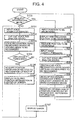
Fig. 4 is a flowchart of processing relevant to the voice
recognition registration device for the car navigation system
illustrating Embodiment 2 of the invention;
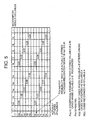
Fig. 5 is a diagram illustrating an example of a
confused-sound-unit matrix in Embodiment 2 of the invention;
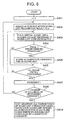
Fig. 6 is a flowchart illustrating processing for
generating similar syllable strings in the voice recognition
registration device for the car navigation system in Embodiment
2 of the invention;
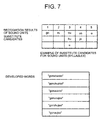
Fig. 7 is a diagram illustrating an example of developed
words obtained by replacing sound units of sound-unit
recognition results with similar candidates in the voice
recognition registration device for the car navigation system
in Embodiment 2 of the invention;
Fig. 8 is a block diagram of a voice recognition
registration device for a car navigation system in Embodiment
3 of the invention;
Fig. 9 is a flowchart illustrating processing relevant
to the voice recognition registration device for the car
navigation system in Embodiment 3 of the invention;
Fig. 10 is a block diagram of a voice recognition
index-searching device in Embodiment 4 of the invention;
Fig. 11 is a process flowchart for a voice recognition
registration device for a car navigation system in Embodiment
4 of the invention;
Fig. 12 is a block diagram illustrating a voice recognition
index generation method in Embodiment 5 of the invention; and
Fig. 13 is a flowchart illustrating processing according
to the voice recognition index generation method in Embodiment
5 of the invention.
BEST MODE FOR CARRYING OUT THE INVENTION
Hereinafter, a voice recognition device for a car
navigation system relevant to the invention will be described
based on drawings according to each embodiment.
Embodiment 1.
Fig. 1 illustrates a system configuration of a navigation
system having a voice recognition device, in Embodiment 1 of
the present invention. In the figure, numeral 101 denotes a
current position detection means for detecting the current
position of a vehicle, and the means includes a geomagnetic
sensor of a well-known configuration, a gyroscope, a distance
sensor, and a GPS receiver for a GPS (Global Positioning System)
for detecting the vehicle position based on radio waves from
satellites. Because these sensors have errors that differ in
character, a control means uses the sensors while interpolating
the data.
Numeral 102 denotes a map-data storage means that stores
various data including what is called data for map-matching
for enhancing precision in position detection, map data, and
landmark data. Although, a CD-ROM is generally used as storage
media for the map-data storage means 102, other media such as
a DVD-ROM or a memory card may be used.
Numeral 103 denotes a displaymeans for displaying a screen,
and the means generally includes a color-display capability.
On the screen of the display means, a current vehicle-position
mark inputted by the current position detection means 101, map
data inputted by the map data storage means 102, and further
additional data such as a guided route displayed on the map
and later-described landmarks for designated spots are
displayed in overlapping style.
Numeral 104 denotes a graphical pointing means, which
is a pointing means such as a pointer for specifying a portion
of an image displayed by the display means.
Numeral 105 denotes a destination input means for
inputting positions and names of destinations, which is realized,
for example, by means of a remote control sensor that receives
operation signals for a remote control terminal (hereinafter
referred to as a remote controller) or operation switches, and
is used to input the position and name of the destination. In
addition, the destination input means is used for inputting
other instructions to the car navigation system. Switches such
as mechanical switches or touch switches that are integrated
with the display means are used for the operation switches.
Numeral 111 denotes a voice input means, such as a
microphone, for inputting a voice, and the means transforms
the voice into a digital signal. Numeral 112 denotes a voice
cutout means, which eliminates silent segments and noisy
segments from the voice inputted by the voice input means 111,
and detects ranges in which only human voice is present. Numeral
113 denotes a sound analysis means, which extracts features
suitable for voice recognition from the voice picked out by
the voice cutout means 112.
Numeral 114 denotes an acoustic-model storage means,
which stores sound units (in Japanese, for example, syllables
("a"/a/, "i"/i/, "u"/u/, "e"/e/, "o"/o/, "ka"/ka/, "ki"/ki/,
"ku"/ku/, "ke"/ke/, "ko"/ko/, etc.)) and respective acoustic
patterns. Numeral 115 denotes a word-to-position-mapping
dictionary, in which words to be recognized, their acoustic
patterns, and position information related to the words are
to be registered; however, nothing is registered in the initial
state (when shipped from the factory). Numeral 116 denotes a
position-information acquisition means, which acquires the
position information from the main unit of the car navigation
system and outputs the position information. Numeral 117 denotes
a sound-unit recognition means, which performs continuous voice
recognition by checking the features of the inputted voice
extracted by the sound analysis means 113 against the acoustic
patterns of the sound units stored in the acoustic-model storage
means, and outputs as a recognition candidate a string of sound
units that has the greatest acoustic likelihood (probability).
Numeral 118 denotes a word-and-position-information
registration means, which registers a recognition candidate
outputted by the sound-unit recognition means 117, together
with the position information acquired from the
position-information acquisition means 116, in the
word-to-position-mapping dictionary 115. Numeral 119 denotes
a position-information searching/outputting means. The
position-information searching/outputting means generates,
from each word registered in the word-to-position-mapping
dictionary 115 and the acoustic patterns of the sound units
stored in the acoustic-model storage means, a sound feature
vector for the word, and calculates the acoustic likelihood
with the sound feature vector for the inputted voice extracted
by the sound analysis means 113. After that, the
position-information searching/outputting means lists as
recognition candidates the N words (N is an integer), from the
words stored in the word-to-position-mapping dictionary 115,
with the greatest acoustic likelihood of matching the inputted
voice, and outputs to the main unit of the car navigation system
the position information that the word-to-position-mapping
dictionary 115 has stored, related to the recognition
candidates.
Next, the operation will be described using Fig. 2. Here,
Japanese is taken as an example, and a syllable is taken as
a sound unit. Firstly, the operation in which words are
registered will be described. To begin with, a user inputs an
instruction for registration processing using an operation
switch attached to the destination input means 105 (step S100:
YES). Next, when the user inputs a position to be registered
(e.g., the user's home) by the destination input means 105 (step
S201), the display means 103 displays a map screen including
the inputted destination (step S202). Next, the user indicates
on the screen, by means of the graphical pointing means 104,
the position to be registered (the user's home in this case)
(step S203). Next, the user utters a name for the position (e.g.,
"jibunnoie") (step S204).
The voice input means 111 samples the inputted voice,
converts the voice to digital data, and sends the data to the
voice cutout means 112. The voice cutout means 112 eliminates
silent segments and noisy segments within the inputted data
using inputted voice power information and the like, and cuts
out the portions that are actual voice. Next, the sound analysis
means 113 extracts features suitable for voice recognition
(features such as the well-known Mel-Cepstrum) from the voice
data in the segments cut out by the voice cutout means 112 (step
S205). Next, the sound-unit recognition means 117 performs
continuous voice recognition using the features of each sound
unit (syllable in this case) stored in the acoustic-model storage
means 114 and the features outputted by the sound analysis means
113, and outputs a probable sound-unit string (a syllable string
in this case) as a recognition candidate. In the case, if the
recognition performance is good, the syllable string
"ji-bu-n-no-i-e" becomes a recognition candidate (step S206).
Next, the position-information acquisition means 116
acquires from the map data storage means 102 the position on
the map, pointed out by the graphical pointing means 104, and
outputs the position. In the case, for example, the position
information for the user's home address (east longitude and
north latitude, block number, etc.) is outputted. Next, the
word-and-position-information registration means 118
registers in the word-to-position-mapping dictionary 115 a
recognition-candidate syllable string outputted by the
sound-unit recognition means 117 together with the position
information outputted by the position information acquisition
means 116. In this case, a syllable string "ji-bu-n-no-i-e"
is registered in the word-to-position-mapping dictionary 115
together with the user's home address (e.g., "5-1-1, Ofuna,
Kamakura-shi").
Words are registered by repeating the above-described
processing.
Next, operation for an address search by the car navigation
system will be described. To begin with, the user inputs an
instruction to perform search processing (step S100: NO) . Next,
the user utters an address that the user wants to search for
and display (e.g., "jibunnoie") (step S101).
The voice input means 111 samples the inputted voice,
converts the voice into digital data, and sends the data to
the voice cutout means 112. The voice cutout means 112 eliminates
silent segments and noisy segments within the inputted data
based on power information of the inputted voice and the like,
and cuts out portions including real voices. Next, the sound
analysis means 113 extracts from the voice data in the segments
cut out by the voice cutout means 112 the features suitable
for voice recognition (features such as the well-known
Mel-Cepstrum) as a sound feature vector (step S102). Next, the
position-information searching/outputting means 119
synthesizes acoustic patterns stored in the acoustic-model
storage means 114 based on sound units of the words stored in
the word-to-position-mapping dictionary 115, and generates a
sound feature vector for the word-to-position-mapping
dictionary 115. The position-information searching/outputting
means 119 performs word recognition by checking the sound feature
vector against the sound feature vector outputted by the sound
analysis means 113, and outputs the probable word as a
recognition-result word. In this case, the word "jibunnoie"
becomes a recognition-result word (S103).
Next, the position-information searching/outputting
means 119 checks whether the acoustic likelihood of the
recognition-result words is at or above a predetermined
threshold. When the acoustic likelihood is below the
predetermined threshold (step S104: NO), an error message that
the recognition has failed is displayed, and then the system
enters a voice-input waiting state. When the acoustic likelihood
of the recognition-result words is at or above the predetermined
threshold (step S104: YES), the position information that the
word-to-position-mapping dictionary 115 stores in relation to
the recognition-result words is obtained, and then outputted
to the car navigation main unit. In this case, position
information "5-1-1, Ofuna, Kamakura-shi" is outputted. Next,
the display means 103 displays map information as an image so
that the position indicated by the obtained position information
is at the center of the map.
The above-described processing enables a user to vocally
register destination names freely according to the user's
personal way of pronouncing, and to vocally search for
destinations.
Moreover, because the embodiment is configured as
described above, there is no need to prepare in advance
pronunciations of addresses when being shipped from the factory.
Accordingly, because it is possible to eliminate the preparation
and listing up, when shipping from the factory, of voice data
with no chance of being used by users, there is a benefit in
that the storage capacity used for the voice data can be reduced.
Furthermore, because the above-described
position-information searching/outputting means 119 performs
recognition processing only on the words registered in the
word-and-position-information correlation dictionary, the
number of words to be searched is generally small, and similar
words are few, so that there is a benefit in that high-speed
and high-precision recognition can be performed.
Moreover, although only one syllable string having a great
likelihood is registered in the registration processing in the
embodiment, the most likely N sound unit strings (N is an integer)
may be registered. In this case, when "jibunnoie" is uttered,
for example, the first-place syllable string "jibunnoie", the
second-place syllable string "jibunnoyue", and the like are
registered in the word-and-position-information correlation
dictionary as being related to the identical position
information. Further, sound unit strings having an acoustic
likelihood greater than a predetermined threshold may be
similarly registered in the word-and-position-information
correlation dictionary. With this configuration, a car
navigation system can be provided that tolerates unclear
utterances in word recognition when carrying out position
information searches.
In addition, since voice recognition in Japanese has been
described here, minimum Japanese utterance units, that is,
syllables, have been described; however, it will be obvious
that, in cases of foreign languages, similar embodiments can
be configured by using a recognition means and an acoustic model
for minimum utterance units such as phonemes, taking consonants
and the like into consideration.
Embodiment 2.
Next, a voice recognition device relevant to another
embodiment of the invention will be described. Embodiment 2
provides a voice recognition device in which the recognition
performance does not easily degrade even if errors are included
in recognition results at registration. Fig. 3 illustrates a
system configuration in which a voice recognition device related
to the embodiment is applied to a navigation system. In the
figure, numeral 201 denotes a word expanding means, which
develops similar candidates from recognition results. Numeral
202 denotes a sound-unit confustion matrix storing means, which
stores confused-sound-unit matrices. Fig. 4 and Fig. 6 are
diagrams for describing processing flows. Fig. 5 and Fig. 7
are explanatory diagrams. Here, Japanese is used as an example,
and a syllable is taken as a sound unit.
Aconfused-sound-unit matrix (a confused-syllable matrix
in this case) stored in the sound-unit confustion matrix storing
means 202 is expressed as shown in Fig. 5 in the form of a matrix
of pairs of sound units (syllables in this case) that are easily
confusable in the recognition processing. Each of the components
in the matrix is expressed as a conditional probability. A
conditional probability that an actual utterance is X and the
recognition result of the utterance X is Y is expressed as P(X|Y).
For example, the probability that the recognition result is
a syllable "ka (/ka/)" while the actual utterance is "ta (/ta/)"
is expressed as P(ta|ka). The conditional probabilities are
calculated in advance from a large amount of data. When, based
on advance recognition using a large amount of data, there are
N recognition results where the utterance is recognized as a
syllable "ka (/ka/)", and among these, there are M results where
a syllable "ta (/ta/)" is the actual utterance, P(ta|ka) is
calculated as M/N. Ideally, when the actual utterance is "ka
(/ka/)", P(ka|ka) would be 1 because the syllable according
to the recognition result should be "ka (/ka/)", and the rest
of the components (P(ta|ka), etc.) would be 0. However, that
is actually not the case, due to recognition performance limits
and the like. These values are calculated in advance from a
large amount of data from a large number of people. Hereinafter,
conditional probabilities, such as P(ka|ka), that a
recognition-result syllable coincides with an actually uttered
syllable are referred to as diagonal components of the
confused-sound-unit matrix, and conditional probabilities,
such as P(ta|ka), that a recognition-result syllable does not
coincide with an actually uttered syllable are referred to as
off-diagonal components of the confused-sound-unit matrix.
Next, the operation will be described. Because step S201
through step S206 are identical to those in Embodiment 1, the
description will be omitted. Next, the word expanding means
201 generates, from syllable strings outputted by the sound-unit
recognition means 117, sound unit strings (syllable strings
in this case) similar in the recognition processing to the
outputted syllable strings (step S301). Next, a
word-and-position-information registration means 120
registers in the word-to-position-mapping dictionary 115 the
sound unit strings (syllable strings) outputted by the
sound-unit recognition means 117 and the sound unit strings
outputted by the word developing means, together with the
position information acquired by the position-information
acquisition means 116 (step S302).
The similar syllable strings are generated by the
processing shown in Fig. 6. To begin with, a variable i is
initialized to 1 (step S401). Next, the i-th syllable within
the syllable string outputted by the sound-unit recognition
means 117 is acquired. The acquired syllable is assigned to
a (step S402). Next, as for a certain syllable b (≠a), the
conditional probability P(b|a) is acquired (step S403) by
referring to the confused-sound-unit matrix stored in the
sound-unit confustion matrix storing means 202. Then, a check
is made as to whether P(b|a) is higher than a predetermined
threshold, and when P(b|a) is higher, the syllable b is stored
as a substitute candidate for the i-th syllable (step S404 and
step S405). The above-described processing is carried out for
all the syllables b (≠a) (step S406), and further the processing
is carried out for each syllable within the syllable string
after incrementing the variable i (step S407 and step S408).
Next, syllable strings are generated from all the combinations
of syllables, where the i-th syllable remains the recognition
result and where the i-th syllable has been replaced with one
of the substitute candidates, and the syllable strings are
considered as similar words.
Fig. 7 illustrates an example of the processing. As an
example, even though the utterance is "goruhujoo" (goruhujo),
the recognized syllable string is "gorucuzoo" due to the
performance limits of the syllable recognition means. Here,
because each of P(hu|cu), P(u|cu), and P(jo|zo) is higher than
the predetermined threshold, "hu" and "u" are stored as
substitute candidates for the third syllable, and "jo" is stored
as a substitute candidate for the fourth syllable. When similar
candidates are generated from all the combinations of the
syllables of the recognition result and the substitute
candidates, six similar candidates―"gorucuzoo", "goruhuzoo",
"goruuzoo", "gorucujoo", "goruhujoo", and "goruujoo"―are
outputted. These similar candidates are registered in the
word-to-position-mapping dictionary 115 as being related to
the same position information.
The processing for an address search is the same as in
Embodiment 1; however, when "goruhujo" is uttered in the search,
if any of the above six words is determined as a recognition
result, the position of the golf course is correctly displayed.
Because Embodiment 2 is configured as described above,
a voice recognition device can be provided, in which the
recognition performance does not easily degrade even if errors
are included in the recognition results at word registration
time.
Moreover, in Embodiment 2, although similar words are
generated only for a syllable string having a great acoustic
likelihood when generating similar words, the corresponding
similar words for the N syllable strings with the greatest
acoustic likelihoods (N is an integer) may be generated.
Configured as above, a voice recognition device can be provided
with greater tolerance of unclear utterances when recognizing
words.
In addition, since voice recognition in Japanese has been
described here, minimum Japanese utterance units, that is,
syllables, have been described; however, it will be obvious
that similar embodiments can be configured for a foreign language,
taking consonants and the like into consideration, using a
recognition means, a recognition dictionary, and a confusion
matrix, for minimum utterance units such as phonemes.
Embodiment 3.
Next, a voice recognition device relevant to another
embodiment of the invention will be described. Embodiment 3
provides a voice recognition device that can search for
information related to a word even if the word uttered is not
registered in the word dictionary at search time. Fig. 8
illustrates the system configuration of a navigation system
with a voice recognition device related to the embodiment. In
the figure, numeral 121 denotes an external storage means, which
is configured with a high-capacity storage means such as a DVD,
and stores words such as addresses to be searched for, their
pronunciations, and the corresponding position information.
Numeral 122 denotes a voice recognition indexing device, which
is an auxiliary storage device for reading and storing a subset
of the words and their pronunciations stored in the external
storage means; its assigned memory is normally a small fraction
of the memory capacity for storing all at once the words and
the pronunciations stored in the external storage means.
Next, the operation will be described using Fig. 9. Since
the processing at registration time (step S201 through step
S208) is the same as in Embodiment 1, the description will be
omitted; and since step S101 through step S104 within the search
processing are the same as in Embodiment 1, the description
will be omitted. Next, when all the acoustic likelihoods for
each recognition candidate are less than the predetermined
threshold (step S104: NO), a word recognition means 114
determines that the uttered word has not been registered in
the word-to-position-mapping dictionary 115. In this case, the
sound feature vector of the inputted voice is given to the voice
recognition indexing device 122, and a search for the word and
pronunciation information and the position information, of the
address in the external storage means 121 is requested (step
S501). The voice recognition indexing device searches contents
in the external storage device for a word, the sound feature
vector and the pronunciation of which coincide with those of
the inputted voice, and the position information related to
the word is determined as a search result. Then, a check is
made as to whether the search result has been successful (step
S502). When the result has been successful, the display means
103 displays the position of the acquired position information
in the center of the screen. When the search result has not
been successful (no applicable information) (step S502: NO),
the control means produces a recognition error display on the
display means indicating that the recognition has not been
successful.
According to the above-described processing, even a word
that has not undergone registration processing can be processed
for recognition by referring to the external storage device.
Embodiment 4.
Next, an embodiment of the above-described voice
recognition indexing device will be described. When there are
a large number of words to be recognized, the voice recognition
indexing device performs voice recognition at high speed while
curtailing memory use. Fig. 10 illustrates the system
configuration relevant to Embodiment 4. In the figure, numeral
301 denotes a means for searching similar words within a group.
Numeral 302 denotes a similar-word indexing means, and numeral
303 denotes a representative word table, which preserves words
selected from a plurality of words to be searched by the voice
recognition indexing device. Numeral 304 denotes word groups―a
set of groups in which a plurality of words to be searched are
divided into classes acoustically similar to each
representative word in the representative word table 303.
Next, the operation will be described using Fig. 11. In
Fig. 11, an expression "representative word (i)" is used in
order to express the i-th element in a representative word array
stored in the similar-word indexing means 302. To begin with,
i is initialized as "i = 1" (step S601). Next, a sound feature
vector for the representative word (i) is generated (step S602) .
The sound feature vector does not have to be generated at every
power-on or at every search processing, and a vector that has
been given in advance as pronunciation information for the
representative word may be used. Alternatively, if generated
at every power-on or at every search processing, a sound feature
vector may be synthesized from an acoustic model based on
phonemes or syllables, and phonemes or syllables for the
representative word.
Next, a calculation is made of the acoustic likelihood
of a match between the sound feature vector for the
representative word (i) and an input-sound feature vector used
as a search key (step S603), and a check is made as to whether
the acoustic likelihood is not less than a predetermined
threshold (step S604). When the acoustic likelihood is equal
to or greater than the predetermined threshold (step S604: YES),
the word having the greatest acoustic likelihood of a match
with the input-sound feature vector is retrieved from the group,
related to the representative word (i), stored in the
similar-word indexing means (step S605). In step S604, when
the acoustic likelihood is less than the predetermined threshold
(step S604: NO), i is incremented by 1 (step S607), and the
next representative word is evaluated.
In addition, when step S605 is executed, if a group
associated with the representative word (i) is stored in the
external storage device but is not yet present in the memory,
processing may be carried out to read into the memory the words
affiliated by the group, their pronunciations, and information
associated with the words (position information, etc.).
Meanwhile, if a representative word already exists in which
the acoustic likelihood of a match with the input-sound feature
vector is less than the predetermined threshold, the amount
of memory used in the search process can be reduced by freeing
the memory storing the words in the group associated with the
representative word.
Moreover, each word held in the representative word table
303 can be designated in advance, or can be automatically
determined from aplurality of words which become search objects,
as described below. Furthermore, the representative word table
303 may be created at power-on of the voice recognition indexing
device, or the processing may be carried out so that a
predetermined representative word table that has been stored
in advance in the external storage device is read in.
Moreover, because each group included in the word groups
304 is a logical concept, the groups do not have to exist
physically together in groups. The processing can be carried
out, for example, so that the representative word table 303
holds, together with the representative word for the group,
only pointers to or addresses of the locations of words
affiliated by the group, their pronunciations and related
information.
Furthermore, in Embodiment 4, although the external
storage device has been described as a part of a car navigation
system, accessing a storage device in another device through
a wireless data transfer means achieves equivalent effects.
In this case, a representative word table may also be acquired
through wireless communications.
Embodiment 5.
Next, an embodiment of a voice recognition index
generation means will be described, that classifies a plurality
of words into groups including acoustically similar words, and
selects representative words from the groups. The
above-described voice recognition indexing device provides a
means for efficiently searching word groups including a
plurality of arbitrary words for matched words based on the
input-sound vector. In order to efficiently search for words
using the voice recognition indexing device, representative
words must be acoustically dissimilar to each other, and a
plurality of words to be searched for must be acoustically
similar to any of the representative words, and must be
affiliated by the group of the representative word. The voice
recognition index generation device aims to categorize a
plurality of words into a plurality of groups in which the
acoustic likelihoods of matching are sufficiently separate from
one another.
Fig. 12 illustrates a configuration relevant to the
embodiment of a voice recognition index generation method of
the invention. In Fig. 12, numeral 401 denotes a representative
word selection means for selecting a representative word from
an original set including a plurality of words to be objects
of voice recognition. A representative word selected by the
representative word selection means 401 may be an arbitrary
word among a plurality of words included in the original set.
Numeral 402 denotes an acoustically similar word groupingmeans,
which selects a word having a pronunciation similar to that
of the representative word among the words other than the
representative words selected by the representative word
selection means 401 from a plurality of words included in the
original set. Here, the acoustic likelihood of a match between
the sound feature vector for the representative word and the
sound feature vector for each word included in the original
set is calculated, and the word in which the acoustic likelihood
is at a predetermined threshold or greater is determined as
being affiliated by the group related to the representative
word. Numeral 403 denotes an original-set replacing means, which
removes from the original set words that have pronunciations
similar to that of the representative word and are extracted
by the acoustically similar word means, and replaces the former
original set with the original set of this state, so that the
representative word selection means 401 can process the set
again.
Next, the operation will.be described using Fig. 13.
Firstly, the number of words in the original set is checked
(step S801) . When the number of words included in the original
set is zero, because the selection of a representative word
and the grouping of words are no longer necessary, the processing
is terminated (step S801: NO). Meanwhile, when the number of
words in the original set is not zero, because the designation
of a representative word and the grouping of words are necessary,
the next step ensues (step S801: YES).
Next, the first element in the list of words in the original
set is assigned as a representative word (step S802). Here in
this embodiment, although the first element in the list of words
in the original set is automatically determined as a
representative word in order to considerably simplify the
processing, the representative word may be any element in the
set of words acoustically similar to one another. In addition,
because words acoustically similar to the representative words
are to be subsequently collected from the original set in the
following steps, the representative word at this point may be
any element in the original set.
Next, the sound feature vector for the representative
word is calculated (step S803) . If words included in the original
set are stored in the external storage device, the sound feature
vector may be stored instead of, or together with, the
pronunciation of each word, and associated in advance with each
word. Furthermore, if acoustic information for each word
consists only of the pronunciation of the word, the sound feature
vector for the representative word can be also calculated by
a method of storing in advance acoustic patterns based on
phonemes or syllables as acoustic models, decomposing the
pronunciation of each word into phonemes or syllables, and
synthesizing acoustic patterns for the acoustic model of each
sound unit.
Next, the index variable i is initialized to 2. The initial
value is designated in order to check a representative word
against words other than the representative word. If an element
in the word list in the original set other than the first element
is selected as a representative word in step S802, the initial
value must be selected so that other words can be selected so
as not to overlap the representative word.
Next, a sound feature vector for the i-th element of the
word list in the original set is calculated (step S805). Since
the method of calculating the sound feature vector has been
described in step S803, it is omitted here.
Next, in order to check the representative word against
the i-th element of the word list in the original set, the acoustic
likelihood of a match between their respective sound feature
vectors is calculated (step S806). A check is then made as to
whether the acoustic likelihood is at a predetermined threshold
or greater (step S807) . When the acoustic likelihood is at the
predetermined threshold or greater (step S807: YES), the i-th
element is added to the group that affiliates the representative
word (step S808). Meanwhile, a delete mark is attached to the
i-th element (step S809) . A delete mark is attached to the i-th
element in step S809 because the word will be deleted from the
current original set in subsequent processing. However, the
word may be deleted directly from the original set without
attaching a delete mark in step S809. In this case, however,
the relationships between the index variable i and the words
in the word list, and the number of words included in the original
set must be adjusted.
Next, the index variable i is incremented by 1 (step S810),
and a check is made as to whether or not the variable i is less
than or equal to the number of words in the original set (step
S811). When the variable i is less than or equal to the number
of words in the original set (step S811: YES), it means that
the search for words acoustically similar to the representative
word has not reached the end of the word list, so the processing
from step S805 is repeated. However, when the variable i exceeds
the number of words in the original set (step S811: NO), it
means that the search for words acoustically similar to the
representative word has reached the end of the word list, and
words acoustically similar to the representative word in the
original set are not present any more. In this case, words to
which the delete mark has been attached up to now in step S809
are deleted from the original set (step S812). Accordingly,
the original set used in the selection processing of the next
representative word and the next group does not include the
representative word and the words affiliated by that group that
have been selected up to now, and therefore, duplicate words
affiliatedby a plurality of groups can be avoided. Subsequently,
the processing returns to step S801, and continues with the
selection of another representative word and the grouping of
words acoustically similar to the representative word.
Meanwhile, when the acoustic likelihood of a match is
less than the predetermined threshold in step S807 (step S807 :
NO), it means that the word is not affiliated by the group related
to the representative word. Therefore, processing to add the
word to the group related to the representative word is not
carried out, step S810 ensues, and preparations are carried
out for processing the next word included in the original set.
Described above is an embodiment of the voice recognition
index generation means relevant to the invention.
Furthermore, if the predetermined threshold in step S807
is made large, the number of words that are acoustically similar
to a representative word and affiliated by the group of the
representative word would decrease, which, conversely, would
require selecting a large number of representative words and
groups. Accordingly, in the voice recognition indexing device
related to the invention, the number of checks of representative
words against the input-sound feature vector would increase.
On the other hand, because the number of words affiliated by
a group decreases by increasing the predetermined threshold,
the amount of memory necessary for storing information relevant
to words included in each group (pronunciation information and
other information) could be reduced.
In contrast, if the predetermined threshold in step S807
is made small, the number of words acoustically similar to a
representative word increases, whereby the number of words
included in one group increases, and consequently, the total
number of representative words would decrease. Thus, the number
of checks of representative words against the input-sound
feature vector in the voice recognition indexing device relevant
to the invention would decrease; however, after succeeding in
matching representative words with the input-sound vector, the
number of checks against words in the group would, conversely,
increase.
Moreover, the predetermined threshold in step S807 should
be the same threshold value that is used when checking an
input-sound feature vector against representative words in the
voice recognition indexing device relevant to the invention.
Otherwise, it is conceivable that a word determined as similar
to a representative word when generating a voice recognition
index would be dissimilar to the representative word when
searching by using the voice recognition index, or vice versa.
This is the end of description on the embodiment of the
voice recognition index generation means relevant to the
invention.
It would be obvious that, in above-described Embodiment
1 through Embodiment 5, each means can be constituted by either
of hardware or software. In addition, when constituted by
software, a recording medium that has recorded the software
program is required.
INDUSTRIAL APPLICABILITY
Because the invention is constituted as described above,
when a user searches for position information by voice, by
checking an utterance inputted by the user against word
information registered in advance in the
word-and-position-information correlation dictionary by the
above-described voice recognition registration device,
position information related to the word is acquired, whereby
position information can be retrieved without registering
standard patterns in advance.
Moreover, because the invention is constituted as
described above, developed words based on the
confused-sound-unit matrix are also registered in the
above-described word-and-position-information correlation
dictionary. Therefore, even if an utterance is taken as a word
different from that actually uttered, as a consequence of the
recognition precision of the voice input means or the user's
vocal condition, correct position information can be retrieved
by checking the utterance against words developed in the
above-described word-and-position-information correlation
dictionary.
Furthermore, because the invention is constituted as
described above, when voice-recognition matching with a large
number of words is performed, matching is carried out only for
acoustically similar words, so that unnecessary matching can
be eliminated.
Furthermore, because the invention is constituted as
described above, when voice-recognition matching with a large
number of words is performed, matching is carried out only for
acoustically similar words, so that unnecessary matching can
be eliminated.
Moreover, because the invention is constituted as
described above, a plurality of words can be categorized into
groups of acoustically similar words, and the representative
words can be automatically determined.
Furthermore, because the invention is constituted as
described above, a plurality of arbitrary words and information
related to the words can be retrieved via voice at high speed
and with efficient memory use.
Furthermore, because the invention is constituted as
described above, position information related to an arbitrary
word registered by a user can be retrieved with degradation
of recognition precision being catered for, and words and
position information stored in the external storage device can
be retrieved at high speed and with low memory utilization.