EP1501912B1 - Method of reducing hydrolysis in hydrocarbon streams - Google Patents
Method of reducing hydrolysis in hydrocarbon streams Download PDFInfo
- Publication number
- EP1501912B1 EP1501912B1 EP03728605A EP03728605A EP1501912B1 EP 1501912 B1 EP1501912 B1 EP 1501912B1 EP 03728605 A EP03728605 A EP 03728605A EP 03728605 A EP03728605 A EP 03728605A EP 1501912 B1 EP1501912 B1 EP 1501912B1
- Authority
- EP
- European Patent Office
- Prior art keywords
- acid
- chloride
- hydrocarbon stream
- hydrolysis
- oil
- Prior art date
- Legal status (The legal status is an assumption and is not a legal conclusion. Google has not performed a legal analysis and makes no representation as to the accuracy of the status listed.)
- Expired - Lifetime
Links
- 239000004215 Carbon black (E152) Substances 0.000 title claims abstract description 45
- 229930195733 hydrocarbon Natural products 0.000 title claims abstract description 45
- 238000006460 hydrolysis reaction Methods 0.000 title claims abstract description 45
- 230000007062 hydrolysis Effects 0.000 title claims abstract description 44
- 150000002430 hydrocarbons Chemical class 0.000 title claims abstract description 41
- 238000000034 method Methods 0.000 title claims abstract description 39
- 239000003795 chemical substances by application Substances 0.000 claims abstract description 43
- 229910052751 metal Inorganic materials 0.000 claims abstract description 37
- 239000002184 metal Substances 0.000 claims abstract description 37
- 150000003839 salts Chemical class 0.000 claims abstract description 34
- VEXZGXHMUGYJMC-UHFFFAOYSA-N Hydrochloric acid Chemical compound Cl VEXZGXHMUGYJMC-UHFFFAOYSA-N 0.000 claims abstract description 25
- 239000008139 complexing agent Substances 0.000 claims abstract description 21
- VEXZGXHMUGYJMC-UHFFFAOYSA-M Chloride anion Chemical compound [Cl-] VEXZGXHMUGYJMC-UHFFFAOYSA-M 0.000 claims abstract description 19
- XLYOFNOQVPJJNP-UHFFFAOYSA-N water Substances O XLYOFNOQVPJJNP-UHFFFAOYSA-N 0.000 claims abstract description 13
- 150000007524 organic acids Chemical class 0.000 claims abstract description 12
- 150000001805 chlorine compounds Chemical class 0.000 claims abstract description 8
- 150000001875 compounds Chemical class 0.000 claims abstract description 8
- -1 chloride salt compound Chemical class 0.000 claims description 60
- 239000011777 magnesium Substances 0.000 claims description 44
- 239000002253 acid Substances 0.000 claims description 36
- 239000010779 crude oil Substances 0.000 claims description 17
- 229910052749 magnesium Inorganic materials 0.000 claims description 16
- 150000003841 chloride salts Chemical class 0.000 claims description 13
- FYYHWMGAXLPEAU-UHFFFAOYSA-N Magnesium Chemical compound [Mg] FYYHWMGAXLPEAU-UHFFFAOYSA-N 0.000 claims description 12
- HNNQYHFROJDYHQ-UHFFFAOYSA-N 3-(4-ethylcyclohexyl)propanoic acid 3-(3-ethylcyclopentyl)propanoic acid Chemical compound CCC1CCC(CCC(O)=O)C1.CCC1CCC(CCC(O)=O)CC1 HNNQYHFROJDYHQ-UHFFFAOYSA-N 0.000 claims description 9
- BVKZGUZCCUSVTD-UHFFFAOYSA-L Carbonate Chemical compound [O-]C([O-])=O BVKZGUZCCUSVTD-UHFFFAOYSA-L 0.000 claims description 9
- 229910052784 alkaline earth metal Inorganic materials 0.000 claims description 6
- 150000001735 carboxylic acids Chemical class 0.000 claims description 6
- 159000000003 magnesium salts Chemical group 0.000 claims description 5
- 229910001510 metal chloride Inorganic materials 0.000 claims description 5
- 239000010742 number 1 fuel oil Substances 0.000 claims description 4
- 239000003921 oil Substances 0.000 claims description 4
- 239000003079 shale oil Substances 0.000 claims description 4
- 239000003513 alkali Substances 0.000 claims description 3
- 150000001342 alkaline earth metals Chemical class 0.000 claims description 3
- 238000001246 colloidal dispersion Methods 0.000 claims description 3
- OAICVXFJPJFONN-UHFFFAOYSA-N Phosphorus Chemical compound [P] OAICVXFJPJFONN-UHFFFAOYSA-N 0.000 claims description 2
- NINIDFKCEFEMDL-UHFFFAOYSA-N Sulfur Chemical compound [S] NINIDFKCEFEMDL-UHFFFAOYSA-N 0.000 claims description 2
- 229910052698 phosphorus Inorganic materials 0.000 claims description 2
- 239000011574 phosphorus Substances 0.000 claims description 2
- 229910052717 sulfur Inorganic materials 0.000 claims description 2
- 239000011593 sulfur Substances 0.000 claims description 2
- 235000002639 sodium chloride Nutrition 0.000 description 41
- 150000007942 carboxylates Chemical class 0.000 description 29
- 239000000395 magnesium oxide Substances 0.000 description 26
- CPLXHLVBOLITMK-UHFFFAOYSA-N magnesium oxide Inorganic materials [Mg]=O CPLXHLVBOLITMK-UHFFFAOYSA-N 0.000 description 26
- AXZKOIWUVFPNLO-UHFFFAOYSA-N magnesium;oxygen(2-) Chemical compound [O-2].[Mg+2] AXZKOIWUVFPNLO-UHFFFAOYSA-N 0.000 description 26
- 150000003460 sulfonic acids Chemical class 0.000 description 26
- ZLNQQNXFFQJAID-UHFFFAOYSA-L magnesium carbonate Chemical compound [Mg+2].[O-]C([O-])=O ZLNQQNXFFQJAID-UHFFFAOYSA-L 0.000 description 21
- 239000001095 magnesium carbonate Substances 0.000 description 21
- 229910000021 magnesium carbonate Inorganic materials 0.000 description 21
- FAPWRFPIFSIZLT-UHFFFAOYSA-M Sodium chloride Chemical compound [Na+].[Cl-] FAPWRFPIFSIZLT-UHFFFAOYSA-M 0.000 description 20
- 150000007513 acids Chemical class 0.000 description 14
- UXVMQQNJUSDDNG-UHFFFAOYSA-L Calcium chloride Chemical compound [Cl-].[Cl-].[Ca+2] UXVMQQNJUSDDNG-UHFFFAOYSA-L 0.000 description 13
- 239000000356 contaminant Substances 0.000 description 13
- 229940091250 magnesium supplement Drugs 0.000 description 13
- UHOVQNZJYSORNB-UHFFFAOYSA-N Benzene Chemical compound C1=CC=CC=C1 UHOVQNZJYSORNB-UHFFFAOYSA-N 0.000 description 12
- TWRXJAOTZQYOKJ-UHFFFAOYSA-L Magnesium chloride Chemical compound [Mg+2].[Cl-].[Cl-] TWRXJAOTZQYOKJ-UHFFFAOYSA-L 0.000 description 12
- 239000002585 base Substances 0.000 description 12
- 239000001110 calcium chloride Substances 0.000 description 12
- 235000011148 calcium chloride Nutrition 0.000 description 12
- 229910001628 calcium chloride Inorganic materials 0.000 description 12
- 239000002480 mineral oil Substances 0.000 description 12
- 235000010446 mineral oil Nutrition 0.000 description 12
- 235000014113 dietary fatty acids Nutrition 0.000 description 11
- 239000000194 fatty acid Substances 0.000 description 11
- 229930195729 fatty acid Natural products 0.000 description 11
- 238000010438 heat treatment Methods 0.000 description 11
- 239000011780 sodium chloride Substances 0.000 description 10
- 125000004432 carbon atom Chemical group C* 0.000 description 9
- 230000007797 corrosion Effects 0.000 description 9
- 238000005260 corrosion Methods 0.000 description 9
- 239000003112 inhibitor Substances 0.000 description 9
- 239000000203 mixture Substances 0.000 description 9
- UFWIBTONFRDIAS-UHFFFAOYSA-N Naphthalene Chemical compound C1=CC=CC2=CC=CC=C21 UFWIBTONFRDIAS-UHFFFAOYSA-N 0.000 description 8
- 239000006185 dispersion Substances 0.000 description 7
- VTHJTEIRLNZDEV-UHFFFAOYSA-L magnesium dihydroxide Chemical compound [OH-].[OH-].[Mg+2] VTHJTEIRLNZDEV-UHFFFAOYSA-L 0.000 description 7
- 239000000347 magnesium hydroxide Substances 0.000 description 7
- 229910001862 magnesium hydroxide Inorganic materials 0.000 description 7
- 229910044991 metal oxide Inorganic materials 0.000 description 7
- 150000004706 metal oxides Chemical class 0.000 description 7
- 235000019271 petrolatum Nutrition 0.000 description 7
- 150000003254 radicals Chemical class 0.000 description 7
- UQSXHKLRYXJYBZ-UHFFFAOYSA-N Iron oxide Chemical compound [Fe]=O UQSXHKLRYXJYBZ-UHFFFAOYSA-N 0.000 description 6
- 229910052782 aluminium Inorganic materials 0.000 description 6
- XAGFODPZIPBFFR-UHFFFAOYSA-N aluminium Chemical compound [Al] XAGFODPZIPBFFR-UHFFFAOYSA-N 0.000 description 6
- 229940077388 benzenesulfonate Drugs 0.000 description 6
- SRSXLGNVWSONIS-UHFFFAOYSA-M benzenesulfonate Chemical compound [O-]S(=O)(=O)C1=CC=CC=C1 SRSXLGNVWSONIS-UHFFFAOYSA-M 0.000 description 6
- 229910052791 calcium Inorganic materials 0.000 description 6
- 239000011575 calcium Substances 0.000 description 6
- 229910001629 magnesium chloride Inorganic materials 0.000 description 6
- 239000012188 paraffin wax Substances 0.000 description 6
- 125000001931 aliphatic group Chemical group 0.000 description 5
- 125000000217 alkyl group Chemical class 0.000 description 5
- 150000001732 carboxylic acid derivatives Chemical class 0.000 description 5
- 238000004821 distillation Methods 0.000 description 5
- YRIUSKIDOIARQF-UHFFFAOYSA-N dodecyl benzenesulfonate Chemical compound CCCCCCCCCCCCOS(=O)(=O)C1=CC=CC=C1 YRIUSKIDOIARQF-UHFFFAOYSA-N 0.000 description 5
- 229940071161 dodecylbenzenesulfonate Drugs 0.000 description 5
- 125000001183 hydrocarbyl group Chemical group 0.000 description 5
- 229960002337 magnesium chloride Drugs 0.000 description 5
- 235000011147 magnesium chloride Nutrition 0.000 description 5
- 150000002989 phenols Chemical class 0.000 description 5
- 150000003017 phosphorus Chemical class 0.000 description 5
- 238000002360 preparation method Methods 0.000 description 5
- 125000001424 substituent group Chemical group 0.000 description 5
- BDHFUVZGWQCTTF-UHFFFAOYSA-M sulfonate Chemical compound [O-]S(=O)=O BDHFUVZGWQCTTF-UHFFFAOYSA-M 0.000 description 5
- OYPRJOBELJOOCE-UHFFFAOYSA-N Calcium Chemical compound [Ca] OYPRJOBELJOOCE-UHFFFAOYSA-N 0.000 description 4
- VYPSYNLAJGMNEJ-UHFFFAOYSA-N Silicium dioxide Chemical compound O=[Si]=O VYPSYNLAJGMNEJ-UHFFFAOYSA-N 0.000 description 4
- MWPLVEDNUUSJAV-UHFFFAOYSA-N anthracene Chemical compound C1=CC=CC2=CC3=CC=CC=C3C=C21 MWPLVEDNUUSJAV-UHFFFAOYSA-N 0.000 description 4
- 239000007795 chemical reaction product Substances 0.000 description 4
- LPIQUOYDBNQMRZ-UHFFFAOYSA-N cyclopentene Chemical compound C1CC=CC1 LPIQUOYDBNQMRZ-UHFFFAOYSA-N 0.000 description 4
- 238000000354 decomposition reaction Methods 0.000 description 4
- ZUOUZKKEUPVFJK-UHFFFAOYSA-N diphenyl Chemical compound C1=CC=CC=C1C1=CC=CC=C1 ZUOUZKKEUPVFJK-UHFFFAOYSA-N 0.000 description 4
- 239000002270 dispersing agent Substances 0.000 description 4
- 238000005553 drilling Methods 0.000 description 4
- 150000002148 esters Chemical class 0.000 description 4
- 150000004665 fatty acids Chemical class 0.000 description 4
- 239000000543 intermediate Substances 0.000 description 4
- 239000000463 material Substances 0.000 description 4
- 125000005608 naphthenic acid group Chemical group 0.000 description 4
- 125000001741 organic sulfur group Chemical group 0.000 description 4
- 239000002245 particle Substances 0.000 description 4
- RGSFGYAAUTVSQA-UHFFFAOYSA-N pentamethylene Natural products C1CCCC1 RGSFGYAAUTVSQA-UHFFFAOYSA-N 0.000 description 4
- 239000003208 petroleum Substances 0.000 description 4
- 241000894007 species Species 0.000 description 4
- 238000001256 steam distillation Methods 0.000 description 4
- 239000000725 suspension Substances 0.000 description 4
- DGAQECJNVWCQMB-PUAWFVPOSA-M Ilexoside XXIX Chemical compound C[C@@H]1CC[C@@]2(CC[C@@]3(C(=CC[C@H]4[C@]3(CC[C@@H]5[C@@]4(CC[C@@H](C5(C)C)OS(=O)(=O)[O-])C)C)[C@@H]2[C@]1(C)O)C)C(=O)O[C@H]6[C@@H]([C@H]([C@@H]([C@H](O6)CO)O)O)O.[Na+] DGAQECJNVWCQMB-PUAWFVPOSA-M 0.000 description 3
- HEMHJVSKTPXQMS-UHFFFAOYSA-M Sodium hydroxide Chemical compound [OH-].[Na+] HEMHJVSKTPXQMS-UHFFFAOYSA-M 0.000 description 3
- 230000002378 acidificating effect Effects 0.000 description 3
- 150000001336 alkenes Chemical class 0.000 description 3
- 125000003342 alkenyl group Chemical group 0.000 description 3
- 125000003545 alkoxy group Chemical group 0.000 description 3
- 239000010426 asphalt Substances 0.000 description 3
- 229910052788 barium Inorganic materials 0.000 description 3
- 230000015572 biosynthetic process Effects 0.000 description 3
- 150000004649 carbonic acid derivatives Chemical class 0.000 description 3
- 238000006243 chemical reaction Methods 0.000 description 3
- 230000000694 effects Effects 0.000 description 3
- 238000005755 formation reaction Methods 0.000 description 3
- IPCSVZSSVZVIGE-UHFFFAOYSA-N hexadecanoic acid Chemical compound CCCCCCCCCCCCCCCC(O)=O IPCSVZSSVZVIGE-UHFFFAOYSA-N 0.000 description 3
- FBUKVWPVBMHYJY-UHFFFAOYSA-N nonanoic acid Chemical compound CCCCCCCCC(O)=O FBUKVWPVBMHYJY-UHFFFAOYSA-N 0.000 description 3
- 229920000098 polyolefin Polymers 0.000 description 3
- 229920006395 saturated elastomer Polymers 0.000 description 3
- 239000003784 tall oil Substances 0.000 description 3
- 238000011144 upstream manufacturing Methods 0.000 description 3
- XDOFQFKRPWOURC-UHFFFAOYSA-N 16-methylheptadecanoic acid Chemical compound CC(C)CCCCCCCCCCCCCCC(O)=O XDOFQFKRPWOURC-UHFFFAOYSA-N 0.000 description 2
- YBYIRNPNPLQARY-UHFFFAOYSA-N 1H-indene Chemical compound C1=CC=C2CC=CC2=C1 YBYIRNPNPLQARY-UHFFFAOYSA-N 0.000 description 2
- CURLTUGMZLYLDI-UHFFFAOYSA-N Carbon dioxide Chemical compound O=C=O CURLTUGMZLYLDI-UHFFFAOYSA-N 0.000 description 2
- MBMLMWLHJBBADN-UHFFFAOYSA-N Ferrous sulfide Chemical compound [Fe]=S MBMLMWLHJBBADN-UHFFFAOYSA-N 0.000 description 2
- OFOBLEOULBTSOW-UHFFFAOYSA-N Malonic acid Chemical compound OC(=O)CC(O)=O OFOBLEOULBTSOW-UHFFFAOYSA-N 0.000 description 2
- 241000158728 Meliaceae Species 0.000 description 2
- 229920002367 Polyisobutene Polymers 0.000 description 2
- JUJWROOIHBZHMG-UHFFFAOYSA-N Pyridine Chemical compound C1=CC=NC=C1 JUJWROOIHBZHMG-UHFFFAOYSA-N 0.000 description 2
- 125000002723 alicyclic group Chemical group 0.000 description 2
- 125000004414 alkyl thio group Chemical group 0.000 description 2
- DTOSIQBPPRVQHS-PDBXOOCHSA-N alpha-linolenic acid Chemical compound CC\C=C/C\C=C/C\C=C/CCCCCCCC(O)=O DTOSIQBPPRVQHS-PDBXOOCHSA-N 0.000 description 2
- 125000003118 aryl group Chemical group 0.000 description 2
- 150000003819 basic metal compounds Chemical class 0.000 description 2
- 239000004305 biphenyl Substances 0.000 description 2
- 235000010290 biphenyl Nutrition 0.000 description 2
- 229920001577 copolymer Polymers 0.000 description 2
- HGCIXCUEYOPUTN-UHFFFAOYSA-N cyclohexene Chemical compound C1CCC=CC1 HGCIXCUEYOPUTN-UHFFFAOYSA-N 0.000 description 2
- GHVNFZFCNZKVNT-UHFFFAOYSA-N decanoic acid Chemical compound CCCCCCCCCC(O)=O GHVNFZFCNZKVNT-UHFFFAOYSA-N 0.000 description 2
- 150000001991 dicarboxylic acids Chemical class 0.000 description 2
- 239000003085 diluting agent Substances 0.000 description 2
- UKMSUNONTOPOIO-UHFFFAOYSA-N docosanoic acid Chemical compound CCCCCCCCCCCCCCCCCCCCCC(O)=O UKMSUNONTOPOIO-UHFFFAOYSA-N 0.000 description 2
- POULHZVOKOAJMA-UHFFFAOYSA-N dodecanoic acid Chemical compound CCCCCCCCCCCC(O)=O POULHZVOKOAJMA-UHFFFAOYSA-N 0.000 description 2
- 239000012530 fluid Substances 0.000 description 2
- 239000007789 gas Substances 0.000 description 2
- XLYOFNOQVPJJNP-ZSJDYOACSA-N heavy water Substances [2H]O[2H] XLYOFNOQVPJJNP-ZSJDYOACSA-N 0.000 description 2
- 229910052739 hydrogen Inorganic materials 0.000 description 2
- 239000001257 hydrogen Substances 0.000 description 2
- 230000005764 inhibitory process Effects 0.000 description 2
- 239000007788 liquid Substances 0.000 description 2
- 229910052748 manganese Inorganic materials 0.000 description 2
- 238000004519 manufacturing process Methods 0.000 description 2
- 150000002736 metal compounds Chemical class 0.000 description 2
- ZQPPMHVWECSIRJ-KTKRTIGZSA-N oleic acid Chemical compound CCCCCCCC\C=C/CCCCCCCC(O)=O ZQPPMHVWECSIRJ-KTKRTIGZSA-N 0.000 description 2
- 235000005985 organic acids Nutrition 0.000 description 2
- SECPZKHBENQXJG-FPLPWBNLSA-N palmitoleic acid Chemical compound CCCCCC\C=C/CCCCCCCC(O)=O SECPZKHBENQXJG-FPLPWBNLSA-N 0.000 description 2
- YNPNZTXNASCQKK-UHFFFAOYSA-N phenanthrene Chemical compound C1=CC=C2C3=CC=CC=C3C=CC2=C1 YNPNZTXNASCQKK-UHFFFAOYSA-N 0.000 description 2
- 150000003009 phosphonic acids Chemical class 0.000 description 2
- CYQAYERJWZKYML-UHFFFAOYSA-N phosphorus pentasulfide Chemical compound S1P(S2)(=S)SP3(=S)SP1(=S)SP2(=S)S3 CYQAYERJWZKYML-UHFFFAOYSA-N 0.000 description 2
- 239000000047 product Substances 0.000 description 2
- WQGWDDDVZFFDIG-UHFFFAOYSA-N pyrogallol Chemical compound OC1=CC=CC(O)=C1O WQGWDDDVZFFDIG-UHFFFAOYSA-N 0.000 description 2
- GHMLBKRAJCXXBS-UHFFFAOYSA-N resorcinol Chemical compound OC1=CC=CC(O)=C1 GHMLBKRAJCXXBS-UHFFFAOYSA-N 0.000 description 2
- 239000000377 silicon dioxide Substances 0.000 description 2
- 239000011734 sodium Substances 0.000 description 2
- 229910052708 sodium Inorganic materials 0.000 description 2
- 239000003381 stabilizer Substances 0.000 description 2
- 229910052712 strontium Inorganic materials 0.000 description 2
- CXWXQJXEFPUFDZ-UHFFFAOYSA-N tetralin Chemical compound C1=CC=C2CCCCC2=C1 CXWXQJXEFPUFDZ-UHFFFAOYSA-N 0.000 description 2
- OBETXYAYXDNJHR-SSDOTTSWSA-M (2r)-2-ethylhexanoate Chemical compound CCCC[C@@H](CC)C([O-])=O OBETXYAYXDNJHR-SSDOTTSWSA-M 0.000 description 1
- OYHQOLUKZRVURQ-NTGFUMLPSA-N (9Z,12Z)-9,10,12,13-tetratritiooctadeca-9,12-dienoic acid Chemical compound C(CCCCCCC\C(=C(/C\C(=C(/CCCCC)\[3H])\[3H])\[3H])\[3H])(=O)O OYHQOLUKZRVURQ-NTGFUMLPSA-N 0.000 description 1
- WRIDQFICGBMAFQ-UHFFFAOYSA-N (E)-8-Octadecenoic acid Natural products CCCCCCCCCC=CCCCCCCC(O)=O WRIDQFICGBMAFQ-UHFFFAOYSA-N 0.000 description 1
- ZNVKBJFZIOOWKR-UHFFFAOYSA-N 1,2-dioctylcyclopentane-1-carboxylic acid Chemical compound CCCCCCCCC1CCCC1(CCCCCCCC)C(O)=O ZNVKBJFZIOOWKR-UHFFFAOYSA-N 0.000 description 1
- YCXSPKZLGCFDKS-UHFFFAOYSA-N 1-dodecylcyclohexane-1-sulfonic acid Chemical class CCCCCCCCCCCCC1(S(O)(=O)=O)CCCCC1 YCXSPKZLGCFDKS-UHFFFAOYSA-N 0.000 description 1
- VIZFUFHTPYGKSY-UHFFFAOYSA-N 1-octadecyl-2,3,3a,4,5,6,7,7a-octahydroindene-1-carboxylic acid Chemical compound C1CCCC2C(CCCCCCCCCCCCCCCCCC)(C(O)=O)CCC21 VIZFUFHTPYGKSY-UHFFFAOYSA-N 0.000 description 1
- BYMMVYUYWOHLMH-UHFFFAOYSA-N 2,3-dihexadecylthianthrene-1-sulfonic acid Chemical class S1C2=CC=CC=C2SC2=C1C=C(CCCCCCCCCCCCCCCC)C(CCCCCCCCCCCCCCCC)=C2S(O)(=O)=O BYMMVYUYWOHLMH-UHFFFAOYSA-N 0.000 description 1
- IQRHYZLNKZLLAO-UHFFFAOYSA-N 2-(3,5,5-trimethylhexyl)phenol Chemical compound CC(C)(C)CC(C)CCC1=CC=CC=C1O IQRHYZLNKZLLAO-UHFFFAOYSA-N 0.000 description 1
- WBIQQQGBSDOWNP-UHFFFAOYSA-N 2-dodecylbenzenesulfonic acid Chemical compound CCCCCCCCCCCCC1=CC=CC=C1S(O)(=O)=O WBIQQQGBSDOWNP-UHFFFAOYSA-N 0.000 description 1
- HMWIHOZPGQRZLR-UHFFFAOYSA-N 2-hexadecylphenol Chemical class CCCCCCCCCCCCCCCCC1=CC=CC=C1O HMWIHOZPGQRZLR-UHFFFAOYSA-N 0.000 description 1
- LQJBNNIYVWPHFW-UHFFFAOYSA-N 20:1omega9c fatty acid Natural products CCCCCCCCCCC=CCCCCCCCC(O)=O LQJBNNIYVWPHFW-UHFFFAOYSA-N 0.000 description 1
- 125000006042 4-hexenyl group Chemical group 0.000 description 1
- QSBYPNXLFMSGKH-UHFFFAOYSA-N 9-Heptadecensaeure Natural products CCCCCCCC=CCCCCCCCC(O)=O QSBYPNXLFMSGKH-UHFFFAOYSA-N 0.000 description 1
- RSWGJHLUYNHPMX-UHFFFAOYSA-N Abietic-Saeure Chemical class C12CCC(C(C)C)=CC2=CCC2C1(C)CCCC2(C)C(O)=O RSWGJHLUYNHPMX-UHFFFAOYSA-N 0.000 description 1
- QGZKDVFQNNGYKY-UHFFFAOYSA-O Ammonium Chemical class [NH4+] QGZKDVFQNNGYKY-UHFFFAOYSA-O 0.000 description 1
- 235000021357 Behenic acid Nutrition 0.000 description 1
- LSNNMFCWUKXFEE-UHFFFAOYSA-M Bisulfite Chemical compound OS([O-])=O LSNNMFCWUKXFEE-UHFFFAOYSA-M 0.000 description 1
- 239000005632 Capric acid (CAS 334-48-5) Substances 0.000 description 1
- XDTMQSROBMDMFD-UHFFFAOYSA-N Cyclohexane Chemical compound C1CCCCC1 XDTMQSROBMDMFD-UHFFFAOYSA-N 0.000 description 1
- SNRUBQQJIBEYMU-UHFFFAOYSA-N Dodecane Natural products CCCCCCCCCCCC SNRUBQQJIBEYMU-UHFFFAOYSA-N 0.000 description 1
- UFHFLCQGNIYNRP-UHFFFAOYSA-N Hydrogen Chemical group [H][H] UFHFLCQGNIYNRP-UHFFFAOYSA-N 0.000 description 1
- 239000005639 Lauric acid Substances 0.000 description 1
- 239000006057 Non-nutritive feed additive Substances 0.000 description 1
- 239000005642 Oleic acid Substances 0.000 description 1
- ZQPPMHVWECSIRJ-UHFFFAOYSA-N Oleic acid Natural products CCCCCCCCC=CCCCCCCCC(O)=O ZQPPMHVWECSIRJ-UHFFFAOYSA-N 0.000 description 1
- 235000021314 Palmitic acid Nutrition 0.000 description 1
- 235000021319 Palmitoleic acid Nutrition 0.000 description 1
- 239000005643 Pelargonic acid Substances 0.000 description 1
- 239000004264 Petrolatum Substances 0.000 description 1
- 239000004698 Polyethylene Substances 0.000 description 1
- 239000004743 Polypropylene Substances 0.000 description 1
- KHPCPRHQVVSZAH-HUOMCSJISA-N Rosin Chemical class O(C/C=C/c1ccccc1)[C@H]1[C@H](O)[C@@H](O)[C@@H](O)[C@@H](CO)O1 KHPCPRHQVVSZAH-HUOMCSJISA-N 0.000 description 1
- VKCLPVFDVVKEKU-UHFFFAOYSA-N S=[P] Chemical class S=[P] VKCLPVFDVVKEKU-UHFFFAOYSA-N 0.000 description 1
- 229910006069 SO3H Inorganic materials 0.000 description 1
- UCKMPCXJQFINFW-UHFFFAOYSA-N Sulphide Chemical compound [S-2] UCKMPCXJQFINFW-UHFFFAOYSA-N 0.000 description 1
- RTQCAYKHUMWCEM-UHFFFAOYSA-N [Mg].ClO Chemical compound [Mg].ClO RTQCAYKHUMWCEM-UHFFFAOYSA-N 0.000 description 1
- PFBHIBZZUPFNMY-UHFFFAOYSA-M [Na+].Cl.Cl.[Cl-] Chemical compound [Na+].Cl.Cl.[Cl-] PFBHIBZZUPFNMY-UHFFFAOYSA-M 0.000 description 1
- NIXOWILDQLNWCW-UHFFFAOYSA-N acrylic acid group Chemical group C(C=C)(=O)O NIXOWILDQLNWCW-UHFFFAOYSA-N 0.000 description 1
- 150000007933 aliphatic carboxylic acids Chemical class 0.000 description 1
- 125000004183 alkoxy alkyl group Chemical group 0.000 description 1
- 125000005081 alkoxyalkoxyalkyl group Chemical group 0.000 description 1
- OBETXYAYXDNJHR-UHFFFAOYSA-N alpha-ethylcaproic acid Natural products CCCCC(CC)C(O)=O OBETXYAYXDNJHR-UHFFFAOYSA-N 0.000 description 1
- 235000020661 alpha-linolenic acid Nutrition 0.000 description 1
- KJCVRFUGPWSIIH-UHFFFAOYSA-N alpha-naphthol Natural products C1=CC=C2C(O)=CC=CC2=C1 KJCVRFUGPWSIIH-UHFFFAOYSA-N 0.000 description 1
- 150000003863 ammonium salts Chemical class 0.000 description 1
- 159000000032 aromatic acids Chemical class 0.000 description 1
- 150000004945 aromatic hydrocarbons Chemical class 0.000 description 1
- 125000003710 aryl alkyl group Chemical group 0.000 description 1
- QVGXLLKOCUKJST-UHFFFAOYSA-N atomic oxygen Chemical group [O] QVGXLLKOCUKJST-UHFFFAOYSA-N 0.000 description 1
- DSAJWYNOEDNPEQ-UHFFFAOYSA-N barium atom Chemical compound [Ba] DSAJWYNOEDNPEQ-UHFFFAOYSA-N 0.000 description 1
- 229940116226 behenic acid Drugs 0.000 description 1
- 125000002511 behenyl group Chemical group [H]C([*])([H])C([H])([H])C([H])([H])C([H])([H])C([H])([H])C([H])([H])C([H])([H])C([H])([H])C([H])([H])C([H])([H])C([H])([H])C([H])([H])C([H])([H])C([H])([H])C([H])([H])C([H])([H])C([H])([H])C([H])([H])C([H])([H])C([H])([H])C([H])([H])C([H])([H])[H] 0.000 description 1
- SRSXLGNVWSONIS-UHFFFAOYSA-N benzenesulfonic acid Chemical compound OS(=O)(=O)C1=CC=CC=C1 SRSXLGNVWSONIS-UHFFFAOYSA-N 0.000 description 1
- 229940092714 benzenesulfonic acid Drugs 0.000 description 1
- JWAZRIHNYRIHIV-UHFFFAOYSA-N beta-hydroxynaphthyl Natural products C1=CC=CC2=CC(O)=CC=C21 JWAZRIHNYRIHIV-UHFFFAOYSA-N 0.000 description 1
- 229950011260 betanaphthol Drugs 0.000 description 1
- 125000001246 bromo group Chemical group Br* 0.000 description 1
- 125000000484 butyl group Chemical group [H]C([*])([H])C([H])([H])C([H])([H])C([H])([H])[H] 0.000 description 1
- ZNUBAVMSWRMOEK-UHFFFAOYSA-L calcium dichloride dihydrochloride Chemical compound Cl.Cl.[Cl-].[Cl-].[Ca++] ZNUBAVMSWRMOEK-UHFFFAOYSA-L 0.000 description 1
- AXCZMVOFGPJBDE-UHFFFAOYSA-L calcium dihydroxide Chemical compound [OH-].[OH-].[Ca+2] AXCZMVOFGPJBDE-UHFFFAOYSA-L 0.000 description 1
- 239000000920 calcium hydroxide Substances 0.000 description 1
- 229910001861 calcium hydroxide Inorganic materials 0.000 description 1
- 229910052799 carbon Inorganic materials 0.000 description 1
- 150000001721 carbon Chemical group 0.000 description 1
- 239000001569 carbon dioxide Substances 0.000 description 1
- 229910002092 carbon dioxide Inorganic materials 0.000 description 1
- 239000003054 catalyst Substances 0.000 description 1
- 125000001309 chloro group Chemical group Cl* 0.000 description 1
- 125000006849 chlorophenylene group Chemical group 0.000 description 1
- SECPZKHBENQXJG-UHFFFAOYSA-N cis-palmitoleic acid Natural products CCCCCCC=CCCCCCCCC(O)=O SECPZKHBENQXJG-UHFFFAOYSA-N 0.000 description 1
- 125000004122 cyclic group Chemical group 0.000 description 1
- 150000001924 cycloalkanes Chemical class 0.000 description 1
- 150000001925 cycloalkenes Chemical class 0.000 description 1
- 125000000753 cycloalkyl group Chemical group 0.000 description 1
- QYQADNCHXSEGJT-UHFFFAOYSA-N cyclohexane-1,1-dicarboxylate;hydron Chemical compound OC(=O)C1(C(O)=O)CCCCC1 QYQADNCHXSEGJT-UHFFFAOYSA-N 0.000 description 1
- NZNMSOFKMUBTKW-UHFFFAOYSA-N cyclohexanecarboxylic acid Chemical class OC(=O)C1CCCCC1 NZNMSOFKMUBTKW-UHFFFAOYSA-N 0.000 description 1
- ZHGASCUQXLPSDT-UHFFFAOYSA-N cyclohexanesulfonic acid Chemical class OS(=O)(=O)C1CCCCC1 ZHGASCUQXLPSDT-UHFFFAOYSA-N 0.000 description 1
- 125000000113 cyclohexyl group Chemical group [H]C1([H])C([H])([H])C([H])([H])C([H])(*)C([H])([H])C1([H])[H] 0.000 description 1
- JBDSSBMEKXHSJF-UHFFFAOYSA-N cyclopentanecarboxylic acid Chemical class OC(=O)C1CCCC1 JBDSSBMEKXHSJF-UHFFFAOYSA-N 0.000 description 1
- 125000001511 cyclopentyl group Chemical group [H]C1([H])C([H])([H])C([H])([H])C([H])(*)C1([H])[H] 0.000 description 1
- 230000008021 deposition Effects 0.000 description 1
- 150000001993 dienes Chemical class 0.000 description 1
- 239000002283 diesel fuel Substances 0.000 description 1
- 150000004683 dihydrates Chemical group 0.000 description 1
- 230000003292 diminished effect Effects 0.000 description 1
- 125000003438 dodecyl group Chemical group [H]C([H])([H])C([H])([H])C([H])([H])C([H])([H])C([H])([H])C([H])([H])C([H])([H])C([H])([H])C([H])([H])C([H])([H])C([H])([H])C([H])([H])* 0.000 description 1
- 229940060296 dodecylbenzenesulfonic acid Drugs 0.000 description 1
- CCIVGXIOQKPBKL-UHFFFAOYSA-N ethanesulfonic acid Chemical compound CCS(O)(=O)=O CCIVGXIOQKPBKL-UHFFFAOYSA-N 0.000 description 1
- 238000002474 experimental method Methods 0.000 description 1
- RMBPEFMHABBEKP-UHFFFAOYSA-N fluorene Chemical compound C1=CC=C2C3=C[CH]C=CC3=CC2=C1 RMBPEFMHABBEKP-UHFFFAOYSA-N 0.000 description 1
- 238000005187 foaming Methods 0.000 description 1
- 238000005194 fractionation Methods 0.000 description 1
- 229910052736 halogen Inorganic materials 0.000 description 1
- 125000001475 halogen functional group Chemical group 0.000 description 1
- 125000005843 halogen group Chemical group 0.000 description 1
- 150000002367 halogens Chemical class 0.000 description 1
- DMEGYFMYUHOHGS-UHFFFAOYSA-N heptamethylene Natural products C1CCCCCC1 DMEGYFMYUHOHGS-UHFFFAOYSA-N 0.000 description 1
- MNWFXJYAOYHMED-UHFFFAOYSA-N heptanoic acid group Chemical group C(CCCCCC)(=O)O MNWFXJYAOYHMED-UHFFFAOYSA-N 0.000 description 1
- 125000000623 heterocyclic group Chemical group 0.000 description 1
- 150000004687 hexahydrates Chemical group 0.000 description 1
- 150000004677 hydrates Chemical class 0.000 description 1
- 125000004435 hydrogen atom Chemical group [H]* 0.000 description 1
- XLYOFNOQVPJJNP-UHFFFAOYSA-M hydroxide Chemical compound [OH-] XLYOFNOQVPJJNP-UHFFFAOYSA-M 0.000 description 1
- 239000007924 injection Substances 0.000 description 1
- 238000002347 injection Methods 0.000 description 1
- 238000004255 ion exchange chromatography Methods 0.000 description 1
- 125000000959 isobutyl group Chemical group [H]C([H])([H])C([H])(C([H])([H])[H])C([H])([H])* 0.000 description 1
- QXJSBBXBKPUZAA-UHFFFAOYSA-N isooleic acid Natural products CCCCCCCC=CCCCCCCCCC(O)=O QXJSBBXBKPUZAA-UHFFFAOYSA-N 0.000 description 1
- 239000003350 kerosene Substances 0.000 description 1
- 229960004488 linolenic acid Drugs 0.000 description 1
- 229940050906 magnesium chloride hexahydrate Drugs 0.000 description 1
- DHRRIBDTHFBPNG-UHFFFAOYSA-L magnesium dichloride hexahydrate Chemical compound O.O.O.O.O.O.[Mg+2].[Cl-].[Cl-] DHRRIBDTHFBPNG-UHFFFAOYSA-L 0.000 description 1
- 239000011976 maleic acid Substances 0.000 description 1
- 150000002689 maleic acids Chemical class 0.000 description 1
- 229910001987 mercury nitrate Inorganic materials 0.000 description 1
- 229910000000 metal hydroxide Inorganic materials 0.000 description 1
- 150000004692 metal hydroxides Chemical class 0.000 description 1
- 150000002739 metals Chemical class 0.000 description 1
- 150000005673 monoalkenes Chemical class 0.000 description 1
- 150000002762 monocarboxylic acid derivatives Chemical class 0.000 description 1
- 150000002763 monocarboxylic acids Chemical class 0.000 description 1
- 239000000178 monomer Substances 0.000 description 1
- WQEPLUUGTLDZJY-UHFFFAOYSA-N n-Pentadecanoic acid Natural products CCCCCCCCCCCCCCC(O)=O WQEPLUUGTLDZJY-UHFFFAOYSA-N 0.000 description 1
- PSZYNBSKGUBXEH-UHFFFAOYSA-N naphthalene-1-sulfonic acid Chemical class C1=CC=C2C(S(=O)(=O)O)=CC=CC2=C1 PSZYNBSKGUBXEH-UHFFFAOYSA-N 0.000 description 1
- 150000002790 naphthalenes Chemical class 0.000 description 1
- 230000007935 neutral effect Effects 0.000 description 1
- 125000000449 nitro group Chemical group [O-][N+](*)=O 0.000 description 1
- DRXYRSRECMWYAV-UHFFFAOYSA-N nitrooxymercury Chemical compound [Hg+].[O-][N+]([O-])=O DRXYRSRECMWYAV-UHFFFAOYSA-N 0.000 description 1
- BDJRBEYXGGNYIS-UHFFFAOYSA-N nonanedioic acid Chemical compound OC(=O)CCCCCCCC(O)=O BDJRBEYXGGNYIS-UHFFFAOYSA-N 0.000 description 1
- 125000001400 nonyl group Chemical group [H]C([*])([H])C([H])([H])C([H])([H])C([H])([H])C([H])([H])C([H])([H])C([H])([H])C([H])([H])C([H])([H])[H] 0.000 description 1
- SNQQPOLDUKLAAF-UHFFFAOYSA-N nonylphenol Chemical class CCCCCCCCCC1=CC=CC=C1O SNQQPOLDUKLAAF-UHFFFAOYSA-N 0.000 description 1
- NIHNNTQXNPWCJQ-UHFFFAOYSA-N o-biphenylenemethane Natural products C1=CC=C2CC3=CC=CC=C3C2=C1 NIHNNTQXNPWCJQ-UHFFFAOYSA-N 0.000 description 1
- YCIMNLLNPGFGHC-UHFFFAOYSA-N o-dihydroxy-benzene Natural products OC1=CC=CC=C1O YCIMNLLNPGFGHC-UHFFFAOYSA-N 0.000 description 1
- WWZKQHOCKIZLMA-UHFFFAOYSA-N octanoic acid Chemical compound CCCCCCCC(O)=O WWZKQHOCKIZLMA-UHFFFAOYSA-N 0.000 description 1
- 125000002347 octyl group Chemical group [H]C([*])([H])C([H])([H])C([H])([H])C([H])([H])C([H])([H])C([H])([H])C([H])([H])C([H])([H])[H] 0.000 description 1
- 239000004533 oil dispersion Substances 0.000 description 1
- JRZJOMJEPLMPRA-UHFFFAOYSA-N olefin Natural products CCCCCCCC=C JRZJOMJEPLMPRA-UHFFFAOYSA-N 0.000 description 1
- 229940066842 petrolatum Drugs 0.000 description 1
- 239000003209 petroleum derivative Substances 0.000 description 1
- 125000001997 phenyl group Chemical group [H]C1=C([H])C([H])=C(*)C([H])=C1[H] 0.000 description 1
- 125000000843 phenylene group Chemical group C1(=C(C=CC=C1)*)* 0.000 description 1
- 150000003016 phosphoric acids Chemical class 0.000 description 1
- 229920001084 poly(chloroprene) Polymers 0.000 description 1
- 229920000573 polyethylene Polymers 0.000 description 1
- 229920001155 polypropylene Polymers 0.000 description 1
- 239000000843 powder Substances 0.000 description 1
- 238000010926 purge Methods 0.000 description 1
- UMJSCPRVCHMLSP-UHFFFAOYSA-N pyridine Natural products COC1=CC=CN=C1 UMJSCPRVCHMLSP-UHFFFAOYSA-N 0.000 description 1
- 229940079877 pyrogallol Drugs 0.000 description 1
- 239000011541 reaction mixture Substances 0.000 description 1
- 238000007670 refining Methods 0.000 description 1
- 230000000717 retained effect Effects 0.000 description 1
- WBHHMMIMDMUBKC-XLNAKTSKSA-N ricinelaidic acid Chemical compound CCCCCC[C@@H](O)C\C=C\CCCCCCCC(O)=O WBHHMMIMDMUBKC-XLNAKTSKSA-N 0.000 description 1
- 229960003656 ricinoleic acid Drugs 0.000 description 1
- FEUQNCSVHBHROZ-UHFFFAOYSA-N ricinoleic acid Natural products CCCCCCC(O[Si](C)(C)C)CC=CCCCCCCCC(=O)OC FEUQNCSVHBHROZ-UHFFFAOYSA-N 0.000 description 1
- 239000011435 rock Substances 0.000 description 1
- 229910052710 silicon Inorganic materials 0.000 description 1
- 239000010703 silicon Substances 0.000 description 1
- 239000007921 spray Substances 0.000 description 1
- 230000000087 stabilizing effect Effects 0.000 description 1
- 238000003860 storage Methods 0.000 description 1
- 239000000126 substance Substances 0.000 description 1
- TUNFSRHWOTWDNC-HKGQFRNVSA-N tetradecanoic acid Chemical compound CCCCCCCCCCCCC[14C](O)=O TUNFSRHWOTWDNC-HKGQFRNVSA-N 0.000 description 1
- GVIJJXMXTUZIOD-UHFFFAOYSA-N thianthrene Chemical compound C1=CC=C2SC3=CC=CC=C3SC2=C1 GVIJJXMXTUZIOD-UHFFFAOYSA-N 0.000 description 1
- 125000004149 thio group Chemical group *S* 0.000 description 1
- 238000004448 titration Methods 0.000 description 1
- VZCYOOQTPOCHFL-UHFFFAOYSA-N trans-butenedioic acid Natural products OC(=O)C=CC(O)=O VZCYOOQTPOCHFL-UHFFFAOYSA-N 0.000 description 1
- KHPCPRHQVVSZAH-UHFFFAOYSA-N trans-cinnamyl beta-D-glucopyranoside Chemical class OC1C(O)C(O)C(CO)OC1OCC=CC1=CC=CC=C1 KHPCPRHQVVSZAH-UHFFFAOYSA-N 0.000 description 1
Images



Classifications
-
- C—CHEMISTRY; METALLURGY
- C10—PETROLEUM, GAS OR COKE INDUSTRIES; TECHNICAL GASES CONTAINING CARBON MONOXIDE; FUELS; LUBRICANTS; PEAT
- C10G—CRACKING HYDROCARBON OILS; PRODUCTION OF LIQUID HYDROCARBON MIXTURES, e.g. BY DESTRUCTIVE HYDROGENATION, OLIGOMERISATION, POLYMERISATION; RECOVERY OF HYDROCARBON OILS FROM OIL-SHALE, OIL-SAND, OR GASES; REFINING MIXTURES MAINLY CONSISTING OF HYDROCARBONS; REFORMING OF NAPHTHA; MINERAL WAXES
- C10G19/00—Refining hydrocarbon oils in the absence of hydrogen, by alkaline treatment
-
- C—CHEMISTRY; METALLURGY
- C10—PETROLEUM, GAS OR COKE INDUSTRIES; TECHNICAL GASES CONTAINING CARBON MONOXIDE; FUELS; LUBRICANTS; PEAT
- C10G—CRACKING HYDROCARBON OILS; PRODUCTION OF LIQUID HYDROCARBON MIXTURES, e.g. BY DESTRUCTIVE HYDROGENATION, OLIGOMERISATION, POLYMERISATION; RECOVERY OF HYDROCARBON OILS FROM OIL-SHALE, OIL-SAND, OR GASES; REFINING MIXTURES MAINLY CONSISTING OF HYDROCARBONS; REFORMING OF NAPHTHA; MINERAL WAXES
- C10G17/00—Refining of hydrocarbon oils in the absence of hydrogen, with acids, acid-forming compounds or acid-containing liquids, e.g. acid sludge
-
- C—CHEMISTRY; METALLURGY
- C10—PETROLEUM, GAS OR COKE INDUSTRIES; TECHNICAL GASES CONTAINING CARBON MONOXIDE; FUELS; LUBRICANTS; PEAT
- C10G—CRACKING HYDROCARBON OILS; PRODUCTION OF LIQUID HYDROCARBON MIXTURES, e.g. BY DESTRUCTIVE HYDROGENATION, OLIGOMERISATION, POLYMERISATION; RECOVERY OF HYDROCARBON OILS FROM OIL-SHALE, OIL-SAND, OR GASES; REFINING MIXTURES MAINLY CONSISTING OF HYDROCARBONS; REFORMING OF NAPHTHA; MINERAL WAXES
- C10G17/00—Refining of hydrocarbon oils in the absence of hydrogen, with acids, acid-forming compounds or acid-containing liquids, e.g. acid sludge
- C10G17/02—Refining of hydrocarbon oils in the absence of hydrogen, with acids, acid-forming compounds or acid-containing liquids, e.g. acid sludge with acids or acid-containing liquids, e.g. acid sludge
-
- C—CHEMISTRY; METALLURGY
- C10—PETROLEUM, GAS OR COKE INDUSTRIES; TECHNICAL GASES CONTAINING CARBON MONOXIDE; FUELS; LUBRICANTS; PEAT
- C10G—CRACKING HYDROCARBON OILS; PRODUCTION OF LIQUID HYDROCARBON MIXTURES, e.g. BY DESTRUCTIVE HYDROGENATION, OLIGOMERISATION, POLYMERISATION; RECOVERY OF HYDROCARBON OILS FROM OIL-SHALE, OIL-SAND, OR GASES; REFINING MIXTURES MAINLY CONSISTING OF HYDROCARBONS; REFORMING OF NAPHTHA; MINERAL WAXES
- C10G29/00—Refining of hydrocarbon oils, in the absence of hydrogen, with other chemicals
- C10G29/06—Metal salts, or metal salts deposited on a carrier
-
- C—CHEMISTRY; METALLURGY
- C10—PETROLEUM, GAS OR COKE INDUSTRIES; TECHNICAL GASES CONTAINING CARBON MONOXIDE; FUELS; LUBRICANTS; PEAT
- C10G—CRACKING HYDROCARBON OILS; PRODUCTION OF LIQUID HYDROCARBON MIXTURES, e.g. BY DESTRUCTIVE HYDROGENATION, OLIGOMERISATION, POLYMERISATION; RECOVERY OF HYDROCARBON OILS FROM OIL-SHALE, OIL-SAND, OR GASES; REFINING MIXTURES MAINLY CONSISTING OF HYDROCARBONS; REFORMING OF NAPHTHA; MINERAL WAXES
- C10G29/00—Refining of hydrocarbon oils, in the absence of hydrogen, with other chemicals
- C10G29/06—Metal salts, or metal salts deposited on a carrier
- C10G29/10—Sulfides
Definitions
- This invention relates to reducing hydrolysis of hydrocarbon streams such as crude oil that are subjected to processing at elevated temperatures and, more particularly, to reducing hydrolysis and the subsequent production of hydrochloric acid by the addition of hydrolysis inhibitors to such streams.
- a typical refinery includes a tank farm or storage area where feed stocks, e.g., crude oil, shale oil, coal oil and certain intermediate hydrocarbon streams from the refining processes are stored for optimum utilization in the refinery. It is not uncommon for these feedstocks to contain chloride salts, primarily metal chloride salts and, more particularly, chlorides of alkali and alkaline earth metals in amounts ranging from 1 to 2000 ppm. It is known that hydrocarbon streams containing these chloride contaminants, at elevated temperatures and in the presence ofwater, will hydrolyze to form hydrochloric acid, which, as well known to those skilled in the art, can cause severe corrosion problems to processing equipment.
- chloride salts primarily metal chloride salts and, more particularly, chlorides of alkali and alkaline earth metals
- the crude is generally first treated in a desalter.
- the purpose of the desalter is to remove as much of the salts and other water soluble contaminants as possible prior to introducing the hydrocarbon stream, e.g., the crude oil, to the downstream heat exchangers, furnaces, distillation columns, crackers and the associated processing equipment such as pumps, valves, piping and other equipment commonly used in refineries and other petrochemical facilities.
- the desalter which generally operated at a temperature of 93 to 121°C (200 to 250°F)
- it passes through a second heating zone operated at a temperature of about 121 to 316°C (250 to 600°F).
- the heated stream then passes to a furnace where it is heated to a temperature of 316 to 371°C (600 to 700°F).
- the stream is next introduced into an atmospheric distillation column together with steam to make a rough fractionation into generally four cuts: an overhead stream containing light hydrocarbon, e.g., C 1 to C 8 hydrocarbon, a first intermediate fraction comprising kerosene, jet and diesel fuel, a second intermediate fraction containing gas oil, and a bottoms fraction containing the heaviest components present in the feedstock.
- any hydrochloric acid formed upstream of the atmospheric distillation column will be carried over in the light fraction and be condensed with water. Subsequent treatment of this condensed fraction will result in the hydrochloric acid coming in contact with and causing corrosive damage to process equipment used to treat the condensed fraction.
- a method for reducing hydrolysis in a hydrocarbon stream wherein a hydrocarbon stream containing a chloride compound which undergoes hydrolysis at elevated temperatures and in the presence of water to form hydrochloric acid is treated with an effective amount of a treating agent comprising at least one overbase complex of a metal salt and an organic acid complexing agent.
- the treating agent is introduced into the hydrocarbon stream when the stream is at a temperature below which any substantial hydrolysis of the chloride containing compound occurs.
- the method of the present invention while finding particular application to crude feedstocks in refinery operations, can be used in any hydrocarbon stream and any process wherein the hydrocarbon stream contains hydrolyzeable chloride compounds, which, at elevated temperatures and in the presence of water can form hydrochloric acid.
- suitable hydrocarbon streams include crude oil, shale oil, coal oil, as well as various hydrocarbon streams that are produced in refinery operation and that are generally used as intermediates to produce other, more desirable products.
- the chloride containing compounds can be any compound, generally inorganic in nature, that will hydrolyze at elevated temperatures and in the presence of water to form hydrochloric acid.
- the chloride containing compounds are metal salts and, more particularly, salts of the alkali and alkaline earth metals, such as sodium chloride, calcium chloride, magnesium chloride, etc.
- a treating agent comprised of an overbase complex of a metal salt and an organic acid complexing agent, described hereafter, is introduced into the chloride contaminated hydrocarbon streams prior to the stream being raised to a range at which any significant hydrolysis occurs, hydrolysis of the resulting chloride is greatly diminished, often to a point where minimal corrosion occurs.
- the hydrolysis of the chloride containing compounds to form hydrochloric acid occurs generally over a temperature range depending upon the specific conditions, the particular chloride(s) and other such variables. Generally, however, significant hydrolysis usually does not occur until the temperature of the hydrocarbon stream reaches about 149°C (300°F) although, again, depending upon the chloride compound and other conditions, some hydrolysis can occur at temperatures as low as 121°C (250°F). Accordingly, while no precise temperature can be specified because of the variables noted above, in general, the treating agent would be introduced into the hydrocarbon stream when the stream is at a temperature below about 204°C (400°F).
- the treating agent of the present invention is preferably introduced into the feed stream prior to the time the stream enters the second heating section, i.e., the heating section following the desalter and upstream of the furnace.
- the treating agent can be introduced well downstream of the second heating section and, indeed, can be introduced with the crude that may be an ambient or below ambient temperatures, i.e., prior to the first preheating section.
- the treating agent can be introduced into the heating section between the desalter and the furnace, although it is preferable that it be introduced prior to the stream entering the second heating section.
- Naphthenic acid corrosion generally occurs in the temperature range of from 204 to 316°C (400 to 600°F), i.e., at a temperature significantly higher than that at which hydrolysis of the chloride contaminant occurs.
- the treating agent is introduced into the stream at some point prior to the stream entering the second heating section, i.e., the heating section between the desalter and the furnace, it would be effective at reducing naphthenic acid corrosion, as well as hydrolysis of the chloride contaminants.
- naphthenic acid greatly increases the hydrolysis of chloride salts such as sodium chloride.
- the treating agent used in this invention comprises at least one overbase complex of a salt and an organic acid complexing agent.
- overbases comprise dispersions of salts formed by contacting an acidic material with an excess of a basically reacting metal compound; e.g., a metal hydroxide or oxide.
- a basically reacting metal compound e.g., a metal hydroxide or oxide.
- polymeric salts It is believed that neither theory is incorrect but that neither is completely correct.
- the treating agent is an overbase complex of an oxide or carbonate of Mg, Ca, Ba, Sr or Mn and the Mg, Ca, Ba, Sr or Mn salt of an organic acid "complexing agent".
- Mg, Ca, Ba, Sr or Mn Mg, Ca, Ba, Sr or Mn salt of an organic acid "complexing agent".
- overbases include the aluminum species.
- the treating agent contains a stoichiometric excess of basic metal compound, relative to the number of equivalents of acid complexing agent which is reacted with a basic metal compound to afford the complex, relative to the normal stoichiometry of the particular metal base and acid.
- a "neutral" or “normal” metal salt of an acid is characterized by an equivalent ratio of base or "metal” to acid of 1:1, while an overbased salt is characterized by a higher ratio; e.g., 1.1:1, 2:1, 5:1, 10:1, 15:1, 20:1, 30:1 and the like.
- metal ratio is used to designate the ratio of (a) equivalents of metal or base to acid in an overbased salt to (b) the number of equivalents expected to be present in a normal salt, based on the usual stoichiometry of the metal or metals involved and the acid of acids present.
- an oil dispersion of an overbased magnesium salt containing two equivalents of acid and twenty equivalents of magnesium would have a metal ratio of 10; i.e., 20/(1+1).
- magnesium for example, is regarded as having two equivalents of base per atomic weight; magnesium oxide (MgO) and magnesium hydroxide Mg(OH) 2 , two equivalents per mole.
- Monobasic organic acids are regarded as having one equivalent of acid per acidic hydrogen or acid group.
- a monocarboxylic acid or monosulfonic acid or their equivalent derivatives such as esters and ammonium and metal salts, have one equivalent per mole of acid, ester or salt; a disulfonic acid or dicarboxylic acid, or equivalent derivative, has two equivalents per mole.
- the basically reacting metal compounds such as the oxides and carbonates of calcium, barium and magnesium have two equivalents per mole; i.e., two equivalents per atomic weight of metal.
- the treating agents used in the method of the present invention are overbase complexes of metal oxides and/or carbonates and a metal salt of at least one complexing agent.
- the oxides or carbonates may also be a combination of the metal species, such as a 1:1 by weight mixture.
- the salt may be a combination of metal salts, such as a 1:1 by weight mixture.
- the magnesium, calcium or aluminum species are highly preferred.
- carboxylate refers to the reaction product of a metal base and an organic carboxylic acid having the general formula R--COOH, where R is a hydrocarbon radical
- non-carboxylate refers to the reaction product of a metal base and an organic acid other than an organic carboxylic acid; e.g., “non-carboxylic” acids such as organic sulfur acids and organic phosphorus acids, which latter materials have substantially greater dispersant capabilities than do the carboxylates, the carboxylates, however, having stabilizing capabilities.
- the role of the complexing agent in the preparation and use of the treating agents in the invention is not clear. As stated above, some may function as stabilizers while others may function as dispersants. Certainly, some may have both functions or another, unknown, function. It appears, however, that, during the preparation of the complex, the presence of at least one complexing agent is essential to provide the treating agent used in the method of the invention. It also appears that the preferred treating agents are characterized by the presence of a non-carboxylate salt; e.g., a sulfonate.
- the treating agents used in the present invention may be prepared in any manner known to the prior art for preparing overbased salts, providing that the magnesium oxide/magnesium carboxylated overbase complex resulting therefrom is in the form offinely divided, preferably submicron, particles which form a stable dispersion in oil.
- the method for-preparing the magnesium oxide/magnesium car-boxylated-overbase complex is to form a mixture of a base of the desired metal; e.g., Mg(OH) 2 , a complexing agent; e.g., fatty acid such as a tall oil fatty acid, which is present in a quantity much less than that required to stoichiometrically react with the hydroxide, and a non-volatile diluent.
- the mixture is heated to a temperature of about 250° to 350°C., whereby there is afforded the overbase complex of the metal oxide and metal salt of the fatty acid as set forth in U.S. Pat. No. 4,163,728 (the '728 patent).
- the metal carbonate/complexing agent overbase complex e.g., magnesium carbonate/magnesium sulfonate, is commercially available or may be prepared in the same manner as described above, except that carbon dioxide is bubbled through the initial reaction mixture.
- the above-described method of preparing the overbased magnesium oxide/magnesium carboxylate treating agent used in the present invention is particularly set forth in the '728 patent, wherein, for example, a mixture of Mg(OH) 2 and a carboxylic acid complexing agent is heated at a temperature of about 280' to 330°C. in a suitable non-volatile diluent.
- Complexing agents are carboxylic acids, phenols, organic phosphorus acids and organic sulfur acids. Included are those acids which are presently used in preparing overbased materials; e.g., those described in U.S. Pat. Nos. 3,312,618; 2,695,910 and 2,616,904, and constitute an art-recognized class of acids.
- the carboxylic acids, phenols, organic phosphorus acids and organic sulfur acids which are oil-soluble per se, particularly the oil-soluble sulfonic acids, are especially useful.
- Oil-soluble derivatives of these organic acidic substances can be utilized in lieu of or in combination with the free acids.
- organic acidic substances such as their metal salts, ammonium salts and esters (particularly esters with lower aliphatic alcohols having up to six carbon atoms, such as the lower alkanols)
- esters particularly esters with lower aliphatic alcohols having up to six carbon atoms, such as the lower alkanols
- Suitable carboxylic acid complexing agents which may be used to make the treating agent include aliphatic, cycloaliphatic and aromatic mono and polybasic carboxylic acids such as naphthenic acids, alkyl- or alkenyl-substituted cyclopentanoic acids, alkyl- or alkenyl-substituted cyclohexanoic acids and alkyl or alkenyl-substituted aromatic carboxylic acids.
- the aliphatic acids generally are long chain acids and contain at least eight carbon atoms and preferably at least twelve carbon atoms.
- the cycloaliphatic and aliphatic carboxylic acids can be saturated or unsaturated.
- Specific examples include 2-ethylhexanoic acid, alphalinolenic acid, propylene-tetrainer-substituted maleic acid, behenic acid, isostearic acid, pelargonic acid, capric acid, palmitoleic acid, linoleic acid, lauric acid, oleic acid, ricinoleic acid, undecyclic acid, dioctylcyclopentane carboxylic acid, myristic acid, dilauryldecahydronaphthalene carboxylic acid, stearyl-octahydroindene carboxylic acid, palmitic acid, commercially available mixtures of two or more carboxylic acids such as tall oil fatty acids, rosin acids and the like.
- saturated aliphatic monocarboxylic acids e.g., formic, acetic, propionic, butyric, valeric, caproic, heptanoic, caprylic, pelargonic, capric, undecyclic, lauric, tridecylic, myristic, isoacetic, palmitic, margaric and stearic; alicyclic unsaturated monocarboxylic acids; e.g.
- saturated aliphatic dicarboxylic acids e.g., oxalic, malonic, succinic, glutaric, adipic, pimelic, suberic, azelaic and sebacic
- alicyclic saturated dicarboxylic acids e.g., cyclohexane dicarboxylic acid
- unsaturated aliphatic monocarboxylic acids e.g., acrylic, crotonic, decenoic, undecenoic, tridecenoic, pentadecenoic, oleic, linoleic and linolenic
- unsaturated dicarboxylic acids e.g., fumaric and maleic.
- Aromatic acids which are used in the preparation of the treating agent are represented by the general formula: where R is a hydrocarbon or essentially hydrocarbon radical containing at least four aliphatic carbon atoms, R' is hydrogen or C(X)XH, n is an integer of from one to four, Ar is a polyvalent aromatic hydrocarbon radical having a total of up to fourteen carbon atoms in the aromatic nucleus, each X is independently a divalent sulfur or oxygen group and p is zero or an integer of from one to six, with the proviso that R and n are such that there is an average of at least eight aliphatic carbon atoms provided by the R substituents for each acid molecule represented.
- aromatic radicals represented by the variable Ar are the polyvalent aromatic radicals derived from benzene, naphthalene, anthracene, phenanthrene, indene, fluorene, biphenyl and the like.
- the radical represented by Ar will be a polyvalent radical derived from benzene or naphthalene such as phenylenes and naphthalene; e.g., methylphenylenes, mercaptophenylenes, N,N-diethytaminophenylenes, chlorophenylenes, dipropoxynaphthylenes, triethylnaphthylenes, and similar tri-, tetra- and pentavalent radicals thereof.
- the R variables are usually hydrocarbon groups, preferably aliphatic hydrocarbon groups such as alkyl or alkenyl radicals.
- R groups include butyl, isobutyl, octyl, nonyl, dodecyl, docosyl, tetracontyl, t-chlorohexyl, 4-ethoxypentyl, 4-hexenyl, 3-cyclohexyloctyl, 4-(p-chlorophenyl)-octyl, 2,3,5,-trimethyl, 4-ethyl-5-methyloctyl and substituents derived from polymerized olefins such as polychloroprenes, polyethylenes, propypropylenes, polyisobutylenes, ethylenepropylene copolymers, chlorinated olefin polymers, oxidized ethylene-propylene copolymers and the like.
- polymerized olefins such as polychloroprenes, polyethylenes, propypropylenes, polyisobutylenes, ethylenepropylene copolymers, chlorinated o
- variable Ar may contain non-hydrocarbon substituents, for example, such diverse substituents as lower alkoxy, lower alkyl mercapto, nitro, halo, alkyl or alkenyl groups of less than four carbon atoms, hydroxy, mercapto and the like.
- aromatic carboxylic acids are those of the formula: is an aliphatic hydrocarbon radical containing at least four carbon atoms, a is an integer of from 1 to 3, b is 1 or 2, c is zero, 1 or 2 and preferably 1, with the proviso that R' and a are such that the acid molecules contain at least an average of about twelve aliphatic carbon atoms in the aliphatic hydrocarbon substituents per acid molecule.
- Phenols which are used include 3,5,5-trimethyl-n-hexyl phenol, -decyl phenols, cetyl phenols, nonyl phenols, alkylphenol phenols, resorcinol, octyl catechol, triisobutyl pyrogallol, alkyl alpha naphthol and the like.
- non-carboxylic acids which may be used in preparing the processing aids are the organic sulfur acids; e.g., oil-soluble sulfonic acids, including the synthetic oil-soluble sulfonic acids.
- oil-soluble sulfonic acids are represented by the general formula: I. R x -T-(SO 3 H) y II. R 1 -(SO 3 H) y
- T is a cyclic nucleus of the mono- or polynuclear type including benzenoid, cycloaliphatic or heterocyclic nuclei such as a benzene, naphthalene, anthracene, 1,2,3,4-tetrahydronaphthalene, thianthrene, cyclopentene, pyridine or biphenyl and the like.
- T will represent an aromatic hydrocarbon nucleus, especially a benzene or naphthalene nucleus.
- variable R in the radical R x can be, for example, an aliphatic group such as alkyl, alkenyl, alkoxy alkoxyalkyl, carboalkoxyalkyl, an aralkyl group or other hydrocarbon or essentially hydrocarbon groups, while x is at least 1 with the proviso that the variables represented by the group R x are such that the acids are oil-soluble.
- the groups represented by R x should contain at least about eight aliphatic carbon atoms and preferably at least about twelve aliphatic carbon atoms.
- x will be an integer of 1-3.
- the variables r and y in Formulae I and II have an average value of one to about four per molecule.
- variable R' in Formula II is an aliphatic or aliphatic-substituted cycloaliphatic hydrocarbon or essentially hydrocarbon radical. Where R' is an aliphatic radical, it should contain at least about 8 to about 20 carbon atoms and where R' is an aliphatic-substituted cycloaliphatic group, the aliphatic substituents should contain about 4 to 16 carbon atoms. Examples of R' are alkyl, alkenyl and alkoxyalkyl radicals and aliphatic-substituted cycloaliphatic radicals wherein the aliphatic substituents are alkoxy, alkoxyalkyl, carboalkoxyalkyl, etc.
- the cycloaliphatic radical will be a cycloalkane nucleus or a cycloalkene nucleus such as cyclopentane, cyclohexane, cyclohexene, cyclopentene and the like.
- R' are cetyl-cyclohexyl, laurylcyclohexyl, cetyloxyethyl and octadecenyl radicals, and the radicals derived from petroleum, saturated and unsaturated paraffin wax, and polyolefins, including polymerized mono- and diolefins containing from about 1 to 8 carbon atoms per olefin monomer unit.
- the groups T, R and R' in Formulae I and II can also contain other substituents such as hydroxy, mercapto, halogen, nitro, amino, nitroso, carboxy, lower carbalkoxy, etc., as long as the essentially hydrocarbon character of the groups not destroyed.
- the sulfonic acids which are preferred for use herein include alkyl sulfonic acids, alkaryl sulfonic acids, aralkyl sulfonic acids, dialkyl sulfonic acids, dialkylaryl sulfonic acids, aryl sulfonic acids; e.g., ethylsulfonic acid, benzenesulfonic acid, dodecylbenzenesulfonic acid and more complex sulfonic acid mixtures such as mahogany sulfonic acids and petroleum sulfonic acids.
- illustrative examples of the sulfonic acids are mahogany sulfonic acids, petrolatum sulfonic acids, mono- and polywax-substituted naphthalene sulfonic acids, cetylchlorobenzenesulfonic acids, cetylphenol sulfonic acids, cetylphenol disulfide sulfonic acids, cetoxycaprylbenzene sulfonic acids, dicetyl thianthrene sulfonic acids, di-lauryl betanaphthol sulfonic acids, dicapryl nitronaphthylene sulfonic acids, paraffin wax sulfonic acids, unsaturated paraffin wax sulfonic acids, hydroxy-substituted paraffin wax sulfonic acids, tetraisobutylene sulfonic acids, tetraamylene sulfonic acids, chloro-substituted paraffin wax s
- Organic phosphorus acids used herein are characterized by at least one oil-solubilizing group attached directly to phosphorus via a carbon atom; e.g., oil-soluble phosphoric, phosphinic and phosphonic acids including the oil-soluble thiophosphoric, thiophosphinic and thiophosphonic acids.
- Preferred phosphorus acids are the alkyl- and dialkyl phosphoric and phosphonic acids and those prepared by reacting olefins with phosphorus sulfides; e.g., phosphorus pentasulfide. Steam-treated reaction products of phosphorus pentasulfide and polyolefins, such as polyisobutylene and polypropylene, are also useful.
- Overbase complex types which are the preferred treating agents used in the invention are the following:
- carboxylate and “non-carboxylate” refers, as stated supra, to the partial reaction product of a base of the desired metal and a carboxylic or non-carboxylic acid complexing agent which affords a complex believed to be a dispersion of finely divided metal oxide (or carbonate) associated with the metal carboxylate or metal non-carboxylate.
- more than one oxide or carbonate may be associated with a complexing agent to afford complexes, for example, of the type MgO/MgCO 3 /Mg-non-carboxylate, and more than one complexing agent may be combined with an oxide or carbonate to afford complexes, for example, of the type MgO/Mg carboxylate/Mg-non-carboxylate and MgCO 3 /carboxylate/Mg-non-carboxylate.
- Corresponding aluminum versions are believed to be possible alternatives.
- mixed overbase complexes are included; e.g., MgO/Mg carboxylate with MgO/Mg non-carboxylate, MgCO 3 /carboxylate with MgCO 3 non-carboxylate, MgO/Mg carboxylate with MgCO 3 /non-carboxylate, etc.
- corresponding aluminum versions are believed to be possibilities as well.
- the mixed overbase complexes e.g., MgO/Mg fatty acid carboxylate+MgCO 3 /Mg benzenesulfonate, are in a weight ratio to each other of from about 0.25/10 to about 10/0.25.
- the reaction of metal base and acid affords a product which undergoes decomposition to afford minute particles of metal oxide or carbonate in associate with the metal salt of the acid.
- the minute particles immediately become suspended and stabilized by the metal salt of the acid.
- the particles of metal oxide or metal carbonate are of a size no greater than about 2 microns in diameter, for example, not greater than about 1 micron but, preferably no greater than about 0.1 micron and, especially, should be less than 0.1 micron in diameter.
- the preparation of a stable, fluid magnesium dispersion comprises decomposing a magnesium carboxylate to MgO in a non-volatile process fluid capable of being heated to the decomposition temperature of the magnesium carboxylate also containing a dispersant capable of retaining the magnesium oxide formed by the decomposition in stable suspension at a temperature greater than about 230°C, the process containing less than a stoichiometric amount of carboxylate, based on Mg(OH) 2 or equivalent.
- the magnesium oxide dispersion can be further reacted, after decomposition, with CO to form MgCO 3 dispersions, with water to form Mg(OH) 2 dispersions, etc.
- the overbases by nature, therefore, are colloidal dispersions that may be added as "liquids" to the hydrocarbon streams as discussed above. Upon addition to the hydrocarbon streams, the overbases have been found to disperse easily and to tend to remain well-dispersed. In this sense, the overbases are "oil-soluble” in that they form well-dispersed colloidal suspensions in the hydrocarbon streams such as crude oil.
- the amount of treating agent, which is used will vary, depending on the environment of the area, the type of chloride salt and its concentration in the hydrocarbon stream being treated. Generally, at least about 0.5 ppm by weight of available metal per 1 ppm by weight chloride salt is desired. However, at least 1 ppm by weight available metal per 1 ppm by weight chloride salt is preferred due to possible inefficiencies.
- an amount of treating agent is used which is effective for reducing hydrolysis. This is referred to herein as an "effective amount". Accordingly, there may be used an amount of from about 5 ppm to about 1,000 ppm or more based on the chloride salt concentration and type contained in the hydrocarbon stream, depending on specific circumstances. Ordinarily, from about 25 ppm to about 500 ppm are effective, especially from about 50 to about 300 ppm.
- the concentrations of treating agent discussed above are generally maintained on a continuous basis.
- the treating agent is added continuously in an amount necessary to effect a constant concentration of, for example, from about 25 to about 500 ppm, especially from about 50 to about 300 ppm.
- the treating agent may be added in a single dose or on a semi-continuous basis.
- the treating agent may be added as a liquid or, in the case of addition to a gas stream, as a spray.
- the method of the present invention was studied in a laboratory using a prepared mineral oil and a synthetic crude oil comprised of mineral oil with various contaminants normally found in crude oil.
- a steam distillation apparatus was assembled for conducting steam distillation of the synthetic crude oil in the range of 300°F to 650°F at atmospheric pressure.
- the synthetic crude oil in addition to mineral oil and chloride salts contained iron oxide, silica, iron sulfide, drilling mud and naphthenic acids.
- the contaminants were selected to represent actual field conditions. In this regard, it is known that iron oxide and sulfide are formed when corrosion of upstream equipment occurs. Silicon is commonly produced with crude oil as a result of fractured rock formation. Drilling mud is usually present in crude oil from new production formations or workover wells. Naphthenic acids are found in varying amounts in almost all crude oils.
- the metal salts employed were sodium chloride, magnesium chloride and calcium chloride, and were added to the mineral oil as a fine powder and mixed for five minutes in a high speed blender to produce a stable suspension.
- the hexahydrate form of magnesium chloride and the dihydrate form of calcium chloride were selected since these forms would likely be present in crude oils that had been previously exposed to water.
- Anhydrous sodium chloride was used because no hydrates of sodium chloride are likely to exist in crude oil.
- the oil salt suspension was then heated along with the contaminants to be tested to the test temperature, at which time steam purging was starting at 1g/min and continued until 10g of condensate was recovered.
- the condensate was then analyzed for chloride using mercury nitrate titration and ion chromatography. In all cases, the results are reported as percent of the initial chloride, which was added to the synthetic crude or mineral oil as sodium, calcium or magnesium salt.
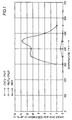
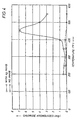
- Steam condensate samples were collected at 10°C (50°F) intervals between 149 and 343°C (300 and 650°F). The results are shown in the figures, graphically, as plots of percent of total chloride added per 10g steam condensate (y axis vs. temperature (x axis).
- the hydrolysis of the three metal chlorides in mineral oil is shown in Fig. 1.
- the samples contained 210 ppm Cl as Mg Cl 2 .6 H 2 O, 244 ppm Cl as CaCl 2 .2 H 2 O and 1450 ppm Cl as NaCl.
- the hydrolysis rates for sodium and calcium chlorides are observed to be very low while the hydrolysis rate for magnesium chloride hexahydrate goes through a maximum at between 204 and 260°C (400 and 500°F) and is likely to be caused as a result of magnesium hydroxychloride, a stable form of chloride, which, on formation tends to slow down the hydrolysis rate.
- the overall efficiency of the hydrolysis of metal chloride to hydrochloric acid was determined with respect to the contaminants, which may act either as catalyst or inhibitors for the reaction.
- the most important contaminant is naphthenic acid, which caused a tenfold increase in the hydrolysis of sodium and calcium chloride.
- the effect of all other contaminants is negligible, as shown in Fig. 2.
- other contaminants were 0.7 wt. % Fe O 1.0 wt. % Fe S, 0.6 wt. %, SlO 2 and 2.0 wt. % drilling mud.
- Fig. 3 demonstrates the power of naphthenic acid to accelerate the hydrolysis of sodium chloride, a normally stable salt.
- This example demonstrates the effectiveness of using the method of the present invention to reduce the hydrolysis of calcium chloride in a hydrocarbon base such as diluted bitumen.
- a hydrocarbon base such as diluted bitumen.
- diluted bitumen containing 0.291 grams of calcium chloride, but no treating agent (inhibitor) was subjected to steam distillation as per the method described above.
- the same diluted bitumen blend, together with 4g of a treating agent inhibitor which was a calcium overbase having a total base number of 400 was also subjected to steam distillation.
- the results are shown graphically in Fig. 4. As can be seen, with no inhibitor significant hydrolysis of the calcium chloride occurred at a temperature of 450°. This is to be contrasted with the sample that contained the treating agent in which no significant hydrolysis of the calcium chloride was observed.
- This example demonstrates the ability of the method of the present invention to prevent the hydrolysis of mixed chloride salts in a synthetic crude.
- the synthetic crude was as described above, e.g., mineral oil containing iron oxide, iron sulfide, silica and drilling mud in the amounts shown in Fig. 2.
- the total volume of mineral oil was 800 ml. which contained 3.5 g. sodium chlorid, 1.0g. calcium chloride, 0.5g. magnesium chloride, and 8g. of naphthenic acid.
- the treating agent employed was a magnesium overbase compound having a total base number of 600.
- a sample of the synthetic crude with the chloride salts and no treating agent was subjected to steam stripping as described above.
- a second sample was also subjected to steam stripping, except in this case, there were three parts of inhibitor for five parts of combined chloride salts.
- a third experiment was conducted in which there were six parts of inhibitor for five parts of combined salts. The results are shown in Fig. 5.
- hydrolysis of the chlorides in the synthetic crude commenced at a roughly 121-149°C (250-300°F). With three parts of treating agent per five parts of salts present, hydrolysis was greatly reduced showing a peak at about 204°C (400°F). With six parts of treating agent per five parts of salts, hydrolysis was reduced to a point where minimum make of hydrochloric acid occurred.
Landscapes
- Chemical & Material Sciences (AREA)
- Oil, Petroleum & Natural Gas (AREA)
- Engineering & Computer Science (AREA)
- Chemical Kinetics & Catalysis (AREA)
- General Chemical & Material Sciences (AREA)
- Organic Chemistry (AREA)
- Production Of Liquid Hydrocarbon Mixture For Refining Petroleum (AREA)
- Organic Low-Molecular-Weight Compounds And Preparation Thereof (AREA)
Abstract
Description


Claims (16)
- A method for reducing hydrolysis in a hydrocarbon stream comprising introducing into a hydrocarbon stream containing a chloride compound which undergoes hydrolysis at elevated temperatures and in the presence of water to form hydrochloric acid, an effective amount of a treating agent comprising at least one overbase complex of a metal salt and an organic acid complexing agent, said treating agent being introduced into said hydrocarbon stream when said stream is at a temperature below which any substantial hydrolysis of said chloride containing compound occurs.
- The method of Claim 1 wherein said hydrocarbon stream is selected from the group consisting of crude oil, shale oil and coal oil.
- The method of Claim 2 wherein said hydrocarbon stream comprises crude oil.
- The method of Claim 2 wherein said hydrocarbon stream comprises shale oil.
- The method of Claim 2 wherein said hydrocarbon stream comprises coal oil.
- The method of Claim 1 wherein said treating agent is added to said hydrocarbon stream at a temperature below 204°C (400°F).
- The method of Claim 6 wherein, after said treating agent is added, said hydrocarbon stream is subjected to a temperature in the range of 316 to 399°C (600 to 750°F).
- The method of Claim 1 wherein said chloride compound comprises a metal chloride salt.
- The method of Claim 8 wherein said chloride salt compound comprises a chloride of an alkali or alkaline earth metal.
- The method of Claim 1 wherein said metal salt is a magnesium salt.
- The method of Claim 10 wherein said complex is an oil stable, colloidal dispersion.
- The method of Claim 11 wherein said complex forms a colloidal dispersion in said hydrocarbon stream.
- The method of Claim 10 wherein said metal salt is an oxide or carbonate of magnesium.
- The method of Claim 10 wherein the organic acid complexing agent is a carboxylic acid, a sulfur acid, or a phosphorus acid.
- The method of Claim 10 wherein the treating agent is a complex of a magnesium salt and a magnesium salt of an organic acid complexing agent.
- The method of Claim 1 wherein said hydrocarbon stream contains a naphthenic acid.
Applications Claiming Priority (5)
| Application Number | Priority Date | Filing Date | Title |
|---|---|---|---|
| US37613102P | 2002-04-29 | 2002-04-29 | |
| US376131P | 2002-04-29 | ||
| US10/369,396 US6902662B2 (en) | 2002-04-29 | 2003-02-21 | Method of reducing hydrolysis in hydrocarbon streams |
| US369396 | 2003-02-21 | ||
| PCT/US2003/013361 WO2003093399A1 (en) | 2002-04-29 | 2003-04-28 | Method of reducing hydrolysis in hydrocarbon streams |
Publications (2)
| Publication Number | Publication Date |
|---|---|
| EP1501912A1 EP1501912A1 (en) | 2005-02-02 |
| EP1501912B1 true EP1501912B1 (en) | 2005-11-16 |
Family
ID=29406709
Family Applications (1)
| Application Number | Title | Priority Date | Filing Date |
|---|---|---|---|
| EP03728605A Expired - Lifetime EP1501912B1 (en) | 2002-04-29 | 2003-04-28 | Method of reducing hydrolysis in hydrocarbon streams |
Country Status (10)
| Country | Link |
|---|---|
| US (1) | US6902662B2 (en) |
| EP (1) | EP1501912B1 (en) |
| JP (1) | JP2005523988A (en) |
| AT (1) | ATE310064T1 (en) |
| AU (1) | AU2003234293A1 (en) |
| CA (1) | CA2483568A1 (en) |
| DE (1) | DE60302352T2 (en) |
| MX (1) | MXPA04010708A (en) |
| RU (1) | RU2316576C2 (en) |
| WO (1) | WO2003093399A1 (en) |
Cited By (1)
| Publication number | Priority date | Publication date | Assignee | Title |
|---|---|---|---|---|
| CN101688118B (en) * | 2007-04-04 | 2014-10-29 | 多尔夫凯塔尔化学制品(I)私人有限公司 | Inhibition of naphthenic acid corrosion with new synergistic phosphorus-containing compounds |
Families Citing this family (14)
| Publication number | Priority date | Publication date | Assignee | Title |
|---|---|---|---|---|
| WO2008120236A2 (en) * | 2007-03-30 | 2008-10-09 | Dorf Ketal Chemicals (I) Private Limited | High temperature naphthenic acid corrosion inhibition using organophosphorous sulphur compounds and combinations thereof |
| JP5496095B2 (en) * | 2007-09-14 | 2014-05-21 | ドルフ ケタール ケミカルズ(I) プライベート リミテッド | Novel additive for naphthenic acid corrosion inhibition and method of use thereof |
| US20090186237A1 (en) | 2008-01-18 | 2009-07-23 | Rolls-Royce Corp. | CMAS-Resistant Thermal Barrier Coatings |
| US9200213B2 (en) | 2008-03-24 | 2015-12-01 | Baker Hughes Incorporated | Method for reducing acids in crude or refined hydrocarbons |
| US9890339B2 (en) * | 2008-08-26 | 2018-02-13 | Dorf Ketal Chemicals (I) Private Limited | Additive for inhibiting acid corrosion and method of using the new additive |
| CN102131834B (en) * | 2008-08-26 | 2015-11-25 | 多尔夫凯塔尔化学制品(I)私人有限公司 | An effective polymer additive for inhibiting naphthenic acid corrosion and method of use thereof |
| WO2010039699A2 (en) * | 2008-09-30 | 2010-04-08 | Rolls-Royce Corporation | Coating including a rare earth silicate-based layer including a second phase |
| WO2012012431A1 (en) | 2010-07-23 | 2012-01-26 | Rolls-Royce Corporation | Thermal barrier coatings including c mas-resistant thermal barrier coating layers |
| WO2012027442A1 (en) | 2010-08-27 | 2012-03-01 | Rolls-Royce Corporation | Rare earth silicate environmental barrier coatings |
| US10329205B2 (en) | 2014-11-24 | 2019-06-25 | Rolls-Royce Corporation | Bond layer for silicon-containing substrates |
| GB201709767D0 (en) * | 2017-06-19 | 2017-08-02 | Ecolab Usa Inc | Naphthenate inhibition |
| US20190017177A1 (en) | 2017-07-17 | 2019-01-17 | Rolls-Royce Corporation | Thermal barrier coatings for components in high-temperature mechanical systems |
| US11655543B2 (en) | 2017-08-08 | 2023-05-23 | Rolls-Royce Corporation | CMAS-resistant barrier coatings |
| US10851656B2 (en) | 2017-09-27 | 2020-12-01 | Rolls-Royce Corporation | Multilayer environmental barrier coating |
Family Cites Families (9)
| Publication number | Priority date | Publication date | Assignee | Title |
|---|---|---|---|---|
| US1921116A (en) * | 1930-04-25 | 1933-08-08 | California First Nat Bank | Process of neutralization |
| US2068979A (en) * | 1936-01-20 | 1937-01-26 | Socony Vacuum Oil Co Inc | Method of preventing corrosion in oil stills |
| US2616904A (en) * | 1951-03-16 | 1952-11-04 | Lubrizol Corp | Organic alkaline earth metal complex and method of making same |
| US2695910A (en) * | 1951-05-03 | 1954-11-30 | Lubrizol Corp | Methods of preparation of superbased salts |
| FR1142932A (en) * | 1966-07-15 | 1957-09-24 | Lubrizol Corp | Organic metallic compositions and their manufacturing process |
| US4163728A (en) * | 1977-11-21 | 1979-08-07 | Petrolite Corporation | Preparation of magnesium-containing dispersions from magnesium carboxylates at low carboxylate stoichiometry |
| SU1799029A1 (en) * | 1990-07-20 | 1996-03-10 | Всесоюзный научно-исследовательский институт по переработке нефти | Petroleum residual raw materials refining method |
| US5858208A (en) * | 1994-08-04 | 1999-01-12 | Baker Hughes Incorporated | Methods for improving conversion in fluidized catalytic cracking units |
| WO1997008275A1 (en) * | 1995-08-25 | 1997-03-06 | Exxon Research And Engineering Company | Process for neutralization of petroleum acids using overbased detergents |
-
2003
- 2003-02-21 US US10/369,396 patent/US6902662B2/en not_active Expired - Lifetime
- 2003-04-28 MX MXPA04010708A patent/MXPA04010708A/en active IP Right Grant
- 2003-04-28 CA CA002483568A patent/CA2483568A1/en not_active Abandoned
- 2003-04-28 WO PCT/US2003/013361 patent/WO2003093399A1/en not_active Ceased
- 2003-04-28 AT AT03728605T patent/ATE310064T1/en not_active IP Right Cessation
- 2003-04-28 JP JP2004501536A patent/JP2005523988A/en active Pending
- 2003-04-28 RU RU2004134593/04A patent/RU2316576C2/en not_active IP Right Cessation
- 2003-04-28 EP EP03728605A patent/EP1501912B1/en not_active Expired - Lifetime
- 2003-04-28 AU AU2003234293A patent/AU2003234293A1/en not_active Abandoned
- 2003-04-28 DE DE60302352T patent/DE60302352T2/en not_active Expired - Fee Related
Cited By (2)
| Publication number | Priority date | Publication date | Assignee | Title |
|---|---|---|---|---|
| CN101688118B (en) * | 2007-04-04 | 2014-10-29 | 多尔夫凯塔尔化学制品(I)私人有限公司 | Inhibition of naphthenic acid corrosion with new synergistic phosphorus-containing compounds |
| CN104195565B (en) * | 2007-04-04 | 2016-09-14 | 多尔夫凯塔尔化学制品(I)私人有限公司 | Naphthenic acid corrosion is suppressed with the phosphorus-containing compound of new Synergistic |
Also Published As
| Publication number | Publication date |
|---|---|
| RU2004134593A (en) | 2005-06-10 |
| DE60302352D1 (en) | 2005-12-22 |
| EP1501912A1 (en) | 2005-02-02 |
| MXPA04010708A (en) | 2005-08-18 |
| WO2003093399A1 (en) | 2003-11-13 |
| RU2316576C2 (en) | 2008-02-10 |
| AU2003234293A1 (en) | 2003-11-17 |
| ATE310064T1 (en) | 2005-12-15 |
| US20030201207A1 (en) | 2003-10-30 |
| CA2483568A1 (en) | 2003-11-13 |
| DE60302352T2 (en) | 2006-08-03 |
| US6902662B2 (en) | 2005-06-07 |
| JP2005523988A (en) | 2005-08-11 |
Similar Documents
| Publication | Publication Date | Title |
|---|---|---|
| US6902662B2 (en) | Method of reducing hydrolysis in hydrocarbon streams | |
| EP0935644B1 (en) | Process for decreasing the acid content and corrosivity of crudes | |
| EP0267674A1 (en) | Antifoulant compositions and uses thereof | |
| WO1997008270A9 (en) | Process for decreasing the acid content and corrosivity of crudes | |
| US4163728A (en) | Preparation of magnesium-containing dispersions from magnesium carboxylates at low carboxylate stoichiometry | |
| CA2226750C (en) | Process for neutralization of petroleum acids using overbased detergents | |
| US20170022109A1 (en) | Polyphosphoric acid resistant hydrogen sulfide scavenger for use in asphalt applications | |
| US5858208A (en) | Methods for improving conversion in fluidized catalytic cracking units | |
| EP1971672B1 (en) | Inhibiting naphthenate solids and emulsions in crude oil | |
| EP0473200B1 (en) | Process for carbonate overbasing of an alkali or alkaline earth metal sulfonate, phenate or salicylate, the obtained products and their use | |
| EA009208B1 (en) | Method for prevention of corrosion by naphthenic acids in refineries | |
| US4293429A (en) | MgO Dispensions | |
| EP0714969B1 (en) | Inhibition of fouling or coke formation in hydrocarbon processing equipment | |
| EP0266872A1 (en) | Mixed base complex antifoulant compositions and use thereof | |
| US4226739A (en) | Magnesium-containing dispersions by decomposition of MgCO3 | |
| US6187175B1 (en) | Co2 treatment to remove organically bound metal ions from crude | |
| US2319885A (en) | Process and composition for treatment of emulsions | |
| EP0391620A1 (en) | Method for reducing fouling in ethylene cracking furnaces | |
| EP0600606B1 (en) | Neutralizing amines with low salt precipitation potential | |
| US2278498A (en) | Removal of sulphur from organic substances | |
| EP0267673A1 (en) | Mixed overbase complex antifoulant compositions and use thereof | |
| US2493462A (en) | Inhibiting corrosion in wells | |
| US2556269A (en) | Conversion of salts in petroleum oils | |
| US2080365A (en) | Treatment of petroleum distillates | |
| US2306484A (en) | Process for the distillation of oil containing salts of hydrochloric acid |
Legal Events
| Date | Code | Title | Description |
|---|---|---|---|
| PUAI | Public reference made under article 153(3) epc to a published international application that has entered the european phase |
Free format text: ORIGINAL CODE: 0009012 |
|
| 17P | Request for examination filed |
Effective date: 20041122 |
|
| AK | Designated contracting states |
Kind code of ref document: A1 Designated state(s): AT BE BG CH CY CZ DE DK EE ES FI FR GB GR HU IE IT LI LU MC NL PT RO SE SI SK TR |
|
| AX | Request for extension of the european patent |
Extension state: AL LT LV MK |
|
| GRAP | Despatch of communication of intention to grant a patent |
Free format text: ORIGINAL CODE: EPIDOSNIGR1 |
|
| GRAS | Grant fee paid |
Free format text: ORIGINAL CODE: EPIDOSNIGR3 |
|
| GRAA | (expected) grant |
Free format text: ORIGINAL CODE: 0009210 |
|
| AK | Designated contracting states |
Kind code of ref document: B1 Designated state(s): AT BE BG CH CY CZ DE DK EE ES FI FR GB GR HU IE IT LI LU MC NL PT RO SE SI SK TR |
|
| PG25 | Lapsed in a contracting state [announced via postgrant information from national office to epo] |
Ref country code: SK Free format text: LAPSE BECAUSE OF FAILURE TO SUBMIT A TRANSLATION OF THE DESCRIPTION OR TO PAY THE FEE WITHIN THE PRESCRIBED TIME-LIMIT Effective date: 20051116 Ref country code: SI Free format text: LAPSE BECAUSE OF FAILURE TO SUBMIT A TRANSLATION OF THE DESCRIPTION OR TO PAY THE FEE WITHIN THE PRESCRIBED TIME-LIMIT Effective date: 20051116 Ref country code: RO Free format text: LAPSE BECAUSE OF FAILURE TO SUBMIT A TRANSLATION OF THE DESCRIPTION OR TO PAY THE FEE WITHIN THE PRESCRIBED TIME-LIMIT Effective date: 20051116 Ref country code: NL Free format text: LAPSE BECAUSE OF FAILURE TO SUBMIT A TRANSLATION OF THE DESCRIPTION OR TO PAY THE FEE WITHIN THE PRESCRIBED TIME-LIMIT Effective date: 20051116 Ref country code: LI Free format text: LAPSE BECAUSE OF FAILURE TO SUBMIT A TRANSLATION OF THE DESCRIPTION OR TO PAY THE FEE WITHIN THE PRESCRIBED TIME-LIMIT Effective date: 20051116 Ref country code: FI Free format text: LAPSE BECAUSE OF FAILURE TO SUBMIT A TRANSLATION OF THE DESCRIPTION OR TO PAY THE FEE WITHIN THE PRESCRIBED TIME-LIMIT Effective date: 20051116 Ref country code: CZ Free format text: LAPSE BECAUSE OF FAILURE TO SUBMIT A TRANSLATION OF THE DESCRIPTION OR TO PAY THE FEE WITHIN THE PRESCRIBED TIME-LIMIT Effective date: 20051116 Ref country code: CH Free format text: LAPSE BECAUSE OF FAILURE TO SUBMIT A TRANSLATION OF THE DESCRIPTION OR TO PAY THE FEE WITHIN THE PRESCRIBED TIME-LIMIT Effective date: 20051116 Ref country code: BE Free format text: LAPSE BECAUSE OF FAILURE TO SUBMIT A TRANSLATION OF THE DESCRIPTION OR TO PAY THE FEE WITHIN THE PRESCRIBED TIME-LIMIT Effective date: 20051116 Ref country code: AT Free format text: LAPSE BECAUSE OF FAILURE TO SUBMIT A TRANSLATION OF THE DESCRIPTION OR TO PAY THE FEE WITHIN THE PRESCRIBED TIME-LIMIT Effective date: 20051116 |
|
| REG | Reference to a national code |
Ref country code: GB Ref legal event code: FG4D |
|
| REG | Reference to a national code |
Ref country code: CH Ref legal event code: EP |
|
| REF | Corresponds to: |
Ref document number: 60302352 Country of ref document: DE Date of ref document: 20051222 Kind code of ref document: P |
|
| REG | Reference to a national code |
Ref country code: IE Ref legal event code: FG4D |
|
| PG25 | Lapsed in a contracting state [announced via postgrant information from national office to epo] |
Ref country code: SE Free format text: LAPSE BECAUSE OF FAILURE TO SUBMIT A TRANSLATION OF THE DESCRIPTION OR TO PAY THE FEE WITHIN THE PRESCRIBED TIME-LIMIT Effective date: 20060216 Ref country code: GR Free format text: LAPSE BECAUSE OF FAILURE TO SUBMIT A TRANSLATION OF THE DESCRIPTION OR TO PAY THE FEE WITHIN THE PRESCRIBED TIME-LIMIT Effective date: 20060216 Ref country code: DK Free format text: LAPSE BECAUSE OF FAILURE TO SUBMIT A TRANSLATION OF THE DESCRIPTION OR TO PAY THE FEE WITHIN THE PRESCRIBED TIME-LIMIT Effective date: 20060216 Ref country code: BG Free format text: LAPSE BECAUSE OF FAILURE TO SUBMIT A TRANSLATION OF THE DESCRIPTION OR TO PAY THE FEE WITHIN THE PRESCRIBED TIME-LIMIT Effective date: 20060216 |
|
| PG25 | Lapsed in a contracting state [announced via postgrant information from national office to epo] |
Ref country code: ES Free format text: LAPSE BECAUSE OF FAILURE TO SUBMIT A TRANSLATION OF THE DESCRIPTION OR TO PAY THE FEE WITHIN THE PRESCRIBED TIME-LIMIT Effective date: 20060227 |
|
| PG25 | Lapsed in a contracting state [announced via postgrant information from national office to epo] |
Ref country code: PT Free format text: LAPSE BECAUSE OF FAILURE TO SUBMIT A TRANSLATION OF THE DESCRIPTION OR TO PAY THE FEE WITHIN THE PRESCRIBED TIME-LIMIT Effective date: 20060417 |
|
| PG25 | Lapsed in a contracting state [announced via postgrant information from national office to epo] |
Ref country code: IE Free format text: LAPSE BECAUSE OF NON-PAYMENT OF DUE FEES Effective date: 20060428 |
|
| PG25 | Lapsed in a contracting state [announced via postgrant information from national office to epo] |
Ref country code: MC Free format text: LAPSE BECAUSE OF NON-PAYMENT OF DUE FEES Effective date: 20060430 |
|
| NLV1 | Nl: lapsed or annulled due to failure to fulfill the requirements of art. 29p and 29m of the patents act | ||
| PG25 | Lapsed in a contracting state [announced via postgrant information from national office to epo] |
Ref country code: HU Free format text: LAPSE BECAUSE OF FAILURE TO SUBMIT A TRANSLATION OF THE DESCRIPTION OR TO PAY THE FEE WITHIN THE PRESCRIBED TIME-LIMIT Effective date: 20060517 |
|
| REG | Reference to a national code |
Ref country code: CH Ref legal event code: PL |
|
| ET | Fr: translation filed | ||
| PLBE | No opposition filed within time limit |
Free format text: ORIGINAL CODE: 0009261 |
|
| STAA | Information on the status of an ep patent application or granted ep patent |
Free format text: STATUS: NO OPPOSITION FILED WITHIN TIME LIMIT |
|
| 26N | No opposition filed |
Effective date: 20060817 |
|
| REG | Reference to a national code |
Ref country code: IE Ref legal event code: MM4A |
|
| PG25 | Lapsed in a contracting state [announced via postgrant information from national office to epo] |
Ref country code: EE Free format text: LAPSE BECAUSE OF FAILURE TO SUBMIT A TRANSLATION OF THE DESCRIPTION OR TO PAY THE FEE WITHIN THE PRESCRIBED TIME-LIMIT Effective date: 20051116 |
|
| PG25 | Lapsed in a contracting state [announced via postgrant information from national office to epo] |
Ref country code: TR Free format text: LAPSE BECAUSE OF FAILURE TO SUBMIT A TRANSLATION OF THE DESCRIPTION OR TO PAY THE FEE WITHIN THE PRESCRIBED TIME-LIMIT Effective date: 20051116 Ref country code: LU Free format text: LAPSE BECAUSE OF NON-PAYMENT OF DUE FEES Effective date: 20060428 |
|
| PGFP | Annual fee paid to national office [announced via postgrant information from national office to epo] |
Ref country code: FR Payment date: 20080312 Year of fee payment: 6 Ref country code: DE Payment date: 20080502 Year of fee payment: 6 |
|
| PGFP | Annual fee paid to national office [announced via postgrant information from national office to epo] |
Ref country code: IT Payment date: 20080426 Year of fee payment: 6 |
|
| PG25 | Lapsed in a contracting state [announced via postgrant information from national office to epo] |
Ref country code: CY Free format text: LAPSE BECAUSE OF FAILURE TO SUBMIT A TRANSLATION OF THE DESCRIPTION OR TO PAY THE FEE WITHIN THE PRESCRIBED TIME-LIMIT Effective date: 20051116 |
|
| PGFP | Annual fee paid to national office [announced via postgrant information from national office to epo] |
Ref country code: GB Payment date: 20080430 Year of fee payment: 6 |
|
| GBPC | Gb: european patent ceased through non-payment of renewal fee |
Effective date: 20090428 |
|
| REG | Reference to a national code |
Ref country code: FR Ref legal event code: ST Effective date: 20091231 |
|
| PG25 | Lapsed in a contracting state [announced via postgrant information from national office to epo] |
Ref country code: DE Free format text: LAPSE BECAUSE OF NON-PAYMENT OF DUE FEES Effective date: 20091103 |
|
| PG25 | Lapsed in a contracting state [announced via postgrant information from national office to epo] |
Ref country code: FR Free format text: LAPSE BECAUSE OF NON-PAYMENT OF DUE FEES Effective date: 20091222 Ref country code: GB Free format text: LAPSE BECAUSE OF NON-PAYMENT OF DUE FEES Effective date: 20090428 |
|
| PG25 | Lapsed in a contracting state [announced via postgrant information from national office to epo] |
Ref country code: IT Free format text: LAPSE BECAUSE OF NON-PAYMENT OF DUE FEES Effective date: 20090428 |