EP1500670A1 - Crosslinked polymer, fine polymer particle, and process for producing these - Google Patents
Crosslinked polymer, fine polymer particle, and process for producing these Download PDFInfo
- Publication number
- EP1500670A1 EP1500670A1 EP03725640A EP03725640A EP1500670A1 EP 1500670 A1 EP1500670 A1 EP 1500670A1 EP 03725640 A EP03725640 A EP 03725640A EP 03725640 A EP03725640 A EP 03725640A EP 1500670 A1 EP1500670 A1 EP 1500670A1
- Authority
- EP
- European Patent Office
- Prior art keywords
- stands
- fine particles
- hydrogen
- alkyl
- integer
- Prior art date
- Legal status (The legal status is an assumption and is not a legal conclusion. Google has not performed a legal analysis and makes no representation as to the accuracy of the status listed.)
- Withdrawn
Links
Images


Classifications
-
- C—CHEMISTRY; METALLURGY
- C08—ORGANIC MACROMOLECULAR COMPOUNDS; THEIR PREPARATION OR CHEMICAL WORKING-UP; COMPOSITIONS BASED THEREON
- C08F—MACROMOLECULAR COMPOUNDS OBTAINED BY REACTIONS ONLY INVOLVING CARBON-TO-CARBON UNSATURATED BONDS
- C08F290/00—Macromolecular compounds obtained by polymerising monomers on to polymers modified by introduction of aliphatic unsaturated end or side groups
- C08F290/02—Macromolecular compounds obtained by polymerising monomers on to polymers modified by introduction of aliphatic unsaturated end or side groups on to polymers modified by introduction of unsaturated end groups
- C08F290/06—Polymers provided for in subclass C08G
-
- B—PERFORMING OPERATIONS; TRANSPORTING
- B82—NANOTECHNOLOGY
- B82Y—SPECIFIC USES OR APPLICATIONS OF NANOSTRUCTURES; MEASUREMENT OR ANALYSIS OF NANOSTRUCTURES; MANUFACTURE OR TREATMENT OF NANOSTRUCTURES
- B82Y5/00—Nanobiotechnology or nanomedicine, e.g. protein engineering or drug delivery
-
- B—PERFORMING OPERATIONS; TRANSPORTING
- B22—CASTING; POWDER METALLURGY
- B22F—WORKING METALLIC POWDER; MANUFACTURE OF ARTICLES FROM METALLIC POWDER; MAKING METALLIC POWDER; APPARATUS OR DEVICES SPECIALLY ADAPTED FOR METALLIC POWDER
- B22F1/00—Metallic powder; Treatment of metallic powder, e.g. to facilitate working or to improve properties
- B22F1/10—Metallic powder containing lubricating or binding agents; Metallic powder containing organic material
- B22F1/102—Metallic powder coated with organic material
-
- B—PERFORMING OPERATIONS; TRANSPORTING
- B82—NANOTECHNOLOGY
- B82Y—SPECIFIC USES OR APPLICATIONS OF NANOSTRUCTURES; MEASUREMENT OR ANALYSIS OF NANOSTRUCTURES; MANUFACTURE OR TREATMENT OF NANOSTRUCTURES
- B82Y10/00—Nanotechnology for information processing, storage or transmission, e.g. quantum computing or single electron logic
-
- B—PERFORMING OPERATIONS; TRANSPORTING
- B82—NANOTECHNOLOGY
- B82Y—SPECIFIC USES OR APPLICATIONS OF NANOSTRUCTURES; MEASUREMENT OR ANALYSIS OF NANOSTRUCTURES; MANUFACTURE OR TREATMENT OF NANOSTRUCTURES
- B82Y30/00—Nanotechnology for materials or surface science, e.g. nanocomposites
-
- C—CHEMISTRY; METALLURGY
- C08—ORGANIC MACROMOLECULAR COMPOUNDS; THEIR PREPARATION OR CHEMICAL WORKING-UP; COMPOSITIONS BASED THEREON
- C08F—MACROMOLECULAR COMPOUNDS OBTAINED BY REACTIONS ONLY INVOLVING CARBON-TO-CARBON UNSATURATED BONDS
- C08F265/00—Macromolecular compounds obtained by polymerising monomers on to polymers of unsaturated monocarboxylic acids or derivatives thereof as defined in group C08F20/00
- C08F265/10—Macromolecular compounds obtained by polymerising monomers on to polymers of unsaturated monocarboxylic acids or derivatives thereof as defined in group C08F20/00 on to polymers of amides or imides
-
- C—CHEMISTRY; METALLURGY
- C08—ORGANIC MACROMOLECULAR COMPOUNDS; THEIR PREPARATION OR CHEMICAL WORKING-UP; COMPOSITIONS BASED THEREON
- C08F—MACROMOLECULAR COMPOUNDS OBTAINED BY REACTIONS ONLY INVOLVING CARBON-TO-CARBON UNSATURATED BONDS
- C08F290/00—Macromolecular compounds obtained by polymerising monomers on to polymers modified by introduction of aliphatic unsaturated end or side groups
- C08F290/02—Macromolecular compounds obtained by polymerising monomers on to polymers modified by introduction of aliphatic unsaturated end or side groups on to polymers modified by introduction of unsaturated end groups
- C08F290/06—Polymers provided for in subclass C08G
- C08F290/062—Polyethers
-
- C—CHEMISTRY; METALLURGY
- C08—ORGANIC MACROMOLECULAR COMPOUNDS; THEIR PREPARATION OR CHEMICAL WORKING-UP; COMPOSITIONS BASED THEREON
- C08J—WORKING-UP; GENERAL PROCESSES OF COMPOUNDING; AFTER-TREATMENT NOT COVERED BY SUBCLASSES C08B, C08C, C08F, C08G or C08H
- C08J3/00—Processes of treating or compounding macromolecular substances
- C08J3/12—Powdering or granulating
-
- C—CHEMISTRY; METALLURGY
- C08—ORGANIC MACROMOLECULAR COMPOUNDS; THEIR PREPARATION OR CHEMICAL WORKING-UP; COMPOSITIONS BASED THEREON
- C08L—COMPOSITIONS OF MACROMOLECULAR COMPOUNDS
- C08L51/00—Compositions of graft polymers in which the grafted component is obtained by reactions only involving carbon-to-carbon unsaturated bonds; Compositions of derivatives of such polymers
- C08L51/003—Compositions of graft polymers in which the grafted component is obtained by reactions only involving carbon-to-carbon unsaturated bonds; Compositions of derivatives of such polymers grafted on to macromolecular compounds obtained by reactions only involving unsaturated carbon-to-carbon bonds
-
- B—PERFORMING OPERATIONS; TRANSPORTING
- B22—CASTING; POWDER METALLURGY
- B22F—WORKING METALLIC POWDER; MANUFACTURE OF ARTICLES FROM METALLIC POWDER; MAKING METALLIC POWDER; APPARATUS OR DEVICES SPECIALLY ADAPTED FOR METALLIC POWDER
- B22F2998/00—Supplementary information concerning processes or compositions relating to powder metallurgy
Definitions
- This invention relates to crosslinked polymer fine particles which are useful as carriers for organic drug represented by oligo- or poly-nucleotide, and for ultrafine particles of inorganic substances represented by semiconductor, free electron metal or metal oxide; and relates also to their production processes and their use.
- Copolymers provided by a part of the present inventors, for example, poly(ethylene glycol)-block-poly(dialkylaminoethyl methacrylate) form polymer micelle via an anionically charged polymer, and hence they are useful as carriers for anionically charged drug (cf. e.g., patent reference 1 and non-patent reference 1). They also can contribute to stabilize dispersions of colloidal gold or semiconductor fine particles, and can provide gold- or semiconductor-fixing (or encapsulating) polymer particles useful as markers or quantum dots in biological assay systems (cf. e.g., patent reference 2).
- poly(ethylene glycol) derivatives in which poly(dialkylaminoethyl methacrylate) segment in above block copolymers is replaced with terminal mercapto groups, can be conveniently used for stabilizing dispersions of ultrafine particles of gold and semiconductors (see, for example, said patent references 2, 3 and 4 and non-patent reference 1).
- fine particles of a polymer having poly (oxyalkylene) segment which are formed of a (meth)acrylic ester and styrene and are capable of encapsulating ultrafine inorganic particles serviceable as a marker in the polymer latex particles, are known to be stable in aqueous media and capable of suppressing non-specific adsorption of protein onto said latex particle surfaces (cf. patent reference 5).
- a part of the present inventors have also provided heterotelecheric polymers represented by, for example, a formula, and copolymers of above polymers used as macromonomers, with styrene, (meth)acrylic acid or esters or amides thereof (cf. patent reference 6).
- Said poly(ethylene glycol)-block-poly(dialkyl ethyl methacrylate) itself forms core-shell type structure, or favorable core-shell type conjugates or complexes with drug such as polynucleotide or fine particles of gold or semiconductor serving as the core, where their shells or surfacial parts are formed of the poly(ethylene glycol) chains.
- a certain kind of latex particles as disclosed in the patent references 5 and 6 can also contain, as encapsulated therein or fixed thereon, drug or fine particles of gold or semiconductor as their cores.
- a carrier which can fix or encapsulate a drug or the like more stably but under predetermined environment can selectively release the fixed drug or the like is provided, it will contribute to provide a favorable drug delivery system, or quantum dot or marker having still additional functions.
- An object of the present invention is to provide such a carrier.
- the invention provides polymer fine particles derived from a crosslinked polymer having main chains formed of ethylenically unsaturated polymerizable groups and crosslinkages between said main chains, which are characterized in that said main chain comprises (i) side chains each of N, N-di-C 1-6 alkyl-substituted amino group covalently bonded to said main chain via a linker formed of 1 - 10 atoms, and (ii) side chains each of a hydrophilic group having a poly(ethylene glycol) segment which is covalently bonded to said main chain, independently of each other; the polymer fine particles thus forming core-shell type fine particles when solubilized or dispersed in an aqueous medium, said side chains (i) and the main chains chiefly forming the core parts and the side chains (ii) chiefly forming the shell parts.
- the invention relates also to a crosslinked polymer from which such polymer fine particles can be conveniently formed.
- the invention furthermore provides a method for producing a crosslinked polymer, which comprises the steps of mixing in an inert atmosphere at room temperature
- the invention provides, still in addition, a method for producing polymer fine particles with semiconductor ultrafine particles fixed in their core parts, which comprises the steps of mixing an aqueous solution of said polymer fine particles with an aqueous solution of chloride of Group II B or III B element of the periodic table at such a ratio that the nitrogen atoms in said polymer fine particles become 1 - 20 molar times that of said element and stirring the mixture; and adding thereto an aqueous solution containing at least an equivalent amount to said chloride of an alkali metal salt of a Group VI B element to further continue the reaction; using the reactants at the molar ratio between the nitrogen content of the fine particles and the Group II B or III B element ranging 1:1 - 1:12.
- the invention provides a method for producing polymer fine particles with gold ultrafine particles fixed in their core parts, which comprises adjusting pH of an aqueous solution of said polymer fine particles to about 6, separately preparing an aqueous solution of chloroauric acid and adjusting its pH to about 6, mixing the two aqueous solutions such that the nitrogen atoms in the polymer fine particles are 1 - 20 times the gold atoms in molar ratio, and stirring the mixture under the conditions sufficient to form gold fine particles and fix the same at core parts of said polymer fine particles.
- crosslinked polymers following the invention are also referred to as three-dimensional polymers or network polymers, most of which are substantially insoluble in solvents including water, and form polymer fine particles following the present invention.
- solvents including water and form polymer fine particles following the present invention.
- each molecule as a whole or the particles are solubilized by the action of the PEG segment present in said PEG macromonomer, to assume an appearance resembling a solution in the normal sense of the term.
- solution in this specification therefore encompasses the case wherein the solute polymer as a whole or the polymer fine particles are solubilized and the system assumes an appearance as if it were a solution.
- the crosslinked polymers can be present in such aqueous solutions as fine particles or beads, in solubilized or dispersed state.
- Such fine particles can be separated from the solution as solid particles by such means as centrifuge, filtration or the like.
- the fine particles of either forms are embodiments of the present invention.
- crosslinked polymers of the present invention can simultaneously form fine particles thereof or can be conveniently used for preparation of the fine particles.
- the polymer fine particles of the present invention are not limited to those derived from the crosslinked polymers.
- the polymer fine particles following the present invention are clearly distinguishable from conventional fine particles such as those normally referred to as latex gel, in that their average particle size lies within a range of 30 nm - 10 ⁇ m, preferably 50 nm - 1 ⁇ m, when they are dispersed in purified water and subjected to a dynamic light scattering particle size analysis (DLS); and in that their average particle size as measured by DLS at pH 4 increases to 1.30 - 70.0 times that of the same particles as measured by DLS at pH 10.
- DLS dynamic light scattering particle size analysis
- the polymer fine particles are not limited by the kinds of monomers used for their preparation, so long as they meet the above construction requirements or have the structural characteristics or characteristic properties as above-described.
- the group (linker) which links N,N-di-C 1-6 alkyl-substituted amino groups to polymer main chains is not limited to -(CH 2 ) q -Y-CO- of the formula (II), but may be any so long as it is a linker of a chain length allowing the amino group to constitute a part of the core of the polymer fine particle.
- the linker may be any that is formed of 1 - 10 atoms of carbon, nitrogen and oxygen.
- the main chain is "formed of ethylenically unsaturated polymerizable groups" as aforesaid, i.e., formed of polymerizable vinyl groups.
- the side chain whose hydrophilic group having a poly(ethylene glycol) segment is covalently bonded to the main chain may be a poly(ethylene glycol) chain bound to the main chain via an ester linkage or ether linkage, or may be one as described in, for example, WO 96/32434, WO 96/33233 or WO 97/06202, i.e., one in which one end of its poly(ethylene glycol) is modified with a certain functional group, with the other end bound to a hydrophobic polymer segment, the side chain being derived from an ethylenically unsaturated polymerizable group at the unbound end of said hydrophobic polymer segment. So long as the resulting polymer fine particles exhibit the characteristic properties specified in the present invention, they are included in the scope of polymer fine particles of the present invention. As a further specific explanation, the explanation of the crosslinked polymers given later is applicable.
- C 1-6 alkyl, alkyl group or alkyl moiety in alkyloxy group signify straight chain or branched chain alkyl.
- C 1-6 alkyl and alkyl moiety in alkoxy methyl, ethyl, n-propyl, iso-propyl, n-butyl, sec-butyl, tert-butyl, n-pentyl, iso-pentyl, n-hexyl, 2-methylpentyl, 3-methylpentyl and the like can be named.
- R 1 and R 2 in the formula I and alkyl as R b R 3 and R 4 in the formula II
- C 1-3 alkyl are particularly preferred.
- examples of particularly preferred alkoxy group as R 1 and R 2 are methoxy, ethoxy, propoxy and isopropoxy.
- examples of particularly preferred alkoxy group as R 1 and R 2 are methoxy, ethoxy, propoxy and isopropoxy.
- phenyloxy or phenyl C 1-3 alkyloxy in particular, benzyloxy or phenethyloxy, can be named. While R 1 and R 2 may be the same or different, they are preferably the same.
- R 1 and R 2 may together be an optionally C 1-6 alkyl-substituted 1,2-ethylenedioxy [-OCH(R') -CH 2 O-: where R' is C 1-6 alkyl], preferably 1,2-ethylenedioxy, 1-methyl-1,2-ethylenedioxy, or 1-ethyl-1,2-ethylenedioxy.
- an acid e.g., acetic acid
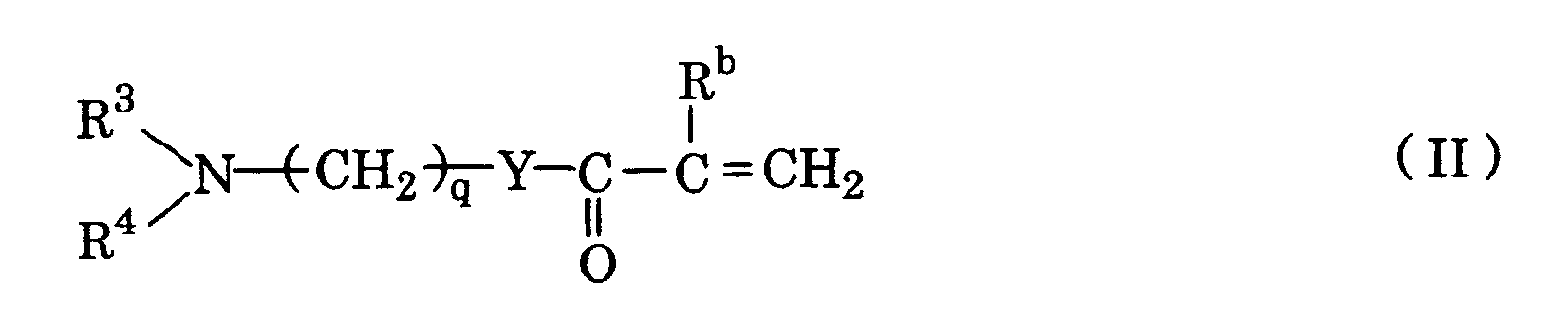
- R a and R b are preferably methyl or hydrogen independently of each other, and R 3 and R 4 are preferably methyl, ethyl or n-propyl, independently of each other.
- n can be an integer of 2 - 10,000, the term "polymer” as used herein represents a concept including oligomer.
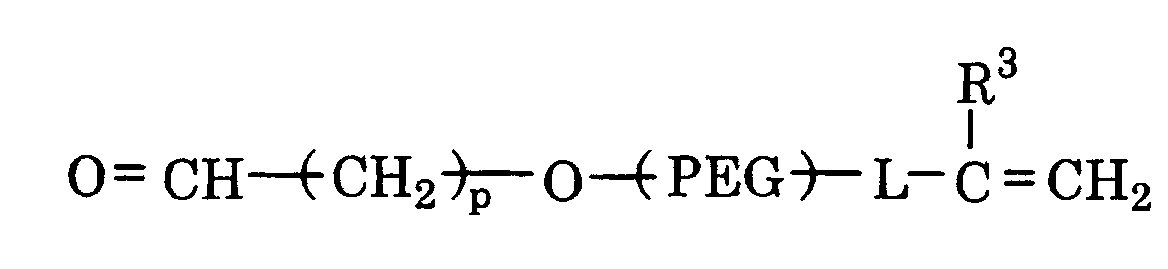
- Those macromonomers which can be used in the present invention can be prepared by versatile methods, referring to the structure represented by the formula I. They can be prepared by partially modifying terminals of commercial PEG's, by such means as subjecting them to, for example, dehydrohalogenation reaction using (meth)acrylic acid chloride, vinylbenzyl chloride or allyl chloride.
- PEG's poly(ethylene glycol) or poly(oxyethylene) segment having one-peak molecular weight distribution
- p is an integer of 1 - 5, preferably 1 - 3.
- the monomers represented by the formula II are aminoalkylamides or esters of (meth)acrylic acid, R b , R 3 and R 4 therein having the definitions as presented earlier. Those particularly preferred are N, N-diethylaminoethyl methacrylate or methacrylamide, N, N-dimethylaminoethyl methacrylate or methacrylamide, and N, N-diethylaminopropyl methacrylate or methacrylamide; and acrylates or acrylamides corresponding to the foregoing.
- the crosslinking agent (c) is a polyfunctional monomer having two or three, or more polymerizable unsaturated groups, which may be any that is copolymerizable with monomers of the formulae I and II and is capable of accomplishing the object of the present invention.
- Those versatile commercialized crosslinking agents can be used in their sold forms.
- crosslinking agents can be expressed by a formula III: [in which R c stands for hydrogen or a C 1-6 alkyl; Y' stands for a valence bond, CO- or -NH-; and A stands for a phenylene -(CH 2 ) ⁇ - (where ⁇ is an integer of 1 - 4) or -(OCH 2 CH 2 O) s - (wherein s is an integer of 1 - 4)]. More specifically, particularly favorable crosslinking agents are ethylene glycol di(meth)acrylate, diethylene glycol di(meth)acrylate, triethylene glycol di(meth)acrylate, divinylbenzene and N, N'-methylenebisacrylamide.
- Crosslinked polymers according to the present invention may optionally comprise at least one, preferably only one, kind of recurring unit derived from diluent monomer(s) having polymerizable unsaturated group(s).
- diluent monomers styrene, methyl (meth)acrylate, butyl(meth)-acrylate, 2-ethylhexyl (meth)acrylate, (meth)acrylic acid amide, 2-hydroxyethyl methacrylate, isoprene and butadiene can be named.
- the terms "(meth)acrylate” and “(meth)acrylic acid” used in this specification signify, respectively, methacrylate or acrylate, and methacrylic acid or acrylic acid.
- the macromonomer (a) (which forms the side chains (ii) of the polymer fine particles) and the comonomer (b) (which forms the side chains (i) of the polymer fine particles), which are indispensable for constructing preferred embodiments of crosslinked polymers or polymer fine particles, can be used at a molar ratio of 1/400-, preferably 1/200-, in particular 1/100 - 2/1.
- the crosslinking agent is used at a ratio of 0.1 - 25 mol %.
- Copolymerization reaction of these monomers can be conducted under the conditions as will induce radical polymerization, e.g., using as the solvent water which may contain, where necessary, a water-miscible organic solvent such as methanol or ethanol, preferably water alone; and as the initiator potassium persulfate, sodium persulfate, ammonium persulfate, 4,4'-azobis-4-cyanovalerianic acid or the like; under heating where necessary.
- the reaction can be conveniently conducted with violent agitation of a mixed solution of the reactants in the state deaerated with inert gas (e.g., nitrogen, argon or the like).
- inert gas e.g., nitrogen, argon or the like.
- a crosslinked polymer is obtained in the form of fine particles (or beads). Sizes of such fine particles can be adjusted to about 30 nm, preferably 50 nm - about 1 ⁇ m, by selecting the use ratios of macromonomer (a), comonomer (b) and crosslinking agent (c) in the reaction, and by selecting the molecular weight of PEG in the macromonomer (a). The size can be adjusted, where necessary, to no less than 1 ⁇ m but no more than 10 ⁇ m. Hence the fine particles of the present invention can be referred to as nanospheres or microspheres.
- particle sizes can also be adjusted by changing pH of the aqueous medium as aforesaid.
- fine particles of greater particle size can be formed by increasing the blend ratio of the comonomer, while density of the network can be adjusted by changing the use rate of the crosslinking agent.
- HEMA 2-hydroxyethyl methacrylate
- water-solubility of the fine particles can be improved and, for example, when styrene is used concurrently, refractive index-improving property can be imparted to the fine particles.
- fine particles can be prepared with ease and good reproducibility. They are useful as unique functional materials depending on characteristic properties of PEG which mainly constitutes the shell domain and, where present, on utilization of functional groups at the PEG terminals. For example, for medical use, they can be used as carriers of mainly anionically charged drug, latex diagnosticum or cell separating medium.
- the crosslinked polymer fine particles according to the invention can be provided as composite fine particles containing as fixed or encapsulated in the network structure and, furthermore, via the tertiary amine moiety, ultrafine particles of free electron metal such as gold, silver, copper or the like or, although not limited thereto, ultrafine particles of the following semiconductors.
- ultrafine particles of gold, silver and the like are utilized as markers in biological assay systems and that nanocrystals or complexes thereof of a certain kind of semiconductors, for example, ZnS, CdSe, CdS, InP, InAs, CdTe, ZnSe, ZnTe and the like, are better fluorescent labels than organic dye (cf.e.g., Chan et al., Science, Vol. 281 (1998), 2016 - 2018; Mamedova et al., Nano Lett., Vol.1, (2001), 282 - 286; aforesaid Han et al.) Therefore, those composite fine particles according to the present invention are useful for biological assay systems or as quantum dots for other utilities.
- ultrafine particles can have the diameters ranging 1 - 20 nm.
- these semiconductor ultrafine particles can provide polymer nano- or micro-spheres having different radiation wavelengths.
- Fine particles or nano- or micro-spheres of such a crosslinked polymer containing as fixed or encapsulated in their core parts said metal or semiconductor ultrafine particles can be prepared by mixing and stirring said nano- or micro-spheres following the present invention with sol of said metal or semiconductor ultrafine particles in an aqueous medium.
- a process comprising the following steps may be used: mixing and stirring an aqueous solution of, for example, a chloride of Group II B or III B element of the periodic table, with said aqueous solution of the microspheres to encapsulate the element in the microspheres; and then mixing and stirring the same with, for example, an aqueous solution of a salt of a Group VI B element of the periodic table with an alkali metal, or H 2 S, to form a semiconductor within said nano - or micro-spheres in situ, and fix it there.
- such semiconductor ultrafine particles as described in said patent reference 4 may be mixed and stirred with an aqueous solution of said microspheres; or the ultrafine particles may be fixed or encapsulated in fine particles of a crosslinked polymer produced, by causing said semiconductor ultrafine particles to be concurrently present in the reaction liquid at any one of the stages for preparing the crosslinked polymer of the present invention.
- the use ratio of the semiconductor to the crosslinked polymer or polymer fine particles is preferably so adjusted that the nitrogen atoms in said polymer fine particles are 1- 20 molar times the semiconductor molecules, the use ratio is not limited thereto.
- Fixing or encapsulation of ultrafine particles of free electron metal, e.g., gold, in said microspheres or polymer fine particles can be effected by such processes following the above descriptions about that of semiconductor ultrafine particles.
- a gold compound such as chloroauric acid
- fixing of gold particles in polymer fine particles can be efficiently carried out by the steps of, for example, adjusting pH of an aqueous solution of the polymer fine particles to about 6; separately preparing an aqueous solution of chloroauric acid and adjusting its pH to about 6; and stirring the two aqueous solutions together under the conditions sufficient to form gold fine particles and for the formed particles to be fixed in the core domains of the polymer fine particles.
- the use ratio of the metal to the crosslinked polymer or polymer fine particles is so adjusted that the nitrogen atoms in said polymer fine particles should amount to 1 - 20 molar times of the metal atoms , but this is not limitative.
- concentration of polymer fine particles; or that of a semiconductor or its precursor material, or that of gold or its precursor material in the treating liquids are not critical, so long as the treating liquids can be mechanically stirred.
- skilled artisans will be able to determine the optimum concentration in each occasion by carrying out a small scale experiment referring to later appearing working Examples.
- the treating temperature can be ambient temperature, but the system can be heated or cooled within the range not detrimental to the fixation or encapsulation in each occasion.
- said DEAEMA/EDMA mixed solution was added to the polyethylene glycol macromonomer/KPS aqueous solution with a syringe, stirred for 30 minutes at room temperature, and reacted for 24 hours under an elevated temperature of 60°C. After said 24 hours, the reaction mixture was given a GC measurement and disappearance of unreacted DEAEMA and EDMA was confirmed.
- polymerization product was filtered to be removed of insoluble matters, followed by sedimentation of the soluble component by centrifugal operation. The soluble component was dispersed in purified water, to provide an aqueous solution of m-PEGMA-p(DEAEMA-EDMA)-400 nanospheres.
- Example 2 Operations same as in Example 1 were repeated except that 6.21 g of m-PEGMA (number average molecular weight was 5,000), 14.71 g of DEAEMA, 150 mg of EDMA, 450 ml of water and 204 mg of KPS were used, to produce an aqueous solution of m-PEGMA-p(DEAEMA-EDMA)-300 nanospheres.
- reaction vessel 0.25 g of ⁇ -vinylbenzyl- ⁇ - carboxylpolyethylene glycol (number average molecular weight of the polyethylene glycol macromonomer was 2,000), 7.7 mg of KPS and 15 ml of water were fed and dissolved under stirring.
- the reaction vessel was deaerated with an aspirator.
- Another vessel was argon-substituted, and into which 0.50 g of DEAEMA and 5.6 mg of EDMA were fed with a syringe and stirred.
- said DEAEMA/EDMA mixed solution was added to the polyethylene glycol macromonomer/KPS aqueous solution with a syringe, stirred for 30 minutes at room temperature, and reacted for 24 hours under an elevated temperature of 60°C. After said 24 hours, the reaction mixture was given a GC measurement and disappearance of unreacted DEAEMA and EDMA was confirmed. Thus obtained polymerization product was filtered to be removed of insoluble matters to provide an aqueous solution of c-PEGVB-p(DEAEMA-EDMA)-50 nanospheres.
- m-PEGMA-p(DEAEMA-EDMA)-400 which was prepared in Example 1
- m-PEGMA-p(DEAEMA-EDMA)-CdS was prepared, varying the molar ratio of the nitrogen content of the nanospheres to the Cd ion within a range of 1:1 - 1:12.
- the preparation conditions were as given in the following Table 2.
- Example 4 Operations similar to those in Example 4 were repeated except that the m-PEGMA-p(DEAEMA-EDMA)-300 as obtained in Example 2 was used, to provide m-PEGMA-p(DEAEMA-EDMA)-300-CdS.
- Their preparation conditions were as shown in Table 2.
- the appearances of so obtained PEG-p(DEAEMA-EDMA)-300-CdS was as shown in Table 3.
- Example 3 Operations similar to those in Example 4 were repeated except that the c-PEGVB-p(DEAEMA-EDMA)-50 as obtained in Example 3 was used, to provide c-PEGVB-p(DEAEMA-EDMA)-50-CdS.
- Their preparation conditions were as shown in Table 2.
- the appearance of so obtained c-PEGVB-p(DEAEMA-EDMA)-50-CdS was as shown in Table 3.
- Example 7 Fluorescence observation with Laser Fine Particle Fluorescence Detection Device
- Example 8 Auto-reduction process of gold ions in c-PEGVB-DEAEMA gel nanoparticles
- concentration by weight was determined, which was 30.16 mg/ml.
- One(1) ml of this aqueous gel particle solution was measured out, diluted to 5 times with ultrapure water, and its pH was adjusted to 6. From an aqueous solution of 2.5 mg/ml of chloroauric acid tetrahydrate, 1 ml was measured out, its pH was adjusted to 6 and added to said aqueous gel particle solution under violent agitation. The agitation was continued for one day, to reduce gold ions.
- the resultant red-colored solution was diluted to 5 times and given a UV-vis spectral measurement.
- spectrogram was as shown in Fig. 2.
- weight ratio of polyethylene glycol macromonomer, c-PEGVB, and diethylaminoethyl methacrylate, DEAEMA was varied within a range of 1/0.5 - 1/100.
- c-PEGVB-p(DEAEMA-EDMA) were synthesized (Run Nos. 1-7).
- the feed amounts of the respective components were: 0.75 g of c-PEGVB and DEAEMA as combined, 1 mol% of the combined amount of EDMA, 1 mol% of the total amount (c-PEGVB+DEAEMA+EDMA) of KPS and 15 ml of water.
- the conditions of the syntheses were as shown in the following Table 4.
- molecular weight of the polyethylene glycol macromonomer, c-PEGVB was varied for each run, within a range of 1800 - 7300 to synthesize c-PEGVB-p(DEAEMA-DVB) (Run Nos. 1-3).
- the feed amounts of the respective components were: 0.75 g of c-PEGVB and DEAEMA as combined, 1 mol% of the combined amount of DVB, 1 mol% of the total amount (c-PEGVB+DEAEMA+DVB) of KPS and 15 ml of water.
- the conditions of the syntheses were as shown in the following Table 6. Synthesizing Conditions of c-PEGVB-p(DEAEMA-EDMA) Run No.
- Example 11 Treatment of polymer fine particles in solutions of differing pH
- This Example demonstrates particle diameters and volume swellability of product fine particles can be controlled by varying use rate of crosslinking agent.
- Example 10 Using the system similar to that for making c-PEGVB-p(DEAEMA-DVB)-18 as synthesized in Example 10 (Run No. 1), DVB concentration was varied and its influence on degree of volumetric swelling as calculated from the particle diameters at pH 4 and those at pH 10 was evaluated.
- Nanospheres were synthesized by the method same to c-PEGVB-p(DEAEMA-DVB)-18 (Run No. 1) except that the added amount of DVB alone was changed within a range of 0.1 mol% - 25 mol%.
- Each product solution was diluted to a concentration of 0.5 mg/ml, and their pH was changed to 4 and 10 by adding thereto 1.0x10 -2 N-HCl or 1.0 ⁇ 1.0 -2 N-NaOH aqueous solution. Particle sizes under the respective conditions were measured with DLS. The results were as shown in Table 9.
- Example 13 Auto-reduction of gold ions in c-PEGVB-p(DEAEMA-DVB) gel nanoparticles
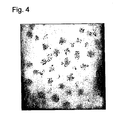
- nanogel-reduced colloidal gold was diluted to one-hundredfold with ultrapure water and casted on a collodion film-applied copper grid for TEM observation with a platinum loop, dried in a dessicator and observed with TEM. Its electronmicrograph is shown as Fig. 4, in place of a drawing showing the result. Upon the image analysis, formation of gold fine particles having an average particle size of 6.1 nm and degree of polydispersion of 1.15 was confirmed.
- the reduced colloidal gold gel (gold-fixed polymer fine particles) solution as obtained in the above was diluted to fortyfold with ultrapure water.
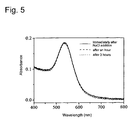
- 200 ⁇ l of 5.0 M-NaCl aqueous solution was added and its UV-vis spectral change in 1.0 M-NaCl environment (high salt concentration environment as would readily aggregate colloidal gold obtained through citric acid reduction) with time was observed.
- the result was as shown in Fig. 5. From the same figure, it is verified that the polymer fine particles containing gold ultrafine particles as fixed or encapsulated therein keep being stably dispersed in such a high salt concentration environment as above.
- polymer fine particles, crosslinked polymers, and further gold or semiconductor-encapsulating polymer fine particles which are stable in aqueous dispersion systems are provided, which are useful as carriers for in vivo delivery of drug, in particular, medicines, and also as markers or quantum dots in the field of bioassays. Accordingly, the present invention is utilizable in the trade of manufacturing fine polymers, that of manufacturing medical preparations, and the like.
Landscapes
- Chemical & Material Sciences (AREA)
- Engineering & Computer Science (AREA)
- Nanotechnology (AREA)
- Medicinal Chemistry (AREA)
- Health & Medical Sciences (AREA)
- Organic Chemistry (AREA)
- Polymers & Plastics (AREA)
- Chemical Kinetics & Catalysis (AREA)
- Crystallography & Structural Chemistry (AREA)
- Physics & Mathematics (AREA)
- Pharmacology & Pharmacy (AREA)
- Condensed Matter Physics & Semiconductors (AREA)
- Biophysics (AREA)
- Biotechnology (AREA)
- General Engineering & Computer Science (AREA)
- General Health & Medical Sciences (AREA)
- Medical Informatics (AREA)
- Materials Engineering (AREA)
- Molecular Biology (AREA)
- Life Sciences & Earth Sciences (AREA)
- Bioinformatics & Cheminformatics (AREA)
- Composite Materials (AREA)
- General Physics & Mathematics (AREA)
- Mathematical Physics (AREA)
- Theoretical Computer Science (AREA)
- Macromonomer-Based Addition Polymer (AREA)
- Manufacturing Of Micro-Capsules (AREA)
- Medicinal Preparation (AREA)
- Processes Of Treating Macromolecular Substances (AREA)
- Polymerisation Methods In General (AREA)
- Addition Polymer Or Copolymer, Post-Treatments, Or Chemical Modifications (AREA)
Abstract
Description
said main chain comprises (i) side chains each of N, N-di-C1-6 alkyl-substituted amino group covalently bonded to said main chain via a linker formed of 1 - 10 atoms, and (ii) side chains each of a hydrophilic group having a poly(ethylene glycol) segment which is covalently bonded to said main chain, independently of each other;
the polymer fine particles thus forming core-shell type fine particles when solubilized or dispersed in an aqueous medium, said side chains (i) and the main chains chiefly forming the core parts and the side chains (ii) chiefly forming the shell parts.

Ra stands for hydrogen or C1-6 alkyl,
L1 stands for methylene or carbonyl,
L2 stands for carbonyl, C1-3 alkylene or C1-3 alkylphenylene, or

n is an integer of 2 - 10,000, and p is an integer of 1-5];
with

Ra stands for hydrogen or C1-6 alkyl,
L1 stands for methylene or carbonyl, L2 stands for carbonyl, C1-3 alkylene or C1-3 alkylphenylene, or
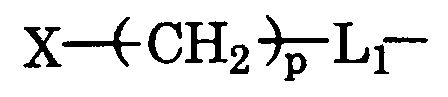
n is an integer of 2 - 10,000, and p is an integer of 1-5] and a polymerization initiator; with
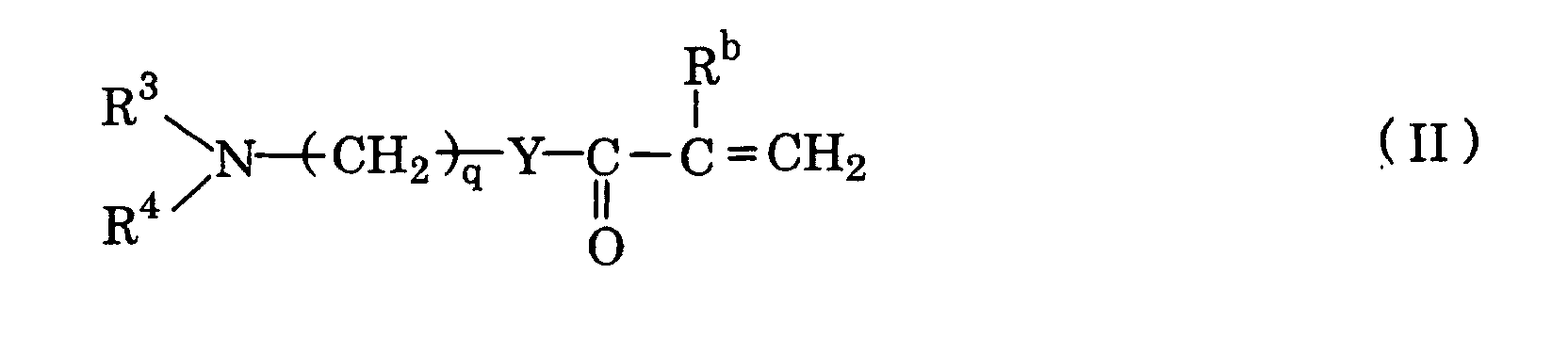
then heating the liquid mixture under stirring, to a temperature allowing initiation of the polymerization reaction; and continuing the reaction until said comonomer (b) and crosslinking agent (c) become no more detectable; using said macromonomer (a) and the comonomer (b) at a molar ratio ranging 1/400 -, preferably 1/200 -, in particular, 1/100 - 2/1, and using the crosslinking agent at a ratio of 0.1 - 25 mol% to the total amount of these monomers. Furthermore, this production method of the crosslinked polymer can be used to provide both the crosslinked polymer per se, and the polymer fine particles simultaneously.
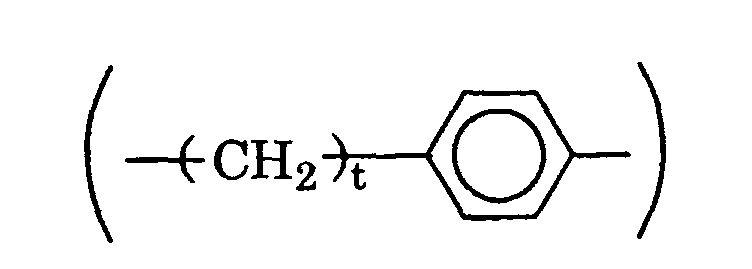
preferably carbonyl, methylene or benzylene
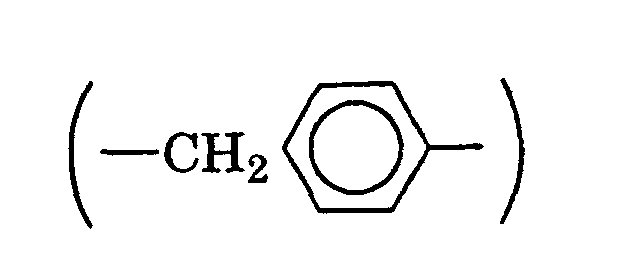

More specifically, particularly favorable crosslinking agents are ethylene glycol di(meth)acrylate, diethylene glycol di(meth)acrylate, triethylene glycol di(meth)acrylate, divinylbenzene and N, N'-methylenebisacrylamide.
| Analyses Results of m-PEGMA-p(DEAEMA-EDMA) and c-PEGVB-p(DEAEMA-EDMA) | |||||
| Sample | Average Particle Size (nm) | µ / Γ2 | Polymer Content (%) | N Content (measured) (%) | N Content (calculated) (%) |
| m-PEGMA-p(DEAEMA-EDMA)-400 | 416.0 | 6.129 × 10⁻² | 6.58 | 7.27 | 5.36 |
| m-PEGMA-p(DEAEMA-EDMA)-300 | 279.1 | 2.968 × 10⁻² | 2.90 | 6.43 | 5.28 |
| c-PEGVB-p(DEAEMA-EDMA)-50 | 55.2 | 9.400 × 10⁻² | 1.38 | - | 5.00 |
| Preparation Conditions of m-PEGMA-p(DEAEMA-EDMA) -CdS and c-PEGVB-p(DEAEMA-EDMA)-CdS | |||||
| Run No. | nanospheres | CdCl2 | Na2S·9H2O | N:Cd (molar ratio) | CdS concentration |
| 1 | m-PEGMA-p(DEAEMA-EDMA)-400 | 1.0 × 10⁻⁵ mol | 1.0 × 10⁻⁵ mol | 1:1 | 1.67 × 10⁻³ |
| 2 | ↑ | ↑ | 1:2 | ↑ | |
| 3 | ↑ | ↑ | 1:5 | ↑ | |
| 4 | ↑ | ↑ | 1:8 | ↑ | |
| 5 | ↑ | 1:12 | ↑ | ||
| 6 | m-PEGMA-p(DEAEMA-EDMA)-300 | ↑ | ↑ | 1:1 | ↑ |
| 7 | ↑ | ↑ | 1:2 | ↑ | |
| 8 | ↑ | ↑ | 1:5 | ↑ | |
| 9 | ↑ | ↑ | 1:8 | ↑ | |
| 10 | ↑ | 1:12 | ↑ | ||
| 11 | c-PEGVB-p(DEAEMA-EDMA)-50 | ↑ | ↑ | 1:1 | ↑ |
| 12 | ↑ | ↑ | 1:2 | ↑ | |
| 13 | ↑ | 1:5 | ↑ | ||
| 14 | ↑ | ↑ | 1:8 | ↑ | |
| 15 | ↑ | 1:12 | ↑ |
| Appearance of m-PEGMA-p(DEAEMA-EDMA)-CdS, and c-PEGVB-p(DEAEMA-EDMA)-CdS | ||
| Run No. | Precipitate | Supernatant |
| 1 | Yes | Water-transparent |
| 2 | ↑ | ↑ |
| 3 | ↑ | ↑ |
| 4 | ↑ | ↑ |
| 5 | ↑ | ↑ |
| 6 | ↑ | ↑ |
| 7 | ↑ | |
| 8 | No | ↑ |
| 9 | ↑ | ↑ |
| 10 | ↑ | ↑ |
| 11 | ↑ | ↑ |
| 12 | ↑ | ↑ |
| 13 | ↑ | ↑ |
| 14 | ↑ | ↑ |
| 15 | ↑ | ↑ |
CdS as stably solubilized in water had fluorescent property (cf. Fig. 1).
| Synthesizing Conditions of c-PEGVB-p(DEAEMA-EDMA) | |||||||
| Run No. | c-PEGVB/DEAEMA | Amount Added (mg) | |||||
| weight ratio | molar ratio | c-PEGVB | | EDMA | KPS | ||
| 1 | 1/0.5 | 1/4.8 | 500 | 250 | 3.2 | 4.5 | |
| 2 | 1/1 | 1/9.6 | 375 | 375 | 4.4 | 6.1 | |
| 3 | 1/2 | 1/19 | 250 | 500 | 5.6 | 7.7 | |
| 4 | 1/4 | 1/39 | 150 | 600 | 6.6 | 9.1 | |
| 5 | 1/8 | 1/78 | 83 | 667 | 6.9 | 9.9 | |
| 6 | 1/50 | 1/486 | 15 | 785 | 7.9 | 10.9 | |
| 7 | 1/100 | 1/971 | 7 | 743 | 8.0 | 11.0 |
| Synthesized c-PEGVB-p(DEAEMA-EDMA) | ||
| Run No. | Average particle size (nm) | µ / |
| 1 | 49.5 | 0.230 |
| 2 | 46.5 | 0.140 |
| 3 | 55.2 | 0.0940 |
| 4 | 62.9 | 0.0438 |
| 5 | 82.3 | 0.0881 |
| 6 | 196 | 0.0926 |
| 7 | 341 | 0.0206 |
| Synthesizing Conditions of c-PEGVB-p(DEAEMA-EDMA) | ||||||||
| Run No. | PEG Molecular Weight | c-PEGVB/DEAEMA | Amount added (mg) | |||||
| molar ratio | weight ratio | c-PEGVB | | DVB | KPS | |||
| 1 | 1800 | 1/39 | 1/4 | 150 | 600 | 4.3 | 9.1 | |
| 2 | 4200 | 1/39 | 1/0.882 | 399 | 351 | 2.6 | 5.4 | |
| 3 | 7300 | 1/39 | 1/0.255 | 598 | 152 | 1.2 | 1.2 |
| Result of c-PEGVB-p(DEAEMA-EDMA) Syntheses | ||
| Run No. | Average particle size (nm) | µ / |
| 1 | 65.0 | 0.064 |
| 2 | 52.0 | 0.078 |
| 3 | 56.0 | 0.093 |
| Nanoshere Diameters at Respective pH | ||
| pH | Average particle size (nm) | µ /Γ2 |
| 3.4 | 142 | 0.041 |
| 3.9 | 143 | 0.050 |
| 5.0 | 143 | 0.067 |
| 5.7 | 139 | 0.052 |
| 6.4 | 107 | 0.055 |
| 6.6 | 95.8 | 0.063 |
| 6.7 | 80.0 | 0.052 |
| 6.9 | 67.0 | 0.085 |
| 7.0 | 65.2 | 0.076 |
| 9.3 | 68.1 | 0.074 |
| 10.3 | 67.9 | 0.084 |
| 11.2 | 67.5 | 0.091 |
| 12.1 | 65.4 | 0.085 |
| DVB Concentration vs. Particle Sizes and Degree of Swelling at pH4 and pH 10 | ||||
| Run No. | DVB concentration (mol%) | Average particle size (nm) | Degree of volumetric swelling | |
| pH 10 | pH 4 | VpH 4/ VpH 10 | ||
| 1 | 0.1 | 261.1 | 63.5 | 69.5 |
| 2 | 0.3 | 241.2 | 60.8 | 62.4 |
| 3 | 1 | 166.4 | 62.4 | 19.0 |
| 4 | 3 | 127.6 | 56.6 | 11.5 |
| 5 | 10 | 95.6 | 57.3 | 4.64 |
| 6 | 25 | 94.3 | 85.9 | 1.32 |
Claims (16)
- Polymer fine particles derived from a crosslinked polymer having main chains formed of ethylenically unsaturated polymerizable groups and crosslinkages between said main chains, which are characterized in that
said main chain comprises (i) side chains each of N, N-di-C1-6 alkyl-substituted amino group covalently bonded to said main chain via a linker formed of 1- 10 atoms, and (ii) side chains each of a hydrophilic group having a poly(ethylene glycol) segment which is covalently bonded to said main chain, independently of each other;
the polymer fine particles thus forming core-shell type fine particles when solubilized or dispersed in an aqueous medium, said side chains (i) and the main chains chiefly forming the core parts and the side chains (ii) chiefly forming the shell parts. - The polymer fine particles according to Claim 1, which have an average particle size lying within a range of 30 nm - 10 µm, when they are dispersed in purified water and subjected to a dynamic light scattering particle size analysis (DLS); their average particle size as measured by DLS at pH 4 increasing to 1.30 - 70.0 times that of the same particles as measured by DLS at pH 10.
- The polymer fine particles according to Claim 1, in which the main chains covalently bonded with the side chains (ii) are derived from a poly(ethylene glycol) macromonomer represented by a formula I:[in which X stands for hydrogen, -COOZ group (wherein Z standing for hydrogen or an organic group), -CHR1R2 (wherein R1 and R2 independently standing for C1-6 alkyloxy, phenyloxy or phenyl-C1-3 alkyloxy, or R1 and R2 together forming -OCHR'-CH2O-, R' standing for hydrogen or C1-6 alkyl) or -CH=O,

Ra stands for hydrogen or C1-6 alkyl,
L1 stands for methylene or carbonyl,
L2 stands for carbonyl, C1-3 alkylene or C1-3 alkylphenylene, or X―(CH2)―L1 integrally stands for hydrogen or C1-6 alkyl,
n is an integer of 2 - 10,000, and p is an integer of 1-5]; and
the side chains (i) are derived from a comonomer represented by a formula II:(in which R3 and R4 each independently stands for C1-6 alkyl, Rb stands for hydrogen or C1-6 alkyl, Y stands for -O- or -NH-, and q is an integer of 2 - 6);
said polymer fine particles optionally further containing side chains derived from a diluent monomer. - The polymer fine particles according to Claim 3, which do not contain any side chains derived from a diluent monomer.
- The polymer fine particles according to Claim 3, in which the crosslinkages are derived from a crosslinking agent expressed by a formula III:[in which Rc stands for hydrogen or C1-6 alkyl; Y' stands for a valence bond, carbonyl or -NH-; and A stands for phenylene, -(CH2)γ - (where γ is an integer of 1 - 4) or -(OCH2CH2O)s- (wherein s is an integer of 1 - 4)].

- The polymer fine particles according to Claim 1, in which the monomer deriving the side chains (i) and the monomer deriving the side chains (ii) are present at a molar ratio ranging between 1/2 and 400/1, and the crosslinking agent is present at a ratio of 0.1 - 25 mol % to the total amount of the monomer (i) and monomer (ii).
- The polymer fine particles according to Claim 1, in which the main chains covalently bonded with the side chains (ii) are derived from a poly(ethylene glycol) macromonomer represented by a formula I:[in which X stands for hydrogen, -COOZ group (wherein Z standing for hydrogen or an organic group), -CHR1R2 (wherein R1 and R2 independently standing for C1-6 alkyloxy, phenyloxy or phenyl-C1-3 alkyloxy, or R1 and R2 together forming -OCHR'-CH2O-, R' standing for hydrogen or C1-6 alkyl) or -CH=O,

Ra stands for hydrogen or C1-6 alkyl,
L1 stands for methylene or carbonyl,
L2 stands for carbonyl, C1-3 alkylene or C1-3 alkylphenylene, orintegrally stands for hydrogen or C1-6 alkyl,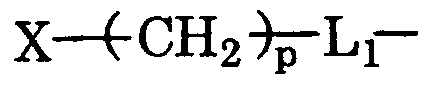
n is an integer of 2 - 10,000, and p is an integer of 1-5]; and
the side chains (i) are derived from a comonomer represented by a formula II:(in which R3 and R4 each independently stands for C1-6 alkyl, Rb stands for hydrogen or C1-6 alkyl, Y stands for -O- or -NH-, and q is an integer of 2 - 6);
said polymer fine particles optionally further containing side chains derived from a diluent monomer; and the crosslinkages are derived from a crosslinking agent expressed by a formula III:[in which Rc stands for hydrogen or C1-6 alkyl; Y' stands for a valence bond, carbonyl or -NH-; and A stands for phenylene, -(CH2)γ - (where γ is an integer of 1- 4) or -(OCH2CH2O)s- (wherein s is an integer of 1 - 4)],
the monomer deriving the side chains (i) and the monomer deriving the side chains (ii) being present at a molar ratio ranging between 1/2 and 400/1 and the crosslinking agent being present at a ratio of 0.1 - 25 mol% to the total amount of the monomer (i) and monomer (ii). - The polymer fine particles according to Claim 1, in which ultrafine particles of a free electron metal or semiconductor of a particle size ranging 1 nm - 40 nm are further fixed in the core parts.
- A crosslinked polymer which is obtained by copolymerization of(a) a poly(ethylene glycol) macromonomer represented by a formula I:[in which X stands for hydrogen, -COOZ group (wherein Z standing for hydrogen or an organic group), -CHR1R2 (wherein R1 and R2 independently standing for C1-6 alkyloxy, phenyloxy or phenyl-C1-3 alkyloxy, or R1 and R2 together forming -OCHR'-CH2O- R' standing for hydrogen or C1-6 alkyl) or -CH=O,

Ra stands for hydrogen or C1-6 alkyl,
L1 stands for methylene or carbonyl,
L2 stands for carbonyl, C1-3 alkylene or C1-3 alkylphenylene, orintegrally stands for hydrogen or C1-6 alkyl,
n is an integer of 2 - 10,000, and p is an integer of 1-5];(b) a comonomer represented by a formula II:(in which R3 and R4 each independently stands for C1-6 alkyl, Rb stands for hydrogen or C1-6 alkyl, Y stands for -O- or -NH-, and q is an integer of 2 - 6); (c) a crosslinking agent having 2, 3, or more polymerizable unsaturated groups; and(d) optionally diluent monomer having polymerizable unsaturated group or groups, other than above (a) and (b).
 - The crosslinked polymer according to Claim 9, in which no diluent monomer is present.
- The crosslinked polymer according to Claim 9, in which the poly(ethylene glycol) macromonomer (a) and the comonomer (b) are present at a molar ratio ranging from 1/400 to 2/1 and the crosslinking agent is present at a ratio of 0.1 - 25 mol% to the total amount of the poly(ethylene glycol) macromonomer (a) and the comonomer (b).
- The crosslinked polymer according to Claim 9, in which the crosslinking agent (c) is expressed by the formula III:[in which Rc stands for hydrogen or a C1-6 alkyl; Y' stands for a valence bond, carbonyl or -NH-; A stands for phenylene, - (CH2)γ - (where γ is an integer of 1 - 4), or -(OCH2CH2O)s- (where s is an integer of 1 - 4].

- A method for producing a crosslinked polymer, which comprises the steps of mixing in an inert atmosphere at room temperature(a) an aqueous solution containing a poly(ethylene glycol) macromonomer represented by the formula I:[in which X stands for hydrogen, -COOZ group (wherein Z standing for hydrogen or an organic group), -CHR1R2 (wherein R1 and R2 independently standing for C1-6 alkyloxy, phenyloxy or phenyl-C1-3 alkyloxy, or R1 and R2 together forming -OCHR'-CH2O-, R' standing for hydrogen or C1-6 alkyl) or -CH=O,

Ra stands for hydrogen or C1-6 alkyl,
L1 stands for methylene or carbonyl,
L2 stands for carbonyl, C1-3 alkylene or C1-3 alkylphenylene, orintegrally stands for hydrogen or C1-6 alkyl,
n is an integer of 2 - 10,000, and p is an integer of 1-5] and a polymerization initiator; with(b) a comonomer represented by the formula II:(in which R3 and R4 each independently stands for C1-6 alkyl, Rb stands for hydrogen or C1-6 alkyl, Y stands for -O- or -NH-, and q is an integer of 2 - 6); and (c) a crosslinking agent having 2, 3, or more polymerizable unsaturated groups;
then heating the liquid mixture under stirring, to a temperature allowing initiation of the polymerization reaction; and continuing the reaction until said comonomer (b) and crosslinking agent (c) become no more detectable; using said macromonomer (a) and the comonomer (b) at a molar ratio ranging between1/400 and 2/1, and using the crosslinking agent at a ratio of 0.1 - 25 mol% to the total amount of these monomers. - A method for producing polymer fine particles with semiconductor ultrafine particles fixed in their core parts, which comprises mixing an aqueous solution of the polymer fine particles as described in Claim 1 with an aqueous solution of a chloride of Group II B or III B element of the periodic table at such a ratio that the nitrogen atoms in said polymer fine particles become 1 - 20 molar times that of said element and stirring the mixture; and adding thereto an aqueous solution containing at least an equivalent amount to said chloride of an alkali metal salt of a Group VI B element to further continue the reaction; using the reactants at the molar ratio between the nitrogen content of the fine particles and the Group II B or III B element ranging 1:1 - 1:12.
- The production method according to Claim 14, in which the chloride is cadmium chloride and the salt is sodium sulfide.
- A method for producing polymer fine particles with gold ultrafine particles fixed in their core parts, which comprises adjusting pH of an aqueous solution of the polymer fine particles as described in Claim 1 to about 6, separately preparing an aqueous solution of chloroauric acid and adjusting its pH to about 6, mixing the two aqueous solutions such that the nitrogen atoms in the polymer fine particles are 1 - 20 times the gold atoms in molar ratio, and stirring the mixture under the conditions sufficient to form gold fine particles and fix the same at core parts of said polymer fine particles.
Applications Claiming Priority (3)
| Application Number | Priority Date | Filing Date | Title |
|---|---|---|---|
| JP2002121850A JP2004067703A (en) | 2002-04-24 | 2002-04-24 | Crosslinked polymer, fine particles and production method |
| JP2002121850 | 2002-04-24 | ||
| PCT/JP2003/005144 WO2003091302A1 (en) | 2002-04-24 | 2003-04-23 | Crosslinked polymer, fine polymer particle, and process for producing these |
Publications (2)
| Publication Number | Publication Date |
|---|---|
| EP1500670A1 true EP1500670A1 (en) | 2005-01-26 |
| EP1500670A4 EP1500670A4 (en) | 2006-06-07 |
Family
ID=29267418
Family Applications (1)
| Application Number | Title | Priority Date | Filing Date |
|---|---|---|---|
| EP03725640A Withdrawn EP1500670A4 (en) | 2002-04-24 | 2003-04-23 | RETICULATED POLYMER, POLYMER FINE PARTICLE AND PROCESS FOR PRODUCING THE SAME |
Country Status (7)
| Country | Link |
|---|---|
| US (1) | US7129293B2 (en) |
| EP (1) | EP1500670A4 (en) |
| JP (1) | JP2004067703A (en) |
| KR (1) | KR100645276B1 (en) |
| CN (1) | CN100349938C (en) |
| CA (1) | CA2483309A1 (en) |
| WO (1) | WO2003091302A1 (en) |
Cited By (1)
| Publication number | Priority date | Publication date | Assignee | Title |
|---|---|---|---|---|
| EP2923712A1 (en) | 2014-03-28 | 2015-09-30 | Spago Imaging AB | Nanostructures and applications thereof |
Families Citing this family (21)
| Publication number | Priority date | Publication date | Assignee | Title |
|---|---|---|---|---|
| US20080260851A1 (en) * | 2004-05-13 | 2008-10-23 | The Trustees Of Columbia University In The City Of New York | Polymeric Nanoparticles and Nanogels for Extraction and Release of Compounds |
| TW200704750A (en) * | 2005-06-01 | 2007-02-01 | Lg Chemical Ltd | Functional organic particle, and method for preparing the same |
| AU2011244891B2 (en) * | 2005-10-14 | 2013-05-23 | Vive Crop Protection Inc. | Composite nanoparticles, nanoparticles and methods for producing same |
| AU2006301847B2 (en) * | 2005-10-14 | 2011-11-17 | Vive Nano Inc. | Composite nanoparticles, nanoparticles and methods for producing same |
| JP4706435B2 (en) * | 2005-10-26 | 2011-06-22 | 日油株式会社 | Cosmetics, cosmetic nanoparticles and cosmetic powders |
| US7993749B2 (en) * | 2005-12-16 | 2011-08-09 | University Of Kansas | Nanoparticles comprising a nanoparticle template and a polymer shell having an amide side chain, and method of making thereof |
| EP2230264B1 (en) * | 2006-06-29 | 2019-10-09 | Life Technologies AS | Particles containing multi-block polymers |
| US20080193766A1 (en) * | 2007-02-13 | 2008-08-14 | Northern Nanotechnologies | Control of Transport to and from Nanoparticle Surfaces |
| WO2009028503A1 (en) * | 2007-08-27 | 2009-03-05 | Nof Corporation | Thermoplastic resin composition |
| CN101186706B (en) * | 2007-11-15 | 2010-08-25 | 天津大学 | Preparation method for PEG series gel nano particles |
| US7645318B2 (en) | 2008-05-07 | 2010-01-12 | Vive Nano, Inc. | Producing nanoparticles using nanoscale polymer templates |
| TWI365185B (en) * | 2008-07-24 | 2012-06-01 | Lilly Co Eli | Amidophenoxyindazoles useful as inhibitors of c-met |
| CN102791827B (en) | 2009-11-09 | 2016-11-16 | 华盛顿大学商业化中心 | Functionalized chromophoric polymer dots and their bioconjugates |
| AU2011317142B2 (en) | 2010-10-18 | 2015-04-23 | University of Washington Center for Commercialization | Chromophoric polymer dots |
| US9797840B2 (en) | 2011-11-28 | 2017-10-24 | University Of Washington Through Its Center For Commercialization | Highly fluorescent polymer nanoparticle |
| EP3718573B1 (en) | 2011-12-30 | 2026-05-20 | Univ Washington Through Its Center For Commercialization | Narrow-band emission chromophore polymer dots |
| WO2013116614A1 (en) * | 2012-02-03 | 2013-08-08 | University Of Washington Through Its Center For Commercialization | Polyelectrolyte-coated polymer dots and related methods |
| WO2014153051A1 (en) | 2013-03-14 | 2014-09-25 | University Of Washington Through Its Center For Commercialization | Polymer dot compositions and related methods |
| US9700635B2 (en) | 2015-11-11 | 2017-07-11 | International Business Machines Corporation | Hydrogels from dynamic covalent networks |
| CN107552806B (en) * | 2016-06-30 | 2020-01-21 | 郑州科斗科技有限公司 | Preparation method of Fe3O4@ Au core @ shell structure nanorod with controllable size and dispersity in large-scale preparation |
| US12466944B2 (en) | 2018-03-07 | 2025-11-11 | Maruzen Petrochemical Co., Ltd. | Core/shell type polymer microparticles, dispersion of particles, and method for producing said microparticles |
Family Cites Families (18)
| Publication number | Priority date | Publication date | Assignee | Title |
|---|---|---|---|---|
| JPS62180745A (en) | 1986-02-04 | 1987-08-08 | Res Dev Corp Of Japan | Ultrafine particle prepared in langmuir-blodgett's film, its production and catalyst consisting thereof |
| US5608021A (en) * | 1993-11-29 | 1997-03-04 | Osaka Yuki Kagaku Kogyo Kabushiki Kaisha | Cationic polymer thickener and process for preparing the same |
| JPH08133990A (en) | 1994-11-10 | 1996-05-28 | Nippon Oil & Fats Co Ltd | Reactive microsphere |
| JP2690276B2 (en) * | 1995-01-10 | 1997-12-10 | 科学技術振興事業団 | Electrostatically bound polymeric micelle drug carrier and its drug |
| JPH0978056A (en) | 1995-09-11 | 1997-03-25 | Mitsubishi Paper Mills Ltd | Antistatic agent |
| JP3345826B2 (en) | 1996-05-09 | 2002-11-18 | 一則 片岡 | Graft polymer and its precursor |
| WO1998046655A1 (en) | 1997-04-14 | 1998-10-22 | Yukio Nagasaki | Methacrylic polymer having terminal functional group and composition thereof |
| JPH10317022A (en) | 1997-05-22 | 1998-12-02 | Daiken Kagaku Kogyo Kk | Method for producing metal fine particle powder |
| US6696089B2 (en) * | 1998-09-03 | 2004-02-24 | Board Of Regents Of The University Of Nebraska | Nanogel networks including polyion polymer fragments and biological agent compositions thereof |
| US6306610B1 (en) | 1998-09-18 | 2001-10-23 | Massachusetts Institute Of Technology | Biological applications of quantum dots |
| EP1645580A3 (en) * | 1999-03-12 | 2007-03-28 | Basf Aktiengesellschaft | Polyureas |
| US6730400B1 (en) | 1999-06-15 | 2004-05-04 | Teruo Komatsu | Ultrafine composite metal particles and method for manufacturing same |
| JP3725743B2 (en) | 1999-11-24 | 2005-12-14 | 独立行政法人科学技術振興機構 | Ultrafine metal particles and method for producing the same |
| JP3579765B2 (en) | 1999-12-29 | 2004-10-20 | 大研化学工業株式会社 | Ultrafine metal particles and method for producing the same |
| JP4518220B2 (en) | 2000-01-17 | 2010-08-04 | 独立行政法人科学技術振興機構 | Polyethylene glycolated metal ultrafine particles |
| JP2002080903A (en) | 2000-09-08 | 2002-03-22 | Japan Science & Technology Corp | Dispersion-stabilized functional metallic fine particles, semiconductor fine particles, and method for producing the same |
| JP2002211062A (en) | 2001-01-17 | 2002-07-31 | Canon Inc | Ink jet recording device |
| JP2002212062A (en) * | 2001-01-24 | 2002-07-31 | Teijin Ltd | Controlled release composition |
-
2002
- 2002-04-24 JP JP2002121850A patent/JP2004067703A/en active Pending
-
2003
- 2003-04-23 CN CNB038091941A patent/CN100349938C/en not_active Expired - Fee Related
- 2003-04-23 EP EP03725640A patent/EP1500670A4/en not_active Withdrawn
- 2003-04-23 CA CA002483309A patent/CA2483309A1/en not_active Abandoned
- 2003-04-23 US US10/512,424 patent/US7129293B2/en not_active Expired - Fee Related
- 2003-04-23 WO PCT/JP2003/005144 patent/WO2003091302A1/en not_active Ceased
- 2003-04-23 KR KR1020047015508A patent/KR100645276B1/en not_active Expired - Fee Related
Cited By (2)
| Publication number | Priority date | Publication date | Assignee | Title |
|---|---|---|---|---|
| EP2923712A1 (en) | 2014-03-28 | 2015-09-30 | Spago Imaging AB | Nanostructures and applications thereof |
| US9999693B2 (en) | 2014-03-28 | 2018-06-19 | Spago Nanomedical Ab | Nanostructures and applications thereof |
Also Published As
| Publication number | Publication date |
|---|---|
| CA2483309A1 (en) | 2003-11-06 |
| EP1500670A4 (en) | 2006-06-07 |
| CN100349938C (en) | 2007-11-21 |
| WO2003091302A1 (en) | 2003-11-06 |
| KR100645276B1 (en) | 2006-11-14 |
| KR20050002913A (en) | 2005-01-10 |
| CN1649922A (en) | 2005-08-03 |
| US7129293B2 (en) | 2006-10-31 |
| JP2004067703A (en) | 2004-03-04 |
| US20050171289A1 (en) | 2005-08-04 |
Similar Documents
| Publication | Publication Date | Title |
|---|---|---|
| US7129293B2 (en) | Crosslinked polymers, fine polymer particle, and process for producing these | |
| Wan et al. | RAFT-mediated polymerization-induced self-assembly (RAFT-PISA): current status and future directions | |
| US6616946B1 (en) | Triblock copolymer hollow particles for agent delivery by permeability change | |
| Le et al. | Reactive and Functional Nanoobjects by Polymerization‐Induced Self‐Assembly | |
| Wu et al. | Surface-initiated controlled radical polymerizations from silica nanoparticles, gold nanocrystals, and bionanoparticles | |
| Pich et al. | Microgels by precipitation polymerization: synthesis, characterization, and functionalization | |
| Huang et al. | Salicylaldehyde-functionalized block copolymer nano-objects: one-pot synthesis via polymerization-induced self-assembly and their simultaneous cross-linking and fluorescence modification | |
| US20090099301A1 (en) | Molecular imprintings for recognition in aqueous media, methods for preparing same and uses thereof | |
| EP1342518B1 (en) | Finely particulate functional metal and finely particulate functional semiconductor each with dispersion stability and process for producing the same | |
| US20100298504A1 (en) | Amphiphilic polymer and processes of forming the same | |
| Wan et al. | Polymerization-induced hierarchical self-assembly: from monomer to complex colloidal molecules and beyond | |
| KR102221138B1 (en) | Core@shell bimetallic nanoparticles with stimuli-responsiveness, process for producing the same, and use thereof | |
| EP1966260B1 (en) | Process for preparing composite particles, composite particles obtained, and their use in a diagnostic test | |
| WO2006118542A1 (en) | Novel water-soluble nanocrystals comprising a polymeric coating reagent, and methods of preparing the same | |
| Xiao et al. | Transitioning from photoinitiation to thermal initiation in RAFT dispersion polymerization via a small modification of the Macro-RAFT agent: a scalable approach for monodisperse surface-functional polymeric microspheres | |
| JPH10195152A (en) | Core-shell microsphere and its production | |
| JP4963789B2 (en) | LATEX POLYMER PARTICLES CONTAINING FLUORESCENT OR CONTRAST AGENT AND METHOD FOR PRODUCING THEM | |
| Bardajee et al. | pH-Responsive fluorescent dye-labeled metal-chelating polymer with embedded cadmium telluride quantum dots for controlled drug release of doxorubicin | |
| Jhaveri et al. | Synthesis of polymeric core–shell particles using surface‐initiated living free‐radical polymerization | |
| JP4086188B2 (en) | CROSSLINKED POLYMER, POLYMER FINE PARTICLE AND METHOD FOR PRODUCING THEM | |
| JP5467447B2 (en) | Surface modifier, modified material modified with the surface modifier and dispersion of nanoparticles, and method for producing nanoparticles | |
| Zaichenko et al. | Development of novel linear, block, and branched oligoelectrolytes and functionally targeting nanoparticles | |
| WO2010024412A1 (en) | Polymerizable monomer, graft copolymer, and surface modifier | |
| EP1577331A1 (en) | Latex particles and process for producing the same | |
| JP3695616B2 (en) | Method for producing polymer ultrafine particle aggregate |
Legal Events
| Date | Code | Title | Description |
|---|---|---|---|
| PUAI | Public reference made under article 153(3) epc to a published international application that has entered the european phase |
Free format text: ORIGINAL CODE: 0009012 |
|
| 17P | Request for examination filed |
Effective date: 20041103 |
|
| AK | Designated contracting states |
Kind code of ref document: A1 Designated state(s): AT BE BG CH CY CZ DE DK EE ES FI FR GB GR HU IE IT LI LU MC NL PT RO SE SI SK TR |
|
| A4 | Supplementary search report drawn up and despatched |
Effective date: 20060504 |
|
| RAP1 | Party data changed (applicant data changed or rights of an application transferred) |
Owner name: JAPAN SCIENCE AND TECHNOLOGY AGENCY |
|
| 17Q | First examination report despatched |
Effective date: 20061009 |
|
| STAA | Information on the status of an ep patent application or granted ep patent |
Free format text: STATUS: THE APPLICATION IS DEEMED TO BE WITHDRAWN |
|
| 18D | Application deemed to be withdrawn |
Effective date: 20080610 |