EP1498812A2 - Software updates - Google Patents
Software updates Download PDFInfo
- Publication number
- EP1498812A2 EP1498812A2 EP04253564A EP04253564A EP1498812A2 EP 1498812 A2 EP1498812 A2 EP 1498812A2 EP 04253564 A EP04253564 A EP 04253564A EP 04253564 A EP04253564 A EP 04253564A EP 1498812 A2 EP1498812 A2 EP 1498812A2
- Authority
- EP
- European Patent Office
- Prior art keywords
- software
- user
- available
- fee
- received
- Prior art date
- Legal status (The legal status is an assumption and is not a legal conclusion. Google has not performed a legal analysis and makes no representation as to the accuracy of the status listed.)
- Withdrawn
Links
Images



Classifications
-
- G—PHYSICS
- G06—COMPUTING OR CALCULATING; COUNTING
- G06F—ELECTRIC DIGITAL DATA PROCESSING
- G06F8/00—Arrangements for software engineering
- G06F8/60—Software deployment
- G06F8/65—Updates
Definitions
- the present invention relates to a system and method for allowing software to be transferred between devices, and in particular for allowing software to be transferred between mobile devices.
- PDAs Personal Digital Assistants
- Mobile devices such as mobile telephones and Personal Digital Assistants (PDAs) are becoming increasingly popular. To be useful, these devices require software. At present, PDAs usually are provided with some software pre-installed. Typically the owner can connect them to a desktop computer to install additional software of their choosing or to update the pre-installed software. Mobile telephones are increasingly taking on functions previously associated with PDAs. To achieve this some mobile phones now allow third party applications to be installed on them. A problem with these devices is, however, that they require the active participation of the owner to ensure that they stay up-to-date with the latest software.
- An object of the invention is to provide an improved mechanism for updating existing software or providing access to new software.
- a telecommunications device configured to form a connection with another telecommunications device without user intervention; select software that is available on that other device, and receive a copy of that software.
- the device By allowing the device to connect to other devices, and select available software, there is provided a mechanism for allowing the automatic transfer of that software.
- the device is a mobile telecommunications device, for example a mobile telephone, and a plurality of such devices are configured in this way, this means that there is provided a very simple and cost effective mechanism for circulating new software and/or software up-dates among a potentially large number of terminals.
- the device includes a listing of software that it has.
- This listing may include an identifier for all the software available, including an indication of version number.
- the device may be configured to compare the software that it has with the software available on the other terminal and based on this comparison select new software or an up-dated version of existing software from that other terminal.
- the device may be operable to receive a listing of software that is available on the other device, and use that received listing to identify any software that it may want.
- the device may include a user interface. In this case, it may be configured to present a prompt to the user to confirm whether the selected software is to be received and/or installed, and to act in accordance with the user response. In the event that the user does want to have the software installed, the device is configured to install it. In the event that the user does not want to have the software installed, the device may be configured to delete it. Alternatively, the device may be configured to automatically install any new or up-dated software without any user intervention whatsoever.
- the device may also be configured to receive an unsolicited request for access to available software from another device.
- the device may be configured to allow that other device to access some or all of its software.
- the device is configured to send the requested software to that other device.
- the device may be configured to allow the user to specify or determine terminals that are allowed to receive software or equally devices or terminals that are to be blocked.
- the device is configured to cause payment of a fee for the selected software.
- the device may be configured to request user authorisation of the payment and cause payment of the fee in response to authorisation from the user.
- the device may be configured to automatically install software that costs below a pre-determined amount, and cause payment of that cost.
- the device may be configured to allow the user to set the pre-determined amount.
- a method for receiving or updating software on a telecommunications device comprising: forming a connection with another telecommunications device without user intervention; selecting software on that other device, and receiving a copy of that software.
- the method further involves receiving details, for example a listing, of software on the other device and using this in the step of selecting.
- a computer program preferably on a data carrier or some other computer readable medium, for a telecommunications device, the computer program having code or instructions for forming a connection with another telecommunications device without user intervention; selecting software that is available on that other device, and installing a copy of that selected software.
- the program includes code or instructions for requesting confirmation from a user that the selected software is to be installed.
- the method in which the invention is embodied allows software and/or software updates to be transferred between devices and installed on an ad-hoc basis with limited or no user intervention.
- software it is meant any code or file or application or part or suite thereof.
- This transfer or exchange of software can be done between a mobile device 10 and a fixed location terminal 12, for example a self-service terminal, as shown in Figure 1, or two mobile devices 10, as shown in Figure 2.
- the participating devices have to have to be able to detect when another device is within range and establish a communication link with that device without user intervention.
- Devices that have the ability to sense when other devices are within range such as bluetooth enabled mobile telephones, are currently available and so will not be described herein in detail.
- each device includes a processor 14 and control software (not shown), which when run is operable to cause a connection with another device to be formed without user intervention; select software from that other device and install that software.
- control software (not shown) for storing various configuration specifications, which may or may not be set by the user, and a list of sharable software. Preferably, this list includes details of the software itself and optionally the devices on which it can run.
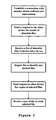
- FIG 3 shows in more detail the steps that are taken by a first requesting device to access new or up-dated software on a second device. Each of these steps is implemented by the control software in the first device. The steps taken by the second, receiving device that receives the request from the first device are shown in Figure 4. Each of these steps is implemented by control software in the second device. It should be noted that throughout this description it is presupposed that both devices are in a mode that is suitable for implementation of the methodology in which the invention is embodied. In particular, where one or more of the devices is a mobile telephone or a PDA, it is assumed that the device is switched on and in a suitable operational mode.
- the process is initiated by the first requesting device, when it detects the presence of the second device.
- the initial step is to cause a connection to the second device to be made. This is done without user intervention.
- the first device creates and sends to the second device a request for details of sharable files. Included in this request is an identifier that identifies the nature of the first device, for example it may be a mobile phone that requires a particular type of software.
- the second device interrogates its list of sharable files to identify those that can be used by the first device and sends to that device details of the files that it is prepared to share.
- Figure 5 shows an example of a list that could be sent to the first device.
- this includes file names that identify the software, details of its category, e.g. shared library, for example a DLL, or sub-component or application, as well as an indication of the version number.
- the list may also include details of any dependencies (not shown) that the files may have, that is details of any other software that may be needed in order to run or use those files.
- the list may also be adapted to include an identifier that is indicative that the software is a suite of files.
- the first device When the listing of sharable software is received at the first device, it compares the names and the version numbers of the sharable software with the corresponding names and version numbers of the software that it currently includes. In the event that it identifies software that it does not have or equally a more recent version of software that it does have, the first device sends a request to the second device for a copy of that software. On receipt of this request, the second device sends a copy of the requested sharable software to the first device.
- the second device may be adapted to send the requested software in pre-determined blocks or stages, so that in the event that there is a break in the connection between the devices, at least some of the information is transferred.
- the control software in the first device is adapted to store the received blocks, as well as an indication that further blocks are needed.
- the first device is configured to identify whether other files have the missing blocks and in the event that they do, request that only these missing blocks are downloaded.
- the first device either automatically installs it or stores it until a later time when it can then be installed.
- the device is configured to store a list of received software that the user can browse through at a convenient time. Selection of any of the software in the list would cause the device to generate a prompt asking the user to confirm whether or not the software should be installed. This may involve generating a visual prompt on a screen.
- the control software takes no installation action and deletes the file.
- the control software causes it to be installed.
- the newly installed software may be added to a listing of sharable software in the first device.
- the device before attempting to install received software, the device is operable to check whether that software has any dependencies, and so needs other software or information to run. If the file does have dependencies, the requesting device, in this example, the first device, is configured to check whether the sender has all of the dependent files, and also whether it itself has some of the dependent files already available. If none of the dependent files are available on the first device then all of these are requested from the second device. If some of the dependent files are available on the first device, then only those files that are missing are requested and received from the second device.
- the or each of the first and second devices may be configurable to specify certain control features.
- the device may be configured to allow a user to determine whether large files, or files larger that a pre-determined size, should be received and/or installed.
- the device may also be configured to allow the user to define the amount of memory space that should be assigned to the received software. This is useful because the user probably does not want their device filled with unsolicited software. In this case, the device would be configured so that once it reaches the allocated amount of memory for the received software, all further received software would be rejected. Typically software that is received and installed would not take up space in the allocated received software memory storage, but instead would be stored elsewhere within the device's memory.
- the device is operable to allow the user to specify the amount of storage space that is available on the device. This is in case the available memory on the device is less than the memory allocated to the received software.
- the device should be configured to allow the user to specify that certain files or types of files have a higher priority than others. In this case, the device may be operable to delete lower priority files to make room for higher priority received files.
- a self service terminal such as an automated teller machine
- a self service terminal such as an automated teller machine
- new mobile telephone or PDA software that can be shared either by everyone with a suitable mobile device or, for example, by customers of the bank that provides the ATM.
- a suitable mobile telephone or PDA walks within range of the ATM, they would automatically be offered access to the shared files, which could then be transferred to the telephone or PDA.
- software could be transferred from mobile telephone to mobile telephone as people move around. In this way, new software could be transferred from one person at one end of a street to another, until everyone along that street has a copy of that new software.
- software can be transferred readily around a large number of users.
- this transfer of software may require that a payment to the original software provider or copyright owner be made. This could be done by including an appropriate charge in the telephone bill of the party receiving or installing the software.
- the user's credit or debit card could be used. In either case, the payment could be made when the user elects to install the software or after a short trial period during which the user is able to use the software without charge.
- the device that receives the software is preferably configured to prompt the user to confirm whether they are happy to make this payment in order to install/keep the software.
- the device is adapted to send an appropriate command to the user's telecommunications provider, for example the network or service provider, to authorise the addition of the cost of the software to the user's bill.
- the device may be configured to communicate with the user's financial facilities, such as a credit or debit account, so that payment can be made in this way. Regardless of how the payment is actually effected, rather than having to seek authorisation every time software is received, the device may be configured to automatically authorise the payment of fees below a certain cost level. This cost level could be pre-set or determined by the user.
- the payment mechanism could be tiered.
- a first tier of users who derived the software directly from a software provider could pay a lump sum and then charge second tier users for copies of the software.
- the first tier user could be a self-service terminal, which could offer the software to users who are using its services.
- the first device is the device that requests new or up-dated software and the second device provides it
- the first and second devices could both be configured to allow the transfer of sharable files.
- both devices would exchange listings of sharable software, with each device being able to gain access to software on the other device.
- the or each device could be configured to allow users to block access to particular devices or categories of devices.
- the or each device could be configured to specify the type or category of software that can be received and installed without user interaction.
- the or each device could be configured to specify the type and category of software that can be received without user interaction, but which requires a user response to a prompt in order for the software to be installed.
- the or each device could be configured to specify the type and category of software that cannot be received under any circumstances.
- vehicles such as cars
- vehicles could include a device that is configured to receive automatic software up-dates every time the car passes, for example, an authorised garage or car salesroom, or indeed any pre-determined terminal.
- the car Once this up-dated software is installed, the car may be configured to add it to its list of software that is available to other interested parties. Access to this software may of course be restricted in some manner, for example to cars of the same type. In this way, the up-dated software can be readily spread out and shared.
Landscapes
- Engineering & Computer Science (AREA)
- Software Systems (AREA)
- General Engineering & Computer Science (AREA)
- Theoretical Computer Science (AREA)
- Computer Security & Cryptography (AREA)
- Physics & Mathematics (AREA)
- General Physics & Mathematics (AREA)
- Telephonic Communication Services (AREA)
- Stored Programmes (AREA)
- Exchange Systems With Centralized Control (AREA)
Abstract
Description
Claims (18)
- A telecommunications device that is configured to form a connection with another telecommunications device without user intervention; select software that is available on that other device, and receive a copy of that software.
- A device as claimed in claim 1 that is configured identify new software or an up-dated version of existing software on the other terminal and select any such new or up-dated software.
- A device as claimed in claim 1 or claim 2 that is configured to receive a listing of software that is available on the other device, and use that received listing to identify any software that it may want.
- A device as claimed in any of the preceding claims that includes a user interface, and is configured to request confirmation via the user interface that the selected software is to be received and/or installed.
- A device as claimed in any of the preceding claims configured to receive an unsolicited request for access to available software from another device or details of that software.
- A device as claimed in claim 5 that is configured to allow that other device to access to details of some or all of its software, preferably by sending a list of such available software to the other device.
- A device as claimed in claim 6 that is configured to send requested software to that other device, in the event that a request for software is received.
- A device as claimed in any of claims 5 to 7 configured to allow user specification of devices that are allowed to receive software or equally devices that are to be blocked.
- A device as claimed in any of the preceding claims that is a wireless device, for example a mobile telephone or a PDA.
- A device as claimed in any of claims 1 to 8, wherein the device is a self-service terminal, for example an automated teller machine.
- A device as claimed in any of the preceding claims configured to detect when another telecommunications device is within range and if it is form a connection with it without user intervention.
- A device as claimed in any of the preceding claims configured to cause payment of a fee for the selected software.
- A device as claimed in claim 12 configured to request user authorisation of the payment and cause payment of the fee in response to authorisation from the user.
- A method for receiving or updating software on a telecommunications device, the method comprising: forming a connection with another telecommunications device without user intervention; selecting software on that other device, and receiving a copy of that software.
- A method as claimed in claim 14 further involving receiving details, for example a listing, of software on the other device and using this in the step of selecting.
- A method as claimed in claim 14 or claim 15 comprising causing a fee for the software to be paid.
- A method for receiving or updating software on a telecommunications device, the method comprising: forming a connection with another telecommunications device without user intervention; selecting software on that other device, and receiving a copy of that software, including the steps of:a) charging a first user of software obtained from the software provider a first licence fee;b) charging a second user of the software obtained from the first user a second licence fee, which may be different from the first licence fee.
- A computer program, preferably on a data carrier or some other computer readable medium, for a telecommunications device, computer program having code or instructions for causing a connection with another telecommunications device to be formed without user intervention; selecting software that is available on that other device, and installing a copy of that selected software.
Applications Claiming Priority (2)
| Application Number | Priority Date | Filing Date | Title |
|---|---|---|---|
| GB0316387 | 2003-07-12 | ||
| GBGB0316387.0A GB0316387D0 (en) | 2003-07-12 | 2003-07-12 | Software updates |
Publications (2)
| Publication Number | Publication Date |
|---|---|
| EP1498812A2 true EP1498812A2 (en) | 2005-01-19 |
| EP1498812A3 EP1498812A3 (en) | 2007-11-28 |
Family
ID=27742093
Family Applications (1)
| Application Number | Title | Priority Date | Filing Date |
|---|---|---|---|
| EP04253564A Withdrawn EP1498812A3 (en) | 2003-07-12 | 2004-06-15 | Software updates |
Country Status (3)
| Country | Link |
|---|---|
| US (1) | US20050022178A1 (en) |
| EP (1) | EP1498812A3 (en) |
| GB (1) | GB0316387D0 (en) |
Cited By (1)
| Publication number | Priority date | Publication date | Assignee | Title |
|---|---|---|---|---|
| EP1703382A1 (en) * | 2005-03-16 | 2006-09-20 | Sun Microsystems, Inc. | Method for loading applications to a mobile device |
Families Citing this family (28)
| Publication number | Priority date | Publication date | Assignee | Title |
|---|---|---|---|---|
| US7500235B2 (en) * | 2003-09-05 | 2009-03-03 | Aol Time Warner Interactive Video Group, Inc. | Technique for updating a resident application and associated parameters in a user terminal through a communications network |
| US7624392B2 (en) * | 2004-05-18 | 2009-11-24 | Oki Semiconductor Co., Ltd. | USB device set |
| US8732696B2 (en) * | 2004-09-30 | 2014-05-20 | Sap Aktiengesellschaft | Analytic application model and marketplace |
| US8964765B2 (en) * | 2004-11-12 | 2015-02-24 | Broadcom Corporation | Mobile handheld multi-media gateway and phone |
| US8780957B2 (en) * | 2005-01-14 | 2014-07-15 | Qualcomm Incorporated | Optimal weights for MMSE space-time equalizer of multicode CDMA system |
| US20060168578A1 (en) * | 2005-01-21 | 2006-07-27 | U-Turn Media Corporation | Methods and systems for managing a mobile client in a client-server system connected via a public network |
| EP1867173A2 (en) * | 2005-03-10 | 2007-12-19 | QUALCOMM Incorporated | Content adaptive multimedia processing |
| US8879856B2 (en) | 2005-09-27 | 2014-11-04 | Qualcomm Incorporated | Content driven transcoder that orchestrates multimedia transcoding using content information |
| US8654848B2 (en) | 2005-10-17 | 2014-02-18 | Qualcomm Incorporated | Method and apparatus for shot detection in video streaming |
| US8948260B2 (en) * | 2005-10-17 | 2015-02-03 | Qualcomm Incorporated | Adaptive GOP structure in video streaming |
| US20070171280A1 (en) * | 2005-10-24 | 2007-07-26 | Qualcomm Incorporated | Inverse telecine algorithm based on state machine |
| FR2894420A1 (en) * | 2005-12-05 | 2007-06-08 | Inventel Sa | TELEPHONE COMBINE, BASE AND ASSOCIATED METHOD FOR UPDATING COMBINE SOFTWARE |
| US8107938B2 (en) * | 2006-02-24 | 2012-01-31 | Qualcomm Incorporated | System and method for establishing communication between wireless devices |
| US9131164B2 (en) * | 2006-04-04 | 2015-09-08 | Qualcomm Incorporated | Preprocessor method and apparatus |
| US20110113416A1 (en) * | 2009-11-09 | 2011-05-12 | Bank Of America Corporation | Network-Enhanced Control Of Software Updates Received Via Removable Computer-Readable Medium |
| US20110113424A1 (en) * | 2009-11-09 | 2011-05-12 | Bank Of America Corporation | Distribution Of Software Updates |
| US9122558B2 (en) * | 2009-11-09 | 2015-09-01 | Bank Of America Corporation | Software updates using delta patching |
| US9128799B2 (en) * | 2009-11-09 | 2015-09-08 | Bank Of America Corporation | Programmatic creation of task sequences from manifests |
| US9176898B2 (en) * | 2009-11-09 | 2015-11-03 | Bank Of America Corporation | Software stack building using logically protected region of computer-readable medium |
| US8972974B2 (en) * | 2009-11-09 | 2015-03-03 | Bank Of America Corporation | Multiple invocation points in software build task sequence |
| US20110238572A1 (en) * | 2010-03-25 | 2011-09-29 | Bank Of America Corporation | Remote Control Of Self-Service Terminal |
| CN103907143B (en) * | 2011-07-29 | 2017-08-08 | 塔拉利斯控股有限公司 | Systems and methods for communicating financial transactions using a tagless data interchange format |
| CN102946604B (en) * | 2012-11-07 | 2017-02-08 | 中兴通讯股份有限公司 | Method and device for version protection of mobile terminal |
| US9921977B2 (en) * | 2015-03-11 | 2018-03-20 | International Business Machines Corporation | Privilege based memory pinning mechanism |
| US9916264B2 (en) * | 2015-03-11 | 2018-03-13 | International Business Machines Corporation | Privilege based memory pinning mechanism |
| US9740473B2 (en) | 2015-08-26 | 2017-08-22 | Bank Of America Corporation | Software and associated hardware regression and compatibility testing system |
| US20170083921A1 (en) * | 2015-09-17 | 2017-03-23 | Manuel A. Espinoza | System and Method for Retrieving Product Information and Providing Customer Support |
| US11537383B2 (en) * | 2020-10-13 | 2022-12-27 | Argo AI, LLC | Systems and methods for improved smart infrastructure data transfer |
Family Cites Families (14)
| Publication number | Priority date | Publication date | Assignee | Title |
|---|---|---|---|---|
| US5771354A (en) * | 1993-11-04 | 1998-06-23 | Crawford; Christopher M. | Internet online backup system provides remote storage for customers using IDs and passwords which were interactively established when signing up for backup services |
| US5421009A (en) * | 1993-12-22 | 1995-05-30 | Hewlett-Packard Company | Method of remotely installing software directly from a central computer |
| US5845077A (en) * | 1995-11-27 | 1998-12-01 | Microsoft Corporation | Method and system for identifying and obtaining computer software from a remote computer |
| US5778368A (en) * | 1996-05-03 | 1998-07-07 | Telogy Networks, Inc. | Real-time embedded software respository with attribute searching apparatus and method |
| US6067582A (en) * | 1996-08-13 | 2000-05-23 | Angel Secure Networks, Inc. | System for installing information related to a software application to a remote computer over a network |
| US6006034A (en) * | 1996-09-05 | 1999-12-21 | Open Software Associates, Ltd. | Systems and methods for automatic application version upgrading and maintenance |
| US6199099B1 (en) * | 1999-03-05 | 2001-03-06 | Ac Properties B.V. | System, method and article of manufacture for a mobile communication network utilizing a distributed communication network |
| EP1230602A2 (en) * | 1999-06-30 | 2002-08-14 | Accenture LLP | A system, method and article of manufacture for an internet based distribution architecture |
| US20020132616A1 (en) * | 2001-03-19 | 2002-09-19 | Ross Lorna R. | Communications system with automatic download capability |
| US7054623B1 (en) * | 2001-05-08 | 2006-05-30 | Nokia Corporation | Grapevine driven updating technique |
| US20020188941A1 (en) * | 2001-06-12 | 2002-12-12 | International Business Machines Corporation | Efficient installation of software packages |
| US20030041125A1 (en) * | 2001-08-16 | 2003-02-27 | Salomon Kirk C. | Internet-deployed wireless system |
| US20030114106A1 (en) * | 2001-12-14 | 2003-06-19 | Kazuhiro Miyatsu | Mobile internet solution using java application combined with local wireless interface |
| US7898977B2 (en) * | 2002-03-01 | 2011-03-01 | Enterasys Networks Inc. | Using signal characteristics to determine the physical location of devices in a data network |
-
2003
- 2003-07-12 GB GBGB0316387.0A patent/GB0316387D0/en not_active Ceased
-
2004
- 2004-06-15 EP EP04253564A patent/EP1498812A3/en not_active Withdrawn
- 2004-07-07 US US10/886,327 patent/US20050022178A1/en not_active Abandoned
Cited By (3)
| Publication number | Priority date | Publication date | Assignee | Title |
|---|---|---|---|---|
| EP1703382A1 (en) * | 2005-03-16 | 2006-09-20 | Sun Microsystems, Inc. | Method for loading applications to a mobile device |
| US7941656B2 (en) | 2005-03-16 | 2011-05-10 | Oracle America, Inc. | Card device for loading applications to a mobile device |
| US8225082B2 (en) | 2005-03-16 | 2012-07-17 | Oracle America, Inc. | Card device for loading applications to a mobile device |
Also Published As
| Publication number | Publication date |
|---|---|
| GB0316387D0 (en) | 2003-08-13 |
| EP1498812A3 (en) | 2007-11-28 |
| US20050022178A1 (en) | 2005-01-27 |
Similar Documents
| Publication | Publication Date | Title |
|---|---|---|
| US20050022178A1 (en) | Software updates | |
| US8856266B2 (en) | Apparatus and associated method for downloading an application with a variable lifetime to a mobile terminal | |
| CN100380314C (en) | Portable information terminal device, storage server, and method for providing storage area | |
| KR100752996B1 (en) | Method and system for selecting a payment provision system for payment for a communication service | |
| US20020080030A1 (en) | Locker system, locker controlling method, control center, and recording medium | |
| US20080166993A1 (en) | Method and system for mobile device activation | |
| US20020194474A1 (en) | Method and apparatus for delivering program to storage module of mobile terminal | |
| EP1942698A1 (en) | Method and system for mobile device activation | |
| EP1320214A1 (en) | Unified account management for data network access | |
| US20080130849A1 (en) | Prepaying usage time for another communication device | |
| EP1257958A1 (en) | Portable computing device communication system and method | |
| JP2003521028A (en) | Payment transaction method and payment transaction system | |
| CN108781237A (en) | The detection of arrearage mobile device | |
| US20040087337A1 (en) | Mobile device controlling method, IC card unauthorized use preventing method, program for changing settings of mobile device, and program for preventing IC card from unauthorized use | |
| EP1191776A2 (en) | Method for automatically changing an access contract between a prepaid contract and a postpaid contract | |
| US20040015573A1 (en) | Network terminal setting information management method and information terminal device | |
| US9215332B2 (en) | Buddy list for blocked service | |
| JP2001237989A (en) | Billing agency system for information display type mobile phone owners | |
| TWI847871B (en) | Information processing system, information processing method, and information processing program | |
| EP1737157B1 (en) | Device for controlling the transfer of connection time units among terminals in communication networks | |
| JPH09186772A (en) | Conference-type mailbox service | |
| JP4199056B2 (en) | Control device and control system | |
| KR100407906B1 (en) | Method and system for substituting billing of contents fee using ARS | |
| KR100761534B1 (en) | Service provision device and method linking mobile terminal and office convenience facility | |
| JP4959216B2 (en) | Electronic money system and transaction device |
Legal Events
| Date | Code | Title | Description |
|---|---|---|---|
| PUAI | Public reference made under article 153(3) epc to a published international application that has entered the european phase |
Free format text: ORIGINAL CODE: 0009012 |
|
| AK | Designated contracting states |
Kind code of ref document: A2 Designated state(s): AT BE BG CH CY CZ DE DK EE ES FI FR GB GR HU IE IT LI LU MC NL PL PT RO SE SI SK TR |
|
| AX | Request for extension of the european patent |
Extension state: AL HR LT LV MK |
|
| PUAL | Search report despatched |
Free format text: ORIGINAL CODE: 0009013 |
|
| AK | Designated contracting states |
Kind code of ref document: A3 Designated state(s): AT BE BG CH CY CZ DE DK EE ES FI FR GB GR HU IE IT LI LU MC NL PL PT RO SE SI SK TR |
|
| AX | Request for extension of the european patent |
Extension state: AL HR LT LV MK |
|
| 17P | Request for examination filed |
Effective date: 20080528 |
|
| AKX | Designation fees paid |
Designated state(s): DE ES FR GB IT |
|
| 17Q | First examination report despatched |
Effective date: 20081230 |
|
| STAA | Information on the status of an ep patent application or granted ep patent |
Free format text: STATUS: THE APPLICATION HAS BEEN WITHDRAWN |
|
| 18W | Application withdrawn |
Effective date: 20090505 |