Technical Field
The present invention relates to a server apparatus that
distributes a program which runs on an information processing
terminal, as well as a program management system composed of a
server apparatus and an information processing terminal, and
particularly to technology for the revocation of an information
processing terminal attempting an unauthorized use of a program.
Background Art
Following the development of the network in recent years,
many electronic commerce systems for conducting commerce via
the network and content distribution systems for the distribution of
contents such as movies and music, have been disclosed. In these
systems, not only valuable information such as rights for the use of
a content and keys used for billing, but also programs, per se, such
as a music player program, can be exchanged among devices
connected via the network. Furthermore, aside from the
conventional PC, it is predicted that the exchange of programs in
this manner shall also be implemented in built-in devices such as a
mobile phone, and the like.
Now, if it is possible for a user with malicious intents to illicitly
rewrite a program when a commercial system involving billing such
as electronic shopping and a content distribution service is
implemented via the network, there is a danger that fraudulent
transactions such as the purchase of goods and contents
free-of-charge through manipulation of billing information, shall be
carried out. For that reason, in the case where error correction and
supplementing through program updating via the network are
carried out, there is a need to verify the validity of a program in
order to prevent unauthorized use by a user with malicious intents.
A method that makes use of a digital signature exists as a
conventional method for verifying the validity of a program (Refer to
official publication of Japanese Laid-Open Patent Application No.
2000-339153, for example). In this method, an encrypted data
exchange system using a set of two paired keys, referred to as
public key cryptography, is utilized. FIG. 20 is an explanatory
diagram for the program validity verification method that makes use
of such digital signature.
A program issuer 2000 transmits a public key 2001 to a
certification authority (CA) 2010 which is a third-party organization
that confirms and guarantees the identity of a program issuer.
Subsequently, the certification authority 2010 confirms and
examines the identity of the program issuer 2000. In the case
where the program issuer 2000 is judged as being authentic, the
certification authority 2010 issues a public key certificate 2003, for
the public key 2001 of the program issuer 2000, in which a digital
signature is attached using a CA private key 2012. The public key
certificate 2003 includes information for identifying the identity of a
subject of a public key, and indicates that the certification authority
2010 guarantees the identity of the public key subject. The
certification authority 2010 then transmits the public key certificate
2003 to the program issuer 2000.
The program issuer 2000 signs a digital signature using a
private key 2002, on the program to be distributed to a user 2020,
and distributes the public key certificate 2003 as well as the signed
program 2004.
The user 2020 obtains a CA public key 2011 from the
certification authority 2010, and verifies the signature of the public
key certificate 2003 of the program issuer, using the CA public key
2011. In the case where the signature is properly verified, the
public key 2001 included in the public key certificate 2003 is used to
verify the signature of the signed program 2004. In the case where
this signature is properly verified, it can be verified that the
distributed program is a program distributed from the program
issuer 2000, and that it has not been tampered with.
Accordingly, by attaching the digital signature of the program
issuer 2000 to the program, the validity of the program is
guaranteed, and the user 2020 can verify that an obtained program
2021 is a program that is rightfully distributed from the program
issuer 2000, in this validity verification system.
However, although program validity verification is carried out
at the time of distribution in the validity verification system shown in
FIG. 20, it is not possible to guarantee validity for the program in an
information processing terminal after distribution. Furthermore,
details regarding the workings of public key cryptography as well as
the certificate, signature, and certification are written in a variety of
publications (Refer to "Applied Cryptography", Bruce Schneier, John
Wiley & Sons, Inc. (1996), for example).
As a method for resolving this issue, there is a method where
a program is distributed by being encrypted at the program
distribution source using a user identifier for the program
distribution destination, and a user uses the user identifier to
decrypt and execute the program at the time of use (Refer to official
publication of Japanese Laid-Open Patent Application No.
07-295800, for example). In this method, unauthorized copying
and unauthorized manipulation can be prevented as even if by some
chance a program is illicitly copied, the program cannot be
decrypted and executed unless the user identifier is matched.
Furthermore, a distribution apparatus that can physically
prevent unlimited distribution from being carried out, and physically
enforce abidance to a contract of use with regard to program
copying, by judging the propriety of the distribution according to the
difference between the number of program copies and the number of
copy authorizations, is disclosed as a program distribution
apparatus (Refer to official publication of Japanese Laid-Open
Patent Application No. 06-87220, for example).
In this invention, the program distribution apparatus stores,
for each program, the information processing apparatus which is the
distribution destination, and distributes a program according to the
number of copy authorizations and the number of copies.
On the other hand, in the case where a commercial system
using the network, which involves billing such as electronic shopping
and a content distribution service, a method for identifying a user is
necessary as the billing of a user is carried out. As one of these
methods, there are cases where specific information such as an ID
or a key allocated to each user, is included within a program or
within information distributed together with a program. In this
case, specific information is allocated to each user, and by managing
the specific information at the program distribution source which is
the server apparatus-side, a user can be identified based on the
specific information, when the user carries out an unauthorized
action.
FIG. 21 is a reference diagram of the conventional program
management system used between an information processing
terminal 2101 and a server apparatus 2102, as well as a server
apparatus 2103. Moreover, in FIG. 21, the server apparatuses are
separated into the application data server apparatus 2103 and the
program server apparatus 2102, for the purpose of explanation.
The information processing terminal 2101 obtains a music
player program that can download and play desired music data, from
the server apparatus 2102 which is the program distribution source.
It is assumed that such music player program includes specific
information "0101". Moreover, in seeking safe distribution, the
communication channel is encrypted using a Secure Socket Layer
(SSL), preventing acts of hacking such as eavesdropping.
When the user of the information processing terminal 2101
requests for the obtainment of music data, and so on, a music data
obtainment request attached with the specific information "0101" is
transmitted from the information processing terminal 2101 to the
application server apparatus 2103. The server apparatus 2103
possesses a revocation list (CRL: certificate revocation list) for
excluding an unauthorized information processing terminal that
executes the music player program. As the specific information
"0101" transmitted in time with the music data obtainment request
from the information processing terminal 2101 is described in the
CRL, the transmission of music data to the information processing
terminal 2101 is not carried out. Moreover, in the case where the
specific information "0101" is not described in the CRL, the
requested music data is sent to the information processing terminal
2101.
In this manner, if the specific information of the program
possessed by the information processing terminal 2101 which is
carrying out unauthorized program usage is identified, it is possible
to revoke the information processing terminal 2101 which is
attempting an unauthorized usage, by using the CRL.
Moreover, safe distribution, which protects download data
from unauthorized acts by preventing download data manipulation,
replacement and eavesdropping, is made possible by the
attachment of a digital signature to data to be downloaded from the
server apparatus 2102 to the information processing terminal 2101
and the performance of signature verification at the information
processing terminal 2101-side.
However, the problem of having an increased processing load
on the program distribution source arises in the method described
above, where program encryption in compliance with individual user
identifiers is carried out at the program distribution source.
Furthermore, the aforementioned method in which a program
distribution apparatus stores, for each program, the information
processing apparatus which is the distribution destination, and
distributes a program according to the number of copy
authorizations and the number of copies, is a method in which a
program distribution apparatus confirms the ID of the apparatus
which is the distribution destination and distributes a program
according to the number of copy authorizations, for every
distribution request. It is not a method that prevents the
unauthorized use of a program.
In addition, in the method shown in FIG. 21 where the server
apparatus 2103 uses a CRL in which specific information of programs
is described, to perform the revocation of the information
processing terminal 2101 attempting an unauthorized usage, even
in the case where data obtainment is revoked as being from an
unauthorized terminal according to the CRL of the server apparatus
2103 when the information processing terminal 2101 attempts to
obtain data illicitly, a problem exists in which the revocation using
the CRL of the server apparatus 2103 can be circumvented. This
circumvention is carried out through the downloading of different
specific information from the server apparatus 2102 by the user of
the information processing terminal 2101 and updating the specific
information of the program with the new specific information.
The present invention is conceived in view of issues such as
those mentioned above and has as a first objective to provide a
server that prevents an unauthorized information processing
terminal that has been revoked according to a list using specific
information in a server apparatus which is the program distribution
source, from avoiding such revocation by obtaining new specific
information. Furthermore, the present invention also has the
objective of reducing the process load for a server apparatus, with
regard to program distribution to an information processing
terminal.
Furthermore, the present invention has as another objective
to provide a program management system that can prevent
unauthorized usage of a program by an information processing
terminal by revoking an obtainment request for new specific
information from an unauthorized information processing terminal,
in the program managing system where program distribution is
carried out between a server apparatus and an information
processing terminal.
Disclosure of Invention
In order to resolve the aforementioned issues, the server
apparatus in the present invention is a server apparatus, connected
via a network to an information processing terminal holding a
terminal ID that cannot be re-written externally, that holds a
program running on the information processing terminal, the server
apparatus comprising a table holding unit operable to hold a table
indicating a relation between a previously distributed program and a
terminal ID, and a decision unit operable to decide, by referring to
the table, whether or not to distribute a program in response to a
program obtainment request attached with the terminal ID,
transmitted from the information processing terminal.
Furthermore, the program distributed, to the information
processing terminal, from the server apparatus in the present
invention includes a program body running on the information
processing terminal and program specific information for running
said program body, and the decision unit decides i) to distribute only
the program body to the information processing terminal by
prohibiting distribution of the program specific information in the
case where the terminal ID attached to the program obtainment
request is recorded in the table, and ii) to add the terminal ID and
the program specific information, to the table, in a correspondence
relation with each other, and distribute the program body and the
program specific information to the information processing terminal
in the case where said terminal ID is not recorded in the table.
Accordingly, the server apparatus can prevent the
information processing terminal from obtaining new program
specific information corresponding to a previously distributed
program and the unauthorized acts of an information processing
terminal attempting to avoid revocation by obtaining new program
specific information can be prevented.
Moreover, in order to resolve the aforementioned issues, the
program management system in the present invention is a program
management system comprising an information processing terminal
holding a terminal ID that cannot be re-written externally, and a
server apparatus, connected via a network to the information
processing terminal, that holds a program running on the
information processing terminal, wherein the information
processing terminal transmits, to the server apparatus, a program
obtainment request attached with the terminal ID when requesting
for obtainment of a program, and the server apparatus includes a
table holding unit operable to hold a table indicating a relation
between a previously distributed program and a terminal ID, after
receiving the program obtainment request, and a decision unit
operable to decide, by referring to the table, whether or not to
distribute a program in response to a program obtainment request
attached with the terminal ID, transmitted from the information
processing terminal.
In this manner, the present invention can be implemented,
not only as the server apparatus mentioned above, but also as a
program management system used between the server apparatus
and the information processing terminal, or a program distribution
method which uses the units included in the server apparatus, as
steps. Furthermore, it goes without saying that the present
invention can be implemented as a program for implementing such
program distribution method on a computer, or the like, and that
such program can be brought into circulation via a recording
medium such as a CD-ROM, or a transmission medium such as a
communication network.
Brief Description of Drawings
FIG. 1 is a configuration diagram of the information
processing terminal and the server apparatus in the first
embodiment.
FIG. 2 is a configuration diagram of the program entirety
which is transmitted from the server apparatus in the first
embodiment, to the information processing terminal-side.
FIG. 3A is a diagram showing an example of information
stored in a program header.
FIG. 3B is a diagram showing an example of information
stored in a program.
FIG. 4A is a diagram showing an example of information
stored in the specific information header.
FIG. 4B is a diagram showing an example of information
stored in the program specific information.
FIG. 5 is a diagram showing the operational procedures in the
program updating sequence between the information processing
terminal and the server apparatus.
FIG. 6 is a diagram showing an example of the information
storage in the specific information distribution history held by the
specific information distribution history holding unit.
FIG. 7 is a flowchart showing the distribution procedure for a
program, in the server apparatus.
FIG. 8 is an overall diagram of the program management
system using a server apparatus, in the first embodiment.
FIG. 9 is a diagram showing a different data structure
included in a program header and a program, in the first
embodiment.
FIG. 10 is a diagram showing a different data structure
included in the specific information header and the program specific
information.
FIG. 11 shows the configuration diagram of the information
processing terminal and the server apparatus, in the second
embodiment of the second invention.
FIG. 12A is a diagram showing an example of information
included in the specific information distribution history in the second
embodiment.
FIG. 12B is a diagram showing an example of information
included in the program/specific information correspondence chart
in the second embodiment.
FIG. 13 is a flowchart showing the program distribution
procedure in the server apparatus.
FIG. 14 is a configuration diagram of the information
processing terminal and the server apparatus, in the third
embodiment.
FIG. 15 is a chart showing an example of the information
storage of the distribution number information in the third
embodiment.
FIG. 16 is a flowchart showing the program distribution
procedure in the server apparatus.
FIG. 17 is a configuration diagram of the information
processing terminal and the server apparatus, in the fourth
embodiment.
FIG. 18A is a diagram showing an example of data stored in
the distribution number information in the fourth embodiment.
FIG. 18B is a diagram showing an example of data stored in
the program/specific information correspondence chart in the fourth
embodiment.
FIG. 19 is a flowchart showing the program distribution
procedure in the server apparatus.
FIG. 20 is an explanatory diagram for a program validity
verification method using the conventional digital signature.
FIG. 21 is a reference diagram of the conventional program
management system used between an information processing
terminal and server apparatuses.
Best Mode for Carrying Out the Invention
Hereinafter, the server apparatus as well as the program
management system according to the embodiments of the present
invention shall be explained using the diagrams.
(First Embodiment)
FIG. 1 shows a configuration diagram of an information
processing terminal 100 and a server apparatus 120 in the first
embodiment of the present invention.
The information processing terminal 100 is a terminal
apparatus that uses a program used in electronic commerce, content
distribution, or the like, obtained from the server apparatus 120. It
is made up of a CPU 101, a RAM 102, a cipher processing unit 103 for
carrying out the encryption and decryption of a program, data, or
the like, a communication processing unit 104 for carrying out
communication with the server 120, a program storage unit 105 for
storing a program, a data storage unit 106 for storing information
that does not particularly require confidentiality such as a CA public
key, and a confidential information storage unit 107 for storing
information that requires confidentiality, such as a private key.
The program storage unit 105 stores a program 116 that runs
on the CPU 101.
The data storage unit 106 stores, from among the data used
by the information processing terminal 100, data which does not
particularly require confidentiality. Alongside this, it stores a CA
public key 109 as well as program management information 108
which is management information of a stored program such as a
program ID and a version number, stored in the information
processing terminal 100.
Furthermore, the confidential information storage unit 107
stores information that requires confidentiality within the
information processing terminal 100. It stores a terminal specific
key 110 which is a key that is different for each information
processing terminal, a terminal private key 111 which is one of a
pair of public keys which are different for each information
processing terminal, program specific information 112 which is a
specific key used by a program, and a terminal public key certificate
113 which is the other of the pair of public keys which are different
for each information processing terminal. Furthermore, the
terminal public key certificate 113 includes a terminal ID 114 which
is an ID that uniquely identifies the information processing terminal
100, and a CA signature 115 which is attached to the terminal public
key certificate 113 by the certification authority.
On the other hand, the server apparatus 120 in the present
invention is an apparatus for distributing a program requested by
the information processing terminal 100. It is made up of a CPU
121, a RAM 122, a cipher processing unit 123 for carrying out the
encryption and decryption of a program, data, or the like, a
communication processing unit 124 for carrying out communication
with the information processing terminal 100, a data storage unit
125 for storing information that does not particularly require
confidentiality such as a CA public key, a distribution information
storage unit 126 for storing information such as a program to be
distributed to the information processing terminal 100, and a
specific information distribution history holding unit 140.
Further, the server apparatus 120 in the present invention is
characterized by the possession of the specific information
distribution history holding unit 140. This specific information
distribution history holding unit 140 holds a specific information
distribution history 600 for the purpose of managing the history of
the program specific information of a program that has been
distributed to the information processing terminal 100.
The data storage unit 125 is a region for storing information
used by the server apparatus 120. It stores a server private key
127 which is one of a pair of public keys, a server public key
certificate 128 which is the other of the pair of public keys, and a CA
public key 129. The server public key certificate 128 includes a
server ID 130 which is an ID that uniquely identifies the server, and
a CA signature 131 which is attached to the server public key
certificate by the CA. The distribution information storage unit 126
is a region for storing information distributed by the server
apparatus 120 to the information processing terminal 100. It
stores a program header 300, a program 310, a specific information
header 400, and program specific information 420. Furthermore, a
diagram for the program in its entirety, which is the distribution
information, is shown in FIG. 2 to be described later.
A signature of the CA, which is a third-party certification
organization, is attached to the program header 300, the program
310, the specific information header 400, and the program specific
information 420, stored in the distribution information storage unit
126. Through this CA signature, distribution information is
guaranteed as being information distributed from a valid distribution
source.
FIG. 2 is a configuration diagram of the program entirety 200
which is transmitted from the server apparatus 120 in the present
embodiment to the information processing terminal 100. This
program entirety 200 is information stored in the distribution
information storage unit 126 of the server apparatus 120. In the
present embodiment, it is structured from the program header 300,
the program 310, the specific information header 400, and the
program specific information 420. Furthermore, in the present
invention, the program entirety 200 is characterized by being
separated into the program 310 and the program specific
information 420, and in addition, by being separated into a header
segment and a data segment.
Moreover, in the program management system in the present
embodiment, in the case where the information processing terminal
100 obtains application data to be used in the program 310, from the
sever apparatus 120 or the like, the application data obtainment
request is attached with the program specific information 420 and
transmitted. As a result, it becomes possible to reject an
unauthorized information processing terminal through the CRL using
the program specific information 420, carried by the server
apparatus 120, and the like.
FIG. 3A and 3B are diagrams showing an example of
information stored in the program header 300 and the program 310.
The
program header 300 stores information regarding the
program 310, and includes the following information:
In addition, a CA signature (311) which corresponds to the
program 310 is attached to the program 310. In this manner, it is
possible to verify, in the information processing terminal 100, that a
program header and program are distributed from a valid
distribution source, as both of the program header 300 and the
program 310 include the CA signatures 305 and 311 respectively.
FIG. 4A and 4B are diagrams showing an example of
information stored in the specific information header 400 and the
program specific information 420.
The
specific information header 400 stores information
regarding the program
specific information 420, and includes the
following information:
In addition, the specific information subheader 405 is
structured from a program specific information sub-ID 411 which is
an ID for identifying individual specific information, and a size 412
of individual specific information.
Furthermore, the program specific information 420 includes a
plurality of program specific information (421), and a CA signature
(422) for the entire program specific information. As such, it is
possible to verify, in the information processing terminal 100, that
the specific information header 400 and the program specific
information header 420 are distributed from a valid distribution
source, as the specific information header 400 and the program
specific information header 420 both include CA signatures (406 and
422 respectively).
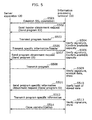
Next, an example of the operating procedure in the program
updating system carried out between the information processing
terminal 100 and the server apparatus 120 shall be explained with
the use of FIG. 5. In this program updating system, the
information processing terminal 100 first carries out a header
obtainment request, and a confirmation of the available area is
carried out. Furthermore, the information processing terminal 100
attempting an unauthorized use of a program can be revoked in the
server apparatus 120 by referring to the specific information
distribution history 600 from the specific information distribution
history holding unit 140.
First, the information processing terminal 100 establishes a
connection with the server apparatus 120 through an SSL (S501).
At this time, the server apparatus 120 carries out the obtainment of
the terminal ID of the information processing terminal 100. It
should be noted that the SSL is a mechanism in which data is
transmitted and received by being encrypted using both public key
cryptography and private key cryptography, in order to transmit and
receive data safely between two points. Furthermore, as a key
referred to as a session key, which is valid only for that session, is
shared in the SSL, the transmission and reception of data between
the information processing terminal 100 and the server apparatus
120 from S502 onward shown in FIG. 5 are all carried out through
encrypted data using session keys.
Next, the information processing terminal 100 carries out a
header obtainment request by designating the program ID of the
program 310 to be obtained, to the server apparatus 120 (S502).
At this time, the server apparatus 120 confirms the correspondence
relation of the terminal ID and the program specific information ID
according to the specific information distribution history 600 being
held in the specific information distribution history holding unit 140.
In other words, confirmation is made as to whether or not the
specific information ID has already been distributed to the
information processing terminal 100. Then, in the case where it is
judged that it is a header obtainment request from an authorized
information processing terminal, the server apparatus 120, having
received the header obtainment request, transmits the program
header 300 stored in the distribution information storage unit 126 to
the information processing terminal 100 (S503).
Having received the program header 300 from the server
apparatus 120, the information processing terminal 100 verifies the
CA signature included in the program header 300 using the CA public
key 109 stored in the data storage unit 106 (S504). With this, the
information processing terminal 100 verifies that the program
header 300 is unmanipulated information distributed from a valid
distribution source. Furthermore, as information regarding the
program such as the program's program ID 301, version number 302,
size 303, and the program hash value 304, are stored in the program
header 300, the information processing terminal 100 compares such
information with the program ID, version information, and available
capacity information described within the program management
information 108 stored in the data storage unit 106, and confirms
whether the update subject program 310 was correctly distributed
from the server apparatus 120, and whether available capacity for
storing the program 310 exists (S504). As such, the information
processing terminal 100 in the present embodiment prevents
drawbacks that can lead to program obtainment disapproval during
the downloading of the program 310.
Next, the server apparatus 120 transmits the specific
information header 400 stored in the distribution information
storage unit 126 to the information processing terminal 100 (S505).
Then, having received the specific information header 400
from the server apparatus 120, the information processing terminal
100 verifies the CA signature included in the specific information
header 400 using the CA public key 109 stored in the data storage
unit 106 (S506). With this, the information processing terminal
100 verifies that the specific information header 400 is
unmanipulated information distributed from a valid distribution
source. Information regarding the program specific information
420, such as the program specific ID 401 for uniquely identifying the
program specific information 420, the program ID 402 of a program
associated with the program specific information 420, the specific
information number 403 which is the number of specific information
included in the information distributed through the program specific
information 420, and the size 404, is stored in the specific
information header 400. As such, the information processing
terminal 100 compares such information with the program ID, and
available capacity information described within the program
management information 108 stored in the data storage unit 106,
and confirms whether the program specific information 420
regarding the program 310 to be updated is correctly distributed
from the server apparatus 120, and whether available capacity for
storing the program specific information 420 exists, before
downloading of the program 310 (S506).
Then, in the case where it is judged that the obtainment of the
program 310 and the program specific information 420 can be
carried out, the information processing terminal 100 carries out a
program obtainment request to the server apparatus 120 by
designation a program ID (S507).
Having received the program obtainment request, the server
apparatus 120 transmits the program 310 stored in the distribution
information storage unit 126 to the information processing terminal
100 (S508). Having the received the program 310 from the server
apparatus 120, the information processing terminal 100 verifies the
CA signature included in the program 310 using the CA public key
109 stored in the data storage unit 106 (S509). With this, the
information processing terminal 100 verifies that the program 310 is
unmanipulated information distributed from a valid distribution
source. In the case where the validity of the obtained data is
verified, the obtained program 310 is encrypted with the terminal
specific key 110 stored in the confidential information storage unit
107, and stored in the program storage unit 105 (S509). At that
time, program management is carried out by storing the program
storage position, program ID, version number, and so on, in the
program management information 108.
Next, after the storage of the program is finished, the
program 116 stored in the program storage unit 105 is decrypted
using the terminal specific key 110, and the hash value is calculated.
A comparison is carried out between the calculated hash value and
the hash value stored in the program header 300, and the correct
storage of the program is confirmed (S510).
Next, the information processing terminal 100 carries out a
program specific information obtainment request by designating the
program ID to the server apparatus 120 (S511).
Subsequently, the server apparatus 120 transmits the
program specific information 420 stored in the distribution
information storage unit 126 to the information processing terminal
100 (S512). Having received the program specific information 420
from the server apparatus 120, the information processing terminal
100 verifies the CA signature included in the program specific
information 420 using the CA public key 109 stored in the data
storage unit 106 (S513). With this, the information processing
terminal 100 verifies that the program specific information 420 is
unmanipulated information distributed from a valid distribution
source. In the case where the validity of the obtained data is
verified, the obtained program specific information 420 is stored in
the confidential information storage unit 107 (S513).
Finally, after the storage of the program and program specific
information by the information processing terminal 100 is finished,
the communication between the information processing terminal
100 and the server apparatus 120 is closed (S514).
In this manner, the information processing terminal 100 in the
present embodiment can carry out safer downloading of a program
by confirming whether available capacity for storing the program
310 exists, and so on, through the performance of the header
obtainment request. Moreover, in this case, by calculating the hash
values of the program 310 as well as the program specific
information 420, and comparing the calculated hash values with the
hash values stored in the program header 300 as well as the
program specific information header 400, confirmation of valid
distribution information can also be cited.
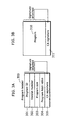
FIG. 6 is a diagram showing an example of the information
storage of the specific information distribution history 600 held in
the specific information distribution history holding unit 140.
It is assumed that the specific information distribution history
600 is the table in which the server apparatus 120 records the
program specific information 420 corresponding to the program
previously distributed to the information processing terminal 100,
and the terminal ID of such information processing terminal 100.
Further, the server apparatus 120 stores, in the specific
information distribution history holding unit 140, a terminal ID 601
which is an ID for identifying the information processing terminal
100 to which the program specific information 420 was distributed,
and a program specific information ID 602 which is an ID for
identifying the distributed program specific information 420.
Furthermore, a last distribution date 603 indicating the last
distribution date of the program specific information 420 is stored in
the specific information distribution history 600, as needed.
In FIG. 6 the server apparatus 120 has distributed five
program specific information 420 to the information processing
terminal 100. The respective terminal IDs 601 and program
specific information IDs 602 are, (terminal ID, program specific
information ID) = (0001, 0001), (0002, 0002), (0010, 0003), (0015,
0004), (0020, 0005).
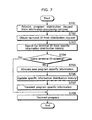
FIG. 7 is a flowchart showing the distribution procedure for
the program 310, in the server apparatus 120.
First, the server apparatus 120 receives a program
distribution request from the information processing terminal 100
(S701). Next, the server apparatus 120 obtains the terminal ID of
the information processing terminal 100 included in the program
distribution request received (S702), and searches for the obtained
terminal ID in the specific information distribution history 600
(S703). A judgment is then carried out as to whether or not the
same terminal ID is stored in the specific information distribution
history 600 (S704).
In the case where the same terminal ID is stored in the
specific information distribution history 600 (Yes, in S704), the
server apparatus 120 transmits only the program 310 and concludes
the process (S708), as the program specific information 420 has
already been distributed to the information processing terminal 100.
Furthermore, in the case where the same terminal ID is not
stored in the specific information distribution history 600 (No, in
S704), the server apparatus 120 allocates a new program specific
information 420 to the information processing terminal 100 (S705).
The specific information distribution history 600 is then updated by
adding the correspondence of the terminal ID 601 and the program
specific information ID 602 with regard to the newly allocated
program specific information 420 (S706). Subsequently, the
server apparatus 120 transmits the program specific information
420 to the information processing terminal 100 (S707), and
transmits the program 310 to the information processing terminal
100 (S708), then concludes the process.
In this manner, the distribution of a plurality of program
specific information 420 to a single information processing terminal
100 is reliably prevented through distribution management of
program specific information using the specific information
distribution history 600 in the server apparatus 120. With this, the
server apparatus 120 does not allocate new program specific
information 420 to an information processing terminal 100 which
has already been recognized as an unauthorized terminal and
revoked, using the program specific information 420 according to
the CRL, or the like. Accordingly, unauthorized action of the
information processing terminal 100 attempting to avoid revocation
by obtaining new program specific information 420 can be
prevented.
FIG. 8 is an overall diagram of the program management
system using the server apparatus 120, in the present embodiment.
A program server apparatus 120a transmits a program
corresponding to a program obtainment request to an information
processing terminal 100. A server apparatus 120b transmits an
application used by the program running on the information
processing terminal 100, to the information processing terminal 100.
It should be noted that in FIG. 8, explanation shall be carried out
assuming that the information processing terminal 100 holds a
program with the program specific information "0101", and that it is
a terminal attempting to illicitly obtain new program specific
information in order to avoid the revocation of a CRL 800.
Furthermore, to facilitate safe program distribution, the
communication channel is assumed to be a cipher communication
channel using an SSL.
When the user of the information processing terminal 100
requests for application data, an application obtainment request
with the program specific information "0101" of the program held by
the information processing terminal 100 attached, is transmitted to
the application data server apparatus 120b.
The server apparatus 120b possesses the revocation list
(CRL) 800 of unauthorized programs, which makes use of program
specific information, and revocation of an unauthorized information
processing terminal is carried out through the non-transmission of
the application data due to the description, in the CRL 800, of the
program specific information "0101" attached to the obtainment
request from the information processing terminal 100. Moreover,
in the case where the program specific information is not described
in the CRL 800, the server apparatus 120b transmits the application
data to the information processing terminal 100. Furthermore,
download data manipulation, replacement, eavesdropping, and so
on, over the communication channel is prevented by the attachment
of a CA signature to the data to be downloaded from the server
apparatus 120a, or the like, and the performance of signature
verification at the information processing terminal 100.
The user of the information processing terminal 100 having
the program specific information "0101" described in the CRL 800
carries out an obtainment request for program specific information
to the program server 120a in order to obtain a different, new
program specific information and avoid the revocation according to
the CRL.
In a case such as this, the server apparatus 120a in the
present invention possesses, in the specific information distribution
history holding unit 140, a specific information distribution history
600 having a terminal ID "0102" of the information processing
terminal 100, and the program specific information ID "0101"
recoded with regard to a previously distributed program.
Subsequently, in the case where a new program specific
information request is carried out from the information processing
terminal 100 to the server apparatus 120a, the server apparatus
120a judges whether or not the terminal ID "0102" attached to this
program specific information request is described in the specific
information distribution history 600. In the case where it is
described, the distribution of program specific information is
prohibited, and the distribution of only the program body to the
information processing terminal 100 is carried out. Moreover, in
the case where, referring to the specific information distribution
history 600, the program specific information ID corresponding to
the terminal ID attached to the program specific information request
is not described, the terminal ID and the program specific
information ID are associated with each other and added into the
specific information distribution history 600, and the program and
program specific information are distributed to the information
processing terminal 100 as well.
Moreover, only program specific information is not distributed
again to the information processing terminal 100 by the server
apparatus 120a. The distribution the body of the program, two or
more times, does not matter. This is because, as the program
specific information is revoked according to the CRL 800, the user of
the information processing terminal 100 attempting an
unauthorized use is revoked for as long as the program specific
information is not updated.
FIG. 9 is a diagram showing a different data structure
included in a program header 900 and a program 910, in the present
embodiment. FIG. 9 is different from FIG. 3 in the point that the CA
signature 311 is not attached to the program 910.
The program header 900 is used for storing information
regarding the program 910, and includes a program ID (901), a
version number (902), a program size (903), a program hash value
(904), a CA signature (905), which are the same as the information
included in the aforementioned program header 300.
In the case where validity verification of the program header
900 and the program 910 is carried out in the information
processing terminal 100, first of all, the program header 900 is
obtained from the server apparatus 120, and the CA signature 905
attached to the program header 900 is verified. With this, the
information processing terminal 100 verifies that the program
header 900 is unmanipulated information distributed from a valid
distribution source.
Next, the hash value of the program 910 is calculated. The
calculated hash value and the program hash value stored in the
program header 900 are compared to confirm if these match. With
this, it becomes possible for the information processing terminal
100 to verify that the program 910 is unmanipulated information
distributed from a valid distribution source.
In this manner, by using the program hash value 904 stored in
the program header 910 and attaching the CA signature 905 to only
the program header 900 in the validity verification of the program
910, it becomes possible to verify validity in the same way as in the
case where signatures are attached to the program header 900 and
the program 910, while reducing the information requiring the CA
signature in the program 910. Furthermore, in the case where the
combination of the program header 900 and the program 910 are
illicitly changed, the anomaly in the combination can be detected
through the program hash value calculation in the information
processing terminal 100. Moreover, as a result of not attaching a
CA signature to the program 910, the need for the program 910 to
be forwarded to the certification authority for CA signature
attachment is eliminated.
Next, FIG. 10 is a diagram showing a different data structure
included in a specific information header 1000 and program specific
information 1020. FIG. 10 is different from FIG. 4 in the points that
the specific information header 1000 possesses a program specific
information hash value 1005, and the CA signature 422 is not
attached to the program specific information 1020.
The specific information header 1000 is used for storing
information regarding the program specific information 1020, and is
made up of a program specific information ID 1001, a program ID
1002, a specific information number 1003, an overall size 1004 of
the program specific information, an overall, program specific
information hash value 1005, a specific information subheader 1006,
and a CA signature 1007 for the entirety of the specific information
header. These are the same as the information included in the
above-mentioned specific information header 400.
Accordingly, by calculating the hash value of the program
specific information 1020, and comparing the calculated hash value
with the program specific information hash value 1005 stored in the
specific information header 1000 and confirming if these match, it is
possible for the information processing terminal 100 to verify that
the program specific information 1020 is unmanipulated information
distributed from a valid distribution source.
As mentioned above, through the possession of the specific
information distribution history holding unit 140 by the server
apparatus 120 in the present embodiment, the server apparatus 120
can prevent the obtainment of new program specific information
corresponding to a previously distributed program, by the
information processing terminal 100. As such, secure downloading
can be realized by avoiding unauthorized acts, such as hacking, by
the information processing terminal 100 attempting to avoid
revocation by obtaining new program specific information 420.
Furthermore, by encrypting the program obtained from the
server apparatus 120 in the information processing terminal 100
using the terminal specific key 110 stored in a secure flash memory,
or the like, which can only be accessed from the inside, the process
of encrypting the program in the server apparatus through a key
which is specific to the information processing terminal as in the
conventional manner, becomes unnecessary, and the program
encryption load of the server apparatus 120 can be reduced. It
should be noted that in this case, when encryption is done in the
information processing terminal 100 using the terminal specific key
110, it is necessary to confirm that encryption is carried out properly.
With regard to this point, in the present invention, it is possible to
determine the success or failure of program storage without concern
for the descrambling with the terminal specific key 110, which is
different for each information processing terminal 100, through the
descrambling after program storage using the terminal specific key
110, and verification according to the hash value of the plain text
program, by the information processing terminal 100.
In addition, the entirety of a program is separated into the
program 310 and the program specific information 420 and created
individually by the server apparatus 120. Accordingly, through the
management of a plurality of program specific information 420
which are comparatively small in size and different for each
information processing terminal 100, and managing only one
program 310 which is large in size but common for all the
information processing terminals 100, the size of distribution
information to be managed by the server apparatus 120 is greatly
reduced, which in turn enables the reduction of the information
processing load.
Furthermore, by storing the hash value of the program
specific information 1020 in the specific information header 1000,
and attaching the CA signature 1007 to only the specific information
header 1000, in the server apparatus 120, the same results can be
attained as in the case where the CA signature 1007 is attached to
the specific information header 1000 and the program specific
information 1020, while reducing the information requiring the CA
signature in the program 910. In addition, in the case where the
combination of the specific information header 1000 and the
program specific information 1020 are illicitly changed, the anomaly
in the combination can be verified through the calculation of the
hash value of the program specific information 1020, in the
information processing terminal 100.
It should be noted that the format of the specific information
distribution history 600 held in the specific information distribution
history holding unit 140 shown in the present embodiment is one
example. It is possible to delete the last distribution date 603, and
it is also possible to add other information. Furthermore, although
the distribution of the program specific information 420 for the
terminal ID 601 described in the specific information distribution
history 600 is denied in the present embodiment, a program specific
information 420 which has already been distributed can be
distributed again to the information processing terminal 100
possessing such terminal ID 601, for as long as it is not an
unauthorized obtainment.
Further, in the server apparatus 120 in the present
embodiment, the request from the information processing terminal
100 can be either of a program distribution request which involves
the distribution of a program, or a program specific information
distribution request which does not involve the distribution of a
program.
In addition, although the transmission and reception of
encrypted data using an SSL is carried out between the information
processing terminal 100 and server apparatus 120, other protocols
can also be used aside from the SSL, as long as it is a method where
the safe transmission and reception of data can be carried out
between two points.
Moreover, although the data storage unit 106 and the
program storage unit 105 are kept separate in the present
embodiment, these can also be a single storage unit. Furthermore,
although the terminal public key certificate 113 is stored in the
confidential information storage unit 107, it can also be stored in the
data storage unit 106.
Moreover, the program header 300 and specific information
header 400 are created separately from the program 310 and the
program specific information 420, in the server apparatus 120.
However, it is also possible to have the program 310 and the
program header 300, as well as the program specific information
420 and the specific information header 400, as single units of
information where only the header portions are cut out and
transmitted before the distribution from the server apparatus 120.
In addition, although an example is shown in the present
embodiment where encryption with the session key is carried out on
the program 310 and the program specific information 420 upon
distribution, it is also possible to have a configuration in which
further descrambling is carried out using a key that is different from
the session key, with such key being transmitted by being included
in the program header 300 and the specific information header 400.
Furthermore, the item described as the hash value in the
present embodiment can use as an algorithm, existing hash
algorithms such as SHA-1, MD-5, or an original algorithm.
Furthermore, in place of the hash algorithm, detection of
manipulation can also be carried out using methods such as
checksum. Furthermore, distribution of program specific
information is not required in the case where a program which does
not require different information for each information processing
terminal 100, is distributed.
(Second Embodiment)
FIG. 11 shows the configuration diagram of an information
processing terminal 1100 and a server apparatus 1120 in the second
embodiment of the present invention. In the same diagram, the
point of difference with the first embodiment is the point in which
the server apparatus 1120 holds a program/specific information
correspondence chart holding unit 1150.
This program/specific information correspondence chart
holding unit 1150 is a storage unit for holding a program/specific
information correspondence chart 1210 which indicates the
correspondence of a program specific ID for uniquely identifying
program specific information, and a program ID for uniquely
specifying a program using program specific information.
FIG. 12A and FIG. 12B are diagrams showing examples of
information included in the specific information distribution history
1200 as well as the program/specific information correspondence
chart 1210, in the present embodiment.
A specific information distribution history holding unit 1140
manages a specific information distribution history 1200 which is
different from the aforementioned specific information distribution
history 600 in the first embodiment, in being provided with a
program ID 1202 for identifying a program corresponding to
distributed program specific information. Moreover, as a terminal
ID 1201, a program ID 1203, and a last distribution date 1204,
stored in the specific information distribution history 1200 are the
same as those in FIG. 6, detailed information shall be omitted.
In the example of the specific information distribution history
1200, the server apparatus 1120 has already distributed five
program specific information ID 1203 to the information processing
terminal 1100, and their respective terminal ID 1201, program ID
1202, and program specific information ID 1203 sets are, (terminal
ID, program ID, program specific information ID) = (0001, 0001,
0001), (0002, 0001, 0002), (0010, 0001, 0003), (0015, 0001,
0004), (0020, 0002, 1001).
In addition, the program/specific information correspondence
chart holding unit 1150 stores, in the program/specific information
correspondence chart 1210, the correspondence relation of a
program ID 1211 of the programs managed by the server apparatus
1120, and program specific information 1212 for identifying
program specific information used by each program.
In the example in FIG. 12A and B, the server apparatus 1120
manages a program with a program ID of 0001, and manages
program specific information having IDs from 0001 to 1000 as the
program specific information used by such program. Likewise, it
manages a program having a program ID of 0002 and the program
specific information with IDs from 1001 to 2000, used by such
program. Furthermore, a distribution start ID 1213, which is the
program specific information to be distributed upon the start of the
next program specific information distribution, is stored in the
program/specific information correspondence chart 1210 in order to
prevent the re-distribution of distributed program specific
information to the information processing terminal 1100.
The example in FIG. 12B, shows the allocation of the program
specific information with program specific ID 0123 by the server
apparatus 1120 in the case where new program specific information
is allocated to the program having the program ID 0001. Likewise,
the allocation of the program specific information with program
specific ID 1423 by the server apparatus 1120 is also shown in the
case where new program specific information is allocated to the
program having the program ID 0002.
Furthermore, in response to a program distribution request
which designates a program ID from the information processing
terminal 1100, the server apparatus 1120 uses the program/specific
information correspondence chart 1210 and distributes the program
specific information corresponding to such program ID.
The program distribution procedure in the second
embodiment of the present invention shall be explained using FIG.
13. FIG. 13 is a flowchart showing the program distribution
procedure in the server apparatus 1120.
First, the server apparatus 1120 receives a program
distribution request from the information processing terminal 1100
(S1301). This program distribution request designates a program
ID.
Next, the server apparatus 1120 obtains the terminal ID of
the information processing terminal 1100 and the program ID from
the program distribution request received (S1302). Then, the
obtained terminal ID and program ID are searched for in the specific
information distribution history 1200 (S1303), and confirmation is
made as to whether or not a record of the same terminal ID and
program ID are stored in the specific information distribution history
1200 (S1304).
In the case where a record of the same terminal ID and
program ID are stored in the specific information distribution history
1200 (Yes, in S1304), the server apparatus 1120 transmits only the
program 1133 and concludes the process (S1309) as the program
specific information 1135 for the designated program has already
been distributed to the information processing terminal 1100.
In the case where a record of the same terminal ID and
program ID are not stored in the specific information distribution
history 1200 (No, in S1304), the server apparatus 1120 allocates a
new program specific information 1135 to the information
processing terminal 1100, based on the distribution start ID stored
in the program/specific information correspondence chart 1210
(1305).
Next, the server apparatus 1120 refers to the
program/specific information correspondence chart 1210 stored in
the program/specific information correspondence chart holding unit
1150, and updates the value of the distribution start ID 1213
(S1306), with regard to the newly allocated program specific
information 1135. Furthermore, the correspondence of the
terminal ID and the program specific information ID, with regard to
the newly allocated program specific information 1135, is added to
the specific information distribution history 1200 (S1307).
Subsequently, the server apparatus 1120 transmits the program
specific information 1135 to the information processing terminal
1100 (S1308), then transmits the program 1133 (S1309), and
concludes the process.
As mentioned above, as a result of possessing the specific
information distribution history holding unit 1140 and the
program/specific information correspondence chart holding unit
1150, and by carrying out the distribution management of program
specific information using the specific information distribution
history 1200 and the program/specific information correspondence
chart 1210, the server apparatus 1120 in the present embodiment
can prevent the distribution of a plurality of program specific
information 1135 to the same program running on one information
processing terminal 1100. Consequently, it becomes possible to
prevent the obtainment of new program specific information 1135
by the information processing terminal 1100 attempting to avoid
revocation by obtaining new program specific information 1135.
Furthermore, by managing the distribution of program
specific information 1135 on a per program basis by storing the
correspondence of the program to be downloaded and the
information processing terminal 1100 on which such program runs,
in the program/specific information correspondence chart 1210, the
server apparatus 1120 in the present embodiment can determine for
each program, whether or not to distribute program specific
information 1135. As such, the server apparatus 1120 can refer to
the program/specific information correspondence chart 1210 and
prevent the distribution of a program to an information processing
terminal 1100, on which the program is not subject to run.
Moreover, although the data storage unit 1106 and the
program storage unit 1105 are different in the present embodiment,
these can also be a single storage unit. Furthermore, the format of
the specific information distribution history 1200 indicated in the
present embodiment is one example. It is possible to delete the
last distribution date 1204, and it is also possible to add other
information. Likewise, the format of the program/specific
information correspondence chart 1210 is also one example, and the
distribution start ID 1213 can be managed using a different format.
For example, the distribution status of program specific information
1135 can be managed by having a table storing all the program
specific information IDs, and setting up a flag for each program,
which identifies whether or not it has already been allocated.
Furthermore, although the distribution of the program
specific information 1135 for the terminal ID 1201 described in the
specific information distribution history 1200 is denied in the
present embodiment, a program specific information 1135 which
has already been distributed can be distributed again to such
information processing terminal 1100. Furthermore, in the present
embodiment, the request from the information processing terminal
1100 can be a program distribution request which involves the
distribution of a program or a program specific information
distribution request which does not involve the distribution of a
program.
(Third Embodiment)
FIG. 14 shows the configuration diagram of an information
processing terminal 1400 and a server apparatus 1420 in the
present embodiment. In the same diagram, the point of difference
with the aforementioned first and second embodiments is the point
in which the server apparatus 1420 possesses a distribution number
information holding unit 1440.
This distribution number information holding unit 1440 is a
hard disk holding distribution number information 1500 for
managing the number of times program specific information 1435 is
distributed from the server 1420 to the same information processing
terminal 1400.
FIG. 15 is a chart showing an example of the information
storage of the distribution number information 1500 in the present
embodiment.
A terminal ID 1501 for identifying an information processing
terminal 1400 to which program specific information 1435 has been
distributed, and a counter 1502 for indicating the number of times of
the distribution, are stored in the distribution number information
1500. In the example in the same chart, it is indicated that
program specific information 1435 have been distributed once to the
information processing terminals 1400 with the terminal IDs 0001
and 0002, and that program specific information 1435 has not been
distributed to the information processing terminal 1400 with the
terminal ID 0003.
FIG. 16 is a flowchart showing the program distribution
procedure in the server apparatus 1420.
First, the server apparatus 1420 receives a program
distribution request from the information processing terminal 1400
(S1601). Next, the server apparatus 1420 obtains the terminal ID
of the information processing terminal 1400, included in the
program distribution request received in S1601 (S1602).
Subsequently, the server apparatus 1402 searches for the
terminal ID obtained in S1602 using the distribution number
information 1500 stored in the distribution number information
holding unit 1440, and obtains the value of the counter (S1603).
Furthermore, it determines whether or not the obtained counter
value is greater than or equal to a prescribed value (S1604).
Subsequently, in the case where the obtained counter value is
greater than or equal to the prescribed value (Yes, in S1604), the
server apparatus 1420 transmits only a program 1433 (S1608) and
concludes the process, as program specific information 1435 has
already been distributed to the information processing terminal
1400, a number of times equaling or exceeding the prescribed
number of times.
On the other hand, in the case where the obtained counter
value is less than the prescribed value (No, in S1604), the server
apparatus 1420 allocates program specific information 1435 anew to
the information processing terminal 1400 (S1605). Furthermore,
the server apparatus 1420 increases the value of the counter of the
distribution number information 1500 stored within the distribution
number information holding unit 1440 (S1606). Subsequently, the
server apparatus 1420 transmits the program specific information
1435 to the information processing terminal 1400 (S1607), then
transmits the program 1433 (S1608), and concludes the process.
In this manner, as a result of possessing the distribution
number information holding unit 1440 and by carrying out the
distribution management of program specific information 1435
using distribution number information 1500, the server apparatus
1420 in the present embodiment can prevent the distribution of
program specific information 1435 to a single information
processing terminal 1400, a number of times equaling or exceeding
the prescribed value. In particular, in the case where the
prescribed value is set at 1, the server apparatus 1420 can prevent
the allocation of new program specific information 1435 for the
avoidance of revocation by an information processing terminal 1400
that has been recognized and revoked as an unauthorized terminal
through the use of information included in program specific
information 1435, as in the first and the second embodiments in the
present invention.
Furthermore, by assuming that the prescribed value
indicating the number of distributions for program specific
information 1435 is 2 or more, re-distribution or new distribution of
program specific information 1435 can be duly carried out for a user
purchasing a program again, not for unauthorized purposes, but for
reasons such as a hard disk breakdown.
Moreover, although a data storage unit 1406 and a program
storage unit 1405 are different in the present embodiment, these
can also be a single storage unit. Furthermore, the format of the
distribution number information 1500 indicated in the present
embodiment is one example, and it is also possible to add other
information. Furthermore, in the present embodiment, the request
from the information processing terminal 1400 can be a program
distribution request which involves the distribution of a program or
a program specific information distribution request which does not
involve the distribution of a program.
(Fourth Embodiment)
FIG. 17 shows the configuration diagram of an information
processing terminal 1700 and a server apparatus 1720, in the
present embodiment. In the same diagram, the point of difference
with the third embodiment is the point in which the server apparatus
1720 holds a program/specific information correspondence chart
holding unit 1750. This program/specific information
correspondence chart holding unit 1750 is the same storage unit as
the program/specific information correspondence chart holding unit
1150 explained in FIG. 11.
FIG. 18A and FIG. 18B are diagrams showing an example of
data stored in distribution number information 1800 and a
program/specific information correspondence chart 1810, in the
present embodiment.
The distribution number information 1800 stores a counter
1803 indicating a program ID 1801 of a distributed program, a
terminal ID 1802 of the information processing terminal 1700 to
which program specific information 1735 has been distributed, and
the number of times program specific information is distributed.
The point of difference with the distribution number information
1500 in the aforementioned third embodiment is the point in which
a program ID 1801 for identifying the program using the program
specific information is added.
The distribution number information 1800 indicates that
program specific information 1735 used by a program with program
ID 0001 is distributed once to the information processing terminals
1700 with the terminal IDs 0001, and 0002, and that program
specific information 1735 has not been distributed to the
information processing terminals 1700 with the terminal ID 0003.
Furthermore, it likewise indicates that program specific information
1735 used by a program with program ID 0002 is distributed once to
the information processing terminal 1700 with the terminal ID 0001,
and that such program specific information 1735 has not been
distributed to the information processing terminals 1700 with the
terminal IDs 0002, and 0003.
Moreover, the program/specific information correspondence
chart 1810 is the same as the program/specific information
correspondence chart 1210 in FIG. 12 mentioned earlier so detailed
explanation shall be omitted.
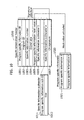
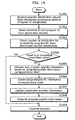
FIG. 19 is a flowchart showing the program distribution
procedure in the server apparatus 1720.
First, the server apparatus 1720 receives a program
distribution request from the information processing terminal 1700
(S1901). The program distribution request includes the program
ID of the program for which obtainment is being requested by the
information processing terminal 1700. Next, the server apparatus
1720 obtains the terminal ID of the information processing terminal
1700 and the program ID included in the program distribution
request obtained in S1901 (S1902).
Subsequently, the server apparatus 1720 searches the
distribution number information 1800 for the terminal ID and
program ID obtained in S1902, and obtains the value of the counter
(S1903). Next, it determines whether or not the obtained counter
value is greater than or equal to a prescribed value (S1904).
Furthermore, in the case where the obtained counter value is
greater than or equal to the prescribed value (Yes, in S1904), the
server apparatus 1720 transmits only a program 1733 (S1909) and
concludes the process, as program specific information 1735 has
already been distributed to the information processing terminal
1400 a number of times equaling or exceeding the prescribed
number of times.
Next, in the case where the obtained counter value is less
than the prescribed value (No, in S1904), the server apparatus 1420
allocates new program specific information 1735 to the information
processing terminal 1700, based on information of the distribution
start ID stored in the program/specific information correspondence
chart 1801 (S1905).
Subsequently, the server apparatus 1720 updates the value
of the distribution start ID stored in the program/specific
information correspondence chart 1810, with regard to the program
specific information 1735 newly allocated in S1905 (S1906).
Furthermore, it increases the value of the counter stored within the
distribution number information 1800 (S1907), and transmits the
program specific information 1735 to the information processing
terminal 1700 (S1908). It then transmits the program 1733
(S1909), and concludes the process.
As mentioned above, as a result of possessing the distribution
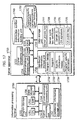
number information holding unit 1740 and the program/specific
information correspondence chart holding unit 1750, and by
managing the distribution of program specific information 1735
using the distribution number information 1800 and the
program/specific information correspondence chart 1810 held in the
respective storage units, the server apparatus 1720 in the present
embodiment can prevent the distribution of program specific
information 1735 to the same program running on a single
information processing terminal 1700, a number of times equaling
or exceeding a prescribed value, and an information processing
terminal 1700 attempting the unauthorized use of program specific
information 1735 can be revoked.
Furthermore, in the present embodiment, the server
apparatus 1720 can determine whether or not program specific
information 1735 can be distributed for each program, by managing
the distribution of program specific information on a per program
basis.
Moreover, although a data storage unit 1706 and a program
storage unit 1705 are different in the present embodiment, these
can also be a single storage unit. Furthermore, the format of the
specific distribution number information 1800 indicated in the
present embodiment is one example, and it is also possible to add
other information. Likewise, the format of the program/specific
information correspondence chart 1810 is one example, and
management can be done using a different format. Furthermore, in
the present embodiment, the request from the information
processing terminal 1700 can be a program distribution request
which involves the distribution of a program or a program specific
information distribution request which does not involve the
distribution of a program.
As mentioned above, by possessing the specific information
distribution history holding unit, the server apparatus in the present
embodiment can prevent an information processing terminal from
obtaining new program specific information corresponding to a
previously distributed program, and unauthorized acts of an
information processing terminal attempting to avoid revocation by
obtaining new program specific information can be reliably
prevented.
Furthermore, through the encryption of programs obtained
from the server apparatus by the information processing terminal in
the present invention, using a terminal specific key, the burden of
program encryption on the server apparatus can be reduced. In
addition, as the entirety of a program is separated into a program
and program specific information which are created individually by
the server apparatus in the present invention, the size of
distribution information managed in the server apparatus can be
reduced and the burden of information processing can be lightened
through the management of a plurality of program specific
information and the management of only one program, by the server
apparatus. The program specific information has comparatively
small size but is different for each information processing terminal,
whereas the single program has a large size but is common for all
the information processing terminals.
In addition, as a body of the program running on the
information processing terminal, a program header, program
specific information, and a specific information header are included
in the entirety of a program distributed from the server apparatus in
the present invention to an information processing terminal, the
validity of information distributed from the server apparatus to the
information processing terminal can be confirmed through the use of
CA signatures and hash values on the respective information making
up the program.
Industrial Applicability
The server apparatus, as well as the program management
system, in the present invention is useful as a server apparatus for
distributing a program, via the network, to a personal computer
equipped with a communication function and an information
processing terminal such as a mobile phone, and is also useful as a
program management system between such server apparatus and
information processing terminal.