BACKGROUND OF THE INVENTION
1. Field of the Invention
The present invention relates to a mobile terminal and
a key operation method capable of restoring an operation
environment, and more particularly, to a mobile terminal and
a key operation method capable of restoring an operation
environment just before interrupt upon interrupt processing or
erroneous end processing during an operation using an input key
of the mobile terminal.
2. Description of the Related Art
Japanese Patent Laid-Open No. 02-192349 (to be referred
to as a document 1 hereinafter) discloses a conventional method
for canceling data which is erroneously inputted during dial
input. As disclosed in the document 1, cancel instructing means
can automatically disconnect and reconnect a line and an on/off
hook operation of a phone for the disconnection of line is omitted.
Further, the erroneously-inputted dial number is displayed on
a display unit and a phone number is transmitted again to the
line while correcting the erroneously-inputted number.
However, the above-mentioned method for correcting the
erroneous input relates to a method for correcting the erroneous
input of the phone number, and the document 1 does not disclose
a method for restoring (or undoing) an e-mail sentence on a screen
after erroneously or accidentally ending an operation for
inputting or displaying the e-mail sentence. Therefore, the
above-mentioned technology has such a problem that thee-mail
sentence that was being created just before is not restored on
the screen when a user erroneously or accidentally ends the
e-mail.
In particular, there are currently a variety of functions
in a mobile terminal, and one function is interrupted by other
function in many cases. For example, the data receiving or data
incoming operation interrupt the operation upon making an e-mail
or browsing a site on the Internet. The user performs an
interrupt operation by a screen operation in accordance with
the interrupt and ends it, and thereafter he desires to restore
to the previous e-mail or browsing operation on the screen. In
this case, when the user desires to restore a state of the mobile
terminal to the previous state before the interrupt operation,
the data at the previous state does not exist. Therefore, there
is such a problem that the mobile terminal does not restore the
original state.
SUMMARY OF THE INVENTION
In order to solve the above-mentioned problems, it is an
object of the present invention to restore an operation
environment just before the interrupt processing and erroneous
end processing by temporarily storing information on the
operation environment of a mobile terminal.
Further, in order to solve the above-mentioned problems,
according to the first aspect of the present invention, there
is provided a mobile terminal for outputting a desired result
by user' s key operation from an idle screen. The mobile terminal
includes: (1) key input storing means which sequentially stores
information including the type'of a pressed input key as one
piece of history data each time for executing the pressed key
input; and (2) restoring means which restores an operation
environment before interrupt based on the history data stored
by the key input storing means, when the operation is interrupted
before outputting the desired result by executing the key input
and the idle screen is undone and then a specific key is pressed.
According to the second aspect of the present invention,
there is provided a mobile terminal for outputting a desired
result by user' s key operation from an idle screen. The mobile
terminal includes : (3) key input storing means which sequentially
stores screen information after switching a screen as one piece
of history data each time for pressing an input key for switching
the screen; and (4) restoring means which restores an operation
environment before interrupt based on the history data stored
by the key input storing means, when the operation is interrupted
before outputting the desired result by executing the key input
and the idle screen is undone and then a specific key is pressed.
According to the third aspect of the present invention,
there is provided a mobile terminal for outputting a desired
result by user' s key operation from an idle screen. The mobile
terminal includes : (5) key input storing means which sequentially
stores screen information after switching a screen as one piece
of history data each time for pressing an input key for switching
the screen; and (6) restoring means which traces operation
environments one by one and restores the operation environment
before interrupt based on history data stored by the key input
storing means each time for pressing a specific key when the
operation is interrupted before outputting the desired result
by executing the key input and the idle screen is undone.
Further, the mobile terminal according to any one of the
first to third aspects further has: operation environment storing
means which assumes, as one operation environment, a series of
the history data executed during displaying the idle screen every
idle screen, sets the one operating environment as one piece
of processing data, and stores a plurality of pieces of the
processing data. The restoring means allows the operation
environment storing means to select one of a plurality of pieces
of the stored processing data and restores the.operation
environment based on the selected processing data.
Furthermore, in the mobile terminal according to the second
or third aspect, the history data includes character information
and/or number information as a key input.
In addition, in the mobile terminal according to the first
aspect, the history data includes text data which is made by
a key input.
In addition, in the mobile terminal according to any one
of the first to third aspects, the history data includes image
data.
According to.the fourth aspect of the present invention,
there is provided a key operation method for outputting a desired
result by user's key operation from an idle screen. The key
operation method includes: (7) a step of sequentially storing,
into a storing unit, information including the type of a pressed
input key as one piece of history data each time executing the
pressed key input; and (8) a step of restoring an operation
environment before interrupt based on the history data stored
in the storing unit by pressing a specific key, when the operation
is interrupted before outputting the desired result by executing
the key input and the idle screen is undone.
According to the fifth aspect of the present invention,
there is provided a key operation method for outputting a desired
result by user's key operation from an idle screen. The key
operation method includes: (9) a step of sequentially storing,
into a storing unit, screen information after switching a screen
as one piece of history data each time for pressing an input
key for switching the screen; and (10) a step of restoring an
operation environment before interrupt based on the history data
stored by the storing unit by pressing a specific key, when the
operation is interrupted before outputting the desired result
by executing the key input and the idle screen is undone.
According to the sixth aspect of the present invention,
there is provided a key operation method for outputting a desired
result by user's key operation from an idle screen. The key
operation method includes: (11) a step of sequentially storing,
into a storing unit, screen information after switching a screen
as one piece of history data each time for pressing an input
key for switching the screen; and (12) a step of tracing operation
environments one by one and restoring the operation environment
before interrupt based on the history data stored in the storing
unit each time for pressing a specific key, when the operation
is interrupted before outputting the desired result by executing
the key input and the idle screen is undone.
Further, the key.operation method according to any one
of the fourth to sixth aspects has: a step of assuming, as one
operation environment, a series of the history data executed
during displaying the idle screen every idle screen, setting
the one operating environment as one piece of processing data,
and storing a plurality of pieces of the processing data in the
storing unit; a step of allowing the screen operation to select
one of the plurality of pieces of the stored processing data
stored in the storing unit; and a step of restoring the operation
environment based on the selected processing data.
Furthermore, in the key operation method according to the
fifth or sixth aspect, the history data includes character
information and/or number information as a key input.
In addition, in the key operation method according to the
fourth aspect, the history data includes text data which is made
by a key input.
In addition, in the key operation method according to any
one of the fourth to sixth aspects, the history data includes
image data.
BRIEF DESCRIPTION OF THE DRAWINGS
These and other aspects, features and advantages of the
invention will become more fully apparent from the following
detailed description taken in conjunction with accompanying
drawings. In the drawings:
DETAILED DESCRIPTION OF THE EMBODIMENTS
Next, the first embodiment of the present invention will
be described in detail with reference to the drawings.
FIG. 1 is a block diagram showing the structure of an
electric circuit system of a mobile terminal such as a mobile
phone or a PDA (Personal Digital Assistant).
Referring to FIG. 1, a mobile terminal 1 includes: a display
unit 2; a key operation unit 3; an antenna 4; a memory unit 5;
a control circuit 6; a radio circuit 7; a modem circuit 8; a
base band processing circuit 9; a microphone 10; a speaker 11;
and a digital camera 12.
The memory unit 5 stores various data including a system
program necessary for the operation and control of the mobile
terminal 1 and a phone book. An operation environment storing
unit 13 is assigned to the memory unit 5. The operation
environment storing unit 13 stores the contents for sequentially
storing the operation and processing in an operating process
of the mobile terminal 1. Therefore, preferably, the operation
environment storing unit 13 is an FIFO (First In First Out) system.
The key operation unit 3 has various keys including an
undo key 14. The key operation unit 3 calls up various functions
in the mobile terminal 1 in accordance with a key input under
the control of the control circuit 6. Further, the key operation
unit 3 allows the user to input an instruction of the operation
on the function called-up by the key operation via the display
unit 2, and the operation result is displayed on the display
unit 2.
By pressing the undo key 14 in the key operation unit 3,
the control circuit 6 executes restoration processing of the
operation.
The control circuit 6 operates under the program control
of a CPU (Central Processor Unit) (not shown). That is, the
control circuit 6 executes various programs stored in the memory
unit 5, and controlls the entire mobile terminal 1 including
a series of reception and transmission processing.
The radio circuit 7 performs filtering processing of a
reception signal from the antenna 4, amplifies a transmission
signal, and outputs the amplification signal to the antenna 4.
The modem circuit 8 performs RF (Radio Frequency)
processing of the reception signal, demodulates it, and converts
the demodulation signal into a reception base band signal. The
modem circuit 8 modulates a transmission base band signal,
converts the modulation signal into the transmission signal,
and transmits the conversion signal to the radio circuit 7.
The base band processing circuit 9 decodes the reception
base band signal from the modem circuit 8, generates a voice
signal, output the voice signal to the speaker 11, and plays
voice. Among the reception base band signals from the modem
circuit 8 in the base band processing circuit 9, data such as
an image or e-mail excluding the voice is read by the control
circuit 6 and the read data is outputted onto the display unit
2 and the memory unit 5. Further, the base band processing
circuit 9 encodes the voice inputted from the microphone 10 and
generates the transmission base band signals. The transmission
data excluding the voice is supplied from the control circuit
6, is subjected to necessary processing, and is outputted to
the modem circuit 8 via the base band processing circuit 9.
The digital camera 12 is controlled by the control circuit
6 and the data in the digital camera 12 is recorded to the memory
unit 5.
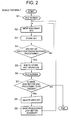
FIGs. 3 and 4 are flowcharts showing the flow of temporarily
storing processing of a system for temporarily storing the
operation environment.
Next, a detailed description is given of the entire
operation with reference to FIG. 2 according to the first
embodiment of the present invention.
The user presses an arbitrary key in the key operation
unit 3 from an idle screen (step S1 in FIG. 2) (step S2 in FIG.
2). In the case of any key input from the idle screen, the control
circuit 6 stores, as history data, the type of input key and
the number of operating times (normally, one time) in a
temporarily storing area of the operation environment storing
unit 13 (step S3 in FIG. 2). The operation for inputting the
data by the key in this case includes operations for inputting
the data by the keys (indicated by a character, number, and image)
displayed on the screen of the display unit 2 as well as the
operation for inputting the data by the key on the key operation
unit 3. Therefore, in the case of inputting the data by the
key displayed on the screen, the type of input key is
identification information which is previously assigned to the
operation screen.
That is, in the temporarily storing area of the operation
environment storing unit 13, the control circuit 6 stores a series
of history data that is obtained by storing the type of input
key and the number of operating times in the order of inputting
the data by the key. The pressed key in this case is a key except
for the key for 'the end processing among the keys displayed on
the screen and the keys of the key operation unit 3.
Next, the control circuit 6 determines whether or not the
key for continuously executing the input processing is pressed,
whether or not the key for executing the end processing is pressed,
and whether or not the interrupt processing such as the incoming
processing is generated (step S4 in FIG. 2). When the key for
executing the end processing is pressed or when the interrupt
processing is generated, the control circuit 6 ends the
processing for sequentially storing the history data in the
temporarily storing area of the operation environment storing
unit 13 (step S5 in FIG. 2) . In this case, the control circuit
6 collects, as processing data of one operation environment,
the series of history data stored in the temporarily storing
area of the operation environment storing unit 13, and registers
again the processing data collected in a history area of the
operation environment storing unit 13. Therefore, the history
area of the operation environment storing unit 13 is preferably
the FIFO system. After that, the control circuit 6 clears the
temporarily storing area of the operation environment storing
unit 13.
Further, the control circuit 6 executes the processing
based on the pressing operation of a key for executing the end
processing or interrupt processing and then returns to the idle
screen (step S6 in FIG. 2).
If the key for executing the end processing is not pressed
or if the interrupt processing is not generated, the control
circuit 6 continuously executes the next operation for inputting
the data by the key (step S2 in FIG. 2) and stores, similarly
to the previous time, the type of input key and the number of
operating times in a temporarily storing area of the operation
environment storing unit 13(step S3 in FIG. 2). That is, if
the key for executing the end processing is not pressed or if
the interrupt processing is not generated, the control circuit
2 repeats the sequence of steps S2 to S4 in FIG. 2 so as to execute
the processing.
Here, when the interrupt processing is generated (step
S4 in FIG. 2), the control circuit 6 prompts the selection of
undo processing to the user when the interrupt processing ends
(step S7 in FIG. 2). Preferably, it is checked and displayed
on the display unit 2 whether or not the continuous processing
is called up. However, according to the present invention, only
an undo key is pressed without the display operation enables
the undo of the last state of the interrupt operation. In this
case, the control circuit 6 detects the input of the undo key
14 (step S8 in FIG. 2) and then restores the last state just
before the interrupt operation by reading the history data from
the operation environment unit 13.
That is, in the processing, the control circuit 6
sequentially reads the history data (type of input key and the
number of operating times) stored in the history area of the
operation environment storing unit 13 in the order of the old
history data, and sequentially restores the operation
environment using the key which was inputted from the key
operation unit 3. As mentioned above, the control circuit 6
continuously restores the operation environment until reading
the history data of the operation for inputting the data by the
key which is stored just before the interrupt processing,
displays the screen on the display unit 2 indicating the input
contents just before the interrupt, and ends the processing.
Thus, the control circuit 6 undoes the processing in the state
just before the interrupt (step S9 in FIG. 2) . In the restoration
processing of the input contents just before the interrupt from
the old history data, the control circuit 6 sequentially does
not display the screen to be restored in the halfway but displays,
on the display unit 2, the screen (just before the interrupt)
which is outputted upon executing the restoration processing
using the final history data.
In the description, the temporarily storing area and the
history area are assigned to the operation environment storing
unit 13. However, only the history area may be assigned without
the temporarily storing area.
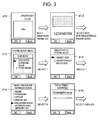
Next, a description is given of an example in which the
user registers the phone number and the e-mail address in the
phone book assigned to the memory unit 5. FIGS. 3 and 4 show
examples of a series of sequence in which the control circuit
6 executes the processing for registering the phone number and
the e-mail address in the phone book by indicating the transition
of screens to be displayed on the display unit 2.
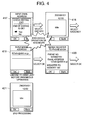
First, the user inputs an arbitrary phone number
(123456789) by operating the key operation unit 3 from the idle
screen (screen 411 in FIG. 4) (screen 412). Based on the
operation of the key input from the idle screen, the control
circuit 6 reads a screen for inputting the phone number that
is previously stored in the memory unit 5, and displays the read
screen onto the display unit 2. In this case, the control circuit
6 starts to store the contents (the type and the number of operating
times) of the input key into the temporarily storing area of
the operation environment storing unit 13 in accordance with
the phone numbers sequentially inputted. Therefore, the type
of key inputted as the phone number and the number of operating
times are stored, as one piece of the history data, in the
temporarily storing area of the operation environment storing
unit 13.
As mentioned above, upon pressing the input key displayed
on the screen or the input key of the key operation unit 3, the
control circuit 6 sequentially stores the type of input key
pressed and the number of operating times in the temporarily
storing area of the operation environment storing unit 13. Since
the processing is similar to the above-mentioned one in the
following, the processing for storing the history data by the
control circuit 6 is not described.
In order to register the inputted phone number in the phone
book, the user selects the key for executing the phone book
registration processing (screen 413), and selects the key for
newly executing the phone book registration processing (screen
414). Next, the control circuit 6 executes processing for
registering the e-mail address to the phone book which is
registered by the user (screens 415 and 416).
Here, when the user erroneously presses the end key during
inputting the e-mail address, the control circuit 6 displays
a checking message to the display unit 2 (screen 417 in FIG.
4). Here, if the.user selects "No" on the screen 417, he can
continue the processing for registering the e-mail address.
However, when the user erroneously selects "Yes" or the end key,
the control circuit 6 cancels the input contents and returns
the screen to the idle screen (screen 418). In this case, the
user presses the end key and therefore information on the screen
418 is not stored in the temporarily storing area of the operation
environment storing unit 13.
As mentioned above, the control circuit 6 collects, as
data of one operation environment (one piece of processing data) ,
the series of history data which is sequentially stored in the
temporarily storing area of the operation environment storing
unit 13 from the previous idle screen to the current idle screen,
and stores the collected data to the history area. After that,
the control circuit 6 clears the temporarily storing area of
the operation environment storing unit 13.
The user presses the undo key 14 in the key operation unit
3 or call key and then the control circuit 6 undoes a screen
416 just before the interrupt by sequentially restoring, in the
order of the old history data, an input sequence based on the
series of history data in the processing data, which is stored
in the history area of the operation environment storing unit
13. That is, the control circuit 6 determines, as the pressed
input key, the type of input key and the number of operating
times as the series of history data in the processing data stored
in the history data in the operation environment storing unit
13, each time for sequentially reading the oldest to latest
history data. In this case, the control circuit 6 determines
the pressed input key based on the read type of input key and
the read number of operating times (e. g. , if a key "5" is stored
as one operating-time, it is determined that the key "5" is pressed
once). The control circuit 6 restores the input sequence from
the old history data, thereby undoing the processing in the state
just before the screen 417 for the checking message (screen 419) .
After undoing the screen for inputting the e-mail address, the
user restarts to register the data in the phone book by inputting
the e-mail address and selects "OK" on a screen 420. Then, the
control circuit 6 registers the data in the phone book to the
phone book in the memory unit 5 and ends the processing (screens
420 and 421). In this case, the series of history data is data
having the key input contents which are inputted just before
the interrupt from the previous idle state.
The contents stored in the operation environment storing
unit 13 are collected and are registered again as the processing
data of one operation environment each time for returning to
the idle screen. Preferably, the operation environment storing
unit 13 is the FIFO system which erases the old processing data
in accordance with the collection and re-registration.
Next, the second embodiment of the present invention will
be described with reference to the drawings.
The structure of a mobile terminal according to the second
embodiment has the same as.that according to the first embodiment
and, however, the operation of the control circuit 6 according
to the second embodiment is different from that according to
the first embodiment. That is, according to the first embodiment,
the control circuit 6 undoes the state just before the interrupt
by sequentially restoring the input sequence from the old history
data based on the history data stored in the operation environment
storing unit 13. However, according to the second embodiment,
the control circuit 6 undoes the state just before the interrupt
by restoring the screen information which is stored before
interrupting the processing for operation for inputting the data
by the key, unlike the first embodiment.
Next, a detailed description is given of the entire
operation with reference to FIG. 2 according to the second
embodiment of the present invention.
The user presses an arbitrary key in the key operation
unit 3 from the idle screen (step S1 in FIG. 2) (step S2 in FIG.
2) . In the case of any key input from the idle screen, the control
circuit 6 displays the screen corresponding to the key input.
Further, in the case of the input of the key for switching the
screen, the control circuit 6 stores, as history data, the screen
information after switching the screen in the temporarily storing
area of the operation environment storing unit 13 (step S3 in
FIG. 2). The operation for inputting the data by the key in
this case includes operations for inputting the data by keys
(indicated by a character, number, and image) displayed on the
screen of the display unit 2.
When the operation for inputting the data by the key is
performed without switching the screen in step S2 (e.g.,
operation for inputting the data by the key to prompt the phone
number input and the e-mail address input) , the control circuit
6 additionally displays the input data of the input key onto
the screen which is currently displayed, and adds the input data
to the screen information which is finally stored in the
temporarily storing area. Further, the screen information
displayed on the display unit 2 as the history data in the
temporarily storing area is stored by inputting the key for
switching the screen, except for the key for the end processing
among the keys displayed on the screen and the keys of the key
operation unit 3.
Next, the control circuit 6 determines whether or not the
key for continuously executing the input is pressed, whether
or not the end key indicating the end processing is inputted,
and whether or not the interrupt processing such as the incoming
processing is generated (step S4 in FIG. 2). When the key for
executing the end processing is pressed or when the interrupt
processing is generated, the control circuit 6 ends the
processing for sequentially storing the history data in the
temporarily storing area of the operation environment storing
unit 13 (step S5 in FIG. 2). In this case, the control circuit
6 collects, as processing data of one operation environment,
the series of history data stored in the temporarily storing
area of the operation environment storing unit 13, and registers
again the processing data collected in the history area of the
operation environment storing unit 13. Preferably, the history
area of the operation environment storing unit 13 is the FIFO
system. After that, the control circuit 6 clears the temporarily
storing area of the operation environment storing unit 13.
Further, the control circuit 6 executes the processing
based on the pressing operation of the key for executing the
end processing or interrupt processing and then returns to the
idle screen (step S6 in FIG. 2).
If the key for executing the end processing is not pressed
or if the interrupt processing is not generated, the control
circuit 6 continuously executes the next operation inputting
the data by the key (step S2 in FIG. 2).
If the operation for inputting the data by the key is not
determined as the key for switching the screen in step S2, the
control.circuit 6 displays the data corresponding to the
operation for inputting the data by the key on the display screen
similarly to the previous time and adds the data to the screen
information that is finally stored in the temporarily storing
area. If the operation for inputting the data by the key is
determined as the operation for inputting the data by the key
in accordance with the screen switching in step S2, the control
circuit 6 displays the screen information on the display unit
2 corresponding to the operation for inputting the data by the
key so as to switch the screen corresponding to the operation
for inputting the data by the key and stores the screen information
after switching the display screen (step S3 in FIG. 2). That
is, if the key for executing the end processing is not pressed
or if the interrupt processing is not generated, the control
circuit 6 repeats the sequence of steps S2 to S4 in FIG. 2 so
as to execute the processing.
Here, when the interrupt processing is generated (step
S4 in FIG. 2), the control circuit 6 prompts the selection of
the undo processing to the user when the interrupt processing
ends (step S7 in FIG. 2) . In this case, preferably, it is checked
and is displayed on the display unit 2 whether or not the continuous
processing is called up. However, according to the present
invention, only the und key is pressed without the display
operation enables the undo of the state just before the interrupt.
In this case, the control circuit 6 detects the input of the
undo key 14 (step S8, in FIG. 2) and then restores the state just
before the interrupt by reading the history data from the
operation environment unit 13.
That is, in the processing, the control circuit 6
sequentially reads the history data (screen information) that
is finally stored in the history area of the operation environment
storing unit 13 in the order of the old history data. Further,
the control circuit 6 undoes the processing just before the state
by displaying and restoring the screen as the input contents
just before the processing on the display unit 2 based on the
read history data (step S9 in FIG. 2) . In this case, the control
circuit 6 displays. the screen information read from the history
area on the display unit 2.
In the above description, the temporarily storing area
and the history area are assigned to the operation environment
storing unit 13. However, only the history area may be assigned
without the temporarily storing area.
Next, a description is given of an example in which the
user registers the phone number and the e-mail address in the
phone book assigned to the memory unit 5. FIGS. 3 and 4 show
examples of a series of sequence in which the control circuit
6 executes the processing for registering the phone number and
the e-mail address in the phone book by indicating the transition
of screens to be displayed on the display unit 2.
First, the user inputs an arbitrary phone number
(123456789) by operating the key operation unit 3 from the idle
screen (screen 411 in FIG. 4) (screen 412). Based on the
operation for inputting the data by the key input from the idle
screen, the control circuit 6 reads a screen for inputting the
phone number that is previously stored in the memory unit 5,
and displays the read screen onto the display unit 2. Further,
the control circuit 6 stores the screen information for inputting
the phone number displayed in the temporarily storing area of
the operation environment storing unit 13. Then, the control
circuit 6 displays the contents of the input key in accordance
with the phone number on the input screen for inputting the phone
number and starts to store the contents, as a part of the screen
information for inputting the phone number, into the temporarily
storing area of the operation environment storing unit 13. That
is, the inputted phone number is added to the screen information
for inputting the phone number. Therefore, the state of the
screen 412 is stored as one piece of the history data in the
temporarily storing area of the operation environment storing
unit 13.
As mentioned above, upon pressing the input key displayed
on the screen or the input key of the key operation unit 3, the
control circuit 6 sequentially stores the input data displaying
on the screen, as a part of the screen information, into the
temporarily storing area of the operation environment storing
unit 13. Since the processing is similar to the above-mentioned
processing in the following, the processing for storing one piece
of history data (one piece of the screen information) by the
control circuit 6 is not described.
In order to register the inputted phone number in the phone
book, the user selects the key for executing the processing for
registering the phone number (screen 413), and selects the key
for newly executing the processing for registering the phone
number (screen 414). Next, the processing for registering the
e-mail address is executed for the phone number registered by
the user (screens 415 and 416). In this case, the history data
(screen information) on the screens 413 to 416 is stored in the
temporarily storing area of the operation environment storing
unit 13 (screens 415 and 416).
Here, when the user erroneously presses the key for
executing the key for executing the end processing during
inputting the e-mail address, the control circuit 6 displays
the checking message on the display unit 2 (screen 417 in FIG.
4). Here, if the user selects "No" on the screen 417, he can
continue the processing for registering the e-mail address.
However, when the user erroneously selects "Yes" or the key for
executing the end processing, the control circuit 6 cancels the
input contents and returns to the idle screen (screen 418) . In
this case, the information on the screen 418 is not stored in
the temporarily storing area of the operation environment storing
unit 13.
As mentioned above, on the idle screen, the control circuit
6 collects, as data of one operation environment data (one piece
of processing data), a series of history data which is
sequentially stored in the temporarily storing area of the
operation environment storing unit 13 from the previous idle
screen to the current idle screen, and stores again the collected
data to the history area of the operation environment storing
unit 13. Therefore, preferably, the operation environment
storing unit 13 is the FIFO system which erases the old processing
data in accordance with the collection and storage. After that,
the control circuit 6 clears the temporarily storing area of
the operation environment storing unit 13.
The user presses the undo key 14 in the key operation unit
3 or call key and then the control circuit 6 restores the screen
416 just before the interrupt by reading the screen information
that is finally stored in the history area of the operation
environment storing unit 13 and by displaying it on the display
unit 2. That is, the control circuit 6 undoes the processing
just before the screen 417 for the checking message (screen 419).
After undoing the screen for inputting the e-mail address, the
user restarts to register the data in the phone book by inputting
the e-mail address and selects "OK" on the screen 420. Then,
the control circuit 6 registers the data of the phone book into
the phone book of the memory unit 5 and ends the processing (screens
420 and 421).
Next, the third embodiment of the present invention will
be described with reference to the drawings.
According to third embodiment, the structure of a mobile
terminal is the same as that shown in FIG. 1 according to the
first and the second embodiments. The operation of the control
circuit 6 is different from that according to the second
embodiment. That is, the control circuit 6 according to the
second embodiment performs only the operation for undoing the
state just before the interrupt. However, the control circuit
6 according to third embodiment traces, one by one, steps of
the operations for inputting the data by the keys from the state
just before the interrupt each time when the user presses the
undo key 14.
That is, the processing of the control circuit 6 is
interrupted and the state transits to the idle screen. After
that, when the user desires to continue the input operation before
the interrupt, the user presses the undo key 14 once and thus
the control circuit 6 undoes the one-previous processing state.
If the user presses the undo key 14 twice, the control circuit
6 undoes the two-previous processing state. After that, the
user similarly presses the undo key 14 N times and thus the control
circuit 6 executes an operation for undoing the N-previous
processing state.
As mentioned above, the control circuit 6 calls up the
processing history every pressing operation of the undo key 14,
thereby undoing the desired state from the idle screen.
Next, a detailed description is given of the entire
operation with reference to FIG. 5 according to third embodiment.
First, the user presses an arbitrary key from the idle
screen (step S1 in FIG. 5) (step S2 in FIG. 5). In the case
of any operation for inputting the data by the key from the idle
screen, the control circuit 6 displays the screen corresponding
to the operation for inputting the key. Further, if the operation
for inputting the data by the key is the key for switching the
screen, the control circuit 6 stores, as the history data, the
screen information after switching the screen into the
temporarily storing area of the operation environment storing
unit 13 (step S3 in FIG. 5) . The operation for inputting the
data by the key in this case includes operations for inputting
the data by keys (indicated by a character, number, and image)
displayed on the screen of the display unit 2.
Upon performing the operation for inputting the data by
the key without switching the screen: (e.g., upon performing the
operation for inputting the data by the key for prompting the
phone number input and the e-mail address input) in step S2,
the control circuit 6 additionally displays the input data of
the input key onto the screen which is currently displayed, and
adds the input data to the screen information which is finally
stored in the temporarily storing area. Further, the screen
information displayed on the display unit 2 as one piece of history
data in the temporarily storing area is stored by inputting the
data by the key for switching the screen, except for the key
for the end processing among the keys displayed on the screen
and the keys of the key operation unit 3.
The operation sequence until pressing the undo key 14
(steps S4 to S8 in FIG.. 5) is the same as the operation sequence
(steps S4 to S8 in FIG. 2) according to the second embodiment
and is not described here.
After that, when undo key 14 is pressed on the idle screen,
the control circuit 6 reads the last history data (screen
information) stored in the history area of the operation
environment storing unit 13, and displays the read history data
on the display unit 2. That is, the control circuit 6 undoes
the one-previous processing state and allows the user to check
whether or not the desired processing state is undone by
displaying the undone screen on the display unit 2 (step S19
in FIG. 5) . When the user determines that the processing state
is not undone, the undo key 14 is pressed again (S8 in FIG. 5).
Then, the one-previous history data of the same screen
information which is currently displayed is read from the history
area of the operation environment storing unit 13, and the read
history data (screen information) is displayed on the display
unit 2. That is, the control circuit 6 undoes the one-previous
state from the timing for determining that the processing state
is not undone.
After that, until undoing the screen in the desired
processing state, the user continuously presses the undo key
14. If the screen in the desired processing state is undone
and the user interrupts the processing, the control circuit 6
ends the processing (steps S9 and S10 in FIG. 5).
Next, an example is given of registering the phone number
and e-mail address in the phone book by the user according to
third embodiment, similarly to the second embodiment.
FIGS. 6 to 8 show a series of the sequence of executing
the processing for registering the phone number and e-mail
address in the phone book by the control circuit 6 by indicating
the transition.of the screens displayed on the display unit 2
by the control circuit 6.
First, the user inputs an arbitrary phone number
(123456789) by operating the key operation unit 3 from the idle
screen (screen 421 in FIG. 6) (screen 422). By the operation
for inputting the data by the key from the idle screen, the control
circuit 6 reads the screen for inputting the phone number that
is previously stored in the memory unit 5, and displays the read
screen on the display unit 2. Further, the control circuit 6
stores the screen information for inputting the phone number
displayed in the temporarily storing area of the operation
environment storing unit 13. Then, the control circuit 6
displays the contents of the input key on the screen for inputting
the phone number in accordance with the phone number and starts
to store the contents, as a part of the screen information for
inputting the phone number, into the temporarily storing area
of the operation environment storing unit 13. That is, the input
phone number is added to the screen information for inputting
the phone number. Therefore, the state of the screen 422 is
stored as one piece of the history data in the temporarily storing
area of the operation environment storing unit 13.
As mentioned above, upon pressing the input key displayed
on the screen or input key of the key operation unit 3, the control
circuit 6 sequentially stores the input data displaying on the
screen, as a part of the screen information, into the temporarily
storing area of the operation environment storing unit 13. Since
the processing is similar to the above-mentioned one in the
following, the processing for storing one piece of the history
data (one piece of the screen information) by the control circuit
6 is not described.
In order to newly register the input phone number in the
phone book in the memory unit 5, the user selects the key for
executing the processing for registering the phone number in
the phone book (screen 423), and selects the key for executing
the processing for newly registering the phone number (screen
424) . In this case, the user selects the key for executing the
processing for registering the phone number in the phone book
and thus the control circuit 6 performs the processing for
registering the phone number in the phone book.
Next, the control circuit 6 performs the registering
processing, displays the screen for newly registering the phone
number in the phone book on the display unit 2 and, then, executes
the processing for registering the e-mail address in the phone
book registered by the user in accordance with the display screen
(screens 425 and 426). In this case, the history data (screen
information) on the screens 423 to 426 is stored into the
temporarily storing area of the operation environment storing
unit 13. every screen.
When the user erroneously presses the key for executing
the end processing during inputting the e-mail address, the
control circuit 6 displays, on the display unit 2, a checking
message indicating whether or not the processing stops (screen
427 in FIG. 7).
Here, if the user selects "No" on the screen 427, he can
continue the processing for registering the e-mail-address.
However, when the user erroneously selects "Yes" or the key for
executing the end processing, the control circuit 6 undoes the
idle screen (screen 428) . In this case, the information on the
screen 428 is not stored in the temporarily storing area of the
operation environment storing unit 13.
As mentioned above, on the idle screen, the control circuit
6 collects, as data of one operation environment (one piece of
processing data) , a series of history data which is sequentially
stored in the temporarily storing area of the operation
environment storing unit 13 from the previous idle screen to
the current idle screen, and stores again the collected data
into the history area of the operation environment storing unit
13. Preferably, the history area of the operation environment
storing unit 13 is the FIFO system which erases the old processing
data. After that, the control circuit 6 clears the temporarily
storing area of the operation environment storing unit 13.
However, when the user continuously registers the data
in the phone book, the user presses the undo key 14 from the
idle screen. Then, the control circuit 6 reads the history data
(screen information) finally stored in the history area of the
operation environment storing unit 13 in the memory unit 5 and
displays the read data on the display unit 2, thereby restoring
the screen 426 just before the interrupt. That is, the control
circuit 6 undoes the state just before the interrupt by inversely
tracing the processing states.
When the user registers, on the screen 428, data such as
the name as well as the phone number and e-mail address which
are being registered, the user presses the undo key 14 once and
thus the control circuit 6 undoes the corresponding screen for
inputting the e-mail address (screen 429). After that, the user
further presses the undo key 14 once and then the control circuit
6 undoes the screen for newly registering the phone book
corresponding to the screen 425 (screen 430). Then, the user
further presses the undo key 14 once and thus the control circuit
6 undoes the screen 431 for registering the phone book
corresponding to the screen 424. That is, the user presses the
undo key 14 three times on the screen 430, thereby undoing the
screen displayed on the display unit 2 as the screen 431 for
registering the phone number corresponding to the screen 424.
Then, the user may select "1. Name" (screen 432) and may
input a desired name (screen 433).
The user completes the input of name and registers the
data to the phone book on a screen 434 and thus the control circuit
6 stores, in the phone book of the memory unit 5, the phone number
and e-mail address which are registered before the erroneous
operation and the name which is inputted (screens 434 and 435) .
After that, the control circuit 6 returns the screen to the idle
one and ends the processing (screen 436).
According to the first embodiment, the control circuit
6 collects the type of input key and the number of operating
times in the operation environment storing unit 13. Further,
the control circuit 6 may convert the input contents into text
data and store the text data in addition to the storage of the
type of input key and the number of operating times. When the
user makes the document of the e-mail and incoming melody data,
the control circuit 6 displays the input contents on the display
unit 2 and stores, in the operation environment storing unit
13, the input contents as one piece of history data together
with the type of input key and the number of operating times
(steps S2 and S3 in FIG. 2) . If the undo key 14 is pressed in
step S8, the control circuit 6 restores the input sequence based
on the contents of the operation for inputting the data by the
key in the operation environment storing unit 13. The control
circuit 6 restores the input sequence as mentioned above and
thus displays the contents which are being made if the input
contents are stored in the operation environment storing unit
13 in the undo state (step S8 and S9 in FIG. 2).
According to the second and third embodiments, the control
circuit 6 collects the history of the screen information
including the phone number or e-mail address in the operation
environment storing unit 13. Further, the control circuit 6
may store the text data which is inputted as document as well
as the phone number and e-mail address. In this case, when the
user makes the document of e-mail and the incoming melody data,
the control circuit 6 displays the input contents on the display
unit 2 and adds the input contents to the screen information
which is currently being displayed in the operation environment
storing unit 13 similarly to the input of phone number, thus
to store the input contents with the additional screen
information as one piece of history data (steps S2 and S3 in
FIGS. 2 and 5). If the undo key 14 is pressed in step S8, the
control circuit 6 restores the input sequence based on the screen
information stored in the operation environment storing unit
13. The control circuit 6 displays the contents which are being
made on the display unit 2 by restoring the input sequence if
the input contents are stored in the operation environment
storing unit 13 in the undo state (steps S8 and S9 in FIGS. 2
and 5) . That is, the control circuit 6 stores, in the operation
environment storing unit 13, the screen information including
the character information and number information which are
inputted in the key operating process on the screen as one piece
of history data.
According to the first to third embodiments, a plurality
of pieces of processing data are stored in the operation
environment storing unit 13 and therefore, upon pressing the
undo key 14, the control circuit 6 may display the selecting
screen for selecting the processing data and may perform the
processing of the history data based on the processing data
selected by the user.
Further, according to the first to third embodiments, not
only the text data but also the image data in the digital camera
12 is previously stored in the operation environment storing
unit 13 as one piece of history data before the registering
operation.. Consequently, the data erasure is prevented against
the sudden interrupt
As mentioned above,.according to the first to third
embodiments, the desired processing state can be undone because
of storing the sequence of key operations or the history of screen
information. Further, according to the first to third
embodiments of the present invention, it is possible to undo
the canceled processing due to the user' s erroneous operation
or interrupt processing of the incoming phone in the state just
before the interrupt by the one-time key operation because of
storing the sequence of key operations or the history of screen
information. Therefore, according to the present invention,
the previous operation effectively continues without the
troublesomeness of repetition of the same sequence.