EP1494388A2 - Query load balancing for internet group management protocol (IGMP) general membership queries (GMQs) - Google Patents
Query load balancing for internet group management protocol (IGMP) general membership queries (GMQs) Download PDFInfo
- Publication number
- EP1494388A2 EP1494388A2 EP04300405A EP04300405A EP1494388A2 EP 1494388 A2 EP1494388 A2 EP 1494388A2 EP 04300405 A EP04300405 A EP 04300405A EP 04300405 A EP04300405 A EP 04300405A EP 1494388 A2 EP1494388 A2 EP 1494388A2
- Authority
- EP
- European Patent Office
- Prior art keywords
- hosts
- gmq
- igmp
- group
- interval
- Prior art date
- Legal status (The legal status is an assumption and is not a legal conclusion. Google has not performed a legal analysis and makes no representation as to the accuracy of the status listed.)
- Granted
Links
- 238000000034 method Methods 0.000 claims abstract description 23
- 238000012423 maintenance Methods 0.000 claims description 4
- 238000007726 management method Methods 0.000 description 4
- XXQGYGJZNMSSFD-UHFFFAOYSA-N 2-[2-(dimethylcarbamoyl)phenoxy]acetic acid Chemical compound CN(C)C(=O)C1=CC=CC=C1OCC(O)=O XXQGYGJZNMSSFD-UHFFFAOYSA-N 0.000 description 2
- 102100022443 CXADR-like membrane protein Human genes 0.000 description 2
- 230000006978 adaptation Effects 0.000 description 1
- 238000012550 audit Methods 0.000 description 1
- 238000012986 modification Methods 0.000 description 1
- 230000004048 modification Effects 0.000 description 1
Images



Classifications
-
- H—ELECTRICITY
- H04—ELECTRIC COMMUNICATION TECHNIQUE
- H04L—TRANSMISSION OF DIGITAL INFORMATION, e.g. TELEGRAPHIC COMMUNICATION
- H04L12/00—Data switching networks
- H04L12/02—Details
- H04L12/16—Arrangements for providing special services to substations
- H04L12/18—Arrangements for providing special services to substations for broadcast or conference, e.g. multicast
-
- H—ELECTRICITY
- H04—ELECTRIC COMMUNICATION TECHNIQUE
- H04L—TRANSMISSION OF DIGITAL INFORMATION, e.g. TELEGRAPHIC COMMUNICATION
- H04L12/00—Data switching networks
- H04L12/02—Details
- H04L12/16—Arrangements for providing special services to substations
- H04L12/18—Arrangements for providing special services to substations for broadcast or conference, e.g. multicast
- H04L12/185—Arrangements for providing special services to substations for broadcast or conference, e.g. multicast with management of multicast group membership
-
- H—ELECTRICITY
- H04—ELECTRIC COMMUNICATION TECHNIQUE
- H04L—TRANSMISSION OF DIGITAL INFORMATION, e.g. TELEGRAPHIC COMMUNICATION
- H04L41/00—Arrangements for maintenance, administration or management of data switching networks, e.g. of packet switching networks
- H04L41/08—Configuration management of networks or network elements
- H04L41/0893—Assignment of logical groups to network elements
Definitions
- the invention relates to the problem of performing Internet Group Management Protocol (IGMP) General Membership Queries (GMQs) on a large number of DSL (digital subscriber line) subscribers.
- IGMP Internet Group Management Protocol
- GMQs General Membership Queries
- the invention addresses the problem of reducing the peak processing resources that are required to process the large number of membership reports that are returned in response to the GMQs.
- Figure 1 shows the timing of GMQ procedure specified in the IGMP RFC (rfc2236 - Internet Group Management Protocol, Version 2).
- IGMP RFC rfc2236 - Internet Group Management Protocol, Version 2.
- an IGMP router broadcasts a GMQ to the hosts (e.g. set-top boxes - STB) that it services.
- hosts e.g. set-top boxes - STB
- Each host must then respond with a membership report for every channel that it is receiving. If the host is receiving multiple channels, then it randomly distributes its membership reports over a response window (e.g. 10 seconds), which begins immediately after the GMQ.
- a problem with this procedure is that when there are a large number of hosts (e.g. 1000 to 2000), each of which may be receiving several channels, there are consequently a very large number of membership reports (e.g. 3000) received by the IGMP router within the response window. Since the response window is relatively short (e.g. 10 seconds) compared to the GMQ interval (e.g. 125 seconds) the peak processing requirements for processing these membership reports can be quite high.
- the peak processing load could be in the order of 300 messages/second.
- the peak processing load is reduced by balancing the load over the GMQ interval. This is done by logically grouping the hosts into groups, and sending a GMQ to only one group at a time, where the GMQs are sent at regularly spaced apart times throughout the GMQ interval. The hosts of each group will respond with their membership reports in the response window that follows the GMQ sent to that group. Therefore, the entire number of membership reports received during a GMQ interval will be distributed over that interval, and consequently the processing load required to process these reports will also be distributed over the GMQ interval.
- the invention thus is directed to a method and system for querying a plurality of IGMP hosts supported by an IGMP router wherein the IGMP router logically subdivides the plurality of IGMP hosts into groups of hosts. Each group of hosts contains one or more IGMP hosts.
- the IGMP router sends the GMQ signal to one group of hosts at a time and the GMQs are sent at regularly spaced-apart times throughout a GMQ interval predetermined for the IGMP router.
- the IGMP router processes the membership report.
- the time spacing between adjacent GMQs is equal to the length of the GMQ interval divided by the number of groups of hosts.
- each group of hosts is maintained to have at least a certain number of hosts, the certain number of hosts being the same for all groups after a maintenance operation is complete. At such time, no group of hosts will have a number of hosts that is greater than the certain number by more than one.
- the logical grouping or subdividing of the hosts and scheduling of the GMQ for each host of groups is performed. That is to say, a logical grouping table has the same number of rows as there are seconds in the GMQ interval.
- An alternative for implementing the grouping of hosts and scheduling the GMQ for each group is that the grouping table does not have to have the same number of rows as there are seconds in the GMQ interval, that is, so the number could be the maximum number of groups allowed and the table grows to the maximum as groups are added.
- the invention is directed to an improved query load balancing system for IGMP GMQs.
- Figure 1 shows the timing of GMQ procedure specified in the IGMP RFC (rfc2236 Internet Group Management Protocol, Version 2) and which is prior art,
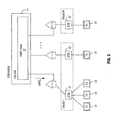
- Figure 2 shows a simplified example of a logical grouping of hosts in accordance with a preferred embodiment of the invention
- Figure 3 illustrates an example of timing of the GMQ procedure according to the invention
- Figure 4 illustrates an example of a table for logically grouping and scheduling the GMQ for each group.
- FIG. 2 shows a simplified example of the logical grouping of hosts.
- an IGMP router 10 of a DSLAM 11 e.g. 7300 ASAM
- hosts 12 e.g. STBs
- Each host can support multiple user devices 13 (e.g. TVs) and receive multiple broadcast channels for this purpose.
- the hosts 12 are logically grouped into N groups, where each group includes one or more hosts.
- group 1 includes two hosts and group N includes only one host.
- a group-specific GMQ is sent to each group, one group at a time with a regular spacing in time over the GMQ interval.
- GMQ 1 is sent only to group 1.
- FIG. 3 shows an example timing of the GMQ procedure according to the invention.
- the GMQ for group 1 is sent to the hosts 12 of group 1 at the beginning of the GMQ interval, and the GMQ for group N is sent to the hosts of group N sometime nearer to the end of the GMQ interval.
- the GMQs for groups 2 to N-1 are spaced apart in time at equal intervals throughout the GMQ interval. That is, the time spacing between adjacent GMQs is equal to the length of the GMQ interval divided by N.
- Figure 4 shows an example of a table for logically grouping and scheduling the GMQ for each group.
- the numbers in the table are the ID numbers of the hosts. Each host has a unique ID number. There are 125 rows in the table, which corresponds to a 125 second GMQ interval. Each row of the table represents a logical group of hosts. ID numbers are added to the table as hosts subscribe to the IGMP service. If possible, an evenly spaced apart distribution of ID numbers is maintained as they are added to a column. ID numbers are not added to the 2 nd column until the 1 st column is full, and likewise for succeeding columns in the table. In this way each group has, as much as possible, an equal number of hosts, which helps to balance the membership report processing load over the GMQ interval.
- the IGMP router In operation the IGMP router counts the passing seconds in a GMQ interval and compares the time with its corresponding row position in the table. If a group is defined in the table at that position (i.e. one or more ID numbers exist at that row position in the table), then the IGMP router sends a GMQ to the hosts of that group.
- the invention features a system for querying a plurality of IGMP hosts supported by an IGMP router wherein said IGMP router logically subdivides the plurality of IGMP hosts into groups of hosts, each group of hosts containing one or more IGMP hosts, said IGMP router sends a GMQ to one group of hosts at a time, said GMQs being sent at regularly spaced apart times throughout a GMQ interval predetermined for each IGMP router, respectively; and, responsive to receiving a membership report from an IGMP host in response to a GMQ signal sent to the group of hosts to which that IGMP host belongs, the IGMP router processes their respective membership reports.
- the invention further features such a system wherein the time spacing between adjacent GMQs is equal to the length of the GMQ interval divided by the number of groups of hosts.
- the invention further features such a system wherein each group of hosts is maintained to have at least a certain number of hosts, said certain number of hosts being the same for all groups after a maintenance operation is complete, and at such time no group of hosts will have a number of hosts that is greater than the greater number by more than one.
- the invention further features such a system wherein said hosts are subdivided in a GMQ for each group of hosts and scheduled according to a table having the same number of hosts as there are seconds in the GMQ interval.
- the invention further features such a system wherein said hosts are grouped and the scheduling of said GMQs reach hosts according to a table which has the same number of rows as there are seconds in the GMQ interval.
- the invention features a method for querying a plurality of IGMP hosts supported by an IGMP router characterized in that said IGMP router logically subdivides the plurality of IGMP hosts into groups of hosts, each group of hosts containing one or more IGMP hosts; said IGMP router sends a GMQ to one group of hosts at a time, said GMQ being sent at regularly spaced-apart times throughout the GMQ interval predetermined for the IGMP router, and responsive to receiving a membership report from an IGMP host in response to a GMQ sent to the group of hosts to which that IGMP host belongs, the IGMP router processes the membership report.
Landscapes
- Engineering & Computer Science (AREA)
- Computer Networks & Wireless Communication (AREA)
- Signal Processing (AREA)
- Data Exchanges In Wide-Area Networks (AREA)
- Telephonic Communication Services (AREA)
Abstract
Description
Claims (10)
- A method of query load balancing for Group Management Protocol (IGMP) General Membership Queries (GMQs) on a large number of DSL (digital subscriber line) subscribers comprising reducing the peak processing load by balancing the load over the GMQ interval by logically grouping the hosts into groups, and sending a GMQ to only one group at a time at regularly spaced apart times throughout the GMQ interval and the hosts of each group will respond with their membership reports in the response window that follows the GMQ sent to that group so that the entire number of membership reports received during a GMQ interval will be distributed over that interval, and consequently the processing load required to process said reports will also be distributed over the GMQ interval.
- The method defined in claim 1 wherein the time spacing between adjacent GMQs is equal to the length of the GMQ interval divided by the number of groups of hosts.
- The method defined in claim 2 wherein each group of hosts is maintained to have at least a certain number of hosts, the certain number of hosts being the same for all groups after a maintenance operation is complete and no group of hosts will have a number of hosts that is greater than the certain number by more than one, said hosts being subdivided in a GMQ for each group of hosts and scheduled according to a logical grouping table.
- The method defined in claim 3 wherein said logical grouping table has the same number of rows as there are seconds in the GMQ interval.
- The method defined in claim 4 wherein the logical grouping table does not have to have the same number of rows as there are seconds in the GMQ interval, so the number could be the maximum number of groups allowed and the table grows to the maximum as groups are added.
- A system for querying a plurality of IGMP hosts supported by an IGMP router wherein the IGMP router logically subdivides the plurality of IGMP hosts into groups of hosts, said group of hosts contains one or more IGMP hosts, said IGMP router being adapted to send a GMQ signal to one group of hosts at a time and the GMQs are sent at regularly spaced-apart times throughout a GMQ interval predetermined for the IGMP router, said router being responsive to receiving a membership report from an IGMP host in response to a GMQ sent to a group of hosts to which the IGMP host belongs, the IGMP router processes the membership report.
- The system defined in claim 6 wherein the time spacing between adjacent GMQs is equal to the length of the GMQ interval divided by the number of groups of hosts.
- The system defined in claim 6 wherein each group of hosts is maintained to have at least a certain number of hosts, the certain number of hosts being the same for all groups after a maintenance operation is complete and no group of hosts will have a number of hosts that is greater than the certain number by more than one, said hosts being subdivided in a GMQ for each group of hosts and scheduled according to a logical grouping table.
- The system defined in claim 8 wherein a logical grouping table has the same number of rows as there are seconds in the GMQ interval.
- The system defined in claim 8 wherein the logical grouping table does not have to have the same number of rows as there are seconds in the GMQ interval, so the number could be the maximum number of groups allowed and the table grows to the maximum as groups are added.
Applications Claiming Priority (4)
| Application Number | Priority Date | Filing Date | Title |
|---|---|---|---|
| US48364603P | 2003-07-01 | 2003-07-01 | |
| US483646P | 2003-07-01 | ||
| US869939 | 2004-06-18 | ||
| US10/869,939 US7593401B2 (en) | 2003-07-01 | 2004-06-18 | Query load balancing for internet group management protocol (IGMP) general membership queries (GMQs) |
Publications (3)
| Publication Number | Publication Date |
|---|---|
| EP1494388A2 true EP1494388A2 (en) | 2005-01-05 |
| EP1494388A3 EP1494388A3 (en) | 2006-01-25 |
| EP1494388B1 EP1494388B1 (en) | 2007-06-06 |
Family
ID=33436775
Family Applications (1)
| Application Number | Title | Priority Date | Filing Date |
|---|---|---|---|
| EP04300405A Expired - Lifetime EP1494388B1 (en) | 2003-07-01 | 2004-06-29 | Query load balancing for internet group management protocol (IGMP) general membership queries (GMQs) |
Country Status (4)
| Country | Link |
|---|---|
| US (1) | US7593401B2 (en) |
| EP (1) | EP1494388B1 (en) |
| AT (1) | ATE364274T1 (en) |
| DE (1) | DE602004006805T2 (en) |
Families Citing this family (3)
| Publication number | Priority date | Publication date | Assignee | Title |
|---|---|---|---|---|
| US7415015B2 (en) * | 2003-07-01 | 2008-08-19 | Alcatel | Centralized IGMP GMQ timing |
| RU2408166C2 (en) * | 2005-03-29 | 2010-12-27 | Эл Джи Электроникс Инк. | Method for transfer and receipt of control information for point-to-multipoint multimedia group service |
| CN101594288B (en) * | 2008-05-28 | 2013-03-20 | 华为技术有限公司 | Querier election method, router and network system |
Family Cites Families (10)
| Publication number | Priority date | Publication date | Assignee | Title |
|---|---|---|---|---|
| US7430164B2 (en) * | 1998-05-04 | 2008-09-30 | Hewlett-Packard Development Company, L.P. | Path recovery on failure in load balancing switch protocols |
| US6611872B1 (en) * | 1999-01-11 | 2003-08-26 | Fastforward Networks, Inc. | Performing multicast communication in computer networks by using overlay routing |
| US6819669B2 (en) * | 2000-07-26 | 2004-11-16 | International Business Machines Corporation | Method and system for data communication |
| US6633765B1 (en) * | 2000-08-28 | 2003-10-14 | Qualcomm, Incorporated | Method and apparatus for performing coverage control for multicast services in a wireless network |
| US6947434B2 (en) * | 2000-11-16 | 2005-09-20 | Telefonaktiebolaget Lm Ericsson (Publ) | Subgroup multicasting in a communications network |
| US7133371B2 (en) * | 2000-12-01 | 2006-11-07 | Motorola, Inc. | Methods for achieving reliable joins in a multicast IP network |
| US6967932B2 (en) * | 2000-12-29 | 2005-11-22 | Intel Corporation | Determining the presence of IP multicast routers |
| DE60212404T2 (en) * | 2001-08-21 | 2007-01-04 | Telefonaktiebolaget Lm Ericsson (Publ) | MULTIPLE SHIPMENT IN PACKET-MEDIATED POINT-TO-POINT NETWORKS |
| US7236465B2 (en) * | 2002-06-13 | 2007-06-26 | International Business Machines Corporation | System and method for gathering multicast content receiver data |
| US20040249810A1 (en) * | 2003-06-03 | 2004-12-09 | Microsoft Corporation | Small group sampling of data for use in query processing |
-
2004
- 2004-06-18 US US10/869,939 patent/US7593401B2/en active Active
- 2004-06-29 EP EP04300405A patent/EP1494388B1/en not_active Expired - Lifetime
- 2004-06-29 AT AT04300405T patent/ATE364274T1/en not_active IP Right Cessation
- 2004-06-29 DE DE602004006805T patent/DE602004006805T2/en not_active Expired - Lifetime
Non-Patent Citations (3)
| Title |
|---|
| CAIN B ET AL: "Request for Comments 3376: Internet Group Management Protocol, Version 3" IETF STANDARD, INTERNET ENGINEERING TASK FORCE, IETF, CH, 1 October 2002 (2002-10-01), XP015009135 ISSN: 0000-0003 * |
| FENNER W: "IGMPv2" IETF STANDARD, INTERNET ENGINEERING TASK FORCE, IETF, CH, February 1997 (1997-02), pages 1-24, XP015008020 ISSN: 0000-0003 * |
| XYLOMENOS G ET AL: "IP multicasting for point-to-point local distribution" INFOCOM '97. SIXTEENTH ANNUAL JOINT CONFERENCE OF THE IEEE COMPUTER AND COMMUNICATIONS SOCIETIES. DRIVING THE INFORMATION REVOLUTION., PROCEEDINGS IEEE KOBE, JAPAN 7-11 APRIL 1997, LOS ALAMITOS, CA, USA,IEEE COMPUT. SOC, US, vol. 3, 7 April 1997 (1997-04-07), pages 1380-1387, XP010251982 ISBN: 0-8186-7780-5 * |
Also Published As
| Publication number | Publication date |
|---|---|
| EP1494388B1 (en) | 2007-06-06 |
| EP1494388A3 (en) | 2006-01-25 |
| DE602004006805D1 (en) | 2007-07-19 |
| DE602004006805T2 (en) | 2008-02-07 |
| US20050002397A1 (en) | 2005-01-06 |
| US7593401B2 (en) | 2009-09-22 |
| ATE364274T1 (en) | 2007-06-15 |
Similar Documents
| Publication | Publication Date | Title |
|---|---|---|
| US7886058B2 (en) | Method and apparatus for controlling multicast group subscriptions | |
| DE69635468T2 (en) | Network system and method for high-speed data transmission | |
| WO2003061245A1 (en) | Content-based caching and routing of content using subscription information | |
| CN1881913A (en) | User interface multicast managing method in network access equipment and its apparatus | |
| US9088962B2 (en) | WAP supporting complementary subnets in a WLAN | |
| CN101873269A (en) | Data retransmission device and method for distributing buffer to ports | |
| CN1107390C (en) | Multiple access telecommunications network | |
| DE102007012465A1 (en) | Transmission method and transmission apparatus in a digital broadcast transmission system | |
| EP1494388B1 (en) | Query load balancing for internet group management protocol (IGMP) general membership queries (GMQs) | |
| EP2739076B1 (en) | Method, system and device for implementing multicast in shared network | |
| US7672325B2 (en) | Method and apparatus for improved IGMP group membership messaging | |
| EP2211505A1 (en) | Method and device for processing signaling information | |
| US7415015B2 (en) | Centralized IGMP GMQ timing | |
| CN111278083A (en) | Channel scanning method and device | |
| WO1998027755A1 (en) | System, device, and method for aggregating users in a shared-medium network | |
| CA2260686A1 (en) | Bandwidth control in a packet-based data system | |
| CN100566229C (en) | The wireless resource allocation methods of multi-carrier communications systems | |
| EP0599874B1 (en) | Cell-multiplexing process for several receivers connected by a transmission line | |
| US20090193084A1 (en) | Method and apparatus for obtaining information from a plurality of network elements | |
| EP1139607B1 (en) | Wireless network with a time slot sorting mechanism | |
| DE3248446A1 (en) | Method for accessing a first conductor of a multiconductor line | |
| US7251251B2 (en) | Method of and system for transmitting a plurality of messages | |
| CN101459814B (en) | Multimedia message sending method and apparatus for television MMS system | |
| US20040122899A1 (en) | Content distribution system and content distribution method | |
| CN1913606A (en) | Implementing method for managing dynamic changed channel of digital TV. |
Legal Events
| Date | Code | Title | Description |
|---|---|---|---|
| PUAI | Public reference made under article 153(3) epc to a published international application that has entered the european phase |
Free format text: ORIGINAL CODE: 0009012 |
|
| AK | Designated contracting states |
Kind code of ref document: A2 Designated state(s): AT BE BG CH CY CZ DE DK EE ES FI FR GB GR HU IE IT LI LU MC NL PL PT RO SE SI SK TR |
|
| AX | Request for extension of the european patent |
Extension state: AL HR LT LV MK |
|
| PUAL | Search report despatched |
Free format text: ORIGINAL CODE: 0009013 |
|
| AK | Designated contracting states |
Kind code of ref document: A3 Designated state(s): AT BE BG CH CY CZ DE DK EE ES FI FR GB GR HU IE IT LI LU MC NL PL PT RO SE SI SK TR |
|
| AX | Request for extension of the european patent |
Extension state: AL HR LT LV MK |
|
| 17P | Request for examination filed |
Effective date: 20060725 |
|
| AKX | Designation fees paid |
Designated state(s): AT BE BG CH CY CZ DE DK EE ES FI FR GB GR HU IE IT LI LU MC NL PL PT RO SE SI SK TR |
|
| GRAP | Despatch of communication of intention to grant a patent |
Free format text: ORIGINAL CODE: EPIDOSNIGR1 |
|
| RAP1 | Party data changed (applicant data changed or rights of an application transferred) |
Owner name: ALCATEL LUCENT |
|
| GRAS | Grant fee paid |
Free format text: ORIGINAL CODE: EPIDOSNIGR3 |
|
| GRAA | (expected) grant |
Free format text: ORIGINAL CODE: 0009210 |
|
| AK | Designated contracting states |
Kind code of ref document: B1 Designated state(s): AT BE BG CH CY CZ DE DK EE ES FI FR GB GR HU IE IT LI LU MC NL PL PT RO SE SI SK TR |
|
| PG25 | Lapsed in a contracting state [announced via postgrant information from national office to epo] |
Ref country code: CH Free format text: LAPSE BECAUSE OF FAILURE TO SUBMIT A TRANSLATION OF THE DESCRIPTION OR TO PAY THE FEE WITHIN THE PRESCRIBED TIME-LIMIT Effective date: 20070606 Ref country code: FI Free format text: LAPSE BECAUSE OF FAILURE TO SUBMIT A TRANSLATION OF THE DESCRIPTION OR TO PAY THE FEE WITHIN THE PRESCRIBED TIME-LIMIT Effective date: 20070606 Ref country code: LI Free format text: LAPSE BECAUSE OF FAILURE TO SUBMIT A TRANSLATION OF THE DESCRIPTION OR TO PAY THE FEE WITHIN THE PRESCRIBED TIME-LIMIT Effective date: 20070606 |
|
| REG | Reference to a national code |
Ref country code: GB Ref legal event code: FG4D |
|
| REG | Reference to a national code |
Ref country code: CH Ref legal event code: EP |
|
| REG | Reference to a national code |
Ref country code: IE Ref legal event code: FG4D |
|
| REF | Corresponds to: |
Ref document number: 602004006805 Country of ref document: DE Date of ref document: 20070719 Kind code of ref document: P |
|
| PG25 | Lapsed in a contracting state [announced via postgrant information from national office to epo] |
Ref country code: SE Free format text: LAPSE BECAUSE OF FAILURE TO SUBMIT A TRANSLATION OF THE DESCRIPTION OR TO PAY THE FEE WITHIN THE PRESCRIBED TIME-LIMIT Effective date: 20070906 |
|
| PG25 | Lapsed in a contracting state [announced via postgrant information from national office to epo] |
Ref country code: ES Free format text: LAPSE BECAUSE OF FAILURE TO SUBMIT A TRANSLATION OF THE DESCRIPTION OR TO PAY THE FEE WITHIN THE PRESCRIBED TIME-LIMIT Effective date: 20070917 |
|
| ET | Fr: translation filed | ||
| PG25 | Lapsed in a contracting state [announced via postgrant information from national office to epo] |
Ref country code: AT Free format text: LAPSE BECAUSE OF FAILURE TO SUBMIT A TRANSLATION OF THE DESCRIPTION OR TO PAY THE FEE WITHIN THE PRESCRIBED TIME-LIMIT Effective date: 20070606 Ref country code: PL Free format text: LAPSE BECAUSE OF FAILURE TO SUBMIT A TRANSLATION OF THE DESCRIPTION OR TO PAY THE FEE WITHIN THE PRESCRIBED TIME-LIMIT Effective date: 20070606 |
|
| NLV1 | Nl: lapsed or annulled due to failure to fulfill the requirements of art. 29p and 29m of the patents act | ||
| REG | Reference to a national code |
Ref country code: CH Ref legal event code: PL |
|
| PG25 | Lapsed in a contracting state [announced via postgrant information from national office to epo] |
Ref country code: BE Free format text: LAPSE BECAUSE OF FAILURE TO SUBMIT A TRANSLATION OF THE DESCRIPTION OR TO PAY THE FEE WITHIN THE PRESCRIBED TIME-LIMIT Effective date: 20070606 |
|
| PG25 | Lapsed in a contracting state [announced via postgrant information from national office to epo] |
Ref country code: SI Free format text: LAPSE BECAUSE OF FAILURE TO SUBMIT A TRANSLATION OF THE DESCRIPTION OR TO PAY THE FEE WITHIN THE PRESCRIBED TIME-LIMIT Effective date: 20070606 Ref country code: NL Free format text: LAPSE BECAUSE OF FAILURE TO SUBMIT A TRANSLATION OF THE DESCRIPTION OR TO PAY THE FEE WITHIN THE PRESCRIBED TIME-LIMIT Effective date: 20070606 Ref country code: CZ Free format text: LAPSE BECAUSE OF FAILURE TO SUBMIT A TRANSLATION OF THE DESCRIPTION OR TO PAY THE FEE WITHIN THE PRESCRIBED TIME-LIMIT Effective date: 20070606 Ref country code: MC Free format text: LAPSE BECAUSE OF NON-PAYMENT OF DUE FEES Effective date: 20070630 Ref country code: BG Free format text: LAPSE BECAUSE OF FAILURE TO SUBMIT A TRANSLATION OF THE DESCRIPTION OR TO PAY THE FEE WITHIN THE PRESCRIBED TIME-LIMIT Effective date: 20070906 Ref country code: PT Free format text: LAPSE BECAUSE OF FAILURE TO SUBMIT A TRANSLATION OF THE DESCRIPTION OR TO PAY THE FEE WITHIN THE PRESCRIBED TIME-LIMIT Effective date: 20071106 |
|
| PG25 | Lapsed in a contracting state [announced via postgrant information from national office to epo] |
Ref country code: SK Free format text: LAPSE BECAUSE OF FAILURE TO SUBMIT A TRANSLATION OF THE DESCRIPTION OR TO PAY THE FEE WITHIN THE PRESCRIBED TIME-LIMIT Effective date: 20070606 |
|
| PLBE | No opposition filed within time limit |
Free format text: ORIGINAL CODE: 0009261 |
|
| STAA | Information on the status of an ep patent application or granted ep patent |
Free format text: STATUS: NO OPPOSITION FILED WITHIN TIME LIMIT |
|
| PG25 | Lapsed in a contracting state [announced via postgrant information from national office to epo] |
Ref country code: GR Free format text: LAPSE BECAUSE OF FAILURE TO SUBMIT A TRANSLATION OF THE DESCRIPTION OR TO PAY THE FEE WITHIN THE PRESCRIBED TIME-LIMIT Effective date: 20070907 Ref country code: IT Free format text: LAPSE BECAUSE OF FAILURE TO SUBMIT A TRANSLATION OF THE DESCRIPTION OR TO PAY THE FEE WITHIN THE PRESCRIBED TIME-LIMIT Effective date: 20070606 Ref country code: DK Free format text: LAPSE BECAUSE OF FAILURE TO SUBMIT A TRANSLATION OF THE DESCRIPTION OR TO PAY THE FEE WITHIN THE PRESCRIBED TIME-LIMIT Effective date: 20070606 |
|
| 26N | No opposition filed |
Effective date: 20080307 |
|
| PG25 | Lapsed in a contracting state [announced via postgrant information from national office to epo] |
Ref country code: IE Free format text: LAPSE BECAUSE OF NON-PAYMENT OF DUE FEES Effective date: 20070629 Ref country code: RO Free format text: LAPSE BECAUSE OF FAILURE TO SUBMIT A TRANSLATION OF THE DESCRIPTION OR TO PAY THE FEE WITHIN THE PRESCRIBED TIME-LIMIT Effective date: 20070606 |
|
| PG25 | Lapsed in a contracting state [announced via postgrant information from national office to epo] |
Ref country code: EE Free format text: LAPSE BECAUSE OF FAILURE TO SUBMIT A TRANSLATION OF THE DESCRIPTION OR TO PAY THE FEE WITHIN THE PRESCRIBED TIME-LIMIT Effective date: 20070606 |
|
| PG25 | Lapsed in a contracting state [announced via postgrant information from national office to epo] |
Ref country code: CY Free format text: LAPSE BECAUSE OF FAILURE TO SUBMIT A TRANSLATION OF THE DESCRIPTION OR TO PAY THE FEE WITHIN THE PRESCRIBED TIME-LIMIT Effective date: 20070606 |
|
| PG25 | Lapsed in a contracting state [announced via postgrant information from national office to epo] |
Ref country code: LU Free format text: LAPSE BECAUSE OF NON-PAYMENT OF DUE FEES Effective date: 20070629 |
|
| PG25 | Lapsed in a contracting state [announced via postgrant information from national office to epo] |
Ref country code: HU Free format text: LAPSE BECAUSE OF FAILURE TO SUBMIT A TRANSLATION OF THE DESCRIPTION OR TO PAY THE FEE WITHIN THE PRESCRIBED TIME-LIMIT Effective date: 20071207 Ref country code: TR Free format text: LAPSE BECAUSE OF FAILURE TO SUBMIT A TRANSLATION OF THE DESCRIPTION OR TO PAY THE FEE WITHIN THE PRESCRIBED TIME-LIMIT Effective date: 20070606 |
|
| REG | Reference to a national code |
Ref country code: FR Ref legal event code: GC Effective date: 20131018 |
|
| REG | Reference to a national code |
Ref country code: FR Ref legal event code: RG Effective date: 20141016 |
|
| REG | Reference to a national code |
Ref country code: FR Ref legal event code: PLFP Year of fee payment: 12 |
|
| REG | Reference to a national code |
Ref country code: FR Ref legal event code: CA Effective date: 20150521 |
|
| REG | Reference to a national code |
Ref country code: FR Ref legal event code: CA Effective date: 20150521 |
|
| REG | Reference to a national code |
Ref country code: FR Ref legal event code: PLFP Year of fee payment: 13 |
|
| REG | Reference to a national code |
Ref country code: FR Ref legal event code: PLFP Year of fee payment: 14 |
|
| PGFP | Annual fee paid to national office [announced via postgrant information from national office to epo] |
Ref country code: FR Payment date: 20170621 Year of fee payment: 14 |
|
| PGFP | Annual fee paid to national office [announced via postgrant information from national office to epo] |
Ref country code: GB Payment date: 20181228 Year of fee payment: 15 |
|
| PG25 | Lapsed in a contracting state [announced via postgrant information from national office to epo] |
Ref country code: FR Free format text: LAPSE BECAUSE OF NON-PAYMENT OF DUE FEES Effective date: 20180630 |
|
| PGFP | Annual fee paid to national office [announced via postgrant information from national office to epo] |
Ref country code: DE Payment date: 20181228 Year of fee payment: 15 |
|
| REG | Reference to a national code |
Ref country code: GB Ref legal event code: 732E Free format text: REGISTERED BETWEEN 20190429 AND 20190502 |
|
| REG | Reference to a national code |
Ref country code: DE Ref legal event code: R082 Ref document number: 602004006805 Country of ref document: DE Representative=s name: DREISS PATENTANWAELTE PARTG MBB, DE Ref country code: DE Ref legal event code: R081 Ref document number: 602004006805 Country of ref document: DE Owner name: PROVENANCE ASSET GROUP LLC, PITTSFORD, US Free format text: FORMER OWNER: ALCATEL LUCENT, PARIS, FR |
|
| REG | Reference to a national code |
Ref country code: DE Ref legal event code: R119 Ref document number: 602004006805 Country of ref document: DE |
|
| GBPC | Gb: european patent ceased through non-payment of renewal fee |
Effective date: 20190629 |
|
| PG25 | Lapsed in a contracting state [announced via postgrant information from national office to epo] |
Ref country code: DE Free format text: LAPSE BECAUSE OF NON-PAYMENT OF DUE FEES Effective date: 20200101 Ref country code: GB Free format text: LAPSE BECAUSE OF NON-PAYMENT OF DUE FEES Effective date: 20190629 |