EP1493735A1 - Pyrimidine derivatives useful as selective cox-2 inhibitors - Google Patents
Pyrimidine derivatives useful as selective cox-2 inhibitors Download PDFInfo
- Publication number
- EP1493735A1 EP1493735A1 EP04077503A EP04077503A EP1493735A1 EP 1493735 A1 EP1493735 A1 EP 1493735A1 EP 04077503 A EP04077503 A EP 04077503A EP 04077503 A EP04077503 A EP 04077503A EP 1493735 A1 EP1493735 A1 EP 1493735A1
- Authority
- EP
- European Patent Office
- Prior art keywords
- alkyl
- compounds
- formula
- group
- compound
- Prior art date
- Legal status (The legal status is an assumption and is not a legal conclusion. Google has not performed a legal analysis and makes no representation as to the accuracy of the status listed.)
- Granted
Links
- CZPWVGJYEJSRLH-UHFFFAOYSA-N c1cncnc1 Chemical compound c1cncnc1 CZPWVGJYEJSRLH-UHFFFAOYSA-N 0.000 description 1
- PBMFSQRYOILNGV-UHFFFAOYSA-N c1cnncc1 Chemical compound c1cnncc1 PBMFSQRYOILNGV-UHFFFAOYSA-N 0.000 description 1
- KYQCOXFCLRTKLS-UHFFFAOYSA-N c1nccnc1 Chemical compound c1nccnc1 KYQCOXFCLRTKLS-UHFFFAOYSA-N 0.000 description 1
- JIHQDMXYYFUGFV-UHFFFAOYSA-N c1ncncn1 Chemical compound c1ncncn1 JIHQDMXYYFUGFV-UHFFFAOYSA-N 0.000 description 1
Classifications
-
- C—CHEMISTRY; METALLURGY
- C07—ORGANIC CHEMISTRY
- C07D—HETEROCYCLIC COMPOUNDS
- C07D239/00—Heterocyclic compounds containing 1,3-diazine or hydrogenated 1,3-diazine rings
- C07D239/02—Heterocyclic compounds containing 1,3-diazine or hydrogenated 1,3-diazine rings not condensed with other rings
- C07D239/24—Heterocyclic compounds containing 1,3-diazine or hydrogenated 1,3-diazine rings not condensed with other rings having three or more double bonds between ring members or between ring members and non-ring members
- C07D239/28—Heterocyclic compounds containing 1,3-diazine or hydrogenated 1,3-diazine rings not condensed with other rings having three or more double bonds between ring members or between ring members and non-ring members with hetero atoms or with carbon atoms having three bonds to hetero atoms with at the most one bond to halogen, directly attached to ring carbon atoms
- C07D239/32—One oxygen, sulfur or nitrogen atom
- C07D239/34—One oxygen atom
-
- A—HUMAN NECESSITIES
- A61—MEDICAL OR VETERINARY SCIENCE; HYGIENE
- A61K—PREPARATIONS FOR MEDICAL, DENTAL OR TOILETRY PURPOSES
- A61K31/00—Medicinal preparations containing organic active ingredients
- A61K31/33—Heterocyclic compounds
- A61K31/395—Heterocyclic compounds having nitrogen as a ring hetero atom, e.g. guanethidine or rifamycins
- A61K31/495—Heterocyclic compounds having nitrogen as a ring hetero atom, e.g. guanethidine or rifamycins having six-membered rings with two or more nitrogen atoms as the only ring heteroatoms, e.g. piperazine or tetrazines
- A61K31/505—Pyrimidines; Hydrogenated pyrimidines, e.g. trimethoprim
-
- A—HUMAN NECESSITIES
- A61—MEDICAL OR VETERINARY SCIENCE; HYGIENE
- A61P—SPECIFIC THERAPEUTIC ACTIVITY OF CHEMICAL COMPOUNDS OR MEDICINAL PREPARATIONS
- A61P29/00—Non-central analgesic, antipyretic or antiinflammatory agents, e.g. antirheumatic agents; Non-steroidal antiinflammatory drugs [NSAID]
-
- A—HUMAN NECESSITIES
- A61—MEDICAL OR VETERINARY SCIENCE; HYGIENE
- A61P—SPECIFIC THERAPEUTIC ACTIVITY OF CHEMICAL COMPOUNDS OR MEDICINAL PREPARATIONS
- A61P43/00—Drugs for specific purposes, not provided for in groups A61P1/00-A61P41/00
-
- C—CHEMISTRY; METALLURGY
- C07—ORGANIC CHEMISTRY
- C07D—HETEROCYCLIC COMPOUNDS
- C07D401/00—Heterocyclic compounds containing two or more hetero rings, having nitrogen atoms as the only ring hetero atoms, at least one ring being a six-membered ring with only one nitrogen atom
- C07D401/02—Heterocyclic compounds containing two or more hetero rings, having nitrogen atoms as the only ring hetero atoms, at least one ring being a six-membered ring with only one nitrogen atom containing two hetero rings
- C07D401/12—Heterocyclic compounds containing two or more hetero rings, having nitrogen atoms as the only ring hetero atoms, at least one ring being a six-membered ring with only one nitrogen atom containing two hetero rings linked by a chain containing hetero atoms as chain links
Definitions
- This invention relates to pyrimidine derivatives, to processes for their preparation, to pharmaceutical compositions containing them and to their use in medicine.
- COX-1 The enzyme cyclooxygenase (COX) has recently been discovered to exist in two isoforms, COX-1 and COX-2.
- COX-1 corresponds to the originally identified constitutive enzyme while COX-2 is rapidly and readily inducible by a number of agents including mitogens, endotoxin, hormones, cytokines and growth factors.
- Prostaglandins generated by the action of COX have both physiological and pathological roles. It is generally believed that COX-1 is largely responsible for the important physiological functions such as maintenance of gastrointestinal integrity and renal blood flow.
- COX-2 In contrast the inducible form, COX-2, is believed to be largely responsible for the pathological effects of prostaglandins where rapid induction of the enzyme occurs in response to such agents as inflammatory agents, hormones, growth factors and cytokines.
- a selective inhibitor of COX-2 would therefore have anti-inflammatory, anti-pyretic and analgesic properties, without the potential side effects associated with inhibition of COX-1.
- halogen is used to represent fluorine, chlorine, bromine or iodine.
- alkyl' as a group or part of a group means a straight or branched chain alkyl group, for example a methyl, ethyl, n-propyl, i-propyl, n-butyl, s-butyl or t-butyl group.
- 5-membered heteroaryl means a heteroaryl selected from the following:
- 6- membered heteroaryl means a heteroaryl selected from the following:
- 6-membered aryl means:
- the present invention encompasses all isomers of the compounds of formula (I) and their pharmaceutically acceptable derivatives, including all geometric, tautomeric and optical forms, and mixtures thereof (e.g. racemic mixtures).
- the compounds of formula (I) contain a chiral centre as indicated therein by the asterisk *.
- R 4 and R 5 in formula (I) are different the corresponding compounds contain at least one chiral centre, by virtue of the asymmetric carbon atom defined thereby, and that such compounds exist in the form of a pair of optical isomers (i.e. enantiomers).
- R 1 is selected from the group consisting of H, C 1-6 alkyl, C 1-2 alkyl substituted by one to five fluorine atoms, C 3-6 alkenyl, C 3-6 alkynyl, C 3-10 cycloalkylC 0-6 alkyl, C 4-12 bridged cycloalkyl and B(CR 4 R 5 ) n ;
- R 1 is C 1-6 alkyl or C 1-2 alkyl substituted by one to five fluorine atoms. In another aspect R 1 is C 2-6 alkyl (e.g. n-butyl).
- R 1 is C 3-10 cycloalkylC 0-6 alkyl, such as C 3-10 cycloalkyl (e.g. cyclopentyl or cyclohexyl).
- R 1 is C 3-10 cycloalkylmethyl, such as C 3-7 cycloalkylmethyl (e.g. cyclopentylmethyl).
- R 1 is A(CR 4 R 5 ) n .
- R 2 is CHF 2 , CH 2 F or CF 3 . In another aspect R 2 is CF 3 .
- R 3 is C 1-6 alkyl, such as C 1-3 alkyl (e.g. methyl).
- R 4 and R 5 are independently selected from H or methyl. In another aspect R 4 and R 5 are both H.
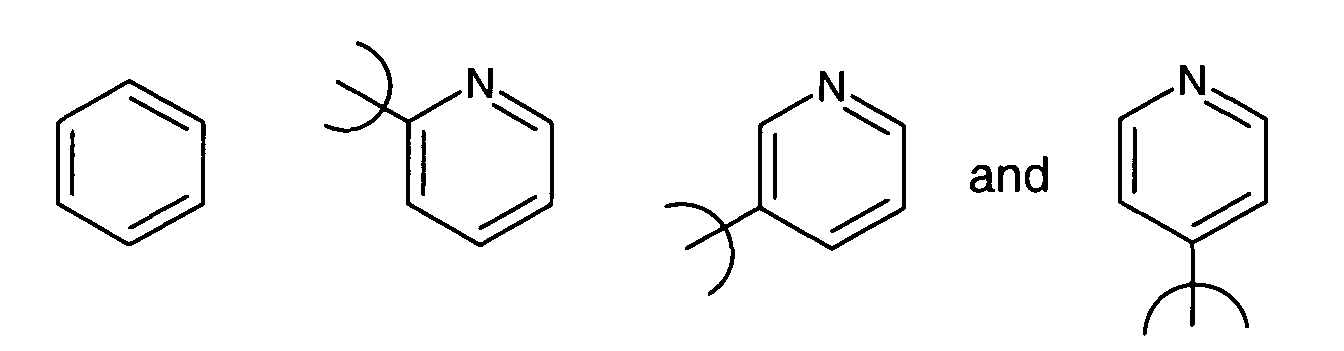
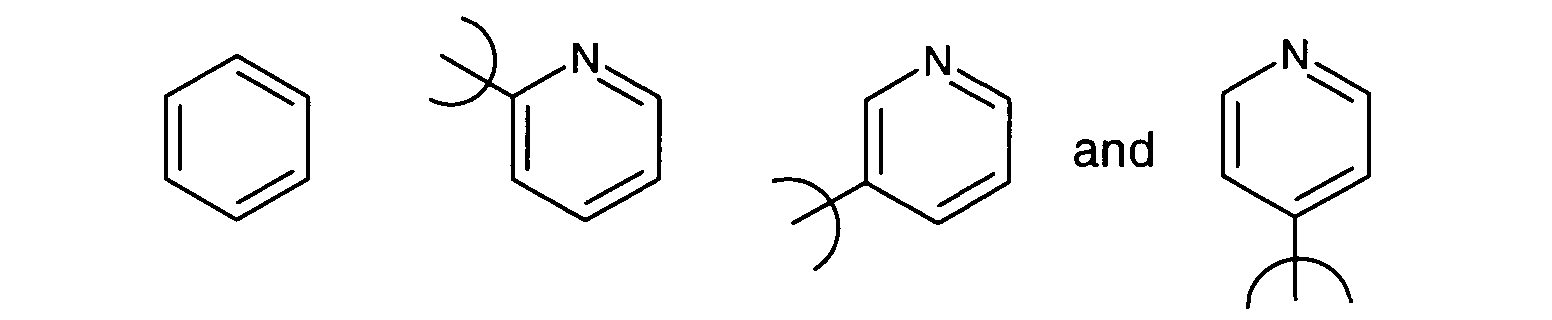
- A is selected from the group consisting of where defines the point of attachment of the ring and A is unsubstituted or substituted by one or two R 6 .
- R 6 is selected from the group consisting of halogen (e.g. F), C 1-3 alkyl (e.g. methyl), C 1-3 alkyl substituted by one to three fluorine atoms (e.g. CF 3 ), and C 1-3 alkoxy (e.g. methoxy).
- halogen e.g. F
- C 1-3 alkyl e.g. methyl
- C 1-3 alkyl substituted by one to three fluorine atoms e.g. CF 3
- C 1-3 alkoxy e.g. methoxy
- R 7 is selected from the group consisting of C 1-6 alkyl (e.g. ethyl), phenyl and aminomethyl.
- n 1 to 4.
- n is 0 to 2 (e.g. 0).
- R 1 is C 1-6 alkyl (e.g. n-butyl); R 2 is CF 3 ; and R 3 is C 1-6 alkyl, such as C 1-3 alkyl (e.g. methyl).
- R 1 is C 3-10 cycloalkylC 0-6 alkyl, such as C 3-10 cycloalkyl (e.g. cyclopentyl or cyclohexyl);
- R 2 is CF 3 ;
- R 3 is C 1-6 alkyl, such as C 1-3 alkyl (e.g. methyl).
- R 1 is C 3-10 cycloalkylmethyl, such as C 3-7 cycloalkylmethyl (e.g. cyclopentylmethyl);
- R 2 is CF 3 ;
- R 3 is C 1-6 alkyl, such as C 1-3 alkyl (e.g. methyl).
- R 1 is A(CR 4 R 5 ) n ;
- R 2 is CF 3 ;
- R 3 is C 1-6 alkyl, such as C 1-3 alkyl (e.g. methyl);
- R 4 and R 5 are independently selected from H or methyl;
- A is selected from the group consisting of and A is unsubstituted or substituted by one or two R 6 ;
- R 6 is selected from the group consisting of halogen (e.g. F), C 1-3 alkyl (e.g. methyl), C 1-3 alkyl substituted by one to three fluorine atoms (e.g. CF 3 ), and C 1-3 alkoxy (e.g. methoxy); and
- n is 0 to 2 (e.g. 0).
- group D1 there is provided a further group of compounds (group D1) wherein: R 1 is A(CR 4 R 5 ) n ; R 2 is CF 3 ; R 3 is methyl; R 4 and R 5 are both H; A is selected from the group consisting of and A is unsubstituted or substituted by one or two R 6 ; R 6 is selected from the group consisting of fluorine, chlorine, methyl, CF 3 and methoxy; and n is 0 or 1.
- the invention provides the following compounds:
- the invention provides the following compound: 2-butoxy-4-[4-(methylsulfonyl)phenyl]-6-(trifluoromethyl)pyrimidine.
- the compounds of the present invention are intended for use in pharmaceutical compositions, it will be understood that they are each provided in substantially pure form, for example at least 50% pure, more suitably at least 75% pure and preferably at least 95% pure (% are on a wt/wt basis). Impure preparations of the compound of formula (I) may be used for preparing the more pure forms used in pharmaceutical compositions.
- the purity of intermediate compounds of the present invention is less critical, it will be readily understood that the substantially pure form is preferred as for the compounds of formula (I).
- the compounds of the present invention are available in crystalline form.
- solvent of recrystallisation may be present in the crystalline product.
- This invention includes within its scope such solvates.
- some of the compounds of this invention may be crystallised or recrystallised from solvents containing water. In such cases water of hydration may be formed.
- This invention includes within its scope stoichiometric hydrates as well as compounds containing variable amounts of water that may be produced by processes such as lyophilisation.
- different crystallisation conditions may lead to the formation of different polymorphic forms of crystalline products.
- This invention includes within its scope all the polymorphic forms of the compounds of formula (I).
- Compounds of the invention are potent and selective inhibitors of COX-2. This activity is illustrated by their ability to selectively inhibit COX-2 over COX-1.
- the compounds of the present invention are of interest for use in human and veterinary medicine, particularly in the treatment of the pain (both chronic and acute), fever and inflammation of a variety of conditions and diseases mediated by selective inhibition of COX-2.
- Such conditions and diseases are well known in the art and include rheumatic fever; symptoms associated with influenza or other viral infections, such as the common cold; lower back and neck pain; headache; toothache; sprains and strains; myositis; sympathetically maintained pain; synovitis; arthritis, including rheumatoid arthritis; degenerative joint diseases, including osteoarthritis; gout and ankylosing spondylitis; tendinitis; bursitis; skin related conditions, such as psoriasis, eczema, burns and dermatitis; injuries, such as sports injuries and those arising from surgical and dental procedures.
- Neuropathic pain syndromes can develop following neuronal injury and the resulting pain may persist for months or years, even after the original injury has healed. Neuronal injury may occur in the peripheral nerves, dorsal roots, spinal cord or certain regions in the brain. Neuropathic pain syndromes are traditionally classified according to the disease or event that precipitated them. Neuropathic pain syndromes include: diabetic neuropathy; sciatica; non-specific lower back pain; multiple sclerosis pain; fibromyalgia; HIV-related neuropathy; neuralgia, such as post-herpetic neuralgia and trigeminal neuralgia; and pain resulting from physical trauma, amputation, cancer, toxins or chronic inflammatory conditions.
- neuropathic pain are incredibly heterogeneous and are often described as spontaneous shooting and lancinating pain, or ongoing, burning pain.
- pain associated with normally non-painful sensations such as "pins and needles" (paraesthesias and dysesthesias), increased sensitivity to touch (hyperesthesia), painful sensation following innocuous stimulation (dynamic, static or thermal allodynia), increased sensitivity to noxious stimuli (thermal, cold, mechanical hyperalgesia), continuing pain sensation after removal of the stimulation (hyperpathia) or an absence of or deficit in selective sensory pathways (hypoalgesia).
- the compounds of the invention are also useful for the treatment of other conditions mediated by selective inhibition of COX-2.
- the compounds of the invention inhibit cellular and neoplastic transformation and metastatic tumour growth and hence are useful in the treatment of certain cancerous diseases, such as colonic cancer and prostate cancer.
- the compounds of the invention are also useful in reducing the number of adenomatous colorectal polyps and thus reduce the risk of developing colon cancer.
- the compounds of the invention are also useful in the treatment of cancer associated with overexpression of HER-2/neu, in particular breast cancer.
- Compounds of the invention also prevent neuronal injury by inhibiting the generation of neuronal free radicals (and hence oxidative stress) and therefore are of use in the treatment of stroke; epilepsy; and epileptic seizures (including grand mal, petit mal, myoclonic epilepsy and partial seizures).
- Compounds of the invention also inhibit prostanoid-induced smooth muscle contraction and hence are of use in the treatment of dysmenorrhoea and premature labour.
- liver disease such as inflammatory liver disease, for example chronic viral hepatitis B, chronic viral hepatitis C, alcoholic liver injury, primary biliary cirrhosis, autoimmune hepatitis, nonalcoholic steatohepatitis and liver transplant rejection.
- inflammatory liver disease for example chronic viral hepatitis B, chronic viral hepatitis C, alcoholic liver injury, primary biliary cirrhosis, autoimmune hepatitis, nonalcoholic steatohepatitis and liver transplant rejection.
- Compounds of the invention inhibit inflammatory processes and therefore are of use in the treatment of asthma, allergic rhinitis and respiratory distress syndrome; gastrointestinal conditions such as inflammatory bowel disease, Crohn's disease, gastritis, irritable bowel syndrome and ulcerative colitis; and the inflammation in such diseases as vascular disease, migraine, periarteritis nodosa, thyroiditis, aplastic anaemia, Hodgkin's disease, sclerodoma, type I diabetes, myasthenia gravis, multiple sclerosis, sorcoidosis, nephrotic syndrome, Bechet's syndrome, polymyositis, gingivitis, conjunctivitis and myocardial ischemia.
- vascular disease migraine, periarteritis nodosa, thyroiditis, aplastic anaemia, Hodgkin's disease, sclerodoma, type I diabetes, myasthenia gravis, multiple sclerosis, sorcoidosis, ne
- Compounds of the invention are also useful in the treatment of ophthalmic diseases such as retinitis, retinopathies, uveitis and of acute injury to the eye tissue.
- Compounds of the invention are also useful for the treatment of cognitive disorders such as dementia, particularly degenerative dementia (including senile dementia, Alzheimer's disease, Pick's disease, Huntington's chorea, Parkinson's disease and Creutzfeldt-Jakob disease), and vascular dementia (including multi-infarct dementia), as well as dementia associated with intracranial space occupying lesions, trauma, infections and related conditions (including HIV infection), metabolism, toxins, anoxia and vitamin deficiency; and mild cognitive impairment associated with ageing, particularly Age Associated Memory Impairment.
- dementia particularly degenerative dementia (including senile dementia, Alzheimer's disease, Pick's disease, Huntington's chorea, Parkinson's disease and Creutzfeldt-Jakob disease), and vascular dementia (including multi-infarct dementia), as well as dementia associated with intracranial space occupying lesions, trauma, infections and related conditions (including HIV infection), metabolism, toxins, anoxia and vitamin deficiency; and mild cognitive impairment associated with ageing, particularly Age
- Compounds of the invention are also useful in the treatment of disorders ameliorated by a gastroprokinetic agent.
- Disorders ameliorated by gastroprokinetic agents include ileus, for example post-operative ileus and ileus during sepsis; gastroesophageal reflux disease (GORD, or its synonym GERD); gastroparesis, such as diabetic gastroparesis; and other functional bowel disorders, such as non-ulcerative dyspepsia (NUD) and non-cardiac chest pain (NCCP).
- GORD gastroesophageal reflux disease
- NUD non-ulcerative dyspepsia
- NCCP non-cardiac chest pain
- a method of treating a human or animal subject suffering from a condition which is mediated by COX-2 which comprises administering to said subject an effective amount of a compound of formula (I).
- a method of treating a human or animal subject suffering from an inflammatory disorder comprises administering to said subject an effective amount of a compound of formula (I).
- Suitable agents for adjunctive therapy include a 5HT 1 agonist, such as a triptan (e.g. sumatriptan or naratriptan); an adenosine A1 agonist; an EP ligand; an NMDA modulator, such as a glycine antagonist; a sodium channel blocker (e.g. lamotrigine); a substance P antagonist (e.g. an NK 1 antagonist); a cannabinoid; acetaminophen or phenacetin; a 5-lipoxygenase inhibitor; a leukotriene receptor antagonist; a DMARD (e.g.
- a 5HT 1 agonist such as a triptan (e.g. sumatriptan or naratriptan); an adenosine A1 agonist; an EP ligand; an NMDA modulator, such as a glycine antagonist; a sodium channel blocker (e.g. lamotrigine); a substance P antagonist (e.
- methotrexate e.g. methotrexate
- gabapentin and related compounds e.g. a tricyclic antidepressant (e.g. amitryptilline); a neurone stabilising antiepileptic drug; a mono-aminergic uptake inhibitor (e.g. venlafaxine); a matrix metalloproteinase inhibitor; a nitric oxide synthase (NOS) inhibitor, such as an iNOS or an nNOS inhibitor; an inhibitor of the release, or action, of tumour necrosis factor ⁇ ; an antibody therapy, such as a monoclonal antibody therapy; an antiviral agent, such as a nucleoside inhibitor (e.g. lamivudine) or an immune system modulator (e.g.
- a nucleoside inhibitor e.g. lamivudine
- an immune system modulator e.g.
- an opioid analgesic e.g. a local anaesthetic; a stimulant, including caffeine; an H 2 -antagonist (e.g. ranitidine); a proton pump inhibitor (e.g. omeprazole); an antacid (e.g. aluminium or magnesium hydroxide; an antiflatulent (e.g. simethicone); a decongestant (e.g. phenylephrine, phenylpropanolamine, pseudoephedrine, oxymetazoline, epinephrine, naphazoline, xylometazoline, propylhexedrine, or levo-desoxyephedrine); an antitussive (e.g.
- compositions comprising a compound of formula (I) adapted for use in human or veterinary medicine.
- Such compositions may conveniently be presented for use in conventional manner in admixture with one or more physiologically acceptable carriers or excipients.
- the compounds of formula (I) may be formulated for administration in any suitable manner. They may, for example, be formulated for topical administration or administration by inhalation or, more preferably, for oral, transdermal or parenteral administration.
- the pharmaceutical composition may be in a form such that it can effect controlled release of the compounds of formula (I).
- the pharmaceutical composition may take the form of, for example, tablets (including sub-lingual tablets), capsules, powders, solutions, syrups or suspensions prepared by conventional means with acceptable excipients.
- the pharmaceutical composition may be given in the form of a transdermal patch, such as a transdermal iontophoretic patch.
- the pharmaceutical composition may be given as an injection or a continuous infusion (e.g. intravenously, intravascularly or subcutaneously).
- the compositions may take such forms as suspensions, solutions or emulsions in oily or aqueous vehicles and may contain formulatory agents such as suspending, stabilising and/or dispersing agents.
- formulatory agents such as suspending, stabilising and/or dispersing agents.
- For administration by injection these may take the form of a unit dose presentation or as a multidose presentation preferably with an added preservative.
- the active ingredient may be in powder form for reconstitution with a suitable vehicle.
- the compounds of the invention may also be formulated as a depot preparation. Such long acting formulations may be administered by implantation (for example subcutaneously or intramuscularly) or by intramuscular injection.
- the compounds of the invention may be formulated with suitable polymeric or hydrophobic materials (for example as an emulsion in an acceptable oil) or ion exchange resins, or as sparingly soluble derivatives, for example, as a sparingly soluble salt.
- the compounds of the invention may also be used in combination with other therapeutic agents.
- the invention thus provides, in a further aspect, a combination comprising a compound of formula (I) together with a further therapeutic agent.
- compositions comprising a combination as defined above together with a pharmaceutically acceptable carrier or excipient comprise a further aspect of the invention.
- the individual components of such combinations may be administered either sequentially or simultaneously in separate or combined pharmaceutical formulations.
- a proposed daily dosage of a compound of formula (I) for the treatment of man is 0.01mg/kg to 500mg/kg, such as 0.05mg/kg to 100mg/kg, e.g. 0.1mg/kg to 50mg/kg, which may be conveniently administered in 1 to 4 doses.
- the precise dose employed will depend on the age and condition of the patient and on the route of administration. Thus, for example, a daily dose of 0.25mg/kg to 10mg/kg may be suitable for systemic administration.
- Compounds of formula (I) may be prepared by any method known in the art for the preparation of compounds of analogous structure.
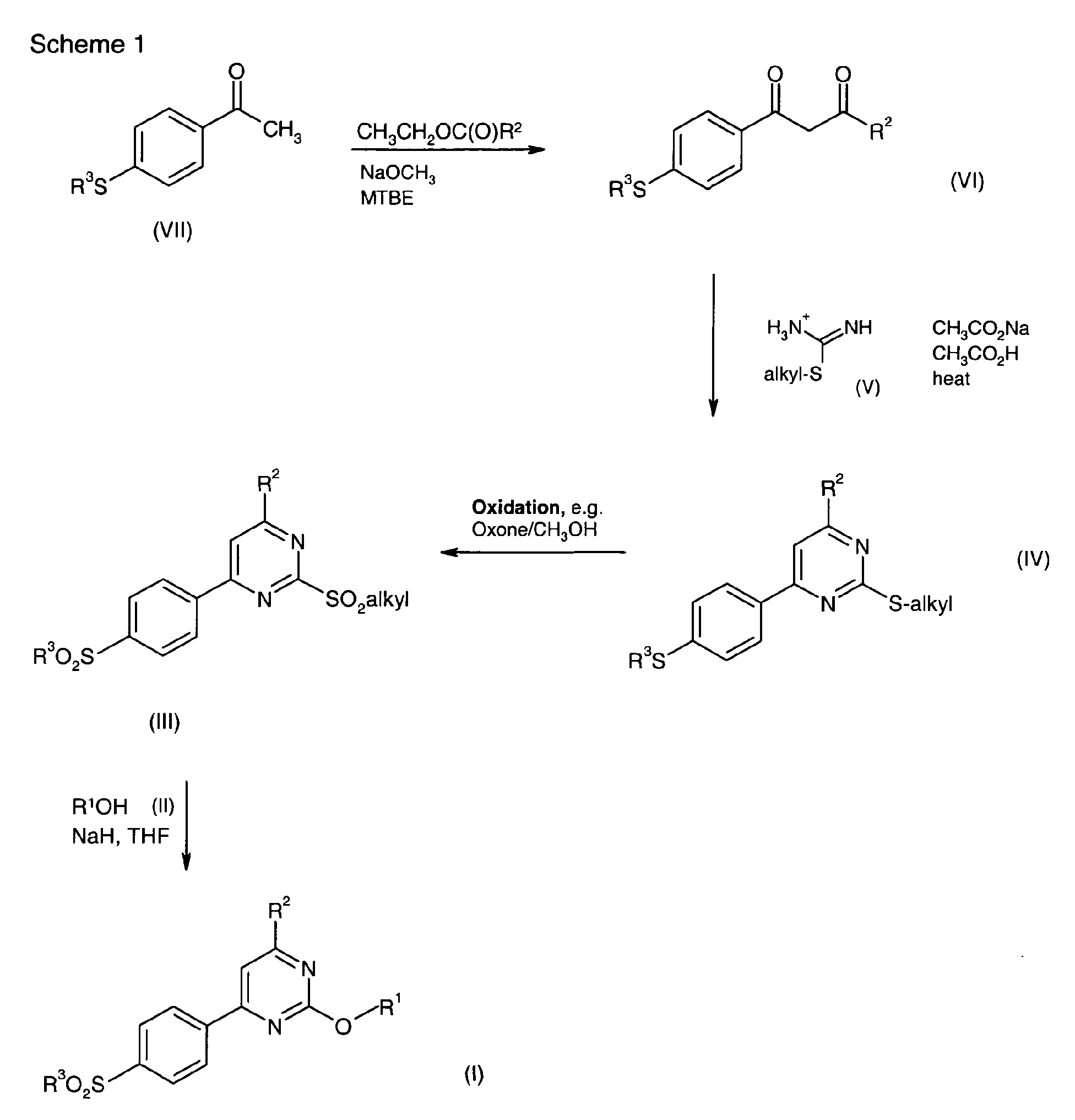
- R 1 and R 2 are as defined in formula (I) above unless otherwise stated, R 3 is C 1-6 alkyl; THF is tetrahydrofuran; MTBE is methyl t-butyl ether; and alkyl is a straight or branched chain alkyl group, for example a methyl, ethyl, n-propyl, i-propyl, n-butyl, s-butyl or t-butyl group.
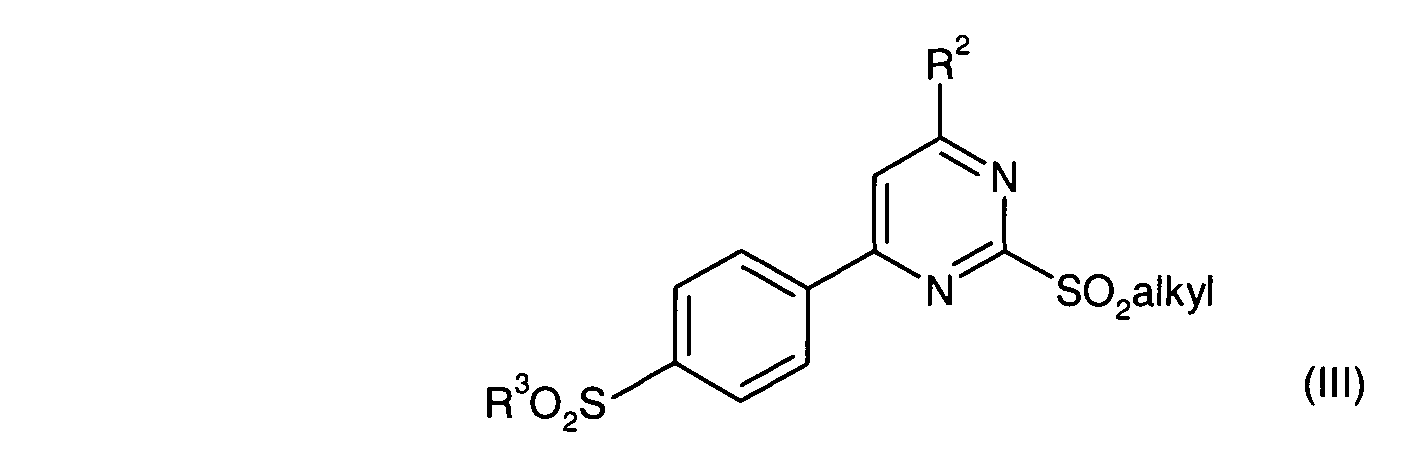
- the preparation of compounds of formula (I) may conveniently be achieved by the treatment of compounds of formula (III) with an alcohol of formula (II) in the presence of sodium hydride.
- the reaction is conveniently carried out in a solvent such as THF and at between ambient temperature and reflux.
- the oxidation shown in Scheme 1 is effected using a monopersulfate compound, such as potassium peroxymonosulfate (known as OxoneTM) and the reaction is carried out in a solvent, such as an aqueous alcohol, (e.g. aqueous methanol), and at between -78°C and ambient temperature.
- a monopersulfate compound such as potassium peroxymonosulfate (known as OxoneTM)
- a solvent such as an aqueous alcohol, (e.g. aqueous methanol)
- the oxidation shown in Scheme 1 may be effected using hydrogen peroxide in the presence of catalytic sodium tungstate dihydrate.
- the reaction may be carried out in a solvent such as acetic acid and at between ambient temperature and reflux (e.g. 50°C).
- compounds of formula (III) wherein R 3 is C 1-6 alkyl or NH 2 may be prepared by oxidising a compound of formula (IV)A: under oxidation conditions described hereinabove.
- Compounds of formula (IV)A may be prepared according to the general procedures of Scheme 1 by employing sulphonyl derivatives in place of the corresponding sulfide compounds of formulae (VI) and (VII).
- compounds of formula (I) may be prepared by interconversion, utilising other compounds of formula (I) as precursors. Suitable interconversions, such as alkylations, are well known to those skilled in the art and are described in many standard organic chemistry texts, such as 'Advanced Organic Chemistry' by Jerry March, fourth edition (Wiley, 1992), incorporated herein by reference.
- compounds of formula (I) wherein R 1 is C 1-6 alkyl, C 1-2 alkyl substituted by one to five fluorine atoms, C 3-6 alkenyl, C 3-6 alkynyl, C 3-10 cycloalkylC 0-6 alkyl, C 4-12 bridged cycloalkane, A(CR 4 R 5 ) n (with the proviso that n is not zero) and B(CR 4 R 5 ) n may be prepared by alkylating the corresponding compound of formula (I) wherein R 1 is H.
- Alcohols of formula (II) are either known compounds or may be prepared by literature methods, such as those described in 'Comprehensive Organic Transformations: a guide to functional group preparations' by Richard Larock (VCH, 1989), incorporated herein by reference.
- Thioronium salts of formula (V) are either known compounds or may be prepared by literature methods, such as those described in A H Owens et al , Eur J Med Chem, 1988, 23(3), 295-300, incorporated herein by reference.
- Acetophenones of formula (VII) are either known compounds or may be prepared by conventional chemistry.
- Solvates (e.g. hydrates) of a compound of the invention may be formed during the work-up procedure of one of the aforementioned process steps.
- Me methyl
- Ac acyl
- DMSO dimethylsulphoxide
- TFA trifluoroacetic acid
- DME dimethoxyethane
- DCM dichloromethane
- NMP N- methyl pyrrolidone
- MTBE methyl t-butyl ether
- a solution of sodium tungstate dihydrate (0.2kg) in water (2.5L) was added, followed by hydrogen peroxide (20.7kg of 30%w/v solution), which was added over at least 3h, maintaining the temp at ca. 50°.
- the mixture is heated at ca. 50°C for at least 12h before cooling to 20 ⁇ 3°C.
- a solution of sodium sulphite (3.45kg) in water (28L) was then added over at least 30min whilst maintaining the temperature at 20 ⁇ 3°.
- the mixture was aged at 20 ⁇ 3°C for ca.
- a suspension of 2-(methylsulfonyl)-4-[4-(methylsulfonyl)phenyl]-6-(trifluoromethyl)pyrimidine (525g) in n-butanol (5.25L) was treated with potassium carbonate (210g) at 20 ⁇ 5°C.
- the mixture was heated to 50 ⁇ 5°C overnight until the reaction was complete by HPLC.
- Acetic acid (1.57L) was added dropwise, to control any gas evolution, keeping the temperature at 50 ⁇ 5°C.
- Water (3.67L) was then added over 30min keeping the temperature at 50 ⁇ 5°C to allow full crystallisation to occur.
- the slurry was then cooled to 20-25°C and aged for at least 1 hour.
- COS cells which had been stably transfected with cDNA for human COX-1 and human COX-2. 24 Hours prior to experiment, COS cells were transferred from the 175cm 2 flasks in which they were grown, onto 24-well cell culture plates using the following procedure.
- the incubation medium (Dulbecco's modified eagles medium (DMEM) supplemented with heat-inactivated foetal calf serum (10%v/v), penicillin (100 IU/ml), streptomycin (100 ⁇ g/ml) and geneticin (600 ⁇ g/ml)) was removed from a flask of confluent cells (1 flask at confluency contains approximately 1x10 7 cells).
- DMEM Dulbecco's modified eagles medium
- phosphate buffered saline PBS
- 5ml of phosphate buffered saline PBS
- cells were then incubated with 5ml trypsin for 5 minutes in an incubator (37°).
- the flask was then removed from the incubator and 5ml of fresh incubation medium was added.
- the contents of the flask was transferred to a 250ml sterile container and the volume of incubation medium subsequently made up to 100ml.
- 1ml cell suspension was pipetted into each well of 4x24-well cell culture plates. The plates were then placed in an incubator (37°C, 95% air/5% CO 2 ) overnight. If more than 1 flask of cells were required, the cells from the individual flasks were combined before being dispensed into the 24-well plates.
- the incubation medium was completely removed from the 24-well cell culture plates and replaced with 250 ⁇ l fresh DMEM (37°C).
- the test compounds were made up to 250x the required test concentration in DMSO and were added to the wells in a volume of 1 ⁇ l. Plates were then mixed gently by swirling and then placed in an incubator for 1 hour (37°C, 95% air/5% CO 2 ). Following the incubation period, 10 ⁇ l of arachidonic acid (750 ⁇ M) was added to each well to give a final arachidonic acid concentration of 30 ⁇ M.
- IC 50 value which is defined as the concentration of the compound required to inhibit the PGE2 release from the cells by 50%.
- the selectivity ratio of inhibition of COX-1 versus COX-2 was calculated by comparing respective IC 50 values.
- IC 50 values for inhibition of COX-2 and COX-1 were obtained from the cell based assay for compounds of the invention:
- Inhibitory activity against microsomal h-COX2 was assessed against a microsomal preparation from baculovirus infected SF9 cells.
- An aliquot of microsomal preparation was thawed slowly on ice and a 1/40,000 dilution prepared from it into the assay buffer (sterile water, degassed with argon containing 100mM HEPES (pH 7.4), 10mM EDTA (pH7.4), 1mM phenol, 1mM reduced glutathione, 20mg/ml gelatin and 0.001 mM Hematin).
- the enzyme solution was then sonicated for 5 seconds (Branson sonicator, setting 4, 1 cm tip) to ensure a homogeneous suspension.
- 155 ⁇ l enzyme solution was then added to each well of a 96-well microtitre plate containing either 5 ⁇ l test compound (40x required test concentration) or 5 ⁇ l DMSO for controls. Plates were then mixed and incubated at room temperature for 1 hour. Following the incubation period, 40 ⁇ l of 0.5 ⁇ M arachidonic acid was added to each well to give a final concentration of 0.1 ⁇ M. Plates were then mixed and incubated for exactly 10 minutes (room temperature) prior to addition of 25 ⁇ l 1 M HCl (hydrochloric acid) to each well to stop the reaction. 25 ⁇ l of 1 M NaOH (sodium hydroxide) was then added to each well to neutralise the solution prior to determination of PGE 2 levels by enzyme immunoassay (EIA).
- EIA enzyme immunoassay
- IC 50 values for inhibition of COX-2 and COX-1 were obtained from the microsomal assay for compounds of the invention:
Landscapes
- Chemical & Material Sciences (AREA)
- Organic Chemistry (AREA)
- Health & Medical Sciences (AREA)
- Life Sciences & Earth Sciences (AREA)
- Pharmacology & Pharmacy (AREA)
- Animal Behavior & Ethology (AREA)
- General Health & Medical Sciences (AREA)
- Public Health (AREA)
- Veterinary Medicine (AREA)
- Medicinal Chemistry (AREA)
- Epidemiology (AREA)
- General Chemical & Material Sciences (AREA)
- Nuclear Medicine, Radiotherapy & Molecular Imaging (AREA)
- Chemical Kinetics & Catalysis (AREA)
- Rheumatology (AREA)
- Pain & Pain Management (AREA)
- Engineering & Computer Science (AREA)
- Bioinformatics & Cheminformatics (AREA)
- Pharmaceuticals Containing Other Organic And Inorganic Compounds (AREA)
- Plural Heterocyclic Compounds (AREA)
- Acyclic And Carbocyclic Compounds In Medicinal Compositions (AREA)
- Medicines That Contain Protein Lipid Enzymes And Other Medicines (AREA)
- Nitrogen Condensed Heterocyclic Rings (AREA)
- Saccharide Compounds (AREA)
Abstract



Description

A is an unsubstituted 5- or 6-membered heteroaryl or an unsubstituted 6-membered aryl, or a 5- or 6-membered heteroaryl or a 6-membered aryl substituted by one or more R6;
B is selected from the group consisting of





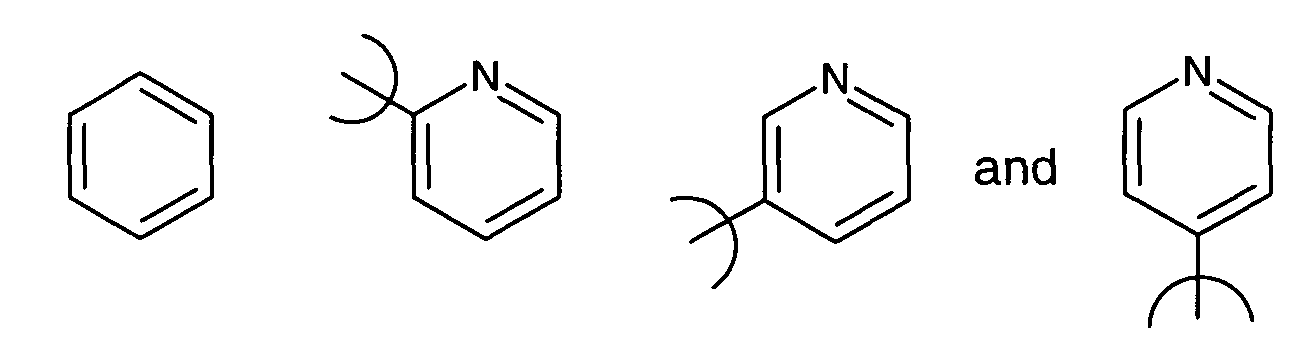

and A is unsubstituted or substituted by one or two R6.



MH- 261
MH+ 317
MH+ 381
Tlc SiO2 Ethyl acetate:cyclohexane (1: 1) Rf 0.45
MH+ 413.
- Examples 2 to 10, as shown in Table 1 that follows, were prepared in the
manner described for Example 1.


1H NMR (CDCl3) δ: 8.33(2H, d, para-di-substituted CH); 8.11(2H, d, para-di-substituted CH); 7.70(1 H, s, aromatic CH); 4.54(2H, t, butyl CH2); 3.12(3H, s, sulphone CH3); 1.88(2H, m, butyl CH2); 1.55(2H, m, butyl CH2); 1.01 (3H, t, butyl CH3).
| Example No. | COX-2: IC50(nM) | COX-1: IC50(nM) |
| 1 | <1 | 81,300 |
| 2 | 23 | 9,675 |
| 3 | 4 | 2,923 |
| 5 | 6 | 61,380 |
| Example No. | COX-2: IC50(nM) | COX-1: IC50(nM) |
| 6 | <10 | 3,752 |
| 7 | <10 | 79,889 |
| 8 | <10 | 1,860 |
| 9 | 22 | 69,000 |
| 10 | 22 | >30000 |
Claims (19)
- Compounds of formula (I)in which:
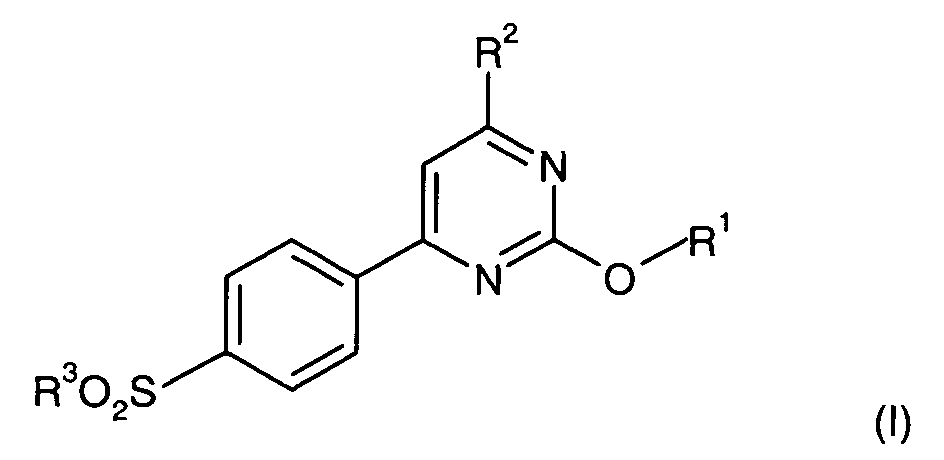 n is 0 to 4.R1 is selected from the group consisting of H, C1-6alkyl, C1-2alkyl substituted by one to five fluorine atoms, C3-6alkenyl, C3-6alkynyl, C3-10cycloalkylC0-6alkyl, C4-12bridged cycloalkyl, A(CR4R5)n and B(CR4R5)n;R2 is C1-2alkyl substituted by one to five fluorine atoms;R3 is selected from the group consisting of C1-6alkyl, NH2 and R7CONH;R4 and R5 are independently selected from H or C1-6alkyl;
A is an unsubstituted 5- or 6-membered heteroaryl or an unsubstituted 6-membered aryl, or a 5- or 6-membered heteroaryl or a 6-membered aryl substituted by one or more R6;R6 is selected from the group consisting of halogen, C1-6alkyl, C1-6alkyl substituted by one more fluorine atoms, C1-6alkoxy, C1-6alkoxy substituted by one or more F, NH2SO2 and C1-6alkylSO2;
B is selected from the group consisting ofwhere
defines the point of attachment of the ring; R7 is selected from the group consisting of H, C1-6alkyl, C1-6alkoxy, C1-6alkylOC1-6alkyl, phenyl, HO2CC1-6alkyl, C1-6alkylOCOC1-6alkyl, C1-6alkylOCO, H2NC1-6alkyl, C1-6alkylOCONHC1-6alkyl and C1-6alkylCONHC1-6alkyl; and
 - Compounds as claimed in claim 1 wherein R1 is selected from the group consisting of C1-6alkyl, C1-2alkyl substituted by one to five fluorine atoms, C3-10cycloalkylC0-6alkyl and A(CR4R5)n.
- Compounds as claimed in claim 1 or 2 wherein R2 is CHF2, CH2F or CF3.
- Compounds as claimed in any of claims 1 to 3 wherein R3 is C1-6alkyl.
- Compounds as claimed in any of claims 1 to 4 wherein R4 and R5 are independently selected from H or methyl.
- Compounds as claimed in any of claims 1 to 5 wherein A is selected from the group consisting ofwhere

defines the point of attachment of the ring
and A is unsubstituted or substituted by one or two R6. - Compounds as claimed in any of claims 1 to 6 wherein R6 is selected from the group consisting of halogen, C1-3alkyl, C1-3alkyl substituted by one to three fluorine atoms, and C1-3alkoxy.
- Compounds as claimed in any of claims 1 to 7 wherein R7 is selected from the group consisting of C1-6alkyl, phenyl and aminomethyl.
- Compounds as claimed in any of claims 1 to 8 wherein n is 0 to 2.
- Compounds as claimed in any of claims 1 to 9 wherein R1 is C1-6alkyl; R2 is CF3; and R3 is C1-6alkyl, such as C1-3alkyl.
- Compounds as claimed in any of claims to 1 to 10 wherein R1 is C3-10cycloalkylC0-6alkyl, such as C3-10cycloalkyl; R2 is CF3; and R3 is C1-6alkyl, such as C1-3alkyl.
- Compounds as claimed in any of claims 1 to 11 wherein R1 is C3-10cycloalkylmethyl, such as C3-7cycloalkylmethyl; R2 is CF3; and R3 is C1-6alkyl, such as C1-3alkyl.
- Compounds as claimed in any of claims 1 to 12 wherein R1 is A(CR4R5)n; R2 is CF3; R3 is methyl; R4 and R5 are both H; A is selected from the group consisting ofand A is unsubstituted or substituted by one or two R6; R6 is selected from the group consisting of fluorine, chlorine, methyl, CF3 and methoxy; and n is 0 or 1.
- Compounds of formula (I) as described in Examples 1 to 9.
- A process for the preparation of a compound of formula (I) as defined in any one of claims 1 to 14, which comprises:(A), reacting an alcohol R1OH of formula (II) or a protected derivative thereof with a compound of formula (III)and thereafter and if necessary,
 (B), interconverting a compound of formula (I) into another compound of formula (I); and/or(C), deprotecting a protected derivative of compound of formula (I).
 - A pharmaceutical composition comprising a compound of formula (I) as defined in any one of claims 1 to 14 in admixture with one or more physiologically acceptable carriers or excipients.
- A compound of formula (I) as defined in any one of claims 1 to 14 for use in human or veterinary medicine.
- The use of a compound of formula (I) as defined in any one of claims 1 to 14 for the manufacture of a therapeutic agent for the treatment of a condition which is mediated by COX-2.
- The use of a compound of formula (I) as defined in any one of claims 1 to 14 for the manufacture of a therapeutic agent for the treatment of an inflammatory disorder.
Applications Claiming Priority (3)
| Application Number | Priority Date | Filing Date | Title |
|---|---|---|---|
| GB0112802 | 2001-05-25 | ||
| GBGB0112802.4A GB0112802D0 (en) | 2001-05-25 | 2001-05-25 | Pyrimidine derivatives |
| EP02730443A EP1390351B1 (en) | 2001-05-25 | 2002-05-23 | Pyrimidine derivatives useful as selective cox-2 inhibitors |
Related Parent Applications (2)
| Application Number | Title | Priority Date | Filing Date |
|---|---|---|---|
| EP02730443.5 Division | 2002-05-23 | ||
| EP02730443A Division EP1390351B1 (en) | 2001-05-25 | 2002-05-23 | Pyrimidine derivatives useful as selective cox-2 inhibitors |
Publications (2)
| Publication Number | Publication Date |
|---|---|
| EP1493735A1 true EP1493735A1 (en) | 2005-01-05 |
| EP1493735B1 EP1493735B1 (en) | 2008-10-29 |
Family
ID=9915322
Family Applications (2)
| Application Number | Title | Priority Date | Filing Date |
|---|---|---|---|
| EP04077503A Expired - Lifetime EP1493735B1 (en) | 2001-05-25 | 2002-05-23 | Pyrimidine derivatives useful as selective cox-2 inhibitors |
| EP02730443A Expired - Lifetime EP1390351B1 (en) | 2001-05-25 | 2002-05-23 | Pyrimidine derivatives useful as selective cox-2 inhibitors |
Family Applications After (1)
| Application Number | Title | Priority Date | Filing Date |
|---|---|---|---|
| EP02730443A Expired - Lifetime EP1390351B1 (en) | 2001-05-25 | 2002-05-23 | Pyrimidine derivatives useful as selective cox-2 inhibitors |
Country Status (28)
| Country | Link |
|---|---|
| US (2) | US7026327B2 (en) |
| EP (2) | EP1493735B1 (en) |
| JP (1) | JP4291688B2 (en) |
| KR (1) | KR100889427B1 (en) |
| CN (1) | CN1255387C (en) |
| AR (1) | AR036028A1 (en) |
| AT (2) | ATE412637T1 (en) |
| AU (1) | AU2002302764B2 (en) |
| BR (1) | BR0209787A (en) |
| CA (1) | CA2448192A1 (en) |
| CO (1) | CO5540311A2 (en) |
| CZ (1) | CZ20033204A3 (en) |
| DE (2) | DE60211149T2 (en) |
| DK (1) | DK1390351T3 (en) |
| ES (2) | ES2262809T3 (en) |
| GB (1) | GB0112802D0 (en) |
| HU (1) | HUP0401280A3 (en) |
| IL (1) | IL158799A0 (en) |
| MX (1) | MXPA03010583A (en) |
| MY (1) | MY130750A (en) |
| NO (1) | NO326949B1 (en) |
| NZ (1) | NZ529719A (en) |
| PL (1) | PL366514A1 (en) |
| PT (1) | PT1390351E (en) |
| SI (1) | SI1390351T1 (en) |
| TW (1) | TWI327140B (en) |
| WO (1) | WO2002096885A1 (en) |
| ZA (1) | ZA200308826B (en) |
Families Citing this family (9)
| Publication number | Priority date | Publication date | Assignee | Title |
|---|---|---|---|---|
| GB0021494D0 (en) | 2000-09-01 | 2000-10-18 | Glaxo Group Ltd | Chemical comkpounds |
| GB0112802D0 (en) | 2001-05-25 | 2001-07-18 | Glaxo Group Ltd | Pyrimidine derivatives |
| GB0112810D0 (en) | 2001-05-25 | 2001-07-18 | Glaxo Group Ltd | Pyrimidine derivatives |
| AU2003258630A1 (en) | 2002-08-19 | 2004-03-11 | Glaxo Group Limited | Pyrimidine derivatives as selective cox-2 inhibitors |
| GB0221443D0 (en) | 2002-09-16 | 2002-10-23 | Glaxo Group Ltd | Pyridine derivates |
| GB0227443D0 (en) * | 2002-11-25 | 2002-12-31 | Glaxo Group Ltd | Pyrimidine derivatives |
| JP2007511569A (en) * | 2003-11-19 | 2007-05-10 | グラクソ グループ リミテッド | Use of cyclooxygenase-2 inhibitors for the treatment of depressive disorders |
| EP1687001A2 (en) * | 2003-11-19 | 2006-08-09 | Glaxo Group Limited | Use of cyclooxygenase-2 selective inhibitors for the treatment of schizophrenic disorders |
| WO2021050700A1 (en) * | 2019-09-13 | 2021-03-18 | The Broad Institute, Inc. | Cyclooxygenase-2 inhibitors and uses thereof |
Citations (4)
| Publication number | Priority date | Publication date | Assignee | Title |
|---|---|---|---|---|
| US3592895A (en) * | 1966-06-17 | 1971-07-13 | Ici Ltd | Pyrimidine derivatives as anti-inflammatory,analgesic and antipyretic agents |
| WO1998003484A1 (en) * | 1996-07-18 | 1998-01-29 | Merck Frosst Canada Inc. | Substituted pyridines as selective cyclooxygenase-2 inhibitors |
| WO2001038311A2 (en) * | 1999-11-26 | 2001-05-31 | Glaxo Group Limited | Pyrimidine derivatives as selective inhibitors of cox-2 |
| WO2001058881A1 (en) * | 2000-02-11 | 2001-08-16 | Glaxo Group Limited | Pyrimidine derivatives as selective inhibitors of cox-2 |
Family Cites Families (28)
| Publication number | Priority date | Publication date | Assignee | Title |
|---|---|---|---|---|
| US3149109A (en) * | 1962-02-20 | 1964-09-15 | Searle & Co | Certain 4-trifluoromethyl-2-(oxy/thio) pyrimidines |
| US5474995A (en) * | 1993-06-24 | 1995-12-12 | Merck Frosst Canada, Inc. | Phenyl heterocycles as cox-2 inhibitors |
| RO118291B1 (en) * | 1993-11-30 | 2003-04-30 | Searle & Co | PIRAZOL DERIVATIVES 1,3,4,5 - TETRASUBSTITUITIS AND PHARMACEUTICAL COMPOSITION CONTAINING CONTAINERS |
| RU2128996C1 (en) | 1994-09-09 | 1999-04-20 | Ниппон Синяку Ко., Лтд. | Heterocyclic derivative and a drug |
| US5596008A (en) | 1995-02-10 | 1997-01-21 | G. D. Searle & Co. | 3,4-Diaryl substituted pyridines for the treatment of inflammation |
| CA2224563A1 (en) | 1995-06-12 | 1996-12-27 | G.D. Searle & Co. | Combination of a cyclooxygenase-2 inhibitor and a leukotriene b4 receptor antagonist for the treatment of inflammations |
| US5700816A (en) | 1995-06-12 | 1997-12-23 | Isakson; Peter C. | Treatment of inflammation and inflammation-related disorders with a combination of a cyclooxygenase-2 inhibitor and a leukotriene A4 hydrolase inhibitor |
| US6020343A (en) * | 1995-10-13 | 2000-02-01 | Merck Frosst Canada, Inc. | (Methylsulfonyl)phenyl-2-(5H)-furanones as COX-2 inhibitors |
| JPH09241161A (en) | 1996-03-08 | 1997-09-16 | Nippon Shinyaku Co Ltd | Medicine |
| JPH09266197A (en) * | 1996-03-28 | 1997-10-07 | Mitsubishi Electric Corp | Semiconductor device and manufacturing method thereof |
| WO1998016227A1 (en) | 1996-10-15 | 1998-04-23 | G.D. Searle & Co. | Method of using cyclooxygenase-2 inhibitors in the treatment and prevention of neoplasia |
| AR038955A1 (en) | 1996-12-05 | 2005-02-02 | Amgen Inc | PIRIMIDINONE AND PIRIDONA SUBSTITUTED COMPOUNDS AND METHODS FOR USE |
| CA2296014A1 (en) | 1997-07-03 | 1999-01-14 | Frank W. Hobbs | Aryl-and arylamino-substituted heterocycles as corticotropin releasing hormone antagonists |
| ES2203985T3 (en) * | 1997-09-05 | 2004-04-16 | Glaxo Group Limited | DERIVATIVES OF 2,3-DIARIL-PIRAZOLO (1,5) PIRIDAZINE, ITS PREPARATION AND ITS USE AS INHIBITORS OF CYCLLOXYGENASE 2 (COX-2) `. |
| US5972986A (en) * | 1997-10-14 | 1999-10-26 | G.D. Searle & Co. | Method of using cyclooxygenase-2 inhibitors in the treatment and prevention of neoplasia |
| DE19909541A1 (en) | 1998-03-06 | 1999-10-14 | American Cyanamid Co | New pyrimidine derivatives useful as herbicides, especially for selective weed control |
| US6306866B1 (en) * | 1998-03-06 | 2001-10-23 | American Cyanamid Company | Use of aryl-substituted pyrimidines as insecticidal and acaricidal agents |
| US6313072B1 (en) * | 1999-02-18 | 2001-11-06 | American Cyanamid Company | Herbicidal 2-aryloxy-or 2-arylthio-6-arylpyrimidines |
| ATE261444T1 (en) * | 1999-02-27 | 2004-03-15 | Glaxo Group Ltd | PYRAZOLOPYRIDINES |
| GB9930358D0 (en) * | 1999-12-22 | 2000-02-09 | Glaxo Group Ltd | Process for the preparation of chemical compounds |
| GB0002312D0 (en) * | 2000-02-01 | 2000-03-22 | Glaxo Group Ltd | Medicaments |
| GB0002336D0 (en) * | 2000-02-01 | 2000-03-22 | Glaxo Group Ltd | Medicaments |
| GB0021494D0 (en) | 2000-09-01 | 2000-10-18 | Glaxo Group Ltd | Chemical comkpounds |
| US6756498B2 (en) * | 2001-04-27 | 2004-06-29 | Smithkline Beecham Corporation | Process for the preparation of chemical compounds |
| GB0112802D0 (en) | 2001-05-25 | 2001-07-18 | Glaxo Group Ltd | Pyrimidine derivatives |
| GB0112803D0 (en) | 2001-05-25 | 2001-07-18 | Glaxo Group Ltd | Pyrimidine derivatives |
| GB0112810D0 (en) | 2001-05-25 | 2001-07-18 | Glaxo Group Ltd | Pyrimidine derivatives |
| US6861249B1 (en) * | 2002-04-09 | 2005-03-01 | David Kent | Microbial spray for animal waste |
-
2001
- 2001-05-25 GB GBGB0112802.4A patent/GB0112802D0/en not_active Ceased
-
2002
- 2002-05-23 ES ES02730443T patent/ES2262809T3/en not_active Expired - Lifetime
- 2002-05-23 DE DE60211149T patent/DE60211149T2/en not_active Expired - Lifetime
- 2002-05-23 JP JP2003500064A patent/JP4291688B2/en not_active Expired - Fee Related
- 2002-05-23 EP EP04077503A patent/EP1493735B1/en not_active Expired - Lifetime
- 2002-05-23 EP EP02730443A patent/EP1390351B1/en not_active Expired - Lifetime
- 2002-05-23 AT AT04077503T patent/ATE412637T1/en not_active IP Right Cessation
- 2002-05-23 BR BR0209787-7A patent/BR0209787A/en not_active Application Discontinuation
- 2002-05-23 CA CA002448192A patent/CA2448192A1/en not_active Abandoned
- 2002-05-23 CN CNB028106377A patent/CN1255387C/en not_active Expired - Fee Related
- 2002-05-23 US US10/477,547 patent/US7026327B2/en not_active Expired - Fee Related
- 2002-05-23 DK DK02730443T patent/DK1390351T3/en active
- 2002-05-23 AU AU2002302764A patent/AU2002302764B2/en not_active Ceased
- 2002-05-23 NZ NZ529719A patent/NZ529719A/en unknown
- 2002-05-23 PT PT02730443T patent/PT1390351E/en unknown
- 2002-05-23 HU HU0401280A patent/HUP0401280A3/en unknown
- 2002-05-23 MX MXPA03010583A patent/MXPA03010583A/en active IP Right Grant
- 2002-05-23 ES ES04077503T patent/ES2316918T3/en not_active Expired - Lifetime
- 2002-05-23 SI SI200230349T patent/SI1390351T1/en unknown
- 2002-05-23 CZ CZ20033204A patent/CZ20033204A3/en unknown
- 2002-05-23 MY MYPI20021911A patent/MY130750A/en unknown
- 2002-05-23 DE DE60229669T patent/DE60229669D1/en not_active Expired - Lifetime
- 2002-05-23 IL IL15879902A patent/IL158799A0/en not_active IP Right Cessation
- 2002-05-23 TW TW091110837A patent/TWI327140B/en not_active IP Right Cessation
- 2002-05-23 AR ARP020101915A patent/AR036028A1/en unknown
- 2002-05-23 AT AT02730443T patent/ATE325103T1/en active
- 2002-05-23 PL PL02366514A patent/PL366514A1/en not_active Application Discontinuation
- 2002-05-23 WO PCT/GB2002/002415 patent/WO2002096885A1/en not_active Ceased
- 2002-05-23 KR KR1020037015401A patent/KR100889427B1/en not_active Expired - Fee Related
-
2003
- 2003-11-12 ZA ZA200308826A patent/ZA200308826B/en unknown
- 2003-11-24 NO NO20035206A patent/NO326949B1/en not_active IP Right Cessation
- 2003-11-25 CO CO03103980A patent/CO5540311A2/en not_active Application Discontinuation
-
2005
- 2005-04-20 US US11/110,118 patent/US20050187235A1/en not_active Abandoned
Patent Citations (4)
| Publication number | Priority date | Publication date | Assignee | Title |
|---|---|---|---|---|
| US3592895A (en) * | 1966-06-17 | 1971-07-13 | Ici Ltd | Pyrimidine derivatives as anti-inflammatory,analgesic and antipyretic agents |
| WO1998003484A1 (en) * | 1996-07-18 | 1998-01-29 | Merck Frosst Canada Inc. | Substituted pyridines as selective cyclooxygenase-2 inhibitors |
| WO2001038311A2 (en) * | 1999-11-26 | 2001-05-31 | Glaxo Group Limited | Pyrimidine derivatives as selective inhibitors of cox-2 |
| WO2001058881A1 (en) * | 2000-02-11 | 2001-08-16 | Glaxo Group Limited | Pyrimidine derivatives as selective inhibitors of cox-2 |
Also Published As
Similar Documents
| Publication | Publication Date | Title |
|---|---|---|
| US7084148B2 (en) | Substituted pyrimidines as selective cyclooxygenase-2 inhibitors | |
| EP1235812B1 (en) | Pyrimidine derivatives as selective inhibitors of cox-2 | |
| EP1392311B1 (en) | Pyrimidine derivatives as selective inhibitors of cox-2 | |
| EP1493735B1 (en) | Pyrimidine derivatives useful as selective cox-2 inhibitors | |
| EP1546128B1 (en) | Pyrimidine derivatives as selective cox-2 inhibitors | |
| AU2002302764A1 (en) | Pyrimidine derivatives useful as selective COX-2 inhibitors | |
| JP2005511485A6 (en) | Pyrimidine derivatives useful as COX-2 selective inhibitors | |
| US20100267755A1 (en) | Pyrimidine derivatives | |
| US7056928B2 (en) | Pyrimidine derivatives as selective inhibitors of COX-2 | |
| US20060194824A1 (en) | Compositions containing pyrimidine derivatives as inhibitors of cox-2 | |
| HK1074043A (en) | Pyrimidine derivatives useful as selective cox-2 inhibitors | |
| HK1063311B (en) | Pyrimidine derivatives useful as selective cox-2 inhibitors |
Legal Events
| Date | Code | Title | Description |
|---|---|---|---|
| PUAI | Public reference made under article 153(3) epc to a published international application that has entered the european phase |
Free format text: ORIGINAL CODE: 0009012 |
|
| 17P | Request for examination filed |
Effective date: 20040909 |
|
| AC | Divisional application: reference to earlier application |
Ref document number: 1390351 Country of ref document: EP Kind code of ref document: P |
|
| AK | Designated contracting states |
Kind code of ref document: A1 Designated state(s): AT BE CH CY DE DK ES FI FR GB GR IE IT LI LU MC NL PT SE TR |
|
| AX | Request for extension of the european patent |
Extension state: SI |
|
| AKX | Designation fees paid |
Designated state(s): AT BE CH CY DE DK ES FI FR GB GR IE IT LI LU MC NL PT SE TR |
|
| AXX | Extension fees paid |
Extension state: SI Payment date: 20040909 |
|
| REG | Reference to a national code |
Ref country code: HK Ref legal event code: DE Ref document number: 1074043 Country of ref document: HK |
|
| 17Q | First examination report despatched |
Effective date: 20060127 |
|
| GRAP | Despatch of communication of intention to grant a patent |
Free format text: ORIGINAL CODE: EPIDOSNIGR1 |
|
| GRAS | Grant fee paid |
Free format text: ORIGINAL CODE: EPIDOSNIGR3 |
|
| GRAA | (expected) grant |
Free format text: ORIGINAL CODE: 0009210 |
|
| RIN1 | Information on inventor provided before grant (corrected) |
Inventor name: NAYLOR, ALAN Inventor name: PAYNE, JOHN Inventor name: PEGG, NEIL ANTHONY |
|
| AC | Divisional application: reference to earlier application |
Ref document number: 1390351 Country of ref document: EP Kind code of ref document: P |
|
| AK | Designated contracting states |
Kind code of ref document: B1 Designated state(s): AT BE CH CY DE DK ES FI FR GB GR IE IT LI LU MC NL PT SE TR |
|
| AX | Request for extension of the european patent |
Extension state: SI |
|
| REG | Reference to a national code |
Ref country code: GB Ref legal event code: FG4D |
|
| REG | Reference to a national code |
Ref country code: CH Ref legal event code: EP |
|
| REG | Reference to a national code |
Ref country code: IE Ref legal event code: FG4D |
|
| REF | Corresponds to: |
Ref document number: 60229669 Country of ref document: DE Date of ref document: 20081211 Kind code of ref document: P |
|
| NLV1 | Nl: lapsed or annulled due to failure to fulfill the requirements of art. 29p and 29m of the patents act | ||
| REG | Reference to a national code |
Ref country code: ES Ref legal event code: FG2A Ref document number: 2316918 Country of ref document: ES Kind code of ref document: T3 |
|
| PG25 | Lapsed in a contracting state [announced via postgrant information from national office to epo] |
Ref country code: AT Free format text: LAPSE BECAUSE OF FAILURE TO SUBMIT A TRANSLATION OF THE DESCRIPTION OR TO PAY THE FEE WITHIN THE PRESCRIBED TIME-LIMIT Effective date: 20081029 |
|
| PG25 | Lapsed in a contracting state [announced via postgrant information from national office to epo] |
Ref country code: FI Free format text: LAPSE BECAUSE OF FAILURE TO SUBMIT A TRANSLATION OF THE DESCRIPTION OR TO PAY THE FEE WITHIN THE PRESCRIBED TIME-LIMIT Effective date: 20081029 Ref country code: PT Free format text: LAPSE BECAUSE OF FAILURE TO SUBMIT A TRANSLATION OF THE DESCRIPTION OR TO PAY THE FEE WITHIN THE PRESCRIBED TIME-LIMIT Effective date: 20090330 Ref country code: NL Free format text: LAPSE BECAUSE OF FAILURE TO SUBMIT A TRANSLATION OF THE DESCRIPTION OR TO PAY THE FEE WITHIN THE PRESCRIBED TIME-LIMIT Effective date: 20081029 |
|
| PG25 | Lapsed in a contracting state [announced via postgrant information from national office to epo] |
Ref country code: DK Free format text: LAPSE BECAUSE OF FAILURE TO SUBMIT A TRANSLATION OF THE DESCRIPTION OR TO PAY THE FEE WITHIN THE PRESCRIBED TIME-LIMIT Effective date: 20081029 |
|
| PG25 | Lapsed in a contracting state [announced via postgrant information from national office to epo] |
Ref country code: SE Free format text: LAPSE BECAUSE OF FAILURE TO SUBMIT A TRANSLATION OF THE DESCRIPTION OR TO PAY THE FEE WITHIN THE PRESCRIBED TIME-LIMIT Effective date: 20090129 |
|
| PLBE | No opposition filed within time limit |
Free format text: ORIGINAL CODE: 0009261 |
|
| STAA | Information on the status of an ep patent application or granted ep patent |
Free format text: STATUS: NO OPPOSITION FILED WITHIN TIME LIMIT |
|
| 26N | No opposition filed |
Effective date: 20090730 |
|
| PG25 | Lapsed in a contracting state [announced via postgrant information from national office to epo] |
Ref country code: MC Free format text: LAPSE BECAUSE OF NON-PAYMENT OF DUE FEES Effective date: 20090531 |
|
| REG | Reference to a national code |
Ref country code: CH Ref legal event code: PL |
|
| PG25 | Lapsed in a contracting state [announced via postgrant information from national office to epo] |
Ref country code: LI Free format text: LAPSE BECAUSE OF NON-PAYMENT OF DUE FEES Effective date: 20090531 Ref country code: CH Free format text: LAPSE BECAUSE OF NON-PAYMENT OF DUE FEES Effective date: 20090531 |
|
| REG | Reference to a national code |
Ref country code: IE Ref legal event code: MM4A |
|
| PG25 | Lapsed in a contracting state [announced via postgrant information from national office to epo] |
Ref country code: IE Free format text: LAPSE BECAUSE OF NON-PAYMENT OF DUE FEES Effective date: 20090523 |
|
| PG25 | Lapsed in a contracting state [announced via postgrant information from national office to epo] |
Ref country code: GR Free format text: LAPSE BECAUSE OF FAILURE TO SUBMIT A TRANSLATION OF THE DESCRIPTION OR TO PAY THE FEE WITHIN THE PRESCRIBED TIME-LIMIT Effective date: 20090130 |
|
| PG25 | Lapsed in a contracting state [announced via postgrant information from national office to epo] |
Ref country code: LU Free format text: LAPSE BECAUSE OF NON-PAYMENT OF DUE FEES Effective date: 20090523 |
|
| PGFP | Annual fee paid to national office [announced via postgrant information from national office to epo] |
Ref country code: ES Payment date: 20110520 Year of fee payment: 10 Ref country code: FR Payment date: 20110511 Year of fee payment: 10 |
|
| PG25 | Lapsed in a contracting state [announced via postgrant information from national office to epo] |
Ref country code: TR Free format text: LAPSE BECAUSE OF FAILURE TO SUBMIT A TRANSLATION OF THE DESCRIPTION OR TO PAY THE FEE WITHIN THE PRESCRIBED TIME-LIMIT Effective date: 20081029 |
|
| PGFP | Annual fee paid to national office [announced via postgrant information from national office to epo] |
Ref country code: GB Payment date: 20110421 Year of fee payment: 10 |
|
| PG25 | Lapsed in a contracting state [announced via postgrant information from national office to epo] |
Ref country code: CY Free format text: LAPSE BECAUSE OF FAILURE TO SUBMIT A TRANSLATION OF THE DESCRIPTION OR TO PAY THE FEE WITHIN THE PRESCRIBED TIME-LIMIT Effective date: 20081029 |
|
| PGFP | Annual fee paid to national office [announced via postgrant information from national office to epo] |
Ref country code: DE Payment date: 20110531 Year of fee payment: 10 Ref country code: BE Payment date: 20110622 Year of fee payment: 10 Ref country code: IT Payment date: 20110526 Year of fee payment: 10 |
|
| REG | Reference to a national code |
Ref country code: HK Ref legal event code: WD Ref document number: 1074043 Country of ref document: HK |
|
| BERE | Be: lapsed |
Owner name: GLAXO GROUP LTD Effective date: 20120531 |
|
| GBPC | Gb: european patent ceased through non-payment of renewal fee |
Effective date: 20120523 |
|
| PG25 | Lapsed in a contracting state [announced via postgrant information from national office to epo] |
Ref country code: BE Free format text: LAPSE BECAUSE OF NON-PAYMENT OF DUE FEES Effective date: 20120531 Ref country code: IT Free format text: LAPSE BECAUSE OF NON-PAYMENT OF DUE FEES Effective date: 20120523 |
|
| REG | Reference to a national code |
Ref country code: FR Ref legal event code: ST Effective date: 20130131 |
|
| REG | Reference to a national code |
Ref country code: DE Ref legal event code: R119 Ref document number: 60229669 Country of ref document: DE Effective date: 20121201 |
|
| PG25 | Lapsed in a contracting state [announced via postgrant information from national office to epo] |
Ref country code: FR Free format text: LAPSE BECAUSE OF NON-PAYMENT OF DUE FEES Effective date: 20120531 Ref country code: GB Free format text: LAPSE BECAUSE OF NON-PAYMENT OF DUE FEES Effective date: 20120523 |
|
| PG25 | Lapsed in a contracting state [announced via postgrant information from national office to epo] |
Ref country code: DE Free format text: LAPSE BECAUSE OF NON-PAYMENT OF DUE FEES Effective date: 20121201 |
|
| REG | Reference to a national code |
Ref country code: ES Ref legal event code: FD2A Effective date: 20131030 |
|
| PG25 | Lapsed in a contracting state [announced via postgrant information from national office to epo] |
Ref country code: ES Free format text: LAPSE BECAUSE OF NON-PAYMENT OF DUE FEES Effective date: 20120524 |