EP1492278A2 - Configuration of wireless network client - Google Patents
Configuration of wireless network client Download PDFInfo
- Publication number
- EP1492278A2 EP1492278A2 EP20040252762 EP04252762A EP1492278A2 EP 1492278 A2 EP1492278 A2 EP 1492278A2 EP 20040252762 EP20040252762 EP 20040252762 EP 04252762 A EP04252762 A EP 04252762A EP 1492278 A2 EP1492278 A2 EP 1492278A2
- Authority
- EP
- European Patent Office
- Prior art keywords
- wireless
- message
- wireless network
- access point
- network client
- Prior art date
- Legal status (The legal status is an assumption and is not a legal conclusion. Google has not performed a legal analysis and makes no representation as to the accuracy of the status listed.)
- Granted
Links
- 238000012544 monitoring process Methods 0.000 claims abstract description 24
- 238000001514 detection method Methods 0.000 claims abstract description 18
- 238000000034 method Methods 0.000 claims description 102
- 230000002093 peripheral effect Effects 0.000 claims description 17
- 230000004044 response Effects 0.000 claims description 9
- 230000000977 initiatory effect Effects 0.000 claims description 3
- 239000000523 sample Substances 0.000 claims 5
- 230000008569 process Effects 0.000 description 30
- 238000009434 installation Methods 0.000 description 13
- 230000005055 memory storage Effects 0.000 description 10
- 238000004891 communication Methods 0.000 description 6
- 238000011900 installation process Methods 0.000 description 4
- 238000010586 diagram Methods 0.000 description 3
- 230000009467 reduction Effects 0.000 description 2
- 230000003993 interaction Effects 0.000 description 1
- 230000007246 mechanism Effects 0.000 description 1
- 230000004048 modification Effects 0.000 description 1
- 238000012986 modification Methods 0.000 description 1
- 238000012545 processing Methods 0.000 description 1
Images



Classifications
-
- H—ELECTRICITY
- H04—ELECTRIC COMMUNICATION TECHNIQUE
- H04W—WIRELESS COMMUNICATION NETWORKS
- H04W48/00—Access restriction; Network selection; Access point selection
- H04W48/18—Selecting a network or a communication service
-
- H—ELECTRICITY
- H04—ELECTRIC COMMUNICATION TECHNIQUE
- H04W—WIRELESS COMMUNICATION NETWORKS
- H04W48/00—Access restriction; Network selection; Access point selection
- H04W48/20—Selecting an access point
-
- H—ELECTRICITY
- H04—ELECTRIC COMMUNICATION TECHNIQUE
- H04L—TRANSMISSION OF DIGITAL INFORMATION, e.g. TELEGRAPHIC COMMUNICATION
- H04L12/00—Data switching networks
- H04L12/28—Data switching networks characterised by path configuration, e.g. LAN [Local Area Networks] or WAN [Wide Area Networks]
-
- H—ELECTRICITY
- H04—ELECTRIC COMMUNICATION TECHNIQUE
- H04L—TRANSMISSION OF DIGITAL INFORMATION, e.g. TELEGRAPHIC COMMUNICATION
- H04L9/00—Cryptographic mechanisms or cryptographic arrangements for secret or secure communications; Network security protocols
-
- H—ELECTRICITY
- H04—ELECTRIC COMMUNICATION TECHNIQUE
- H04W—WIRELESS COMMUNICATION NETWORKS
- H04W88/00—Devices specially adapted for wireless communication networks, e.g. terminals, base stations or access point devices
- H04W88/02—Terminal devices
- H04W88/06—Terminal devices adapted for operation in multiple networks or having at least two operational modes, e.g. multi-mode terminals
Definitions
- the present invention relates to the automatic configuration of a wireless network client in a network environment having a wireless access point, without the need for user intervention.
- the invention relates to the use of an installation program in a computer which is already configured to access a particular local network, wherein the installation program repeatedly broadcasts a predetermined message.
- the wireless network client identifies and then monitors all wireless local networks for the predetermined message.
- the wireless network client Upon detection of the predetermined message by the wireless network client, the wireless network client configures itself to access the wireless access point on the particular wireless local network.
- WLANs wireless local area networks
- a WLAN is supported by a wireless access point which acts as a wireless communication hub for network devices to communicate with each other, or with a wired LAN to which the wireless access point is connected.
- each new WLAN client device When each new WLAN client device is introduced into the WLAN, either by a system administrator in a business setting or by a home user, the WLAN client device must be configured to properly communicate with the wireless access point. This configuration process is often performed via a user interface on a computer that is directly wired to the WLAN client for configuration purposes. In order for a WLAN client to be configured to communicate with the wireless access point, it must be given the value of a network identifier which is used by all devices in that particular WLAN, and, if security encryption, such as wired equivalent protection (WEP), is used in the WLAN, the WEP-related information must also be given to the WLAN client.
- WEP wired equivalent protection
- the foregoing configuration scheme has the disadvantages that the user must be technically sophisticated in the subject of WLANs, and must be able to readily access the network identifier and navigate a confusing configuration user interface every time the user wishes to add or reconfigure a WLAN client in the WLAN.
- the present invention addresses the foregoing disadvantages by providing for the automatic configuration of a wireless network client in a network environment without the need for user intervention.
- the invention uses an installation program in a computer which is already configured to access a particular local network.
- the installation program repeatedly broadcasts a predetermined message, and the wireless network client identifies and then monitors all wireless local networks for the predetermined message.
- the wireless network client Upon detection of the predetermined message by the wireless network client, the wireless network client configures itself to access the wireless access point on the particular wireless local network in which the predetermined message was detected.
- the invention is directed to a method for use in a wireless network client to configure the wireless network client to access an appropriate wireless access point in a network environment, the method including the steps of discovering a wireless local network identity of each wireless access point in the network environment, monitoring each identified wireless local network for detection of a predetermined broadcast message, and configuring, in the case that the predetermined broadcast message is detected in the monitoring step, the wireless network client to access the wireless access point corresponding to the wireless local network on which the predetermined broadcast message was detected, and sending a configuration announcement message from the wireless network client on the wireless local network.
- each predetermined wireless channel is monitored for each identified wireless local network for a predetermined period of time in order to detect the predetermined broadcast message.
- the predetermined broadcast message preferably includes a predetermined character string and the IP address of the sending device, which is preferably an already configured computer in the WLAN which runs installation software.
- the wireless network client maintains a monitor table which contains entries for each discovered wireless local network identifier, such as a service set identifier (SSID) in an 802.11 environment, the MAC address and the signal-to-noise ratio of the wireless access point corresponding to each network identifier, and an indication of whether or not the predetermined broadcast message has been detected on the wireless local network corresponding to each network identifier.
- SSID service set identifier
- the present invention provides for automatic configuration of a wireless network client without user intervention.
- the user can avoid having to obtain the network identifier, and can avoid having to navigate confusing configuration set-up interfaces for each wireless network client being configured. Accordingly, increased reliability and reduction in installation time is achieved for configuration of each new wireless network client by a user.
- the invention is directed to a method for use in a computing device which is configured to access a network environment having a particular wireless access point, the method for configuring a wireless network client to access the particular wireless access point.
- the method includes the steps of initiating broadcasts from the computing device of a predetermined broadcast message on a wireless local network which corresponds to the particular wireless access point, monitoring the wireless local network which corresponds to the particular wireless access point for detection of a configuration announcement message from the wireless network client, and terminating, in the case that the configuration announcement message is detected in the monitoring step or in the case that a timeout period has elapsed, the broadcasts from the computing device of the predetermined broadcast message.
- the predetermined broadcast message is broadcast periodically at a predetermined time interval.
- the broadcasts of the predetermined broadcast message are preferably terminated in the case that the configuration announcement message is detected and a state variable in the configuration announcement message indicates that the wireless network client is a new device on the wireless local network.
- an error message is generated in the case that the timeout period has elapsed and there has been no detection of a configuration announcement message from a new wireless network client.
- the error message preferably initiates a user-interface message on the computer display or on a network peripheral, and the user-interface message indicates that manual identification of a wireless local network identity is required to configure the wireless network client.
- the error message may include a list of detected wireless local network identities in the wireless network environment. Upon a user selection of one of the displayed wireless local network identities, a configuration message is sent, via a connection path such as a USB or other connection, from the computing device to the wireless network client which contains the user selected wireless local network identity for configuration of the wireless network client.
- the present invention provides installation software for automatic configuration of a wireless network client without user intervention.
- the user can avoid having to obtain the network identifier for the local WLAN, and can avoid having to navigate confusing configuration set-up interfaces for each wireless network client being configured. Accordingly, increased reliability and reduction in installation time is achieved for configuration of each new wireless network client by a user.
- the present invention implements the functionality to provide for the automatic configuration of a wireless network client in a network environment having a wireless access point without the need for user intervention.
- the user can avoid having to obtain network-related information for the local wireless access point, and can avoid having to navigate the confusing configuration set-up interfaces every time a new wireless network client is configured to access the local wireless access point.
- the network environment can either be wireless or a combined wired and wireless network.
- the network environment includes a configured computing device 1, other configured computing devices 6 and 7, a wireless network client 2, a network peripheral 10 connected to the wireless network client 2 through a wired connection 11, a wireless network 5, a wireless access point 4, other wireless access points 12-15, other wireless devices containing a wireless interface card, such as wireless devices 8 and 9, and a connection to the Internet 3 to which all wireless access points are connected.
- Configured computing device 1 is preferably a typical personal computer or workstation having a windowing operating system environment. As seen in Figure 1, configured computing device 1 is already configured to use wireless access point 4 to access the wireless network 5. The components of configured computing device 1 are explained in more detail below with respect to Figure 2. The other configured computing devices 6 and 7 may be similar to configured computing device 1 and are only depicted to describe a typical network environment.
- Wireless access point 4 acts as a wireless communication hub for network devices to communicate with each other or with a wired LAN to which the wireless access point is connected.
- Configured computing device 1, other configured computing devices 6 and 7, and other wireless devices containing a wireless interface card, and devices 8 and 9, such as wireless shared printers, communicate with the access point 4 to communicate with each other and to connect to the Internet 3.
- Other wireless access points 12-15 may be similar to access point 4 and are depicted to describe a typical network environment. Wireless access points 12-15 may be used by configured computing device 1, other configured computing devices 6 and 7, and other wireless devices containing a wireless interface card to communicate with each other or to connect with the Internet 3.
- the wireless network client 2 is preferably a wireless device containing a wireless interface card or device with the capability to communicate with wireless access point 4 and wireless access points 12-15. The contents of wireless network client 2 are explained in more detail below with respect to Figure 4.
- Wireless network client 2 is connected to network peripheral 10 through a wired connection 11, such as a printer or other device containing a display.
- the present invention as embodied provides for automatic configuration of the wireless network client 2 to use wireless access point 4 via local network 5 with the assistance of configured computing device 1.
- local network environment includes configured computing device 1, wireless access point 4, connection 21 which may be wired, wireless, or a hybrid of the two, wireless network client 2, and network peripheral 10 connected to wireless network client 2 through wired connection 11.
- Local network 5 provides for network interaction between computing device 1, wireless access point 4, and wireless network client 2.
- Configured computing device 1 is preferably a typical personal computer or workstation having a windowing operating system environment, and includes display 26, host processor 28, memory storage 29, mouse 25, keyboard 27, and a floppy disk 30, and CD-ROM drive 31.
- display 26, host processor 28, memory storage 29, mouse 25, keyboard 27, and a floppy disk 30, and CD-ROM drive 31 The contents of memory storage 29 of configured computing device 1 according to the present invention are explained in more detail below with respect to Figure 3.
- Wireless access point 4 acts as a wireless communication hub for network devices to communicate with each other or with a wired LAN to which the wireless access point is connected. As seen in Figure 2, wireless access point is preferably a typical wireless communication hub. Configured computing device 1 may either interact with wireless access point 4 via wireless communication or a wired connection. Wireless access point 4 contains a wired, wireless, or both a wired and wireless connection 21 to interact with other devices and the Internet 3 via local network 5.
- Wireless network client 2 is an unconfigured wireless device containing a wireless interface card or device with the capability to communicate with a wireless access point once it is configured to do so. The contents of the wireless network client 2 are explained in more detail below with respect to Figure 4. Wireless network client 2 may potentially be connected to network peripheral 10, such as a printer, or other peripheral device, having display 16, through wired connection 11.
- network peripheral 10 such as a printer, or other peripheral device, having display 16, through wired connection 11.
- configured computing device 1 initiates client installation software which repeatedly broadcasts a predetermined message, and wireless network client 2 identifies all local wireless networks and then monitors each identified wireless network for the predetermined message.
- wireless network client 2 Upon detection of the predetermined message by wireless network client 2, wireless network client 2 configures to access wireless access point 4 on local network in 5 in which the predetermined message was detected. In this manner, an already configured client in the desired wireless local network is used to assist wireless network client 2 to find and configure itself to access wireless access point 4.
- FIG 3 is a detailed block diagram showing an overview of the internal architecture of configured computing device 1 depicted in Figure 2.
- configured computing device 1 is seen to include a central processing unit (CPU) 313 such as a programmable microprocessor which is interfaced to computer bus 314.
- CPU central processing unit
- RAM random access memory
- ROM read only memory
- floppy disk 30 for use as main memory
- USB interface 324 display interface 320 for interfacing to monitor 26 (depicted in Figure 2)
- keyboard interface 322 to keyboard 27 depicted in Figure 2)
- mouse interface 323 for interfacing to pointing device 25 (depicted in Figure 2).
- Random access memory 316 interfaces to computer bus 314 so as to provide access to memory storage to CPU 313 during execution of software programs such as operating systems, application programs, and device drivers. More specifically, CPU 313 loads computer-executable process steps from memory storage 29 (or other memory media) into a region of random access memory 316, and thereafter executes the stored process steps from random access memory 316 in order to execute software programs. Data also can be stored in random access memory 316, where the data can be accessed by CPU 313 during execution.
- Read-only-memory (ROM) 317 stores invariant instruction sequences, such as start-up instruction sequences for CPU 313 or basic input/output operating system (“BIOS”) sequences for the operation of peripheral devices attached to the configured computing device 1.
- BIOS basic input/output operating system
- Memory storage 29 is one example of a computer-readable medium that stores program instruction sequences executable by CPU 313 so as to constitute operating system 330, network interface driver 333 for driving network interface 309, USB driver 334 for driving USB interface 324, and other drivers, for driving other interfaces, such as a display interface driver for driving display interface 320.
- Operating system 330 is preferably a windowing operating system, such as Windows CE, XP, Me, 2000 and NT, although other types of operating systems such as other Windows operating systems, DOS, UNIX, LINUX, and Macintosh operating systems may be used with the present invention.
- Memory storage 29 also comprises application programs 331, client installation module 332, and other files 336.
- Application programs 331 consists of various application programs for execution by CPU 313 of configured computing device 1 and may include any type of known application, such as word process applications, finance applications, games, etc.
- Client installation module 322 is a software module which implements the functionality of the present invention to assist in the automatic configuration of the wireless network client 2.
- other files 336 is comprised of other programs and files which may be necessary to operate configured computing device 1, or which are utilized by a user of configured computing device 1.
- wireless network client 2 is a device, such as a laptop computer, printer, and the like, which contains a wireless interface card or device with the capability to communicate with wireless access point 4.
- wireless network client 2 includes CPU 401 which is interfaced to bus 400, a peripheral interface 402 for interfacing with peripheral device 10 through wired connection 11, a wireless network interface 403 for interfacing to a wireless interface card or device with the capability to communicate wirelessly, a USB interface 404 to support a USB connection to other devices, and memory 410.
- CPU 401 and bus 400 operate in a similar fashion to their counterparts in configured computing device 1 and are therefore not described in further detail.
- Memory 410 can be a random access memory (RAM) or another type of memory medium, and comprises operating system 411, client configuration module 412, monitor table 413, wireless network interface driver 414, USB interface driver 415, peripheral interface driver 416, other drivers 418, and other programs/files 417.
- Operating system 411 may or may not be a windowing operating system but must at minimum be a basic operating system for maintaining operation of wireless network client 2. Similar to configured computing device 1, it is important to note that, although memory 410 of wireless network client 2 may contain other applications and files, they are not necessary for the implementation of the present invention. Specifically, wireless network client 2 need only utilize the client configuration module 412 to execute the automatic configuration process of the present invention. This functionality for automatic configuration process is described in more detail below.
- Monitor table 413 is used to store information discovered during the automatic configuration process, and preferably contains entries for each discovered access point, along with corresponding information of the particular access point.
- wireless access point 4 shown in Figure 2 is not described herein because it is typical of such known devices.
- Figure 5 is a flow chart depicting the basic steps of the automatic configuration process for implementing the configuration of wireless network client 2 As seen in Figure 5, configured computing device 1 and wireless network client 2 proceed with separate processes in parallel in order to achieve configuration of wireless network client 2.
- the continue process step S504 determines whether to continue the broadcast step S502 and the monitor step S503, or to terminate the client installation process by proceeding to step S505.
- the terminate client installation step S505 terminates the process in the case that a configuration announcement message from wireless network client 2 is detected in step S503, or in the case that a predetermined timeout period has elapsed. Process flow then ends in step S506. This determination step is described in more detail below with respect to Figure 6.
- wireless network client 2 proceeds through an initiate client configuration step S507, a discover wireless networks step S508, a monitor for predetermined broadcast message step S509, an acceptable access point determined step S510, and a configure wireless network client step S511, according to the invention. More specifically, the initiate client configuration step S507 initiates the execution of client installation module 332 to carry out the automatic configuration of wireless network client 2 according to the present invention.
- the discover wireless network step S508 discovers and stores in monitor table 413 the wireless network identity of each discovered ones of wireless access points 4 and 12-15 in the entire network environment.
- the monitor for predetermined broadcast message step S509 monitors each identified wireless local network identity in order to detect a predetermined broadcast message on that wireless local network.
- the acceptable access point determined step S510 determines if an acceptable access point has been discovered based on detection of a predetermined broadcast message in step S509. If an acceptable access point has been discovered, the process continues to step S511, otherwise the process continues to monitor for predetermined broadcast messages in step S509 unless a predetermined time has expired.
- the functionality of wireless network client 2 is described in more detail below with respect to Figure 7.
- FIG. 6 is a flow chart for explaining in more detail the client installation process performed in configured computing device 1.
- the user initiates client installation module 412 which is already stored onto memory storage 29 of configured computing device 1 from either the Internet 3, or installed from another source such as CD-ROM 31.
- the installation program then initiates the client installation to run in order to automatically configure the wireless network client 2.
- the predetermined broadcast message containing the predetermined character string is broadcasted periodically at a predetermined time interval.
- the configured computing device 1 opens a UDP socket in order to eventually create subnet directed broadcasts. If the client port parameter is specified, the configured computing device 1 binds to the specified port. Subsequently, the configured computing device 1 identifies all the wired and wireless connected access points capable of broadcasting on the network 5. For each wireless access point discovered, the respective IP address for the wireless access point is placed in a list stored to random access memory 316 and/or memory storage 29. If the list of IP addresses is unable to be created through detection of wireless and wired connected access points, a list of IP addresses is obtained from the operating system 330 of the configured computing device 1.
- the list of IP addresses is iterated to determine if the loopback address (127.0.0.1) is contained within the list of IP addresses. If the loopback address is not within the list of IP addresses, the loopback address is added to the list of IP addresses.
- the IP address is changed to an applicable broadcast address based on the class of the IP address as follows: (1) for Class A addresses, the IP addresses' last 3 bytes are changed to 255; (2) for Class B addresses, the IP addresses' last 2 bytes are changed to 255; and for Class C addresses, the IP addresses' last byte is changed to 255.
- a list of broadcast addresses is stored to random access memory 316 and/or memory storage 29 on the configured computing device 1.
- the predetermined character string broadcasted in the predetermined broadcast message from configured computing device 1 is preferably a 48-byte long string.
- the first 12 bytes (header) and the last 4 bytes (footer) are known to wireless network client 2.
- the header and footer enclose 32 bytes of data of which the content varies depending upon the embodiment of the invention.
- the predetermined character string could contain the 12-byte header, 4-byte footer, and 32 bytes of data.
- the 32 bytes of data could contain the IP address of the configured computing device 1 which is broadcasting the predetermined broadcast message.
- configured computing device 1 monitors local network 5 for a configuration announcement message from the wireless network client 2 indicating that it has detected the predetermined broadcast message and notifying of the wireless network client's 2 registration onto the network 5, on which wireless access point 4 resides.
- the configuration announcement message from the wireless network client 2 is a device discovery announcement in according with a device discovery protocol, and preferably includes a state variable indicating that wireless network client 2 is a new device on local network 5 and including an address of wireless network client 2.
- step S604 it is determined if configured computing device 1 received a configuration announcement message from the wireless network client 2 which contains an indication that wireless network client 2 is a new device, and if so, the process is completed and proceeds to return in step S608. If not, the process proceeds to step S605 to determine if a predetermined time to monitor for the broadcast announcement message has expired.
- the mechanism for calculating the predetermined time to monitor is beyond the scope of this invention, but is typically calculated by identifying the load on the network. For example, the predetermined time to monitor may default to a setting of thirty seconds.
- step S605 If the predetermined time to monitor for the broadcast announcement message has not expired in step S605, a time-out counter stored in random access memory 316 of configured computing device 1 is incremented by a predetermined time increment in step S606. Next, the process proceeds back to step S602, which repeats broadcast and monitor steps S602 and S603.
- step S605 the process flows to step S607, in which an error message is generated.
- the error message initiates a user-interface message on display 26 of configured computing device 1, and the user-interface message indicates that manual identification of a wireless local network identity for configuration of wireless network client 2 is required, and that wireless network client 2 must be connected to computing device 1 to complete configuration of wireless network client 2.
- the user-interface message includes a list of wireless local network identities in the network environment.
- a configuration message is sent from the computing device 1 to the wireless network client 2, via a connection such as a USB connection, which contains the designated wireless network identity for configuring the wireless network client 2.
- a user-interface message is generated and sent to peripheral 10 for display on display 16 of network peripheral 10.
- the user-interface message on the display of the network peripheral 10 indicates that manual identification of a wireless local network identity for use by the wireless network client 2 is required and includes a list of wireless local network identities in the wireless network environment.
- a configuration message is sent from peripheral 10 to wireless network client 2 which contains the designated wireless network identity for configuring wireless network client 2.
- the user attaches wireless network client 2 directly to the configured computing device 1 through USB interface 324 or other similar port interface, and wireless network client 2 uploads the monitor table 413 to the configured computing device 1 to allow for the user to select a wireless access point specifically detected by the wireless network client 2.
- the process proceeds to the return step S608 described below.
- FIG. 7 is a flow chart for explaining in more detail the process performed in wireless network client 2 according to an embodiment of the present invention.
- wireless network client 2 scans the network for discovering wireless access points, creates and stores a list of the detected wireless access points, monitors each detected wireless access point for a predetermined broadcast message, records, if the predetermined broadcast message is detected, appropriate details pertaining to corresponding wireless access point, and broadcasts a configuration announcement message containing information pertaining to the new configuration of wireless network client 2.
- wireless network client 2 initiates client configuration module 412 in step S700.
- Wireless network client 2 initializes the configuration process in order for wireless network client 2 to eventually detect the predetermined broadcast message from configured computing device 1 and configure itself automatically.
- Step S701 wireless network client 2 discovers the wireless network identity of each wireless access point within receiving range by monitoring each one of a predetermined set of networks for a beacon message from a wireless access point.
- the beacon message contains the local network identity corresponding to the local network on which the beacon message is detected.
- wireless network client 2 stores the corresponding network identifier of the wireless access points in monitor table 413 of memory 410 in wireless network client 2.
- wireless network client 2 iterates through the list of discovered network identifiers contained within monitor table 413, discovers the MAC address from the wireless access point corresponding to each network identifier, and stores the MAC address in the entry of monitor table 413 which corresponds to the network identifier for that wireless access point.
- wireless network client also stores a signal-to-noise ratio in the entry of monitor table 413 which corresponds to the network identifier for the particular wireless access point.
- the signal-to-noise ratio can be obtained by receiving indicators of signal strength and signal noise from the wireless interface, such as a wireless network card, of wireless network client 2, and then calculating a signal-to-noise ratio based on the obtained values of signal strength and signal noise.
- step S705 wireless network client 2 does not detect a predetermined broadcast message
- the process proceeds directly to step S707, in which it is determined if a predetermined period of time has expired for detecting a predetermined broadcast message in any of the identified networks. If the predetermined period of time to detect a predetermined broadcast message in any of the identified networks has not expired, a time-out counter stored in memory 410 of wireless network client 2 is incremented by a predetermined time increment in step S712, and then the process proceeds back to step S703 in which wireless network client 2 obtains the next MAC address of a wireless access point corresponding to a discovered wireless local network identity for monitoring.
- step S707 wireless network client 2 stops monitoring for detection of the predetermined broadcast message and proceeds to step S708, in which wireless network client 2 cycles through all the entries in monitor table 413 to determine the total number of predetermined broadcast messages that have been detected. If in step S709, only one predetermined broadcast message was detected, the process proceeds to step S710, in which wireless network client 2 configures itself to use the wireless access point corresponding to the wireless local network on which the message was detected. In this regard, the determination in step S709 can be made by checking to see if only one predetermined broadcast message was actually detected.
- the determination can be satisfied when more than one predetermined broadcast message is actually detected, if only one of the wireless local networks on which predetermined broadcast messages were detected has a signal-to-noise ratio which is above a predetermined threshold.
- the signal-to-noise ratio for each wireless access point can be obtained from the corresponding entry in monitor table 413, as discussed above with respect to step S702.
- a configuration announcement message is sent by wireless network client 2, which is preferably a device discovery announcement in accordance with a device discovery protocol, and which includes a state variable having a predetermined value indicating that wireless network client 2 is a new device on local network 5. Process then passes to return in step S713.
- wireless network client 2 If in step S709 more than one or no predetermined broadcast messages are detected by wireless network client 2, wireless network client 2 is not configured and end-user intervention will be required for completing configuration, and the process passes to return in step S713.
- wireless network client 2 may receive more than one predetermined broadcast message, if there are more than one configured clients which are running installation programs at the same time.
- the present invention provides for the automatic configuration of wireless network client in a network environment without the need for user intervention.
- the user can avoid having to obtain the network identifier and other network-related information for the local wireless access point, and can avoid having to navigate a confusing configuration set-up interface for each time a wireless network client is added or is configured in the local wireless network.
Landscapes
- Engineering & Computer Science (AREA)
- Computer Networks & Wireless Communication (AREA)
- Signal Processing (AREA)
- Computer Security & Cryptography (AREA)
- Mobile Radio Communication Systems (AREA)
- Small-Scale Networks (AREA)
- Computer And Data Communications (AREA)
Abstract
Description
- The present invention relates to the automatic configuration of a wireless network client in a network environment having a wireless access point, without the need for user intervention. In particular, the invention relates to the use of an installation program in a computer which is already configured to access a particular local network, wherein the installation program repeatedly broadcasts a predetermined message. The wireless network client identifies and then monitors all wireless local networks for the predetermined message. Upon detection of the predetermined message by the wireless network client, the wireless network client configures itself to access the wireless access point on the particular wireless local network.
- The use of wireless local area networks (WLANs) is very popular in both business and home computing environments for supporting communication between computing devices, peripherals and servers via a wireless access point. In general, a WLAN is a wireless local area network that used high-frequency radio waves to communicate between network devices, instead of using wires to support the connection. A WLAN is supported by a wireless access point which acts as a wireless communication hub for network devices to communicate with each other, or with a wired LAN to which the wireless access point is connected. Each network device in the WLAN, other than the wireless access point, communicates as a WLAN client through a wireless interface card or device.
- When each new WLAN client device is introduced into the WLAN, either by a system administrator in a business setting or by a home user, the WLAN client device must be configured to properly communicate with the wireless access point. This configuration process is often performed via a user interface on a computer that is directly wired to the WLAN client for configuration purposes. In order for a WLAN client to be configured to communicate with the wireless access point, it must be given the value of a network identifier which is used by all devices in that particular WLAN, and, if security encryption, such as wired equivalent protection (WEP), is used in the WLAN, the WEP-related information must also be given to the WLAN client.
- Unfortunately, the configuration of a WLAN client is often confusing, tedious and cumbersome for the user because the user must obtain the network identifier and the WEP-related information from the existing WLAN, and then must navigate through whatever user-interface is provided with the WLAN client to properly configure the WLAN client using the obtained network identifier and the WEP-related information. This process is further complicated when many WLAN clients are added to the WLAN at the same time.
- The foregoing configuration scheme has the disadvantages that the user must be technically sophisticated in the subject of WLANs, and must be able to readily access the network identifier and navigate a confusing configuration user interface every time the user wishes to add or reconfigure a WLAN client in the WLAN.
- The present invention addresses the foregoing disadvantages by providing for the automatic configuration of a wireless network client in a network environment without the need for user intervention. In particular, the invention uses an installation program in a computer which is already configured to access a particular local network. The installation program repeatedly broadcasts a predetermined message, and the wireless network client identifies and then monitors all wireless local networks for the predetermined message. Upon detection of the predetermined message by the wireless network client, the wireless network client configures itself to access the wireless access point on the particular wireless local network in which the predetermined message was detected.
- In one aspect, the invention is directed to a method for use in a wireless network client to configure the wireless network client to access an appropriate wireless access point in a network environment, the method including the steps of discovering a wireless local network identity of each wireless access point in the network environment, monitoring each identified wireless local network for detection of a predetermined broadcast message, and configuring, in the case that the predetermined broadcast message is detected in the monitoring step, the wireless network client to access the wireless access point corresponding to the wireless local network on which the predetermined broadcast message was detected, and sending a configuration announcement message from the wireless network client on the wireless local network.
- Preferably, each predetermined wireless channel is monitored for each identified wireless local network for a predetermined period of time in order to detect the predetermined broadcast message. Also, the predetermined broadcast message preferably includes a predetermined character string and the IP address of the sending device, which is preferably an already configured computer in the WLAN which runs installation software. Also, the wireless network client maintains a monitor table which contains entries for each discovered wireless local network identifier, such as a service set identifier (SSID) in an 802.11 environment, the MAC address and the signal-to-noise ratio of the wireless access point corresponding to each network identifier, and an indication of whether or not the predetermined broadcast message has been detected on the wireless local network corresponding to each network identifier.
- In this manner, the present invention provides for automatic configuration of a wireless network client without user intervention. In particular, the user can avoid having to obtain the network identifier, and can avoid having to navigate confusing configuration set-up interfaces for each wireless network client being configured. Accordingly, increased reliability and reduction in installation time is achieved for configuration of each new wireless network client by a user.
- In another aspect, the invention is directed to a method for use in a computing device which is configured to access a network environment having a particular wireless access point, the method for configuring a wireless network client to access the particular wireless access point. The method includes the steps of initiating broadcasts from the computing device of a predetermined broadcast message on a wireless local network which corresponds to the particular wireless access point, monitoring the wireless local network which corresponds to the particular wireless access point for detection of a configuration announcement message from the wireless network client, and terminating, in the case that the configuration announcement message is detected in the monitoring step or in the case that a timeout period has elapsed, the broadcasts from the computing device of the predetermined broadcast message.
- Preferably, the predetermined broadcast message is broadcast periodically at a predetermined time interval. In addition, the broadcasts of the predetermined broadcast message are preferably terminated in the case that the configuration announcement message is detected and a state variable in the configuration announcement message indicates that the wireless network client is a new device on the wireless local network. Preferably, an error message is generated in the case that the timeout period has elapsed and there has been no detection of a configuration announcement message from a new wireless network client. The error message preferably initiates a user-interface message on the computer display or on a network peripheral, and the user-interface message indicates that manual identification of a wireless local network identity is required to configure the wireless network client. The error message may include a list of detected wireless local network identities in the wireless network environment. Upon a user selection of one of the displayed wireless local network identities, a configuration message is sent, via a connection path such as a USB or other connection, from the computing device to the wireless network client which contains the user selected wireless local network identity for configuration of the wireless network client.
- In this manner, the present invention provides installation software for automatic configuration of a wireless network client without user intervention. In particular, the user can avoid having to obtain the network identifier for the local WLAN, and can avoid having to navigate confusing configuration set-up interfaces for each wireless network client being configured. Accordingly, increased reliability and reduction in installation time is achieved for configuration of each new wireless network client by a user.
- This brief summary has been provided so that the nature of the invention may be understood quickly. A more complete understanding of the invention can be obtained by reference to the following detailed description of an embodiment thereof, which is described by way of example only with reference to the accompanying drawings in which:
- Figure 1 is a representative view of a network environment in which the present invention may be implemented according to one embodiment of the invention.
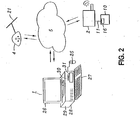
- Figure 2 is a representative view of a local network environment in which the present invention may be implemented according to one embodiment of the invention.
- Figure 3 is a detailed block diagram depicting the internal architecture of a computing device which assists in the configuration of a wireless network client according to one embodiment of the invention.
- Figure 4 is a detailed block diagram depicting the internal architecture of a wireless network client according to one embodiment of the invention.
- Figure 5 is a flow chart for explaining parallel processes which are performed to implement the present invention according to one embodiment of the invention.
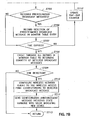
- Figure 6 is a flow chart for explaining in detail the process performed by a configured client computer to implement the present invention according to one embodiment of the invention.
- Figure 7 is a flow chart explaining in detail the process performed by an unconfigured wireless network client to implement the present invention according to one embodiment of the invention.
- The present invention implements the functionality to provide for the automatic configuration of a wireless network client in a network environment having a wireless access point without the need for user intervention. In particular, the user can avoid having to obtain network-related information for the local wireless access point, and can avoid having to navigate the confusing configuration set-up interfaces every time a new wireless network client is configured to access the local wireless access point.
- Turning to Figure 1, a network environment is shown in which the present invention may be implemented. The network environment can either be wireless or a combined wired and wireless network. As seen in Figure 1, the network environment includes a configured
computing device 1, other configuredcomputing devices wireless network client 2, a network peripheral 10 connected to thewireless network client 2 through awired connection 11, awireless network 5, a wireless access point 4, other wireless access points 12-15, other wireless devices containing a wireless interface card, such aswireless devices - Configured
computing device 1 is preferably a typical personal computer or workstation having a windowing operating system environment. As seen in Figure 1, configuredcomputing device 1 is already configured to use wireless access point 4 to access thewireless network 5. The components of configuredcomputing device 1 are explained in more detail below with respect to Figure 2. The other configuredcomputing devices computing device 1 and are only depicted to describe a typical network environment. - Wireless access point 4 acts as a wireless communication hub for network devices to communicate with each other or with a wired LAN to which the wireless access point is connected. Configured
computing device 1, other configuredcomputing devices devices computing device 1, other configuredcomputing devices - The
wireless network client 2 is preferably a wireless device containing a wireless interface card or device with the capability to communicate with wireless access point 4 and wireless access points 12-15. The contents ofwireless network client 2 are explained in more detail below with respect to Figure 4.Wireless network client 2 is connected to network peripheral 10 through awired connection 11, such as a printer or other device containing a display. - As described in more detail below, the present invention as embodied provides for automatic configuration of the
wireless network client 2 to use wireless access point 4 vialocal network 5 with the assistance of configuredcomputing device 1. - Turning to Figure 2, local network environment is shown and includes configured
computing device 1, wireless access point 4,connection 21 which may be wired, wireless, or a hybrid of the two,wireless network client 2, and network peripheral 10 connected towireless network client 2 throughwired connection 11.Local network 5 provides for network interaction betweencomputing device 1, wireless access point 4, andwireless network client 2. - Configured
computing device 1 is preferably a typical personal computer or workstation having a windowing operating system environment, and includesdisplay 26,host processor 28,memory storage 29,mouse 25,keyboard 27, and afloppy disk 30, and CD-ROM drive 31. The contents ofmemory storage 29 of configuredcomputing device 1 according to the present invention are explained in more detail below with respect to Figure 3. - Wireless access point 4 acts as a wireless communication hub for network devices to communicate with each other or with a wired LAN to which the wireless access point is connected. As seen in Figure 2, wireless access point is preferably a typical wireless communication hub. Configured
computing device 1 may either interact with wireless access point 4 via wireless communication or a wired connection. Wireless access point 4 contains a wired, wireless, or both a wired andwireless connection 21 to interact with other devices and theInternet 3 vialocal network 5. -
Wireless network client 2 is an unconfigured wireless device containing a wireless interface card or device with the capability to communicate with a wireless access point once it is configured to do so. The contents of thewireless network client 2 are explained in more detail below with respect to Figure 4.Wireless network client 2 may potentially be connected to network peripheral 10, such as a printer, or other peripheral device, havingdisplay 16, through wiredconnection 11. - As described in more detail below, the embodiment provides for the automatic configuration of
wireless network client 2, thereby enabling it to access wireless access point 4, without the need for user intervention. In particular, configuredcomputing device 1 initiates client installation software which repeatedly broadcasts a predetermined message, andwireless network client 2 identifies all local wireless networks and then monitors each identified wireless network for the predetermined message. Upon detection of the predetermined message bywireless network client 2,wireless network client 2 configures to access wireless access point 4 on local network in 5 in which the predetermined message was detected. In this manner, an already configured client in the desired wireless local network is used to assistwireless network client 2 to find and configure itself to access wireless access point 4. - Figure 3 is a detailed block diagram showing an overview of the internal architecture of configured
computing device 1 depicted in Figure 2. As shown in Figure 3, configuredcomputing device 1 is seen to include a central processing unit (CPU) 313 such as a programmable microprocessor which is interfaced to computer bus 314. Also interfaced to the computer bus 314 arememory storage 29,network interface 309 for either wireless or wired interfacing with wireless access point 4 (depicted in Figure 2), random access memory (RAM) 316 for use as main memory, read only memory (ROM) 317,floppy disk 30, CD-ROM 31,USB interface 324,display interface 320 for interfacing to monitor 26 (depicted in Figure 2),keyboard interface 322 to keyboard 27 (depicted in Figure 2), andmouse interface 323 for interfacing to pointing device 25 (depicted in Figure 2). -
Random access memory 316 interfaces to computer bus 314 so as to provide access to memory storage toCPU 313 during execution of software programs such as operating systems, application programs, and device drivers. More specifically,CPU 313 loads computer-executable process steps from memory storage 29 (or other memory media) into a region ofrandom access memory 316, and thereafter executes the stored process steps fromrandom access memory 316 in order to execute software programs. Data also can be stored inrandom access memory 316, where the data can be accessed byCPU 313 during execution. Read-only-memory (ROM) 317 stores invariant instruction sequences, such as start-up instruction sequences forCPU 313 or basic input/output operating system ("BIOS") sequences for the operation of peripheral devices attached to the configuredcomputing device 1. -
Memory storage 29 is one example of a computer-readable medium that stores program instruction sequences executable byCPU 313 so as to constituteoperating system 330,network interface driver 333 for drivingnetwork interface 309,USB driver 334 for drivingUSB interface 324, and other drivers, for driving other interfaces, such as a display interface driver for drivingdisplay interface 320.Operating system 330 is preferably a windowing operating system, such as Windows CE, XP, Me, 2000 and NT, although other types of operating systems such as other Windows operating systems, DOS, UNIX, LINUX, and Macintosh operating systems may be used with the present invention. -
Memory storage 29 also comprisesapplication programs 331,client installation module 332, andother files 336.Application programs 331 consists of various application programs for execution byCPU 313 of configuredcomputing device 1 and may include any type of known application, such as word process applications, finance applications, games, etc.Client installation module 322 is a software module which implements the functionality of the present invention to assist in the automatic configuration of thewireless network client 2. Lastly,other files 336 is comprised of other programs and files which may be necessary to operate configuredcomputing device 1, or which are utilized by a user of configuredcomputing device 1. - Turning to Figure 4, the internal architecture of
wireless network client 2 is shown. As discussed above,wireless network client 2 is a device, such as a laptop computer, printer, and the like, which contains a wireless interface card or device with the capability to communicate with wireless access point 4. As seen in Figure 4,wireless network client 2 includesCPU 401 which is interfaced to bus 400, aperipheral interface 402 for interfacing withperipheral device 10 through wiredconnection 11, awireless network interface 403 for interfacing to a wireless interface card or device with the capability to communicate wirelessly, aUSB interface 404 to support a USB connection to other devices, andmemory 410.CPU 401 and bus 400 operate in a similar fashion to their counterparts in configuredcomputing device 1 and are therefore not described in further detail. -
Memory 410 can be a random access memory (RAM) or another type of memory medium, and comprisesoperating system 411, client configuration module 412, monitor table 413, wirelessnetwork interface driver 414,USB interface driver 415,peripheral interface driver 416,other drivers 418, and other programs/files 417.Operating system 411 may or may not be a windowing operating system but must at minimum be a basic operating system for maintaining operation ofwireless network client 2. Similar to configuredcomputing device 1, it is important to note that, althoughmemory 410 ofwireless network client 2 may contain other applications and files, they are not necessary for the implementation of the present invention. Specifically,wireless network client 2 need only utilize the client configuration module 412 to execute the automatic configuration process of the present invention. This functionality for automatic configuration process is described in more detail below. Monitor table 413 is used to store information discovered during the automatic configuration process, and preferably contains entries for each discovered access point, along with corresponding information of the particular access point. - The internal architecture of wireless access point 4 shown in Figure 2 is not described herein because it is typical of such known devices.
- Figure 5 is a flow chart depicting the basic steps of the automatic configuration process for implementing the configuration of
wireless network client 2 As seen in Figure 5, configuredcomputing device 1 andwireless network client 2 proceed with separate processes in parallel in order to achieve configuration ofwireless network client 2. - The configured
computing device 1, which has already been configured to access wireless access point 4 innetwork environment 5, proceeds through a client installation initiation step S501, a broadcast predetermined broadcast message step S502, a monitor for configuration messages step S503, a continue determination step S504, and a terminate client installation step S505. More specifically, the initiate client installation step S501 initiates the installation process ofwireless network client 2. During the installation process, broadcast predetermined broadcast message step S502 broadcasts a predetermined message onlocal network 5 via wireless access point 4. The monitor for configuration messages step S503 monitorslocal network 5 which corresponds to the particular wireless access point 4 for detection of a configuration announcement message from a new wireless network client, in this case,wireless network client 2. The continue process step S504 determines whether to continue the broadcast step S502 and the monitor step S503, or to terminate the client installation process by proceeding to step S505. The terminate client installation step S505 terminates the process in the case that a configuration announcement message fromwireless network client 2 is detected in step S503, or in the case that a predetermined timeout period has elapsed. Process flow then ends in step S506. This determination step is described in more detail below with respect to Figure 6. - In a parallel track,
wireless network client 2 proceeds through an initiate client configuration step S507, a discover wireless networks step S508, a monitor for predetermined broadcast message step S509, an acceptable access point determined step S510, and a configure wireless network client step S511, according to the invention. More specifically, the initiate client configuration step S507 initiates the execution ofclient installation module 332 to carry out the automatic configuration ofwireless network client 2 according to the present invention. The discover wireless network step S508 discovers and stores in monitor table 413 the wireless network identity of each discovered ones of wireless access points 4 and 12-15 in the entire network environment. The monitor for predetermined broadcast message step S509 monitors each identified wireless local network identity in order to detect a predetermined broadcast message on that wireless local network. The acceptable access point determined step S510 determines if an acceptable access point has been discovered based on detection of a predetermined broadcast message in step S509. If an acceptable access point has been discovered, the process continues to step S511, otherwise the process continues to monitor for predetermined broadcast messages in step S509 unless a predetermined time has expired. The configure wireless network client step S511, in the case that an appropriate predetermined broadcast message is detected in step S509, configureswireless network client 2 to access the wireless access point corresponding to the wireless local network on which the predetermined broadcast message was detected. Subsequently,wireless network client 2 broadcasts a configuration announcement message on thelocal network 5 to announce that it is now using the same local wireless network as wireless access point 4. The functionality ofwireless network client 2 is described in more detail below with respect to Figure 7. - Figure 6 is a flow chart for explaining in more detail the client installation process performed in configured
computing device 1. In initiate client installation step S601, the user initiates client installation module 412 which is already stored ontomemory storage 29 of configuredcomputing device 1 from either theInternet 3, or installed from another source such as CD-ROM 31. The installation program then initiates the client installation to run in order to automatically configure thewireless network client 2. - In step S602, the predetermined broadcast message containing the predetermined character string is broadcasted periodically at a predetermined time interval. In a preferred embodiment of the invention, the configured
computing device 1 opens a UDP socket in order to eventually create subnet directed broadcasts. If the client port parameter is specified, the configuredcomputing device 1 binds to the specified port. Subsequently, the configuredcomputing device 1 identifies all the wired and wireless connected access points capable of broadcasting on thenetwork 5. For each wireless access point discovered, the respective IP address for the wireless access point is placed in a list stored torandom access memory 316 and/ormemory storage 29. If the list of IP addresses is unable to be created through detection of wireless and wired connected access points, a list of IP addresses is obtained from theoperating system 330 of the configuredcomputing device 1. Once the list of IP addresses for all wireless and wired connected access points capable of broadcasting on thenetwork 5 is created, the list of IP addresses is iterated to determine if the loopback address (127.0.0.1) is contained within the list of IP addresses. If the loopback address is not within the list of IP addresses, the loopback address is added to the list of IP addresses. For each address in the list of IP addresses of wired and wireless connected access points capable of broadcasting on thenetwork 5, the IP address is changed to an applicable broadcast address based on the class of the IP address as follows: (1) for Class A addresses, the IP addresses' last 3 bytes are changed to 255; (2) for Class B addresses, the IP addresses' last 2 bytes are changed to 255; and for Class C addresses, the IP addresses' last byte is changed to 255. In the preferred embodiment of the invention, at this stage in the process a list of broadcast addresses is stored torandom access memory 316 and/ormemory storage 29 on the configuredcomputing device 1. - The predetermined character string broadcasted in the predetermined broadcast message from configured
computing device 1 is preferably a 48-byte long string. Preferably, the first 12 bytes (header) and the last 4 bytes (footer) are known towireless network client 2. The header and footer enclose 32 bytes of data of which the content varies depending upon the embodiment of the invention. For example, according to one embodiment of the invention, the predetermined character string could contain the 12-byte header, 4-byte footer, and 32 bytes of data. The 32 bytes of data could contain the IP address of the configuredcomputing device 1 which is broadcasting the predetermined broadcast message. - More specifically, in order for the
wireless network client 2 to automatically configure, for each broadcast address in the list of broadcast addresses, the configuredcomputing device 1 sends a UDP broadcast packet containing the predetermined broadcast message. If the port parameter for the UDP broadcast packet is specified, the packet is also sent on the port(s) specified. Otherwise, a predetermined port parameter is used for all UDP broadcast packets. - In step S603, configured
computing device 1 monitorslocal network 5 for a configuration announcement message from thewireless network client 2 indicating that it has detected the predetermined broadcast message and notifying of the wireless network client's 2 registration onto thenetwork 5, on which wireless access point 4 resides. The configuration announcement message from thewireless network client 2 is a device discovery announcement in according with a device discovery protocol, and preferably includes a state variable indicating thatwireless network client 2 is a new device onlocal network 5 and including an address ofwireless network client 2. - In step S604, it is determined if configured
computing device 1 received a configuration announcement message from thewireless network client 2 which contains an indication thatwireless network client 2 is a new device, and if so, the process is completed and proceeds to return in step S608. If not, the process proceeds to step S605 to determine if a predetermined time to monitor for the broadcast announcement message has expired. The mechanism for calculating the predetermined time to monitor is beyond the scope of this invention, but is typically calculated by identifying the load on the network. For example, the predetermined time to monitor may default to a setting of thirty seconds. If the predetermined time to monitor for the broadcast announcement message has not expired in step S605, a time-out counter stored inrandom access memory 316 of configuredcomputing device 1 is incremented by a predetermined time increment in step S606. Next, the process proceeds back to step S602, which repeats broadcast and monitor steps S602 and S603. - If in step S605, the predetermined time to monitor for the broadcast announcement message has expired, the process flows to step S607, in which an error message is generated. Preferably, the error message initiates a user-interface message on
display 26 of configuredcomputing device 1, and the user-interface message indicates that manual identification of a wireless local network identity for configuration ofwireless network client 2 is required, and thatwireless network client 2 must be connected tocomputing device 1 to complete configuration ofwireless network client 2. The user-interface message includes a list of wireless local network identities in the network environment. In response to a user selection of a displayed wireless local network identity throughkeyboard 27 ormouse 25, a configuration message is sent from thecomputing device 1 to thewireless network client 2, via a connection such as a USB connection, which contains the designated wireless network identity for configuring thewireless network client 2. - According to another embodiment of the invention, if
wireless network client 2 is attached to the network peripheral 10 containingdisplay 16, a user-interface message is generated and sent to peripheral 10 for display ondisplay 16 of network peripheral 10. The user-interface message on the display of the network peripheral 10 indicates that manual identification of a wireless local network identity for use by thewireless network client 2 is required and includes a list of wireless local network identities in the wireless network environment. In response to a user designation of a displayed wireless local network identity, a configuration message is sent from peripheral 10 towireless network client 2 which contains the designated wireless network identity for configuringwireless network client 2. According to another embodiment of the invention, the user attacheswireless network client 2 directly to the configuredcomputing device 1 throughUSB interface 324 or other similar port interface, andwireless network client 2 uploads the monitor table 413 to the configuredcomputing device 1 to allow for the user to select a wireless access point specifically detected by thewireless network client 2. At the conclusion of the error message generation step S607, the process proceeds to the return step S608 described below. - Figure 7 is a flow chart for explaining in more detail the process performed in
wireless network client 2 according to an embodiment of the present invention. Briefly,wireless network client 2 scans the network for discovering wireless access points, creates and stores a list of the detected wireless access points, monitors each detected wireless access point for a predetermined broadcast message, records, if the predetermined broadcast message is detected, appropriate details pertaining to corresponding wireless access point, and broadcasts a configuration announcement message containing information pertaining to the new configuration ofwireless network client 2. - In more detail,
wireless network client 2 initiates client configuration module 412 in step S700.Wireless network client 2 initializes the configuration process in order forwireless network client 2 to eventually detect the predetermined broadcast message from configuredcomputing device 1 and configure itself automatically. In Step S701,wireless network client 2 discovers the wireless network identity of each wireless access point within receiving range by monitoring each one of a predetermined set of networks for a beacon message from a wireless access point. The beacon message contains the local network identity corresponding to the local network on which the beacon message is detected. For each network identity discovered in step S701,wireless network client 2 stores the corresponding network identifier of the wireless access points in monitor table 413 ofmemory 410 inwireless network client 2. In step S702,wireless network client 2 iterates through the list of discovered network identifiers contained within monitor table 413, discovers the MAC address from the wireless access point corresponding to each network identifier, and stores the MAC address in the entry of monitor table 413 which corresponds to the network identifier for that wireless access point. Preferably, wireless network client also stores a signal-to-noise ratio in the entry of monitor table 413 which corresponds to the network identifier for the particular wireless access point. The signal-to-noise ratio can be obtained by receiving indicators of signal strength and signal noise from the wireless interface, such as a wireless network card, ofwireless network client 2, and then calculating a signal-to-noise ratio based on the obtained values of signal strength and signal noise. - In Step S703,
wireless network client 2 iterates through the list of network identifiers by obtaining the next MAC address of the wireless access point corresponding to the discovered wireless local network identity. Then in step S704,wireless network client 2 monitors predetermined channels of the identified wireless local network for a predetermined period of time. If in step S705,wireless network client 2 detects the predetermined broadcast message on the monitored local network, the process proceeds to step S706 in whichwireless network client 2 records the detection of the predetermined broadcast message in a monitor table 413 entry corresponding to the local network identity of the local network on which the predetermined broadcast message was detected. The process then proceeds to step S707. - If in step S705
wireless network client 2 does not detect a predetermined broadcast message, the process proceeds directly to step S707, in which it is determined if a predetermined period of time has expired for detecting a predetermined broadcast message in any of the identified networks. If the predetermined period of time to detect a predetermined broadcast message in any of the identified networks has not expired, a time-out counter stored inmemory 410 ofwireless network client 2 is incremented by a predetermined time increment in step S712, and then the process proceeds back to step S703 in whichwireless network client 2 obtains the next MAC address of a wireless access point corresponding to a discovered wireless local network identity for monitoring. - If in step S707 the predetermined period of time has expired,
wireless network client 2 stops monitoring for detection of the predetermined broadcast message and proceeds to step S708, in whichwireless network client 2 cycles through all the entries in monitor table 413 to determine the total number of predetermined broadcast messages that have been detected. If in step S709, only one predetermined broadcast message was detected, the process proceeds to step S710, in whichwireless network client 2 configures itself to use the wireless access point corresponding to the wireless local network on which the message was detected. In this regard, the determination in step S709 can be made by checking to see if only one predetermined broadcast message was actually detected. In an alternative embodiment, the determination can be satisfied when more than one predetermined broadcast message is actually detected, if only one of the wireless local networks on which predetermined broadcast messages were detected has a signal-to-noise ratio which is above a predetermined threshold. The signal-to-noise ratio for each wireless access point can be obtained from the corresponding entry in monitor table 413, as discussed above with respect to step S702. Next, in step 711, a configuration announcement message is sent bywireless network client 2, which is preferably a device discovery announcement in accordance with a device discovery protocol, and which includes a state variable having a predetermined value indicating thatwireless network client 2 is a new device onlocal network 5. Process then passes to return in step S713. - If in step S709 more than one or no predetermined broadcast messages are detected by
wireless network client 2,wireless network client 2 is not configured and end-user intervention will be required for completing configuration, and the process passes to return in step S713. For example,wireless network client 2 may receive more than one predetermined broadcast message, if there are more than one configured clients which are running installation programs at the same time. - According to the foregoing features, the present invention provides for the automatic configuration of wireless network client in a network environment without the need for user intervention. In particular, the user can avoid having to obtain the network identifier and other network-related information for the local wireless access point, and can avoid having to navigate a confusing configuration set-up interface for each time a wireless network client is added or is configured in the local wireless network.
- Although the invention has been described with particular illustrative embodiments, the invention is not limited to the above-described embodiments and various changes and modification may be made by those of ordinary skill in the art without departing from the spirit and scope of the invention.
Claims (39)
- A method for use in a wireless network client to configure the wireless network client to access an appropriate wireless access point in a network environment, the method comprising:a discovery step of discovering a wireless local network identity of each wireless access point in the network environment;a monitoring step of monitoring each identified wireless local network for detection of a predetermined broadcast message; anda configuration step of configuring, in the case that the predetermined broadcast message is detected in the monitoring step, the wireless network client to access the wireless access point corresponding to the wireless local network on which the predetermined broadcast message was detected.
- The method according to Claim 1, further comprising the step of sending a configuration announcement message from the wireless network client on the wireless local network.
- The method according to Claim 1, wherein the discovery step discovers the wireless local network identity of each wireless access point by monitoring each one of a predetermined set of wireless local networks for a beacon message from a wireless access point, and the beacon message contains the wireless local network identity corresponding to the wireless local network on which the beacon message is detected.
- The method according to Claim 1, wherein the discovery step discovers the wireless local network identity of each wireless access point by sending a probe request message and monitoring for detection of a probe response message issued by a wireless access point in response to the probe request message, the probe response message containing the wireless local network identity corresponding to the wireless local network on which the probe response message is detected.
- The method according to Claim 1, wherein the monitoring step monitors each identified wireless local network for a predetermined period of time.
- The method according to Claim 1, wherein, in the monitoring step, each one of a plurality of predetermined wireless channels is monitored for each identified wireless local network for a predetermined period of time.
- The method according to Claim 1, wherein, in the discovery step, the wireless network client obtains a MAC address of the wireless access point and a signal-to-noise ratio corresponding to each discovered wireless local network identity.
- The method according to Claim 1, wherein, in the monitoring step, the wireless network client records the detection of each predetermined broadcast message in a table entry of a monitor table.
- The method according to Claim 8, wherein the table entry corresponds to the wireless local network identity of the wireless local network on which the predetermined broadcast message was detected.
- The method according to Claim 1, wherein, in the monitoring step, in the case that the predetermined broadcast message is not detected in any of the identified wireless local networks after a predetermined period of time, the wireless network client stops monitoring for detection of the predetermined broadcast message.
- The method according to Claim 1, wherein, in the configuration step, the wireless network client is configured in the case that only one predetermined broadcast message is detected in the monitoring step.
- The method according to Claim 1, wherein, in the configuration step, the wireless network client records a MAC address of the wireless access point corresponding to the wireless local network of the detected predetermined broadcast message.
- The method according to Claim 1, wherein the predetermined broadcast message includes a predetermined character string.
- The method according to Claim 1, wherein the predetermined broadcast message includes an identifier of a computing device which broadcast the predetermined broadcast message.
- The method according to Claim 1, wherein, in the sending step, the configuration announcement message sent by the wireless network client is a device discovery announcement in accordance with a device discovery protocol.
- The method according to Claim 1, wherein, in the sending step, the configuration announcement message includes a state variable having a value which indicates that the wireless network client is a new device on the wireless local network.
- The method according to Claim 1, wherein the method is initiated in the case that power to the wireless network client is cycled and the wireless network client is unconfigured.
- A wireless network client device for accessing an appropriate wireless access point in a wireless network environment, comprising:a program memory for storing process steps executable to perform a method according to any of Claims 1 to 17; anda processor for executing the process steps stored in said program memory.
- Computer-executable process steps stored on a computer readable medium, said computer-executable process steps for configuring a wireless network client to access an appropriate wireless access point in a wireless network environment, said computer-executable process steps comprising process steps executable to perform a method according to any of Claims 1 to 17.
- A computer-readable medium which stores computer-executable process steps, the computer-executable process steps for configuring a wireless network client to access an appropriate wireless access point in a wireless network environment, said computer-executable process steps comprising process steps executable to perform a method according to any of Claims 1 to 17.
- A method for use in a computing device which is configured to access a particular wireless access point in a network environment, the method for configuring a wireless network client to access the particular wireless access point, the method comprising:a broadcast step of initiating broadcasts from the computing device of a predetermined broadcast message on a wireless local network which corresponds to the particular wireless access point;a monitoring step of monitoring the wireless local network which corresponds to the particular wireless access point for detection of a configuration announcement message from the wireless network client; anda termination step of terminating, in the case that the configuration announcement message is detected in the monitoring step or in the case that a timeout period has elapsed, the broadcasts from the computing device of the predetermined broadcast message.
- The method according to Claim 21, wherein the method is performed in response to a user input to the computing device.
- The method according to Claim 21, wherein, in the broadcast step, the predetermined broadcast message contains a predetermined character string.
- The method according to Claim 21, wherein, in the broadcast step, the predetermined broadcast message contains an identifier corresponding to the computing device.
- The method according to Claim 21, wherein, in the broadcast step, the predetermined broadcast message is broadcast periodically at a predetermined time interval.
- The method according to Claim 21, wherein, in the broadcast step, the predetermined broadcast message is a UDP broadcast message.
- The method according to Claim 21, wherein the configuration announcement message from the wireless network client is a device discovery announcement in accordance with a device discovery protocol.
- The method according to Claim 21, wherein the configuration announcement message from the wireless network client includes a state variable which indicates whether the wireless network client is a new device on the wireless local network, and includes a MAC address of the wireless network client.
- The method according to Claim 28, wherein in the terminating step, the broadcasts of the predetermined broadcast message are terminated in the case that the configuration announcement message is detected and if the state variable in the configuration announcement message indicates that the wireless network client is a new device on the wireless local network.
- The method according to Claim 21, further comprising the step of:a generating step of generating an error message in the case that the timeout period has elapsed and there has been no detection in the monitoring step of a configuration announcement message containing an indication that the wireless network client is a new device on the wireless local network.
- The method according to Claim 30, wherein the error message generated in the generating step initiates a user-interface message on a display connected to the computing device, and the user-interface message indicates that manual identification of a wireless local network identity is required for use by the wireless network client.
- The method according to Claim 31, wherein the displayed user-interface message includes a list of wireless local network identities in the wireless network environment.
- The method according to Claim 32, wherein, in response to a user selection of a displayed wireless local network identity, a configuration message is sent from the computing device to the wireless network client which contains the user selected wireless local network identity for configuring the wireless network client.
- The method according to Claim 30, wherein the error message generated in the generating step initiates a user-interface message on a display of a network peripheral on the wireless local network, and the user-interface message indicates that manual identification of a wireless local network identity is required for use by the wireless network client.
- The method according to Claim 34, wherein the displayed user-interface message includes a list of wireless local network identities in the wireless network environment.
- The method according to Claim 35, wherein, in response to a user selection of a displayed wireless local network identity, a configuration message is sent from the computing device to the wireless network client which contains the user selected wireless local network identity for configuring the wireless network client.
- A computing device configured to access a particular wireless access point in a wireless network environment and enabled to configure a wireless network client to access the particular wireless access point, the computing device comprising:a program memory for storing process steps executable to perform a method according to any of Claims 21 to 36; anda processor for executing the process steps stored in said program memory.
- Computer-executable process steps stored on a computer readable medium, said computer-executable process steps for use in a computing device which is configured to access a particular wireless access point in a wireless network environment, for configuring a wireless network client to access the particular wireless access point, said computer-executable process steps comprising process steps executable to perform a method according to any of Claims 21 to 36.
- A computer-readable medium which stores computer-executable process steps, the computer-executable process steps for use in a computing device which is configured to access a particular wireless access point in a wireless network environment, for configuring a wireless network client to access the particular wireless access point, said computer-executable process steps comprising process steps executable to perform a method according to any of Claims 21 to 36.
Applications Claiming Priority (2)
| Application Number | Priority Date | Filing Date | Title |
|---|---|---|---|
| US606851 | 2003-06-25 | ||
| US10/606,851 US7382741B2 (en) | 2003-06-25 | 2003-06-25 | Configuration of wireless network client |
Publications (3)
| Publication Number | Publication Date |
|---|---|
| EP1492278A2 true EP1492278A2 (en) | 2004-12-29 |
| EP1492278A3 EP1492278A3 (en) | 2010-08-25 |
| EP1492278B1 EP1492278B1 (en) | 2012-08-08 |
Family
ID=33418700
Family Applications (1)
| Application Number | Title | Priority Date | Filing Date |
|---|---|---|---|
| EP04252762A Expired - Lifetime EP1492278B1 (en) | 2003-06-25 | 2004-05-13 | Configuration of wireless network client |
Country Status (5)
| Country | Link |
|---|---|
| US (1) | US7382741B2 (en) |
| EP (1) | EP1492278B1 (en) |
| JP (1) | JP3870205B2 (en) |
| KR (1) | KR100630406B1 (en) |
| CN (1) | CN100534100C (en) |
Cited By (2)
| Publication number | Priority date | Publication date | Assignee | Title |
|---|---|---|---|---|
| WO2009122146A1 (en) * | 2008-03-31 | 2009-10-08 | British Telecommunications Public Limited Company | Method of installing a wireless network |
| EP2160059A3 (en) * | 2008-08-28 | 2010-03-31 | Canon Kabushiki Kaisha | Communication apparatus and control method thereof |
Families Citing this family (38)
| Publication number | Priority date | Publication date | Assignee | Title |
|---|---|---|---|---|
| JP2005065018A (en) * | 2003-08-18 | 2005-03-10 | Nec Corp | Wireless lan connection system, wireless lan connection method and wireless terminal |
| US8527621B2 (en) * | 2003-08-22 | 2013-09-03 | Thomson Licensing | Autologging the presence of a wireless local area network |
| WO2005055560A1 (en) * | 2003-12-01 | 2005-06-16 | Cardinal Health 303, Inc. | System and method for network discovery and connection management |
| KR100810515B1 (en) * | 2003-12-13 | 2008-03-10 | 삼성전자주식회사 | Display management system |
| US7626944B1 (en) * | 2004-03-31 | 2009-12-01 | Packeteer, Inc. | Methods, apparatuses and systems facilitating remote, automated deployment of network devices |
| US7962576B2 (en) * | 2004-07-22 | 2011-06-14 | Sap Ag | Quantity conversion interface for external program calls |
| US7930737B2 (en) * | 2004-08-18 | 2011-04-19 | Broadcom Corporation | Method and system for improved communication network setup utilizing extended terminals |
| US9294353B2 (en) * | 2004-09-08 | 2016-03-22 | Cradlepoint, Inc. | Configuring a wireless router |
| US8295838B2 (en) * | 2004-11-19 | 2012-10-23 | Research In Motion Limited | Method and system for predicting service drop in a wireless network |
| US20060203743A1 (en) * | 2005-03-10 | 2006-09-14 | Quinn Liam B | Apparatus and methods for dynamically configurable wireless network |
| US8156208B2 (en) | 2005-11-21 | 2012-04-10 | Sap Ag | Hierarchical, multi-tiered mapping and monitoring architecture for service-to-device re-mapping for smart items |
| US7860968B2 (en) | 2005-11-21 | 2010-12-28 | Sap Ag | Hierarchical, multi-tiered mapping and monitoring architecture for smart items |
| US8005879B2 (en) | 2005-11-21 | 2011-08-23 | Sap Ag | Service-to-device re-mapping for smart items |
| US8041035B2 (en) * | 2005-12-30 | 2011-10-18 | Intel Corporation | Automatic configuration of devices upon introduction into a networked environment |
| US7672269B2 (en) * | 2006-02-14 | 2010-03-02 | Motorola, Inc. | Methods of distributing an installation program on a wireless link and supporting memory circuit and apparatus |
| US8522341B2 (en) | 2006-03-31 | 2013-08-27 | Sap Ag | Active intervention in service-to-device mapping for smart items |
| US8296413B2 (en) * | 2006-05-31 | 2012-10-23 | Sap Ag | Device registration in a hierarchical monitor service |
| US8131838B2 (en) | 2006-05-31 | 2012-03-06 | Sap Ag | Modular monitor service for smart item monitoring |
| US8065411B2 (en) | 2006-05-31 | 2011-11-22 | Sap Ag | System monitor for networks of nodes |
| US7672248B2 (en) * | 2006-06-13 | 2010-03-02 | Scenera Technologies, Llc | Methods, systems, and computer program products for automatically changing network communication configuration information when a communication session is terminated |
| US8396788B2 (en) | 2006-07-31 | 2013-03-12 | Sap Ag | Cost-based deployment of components in smart item environments |
| US8625434B2 (en) * | 2006-12-29 | 2014-01-07 | Ge Inspection Technologies Lp | IP based voice communication enabled inspection system |
| CN101212368B (en) * | 2006-12-30 | 2011-08-03 | 深圳Tcl新技术有限公司 | Wireless network configuration method and system |
| WO2008086439A1 (en) * | 2007-01-09 | 2008-07-17 | Visa U.S.A. Inc. | Contactless transaction |
| CN101035375A (en) * | 2007-02-02 | 2007-09-12 | 华为技术有限公司 | Self-adaptive communication system, terminal, method and access point |
| US9210034B2 (en) | 2007-03-01 | 2015-12-08 | Cisco Technology, Inc. | Client addressing and roaming in a wireless network |
| TW200904067A (en) * | 2007-07-04 | 2009-01-16 | Asustek Comp Inc | Method and system for connecting network using communication apparatus |
| US8527622B2 (en) | 2007-10-12 | 2013-09-03 | Sap Ag | Fault tolerance framework for networks of nodes |
| US8468165B2 (en) * | 2007-12-02 | 2013-06-18 | Leviton Manufacturing Company, Inc. | Method for discovering network of home or building control devices |
| US8411587B2 (en) * | 2008-02-11 | 2013-04-02 | Dell Products L.P. | System and method for configuring a network |
| US8782251B2 (en) * | 2008-02-27 | 2014-07-15 | Microsoft Corporation | Automated configuration of network mode |
| US8116679B2 (en) * | 2008-09-15 | 2012-02-14 | Sony Ericsson Mobile Communications Ab | WLAN connection facilitated via near field communication |
| US20130286888A1 (en) * | 2012-04-30 | 2013-10-31 | Fabiel Zuniga Gallegos | Generating trial wireless access point (wap) configurations |
| CN103002031B (en) * | 2012-12-03 | 2016-07-13 | 惠州Tcl移动通信有限公司 | A kind of method and system controlling to access wireless routing device |
| US20160037338A1 (en) * | 2014-07-30 | 2016-02-04 | Symbol Technologies, Inc. | Private wireless communication network for guest users |
| JP6501624B2 (en) * | 2015-05-29 | 2019-04-17 | キヤノン株式会社 | INFORMATION PROCESSING APPARATUS, CONTROL METHOD, AND PROGRAM |
| JP6690841B2 (en) * | 2016-08-05 | 2020-04-28 | Necディスプレイソリューションズ株式会社 | Display system, receiving device, display device, and communication connection method |
| WO2018104006A1 (en) | 2016-12-08 | 2018-06-14 | British Telecommunications Public Limited Company | Configuration of wireless-equipped devices |
Citations (3)
| Publication number | Priority date | Publication date | Assignee | Title |
|---|---|---|---|---|
| EP0851700A1 (en) | 1996-12-11 | 1998-07-01 | Hewlett-Packard Company | Cellular mobile radio network discovery method and apparatus therefor |
| WO2002078265A1 (en) | 2001-03-26 | 2002-10-03 | Nokia Corporation | Configuration method and system |
| US20030087646A1 (en) | 2001-11-02 | 2003-05-08 | Daichi Funato | Geographically adjacent access router discovery and caching for mobile nodes |
Family Cites Families (32)
| Publication number | Priority date | Publication date | Assignee | Title |
|---|---|---|---|---|
| US6484029B2 (en) * | 1998-10-13 | 2002-11-19 | Symbol Technologies, Inc. | Apparatus and methods for adapting mobile unit to wireless LAN |
| US6301616B1 (en) * | 1997-04-11 | 2001-10-09 | Microsoft Corporation | Pledge-based resource allocation system |
| FI104604B (en) * | 1997-09-19 | 2000-02-29 | Nokia Networks Oy | Update setting parameter for an Internet access point in a mobile telephone system |
| US6532217B1 (en) * | 1998-06-29 | 2003-03-11 | Ip Dynamics, Inc. | System for automatically determining a network address |
| US6697360B1 (en) * | 1998-09-02 | 2004-02-24 | Cisco Technology, Inc. | Method and apparatus for auto-configuring layer three intermediate computer network devices |
| US6212561B1 (en) | 1998-10-08 | 2001-04-03 | Cisco Technology, Inc. | Forced sequential access to specified domains in a computer network |
| US6463473B1 (en) | 1999-04-09 | 2002-10-08 | Sharewave, Inc. | Configuring a wireless computer network to allow automatic access by a guest client device |
| JP2001054165A (en) | 1999-08-04 | 2001-02-23 | Nippon Telegr & Teleph Corp <Ntt> | Data communication device and method, and recording medium |
| CN1158814C (en) * | 1999-11-19 | 2004-07-21 | 讯宝科技公司 | Device and method for adapting mobile unit to wireless local net |
| US6862285B1 (en) * | 1999-12-13 | 2005-03-01 | Microsoft Corp. | Method and system for communicating with a virtual circuit network |
| US20010033554A1 (en) * | 2000-02-18 | 2001-10-25 | Arun Ayyagari | Proxy-bridge connecting remote users to a limited connectivity network |
| US7000012B2 (en) * | 2000-04-24 | 2006-02-14 | Microsoft Corporation | Systems and methods for uniquely identifying networks by correlating each network name with the application programming interfaces of transport protocols supported by the network |
| US7051087B1 (en) * | 2000-06-05 | 2006-05-23 | Microsoft Corporation | System and method for automatic detection and configuration of network parameters |
| US7103661B2 (en) * | 2000-07-12 | 2006-09-05 | John Raymond Klein | Auto configuration of portable computers for use in wireless local area networks |
| US7152099B1 (en) * | 2000-10-31 | 2006-12-19 | Hewlett-Packard Development Company, Lp. | Friend configuration and method for network devices |
| JP2002252620A (en) | 2001-02-23 | 2002-09-06 | Toshiba Corp | Communication setting method and electronic device |
| US7120129B2 (en) * | 2001-03-13 | 2006-10-10 | Microsoft Corporation | System and method for achieving zero-configuration wireless computing and computing device incorporating same |
| US20020136226A1 (en) * | 2001-03-26 | 2002-09-26 | Bluesocket, Inc. | Methods and systems for enabling seamless roaming of mobile devices among wireless networks |
| US20040003060A1 (en) | 2001-07-13 | 2004-01-01 | International Business Machines Corporation | Method and apparatus for network connection registration and selection |
| JP2003091467A (en) | 2001-07-13 | 2003-03-28 | Internatl Business Mach Corp <Ibm> | Computer device, portable information equipment, method for registering network connection, method for selecting network connection, method for setting network, storage medium and program |
| US7016948B1 (en) * | 2001-12-21 | 2006-03-21 | Mcafee, Inc. | Method and apparatus for detailed protocol analysis of frames captured in an IEEE 802.11 (b) wireless LAN |
| US6667690B2 (en) * | 2002-01-22 | 2003-12-23 | Carrier Corporation | System and method for configuration of HVAC network |
| US6754488B1 (en) * | 2002-03-01 | 2004-06-22 | Networks Associates Technologies, Inc. | System and method for detecting and locating access points in a wireless network |
| US7042852B2 (en) * | 2002-05-20 | 2006-05-09 | Airdefense, Inc. | System and method for wireless LAN dynamic channel change with honeypot trap |
| US8320301B2 (en) * | 2002-10-25 | 2012-11-27 | Qualcomm Incorporated | MIMO WLAN system |
| US7283505B1 (en) * | 2002-10-31 | 2007-10-16 | Aol Llc, A Delaware Limited Liability Company | Configuring wireless access points |
| US20040105414A1 (en) * | 2002-12-02 | 2004-06-03 | Narayanan Sathya R. | Multi-hop wireless network data forwarding |
| US20040151193A1 (en) * | 2002-12-23 | 2004-08-05 | Johan Rune | Bridging between a Bluetooth scatternet and an Ethernet LAN |
| US7146130B2 (en) * | 2003-02-24 | 2006-12-05 | Qualcomm Incorporated | Wireless local access network system detection and selection |
| US20040185845A1 (en) * | 2003-02-28 | 2004-09-23 | Microsoft Corporation | Access point to access point range extension |
| US7269388B2 (en) * | 2003-12-01 | 2007-09-11 | Microsoft Corporation | Bluetooth pan driver |
| US7333464B2 (en) * | 2006-02-01 | 2008-02-19 | Microsoft Corporation | Automated service discovery and wireless network set-up |
-
2003
- 2003-06-25 US US10/606,851 patent/US7382741B2/en not_active Expired - Fee Related
-
2004
- 2004-05-13 EP EP04252762A patent/EP1492278B1/en not_active Expired - Lifetime
- 2004-06-22 JP JP2004183971A patent/JP3870205B2/en not_active Expired - Fee Related
- 2004-06-24 CN CNB2004100616772A patent/CN100534100C/en not_active Expired - Fee Related
- 2004-06-25 KR KR1020040048227A patent/KR100630406B1/en not_active Expired - Fee Related
Patent Citations (3)
| Publication number | Priority date | Publication date | Assignee | Title |
|---|---|---|---|---|
| EP0851700A1 (en) | 1996-12-11 | 1998-07-01 | Hewlett-Packard Company | Cellular mobile radio network discovery method and apparatus therefor |
| WO2002078265A1 (en) | 2001-03-26 | 2002-10-03 | Nokia Corporation | Configuration method and system |
| US20030087646A1 (en) | 2001-11-02 | 2003-05-08 | Daichi Funato | Geographically adjacent access router discovery and caching for mobile nodes |
Cited By (8)
| Publication number | Priority date | Publication date | Assignee | Title |
|---|---|---|---|---|
| WO2009122146A1 (en) * | 2008-03-31 | 2009-10-08 | British Telecommunications Public Limited Company | Method of installing a wireless network |
| EP2160059A3 (en) * | 2008-08-28 | 2010-03-31 | Canon Kabushiki Kaisha | Communication apparatus and control method thereof |
| RU2421945C2 (en) * | 2008-08-28 | 2011-06-20 | Кэнон Кабусики Кайся | Device and method for its control |
| US7995468B2 (en) | 2008-08-28 | 2011-08-09 | Canon Kabushiki Kaisha | Communication apparatus and control method thereof |
| RU2477020C2 (en) * | 2008-08-28 | 2013-02-27 | Кэнон Кабусики Кайся | Communication device and method of its control |
| RU2510155C1 (en) * | 2008-08-28 | 2014-03-20 | Кэнон Кабусики Кайся | Communication device and control method thereof |
| RU2556029C2 (en) * | 2008-08-28 | 2015-07-10 | Кэнон Кабусики Кайся | Communication device and control method thereof |
| US9094897B2 (en) | 2008-08-28 | 2015-07-28 | Canon Kabushiki Kaisha | Communication apparatus and control method thereof |
Also Published As
| Publication number | Publication date |
|---|---|
| JP3870205B2 (en) | 2007-01-17 |
| EP1492278B1 (en) | 2012-08-08 |
| US7382741B2 (en) | 2008-06-03 |
| CN1578319A (en) | 2005-02-09 |
| KR20050001464A (en) | 2005-01-06 |
| US20040264395A1 (en) | 2004-12-30 |
| KR100630406B1 (en) | 2006-10-02 |
| EP1492278A3 (en) | 2010-08-25 |
| JP2005020739A (en) | 2005-01-20 |
| CN100534100C (en) | 2009-08-26 |
Similar Documents
| Publication | Publication Date | Title |
|---|---|---|
| EP1492278B1 (en) | Configuration of wireless network client | |
| US8131209B1 (en) | Repeater configuration and management | |
| CN100581120C (en) | Network device management method and network device control device | |
| EP1484860B1 (en) | Automatic discovery and configuration of external network devices | |
| EP1966939B1 (en) | Proximity service discovery in wireless networks | |
| EP1872250B1 (en) | Wireless device discovery and configuration | |
| US20090222537A1 (en) | System And Method For Interactive Instant Networking | |
| US20110255398A1 (en) | Communication apparatus and control method thereof | |
| US20040064591A1 (en) | Dynamic network configuration | |
| KR20090026132A (en) | An information element for wirelessly conveying information about the service provided by the second device to the first device, a method of obtaining information about the service provided by the second device in the vicinity of the first device, and a computer readable media | |
| CN101336528A (en) | Wireless Communication Network Selection | |
| WO2007075961A2 (en) | Proximity service discovery in wireless networks | |
| CN104812021B (en) | A kind of method and device of AP access AC | |
| EP2151095A2 (en) | Method and apparatus for discovering universal plug and play device using resource information | |
| US20100124881A1 (en) | Database Based Connectivity For Secure SSID | |
| US20090103502A1 (en) | Wireless communication system and wireless communication apparatus and control method thereof | |
| EP4429400A2 (en) | Communication system, communication method, communication device, and communication program | |
| US7430183B2 (en) | Communication system for connecting a communication apparatus to a specific connecting apparatus | |
| US6981033B2 (en) | Selection of a candidate peripheral device | |
| US20060268805A1 (en) | Communication system, and computer and device used in such system | |
| JP2005136591A (en) | Communication environment setting method and communication environment setting program | |
| JP2005110001A (en) | Communication environment setting method and communication environment setting program | |
| EP1622318B1 (en) | System and methods for joining the correct wireless network | |
| US12273807B1 (en) | Establishing communication links to assist headless devices | |
| KR102457064B1 (en) | Network coverage extension system and method for each Internet environment using additional AP |
Legal Events
| Date | Code | Title | Description |
|---|---|---|---|
| PUAI | Public reference made under article 153(3) epc to a published international application that has entered the european phase |
Free format text: ORIGINAL CODE: 0009012 |
|
| AK | Designated contracting states |
Kind code of ref document: A2 Designated state(s): AT BE BG CH CY CZ DE DK EE ES FI FR GB GR HU IE IT LI LU MC NL PL PT RO SE SI SK TR |
|
| AX | Request for extension of the european patent |
Extension state: AL HR LT LV MK |
|
| PUAL | Search report despatched |
Free format text: ORIGINAL CODE: 0009013 |
|
| AK | Designated contracting states |
Kind code of ref document: A3 Designated state(s): AT BE BG CH CY CZ DE DK EE ES FI FR GB GR HU IE IT LI LU MC NL PL PT RO SE SI SK TR |
|
| AX | Request for extension of the european patent |
Extension state: AL HR LT LV MK |
|
| 17P | Request for examination filed |
Effective date: 20110225 |
|
| AKX | Designation fees paid |
Designated state(s): DE FR GB NL |
|
| 17Q | First examination report despatched |
Effective date: 20110518 |
|
| REG | Reference to a national code |
Ref country code: DE Ref legal event code: R079 Ref document number: 602004038796 Country of ref document: DE Free format text: PREVIOUS MAIN CLASS: H04L0012280000 Ipc: H04W0048200000 |
|
| GRAP | Despatch of communication of intention to grant a patent |
Free format text: ORIGINAL CODE: EPIDOSNIGR1 |
|
| RIC1 | Information provided on ipc code assigned before grant |
Ipc: H04W 88/06 20090101ALN20120117BHEP Ipc: H04L 12/28 20060101ALI20120117BHEP Ipc: H04W 48/20 20090101AFI20120117BHEP |
|
| GRAS | Grant fee paid |
Free format text: ORIGINAL CODE: EPIDOSNIGR3 |
|
| GRAA | (expected) grant |
Free format text: ORIGINAL CODE: 0009210 |
|
| AK | Designated contracting states |
Kind code of ref document: B1 Designated state(s): DE FR GB NL |
|
| REG | Reference to a national code |
Ref country code: GB Ref legal event code: FG4D |
|
| REG | Reference to a national code |
Ref country code: DE Ref legal event code: R096 Ref document number: 602004038796 Country of ref document: DE Effective date: 20121011 |
|
| REG | Reference to a national code |
Ref country code: NL Ref legal event code: VDEP Effective date: 20120808 |
|
| PGFP | Annual fee paid to national office [announced via postgrant information from national office to epo] |
Ref country code: FR Payment date: 20120822 Year of fee payment: 10 |
|
| PG25 | Lapsed in a contracting state [announced via postgrant information from national office to epo] |
Ref country code: NL Free format text: LAPSE BECAUSE OF FAILURE TO SUBMIT A TRANSLATION OF THE DESCRIPTION OR TO PAY THE FEE WITHIN THE PRESCRIBED TIME-LIMIT Effective date: 20120808 |
|
| PLBE | No opposition filed within time limit |
Free format text: ORIGINAL CODE: 0009261 |
|
| STAA | Information on the status of an ep patent application or granted ep patent |
Free format text: STATUS: NO OPPOSITION FILED WITHIN TIME LIMIT |
|
| 26N | No opposition filed |
Effective date: 20130510 |
|
| PGFP | Annual fee paid to national office [announced via postgrant information from national office to epo] |
Ref country code: DE Payment date: 20130531 Year of fee payment: 10 Ref country code: GB Payment date: 20130520 Year of fee payment: 10 |
|
| REG | Reference to a national code |
Ref country code: DE Ref legal event code: R097 Ref document number: 602004038796 Country of ref document: DE Effective date: 20130510 |
|
| REG | Reference to a national code |
Ref country code: DE Ref legal event code: R119 Ref document number: 602004038796 Country of ref document: DE |
|
| GBPC | Gb: european patent ceased through non-payment of renewal fee |
Effective date: 20140513 |
|
| REG | Reference to a national code |
Ref country code: DE Ref legal event code: R119 Ref document number: 602004038796 Country of ref document: DE Effective date: 20141202 |
|
| REG | Reference to a national code |
Ref country code: FR Ref legal event code: ST Effective date: 20150130 |
|
| PG25 | Lapsed in a contracting state [announced via postgrant information from national office to epo] |
Ref country code: DE Free format text: LAPSE BECAUSE OF NON-PAYMENT OF DUE FEES Effective date: 20141202 |
|
| PG25 | Lapsed in a contracting state [announced via postgrant information from national office to epo] |
Ref country code: GB Free format text: LAPSE BECAUSE OF NON-PAYMENT OF DUE FEES Effective date: 20140513 Ref country code: FR Free format text: LAPSE BECAUSE OF NON-PAYMENT OF DUE FEES Effective date: 20140602 |