EP1491590A1 - Triphenylmethane colorant compounds - Google Patents
Triphenylmethane colorant compounds Download PDFInfo
- Publication number
- EP1491590A1 EP1491590A1 EP20040014261 EP04014261A EP1491590A1 EP 1491590 A1 EP1491590 A1 EP 1491590A1 EP 20040014261 EP20040014261 EP 20040014261 EP 04014261 A EP04014261 A EP 04014261A EP 1491590 A1 EP1491590 A1 EP 1491590A1
- Authority
- EP
- European Patent Office
- Prior art keywords
- group
- carbon atoms
- another embodiment
- formula
- groups
- Prior art date
- Legal status (The legal status is an assumption and is not a legal conclusion. Google has not performed a legal analysis and makes no representation as to the accuracy of the status listed.)
- Granted
Links
- 150000001875 compounds Chemical class 0.000 title claims abstract description 145
- 239000003086 colorant Substances 0.000 title description 164
- AAAQKTZKLRYKHR-UHFFFAOYSA-N triphenylmethane Chemical compound C1=CC=CC=C1C(C=1C=CC=CC=1)C1=CC=CC=C1 AAAQKTZKLRYKHR-UHFFFAOYSA-N 0.000 title 1
- 125000004432 carbon atom Chemical group C* 0.000 claims description 187
- 125000000217 alkyl group Chemical group 0.000 claims description 103
- 125000003118 aryl group Chemical group 0.000 claims description 58
- 125000003710 aryl alkyl group Chemical group 0.000 claims description 53
- 125000002877 alkyl aryl group Chemical group 0.000 claims description 52
- 150000001450 anions Chemical class 0.000 claims description 29
- 125000004435 hydrogen atom Chemical group [H]* 0.000 claims description 28
- JUJWROOIHBZHMG-UHFFFAOYSA-N Pyridine Chemical compound C1=CC=NC=C1 JUJWROOIHBZHMG-UHFFFAOYSA-N 0.000 claims description 21
- XYFCBTPGUUZFHI-UHFFFAOYSA-N Phosphine Chemical compound P XYFCBTPGUUZFHI-UHFFFAOYSA-N 0.000 claims description 13
- 125000001997 phenyl group Chemical group [H]C1=C([H])C([H])=C(*)C([H])=C1[H] 0.000 claims description 12
- JOYRKODLDBILNP-UHFFFAOYSA-N urethane group Chemical group NC(=O)OCC JOYRKODLDBILNP-UHFFFAOYSA-N 0.000 claims description 12
- 125000003368 amide group Chemical group 0.000 claims description 11
- 125000002947 alkylene group Chemical group 0.000 claims description 10
- 229910006069 SO3H Inorganic materials 0.000 claims description 9
- 125000003277 amino group Chemical group 0.000 claims description 9
- QGZKDVFQNNGYKY-UHFFFAOYSA-O ammonium group Chemical group [NH4+] QGZKDVFQNNGYKY-UHFFFAOYSA-O 0.000 claims description 9
- 125000004185 ester group Chemical group 0.000 claims description 9
- 125000001033 ether group Chemical group 0.000 claims description 9
- 125000005843 halogen group Chemical group 0.000 claims description 9
- 125000000449 nitro group Chemical group [O-][N+](*)=O 0.000 claims description 9
- 125000000020 sulfo group Chemical group O=S(=O)([*])O[H] 0.000 claims description 9
- 125000000858 thiocyanato group Chemical group *SC#N 0.000 claims description 9
- 125000004018 acid anhydride group Chemical group 0.000 claims description 8
- 125000002252 acyl group Chemical group 0.000 claims description 8
- 125000003172 aldehyde group Chemical group 0.000 claims description 8
- IVRMZWNICZWHMI-UHFFFAOYSA-N azide group Chemical group [N-]=[N+]=[N-] IVRMZWNICZWHMI-UHFFFAOYSA-N 0.000 claims description 8
- 125000000751 azo group Chemical group [*]N=N[*] 0.000 claims description 8
- 125000002915 carbonyl group Chemical group [*:2]C([*:1])=O 0.000 claims description 8
- 150000001768 cations Chemical class 0.000 claims description 8
- 125000001651 cyanato group Chemical group [*]OC#N 0.000 claims description 8
- 125000004093 cyano group Chemical group *C#N 0.000 claims description 8
- 125000002887 hydroxy group Chemical group [H]O* 0.000 claims description 8
- 125000001261 isocyanato group Chemical group *N=C=O 0.000 claims description 8
- 125000001810 isothiocyanato group Chemical group *N=C=S 0.000 claims description 8
- 125000000468 ketone group Chemical group 0.000 claims description 8
- 125000002560 nitrile group Chemical group 0.000 claims description 8
- 125000000018 nitroso group Chemical group N(=O)* 0.000 claims description 8
- 125000002467 phosphate group Chemical group [H]OP(=O)(O[H])O[*] 0.000 claims description 8
- 125000005496 phosphonium group Chemical group 0.000 claims description 8
- QAOWNCQODCNURD-UHFFFAOYSA-L sulfate group Chemical group S(=O)(=O)([O-])[O-] QAOWNCQODCNURD-UHFFFAOYSA-L 0.000 claims description 8
- 125000001174 sulfone group Chemical group 0.000 claims description 8
- 125000003375 sulfoxide group Chemical group 0.000 claims description 8
- 125000002813 thiocarbonyl group Chemical group *C(*)=S 0.000 claims description 8
- 125000000101 thioether group Chemical group 0.000 claims description 8
- 125000003396 thiol group Chemical group [H]S* 0.000 claims description 8
- XSQUKJJJFZCRTK-UHFFFAOYSA-N urea group Chemical group NC(=O)N XSQUKJJJFZCRTK-UHFFFAOYSA-N 0.000 claims description 8
- 125000000732 arylene group Chemical group 0.000 claims description 6
- 229910000073 phosphorus hydride Inorganic materials 0.000 claims description 5
- UMJSCPRVCHMLSP-UHFFFAOYSA-N pyridine Natural products COC1=CC=CN=C1 UMJSCPRVCHMLSP-UHFFFAOYSA-N 0.000 claims description 5
- 125000000896 monocarboxylic acid group Chemical group 0.000 claims 2
- 239000000976 ink Substances 0.000 description 123
- 230000008859 change Effects 0.000 description 60
- 238000000034 method Methods 0.000 description 60
- 239000000203 mixture Substances 0.000 description 58
- 229910052757 nitrogen Inorganic materials 0.000 description 58
- IJGRMHOSHXDMSA-UHFFFAOYSA-N Atomic nitrogen Chemical compound N#N IJGRMHOSHXDMSA-UHFFFAOYSA-N 0.000 description 57
- 239000012071 phase Substances 0.000 description 54
- -1 aryleneoxy Chemical group 0.000 description 51
- 239000000047 product Substances 0.000 description 41
- 230000008569 process Effects 0.000 description 39
- 0 *C(*)CC=C1C=C2Oc(cc(cc3)N(*)I)c3C(c(cccc3)c3C(O)=O)=C2C=C1 Chemical compound *C(*)CC=C1C=C2Oc(cc(cc3)N(*)I)c3C(c(cccc3)c3C(O)=O)=C2C=C1 0.000 description 38
- 239000002253 acid Substances 0.000 description 37
- VFNKZQNIXUFLBC-UHFFFAOYSA-N 2',7'-dichlorofluorescein Chemical compound O1C(=O)C2=CC=CC=C2C21C1=CC(Cl)=C(O)C=C1OC1=C2C=C(Cl)C(O)=C1 VFNKZQNIXUFLBC-UHFFFAOYSA-N 0.000 description 35
- 238000006243 chemical reaction Methods 0.000 description 33
- 239000000975 dye Substances 0.000 description 33
- 125000005842 heteroatom Chemical group 0.000 description 33
- OKKJLVBELUTLKV-UHFFFAOYSA-N Methanol Chemical compound OC OKKJLVBELUTLKV-UHFFFAOYSA-N 0.000 description 30
- 229910052760 oxygen Inorganic materials 0.000 description 29
- 239000001301 oxygen Substances 0.000 description 29
- 229910052717 sulfur Inorganic materials 0.000 description 29
- OAICVXFJPJFONN-UHFFFAOYSA-N Phosphorus Chemical compound [P] OAICVXFJPJFONN-UHFFFAOYSA-N 0.000 description 28
- XUIMIQQOPSSXEZ-UHFFFAOYSA-N Silicon Chemical compound [Si] XUIMIQQOPSSXEZ-UHFFFAOYSA-N 0.000 description 28
- NINIDFKCEFEMDL-UHFFFAOYSA-N Sulfur Chemical compound [S] NINIDFKCEFEMDL-UHFFFAOYSA-N 0.000 description 28
- QVGXLLKOCUKJST-UHFFFAOYSA-N atomic oxygen Chemical compound [O] QVGXLLKOCUKJST-UHFFFAOYSA-N 0.000 description 28
- 229910052698 phosphorus Inorganic materials 0.000 description 28
- 239000011574 phosphorus Substances 0.000 description 28
- 229910052710 silicon Inorganic materials 0.000 description 28
- 239000010703 silicon Substances 0.000 description 28
- 239000011593 sulfur Substances 0.000 description 28
- JIAARYAFYJHUJI-UHFFFAOYSA-L zinc dichloride Chemical compound [Cl-].[Cl-].[Zn+2] JIAARYAFYJHUJI-UHFFFAOYSA-L 0.000 description 26
- XLYOFNOQVPJJNP-UHFFFAOYSA-N water Chemical compound O XLYOFNOQVPJJNP-UHFFFAOYSA-N 0.000 description 25
- 239000000243 solution Substances 0.000 description 24
- 239000002904 solvent Substances 0.000 description 24
- PYWVYCXTNDRMGF-UHFFFAOYSA-N rhodamine B Chemical compound [Cl-].C=12C=CC(=[N+](CC)CC)C=C2OC2=CC(N(CC)CC)=CC=C2C=1C1=CC=CC=C1C(O)=O PYWVYCXTNDRMGF-UHFFFAOYSA-N 0.000 description 23
- 239000002585 base Substances 0.000 description 22
- 239000000463 material Substances 0.000 description 22
- 239000011541 reaction mixture Substances 0.000 description 20
- 239000001022 rhodamine dye Substances 0.000 description 20
- 230000003595 spectral effect Effects 0.000 description 20
- 150000007513 acids Chemical class 0.000 description 18
- 125000004122 cyclic group Chemical group 0.000 description 18
- 229920006395 saturated elastomer Polymers 0.000 description 18
- 229910001868 water Inorganic materials 0.000 description 18
- 238000010438 heat treatment Methods 0.000 description 17
- 239000012458 free base Substances 0.000 description 16
- 239000011592 zinc chloride Substances 0.000 description 16
- YXFVVABEGXRONW-UHFFFAOYSA-N Toluene Chemical compound CC1=CC=CC=C1 YXFVVABEGXRONW-UHFFFAOYSA-N 0.000 description 15
- HKUFIYBZNQSHQS-UHFFFAOYSA-N n-octadecyloctadecan-1-amine Chemical compound CCCCCCCCCCCCCCCCCCNCCCCCCCCCCCCCCCCCC HKUFIYBZNQSHQS-UHFFFAOYSA-N 0.000 description 15
- QTBSBXVTEAMEQO-UHFFFAOYSA-N Acetic acid Chemical compound CC(O)=O QTBSBXVTEAMEQO-UHFFFAOYSA-N 0.000 description 13
- 239000012065 filter cake Substances 0.000 description 13
- HEDRZPFGACZZDS-UHFFFAOYSA-N Chloroform Chemical compound ClC(Cl)Cl HEDRZPFGACZZDS-UHFFFAOYSA-N 0.000 description 12
- NTIZESTWPVYFNL-UHFFFAOYSA-N Methyl isobutyl ketone Chemical compound CC(C)CC(C)=O NTIZESTWPVYFNL-UHFFFAOYSA-N 0.000 description 12
- UIHCLUNTQKBZGK-UHFFFAOYSA-N Methyl isobutyl ketone Natural products CCC(C)C(C)=O UIHCLUNTQKBZGK-UHFFFAOYSA-N 0.000 description 12
- SECXISVLQFMRJM-UHFFFAOYSA-N N-Methylpyrrolidone Chemical compound CN1CCCC1=O SECXISVLQFMRJM-UHFFFAOYSA-N 0.000 description 12
- 239000001993 wax Substances 0.000 description 12
- 239000011701 zinc Substances 0.000 description 12
- 229910052725 zinc Inorganic materials 0.000 description 12
- 238000002835 absorbance Methods 0.000 description 11
- 150000001412 amines Chemical class 0.000 description 11
- BRPQOXSCLDDYGP-UHFFFAOYSA-N calcium oxide Chemical compound [O-2].[Ca+2] BRPQOXSCLDDYGP-UHFFFAOYSA-N 0.000 description 11
- 239000000292 calcium oxide Substances 0.000 description 11
- ODINCKMPIJJUCX-UHFFFAOYSA-N calcium oxide Inorganic materials [Ca]=O ODINCKMPIJJUCX-UHFFFAOYSA-N 0.000 description 11
- 229910052799 carbon Inorganic materials 0.000 description 11
- HXJUTPCZVOIRIF-UHFFFAOYSA-N sulfolane Chemical compound O=S1(=O)CCCC1 HXJUTPCZVOIRIF-UHFFFAOYSA-N 0.000 description 11
- 239000001257 hydrogen Substances 0.000 description 10
- 229910052739 hydrogen Inorganic materials 0.000 description 10
- 238000007639 printing Methods 0.000 description 10
- 239000007787 solid Substances 0.000 description 10
- 235000005074 zinc chloride Nutrition 0.000 description 10
- LFQSCWFLJHTTHZ-UHFFFAOYSA-N Ethanol Chemical compound CCO LFQSCWFLJHTTHZ-UHFFFAOYSA-N 0.000 description 9
- 238000010521 absorption reaction Methods 0.000 description 9
- 230000000052 comparative effect Effects 0.000 description 9
- 238000005259 measurement Methods 0.000 description 9
- 125000004433 nitrogen atom Chemical group N* 0.000 description 9
- 125000001424 substituent group Chemical group 0.000 description 9
- KCXVZYZYPLLWCC-UHFFFAOYSA-N EDTA Chemical compound OC(=O)CN(CC(O)=O)CCN(CC(O)=O)CC(O)=O KCXVZYZYPLLWCC-UHFFFAOYSA-N 0.000 description 8
- ZMXDDKWLCZADIW-UHFFFAOYSA-N N,N-Dimethylformamide Chemical compound CN(C)C=O ZMXDDKWLCZADIW-UHFFFAOYSA-N 0.000 description 8
- 239000000460 chlorine Substances 0.000 description 8
- 239000011521 glass Substances 0.000 description 8
- 239000000543 intermediate Substances 0.000 description 8
- 239000012948 isocyanate Substances 0.000 description 8
- 239000012264 purified product Substances 0.000 description 8
- 150000003839 salts Chemical class 0.000 description 8
- 238000001228 spectrum Methods 0.000 description 8
- XNIOWJUQPMKCIJ-UHFFFAOYSA-N 2-(benzylamino)ethanol Chemical compound OCCNCC1=CC=CC=C1 XNIOWJUQPMKCIJ-UHFFFAOYSA-N 0.000 description 7
- WKBOTKDWSSQWDR-UHFFFAOYSA-N Bromine atom Chemical group [Br] WKBOTKDWSSQWDR-UHFFFAOYSA-N 0.000 description 7
- 238000000862 absorption spectrum Methods 0.000 description 7
- 125000001797 benzyl group Chemical group [H]C1=C([H])C([H])=C(C([H])=C1[H])C([H])([H])* 0.000 description 7
- 125000003178 carboxy group Chemical group [H]OC(*)=O 0.000 description 7
- 239000008367 deionised water Substances 0.000 description 7
- 229910021641 deionized water Inorganic materials 0.000 description 7
- 238000009792 diffusion process Methods 0.000 description 7
- 150000002148 esters Chemical class 0.000 description 7
- 150000002513 isocyanates Chemical class 0.000 description 7
- 238000010992 reflux Methods 0.000 description 7
- QWDQYHPOSSHSAW-UHFFFAOYSA-N 1-isocyanatooctadecane Chemical compound CCCCCCCCCCCCCCCCCCN=C=O QWDQYHPOSSHSAW-UHFFFAOYSA-N 0.000 description 6
- ZAMOUSCENKQFHK-UHFFFAOYSA-N Chlorine atom Chemical compound [Cl] ZAMOUSCENKQFHK-UHFFFAOYSA-N 0.000 description 6
- PEDCQBHIVMGVHV-UHFFFAOYSA-N Glycerine Chemical compound OCC(O)CO PEDCQBHIVMGVHV-UHFFFAOYSA-N 0.000 description 6
- LRHPLDYGYMQRHN-UHFFFAOYSA-N N-Butanol Chemical compound CCCCO LRHPLDYGYMQRHN-UHFFFAOYSA-N 0.000 description 6
- HEMHJVSKTPXQMS-UHFFFAOYSA-M Sodium hydroxide Chemical compound [OH-].[Na+] HEMHJVSKTPXQMS-UHFFFAOYSA-M 0.000 description 6
- 230000015572 biosynthetic process Effects 0.000 description 6
- 239000003054 catalyst Substances 0.000 description 6
- 229910052801 chlorine Inorganic materials 0.000 description 6
- MVPPADPHJFYWMZ-UHFFFAOYSA-N chlorobenzene Chemical compound ClC1=CC=CC=C1 MVPPADPHJFYWMZ-UHFFFAOYSA-N 0.000 description 6
- 125000001495 ethyl group Chemical group [H]C([H])([H])C([H])([H])* 0.000 description 6
- 229910052751 metal Inorganic materials 0.000 description 6
- 239000002184 metal Substances 0.000 description 6
- 230000003287 optical effect Effects 0.000 description 6
- XHXFXVLFKHQFAL-UHFFFAOYSA-N phosphoryl trichloride Chemical compound ClP(Cl)(Cl)=O XHXFXVLFKHQFAL-UHFFFAOYSA-N 0.000 description 6
- 125000000547 substituted alkyl group Chemical group 0.000 description 6
- 125000003107 substituted aryl group Chemical group 0.000 description 6
- 229920002803 thermoplastic polyurethane Polymers 0.000 description 6
- 125000003944 tolyl group Chemical group 0.000 description 6
- XLOMVQKBTHCTTD-UHFFFAOYSA-N zinc oxide Inorganic materials [Zn]=O XLOMVQKBTHCTTD-UHFFFAOYSA-N 0.000 description 6
- IOOMXAQUNPWDLL-UHFFFAOYSA-N 2-[6-(diethylamino)-3-(diethyliminiumyl)-3h-xanthen-9-yl]-5-sulfobenzene-1-sulfonate Chemical compound C=12C=CC(=[N+](CC)CC)C=C2OC2=CC(N(CC)CC)=CC=C2C=1C1=CC=C(S(O)(=O)=O)C=C1S([O-])(=O)=O IOOMXAQUNPWDLL-UHFFFAOYSA-N 0.000 description 5
- QAOWNCQODCNURD-UHFFFAOYSA-N Sulfuric acid Chemical compound OS(O)(=O)=O QAOWNCQODCNURD-UHFFFAOYSA-N 0.000 description 5
- UKLDJPRMSDWDSL-UHFFFAOYSA-L [dibutyl(dodecanoyloxy)stannyl] dodecanoate Chemical compound CCCCCCCCCCCC(=O)O[Sn](CCCC)(CCCC)OC(=O)CCCCCCCCCCC UKLDJPRMSDWDSL-UHFFFAOYSA-L 0.000 description 5
- 229910052782 aluminium Inorganic materials 0.000 description 5
- XAGFODPZIPBFFR-UHFFFAOYSA-N aluminium Chemical compound [Al] XAGFODPZIPBFFR-UHFFFAOYSA-N 0.000 description 5
- 150000001408 amides Chemical class 0.000 description 5
- LPTWEDZIPSKWDG-UHFFFAOYSA-N benzenesulfonic acid;dodecane Chemical compound OS(=O)(=O)C1=CC=CC=C1.CCCCCCCCCCCC LPTWEDZIPSKWDG-UHFFFAOYSA-N 0.000 description 5
- 239000007795 chemical reaction product Substances 0.000 description 5
- 239000012975 dibutyltin dilaurate Substances 0.000 description 5
- 230000008034 disappearance Effects 0.000 description 5
- 150000003840 hydrochlorides Chemical class 0.000 description 5
- UHZYTMXLRWXGPK-UHFFFAOYSA-N phosphorus pentachloride Chemical compound ClP(Cl)(Cl)(Cl)Cl UHZYTMXLRWXGPK-UHFFFAOYSA-N 0.000 description 5
- JOXIMZWYDAKGHI-UHFFFAOYSA-N toluene-4-sulfonic acid Chemical compound CC1=CC=C(S(O)(=O)=O)C=C1 JOXIMZWYDAKGHI-UHFFFAOYSA-N 0.000 description 5
- MIJDSYMOBYNHOT-UHFFFAOYSA-N 2-(ethylamino)ethanol Chemical compound CCNCCO MIJDSYMOBYNHOT-UHFFFAOYSA-N 0.000 description 4
- ICSNLGPSRYBMBD-UHFFFAOYSA-N 2-aminopyridine Chemical compound NC1=CC=CC=N1 ICSNLGPSRYBMBD-UHFFFAOYSA-N 0.000 description 4
- CWLKGDAVCFYWJK-UHFFFAOYSA-N 3-aminophenol Chemical compound NC1=CC=CC(O)=C1 CWLKGDAVCFYWJK-UHFFFAOYSA-N 0.000 description 4
- QGZKDVFQNNGYKY-UHFFFAOYSA-N Ammonia Chemical compound N QGZKDVFQNNGYKY-UHFFFAOYSA-N 0.000 description 4
- LSNNMFCWUKXFEE-UHFFFAOYSA-M Bisulfite Chemical compound OS([O-])=O LSNNMFCWUKXFEE-UHFFFAOYSA-M 0.000 description 4
- CTQNGGLPUBDAKN-UHFFFAOYSA-N O-Xylene Chemical compound CC1=CC=CC=C1C CTQNGGLPUBDAKN-UHFFFAOYSA-N 0.000 description 4
- WYURNTSHIVDZCO-UHFFFAOYSA-N Tetrahydrofuran Chemical compound C1CCOC1 WYURNTSHIVDZCO-UHFFFAOYSA-N 0.000 description 4
- 239000000853 adhesive Substances 0.000 description 4
- 230000001070 adhesive effect Effects 0.000 description 4
- GDTBXPJZTBHREO-UHFFFAOYSA-N bromine Chemical group BrBr GDTBXPJZTBHREO-UHFFFAOYSA-N 0.000 description 4
- 229910052794 bromium Inorganic materials 0.000 description 4
- 150000007942 carboxylates Chemical group 0.000 description 4
- 150000001732 carboxylic acid derivatives Chemical class 0.000 description 4
- 238000000576 coating method Methods 0.000 description 4
- 125000000753 cycloalkyl group Chemical group 0.000 description 4
- ZBCBWPMODOFKDW-UHFFFAOYSA-N diethanolamine Chemical compound OCCNCCO ZBCBWPMODOFKDW-UHFFFAOYSA-N 0.000 description 4
- 238000004821 distillation Methods 0.000 description 4
- GNBHRKFJIUUOQI-UHFFFAOYSA-N fluorescein Chemical compound O1C(=O)C2=CC=CC=C2C21C1=CC=C(O)C=C1OC1=CC(O)=CC=C21 GNBHRKFJIUUOQI-UHFFFAOYSA-N 0.000 description 4
- 239000011737 fluorine Substances 0.000 description 4
- 229910052731 fluorine Inorganic materials 0.000 description 4
- 239000012943 hotmelt Substances 0.000 description 4
- ZXEKIIBDNHEJCQ-UHFFFAOYSA-N isobutanol Chemical compound CC(C)CO ZXEKIIBDNHEJCQ-UHFFFAOYSA-N 0.000 description 4
- 229910021645 metal ion Inorganic materials 0.000 description 4
- 150000002762 monocarboxylic acid derivatives Chemical class 0.000 description 4
- YZMHQCWXYHARLS-UHFFFAOYSA-N naphthalene-1,2-disulfonic acid Chemical class C1=CC=CC2=C(S(O)(=O)=O)C(S(=O)(=O)O)=CC=C21 YZMHQCWXYHARLS-UHFFFAOYSA-N 0.000 description 4
- 210000000056 organ Anatomy 0.000 description 4
- 239000000843 powder Substances 0.000 description 4
- GUEIZVNYDFNHJU-UHFFFAOYSA-N quinizarin Chemical compound O=C1C2=CC=CC=C2C(=O)C2=C1C(O)=CC=C2O GUEIZVNYDFNHJU-UHFFFAOYSA-N 0.000 description 4
- 150000003254 radicals Chemical class 0.000 description 4
- 229940043267 rhodamine b Drugs 0.000 description 4
- 238000003756 stirring Methods 0.000 description 4
- 239000000758 substrate Substances 0.000 description 4
- 125000000542 sulfonic acid group Chemical group 0.000 description 4
- 238000003786 synthesis reaction Methods 0.000 description 4
- 238000012360 testing method Methods 0.000 description 4
- 238000012546 transfer Methods 0.000 description 4
- 125000003258 trimethylene group Chemical group [H]C([H])([*:2])C([H])([H])C([H])([H])[*:1] 0.000 description 4
- 210000002268 wool Anatomy 0.000 description 4
- 239000008096 xylene Substances 0.000 description 4
- 239000011787 zinc oxide Substances 0.000 description 4
- PTHDBHDZSMGHKF-UHFFFAOYSA-N 2-piperidin-2-ylethanol Chemical compound OCCC1CCCCN1 PTHDBHDZSMGHKF-UHFFFAOYSA-N 0.000 description 3
- LNBKJWCRFAZVLK-UHFFFAOYSA-N 3',6'-dichlorospiro[2-benzofuran-3,9'-xanthene]-1-one Chemical compound O1C(=O)C2=CC=CC=C2C21C1=CC=C(Cl)C=C1OC1=CC(Cl)=CC=C21 LNBKJWCRFAZVLK-UHFFFAOYSA-N 0.000 description 3
- CYQBIIIAQYFGOP-UHFFFAOYSA-N 3-amino-2,4-diethylphenol Chemical compound CCC1=CC=C(O)C(CC)=C1N CYQBIIIAQYFGOP-UHFFFAOYSA-N 0.000 description 3
- QNGVNLMMEQUVQK-UHFFFAOYSA-N 4-n,4-n-diethylbenzene-1,4-diamine Chemical compound CCN(CC)C1=CC=C(N)C=C1 QNGVNLMMEQUVQK-UHFFFAOYSA-N 0.000 description 3
- WFDIJRYMOXRFFG-UHFFFAOYSA-N Acetic anhydride Chemical compound CC(=O)OC(C)=O WFDIJRYMOXRFFG-UHFFFAOYSA-N 0.000 description 3
- 239000004215 Carbon black (E152) Substances 0.000 description 3
- VEXZGXHMUGYJMC-UHFFFAOYSA-M Chloride anion Chemical compound [Cl-] VEXZGXHMUGYJMC-UHFFFAOYSA-M 0.000 description 3
- PXGOKWXKJXAPGV-UHFFFAOYSA-N Fluorine Chemical compound FF PXGOKWXKJXAPGV-UHFFFAOYSA-N 0.000 description 3
- UFHFLCQGNIYNRP-UHFFFAOYSA-N Hydrogen Chemical compound [H][H] UFHFLCQGNIYNRP-UHFFFAOYSA-N 0.000 description 3
- OFOBLEOULBTSOW-UHFFFAOYSA-N Malonic acid Chemical compound OC(=O)CC(O)=O OFOBLEOULBTSOW-UHFFFAOYSA-N 0.000 description 3
- BZORFPDSXLZWJF-UHFFFAOYSA-N N,N-dimethyl-1,4-phenylenediamine Chemical compound CN(C)C1=CC=C(N)C=C1 BZORFPDSXLZWJF-UHFFFAOYSA-N 0.000 description 3
- MBBZMMPHUWSWHV-BDVNFPICSA-N N-methylglucamine Chemical compound CNC[C@H](O)[C@@H](O)[C@H](O)[C@H](O)CO MBBZMMPHUWSWHV-BDVNFPICSA-N 0.000 description 3
- PAYRUJLWNCNPSJ-UHFFFAOYSA-N N-phenyl amine Natural products NC1=CC=CC=C1 PAYRUJLWNCNPSJ-UHFFFAOYSA-N 0.000 description 3
- REYJJPSVUYRZGE-UHFFFAOYSA-N Octadecylamine Chemical compound CCCCCCCCCCCCCCCCCCN REYJJPSVUYRZGE-UHFFFAOYSA-N 0.000 description 3
- 229910019213 POCl3 Inorganic materials 0.000 description 3
- LGRFSURHDFAFJT-UHFFFAOYSA-N Phthalic anhydride Natural products C1=CC=C2C(=O)OC(=O)C2=C1 LGRFSURHDFAFJT-UHFFFAOYSA-N 0.000 description 3
- 239000004698 Polyethylene Substances 0.000 description 3
- KBAYQFWFCOOCIC-GNVSMLMZSA-N [(1s,4ar,4bs,7s,8ar,10ar)-1,4a-dimethyl-7-propan-2-yl-2,3,4,4b,5,6,7,8,8a,9,10,10a-dodecahydrophenanthren-1-yl]methanol Chemical compound OC[C@@]1(C)CCC[C@]2(C)[C@H]3CC[C@H](C(C)C)C[C@H]3CC[C@H]21 KBAYQFWFCOOCIC-GNVSMLMZSA-N 0.000 description 3
- 229960000583 acetic acid Drugs 0.000 description 3
- 150000001251 acridines Chemical class 0.000 description 3
- 125000003545 alkoxy group Chemical group 0.000 description 3
- MIAUJDCQDVWHEV-UHFFFAOYSA-N benzene-1,2-disulfonic acid Chemical class OS(=O)(=O)C1=CC=CC=C1S(O)(=O)=O MIAUJDCQDVWHEV-UHFFFAOYSA-N 0.000 description 3
- JHIWVOJDXOSYLW-UHFFFAOYSA-N butyl 2,2-difluorocyclopropane-1-carboxylate Chemical compound CCCCOC(=O)C1CC1(F)F JHIWVOJDXOSYLW-UHFFFAOYSA-N 0.000 description 3
- 125000002843 carboxylic acid group Chemical group 0.000 description 3
- 239000000969 carrier Substances 0.000 description 3
- 229940043237 diethanolamine Drugs 0.000 description 3
- 238000006073 displacement reaction Methods 0.000 description 3
- 238000004043 dyeing Methods 0.000 description 3
- 229930195733 hydrocarbon Natural products 0.000 description 3
- 125000000879 imine group Chemical group 0.000 description 3
- 238000002156 mixing Methods 0.000 description 3
- VLKZOEOYAKHREP-UHFFFAOYSA-N n-Hexane Chemical compound CCCCCC VLKZOEOYAKHREP-UHFFFAOYSA-N 0.000 description 3
- VLTRZXGMWDSKGL-UHFFFAOYSA-M perchlorate Inorganic materials [O-]Cl(=O)(=O)=O VLTRZXGMWDSKGL-UHFFFAOYSA-M 0.000 description 3
- 238000002360 preparation method Methods 0.000 description 3
- 239000011347 resin Substances 0.000 description 3
- 229920005989 resin Polymers 0.000 description 3
- 229940124530 sulfonamide Drugs 0.000 description 3
- 125000001273 sulfonato group Chemical group [O-]S(*)(=O)=O 0.000 description 3
- 150000003628 tricarboxylic acids Chemical class 0.000 description 3
- ZYECOAILUNWEAL-NUDFZHEQSA-N (4z)-4-[[2-methoxy-5-(phenylcarbamoyl)phenyl]hydrazinylidene]-n-(3-nitrophenyl)-3-oxonaphthalene-2-carboxamide Chemical compound COC1=CC=C(C(=O)NC=2C=CC=CC=2)C=C1N\N=C(C1=CC=CC=C1C=1)/C(=O)C=1C(=O)NC1=CC=CC([N+]([O-])=O)=C1 ZYECOAILUNWEAL-NUDFZHEQSA-N 0.000 description 2
- 125000004178 (C1-C4) alkyl group Chemical group 0.000 description 2
- KBPLFHHGFOOTCA-UHFFFAOYSA-N 1-Octanol Chemical compound CCCCCCCCO KBPLFHHGFOOTCA-UHFFFAOYSA-N 0.000 description 2
- QBDAFARLDLCWAT-UHFFFAOYSA-N 2,3-dihydropyran-6-one Chemical compound O=C1OCCC=C1 QBDAFARLDLCWAT-UHFFFAOYSA-N 0.000 description 2
- HIXDQWDOVZUNNA-UHFFFAOYSA-N 2-(3,4-dimethoxyphenyl)-5-hydroxy-7-methoxychromen-4-one Chemical compound C=1C(OC)=CC(O)=C(C(C=2)=O)C=1OC=2C1=CC=C(OC)C(OC)=C1 HIXDQWDOVZUNNA-UHFFFAOYSA-N 0.000 description 2
- UKFTXWKNVSVVCJ-UHFFFAOYSA-N 2-[(6-hydrazinylpyridazin-3-yl)-(2-hydroxyethyl)amino]ethanol;hydron;dichloride Chemical class Cl.Cl.NNC1=CC=C(N(CCO)CCO)N=N1 UKFTXWKNVSVVCJ-UHFFFAOYSA-N 0.000 description 2
- WBIQQQGBSDOWNP-UHFFFAOYSA-N 2-dodecylbenzenesulfonic acid Chemical compound CCCCCCCCCCCCC1=CC=CC=C1S(O)(=O)=O WBIQQQGBSDOWNP-UHFFFAOYSA-N 0.000 description 2
- HDECRAPHCDXMIJ-UHFFFAOYSA-N 2-methylbenzenesulfonyl chloride Chemical compound CC1=CC=CC=C1S(Cl)(=O)=O HDECRAPHCDXMIJ-UHFFFAOYSA-N 0.000 description 2
- DZNJMLVCIZGWSC-UHFFFAOYSA-N 3',6'-bis(diethylamino)spiro[2-benzofuran-3,9'-xanthene]-1-one Chemical compound O1C(=O)C2=CC=CC=C2C21C1=CC=C(N(CC)CC)C=C1OC1=CC(N(CC)CC)=CC=C21 DZNJMLVCIZGWSC-UHFFFAOYSA-N 0.000 description 2
- MXGVVALOHKCYGY-UHFFFAOYSA-N 3-[ethyl(octadecyl)amino]phenol Chemical compound CCCCCCCCCCCCCCCCCCN(CC)C1=CC=CC(O)=C1 MXGVVALOHKCYGY-UHFFFAOYSA-N 0.000 description 2
- 229940018563 3-aminophenol Drugs 0.000 description 2
- GPLYAUJTVOYYTL-UHFFFAOYSA-N 4-amino-2-hydroxybenzenesulfonic acid Chemical compound NC1=CC=C(S(O)(=O)=O)C(O)=C1 GPLYAUJTVOYYTL-UHFFFAOYSA-N 0.000 description 2
- 239000005711 Benzoic acid Substances 0.000 description 2
- 229920000742 Cotton Polymers 0.000 description 2
- IAZDPXIOMUYVGZ-UHFFFAOYSA-N Dimethylsulphoxide Chemical compound CS(C)=O IAZDPXIOMUYVGZ-UHFFFAOYSA-N 0.000 description 2
- DHMQDGOQFOQNFH-UHFFFAOYSA-N Glycine Chemical class NCC(O)=O DHMQDGOQFOQNFH-UHFFFAOYSA-N 0.000 description 2
- VEXZGXHMUGYJMC-UHFFFAOYSA-N Hydrochloric acid Chemical compound Cl VEXZGXHMUGYJMC-UHFFFAOYSA-N 0.000 description 2
- IMNFDUFMRHMDMM-UHFFFAOYSA-N N-Heptane Chemical compound CCCCCCC IMNFDUFMRHMDMM-UHFFFAOYSA-N 0.000 description 2
- CDBYLPFSWZWCQE-UHFFFAOYSA-L Sodium Carbonate Chemical compound [Na+].[Na+].[O-]C([O-])=O CDBYLPFSWZWCQE-UHFFFAOYSA-L 0.000 description 2
- DTQVDTLACAAQTR-UHFFFAOYSA-N Trifluoroacetic acid Chemical compound OC(=O)C(F)(F)F DTQVDTLACAAQTR-UHFFFAOYSA-N 0.000 description 2
- 241000364021 Tulsa Species 0.000 description 2
- 244000172533 Viola sororia Species 0.000 description 2
- 150000001298 alcohols Chemical class 0.000 description 2
- 125000001931 aliphatic group Chemical group 0.000 description 2
- 125000005529 alkyleneoxy group Chemical group 0.000 description 2
- 125000000129 anionic group Chemical group 0.000 description 2
- BKNBVEKCHVXGPH-UHFFFAOYSA-N anthracene-1,4,9,10-tetrol Chemical compound C1=CC=C2C(O)=C3C(O)=CC=C(O)C3=C(O)C2=C1 BKNBVEKCHVXGPH-UHFFFAOYSA-N 0.000 description 2
- 239000001000 anthraquinone dye Substances 0.000 description 2
- 125000005532 aryl alkyleneoxy group Chemical group 0.000 description 2
- 125000005605 benzo group Chemical group 0.000 description 2
- UCMIRNVEIXFBKS-UHFFFAOYSA-N beta-alanine Chemical class NCCC(O)=O UCMIRNVEIXFBKS-UHFFFAOYSA-N 0.000 description 2
- KGBXLFKZBHKPEV-UHFFFAOYSA-N boric acid Chemical compound OB(O)O KGBXLFKZBHKPEV-UHFFFAOYSA-N 0.000 description 2
- 239000004327 boric acid Substances 0.000 description 2
- 230000031709 bromination Effects 0.000 description 2
- 238000005893 bromination reaction Methods 0.000 description 2
- 239000006227 byproduct Substances 0.000 description 2
- 229920006317 cationic polymer Polymers 0.000 description 2
- 239000003153 chemical reaction reagent Substances 0.000 description 2
- 229910001914 chlorine tetroxide Inorganic materials 0.000 description 2
- 238000004040 coloring Methods 0.000 description 2
- 238000009833 condensation Methods 0.000 description 2
- 230000005494 condensation Effects 0.000 description 2
- 238000010411 cooking Methods 0.000 description 2
- 239000012043 crude product Substances 0.000 description 2
- 238000002425 crystallisation Methods 0.000 description 2
- 230000008025 crystallization Effects 0.000 description 2
- 230000009615 deamination Effects 0.000 description 2
- 238000006481 deamination reaction Methods 0.000 description 2
- XBDQKXXYIPTUBI-UHFFFAOYSA-N dimethylselenoniopropionate Natural products CCC(O)=O XBDQKXXYIPTUBI-UHFFFAOYSA-N 0.000 description 2
- 238000002845 discoloration Methods 0.000 description 2
- 229940060296 dodecylbenzenesulfonic acid Drugs 0.000 description 2
- RDYMFSUJUZBWLH-UHFFFAOYSA-N endosulfan Chemical compound C12COS(=O)OCC2C2(Cl)C(Cl)=C(Cl)C1(Cl)C2(Cl)Cl RDYMFSUJUZBWLH-UHFFFAOYSA-N 0.000 description 2
- 230000032050 esterification Effects 0.000 description 2
- 238000005886 esterification reaction Methods 0.000 description 2
- RTZKZFJDLAIYFH-UHFFFAOYSA-N ether Substances CCOCC RTZKZFJDLAIYFH-UHFFFAOYSA-N 0.000 description 2
- XXUJMEYKYHETBZ-UHFFFAOYSA-N ethyl 4-nitrophenyl ethylphosphonate Chemical compound CCOP(=O)(CC)OC1=CC=C([N+]([O-])=O)C=C1 XXUJMEYKYHETBZ-UHFFFAOYSA-N 0.000 description 2
- 238000002189 fluorescence spectrum Methods 0.000 description 2
- 230000006870 function Effects 0.000 description 2
- 239000012362 glacial acetic acid Substances 0.000 description 2
- 125000000623 heterocyclic group Chemical group 0.000 description 2
- 238000009616 inductively coupled plasma Methods 0.000 description 2
- 239000004615 ingredient Substances 0.000 description 2
- 238000007641 inkjet printing Methods 0.000 description 2
- PNDPGZBMCMUPRI-UHFFFAOYSA-N iodine Chemical compound II PNDPGZBMCMUPRI-UHFFFAOYSA-N 0.000 description 2
- 150000002500 ions Chemical class 0.000 description 2
- 239000010410 layer Substances 0.000 description 2
- 239000007788 liquid Substances 0.000 description 2
- 238000004519 manufacturing process Methods 0.000 description 2
- 239000012528 membrane Substances 0.000 description 2
- 230000004048 modification Effects 0.000 description 2
- 238000012986 modification Methods 0.000 description 2
- QJGQUHMNIGDVPM-UHFFFAOYSA-N nitrogen group Chemical group [N] QJGQUHMNIGDVPM-UHFFFAOYSA-N 0.000 description 2
- 239000003921 oil Substances 0.000 description 2
- 239000013307 optical fiber Substances 0.000 description 2
- VLTRZXGMWDSKGL-UHFFFAOYSA-N perchloric acid Chemical compound OCl(=O)(=O)=O VLTRZXGMWDSKGL-UHFFFAOYSA-N 0.000 description 2
- 239000003208 petroleum Substances 0.000 description 2
- 229920000728 polyester Polymers 0.000 description 2
- 229920000573 polyethylene Polymers 0.000 description 2
- 239000002157 polynucleotide Substances 0.000 description 2
- 102000040430 polynucleotide Human genes 0.000 description 2
- 108091033319 polynucleotide Proteins 0.000 description 2
- 239000002244 precipitate Substances 0.000 description 2
- 238000001556 precipitation Methods 0.000 description 2
- 125000002924 primary amino group Chemical group [H]N([H])* 0.000 description 2
- 238000006862 quantum yield reaction Methods 0.000 description 2
- 239000007790 solid phase Substances 0.000 description 2
- 125000004079 stearyl group Chemical group [H]C([*])([H])C([H])([H])C([H])([H])C([H])([H])C([H])([H])C([H])([H])C([H])([H])C([H])([H])C([H])([H])C([H])([H])C([H])([H])C([H])([H])C([H])([H])C([H])([H])C([H])([H])C([H])([H])C([H])([H])C([H])([H])[H] 0.000 description 2
- 150000003456 sulfonamides Chemical class 0.000 description 2
- BDHFUVZGWQCTTF-UHFFFAOYSA-M sulfonate Chemical compound [O-]S(=O)=O BDHFUVZGWQCTTF-UHFFFAOYSA-M 0.000 description 2
- 150000000000 tetracarboxylic acids Chemical class 0.000 description 2
- YLQBMQCUIZJEEH-UHFFFAOYSA-N tetrahydrofuran Natural products C=1C=COC=1 YLQBMQCUIZJEEH-UHFFFAOYSA-N 0.000 description 2
- FYSNRJHAOHDILO-UHFFFAOYSA-N thionyl chloride Chemical compound ClS(Cl)=O FYSNRJHAOHDILO-UHFFFAOYSA-N 0.000 description 2
- ITMCEJHCFYSIIV-UHFFFAOYSA-N triflic acid Chemical compound OS(=O)(=O)C(F)(F)F ITMCEJHCFYSIIV-UHFFFAOYSA-N 0.000 description 2
- 238000005406 washing Methods 0.000 description 2
- 125000000008 (C1-C10) alkyl group Chemical group 0.000 description 1
- 125000000229 (C1-C4)alkoxy group Chemical group 0.000 description 1
- RNHDAKUGFHSZEV-UHFFFAOYSA-N 1,4-dioxane;hydrate Chemical compound O.C1COCCO1 RNHDAKUGFHSZEV-UHFFFAOYSA-N 0.000 description 1
- GUTWGLKCVAFMPJ-UHFFFAOYSA-N 1-(2,6-dibromo-4-methylanilino)-4-hydroxyanthracene-9,10-dione Chemical compound BrC1=CC(C)=CC(Br)=C1NC1=CC=C(O)C2=C1C(=O)C1=CC=CC=C1C2=O GUTWGLKCVAFMPJ-UHFFFAOYSA-N 0.000 description 1
- SZCYJXOLJOCXEV-UHFFFAOYSA-N 2-(3,6-dichloroacridin-9-yl)benzoic acid Chemical compound OC(=O)C1=CC=CC=C1C1=C(C=CC(Cl)=C2)C2=NC2=CC(Cl)=CC=C12 SZCYJXOLJOCXEV-UHFFFAOYSA-N 0.000 description 1
- QXHDYMUPPXAMPQ-UHFFFAOYSA-N 2-(4-aminophenyl)ethanol Chemical compound NC1=CC=C(CCO)C=C1 QXHDYMUPPXAMPQ-UHFFFAOYSA-N 0.000 description 1
- XXAGRMCFQRKKEE-UHFFFAOYSA-N 2-(ethylamino)-4-methylphenol Chemical compound CCNC1=CC(C)=CC=C1O XXAGRMCFQRKKEE-UHFFFAOYSA-N 0.000 description 1
- HZAXFHJVJLSVMW-UHFFFAOYSA-N 2-Aminoethan-1-ol Chemical class NCCO HZAXFHJVJLSVMW-UHFFFAOYSA-N 0.000 description 1
- YFZYSLYYVLMMKI-UHFFFAOYSA-N 2-[3-(ethylamino)-6-ethyliminoxanthen-9-yl]benzoic acid Chemical compound C=12C=CC(=NCC)C=C2OC2=CC(NCC)=CC=C2C=1C1=CC=CC=C1C(O)=O YFZYSLYYVLMMKI-UHFFFAOYSA-N 0.000 description 1
- AAIVSORHCTUDSS-UHFFFAOYSA-N 2-acridin-1-ylbenzoic acid Chemical class OC(=O)C1=CC=CC=C1C1=CC=CC2=NC3=CC=CC=C3C=C12 AAIVSORHCTUDSS-UHFFFAOYSA-N 0.000 description 1
- VKPPFDPXZWFDFA-UHFFFAOYSA-N 2-chloroethanamine Chemical compound NCCCl VKPPFDPXZWFDFA-UHFFFAOYSA-N 0.000 description 1
- QALDINNNYCSHFM-UHFFFAOYSA-N 3-amino-2-ethylphenol Chemical compound CCC1=C(N)C=CC=C1O QALDINNNYCSHFM-UHFFFAOYSA-N 0.000 description 1
- BMYNFMYTOJXKLE-UHFFFAOYSA-N 3-azaniumyl-2-hydroxypropanoate Chemical compound NCC(O)C(O)=O BMYNFMYTOJXKLE-UHFFFAOYSA-N 0.000 description 1
- MCSXGCZMEPXKIW-UHFFFAOYSA-N 3-hydroxy-4-[(4-methyl-2-nitrophenyl)diazenyl]-N-(3-nitrophenyl)naphthalene-2-carboxamide Chemical compound Cc1ccc(N=Nc2c(O)c(cc3ccccc23)C(=O)Nc2cccc(c2)[N+]([O-])=O)c(c1)[N+]([O-])=O MCSXGCZMEPXKIW-UHFFFAOYSA-N 0.000 description 1
- RSWGJHLUYNHPMX-UHFFFAOYSA-N Abietic-Saeure Natural products C12CCC(C(C)C)=CC2=CCC2C1(C)CCCC2(C)C(O)=O RSWGJHLUYNHPMX-UHFFFAOYSA-N 0.000 description 1
- WPYMKLBDIGXBTP-UHFFFAOYSA-N Benzoic acid Natural products OC(=O)C1=CC=CC=C1 WPYMKLBDIGXBTP-UHFFFAOYSA-N 0.000 description 1
- CPELXLSAUQHCOX-UHFFFAOYSA-M Bromide Chemical compound [Br-] CPELXLSAUQHCOX-UHFFFAOYSA-M 0.000 description 1
- XDTMQSROBMDMFD-UHFFFAOYSA-N C1CCCCC1 Chemical compound C1CCCCC1 XDTMQSROBMDMFD-UHFFFAOYSA-N 0.000 description 1
- MYHPLEYEHGBHBF-UHFFFAOYSA-N CCN(CC)c(cc1)ccc1Nc1cc(Oc2cc(Nc(cc3)ccc3N(CC)CC)ccc2C2(c3ccccc33)OC3O)c2cc1 Chemical compound CCN(CC)c(cc1)ccc1Nc1cc(Oc2cc(Nc(cc3)ccc3N(CC)CC)ccc2C2(c3ccccc33)OC3O)c2cc1 MYHPLEYEHGBHBF-UHFFFAOYSA-N 0.000 description 1
- PNWSHHILERSSLF-UHFFFAOYSA-N Cc(c(C(O)=O)c1)ccc1C(O)=O Chemical compound Cc(c(C(O)=O)c1)ccc1C(O)=O PNWSHHILERSSLF-UHFFFAOYSA-N 0.000 description 1
- AIDLAEPHWROGFI-UHFFFAOYSA-N Cc(c(C(O)=O)ccc1)c1C(O)=O Chemical compound Cc(c(C(O)=O)ccc1)c1C(O)=O AIDLAEPHWROGFI-UHFFFAOYSA-N 0.000 description 1
- FGALPTMSILXNLN-UHFFFAOYSA-N Cc1ccc(C=[NH+][O-])c(O)c1 Chemical compound Cc1ccc(C=[NH+][O-])c(O)c1 FGALPTMSILXNLN-UHFFFAOYSA-N 0.000 description 1
- QSJXEFYPDANLFS-UHFFFAOYSA-N Diacetyl Chemical group CC(=O)C(C)=O QSJXEFYPDANLFS-UHFFFAOYSA-N 0.000 description 1
- MYMOFIZGZYHOMD-UHFFFAOYSA-N Dioxygen Chemical group O=O MYMOFIZGZYHOMD-UHFFFAOYSA-N 0.000 description 1
- PIICEJLVQHRZGT-UHFFFAOYSA-N Ethylenediamine Chemical compound NCCN PIICEJLVQHRZGT-UHFFFAOYSA-N 0.000 description 1
- 239000004471 Glycine Substances 0.000 description 1
- 239000005058 Isophorone diisocyanate Substances 0.000 description 1
- QNAYBMKLOCPYGJ-REOHCLBHSA-N L-alanine Chemical class C[C@H](N)C(O)=O QNAYBMKLOCPYGJ-REOHCLBHSA-N 0.000 description 1
- AFVFQIVMOAPDHO-UHFFFAOYSA-M Methanesulfonate Chemical compound CS([O-])(=O)=O AFVFQIVMOAPDHO-UHFFFAOYSA-M 0.000 description 1
- AFVFQIVMOAPDHO-UHFFFAOYSA-N Methanesulfonic acid Chemical compound CS(O)(=O)=O AFVFQIVMOAPDHO-UHFFFAOYSA-N 0.000 description 1
- 229910019142 PO4 Inorganic materials 0.000 description 1
- 239000004721 Polyphenylene oxide Substances 0.000 description 1
- ZLMJMSJWJFRBEC-UHFFFAOYSA-N Potassium Chemical compound [K] ZLMJMSJWJFRBEC-UHFFFAOYSA-N 0.000 description 1
- NPYPAHLBTDXSSS-UHFFFAOYSA-N Potassium ion Chemical compound [K+] NPYPAHLBTDXSSS-UHFFFAOYSA-N 0.000 description 1
- KHPCPRHQVVSZAH-HUOMCSJISA-N Rosin Natural products O(C/C=C/c1ccccc1)[C@H]1[C@H](O)[C@@H](O)[C@@H](O)[C@@H](CO)O1 KHPCPRHQVVSZAH-HUOMCSJISA-N 0.000 description 1
- 229910006124 SOCl2 Inorganic materials 0.000 description 1
- FAPWRFPIFSIZLT-UHFFFAOYSA-M Sodium chloride Chemical class [Na+].[Cl-] FAPWRFPIFSIZLT-UHFFFAOYSA-M 0.000 description 1
- DTQVDTLACAAQTR-UHFFFAOYSA-M Trifluoroacetate Chemical compound [O-]C(=O)C(F)(F)F DTQVDTLACAAQTR-UHFFFAOYSA-M 0.000 description 1
- 108010067973 Valinomycin Proteins 0.000 description 1
- 235000005811 Viola adunca Nutrition 0.000 description 1
- 240000009038 Viola odorata Species 0.000 description 1
- 235000013487 Viola odorata Nutrition 0.000 description 1
- 235000002254 Viola papilionacea Nutrition 0.000 description 1
- HCHKCACWOHOZIP-UHFFFAOYSA-N Zinc Chemical compound [Zn] HCHKCACWOHOZIP-UHFFFAOYSA-N 0.000 description 1
- YVIMHTIMVIIXBQ-UHFFFAOYSA-N [SnH3][Al] Chemical compound [SnH3][Al] YVIMHTIMVIIXBQ-UHFFFAOYSA-N 0.000 description 1
- 239000000980 acid dye Substances 0.000 description 1
- 125000000641 acridinyl group Chemical group C1(=CC=CC2=NC3=CC=CC=C3C=C12)* 0.000 description 1
- 239000002390 adhesive tape Substances 0.000 description 1
- 230000002411 adverse Effects 0.000 description 1
- 230000032683 aging Effects 0.000 description 1
- 125000003158 alcohol group Chemical group 0.000 description 1
- 229910052783 alkali metal Inorganic materials 0.000 description 1
- 150000001336 alkenes Chemical class 0.000 description 1
- 150000001345 alkine derivatives Chemical class 0.000 description 1
- 125000005248 alkyl aryloxy group Chemical group 0.000 description 1
- 125000005599 alkyl carboxylate group Chemical group 0.000 description 1
- 150000005415 aminobenzoic acids Chemical class 0.000 description 1
- 150000003927 aminopyridines Chemical class 0.000 description 1
- 238000004458 analytical method Methods 0.000 description 1
- 150000008064 anhydrides Chemical class 0.000 description 1
- 150000001448 anilines Chemical group 0.000 description 1
- 150000001454 anthracenes Chemical class 0.000 description 1
- 239000003963 antioxidant agent Substances 0.000 description 1
- 230000003078 antioxidant effect Effects 0.000 description 1
- 238000013459 approach Methods 0.000 description 1
- 239000012736 aqueous medium Substances 0.000 description 1
- 239000008346 aqueous phase Substances 0.000 description 1
- 239000007864 aqueous solution Substances 0.000 description 1
- 125000002102 aryl alkyloxo group Chemical group 0.000 description 1
- 125000004104 aryloxy group Chemical group 0.000 description 1
- 239000000981 basic dye Substances 0.000 description 1
- 150000001555 benzenes Chemical class 0.000 description 1
- WXBLLCUINBKULX-UHFFFAOYSA-N benzoic acid Chemical compound OC(=O)C1=CC=CC=C1.OC(=O)C1=CC=CC=C1 WXBLLCUINBKULX-UHFFFAOYSA-N 0.000 description 1
- 235000010233 benzoic acid Nutrition 0.000 description 1
- 229940000635 beta-alanine Drugs 0.000 description 1
- TXFLGZOGNOOEFZ-UHFFFAOYSA-N bis(2-chloroethyl)amine Chemical compound ClCCNCCCl TXFLGZOGNOOEFZ-UHFFFAOYSA-N 0.000 description 1
- HQABUPZFAYXKJW-UHFFFAOYSA-N butan-1-amine Chemical compound CCCCN HQABUPZFAYXKJW-UHFFFAOYSA-N 0.000 description 1
- 159000000007 calcium salts Chemical class 0.000 description 1
- 238000004364 calculation method Methods 0.000 description 1
- 235000013877 carbamide Nutrition 0.000 description 1
- 239000012876 carrier material Substances 0.000 description 1
- 230000015556 catabolic process Effects 0.000 description 1
- 239000012320 chlorinating reagent Substances 0.000 description 1
- 239000011248 coating agent Substances 0.000 description 1
- 239000008199 coating composition Substances 0.000 description 1
- 239000000084 colloidal system Substances 0.000 description 1
- 239000002131 composite material Substances 0.000 description 1
- FCFNRCROJUBPLU-UHFFFAOYSA-N compound M126 Natural products CC(C)C1NC(=O)C(C)OC(=O)C(C(C)C)NC(=O)C(C(C)C)OC(=O)C(C(C)C)NC(=O)C(C)OC(=O)C(C(C)C)NC(=O)C(C(C)C)OC(=O)C(C(C)C)NC(=O)C(C)OC(=O)C(C(C)C)NC(=O)C(C(C)C)OC1=O FCFNRCROJUBPLU-UHFFFAOYSA-N 0.000 description 1
- 229920001577 copolymer Polymers 0.000 description 1
- 125000006165 cyclic alkyl group Chemical group 0.000 description 1
- 238000000354 decomposition reaction Methods 0.000 description 1
- 238000006731 degradation reaction Methods 0.000 description 1
- 150000001991 dicarboxylic acids Chemical class 0.000 description 1
- 239000005546 dideoxynucleotide Substances 0.000 description 1
- 235000014113 dietary fatty acids Nutrition 0.000 description 1
- 238000000113 differential scanning calorimetry Methods 0.000 description 1
- 239000000539 dimer Substances 0.000 description 1
- 239000000982 direct dye Substances 0.000 description 1
- 239000000986 disperse dye Substances 0.000 description 1
- YRIUSKIDOIARQF-UHFFFAOYSA-N dodecyl benzenesulfonate Chemical compound CCCCCCCCCCCCOS(=O)(=O)C1=CC=CC=C1 YRIUSKIDOIARQF-UHFFFAOYSA-N 0.000 description 1
- CXPOFJRHCFPDRI-UHFFFAOYSA-N dodecylbenzene;sulfuric acid Chemical compound OS(O)(=O)=O.CCCCCCCCCCCCC1=CC=CC=C1 CXPOFJRHCFPDRI-UHFFFAOYSA-N 0.000 description 1
- 229940071161 dodecylbenzenesulfonate Drugs 0.000 description 1
- 230000000694 effects Effects 0.000 description 1
- 238000005516 engineering process Methods 0.000 description 1
- DZGCGKFAPXFTNM-UHFFFAOYSA-N ethanol;hydron;chloride Chemical compound Cl.CCO DZGCGKFAPXFTNM-UHFFFAOYSA-N 0.000 description 1
- 238000011156 evaluation Methods 0.000 description 1
- 238000001704 evaporation Methods 0.000 description 1
- 230000008020 evaporation Effects 0.000 description 1
- 238000000605 extraction Methods 0.000 description 1
- 239000000194 fatty acid Substances 0.000 description 1
- 229930195729 fatty acid Natural products 0.000 description 1
- 150000004665 fatty acids Chemical class 0.000 description 1
- 150000002193 fatty amides Chemical class 0.000 description 1
- 239000012530 fluid Substances 0.000 description 1
- 239000007850 fluorescent dye Substances 0.000 description 1
- 125000001153 fluoro group Chemical group F* 0.000 description 1
- 238000009472 formulation Methods 0.000 description 1
- 239000012634 fragment Substances 0.000 description 1
- 125000000524 functional group Chemical group 0.000 description 1
- 230000009477 glass transition Effects 0.000 description 1
- 238000007646 gravure printing Methods 0.000 description 1
- 125000001072 heteroaryl group Chemical group 0.000 description 1
- 125000004051 hexyl group Chemical group [H]C([H])([H])C([H])([H])C([H])([H])C([H])([H])C([H])([H])C([H])([H])* 0.000 description 1
- 150000002430 hydrocarbons Chemical class 0.000 description 1
- 229910000040 hydrogen fluoride Inorganic materials 0.000 description 1
- 230000002209 hydrophobic effect Effects 0.000 description 1
- 230000010354 integration Effects 0.000 description 1
- 238000002955 isolation Methods 0.000 description 1
- NIMLQBUJDJZYEJ-UHFFFAOYSA-N isophorone diisocyanate Chemical compound CC1(C)CC(N=C=O)CC(C)(CN=C=O)C1 NIMLQBUJDJZYEJ-UHFFFAOYSA-N 0.000 description 1
- 238000002372 labelling Methods 0.000 description 1
- 150000002596 lactones Chemical group 0.000 description 1
- 238000002386 leaching Methods 0.000 description 1
- 230000031700 light absorption Effects 0.000 description 1
- 125000005647 linker group Chemical group 0.000 description 1
- 150000002632 lipids Chemical class 0.000 description 1
- 239000007791 liquid phase Substances 0.000 description 1
- 238000011068 loading method Methods 0.000 description 1
- 230000007774 longterm Effects 0.000 description 1
- 239000002609 medium Substances 0.000 description 1
- 238000002844 melting Methods 0.000 description 1
- 230000008018 melting Effects 0.000 description 1
- KBOPZPXVLCULAV-UHFFFAOYSA-N mesalamine Chemical compound NC1=CC=C(O)C(C(O)=O)=C1 KBOPZPXVLCULAV-UHFFFAOYSA-N 0.000 description 1
- 229960004963 mesalazine Drugs 0.000 description 1
- 239000010814 metallic waste Substances 0.000 description 1
- 239000004200 microcrystalline wax Substances 0.000 description 1
- 235000019808 microcrystalline wax Nutrition 0.000 description 1
- 238000013508 migration Methods 0.000 description 1
- 230000005012 migration Effects 0.000 description 1
- 230000003278 mimic effect Effects 0.000 description 1
- 238000005442 molecular electronic Methods 0.000 description 1
- 238000012544 monitoring process Methods 0.000 description 1
- 150000002763 monocarboxylic acids Chemical class 0.000 description 1
- 239000000178 monomer Substances 0.000 description 1
- 125000004108 n-butyl group Chemical group [H]C([H])([H])C([H])([H])C([H])([H])C([H])([H])* 0.000 description 1
- DJWFNQUDPJTSAD-UHFFFAOYSA-N n-octadecyloctadecanamide Chemical compound CCCCCCCCCCCCCCCCCCNC(=O)CCCCCCCCCCCCCCCCC DJWFNQUDPJTSAD-UHFFFAOYSA-N 0.000 description 1
- PSZYNBSKGUBXEH-UHFFFAOYSA-M naphthalene-1-sulfonate Chemical compound C1=CC=C2C(S(=O)(=O)[O-])=CC=CC2=C1 PSZYNBSKGUBXEH-UHFFFAOYSA-M 0.000 description 1
- 230000007935 neutral effect Effects 0.000 description 1
- IPSIPYMEZZPCPY-UHFFFAOYSA-N new fuchsin Chemical compound [Cl-].C1=CC(=[NH2+])C(C)=CC1=C(C=1C=C(C)C(N)=CC=1)C1=CC=C(N)C(C)=C1 IPSIPYMEZZPCPY-UHFFFAOYSA-N 0.000 description 1
- 150000002825 nitriles Chemical class 0.000 description 1
- 239000012454 non-polar solvent Substances 0.000 description 1
- 229920001778 nylon Polymers 0.000 description 1
- 125000002347 octyl group Chemical group [H]C([*])([H])C([H])([H])C([H])([H])C([H])([H])C([H])([H])C([H])([H])C([H])([H])C([H])([H])[H] 0.000 description 1
- 238000005580 one pot reaction Methods 0.000 description 1
- 239000012044 organic layer Substances 0.000 description 1
- 239000012074 organic phase Substances 0.000 description 1
- 230000001590 oxidative effect Effects 0.000 description 1
- 125000005702 oxyalkylene group Chemical group 0.000 description 1
- 125000004430 oxygen atom Chemical group O* 0.000 description 1
- 125000000913 palmityl group Chemical group [H]C([*])([H])C([H])([H])C([H])([H])C([H])([H])C([H])([H])C([H])([H])C([H])([H])C([H])([H])C([H])([H])C([H])([H])C([H])([H])C([H])([H])C([H])([H])C([H])([H])C([H])([H])C([H])([H])[H] 0.000 description 1
- 238000005192 partition Methods 0.000 description 1
- RGSFGYAAUTVSQA-UHFFFAOYSA-N pentamethylene Natural products C1CCCC1 RGSFGYAAUTVSQA-UHFFFAOYSA-N 0.000 description 1
- 125000006187 phenyl benzyl group Chemical group 0.000 description 1
- 239000000049 pigment Substances 0.000 description 1
- 229920003023 plastic Polymers 0.000 description 1
- 239000004033 plastic Substances 0.000 description 1
- 229920005646 polycarboxylate Polymers 0.000 description 1
- 229920000570 polyether Polymers 0.000 description 1
- 229920000642 polymer Polymers 0.000 description 1
- 229920005862 polyol Polymers 0.000 description 1
- 229920000915 polyvinyl chloride Polymers 0.000 description 1
- 239000004800 polyvinyl chloride Substances 0.000 description 1
- 239000011591 potassium Substances 0.000 description 1
- 229910052700 potassium Inorganic materials 0.000 description 1
- 229910001414 potassium ion Inorganic materials 0.000 description 1
- XOFYZVNMUHMLCC-ZPOLXVRWSA-N prednisone Chemical compound O=C1C=C[C@]2(C)[C@H]3C(=O)C[C@](C)([C@@](CC4)(O)C(=O)CO)[C@@H]4[C@@H]3CCC2=C1 XOFYZVNMUHMLCC-ZPOLXVRWSA-N 0.000 description 1
- 150000003141 primary amines Chemical class 0.000 description 1
- 238000012545 processing Methods 0.000 description 1
- 235000019260 propionic acid Nutrition 0.000 description 1
- 230000005588 protonation Effects 0.000 description 1
- 238000000746 purification Methods 0.000 description 1
- IUVKMZGDUIUOCP-BTNSXGMBSA-N quinbolone Chemical compound O([C@H]1CC[C@H]2[C@H]3[C@@H]([C@]4(C=CC(=O)C=C4CC3)C)CC[C@@]21C)C1=CCCC1 IUVKMZGDUIUOCP-BTNSXGMBSA-N 0.000 description 1
- 239000000376 reactant Substances 0.000 description 1
- 230000035484 reaction time Effects 0.000 description 1
- 239000012260 resinous material Substances 0.000 description 1
- 238000012552 review Methods 0.000 description 1
- 238000005070 sampling Methods 0.000 description 1
- 238000012163 sequencing technique Methods 0.000 description 1
- 229910000029 sodium carbonate Inorganic materials 0.000 description 1
- 239000000992 solvent dye Substances 0.000 description 1
- 238000013112 stability test Methods 0.000 description 1
- 229910001220 stainless steel Inorganic materials 0.000 description 1
- 239000010935 stainless steel Substances 0.000 description 1
- 238000010561 standard procedure Methods 0.000 description 1
- 238000007655 standard test method Methods 0.000 description 1
- 238000003860 storage Methods 0.000 description 1
- 125000005649 substituted arylene group Chemical group 0.000 description 1
- 238000006277 sulfonation reaction Methods 0.000 description 1
- 150000003457 sulfones Chemical class 0.000 description 1
- 125000004434 sulfur atom Chemical group 0.000 description 1
- YBBRCQOCSYXUOC-UHFFFAOYSA-N sulfuryl dichloride Chemical compound ClS(Cl)(=O)=O YBBRCQOCSYXUOC-UHFFFAOYSA-N 0.000 description 1
- 239000000057 synthetic resin Substances 0.000 description 1
- 229920003002 synthetic resin Polymers 0.000 description 1
- 239000003784 tall oil Substances 0.000 description 1
- UEUXEKPTXMALOB-UHFFFAOYSA-J tetrasodium;2-[2-[bis(carboxylatomethyl)amino]ethyl-(carboxylatomethyl)amino]acetate Chemical compound [Na+].[Na+].[Na+].[Na+].[O-]C(=O)CN(CC([O-])=O)CCN(CC([O-])=O)CC([O-])=O UEUXEKPTXMALOB-UHFFFAOYSA-J 0.000 description 1
- 238000005979 thermal decomposition reaction Methods 0.000 description 1
- 239000010409 thin film Substances 0.000 description 1
- 238000004448 titration Methods 0.000 description 1
- KHPCPRHQVVSZAH-UHFFFAOYSA-N trans-cinnamyl beta-D-glucopyranoside Natural products OC1C(O)C(O)C(CO)OC1OCC=CC1=CC=CC=C1 KHPCPRHQVVSZAH-UHFFFAOYSA-N 0.000 description 1
- 230000009466 transformation Effects 0.000 description 1
- 238000000844 transformation Methods 0.000 description 1
- 238000002211 ultraviolet spectrum Methods 0.000 description 1
- 125000004417 unsaturated alkyl group Chemical group 0.000 description 1
- 150000003672 ureas Chemical class 0.000 description 1
- 150000003673 urethanes Chemical class 0.000 description 1
- FCFNRCROJUBPLU-DNDCDFAISA-N valinomycin Chemical compound CC(C)[C@@H]1NC(=O)[C@H](C)OC(=O)[C@@H](C(C)C)NC(=O)[C@@H](C(C)C)OC(=O)[C@H](C(C)C)NC(=O)[C@H](C)OC(=O)[C@@H](C(C)C)NC(=O)[C@@H](C(C)C)OC(=O)[C@H](C(C)C)NC(=O)[C@H](C)OC(=O)[C@@H](C(C)C)NC(=O)[C@@H](C(C)C)OC1=O FCFNRCROJUBPLU-DNDCDFAISA-N 0.000 description 1
- 238000001429 visible spectrum Methods 0.000 description 1
- 239000001018 xanthene dye Substances 0.000 description 1
- 125000001834 xanthenyl group Chemical group C1=CC=CC=2OC3=CC=CC=C3C(C12)* 0.000 description 1
- 239000002478 γ-tocopherol Substances 0.000 description 1
Classifications
-
- C—CHEMISTRY; METALLURGY
- C09—DYES; PAINTS; POLISHES; NATURAL RESINS; ADHESIVES; COMPOSITIONS NOT OTHERWISE PROVIDED FOR; APPLICATIONS OF MATERIALS NOT OTHERWISE PROVIDED FOR
- C09D—COATING COMPOSITIONS, e.g. PAINTS, VARNISHES OR LACQUERS; FILLING PASTES; CHEMICAL PAINT OR INK REMOVERS; INKS; CORRECTING FLUIDS; WOODSTAINS; PASTES OR SOLIDS FOR COLOURING OR PRINTING; USE OF MATERIALS THEREFOR
- C09D11/00—Inks
- C09D11/30—Inkjet printing inks
- C09D11/34—Hot-melt inks
-
- C—CHEMISTRY; METALLURGY
- C09—DYES; PAINTS; POLISHES; NATURAL RESINS; ADHESIVES; COMPOSITIONS NOT OTHERWISE PROVIDED FOR; APPLICATIONS OF MATERIALS NOT OTHERWISE PROVIDED FOR
- C09B—ORGANIC DYES OR CLOSELY-RELATED COMPOUNDS FOR PRODUCING DYES, e.g. PIGMENTS; MORDANTS; LAKES
- C09B11/00—Diaryl- or thriarylmethane dyes
- C09B11/04—Diaryl- or thriarylmethane dyes derived from triarylmethanes, i.e. central C-atom is substituted by amino, cyano, alkyl
- C09B11/10—Amino derivatives of triarylmethanes
- C09B11/12—Amino derivatives of triarylmethanes without any OH group bound to an aryl nucleus
-
- C—CHEMISTRY; METALLURGY
- C09—DYES; PAINTS; POLISHES; NATURAL RESINS; ADHESIVES; COMPOSITIONS NOT OTHERWISE PROVIDED FOR; APPLICATIONS OF MATERIALS NOT OTHERWISE PROVIDED FOR
- C09B—ORGANIC DYES OR CLOSELY-RELATED COMPOUNDS FOR PRODUCING DYES, e.g. PIGMENTS; MORDANTS; LAKES
- C09B11/00—Diaryl- or thriarylmethane dyes
- C09B11/04—Diaryl- or thriarylmethane dyes derived from triarylmethanes, i.e. central C-atom is substituted by amino, cyano, alkyl
- C09B11/10—Amino derivatives of triarylmethanes
- C09B11/24—Phthaleins containing amino groups ; Phthalanes; Fluoranes; Phthalides; Rhodamine dyes; Phthaleins having heterocyclic aryl rings; Lactone or lactame forms of triarylmethane dyes
Definitions
- phase change ink composition comprising a phase change ink carrier and a colorant compound of the formula wherein Y is a hydrogen atom or a bromine atom, n is an integer of 0, 1, 2, 3, or 4, R 1 is an alkylene group or an arylalkylene group, and X is (a) a hydrogen atom, (b) a group of the formula wherein R 2 is an alkyl group, an aryl group, an arylalkyl group, or an alkylaryl group, (c) an alkyleneoxy, aryleneoxy, arylalkyleneoxy, or alkylaryleneoxy group, or (d) a group of the formula wherein R 4 is an alkyl group, an aryl group, an aryl group, an ary
- M is either (1) a metal ion having a positive charge of +y wherein y is an integer which is at least 2, said metal ion being capable of forming a compound with at least two chromogen moieties, or (2) a metal-containing moiety capable of forming a compound with at least two chromogen moieties, z is an integer representing the number of chromogen moieties associated with the metal and is at least 2, and R 1 , R 2 , R 3 , R 4 , R 5 , R 6 , R 7 , a, b, c, d, Y, Q - , A, and CA are as defined therein.
- a phase change ink composition comprising a phase change ink carrier and a colorant compound of the formula wherein M is either (1) a metal ion having a positive charge of +y wherein y is an integer which is at least 2, said metal ion being capable of forming a compound with at least two chromogen moieties, or (2) a metal-containing moiety capable of forming a compound with at least two chromogen moieties, z is an integer representing the number of chromogen moieties associated with the metal and is at least 2, and R 1 , R 2 , R 3 , R 4 , R 5 , R 6 , R 7 , a, b, c, d, Y, Q - , A, and CA are as defined therein.
- phase change inks comprising a carrier and a colorant of the formula or wherein R 1 , R 2 , R 3 , R 4 , R 5 , R 6 , R 7 , a, b, c, d, Y, Q, Q - , A, and CA are as defined therein.
- the present invention is directed to colorant compounds. More specifically, the present invention is directed to colorant compounds particularly suitable for use in hot melt or phase change inks.
- One embodiment of the present invention is directed to compounds of the formulae and wherein R 1 , R 2 , R 3 , and R 4 each, independently of the others, is (i) a hydrogen atom, (ii) an alkyl group, (iii) an aryl group, (iv) an arylalkyl group, or (v) an alkylaryl group, wherein R 1 and R 2 can be joined together to form a ring, wherein R 3 and R 4 can be joined together to form a ring, and wherein R 1 , R 2 , R 3 , and R 4 can each be joined to a phenyl ring in the central structure, a and b each, independently of the others, is an integer which is 0, 1, 2, or 3, c is an integer which is 0, 1, 2, 3, or 4, each R 5 , R 6 , and R 7 , independently
- phase change inks (sometimes referred to as "hot melt inks”) are in the solid phase at ambient temperature, but exist in the liquid phase at the elevated operating temperature of an ink jet printing device. At the jet operating temperature, droplets of liquid ink are ejected from the printing device and, when the ink droplets contact the surface of the recording substrate, either directly or via an intermediate heated transfer belt or drum, they quickly solidify to form a predetermined pattern of solidified ink drops.
- Phase change inks have also been used in other printing technologies, such as gravure printing, as disclosed in, for example, U.S. Patent 5,496,879 and German Patent Publications DE 4205636AL and DE 4205713AL, the disclosures of each of which are totally incorporated herein by reference.
- Phase change inks for color printing typically comprise a phase change ink carrier composition which is combined with a phase change ink compatible colorant.
- a series of colored phase change inks can be formed by combining ink carrier compositions with compatible subtractive primary colorants.
- the subtractive primary colored phase change inks can comprise four component dyes, namely, cyan, magenta, yellow and black, although the inks are not limited to these four colors.
- These subtractive primary colored inks can be formed by using a single dye or a mixture of dyes.
- magenta can be obtained by using a mixture of Solvent Red Dyes or a composite black can be obtained by mixing several dyes.
- Patent 4,889,761, and U.S. Patent 5,372,852 the disclosures of each of which are totally incorporated herein by reference, teach that the subtractive primary colorants employed can comprise dyes from the classes of Color Index (C.I.) Solvent Dyes, Disperse Dyes, modified Acid and Direct Dyes, and Basic Dyes.
- the colorants can also include pigments, as disclosed in, for example, U.S. Patent 5,221,335, the disclosure of which is totally incorporated herein by reference.
- U.S. Patent 5,621,022 the disclosure of which is totally incorporated herein by reference, discloses the use of a specific class of polymeric dyes in phase change ink compositions.
- Phase change inks have also been used for applications such as postal marking, industrial marking, and labelling.
- Phase change inks are desirable for ink jet printers because they remain in a solid phase at room temperature during shipping, long term storage, and the like.
- the problems associated with nozzle clogging as a result of ink evaporation with liquid ink jet inks are largely eliminated, thereby improving the reliability of the ink jet printing.
- the droplets solidify immediately upon contact with the substrate, so that migration of ink along the printing medium is prevented and dot quality is improved.
- compositions suitable for use as phase change ink carrier compositions are known.
- Some representative examples of references disclosing such materials include U.S. Patent 3,653,932, U.S. Patent 4,390,369, U.S. Patent 4,484,948, U.S. Patent 4,684,956, U.S. Patent 4,851,045, U.S. Patent 4,889,560, U.S. Patent 5,006,170, U.S. Patent 5,151,120, U.S. Patent 5,372,852, U.S.
- Suitable carrier materials can include paraffins, microcrystalline waxes, polyethylene waxes, ester waxes, fatty acids and other waxy materials, fatty amide containing materials, sulfonamide materials, resinous materials made from different natural sources (tall oil rosins and rosin esters, for example), and many synthetic resins, oligomers, polymers, and copolymers.
- British Patent Publication GB 2 311 075 discloses a compound of the formula wherein X 1 is an ester group or an amide group (such as of a carboxylic or sulfonic acid) or a fatty amine salt of a sulfonic acid, each X 2 independently is a substituent, m has a value of from 0 to 2, Y 1 and Y 2 are each independently H, alkyl, or halo, each Z independently is an ester or amide group, and A - is an anion.
- the compound is useful as a colorant for toners, D2T2 printing, plastics, polyesters, nylons, and inks, especially ink jet or hot melt inks.
- Rhodamine Dyes and Related Compounds. XV. Rhodamine Dyes with Hydroaromatic and Polymethylene Radicals I. S. loffe et al., Zh. Organ. Khim . (1965), 1 (3), 584-6, the disclosure of which is totally incorporated herein by reference, discloses a process wherein heating dichlorofluoran with ZnCl 2 -ZnO and the appropriate amine for 3 hours at 220° followed by treatment with aqueous HCl gave N,N'-dicyclohexylrhodamine-HCl, m. 180-5°, N,N'-di(tetramethylene)rhodamine-HCl, decompd.
- Rhodamine Dyes and Related Compounds. IX. Rhodamine B Sulfonic Acids and their Derivatives I. S. loffe et al., Zh. Obsch. Khim . (1964), 34(2), 640-44, the disclosure of which is totally incorporated herein by reference, discloses that heating m-Et 2 NC 6 H 4 OH and K ⁇ -sulfophthalate at 150° while concentrated H 2 SO 4 was being added gave after 3 hours at 150-70°, followed by heating with H 2 O 15 min., a residue of crude sulforhodamine, purified by solution in hot aqueous Na 2 CO 3 and precipitation with AcOH.
- HCl the following N,N'-diarylrhodamines which were isolated as HCl salts: Ph, m. 255-60°; o-meC 6 H 4 , m. 205-10°; m-meC 6 H 4 , m. 195-200°; p-meC 6 H 4 , m. 255-60°.
- PhCH 2 NH 2 similarly gave N,N'-dibenzylrhodamine, m. 160-5°; HCl salt decomp. 160-5°; di-HCl salt decomp. 210°.
- PhCH 2 NH 2 and 3-chloro-6-anilinofluorane gave 90-5% N-phenyl-N'-benzylrhodamine isolated as the HCl salt, m. 200-10°. The absorption spectra of these rhodamines are shown. Dibenzylrhodamine fluoresces strongly in solution, while the phenyl benzyl analog has a weak fluorescence. The benzyl groups cause a bathochromic shift of the absorption band in the substituted rhodamines; the diarylrhodamines form blue-violet solutions unlike the orange-yellow produced by unsubstituted rhodamine. The di-HCl salt of dibenzylrhodamine loses one HCl in soln. as shown by behavior in EtOH.
- Rhodamine Dyes and Related Compounds. III. Reaction of m-aminophenol With Phthalic Anhydride in Hot Sulfuric Acid I. S. loffe et al., Zh. Obsch. Khim . (1962), 32, 1477-80, the disclosure of which is totally incorporated herein by reference, discloses that heating 25 g. of m-H 2 NC 6 H 4 OH with 20 g. o-C 6 H 4 (CO) 2 O in 100 milliliters concentrated H 2 SO 4 at 160-200° for 2-8 hours was used to examine the effects of conditions of condensation on the reaction products. Rhodamine formation began at 170° and reached a max. (20%) in 2 hours at 190°.
- Rhodol was a constant byproduct as a result of partial deamination of rhodamine. The deamination is promoted by longer reaction time and higher temperatures. These factors also promoted the formation of a dark, amorphous material. o-Hydroxysulfanilic acid was formed in the reaction in up to 32% yield at 160° in 2 hours; more drastic conditions lowered its yield rapidly. Prior to the appearance of substantial amounts of rhodamine in the mixture, sulfonation of m-H 2 NC 6 H 4 OH takes place, and the resulting compound appears to be the intermediate which reacts, with this compound forming rhodamine by displacement of the sulfonic acid group.
- the invention includes reagents labeled with the 4,7-dichlororhodamine dye compounds, including deoxynucleotides, dideoxynucleotides, and polynucleotides.
- the invention includes methods utilizing such dye compounds and reagents including dideoxy polynucleotide sequencing and fragment analysis methods.
- British Patent Publication GB 421 737 discloses dyes of the rhodamine series which are prepared by condensing naphthalene-2:3-dicarboxylic acid with a m-aminophenol in which the nitrogen group is substituted by one or two alkyl groups, the products, if desired, being sulphonated.
- the unsulphonated products may be used as lake colouring matters whilst the sulphonated dyes are acid wool dyes.
- naphthalene-2:3-dicarboxylic acid is condensed with diethyl-m-aminophenol in the presence of zinc chloride giving a product which dyes tannin-mordanted cotton in the same shade as Rhodamine B and a sulphonated product which dyes wool bluish-red shades;
- monoethyl-m-aminophenol is used instead of the diethyl-m-aminophenol in example (1), yielding a dye, which when sulphonated dyes wool red-orange shades;
- 2-ethylamino-p-cresol replaces the diethyl-m-aminophenol in example (1), yielding a dye dyeing and printing tannin-mordanted cotton in shades similar to Rhodamine 69BS and when sulphonated dyeing wool red.
- Japanese Patent Publication JP 612212605 discloses rhodamine compounds of formula I wherein R 1 , R 3 are each lower alkyl; R 2 is lower alkyl, 10C or higher long-chain alkyl; R 4 is 10C or higher long-chain alkyl; X - is an anion, or squarylium compounds of formula II wherein R 2 is 10C or higher long-chain alkyl.
- modified phase change ink compatible colorants which comprise a phase change ink soluble complex of (a) a tertiary alkyl primary amine and (b) dye chromophores, i.e., materials that absorb light in the visible wavelength region to produce color having at least one pendant acid functional group in the free acid form (not the salt of that acid).
- dye chromophores i.e., materials that absorb light in the visible wavelength region to produce color having at least one pendant acid functional group in the free acid form (not the salt of that acid).
- Thin films of uniform thickness of the subject phase change ink compositions which employ the modified phase change ink colorants exhibit a high degree of lightness and chroma.
- the primary amine-dye chromophore complexes are soluble in the phase change ink carrier and exhibit excellent thermal stability.
- U.S. Patent 5,507,864 discloses a phase change ink composition that includes a combination of different dye types such as an anthraquinone dye and a xanthene dye, which is most preferably a rhodamine dye. While each dye type is insufficiently soluble with respect to favored carrier compositions to preserve color saturation in reduced ink quantity prints, the dye type combination permits increased dye loading and maintains print quality.
- a favored carrier composition is adjusted to promote the colored form of a preferred rhodamine dye (C.I.
- Solvent Red 49 and mixed with a preferred anthraquinone dye (C.I. Solvent Red 172) whose concentration is kept below a critical level to prevent post printed blooming.
- the resulting preferred phase change ink compositions provide a magenta phase change ink with enhanced light fastness and color saturation, as well as good compatibility with preferred existing subtractive primary color phase change inks.
- U.S. Patent 5,747,554 discloses an ink composition
- European Patent Publication 0 565 798 discloses ultraviolet radiation-curable primary and secondary coating compositions for optical fibers.
- the primary coatings comprise a hydrocarbon polyol-based reactively terminated aliphatic urethane oligomer; a hydrocarbon monomer terminated with at least one end group capable of reacting with the terminus of the oligomer; and an optional photoinitiator.
- the secondary coatings comprise a polyester and/or polyether-based aliphatic urethane reactively terminated oligomer; a hydrocarbonaceous viscosity-adjusting component capable of reacting with the reactive terminus of (I); and an optional photoinitiator. Also disclosed are optical fibers coated with the secondary coating alone or with the primary and secondary coatings of the invention.
- magenta colorant compositions While known compositions and processes are suitable for their intended purposes, a need remains for new magenta colorant compositions. In addition, a need remains for magenta colorant compositions particularly suitable for use in phase change inks. Further, a need remains for magenta colorants with desirable thermal stability. Additionally, a need remains for magenta colorants that exhibit minimal undesirable discoloration when exposed to elevated temperatures. There is also a need for magenta colorants that exhibit a desirable brilliance. In addition, there is a need for magenta colorants that exhibit a desirable hue. Further, there is a need for magenta colorants that are of desirable chroma. Additionally, there is a need for magenta colorants that have desirably high lightfastness characteristics.
- a need remains for magenta colorants that exhibit desirable solubility characteristics in phase change ink carrier compositions.
- a need remains for magenta colorants that enable phase change inks to be jetted at temperatures of over 135°C while maintaining thermal stability.
- a need remains for magenta colorants that enable phase change inks that generate images with low pile height.
- magenta colorants that enable phase change inks that generate images that approach lithographic thin image quality there is a need for magenta colorants that exhibit oxidative stability. Further, there is a need for magenta colorants that do not precipitate from phase change ink carriers.
- magenta colorants that do not, when included in phase change inks, diffuse into adjacently printed inks of different colors.
- a need also remains for magenta colorants that do not leach from media such as phase change ink carriers into tape adhesives, paper, or the like.
- magenta colorants that, when incorporated into phase change inks, do not lead to clogging of a phase change ink jet printhead.
- magenta colorants that enable phase change inks that generate images with sharp edges that remain sharp over time.
- magenta colorants that enable phase change inks that generate images of desirably high optical density. Additionally, there is a need for magenta colorants that, because of their good solubility in phase change ink carriers, enable the generation of images of low pile height without the loss of desirably high optical density. A need also remains for magenta colorants that enable cost-effective inks.
- the present invention provides:
- R 1 , R 2 , R 3 , and R 4 each, independently of the others, is (i) a hydrogen atom, (ii) an alkyl group, (iii) an aryl group, (iv) an arylalkyl group, or (v) an alkylaryl group, wherein R 1 and R 2 can be joined together to form a ring, wherein R 3 and R 4 can be joined together to form a ring, and wherein R 1 , R 2 , R 3 , and R 4 can each be joined to a phenyl ring in the central structure, a and b each, independently of the others, is an integer which is 0, 1, 2, or 3, c is an integer which is 0, 1, 2, 3, or 4, each R 5 , R 6 , and R 7 , independently of the others, is (i) an alkyl group, (ii) an aryl group, (iii) an arylalkyl group, (iv)
- R 1 , R 2 , R 3 , and R 4 each, independently of the others, is (i) a hydrogen atom, (ii) an alkyl group (including linear, branched, saturated, unsaturated, cyclic, substituted, and unsubstituted alkyl groups, and wherein hetero atoms, such as oxygen, nitrogen, sulfur, silicon, phosphorus, and the like either may or may not be present in the alkyl group), in one embodiment with at least 1 carbon atom, in another embodiment with at least about 2 carbon atoms, in yet another embodiment with at least about 6 carbon atoms, in another embodiment with at least about 8 carbon atoms, and in yet another embodiment with at least about 18 carbon atoms, and in one embodiment with no more than about 55 carbon atoms, in another embodiment with no more than about 30 carbon atoms, and in yet another embodiment with no more than about 20 carbon atoms, although the number of carbon atoms can be outside of these ranges, (i) a hydrogen atom, (ii) an
- the number of carbon atoms in R 1 +R 2 +R 3 +R 4 is at least about 16, in another embodiment at least about 18, in yet another embodiment at least about 20, in still another embodiment at least about 22, in another embodiment at least about 24, in yet another embodiment at least about 26, in still another embodiment at least about 28, in another embodiment at least about 30, in yet another embodiment at least about 32, in still another embodiment at least about 34, in another embodiment at least about 36, in yet another embodiment at least about 38, in still another embodiment at least about 40, in another embodiment at least about 42, in yet another embodiment at least about 44, in still another embodiment at least about 46, in another embodiment at least about 48, in yet another embodiment at least about 50, in still another embodiment at least about 52, in another embodiment at least about 54, in yet another embodiment at least about 56, in still another embodiment at least about 58, in another embodiment at least about 60, in yet another embodiment at least about 62, in still another embodiment at least about 64, in another embodiment at least about 66, in yet another embodiment at least about 68, in still another embodiment at
- the number of carbon atoms in R 1 +R 2 +R 3 +R 4 is at least about 44, in still another embodiment at least about 46, in another embodiment at least about 48, in yet another embodiment at least about 50, in still another embodiment at least about 52, in another embodiment at least about 54, in yet another embodiment at least about 56, in still another embodiment at least about 58, in another embodiment at least about 60, in yet another embodiment at least about 62, in still another embodiment at least about 64, in another embodiment at least about 66, in yet another embodiment at least about 68, in still another embodiment at least about 70, and in another embodiment at least about 72.
- R 41 and R 42 each, independently of the other, is (i) an alkyl group (including linear, branched, saturated, unsaturated, cyclic, substituted, and unsubstituted alkyl groups, and wherein hetero atoms, such as oxygen, nitrogen, sulfur, silicon, phosphorus, and the like either may or may not be present in the alkyl group), in one embodiment with at least 1 carbon atom, and in another embodiment with at least about 2 carbon atoms, and in one embodiment with no more than about 55 carbon atoms, in another embodiment with no more than about 30 carbon atoms, and in yet another embodiment with no more than about 20 carbon atoms, although the number of carbon atoms can be outside of these ranges, (ii) an aryl group (including unsubstituted and substituted aryl groups, and wherein hetero atoms, such as oxygen, nitrogen, sulfur
- R 1 , R 2 , R 3 , and R 4 is a branched alkyl group having in one embodiment at least about 19 carbon atoms, and in another embodiment at least about 20 carbon atoms.
- R 1 , R 2 , R 3 , R 4 , R 5 , R 6 , R 7 , R 8 , R 9 , and R 10 can also be groups such as alkoxy, polyalkyleneoxy, aryloxy, polyaryleneoxy, arylalkyloxy, polyarylalkyleneoxy, alkylaryloxy, or polyalkylaryleneoxy groups, provided that the oxygen atom in such a group is not directly bonded to a nitrogen, oxygen, or sulfur atom in the central structure.
- Examples of situations wherein one of the R 1-4 groups is a cycloalkyl is when or is and Examples of situations wherein the R 1-4 groups are joined together to form a ring are when or are and Examples of situations wherein one of the R 1-4 groups is joined to a phenyl ring in the central structure is when or is and
- Compounds of the present invention include monocarboxylic acids and monocarboxylates, wherein can be and and can be and dicarboxylic acids and dicarboxylates, wherein can be and and can be and tricarboxylic acids and tricarboxylates, tetracarboxylic acids and tetracarboxylates, pentacarboxylic acids and pentacarboxylates, monosulfonic acids and monosulfonates, wherein can be and and can be and disulfonic acids and disulfonates, wherein can be and and can be and trisulfonic acids and trisulfonates, tetrasulfonic acids and tetrasulfonates, pentasulfonic acids and pentasulfonates, monocarboxylic acid monosulfonic acids and monocarboxylate monosulfonates, wherein can be and and can be and monocarboxylic acid disulfonic acids and monocarboxy
- a compound according to the present invention it is possible for a compound according to the present invention to have both one or more acid groups (i.e., COOH or SO 3 H) and one or more anionic salt groups (i.e., COO - or SO 3 - ) present in the molecule.
- one or more acid groups i.e., COOH or SO 3 H
- one or more anionic salt groups i.e., COO - or SO 3 -
- Compounds according to the present invention include rhodamines, wherein is of the general formulae and acridines, wherein is of the general formulae and sulforhodamines, wherein is of the general formulae and anthracenes, wherein is of the general formulae and and the like.
- the anion A can be an organic dianion of the formula A 1 -R 11 -A 2 wherein A 1 and A 2 each, independently of the other, are anionic groups, such as carboxylate, sulfonate, or the like, and wherein R 11 is (i) an alkylene group (including linear, branched, saturated, unsaturated, cyclic, substituted, and unsubstituted alkylene groups, and wherein hetero atoms, such as oxygen, nitrogen, sulfur, silicon, phosphorus, and the like either may or may not be present in the alkylene group), in one embodiment with at least 1 carbon atom, in another embodiment with at least about 2 carbon atoms, in yet another embodiment with at least about 6 carbon atoms, in another embodiment with at least about 8 carbon atoms, and in yet another embodiment with at least about 18 carbon atoms, and in one embodiment with no more than about 55 carbon atoms, in another embodiment with no more than about 30 carbon atoms, and in yet another embodiment with no
- the anion A can be an organic trianion, tetraanion, and higher, an oligomeric and polymeric anion, such as a polysulfonate or polycarboxylate, or the like.
- the colorants according to the present invention are of the formulae and
- Colorants of the present invention can be prepared by any desired or effective procedure.
- a dihalofluorescein such as dichlorofluorescein or the like
- one or more amines having the desired R 1 , R 2 , R 3 , and R 4 groups thereon, an optional zinc halide, such as zinc chloride or the like, and an optional nonnucleophilic base, such as calcium oxide, zinc oxide, or the like, either neat or, optionally, in the presence of a solvent.
- the amine and the dihalofluorescein are present in any desired or effective relative amounts, in one embodiment at least about 0.9 mole of base per every one mole of dihalofluorescein, in another embodiment at least about 0.95 mole of base per every one mole of dihalofluorescein, and in yet another embodiment at least about 1 mole of base per every one mole of dihalofluorescein, and in one embodiment no more than about 20 moles of base per every one mole of dihalofluorescein, in another embodiment no more than about 10 moles of base per every one mole of dihalofluorescein, and in yet another embodiment no more than about 2 moles of base per every one mole of dihalofluorescein, although the relative amounts can be outside of these ranges.
- Dichlorofluorescein is commercially available from, for example, Aldrich Chemical Co., Milwaukee, WI.
- Dihalofluoresceins can also be prepared by the reaction of fluorescein with PX 5 wherein X is fluorine, chlorine, bromine, or iodine, or with a toluenesulfonylhalide, such as toluenesulfonylchloride or the like.
- the dihalofluorescein and the zinc halide are present in any desired or effective relative amounts, in one embodiment at least about 2 moles of zinc halide per every one mole of dihalofluorescein, in another embodiment at least about 2.5 moles of zinc halide per every one mole of dihalofluorescein, and yet in another embodiment at least about 3 moles of zinc halide per every one mole of dihalofluorescein, and in one embodiment no more than about 5 moles of zinc halide per every one mole of dihalofluorescein, in another embodiment no more than about 4.5 moles of zinc halide per every one mole of dihalofluorescein, and in yet another embodiment no more than about 4 moles of zinc halide per every one mole of dihalofluorescein, although the relative amounts can be outside of these ranges.
- the base is present in any desired or effective amount, in one embodiment at least about 2 equivalents of base per every one mole of dihalofluorescein (i.e., about 2 moles of monobasic base per every one mole of dihalofluorescein, about 1 mole of dibasic base, such as calcium oxide, per every one mole of dihalofluorescein, and the like), in another embodiment at least about 2.5 equivalents of base per every one mole of dihalofluorescein, and yet in another embodiment at least about 3 equivalents of base per every one mole of dihalofluorescein, and in one embodiment no more than about 10 equivalents of base per every one mole of dihalofluorescein, in another embodiment no more than about 5 equivalents of base per every one mole of dihalofluorescein, and in yet another embodiment no more than about 3.2 equivalents of base per every one mole of dihalofluorescein, although the relative amounts can be outside of these ranges.
- the reaction can be run neat, in the absence of a solvent.
- the reaction can be run in the presence of an optional solvent.
- suitable solvents include tetramethylene sulfone (sulfolane), N-methyl pyrrolidone, dimethyl formamide, dimethyl sulfoxide, octanol, or the like, as well as mixtures thereof.
- the optional solvent is present in any desired or effective amount, in one embodiment at least about 1 liter per every 0.1 mole of dihalofluorescein, in another embodiment at least about 1 liter per every 0.3 mole of dihalofluorescein, and in yet another embodiment at least about 1 liter per every 0.35 mole of dihalofluorescein, and in one embodiment no more than about 1 liter per every 2 moles of dihalofluorescein, in another embodiment no more than about 1 liter per every 1.5 moles of dihalofluorescein, and in yet another embodiment no more than about 1 liter per every 1 mole of dihalofluorescein, although the relative amounts can be outside of these ranges.
- the mixture of dihalofluorescein, amine, optional zinc halide, optional base, and optional solvent is then heated to any effective temperature, in one embodiment at least about 62°C, in another embodiment at least about 150°C, and in yet another embodiment at least about 190°C, and in one embodiment no more than about 280°C, in another embodiment no more than about 220°C, and in yet another embodiment no more than about 200°C, although the temperature can be outside of these ranges.
- the mixture of dihalofluorescein, amine, optional zinc halide, optional base, and optional solvent is heated for any effective period of time, in one embodiment at least about 5 minutes, in another embodiment at least about 2 hours, and in yet another embodiment at least about 3 hours, and in one embodiment no more than about 4 days, in another embodiment no more than about 60 hours, and in yet another embodiment no more than about 40 hours, although the time can be outside of these ranges.
- the resulting product can be purified by pouring the reaction mixture into an organic non-water-soluble and non-water-miscible solvent in which the product is soluble or miscible and in which undesirable salt byproducts are not soluble, such as methyl isobutyl ketone, toluene, hexane, heptane, or the like, followed by admixing the solvent containing the product with water in a separatory funnel and separating the aqueous and organic phases.
- an organic non-water-soluble and non-water-miscible solvent in which the product is soluble or miscible and in which undesirable salt byproducts are not soluble, such as methyl isobutyl ketone, toluene, hexane, heptane, or the like, followed by admixing the solvent containing the product with water in a separatory funnel and separating the aqueous and organic phases.
- the crude product can then, if desired, be further purified by washing it with aqueous EDTA to remove metal salts, followed by washing with water. If desired, a titration or other instrumental technique, such as AA (atomic absorption) or ICP (inductively coupled plasma) can be performed to determine if the metal salts have been completely removed.
- AA atomic absorption
- ICP inductively coupled plasma
- Additional numbers of carbon atoms can be placed on the central structure by, for example, selecting long chain amines as reactants.
- Examples of such compounds include (but are not limited to) those of the formulae and wherein Y, R 1 , R 2 , R 3 , and R 4 have the same definitions as given hereinabove, G is either or and (1) R is a linear alkyl group of the formula -C n H 2n+1 wherein n is at least about 12, (2) R is a branched alkyl group of the formula -C n H 2n+1 wherein n is at least about 12, (3) R is an ether group of the formula - (CH 2 ) 3 -O-C n H 2n+1 wherein n is at least about 11, and the like, as well as their ring-opened, or protonated, or free-base forms and their zwitterionic forms.
- Additional numbers of carbon atoms can also be placed on the central structure by, for example, first preparing the corresponding alcohols and then reacting these alcohols with, for example, high-carbon-number acids to prepare esters, high-carbon-number isocyanates to prepare urethanes, or the like, or by first preparing the corresponding amines and then reacting these amines with, for example, high-carbon-number isocyanates to prepare ureas.
- R is a group of the formula wherein n is at least about 12, (2) R is a group of the formula wherein n is at least about 12, (3) R is a group of the formula wherein n is at least about 12, (4) R is a group of the formula wherein n is at least about 12, (5) R is a group of the formula wherein n is at least about 12, (6) R is a group of the formula wherein n is at least about 12, (7) two R groups on the same nitrogen atom form a group, with the nitrogen atom, of the formula wherein n is at least about 12, (8) two R groups on the same nitrogen atom form a group, with the nitrogen atom, of the formula wherein n is at least about 12, (9) two R groups on the same nitrogen atom form a group, with the nitrogen atom, with the nitrogen atom, of the formula wherein n is at least about 12, (9) two R groups on the same nitrogen atom form a group, with the nitrogen atom
- Such compounds include (a) those of the formulae and wherein n is at least about 11, (b) those of the formulae and wherein n is at least about 12, (c) those of the formulae and wherein n is at least about 12, (d) those of the formulae and wherein n is at least about 12, (e) those of the formulae and wherein n is at least about 12, (f) those of the formulae and wherein n is at least about 12, (g) those of the formulae and wherein n is at least about 12, (h) those of the formulae and wherein n is at least about 12, (i) those of the formulae and wherein n is at least about 12, (j) those of the formulae and wherein n is at least about 12, (k) those of the formulae and wherein n is at least about 12, (I) those of the formulae and wherein n is at least about 12, (m) those of the formulae and wherein n is at least about 12, (n) those of the formulae and wherein n is at least about
- MIBK methyl isobutyl ketone
- the solution of the ring-closed, purified tetrastearyl colorant in MIBK was then transferred to a 2 liter round bottom flask with distillation setup.
- the MIBK and residual water were distilled off and the product, a slightly viscous wax when hot, was transferred to a jar and allowed to harden.
- the wax was a deep red colored, somewhat hard wax when cooled to room temperature.
- Example ID 250 grams of the solid, ring-closed, purified tetrastearyl colorant prepared in Example ID was then transferred to a 1 liter beaker and 500 milliliters of MIBK were added and allowed to dissolve the solid with stirring. A stoichiometric amount of dodecyl benzene sulfonic acid was added to this solution and stirred for 1 hour. A deep magenta hue was observed with the addition of the acid. The solution was then transferred to a distillation setup and the MIBK removed. The molten ring-opened waxy colorant was then transferred to an aluminum tin and allowed to cool to room temperature.
- the ring-opened, or protonated, or free-base form of this colorant is believed to be of the formula wherein A is the anion corresponding to the acid used for protonaton.
- the zwitterionic form of this colorant is believed to be of the formula
- Example IB The process of Example IB was repeated except that PRIMENE JM-T (obtained from Rohm and Haas Company, Philadelphia, PA), of the formula was used instead of distearyl amine.
- PRIMENE JM-T was present in an amount of 2 moles of PRIMENE JM-T per every one mole of dichlorofluorescein.
- Example IC The process of Example IC was repeated using the product obtained in Example IIB. It is believed that the purified product was of the formula
- the ring-opened, or protonated, or free-base form of this colorant is believed to be of the formula wherein A is the anion corresponding to the acid used for protonaton.
- the zwitterionic form of this colorant is believed to be of the formula
- Example ID was repeated using the product obtained in Example IIC.
- Example IB The process of Example IB was repeated except that UNILIN 425-PA (obtained from Tomah Products, Milton, WI, of the formula CH 3 (CH 2 ) 31 -O-CH 2 CH 2 CH 2 NH 2 ) was used instead of distearyl amine.
- the UNILIN 425-PA was present in an amount of 2 moles of UNILIN 425-PA per every one mole of dichlorofluorescein. It is believed that the product was of the formula
- the ring-opened, or protonated, or free-base form of this colorant is believed to be of the formula wherein A is the anion corresponding to the acid used for protonaton.
- the zwitterionic form of this colorant is believed to be of the formula
- Example IB The process of Example IB was repeated except that diethanol amine (obtained from Aldrich Chemical Co., Milwaukee, WI, of the formula HN(CH 2 CH 2 OH) 2 ) was used instead of distearyl amine.
- the diethanol amine was present in an amount of 2.5 moles of diethanol amine per every one mole of dichlorofluorescein.
- 2 moles of zinc chloride were used per every one mole of dichlorofluorescein and 1 mole of calcium oxide was used per every one mole of dichlorofluorescein
- the solvent was N-methyl pyrrolidone instead of tetramethylene sulfone, and the reaction mixture was heated to 125°C for 100 hours.
- Example IC The process of Example IC was repeated using the product obtained in Example IVB except that the product was poured into methanol and sufficient EDTA was added to remove all of the Zn 2+ and Ca 2+ ions. It is believed that the purified product was of the formula
- Example IVC About 10 grams of the product obtained in Example IVC is added to 23.4 grams of octadecylisocyanate (available from Aldrich Chemical Co., Milwaukee, WI) at 120°C, after which 2 drops of dibutyltindilaurate catalyst (available from Aldrich Chemical Co.) is added and the reaction is stirred and heated until disappearance of the isocyanate peak in the IR is observed.
- the tetraurethane rhodamine is poured into aluminum tins and is believed to be of the formula
- the ring-opened, or protonated, or free-base form of this colorant is believed to be of the formula wherein A is the anion corresponding to the acid used for protonaton.
- the zwitterionic form of this colorant is believed to be of the formula
- Example IB The process of Example IB was repeated except that N-methyl-D-glucamine (obtained from Aldrich Chemical Co., Milwaukee, WI), of the formula was used instead of distearyl amine.
- the N-methyl-D-glucamine was present in an amount of 2.5 moles of N-methyl-D-glucamine per every one mole of dichlorofluorescein.
- 2 moles of zinc chloride were used per every one mole of dichlorofluorescein and 1.5 moles of calcium oxide was used per every one mole of dichlorofluorescein
- the solvent was N-methyl pyrrolidone instead of tetramethylene sulfone, and the reaction mixture was heated to 130°C for 7 days.
- Example IC The process of Example IC was repeated using the product obtained in Example VB except that the product was poured into methanol and sufficient EDTA was added to remove all of the Zn 2+ and Ca 2+ ions. It is believed that the purified product was of the formula
- Example VC About 10 grams of the product obtained in Example VC is added to 45 grams of octadecylisocyanate (available from Aldrich Chemical Co., Milwaukee, WI) at 120°C, after which 4 drops of dibutyltindilaurate catalyst (available from Aldrich Chemical Co.) is added and the reaction is stirred and heated until disappearance of the isocyanate peak in the IR is observed.
- the deca-urethane rhodamine is poured into aluminum tins and is believed to be of the formula
- the ring-opened, or protonated, or free-base form of this colorant is believed to be of the formula wherein A is the anion corresponding to the acid used for protonaton.
- the zwitterionic form of this colorant is believed to be of the formula
- Example IB The process of Example IB was repeated except that 2-piperidine ethanol (obtained from Aldrich Chemical Co., Milwaukee, WI), of the formula was used instead of distearyl amine.
- the 2-piperidine ethanol was present in an amount of 2.5 moles of 2-piperidine ethanol per every one mole of dichlorofluorescein.
- 2 moles of zinc chloride were used per every one mole of dichlorofluorescein and 1 mole of calcium oxide was used per every one mole of dichlorofluorescein
- the solvent was N-methyl pyrrolidone instead of tetramethylene sulfone
- the reaction mixture was heated to 160°C for 24 hours.
- the reaction product was then poured into water and filtered and washed with water. It is believed that the product was of the formula
- Example VIB About 10 grams of the product obtained in Example VIB is added to 10.7 grams of octadecylisocyanate (available from Aldrich Chemical Co., Milwaukee, WI) at 120°C, after which 1 drop of dibutyltindilaurate catalyst (available from Aldrich Chemical Co.) is added and the reaction is stirred and heated until disappearance of the isocyanate peak in the IR is observed.
- the di-urethane rhodamine is poured into aluminum tins and is believed to be of the formula
- the ring-opened, or protonated, or free-base form of this colorant is believed to be of the formula wherein A is the anion corresponding to the acid used for protonaton.
- the zwitterionic form of this colorant is believed to be of the formula
- Example IB The process of Example IB was repeated except that N,N-dimethyl-1,4-phenylene diamine (obtained from Aldrich Chemical Co., Milwaukee, WI), of the formula was used instead of distearyl amine.
- the N,N-dimethyl-1,4-phenylene diamine was present in an amount of 2.5 moles of N,N-dimethyl-1,4-phenylene diamine per every one mole of dichlorofluorescein.
- Example IB The process of Example IB was repeated except that N,N-diethyl-1,4-phenylene diamine (obtained from Aldrich Chemical Co., Milwaukee, WI), of the formula was used instead of distearyl amine.
- the N,N-diethyl-1,4-phenylene diamine was present in an amount of 2.5 moles of N,N-diethyl-1,4-phenylene diamine per every one mole of dichlorofluorescein.
- Example IB The process of Example IB was repeated except that N-benzylethanolamine (obtained from Aldrich Chemical Co., Milwaukee, WI), of the formula was used instead of distearyl amine.
- the N-benzylethanolamine was present in an amount of 2.5 moles of N-benzylethanolamine per every one mole of dichlorofluorescein.
- 2 moles of zinc chloride were used per every one mole of dichlorofluorescein and 1 mole of calcium oxide was used per every one mole of dichlorofluorescein
- the solvent was dimethyl formamide instead of tetramethylene sulfone, and the reaction mixture was heated to 150°C for 48 hours.
- Example IC The process of Example IC was repeated using the product obtained in Example IXB except that the product was poured into methanol and sufficient EDTA was added to remove all of the Zn 2+ and Ca 2+ ions. It is believed that the purified product was of the formula
- Example IXC About 10 grams of the product obtained in Example IXC is added to 9.9 grams of octadecylisocyanate (available from Aldrich Chemical Co., Milwaukee, WI) at 120°C, after which 1 drop of dibutyltindilaurate catalyst (available from Aldrich Chemical Co.) is added and the reaction is stirred and heated until disappearance of the isocyanate peak in the IR is observed.
- the diurethane rhodamine is poured into aluminum tins and is believed to be of the formula
- the ring-opened, or protonated, or free-base form of this colorant is believed to be of the formula wherein A is the anion corresponding to the acid used for protonaton.
- the zwitterionic form of this colorant is believed to be of the formula
- Example IB The process of Example IB was repeated except that N-benzylethanolamine (obtained from Aldrich Chemical Co., Milwaukee, WI), of the formula was used instead of distearyl amine.
- the N-benzylethanolamine was present in an amount of 10 moles of N-benzylethanolamine per every one mole of dichlorofluorescein.
- 2 moles of zinc chloride were used per every one mole of dichlorofluorescein and 1 mole of calcium oxide was used per every one mole of dichlorofluorescein
- the solvent was the excess N-benzylethanolamine instead of tetramethylene sulfone
- the reaction mixture was refluxed in an oil bath for 48 hours, followed by distilling off the excess amine.
- Example IC The process of Example IC was repeated using the product obtained in Example XB except that the product was poured into methanol and sufficient EDTA was added to remove all of the Zn 2+ and Ca 2+ ions. It is believed that the purified product was of the formula
- the reaction mixture is then cooled to 40°C and filtered.
- the filter cake is reslurried and filtered two more times in methanol to remove residual xylene.
- the filter cake is then dried in air at ambient temperature. It is believed that this filter cake will contain a colorant of the formula wherein n has an average value of about 50.
- the ring-opened, or protonated, or free-base form of this colorant is believed to be of the formula wherein A is the anion corresponding to the acid used for protonaton.
- the zwitterionic form of this colorant is believed to be of the formula
- Example IB The process of Example IB was repeated except that 2-(ethylamino)ethanol (obtained from Aldrich Chemical Co., Milwaukee, WI), of the formula was used instead of distearyl amine.
- the 2-(ethylamino)ethanol was present in an amount of 20 moles of 2-(ethylamino)ethanol per every one mole of dichlorofluorescein.
- Example IC The process of Example IC was repeated using the product obtained in Example XIB except that the product was poured into methanol and sufficient EDTA was added to remove all of the Zn 2+ and Ca 2+ ions. It is believed that the purified product was of the formula
- Example XIC About 10 grams of the product obtained in Example XIC is added to 12.5 grams of octadecylisocyanate (available from Aldrich Chemical Co., Milwaukee, WI) at 120°C, after which 1 drop of dibutyltindilaurate catalyst (available from Aldrich Chemical Co.) is added and the reaction is stirred and heated until disappearance of the isocyanate peak in the IR is observed.
- the diurethane rhodamine is poured into aluminum tins and is believed to be of the formula
- the ring-opened, or protonated, or free-base form of this colorant is believed to be of the formula wherein A is the anion corresponding to the acid used for protonaton.
- the zwitterionic form of this colorant is believed to be of the formula
- Example IB The process of Example IB was repeated except that a mixture of stearyl amine (ARMEEN 18D; obtained from Akzo-Nobel, McCook, IL) and distearyl amine was used instead of pure distearyl amine.
- the stearyl amine was present in an amount of 1.02 moles of stearyl amine per every one mole of dichlorofluorescein, and the distearyl amine was present in an amount of 1.02 moles of distearyl amine per every one mole of dichlorofluorescein.
- Example IC The process of Example IC was repeated using the product obtained in Example XIIB. It is believed that the purified product was a mixture of compounds of the formulae and The ring-opened, or protonated, or free-base forms of these colorants are believed to be of the formulae, respectively, and wherein A is the anion corresponding to the acid used for protonaton. The zwitterionic forms of these colorants are believed to be of the formulae, respectively, and
- Example ID was repeated using the product obtained in Example XIIC.
- a secondary magenta colorant was prepared as follows.
- reaction mixture was cooled and filtered.
- product filter cake was dried in air at ambient temperature.
- the spectral strength of the alcohol-substituted colorant was determined using a spectrophotographic procedure based on the measurement of the colorant in solution by dissolving the colorant in toluene and measuring the absorbance using a Perkin Elmer Lambda 2S UV/VIS spectrophotometer.
- the spectral strength of the alcohol-substituted colorant was measured as about 21,000 mL Absorbance Units per gram at absorption ⁇ max , indicating a purity of about 80 percent.
- the reaction mixture was then quenched into 234 grams of deionized water and allowed to cool to room temperature. The reaction mixture was then filtered. The filter cake was reslurried and filtered twice in deionized water to remove most of the residual acetic acid. The filter cake was then dried in a 60°C oven. This filter cake contained a mixture of brominated ethyl acetate-substituted colorants of the formulae
- the spectral strength of the brominated ethyl acetate-substituted colorant was determined using a spectrophotographic procedure based on the measurement of the colorant in solution by dissolving the colorant in toluene and measuring the absorbance using a Perkin Elmer Lambda 2S UV/VIS spectrophotometer.
- the spectral strength of the brominated ethyl acetate-substituted colorant was measured as about 15,000 mL Absorbance Units per gram at absorption ⁇ max . This spectral strength indicated a purity of about 60 percent.
- the reaction mixture was then quenched into 234 grams of deionized water and allowed to cool to room temperature. Glacial acetic acid was added until the solution reached a pH of between 6 and 7. The reaction mixture was then filtered. The filter cake was reslurried and filtered twice in deionized water to remove most of the residual N-methyl-2-pyrrolidone. The filter cake was then dried in a 60°C oven.
- This filter cake contained a brominated alcohol-substituted colorant of the formula
- the spectral strength of the brominated alcohol-substituted colorant was determined using a spectrophotographic procedure based on the measurement of the colorant in solution by dissolving the colorant in an equal mixture of toluene and tetrahydrofuran and measuring the absorbance using a Perkin Elmer Lambda 2S UV/VIS spectrophotometer.
- the spectral strength of the brominated alcohol-substituted colorant was measured as about 16,000 mL Absorbance Units per gram at absorption ⁇ max . This spectral strength indicated a purity of about 60 percent.
- the reaction mixture was then cooled to 40°C and filtered.
- the filter cake was reslurried and filtered two more times in methanol to remove residual xylene.
- the filter cake was then dried in air at ambient temperature.
- This filter cake contained a colorant of the formula wherein R 2 is a linear alkyl group having an average of about 50 carbon atoms.
- the spectral strength of the colorant was determined using a spectrophotographic procedure based on the measurement of the colorant in solution by dissolving the colorant in an equal mixture of toluene and tetrahydrofuran and measuring the absorbance using a Perkin Elmer Lambda 2S UV/VIS spectrophotometer.
- the spectral strength of the colorant was measured as about 5,000 mL Absorbance Units per gram at absorption ⁇ max . This spectral strength indicated a purity of about 40 percent.
- Ink compositions containing the colorants of Examples ID and IIID, and, for comparison purposes, commercially available n-butyl Solvent Red 172 (n-BuSR172; UNIGRAPH Red 1900, obtained from United Color Manufacturing, Inc., Newtown, PA) and commercially available Solvent Red 49 (SR49; a rhodamine colorant obtained from BASF, Germany) were prepared as follows.
- Ink A In a stainless steel beaker were combined 243.00 grams of polyethylene wax (PE 655, obtained from Baker Petrolite, Tulsa, OK, of the formula CH 3 (CH 2 ) 50 CH 3 ), 122.15 grams of stearyl stearamide wax (KEMAMIDE® S-180, obtained from Crompton Corporation, Greenwich, CT), 108.00 grams of a tetra-amide resin obtained from the reaction of one equivalent of dimer diacid with two equivalents of ethylene diamine and UNICID® 700 (a carboxylic acid derivative of a long chain alcohol obtained from Baker Petrolite, Tulsa, OK), prepared as described in Example 1 of U.S.
- PE 655 polyethylene wax
- Tulsa, OK of the formula CH 3 (CH 2 ) 50 CH 3
- KEMAMIDE® S-180 stearyl stearamide wax
- UNICID® 700 a carboxylic acid derivative of a long chain alcohol obtained from Baker Petrolite, Tulsa, OK
- Patent 6,174,937 the disclosure of which is totally incorporated herein by reference, 65.45 grams of a urethane resin obtained from the reaction of two equivalents of ABITOL® E hydroabietyl alcohol (obtained from Hercules Inc., Wilmington, DE) and one equivalent of isophorone diisocyanate, prepared as described in Example 1 of U.S. Patent 5,782,966, the disclosure of which is totally incorporated herein by reference, 23.00 grams of a urethane resin that was the adduct of three equivalents of stearyl isocyanate and a glycerol-based alcohol, prepared as described in Example 4 of U.S.
- Patent 6,309,453 the disclosure of which is totally incorporated herein by reference, and 1.10 gram of NAUGUARD® 445 antioxidant (obtained from Uniroyal Chemical Co.; Middlebury, CT).
- the materials were melted together at a temperature of 135°C in an oven, and then blended by stirring in a temperature-controlled mantle at 135°C for 0.2 hour.
- To this mixture was then added 22.98 grams of the tetrastearyl colorant prepared as described in Example ID, 17.66 grams of a secondary magenta colorant (prepared as described in Parts 1 through 5 of this Example), and 3.20 grams dodecyl benzene sulfuric acid (DDBSA, Bio-soft S-100, obtained from Stepan Company, Elwood, IL).
- DBSA dodecyl benzene sulfuric acid
- magenta ink thus formed was filtered through a heated MOTT® apparatus (obtained from Mott Metallurgical) using Whatman #3 filter paper under a pressure of 15 pounds per square inch.
- the filtered phase change ink was poured into molds and allowed to solidify to form ink sticks.
- the magenta phase change ink thus prepared exhibited a viscosity of 10.49 centipoise as measured by a Rheometrics cone-plate viscometer at about 140°C, melting points of 85°C and 103°C as measured by differential scanning calorimetry using a DuPont 2100 calorimeter, a glass transition temperature (T g ) of 19°C, and a spectral strength of 1,023 milliliters absorbance per gram at 552 nanometers, determined by using a spectrophotographic procedure based on the measurement of the colorant in solution by dissolving the solid ink in n-butanol and measuring the absorbance using a Perkin Elmer Lambda 2S UV/VIS spectrophotometer.
- Ink B was prepared in a similar manner to that used to prepare Ink A but using a different formulation for the ink composition as described in the table below. The properties of Ink B were obtained using the same methods as those used for Ink A. As shown in the table, the predominant difference between Ink A and Ink B is the relative concentrations of colorants and DDBSA in the ink. The viscosities of Ink A and Ink B are virtually the same.
- Ink F (Comparative): An ink was prepared by the process described for Ink A except that instead of the colorant from Example ID and the secondary magenta colorant prepared in Parts 1 through 5 of this Example, the commercially available SR 49 and n-butyl SR172 were used. The properties of Ink F were obtained using the same methods as those used for Ink A.
- Ink G (Comparative): An ink was prepared by the process described for Ink A except that instead of the colorant from Example ID, the commercially available SR 49 was used. The properties of Ink G were obtained using the same methods as those used for Ink A.
- Ink H An ink was prepared by the process described for Ink A except that instead of the colorant from Example ID, the colorant prepared in Example XIII was used, dinonylnaphthalene disulfonic acid (50 wt.% in isobutanol, NACURE® 155, obtained from King Industries, Norwalk, CT) was used in place of DDBSA, and no secondary colorant was used.
- the properties of Ink H were obtained using the same methods as those used for Ink A.
- magenta inks thus prepared were successfully printed on HAMMERMILL LASERPRINT® paper (obtained from International Paper, Memphis, TN) with a XEROX@ PHASER 860 printer, which uses a printing process wherein the ink is first jetted in an imagewise pattern onto an intermediate transfer member followed by transfer of the imagewise pattern from the intermediate transfer member to a final recording substrate.
- the solid field images with a resolution of 450 dpi x 600 dpi were generated from the printer, and their color space data were obtained on an ACS® Spectro Sensor® II Colorimeter (obtained from Applied Color Systems Inc.) in accordance with the measuring methods stipulated in ASTM 1 E805 (Standard Practice of Instrumental Methods of Color or Color Difference Measurements of Materials) using the appropriate calibration standards supplied by the instrument manufacturer.
- measurement data were reduced, via tristimulus integration, following ASTM E308 (Standard Method for Computing the Colors of Objects using the CIE System) in order to calculate the 1976 CIE L* (Lightness), a* (redness-greenness), and b* (yellowness-blueness) CIELAB values for each phase change ink sample.
- Thermal stability of the tetrastearyl colorant from Example ID was compared to comparative SR 49 colorant by monitoring their inks' spectral strength after heating.
- the inks were heated in glass jars continuously in an oven of 145°C.
- the inks' spectral strength in n-butanol was measured as a function of aging time. Any thermal decomposition of a test colorant would be observable as discoloration and could thereby detected as a change in the spectral strength.
- Colorant degradation not only leads to a decrease in spectral strength (as shown in the above table) but can also generate undesirable color shift or fade as a result of the colorant decomposition reaction in the ink. Both of these phenomena can adversely affect the color quality of prints from the inks if the colorant is not thermally stable. From a practical application point of view, the overall color change of the ink (measured as ⁇ E change in color values) is also important when evaluating colorant thermal stability.
- a thermal stability test was performed by heating the test inks in glass jars, then sampling and printing the inks on HAMMERMILL LASERPRINT® papers using a K-Proofer, and finally measuring the color changes of the prints of the sampled inks as a function of time.
- the color changes of the resultant prints were monitored by CIELAB values and expressed by Delta E relative to the initial CIELAB values.
- the color change of each sample was determined according to the methods described hereinabove for obtaining CIELAB values.
- Example ID The ink containing the colorant of Example ID (Ink B) was tested for colorant diffusion.
- comparative Ink G containing the commercial colorant SR 49 was also tested; both inks contained the secondary colorant prepared in Parts 1 through 5 of Example XIV and DDBSA.
- This diffusion evaluation method entailed generating text prints of the magenta inks, applying SCOTCH® tape (obtained from 3M, St. Paul, MN) adhesive to a portion of the text, and examining the extent of colorant diffusion into the adhesive material over time. The text print samples were then studied to observe how heat amplified colorant diffusion over time. This test simulated the real situation when one applies SCOTCH® tape adhesive labels onto prints generated with inks containing the colorants. Heating the prints served to mimic the conditions when prints are handled in warm climates or passed through high-speed document handlers.
Landscapes
- Chemical & Material Sciences (AREA)
- Organic Chemistry (AREA)
- Life Sciences & Earth Sciences (AREA)
- Engineering & Computer Science (AREA)
- Materials Engineering (AREA)
- Wood Science & Technology (AREA)
- Organic Low-Molecular-Weight Compounds And Preparation Thereof (AREA)
- Inks, Pencil-Leads, Or Crayons (AREA)
- Ink Jet Recording Methods And Recording Media Thereof (AREA)
- Ink Jet (AREA)
- Heterocyclic Carbon Compounds Containing A Hetero Ring Having Oxygen Or Sulfur (AREA)
- Plural Heterocyclic Compounds (AREA)
- Pyrane Compounds (AREA)
- Pharmaceuticals Containing Other Organic And Inorganic Compounds (AREA)
Abstract

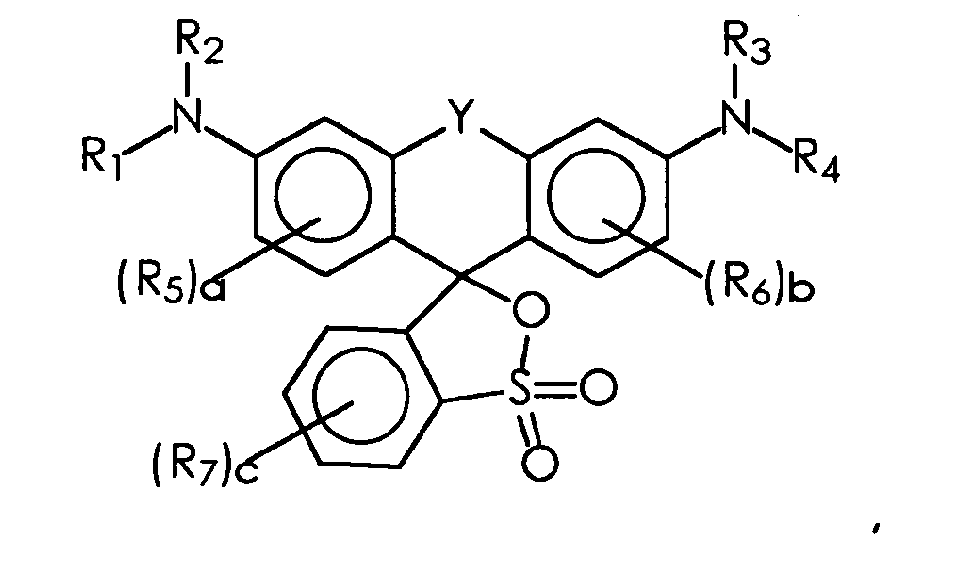
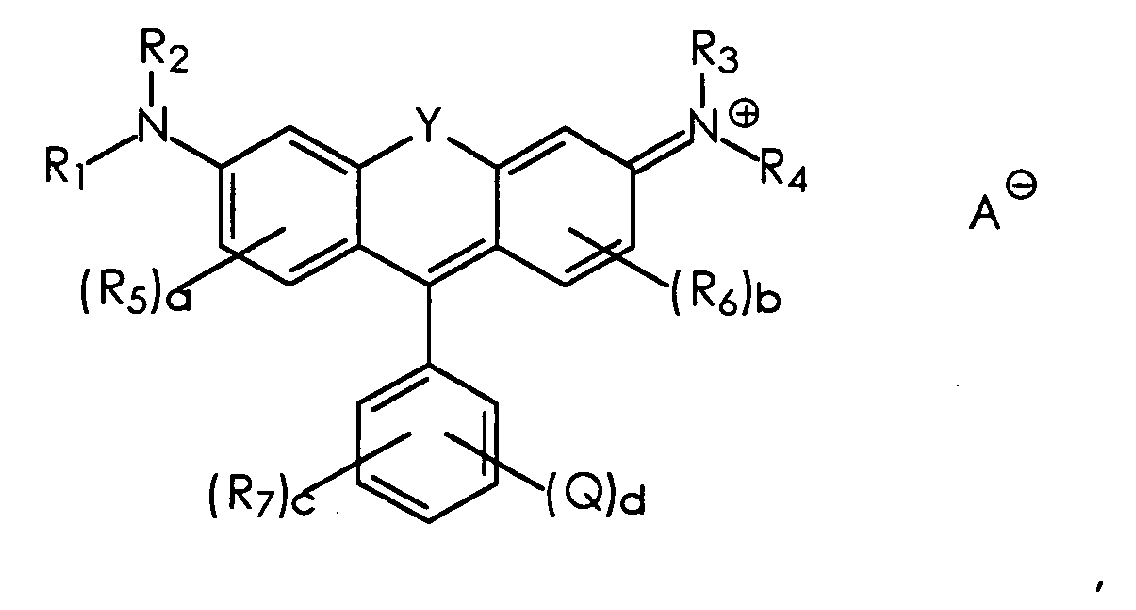
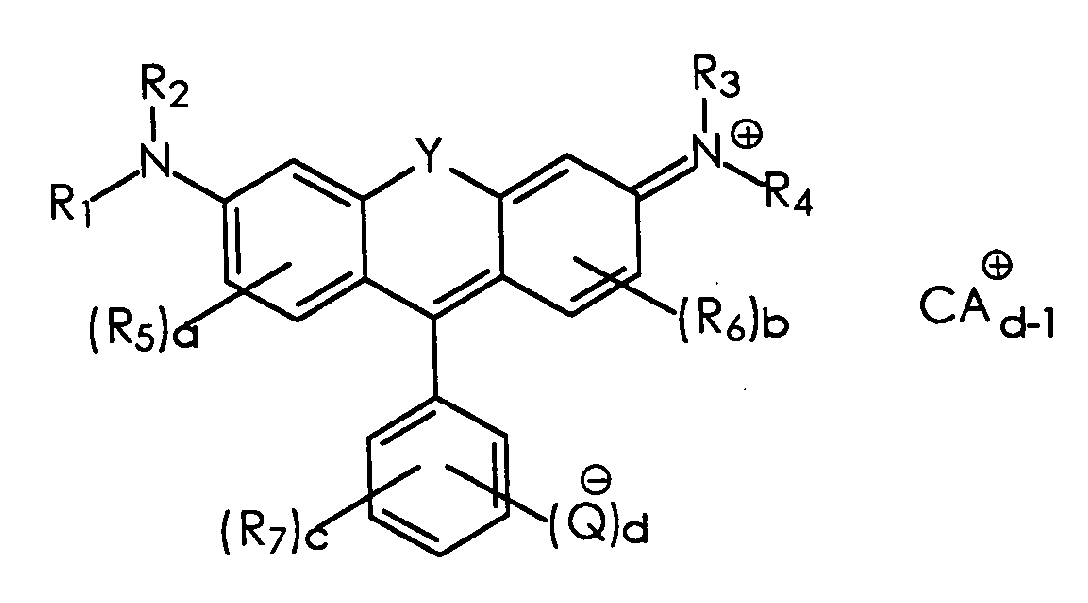
Description
- Cross-reference is made to the following copending applications:
- Copending Application U.S. Serial No. 10/260,146, filed September 27, 2002, entitled "Colorant Compounds," with the named inventors Jeffery H. Banning and C. Wayne Jaeger, the disclosure of which is totally incorporated herein by reference, discloses compounds of the formula


- Copending Application U.S. Serial No. 10/260,376, filed September 27, 2002, entitled "Phase Change Inks," with the named inventors C. Wayne Jaeger and Jeffery H. Banning, the disclosure of which is totally incorporated herein by reference, discloses a phase change ink composition comprising a phase change ink carrier and a colorant compound of the formula


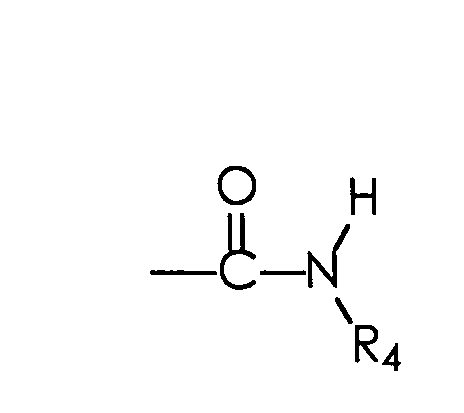
- Copending Application U.S. Serial No. 10/260,379, filed September 27, 2002, entitled "Methods for Making Colorant Compounds," with the named inventors C. Wayne Jaeger and Jeffery H. Banning, the disclosure of which is totally incorporated herein by reference, discloses a process for preparing a colorant of the formula


R4―N=C=O,
and (c) brominating the colorant thus prepared, wherein either conversion to ester or urethane can be performed before bromination or bromination can be performed before conversion to ester or urethane. - Copending Application U.S. Serial No. (not yet assigned; Attorney Docket Number D/A3152), filed concurrently herewith, entitled "Colorant Compounds," with the named inventors Jeffery H. Banning, Bo Wu, James M. Duff, Wolfgang G. Wedler, Jule W. Thomas, and Randall R. Bridgeman, the disclosure of which is totally incorporated herein by reference, discloses compounds of the formula


- Copending Application U.S. Serial No. (not yet assigned; Attorney Docket Number D/A3152Q), filed concurrently herewith, entitled "Phase Change Inks Containing Colorant Compounds," with the named inventors Bo Wu, Jeffery H. Banning, James M. Duff, Wolfgang G. Wedler, Jule W. Thomas, and Randall R. Bridgeman, the disclosure of which is totally incorporated herein by reference, discloses a phase change ink composition comprising a phase change ink carrier and a colorant compound of the formula


- Copending Application U.S. Serial No. (not yet assigned; Attorney Docket Number D/A3153Q), filed concurrently herewith, entitled "Phase Change Inks Containing Colorant Compounds," with the named inventors Bo Wu, Jeffery H. Banning, James M. Duff, Wolfgang G. Wedler, and Donald R. Titterington, the disclosure of which is totally incorporated herein by reference, discloses phase change inks comprising a carrier and a colorant of the formula


- The present invention is directed to colorant compounds. More specifically, the present invention is directed to colorant compounds particularly suitable for use in hot melt or phase change inks. One embodiment of the present invention is directed to compounds of the formulae


- In general, phase change inks (sometimes referred to as "hot melt inks") are in the solid phase at ambient temperature, but exist in the liquid phase at the elevated operating temperature of an ink jet printing device. At the jet operating temperature, droplets of liquid ink are ejected from the printing device and, when the ink droplets contact the surface of the recording substrate, either directly or via an intermediate heated transfer belt or drum, they quickly solidify to form a predetermined pattern of solidified ink drops. Phase change inks have also been used in other printing technologies, such as gravure printing, as disclosed in, for example, U.S. Patent 5,496,879 and German Patent Publications DE 4205636AL and DE 4205713AL, the disclosures of each of which are totally incorporated herein by reference.
- Phase change inks for color printing typically comprise a phase change ink carrier composition which is combined with a phase change ink compatible colorant. In a specific embodiment, a series of colored phase change inks can be formed by combining ink carrier compositions with compatible subtractive primary colorants. The subtractive primary colored phase change inks can comprise four component dyes, namely, cyan, magenta, yellow and black, although the inks are not limited to these four colors. These subtractive primary colored inks can be formed by using a single dye or a mixture of dyes. For example, magenta can be obtained by using a mixture of Solvent Red Dyes or a composite black can be obtained by mixing several dyes. U.S. Patent 4,889,560, U.S. Patent 4,889,761, and U.S. Patent 5,372,852, the disclosures of each of which are totally incorporated herein by reference, teach that the subtractive primary colorants employed can comprise dyes from the classes of Color Index (C.I.) Solvent Dyes, Disperse Dyes, modified Acid and Direct Dyes, and Basic Dyes. The colorants can also include pigments, as disclosed in, for example, U.S. Patent 5,221,335, the disclosure of which is totally incorporated herein by reference. U.S. Patent 5,621,022, the disclosure of which is totally incorporated herein by reference, discloses the use of a specific class of polymeric dyes in phase change ink compositions.
- Phase change inks have also been used for applications such as postal marking, industrial marking, and labelling.
- Phase change inks are desirable for ink jet printers because they remain in a solid phase at room temperature during shipping, long term storage, and the like. In addition, the problems associated with nozzle clogging as a result of ink evaporation with liquid ink jet inks are largely eliminated, thereby improving the reliability of the ink jet printing. Further, in phase change ink jet printers wherein the ink droplets are applied directly onto the final recording substrate (for example, paper, transparency material, and the like), the droplets solidify immediately upon contact with the substrate, so that migration of ink along the printing medium is prevented and dot quality is improved.
- Compositions suitable for use as phase change ink carrier compositions are known. Some representative examples of references disclosing such materials include U.S. Patent 3,653,932, U.S. Patent 4,390,369, U.S. Patent 4,484,948, U.S. Patent 4,684,956, U.S. Patent 4,851,045, U.S. Patent 4,889,560, U.S. Patent 5,006,170, U.S. Patent 5,151,120, U.S. Patent 5,372,852, U.S. Patent 5,496,879, European Patent Publication 0187352, European Patent Publication 0206286, German Patent Publication DE 4205636AL, German Patent Publication DE 4205713AL, and PCT Patent Application WO 94/04619, the disclosures of each of which are totally incorporated herein by reference. Suitable carrier materials can include paraffins, microcrystalline waxes, polyethylene waxes, ester waxes, fatty acids and other waxy materials, fatty amide containing materials, sulfonamide materials, resinous materials made from different natural sources (tall oil rosins and rosin esters, for example), and many synthetic resins, oligomers, polymers, and copolymers.
- British Patent Publication GB 2 311 075 (Gregory et al.), the disclosure of which is totally incorporated herein by reference, discloses a compound of the formula

- "Rhodamine Dyes and Related Compounds. XV. Rhodamine Dyes with Hydroaromatic and Polymethylene Radicals," I. S. loffe et al., Zh. Organ. Khim. (1965), 1 (3), 584-6, the disclosure of which is totally incorporated herein by reference, discloses a process wherein heating dichlorofluoran with ZnCl2-ZnO and the appropriate amine for 3 hours at 220° followed by treatment with aqueous HCl gave N,N'-dicyclohexylrhodamine-HCl, m. 180-5°, N,N'-di(tetramethylene)rhodamine-HCl, decompd. 240°, N,N'-di(pentamethylene)rhodamine-HCl, m. 205-10°, N,N'-di(hexamethylene)rhodamine-HCl, decompd. 175°. These dyes gave yellow or orange fluorescence and their spectra were given.
- "Rhodamine Dyes and Related Compounds. XI. Aryl- and Alkylrhodamines Containing Carboxyl Groups," I. S. loffe et al., Zh. Obsch. Khim. (1964), 34(6), 2041-4, the disclosure of which is totally incorporated herein by reference, discloses a process wherein heating aminobenzoic acids with 3,6-dichlorofluoran in the presence of ZnCl2 for 6 hours at 24--50° gave after an aqueous treatment: N,N'-bis(o-carboxyphenyl)rhodamine-HCl; m-isomer-HCl; and p-isomer-HCl. A similar reaction with HCl salts of glycine, α-alanine, or β-alanine gave: N,N'-bis(carboxymethyl)rhodamine-HCl; N,N'-bis(α-carboxyethyl)rhodamine-HCl; and N,N'-bis(β-carboxyethyl)rhodamine-HCl. The latter group showed yellow-green fluorescence, lacking in the aryl derivatives. Spectra of the products are shown.
- "Rhodamine Dyes and Related Compounds. X. Fluorescence of Solutions of Alkyl- and Arylalkylrhodamines," I. S. loffe et al., Zh. Obsch. Khim. (1964), 34(6), 2039-41, the disclosure of which is totally incorporated herein by reference, discloses fluorescence spectra for the following rhodamines: N,N'-diethyl; N,N'-dibenzyl; N,N'-bis(β-phenylethyl); N,N'-bis(β-phenylisopropyl). In symmetrical substituted rhodamines, the entry of an alkyl or arylalkyl group into both amino residues resulted in the displacement of fluorescence max. toward longer wavelengths, a similar displacement of absorption and an increase in the quantum yield of fluorescence. In unsymmetrical derivatives, an aryl group entering one of the amino groups shifted the spectra to a greater degree in the same direction and sharply reduced the quantum yield of fluorescence.
- "Rhodamine Dyes and Related Compounds. IX. Rhodamine B Sulfonic Acids and their Derivatives," I. S. loffe et al., Zh. Obsch. Khim. (1964), 34(2), 640-44, the disclosure of which is totally incorporated herein by reference, discloses that heating m-Et2NC6H4OH and K β-sulfophthalate at 150° while concentrated H2SO4 was being added gave after 3 hours at 150-70°, followed by heating with H2O 15 min., a residue of crude sulforhodamine, purified by solution in hot aqueous Na2CO3 and precipitation with AcOH. The mixed isomeric rhodamine sulfonic acids refluxed 3 hours with 30% AcOH, clarified, and cooled gave a first isomer with Rf 0.74 on paper in aqueous solution (pH 9) while the residue was the other isomer with Rf 0.98. The first isomer and PCl5 gave the sulfonyl chloride, isolated as HCl salt, red solid (from CHCl3-ligroine), which with NH3 in CHCl3 gave the sulfonamide, a violet powder. The two isomers and Rhodamine B had similar spectral characteristics. The two isomers probably contain the SO3H group in the 4- and 5-positions of the Ph ring of Rhodamine B. Their absorption and fluorescence spectra are shown. Their solutions in CHCl3 gave stronger fluorescence than those in Me2CO.
- "Rhodamine Dyes and Related Compounds. VIII. Amides of Sulforhodamine B Containing β-Hydroxyethyl and β-Chloroethyl Groups," I. S. loffe et al., Zh. Obsch. Khim. (1963), 33(12), 3943-6, the disclosure of which is totally incorporated herein by reference, discloses that sulforhodamine B chloride heated 10-12 hours with HOCH2CH2NH2 at 170-80°, then triturated with saturated NaCl gave, after solution in CHCl3 and precipitation with petroleum ether, 80% red sulforhodamine B N(β-hydroxyethyl)amide; similar reaction with HN(CH2CH2OH)2 gave 70% N,N-bis(β-hydroxyethyl)amide, a bright red wax. These treated with SOCl2 in CHCl3 gave, respectively, N-(β-chloroethyl)amide, a brown powder, and N,N-bis(β-chloroethyl)amide, a violet powder. Absorption spectra of the amides are shown. The (hydroxyethyl)amides displayed strong orange fluorescence in solution.
- "Rhodamine Dyes and Related Compounds. VII. (β-Phenylethyl)rhodamines," I. S. loffe et al., Zh. Obsch. Khim. (1963), 33(4), 1089-92, the disclosure of which is totally incorporated herein by reference, discloses a process wherein heating dichlorofluoran with PhCH2CH2NH2 or PhCH2CH(Me)NH2 in the presence of ZnO and ZnCl2 for 5-6 hours at 220° gave, after heating for 2 hours with aqueous HCl, 96-8% crude products which, after crystallization from alc. HCl, gave red, powdery N,N'-bis(β-phenylethyl)rhodamine-HCl, m. 172-5°, or N,N'-bis(α-methyl-β-phenylethyl)rhodamine-HCl, m. 175-8°; N-phenyl-N'-(β-phenylethyl)rhodamine-HCl, m. 162-6°, was prepared from PhCH2CH2NH2 and 3'-chloro-6'-anilinofluoran under the above conditions. Treated with alc. NaOH and quenched in H2O, these hydrochlorides gave the free bases of the dyes as brown-red solids, which tended to form colloids in aqueous medium. The free bases m. 123-5°, decompd. 120°, and m. 164-8°, respectively. The ultraviolet and visible spectra of the dyes were similar to the spectra of dibenzylrhodamine, but had deeper color; strong fluorescence was shown by these dyes. The spectrum of the bis(β-phenylethyl)rhodamine was almost identical with that of diethylrhodamine.
- "Rhodamine Dyes and Related Compounds. VI. Chloride and Amides of Sulforhodamine B," I. S. loffe et al., Zh. Obsch. Khim. (1962), 32, 1489-92, the disclosure of which is totally incorporated herein by reference, discloses that sulforhodamine B (5 g., dried at 125°) and 3 g. PCl5 heated in 50 milliliters CHCl3 for 4 hours, then extd. with cold H2O to remove excess PCl6, gave, after concentration of the dried organic layer and treatment of the residue with much cold petroleum ether, the dark red p-sulfonyl chloride, C27H29O6N2S2Cl, which slowly forms the original compound on contact with H2O. With NH3 in CHCl3 it gave the corresponding p-sulfonamide, 81%, red-violet powder, sol. in EtOH or AcOH; similarly was prepared the p-sulfonanilide, brown-violet solid. These have absorption spectra similar to the original compound but with less intense absorption. The p-sulfonyl chloride has a more intense absorption than the amides.
- "Rhodamine Dyes and Related Compounds. V. α-Pyridylrhodamine," I. S. loffe et al., Zh. Obsch. Khim. (1962), 32, 1485-9, the disclosure of which is totally incorporated herein by reference, discloses a process wherein heating 3,6-dichlorofluorane with 2-aminopyridine in the presence of ZnCl2 for 3 hours at 160-80° gave, after extraction with hot H2O and EtOH and crystallization of the residue from aqueous Me2CO, 3-chloro-6-α-pyridylaminofluorane-HCl, m. 280-2°; free base, m. 185-7°. This heated with 2-aminopyridine and ZnCl2 at 250-60° for 6 hours, then precipitated from hot EtOH-HCl with H2O, gave red N,N'-bis(α-pyridyl)rhodamine-HCl, m. 238-40°, also formed directly from dichlorofluorane and excess aminopyridine at 250-60°. Similarly, 3-chloro-6-anilino-fluorane gave red-violet N-phenyl-N'-α-pyridylrhodamine-HCl, m. 225-30°. All these were converted to N,N'-diphenylrhodamine by heating with PhNH2 and ZnCl2 for 3 hours at 180-200°. The absorption spectra of the products are shown; dipyridylrhodamine has a more intense color than other members of the group.
- "Rhodamine Dyes and Related Compounds. IV. Aryl- and Benzylrhodamines," I. S. loffe et al., Zh. Obsch. Khim. (1962), 32, 1480-5, the disclosure of which is totally incorporated herein by reference, discloses a process wherein heating fluorescein chloride with ArNH2 in the presence of ZnCl2-ZnO for 4 to 5 hours at 210-20° gave, after leaching with hot dil. HCl, soln. of the residue in hot PhNH2, and pptn. with dil. HCl, the following N,N'-diarylrhodamines which were isolated as HCl salts: Ph, m. 255-60°; o-meC6H4, m. 205-10°; m-meC6H4, m. 195-200°; p-meC6H4, m. 255-60°. PhCH2NH2 similarly gave N,N'-dibenzylrhodamine, m. 160-5°; HCl salt decomp. 160-5°; di-HCl salt decomp. 210°. PhCH2NH2 and 3-chloro-6-anilinofluorane gave 90-5% N-phenyl-N'-benzylrhodamine isolated as the HCl salt, m. 200-10°. The absorption spectra of these rhodamines are shown. Dibenzylrhodamine fluoresces strongly in solution, while the phenyl benzyl analog has a weak fluorescence. The benzyl groups cause a bathochromic shift of the absorption band in the substituted rhodamines; the diarylrhodamines form blue-violet solutions unlike the orange-yellow produced by unsubstituted rhodamine. The di-HCl salt of dibenzylrhodamine loses one HCl in soln. as shown by behavior in EtOH.
- "Rhodamine Dyes and Related Compounds. III. Reaction of m-aminophenol With Phthalic Anhydride in Hot Sulfuric Acid," I. S. loffe et al., Zh. Obsch. Khim. (1962), 32, 1477-80, the disclosure of which is totally incorporated herein by reference, discloses that heating 25 g. of m-H2NC6H4OH with 20 g. o-C6H4(CO)2O in 100 milliliters concentrated H2SO4 at 160-200° for 2-8 hours was used to examine the effects of conditions of condensation on the reaction products. Rhodamine formation began at 170° and reached a max. (20%) in 2 hours at 190°. Rhodol was a constant byproduct as a result of partial deamination of rhodamine. The deamination is promoted by longer reaction time and higher temperatures. These factors also promoted the formation of a dark, amorphous material. o-Hydroxysulfanilic acid was formed in the reaction in up to 32% yield at 160° in 2 hours; more drastic conditions lowered its yield rapidly. Prior to the appearance of substantial amounts of rhodamine in the mixture, sulfonation of m-H2NC6H4OH takes place, and the resulting compound appears to be the intermediate which reacts, with this compound forming rhodamine by displacement of the sulfonic acid group. This was confirmed by reaction of o-C6H4(CO)2O with o-hydroxysulfanilic acid under the conditions shown above. m-Aminosalicylic acid also yields the same products in a mixture similar to that formed by m-H2NC6H4OH.
- "Rhodamine Dyes and Related Compounds. XVIII. N,N'-Dialkylrhodamines with Long Chain Hydrocarbon Radicals," I. S. loffe et al., Zh. Organ. Khim. (1970), 6(2), 369-71, the disclosure of which is totally incorporated herein by reference, discloses a process wherein the condensation of I (X=Cl) with RNH2 (R=C6H13, C8H17, C16H33, or C18H37) gave the title dyes (I, X=NHR) (II). The presence of alkyl groups in II did not change their color in comparison with II (R=H); all II absorbed strongly at 523-6 nm. However, long alkyl chains altered the hydrophobic properties of II as shown by the change of their partition coefficients in oil-alc. or kerosine-alc. systems with the length of R chain.
- "Rhodamine Dyes and Related Compounds. XIX. Mutual Transformations of Colorless and Colored Forms of N,N'-Substituted Rhodamine," I. S. loffe et al., Zh. Organ. Khim. (1972), 8(8), 1726-9, the disclosure of which is totally incorporated herein by reference, discloses that substituted rhodamines give colored solutions in polar and colorless solutions in nonpolar solvents. The solvent polarity at which the colorless lactone form is converted to the quinoid, internal salt form depends on the number and structure of alkyl, aryl, or H substituents. Absorption spectra of N,N'-diethylrhodamine in water-dioxane mixtures show how the light absorption increases when the solvent polarity (i.e., water amount in the mixture) is increased.
- "Synthesis of N-Substituted Flaveosines, Acridine Analogs of Rhodamine Dyes," I. S. loffe et al., Zh. Org. Khim. (1966), 2(9), 1721, the disclosure of which is totally incorporated herein by reference, discloses that o-(3,6-chloro-9-acridinyl)benzoic acid heated with BuNH2 or Bu2NH readily gave the hydrochlorides.
- "Rhodamine Dyes and Related Compounds. XVII. Acridine Analogs of Rhodamine and Fluorescein," I. S. loffe et al., Zh. Organ. Khim. (1966), 2(5), 927-31, the disclosure of which is totally incorporated herein by reference, discloses absorption spectra for flaveosin, fluorescein, azafluorescein, their Et esters and diacetyl derivatives. Replacement of the xanthene structure by the acridine group changed the spectra of such dyes. Azafluorescein heated with PCl5 at 95-100° gave o-(3,6-dichloro-9-acridinyl)-benzoic acid, decomp. >300°; its uv spectrum was similar to that of unsubstituted acridinylbenzoic acid. One of the flaveosin compounds heated with 25% H2SO4 in a sealed tube 10 hours at 200-20° gave azafluorescein, decomp. >380°; heated with EtOH-H2SO4 it gave one of the flaveosins, decomp. >300° Ac2O-H2SO4 gave in 1 hour one of the flaveosins, decomp. 206°. The compound formed by treatment of 3,6-dichlorofluorane with NH3 was prepared. Its uv spectrum is given.
- "New Lipophilic Rhodamines and Their Application to Optical Potassium Sensing," T. Werner et al., Journal of Fluorescence, Vol. 2, No. 3, pp. 93-98 (1992), the disclosure of which is totally incorporated herein by reference, discloses the synthesis of new lipophilic fluorescent rhodamines directly from 3,6-dichlorofluoresceins and the respective long-chain amines with excellent solubility in lipids and lipophilic membranes. Spectrophotometric and luminescent properties of the dyes are reported and discussed with respect to their application in new optical ion sensors. One rhodamine was applied in a poly(vinyl chloride)-based sensor membrane for continuous and sensitive optical determination of potassium ion, using valinomycin as the neutral ion carrier.
- U.S. Patent 1,991,482 (Allemann), the disclosure of which is totally incorporated herein by reference, discloses a process of producing rhodamine dyes which comprises condensing a halogenated primary amine of the benzene series with fluorescein dichloride and sulfonating the condensed product.
- U.S. Patent 5,847,162 (Lee et al.), the disclosure of which is totally incorporated herein by reference, discloses a class of 4,7-dichlororhodamine compounds useful as fluorescent dyes having the structure

- U.S. Patent 4,935,059 (Mayer et al.), the disclosure of which is totally incorporated herein by reference, discloses basic rhodamine dyes suitable for use in recording fluids for the ink jet process and for coloring paper stock having the formula

- U.S. Patent 4,647,675 (Mayer et al.), the disclosure of which is totally incorporated herein by reference, discloses compounds of the general formula

- U.S. Patent 1,981,515 (Kyrides), the disclosure of which is totally incorporated herein by reference, discloses intermediates for rhodamine dyestuffs.
- U.S. Patent 1,981,516 (Kyrides), the disclosure of which is totally incorporated herein by reference, discloses intermediates for secondary alkylated rhodamine dyes.
- British Patent Publication GB 421 737, the disclosure of which is totally incorporated herein by reference, discloses dyes of the rhodamine series which are prepared by condensing naphthalene-2:3-dicarboxylic acid with a m-aminophenol in which the nitrogen group is substituted by one or two alkyl groups, the products, if desired, being sulphonated. The unsulphonated products may be used as lake colouring matters whilst the sulphonated dyes are acid wool dyes. In examples, (1) naphthalene-2:3-dicarboxylic acid is condensed with diethyl-m-aminophenol in the presence of zinc chloride giving a product which dyes tannin-mordanted cotton in the same shade as Rhodamine B and a sulphonated product which dyes wool bluish-red shades; (2) monoethyl-m-aminophenol is used instead of the diethyl-m-aminophenol in example (1), yielding a dye, which when sulphonated dyes wool red-orange shades; (3) 2-ethylamino-p-cresol replaces the diethyl-m-aminophenol in example (1), yielding a dye dyeing and printing tannin-mordanted cotton in shades similar to Rhodamine 69BS and when sulphonated dyeing wool red.
- Japanese Patent Publication JP 61221265, the disclosure of which is totally incorporated herein by reference, discloses rhodamine compounds of formula I


- U.S. Patent 5,084,099 (Jaeger et al.), the disclosure of which is totally incorporated herein by reference, discloses modified phase change ink compatible colorants which comprise a phase change ink soluble complex of (a) a tertiary alkyl primary amine and (b) dye chromophores, i.e., materials that absorb light in the visible wavelength region to produce color having at least one pendant acid functional group in the free acid form (not the salt of that acid). These modified colorants are extremely useful in producing phase change inks when combined with a phase change ink carrier, even though the unmodified dye chromophores have limited solubility in the phase change ink carrier. Thin films of uniform thickness of the subject phase change ink compositions which employ the modified phase change ink colorants exhibit a high degree of lightness and chroma. The primary amine-dye chromophore complexes are soluble in the phase change ink carrier and exhibit excellent thermal stability.
- U.S. Patent 5,507,864 (Jaeger et al.), the disclosure of which is totally incorporated herein by reference, discloses a phase change ink composition that includes a combination of different dye types such as an anthraquinone dye and a xanthene dye, which is most preferably a rhodamine dye. While each dye type is insufficiently soluble with respect to favored carrier compositions to preserve color saturation in reduced ink quantity prints, the dye type combination permits increased dye loading and maintains print quality. In a preferred embodiment of the invention, a favored carrier composition is adjusted to promote the colored form of a preferred rhodamine dye (C.I. Solvent Red 49) and mixed with a preferred anthraquinone dye (C.I. Solvent Red 172) whose concentration is kept below a critical level to prevent post printed blooming. The resulting preferred phase change ink compositions provide a magenta phase change ink with enhanced light fastness and color saturation, as well as good compatibility with preferred existing subtractive primary color phase change inks.
- U.S. Patent 5,621,022 (Jaeger et al.), the disclosure of which is totally incorporated herein by reference, discloses a phase change ink composition wherein the ink composition utilizes polymeric dyes in combination with a selected phase change ink carrier composition.
- U.S. Patent 5,747,554 (Sacripante et al.), the disclosure of which is totally incorporated herein by reference, discloses an ink composition comprising a polyesterified-dye (I) or polyurethane-dye (II) with a viscosity of from about 3 centipoise to about 20 centipoise at a temperature of from about 125°C to about 165°C and represented by the formulas


- U.S. Patent 5,902,841 (Jaeger et al.), the disclosure of which is totally incorporated herein by reference, discloses a phase change ink composition wherein the ink composition utilizes colorant in combination with a selected phase change ink carrier composition containing at least one hydroxy-functional fatty amide compound.
- European Patent Publication 0 565 798 (Shustack), the disclosure of which is totally incorporated herein by reference, discloses ultraviolet radiation-curable primary and secondary coating compositions for optical fibers. The primary coatings comprise a hydrocarbon polyol-based reactively terminated aliphatic urethane oligomer; a hydrocarbon monomer terminated with at least one end group capable of reacting with the terminus of the oligomer; and an optional photoinitiator. The secondary coatings comprise a polyester and/or polyether-based aliphatic urethane reactively terminated oligomer; a hydrocarbonaceous viscosity-adjusting component capable of reacting with the reactive terminus of (I); and an optional photoinitiator. Also disclosed are optical fibers coated with the secondary coating alone or with the primary and secondary coatings of the invention.
- While known compositions and processes are suitable for their intended purposes, a need remains for new magenta colorant compositions. In addition, a need remains for magenta colorant compositions particularly suitable for use in phase change inks. Further, a need remains for magenta colorants with desirable thermal stability. Additionally, a need remains for magenta colorants that exhibit minimal undesirable discoloration when exposed to elevated temperatures. There is also a need for magenta colorants that exhibit a desirable brilliance. In addition, there is a need for magenta colorants that exhibit a desirable hue. Further, there is a need for magenta colorants that are of desirable chroma. Additionally, there is a need for magenta colorants that have desirably high lightfastness characteristics. A need also remains for magenta colorants that have a desirably pleasing color. In addition, a need remains for magenta colorants that exhibit desirable solubility characteristics in phase change ink carrier compositions. Further, a need remains for magenta colorants that enable phase change inks to be jetted at temperatures of over 135°C while maintaining thermal stability. Additionally, a need remains for magenta colorants that enable phase change inks that generate images with low pile height. There is also a need for magenta colorants that enable phase change inks that generate images that approach lithographic thin image quality. In addition, there is a need for magenta colorants that exhibit oxidative stability. Further, there is a need for magenta colorants that do not precipitate from phase change ink carriers. Additionally, there is a need for magenta colorants that do not, when included in phase change inks, diffuse into adjacently printed inks of different colors. A need also remains for magenta colorants that do not leach from media such as phase change ink carriers into tape adhesives, paper, or the like. In addition, a need remains for magenta colorants that, when incorporated into phase change inks, do not lead to clogging of a phase change ink jet printhead. Further, there is a need for magenta colorants that enable phase change inks that generate images with sharp edges that remain sharp over time. Additionally, there is a need for magenta colorants that enable phase change inks that generate images which retain their high image quality in warm climates. Further, there is a need for magenta colorants that enable phase change inks that generate images of desirably high optical density. Additionally, there is a need for magenta colorants that, because of their good solubility in phase change ink carriers, enable the generation of images of low pile height without the loss of desirably high optical density. A need also remains for magenta colorants that enable cost-effective inks.
- The present invention provides:
- (1) compounds of the formulae


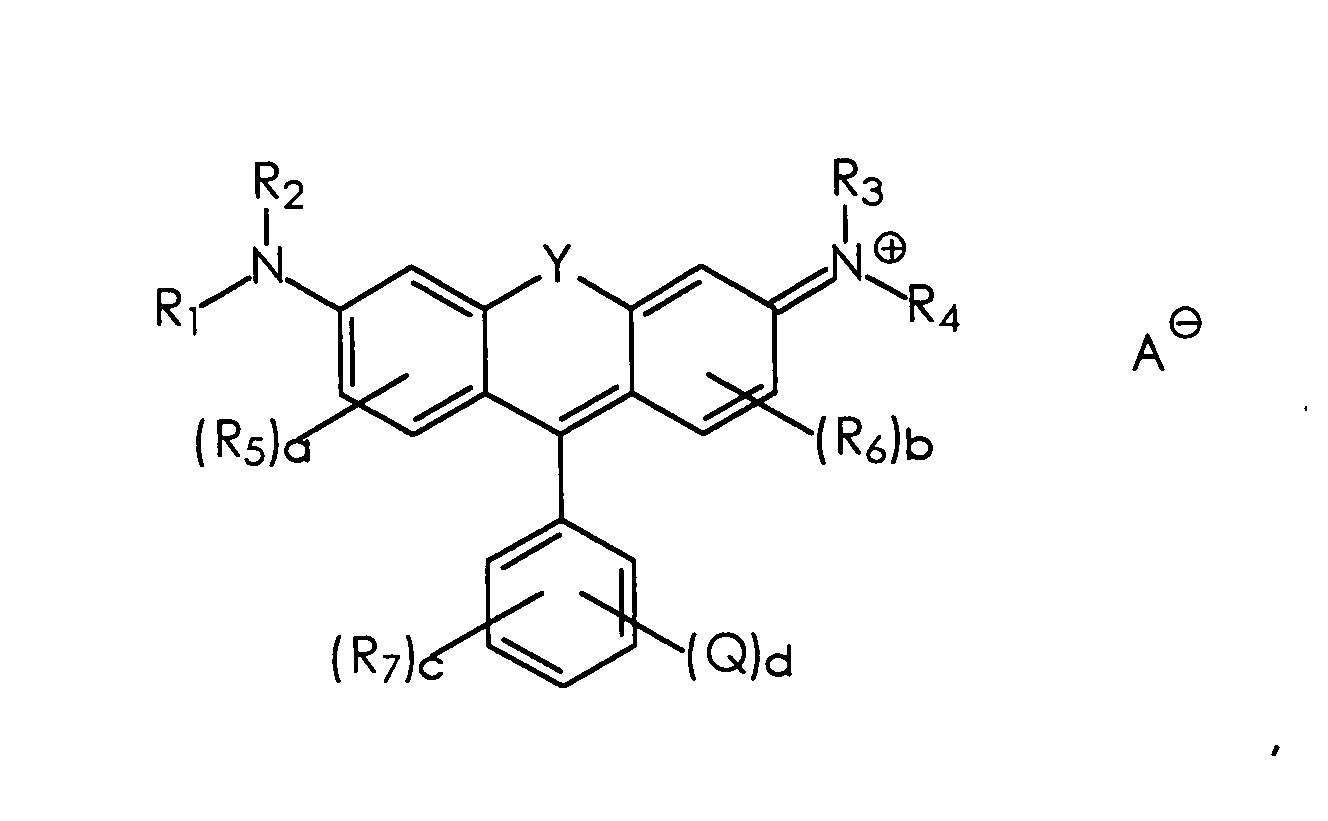




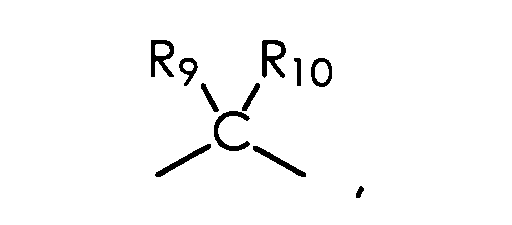


- (2) a compound according to (1) wherein a, b, and c are each zero;
- (3) a compound according to (1) wherein d is 1;
- (4) a compound according to (1) wherein d is 2;
- (5) a compound according to (1) wherein d is 1, Q is a COOH group, and Q- is a COO- group;
- (6) a compound according to (1) wherein d is 1, Q is a SO3H group, and Q- is a SO3- group;
- (7) a compound according to (1) wherein


- (8) a compound according to (1) wherein


- (9) a compound according to (1) wherein


- (10) a compound according to (1) wherein


- (11) a compound according to (1) wherein A is an organic dianion of the formula A1-R11-A2 wherein A1 and A2 each, independently of the other, are anions and wherein R11 is (i) an alkylene group, (ii) an arylene group, (iii) an arylalkylene group, or (iv) an alkylarylene group;
- (12) a compound according to (11) wherein A1 and A2 each, independently of the other, are selected from the group consisting of SO3 - and COO-;
- (13) a compound according to (11) wherein A1 and A2 are each sulfonate anions;
- (14) a compound according to (11) wherein R11 is an unsubstituted naphthalene disulfonate, a substituted naphthalene disulfonate, an unsubstituted benzene disulfonate, or a substituted benzene disulfonate;
- (15) a compound according to (11) wherein the organic dianion is of the formula

- (16) a compound according to (1) wherein at least one of R1, R2, R3, and R4 is an alkyl group;
- (17) a compound according to (16) wherein the alkyl group is a linear alkyl group;
- (18) a compound according to (16) wherein the alkyl group is a branched alkyl group;
- (19) a compound according to (16) wherein the alkyl group is a saturated alkyl group;
- (20) a compound according to (16) wherein the alkyl group is an unsaturated alkyl group;
- (21) a compound according to (16) wherein the alkyl group is a cyclic alkyl group;
- (22) a compound according to (16) wherein the alkyl group is a substituted alkyl group;
- (23) a compound according to (16) wherein the alkyl group is an unsubstituted alkyl group;
- (24) a compound according to (16) wherein the alkyl group has at least about 18 carbon atoms;
- (25) a compound according to (16) wherein at least one hetero atom selected from oxygen, nitrogen, sulfur, silicon, or phosphorus is present in the alkyl group;
- (26) a compound according to (16) wherein no hetero atoms are present in the alkyl group;
- (27) a compound according to (1) wherein at least one of R1, R2, R3, and R4 is an aryl group;
- (28) a compound according to (27) wherein the aryl group is a substituted aryl group;
- (29) a compound according to (27) wherein the aryl group is an unsubstituted aryl group;
- (30) a compound according to (27) wherein at least one hetero atom selected from oxygen, nitrogen, sulfur, silicon, or phosphorus is present in the aryl group;
- (31) a compound according to (27) wherein no hetero atoms are present in the aryl group;
- (32) a compound according to (1) wherein at least one of R1, R2, R3, and R4 is an arylalkyl group;
- (33) a compound according to (32) wherein the arylalkyl group is a substituted arylalkyl group;
- (34) a compound according to (32) wherein the arylalkyl group is an unsubstituted arylalkyl group;
- (35) a compound according to (32) wherein at least one hetero atom selected from oxygen, nitrogen, sulfur, silicon, or phosphorus is present in the arylalkyl group;
- (36) a compound according to (32) wherein no hetero atoms are present in the arylalkyl group;
- (37) a compound according to (1) wherein at least one of R1, R2, R3, and R4 is an alkylaryl group;
- (38) a compound according to (37) wherein the alkylaryl group is a substituted alkylaryl group;
- (39) a compound according to (37) wherein the alkylaryl group is an unsubstituted alkylaryl group;
- (40) a compound according to (37) wherein at least one hetero atom selected from oxygen, nitrogen, sulfur, silicon, or phosphorus is present in the alkylaryl group;
- (41) a compound according to (37) wherein no hetero atoms are present in the alkylaryl group;
- (42) a compound according to (1) wherein R1 and R2 are joined together to form a ring;
- (43) a compound according to (1) wherein R1 and R2 are joined together to form a ring and wherein R3 and R4 are joined together to form a ring;
- (44) a compound according to (1) wherein at least one of R1, R2, R3, and R4 is joined to a phenyl ring in the central structure;
- (45) a compound according to (1) wherein the number of carbon atoms in R1+R2+R3+R4+R5+R6+R7+R8+R9+R10 is at least about 32;
- (46) a compound according to (1) wherein the number of carbon atoms in R1+R2+R3+R4+R5+R6+R7+R8+R9+R10 is at least about 48;
- (47) a compound according to (1) wherein the number of carbon atoms in R1+R2+R3+R4+R5+R6+R7+R8+R9+R10 is at least about 72;
- (48) a compound according to (1) of the formula


- (49) a compound of the formula


- (50) a compound according to (49) wherein A is dodecylbenzene sulfonate, p-toluene sulfonate, chloride, trifluoroacetate, methyl sulfonate, trifluoromethyl sulfonate, bromide, or mixtures thereof;
- (51) a compound according to (1) of the formula
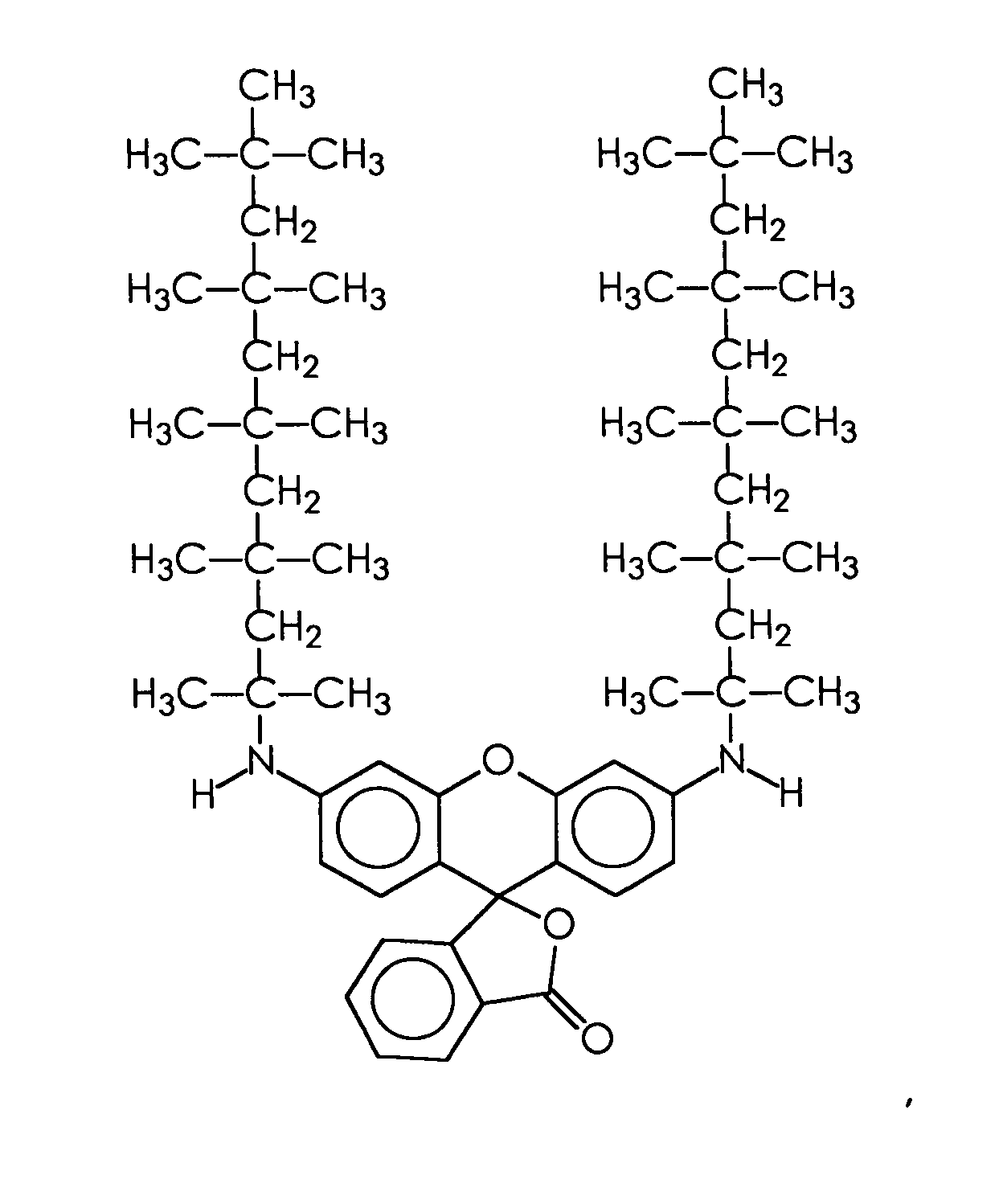


- (52) a compound according to (1) of the formula


- (53) a compound according to (1) of the formula


- (54) a compound according to (1) of the formula
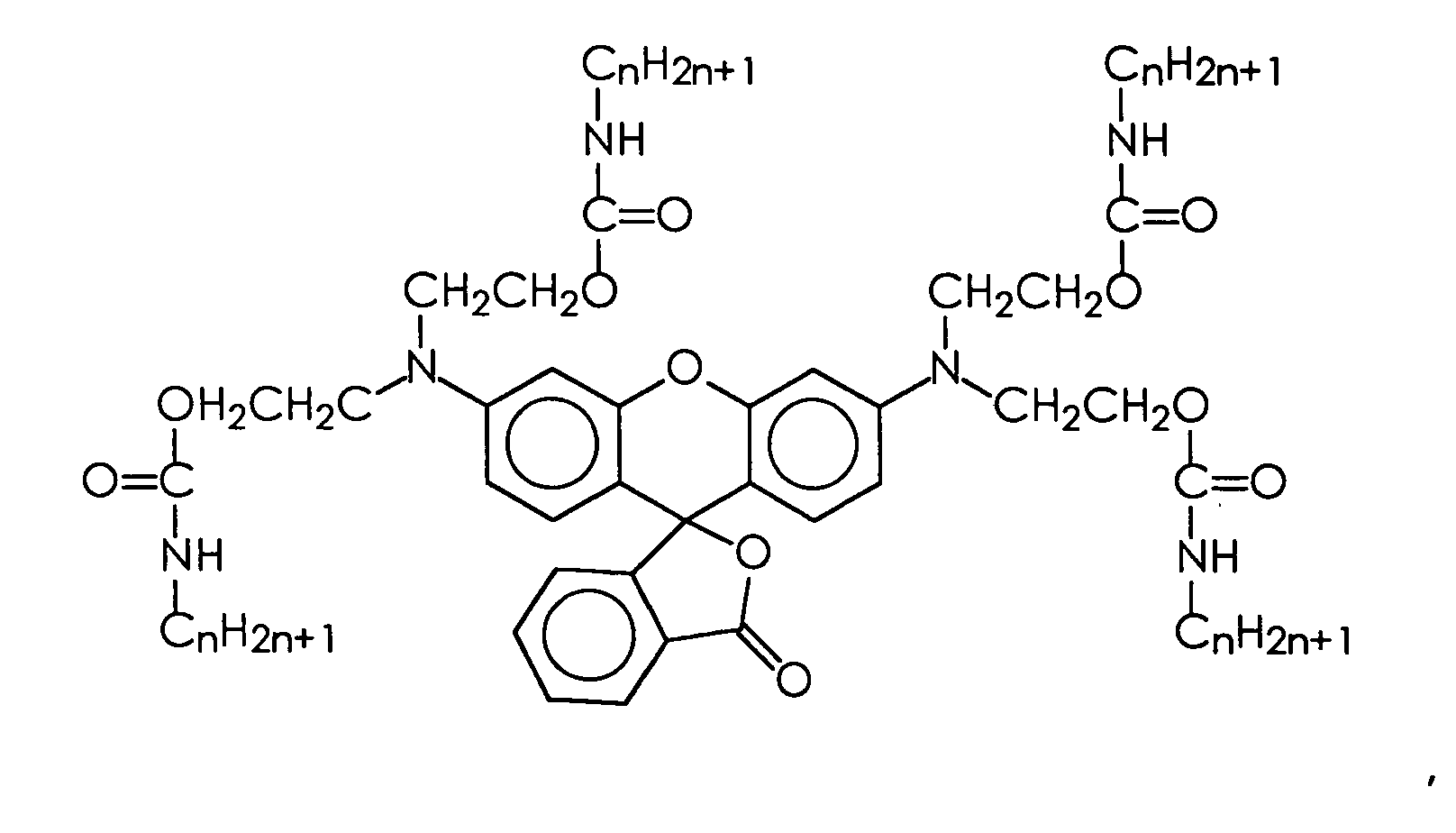


- (55) a compound according to (1) of the formula


- (56) a compound according to (1) of the formula


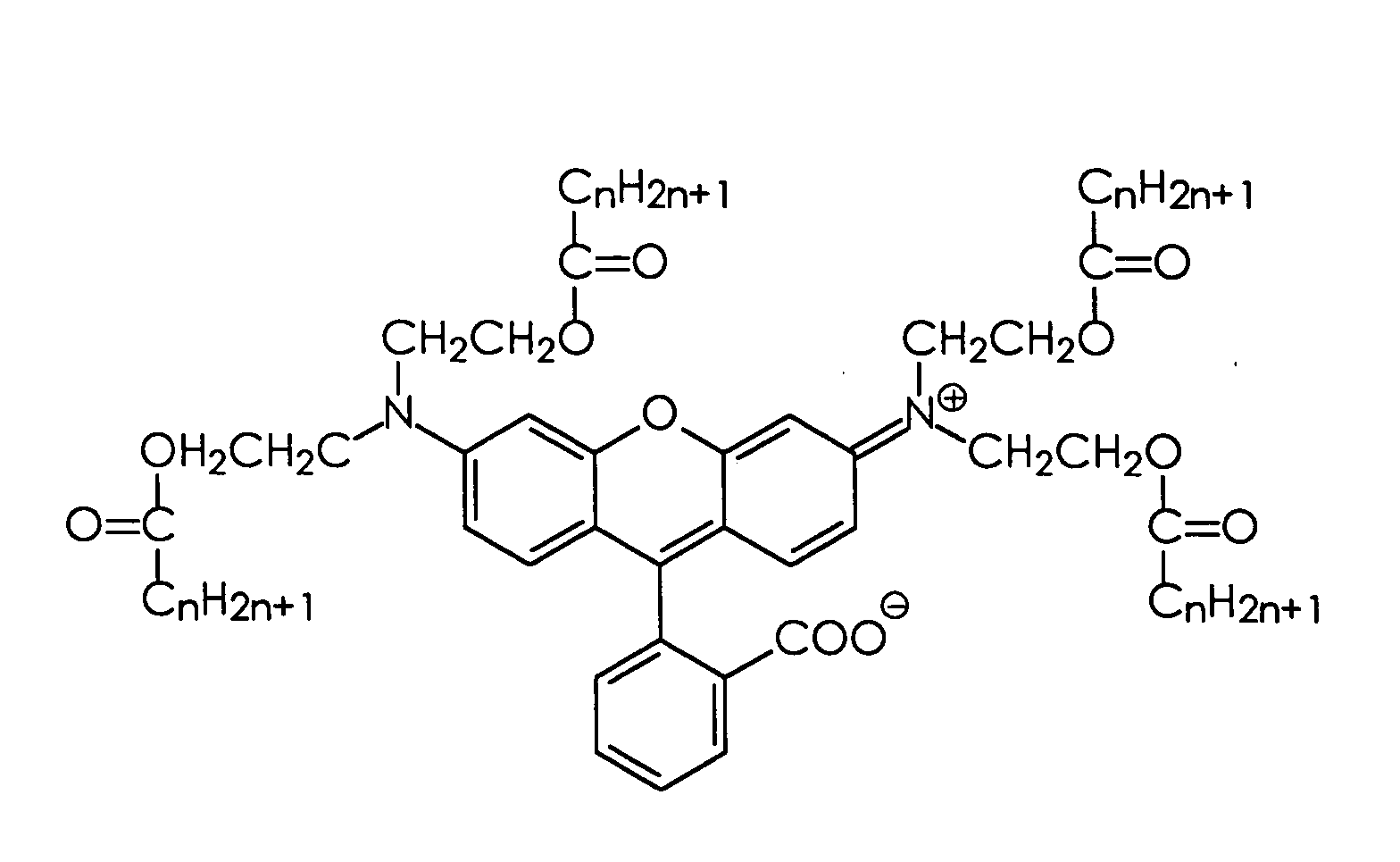
- (57) a compound according to (1) of the formula


- (58) a compound according to (1) of the formula


- (59) a compound according to (1) of the formula


- (60) a compound according to (1) of the formula


- (61) a compound according to (1) of the formula


- (62) a compound according to (1) of the formula
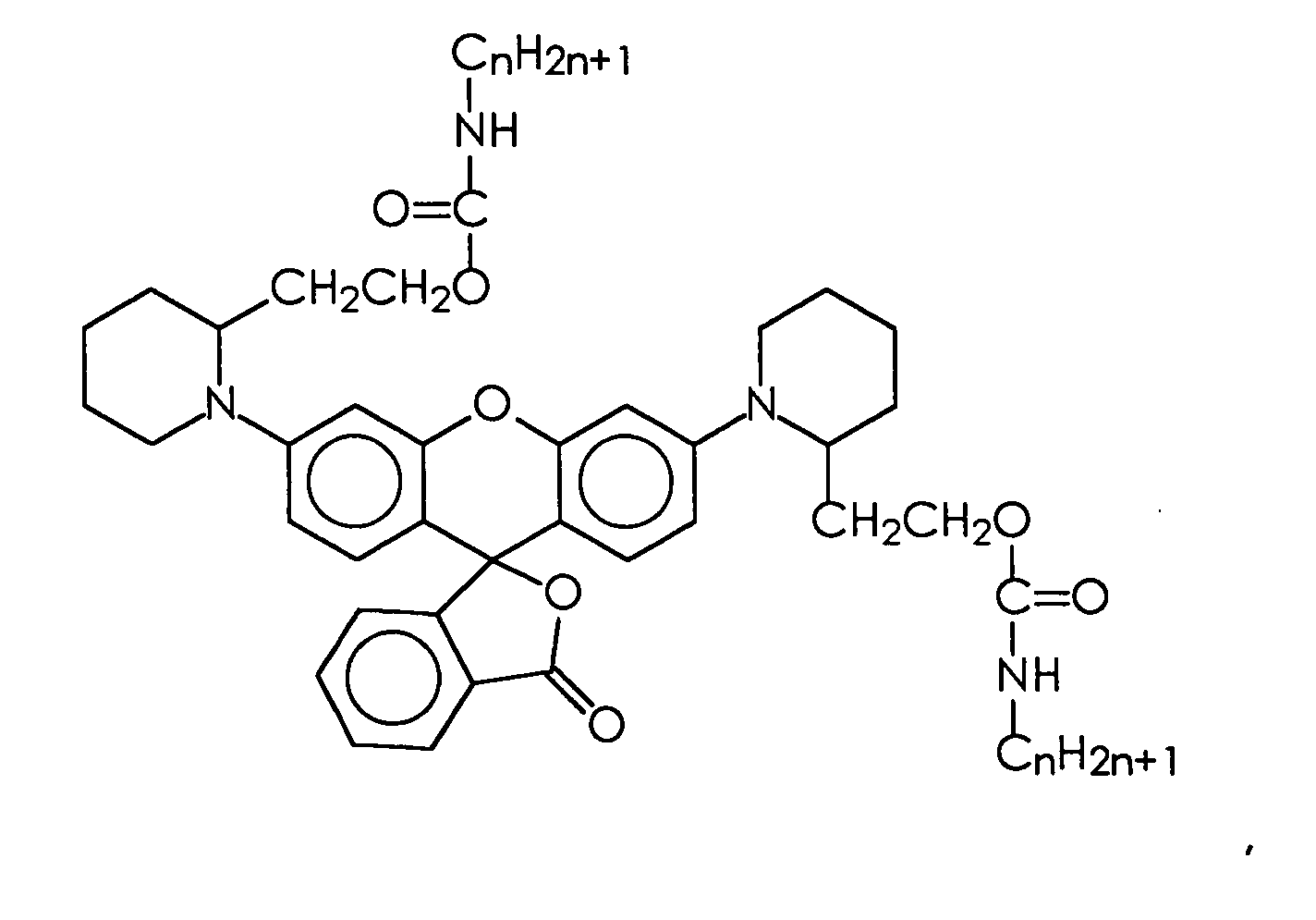


- (63) a compound according to (1) of the formula


- (64) a compound according to (1) of the formula


- (65) a compound according to (1) of the formula


- (66) a compound according to (1) of the formula
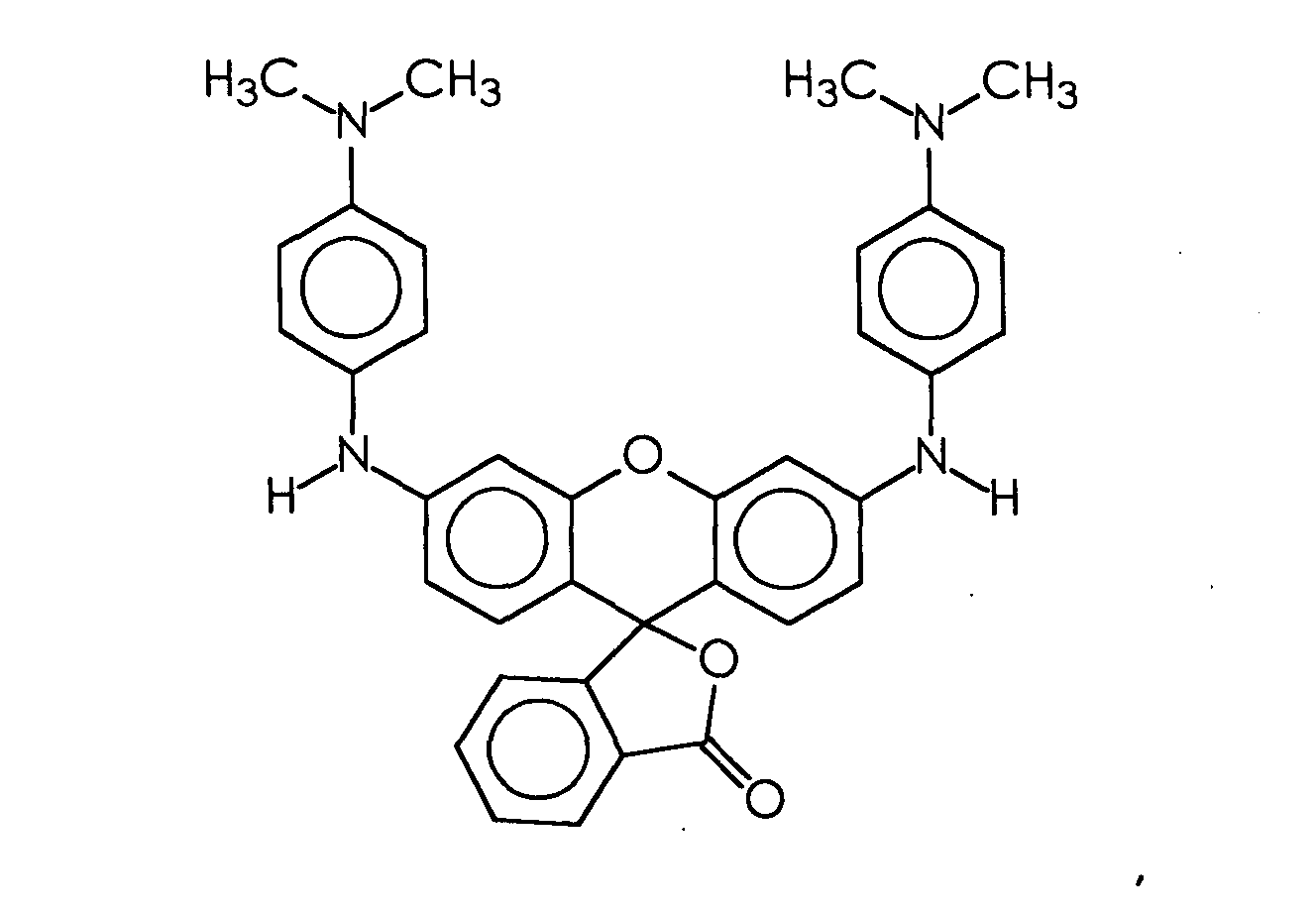


- (67) a compound according to (1) of the formula


- (68) a compound according to (1) of the formula


- (69) a compound according to (1) of the formula


- (70) a compound according to (1) of the formula


- (71) a compound according to (1) of the formula


- (72) a compound according to (1) of the formula


- (73) a compound according to (1) of the formula


- (74) a compound according to (1) of the formula


- (75) a compound according to (1) of the formula


- (76) a compound according to (1) of the formula


- (77) a compound according to (1) of the formula


- (78) a compound according to (1) of the formula
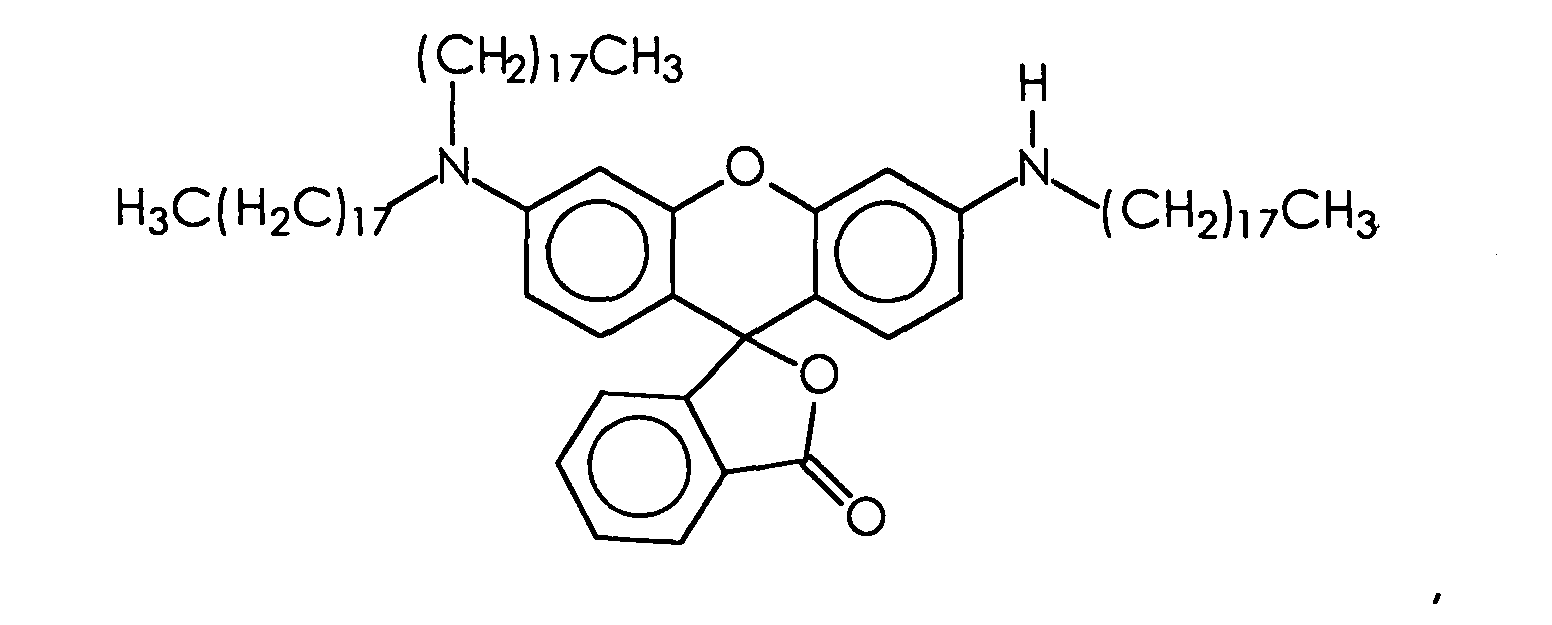


- (79) a compound of the formula

- The present invention is directed to compounds of the formulae

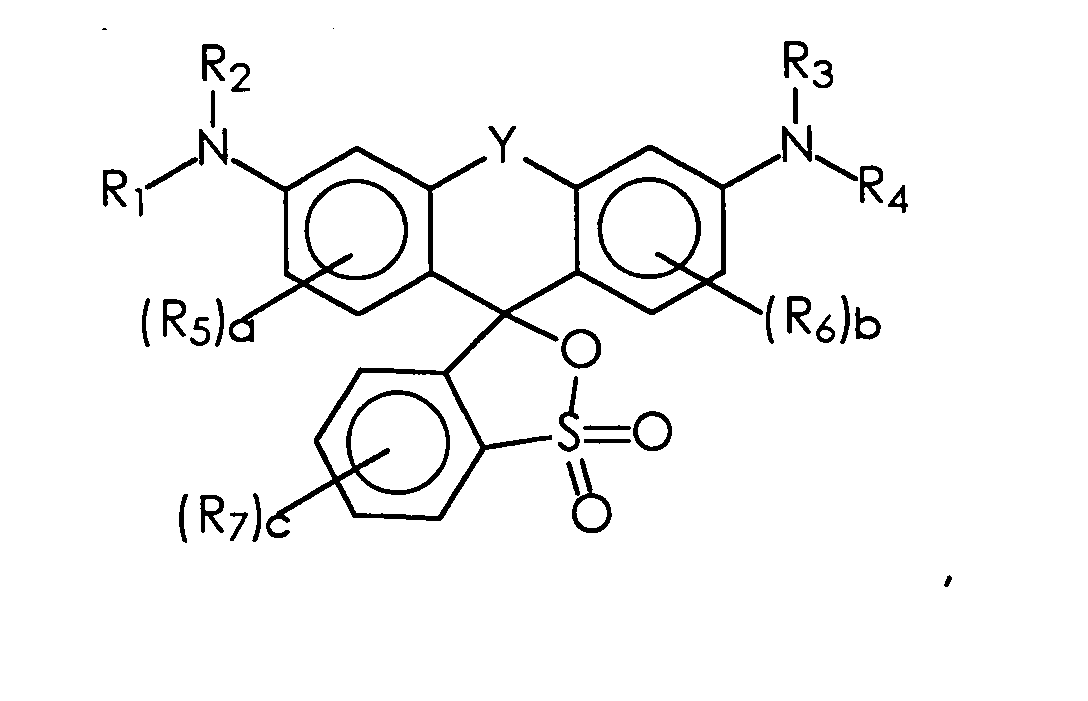


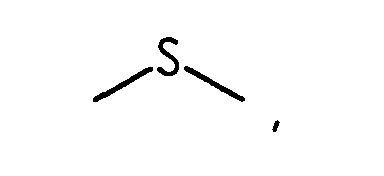

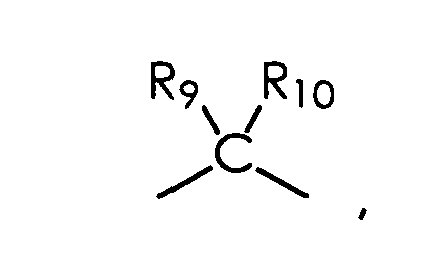


- The present invention is directed to compounds of the formulae

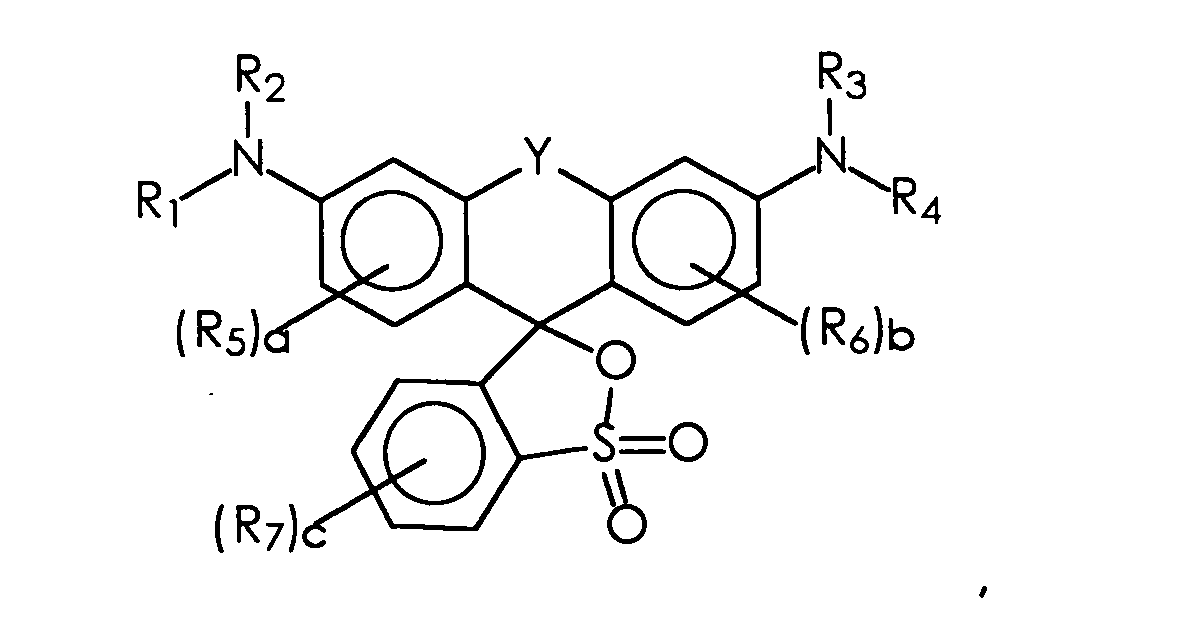
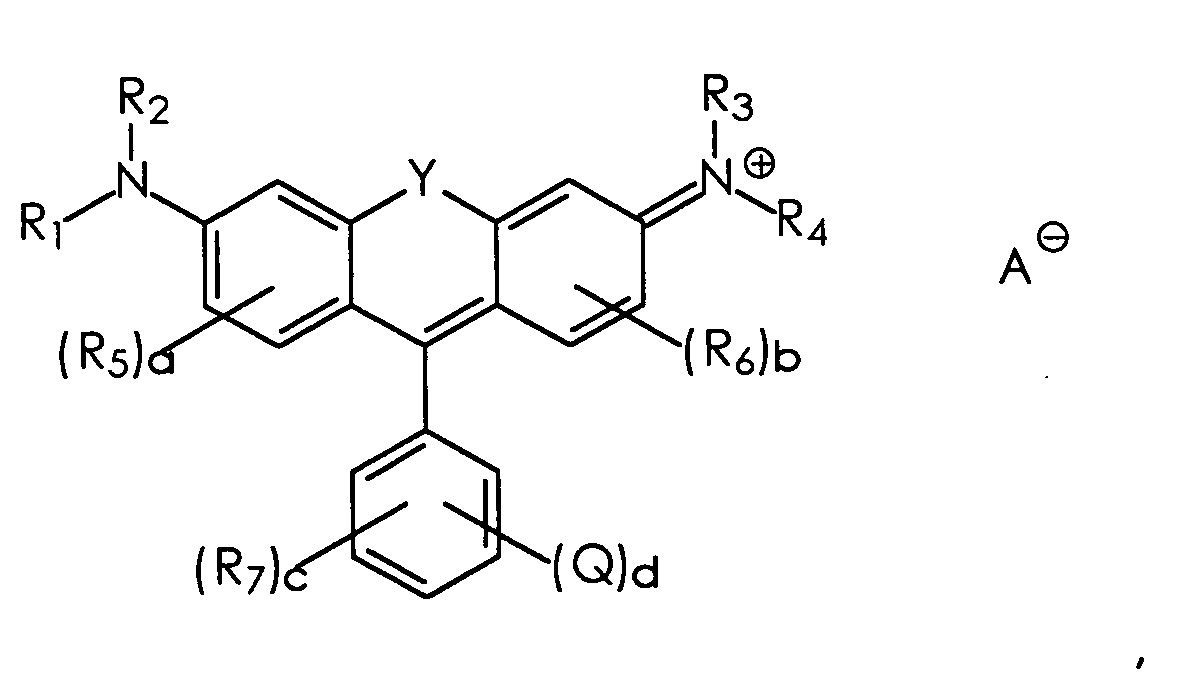


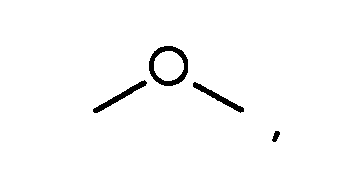

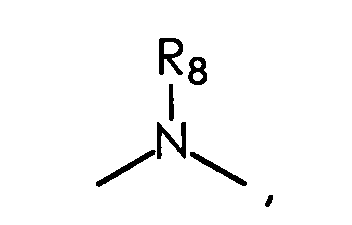


- In one embodiment, the number of carbon atoms in R1+R2+R3+R4 is at least about 16, in another embodiment at least about 18, in yet another embodiment at least about 20, in still another embodiment at least about 22, in another embodiment at least about 24, in yet another embodiment at least about 26, in still another embodiment at least about 28, in another embodiment at least about 30, in yet another embodiment at least about 32, in still another embodiment at least about 34, in another embodiment at least about 36, in yet another embodiment at least about 38, in still another embodiment at least about 40, in another embodiment at least about 42, in yet another embodiment at least about 44, in still another embodiment at least about 46, in another embodiment at least about 48, in yet another embodiment at least about 50, in still another embodiment at least about 52, in another embodiment at least about 54, in yet another embodiment at least about 56, in still another embodiment at least about 58, in another embodiment at least about 60, in yet another embodiment at least about 62, in still another embodiment at least about 64, in another embodiment at least about 66, in yet another embodiment at least about 68, in still another embodiment at least about 70, and in another embodiment at least about 72.
- In some specific embodiments wherein


- In some specific embodiments wherein


- In some specific embodiments wherein


- Since hetero atoms can be included in the alkyl, aryl, arylalkyl, and alkylaryl groups, and since the groups can be substituted, it is to be understood that R1, R2, R3, R4, R5, R6, R7, R8, R9, and R10 can also be groups such as alkoxy, polyalkyleneoxy, aryloxy, polyaryleneoxy, arylalkyloxy, polyarylalkyleneoxy, alkylaryloxy, or polyalkylaryleneoxy groups, provided that the oxygen atom in such a group is not directly bonded to a nitrogen, oxygen, or sulfur atom in the

- Examples of situations wherein one of the R1-4 groups is a cycloalkyl is when


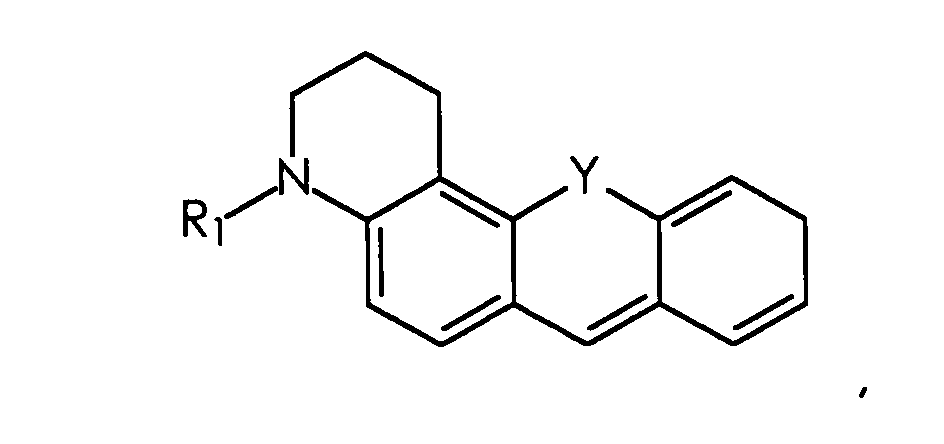


- Compounds of the present invention include monocarboxylic acids and monocarboxylates, wherein


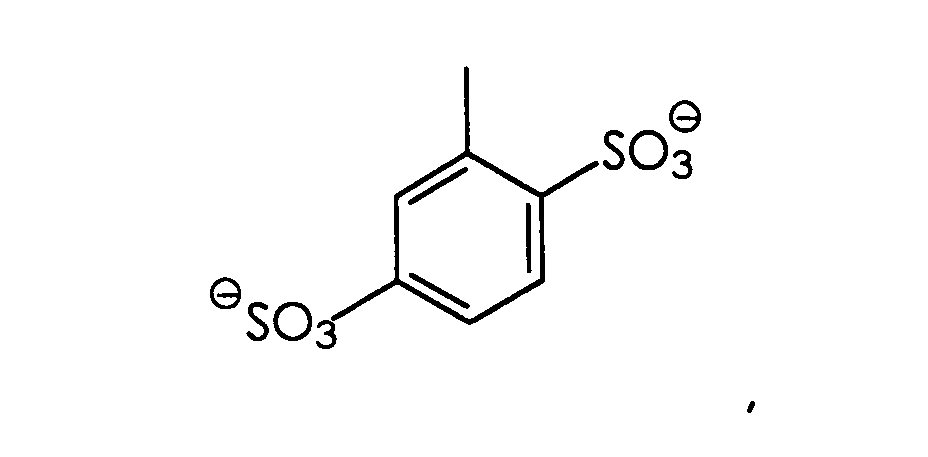


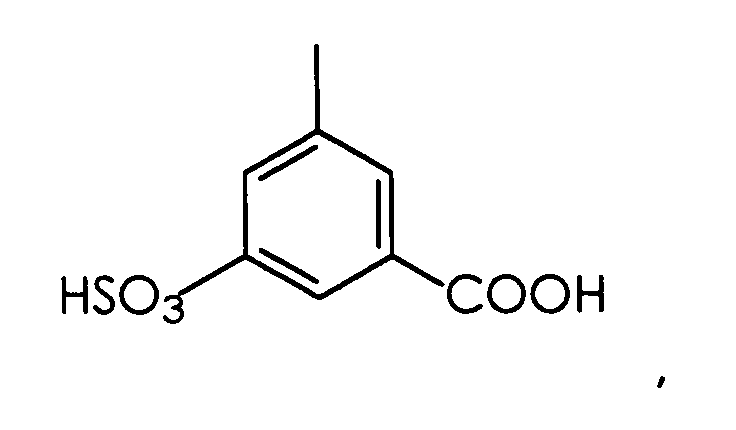


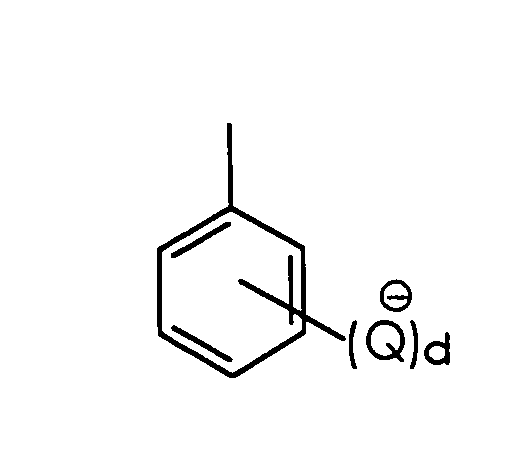


- Compounds according to the present invention include rhodamines, wherein


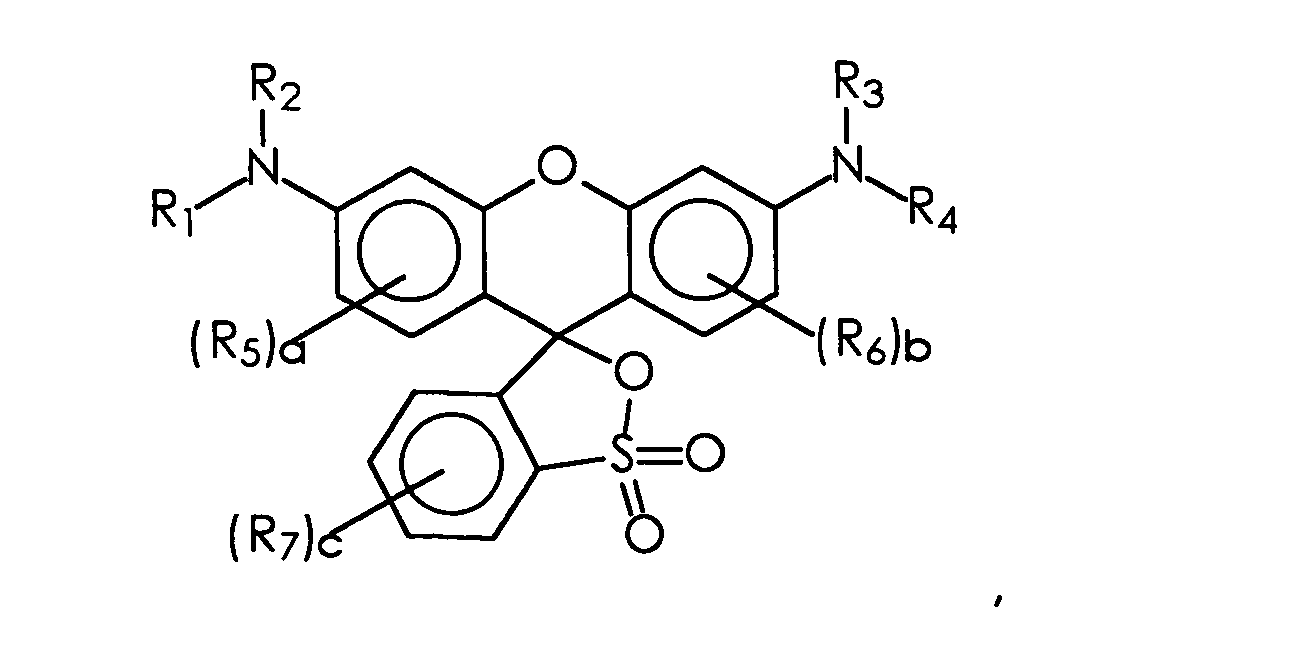


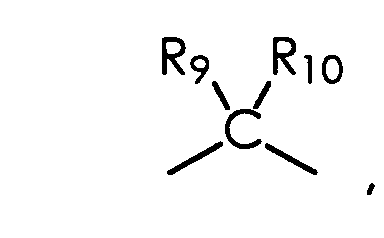


- In a specific embodiment, the anion A can be an organic dianion of the formula A1-R11-A2 wherein A1 and A2 each, independently of the other, are anionic groups, such as carboxylate, sulfonate, or the like, and wherein R11 is (i) an alkylene group (including linear, branched, saturated, unsaturated, cyclic, substituted, and unsubstituted alkylene groups, and wherein hetero atoms, such as oxygen, nitrogen, sulfur, silicon, phosphorus, and the like either may or may not be present in the alkylene group), in one embodiment with at least 1 carbon atom, in another embodiment with at least about 2 carbon atoms, in yet another embodiment with at least about 6 carbon atoms, in another embodiment with at least about 8 carbon atoms, and in yet another embodiment with at least about 18 carbon atoms, and in one embodiment with no more than about 55 carbon atoms, in another embodiment with no more than about 30 carbon atoms, and in yet another embodiment with no more than about 20 carbon atoms, although the number of carbon atoms can be outside of these ranges, (ii) an arylene group (including unsubstituted and substituted arylene groups, and wherein hetero atoms, such as oxygen, nitrogen, sulfur, silicon, phosphorus, and the like either may or may not be present in the arylene group), in one embodiment with at least about 6 carbon atoms, in another embodiment with at least about 10 carbon atoms, and in yet another embodiment with at least about 14 carbon atoms, and in one embodiment with no more than about 26 carbon atoms, in another embodiment with no more than about 22 carbon atoms, and in yet another embodiment with no more than about 18 carbon atoms, although the number of carbon atoms can be outside of these ranges, (iii) an arylalkylene group (including unsubstituted and substituted arylalkylene groups, wherein the alkyl portion of the arylalkylene group can be linear, branched, saturated, unsaturated, and/or cyclic, and wherein hetero atoms, such as oxygen, nitrogen, sulfur, silicon, phosphorus, and the like either may or may not be present in either or both of the alkyl portion and the aryl portion of the arylalkylene group), in one embodiment with at least about 7 carbon atoms, in another embodiment with at least about 12 carbon atoms, and in yet another embodiment with at least about 18 carbon atoms, and in one embodiment with no more than about 55 carbon atoms, in another embodiment with no more than about 30 carbon atoms, and in yet another embodiment with no more than about 20 carbon atoms, although the number of carbon atoms can be outside of these ranges, such as benzyl or the like, or (iv) an alkylarylene group (including unsubstituted and substituted alkylarylene groups, wherein the alkyl portion of the alkylarylene group can be linear, branched, saturated, unsaturated, and/or cyclic, and wherein hetero atoms, such as oxygen, nitrogen, sulfur, silicon, phosphorus, and the like either may or may not be present in either or both of the alkyl portion and the aryl portion of the alkylarylene group), in one embodiment with at least about 7 carbon atoms, in another embodiment with at least about 12 carbon atoms, and in yet another embodiment with at least about 18 carbon atoms, and in one embodiment with no more than about 55 carbon atoms, in another embodiment with no more than about 30 carbon atoms, and in yet another embodiment with no more than about 20 carbon atoms, although the number of carbon atoms can be outside of these ranges, such as tolyl or the like, and wherein the substituents on the substituted alkylene, arylene, arylalkylene, and alkylarylene groups can be (but are not limited to) hydroxy groups, halogen atoms, amine groups, imine groups, ammonium groups, cyano groups, pyridine groups, pyridinium groups, ether groups, aldehyde groups, ketone groups, ester groups, amide groups, carbonyl groups, thiocarbonyl groups, sulfate groups, sulfonate groups, sulfonic acid groups, sulfide groups, sulfoxide groups, phosphine groups, phosphonium groups, phosphate groups, nitrile groups, mercapto groups, nitro groups, nitroso groups, sulfone groups, acyl groups, acid anhydride groups, azide groups, azo groups, cyanato groups, isocyanato groups, thiocyanato groups, isothiocyanato groups, carboxylate groups, carboxylic acid groups, urethane groups, urea groups, mixtures thereof, and the like, wherein two or more substituents can be joined together to form a ring. Examples of suitable organic dianions include unsubstituted and substituted naphthalene disulfonates, unsubstituted and substituted benzene disulfonates, and the like, as well as mixtures thereof.
- In another specific embodiment, the anion A can be an organic trianion, tetraanion, and higher, an oligomeric and polymeric anion, such as a polysulfonate or polycarboxylate, or the like.
- In one specific embodiment, the colorants according to the present invention are of the formulae
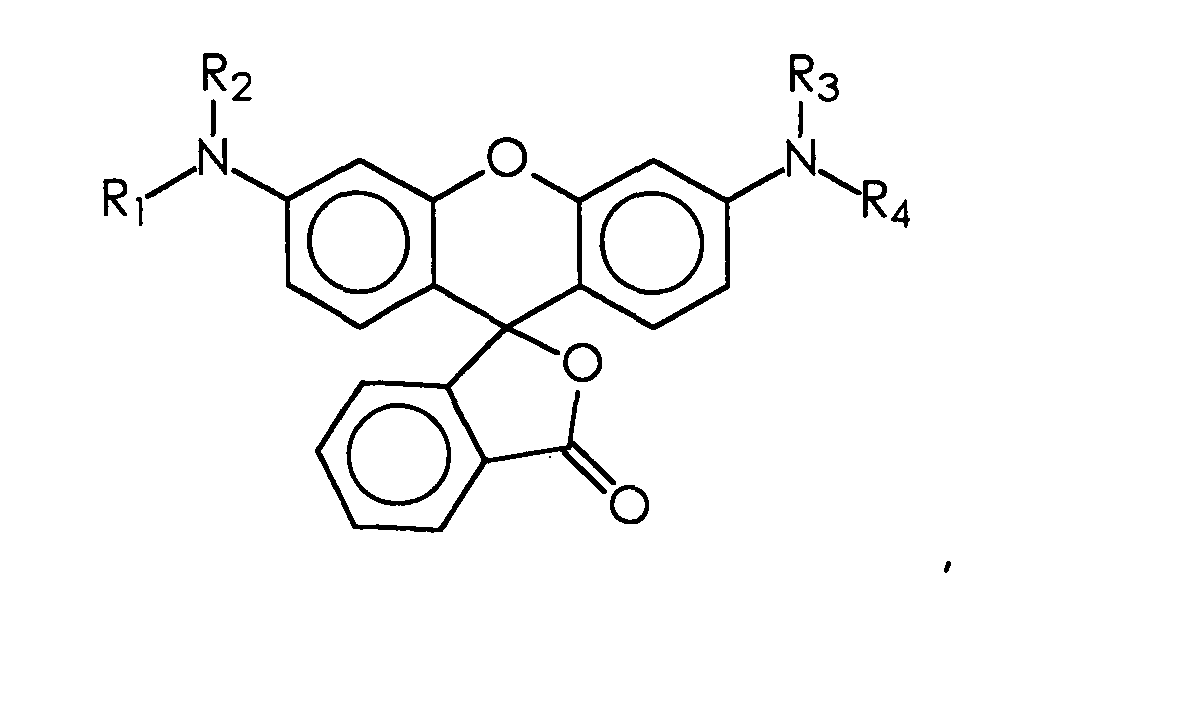


- It is to be understood that in colorants of the formulae


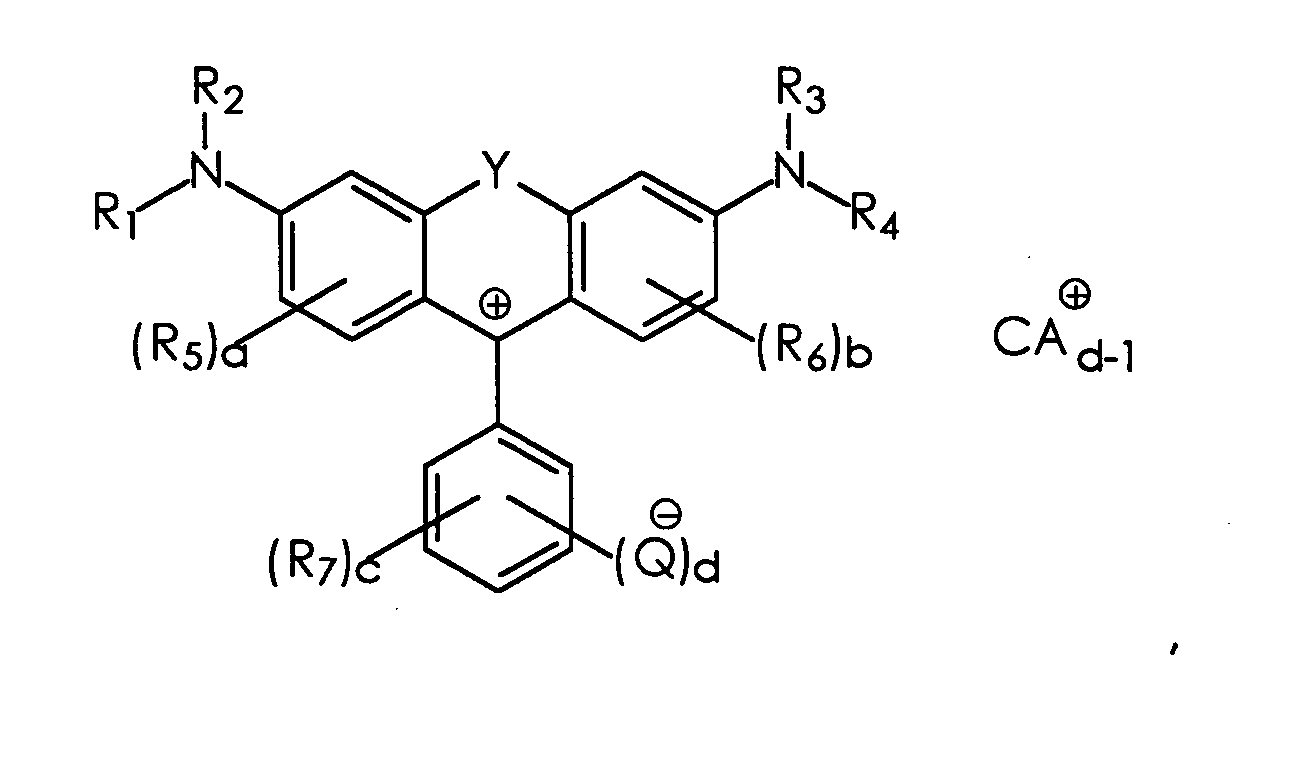


- Colorants of the present invention can be prepared by any desired or effective procedure. For example, a dihalofluorescein, such as dichlorofluorescein or the like, can be admixed with one or more amines having the desired R1, R2, R3, and R4 groups thereon, an optional zinc halide, such as zinc chloride or the like, and an optional nonnucleophilic base, such as calcium oxide, zinc oxide, or the like, either neat or, optionally, in the presence of a solvent.
- The amine and the dihalofluorescein are present in any desired or effective relative amounts, in one embodiment at least about 0.9 mole of base per every one mole of dihalofluorescein, in another embodiment at least about 0.95 mole of base per every one mole of dihalofluorescein, and in yet another embodiment at least about 1 mole of base per every one mole of dihalofluorescein, and in one embodiment no more than about 20 moles of base per every one mole of dihalofluorescein, in another embodiment no more than about 10 moles of base per every one mole of dihalofluorescein, and in yet another embodiment no more than about 2 moles of base per every one mole of dihalofluorescein, although the relative amounts can be outside of these ranges.
- Dichlorofluorescein is commercially available from, for example, Aldrich Chemical Co., Milwaukee, WI. Dihalofluoresceins can also be prepared by the reaction of fluorescein with PX5 wherein X is fluorine, chlorine, bromine, or iodine, or with a toluenesulfonylhalide, such as toluenesulfonylchloride or the like.
- When an optional zinc halide is used, the dihalofluorescein and the zinc halide are present in any desired or effective relative amounts, in one embodiment at least about 2 moles of zinc halide per every one mole of dihalofluorescein, in another embodiment at least about 2.5 moles of zinc halide per every one mole of dihalofluorescein, and yet in another embodiment at least about 3 moles of zinc halide per every one mole of dihalofluorescein, and in one embodiment no more than about 5 moles of zinc halide per every one mole of dihalofluorescein, in another embodiment no more than about 4.5 moles of zinc halide per every one mole of dihalofluorescein, and in yet another embodiment no more than about 4 moles of zinc halide per every one mole of dihalofluorescein, although the relative amounts can be outside of these ranges.
- When an optional base is used, the base is present in any desired or effective amount, in one embodiment at least about 2 equivalents of base per every one mole of dihalofluorescein (i.e., about 2 moles of monobasic base per every one mole of dihalofluorescein, about 1 mole of dibasic base, such as calcium oxide, per every one mole of dihalofluorescein, and the like), in another embodiment at least about 2.5 equivalents of base per every one mole of dihalofluorescein, and yet in another embodiment at least about 3 equivalents of base per every one mole of dihalofluorescein, and in one embodiment no more than about 10 equivalents of base per every one mole of dihalofluorescein, in another embodiment no more than about 5 equivalents of base per every one mole of dihalofluorescein, and in yet another embodiment no more than about 3.2 equivalents of base per every one mole of dihalofluorescein, although the relative amounts can be outside of these ranges.
- If desired, the reaction can be run neat, in the absence of a solvent. In addition, if desired, the reaction can be run in the presence of an optional solvent. Examples of suitable solvents include tetramethylene sulfone (sulfolane), N-methyl pyrrolidone, dimethyl formamide, dimethyl sulfoxide, octanol, or the like, as well as mixtures thereof. When present, the optional solvent is present in any desired or effective amount, in one embodiment at least about 1 liter per every 0.1 mole of dihalofluorescein, in another embodiment at least about 1 liter per every 0.3 mole of dihalofluorescein, and in yet another embodiment at least about 1 liter per every 0.35 mole of dihalofluorescein, and in one embodiment no more than about 1 liter per every 2 moles of dihalofluorescein, in another embodiment no more than about 1 liter per every 1.5 moles of dihalofluorescein, and in yet another embodiment no more than about 1 liter per every 1 mole of dihalofluorescein, although the relative amounts can be outside of these ranges.
- The mixture of dihalofluorescein, amine, optional zinc halide, optional base, and optional solvent is then heated to any effective temperature, in one embodiment at least about 62°C, in another embodiment at least about 150°C, and in yet another embodiment at least about 190°C, and in one embodiment no more than about 280°C, in another embodiment no more than about 220°C, and in yet another embodiment no more than about 200°C, although the temperature can be outside of these ranges.
- The mixture of dihalofluorescein, amine, optional zinc halide, optional base, and optional solvent is heated for any effective period of time, in one embodiment at least about 5 minutes, in another embodiment at least about 2 hours, and in yet another embodiment at least about 3 hours, and in one embodiment no more than about 4 days, in another embodiment no more than about 60 hours, and in yet another embodiment no more than about 40 hours, although the time can be outside of these ranges.
- If desired, the resulting product can be purified by pouring the reaction mixture into an organic non-water-soluble and non-water-miscible solvent in which the product is soluble or miscible and in which undesirable salt byproducts are not soluble, such as methyl isobutyl ketone, toluene, hexane, heptane, or the like, followed by admixing the solvent containing the product with water in a separatory funnel and separating the aqueous and organic phases.
- The crude product can then, if desired, be further purified by washing it with aqueous EDTA to remove metal salts, followed by washing with water. If desired, a titration or other instrumental technique, such as AA (atomic absorption) or ICP (inductively coupled plasma) can be performed to determine if the metal salts have been completely removed. The purified product can be isolated by distilling off any solvents.
- Various substituents can be placed on the rings of the colorants of the present invention by any desired or effective method, such as, for example, the methods disclosed in U.S. Patent 5,847,162 and U.S. Patent 1,991,482, the disclosures of each of which are totally incorporated herein by reference.
- Additional numbers of carbon atoms can be placed on the central structure by, for example, selecting long chain amines as reactants. Examples of such compounds include (but are not limited to) those of the formulae

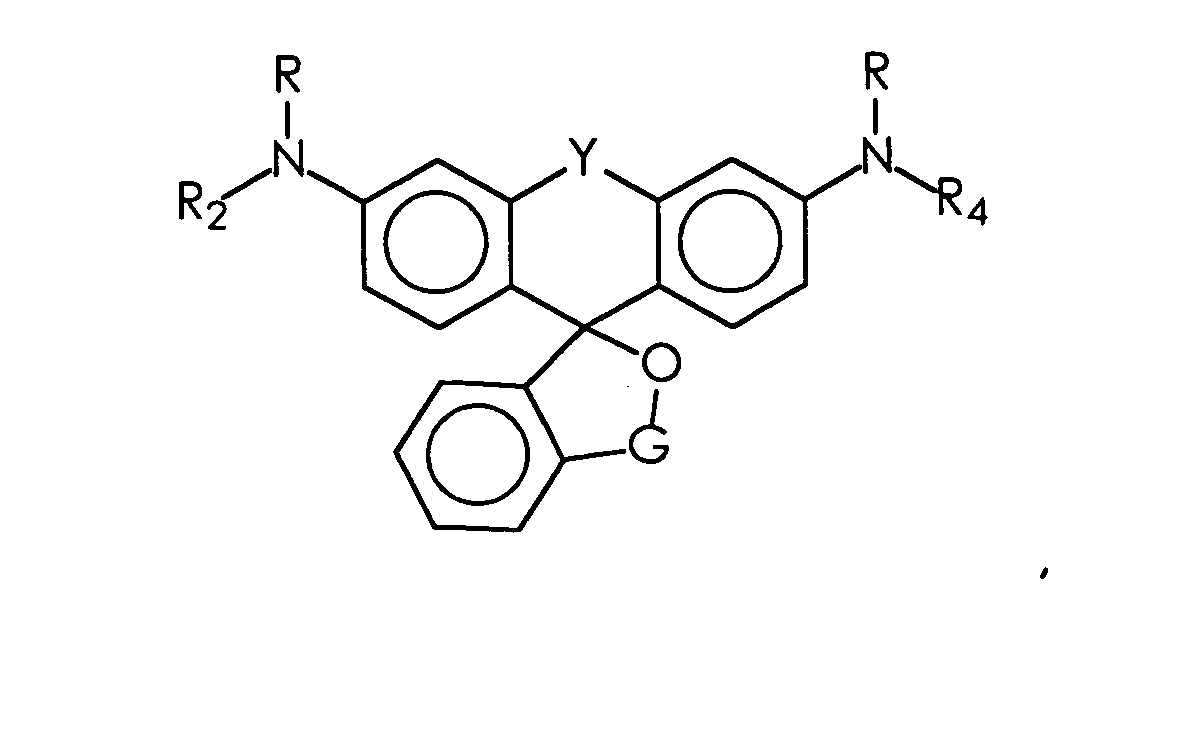


- Additional numbers of carbon atoms can also be placed on the central structure by, for example, first preparing the corresponding alcohols and then reacting these alcohols with, for example, high-carbon-number acids to prepare esters, high-carbon-number isocyanates to prepare urethanes, or the like, or by first preparing the corresponding amines and then reacting these amines with, for example, high-carbon-number isocyanates to prepare ureas. Examples of such compounds include (but are not limited to) those of the formulae


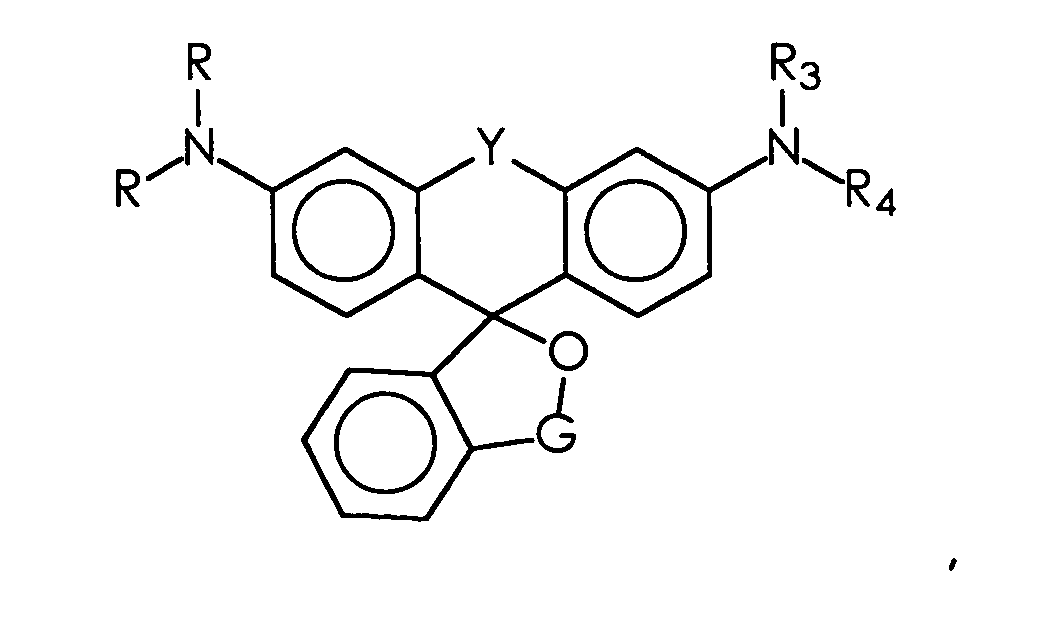


- Some specific examples of such compounds include (a) those of the formulae


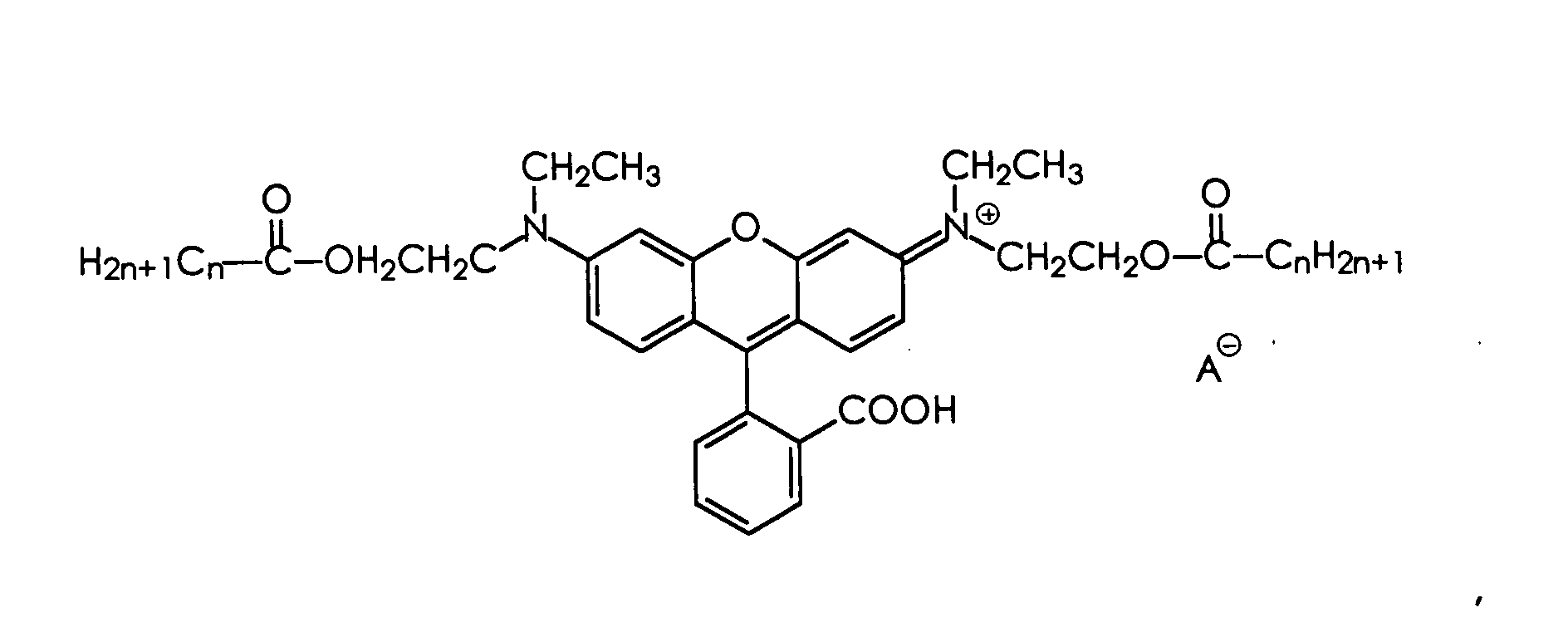

- Specific embodiments of the invention will now be described in detail. These examples are intended to be illustrative, and the invention is not limited to the materials, conditions, or process parameters set forth in these embodiments. All parts and percentages are by weight unless otherwise indicated.
- A mixture of fluorescein (100 grams, 0.331 mole; obtained from Aldrich Chemical Co., Milwaukee, WI) and PCl5 (128.5 grams, 0.62 mole; obtained from Aldrich Chemical Co.) in 650 milliliters of chlorobenzene was stirred and heated to 140°C in a 1 liter round bottom flask equipped with a reflux condenser. After 6 hours of heating, the reflux condenser was replaced with a distillation setup, and POCl3 formed during the reaction as well as the chlorobenzene were distilled off. After all of the POCl3 and chlorobenzene were removed, 300 grams of N-methyl pyrrolidinone was added and the resulting mixture was heated to 100°C with stirring until all of the crude dichlorofluorescein dissolved. The solution was then poured into a 4 liter beaker containing 1 liter of deionized water. A tan solid precipitated out and was collected on a filter and dried in a vacuum oven. The final tan solid matched the IR, NMR, and TLC of commercially available dichlorofluorescein.
- Other synthetic processes can also be used. For example, a one-pot process using DMF solvent can be employed wherein the POCl3 intermediate is not distilled off but is removed by reaction with methanol, which also precipitates the dichlorofluorescein as a white solid. Methods using toluenesulfonylchloride, a less reactive and corrosive chlorinating agent than PCl5, can also be used.
- A mixture of dichlorofluorescein (105 grams, 0.284 mole, prepared as described above), calcium oxide (24 grams, 0.62 mole; obtained from Aldrich Chemical Co., Milwaukee, WI), ZnCl2 (116 grams, 0.85 mole; obtained from Aldrich Chemical Co.), and distearyl amine (288 grams, 0.585 mole; ARMEEN 2HT, obtained from Akzo-Nobel, McCook, IL) in 650 milliliters of tetramethylene sulfone (obtained from Chevron Phillips Chemical Co., LP, The Woodlands, TX) was stirred and heated to 190°C in a 1 liter round bottom flask. After 10 hours of heating, the deeply magenta colored mixture was cooled to 120°C and poured into 2.5 liters of methyl isobutyl ketone (MIBK) and stirred until totally dissolved.
- The solution of crude tetrastearyl colorant in MIBK was then transferred to a 4 liter separatory funnel. Three aqueous EDTA washes were then performed (50 grams of the tetrasodium salt of EDTA in 1,000 milliliters of water for each wash) to remove all of the zinc and calcium salts in the crude reaction product. The product, dissolved in MIBK, remained on the top layer with the water/EDTA chelated metal waste on the bottom layer, which was discarded. Two washes with deionized water (1 liter each) were then performed. At this point, the MIBK solution was no longer magenta, but a faint orangeish-red color. The lack of a brilliant magenta color at this point indicated a ring-closed, or free base, form of the colorant, believed to be of the formula

- The solution of the ring-closed, purified tetrastearyl colorant in MIBK was then transferred to a 2 liter round bottom flask with distillation setup. The MIBK and residual water were distilled off and the product, a slightly viscous wax when hot, was transferred to a jar and allowed to harden. The wax was a deep red colored, somewhat hard wax when cooled to room temperature.
- 250 grams of the solid, ring-closed, purified tetrastearyl colorant prepared in Example ID was then transferred to a 1 liter beaker and 500 milliliters of MIBK were added and allowed to dissolve the solid with stirring. A stoichiometric amount of dodecyl benzene sulfonic acid was added to this solution and stirred for 1 hour. A deep magenta hue was observed with the addition of the acid. The solution was then transferred to a distillation setup and the MIBK removed. The molten ring-opened waxy colorant was then transferred to an aluminum tin and allowed to cool to room temperature. The ring-opened, or protonated, or free-base form of this colorant is believed to be of the formula
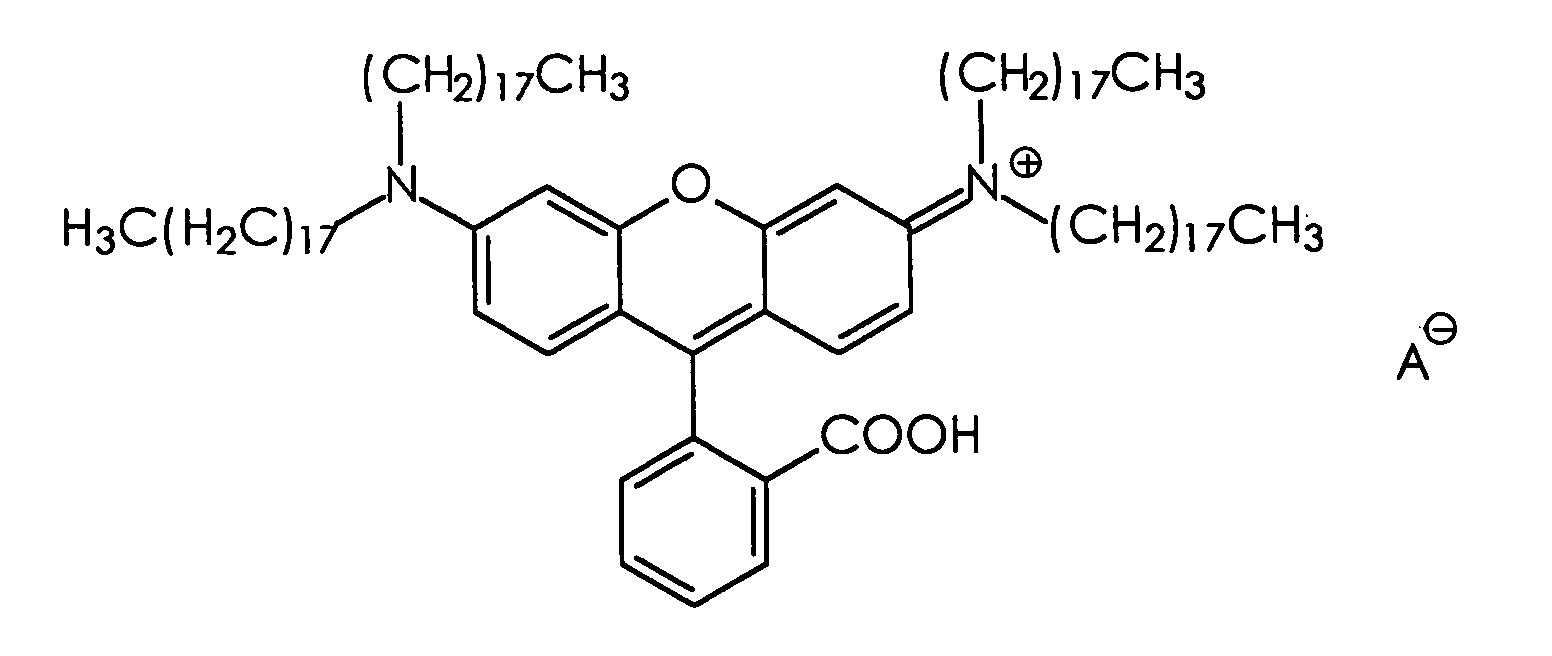

- The process was repeated a number of times substituting for dodecyl benzene sulfonic acid the following acids: p-toluene sulfonic acid; hydrochloric acid; trifluoroacetic acid; methyl sulfonic acid; trifluoromethyl sulfonic acid; and hydrobromic acid. Similar results were observed in all cases.
- The process of Example IB was repeated except that PRIMENE JM-T (obtained from Rohm and Haas Company, Philadelphia, PA), of the formula

- The process of Example IC was repeated using the product obtained in Example IIB. It is believed that the purified product was of the formula


- The process of Example ID was repeated using the product obtained in Example IIC.
- The process of Example IB was repeated except that UNILIN 425-PA (obtained from Tomah Products, Milton, WI, of the formula CH3(CH2)31-O-CH2CH2CH2NH2) was used instead of distearyl amine. The UNILIN 425-PA was present in an amount of 2 moles of UNILIN 425-PA per every one mole of dichlorofluorescein. It is believed that the product was of the formula


- The process of Example IB was repeated except that diethanol amine (obtained from Aldrich Chemical Co., Milwaukee, WI, of the formula HN(CH2CH2OH)2) was used instead of distearyl amine. The diethanol amine was present in an amount of 2.5 moles of diethanol amine per every one mole of dichlorofluorescein. In addition, 2 moles of zinc chloride were used per every one mole of dichlorofluorescein and 1 mole of calcium oxide was used per every one mole of dichlorofluorescein, the solvent was N-methyl pyrrolidone instead of tetramethylene sulfone, and the reaction mixture was heated to 125°C for 100 hours.
- The process of Example IC was repeated using the product obtained in Example IVB except that the product was poured into methanol and sufficient EDTA was added to remove all of the Zn2+ and Ca2+ ions. It is believed that the purified product was of the formula

- About 10 grams of the product obtained in Example IVC is added to 23.4 grams of octadecylisocyanate (available from Aldrich Chemical Co., Milwaukee, WI) at 120°C, after which 2 drops of dibutyltindilaurate catalyst (available from Aldrich Chemical Co.) is added and the reaction is stirred and heated until disappearance of the isocyanate peak in the IR is observed. The tetraurethane rhodamine is poured into aluminum tins and is believed to be of the formula


- The process of Example IB was repeated except that N-methyl-D-glucamine (obtained from Aldrich Chemical Co., Milwaukee, WI), of the formula

- The process of Example IC was repeated using the product obtained in Example VB except that the product was poured into methanol and sufficient EDTA was added to remove all of the Zn2+ and Ca2+ ions. It is believed that the purified product was of the formula

- About 10 grams of the product obtained in Example VC is added to 45 grams of octadecylisocyanate (available from Aldrich Chemical Co., Milwaukee, WI) at 120°C, after which 4 drops of dibutyltindilaurate catalyst (available from Aldrich Chemical Co.) is added and the reaction is stirred and heated until disappearance of the isocyanate peak in the IR is observed. The deca-urethane rhodamine is poured into aluminum tins and is believed to be of the formula


- The process of Example IB was repeated except that 2-piperidine ethanol (obtained from Aldrich Chemical Co., Milwaukee, WI), of the formula


- About 10 grams of the product obtained in Example VIB is added to 10.7 grams of octadecylisocyanate (available from Aldrich Chemical Co., Milwaukee, WI) at 120°C, after which 1 drop of dibutyltindilaurate catalyst (available from Aldrich Chemical Co.) is added and the reaction is stirred and heated until disappearance of the isocyanate peak in the IR is observed. The di-urethane rhodamine is poured into aluminum tins and is believed to be of the formula


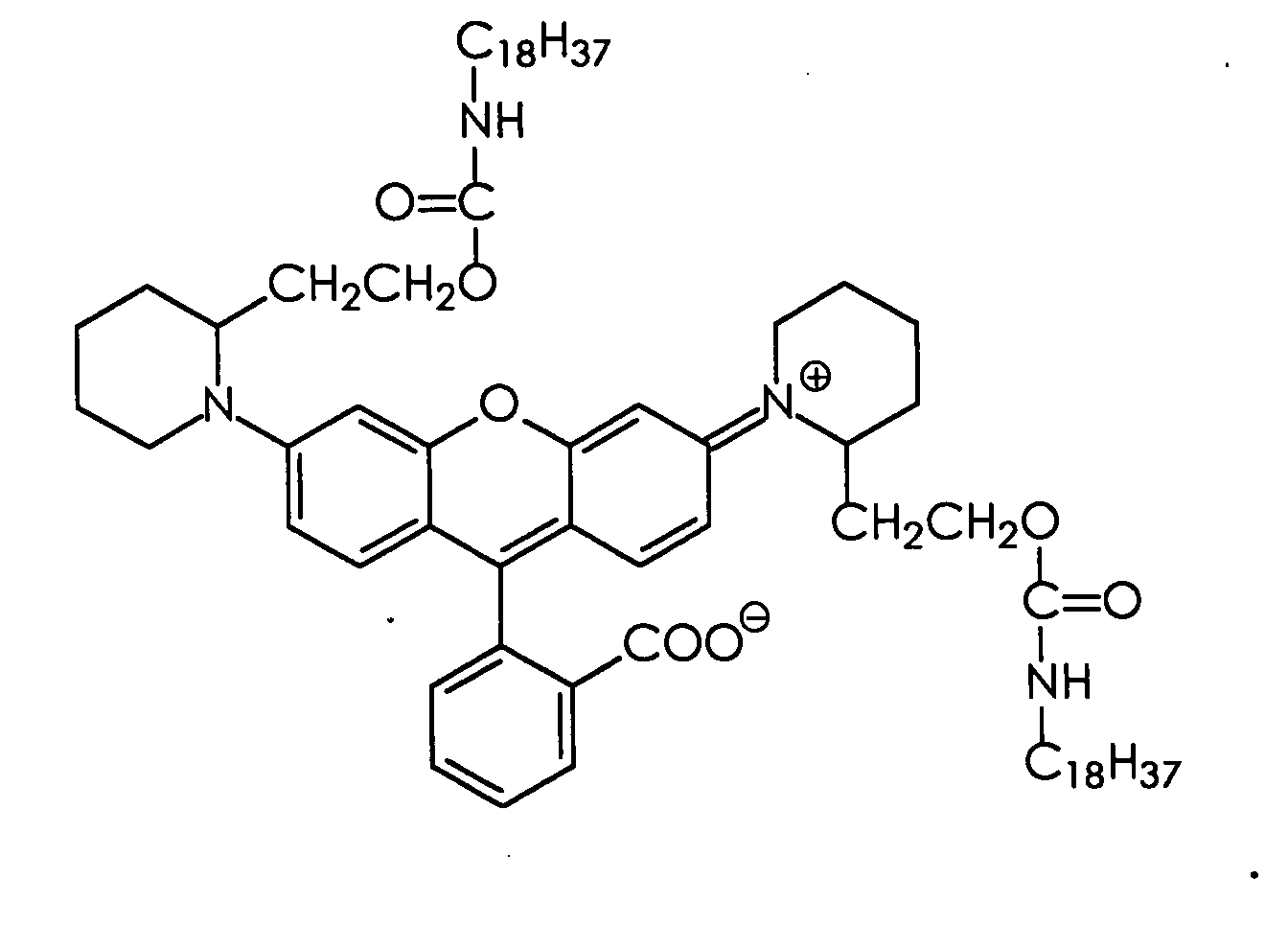
- The process of Example IB was repeated except that N,N-dimethyl-1,4-phenylene diamine (obtained from Aldrich Chemical Co., Milwaukee, WI), of the formula

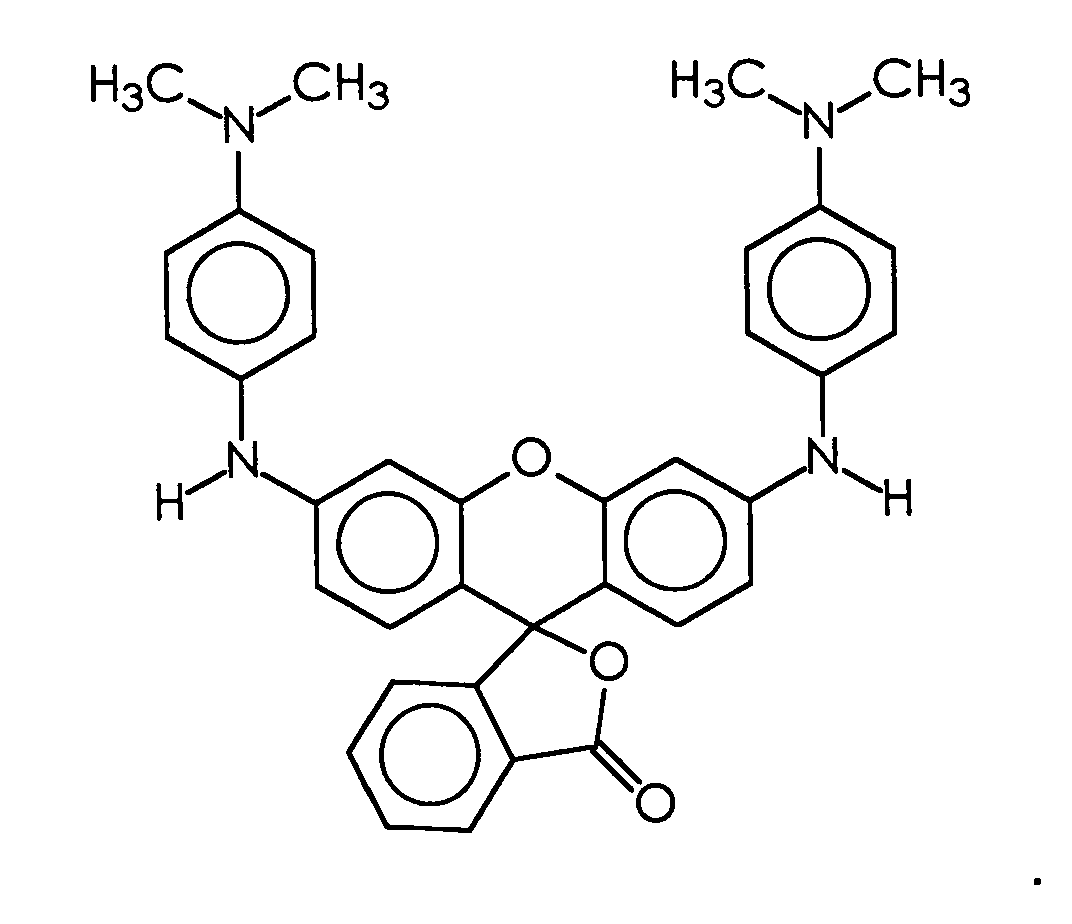


- The process of Example IB was repeated except that N,N-diethyl-1,4-phenylene diamine (obtained from Aldrich Chemical Co., Milwaukee, WI), of the formula


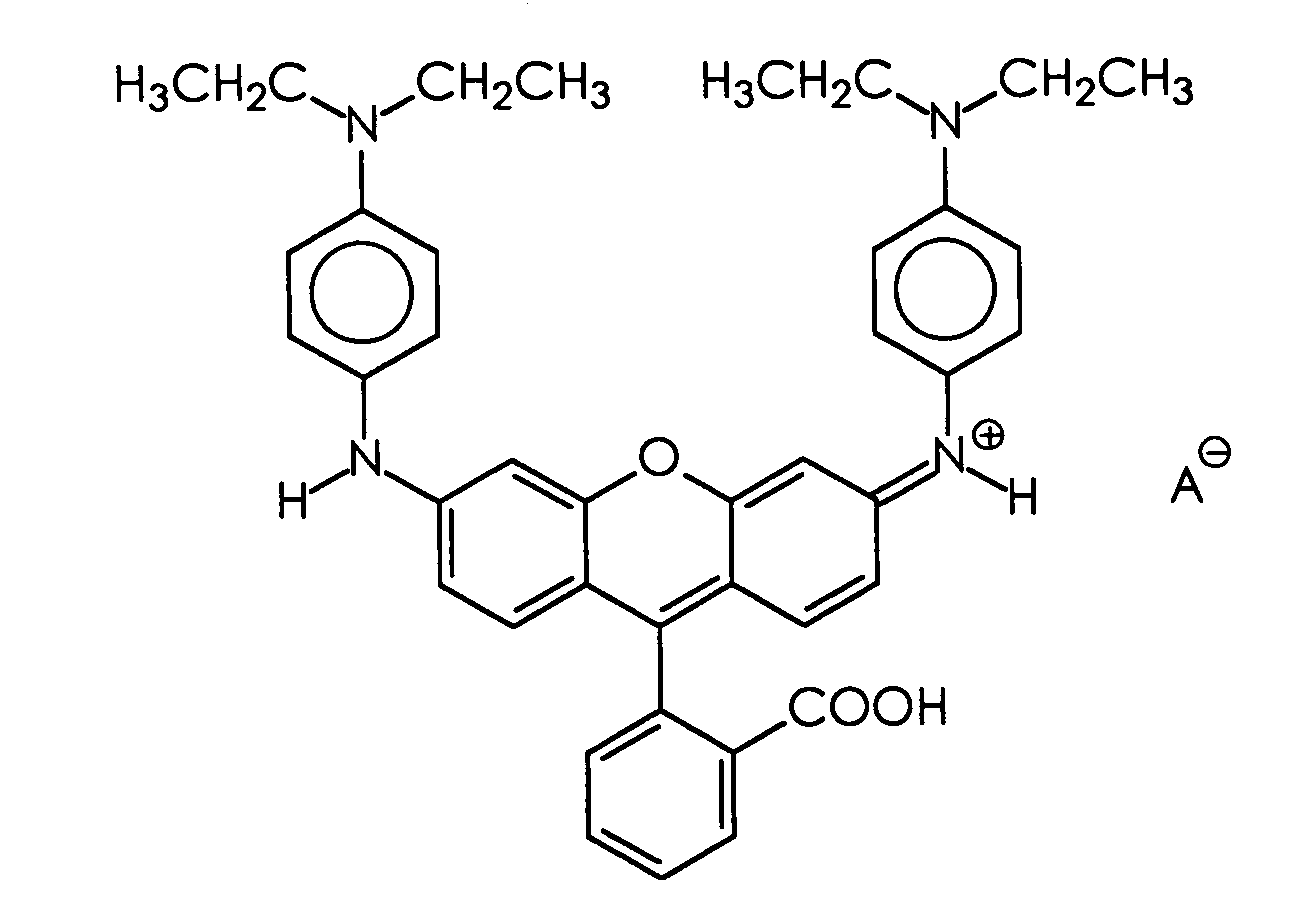

- The process of Example IB was repeated except that N-benzylethanolamine (obtained from Aldrich Chemical Co., Milwaukee, WI), of the formula

- The process of Example IC was repeated using the product obtained in Example IXB except that the product was poured into methanol and sufficient EDTA was added to remove all of the Zn2+ and Ca2+ ions. It is believed that the purified product was of the formula

- About 10 grams of the product obtained in Example IXC is added to 9.9 grams of octadecylisocyanate (available from Aldrich Chemical Co., Milwaukee, WI) at 120°C, after which 1 drop of dibutyltindilaurate catalyst (available from Aldrich Chemical Co.) is added and the reaction is stirred and heated until disappearance of the isocyanate peak in the IR is observed. The diurethane rhodamine is poured into aluminum tins and is believed to be of the formula


- The process of Example IB was repeated except that N-benzylethanolamine (obtained from Aldrich Chemical Co., Milwaukee, WI), of the formula

- The process of Example IC was repeated using the product obtained in Example XB except that the product was poured into methanol and sufficient EDTA was added to remove all of the Zn2+ and Ca2+ ions. It is believed that the purified product was of the formula

- In a glass reaction flask is combined 10 grams of the product obtained in Example XC, 29.8 grams of UNICID® 700 (a material containing carboxylic acid of the formula RCOOH wherein R is a linear alkyl group having an average of about 50 carbon atoms, also containing other unfunctionalized wax materials in an amount of up to about 25 percent by weight; available from Baker Petrolite, Sugarland, TX), 152 grams of xylene (available from Tarr, Inc., Portland, OR), and 0.6 grams of para-toluenesulfonic acid (available from Capital Resin Corp., Columbus, OH). The materials are mixed and heated to a reflux temperature of about 143°C. After about 72 hours, the reaction is complete. The reaction mixture is then cooled to 40°C and filtered. The filter cake is reslurried and filtered two more times in methanol to remove residual xylene. The filter cake is then dried in air at ambient temperature. It is believed that this filter cake will contain a colorant of the formula


- The process of Example IB was repeated except that 2-(ethylamino)ethanol (obtained from Aldrich Chemical Co., Milwaukee, WI), of the formula

- The process of Example IC was repeated using the product obtained in Example XIB except that the product was poured into methanol and sufficient EDTA was added to remove all of the Zn2+ and Ca2+ ions. It is believed that the purified product was of the formula

- About 10 grams of the product obtained in Example XIC is added to 12.5 grams of octadecylisocyanate (available from Aldrich Chemical Co., Milwaukee, WI) at 120°C, after which 1 drop of dibutyltindilaurate catalyst (available from Aldrich Chemical Co.) is added and the reaction is stirred and heated until disappearance of the isocyanate peak in the IR is observed. The diurethane rhodamine is poured into aluminum tins and is believed to be of the formula


- The process of Example IB was repeated except that a mixture of stearyl amine (ARMEEN 18D; obtained from Akzo-Nobel, McCook, IL) and distearyl amine was used instead of pure distearyl amine. The stearyl amine was present in an amount of 1.02 moles of stearyl amine per every one mole of dichlorofluorescein, and the distearyl amine was present in an amount of 1.02 moles of distearyl amine per every one mole of dichlorofluorescein.
- The process of Example IC was repeated using the product obtained in Example XIIB. It is believed that the purified product was a mixture of compounds of the formulae


- The process of Example ID was repeated using the product obtained in Example XIIC.
- The processes of Examples IA through IC were repeated. Thereafter, to the solution of the ring-closed purified tetrastearyl colorant in MIBK was added a naphthalene disulfonate adduct of the formula


- A secondary magenta colorant was prepared as follows.
- In a glass reaction flask were combined 73 grams of sublimed quinizarin (obtained from Aceto Corp., Lake Success, NY), 49 grams of leucoquinizarin (obtained from Aceto Corp.), 66 grams of 4-aminobenzene ethanol (obtained from Aceto Corp.), 31 grams of boric acid (obtained from Aldrich Chemical Co., Milwaukee, WI), and 780 grams of methanol (obtained from JT Baker, Phillipsburg, NJ). The materials were mixed and heated until the solvent refluxed at about
- After about 16 hours of reflux the reaction was complete, having generated an alcohol-substituted colorant of the formula

- The spectral strength of the alcohol-substituted colorant was determined using a spectrophotographic procedure based on the measurement of the colorant in solution by dissolving the colorant in toluene and measuring the absorbance using a Perkin Elmer Lambda 2S UV/VIS spectrophotometer. The spectral strength of the alcohol-substituted colorant was measured as about 21,000 mL Absorbance Units per gram at absorption λmax, indicating a purity of about 80 percent.
- In a glass reaction flask were combined 8 grams of the alcohol-substituted colorant prepared in Part 1 of this Example, 68 grams of glacial acetic acid (obtained from JT Baker), 13 grams of propionic acid (obtained from Aldrich Chemical Co.), and 2.3 grams of acetic anhydride (obtained from Aldrich Chemical Co.). The materials were mixed and heated to a reflux temperature of about 121°C. After about 4 hours of reflux, the reaction was complete and the reaction mixture contained an ethyl acetate-substituted colorant of the formula

- About 91 grams of the reaction mixture containing the ethyl acetate-substituted colorant from Part 2 of this Example was charged into a glass reaction flask. The mixture was cooled to a minimum of 30°C. While mixing, about 9 grams of bromine (obtained from Aldrich Chemical Co.) was added to the mixture at a rate such that the temperature remained below about 40°C. The mixture was then heated to about 40°C. After about 24 hours of mixing the reaction was complete.
- The reaction mixture was then quenched into 234 grams of deionized water and allowed to cool to room temperature. The reaction mixture was then filtered. The filter cake was reslurried and filtered twice in deionized water to remove most of the residual acetic acid. The filter cake was then dried in a 60°C oven. This filter cake contained a mixture of brominated ethyl acetate-substituted colorants of the formulae

- The spectral strength of the brominated ethyl acetate-substituted colorant was determined using a spectrophotographic procedure based on the measurement of the colorant in solution by dissolving the colorant in toluene and measuring the absorbance using a Perkin Elmer Lambda 2S UV/VIS spectrophotometer. The spectral strength of the brominated ethyl acetate-substituted colorant was measured as about 15,000 mL Absorbance Units per gram at absorption λmax. This spectral strength indicated a purity of about 60 percent.
- In a glass reaction flask were combined 18 grams of the mixture of the brominated ethyl acetate-substituted colorant and its salt prepared in Part 3 of this Example, 72 grams of N-methyl-2-pyrrolidone (obtained from Aldrich Chemical Co.), 4 grams of sodium hydroxide (obtained from Aldrich Chemical Co.), and 4 grams of deionized water. The materials were mixed and heated to about 60°C. After about 3 hours the reaction was complete.
- The reaction mixture was then quenched into 234 grams of deionized water and allowed to cool to room temperature. Glacial acetic acid was added until the solution reached a pH of between 6 and 7. The reaction mixture was then filtered. The filter cake was reslurried and filtered twice in deionized water to remove most of the residual N-methyl-2-pyrrolidone. The filter cake was then dried in a 60°C oven. This filter cake contained a brominated alcohol-substituted colorant of the formula
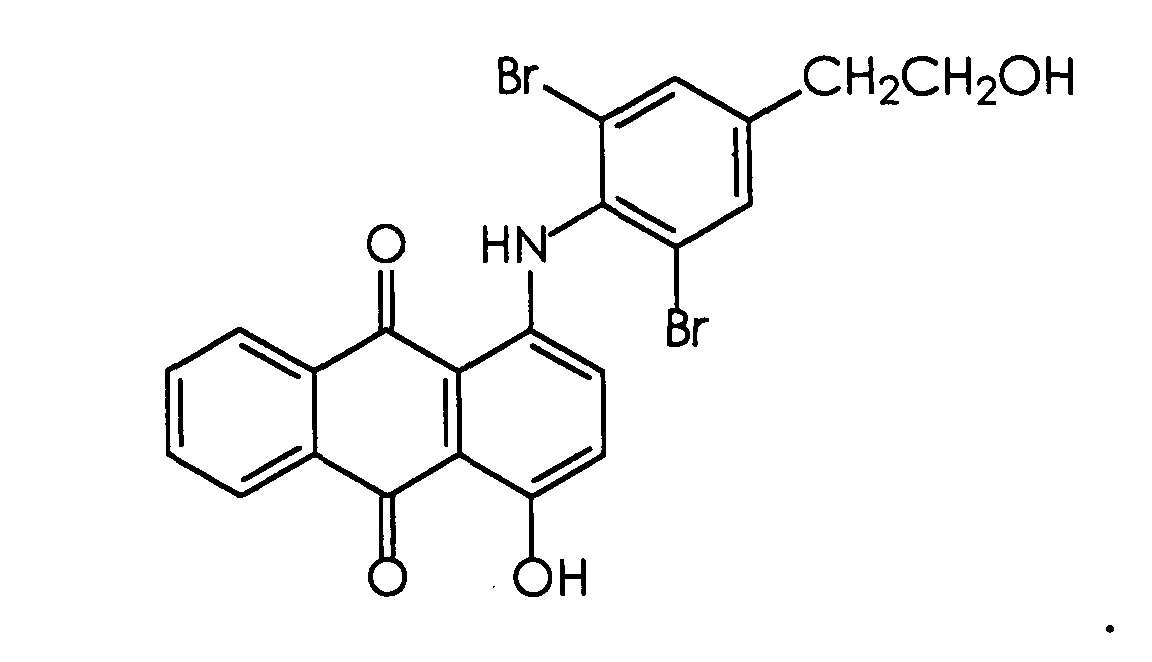
- In a glass reaction flask were combined 16 grams of the brominated alcohol-substituted colorant prepared in Part 4 of this Example, 31 grams of UNICID® 700 (a material containing carboxylic acid of the formula R2COOH wherein R2 is a linear alkyl group having an average of about 50 carbon atoms, also containing other unfunctionalized wax materials in an amount of up to about 25 percent by weight; obtained from Baker Petrolite, Sugarland, TX), 152 grams of xylene (obtained from Tarr, Inc., Portland, OR), and 0.6 grams of para-toluenesulfonic acid (obtained from Capital Resin Corp., Columbus, OH). The materials were mixed and heated to a reflux temperature of about 143°C. After about 7 hours, the reaction was complete.
- The reaction mixture was then cooled to 40°C and filtered. The filter cake was reslurried and filtered two more times in methanol to remove residual xylene. The filter cake was then dried in air at ambient temperature. This filter cake contained a colorant of the formula

- The spectral strength of the colorant was determined using a spectrophotographic procedure based on the measurement of the colorant in solution by dissolving the colorant in an equal mixture of toluene and tetrahydrofuran and measuring the absorbance using a Perkin Elmer Lambda 2S UV/VIS spectrophotometer. The spectral strength of the colorant was measured as about 5,000 mL Absorbance Units per gram at absorption λmax. This spectral strength indicated a purity of about 40 percent.
- Ink compositions containing the colorants of Examples ID and IIID, and, for comparison purposes, commercially available n-butyl Solvent Red 172 (n-BuSR172; UNIGRAPH Red 1900, obtained from United Color Manufacturing, Inc., Newtown, PA) and commercially available Solvent Red 49 (SR49; a rhodamine colorant obtained from BASF, Germany) were prepared as follows.
- Ink A: In a stainless steel beaker were combined 243.00 grams of polyethylene wax (PE 655, obtained from Baker Petrolite, Tulsa, OK, of the formula CH3(CH2)50CH3), 122.15 grams of stearyl stearamide wax (KEMAMIDE® S-180, obtained from Crompton Corporation, Greenwich, CT), 108.00 grams of a tetra-amide resin obtained from the reaction of one equivalent of dimer diacid with two equivalents of ethylene diamine and UNICID® 700 (a carboxylic acid derivative of a long chain alcohol obtained from Baker Petrolite, Tulsa, OK), prepared as described in Example 1 of U.S. Patent 6,174,937, the disclosure of which is totally incorporated herein by reference, 65.45 grams of a urethane resin obtained from the reaction of two equivalents of ABITOL® E hydroabietyl alcohol (obtained from Hercules Inc., Wilmington, DE) and one equivalent of isophorone diisocyanate, prepared as described in Example 1 of U.S. Patent 5,782,966, the disclosure of which is totally incorporated herein by reference, 23.00 grams of a urethane resin that was the adduct of three equivalents of stearyl isocyanate and a glycerol-based alcohol, prepared as described in Example 4 of U.S. Patent 6,309,453, the disclosure of which is totally incorporated herein by reference, and 1.10 gram of NAUGUARD® 445 antioxidant (obtained from Uniroyal Chemical Co.; Middlebury, CT). The materials were melted together at a temperature of 135°C in an oven, and then blended by stirring in a temperature-controlled mantle at 135°C for 0.2 hour. To this mixture was then added 22.98 grams of the tetrastearyl colorant prepared as described in Example ID, 17.66 grams of a secondary magenta colorant (prepared as described in Parts 1 through 5 of this Example), and 3.20 grams dodecyl benzene sulfuric acid (DDBSA, Bio-soft S-100, obtained from Stepan Company, Elwood, IL). After stirring for 2 additional hours, the magenta ink thus formed was filtered through a heated MOTT® apparatus (obtained from Mott Metallurgical) using Whatman #3 filter paper under a pressure of 15 pounds per square inch. The filtered phase change ink was poured into molds and allowed to solidify to form ink sticks. The magenta phase change ink thus prepared exhibited a viscosity of 10.49 centipoise as measured by a Rheometrics cone-plate viscometer at about 140°C, melting points of 85°C and 103°C as measured by differential scanning calorimetry using a DuPont 2100 calorimeter, a glass transition temperature (Tg) of 19°C, and a spectral strength of 1,023 milliliters absorbance per gram at 552 nanometers, determined by using a spectrophotographic procedure based on the measurement of the colorant in solution by dissolving the solid ink in n-butanol and measuring the absorbance using a Perkin Elmer Lambda 2S UV/VIS spectrophotometer.
- Ink B: Ink B was prepared in a similar manner to that used to prepare Ink A but using a different formulation for the ink composition as described in the table below. The properties of Ink B were obtained using the same methods as those used for Ink A. As shown in the table, the predominant difference between Ink A and Ink B is the relative concentrations of colorants and DDBSA in the ink. The viscosities of Ink A and Ink B are virtually the same.
- Ink F (Comparative): An ink was prepared by the process described for Ink A except that instead of the colorant from Example ID and the secondary magenta colorant prepared in Parts 1 through 5 of this Example, the commercially available SR 49 and n-butyl SR172 were used. The properties of Ink F were obtained using the same methods as those used for Ink A.
- Ink G (Comparative): An ink was prepared by the process described for Ink A except that instead of the colorant from Example ID, the commercially available SR 49 was used. The properties of Ink G were obtained using the same methods as those used for Ink A.
- Ink H: An ink was prepared by the process described for Ink A except that instead of the colorant from Example ID, the colorant prepared in Example XIII was used, dinonylnaphthalene disulfonic acid (50 wt.% in isobutanol, NACURE® 155, obtained from King Industries, Norwalk, CT) was used in place of DDBSA, and no secondary colorant was used. The properties of Ink H were obtained using the same methods as those used for Ink A.
- The following table summarizes the compositions of the various inks and the amounts of ingredients (weight percentage numbers given in the table) therein:
Ingredient Ink A Ink B Ink F Ink G Ink H POLYWAX 40.06 40.16 41.83 45.67 38.68 S-180 20.14 19.38 19.26 13.17 17.05 Tetra-amide 17.81 17.82 20.36 19.04 23.56 Urethane Resin 1* 10.79 12.47 10.13 10.68 10.45 Urethane Resin 2** 3.79 4.26 5.56 8.09 5.76 Example ID colorant 3.79 2.61 --- --- --- Example XIII colorant --- --- --- --- 3.56 SR49 --- --- 0.55 0.46 --- 2°magenta colorant 2.91 2.03 --- 1.91 --- n-Butyl SR 172 --- --- 1.01 --- --- DDBSA 0.53 1.10 1.11 0.80 --- NACURE 155 --- --- --- --- 0.78 NAUGUARD 445 0.18 0.18 0.19 0.20 0.18 Total 100.0 100.0 100.0 100.0 100.0 * ABITOL E based urethane resin ** Glycerol alcohol based urethane resin - The magenta inks thus prepared were successfully printed on HAMMERMILL LASERPRINT® paper (obtained from International Paper, Memphis, TN) with a XEROX@ PHASER 860 printer, which uses a printing process wherein the ink is first jetted in an imagewise pattern onto an intermediate transfer member followed by transfer of the imagewise pattern from the intermediate transfer member to a final recording substrate. The solid field images with a resolution of 450 dpi x 600 dpi were generated from the printer, and their color space data were obtained on an ACS® Spectro Sensor® II Colorimeter (obtained from Applied Color Systems Inc.) in accordance with the measuring methods stipulated in ASTM 1 E805 (Standard Practice of Instrumental Methods of Color or Color Difference Measurements of Materials) using the appropriate calibration standards supplied by the instrument manufacturer. For purposes of verifying and quantifying the overall colorimetric performance of the inks, measurement data were reduced, via tristimulus integration, following ASTM E308 (Standard Method for Computing the Colors of Objects using the CIE System) in order to calculate the 1976 CIE L* (Lightness), a* (redness-greenness), and b* (yellowness-blueness) CIELAB values for each phase change ink sample.
- Another type of printed sample was generated on HAMMERMILL LASERPRINT® paper using a K Printing Proofer (manufactured by RK Print Coat Instrument Ltd., Litlington, Royston, Heris, SG8 0OZ, U.K.). In this method, the tested inks were melted onto a printing plate set at 150°C temperature. A roller bar fitted with the paper was then rolled over the plate containing the melted ink on its surface. The ink on the paper was cooled, resulting in three separated images of rectangular blocks. The most intensely colored block contained the most ink deposited on the paper, and was therefore used to obtain the color value measurements.
- Printed samples of the magenta inks both from the XEROX PHASER® printer and from the K-Proofer were evaluated for color characteristics, which are reported in the table below. As is apparent, the CIE L*a*b* values for inks made with colorants according to the present invention represent a magenta shade printed ink. The table below lists the viscosity (η, centipoise) of the inks at 140°C, the spectral strength in n-butanol (SS, mL*g-1cm-1) and absorbance maximum (Lambda max, nm) of the inks, and the CIE L*a*b color coordinates of the prints made either using the XEROX PHASER® 860 printer or the K-proofer:
Ink η SS Lambda Max L*/a*/b* of Prints from 860 Printer L*/a*/b* of prints from K-Proofer A 10.49 10.23 552 48.7/76.9/-37.7 --- B 10.54 1328 552 50.1/69.1/-37.2 56.3/59.3/-32.5 F 10.53 1686 555 --- --- G 10.77 1279 555 54.0/76.8/-41.3 60.9/68.0/-42.7 H --- --- --- --- 65.3/70.5/-30.0 --- indicates not measured - Thermal stability of the tetrastearyl colorant from Example ID was compared to comparative SR 49 colorant by monitoring their inks' spectral strength after heating. In this method, the inks were heated in glass jars continuously in an oven of 145°C. The inks' spectral strength in n-butanol (related to the amount of the soluble colorant in ink) was measured as a function of aging time. Any thermal decomposition of a test colorant would be observable as discoloration and could thereby detected as a change in the spectral strength.
- The table below illustrates spectral strength relative to the initial values verse elapsed time for Ink A and comparative Ink F samples. The remaining spectral strength is used here as the measurement of remaining undegraded colorant in the ink. It is evident that the colorants in Ink A have superior thermal stability compared to those in comparative Ink F.
Cooking time (days) 1 2 7 11 15 Ink A 100.0 97.1 86.9 79.4 72.7 Ink F 100.0 94.1 80.0 71.1 63.7 - Colorant degradation not only leads to a decrease in spectral strength (as shown in the above table) but can also generate undesirable color shift or fade as a result of the colorant decomposition reaction in the ink. Both of these phenomena can adversely affect the color quality of prints from the inks if the colorant is not thermally stable. From a practical application point of view, the overall color change of the ink (measured as ΔE change in color values) is also important when evaluating colorant thermal stability.
- A thermal stability test was performed by heating the test inks in glass jars, then sampling and printing the inks on HAMMERMILL LASERPRINT® papers using a K-Proofer, and finally measuring the color changes of the prints of the sampled inks as a function of time. The color changes of the resultant prints were monitored by CIELAB values and expressed by Delta E relative to the initial CIELAB values. The color change of each sample was determined according to the methods described hereinabove for obtaining CIELAB values. Color changes were determined following ASTM D2244-89 (Standard Test Method for Calculation of Color Differences From instrumentally Measured Color Coordinates) (delta E = [(L*1-L*2)2+(a*1-a*2)2+(b*1-b*2)2]1/2). The results for Inks B and G are shown in the tables below. As the data in the tables indicate, Ink B containing the colorant of Example ID demonstrated better color stability than comparative Ink G containing SR 49.
Cooking time (days) 0 0.8 1.0 3.0 3.1 5.0 6.9 7.0 10.0 Ink B 0.0 --- 1.8 3.6 --- 5.0 --- 5.3 --- Ink G 0.0 2.6 --- --- 4.8 --- 8.7 --- 9.4 - The ink containing the colorant of Example ID (Ink B) was tested for colorant diffusion. For comparison purposes, comparative Ink G containing the commercial colorant SR 49 was also tested; both inks contained the secondary colorant prepared in Parts 1 through 5 of Example XIV and DDBSA. This diffusion evaluation method entailed generating text prints of the magenta inks, applying SCOTCH® tape (obtained from 3M, St. Paul, MN) adhesive to a portion of the text, and examining the extent of colorant diffusion into the adhesive material over time. The text print samples were then studied to observe how heat amplified colorant diffusion over time. This test simulated the real situation when one applies SCOTCH® tape adhesive labels onto prints generated with inks containing the colorants. Heating the prints served to mimic the conditions when prints are handled in warm climates or passed through high-speed document handlers.
- After heating at 45°C for six days and then remaining at room temperature for six weeks, the printed text area using comparative Ink G with commercial colorant SR 49 displayed extensive colorant diffusion into the applied tape, resulting in blurry edges of the text characters. For Ink B containing the colorant of Example ID, the extent of diffusion was noticeable but of lesser extent, and the printed text situated beneath the adhesive tape was more legible. The results demonstrated that the colorant of Example ID has fewer tendencies to diffuse compared to the commercial SR 49. Although not being limited to any particular theory, it is believed that the long alkyl groups in the colorant of Example ID help to prevent colorant diffusion in the ink base.
- Other embodiments and modifications of the present invention may occur to those of ordinary skill in the art subsequent to a review of the information presented herein; these embodiments and modifications, as well as equivalents thereof, are also included within the scope of this invention.
- The recited order of processing elements or sequences, or the use of numbers, letters, or other designations therefor, is not intended to limit a claimed process to any order except as specified in the claim itself.
Claims (10)
- Compounds of the formulae


- A compound according to claim 1 wherein a, b, and c are each zero.
- A compound according to claim 1 wherein d is 1, Q is a COOH group, and Q- is a COO- group.
- A compound according to claim 1 wherein d is 1, Q is a SO3H group, and Q- is a SO3 - group.
- A compound according to claim 1 wherein


- A compound according to claim 1 wherein A is an organic dianion of the formula A1-R11-A2 wherein A1 and A2 each, independently of the other, are anions and wherein R11 is (i) an alkylene group, (ii) an arylene group, (iii) an arylalkylene group, or (iv) an alkylarylene group.
- A compound according to claim 6 wherein the organic dianion is of the formula
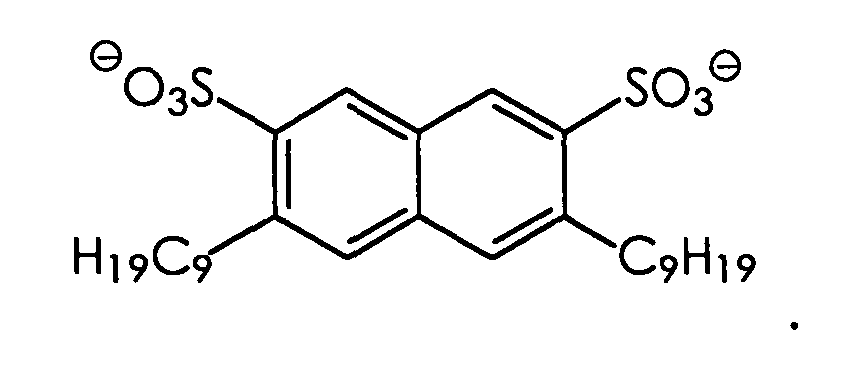
- A compound according to claim 1 of the formula


- A compound of the formula


- A compound according to claim 1 of the formula


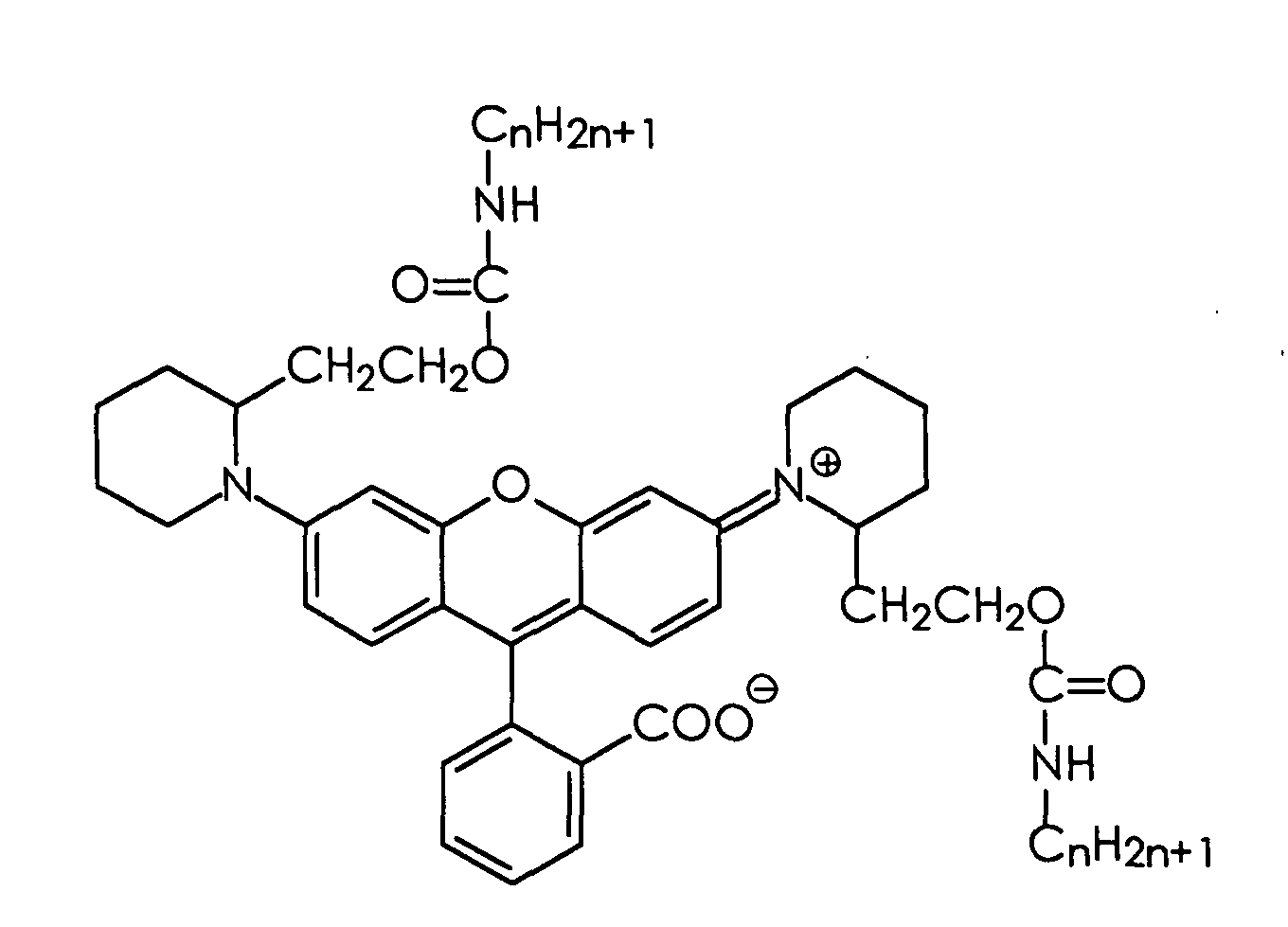


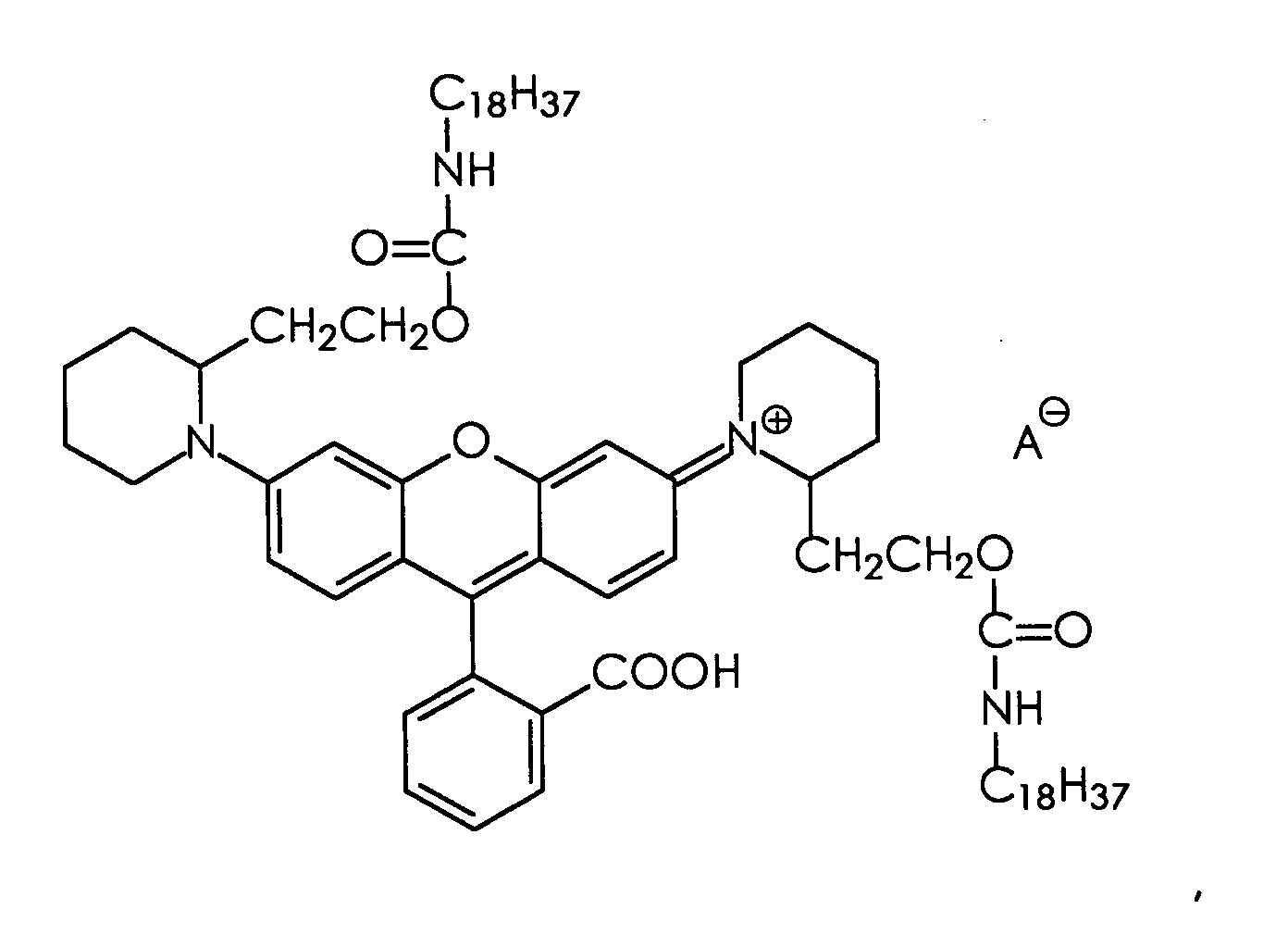


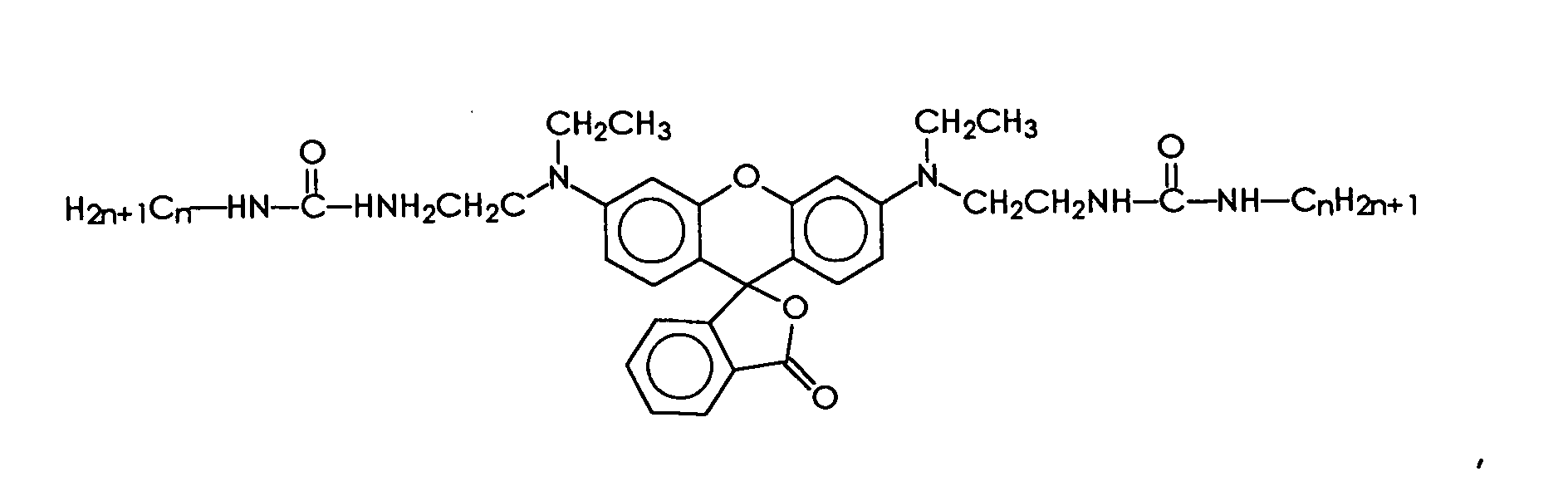


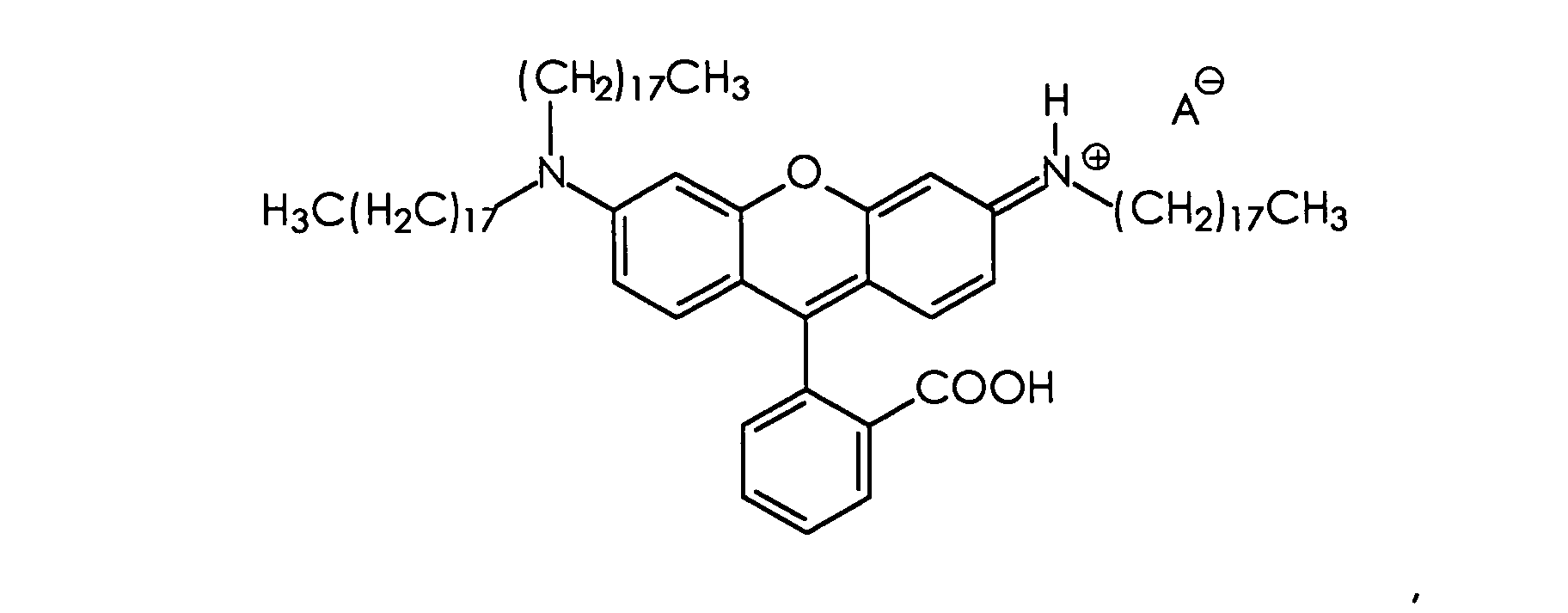


Applications Claiming Priority (2)
| Application Number | Priority Date | Filing Date | Title |
|---|---|---|---|
| US10/607,382 US7176317B2 (en) | 2003-06-26 | 2003-06-26 | Colorant compounds |
| US607382 | 2003-06-26 |
Publications (2)
| Publication Number | Publication Date |
|---|---|
| EP1491590A1 true EP1491590A1 (en) | 2004-12-29 |
| EP1491590B1 EP1491590B1 (en) | 2008-08-20 |
Family
ID=33418713
Family Applications (1)
| Application Number | Title | Priority Date | Filing Date |
|---|---|---|---|
| EP04014261A Expired - Lifetime EP1491590B1 (en) | 2003-06-26 | 2004-06-17 | Triphenylmethane colorant compounds and phase change inks containing the same |
Country Status (8)
| Country | Link |
|---|---|
| US (1) | US7176317B2 (en) |
| EP (1) | EP1491590B1 (en) |
| JP (1) | JP4680539B2 (en) |
| CN (1) | CN1576278A (en) |
| BR (1) | BRPI0402445B1 (en) |
| CA (1) | CA2472115C (en) |
| DE (1) | DE602004015890D1 (en) |
| MX (1) | MXPA04006265A (en) |
Cited By (7)
| Publication number | Priority date | Publication date | Assignee | Title |
|---|---|---|---|---|
| WO2007017602A3 (en) * | 2005-08-11 | 2007-08-02 | Synth Innove Lab | Marqueurs, leur procede de fabrication et leurs applications |
| US7326258B2 (en) | 2004-06-18 | 2008-02-05 | L'oreal S.A. | Compositions comprising hydroxyalkyl direct dyes, implementation processes and uses thereof |
| EP1879876A4 (en) * | 2005-05-12 | 2009-03-18 | Zink Imaging Llc | Novel rhodamine dyes |
| US7704667B2 (en) | 2003-02-28 | 2010-04-27 | Zink Imaging, Inc. | Dyes and use thereof in imaging members and methods |
| US7807607B2 (en) | 2006-05-12 | 2010-10-05 | Zink Imaging, Inc. | Color-forming compounds and use thereof in imaging members and methods |
| US8372782B2 (en) | 2003-02-28 | 2013-02-12 | Zink Imaging, Inc. | Imaging system |
| KR101814670B1 (en) | 2015-08-27 | 2018-01-30 | 삼성에스디아이 주식회사 | Novel urethane resin, photosensitive resin composition comprising the same and color filter |
Families Citing this family (12)
| Publication number | Priority date | Publication date | Assignee | Title |
|---|---|---|---|---|
| GB2396153A (en) * | 2002-12-12 | 2004-06-16 | Sun Chemical Bv | Sulfonium salts useful as cationic photoinitiators in energy-curable compositions and processes of preparing cured polymeric compositions |
| US7294724B2 (en) * | 2005-08-11 | 2007-11-13 | Appleton Papers Inc. | Process for manufacture of fluoran dyes |
| US7674326B2 (en) * | 2006-10-12 | 2010-03-09 | Xerox Corporation | Fluorescent phase change inks |
| US7910754B2 (en) | 2007-02-06 | 2011-03-22 | Xerox Corporation | Colorant compounds |
| US7485737B2 (en) | 2007-02-06 | 2009-02-03 | Xerox Corporation | Colorant compounds |
| US20080187664A1 (en) | 2007-02-06 | 2008-08-07 | Xerox Corporation | Phase change inks containing colorant compounds |
| US8163074B2 (en) | 2007-02-06 | 2012-04-24 | Xerox Corporation | Phase change inks containing colorant compounds |
| US7736426B2 (en) | 2007-02-06 | 2010-06-15 | Xerox Corporation | Phase change inks containing colorant compounds |
| US8247145B2 (en) * | 2007-09-07 | 2012-08-21 | Konica Minolta Business Technologies, Inc. | Magenta toner for developing electrostatic image |
| EP2513718B1 (en) * | 2009-12-18 | 2018-03-21 | Sun Chemical Corporation | Colored fluids for electrowetting, electrofluidic, and electrophoretic technologies |
| JP6028478B2 (en) * | 2011-10-14 | 2016-11-16 | Jsr株式会社 | Colorant, coloring composition, color filter and display element |
| EP2781514B1 (en) * | 2013-03-21 | 2015-11-18 | Canon Kabushiki Kaisha | Compound, ink, ink cartridge and ink jet recording method |
Citations (8)
| Publication number | Priority date | Publication date | Assignee | Title |
|---|---|---|---|---|
| US4264507A (en) * | 1979-04-24 | 1981-04-28 | Polaroid Corporation | Novel xanthene dye developers |
| US4619784A (en) * | 1979-12-26 | 1986-10-28 | Polaroid Corporation, Patent Dept. | Image dye-providing materials |
| JPS6361056A (en) * | 1986-09-01 | 1988-03-17 | Hodogaya Chem Co Ltd | Fluoran compound |
| US5250708A (en) * | 1991-08-13 | 1993-10-05 | Milliken Research Corporation | Poly(oxyalkylene) substituted aminophenol intermediate and xanthene colorant |
| JPH11279426A (en) * | 1998-03-31 | 1999-10-12 | Idemitsu Kosan Co Ltd | Rhodamine dye, color conversion film and organic electroluminescence device |
| JP2000103975A (en) * | 1998-09-28 | 2000-04-11 | Idemitsu Kosan Co Ltd | Rhodamine derivative and dye, color conversion film, and organic electroluminescent device |
| JP2001164245A (en) * | 1999-12-13 | 2001-06-19 | Idemitsu Kosan Co Ltd | Color conversion film and organic electroluminescence device |
| WO2002096900A1 (en) * | 2001-04-10 | 2002-12-05 | Milliken & Company | Novel magenta colorants for use within ink systems |
Family Cites Families (46)
| Publication number | Priority date | Publication date | Assignee | Title |
|---|---|---|---|---|
| US1981516A (en) * | 1934-11-20 | Intermediates for secondary alkyl | ||
| US1981515A (en) * | 1928-12-01 | 1934-11-20 | Nat Aniline & Chem Co Inc | Intermediates for rhodamine dyestuffs |
| US1991482A (en) * | 1932-03-24 | 1935-02-19 | Du Pont | Rhodamine dyes |
| GB421737A (en) | 1933-06-30 | 1934-12-31 | Ici Ltd | Manufacture of new rhodamine dyes and their application |
| FR1575476A (en) | 1967-08-16 | 1969-07-18 | ||
| BE755392A (en) * | 1969-08-28 | 1971-02-01 | Teletype Corp | INK AND ELECTROSTATIC PRINTING APPARATUS |
| DE2018168C3 (en) * | 1970-04-16 | 1974-05-22 | Farbwerke Hoechst Ag, Vormals Meister Lucius & Bruening, 6000 Frankfurt | Pigment preparations and processes for their production |
| US4050945A (en) * | 1974-07-08 | 1977-09-27 | Yoshio Suzuki | Heat-sensitive color-producing compositions and articles using same |
| DE2460491A1 (en) * | 1974-12-20 | 1976-07-01 | Hoechst Ag | PROCESS FOR THE MANUFACTURING OF XANTHENE DYES |
| US4361842A (en) * | 1979-09-14 | 1982-11-30 | Canon Kabushiki Kaisha | Recording method using film forming liquid composition |
| US4267251A (en) * | 1979-12-26 | 1981-05-12 | Polaroid Corporation | Novel image dye-providing materials, photographic products and processes |
| JPS6239734B2 (en) * | 1980-04-24 | 1987-08-25 | Polaroid Corp | |
| US4390369A (en) * | 1981-12-17 | 1983-06-28 | Exxon Research And Engineering Co. | Natural wax-containing ink jet inks |
| US4484948A (en) | 1981-12-17 | 1984-11-27 | Exxon Research And Engineering Co. | Natural wax-containing ink jet inks |
| JPS59153831A (en) * | 1983-02-23 | 1984-09-01 | Sumitomo Metal Ind Ltd | Manufacture of heat resistant ferritic stainless steel plate |
| DE3579067D1 (en) * | 1984-05-10 | 1990-09-13 | Willett Int Ltd | METHOD FOR COATING A SUBSTRATE WITH THERMOPLASTIC INKS, AND COATING COMPOSITION. |
| DE3425631A1 (en) * | 1984-07-12 | 1986-01-16 | Basf Ag, 6700 Ludwigshafen | RHODAMINE DYES |
| EP0187352B1 (en) | 1984-12-31 | 1991-06-05 | Howtek, Inc. | A method of ink jet colour printing |
| DE3671460D1 (en) | 1985-06-25 | 1990-06-28 | Howtek Inc | INK FOR INK JET PRINT. |
| JPS6354476A (en) * | 1986-08-25 | 1988-03-08 | Seiko Epson Corp | Hot-melting ink |
| DE3821196A1 (en) * | 1988-06-23 | 1990-02-15 | Basf Ag | BASIC RHODAMINE DYES |
| US4889560A (en) * | 1988-08-03 | 1989-12-26 | Tektronix, Inc. | Phase change ink composition and phase change ink produced therefrom |
| US4889761A (en) * | 1988-08-25 | 1989-12-26 | Tektronix, Inc. | Substrates having a light-transmissive phase change ink printed thereon and methods for producing same |
| US5151120A (en) * | 1989-03-31 | 1992-09-29 | Hewlett-Packard Company | Solid ink compositions for thermal ink-jet printing having improved printing characteristics |
| US5352712A (en) | 1989-05-11 | 1994-10-04 | Borden, Inc. | Ultraviolet radiation-curable coatings for optical fibers |
| US5006170A (en) * | 1989-06-22 | 1991-04-09 | Xerox Corporation | Hot melt ink compositions |
| US5221335A (en) * | 1990-05-23 | 1993-06-22 | Coates Electrographics Limited | Stabilized pigmented hot melt ink containing nitrogen-modified acrylate polymer as dispersion-stabilizer agent |
| US5084099A (en) | 1991-06-17 | 1992-01-28 | Tektronix, Inc. | Phase change ink colorants and phase change inks produced therefrom |
| DE4205713C2 (en) * | 1992-02-25 | 1994-08-04 | Siegwerk Druckfarben Gmbh & Co | Printing ink, process for its production and its use |
| JP2806714B2 (en) * | 1992-04-28 | 1998-09-30 | 富士写真フイルム株式会社 | Fluoran compound and method for producing the same |
| EP0573762A2 (en) * | 1992-05-11 | 1993-12-15 | BASF Aktiengesellschaft | Rhodamine derivatives |
| DE4215394A1 (en) | 1992-05-11 | 1993-11-18 | Basf Ag | New rhodamine cpds. with polymeric anion for high light fastness - used for dyeing polyacrylonitrile fibre or in ink, electrophotographic toner for fluorescent pigment |
| US5385957A (en) | 1992-08-24 | 1995-01-31 | Videojet Systems International, Inc. | Hotmelt ink jet comprising ionomers having melting points from about 50° C. to about 130° or a softening point below about 80° C., and an image-forming agent |
| US5902841A (en) * | 1992-11-25 | 1999-05-11 | Tektronix, Inc. | Use of hydroxy-functional fatty amides in hot melt ink jet inks |
| US5621022A (en) * | 1992-11-25 | 1997-04-15 | Tektronix, Inc. | Use of polymeric dyes in hot melt ink jet inks |
| US5372852A (en) * | 1992-11-25 | 1994-12-13 | Tektronix, Inc. | Indirect printing process for applying selective phase change ink compositions to substrates |
| EP0623599A1 (en) * | 1993-03-26 | 1994-11-09 | Ciba-Geigy Ag | Optical sensors for the determination of cations |
| JP3247784B2 (en) * | 1993-12-22 | 2002-01-21 | 株式会社リコー | Aqueous ink and recording method using the same |
| US5507864A (en) * | 1994-11-14 | 1996-04-16 | Tektronix, Inc. | Phase change ink composition employing a combination of dyes |
| US5620820A (en) * | 1995-10-12 | 1997-04-15 | Xerox Corporation | Four color toner set |
| US5747554A (en) * | 1996-03-29 | 1998-05-05 | Xerox Corporation | Ink compositions |
| US5847162A (en) * | 1996-06-27 | 1998-12-08 | The Perkin Elmer Corporation | 4, 7-Dichlororhodamine dyes |
| US6235094B1 (en) * | 1996-06-28 | 2001-05-22 | Xerox Corporation | Phase change ink formulations, colorant formulations, and methods of forming colorants |
| GB2311075A (en) | 1997-04-26 | 1997-09-17 | Zeneca Ltd | Ester or amide containing xanthene dyes for use in ink jet or hot melt inks |
| US6015847A (en) | 1998-02-13 | 2000-01-18 | Tektronix, Inc. | Magenta phase change ink formulation containing organic sulfonic acid |
| US6835238B1 (en) * | 2003-06-26 | 2004-12-28 | Xerox Corporation | Phase change inks containing colorant compounds |
-
2003
- 2003-06-26 US US10/607,382 patent/US7176317B2/en not_active Expired - Lifetime
-
2004
- 2004-06-17 EP EP04014261A patent/EP1491590B1/en not_active Expired - Lifetime
- 2004-06-17 DE DE602004015890T patent/DE602004015890D1/en not_active Expired - Lifetime
- 2004-06-22 CA CA002472115A patent/CA2472115C/en not_active Expired - Fee Related
- 2004-06-24 MX MXPA04006265A patent/MXPA04006265A/en active IP Right Grant
- 2004-06-25 BR BRPI0402445-1A patent/BRPI0402445B1/en not_active IP Right Cessation
- 2004-06-25 CN CN200410062051.3A patent/CN1576278A/en active Pending
- 2004-06-28 JP JP2004190281A patent/JP4680539B2/en not_active Expired - Fee Related
Patent Citations (8)
| Publication number | Priority date | Publication date | Assignee | Title |
|---|---|---|---|---|
| US4264507A (en) * | 1979-04-24 | 1981-04-28 | Polaroid Corporation | Novel xanthene dye developers |
| US4619784A (en) * | 1979-12-26 | 1986-10-28 | Polaroid Corporation, Patent Dept. | Image dye-providing materials |
| JPS6361056A (en) * | 1986-09-01 | 1988-03-17 | Hodogaya Chem Co Ltd | Fluoran compound |
| US5250708A (en) * | 1991-08-13 | 1993-10-05 | Milliken Research Corporation | Poly(oxyalkylene) substituted aminophenol intermediate and xanthene colorant |
| JPH11279426A (en) * | 1998-03-31 | 1999-10-12 | Idemitsu Kosan Co Ltd | Rhodamine dye, color conversion film and organic electroluminescence device |
| JP2000103975A (en) * | 1998-09-28 | 2000-04-11 | Idemitsu Kosan Co Ltd | Rhodamine derivative and dye, color conversion film, and organic electroluminescent device |
| JP2001164245A (en) * | 1999-12-13 | 2001-06-19 | Idemitsu Kosan Co Ltd | Color conversion film and organic electroluminescence device |
| WO2002096900A1 (en) * | 2001-04-10 | 2002-12-05 | Milliken & Company | Novel magenta colorants for use within ink systems |
Non-Patent Citations (4)
| Title |
|---|
| PATENT ABSTRACTS OF JAPAN vol. 0122, no. 83 (C - 518) 3 August 1988 (1988-08-03) * |
| PATENT ABSTRACTS OF JAPAN vol. 2000, no. 01 31 January 2000 (2000-01-31) * |
| PATENT ABSTRACTS OF JAPAN vol. 2000, no. 07 29 September 2000 (2000-09-29) * |
| PATENT ABSTRACTS OF JAPAN vol. 2000, no. 23 10 February 2001 (2001-02-10) * |
Cited By (12)
| Publication number | Priority date | Publication date | Assignee | Title |
|---|---|---|---|---|
| US7704667B2 (en) | 2003-02-28 | 2010-04-27 | Zink Imaging, Inc. | Dyes and use thereof in imaging members and methods |
| US8372782B2 (en) | 2003-02-28 | 2013-02-12 | Zink Imaging, Inc. | Imaging system |
| US7326258B2 (en) | 2004-06-18 | 2008-02-05 | L'oreal S.A. | Compositions comprising hydroxyalkyl direct dyes, implementation processes and uses thereof |
| EP1879876A4 (en) * | 2005-05-12 | 2009-03-18 | Zink Imaging Llc | Novel rhodamine dyes |
| US7829497B2 (en) | 2005-05-12 | 2010-11-09 | Zink Imaging, Inc. | Thermal imaging members and methods |
| US8722574B2 (en) * | 2005-05-12 | 2014-05-13 | Zink Imaging, Inc. | Thermal imaging members and methods |
| US20150119237A1 (en) * | 2005-05-12 | 2015-04-30 | Zink Imaging, Inc. | Thermal imaging members and methods |
| US9505255B2 (en) * | 2005-05-12 | 2016-11-29 | Zink Imaging, Inc. | Thermal imaging members and methods |
| WO2007017602A3 (en) * | 2005-08-11 | 2007-08-02 | Synth Innove Lab | Marqueurs, leur procede de fabrication et leurs applications |
| US8034626B2 (en) | 2005-08-11 | 2011-10-11 | Laboratoires Synth-Innove | Labels, their production process and their uses |
| US7807607B2 (en) | 2006-05-12 | 2010-10-05 | Zink Imaging, Inc. | Color-forming compounds and use thereof in imaging members and methods |
| KR101814670B1 (en) | 2015-08-27 | 2018-01-30 | 삼성에스디아이 주식회사 | Novel urethane resin, photosensitive resin composition comprising the same and color filter |
Also Published As
| Publication number | Publication date |
|---|---|
| CA2472115A1 (en) | 2004-12-26 |
| JP4680539B2 (en) | 2011-05-11 |
| US20050011411A1 (en) | 2005-01-20 |
| US7176317B2 (en) | 2007-02-13 |
| MXPA04006265A (en) | 2005-02-03 |
| CA2472115C (en) | 2010-01-19 |
| BRPI0402445B1 (en) | 2015-01-06 |
| DE602004015890D1 (en) | 2008-10-02 |
| EP1491590B1 (en) | 2008-08-20 |
| BRPI0402445A (en) | 2005-05-31 |
| CN1576278A (en) | 2005-02-09 |
| JP2005015808A (en) | 2005-01-20 |
Similar Documents
| Publication | Publication Date | Title |
|---|---|---|
| US6835238B1 (en) | Phase change inks containing colorant compounds | |
| US6998493B2 (en) | Colorant compounds | |
| US6860931B2 (en) | Phase change inks containing colorant compounds | |
| US7176317B2 (en) | Colorant compounds | |
| US7732625B2 (en) | Colorant compounds | |
| US7090719B2 (en) | Compound and method for synthesizing the same, ink, ink cartridge, recording unit, ink-jet recording apparatus, recording method, liquid composition, pattern generating method, article, environmental history-detecting method | |
| EP1961793B1 (en) | Phase change inks containing colorant compounds | |
| US7311767B2 (en) | Processes for preparing phase change inks | |
| US7033424B2 (en) | Phase change inks | |
| EP1956053B1 (en) | Colorant compounds | |
| EP1958990A1 (en) | Colorant compounds | |
| EP1624028A1 (en) | Anthraquinone colorant compounds |
Legal Events
| Date | Code | Title | Description |
|---|---|---|---|
| PUAI | Public reference made under article 153(3) epc to a published international application that has entered the european phase |
Free format text: ORIGINAL CODE: 0009012 |
|
| AK | Designated contracting states |
Kind code of ref document: A1 Designated state(s): AT BE BG CH CY CZ DE DK EE ES FI FR GB GR HU IE IT LI LU MC NL PL PT RO SE SI SK TR |
|
| AX | Request for extension of the european patent |
Extension state: AL HR LT LV MK |
|
| 17P | Request for examination filed |
Effective date: 20050629 |
|
| AKX | Designation fees paid |
Designated state(s): DE FR GB |
|
| GRAP | Despatch of communication of intention to grant a patent |
Free format text: ORIGINAL CODE: EPIDOSNIGR1 |
|
| RTI1 | Title (correction) |
Free format text: TRIPHENYLMETHANE COLORANT COMPOUNDS AND PHASE CHANGE INKS CONTAINING THE SAME |
|
| GRAS | Grant fee paid |
Free format text: ORIGINAL CODE: EPIDOSNIGR3 |
|
| GRAA | (expected) grant |
Free format text: ORIGINAL CODE: 0009210 |
|
| AK | Designated contracting states |
Kind code of ref document: B1 Designated state(s): DE FR GB |
|
| REG | Reference to a national code |
Ref country code: GB Ref legal event code: FG4D |
|
| REF | Corresponds to: |
Ref document number: 602004015890 Country of ref document: DE Date of ref document: 20081002 Kind code of ref document: P |
|
| PLBE | No opposition filed within time limit |
Free format text: ORIGINAL CODE: 0009261 |
|
| STAA | Information on the status of an ep patent application or granted ep patent |
Free format text: STATUS: NO OPPOSITION FILED WITHIN TIME LIMIT |
|
| 26N | No opposition filed |
Effective date: 20090525 |
|
| REG | Reference to a national code |
Ref country code: FR Ref legal event code: PLFP Year of fee payment: 13 |
|
| PGFP | Annual fee paid to national office [announced via postgrant information from national office to epo] |
Ref country code: DE Payment date: 20160524 Year of fee payment: 13 Ref country code: GB Payment date: 20160527 Year of fee payment: 13 |
|
| PGFP | Annual fee paid to national office [announced via postgrant information from national office to epo] |
Ref country code: FR Payment date: 20160526 Year of fee payment: 13 |
|
| REG | Reference to a national code |
Ref country code: DE Ref legal event code: R119 Ref document number: 602004015890 Country of ref document: DE |
|
| GBPC | Gb: european patent ceased through non-payment of renewal fee |
Effective date: 20170617 |
|
| REG | Reference to a national code |
Ref country code: FR Ref legal event code: ST Effective date: 20180228 |
|
| PG25 | Lapsed in a contracting state [announced via postgrant information from national office to epo] |
Ref country code: DE Free format text: LAPSE BECAUSE OF NON-PAYMENT OF DUE FEES Effective date: 20180103 Ref country code: GB Free format text: LAPSE BECAUSE OF NON-PAYMENT OF DUE FEES Effective date: 20170617 |
|
| PG25 | Lapsed in a contracting state [announced via postgrant information from national office to epo] |
Ref country code: FR Free format text: LAPSE BECAUSE OF NON-PAYMENT OF DUE FEES Effective date: 20170630 |