EP1489919B1 - Feed for aquatic species - Google Patents
Feed for aquatic species Download PDFInfo
- Publication number
- EP1489919B1 EP1489919B1 EP03708743A EP03708743A EP1489919B1 EP 1489919 B1 EP1489919 B1 EP 1489919B1 EP 03708743 A EP03708743 A EP 03708743A EP 03708743 A EP03708743 A EP 03708743A EP 1489919 B1 EP1489919 B1 EP 1489919B1
- Authority
- EP
- European Patent Office
- Prior art keywords
- feed
- fish
- marine
- urea
- oil
- Prior art date
- Legal status (The legal status is an assumption and is not a legal conclusion. Google has not performed a legal analysis and makes no representation as to the accuracy of the status listed.)
- Expired - Lifetime
Links
- 239000003921 oil Substances 0.000 claims abstract description 33
- 235000019198 oils Nutrition 0.000 claims abstract description 33
- 241000894007 species Species 0.000 claims abstract description 27
- XSQUKJJJFZCRTK-UHFFFAOYSA-N Urea Chemical compound NC(N)=O XSQUKJJJFZCRTK-UHFFFAOYSA-N 0.000 claims abstract description 21
- 239000004202 carbamide Substances 0.000 claims abstract description 21
- 150000001408 amides Chemical class 0.000 claims abstract description 16
- 150000001412 amines Chemical class 0.000 claims abstract description 16
- 239000008158 vegetable oil Substances 0.000 claims abstract description 8
- 235000015112 vegetable and seed oil Nutrition 0.000 claims abstract description 7
- 230000015556 catabolic process Effects 0.000 claims abstract description 6
- 238000006731 degradation reaction Methods 0.000 claims abstract description 6
- 241000238424 Crustacea Species 0.000 claims abstract description 3
- 241000251468 Actinopterygii Species 0.000 claims description 23
- 241000277331 Salmonidae Species 0.000 claims description 9
- 239000003963 antioxidant agent Substances 0.000 claims description 8
- 238000004519 manufacturing process Methods 0.000 claims description 8
- 230000012010 growth Effects 0.000 claims description 7
- 125000000008 (C1-C10) alkyl group Chemical group 0.000 claims description 6
- 125000006374 C2-C10 alkenyl group Chemical group 0.000 claims description 6
- 230000004083 survival effect Effects 0.000 claims description 5
- 208000000435 Heart Rupture Diseases 0.000 claims description 4
- 230000036541 health Effects 0.000 claims description 4
- 230000003647 oxidation Effects 0.000 abstract description 16
- 238000007254 oxidation reaction Methods 0.000 abstract description 16
- 230000036542 oxidative stress Effects 0.000 abstract description 14
- 150000002632 lipids Chemical class 0.000 abstract description 4
- 102000004169 proteins and genes Human genes 0.000 abstract description 3
- 108090000623 proteins and genes Proteins 0.000 abstract description 3
- ZFXYFBGIUFBOJW-UHFFFAOYSA-N theophylline Chemical compound O=C1N(C)C(=O)N(C)C2=C1NC=N2 ZFXYFBGIUFBOJW-UHFFFAOYSA-N 0.000 abstract 1
- BHAAPTBBJKJZER-UHFFFAOYSA-N p-anisidine Chemical compound COC1=CC=C(N)C=C1 BHAAPTBBJKJZER-UHFFFAOYSA-N 0.000 description 9
- 238000000034 method Methods 0.000 description 7
- 239000000203 mixture Substances 0.000 description 7
- -1 nitrogen containing compound Chemical class 0.000 description 7
- 235000019733 Fish meal Nutrition 0.000 description 6
- 238000001125 extrusion Methods 0.000 description 6
- 235000019197 fats Nutrition 0.000 description 6
- 239000004467 fishmeal Substances 0.000 description 6
- 239000008188 pellet Substances 0.000 description 6
- 150000003254 radicals Chemical class 0.000 description 6
- 235000006708 antioxidants Nutrition 0.000 description 5
- 238000009360 aquaculture Methods 0.000 description 5
- 244000144974 aquaculture Species 0.000 description 5
- 235000013312 flour Nutrition 0.000 description 5
- JEBFVOLFMLUKLF-IFPLVEIFSA-N Astaxanthin Natural products CC(=C/C=C/C(=C/C=C/C1=C(C)C(=O)C(O)CC1(C)C)/C)C=CC=C(/C)C=CC=C(/C)C=CC2=C(C)C(=O)C(O)CC2(C)C JEBFVOLFMLUKLF-IFPLVEIFSA-N 0.000 description 4
- 241000209140 Triticum Species 0.000 description 4
- 235000021307 Triticum Nutrition 0.000 description 4
- 235000013793 astaxanthin Nutrition 0.000 description 4
- MQZIGYBFDRPAKN-ZWAPEEGVSA-N astaxanthin Chemical compound C([C@H](O)C(=O)C=1C)C(C)(C)C=1/C=C/C(/C)=C/C=C/C(/C)=C/C=C/C=C(C)C=CC=C(C)C=CC1=C(C)C(=O)[C@@H](O)CC1(C)C MQZIGYBFDRPAKN-ZWAPEEGVSA-N 0.000 description 4
- 239000001168 astaxanthin Substances 0.000 description 4
- 229940022405 astaxanthin Drugs 0.000 description 4
- 235000021323 fish oil Nutrition 0.000 description 4
- 150000002978 peroxides Chemical class 0.000 description 4
- 238000006243 chemical reaction Methods 0.000 description 3
- 238000009313 farming Methods 0.000 description 3
- 230000005802 health problem Effects 0.000 description 3
- 230000003019 stabilising effect Effects 0.000 description 3
- 241000269980 Pleuronectidae Species 0.000 description 2
- 150000001299 aldehydes Chemical class 0.000 description 2
- QVGXLLKOCUKJST-UHFFFAOYSA-N atomic oxygen Chemical compound [O] QVGXLLKOCUKJST-UHFFFAOYSA-N 0.000 description 2
- 238000009395 breeding Methods 0.000 description 2
- 230000001488 breeding effect Effects 0.000 description 2
- FDSDTBUPSURDBL-LOFNIBRQSA-N canthaxanthin Chemical compound CC=1C(=O)CCC(C)(C)C=1/C=C/C(/C)=C/C=C/C(/C)=C/C=C/C=C(C)C=CC=C(C)C=CC1=C(C)C(=O)CCC1(C)C FDSDTBUPSURDBL-LOFNIBRQSA-N 0.000 description 2
- 150000001875 compounds Chemical class 0.000 description 2
- GVJHHUAWPYXKBD-UHFFFAOYSA-N d-alpha-tocopherol Natural products OC1=C(C)C(C)=C2OC(CCCC(C)CCCC(C)CCCC(C)C)(C)CCC2=C1C GVJHHUAWPYXKBD-UHFFFAOYSA-N 0.000 description 2
- 230000000694 effects Effects 0.000 description 2
- 238000010438 heat treatment Methods 0.000 description 2
- 239000001301 oxygen Substances 0.000 description 2
- 229910052760 oxygen Inorganic materials 0.000 description 2
- 230000036284 oxygen consumption Effects 0.000 description 2
- 239000007787 solid Substances 0.000 description 2
- 235000010384 tocopherol Nutrition 0.000 description 2
- 229960001295 tocopherol Drugs 0.000 description 2
- 229930003799 tocopherol Natural products 0.000 description 2
- 239000011732 tocopherol Substances 0.000 description 2
- 235000013311 vegetables Nutrition 0.000 description 2
- GVJHHUAWPYXKBD-IEOSBIPESA-N α-tocopherol Chemical compound OC1=C(C)C(C)=C2O[C@@](CCC[C@H](C)CCC[C@H](C)CCCC(C)C)(C)CCC2=C1C GVJHHUAWPYXKBD-IEOSBIPESA-N 0.000 description 2
- CIWBSHSKHKDKBQ-JLAZNSOCSA-N Ascorbic acid Natural products OC[C@H](O)[C@H]1OC(=O)C(O)=C1O CIWBSHSKHKDKBQ-JLAZNSOCSA-N 0.000 description 1
- 238000004435 EPR spectroscopy Methods 0.000 description 1
- 241000276438 Gadus morhua Species 0.000 description 1
- QAQJMLQRFWZOBN-LAUBAEHRSA-N L-ascorbyl-6-palmitate Chemical compound CCCCCCCCCCCCCCCC(=O)OC[C@H](O)[C@H]1OC(=O)C(O)=C1O QAQJMLQRFWZOBN-LAUBAEHRSA-N 0.000 description 1
- 239000011786 L-ascorbyl-6-palmitate Substances 0.000 description 1
- OOUTWVMJGMVRQF-DOYZGLONSA-N Phoenicoxanthin Natural products CC(=C/C=C/C=C(C)/C=C/C=C(C)/C=C/C1=C(C)C(=O)C(O)CC1(C)C)C=CC=C(/C)C=CC2=C(C)C(=O)CCC2(C)C OOUTWVMJGMVRQF-DOYZGLONSA-N 0.000 description 1
- 150000001413 amino acids Chemical class 0.000 description 1
- 239000010775 animal oil Substances 0.000 description 1
- 239000008346 aqueous phase Substances 0.000 description 1
- 235000010323 ascorbic acid Nutrition 0.000 description 1
- 229960005070 ascorbic acid Drugs 0.000 description 1
- 239000011668 ascorbic acid Substances 0.000 description 1
- 235000010385 ascorbyl palmitate Nutrition 0.000 description 1
- 235000012682 canthaxanthin Nutrition 0.000 description 1
- 239000001659 canthaxanthin Substances 0.000 description 1
- 229940008033 canthaxanthin Drugs 0.000 description 1
- 150000001728 carbonyl compounds Chemical class 0.000 description 1
- 235000021466 carotenoid Nutrition 0.000 description 1
- 150000001747 carotenoids Chemical class 0.000 description 1
- 239000003153 chemical reaction reagent Substances 0.000 description 1
- 238000001035 drying Methods 0.000 description 1
- 238000001914 filtration Methods 0.000 description 1
- 210000000936 intestine Anatomy 0.000 description 1
- 150000002576 ketones Chemical class 0.000 description 1
- TYQCGQRIZGCHNB-JLAZNSOCSA-N l-ascorbic acid Chemical compound OC[C@H](O)[C@H]1OC(O)=C(O)C1=O TYQCGQRIZGCHNB-JLAZNSOCSA-N 0.000 description 1
- 235000012054 meals Nutrition 0.000 description 1
- 238000002844 melting Methods 0.000 description 1
- 230000008018 melting Effects 0.000 description 1
- 239000012071 phase Substances 0.000 description 1
- 239000000049 pigment Substances 0.000 description 1
- 238000009372 pisciculture Methods 0.000 description 1
- 235000021085 polyunsaturated fats Nutrition 0.000 description 1
- 230000008092 positive effect Effects 0.000 description 1
- 230000008569 process Effects 0.000 description 1
- 238000005507 spraying Methods 0.000 description 1
- 238000003756 stirring Methods 0.000 description 1
- 230000009466 transformation Effects 0.000 description 1
- 238000001771 vacuum deposition Methods 0.000 description 1
- XLYOFNOQVPJJNP-UHFFFAOYSA-N water Substances O XLYOFNOQVPJJNP-UHFFFAOYSA-N 0.000 description 1
- 230000004584 weight gain Effects 0.000 description 1
- 235000019786 weight gain Nutrition 0.000 description 1
Images
Classifications
-
- C—CHEMISTRY; METALLURGY
- C11—ANIMAL OR VEGETABLE OILS, FATS, FATTY SUBSTANCES OR WAXES; FATTY ACIDS THEREFROM; DETERGENTS; CANDLES
- C11B—PRODUCING, e.g. BY PRESSING RAW MATERIALS OR BY EXTRACTION FROM WASTE MATERIALS, REFINING OR PRESERVING FATS, FATTY SUBSTANCES, e.g. LANOLIN, FATTY OILS OR WAXES; ESSENTIAL OILS; PERFUMES
- C11B5/00—Preserving by using additives, e.g. anti-oxidants
- C11B5/0042—Preserving by using additives, e.g. anti-oxidants containing nitrogen
- C11B5/0057—Amides or imides
-
- A—HUMAN NECESSITIES
- A23—FOODS OR FOODSTUFFS; TREATMENT THEREOF, NOT COVERED BY OTHER CLASSES
- A23B—PRESERVATION OF FOODS, FOODSTUFFS OR NON-ALCOHOLIC BEVERAGES; CHEMICAL RIPENING OF FRUIT OR VEGETABLES
- A23B20/00—Preservation of edible oils or fats
- A23B20/30—Preservation of other edible oils or fats, e.g. shortenings or cooking oils
-
- A—HUMAN NECESSITIES
- A23—FOODS OR FOODSTUFFS; TREATMENT THEREOF, NOT COVERED BY OTHER CLASSES
- A23K—FODDER
- A23K20/00—Accessory food factors for animal feeding-stuffs
- A23K20/10—Organic substances
- A23K20/158—Fatty acids; Fats; Products containing oils or fats
-
- A—HUMAN NECESSITIES
- A23—FOODS OR FOODSTUFFS; TREATMENT THEREOF, NOT COVERED BY OTHER CLASSES
- A23K—FODDER
- A23K50/00—Feeding-stuffs specially adapted for particular animals
- A23K50/80—Feeding-stuffs specially adapted for particular animals for aquatic animals, e.g. fish, crustaceans or molluscs
-
- C—CHEMISTRY; METALLURGY
- C11—ANIMAL OR VEGETABLE OILS, FATS, FATTY SUBSTANCES OR WAXES; FATTY ACIDS THEREFROM; DETERGENTS; CANDLES
- C11B—PRODUCING, e.g. BY PRESSING RAW MATERIALS OR BY EXTRACTION FROM WASTE MATERIALS, REFINING OR PRESERVING FATS, FATTY SUBSTANCES, e.g. LANOLIN, FATTY OILS OR WAXES; ESSENTIAL OILS; PERFUMES
- C11B5/00—Preserving by using additives, e.g. anti-oxidants
- C11B5/0042—Preserving by using additives, e.g. anti-oxidants containing nitrogen
- C11B5/005—Amines or imines
-
- Y—GENERAL TAGGING OF NEW TECHNOLOGICAL DEVELOPMENTS; GENERAL TAGGING OF CROSS-SECTIONAL TECHNOLOGIES SPANNING OVER SEVERAL SECTIONS OF THE IPC; TECHNICAL SUBJECTS COVERED BY FORMER USPC CROSS-REFERENCE ART COLLECTIONS [XRACs] AND DIGESTS
- Y02—TECHNOLOGIES OR APPLICATIONS FOR MITIGATION OR ADAPTATION AGAINST CLIMATE CHANGE
- Y02A—TECHNOLOGIES FOR ADAPTATION TO CLIMATE CHANGE
- Y02A40/00—Adaptation technologies in agriculture, forestry, livestock or agroalimentary production
- Y02A40/80—Adaptation technologies in agriculture, forestry, livestock or agroalimentary production in fisheries management
- Y02A40/81—Aquaculture, e.g. of fish
- Y02A40/818—Alternative feeds for fish, e.g. in aquacultures
Definitions
- This invention relates to a feed for aquatic species including fry.
- a problem for the aquaculture industry has been degradation and low quality of the fat components in the feed due to oxidation. This problem has previously been focused on farming of salmonids.
- Secondary oxidation products are a complex group of compounds including aldehydes and ketones. To quantify the amount of secondary oxidation products the anisidine value is measured.
- the anisidine value is the intensity of a colour that develops during reaction between the reagent anisidine and aldehydes in the fat.
- the anisidine value is given without denomination.
- the level of oxidation in a fat is often given as totox-value.
- the totox-value is two times the peroxide value added with the anisidine value.
- the present invention is in a surprising manner able to provide a feed more suitable for marine species and fry in particular, than previously known feed.
- a feed for aquatic species including fry, containing lipids that comprises one or more marine oils and/or vegetable oils treated by urea and/or other amines or amides and optionally one or more antioxidants is disclosed in the present invention.
- each of R1, R2 and R3 are independently chosen from H, C 1 -C 10 -alkyl, C 2 -C 10 -alkenyl, or RC(O)- or RN(H)-C(O)-C(O)- where R is H, C 1 -C 10 -alkyl or C 2 -C 10 -alkenyl, or R'N(H)-C(O)- where R' is C 1 -C 10 -alkyl, C 2 -C 10 -alkenyl, or H if at least two of R1, R2 and R3 are different from H.
- oils are heated in presence of urea and/or other amines or amides, preferably above the melting point of the nitrogen containing compound(s) and preferably kept at this temperature for a time period of approximately 20-30 minutes, and one or more antioxidants may be added.
- the oil is reacted with an aqueous mixture of 0.1-50% of urea and/or other amines or amides, preferably 0.5-5% of urea and/or other amines or amides.
- the preferred antioxidants are tocopherol and/or ascorbic acid, and tocopherol and/or ascorbyl palmitate.
- the invention also discloses the use of one or more marine oil and/or vegetable oil treated by urea and/or other amines or amides and optionally one or more antioxidants for production of a feed for marine species including fry, which reduces degradation of the feed with regard to oxidation.
- a preferred feature of this invention is that the oil is treated with urea and/or other amines or amides and added to the feed before or after extrusion.
- the oil is treated either by heating in the presence of the nitrogen containing compound(s), or by reacting with an aqueous mixture of nitrogen containing compound(s).
- the urea and/or amines and amides are removed from the oil, e.g. by filtration, before the oil is added to the feed.
- Another feature of the invention is that the nitrogen containing compound(s) is added directly to the feed mixture, either in an aqueous phase or in solid form.
- the nitrogen containing compound(s) may however be added in a number of ways and not only directly to an oil. By production of a feed urea and/or other amines or amides can be added for instance during the extruding, by vacuum coating, spray coating and by oil bath. The nitrogen containing compound(s) can also be added in the water phase or in solid form.
- a preferred nitrogen-containing compound according to this invention is urea.
- cod and halibut are among the species that are of interest in the aqua culture industry.
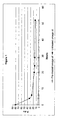
- Figure 1 shows secondary oxidation products expressed in anisidine number for omega oils treated with fish meal. Results for oils pre-treated with urea and oils not pre-treated with urea are shown.
- Fish feed is extruded according to a recipe identical to Example 7 of NO-309795 .
- the extruded and dried feed pellets are analysed by using Electron Spin Resonance. This is a method for elucidating the presence and relative concentration for free radicals. Free radicals are associated with ongoing oxidation; i.e. a high level of free radicals in a sample is associated with a high oxidative stress of that sample.
- the ESR-results give an indication of the concentration of free radicals in the sample.
- a high numerical number indicate a high level of free radicals.
- the mixture of fish meal and wheat flour used for the fish feed gave a numerical result of 2.0 on this relative scale.
- the value was 1.7.
- simulating extrusion the value had increased to 2.8. This was identical to the value after extrusion and drying for feed pellets produced from the same mixture of meal, flour and oil.
- the oil was substituted with an oil treated with urea according to the present invention, the value was 1.7 also after extrusion. Surprisingly, the extrusion process had not resulted in an increase in free radical activity of the dried pellets.
- the positive effect of the invention in showing a reduced oxidation of fish feed can be shown by storing samples of feed in an atmosphere of oxygen, and under increased pressure, with continuous recording of oxygen consumption.
- the oxygen consumption is lower when an oil according to the present invention is used, compared to feed produced with untreated oil.
- a South American fish oil intended for fish feed (“omega oil”) mixed with 20 % (low temperature) LT fishmeal was heated to 60°C with stirring. The oil was left for 30 minutes.
- Wild fish do not experience the problems mentioned above, as wild fish do not eat oxidized feed.
- the present invention provides a feed of improved quality.
- the main object of the present invention is to provide a feed for marine species, included fry, where the oxidative stress of the feed due to fat oxidation is minimal.
- the feed according to the present invention is due to its minimal oxidative stress particularly suitable for marine species and fry. It is assumed that oxidative stress is one reason for the health problems, low survival and growth rate of fry and small fish.
- oxidative stress is one reason for the health problems, low survival and growth rate of fry and small fish.
- heart rupture is a survival/health problem for salmonids and other farmed fish species. This particular health problem is assumed occur due to oxidative stress in the feed.
- using the feed according to the present invention is suitable also for salmonids in order to reduce the heart rupture problems of the fish.
- the present invention implies an improved solution to the breeding problem of fry of marine species as described above. A satisfactory solution to this problem has previously not been found.
Landscapes
- Life Sciences & Earth Sciences (AREA)
- Chemical & Material Sciences (AREA)
- Engineering & Computer Science (AREA)
- Polymers & Plastics (AREA)
- Wood Science & Technology (AREA)
- Zoology (AREA)
- Food Science & Technology (AREA)
- Animal Husbandry (AREA)
- Organic Chemistry (AREA)
- Chemical Kinetics & Catalysis (AREA)
- Oil, Petroleum & Natural Gas (AREA)
- Insects & Arthropods (AREA)
- Marine Sciences & Fisheries (AREA)
- Birds (AREA)
- Feed For Specific Animals (AREA)
- Fodder In General (AREA)
- Devices For Conveying Motion By Means Of Endless Flexible Members (AREA)
- Physical Water Treatments (AREA)
- Separation Using Semi-Permeable Membranes (AREA)
- Agricultural Chemicals And Associated Chemicals (AREA)
- Farming Of Fish And Shellfish (AREA)
- Medicines Containing Material From Animals Or Micro-Organisms (AREA)
Abstract
Description
- This invention relates to a feed for aquatic species including fry.
- A problem for the aquaculture industry has been degradation and low quality of the fat components in the feed due to oxidation. This problem has previously been focused on farming of salmonids.
- When marine fat, which is the main fat source in fish feed, reacts with oxygen, firstly primary oxidation products like peroxides are formed. The level of primary oxidation products is normally analysed as peroxide value. Peroxides from polyunsaturated fat are unstable and easily degraded, resulting in transformation to secondary oxidation products.
- Secondary oxidation products are a complex group of compounds including aldehydes and ketones. To quantify the amount of secondary oxidation products the anisidine value is measured. The anisidine value is the intensity of a colour that develops during reaction between the reagent anisidine and aldehydes in the fat. The anisidine value is given without denomination.
- The level of oxidation in a fat is often given as totox-value. The totox-value is two times the peroxide value added with the anisidine value.
- In feed for salmonids oils having low totox-values should be used In order to secure optimal growth for the fish.
- In Norwegian Patent No.
309795 WO 00/01249 311041 WO 01/46355 NO-309795 NO-311041 - At the time when
NO-309795 NO-311041 - In production of such marine species breeding of fry is a problem. The mortality of the fry is very high. In addition the rate of weight gain, especially of small fish, is lower than desired. One reason for this is that the fish is sensitive to oxidative stress. When the fish is fed a highly oxidized feed, the oxidative stress becomes high.
- Thus, it is desirable to have access to a feed for the marine species and fry thereof where the oxidative stress of the feed is minimal.
- The present invention is in a surprising manner able to provide a feed more suitable for marine species and fry in particular, than previously known feed.
- The essential features of the present invention are given in the accompanying claims.
- A person skilled in the art will realize that a feed according to the present invention will be useful for all aquatic species and crustaceans.
- A feed for aquatic species including fry, containing lipids that comprises one or more marine oils and/or vegetable oils treated by urea and/or other amines or amides and optionally one or more antioxidants is disclosed in the present invention.
- The above-mentioned amines and amides are defined by the general formula:

- According to one embodiment of the invention oils are heated in presence of urea and/or other amines or amides, preferably above the melting point of the nitrogen containing compound(s) and preferably kept at this temperature for a time period of approximately 20-30 minutes, and one or more antioxidants may be added. According to another embodiment of the invention the oil is reacted with an aqueous mixture of 0.1-50% of urea and/or other amines or amides, preferably 0.5-5% of urea and/or other amines or amides. The preferred antioxidants are tocopherol and/or ascorbic acid, and tocopherol and/or ascorbyl palmitate.
- The invention also discloses the use of one or more marine oil and/or vegetable oil treated by urea and/or other amines or amides and optionally one or more antioxidants for production of a feed for marine species including fry, which reduces degradation of the feed with regard to oxidation.
- A preferred feature of this invention is that the oil is treated with urea and/or other amines or amides and added to the feed before or after extrusion. The oil is treated either by heating in the presence of the nitrogen containing compound(s), or by reacting with an aqueous mixture of nitrogen containing compound(s). Preferably the urea and/or amines and amides are removed from the oil, e.g. by filtration, before the oil is added to the feed.
- Another feature of the invention is that the nitrogen containing compound(s) is added directly to the feed mixture, either in an aqueous phase or in solid form.
- The nitrogen containing compound(s) may however be added in a number of ways and not only directly to an oil. By production of a feed urea and/or other amines or amides can be added for instance during the extruding, by vacuum coating, spray coating and by oil bath. The nitrogen containing compound(s) can also be added in the water phase or in solid form.
- A preferred nitrogen-containing compound according to this invention is urea.
- Among the marine species, cod and halibut are among the species that are of interest in the aqua culture industry.
- In the following the invention will be further explained by examples and a figure. The examples are just meant to be illustrative and shall not be considered as limiting.
-
Figure 1 shows secondary oxidation products expressed in anisidine number for omega oils treated with fish meal. Results for oils pre-treated with urea and oils not pre-treated with urea are shown. - Fish feed is extruded according to a recipe identical to Example 7 of
NO-309795 -
ESR (pp-amp) Fish meal and wheat flour 2.0 Fish meal and wheat flour plus fish oil 1.7 Fish meal and wheat flour plus fish oil. Heated at 125°C for 5 min. 2.8 Pellets, commercial formula 2.8 Pellets, urea-treated oil in extruder 1.7 - The ESR-results (pp-amp) give an indication of the concentration of free radicals in the sample. A high numerical number indicate a high level of free radicals. The mixture of fish meal and wheat flour used for the fish feed gave a numerical result of 2.0 on this relative scale. When fish oil was added, the value was 1.7. After heating a sample of this mixture for 5 minutes at 125°C, simulating extrusion, the value had increased to 2.8. This was identical to the value after extrusion and drying for feed pellets produced from the same mixture of meal, flour and oil. However, when the oil was substituted with an oil treated with urea according to the present invention, the value was 1.7 also after extrusion. Surprisingly, the extrusion process had not resulted in an increase in free radical activity of the dried pellets.
- This shows that the present invention gives a feed that reduces the oxidative stress of a feed composition.
- The positive effect of the invention in showing a reduced oxidation of fish feed can be shown by storing samples of feed in an atmosphere of oxygen, and under increased pressure, with continuous recording of oxygen consumption. The oxygen consumption is lower when an oil according to the present invention is used, compared to feed produced with untreated oil.
- A South American fish oil intended for fish feed ("omega oil") mixed with 20 % (low temperature) LT fishmeal was heated to 60°C with stirring. The oil was left for 30 minutes.
- Initially the oils treated in this way (control) had an anisidine number of 20.
- For the aliquots of this oil treated according to
NO-309795 - As can be seen in
Fig. 1 , the anisidine number of the control is rapidly reduced. It is assumed that this is due to a reaction between amino acids/protein compounds and carbonyl compounds (i.e. secondary oxidation products), and that a similar reaction takes place during feed production. It is further assumed that this is unfavourable for the value of the feed, which again indicates that commonly manufactured feed gives disadvantageous effects. Commercially available feed makes the proteins less bioavailable for the fish and/or they decompose in the intestine of the fish and thereby secondary oxidation products are released. - Wild fish do not experience the problems mentioned above, as wild fish do not eat oxidized feed.
- By the feed according to the present invention, the oxidation problems nearly are solved. The present invention provides a feed of improved quality.
- The main object of the present invention is to provide a feed for marine species, included fry, where the oxidative stress of the feed due to fat oxidation is minimal. By treating the marine and/or vegetable oils in the feed by urea and/or other amines or amides as given above, this object is fulfilled. The feed according to the present invention is due to its minimal oxidative stress particularly suitable for marine species and fry. It is assumed that oxidative stress is one reason for the health problems, low survival and growth rate of fry and small fish. By feeding a feed according to the present invention to these species, fish of improved quality with regard to health, growth and survival are obtained. The possibility by using a feed with a minimal oxidative stress given by the present invention is a very important contribution within farming of marine species in the aquaculture industry.
- Furthermore, heart rupture is a survival/health problem for salmonids and other farmed fish species. This particular health problem is assumed occur due to oxidative stress in the feed. Thus, using the feed according to the present invention is suitable also for salmonids in order to reduce the heart rupture problems of the fish.
- By applying the method for stabilising vegetable and marine oils as disclosed in
NO-309795 NO-311041 - The present invention implies an improved solution to the breeding problem of fry of marine species as described above. A satisfactory solution to this problem has previously not been found.
- The person skilled in the art will realise that similar problems related to non-optimal growth and health due to oxidative stress from the feed will be relevant to all aquatic species, not only fish.
Claims (4)
- Use of one or more marine oil and/or vegetable oil treated by urea and/or other amines or amides of formula (I),
wherein the said amines and amides are defined by the general formula (I):
and optionally one or more antioxidants, for production of a feed for marine species including fry, which reduces degradation of the feed. - Use of one or more marine oil and/or vegetable oil treated by urea and/or other amines or amides of formula (I) as defined in claim 1, and optionally one or more antioxidants, for production of a feed for marine species including fry for improving the health condition, and survival and growth rate of the fish.
- Use for production of feed according to claim 1 or claim 2, for all aquatic species and crustaceans.
- Use of one or more marine oil and/or vegetable oil treated by urea and/or other amines or amides of formula (I) as defined in claim 1, and optionally one or more antioxidants, for production of a feed for marine species and salmonids for reducing occurrence of heart rupture of the fish.
Applications Claiming Priority (3)
| Application Number | Priority Date | Filing Date | Title |
|---|---|---|---|
| NO20021265 | 2002-03-14 | ||
| NO20021265A NO323683B1 (en) | 2002-03-14 | 2002-03-14 | Use of marine and / or vegetable oils treated with urea and / or other amines or amides in feed for marine species |
| PCT/NO2003/000084 WO2003075677A1 (en) | 2002-03-14 | 2003-03-11 | Feed for aquatic species |
Publications (2)
| Publication Number | Publication Date |
|---|---|
| EP1489919A1 EP1489919A1 (en) | 2004-12-29 |
| EP1489919B1 true EP1489919B1 (en) | 2010-01-13 |
Family
ID=19913429
Family Applications (1)
| Application Number | Title | Priority Date | Filing Date |
|---|---|---|---|
| EP03708743A Expired - Lifetime EP1489919B1 (en) | 2002-03-14 | 2003-03-11 | Feed for aquatic species |
Country Status (10)
| Country | Link |
|---|---|
| US (1) | US20050095314A1 (en) |
| EP (1) | EP1489919B1 (en) |
| AT (1) | ATE454822T1 (en) |
| AU (1) | AU2003212716A1 (en) |
| CA (1) | CA2478821A1 (en) |
| DE (1) | DE60330954D1 (en) |
| DK (1) | DK1489919T3 (en) |
| ES (1) | ES2339645T3 (en) |
| NO (1) | NO323683B1 (en) |
| WO (1) | WO2003075677A1 (en) |
Families Citing this family (1)
| Publication number | Priority date | Publication date | Assignee | Title |
|---|---|---|---|---|
| WO2006053010A2 (en) * | 2004-11-09 | 2006-05-18 | Hill's Pet Nutrition, Inc. | Use of antioxidants for gene modulation |
Family Cites Families (3)
| Publication number | Priority date | Publication date | Assignee | Title |
|---|---|---|---|---|
| NO944028D0 (en) * | 1994-10-21 | 1994-10-21 | Norsk Hydro As | Feed and method for improving salt water tolerance in farmed fish |
| NO309795B1 (en) * | 1998-07-01 | 2001-04-02 | Norsk Hydro As | Method for stabilizing oils and their use, method for stabilizing pigments, and method for preparing for |
| NO311041B1 (en) * | 1999-12-22 | 2001-10-01 | Norsk Hydro As | Stabilization of pigments and polyunsaturated oils and oil concentrates |
-
2002
- 2002-03-14 NO NO20021265A patent/NO323683B1/en not_active IP Right Cessation
-
2003
- 2003-03-11 AU AU2003212716A patent/AU2003212716A1/en not_active Abandoned
- 2003-03-11 DE DE60330954T patent/DE60330954D1/en not_active Expired - Fee Related
- 2003-03-11 EP EP03708743A patent/EP1489919B1/en not_active Expired - Lifetime
- 2003-03-11 CA CA002478821A patent/CA2478821A1/en not_active Abandoned
- 2003-03-11 AT AT03708743T patent/ATE454822T1/en not_active IP Right Cessation
- 2003-03-11 DK DK03708743.4T patent/DK1489919T3/en active
- 2003-03-11 US US10/507,143 patent/US20050095314A1/en not_active Abandoned
- 2003-03-11 ES ES03708743T patent/ES2339645T3/en not_active Expired - Lifetime
- 2003-03-11 WO PCT/NO2003/000084 patent/WO2003075677A1/en not_active Ceased
Also Published As
| Publication number | Publication date |
|---|---|
| ES2339645T3 (en) | 2010-05-24 |
| EP1489919A1 (en) | 2004-12-29 |
| NO323683B1 (en) | 2007-06-25 |
| CA2478821A1 (en) | 2003-09-18 |
| NO20021265D0 (en) | 2002-03-14 |
| US20050095314A1 (en) | 2005-05-05 |
| WO2003075677A1 (en) | 2003-09-18 |
| DE60330954D1 (en) | 2010-03-04 |
| ATE454822T1 (en) | 2010-01-15 |
| AU2003212716A1 (en) | 2003-09-22 |
| NO20021265L (en) | 2003-09-15 |
| DK1489919T3 (en) | 2010-05-25 |
Similar Documents
| Publication | Publication Date | Title |
|---|---|---|
| EP2348881B1 (en) | Production and use of methionyl-methionine as a feed additive for fish and crustaceans | |
| JP2009030054A (en) | Stabilization of pigment and polyunsaturated oil | |
| US6376722B1 (en) | Lutein to zeaxanthin isomerization process and product | |
| CH626365A5 (en) | ||
| JP2012531201A (en) | Feed additives to improve pigment retention | |
| US20050095314A1 (en) | Feed for aquatic species | |
| EP0209025B1 (en) | Arylethanolhydroxyl amines, process for their preparation and their use in promoting productivity | |
| EP1240285B1 (en) | Stabilisation of pigments and polyunsaturated oils and oil concentrates | |
| EP1482979B1 (en) | Enhanced feeding and growth rates of aquatic animals fed an astaxanthin product derived from marigold extract | |
| JP2008099558A (en) | How to improve salmon meat color | |
| JP2006050901A (en) | Carotenoid-containing aquatic animal feed | |
| JPH06269250A (en) | Fish feed pellets | |
| RU2138960C1 (en) | Method for making product based on wheat embryonic flakes | |
| EP1404187A1 (en) | The use of diesters of astaxanthin for enhancing the growth of farmed fish | |
| EP4430956A1 (en) | Pellet for feeding of aquatic species | |
| AT339130B (en) | WEIGHT INCREASING FEED ADDITIVE | |
| JP2002186428A (en) | Feed for poultry | |
| DE3623940A1 (en) | ARYLETHANOLHYDROXYLAMINE, METHOD FOR THE PRODUCTION THEREOF AND THEIR USE FOR PROMOTING PERFORMANCE | |
| JP2002045121A (en) | Method for producing feed for livestock/poultry and livestock product |
Legal Events
| Date | Code | Title | Description |
|---|---|---|---|
| PUAI | Public reference made under article 153(3) epc to a published international application that has entered the european phase |
Free format text: ORIGINAL CODE: 0009012 |
|
| 17P | Request for examination filed |
Effective date: 20041001 |
|
| AK | Designated contracting states |
Kind code of ref document: A1 Designated state(s): AT BE BG CH CY CZ DE DK EE ES FI FR GB GR HU IE IT LI LU MC NL PT RO SE SI SK TR |
|
| AX | Request for extension of the european patent |
Extension state: AL LT LV MK |
|
| RAP1 | Party data changed (applicant data changed or rights of an application transferred) |
Owner name: PRONOVA BIOCARE AS |
|
| 17Q | First examination report despatched |
Effective date: 20060719 |
|
| GRAP | Despatch of communication of intention to grant a patent |
Free format text: ORIGINAL CODE: EPIDOSNIGR1 |
|
| GRAS | Grant fee paid |
Free format text: ORIGINAL CODE: EPIDOSNIGR3 |
|
| GRAA | (expected) grant |
Free format text: ORIGINAL CODE: 0009210 |
|
| RAP1 | Party data changed (applicant data changed or rights of an application transferred) |
Owner name: PRONOVA BIOPHARMA NORGE AS |
|
| AK | Designated contracting states |
Kind code of ref document: B1 Designated state(s): AT BE BG CH CY CZ DE DK EE ES FI FR GB GR HU IE IT LI LU MC NL PT RO SE SI SK TR |
|
| REG | Reference to a national code |
Ref country code: GB Ref legal event code: FG4D |
|
| REG | Reference to a national code |
Ref country code: CH Ref legal event code: EP |
|
| REG | Reference to a national code |
Ref country code: IE Ref legal event code: FG4D |
|
| REF | Corresponds to: |
Ref document number: 60330954 Country of ref document: DE Date of ref document: 20100304 Kind code of ref document: P |
|
| REG | Reference to a national code |
Ref country code: NL Ref legal event code: VDEP Effective date: 20100113 |
|
| REG | Reference to a national code |
Ref country code: GR Ref legal event code: EP Ref document number: 20100400864 Country of ref document: GR |
|
| REG | Reference to a national code |
Ref country code: ES Ref legal event code: FG2A Ref document number: 2339645 Country of ref document: ES Kind code of ref document: T3 |
|
| REG | Reference to a national code |
Ref country code: DK Ref legal event code: T3 |
|
| PG25 | Lapsed in a contracting state [announced via postgrant information from national office to epo] |
Ref country code: AT Free format text: LAPSE BECAUSE OF FAILURE TO SUBMIT A TRANSLATION OF THE DESCRIPTION OR TO PAY THE FEE WITHIN THE PRESCRIBED TIME-LIMIT Effective date: 20100113 |
|
| PG25 | Lapsed in a contracting state [announced via postgrant information from national office to epo] |
Ref country code: NL Free format text: LAPSE BECAUSE OF FAILURE TO SUBMIT A TRANSLATION OF THE DESCRIPTION OR TO PAY THE FEE WITHIN THE PRESCRIBED TIME-LIMIT Effective date: 20100113 Ref country code: PT Free format text: LAPSE BECAUSE OF FAILURE TO SUBMIT A TRANSLATION OF THE DESCRIPTION OR TO PAY THE FEE WITHIN THE PRESCRIBED TIME-LIMIT Effective date: 20100513 |
|
| PG25 | Lapsed in a contracting state [announced via postgrant information from national office to epo] |
Ref country code: SI Free format text: LAPSE BECAUSE OF FAILURE TO SUBMIT A TRANSLATION OF THE DESCRIPTION OR TO PAY THE FEE WITHIN THE PRESCRIBED TIME-LIMIT Effective date: 20100113 Ref country code: FI Free format text: LAPSE BECAUSE OF FAILURE TO SUBMIT A TRANSLATION OF THE DESCRIPTION OR TO PAY THE FEE WITHIN THE PRESCRIBED TIME-LIMIT Effective date: 20100113 |
|
| PG25 | Lapsed in a contracting state [announced via postgrant information from national office to epo] |
Ref country code: RO Free format text: LAPSE BECAUSE OF FAILURE TO SUBMIT A TRANSLATION OF THE DESCRIPTION OR TO PAY THE FEE WITHIN THE PRESCRIBED TIME-LIMIT Effective date: 20100113 Ref country code: MC Free format text: LAPSE BECAUSE OF NON-PAYMENT OF DUE FEES Effective date: 20100331 Ref country code: EE Free format text: LAPSE BECAUSE OF FAILURE TO SUBMIT A TRANSLATION OF THE DESCRIPTION OR TO PAY THE FEE WITHIN THE PRESCRIBED TIME-LIMIT Effective date: 20100113 Ref country code: CY Free format text: LAPSE BECAUSE OF FAILURE TO SUBMIT A TRANSLATION OF THE DESCRIPTION OR TO PAY THE FEE WITHIN THE PRESCRIBED TIME-LIMIT Effective date: 20100113 Ref country code: BE Free format text: LAPSE BECAUSE OF FAILURE TO SUBMIT A TRANSLATION OF THE DESCRIPTION OR TO PAY THE FEE WITHIN THE PRESCRIBED TIME-LIMIT Effective date: 20100113 Ref country code: SE Free format text: LAPSE BECAUSE OF FAILURE TO SUBMIT A TRANSLATION OF THE DESCRIPTION OR TO PAY THE FEE WITHIN THE PRESCRIBED TIME-LIMIT Effective date: 20100113 |
|
| REG | Reference to a national code |
Ref country code: CH Ref legal event code: PL |
|
| PLBE | No opposition filed within time limit |
Free format text: ORIGINAL CODE: 0009261 |
|
| STAA | Information on the status of an ep patent application or granted ep patent |
Free format text: STATUS: NO OPPOSITION FILED WITHIN TIME LIMIT |
|
| PG25 | Lapsed in a contracting state [announced via postgrant information from national office to epo] |
Ref country code: SK Free format text: LAPSE BECAUSE OF FAILURE TO SUBMIT A TRANSLATION OF THE DESCRIPTION OR TO PAY THE FEE WITHIN THE PRESCRIBED TIME-LIMIT Effective date: 20100113 Ref country code: CZ Free format text: LAPSE BECAUSE OF FAILURE TO SUBMIT A TRANSLATION OF THE DESCRIPTION OR TO PAY THE FEE WITHIN THE PRESCRIBED TIME-LIMIT Effective date: 20100113 Ref country code: BG Free format text: LAPSE BECAUSE OF FAILURE TO SUBMIT A TRANSLATION OF THE DESCRIPTION OR TO PAY THE FEE WITHIN THE PRESCRIBED TIME-LIMIT Effective date: 20100413 |
|
| 26N | No opposition filed |
Effective date: 20101014 |
|
| PG25 | Lapsed in a contracting state [announced via postgrant information from national office to epo] |
Ref country code: LI Free format text: LAPSE BECAUSE OF NON-PAYMENT OF DUE FEES Effective date: 20100331 Ref country code: CH Free format text: LAPSE BECAUSE OF NON-PAYMENT OF DUE FEES Effective date: 20100331 Ref country code: DE Free format text: LAPSE BECAUSE OF NON-PAYMENT OF DUE FEES Effective date: 20101001 |
|
| PG25 | Lapsed in a contracting state [announced via postgrant information from national office to epo] |
Ref country code: LU Free format text: LAPSE BECAUSE OF NON-PAYMENT OF DUE FEES Effective date: 20100311 Ref country code: HU Free format text: LAPSE BECAUSE OF FAILURE TO SUBMIT A TRANSLATION OF THE DESCRIPTION OR TO PAY THE FEE WITHIN THE PRESCRIBED TIME-LIMIT Effective date: 20100714 |
|
| PGFP | Annual fee paid to national office [announced via postgrant information from national office to epo] |
Ref country code: IE Payment date: 20140311 Year of fee payment: 12 Ref country code: DK Payment date: 20140311 Year of fee payment: 12 |
|
| PGFP | Annual fee paid to national office [announced via postgrant information from national office to epo] |
Ref country code: TR Payment date: 20140225 Year of fee payment: 12 Ref country code: FR Payment date: 20140311 Year of fee payment: 12 Ref country code: ES Payment date: 20140211 Year of fee payment: 12 Ref country code: IT Payment date: 20140310 Year of fee payment: 12 Ref country code: GR Payment date: 20140214 Year of fee payment: 12 |
|
| PGFP | Annual fee paid to national office [announced via postgrant information from national office to epo] |
Ref country code: GB Payment date: 20140305 Year of fee payment: 12 |
|
| REG | Reference to a national code |
Ref country code: DK Ref legal event code: EBP Effective date: 20150331 |
|
| GBPC | Gb: european patent ceased through non-payment of renewal fee |
Effective date: 20150311 |
|
| REG | Reference to a national code |
Ref country code: GR Ref legal event code: ML Ref document number: 20100400864 Country of ref document: GR Effective date: 20151002 |
|
| PG25 | Lapsed in a contracting state [announced via postgrant information from national office to epo] |
Ref country code: IT Free format text: LAPSE BECAUSE OF NON-PAYMENT OF DUE FEES Effective date: 20150311 |
|
| REG | Reference to a national code |
Ref country code: FR Ref legal event code: ST Effective date: 20151130 |
|
| REG | Reference to a national code |
Ref country code: IE Ref legal event code: MM4A |
|
| PG25 | Lapsed in a contracting state [announced via postgrant information from national office to epo] |
Ref country code: GR Free format text: LAPSE BECAUSE OF NON-PAYMENT OF DUE FEES Effective date: 20151002 Ref country code: GB Free format text: LAPSE BECAUSE OF NON-PAYMENT OF DUE FEES Effective date: 20150311 Ref country code: IE Free format text: LAPSE BECAUSE OF NON-PAYMENT OF DUE FEES Effective date: 20150311 |
|
| PG25 | Lapsed in a contracting state [announced via postgrant information from national office to epo] |
Ref country code: FR Free format text: LAPSE BECAUSE OF NON-PAYMENT OF DUE FEES Effective date: 20150331 |
|
| REG | Reference to a national code |
Ref country code: ES Ref legal event code: FD2A Effective date: 20160426 |
|
| PG25 | Lapsed in a contracting state [announced via postgrant information from national office to epo] |
Ref country code: DK Free format text: LAPSE BECAUSE OF NON-PAYMENT OF DUE FEES Effective date: 20150331 |
|
| PG25 | Lapsed in a contracting state [announced via postgrant information from national office to epo] |
Ref country code: ES Free format text: LAPSE BECAUSE OF NON-PAYMENT OF DUE FEES Effective date: 20150312 |
|
| PG25 | Lapsed in a contracting state [announced via postgrant information from national office to epo] |
Ref country code: TR Free format text: LAPSE BECAUSE OF NON-PAYMENT OF DUE FEES Effective date: 20150311 |