EP1487170A2 - Authentication method in wire/wireless communication system using markup language - Google Patents
Authentication method in wire/wireless communication system using markup language Download PDFInfo
- Publication number
- EP1487170A2 EP1487170A2 EP04013650A EP04013650A EP1487170A2 EP 1487170 A2 EP1487170 A2 EP 1487170A2 EP 04013650 A EP04013650 A EP 04013650A EP 04013650 A EP04013650 A EP 04013650A EP 1487170 A2 EP1487170 A2 EP 1487170A2
- Authority
- EP
- European Patent Office
- Prior art keywords
- authentication method
- authentication
- client
- server
- kinds
- Prior art date
- Legal status (The legal status is an assumption and is not a legal conclusion. Google has not performed a legal analysis and makes no representation as to the accuracy of the status listed.)
- Granted
Links
Images



Classifications
-
- H—ELECTRICITY
- H04—ELECTRIC COMMUNICATION TECHNIQUE
- H04L—TRANSMISSION OF DIGITAL INFORMATION, e.g. TELEGRAPHIC COMMUNICATION
- H04L9/00—Cryptographic mechanisms or cryptographic arrangements for secret or secure communications; Network security protocols
- H04L9/32—Cryptographic mechanisms or cryptographic arrangements for secret or secure communications; Network security protocols including means for verifying the identity or authority of a user of the system or for message authentication, e.g. authorization, entity authentication, data integrity or data verification, non-repudiation, key authentication or verification of credentials
-
- H—ELECTRICITY
- H04—ELECTRIC COMMUNICATION TECHNIQUE
- H04L—TRANSMISSION OF DIGITAL INFORMATION, e.g. TELEGRAPHIC COMMUNICATION
- H04L63/00—Network architectures or network communication protocols for network security
- H04L63/08—Network architectures or network communication protocols for network security for authentication of entities
-
- H—ELECTRICITY
- H04—ELECTRIC COMMUNICATION TECHNIQUE
- H04L—TRANSMISSION OF DIGITAL INFORMATION, e.g. TELEGRAPHIC COMMUNICATION
- H04L63/00—Network architectures or network communication protocols for network security
- H04L63/20—Network architectures or network communication protocols for network security for managing network security; network security policies in general
- H04L63/205—Network architectures or network communication protocols for network security for managing network security; network security policies in general involving negotiation or determination of the one or more network security mechanisms to be used, e.g. by negotiation between the client and the server or between peers or by selection according to the capabilities of the entities involved
-
- H—ELECTRICITY
- H04—ELECTRIC COMMUNICATION TECHNIQUE
- H04L—TRANSMISSION OF DIGITAL INFORMATION, e.g. TELEGRAPHIC COMMUNICATION
- H04L9/00—Cryptographic mechanisms or cryptographic arrangements for secret or secure communications; Network security protocols
- H04L9/40—Network security protocols
-
- H—ELECTRICITY
- H04—ELECTRIC COMMUNICATION TECHNIQUE
- H04W—WIRELESS COMMUNICATION NETWORKS
- H04W12/00—Security arrangements; Authentication; Protecting privacy or anonymity
- H04W12/06—Authentication
- H04W12/069—Authentication using certificates or pre-shared keys
-
- H—ELECTRICITY
- H04—ELECTRIC COMMUNICATION TECHNIQUE
- H04L—TRANSMISSION OF DIGITAL INFORMATION, e.g. TELEGRAPHIC COMMUNICATION
- H04L63/00—Network architectures or network communication protocols for network security
- H04L63/16—Implementing security features at a particular protocol layer
- H04L63/162—Implementing security features at a particular protocol layer at the data link layer
-
- H—ELECTRICITY
- H04—ELECTRIC COMMUNICATION TECHNIQUE
- H04L—TRANSMISSION OF DIGITAL INFORMATION, e.g. TELEGRAPHIC COMMUNICATION
- H04L67/00—Network arrangements or protocols for supporting network services or applications
- H04L67/01—Protocols
- H04L67/02—Protocols based on web technology, e.g. hypertext transfer protocol [HTTP]
-
- H—ELECTRICITY
- H04—ELECTRIC COMMUNICATION TECHNIQUE
- H04L—TRANSMISSION OF DIGITAL INFORMATION, e.g. TELEGRAPHIC COMMUNICATION
- H04L69/00—Network arrangements, protocols or services independent of the application payload and not provided for in the other groups of this subclass
- H04L69/30—Definitions, standards or architectural aspects of layered protocol stacks
- H04L69/32—Architecture of open systems interconnection [OSI] 7-layer type protocol stacks, e.g. the interfaces between the data link level and the physical level
- H04L69/322—Intralayer communication protocols among peer entities or protocol data unit [PDU] definitions
- H04L69/329—Intralayer communication protocols among peer entities or protocol data unit [PDU] definitions in the application layer [OSI layer 7]
Definitions
- the present invention relates to authentication in a wire/wireless communication system using a markup language, and more particularly to, an authentication method between a client and a server in a wire/wireless communication system using a synchronization markup language (SyncML).
- SyncML synchronization markup language
- the SyncML is a standard protocol for data synchronization which is used for synchronization of personal information on a web portal, cellular phone, or PC.
- the SyncML can support a data synchronization function for various application services such as an E-mail and a text memo as well as a management function for personal information.
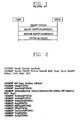
- Fig. 1 illustrates a general authentication method between a client and a server in data synchronization of a communication system using the SyncML.
- the client when data synchronization is performed between the client and the server by using the SyncML, the client requests data synchronization to the server (S10).
- the server requests an identity and a password to the client (S12).
- the client encodes its identity and password, or compresses its identity and password by a predetermined algorithm such as MD5 and encodes the compressed identity and password, and transmits the encoded identity and password to the server (S14).
- the server confirms the identity and password, and notifies an authentication result to the client (S16).
- the server transmits its identity and password to the client to be authenticated by the client.
- the client confirms the identity and password, and notifies an authentication result to the server.
- the general authentication method in the communication system using the markup language can perform the authentication merely by using identities and passwords. Accordingly, the authentication process must be performed based on the identities and passwords. Here, security information for authentication may be leaked, which results in weak security.
- a special authentication server for compensating for weak security of the authentication protocol can also be used. However, it is difficult to additionally install the authentication server.
- an object of the present invention is to provide an authentication method in a wire/wireless communication system using a markup language which can select various authentication method kinds between a client and a server, by embodying a structure protocol for a message used in the markup language to have various authentication method kinds.
- Another object of the present invention is to provide an authentication method in a wire/wireless communication system using a markup language which can perform strong bi-directional authentication, by dynamically selecting authentication method kinds between a client and a server.
- an authentication method in a wire/wireless communication system using a markup language which declares various authentication method kinds in a document type definition (DTD) for declaring a markup language structure, and dynamically selects the authentication method kind between a client and a server from the declared authentication method kinds.
- DTD document type definition
- the server randomly selects one of the authentication method kinds, and requests security information to the client according to the randomly-selected authentication method kind.
- an authentication method between a client and a server in a wire/wireless communication system using a markup language includes the steps of: recognizing identical authentication method kinds between the client and the server; authenticating, at the server, the client by using one random authentication method kind of the identical authentication method kinds; and authenticating, at the client, the server by using another random authentication method kind of the identical authentication method kinds.
- One random authentication method kind and another random authentication method kind are identical or different to/from each other.
- an authentication protocol in a wire/wireless communication system using a markup language includes: an extensible markup language document type definition (XML DTD) for declaring various authentication method kinds by using an extensible authentication protocol (EAP) element; and an authentication message including an EAP element having information of one random authentication method kind of the declared authentication method kinds.
- XML DTD extensible markup language document type definition
- EAP extensible authentication protocol
- the EAP element essentially includes a ⁇ Code> element for indicating a kind of the authentication message and an ⁇ Identifier> element for identifying the authentication message, and selectively includes an ⁇ EAPData> element for containing actual data of the authentication message.
- the ⁇ EAPData> element includes a ⁇ DataKind> element for indicating a kind of the data, and an information element having information of the random authentication method kind.
- data synchronization is performed by transmitting/receiving a message based on an extensible markup language (XML) between a client and a server
- a protocol for data synchronization includes a representation protocol, a synchronization protocol and a transport protocol.
- the synchronization protocol defines a method and procedure for exchanging a SyncML message between the client and the server, a method for performing synchronization, and a synchronization type.
- the transport protocol defines binding rules for using general transport protocols such as a hyper text transport protocol (HTTP) and a wireless session protocol (WSP) for message transport.
- HTTP hyper text transport protocol
- WSP wireless session protocol
- the representation protocol is a structure protocol for the SyncML message which defines an extensible markup language document type definition (XML DTD) for synchronization.
- XML DTD extensible markup language document type definition
- the XML DTD which declares a markup used in the XML document defines logical and physical structures for the document.
- the XML clarifies the language rules by using the DTD. That is, the DTD describes elements used in the XML document, attributes of the elements, relations between the elements and entities.
- a plurality of authentication method kinds are defined in the XML DTD in advance, and the client and the server randomly select a few authentication method kinds from the defined authentication method kinds.
- the client and the server which need to set access compare their authentication method kinds, and recognize identical authentication method kinds.
- the client and the server dynamically suggest their authentication method kinds to each other among the identical authentication method kinds, thereby more variously and safely performing the authentication procedure.
- a new SyncML schema for an extensible authentication method for randomly selecting and deciding the authentication method kind between the client and the server is additionally defined, to design an XML DTD as shown in Fig. 2.
- Fig. 2 illustrates the XML DTD in accordance with the present invention.
- the XML DTD includes a schema by an extensible authentication protocol (EAP) defined in the IETF RFC 2284 in order to obtain various authentication method kinds.
- EAP extensible authentication protocol
- the XML DTD explains the structure of the SyncML message.
- the SyncML message includes a header element ⁇ SyncHdr> and a body element ⁇ SyncBody>
- the header element ⁇ SyncHdr> includes DTD version ⁇ VerDTD>, protocol version ⁇ VerProto>, message ID ⁇ MsgID>, ⁇ Target>, ⁇ Source>, ⁇ RespURl>, ⁇ NoResp>, ⁇ Cred>, ⁇ Meta> and ⁇ EAP> elements.
- ⁇ Target>, ⁇ Source>, ⁇ RespURl>, ⁇ NoResp>, ⁇ Cred> and ⁇ Meta> elements rarely relate to the EAP of the present invention, and thus explanations thereof are omitted.
- the body element includes a plurality of commands for performing a data synchronization procedure, but explanations thereof are also omitted.
- the ⁇ EAP> element essentially includes ⁇ Code> element and ⁇ Identifier> element, and selectively includes ⁇ EAPData> element.
- the ⁇ Code> element for indicating a kind of the EAP message includes Request, Response, Success and Fail information.
- the ⁇ Identifier> element is an identifier for identifying the EAP message.
- the ⁇ EAPData> element which contains actual data of the EAP message mostly includes information of authentication.
- the ⁇ EAPData> element includes one of ⁇ Identity>, ⁇ Notification>, ⁇ Nak>, ⁇ MD5Chal>, ⁇ OTP>, ⁇ TokenCard> and ⁇ TLS> elements as well as ⁇ DataKind> element.
- the ⁇ Identity> element indicates an authentication method using an identity of the client or server
- the ⁇ Notification> element indicates notices which must be notified to the other party
- the ⁇ Nak> element implies 'authentication is not necessary, do not respond'
- the ⁇ MD5Chal> element is used to request or respond to a challenge by using an MD5 compression algorithm.
- the ⁇ OTP> element indicates an authentication method using an one time password (OTP) algorithm
- the ⁇ TokenCard> element indicates an authentication method using information (token) by physical input, such as smart card input, pupil input and fingerprint input
- the ⁇ TLS> element which is a standard suggested by the IETF indicates an authentication method for providing encoding and certification by a transport layer (for example, transmission control protocol (TCP)), so that data can be transmitted through a secure channel without modifying application programs of the client and the server. That is, the ⁇ TLS> element indicates, for example, an authentication method using a certificate.
- the XML DTD declares a plurality of authentication method kinds, such as the Identity/Password-based authentication method, the MD5-based authentication method, the OTP-based authentication method, the TokenCard-based authentication method and the certificate-based authentication method using TLS (transport layer security).
- a plurality of authentication method kinds such as the Identity/Password-based authentication method, the MD5-based authentication method, the OTP-based authentication method, the TokenCard-based authentication method and the certificate-based authentication method using TLS (transport layer security).
- the client and the server using the SyncML can selectively include a predetermined number of authentication method kinds among the declared authentication method kinds.
- the client and the server include an authentication agent, respectively.
- the authentication agent performs the SyncML-based EAP procedure by the schema suggested to declare the plurality of authentication method kinds.
- Each of the clients and each of the servers can have different authentication method kinds. Therefore, before starting the authentication procedure for data synchronization, the corresponding client and server notify their authentication method kinds to each other, and recognize identical available authentication method kinds.
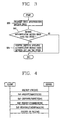
- Fig. 3 illustrates a confirmation method for the available authentication methods between the client and the server in accordance with the present invention.
- the client transmits its authentication method kinds to the server (S20).
- the client receives the authentication method kinds of the server from the server (S22).
- the client compares its authentication method kinds with the authentication method kinds of the server, and recognizes identical available authentication method kinds (S24).
- the server recognizes the identical available authentication method kinds between its authentication method kinds and the authentication method kinds of the client.
- the authentication method kinds of the client are Identity
- the authentication method kinds of the server are Identity
- the client and the server confirm the identical Identity, MD5Chal, OTP and TLS authentication method kinds.
- the client and the server After confirming the identical available authentication method kinds, the client and the server perform the authentication procedure for data synchronization.
- Fig. 4 illustrates the authentication method for data synchronization between the client and the server in the communication system using the SyncML in accordance with the present invention.
- the client requests data synchronization to the server (S30), and the server requests an identity to the client (S32).
- the client transmits its identity to the server upon the request (S34).
- the server randomly selects one of the identical available authentication method kinds between the server and the client, and requests security information of the identity to the client according to the selected authentication method kind (S36).
- the client transmits the security information of its identity to the server according to the selected authentication method kind (S38).
- the server decides that the authentication has been successfully performed according to the randomly-selected authentication method kind, and transmits success information to the client (S40).
- the server can also request authentication to the client, which is performed in the same manner. Thus, detailed explanations thereof are omitted.
- the client attempts to access the server to request data synchronization. That is, the client generates a data synchronization request message Request Sync, and transmits the generated message Request Sync to the server through a TCP/lP (S30).
- the server In order to use the EAP of the invention, as shown in Fig. 5, the server generates a first EAP request message EAP-Request/ldentity for requesting an identity by using ⁇ EAP> element and sub-elements thereof.
- the first EAP request message EAP-Request/ldentity includes ⁇ Code> element for indicating a request, ⁇ Identifier> element for indicating '1', and ⁇ EAPData> element as the sub-elements of the ⁇ EAP> element.
- the ⁇ EAPData> element includes ⁇ DataKind> element for indicating an identity according to the selected authentication method, and ⁇ Data> element for indicating data which the client will display to the user.
- the server transmits the first EAP request message EAP-Request/Identity to the client (S32).
- the client analyzes the first EAP request message EAP-Request/ldentity.
- the client detects the ⁇ EAP> element, the client recognizes that the authentication process is performed by using the EAP, also recognizes that the first EAP request message EAP-Request/ldentity is an authentication message for requesting an identity on the basis of the ⁇ Code> element and the ⁇ DataKind> element of the ⁇ EAP> element, and generates a first EAP response message EAP-Response/ldentity as shown in Fig. 6.
- the client records 'Response' for indicating a response on ⁇ Code> element of ⁇ EAP> element of the first EAP response message EAP-Response/ldentity, and 'identity' on ⁇ DataKind> element of ⁇ EAPData> element.
- the client also records 'Hong' on ⁇ Identity> element.
- the client transmits the first EAP response message EAP-Response/ldentity to the server (S34).
- the server analyzes the first EAP response message EAP-Response/Identity.
- the server recognizes that the client having the identity of 'Hong' waits for authentication on the basis of ⁇ Code>Response ⁇ /Code>, ⁇ DataKind>ldentity ⁇ /DataKind> and ⁇ ldentity>Hong ⁇ /ldentity> of the ⁇ EAP> element of the first EAP response message EAP-Response/ldentity.
- the server randomly selects one of the available authentication method kinds, and requests security information of the identity to the client according to the selected authentication method kind in order to confirm that the client actually owns the identity of 'Hong', thereby performing the actual authentication process.
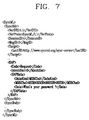
- the server when the authentication method kind randomly selected by the server from the available authentication method kinds is 'MD5Chal', as shown in Fig. 7, the server records 'Request' on ⁇ Code> element of ⁇ EAP> element, 'MD5Chal' on ⁇ DataKind> element of ⁇ EAPData> element, a random value, '90384029304802039480230' on ⁇ MD5Chal> element, and 'What's your password?' on ⁇ Data> element, thereby generating a second EAP request message EAP-Request/challenge.
- the server includes ⁇ DataKind>OTP ⁇ DataKind> and ⁇ OTP>x ⁇ OTP>, thereby generating the second EAP request message EAP-Request/challenge.
- the server transmits the second EAP request message EAP-Request/challenge to the client (S36).
- the client receiving the second EAP request message EAP-Request/challenge recognizes that the client must respond the password (security information) of its identity to the server with the random value recorded on the ⁇ MD5Chal> element by using an MD5 compression algorithm on the basis of ⁇ DataKind>MD5Chal ⁇ DataKind> and ⁇ MD5Chal>90384029304802039480230 ⁇ /MD5Chal> of the ⁇ EAP> element.
- the client calculates a response value by using the password (security information) of its identity and the random value recorded on the ⁇ MD5Chal> element through the MD5 compression algorithm, as represented by following formula 1: MD5(Random value + Password + ⁇ )
- ⁇ denotes a preset value for identifying an identity, such as a resident registration number.
- the client compresses the random value, its password and ⁇ through the MD5 compression algorithm.
- the compression result value (response value) always has predetermined bits (for example, 128 bits), and an input value is not obtained from the result value.
- the MD5 is an irreversible function. Therefore, if the compression result value (response value) is leaked, the password cannot be inferred.
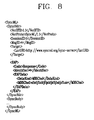
- the client generates a second EAP response message EAP-Response/Credentials to have the response value as shown in Fig. 8, and transmits the second EAP response message EAP-Response/Credentials to the server (S38).
- the second EAP response message EAP-Response/Credentials of Fig. 8 'slkdjflsldjfljsldjkfljlsdjkftuir' recorded as a value of ⁇ MD5Chal> element denotes the response value.
- the server receiving the second EAP response message EAP-Response/Credentials searches a password of the corresponding identity from a user registration database.
- the server compresses the searched password and the random value transmitted from the server to the client as a challenge in the same manner as the above formula 1.
- the server compares the value calculated by the compression with the response value from the client. When the calculated value is identical to the response value, the server decides that the authentication has been successfully performed according to the randomly-selected authentication method kind, and when the calculated value is different from the response value, the server decides that the authentication has failed.
- the server generates an authentication result message by recording an authentication result on ⁇ Code> element of ⁇ EAP> element, and transmits the authentication result message to the client (S40).
- the client receiving the authentication result message of Fig. 9 recognizes that the authentication has been successfully performed on the basis of ⁇ Code>Success ⁇ /Code>.
- the authentication result message does not need ⁇ EAPData> element.
- a variety of authentication method kinds are defined in the XML DTD, so that the authentication method kinds can be freely selected between the client and the server using the markup language.
- the authentication method kinds can be dynamically selected between the client and the server, which results in strong bi-directional authentication.
Landscapes
- Engineering & Computer Science (AREA)
- Computer Security & Cryptography (AREA)
- Computer Networks & Wireless Communication (AREA)
- Signal Processing (AREA)
- Computing Systems (AREA)
- General Engineering & Computer Science (AREA)
- Computer Hardware Design (AREA)
- Telephonic Communication Services (AREA)
- Mobile Radio Communication Systems (AREA)
- Computer And Data Communications (AREA)
- Storage Device Security (AREA)
- Information Transfer Between Computers (AREA)
- Communication Control (AREA)
Abstract
Description
Claims (20)
- An authentication method in a wire/wireless communication system using a markup language which declares various authentication method kinds in a document type definition (DTD) for declaring a markup language structure, and dynamically selects the authentication method kind between a client and a server from the declared authentication method kinds.
- The method of claim 1, wherein the various authentication method kinds comprise an Identity/Password-based authentication method, an MD5-based authentication method, an OTP (one time password)-based authentication method, a TokenCard-based authentication method and a certificate-based authentication method using TLS (transport layer security).
- The method of claim 1, wherein the various authentication method kinds are declared by using an extensible authentication protocol (EAP).
- The method of claim 1, wherein the client and the server recognize identical available authentication method kinds before starting the authentication procedure.
- The method of claim 1, wherein, when the client transmits an access request, the server randomly selects one of the authentication method kinds, and requests security information to the client according to the randomly-selected authentication method kind.
- The method of claim 5, wherein the server transmits to the client a request message including the randomly-selected authentication method kind and a request for security information according to the authentication method kind.
- The method of claim 6, wherein when the client receives the request message, the client detects the authentication method kind and the request for the security information from the request message, and transmits the security information to the server as a response according to the authentication method kind.
- The method of claim 7, wherein the authentication method kind is detected by detecting an <EAP> element from the request message and detecting information of a <DataKind> element of an <EAPData> element of the <EAP> element.
- The method of claim 7, wherein the request message further comprises a random value.
- The method of claim 9, wherein a response by the authentication method kind comprises a result value obtained by processing the random value, the security information and a set value according to the detected authentication method kind, and wherein the random value is detected from the request message.
- The method of claim 10, wherein the set value comprises another value for identifying the client.
- The method of claim 7, wherein the server searches security information which the server has requested to the client from a database, processes the searched security information according to the randomly-selected authentication method kind, and compares the processed value with the response from the client, to determine authentication success/failure.
- An authentication method between a client and a server in a wire/wireless communication system using a markup language, comprising:recognizing identical authentication method kinds between the client and the server;authenticating, at the server, the client by using one random authentication method kind of the identical authentication method kinds; andauthenticating, at the client, the server by using another random authentication method kind of the identical authentication method kinds.
- The method of claim 13, wherein the authentication method kinds are defined in a document type definition (DTD) for declaring a markup language structure by using an extensible authentication protocol (EAP).
- The method of claim 13, wherein the authentication method kinds comprise an Identity/Password-based authentication method, an MD5-based authentication method, an OTP (one time password)-based authentication method, a TokenCard-based authentication method, and a certificate-based authentication method using TLS (transport layer security).
- The method of claim 13, wherein one random authentication method kind and another random authentication method kind are different from each other.
- The method of claim 13, wherein one random authentication method kind and another random authentication method kind are identical to each other.
- An authentication protocol in a wire/wireless communication system using a markup language, comprising:an extensible markup language document type definition (XML DTD) for declaring various authentication method kinds by using an extensible authentication protocol (EAP) element; andan authentication message including an EAP element having information of one random authentication method kind of the declared authentication method kinds.
- The authentication protocol of claim 18, wherein the EAP element essentially comprises a <Code> element for indicating a kind of the authentication message and an <Identifier> element for identifying the authentication message, and selectively comprises an <EAPData> element for containing actual data of the authentication message.
- The authentication protocol of claim 19, wherein the <EAPData> element comprises a <DataKind> element for indicating a kind of the data, and an information element having information of the random authentication method kind.
Applications Claiming Priority (2)
| Application Number | Priority Date | Filing Date | Title |
|---|---|---|---|
| KR1020030038545A KR100548354B1 (en) | 2003-06-14 | 2003-06-14 | User Authentication Method in Synchronization Protocol |
| KR2003038545 | 2003-06-14 |
Publications (3)
| Publication Number | Publication Date |
|---|---|
| EP1487170A2 true EP1487170A2 (en) | 2004-12-15 |
| EP1487170A3 EP1487170A3 (en) | 2005-03-30 |
| EP1487170B1 EP1487170B1 (en) | 2006-08-02 |
Family
ID=36782494
Family Applications (1)
| Application Number | Title | Priority Date | Filing Date |
|---|---|---|---|
| EP04013650A Expired - Lifetime EP1487170B1 (en) | 2003-06-14 | 2004-06-09 | Authentication method in wire/wireless communication system using markup language |
Country Status (7)
| Country | Link |
|---|---|
| US (1) | US20050021957A1 (en) |
| EP (1) | EP1487170B1 (en) |
| JP (1) | JP2005004769A (en) |
| KR (1) | KR100548354B1 (en) |
| CN (1) | CN1574741A (en) |
| AT (1) | ATE335346T1 (en) |
| DE (1) | DE602004001717T2 (en) |
Cited By (9)
| Publication number | Priority date | Publication date | Assignee | Title |
|---|---|---|---|---|
| WO2006030295A1 (en) * | 2004-09-16 | 2006-03-23 | Nokia Corporation | System and method for integrating pki and xmlbased security mechanisms in syncml |
| US7536540B2 (en) | 2005-09-14 | 2009-05-19 | Sandisk Corporation | Method of hardware driver integrity check of memory card controller firmware |
| US7743409B2 (en) | 2005-07-08 | 2010-06-22 | Sandisk Corporation | Methods used in a mass storage device with automated credentials loading |
| US7934049B2 (en) | 2005-09-14 | 2011-04-26 | Sandisk Corporation | Methods used in a secure yet flexible system architecture for secure devices with flash mass storage memory |
| US8108691B2 (en) | 2005-02-07 | 2012-01-31 | Sandisk Technologies Inc. | Methods used in a secure memory card with life cycle phases |
| US8321686B2 (en) | 2005-02-07 | 2012-11-27 | Sandisk Technologies Inc. | Secure memory card with life cycle phases |
| US8423788B2 (en) | 2005-02-07 | 2013-04-16 | Sandisk Technologies Inc. | Secure memory card with life cycle phases |
| US8423794B2 (en) | 2006-12-28 | 2013-04-16 | Sandisk Technologies Inc. | Method and apparatus for upgrading a memory card that has security mechanisms for preventing copying of secure content and applications |
| EP2782035A1 (en) * | 2013-03-19 | 2014-09-24 | Nxp B.V. | Smartcard, smartcard system and method for configuring a smartcard |
Families Citing this family (23)
| Publication number | Priority date | Publication date | Assignee | Title |
|---|---|---|---|---|
| US9614772B1 (en) | 2003-10-20 | 2017-04-04 | F5 Networks, Inc. | System and method for directing network traffic in tunneling applications |
| KR100644616B1 (en) * | 2004-06-10 | 2006-11-10 | 세종대학교산학협력단 | Markup Language-based Single Authentication Method and System for the Same |
| US20060218393A1 (en) * | 2005-03-23 | 2006-09-28 | Hernandez Hendrich M | Systems and methods for adaptive authentication |
| US8353011B2 (en) | 2005-06-13 | 2013-01-08 | Nokia Corporation | Apparatus, method and computer program product providing mobile node identities in conjunction with authentication preferences in generic bootstrapping architecture (GBA) |
| MX2007015841A (en) * | 2005-06-13 | 2008-02-22 | Nokia Corp | Apparatus, method and computer program product providing mobile node identities in conjunction with authentication preferences in generic bootstrapping architecture (gba). |
| US8087069B2 (en) | 2005-06-13 | 2011-12-27 | Nokia Corporation | Method, apparatus and computer program product providing bootstrapping mechanism selection in generic bootstrapping architecture (GBA) |
| US8286223B2 (en) * | 2005-07-08 | 2012-10-09 | Microsoft Corporation | Extensible access control architecture |
| US8418233B1 (en) * | 2005-07-29 | 2013-04-09 | F5 Networks, Inc. | Rule based extensible authentication |
| US8533308B1 (en) | 2005-08-12 | 2013-09-10 | F5 Networks, Inc. | Network traffic management through protocol-configurable transaction processing |
| CN100459522C (en) * | 2006-03-08 | 2009-02-04 | 华为技术有限公司 | Method of Terminal Management Using Sync Markup Language |
| CN101431413B (en) * | 2007-11-08 | 2012-04-25 | 华为技术有限公司 | Authentication method, system, server and terminal |
| KR100925636B1 (en) * | 2007-12-04 | 2009-11-06 | 주식회사 케이티 | Communication method between non-PC type terminal and server for providing application service |
| US9832069B1 (en) | 2008-05-30 | 2017-11-28 | F5 Networks, Inc. | Persistence based on server response in an IP multimedia subsystem (IMS) |
| US9130846B1 (en) | 2008-08-27 | 2015-09-08 | F5 Networks, Inc. | Exposed control components for customizable load balancing and persistence |
| CN102208978A (en) * | 2010-03-30 | 2011-10-05 | 腾讯科技(深圳)有限公司 | Input verification system and method |
| US9563751B1 (en) | 2010-10-13 | 2017-02-07 | The Boeing Company | License utilization management system service suite |
| US8769299B1 (en) | 2010-10-13 | 2014-07-01 | The Boeing Company | License utilization management system license wrapper |
| JP6465542B2 (en) * | 2013-09-02 | 2019-02-06 | キヤノン株式会社 | Information processing apparatus, control method thereof, and program |
| EP3029925A1 (en) | 2014-12-01 | 2016-06-08 | Thomson Licensing | A method and device for estimating a color mapping between two different color-graded versions of a picture |
| KR101720630B1 (en) | 2015-08-31 | 2017-03-28 | 고려대학교 산학협력단 | Method of a safe id-based mutual authentication against privileged-insider attacks |
| CN107483456A (en) * | 2017-08-25 | 2017-12-15 | 北京元心科技有限公司 | Identity identifying method and device |
| CN108234109B (en) * | 2017-12-22 | 2020-12-11 | 中国电子科技集团公司第三十研究所 | An Admission Control Method for Embedding Biometrics in EAP-MD5 Protocol |
| WO2019194155A1 (en) * | 2018-04-06 | 2019-10-10 | Nec Corporation | An authentication method for next generation systems |
Family Cites Families (15)
| Publication number | Priority date | Publication date | Assignee | Title |
|---|---|---|---|---|
| US5341426A (en) * | 1992-12-15 | 1994-08-23 | Motorola, Inc. | Cryptographic key management apparatus and method |
| US5784566A (en) * | 1996-01-11 | 1998-07-21 | Oracle Corporation | System and method for negotiating security services and algorithms for communication across a computer network |
| WO1998037655A1 (en) * | 1996-12-20 | 1998-08-27 | Financial Services Technology Consortium | Method and system for processing electronic documents |
| US6182215B1 (en) * | 1997-02-28 | 2001-01-30 | Matsushita Electric Industrial Co., Ltd. | Information devices which select and use one out of plurality of encryption utilization protocols for protecting copyrights of digital productions |
| US6671810B1 (en) * | 1997-09-18 | 2003-12-30 | Intel Corporation | Method and system for establishing secure communication over computer networks |
| US6931532B1 (en) * | 1999-10-21 | 2005-08-16 | International Business Machines Corporation | Selective data encryption using style sheet processing |
| GB2357229B (en) * | 1999-12-08 | 2004-03-17 | Hewlett Packard Co | Security protocol |
| US6834341B1 (en) * | 2000-02-22 | 2004-12-21 | Microsoft Corporation | Authentication methods and systems for accessing networks, authentication methods and systems for accessing the internet |
| DE50011222D1 (en) * | 2000-12-04 | 2005-10-27 | Siemens Ag | Method for using a data processing system depending on an authorization, associated data processing system and associated program |
| US7003662B2 (en) * | 2001-05-24 | 2006-02-21 | International Business Machines Corporation | System and method for dynamically determining CRL locations and access methods |
| US20040107360A1 (en) * | 2002-12-02 | 2004-06-03 | Zone Labs, Inc. | System and Methodology for Policy Enforcement |
| JP3983035B2 (en) * | 2001-11-19 | 2007-09-26 | 富士通株式会社 | User terminal authentication program |
| US20030233580A1 (en) * | 2002-05-29 | 2003-12-18 | Keeler James D. | Authorization and authentication of user access to a distributed network communication system with roaming features |
| US7565537B2 (en) * | 2002-06-10 | 2009-07-21 | Microsoft Corporation | Secure key exchange with mutual authentication |
| US7313687B2 (en) * | 2003-01-10 | 2007-12-25 | Microsoft Corporation | Establishing a secure context at an electronic communications end-point |
-
2003
- 2003-06-14 KR KR1020030038545A patent/KR100548354B1/en not_active Expired - Fee Related
-
2004
- 2004-06-09 EP EP04013650A patent/EP1487170B1/en not_active Expired - Lifetime
- 2004-06-09 AT AT04013650T patent/ATE335346T1/en not_active IP Right Cessation
- 2004-06-09 DE DE602004001717T patent/DE602004001717T2/en not_active Expired - Lifetime
- 2004-06-10 JP JP2004173265A patent/JP2005004769A/en not_active Ceased
- 2004-06-14 US US10/865,765 patent/US20050021957A1/en not_active Abandoned
- 2004-06-14 CN CNA2004100489866A patent/CN1574741A/en active Pending
Cited By (13)
| Publication number | Priority date | Publication date | Assignee | Title |
|---|---|---|---|---|
| WO2006030295A1 (en) * | 2004-09-16 | 2006-03-23 | Nokia Corporation | System and method for integrating pki and xmlbased security mechanisms in syncml |
| US8108691B2 (en) | 2005-02-07 | 2012-01-31 | Sandisk Technologies Inc. | Methods used in a secure memory card with life cycle phases |
| US8423788B2 (en) | 2005-02-07 | 2013-04-16 | Sandisk Technologies Inc. | Secure memory card with life cycle phases |
| US8321686B2 (en) | 2005-02-07 | 2012-11-27 | Sandisk Technologies Inc. | Secure memory card with life cycle phases |
| US8220039B2 (en) | 2005-07-08 | 2012-07-10 | Sandisk Technologies Inc. | Mass storage device with automated credentials loading |
| US7748031B2 (en) | 2005-07-08 | 2010-06-29 | Sandisk Corporation | Mass storage device with automated credentials loading |
| US7743409B2 (en) | 2005-07-08 | 2010-06-22 | Sandisk Corporation | Methods used in a mass storage device with automated credentials loading |
| US7934049B2 (en) | 2005-09-14 | 2011-04-26 | Sandisk Corporation | Methods used in a secure yet flexible system architecture for secure devices with flash mass storage memory |
| US7536540B2 (en) | 2005-09-14 | 2009-05-19 | Sandisk Corporation | Method of hardware driver integrity check of memory card controller firmware |
| US8966284B2 (en) | 2005-09-14 | 2015-02-24 | Sandisk Technologies Inc. | Hardware driver integrity check of memory card controller firmware |
| US8423794B2 (en) | 2006-12-28 | 2013-04-16 | Sandisk Technologies Inc. | Method and apparatus for upgrading a memory card that has security mechanisms for preventing copying of secure content and applications |
| EP2782035A1 (en) * | 2013-03-19 | 2014-09-24 | Nxp B.V. | Smartcard, smartcard system and method for configuring a smartcard |
| US9317675B2 (en) | 2013-03-19 | 2016-04-19 | Nxp B.V. | Smartcard, smartcard system and method for configuring a smartcard |
Also Published As
| Publication number | Publication date |
|---|---|
| US20050021957A1 (en) | 2005-01-27 |
| EP1487170A3 (en) | 2005-03-30 |
| DE602004001717T2 (en) | 2006-12-07 |
| JP2005004769A (en) | 2005-01-06 |
| CN1574741A (en) | 2005-02-02 |
| EP1487170B1 (en) | 2006-08-02 |
| ATE335346T1 (en) | 2006-08-15 |
| KR20040107888A (en) | 2004-12-23 |
| DE602004001717D1 (en) | 2006-09-14 |
| KR100548354B1 (en) | 2006-02-02 |
Similar Documents
| Publication | Publication Date | Title |
|---|---|---|
| EP1487170B1 (en) | Authentication method in wire/wireless communication system using markup language | |
| US10104068B2 (en) | Service provider invocation | |
| US20210314293A1 (en) | Method and system for using tunnel extensible authentication protocol (teap) for self-sovereign identity based authentication | |
| JP4892011B2 (en) | Client device, key device, service providing device, user authentication system, user authentication method, program, recording medium | |
| US8230483B2 (en) | System, apparatus, program, and method for authentication | |
| KR101475981B1 (en) | Handling expired passwords | |
| US8484708B2 (en) | Delegating authentication using a challenge/response protocol | |
| EP3297243B1 (en) | Trusted login method and device | |
| US20070136361A1 (en) | Method and apparatus for providing XML signature service in wireless environment | |
| US20060053296A1 (en) | Method for authenticating a user to a service of a service provider | |
| WO2009130370A1 (en) | Methods, apparatuses, and computer program products for providing a single service sign-on | |
| WO2011110539A1 (en) | System and method for using a portable security device to cryptographically sign a document in response to signature requests from a relying party to a digital signature service | |
| KR102372503B1 (en) | Method for providing authentification service by using decentralized identity and server using the same | |
| JP4960738B2 (en) | Authentication system, authentication method, and authentication program | |
| US20090260070A1 (en) | Systems and Methods for Secure Sign-Up Procedures for Application Servers in Wired and Wireless Environments | |
| US8516558B2 (en) | Polling authentication system | |
| RU2325774C2 (en) | Method of password management | |
| KR20120134942A (en) | Authentification agent and method for authentificating online service and system thereof | |
| US20250112785A1 (en) | Signature authentication methods and apparatuses | |
| KR20050103075A (en) | Authentication method based synchronization markup language protocol | |
| JP2005252500A (en) | Attribute certificate verification server, authentication system, attribute certificate verification method, authentication method, attribute certificate verification program, and authentication program | |
| CN121509041A (en) | Service access methods, devices, equipment, and storage media based on single sign-on | |
| JP2022074550A (en) | Authentication system | |
| JP2010073001A (en) | Authentication control apparatus and authentication control program | |
| NO326557B1 (en) | Procedure and system for common strong authentication of web services accessed via a mobile terminal |
Legal Events
| Date | Code | Title | Description |
|---|---|---|---|
| PUAI | Public reference made under article 153(3) epc to a published international application that has entered the european phase |
Free format text: ORIGINAL CODE: 0009012 |
|
| 17P | Request for examination filed |
Effective date: 20040609 |
|
| AK | Designated contracting states |
Kind code of ref document: A2 Designated state(s): AT BE BG CH CY CZ DE DK EE ES FI FR GB GR HU IE IT LI LU MC NL PL PT RO SE SI SK TR |
|
| AX | Request for extension of the european patent |
Extension state: AL HR LT LV MK |
|
| PUAL | Search report despatched |
Free format text: ORIGINAL CODE: 0009013 |
|
| AK | Designated contracting states |
Kind code of ref document: A3 Designated state(s): AT BE BG CH CY CZ DE DK EE ES FI FR GB GR HU IE IT LI LU MC NL PL PT RO SE SI SK TR |
|
| AX | Request for extension of the european patent |
Extension state: AL HR LT LV MK |
|
| AKX | Designation fees paid |
Designated state(s): AT BE BG CH CY CZ DE DK EE ES FI FR GB GR HU IE IT LI LU MC NL PL PT RO SE SI SK TR |
|
| GRAP | Despatch of communication of intention to grant a patent |
Free format text: ORIGINAL CODE: EPIDOSNIGR1 |
|
| GRAS | Grant fee paid |
Free format text: ORIGINAL CODE: EPIDOSNIGR3 |
|
| GRAA | (expected) grant |
Free format text: ORIGINAL CODE: 0009210 |
|
| AK | Designated contracting states |
Kind code of ref document: B1 Designated state(s): AT BE BG CH CY CZ DE DK EE ES FI FR GB GR HU IE IT LI LU MC NL PL PT RO SE SI SK TR |
|
| PG25 | Lapsed in a contracting state [announced via postgrant information from national office to epo] |
Ref country code: IT Free format text: LAPSE BECAUSE OF FAILURE TO SUBMIT A TRANSLATION OF THE DESCRIPTION OR TO PAY THE FEE WITHIN THE PRESCRIBED TIME-LIMIT;WARNING: LAPSES OF ITALIAN PATENTS WITH EFFECTIVE DATE BEFORE 2007 MAY HAVE OCCURRED AT ANY TIME BEFORE 2007. THE CORRECT EFFECTIVE DATE MAY BE DIFFERENT FROM THE ONE RECORDED. Effective date: 20060802 Ref country code: SK Free format text: LAPSE BECAUSE OF FAILURE TO SUBMIT A TRANSLATION OF THE DESCRIPTION OR TO PAY THE FEE WITHIN THE PRESCRIBED TIME-LIMIT Effective date: 20060802 Ref country code: CH Free format text: LAPSE BECAUSE OF FAILURE TO SUBMIT A TRANSLATION OF THE DESCRIPTION OR TO PAY THE FEE WITHIN THE PRESCRIBED TIME-LIMIT Effective date: 20060802 Ref country code: PL Free format text: LAPSE BECAUSE OF FAILURE TO SUBMIT A TRANSLATION OF THE DESCRIPTION OR TO PAY THE FEE WITHIN THE PRESCRIBED TIME-LIMIT Effective date: 20060802 Ref country code: SI Free format text: LAPSE BECAUSE OF FAILURE TO SUBMIT A TRANSLATION OF THE DESCRIPTION OR TO PAY THE FEE WITHIN THE PRESCRIBED TIME-LIMIT Effective date: 20060802 Ref country code: BE Free format text: LAPSE BECAUSE OF FAILURE TO SUBMIT A TRANSLATION OF THE DESCRIPTION OR TO PAY THE FEE WITHIN THE PRESCRIBED TIME-LIMIT Effective date: 20060802 Ref country code: RO Free format text: LAPSE BECAUSE OF FAILURE TO SUBMIT A TRANSLATION OF THE DESCRIPTION OR TO PAY THE FEE WITHIN THE PRESCRIBED TIME-LIMIT Effective date: 20060802 Ref country code: AT Free format text: LAPSE BECAUSE OF FAILURE TO SUBMIT A TRANSLATION OF THE DESCRIPTION OR TO PAY THE FEE WITHIN THE PRESCRIBED TIME-LIMIT Effective date: 20060802 Ref country code: NL Free format text: LAPSE BECAUSE OF FAILURE TO SUBMIT A TRANSLATION OF THE DESCRIPTION OR TO PAY THE FEE WITHIN THE PRESCRIBED TIME-LIMIT Effective date: 20060802 Ref country code: CZ Free format text: LAPSE BECAUSE OF FAILURE TO SUBMIT A TRANSLATION OF THE DESCRIPTION OR TO PAY THE FEE WITHIN THE PRESCRIBED TIME-LIMIT Effective date: 20060802 Ref country code: LI Free format text: LAPSE BECAUSE OF FAILURE TO SUBMIT A TRANSLATION OF THE DESCRIPTION OR TO PAY THE FEE WITHIN THE PRESCRIBED TIME-LIMIT Effective date: 20060802 |
|
| REG | Reference to a national code |
Ref country code: GB Ref legal event code: FG4D |
|
| REG | Reference to a national code |
Ref country code: CH Ref legal event code: EP |
|
| REG | Reference to a national code |
Ref country code: IE Ref legal event code: FG4D |
|
| REF | Corresponds to: |
Ref document number: 602004001717 Country of ref document: DE Date of ref document: 20060914 Kind code of ref document: P |
|
| PG25 | Lapsed in a contracting state [announced via postgrant information from national office to epo] |
Ref country code: DK Free format text: LAPSE BECAUSE OF FAILURE TO SUBMIT A TRANSLATION OF THE DESCRIPTION OR TO PAY THE FEE WITHIN THE PRESCRIBED TIME-LIMIT Effective date: 20061102 Ref country code: BG Free format text: LAPSE BECAUSE OF FAILURE TO SUBMIT A TRANSLATION OF THE DESCRIPTION OR TO PAY THE FEE WITHIN THE PRESCRIBED TIME-LIMIT Effective date: 20061102 |
|
| PG25 | Lapsed in a contracting state [announced via postgrant information from national office to epo] |
Ref country code: ES Free format text: LAPSE BECAUSE OF FAILURE TO SUBMIT A TRANSLATION OF THE DESCRIPTION OR TO PAY THE FEE WITHIN THE PRESCRIBED TIME-LIMIT Effective date: 20061113 |
|
| REG | Reference to a national code |
Ref country code: SE Ref legal event code: TRGR |
|
| NLV1 | Nl: lapsed or annulled due to failure to fulfill the requirements of art. 29p and 29m of the patents act | ||
| PG25 | Lapsed in a contracting state [announced via postgrant information from national office to epo] |
Ref country code: PT Free format text: LAPSE BECAUSE OF FAILURE TO SUBMIT A TRANSLATION OF THE DESCRIPTION OR TO PAY THE FEE WITHIN THE PRESCRIBED TIME-LIMIT Effective date: 20070102 |
|
| REG | Reference to a national code |
Ref country code: CH Ref legal event code: PL |
|
| ET | Fr: translation filed | ||
| PLBE | No opposition filed within time limit |
Free format text: ORIGINAL CODE: 0009261 |
|
| STAA | Information on the status of an ep patent application or granted ep patent |
Free format text: STATUS: NO OPPOSITION FILED WITHIN TIME LIMIT |
|
| 26N | No opposition filed |
Effective date: 20070503 |
|
| PG25 | Lapsed in a contracting state [announced via postgrant information from national office to epo] |
Ref country code: MC Free format text: LAPSE BECAUSE OF NON-PAYMENT OF DUE FEES Effective date: 20070630 |
|
| PG25 | Lapsed in a contracting state [announced via postgrant information from national office to epo] |
Ref country code: GR Free format text: LAPSE BECAUSE OF FAILURE TO SUBMIT A TRANSLATION OF THE DESCRIPTION OR TO PAY THE FEE WITHIN THE PRESCRIBED TIME-LIMIT Effective date: 20061103 |
|
| PG25 | Lapsed in a contracting state [announced via postgrant information from national office to epo] |
Ref country code: IE Free format text: LAPSE BECAUSE OF NON-PAYMENT OF DUE FEES Effective date: 20070611 |
|
| PG25 | Lapsed in a contracting state [announced via postgrant information from national office to epo] |
Ref country code: EE Free format text: LAPSE BECAUSE OF FAILURE TO SUBMIT A TRANSLATION OF THE DESCRIPTION OR TO PAY THE FEE WITHIN THE PRESCRIBED TIME-LIMIT Effective date: 20060802 |
|
| PGRI | Patent reinstated in contracting state [announced from national office to epo] |
Ref country code: IT Effective date: 20080801 |
|
| PG25 | Lapsed in a contracting state [announced via postgrant information from national office to epo] |
Ref country code: CY Free format text: LAPSE BECAUSE OF FAILURE TO SUBMIT A TRANSLATION OF THE DESCRIPTION OR TO PAY THE FEE WITHIN THE PRESCRIBED TIME-LIMIT Effective date: 20060802 Ref country code: LU Free format text: LAPSE BECAUSE OF NON-PAYMENT OF DUE FEES Effective date: 20070609 |
|
| PG25 | Lapsed in a contracting state [announced via postgrant information from national office to epo] |
Ref country code: HU Free format text: LAPSE BECAUSE OF FAILURE TO SUBMIT A TRANSLATION OF THE DESCRIPTION OR TO PAY THE FEE WITHIN THE PRESCRIBED TIME-LIMIT Effective date: 20070203 Ref country code: TR Free format text: LAPSE BECAUSE OF FAILURE TO SUBMIT A TRANSLATION OF THE DESCRIPTION OR TO PAY THE FEE WITHIN THE PRESCRIBED TIME-LIMIT Effective date: 20060802 |
|
| REG | Reference to a national code |
Ref country code: FR Ref legal event code: PLFP Year of fee payment: 12 |
|
| PGFP | Annual fee paid to national office [announced via postgrant information from national office to epo] |
Ref country code: FI Payment date: 20150513 Year of fee payment: 12 Ref country code: GB Payment date: 20150512 Year of fee payment: 12 Ref country code: SE Payment date: 20150514 Year of fee payment: 12 Ref country code: DE Payment date: 20150513 Year of fee payment: 12 |
|
| PGFP | Annual fee paid to national office [announced via postgrant information from national office to epo] |
Ref country code: FR Payment date: 20150514 Year of fee payment: 12 Ref country code: IT Payment date: 20150612 Year of fee payment: 12 |
|
| REG | Reference to a national code |
Ref country code: DE Ref legal event code: R119 Ref document number: 602004001717 Country of ref document: DE |
|
| PG25 | Lapsed in a contracting state [announced via postgrant information from national office to epo] |
Ref country code: FI Free format text: LAPSE BECAUSE OF NON-PAYMENT OF DUE FEES Effective date: 20160609 |
|
| REG | Reference to a national code |
Ref country code: SE Ref legal event code: EUG |
|
| PG25 | Lapsed in a contracting state [announced via postgrant information from national office to epo] |
Ref country code: SE Free format text: LAPSE BECAUSE OF NON-PAYMENT OF DUE FEES Effective date: 20160610 |
|
| GBPC | Gb: european patent ceased through non-payment of renewal fee |
Effective date: 20160609 |
|
| REG | Reference to a national code |
Ref country code: FR Ref legal event code: ST Effective date: 20170228 |
|
| PG25 | Lapsed in a contracting state [announced via postgrant information from national office to epo] |
Ref country code: DE Free format text: LAPSE BECAUSE OF NON-PAYMENT OF DUE FEES Effective date: 20170103 Ref country code: FR Free format text: LAPSE BECAUSE OF NON-PAYMENT OF DUE FEES Effective date: 20160630 |
|
| PG25 | Lapsed in a contracting state [announced via postgrant information from national office to epo] |
Ref country code: GB Free format text: LAPSE BECAUSE OF NON-PAYMENT OF DUE FEES Effective date: 20160609 |
|
| PG25 | Lapsed in a contracting state [announced via postgrant information from national office to epo] |
Ref country code: IT Free format text: LAPSE BECAUSE OF FAILURE TO SUBMIT A TRANSLATION OF THE DESCRIPTION OR TO PAY THE FEE WITHIN THE PRESCRIBED TIME-LIMIT Effective date: 20160609 |