EP1484719A2 - Currency validation - Google Patents
Currency validation Download PDFInfo
- Publication number
- EP1484719A2 EP1484719A2 EP04252403A EP04252403A EP1484719A2 EP 1484719 A2 EP1484719 A2 EP 1484719A2 EP 04252403 A EP04252403 A EP 04252403A EP 04252403 A EP04252403 A EP 04252403A EP 1484719 A2 EP1484719 A2 EP 1484719A2
- Authority
- EP
- European Patent Office
- Prior art keywords
- segments
- image
- segment
- document
- valid
- Prior art date
- Legal status (The legal status is an assumption and is not a legal conclusion. Google has not performed a legal analysis and makes no representation as to the accuracy of the status listed.)
- Granted
Links
Images




Classifications
-
- G—PHYSICS
- G06—COMPUTING OR CALCULATING; COUNTING
- G06Q—INFORMATION AND COMMUNICATION TECHNOLOGY [ICT] SPECIALLY ADAPTED FOR ADMINISTRATIVE, COMMERCIAL, FINANCIAL, MANAGERIAL OR SUPERVISORY PURPOSES; SYSTEMS OR METHODS SPECIALLY ADAPTED FOR ADMINISTRATIVE, COMMERCIAL, FINANCIAL, MANAGERIAL OR SUPERVISORY PURPOSES, NOT OTHERWISE PROVIDED FOR
- G06Q20/00—Payment architectures, schemes or protocols
- G06Q20/04—Payment circuits
- G06Q20/042—Payment circuits characterized in that the payment protocol involves at least one cheque
-
- G—PHYSICS
- G06—COMPUTING OR CALCULATING; COUNTING
- G06F—ELECTRIC DIGITAL DATA PROCESSING
- G06F18/00—Pattern recognition
- G06F18/20—Analysing
- G06F18/21—Design or setup of recognition systems or techniques; Extraction of features in feature space; Blind source separation
- G06F18/211—Selection of the most significant subset of features
- G06F18/2111—Selection of the most significant subset of features by using evolutionary computational techniques, e.g. genetic algorithms
-
- G—PHYSICS
- G06—COMPUTING OR CALCULATING; COUNTING
- G06F—ELECTRIC DIGITAL DATA PROCESSING
- G06F18/00—Pattern recognition
- G06F18/20—Analysing
- G06F18/24—Classification techniques
- G06F18/243—Classification techniques relating to the number of classes
- G06F18/2433—Single-class perspective, e.g. one-against-all classification; Novelty detection; Outlier detection
-
- G—PHYSICS
- G06—COMPUTING OR CALCULATING; COUNTING
- G06F—ELECTRIC DIGITAL DATA PROCESSING
- G06F18/00—Pattern recognition
- G06F18/20—Analysing
- G06F18/25—Fusion techniques
- G06F18/254—Fusion techniques of classification results, e.g. of results related to same input data
-
- G—PHYSICS
- G06—COMPUTING OR CALCULATING; COUNTING
- G06V—IMAGE OR VIDEO RECOGNITION OR UNDERSTANDING
- G06V10/00—Arrangements for image or video recognition or understanding
- G06V10/70—Arrangements for image or video recognition or understanding using pattern recognition or machine learning
- G06V10/764—Arrangements for image or video recognition or understanding using pattern recognition or machine learning using classification, e.g. of video objects
-
- G—PHYSICS
- G06—COMPUTING OR CALCULATING; COUNTING
- G06V—IMAGE OR VIDEO RECOGNITION OR UNDERSTANDING
- G06V10/00—Arrangements for image or video recognition or understanding
- G06V10/70—Arrangements for image or video recognition or understanding using pattern recognition or machine learning
- G06V10/77—Processing image or video features in feature spaces; using data integration or data reduction, e.g. principal component analysis [PCA] or independent component analysis [ICA] or self-organising maps [SOM]; Blind source separation
- G06V10/771—Feature selection, e.g. selecting representative features from a multi-dimensional feature space
-
- G—PHYSICS
- G06—COMPUTING OR CALCULATING; COUNTING
- G06V—IMAGE OR VIDEO RECOGNITION OR UNDERSTANDING
- G06V10/00—Arrangements for image or video recognition or understanding
- G06V10/70—Arrangements for image or video recognition or understanding using pattern recognition or machine learning
- G06V10/77—Processing image or video features in feature spaces; using data integration or data reduction, e.g. principal component analysis [PCA] or independent component analysis [ICA] or self-organising maps [SOM]; Blind source separation
- G06V10/80—Fusion, i.e. combining data from various sources at the sensor level, preprocessing level, feature extraction level or classification level
- G06V10/809—Fusion, i.e. combining data from various sources at the sensor level, preprocessing level, feature extraction level or classification level of classification results, e.g. where the classifiers operate on the same input data
-
- G—PHYSICS
- G06—COMPUTING OR CALCULATING; COUNTING
- G06V—IMAGE OR VIDEO RECOGNITION OR UNDERSTANDING
- G06V20/00—Scenes; Scene-specific elements
- G06V20/95—Pattern authentication; Markers therefor; Forgery detection
-
- G—PHYSICS
- G07—CHECKING-DEVICES
- G07D—HANDLING OF COINS OR VALUABLE PAPERS, e.g. TESTING, SORTING BY DENOMINATIONS, COUNTING, DISPENSING, CHANGING OR DEPOSITING
- G07D7/00—Testing specially adapted to determine the identity or genuineness of valuable papers or for segregating those which are unacceptable, e.g. banknotes that are alien to a currency
- G07D7/06—Testing specially adapted to determine the identity or genuineness of valuable papers or for segregating those which are unacceptable, e.g. banknotes that are alien to a currency using wave or particle radiation
- G07D7/12—Visible light, infrared or ultraviolet radiation
-
- G—PHYSICS
- G07—CHECKING-DEVICES
- G07D—HANDLING OF COINS OR VALUABLE PAPERS, e.g. TESTING, SORTING BY DENOMINATIONS, COUNTING, DISPENSING, CHANGING OR DEPOSITING
- G07D7/00—Testing specially adapted to determine the identity or genuineness of valuable papers or for segregating those which are unacceptable, e.g. banknotes that are alien to a currency
- G07D7/20—Testing patterns thereon
- G07D7/2016—Testing patterns thereon using feature extraction, e.g. segmentation, edge detection or Hough-transformation
-
- G—PHYSICS
- G07—CHECKING-DEVICES
- G07D—HANDLING OF COINS OR VALUABLE PAPERS, e.g. TESTING, SORTING BY DENOMINATIONS, COUNTING, DISPENSING, CHANGING OR DEPOSITING
- G07D7/00—Testing specially adapted to determine the identity or genuineness of valuable papers or for segregating those which are unacceptable, e.g. banknotes that are alien to a currency
- G07D7/20—Testing patterns thereon
- G07D7/202—Testing patterns thereon using pattern matching
- G07D7/206—Matching template patterns
-
- G—PHYSICS
- G07—CHECKING-DEVICES
- G07D—HANDLING OF COINS OR VALUABLE PAPERS, e.g. TESTING, SORTING BY DENOMINATIONS, COUNTING, DISPENSING, CHANGING OR DEPOSITING
- G07D7/00—Testing specially adapted to determine the identity or genuineness of valuable papers or for segregating those which are unacceptable, e.g. banknotes that are alien to a currency
- G07D7/20—Testing patterns thereon
- G07D7/2075—Setting acceptance levels or parameters
Definitions
- the present invention relates to a method and system for devising a template for validating currency.
- the invention also relates to a method and system, in particular a self-service system such as an automated teller machine, for automatically validating or authenticating currency.
- ATMs are primarily used to allow customers to access personal financial information and to dispense cash.
- ATMs are primarily used to allow customers to access personal financial information and to dispense cash.
- secure deposit transaction capabilities to complement these traditional ATM services.
- An object of the invention is to provide method for devising a template for a document such as a cheque or banknote that has to be validated.
- Another object of the invention is to provide an improved method for verifying and validating such documents, and in particular banknotes.
- a method for creating a template for a document comprising using a scanner or imager to capture images of a plurality of reference documents, such as banknotes, and using the captured images to define a reference template.
- template it is meant a representation of the reference images, which typically is a numerical or statistical representation of those images.
- the imager or scanner may be an optical or thermal or magnetic imager or scanner.
- the imager may comprise a plurality of light sensors, preferably each being sensitive to a different colour.
- the image may be represented by colour differences.
- the template would be a representation of the distribution of optically measured colour differences within the inks that cover the document. This is particularly useful for banknotes.
- four different sensors are provided and the image is represented by a six dimensional vector, each dimension of the vector being indicative of differences in intensity between signals received at two of the four sensors.
- the imager or scanner could be included in a self-service terminal so that the template can be determined locally as and when desired. Alternatively, the imager or scanner could be provided in a secure area of a bank for use by bank personnel.
- the method may further involve segmenting each image in a like manner into a plurality of segments, and using like segments of the images to determine a reference segment or reference segment parameter for each segment.
- the step of using the segments of the images involves determining a reference classification parameter for each segment; and defining a threshold for the reference classification parameter.
- a threshold value for the reference classification parameter or range of such parameters for each segment of the genuine note it is possible to determine whether other test notes of unknown status are genuine by determining classification parameters for segments of the test note and comparing these with the threshold for the reference classification parameters.
- An advantage of doing this is that by varying the threshold value for the classification parameter, there is provided a very simple way for changing the acceptable margin of error. In the banking environment, this is useful, because it allows banks flexibility in setting how many counterfeit notes they would be prepared to accept and likewise how many valid notes they would be prepared to reject.
- the step of classifying comprises using a one-class classifier.
- the one-class classifier may use a parametric D 2 test, as described in the book "Multivariate Statistical Methods” (third edition), by Morrison, McGraw-Hill Publishing Company, New York (1990).
- Another one-class classifier that could be used is a semi-parametric test based on a mixture of Guassians. This semi-parametric test may employ a bootstrap.
- the method further involves optimising the step of segmenting, for example optimising the number of segments.
- optimising may be done using a stochastic algorithm such as a genetic algorithm.
- the step of optimising may involve determining a preferred combination of segments that could be used in a validation process, which preferred combination is best for providing an indication of validity.
- the method in which the first aspect of the invention is embodied is preferably implemented using software.
- a computer program preferably on a data carrier or computer readable medium, having code or instructions for using images of a plurality of reference documents, such as banknotes, which images are captured using a scanner or imager, and processing the plurality of images to determine a reference template.
- the computer program has code or instructions for segmenting each image in a like manner into a plurality of segments, and comparing like segments of the plurality of images to determine a reference segment image or reference segment parameter for each segment.
- the code or instructions for comparing the segments of the images may be operable to classify each segment to determine a reference classification parameter for each segment, and preferably a threshold for the reference classification parameter.
- the code or instruction for classifying may implement a one-class classifier, for example a one-class classifier that uses a parametric D 2 test or a semi-parametric test based on a mixture of Guassians, preferably employing a bootstrap.
- the computer program may comprise code or instructions for optimising the step of segmenting, preferably by determining a preferred number of segments and/or a preferred combination of segments for use in a validation process.
- the code or instructions for optimising the step of segmenting may use a stochastic algorithm.
- a system for developing a template for a document that has to be validated comprising means for using images of a plurality of genuine documents such as banknotes; means for segmenting each image in a like manner into a plurality of segments; means for classifying the segments of the images to determine a reference classification parameter for each segment; and means for defining a threshold for the reference classification parameter.
- a method for verifying or validating documents comprising capturing an image of the document; segmenting that captured image into a plurality of different segments; comparing one or more of the segments of the captured image with corresponding segments of a reference image, and determining whether the document is valid or invalid based on the results of the step of comparing.
- the step of comparing the segments of the image with the corresponding segments of the reference image may involve classifying each segment to determine a classification parameter, and comparing that classification parameter with a threshold reference classification parameter for the corresponding segment of the reference image.
- the step of classifying may use a one-class classifier.
- the one-class classifier may use a parametric D 2 test, or a semi-parametric test based on a mixture of Guassians.
- the semi-parametric test may employ a bootstrap.
- the method may involve comparing a plurality of the captured image segments with a corresponding plurality of the reference segments, thereby to determine the validity of each of these segments.
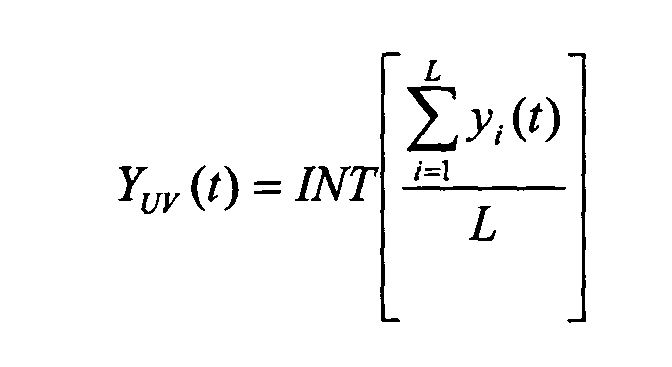
- the validity of a plurality of the segments may be combined. This may be done using a unanimous vote, in which all of the segments considered have to be valid in order to give an overall result that the document is valid. Alternatively, a majority vote be used, in which only a majority of the segments considered have to be valid in order to give an overall result that the document is valid.
- a figure of merit may be assigned to each segment, the figure of merit being indicative of whether or not a segment is valid.
- the figure of merit may be an integer.
- the integer 1 may be used to indicate that a segment is valid and value 0 may be allocated to segments that are invalid.
- the figures of merit for each of the plurality of segments may be multiplied together.
- the captured image or any data associated with it may be used to up-date the reference image. In this way, the reference image is continuously being improved.
- a system preferably a self-service terminal, such as an ATM, for verifying or validating documents, the system comprising means for capturing an image of the document; means for segmenting that captured image into a plurality of different segments; means for comparing one or more of the segments of the captured image with corresponding segments of a reference image, and means for determining whether the document is valid or invalid based on the results of the step of comparing.
- the system may comprise means for using the captured image or any data associated with it to up-date the reference image, if it is determined that the captured image is valid.
- a method for creating a template of a document comprising capturing an image of the document, classifying the image using a one-class classifier, and using the classification data as a reference or template for use in a subsequent validation process.
- a method for verifying or validating documents comprising capturing an image of the document, classifying the image using a one-class classifier, comparing the classification data with reference classification data and determining whether the document is valid or invalid based on the results of the step of comparing.
- the present invention provides a system and method for dynamically determining a reference template for a banknote using genuine notes and using that reference template to verify or authenticate banknotes deposited by customers.
- a reference template can be readily obtained merely by using examples of genuine notes. This means that banks can be more responsive to changes in currency. This closes a window of opportunity for fraudsters.
- an additional template for these can also be dynamically generated, so that notes deposited by customers can be compared with one or both of the reference template for genuine notes and the counterfeit template.
- Figure 1 shows the steps taken to create a template of a banknote in accordance with the invention.
- a first step to characterize banknotes to build up a suitable template for use in a later validation scheme, images of genuine notes are captured 10.
- a plurality of genuine or reference notes 24 is scanned or imaged using a scanner/detector arrangement 20 and the resultant image data is processed using a suitable processor 22, see Figure 2.
- the step of imaging can be done in any suitable manner, but preferably by using a set of narrow-band sensors, which provide responses to radiation reflected from across the surface. In a preferred example, four sensors are used.
- the sensors used are all light emitting diodes (LEDs). Each emits a different type of radiation.
- LEDs light emitting diodes
- the sensors comprise a red LED, a green LED, a blue LED and an IR LED. Light from these is directed onto the surface of the banknote and four suitable detectors are provided to detect the reflected signals. In this way, four separate images are captured, one for each of the four LEDs.
- Each of the images captured by the various detectors has a plurality of pixels, which represents the intensity of the radiation received by the detectors at a given point.
- the image data for each banknote or a selected region of each banknote is segmented into nonoverlapping and equal-sized sub-regions, see step 12 of Figure 1. This is done by over-laying a pre-determined grid on the captured image. Pixels that fall within the same portion of the grid are taken to define a particular segment of the image.
- Figure 3 shows a selected region of a Bank of Scotland £ note.
- Figure 4 shows a segmentation of the selected region of the bank note of Figure 3 into four equal sized square segments. For the purposes of illustration, a one-dimensional distribution for each region is also shown.
- Every pixel of each of the four images is compared with the corresponding pixel of each of the other images, and the difference in intensity is stored.
- the difference in intensities between the red and green data is determined
- the difference in intensities between the red and blue data is determined etc.
- a six-dimensional feature set is derived from the responses from the four detectors for every segment of the image, so that every segment is represented by such a six-dimensional feature set.
- each segment is individually considered in order that it can be classified, see step 14 of Figure 1.
- a mathematical function termed a one-class classifier is used. This type of classification is useful where information on only one class is available. It defines a boundary around the known class, so that samples that fall outside this boundary are deemed not to belong to the class.
- the information that is available is the pattern and layout of the segments of genuine banknotes. Each of these is classified to define suitable boundaries.
- the resultant classifications for each segment are then used in order to create a reference template, see step 18 of Figure 1, which can be used to validate or authenticate other banknotes.
- different segments may be given different levels of significance or weights. This is because certain segments of a banknote may be more difficult for fraudsters to copy and so may be more likely to indicate the presence of a counterfeit. This will be described in more detail later.
- One-class classifiers are well known. Examples of these are described in "Support vector domain description” by Tax et al in Pattern Recognition Letters, 20(11-13) 1999 1191-1199; "One-class classification” by Tax, Technische Universiteit Delft Ph.D. Thesis, (2001) and "Support Vector Novelty Detection Applied to Jet Engine Vibration Spectra” by Hayton et al in Advances in Neural Information processing Systems 13, MIT Press, 946 - 952, (2001).
- One example of a preferred classifier is based on a parametric D 2 test, as described in the book “Multivariate Statistical Methods” (third edition), by Morrison, McGraw-Hill Publishing Company, New York (1990).
- a suitable one-class classifier uses a semi-parametric test based on a mixture of Guassians, which semi-parametric test employs a bootstrap as described in "An Introduction to the Bootstrap” by Efron et al Chapman Hall/CRC Press LLC, Boca Raton, Florida (1998). Each of these will be described in more detail.
- the standard log-likelihood ratio for the null and alternate hypothesis can be employed as a test statistic for the null-hypothesis.
- This test can be expressed as follows: This can be used as a statistic for the validation of a newly presented note. More specifically, a reference set of notes N is scanned and the six dimensional feature vectors are analysed to determine a threshold value for ⁇ for each segment of the note. The threshold value defines a boundary between what is acceptable and what is unacceptable. In practice, this threshold value defines a lower limit. If the value of the test statistic ⁇ for a segment of test sample were below this, the test segment would be rejected.
- a new point x N +1 can be tested against an estimated and assumed normal distribution for a common estimated mean and covariance. It should be noted that employing the log-likelihood ratio for the one-class hypothesis test, the test statistic can be derived directly.
- N reference notes are scanned and segmented. Each of these segments is classified by determining a value for D 2 for every one of the reference notes and using this to set a reference threshold value for each segment. This threshold value is used to determine whether corresponding segments of subsequent test notes are valid.
- the above analysis is based on the assumption that the feature vectors are distributed as multivariate Gaussian. Often this does not hold in practice, although may be an appropriate pragmatic choice in many applications. However, this assumption can be relaxed and arbitrary densities can be considered.
- j ) are normalized so that ⁇ p (x
- j ) dx 1.
- Gaussian mixture models are used, so that: The required parameters can be estimated using the Expectation Maximization (EM) algorithm.
- any of the above classifiers could be used to validate banknotes or other image rich documents.
- the required one-class classifier is selected, it is trained on each segment or sub-region of the note, so that boundary conditions for each segment can be defined, that is limits that define what is regarded as being an acceptable or unacceptable variation from the reference segment.
- the classifiers for the various segments can be used to validate other banknotes.
- the classifiers D i can be used to determine whether or not each segment of the note is within the defined classification boundary and so acceptable or outside the defined boundary and so rejected.
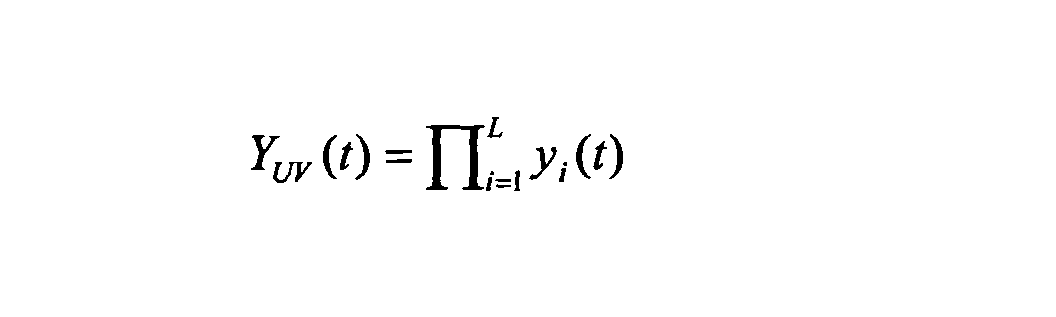
- the product Y(t) of individual decisions y i (t) can be determined.
- This product combination decision rule described above can be seen to be equivalent to a unanimous vote. This means that a note is only accepted if all selected classifiers indicate that it is genuine, otherwise it would be rejected.
- Unanimous voting is an extreme situation of commonly used majority voting when requiring all the voters to agree with consensus. Unanimous voting is preferred technique here, because of the higher cost assigned to incorrectly accepting forgeries. Nevertheless, in some circumstances majority voting may be useful.
- majority voting looks at the average information rather than the individual characteristics. Therefore, for testing genuine notes, as their features are relatively uniform within the reference samples in all sub-regions, majority voting can potentially achieve better results. In contrast, for identifying counterfeits, a unanimous vote may be more appropriate. This is because very high quality counterfeits have similar feature distributions as genuine notes in a number of sub-regions and differences exist in a few specific sub-regions where the genuine features might be too complex to be completely duplicated by the counterfeiting process. By taking account of the average information, majority voting may give the final decision according to most of the sub-regions that might give an incorrect judgement for counterfeits. Hence, for identifying counterfeits unanimous voting may be preferred.
- a stochastic optimisation algorithm is used, in particular a genetic algorithm.
- the first two gene groups c r and c c respectively represent the number of rows and columns for a note segmentation.
- R max the number of maximum rows
- C max which define the size of the intended segmentation search space
- c r 's length n 1 the length of the binary string expression of R max
- c c 's length n 2 equals the length of the binary string expression of C max .
- the third gene group c d represents the combination of classifiers.
- the GA for optimising the system can be summarised as follows: (1) Initialize a random population of n chromosomes; (2) Perform crossover and mutation operations to create another n offspring; (3) carry out the validation operation, and calculate a fitness for each chromosome; (4) Select n chromosomes with the best fitness among all the parents and offspring as the next generation, and (5) if convergent or over the preset maximum iteration steps then stop, otherwise go to step (2).
- the GA has three gene operations for the chromosome. The first operation is gene crossover. Considering the characteristics of the chromosomes, two crossover points in one chromosome are set to complete the crossover operation with other chromosomes.
- the second GA operation is gene mutation.
- a standard gene mutation operation is used, i.e. every time randomly selecting a gene (bit) to mutate from 1 to 0 or from 0 to 1.
- the third GA operation is validation. Because once the c r and c c have changed, only the first RC genes in c d are effective, it is necessary to clean up the ineffective genes in order to avoid them affecting other chromosomes in further operations. Therefore the validation operation is designed to set all the n 3 -RC ineffective genes in c d to be zeros.
- a fitness function is calculated by balancing the performance of FN and FP in the validation set with the GA.
- N 1 genuine samples G ⁇ g k1 ⁇ .
- k 1 1, ...N 1 and N 2 counterfeit samples
- F ⁇ f k2 ⁇
- k 2 1, ..N 2 where both g k1 and f k2 are p -dimensional column vectors
- the decisions y i (g k1 ) and y i (f k2 ) of the ith classifier Di towards validation samples g k1 and f k2 can be calculated.
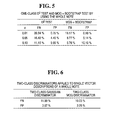
- the best MoG+Bootstrap provides a lower FP value, i.e. number of genuine notes rejected, with a marginal increase in the number of FN's.
- the decrease in FP value is due to the reduced number of regions being tested (two) and so only two tests at the 1% significance level are being performed. In contrast three regions are combined in the D 2 test and so the expected FP rate is approximately 3x the individual significance levels. Considering the segmentations and combinations again similar regions of low detail and high detail content have been selected as in the previous case.
- the GA is a stochastic optimisation algorithm, it yields different results in different randomly initialised runs.
- the GA can be run N r times and the note segmentation and classifier combination strategy that achieves the best performance can be selected.
- N r 200 times.
- IQR inter-quartile range
- the methods described above for defining a template for validating a bank note and using that template to validate test notes may be implemented within a self-service environment, such as an ATM.
- a self-service environment such as an ATM.
- the ATM can be trained in a simple and effective manner to create a reference template and use that template to validate deposits in a secure manner. This can be done without the need for human intervention, so that the entire process is automatic.
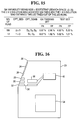
- FIG 16 shows an example of an automated teller machine that is configured to implement these techniques.
- This includes a housing 20 that has a front fascia 22 that has a screen 24 and keyboard 26. Defined in the fascia are three slots, a first one 28 of these being for receiving a user's bank card, the next being provided for dispensing cash through 30 and the third one 32 being for depositing cash into a secure store 34 in the housing 20.
- One or more carrier mechanisms (not shown) is provided for moving cash from the secure store to the dispensing slot, so that it can be dispensed therefrom, and for moving cash received through the deposit slot to the store.
- On a path 36 between the deposit slot 32 and the cash store 34 is an imager or scanner 38 for imaging deposited banknotes. In a preferred example, this is the four-sensor imager 38 previously described.
- the carrier mechanism is operable to carry a banknote received from the deposit slot 32 to the imager 38. Once appropriately positioned relative to the imager 38 one or more suitable images can be captured.
- a central processing unit 40 that includes software for analysing the captured images.
- This software has code or instructions for defining a template based on a plurality of reference images captured from deposited reference notes, in accordance with the techniques described previously. Additionally, the software has code or instructions for validating currency deposited into the ATM, after the initial template is built up, and using an image captured by the imager 38. Again, this validation is done in accordance with the techniques previously described. In the event that currency deposited is deemed to be valid, it is carried into the secure store 34, from where it can be dispensed. In addition, the customer's personal account is up-dated to show the deposited amount. In the event that currency deposited is deemed by the validation software to be invalid, it is returned to the customer either through the deposit slot 32 or the dispensing slot 30.
- the ATM of Figure 16 is described as having software for defining a template as well as for validating currency deposited, this is not essential. Instead, the template may be devised at a remote scanning/imaging/processing system, using the method previously described, and the classification threshold parameters may be provided to the terminal. For example, the classification threshold parameters may be downloaded to individual terminals. Alternatively, where a plurality of ATMs are provided in a distributed network, the template information may be stored at a remote location and shared between the remote terminals.
- the present invention provides a solution to the long-standing problem of how to validate currency in a self-service terminal.
- the preferred method is based on the segmentation of the whole note into different sub-regions followed by the combination of individual classifiers built on those regions. It has the advantage of being applicable to notes of any currency when there is insufficient numbers of counterfeit examples to build a robust binary classifier.
- one-class classifiers are employed and a genetic algorithm is used in selecting the optimised note segmentation and classifier combinations.
- the method in which the invention is embodied dramatically improves discrimination performance based on false negative and false positive levels.
- SVDD Support Vector Data Domain Description
- EVT Extreme Value Theory
Landscapes
- Engineering & Computer Science (AREA)
- Theoretical Computer Science (AREA)
- General Physics & Mathematics (AREA)
- Physics & Mathematics (AREA)
- Computer Vision & Pattern Recognition (AREA)
- Evolutionary Computation (AREA)
- Health & Medical Sciences (AREA)
- General Health & Medical Sciences (AREA)
- Data Mining & Analysis (AREA)
- Artificial Intelligence (AREA)
- Computing Systems (AREA)
- Multimedia (AREA)
- Bioinformatics & Computational Biology (AREA)
- Evolutionary Biology (AREA)
- General Engineering & Computer Science (AREA)
- Software Systems (AREA)
- Databases & Information Systems (AREA)
- Bioinformatics & Cheminformatics (AREA)
- Medical Informatics (AREA)
- Life Sciences & Earth Sciences (AREA)
- Business, Economics & Management (AREA)
- Toxicology (AREA)
- General Business, Economics & Management (AREA)
- Strategic Management (AREA)
- Accounting & Taxation (AREA)
- Physiology (AREA)
- Inspection Of Paper Currency And Valuable Securities (AREA)
Abstract
Description





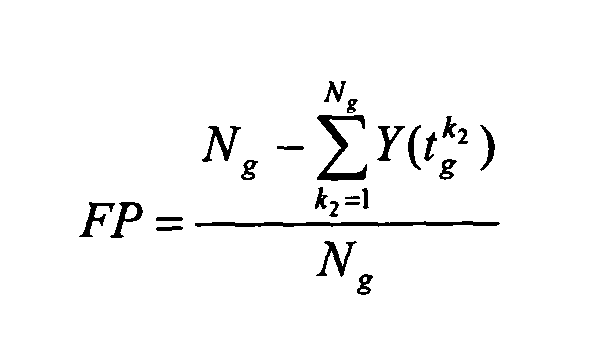



where both gk1 and fk2 are p-dimensional column vectors, then the decisions yi(gk1) and yi(fk2) of the ith classifier Di towards validation samples gk1 and fk2 can be calculated. These are used to determine a fitness function, which is defined as:

Claims (43)
- A method for creating a template, or data representative of such a template, for a document that has to be validated, such as a banknote, the method comprising: segmenting images of a plurality of reference documents in a like manner into a plurality of segments, and processing corresponding segments of the plurality of reference document images to determine one or more reference image segments or data representative of one or more such reference image segments.
- A method as claimed in claim 1, wherein the step of processing involves classifying corresponding segments of each image to determine one or more reference segment classification parameters for each segment.
- A method as claimed in claim 2 comprising defining a threshold for the reference classification parameter.
- A method as claimed in claim 2 or claim 3, wherein the step of classifying comprises using a one-class classifier.
- A method as claimed in claim 4, wherein the one-class classifier uses a parametric D2 test or a semi-parametric test based on a mixture of Guassians, preferably employing a bootstrap.
- A method as claimed in any of the preceding claims comprising optimising the step of segmenting.
- A method as claimed in claim 6 comprising optimising the step of segmenting by determining a preferred number of segments.
- A method as claimed in claim 6 or 7 comprising optimising the step of segmenting by determining a preferred combination of segments for use in a validation process.
- A method as claimed in claim 8, wherein the preferred combination of segments is the combination that provides a minimum number of false acceptances.
- A method as claimed in any of claims 6 to 8 comprising optimising the step of segmenting using a stochastic algorithm such as a genetic algorithm.
- A method as claimed in claim 10 comprising using a genetic algorithm that is adapted to: (1) initialize a random population of n chromosomes; (2) perform crossover and mutation operations to create another n offspring; (3) carry out a validation operation, and calculate a fitness for each chromosome; (4) select n chromosomes with the best fitness among all the parents and offspring as the next generation, and (5) if convergent or over a preset maximum number of iteration steps then stop, otherwise go to step (2).
- A method as claimed in any of the preceding claims further comprising capturing the images of the plurality of documents, preferably using an optical or thermal or magnetic imager or a combination of these.
- A method as claimed in any of the preceding claims, wherein the reference documents are genuine documents, such as genuine banknotes or counterfeit documents, such as counterfeit notes.
- A computer program, preferably on a data carrier or computer readable medium, for creating a reference image or data representative of a reference image for use in a validation process, the computer program having code or instructions for segmenting each one of a plurality images of reference documents such as banknotes in a like manner into a plurality of segments, and processing corresponding image segments from the plurality of images to determine a reference image segment or data representative of such a reference image segment.
- A computer program as claimed in claim 14 comprising code or instructions for processing are operable to compare like segments of the plurality of images to determine a reference segment image or reference segment parameter for each segment.
- A computer program as claimed in claim 14 or claim 15 wherein the code or instructions for processing comprise code or instructions for classifying each segment to determine a reference classification parameter for each segment, and preferably a threshold for the reference classification parameter.
- A computer program as claimed in claim 16, wherein the code or instruction for classifying implement a one-class classifier, for example a one-class classifier that uses a parametric D2 test or a semi-parametric test based on a mixture of Guassians, preferably employing a bootstrap.
- A computer program as claimed in any of claims 14 to 17 comprising optimising the step of segmenting, preferably by determining a preferred number of segments and/or a preferred combination of segments for use in a validation process.
- A computer program as claimed in claim 18 that has code or instructions for implementing a stochastic algorithm for optimising the step of segmenting.
- A system for developing a template for a document, the system comprising means for segmenting each one of a plurality images of reference documents such as banknotes in a like manner into a plurality of segments; and means for processing like segments of the images to determine a reference image segment or data representative of a reference image segment.
- A system as claimed in claim 20, wherein the means for processing are operable to classify the segment image data, and, preferably, define a threshold for the reference classification parameter.
- A self-service terminal, such as an automated teller machine comprising means for segmenting each one of a plurality images of reference documents such as banknotes in a like manner into a plurality of segments; and means for processing like segments of the images to determine a reference image segment or data representative of a reference image segment.
- A self-service terminal as claimed in claim 22, wherein the means for processing are operable to classify the segment image data, and, preferably, define a threshold for the reference classification parameter.
- A self-service terminal as claimed in claim 22 or claim 23 comprising an imager or scanner for capturing images of the reference documents, preferably wherein the imager or scanner is an optical or thermal or magnetic imager or scanner.
- A method for verifying or validating documents comprising capturing an image of the document; segmenting that captured image into a plurality of different segments; comparing one or more of the segments of the captured image, or data representative of those segments, with corresponding segments of a reference image, or data representative of those reference segments, and determining whether the document is valid or invalid based on the results of the step of comparing.
- A method as claimed in claim 25, wherein the step of comparing the segments of the image with the corresponding segments of the reference image involves classifying each segment to determine a classification parameter, and comparing that classification parameter with a reference classification parameter for the corresponding segment of the reference image.
- A method as claimed in claim 26 wherein the step of classifying uses a one-class classifier.
- A method as claimed in claim 27, wherein the one-class classifier uses a parametric D2 test, or a semi-parametric test based on a mixture of Guassians, preferably employing a bootstrap.
- A method as claimed in any of claims 25 to 28 further involving comparing a plurality of the captured image segments with a corresponding plurality of the reference segments, thereby to determine the validity of each of these segments.
- A method as claimed in claim 29 wherein to determine the overall validity of the document the method involves combining the validity of the plurality of the segments.
- A method as claimed in claim 30, wherein the step of combining involves using a unanimous vote, in which all of the segments considered have to be valid in order to give an overall result that the document is valid.
- A method as claimed in claim 30, wherein the step of combining involves using a majority vote, in which only a majority of the segments considered have to be valid in order to give an overall result that the document is valid.
- A method as claimed in any of claims 25 to 32 wherein when a document is determined to be valid, the captured image or any data associated with it may be used to up-date the reference image.
- A computer program, preferably on a data carrier or computer readable medium, comprising code or instructions for using a captured image of the document; segmenting that captured image into a plurality of different segments; comparing one or more of the segments of the captured image, or data representative of the one or more captured segments, with corresponding segments of a reference image, or data representative of the reference segments, and determining whether the document is valid or invalid based on the results of the step of comparing.
- A computer program as claimed in claim 34, wherein the code or instructions for comparing the segments of the image with the corresponding segments of the reference image classify each segment to determine a classification parameter, and compare that classification parameter with a reference classification parameter for the corresponding segment of the reference image, preferably using a one-class classifier.
- A computer program as claimed in claim 34 or claim 35 comprising code or instructions for comparing a plurality of the captured image segments with a corresponding plurality of the reference segments, thereby to determine the validity of each of these segments.
- A computer program as claimed in claim 36 wherein determining the overall validity of the document involves combining the validity of the plurality of the segments, preferably using a unanimous vote, in which all of the segments considered have to be valid in order to give an overall result that the document is valid or a majority vote, in which only a majority of the segments considered have to be valid in order to give an overall result that the document is valid.
- A computer program as claimed in any of claims 34 to 37 wherein when a document is determined to be valid, the captured image or any data associated with it is used to up-date the reference image or reference classification parameter.
- A system, preferably a self-service terminal, such as an ATM, for verifying or validating documents, the system comprising means for capturing an image of the document; means for segmenting that captured image into a plurality of different segments; means for comparing one or more of the segments of the captured image, or data representative of the one or more captured image segments, with corresponding segments of a reference image, or data representative of the reference segments, for determining whether the document is valid or invalid based on the results of the step of comparing.
- A system, preferably a self-service terminal, such as an ATM, for verifying or validating documents, the system comprising a scanner or imager for capturing an image of the document, and a processor configured to segment that captured image into a plurality of different segments; compare one or more of the segments of the captured image with corresponding segments of a reference image, and determine whether the document is valid or invalid based on the results of the step of comparing.
- A method for creating a template for a document, such as a banknote, that has to be validated, or data representative of such a template, the method comprising using a scanner or imager to capture images of a plurality of reference documents or a pre-determined part of these documents, such as banknotes, and defining a reference template, or data representative of such a template using the captured images.
- A method as claimed in claim 41 wherein the step of defining involves classifying the image using a one-class classifier to produce classification data for each image, and using the classification data as reference data for use in a subsequent validation process.
- A method for verifying or validating documents comprising capturing an image of the document, classifying the image using a one-class classifier, comparing the classification data with corresponding reference classification data and determining whether the document is valid or invalid based on the results of the step of comparing.
Applications Claiming Priority (2)
| Application Number | Priority Date | Filing Date | Title |
|---|---|---|---|
| GB0313002 | 2003-06-06 | ||
| GBGB0313002.8A GB0313002D0 (en) | 2003-06-06 | 2003-06-06 | Currency validation |
Publications (3)
| Publication Number | Publication Date |
|---|---|
| EP1484719A2 true EP1484719A2 (en) | 2004-12-08 |
| EP1484719A3 EP1484719A3 (en) | 2005-11-23 |
| EP1484719B1 EP1484719B1 (en) | 2017-07-26 |
Family
ID=9959428
Family Applications (1)
| Application Number | Title | Priority Date | Filing Date |
|---|---|---|---|
| EP04252403.3A Expired - Lifetime EP1484719B1 (en) | 2003-06-06 | 2004-04-24 | Currency validation |
Country Status (3)
| Country | Link |
|---|---|
| US (1) | US7639858B2 (en) |
| EP (1) | EP1484719B1 (en) |
| GB (1) | GB0313002D0 (en) |
Cited By (31)
| Publication number | Priority date | Publication date | Assignee | Title |
|---|---|---|---|---|
| GB2414297A (en) * | 2004-05-20 | 2005-11-23 | Enseal Systems Ltd | Assessing the quality of an image of a cheque |
| EP1752934A2 (en) | 2005-08-08 | 2007-02-14 | Kabushiki Kaisha Toshiba | Sheet identifying apparatus and sheet identifying method |
| WO2007067471A1 (en) * | 2005-12-07 | 2007-06-14 | Siemens Corporate Research, Inc. | Evaluating anomaly for one-class classifiers in machine condition monitoring |
| WO2007068930A1 (en) * | 2005-12-16 | 2007-06-21 | Ncr Corporation | Detecting improved quality counterfeit media items |
| EP1944737A1 (en) * | 2006-12-29 | 2008-07-16 | NCR Corporation | Validation template for valuable media of multiple classes |
| JP2008181507A (en) * | 2006-12-29 | 2008-08-07 | Ncr Corp | Confirmation templates for multiple classes of securities media |
| EP2000992A1 (en) * | 2007-06-01 | 2008-12-10 | Kba-Giori S.A. | Authentication of security documents, in particular of banknotes |
| WO2008146262A3 (en) * | 2007-06-01 | 2009-01-29 | Kba Giori Sa | Authentication of security documents, in particular of banknotes |
| AT504627B1 (en) * | 2006-02-01 | 2009-05-15 | Arc Seibersdorf Res Gmbh | METHOD FOR THE OPTICAL REVIEW OF OBJECTS |
| EP1927937A3 (en) * | 2006-12-01 | 2009-07-29 | NEC Corporation | Certificate stamp identifying system and certificate stamp identifying method |
| CN100555341C (en) * | 2006-09-20 | 2009-10-28 | 致伸科技股份有限公司 | Verification method for determining an area in an image corresponding to a monetary banknote |
| CN100580716C (en) * | 2006-09-20 | 2010-01-13 | 致伸科技股份有限公司 | Verification method for determining an area in an image corresponding to a monetary banknote |
| CN101331526B (en) * | 2005-12-16 | 2010-10-13 | Ncr公司 | banknote verification |
| CN101964122A (en) * | 2009-07-24 | 2011-02-02 | 株式会社东芝 | Method of creating dictionary for soil detection of a sheet, sheet processing apparatus, and sheet processing method |
| CN101540075B (en) * | 2009-04-23 | 2011-05-18 | 广州广电运通金融电子股份有限公司 | Banknote storage method and deposit machine |
| WO2011058343A1 (en) * | 2009-11-10 | 2011-05-19 | Ingenia Holdings (Uk) Limited | Optimisation |
| CN102110323A (en) * | 2011-01-14 | 2011-06-29 | 深圳市怡化电脑有限公司 | Method and device for examining money |
| NL2006990C2 (en) * | 2011-06-01 | 2012-12-04 | Nl Bank Nv | Method and device for classifying security documents such as banknotes. |
| CN102063758B (en) * | 2009-11-16 | 2012-12-26 | 深圳市中钞科信金融科技有限公司 | Banknote paper texture detection method and device |
| CN102890840A (en) * | 2012-08-22 | 2013-01-23 | 山东新北洋信息技术股份有限公司 | Method and device for identifying paper money |
| US8611665B2 (en) | 2006-12-29 | 2013-12-17 | Ncr Corporation | Method of recognizing a media item |
| EP2743894A1 (en) * | 2012-12-11 | 2014-06-18 | NCR Corporation | Counterfeit media detection |
| CN105184954A (en) * | 2015-08-14 | 2015-12-23 | 深圳怡化电脑股份有限公司 | Banknote detecting method and banknote detecting device |
| CN105184950A (en) * | 2015-06-03 | 2015-12-23 | 深圳怡化电脑股份有限公司 | Method and device for analyzing banknote to be old or new |
| CN105243730A (en) * | 2015-10-28 | 2016-01-13 | 深圳怡化电脑股份有限公司 | Banknote identification method and system |
| CN105261108A (en) * | 2015-10-15 | 2016-01-20 | 深圳怡化电脑股份有限公司 | Method and system for identifying currency value of RMB banknote |
| US9818249B1 (en) | 2002-09-04 | 2017-11-14 | Copilot Ventures Fund Iii Llc | Authentication method and system |
| CN108734845A (en) * | 2017-04-20 | 2018-11-02 | 深圳怡化电脑股份有限公司 | Detect the method and device of paper money number |
| CN108831005A (en) * | 2018-04-16 | 2018-11-16 | 华中科技大学 | A kind of Euro version recognition methods and the system of the multiple features fusion based on image |
| WO2019122271A1 (en) | 2017-12-20 | 2019-06-27 | Alpvision S.A. | Authentication machine learning from multiple digital representations |
| WO2024194004A1 (en) * | 2023-03-23 | 2024-09-26 | Koenig & Bauer Ag | Method for authenticating a banknote having at least one printed area on the substrate thereof |
Families Citing this family (53)
| Publication number | Priority date | Publication date | Assignee | Title |
|---|---|---|---|---|
| US7088872B1 (en) | 2002-02-14 | 2006-08-08 | Cogent Systems, Inc. | Method and apparatus for two dimensional image processing |
| JP4607947B2 (en) | 2004-03-12 | 2011-01-05 | インジェニア・ホールディングス・(ユー・ケイ)・リミテッド | Authenticity verification methods, products and equipment |
| RU2380750C2 (en) | 2004-03-12 | 2010-01-27 | Инджениа Текнолоджи Лимитед | Methods and devices for creation of printing products with possibility of their identification and their subsequent verification |
| JP4834968B2 (en) * | 2004-08-11 | 2011-12-14 | 富士ゼロックス株式会社 | Authenticity determination system, authenticity determination device and program |
| US7616788B2 (en) * | 2004-11-12 | 2009-11-10 | Cogent Systems, Inc. | System and method for fast biometric pattern matching |
| US7360686B2 (en) | 2005-05-11 | 2008-04-22 | Jp Morgan Chase Bank | Method and system for discovering significant subsets in collection of documents |
| JP4709633B2 (en) * | 2005-11-07 | 2011-06-22 | 日立オムロンターミナルソリューションズ株式会社 | Cash transaction apparatus and transaction method |
| US8131477B2 (en) * | 2005-11-16 | 2012-03-06 | 3M Cogent, Inc. | Method and device for image-based biological data quantification |
| US20070136600A1 (en) * | 2005-12-13 | 2007-06-14 | Wilkinson Joseph N | Document Verification System and Method of Use |
| GB2448245B (en) | 2005-12-23 | 2009-11-04 | Ingenia Holdings | Optical authentication |
| US7916924B2 (en) * | 2006-09-19 | 2011-03-29 | Primax Electronics Ltd. | Color processing method for identification of areas within an image corresponding to monetary banknotes |
| US7885450B2 (en) * | 2006-09-20 | 2011-02-08 | Primax Electronics Ltd. | Method for characterizing texture of areas within an image corresponding to monetary banknotes |
| US7706592B2 (en) * | 2006-09-20 | 2010-04-27 | Primax Electronics Ltd. | Method for detecting a boundary of a monetary banknote within an image |
| JP4743065B2 (en) * | 2006-09-27 | 2011-08-10 | ブラザー工業株式会社 | Image recognition apparatus, copying apparatus, and image recognition method |
| DE102006050347A1 (en) * | 2006-10-25 | 2008-04-30 | Siemens Ag | Overprint checking method for use in field of pharmaceutics, involves comparing data codes with check data codes, and determining whether data codes are classified as acceptable or non acceptable incorrect code during finding of data codes |
| US8275179B2 (en) | 2007-05-01 | 2012-09-25 | 3M Cogent, Inc. | Apparatus for capturing a high quality image of a moist finger |
| US8411916B2 (en) * | 2007-06-11 | 2013-04-02 | 3M Cogent, Inc. | Bio-reader device with ticket identification |
| WO2009031242A1 (en) * | 2007-09-07 | 2009-03-12 | Glory Ltd. | Paper sheet identification device and paper sheet identification method |
| US8094917B2 (en) * | 2008-04-14 | 2012-01-10 | Primax Electronics Ltd. | Method for detecting monetary banknote and performing currency type analysis operation |
| US20090260947A1 (en) * | 2008-04-18 | 2009-10-22 | Xu-Hua Liu | Method for performing currency value analysis operation |
| JP2009265844A (en) * | 2008-04-23 | 2009-11-12 | Oki Electric Ind Co Ltd | Bill processor, register apparatus, change machine, distribution apparatus and network system |
| US7941378B2 (en) * | 2008-05-16 | 2011-05-10 | Siemens Industry, Inc. | Stamp testing and monitoring |
| US8682056B2 (en) * | 2008-06-30 | 2014-03-25 | Ncr Corporation | Media identification |
| US8085972B2 (en) * | 2008-07-03 | 2011-12-27 | Primax Electronics Ltd. | Protection method for preventing hard copy of document from being released or reproduced |
| US20100014755A1 (en) * | 2008-07-21 | 2010-01-21 | Charles Lee Wilson | System and method for grid-based image segmentation and matching |
| US7844098B2 (en) * | 2008-07-21 | 2010-11-30 | Primax Electronics Ltd. | Method for performing color analysis operation on image corresponding to monetary banknote |
| US8025214B1 (en) * | 2008-07-31 | 2011-09-27 | Bank Of America Corporation | Cash handling device having integrated controller |
| US20110206265A1 (en) * | 2008-09-22 | 2011-08-25 | Toshio Numata | Paper sheet management device, paper sheet management method, and paper sheet management program |
| GB2466311B (en) | 2008-12-19 | 2010-11-03 | Ingenia Holdings | Self-calibration of a matching algorithm for determining authenticity |
| GB2466465B (en) | 2008-12-19 | 2011-02-16 | Ingenia Holdings | Authentication |
| US20120226600A1 (en) * | 2009-11-10 | 2012-09-06 | Au10Tix Limited | Computerized integrated authentication/document bearer verification system and methods useful in conjunction therewith |
| DE102010055974A1 (en) * | 2010-12-23 | 2012-06-28 | Giesecke & Devrient Gmbh | Method and device for determining a class reference data set for the classification of value documents |
| US8566321B2 (en) * | 2011-03-11 | 2013-10-22 | Amco Llc | Relativistic concept measuring system for data clustering |
| US8756158B2 (en) | 2011-09-15 | 2014-06-17 | Fifth Third Bank | Currency recycler |
| US20140241618A1 (en) * | 2013-02-28 | 2014-08-28 | Hewlett-Packard Development Company, L.P. | Combining Region Based Image Classifiers |
| US9501693B2 (en) * | 2013-10-09 | 2016-11-22 | Honda Motor Co., Ltd. | Real-time multiclass driver action recognition using random forests |
| US20150142624A1 (en) * | 2013-11-21 | 2015-05-21 | Hrb Innovations, Inc. | Advance notice and analysis of notice documents from a taxing authority |
| US9824268B2 (en) * | 2014-04-29 | 2017-11-21 | Ncr Corporation | Media item validation |
| US20180048550A1 (en) * | 2015-03-06 | 2018-02-15 | Georgia Tech Research Corporation | Device fingerprinting for cyber-physical systems |
| CN104732231B (en) | 2015-04-13 | 2019-02-26 | 广州广电运通金融电子股份有限公司 | A kind of identification method of negotiable instrument |
| US11055679B2 (en) * | 2016-04-20 | 2021-07-06 | Ncr Corporation | Bunch document recycler |
| US10275971B2 (en) * | 2016-04-22 | 2019-04-30 | Ncr Corporation | Image correction |
| EP3242239A1 (en) * | 2016-05-02 | 2017-11-08 | Scantrust SA | Optimized authentication of graphic authentication code |
| CN106504408B (en) * | 2016-11-02 | 2019-04-12 | 深圳怡化电脑股份有限公司 | A kind of method and device identifying RMB |
| CN106952393B (en) * | 2017-03-28 | 2020-02-07 | 深圳怡化电脑股份有限公司 | Paper money identification method and device, electronic equipment and storage medium |
| US10475846B2 (en) * | 2017-05-30 | 2019-11-12 | Ncr Corporation | Media security validation |
| US11354917B2 (en) * | 2019-07-15 | 2022-06-07 | Idemia Identity & Security USA LLC | Detection of fraudulently generated and photocopied credential documents |
| US10515266B1 (en) | 2019-08-16 | 2019-12-24 | Capital One Services, Llc | Document verification by combining multiple images |
| CN110867015A (en) * | 2019-09-29 | 2020-03-06 | 广州国瀚计算机通讯科技有限公司 | RMB counterfeit discriminating method |
| ES2973322T3 (en) * | 2019-11-26 | 2024-06-19 | European Central Bank | Computer implemented method for copy protection, data processing device and computer program product |
| DE102020004284A1 (en) | 2020-07-16 | 2022-01-20 | Giesecke+Devrient Currency Technology Gmbh | Method and device for checking documents of value and method and device for generating checking parameters for use in a method for checking documents of value |
| DE102020007322A1 (en) * | 2020-12-01 | 2022-06-02 | Giesecke+Devrient Currency Technology Gmbh | Sensor and method for checking documents of value |
| US20250061470A1 (en) * | 2021-12-23 | 2025-02-20 | Sicpa Holding Sa | Method and device for authenticating a visual item |
Family Cites Families (13)
| Publication number | Priority date | Publication date | Assignee | Title |
|---|---|---|---|---|
| US4041456A (en) | 1976-07-30 | 1977-08-09 | Ott David M | Method for verifying the denomination of currency |
| JPS5665291A (en) | 1979-10-31 | 1981-06-02 | Tokyo Shibaura Electric Co | Discriminator for printed matter |
| US5633949A (en) | 1990-02-05 | 1997-05-27 | Cummins-Allison Corp. | Method and apparatus for currency discrimination |
| US6539104B1 (en) | 1990-02-05 | 2003-03-25 | Cummins-Allison Corp. | Method and apparatus for currency discrimination |
| US5729623A (en) * | 1993-10-18 | 1998-03-17 | Glory Kogyo Kabushiki Kaisha | Pattern recognition apparatus and method of optimizing mask for pattern recognition according to genetic algorithm |
| KR100296694B1 (en) * | 1997-05-21 | 2001-08-07 | 오까다 마사하루 | Method and apparatus for selecting coins |
| IT1309271B1 (en) * | 1999-05-27 | 2002-01-16 | Gd Spa | BANKNOTE CHECK METHOD |
| GB9920501D0 (en) * | 1999-09-01 | 1999-11-03 | Ncr Int Inc | Imaging system |
| JP2001126107A (en) * | 1999-10-29 | 2001-05-11 | Nippon Conlux Co Ltd | Method and device for identifying paper sheets |
| US6474548B1 (en) * | 1999-11-30 | 2002-11-05 | Diebold, Incorporated | Deposit accepting and storage apparatus and method for automated banking machine |
| GB2361765A (en) | 2000-04-28 | 2001-10-31 | Ncr Int Inc | Media validation by diffusely reflected light |
| GB0025564D0 (en) * | 2000-10-18 | 2000-12-06 | Rue De Int Ltd | Denomination identification |
| EP1246164A1 (en) * | 2001-03-30 | 2002-10-02 | Sony France S.A. | Sound characterisation and/or identification based on prosodic listening |
-
2003
- 2003-06-06 GB GBGB0313002.8A patent/GB0313002D0/en not_active Ceased
-
2004
- 2004-04-24 EP EP04252403.3A patent/EP1484719B1/en not_active Expired - Lifetime
- 2004-05-21 US US10/850,755 patent/US7639858B2/en active Active
Cited By (67)
| Publication number | Priority date | Publication date | Assignee | Title |
|---|---|---|---|---|
| US9818249B1 (en) | 2002-09-04 | 2017-11-14 | Copilot Ventures Fund Iii Llc | Authentication method and system |
| GB2414297A (en) * | 2004-05-20 | 2005-11-23 | Enseal Systems Ltd | Assessing the quality of an image of a cheque |
| EP1752934A2 (en) | 2005-08-08 | 2007-02-14 | Kabushiki Kaisha Toshiba | Sheet identifying apparatus and sheet identifying method |
| CN101739749B (en) * | 2005-08-08 | 2012-11-28 | 株式会社东芝 | Sheet indentifying apparatus and sheet identifying method |
| US7991197B2 (en) | 2005-08-08 | 2011-08-02 | Kabushiki Kaisha Toshiba | Sheet identifying apparatus and sheet identifying method |
| EP2189951A1 (en) | 2005-08-08 | 2010-05-26 | Kabushi Kaisha Toshiba | Sheet indentifying apparatus and sheet identifying method |
| EP1752934A3 (en) * | 2005-08-08 | 2008-05-21 | Kabushiki Kaisha Toshiba | Sheet identifying apparatus and sheet identifying method |
| WO2007067471A1 (en) * | 2005-12-07 | 2007-06-14 | Siemens Corporate Research, Inc. | Evaluating anomaly for one-class classifiers in machine condition monitoring |
| US7567878B2 (en) | 2005-12-07 | 2009-07-28 | Siemens Corporate Research, Inc. | Evaluating anomaly for one class classifiers in machine condition monitoring |
| JP2009527029A (en) * | 2005-12-16 | 2009-07-23 | エヌ・シー・アール・コーポレイション | Media confirmation device and confirmation method |
| CN101331526B (en) * | 2005-12-16 | 2010-10-13 | Ncr公司 | banknote verification |
| US8086017B2 (en) | 2005-12-16 | 2011-12-27 | Ncr Corporation | Detecting improved quality counterfeit media |
| JP2009519532A (en) * | 2005-12-16 | 2009-05-14 | エヌ・シー・アール・コーポレイション | Bank note confirmation |
| CN101366060B (en) * | 2005-12-16 | 2012-08-29 | Ncr公司 | Media validation |
| WO2007068930A1 (en) * | 2005-12-16 | 2007-06-21 | Ncr Corporation | Detecting improved quality counterfeit media items |
| WO2007068928A1 (en) * | 2005-12-16 | 2007-06-21 | Ncr Corporation | Detecting improved quality counterfeit media |
| WO2007068867A1 (en) | 2005-12-16 | 2007-06-21 | Ncr Corporation | Banknote validation |
| CN101366061B (en) * | 2005-12-16 | 2010-12-08 | Ncr公司 | Detect counterfeit media of improved quality |
| WO2007068923A1 (en) * | 2005-12-16 | 2007-06-21 | Ncr Corporation | Processing images of media items before validation |
| AT504627B1 (en) * | 2006-02-01 | 2009-05-15 | Arc Seibersdorf Res Gmbh | METHOD FOR THE OPTICAL REVIEW OF OBJECTS |
| CN100580716C (en) * | 2006-09-20 | 2010-01-13 | 致伸科技股份有限公司 | Verification method for determining an area in an image corresponding to a monetary banknote |
| CN100555341C (en) * | 2006-09-20 | 2009-10-28 | 致伸科技股份有限公司 | Verification method for determining an area in an image corresponding to a monetary banknote |
| EP1927937A3 (en) * | 2006-12-01 | 2009-07-29 | NEC Corporation | Certificate stamp identifying system and certificate stamp identifying method |
| JP2008181507A (en) * | 2006-12-29 | 2008-08-07 | Ncr Corp | Confirmation templates for multiple classes of securities media |
| US8625876B2 (en) | 2006-12-29 | 2014-01-07 | Ncr Corporation | Validation template for valuable media of multiple classes |
| US8611665B2 (en) | 2006-12-29 | 2013-12-17 | Ncr Corporation | Method of recognizing a media item |
| US8503796B2 (en) | 2006-12-29 | 2013-08-06 | Ncr Corporation | Method of validating a media item |
| EP1944737A1 (en) * | 2006-12-29 | 2008-07-16 | NCR Corporation | Validation template for valuable media of multiple classes |
| CN101226655B (en) * | 2006-12-29 | 2014-10-08 | Ncr公司 | Validation template for valuable media of multiple classes |
| CN101755290B (en) * | 2007-06-01 | 2012-11-28 | 卡巴-诺塔赛斯有限公司 | Authentication of security documents, especially banknotes |
| EP2639773A1 (en) * | 2007-06-01 | 2013-09-18 | KBA-NotaSys SA | Authentication of security documents, in particular of banknotes |
| EP2000992A1 (en) * | 2007-06-01 | 2008-12-10 | Kba-Giori S.A. | Authentication of security documents, in particular of banknotes |
| WO2008146262A3 (en) * | 2007-06-01 | 2009-01-29 | Kba Giori Sa | Authentication of security documents, in particular of banknotes |
| US8781204B2 (en) | 2007-06-01 | 2014-07-15 | Kba-Notasys Sa | Authentication of security documents, in particular of banknotes |
| CN102930632A (en) * | 2007-06-01 | 2013-02-13 | 卡巴-诺塔赛斯有限公司 | Authentication of security documents, in particular of banknotes |
| RU2476936C2 (en) * | 2007-06-01 | 2013-02-27 | КБА-НотаСис СА | Authentication of protected documents, particularly banknotes |
| EP2639774A1 (en) * | 2007-06-01 | 2013-09-18 | KBA-NotaSys SA | Detection of security features provided on security documents |
| CN101540075B (en) * | 2009-04-23 | 2011-05-18 | 广州广电运通金融电子股份有限公司 | Banknote storage method and deposit machine |
| EP2282299A3 (en) * | 2009-07-24 | 2011-10-26 | Kabushiki Kaisha Toshiba | Method of creating dictionary for soil detection of a sheet, sheet processing apparatus, and sheet processing method |
| CN101964122A (en) * | 2009-07-24 | 2011-02-02 | 株式会社东芝 | Method of creating dictionary for soil detection of a sheet, sheet processing apparatus, and sheet processing method |
| CN102770889A (en) * | 2009-11-10 | 2012-11-07 | 英根亚控股有限公司 | Optimisation |
| WO2011058343A1 (en) * | 2009-11-10 | 2011-05-19 | Ingenia Holdings (Uk) Limited | Optimisation |
| CN102063758B (en) * | 2009-11-16 | 2012-12-26 | 深圳市中钞科信金融科技有限公司 | Banknote paper texture detection method and device |
| CN102110323A (en) * | 2011-01-14 | 2011-06-29 | 深圳市怡化电脑有限公司 | Method and device for examining money |
| NL2006990C2 (en) * | 2011-06-01 | 2012-12-04 | Nl Bank Nv | Method and device for classifying security documents such as banknotes. |
| WO2012165959A1 (en) * | 2011-06-01 | 2012-12-06 | De Nederlandsche Bank N.V. | Method and device for classifying security documents such as banknotes |
| WO2014029334A1 (en) * | 2012-08-22 | 2014-02-27 | 山东新北洋信息技术股份有限公司 | Paper money identification method and device |
| RU2617562C2 (en) * | 2012-08-22 | 2017-04-25 | Шаньдун Нью Бэйян Информейшн Текнолоджи Ко., Лтд. | Method and device for identification of paper cash |
| CN102890840A (en) * | 2012-08-22 | 2013-01-23 | 山东新北洋信息技术股份有限公司 | Method and device for identifying paper money |
| CN102890840B (en) * | 2012-08-22 | 2016-03-23 | 山东新北洋信息技术股份有限公司 | Banknote discriminating method and device |
| US9483895B2 (en) | 2012-08-22 | 2016-11-01 | Shandong New Beiyang Information Technology Co., Ltd. | Paper money identification method and device |
| EP2743894A1 (en) * | 2012-12-11 | 2014-06-18 | NCR Corporation | Counterfeit media detection |
| US9734648B2 (en) | 2012-12-11 | 2017-08-15 | Ncr Corporation | Method of categorising defects in a media item |
| CN105184950A (en) * | 2015-06-03 | 2015-12-23 | 深圳怡化电脑股份有限公司 | Method and device for analyzing banknote to be old or new |
| CN105184954A (en) * | 2015-08-14 | 2015-12-23 | 深圳怡化电脑股份有限公司 | Banknote detecting method and banknote detecting device |
| CN105184954B (en) * | 2015-08-14 | 2018-04-06 | 深圳怡化电脑股份有限公司 | A kind of method and banknote tester for detecting bank note |
| CN105261108A (en) * | 2015-10-15 | 2016-01-20 | 深圳怡化电脑股份有限公司 | Method and system for identifying currency value of RMB banknote |
| CN105261108B (en) * | 2015-10-15 | 2018-06-19 | 深圳怡化电脑股份有限公司 | A kind of method and system of RMB value of money identification |
| CN105243730A (en) * | 2015-10-28 | 2016-01-13 | 深圳怡化电脑股份有限公司 | Banknote identification method and system |
| CN105243730B (en) * | 2015-10-28 | 2018-02-09 | 深圳怡化电脑股份有限公司 | Paper Currency Identification and system |
| CN108734845A (en) * | 2017-04-20 | 2018-11-02 | 深圳怡化电脑股份有限公司 | Detect the method and device of paper money number |
| WO2019122271A1 (en) | 2017-12-20 | 2019-06-27 | Alpvision S.A. | Authentication machine learning from multiple digital representations |
| US11461582B2 (en) | 2017-12-20 | 2022-10-04 | Alpvision S.A. | Authentication machine learning from multiple digital presentations |
| US11989961B2 (en) | 2017-12-20 | 2024-05-21 | Alpvision S.A. | Authentication machine learning from multiple digital presentations |
| CN108831005A (en) * | 2018-04-16 | 2018-11-16 | 华中科技大学 | A kind of Euro version recognition methods and the system of the multiple features fusion based on image |
| WO2024194004A1 (en) * | 2023-03-23 | 2024-09-26 | Koenig & Bauer Ag | Method for authenticating a banknote having at least one printed area on the substrate thereof |
| US12340648B2 (en) | 2023-03-23 | 2025-06-24 | Koenig & Bauer Ag | Method for authenticating a banknote having at least one printed area on the substrate thereof |
Also Published As
| Publication number | Publication date |
|---|---|
| GB0313002D0 (en) | 2003-07-09 |
| EP1484719A3 (en) | 2005-11-23 |
| US20040247169A1 (en) | 2004-12-09 |
| EP1484719B1 (en) | 2017-07-26 |
| US7639858B2 (en) | 2009-12-29 |
Similar Documents
| Publication | Publication Date | Title |
|---|---|---|
| EP1484719B1 (en) | Currency validation | |
| JP5219211B2 (en) | Banknote confirmation method and apparatus | |
| US8611665B2 (en) | Method of recognizing a media item | |
| JP5344668B2 (en) | Method for automatically confirming securities media item and method for generating template for automatically confirming securities media item | |
| US7545960B2 (en) | Biometric system | |
| EP1217589B1 (en) | Currency validator | |
| CN101366061B (en) | Detect counterfeit media of improved quality | |
| KR100893613B1 (en) | Recognition coefficient method and device for bills and barcodes | |
| He et al. | Employing optimized combinations of one-class classifiers for automated currency validation | |
| US20210264711A1 (en) | Cash handling machine | |
| EP2054844B1 (en) | Classification using support vector machines and variables selection | |
| JP2001331839A (en) | Method and device for discriminating paper money | |
| Nossam et al. | Signature Forgery Detection and Verification using Deep Learning Techniques | |
| KR101232684B1 (en) | Method for detecting counterfeits of banknotes using Bayesian approach | |
| Kagehiro et al. | A hierarchical classification method for us bank-notes | |
| EP3703018B1 (en) | Cash-handling machine | |
| JPH1196431A (en) | METHOD AND APPARATUS FOR JUDGING UNKNOWN PATTERN IMAGES IN NEURO IDENTIFICATION |
Legal Events
| Date | Code | Title | Description |
|---|---|---|---|
| PUAI | Public reference made under article 153(3) epc to a published international application that has entered the european phase |
Free format text: ORIGINAL CODE: 0009012 |
|
| AK | Designated contracting states |
Kind code of ref document: A2 Designated state(s): AT BE BG CH CY CZ DE DK EE ES FI FR GB GR HU IE IT LI LU MC NL PL PT RO SE SI SK TR |
|
| AX | Request for extension of the european patent |
Extension state: AL HR LT LV MK |
|
| PUAL | Search report despatched |
Free format text: ORIGINAL CODE: 0009013 |
|
| AK | Designated contracting states |
Kind code of ref document: A3 Designated state(s): AT BE BG CH CY CZ DE DK EE ES FI FR GB GR HU IE IT LI LU MC NL PL PT RO SE SI SK TR |
|
| AX | Request for extension of the european patent |
Extension state: AL HR LT LV MK |
|
| 17P | Request for examination filed |
Effective date: 20060523 |
|
| AKX | Designation fees paid |
Designated state(s): DE ES FR GB IT |
|
| 17Q | First examination report despatched |
Effective date: 20060726 |
|
| RAP1 | Party data changed (applicant data changed or rights of an application transferred) |
Owner name: NCR INTERNATIONAL, INC. |
|
| GRAP | Despatch of communication of intention to grant a patent |
Free format text: ORIGINAL CODE: EPIDOSNIGR1 |
|
| INTG | Intention to grant announced |
Effective date: 20170317 |
|
| GRAS | Grant fee paid |
Free format text: ORIGINAL CODE: EPIDOSNIGR3 |
|
| GRAA | (expected) grant |
Free format text: ORIGINAL CODE: 0009210 |
|
| AK | Designated contracting states |
Kind code of ref document: B1 Designated state(s): DE ES FR GB IT |
|
| REG | Reference to a national code |
Ref country code: GB Ref legal event code: FG4D |
|
| REG | Reference to a national code |
Ref country code: DE Ref legal event code: R084 Ref document number: 602004051575 Country of ref document: DE |
|
| REG | Reference to a national code |
Ref country code: DE Ref legal event code: R082 Ref document number: 602004051575 Country of ref document: DE Representative=s name: V. BEZOLD & PARTNER PATENTANWAELTE - PARTG MBB, DE |
|
| REG | Reference to a national code |
Ref country code: GB Ref legal event code: 746 Effective date: 20170807 |
|
| REG | Reference to a national code |
Ref country code: DE Ref legal event code: R096 Ref document number: 602004051575 Country of ref document: DE Ref country code: DE Ref legal event code: R082 Ref document number: 602004051575 Country of ref document: DE Representative=s name: V. BEZOLD & PARTNER PATENTANWAELTE - PARTG MBB, DE |
|
| PG25 | Lapsed in a contracting state [announced via postgrant information from national office to epo] |
Ref country code: ES Free format text: LAPSE BECAUSE OF FAILURE TO SUBMIT A TRANSLATION OF THE DESCRIPTION OR TO PAY THE FEE WITHIN THE PRESCRIBED TIME-LIMIT Effective date: 20170726 |
|
| REG | Reference to a national code |
Ref country code: FR Ref legal event code: PLFP Year of fee payment: 15 |
|
| REG | Reference to a national code |
Ref country code: DE Ref legal event code: R097 Ref document number: 602004051575 Country of ref document: DE |
|
| PG25 | Lapsed in a contracting state [announced via postgrant information from national office to epo] |
Ref country code: IT Free format text: LAPSE BECAUSE OF FAILURE TO SUBMIT A TRANSLATION OF THE DESCRIPTION OR TO PAY THE FEE WITHIN THE PRESCRIBED TIME-LIMIT Effective date: 20170726 |
|
| PLBE | No opposition filed within time limit |
Free format text: ORIGINAL CODE: 0009261 |
|
| STAA | Information on the status of an ep patent application or granted ep patent |
Free format text: STATUS: NO OPPOSITION FILED WITHIN TIME LIMIT |
|
| 26N | No opposition filed |
Effective date: 20180430 |
|
| P01 | Opt-out of the competence of the unified patent court (upc) registered |
Effective date: 20230512 |
|
| PGFP | Annual fee paid to national office [announced via postgrant information from national office to epo] |
Ref country code: FR Payment date: 20230425 Year of fee payment: 20 Ref country code: DE Payment date: 20230427 Year of fee payment: 20 |
|
| PGFP | Annual fee paid to national office [announced via postgrant information from national office to epo] |
Ref country code: GB Payment date: 20230427 Year of fee payment: 20 |
|
| REG | Reference to a national code |
Ref country code: DE Ref legal event code: R071 Ref document number: 602004051575 Country of ref document: DE |
|
| REG | Reference to a national code |
Ref country code: GB Ref legal event code: PE20 Expiry date: 20240423 |
|
| PG25 | Lapsed in a contracting state [announced via postgrant information from national office to epo] |
Ref country code: GB Free format text: LAPSE BECAUSE OF EXPIRATION OF PROTECTION Effective date: 20240423 |
|
| PG25 | Lapsed in a contracting state [announced via postgrant information from national office to epo] |
Ref country code: GB Free format text: LAPSE BECAUSE OF EXPIRATION OF PROTECTION Effective date: 20240423 |