Technical Field
-
The present invention relates to a service
providing method using a secure module, a system for
using an electronic value, for example, purchase of
electronic ticket, the use, the transfer as one of
the service, a using method, a program, an apparatus,
and a storage medium on which the program is
recorded.
Background Art
-
In order to provide mobile service securely,
there is a technique that a secure element (SE),
which is a tamper resistant secure module such as
an IC chip and the like, is inserted to a cellular
phone, PDA to improve security. As an example of the
IC chip to be used by being inserted to the cellular
phone, an operator conventionally performed issuing
and managing in the case of, for example, SIM for
GSM. Moreover, In WAP (Wireless Application
Protocol), the specification of the secure module
having a signature function which is called WIN (WAP
Identifier Module) is opened to the public. As one
of installment of WIN, there is a format, that is,
SWIN in which WIM is installed on the same chip as
SIM, and regarding this case, the operator is also
likely to perform issuing and managing.
-
Here, the electronic ticket service is largely
divided into two types. One is a system that issues
an electronic ticket, which in advance contains
secret information of the cellular phone, PDA, and
SE inserted thereto in itself, and the other is a
system that issues an electronic ticket, which
contains no secret information of these devices in
itself (for example, NEC, press release (October,
3, 2002), a fundamental technology for mobile,
mobile electronic ticket and membership card
service basis, searched on January 14, 2003,
Internet
<URL:http://www.nec.co.jp/press/ja/0210/0303-01.
html,http://www.nec.co.jp/press/ja/0210/0303-06.
html,http://www.nec.co.jp/press/ja/0210/0303-07.
html>).
-
There is a large difference between these
electronic ticket service systems in the operation
of the transfer of ticket and the storage.
-
First, regarding the transfer, since the
former contains information peculiar to SE in the
ticket, processing via the server such as reissuing
by the server is required to be performed in the case
of transferring it to the other. As compared with
this, the latter can perform transfer online via no
server.
-
Next, regarding the storage, in the former case,
information peculiar to SE is contained in the
ticket and even if the third person seals ticket data,
he/she cannot perform punch processing without
having SE, with the result that only an illegal copy
by an SE possessor may be prevented. For this reason,
there is incorporated a mechanism that detects the
illegal copy by the SE possessor in such a manner
that a hash value of correct ticket data is stored
in TRM to be punched against the ticket at the
punching time, thereby making it possible to save
ticket data without being encrypted. In the latter
case, since this can be used in persons besides the
SE possessor, ticket data must be encrypted to save
the ticket to memory.
-
However, the following problems are left in
these. 'Namely, firstly, since the tamper resistant
secure module such as SE is expensive, there is a
problem in sharing the SE issuing cost when SE is
installed on the cellular phone and PDA to prove
service. When the service provider bears the issuing
cost, there is a need of a system that prevents the
service provider, who does not bear the cost, from
using SE. Moreover, there is a need of a business
model that can perform issuing and managing of SE
freely by persons besides the operator.
-
Secondly, when a service manager provides
access to SE to the service provider, there is a
problem in that access to SE must be limited for each
part in connection with the service. For example,
there is a need of a system that limits authority
of processing such that an entity that receives
permission as a ticket punching machine from the
service manager can receive ticket punching service
but cannot issue a new ticket.
-
Thirdly, to prevent the third person from
illegally use the electronic ticket that can be
locally transferred, ticket data must be encrypted
and stored in memory besides the tamper resistant
such as SE. For this reason, decoding is required
every time when storing, displaying and using are
executed and extra time corresponding to decoding
is taken in connection with all processing time. In
addition, as prior art in which there is no need of
encrypting ticket data to be stored in the memory
besides the tamper resistant such as SE, there is
a system that issues the ticket which contains SE
intrinsic information therein. However, this system
has a problem in that reissue must be received via
the server at the transferring time.
-
Fourthly, in order to improve load dispersion
of payment processing at a ticket issuing time, two
kinds of data must be issued and managed when a
numbered ticket is first distributed and payment is
performed, thereafter issuing a ticket.
-
Fifthly, when transfer processing is performed
remotely, the content of the ticket must be
transmitted by telephone, mail, FAX and the like in
order to tell the party on the other end of
communication what ticket is desirably transferred
to.
-
Sixthly, with improvement in the function of
the secure module, the system on the server side must
be changed. The server side needs protocol that can
support the device having a different performance.
Disclosure of Invention
-
An object of the present invention is to provide
a service execution module that is used in a secure
mobile service system having means for limiting
access to a secure element by use of the secure
element. Moreover, another object of the present
invention is to provide ticket service having
scalability using this security mobile service
system.
-
In order to achieve the above object, according
to the present invention, there is provided a
service execution module, which is a module that
stores information for executing service wherein
said module is formed of a resistant tamper storage
medium, comparing service application storing
means for storing an application for executing the
service; service manager certificate storing means
for storing a service manager certificate, which is
a certificate of a service manager who manages said
service; and service item storing means for
storing a service item, which is information
necessary to execute the service.
-
Namely, according to the present invention,
firstly, the certificate of the service manager is
stored to SE and sold, and only the service server,
having a certificate in which a signature is
verifiable by the certificate, can provide service
using an area dedicated to the service of SE. Even
when a new service area is generated on SE, the
certificate of the service manager for that purpose
is used. This makes it possible to prevent a third
person from providing this service using SE.
-
In the above structure, "resistant tamper"
indicates the mechanism that insures security
(safety) in terms of software and hardware
(physically), and a resistant tamper module
corresponds to an IC card as one that is socially
used. The above mechanism can be explained as
follows. Namely, in view of software, software-type
access to data in the storing area of the IC chip
is made impossible unless there a legal guarantee,
so that security can be attained. Moreover, in view
of hardware, against hardware-type access to the IC
chip, for example, such a forcible action that the
card is disassembled and a signal line is connected
to the memory area to read data, for instance, data
in the memory is deleted or data is automatically
broken to make it impossible to obtain data
illegally, so that security can be attained.
-
Secondly, a communication partner storing area
is provided in SE to make it possible to limit
executable processing for each role recognized by
the service manager described in the certificate.
At the beginning of communication, the certificate
of the communication partner is verified, and the
role designated by the certificate is stored to the
communication partner storing area provided in SE.
When receiving a processing request from ME (mobile
element such as a cellular phone, a PDA and the like),
SE judges whether this is executable with reference
to the value of the communication partner storing
area.
-
Thirdly, a service item registration area is
provided in an area dedicated to the service in SE.
Moreover, such a protocol is provided that the
service cannot be performed without exchanging the
message with a signature in order to execute the
service using data of the service item registration
area.
-
Fourthly, such a processing protocol is
provided that the ticket cannot be used without
registration data registered in the service item
registration area provided in SE. For this reason,
for example, in ticket processing, the numbered
ticket and ticket data may be the same. Since the
ticket is invalid unless a correct registration
protocol is executed to perform registration to the
ticket registration area (service item registration
area) provided in SE after payment processing, issue
and management of the numbered ticket . are
unnecessary.
-
Fifthly, there is provided such a processing
protocol that SEs, each having the correct
certificate, exchange the message with the
signature of SE each other and the ticket excepting
the ticket registered to the ticket registration
area provided in SE cannot be used, so that it is
possible to attach ticket data to mail and to
transmit it to the transfer partner before transfer
processing. The partner can display the ticket data
to confirm the entire contents, and decide whether
this ticket should be purchased.
-
Sixthly, there is provided such a protocol that
security is not ensured only by encrypting the
entire message and processing is performed using the
service item registration area and the signature
function. For this reason, processing sharing with
ME is changed by an increase in speed of SE, an
increase in capacity, and a reduction in cost,
making it possible to support the service system on
the service server side without changing it.
Brief Description of Drawings
-
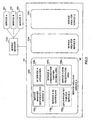
- FIG. 1 is a block diagram illustrating a
schematic structure of a secure mobile service
system using SE according to Embodiment 1 of the
present invention by modeling;
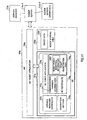
- FIG. 2 is a model view of SE that a service
manager issues according to Embodiment 1 of the
present invention;
- FIG. 3 is a model view of service that the
service manager adds a service area onto issued SE
according to Embodiment 1 of the present invention;
- FIG. 4 is a model view in a case where the
service manager performs management of ticket
service according to Embodiment 1 of the present
invention;
- FIG. 5 is a view illustrating an example of SE
authentication processing message according to
Embodiment 2 of the present invention;
- FIG. 6 is a view illustrating an example of a
message in a case where SE performs authentication
of service server according to Embodiment 2 of the
present invention;
- FIG. 7 is a view illustrating an example of a
message in a case where SE and the service server
perform mutual authentication according to
Embodiment 2 of the present invention;
- FIG. 8 is a view illustrating a message example
of server authentication processing using a public
key encryption according to Embodiment 2 of the
present invention;
- FIG. 9 is a view illustrating a message example
of mutual authentication using a public key
encryption according to Embodiment 2 of the present
invention;
- FIG. 10 is a model view of ticket data used in
the ticket service of a secure mobile service system
according to Embodiment 3 of the present invention;
- FIG. 11 is a model view of ticket storage
according to Embodiment 3 of the present invention;
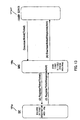
- FIG. 12 is a view illustrating a message example
of SE corresponding to an issuer server according
to Embodiment 3 of the present invention;
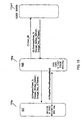
- FIG. 13 is a view illustrating a message example
of download processing according to Embodiment 3 of
the present invention;
- FIG. 14 is a view illustrating a message example
of download processing using a confirmation message
with a signature according to Embodiment 3 of the
present invention;
- FIG.15 is a view illustrating a message example
of download processing using a delivery key
according to Embodiment 3 of the present invention;
- FIG. 16 is a view illustrating a message example
of download processing using a public key encryption
according to Embodiment 3 of the present invention;
- FIG. 17 is view illustrating a message example
of registration prove processing according to
Embodiment 3 of the present invention;
- FIG. 18 is a view illustrating a message example
of ticket punch processing according to Embodiment
3 of the present invention;
- FIG. 19 is a model view illustrating the ticket
before being examined according to Embodiment 3 of
the present invention;
- FIG. 20 is a view of a message example of SE
of ticket movement between SEs according to
Embodiment 3 of the present invention;
- FIG. 21 is a view illustrating a message example
of ticket movement processing between SEs according
to Embodiment 3 of the present invention;
- FIG. 22 is a view illustrating a message example
of ticket movement processing between SEs using a
public key encryption according to Embodiment 3 of
the present invention;
- FIG. 23 is a view illustrating a message example
of mix processing of server authentication and
ticket download processing of the secure mobile
service system according to Embodiment 4 of the
present invention;
- FIG. 24 is a view illustrating a mix message
example of server authentication processing and
ticket punch processing according to Embodiment 4
of the present invention;
- FIG. 25 is a view illustrating a mix message
example of mutual authentication processing and
ticket movement processing between SEs according to
Embodiment 4 of the present invention;
- FIG. 26 is a view illustrating a mix message
example of server authentication processing using
SE with a low processing capability and download
processing in a secure mobile service system
according to Embodiment 5 of the present invention;
- FIG. 27 is a view illustrating a mix message
example of server authentication processing using
SE with a low processing capability and ticket punch
processing according to Embodiment 5 of the present
invention;
- FIG. 28 is a view illustrating a mix message
example of mutual authentication processing using
SE with a low processing capability and ticket
movement processing between SEs according to
Embodiment 5 of the present invention;
- FIG. 29 is a view illustrating a message example
of ticket download processing of a secure mobile
service system according to Embodiment 6 of the
present invention;
- FIG. 30 is a view illustrating a message example
of ticket punch processing according to Embodiment
6 of the present invention;
- FIG. 31 is a view illustrating a message example
of ticket movement processing of according to
Embodiment 6 of the present invention;
- FIG. 32 is a view illustrating a message example
of ticket download processing corresponding to FIG.
29 according to Embodiment 7 of the present
invention;
- FIG. 33 is a view illustrating a message example
of ticket punch processing corresponding to FIG. 30
according to Embodiment 7 of the present invention;
- FIG. 34 is a view illustrating a message example
of ticket movement processing corresponding to FIG.
31 according to Embodiment 7 of the present
invention;
- FIG. 35 is an illustration view of download
processing in Embodiment 8 of the present invention;
- FIG. 36 is an illustration view of illustrating
ticket prove processing according to Embodiment 8
of the present invention;
- FIG. 37 is an illustration view of ticket punch
processing in Embodiment 8 of the present invention;
- FIG. 38 is an illustration view of ticket.punch
processing (exit processing) according to Embodiment 8
of the present invention;
- FIG. 39 is an illustration view of ticket
movement processing according to Embodiment 8 of the
present invention;
- FIG. 40 is an illustration view of communication
partner management function processing according to
Embodiment 9 of the present invention; and
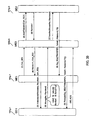
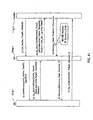
- FIG. 41 is an illustration view of error
recovery processing according to Embodiment 9 of the
present invention.
-
Best Mode for Carrying Out the Invention
-
The following will specifically explain
Embodiments of the present invention with reference
to the drawings.
<Embodiment 1>
-
An explanation will be sequentially given of
an issuing model of SE as working example 1, an
authentication system of SE and a service server as
working example 2, ticket service as working example
3, ticket service integrated with authentication as
working example 4, and ticket service in the case
of using SE with a low processing capability as
working example 5. Embodiment 1 will explain the
issue model of SE in a secure mobile service system
using FIGS. 1 to 4. FIG. 1 is a block diagram
illustrating a schematic structure of the secure
mobile service system according to Embodiment 1 of
the present invention by modeling. A mobile device
ME 100 such as a cellular phone and PDA includes an
ME service application 102, an SE 101, which is a
tamper resistant module having an encryption
processing function with signature processing, and
a service data storing area 109.
-
Additionally, regarding the relationship
between the SE 101 and the service data storing area
109, either one of them/both may be attachable and
detachable, and either one of them/both may have two
or more. Moreover, they may not be existed in the
same media physically.
-
Further, regarding data exchange therebetween,
when 101 and 109 are present in the same media
physically, transmission and reception may be
performed via the external section or may be
directly performed via no external section even if
transmission and reception are performed via an
external sections such the ME service application
102. Moreover, according to the present invention,
no serve data storing area 109 may be possible.
-
SE 101 includes a service area 103 that executes
and manages a specific service. SE 101 stores an
encryption key pair 104 for a signature. The
encryption key pair 104 may be common to SE 101, or
specified to the service area 103. The service area
103 stores a service manager certificate 105, which
is a certificate of the service manager who manages
service of the service area 103. The service
manager certificate 105 may be common to SE 101, or
specified to the service area 103. An SE certificate
110 is a certificate, which is obtained from a
service manager 113 when SE desires to perform a
specific service, and which is necessary for
authentication at a service executing time.
-
Here, regarding the relationship among the
service manager certificate 105, the SE certificate,
and the service area 103, various combinations may
be possible depending on the form of service. In
other words, when the SE possessor registers only
one service, the number of service areas 103 is one
(when there is no possibility of area addition [FIG.
3] to be described later), and in this case, no SE
certificate 110 may be provided. While, when a
plurality of services is registered, a plurality of
service areas 103 is presented, and a combination
of 105 and 110 can specify each service. In this case,
when the number of services that is managed by the
service manager, who issues the service manager
certificate 105, is only one, no SE certificate 110
may be provided. While, regarding even the services
that the same service manager manages, a different
service manager certificate 105 may be provided.
-
An SE service application 106 performs
communication with the ME service application 102
and executes authentication of a service server 111
and data processing to a service item registration
area 108, which is defined by each service
processing. The service item registration area 108
is an area for registering specific information to
the service area 103.
-
A communication partner storing area 107 is an
area where authentication of a service server is
performed before the SE service application 106
performs service processing and a value, which is
certified by the service server certificate that the
service server possesses, is stored.
-
The SE service application 106 confirms
whether processing is permitted with reference to
the value of the communication partner storage area
107 before a data operation of the service item
registration area 108, which is service processing,
is performed.
-
The service manager 113 issues this SE and
manages service to be provided using SE 101. The
service server 111 obtains a service server
certificate 112 from the service manager 113, and
provides service to SE 101. The service server 111
and ME 100 may perform radio communications using
a radio public network or local radio such as IrDA,
Bluetooth though they may perform cable communications.
As an example of the service server 111, there are
a POS terminal, a kiosk terminal, a vending machine,
a virtual shop on the network, a ticket punching
machine, and the like.
-
In this way, before gaining access to the
service item registration area 108, the SE service
application 106 performs authentication processing
to refer to the value of the communication partner
storing area 107 storing the right certificated by
the service certificate and executes processing
only when a match exist, so that only the service
server having the service certificate issued by the
service manager 113 can execute secure service using
the service item storing area 108 of SE 101.
-
FIG. 2 illustrates a model view of SE 101 issued
by the service manager 113. The service manager 113
can manage a plurality of services (201, 202, and
203). In connection with the respective services,
it is possible to issue a plurality of kinds of
service server certificates 112 according to the
role in the service. Service areas (103a, 103b,
103c) specified for the respective services are
provided in the SE 101 for the respective services.
SE 101 having the plurality of service areas (103a,
103b, 103c) may be issued. The SE certificate 110
may be issued by the service area 103. The
encryption key pair 104 may be issued by the service
area 103. The service manager certificate 105 and
encryption key pair 104 may be common to SE 10.
Moreover, no SE certificate 110 may be provided
depending on the service.
-
Thus, by providing the function of limiting the
service server 111 that can gain access to the
service item registration area 108 on the SE 101,
the service manager 113 issues the service server
certificate 112 to the service server 111, and the
service server 111 can share the SE issuing and
managing cost.
-
FIG. 3 illustrates Embodiment of service for
which the service manger 113 adds the service area
103 on the issued SE101. It is assumed that a service
manager 113d manages an area addition serve 301 and
other services (302, 303). The service manager 113d
may create only the area addition service 301 to the
SE 101 and sell it, or add the area addition service
301 and the plurality of other services, for example,
service F303 and sell them. For example, when a user,
who has purchased this SE 101, gains access to the
service manager 113d via the network and makes an
application for service E302, the SE 101
authenticates the service manager via an SE area
addition service application 106a using the area
addition service manager certificate 105, and newly
generates a service E area 103e when this is correct.
-
In this way, as one of SE service applications
106, the application (SE area addition service
application 106a) for performing processing for
adding service is provided at the time of issuing
SE, making it possible for the service manager 113
to securely add and generate the service area 103
onto the SE 101 via the network after issuing. As
a result, the service manager flexibly issues SE 101.
Since the user can add only a necessary service later,
the convenience is improved. Moreover, since the
service server can add a service, which is started
later, to the SE 101, which the user already
possesses, the market is expanded.
-
FIG. 4 is a model view in a case where the
service manager performs management of ticket
service. A service manager 113g, who provides a
ticket service, issues a ticket service SE 101g with
a ticket service area 103g. Moreover, three kinds
of service server certificates 112 including an
issuer server certificate 112g-2 for a ticket issuer,
a ticket punching machine certificate 112g-1 for a
ticket punching machine, an SE certificate 110g for
SE are issued. Here, SE means here SE that can
perform processing for moving the ticket between SEs.
In a case where the ticket does have to be moved
between SEs, the SE certificate 110g may not be
issued.
-
When obtaining the ticket punching machine
certificate 112g-1 from the service manager 113g,
a ticket punching machine 111g-1 can execute only
processing relating to a ticket punching to the
ticket registration area 108a of SE 101g. When
obtaining an issuer server certificate 112g-2 from
the service manager 113g, an issuer server 111g-2
can execute only processing, which includes issue
of a new ticket, exchange of a ticket and return,
to the ticket registration area 108a of SE 101g. When
obtaining the SE certificate 110g from the service
manager 113g, the SE 101g can execute only
processing relating to ticket movement to the SE
101g possessed by the SE certificate 110g.
-
In this way, it is possible to limit access to
the ticket registration area 108g of SE 101g only
to the possessors of the issuer server certificate
112g-2, the ticket punching machine certificate
112g-1, and the SE certificate 110g that are issued
from the service manager. Moreover, the service
server certificate 112 is issued for each of the
plurality of roles, making it possible to limit
processing to the ticket registration area 108g
according to the role in the service. Moreover, the
service manager 113g can perform flexible management such
as a change in an issue fee according to the kind
of the service server certificate 112 to be issued.
<Embodiment 2>
-
Embodiment 2 will explain the structure of the
authentication of the SE 101 and the service server
111 with reference to FIGS. 5 to 9.
-
FIG. 5 is a view illustrating an example of SE
authentication processing message. This authentication
processing message is largely divided into three of
"authentication start", "authentication execution", and
"communication end." When authentication succeeds at
the authentication execution, the right certificated by
the service server certificate 112 is stored to the
communication partner storing area 107. At the
communication end, the value of the communication
partner storing area 107 is deleted.
-
In this way, service processing, which is
peculiar to the service to access the service item
registration area 108, and authentication processing are
separated from each other, making it possible to
share authentication processing in the case of the
SE 101 having the plurality of service areas 103 and
to perform efficient installment.
-
FIG. 6 is a view illustrating an example of a
message in a case where SE 101 performs authentication of
service server. In this authentication processing
operation, first, when the ME 100 transmits a
message Start Access, which requests the start of
authentication, to the SE 101 in (1), the SE 101
generates a random number Challenge and sent it back
to the ME 100 in (2). The ME 100 transmits the random
number Challenge to the service server 111 in (3).
The service sever 111 puts signature to the random
number Challenge (Sign_SErver(Challenge)) and sends
the signed the random number Challenge
(Sign_SErver (Challenge)) to the ME 100 with the server
certificate 112 (Cert_SErver) in (4). The ME 100
transmits the Sign_SErver(Challenge) and Cert_SErver
received from the service server 111 to the SE 101
in (5). The SE 101, which has received Sign_SErver
(Challenge) and Cert_SErver from the ME 100,
verifies Cert_SErver using the service manager
certificate 105 to verify the signature of Challenge
and the value, and when they are correct, the SE 101
stores the right of service server 111 certificated
by Cert_SErver to the communication partner storing
area 107. Thereafter, the SE 101 transmits a message,
which reports the result of processing, to the ME
100 in (6). The ME 100 may acknowledge the service
server 111 of the authentication result in (7).
After that, processing peculiar to the service is
performed. When processing of the service ends or
there is disconnection in communication, the ME 100
transmits a message indicative of communication end
to the SE 101 in (E1). In contrast to this, the SE
101 deletes the value of the communication partner
storing area 107 and acknowledges the ME 100 of the
processing result in (E2).
-
FIG. 7 is a view illustrating an example of a
message in a case where the SE 101 and the service
server 111 perform mutual authentication.
-
This mutual authentication processing operation is
the same as FIG. 6 up to (3). In (4), the service
server 111 transmits the random number Challenge _2
to the ME 100 in addition to Sign_SErver (Challenge)
and Cert_SErver. In (5), the ME 100 transmits the
random umber Challenge_2, Sign_SErver (Challenge)
and Cert_SErver, which are received from the service
server 111, to the SE 101. The SE 101, which has
received these parameters, verifies Cert_SErver
using the service manager certificate 105 to verify
the signature of Challenge and the value, and when
they are correct, the SE 101 stores the right of
service server 111 certificated by Cert_SErver to
the communication partner storing area 107. In
addition, in (6), the service sever 111 puts
signature to the random number Challenge_2
(Sign_SErver(Challenge_2)) and sends it to the ME
100 with the SE certificate 110 (Cert_SE). The EM
100 transmits these parameters to the service server
111 in (7). The service server 111, which has
received these parameters in (7), verifies
Cert_SErver to verify the signature of Challenge-2 and
the value. The service server 111 may acknowledge
the ME 100 of the processing result in (8). Moreover,
the ME 100 may acknowledge the SE 101 of the processing result
in (9). The afterward communication end processing is
the same as FIG. 6. In other words, when processing
of the service ends or there is disconnection in
communication, the ME 100 transmits a message
indicative of communication end to the SE 101 in (E1).
In contrast to this, the SE 101 deletes the value
of the communication partner storing area 107 and
acknowledges the ME 100 of the processing result.
-
FIG. 8 is a view illustrating a message example
of server authentication processing using a public
key encryption. In the server authentication
processing operation, the service server 111
transmits the service server certificate 112
(Cert_SErver) to the SE 101 via the ME 100 ( (1) and
(2)). The SE encrypts the generated random number
Challenge and the SE certificate 110 (Cert_SE) by
the public key obtained from the transmitted
Cert_SErver, and send them to the service sever 111
((3) and (4)). The service server 111 decodes the
message, encrypts Challenge by the public key of SE
obtained from Cert_SE, and transmits it to the SE
101 via the ME 100 ((5) and (6)). The SE 101 may
acknowledge the ME 100 of the processing result. The
communication end processing ((E1) and (E2)) is the
same as FIG. 6.
-
FIG. 9 is a view illustrating a message example
of mutual authentication processing using a public
key encryption. This mutual authentication
processing operation is the same as FIG. 8 up to (4).
In the message in (5), the service server 111
encrypts Challenge and the random number Challenge
_2 by the public key of SE and transmits them to the
SE 101. The SE 101 decodes the message, verifies
Challenge, encrypts Challenge_2 by the public key
of the service server 111, and transmits it ((7) and
(8)). The communication end processing ((E1) and
(E2)) is the same as FIG. 6.
-
In this way, the service manager 113 performs
authentication with the SE 101 using the issued
service server certificate 112, making it possible
to limit access to the SE 101.
<Embodiment 3>
-
Embodiment 3 will explain ticket service using
a secure mobile service system with reference to
FIGS. 10 to 22. Working example 1 will explain
ticket data using FIGS. 10 and 11, working example
2 will explain ticket download using FIGS. 12 to 16,
working example 3 will explain processing for
verifying storage of stored ticket data using FIG.
17, working example 4 will explain ticket punch
processing using FIGS. 18 and 19, and working
example 5 will explain ticket movement processing
using FIGS. 20 to 22.
(Working example 1)
-
An explanation will be given of ticket data and
storage to the SE 101 using FIGS. 10 and 11. First,
ticket data will be explained using FIG. 10. Ticket
data 1000 (Ticket) is composed of a ticket punch
essential section 1001 (Ticket_Variable), a ticket
static section 1004 (Ticket_S), an issuer
information section 1005 (Issuer_Info), and a
ticket punch information section 1006 (Punch_info).
Each section has a common ticket ID (TicketID). The
ticket punch essential section 1001 (Ticket_Variable)
is composed of a ticket punch essential
information 1002 (Ticket_Variable) and a signature
1003 relating thereto. The signature 1003 may be
one of the SE 101, one of the ticket punching machine
111g-1, or one of the issuer 111g-2. The ticket punch
essential section 1001 includes a ticket ID
(TicketID), the number of valid times (ValidTime),
a valid period (ValidPeriod), and the other
information (otherInfo) essential for ticket
punching. Regarding the other information
(otherInfo) essential for ticket punching, for
example, in a train ticket, an entrance station and
its time and the like are included. In this way,
time information such as the number of valid times,
valid period and the like and spatial information
such as an entrance station, a concert place and the
like are suitably included in accordance with the
contents of the ticket punch processing.
-
The ticket punch essential section 1001
(Ticket_Variable) is essential for the ticket data
1000 (Ticket), but the ticket static section 1004
(Ticket_S), the issuer information section 1005
(Issuer_Info), and the ticket punch information
section 1006 (Punch_info) may not be provided or a
plurality of each of these items may be provided.
-
The ticket static section 1004 (Ticket_S) is
one that is obtained when the issuer server 111g-2
places a signature to ticket static information
(TicketStatic). The ticket static information
(TicketStatic) includes information on this ticket,
display information to the user, and the like.
-
The issuer information section 1005 (Issuer_Info)
is one that is obtained when the issuer server
111g-2 places a signature to additional information
(additionalInfo). The additional information
(additionalInfo) includes additional information
to this ticket to be sent from the issuer, and other
service guidance to the user having this ticket.
The issuer information section 1005 (Issuer_Info)
is included in the ticket at the issuing time, or
transmitted from the issuer by mail later, or the
user can download it to be added.
-
The ticket punch information section 1006
(Punch_info) is one that is obtained when the ticket
punching machine 111g-1 places a signature to the
additional information (additionalInfo). The
additional information (additionalInfo) can be
considered to include additional information from
the ticket punching machine, for example, not only
log record of the ticket punching but also the latest
cast in the concert or mix information of each
attraction in the amusement part.
-
The above contents can be described as follows:
-
Ticket data: Ticket = Ticket_S, Ticket_V,
Punch_info, Issuer_Info, Ticket Static section: Ticket_S
= Sign_Issuer (TicketStatic), Ticket essential Section:
Ticket_Variable = Sign_Issuer (TicketVariable) or Sign_Verifier
(Ticket Variable), or Sign_SE (TicketVariable), Issuer
Information section: Issuer_Info = Sign_Issuer (additionalInfo),
Punch Information section: Punch_info = Sign_Verifier
(additionalInfo), Ticket essential information:
TicketVariable = TicketID, Validtime, ValidPeriod,
otherInfo.
-
In this way, the ticket data 1000 is made up
of the issuer server 111g-2 having a common ticket
ID, SE 101g, and data with the signature of the
ticket punching machine 111g-1, and structured to
perform an increase and decrease flexibly.
-
An explanation will be next given of the storage
of ticket data to the SE 101 using FIG. 11. When
storage processing of ticket data 1000 (Ticket) to
the SE 101g succeeds, ticket punch essential
information 1002 (TicketVariable) is stored to the
ticket registration area (108g), and ticket data
1000 (Ticket) is stored to the ticket storing area
109g.
-
In this way, ticket punch essential
information 1002 (TicketVariable) is stored to the
ticket registration area (108g) of the SE 101,
eliminating the need for encrypting ticket data 1000
(Ticket) even when ticket data 1000 (Ticket) is
stored onto memory, which is not tamper resistant.
The reason is that ticket punch processing cannot
be performed unless there is a message that proves
the storage to the ticket registration area (108g)
and a copied ticket cannot be used.
-
For this reason, the user can copy ticket data
1000 (Ticket) freely and attach it to the mail to
transmit to the friend. When wishing to hand the
ticket over the friend, he/she can transmit the
ticket to the friend by mail and the like and perform
actual processing for ticket movement after the
friend views data.
-
Moreover, at the ticket issuing time, the
issuer server 111g-2 describes information, which
indicates that this ticket will be valid when
payment is made within a designated period, and
information including an access destination of
payment in the issuer information section 1005
(Issuer_Info). Then, ticket data is transmitted to
the user by mail. When the user, who wishes to
purchase ticket data 1000, finishes payment
processing according to information described in
the issuer information section 1005 (Issuer_Info),
registration processing of SE 101 to the ticket
registration area 108g is executed, so that a valid
ticket is obtained. At the time of registration
processing, it is unnecessary to download the ticket
data 1000 (Ticket) and only registration processing
may be performed.
-
This increases in the degree of freedom when
the issuer server 111g-2 promotes the ticket.
Moreover, the issuer server 111g-2 does not have to
issue and manage the numbered ticket before payment.
and the ticket after payment, separately.
(Working example 2)
-
The following will explain ticket downloading
using FIGS. 12 to 16. Processing for order and
purchase may be performed before the ticket is
downloaded. Access from the server such as a PUSH
service may be carried out. Authentication due to
challenge and response may be performed by the
issuer sever 111g-2 and ME 100g before the download
processing is started. The authentication method
explained in Embodiment 2 may be used.
-
FIG. 12 is a view illustrating an example of
an interface for processing that is performed by the
SE 101g and the issuer server 111g-2. This broadly
has three functions. They are registration of a new
ticket to the ticket registration area 108g, proof
that registration has been made to the ticket
registration area 108g, and a change in the ticket
that is registered to the ticket registration area
108g. Among these, the change in the ticket that
is registered to the ticket registration area 108g
will be explained in working example 3.
-
FIG. 13 is a view illustrating a message example
in which a new ticket is downloaded and registered
to the ticket registration area 108g. In this figure,
it is assumed that authentication processing
explained in Embodiment 2 has already succeeded.
Moreover, it is assumed that a secure communication
path of a transport layer is ensured between the
issuer server 111g-2 and the ME.
-
First of all, ticket data 1000 is transmitted
to SE 101g from the issuer server 111g-2 via ME 100g
( (1) and (2)), and the SE 101g registers ticket punch
essential information 1002 (TicketVariable) to the
ticket registration area 108g of the SE 101. The
SE 101g may send acknowledgment of the registration
processing result ((3) and (4)).
-
FIG. 14 is a view illustrating an example in
which the SE 101g sends a message with a signature
to the acknowledgement of the registration processing
result. In this figure, it is assumed that
authentication processing explained in Embodiment
2 has already succeeded. Moreover, it is assumed
that a secure communication path of a transport
layer is ensured between the issuer server 111g-2
and the ME.
-
First of all, ticket data 1000 and random number
Challenge are transmitted to SE 101g from the issuer
server 111g-2 via ME 100g ((1) and (2)), and the SE
101g verifies ticket data 1000 and registers ticket
punch essential information 1002 (TicketVariable)
to the ticket registration area 108g of the SE 101.
The verification of ticket may be carried out by the
ME 100g. The SE 101g places a signature to a flag,
which is indicative of a response to a ticket
registration request, registered ticket punch essential
information 1002 (CurrentTicketVariable) and Challenge
(Sign_SE(REGSTERTICKE, CurrentTicketVariable, Challenge)),
sends it back ((3) and (4)). The issuer server
111g-2 verifies the signature of SE to verify the
values of CurrentTicketVariable and Challenge.
The ME 100g may store the ticket to the ticket
storing area 109g after transmission in (4).
-
In this way, the issuer server 111g-2 can
confirm the ticket punch essential information 1002
(CurrentTicketVariable) registered in the SE 101g.
Moreover, since the random number Challenge is
included therein, it can be confirmed that this is
the current registration information.
-
FIG. 15 is a view illustrating an example of
a download message using a delivery key. In this
example, ticket data 1000 is encrypted by the
delivery key (Key_Deliver), the delivery key
(Key_Deliver) is encrypted by a public key 104d of
the SE 101 and downloaded to the SE 101 from the
issuer server 111g-2 ((1) and (2)). The SE 101g
decrypts ticket data 1000 after decrypting the
delivery key, and verifies the ticket, and registers
the ticket punch essential information 1002 to the
ticket registration area (108g) of the SE 101 ((3)).
In (4), when receiving the decrypted ticket from the
SE 101g, the ME 100g stores the ticket to the ticket
storing area 109g.
-
FIG. 16 is a view illustrating an example of
a download message using a public key encryption.
In this example, first of all, the SE certificate
110g is transmitted to the issuer server 111g-2 from
the ME 100g (0). The issuer 111g-2 encrypts the
random number Challenge and ticket data 1000 by the
public key of SE 101 to transmit ((1) and (2)).
(Working example 3)
-
The following will explain processing for
proving ticket data registered in the ticket
registration area 108g using FIG. 17. In FIG. 17,
when receiving a reregistration request of the
ticket caused at the time of failure in registration
processing due to a communication error from SE, the
issuer server 111g-2 shows processing for
confirming whether there is really no registration
to the ticket registration area 108g. When receiving
the ticket ID and Challenge from the issuer server
111g-2 ((1) and (2)) to search the ticket ID
corresponding to the ticket registration area 108g
and there is registration, the SE 101g places a
signature to current registration
data (CurrentTicketVaraible), Challenge, and a
flag, which is indicative of a message that
responses to a registration proof request,
(Sign_SE(PROVETICKET, CurrentTicketVariable,
Challenge)), and transmits them to the issuer server
111g-2 ((3) and (4)). The issuer server 111g-2
verifies the signature to verify the values of
CurrentTicketVariable and Challenge.
-
In this way, the use of this function makes it
possible for the issuer server 111g-2 to confirm
whether registration really fails even when the
reregistration request is sent from the SE 101g.
Moreover, this function makes it possible to omit
messages (3) and (4) shown in FIG. 14 and to increase
speedup in download processing at the issuing time.
-
Not only the issuer server 111g-2 but also the
ticket punching machine 111g-1 can be used to
confirm whether there is a ticket to be supported.
-
In this example, the ticket ID is designated,
but it can be considered that a plurality of
registration proof can be obtained at one time by
providing pattern match designation to the ticket
ID.
-
Moreover, in this example, the signature is
placed to the current registration data
(CurrentTicketVariable), Challenge, and a flag
indicating a message responding to the registration
proof request and turned, but a case of only the
ticket ID or a case of only the ticket ID and
Challenge can be considered.
-
Moreover, there can be considered a case in
which the kind of data is changed depending on the
kind of the service server 111. For example, in the
issuer server 111g-2, the signature is placed to the
current registration data (CurrentTicketVariable),
Challenge, and a flag indicating a message
responding to the registration proof request and
turned, and in the ticket punching machine, it can
be considered that the signature is placed to the
ticket ID, Challenge, and a flag indicating a
message responding to the registration proof
request and turned. Since a flag indicating a
message responding to the registration proof
request is included in the signature data, this can
not be used in other processing.
-
This function makes it possible for the service
server 111 to know current registration data without
changing the contents registered in the service item
registration area 108g.
(Working example 4)
-
The following will explain ticket punch
processing using FIGS. 18 and 19. FIG. 18 is a view
illustrating an example message of ticket punch
processing. In this example, first, the ticket
punching machine 111g-1 generates a punch order
(Punch_Order). The punch order is data in which a
signature of the ticket punching machine 11g-1 is
placed to PunchOrder. Here, it is assumed that
PunchOrder is one that designates a value
(UpdatedTicketVariable) of updated ticket punch
essential information. In addition to this, a method
for designating an amount of increase and decrease
can be considered.
-
First of all, the ticket punching machine
111g-1 transmits punch order (Punch_Order), the
random number Challenge, and the ticket punch
information section 1006 (Punch_Info) to the ME 100g
((1)). The ME 101g may not send the ticket punch
information section 1006 to the SE 101g. The SE 101g
verifies the signature of punch order (Punch_Order)
received in (2), and updates the corresponding data
registered in the ticket registration area 108g as
designated by punch order (Punch_Order). The SE 101g
transmits updated data (CurrentTicketVariable)
registered to the ticket registration area, the
random number Challenge, data(Sign_SE (VERIFY
TICKET,CurrentTicketVariable, Challenge)) signed
to a flag indicative of a message responding to a
changed request, the random number Challenge_2 to
the ticket punching machine 111g-1 ((3) and (4)).
The ticket punching machine 111g-1 verifies the
signature to verify the values of CurentTicket
Variable and Challenge, places the signature the
random number Challenge_2, PunchOrder, and a flag,
which is a message that confirms a message
responding to a changed request, and sends back them
to the SE 101g ((5) and (6)). Here, PunchOrder may
not be included. Moreover, the flag, which is a
message that confirms the message responding to a
changed request, may not be included. Further, in
(3) and (4), Challenge_2 may be provided. In this
case, (5) and (6) may not be provided.
-
FIG. 19 will explain a storage model of a ticket
before and after ticket punch processing. In this
example, in a state before the ticket punching, a
ticket punch essential information section 1002a is
registered in the ticket storing area 109a, and the
ticket static section 1004, a ticket punch
information essential section 1003a, and the issuer
information section 1005 as a part of ticket data
1000 are stored to the ticket storing area 109g. The
registered ticket data 1000 may not have the ticket
punch information essential section 1003, or be held
as it was at the issuing time, or be replaced with
signature data of SE 101g for each registration
update, or be replaced with Punch-order transmitted
from the ticket punching machine 111g-1. In order
to display the state of ticket data 1000 to the user,
it is desirable that information of the ticket
registration area 108g be provided. In this
example, when the ticket punch essential
information section 1002b is updated in the ticket
registration area 108g after ticket punching, the
ticket punch information essential section 1003b is
also updated. Then, ticket punch information
section 1006 (Punch_info) is newly added. There
can be considered that a plurality of ticket punch
information sections 1006 (Punch_info) are added at
one ticket punching.
(Working example 5)
-
The following will explain processing for
moving the ticket between SEs using FIGS. 20 to 22.
In addition to the movement of the entirety of one
ticket (all valid values), this processing
operation can perform such processing in which
movement is performed n times of the rest of valid
times in the case of, for example, a book of tickets.
-
FIG. 20 is a view illustrating a message example
of SE of ticket movement processing between SEs.
This can be largely divided into two, and one is
registration of the ticket moved from the other SE,
and the other is deletion (update) of the ticket
moved to the other SE.
-
FIG. 21 is a view illustrating an example of
a message in which the ticket moves between SEs. In
FIG. 21, it is assumed that ME of a ticket
registration source is ME1 (100g-1), and that ME of
a ticket destination is ME2 (100g-2). Similarly,
it is assumed that SE of a ticket registration source
is SE1 (101g-1), and that SE of a ticket destination
is SE2 (101g-2). Moreover, in FIG. 21, it is assumed
that mutual authentication between SEs succeeds.
-
First of all, when the user designate's a ticket
to be moved, and carries out a confirmation operation of
movement processing, the ME1 (100g-1) generates a
service item MoveOffer to be moved. Here, it is
assumed that MoveOffer is ticket punch essential
information (MovedTicketVariable) to be registered
in the ticket registration area 108g of the ticket
destination. In addition, there can be considered
a method of designating a value of ticket punch
essential information (TicketVariable) to be left.
In MoveOffer, a ticket ID is included. When
receiving MoveOffer in (1), SE1 moves a service item
designated by MoveOffer from the ticket punch
essential information (TicketVariable) registered
in the ticket registration area 108g. When the value
of MoveOffer is equal to the current ticket punch
essential information (TicketVariable), this may be
deleted from the ticket registration area 108g. SE1
places a signature (Sign_SE(MOVEOUTTICKET, MoveOffer)),
to a flag showing a message indicative of MoveOffer
and processing of movement of the random number
Challenge as a message indicating that ticket punch
essential information (TicketVariable) registered in
the ticket registration area 108g according to
MoveOffer, and transmits it to ME2 ((2), (3), and
(4)). Sequentially, SE2 verifies a signature and
registers it to the ticket registration area 108g
of ES2 according to MoveOffer. Then, one in which
a signature is placed to registered ticket essential
information, Challenge, and a flag indicative of a
message responding to movement processing (Sign_SE
(MOVEINTICKET,current_TicketVariable, Challenge)),
and the random number Challenge_2 are sent back
to ES1 ((5), (6), and (7)). SE1 verifies the signature to
verify the values of current_TicketVariable and
Challenge, and when they are correct, a signature
is placed to Challenge_2 and sent back to SE2((8),
(9), and (10)).
-
SE1 cannot complete movement processing when
there is no (7), and movement processing is
cancelled and the processing flow is returned to the
original. SE2 cannot complete movement processing
when there is no (10), and movement processing is
cancelled and the processing flow is returned to the
original.
-
In this way, the SE 101 of the movement source
transmits data, which proves that movement has
already done after reducing value information to be
moved from the registered value (for example, a
signature is placed to the moved service item) to
the movement destination, performs registration
processing based on data that proves that SE of the
movement destination has already moved, and sends
data that proves registration (for example, a
signature is placed to the registered contents) back
to SE of the movement source, thereby SE of movement
source can completes movement processing. Moreover,
when receiving data that proves the completion of
movement processing of SE of the movement source,
SE of the movement destination also completes
processing.
-
As a result, instead of that both SE1 and SE2
have the service item simultaneously, it is possible
to move the service item between SEs.
-
FIG. 22 illustrates a model view of transfer
processing operation using a public key encryption
system. In this processing operation, the contents
of the message are substantially the same as FIG.
21, but the message is encrypted by the public key
encryption to perform communications.
<Embodiment 4>
-
Embodiment 4 shows a working example of a
combination of authentication processing and a
message of processing peculiar to the ticket service
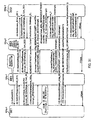
using FIGS. 23 to 25. FIG. 23 is a view illustrating
a message example of mix processing of server
authentication and ticket download processing. This
view illustrates an example of the message in which
FIG. 6 and FIG. 13 are combined. In (4), (5), (6)
of FIG. 23, (4), (5), (6) of FIG. 6 are combined with
(1), (2), (3) of FIG. 13. Moreover, in (4) of FIG.
23, issue is made in such a way that Challenge is
included in the ticket punch essential section 1001
of ticket data 1000, thereby making it possible for
the SE 101g to conduct verification of the ticket
sent from the destination that has received
Challenge. Regarding the message in (5) of FIG. 23,
ticket data 1000 may be sent or only the ticket punch
essential section 1001 may be transmitted.
-
As a result, processing can be efficiently
performed as maintaining security as compared with
the case in which server authentication and ticket
download processing are carried out separately.
-
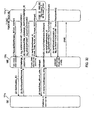
FIG. 24 is a view illustrating a message example
of mix processing of server authentication and
ticket punch processing. This view illustrates the
message example in which FIG. 6 and FIG. 18 are
combined. In (4), (5), (6) of FIG. 24, (4), (5),
(6) of FIG. 6 are combined with (1), (2), (3) of FIG.
18. Moreover, in (4) of FIG. 24, issue is made in
such a way that Challenge_0 is included in
Punch_Order, thereby making it possible for the SE
101g to conduct verification of an update request
sent from the destination that has received Challenge.
-
As a result, processing can be efficiently
performed as maintaining security as compared with
the case in which server authentication and ticket
download processing are carried out separately.
-
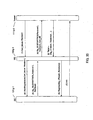
FIG. 25 is a view illustrating an example of
a mix message of mutual authentication and ticket
movement processing between SEs. This view
illustrates a combination of FIG. 7 and FIG. 21, and
(4) of FIG. 6 and (1) of FIG. 18 are combined from
(4) of FIG. 7. In FIG. 25, the SE certificate 110
is transmitted in (2) but may be transmitted in (8).
-
This figure shows an example in which when the
user of the movement destination operates movement
start processing, authentication processing for
movement processing is transmitted to ME1 of the
movement source and the user of the movement source
performs the movement processing start operation
and processing thereby continues.
-
In (4) of FIG. 25, issue is made in such a way
that Challenge_0 is included in Move_Offer, thereby
making it possible for the SE 101g to conduct
verification of a movement proof sent from SE that
has received Challenge. As a result, processing can
be efficiently performed as maintaining security as
compared with the case in which server
authentication and ticket movement processing are
carried out separately.
-
As mentioned above, the message is exchanged
using the signature and Challenge, so that reuse of
message data is prevented at the same time with
authentication, and approval or disapproval can be
prevented by the message with a signature. As a
result, it is possible to perform processing
securely even with the smaller amount of messages.
<Embodiment 5>
-
Embodiment 5 shows a working example using SE
having a low processing capability by use of FIG.
26 to FIG. 28. FIGS. 26 to 28 correspond to the
message examples of FIGS. 23 to 25, respectively.
-
SE having not so high processing capability
must be used until SEs having high processing
capability and at low cost come into widespread use.
For this reason, the following shows a working
example in which processing to be performed by SE
is carried out by ME and only processing to be kept
to a minimum is performed by SE. Even if SE having
not so high processing capability and SE having high
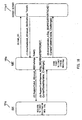
capability are mixed, it is desirable that an
interface of the service server be shared.
-
This embodiment shows an example in which the
verification of certificate and that of the
signature are carried out by ME and the verification
of Challenge and access to the ticket registration
area are carried out by SE. FIG. 26 is a view
illustrating an example of download processing
corresponding to FIG. 23. In FIG. 26, the ME 100g
performs the verification of issuer server
certificate 112g-2 and that of the ticket.
-
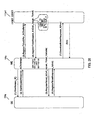
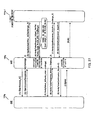
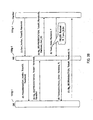
FIG. 27 is a view illustrating a message example
of ticket punch processing corresponding to FIG. 24.
In FIG. 27, the ME 100g performs the verification
of ticket punching machine certificate 112g-1 and
that of Punch_Order.
-
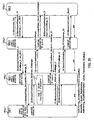
FIG. 28 is a view illustrating a message example
of ticket movement processing between SEs
corresponding to FIG. 25. Similarly, in FIG. 28,
ME 100g of the transfer source and that of transfer
destination perform the verification of the
certificate and that of the message signature. As
a result, processing of SE is executed by ME until
SEs having high processing capability come into
widespread use, and though SEs having various kinds
of performance are mixed during the transition to
the widespread use of SEs having high processing
capability, it is possible to deal with performance
without changing the interface on the service server
side.
<Embodiment 6>
-
Embodiment 6 will explain ticket processing
when there is no encryption of a transport layer of
a communication path by use of FIGS. 29 to 31. In
the case of no encryption of the communication path,
there is a possibility that a furtive glance at the
random number will be caused to make it possible to
impersonate. For this reason, an explanation will
be given of an example in which only the random
number is transmitted using the pubic key encryption.
In addition, the use of a common key can be
considered.
-
An explanation will be given of ticket download
processing using FIG. 29. First of all, the issuer
server certificate 112g-2 is transmitted from the
issuer server 111g-2 to the SE 101g ((1) and (2)).
The SE 101g verifies the transmitted certificate and
registers it to the communication partner storing
area when it is a correct issuer server certificate.
Moreover, the SE 101g generates a random number
Challenge, encrypts it by the public key of the
issuer server (Encrypt_Issuer{Challenge}) and send
it back ((3) and (4)).
-
The issuer server 111g-2 decrypts Encrypt_Issuer
{Challenge} and extracts Challenge. The issuer
server 111g-2 causes Challenge to be included in the
ticket punch essential information 1002, and places
the signature of the issuer server thereto to
generate ticket punch essential section 1003
(Ticket_V) of ticket. The issuer server 111g-2
transmits it together with the other portion of the
ticket generated in advance as ticket data 1000
(Ticket) ((5) and (6)). ME may transmit Ticket to
SE directly. It may transmit only ticket punch
essential section 1003 of ticket data 1000.
-
SE verifies the signature of ticket punch
essential section 1003 and registers the value of
TicketVariable to the ticket registration area 108g
when it is correct. When processing succeeds, a
processing success acknowledgment is sent to the
issuer server ((7) and (8)). (7) and (8) may use
data with a signature. (7) and (8) may use data with
a signature of SE that proves ticket punch essential
information currently registered.
-
In this way, only the random number is encrypted
at a transmitting time, ticket download can be
securely performed even if the entirety of the
message is not encrypted.
-
An explanation will be given of ticket punch
processing by use of FIG. 30. First of all, the
ticket punching machine 111g-1 transmits the ticket
punching machine certificate 112g-1 to SE 101g (1).
ME transmits the ticket ID of the ticket to be
punched and the ticket punching machine certificate
112g-1 (2). The ticket ID may be transmitted from
the ticket punching machine 111g-1 and be added by
the user's operation at ME.
-
SE 101g verifies the transmitted certificate
and registers it to the communication partner
storing area when'it is the correct ticket punching
machine certificate. Moreover, SE 101g generates
random number Challenge_0, and encrypts it by the
pubic key of the ticket punching machine
(Encrypt_Verifier{Challenge_0}. SE places a signature to
ticket information (CurrentTicketVariable) registered to
the ticket registration area corresponding to a
designated ticket ID and data including a flag
indicative of a message that presents a ticket
designated by CurrentTicketvariable to the issuer
server
(Sign_SE(SHOWTICKET,CurrentTicketVariable)).
-
Moreover, Encrypt_Verifier{Challenge_0},
Sign_SE(SHOWTICKET,CurrentTicketVariable) are sent back
together with the SE certificate ((3) and (4)). Here,
the SE certificate may be a SE public key.
-
The ticket punching machine 111g-1 decrypts
Encrypt_Verifier(Challenge_0) to extract Challenge_0.
Furthermore, the ticket punching machine 111g-1
verifies of the signature of Sign_SE(SHOWTICKET,
CurrentTicketVariable) and determines whether it is
a usable ticket. When it is a usable ticket, the
ticket punching machine 111g-1 generates Punch_Order.
Punch_Order is one that is obtained by placing the
signature of the ticket punching machine to
PunchOrder, but in this embodiment, this means one
in which the signature of the ticket punching
machine is placed to data including Challenge_0 in
addition to the ticket ID and information such as
a valid period and a value of the rest of times after
ticket punching. Here, PunchOrder designates ticket
punch essential information of the ticket after
ticket punching. Pnch_Info is generated after
ticket punching or when necessary. Punch_Info may
not be provided. A plurality of Punch_Info may be
provided. Moreover, Challenge is generated and
encrypted by the public key of SE (Encrypt_SE(Challenge)).
These data generated by the ticket punching machine,
that is, Punch_Order, Punch-Info, and Encrypt_SE
(Challenge) are transmitted to SE ((5) and (6)).
-
SE 101 decrypts Encrypt_SE(Challenge) and
extracts Challenge. Moreover, SE 101 verifies the
signature of Punch_Order. SE 101 further verifies
Challenge_0 included in PunchOrder and Challenge_0
transmitted in (3), and performs change processing
when it is correct. SE 101 rewrites data of the
ticket Id of the ticket registration area 108g
designated by PunchOrder to data designated by
PunchOrder. SE 101 places a signature to SE 101g to
ticket punch essential information (CurrentTicket
Variable) updated by the ticket registration area
108g, Challenge, and a flag indicative of data that
proves data update of the ticket registration area
108g, and sends it back to the ticket punching
machine 111g-1 ((7) and (8)).
-
The ticket punching machine 111g-1 compares
Challenge with the value sent in (5), and compares
CurrentTicketVariable with PunchOrder sent in (5)
when it is correct. This message may be stored as
proof. When it is correct, the ticket punching
machine 111g-1 places the signature of the ticket
punching machine 111g-1 to CurrentTicketVariable as
proof showing a change to the value of Current
TicketVariable has been confirmed, and data
including the message indicative of proof in which
change has been confirmed (Sign_SE(VERIFYTICKET
CONF, CurrentTicketVariable) and sends it back ((9)
and (10)).
-
SE 101g verifies the signature of Sign_SE
(VERIFYTICKETCONF,CurrentTicketVariable),
compares CurrentTicketVariable with the value sent
in (7), and completes change processing when it is
correct. This message may be stored as proof of
change confirmation.
-
After that, the ticket punching machine 111g-1
may provide service to the user after receiving a
processing success acknowledgement, (11) and(12)
may not be provided.
-
In this way, only by encrypting the random
number at the time of transmission, the ticket punch
processing can be securely performed without
encrypting the entirety of the message.
-
An explanation will be given of ticket movement
processing by use of FIG. 31. In this ticket
movement processing, ME1 of the moving source
generates MoveOffer, which is information showing
which ticket value is used and how far movement is
made. The user may input and decide it or designate
it from the communication partner. MoveOffer
becomes ticket ID and ticket punch essential
information including the valid period and the
number of times of the ticket at the moving
destination. MoveOffer may be created before the
message in (4) is transmitted.
-
First of all, the ME1 of the moving source
obtains SEI certificate from SE1 of the moving
source ((1) and (2)) and transmits it to SE2 of the
moving destination ((3) and (4)).
-
SE2 of the moving destination verifies SE1
certificate and registers it to the communication
partner storing area when it is correct. Moreover,
SE2 generates the random number Challenge_0,
encrypts it by the public key of SE1 (Encrypt_SE1
(Challenge_0)) and sends it back with SE2
certificate ((5) and (6)). ME1 of the moving source
transmits MoveOffer to SE1 in addition to Encrypt_
SE1(Challenge_0), SE2 certificate (7).
-
SE1 verifies SE2 certificate and registers it
to the communication partner storing area when it
is correct. Moreover, SE1 decrypts Encrypt_SE1
(Challenge_0).
-
Moreover, verification may be performed by
comparing data of ticket ID designated by MoveOffer
with data registered in the ticket registration area.
For example, it is possible to verify whether
MoveOffer has longer valid period may be performed.
Moreover, it is possible to verify whether v
MoveOffer has larger number of valid times. SE1
places a signature of SE1 to MoveOffer, data of the
current ticket area (CurrentTicketVariable),
Challenge_0, and data including a flag showing data
that proves the value of designated ticket may be
moved (Sign_SE(MOVEOUTTICKET, MoveOffer, Current
TicketVariable, challenge_0)).
-
Furthermore, SE1 generates a random number
Challenge. SE 1 may store Challenge as data
corresponding to the updated ticket ID of the ticket
registration area 108g. SE1 encrypts Challenge by
the public key of SE2 Encrypt_SE2(Challenge).
-
SE1 transmits Sign_SE(MOVEOUTTICKET,
MoveOffer, CurrentTicketVariable, Challenge_0)
and Encrypt_SE2(Challenge) to SE2 ((8), (9), and
(10)). SE2 decrypts Encrypt_SE2(Challenge). SE2
verifies the signature of Sign_SE(MOVEOUTTICKET,
MoveOffer, Challenge_0). SE2 verifies Challenge_0
and the value sent in (5), and registers information
of MoveOffer to the ticket registration area 108b
when it is correct. SE2 places a signature of SE2
to ticket punch essential
information (CurrentTicketVariableSE2)
registered to the ticket registration area 108g of
SE2, a flag showing a message proving that
registration has been made as designated by
CurrentTicketVariableSE2, data including Challenge
(Sign_SE2(MOVEINTICKET, CurrentTicketVariableSE2,
Challenge))and transmit it to SE1 ((11), (12) and
(13)).
-
SE1 verifies the signature of Sign_SE2
(MOVEINTICKET, CurrentTicketVariableSE2,
Challenge). SE1 compares Challenge with the value
sent in (7). SE1 verifies CurrentTicketVariable
SE2 and MoveOffer sent in (7) when it is correct.
When it is correct, the designated number of times
is reduced if there is the number of times in
MoveOffer, thereby changing data of the ticket
registration area to have a value corresponding to
one that is moved by the value of MoveOffer.
-
SE1 places the signature to current ticket
punch essential information (CurrentTicket
VariableSE1) and data including a flag showing a
message proving that movement processing has completed
such that moved data is CurrentTicketVaraibleSE1
(Sign_SE1(MOVEOUTCONF, Current TicketVariableSE1)), and
transmits it to SE2 ((13), (14), and (15)).
-
SE2 verifies the signature of Sign_SE1
(MOVEOUTCONF, Current TicketVariableSE1). SE2
performs comparison among CurrentTicketVariableSE1,
MoveOffer received in (10), and the value of
CurrentTicketVariable to verify. When it is
correct, SE2 transmits a processing success
acknowledgement (ACK) ((16), (17), and (18)) and
competes movement processing. When this processing
does not succeed, movement processing is cancelled,
and the ticket registered by movement processing is
cancelled. The processing success acknowledgement
may data with a signature of SE2.
-
When receiving the processing success acknowledgement
(ACK), SE1 completes movement processing. When the
processing success acknowledgement is not received,
movement processing is cancelled.
-
In this embodiment, regarding SE1, actual
movement processing is not carried out before
message transmission in (8), and movement
processing is executed before message transmission
in (14). However, it can be considered that actual
movement processing is carried out before message
transmission in (8) by adding the processing flow
shown in the working example of Embodiment 3.
-
In this way, only by encrypting the random
number at the time of transmission, the ticket
movement processing can be securely performed
without encrypting the entirety of the message.
Moreover, even when there is no encryption of a
transport layer of a communication path, secure
service processing can be performed without using
large encryption capacity.
<Embodiment 7>
-
Embodiment 7 will explain ticket processing
using SE with no high processing capability when
there is no encryption of a transport layer of a
communication path by use of FIGS. 32 to 34. In
Embodiment 7, ME performs processing such as
verification of certificate, encryption of the
random number, decryption, verification of
signature that are performed by SE in Embodiment 6.
-
FIG. 32 is a view illustrating an example of
download processing corresponding to FIG. 29 of
Embodiment 6. FIG. 33 is a view illustrating an
example of ticket punch processing corresponding to
FIG. 30. FIG. 34 is a view illustrating an example
of ticket movement processing between SEs
corresponding to FIG. 31.
-
In Embodiment 7, though SE performs generation
of the random number, verification of the random
number, registration of the ticket, and generation
of the signature, it can be considered that SE
performs only registration of the ticket and
generation of the signature in order to simplify
processing.
-
In this way, even when there is no encryption
of the transport layer of the communication path,
processing sharing with ME is adjusted according to
the performance of SE, making it possible to
continue service without changing the system on the
server side even during the transition to the world
at which Embodiment 7 aims.
<Embodiment 8>
-
Embodiment 8 shows a working example including
mutual authentication processing used using
certificate by use of FIGS. 35 to 39. FIGS. 35, 36,
37 and 38, and 39 correspond to message examples of
FIG. 23, FIG. 17, FIG. 24, and FIG. 25, respectively.
Though their descriptions are partially changed,
each issuer corresponds to the issuer server 111g-2
of FIG. 23. Random corresponds to Challenge of FIG.
23. TicketV corresponds to ticket punch essential
information 1002, and shows information essential
for ticket punch processing such as ticket ID,
degree of validity, valid period, and the like.
-
Moreover, TicketID includes some kinds such as
a ticket system ID showing the kind of a ticket
application that performs this ticket processing,
a ticket type ID such as an event ticket, a book of
tickets, etc., a ticket kind ID showing a specific
event, serial numbers uniquely put on tickets one
by one and the like, and this can be designated by
these combinations. This makes it possible to
efficiently specify a ticket to be confirmed
according to locations and circumstances.
-
FIG. 35 shows an example of download processing
corresponding to FIG. 23. In FIG. 35, the server
performs processing authenticating SE in the
messages (1) to (3) in addition to FIG. 23. This
makes it possible to perform ticket registration
processing to the correct SE.
-
In FIG. 35, there are the following two
primitives to SE. By defining the primitive of
download processing, compatibility between ME and
SE can be secured.
(Primitive 1 of download processing)
-
Primitive name ... StartRegistration
- Input: Message of (2) ... Cert_Issuer, Random1
- Output: Message of (3) ... Sign_SE(STARTREG,
Random1), Random 2
-
-
Processing ... input issuer server certificate
112g-2 (Cert_I) is verified. When it is correct, data
(Sign_I(STARTREG,RANDOM1)) in which a signature is
placed to the random number input as a signature
obj ect and a newly generated random number (Random2)
are turned. The public key of certificate and the
random number value (random2) are stored.
(Primitive 2 of download processing)
-
Primitive name ... Registration
- Input: Message of (6) ... Sign_I(TicketV,
Random2)
- Output: Message of (7) ... ACK
- Processing: Random2 is checked against the
random number (Random2) generated by StartRegistration,
and when it is correct, a signature of input data
is verified by the pubic key obtained by
StartRegistration. When it is correct, TicketV is
stored. When processing ends normally, ACK is
returned.
-
-
In (3), there is included Random2, which is to
be included in the ticket issued similar to FIG. 23.
Since Random2 generated by SE101g-1 is signed and
generated to be included in ticket punch essential
information 1002 of ticket to be issued, it is
possible to prevent replacement of ticket data 1000
in communication. The reason is as follows.
Namely, in addition to the fact that the overlap of
Challenge value can be neglected in terms of
probability, when Challenge is different, the
signature is also different and a person, who does
not know the secret key of issuer server, cannot
create the signature, so that the same signature
cannot be obtained and replacement with a value
copied somewhere cannot be performed. This results
in secure processing even if only ticket data 1000
is wiretapped, only SE 101g-1, which has generated
Random2 included therein, can register the ticket.
-
Moreover, an object of signature (here,
authentication processing for starting ticket
registration) is also included in the random number
with a signature of (3), a malicious user cannot
reuse this message for the other object.
-
In connection with ME 100g-1, verification of
the ticket punch essential section 1001 is left to
SE at a receiving time in (5), but the other
verification, for example, verification of the
ticket static section 1004 is carried out by ME. In
this way, processing is dispersed to minimize
processing by SE, making it possible to perform fast
processing. Even if signature verification of the
ticket static section 1004 is faked, this is no more
than harassment without actual harm, so that there
is a case in which no signature is placed to the
ticket static section. This makes it possible to
shorten the ticket data length and omit signature
verification processing of the ticket static
section 1004.
-
FIG. 36 shows an example of ticket proof
processing corresponding to FIG. 17. Though the
name of message is different, processing is exactly
the same.
-
In FIG. 35, there is one primitive to the SE
as described below.
-
By defining the primitive of proof processing,
compatibility between ME and SE can be secured.
(Primitive of proof processing)
-
- Input: Message of (2) ... TicketID, Random1
- Output: Message of (3) ... Sign_SE(CHECK,
TicketV, Random1),
-
-
Processing ... It is searched whether TicketV,
which includes the value of the input TicketID, is
stored. When it is stored, a signature is generated
in a value, which includes an object of the signature,
the TicketV and input Random1, is generated, and
returned as a return value.
-
This flow can be used in ticket punch processing
such as season ticket, ID card and the like where
ticket data is unchanged by ticket punch processing.
When this is used in ticket punch processing, the
issuer of FIG. 36 is changed to the ticket punching
machine (Verifier) 111g-1.
-
Moreover, limit time may be provided to
communication time between
SE 101g-1 and
ticket
punching machine 111g-1. This can prevent the
following illegality:
- (1) An illegal terminal obtains Challenge and
TicketID from the ticket punching machine as a
normal procedure.
- (2) Input the above Challenge and TicketID to
a normal terminal (by cheating SE as if they came
from the ticket punching machine) to generate a
signature relating to Challenge and the value
section.
- (3) The illegal terminal receives the
signature created by the normal terminal, and
transmits it to the ticket punching machine to pass
through the ticket punching.
-
-
FIG. 37 shows an example of ticket punching
processing corresponding to FIG. 24. The ticket
punching processing includes service in which no
value is reduced at the ticket punching time, for
example, the season ticket, the membership card as
explained in FIG. 36 and service in which ticket
punching processing ends at one time, for example,
the book of tickets, a prepaid card, and service in
which processing for entry and exist is needed, for
example, an prepaid card for a train. In this way,
the primitive is divided for each service, thereby
making it possible to optimize processing and to
perform processing at high speed.
-
FIG. 37 shows only the service in which ticket
punching processing ends at one time, for example,
the book of tickets, the prepaid card, and the
service in which processing for entry is needed, for
example, the prepaid card for a train.
-
In FIG. 37, there are two primitives to the SE.
as described below. By defining the primitive of
ticket punch processing, compatibility between ME
and SE can be secured.
(Primitive 1 of ticket punch processing)
-
Primitive name ... StartTransaction
- Input: Message of (2) ... Cert_Verifier,
TicketID, Min_V
- Output: Message of (3) ...Random1,
-
-
Processing ... The input verifier ticket punch
certificate Cert_Verifier 112g-1 is verified.
When it is correct, it is searched whether TicketV,
which includes the value of the designated TicketID,
is stored. When Min_V is input as a valid degree,
it is verified whether the valid degree of the
searched TicketV is more than Min_V. When it is
correct, a newly generated random number is retuned.
The public key of certificate and the value
(Random1) of the generated random number are stored.
TicketID and Min_V may be used as optional
functions.
(Primitive 2 of ticket punch processing)
-
Primitive name ... Transaction
- Input: Message of (6) ... Trans_Order, Random2, T
- Output: Message of (7) ...Sign_SE(TRANSACTION,
TicketV, Random2, T)
- Processing: Comparison between Random1
generated by StartTransaction or PreSEntation and
the value of the random number included in
Trans_Order is performed to verify. When it is
correct, a signature of data (Trans_Order) with a
signature of input is verified by the public key
obtained by StartTransaction or PreSEntation.
When it is correct, the value of TicketV designated
by Trans_Order is reduced by the designated value,
and when there is GateInfo, rewriting is performed.
Data in which an electronic signature is generated
in data (TRANSACTION, TicketV, Random2, T), which
includes the object of the signature, the value of
updated TicketV, input Random2, and T, is returned.
-
-
In FIG. 37, since TicketID is sent from the
ticket punching machine (Verifier) 111g-1 in the
message of (1) in addition to processing of FIG.24,
ticket punch processing is all performed
automatically even if the user does not select the
ticket in advance. Moreover, since Min_V (minimum
invalid degree and the like) is sent in the message
of (1), judgment on, for example, a case of an
insufficient degree can be performed speedily before
actual ticket punch processing (Transaction).
-
Moreover, in (5), time information of the
ticket punching machine (Verifier) 111g-1 is sent
and such data is included in data of (6), making it
possible to refer to time information in determining
trouble processing generated in operation, so that
judgment can be easily performed.
-
Trans_Order included in the message of (6) is
data in which the verifier places a signature to the
value including TicketID and Random1 generated by
reduction values (how many times valid time is
reduced, how much degree valid degree is reduce and
the like) StartTransaction. In some cases, this is
included in data to be signed when other information
(GateInfo: entry and exist information) is
required.
-
The present embodiment has shown processing in
which reduction is performed every ticket punch
processing, however, there is a method in which a
value showing the limitation number of time and the
limitation degree and a value showing a cumulative
value are prepared separately to increase a
cumulative value every processing. In this way,
the initial value and the cumulative value are
separately provided, so that the initial value and
the cumulative value can be confirmed anytime.
-
Moreover, since the random number sent from the
partner is included in each of the messages of (5)
and (7), replacement attach on the communication
path is prevented and secure communication can be
obtained.
-
ME 100g-1 stores Trans_Order included in the
message of (5) and Sign_SE(TRANSACTION, TicketV,
Random2, T) included in the message of (7).
Accordingly, by showing these messages, it is
possible to prove which ticket punching machine is
used and what ticket punch processing is performed
even when the ticket punching machine breaks down.
-
FIG. 38 also illustrates ticket punch
processing corresponding to FIG. 24, but only exist
processing of the service such as the prepaid card
for a train is shown in FIG. 38.
-
Unlike processing illustrated in FIG. 37,
since PreSEntation primitive is added, information
of the entry time is presented to the ticket punching
machine 111g-1 and the ticket punching machine
111g-1 performs calculation on a settlement of
account based on the presented entry information to
make it possible to generate Trans_Order.
-
In FIG. 37, there are two primitives to the
SE. The first primitive is shown below. By defining
the primitive of ticket punch processing,
compatibility between ME and SE can be secured.
(Primitive 1 of ticket punch processing)
-
Primitive name ... PreSEntation
- Input: Message of (2) ... Cert_Verifer, TicketID,
Random
- Output: Message of (3) ... Sign_SE (PRESENTATION,
TicketV, Random3), Random1
-
-
Processing ... The input ticket punching machine
certificate Cert_Verifier 112g-1 is verified.
When it is correct, it is searched whether TicketV,
which includes the value of the input TicketID, is
stored. When it is stored, data in which a signature
is placed to the value (PRESENTATION, TicketV,
Random3) including the object of signature, the
designated TicketV and Random3 and a newly generated
random number (Random1) are returned. The public
key of certificate and the value (Random1) of the
generated random number are stored.
-
The second primitive is Transaction primitive
explained in FIG. 37. In FIGS. 37 and 38, the
messages of (5) to (7) are exactly the same. Since
two services can be installed with the same
primitive, efficiency is improved. For example,
even in SE 101g-1 that has supported only the service
of book of tickets so far, if only PreSEntation
primitive is installed, it is possible to implement
the service that needs calculation processing with
reference to information of entry time at the time
of exist as in the prepaid card for a train.
-
Moreover, since the random number sent from the
partner is included in each of the messages of (4),
(5) and (7), replacement attach on the communication
path is prevented and secure communication can be
obtained.
-
ME 100g-1 stores Trans Order included in the
message of (5) and Sign_SE(TRANSACTION, TicketV,
Random2, T) included in the message of (7).
Accordingly, by showing these messages, it is
possible to prove which ticket punching machine is
used and what ticket punch processing is performed
even when the ticket punching machine breaks down.
In addition, a parameter, which designates the
number of persons, may be added to the message (4) .
This makes it possible for the verifier to generate
Trans_Order according to detailed requests such as
a plurality of person, one adult and one child even
when the verifier does not have a function of
automatically detecting the number of persons.
-
FIG. 39 illustrates an example of ticket
movement processing between SEs corresponding to
FIG. 25. Unlike FIG. 25, a message view including
transmission of the certificate of SE1 is shown in
FIG. 39. Moreover, this is optimized and the
confirmation message is omitted.
-
In FIG. 39, four primitives are provided as
described below. Two are provided to the sending
side and other two are provided to the receiving side.
By defining the primitive of movement processing,
compatibility between ME and SE can be secured.
(Primitive 1 of movement processing)
-
Primitive name ... StartTransfer
- Input: Message of (2) ... Cert_SE1
- Output: Message of (3) ...Random1
-
-
Processing ... processing of SE2 of the ticket
receiver side. Certificate Cert_SE1 of input SE1 (SE
of sender side) 101g-1 is verified. When it is
correct, a newly generated random number (Random1)
is returned. The public key of certificate and the
value (Random1) of the generated random number are
stored.
-
Movedata shown in (5) of the message indicates
the value of TicketV, which is moved and registered
to the partner's SE. It is assumed that this data
is generated by the user's operation using the
application of ME 100g-1. When the use of this
ticket is not limited to one time, such a designation
to move a part of the ticket may be possible.
Moreover, the ticket, which does not permit movement
at all, and the ticket, which does not permit
movement of only the part, may be possible,
depending on the ticket. In this case, information
showing this is included in the ticket punch
essential information 1002. This makes it possible
for the service provider to provide service having
flexibility.
(Primitive 2 of movement processing)
-
Primitive name ... Instruction
- Input: Message of (5) ...Movedata, Random1,
Cert_SE2
- Output: Message of (6) ... MoveOffer, Random2
-
-
Processing ... processing of SE2 of the ticket
sender side. Certificate Cert_SE2 of input SE2 (SE
of receiver side) 101g-2 is verified. When it is
correct, it is confirmed whether TicketV shown by
input Movedata is stored. When it is stored, an
amount designated by Movedata is subtracted from
TicketV to update TicketV. When processing ends
normally, data MoveOffer=Sign_SE1(Movedata, TicketV,
Random1, T1) where a signature is placed to the value
of TicketV before updating, Movedata, and data
having a combination of Random1 and time information
managed by SE1 and a newly generated random number
(Random2) are returned. The public key of certificate and
the value (Random2) of the generated random number
are stored.
-
Time information T1 is used by an operator to
judge the cause of trouble when processing does not
end normally. However, when no real time clock is
installed in SE, time information may not be
provided.
-
A move order is issued to the receiver side
after deleting value information in advance,
thereby providing a mechanism that there is no
double value information and the malicious user
cannot gain benefit, so that the service company can
provide service safely.
(Primitive 3 of movement processing)
-
Primitive name ... Transfer
- Input: Message of (7) ... MoveOffer, Random2
- Output: Message of (8) ... Sign_SE2 (TRANSFER,
TicketV, Random2,T2)
-
-
Processing ... processing of SE2 of the ticket
sender side. Comparison between the value of Random
1 included in MoveOffer and the value generated by
StartTransfer is performed to verify. When it is
correct, the signature of MoveOffer is verified by
the public key obtained by StartTransfer. When it
is correct, the value of Movedata included in
MoveOffer is stored as new TicketV. When
processing ends normally, data (TRANSFER, TicketV,
Random2, T2) where a signature is placed to the
object of signature, the registered TicketV, input
Random2, and data combined with time information T2
managed by SE2 is returned.
-
Time information T2 is used by the operator to
judge the cause of trouble when processing does not
end normally. However, when no real time clock is
installed in SE, time information may not be
provided.
(Primitive 4 of movement processing)
-
Primitive name ... Receipt
- Input: Message of (9) ...Sign_SE2(TRANSFER,
TicketV, Random2,T2)
- Output: Message of (10) ... ACK
-
-
Processing ... processing of SE1 of the ticket
receiver side. Comparison between the values of
Random 2 and TicketV included in input data and the
value generated by Instruction is performed to
verify. When it is correct, the object of the
signature included in input data is verified. When
it is correct, the signature of input data is
verified by the public key obtained by Instruction.
When processing ends normally, ACK is returned.
-
These four primitives are installed, making it
possible to transfer the ticket via no server.
Moreover, security is ensured using the electronic
signature and SE and transfer is performed, with the
result that information of transfer source is not
left, and this makes it possible to provide a secure
transfer service having anonymity.
-
The primitives are divided according to
processing such as downloading, ticket punching,
transferring, and the object of the signature
included in generated data is different, so that the
user cannot use data for the other object.
-
Moreover, ME 101 as the sender and receiver
stores MoveOffer and Sign_SE2(TRANSFER, TicketV,
Random2, T2). This can prove what storage
processing has be made and to what movement order
such storage processing has been made even when
trouble occurs.
<Embodiment 9>
-
Embodiment 9 will explain the mechanism in
which an error, which cannot be judged in Embodiment
6, is automatically recovered by use of FIGS. 40 and
41. For this reason, an error recovery function and
a processing history enabling section are newly
provided in SE 101g of FIG. 11. When only download
processing shown in FIG. 35 and proof processing in
FIG. 36 are executed, this embodiment is
unnecessary.
-
First of all, a processing flow of the
communication partner management function carried
out in SE will be explained using FIG. 40. This flow
is started at each operation executing time and is
ended at the time of completion. For example, in
download processing of FIG. 35, step 400 is started
at the time of receiving the message of (2), ticket
processing explained in the download processing of
FIG. 35 is performed in processing of step 406, step
407 is executed at the time of message transmission
of (7), and processing is completed in step 408. The
processing history enabling section is provided in
SE, and information stored in a communication
partner storing area 107g in step 404 or 407 and
status of the processing are stored therein as
history information. For this reason, the user
cannot gain unauthorized access to rewrite
conveniently, making it possible to prevent
illegality. Moreover, information items of download
processing, ticket punch processing and transfer
processing in connection with the same ticket
separately managed, making it possible to detect
illegality across processing. Moreover, in step 401,
control of which such as error ticket in ticket punch
processing cannot be subjected to movement
processing can be performed, making it possible to
prevent trouble in advance.
-
Information to be stored in the communication
partner storing area 107g includes the ticket ID,
type of operations (primitives), type of
communication partners (type information of issuer,
verifier and the like), public key of the
communication partner, data (generated random
number) in processing, and message that provides
proof. Among these, all may be stored to the
processing history enabling section or the part
thereof may be stored thereto. This makes it
possible to provide the error recovery function
according to the memory size of SE.
-
If there is uncompleted processing data in the
communication partner storing area of SE at the time
when PTD is turned ON or SE is inserted, or the ticket
application is stated, a function of storing data
to an uncompleted history is provided in some cases.
-
Regarding when history information should be
stored, the user may set it, decide a period, or
decide the maximum number of storages. There can
be considered that the service in which the ticket
service provider sucks up this history information
periodically to provide a backup service. This
makes it possible for the user to receive the service
without being conscious of the memory management.
Moreover, the ticket service provider can total
user's use history.
-
An explanting will be next given of processing
for automatically performing error recovery by use
of FIG. 41. In FIG. 40, a service terminal that
performs error recovery is called Verifier 111g-1.
This processing uses the communication partner
management function, which SE has, and the function
of managing the message in processing, which ME
100g-1 has. The ME 100g-1 stores the message in
ticket processing, for example, Trans_Order and the
message of (7) in the ticket punch processing of FIGS.
37 and 38 and MoveOffer and the message of (8) in
ticket movement processing of FIG. 39, and has a
function that can search data including a value of
TicketID when the value is designated. Since these
history data items are on ME, it can be considered
that the user deletes them at his/her discretion,
however, if the user deletes them, this will put
him/her a great disadvantage in error recovery
processing, so that it cannot be considered that the
user deletes them at his/her discretion.
-
In this processing, two primitives are used.
By defining the primitive of error recovery,
compatibility between application and SE can be
secured.
(Primitive 1 of error recovery)
-
- Primitive name: StartRecovery
- Input: message of (2) ... Cert_Verifier,
TicketID, Random3
- Output: message of (3) ... Sign_SE(STARTRECOVER,
TicketV, Status_data of the TicketV, Random3),
Random1
-
-
Processing ... The input certificate is verified.
When it is correct, data where an electronic
signature is generated in data (STARTRECOVER,
TicketV, Status, Random3), which includes the
object of signature, the value of TicketV designated
by TicketID, processing history Status_data of the
TicketV relating to the TicketV and input Random3,
and newly generated random number Random1 are
returned. The public key of certificate and the
value of the generated random number (Random2) are
stored.
-
The ME 100g-1, which has received the message
of (3), searches data including the value designated
by TicketID from the history of ticket processing
data stored in ME, and when it is searched, the
history data (Log of the TicketV) and the
certificate of SE as (4) of the message are
transmitted to the verifier together with data of
(3).
-
The verifier verifies the value of Random3
included in Sign_SE(STARTRECOVER, TicketV,
Status_data of the TicketV, Random3), and when it
is correct, the verifier verifies the signature.
When it is correct, cause of error is isolated from
ticketV included in Sign_SE(STARTRECOVER, TicketV,
Status_data of the TicketV, Random3), Status_data of
the TicketV and history data.
-
In the case of isolating the error of ticket
movement processing shown in FIG. 37, messages (1)
to (4) are provided to both the SE as the moving
source and the SE as the moving destination.
Accordingly, in connection with movement processing,
the circumstance of error can be correctly grasped
to judge.
-
Here, in some cases, it can be judged that
target TicketV is not stored in this SE since
transfer processing is performed immediately after
normal storage in ticket download processing. Or,
it is understood that storage processing really
fails for some reason at the downloading time and
TicketV is not stored in SE.
-
Similarly, in some cases, it can be judged that
ticket processing is normally performed in the
ticket punch processing and one cannot pass the
thicket gate due to mechanical trouble of the ticket
punching machine. Or, it is understood that ticket
punch processing is not yet performed.
-
Similarly, it can be understood that ticket
movement processing is normally performed i'n
transfer processing but SE as the receiver side
further performs transfer processing and target
TicketV is correctly registered to the SE as the
sender side and the SE as the receiver side. Or, it
can be understood that the sender side has already
performed movement processing but storage is not
made to the SE as the receiver side for some error.
Or, it can be understood that movement processing
is not yet started.
-
The verifier generates Recovery_Order according to
the cause of trouble.
-
Recovery_Order can be expressed by
Sign_Verifier(RECOVER, TicketV, Status_data of the
TicketV, Random1). When a change in TicketV of SE
is needed, a value of corrected TicketV is put. When
a change in TicketV of SE is not needed, the same
value as the current value is put. When a change in
Status_data of the TicketV is needed, a change is
added to the changed Status_data of the TicketV.
-
The verifier further generates a random number
Random2, and transmits it to ME as the message (5)
together with time information T managed by the
verifier and Recovery_Order.
-
In the message (5), data Recovery_Info, which
explains the contents of error to the user, may be
included. There is a case in which Recovery Info is
data with a signature. When Recovery_Info is
included, ME presents data for explanation to the
user. This makes it possible for the user to know
where the cause of error is and what recovery
processing will be carried out and to receive the
service safely.
(Primitive 2 of error recovery)
-
Primitive name ... Recovery
- Input: message of (6) ... Recovery_Order,
Random2, T
- Output: message of (7) ... Sign_SE(RECOVERY,
TicketV, Random2, T)
-
-
Processing ... Comparison between Random1
generated by StartRecovery and the value of the
random number included in Recovery_Order to verify.
When it is corrected, the signature of data with
input signature (Recovery_Order) is verified by the
public key obtained by StartRecovery. When it is
correct, the value of TicketV designated by
Recovery_Order is updated to a designated value, and
history information of corresponding processing
status is also rewritten to Status_data of the
TicketV. Data where an electronic signature is
placed to data (RECOVERY, TicketV, Random2, T),
which includes the object of the signature, the
value of the updated TicketV, input Random2 and T,
is returned.
-
Since processing is performed to be related to
the random number value, replacement attack at the
communication path can be prevented and secure
recovery processing can be carried out. Since
causes of various troubles are analyzed by this
processing to attain recovery, this is efficient.
Moreover, the verifier of this processing can be
installed as an error recovery terminal by which the
user moves to a close distance and executes the
service, and this can be installed as one server on
the network, so that the service provider can have
a degree of flexibility in installment and the user
can also select convenient one according to the
circumstances. Moreover, since the primitive of
error recovery is defined, compatibility between
the application and SE can be secured.
<Embodiment 10>
-
Embodiment 10 will explain an example using a
common key associated with the ticket ID by use of
FIGS. 35 to 41.
-
Embodiments 8 and 9 have proposed the method
using the public key encryption system, however, the
method using the common key can be considered. When
the common key is a common secret key, key
information is encrypted by the pubic key at the
transmission destination and the result is
transmitted. Data with signature explained in
Embodiment 9 is encrypted by the common key in place
of the signature and the result is received and
transmitted. When the common key is a common pubic
key pair, data is received and transmitted by
encryption or the signature. In either case, when
the common key is transmitted, common secret key
information is encrypted by the secret key at the
transmission destination and the result is
transmitted. Data is encrypted by the partner's
public key and the result is transmitted. In
addition, the common public key may not be encrypted.
Data with signature explained in Embodiment 9 is
encrypted by the common pubic key or common secret
key in place of the signature and the result is
received and transmitted.
-
In the case of download processing of FIG. 35,
common key information encrypted by the pubic key
of SE is included in ticket data with the signature
of issuer of message (5). SE, which has received
message (6) decrypts the common key and stores it
to be associated with the corresponding ticket. As
a result, SE does not have to processing using PKI
such as certificate verification in the afterward
processing using this ticket.
-
After performing mutual authentication with
the verifier, the issuer transmits the common key
encrypted by the pubic key of the verifier to be
associated with the ticket ID. This eliminates the
need for verifying SE certificate for each SE at the
ticket punching time.
-
In the case of processing of FIG. 36, message
(3) may output data encrypted by the common key
corresponding to the ticket ID in place of the
signature of SE, or signed data.
-
In the case of ticket punch processing of FIG.
37, messages (1) to (4) are unnecessary. Or, Random
of message (3) and that of message (4) may be present.
Or, only ticket ID may be sent in messages (1) and
(2), and Random is encrypted by the common key
associated with the ticket ID and the result may be
sent in messages (3) and (4).
-
Trans_Order of message (5) may be one that is
encrypted by the common key corresponding to the
ticket ID in place of the signature by the key of
the verifier, or one to which the signature is added.
Moreover, message (7) generated by SE may be one that
is encrypted by the corresponding common key in
place of addition of the signature of SE, or one to
which the signature is added. This makes it
possible to reduce the number of messages by four,
and to execute high-speed processing.
-
In the case of ticket punch processing of FIG.
38, Cert_Verifier of message (2) is unnecessary.
Moreover, data Sig_SE(PRESENTATION, TicketV,
Random3) of message (3) may be one that is encrypted
by the common key corresponding to the ticket ID in
place of the signature by the key of SE, or one to
which the signature is added. Messages (5) to (7)
are the same as the explanation of FIG. 37. This
makes it possible to omit heavy load processing such
as verification of certification.
-
In the case of movement processing of FIG. 39,
processing is the same as one up to message (5).
After receiving message (5), SE generates a common
key and performs transmission including data of the
common key encrypted by the secret key of SE2 to
MoveOffer. SE2, which has received message (7),
decrypts the common key encrypted by the secret key
of SE2, and message (8) may be encrypted by the
received common key in place of the signature by the
secret key of SE2, or the signature may be added
thereto. Message (10) is the same as the above.
-
In the case of FIG. 41, Cert_Verifier of message
(2) is unnecessary. Moreover, data Sig_SE of message (3) may
be one that is encrypted by the common key
corresponding to the ticket ID in place of the
signature by the key of SE, or one to which the
signature is added. Recovery_Order of message (5)
may be one that is encrypted by the common key
corresponding to the ticket ID in place of the
signature by the key of the verifier, or one to which
the signature is added. Moreover, message (7)
generated by SE may be one that is encrypted by the
corresponding common key in place of the signature
of SE, or one to which the signature is added.
-
In this way, the use of common key associated
with the ticket ID makes it possible to omit pubic
key encryption processing such as verification of
certificate by SE, and to provide the ticket service
in which a load to SE is light and processing is fast.
<Embodiment 11>
-
Embodiments 8, 9, 10 have shown the example in
which the self-generated random number is
transmitted separately from data where a signature
is placed to processing data including the random
number sent from the partner or encryption is
provided thereto in the processing message. However,
in addition to processing data including the random
number sent from the partner, it is possible to
transmit not only the self-generated random number
but also data subjected to the signature and
encryption.
-
For example, message (3) of FIG. 35 has shown
Sig_SE(STARTREG, Random1) and Random2, but Sig_SE(STARTREG,
Random1, Random2) may be possible. This makes it
possible to detect the replacement of the random
number.
-
As explained above, according to the present
invention, the plurality of service server
operators shares the SE issuing cost to make it easy
to provide a secure mobile service using SE.
Moreover, since only the person, who has the
certificate issued by the service manager, can
provide the service using SE, it is possible to
prevent the user, who does not pay the cost of SE,
from using SE.
-
Moreover, according to the present invention,
since access to the service item registration area
of SE can be limited by the kind of certificate
issued by the service manager, limitation of right
can be set by company. Furthermore, it is possible
to perform flexible management such as a change in
an issue fee according to the kind of service
certificate to be issued.
-
Moreover, according to the present invention,
the service company can add the service, which the
user requests, to once issued SE securely at a remote
site. As a result, the service manager can flexibly
perform issue management of SE 101. Since the user
can also add only the necessary service later, the
convenience can be improved. Furthermore, since
the service server can also add the service, which
is started later, to SE 101, which the user already
possesses, the market is expanded.
-
Moreover, according to the present invention,
since the interface for SE is public, the user can
receive a favorable service using any SE-capable
cellular phone by inserting the purchased SE
thereto.
-
Furthermore, according to the present
invention, regarding even the ticket, which does not
include information peculiar to SE, the main body
of ticket data can be stored to the memory excepting
SE without being encrypted.
-
Moreover, according to the present invention,
the user can copy ticket data freely and attach it
to mail, and transmit it to the friend. When wishing
to hand the ticket over the friend, the operator
first transmits the ticket to the friend by mail and
the like and can perform actual processing for
ticket movement after the friend views data.
-
Furthermore, according to the present
invention, since a valid ticket can be attained when
the user, who wishes to purchase such data, finishes
payment processing as information designated after
transmission of ticket data to the user by mail and
the like at the ticket issuing time, the issuer
server can increase the degree of freedom of the
ticket promotion. Moreover, the issuer server does
not have to issue and manage the numbered ticket
before payment and the ticket after payment,
separately.
-
Moreover, according to the present invention,
when the service server wishes to confirm whether
the specific service item is registered in SE,
confirmation can be carried out by data with the
signature of SE including the random number issued
by the service server.
-
Furthermore, according to the present
invention, in connection with ticket punching and
service item movement processing between SEs, only
information registered in the service registration
area may be transmitted, so that an amount of data
communication can be reduced.
-
Moreover, according to the present invention,
in service item movement processing between SEs,
movement of service item between SEs may be possible
without presence of the service item in two SEs of
the moving destination and the moving source
simultaneously.
-
Furthermore, according to the present
invention, even in the market where SEs having
various kinds of performance are mixed according to
an increase in the function of SE, it is possible
to deal with performance without changing the
interface on the service server side.
-
Moreover, according to the present invention,
it is possible to perform secure ticket transfer
between SEs via no server. Even if transfer is
performed, privacy is maintained and the amount of
ticket data is not increased since transfer history
is not added.
-
Furthermore, according to the present
invention, the random number generated by SE is
issued to be included in the part of value
information of ticket data at the ticket issuing
time. This provides a mechanism that can cope with
the phone tapping via the communication path and the
replacement attack.
-
Moreover, according to the present invention,
storage to SE is performed to exclude the signature
of the sender side added to ticket punch essential
information, and the signature of SE is added at the
ticket using time. For this reason, ticket data once
stored to the SE cannot be output externally without
the signature of SE. Moreover, in data with the
signature, the object of processing is included.
For this reason, it is possible to implement the
service using the small amount of SE area by use of
the open PKI mechanism.
-
Furthermore, according to the present invention,
there was a problem in the load of payment processing
at the time of selling the popular tickets.
According to this system, since the ticket does not
become valid unless processing for registering the
ticket punch essential section to SE is performed,
ticket data (user display section) can be used in
common between the numbered ticket and the present
ticket. For this reason, the load of payment
processing can be spread using the numbered ticket
without increasing time and effort in the issuing
management.
-
Moreover, according to the present invention,
error recovery processing can be automatically
performed using the protocol of the error recovery
using SE to make it possible to reduce time and labor.
of maintenance. According to the protocol of the
error recovery, it is possible to detect the error
and illegality across the ticket operations and
recover them. Further, it is possible to provide
the error recovery service locally and remotely.
-
This application is based on the Japanese
Patent Application Nos. 2002-069362 filed on March
13, 2002 and 2003-007684 filed on January 15, 2003,
entire content of which is expressly incorporated
by reference herein.