EP1482680A1 - Communication control method in connection-type communication, related relay device, and accounting management device - Google Patents
Communication control method in connection-type communication, related relay device, and accounting management device Download PDFInfo
- Publication number
- EP1482680A1 EP1482680A1 EP03712912A EP03712912A EP1482680A1 EP 1482680 A1 EP1482680 A1 EP 1482680A1 EP 03712912 A EP03712912 A EP 03712912A EP 03712912 A EP03712912 A EP 03712912A EP 1482680 A1 EP1482680 A1 EP 1482680A1
- Authority
- EP
- European Patent Office
- Prior art keywords
- connection
- communication
- transfer device
- billing
- billing management
- Prior art date
- Legal status (The legal status is an assumption and is not a legal conclusion. Google has not performed a legal analysis and makes no representation as to the accuracy of the status listed.)
- Withdrawn
Links
Images




Classifications
-
- H—ELECTRICITY
- H04—ELECTRIC COMMUNICATION TECHNIQUE
- H04L—TRANSMISSION OF DIGITAL INFORMATION, e.g. TELEGRAPHIC COMMUNICATION
- H04L69/00—Network arrangements, protocols or services independent of the application payload and not provided for in the other groups of this subclass
- H04L69/16—Implementation or adaptation of Internet protocol [IP], of transmission control protocol [TCP] or of user datagram protocol [UDP]
- H04L69/163—In-band adaptation of TCP data exchange; In-band control procedures
-
- G—PHYSICS
- G06—COMPUTING OR CALCULATING; COUNTING
- G06Q—INFORMATION AND COMMUNICATION TECHNOLOGY [ICT] SPECIALLY ADAPTED FOR ADMINISTRATIVE, COMMERCIAL, FINANCIAL, MANAGERIAL OR SUPERVISORY PURPOSES; SYSTEMS OR METHODS SPECIALLY ADAPTED FOR ADMINISTRATIVE, COMMERCIAL, FINANCIAL, MANAGERIAL OR SUPERVISORY PURPOSES, NOT OTHERWISE PROVIDED FOR
- G06Q20/00—Payment architectures, schemes or protocols
- G06Q20/08—Payment architectures
- G06Q20/10—Payment architectures specially adapted for electronic funds transfer [EFT] systems; specially adapted for home banking systems
- G06Q20/102—Bill distribution or payments
-
- G—PHYSICS
- G06—COMPUTING OR CALCULATING; COUNTING
- G06Q—INFORMATION AND COMMUNICATION TECHNOLOGY [ICT] SPECIALLY ADAPTED FOR ADMINISTRATIVE, COMMERCIAL, FINANCIAL, MANAGERIAL OR SUPERVISORY PURPOSES; SYSTEMS OR METHODS SPECIALLY ADAPTED FOR ADMINISTRATIVE, COMMERCIAL, FINANCIAL, MANAGERIAL OR SUPERVISORY PURPOSES, NOT OTHERWISE PROVIDED FOR
- G06Q40/00—Finance; Insurance; Tax strategies; Processing of corporate or income taxes
- G06Q40/12—Accounting
-
- H—ELECTRICITY
- H04—ELECTRIC COMMUNICATION TECHNIQUE
- H04L—TRANSMISSION OF DIGITAL INFORMATION, e.g. TELEGRAPHIC COMMUNICATION
- H04L12/00—Data switching networks
- H04L12/02—Details
- H04L12/14—Charging, metering or billing arrangements specially adapted for data communications, e.g. authentication, authorisation and accounting [AAA] framework
-
- H—ELECTRICITY
- H04—ELECTRIC COMMUNICATION TECHNIQUE
- H04L—TRANSMISSION OF DIGITAL INFORMATION, e.g. TELEGRAPHIC COMMUNICATION
- H04L41/00—Arrangements for maintenance, administration or management of data switching networks, e.g. of packet switching networks
-
- H—ELECTRICITY
- H04—ELECTRIC COMMUNICATION TECHNIQUE
- H04L—TRANSMISSION OF DIGITAL INFORMATION, e.g. TELEGRAPHIC COMMUNICATION
- H04L41/00—Arrangements for maintenance, administration or management of data switching networks, e.g. of packet switching networks
- H04L41/34—Signalling channels for network management communication
- H04L41/344—Out-of-band transfers
-
- H—ELECTRICITY
- H04—ELECTRIC COMMUNICATION TECHNIQUE
- H04L—TRANSMISSION OF DIGITAL INFORMATION, e.g. TELEGRAPHIC COMMUNICATION
- H04L67/00—Network arrangements or protocols for supporting network services or applications
- H04L67/01—Protocols
- H04L67/02—Protocols based on web technology, e.g. hypertext transfer protocol [HTTP]
-
- H—ELECTRICITY
- H04—ELECTRIC COMMUNICATION TECHNIQUE
- H04L—TRANSMISSION OF DIGITAL INFORMATION, e.g. TELEGRAPHIC COMMUNICATION
- H04L67/00—Network arrangements or protocols for supporting network services or applications
- H04L67/01—Protocols
- H04L67/04—Protocols specially adapted for terminals or networks with limited capabilities; specially adapted for terminal portability
-
- H—ELECTRICITY
- H04—ELECTRIC COMMUNICATION TECHNIQUE
- H04L—TRANSMISSION OF DIGITAL INFORMATION, e.g. TELEGRAPHIC COMMUNICATION
- H04L69/00—Network arrangements, protocols or services independent of the application payload and not provided for in the other groups of this subclass
- H04L69/16—Implementation or adaptation of Internet protocol [IP], of transmission control protocol [TCP] or of user datagram protocol [UDP]
-
- H—ELECTRICITY
- H04—ELECTRIC COMMUNICATION TECHNIQUE
- H04M—TELEPHONIC COMMUNICATION
- H04M15/00—Arrangements for metering, time-control or time indication ; Metering, charging or billing arrangements for voice wireline or wireless communications, e.g. VoIP
-
- H—ELECTRICITY
- H04—ELECTRIC COMMUNICATION TECHNIQUE
- H04M—TELEPHONIC COMMUNICATION
- H04M15/00—Arrangements for metering, time-control or time indication ; Metering, charging or billing arrangements for voice wireline or wireless communications, e.g. VoIP
- H04M15/70—Administration or customization aspects; Counter-checking correct charges
-
- H—ELECTRICITY
- H04—ELECTRIC COMMUNICATION TECHNIQUE
- H04M—TELEPHONIC COMMUNICATION
- H04M15/00—Arrangements for metering, time-control or time indication ; Metering, charging or billing arrangements for voice wireline or wireless communications, e.g. VoIP
- H04M15/70—Administration or customization aspects; Counter-checking correct charges
- H04M15/73—Validating charges
-
- H—ELECTRICITY
- H04—ELECTRIC COMMUNICATION TECHNIQUE
- H04M—TELEPHONIC COMMUNICATION
- H04M15/00—Arrangements for metering, time-control or time indication ; Metering, charging or billing arrangements for voice wireline or wireless communications, e.g. VoIP
- H04M15/82—Criteria or parameters used for performing billing operations
- H04M15/8207—Time based data metric aspects, e.g. VoIP or circuit switched packet data
-
- H—ELECTRICITY
- H04—ELECTRIC COMMUNICATION TECHNIQUE
- H04M—TELEPHONIC COMMUNICATION
- H04M15/00—Arrangements for metering, time-control or time indication ; Metering, charging or billing arrangements for voice wireline or wireless communications, e.g. VoIP
- H04M15/82—Criteria or parameters used for performing billing operations
- H04M15/8214—Data or packet based
-
- H—ELECTRICITY
- H04—ELECTRIC COMMUNICATION TECHNIQUE
- H04L—TRANSMISSION OF DIGITAL INFORMATION, e.g. TELEGRAPHIC COMMUNICATION
- H04L41/00—Arrangements for maintenance, administration or management of data switching networks, e.g. of packet switching networks
- H04L41/50—Network service management, e.g. ensuring proper service fulfilment according to agreements
- H04L41/508—Network service management, e.g. ensuring proper service fulfilment according to agreements based on type of value added network service under agreement
- H04L41/509—Network service management, e.g. ensuring proper service fulfilment according to agreements based on type of value added network service under agreement wherein the managed service relates to media content delivery, e.g. audio, video or TV
-
- H—ELECTRICITY
- H04—ELECTRIC COMMUNICATION TECHNIQUE
- H04L—TRANSMISSION OF DIGITAL INFORMATION, e.g. TELEGRAPHIC COMMUNICATION
- H04L67/00—Network arrangements or protocols for supporting network services or applications
- H04L67/14—Session management
-
- H—ELECTRICITY
- H04—ELECTRIC COMMUNICATION TECHNIQUE
- H04L—TRANSMISSION OF DIGITAL INFORMATION, e.g. TELEGRAPHIC COMMUNICATION
- H04L67/00—Network arrangements or protocols for supporting network services or applications
- H04L67/14—Session management
- H04L67/142—Managing session states for stateless protocols; Signalling session states; State transitions; Keeping-state mechanisms
-
- H—ELECTRICITY
- H04—ELECTRIC COMMUNICATION TECHNIQUE
- H04L—TRANSMISSION OF DIGITAL INFORMATION, e.g. TELEGRAPHIC COMMUNICATION
- H04L69/00—Network arrangements, protocols or services independent of the application payload and not provided for in the other groups of this subclass
- H04L69/30—Definitions, standards or architectural aspects of layered protocol stacks
- H04L69/32—Architecture of open systems interconnection [OSI] 7-layer type protocol stacks, e.g. the interfaces between the data link level and the physical level
- H04L69/322—Intralayer communication protocols among peer entities or protocol data unit [PDU] definitions
- H04L69/329—Intralayer communication protocols among peer entities or protocol data unit [PDU] definitions in the application layer [OSI layer 7]
-
- H—ELECTRICITY
- H04—ELECTRIC COMMUNICATION TECHNIQUE
- H04M—TELEPHONIC COMMUNICATION
- H04M2215/00—Metering arrangements; Time controlling arrangements; Time indicating arrangements
- H04M2215/20—Technology dependant metering
- H04M2215/2013—Fixed data network, e.g. PDN, ATM, B-ISDN
-
- H—ELECTRICITY
- H04—ELECTRIC COMMUNICATION TECHNIQUE
- H04M—TELEPHONIC COMMUNICATION
- H04M2215/00—Metering arrangements; Time controlling arrangements; Time indicating arrangements
- H04M2215/22—Bandwidth or usage-sensitve billing
-
- H—ELECTRICITY
- H04—ELECTRIC COMMUNICATION TECHNIQUE
- H04M—TELEPHONIC COMMUNICATION
- H04M2215/00—Metering arrangements; Time controlling arrangements; Time indicating arrangements
- H04M2215/32—Involving wireless systems
-
- H—ELECTRICITY
- H04—ELECTRIC COMMUNICATION TECHNIQUE
- H04M—TELEPHONIC COMMUNICATION
- H04M2215/00—Metering arrangements; Time controlling arrangements; Time indicating arrangements
- H04M2215/70—Administration aspects, modify settings or limits or counter-check correct charges
-
- H—ELECTRICITY
- H04—ELECTRIC COMMUNICATION TECHNIQUE
- H04M—TELEPHONIC COMMUNICATION
- H04M2215/00—Metering arrangements; Time controlling arrangements; Time indicating arrangements
- H04M2215/70—Administration aspects, modify settings or limits or counter-check correct charges
- H04M2215/7072—Validate charges
-
- H—ELECTRICITY
- H04—ELECTRIC COMMUNICATION TECHNIQUE
- H04M—TELEPHONIC COMMUNICATION
- H04M2215/00—Metering arrangements; Time controlling arrangements; Time indicating arrangements
- H04M2215/78—Metric aspects
- H04M2215/7813—Time based data, e.g. VoIP or circuit switched packet data
-
- H—ELECTRICITY
- H04—ELECTRIC COMMUNICATION TECHNIQUE
- H04M—TELEPHONIC COMMUNICATION
- H04M2215/00—Metering arrangements; Time controlling arrangements; Time indicating arrangements
- H04M2215/78—Metric aspects
- H04M2215/782—Data or packet based
Definitions
- the present invention relates to techniques used for a billing process relating to connection-oriented communication.
- connection-oriented communication method using a connection-type protocol typified by TCP (Transmission Control Protocol)
- TCP Transmission Control Protocol
- end-to-end connection between a communication device and a correspondent communication device is first established, and then data is sequentially transmitted via the connection.
- the connection is released when the data transmission is completed.
- This type of communication method is characterized in that once a circuit (or a session) is established between communication devices; the same circuit is dedicated to the data transmission until the session is completed.
- a communication carrier which provides a packet communication service by way of connection-oriented communication, charges one of the parties on the basis of an amount of data transmitted and received during a connection period from when the connection is established until the connection is released. For example, in a case that a communication terminal requests a content server to deliver content to the terminal, a connection is first established between the communication terminal and the content server. The communication terminal transmits a content request message via the established connection to the content server, and, in response to the request message from the communication terminal, the content server delivers content to the communication terminal via the same connection. The connection is released after the communication terminal receives the content.
- the carrier operating the packet communication service performs a billing process, after obtaining information required for billing, on the basis of data transmitted or received via the connection, with the data including the request message sent from the' communication terminal to the content server and the content delivered to the communication terminal.
- connection-oriented communication there exists a problem in that communication may be discontinued before data transmission is complete. This may occur as a result of an instruction issued by one of the communicating devices or as a result of a failure of a connection link.
- communication is discontinued following issuance of a request message, requested content can not be fully delivered from a content server to a requesting terminal; and consequently a carrier operating the packet communication service may not be able to obtain information required for billing, as a result of which it becomes impossible for a communication charge relative to the request message to be collected.
- the present invention provides a first communication control method comprising: relaying by a transfer device connection-oriented communication performed between a communication terminal and a correspondent communication device; and controlling a connection, at the transfer device, so as to maintain a connection at least between the transfer device and a billing management device, which device functions as a relay node of a connection between the transfer device and the communication device, in a case that the transfer device has not received billing information for the connection-oriented communication from the billing management device, when detecting, in the relaying step, discontinuation of a connection between the communication terminal and the transfer device.
- the present invention provides a second communication control method comprising: transmitting, from a transfer device relaying connection-oriented communication performed between a communication terminal and a correspondent communication device, to a billing management device, such a device functioning as a relay node of a connection between the transfer device and the communication device, a signal requesting disconnection of a connection used for transmitting data from the transfer device to the billing management device, in a case that the transfer device detects, when relaying the connection-oriented communication, discontinuation of a connection between the communication terminal and the transfer device; and transmitting, from the billing management device to the transfer device, billing information for the relayed connection-oriented communication in the case of receiving the disconnection request signal from the transfer device.
- the billing management device determines billing information on the basis of a request message in a case that the billing management device, at the time of receiving the signal requesting disconnection of the connection, has not received a response message transmitted from the communication device in response to the request message transmitted from the communication terminal.
- billing information comprises information specifying a billing option to be applied to the connection-oriented communication from among a plurality of types of billing options for communication performed via the transfer device.
- billing information may be transmitted to the transfer device when the billing management device transmits to the transfer device a response message responsive to a request message transmitted from the communication terminal.
- the billing management device either inserts billing information in the header of the response message for transmission, or adds the billing information to the response message for transmission to the transfer device.
- the billing management device relates the billing information to the response message for transmission.
- the transfer device detects discontinuation of a connection between the communication terminal and the transfer device upon receiving, from a relay node located in a path of the link, a signal indicating disconnection of a link established between the communication terminal and the transfer device, the link being used in the connection-oriented communication.
- the transfer device detects discontinuation of a connection between the communication terminal and the transfer device upon receiving from the communication terminal a request for disconnecting a connection with the communication device.
- the transfer device measures an amount of data transmitted to and received from the communication terminal, and transmits to an accounting management device for computing communication charges, the measured data amount and the billing information received from the billing management device.
- the transfer device measures, an amount of data transmitted to and received from the communication terminal, with the exception of transmitted and received data control signals used for controlling a connection with the communication terminal.
- the accounting management device may bill for communication on the basis of both an amount of data transmitted and billing information transmitted in the transmission step.
- the present invention further provides a first transfer device comprising relaying means for relaying connection-oriented communication between a communication terminal and a correspondent communication device; and connection control means for controlling a connection when the connection-oriented communication is being relayed by the relaying means, so as to maintain a connection at least between the transfer device and a billing management device, which device functions as a relay node for a connection between the transfer device and the communication device, in a case that the transfer device, upon detecting discontinuation of a connection between the communication terminal and the transfer device, has not received billing information for the relayed connection-oriented communication from the billing management device.
- the present invention provides a second transfer device comprising relaying means for relaying connection-oriented communication between a communication terminal and a correspondent communication device; time keeping means for counting time from when the transfer device transmits to the communication device a request message received from the communication terminal, until the transfer device receives a response message transmitted from the communication device responsive to the request message; and connection control means for controlling a connection, when connection-oriented communication is relayed by the relaying means, so as to maintain a connection between the transfer device and the communication device until the transfer device receives billing information for the relayed connection-oriented communication from a billing management device, which device functions as a connection relay node between the transfer device and the communication device, or until a time counted by the time keeping means exceeds a prescribed time, the connection being maintained in a case that the counted time does not exceed the prescribed time, and the transfer device has not received the billing information.
- relaying means for relaying connection-oriented communication between a communication terminal and a correspondent communication device
- time keeping means for counting time from when the transfer device transmits
- the billing information may be transmitted to the above first or second transfer device when the billing management device transmits to the transfer device a response message responsive to a request message transmitted from the communication terminal.
- the billing information comprises information specifying a billing option to be applied to connection-oriented communication, from among a plurality of types of billing options applicable to communication performed via the transfer device.
- the first and second transfer devices detect discontinuation of connection between the communication terminal and the transfer device upon receiving a signal indicating disconnection of a link established between the communication terminal and the transfer device from a relay node located in a path of the link; the link being used for the connection-oriented communication.
- the transfer device detects discontinuation of connection between the communication terminal and the transfer device upon receiving from the communication terminal a request for disconnecting a connection with the communication device.
- the first and second transfer devices further comprise measuring means for measuring an amount of data transmitted to and received from the communication terminal; and transmission means for transmitting to an accounting management device for computing communication charges for the communication terminal, an amount of data measured by the measuring means and billing information received from the billing management device.
- the measuring means measures an amount of data transmitted to and received from the communication terminal by the relaying means, except for transmitted and received control signal data used for controlling the connection with the communication terminal.
- the first and second transfer devices are gateway servers.
- the present invention further provides a billing management device comprising: storage means for storing billing management information for connection-oriented communication performed between a communication terminal and a correspondent communication device; determination means for determining billing information on the basis of billing management information stored in the storage means in the case of receiving, from a transfer device relaying the connection-oriented communication, a signal requesting for disconnection of a connection for transmitting data to the billing management device, while connection-oriented communication is being performed; and transmission means for transmitting to the transfer device billing information determined by the determination means.
- the determination means determines billing information on the basis of a request message in a case that the billing management device, at the time of receiving the signal from the transfer device, has not received a response message from the communication device in response to a request message transmitted from the communication terminal.
- the transmission means transmits billing information when the billing management device transmits a response message in response to a request message transmitted from the communication terminal.
- the transmission means either inserts the billing information in the header of the response message or adds the billing information to the response message for transmission.
- the transmission means relates the billing information to the response message for transmission.
- the billing information is information specifying a billing option to be applied to the connection-oriented communication from among a plurality of types of billing options applicable to communication performed via the transfer device.
- the present invention further provides a program for causing a transfer device to execute the process of the first communication control method, and a computer-readable recording medium storing the program.
- the present invention provides a program for causing a billing management device to execute the process of the second communication control method, and a computer-readable recording medium storing the program.
- the techniques provided by the present invention enable the proper billing for connection-oriented communication according to the amount of transmitted data.
- Fig. 1 is a block diagram illustrating a configuration of a communication system 1 according to an embodiment of the present invention.
- communication system 1 comprises a mobile packet communication network 100 having a portable phone 10, a base station 20, a gateway switching station 30, and a gateway server 40, as well as a billing management server 50, the Internet 60, and a content server 70, a billing processing device 80, and an accounting center 90.
- Mobile packet communication network 100 is a communication network providing a packet communication service to portable phones 10 served by the same mobile packet communication network 100, and network 100 conforms with IMT-2000 (International Mobile Telecommunication 2000). It is to be noted that communication system 1 further comprises a mobile telephone network (not shown) in addition to mobile packet communication network 100. The mobile telephone network provides, to portable phone(s) 10, a voice communication service for general mobile telephones.
- IMT-2000 International Mobile Telecommunication 2000
- Portable phone 10 is a mobile station which performs wireless communication, from within a number of base stations 20 disposed in a communication service area of mobile packet communication network 100, with a base station 20 covering a wireless cell where the phone is located, thereby receiving a packet communication service and a voice communication service.
- a web browser is installed, and the phone can therefore perform HTTP (HyperText Transfer Protocol) communication with content server 70.
- Gateway server 40 is a proxy-type gateway server provided between gateway switching station 30 of mobile packet communication network 100 and billing management server 50.
- Gateway server 40 has a function of relaying data exchanges by converting data between different protocols, for example, between a communication protocol for mobile packet communication network 100 and a communication protocol for Internet 60.
- gateway server 40 has a function of capturing packets exchanged with portable phone 10 and measuring the amount of data on the basis of the size of each packet and the number of the packets.
- Gateway server 40 establishes a TCP Connection A with portable phone 10 as well as a TCP Connection B with content server 70 in a case that HTTP communication is performed between portable phone 10 and content server 70, thereby relaying the above HTTP communication.
- TCP Connection B has a TCP Connection B1 between gateway server 40 and billing management server 50 and a TCP Connection B2 between billing management server 50 and content server 70.
- TCP Connection B1 and TCP Connection B2 are referred to as a single connection, TCP Connection B, unless otherwise required.
- Billing management server 50 stores various information on the customers of the communication carrier operating mobile packet communication network 100, such information including a terminal ID for identifying each portable phone 10 subscribing a packet communication service and a provider ID for identifying each content provider providing content to portable phone 10 using content server 70.
- Billing management server 50 monitors HTTP communication performed between portable phone 10 and content server 70, and determines on the basis of stored information (billing management information) which billing option is to be applied to the concerned HTTP communication.
- HTTP Response a HTTP Response message
- HTTP Request a HTTP Request message
- billing management server 50 inserts, in the header of HTTP Response, billing information showing the above billing option and the like information and transmits the HTTP Response to gateway server 40.
- the billing options can include three types of billing options being a user billing in which a user of portable phone 10 is charged for the packet communication, a content provider (CP) billing in which a content provider is charged for the communication, and no billing in which neither the user nor the content provider is charged for the communication.
- CP billing billing management server 50 inserts, in the extension header of HTTP Response, a provider ID specifying a particular content provider as the billed party in addition to the billing information specifying a billing option.
- Content server 70 has a function of performing HTTP communication with portable phone 10, and stores various types of content including image data, music data, application programs and the like to be provided to portable phone 10. The stored content is transmitted to portable phone 10, using the above function of performing HTTP communication.
- Billing processing device 80 performs a billing process on the basis of billing data (the data amount and billing information) received from gateway server 40, and transfers the result of the process to accounting center 90.
- Accounting center 90 issues a bill to each content provider and each portable phone 10 subscribing a packet communication service and a voice communication service after computing monthly communication charges for the packet communication and voice communication to collect communication charges from the subscriber of portable phone 10 or from a content provider.
- Mobile packet communication network 100 and billing management server 50 support a signal control protocol for call control and a user data protocol for transmitting user data; both protocols being related to a packet communication performed by portable phone 10.
- the signal control protocol for call control will be referred to as a C-Plane (Control-Plane) protocol
- the user data protocol for transmitting user data as a U-Plane (User-Plane) protocol.
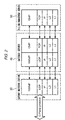
- Fig. 2 is a diagram showing a configuration of C-Plane protocols.
- C-Plane protocols are communication protocols for transmitting/receiving a control signal for a call connection/maintenance, a call release, a call termination, and the like.
- NWMP Network Management Protocol
- UDP User Datagram Protocol
- Transport layer IP corresponding to Network layer
- L2 corresponding to Datalink layer
- L1 Physical layer.
- C-Plane protocol used in mobile packet communication network 100 is not the same as C-Plane protocol used between gateway server 40 and billing management server 50, being NWMP and GMP (Grimm Management Protocol), respectively.
- gateway server 40 converts control messages notified from gateway switching station 30 according to NWMP to messages in accordance with GMP, where necessary, and transmits the messages to billing management server 50.
- a control signal for connecting/releasing a packet link and for notifying a disconnection, as well as a control signal for establishing TCP Connection A and TCP Connection B1 is transmitted/received using a C-Plane protocol, NWMP, between communication nodes such as base station 20, gateway switching station 30, and gateway server 40 within mobile packet communication network 100, and billing management server 50.
- NWMP C-Plane protocol
- a wireless link between portable phone 10 and base station 20 is disconnected while HTTP communication is being performed between portable phone 10 and content server 70. Such disconnection may occur because portable phone 10 moves outside the communication range, or its battery becomes exhausted.
- the wireless link or a wired link from base station 20 to gateway server 40 is disconnected due to congestion in or of a failure in mobile packet communication network 100.
- the detecting node transmits to gateway server 40 a control signal notifying disconnection of the packet link using NWMP.
- Fig. 3 is a diagram illustrating a configuration of U-Plane protocols.
- U-Plane protocol is a communication protocol for performing HTTP communication, by which HTTP Requests or Responses are transmitted or received using U-Plane protocols, thereby enabling portable phone 10 to view HTML (HyperText Markup Language) content made open to the public by content server 70.
- U-Plane protocols are also used for transmitting and receiving electronic mail.
- a hierarchical structure of protocols corresponds to the OSI reference model.
- HTTP is used between portable phone 10 and billing management server 50 as a U-Plane protocol for controlling web access and transmitting and receiving electronic mail.
- gateway server 40 operates as a HTTP proxy.
- a Transport Layer protocol (W-TCP: TCP Profile over W-CDMA) is used in mobile packet communication network 100, W-TCP being configured based on TCP by tuning parameters packaged in TCP, in consideration of transmission delay time in mobile packet communication network 100 having wireless zones. In this way effective utilization of transmission bandwidth is realized.
- W-TCP TCP Profile over W-CDMA
- a standard TCP is used between gateway server 40 and billing management server 50; in which case gateway server 40 converts data between W-TCP and TCP in relaying HTTP communication.
- gateway server 40 measures, from among packets transmitted to and received from portable phone 10, a size and a number of packets transmitted and received using the U-Plane protocol as packets for which a charge is incurred.
- Described in the foregoing is one configuration of communication system 1 according to the present embodiment.
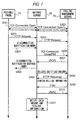
- TCP Connection Open When a user of Portable phone 10 starts a web browser, the phone transmits a TCP Connection Open message (hereinafter referred to as TCP Connection Open) (step S101). Signals required for opening TCP Connections A and B are transmitted and received among portable phone 10, gateway server 40, content server 70, and relay nodes (including billing management server 50) relaying respective TCP Connections A and B (step S102, S103). Thus, TCP Connection A is established between portable phone 10 and gateway server 40; and TCP Connection B is established between gateway server 40 and content server 70.
- TCP Connection A is established between portable phone 10 and gateway server 40
- TCP Connection B is established between gateway server 40 and content server 70.
- control signals relating to a packet link connection is transmitted/received, according to a C-Plane protocol (NWMP), among communication nodes disposed between portable phone 10 and gateway server 40 in mobile packet communication network 100, thereby enabling a packet link to be established between portable phone 10 and gateway server 40.
- NWMP C-Plane protocol
- a TCP control signal such as TCP Connection Open is exchanged between portable phone 10 and gateway server 40, thereby establishing TCP Connection A.
- gateway server 40 and billing management server 50 transmit and receive control signals of a packet link according to a C-Plane protocol (GMP), subsequent to which a TCP control signal is transmitted/received via the packet link, thereby establishing TCP Connection B1.
- GMP C-Plane protocol
- a packet link is first established also between billing management server 50 and content server 70, after which a TCP control signal is transmitted/received via the packet link, thereby establishing TCP Connection B2.
- a user of portable phone 10 a performs an operation input for a menu selection, downloading of content, or the like, as a result of which a HTTP Request including instruction details based on the operation input is transmitted from portable phone 10 to gateway server 40 via TCP Connection A (step S104). Further, the HTTP Request is transmitted from gateway server 40 to billing management server 50, and further to content server 70 via TCP Connection B (step S105, 106).
- Content server 70 upon receiving the HTTP Request from portable phone 10, reads, from its memory, content corresponding to the details of the instruction included in the HTTP Request (for example, screen data for a specified menu, specified content, and the like) and transmits it to portable phone 10 as HTTP Response (step S107).
- Billing management server 50 upon receiving the HTTP Response from content server 70, first determines which billing option is to be applied to the HTTP communication on the basis of stored information (billing management information). Billing management server 50 then inserts in the extension header of the received HTTP Response, billing information specifying a determined billing option and the like. It is to be noted that billing options include three types: user billing, CP billing, or no billing. In the case of CP billing, a provider ID specifying the billed party is inserted in the extension header along with information specifying the billing option. Then, billing management server 50 transmits to gateway server 40 the HTTP Response, with the billing information inserted in the extension header (step S108).
- Gateway server 40 upon receiving the HTTP Response from billing management server 50 first writes in its memory the billing information inserted in the extension header. Next, gateway server 40 deletes the billing information from the extension header of HTTP Response, and then transmits the same HTTP Response to portable phone 10 (step S109). The HTTP Response is transmitted to portable phone 10 via TCP Connection A.
- portable phone 10 is able to download desired content from content server 70 by way of HTTP communication.
- an instruction is input into portable phone 10 to end HTTP communication, as a result of which portable phone 10 transmits a TCP Connection Close message (hereinafter referred to as TCP Connection Close) to gateway server 40.
- TCP Connection Close a TCP Connection Close message
- Portable phone 10, gateway server 40, billing management server 50, and content server 70 then perform a process for releasing TCP Connection A and/or TCP Connection B (step S110), to thereby end HTTP communication.
- gateway server 40 quantifies an amount of packet data transmitted and received using a U-Plane protocol between gateway server 40 and portable phone 10 from a time when TCP Connection Open was transmitted from portable phone 10 in the above step S101 up to the time that TCP Connection A, B was released in the above step S110. Then, gateway server 40 transmits to billing processing device 80 the data amount and the billing information that have been stored in the memory (step S111).
- Billing processing device 80 then performs a billing process on the basis of the data amount and the billing information received from gateway server 40, and transmits the result of the process to accounting center 90.
- Accounting center 90 computes monthly communication charges for packet communication and voice communication on the basis of data received from billing processing device 80 and other devices to issue a bill, so as to collect communication charges from a subscriber of portable phone 10 or from a content provider.
- a TCP Connection Open is transmitted from portable phone 10 (step S201)
- signals required for opening a TCP Connection are transmitted/received between portable phone 10, gateway server 40, content server 70 (not shown in the figure), and other relay nodes for TCP Connection A, B (step S202), thereby establishing TCP Connection A between portable phone 10 and gateway server 40 and TCP Connection B between gateway server 40 and content server 70.
- HTTP communication is established between portable phone 10 and content server 70.
- HTTP Request is transmitted to gateway server 40 via TCP Connection A (step S203).
- the HTTP Request is further transmitted from gateway server 40 to billing management server 50 via TCP Connection B, and still further to content server 70 (step S204).
- step S205 After receiving the TCP Connection Close, gateway server 40 releases TCP Connection A with portable phone 10.
- gateway server 40 half-closes TCP Connection B so as to maintain TCP Connection B until server 40 receives a HTTP Response.
- gateway server 40 first transmits, to billing management server 50, a FIN (Finish) signal requesting TCP Connection Close via TCP Connection B1 (step S206). Upon receiving the FIN signal for TCP Connection Close, billing management server 50, transmits to gateway server 40 ACK via TCP Connection B 1 (step S207).
- billing management server 50 releases TCP Connection B2 from content server 70, and then determines which billing option is to be applied to the HTTP Request transmitted from portable phone 10 in the above step S203. Such determination is made on the basis of stored information in the server (billing management information).
- billing management server 50 generates a HTTP Response, and inserts in the extension header of the HTTP Response billing information specifying a determined billing option and the like, for transmission to gateway server 40 (step S208).
- Gateway server 40 upon receiving the HTTP Response, stores in its memory billing information inserted in the extension header of the Response. Gateway server 40 abandons data of the HTTP Response after storing the billing information in the memory since TCP Connection A has already been released.
- billing management server 50 after transmitting the HTTP Response, transmits, to gateway server 40, FIN for terminating a half-closed TCP Connection B (step S209).
- Gateway server 40 when it receives FIN from billing management server 50, returns ACK to billing management server 50 (step S210), thereby terminating HTTP communication.
- TCP Connection B TCP Connection B1 because TCP Connection B2 has already been released after the above step S207
- gateway server 40 measures an amount of packet data transmitted to and from portable phone 10 using a U-Plane protocol from a time that TCP Connection Open was transmitted from portable phone 10 in the above step S201 to the time that TCP Connection A was released.
- Gateway server 40 transmits the measured data amount and the billing information in the memory to billing processing device 80 (step S211).
- Billing processing device 80 performs, on the basis of the data amount and the billing information received from gateway server 40, a billing process for communication charges up to the time that HTTP communication was disconnected; and on the basis of the result of the process, accounting center 90 computes, for each portable phone 10 and content provider, communication charges for packet communication so as to issue a bill.
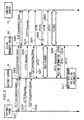
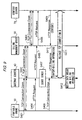
- Fig. 6 is a sequence chart illustrating the process described in Fig. 5 in detail.
- the description of the same steps as those shown in Fig. 5 are omitted and detailed description will be given for the process from steps S205 to S210.
- gateway server 40 receives TCP Connection Close from portable phone 10 either (a) after receiving, from billing management server 50, a HTTP Response originating from content server 70, or (b) before receiving the response.
- gateway server 40 abandons data of HTTP Response after storing the billing information inserted in the extension header of the Request because TCP Connection A with portable phone 10 has already been released. Subsequently, TCP Connection B is released.
- gateway server 40 has not obtained billing information because it has not received a HTTP Response from billing management server 50. Consequently, gateway server 40 maintains TCP Connection B until it receives a HTTP Response from billing management server 50, so as to obtain billing information. Under these circumstances, TCP Connection B1 is maintained in a half-closed state, and gateway server 40 is able to receive a HTTP Response as long as a connection of the communication for transmitting data in the direction from billing management server 50 to gateway server 40 is maintained.
- TCP Connection B1 is maintained in a half-closed state in a case that gateway server 40, after transmitting to billing management server 50 a HTTP Request originating from portable phone 10, receives TCP Connection Close from portable phone 10 without receiving from billing management server 50 a HTTP Response for the concerned HTTP Request.
- gateway server 40 transmits to billing management server 50, FIN requesting TCP Connection Close via TCP Connection B1 (step S206).
- Billing management server 50 upon receiving FIN, transmits ACK to gateway server 40 via TCP Connection B1 (step S207).
- communication for transmitting data in a direction from gateway server 40 to billing management server 50 is discontinued, while communication for transmitting data in the direction from billing management server 50 to gateway server 40 is maintained (i.e., a half-closed state).
- TCP Connection B2 with content server 70 is released. Specifically, billing management server 50 transmits to content server 70 FIN, requesting TCP Connection Close via TCP Connection B2 (step S601). In response to the received FIN, content server 70 transmits ACK to billing management server 50 via TCP Connection B2, and transmits FIN requesting TCP Connection Close at the same time (step S602). Billing management server 50, upon receiving FIN requesting TCP Connection Close, transmits ACK to content server 70 via TCP Connection B2 (step S603). As a result, TCP Connection B2 is closed.
- billing management server 50 has already received from content server 70 a HTTP Response including content at the time of receiving, from gateway server 40, FIN requesting TCP Connection Close in the above step S206.
- billing management server 50 determines, on the basis of the concerned HTTP Response and stored information (billing management information), a billing option and the like to be applied to the HTTP communication.
- Billing management server 50 then inserts in the extension header of the HTTP Response billing information specifying the billing option and the like for transmission to gateway server 40 (step S208).
- billing management server 50 determines, on the basis of the concerned HTTP Request and stored information (billing management information), a billing option to be applied to HTTP Request transmitted from portable phone 10.
- Billing management server 50 then generates a HTTP Response with no content included, and inserts billing information including the determined billing option and the like in the extension header of the Response for transmission to gateway server 40 (step S208).
- Gateway server 40 upon receiving the HTTP Response, stores the billing information inserted in the extension header. Since TCP Connection A has already been released, gateway server 40 abandons data of HTTP Response after storing the billing information in its memory.
- billing management server 50 after transmitting a HTTP Response, transmits to gateway server 40 FIN for terminating the half-closed TCP Connection B1 (step S209).
- Gateway server 40 when it receives FIN from billing management server 50, returns ACK to billing management server 50 (step S210), thereby terminating HTTP communication.
- TCP Connection B1 is released.
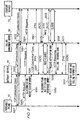
- TCP Connection A is first established between portable phone 10 and gateway server 40 by the process of steps S201 to S204, and TCP Connection B is established between gateway server 40 and content server 70 (not shown in Fig. 7).
- TCP Connection A and TCP Connection B a HTTP Request is transmitted from portable phone 10 to content server 70.
- TCP Connection A may be disconnected before gateway server 40 receives a HTTP Response to the HTTP Request, as a natural result of a disconnection of a wireless link due to portable phone 10 moving outside the communication range (including a case where portable phone 10 is located within a service area but is located underground where it is not accessible by radio) or when a battery of portable phone 10 is exhausted, or because of connection congestion, or a failure, such as a malfunctioning of a device in a wireless zone or in a wired zone within mobile packet communication network 100.
- a disconnection notification notifying disconnection of the wireless link is transmitted to gateway server 40 from base station 20 via gateway switching station 30.
- the disconnection notification is a control signal transmitted by a C-Plane protocol, NWMP.
- NWMP C-Plane protocol
- a relay node e.g. base station 20, gateway switching station 30, subscriber switch station (not shown) detecting connection congestion or a failure transmits a disconnection notification to gateway server 40 using NWMP.
- gateway server 40 upon receiving the disconnection notification (step S301), releases TCP Connection A. It is to be noted that portable phone 10 has a function to detect disconnection of a packet link, whereby TCP Connection A established with gateway server 40 is released in a case of detecting a disconnection of a packet link.
- Gateway server 40 also transmits, according to NWMP, a disconnection notification response to a relay node which has transmitted the disconnection notification (step S302), and transmits, according to GMP, to billing management server 50 a release notification notifying that TCP Connection A has been released (step S303).
- gateway server 40, billing management server 50, and content server 70 perform steps S206 to S211, shown in of Figs. 7 and Fig. 8, and steps S601 to S603, shown in Fig. 8, responsive to the release of TCP Connection A.
- TCP Connection B1 enters a half-closed state, and TCP Connection B1 is maintained until gateway server 40 receives a HTTP Response from billing management server 50.
- Gateway server 40 also transmits an amount of packet data transmitted to and received from portable phone 10 using a U-Plane protocol, as well as the billing information, to billing processing device 80. Then, billing processing device 80 performs, on the basis of the packet data amount and the billing information, a billing process for the HTTP communication up to the time of the disconnection. Communication charges are then computed in accounting center 90.
- gateway server 40 in the case that gateway server 40 detects discontinuation of TCP Connection A between portable phone 10 and gateway server 40 when relaying HTTP communication between portable phone 10 and content server 70, TCP Connection B1 is maintained until gateway server 40 receives, from billing management server 50, billing information for the HTTP Communication up to the time that the TCP Connection A is disconnected.
- gateway server 40 executes the process described above on the basis of a program stored in the memory of gateway server 40.
- a program for executing such a process may be obtained by gateway server 40 via communication.
- a program may be provided to gateway server 40 by way of a recording medium such as an optical recording medium, a magnetic recording medium, a semiconductor memory, and the like.
- TCP Connection B1 enters a half-closed state; and TCP Connection B2 enters a closed state, as shown in steps S206 to S211 of Figs. 5 to 8 and steps S601 to S603 of Figs. 6 and 8.
- TCP Connection B1 need not necessarily enter a half-closed state, and any type of connection state is accepted if communication in the direction from billing management server 50 to gateway server 40 is maintained until gateway server 40 receives, from billing management server 50, billing information for the HTTP communication up to the time that TCP Connection A was disconnected, in a case that discontinuation of TCP Connection A is detected during HTTP communication. Therefore, TCP Connection B may be maintained until gateway server 40 receives a HTTP Response from billing management server 50. It is also accepted that, instead of entering only TCP Connection B1 into a half-closed state, the entire TCP Connection B may be entered into a half-closed state.
- Fig. 9 and Fig. 10 relate to the first modification of the present invention, and consist of a sequence chart showing an operation of each unit of communication system 1 in a case that TCP Connection B is maintained until gateway server 40 receives a HTTP Response from billing management server 50. It is to be noted that in Figs. 9 and 10 signals transmitted and received using a U-Plane protocol are designated by solid lines, and signals transmitted and received using a C-Plane protocol are designated by dashed lines. Also, in the following, description of portions that are the same as those described relative to Figs. 4 to 8 will be simplified.
- Fig. 9 is a chart illustrating a case where termination of HTTP communication is instructed by a user of portable phone 10, by an operation input, during HTTP communication between portable phone 10 and content server 70.
- the process of steps S401 to S406 is the same as that of the steps S101 to S106 shown in Fig. 4.
- Gateway server 40 of the present first modification has a timer for counting time from when it transmits to billing management server 50 a HTTP Request received from portable phone 10 until it receives a HTTP Response from billing management server 50; and releases TCP Connection B in a case that the counted time by the timer exceeds a prescribed time (a timeout value) stored in advance in the memory.
- a timeout value is set sufficiently larger (e.g. 10 minutes) than the timeout value waiting for HTTP Response (e.g., 5 minutes) counted by billing management server 50.
- Gateway server 40 after it transmits HTTP Request to billing management server 50 in step S405, starts counting time by the above timer (step S407) so as to count time until it receives HTTP Response from billing management server 50.
- gateway server 40 is characterized in that, in the case of detecting discontinuation of TCP Connection A before the time counted by the above timer exceeds the timeout value, server 40 maintains TCP Connection B until it receives HTTP Response from billing management server 50 or the counted time exceeds the timeout value.
- gateway server 40 receives TCP Connection Close from portable phone 10 without the time counted by the above timer having exceeded the timeout value and without receiving HTTP Response from billing management server 50 (step S408), portable phone 10 and gateway server 40 first release TCP Connection A.
- gateway server 40 maintains TCP Connection B until it receives HTTP Response from billing management server 50 or the time counted by the timer exceeds the timeout value. Then, once gateway server 40 receives HTTP Response from billing management server 50 (step S410), server 40 stores in the memory the billing information inserted in the extension header of the HTTP Response. Also, since TCP Connection A is already released and the HTTP Response cannot be transferred to portable phone 10, gateway server 40 abandons the HTTP Response after storing the billing information in the memory.
- gateway server 40 performs a process of releasing TCP Connection B (step S411), thereby terminating HTTP communication.
- Gateway server 40 also transmits the amount of the packet data transmitted to and received from portable telephone 10 using a U-Plane protocol and billing information to billing processing device 80 (step S412), billing processing device 80 performs, on the basis of the data amount and the billing information, a billing process for HTTP communication up to the time of the disconnection, and the communication charge is computed at accounting center 90.
- Fig. 10 is a sequence chart illustrating a case where a packet link in mobile packet communication network 100 is disconnected during HTTP communication performed between portable phone 10 and content server 70. It is to be noted that in the figure, the same step numbers are assigned to the same steps as those of Fig. 9, and description thereof will be omitted. It is also to be noted that the process from steps S501 to S503 of the figure is the same as the process of steps S301 to S303 of Figs. 7 and Fig. 8, and description thereof will be simplified.
- Gateway server 40 after transmitting, to billing management server 50, a HTTP Request received from portable phone 10 in step S405, starts counting time by the timer (step S407).
- gateway server 40 receives, from base station 20, gateway switching station 30, or a subscriber switching station (not shown) or any other relay node of the packet link, a disconnection notification (NWMP) notifying a disconnection of a wireless link or a wired link in mobile packet communication network 100, without the time counted by the above timer having reached the timeout value and without receiving HTTP Response from billing management server 50 (step S501), gateway server 40 performs the process of releasing TCP Connection A.
- NWMP disconnection notification
- gateway server 40 transmits a disconnection acknowledgement (NWMP) to a relay node which is the sender of the disconnection notification (step S502), and transmits, to billing management server 50, release notification (GMP) notifying the release of TCP Connection A (step S503).
- NWMP disconnection acknowledgement
- GMP release notification
- Gateway server 40 then maintains TCP Connection B until it receives HTTP Response from billing management server 50 or the time counted by the timer exceeds the timeout value, and performs the process of steps S409 to S412.
- gateway server 40 when gateway server 40 receives HTTP Response in step S410 of Fig. 9 and Fig. 10, it abandons data of the HTTP Response after obtaining billing information from the HTTP Response. This is because TCP Connection A has already been released, and HTTP Response cannot be transferred to portable phone 10.
- gateway server 40 may store HTTP Response received in step S410 without abandoning it, and, in a case that TCP Connection A is restored within a prescribed time period, gateway server 40 reads the HTTP Response stored in the memory for transmission to portable phone 10.
- the HTTP Response stored in the memory is deleted after a certain time period elapses since it was stored in the memory.
- billing information is inserted in the extension header of HTTP Response, but instead, may be added to HTTP Response transmitted from billing management server 50 to gateway server 40. Alternatively, the billing information may be related to HTTP Response and transmitted along with the related HTTP Response.
- connection-oriented communication protocol is not limited to TCP and can include other protocols such as SPX (Sequenced Packet eXchange) and X25.
- connection-oriented communication is not limited to HTTP communication, and may include communication using other protocols such as FTP (File Transfer Protocol), SMTP (Simple Mail Transfer Protocol), and POP (Post Office Protocol).
- portable phone 10 is used as a communication terminal.
- the communication terminal is not limited to portable phone 10 and may be a PDA (Personal Digital Assistant), a mobile computer, a fixed personal computer, and the like, so long as the terminal has a function of performing wireless communication and is capable of performing connection-oriented communication via mobile packet communication network 100.
- the communication system may be configured in such a way that gateway server 40 is provided outside mobile packet communication network 100.
- content server 70 may be directly connected to billing management server 50 via a dedicated line.
- mobile packet communication network 100 used as an example of mobile packet communication network 100 is a network which conforms to IMT-2000, but mobile packet communication network 100 is not limited to a network conforming to IMT-2000. Further, the present invention is not limited for use in a mobile packet communication network and may be applied in any communication network that supports connection-oriented communication provided to subordinate communication terminal(s) if the network performs a billing for communication in accordance with the data amount and the like to bill a communication terminal.
Landscapes
- Engineering & Computer Science (AREA)
- Computer Networks & Wireless Communication (AREA)
- Signal Processing (AREA)
- Business, Economics & Management (AREA)
- Accounting & Taxation (AREA)
- Finance (AREA)
- Physics & Mathematics (AREA)
- Theoretical Computer Science (AREA)
- Economics (AREA)
- Strategic Management (AREA)
- Computer Security & Cryptography (AREA)
- General Business, Economics & Management (AREA)
- General Physics & Mathematics (AREA)
- Development Economics (AREA)
- Marketing (AREA)
- Technology Law (AREA)
- Data Exchanges In Wide-Area Networks (AREA)
- Mobile Radio Communication Systems (AREA)
- Meter Arrangements (AREA)
- Telephonic Communication Services (AREA)
Abstract
A gateway server (40), in the case that discontinuation of TCP
Connection A between a portable phone (10) and gateway server (40) is
detected when gateway server (40) is relaying HTTP communication
between portable phone (10) and a content server (70), maintains TCP
Connection B1 between a billing management server (50) and gateway
server (40) until gateway server (40) receives from billing management
server (50) billing information for HTTP communication relayed up to the
time of the discontinuation of TCP Connection A.
Description
The present invention relates to techniques used for a billing
process relating to connection-oriented communication.
In a connection-oriented communication method using a
connection-type protocol typified by TCP (Transmission Control Protocol),
end-to-end connection between a communication device and a
correspondent communication device is first established, and then data is
sequentially transmitted via the connection. The connection is released
when the data transmission is completed. This type of communication
method is characterized in that once a circuit (or a session) is established
between communication devices; the same circuit is dedicated to the data
transmission until the session is completed.
A communication carrier, which provides a packet communication
service by way of connection-oriented communication, charges one of the
parties on the basis of an amount of data transmitted and received during a
connection period from when the connection is established until the
connection is released. For example, in a case that a communication
terminal requests a content server to deliver content to the terminal, a
connection is first established between the communication terminal and
the content server. The communication terminal transmits a content
request message via the established connection to the content server, and,
in response to the request message from the communication terminal, the
content server delivers content to the communication terminal via the
same connection. The connection is released after the communication
terminal receives the content. The carrier operating the packet
communication service performs a billing process, after obtaining
information required for billing, on the basis of data transmitted or
received via the connection, with the data including the request message
sent from the' communication terminal to the content server and the
content delivered to the communication terminal.
In such connection-oriented communication, however, there exists
a problem in that communication may be discontinued before data
transmission is complete. This may occur as a result of an instruction
issued by one of the communicating devices or as a result of a failure of a
connection link. In the case that communication is discontinued
following issuance of a request message, requested content can not be
fully delivered from a content server to a requesting terminal; and
consequently a carrier operating the packet communication service may
not be able to obtain information required for billing, as a result of which
it becomes impossible for a communication charge relative to the request
message to be collected.
In view of the stated problems of the art described above it is an
object of the present invention to provide a communication control method,
a transfer device, a program, and a recording medium, use of which enable
an appropriate communication charge to be made on the basis of an
amount of data transmitted following issuance of request message, even in
a case that connection-oriented communication is prematurely
discontinued.
To achieve the stated object, the present invention provides a first
communication control method comprising: relaying by a transfer device
connection-oriented communication performed between a communication
terminal and a correspondent communication device; and controlling a
connection, at the transfer device, so as to maintain a connection at least
between the transfer device and a billing management device, which
device functions as a relay node of a connection between the transfer
device and the communication device, in a case that the transfer device
has not received billing information for the connection-oriented
communication from the billing management device, when detecting, in
the relaying step, discontinuation of a connection between the
communication terminal and the transfer device.
Further, the present invention provides a second communication
control method comprising: transmitting, from a transfer device relaying
connection-oriented communication performed between a communication
terminal and a correspondent communication device, to a billing
management device, such a device functioning as a relay node of a
connection between the transfer device and the communication device, a
signal requesting disconnection of a connection used for transmitting data
from the transfer device to the billing management device, in a case that
the transfer device detects, when relaying the connection-oriented
communication, discontinuation of a connection between the
communication terminal and the transfer device; and transmitting, from
the billing management device to the transfer device, billing information
for the relayed connection-oriented communication in the case of
receiving the disconnection request signal from the transfer device.
Preferably, the billing management device determines billing information
on the basis of a request message in a case that the billing management
device, at the time of receiving the signal requesting disconnection of the
connection, has not received a response message transmitted from the
communication device in response to the request message transmitted
from the communication terminal.
Preferably, in the above first and second communication control
methods, billing information comprises information specifying a billing
option to be applied to the connection-oriented communication from
among a plurality of types of billing options for communication performed
via the transfer device. Further, such billing information may be
transmitted to the transfer device when the billing management device
transmits to the transfer device a response message responsive to a request
message transmitted from the communication terminal. In this case, the
billing management device either inserts billing information in the header
of the response message for transmission, or adds the billing information
to the response message for transmission to the transfer device.
Alternatively, the billing management device relates the billing
information to the response message for transmission.
In one preferred embodiment of the above first and second
communication control methods, the transfer device detects
discontinuation of a connection between the communication terminal and
the transfer device upon receiving, from a relay node located in a path of
the link, a signal indicating disconnection of a link established between the
communication terminal and the transfer device, the link being used in the
connection-oriented communication. Alternatively, the transfer device
detects discontinuation of a connection between the communication
terminal and the transfer device upon receiving from the communication
terminal a request for disconnecting a connection with the communication
device.
In another preferred embodiment of the first and second
communication control methods, the transfer device measures an amount
of data transmitted to and received from the communication terminal, and
transmits to an accounting management device for computing
communication charges, the measured data amount and the billing
information received from the billing management device. Preferably, in
the measuring step, the transfer device measures, an amount of data
transmitted to and received from the communication terminal, with the
exception of transmitted and received data control signals used for
controlling a connection with the communication terminal. Further, the
accounting management device may bill for communication on the basis
of both an amount of data transmitted and billing information transmitted
in the transmission step.
The present invention further provides a first transfer device
comprising relaying means for relaying connection-oriented
communication between a communication terminal and a correspondent
communication device; and connection control means for controlling a
connection when the connection-oriented communication is being relayed
by the relaying means, so as to maintain a connection at least between the
transfer device and a billing management device, which device functions
as a relay node for a connection between the transfer device and the
communication device, in a case that the transfer device, upon detecting
discontinuation of a connection between the communication terminal and
the transfer device, has not received billing information for the relayed
connection-oriented communication from the billing management device.
Further, the present invention provides a second transfer device
comprising relaying means for relaying connection-oriented
communication between a communication terminal and a correspondent
communication device; time keeping means for counting time from when
the transfer device transmits to the communication device a request
message received from the communication terminal, until the transfer
device receives a response message transmitted from the communication
device responsive to the request message; and connection control means
for controlling a connection, when connection-oriented communication is
relayed by the relaying means, so as to maintain a connection between the
transfer device and the communication device until the transfer device
receives billing information for the relayed connection-oriented
communication from a billing management device, which device functions
as a connection relay node between the transfer device and the
communication device, or until a time counted by the time keeping means
exceeds a prescribed time, the connection being maintained in a case that
the counted time does not exceed the prescribed time, and the transfer
device has not received the billing information.
The billing information may be transmitted to the above first or
second transfer device when the billing management device transmits to
the transfer device a response message responsive to a request message
transmitted from the communication terminal. Preferably, the billing
information comprises information specifying a billing option to be
applied to connection-oriented communication, from among a plurality of
types of billing options applicable to communication performed via the
transfer device.
In another preferred embodiment, the first and second transfer
devices detect discontinuation of connection between the communication
terminal and the transfer device upon receiving a signal indicating
disconnection of a link established between the communication terminal
and the transfer device from a relay node located in a path of the link; the
link being used for the connection-oriented communication.
Alternatively, the transfer device detects discontinuation of connection
between the communication terminal and the transfer device upon
receiving from the communication terminal a request for disconnecting a
connection with the communication device.
In another preferred embodiment, the first and second transfer
devices further comprise measuring means for measuring an amount of
data transmitted to and received from the communication terminal; and
transmission means for transmitting to an accounting management device
for computing communication charges for the communication terminal, an
amount of data measured by the measuring means and billing information
received from the billing management device. Preferably, the measuring
means measures an amount of data transmitted to and received from the
communication terminal by the relaying means, except for transmitted and
received control signal data used for controlling the connection with the
communication terminal.
Preferably, the first and second transfer devices are gateway
servers.
In addition, the present invention further provides a billing
management device comprising: storage means for storing billing
management information for connection-oriented communication
performed between a communication terminal and a correspondent
communication device; determination means for determining billing
information on the basis of billing management information stored in the
storage means in the case of receiving, from a transfer device relaying the
connection-oriented communication, a signal requesting for disconnection
of a connection for transmitting data to the billing management device,
while connection-oriented communication is being performed; and
transmission means for transmitting to the transfer device billing
information determined by the determination means.
In another preferred embodiment, the determination means
determines billing information on the basis of a request message in a case
that the billing management device, at the time of receiving the signal
from the transfer device, has not received a response message from the
communication device in response to a request message transmitted from
the communication terminal.
In another preferred embodiment, the transmission means transmits
billing information when the billing management device transmits a
response message in response to a request message transmitted from the
communication terminal. The transmission means either inserts the
billing information in the header of the response message or adds the
billing information to the response message for transmission.
Alternatively, the transmission means relates the billing information to the
response message for transmission.
Preferably, the billing information is information specifying a
billing option to be applied to the connection-oriented communication
from among a plurality of types of billing options applicable to
communication performed via the transfer device.
The present invention further provides a program for causing a
transfer device to execute the process of the first communication control
method, and a computer-readable recording medium storing the program.
Similarly, the present invention provides a program for causing a billing
management device to execute the process of the second communication
control method, and a computer-readable recording medium storing the
program.
Thus, the techniques provided by the present invention enable the
proper billing for connection-oriented communication according to the
amount of transmitted data.
In the following, a preferred embodiment of the present invention
will be described with reference to the attached drawings. It is to be
noted that the same reference numerals are used for elements common
among the drawings.
Fig. 1 is a block diagram illustrating a configuration of a
communication system 1 according to an embodiment of the present
invention. As shown in the figure, communication system 1 comprises a
mobile packet communication network 100 having a portable phone 10, a
base station 20, a gateway switching station 30, and a gateway server 40,
as well as a billing management server 50, the Internet 60, and a content
server 70, a billing processing device 80, and an accounting center 90.
Mobile packet communication network 100 is a communication
network providing a packet communication service to portable phones 10
served by the same mobile packet communication network 100, and
network 100 conforms with IMT-2000 (International Mobile
Telecommunication 2000). It is to be noted that communication system 1
further comprises a mobile telephone network (not shown) in addition to
mobile packet communication network 100. The mobile telephone
network provides, to portable phone(s) 10, a voice communication service
for general mobile telephones.
The billing options can include three types of billing options being
a user billing in which a user of portable phone 10 is charged for the
packet communication, a content provider (CP) billing in which a content
provider is charged for the communication, and no billing in which neither
the user nor the content provider is charged for the communication. In
the case of the CP billing, billing management server 50 inserts, in the
extension header of HTTP Response, a provider ID specifying a particular
content provider as the billed party in addition to the billing information
specifying a billing option.
Mobile packet communication network 100 and billing
management server 50 support a signal control protocol for call control
and a user data protocol for transmitting user data; both protocols being
related to a packet communication performed by portable phone 10. In
the following description, the signal control protocol for call control will
be referred to as a C-Plane (Control-Plane) protocol, and the user data
protocol for transmitting user data as a U-Plane (User-Plane) protocol.
Fig. 2 is a diagram showing a configuration of C-Plane protocols.
C-Plane protocols are communication protocols for transmitting/receiving
a control signal for a call connection/maintenance, a call release, a call
termination, and the like. It is to be noted that a hierarchical structure of
protocols shown in the figure corresponds to the OSI (Open Systems
Interconnection) reference model; in the example of gateway switching
station 30 shown in the figure, NWMP (NetWork Management Protocol)
is a protocol corresponding to Application layer, Presentation layer, and
Session layer; UDP (User Datagram Protocol) corresponding to Transport
layer; IP corresponding to Network layer; L2 corresponding to Datalink
layer; and L1 corresponding to Physical layer.
As shown in the figure, C-Plane protocol used in mobile packet
communication network 100 is not the same as C-Plane protocol used
between gateway server 40 and billing management server 50, being
NWMP and GMP (Grimm Management Protocol), respectively. For this
reason, gateway server 40 converts control messages notified from
gateway switching station 30 according to NWMP to messages in
accordance with GMP, where necessary, and transmits the messages to
billing management server 50.
A control signal for connecting/releasing a packet link and for
notifying a disconnection, as well as a control signal for establishing TCP
Connection A and TCP Connection B1 is transmitted/received using a
C-Plane protocol, NWMP, between communication nodes such as base
station 20, gateway switching station 30, and gateway server 40 within
mobile packet communication network 100, and billing management
server 50.
There may be a case where a wireless link between portable phone
10 and base station 20 is disconnected while HTTP communication is
being performed between portable phone 10 and content server 70. Such
disconnection may occur because portable phone 10 moves outside the
communication range, or its battery becomes exhausted. Also, there may
be a case where the wireless link or a wired link from base station 20 to
gateway server 40 is disconnected due to congestion in or of a failure in
mobile packet communication network 100. In such cases, when relay
nodes for a packet link such as base station 20, gateway switching station
30, a subscriber switch station (not shown), and like stations detect
disconnection of the packet link, the detecting node transmits to gateway
server 40 a control signal notifying disconnection of the packet link using
NWMP.
Fig. 3 is a diagram illustrating a configuration of U-Plane protocols.
U-Plane protocol is a communication protocol for performing HTTP
communication, by which HTTP Requests or Responses are transmitted or
received using U-Plane protocols, thereby enabling portable phone 10 to
view HTML (HyperText Markup Language) content made open to the
public by content server 70. U-Plane protocols are also used for
transmitting and receiving electronic mail. In Fig. 2, a hierarchical
structure of protocols corresponds to the OSI reference model.
As shown in Fig. 2 , HTTP is used between portable phone 10 and
billing management server 50 as a U-Plane protocol for controlling web
access and transmitting and receiving electronic mail. In this figure
gateway server 40 operates as a HTTP proxy.
A Transport Layer protocol (W-TCP: TCP Profile over W-CDMA)
is used in mobile packet communication network 100, W-TCP being
configured based on TCP by tuning parameters packaged in TCP, in
consideration of transmission delay time in mobile packet communication
network 100 having wireless zones. In this way effective utilization of
transmission bandwidth is realized. On the other hand, a standard TCP is
used between gateway server 40 and billing management server 50; in
which case gateway server 40 converts data between W-TCP and TCP in
relaying HTTP communication.
It is to be noted that gateway server 40 measures, from among
packets transmitted to and received from portable phone 10, a size and a
number of packets transmitted and received using the U-Plane protocol as
packets for which a charge is incurred.
Described in the foregoing is one configuration of communication
system 1 according to the present embodiment.
Next, description will be given of an operation of the present
embodiment.
First, description will be given, with reference to Fig. 4, of a basic
operation of each unit in communication system 1 in a case of HTTP
communication being performed between portable phone 10 and content
server 70. It is to be noted that in the sequence chart shown in the figure,
there are shown only signals transmitted and received using a U-Plane
protocol.
When a user of Portable phone 10 starts a web browser, the phone
transmits a TCP Connection Open message (hereinafter referred to as TCP
Connection Open) (step S101). Signals required for opening TCP
Connections A and B are transmitted and received among portable phone
10, gateway server 40, content server 70, and relay nodes (including
billing management server 50) relaying respective TCP Connections A
and B (step S102, S103). Thus, TCP Connection A is established
between portable phone 10 and gateway server 40; and TCP Connection B
is established between gateway server 40 and content server 70.
In practice, before transmitting TCP Connection Open, control
signals relating to a packet link connection is transmitted/received,
according to a C-Plane protocol (NWMP), among communication nodes
disposed between portable phone 10 and gateway server 40 in mobile
packet communication network 100, thereby enabling a packet link to be
established between portable phone 10 and gateway server 40.
Subsequently, via the established packet link, a TCP control signal such as
TCP Connection Open is exchanged between portable phone 10 and
gateway server 40, thereby establishing TCP Connection A.
Similarly, gateway server 40 and billing management server 50
transmit and receive control signals of a packet link according to a
C-Plane protocol (GMP), subsequent to which a TCP control signal is
transmitted/received via the packet link, thereby establishing TCP
Connection B1. A packet link is first established also between billing
management server 50 and content server 70, after which a TCP control
signal is transmitted/received via the packet link, thereby establishing TCP
Connection B2.
Subsequently, once portable phone 10 has accessed a home page
provided by content server 70, a user of portable phone 10 a performs an
operation input for a menu selection, downloading of content, or the like,
as a result of which a HTTP Request including instruction details based on
the operation input is transmitted from portable phone 10 to gateway
server 40 via TCP Connection A (step S104). Further, the HTTP
Request is transmitted from gateway server 40 to billing management
server 50, and further to content server 70 via TCP Connection B (step
S105, 106).
In this way, portable phone 10 is able to download desired content
from content server 70 by way of HTTP communication. Subsequently,
an instruction is input into portable phone 10 to end HTTP communication,
as a result of which portable phone 10 transmits a TCP Connection Close
message (hereinafter referred to as TCP Connection Close) to gateway
server 40. Portable phone 10, gateway server 40, billing management
server 50, and content server 70 then perform a process for releasing TCP
Connection A and/or TCP Connection B (step S110), to thereby end
HTTP communication.
In the meantime, gateway server 40 quantifies an amount of packet
data transmitted and received using a U-Plane protocol between gateway
server 40 and portable phone 10 from a time when TCP Connection Open
was transmitted from portable phone 10 in the above step S101 up to the
time that TCP Connection A, B was released in the above step S110.
Then, gateway server 40 transmits to billing processing device 80 the data
amount and the billing information that have been stored in the memory
(step S111).
Next, description will be given, with reference to Figs. 5 to 8, of an
operation of each unit of communication system 1 in the case of TCP
Connection A between portable phone 10 and gateway server 40 being
released when HTTP communication is being performed between portable
phone 10 and content server 70.
Instances of release of TCP Connection A during HTTP
communication can broadly be divided into the following two categories:
In either of the above cases (1) and (2), it is assumed that HTTP
communication is discontinued before a HTTP Response including
content is delivered to portable phone 10.
Now, description will be given, with reference to Fig. 5 and Fig. 6,
of an operation performed by portable phone 10, gateway server 40, and
billing management server 50 in the above case (1). In the sequence
charts appearing in the figures, there are shown only signals transmitted
and received using a U-Plane protocol, as is the case in Fig. 4. Also,
description of those portions corresponding to those already described in
relation to Fig.4 will be simplified. Further, in Fig. 6, the same step
numbers have been assigned to the same steps as appear in Fig. 5, and
description thereof will be omitted.
In Fig. 5, when a TCP Connection Open is transmitted from
portable phone 10 (step S201), signals required for opening a TCP
Connection are transmitted/received between portable phone 10, gateway
server 40, content server 70 (not shown in the figure), and other relay
nodes for TCP Connection A, B (step S202), thereby establishing TCP
Connection A between portable phone 10 and gateway server 40 and TCP
Connection B between gateway server 40 and content server 70. As a
result, HTTP communication is established between portable phone 10
and content server 70.
Next, when a HTTP Request is transmitted from portable phone 10,
the HTTP Request is transmitted to gateway server 40 via TCP
Connection A (step S203). The HTTP Request is further transmitted
from gateway server 40 to billing management server 50 via TCP
Connection B, and still further to content server 70 (step S204).
After the HTTP Request is thus transmitted, when a user of
portable phone 10 wishes to terminate the HTTP communication, portable
phone 10 is caused to transmit TCP Connection Close to gateway server
40 following the user's instruction (step S205). After receiving the TCP
Connection Close, gateway server 40 releases TCP Connection A with
portable phone 10.
Subsequently, to obtain billing information from billing
management server 50, gateway server 40 half-closes TCP Connection B
so as to maintain TCP Connection B until server 40 receives a HTTP
Response.
In other words, gateway server 40 first transmits, to billing
management server 50, a FIN (Finish) signal requesting TCP Connection
Close via TCP Connection B1 (step S206). Upon receiving the FIN
signal for TCP Connection Close, billing management server 50, transmits
to gateway server 40 ACK via TCP Connection B 1 (step S207).
Subsequently, billing management server 50 releases TCP
Connection B2 from content server 70, and then determines which billing
option is to be applied to the HTTP Request transmitted from portable
phone 10 in the above step S203. Such determination is made on the
basis of stored information in the server (billing management information).
Next, billing management server 50 generates a HTTP Response, and
inserts in the extension header of the HTTP Response billing information
specifying a determined billing option and the like, for transmission to
gateway server 40 (step S208).
Also, billing management server 50, after transmitting the HTTP
Response, transmits, to gateway server 40, FIN for terminating a
half-closed TCP Connection B (step S209). Gateway server 40, when it
receives FIN from billing management server 50, returns ACK to billing
management server 50 (step S210), thereby terminating HTTP
communication. By performing the above steps S209 and S210, TCP
Connection B (TCP Connection B1 because TCP Connection B2 has
already been released after the above step S207) is released.
In the meantime, gateway server 40 measures an amount of packet
data transmitted to and from portable phone 10 using a U-Plane protocol
from a time that TCP Connection Open was transmitted from portable
phone 10 in the above step S201 to the time that TCP Connection A was
released. Gateway server 40 transmits the measured data amount and the
billing information in the memory to billing processing device 80 (step
S211). Billing processing device 80 performs, on the basis of the data
amount and the billing information received from gateway server 40, a
billing process for communication charges up to the time that HTTP
communication was disconnected; and on the basis of the result of the
process, accounting center 90 computes, for each portable phone 10 and
content provider, communication charges for packet communication so as
to issue a bill.
Fig. 6 is a sequence chart illustrating the process described in Fig.
5 in detail. In Fig. 6, the description of the same steps as those shown in
Fig. 5 are omitted and detailed description will be given for the process
from steps S205 to S210.
In the above step S205, it is assumed that gateway server 40
receives TCP Connection Close from portable phone 10 either (a) after
receiving, from billing management server 50, a HTTP Response
originating from content server 70, or (b) before receiving the response.
In the case (a), gateway server 40 abandons data of HTTP Response after
storing the billing information inserted in the extension header of the
Request because TCP Connection A with portable phone 10 has already
been released. Subsequently, TCP Connection B is released.
In the case (b), gateway server 40 has not obtained billing
information because it has not received a HTTP Response from billing
management server 50. Consequently, gateway server 40 maintains TCP
Connection B until it receives a HTTP Response from billing management
server 50, so as to obtain billing information. Under these circumstances,
TCP Connection B1 is maintained in a half-closed state, and gateway
server 40 is able to receive a HTTP Response as long as a connection of
the communication for transmitting data in the direction from billing
management server 50 to gateway server 40 is maintained. In other
words, TCP Connection B1 is maintained in a half-closed state in a case
that gateway server 40, after transmitting to billing management server 50
a HTTP Request originating from portable phone 10, receives TCP
Connection Close from portable phone 10 without receiving from billing
management server 50 a HTTP Response for the concerned HTTP
Request.
Specifically, as shown in Fig. 6, gateway server 40 transmits to
billing management server 50, FIN requesting TCP Connection Close via
TCP Connection B1 (step S206). Billing management server 50, upon
receiving FIN, transmits ACK to gateway server 40 via TCP Connection
B1 (step S207). As a result, communication for transmitting data in a
direction from gateway server 40 to billing management server 50 is
discontinued, while communication for transmitting data in the direction
from billing management server 50 to gateway server 40 is maintained
(i.e., a half-closed state).
Further, after billing management server 50 transmits ACK to
gateway server 40 in step S207, TCP Connection B2 with content server
70 is released. Specifically, billing management server 50 transmits to
content server 70 FIN, requesting TCP Connection Close via TCP
Connection B2 (step S601). In response to the received FIN, content
server 70 transmits ACK to billing management server 50 via TCP
Connection B2, and transmits FIN requesting TCP Connection Close at
the same time (step S602). Billing management server 50, upon
receiving FIN requesting TCP Connection Close, transmits ACK to
content server 70 via TCP Connection B2 (step S603). As a result, TCP
Connection B2 is closed.
A case may occur wherein billing management server 50 has
already received from content server 70 a HTTP Response including
content at the time of receiving, from gateway server 40, FIN requesting
TCP Connection Close in the above step S206. In such a case, billing
management server 50 determines, on the basis of the concerned HTTP
Response and stored information (billing management information), a
billing option and the like to be applied to the HTTP communication.
Billing management server 50 then inserts in the extension header of the
HTTP Response billing information specifying the billing option and the
like for transmission to gateway server 40 (step S208).
In a case that billing management server 50 has not received from
content server 70 a HTTP Response including content at the time of
receiving from gateway server 40 FIN requesting TCP Connection Close
in the above step S206, billing management server 50 determines, on the
basis of the concerned HTTP Request and stored information (billing
management information), a billing option to be applied to HTTP Request
transmitted from portable phone 10. Billing management server 50 then
generates a HTTP Response with no content included, and inserts billing
information including the determined billing option and the like in the
extension header of the Response for transmission to gateway server 40
(step S208).
On the other hand, billing management server 50, after
transmitting a HTTP Response, transmits to gateway server 40 FIN for
terminating the half-closed TCP Connection B1 (step S209). Gateway
server 40, when it receives FIN from billing management server 50,
returns ACK to billing management server 50 (step S210), thereby
terminating HTTP communication. By the process performed in the
above steps S209 and S210, TCP Connection B1 is released.
Next, description will be given, with reference to Figs 7 and 8, of
an operation of portable phone 10, gateway server 40, and billing
management server 50 in the above-described case (2), i.e., in a case that a
packet link in mobile packet communication network 100 is disconnected
during HTTP communication. In the figures, signals transmitted and
received using a U-Plane protocol are designated by solid lines, and
signals transmitted and received using a C-Plane protocol are designated
by dashed lines. Also, in the figures, the same steps as those shown in
Figs. 5 and 6 are assigned the same numbers, and description thereof is
omitted.
TCP Connection A is first established between portable phone 10
and gateway server 40 by the process of steps S201 to S204, and TCP
Connection B is established between gateway server 40 and content server
70 (not shown in Fig. 7). By way of TCP Connection A and TCP
Connection B, a HTTP Request is transmitted from portable phone 10 to
content server 70.
After portable phone 10 transmits the HTTP Request, TCP
Connection A may be disconnected before gateway server 40 receives a
HTTP Response to the HTTP Request, as a natural result of a
disconnection of a wireless link due to portable phone 10 moving outside
the communication range (including a case where portable phone 10 is
located within a service area but is located underground where it is not
accessible by radio) or when a battery of portable phone 10 is exhausted,
or because of connection congestion, or a failure, such as a malfunctioning
of a device in a wireless zone or in a wired zone within mobile packet
communication network 100.
For example, in a case that a wireless link between portable phone
10 and base station 20 is disconnected, a disconnection notification
notifying disconnection of the wireless link is transmitted to gateway
server 40 from base station 20 via gateway switching station 30. The
disconnection notification is a control signal transmitted by a C-Plane
protocol, NWMP. Similarly, in a case that congestion or a failure occurs
in mobile packet communication network 100, a relay node (e.g. base
station 20, gateway switching station 30, subscriber switch station (not
shown)) detecting connection congestion or a failure transmits a
disconnection notification to gateway server 40 using NWMP.
In Figs. 7 and 8, gateway server 40, upon receiving the
disconnection notification (step S301), releases TCP Connection A. It is
to be noted that portable phone 10 has a function to detect disconnection
of a packet link, whereby TCP Connection A established with gateway
server 40 is released in a case of detecting a disconnection of a packet
link.
In the meantime, gateway server 40, billing management server 50,
and content server 70 perform steps S206 to S211, shown in of Figs. 7 and
Fig. 8, and steps S601 to S603, shown in Fig. 8, responsive to the release
of TCP Connection A. Specifically, TCP Connection B1 enters a
half-closed state, and TCP Connection B1 is maintained until gateway
server 40 receives a HTTP Response from billing management server 50.
Gateway server 40 also transmits an amount of packet data transmitted to
and received from portable phone 10 using a U-Plane protocol, as well as
the billing information, to billing processing device 80. Then, billing
processing device 80 performs, on the basis of the packet data amount and
the billing information, a billing process for the HTTP communication up
to the time of the disconnection. Communication charges are then
computed in accounting center 90.
As stated in the foregoing description, in the present embodiment,
in the case that gateway server 40 detects discontinuation of TCP
Connection A between portable phone 10 and gateway server 40 when
relaying HTTP communication between portable phone 10 and content
server 70, TCP Connection B1 is maintained until gateway server 40
receives, from billing management server 50, billing information for the
HTTP Communication up to the time that the TCP Connection A is
disconnected.
Thus, even in a case that HTTP communication is prematurely
disconnected, correct billing relative to an amount of data transmitted in
HTTP communication up to the time of the disconnection can be carried
out in mobile packet communication network 100.
It is to be noted that in this example gateway server 40 executes
the process described above on the basis of a program stored in the
memory of gateway server 40. However, a program for executing such a
process may be obtained by gateway server 40 via communication.
Further, such a program may be provided to gateway server 40 by way of
a recording medium such as an optical recording medium, a magnetic
recording medium, a semiconductor memory, and the like.
In the foregoing description, different embodiments of the present
invention have been described. However, it will be understood by one
skilled in the art that the present invention may be implemented in various
other ways without departing from the essential idea and features
described of the present invention. Namely, each of the above-described
embodiments represents a mere example of the present invention, and the
actual scope of the present invention is defined by the recitations in the
appended claims. Further, it is to be understood that any modification
within the range of equivalency as applied to the appended claims is
included in the scope of the present invention. Example modifications
are described in the following.
In the above-described embodiment, TCP Connection B1 enters a
half-closed state; and TCP Connection B2 enters a closed state, as shown
in steps S206 to S211 of Figs. 5 to 8 and steps S601 to S603 of Figs. 6 and
8. However, TCP Connection B1 need not necessarily enter a half-closed
state, and any type of connection state is accepted if communication in the
direction from billing management server 50 to gateway server 40 is
maintained until gateway server 40 receives, from billing management
server 50, billing information for the HTTP communication up to the time
that TCP Connection A was disconnected, in a case that discontinuation of
TCP Connection A is detected during HTTP communication. Therefore,
TCP Connection B may be maintained until gateway server 40 receives a
HTTP Response from billing management server 50. It is also accepted
that, instead of entering only TCP Connection B1 into a half-closed state,
the entire TCP Connection B may be entered into a half-closed state.
Fig. 9 and Fig. 10 relate to the first modification of the present
invention, and consist of a sequence chart showing an operation of each
unit of communication system 1 in a case that TCP Connection B is
maintained until gateway server 40 receives a HTTP Response from
billing management server 50. It is to be noted that in Figs. 9 and 10
signals transmitted and received using a U-Plane protocol are designated
by solid lines, and signals transmitted and received using a C-Plane
protocol are designated by dashed lines. Also, in the following,
description of portions that are the same as those described relative to Figs.
4 to 8 will be simplified.
Fig. 9 is a chart illustrating a case where termination of HTTP
communication is instructed by a user of portable phone 10, by an
operation input, during HTTP communication between portable phone 10
and content server 70. In Fig. 9, the process of steps S401 to S406 is the
same as that of the steps S101 to S106 shown in Fig. 4.
In the present first modification, gateway server 40 is characterized
in that, in the case of detecting discontinuation of TCP Connection A
before the time counted by the above timer exceeds the timeout value,
server 40 maintains TCP Connection B until it receives HTTP Response
from billing management server 50 or the counted time exceeds the
timeout value.
In other words, in a case that gateway server 40 receives TCP
Connection Close from portable phone 10 without the time counted by the
above timer having exceeded the timeout value and without receiving
HTTP Response from billing management server 50 (step S408), portable
phone 10 and gateway server 40 first release TCP Connection A.
Subsequently, gateway server 40 maintains TCP Connection B
until it receives HTTP Response from billing management server 50 or the
time counted by the timer exceeds the timeout value. Then, once
gateway server 40 receives HTTP Response from billing management
server 50 (step S410), server 40 stores in the memory the billing
information inserted in the extension header of the HTTP Response.
Also, since TCP Connection A is already released and the HTTP Response
cannot be transferred to portable phone 10, gateway server 40 abandons
the HTTP Response after storing the billing information in the memory.
Subsequently, each of gateway server 40, billing management
server 50 and content server 70 performs a process of releasing TCP
Connection B (step S411), thereby terminating HTTP communication.
Gateway server 40 also transmits the amount of the packet data
transmitted to and received from portable telephone 10 using a U-Plane
protocol and billing information to billing processing device 80 (step
S412), billing processing device 80 performs, on the basis of the data
amount and the billing information, a billing process for HTTP
communication up to the time of the disconnection, and the
communication charge is computed at accounting center 90.
Fig. 10 is a sequence chart illustrating a case where a packet link in
mobile packet communication network 100 is disconnected during HTTP
communication performed between portable phone 10 and content server
70. It is to be noted that in the figure, the same step numbers are
assigned to the same steps as those of Fig. 9, and description thereof will
be omitted. It is also to be noted that the process from steps S501 to
S503 of the figure is the same as the process of steps S301 to S303 of Figs.
7 and Fig. 8, and description thereof will be simplified.
In the meantime, gateway server 40 transmits a disconnection
acknowledgement (NWMP) to a relay node which is the sender of the
disconnection notification (step S502), and transmits, to billing
management server 50, release notification (GMP) notifying the release of
TCP Connection A (step S503). Gateway server 40 then maintains TCP
Connection B until it receives HTTP Response from billing management
server 50 or the time counted by the timer exceeds the timeout value, and
performs the process of steps S409 to S412.
In the above first modification, when gateway server 40 receives
HTTP Response in step S410 of Fig. 9 and Fig. 10, it abandons data of the
HTTP Response after obtaining billing information from the HTTP
Response. This is because TCP Connection A has already been released,
and HTTP Response cannot be transferred to portable phone 10.
However, TCP Connection A may have been disconnected for
such a reason that a wireless link has temporarily been disconnected, in
which case TCP Connection A can be restored after some time. In such a
case, gateway server 40 may store HTTP Response received in step S410
without abandoning it, and, in a case that TCP Connection A is restored
within a prescribed time period, gateway server 40 reads the HTTP
Response stored in the memory for transmission to portable phone 10.
The HTTP Response stored in the memory is deleted after a certain time
period elapses since it was stored in the memory.
In the above-described embodiment, billing information is inserted
in the extension header of HTTP Response, but instead, may be added to
HTTP Response transmitted from billing management server 50 to
gateway server 40. Alternatively, the billing information may be related
to HTTP Response and transmitted along with the related HTTP
Response.
In the above-described embodiments, TCP is used as a
connection-oriented communication protocol; the connection-oriented
communication protocol is not limited to TCP and can include other
protocols such as SPX (Sequenced Packet eXchange) and X25. Further,
connection-oriented communication is not limited to HTTP
communication, and may include communication using other protocols
such as FTP (File Transfer Protocol), SMTP (Simple Mail Transfer
Protocol), and POP (Post Office Protocol).
In the above-described embodiment, portable phone 10 is used as a
communication terminal. However, the communication terminal is not
limited to portable phone 10 and may be a PDA (Personal Digital
Assistant), a mobile computer, a fixed personal computer, and the like, so
long as the terminal has a function of performing wireless communication
and is capable of performing connection-oriented communication via
mobile packet communication network 100. Further, the communication
system may be configured in such a way that gateway server 40 is
provided outside mobile packet communication network 100. Still
further, content server 70 may be directly connected to billing
management server 50 via a dedicated line.
In the above-described embodiment, used as an example of mobile
packet communication network 100 is a network which conforms to
IMT-2000, but mobile packet communication network 100 is not limited
to a network conforming to IMT-2000. Further, the present invention is
not limited for use in a mobile packet communication network and may be
applied in any communication network that supports connection-oriented
communication provided to subordinate communication terminal(s) if the
network performs a billing for communication in accordance with the data
amount and the like to bill a communication terminal.
Claims (24)
- A communication control method comprising:relaying by a transfer device connection-oriented communication performed between a communication terminal and a correspondent communication device; andcontrolling a connection at said transfer device so as to maintain a connection at least between said transfer device and a billing management device, said billing management device functioning as a relay node of a connection between said transfer device and said communication device, in a case that said transfer device upon detecting discontinuation of a connection between said communication terminal and said transfer device in said relaying step, has not received billing information for said connection-oriented communication from said billing management device.
- A communication control method according to Claim 1 further comprising:notifying, from said transfer device to an accounting management device, an amount of data transmitted to and received from said communication terminal when said transfer device relays said connection-oriented communication, and billing information received from said billing management device; andbilling, at said accounting management device, for communication services for said connection-oriented communication on the basis of said amount of data notified in said notifying step and said billing information.
- A communication control method comprising:transmitting, from a transfer device relaying connection-oriented communication performed between a communication terminal and a correspondent communication device, to a billing management device, said billing management device functioning as a relay node of a connection between said transfer device and said communication device, a signal requesting for disconnection of a connection for transmitting data from said transfer device to said billing management device, in a case that said transfer device detects, when relaying said connection-oriented communication, discontinuation of a connection between said communication terminal and said transfer device; andtransmitting, from said billing management device to said transfer device, billing information for said connection-oriented communication in the case of receiving said signal from said transfer device.
- A transfer device comprising:relaying means for relaying connection-oriented communication performed between a communication terminal and a correspondent communication device; andconnection control means for controlling a connection, when said connection-oriented communication is being relayed by said relaying means, so as to maintain a connection at least between said transfer device and a billing management device, said billing management device functioning as a relay node of a connection between said transfer device and said communication device, in a case that said transfer device, upon detecting discontinuation of a connection between said communication terminal and said transfer device, has not received billing information for said connection-oriented communication from said billing management device.
- A transfer device according to Claim 4,
wherein said billing information is transmitted to said transfer device when said billing management device transmits to said transfer device a response message responsive to a request message transmitted from said communication terminal. - A transfer device according to Claim 4,
wherein said billing information is information specifying a billing option to be applied to said connection-oriented communication from among a plurality of types of billing options applicable to communication performed via said transfer device. - A transfer device according to Claim 4,
wherein said connection control means, when said connection-oriented communication is being relayed by said relaying means, receives, a signal indicating a disconnection of a link established between said communication terminal and said transfer device from a relay node located in a path of the link, the link being used for said connection-oriented communication, thereby detecting discontinuation of said connection between said communication terminal and said transfer device. - A transfer device according to Claim 4,
wherein said connection control means, when said connection-oriented communication is being relayed by said relaying means, receives from said communication terminal a request for disconnecting the connection with said communication device, thereby detecting discontinuation of said connection between said communication terminal and said transfer device. - A transfer device according to Claim 4, further comprising:measuring means for measuring an amount of data transmitted to and received from said communication terminal; andtransmission means for transmitting, to an accounting management device for computing communication charges for said communication terminal, said amount of data measured by said measuring means and said billing information received from said billing management device.
- A transfer device according to Claim 9,
wherein said measuring means measures the amount of data transmitted to and received from said communication terminal by said relaying means, except for transmitted and received control signal data used for controlling a connection with said communication terminal. - A transfer device according to Claim 4,
wherein said transfer device is a gateway server. - A transfer device comprising:relaying means for relaying connection-oriented communication performed between a communication terminal and a correspondent communication device;time keeping means for counting time from when said transfer device transmits to said communication device a request message for said communication device, said request message having received from said communication terminal, until said transfer device receives a response message transmitted from said communication device in response to said request message; andconnection control means for controlling a connection, when said connection-oriented communication is being relayed by said relaying means, so as to maintain a connection between said transfer device and said communication device until said transfer device receives billing information for said connection-oriented communication from a billing management device, said billing management device functioning as a relay node of a connection between said transfer device and said communication device, or until the time counted by said time keeping means exceeds a prescribed time, the maintaining of said connection being performed in a case that said counted time has not exceeded said prescribed time and that said transfer device has not received said billing information.
- A transfer device according to Claim 12,
wherein said billing information is transmitted to said transfer device when said billing management device transmits to said transfer device a response message responsive to a request message transmitted from said communication terminal. - A billing management device comprising:storage means for storing billing management information for connection-oriented communication performed between a communication terminal and a correspondent communication device;determination means for determining billing information on the basis of said billing management information stored in said storage means in the case of receiving, from a transfer device relaying said connection-oriented communication, a signal requesting disconnection of a connection for transmitting data to said billing management device, while said connection-oriented communication is being performed;transmission means for transmitting, to said transfer device, said billing information determined by said determination means.
- A billing management device according to Claim 14,
wherein said determination means determines, on the basis of a request message, said billing information in a case that said billing management device, at the time of receiving said signal from said transfer device, has not received a response message from said communication device in response to said request message transmitted from said communication terminal. - A billing management device according to Claim 14,
wherein said transmission means transmits said billing information when said billing management device transmits a response message responsive to a request message transmitted from said communication terminal. - A billing management device according to Claim 16,
wherein said transmission means inserts said billing information in the header of said response message for transmission. - A billing management device according to Claim 16,
wherein said transmission means adds said billing information to said response message for transmission. - A billing management device according to Claim 16,
said transmission means relates said billing information to said response message for transmission. - A billing management device according to Claim 14,
wherein said billing information is information specifying a billing option to be applied to said connection-oriented communication from among a plurality of types of billing options applicable to communication performed via said transfer device. - A program for causing a transfer device to execute:a process of relaying connection-oriented communication performed between a communication terminal and a correspondent communication device; anda process of controlling a connection, when said connection-oriented communication is being relayed by said relaying process, so as to maintain a connection at least between said transfer device and a billing management device, said billing management device functioning as a relay node of a connection between said transfer device and said communication device, in a case that said transfer device, upon detecting discontinuation of a connection between said communication terminal and said transfer device, has not received billing information for said connection-oriented communication from said billing management device.
- A program for causing a billing management device to execute:a process of storing billing management information for connection-oriented communication performed between a communication terminal and a correspondent communication device;a process of determining billing information on the basis of said billing management information stored by said storing process in the case of receiving, from a transfer device relaying said connection-oriented communication, a signal requesting disconnection of a connection for transmitting data, while said connection-oriented communication is being performed;a process of transmitting, to said transfer device, said billing information determined by said determining process.
- A computer readable recording medium which stores a program for causing a transfer device to execute:a process of relaying connection-oriented. communication performed between a communication terminal and a correspondent communication device; anda process of controlling a connection, when said connection-oriented communication is being relayed by said relaying process, so as to maintain a connection at least between said transfer device and a billing management device, said billing management device functioning as a relay node of a connection between said transfer device and said communication device, in a case that said transfer device, upon detecting discontinuation of a connection between said communication terminal and said transfer device, has not received billing information for said connection-oriented communication from said billing management device.
- A computer readable recording medium which stores a program for causing a billing management device to execute:a process of storing billing management information for connection-oriented communication performed between a communication terminal and a correspondent communication device;a process of determining billing information on the basis of said billing management information stored by said storing process in the case of receiving, from a transfer device relaying said connection-oriented communication, a signal requesting disconnection of a connection for transmitting data, while said connection-oriented communication is being performed;a process of transmitting, to said transfer device, said billing information determined by said determining process.
Applications Claiming Priority (3)
| Application Number | Priority Date | Filing Date | Title |
|---|---|---|---|
| JP2002097203 | 2002-03-29 | ||
| JP2002097203 | 2002-03-29 | ||
| PCT/JP2003/003609 WO2003084156A1 (en) | 2002-03-29 | 2003-03-25 | Communication control method in connection-type communication, related relay device, and accounting management device |
Publications (2)
| Publication Number | Publication Date |
|---|---|
| EP1482680A1 true EP1482680A1 (en) | 2004-12-01 |
| EP1482680A4 EP1482680A4 (en) | 2010-01-27 |
Family
ID=28671862
Family Applications (1)
| Application Number | Title | Priority Date | Filing Date |
|---|---|---|---|
| EP03712912A Withdrawn EP1482680A4 (en) | 2002-03-29 | 2003-03-25 | METHOD FOR COMMUNICATION DELIVERY IN CONNECTION-TYPE COMMUNICATION, RELAY RELAY DEVICE, AND ACCOUNTING MANAGEMENT DEVICE |
Country Status (7)
| Country | Link |
|---|---|
| US (2) | US7742990B2 (en) |
| EP (1) | EP1482680A4 (en) |
| JP (1) | JP3895729B2 (en) |
| CN (1) | CN1647461B (en) |
| AU (1) | AU2003221097A1 (en) |
| TW (1) | TWI236812B (en) |
| WO (1) | WO2003084156A1 (en) |
Cited By (2)
| Publication number | Priority date | Publication date | Assignee | Title |
|---|---|---|---|---|
| WO2007008334A2 (en) | 2005-07-06 | 2007-01-18 | Cisco Technology, Inc. | Techniques for accounting for multiple transactions in a transport control protocol (tcp) payload |
| WO2017218485A1 (en) * | 2016-06-15 | 2017-12-21 | Mastercard International Incorporated | Systems and methods for bridging transactions between eft payment networks and payment card networks |
Families Citing this family (20)
| Publication number | Priority date | Publication date | Assignee | Title |
|---|---|---|---|---|
| WO2003032617A1 (en) * | 2001-10-03 | 2003-04-17 | Ntt Docomo, Inc. | Relay terminal, base station, charging server, communication system, charging method, program computer data signal, and storage medium |
| US7574196B2 (en) * | 2003-06-30 | 2009-08-11 | Nokia Corporation | Method and a system for charging a streaming connection in a mobile packet radio system |
| US7603118B1 (en) * | 2004-04-28 | 2009-10-13 | At&T Mobility Ii Llc | System and method for providing USSD-like features in a wireless network |
| KR100877475B1 (en) | 2004-09-30 | 2009-01-07 | 주식회사 케이티 | Integrated billing processing device and method using real-time session management in wired / wireless integrated service network |
| ATE383009T1 (en) * | 2005-05-13 | 2008-01-15 | Qosmos | DISTRIBUTED TRAFFIC ANALYSIS |
| US9775093B2 (en) | 2005-10-12 | 2017-09-26 | At&T Mobility Ii Llc | Architecture that manages access between a mobile communications device and an IP network |
| CN1870708A (en) * | 2005-12-14 | 2006-11-29 | 华为技术有限公司 | Ticket conveying method, ticket conveying system and exchange equipment |
| GB0608385D0 (en) * | 2006-04-27 | 2006-06-07 | Nokia Corp | Communications in relay networks |
| US8566452B1 (en) * | 2006-08-03 | 2013-10-22 | F5 Networks, Inc. | Intelligent HTTP based load-balancing, persistence, and application traffic management of SSL VPN tunnels |
| TWI363537B (en) * | 2007-07-27 | 2012-05-01 | Qubes Inc | Method for establishing network connection and mobile communication system thereof |
| JP2009205612A (en) * | 2008-02-29 | 2009-09-10 | Kddi R & D Laboratories Inc | Service state presentation system and service state presentation method |
| US8503300B2 (en) * | 2008-10-17 | 2013-08-06 | Verizon Patent And Licensing Inc. | Efficient messaging over internet protocol |
| JP4648479B1 (en) * | 2009-10-16 | 2011-03-09 | 株式会社エヌ・ティ・ティ・ドコモ | Mobile communication method, mobile management node and packet switch |
| JP2010220252A (en) * | 2010-06-09 | 2010-09-30 | Nec Corp | Mobile management system, mobile management server, mobile management method used therefor and program therefor |
| US9251535B1 (en) * | 2012-01-05 | 2016-02-02 | Juniper Networks, Inc. | Offload of data transfer statistics from a mobile access gateway |
| US8947228B2 (en) * | 2012-04-05 | 2015-02-03 | Schneider Electric Industries Sas | Diagnostics of hot-standby/redundant owner system in an EtherNet/IP adapter device |
| KR101988473B1 (en) * | 2012-10-29 | 2019-06-12 | 에스케이텔레콤 주식회사 | Mobile communication system, method and apparatus for processing abnomal call |
| ES2628296T3 (en) | 2013-01-18 | 2017-08-02 | Telefonaktiebolaget L M Ericsson (Publ) | Adaptation of a mobile network |
| US9544250B2 (en) * | 2013-02-26 | 2017-01-10 | Fastly Inc. | Enhanced acknowledgement handling in communication packet transfer |
| US20160150027A1 (en) * | 2014-11-25 | 2016-05-26 | Futurewei Technologies, Inc. | Method Of Handling Notification Channel Disconnection |
Family Cites Families (11)
| Publication number | Priority date | Publication date | Assignee | Title |
|---|---|---|---|---|
| US5682325A (en) * | 1994-09-12 | 1997-10-28 | Bell Atlantic Network Services, Inc. | Level 1 gateway for video tone networks |
| JP3091399B2 (en) * | 1995-09-25 | 2000-09-25 | 富士通株式会社 | Non-billing setting method and mobile switching system |
| FI105249B (en) | 1997-12-18 | 2000-06-30 | More Magic Software Mms Oy | Procedure and arrangements for connecting information to network resources |
| JP2001189724A (en) * | 1999-12-28 | 2001-07-10 | Fujitsu Ltd | Network system |
| EP1264464A2 (en) * | 2000-02-03 | 2002-12-11 | Openwave Systems (ROI) Limited | A network-based billing method and system |
| JP2002044732A (en) * | 2000-07-27 | 2002-02-08 | Sharp Corp | Wireless communication device |
| US20020062467A1 (en) * | 2000-11-22 | 2002-05-23 | Hunzinger Jason F. | System and method for reliable billing of content delivered over networks |
| US7702807B2 (en) * | 2000-12-21 | 2010-04-20 | Sony Computer Entertainment Inc. | System and method for providing content, and relay apparatus |
| JP3775494B2 (en) * | 2001-09-21 | 2006-05-17 | 日本電気株式会社 | Information processing apparatus for billing system and billing information collecting method |
| US20030091031A1 (en) * | 2001-11-14 | 2003-05-15 | International Business Machines Corporation | Variable pricing structure for transmitting packets across a communications link |
| US20030142653A1 (en) * | 2002-01-25 | 2003-07-31 | Ming-Ru Jiang | Internal code control system and method for wireless data download |
-
2003
- 2003-03-25 US US10/507,791 patent/US7742990B2/en not_active Expired - Fee Related
- 2003-03-25 WO PCT/JP2003/003609 patent/WO2003084156A1/en not_active Ceased
- 2003-03-25 AU AU2003221097A patent/AU2003221097A1/en not_active Abandoned
- 2003-03-25 CN CN038075733A patent/CN1647461B/en not_active Expired - Fee Related
- 2003-03-25 EP EP03712912A patent/EP1482680A4/en not_active Withdrawn
- 2003-03-25 JP JP2003581431A patent/JP3895729B2/en not_active Expired - Fee Related
- 2003-03-26 TW TW92106826A patent/TWI236812B/en not_active IP Right Cessation
-
2008
- 2008-12-23 US US12/342,817 patent/US20090112742A1/en not_active Abandoned
Cited By (8)
| Publication number | Priority date | Publication date | Assignee | Title |
|---|---|---|---|---|
| WO2007008334A2 (en) | 2005-07-06 | 2007-01-18 | Cisco Technology, Inc. | Techniques for accounting for multiple transactions in a transport control protocol (tcp) payload |
| EP1899843A4 (en) * | 2005-07-06 | 2011-12-28 | Cisco Tech Inc | METHOD FOR TAKING INTO ACCOUNT MULTIPLE TRANSACTIONS IN TRANSPORT CONTROL PROTOCOL (TCP) UTILITIES |
| US8438281B2 (en) | 2005-07-06 | 2013-05-07 | Cisco Technology, Inc. | Techniques for accounting for multiple transactions in a transport control protocol (TCP) payload |
| US9716636B2 (en) | 2005-07-06 | 2017-07-25 | Cisco Technology, Inc. | Techniques for accounting for multiple transactions in a transport control protocol (TCP) payload |
| WO2017218485A1 (en) * | 2016-06-15 | 2017-12-21 | Mastercard International Incorporated | Systems and methods for bridging transactions between eft payment networks and payment card networks |
| CN109313755A (en) * | 2016-06-15 | 2019-02-05 | 万事达卡国际公司 | System and method for bridging transactions between EFT payment networks and payment card networks |
| US11763284B2 (en) | 2016-06-15 | 2023-09-19 | Mastercard International Incorporated | System and method of tokenizing deposit account numbers for use at payment card acceptance point |
| US12314923B2 (en) | 2016-06-15 | 2025-05-27 | Mastercard International Incorporated | System and method of tokenizing deposit account numbers for use at payment card acceptance point |
Also Published As
| Publication number | Publication date |
|---|---|
| US20050108156A1 (en) | 2005-05-19 |
| EP1482680A4 (en) | 2010-01-27 |
| JP3895729B2 (en) | 2007-03-22 |
| TWI236812B (en) | 2005-07-21 |
| CN1647461A (en) | 2005-07-27 |
| JPWO2003084156A1 (en) | 2005-08-11 |
| WO2003084156A1 (en) | 2003-10-09 |
| US20090112742A1 (en) | 2009-04-30 |
| CN1647461B (en) | 2010-04-28 |
| TW200400722A (en) | 2004-01-01 |
| AU2003221097A1 (en) | 2003-10-13 |
| US7742990B2 (en) | 2010-06-22 |
Similar Documents
| Publication | Publication Date | Title |
|---|---|---|
| US20090112742A1 (en) | Communication control method in connection-oriented communication, related transfer device, and billing management device | |
| CA2422785C (en) | Connection cutting method and associated link cut reporting method | |
| JP3994707B2 (en) | Billing method and terminal device for information communication network system | |
| CN1327670C (en) | Communication control method, communication method, server device, terminal, relay device, and communication system | |
| CN100448325C (en) | Data communication restriction method for quota users, data communication restriction control device | |
| US7113997B2 (en) | Method and device for providing more accurate subscriber billing | |
| JP4066436B2 (en) | Billing efficiency improvement method | |
| US20030037176A1 (en) | Method, apparatus and software program for message transmission between telecommunications network elements | |
| US7974247B2 (en) | Communication terminal device and billing device | |
| CA2262518A1 (en) | Method and device for billing in a multistandard telecommunications system | |
| EP1695514B1 (en) | Communication network | |
| EP1281269B1 (en) | Method of charging for resource usage in a gprs network | |
| KR100478258B1 (en) | A Method of Charging for the Mobile Video-Telephony Service | |
| CN105122728A (en) | Improving charging information accuracy in a telecommunications network | |
| CN102439902B (en) | Charging method, device and network system for local routing service | |
| JP3439391B2 (en) | Time correction method and method for button telephone apparatus | |
| US20060285534A1 (en) | Methods and systems for improved charging information accuracy in a wireless communication system | |
| US20050165665A1 (en) | Billing in a communication system | |
| JP2003298615A (en) | Pay-as-you-go billing system, server and method | |
| HK1031492A (en) | Communication control system, communication method, server device, terminal, relay device, and communication system | |
| JP2005277763A (en) | Communication charge notification method in mobile communication, mobile communication system, mobile communication terminal | |
| KR20000042942A (en) | Method for controlling router access by use of charge information | |
| KR20070035730A (en) | SMS first caller pay service system and method | |
| AU2768002A (en) | Communication control method, communication method, server apparatus, terminal device, relay apparatus and communication system | |
| KR20040026911A (en) | Data storage service method for mobile communication system |
Legal Events
| Date | Code | Title | Description |
|---|---|---|---|
| PUAI | Public reference made under article 153(3) epc to a published international application that has entered the european phase |
Free format text: ORIGINAL CODE: 0009012 |
|
| 17P | Request for examination filed |
Effective date: 20040914 |
|
| AK | Designated contracting states |
Kind code of ref document: A1 Designated state(s): AT BE BG CH CY CZ DE DK EE ES FI FR GB GR HU IE IT LI LU MC NL PT RO SE SI SK TR |
|
| A4 | Supplementary search report drawn up and despatched |
Effective date: 20091230 |
|
| 17Q | First examination report despatched |
Effective date: 20110906 |
|
| STAA | Information on the status of an ep patent application or granted ep patent |
Free format text: STATUS: THE APPLICATION IS DEEMED TO BE WITHDRAWN |
|
| 18D | Application deemed to be withdrawn |
Effective date: 20120117 |