EP1479394B1 - The use of epidermal growth factor (EGF) for increasing weight gain in an animal - Google Patents
The use of epidermal growth factor (EGF) for increasing weight gain in an animal Download PDFInfo
- Publication number
- EP1479394B1 EP1479394B1 EP04019831A EP04019831A EP1479394B1 EP 1479394 B1 EP1479394 B1 EP 1479394B1 EP 04019831 A EP04019831 A EP 04019831A EP 04019831 A EP04019831 A EP 04019831A EP 1479394 B1 EP1479394 B1 EP 1479394B1
- Authority
- EP
- European Patent Office
- Prior art keywords
- egf
- animal
- growth factor
- epidermal growth
- weight gain
- Prior art date
- Legal status (The legal status is an assumption and is not a legal conclusion. Google has not performed a legal analysis and makes no representation as to the accuracy of the status listed.)
- Expired - Lifetime
Links
Images
Classifications
-
- A—HUMAN NECESSITIES
- A61—MEDICAL OR VETERINARY SCIENCE; HYGIENE
- A61K—PREPARATIONS FOR MEDICAL, DENTAL OR TOILETRY PURPOSES
- A61K31/00—Medicinal preparations containing organic active ingredients
- A61K31/275—Nitriles; Isonitriles
- A61K31/277—Nitriles; Isonitriles having a ring, e.g. verapamil
-
- A—HUMAN NECESSITIES
- A23—FOODS OR FOODSTUFFS; TREATMENT THEREOF, NOT COVERED BY OTHER CLASSES
- A23K—FODDER
- A23K20/00—Accessory food factors for animal feeding-stuffs
- A23K20/10—Organic substances
- A23K20/142—Amino acids; Derivatives thereof
- A23K20/147—Polymeric derivatives, e.g. peptides or proteins
-
- A—HUMAN NECESSITIES
- A23—FOODS OR FOODSTUFFS; TREATMENT THEREOF, NOT COVERED BY OTHER CLASSES
- A23K—FODDER
- A23K20/00—Accessory food factors for animal feeding-stuffs
- A23K20/10—Organic substances
- A23K20/168—Steroids
-
- A—HUMAN NECESSITIES
- A23—FOODS OR FOODSTUFFS; TREATMENT THEREOF, NOT COVERED BY OTHER CLASSES
- A23K—FODDER
- A23K20/00—Accessory food factors for animal feeding-stuffs
- A23K20/10—Organic substances
- A23K20/184—Hormones
-
- A—HUMAN NECESSITIES
- A23—FOODS OR FOODSTUFFS; TREATMENT THEREOF, NOT COVERED BY OTHER CLASSES
- A23K—FODDER
- A23K50/00—Feeding-stuffs specially adapted for particular animals
-
- A—HUMAN NECESSITIES
- A23—FOODS OR FOODSTUFFS; TREATMENT THEREOF, NOT COVERED BY OTHER CLASSES
- A23K—FODDER
- A23K50/00—Feeding-stuffs specially adapted for particular animals
- A23K50/30—Feeding-stuffs specially adapted for particular animals for swines
-
- A—HUMAN NECESSITIES
- A61—MEDICAL OR VETERINARY SCIENCE; HYGIENE
- A61K—PREPARATIONS FOR MEDICAL, DENTAL OR TOILETRY PURPOSES
- A61K38/00—Medicinal preparations containing peptides
- A61K38/16—Peptides having more than 20 amino acids; Gastrins; Somatostatins; Melanotropins; Derivatives thereof
- A61K38/17—Peptides having more than 20 amino acids; Gastrins; Somatostatins; Melanotropins; Derivatives thereof from animals; from humans
- A61K38/18—Growth factors; Growth regulators
- A61K38/1808—Epidermal growth factor [EGF] urogastrone
-
- A—HUMAN NECESSITIES
- A61—MEDICAL OR VETERINARY SCIENCE; HYGIENE
- A61P—SPECIFIC THERAPEUTIC ACTIVITY OF CHEMICAL COMPOUNDS OR MEDICINAL PREPARATIONS
- A61P1/00—Drugs for disorders of the alimentary tract or the digestive system
-
- A—HUMAN NECESSITIES
- A61—MEDICAL OR VETERINARY SCIENCE; HYGIENE
- A61P—SPECIFIC THERAPEUTIC ACTIVITY OF CHEMICAL COMPOUNDS OR MEDICINAL PREPARATIONS
- A61P1/00—Drugs for disorders of the alimentary tract or the digestive system
- A61P1/04—Drugs for disorders of the alimentary tract or the digestive system for ulcers, gastritis or reflux esophagitis, e.g. antacids, inhibitors of acid secretion, mucosal protectants
-
- A—HUMAN NECESSITIES
- A61—MEDICAL OR VETERINARY SCIENCE; HYGIENE
- A61P—SPECIFIC THERAPEUTIC ACTIVITY OF CHEMICAL COMPOUNDS OR MEDICINAL PREPARATIONS
- A61P1/00—Drugs for disorders of the alimentary tract or the digestive system
- A61P1/12—Antidiarrhoeals
-
- A—HUMAN NECESSITIES
- A61—MEDICAL OR VETERINARY SCIENCE; HYGIENE
- A61P—SPECIFIC THERAPEUTIC ACTIVITY OF CHEMICAL COMPOUNDS OR MEDICINAL PREPARATIONS
- A61P3/00—Drugs for disorders of the metabolism
- A61P3/04—Anorexiants; Antiobesity agents
-
- A—HUMAN NECESSITIES
- A61—MEDICAL OR VETERINARY SCIENCE; HYGIENE
- A61P—SPECIFIC THERAPEUTIC ACTIVITY OF CHEMICAL COMPOUNDS OR MEDICINAL PREPARATIONS
- A61P31/00—Antiinfectives, i.e. antibiotics, antiseptics, chemotherapeutics
- A61P31/04—Antibacterial agents
-
- A—HUMAN NECESSITIES
- A61—MEDICAL OR VETERINARY SCIENCE; HYGIENE
- A61P—SPECIFIC THERAPEUTIC ACTIVITY OF CHEMICAL COMPOUNDS OR MEDICINAL PREPARATIONS
- A61P33/00—Antiparasitic agents
Definitions
- the present invention relates to the use of epidermal growth factor (EGF) in the feed or drinking water of animals.
- EGF epidermal growth factor
- EGF epidermal growth factor
- BOF acutely (within minutes) upregulates small intestinal absorption of electrolytes and nutrients, an effect which was shown to be related to a concurrent lengthening of the apical microvilli of enterocytes highlighted in studies where topical treatment with EGF promoted wound healing (30) and, more recently, by the observation that administration of EGF enhances nutrient absorption in remnant intestine following massive resection (16).
- EGF upregulates function in the entire intestine, including the colon (12, 16).
- GB-2198351 discloses a composition comprising EGF and an iron-providing material but teaches that this composition when fed has no effect on growth of piglets.
- Zijlstra et al describe in J. Ped Gastroent. Nutr. 19(4):382-390 (1994) that rotavirus infected pigs treated with EGF may have had a greater increase in body weight on days 6 and 7 of the study but there is no disclosure of increased weight gain in general.
- Imada et al report in Am. J. Physiol. 253 (3 Part 1): E251-E254 (1987) that administration of EGF to neonatal mice may cause a dose-dependent increase in weight gain, but that weight gain was not different during EGF treatment.
- EGF has been reported to have a variety of functions, its role in preventing intestinal colonization by pathogens or in accelerating weight gain have not been previously reported. These two newly discovered properties of EGF make it extremely useful as a therapeutic agent. The ability of EGF to prevent intestinal colonization or infection by pathogens has many important therapeutic applications. One such application is in the treatment of enteric colibacillosis in young farm animals.
- Enteric colibacillosis is a bacterial infection with considerable implications for the economy of the agricultural industry.
- Enteric colibacillosis also called scours
- the microbe responsible for the disease is the pathogenic bacterium Escherichia coli (E. coli).
- E. coli Escherichia coli
- the infection occurs wherever farm animals are maintained and is a significant cause of economic loss in Western Canada and other parts of the world.
- the disease is characterized by diarrhea, dehydration and eventual death. Therefore, there is a real need to develop a method to prevent the economic loss caused by enteric colibacillosis.
- EGF can also be used to treat or prevent any condition that results from intestinal colonization by a pathogen, i.e. a virus (for example coronavirus, parvovirus rotavirus), a bacterium (for example Salmonella sp. and Shigella sp.) or a parasite (for example Cryptospordium sp. and Eimeria sp.) and traveller's diarrhea.
- a pathogen i.e. a virus (for example coronavirus, parvovirus rotavirus), a bacterium (for example Salmonella sp. and Shigella sp.) or a parasite (for example Cryptospordium sp. and Eimeria sp.) and traveller's diarrhea.
- a pathogen i.e. a virus (for example coronavirus, parvovirus rotavirus), a bacterium (for example Salmonella sp. and Shigella sp.) or a parasite (for example Cryptospordium sp.
- EGF may be useful in preventing colonization of the bacteria Helicobacter pylori and therefore may be useful in accelerating healing of gastric ulcers.
- the present invention therefore relates to the use of epidermal growth factor (EGF) for preparing an agent to increase weight gain in an animal.
- EGF epidermal growth factor
- Another aspect of the invention is the use of epidermal growth factor for preparing an additive to drinking water or feed for increasing weight gain in an animal.
- a further aspect relates to the use of epidermal growth factor for the manufacture of a medicament for promoting weight gain in an animal, and in particular for the manufacture of a medicament for treating malnourished people and persons suffering from anorexia nervosa.
- the epidermal growth factor is added in the feed or in the drinking water of the animal.
- the epidermal growth factor is preferably administered orally, more preferably in an amount of 10 to 10000 ⁇ g/kg per day to the animal and most preferably an amount of 10 to 100 ⁇ g/kg and preferably over a period of at least ten days.
- the animal may be selected from adult animal, new born animal, young animal, juvenile animal, farm animal, food producing animal, or an animal suffering from an infection.
- the animal may also be human.
- EGF can enhance weight gain in animals.
- the latter effect is unexpected as certain publications have indicated that EGF has no effect on weight gain (21,25).
- Other studies investigating the effects of EGF in pigs (28,29) were unable to demonstrate an acceleration in growth rate, despite concurrent increases in the levels of intestinal disaccharidases.
- EGF in accelerating weight gain also has many important therapeutic applications. This property is useful when treating intestinal infection especially where weight loss from diarrhea and dehydration accompanies the infection. This property is also useful in increasing production in the animal industry such as in the beef, pig, poultry and fish industry. The latter industry is becoming more important as more fish are being produced through aquaculture. In the animal industry EGF can be easily administered as a food additive or in the drinking water of farm animals. The use of EGF to promote weight gain can also be used to treat malnourished people and persons suffering from anorexia nervosa.
- EGF In addition to preventing colonization by pathogens and increasing weight gain, EGF has also been shown to increase the intestinal absorption of nutrients. This property also has many therapeutic applications. For example, this property makes EGF more useful in treating intestinal infections or in promoting weight gain by increasing the absorption of nutrients that may be needed in such circumstances. Further, by upregulating gastrointestinal absorption, EGF may also increase immunoglobulin uptake in the newborn.
- the major source of immunoglobulin for the newborn is maternal colostrum and milk, and failure to appropriately absorb maternal immunoglobulin correlates with high morbidity and mortality from infectious diseases (31).
- the rate of immunoglobulin absorption is greatest during the first days of life, after which immunoglobulin uptake decreases and gut closure occurs.
- Administration of EGF may (a) promote immunoglobulin absorption from colostrum, milk or other sources (such as oral immunoglobulin preparations) and (b) delay gut closure which may also enhance immunoglobulin uptake.
- EGF causes an increase in the intestinal absorption of nutrients. Consequently, inhibition of the EGF signalling cascade reduces intestinal absorption of nutrients.
- the clinical benefits of inhibiting the EGF signalling cascade in the regulation of gastrointestinal nutrient absorption have never been assessed. It is predicted that antagonists of the EGF receptor or the EGF signalling cascade may be used as a gastrointestinal therapeutic agent where decreased intestinal absorption may be warranted for example in treating obesity, or to decrease intestinal uptake of toxic or adverse substances.
- animal as used herein is meant to include all members of the animal kingdom such as fish and mammals (including farm animals and even humans).
- pathogen as used herein is meant to include any organism capable of causing disease such as bacteria, viruses and parasites.
- bacteria pathogens that can invade the gastrointestinal system include E. coli and salmonella typhimurium.
- the present invention provides the use of EGF to increase weight gain in an animal. This is useful in increasing production in the animal industry such as the agriculture industry and aquaculture industry where there is a demand for non-drug food additives that enhance production.
- the EGF is preferably administered orally, for example in the feed of the animal. Further, lyophilized EGF added to drinking water has proven stable and therefore can be administered as such.
- EGF enteric infections (viral, bacterial or parasitic) in an animal.
- EGF as described above is helpful to treat or prevent enteric colibacillosis (scours) in an animal.
- EGF as described above is helpful to prevent gastric ulcer or to accelerate the healing of gastric ulcers associated with Helicobacter pylori.
- EGF as described above increases immunoglobulin absorption in the intestine of an animal, especially a newborn animal.
- the present invention provides the use of an agent that inhibits the activity of EGF to decrease intestinal absorption of nutrients. This may be useful in situations where decreased intestinal absorption is desired such as in treating obesity or in decreasing the intestinal absorption of toxins.
- the present invention also includes within its scope the use of EGF to prepare a medicament to treat or prevent any of the conditions mentioned above.
- EGF exerts its clinical benefits at least in part by interfering with bacterial translocation.
- EGF may also exert its effect in controlling bacterial colonization by interfering with bacterial multiplication and/or interfering with adherence of the bacterial to the intestinal surface.
- the latter was further suggested by scanning electron microscopy in the Transwell membrane studies. Indeed, these observations revealed significantly higher numbers of microorganisms adhering to the epithelial surface of untreated monolayers compared with those that had been exposed to EGF.
- the findings further support that EGF therapy may be useful in treating or preventing enteric infections.
- EGF was tested for its potential benefits on weight gain.
- One group of New Zealand white rabbits (6 week old, 500-700 g) received daily oral doses of recombinant human EGF (100 ⁇ g/kg body weight) and control animals were given saline only.
- the slope of the linear regression curve of weight gain in EGF treated animals was significantly greater (P 0.002) than that of untreated controls. Given the linear aspect of both curves, continued feeding with EGF is likely to produce a steadily increasing effect on weight gain.
- EGF 60 ng/ml
- tyrphostin (10 ⁇ M) 1.5 ml
- the other loop received vehicle alone and served as a paired control.
- the loops were removed and the mucosa scraped for preparation of brush border membrane vesicles.
- Nutrient D-glucose and L-proline uptake into brush border membrane vesicles was determined by established techniques.
- EGF treatment increases nutrient absorption and promotes weight gain.
- tyrphostin treatment may promote a decrease in weight gain or weight loss and therefore may be useful in the treatment of obesity.
- Tyrphostin treatment may also reduce the intestinal uptake of toxic or adverse substances.
- EGF was tested for its ability to enhance immunoglobulin uptake in the intestine of young animals.
- Rats 14 day-old, Sprague-Dawley were randomly allocated to one of 3 groups. At time 0, one of 3 solutions was delivered by oral lavage to each group: Group 1 was given saline only (0.4 mL); Group 2 received saline (0.2 mL) + sheep IgG (0.2 mL, 5 mg/mL); Group 3 received EGF in saline (0.1 ⁇ g/mL) + sheep IgG (0.2 mL, 5 mg/mL). One, two and four hours post-inoculation, blood was collected from 4 animals in each group by cardiac puncture (after anaesthesia with methoxyfluorane). The serum was separated, and levels of sheep IgG were determined by Enzyme-Linked Immunosorbant Assay (ELISA). Values were expressed as mean t standard error serum sheep IgG ( ⁇ g/mL) (Table 2).
- ELISA Enzyme-Linked Immunosorbant Assay
- EGF has been shown to prevent gastrointestinal colonization by pathogens and to promote weight gain in animals. Further, EGF may increase immunoglobulin absorption in young animals. Consequently, EGF is a very useful agent that can be used to increase production in the animal industry such as the beef, pig and poultry industry as well as in aquaculture. In addition, EGF treatment may have clinical benefits in humans (i.e. during Crohn's disease, gastrointestinal infection, traveller's diarrhea, etc.). EGF may also accelerate healing of gastrointestinal ulcers by preventing colonization at the ulcer site.
- Inhibitors of EGF may decrease nutrient absorption in the intestine and as such may be useful in treating obesity or in preventing absorption of toxins.
- EGF EGF
- inhibitors of EGF EGF
- the examples described are meant to be models to exemplify the invention and not to limit the invention.
- the mode of administration, the formulation and the dose of the EGF or EGF inhibitor can be varied depending on the particular utility. For example, when treating young farm animals the EGF can be administered orally in the feed or drinking water of the animal.
- the dose range can be varied from 10-10,000 ⁇ g/kg per day. TABLE 1 Cumulative Weight Gain (grams) E.
Landscapes
- Life Sciences & Earth Sciences (AREA)
- Health & Medical Sciences (AREA)
- Chemical & Material Sciences (AREA)
- Polymers & Plastics (AREA)
- Engineering & Computer Science (AREA)
- Veterinary Medicine (AREA)
- Medicinal Chemistry (AREA)
- Zoology (AREA)
- Pharmacology & Pharmacy (AREA)
- Animal Behavior & Ethology (AREA)
- General Health & Medical Sciences (AREA)
- Public Health (AREA)
- Animal Husbandry (AREA)
- Food Science & Technology (AREA)
- Bioinformatics & Cheminformatics (AREA)
- Chemical Kinetics & Catalysis (AREA)
- Organic Chemistry (AREA)
- Nuclear Medicine, Radiotherapy & Molecular Imaging (AREA)
- General Chemical & Material Sciences (AREA)
- Proteomics, Peptides & Aminoacids (AREA)
- Epidemiology (AREA)
- Gastroenterology & Hepatology (AREA)
- Birds (AREA)
- Immunology (AREA)
- Hematology (AREA)
- Endocrinology (AREA)
- Communicable Diseases (AREA)
- Obesity (AREA)
- Tropical Medicine & Parasitology (AREA)
- Diabetes (AREA)
- Child & Adolescent Psychology (AREA)
- Oncology (AREA)
- Medicines That Contain Protein Lipid Enzymes And Other Medicines (AREA)
- Fodder In General (AREA)
- Acyclic And Carbocyclic Compounds In Medicinal Compositions (AREA)
- Medicines Containing Antibodies Or Antigens For Use As Internal Diagnostic Agents (AREA)
- Medicines Containing Material From Animals Or Micro-Organisms (AREA)
- Preparation Of Compounds By Using Micro-Organisms (AREA)
Abstract
Description
- The present invention relates to the use of epidermal growth factor (EGF) in the feed or drinking water of animals.
- A number of intestinal growth factors accelerate epithelial maturation and renewal. One of these is epidermal growth factor (EGF), a small acid stable gastrointestinal peptide that is naturally present in salivary and intestinal secretions and other body fluids, and is produced in large quantities in colostrum and milk. EGF promotes a) the proliferation and differentiation of intestinal cells during early life, b) the functional maturation of the pre-weaning intestine, and c) epithelial proliferation in the adult gut (10,11,12,13,14). Moreover, BOF acutely (within minutes) upregulates small intestinal absorption of electrolytes and nutrients, an effect which was shown to be related to a concurrent lengthening of the apical microvilli of enterocytes highlighted in studies where topical treatment with EGF promoted wound healing (30) and, more recently, by the observation that administration of EGF enhances nutrient absorption in remnant intestine following massive resection (16). Compared with the small intestine, more receptors for EGF are found in the colon (17), where the heaviest bacterial load is observed during infection with microorganisms such as Esherichia coli. EGF upregulates function in the entire intestine, including the colon (12, 16).
- GB-2198351 discloses a composition comprising EGF and an iron-providing material but teaches that this composition when fed has no effect on growth of piglets. Zijlstra et al describe in J. Ped Gastroent. Nutr. 19(4):382-390 (1994) that rotavirus infected pigs treated with EGF may have had a greater increase in body weight on days 6 and 7 of the study but there is no disclosure of increased weight gain in general. Imada et al report in Am. J. Physiol. 253 (3 Part 1): E251-E254 (1987) that administration of EGF to neonatal mice may cause a dose-dependent increase in weight gain, but that weight gain was not different during EGF treatment.
- While EGF has been reported to have a variety of functions, its role in preventing intestinal colonization by pathogens or in accelerating weight gain have not been previously reported. These two newly discovered properties of EGF make it extremely useful as a therapeutic agent. The ability of EGF to prevent intestinal colonization or infection by pathogens has many important therapeutic applications. One such application is in the treatment of enteric colibacillosis in young farm animals.
- Enteric colibacillosis is a bacterial infection with considerable implications for the economy of the agricultural industry. Enteric colibacillosis (also called scours) is one of the most common diseases of newborn and young farm animals (1 - 6). The microbe responsible for the disease is the pathogenic bacterium Escherichia coli (E. coli). The infection occurs wherever farm animals are maintained and is a significant cause of economic loss in Western Canada and other parts of the world. The disease is characterized by diarrhea, dehydration and eventual death. Therefore, there is a real need to develop a method to prevent the economic loss caused by enteric colibacillosis.
- In addition to treating enteric colibacillosis in young farm animals, EGF can also be used to treat or prevent any condition that results from intestinal colonization by a pathogen, i.e. a virus (for example coronavirus, parvovirus rotavirus), a bacterium (for example Salmonella sp. and Shigella sp.) or a parasite (for example Cryptospordium sp. and Eimeria sp.) and traveller's diarrhea. Another important use of EGF is in the prevention of bacterial colonization at gastric ulcer sites. It is now well documented that infection by the bacteria Helicobacter pylori is a major risk factor for recurrent peptic ulcer disease. It,has been shown that bacterial colonization occurs at the ulcer site and contributes to the chronicity of the ulcer. Therefore, EGF may be useful in preventing colonization of the bacteria Helicobacter pylori and therefore may be useful in accelerating healing of gastric ulcers.
- The present invention therefore relates to the use of epidermal growth factor (EGF) for preparing an agent to increase weight gain in an animal.
- Another aspect of the invention is the use of epidermal growth factor for preparing an additive to drinking water or feed for increasing weight gain in an animal. A further aspect relates to the use of epidermal growth factor for the manufacture of a medicament for promoting weight gain in an animal, and in particular for the manufacture of a medicament for treating malnourished people and persons suffering from anorexia nervosa.
- According to the present invention, the epidermal growth factor is added in the feed or in the drinking water of the animal. The epidermal growth factor is preferably administered orally, more preferably in an amount of 10 to 10000 µg/kg per day to the animal and most preferably an amount of 10 to 100 µg/kg and preferably over a period of at least ten days..The animal may be selected from adult animal, new born animal, young animal, juvenile animal, farm animal, food producing animal, or an animal suffering from an infection. The animal may also be human.
- In addition to demonstrating that administration of EGF can prevent intestinal colonization by pathogens, the inventors have also shown that EGF can enhance weight gain in animals. The latter effect is unexpected as certain publications have indicated that EGF has no effect on weight gain (21,25). Other studies investigating the effects of EGF in pigs (28,29) were unable to demonstrate an acceleration in growth rate, despite concurrent increases in the levels of intestinal disaccharidases.
- The use of EGF in accelerating weight gain also has many important therapeutic applications. This property is useful when treating intestinal infection especially where weight loss from diarrhea and dehydration accompanies the infection. This property is also useful in increasing production in the animal industry such as in the beef, pig, poultry and fish industry. The latter industry is becoming more important as more fish are being produced through aquaculture. In the animal industry EGF can be easily administered as a food additive or in the drinking water of farm animals. The use of EGF to promote weight gain can also be used to treat malnourished people and persons suffering from anorexia nervosa.
- In addition to preventing colonization by pathogens and increasing weight gain, EGF has also been shown to increase the intestinal absorption of nutrients. This property also has many therapeutic applications. For example, this property makes EGF more useful in treating intestinal infections or in promoting weight gain by increasing the absorption of nutrients that may be needed in such circumstances. Further, by upregulating gastrointestinal absorption, EGF may also increase immunoglobulin uptake in the newborn.
- The major source of immunoglobulin for the newborn is maternal colostrum and milk, and failure to appropriately absorb maternal immunoglobulin correlates with high morbidity and mortality from infectious diseases (31). The rate of immunoglobulin absorption is greatest during the first days of life, after which immunoglobulin uptake decreases and gut closure occurs. Administration of EGF may (a) promote immunoglobulin absorption from colostrum, milk or other sources (such as oral immunoglobulin preparations) and (b) delay gut closure which may also enhance immunoglobulin uptake.
- As discussed above, EGF causes an increase in the intestinal absorption of nutrients. Consequently, inhibition of the EGF signalling cascade reduces intestinal absorption of nutrients. The clinical benefits of inhibiting the EGF signalling cascade in the regulation of gastrointestinal nutrient absorption have never been assessed. It is predicted that antagonists of the EGF receptor or the EGF signalling cascade may be used as a gastrointestinal therapeutic agent where decreased intestinal absorption may be warranted for example in treating obesity, or to decrease intestinal uptake of toxic or adverse substances.
- The term "animal" as used herein is meant to include all members of the animal kingdom such as fish and mammals (including farm animals and even humans).
- The term "pathogen" as used herein is meant to include any organism capable of causing disease such as bacteria, viruses and parasites. Examples of bacterial pathogens that can invade the gastrointestinal system include E. coli and salmonella typhimurium.
- In another aspect, the present invention provides the use of EGF to increase weight gain in an animal. This is useful in increasing production in the animal industry such as the agriculture industry and aquaculture industry where there is a demand for non-drug food additives that enhance production.
- The EGF is preferably administered orally, for example in the feed of the animal. Further, lyophilized EGF added to drinking water has proven stable and therefore can be administered as such.
- In a side aspect the use of EGF as described above also treats and prevents enteric infections (viral, bacterial or parasitic) in an animal.
- In another side aspect, the use of EGF as described above is helpful to treat or prevent enteric colibacillosis (scours) in an animal.
- In an another side aspect, the use of EGF as described above is helpful to prevent gastric ulcer or to accelerate the healing of gastric ulcers associated with Helicobacter pylori.
- In a further side aspect, the use of EGF as described above increases immunoglobulin absorption in the intestine of an animal, especially a newborn animal.
- In yet a further aspect, the present invention provides the use of an agent that inhibits the activity of EGF to decrease intestinal absorption of nutrients. This may be useful in situations where decreased intestinal absorption is desired such as in treating obesity or in decreasing the intestinal absorption of toxins.
- The present invention also includes within its scope the use of EGF to prepare a medicament to treat or prevent any of the conditions mentioned above.
-
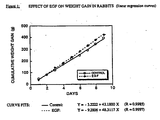
- Figure 1 is a graph showing the effect of EGF on weight gain in rabbits.
- Experiments were conducted in order to determine the effects of EGF on intestinal infection by E. coli. The results of the experiments have been combined and are summarized below.
- Twenty-eight New Zealand White rabbits (6 wk-old) were studied in 3 groups: 1) Controls (Con, n=9), 2) Infected with 1 x 10⁷ RDEC-E. coli (I, n=10), and 3) Infected-treated with 60 µg oral EGF daily for 10 days, starting 3 days prior to infection (I-EGF, n=9). Animals were assessed daily for weight gain, rectal passage of E. coli, and presence of diarrhea. Seven days post-infection, animals were killed and mucosa obtained from the jejunum (JEJ), ileum (ILE), and proximal colon (PROX) for quantitation of E. coli, and from the jejunum for mucosal enzyme assays.
- The results of the experiments are shown in Table 1. Stool cultures for infected (I) and infected and treated with EGF (I-EGF) but not Control rabbits were positive for E. coli. In the I group, 4 animals had diarrhea compared to none in the I-EGF or Control animals. Infection resulted in reduced weight gain (WG) which is prevented by EGF (see Table 1). EGF treatment also reduced E. coli colonization in the jejunum, ileum and proximal colon by > 85% compared to I, and prevented the decrease in jejunum maltase and sucrase activities.
- The above results demonstrate that administration of EGF has a number of clinical benefits in rabbits infected with E. coli, as illustrated by enhanced weight gain and absence of diarrhea when compared to untreated infected animals. EGF treatment is associated with increased disaccharidase activities and reduced bacterial colonization in the intestinal mucosa.
- An experiment was conducted in order to assess the effects of exogenous EGF on bacterial translocation across the epithelium in vitro and to determine if the effects of EGF are bacteria-specific.
- Two x 108 human pathogenic Salmonella typhimurium or E. coli were added to the apical surface of confluent human CaCo2 monolayers grown on Transwell membranes (porosity 3.0 µm). Monolayers received apical EGF (100 µM) or PBS 15 min prior to infection. Each hour post infection (0-7h), medium under the membrane was replaced and bacterial transepithelial migration rate (CFU/h) was calculated.
- The results demonstrate that, in vitro, EGF delayed the initial E. coli translocation by 1 hour and inhibited the rate of invasion by > 95% thereafter. Translocation of S. typhimurium was completely abolished in EGF-treated monolayers.
- The above results demonstrate that EGF exerts its clinical benefits at least in part by interfering with bacterial translocation. EGF may also exert its effect in controlling bacterial colonization by interfering with bacterial multiplication and/or interfering with adherence of the bacterial to the intestinal surface. The latter was further suggested by scanning electron microscopy in the Transwell membrane studies. Indeed, these observations revealed significantly higher numbers of microorganisms adhering to the epithelial surface of untreated monolayers compared with those that had been exposed to EGF. The findings further support that EGF therapy may be useful in treating or preventing enteric infections.
- EGF was tested for its potential benefits on weight gain. One group of New Zealand white rabbits (6 week old, 500-700 g) received daily oral doses of recombinant human EGF (100 µg/kg body weight) and control animals were given saline only. At 9 days, EGF-treated animals had a mean cumulative weight gain of 422 ± 27 g (n=I0) while controls only gained 394 ± 16 g (n=11). Referring to Figure 1, the slope of the linear regression curve of weight gain in EGF treated animals was significantly greater (P 0.002) than that of untreated controls. Given the linear aspect of both curves, continued feeding with EGF is likely to produce a steadily increasing effect on weight gain.
- These results indicate that EGF can promote the acceleration of weight gain in healthy animals.
- These experiments were conducted to determine the effects of EGF and an EGF receptor inhibitor on nutrient absorption and brush border ultrastructure.
- Initial experiments demonstrated that luminal EGF increased glucose absorption in intact tissue. Subsequent experiments examined the effects of EGF and an inhibitor of the EGF receptor (tyrphostin 51) on intestinal brush border membrane nutrient absorption. Tyrphostin 51 is a specific inhibitor of tyrosine kinase, which is a critical element of the EGF intracellular signalling cascade. Studies were performed in New Zealand White rabbits (700 - 1000 g; approximately 8 weeks of age). Two 10 cm blind jejunal loops separated by a 1 cm segment were tied off starting 5 cm distal to the ligament of Treitz. In separate experiments either EGF (60 ng/ml), EGF + tyrphostin (10 µM), or tyrphostin (10 µM) alone in 1.5 ml of saline vehicle was administered to one of the loops. The other loop received vehicle alone and served as a paired control. After one hour, the loops were removed and the mucosa scraped for preparation of brush border membrane vesicles. Nutrient (D-glucose and L-proline) uptake into brush border membrane vesicles was determined by established techniques. Luminal EGF stimulated a significant increase (p<0.001) in brush border membrane glucose (EGF 16.1 ± 1.0 vs CONTROL 11.5 ± 0.9 nmol/min/mg protein; n=5) and proline (EGF 3.8 ±0.5 vs CONTROL 2.6 ± 0.3 nmol/min/mg protein; n=5) transport compared to controls. Both glucose and proline transport were enhanced to a similar degree suggesting EGF stimulates a generalized increase in nutrient transport. Concurrent tyrphostin (TYR) administration completely blocked the EGF-induced increase in glucose uptake and resulted in a significant (p<0.001) reduction in nutrient uptake compared to controls (EGF + TYR 5.9 ± 0.3 vs CONTROL 10.7 ± 0.6 nmol/min/mg protein; n=4). Subsequently, a further series of experiments examined the effect of tyrphostin alone on brush border glucose transport. Tyrphostin alone significantly (p<0.001) reduced glucose uptake compared to controls (TYR 8.0 ± 0.8 vs CONTROL 10.7 ± 1.0 nmol/min/mg protein; n=4). The inventors have previously demonstrated the intestinal nutrient absorption correlates with weight gain in a number of different models. Thus, EGF treatment increases nutrient absorption and promotes weight gain. Conversely, tyrphostin treatment may promote a decrease in weight gain or weight loss and therefore may be useful in the treatment of obesity. Tyrphostin treatment may also reduce the intestinal uptake of toxic or adverse substances.
- In another series of experiments, EGF was tested for its ability to enhance immunoglobulin uptake in the intestine of young animals.
- Rats (14 day-old, Sprague-Dawley) were randomly allocated to one of 3 groups. At
time 0, one of 3 solutions was delivered by oral lavage to each group: Group 1 was given saline only (0.4 mL);Group 2 received saline (0.2 mL) + sheep IgG (0.2 mL, 5 mg/mL); Group 3 received EGF in saline (0.1 µg/mL) + sheep IgG (0.2 mL, 5 mg/mL). One, two and four hours post-inoculation, blood was collected from 4 animals in each group by cardiac puncture (after anaesthesia with methoxyfluorane). The serum was separated, and levels of sheep IgG were determined by Enzyme-Linked Immunosorbant Assay (ELISA). Values were expressed as mean t standard error serum sheep IgG (µg/mL) (Table 2). - The results are shown in Table 2 and indicate that administration of EGF increases the uptake of immunoglobulin from the intestine.
- The above describes new utilities for EGF. In particular, EGF has been shown to prevent gastrointestinal colonization by pathogens and to promote weight gain in animals. Further, EGF may increase immunoglobulin absorption in young animals. Consequently, EGF is a very useful agent that can be used to increase production in the animal industry such as the beef, pig and poultry industry as well as in aquaculture. In addition, EGF treatment may have clinical benefits in humans (i.e. during Crohn's disease, gastrointestinal infection, traveller's diarrhea, etc.). EGF may also accelerate healing of gastrointestinal ulcers by preventing colonization at the ulcer site.
- Inhibitors of EGF may decrease nutrient absorption in the intestine and as such may be useful in treating obesity or in preventing absorption of toxins.
- One skilled in the art will appreciate that the present invention relates to new utilities of EGF and inhibitors of EGF. The examples described are meant to be models to exemplify the invention and not to limit the invention. The mode of administration, the formulation and the dose of the EGF or EGF inhibitor can be varied depending on the particular utility. For example, when treating young farm animals the EGF can be administered orally in the feed or drinking water of the animal. The dose range can be varied from 10-10,000 µg/kg per day.
TABLE 1 Cumulative Weight Gain (grams) E. Coli (Log10 CFU/cm) MALT (u/g) SUC (u/g) JEJ ILE PROX CONTROL 314±23 0 0 0 301±106 77±17 INFECTED 237±27 4.19±0.3 6.16±0.3 4.92±0.3 151±36 28±3 INFECTED+EGF 316±16* 3.10±0.4* 4.88±0.2* 4.09±0.2* 436±48* 89±19* % BACTERIAL CLEARANCE IN INFECTED + EGF GROUP 92% 95% 85% Values are means ± Standard error from mean of 5 animals per group 7 days after inoculation.
*P<0.05 I-EGF vs. I.TABLE 2 Concentration of sheep IgG (µg/mL) in the serum of rats. Time (Post-Inoculation) Group 1 (Saline) Group 2 (Saline+IgG) Group 3 (EGF+IgG) 1 hour 0 ± 0 1.2 ± 0.8 4.7 ± 1.9 2 hours N/A 4.4 ±1.5 9.8 ± 3.9 4 hours 0 ± 0 5.8 ± 2.2 12.2 ± 3.8 N/A = not available -
- 1. Radostits OM, Blood DC, Gay CC (eds). Veterinary medicine. Baillere Tindall 8th Ed., London. 1994, pp 703-730.
- 2. Acres SD. Enterotoxigenic E. coli infections in newborn calves: a review. J. Dairy Sci. 1985:68;229-256.
- 3. Janke BH, Francis DH, Collins JE, et al. Attaching and effacing E. coli infection as a cause of diarrhea in young calves. JAVMA 1990;196(6) :897-901.
- 4. Grimes SD, Waxler GL, Newman JP. Adhesion of K99-positive E. coli to intestinal brush borders of pigs. Am J Vet Res. 1986;47(2) :385-388.
- 5. Bijlsm a IGW, deNijs A, van der Meer C, et al. Different pig phenotypes affect adherence of E. coli to jejunal brush borders by K88ab, K88ac, K88ad antigen. Infect Immun 1982;37:891-894.
- 6. Mainil JG, Bex F, Jacguemin E, et al. Prevalence of four enterotoxin (STaP,STaH,STb,and LT) and four adhesin subunit (K99,K88,987P, and F41) genes among E. coli isolates from cattle. Am J Vet Res. 1990;51(2) 187-190.
- 7. Schoonderwoerd M, Clarke RC, van Dreumal AA, et al. Colitis in calves: Natural and experimental infection with a verotoxin-producing strain of E. coli 0111:NM. Can J Vet Res. 1988;52:484-487.
- 8. Hadad JJ, Gyles CL. Scanning and transmission electron microscopic study of the small intestine of colostrum-fed calves infected with selected strains of E. coli. Am J Vet Res. 1982;43(1) 41-49.
- 9. Elliott E, Li Z, Bell C, et al. Modulation of host response to E. coli 0157:H7 infection by antiCD18 antibody in rabbits. Gastroenterology 1994;106:1554-1561.
- 10. Weaver LT, Gonella PA, Israel EJ, et al. Uptake and transport of Epidermal Growth Factor by the small intestinal epithelium of the fetal rat. Gastroenterology 1990;98:828-837.
- 11. O'Loughlin EV, Chung M, Hollenberg M, et al. Effect of epidermal growth factor on ontogeny of the gastrointestinal tract. Am J Physiol 1985;249:G674-G678.
- 12. Goodlad RA, Raja KB, Peters TJ, et al. Effects of urogastrone-epidermal growth factor on intestinal brush border enzymes and mitotic activity. Gut 1991;994-998.
- 13. Walker-Smith JA, Phillips AD, Walford N, et al. Intravenous epidermal growth factor/urogastrone increases small intestinal cell proliferation in congenital microvillous atrophy. Lancet 1985;ii:1239-1240.
- 14. Hardin JA, Buret A, Meddings JB, et al. Effect of epidermal growth factor on enterocyte brush-border surface area. Am J Physiol 1993;264:G3120G318.
- 15. O'Loughlin EV, Winter M, Shun A, et al. Structural and functional adaptation following jejunal resection in rabbits: Effect of epidermal growth factor. Gastroenterology 1994;107:87-93.
- 16. Pothier P, Menard D. Presence and characteristics of epidermal growth factor receptors in human fetal small intestine and colon. FEBS lett. 1988;228(1) 113-117.
- 17. Brake AJ, Merryweather JP, Coit DG, et al. α-factor directed synthesis and secretion of mature foreign proteins in Saccharomyces cerevisiae. Proc Natl Acad Sci USA 1984;81:4642-4646.
- 18. Brown GL, Curtsinger L, Brightwell JR, et al. Enhancement of epidermal regeneration by biosynthetic epidermal growth factor. J Exp Med 1986;163:1319-1324.
- 19. Brown GL, Nanney LB, Griffen J, et al. Enhancement of wound healing by topical treatment with epidermal growth factor. New Engl J Med 1989;321:76-79.
- 20. Zijlstra RT, Odle J, Hall WF, et al. Effect of orally administered epidermal growth factor in intestinal recovery of neonatal pigs infected with rotavirus. J Ped Gastro Nutr 1994;19:382-390.
- 21. Bird AR, Croom WJ, Fan YK, et al. Jejunal glucose absorption is enhanced by epidermal growth factor in mice. J Nutr 1994;124:231-240.
- 22. Hardin JA, Gall DG. The effect of TGFα on intestinal solute transport. Reg Pep 1992;39:169-176.
- 23. Horwath K, Hill ID, Devarajan P, et al. Short-term effect of epidermal growth factor on sodium and glucose cotransport of isolated jejunal epithelial cells. Biochem Biophys Acta Mol Cell Res 1994;1222:215-222.
- 24. Kitagawa T, Tanaka M, Akamatsu Y. Regulation of glucose transport activity and expression of glucose transporter mRNA by serum, growth factors, and phorbol ester in quiescent mouse fibroblasts. Biochem Biophys Acta 1989;980:100-108.
- 25. Opleta-Madsen K, Hardin JA, Gall DG. Epidermal growth factor upregulates intestinal electrolyte and nutrient transport. Am J Physiol 1991;260:G807-G814.
- 26. Opleta-Madsen K, Meddings JB, Gall DG. Epidermal growth factor and postnatal development of intestinal transport and membrane structure. Pediatr Res 1991;30:342-350.
- 27. Salloum RM, Stevens BR, Schultz GS, et al. Regulation of small intestinal glutamine transport by epidermal growth factor. Surgery 1993;113:552-559.
- 28. James PS, Smith MW, Tivey DR, et al. Dexamethasone selectively increases sodium-dependent alanine transport across neonatal piglet intestine. J Physiol 1987;393:569-582.
- 29. Jaeger LA, Lamar CH, Cline TR, et al. Effect of orally administered epidermal growth factor on the jejunal mucosa of weaned pigs. Am. J. Vet. Res. 1990;5(3):471-474.
- 30. Brown GL, Nanney LB, Griffin J, et al. Enhancement of wound healing by topical treatment with epidermal growth factor. New Engl. J. Med. 1989;321(2):76-79.
- 31. Aldridge B, Garry F, Adams R. Role of colostral tranfer in neonatal calf management: Failure of acquisition of passive immunity. Continuing education article #8. Compend. N. Am. Ed. 1992;14(2):265-269.
- 32. Donowitz M, Montgomery JLM, Walker MS, et al. Brush border tyrosine phosphorylation stimulates ileal neutral NaCl absorption and brush border Na+H+ exchange. Am J Physiol 1994;266:G647-G656.
Claims (10)
- A use of epidermal growth factor (EGF) for preparing a EGF preparation for increasing weight gain in an animal.
- A use of epidermal growth factor (EGF) for preparing a medicament for promoting weight gain in an animal.
- A use as claimed in claim 2, wherein the medicament is for treating malnourished people and persons suffering from anorexia nervosa.
- The use of any preceding claims 1 to 3, wherein the EGF is present in the feed or drinking water of the animal.
- The use of any preceding claim 1 to 4, wherein the EGF preparation is for oral uptake.
- The use of any preceding claim 1 to 5, wherein the preparation is for an oral EGF uptake by the animal of 10 to 10000 µg/kg per day.
- The use of any preceding claim 1 to 6, wherein the preparation is for an animal selected from adult animal, young animal, healthy animal, animal with an infection, farm animal, food producing animal, a human.
- A use of epidermal growth factor (EGF) for increasing animal production in the agriculture or aquaculture industry.
- The use of claim 8, wherein the epidermal growth factor (EGF) is added to the feed or drinking water of the animal.
- The use of claim 9, wherein the epidermal growth factor (EGF) is administered for at least 10 days.
Applications Claiming Priority (4)
| Application Number | Priority Date | Filing Date | Title |
|---|---|---|---|
| US08/438,901 US5753622A (en) | 1995-05-10 | 1995-05-10 | Use of epidermal growth factor as a gastrointestinal therapeutic agent |
| US438901 | 1995-05-10 | ||
| EP00123426A EP1092437B1 (en) | 1995-05-10 | 1996-05-09 | The use of epidermal growth factor as a gastrointestinal therapeutic agent |
| EP96913397A EP0824357B1 (en) | 1995-05-10 | 1996-05-09 | The use of epidermal growth factor as a gastrointestinal therapeutic agent |
Related Parent Applications (1)
| Application Number | Title | Priority Date | Filing Date |
|---|---|---|---|
| EP00123426A Division EP1092437B1 (en) | 1995-05-10 | 1996-05-09 | The use of epidermal growth factor as a gastrointestinal therapeutic agent |
Publications (2)
| Publication Number | Publication Date |
|---|---|
| EP1479394A1 EP1479394A1 (en) | 2004-11-24 |
| EP1479394B1 true EP1479394B1 (en) | 2007-03-28 |
Family
ID=23742496
Family Applications (3)
| Application Number | Title | Priority Date | Filing Date |
|---|---|---|---|
| EP96913397A Expired - Lifetime EP0824357B1 (en) | 1995-05-10 | 1996-05-09 | The use of epidermal growth factor as a gastrointestinal therapeutic agent |
| EP00123426A Expired - Lifetime EP1092437B1 (en) | 1995-05-10 | 1996-05-09 | The use of epidermal growth factor as a gastrointestinal therapeutic agent |
| EP04019831A Expired - Lifetime EP1479394B1 (en) | 1995-05-10 | 1996-05-09 | The use of epidermal growth factor (EGF) for increasing weight gain in an animal |
Family Applications Before (2)
| Application Number | Title | Priority Date | Filing Date |
|---|---|---|---|
| EP96913397A Expired - Lifetime EP0824357B1 (en) | 1995-05-10 | 1996-05-09 | The use of epidermal growth factor as a gastrointestinal therapeutic agent |
| EP00123426A Expired - Lifetime EP1092437B1 (en) | 1995-05-10 | 1996-05-09 | The use of epidermal growth factor as a gastrointestinal therapeutic agent |
Country Status (12)
| Country | Link |
|---|---|
| US (2) | US5753622A (en) |
| EP (3) | EP0824357B1 (en) |
| JP (1) | JP3549541B2 (en) |
| AT (3) | ATE357927T1 (en) |
| AU (1) | AU704675B2 (en) |
| CA (2) | CA2492724C (en) |
| DE (3) | DE69614377T2 (en) |
| DK (3) | DK1479394T3 (en) |
| ES (2) | ES2285320T3 (en) |
| NZ (2) | NZ307134A (en) |
| PT (1) | PT1479394E (en) |
| WO (1) | WO1996035445A1 (en) |
Families Citing this family (18)
| Publication number | Priority date | Publication date | Assignee | Title |
|---|---|---|---|---|
| US5753622A (en) * | 1995-05-10 | 1998-05-19 | University Technologies International, Inc. | Use of epidermal growth factor as a gastrointestinal therapeutic agent |
| US6313103B1 (en) | 1998-05-13 | 2001-11-06 | Carrington Laboratories, Inc. | Pectic substance as a growth factor stabilizer |
| US5929051A (en) * | 1998-05-13 | 1999-07-27 | Carrington Laboratories, Inc. | Aloe pectins |
| US7022683B1 (en) * | 1998-05-13 | 2006-04-04 | Carrington Laboratories, Inc. | Pharmacological compositions comprising pectins having high molecular weights and low degrees of methoxylation |
| US20060014684A1 (en) * | 2000-03-03 | 2006-01-19 | University Technologies International Inc. | Novel uses of EGF |
| US7494669B2 (en) | 2001-02-28 | 2009-02-24 | Carrington Laboratories, Inc. | Delivery of physiological agents with in-situ gels comprising anionic polysaccharides |
| JP2004536589A (en) * | 2001-05-18 | 2004-12-09 | カナダ国 | Bovine epidermal growth factor nucleic acid and protein sequences |
| JP2005507919A (en) * | 2001-10-26 | 2005-03-24 | ユニヴァーシティ・テクノロジーズ・インターナショナル・インコーポレーテッド | Use of EGF to inhibit pathogenic infections of the urogenital pathway |
| CA2427190A1 (en) * | 2002-04-30 | 2003-10-30 | Alberta Research Council Inc. | Production of recombinant epidermal growth factor in plants |
| WO2004001020A2 (en) * | 2002-06-19 | 2003-12-31 | Vlaams Interuniversitair Instituut Voor Biotechnologie Vzw | Methods and means to promote gut absorption |
| CA2582958A1 (en) * | 2004-09-30 | 2006-04-06 | University Technologies International Inc. | Rehydration compositions comprising epidermal growth factor |
| US8703769B2 (en) * | 2005-07-15 | 2014-04-22 | The University Of North Carolina At Chapel Hill | Use of EGFR inhibitors to prevent or treat obesity |
| AU2006319216B2 (en) | 2005-11-29 | 2012-09-13 | Intrexon Actobiotics Nv | Induction of mucosal tolerance to antigens |
| EP3351268B1 (en) | 2007-01-25 | 2020-08-05 | Intrexon Actobiotics NV | Treatment of immune disease by mucosal delivery of antigens |
| WO2010042821A1 (en) * | 2008-10-10 | 2010-04-15 | Nationwide Children's Hospital | Method of treating necrotizing enterocolitis using heparin binding epidermal growth factor |
| CN102696887B (en) * | 2012-06-20 | 2013-07-31 | 湖南海谷生物技术有限公司 | Feed active egg powder with nutrition, healthcare and growth promotion functions and production method thereof |
| US11241480B2 (en) * | 2017-01-26 | 2022-02-08 | Washington University | Methods for modulation of dietary and microbial exposure with compositions comprising an EGFR ligand |
| CN113813369B (en) * | 2021-11-09 | 2023-09-22 | 浙江省农业科学院 | EGF/MMT complex for preventing/treating intestinal damage in piglets |
Family Cites Families (4)
| Publication number | Priority date | Publication date | Assignee | Title |
|---|---|---|---|---|
| GB8409960D0 (en) * | 1984-04-17 | 1984-05-31 | Searle & Co | Therapeutic method |
| DE3781682T2 (en) * | 1986-12-11 | 1993-01-21 | British Tech Group | IMPROVEMENTS IN USE OR IN RELATION TO THE USE OF EGF. |
| DK0577903T3 (en) | 1992-07-06 | 1998-04-06 | Nestle Sa | Antigastric agent |
| US5753622A (en) * | 1995-05-10 | 1998-05-19 | University Technologies International, Inc. | Use of epidermal growth factor as a gastrointestinal therapeutic agent |
-
1995
- 1995-05-10 US US08/438,901 patent/US5753622A/en not_active Expired - Lifetime
-
1996
- 1996-05-09 DE DE69614377T patent/DE69614377T2/en not_active Expired - Fee Related
- 1996-05-09 ES ES04019831T patent/ES2285320T3/en not_active Expired - Lifetime
- 1996-05-09 DE DE69633583T patent/DE69633583T2/en not_active Expired - Fee Related
- 1996-05-09 NZ NZ307134A patent/NZ307134A/en not_active IP Right Cessation
- 1996-05-09 WO PCT/CA1996/000291 patent/WO1996035445A1/en not_active Ceased
- 1996-05-09 EP EP96913397A patent/EP0824357B1/en not_active Expired - Lifetime
- 1996-05-09 DK DK04019831T patent/DK1479394T3/en active
- 1996-05-09 AU AU56411/96A patent/AU704675B2/en not_active Ceased
- 1996-05-09 AT AT04019831T patent/ATE357927T1/en not_active IP Right Cessation
- 1996-05-09 DK DK96913397T patent/DK0824357T3/en active
- 1996-05-09 DE DE69637002T patent/DE69637002T2/en not_active Expired - Fee Related
- 1996-05-09 NZ NZ501482A patent/NZ501482A/en not_active IP Right Cessation
- 1996-05-09 AT AT00123426T patent/ATE278415T1/en not_active IP Right Cessation
- 1996-05-09 CA CA2492724A patent/CA2492724C/en not_active Expired - Fee Related
- 1996-05-09 EP EP00123426A patent/EP1092437B1/en not_active Expired - Lifetime
- 1996-05-09 EP EP04019831A patent/EP1479394B1/en not_active Expired - Lifetime
- 1996-05-09 DK DK00123426T patent/DK1092437T3/en active
- 1996-05-09 PT PT04019831T patent/PT1479394E/en unknown
- 1996-05-09 AT AT96913397T patent/ATE203912T1/en not_active IP Right Cessation
- 1996-05-09 ES ES00123426T patent/ES2226681T3/en not_active Expired - Lifetime
- 1996-05-09 CA CA002220434A patent/CA2220434C/en not_active Expired - Fee Related
- 1996-05-09 JP JP53362496A patent/JP3549541B2/en not_active Expired - Fee Related
-
2000
- 2000-03-03 US US09/518,135 patent/US6656907B1/en not_active Expired - Fee Related
Also Published As
| Publication number | Publication date |
|---|---|
| ATE203912T1 (en) | 2001-08-15 |
| NZ307134A (en) | 2000-02-28 |
| AU704675B2 (en) | 1999-04-29 |
| CA2220434C (en) | 2005-02-22 |
| DE69637002D1 (en) | 2007-05-10 |
| DE69614377D1 (en) | 2001-09-13 |
| HK1072894A1 (en) | 2005-09-16 |
| EP1092437A1 (en) | 2001-04-18 |
| DE69633583D1 (en) | 2004-11-11 |
| ES2285320T3 (en) | 2007-11-16 |
| AU5641196A (en) | 1996-11-29 |
| ATE357927T1 (en) | 2007-04-15 |
| EP0824357B1 (en) | 2001-08-08 |
| EP1479394A1 (en) | 2004-11-24 |
| PT1479394E (en) | 2007-04-30 |
| NZ501482A (en) | 2004-12-24 |
| CA2220434A1 (en) | 1996-11-14 |
| DE69614377T2 (en) | 2002-05-23 |
| EP1092437B1 (en) | 2004-10-06 |
| JPH11505528A (en) | 1999-05-21 |
| DE69633583T2 (en) | 2006-02-23 |
| JP3549541B2 (en) | 2004-08-04 |
| DK0824357T3 (en) | 2001-10-08 |
| DE69637002T2 (en) | 2007-08-16 |
| CA2492724A1 (en) | 1996-11-14 |
| DK1092437T3 (en) | 2005-01-31 |
| DK1479394T3 (en) | 2007-06-11 |
| EP0824357A1 (en) | 1998-02-25 |
| US5753622A (en) | 1998-05-19 |
| WO1996035445A1 (en) | 1996-11-14 |
| ATE278415T1 (en) | 2004-10-15 |
| US6656907B1 (en) | 2003-12-02 |
| ES2226681T3 (en) | 2005-04-01 |
| CA2492724C (en) | 2010-08-03 |
Similar Documents
| Publication | Publication Date | Title |
|---|---|---|
| EP0824357B1 (en) | The use of epidermal growth factor as a gastrointestinal therapeutic agent | |
| EP1539224B1 (en) | Antimicrobial composition and method for use | |
| US6387419B1 (en) | Piglet feeding method | |
| CN1378458A (en) | Use of TGF-β and Growth Factors in Treatment and Prevention of Intestinal Mucosa Diseases | |
| US4837202A (en) | Method for stimulating the immune system | |
| March | The host and its microflora: an ecological unit | |
| Ferket et al. | Mannan oligosaccharides versus antibiotics for turkeys. | |
| CN1665401A (en) | Vitamin inclusion system for stabilizing immune responses in animals | |
| HK1072894B (en) | The use of epidermal growth factor (egf) for increasing weight gain in an animal | |
| KR100956648B1 (en) | Antigen production method of pig disease, immune yolk antibody production and composition for controlling pig disease with electrolyte | |
| PIQUER et al. | Posthatching changes in the immunoglobulin A concentration in the jejunum and bile of turkeys | |
| US5028591A (en) | Method for stimulating the immune system | |
| US20060014684A1 (en) | Novel uses of EGF | |
| Vachkova et al. | Origin, structure and physiological role of the epidermal growth factor: a review | |
| CA1329122C (en) | Prevention of bovine respiratory disease complex in cattle by administration of interferon | |
| CN109985022B (en) | Povidone-iodine preparation and preparation method and use thereof | |
| CN115590117A (en) | Feed additive for preventing African swine fever and method for preparing feed by using feed additive | |
| Manafi | Comparison Effect of Saccharomyces cerevisiae and Antibiotic Growth Promoter on Morphology and Bacterial Counts in Intestinal of Broilers | |
| CA2464609A1 (en) | Use of egf to inhibit pathogenic infections of the urogenital tract | |
| Shu | Effects of Yersinia enterocolitica infection on the development of the small intestine in newborn piglets: a thesis presented in partial fulfilment of the requirements for the degree of Doctor of Philosophy in Physiology at Massey University |
Legal Events
| Date | Code | Title | Description |
|---|---|---|---|
| PUAI | Public reference made under article 153(3) epc to a published international application that has entered the european phase |
Free format text: ORIGINAL CODE: 0009012 |
|
| AC | Divisional application: reference to earlier application |
Ref document number: 1092437 Country of ref document: EP Kind code of ref document: P Ref document number: 0824357 Country of ref document: EP Kind code of ref document: P |
|
| AK | Designated contracting states |
Kind code of ref document: A1 Designated state(s): AT BE CH DE DK ES FI FR GB GR IE IT LI LU MC NL PT SE |
|
| 17P | Request for examination filed |
Effective date: 20050523 |
|
| AKX | Designation fees paid |
Designated state(s): AT BE CH DE DK ES FI FR GB GR IE IT LI LU MC NL PT SE |
|
| REG | Reference to a national code |
Ref country code: HK Ref legal event code: DE Ref document number: 1072894 Country of ref document: HK |
|
| GRAP | Despatch of communication of intention to grant a patent |
Free format text: ORIGINAL CODE: EPIDOSNIGR1 |
|
| GRAS | Grant fee paid |
Free format text: ORIGINAL CODE: EPIDOSNIGR3 |
|
| GRAA | (expected) grant |
Free format text: ORIGINAL CODE: 0009210 |
|
| RIN1 | Information on inventor provided before grant (corrected) |
Inventor name: HARDIN, JAMES A. Inventor name: GALL, D. GRANT Inventor name: OLSON, MERLE E. Inventor name: BURET, ANDRE G. |
|
| AC | Divisional application: reference to earlier application |
Ref document number: 0824357 Country of ref document: EP Kind code of ref document: P Ref document number: 1092437 Country of ref document: EP Kind code of ref document: P |
|
| AK | Designated contracting states |
Kind code of ref document: B1 Designated state(s): AT BE CH DE DK ES FI FR GB GR IE IT LI LU MC NL PT SE |
|
| REG | Reference to a national code |
Ref country code: GB Ref legal event code: FG4D |
|
| REG | Reference to a national code |
Ref country code: CH Ref legal event code: NV Representative=s name: E. BLUM & CO. AG PATENT- UND MARKENANWAELTE VSP Ref country code: PT Ref legal event code: SC4A Free format text: AVAILABILITY OF NATIONAL TRANSLATION Effective date: 20070403 Ref country code: CH Ref legal event code: EP |
|
| REF | Corresponds to: |
Ref document number: 69637002 Country of ref document: DE Date of ref document: 20070510 Kind code of ref document: P |
|
| REG | Reference to a national code |
Ref country code: IE Ref legal event code: FG4D |
|
| REG | Reference to a national code |
Ref country code: SE Ref legal event code: TRGR |
|
| REG | Reference to a national code |
Ref country code: GR Ref legal event code: EP Ref document number: 20070401806 Country of ref document: GR |
|
| RAP2 | Party data changed (patent owner data changed or rights of a patent transferred) |
Owner name: UNIVERSITY TECHNOLOGIES INTERNATIONAL INC. |
|
| ET | Fr: translation filed | ||
| REG | Reference to a national code |
Ref country code: HK Ref legal event code: GR Ref document number: 1072894 Country of ref document: HK |
|
| NLT2 | Nl: modifications (of names), taken from the european patent patent bulletin |
Owner name: UNIVERSITY TECHNOLOGIES INTERNATIONAL INC. Effective date: 20070829 |
|
| REG | Reference to a national code |
Ref country code: ES Ref legal event code: FG2A Ref document number: 2285320 Country of ref document: ES Kind code of ref document: T3 |
|
| PG25 | Lapsed in a contracting state [announced via postgrant information from national office to epo] |
Ref country code: MC Free format text: LAPSE BECAUSE OF NON-PAYMENT OF DUE FEES Effective date: 20070531 |
|
| PLBE | No opposition filed within time limit |
Free format text: ORIGINAL CODE: 0009261 |
|
| STAA | Information on the status of an ep patent application or granted ep patent |
Free format text: STATUS: NO OPPOSITION FILED WITHIN TIME LIMIT |
|
| 26N | No opposition filed |
Effective date: 20080102 |
|
| PGFP | Annual fee paid to national office [announced via postgrant information from national office to epo] |
Ref country code: ES Payment date: 20080526 Year of fee payment: 13 Ref country code: DK Payment date: 20080528 Year of fee payment: 13 Ref country code: CH Payment date: 20080530 Year of fee payment: 13 |
|
| PGFP | Annual fee paid to national office [announced via postgrant information from national office to epo] |
Ref country code: AT Payment date: 20080521 Year of fee payment: 13 |
|
| PGFP | Annual fee paid to national office [announced via postgrant information from national office to epo] |
Ref country code: PT Payment date: 20080526 Year of fee payment: 13 Ref country code: FI Payment date: 20080530 Year of fee payment: 13 Ref country code: BE Payment date: 20080624 Year of fee payment: 13 |
|
| PGFP | Annual fee paid to national office [announced via postgrant information from national office to epo] |
Ref country code: NL Payment date: 20080524 Year of fee payment: 13 Ref country code: IE Payment date: 20080528 Year of fee payment: 13 Ref country code: SE Payment date: 20080529 Year of fee payment: 13 Ref country code: DE Payment date: 20080630 Year of fee payment: 13 |
|
| PGFP | Annual fee paid to national office [announced via postgrant information from national office to epo] |
Ref country code: IT Payment date: 20080528 Year of fee payment: 13 |
|
| PGFP | Annual fee paid to national office [announced via postgrant information from national office to epo] |
Ref country code: GR Payment date: 20080530 Year of fee payment: 13 |
|
| PG25 | Lapsed in a contracting state [announced via postgrant information from national office to epo] |
Ref country code: LU Free format text: LAPSE BECAUSE OF NON-PAYMENT OF DUE FEES Effective date: 20070509 |
|
| REG | Reference to a national code |
Ref country code: PT Ref legal event code: MM4A Free format text: LAPSE DUE TO NON-PAYMENT OF FEES Effective date: 20091109 |
|
| BERE | Be: lapsed |
Owner name: UNIVERSITY TECHNOLOGIES INTERNATIONAL INC. Effective date: 20090531 |
|
| REG | Reference to a national code |
Ref country code: CH Ref legal event code: PL |
|
| REG | Reference to a national code |
Ref country code: DK Ref legal event code: EBP |
|
| GBPC | Gb: european patent ceased through non-payment of renewal fee |
Effective date: 20090509 |
|
| PG25 | Lapsed in a contracting state [announced via postgrant information from national office to epo] |
Ref country code: AT Free format text: LAPSE BECAUSE OF NON-PAYMENT OF DUE FEES Effective date: 20090509 Ref country code: LI Free format text: LAPSE BECAUSE OF NON-PAYMENT OF DUE FEES Effective date: 20090531 Ref country code: FI Free format text: LAPSE BECAUSE OF NON-PAYMENT OF DUE FEES Effective date: 20090509 Ref country code: CH Free format text: LAPSE BECAUSE OF NON-PAYMENT OF DUE FEES Effective date: 20090531 |
|
| NLV4 | Nl: lapsed or anulled due to non-payment of the annual fee |
Effective date: 20091201 |
|
| PG25 | Lapsed in a contracting state [announced via postgrant information from national office to epo] |
Ref country code: NL Free format text: LAPSE BECAUSE OF NON-PAYMENT OF DUE FEES Effective date: 20091201 |
|
| REG | Reference to a national code |
Ref country code: FR Ref legal event code: ST Effective date: 20100129 |
|
| PG25 | Lapsed in a contracting state [announced via postgrant information from national office to epo] |
Ref country code: PT Free format text: LAPSE BECAUSE OF NON-PAYMENT OF DUE FEES Effective date: 20091109 |
|
| PG25 | Lapsed in a contracting state [announced via postgrant information from national office to epo] |
Ref country code: DK Free format text: LAPSE BECAUSE OF NON-PAYMENT OF DUE FEES Effective date: 20090531 Ref country code: FR Free format text: LAPSE BECAUSE OF NON-PAYMENT OF DUE FEES Effective date: 20090602 Ref country code: IE Free format text: LAPSE BECAUSE OF NON-PAYMENT OF DUE FEES Effective date: 20090511 |
|
| PGFP | Annual fee paid to national office [announced via postgrant information from national office to epo] |
Ref country code: FR Payment date: 20080519 Year of fee payment: 13 |
|
| PG25 | Lapsed in a contracting state [announced via postgrant information from national office to epo] |
Ref country code: GB Free format text: LAPSE BECAUSE OF NON-PAYMENT OF DUE FEES Effective date: 20090509 |
|
| PG25 | Lapsed in a contracting state [announced via postgrant information from national office to epo] |
Ref country code: BE Free format text: LAPSE BECAUSE OF NON-PAYMENT OF DUE FEES Effective date: 20090531 Ref country code: GR Free format text: LAPSE BECAUSE OF NON-PAYMENT OF DUE FEES Effective date: 20091202 Ref country code: DE Free format text: LAPSE BECAUSE OF NON-PAYMENT OF DUE FEES Effective date: 20091201 |
|
| REG | Reference to a national code |
Ref country code: ES Ref legal event code: FD2A Effective date: 20090511 |
|
| PG25 | Lapsed in a contracting state [announced via postgrant information from national office to epo] |
Ref country code: ES Free format text: LAPSE BECAUSE OF NON-PAYMENT OF DUE FEES Effective date: 20090511 |
|
| REG | Reference to a national code |
Ref country code: GB Ref legal event code: S28 Free format text: APPLICATION FILED |
|
| PG25 | Lapsed in a contracting state [announced via postgrant information from national office to epo] |
Ref country code: IT Free format text: LAPSE BECAUSE OF NON-PAYMENT OF DUE FEES Effective date: 20090509 |
|
| PG25 | Lapsed in a contracting state [announced via postgrant information from national office to epo] |
Ref country code: SE Free format text: LAPSE BECAUSE OF NON-PAYMENT OF DUE FEES Effective date: 20090510 |
|
| REG | Reference to a national code |
Ref country code: GB Ref legal event code: 732E Free format text: REGISTERED BETWEEN 20111103 AND 20111109 |
|
| REG | Reference to a national code |
Ref country code: GB Ref legal event code: S28 Free format text: RESTORATION ALLOWED Effective date: 20120316 |
|
| PGFP | Annual fee paid to national office [announced via postgrant information from national office to epo] |
Ref country code: GB Payment date: 20120530 Year of fee payment: 17 |
|
| GBPC | Gb: european patent ceased through non-payment of renewal fee |
Effective date: 20130509 |
|
| PG25 | Lapsed in a contracting state [announced via postgrant information from national office to epo] |
Ref country code: GB Free format text: LAPSE BECAUSE OF NON-PAYMENT OF DUE FEES Effective date: 20130509 |