EP1479196B1 - Data communication in frame mode for differentiated services - Google Patents
Data communication in frame mode for differentiated services Download PDFInfo
- Publication number
- EP1479196B1 EP1479196B1 EP01275177A EP01275177A EP1479196B1 EP 1479196 B1 EP1479196 B1 EP 1479196B1 EP 01275177 A EP01275177 A EP 01275177A EP 01275177 A EP01275177 A EP 01275177A EP 1479196 B1 EP1479196 B1 EP 1479196B1
- Authority
- EP
- European Patent Office
- Prior art keywords
- frame
- field
- service
- channel
- hdlc
- Prior art date
- Legal status (The legal status is an assumption and is not a legal conclusion. Google has not performed a legal analysis and makes no representation as to the accuracy of the status listed.)
- Expired - Lifetime
Links
- 238000004891 communication Methods 0.000 title claims abstract description 21
- 238000000034 method Methods 0.000 claims abstract description 63
- 230000007246 mechanism Effects 0.000 claims abstract description 52
- 230000005540 biological transmission Effects 0.000 claims abstract description 50
- 239000010410 layer Substances 0.000 claims abstract description 29
- 238000001514 detection method Methods 0.000 claims abstract description 11
- 238000013467 fragmentation Methods 0.000 claims abstract description 11
- 238000006062 fragmentation reaction Methods 0.000 claims abstract description 11
- 230000001934 delay Effects 0.000 claims abstract description 6
- 239000002346 layers by function Substances 0.000 claims abstract description 5
- 230000001360 synchronised effect Effects 0.000 claims description 13
- 230000011218 segmentation Effects 0.000 claims description 10
- 238000005516 engineering process Methods 0.000 claims description 9
- 239000000725 suspension Substances 0.000 claims description 7
- 101150012579 ADSL gene Proteins 0.000 claims description 5
- 102100020775 Adenylosuccinate lyase Human genes 0.000 claims description 5
- 108700040193 Adenylosuccinate lyases Proteins 0.000 claims description 5
- 238000003780 insertion Methods 0.000 claims description 4
- 230000037431 insertion Effects 0.000 claims description 4
- 230000004069 differentiation Effects 0.000 claims 1
- 239000000203 mixture Substances 0.000 claims 1
- 230000008569 process Effects 0.000 abstract description 3
- 230000006978 adaptation Effects 0.000 description 16
- 238000010586 diagram Methods 0.000 description 6
- 238000012546 transfer Methods 0.000 description 5
- 239000012634 fragment Substances 0.000 description 3
- 238000004458 analytical method Methods 0.000 description 2
- 238000012986 modification Methods 0.000 description 2
- 230000004048 modification Effects 0.000 description 2
- 230000000737 periodic effect Effects 0.000 description 2
- BBIKPGRUAMIMIA-UHFFFAOYSA-N sapb Chemical compound C1SCC(C(=O)NC(CC(N)=O)C(O)=O)NC(=O)C(C(C)O)NC(=O)C(C(C)O)NC(=O)C(C(C)CC)NC(=O)C(=C)NC(=O)C(CC(C)C)NC(=O)C(CO)NC(=O)C1NC(=O)C(CC(O)=O)NC(=O)CNC(=O)C1NC(=O)C(CC(C)C)NC(=O)C(CC(C)C)NC(=O)C(CC(C)C)NC(=O)C(=C)NC(=O)C(C)NC(=O)C(CCCNC(N)=N)NC(=O)C(NC(=O)CNC(=O)C(N)C(C)O)CSC1 BBIKPGRUAMIMIA-UHFFFAOYSA-N 0.000 description 2
- 230000004913 activation Effects 0.000 description 1
- 239000008186 active pharmaceutical agent Substances 0.000 description 1
- 238000004883 computer application Methods 0.000 description 1
- 230000000694 effects Effects 0.000 description 1
- 238000005538 encapsulation Methods 0.000 description 1
- 238000009432 framing Methods 0.000 description 1
- 230000010365 information processing Effects 0.000 description 1
- 230000000977 initiatory effect Effects 0.000 description 1
- 238000013507 mapping Methods 0.000 description 1
- RPOCQUTXCSLYFJ-UHFFFAOYSA-N n-(4-ethylphenyl)-2-(2-methyl-3,5-dioxothiomorpholin-4-yl)acetamide Chemical compound C1=CC(CC)=CC=C1NC(=O)CN1C(=O)C(C)SCC1=O RPOCQUTXCSLYFJ-UHFFFAOYSA-N 0.000 description 1
- 230000006855 networking Effects 0.000 description 1
- HRULVFRXEOZUMJ-UHFFFAOYSA-K potassium;disodium;2-(4-chloro-2-methylphenoxy)propanoate;methyl-dioxido-oxo-$l^{5}-arsane Chemical compound [Na+].[Na+].[K+].C[As]([O-])([O-])=O.[O-]C(=O)C(C)OC1=CC=C(Cl)C=C1C HRULVFRXEOZUMJ-UHFFFAOYSA-K 0.000 description 1
Images





Classifications
-
- H—ELECTRICITY
- H04—ELECTRIC COMMUNICATION TECHNIQUE
- H04L—TRANSMISSION OF DIGITAL INFORMATION, e.g. TELEGRAPHIC COMMUNICATION
- H04L47/00—Traffic control in data switching networks
- H04L47/10—Flow control; Congestion control
- H04L47/24—Traffic characterised by specific attributes, e.g. priority or QoS
- H04L47/2408—Traffic characterised by specific attributes, e.g. priority or QoS for supporting different services, e.g. a differentiated services [DiffServ] type of service
-
- H—ELECTRICITY
- H04—ELECTRIC COMMUNICATION TECHNIQUE
- H04L—TRANSMISSION OF DIGITAL INFORMATION, e.g. TELEGRAPHIC COMMUNICATION
- H04L47/00—Traffic control in data switching networks
- H04L47/10—Flow control; Congestion control
- H04L47/24—Traffic characterised by specific attributes, e.g. priority or QoS
- H04L47/245—Traffic characterised by specific attributes, e.g. priority or QoS using preemption
-
- H—ELECTRICITY
- H04—ELECTRIC COMMUNICATION TECHNIQUE
- H04L—TRANSMISSION OF DIGITAL INFORMATION, e.g. TELEGRAPHIC COMMUNICATION
- H04L47/00—Traffic control in data switching networks
- H04L47/10—Flow control; Congestion control
- H04L47/43—Assembling or disassembling of packets, e.g. segmentation and reassembly [SAR]
Definitions
- the present invention is related to a method for data communication over a common channel.
- the classical data communication technologies in Wide Area Networks are circuit switching and packet switching, having Frame Relay and Asynchronous Transfer Mode (ATM) assumed more recently a significant role.
- ATM Asynchronous Transfer Mode
- data communications and networking there is a lot of activity in several standardisation bodies, namely the International Organisation for Standardisation, ITU-T, IETF and Frame Relay Forum.
- the following documents of these standardisation bodies are referred in this invention:
- Patent US-5557608 presents a method for supporting high priority traffic on low speed communication links, that uses a preempt/resume protocol based on special non-standard flags, a 9-bit sequence for the start-preempt flag and a 10-bit sequence for the end-preempt flag.
- the main limitations of this patent are the support of only two traffic priorities, and the incompatibility with standard HDLC controllers. These limitations do not exist in the present patent, which allows an indefined number of traffic priorities and consequently the support of the different PHB defined in the Differenciated Services model.
- the compatibility of the current invention with the HDLC basic functions allows the use of standard hardware controllers.
- Patent WO-00/4555 presents a method for low latency multiplexing of real-time and regular data in the same data frame.
- the main limitations of this patent are the support of only two traffic priorities, and the support of only octet-oriented protocols. These limitations do not exist in the current invention, which allows an indefined number of traffic priorities and supports different types of protocols, namely octet-oriented and bit-oriented protocols.
- Patent JP-63061532 presents a method that allow the interruption of normal data transmission when the transmission request of a preferencial data frame is received.
- the main limitations of this patent are the support of only two traffic priorities, and the use of a mechanism in the reserve channel to activate the transmission of the preferencial data, which implies additional delays.
- the activation of the mechanism to send priority data is done in the sender, without requiring the reception of any information from the receiver.
- Patent EP-0843442 presents a communication system for use on a time-division multiplexed channel, with support for real-time and non real-time data. This patent do not define mechanisms for channel preemption, as proposed in the current invention.
- the present invention contains 16 figures, which are described shortly.
- the present invention is related to a method for data communication for differentiated services based in frames with flexible format, which allows the simultaneous transmission of several types of information with different requirements of quality of service, via a common communication channel.
- the quality of service of the different services is guaranteed with a mechanism of channel preemption, which allows the immediate occupation of the channel with the most priority frame, resuming the transmission of the lower priority frame, without the need of retransmiting the octets already transmitted.
- This preemption mechanism guarantees, simultaneously, a low transmission delay for the services that are more sensitive to transmission delays and an efficient channel occupation.
- This mechanism is recursive, which means that the frame that made channel preemption can itself be preempted by another higher priority frame, and this process can be repeated whenever a higher priority frame requests transmission.
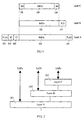
- the said frames are based on the HDLC protocol, as defined in ISO 3309, using several mechanisms and fields depending of the service requirements and defining three different frame formats, A, B and C, which correspond to three functional layers equally named A, B and C, as shown in Figure 1 .
- Said frame A format contains the fields (101 to 105) corresponding to layer A.
- Said frame B format contains the fields (101 to 107) corresponding to layers A and B.
- Said frame C format contains the fields (101 to 110) corresponding to layers A, B and C.
- Said layer A correspond basically to, frame delineation, multiplexing and information transparency, said layer B corresponds to error detection and said layer C to channel preemption and frame fragmentation.
- Said bearer service Sa which corresponds to said SAPa through said layer A (201) using said frames A, includes the following functionality:
- the said fields SC and CI have variable length, and together correspond to the HDLC field address. In case there is a single channel in each service class the said field CI can be removed.
- the least significant bit in each octet of the said fields SC and CI, corresponding to the extension bit of the HDLC address field, should be 0, with the exception of the last octet of the second field, which should be 1.
- the users of said bearer service Sa are typically real-time services, which have low tolerance to delay and delay variation, namely speech, audio and circuit emulation.
- Said bearer service Sb which corresponds to said SAPb with access through said layer B (202) and using said frames B, adds to the functionality of said layer A the mechanism of frame error detection, based on the field FCS (107), as used in the HDLC protocol.
- the users of said bearer service Sb could be real-time services requiring error detection, namely packet voice services.
- Said bearer service Sc which corresponds to said SAPc with access through said layer C (203) and using said frames C, adds to the functionality of said layers A and B the functionality of said layer C, based on two additional fields:
- said BE field at the end of the frame, just before the said FCS field, allows to optimise the efficiency of the preemption mechanism, minimising the queuing delay of the higher priority frame that made the channel preemption.
- Users of said bearer service Sc are typically non real time services, tolerant to delay and delay variation, allowing the segmentation of the original data units in two or more segments and its reassembly at the receiver.
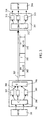
- FIG. 3 a generic diagram of implementation of the method described in this invention is presented.
- Several applications or interfaces generate traffic (301) and send its data to a Classifier module (302) at the Sender (301). Based on different predefined criteria the said Classifier sends the frames to different data queues (303, 304, 305), each one corresponding to a specific service class. Based on the predefined criteria of priority assignment to the different queues, the Scheduler (306) transmits the data coming from the different queues to the common transmission channel (307).
- the Demux (312) analyses the received frame header, and based on the said SC field, sends the received data to the queue corresponding to that service class (313, 314, 315).
- the said BE field allows to identify if the received segment is the last one, and said field SN allows to detect if any segment is missing.
- the said Demux sends the data received in the begin and middle segments to the queue corresponding to a specific class, until an end segment is received meaning that the original frame is complete and is sent to the receiving application or output interface (316).
- FIG 4 an example of the transmission of a data packet (400) segmented by a higher priority voice packet (401) is presented.
- the said Scheduler detects a data frame in the corresponding queue in the sender, initiating the transmission of the data packet (402).
- the said Scheduler detects a voice packet (401) in a higher priority queue, starting immediately the suspension of the data frame and its segmentation, what implies to generate the said fields BE, FCS and FLAG, this one used as end FLAG of the data fragment and start FLAG of the voice frame.
- the said fields SC and CI are inserted followed by the voice data (403).
- the transmission of data packet is resumed with the second data segment (404), which ends at instant T3.
- the method defined in this invention allows the utilisation of different criteria for classification of data among the several queues, depending on the type of equipments and protocols used.
- IPv4 protocol RRC 791
- TOS Type of Service
- Protocol Ipv6 contains a field named Traffic Class Octet, that can also be used for similar functions.
- Other possible classification criteria are based on higher layer protocols, namely in transport protocols, e.g. TCP or UDP, and the respective port numbers, or even in the type of application, or a combination of the referred criteria.
- the one octet length DSCP field is used to identify explicitly different service classes, allowing to differentiate them in the network nodes.
- the different services are identified by an integer value in the range 2-254 (RFC 2216). The general conclusion is that in all cases analysed the number of service classes is low, and can be coded using the said field SC with a reduced number of bits, in general not higher than one octet length.
- the said fields SC and CI together can be coded with one octet.
- the said field BE is adjusted to one octet for compatibility with the HDLC protocol.
- the preemption time or the maximum delay to start the transmission of the priority frame is constant and correspond to the transmission of 5 octets in the common channel.
- the functionality of the receiver is exemplified with the reception of a frame sequence with segmentation.
- the receiver detects that a data frame (501) is being received and is stored in the corresponding queue (502).
- the receiver concludes that a frame is terminated and checks the FCS for error detection. In case errors are detected the frame is discarded. If there are no errors detected the said SN field is checked to detect sequence number errors. In case of error the segment is discarded, else it is accepted. If in the said field BE the bit E is 0 it means that the frame is not complete consequently the frame is not sent yet to the output interface or receiving application.
- the next frame received (503) is voice which is simpler than data frame since it has no possibility of fragmentation, only requires FCS checking, so it can be sent to the output interface or receiving application after it has been received in instant T2.
- the third frame (505) is again data so it is stored in the same queue (506) as the previous data segment (502). If no errors are detected in said fields FCS and SN the data is received as valid and the bit E of the said field BE is tested to confirm if the frame is terminated, in which case the complete frame is sent to the output interface or receiving application.
- the data or voice packets can have any format, namely HDLC frames or octet blocks.
- the transmitter remove the start and end HDLC FLAGs, FCS field and the bit or octet stuffed.
- the reverse process takes place in order to restore the original HDLC frames.
- the said channel preemption mechanism is recursive, allowing an higher priority service to suspend and segment a lower priority frame, which had already suspended another frame, and so on. This implies that the maximum number of frames being transmitted with interleaving is equal to the number of service classes minus one.
- Table 1 shows the transmission times of HDLC frames for different lengths and channel bit-rates.
- Table 1 - Maximum HDLC queuing delay Channel Queuing delay (ms) 64 octets 128 octets 256 octets 512 octets 1024 octets 1500 octets 56 Kbit/s asynchronous 11,43 22,86 45,71 91,43 182,86 267,86 56 Kbit/s synchronous 9,14 18,29 36,57 73,14 146,29 214,29 64 Kbit/s synchronous 8,00 16,00 32,00 64,00 128,00 187,50 128 Kbit/s synchronous 4,00 8,00 16,00 32,00 64,00 93,75 256 Kbit/s synchronous 2,00 4,00 8,00 16,00 32,00 46,88
- the priority frames will have to wait until the transmission of the current frame ends, which means that the values presented in Table 1 correspond to the maximum queuing delay of the high priority frames.
- the maximum queuing delay is directly proportional to the maximum frame length and inversely proportional to the channel bit-rate. Exemplifying with a frame of 1500 octets and a 56 Kbit/s asynchronous channel, the maximum queuing delay of an high priority frame would be 267.9 ms.
- the queuing delay of an high priority frame will be only 0.89 ms for the same bit-rate and for any frame length, as can be seen in Table 2.
- Table 2 - Maximum queuing delay for the method proposed in this invention Channel Queuing delay (ms) 56 Kbit/s asynchronous 0,89 56 Kbit/s synchronous 0,71 64 Kbit/s synchronous 0,63 128 Kbit/s synchronous 0,31 256 Kbit/s synchronous 0,16
- VoIP Voice over IP
- UDP User Data packets
- RTP Real-Time Transport Protocol
- Figure 6 shows a diagram corresponding to the periodic transmission of voice packets with 22 octets and 20 ms period, simultaneously with a data packet of 500 octets.
- the transmission interval between packets is also strongly variable, approximately from 4 to 90 ms.
- Figure 7 shows a diagram illustrating the application of the said method proposed in this invention to the same traffic pattern, a sequence of periodic voice packets with 22 octets and 20 ms period simultaneously with a data packet of 500 octets. Due to the said preemption mechanism the voice packets are able to start transmission with very low delay (lower than 1 ms for a 56 Kbit/s channel). The transmission interval between voice packets is constant and approximately equal to 20 ms.
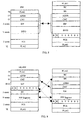
- the Point-to-Point Protocol defined in RFC 1661 is commonly used for Internet access. It is based on the HDLC protocol with the frame format shown on the left side of Figure 8 , where the address field (ADDR) and control filed (CNT) have respectively the hexadecimal values of FF and 03 and the PID, protocol identifier, is the identifier of the protocol used in the information field.
- the adaptation of the PPP protocol to the said frame C defined in this invention is also illustrated in the right side of the figure, and consists in the copy of the fields ADDR, CNT, PID and INFO to the said frame C. As the PPP do not allow logic channel multiplexing the said CI field can be removed.
- the PPP INFO field could be not completely copied to the INFO field of said frame C if the PPP frame is suspended due to the channel preemption by a higher priority frame.
- PPP-ML The PPP Multilink (PPP-ML) is defined in RFC 1990 as an extension of the PPP for use with multiple physical channels, with the basic frame shown in Figure 9 .
- the adaptation of the PPP-ML to the frame C defined in this invention is also illustrated in the figure, where the fields BE and SN of PPP-ML have similar meaning and functionally of the corresponding fields of the said frame C but are located in different positions.
- the dotted lines connecting the referred fields between the two frames mean that there is a direct correspondence between them but its value could be different due to the said preemption mechanism and the existence of several classes.
- the Multi-Class PPP Multilink (MC-PPP-ML) is defined in RFC 2686 as an extension of the PPP Multilink for integrated services and real-time encapsulation formats, for utilisation with multiple service classes.
- Figure 10 shows the frame of this protocol with a long sequence number and its adaptation to said frame C defined in this invention.
- the Frame Relay (FR) technology is defined in different organisation bodies, namely in Annex A of ITU-T Q.922 recommendation.
- Figure 11 shows the basic FR frame, together with its adaptation to said frame C defined in this invention.
- the information field of the FR frame, or part of it if the frame is suspended by a higher priority frame, is copied to the information field of said frame C.
- the FR header comprising the fields DLCI, C/R, FECN, BECN and DE are also copied to the said frame C, corresponding to the said CI.
- the Frame Relay Forum has defined in FRF.12 specification an extension to allow fragmentation of large data packets, in order to support voice and other real-time services sensitive to delay.
- the format of the FRF.12 frame is shown in Figure 12 , together with the adaptation to said frame C defined in this invention.
- the first 2 octets of the frame FRF.12 that include the channel logic identifier and bits C/R, FECN, BECN, DE and EA, are copied to the said field CI.
- the fields UI, NLPID and data Fragment are also copied without modifications to the frame C defined in this invention.
- the dotted lines connecting the fields SN (SN a/SN b) and BE of both frames mean that there is a correspondence between these fields, but the values in each frame can be different due to the said preemption mechanism and the existence of several classes.
- ITU-T V.120 recommendation defines the format and adaptation procedures for V series data terminals to ISDN with statistical multiplexing.
- Figure 13 shows the V.120 frame format, together with its adaptation to said frame C defined in this invention.
- the first two octets of V.120 frame that include.the logic channel identifier LLI and the bits C/R and EA are copied to the said CI field of said frame C.
- the fields C, H, SC and data Fragment are also copied without modifications.
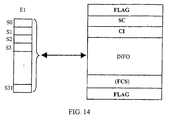
- Figure 14 shows the adaptation of the 2 Mbit/s E1 frame of the circuit switching TDM (Time Division Multiplexing) to said frames A or B defined in this invention. Considering that the E1 frame can not be fragmented, a full 32 octets E1 frame is inserted in one said frame A or B. The choice between said frame A or B depends on the compatibility with the HDLC controller available, as these devices usually the use of field FCS is mandatory, implying the choice of said frame B.
- the queuing delay of the E1 frame will be approximately 19.5 ⁇ s.
- the variation delay of the priority services is 3 T, which applied to the E1 interface gives a value of 11.7 ⁇ s.
- TDM frames namely fractional E1 or 1.544 Mbit/s T1 frame, will be carried also in said frames A or B, with different frame lengths and periods.
- ATM has a higher protocol overhead due to existence of two layers, ATM and AAL (AAL1, AAL2, AAL3/4 or AAL5).
- AAL AAL1, AAL2, AAL3/4 or AAL5
- AAL5 AAL1, AAL2, AAL3/4 or AAL5
- the said mechanism of preemption and segmentation is more efficient than the fixed fragmentation of ATM or FRF.12, as it only occurs when necessary to guarantee the quality of service of higher priority frames, while in the other technologies referred the fragmentation overhead is always present.
- Table 3 a comparison between the said method proposed in this invention and several other communication protocols and technologies is presented, where the respective basic characteristics and functionality are compared, namely the capability of statistical multiplexing, maximum queuing delay and protocol overhead. The conclusion is that the said method proposed in this invention presents the best characteristics of all protocols shown, with exception of protocol overhead where it is only surpassed by circuit switching.
- Table 3 - Comparison between the said method proposed in this invention and other communication protocols Circuit switching TDM Packet switching X.25 Frame Relay with Fragmentation FRF.12 Asynchronous Transfer Mode ATM Method proposed in this invention Statistical multiplexing No Yes Yes Yes Yes Maximum Queuing Delay Very low High Low Low Very low Overhead Very low High Low Medium Low
- FIG. 15 shows an application of the said method proposed in this invention where a Voice/Data Modem (151) implementing the said method is connected over an analog line to a similar modem (152) through the Public Switched Telephone Network (PSTN). It is possible in this scenario to establish voice and data communications over a common analog line, with low delay for voice and high efficiency for the data, even for bit-rates lower than 64 Kbit/s, as the case of V90 / V.92 modems.
- PSTN Public Switched Telephone Network
- FIG 16 a new scenario similar to the configuration used in ADSL is presented, where a Voice/Data Modem (161) implementing the said method proposed in this invention is connected to an Access Multiplexer (162), which also implements the said method.
- PSTN Public Switched Telephone Network
- the user connected to a common low cost analog line can have simultaneous access to the Public Switched Telephone Network (PSTN) and to the Internet over the analog line.
- PSTN Public Switched Telephone Network
- the full channel bit-rate is available for data.
- a phone call gets priority and is not affected by the data channel, which is reduced of the bandwidth used by voice: In both situations a permanent connection to the Internet is guaranteed.
Landscapes
- Engineering & Computer Science (AREA)
- Computer Networks & Wireless Communication (AREA)
- Signal Processing (AREA)
- Communication Control (AREA)
- Data Exchanges In Wide-Area Networks (AREA)
- Investigating Or Analysing Biological Materials (AREA)
- Testing, Inspecting, Measuring Of Stereoscopic Televisions And Televisions (AREA)
- Piezo-Electric Or Mechanical Vibrators, Or Delay Or Filter Circuits (AREA)
Abstract
Description
- The present invention is related to a method for data communication over a common channel. The classical data communication technologies in Wide Area Networks are circuit switching and packet switching, having Frame Relay and Asynchronous Transfer Mode (ATM) assumed more recently a significant role. In the areas related with the invention, data communications and networking, there is a lot of activity in several standardisation bodies, namely the International Organisation for Standardisation, ITU-T, IETF and Frame Relay Forum. The following documents of these standardisation bodies are referred in this invention:
- • International Organisation for Standardisation, ISO Standard 3309-1979, "Data communication - High-level data link control procedures - frame structure", 1979.
- • International Organisation For Standardisation, ISO Standard 3309:1984/PDAD1, "Information processing systems - Data communication - High-level data link control procedures - Frame structure - Addendum 1: Start/stop transmission", 1984.
- • IETF RFC 791, Postel, J., "IP: Internet Protocol", September 1981.
- • IETF RFC 795, Postel, J., "Service Mappings," September 1981.
- • IETF RFC 768, Postel, J., "User Datagram Protocol", August 1980.
- • IETF RFC 761, Postel, J., "Transmission Control Protocol," January 1980.
- • IETF RFC 2508, Casner, S.; Jacobson, V., "Compressing IP/UDP/RTP Headers for Low-Speed Serial Links", February 1999.
- • IETF RFC 1661, Simpson, W., "The Point-to-Point Protocol (PPP)", July 1994.
- • IETF RFC 1662, Simpson, W., "PPP in HDLC-like Framing", July 1994.
- • IETF RFC 1990, Sklower, K., "The PPP Multilink Protocol", August 1996.
- • IETF RFC 2686, Bormann, C., "The Multi-Class Extension to Multi-Link PPP", September 1999.
- • IETF RFC 2475, Blake, S., "An Architecture for Differentiated Services", December 1998.
- • IETF RFC 2474, Nichols, K., "Definition of the Differentiated Services Field (DS Field) in the IPv4 and IPv6 Headers", December 1998.
- • ITU-T, Recommendation Q.922 - "ISDN Data Link Layer Specification for Frame Mode Bearer Services", 1992.
- • ITU-T, Recommendation V.120, "Support by an ISDN of Data Terminal Equipment with V-Series Type Interfaces with Provision for Statistical Multiplexing", October 1996.
- • Frame Relay Forum, FRF.12, "Frame Relay Fragmentation Implementation Agreement", December 1997.
- • United States Patent
US-5557608, Calvignac, J. ; Galand, C.; et. al.; "Method and Apparatus for Transmission of High Priority Traffic on Low Speed Communication Links", September 1996. - •
PCT WO-00/4555 - • Patent Abstract of Japan
JP-63061532 - • European Patent
EP-0843442 , CANON KK, "Communication system for communicating a plurality of time-division multiplexed data, and control method therefore", May 1998. - Patent
US-5557608 presents a method for supporting high priority traffic on low speed communication links, that uses a preempt/resume protocol based on special non-standard flags, a 9-bit sequence for the start-preempt flag and a 10-bit sequence for the end-preempt flag. The main limitations of this patent are the support of only two traffic priorities, and the incompatibility with standard HDLC controllers. These limitations do not exist in the present patent, which allows an indefined number of traffic priorities and consequently the support of the different PHB defined in the Differenciated Services model. The compatibility of the current invention with the HDLC basic functions allows the use of standard hardware controllers. - Patent
WO-00/4555 - Patent
JP-63061532 - Patent
EP-0843442 , presents a communication system for use on a time-division multiplexed channel, with support for real-time and non real-time data. This patent do not define mechanisms for channel preemption, as proposed in the current invention. - The present invention contains 16 figures, which are described shortly.
-
Figure 1 - frame formats and corresponding functional layers proposed in this invention. -
Figure 2 - Functional layers structure proposed in this invention and corresponding service access points to the proposed bearer services. -
Figure 3 - Generic diagram for implementation of the method proposed in this invention -
Figure 4 - Example of the transmission of a data packet pre-empted and segmented by a higher priority voice packet. -
Figure 5 - Example of the receiver functionality, when receiving a frame sequence with segmentation. -
Figure 6 - Timing diagram of packet voice and data transmission using HDLC multiplexing. -
Figure 7 - Timing diagram of packet voice and data transmission using the method proposed in this invention. -
Figure 8 - Adaptation of the PPP frame to the method proposed in this invention. -
Figure 9 - Adaptation of the PPP Multilink frame to the method proposed in this invention. -
Figure 10 - Adaptation of the Multi-class PPP Multilink frame to the method proposed in this invention. -
Figure 11 - Adaptation of the Frame Relay frame to the method proposed in this invention. -
Figure 12 - Adaptation of the Frame Relay with Fragmentation (FRF.12) to the method proposed in this invention. -
Figure 13 - Adaptation of the V.120 protocol to the method proposed in this invention. -
Figure 14 - Adaptation of theE1 2 Mbit/s frame to the method proposed in this invention. -
Figure 15 - Application scenario of the method proposed in this invention in Voice/Data Modem over analog line. -
Figure 16 - Application of the method proposed in this invention in Integrated Access Device (IAD) for simultaneous access to Public Switched Telephone Network (PSTN) and Internet over analog line. - The present invention is related to a method for data communication for differentiated services based in frames with flexible format, which allows the simultaneous transmission of several types of information with different requirements of quality of service, via a common communication channel. The quality of service of the different services is guaranteed with a mechanism of channel preemption, which allows the immediate occupation of the channel with the most priority frame, resuming the transmission of the lower priority frame, without the need of retransmiting the octets already transmitted. This preemption mechanism guarantees, simultaneously, a low transmission delay for the services that are more sensitive to transmission delays and an efficient channel occupation. This mechanism is recursive, which means that the frame that made channel preemption can itself be preempted by another higher priority frame, and this process can be repeated whenever a higher priority frame requests transmission.
- The said frames are based on the HDLC protocol, as defined in ISO 3309, using several mechanisms and fields depending of the service requirements and defining three different frame formats, A, B and C, which correspond to three functional layers equally named A, B and C, as shown in
Figure 1 . Said frame A format contains the fields (101 to 105) corresponding to layer A. Said frame B format contains the fields (101 to 107) corresponding to layers A and B. Said frame C format contains the fields (101 to 110) corresponding to layers A, B and C. Said layer A correspond basically to, frame delineation, multiplexing and information transparency, said layer B corresponds to error detection and said layer C to channel preemption and frame fragmentation. - Based on the said three layers A, B and C and its respective frames, we define three bearer services, named Sa, Sb and Sc, identified respectively by its service access points, SAPa, SAPb and SAPc, as shown in
Figure 2 . - Said bearer service Sa, which corresponds to said SAPa through said layer A (201) using said frames A, includes the following functionality:
- a) frame delineation mechanism based on a begin FLAG (101) and an end FLAG (105), as in HDLC;
- b) fill-in mechanism based on HDLC FLAGs;
- c) in synchronous serial interface the mechanism of bit stuffing is used, which consists in the insertion of a zero bit after the occurrence of five consecutive one bits and its removal at the receiver, to guarantee the transparency of information between the said begin and end FLAGS, as in HDLC; in case of asynchronous serial interfaces octet oriented, the mechanism of octet stuffing is used, as defined in ISO 3309:1984/PDAD1 and IETF RFC 1662.
- d) transport of higher layers information, contained in the variable field INFOa (104), as in HDLC;
- e) field SC (102), which identifies the service class and implicitly the frame format, used for that specific class. Based on this field the receiver knows which is the format (A, B or C) of the frame received;
- f) field CI (103), which identifies a specific channel inside a service class.
- The said fields SC and CI have variable length, and together correspond to the HDLC field address. In case there is a single channel in each service class the said field CI can be removed. For compatibility with HDLC address field, the least significant bit in each octet of the said fields SC and CI, corresponding to the extension bit of the HDLC address field, should be 0, with the exception of the last octet of the second field, which should be 1.
- The users of said bearer service Sa are typically real-time services, which have low tolerance to delay and delay variation, namely speech, audio and circuit emulation.
- Said bearer service Sb, which corresponds to said SAPb with access through said layer B (202) and using said frames B, adds to the functionality of said layer A the mechanism of frame error detection, based on the field FCS (107), as used in the HDLC protocol. The users of said bearer service Sb could be real-time services requiring error detection, namely packet voice services.
- Said bearer service Sc, which corresponds to said SAPc with access through said layer C (203) and using said frames C, adds to the functionality of said layers A and B the functionality of said layer C, based on two additional fields:
- a) SN (Sequence Number) field (108) that indicates the transmission frame sequence number for a specific service class SC. This field is initialised at 0 and it is incremented for each frame of a specific class sent. This means that each service class has its own independent frame sequence counter.
- b) BE (Begin/End) field (110) that is used in the said preemption mechanism, which allows the suspension of a frame by a higher priority frame. The said field BE contains two bits, B (begin) and E (end), allowing the reassembly of the different parts of a segmented frame at the receiver, with the following coding values:
- BE = 11 - Non segmented frame
- BE = 10 - First segment of a frame which was segmented
- BE = 00 - Middle segment of a frame which was segmented
- BE = 01 - Last segment of a frame which was segmented
- The location of said BE field at the end of the frame, just before the said FCS field, allows to optimise the efficiency of the preemption mechanism, minimising the queuing delay of the higher priority frame that made the channel preemption. Said bits B and E and padded with six additional bits for octet alignment. These six bits can be used by upper layers, being set to 0 if not used. Users of said bearer service Sc are typically non real time services, tolerant to delay and delay variation, allowing the segmentation of the original data units in two or more segments and its reassembly at the receiver.
- In
Figure 3 a generic diagram of implementation of the method described in this invention is presented. Several applications or interfaces generate traffic (301) and send its data to a Classifier module (302) at the Sender (301). Based on different predefined criteria the said Classifier sends the frames to different data queues (303, 304, 305), each one corresponding to a specific service class. Based on the predefined criteria of priority assignment to the different queues, the Scheduler (306) transmits the data coming from the different queues to the common transmission channel (307). - Based on said fields SC, SN and BE it is possible to suspend a frame being transmitted (308) and start the transmission of an higher priority frame (309), resuming the transmission of the previous frame (310) after finishing the transmission of the higher priority one. The said preemption mechanism guarantee that the higher priority services, which require low transmission delay, like speech and audio, can be transmitted with the lowest possible delay, even for low bandwidth channels.
- At the receiver (311) the Demux (312) analyses the received frame header, and based on the said SC field, sends the received data to the queue corresponding to that service class (313, 314, 315). In case of segmentation the said BE field allows to identify if the received segment is the last one, and said field SN allows to detect if any segment is missing.
- The said Demux sends the data received in the begin and middle segments to the queue corresponding to a specific class, until an end segment is received meaning that the original frame is complete and is sent to the receiving application or output interface (316).
- In
Figure 4 an example of the transmission of a data packet (400) segmented by a higher priority voice packet (401) is presented. At instant T0 the said Scheduler detects a data frame in the corresponding queue in the sender, initiating the transmission of the data packet (402). At instant T1 the said Scheduler detects a voice packet (401) in a higher priority queue, starting immediately the suspension of the data frame and its segmentation, what implies to generate the said fields BE, FCS and FLAG, this one used as end FLAG of the data fragment and start FLAG of the voice frame. After the said FLAG the said fields SC and CI are inserted followed by the voice data (403). At instant T2 when the voice packet ends, the transmission of data packet is resumed with the second data segment (404), which ends at instant T3. - The method defined in this invention allows the utilisation of different criteria for classification of data among the several queues, depending on the type of equipments and protocols used. In IPv4 protocol (RFC 791) the TOS (Type of Service) field of IP packet header, with one octet length, can be used for classification of different service classes. Protocol Ipv6 contains a field named Traffic Class Octet, that can also be used for similar functions. Other possible classification criteria are based on higher layer protocols, namely in transport protocols, e.g. TCP or UDP, and the respective port numbers, or even in the type of application, or a combination of the referred criteria. In the Differentiated Services (DiffServ) Internet model the one octet length DSCP field is used to identify explicitly different service classes, allowing to differentiate them in the network nodes. In the Integrated Services (IntServ) Internet model the different services are identified by an integer value in the range 2-254 (RFC 2216). The general conclusion is that in all cases analysed the number of service classes is low, and can be coded using the said field SC with a reduced number of bits, in general not higher than one octet length.
- To calculate the efficiency of the said preemption mechanism a system with a reduced number of service classes and a short number of users in each class is considered, so the said fields SC and CI together can be coded with one octet. As referred before, the said field BE is adjusted to one octet for compatibility with the HDLC protocol. As the length of said FLAG is one octet and the said FCS is 2 octets, the preemption time or the maximum delay to start the transmission of the priority frame is constant and correspond to the transmission of 5 octets in the common channel.
- In
Figure 5 the functionality of the receiver is exemplified with the reception of a frame sequence with segmentation. At instant T0, after the reception of the said SC field the receiver detects that a data frame (501) is being received and is stored in the corresponding queue (502). At instant T1 when the said FLAG is received the receiver concludes that a frame is terminated and checks the FCS for error detection. In case errors are detected the frame is discarded. If there are no errors detected the said SN field is checked to detect sequence number errors. In case of error the segment is discarded, else it is accepted. If in the said field BE the bit E is 0 it means that the frame is not complete consequently the frame is not sent yet to the output interface or receiving application. The next frame received (503) is voice which is simpler than data frame since it has no possibility of fragmentation, only requires FCS checking, so it can be sent to the output interface or receiving application after it has been received in instant T2. The third frame (505) is again data so it is stored in the same queue (506) as the previous data segment (502). If no errors are detected in said fields FCS and SN the data is received as valid and the bit E of the said field BE is tested to confirm if the frame is terminated, in which case the complete frame is sent to the output interface or receiving application. - If there is an FCS error in one segment received, the segment is discarded and consequently in the next segment an error in the said field SN is detected, what implies that the segment being received is discarded. All the segments received after this are also discarded since they all will have an error in the said field SN, until a segment is received with E=1, indicating the end of a packet. If by transmission error this segment with E=1 is not received, the receiver still is able to detect the beginning of a new packet identified with the bit B=1.
- It should be noted that in the input interface or application, the data or voice packets can have any format, namely HDLC frames or octet blocks. In case the input format is HDLC, the transmitter remove the start and end HDLC FLAGs, FCS field and the bit or octet stuffed. At the receiver the reverse process takes place in order to restore the original HDLC frames.
- As referred before the said channel preemption mechanism is recursive, allowing an higher priority service to suspend and segment a lower priority frame, which had already suspended another frame, and so on. This implies that the maximum number of frames being transmitted with interleaving is equal to the number of service classes minus one.
- The limitations of the said preemption mechanism using the current serial communication controllers are now analysed. In case of the serial asynchronous interfaces there is no problem since the controller works on a octet basis, what means that the delay from the suspension of the transmission of data from one queue until the insertion of the said BE field has the maximum value equal to the transmission of one octet. In case of synchronous serial interfaces the HDLC controllers usually have a transmission buffer that usually can not be flushed in case of suspension of one frame, originating a preemption delay with the maximum value equal to the transmission of the controller buffer.
- To assess the performance of the said method proposed in this invention we compare it with the method used in HDLC multiplexing. Table 1 shows the transmission times of HDLC frames for different lengths and channel bit-rates.
Table 1 - Maximum HDLC queuing delay Channel Queuing delay (ms) 64 octets 128 octets 256 octets 512 octets 1024 octets 1500 octets 56 Kbit/s asynchronous 11,43 22,86 45,71 91,43 182,86 267,86 56 Kbit/s synchronous 9,14 18,29 36,57 73,14 146,29 214,29 64 Kbit/s synchronous 8,00 16,00 32,00 64,00 128,00 187,50 128 Kbit/s synchronous 4,00 8,00 16,00 32,00 64,00 93,75 256 Kbit/s synchronous 2,00 4,00 8,00 16,00 32,00 46,88 - As in the HDLC protocol there is no channel preemption, the priority frames will have to wait until the transmission of the current frame ends, which means that the values presented in Table 1 correspond to the maximum queuing delay of the high priority frames. The maximum queuing delay is directly proportional to the maximum frame length and inversely proportional to the channel bit-rate. Exemplifying with a frame of 1500 octets and a 56 Kbit/s asynchronous channel, the maximum queuing delay of an high priority frame would be 267.9 ms.
- In the case of the said method proposed in this invention the queuing delay of an high priority frame will be only 0.89 ms for the same bit-rate and for any frame length, as can be seen in Table 2.
Table 2 - Maximum queuing delay for the method proposed in this invention Channel Queuing delay (ms) 56 Kbit/s asynchronous 0,89 56 Kbit/s synchronous 0,71 64 Kbit/s synchronous 0,63 128 Kbit/s synchronous 0,31 256 Kbit/s synchronous 0,16 - One important application of the said method proposed in this invention is the multiplexing of voice and data over a low bit-rate channel, e.g. with a V.90 or V.92 Modem with maximum bit-rate of 56 Kbit/s. A possible utilisation could be to have Internet access for file transfer or WEB access and simultaneously to participate in a phone conversation. Phone communications based on IP are called Voice over IP (VoIP) and consists of packets with a compressed header of IP, UDP and RTP (2 or 4 octets), followed by a block of voice information (e.g. 20 octets). Data packets are usually much larger than the voice packets, with values up to 1500 octets, which could be limited to 500 octets in personal computer applications.
-
Figure 6 shows a diagram corresponding to the periodic transmission of voice packets with 22 octets and 20 ms period, simultaneously with a data packet of 500 octets. - The analysis of the Figure allows to conclude that the transmission delay for each voice packet is strongly variable, approximately from 0 to 74 ms.
V1 V2 V3 V4 V5 V6 V7 V8 0 74 58 42 26 10 0 0 (ms) - The transmission interval between packets is also strongly variable, approximately from 4 to 90 ms.
V2 - V1 V3 - V2 V4 - V3 V5 - V4 V6 - V5 V7 - V6 V8 - V7 90 ms 4 ms 4 ms 4 ms 4 ms 8 ms 20 ms -
Figure 7 shows a diagram illustrating the application of the said method proposed in this invention to the same traffic pattern, a sequence of periodic voice packets with 22 octets and 20 ms period simultaneously with a data packet of 500 octets. Due to the said preemption mechanism the voice packets are able to start transmission with very low delay (lower than 1 ms for a 56 Kbit/s channel). The transmission interval between voice packets is constant and approximately equal to 20 ms. - The adaptation of the said method proposed in this invention to different protocols switching technologies and transfer modes is analysed below.
- The Point-to-Point Protocol (PPP) defined in RFC 1661 is commonly used for Internet access. It is based on the HDLC protocol with the frame format shown on the left side of
Figure 8 , where the address field (ADDR) and control filed (CNT) have respectively the hexadecimal values of FF and 03 and the PID, protocol identifier, is the identifier of the protocol used in the information field. The adaptation of the PPP protocol to the said frame C defined in this invention is also illustrated in the right side of the figure, and consists in the copy of the fields ADDR, CNT, PID and INFO to the said frame C. As the PPP do not allow logic channel multiplexing the said CI field can be removed. The PPP INFO field could be not completely copied to the INFO field of said frame C if the PPP frame is suspended due to the channel preemption by a higher priority frame. - The PPP Multilink (PPP-ML) is defined in RFC 1990 as an extension of the PPP for use with multiple physical channels, with the basic frame shown in
Figure 9 . The adaptation of the PPP-ML to the frame C defined in this invention is also illustrated in the figure, where the fields BE and SN of PPP-ML have similar meaning and functionally of the corresponding fields of the said frame C but are located in different positions. The dotted lines connecting the referred fields between the two frames mean that there is a direct correspondence between them but its value could be different due to the said preemption mechanism and the existence of several classes. - The Multi-Class PPP Multilink (MC-PPP-ML) is defined in RFC 2686 as an extension of the PPP Multilink for integrated services and real-time encapsulation formats, for utilisation with multiple service classes.
Figure 10 shows the frame of this protocol with a long sequence number and its adaptation to said frame C defined in this invention. There is an additional field in the MC-PPP-ML, the Class (CLS) field, which is mapped to the said SC field of frame C. In both frames there is one sequence number counter for each service class. - The Frame Relay (FR) technology is defined in different organisation bodies, namely in Annex A of ITU-T Q.922 recommendation.
Figure 11 shows the basic FR frame, together with its adaptation to said frame C defined in this invention. The information field of the FR frame, or part of it if the frame is suspended by a higher priority frame, is copied to the information field of said frame C. The FR header comprising the fields DLCI, C/R, FECN, BECN and DE are also copied to the said frame C, corresponding to the said CI. - The Frame Relay Forum has defined in FRF.12 specification an extension to allow fragmentation of large data packets, in order to support voice and other real-time services sensitive to delay. The format of the FRF.12 frame is shown in
Figure 12 , together with the adaptation to said frame C defined in this invention. The first 2 octets of the frame FRF.12 that include the channel logic identifier and bits C/R, FECN, BECN, DE and EA, are copied to the said field CI. The fields UI, NLPID and data Fragment are also copied without modifications to the frame C defined in this invention. The dotted lines connecting the fields SN (SN a/SN b) and BE of both frames mean that there is a correspondence between these fields, but the values in each frame can be different due to the said preemption mechanism and the existence of several classes. - ITU-T V.120 recommendation defines the format and adaptation procedures for V series data terminals to ISDN with statistical multiplexing.
Figure 13 shows the V.120 frame format, together with its adaptation to said frame C defined in this invention. The first two octets of V.120 frame that include.the logic channel identifier LLI and the bits C/R and EA are copied to the said CI field of said frame C. The fields C, H, SC and data Fragment are also copied without modifications. -
Figure 14 shows the adaptation of the 2 Mbit/s E1 frame of the circuit switching TDM (Time Division Multiplexing) to said frames A or B defined in this invention. Considering that the E1 frame can not be fragmented, a full 32 octets E1 frame is inserted in one said frame A or B. The choice between said frame A or B depends on the compatibility with the HDLC controller available, as these devices usually the use of field FCS is mandatory, implying the choice of said frame B. - Considering that the transmission time of one octet for the E1 interface is T=3.9 □s and that the said preemption mechanism has a delay of 5 T, the queuing delay of the E1 frame will be approximately 19.5 □s. The variation delay of the priority services is 3 T, which applied to the E1 interface gives a value of 11.7 □s. Considering these values we can conclude that the said method defined in this invention has queuing delays and delay variations much lower than other technologies.
- Other TDM frames, namely fractional E1 or 1.544 Mbit/s T1 frame, will be carried also in said frames A or B, with different frame lengths and periods.
- The comparison of the said method proposed in this invention with ATM allows to conclude that ATM has a higher protocol overhead due to existence of two layers, ATM and AAL (AAL1, AAL2, AAL3/4 or AAL5). The ATM fixed cell format introduces also additional overhead due to the incompletely filled cells, which occur with high probability.
- The said mechanism of preemption and segmentation is more efficient than the fixed fragmentation of ATM or FRF.12, as it only occurs when necessary to guarantee the quality of service of higher priority frames, while in the other technologies referred the fragmentation overhead is always present.
- In Table 3 a comparison between the said method proposed in this invention and several other communication protocols and technologies is presented, where the respective basic characteristics and functionality are compared, namely the capability of statistical multiplexing, maximum queuing delay and protocol overhead. The conclusion is that the said method proposed in this invention presents the best characteristics of all protocols shown, with exception of protocol overhead where it is only surpassed by circuit switching.
Table 3 - Comparison between the said method proposed in this invention and other communication protocols Circuit switching TDM Packet switching X.25 Frame Relay with Fragmentation FRF.12 Asynchronous Transfer Mode ATM Method proposed in this invention Statistical multiplexing No Yes Yes Yes Yes Maximum Queuing Delay Very low High Low Low Very low Overhead Very low High Low Medium Low -
Figure 15 shows an application of the said method proposed in this invention where a Voice/Data Modem (151) implementing the said method is connected over an analog line to a similar modem (152) through the Public Switched Telephone Network (PSTN). It is possible in this scenario to establish voice and data communications over a common analog line, with low delay for voice and high efficiency for the data, even for bit-rates lower than 64 Kbit/s, as the case of V90 / V.92 modems. - In
Figure 16 a new scenario similar to the configuration used in ADSL is presented, where a Voice/Data Modem (161) implementing the said method proposed in this invention is connected to an Access Multiplexer (162), which also implements the said method. With this configuration the user connected to a common low cost analog line can have simultaneous access to the Public Switched Telephone Network (PSTN) and to the Internet over the analog line. When there are no phone connections the full channel bit-rate is available for data. When a phone call is in progress, it gets priority and is not affected by the data channel, which is reduced of the bandwidth used by voice: In both situations a permanent connection to the Internet is guaranteed.
Claims (19)
- Method for data communication which allows simultaneous transmission of different types of information, based on frames compatible with the HDLC protocol defined in ISO 3309, with several mechanisms and fields depending on the service requirements, with quality of service guarantees using a channel preemption mechanism that allows the suspension of the frame being transmitted and the immediate occupation of the channel with a higher priority frame, resuming the transmission of the suspended frame after the transmission of the higher priority frame, without need to retransmit the octets already transmitted, characterised by the said frames (1) are structured in three functional layers, A, B and C, with layer A having the functionality of frame delineation, multiplexing and information transparency, layer B the functionality of error detection and layer C the functionality of frame suspension/resume and frame fragmentation, corresponding these three layers to three frame formats, respectively frame A, frame B and frame C and three bearer services, named Sa, Sb and Sc, which can be used by different services, according to its quality of service requirements, supporting an indefined number of priorities, due to a mechanism of recursive suspension of one frame by another frame with higher priority, which allows the use of protocols with multiple classes of service, namely the Differentiated Services and Integrated Services protocols.
- Method according to claim 1 whereby the said frames A (11) are characterised by the following fields, located sequentially in the frame by the order of presentation:a) Start FLAG field with hexadecimal value 7E, identifier of the frame start, as in HDLC;b) SC (Service Class) field, identifier of the service class and implicitly the frame type;c) CI (Channel Identifier) field, identifier of a specific channel within a class, which can be omitted in case there is only one channel in each class;d) both said SC field (22) and CI field (23) have a variable length and correspond together to the HDLC address field, which implies for full compatibility with HDLC that the least significant bit of each octet in both fields should be set to 0, with the exception of the last octet which should be set tol;e) INFOa field with variable length, to carry information of higher layers;f) End FLAG field with hexadecimal value 7E, identifier of the frame end, as in HDLC;
- Method according to claims 1 and 2 whereby the said frames B (12) are characterised by a format based on said frame A (11) where the said INFOa field (24) is replaced by the following fields, located sequentially by the order of its description:a) INFOb field with variable length, to carry information of higher layers;b) FCS (frame Check Sequence) field for error detection, as in HDLC.
- Method according to claim 1 to 3 whereby the said frames C (13) are characterised by a format based on said frames B (12) where the said field INFOb (26) field is replaced by the following fields, located sequentially by the order of its description:a) SN (Sequence Number) field that indicates the sequence number of frame transmission for a specific service class, which is initialises in 0 and is incremented for each frame or segment that is sent, having each class an independent sequence number counter;b) INFOc field with variable length, to carry information of higher layers;c) BE field, comprising two bits, B (begin) and E (end) and six additional bits for octet alignment, with the said bits B and E used for frame segmentation state indication in the transmitter and reassembly of the different segments in the receiver, with the following coding:BE = 11 - non segmented frameBE = 10 - first segment of a segmented frameBE = 00 - middle segment of a segmented frameBE = 01 - last segment of a segmented frame.
- Method according to claims 1 to 4 whereby the said bearer service Sa (31) is characterised by the following functionality, corresponding to the access through said layer A (41) and associated with the use of said frame A (11) :a) Mechanism for delineation of information blocks or frames based on the said start FLAG (21) and said end FLAG (25), as in HDLC;b) Channel filling mechanism based in HDLC FLAGs;c) Mechanism of zero bit stuff insertion after the transmission of five consecutive one bits and its removal at the receiver, to avoid the imitation of the start or end FLAG pattern and guarantee the information transparency, as in HDLC, and used in synchronous serial interfaces;d) Mechanism of Escape octet insertion to avoid the imitation of the start or end FLAG character and guarantee the information transparency, as defined in ISO 3309:1984/PDAD1 and in IETF RFC 1662, and used in octet oriented asynchronous serial interfaces;e) Mechanism of frame and segment multiplexing of different classes, based on the said SC field (22);f) Mechanism of frame multiplexing of different channels for a specific class, based on the said CI field (23) ;
- Method according to claims 1 to 5 whereby the said bearer service Sb (32) is characterised by the functionality of the said bearer service A (31) with the addition of the following functionality of the said layer B (42), associated with the use of the said frames B (12):a) Mechanism for generation of the said FCS field (27) in the transmitter, as in HDLC;b) Mechanism for frame error detection in the receiver, based in the said FCS field (27), as in HDLC.
- Method according to claims 1 to 6 whereby the said bearer service Sc (33) is characterised by functionality of said bearer service B with the addition of the following functionality of the said layer C (113), associated to the used of the said frames C (13):a) Mechanism for numbering the frames or segments transmitted, through the said SN field (28), that is incremented for each frame or segment of a specific class that is sent;b) Mechanism for checking the frame sequence numbering received, using the said SN field (28), allowing the detection of loss segments and consequently the detection of frames received with errors;c) Mechanism of frame fragmentation, using the said BE field (29);d) Mechanism of segment reassembly in the receiver, using the said BE field (29);e) Mechanism of channel preemption by a higher priority frame, with low switching delay since the detection of a higher priority frame until starting its transmission, due to the location of the BE field at the end of the frame, just before the said FCS field (27);
- Method according with claims 1 to 7, characterised by a multiplexing and switching technology that combines the advantages of low delay of circuit switching, the statistical multiplexing efficiency of packet switching and the simplicity of frame relay;
- Method according with claims 1 to 7, characterised by having a recursive mechanism of channel preemption to guarantee low queuing delay for delay sensitive services, which allows that one frame that made channel preemption can be suspended by another more priority frame, which can itself be suspended, repeating the preemption mechanism as many times as necessary without increasing the overhead of the mechanism;
- Method according with claims 1 to 7, characterised by a mechanism of service differentiation based on a number of service classes, allowing the transmission of the frames of the different classes to be done according with any arbitrary scheduling discipline defined by the user, in order to guarantee the quality of service of the different information sources that share the common channel.
- Method according with claims 1 to 7, characterised by the compatibility with existing asynchronous and synchronous HDLC controllers, while the HDLC synchronous controllers will have higher preemption delays than the asynchronous ones.
- Method according with claims 1 to 7, characterised for supporting real time services sensitive to delays and delay variation, as telephony, audio and circuit emulation, with constant bit-rate, including low bit-rate channels, with guarantee of a low delay and low variation delay, independently of the lower priority load.
- Method according with claims 1 to 7, characterised by lower delay, higher efficiency and lower overhead than other frame based technologies, namely X.25, Frame Relay or Frame Relay with Segmentation (FRF.12), due to having an optimised segmentation mechanism associated to the said preemption mechanism, which only segment the frames when needed to guarantee the quality of service of a higher priority frame
- Method according with claims 1 to 7, characterised by lower delay, higher efficiency and lower overhead than ATM technology, due to a simpler and more efficient segmentation than the equivalent mechanisms provided by the ATM and AAL layers combined.
- Method according with claims 1 to 7, characterised by its capability to be used with interfaces and channel of any bit-rates, with advantages over other protocols in particular for low bit-rate channels, for example lower than 2 Mbit/s, wired or wireless.
- Method according with claims 1 to 7, characterised by a high efficiency of channel occupation, namely when used with data services more tolerant to delay or with a traffic mix of real-time and data traffic.
- Method according with claims 1 to 7, characterised by its capability to support or be adapted to a diversity of data communication protocols, for example HDLC, PPP, Multilink PPP, Multi-Class Multilink PPP, Frame Relay, V.120.
- Method according with claims 1 to 7, characterised by the capability to support different mechanisms of quality of service provided by different protocols and models, for example the mechanisms provided by IPv4, IPv6, DiffServ e IntServ.
- Method according with claims 1 to 7, characterised by its capability of multiplexing several types of information, for example voice and data, in a variety of terminal equipment and access network equipments, located at the user or at the operator premises, for example in the following:a) Personal Computers, for multiplexing of voice and data services, using an asynchronous serial interface and a Modem, connected via one analog line to a network service provider;b) Personal Computers, for multiplexing of voice and data services, using an ISDN line with 64 Kbit/s or 128 Kbit/s channels connected to an network service provider;c) Subscriber equipment with Bridge functionality, with analog (Modem) or digital (ISDN, ADSL, SDSL or SHDSL) interfaces;d) Subscriber equipment with Router functionality, with analog (Modem) or digital (ISDN, ADSL, SDSL or SHDSL) interfaces;e) Subscriber equipment with Integrated Access Device (IAD) functionality, with analog (Modem) or digital (ISDN, ADSL, SDSL or SHDSL) interfaces;f) Network operator equipment DSLAM (DSL Access Multiplexer), with IDSL, ADSL, SDSL or SHDSL interfaces.
Applications Claiming Priority (3)
| Application Number | Priority Date | Filing Date | Title |
|---|---|---|---|
| PT102604A PT102604B (en) | 2001-05-02 | 2001-05-02 | DATA COMMUNICATION IN DRAW MODE WITH DIFFERENTIAL SERVICES |
| PT10260401 | 2001-05-02 | ||
| PCT/PT2001/000015 WO2002089427A1 (en) | 2001-05-02 | 2001-07-19 | Data communication in frame mode for differenciated services |
Publications (2)
| Publication Number | Publication Date |
|---|---|
| EP1479196A2 EP1479196A2 (en) | 2004-11-24 |
| EP1479196B1 true EP1479196B1 (en) | 2008-10-01 |
Family
ID=20086035
Family Applications (1)
| Application Number | Title | Priority Date | Filing Date |
|---|---|---|---|
| EP01275177A Expired - Lifetime EP1479196B1 (en) | 2001-05-02 | 2001-07-19 | Data communication in frame mode for differentiated services |
Country Status (6)
| Country | Link |
|---|---|
| EP (1) | EP1479196B1 (en) |
| AT (1) | ATE410004T1 (en) |
| BR (1) | BR0112126A (en) |
| DE (1) | DE60136017D1 (en) |
| PT (1) | PT102604B (en) |
| WO (1) | WO2002089427A1 (en) |
Families Citing this family (7)
| Publication number | Priority date | Publication date | Assignee | Title |
|---|---|---|---|---|
| FR2851708B1 (en) | 2003-02-24 | 2005-05-27 | At & T Corp | METHOD FOR TRANSMITTING HIGH PRIORITY PACKETS IN AN IP TRANSMISSION NETWORK |
| SE0302321D0 (en) | 2003-08-28 | 2003-08-28 | Ericsson Telefon Ab L M | Call addmission control system and method for interpreting signaling messages and controlling traffic load in internet protocol differentiated services newtworks |
| US8718067B2 (en) * | 2004-11-24 | 2014-05-06 | Lantiq Deutschland Gmbh | Pre-emption mechanism for packet transport |
| FI122670B (en) | 2006-09-15 | 2012-05-15 | Tellabs Oy | Method and arrangement for generating a time interval between data frames |
| WO2009089850A1 (en) * | 2008-01-15 | 2009-07-23 | Siemens Aktiengesellschaft | Method for operating a communication network, switch, and communications network |
| EP2538619B1 (en) * | 2011-06-22 | 2013-12-18 | Siemens Aktiengesellschaft | Method for transferring data packets |
| CN112398780B (en) * | 2019-08-13 | 2023-08-08 | 南京智数科技有限公司 | Equipment self-identification communication method suitable for multiple networks |
Family Cites Families (4)
| Publication number | Priority date | Publication date | Assignee | Title |
|---|---|---|---|---|
| JPS6361532A (en) * | 1986-09-01 | 1988-03-17 | Nec Corp | Interruption data transfer system |
| EP0684719A1 (en) * | 1994-05-25 | 1995-11-29 | International Business Machines Corporation | Method and apparatus for transmission of high priority traffic on low speed communication links |
| US6625166B2 (en) * | 1996-11-15 | 2003-09-23 | Canon Kabushiki Kaisha | Communication system for communicating a plurality of time-division multiplexed data, and control method therefor |
| WO2000045555A1 (en) * | 1999-01-28 | 2000-08-03 | Data Race, Inc. | Escape sequence protocol for multiplexing real-time data with non-real-time data |
-
2001
- 2001-05-02 PT PT102604A patent/PT102604B/en not_active IP Right Cessation
- 2001-07-19 WO PCT/PT2001/000015 patent/WO2002089427A1/en not_active Ceased
- 2001-07-19 DE DE60136017T patent/DE60136017D1/en not_active Expired - Fee Related
- 2001-07-19 AT AT01275177T patent/ATE410004T1/en not_active IP Right Cessation
- 2001-07-19 EP EP01275177A patent/EP1479196B1/en not_active Expired - Lifetime
- 2001-07-19 BR BR0112126-0A patent/BR0112126A/en not_active IP Right Cessation
Also Published As
| Publication number | Publication date |
|---|---|
| PT102604A (en) | 2001-11-30 |
| DE60136017D1 (en) | 2008-11-13 |
| BR0112126A (en) | 2003-05-13 |
| WO2002089427A8 (en) | 2004-05-13 |
| EP1479196A2 (en) | 2004-11-24 |
| PT102604B (en) | 2004-01-30 |
| WO2002089427A1 (en) | 2002-11-07 |
| ATE410004T1 (en) | 2008-10-15 |
Similar Documents
| Publication | Publication Date | Title |
|---|---|---|
| US20020150100A1 (en) | Method and apparatus for adaptive frame fragmentation | |
| US6343083B1 (en) | Method and apparatus for supporting a connectionless communication protocol over an ATM network | |
| AU777645B2 (en) | Circuit emulation service over an internet protocol network | |
| US6377571B1 (en) | Virtual modem for dialout clients in virtual private network | |
| US7558240B2 (en) | Radio telecommunications apparatus and method for communications internet data packets containing different types of data | |
| EP1247420B1 (en) | Method and apparatus for providing efficient application-level switching for multiplexed internet protocol media streams | |
| KR100605265B1 (en) | Method and structure of access network for providing terminal device with access to packet data network through access router | |
| US5936948A (en) | System and method of multiplexing digitized calls on intersystem transmission circuits in a radio telecommunications network | |
| JP3766693B2 (en) | Telecommunications system | |
| KR20020069091A (en) | System and method for enhancing a voice channel in voice over internet protocol | |
| US20020154629A1 (en) | Integrated PMP-radio and DSL multiplexer and method for using the same | |
| US6718419B1 (en) | System and method for extending the number of addressable physical devices on a data bus | |
| JPH11261650A (en) | Integrated voice and data communication device | |
| US6526046B1 (en) | System and method for communicating telecommunication information using asynchronous transfer mode | |
| EP1479196B1 (en) | Data communication in frame mode for differentiated services | |
| KR20070095334A (en) | How to Provide Multi-Media Communication Over a DSL Access Network | |
| JP2003511902A (en) | Components that provide voice and data services | |
| JP4189965B2 (en) | Communication node | |
| CA2285333A1 (en) | Data suppression and regeneration | |
| Papadopoulos et al. | ATM AAL2 protocol efficiency for supporting Voice over DSL | |
| Rao | An AAL2 based Framework for Efficient Transport of RTP Voice Streams | |
| Grossmann et al. | Quality of Service in Voice over Packet Infrastructures | |
| Volkening | Voice over DSL: CVoDSL, VoATM, and VoIP | |
| JP2004320131A (en) | Data communication system and control method for digital subscriber line, termination device, digital subscriber line concentrator, ATM switch |
Legal Events
| Date | Code | Title | Description |
|---|---|---|---|
| PUAI | Public reference made under article 153(3) epc to a published international application that has entered the european phase |
Free format text: ORIGINAL CODE: 0009012 |
|
| AK | Designated contracting states |
Kind code of ref document: A2 Designated state(s): AT BE CH CY DE DK ES FI FR GB GR IE IT LI LU MC NL PT SE TR |
|
| 17P | Request for examination filed |
Effective date: 20040917 |
|
| 17Q | First examination report despatched |
Effective date: 20050705 |
|
| GRAP | Despatch of communication of intention to grant a patent |
Free format text: ORIGINAL CODE: EPIDOSNIGR1 |
|
| RIN1 | Information on inventor provided before grant (corrected) |
Inventor name: DOS SANTOS NUNES, MARIO, SERAFIM |
|
| GRAS | Grant fee paid |
Free format text: ORIGINAL CODE: EPIDOSNIGR3 |
|
| GRAA | (expected) grant |
Free format text: ORIGINAL CODE: 0009210 |
|
| AK | Designated contracting states |
Kind code of ref document: B1 Designated state(s): AT BE CH CY DE DK ES FI FR GB GR IE IT LI LU MC NL PT SE TR |
|
| REG | Reference to a national code |
Ref country code: GB Ref legal event code: FG4D |
|
| REG | Reference to a national code |
Ref country code: CH Ref legal event code: EP |
|
| REG | Reference to a national code |
Ref country code: IE Ref legal event code: FG4D |
|
| REF | Corresponds to: |
Ref document number: 60136017 Country of ref document: DE Date of ref document: 20081113 Kind code of ref document: P |
|
| NLV1 | Nl: lapsed or annulled due to failure to fulfill the requirements of art. 29p and 29m of the patents act | ||
| PG25 | Lapsed in a contracting state [announced via postgrant information from national office to epo] |
Ref country code: AT Free format text: LAPSE BECAUSE OF FAILURE TO SUBMIT A TRANSLATION OF THE DESCRIPTION OR TO PAY THE FEE WITHIN THE PRESCRIBED TIME-LIMIT Effective date: 20081001 Ref country code: ES Free format text: LAPSE BECAUSE OF FAILURE TO SUBMIT A TRANSLATION OF THE DESCRIPTION OR TO PAY THE FEE WITHIN THE PRESCRIBED TIME-LIMIT Effective date: 20090112 |
|
| PG25 | Lapsed in a contracting state [announced via postgrant information from national office to epo] |
Ref country code: NL Free format text: LAPSE BECAUSE OF FAILURE TO SUBMIT A TRANSLATION OF THE DESCRIPTION OR TO PAY THE FEE WITHIN THE PRESCRIBED TIME-LIMIT Effective date: 20081001 Ref country code: FI Free format text: LAPSE BECAUSE OF FAILURE TO SUBMIT A TRANSLATION OF THE DESCRIPTION OR TO PAY THE FEE WITHIN THE PRESCRIBED TIME-LIMIT Effective date: 20081001 Ref country code: PT Free format text: LAPSE BECAUSE OF FAILURE TO SUBMIT A TRANSLATION OF THE DESCRIPTION OR TO PAY THE FEE WITHIN THE PRESCRIBED TIME-LIMIT Effective date: 20090302 |
|
| PG25 | Lapsed in a contracting state [announced via postgrant information from national office to epo] |
Ref country code: DK Free format text: LAPSE BECAUSE OF FAILURE TO SUBMIT A TRANSLATION OF THE DESCRIPTION OR TO PAY THE FEE WITHIN THE PRESCRIBED TIME-LIMIT Effective date: 20081001 Ref country code: BE Free format text: LAPSE BECAUSE OF FAILURE TO SUBMIT A TRANSLATION OF THE DESCRIPTION OR TO PAY THE FEE WITHIN THE PRESCRIBED TIME-LIMIT Effective date: 20081001 |
|
| PLBE | No opposition filed within time limit |
Free format text: ORIGINAL CODE: 0009261 |
|
| STAA | Information on the status of an ep patent application or granted ep patent |
Free format text: STATUS: NO OPPOSITION FILED WITHIN TIME LIMIT |
|
| PG25 | Lapsed in a contracting state [announced via postgrant information from national office to epo] |
Ref country code: SE Free format text: LAPSE BECAUSE OF FAILURE TO SUBMIT A TRANSLATION OF THE DESCRIPTION OR TO PAY THE FEE WITHIN THE PRESCRIBED TIME-LIMIT Effective date: 20090101 Ref country code: IT Free format text: LAPSE BECAUSE OF FAILURE TO SUBMIT A TRANSLATION OF THE DESCRIPTION OR TO PAY THE FEE WITHIN THE PRESCRIBED TIME-LIMIT Effective date: 20081001 |
|
| 26N | No opposition filed |
Effective date: 20090702 |
|
| PGFP | Annual fee paid to national office [announced via postgrant information from national office to epo] |
Ref country code: FR Payment date: 20090730 Year of fee payment: 9 |
|
| PGFP | Annual fee paid to national office [announced via postgrant information from national office to epo] |
Ref country code: DE Payment date: 20090828 Year of fee payment: 9 Ref country code: GB Payment date: 20090721 Year of fee payment: 9 |
|
| PGFP | Annual fee paid to national office [announced via postgrant information from national office to epo] |
Ref country code: IE Payment date: 20091130 Year of fee payment: 9 |
|
| PG25 | Lapsed in a contracting state [announced via postgrant information from national office to epo] |
Ref country code: MC Free format text: LAPSE BECAUSE OF NON-PAYMENT OF DUE FEES Effective date: 20090731 |
|
| REG | Reference to a national code |
Ref country code: CH Ref legal event code: PL |
|
| PG25 | Lapsed in a contracting state [announced via postgrant information from national office to epo] |
Ref country code: CH Free format text: LAPSE BECAUSE OF NON-PAYMENT OF DUE FEES Effective date: 20090731 Ref country code: LI Free format text: LAPSE BECAUSE OF NON-PAYMENT OF DUE FEES Effective date: 20090731 |
|
| GBPC | Gb: european patent ceased through non-payment of renewal fee |
Effective date: 20100719 |
|
| REG | Reference to a national code |
Ref country code: FR Ref legal event code: ST Effective date: 20110331 |
|
| PG25 | Lapsed in a contracting state [announced via postgrant information from national office to epo] |
Ref country code: DE Free format text: LAPSE BECAUSE OF NON-PAYMENT OF DUE FEES Effective date: 20110201 Ref country code: LU Free format text: LAPSE BECAUSE OF NON-PAYMENT OF DUE FEES Effective date: 20090719 |
|
| REG | Reference to a national code |
Ref country code: DE Ref legal event code: R119 Ref document number: 60136017 Country of ref document: DE Effective date: 20110201 |
|
| PG25 | Lapsed in a contracting state [announced via postgrant information from national office to epo] |
Ref country code: FR Free format text: LAPSE BECAUSE OF NON-PAYMENT OF DUE FEES Effective date: 20100802 |
|
| PG25 | Lapsed in a contracting state [announced via postgrant information from national office to epo] |
Ref country code: GB Free format text: LAPSE BECAUSE OF NON-PAYMENT OF DUE FEES Effective date: 20100719 Ref country code: IE Free format text: LAPSE BECAUSE OF NON-PAYMENT OF DUE FEES Effective date: 20100719 |
|
| PG25 | Lapsed in a contracting state [announced via postgrant information from national office to epo] |
Ref country code: TR Free format text: LAPSE BECAUSE OF FAILURE TO SUBMIT A TRANSLATION OF THE DESCRIPTION OR TO PAY THE FEE WITHIN THE PRESCRIBED TIME-LIMIT Effective date: 20081001 |
|
| PG25 | Lapsed in a contracting state [announced via postgrant information from national office to epo] |
Ref country code: CY Free format text: LAPSE BECAUSE OF FAILURE TO SUBMIT A TRANSLATION OF THE DESCRIPTION OR TO PAY THE FEE WITHIN THE PRESCRIBED TIME-LIMIT Effective date: 20081001 |
|
| PG25 | Lapsed in a contracting state [announced via postgrant information from national office to epo] |
Ref country code: GR Free format text: LAPSE BECAUSE OF FAILURE TO SUBMIT A TRANSLATION OF THE DESCRIPTION OR TO PAY THE FEE WITHIN THE PRESCRIBED TIME-LIMIT Effective date: 20081001 |