EP1478166B1 - Priority based telephone call screening - Google Patents
Priority based telephone call screening Download PDFInfo
- Publication number
- EP1478166B1 EP1478166B1 EP04252585.7A EP04252585A EP1478166B1 EP 1478166 B1 EP1478166 B1 EP 1478166B1 EP 04252585 A EP04252585 A EP 04252585A EP 1478166 B1 EP1478166 B1 EP 1478166B1
- Authority
- EP
- European Patent Office
- Prior art keywords
- telephone
- incoming
- call
- user
- treatment option
- Prior art date
- Legal status (The legal status is an assumption and is not a legal conclusion. Google has not performed a legal analysis and makes no representation as to the accuracy of the status listed.)
- Expired - Lifetime
Links
- 238000012216 screening Methods 0.000 title description 6
- 238000000034 method Methods 0.000 claims description 59
- 230000004044 response Effects 0.000 claims description 3
- 230000002452 interceptive effect Effects 0.000 claims description 2
- 238000004891 communication Methods 0.000 description 18
- 238000010586 diagram Methods 0.000 description 10
- 230000000903 blocking effect Effects 0.000 description 6
- 238000006243 chemical reaction Methods 0.000 description 5
- 230000011664 signaling Effects 0.000 description 2
- 230000006399 behavior Effects 0.000 description 1
- 239000000470 constituent Substances 0.000 description 1
- 230000006870 function Effects 0.000 description 1
Images




Classifications
-
- H—ELECTRICITY
- H04—ELECTRIC COMMUNICATION TECHNIQUE
- H04M—TELEPHONIC COMMUNICATION
- H04M3/00—Automatic or semi-automatic exchanges
- H04M3/42—Systems providing special services or facilities to subscribers
- H04M3/436—Arrangements for screening incoming calls, i.e. evaluating the characteristics of a call before deciding whether to answer it
-
- H—ELECTRICITY
- H04—ELECTRIC COMMUNICATION TECHNIQUE
- H04M—TELEPHONIC COMMUNICATION
- H04M2242/00—Special services or facilities
- H04M2242/06—Lines and connections with preferential service
-
- H—ELECTRICITY
- H04—ELECTRIC COMMUNICATION TECHNIQUE
- H04M—TELEPHONIC COMMUNICATION
- H04M3/00—Automatic or semi-automatic exchanges
- H04M3/42—Systems providing special services or facilities to subscribers
- H04M3/42025—Calling or Called party identification service
- H04M3/42034—Calling party identification service
- H04M3/42042—Notifying the called party of information on the calling party
-
- H—ELECTRICITY
- H04—ELECTRIC COMMUNICATION TECHNIQUE
- H04M—TELEPHONIC COMMUNICATION
- H04M3/00—Automatic or semi-automatic exchanges
- H04M3/42—Systems providing special services or facilities to subscribers
- H04M3/42025—Calling or Called party identification service
- H04M3/42034—Calling party identification service
- H04M3/42059—Making use of the calling party identifier
Definitions
- the present invention relates to a method and system operable for selectively treating incoming telephone calls to a telephone user by assigning a priority code to dictate a treatment option of the incoming telephone calls.
- Telephones have become a necessity in people's lives as a means of communication.
- an incoming telephone call may occasionally interfere or inconvenience a person's life.
- people desire to control interference caused by telephone calls with their lives.
- Telephone services are available for managing incoming telephone calls to a telephone user.
- the services may include blocking the incoming calls, routing the calls to an answering service, or forwarding the calls to another telephone line. However, these services treat all incoming calls in the same manner with no selectivity or precision.
- Sheinbein provides a system for screening incoming telephone calls based upon the identity of the calling line. Sheinbein uses a switching office to hold a telephone user's screening memory for treatment of incoming telephone calls to a telephone of the telephone user. The set up of the system in Sheinbein is limited, time consuming, and inconvenient because the telephone user uses the telephone itself to set up the priority settings for treatment of incoming telephone calls to the telephone user's telephone.
- EP 0 837 611 A discloses a method for providing called party control of telecommunications network services, which utilises a call treatment processor having an associated calling party data memory for storing calling party identification data and a call treatment table.
- elements of the serving apparatus including one of media conversion and network conversion apparatus are automatically controlled by the call treatment processor to provide telecommunications network services to the calling party as predetermined by the called party.
- At least some calling party identification data is pre-stored by the called party user, such as personal identification code obtained via a call treatment processor at the time of an incoming call such as via automatic number identification.
- the data is analysed on the basis of a predetermined call treatment table having a plurality of priority call treatment levels and a call treatment is actuated that is related to the called party's predetermined call treatment stored in the table. For example, a call from the called party's home telephone number, identified by PIN as the called party's spouse and further identified by a predetermined emergency code, may have the highest priority level call treatment.
- US 6 289 084 A discloses an apparatus, method and system which provide personal telecommunication incoming call screening and alerting.
- the incoming call screening and alerting utilises a personalised affinity database, based upon individual calling behaviours and patterns.
- the affinity database includes telephone numbers and names for outgoing calls (dialled numbers), and for those incoming calls that have a predetermined minimum duration following answering (minimum off hook time period). As a consequence, erroneous or unwanted incoming calls are not included within the affinity database.
- the preferred system includes a line unit which can be coupled to customer premise equipment (such as a telephone), a network signaling interface, a network trunk interface, a memory, and a processor.
- the processor includes instructions for determining whether received network signalling information includes caller identification information, which matches an affinity number, such as a number from which a consumer would like to receive a telephone call. For automatic call screening and alerting, the processor has further instructions for assigning a first priority to a corresponding network communication when the caller identification information matches an affinity number, such as providing a distinctive ring or allowing the communication during certain periods of time, and for assigning a second priority to the corresponding network communication when the caller identification information does not match an affinity number, such as routing the incoming call to an automatic messaging or voice mail system.
- an affinity number such as a number from which a consumer would like to receive a telephone call.
- the processor has further instructions for assigning a first priority to a corresponding network communication when the caller identification information matches an affinity number, such as providing a distinctive ring or allowing the communication during certain periods of time, and for assigning a second priority to the corresponding network communication when the caller identification information does not match an affinity number, such as routing the incoming call to
- US2002/0131573 A discloses an Active User Registry (AUR) system comprising a database which is integrated with the Plain Old Telephone Service (POTS) network and a packet network (such as the Internet, or a corporate intranet). Integrating AUR with the POTS network and a packet network exploits the strengths of both of its constituents, such as the low-latency, high reliability, moderate fidelity real-time voice telephony provided by the POTS network, and the point-and-click access to distributed databases with excellent search capabilities provided by a packet network, such as the Internet.
- AUR Active User Registry
- the AUR database contains a dynamic data structure (such as a linked list or a hashed table) of all the ways in which one or more users can be reached via some type of communication network (e.g., through the POTS network or a packet network, or both).
- a key feature of the AUR is the ability to broker between a subscriber's request for communications contact information corresponding to a user and the user's preferences of being reached by various communications alternatives.
- Other features may be included with the AUR, including an AUR cache which provides subscribers with rapid-access entry points into the AUR, or automatic updating of user contact information. Further, the capability of learning the user's preferences is included as an additional feature and is also included as an alternative feature.
- WO02/28079 A discloses a system and method for managing communications, including telephone calls, to a user.
- the user configures a telephone services provider system (TSPS) to handle incoming calls based upon information stored in a contact management software database.
- the user may provide a handling code in part of an unused data field in the standard contact management software database.
- the TSPS interfaces with the contact management software using open application programming interfaces (APIs).
- APIs application programming interfaces
- the user views and manages communications, including incoming calls, caller contact information, and call histories from a user interface.
- the user interface is the standard contact management software interface.
- a system and method is described for managing communications, including telephone calls, to a user.
- the user configures a telephone services provider system (TSPS) to handle incoming calls based upon information stored in a contact management software database.
- TSPS telephone services provider system
- the user may provide a handling code in part of an unused data field in the standard contact management software database.
- the TSPS interfaces with the contact management software using open application programming interfaces (APIs).
- APIs open application programming interfaces
- the user views and manages communications, including incoming calls, caller contact information, and call histories from a user interface.
- the user interface is the standard contact management software interface.
- WO02/17603 A discloses a communications controller for empowering the user of a communications device, such as a telephone or other device, to assume control over incoming communications.
- a communications device such as a telephone or other device
- Each caller is identified by unique identification information associated with an incoming communication.
- the user selects one of a plurality of different priority levels for a particular caller.
- the user also selects block time intervals for each priority to indicate times during which calls will not be passed to user's communications device or other appropriate action is to be taken.
- the user's communication controller determines the caller's identification information and recalls the priority and corresponding blocking time interval for that particular caller. The call is accordingly passed to the communication device or blocked.
- an object of the present invention is to provide a method and system that substantially obviates one or more of the problems due to the limitations and disadvantages of the related prior art.
- the present invention provides a method for managing incoming telephone calls to a telephone user's telephone, each incoming telephone call being associated with a respective telephone number, a telephone user selects telephone numbers which are associated with potential incoming telephone calls to the telephone user's telephone and the telephone user selects individual time constraints to associate with each selected telephone number, each time constraint associated with a selected telephone number being indicative of a possible period of time during which the telephone user's telephone receives an incoming telephone call associated with the selected telephone number, the method comprising:
- the present invention may provide a method for determining if the telephone number associated with the incoming telephone call is not one of the selected phone numbers.
- the method selects a predetermined default treatment option for an incoming telephone call that is not one of the selected telephone numbers and manages the incoming telephone call according to the default treatment option.
- the present invention may include a method for recognizing the incoming telephone call as an emergency telephone number and managing the incoming telephone call to all treatment options to ensure receipt by the telephone user.
- the emergency telephone number may be defined by the telephone user.
- the present invention may include a method for assigning the incoming telephone call as the emergency telephone number when the telephone caller enters in a special priority code along with the placement of the incoming telephone call.
- the treatment options may include forwarding an incoming telephone call associated with a selected telephone number to a voice mail system, a pager, a mobile telephone, a telephone user determined telephone number, or a call waiting system.
- the treatment options may further include converting an incoming telephone call associated with a selected telephone number directly to an e-mail.
- the present invention provides the telephone user with the telephone number associated with the incoming telephone call when the telephone user is using their telephone.
- the display may provide additional information about the incoming telephone call such as the identity of the telephone caller of the incoming telephone call and the treatment option for the incoming telephone call based upon the priority code.
- the display may provide the telephone user with override treatment options for the incoming telephone call. If the telephone user selects an override treatment option, the present invention will perform the override treatment option selected by the telephone user. If the telephone user does not respond to the step of offering, the present invention will perform the selected treatment option associated with the telephone number of the incoming telephone call.
- the present invention provides a method of accessing an interactive internet website to assign a priority code to user selected telephone numbers.
- the method accesses the website to select the time constraint to associate with the priority code of each of the selected telephone numbers, to select the telephone use status to associate with the priority code of each of the selected telephone numbers, and to select the treatment option to associate with the priority code of each of the selected telephone numbers.
- the present invention provides a method for accessing the memory medium to determine if the telephone number associated with an incoming telephone call to the telephone user's telephone is one of the selected telephone numbers.
- the present invention accesses the memory medium to manage the incoming telephone call according to the treatment option associated with the priority code assigned to the selected telephone number associated with the incoming telephone call.
- the present invention may provide a method for accessing the memory medium to determine if the telephone number associated with the incoming telephone call is not one of the selected telephone numbers.
- the method may use a telephone service provider processor to select a predetermined default treatment option and to manage the incoming telephone call according to the default treatment option if the telephone number associated with the incoming telephone call is not one of the selected telephone numbers.
- the telephone service provider processor may be a web-based processor.
- the present invention may provide a method for accessing the memory medium to recognize the incoming telephone call as an emergency telephone number and using the telephone service provider processor to manage the incoming telephone call to all treatment options to ensure receipt by the user.
- the user may access the website to define the emergency telephone numbers and store the emergency telephone numbers into the memory medium.
- the memory medium may be a web-based database.
- the present invention provides a method for managing incoming telephone calls to a telephone user's telephone, each incoming telephone call being associated with a respective telephone number.
- the method assigns priority codes to selected telephone numbers with a telephone user's telephone.
- the user may select a time constraint, a telephone use status, and a treatment option to associate with the priority code of each of the selected telephone numbers into the telephone user's telephone.
- the time constraint is indicative of a possible period of time at which the telephone user's telephone receives an incoming telephone call associated with a selected telephone number.
- the telephone use status is indicative of a possible status of the telephone user's telephone during the time at which the telephone user's telephone receives an incoming telephone call associated with a selected telephone number.
- the present invention provides a method for assigning a priority code to each of the selected telephone numbers based on the selected time constraint, the selected telephone use status, and the selected treatment option.
- the method stores the priority code and associated parameters for each of the selected telephone numbers into a memory medium in the telephone user's telephone.
- the present invention further provides a method for determining if a telephone number associated with an incoming telephone call to the telephone user's telephone is one of the selected telephone numbers.
- the present invention accesses the memory medium when the telephone number associated with the incoming telephone call is one of the selected telephone numbers to determine the priority code assigned to the selected telephone number associated with the incoming telephone call.
- the memory medium stores the priority code with the associated time constraint associated with the telephone number, the associated telephone use status associated with the telephone number, and the associated treatment option associated with the telephone number.
- the time constraint is the period of time at which the telephone user's telephone receives the incoming telephone call.
- the telephone use status is the status of the telephone user's telephone during the time at which the telephone user's telephone receives the incoming telephone call.
- the treatment option manages the incoming telephone call associated with the selected telephone number according to the treatment option associated with the priority code assigned to the selected telephone number associated with the incoming telephone call.
- the memory medium may be housed within the telephone user's telephone.
- the present invention provides a system for controlling treatment of an incoming telephone call to a telephone user's telephone based upon a priority coding scheme determined by the telephone user. Each incoming telephone call is associated with a respective telephone number.
- the present invention provides a telephone user computer operable for enabling a telephone user to select telephone numbers to assign a priority code by selecting a time constraint, a telephone use status, and a treatment option to associate with the priority code.
- the time constraint is indicative of a possible period of time at which the telephone user's telephone receives an incoming telephone call associated with a selected telephone number.
- the telephone use status is indicative of a possible status of the telephone user's telephone during the time at which the telephone user's telephone receives an incoming telephone call associated with a selected telephone number.
- the present invention includes an internet website at a telephone service provider.
- the website is operable for receiving from the telephone user computer the priority code for each of the selected telephone numbers.
- the present invention further includes a telephone service provider database operable with the website for storing the priority codes for each of the selected telephone numbers.
- the invention further provides a telephone service provider processor determines with the database if a telephone number associated with an incoming telephone call to the telephone user's telephone is one of the selected telephone numbers.
- the processor is further operable for managing the incoming telephone call according to the treatment option associated with the priority code assigned to the telephone number associated with the incoming call if the telephone number is a selected telephone number.
- the priority code is based on the period of time at which the telephone user's telephone receives the incoming telephone call and based on the telephone use status during the time at which the telephone user's telephone receives the incoming telephone call.
- the database may be web-based.
- the present invention provides a system for controlling treatment of an incoming telephone call to a telephone user's telephone based upon a priority coding scheme determined by the telephone user.
- Each telephone call is associated with a respective telephone number.
- the telephone has a touchscreen display operable for enabling a telephone user to select telephone numbers to assign a priority code.
- the telephone is further operable for selecting a time constraint, a telephone use status, and a treatment option to associate with the priority code.
- the time constraint is indicative of a possible period of time at which the telephone user's telephone receives an incoming telephone call associated with a selected telephone number.
- the telephone use status is indicative of a possible status of the telephone user's telephone during the time at which the telephone user's telephone receives an incoming telephone call associated with a selected telephone number.
- the present invention provides a memory medium operable for storing the priority codes and associated parameters for each of the selected telephone numbers.
- the memory medium may be housed within the telephone.
- the present invention further provides a processor in the telephone operable for displaying the telephone number of an incoming telephone call on the touchscreen display.
- the processor determines if the telephone number of an incoming telephone call to the telephone is one of the selected telephone numbers.
- the processor is further operable for managing the incoming telephone call according to the treatment option associated with the priority code assigned to the selected telephone number associated with the incoming telephone call based on the period of time at which the telephone receives the incoming telephone call and based on the telephone use status during the time at which the telephone receives the incoming telephone call.
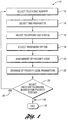
- FIG. 1 a flowchart diagram 10 illustrating steps for the assignment of priority codes by a telephone user to selected telephone numbers of potential incoming telephone calls to a telephone of the telephone user in accordance with the method and system of the present invention is shown.
- a telephone call incoming to a telephone of a telephone user i.e., telephone callee
- the telephone number of an incoming telephone call identifies the source (i.e., telephone caller) of the telephone call.
- Flowchart 10 begins with the telephone user selecting a telephone number in step 12.
- the selected telephone number identifies the source of a potential incoming telephone call to a telephone of the telephone user.
- the telephone user selects a time parameter to associate with the selected telephone number in step 14.
- the time parameter is typically given in the context of hours and minutes of a day. For instance, a selected time parameter may be 2:00 to 5:15 p.m. in a day.
- step 14 the telephone user can further define the selected time parameter by associating a date and/or day with the selected telephone number.
- a date parameter may be the "15 th " and "30 th " of a month.
- the day parameter may be Saturday and Sunday in a week.
- the telephone user selects a beginning time parameter and an ending time parameter along with beginning and ending date parameters.
- Telephone use status identifies if the telephone callee is using the telephone when an incoming telephone call arrives.
- the telephone use status parameter offers the user greater precision in dictating the treatment of incoming telephone calls.
- the telephone use status may include the following states: on the telephone, off the telephone, call waiting, call on hold, faxing, and all statuses.
- the telephone user selects a call treatment option to associate with an incoming telephone call associated with the selected telephone number in step 18.
- the treatment option for an incoming telephone call associated with the selected telephone number may include forwarding the incoming telephone call to a pager, forwarding the incoming telephone call to a mobile phone, forwarding the incoming telephone call to another telephone line of the telephone user, forwarding the incoming telephone call to a voice mail system, sending the incoming telephone call to a call waiting system, converting the incoming telephone call to an e-mail, putting the incoming telephone call on hold, blocking the telephone number of a caller, and the like.
- a priority code according to the parameter selections made by the telephone user is then assigned to the selected telephone number in step 20.
- the priority coding may be set up in various ways. One embodiment is to have the system assign a priority number according to the parameters and treatment options selected by the telephone user. In this embodiment, a unique priority code may be automatically given by the system to each selected telephone number as a function of the treatment options and parameter selection.
- priority codes can range from 1 through 10, with priority code 1 being the most important in terms of priority and priority code 10 being the least important.
- the telephone user selects a priority code to associate with the selected telephone number along with the other parameters.
- An incoming telephone call associated with the selected telephone number is then treated according to the parameters and the priority code chosen by the telephone user.
- a selected telephone number can have several priority codes. The telephone user may select different treatment parameters for the same telephone number resulting in several priority codes for that telephone number.
- a number may have a priority code set higher for a call that is between 9:AM through 5:PM on weekdays, whereas a lower priority code may be set for a call from the same number from 9:PM through 6: AM on weekdays.
- the memory medium may be any storage memory device, database, or the like.
- the memory medium may be located in the telephone user's telephone or may be maintained in a telephone service provider database.
- step 24 the telephone user is then asked if they would like to select another telephone number for priority coding in step 24. If the telephone user chooses YES in step 26, steps 12 through 24 are then repeated. If the telephone user chooses NO in step 28, then flowchart 10 is finished in step 30.
- FIG. 2 is a flowchart diagram 40 illustrating steps for the treatment of an incoming telephone call in accordance with the method and system of the present invention.
- Flowchart 40 first determines if the incoming telephone call is associated with a selected telephone number in step 42. If the incoming telephone call is not associated with a selected telephone number as determined in step 44, a default treatment option for non-selected telephone numbers is assigned to the incoming telephone call in step 46.
- the memory medium is then accessed to retrieve the treatment options and priority codes based on the parameters set by the telephone user in step 50.
- flowchart 40 continues with the touchscreen of the telephone of the telephone user displaying the number, identity, treatment options, and offer additional override options for the incoming telephone call in step 52.
- the override options would be the treatment options that are not the default selected treatment options.
- step 54 the system will determine in step 54 if the telephone user selects the override option, declines the override option, or takes no action. If the telephone user selects the override option in step 56, the system will perform the override treatment option selected by the telephone user in step 58.
- the system will perform the default treatment option in step 62.
- the amount of time before the system chooses the default treatment option based upon no response, can be adjusted by the telephone user such as from anywhere between 1 second to 5 minutes.
- FIG. 3 is a schematic diagram illustrating a preferred hardware configuration 80 on which the method and system of the present invention can be implemented.
- Configuration 80 includes a telephone user 82, a website 84, a memory database 86, and a telephone service provider processor 88 which interact with one another.
- a telephone user computer interface 90 interacts with website 84 via the internet 92.
- Telephone user 82 accesses computer interface 90 to select parameters and assign priority coding to selected telephone numbers.
- a telephone service provider maintains website 84 and memory database 86.
- Telephone user 82 accesses website 84 to select parameters and assign priority codes for selected telephone numbers. The selected parameters and assigned priority codes are kept in memory database 86.
- Telephone service provider processor 88 accesses memory database 86 when an incoming telephone call 96 is received by telephone 98 of telephone user 82.
- Telephone service provider processor 88 manages the incoming telephone call according to the parameters and priority codes selected by telephone user 82.
- Telephone service provider processor 88 determines the identification (i.e., determines the telephone number) of incoming telephone call 96.
- Telephone service provider processor 88 accesses memory database 86 to check if the telephone number associated with incoming telephone call 96 is a selected telephone number.
- telephone service provider processor 88 manages the incoming telephone call according to the telephone user defined treatment options for non-selected telephone numbers. However, if the telephone number of incoming telephone call 96 is a selected telephone number stored in memory database 86, telephone service provider processor 88 manages incoming telephone call 96 in accordance with the telephone user defined treatment options and/or assigned priority codes.
- telephone service provider processor 88 Prior to managing the incoming telephone call 96, telephone service provider processor 88 sends information to telephone 98 of telephone user 82.
- the information may contain the incoming caller identification, the incoming caller number, the incoming telephone number priority code, and the treatment option based on the parameters.
- Telephone 98 displays the information of incoming telephone call 96 along with overriding treatment options on touchscreen display 100 of the telephone.
- the overriding treatment options allow telephone user 82 to modify the management of incoming telephone call 96.
- Telephone service provider processor 88 will automatically default to the predefined treatment option if telephone user 82 does not give a response. However, if telephone user 82 selects an overriding treatment option, telephone service provider processor 88 performs the selected overriding treatment option.
- the treatment options offered by telephone service provider processor 88 may include: forwarding incoming telephone call 96 to a pager 102, forwarding the incoming telephone call to a mobile phone 104, forwarding the incoming telephone call to another telephone 106, forwarding the incoming telephone call to a voice mail system 108, forwarding the incoming telephone call to call waiting 110, converting the incoming telephone call to an e-mail 112, putting the incoming telephone call on hold 114, or blocking the incoming telephone call 116.
- the conversion of incoming telephone call 96 to an e-mail may be done in several ways.
- One method is to have an answering service that converts the information from telephone caller 96 to an e-mail message and then send the e-mail to telephone user's e-mail address 112.
- the answering service may have a person who takes the information from telephone caller 94 and then delivers the message through an e-mail 112 or to a text compatible pager 102.
- Another method for e-mail conversion of incoming telephone call 96 is a program that converts the pertinent information from incoming telephone call 96 and delivers it as an e-mail 112 or to a text compatible pager 102. For example, when the e-mail conversion option is selected, telephone service provider processor 88 system sends an e-mail message with the telephone number associated with incoming telephone call 96, the identification of the incoming caller 94, the time of the telephone call, and the date of the telephone call.
- the hold option 114 may be performed by telephone service provider processor 88 by first sending either a standard greeting or prerecorded message, i.e. "You are on hold, I will be with you shortly. Thank you.” Then, telephone service provider processor 88 would put telephone caller 94 on hold. Touchscreen 100 would display information about incoming telephone call 96 put on hold and an option for telephone user 82 to pick up the line on hold or send to voice mail.
- caller 94 may enter in a priority code from a plurality of priority codes operable for dictating the treatment of outgoing telephone call 96 to the telephone user 82.
- Telephone service provider processor 88 manages call 96 according to the priority coding. For example, caller 94 may enter a priority code to designate outgoing telephone call 96 as an urgent telephone call. Processor 86 would treat call 96 according to telephone user 82 defined parameters for an urgent telephone call.
- telephone user 82 may assign priority coding to each unique caller 94.
- Caller 94 would enter in their priority coding during the placement of telephone call 96.
- Processor 88 would then treat the call according to the user defined parameters assigned to the associated priority code.
- Processor 88 may treat incoming telephone calls with no priority code according to a user 82 defined treatment option.
- telephone caller 82 may be able to get priority treatment of their outgoing telephone call 96 to telephone user 82.
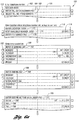
- FIG. 4 is a screen display table 120 illustrating the assignment of priority codes and parameters to selected telephone numbers.
- Screen display table 120 may be a web page, which may also serve as the basis for a memory lookup table or memory database 86.
- Telephone user 82 accesses screen display table 120 to select the parameters for priority coding of incoming telephone calls.
- Column 122 entitled "Phone Number” of screen display table 120 displays the selected telephone numbers.
- Telephone numbers in column 122 may be selected with either a pull-down menu 124 or with input from telephone user 82.
- Column 126 entitled “Identity” displays an identification of the selected telephone numbers and the associated parameters. Identification in column 126 may be a default listing for the telephone number or defined by telephone user 82. For example, "John Doe Evening" 128 may be entered by telephone user 82 to show the identification and time of incoming call 96.
- telephone user 82 can select the date parameters in column 130 for each selected telephone number.
- Telephone user 82 can select a beginning day 132 and an ending day 134 for the treatment option for each selected telephone number.
- Columns 132 and 134 may also offer options such as selection for weekdays, weekends, or any preselected day constraints defined by the telephone user 82.
- Column 135 offers telephone user 82 options for selecting beginning time 136 and ending time 138 for the treatment of the incoming telephone call.
- Columns 136 and 138 may offer default options such as: all day, afternoon, evenings, or any other time settings defined by the user.
- Telephone use status 140 offers telephone user 82 greater precision in dictating the treatment of incoming telephone calls 96.
- Telephone status of telephone user's 82 telephone 100 may be defined as: on the telephone, off the telephone, faxing, call waiting, or any combination of the four options as defined by user 82.
- telephone user 82 selects a treatment option for incoming telephone call 96 associated with the respective telephone number in column 122.
- Treatment options may be defined as: forwarding incoming telephone call 96 to a pager 102, forwarding incoming call to a mobile phone 104, forwarding the incoming telephone call to another telephone number 106, forwarding the incoming call to a voice mail system 108, forwarding the incoming telephone call to call waiting 110, converting the incoming telephone call to an e-mail 112, putting the incoming telephone call on hold 114, or blocking the incoming telephone call 116.
- Telephone user 82 may define the name of the treatment option in column 142. For example, user 82 may define a treatment option name to be "Forward to Tom's Cell" 143 to specify a treatment option to a specific mobile phone number and differentiate from another mobile phone number.
- Telephone user 82 may review the selected parameters for the treatment of incoming telephone calls.
- Telephone user 82 may edit the identification for the selected telephone number to more specifically reference the treatment of the selected telephone call for that priority code listing. For example the user may define a telephone number as "John Doe evenings" 128 to depict the treatment of the selected telephone number in the evening and "John Doe weekday mornings" 144 to more clearly depict the treatment of the selected telephone number during weekday mornings.
- Priority code 146 may be assigned either by the system or may be selected by the user. Assignment of the priority coding 146 can be executed as described earlier.
- Telephone user 82 may continue to the next row of screen display table 120 to select different parameters for the same telephone number or choose another telephone number.
- Screen display table 120 may offer default options during the selection of parameters to make selection faster and may provide options in pull down menus 124.
- FIG. 5 is a diagram illustrating a telephone 98 on which the method and system of the present invention may be implemented.
- Telephone 98 contains typical features found on a telephone, such as a number keypad 150, a touch screen display 100, and option buttons 152.
- Telephone 98 may contain memory medium 154 within the telephone.
- FIG. 6a and 6b are flowchart diagrams 160 illustrating telephone touchscreen displays operable for enabling telephone user 82 to assign parameters and priority codes to selected telephone numbers.
- telephone user 82 selects a telephone number to assign a priority code in screen display 162.
- Screen display 162 may display several choices for inputting a telephone number such as entering the telephone number using number pad 164 or selecting a number that is already in telephone memory medium 166.
- Telephone user 82 may select options offered by pressing the corresponding option buttons 152 or selecting the option on touchscreen display 100.
- Screen display 170 displays choices for selecting the memory location of the selected telephone number.
- the number of memory location numbers 172 is based upon the memory capability of telephone memory medium 154.
- Screen display 170 may offer next available location number in the memory medium 174 or a memory location may be entered using number pad 176. Note that throughout the selection process, touchscreen displays 100 will offer an option to "GO BACK” 178, when available. "GO BACK” option 178 allows telephone user 82 to go to the previous step or previous touchscreen display.
- screen display 180 telephone user 82 enters the beginning day constraint to associate with the selected telephone number.
- Screen display 180 requests telephone user 82 enter beginning day 182.
- Screen display 180 offers days of the week 184 with corresponding option buttons 168 or an option for choosing all days 185.
- Screen display 186 offers telephone user 82 to enter ending day constraint 188. Screen display 186 offers the same options as screen display for the entering the beginning day 180. However, if telephone user 82 selects all days in beginning day display screen 180, ending day display screen 186 will not be offered.
- screen display 190 telephone user 82 is asked to enter beginning time constraint to associate with the selected telephone number using the number pad 191. Telephone user 82 enters beginning time 192 and then selects AM 194 or PM 196. Screen display 190 also offers telephone user 82 an option for choosing all day 197.
- telephone user 82 continues by entering ending time constraint 202 using the number pad. If telephone user 82 chooses all day option 197 in beginning time screen display 190, ending time screen display 200 will not be offered.
- Telephone use statuses may include: on the phone 212, off the phone 214, call waiting 216, faxing 218, or all telephone use statuses 219.
- Treatment options may include: forwarding incoming telephone call 96 to a pager 222, forwarding the incoming telephone call to a mobile phone 223, forwarding the incoming telephone call to another telephone 224, forwarding the incoming telephone call to a voice mail system 225, forwarding the incoming telephone call to call waiting 226, converting the incoming telephone call to an e-mail 227, putting the incoming telephone call on hold 228, or blocking the incoming telephone call 229.
- Screen display 230 may be offered when telephone user 82 selects priority coding to associate with selected telephone numbers. Screen display 230 may offer a choice of different levels of priority where 1 is most important 231 and 10 is least important 232.
- the selected telephone number, priority code, and associated parameter will be stored in memory medium 154 of the telephone.
- the present invention will access the memory medium when an incoming telephone call arrives.
- Screen display 234 asks telephone user 82 if they wish to assign another telephone number. If telephone user 82 selects YES 235, the system will go back to the screen display 162. If the user selects NO 236, the system will return to the main menu.
- FIG. 7 illustrates telephone touchscreen display when an incoming telephone call is received by telephone user's telephone 240.
- incoming telephone call touchscreen display 240 displays telephone number 242 and identity of the telephone number 244. Identity of the telephone number 244 can be defined by telephone user 82.
- Screen display 240 offers all available treatment options 246 and default option 248. Default option 248 is the treatment option that has been previously selected by the telephone user 82. If telephone user 82 does not take any action, then default option 248 may be executed within a user defined amount of time. However, if telephone user 82 selects another treatment option 246, the method and system will override and perform the selected treatment option.
- Incoming emergency telephone numbers are given special treatment by the system.
- Emergency telephone numbers may include the fire department, the police department, or from a medical center, i.e. hospital.
- telephone user 82 may define emergency telephone numbers.
- telephone user 82 can define the telephone numbers for parents or children as emergency numbers.
- the system recognizes an incoming emergency telephone call and performs all the treatment options to ensure that the telephone call is received by telephone user 82.
Landscapes
- Engineering & Computer Science (AREA)
- Signal Processing (AREA)
- Telephonic Communication Services (AREA)
- Telephone Function (AREA)
Description
- The present invention relates to a method and system operable for selectively treating incoming telephone calls to a telephone user by assigning a priority code to dictate a treatment option of the incoming telephone calls.
- Telephones have become a necessity in people's lives as a means of communication. However, an incoming telephone call may occasionally interfere or inconvenience a person's life. On the other hand, there may be other occasions when a person may not want to miss a particularly important telephone call. As such, people desire to control interference caused by telephone calls with their lives.
- Telephone services are available for managing incoming telephone calls to a telephone user. The services may include blocking the incoming calls, routing the calls to an answering service, or forwarding the calls to another telephone line. However, these services treat all incoming calls in the same manner with no selectivity or precision.
-
U.S. Patent Number 4,277,649 issued to Sheinbein (Sheinbein) provides a system for screening incoming telephone calls based upon the identity of the calling line. Sheinbein uses a switching office to hold a telephone user's screening memory for treatment of incoming telephone calls to a telephone of the telephone user. The set up of the system in Sheinbein is limited, time consuming, and inconvenient because the telephone user uses the telephone itself to set up the priority settings for treatment of incoming telephone calls to the telephone user's telephone. -
EP 0 837 611 A discloses a method for providing called party control of telecommunications network services, which utilises a call treatment processor having an associated calling party data memory for storing calling party identification data and a call treatment table. Depending on the time of day, day of week and data input by a user of the apparatus, elements of the serving apparatus including one of media conversion and network conversion apparatus are automatically controlled by the call treatment processor to provide telecommunications network services to the calling party as predetermined by the called party. At least some calling party identification data is pre-stored by the called party user, such as personal identification code obtained via a call treatment processor at the time of an incoming call such as via automatic number identification. The data is analysed on the basis of a predetermined call treatment table having a plurality of priority call treatment levels and a call treatment is actuated that is related to the called party's predetermined call treatment stored in the table. For example, a call from the called party's home telephone number, identified by PIN as the called party's spouse and further identified by a predetermined emergency code, may have the highest priority level call treatment. -
US 6 289 084 A discloses an apparatus, method and system which provide personal telecommunication incoming call screening and alerting. The incoming call screening and alerting utilises a personalised affinity database, based upon individual calling behaviours and patterns. In one example, the affinity database includes telephone numbers and names for outgoing calls (dialled numbers), and for those incoming calls that have a predetermined minimum duration following answering (minimum off hook time period). As a consequence, erroneous or unwanted incoming calls are not included within the affinity database. The preferred system includes a line unit which can be coupled to customer premise equipment (such as a telephone), a network signaling interface, a network trunk interface, a memory, and a processor. The processor includes instructions for determining whether received network signalling information includes caller identification information, which matches an affinity number, such as a number from which a consumer would like to receive a telephone call. For automatic call screening and alerting, the processor has further instructions for assigning a first priority to a corresponding network communication when the caller identification information matches an affinity number, such as providing a distinctive ring or allowing the communication during certain periods of time, and for assigning a second priority to the corresponding network communication when the caller identification information does not match an affinity number, such as routing the incoming call to an automatic messaging or voice mail system. -
US2002/0131573 A discloses an Active User Registry (AUR) system comprising a database which is integrated with the Plain Old Telephone Service (POTS) network and a packet network (such as the Internet, or a corporate intranet). Integrating AUR with the POTS network and a packet network exploits the strengths of both of its constituents, such as the low-latency, high reliability, moderate fidelity real-time voice telephony provided by the POTS network, and the point-and-click access to distributed databases with excellent search capabilities provided by a packet network, such as the Internet. The AUR database contains a dynamic data structure (such as a linked list or a hashed table) of all the ways in which one or more users can be reached via some type of communication network (e.g., through the POTS network or a packet network, or both). A key feature of the AUR is the ability to broker between a subscriber's request for communications contact information corresponding to a user and the user's preferences of being reached by various communications alternatives. Other features may be included with the AUR, including an AUR cache which provides subscribers with rapid-access entry points into the AUR, or automatic updating of user contact information. Further, the capability of learning the user's preferences is included as an additional feature and is also included as an alternative feature. -
WO02/28079 A -
WO02/17603 A - Thus, there exists a need for a method and system that would allow a telephone user to easily select treatment options for incoming telephone calls to a telephone of the telephone user that offer more options, greater flexibility, and precision.
- Accordingly, an object of the present invention is to provide a method and system that substantially obviates one or more of the problems due to the limitations and disadvantages of the related prior art.
- The present invention provides a method for managing incoming telephone calls to a telephone user's telephone, each incoming telephone call being associated with a respective telephone number, a telephone user selects telephone numbers which are associated with potential incoming telephone calls to the telephone user's telephone and the telephone user selects individual time constraints to associate with each selected telephone number, each time constraint associated with a selected telephone number being indicative of a possible period of time during which the telephone user's telephone receives an incoming telephone call associated with the selected telephone number, the method comprising:
- selecting, by the telephone user, telephone use statuses to associate with the selected telephone numbers, each telephone use status associated with a selected telephone number being indicative of a possible status of the telephone user's telephone during a time at which the telephone user's telephone receives an incoming telephone call associated with a selected telephone number;
- selecting, by the telephone user, treatment options to associate with the selected telephone numbers for each time constraint and telephone use status pair to form time constraint, telephone use status, and treatment option combinations associated with the selected telephone numbers;
- storing the time constraint, telephone use status, and treatment option combinations associated with the selected telephone numbers along with the selected telephone numbers in a memory medium;
- upon determining that a telephone number associated with an incoming telephone call to the telephone user's telephone is one of the selected telephone numbers,
- accessing the memory medium to determine the time constraint, telephone use status and treatment option combination applicable to the incoming telephone call based on the period of time during which the telephone user's telephone receives the incoming telephone call and based on the status of the telephone user's telephone during the time at which the telephone user's telephone receives the incoming telephone call; and
- managing the incoming telephone call according to the treatment option specified in the time constraint, telephone use status and treatment option combination applicable to the incoming telephone call.
- The present invention may provide a method for determining if the telephone number associated with the incoming telephone call is not one of the selected phone numbers. The method selects a predetermined default treatment option for an incoming telephone call that is not one of the selected telephone numbers and manages the incoming telephone call according to the default treatment option.
- The present invention may include a method for recognizing the incoming telephone call as an emergency telephone number and managing the incoming telephone call to all treatment options to ensure receipt by the telephone user. The emergency telephone number may be defined by the telephone user.
- The present invention may include a method for assigning the incoming telephone call as the emergency telephone number when the telephone caller enters in a special priority code along with the placement of the incoming telephone call.
- The treatment options may include forwarding an incoming telephone call associated with a selected telephone number to a voice mail system, a pager, a mobile telephone, a telephone user determined telephone number, or a call waiting system. The treatment options may further include converting an incoming telephone call associated with a selected telephone number directly to an e-mail.
- The present invention provides the telephone user with the telephone number associated with the incoming telephone call when the telephone user is using their telephone. The display may provide additional information about the incoming telephone call such as the identity of the telephone caller of the incoming telephone call and the treatment option for the incoming telephone call based upon the priority code. The display may provide the telephone user with override treatment options for the incoming telephone call. If the telephone user selects an override treatment option, the present invention will perform the override treatment option selected by the telephone user. If the telephone user does not respond to the step of offering, the present invention will perform the selected treatment option associated with the telephone number of the incoming telephone call.
- The present invention provides a method of accessing an interactive internet website to assign a priority code to user selected telephone numbers. The method accesses the website to select the time constraint to associate with the priority code of each of the selected telephone numbers, to select the telephone use status to associate with the priority code of each of the selected telephone numbers, and to select the treatment option to associate with the priority code of each of the selected telephone numbers.
- The present invention provides a method for accessing the memory medium to determine if the telephone number associated with an incoming telephone call to the telephone user's telephone is one of the selected telephone numbers. The present invention accesses the memory medium to manage the incoming telephone call according to the treatment option associated with the priority code assigned to the selected telephone number associated with the incoming telephone call.
- The present invention may provide a method for accessing the memory medium to determine if the telephone number associated with the incoming telephone call is not one of the selected telephone numbers. The method may use a telephone service provider processor to select a predetermined default treatment option and to manage the incoming telephone call according to the default treatment option if the telephone number associated with the incoming telephone call is not one of the selected telephone numbers. The telephone service provider processor may be a web-based processor.
- The present invention may provide a method for accessing the memory medium to recognize the incoming telephone call as an emergency telephone number and using the telephone service provider processor to manage the incoming telephone call to all treatment options to ensure receipt by the user. The user may access the website to define the emergency telephone numbers and store the emergency telephone numbers into the memory medium. The memory medium may be a web-based database.
- Further, in carrying out the above objects and other objects, the present invention provides a method for managing incoming telephone calls to a telephone user's telephone, each incoming telephone call being associated with a respective telephone number. The method assigns priority codes to selected telephone numbers with a telephone user's telephone. The user may select a time constraint, a telephone use status, and a treatment option to associate with the priority code of each of the selected telephone numbers into the telephone user's telephone. The time constraint is indicative of a possible period of time at which the telephone user's telephone receives an incoming telephone call associated with a selected telephone number. The telephone use status is indicative of a possible status of the telephone user's telephone during the time at which the telephone user's telephone receives an incoming telephone call associated with a selected telephone number.
- The present invention provides a method for assigning a priority code to each of the selected telephone numbers based on the selected time constraint, the selected telephone use status, and the selected treatment option. The method stores the priority code and associated parameters for each of the selected telephone numbers into a memory medium in the telephone user's telephone.
- The present invention further provides a method for determining if a telephone number associated with an incoming telephone call to the telephone user's telephone is one of the selected telephone numbers. The present invention accesses the memory medium when the telephone number associated with the incoming telephone call is one of the selected telephone numbers to determine the priority code assigned to the selected telephone number associated with the incoming telephone call. The memory medium stores the priority code with the associated time constraint associated with the telephone number, the associated telephone use status associated with the telephone number, and the associated treatment option associated with the telephone number. The time constraint is the period of time at which the telephone user's telephone receives the incoming telephone call. The telephone use status is the status of the telephone user's telephone during the time at which the telephone user's telephone receives the incoming telephone call. The treatment option manages the incoming telephone call associated with the selected telephone number according to the treatment option associated with the priority code assigned to the selected telephone number associated with the incoming telephone call. The memory medium may be housed within the telephone user's telephone.
- Also, in carrying out the above object and other objects, the present invention provides a system for controlling treatment of an incoming telephone call to a telephone user's telephone based upon a priority coding scheme determined by the telephone user. Each incoming telephone call is associated with a respective telephone number. The present invention provides a telephone user computer operable for enabling a telephone user to select telephone numbers to assign a priority code by selecting a time constraint, a telephone use status, and a treatment option to associate with the priority code. The time constraint is indicative of a possible period of time at which the telephone user's telephone receives an incoming telephone call associated with a selected telephone number. The telephone use status is indicative of a possible status of the telephone user's telephone during the time at which the telephone user's telephone receives an incoming telephone call associated with a selected telephone number.
- The present invention includes an internet website at a telephone service provider. The website is operable for receiving from the telephone user computer the priority code for each of the selected telephone numbers. The present invention further includes a telephone service provider database operable with the website for storing the priority codes for each of the selected telephone numbers. The invention further provides a telephone service provider processor determines with the database if a telephone number associated with an incoming telephone call to the telephone user's telephone is one of the selected telephone numbers. The processor is further operable for managing the incoming telephone call according to the treatment option associated with the priority code assigned to the telephone number associated with the incoming call if the telephone number is a selected telephone number. The priority code is based on the period of time at which the telephone user's telephone receives the incoming telephone call and based on the telephone use status during the time at which the telephone user's telephone receives the incoming telephone call. The database may be web-based.
- Still further, in carrying out the above object and other objects, the present invention provides a system for controlling treatment of an incoming telephone call to a telephone user's telephone based upon a priority coding scheme determined by the telephone user. Each telephone call is associated with a respective telephone number. The telephone has a touchscreen display operable for enabling a telephone user to select telephone numbers to assign a priority code. The telephone is further operable for selecting a time constraint, a telephone use status, and a treatment option to associate with the priority code. The time constraint is indicative of a possible period of time at which the telephone user's telephone receives an incoming telephone call associated with a selected telephone number. The telephone use status is indicative of a possible status of the telephone user's telephone during the time at which the telephone user's telephone receives an incoming telephone call associated with a selected telephone number.
- The present invention provides a memory medium operable for storing the priority codes and associated parameters for each of the selected telephone numbers. The memory medium may be housed within the telephone. The present invention further provides a processor in the telephone operable for displaying the telephone number of an incoming telephone call on the touchscreen display. The processor determines if the telephone number of an incoming telephone call to the telephone is one of the selected telephone numbers. The processor is further operable for managing the incoming telephone call according to the treatment option associated with the priority code assigned to the selected telephone number associated with the incoming telephone call based on the period of time at which the telephone receives the incoming telephone call and based on the telephone use status during the time at which the telephone receives the incoming telephone call.
- By way of example only, a specific embodiment of the present invention will now be described with reference to the accompanying drawings, in which:-
-
FIG. 1 is a flowchart diagram illustrating steps for the assignment of priority codes by a telephone user to selected telephone numbers associated with potential incoming telephone calls to a telephone of the telephone user in accordance with the method and system of the present invention; -
FIG. 2 is a flowchart diagram illustrating steps for the treatment of an incoming telephone call to the telephone of the telephone user in accordance with the method and system of the present invention; -
FIG. 3 is a schematic diagram illustrating a preferred hardware configuration on which the method and system of the present invention can be implemented; -
FIG. 4 is an web page screen display illustrating the assignment of priority codes and parameters to the selected telephone numbers by the telephone user; -
FIG. 5 is a diagram illustrating a telephone of the telephone user on which the method and system of the present invention can be implemented; -
FIGS. 6a and6b are flowchart diagrams illustrating telephone touchscreen displays operable for enabling the telephone user to assign parameters and priority codes to the selected telephone numbers; and -
FIG. 7 is a telephone touchscreen display illustrating the screen presented when an incoming telephone call comes into the telephone of the telephone user. - Referring now to
FIG. 1 , a flowchart diagram 10 illustrating steps for the assignment of priority codes by a telephone user to selected telephone numbers of potential incoming telephone calls to a telephone of the telephone user in accordance with the method and system of the present invention is shown. In general, a telephone call incoming to a telephone of a telephone user (i.e., telephone callee) is associated with a telephone number. The telephone number of an incoming telephone call identifies the source (i.e., telephone caller) of the telephone call. -
Flowchart 10 begins with the telephone user selecting a telephone number instep 12. The selected telephone number identifies the source of a potential incoming telephone call to a telephone of the telephone user. Next, the telephone user selects a time parameter to associate with the selected telephone number instep 14. The time parameter is typically given in the context of hours and minutes of a day. For instance, a selected time parameter may be 2:00 to 5:15 p.m. in a day. - In
step 14 the telephone user can further define the selected time parameter by associating a date and/or day with the selected telephone number. For example, a date parameter may be the "15th" and "30th" of a month. Similarly, the day parameter may be Saturday and Sunday in a week. Instep 14, the telephone user selects a beginning time parameter and an ending time parameter along with beginning and ending date parameters. - Next, the telephone user selects a telephone use status to associate with the selected telephone number in
step 16. Telephone use status identifies if the telephone callee is using the telephone when an incoming telephone call arrives. The telephone use status parameter offers the user greater precision in dictating the treatment of incoming telephone calls. For example, the telephone use status may include the following states: on the telephone, off the telephone, call waiting, call on hold, faxing, and all statuses. The telephone user then selects a call treatment option to associate with an incoming telephone call associated with the selected telephone number instep 18. The treatment option for an incoming telephone call associated with the selected telephone number may include forwarding the incoming telephone call to a pager, forwarding the incoming telephone call to a mobile phone, forwarding the incoming telephone call to another telephone line of the telephone user, forwarding the incoming telephone call to a voice mail system, sending the incoming telephone call to a call waiting system, converting the incoming telephone call to an e-mail, putting the incoming telephone call on hold, blocking the telephone number of a caller, and the like. - A priority code according to the parameter selections made by the telephone user is then assigned to the selected telephone number in
step 20. The priority coding may be set up in various ways. One embodiment is to have the system assign a priority number according to the parameters and treatment options selected by the telephone user. In this embodiment, a unique priority code may be automatically given by the system to each selected telephone number as a function of the treatment options and parameter selection. - Another embodiment for the priority coding is to have distinct priority codes and the telephone user selects the priority code to assign to the selected telephone number along with all the parameters. For example, priority codes can range from 1 through 10, with
priority code 1 being the most important in terms of priority andpriority code 10 being the least important. The telephone user selects a priority code to associate with the selected telephone number along with the other parameters. An incoming telephone call associated with the selected telephone number is then treated according to the parameters and the priority code chosen by the telephone user. In both embodiments, a selected telephone number can have several priority codes. The telephone user may select different treatment parameters for the same telephone number resulting in several priority codes for that telephone number. For example, a number may have a priority code set higher for a call that is between 9:AM through 5:PM on weekdays, whereas a lower priority code may be set for a call from the same number from 9:PM through 6: AM on weekdays. - Next, the priority codes and the selected parameters for each of the selected telephone numbers are stored in a memory medium in
step 22. The memory medium may be any storage memory device, database, or the like. The memory medium may be located in the telephone user's telephone or may be maintained in a telephone service provider database. - Next, the telephone user is then asked if they would like to select another telephone number for priority coding in
step 24. If the telephone user chooses YES instep 26, steps 12 through 24 are then repeated. If the telephone user chooses NO instep 28, then flowchart 10 is finished instep 30. -
FIG. 2 is a flowchart diagram 40 illustrating steps for the treatment of an incoming telephone call in accordance with the method and system of the present invention.Flowchart 40 first determines if the incoming telephone call is associated with a selected telephone number instep 42. If the incoming telephone call is not associated with a selected telephone number as determined instep 44, a default treatment option for non-selected telephone numbers is assigned to the incoming telephone call instep 46. - If the incoming telephone call is determined to be associated with a selected telephone number in
step 48, the memory medium is then accessed to retrieve the treatment options and priority codes based on the parameters set by the telephone user instep 50. - In both scenarios of whether the incoming telephone call is associated with a selected telephone number or not,
flowchart 40 continues with the touchscreen of the telephone of the telephone user displaying the number, identity, treatment options, and offer additional override options for the incoming telephone call instep 52. The override options would be the treatment options that are not the default selected treatment options. - Next, the system will determine in
step 54 if the telephone user selects the override option, declines the override option, or takes no action. If the telephone user selects the override option instep 56, the system will perform the override treatment option selected by the telephone user instep 58. - If the telephone user does not select the default treatment option or does not respond in
step 60, the system will perform the default treatment option instep 62. The amount of time before the system chooses the default treatment option based upon no response, can be adjusted by the telephone user such as from anywhere between 1 second to 5 minutes. -
FIG. 3 is a schematic diagram illustrating a preferred hardware configuration 80 on which the method and system of the present invention can be implemented. Configuration 80 includes atelephone user 82, awebsite 84, amemory database 86, and a telephoneservice provider processor 88 which interact with one another. A telephoneuser computer interface 90 interacts withwebsite 84 via theinternet 92.Telephone user 82 accessescomputer interface 90 to select parameters and assign priority coding to selected telephone numbers. - A telephone service provider maintains
website 84 andmemory database 86.Telephone user 82accesses website 84 to select parameters and assign priority codes for selected telephone numbers. The selected parameters and assigned priority codes are kept inmemory database 86. Telephoneservice provider processor 88 accessesmemory database 86 when anincoming telephone call 96 is received bytelephone 98 oftelephone user 82. Telephoneservice provider processor 88 manages the incoming telephone call according to the parameters and priority codes selected bytelephone user 82. - For example, when a
telephone caller 94 sends atelephone call 96 to telephone 98 oftelephone user 82,incoming telephone call 96 is first delivered fromtelephone caller 94 to telephoneservice provider processor 88. Telephoneservice provider processor 88 determines the identification (i.e., determines the telephone number) ofincoming telephone call 96. Telephoneservice provider processor 88 accessesmemory database 86 to check if the telephone number associated withincoming telephone call 96 is a selected telephone number. - If the telephone number of
incoming telephone call 96 is not a selected telephone number stored inmemory database 86, telephoneservice provider processor 88 manages the incoming telephone call according to the telephone user defined treatment options for non-selected telephone numbers. However, if the telephone number ofincoming telephone call 96 is a selected telephone number stored inmemory database 86, telephoneservice provider processor 88 managesincoming telephone call 96 in accordance with the telephone user defined treatment options and/or assigned priority codes. - Prior to managing the
incoming telephone call 96, telephoneservice provider processor 88 sends information to telephone 98 oftelephone user 82. The information may contain the incoming caller identification, the incoming caller number, the incoming telephone number priority code, and the treatment option based on the parameters.Telephone 98 displays the information ofincoming telephone call 96 along with overriding treatment options ontouchscreen display 100 of the telephone. The overriding treatment options allowtelephone user 82 to modify the management ofincoming telephone call 96. Telephoneservice provider processor 88 will automatically default to the predefined treatment option iftelephone user 82 does not give a response. However, iftelephone user 82 selects an overriding treatment option, telephoneservice provider processor 88 performs the selected overriding treatment option. - The treatment options offered by telephone
service provider processor 88 may include: forwardingincoming telephone call 96 to apager 102, forwarding the incoming telephone call to amobile phone 104, forwarding the incoming telephone call to anothertelephone 106, forwarding the incoming telephone call to avoice mail system 108, forwarding the incoming telephone call to call waiting 110, converting the incoming telephone call to ane-mail 112, putting the incoming telephone call onhold 114, or blocking theincoming telephone call 116. - The conversion of
incoming telephone call 96 to an e-mail may be done in several ways. One method is to have an answering service that converts the information fromtelephone caller 96 to an e-mail message and then send the e-mail to telephone user'se-mail address 112. The answering service may have a person who takes the information fromtelephone caller 94 and then delivers the message through ane-mail 112 or to a textcompatible pager 102. - Another method for e-mail conversion of
incoming telephone call 96 is a program that converts the pertinent information fromincoming telephone call 96 and delivers it as ane-mail 112 or to a textcompatible pager 102. For example, when the e-mail conversion option is selected, telephoneservice provider processor 88 system sends an e-mail message with the telephone number associated withincoming telephone call 96, the identification of theincoming caller 94, the time of the telephone call, and the date of the telephone call. - The
hold option 114 may be performed by telephoneservice provider processor 88 by first sending either a standard greeting or prerecorded message, i.e. "You are on hold, I will be with you shortly. Thank you." Then, telephoneservice provider processor 88 would puttelephone caller 94 on hold.Touchscreen 100 would display information aboutincoming telephone call 96 put on hold and an option fortelephone user 82 to pick up the line on hold or send to voice mail. - In another embodiment,
caller 94 may enter in a priority code from a plurality of priority codes operable for dictating the treatment ofoutgoing telephone call 96 to thetelephone user 82. Telephoneservice provider processor 88 managescall 96 according to the priority coding. For example,caller 94 may enter a priority code to designateoutgoing telephone call 96 as an urgent telephone call.Processor 86 would treat call 96 according totelephone user 82 defined parameters for an urgent telephone call. - In yet another embodiment,
telephone user 82 may assign priority coding to eachunique caller 94.Caller 94 would enter in their priority coding during the placement oftelephone call 96.Processor 88 would then treat the call according to the user defined parameters assigned to the associated priority code.Processor 88 may treat incoming telephone calls with no priority code according to auser 82 defined treatment option. Here,telephone caller 82 may be able to get priority treatment of theiroutgoing telephone call 96 totelephone user 82. -
FIG. 4 is a screen display table 120 illustrating the assignment of priority codes and parameters to selected telephone numbers. Screen display table 120 may be a web page, which may also serve as the basis for a memory lookup table ormemory database 86.Telephone user 82 accesses screen display table 120 to select the parameters for priority coding of incoming telephone calls. -
Column 122 entitled "Phone Number" of screen display table 120 displays the selected telephone numbers. Telephone numbers incolumn 122 may be selected with either a pull-down menu 124 or with input fromtelephone user 82.Column 126 entitled "Identity" displays an identification of the selected telephone numbers and the associated parameters. Identification incolumn 126 may be a default listing for the telephone number or defined bytelephone user 82. For example, "John Doe Evening" 128 may be entered bytelephone user 82 to show the identification and time ofincoming call 96. - Next,
telephone user 82 can select the date parameters incolumn 130 for each selected telephone number.Telephone user 82 can select abeginning day 132 and an endingday 134 for the treatment option for each selected telephone number.Columns telephone user 82. - Column 135 offers
telephone user 82 options for selectingbeginning time 136 and endingtime 138 for the treatment of the incoming telephone call.Columns -
Column 140 entitled "Phone Status" ofscreen table display 120 displaystelephone use status 140 when an incoming telephone call is received.Telephone use status 140 offerstelephone user 82 greater precision in dictating the treatment of incoming telephone calls 96. Telephone status of telephone user's 82telephone 100 may be defined as: on the telephone, off the telephone, faxing, call waiting, or any combination of the four options as defined byuser 82. - In
column 142,telephone user 82 selects a treatment option forincoming telephone call 96 associated with the respective telephone number incolumn 122. Treatment options may be defined as: forwardingincoming telephone call 96 to apager 102, forwarding incoming call to amobile phone 104, forwarding the incoming telephone call to anothertelephone number 106, forwarding the incoming call to avoice mail system 108, forwarding the incoming telephone call to call waiting 110, converting the incoming telephone call to ane-mail 112, putting the incoming telephone call onhold 114, or blocking theincoming telephone call 116.Telephone user 82 may define the name of the treatment option incolumn 142. For example,user 82 may define a treatment option name to be "Forward to Tom's Cell" 143 to specify a treatment option to a specific mobile phone number and differentiate from another mobile phone number. -
Telephone user 82 may review the selected parameters for the treatment of incoming telephone calls.Telephone user 82 may edit the identification for the selected telephone number to more specifically reference the treatment of the selected telephone call for that priority code listing. For example the user may define a telephone number as "John Doe evenings" 128 to depict the treatment of the selected telephone number in the evening and "John Doe weekday mornings" 144 to more clearly depict the treatment of the selected telephone number during weekday mornings. -
Priority code 146 may be assigned either by the system or may be selected by the user. Assignment of thepriority coding 146 can be executed as described earlier. -
Telephone user 82 may continue to the next row of screen display table 120 to select different parameters for the same telephone number or choose another telephone number. Screen display table 120 may offer default options during the selection of parameters to make selection faster and may provide options in pull downmenus 124. -
FIG. 5 is a diagram illustrating atelephone 98 on which the method and system of the present invention may be implemented.Telephone 98 contains typical features found on a telephone, such as anumber keypad 150, atouch screen display 100, andoption buttons 152.Telephone 98 may containmemory medium 154 within the telephone. -
FIG. 6a and6b are flowchart diagrams 160 illustrating telephone touchscreen displays operable for enablingtelephone user 82 to assign parameters and priority codes to selected telephone numbers. First,telephone user 82 selects a telephone number to assign a priority code inscreen display 162.Screen display 162 may display several choices for inputting a telephone number such as entering the telephone number usingnumber pad 164 or selecting a number that is already intelephone memory medium 166.Telephone user 82 may select options offered by pressing thecorresponding option buttons 152 or selecting the option ontouchscreen display 100. - Screen display 170 displays choices for selecting the memory location of the selected telephone number. The number of
memory location numbers 172 is based upon the memory capability oftelephone memory medium 154. Screen display 170 may offer next available location number in thememory medium 174 or a memory location may be entered usingnumber pad 176. Note that throughout the selection process, touchscreen displays 100 will offer an option to "GO BACK" 178, when available. "GO BACK" option 178 allowstelephone user 82 to go to the previous step or previous touchscreen display. - In
screen display 180,telephone user 82 enters the beginning day constraint to associate with the selected telephone number.Screen display 180requests telephone user 82enter beginning day 182.Screen display 180 offers days of theweek 184 with corresponding option buttons 168 or an option for choosing alldays 185. -
Screen display 186 offerstelephone user 82 to enter endingday constraint 188.Screen display 186 offers the same options as screen display for the entering the beginningday 180. However, iftelephone user 82 selects all days in beginningday display screen 180, endingday display screen 186 will not be offered. - In
screen display 190,telephone user 82 is asked to enter beginning time constraint to associate with the selected telephone number using thenumber pad 191.Telephone user 82 enters beginningtime 192 and then selectsAM 194 orPM 196.Screen display 190 also offerstelephone user 82 an option for choosing allday 197. - In
screen display 200,telephone user 82 continues by entering endingtime constraint 202 using the number pad. Iftelephone user 82 chooses allday option 197 in beginningtime screen display 190, endingtime screen display 200 will not be offered. -
Screen display 210requests telephone user 82 to select telephone use status 211. Telephone use statuses may include: on thephone 212, off thephone 214, call waiting 216, faxing 218, or all telephone use statuses 219. - In
touchscreen display 220,telephone user 82 selects treatment option to associate with the selectedtelephone number 221. Treatment options may include: forwardingincoming telephone call 96 to apager 222, forwarding the incoming telephone call to amobile phone 223, forwarding the incoming telephone call to anothertelephone 224, forwarding the incoming telephone call to avoice mail system 225, forwarding the incoming telephone call to call waiting 226, converting the incoming telephone call to ane-mail 227, putting the incoming telephone call onhold 228, or blocking theincoming telephone call 229. -
Screen display 230 may be offered whentelephone user 82 selects priority coding to associate with selected telephone numbers.Screen display 230 may offer a choice of different levels of priority where 1 is most important 231 and 10 is least important 232. - The selected telephone number, priority code, and associated parameter will be stored in
memory medium 154 of the telephone. The present invention will access the memory medium when an incoming telephone call arrives. -
Screen display 234 askstelephone user 82 if they wish to assign another telephone number. Iftelephone user 82 selectsYES 235, the system will go back to thescreen display 162. If the user selects NO 236, the system will return to the main menu. -
FIG. 7 illustrates telephone touchscreen display when an incoming telephone call is received by telephone user'stelephone 240. When an incoming telephone call is received, incoming telephonecall touchscreen display 240displays telephone number 242 and identity of thetelephone number 244. Identity of thetelephone number 244 can be defined bytelephone user 82.Screen display 240 offers allavailable treatment options 246 anddefault option 248.Default option 248 is the treatment option that has been previously selected by thetelephone user 82. Iftelephone user 82 does not take any action, thendefault option 248 may be executed within a user defined amount of time. However, iftelephone user 82 selects anothertreatment option 246, the method and system will override and perform the selected treatment option. - Incoming emergency telephone numbers are given special treatment by the system. Emergency telephone numbers may include the fire department, the police department, or from a medical center, i.e. hospital. However,
telephone user 82 may define emergency telephone numbers. For example,telephone user 82 can define the telephone numbers for parents or children as emergency numbers. The system recognizes an incoming emergency telephone call and performs all the treatment options to ensure that the telephone call is received bytelephone user 82. - While embodiments of the invention have been illustrated and described, it is not intended that these embodiments illustrate and describe all possible forms of the invention. Rather, the words used in the specification are words of description rather than limitation, and it is understood that various changes may be made without departing from the scope of the invention.
Claims (21)
- A method for managing incoming telephone calls to a telephone user's telephone (98), each incoming telephone call (96) being associated with a respective telephone number, a telephone user (82) selects telephone numbers (122) which are associated with potential incoming telephone calls (96) to the telephone user's telephone (98) and the telephone user (82) selects individual time constraints (132, 134, 136, 138) to associate with each selected telephone number (122), each time constraint (132, 134, 136, 138) associated with a selected telephone number (122) being indicative of a possible period of time during which the telephone user's telephone (98) receives an incoming telephone call (96) associated with the selected telephone number (122), the method comprising:selecting, by the telephone user (82), telephone use statuses (140) to associate with the selected telephone numbers (122), each telephone use status (140) associated with a selected telephone number (124) being indicative of a possible status (140) of the telephone user's telephone (98) during a time at which the telephone user's telephone (98) receives an incoming telephone call (96) associated with a selected telephone number (124);selecting, by the telephone user (82), treatment options (142) to associate with the selected telephone numbers (122) for each time constraint (132, 134, 136, 138) and telephone use status (140) pair to form time constraint (132, 134, 136, 138), telephone use status (140), and treatment option (142) combinations associated with the selected telephone numbers (122);storing the time constraint (132, 134, 136, 138), telephone use status (140), and treatment option (142) combinations associated with the selected telephone numbers (122) along with the selected telephone numbers (122) in a memory medium (86);upon determining that a telephone number (122) associated with an incoming telephone call (96) to the telephone user's telephone (98) is one of the selected telephone numbers (122),accessing the memory medium (86) to determine the time constraint (132, 134, 136, 138), telephone use status (140) and treatment option (142) combination applicable to the incoming telephone call (96) based on the period of time during which the telephone user's telephone (98) receives the incoming telephone call (96) and based on the status (140) of the telephone user's telephone (98) during the time at which the telephone user's telephone (98) receives the incoming telephone call (96); andmanaging the incoming telephone call (96) according to the treatment option (142) specified in the time constraint (132, 134, 136, 138), telephone use status (140) and treatment option (142) combination applicable to the incoming telephone call (96).
- The method of claim 1, further comprising:determining if the telephone number (122) associated with the incoming telephone call (96) is not one of the selected telephone numbers;selecting a predetermined default treatment option (142); andmanaging the incoming telephone call (96) according to the default treatment option (142) if the telephone number (122) associated with the incoming telephone call (96) is not one of the selected telephone numbers (122).
- The method of claim 1 or claim 2, further comprising:recognizing the incoming telephone call (96) as an emergency telephone number; andmanaging the incoming telephone call (96) according to all treatment options (142) to ensure receipt by the telephone user (82).
- The method of claim 3, wherein:the emergency telephone number (122) is defined by the telephone user (82).
- The method of claim 4, wherein:assigning the incoming telephone call (96) as the emergency telephone number (122) when a telephone caller (96) enters in a special priority code (146) during placement of the telephone call.
- The method of any of claims 1 to 5, wherein:the time constraint (132, 134) is further defined with a date constraint (136, 138).
- The method of any of claims 1 to 6, wherein:a treatment option (142) comprises forwarding an incoming telephone call (96) associated with a selected telephone number (122) directly to a voice mail system (108).
- The method of any of claims 1 to 7, wherein:a treatment option (142) comprises forwarding an incoming telephone call (96) associated with a selected telephone number (122) directly to a pager (102).
- The method of any of claims 1 to 8, wherein:a treatment option (142) comprises forwarding an incoming telephone call (96) associated with a selected telephone number (122) directly to a mobile telephone (104).
- The method of any of claims 1 to 9, wherein:a treatment option (142) comprises converting an incoming telephone call (96) associated with a selected telephone number (122) directly to an e-mail (112).
- The method of any of claims 1 to 10, wherein:a treatment option (142) comprises forwarding an incoming telephone call (96) associated with a selected telephone number (122) directly to a telephone user (106) determined telephone number (122).
- The method of any of claims 1 to 11, wherein:a treatment option (142) comprises forwarding an incoming telephone call (96) associated with a selected telephone number (122) directly to a call waiting system (110).
- The method of any of claims 1 to 12, wherein when the telephone user (82) is using the telephone user's telephone (98) and an incoming telephone call (96) of a telephone caller having a selected telephone number (122) is sent to the telephone user's telephone (98), the method further comprises:displaying to the telephone user (82) the telephone number (122) associated with the incoming telephone call (96) and displaying to the telephone user (82) an identity (126) of the telephone caller of the incoming telephone call (96);displaying to the telephone user (82) the treatment option (142) for the incoming telephone call (96);offering to the telephone user (82) an override treatment option (54) for the incoming telephone call (96);performing the override treatment option (58) if selected by the telephone user (82); andperforming the treatment option (62) associated with the telephone number (122) of the incoming telephone call (96) when the telephone user (82) provides no response (60) to the step of offering.
- The method of any of claims 1 to 13, wherein:the step of selecting telephone numbers (12) comprises accessing an interactive Internet website (84) to select the telephone numbers (122);the step of selecting time constraints (14) comprises accessing the website (84) to select the time constraints (132, 134);the step of selecting telephone use statuses (16) comprises accessing the website (84) to select the telephone use statuses (140);the step of selecting treatment options (18) comprises accessing the website (84) to select the treatment options (142);the step of determining comprises accessing the memory medium (86) to determine if the telephone number (122) associated with an incoming telephone call (96) to the telephone user's telephone (98) is one of the selected telephone numbers (122); andthe step of managing the incoming telephone call comprises accessing the memory medium (86) to manage the incoming telephone call (96) according to the treatment option (142) specified in the time constraint (132, 134), telephone use status (140) and treatment option (142) combination applicable to the incoming telephone call (96).
- The method of claim 14 further comprising:accessing the memory medium (86) to determine if the telephone number (122) associated with the incoming telephone call (96) is not one of the selected telephone numbers (122);using a telephone service provider processor (88) to select a predetermined default treatment option (142); andusing the telephone service provider processor (88) to manage the incoming telephone call (96), according to the default treatment option (142) if the telephone number (122) associated with the incoming telephone call (96) is not one of the selected telephone numbers (122).
- The method of claim 15, wherein:the telephone service provider processor (88) is a web-based processor.
- The method of claim 15 or claim 16, further comprising:accessing the memory medium (86) to recognize the incoming telephone call (96) as an emergency telephone number; andusing the telephone service provider processor (88) to manage the incoming telephone call (96) according to all treatment options (142) to ensure receipt by the user (82).
- The method of claim 17, further comprising:using the website (84) to define the emergency telephone numbers; andstoring the emergency telephone numbers into the memory medium (86).
- The method of any of claims 14 to 18, wherein:the memory medium (86) is a web based database.
- The method of any of claims 1 to 13, wherein:the memory medium (86) is housed within the telephone user's telephone (98).
- The method of claim 1, wherein:the possible statuses (142) of the telephone user's telephone (98) indicated by the telephone use statuses (142) comprise on the telephone, off the telephone, call waiting (110), call on hold (114), and faxing.
Applications Claiming Priority (2)
| Application Number | Priority Date | Filing Date | Title |
|---|---|---|---|
| US439072 | 2003-05-15 | ||
| US10/439,072 US7197127B2 (en) | 2003-05-15 | 2003-05-15 | Method and system for priority based telephone call screening |
Publications (2)
| Publication Number | Publication Date |
|---|---|
| EP1478166A1 EP1478166A1 (en) | 2004-11-17 |
| EP1478166B1 true EP1478166B1 (en) | 2017-07-19 |
Family
ID=33029809
Family Applications (1)
| Application Number | Title | Priority Date | Filing Date |
|---|---|---|---|
| EP04252585.7A Expired - Lifetime EP1478166B1 (en) | 2003-05-15 | 2004-05-04 | Priority based telephone call screening |
Country Status (4)
| Country | Link |
|---|---|
| US (1) | US7197127B2 (en) |
| EP (1) | EP1478166B1 (en) |
| JP (1) | JP2005033783A (en) |
| CA (1) | CA2462470C (en) |
Families Citing this family (13)
| Publication number | Priority date | Publication date | Assignee | Title |
|---|---|---|---|---|
| US6928300B1 (en) | 2000-11-09 | 2005-08-09 | Palmsource, Inc. | Method and apparatus for automated flexible configuring of notifications and activation |
| US20060141926A1 (en) * | 2004-12-29 | 2006-06-29 | Nokia Corporation | Call rejections and reminders in order to enhance enjoyment of media items |
| US7831599B2 (en) * | 2005-03-04 | 2010-11-09 | Eastman Kodak Company | Addition of new images to an image database by clustering according to date/time and image content and representative image comparison |
| US20060240877A1 (en) * | 2005-04-22 | 2006-10-26 | Viktor Filiba | System and method for providing in-coming call alerts |
| WO2007080422A1 (en) * | 2006-01-13 | 2007-07-19 | Chartplay Computing Limited | Privacy system for telephone numbers |
| JP2007306515A (en) * | 2006-05-15 | 2007-11-22 | Fujitsu Ltd | Telephone connection program, telephone connection method, and telephone connection device |
| US8805328B2 (en) | 2007-09-27 | 2014-08-12 | Qualcomm Incorporated | Priority-based phone call filtering |
| WO2009133488A1 (en) * | 2008-04-29 | 2009-11-05 | Koninklijke Philips Electronics N.V. | Method of forwarding a phone call through the internet protocol network |
| US8693654B2 (en) | 2009-02-23 | 2014-04-08 | International Business Machines Corporation | Location sensitive caller and callee based call prioritization |
| CN102404436A (en) * | 2010-09-16 | 2012-04-04 | 深圳富泰宏精密工业有限公司 | Mobile phone call filtering system and method |
| US9571295B2 (en) | 2012-04-24 | 2017-02-14 | At&T Intellectual Property I, L.P. | Initiating a call to an emergency call center via a relay service |
| US20120275450A1 (en) * | 2011-04-29 | 2012-11-01 | Comcast Cable Communications, Llc | Obtaining Services Through a Local Network |
| CN119719178B (en) * | 2025-02-27 | 2025-07-18 | 广州易尊网络科技股份有限公司 | A method and system for retrieving numbers based on user operation data |
Citations (1)
| Publication number | Priority date | Publication date | Assignee | Title |
|---|---|---|---|---|
| WO2002017603A1 (en) * | 2000-08-22 | 2002-02-28 | Maverick Consulting Services, Inc. | Communications control method and apparatus |
Family Cites Families (8)
| Publication number | Priority date | Publication date | Assignee | Title |
|---|---|---|---|---|
| US4277649A (en) * | 1980-01-18 | 1981-07-07 | Bell Telephone Laboratories, Incorporated | Method and apparatus for screening telephone calls |
| US5329578A (en) * | 1992-05-26 | 1994-07-12 | Northern Telecom Limited | Personal communication service with mobility manager |
| US5467388A (en) * | 1994-01-31 | 1995-11-14 | Bell Atlantic Network Services, Inc. | Method and apparatus for selectively blocking incoming telephone calls |
| WO1997020423A1 (en) * | 1995-11-29 | 1997-06-05 | Bell Communications Research, Inc. | A system and method for automatically screening and directing incoming calls |
| US6005870A (en) * | 1996-08-12 | 1999-12-21 | At&T Corp. | Method for called party control of telecommunications network services |
| US6546005B1 (en) * | 1997-03-25 | 2003-04-08 | At&T Corp. | Active user registry |
| US6289084B1 (en) * | 1998-05-29 | 2001-09-11 | Lucent Technologies Inc. | Apparatus, method and system for personal telecommunication call screening and alerting |
| WO2002028079A2 (en) | 2000-09-28 | 2002-04-04 | Accessline Communications Corporation | User configurable system for handling incoming calls to users having multiple destinations adresses |
-
2003
- 2003-05-15 US US10/439,072 patent/US7197127B2/en not_active Expired - Lifetime
-
2004
- 2004-03-30 CA CA2462470A patent/CA2462470C/en not_active Expired - Lifetime
- 2004-05-04 EP EP04252585.7A patent/EP1478166B1/en not_active Expired - Lifetime
- 2004-05-14 JP JP2004173208A patent/JP2005033783A/en active Pending
Patent Citations (1)
| Publication number | Priority date | Publication date | Assignee | Title |
|---|---|---|---|---|
| WO2002017603A1 (en) * | 2000-08-22 | 2002-02-28 | Maverick Consulting Services, Inc. | Communications control method and apparatus |
Also Published As
| Publication number | Publication date |
|---|---|
| JP2005033783A (en) | 2005-02-03 |
| CA2462470C (en) | 2013-07-23 |
| CA2462470A1 (en) | 2004-11-15 |
| US20040228464A1 (en) | 2004-11-18 |
| US7197127B2 (en) | 2007-03-27 |
| EP1478166A1 (en) | 2004-11-17 |
Similar Documents
| Publication | Publication Date | Title |
|---|---|---|
| US6289084B1 (en) | Apparatus, method and system for personal telecommunication call screening and alerting | |
| US6249579B1 (en) | Apparatus, method and system for personal telecommunication speed calling utilizing an affinity database | |
| US6745040B2 (en) | Method and system for processing incoming calls on a communication unit | |
| EP0983674B1 (en) | System and method for communication media management | |
| US5933778A (en) | Method and apparatus for providing telecommunication services based on a subscriber profile updated by a personal information manager | |
| US6519335B1 (en) | Apparatus, method and system for personal telecommunication incoming call screening and alerting for call waiting applications | |
| US6697473B2 (en) | Automated personalized telephone management system | |
| US7206388B2 (en) | System and method for providing voice-activated presence information | |
| US6363140B1 (en) | Dialable screening profile | |
| US7142841B1 (en) | Telephone personal information manager | |
| KR101269950B1 (en) | Preprogrammed Subscriber Response | |
| US8090088B2 (en) | System and method for privacy screening | |
| US7603108B2 (en) | Automatic connection and access controls for communications devices | |
| US20050047575A1 (en) | Secure valet telephone system | |
| US20020114431A1 (en) | Caller control system | |
| CA2462470C (en) | Method and system for priority based telephone call screening | |
| GB2315191A (en) | Call forwarding | |
| EP1692852B1 (en) | Communications system with direct access mailbox | |
| US20040247105A1 (en) | System and method for a network-based call reception limiter | |
| US7324638B2 (en) | System and method for managing communications | |
| US7164759B2 (en) | Method for categorization and prioritization of phone callers | |
| US6978129B1 (en) | Telephone with dynamically programmable push buttons for access to advanced applications | |
| GB2328110A (en) | Dialable filtering profile for mixed media stored messages | |
| WO2008005924A2 (en) | Temporary voicemail greeting for cellular phones: instant away messaging | |
| US8594302B2 (en) | Appointment methods and apparatuses |
Legal Events
| Date | Code | Title | Description |
|---|---|---|---|
| PUAI | Public reference made under article 153(3) epc to a published international application that has entered the european phase |
Free format text: ORIGINAL CODE: 0009012 |
|
| AK | Designated contracting states |
Kind code of ref document: A1 Designated state(s): AT BE BG CH CY CZ DE DK EE ES FI FR GB GR HU IE IT LI LU MC NL PL PT RO SE SI SK TR |
|
| AX | Request for extension of the european patent |
Extension state: AL HR LT LV MK |
|
| 17P | Request for examination filed |
Effective date: 20050407 |
|
| 17Q | First examination report despatched |
Effective date: 20050527 |
|
| AKX | Designation fees paid |
Designated state(s): AT BE BG CH CY CZ DE DK EE ES FI FR GB GR HU IE IT LI LU MC NL PL PT RO SE SI SK TR |
|
| 17Q | First examination report despatched |
Effective date: 20050527 |
|
| RAP1 | Party data changed (applicant data changed or rights of an application transferred) |
Owner name: COMCAST CABLE COMMUNICATIONS, LLC |
|
| REG | Reference to a national code |
Ref country code: DE Ref legal event code: R079 Ref document number: 602004051535 Country of ref document: DE Free format text: PREVIOUS MAIN CLASS: H04M0003436000 Ipc: H04M0003420000 |
|
| GRAP | Despatch of communication of intention to grant a patent |
Free format text: ORIGINAL CODE: EPIDOSNIGR1 |
|
| RIC1 | Information provided on ipc code assigned before grant |
Ipc: H04M 3/42 20060101AFI20161116BHEP Ipc: H04M 3/436 20060101ALI20161116BHEP |
|
| INTG | Intention to grant announced |
Effective date: 20161215 |
|
| GRAJ | Information related to disapproval of communication of intention to grant by the applicant or resumption of examination proceedings by the epo deleted |
Free format text: ORIGINAL CODE: EPIDOSDIGR1 |
|
| INTC | Intention to grant announced (deleted) | ||
| GRAP | Despatch of communication of intention to grant a patent |
Free format text: ORIGINAL CODE: EPIDOSNIGR1 |
|
| GRAS | Grant fee paid |
Free format text: ORIGINAL CODE: EPIDOSNIGR3 |
|
| GRAA | (expected) grant |
Free format text: ORIGINAL CODE: 0009210 |
|
| INTG | Intention to grant announced |
Effective date: 20170526 |
|
| AK | Designated contracting states |
Kind code of ref document: B1 Designated state(s): AT BE BG CH CY CZ DE DK EE ES FI FR GB GR HU IE IT LI LU MC NL PL PT RO SE SI SK TR |
|
| REG | Reference to a national code |
Ref country code: GB Ref legal event code: FG4D |
|
| REG | Reference to a national code |
Ref country code: CH Ref legal event code: EP |
|
| REG | Reference to a national code |
Ref country code: IE Ref legal event code: FG4D |
|
| REG | Reference to a national code |
Ref country code: AT Ref legal event code: REF Ref document number: 911432 Country of ref document: AT Kind code of ref document: T Effective date: 20170815 |
|
| REG | Reference to a national code |
Ref country code: DE Ref legal event code: R096 Ref document number: 602004051535 Country of ref document: DE |
|
| REG | Reference to a national code |
Ref country code: NL Ref legal event code: MP Effective date: 20170719 |
|
| REG | Reference to a national code |
Ref country code: AT Ref legal event code: MK05 Ref document number: 911432 Country of ref document: AT Kind code of ref document: T Effective date: 20170719 |
|
| PG25 | Lapsed in a contracting state [announced via postgrant information from national office to epo] |
Ref country code: NL Free format text: LAPSE BECAUSE OF FAILURE TO SUBMIT A TRANSLATION OF THE DESCRIPTION OR TO PAY THE FEE WITHIN THE PRESCRIBED TIME-LIMIT Effective date: 20170719 Ref country code: FI Free format text: LAPSE BECAUSE OF FAILURE TO SUBMIT A TRANSLATION OF THE DESCRIPTION OR TO PAY THE FEE WITHIN THE PRESCRIBED TIME-LIMIT Effective date: 20170719 Ref country code: AT Free format text: LAPSE BECAUSE OF FAILURE TO SUBMIT A TRANSLATION OF THE DESCRIPTION OR TO PAY THE FEE WITHIN THE PRESCRIBED TIME-LIMIT Effective date: 20170719 Ref country code: SE Free format text: LAPSE BECAUSE OF FAILURE TO SUBMIT A TRANSLATION OF THE DESCRIPTION OR TO PAY THE FEE WITHIN THE PRESCRIBED TIME-LIMIT Effective date: 20170719 |
|
| PG25 | Lapsed in a contracting state [announced via postgrant information from national office to epo] |
Ref country code: PL Free format text: LAPSE BECAUSE OF FAILURE TO SUBMIT A TRANSLATION OF THE DESCRIPTION OR TO PAY THE FEE WITHIN THE PRESCRIBED TIME-LIMIT Effective date: 20170719 Ref country code: BG Free format text: LAPSE BECAUSE OF FAILURE TO SUBMIT A TRANSLATION OF THE DESCRIPTION OR TO PAY THE FEE WITHIN THE PRESCRIBED TIME-LIMIT Effective date: 20171019 Ref country code: ES Free format text: LAPSE BECAUSE OF FAILURE TO SUBMIT A TRANSLATION OF THE DESCRIPTION OR TO PAY THE FEE WITHIN THE PRESCRIBED TIME-LIMIT Effective date: 20170719 Ref country code: GR Free format text: LAPSE BECAUSE OF FAILURE TO SUBMIT A TRANSLATION OF THE DESCRIPTION OR TO PAY THE FEE WITHIN THE PRESCRIBED TIME-LIMIT Effective date: 20171020 |
|
| REG | Reference to a national code |
Ref country code: DE Ref legal event code: R097 Ref document number: 602004051535 Country of ref document: DE |
|
| PG25 | Lapsed in a contracting state [announced via postgrant information from national office to epo] |
Ref country code: DK Free format text: LAPSE BECAUSE OF FAILURE TO SUBMIT A TRANSLATION OF THE DESCRIPTION OR TO PAY THE FEE WITHIN THE PRESCRIBED TIME-LIMIT Effective date: 20170719 Ref country code: CZ Free format text: LAPSE BECAUSE OF FAILURE TO SUBMIT A TRANSLATION OF THE DESCRIPTION OR TO PAY THE FEE WITHIN THE PRESCRIBED TIME-LIMIT Effective date: 20170719 Ref country code: RO Free format text: LAPSE BECAUSE OF FAILURE TO SUBMIT A TRANSLATION OF THE DESCRIPTION OR TO PAY THE FEE WITHIN THE PRESCRIBED TIME-LIMIT Effective date: 20170719 |
|
| PLBE | No opposition filed within time limit |
Free format text: ORIGINAL CODE: 0009261 |
|
| REG | Reference to a national code |
Ref country code: FR Ref legal event code: PLFP Year of fee payment: 15 |
|
| STAA | Information on the status of an ep patent application or granted ep patent |
Free format text: STATUS: NO OPPOSITION FILED WITHIN TIME LIMIT |
|
| PG25 | Lapsed in a contracting state [announced via postgrant information from national office to epo] |
Ref country code: EE Free format text: LAPSE BECAUSE OF FAILURE TO SUBMIT A TRANSLATION OF THE DESCRIPTION OR TO PAY THE FEE WITHIN THE PRESCRIBED TIME-LIMIT Effective date: 20170719 Ref country code: SK Free format text: LAPSE BECAUSE OF FAILURE TO SUBMIT A TRANSLATION OF THE DESCRIPTION OR TO PAY THE FEE WITHIN THE PRESCRIBED TIME-LIMIT Effective date: 20170719 Ref country code: IT Free format text: LAPSE BECAUSE OF FAILURE TO SUBMIT A TRANSLATION OF THE DESCRIPTION OR TO PAY THE FEE WITHIN THE PRESCRIBED TIME-LIMIT Effective date: 20170719 |
|
| 26N | No opposition filed |
Effective date: 20180420 |
|
| PGFP | Annual fee paid to national office [announced via postgrant information from national office to epo] |
Ref country code: DE Payment date: 20180529 Year of fee payment: 15 |
|
| PG25 | Lapsed in a contracting state [announced via postgrant information from national office to epo] |
Ref country code: SI Free format text: LAPSE BECAUSE OF FAILURE TO SUBMIT A TRANSLATION OF THE DESCRIPTION OR TO PAY THE FEE WITHIN THE PRESCRIBED TIME-LIMIT Effective date: 20170719 |
|
| PGFP | Annual fee paid to national office [announced via postgrant information from national office to epo] |
Ref country code: FR Payment date: 20180525 Year of fee payment: 15 |
|
| PGFP | Annual fee paid to national office [announced via postgrant information from national office to epo] |
Ref country code: GB Payment date: 20180529 Year of fee payment: 15 |
|
| REG | Reference to a national code |
Ref country code: CH Ref legal event code: PL |
|
| REG | Reference to a national code |
Ref country code: BE Ref legal event code: MM Effective date: 20180531 |
|
| PG25 | Lapsed in a contracting state [announced via postgrant information from national office to epo] |
Ref country code: MC Free format text: LAPSE BECAUSE OF FAILURE TO SUBMIT A TRANSLATION OF THE DESCRIPTION OR TO PAY THE FEE WITHIN THE PRESCRIBED TIME-LIMIT Effective date: 20170719 |
|
| REG | Reference to a national code |
Ref country code: IE Ref legal event code: MM4A |
|
| PG25 | Lapsed in a contracting state [announced via postgrant information from national office to epo] |
Ref country code: LI Free format text: LAPSE BECAUSE OF NON-PAYMENT OF DUE FEES Effective date: 20180531 Ref country code: CH Free format text: LAPSE BECAUSE OF NON-PAYMENT OF DUE FEES Effective date: 20180531 |
|
| PG25 | Lapsed in a contracting state [announced via postgrant information from national office to epo] |
Ref country code: LU Free format text: LAPSE BECAUSE OF NON-PAYMENT OF DUE FEES Effective date: 20180504 |
|
| PG25 | Lapsed in a contracting state [announced via postgrant information from national office to epo] |
Ref country code: IE Free format text: LAPSE BECAUSE OF NON-PAYMENT OF DUE FEES Effective date: 20180504 |
|
| PG25 | Lapsed in a contracting state [announced via postgrant information from national office to epo] |
Ref country code: BE Free format text: LAPSE BECAUSE OF NON-PAYMENT OF DUE FEES Effective date: 20180531 |
|
| REG | Reference to a national code |
Ref country code: DE Ref legal event code: R119 Ref document number: 602004051535 Country of ref document: DE |
|
| GBPC | Gb: european patent ceased through non-payment of renewal fee |
Effective date: 20190504 |
|
| PG25 | Lapsed in a contracting state [announced via postgrant information from national office to epo] |
Ref country code: TR Free format text: LAPSE BECAUSE OF FAILURE TO SUBMIT A TRANSLATION OF THE DESCRIPTION OR TO PAY THE FEE WITHIN THE PRESCRIBED TIME-LIMIT Effective date: 20170719 |
|
| PG25 | Lapsed in a contracting state [announced via postgrant information from national office to epo] |
Ref country code: GB Free format text: LAPSE BECAUSE OF NON-PAYMENT OF DUE FEES Effective date: 20190504 Ref country code: DE Free format text: LAPSE BECAUSE OF NON-PAYMENT OF DUE FEES Effective date: 20191203 |
|
| PG25 | Lapsed in a contracting state [announced via postgrant information from national office to epo] |
Ref country code: PT Free format text: LAPSE BECAUSE OF FAILURE TO SUBMIT A TRANSLATION OF THE DESCRIPTION OR TO PAY THE FEE WITHIN THE PRESCRIBED TIME-LIMIT Effective date: 20170719 Ref country code: HU Free format text: LAPSE BECAUSE OF FAILURE TO SUBMIT A TRANSLATION OF THE DESCRIPTION OR TO PAY THE FEE WITHIN THE PRESCRIBED TIME-LIMIT; INVALID AB INITIO Effective date: 20040504 |
|
| PG25 | Lapsed in a contracting state [announced via postgrant information from national office to epo] |
Ref country code: CY Free format text: LAPSE BECAUSE OF FAILURE TO SUBMIT A TRANSLATION OF THE DESCRIPTION OR TO PAY THE FEE WITHIN THE PRESCRIBED TIME-LIMIT Effective date: 20170719 Ref country code: FR Free format text: LAPSE BECAUSE OF NON-PAYMENT OF DUE FEES Effective date: 20190531 |